Month: July 2026

  • Sarcoma Drugs Market Expansion Is Reshaping Competitive Dynamics Across The Industry

    Through market attractiveness analysis, total addressable market evaluation, company benchmarking matrices, interactive Excel dashboards, expanded supply chain intelligence, emerging startup coverage, and detailed product insights, The Business Research Company’s 2026 market reports provide more actionable and strategically valuable research.

    Sarcoma Drugs Market Size Forecast: How Large Could The Market Become By 2030?

    The market for sarcoma drugs has experienced robust expansion in recent years. Projected to rise from $1.48 billion in 2025 to $1.61 billion in 2026, this growth reflects a compound annual growth rate (CAGR) of 9.2%. Historically, this upward trend has been driven by a higher prevalence of soft tissue sarcoma, progress in chemotherapy regimens, an enhanced oncology healthcare framework, greater recognition of rare cancers, and the broadening of hospital-based oncology units.

    The sarcoma drugs market is projected to experience rapid expansion over the coming years, reaching a value of $2.37 billion by 2030, with a compound annual growth rate (CAGR) of 10.1%. This forecasted growth is driven by factors such as an increase in targeted therapy approvals, greater investment in sarcoma clinical trials, a rising emphasis on precision medicine, improved availability of specialty oncology drugs, and supportive orphan drug policies. Key trends shaping this period include the growing use of targeted therapies in sarcoma treatment, the development of combination drug regimens, a heightened focus on rare sarcoma subtypes, enhanced access to hospital-based oncology care, and faster regulatory approvals for orphan drugs.

    Download A Free Sample Report For Comprehensive Market Insights:

    https://www.thebusinessresearchcompany.com/sample.aspx?id=10571&type=smp&utm_source=BlogsPR&utm_medium=Paid&utm_campaign=Jul_PR

    #Sarcoma Drugs Market Growth Factors: Which Forces Are Supporting Market Expansion?

    The anticipated increase in soft tissue sarcoma diagnoses is set to drive the sarcoma drug market forward. This type of cancer originates in the body’s soft tissues, including muscles, fat, tendons, lymph, and nerves. Sarcoma drugs are utilized within the healthcare sector to manage both bone and soft tissue sarcomas by targeting cancer cells and inhibiting their division. As an example, a January 2023 report from the American Cancer Society, a US-based nonprofit dedicated to fighting cancer, indicated that approximately 13,400 new soft tissue sarcoma cases will be identified in the US, with around 5,140 individuals expected to succumb to the disease in that same year. Consequently, the growing number of soft tissue sarcoma cases is fueling the expansion of the sarcoma drugs market.

    Sarcoma Drugs Market Segment Outlook: Which Categories Are Expanding The Fastest?

    The sarcoma drugs market covered in this report is segmented –

    1) By Treatment Type: Chemotherapy, Targeted Therapy

    2) By Disease Indication: Malignant Bone Tumors, Soft Tissue Sarcomaz

    3) By Distribution Channel: Hospital Pharmacies, Retail Pharmacies, Other Distribution Channels

    Subsegments:

    1) By Chemotherapy: Anthracyclines, Alkylating Agents, Antimetabolites, Other Chemotherapeutic Agents

    2) By Targeted Therapy: Tyrosine Kinase Inhibitors, MTOR Inhibitors, Other Targeted Therapies

    Sarcoma Drugs Market Industry Trends: What Changes Are Reshaping Demand?

    Major players within the sarcoma drugs market are concentrating on the development of sophisticated, cutting-edge oral therapies aimed at boosting patient compliance and enhancing therapeutic results. Oral medications, administered as tablets, capsules, or liquid solutions, are ingested and absorbed via the digestive tract, offering a convenient and non-intrusive route for treatment delivery. To illustrate, in April 2024, Novugen Pharma LLC, a pharmaceutical firm headquartered in the US, introduced pazopanib tablets at a 200 mg strength as a generic substitute for Votrient. This product received USFDA approval for the management of advanced renal cell carcinoma (RCC) and advanced soft tissue sarcoma (STS). Such a launch underscores Novugen’s proficiency in crafting complex anticancer formulations while broadening patient access to effective therapies. This development significantly influences the sarcoma drug market by tackling a scenario where competition was previously constrained.

    Sarcoma Drugs Market Key Companies And Competitive Benchmarking

    Major companies operating in the sarcoma drugs market are Bayer AG, Eisai Co Ltd, F Hoffmann La Roche Ltd, Novartis AG, Pfizer Inc, Pharma Mar SA, Ipsen SA, Shenzhen Chipscreen Biosciences Co Ltd, Monopar Therapeutics Inc, Roche Holding AG, Takeda Pharmaceutical Company Limited, AstraZeneca plc, Sanofi SA, Merck & Co Inc, Bristol Myers Squibb Company, Incyte Corporation, Daiichi Sankyo Company Limited, Amgen Inc, Eli Lilly and Company, Johnson & Johnson Services Inc

    Access The Complete Sarcoma Drugs Market Report:

    https://www.thebusinessresearchcompany.com/report/sarcoma-drugs-global-market-report?utm_source=BlogsPR&utm_medium=Paid&utm_campaign=Jul_PR

    Sarcoma Drugs Market Geographic Landscape: Which Region Dominates Industry Growth?

    North America was the largest region in the sarcoma drugs market in 2025. The regions covered in the sarcoma drugs market report are Asia-Pacific, South East Asia, Western Europe, Eastern Europe, North America, South America, Middle East, Africa.

    Get in touch with us:

    The Business Research Company: https://www.thebusinessresearchcompany.com/?utm_source=BlogsPR&utm_medium=Paid&utm_campaign=home_page_test

    Americas: +1 310-496-7795

    Asia: +44 7882 955267 & +91 8897263534

    Europe: +44 7882 955267

    Email us at: marketing@tbrc.info

    Follow us on:

    LinkedIn: https://in.linkedin.com/company/the-business-research-company

    YouTube: https://www.youtube.com/channel/UC24_fI0rV8cR5DxlCpgmyFQ

    Global Market Model: https://www.thebusinessresearchcompany.com/global-market-model
  • Sarcoidosis Drug Market Forecast Reveals Where Future Industry Value Will Be Created

    Sarcoidosis Drug Market Forecast Reveals Where Future Industry Value Will Be Created

    Delivering more actionable and strategically valuable research, The Business Research Company’s 2026 market reports feature market attractiveness analysis, total addressable market evaluation, company benchmarking matrices, interactive Excel dashboards, expanded supply chain intelligence, emerging startup coverage, and detailed product insights.

    Sarcoidosis Drug Market Revenue Outlook: What CAGR Is Expected Through 2030?

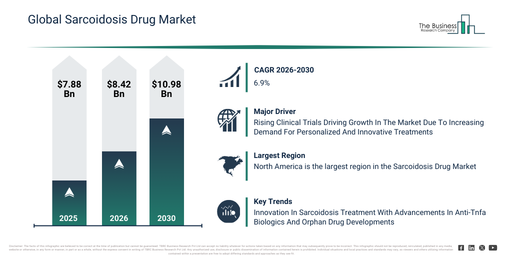
    The sarcoidosis therapeutics market has seen significant expansion over the recent past. Projected figures indicate an increase from $7.88 billion in 2025 to $8.42 billion by 2026, reflecting a compound annual growth rate (CAGR) of 6.8%. This historical upward trend can be linked to progress in genomic studies, reduced sequencing expenses, a wider scope of academic investigations, a rise in diagnostic testing, and heightened investment by pharmaceutical companies in research and development.

    Projections for the sarcoidosis drug market indicate robust expansion in the coming years, with an anticipated increase to $10.98 billion by 2030, reflecting a compound annual growth rate (CAGR) of 6.9%. This growth during the forecast period is driven by factors such as the uptake of personalized medicine, advancements in companion diagnostics, the integration of AI in genomics, growing demand from pharmaceutical companies, and government-led genomics initiatives. Key trends shaping this period include the broadening of precision medicine applications, the rising utilization of cell-free DNA and liquid biopsy techniques, the adoption of high-throughput genotyping technologies, the incorporation of AI-driven data analysis, and progress in pharmacogenomics.

    Download A Free Sample Report For Comprehensive Market Insights:

    https://www.thebusinessresearchcompany.com/sample.aspx?id=24392&type=smp&utm_source=BlogsPR&utm_medium=Paid&utm_campaign=Jul_PR

    Sarcoidosis Drug Market Demand Drivers: What Is Fueling Industry Growth?

    The growth of the sarcoidosis drug market is anticipated to be driven forward by the rising volume of clinical trials. These trials are human-based research studies designed to assess the safety, effectiveness, and adverse effects of medical treatments or interventions. Their increasing prevalence is fueled by a heightened demand for personalized and innovative therapies, which necessitate rigorous testing for both safety and efficacy. Within this context, sarcoidosis drugs are employed in clinical trials to examine their effectiveness, safety, and influence on disease progression, with the goal of enhancing patient outcomes and pinpointing more potent treatments. As an example, data from the Association of the British Pharmaceutical Industry, a UK-based trade body for the pharmaceutical sector, revealed in December 2024 that the number of industry-sponsored clinical trials initiated in the United Kingdom rose from 411 in 2022 to 426 in 2023. Additionally, Phase III trial initiations experienced a 16.5 percent increase during the same timeframe, climbing from 182 to 212. Consequently, the expanding number of clinical trials is propelling the expansion of the sarcoidosis drug market.

    Sarcoidosis Drug Market Segment Landscape: Which Areas Lead Market Development?

    The sarcoidosis drug market covered in this report is segmented –

    1) By Type: Ocular Sarcoidosis, Neurosarcoidosis, Cardiac Sarcoidosis, Musculoskeletal Sarcoidosis, Cutaneous Sarcoidosis, Renal Sarcoidosis, Hepatic Sarcoidosis, Sarcoidosis Of The Spleen and Bone Marrow, Pulmonary Sarcoidosis

    2) By Mechanism of Action: Corticosteroid, Immunosuppressants, Antimalarial, Tumor Necrosis Factor-alpha (TNF-Alpha) Inhibitors

    3) By Indication: Lung Involvement, Skin Involvement, Cardiac Involvement, Neurological Involvement

    4) By Route of Administration: Oral, Intravenous, Topical

    5) By End User: Hospitals And Clinics, Surgical Centers, Diagnostic Centers, Other End Users

    Subsegments:

    1) By Ocular Sarcoidosis: Anterior uveitis, Posterior uveitis, Panuveitis, Conjunctival sarcoidosis

    2) By Neurosarcoidosis: Cranial neuropathy, Meningeal involvement, Spinal cord sarcoidosis, Peripheral neuropathy

    3) By Cardiac Sarcoidosis: Arrhythmias, Heart block, Cardiomyopathy, Heart failure

    4) By Musculoskeletal Sarcoidosis: Arthropathy, Myopathy, Bone lesions, Sarcoid arthritis

    5) By Cutaneous Sarcoidosis: Lupus pernio, Erythema nodosum, Maculopapular lesions, Scar sarcoidosis

    6) By Renal Sarcoidosis: Granulomatous interstitial nephritis, Nephrocalcinosis, Hypercalciuria, Tubulointerstitial nephritis

    7) By Hepatic Sarcoidosis: Granulomatous hepatitis, Hepatomegaly, Cholestasis, Portal hypertension

    8) By Sarcoidosis Of The Spleen And Bone Marrow: Splenomegaly, Hypersplenism, Bone marrow infiltration, Pancytopenia

    9) By Pulmonary Sarcoidosis: Hilar lymphadenopathy, Interstitial lung disease, Fibrotic sarcoidosis, Bronchial obstruction

    Sarcoidosis Drug Market Innovation Trends: Which Developments Are Transforming The Industry?

    Key players within the sarcoidosis drug landscape are actively working on novel therapies, including anti-TNFa monoclonal antibodies, designed to manage treatment-resistant cases and enhance overall disease control. These antibodies are biologic agents that inhibit tumor necrosis factor-alpha (TNFa), thereby decreasing inflammation and tissue damage in conditions like sarcoidosis and other autoimmune disorders. As a case in point, in November 2023, Xentra Inc., a pharmaceutical firm headquartered in the United States, was granted orphan drug designation by the European Medicines Agency (EMA) for its product XTMAB-16, intended for the treatment of sarcoidosis. This drug is a chimeric human-murine monoclonal antibody that specifically targets and neutralizes TNFa, a crucial inflammatory agent involved in the development of granulomas, which are a hallmark of sarcoidosis. The therapy is engineered to interrupt the inflammatory cascade and possibly delay the advancement of granuloma formation in individuals with sarcoidosis, particularly the pulmonary form that affects the lungs.

    Sarcoidosis Drug Market Industry Leaders And Market Competition

    Major companies operating in the sarcoidosis drug market are AbbVie Inc., Novartis AG., Viatris Inc., Boehringer Ingelheim International GmbH, Aurobindo Pharma Limited, Hikma Pharmaceuticals PLC, Lupin Limited, Mallinckrodt plc, Kyorin Pharmaceutical Co. Ltd., Molecure S.A., aTyr Pharma Inc., Xentria Inc., Relief Therapeutics Holding AG, Foresee Pharmaceuticals Co. Ltd., OrphAI Therapeutics Inc., Bellus Health Inc., AI Therapeutics Inc., Araim Pharmaceuticals Inc., Kinevant Sciences GmbH, SarcoMed USA Inc.

    Access The Complete Sarcoidosis Drug Market Report:

    https://www.thebusinessresearchcompany.com/report/sarcoidosis-drug-global-market-report?utm_source=BlogsPR&utm_medium=Paid&utm_campaign=Jul_PR

    Sarcoidosis Drug Market Largest Region: Which Geography Holds The Highest Market Share?

    North America was the largest region in the sarcoidosis drug market in 2025. Asia-Pacific is expected to be the fastest-growing region in the forecast period. The regions covered in the sarcoidosis drug market report are Asia-Pacific, South East Asia, Western Europe, Eastern Europe, North America, South America, Middle East, Africa.

    Get in touch with us:

    The Business Research Company: https://www.thebusinessresearchcompany.com/?utm_source=BlogsPR&utm_medium=Paid&utm_campaign=home_page_test

    Americas: +1 310-496-7795

    Asia: +44 7882 955267 & +91 8897263534

    Europe: +44 7882 955267

    Email us at: marketing@tbrc.info

    Follow us on:

    LinkedIn: https://in.linkedin.com/company/the-business-research-company

    YouTube: https://www.youtube.com/channel/UC24_fI0rV8cR5DxlCpgmyFQ

    Global Market Model: https://www.thebusinessresearchcompany.com/global-market-model
  • Salbutamol Oral Liquid Market Growth Through 2030 Creates New Strategic Opportunities

    Salbutamol Oral Liquid Market Growth Through 2030 Creates New Strategic Opportunities

    Enhanced with market attractiveness analysis, total addressable market evaluation, company benchmarking matrices, interactive Excel dashboards, expanded supply chain intelligence, emerging startup coverage, and detailed product insights, The Business Research Company’s 2026 market reports deliver more actionable and strategically valuable research.

    Salbutamol Oral Liquid Market Growth Analysis: How Will Revenue Expand During The Forecast Period?

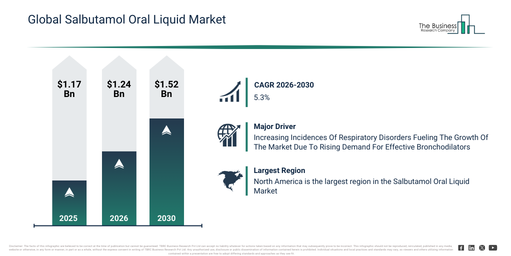
    The salbutamol oral liquid market has experienced consistent growth over recent years, with its value rising from $1.17 billion in 2025 to an anticipated $1.24 billion in 2026, reflecting a compound annual growth rate of 5.6%. This historical expansion was largely driven by factors such as the restricted accessibility of salbutamol oral liquid formulations, a heavy dependence on hospital pharmacy channels for distribution, growing awareness regarding the management of respiratory diseases, the widespread use of conventional syrup and solution formats, and the reliance on traditional manufacturing processes.

    The salbutamol oral liquid market is anticipated to experience robust expansion in the coming years, reaching a valuation of $1.52 billion by 2030, with a compound annual growth rate (CAGR) of 5.3%. This projected growth during the forecast period is driven by several key factors, including the development of sophisticated oral liquid suspensions, increased adoption of online pharmacy services, a growing number of pediatric and geriatric patients, the broadening scope of multi-ingredient respiratory treatments, and heightened adherence to regulatory standards and quality certifications. Notable trends shaping the market in the forecast period encompass the rising incidence of asthma and COPD, a greater demand for formulations tailored to children and the elderly, the broadening of hospital and retail pharmacy distribution networks, the rise of e-commerce platforms for pharmaceutical sales, and a shift toward preservative-free, patient-centric formulations.

    Download A Free Sample Report For Comprehensive Market Insights:

    https://www.thebusinessresearchcompany.com/sample.aspx?id=24690&type=smp&utm_source=BlogsPR&utm_medium=Paid&utm_campaign=Jul_PR

    Salbutamol Oral Liquid Market Growth Drivers: What Factors Are Accelerating Expansion?

    The growing frequency of respiratory disorders is anticipated to drive expansion in the salbutamol oral liquid market moving forward. Respiratory disorders are health conditions affecting the lungs and airways, which hinder normal breathing and the body’s ability to exchange oxygen. A primary cause behind the increasing occurrence of these disorders is the escalation of air pollution and environmental contaminants. Salbutamol oral liquid is employed in managing respiratory conditions by relaxing airway muscles, alleviating bronchospasms, and enhancing airflow, thus mitigating symptoms like wheezing, shortness of breath, and chest tightness. For example, in October 2025, data from the Australian Bureau of Statistics, an Australian government agency, showed that deaths from influenza climbed from 611 in 2023 to 806 in 2024, and further to 1,057 by August 2025, reflecting a 73% rise from 2023 to the comparable period in August 2025. Likewise, fatalities linked to respiratory syncytial virus (RSV) increased from 380 in 2023 to 468 in 2024, and reached 399 by August 2025. Consequently, the mounting prevalence of respiratory disorders is fueling the expansion of the salbutamol oral liquid market.

    Salbutamol Oral Liquid Market Driver: Rise In Healthcare Expenditures Fueling The Growth Of The Market Due To Improved Access To Respiratory Treatments

    An increase in healthcare spending is forecasted to boost the salbutamol oral liquid market in the coming period. Healthcare expenditures encompass the total funds allocated to medical services and goods, such as hospital care, physician consultations, medications, and public health initiatives. This growth in spending is frequently spurred by the escalating costs of advanced medical technologies and treatments. Higher healthcare outlays can positively impact salbutamol oral liquid by enhancing availability of essential respiratory drugs, facilitating broader diagnosis and management of asthma and COPD, and allowing healthcare systems to more effectively stock and distribute these bronchodilators, particularly in under-resourced areas. For instance, in May 2024, the Office for National Statistics, a UK government department, reported that total healthcare expenditure rose significantly by 5.6% in nominal terms between 2022 and 2023, a marked acceleration from the 0.9% growth observed in 2022. Thus, the uptick in healthcare expenditures is propelling the growth of the salbutamol oral liquid market.

    Salbutamol Oral Liquid Market Driver: Rise In Air Pollution Driving The Growth Of The Market Due To Increasing Respiratory Issues

    The escalation of air pollution is predicted to accelerate the salbutamol oral liquid market forward. Air pollution involves the existence of detrimental substances in the atmosphere that can harm human health, the environment, and the climate. This worsening pollution is largely attributable to heightened emissions from industrial operations and the combustion of fossil fuels. Salbutamol oral liquid is utilized to ease breathing difficulties associated with air pollution by relaxing airway muscles and improving airflow into the lungs. For example, in August 2025, the Energy Policy Institute at the University of Chicago (EPIC), an interdisciplinary research institute based in the US, indicated that global particulate matter concentrations in the air in 2023 were 1.5% higher compared to 2022. Therefore, the increase in air pollution is propelling the expansion of the salbutamol oral liquid market.

    Salbutamol Oral Liquid Market Segments: Where Are The Largest Growth Opportunities?

    The salbutamol oral liquid market covered in this report is segmented –

    1) By Product Type: Oral Liquid Solutions, Oral Liquid Suspensions

    2) By Formulation Type: Syrup, Solution, Concentrate

    3) By Ingredient: Albuterol, Levalbuterol, Pirbuterol, Salmeterol, Formoterol

    4) By Distribution Channel: Hospital Pharmacies, Retail Pharmacies, Online Pharmacies

    5) By Application: Asthma, Chronic Obstructive Pulmonary Disease (COPD), Other Respiratory Conditions

    Subsegments:

    1) By Oral Liquid Solutions: Syrup, Solution, Concentrate

    2) By Oral Liquid Suspensions: Suspension With Preservatives, Suspension Without Preservatives

    Salbutamol Oral Liquid Market Major Participants And Competitive Dynamics

    Major companies operating in the salbutamol oral liquid market are GlaxoSmithKline plc, Cipla Limited, Lupin Limited, Amphastar Pharmaceuticals Inc., Beximco Pharmaceuticals Limited, Beta Healthcare International Limited, Sakar Healthcare Limited, Pharmatec Pakistan (Private) Limited, Infinity Pharma, Azaria Pharmaceutical Laboratories Inc., Salvavidas Pharmaceutical Private Limited, Lucky Pharmaceuticals, Wellona Pharma, Centurion Healthcare Private Limited, Niksan Pharmaceutical, SUNWARD PHARMACEUTICAL SDN. BHD., Glumex Pharmaceuticals Mfg. Pvt. Ltd., Indo Rama Engineers, Elikem Pharmaceuticals Private Limited, CCI Products.

    Access The Complete Salbutamol Oral Liquid Market Report:

    https://www.thebusinessresearchcompany.com/report/salbutamol-oral-liquid-global-market-report?utm_source=BlogsPR&utm_medium=Paid&utm_campaign=Jul_PR

    Salbutamol Oral Liquid Market Regional Analysis: Which Region Leads By Revenue?

    North America was the largest region in the salbutamol oral liquid market in 2025. Asia-Pacific is expected to be the fastest-growing region in the forecast period. The regions covered in the salbutamol oral liquid market report are Asia-Pacific, South East Asia, Western Europe, Eastern Europe, North America, South America, Middle East, Africa.

    Get in touch with us:

    The Business Research Company: https://www.thebusinessresearchcompany.com/?utm_source=BlogsPR&utm_medium=Paid&utm_campaign=home_page_test

    Americas: +1 310-496-7795

    Asia: +44 7882 955267 & +91 8897263534

    Europe: +44 7882 955267

    Email us at: marketing@tbrc.info

    Follow us on:

    LinkedIn: https://in.linkedin.com/company/the-business-research-company

    YouTube: https://www.youtube.com/channel/UC24_fI0rV8cR5DxlCpgmyFQ

    Global Market Model: https://www.thebusinessresearchcompany.com/global-market-model
  • Salbutamol active pharmaceutical ingredient (API) Market Size Projected To Increase From $3.24 Billion To $4.14 Billion During The Forecast Period

    Salbutamol active pharmaceutical ingredient (API) Market Size Projected To Increase From $3.24 Billion To $4.14 Billion During The Forecast Period

    Through market attractiveness analysis, total addressable market evaluation, company benchmarking matrices, interactive Excel dashboards, expanded supply chain intelligence, emerging startup coverage, and detailed product insights, The Business Research Company’s 2026 market reports provide more actionable and strategically valuable research.

    Salbutamol active pharmaceutical ingredient (API) Market Forecast: What Market Value Is Expected By 2030?

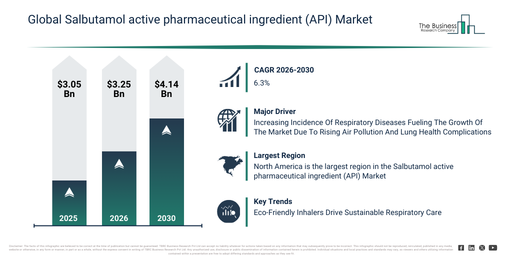
    The size of the salbutamol active pharmaceutical ingredient (API) market has experienced robust expansion in recent times. Valued at $3.05 billion in 2025, it is projected to reach $3.25 billion by 2026, reflecting a compound annual growth rate (CAGR) of 6.6%. This historical growth has been driven by several factors, including constraints in production capacity for salbutamol API, a rising incidence of asthma and COPD, continued dependence on conventional inhalers and tablets, heightened pharmaceutical output in developing regions, and the implementation of standardized quality assurance practices.

    The market size for the salbutamol active pharmaceutical ingredient (API) is anticipated to experience robust expansion in the coming years. By 2030, it is projected to reach $4.14 billion, driven by a compound annual growth rate (CAGR) of 6.3%. This forecasted growth is fueled by progress in API synthesis technology, the broadening of both generic and branded respiratory medications, heightened investment in research and development for advanced delivery systems, an increasing number of regulatory approvals and certifications, and the adoption of smart manufacturing along with digital monitoring tools. Among the key trends shaping this period are the rising incorporation of salbutamol API into respiratory drug formulations, the development of inhalation and oral administration routes, a heightened emphasis on producing high-purity, quality-compliant APIs, expanded research efforts targeting asthma and chronic obstructive pulmonary disease (COPD), and the growing role of online and retail pharmacy channels in distribution.

    Download A Free Sample Report For Comprehensive Market Insights:

    https://www.thebusinessresearchcompany.com/sample.aspx?id=24689&type=smp&utm_source=BlogsPR&utm_medium=Paid&utm_campaign=Jul_PR

    Salbutamol active pharmaceutical ingredient (API) Market Growth Factors Supporting Long-Term Expansion

    The anticipated expansion of the salbutamol active pharmaceutical ingredient (API) market is being driven forward by the rising frequency of respiratory diseases. These conditions, which affect the lungs and airways, cause breathing difficulties and diminished oxygen intake, encompassing ailments such as asthma, chronic obstructive pulmonary disease (COPD), pneumonia, bronchitis, and lung infections. Their growing prevalence is linked to escalating air pollution, which heightens exposure to harmful irritants that inflame airways and impair lung function. Salbutamol API addresses these issues by dilating airways and facilitating easier breathing, delivering rapid symptom relief from wheezing and shortness of breath, thereby enhancing respiratory performance and patient quality of life. For example, data from the Australian Bureau of Statistics, a government agency based in Australia, revealed in November 2024 that asthma represented 2.5% of the total disease burden and 35% of the burden from all respiratory conditions in 2023, making it the primary cause of disease burden among children aged 1 to 9 years. Consequently, the increasing incidence of respiratory diseases is fueling growth in the salbutamol API market.

    Salbutamol active pharmaceutical ingredient (API) Market Segment Analysis: What Are The Major Market Categories?

    The salbutamol active pharmaceutical ingredient (api) market covered in this report is segmented –

    1) By Type: Salbutamol Sulfate, Levalbuterol Hydrochloride

    2) By Formulation Type: Inhalation Solutions, Tablet Formulations, Syrup Formulations, Other Delivery Methods

    3) By Distribution Channel: Hospital Pharmacies, Retail Pharmacies, Online Pharmacies

    4) By Application: Asthma, Chronic Obstructive Pulmonary Disease (COPD), Bronchospasm, Other Applications

    5) By End-User: Pharmaceutical Companies, Research Laboratories, Other End Users

    Subsegments:

    1) By Salbutamol Sulfate: Inhalation Powder, Inhalation Solution, Oral Tablets, Oral Syrup, Injectable Form

    2) By Levalbuterol Hydrochloride: Inhalation Solution, Metered Dose Inhaler (MDI), Oral Solution, Nebulizer Solution

    Salbutamol active pharmaceutical ingredient (API) Market Industry Trends Shaping Future Revenue Growth

    Leading pharmaceutical firms in the salbutamol active pharmaceutical ingredient (API) market are prioritizing the creation of novel drug formulations, particularly environmentally friendly inhalers, to comply with ecological regulations and deliver sustainable treatment alternatives. These eco-conscious inhalers represent respiratory devices that either utilize propellants with minimal global warming potential or adopt propellant-free designs, such as dry powder inhalers. A notable example occurred in November 2023, when GSK plc, a pharmaceutical company headquartered in the United Kingdom, revealed its advancement to Phase III trials for a low-carbon Ventolin inhaler. This device incorporates a next-generation propellant that cuts emissions by 90%. Ventolin serves as the brand identifier for inhalers that deliver salbutamol (also referred to as albuterol), the agent responsible for dilating airways in the lungs and alleviating asthma and other respiratory conditions. This sustainability effort centers on altering the inhaler’s propellant to lessen its carbon impact, yet the active medication—the salbutamol API—remains unchanged.

    Salbutamol active pharmaceutical ingredient (API) Market Leading Companies Driving Competitive Growth

    Major companies operating in the salbutamol active pharmaceutical ingredient (api) market are Aurobindo Pharma Ltd., Dr. Reddy’s Laboratories Ltd., Cipla Ltd., Lupin Limited, Amphastar Pharmaceuticals Inc., Neuland Laboratories Ltd., Supriya Lifescience Ltd., Lusochimica S.p.A., Intas Pharmaceuticals Ltd., Olon S.p.A., VIVAN Life Sciences, Vamsi Labs Ltd., Aarti Pharmalabs Ltd., Chemcopia, Cerata Pharma, Hetero Labs Ltd., Granules India Ltd., MSN Laboratories Ltd., Macleods Pharmaceuticals Ltd., Zydus Lifesciences Ltd., Glenmark Pharmaceuticals Ltd., Ipca Laboratories Ltd., Alembic Pharmaceuticals Ltd., Indoco Remedies Ltd., Jubilant Pharmova Ltd., Laurus Labs Ltd., Teva Active Pharmaceutical Ingredients, Cambrex Corporation, Zhejiang Supor Pharmaceuticals Co. Ltd., Shandong Xinhua Pharmaceutical Co. Ltd., Hubei Gedian Humanwell Pharmaceutical Co. Ltd.

    Access The Complete Salbutamol active pharmaceutical ingredient (API) Market Report:

    https://www.thebusinessresearchcompany.com/report/salbutamol-active-pharmaceutical-ingredient-api-global-market-report?utm_source=BlogsPR&utm_medium=Paid&utm_campaign=Jul_PR

    Salbutamol active pharmaceutical ingredient (API) Market Geographic Distribution And Regional Opportunities

    North America was the largest region in the salbutamol active pharmaceutical ingredient (API) market in 2025. Asia-Pacific is expected to be the fastest-growing region in the forecast period. The regions covered in the salbutamol active pharmaceutical ingredient (api) market report are Asia-Pacific, South East Asia, Western Europe, Eastern Europe, North America, South America, Middle East, Africa.

    Get in touch with us:

    The Business Research Company: https://www.thebusinessresearchcompany.com/?utm_source=BlogsPR&utm_medium=Paid&utm_campaign=home_page_test

    Americas: +1 310-496-7795

    Asia: +44 7882 955267 & +91 8897263534

    Europe: +44 7882 955267

    Email us at: marketing@tbrc.info

    Follow us on:

    LinkedIn: https://in.linkedin.com/company/the-business-research-company

    YouTube: https://www.youtube.com/channel/UC24_fI0rV8cR5DxlCpgmyFQ

    Global Market Model: https://www.thebusinessresearchcompany.com/global-market-model
  • Roxadustat Market Growth Outlook Reveals A CAGR Of 6.9% And A Market Value Of $9.56 Billion By 2030

    Roxadustat Market Growth Outlook Reveals A CAGR Of 6.9% And A Market Value Of $9.56 Billion By 2030

    Delivering more actionable and strategically valuable research, The Business Research Company’s 2026 market reports feature market attractiveness analysis, total addressable market evaluation, company benchmarking matrices, interactive Excel dashboards, expanded supply chain intelligence, emerging startup coverage, and detailed product insights.

    Roxadustat Market Size Outlook: How Fast Will Revenue Grow Through 2030?

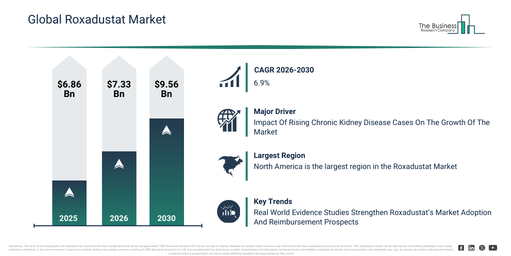
    The roxadustat market experienced robust expansion over the recent period, with its value projected to rise from $6.86 billion in 2025 to $7.33 billion in 2026, reflecting a compound annual growth rate (CAGR) of 6.9%. Historically, this growth has been driven by several key factors, including the high prevalence of chronic kidney disease, reliance on erythropoiesis-stimulating agents, anemia management primarily within hospital settings, the scarcity of effective oral anemia treatments, and an increasing number of dialysis centers.

    The roxadustat market is projected to experience robust expansion over the coming years, reaching a valuation of $9.56 billion by 2030, with a compound annual growth rate (CAGR) of 6.9%. This anticipated growth during the forecast period is driven by several key factors, including the increasing global prevalence of anemia, a growing preference for oral treatment options, an expanding population of patients with chronic kidney disease (CKD), a rise in outpatient anemia management practices, and enhanced availability of innovative anemia medications. Notable trends shaping this period include the increasing adoption of oral anemia therapies, the growing utilization of HIF-PHI drugs, a heightened focus on anemia associated with CKD, a gradual transition away from injectable erythropoiesis-stimulating agents (ESAs), and the broadening of access to anemia treatments.

    Download A Free Sample Report For Comprehensive Market Insights:

    https://www.thebusinessresearchcompany.com/sample.aspx?id=21280&type=smp&utm_source=BlogsPR&utm_medium=Paid&utm_campaign=Jul_PR

    Roxadustat Market Demand Drivers Creating New Revenue Opportunities

    The growing prevalence of chronic kidney disease (CKD) is anticipated to drive the expansion of the Roxadustat market in the coming years. Chronic kidney disease (CKD) is a progressive condition in which the kidneys steadily lose their ability to function correctly, potentially culminating in kidney failure if not addressed. Worldwide, the incidence of CKD is increasing due to aging populations, higher rates of diabetes and hypertension, and unhealthy lifestyle choices. Roxadustat aids in managing CKD by promoting erythropoietin production, which boosts red blood cell generation and alleviates the anemia frequently linked to the disease, thus enhancing kidney performance and patient quality of life. For example, in June 2023, Kidney Research UK, a UK-based charity, reported that by 2033, the number of individuals with CKD stages 3–5 is projected to reach 3.9 million. Consequently, the rising number of people affected by chronic kidney disease (CKD) is fueling growth in the Roxadustat market.

    Roxadustat Market Segment Breakdown: Which Categories Generate The Most Revenue?

    The roxadustat market covered in this report is segmented –

    1) By Type: 20mg, 50mg

    2) By Product Formulation: Oral Tablets

    3) By Distribution Channel: Hospitals, Specialty Pharmacies, Dialysis Centers

    4) By End-User Application: Chronic Kidney Disease-Associated Anemia, Other Anemia Conditions

    Roxadustat Market Trends Driving Strategic Industry Expansion

    Key players in the roxadustat market are increasingly prioritizing the generation of real-world evidence—such as observational registry studies—to confirm the lasting value, safety, and usage trends of their HIF PH inhibitor therapy. This type of evidence involves clinical information gathered outside controlled trials, in everyday healthcare environments, to capture genuine patient outcomes. By sponsoring extensive real-world investigations, the roxadustat market responds to growing demands from healthcare payers and regulators for such evaluations. A notable example occurred in May 2024, when Astellas Pharma, headquartered in the UK, initiated the WINE study through the WiNe Registry in Germany. This non-interventional cohort study tracks clinical results, dosing patterns, and hemoglobin levels in patients using EVRENZO (roxadustat). Findings from this registry highlight roxadustat’s efficacy in real-world chronic kidney disease populations and assist in securing long-term reimbursement. Consequently, the creation of real-world evidence is propelling expansion within the roxadustat market.

    Roxadustat Market Key Players And Strategic Industry Positioning

    Major companies operating in the roxadustat market are AstraZeneca PLC, Viatris Inc., Astellas Pharma Inc., Dr. Reddy’s Laboratories Ltd., Hetero Drugs Limited, Akebia Therapeutics Inc., Metrochem API Private Limited, FibroGen Inc., AMI Lifesciences, Lee Pharma Ltd., Faran Shimi Pharmaceutical Company, Maithri Drugs Pvt. Ltd., Clearsynth Labs Ltd., Bal Pharma, HEMA Pharmaceuticals Pvt. Ltd., Zhejiang Hengkang Pharmaceutical Co. Ltd., Kimia Biosciences Pvt. Ltd., Lewens Labs Pvt. Ltd., Hangzhou Longshine Bio-Tech Co. Ltd., Suzhou Biosyntech Co. Ltd., Shanvr Life Sciences Pvt. Ltd.

    Access The Complete Roxadustat Market Report:

    https://www.thebusinessresearchcompany.com/report/roxadustat-global-market-report?utm_source=BlogsPR&utm_medium=Paid&utm_campaign=Jul_PR

    Roxadustat Market Largest Region By Revenue And Market Share

    North America was the largest region in the Roxadustat market in 2025. Asia-Pacific is expected to be the fastest-growing region in the forecast period. The regions covered in the roxadustat market report are Asia-Pacific, South East Asia, Western Europe, Eastern Europe, North America, South America, Middle East, Africa.

    Get in touch with us:

    The Business Research Company: https://www.thebusinessresearchcompany.com/?utm_source=BlogsPR&utm_medium=Paid&utm_campaign=home_page_test

    Americas: +1 310-496-7795

    Asia: +44 7882 955267 & +91 8897263534

    Europe: +44 7882 955267

    Email us at: marketing@tbrc.info

    Follow us on:

    LinkedIn: https://in.linkedin.com/company/the-business-research-company

    YouTube: https://www.youtube.com/channel/UC24_fI0rV8cR5DxlCpgmyFQ

    Global Market Model: https://www.thebusinessresearchcompany.com/global-market-model
  • Rotavirus Vaccine Market Forecast Highlights Expansion From $11.19 Billion To $16.44 Billion Through 2030

    Rotavirus Vaccine Market Forecast Highlights Expansion From $11.19 Billion To $16.44 Billion Through 2030

    Enhanced with market attractiveness analysis, total addressable market evaluation, company benchmarking matrices, interactive Excel dashboards, expanded supply chain intelligence, emerging startup coverage, and detailed product insights, The Business Research Company’s 2026 market reports deliver more actionable and strategically valuable research.

    Rotavirus Vaccine Market Size, Value And Growth Trends Through 2030

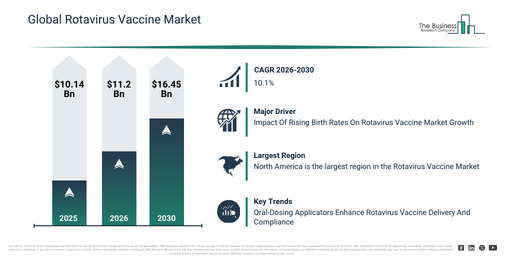
    The rotavirus vaccine market has seen rapid expansion in recent years. From $10.14 billion in 2025, it is projected to reach $11.2 billion by 2026, achieving a compound annual growth rate of 10.4%. This historical growth can be explained by a rising incidence of pediatric gastroenteritis, the broadening of national immunization schedules, the strengthening of public health vaccination campaigns, the availability of live attenuated vaccines, and enhanced awareness of rotavirus prevention measures.

    The rotavirus vaccine market is projected to experience substantial expansion over the coming years, with an anticipated value of $16.45 billion by 2030, reflecting a compound annual growth rate (CAGR) of 10.1%. This forecasted growth is driven by a rising need for universal pediatric vaccination, the broadening of combination vaccine development, heightened investment in manufacturing capabilities, an intensified emphasis on global immunization coverage, and strengthened partnerships with public health organizations. Key trends shaping this period include the widening reach of pediatric immunization initiatives, a greater adoption of oral vaccine formats, enhanced efforts in cold chain logistics for vaccine storage, the scaling up of public health vaccination campaigns, and improved monitoring of rotavirus infection patterns.

    Download A Free Sample Report For Comprehensive Market Insights:

    https://www.thebusinessresearchcompany.com/sample.aspx?id=20617&type=smp&utm_source=BlogsPR&utm_medium=Paid&utm_campaign=Jul_PR

    Rotavirus Vaccine Market Expansion Supported By Key Demand Factors

    An expected increase in birth rates is projected to drive expansion in the rotavirus vaccine market moving forward. Defined as the number of live births per 1,000 individuals within a population over a given timeframe—most often expressed on an annual basis—birth rates are shaped by greater economic stability and growth, along with supportive measures like parental leave, child benefits, and childcare subsidies. Administering rotavirus vaccines lowers the occurrence of severe rotavirus gastroenteritis in infants, which enhances child health outcomes and cuts healthcare expenses linked to rotavirus infections. For example, in January 2023, the Centers for Disease Control and Prevention—a U.S.-based national public health organization—reported a 1% rise in registered births in the United States, reaching a total of 3,664,292 compared to the prior year. Consequently, the growth of the rotavirus vaccine market will be fueled by rising birth rates.

    Rotavirus Vaccine Market Segmentation: How Is The Market Structured Across Key Categories?

    The rotavirus vaccine market covered in this report is segmented –

    1) By Type: Rotarix, RotaTeq, Rotavac, Rotavin-M1, Lanzhou lamb, Other Types

    2) By Application: Adult, Pediatric

    3) By End Users: Hospitals, Clinics, Academic Research

    Rotavirus Vaccine Market Growth Trends Influencing Competitive Dynamics

    Leading players in the rotavirus vaccine sector are increasingly turning to oral-dosing applicators as a strategy to boost vaccine delivery efficiency and enhance patient adherence. These applicators, which are medical tools used for administering liquid medicines or vaccines orally, provide precise dosing and are particularly user-friendly for infants and young children. A notable example occurred in June 2025, when Micron Biomedical, a biotechnology firm based in the U.S., partnered with Emory University, a private U.S. academic institution, to initiate a first-in-human clinical trial for the inactivated rotavirus vaccine CC24. This vaccine is delivered through a dissolvable microarray patch that is thermostable, thereby reducing reliance on cold chains, allows for self-administration, and eliminates sharps waste. While this breakthrough holds promise for expanding vaccine accessibility in low-resource areas, its regulatory approval process is still unproven, and potential challenges in scaling up production could slow its widespread integration into the rotavirus vaccine market.

    Rotavirus Vaccine Market Competitive Landscape And Leading Companies

    Major companies operating in the rotavirus vaccine market are Merck & Co. Inc., Sanofi S.A., Abbott Laboratories, GlaxoSmithKline plc, Daiichi Sankyo Company Limited, Serum Institute of India Private Limited, Sinovac Biotech Ltd. , SK Chemicals Co Ltd, Bharat Biotech International Limited, Walvax Biotechnology Co. Ltd., Indian Immunologicals Limited, PT Bio Farma, KFF Inc., Panacea Biotec Limited, Sanyou Biopharmaceuticals Co. Ltd., Inovio Pharmaceuticals Inc., Hilleman Laboratories Private Limited, China National Biotec Group Corporation, Vabiotech, Lanzhou Institute of Biological Products Co. Ltd., Nuvonis Pharmaceuticals Inc., Chengdu Institute of Biological Products Co. Ltd

    Access The Complete Rotavirus Vaccine Market Report:

    https://www.thebusinessresearchcompany.com/report/rotavirus-vaccine-global-market-report?utm_source=BlogsPR&utm_medium=Paid&utm_campaign=Jul_PR

    Rotavirus Vaccine Market Regional Analysis And Leading Geography

    North America was the largest region in the rotavirus vaccine market in 2025. Asia-Pacific is expected to be the fastest-growing region in the forecast period. The regions covered in the rotavirus vaccine market report are Asia-Pacific, South East Asia, Western Europe, Eastern Europe, North America, South America, Middle East, Africa.

    Get in touch with us:

    The Business Research Company: https://www.thebusinessresearchcompany.com/?utm_source=BlogsPR&utm_medium=Paid&utm_campaign=home_page_test

    Americas: +1 310-496-7795

    Asia: +44 7882 955267 & +91 8897263534

    Europe: +44 7882 955267

    Email us at: marketing@tbrc.info

    Follow us on:

    LinkedIn: https://in.linkedin.com/company/the-business-research-company

    YouTube: https://www.youtube.com/channel/UC24_fI0rV8cR5DxlCpgmyFQ

    Global Market Model: https://www.thebusinessresearchcompany.com/global-market-model
  • Rotator Cuff Injuries Market Expected To Reach $3.65 Billion By 2030 As Growth Accelerates At 7.1% CAGR

    Rotator Cuff Injuries Market Expected To Reach $3.65 Billion By 2030 As Growth Accelerates At 7.1% CAGR

    Through market attractiveness analysis, total addressable market evaluation, company benchmarking matrices, interactive Excel dashboards, expanded supply chain intelligence, emerging startup coverage, and detailed product insights, The Business Research Company’s 2026 market reports provide more actionable and strategically valuable research.

    Rotator Cuff Injuries Market CAGR Analysis And Future Market Development

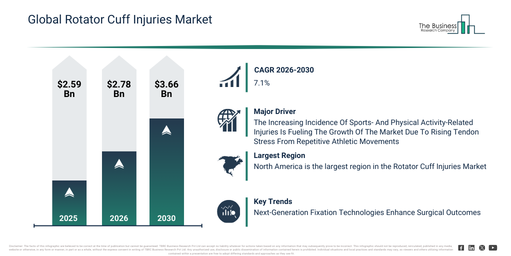
    The rotator cuff injuries market has experienced robust expansion in recent years, with its size projected to increase from $2.59 billion in 2025 to $2.78 billion in 2026, representing a compound annual growth rate (CAGR) of 7.4%. Historically, this growth was driven by factors such as restricted awareness regarding early diagnosis, dependence on traditional corticosteroid therapies, a scarcity of sophisticated biologic treatments, the expansion of orthopedic clinic networks, and a rising incidence of sports-related injuries.

    The market for rotator cuff injuries is anticipated to experience significant expansion in the coming years, reaching a valuation of $3.66 billion by 2030 with a compound annual growth rate (CAGR) of 7.1%. This forecasted growth is driven by several factors, including the creation of combined biologic therapies, a greater uptake of stem cell and platelet-rich plasma (PRP) treatments, an increase in ambulatory surgical centers, the development of tailored rehabilitation approaches, and heightened investment in orthopedic research and innovation. Key trends shaping this period involve a higher frequency of shoulder injuries linked to an aging demographic, a growing preference for minimally invasive surgical techniques, expanding use of biologics and regenerative therapies, a growing demand for customized rehabilitation plans, and the proliferation of sports medicine and orthopedic clinics.

    Download A Free Sample Report For Comprehensive Market Insights:

    https://www.thebusinessresearchcompany.com/sample.aspx?id=24686&type=smp&utm_source=BlogsPR&utm_medium=Paid&utm_campaign=Jul_PR

    Rotator Cuff Injuries Market Growth Drivers And Industry Catalysts

    A growing number of sports and physical activity-related injuries is anticipated to drive expansion in the rotator cuff injuries market moving forward. Injuries sustained during exercise or athletic endeavors—ranging from mild to severe damage to muscles, bones, or soft tissues—are becoming more prevalent due to a rise in participation in demanding workouts without proper training or sufficient recovery, which amplifies injury risk. Rotator cuff injuries frequently originate from sports or physical pursuits involving repetitive overhead motions, like tennis, swimming, or weightlifting, where such actions gradually place strain on or harm shoulder tendons, eventually causing injury. As an example, in October 2024, Insideworldfootball, a UK-based online news service, reported that sports injuries totaled 4,123 during the 2023-24 season, reflecting a 4% increase from the previous season. Consequently, the escalating frequency of sports- and physical activity-related injuries is fueling growth in the rotator cuff injuries market.

    Rotator Cuff Injuries Market Segmentation Trends And Revenue Drivers

    The rotator cuff injuries market covered in this report is segmented –

    1) By Product Type: Mono, Combination

    2) By Molecule Type: Recombinant Fusion Proteins, Small Molecule, Monoclonal Antibody, Peptide, Polymer, Gene Therapy

    3) By Route Of Administration: Oral, Intravenous, Subcutaneous, Parenteral, Topical

    4) By End-User: Hospitals, Orthopedic Clinics, Ambulatory Surgical Centers (ASCs), Rehabilitation Centers, Sports Medicine Centers

    Subsegments:

    1) By Mono: Corticosteroids, Platelet-Rich Plasma (PRP), Stem Cell Therapy, Collagen-Based Implants, Pain Management Drugs

    2) By Combination: Platelet-Rich Plasma (PRP) + Stem Cells, Corticosteroids + Physical Therapy, Collagen Implants + Biologics, Analgesics + Anti-Inflammatory Drugs, Surgical Repair + Biologic Therapy

    Rotator Cuff Injuries Market Trends Influencing Long-Term Demand

    Major players in the rotator cuff injuries market are putting significant effort into creating innovative solutions, especially implant systems that facilitate surgical reattachment of tendons to bone during rotator cuff tear repairs. An implant system is a cutting-edge medical device used for repairing rotator cuff tears, designed to simplify the surgical fixation of a torn tendon to the bone. It relies on a patented, compact implant made from medical-grade PEEK, which effectively works like a staple to secure the tendon across a wide area of the humerus. For example, in July 2023, Inovedis GmbH, a German firm that focuses on advanced medical technology for surgical innovations, introduced the SINEFIX implant system. This device is crafted for surgically mending rotator cuff tears, offering a sutureless, staple-based method that shortens operation time and boosts patient recovery. Moreover, this system provides an upgraded knot-free surgical technique, delivering a stronger and more uniform tendon-to-bone fixation while maintaining blood circulation to promote healing.

    Rotator Cuff Injuries Market Industry Leaders: Which Organizations Are Driving Competition?

    Major companies operating in the rotator cuff injuries market are Stryker Corporation, Zimmer Biomet Holdings Inc., Smith & Nephew plc, Arthrex Inc., Integra LifeSciences Holdings Corporation, CONMED Corporation, Bioventus Inc., ExacTech Inc., Karl Storz SE & Co. KG, Orthofix Medical Inc., Acumed LLC, Anika Therapeutics Inc., Ortho Regenerative Technologies Inc., Tensor Surgical Inc., MinInvasive Ltd., DePuy Synthes (Johnson & Johnson MedTech), Medtronic plc, Wright Medical Group N.V., DJO Global (Enovis), MicroPort Orthopedics, Globus Medical Inc., LifeNet Health, RTI Surgical Holdings Inc., Parcus Medical, Blue Belt Technologies, Ceterix Orthopaedics, Exactech Joint Preservation, Smith & Nephew Sports Medicine, Tornier (Stryker), Arthrosurface Inc., Zimmer Biomet Sports Medicine, Biorez Inc., Regenity Biosciences, Ossur hf., AlloSource

    Access The Complete Rotator Cuff Injuries Market Report:

    https://www.thebusinessresearchcompany.com/report/rotator-cuff-injuries-global-market-report?utm_source=BlogsPR&utm_medium=Paid&utm_campaign=Jul_PR

    Rotator Cuff Injuries Market Geographic Analysis: Where Is Demand Growing The Fastest?

    North America was the largest region in the rotator cuff injuries market in 2025. Asia-Pacific is expected to be the fastest-growing region in the forecast period. The regions covered in the rotator cuff injuries market report are Asia-Pacific, South East Asia, Western Europe, Eastern Europe, North America, South America, Middle East, Africa.

    Get in touch with us:

    The Business Research Company: https://www.thebusinessresearchcompany.com/?utm_source=BlogsPR&utm_medium=Paid&utm_campaign=home_page_test

    Americas: +1 310-496-7795

    Asia: +44 7882 955267 & +91 8897263534

    Europe: +44 7882 955267

    Email us at: marketing@tbrc.info

    Follow us on:

    LinkedIn: https://in.linkedin.com/company/the-business-research-company

    YouTube: https://www.youtube.com/channel/UC24_fI0rV8cR5DxlCpgmyFQ

    Global Market Model: https://www.thebusinessresearchcompany.com/global-market-model
  • Rosai-Dorfman Disease Market Set To Grow From $0.58 Billion In 2026 To $0.76 Billion By 2030 At A CAGR Of 7.2%

    Rosai-Dorfman Disease Market Set To Grow From $0.58 Billion In 2026 To $0.76 Billion By 2030 At A CAGR Of 7.2%

    Delivering more actionable and strategically valuable research, The Business Research Company’s 2026 market reports feature market attractiveness analysis, total addressable market evaluation, company benchmarking matrices, interactive Excel dashboards, expanded supply chain intelligence, emerging startup coverage, and detailed product insights.

    Rosai-Dorfman Disease Market Expansion From $0.58 Billion In 2026 To $0.76 Billion In 2030

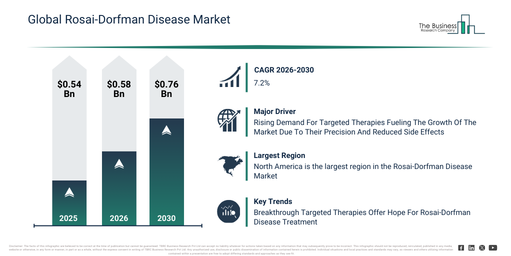
    The rosai-dorfman disease market has demonstrated notable expansion in recent times, with its valuation expected to rise from $0.54 billion in 2025 to $0.58 billion in 2026, reflecting a compound annual growth rate (CAGR) of 7.5%. This historic period’s growth has been driven by factors such as insufficient understanding of rosai-dorfman disease among healthcare professionals, the absence of uniform diagnostic guidelines, a heavy dependence on surgical treatment methods, minimal financial support allocated for research into uncommon conditions, and limited availability of cutting-edge immunohistochemical testing procedures.

    The rosai-dorfman disease market is anticipated to experience robust expansion over the coming years, reaching a valuation of $0.76 billion by 2030, with a compound annual growth rate (CAGR) of 7.2%. During the forecast period, this growth is driven by progress in molecular diagnostics, the creation of targeted immunosuppressive therapies, the expansion of rare disease registries, greater collaboration between hospitals and research institutions, and the increasing use of personalized treatment approaches. Key trends influencing this period involve heightened awareness and earlier detection of rare conditions, the expansion of customized and focused immunotherapies, elevated funding for rare disease studies, the enhancement of hospital and cancer center facilities, and the utilization of integrated multidisciplinary care strategies.

    Download A Free Sample Report For Comprehensive Market Insights:

    https://www.thebusinessresearchcompany.com/sample.aspx?id=24685&type=smp&utm_source=BlogsPR&utm_medium=Paid&utm_campaign=Jul_PR

    Rosai-Dorfman Disease Market Opportunity Drivers: What Is Creating New Revenue Potential?

    The increasing demand for precision-based therapies is anticipated to drive growth in the Rosai-Dorfman disease market moving forward. Targeted therapies are specialized drugs that focus on particular genetic mutations or cellular processes that fuel tumor growth, leaving healthy cells unharmed. This surge in demand is attributed to their capacity to combat disease-causing cells while reducing collateral damage to healthy tissue, thereby offering improved treatment results and fewer adverse effects than conventional options. In managing Rosai-Dorfman disease, these therapies work by inhibiting crucial pathways like MAPK/ERK, which are responsible for abnormal histiocyte proliferation, effectively managing the condition with minimized side effects. Such precise interventions zero in on disease-specific mechanisms while preserving normal tissues. For example, a report from the American Society of Gene & Cell Therapy (ASGCT), a professional association based in the US, noted in July 2023 that 247 targeted gene therapies were in Phase II trials during the third quarter of that year, marking a 5% rise from the second quarter. Consequently, the growing appeal of targeted therapies is fueling expansion in the Rosai-Dorfman disease market.

    The increasing frequency of immune-related complications is expected to drive forward the Rosai-Dorfman disease market. These complications represent harmful outcomes from an overly active or misregulated immune response, frequently arising from infections, autoimmune disorders, or immune-based treatments. Their escalation is largely linked to the expanded use of immunotherapy, which can excessively stimulate the immune system, resulting in inflammation or harm to healthy tissue. Rosai-Dorfman disease is associated with immune system imbalance, and the growing occurrence of such complications from autoimmune conditions, infections, or immunotherapies can trigger or exacerbate the disease. This trend is fostering greater diagnosis rates, intensified research efforts, and accelerated development of new treatments. As an example, the Sjögren’s Foundation, a US nonprofit organization, reported in 2025 that the worldwide burden of autoimmune diseases has increased significantly, with an annual growth rate of about 19.1% up to 2025, highlighting a broader upward trend in immune-mediated conditions. Thus, the rise in immune-related complications is propelling growth in the Rosai-Dorfman disease market.

    Rosai-Dorfman Disease Market Segment Analysis Highlighting Growth Areas

    The rosai-dorfman disease market covered in this report is segmented –

    1) By Type: Classic (Nodal) Rosai-Dorfman Disease, Extranodal Rosai-Dorfman Disease

    2) By Procedure Type: Diagnosis, Treatment

    3) By Route Of Administration: Oral, Parenteral

    4) By Age: Children, Adults

    5) By End-User: Hospitals, Diagnostics, Cancer Centers, Other End-Users

    Subsegments:

    1) By Classic (Nodal) Rosai-Dorfman Disease: Cervical Lymph Node Involvement, Axillary Lymph Node Involvement, Inguinal Lymph Node Involvement, Mediastinal Lymph Node Involvement, Generalized Lymphadenopathy

    2) By Extranodal Rosai-Dorfman Disease: Cutaneous Or Subcutaneous Rosai-Dorfman Disease, Central Nervous System (CNS) Rosai-Dorfman Disease, Orbital Or Ocular Rosai-Dorfman Disease, Bone And Skeletal Rosai-Dorfman Disease, Nasal Or Sinus Rosai-Dorfman Disease, Renal Rosai-Dorfman Disease, Pulmonary Rosai-Dorfman Disease, Hepatic Or Splenic Rosai-Dorfman Disease, Breast Rosai-Dorfman Disease

    Rosai-Dorfman Disease Market Innovation Trends Driving Future Development

    Leading players within the rosai-dorfman disease market are placing a strong emphasis on refining diagnostic methods, specifically through digital molecular and genetic testing. These approaches identify genetic changes and infectious agents by analyzing deoxyribonucleic acid or ribonucleic acid, enabling precise diagnosis, effective risk assessment, and customized treatment strategies. This form of testing involves laboratory analysis of an individual’s deoxyribonucleic acid, ribonucleic acid, or proteins to detect genetic alterations or the presence of pathogens, supporting disease diagnosis, genetic risk evaluation, and the development of personalized therapeutic plans. As an example, in February 2025, F. Hoffmann-La Roche AG, a Switzerland-headquartered firm recognized for its contributions to pharmaceuticals and diagnostics, unveiled Sequencing By Expansion (SBX) technology. This next-generation sequencing (NGS) innovation is poised to transform genomic analysis by boosting speed, accuracy, and scalability. Furthermore, it provides ultra-rapid whole genome or targeted sequencing for fast, comprehensive genomic profiling, enabling the detection of rare mutations or structural variants within rosai-dorfman disease tissue samples.

    Rosai-Dorfman Disease Market Leading Companies: Who Holds Significant Market Presence?

    Major companies operating in the rosai-dorfman disease market are Pfizer Inc., Johnson And Johnson, F. Hoffmann-La Roche AG, Merck And Co. Inc., Bristol Myers Squibb Company, Novartis AG, Canon Inc., Siemens Healthineers, GE HealthCare, Viatris Inc., Teva Pharmaceutical Industries Ltd., Memorial Sloan Kettering Cancer Center, Dr. Reddy’s Laboratories Ltd., Aurobindo Pharma, Mayo Foundation for Medical Education and Research, Zydus Pharmaceuticals Inc., SternMed GmbH, LGM Pharma, Niksan Pharmaceutical, Herbert Irving Cancer Center

    Access The Complete Rosai-Dorfman Disease Market Report:

    https://www.thebusinessresearchcompany.com/report/rosai-dorfman-disease-global-market-report?utm_source=BlogsPR&utm_medium=Paid&utm_campaign=Jul_PR

    Rosai-Dorfman Disease Market Global Footprint: Which Region Holds Market Leadership?

    North America was the largest region in the rosai-dorfman disease market in 2025. Asia-Pacific is expected to be the fastest-growing region in the forecast period. The regions covered in the rosai-dorfman disease market report are Asia-Pacific, South East Asia, Western Europe, Eastern Europe, North America, South America, Middle East, Africa.

    Get in touch with us:

    The Business Research Company: https://www.thebusinessresearchcompany.com/?utm_source=BlogsPR&utm_medium=Paid&utm_campaign=home_page_test

    Americas: +1 310-496-7795

    Asia: +44 7882 955267 & +91 8897263534

    Europe: +44 7882 955267

    Email us at: marketing@tbrc.info

    Follow us on:

    LinkedIn: https://in.linkedin.com/company/the-business-research-company

    YouTube: https://www.youtube.com/channel/UC24_fI0rV8cR5DxlCpgmyFQ

    Global Market Model: https://www.thebusinessresearchcompany.com/global-market-model
  • RNA Targeting Small Molecules Therapeutics Market Opportunities Are Emerging Beyond Traditional Growth Areas

    RNA Targeting Small Molecules Therapeutics Market Opportunities Are Emerging Beyond Traditional Growth Areas

    Enhanced with market attractiveness analysis, total addressable market evaluation, company benchmarking matrices, interactive Excel dashboards, expanded supply chain intelligence, emerging startup coverage, and detailed product insights, The Business Research Company’s 2026 market reports deliver more actionable and strategically valuable research.

    RNA Targeting Small Molecules Therapeutics Market Forecast Highlighting Growth From $3.1 Billion To $4.83 Billion

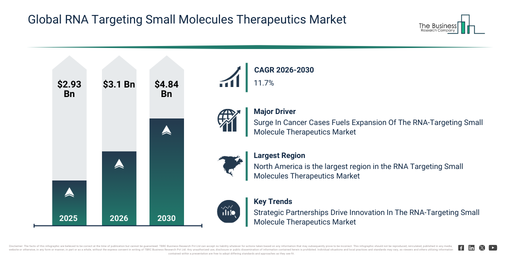
    The market for RNA targeting small molecules therapeutics has seen robust expansion in recent years. Projections indicate it will rise from $2.93 billion in 2025 to $3.1 billion in 2026, reflecting a compound annual growth rate (CAGR) of 5.8%. This historical growth is largely driven by the limited effectiveness of drugs aimed at proteins, increased funding for genomic research, a rising incidence of cancer and genetic disorders, early achievements in RNA-based treatments, and the broadening of partnerships between academia and industry.

    The market for RNA-targeting small molecule therapeutics is projected to experience rapid expansion over the coming years. By 2030, its value is anticipated to reach $4.84 billion, reflecting a compound annual growth rate (CAGR) of 11.7%. This forecasted growth is driven by several factors, including improvements in RNA structure prediction, a heightened demand for precision-based treatments, increased biotech investments focused on small molecules, regulatory backing for innovative RNA drugs, and an expanding pipeline of clinical trials targeting RNA. Key trends shaping this period involve the broadening of RNA-targeted drug development efforts, a stronger emphasis on addressing previously undruggable diseases, more frequent partnerships between pharmaceutical and biotechnology companies, progress in RNA structural biology and chemistry, and growing financial support for therapies aimed at rare and genetic conditions.

    Download A Free Sample Report For Comprehensive Market Insights:

    https://www.thebusinessresearchcompany.com/sample.aspx?id=12253&type=smp&utm_source=BlogsPR&utm_medium=Paid&utm_campaign=Jul_PR

    RNA Targeting Small Molecules Therapeutics Market Growth Momentum: Which Factors Are Influencing Demand?

    The anticipated rise in cancer cases is set to drive the expansion of the RNA-targeting small molecule therapeutics market in the coming period. Cancer encompasses a range of diseases that can emerge in virtually any organ or tissue when abnormal cells grow uncontrollably, breach their normal boundaries, and invade adjacent body parts or spread to other organs. RNA-targeting small molecules are developed and studied to specifically target RNA molecules linked to cancer, offering a treatment approach. As an example, in February 2024, the World Health Organization, an intergovernmental body based in Switzerland, projected that by 2050, over 35 million new cancer cases will occur, marking a 77% rise from the estimated 20 million cases in 2022. Consequently, the growing prevalence of cancer is fueling the growth of the RNA-targeting small molecule therapeutics market.

    The increasing prevalence of genetic disorders is anticipated to accelerate the growth of the RNA-targeting small molecule therapeutics market moving forward. Genetic disorders arise from abnormalities or mutations in an individual’s genetic material, including DNA or chromosomes. RNA-targeting small molecule therapeutics represent a promising and emerging field with significant potential for addressing genetic disorders. Certain genetic disorders involve toxic expansions of repeated RNA sequences, and small molecules can stabilize or destabilize these expansions, potentially reducing their detrimental effects. For instance, in October 2024, the Cystic Fibrosis Trust, a UK-based national charity, reported that 11,148 people were living with cystic fibrosis (CF) in the UK in 2022, a figure that rose to 11,318 in 2023. Thus, the growing incidence of genetic disorders is propelling the expansion of the RNA-targeting small molecule therapeutics market.

    RNA Targeting Small Molecules Therapeutics Market Segment Performance And Strategic Opportunities

    The rna targeting small molecules therapeutics market covered in this report is segmented –

    1) By Offering: mRNA (Messenger Ribonucleic Acid) Translation Modulators, RNA (Ribonucleic Acid) Splicing Modification, Direct RNA (Ribonucleic Acid) Targeting, Other Offerings

    2) By Therapeutic Indication: Lung Fibrosis, Cancer, Neurodegenerative Diseases, Autoimmune, Inflammatory, Other Therapeutic Indications

    3) By End User: Hospitals, Research Laboratories, Pharmaceutical And Biotechnology Companies, Other End-Users

    RNA Targeting Small Molecules Therapeutics Market Trends Reshaping Industry Growth

    Key players in the RNA-targeting small molecule therapeutics market are actively pursuing strategic partnerships to boost the development and discovery of innovative treatments. Such collaborations typically bring together two or more organizations, allowing them to pool their knowledge, exchange information, and speed up the creation of new RNA-targeting small molecules. As an example, in June 2022, Otsuka Pharmaceutical Co. Ltd., a Japanese pharmaceutical firm, joined forces with xFOREST Therapeutics Co. Ltd., a Japanese developer of drug discovery platforms. Under this arrangement, xFORESS made its Forest technology available to Otsuka to facilitate systemic small-molecule drug discovery research that targets RNA structures. Additionally, in April 2024, Ipsen, a biopharmaceutical company based in France, established a partnership with Skyhawk Therapeutics, a clinical-stage U.S. biotechnology company specializing in RNA-targeting small molecule therapeutics. Through this alliance, Ipsen aimed to create RNA-targeting small molecule drugs for rare neurological conditions, integrating diverse datasets to pinpoint and develop small molecules capable of modulating RNA.

    RNA Targeting Small Molecules Therapeutics Market Key Players: Which Companies Shape Industry Competition?

    Major companies operating in the rna targeting small molecules therapeutics market are F Hoffmann La Roche Ltd, Novartis AG, Sanofi SA, AstraZeneca plc, Eli Lilly and Company, Amgen Inc, Bayer AG, Vertex Pharmaceuticals Inc, PTC Therapeutics Inc, Arrakis Therapeutics, Anima Biotech Inc, Skyhawk Therapeutics Inc, Remix Therapeutics, Accent Therapeutics Inc, STORM Therapeutics Ltd, eFFECTOR Therapeutics Inc, EPICS Therapeutics, Expansion Therapeutics Inc, Ribometrix Inc, Redona Therapeutics, Eloxx Pharmaceuticals Inc, 858 Therapeutics

    Access The Complete RNA Targeting Small Molecules Therapeutics Market Report:

    https://www.thebusinessresearchcompany.com/report/rna-targeting-small-molecules-therapeutics-global-market-report?utm_source=BlogsPR&utm_medium=Paid&utm_campaign=Jul_PR

    RNA Targeting Small Molecules Therapeutics Market Regional Distribution: Which Areas Drive Market Expansion?

    North America was the largest region in the RNA targeting small molecules therapeutics market in 2025. The regions covered in the rna targeting small molecules therapeutics market report are Asia-Pacific, South East Asia, Western Europe, Eastern Europe, North America, South America, Middle East, Africa.

    Get in touch with us:

    The Business Research Company: https://www.thebusinessresearchcompany.com/?utm_source=BlogsPR&utm_medium=Paid&utm_campaign=home_page_test

    Americas: +1 310-496-7795

    Asia: +44 7882 955267 & +91 8897263534

    Europe: +44 7882 955267

    Email us at: marketing@tbrc.info

    Follow us on:

    LinkedIn: https://in.linkedin.com/company/the-business-research-company

    YouTube: https://www.youtube.com/channel/UC24_fI0rV8cR5DxlCpgmyFQ

    Global Market Model: https://www.thebusinessresearchcompany.com/global-market-model
  • RNA Targeting Small Molecule Drug Discovery Market Expansion Is Opening New Pathways For Strategic Investment

    RNA Targeting Small Molecule Drug Discovery Market Expansion Is Opening New Pathways For Strategic Investment

    Through market attractiveness analysis, total addressable market evaluation, company benchmarking matrices, interactive Excel dashboards, expanded supply chain intelligence, emerging startup coverage, and detailed product insights, The Business Research Company’s 2026 market reports provide more actionable and strategically valuable research.

    RNA Targeting Small Molecule Drug Discovery Market Revenue Growth Supported By A CAGR Of 6.04% Through 2030

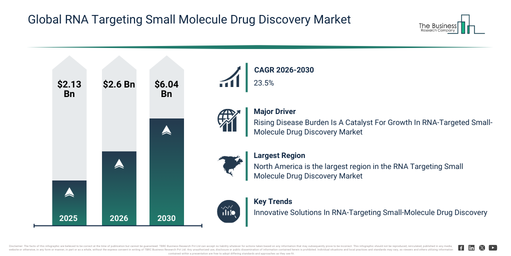
    The market for RNA-targeting small molecule drug discovery has experienced rapid expansion in recent years. Its value is projected to increase from $2.13 billion in 2025 to $2.6 billion in 2026, reflecting a compound annual growth rate (CAGR) of 22.3%. This historical growth has been driven by several factors, including the restricted druggability of protein targets, a growing incidence of genetic disorders, progress in RNA biology research, increased partnerships between academia and industry, and early achievements in RNA-based therapeutics.

    The anticipated trajectory for the market focused on small molecule drugs targeting RNA indicates a period of substantial expansion in the coming years. By 2030, projections place its valuation at $6.04 billion, reflecting a compound annual growth rate of 23.5%. This forecasted growth is fueled by several contributing factors, including the identification of RNA targets through artificial intelligence, heightened investment directed toward precision medicine, an expanding pipeline of RNA-based therapeutics, advancements in delivery mechanisms for these molecules, and a supportive regulatory environment for novel therapeutic approaches. Key trends shaping this forward-looking period encompass AI-powered predictions of RNA structures, a growing number of oncology-focused drugs targeting RNA sequences, progress in constructing specialized small molecule libraries for RNA, enhancements in how these molecules bind with specificity and selectivity, and the integration of multi-omic data into the drug discovery process for RNA.

    Download A Free Sample Report For Comprehensive Market Insights:

    https://www.thebusinessresearchcompany.com/sample.aspx?id=12480&type=smp&utm_source=BlogsPR&utm_medium=Paid&utm_campaign=Jul_PR

    RNA Targeting Small Molecule Drug Discovery Market Expansion Drivers: What Is Shaping Future Growth?

    The rising incidence of cancer, genetic disorders, and viral infections is anticipated to drive expansion in the RNA-targeted small-molecule drug discovery market moving forward. Cancer encompasses a range of diseases marked by the abnormal and uncontrolled proliferation of cells within the body. Viral infections are those caused by viruses—tiny infectious entities that can only multiply inside the cells of living hosts. RNA-targeted drug discovery is employed to address cancer, genetic disorders, and viral infections because these conditions are associated with genes and defective genetic material, which can be managed through medications developed via RNA-targeting approaches. As an example, in February 2024, a report from the World Health Organization (WHO), an intergovernmental body based in Switzerland, indicated that approximately 20 million new cancer cases and 9.7 million deaths occurred worldwide in 2022. Lung cancer was the most prevalent, accounting for 2.5 million new cases (12.4%), followed by female breast cancer (2.3 million cases, 11.6%), colorectal cancer (1.9 million cases, 9.6%), prostate cancer (1.5 million cases, 7.3%), and stomach cancer (970,000 cases, 4.9%). By 2050, the number of new cancer cases is projected to increase by 77%, reaching over 35 million annually. Consequently, the growing prevalence of cancer, genetic disorders, and viral infections is fueling the growth of the RNA-targeted small-molecule drug discovery market.

    RNA Targeting Small Molecule Drug Discovery Market Segment Landscape And Growth Potential

    The rna targeting small molecule drug discovery market covered in this report is segmented –

    1) By Target RNA Type: Messenger RNA (mRNA), Non-Coding RNA (ncRNA), MicroRNA (miRNA), Long Non-Coding RNA (lncRNA)

    2) By Therapeutic Area: Oncology, Neurology, Infectious Disease, Metabolic Diseases, Genetic Disorders, Other Therapeutic Areas

    3) By Delivery Method: Intravenous (IV), Oral, Topical, Other Methods

    4) By Application: Research Use, Therapeutic Use, Diagnostic Use, Other Applications

    Subsegments:

    1) By Messenger RNA (mRNA): Targeting mRNA For Protein Coding, Modulation Of mRNA Stability, mRNA Translation Inhibition

    2) By Non-Coding RNA (ncRNA): Long Non-Coding RNA, Small Nuclear RNA, Small Nucleolar RNA

    3) By MicroRNA (miRNA): miRNA Inhibition, miRNA Mimics, Targeting Specific miRNA Pathways

    4) By Long Non-Coding RNA (lncRNA): lncRNA Modulators, Targeting Specific lncRNA Functions, Therapeutic Applications Of lncRNA

    RNA Targeting Small Molecule Drug Discovery Market Strategic Trends: What Is Defining The Next Phase Of Growth?

    Key players in the RNA-targeting small-molecule drug discovery sector are advancing unique platforms, including software-as-a-service models, to strengthen their market positions. The software-as-a-service (SaaS) framework operates as a distribution method where applications are managed by an external provider and offered to users via the internet. A notable example is Merck & Co. Inc., a United States-based science and technology firm, which released AIDDISON in December 2023. This platform identifies optimal synthetic approaches for these chosen compounds, potentially leading to significant reductions in expenses for the drug development process while substantially enhancing the likelihood of introducing new therapies to patients. By closing the gap between digital molecular design and tangible production feasibility, the system elevates the success rate of bringing innovative therapies to individuals by uncovering hidden patterns from extensive data sets. To speed up the medication creation process, this advanced artificial intelligence system combines computational drug design, machine learning methodologies, and generative AI techniques.

    RNA Targeting Small Molecule Drug Discovery Market Competitive Landscape: Who Are The Leading Companies?

    Major companies operating in the rna targeting small molecule drug discovery market are F. Hoffmann-La Roche Ltd, Novartis AG, Bristol-Myers Squibb Company, Moderna Inc., Biogen Inc., Alnylam Pharmaceuticals Inc., Sarepta Therapeutics Inc., Evotec A.G., PTC Therapeutics Inc., Ionis Pharmaceuticals Inc., Dicerna Pharmaceuticals Inc., Arrakis Therapeutics, H3 Biomedicine Inc., Anima Biotech Inc., Ribometrix Inc., Quark Pharmaceuticals Inc., Regulus Therapeutics Inc., Skyhawk Therapeutics Inc., Accent Therapeutics Inc., Epics Therapeutics, Expansion Therapeutics, Arbutus Biopharma Corporation, Arbutus Biopharma Corporation

    Access The Complete RNA Targeting Small Molecule Drug Discovery Market Report:

    https://www.thebusinessresearchcompany.com/report/rna-targeting-small-molecule-drug-discovery-global-market-report?utm_source=BlogsPR&utm_medium=Paid&utm_campaign=Jul_PR

    RNA Targeting Small Molecule Drug Discovery Market Leading Geography: Which Region Generates The Most Revenue?

    North America was the largest region in the RNA-targeting small molecule drug discovery market in 2025. The regions covered in the rna targeting small molecule drug discovery market report are Asia-Pacific, South East Asia, Western Europe, Eastern Europe, North America, South America, Middle East, Africa.

    Get in touch with us:

    The Business Research Company: https://www.thebusinessresearchcompany.com/?utm_source=BlogsPR&utm_medium=Paid&utm_campaign=home_page_test

    Americas: +1 310-496-7795

    Asia: +44 7882 955267 & +91 8897263534

    Europe: +44 7882 955267

    Email us at: marketing@tbrc.info

    Follow us on:

    LinkedIn: https://in.linkedin.com/company/the-business-research-company

    YouTube: https://www.youtube.com/channel/UC24_fI0rV8cR5DxlCpgmyFQ

    Global Market Model: https://www.thebusinessresearchcompany.com/global-market-model