Month: July 2026

  • Pharmaceutical Rapid Microbiology Testing Market Forecast Signals New Revenue Opportunities Through 2030

    Pharmaceutical Rapid Microbiology Testing Market Forecast Signals New Revenue Opportunities Through 2030

    Enhanced with market attractiveness analysis, total addressable market evaluation, company benchmarking matrices, interactive Excel dashboards, expanded supply chain intelligence, emerging startup coverage, and detailed product insights, The Business Research Company’s 2026 market reports deliver more actionable and strategically valuable research.

    Pharmaceutical Rapid Microbiology Testing Market Size Outlook: How Fast Will Revenue Grow Through 2030?

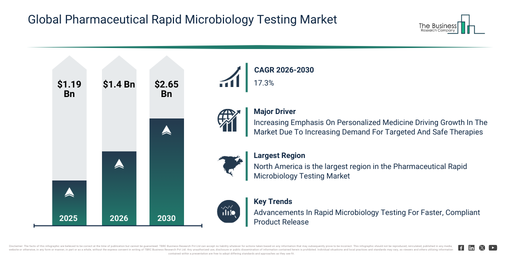
    Experiencing rapid expansion in recent years, the pharmaceutical rapid microbiology testing market is set to grow from $1.19 billion in 2025 to $1.4 billion in 2026, achieving a compound annual growth rate (CAGR) of 17.6%. The historical progression can be linked to an ongoing reliance on conventional culture-based testing approaches, more stringent regulatory requirements for accelerated product endorsement, a boost in pharmaceutical manufacturing operations, scarce automation in microbiology labs, and an elevated consciousness regarding contamination perils.

    The pharmaceutical rapid microbiology testing market is anticipated to experience swift expansion in the coming years, with projections indicating it will reach $2.65 billion by 2030, reflecting a compound annual growth rate (CAGR) of 17.3%. This forecasted growth is driven by the development of automated and high-throughput testing systems, the integration of digital data management with cloud-based analytics, the growing adoption of rapid testing in biopharmaceutical processes, the expansion of contract manufacturing organizations and contract testing laboratories, and increased investments in sterility and quality control innovations. Key trends shaping the forecast period involve the adoption of rapid PCR and ATP-based microbiology testing, the rising utilization of flow cytometry and ELISA for microbial detection, the expansion of in-process and bioburden monitoring applications, a growing demand for automated microbial detection systems, and the integration of rapid microbiology testing into quality control and sterility assurance practices.

    Download A Free Sample Report For Comprehensive Market Insights:

    https://www.thebusinessresearchcompany.com/sample.aspx?id=27381&type=smp&utm_source=BlogsPR&utm_medium=Paid&utm_campaign=Jul_PR

    Pharmaceutical Rapid Microbiology Testing Market Growth Momentum: Which Factors Are Influencing Demand?

    The growing focus on personalized medicine is anticipated to drive expansion in the pharmaceutical rapid microbiology testing market going forward. Personalized medicine refers to a healthcare methodology that customizes medical decisions and therapies according to an individual’s distinct genetic profile, lifestyle choices, and environmental influences. This approach is gaining traction due to a heightened demand for more effective and targeted treatments that minimize the guesswork involved in therapy selection. By facilitating quicker detection of microbial contaminants, pharmaceutical rapid microbiology testing plays a vital role in personalizing medicine, thereby ensuring the safety and sterility of bespoke treatments designed for specific patients. As an illustration, the Personalized Medicine Coalition, a nonprofit organization based in the United States, reported in February 2024 that the FDA approved 16 new personalized therapies for rare disease patients in 2023, an increase from six in 2022. Consequently, the rising emphasis on personalized medicine is fueling growth in the pharmaceutical rapid microbiology testing market.

    Pharmaceutical Rapid Microbiology Testing Market Categorization By Product Type And Application

    The pharmaceutical rapid microbiology testing market covered in this report is segmented –

    1) By Product: Instruments, Reagents And Kits, Accessories

    2) By Technology Type: Polymerase Chain Reaction (PCR), Adenosine Triphosphate (ATP) Bioluminescence, Flow Cytometry, Enzyme-Linked Immunosorbent Assay (ELISA) Chromatography, Biosensors And Bioassays, Impedance Microbiology, Other Technology Types

    3) By Microorganism Type Tested: Bacteria, Fungi (Yeast And Mold), Viruses, Mycoplasma, Endotoxins

    4) By Application: Raw Material Testing, In-Process Testing, Microbial Limit Testing, Bioburden Assessment, Process Water Testing, Environment Monitoring, Sterility Testing

    5) By End-User: Pharmaceutical And Biotechnology Companies, Contract Manufacturing Organizations (CMOs), Hospitals And Diagnostic Laboratories, Research And Academic Institutes

    Subsegments:

    1) By Instruments: Adenosine Triphosphate (ATP) Bioluminometer, Flow Cytometer, Polymerase Chain Reaction (PCR) Thermocycler Or Real-Time Polymerase Chain Reaction (PCR) System, Automated Microbial Detection Systems, Rapid Immunoassay Analyzers

    2) By Reagents And Kits: Adenosine Triphosphate (ATP) Detection Kits, Polymerase Chain Reaction (PCR) Reagents, Enzyme-Linked Immunosorbent Assay (ELISA) Kits, Microbial Culture Media Kits, Fluorescent Staining Kits

    3) By Accessories: Microplates Or Test Tubes, Pipettes And Tips, Filters And Membranes, Sample Collection Swabs

    Pharmaceutical Rapid Microbiology Testing Market Trends Reshaping Industry Growth

    Key players in the pharmaceutical rapid microbiology testing industry are actively pursuing breakthroughs, such as adenosine triphosphate (ATP) bioluminescence, designed to enable faster product release while adhering to regulatory guidelines. This technique, known as ATP bioluminescence, is a quick test that identifies living microbes by quantifying ATP levels through a luciferase-mediated light reaction, where the intensity of emitted light reveals microbial presence in pharmaceuticals, medical devices, and various other substances. A notable example occurred in March 2025, when Nelson Labs LLC, a healthcare firm based in the United States, introduced a rapid-method sterility testing service. This novel approach to pharmaceutical microbiology testing offers shorter detection periods, automated analysis of results, and high-throughput capacity. The rapid sterility test demonstrates considerable adaptability, accommodating a diverse array of pharmaceutical and medical device products by dramatically cutting testing durations without sacrificing adherence to regulatory standards.

    Pharmaceutical Rapid Microbiology Testing Market Company Landscape And Strategic Competition

    Major companies operating in the pharmaceutical rapid microbiology testing market are Merck KGaA, Becton Dickinson and Company, SGS SA, Eurofins Scientific SE, Charles River Laboratories International Inc, ALS Limited, WESSLING GmbH, Nelson Labs LLC, Labor LS SE & Co. KG, GBA Pharma GmbH, ANACON LABORATORIES PRIVATE LIMITED, Vimta Labs Limited, Pacific Biolabs Inc., Wickham Laboratories, Microchem Laboratory Inc., Infinity Laboratories Private Limited, Ghaziabad Testing Laboratories Private Limited, Medistri SA, PREWEL LABS PRIVATE LIMITED, TUV SUD SOUTH ASIA PRIVATE LIMITED

    Access The Complete Pharmaceutical Rapid Microbiology Testing Market Report:

    https://www.thebusinessresearchcompany.com/report/pharmaceutical-rapid-microbiology-testing-global-market-report?utm_source=BlogsPR&utm_medium=Paid&utm_campaign=Jul_PR

    Pharmaceutical Rapid Microbiology Testing Market Regional Distribution: Which Areas Drive Market Expansion?

    North America was the largest region in the pharmaceutical rapid microbiology testing market in 2025. Asia-Pacific is expected to be the fastest-growing region in the forecast period. The regions covered in the pharmaceutical rapid microbiology testing market report are Asia-Pacific, South East Asia, Western Europe, Eastern Europe, North America, South America, Middle East, Africa.

    Get in touch with us:

    The Business Research Company: https://www.thebusinessresearchcompany.com/?utm_source=BlogsPR&utm_medium=Paid&utm_campaign=home_page_test

    Americas: +1 310-496-7795

    Asia: +44 7882 955267 & +91 8897263534

    Europe: +44 7882 955267

    Email us at: marketing@tbrc.info

    Follow us on:

    LinkedIn: https://in.linkedin.com/company/the-business-research-company

    YouTube: https://www.youtube.com/channel/UC24_fI0rV8cR5DxlCpgmyFQ

    Global Market Model: https://www.thebusinessresearchcompany.com/global-market-model
  • Pharmaceutical Quality Control Market Growth Is Accelerating As Industry Transformation Continues

    Pharmaceutical Quality Control Market Growth Is Accelerating As Industry Transformation Continues

    Through market attractiveness analysis, total addressable market evaluation, company benchmarking matrices, interactive Excel dashboards, expanded supply chain intelligence, emerging startup coverage, and detailed product insights, The Business Research Company’s 2026 market reports provide more actionable and strategically valuable research.

    Pharmaceutical Quality Control Market Size, Value And Growth Trends Through 2030

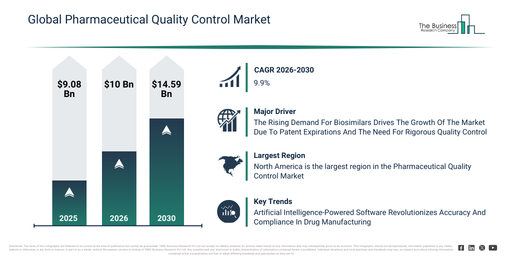
    The market for quality control in the pharmaceutical sector has experienced robust expansion in recent times. Valued at $9.08 billion in 2025, it is projected to reach $10 billion by 2026, reflecting a compound annual growth rate (CAGR) of 10.2%. This historical growth has been driven by several factors, including constrained access to sophisticated quality control instruments, a dependence on manual testing approaches, the ongoing expansion of pharmaceutical manufacturing, heightened demands for regulatory adherence, and the broadening of microbiological testing capabilities.

    The pharmaceutical quality control market is projected to experience significant expansion over the coming years, with an anticipated increase to $14.59 billion by 2030, reflecting a compound annual growth rate (CAGR) of 9.9%. This upward trajectory during the forecast period is driven by factors such as the integration of cloud-based and AI-enhanced quality control systems, a growing preference for automated analytical instruments, heightened spending on validation and qualification services, an intensified emphasis on sterility assurance and stability testing, and the expansion of collaborative contract research and development efforts. Key trends shaping this period encompass the widespread uptake of advanced chromatography and spectroscopy tools, a rising demand for microbiological and sterility testing services, the broadening of stability testing and validation offerings, an increased focus on endotoxin and bio-burden analysis, and a greater need for both on-premises and cloud-based quality control solutions.

    Download A Free Sample Report For Comprehensive Market Insights:

    https://www.thebusinessresearchcompany.com/sample.aspx?id=27380&type=smp&utm_source=BlogsPR&utm_medium=Paid&utm_campaign=Jul_PR

    Pharmaceutical Quality Control Market Expansion Drivers: What Is Shaping Future Growth?

    The increasing need for biosimilars is anticipated to accelerate the expansion of the pharmaceutical quality control market moving forward. These biosimilars are biologic medical products that closely resemble an already licensed reference biologic, showing no clinically significant variations in safety, purity, or strength. Their growing demand largely stems from the expiration of patents covering original biologic drugs, which allows more affordable alternatives to enter the marketplace. Pharmaceutical quality control plays a key role in guaranteeing the safety, purity, and consistency of biosimilars by conducting thorough testing against reference biologics, thereby facilitating regulatory compliance and market authorization. For example, in January 2023, Cardinal Health Inc., a healthcare company based in the US, stated that there were 33 FDA-approved biosimilar products in the United States as of January 2022, with 21 available for commercial use. By the year 2023, the number had grown to 40 FDA-approved biosimilars, and 25 were accessible commercially. Consequently, the rising demand for biosimilars is fueling growth in the pharmaceutical quality control market.

    Pharmaceutical Quality Control Market Segment Analysis And Revenue Opportunities

    The pharmaceutical quality control market covered in this report is segmented –

    1) By Product: Consumables, Services, Instruments

    2) By Deployment Type: Cloud-Based And Web-Based, On-Premises

    3) By Analysis Type: Sterility Testing, Membrane Filtration, Direct Inoculation, Bio Burden Testing, Aerobic Count Testing, Anaerobic Count Testing, Spore Count Testing, Fungi or Mold Count Testing, Endotoxin Testing, Other Analysis Types

    4) By End-user: Pharmaceutical And Biotechnology Companies, Contract Development and Manufacturing Organization Or Contract Research Organization, Research Laboratories

    Subsegments:

    1) By Consumables: Culture Media, Reagents, Assay Kits, Filters And Membranes, Pipette Tips

    2) By Services: Microbiological Testing Services, Analytical Testing Services, Stability Testing Services, Sterility Assurance Services, Validation And Qualification Services

    3) By Instruments: Chromatography Systems, Spectroscopy Instruments, Particle Size Analyzers, Potential Of Hydrogen Meters And Electrical Conductivity Meters, Autoclaves And Incubators

    Pharmaceutical Quality Control Market Strategic Trends: What Is Defining The Next Phase Of Growth?

    Leading players in the pharmaceutical quality control sector are increasingly prioritizing innovations like intelligent software platforms to boost testing precision and adherence to regulations. These advanced digital tools incorporate automation, data analytics, and artificial intelligence (AI) to elevate the accuracy, productivity, and compliance of testing operations. For example, in June 2025, Dycine Pharmaceuticals Ltd., a pharmaceutical firm based in India, introduced an AI-powered quality control system aimed at improving manufacturing standards and safeguarding product quality. Leveraging sophisticated AI algorithms, this system identifies irregularities, monitors live data, and simplifies compliance workflows across the entire production process. Its core capabilities include predictive analytics, automated report generation, and smooth compatibility with current manufacturing setups, which collectively minimize errors, boost operational efficiency, and ensure uniform quality throughout production.

    Pharmaceutical Quality Control Market Leading Players Shaping Industry Direction

    Major companies operating in the pharmaceutical quality control market are Thermo Fisher Scientific Inc., Abbott Laboratories, Danaher Corporation, Merck KGaA, Becton Dickinson and Company, SGS S.A., Eurofins Scientific SE, WuXi AppTec Co. Ltd., Charles River Laboratories International Inc., PerkinElmer Inc., Mettler-Toledo International Inc., bioMérieux SA, Shimadzu Scientific Instruments Inc., Waters Corporation, Randox Laboratories Ltd., SOLVIAS AG, Esco Micro Pte. Ltd, REMI Elektrotechnik Limited, Lucideon Limited, BRAM-COR S.p.A.

    Access The Complete Pharmaceutical Quality Control Market Report:

    https://www.thebusinessresearchcompany.com/report/pharmaceutical-quality-control-global-market-report?utm_source=BlogsPR&utm_medium=Paid&utm_campaign=Jul_PR

    Pharmaceutical Quality Control Market Leading Geography: Which Region Generates The Most Revenue?

    North America was the largest region in the pharmaceutical quality control market in 2025. Asia-Pacific is expected to be the fastest-growing region in the forecast period. The regions covered in the pharmaceutical quality control market report are Asia-Pacific, South East Asia, Western Europe, Eastern Europe, North America, South America, Middle East, Africa.

    Get in touch with us:

    The Business Research Company: https://www.thebusinessresearchcompany.com/?utm_source=BlogsPR&utm_medium=Paid&utm_campaign=home_page_test

    Americas: +1 310-496-7795

    Asia: +44 7882 955267 & +91 8897263534

    Europe: +44 7882 955267

    Email us at: marketing@tbrc.info

    Follow us on:

    LinkedIn: https://in.linkedin.com/company/the-business-research-company

    YouTube: https://www.youtube.com/channel/UC24_fI0rV8cR5DxlCpgmyFQ

    Global Market Model: https://www.thebusinessresearchcompany.com/global-market-model
  • Pharmaceutical Processing Seals Market Outlook Highlights The Next Major Growth Opportunities

    Pharmaceutical Processing Seals Market Outlook Highlights The Next Major Growth Opportunities

    Delivering more actionable and strategically valuable research, The Business Research Company’s 2026 market reports feature market attractiveness analysis, total addressable market evaluation, company benchmarking matrices, interactive Excel dashboards, expanded supply chain intelligence, emerging startup coverage, and detailed product insights.

    Pharmaceutical Processing Seals Market CAGR Analysis And Future Market Development

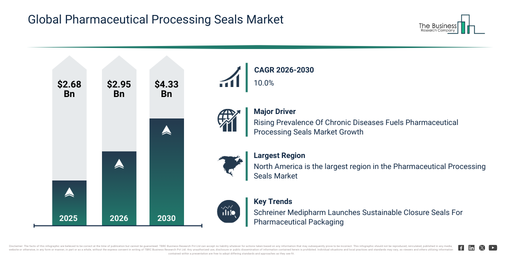
    The pharmaceutical processing seals market has experienced significant expansion over the past few years. Valued at $2.68 billion in 2025, it is projected to reach $2.95 billion by 2026, reflecting a compound annual growth rate (CAGR) of 10.4%. This historical growth is driven by factors such as increased pharmaceutical manufacturing, the growing use of mechanical seals, a heightened need for contamination-free operations, greater automation of equipment, and stricter regulatory requirements for process safety.

    The pharmaceutical processing seals market is projected to experience significant expansion over the coming years. By 2030, its value is anticipated to reach $4.33 billion, reflecting a compound annual growth rate (CAGR) of 10.0%. This forecasted growth is driven by factors such as the increasing production of biologics and vaccines, breakthroughs in seal material technology, the implementation of smart manufacturing techniques, the growth of production facilities in emerging markets, and a heightened demand for customized sealing solutions. Key trends shaping the coming period include the widespread utilization of advanced sealing materials, adherence to good manufacturing practices (GMP) and regulatory requirements, a growing level of automation within pharmaceutical operations, improvements in process safety and contamination management, as well as the precise customization and engineering of seals.

    Download A Free Sample Report For Comprehensive Market Insights:

    https://www.thebusinessresearchcompany.com/sample.aspx?id=5603&type=smp&utm_source=BlogsPR&utm_medium=Paid&utm_campaign=Jul_PR

    Pharmaceutical Processing Seals Market Development Factors: Which Trends Are Supporting Demand?

    The expansion of the pharmaceutical processing seals market is largely driven by the increasing incidence of chronic illnesses. A chronic illness is defined as a condition persisting for three months or longer, often worsening over time. Conditions like diabetes, cardiovascular diseases, and various cancers demand ongoing treatment and management. As their global prevalence rises, pharmaceutical companies must ramp up medication production and distribution. This heightened output requires a broad array of pharmaceutical processing seals to uphold product integrity, avert contamination, and assure drug safety and effectiveness. By way of example, in September 2023, the World Health Organization, a specialized United Nations agency based in Switzerland, reported 41 million annual deaths globally—74% of which are from non-communicable diseases (NCDs) or chronic illnesses. Among these, cardiovascular diseases caused 17.9 million deaths, cancer led to 9.3 million, chronic respiratory diseases accounted for 4.1 million, and diabetes contributed to 2.0 million deaths. Consequently, the growth in chronic diseases is fueling the pharmaceutical processing seals market’s development.

    Pharmaceutical Processing Seals Market Segmentation And Category Breakdown

    The pharmaceutical processing seals market covered in this report is segmented –

    1) By Type: O-Rings, Gaskets, Lip seals, D Seals, Other Types (Diaphragms And X-rings)

    2) By Material: Metals, PTFE, Silicone, Nitrile Rubber, EPDM, Other materials

    3) By Application: Manufacturing Equipment, Agitators, Mixers, Reactors, Gear Boxes, Other applications

    Subsegments:

    1) By O-Rings: Standard O-Rings, Custom O-Rings, Specialty O-Rings

    2) By Gaskets: Sheet Gaskets, Cut Gaskets, Composite Gaskets

    3) By Lip Seals: Single Lip Seals, Double Lip Seals, Custom Lip Seals

    4) By D Seals: Standard D Seals, Custom D Seals

    5) By Other Types: Diaphragms, X-Rings, Bellows Seals

    Pharmaceutical Processing Seals Market Transformation Trends: Which Innovations Are Driving Change?

    Major companies in the pharmaceutical processing seals market are driving innovation by developing advanced products, such as sustainable closure seals designed to enhance environmental sustainability. These eco-friendly seals aim to meet stringent regulatory requirements while reducing environmental impact, often incorporating biodegradable or recyclable materials to enhance sustainability in pharmaceutical manufacturing processes. For instance, in February 2024, Schreiner MediPharm, a business unit of Schreiner Group, a Germany-based company that develops and manufactures innovative specialty labels for healthcare, launched sustainable closure seals. The new seals are made from film material that contains up to 90% post-consumer recyclate (PCR) designed for pharmaceutical packaging. The seals not only focus on sustainability but also provide tamper protection, a critical aspect given the rise in counterfeit drugs.

    Pharmaceutical Processing Seals Market Competitive Analysis Of Major Industry Participants

    Major companies operating in the pharmaceutical processing seals market are Trelleborg AB, Freudenberg SE, Flowserve Corporation, James Walker & Co. Ltd., Parker-Hannifin Corporation, Compagnie de Saint-Gobain SA, Garlock Sealing Technologies LLC, John Crane Inc., IDEX Corporation, Marco Rubber & Plastic Products Inc., Technetics Group LLC, Sealmatic India Pvt. Ltd., Maffs Seals Pvt. Ltd., Quantech Sealing Systems, EagleBurgmann India Pvt. Ltd., Morgan Advanced Materials plc, Bal Seal Engineering Inc., Apple Rubber Products Inc., PPE Precision Polymer Engineering Inc., Minnesota Rubber and Plastics, Greene Tweed & Co., ElringKlinger Kunststofftechnik GmbH, Parco Inc., Seal & Design Inc., Hi-Tech Seals Inc., Eclipse Engineering Inc., Techno Ad Ltd., A. W. Chesterton Company, M&C TechGroup Germany GmbH, Meccanotecnica Umbra SpA, Vee Packings Inc., Arizona Sealing Devices Inc., CinchSeal Inc., Flexitallic Group, Hennig Gasket & Seals Inc.

    Access The Complete Pharmaceutical Processing Seals Market Report:

    https://www.thebusinessresearchcompany.com/report/pharmaceutical-processing-seals-global-market-report?utm_source=BlogsPR&utm_medium=Paid&utm_campaign=Jul_PR

    Pharmaceutical Processing Seals Market Regional Outlook: Where Are The Largest Opportunities Located?

    North America was the largest region in the pharmaceutical processing seals market in 2025. Asia-Pacific is expected to be the fastest-growing region in the forecast period. The regions covered in the pharmaceutical processing seals market report are Asia-Pacific, South East Asia, Western Europe, Eastern Europe, North America, South America, Middle East, Africa.

    Get in touch with us:

    The Business Research Company: https://www.thebusinessresearchcompany.com/?utm_source=BlogsPR&utm_medium=Paid&utm_campaign=home_page_test

    Americas: +1 310-496-7795

    Asia: +44 7882 955267 & +91 8897263534

    Europe: +44 7882 955267

    Email us at: marketing@tbrc.info

    Follow us on:

    LinkedIn: https://in.linkedin.com/company/the-business-research-company

    YouTube: https://www.youtube.com/channel/UC24_fI0rV8cR5DxlCpgmyFQ

    Global Market Model: https://www.thebusinessresearchcompany.com/global-market-model
  • Pharmaceutical Pellets Market Trends And Growth Drivers Point To Strong Future Potential

    Pharmaceutical Pellets Market Trends And Growth Drivers Point To Strong Future Potential

    Enhanced with market attractiveness analysis, total addressable market evaluation, company benchmarking matrices, interactive Excel dashboards, expanded supply chain intelligence, emerging startup coverage, and detailed product insights, The Business Research Company’s 2026 market reports deliver more actionable and strategically valuable research.

    Pharmaceutical Pellets Market Expansion From $2.23 Billion In 2026 To $3.48 Billion In 2030

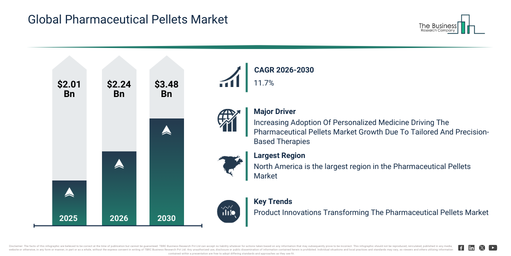
    The pharmaceutical pellets market has experienced rapid expansion in recent years, with its value projected to rise from $2.01 billion in 2025 to $2.24 billion in 2026, reflecting a compound annual growth rate (CAGR) of 11.4%. This historical growth has been driven by several factors, including the increasing incidence of chronic diseases, a growing need for modified release dosage forms, progress in extrusion and fluid bed technologies, the broadening of pharmaceutical production capabilities, and a heightened emphasis on improving patient adherence.

    The pharmaceutical pellets market is projected to experience substantial expansion in the coming years, with its value anticipated to reach $3.48 billion by 2030, driven by an impressive compound annual growth rate (CAGR) of 11.7%. This upward trajectory in the forecast period is fueled by several key factors, including the rise of precision drug delivery solutions, a growing preference for incorporating pellets into combination therapies, heightened demand for nutraceuticals and functional ingredients, advances in solvent-free and melt-based processing methods, and the increasing presence of contract manufacturing organizations. Among the prominent trends shaping this period are the greater utilization of multi-particulate drug delivery systems, an escalating need for controlled and sustained release formulations, the expanded application of pellets within capsule and sachet formats, the broader adoption of pelletization techniques in nutraceutical products, and ongoing technological improvements in coating and layering processes.

    Download A Free Sample Report For Comprehensive Market Insights:

    https://www.thebusinessresearchcompany.com/sample.aspx?id=12354&type=smp&utm_source=BlogsPR&utm_medium=Paid&utm_campaign=Jul_PR

    Pharmaceutical Pellets Market Industry Drivers: What Is Driving Revenue Growth?

    The growing use of tailored treatments is anticipated to drive expansion in the pharmaceutical pellets market in the coming period. This approach to medicine customizes care based on individual patient characteristics, frequently relying on molecular diagnostics and specific biological markers. Progress in genomics and diagnostic tools is fueling the trend toward personalized medicine, allowing therapies to be precisely aligned with a person’s genetic profile. Pharmaceutical pellets, which enable flexible production in small quantities, along with accurate control over medication release, are especially well-suited for customized dosages and combined treatment strategies. For instance, the Personalized Medicine Coalition, a non-profit organization based in the United States, reported in February 2024 that 26 new personalized therapies received approval from the U.S. Food and Drug Administration in 2023; this group included 20 new molecular entities and six gene- or cell-based treatments, a notable increase from the six rare disease therapies approved in 2022. Consequently, the broader adoption of individualized medicine is contributing to growth in the pharmaceutical pellets market.

    Pharmaceutical Pellets Market Segment Outlook: Which Categories Are Expanding The Fastest?

    The pharmaceutical pellets market covered in this report is segmented –

    1) By Technology: Extrusion, Fluid Bed Granulation, Dry Powder Layering, Solution And Suspension Layering, Spray Congealing, Spray Drying

    2) By Mechanism Of Action: Diffusion, Erosion, Osmosis

    3) By Technique: Direct, Melt, Wet, Dry

    4) By End-User: Pharmaceutical, Nutraceutical

    Subsegments:

    1) By Extrusion: Melt Extrusion, Solvent-Based Extrusion

    2) By Fluid Bed Granulation: Top-Spray Granulation, Bottom-Spray Granulation

    3) By Dry Powder Layering: Powder Layering On Inert Cores, Coating Techniques

    4) By Solution And Suspension Layering: Solution Layering, Suspension Layering

    5) By Spray Congealing: Hot Melt Spraying, Cooling Methods

    6) By Spray Drying: Single-Stage Spray Drying, Multi-Stage Spray Drying

    Pharmaceutical Pellets Market Growth Trends: What Is Influencing The Future Outlook?

    Major companies in the pharmaceutical pellets market are concentrating on creating cutting-edge solutions to enhance particle engineering, achieve high containment, and uphold precision in drug formulation procedures. Particle engineering platforms are technological systems that facilitate controlled production of pharmaceutical pellets with exact size, shape, and strength, thereby guaranteeing safety, efficacy, and adherence to regulations. For example, in May 2024, Schedio SA, an engineering firm based in the United States, introduced the High Potent Pilot Particle Engineering Platform. This advanced system supports up to 465 configurations and works in conjunction with spray dryers and jet mills, designed to improve particle engineering for high-potency compounds within the pharmaceutical sector. It incorporates high containment and intuitive controls, built to ensure safety, accuracy, and regulatory compliance in pharmaceutical processes.

    Pharmaceutical Pellets Market Key Companies And Competitive Benchmarking

    Major companies operating in the pharmaceutical pellets market are Abbott Laboratories, Takeda, Boehringer Ingelheim, Teva Pharmaceutical Industries Ltd., Eisai Co. Ltd., Colorcon Inc., Nordic Sugar AB, Pfizer, Merck & Co., Manus Aktteva Biopharma LLP, Thexa Pharma (P) Limited, Avanscure Lifesciences Private Limited, MB Sugars & Pharmaceuticals Limited, CIL Laboratories Pvt Ltd, Sainor Pharma Pvt Ltd, Umang Pharmatech Pvt Ltd, Nami Lifesciences Pvt Ltd, Lograns Pharma Private Limited, Rainbow Health Care Products, Chemit Laboratories, Concord Drugs Limited, Nanjing Joyfulchem Co. Ltd., Praful International Corporation, Pellets Pharma Limited, Vision Pharmacoat Pvt Ltd, Spansules Pharma, Ravoos Laboratories Ltd

    Access The Complete Pharmaceutical Pellets Market Report:

    https://www.thebusinessresearchcompany.com/report/pharmaceutical-pellets-global-market-report?utm_source=BlogsPR&utm_medium=Paid&utm_campaign=Jul_PR

    Pharmaceutical Pellets Market Geographic Landscape: Which Region Dominates Industry Growth?

    North America was the largest region in the pharmaceutical pellets market in 2025. Asia-Pacific is expected to be the fastest-growing region in the forecast period. The regions covered in the pharmaceutical pellets market report are Asia-Pacific, South East Asia, Western Europe, Eastern Europe, North America, South America, Middle East, Africa.

    Get in touch with us:

    The Business Research Company: https://www.thebusinessresearchcompany.com/?utm_source=BlogsPR&utm_medium=Paid&utm_campaign=home_page_test

    Americas: +1 310-496-7795

    Asia: +44 7882 955267 & +91 8897263534

    Europe: +44 7882 955267

    Email us at: marketing@tbrc.info

    Follow us on:

    LinkedIn: https://in.linkedin.com/company/the-business-research-company

    YouTube: https://www.youtube.com/channel/UC24_fI0rV8cR5DxlCpgmyFQ

    Global Market Model: https://www.thebusinessresearchcompany.com/global-market-model
  • Pharmaceutical Lipid-Based Excipients Market Expansion Is Reshaping Competitive Dynamics Across The Industry

    Pharmaceutical Lipid-Based Excipients Market Expansion Is Reshaping Competitive Dynamics Across The Industry

    Through market attractiveness analysis, total addressable market evaluation, company benchmarking matrices, interactive Excel dashboards, expanded supply chain intelligence, emerging startup coverage, and detailed product insights, The Business Research Company’s 2026 market reports provide more actionable and strategically valuable research.

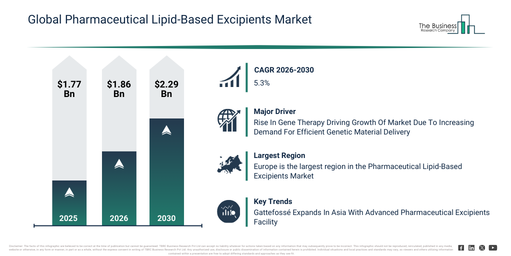
    Pharmaceutical Lipid-Based Excipients Market Forecast Highlighting Growth From $1.86 Billion To $2.28 Billion

    The pharmaceutical segment focused on lipid-based excipients has experienced notable expansion in recent years. Projections indicate a rise from a market valuation of $1.77 billion in 2025 to $1.86 billion in 2026, reflecting a compound annual growth rate of 5.2%. This upward trend during the historical period can be linked to several factors, including an increase in drug development pipelines for poorly water-soluble compounds, progress made in the science of lipid formulations, a broadening scope of pharmaceutical production operations, a growing preference for employing oral delivery mechanisms, and regulatory endorsement provided for lipid-based excipient materials.

    The market for pharmaceutical lipid-based excipients is projected to experience robust expansion over the coming years. By 2030, its value is anticipated to reach $2.29 billion, reflecting a compound annual growth rate (CAGR) of 5.3%. This forecasted growth is driven by several factors, including the rise of complex drug formulations, a growing need for improved drug absorption, an expansion in biologics and oncology treatments, progress in lipid technology, and a heightened emphasis on patient-centered product design. Key trends shaping this period involve the greater use of lipid excipients to address poorly soluble drugs, their increased application in both oral and parenteral formulations, a rising demand for excipients that enhance bioavailability, the broadening of lipid-based drug delivery platforms, and a stronger focus on natural and sustainable lipid sources.

    Download A Free Sample Report For Comprehensive Market Insights:

    https://www.thebusinessresearchcompany.com/sample.aspx?id=24374&type=smp&utm_source=BlogsPR&utm_medium=Paid&utm_campaign=Jul_PR

    #Pharmaceutical Lipid-Based Excipients Market Growth Factors: Which Forces Are Supporting Market Expansion?

    The anticipated expansion of the pharmaceutical lipid-based excipients market is fueled by the increasing adoption of gene therapy. This medical approach focuses on altering or adjusting an individual’s genes to either cure or prevent illnesses. Gene therapy is advancing due to improved delivery methods that ensure the safe, effective, and precise transfer of genetic material into cells. Pharmaceutical lipid-based excipients support gene therapy by facilitating delivery systems that maintain stability and enable targeted genetic transport. These agents boost treatment outcomes by shielding nucleic acids and improving cellular absorption, thereby increasing the efficacy of contemporary therapies. For example, in December 2024, the American Society of Gene & Cell Therapy (ASGCT)—a nonprofit medical and scientific organization based in the US—reported that the Food and Drug Administration (FDA) authorized 6 gene therapy products in 2023, compared to 5 approvals recorded in 2022. Consequently, the growth of the gene therapy field is driving momentum in the pharmaceutical lipid-based excipients market.

    Pharmaceutical Lipid-Based Excipients Market Segment Landscape: Which Areas Lead Market Development?

    The pharmaceutical lipid-based excipients market covered in this report is segmented –

    1) By Excipient Type: Oils, Hydrogenated Vegetable Oils, GMCC, Hard Fats, Medium Chain Triglycerides, Lecithin And Phospholipids, Sodium Oleate, Capri Caprylic Mono Diglyceride, Other Excipient Types

    2) By Product Applications: Oral Formulations, Parenteral, Topical Applications, Ophthalmic Applications, Suppositories, Other Product Applications

    3) By Disease Application: Cardiovascular Diseases, Neurological Disorders, Oncology, Metabolic Disorders, Hormonal Therapies, Infectious Diseases, Other Disease Applications

    4) By Age Group: Pediatric Products (0-18 years), Adult Products (19-64 years), Geriatric Products (65+ years)

    5) By End-Use: Pharmaceutical Manufacturers, Contract Development And Manufacturing Organizations, Other End Users

    Subsegments:

    1) By Oils: Soybean Oil, Olive Oil, Palm Oil, Sunflower Oil, Other Oils

    2) By Hydrogenated Vegetable Oils: Hydrogenated Soybean Oil, Hydrogenated Palm Oil, Hydrogenated Cottonseed Oil, Other Hydrogenated Vegetable Oils

    3) By GMCC (Glyceryl Mono/Diesters of C16/C18): Glyceryl Monostearate, Glyceryl Distearate, Glyceryl Monopalmitate, Other GMCC

    4) By Hard Fats: Hydrogenated Castor Oil, Hydrogenated Palm Kernel Oil, Hydrogenated Coconut Oil, Other Hard Fats

    5) By Medium Chain Triglycerides (MCTs): Capric Triglycerides, Caprylic Triglycerides, Caprylic-Capric Triglycerides, Other MCTs

    6) By Lecithin and Phospholipids: Soy Lecithin, Egg Lecithin, Phosphatidylcholine, Phosphatidylserine, Other Lecithin and Phospholipids

    7) By Sodium Oleate: Pharmaceutical Grade Sodium Oleate, Food Grade Sodium Oleate, Industrial Grade Sodium Oleate

    8) By Capri-Caprylic Mono/Diglycerides: Capric-Caprylic Monoglycerides, Capric-Caprylic Diglycerides

    9) By Other Excipient Types: Sucrose Esters, Fatty Acid Esters, PEGylated Lipids, Other Miscellaneous Lipids

    Pharmaceutical Lipid-Based Excipients Market Industry Trends: What Changes Are Reshaping Demand?

    Major players in the pharmaceutical lipid-based excipients sector are channeling resources into strategic investments, particularly the development of advanced Centers of Excellence aimed at stimulating innovation, improving formulation capabilities, facilitating drug delivery research, and bolstering their competitive edge within emerging therapeutic fields. A notable example occurred in November 2024, when Gattefossé SAS, a chemical manufacturing firm based in France, unveiled a new state-of-the-art Technical Center of Excellence in Mumbai. This facility is designed to cater to the expanding pharmaceutical market in India by delivering specialized laboratories and customized support focused on excipient innovation, with an emphasis on bioavailability, sustained release, and topical formulations, thereby reinforcing the company’s footprint across the Asia-Pacific region. The center houses both pharmaceutical and personal care application labs, intended to drive forward innovation, promote collaborative efforts, and create a conducive environment for productive research and development.

    Pharmaceutical Lipid-Based Excipients Market Industry Leaders And Market Competition

    Major companies operating in the pharmaceutical lipid-based excipients market are Cargill Incorporated, BASF SE, Merck KGaA, FUJIFILM Corporation, Evonik Industries AG, DuPont de Nemours Inc., Stepan Company, Croda International, Ashland Corporation, NOF CORPORATION, CordenPharma, SEPPIC, Nippon Fine Chemical Co. Ltd., Cayman Chemical, ABITEC Corporation, Creative Biolabs, IOI Oleo GmbH, Lipoid, RuixiBiotechCo.Ltd, Biosynth

    Access The Complete Pharmaceutical Lipid-Based Excipients Market Report:

    https://www.thebusinessresearchcompany.com/report/pharmaceutical-lipid-based-excipients-global-market-report?utm_source=BlogsPR&utm_medium=Paid&utm_campaign=Jul_PR

    Pharmaceutical Lipid-Based Excipients Market Largest Region: Which Geography Holds The Highest Market Share?

    Europe was the largest region in the pharmaceutical lipid-based excipients market in 2025. Asia-Pacific is expected to be the fastest-growing region in the forecast period. The regions covered in the pharmaceutical lipid-based excipients market report are Asia-Pacific, South East Asia, Western Europe, Eastern Europe, North America, South America, Middle East, Africa.

    Get in touch with us:

    The Business Research Company: https://www.thebusinessresearchcompany.com/?utm_source=BlogsPR&utm_medium=Paid&utm_campaign=home_page_test

    Americas: +1 310-496-7795

    Asia: +44 7882 955267 & +91 8897263534

    Europe: +44 7882 955267

    Email us at: marketing@tbrc.info

    Follow us on:

    LinkedIn: https://in.linkedin.com/company/the-business-research-company

    YouTube: https://www.youtube.com/channel/UC24_fI0rV8cR5DxlCpgmyFQ

    Global Market Model: https://www.thebusinessresearchcompany.com/global-market-model
  • Pharmaceutical Impurity Synthesis and Isolation Services Market Forecast Reveals Where Future Industry Value Will Be Created

    Pharmaceutical Impurity Synthesis and Isolation Services Market Forecast Reveals Where Future Industry Value Will Be Created

    Delivering more actionable and strategically valuable research, The Business Research Company’s 2026 market reports feature market attractiveness analysis, total addressable market evaluation, company benchmarking matrices, interactive Excel dashboards, expanded supply chain intelligence, emerging startup coverage, and detailed product insights.

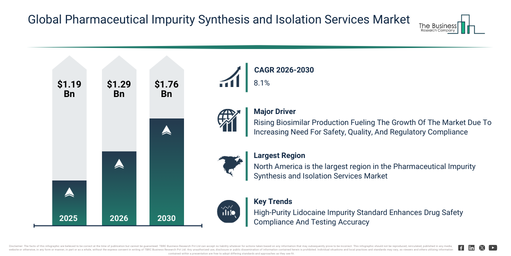
    Pharmaceutical Impurity Synthesis and Isolation Services Market Revenue Growth Supported By A CAGR Of 1.76% Through 2030

    The market for pharmaceutical impurity synthesis and isolation services has experienced robust expansion in recent years. Projected to rise from $1.19 billion in 2025 to $1.29 billion in 2026, this growth corresponds to a compound annual growth rate (CAGR) of 8.4%. Several factors drove this increase during the historical period, including a constrained supply of specialized impurity synthesis services, dependence on standard analytical tools, heightened pharmaceutical production activities, intensified regulatory oversight, and the implementation of fundamental chromatographic techniques.

    The pharmaceutical impurity synthesis and isolation services market is projected to experience robust expansion over the coming years. By 2030, its value is anticipated to reach $1.76 billion, driven by a compound annual growth rate (CAGR) of 8.1%. This forecasted growth is largely fueled by the advancement of hyphenated analytical techniques, an increased focus on metabolite and degradation product synthesis, a growing reliance on outsourcing to contract research organizations (CROs), rising implementation of stability studies, and a heightened emphasis on regulatory-driven impurity profiling. Key trends shaping this period include a growing demand for tailored impurity synthesis services, the broader application of advanced isolation methods, a surge in analytical services aimed at ensuring regulatory compliance, and the expansion of drug development and quality control initiatives, alongside the integration of stability and genotoxic impurity analysis.

    Download A Free Sample Report For Comprehensive Market Insights:

    https://www.thebusinessresearchcompany.com/sample.aspx?id=25877&type=smp&utm_source=BlogsPR&utm_medium=Paid&utm_campaign=Jul_PR

    Pharmaceutical Impurity Synthesis and Isolation Services Market Demand Drivers: What Is Fueling Industry Growth?

    The increasing manufacturing of biosimilars is anticipated to accelerate the expansion of the pharmaceutical impurity synthesis and isolation services market. Biosimilars are biologic drugs designed to be highly comparable to an already licensed reference product, exhibiting no meaningful differences in safety, efficacy, or quality. This surge in biosimilar production is largely driven by the expiration of patents on original biologic drugs, which allows manufacturers to develop more cost-effective treatment alternatives and broaden patient access. Services for synthesizing and isolating pharmaceutical impurities are essential in biosimilar development, as they assist in detecting, characterizing, and managing contaminants, thereby ensuring the biosimilar’s safety, quality, and adherence to regulatory standards. As an example, in March 2025, the African Development Bank—a private banking entity based in Côte d’Ivoire—reported that the new XpandC facility is expected to raise annual biosimilar production capacity from 3 million to 7.65 million doses by 2032, along with the introduction of two additional biosimilars. Consequently, the rising output of biosimilars is fueling growth in the pharmaceutical impurity synthesis and isolation services market.

    Pharmaceutical Impurity Synthesis and Isolation Services Market Segments: Where Are The Largest Growth Opportunities?

    The pharmaceutical impurity synthesis and isolation services market covered in this report is segmented –

    1) By Service: Synthesis Services, Isolation Services, Analytical Services

    2) By Impurity Type: Organic Impurities, Inorganic Impurities, Residual Solvents

    3) By Technique: Chromatography, Spectroscopy, Crystallization, Hyphenated Techniques, Other Techniques

    4) By Application: Drug Development, Commercial Manufacturing, Quality Control, Regulatory Compliance

    5) By End User: Biotech And Pharmaceutical Companies, Contract Research Organizations (CRO), Other End Users

    Subsegments:

    1) By Synthesis Services: Custom Impurity Synthesis, Stable Isotope-Labeled Impurity Synthesis, Process-Related Impurity Synthesis, Degradation Product Synthesis, Metabolite Synthesis

    2) By Isolation Services: Isolation Of Process Impurities, Isolation Of Degradation Impurities, Preparative Chromatography-Based Isolation, Crystallization-Based Isolation, Flash Chromatography Isolation

    3) By Analytical Services: Impurity Profiling, Structural Elucidation, Quantitative Analysis, Genotoxic Impurity Analysis, Stability Studies

    Pharmaceutical Impurity Synthesis and Isolation Services Market Innovation Trends: Which Developments Are Transforming The Industry?

    Leading firms in the pharmaceutical impurity synthesis and isolation services market are concentrating on the creation of cutting-edge solutions, including lidocaine impurity validation and testing, to bolster drug safety, strengthen adherence to regulations, and elevate the overall standard of pharmaceutical products. The concept of lidocaine impurity validation and testing encompasses the identification and measurement of contaminants in lidocaine-based items, aimed at safeguarding their safety, quality, and conformity with regulatory frameworks. For example, in July 2025, Advent Pharma Limited, a pharmaceutical entity headquartered in Bangladesh, introduced a high-purity reference standard for a critical lidocaine impurity known as 1,4-Bis(2,6-dimethylphenyl) piperazine-2,5-dione, designed to assist pharmaceutical companies with method validation, stability assessments, and regulatory submissions for lidocaine formulations. This particular impurity, which may develop during lidocaine synthesis or through degradation, necessitates consistent monitoring to preserve drug safety and effectiveness. Advent’s offering, characterized by a purity level of at least 97%, is accompanied by extensive analytical documentation and is tailored to comply with rigorous regulatory demands like ICH Q3A/B and Q2 guidelines.

    Pharmaceutical Impurity Synthesis and Isolation Services Market Major Participants And Competitive Dynamics

    Major companies operating in the pharmaceutical impurity synthesis and isolation services market are Thermo Fisher Scientific Inc., Merck KGaA, Laboratory Corporation of America Holdings, SGS SA, Eurofins Scientific SE, Agilent Technologies Inc., WuXi AppTec Co. Ltd., Catalent Inc., Charles River Laboratories International Inc., Intertek Group plc, Waters Corporation, Almac Group Limited, Piramal Pharma Limited, Cambrex Corporation, Syngene International Limited, Frontage Laboratories Inc., Pharmaron Beijing Co. Ltd., Symeres B.V., Synergenics Canada Inc., Veeda Clinical Research Limited, Alfa Chemistry LLC, Epichem Pty Ltd., PCI Pharma Services LLC, and VEEPRHO s.r.o.

    Access The Complete Pharmaceutical Impurity Synthesis and Isolation Services Market Report:

    https://www.thebusinessresearchcompany.com/report/pharmaceutical-impurity-synthesis-and-isolation-services-global-market-report?utm_source=BlogsPR&utm_medium=Paid&utm_campaign=Jul_PR

    Pharmaceutical Impurity Synthesis and Isolation Services Market Regional Analysis: Which Region Leads By Revenue?

    North America was the largest region in the pharmaceutical impurity synthesis and isolation services market in 2025. Asia-Pacific is expected to be the fastest-growing region in the forecast period. The regions covered in the pharmaceutical impurity synthesis and isolation services market report are Asia-Pacific, South East Asia, Western Europe, Eastern Europe, North America, South America, Middle East, Africa.

    Get in touch with us:

    The Business Research Company: https://www.thebusinessresearchcompany.com/?utm_source=BlogsPR&utm_medium=Paid&utm_campaign=home_page_test

    Americas: +1 310-496-7795

    Asia: +44 7882 955267 & +91 8897263534

    Europe: +44 7882 955267

    Email us at: marketing@tbrc.info

    Follow us on:

    LinkedIn: https://in.linkedin.com/company/the-business-research-company

    YouTube: https://www.youtube.com/channel/UC24_fI0rV8cR5DxlCpgmyFQ

    Global Market Model: https://www.thebusinessresearchcompany.com/global-market-model
  • Pharmaceutical Grade Amino Acid Market Growth Through 2030 Creates New Strategic Opportunities

    Pharmaceutical Grade Amino Acid Market Growth Through 2030 Creates New Strategic Opportunities

    Enhanced with market attractiveness analysis, total addressable market evaluation, company benchmarking matrices, interactive Excel dashboards, expanded supply chain intelligence, emerging startup coverage, and detailed product insights, The Business Research Company’s 2026 market reports deliver more actionable and strategically valuable research.

    Pharmaceutical Grade Amino Acid Market Value Expansion And Long-Term Growth Outlook

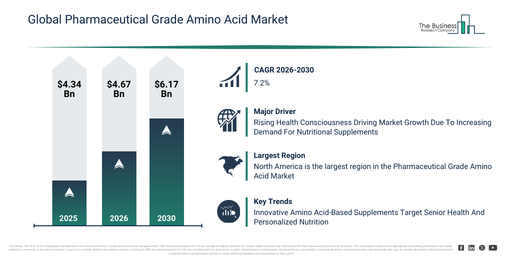
    The market for pharmaceutical grade amino acids has experienced robust expansion in recent years, with its size projected to rise from $4.34 billion in 2025 to $4.67 billion in 2026, reflecting a compound annual growth rate (CAGR) of 7.6%. This historical growth has been driven by several factors, including the scarce supply of pharmaceutical-grade amino acids, a dependence on traditional production methods, a surge in pharmaceutical manufacturing operations, heightened recognition of the therapeutic advantages offered by amino acids, and their growing use in basic nutrition and supplement formulations.

    The pharmaceutical grade amino acid market is anticipated to experience robust expansion over the coming years, reaching a value of $6.17 billion by 2030, driven by a compound annual growth rate (CAGR) of 7.2%. This projected growth during the forecast period is fueled by progress in GMP-compliant manufacturing, the creation of novel injectable and capsule formulations, heightened demand from the nutraceutical and cosmetic industries, stricter government regulations and quality standards, and the growth of direct sales alongside online distribution channels. Key developments in the forecast period encompass an increased need for both L-form and D-form amino acids in pharmaceutical uses, a broader array of injectable and liquid formulations designed for clinical settings, greater incorporation of amino acids into anti-cancer and hormone therapies, expanded application in nutraceuticals, food, and cosmetics, and a stronger emphasis on high-purity amino acids to meet regulatory compliance and safety requirements.

    Download A Free Sample Report For Comprehensive Market Insights:

    https://www.thebusinessresearchcompany.com/sample.aspx?id=27379&type=smp&utm_source=BlogsPR&utm_medium=Paid&utm_campaign=Jul_PR

    Pharmaceutical Grade Amino Acid Market Growth Drivers: What Factors Are Accelerating Expansion?

    The rising interest in nutritional supplements is anticipated to drive forward the expansion of the pharmaceutical-grade amino acid market. These supplements are designed to deliver key nutrients—including vitamins, minerals, and amino acids—that help maintain health and address dietary shortfalls when normal food intake falls short. This growing demand stems from an increasing consumer focus on health, with more people actively taking steps to enhance their physical condition and stave off lifestyle-related illnesses. When manufactured to adhere to rigorous purity, quality, and regulatory criteria necessary for medical applications, nutritional supplements can function as pharmaceutical-grade amino acids. Such products are thoroughly purified, standardized for consistent effectiveness, and produced under Good Manufacturing Practices (GMP) to guarantee safety and reliability. As an example, HerbalGram, a nonprofit organization based in the U.S., reported in September 2024 that total annual sales of herbal dietary supplements in the country climbed from $12.018 billion in 2022 to $12.551 billion in 2023—a 4.4% increase. Consequently, the escalating demand for nutritional supplements is fueling growth in the pharmaceutical-grade amino acid market.

    Pharmaceutical Grade Amino Acid Market Segment Analysis: What Are The Major Market Categories?

    The pharmaceutical grade amino acid market covered in this report is segmented –

    1) By Type: L-Form Amino Acids, D-Form Amino Acids, Non-Essential Amino Acids, Essential Amino Acids

    2) By Formulation Type: Powders, Capsules, Tablets, Liquids, Injectables

    3) By Distribution Channel: Online Retail, Offline Retail, Direct Sales, Wholesale Distributors, Healthcare Institutions

    4) By Application: Hormone, Antibacterial Agents, Anti-Cancer Drugs, Nutrition, Other Applications

    5) By End-User: Pharmaceutical Companies, Nutraceutical Companies, Food Manufacturers, Cosmetic Manufacturers, Academic And Research Institutions

    Subsegments:

    1) By L-Form Amino Acids: L-Glutamine, L-Leucine, L-Arginine, L-Lysine, L-Valine

    2) By D-Form Amino Acids: D-Alanine, D-Serine, D-Cysteine, D-Aspartic Acid, D-Phenylalanine

    3) By Non-Essential Amino Acids: Alanine, Asparagine, Aspartic Acid, Glutamic Acid, Serine

    4) By Essential Amino Acids: Histidine, Isoleucine, Leucine, Lysine, Methionine, Phenylalanine, Threonine, Tryptophan, Valine

    Pharmaceutical Grade Amino Acid Market Trends: What Is Shaping Future Industry Growth?

    Leading players within the pharmaceutical-grade amino acid industry are actively developing new product formats, particularly amino acid-based specialized dietary supplements, in order to boost therapeutic effectiveness and meet the increasing demand for tailored nutritional solutions. These specialized supplements consist of high-purity compositions of select amino acids that are formulated to address particular health needs, including muscle recovery, metabolic regulation, and neurological function. As an example, in December 2023, Ajinomoto (Thailand) Co., a food and nutrition firm headquartered in Thailand, introduced AminoMOF, a specialized dietary supplement created specifically for older adults, with the goal of enhancing muscular strength and mobility. This supplement incorporates nine essential amino acids, with notable amounts of L-leucine and fish collagen peptides, making it particularly useful for preventing or reducing age-related muscle deterioration and joint discomfort. Featuring a sugar-free and easily digestible formula, AminoMOF helps elderly users preserve their independence and physical well-being.

    Pharmaceutical Grade Amino Acid Market Leading Companies Driving Competitive Growth

    Major companies operating in the pharmaceutical grade amino acid market are Archer Daniels Midland Company, Merck KGaA, Sumitomo Chemical Co. Ltd., CJ CheilJedang Corporation, Evonik Industries AG, Ajinomoto Co. Inc., Fresenius Kabi AG, Jingjing Pharmaceutical, Global Bio‑Chem Technology Group, Tokyo Chemical Industry Co. Ltd., AMINO GmbH, Hubei Bafeng Pharmaceuticals Co. Ltd., Kyowa Hakko Bio Co. Ltd., Shine Star Amino Acid Co. Ltd., Wuxi Jinghai Amino Acid Co. Ltd., Jiahe Biotech, Shijiazhuang Donghua Jinlong Chemical Co. Ltd., Sichuan Tongsheng Amino Acid Co. Ltd., Yichang Sanxia Proudin Pharmaceuticals Co. Ltd.

    Access The Complete Pharmaceutical Grade Amino Acid Market Report:

    https://www.thebusinessresearchcompany.com/report/pharmaceutical-grade-amino-acid-global-market-report?utm_source=BlogsPR&utm_medium=Paid&utm_campaign=Jul_PR

    Pharmaceutical Grade Amino Acid Market Geographic Distribution And Regional Opportunities

    North America was the largest region in the pharmaceutical grade amino acid market in 2025. Asia-Pacific is expected to be the fastest-growing region in the forecast period. The regions covered in the pharmaceutical grade amino acid market report are Asia-Pacific, South East Asia, Western Europe, Eastern Europe, North America, South America, Middle East, Africa.

    Get in touch with us:

    The Business Research Company: https://www.thebusinessresearchcompany.com/?utm_source=BlogsPR&utm_medium=Paid&utm_campaign=home_page_test

    Americas: +1 310-496-7795

    Asia: +44 7882 955267 & +91 8897263534

    Europe: +44 7882 955267

    Email us at: marketing@tbrc.info

    Follow us on:

    LinkedIn: https://in.linkedin.com/company/the-business-research-company

    YouTube: https://www.youtube.com/channel/UC24_fI0rV8cR5DxlCpgmyFQ

    Global Market Model: https://www.thebusinessresearchcompany.com/global-market-model
  • Pharmaceutical Gelatin Market Size Projected To Increase From $1.45 Billion To $1.85 Billion During The Forecast Period

    Pharmaceutical Gelatin Market Size Projected To Increase From $1.45 Billion To $1.85 Billion During The Forecast Period

    Through market attractiveness analysis, total addressable market evaluation, company benchmarking matrices, interactive Excel dashboards, expanded supply chain intelligence, emerging startup coverage, and detailed product insights, The Business Research Company’s 2026 market reports provide more actionable and strategically valuable research.

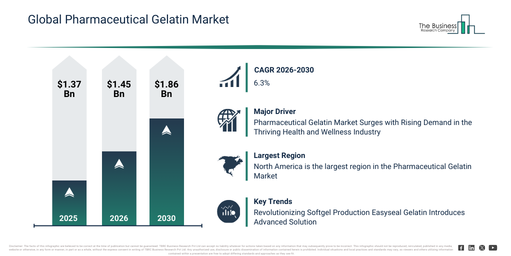
    Pharmaceutical Gelatin Market Expected To Reach $1.85 Billion By 2030 At 6.3% CAGR

    In recent years, the pharmaceutical gelatin market has demonstrated robust growth, with projections showing an increase from $1.37 billion in 2025 to $1.45 billion in 2026, reflecting a compound annual growth rate (CAGR) of 6.1%. This historical expansion has been driven by constrained production capacities, an upsurge in pharmaceutical manufacturing, heightened recognition of gelatin’s advantages, a shift toward natural excipients, and the presence of key production centers in Europe and North America.

    The pharmaceutical gelatin market is projected to experience robust expansion in the coming years, reaching a valuation of $1.86 billion by 2030, driven by a compound annual growth rate of 6.3%. This upward trajectory during the forecast period can be linked to a wider use of gelatin in diverse pharmaceutical applications, a surge in demand across developing markets, technological progress in gelatin extraction methods, greater incorporation into nutraceutical products, and fresh breakthroughs involving alternative gelatin sources. Key emerging trends shaping the sector include a heightened need for both hard and soft gel capsules, a growing preference for pharmaceutical gelatin in absorbable hemostats, ramped-up production of bovine and porcine gelatin, broader utilization of marine and poultry gelatin inputs, and increasingly stringent regulatory standards.

    Download A Free Sample Report For Comprehensive Market Insights:

    https://www.thebusinessresearchcompany.com/sample.aspx?id=13911&type=smp&utm_source=BlogsPR&utm_medium=Paid&utm_campaign=Jul_PR

    Pharmaceutical Gelatin Market Growth Factors Supporting Long-Term Expansion

    The anticipated expansion of the pharmaceutical gelatin market is being fueled by a growing focus on health and wellness. Health and wellness involve a comprehensive approach to well-being, covering physical, mental, and social dimensions. Within this context, pharmaceutical gelatin plays a key role by enabling safe and effective medication delivery, boosting the efficacy of certain drugs, and decreasing the frequency of doses needed. To illustrate, Wellness Creative Co, a UK-based wellness firm, reported in January 2024 that the health and wellness sector is forecasted to hit $7.2 trillion by 2025, with an annual growth rate of 8.5%. Consequently, the rising emphasis on health and wellness is propelling the pharmaceutical gelatin market forward.

    Pharmaceutical Gelatin Market Segment Breakdown: Which Categories Generate The Most Revenue?

    The pharmaceutical gelatin market covered in this report is segmented –

    1) By Type: Type A, Type B

    2) By Function: Stabilizing Agent, Thickening Agent, Gelling Agent & other function

    3) By Source: Porcine, Bovine Skin, Bovine Bone, Marine, Poultry

    4) By Application: Hard Capsules, Softgel Capsules, Tablets, Absorbable Hemostats, Other Applications

    Subsegments:

    1) By Type A: Porcine Gelatin, Bovine Gelatin

    2) By Type B: Bovine Gelatin, Fish Gelatin

    Pharmaceutical Gelatin Market Industry Trends Shaping Future Revenue Growth

    Key industry players in the pharmaceutical gelatin market are rolling out innovative products, including Easyseal gelatin, which helps cut production expenses related to soft gel leakers. This solution addresses the problem by featuring optimized seam formation along with improved seam thickness and stability, thereby increasing the resilience of soft capsules against physical stress and reducing leakage incidents. For example, in December 2023, GELITA MEDICAL GmbH, a German firm specializing in gelatin and collagen peptides for sectors like food, health, nutrition, and pharmaceuticals, launched Easyseal gelatin. Compared to other gelatins, this innovation requires less reliance on sealing temperature and offers superior drying properties. It boosts energy efficiency while also raising overall production capacity. With this new product, manufacturers can reliably seal capsules at high speeds, especially when handling suspensions that are usually difficult to fill. It is notably advantageous for producing items that need specialized machinery, such as double-step die tooling.

    Pharmaceutical Gelatin Market Key Players And Strategic Industry Positioning

    Major companies operating in the pharmaceutical gelatin market are Nitta Gelatin Inc., Lonza Group AG, Darling Ingredients Inc., Catalent Inc., Tessenderlo Group NV, Gelita AG, Rousselot Inc., Weishardt & Co. KG, Batotau Dongbao Bio-Tech, Nippi Collagen Co. Ltd., Apex Pharma Ltd., Narmada Gelatines Ltd., Aspire Pharmaceuticals Pvt. Ltd., Sterling Gelatin Limited, Junca Gelatines SL, Trobas Pharmaceutical gelatine B.V., Gelco International, Reichert Gruppe Ingredients GmbH, Norland Products Inc., Lapi Gelatine S.p.a., Italgelatine S.p.A, Kenney & Ross Limited, Xiamen Yasin industry & Trade Co. Ltd., PB Gelatins SA

    Access The Complete Pharmaceutical Gelatin Market Report:

    https://www.thebusinessresearchcompany.com/report/pharmaceutical-gelatin-global-market-report?utm_source=BlogsPR&utm_medium=Paid&utm_campaign=Jul_PR

    Pharmaceutical Gelatin Market Largest Region By Revenue And Market Share

    North America was the largest region in the pharmaceutical gelatin market in 2025. Asia-Pacific is expected to be the fastest-growing region in the forecast period. The regions covered in the pharmaceutical gelatin market report are Asia-Pacific, South East Asia, Western Europe, Eastern Europe, North America, South America, Middle East, Africa.

    Get in touch with us:

    The Business Research Company: https://www.thebusinessresearchcompany.com/?utm_source=BlogsPR&utm_medium=Paid&utm_campaign=home_page_test

    Americas: +1 310-496-7795

    Asia: +44 7882 955267 & +91 8897263534

    Europe: +44 7882 955267

    Email us at: marketing@tbrc.info

    Follow us on:

    LinkedIn: https://in.linkedin.com/company/the-business-research-company

    YouTube: https://www.youtube.com/channel/UC24_fI0rV8cR5DxlCpgmyFQ

    Global Market Model: https://www.thebusinessresearchcompany.com/global-market-model
  • Pharmaceutical Filtration Market Growth Outlook Reveals A CAGR Of 5.5% And A Market Value Of $10.01 Billion By 2030

    Pharmaceutical Filtration Market Growth Outlook Reveals A CAGR Of 5.5% And A Market Value Of $10.01 Billion By 2030

    Delivering more actionable and strategically valuable research, The Business Research Company’s 2026 market reports feature market attractiveness analysis, total addressable market evaluation, company benchmarking matrices, interactive Excel dashboards, expanded supply chain intelligence, emerging startup coverage, and detailed product insights.

    Pharmaceutical Filtration Market Size And Revenue Forecast Through 2030

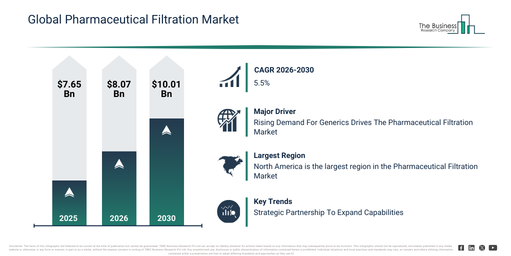
    The pharmaceutical filtration industry has experienced notable expansion over recent years. Valued at $7.65 billion in 2025, it is projected to reach $8.07 billion by 2026, reflecting a compound annual growth rate (CAGR) of 5.6%. This historical growth was driven by strict regulatory requirements, a rise in pharmaceutical production activities, heightened demand for sterile goods, progress in filtration technology advancements, and an increase in biopharmaceutical manufacturing facility expansion.

    The pharmaceutical filtration market is projected to experience significant expansion over the coming years, reaching an estimated value of $10.01 billion by 2030, driven by a compound annual growth rate (CAGR) of 5.5%. This anticipated growth during the forecast period is fueled by factors such as the rise of biologics and biosimilars, the increasing use of single-use systems, the implementation of automation and smart manufacturing practices, heightened investments in aseptic processing, and a growing demand for contamination-free production environments. Key developments shaping the market in this period include progress in advanced filtration membrane technology, wider acceptance of single-use filtration setups, incorporation of IoT for enhanced filtration monitoring, the shift toward automated filtration processes, and an increased focus on achieving high-purity water and air filtration standards.

    Download A Free Sample Report For Comprehensive Market Insights:

    https://www.thebusinessresearchcompany.com/sample.aspx?id=7996&type=smp&utm_source=BlogsPR&utm_medium=Paid&utm_campaign=Jul_PR

    Pharmaceutical Filtration Market Demand Drivers Creating New Revenue Opportunities

    A rising demand for generic drugs is set to drive the pharmaceutical filtration market forward in the coming years. These generic medicines are formulated to be identical to previously approved brand-name drugs. In their production, pharmaceutical filtration is applied to eliminate solid particulates from fluids, whether liquid or gas, by passing them through a porous material. For example, in July 2025, the U.S. Food and Drug Administration (FDA), a federal government body in the United States, noted that the U.S. healthcare system achieved savings exceeding $400 billion thanks to the availability of generic medications. Consequently, this growing demand for generic drugs is fueling expansion in the pharmaceutical filtration market.

    Pharmaceutical Filtration Market Segmentation: How Is The Market Structured Across Key Categories?

    The pharmaceutical filtration market covered in this report is segmented –

    1) By Product: Membrane Filters, Prefilters And Depth Media, Single-Use Systems, Cartridges And Capsules, Filter Holders, Filtration Accessories, Other Products

    2) By Technique: Microfiltration, Ultrafiltration, Crossflow Filtration, Nanofiltration, Other Techniques

    3) By Scale Of Operation: Manufacturing Scale, Pilot-Scale, Research And Development Scale

    4) By Application: Final Product Processing, Raw Material Filtration, Bioburden Testing, Cell Separation, Water Purification, Air purification

    Subsegments:

    1) By Membrane Filters: Microfiltration Filters, Ultrafiltration Filters, Nanofiltration Filters, Reverse Osmosis Filters

    2) By Prefilters And Depth Media: Depth Filters, Prefilters for Membrane Systems

    3) By Single-Use Systems: Single-Use Filtration Devices, Disposable Filter Assemblies

    4) By Cartridges And Capsules: Filter Cartridges, Filter Capsules

    5) By Filter Holders: Laboratory Filter Holders, Industrial Filter Holders

    6) By Filtration Accessories: Connectors, Housings, Validation Equipment

    7) By Other Products: Specialized Filters, Custom Filtration Solutions

    Pharmaceutical Filtration Market Trends Driving Strategic Industry Expansion

    Major players within the pharmaceutical filtration sector are increasingly turning to strategic alliances as a means to refine downstream purification procedures for exosome production. Such collaborations involve companies pooling their complementary strengths and resources to secure mutual advantages and success. A notable example occurred in January 2023, when RoosterBio Inc., a US-based biopharmaceutical firm, revealed a strategic agreement with Sartorius AG, a German provider of pharmaceutical and laboratory equipment. This joint effort is intended to deliver cutting-edge know-how and solutions for an exosome manufacturing platform built around human mesenchymal stem/stromal cells (hMSCs), with the goal of attaining industry-leading levels of potency, purity, and yield. The collaboration will largely concentrate on creating comprehensive analytical techniques for characterizing exosomes as well as other extracellular vesicles (EVs), thereby enabling the development of quantitative quality control strategies applicable to both exosome purification intermediates and the final drug product. Moreover, the partnership is set to supply scalable filtration equipment—including the Sartoflow Smart and Sartoflow Advanced systems—to boost clarity, concentration levels, and formulation processes.

    Pharmaceutical Filtration Market Competitive Landscape And Leading Companies

    Major companies operating in the pharmaceutical filtration market are 3M Health Care, Danaher Corporation, Amazon Filters Ltd., Eaton Corporation PLC, GE Healthcare, Graver Technologies LLC, Meissner Filtration Products, Parker Bioscience Filtration, Sartorius AG, Repligen, Porvair PLC, Alfa Laval AB, Corning Incorporated, Thermo Fisher Scientific, Freudenberg Group, Avantor Inc., Berry Global Inc., Cantel Medical Corp., Cole-Parmer Instrument Company LLC, Donaldson Company Inc., Entegris Inc., Filtration Group Corporation, Synder Filtration Inc, GVS S.p.A., Koch Membrane Systems Inc., Lenntech B.V., Mann+Hummel Group, Membrane Solutions, Pall Corporation

    Access The Complete Pharmaceutical Filtration Market Report:

    https://www.thebusinessresearchcompany.com/report/pharmaceutical-filtration-global-market-report?utm_source=BlogsPR&utm_medium=Paid&utm_campaign=Jul_PR

    Pharmaceutical Filtration Market Regional Analysis And Leading Geography

    North America was the largest region in the pharmaceutical filtration market in 2025. The regions covered in the pharmaceutical filtration market report are Asia-Pacific, South East Asia, Western Europe, Eastern Europe, North America, South America, Middle East, Africa.

    Get in touch with us:

    The Business Research Company: https://www.thebusinessresearchcompany.com/?utm_source=BlogsPR&utm_medium=Paid&utm_campaign=home_page_test

    Americas: +1 310-496-7795

    Asia: +44 7882 955267 & +91 8897263534

    Europe: +44 7882 955267

    Email us at: marketing@tbrc.info

    Follow us on:

    LinkedIn: https://in.linkedin.com/company/the-business-research-company

    YouTube: https://www.youtube.com/channel/UC24_fI0rV8cR5DxlCpgmyFQ

    Global Market Model: https://www.thebusinessresearchcompany.com/global-market-model
  • Pharmaceutical Excipients Market Forecast Highlights Expansion From $11529.86 Billion To $14866.99 Billion Through 2030

    Pharmaceutical Excipients Market Forecast Highlights Expansion From $11529.86 Billion To $14866.99 Billion Through 2030

    Enhanced with market attractiveness analysis, total addressable market evaluation, company benchmarking matrices, interactive Excel dashboards, expanded supply chain intelligence, emerging startup coverage, and detailed product insights, The Business Research Company’s 2026 market reports deliver more actionable and strategically valuable research.

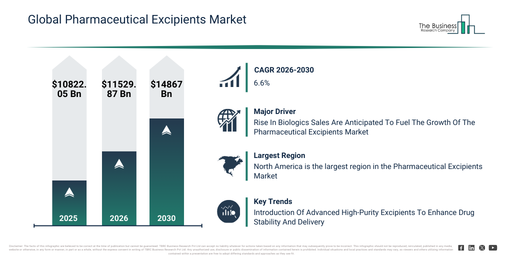
    Pharmaceutical Excipients Market Growth From $11529.86 Billion In 2026 To $14866.99 Billion By 2030 At A CAGR Of 6.6%

    In recent years, the market for pharmaceutical excipients has experienced robust expansion. Projections indicate an increase from $10,822.05 billion in 2025 to $11,529.87 billion in 2026, reflecting a compound annual growth rate (CAGR) of 6.5%. This historic growth has been driven by a rising need for oral dosage forms, a surge in pharmaceutical production within the Asia-Pacific region, greater utilization of synthetic excipients, rigorous regulatory approvals, and heightened research and development activities in drug formulation.

    Projections indicate robust expansion for the pharmaceutical excipients market over the coming years, with its value anticipated to reach $14,867 billion by 2030, reflecting a compound annual growth rate (CAGR) of 6.6%. This forecasted growth is driven by factors such as the rise of personalized medicine, increased biopharmaceutical manufacturing, a growing preference for natural and clean-label excipients, ongoing technological progress in excipient synthesis, and the growth of contract manufacturing organizations (CMOs). Among the key developments expected to shape this period are innovative excipient formulations, improved drug stability solutions, targeted drug delivery approaches, the use of natural and plant-based excipients, and the emergence of multi-functional excipients.

    Download A Free Sample Report For Comprehensive Market Insights:

    https://www.thebusinessresearchcompany.com/sample.aspx?id=3415&type=smp&utm_source=BlogsPR&utm_medium=Paid&utm_campaign=Jul_PR

    Pharmaceutical Excipients Market Expansion Supported By Key Demand Factors

    The expansion of biologics sales is anticipated to drive growth in the pharmaceutical sterility testing market moving forward. Biologics, also referred to as biological products, are medicines sourced from living organisms and encompass a wide array of items, including vaccines, blood and its components, allergenics, somatic cells, gene therapies, tissues, and recombinant therapeutic proteins. Within biologics, pharmaceutical excipients are utilized to boost stability, optimize formulation, and secure the effective delivery of active biological agents. As an example, in October 2024, the Generics and Biosimilars Initiative, a Belgium-based entity dedicated to delivering reliable scientific insights on generic and biosimilar medications, reported that in 2023, apart from the top nine biologics, two additional complex drugs posted notable sales figures. Specifically, Novo Nordisk’s Ozempic (semaglutide) and Eli Lilly’s Trulicity (dulaglutide), both used to treat type 2 diabetes, generated revenues of US$14 billion and US$7.2 billion, respectively. Consequently, the increasing sales of biologics are fueling the pharmaceutical excipients market.

    Pharmaceutical Excipients Market Segmentation Trends And Revenue Drivers

    The pharmaceutical excipients market covered in this report is segmented –

    1) By Product: Inorganic Chemicals, Organic Chemicals, Other Products

    2) By Functionality: Fillers And Diluents, Suspending And Viscosity Agents, Coating Agents, Binders, Flavoring Agents And Sweeteners, Disintegrants, Colorants, Lubricants And Glidants, Other Functionalities

    3) By Type Of Formulation: Oral Formulation, Topical Formulation, Parenteral Formulation, Other Formulations

    Subsegments:

    1) By Inorganic Chemicals: Salts, Oxides, Silicates

    2) By Organic Chemicals: Sugars, Polymers, Oils And Fats

    3) By Other Products: Natural Excipients, Coatings, Antioxidants

    Pharmaceutical Excipients Market Growth Trends Influencing Competitive Dynamics

    Key players in the pharmaceutical excipient sector are launching cutting-edge ingredients, specifically high-purity excipients, aimed at improving drug formulation stability, boosting bioavailability, and enabling sophisticated drug delivery mechanisms. High-purity excipients are defined as pharmaceutical components that are refined through rigorous purification methods to eliminate contaminants and impurities. For example, in October 2023, Clariant, a specialty chemical firm headquartered in Switzerland, unveiled three novel VitiPure excipients intended to improve the stability and dissolution of active pharmaceutical ingredients (APIs). The new offerings include VitiPure O 80 Superior, a high-purity polysorbate 80; VitiPure CO 35 Superior, a polyoxyl 35 castor oil; and VitiPure Meglumine LEX, a solubilizer featuring low bioburden. Designed for a range of drug delivery uses, particularly for delicate formulations such as mRNA vaccines and biological products, these excipients address the increasing need for pure components while complying with strict regulatory standards.

    Pharmaceutical Excipients Market Industry Leaders: Which Organizations Are Driving Competition?

    Major companies operating in the pharmaceutical excipients market are BASF SE, Ashland Global Holdings, Evonik Industries AG, International Flavors & Fragrances Inc, Roquette Frères, Archer Daniels Midland Company, Lubrizol Corporation, Croda International Plc, Kerry Group, DuPont de Nemours Inc., Amster Microcell Private Limited, Finar Limited, P. D. Polychem Private Limited, CAD Pharma Inc, Maas Pharma Chemicals, Aeon Procare Private Limited, CSPC Pharmaceutical Group Ltd, Allen & Hanburys Ltd, Colorcon, MEGGLE GmbH & Co. KG, DMV-Fonterra Excipients GmbH & Co. KG, Alpen Pharma AG, Avantor Inc, JRS PHARMA GmbH & Co. KG, The Dow Chemical Co, EMS Pharma, Biolab Farmaceutica, Medist FZE, W.R. Grace, Univar Solutions, Nitika Pharma, DFE Pharma, Cargill, Sensient Pharma

    Access The Complete Pharmaceutical Excipients Market Report:

    https://www.thebusinessresearchcompany.com/report/pharmaceutical-excipient-global-market-report?utm_source=BlogsPR&utm_medium=Paid&utm_campaign=Jul_PR

    Pharmaceutical Excipients Market Geographic Analysis: Where Is Demand Growing The Fastest?

    North America is the largest region in the pharmaceutical excipients market in 2025. Middle East is expected to be the fastest growing region in the global pharmaceutical excipients market share during the forecast period. The regions covered in the pharmaceutical excipients market report are Asia-Pacific, South East Asia, Western Europe, Eastern Europe, North America, South America, Middle East, Africa.

    Get in touch with us:

    The Business Research Company: https://www.thebusinessresearchcompany.com/?utm_source=BlogsPR&utm_medium=Paid&utm_campaign=home_page_test

    Americas: +1 310-496-7795

    Asia: +44 7882 955267 & +91 8897263534

    Europe: +44 7882 955267

    Email us at: marketing@tbrc.info

    Follow us on:

    LinkedIn: https://in.linkedin.com/company/the-business-research-company

    YouTube: https://www.youtube.com/channel/UC24_fI0rV8cR5DxlCpgmyFQ

    Global Market Model: https://www.thebusinessresearchcompany.com/global-market-model