Month: July 2026

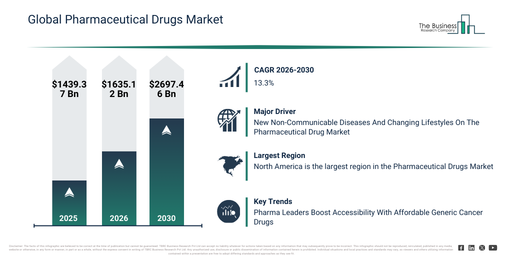
  • Pharmaceutical Drugs Market Expected To Reach $2697.45 Billion By 2030 As Growth Accelerates At 13.3% CAGR

    Pharmaceutical Drugs Market Expected To Reach $2697.45 Billion By 2030 As Growth Accelerates At 13.3% CAGR

    Through market attractiveness analysis, total addressable market evaluation, company benchmarking matrices, interactive Excel dashboards, expanded supply chain intelligence, emerging startup coverage, and detailed product insights, The Business Research Company’s 2026 market reports provide more actionable and strategically valuable research.

    Pharmaceutical Drugs Market Expansion Outlook: What Revenue Opportunities Lie Ahead?

    Over recent years, the pharmaceutical drugs market has experienced rapid expansion, with its valuation climbing from $1,439.37 billion in 2025 to an anticipated $1,635.12 billion in 2026, reflecting a compound annual growth rate of 13.6%. This historic surge has been driven by several key factors, including a rising incidence of chronic diseases, an expanding elderly population, ongoing constraints on access to cutting-edge therapies in developing nations, enhanced hospital infrastructure, and a growing emphasis on preventive healthcare among the public.

    The pharmaceutical drugs market is poised for robust expansion over the coming years, with projections indicating it will reach $2697.46 billion by 2030, driven by a compound annual growth rate (CAGR) of 13.3%. This anticipated growth in the forecast period is fueled by several key factors, including the advancement of biologics and personalized medicine, the proliferation of digital pharmacy platforms, enhanced government healthcare initiatives, heightened investment in research and development, and the incorporation of telemedicine alongside remote patient monitoring. Within this timeframe, prominent trends shaping the sector encompass a greater uptake of generic drugs aimed at lowering healthcare expenses, a growing consumer shift toward over-the-counter (OTC) medications, the widening of hospital and retail pharmacy networks, a heightened emphasis on managing chronic diseases, and an escalating demand for targeted therapies and specialty drugs.

    Download A Free Sample Report For Comprehensive Market Insights:

    https://www.thebusinessresearchcompany.com/sample.aspx?id=3619&type=smp&utm_source=BlogsPR&utm_medium=Paid&utm_campaign=Jul_PR

    Pharmaceutical Drugs Market Growth Drivers And Industry Catalysts

    The shift toward more sedentary forms of employment, increasingly hectic daily routines, and evolving consumer habits are reshaping the global disease landscape, with a particular rise in non-communicable conditions like cancer, diabetes, and cardiovascular illnesses. Prolonged work hours, insufficient physical activity, and poor dietary and drinking practices stand out as key contributors to long-term health problems such as diabetes. Data from the World Health Organization reveals that noncommunicable diseases (NCDs) claim 41 million lives annually, accounting for 74% of all deaths worldwide. This growing burden is fueling demand for biologic drugs among diabetic patients. These trends are anticipated to expand the global patient population, which will in turn stimulate growth in the pharmaceutical drug market over the forecast period.

    Pharmaceutical Drugs Market Driver: Rare Diseases Are Fueling The Pharmaceutical Drug Market’s Growth

    A rising occurrence of rare diseases is poised to accelerate the expansion of the pharmaceutical drug market in the coming years. A rare disease is defined as a health condition with low prevalence, impacting only a small fraction of the population when compared to more common illnesses. These medications play a crucial role in improving disease management, enabling the discovery of potential treatments, and preventing unnecessary therapies that might carry severe side effects—all contributing to more effective care. For example, in July 2023, the GOV.UK, a government entity in the United Kingdom, reported that over 7,000 rare diseases are currently known, with new ones continuously emerging as research advances. Approximately 80% of these conditions have a recognized genetic origin, and 1 in 17 people is expected to experience a rare disease at some point in their lives. Consequently, the growing frequency of rare diseases is pushing the pharmaceutical drug market forward.

    Pharmaceutical Drugs Market Segment Analysis Highlighting Growth Areas

    The pharmaceutical drugs market covered in this report is segmented –

    1) By Type: Cardiovascular Drugs, Dermatology Drugs, Gastrointestinal Drugs, Genito-Urinary Drugs, Hematology Drugs, Anti-Infective Drugs, Metabolic Disorder Drugs, Musculoskeletal Disorder Drugs, Central Nervous System Drugs, Others

    2) By Distribution Channel: Hospital Pharmacies, Retail Pharmacies/ Drug Stores, Other Distribution Channels

    3) By Drug Classification: Branded Drugs, Generic Drugs

    4) By Mode Of Purchase: Over-The-Counter (OTC) Drugs, Prescription-Based Drugs

    Subsegments:

    1) By Cardiovascular Drugs: Antihypertensives, Anticoagulants, Cholesterol-lowering agents

    2) By Dermatology Drugs: Topical Corticosteroids, Acne Treatments, Psoriasis Treatments

    3) By Gastrointestinal Drugs: Antacids, Proton Pump Inhibitors, Laxatives

    4) By Genito-Urinary Drugs: Hormonal Therapies, Anticholinergics for Overactive Bladder, Erectile Dysfunction Medications

    5) By Hematology Drugs: Anticoagulants, Blood Volume Expanders, Erythropoiesis Stimulating Agents

    6) By Anti-Infective Drugs: Antibiotics, Antivirals, Antifungals

    7) By Metabolic Disorder Drugs: Diabetes Medications, Obesity Management Drugs, Thyroid Hormone Replacement

    8) By Musculoskeletal Disorder Drugs: Non-steroidal Anti-inflammatory Drugs (NSAIDs), Disease-modifying Antirheumatic Drugs (DMARDs), Muscle Relaxants

    9) By Central Nervous System Drugs: Antidepressants, Antipsychotics, Anxiolytics

    10) By Others: Chemotherapeutics, Targeted Therapies, Immunotherapies, Glaucoma Treatments, Anti-allergy Drops, Retinal Disease Medications, Asthma Inhalers, COPD Medications, Antihistamines, Vaccines for Infectious Diseases, Therapeutic Nutrients for Chronic Conditions, Calcium Supplements, Iron Supplements, Magnesium Supplements

    Pharmaceutical Drugs Market Trends Influencing Long-Term Demand

    Major players within the pharmaceutical drug market are rolling out innovative medicines, including generic cancer drugs, with the goal of enhancing affordability and improving patient access. A generic cancer drug is defined as a pharmaceutical product that contains identical active ingredients, dosage form, strength, safety profile, quality level, and intended therapeutic use compared to its brand-name counterpart, but is generally offered at a reduced cost. As an example, in August 2024, Lupin Limited, a pharmaceutical company headquartered in India, introduced Doxorubicin Hydrochloride Liposome Injection in the U.S. market. This product serves as the generic version of Baxter Healthcare’s Doxil, which is prescribed for treating ovarian cancer, AIDS-related Kaposi’s Sarcoma, and multiple myeloma. The injection is supplied in single-dose vials sized at 20 mg per 10 mL and 50 mg per 25 mL. The release was made possible following FDA clearance obtained through Lupin’s alliance partner, ForDoz Pharma Corporation, and aligns with the company’s aim to grow its presence in the oncology sector.

    Pharmaceutical Drugs Market Leading Companies: Who Holds Significant Market Presence?

    Major companies operating in the pharmaceutical drugs market are Pfizer Inc., AbbVie, Johnson & Johnson, Merck & Co, Sanofi S.A., F. Hoffmann-La Roche Ltd., Novartis AG, Bristol-Myers Squibb, AstraZeneca, GlaxosmithKline, Shanghai Pharmaceutical Drugs, Shanghai Fosun Pharmaceutical, Takeda Pharmaceutical Company Ltd., Otsuka Pharmaceutical Co. Ltd., Daiichi Sankyo, China National Pharmaceutical Group Co. Ltd. (Sinopharm), Shanghai Acebright Pharmaceutical Drugs Group Co. Ltd., Jiangsu Hengrui Medicine Co. Ltd, Hanmi Pharmaceutical, Cipla Limited, Aurobindo Pharma Limited, Dr. Reddy’s Laboratories Ltd., Sun Pharma, KYORIN Holdings Inc., Nichi-Iko Pharmaceutical Co. Ltd., Daewoong Pharmaceutical Co.Ltd, Kalbe Farma, Hyphens Pharma, Adjuvanz Technology Pte Ltd., Alliance Pharm Pte Ltd., Teva UK Limited, Boehringer Ingelheim, Mylan, Zentiva, Apotex, Gilead Sciences, Bayer, Amgen, Janssen Pharmaceutica, Accord Healthcare Inc., AA Pharma Inc, Sanfer, LABORATORIOS SENOSIAIN SA DE CV (Senosiain), Siegfried Rhein, Eli Lilly & Company, Biogen, EMS Pharma, Hypermarcas, Eurofarma, Teuto Brasileiro, Biolab Farmaceutica, Cristalia, União Quimica, Ache, Mantecorp Farmasa, Libbs, FQM Grupo, Spimaco, Jamjoom Pharma, Tabuk Pharmaceutical Manufacturing, Jazeera Pharmaceutical Industries, Julphar, Neopharma, Eurolab, Aspen Pharmacare Holdings Limited

    Access The Complete Pharmaceutical Drugs Market Report:

    https://www.thebusinessresearchcompany.com/report/pharmaceutical-drugs-global-market-report?utm_source=BlogsPR&utm_medium=Paid&utm_campaign=Jul_PR

    Pharmaceutical Drugs Market Global Footprint: Which Region Holds Market Leadership?

    North America was the largest region in the pharmaceutical drugs market in 2025. Middle East is expected to be the fargest growing region in the forecast period. The regions covered in the pharmaceutical drugs market report are Asia-Pacific, South East Asia, Western Europe, Eastern Europe, North America, South America, Middle East, Africa.

    Get in touch with us:

    The Business Research Company: https://www.thebusinessresearchcompany.com/?utm_source=BlogsPR&utm_medium=Paid&utm_campaign=home_page_test

    Americas: +1 310-496-7795

    Asia: +44 7882 955267 & +91 8897263534

    Europe: +44 7882 955267

    Email us at: marketing@tbrc.info

    Follow us on:

    LinkedIn: https://in.linkedin.com/company/the-business-research-company

    YouTube: https://www.youtube.com/channel/UC24_fI0rV8cR5DxlCpgmyFQ

    Global Market Model: https://www.thebusinessresearchcompany.com/global-market-model
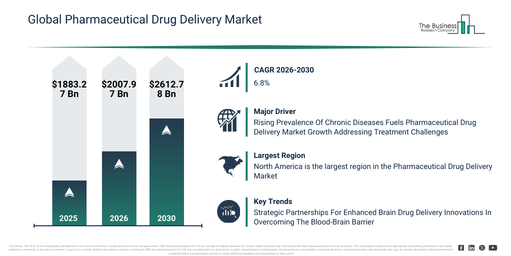
  • Pharmaceutical Drug Delivery Market Set To Grow From $2007.96 Billion In 2026 To $2612.78 Billion By 2030 At A CAGR Of 6.8%

    Pharmaceutical Drug Delivery Market Set To Grow From $2007.96 Billion In 2026 To $2612.78 Billion By 2030 At A CAGR Of 6.8%

    Delivering more actionable and strategically valuable research, The Business Research Company’s 2026 market reports feature market attractiveness analysis, total addressable market evaluation, company benchmarking matrices, interactive Excel dashboards, expanded supply chain intelligence, emerging startup coverage, and detailed product insights.

    Pharmaceutical Drug Delivery Market Growth Potential: How Will Market Size Change Through 2030?

    The pharmaceutical drug delivery market has experienced robust expansion in recent years, with projections indicating an increase from $1883.27 billion in 2025 to $2007.97 billion in 2026, reflecting a compound annual growth rate (CAGR) of 6.6%. This upward trend during the historical period is driven by several factors, including the growing frequency of chronic illnesses, progress in pharmaceutical formulation development, improvements in hospital infrastructure, a larger elderly demographic, and widespread utilization of oral and injectable delivery systems.

    The pharmaceutical drug delivery market is anticipated to experience significant expansion over the coming years. By 2030, it is projected to reach a value of $2612.78 billion, driven by a compound annual growth rate (CAGR) of 6.8%. This forecasted growth is largely attributable to the rise of biologics and biosimilars, the incorporation of digital monitoring technologies, progress in nanocarrier systems, the expansion of home care and remote treatment options, and an escalating demand for therapies centered on patient needs. Key developments shaping this period encompass targeted drug delivery systems, formulations based on nanotechnology, wearable devices for drug administration, personalized medicine approaches, and techniques that are minimally invasive.

    Download A Free Sample Report For Comprehensive Market Insights:

    https://www.thebusinessresearchcompany.com/sample.aspx?id=6962&type=smp&utm_source=BlogsPR&utm_medium=Paid&utm_campaign=Jul_PR

    Pharmaceutical Drug Delivery Market Opportunity Drivers: What Is Creating New Revenue Potential?

    The rising incidence of chronic illnesses is anticipated to drive the expansion of the pharmaceutical drug delivery market in the coming years. The term “prevalence of chronic diseases” describes the overall count of existing chronic disease cases within a specific population at a given point in time. Pharmaceutical drug delivery aids individuals suffering from these conditions by administering medication to targeted areas of the body for treating various ailments. For example, in September 2023, the World Health Organization—a specialized agency of the United Nations based in Switzerland—reported that chronic diseases, also known as non-communicable diseases (NCDs), account for 41 million deaths annually, representing 74% of all global fatalities. This includes 17.9 million deaths from cardiovascular diseases, 9.3 million from cancer, 4.1 million from chronic respiratory conditions, and 2.0 million from diabetes. Consequently, the increasing prevalence of chronic diseases is fueling growth in the pharmaceutical drug delivery market.

    Pharmaceutical Drug Delivery Market Segment Performance And Strategic Opportunities

    The pharmaceutical drug delivery market covered in this report is segmented –

    1) By Route Of Administration: Oral, Ocular, Pulmonary, Nasal, Injectable, Topical, Other Routes

    2) By Application: Infectious Diseases, Cancer, Cardiovascular Diseases, Diabetes, Respiratory Diseases, Central Nervous System Disorders, Autoimmune Diseases, Other Applications

    3) By End-User: Hospitals, Home Care Settings, ASC Or Clinics, Other End Users

    Subsegments:

    1) By Oral: Tablets, Capsules, Liquids, Powders

    2) By Ocular: Eye Drops, Ocular Inserts, Ocular Implants

    3) By Pulmonary: Metered-Dose Inhalers (MDIs), Dry Powder Inhalers (DPIs), Nebulizers

    4) By Nasal: Nasal Sprays, Nasal Gels, Nasal Powders

    5) By Injectable: Intravenous (IV) Injections, Intramuscular (IM) Injections, Subcutaneous (SC) Injections, Biologics And Biosimilars

    6) By Topical: Creams, Ointments, Gels, Transdermal Patches

    7) By Other Routes: Sublingual, Buccal, Rectal, Intranasal

    Pharmaceutical Drug Delivery Market Innovation Trends Driving Future Development

    Major players in the pharmaceutical drug delivery market are increasingly turning to strategic partnerships as a way to discover new transport targets and shuttle molecules that can enhance the delivery of medications to the brain. These partnerships involve companies pooling their respective strengths and resources to achieve shared benefits and success. A notable example occurred in September 2023 when Cordance Medical, a medical equipment manufacturer based in the US, entered into a strategic alliance with EXACT Therapeutics to simplify the process of delivering drugs to the brain. This collaboration merges Cordance Medical’s NeuroAccess platform, which is capable of opening the blood-brain barrier (BBB) without surgical intervention, with EXACT Therapeutics’ Acoustic Cluster Therapy (ACT) technology. The partnership is designed to improve the treatment of brain conditions such as tumors and neurodegenerative disorders by facilitating easier access for medicines to reach the brain. EXACT Therapeutics is a clinical-stage biopharmaceutical company headquartered in the UK.

    Pharmaceutical Drug Delivery Market Key Players: Which Companies Shape Industry Competition?

    Major companies operating in the pharmaceutical drug delivery market are 3M Company., AbbVie Inc., Amgen Inc., AstraZeneca plc, Bayer AG, Becton Dickinson And Company, C. H. Boehringer Sohn AG & Co. KG, Boston Scientific Corporation, Bristol-Myers Squibb Company, Consort Medical plc, Eli Lilly and Company, Emergent Biosolutions Inc., F. Hoffmann-La Roche AG, GlaxoSmithKline plc, Johnson & Johnson, Kite Pharma Inc., Merck & Co Inc., Nemera France SAS, Novartis AG, Pfizer Inc, Sanofi S. A., SHL Medical AG, Teva Pharmaceuticals Industries Ltd., West Pharmaceutical Services Inc., Aerogen Pharma Limited, AptarGroup Inc., Biocon Ltd., Catalent Inc., Evonik Industries AG, Inovio Pharmaceuticals Inc., Mylan NV, Sensile Medical Inc., Ypsomed Holding AG

    Access The Complete Pharmaceutical Drug Delivery Market Report:

    https://www.thebusinessresearchcompany.com/report/pharmaceutical-drug-delivery-global-market-report?utm_source=BlogsPR&utm_medium=Paid&utm_campaign=Jul_PR

    Pharmaceutical Drug Delivery Market Regional Distribution: Which Areas Drive Market Expansion?

    North America was the largest region in the pharmaceutical drug delivery market in 2025. North America is expected to be the fastest-growing region in the forecast period. The regions covered in the pharmaceutical drug delivery market report are Asia-Pacific, South East Asia, Western Europe, Eastern Europe, North America, South America, Middle East, Africa.

    Get in touch with us:

    The Business Research Company: https://www.thebusinessresearchcompany.com/?utm_source=BlogsPR&utm_medium=Paid&utm_campaign=home_page_test

    Americas: +1 310-496-7795

    Asia: +44 7882 955267 & +91 8897263534

    Europe: +44 7882 955267

    Email us at: marketing@tbrc.info

    Follow us on:

    LinkedIn: https://in.linkedin.com/company/the-business-research-company

    YouTube: https://www.youtube.com/channel/UC24_fI0rV8cR5DxlCpgmyFQ

    Global Market Model: https://www.thebusinessresearchcompany.com/global-market-model
  • Pharmaceutical Digital Platform Market Opportunities Are Emerging Beyond Traditional Growth Areas

    Pharmaceutical Digital Platform Market Opportunities Are Emerging Beyond Traditional Growth Areas

    Enhanced with market attractiveness analysis, total addressable market evaluation, company benchmarking matrices, interactive Excel dashboards, expanded supply chain intelligence, emerging startup coverage, and detailed product insights, The Business Research Company’s 2026 market reports deliver more actionable and strategically valuable research.

    Pharmaceutical Digital Platform Market Value Analysis: What Growth Is Expected Over The Forecast Period?

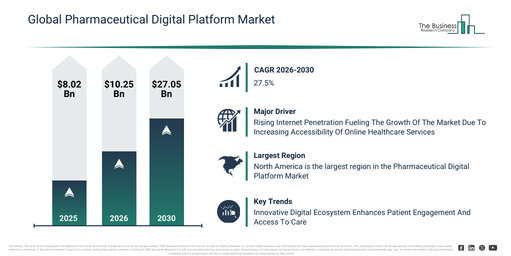
    Recent years have witnessed exponential growth in the pharmaceutical digital platform market, with its value projected to climb from $8.02 billion in 2025 to $10.25 billion in 2026, reflecting a compound annual growth rate (CAGR) of 27.7%. This historic expansion has been fueled by several factors, including the increasing digitization of pharmaceutical operations, widespread adoption of electronic health records, the rise of telemedicine services, a growing need for real-time healthcare data access, and early-stage investments in healthcare IT platforms.

    The pharmaceutical digital platform market is forecasted to experience explosive expansion in the coming years. It is projected to reach $27.05 billion by 2030, driven by a compound annual growth rate (CAGR) of 27.5%. Several factors fuel this anticipated growth, including heightened adoption of AI-powered clinical decision-making systems, increased funding into cloud-based pharmaceutical platforms, broader implementation of digital disease management solutions, a stronger emphasis on patient-focused digital care, and expanding regulatory backing for digital healthcare infrastructure. Key trends expected to shape this period consist of a greater shift toward unified digital health platforms, growing dependence on data-driven decision-support tools, wider use of teleconsultation services, the emergence of digital medicine delivery models, and a heightened focus on healthcare systems that are interoperable.

    Download A Free Sample Report For Comprehensive Market Insights:

    https://www.thebusinessresearchcompany.com/sample.aspx?id=28296&type=smp&utm_source=BlogsPR&utm_medium=Paid&utm_campaign=Jul_PR

    Pharmaceutical Digital Platform Market Growth Momentum: Which Factors Are Influencing Demand?

    The expansion of internet accessibility is anticipated to fuel the growth of the pharmaceutical digital platform market moving forward. The internet functions as a worldwide system of linked computers and devices that exchange and communicate data through established protocols. The increase in internet penetration is driven by the broad availability of low-cost smartphones, facilitating online access for individuals across various regions and economic backgrounds. This rising internet usage boosts the demand for pharmaceutical digital platforms by enabling patients to conveniently access healthcare services online, oversee their medication regimens, and retrieve medical information from any location. For example, in January 2024, Eurostat, a government agency based in Luxembourg, reported that in 2023, 30% of EU internet users aged 16 to 74 had participated in an online course or used online learning materials in the prior three months. This represents a growth of 2 percentage points compared to 2022, when the rate stood at 28%. Overall, participation in online education experienced an increase in 2023 versus 2022. Consequently, the steady rise in internet penetration is propelling the expansion of the pharmaceutical digital platform market.

    Pharmaceutical Digital Platform Market Segment Landscape And Growth Potential

    The pharmaceutical digital platform market covered in this report is segmented –

    1) By Type: Tele Consultation, In-Person Care, Vaccine Scheduling, Medicine Delivery

    2) By Disease: Migraine, Diabetes, Obesity, Pneumococcal Pneumonia, Flu, Other Diseases

    3) By End Use: Disease Treatment, Disease Prevention

    Subsegments:

    1) By Tele Consultation: General Consultation, Specialist Consultation, Chronic Disease Management, Mental Health Support, Follow Up Consultation

    2) By In-Person Care: Primary Care Visits, Specialist Visits, Laboratory Services, Diagnostic Imaging, Preventive Health Checkups

    3) By Vaccine Scheduling: Routine Immunization Booking, Travel Vaccination Scheduling, Pediatric Vaccination Scheduling, Adult Vaccination Scheduling, Mass Vaccination Campaign Scheduling

    4) By Medicine Delivery: Prescription Medicine Delivery, Over The Counter Medicine Delivery, Same Day Delivery, Scheduled Delivery, Subscription Refill Delivery

    Pharmaceutical Digital Platform Market Trends Reshaping Industry Growth

    Major pharmaceutical players within the digital healthcare platform space are increasingly emphasizing comprehensive, end-to-end patient engagement solutions. These include direct-to-consumer digital portals that unify telehealth consultations, pharmacy operations, and ongoing patient assistance under a single, cohesive framework. A digital healthcare portal functions as an integrated online ecosystem, granting users seamless access to virtual medical visits, prescription medication orders, and disease management educational resources—all within one streamlined interface. As an example, in January 2024, Eli Lilly and Company (a U.S.-based pharmaceutical firm) launched LillyDirect, a digital platform offering telehealth connections to independent providers, a pharmacy service for home delivery of selected Lilly medications, and built-in educational tools tailored for patients managing obesity, migraines, and diabetes. This platform is designed to simplify patient care by merging virtual consultations, medication oversight, and personalized learning into an intuitive, user-friendly experience. Through the application of digital technology, LillyDirect strives to boost treatment compliance, foster greater patient involvement, and broaden accessibility to Lilly’s therapies across varied patient groups.

    Pharmaceutical Digital Platform Market Competitive Landscape: Who Are The Leading Companies?

    Major companies operating in the pharmaceutical digital platform market are Johnson & Johnson Services Inc., F. Hoffmann-La Roche Ltd., Merck & Co.Inc., Pfizer Inc., Sanofi SA, Novartis AG, AstraZeneca PLC, Eli Lilly and Company, C.H. Boehringer Sohn AG & Co. KG, Astellas Pharma Inc., GoodRx Holdings Inc., Phreesia Inc., Komodo Health Inc., Truveta Inc., BrightInsight Inc., Formation Bio Inc., Click Therapeutics Inc., Infermedica Sp. z o.o., Medisafe Project Ltd., Healthera Ltd.

    Access The Complete Pharmaceutical Digital Platform Market Report:

    https://www.thebusinessresearchcompany.com/report/pharmaceutical-digital-platform-global-market-report?utm_source=BlogsPR&utm_medium=Paid&utm_campaign=Jul_PR

    Pharmaceutical Digital Platform Market Leading Geography: Which Region Generates The Most Revenue?

    North America was the largest region in the pharmaceutical digital platform market in 2025. Asia-Pacific is expected to be the fastest-growing region in the forecast period. The regions covered in the pharmaceutical digital platform market report are Asia-Pacific, South East Asia, Western Europe, Eastern Europe, North America, South America, Middle East, Africa.

    Get in touch with us:

    The Business Research Company: https://www.thebusinessresearchcompany.com/?utm_source=BlogsPR&utm_medium=Paid&utm_campaign=home_page_test

    Americas: +1 310-496-7795

    Asia: +44 7882 955267 & +91 8897263534

    Europe: +44 7882 955267

    Email us at: marketing@tbrc.info

    Follow us on:

    LinkedIn: https://in.linkedin.com/company/the-business-research-company

    YouTube: https://www.youtube.com/channel/UC24_fI0rV8cR5DxlCpgmyFQ

    Global Market Model: https://www.thebusinessresearchcompany.com/global-market-model
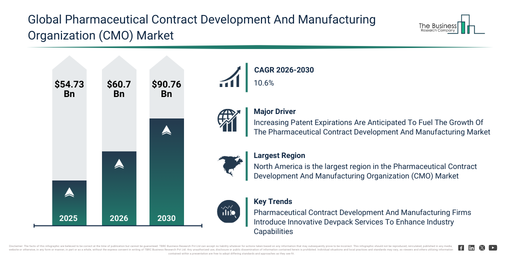
  • Pharmaceutical Contract Development And Manufacturing Organization (CMO) Market Expansion Is Opening New Pathways For Strategic Investment

    Pharmaceutical Contract Development And Manufacturing Organization (CMO) Market Expansion Is Opening New Pathways For Strategic Investment

    Through market attractiveness analysis, total addressable market evaluation, company benchmarking matrices, interactive Excel dashboards, expanded supply chain intelligence, emerging startup coverage, and detailed product insights, The Business Research Company’s 2026 market reports provide more actionable and strategically valuable research.

    Pharmaceutical Contract Development And Manufacturing Organization (CMO) Market Size Forecast: How Large Could The Market Become By 2030?

    The market for contract development and manufacturing organizations (CDMOs) in the pharmaceutical sector has experienced significant expansion over the past few years. Projections indicate an increase from $54.73 billion in 2025 to $60.7 billion in 2026, reflecting a compound annual growth rate (CAGR) of 10.9%. This historic growth has been driven by factors such as heightened research and development spending among pharmaceutical firms, a growing incidence of chronic illnesses, surging demand for generic medications, innovations in drug production technologies, and an intensified emphasis on preclinical and clinical studies.

    The pharmaceutical contract development and manufacturing organization (CMO) market is projected to experience significant expansion over the coming years, reaching an estimated value of $90.76 billion by 2030, driven by a compound annual growth rate (CAGR) of 10.6%. Several factors are fueling this forecasted growth, such as the increasing uptake of personalized medicine, heightened demand for biologics and intricate therapeutics, the broadening of CDMO capabilities in emerging markets, the incorporation of digital technologies into drug development processes, and a surge in strategic collaborations and mergers within the pharmaceutical industry. Key trends shaping this period include a stronger reliance on outsourcing for drug development and manufacturing, an expansion in the range of services offered by CDMOs, a heightened emphasis on regulatory adherence and quality assurance, the formation of alliances between pharmaceutical companies and CDMOs, and the integration of sophisticated analytical and testing services.

    Download A Free Sample Report For Comprehensive Market Insights:

    https://www.thebusinessresearchcompany.com/sample.aspx?id=2825&type=smp&utm_source=BlogsPR&utm_medium=Paid&utm_campaign=Jul_PR

    Pharmaceutical Contract Development And Manufacturing Organization (CMO) Market Expansion Drivers: What Is Shaping Future Growth?

    A growing wave of patent expirations is anticipated to drive expansion in the pharmaceutical contract development and manufacturing market. Patent expiration marks the conclusion of the legally protected exclusive rights granted to an inventor or patent holder, which allow them to make, sell, or use an invention for a set duration. Contract development and manufacturing services in the pharmaceutical sector facilitate the rapid development and production of generic drugs, enabling them to enter the market once patent protections lapse. For example, as reported by DrugTimes, a Chinese company focused on the pharmaceutical and biotech industry, in February 2024, over 25 products will lose their patent protection by 2037. Based on 2024 sales figures, this could result in a combined revenue decline exceeding $236.4 billion. Consequently, the rising incidence of patent expirations is fueling growth in the pharmaceutical contract development and manufacturing market.

    Pharmaceutical Contract Development And Manufacturing Organization (CMO) Market Categorization By Product Type And Application

    The pharmaceutical contract development and manufacturing organization (cmo) market covered in this report is segmented –

    1) By Type: Contract Manufacturing Services, Contract Research Services

    2) By Research Phase: Preclinical, Phase I, Phase II, Phase III, Phase IV

    3) By End User: Big Pharmaceutical Companies, Generic Pharmaceutical Companies, Small And Medium-Sized Pharmaceutical Companies

    Subsegments:

    1) By Contract Manufacturing Services: Active Pharmaceutical Ingredient (API) Manufacturing, Formulation Development, Finished Dosage Form Manufacturing, Packaging Services, Supply Chain Management

    2) By Contract Research Services: Preclinical Research Services, Clinical Trial Management, Regulatory Affairs Consulting, Biostatistics And Data Management, Analytical And Testing Services

    Pharmaceutical Contract Development And Manufacturing Organization (CMO) Market Strategic Trends: What Is Defining The Next Phase Of Growth?

    Major players in the pharmaceutical contract development and manufacturing industry are introducing innovative offerings like the DevPack to strengthen their service portfolios and address the sector’s changing demands. This DevPack is a service designed to be coordinated across multiple collaborators, producing a consistent dataset of development process steps. For example, ASM Research Chemicals, a German business specializing in contract research and manufacturing, unveiled the DevPack in May 2023. This new development package is tailored for the production of active pharmaceutical ingredients (APIs). The DevPack, refined through partnerships with ten key organizations, delivers a standardized dataset for development workflows. It helps streamline API research, development, and scaling efforts. Geared toward CMOs and pharmaceutical companies seeking rapid early-stage manufacturing routes for APIs, this service also facilitates analytical development and is well-suited for quick route implementation.

    Pharmaceutical Contract Development And Manufacturing Organization (CMO) Market Company Landscape And Strategic Competition

    Major companies operating in the pharmaceutical contract development and manufacturing organization (cmo) market are Lonza Group, Catalent Inc, WuXi AppTec Inc., Recipharm AB, Almac Group, Aenova Group, Baxter International Inc, SGS Life Science Services SA, Jubilant Pharmova Ltd, Dishman Pharmaceuticals, Kemwell Pvt. Ltd., Nipro Corp., CMIC Group, Sawai Pharmaceutical Co. Ltd, IDT Australia Limited, Aurigene Pharmaceutical Services Limited, Vetter Pharma International GMBH, Consort Medical PLC, Siegfried Holding AG, Evonik Industries, NextPharma, Royal DSM N.V, HAUPT Pharma AG, Famar, OTC-PharmNEUCA, Farmacol, Polska Grupa Farmaceutyczna, Polpharma, TZMO, Eurofarma Laboratórios S.A., Ache Laboratórios Farmacêuticos S.A., Blanver Farmoquímica e Farmacêutica S.A., Prati-Donaduzzi, União Química Farmacêutica Nacional S.A, Laboratorios Richmond S.A.C.I.F., Bago S.A., Elea Laboratories S.A.C.I. y F., Gador S.A., LIFEPharma, Neopharm, Gulf Pharmaceutical Industries JULPHA, NewBridge Pharmaceuticals Limited, Aspen Pharmacare Holdings Limited, Adcock Ingram Holdings Limited, Pharma-Q (Pty) Ltd, Vital Health Foods, EIPICO (Egyptian International Pharmaceutical Industries Company), Pharco Pharmaceuticals

    Access The Complete Pharmaceutical Contract Development And Manufacturing Organization (CMO) Market Report:

    https://www.thebusinessresearchcompany.com/report/pharmaceutical-contract-developments-and-manufacturing-organization-cmo-global-market-report?utm_source=BlogsPR&utm_medium=Paid&utm_campaign=Jul_PR

    Pharmaceutical Contract Development And Manufacturing Organization (CMO) Market Regional Outlook: Where Are The Largest Opportunities Located?

    North America was the largest region in the global pharmaceutical contract development and manufacturing market in 2025. The Middle East is expected to be the fastest-growing region in the global pharmaceutical contract development and manufacturing market during the forecast period. The regions covered in the pharmaceutical contract development and manufacturing organization (cmo) market report are Asia-Pacific, South East Asia, Western Europe, Eastern Europe, North America, South America, Middle East, Africa.

    Get in touch with us:

    The Business Research Company: https://www.thebusinessresearchcompany.com/?utm_source=BlogsPR&utm_medium=Paid&utm_campaign=home_page_test

    Americas: +1 310-496-7795

    Asia: +44 7882 955267 & +91 8897263534

    Europe: +44 7882 955267

    Email us at: marketing@tbrc.info

    Follow us on:

    LinkedIn: https://in.linkedin.com/company/the-business-research-company

    YouTube: https://www.youtube.com/channel/UC24_fI0rV8cR5DxlCpgmyFQ

    Global Market Model: https://www.thebusinessresearchcompany.com/global-market-model
  • Pharmaceutical Contract Development And Manufacturing Organization (CDMO) For Formulations Market Trends Are Creating New Opportunities For Industry Leaders

    Pharmaceutical Contract Development And Manufacturing Organization (CDMO) For Formulations Market Trends Are Creating New Opportunities For Industry Leaders

    Delivering more actionable and strategically valuable research, The Business Research Company’s 2026 market reports feature market attractiveness analysis, total addressable market evaluation, company benchmarking matrices, interactive Excel dashboards, expanded supply chain intelligence, emerging startup coverage, and detailed product insights.

    Pharmaceutical Contract Development And Manufacturing Organization (CDMO) For Formulations Market Revenue Outlook: What CAGR Is Expected Through 2030?

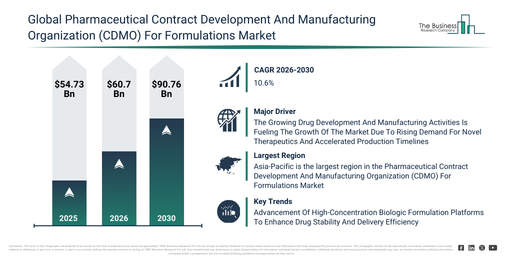
    The pharmaceutical CDMO market for formulations has experienced strong growth in recent years, increasing from $54.73 billion in 2025 to $60.7 billion in 2026, reflecting a compound annual growth rate (CAGR) of 10.9%. Several factors drove this expansion in the historical period, including a scarcity of specialized peptide API manufacturers, a reliance on in-house peptide production, an expanding pipeline of peptide therapeutics, stricter regulatory compliance demands, and the utilization of basic chemical synthesis techniques.

    The market for pharmaceutical contract development and manufacturing organizations (CDMOs) specializing in formulations is projected to experience significant expansion in the coming years. By 2030, it is anticipated to reach $90.76 billion, reflecting a compound annual growth rate (CAGR) of 10.6%. This forecasted growth is driven by factors such as progress in custom peptide synthesis technologies, the broadening of commercial-scale GMP manufacturing, heightened outsourcing to CROs and SMEs, the creation of lifecycle management and process optimization approaches, and a growing need for clinical and preclinical peptide API production. Key trends shaping this period include an increased tendency to outsource peptide API manufacturing to contract producers, a rise in GMP-grade output for both clinical and commercial supply, greater demand for custom peptide synthesis and purification services, the broadening of peptide therapeutic pipelines across pharmaceutical firms, and an emphasis on process optimization and lifecycle management for peptide APIs.

    Download A Free Sample Report For Comprehensive Market Insights:

    https://www.thebusinessresearchcompany.com/sample.aspx?id=25876&type=smp&utm_source=BlogsPR&utm_medium=Paid&utm_campaign=Jul_PR

    Pharmaceutical Contract Development And Manufacturing Organization (CDMO) For Formulations Market Development Factors: Which Trends Are Supporting Demand?

    The anticipated expansion of the pharmaceutical contract development and manufacturing organization (CDMO) market for formulations is being driven by the rising volume of drug development and manufacturing activities. These activities involve the intensified efforts of pharmaceutical and biopharmaceutical firms to research, develop, and produce new medications. This surge is largely attributed to the growing worldwide demand for innovative and effective therapies, prompting companies to broaden their development pipelines and accelerate manufacturing schedules. A pharmaceutical CDMO supports drug development by designing and refining dosage forms, conducting stability assessments, and ensuring adherence to regulatory standards. It also oversees scale-up and production processes, facilitating quicker and more cost-effective product introductions. For example, in June 2023, the European Federation of Pharmaceutical Industries and Associations (EFPIA), a trade association headquartered in Belgium representing Europe’s pharmaceutical sector, reported that total pharmaceutical production in Europe reached $422,803 million (€390,000 million) in 2023, compared to $393,857 million (€363,300 million) in 2022. Consequently, the growth in drug development and manufacturing activities is propelling the pharmaceutical contract development and manufacturing organization (CDMO) for formulations market forward.

    Pharmaceutical Contract Development And Manufacturing Organization (CDMO) For Formulations Market Segment Analysis And Revenue Opportunities

    The pharmaceutical contract development and manufacturing organization (cdmo) for formulations market covered in this report is segmented –

    1) By Dosage Form: Oral Solids, Oral Liquids, Injectables, Topicals, Inhalation Products, Transdermal And Patches, Other Dosage Forms

    2) By Therapeutic Area: Oncology, Cardiology, Central Nervous System, Gastroenterology, Infectious Diseases, Endocrinology

    3) By End-User: Pharmaceutical Companies, Biopharmaceutical Companies, Other End-Users

    Subsegments:

    1) By Oral Solids: Tablets, Capsules, Granules, Powders, Modified-Release Formulations

    2) By Oral Liquids: Syrups, Suspensions, Solutions, Emulsions, Elixirs

    3) By Injectables: Vials, Ampoules, Prefilled Syringes, Lyophilized Injections, Injectable Emulsions

    4) By Topicals: Creams, Ointments, Gels, Lotions, Foams,

    5) By Inhalation Products: Metered Dose Inhalers (MDIs), Dry Powder Inhalers (DPIs), Nebulizer Solutions, Nasal Sprays, Inhalation Capsules

    6) By Transdermal And Patches: Matrix Patches, Reservoir Patches, Drug-In-Adhesive Patches, Microneedle Patches, Iontophoretic Patches

    7) By Other Dosage Forms: Suppositories, Ophthalmic Preparations, Buccal Tablets, Sublingual Tablets, Implants

    Pharmaceutical Contract Development And Manufacturing Organization (CDMO) For Formulations Market Transformation Trends: Which Innovations Are Driving Change?

    Leading players in the pharmaceutical CDMO sector for formulations are increasingly prioritizing the development of cutting-edge tools, including biologic formulation platforms, aimed at improving drug stability and shortening the time required to bring complex biologic therapies to market. These platforms are intricate systems engineered to produce stable, efficient formulations for biologic drugs, carefully adjusting variables like pH, excipients, and delivery mechanisms to ensure optimal stability, bioavailability, and safety throughout a product’s lifecycle. A notable example comes from June 2025, when WuXi Biologics, a contract research, development, and manufacturing organization based in China, introduced WuXiHigh 2.0—a next-generation platform for high-concentration formulations. This system supports biologic formulations with protein levels reaching 230 mg/mL, exceeding the current FDA-approved maximum of 200 mg/mL, while also slashing viscosity by as much as 90% thanks to proprietary excipient combinations and high-throughput tools. By tackling major hurdles in high-concentration biologic development, such as viscosity and aggregation, it enhances injection efficiency, patient adherence, and manufacturing success during both clinical trials and commercial production.

    Pharmaceutical Contract Development And Manufacturing Organization (CDMO) For Formulations Market Leading Players Shaping Industry Direction

    Major companies operating in the pharmaceutical contract development and manufacturing organization (cdmo) for formulations market are Thermo Fisher Scientific Inc., Lonza Group, Catalent Inc., WuXi Biologics, Samsung Biologics, Recipharm AB, Siegfried Holding AG, Evonik Industries AG, Almac Group, Aenova Group, Piramal Pharma Limited, Cambrex, Jubilant Pharmova Limited, CordenPharma, Altasciences, Hovione, Aurigene Pharmaceutical Services Ltd., DPT Laboratories Ltd., CARBOGEN AMCIS, Biopharma Group, LGM Pharma, Aarti Pharmalabs Limited.

    Access The Complete Pharmaceutical Contract Development And Manufacturing Organization (CDMO) For Formulations Market Report:

    https://www.thebusinessresearchcompany.com/report/pharmaceutical-contract-development-and-manufacturing-organization-cdmo-for-formulations-global-market-report?utm_source=BlogsPR&utm_medium=Paid&utm_campaign=Jul_PR

    Pharmaceutical Contract Development And Manufacturing Organization (CDMO) For Formulations Market Geographic Landscape: Which Region Dominates Industry Growth?

    Asia-Pacific was the largest region in the pharmaceutical contract development and manufacturing organization (CDMO) for formulations market in 2025. North America is expected to be the fastest-growing region in the forecast period. The regions covered in the pharmaceutical contract development and manufacturing organization (cdmo) for formulations market report are Asia-Pacific, South East Asia, Western Europe, Eastern Europe, North America, South America, Middle East, Africa.

    Get in touch with us:

    The Business Research Company: https://www.thebusinessresearchcompany.com/?utm_source=BlogsPR&utm_medium=Paid&utm_campaign=home_page_test

    Americas: +1 310-496-7795

    Asia: +44 7882 955267 & +91 8897263534

    Europe: +44 7882 955267

    Email us at: marketing@tbrc.info

    Follow us on:

    LinkedIn: https://in.linkedin.com/company/the-business-research-company

    YouTube: https://www.youtube.com/channel/UC24_fI0rV8cR5DxlCpgmyFQ

    Global Market Model: https://www.thebusinessresearchcompany.com/global-market-model
  • Pharmaceutical Continuous Manufacturing Market Growth Is Reshaping Competitive Advantage Across The Industry

    Pharmaceutical Continuous Manufacturing Market Growth Is Reshaping Competitive Advantage Across The Industry

    Enhanced with market attractiveness analysis, total addressable market evaluation, company benchmarking matrices, interactive Excel dashboards, expanded supply chain intelligence, emerging startup coverage, and detailed product insights, The Business Research Company’s 2026 market reports deliver more actionable and strategically valuable research.

    Pharmaceutical Continuous Manufacturing Market Growth Analysis: How Will Revenue Expand During The Forecast Period?

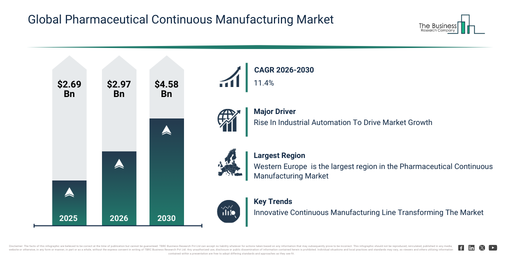
    The market for pharmaceutical continuous manufacturing has seen rapid expansion in recent years, with its size projected to rise from $2.69 billion in 2025 to $2.97 billion in 2026, reflecting a compound annual growth rate (CAGR) of 10.4%. This historical growth has been driven by factors such as escalating drug demand volumes, a need for enhanced production efficiency, substantial variability in batch manufacturing, mounting cost pressures on pharmaceutical firms, and early regulatory approvals for pilot initiatives.

    The pharmaceutical continuous manufacturing market is anticipated to experience rapid expansion in the coming years, projected to reach a value of $4.58 billion by 2030, representing a compound annual growth rate (CAGR) of 11.4%. This forecasted growth is driven by several factors, including heightened adoption of pcm among major pharmaceutical companies, increased investment in smart factories, a rising need for faster scale-up and commercialization efforts, a stronger emphasis on supply chain resilience, and continued progress in continuous processing equipment technology. Key trends shaping this period encompass a transition from batch to fully integrated continuous production, wider implementation of modular and adaptable manufacturing lines, an intensified focus on real-time quality assurance and control systems, expansion of continuous manufacturing into active pharmaceutical ingredient (API) production, and growing regulatory endorsement of continuous manufacturing processes.

    Download A Free Sample Report For Comprehensive Market Insights:

    https://www.thebusinessresearchcompany.com/sample.aspx?id=12123&type=smp&utm_source=BlogsPR&utm_medium=Paid&utm_campaign=Jul_PR

    Pharmaceutical Continuous Manufacturing Market Industry Drivers: What Is Driving Revenue Growth?

    The rising adoption of industrial automation is anticipated to accelerate the expansion of the pharmaceutical continuous manufacturing market in the coming years. This form of automation involves utilizing control systems, including computers and robots, to manage industrial processes and machinery, either to replace or supplement human involvement. In the context of pharmaceutical continuous manufacturing, industrial automation supports real-time monitoring and feedback control within continuous manufacturing workflows, thereby reducing the likelihood of human error and maintaining uniform product quality. As an illustration, the World Robotics report from the International Federation of Robotics, a non-profit organization headquartered in Germany, revealed in September 2023 that worldwide industrial robot installations reached 553,052 in 2022, reflecting a 5% year-over-year increase. Consequently, the growth of the pharmaceutical continuous manufacturing market is being spurred by the escalation in industrial automation.

    Pharmaceutical Continuous Manufacturing Market Segmentation And Category Breakdown

    The pharmaceutical continuous manufacturing market covered in this report is segmented –

    1) By Product: Integrated Continuous System, Control And Software, Semi-Continuous System

    2) By Therapeutics Type: Large Molecule, Small Molecule

    3) By Formulation: Solid Formation, Liquid And Semi-Solid Formation

    4) By Application: Final Drug Product Manufacturing, Active Pharmaceutical Ingredient (API) Manufacturing

    5) By End-Users: Pharmaceutical Companies, Contract Manufacturing Organization, Other End-Users

    Subsegments:

    1) By Integrated Continuous System: Continuous Mixer Systems, Continuous Granulation Systems, Continuous Tablet Press Systems, Continuous Coating Systems

    2) By Control and Software: Process Analytical Technology (PAT) Tools, Manufacturing Execution Systems (MES), Control Software for Automation, Data Management and Visualization Software

    3) By Semi-Continuous System: Batch-to-Continuous Transition Systems, Hybrid Systems, Semi-Continuous Granulation and Drying Systems

    Pharmaceutical Continuous Manufacturing Market Growth Trends: What Is Influencing The Future Outlook?

    Leading players in the pharmaceutical continuous manufacturing sector are prioritizing the creation of cutting-edge tools, specifically continuous manufacturing lines, as a strategy to secure a market advantage. A Continuous Manufacturing (CM) line refers to a specialized production setup where raw inputs are consistently processed into final goods without any stoppages or delays. As an example, in January 2023, WuXi STA, a Chinese contract research, development, and manufacturing organization (CRDMO), unveiled its CM line for oral solids in Wuxi City, China. This line, adhering to worldwide cGMP standards, brings progress to oral drug development through the use of continuous direct compression equipment for tasks such as dispensing, blending, lubrication, tablet pressing, and coating. Furthermore, Process Analytical Technology (PAT) is employed to oversee blending uniformity in real time, thereby sustaining superior product quality.

    Pharmaceutical Continuous Manufacturing Market Competitive Analysis Of Major Industry Participants

    Major companies operating in the pharmaceutical continuous manufacturing market are Pfizer Inc., Robert Bosch GmbH, Siemens AG, Novartis AG, Thermo Fisher Scientific Inc., GlaxoSmithKline Plc., Eli Lilly and Company, Corning Inc., Vertex Pharmaceuticals, Lonza Group Ltd., GEA Group AG, Catalent Inc., Mettler Toledo, Patheon, Cytiva, Samsung Biologics Co.Ltd., WuXi Biologics, Syntegon Technology GmbH, Coperion GmbH, Hosokawa Micron Group, FUJIFILM Diosynth Biotechnologies, Leistritz AG, Glatt GmbH, Freund-Vector Corp., SK biotek Co. Ltd., Gericke AG, GEBRÜDER LÖDIGE MASCHINENBAU GmbH, Munson Machinery Company Inc., L.B. Bohle Maschinen und Verfahren GmbH, KORSCH AG, Chemtrix BV

    Access The Complete Pharmaceutical Continuous Manufacturing Market Report:

    https://www.thebusinessresearchcompany.com/report/pharmaceutical-continuous-manufacturing-global-market-report?utm_source=BlogsPR&utm_medium=Paid&utm_campaign=Jul_PR

    Pharmaceutical Continuous Manufacturing Market Largest Region: Which Geography Holds The Highest Market Share?

    Western Europe was the largest region in the pharmaceutical continuous manufacturing market in 2025. Asia-Pacific is expected to be the fastest-growing region in the forecast period. The regions covered in the pharmaceutical continuous manufacturing market report are Asia-Pacific, South East Asia, Western Europe, Eastern Europe, North America, South America, Middle East, Africa.

    Get in touch with us:

    The Business Research Company: https://www.thebusinessresearchcompany.com/?utm_source=BlogsPR&utm_medium=Paid&utm_campaign=home_page_test

    Americas: +1 310-496-7795

    Asia: +44 7882 955267 & +91 8897263534

    Europe: +44 7882 955267

    Email us at: marketing@tbrc.info

    Follow us on:

    LinkedIn: https://in.linkedin.com/company/the-business-research-company

    YouTube: https://www.youtube.com/channel/UC24_fI0rV8cR5DxlCpgmyFQ

    Global Market Model: https://www.thebusinessresearchcompany.com/global-market-model
  • Pharmaceutical Chemicals Market Forecast Signals New Revenue Opportunities Through 2030

    Pharmaceutical Chemicals Market Forecast Signals New Revenue Opportunities Through 2030

    Through market attractiveness analysis, total addressable market evaluation, company benchmarking matrices, interactive Excel dashboards, expanded supply chain intelligence, emerging startup coverage, and detailed product insights, The Business Research Company’s 2026 market reports provide more actionable and strategically valuable research.

    Pharmaceutical Chemicals Market Forecast: What Market Value Is Expected By 2030?

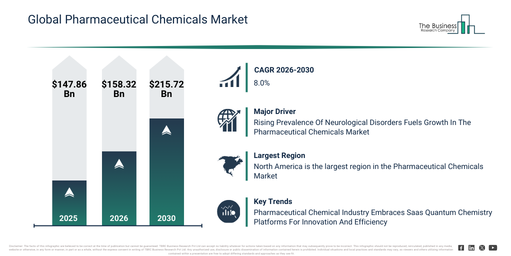
    The pharmaceutical chemicals market experienced robust expansion in recent times, with projections indicating growth from $147.86 billion in 2025 to $158.32 billion in 2026, reflecting a compound annual growth rate (CAGR) of 7.1%. This historical upswing can be linked to several factors, including a rising incidence of chronic conditions, increased pharmaceutical manufacturing worldwide, progress in synthetic chemistry techniques, a broader scope of generic drug production, and enhanced funding directed toward research and development activities.

    The pharmaceutical chemicals market is anticipated to experience robust expansion over the coming years. By 2030, it is projected to reach a value of $215.72 billion, reflecting a compound annual growth rate (CAGR) of 8.0%. This growth during the forecast period is driven by factors such as the increasing adoption of precision medicine, a rising need for biologics and complex therapies, progress in biocatalysis and enzyme technologies, expansion of the pharmaceutical sector in emerging markets, and heightened investments in green and sustainable chemical processes. Key trends shaping this period include a greater emphasis on green chemistry and sustainable synthesis, a growing requirement for high-purity pharmaceutical chemicals, the broadening of contract manufacturing and outsourcing, the incorporation of advanced analytical and quality control instruments, and the creation of novel drug precursors and specialty chemicals.

    Download A Free Sample Report For Comprehensive Market Insights:

    https://www.thebusinessresearchcompany.com/sample.aspx?id=13013&type=smp&utm_source=BlogsPR&utm_medium=Paid&utm_campaign=Jul_PR

    #Pharmaceutical Chemicals Market Growth Factors: Which Forces Are Supporting Market Expansion?

    The rising incidence of neurological disorders is anticipated to drive expansion in the pharmaceutical chemicals market. A neurological disorder impacts both the central and peripheral nervous systems, encompassing the brain, spinal cord, and nerves throughout the body. Pharmaceutical chemicals are employed in the development and production of drugs targeting these disorders, aiding in the management of pain and movement conditions. For example, the 2023 Alzheimer’s Disease Facts and Figures report from the Alzheimer’s Association—a U.S.-based nonprofit dedicated to Alzheimer’s care and support—indicates that approximately 6 million Americans were living with Alzheimer’s in 2023, with projections suggesting this number could climb to nearly 13 million by 2030. Additionally, the costs associated with Alzheimer’s and other dementias are expected to reach $345 billion in 2023 and could soar to $1 trillion by 2050. Consequently, the growing prevalence of neurological disorders is a key factor fueling the pharmaceutical chemicals market’s growth.

    Pharmaceutical Chemicals Market Segment Outlook: Which Categories Are Expanding The Fastest?

    The pharmaceutical chemicals market covered in this report is segmented –

    1) By Product Type: Solvents, Reagents Or Catalysts, KSMs Or Intermediates, Building Blocks For APIs Or Advanced Intermediates

    2) By Drug Type: Proprietary, Non-Proprietary

    3) By Application: Cardiovascular Disease, Neurological Disease, Oncological Disease, Respiratory Disease, Gastrointestinal Disease, Musculoskeletal Disease

    Subsegments:

    1) By Solvents: Organic Solvents, Inorganic Solvents, Aqueous Solvents

    2) By Reagents or Catalysts: Organic Reagents, Inorganic Reagents, Biocatalysts

    3) By KSMs or Intermediates: Key Starting Materials (KSMs), Pharmaceutical Intermediates

    4) By Building Blocks for APIs or Advanced Intermediates: Simple Building Blocks, Complex Building Blocks

    Pharmaceutical Chemicals Market Industry Trends: What Changes Are Reshaping Demand?

    Major pharmaceutical chemical companies are leveraging emerging next-generation technologies—including software-as-a-service (SaaS) quantum chemistry platforms—to sustain their competitive edge in the rapidly evolving pharmaceutical landscape. Quantum chemistry platforms delivered via the SaaS model function as cloud-based services, providing subscribers with on-demand access to specialized quantum chemistry software and computational resources. A notable example occurred in April 2023, when QC Ware Corp, a US-based developer of quantum computing solutions, unveiled Promethium, a SaaS quantum chemistry platform designed specifically to expedite discovery in the pharmaceutical, chemical, and materials sectors through an advanced quantum chemistry toolset powered by H100 or A100 Tensor Core processors. This Promethium toolset enables the rapid calculation of chemical systems containing roughly 100 atoms, delivering results in seconds rather than the minutes or hours typically required by conventional algorithms.

    Pharmaceutical Chemicals Market Key Companies And Competitive Benchmarking

    Major companies operating in the pharmaceutical chemicals market are BASF SE, The Dow Chemical Company, Abbott Laboratories, Johnson Matthey PLC, Evonik Industries AG, Eastman Chemical Company, Koninklijke DSM N.V, Lanxess AG, Albemarle Corporation, Lonza Group AG, Clariant AG, W. R. Grace and Co, Jubilant Life Sciences Ltd., Sumitomo Seika Chemicals Co Ltd., Borregaard ASA, WeylChem International GmbH, Vertellus Holdings LLC, CABB Group GmbH, Dishman Carbogen Amcis Ltd., Hikal Ltd., Porton Fine Chemicals Ltd., Denisco Chemicals Pvt Ltd., CHEMADA Industries Ltd., Valaji Pharma Chem, Syntor Fine Chemicals Ltd., Kenko Corporation

    Access The Complete Pharmaceutical Chemicals Market Report:

    https://www.thebusinessresearchcompany.com/report/pharmaceutical-chemicals-global-market-report?utm_source=BlogsPR&utm_medium=Paid&utm_campaign=Jul_PR

    Pharmaceutical Chemicals Market Regional Analysis: Which Region Leads By Revenue?

    North America was the largest region in the pharmaceutical chemicals market in 2025. Asia Pacific is expected to be the fastest-growing region in the forecast period. The regions covered in the pharmaceutical chemicals market report are Asia-Pacific, South East Asia, Western Europe, Eastern Europe, North America, South America, Middle East, Africa.

    Get in touch with us:

    The Business Research Company: https://www.thebusinessresearchcompany.com/?utm_source=BlogsPR&utm_medium=Paid&utm_campaign=home_page_test

    Americas: +1 310-496-7795

    Asia: +44 7882 955267 & +91 8897263534

    Europe: +44 7882 955267

    Email us at: marketing@tbrc.info

    Follow us on:

    LinkedIn: https://in.linkedin.com/company/the-business-research-company

    YouTube: https://www.youtube.com/channel/UC24_fI0rV8cR5DxlCpgmyFQ

    Global Market Model: https://www.thebusinessresearchcompany.com/global-market-model
  • Pharmaceutical Cartridges Market Growth Is Accelerating As Industry Transformation Continues

    Pharmaceutical Cartridges Market Growth Is Accelerating As Industry Transformation Continues

    Delivering more actionable and strategically valuable research, The Business Research Company’s 2026 market reports feature market attractiveness analysis, total addressable market evaluation, company benchmarking matrices, interactive Excel dashboards, expanded supply chain intelligence, emerging startup coverage, and detailed product insights.

    Pharmaceutical Cartridges Market Size Outlook: How Fast Will Revenue Grow Through 2030?

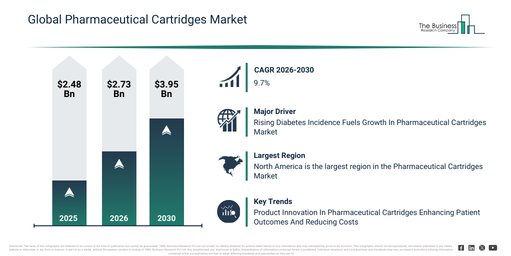
    The pharmaceutical cartridges market has experienced robust expansion in recent years, with projections indicating a rise from $2.48 billion in 2025 to $2.73 billion in 2026, representing a compound annual growth rate (CAGR) of 10.0%. This historical growth has been driven by factors such as the dependence on traditional large-volume cartridges, the constrained supply of pre-filled dual-chamber systems, a surge in the adoption of injectable medications, enhanced pharmaceutical production capabilities, and the early embrace of pen injector devices.

    The pharmaceutical cartridges market is projected to experience significant expansion in the coming years. By 2030, it is forecast to reach $3.95 billion with a compound annual growth rate (CAGR) of 9.7%. This anticipated growth during the forecast period is primarily driven by the advancement of wearable injectors and smart delivery systems, enhanced customization of dual-chamber cartridges, a rise in the launch of biologics and specialty drugs, increased preference for pre-filled large-volume cartridges, and the growing incorporation of digital monitoring into injectors. Key trends shaping the future include a heightened demand for pre-filled and dual-chamber cartridges, the proliferation of wearable and autoinjector drug delivery systems, wider use of glass and plastic cartridge materials, expanded applications in dental anesthesia and pen injectors, and a focus on developing customizable cartridges to address specialized pharmaceutical requirements.

    Download A Free Sample Report For Comprehensive Market Insights:

    https://www.thebusinessresearchcompany.com/sample.aspx?id=19647&type=smp&utm_source=BlogsPR&utm_medium=Paid&utm_campaign=Jul_PR

    Pharmaceutical Cartridges Market Demand Drivers: What Is Fueling Industry Growth?

    The growing prevalence of diabetes is anticipated to boost the pharmaceutical cartridges market in the foreseeable future. Diabetes is a long-term health condition where the body fails to regulate blood sugar (glucose) effectively, due to either insufficient insulin production or an inability to use insulin properly. This rise in diabetes cases is fueled by factors like higher obesity rates, inactive lifestyles, poor dietary habits, aging populations, and hereditary influences. Pharmaceutical cartridges play a key role in diabetes care by enabling accurate insulin dosing for effective and stable blood glucose management. For example, the National Health Service (NHS), a UK government body, reported in June 2024 that cases of non-diabetic hyperglycemia (or pre-diabetes) among those under 40 jumped by nearly 25% between 2022 and 2023, climbing from 173,166 to 216,440. Consequently, the increasing frequency of diabetes is fueling expansion in the pharmaceutical cartridges market.

    Pharmaceutical Cartridges Market Segment Landscape: Which Areas Lead Market Development?

    The pharmaceutical cartridges market covered in this report is segmented –

    1) By Type: Dual Chamber Cartridges, Large-Volume Cartridges

    2) By Material Type: Glass Cartridges, Plastic Cartridges

    3) By Application: Dental Anesthesia, Pen Injectors, Autoinjectors, Wearable Injectors

    4) By End Use: Pharmaceuticals, Biotechnology, Research Organizations, Other End Uses

    Subsegments:

    1) By Dual Chamber Cartridges: Pre-filled Dual Chamber Cartridges, Customizable Dual Chamber Cartridges

    2) By Large-Volume Cartridges: Pre-filled Large-Volume Cartridges, Non-Prefilled Large-Volume Cartridges

    Pharmaceutical Cartridges Market Innovation Trends: Which Developments Are Transforming The Industry?

    Key industry players in the pharmaceutical cartridges sector are increasingly concentrating on the creation of novel products—particularly sophisticated self-administration systems—designed to allow patients to handle large volumes of biologic drugs at home, thereby boosting ease of use and cutting healthcare expenses. These systems empower individuals to self-administer medications, especially injectables, without needing professional support, leveraging cutting-edge features like prefilled and preloaded cartridges. A notable example occurred in July 2024, when SCHOTT Pharma AG & Co. KGaA, a German healthcare firm, launched cartriQ RTU cartridges—10-ml ready-to-use units tailored for the storage and delivery of highly sensitive biologics used in treating ailments such as cancer and cardiovascular diseases. This prefilled and preloaded system streamlines at-home self-administration for patients, delivering greater convenience and lowering medical costs. Engineered as a large-format solution, it specifically safeguards biologics, which are transforming how numerous severe conditions are addressed.

    Pharmaceutical Cartridges Market Industry Leaders And Market Competition

    Major companies operating in the pharmaceutical cartridges market are Merck KGaA, Becton Dickinson and Company (BD), Baxter Healthcare Corporation, Clariant AG, Terumo Corporation, Catalent Inc., Sigma-Aldrich Corporation, Nipro Corporation, Schott AG, West Pharmaceutical Services Inc., Gerresheimer AG, Vetter Pharma International GmbH, Dätwyler Holding Inc., Stevanato Group S.p.A., groninger and Co. gmbh, Shandong Medicinal Glass Co. Ltd., Ypsomed AG, SGD Pharma, Consort Medical plc

    Access The Complete Pharmaceutical Cartridges Market Report:

    https://www.thebusinessresearchcompany.com/report/pharmaceutical-cartridges-global-market-report?utm_source=BlogsPR&utm_medium=Paid&utm_campaign=Jul_PR

    Pharmaceutical Cartridges Market Geographic Distribution And Regional Opportunities

    North America was the largest region in the pharmaceutical cartridges market in 2025. Asia-Pacific is expected to be the fastest-growing region in the forecast period. The regions covered in the pharmaceutical cartridges market report are Asia-Pacific, South East Asia, Western Europe, Eastern Europe, North America, South America, Middle East, Africa.

    Get in touch with us:

    The Business Research Company: https://www.thebusinessresearchcompany.com/?utm_source=BlogsPR&utm_medium=Paid&utm_campaign=home_page_test

    Americas: +1 310-496-7795

    Asia: +44 7882 955267 & +91 8897263534

    Europe: +44 7882 955267

    Email us at: marketing@tbrc.info

    Follow us on:

    LinkedIn: https://in.linkedin.com/company/the-business-research-company

    YouTube: https://www.youtube.com/channel/UC24_fI0rV8cR5DxlCpgmyFQ

    Global Market Model: https://www.thebusinessresearchcompany.com/global-market-model
  • Pharmaceutical API Manufacturing Market Outlook Highlights The Next Major Growth Opportunities

    Pharmaceutical API Manufacturing Market Outlook Highlights The Next Major Growth Opportunities

    Enhanced with market attractiveness analysis, total addressable market evaluation, company benchmarking matrices, interactive Excel dashboards, expanded supply chain intelligence, emerging startup coverage, and detailed product insights, The Business Research Company’s 2026 market reports deliver more actionable and strategically valuable research.

    Pharmaceutical API Manufacturing Market Size, Value And Growth Trends Through 2030

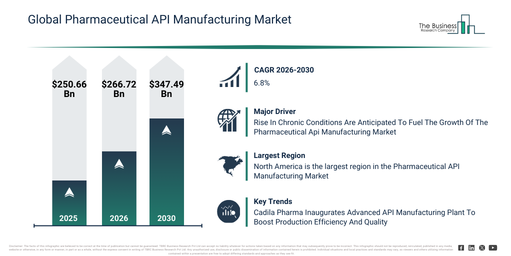
    The pharmaceutical API manufacturing sector has experienced robust expansion over the past few years. Its market value is projected to increase from $250.66 billion in 2025 to $266.72 billion in 2026, reflecting a compound annual growth rate (CAGR) of 6.4%. This historical growth has been driven by several factors: a scarcity of cutting-edge API production facilities, dependence on conventional batch processing methods, an expanding pipeline of pharmaceutical products, a rising incidence of chronic and lifestyle-related diseases, and the implementation of standardized quality management frameworks.

    The pharmaceutical API manufacturing market is anticipated to experience robust expansion over the coming years. By 2030, it is projected to reach a value of $347.49 billion, driven by a compound annual growth rate (CAGR) of 6.8%. This upward trajectory during the forecast period is fueled by advancements in biologics and complex molecules, the broadening adoption of continuous manufacturing methods, heightened investment in research and development for specialty active pharmaceutical ingredients, an increasing need for personalized and targeted treatments, and more stringent regulatory oversight and compliance requirements. Key trends shaping the market include a growing desire for high-purity chemical and biological APIs, a surge in contract manufacturing and outsourcing services, an intensified emphasis on quality assurance and regulatory adherence, the development of specialized APIs for targeted therapies, and the implementation of continuous manufacturing and process improvement strategies.

    Download A Free Sample Report For Comprehensive Market Insights:

    https://www.thebusinessresearchcompany.com/sample.aspx?id=2467&type=smp&utm_source=BlogsPR&utm_medium=Paid&utm_campaign=Jul_PR

    Pharmaceutical API Manufacturing Market Growth Drivers: What Factors Are Accelerating Expansion?

    The growing prevalence of long-term health issues is set to accelerate the expansion of the pharmaceutical API manufacturing market. Chronic conditions, often referred to as chronic diseases, are health problems that persist for prolonged durations, frequently lasting a lifetime, and are usually not fully curable. The active pharmaceutical ingredient (API) plays a crucial role in determining the quality, efficacy, and safety of medications. The production of pharmaceutical APIs is essential for creating key drugs used to manage such chronic ailments. For example, in January 2023, the Centers for Disease Control and Prevention (CDC), a U.S. federal agency, reported that 76.4% of American adults—approximately 194 million people—had at least one chronic condition in 2023, with prevalence rates of 59.5% among young adults, 78.4% among middle-aged adults, and 93.0% among older adults. Consequently, the increase in chronic conditions is fueling the growth of the pharmaceutical API manufacturing market.

    Pharmaceutical API Manufacturing Market Segments: Where Are The Largest Growth Opportunities?

    The pharmaceutical api manufacturing market covered in this report is segmented –

    1) By Therapy Area: Cardiovascular Disorders, Metabolic Disorders, Neurological Disorders, Oncology, Musculoskeletal Disorders, Other Therapeutic Uses

    2) By API Type: Chemical API, Biological API

    3) By Drug Type: Prescription Drugs, Over-The-Counter (OTC) Drugs

    Subsegments:

    1) By Cardiovascular Disorders: Hypertension Treatments, Cholesterol Management, Anticoagulants

    2) By Metabolic Disorders: Diabetes Medications, Obesity Management, Hormonal Therapies

    3) By Neurological Disorders: Antiepileptics, Antidepressants, Neurodegenerative Disease Treatments

    4) By Oncology: Chemotherapeutics, Targeted Therapies, Immunotherapies

    5) By Musculoskeletal Disorders: Pain Management Medications, Osteoporosis Treatments, Anti-inflammatory Drugs

    6) By Other Therapeutic Uses: Infectious Disease Treatments, Respiratory Disorder Medications, Gastrointestinal Disorder Treatments

    Pharmaceutical API Manufacturing Market Trends: What Is Shaping Future Industry Growth?

    Major players in the pharmaceutical API manufacturing sector are concentrating on creating cutting-edge solutions, including API production facilities, to boost operational efficiency, meet regulatory standards, and elevate product quality. An API manufacturing plant is a dedicated facility where active pharmaceutical ingredients—the biologically active substances essential for drug formulation—are produced. As an example, in November 2023, Cadila Pharma, an Indian pharmaceutical firm, launched a new facility for manufacturing Active Pharmaceutical Ingredients. This advanced plant incorporates sophisticated Distributed Control System (DCS) automation technology, designed to increase production efficiency and guarantee high purity levels in the APIs. This move underscores Cadila’s dedication to addressing the rising worldwide demand for high-quality pharmaceuticals, generating employment in the local area, and supporting its broader goal of driving innovation across multiple therapeutic fields.

    Pharmaceutical API Manufacturing Market Major Participants And Competitive Dynamics

    Major companies operating in the pharmaceutical api manufacturing market are Pfizer Inc, Sanofi S.A, Teva Pharmaceutical Industries Ltd., Aurobindo Pharma, Dr. Reddy’s Laboratories, BASF SE, Sun Pharmaceutical Industries Ltd, Novartis AG, Lupin Ltd, Cipla Inc., Arlak Biotech, Healthkind Labs Pvt. Ltd, SwisscheM Healthcare Pvt. Ltd, Apikos Pharma, Kolaz Biotech, CStone Pharma, CARsgen Therapeutics, JW Therapeutics, BeiGene, Takeda Pharmaceuticals, Astellas Pharma Inc, Otsuka Pharmaceutical Co Ltd, Legend Biotech Co, Zai Lab, Daiichi Pharmaceutical, Sankyo, GlaxoSmithKline (GSK), AstraZeneca, Abbott Laboratories, Roche Holding AG, Merck & Co, Boehringer Ingelheim, Zentiva, Microgen, Geropharm, Valenta, NovaMedica, Veropharm, Celon Pharma, SynBio, Generium, Skopinpharm, ALMEDIS, Biocad, Farmacol, Polpharma, BioVectra, Celgene Corporation, Kashiv Pharma, Cambrex, Eli Lilly and Company, Bristol-Myers Squibb Company, Apotex, Gilead Sciences, AbbVie Inc, Hisun USA Inc, AMEGA Biotech, BioMarin Pharmaceutical, Ferring Pharmaceuticals, Wavelength Pharmaceuticals, SAUDIBIO, Tabuk Pharmaceuticals, Bayer, Adcock Ingram, Johnson & Johnson, Aspen

    Access The Complete Pharmaceutical API Manufacturing Market Report:

    https://www.thebusinessresearchcompany.com/report/pharmaceutical-api-manufacturing-global-market-report?utm_source=BlogsPR&utm_medium=Paid&utm_campaign=Jul_PR

    Pharmaceutical API Manufacturing Market Largest Region By Revenue And Market Share

    North America was the largest region in the pharmaceutical API manufacturing market in 2025. The Middle East is expected to be the fastest-growing region in the global pharmaceutical API manufacturing market share during the forecast period. The regions covered in the pharmaceutical api manufacturing market report are Asia-Pacific, South East Asia, Western Europe, Eastern Europe, North America, South America, Middle East, Africa.

    Get in touch with us:

    The Business Research Company: https://www.thebusinessresearchcompany.com/?utm_source=BlogsPR&utm_medium=Paid&utm_campaign=home_page_test

    Americas: +1 310-496-7795

    Asia: +44 7882 955267 & +91 8897263534

    Europe: +44 7882 955267

    Email us at: marketing@tbrc.info

    Follow us on:

    LinkedIn: https://in.linkedin.com/company/the-business-research-company

    YouTube: https://www.youtube.com/channel/UC24_fI0rV8cR5DxlCpgmyFQ

    Global Market Model: https://www.thebusinessresearchcompany.com/global-market-model
  • Pharma Grade Cellulose Powder Market Trends And Growth Drivers Point To Strong Future Potential

    Pharma Grade Cellulose Powder Market Trends And Growth Drivers Point To Strong Future Potential

    Through market attractiveness analysis, total addressable market evaluation, company benchmarking matrices, interactive Excel dashboards, expanded supply chain intelligence, emerging startup coverage, and detailed product insights, The Business Research Company’s 2026 market reports provide more actionable and strategically valuable research.

    Pharma Grade Cellulose Powder Market CAGR Analysis And Future Market Development

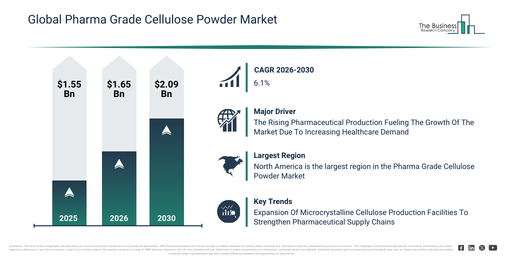
    The market for pharma grade cellulose powder has experienced robust expansion in recent years. Valued at $1.55 billion in 2025, it is projected to reach $1.65 billion by 2026, reflecting a compound annual growth rate (CAGR) of 6.1%. This historic growth has been driven by several factors, including the rising prevalence of oral drug formulations, the extensive utilization of cellulose as an excipient, the scaling up of pharmaceutical production, an increasing need for formulation stability, and the regulatory endorsement of cellulose-based excipients.

    The pharmaceutical-grade cellulose powder market is projected to experience robust expansion in the coming years, reaching an estimated $2.09 billion by 2030 with a compound annual growth rate of 6.1%. This anticipated growth during the forecast period is driven by factors such as the rising use of cellulose in nutraceuticals, an increased preference for clean-label excipients, the broadening of generic drug portfolios, innovations in excipient engineering, and a greater push toward sustainability. Key developments shaping the forecast period include a growing demand for plant-derived pharmaceutical excipients, heightened utilization in solid oral dosage forms, a surge in the adoption of microcrystalline cellulose, the expansion of multifunctional cellulose-based excipients, and an intensified emphasis on sustainable sourcing of these materials.

    Download A Free Sample Report For Comprehensive Market Insights:

    https://www.thebusinessresearchcompany.com/sample.aspx?id=24373&type=smp&utm_source=BlogsPR&utm_medium=Paid&utm_campaign=Jul_PR

    Pharma Grade Cellulose Powder Market Growth Factors Supporting Long-Term Expansion

    The anticipated growth in pharmaceutical manufacturing is set to advance the market for pharma-grade cellulose powder in the coming years. This manufacturing process encompasses the creation of medicines through the formulation, synthesis, and quality testing of active ingredients and excipients, prioritizing safety, efficacy, and adherence to regulatory standards. A surge in chronic diseases, which demand ongoing and prolonged medication for proper management, is fueling higher levels of pharmaceutical production. Within this context, pharma-grade cellulose powder serves as a crucial binder, filler, and stabilizer, preserving tablet structure and guaranteeing consistent distribution of active compounds. As an illustration, data from June 2023 released by the European Federation of Pharmaceutical Industries and Associations (EFPIA), a trade body based in Belgium representing Europe’s pharmaceutical sector, indicated that total pharmaceutical output in Europe reached $422,803 million (€390,000 million) in 2023, compared to $393,857 million (€363,300 million) in 2022. Consequently, the expansion of pharmaceutical production is propelling the pharma-grade cellulose powder market forward.

    Pharma Grade Cellulose Powder Market Segment Analysis: What Are The Major Market Categories?

    The pharma grade cellulose powder market covered in this report is segmented –

    1) By Product Type: Microcrystalline Cellulose (MCC), Carboxymethyl Cellulose (CMC), Hydroxypropyl Methylcellulose (HPMC), Hydroxypropyl Cellulose (HPC)

    2) By Functionality: Binding Agent, Thickening Agent, Stabilizer, Disintegrant, Coating Agent

    3) By Application: Pharmaceuticals, Nutraceuticals, Cosmetics, Other Applications

    4) By End-User: Contract Research Organizations (CROs), Pharmaceutical and Biotechnology Companies, Academic And Research Institutions, Manufacturers Of Dietary Supplements, Food And Beverage Industries

    Subsegments:

    1) By Microcrystalline Cellulose: Powder, Granules

    2) By Carboxymethyl Cellulose (CMC): Sodium Carboxymethyl Cellulose (CMC), Calcium Carboxymethyl Cellulose (CMC), Other Carboxymethyl Cellulose (CMC) Variants

    3) By Hydroxypropyl Methylcellulose (HPMC): Low Viscosity Hydroxypropyl Methylcellulose (HPMC), Medium Viscosity Hydroxypropyl Methylcellulose (HPMC), High Viscosity Hydroxypropyl Methylcellulose (HPMC)

    4) By Hydroxypropyl Cellulose: Low Substitution Hydroxypropyl Cellulose (HPC), High Substitution Hydroxypropyl Cellulose (HPC)

    Pharma Grade Cellulose Powder Market Industry Trends Shaping Future Revenue Growth

    Key players in the pharma-grade cellulose powder market are prioritizing the establishment of new microcrystalline cellulose facilities as a strategy to boost production capacity and reinforce their supply chain capabilities for pharmaceutical excipients. Such a facility is a specialized plant where purified cellulose undergoes controlled chemical and mechanical processes to yield uniform, fine-grade particles intended for pharmaceutical applications. As an example, in September 2023, Nitika Pharmaceuticals Specialties, an excipient manufacturer based in India, launched Tabcell, the country’s largest microcrystalline cellulose (MCC) production plant, located in Nagpur. This facility, featuring advanced technology and an installed capacity of 1200 metric tons, was inaugurated by Union Minister Nitin Gadkari and represents a major achievement under the Indian government’s Production Linked Incentive (PLI) scheme for excipients. The new plant enhances Nitika Pharma’s standing as a global frontrunner in pharmaceutical excipients, catering to both domestic demand and exports to over 92 countries, while simultaneously advancing the “Make in India” campaign and creating substantial employment opportunities.

    Pharma Grade Cellulose Powder Market Leading Companies Driving Competitive Growth

    Major companies operating in the pharma grade cellulose powder market are Roquette Frères, Ashland Global, JRS Pharma, DFE Pharma, Sigachi Industries Ltd., Accent Microcell Ltd., FMC Corporation, Dow Chemical Company, Shin-Etsu Chemical Co. Ltd., Colorcon, Nippon Paper Industries Co. Ltd., Rayonier Advanced Materials, Lotte Fine Chemical, Mingtai Chemical Co. Ltd., Weifang Lude Chemical Co. Ltd., Shandong Head Co. Ltd., Zhejiang Kehong Chemical Co. Ltd., Anhui Sunhere Pharmaceutical Excipients Co. Ltd., Maple Biotech Pvt. Ltd., Ankit Pulps & Boards Pvt. Ltd.

    Access The Complete Pharma Grade Cellulose Powder Market Report:

    https://www.thebusinessresearchcompany.com/report/pharma-grade-cellulose-powder-global-market-report?utm_source=BlogsPR&utm_medium=Paid&utm_campaign=Jul_PR

    Pharma Grade Cellulose Powder Market Regional Analysis And Leading Geography

    North America was the largest region in the pharma-grade cellulose powder market in 2025. The regions covered in the pharma grade cellulose powder market report are Asia-Pacific, South East Asia, Western Europe, Eastern Europe, North America, South America, Middle East, Africa.

    Get in touch with us:

    The Business Research Company: https://www.thebusinessresearchcompany.com/?utm_source=BlogsPR&utm_medium=Paid&utm_campaign=home_page_test

    Americas: +1 310-496-7795

    Asia: +44 7882 955267 & +91 8897263534

    Europe: +44 7882 955267

    Email us at: marketing@tbrc.info

    Follow us on:

    LinkedIn: https://in.linkedin.com/company/the-business-research-company

    YouTube: https://www.youtube.com/channel/UC24_fI0rV8cR5DxlCpgmyFQ

    Global Market Model: https://www.thebusinessresearchcompany.com/global-market-model