Month: July 2026

  • Nanocarriers Market Forecast Highlights Expansion From $13.74 Billion To $26.74 Billion Through 2030

    Nanocarriers Market Forecast Highlights Expansion From $13.74 Billion To $26.74 Billion Through 2030

    Through market attractiveness analysis, total addressable market evaluation, company benchmarking matrices, interactive Excel dashboards, expanded supply chain intelligence, emerging startup coverage, and detailed product insights, The Business Research Company’s 2026 market reports provide more actionable and strategically valuable research.

    Nanocarriers Market Forecast: What Market Value Is Expected By 2030?

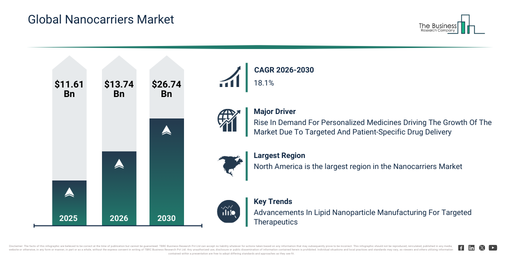
    The market for nanocarriers has experienced significant expansion in recent years, with projections indicating an increase from $11.61 billion in 2025 to $13.74 billion in 2026, reflecting a compound annual growth rate (CAGR) of 18.4%. This historical growth has been driven by progress in nanotechnology research, heightened investments in pharmaceutical research and development, a rising demand for enhanced drug bioavailability, the early implementation of nanoparticle-based treatments, and the broadening of academic and clinical research activities.

    The nanocarriers market is projected to experience rapid expansion in the coming years, reaching $26.74 billion by 2030 with a compound annual growth rate (CAGR) of 18.1%. This forecast period growth is driven by a heightened demand for personalized treatments, increased funding for advanced drug delivery technologies, broader applications of nanocarriers in oncology and gene therapy, a stronger emphasis on minimizing medication side effects, and ongoing advancements in nanoscale engineering. Key trends shaping this period include the accelerated development of targeted drug delivery systems, a higher uptake of lipid-based and polymeric nanocarriers, a greater concentration on controlled and sustained release mechanisms, the widening use of nanocarriers in gene and vaccine delivery, and enhanced alignment with precision medicine strategies.

    Download A Free Sample Report For Comprehensive Market Insights:

    https://www.thebusinessresearchcompany.com/sample.aspx?id=28275&type=smp&utm_source=BlogsPR&utm_medium=Paid&utm_campaign=Jul_PR

    Nanocarriers Market Expansion Drivers: What Is Shaping Future Growth?

    The growing emphasis on personalized medicine is set to accelerate the expansion of the nanocarriers market. This approach to healthcare customizes therapeutic interventions based on each patient’s unique genetic, biomarker, and molecular data, allowing treatments to be more effective while minimizing adverse effects. Nanocarriers play a crucial role in this paradigm by enabling the targeted delivery of drugs to specific cellular targets, offering controlled release kinetics, enhanced bioavailability, and the possibility of combination therapies tailored to individual biological characteristics. A clear indication of this trend came in February 2024, when the Personalized Medicine Coalition—a nonprofit organization based in the United States—reported that the FDA had approved 16 new personalized therapies for rare diseases during 2023. This represents a significant jump from only six such approvals in the preceding year. Consequently, the rising demand for personalized medical solutions continues to drive growth within the nanocarriers sector.

    Nanocarriers Market Categorization By Product Type And Application

    The nanocarriers market covered in this report is segmented –

    1) By Type: Polymeric Nanocarriers, Lipid-Based Nanocarriers, Inorganic Nanocarriers, Other Types

    2) By Application: Drug Delivery, Diagnostics, Vaccines, Gene Therapy, Other Applications

    3) By End-User: Pharmaceutical And Biotechnology Companies, Hospitals And Clinics, Research Institutes, Other End-Users

    Subsegments:

    1) By Polymeric Nanocarriers: Nanoparticles Of Poly Lactic Acid, Nanoparticles Of Poly Lactic-Co-Glycolic Acid, Nanoparticles Of Chitosan, Nanoparticles Of Gelatin, Nanoparticles Of Polycaprolactone

    2) By Lipid-Based Nanocarriers: Solid Lipid Nanoparticles, Nanostructured Lipid Carriers, Liposomes, Nanoemulsions, Self-Emulsifying Drug Delivery Systems

    3) By Inorganic Nanocarriers: Gold Nanoparticles, Silver Nanoparticles, Silica Nanoparticles, Magnetic Nanoparticles, Quantum Dots

    4) By Other Types: Dendrimers, Protein-Based Nanocarriers, Carbon Nanotubes, Nanocrystals, Exosomes

    Nanocarriers Market Strategic Trends: What Is Defining The Next Phase Of Growth?

    Key industry players in the nanocarriers market are increasingly concentrating on creating sophisticated formulations, particularly lipid nanoparticle technologies, with the goal of improving targeted drug delivery and boosting therapeutic outcomes. These lipid nanoparticle technologies are nanoscale, fat-based carriers engineered to transport drugs or genetic therapies to specific cells or tissues in a safe and effective way. A notable example occurred in July 2023, when Cytiva, a biotechnology firm headquartered in the United States, introduced the NanoAssemblr commercial formulation system. This single-use, fully automated platform is designed to facilitate the complete clinical and commercial production of lipid nanoparticle (LNP)-based medicines. By incorporating Cytiva’s NxGen technology, the system ensures controlled and reproducible mixing, which guarantees consistent quality across all phases—from initial research to large-scale manufacturing in compliance with cGMP standards. With a single-use fluid pathway, this platform lowers the risk of cross-contamination and enables efficient multi-product manufacturing within a single facility. Additionally, it comes equipped with user-friendly software that meets regulatory requirements, automating workflows and allowing for electronic batch records. This streamlines the production of genomic medicines, including mRNA vaccines, gene therapies, and cancer vaccines.

    Nanocarriers Market Company Landscape And Strategic Competition

    Major companies operating in the nanocarriers market are F. Hoffmann-La Roche Ltd, Pfizer Inc., Sanofi S.A., Novartis AG, Bristol-Myers Squibb Company, Amgen Inc., Evonik Industries AG, Matinas BioPharma Holdings Inc., Luye Pharma Group Ltd., Ascendia Pharmaceuticals Inc., Arcturus Therapeutics Holdings Inc., Nanobiotix S.A., Polymun Scientific Immunbiologische Forschung GmbH, ReCode Therapeutics Inc., Celsion Corporation, Starpharma Holdings Limited, EnGeneIC Ltd., Acuitas Therapeutics Inc., Altamira Therapeutics Ltd., Nanexa AB

    Access The Complete Nanocarriers Market Report:

    https://www.thebusinessresearchcompany.com/report/nanocarriers-global-market-report?utm_source=BlogsPR&utm_medium=Paid&utm_campaign=Jul_PR

    Nanocarriers Market Largest Region: Which Geography Holds The Highest Market Share?

    North America was the largest region in the nanocarriers market in 2025. The regions covered in the nanocarriers market report are Asia-Pacific, South East Asia, Western Europe, Eastern Europe, North America, South America, Middle East, Africa.

    Get in touch with us:

    The Business Research Company: https://www.thebusinessresearchcompany.com/?utm_source=BlogsPR&utm_medium=Paid&utm_campaign=home_page_test

    Americas: +1 310-496-7795

    Asia: +44 7882 955267 & +91 8897263534

    Europe: +44 7882 955267

    Email us at: marketing@tbrc.info

    Follow us on:

    LinkedIn: https://in.linkedin.com/company/the-business-research-company

    YouTube: https://www.youtube.com/channel/UC24_fI0rV8cR5DxlCpgmyFQ

    Global Market Model: https://www.thebusinessresearchcompany.com/global-market-model
  • Naloxone Spray Market Expected To Reach $2428.62 Billion By 2030 As Growth Accelerates At 24.6% CAGR

    Naloxone Spray Market Expected To Reach $2428.62 Billion By 2030 As Growth Accelerates At 24.6% CAGR

    Delivering more actionable and strategically valuable research, The Business Research Company’s 2026 market reports feature market attractiveness analysis, total addressable market evaluation, company benchmarking matrices, interactive Excel dashboards, expanded supply chain intelligence, emerging startup coverage, and detailed product insights.

    Naloxone Spray Market Size Outlook: How Fast Will Revenue Grow Through 2030?

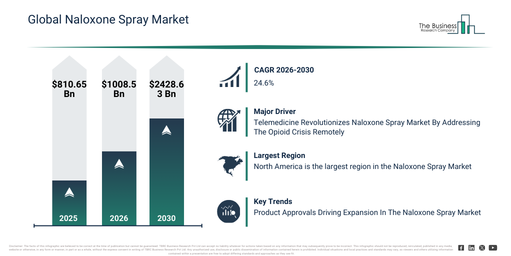
    The market for naloxone spray has seen extraordinary expansion in recent times. From $810.65 billion in 2025, it is projected to reach $1008.5 billion by 2026, achieving a compound annual growth rate (CAGR) of 24.4%. This historic growth was driven by factors such as the rising incidence of opioid misuse, scarce alternatives for emergency intervention, dependence on intravenous naloxone, elevated rates of hospitalizations from overdoses, and government-led programs addressing the opioid epidemic.

    The naloxone spray market is anticipated to experience explosive expansion over the coming years. By 2030, it is projected to reach a value of $2428.63 billion, achieving a compound annual growth rate (CAGR) of 24.6%. This growth during the forecast period is driven by increased public knowledge of naloxone nasal sprays, the proliferation of over-the-counter naloxone products, improvements in spray delivery system technology, the widening scope of emergency response networks, and advantageous reimbursement policies. Key developments shaping the outlook include the widespread shift toward intranasal administration, greater availability through over-the-counter channels, heightened demand from the rising prevalence of opioid overdoses, the creation of user-friendly single-dose formats, and the alignment with emergency response frameworks.

    Download A Free Sample Report For Comprehensive Market Insights:

    https://www.thebusinessresearchcompany.com/sample.aspx?id=5339&type=smp&utm_source=BlogsPR&utm_medium=Paid&utm_campaign=Jul_PR

    Naloxone Spray Market Development Factors: Which Trends Are Supporting Demand?

    The rising adoption of telemedicine is anticipated to drive expansion in the naloxone spray market in the coming years. Telemedicine, often referred to as telehealth, delivers healthcare services and consultations remotely through technology and telecommunications. This method enables more comprehensive, accessible, and immediate assistance for individuals vulnerable to opioid overdoses, thereby potentially saving lives and enhancing efforts to tackle the opioid epidemic. For example, in April 2023, FAIR Health Inc., a nonprofit organization based in the United States, reported that national telehealth usage rose by 7.3%, increasing from 5.5% of medical claim lines in December 2022 to 5.9% in January 2023. Consequently, the growing demand for telemedicine is fueling growth within the naloxone spray market.

    Naloxone Spray Market Segment Analysis And Revenue Opportunities

    The naloxone spray market covered in this report is segmented –

    1) By Product Type: Prescription Naloxone Spray, Over-The-Counter (OTC) Naloxone Spray

    2) By Dosage: 2 mg Or Actuation, 4 mg Or Actuation

    3) By Distribution Channel: Hospitals, Clinics, Retail Pharmacies, Online Pharmacies, Other distribution channels

    Naloxone Spray Market Transformation Trends: Which Innovations Are Driving Change?

    Key players in the naloxone spray market are concentrating on advancing innovations like over-the-counter (OTC) naloxone hydrochloride (HCl) nasal sprays to address growing needs for broader community access, swift overdose reversal, and straightforward administration. As a needle-free option, the naloxone nasal spray enables rapid intranasal delivery, making it easier to use and faster to deploy compared to conventional injectable naloxone, which requires trained healthcare professionals for proper administration. A notable example occurred in May 2024 when Walgreens, a US corporation, unveiled its Walgreens Brand Naloxone HCl Nasal Spray. This OTC product aims to promptly counteract opioid overdose effects, offering a vital resource in the fight against the opioid crisis. By blocking opioids’ impact on the brain, naloxone restores normal breathing and prevents fatalities if given in a timely manner. Nevertheless, access to naloxone is still restricted across numerous communities, so this launch plays a key role in enhancing availability and boosting public understanding.

    Naloxone Spray Market Leading Players Shaping Industry Direction

    Major companies operating in the naloxone spray market are Emergent BioSolutions Inc., Amphastar Pharmaceuticals Inc., Hikma Pharmaceuticals plc, Indivior plc, Nasus Pharma LLC, Opiant Pharmaceuticals Inc., Pfizer Inc., Samarth Pharma Pvt. Ltd., Teva Pharmaceutical Industries Ltd., Adapt Pharma Inc., Cardinal Health Inc., Kaleo Inc., McKesson Corporation, Mundipharma International Limited, NextDistro Inc., Rite Aid Corporation, Novartis International AG, Sandoz International GmbH, Fresenius Kabi USA LLC, West-Ward Pharmaceuticals Corp., Lupin Ltd.

    Access The Complete Naloxone Spray Market Report:

    https://www.thebusinessresearchcompany.com/report/naloxone-spray-global-market-report?utm_source=BlogsPR&utm_medium=Paid&utm_campaign=Jul_PR

    Naloxone Spray Market Regional Analysis: Which Region Leads By Revenue?

    North America was the largest region in the naloxone spray market in 2025. The regions covered in the naloxone spray market report are Asia-Pacific, South East Asia, Western Europe, Eastern Europe, North America, South America, Middle East, Africa.

    Get in touch with us:

    The Business Research Company: https://www.thebusinessresearchcompany.com/?utm_source=BlogsPR&utm_medium=Paid&utm_campaign=home_page_test

    Americas: +1 310-496-7795

    Asia: +44 7882 955267 & +91 8897263534

    Europe: +44 7882 955267

    Email us at: marketing@tbrc.info

    Follow us on:

    LinkedIn: https://in.linkedin.com/company/the-business-research-company

    YouTube: https://www.youtube.com/channel/UC24_fI0rV8cR5DxlCpgmyFQ

    Global Market Model: https://www.thebusinessresearchcompany.com/global-market-model
  • Myeloproliferative Disorders Drugs Market Set To Grow From $10.17 Billion In 2026 To $12.17 Billion By 2030 At A CAGR Of 4.6%

    Myeloproliferative Disorders Drugs Market Set To Grow From $10.17 Billion In 2026 To $12.17 Billion By 2030 At A CAGR Of 4.6%

    Enhanced with market attractiveness analysis, total addressable market evaluation, company benchmarking matrices, interactive Excel dashboards, expanded supply chain intelligence, emerging startup coverage, and detailed product insights, The Business Research Company’s 2026 market reports deliver more actionable and strategically valuable research.

    Myeloproliferative Disorders Drugs Market Size, Value And Growth Trends Through 2030

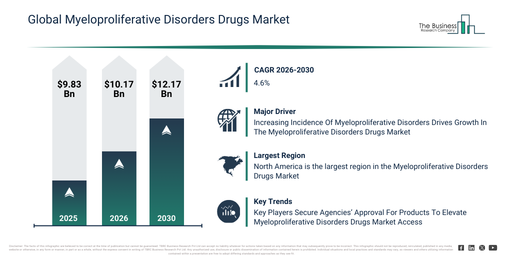
    The market size for drugs used to treat myeloproliferative disorders has experienced consistent growth over recent years. It is projected to expand from $9.83 billion in 2025 to $10.17 billion in 2026, reflecting a compound annual growth rate (CAGR) of 3.5%. This historical expansion has been driven by factors such as the high prevalence of myeloproliferative disorders, progress in chemotherapy techniques, increasing awareness of blood cancers, the availability of generic medications, and enhancements in supportive care.

    Over the coming years, the market for drugs targeting myeloproliferative disorders is anticipated to experience consistent expansion. Projections indicate that by 2030, its value will reach $12.17 billion, advancing at a compound annual growth rate (CAGR) of 4.6%. Factors driving this growth during the forecast period include the rise of targeted therapies, heightened research and development spending, the growing embrace of precision medicine, improvements to healthcare systems in developing regions, and supportive regulatory decisions. Key developments shaping the market landscape involve the creation of personalized treatment approaches, a greater emphasis on uncommon blood conditions, breakthroughs in targeted drug design, the broadening of clinical trial activities, and increasing funding allocated to orphan drugs.

    Download A Free Sample Report For Comprehensive Market Insights:

    https://www.thebusinessresearchcompany.com/sample.aspx?id=10681&type=smp&utm_source=BlogsPR&utm_medium=Paid&utm_campaign=Jul_PR

    Myeloproliferative Disorders Drugs Market Industry Drivers: What Is Driving Revenue Growth?

    The growing prevalence of myeloproliferative disorders is anticipated to drive expansion in the myeloproliferative disorders drug market moving forward. These disorders encompass a heterogeneous group of conditions, set apart from acute leukemia by the proliferation of one or more blood cell lineages in peripheral circulation. Factors such as genetic abnormalities, excessive exposure to radiation, electrical systems, or chemicals, along with an aging population, are primarily fueling the increase in myeloproliferative disorders. Drugs designed for these diseases function by attaching to the ATP pocket within the active site to block the BCR-ABL protein, thereby hindering downstream phosphorylation of target proteins, an action that aids in treating the condition. As an example, the American Cancer Society, a nonprofit organization based in the United States, reported in June 2025 that chronic myeloid leukemia accounts for approximately 9,560 new cases and 1,290 deaths each year, making up about 15% of all new leukemia cases in the U.S.; it affects roughly 1 in 500 people over their lifetime, is usually diagnosed around age 66, and has about 2% of cases occurring in individuals younger than 20. Consequently, the rising incidence of myeloproliferative disorders is propelling the growth of the market for drugs treating these conditions.

    Myeloproliferative Disorders Drugs Market Segmentation And Category Breakdown

    The myeloproliferative disorders drugs market covered in this report is segmented –

    1) By Type: Primary Myelofibrosis, Polycythemia Vera (PV), Essential Thrombocythemia (ET), Chronic Eosinophilic Leukemia Or Hyper eosinophilic Syndrome (HES), Systemic Masto cytosis (SM)

    2) By Drug Type: JAK2 Inhibitors, Anti-Neoplastics, Demethylation Agents, Imatinib Mesylate, Other Drug Types

    3) By Route Of Administration: Oral, Parenteral, Other Routes Of Administration

    4) By Distribution Channel: Hospital Pharmacy, Retail Stores, Drug Stores

    Subsegments:

    1) By Primary Myelofibrosis: JAK Inhibitors, Immunomodulatory Agents, Supportive Care

    2) By Polycythemia Vera (PV): JAK Inhibitors, Hydroxyurea, Phlebotomy, Interferon-alpha

    3) By Essential Thrombocythemia (ET): JAK Inhibitors, Hydroxyurea, Anagrelide, Interferon-alpha

    4) By Chronic Eosinophilic Leukemia or Hyper Eosinophilic Syndrome (HES): Tyrosine Kinase Inhibitors, Corticosteroids, Interferon-alpha

    5) By Systemic Mastocytosis (SM): Tyrosine Kinase Inhibitors, Corticosteroids, Antihistamines, Immunotherapy

    Myeloproliferative Disorders Drugs Market Growth Trends: What Is Influencing The Future Outlook?

    Key industry players in the myeloproliferative disorder drugs market are concentrating on developing cutting-edge therapeutic options and securing regulatory approvals from national authorities to strengthen their market position. The launch and endorsement of novel drug therapies are expected to greatly enhance the availability of advanced treatments for patients dealing with myeloproliferative disorders. A notable example occurred in September 2023, when Novartis AG, a pharmaceutical firm headquartered in Switzerland, announced that the National Institute for Health and Care Excellence (NICE) had granted approval for Jakavi (ruxolitinib), a JAK 1/2 inhibitor indicated for the treatment of polycythaemia vera (PV). This decision ensures that patients in England and Wales can now benefit from Ruxolitinib, which meets a critical unmet need for eligible individuals, as approximately 24% of those treated with hydroxycarbamide or hydroxyurea (HC or HU) tend to develop resistance or intolerance. PV, a specific form of myeloproliferative disorder, represents a rare and life-threatening blood cancer characterized by an overproduction of red blood cells, which, left untreated, may cause a heart attack or stroke. In the UK, it is estimated that around 1,130 new cases of PV are diagnosed each year.

    Myeloproliferative Disorders Drugs Market Competitive Analysis Of Major Industry Participants

    Major companies operating in the myeloproliferative disorders drugs market are Novartis AG, Bristol-Myers Squibb Company, Pfizer Inc., Takeda Pharmaceutical Company Limited, Teva Pharmaceutical Industries Ltd., Incyte Corporation, Eli Lilly and Co, F Hoffmann-La Roche Ltd., Mylan NV, Hikma Pharmaceuticals plc, Bayer AG, Sun Pharmaceutical Industries Ltd., Boehringer Ingelheim International GmbH, Sanofi Aventis Inc., AstraZeneca AB, Apotex Inc, Celgene Co., Geron Co., Promedior Inc., Johnson & Johnson Private Limited, AbbVie Inc., Astellas Pharma Inc., Daiichi Sankyo Chemical Pharma Co. Ltd.

    Access The Complete Myeloproliferative Disorders Drugs Market Report:

    https://www.thebusinessresearchcompany.com/report/myeloproliferative-disorders-drugs-global-market-report?utm_source=BlogsPR&utm_medium=Paid&utm_campaign=Jul_PR

    Myeloproliferative Disorders Drugs Market Geographic Distribution And Regional Opportunities

    North America was the largest region in the myeloproliferative disorder drugs market in 2025. Asia-Pacific is expected to be the fastest-growing region in the global myeloproliferative disorder drugs market report during the forecast period. The regions covered in the myeloproliferative disorders drugs market report are Asia-Pacific, South East Asia, Western Europe, Eastern Europe, North America, South America, Middle East, Africa.

    Get in touch with us:

    The Business Research Company: https://www.thebusinessresearchcompany.com/?utm_source=BlogsPR&utm_medium=Paid&utm_campaign=home_page_test

    Americas: +1 310-496-7795

    Asia: +44 7882 955267 & +91 8897263534

    Europe: +44 7882 955267

    Email us at: marketing@tbrc.info

    Follow us on:

    LinkedIn: https://in.linkedin.com/company/the-business-research-company

    YouTube: https://www.youtube.com/channel/UC24_fI0rV8cR5DxlCpgmyFQ

    Global Market Model: https://www.thebusinessresearchcompany.com/global-market-model
  • Myelodysplastic Syndrome Drugs Market Opportunities Are Emerging Beyond Traditional Growth Areas

    Myelodysplastic Syndrome Drugs Market Opportunities Are Emerging Beyond Traditional Growth Areas

    Through market attractiveness analysis, total addressable market evaluation, company benchmarking matrices, interactive Excel dashboards, expanded supply chain intelligence, emerging startup coverage, and detailed product insights, The Business Research Company’s 2026 market reports provide more actionable and strategically valuable research.

    Myelodysplastic Syndrome Drugs Market CAGR Analysis And Future Market Development

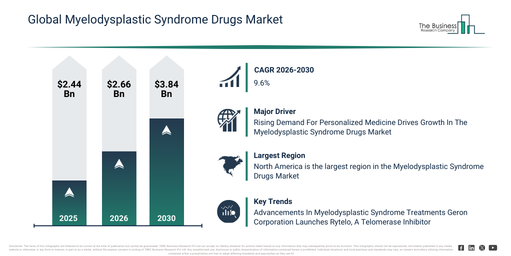
    The market for myelodysplastic syndrome drugs has experienced robust expansion in recent years. Projected to rise from $2.44 billion in 2025 to $2.66 billion in 2026, this reflects a compound annual growth rate (CAGR) of 8.9%. Historical growth was driven by factors such as the restricted access to targeted MDS treatments, dependence on blood transfusions, insufficient awareness regarding different MDS subtypes, limited funding for research and development, and the high expense of therapies in developing economies.

    The myelodysplastic syndrome drugs market is projected to experience robust expansion over the coming years, reaching an estimated value of $3.84 billion by 2030, with a compound annual growth rate (CAGR) of 9.6%. This anticipated growth during the forecast period is driven by several key factors, including a rising incidence of MDS linked to aging populations, heightened investment in precision medicine, progress in genomics-based treatments, improved healthcare infrastructure in the Asia-Pacific region, and the broadening of reimbursement policies for MDS drugs. Notable trends shaping the market include the development of personalized MDS therapies, a growing uptake of erythropoiesis-stimulating agents (ESAs), the expansion of outpatient treatment facilities, an increasing preference for parenteral drug administration, and a heightened emphasis on the creation of generic MDS drugs.

    Download A Free Sample Report For Comprehensive Market Insights:

    https://www.thebusinessresearchcompany.com/sample.aspx?id=10675&type=smp&utm_source=BlogsPR&utm_medium=Paid&utm_campaign=Jul_PR

    #Myelodysplastic Syndrome Drugs Market Growth Factors: Which Forces Are Supporting Market Expansion?

    The myelodysplastic syndrome drugs market is anticipated to benefit from an increasing preference for personalized medicine. This treatment model classifies patients according to their genetic background, medical history, and other distinct factors. In cases of myelodysplastic syndrome, personalized medicine customizes therapy to align with each patient’s unique genetic and molecular profile. Such an approach enhances the effectiveness of treatment while reducing unwanted side effects in the management of this complex blood disorder. As an illustration, in February 2024, data from the Personalized Medicine Coalition—a nonprofit entity based in the United States—revealed that the USFDA sanctioned 16 customized treatments for patients with rare diseases in 2023, a considerable rise compared to just 6 such treatments in 2022. Consequently, the growing adoption of personalized medicine is fueling expansion within the market for myelodysplastic syndrome drugs.

    Myelodysplastic Syndrome Drugs Market Segment Outlook: Which Categories Are Expanding The Fastest?

    The myelodysplastic syndrome drugs market covered in this report is segmented –

    1) By Therapeutic Class: Immunomodulatory Drugs, Hypomethylating Agents, Anti-anemics

    2) By Type of Syndrome: Refractory Cytopenia With Multilineage Dysplasia, Refractory Anemia, Refractory Anemia With Excess Blasts, Refractory Anemia With Ringed Sideroblasts

    3) By Route of Administration: Oral, Parenteral

    4) By Applications: Original, Generics

    5) By End-User: Hospitals, Clinics, Ambulatory Surgical Centers

    Subsegments:

    1) By Immunomodulatory Drugs: Thalidomide, Lenalidomide, Pomalidomide

    2) By Hypomethylating Agents: Azacitidine, Decitabine, Guadecitabine

    3) By Anti-anemics: Erythropoiesis-Stimulating Agents (ESAs), Iron Supplements, Blood Transfusion Products

    Myelodysplastic Syndrome Drugs Market Industry Trends: What Changes Are Reshaping Demand?

    Key players within the myelodysplastic syndrome drugs market are concentrating on the development of telomerase inhibitors as a strategy to target the telomerase enzyme, with the goal of decelerating disease advancement by curbing the unchecked proliferation of abnormal cells. These inhibitors prove beneficial in myelodysplastic syndrome treatments because they suppress the activity of telomerase, thereby reducing the growth rate of abnormal cells and potentially enhancing patient outcomes. As an example, in June 2024, Geron Corporation, a biotechnology firm headquartered in the United States, introduced rytelo (imetelstat), an intravenously administered telomerase inhibitor approved by the FDA for adults suffering from low to intermediate-1 risk myelodysplastic syndromes (LR-MDS) who have transfusion-dependent anemia unresponsive to or unsuitable for ESA treatment. Rytelo provides sustained transfusion independence, elevates hemoglobin levels, and fills a significant gap in the myelodysplastic syndrome drugs market while maintaining a manageable safety profile.

    Myelodysplastic Syndrome Drugs Market Key Companies And Competitive Benchmarking

    Major companies operating in the myelodysplastic syndrome drugs market are Amgen Inc., Celgene Corporation, Otsuka Pharmaceutical Co. Ltd., Takeda Pharmaceutical Company Limited, Cipla Limited, Dr. Reddy’s Laboratories Ltd., Lupin Ltd., Onconova Therapeutics Inc., Sun Pharmaceutical Industries Limited, Aprea Therapeutics, Bayer AG, Bristol Myers Squibb, Celator Pharmaceuticals, AbbVie Inc., Geron Co., Hikma Pharmaceuticals plc, Jazz Pharmaceuticals Inc., Mylan NV, Novartis AG, Sandoz Inc., Teva Pharmaceutical Industries Ltd., Incyte Corporation, MEI Pharma Inc.

    Access The Complete Myelodysplastic Syndrome Drugs Market Report:

    https://www.thebusinessresearchcompany.com/report/myelodysplastic-syndrome-drugs-global-market-report?utm_source=BlogsPR&utm_medium=Paid&utm_campaign=Jul_PR

    Myelodysplastic Syndrome Drugs Market Largest Region By Revenue And Market Share

    North America was the largest region in the Myelodysplastic syndrome drugs market in 2025. Asia-Pacific is expected to be the fastest growing region in the global myelodysplastic syndrome drugs market report during the forecast period. The regions covered in the myelodysplastic syndrome drugs market report are Asia-Pacific, South East Asia, Western Europe, Eastern Europe, North America, South America, Middle East, Africa.

    Get in touch with us:

    The Business Research Company: https://www.thebusinessresearchcompany.com/?utm_source=BlogsPR&utm_medium=Paid&utm_campaign=home_page_test

    Americas: +1 310-496-7795

    Asia: +44 7882 955267 & +91 8897263534

    Europe: +44 7882 955267

    Email us at: marketing@tbrc.info

    Follow us on:

    LinkedIn: https://in.linkedin.com/company/the-business-research-company

    YouTube: https://www.youtube.com/channel/UC24_fI0rV8cR5DxlCpgmyFQ

    Global Market Model: https://www.thebusinessresearchcompany.com/global-market-model
  • Myelodysplastic Syndrome (MDS) Drugs Market Expansion Is Opening New Pathways For Strategic Investment

    Myelodysplastic Syndrome (MDS) Drugs Market Expansion Is Opening New Pathways For Strategic Investment

    Delivering more actionable and strategically valuable research, The Business Research Company’s 2026 market reports feature market attractiveness analysis, total addressable market evaluation, company benchmarking matrices, interactive Excel dashboards, expanded supply chain intelligence, emerging startup coverage, and detailed product insights.

    Myelodysplastic Syndrome (MDS) Drugs Market Expansion From $3.97 Billion In 2026 To $5.56 Billion In 2030

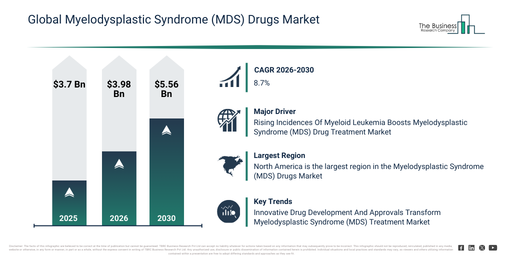
    The market for drugs targeting myelodysplastic syndrome (MDS) has demonstrated robust expansion over recent years, with projections indicating a rise from $3.7 billion in 2025 to $3.98 billion in 2026, reflecting a compound annual growth rate (CAGR) of 7.6%. This historical growth has been driven by several key factors, including higher rates of bone marrow disorder diagnoses, the accessibility of hypomethylating agents, a broader network of oncology treatment facilities, increased utilization of supportive transfusion therapies, and heightened awareness of the disease.

    The market for myelodysplastic syndrome (MDS) drugs is projected to experience robust expansion over the coming years. By 2030, it is anticipated to reach $5.56 billion, driven by a compound annual growth rate (CAGR) of 8.7%. This upward trajectory in the forecast period is fueled by a rise in the development of novel immunomodulatory drugs, an increasing embrace of precision medicine within hematology, an expanding pipeline of clinical trials, a heightened emphasis on enhancing patient quality of life, and greater healthcare investments directed toward rare diseases. Key developments shaping this period include the growing application of targeted therapeutic regimens, a rising preference for oral and parenteral combination therapies, an intensified focus on personalized treatment strategies, an expansion of supportive care options, and improved approaches for tracking treatment outcomes.

    Download A Free Sample Report For Comprehensive Market Insights:

    https://www.thebusinessresearchcompany.com/sample.aspx?id=13043&type=smp&utm_source=BlogsPR&utm_medium=Paid&utm_campaign=Jul_PR

    Myelodysplastic Syndrome (MDS) Drugs Market Demand Drivers: What Is Fueling Industry Growth?

    The growing number of myeloid leukemia cases is anticipated to drive expansion in the myelodysplastic syndrome (MDS) drug treatment market moving forward. Myeloid leukemia, a cancer originating in bone marrow, impacts cells responsible for generating various types of blood components. Medications for myelodysplastic syndrome (MDS) are designed to enhance bone marrow functionality by addressing leukemia’s underlying cause, thereby lowering the risk of complications linked to low blood cell counts, decreasing reliance on chemotherapy and transplants, and boosting survival rates for individuals undergoing MDS treatment. As an example, according to estimates from the American Cancer Society—a U.S.-based nonprofit health organization—in January 2023, around 20,380 new cases and 11,310 fatalities from acute myeloid leukemia (AML) among adults were projected for that year. Consequently, the rising frequency of myeloid leukemia cases is fueling demand in the myelodysplastic syndrome (MDS) drug market.

    The expansion of the myelodysplastic syndrome (MDS) drugs market is being driven forward by increasing research and development efforts. These efforts involve systematic scientific exploration and experimentation aimed at discovering, creating, and refining new therapeutic agents and treatment strategies. The uptick in research and development stems from a deeper comprehension of MDS’s molecular mechanisms and genetic mutations, which has empowered pharmaceutical firms and research entities to pinpoint novel therapeutic targets and craft precision medicine approaches tailored to this varied disease. This surge in R&D directly fuels market growth by broadening the array of investigational therapies in development, culminating in new drug approvals that deliver extra treatment choices for patients who do not respond to standard hypomethylating agent therapy or need alternative options. By way of illustration, data from the National Center for Science and Engineering Statistics (NCSES), a U.S. government statistical body, in February 2025 revealed that American research and development spending climbed from $892 billion in 2022 to $940 billion in 2023, marking a $48 billion rise. Hence, the escalation in research and development is propelling the myelodysplastic syndrome (MDS) drugs market forward.

    Myelodysplastic Syndrome (MDS) Drugs Market Segment Landscape: Which Areas Lead Market Development?

    The myelodysplastic syndrome (mds) drugs market covered in this report is segmented –

    1) By Drug Type: Chemotherapy, Immunomodulatory Drugs

    2) By Route Of Administration: Oral, Parenteral

    3) By Syndrome: Refractory Cytopenia With Multilineage Dysplasia, Refractory Anemia, Refractory Anemia With Ringed Sideroblasts

    4) By End User: Hospitals, Clinics, Ambulatory Surgical Centers

    Subsegments:

    1) By Chemotherapy: Hypomethylating Agents, Cytotoxic Agents

    2) By Immunomodulatory Drugs: Lenalidomide, Thalidomide, Pomalidomide

    Myelodysplastic Syndrome (MDS) Drugs Market Innovation Trends: Which Developments Are Transforming The Industry?

    Leading players in the myelodysplastic syndrome (MDS) drug market are concentrating efforts on creating innovative therapies, particularly targeted treatments, to enhance patient outcomes, address distinct customer demands, and align with the broader healthcare system. Targeted therapy for myelodysplastic syndromes involves the use of pharmaceuticals designed to attack specific genetic alterations or molecular irregularities within cancerous cells, with the goal of achieving better results by precisely damaging abnormal cells and preserving healthy tissue. A case in point occurred in October 2023, when the U.S. Food and Drug Administration granted approval for Tibsovo (ivosidenib) to treat adult patients suffering from relapsed or refractory MDS accompanied by an IDH1 mutation. The drug’s efficacy for this specific indication was assessed through an open-label, single-arm, multicenter trial involving 18 adult participants diagnosed with relapsed or refractory MDS and the IDH1 mutation.

    Myelodysplastic Syndrome (MDS) Drugs Market Industry Leaders And Market Competition

    Major companies operating in the myelodysplastic syndrome (mds) drugs market are Bristol Myers Squibb, Otsuka Pharmaceutical Co. Ltd., Teva Pharmaceutical Industries Ltd., Dr. Reddy’s Laboratories Ltd., Mylan NV, Cipla Limited, Acceleron Pharma Inc., Aprea Therapeutics, Onconova Therapeutics Inc., Geron Corporation, Amgen Inc., Sandoz, Gilead Sciences Inc., Johnson And Johnson, Lupin Ltd. Corporation, Ono Pharmaceutical Co. Ltd., Eisai Co. Ltd., Nippon Shinyaku Co. Ltd., Lupin Ltd., Accord Healthcare Inc., Kite Pharma Inc., Karyopharm Therapeutics Inc., Aprea Therapeutics Inc., Acceleron Pharma Inc., Astex Pharmaceuticals Inc., Stemline Therapeutics Inc., Geron Corporation, Onconova Therapeutics Inc., Actinium Pharmaceuticals Inc., Millennium Pharmaceuticals Inc.

    Access The Complete Myelodysplastic Syndrome (MDS) Drugs Market Report:

    https://www.thebusinessresearchcompany.com/report/myelodysplastic-syndrome-mds-drugs-global-market-report?utm_source=BlogsPR&utm_medium=Paid&utm_campaign=Jul_PR

    Myelodysplastic Syndrome (MDS) Drugs Market Regional Analysis And Leading Geography

    North America was the largest region in the myelodysplastic syndrome (MDS) drugs market in 2025. The regions covered in the myelodysplastic syndrome (mds) drugs market report are Asia-Pacific, South East Asia, Western Europe, Eastern Europe, North America, South America, Middle East, Africa.

    Get in touch with us:

    The Business Research Company: https://www.thebusinessresearchcompany.com/?utm_source=BlogsPR&utm_medium=Paid&utm_campaign=home_page_test

    Americas: +1 310-496-7795

    Asia: +44 7882 955267 & +91 8897263534

    Europe: +44 7882 955267

    Email us at: marketing@tbrc.info

    Follow us on:

    LinkedIn: https://in.linkedin.com/company/the-business-research-company

    YouTube: https://www.youtube.com/channel/UC24_fI0rV8cR5DxlCpgmyFQ

    Global Market Model: https://www.thebusinessresearchcompany.com/global-market-model
  • Myc Proto Oncogene Protein Market Trends Are Creating New Opportunities For Industry Leaders

    Myc Proto Oncogene Protein Market Trends Are Creating New Opportunities For Industry Leaders

    Enhanced with market attractiveness analysis, total addressable market evaluation, company benchmarking matrices, interactive Excel dashboards, expanded supply chain intelligence, emerging startup coverage, and detailed product insights, The Business Research Company’s 2026 market reports deliver more actionable and strategically valuable research.

    Myc Proto Oncogene Protein Market Forecast Highlighting Growth From $2.14 Billion To $3.43 Billion

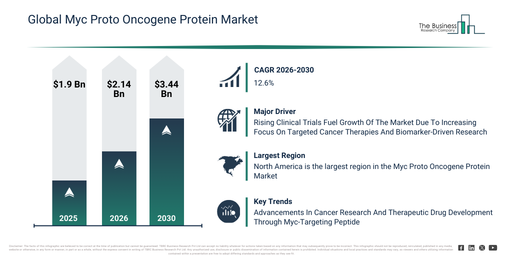
    The market for myc proto-oncogene protein experienced rapid expansion in recent years, with projections indicating an increase from $1.9 billion in 2025 to $2.14 billion in 2026, reflecting a compound annual growth rate (CAGR) of 12.9%. This historical growth was driven by factors such as the constrained supply of recombinant proteins, dependence on conventional PCR and ELISA methods, rising cancer research efforts, growing need for diagnostics targeting MYC, and the widespread implementation of standard laboratory procedures.

    The market for the myc proto-oncogene protein is projected to experience robust expansion over the coming years. By 2030, its value is anticipated to reach $3.44 billion, driven by a compound annual growth rate (CAGR) of 12.6%. This forecast period’s growth is fueled by advancements in next-generation sequencing and ChIP-seq technologies, along with increased funding for biomarker discovery and therapeutic research. The expansion of pharmaceutical R&D efforts, stronger partnerships between academic and biotech institutions, and the integration of AI and digital tools into research processes are also key contributing factors. Notable trends shaping this market include the growing application of monoclonal antibodies and recombinant proteins, the rising prevalence of advanced gene expression and RNA interference methods, and an uptick in cancer research and biomarker identification. Furthermore, expanding uses in diagnostics and treatment development, coupled with heightened investment in both academic and pharmaceutical research, are expected to drive market momentum.

    Download A Free Sample Report For Comprehensive Market Insights:

    https://www.thebusinessresearchcompany.com/sample.aspx?id=24613&type=smp&utm_source=BlogsPR&utm_medium=Paid&utm_campaign=Jul_PR

    Myc Proto Oncogene Protein Market Growth Drivers: What Factors Are Accelerating Expansion?

    The expansion of the myc proto oncogene protein market is anticipated to be driven forward by a growing number of clinical trials. These trials are research studies involving human participants, designed to assess how safe and effective new medical treatments or interventions are. The rise in clinical trial activity stems from researchers and companies striving to hasten the development of effective therapies, compile strong safety data, and deliver innovative treatments to patients more quickly. Such trials evaluate targeted therapies for myc proto-oncogene-driven cancers by examining their efficacy, safety, and resistance mechanisms, thereby guiding the creation of MYC inhibitors and combination therapies. For example, in June 2025, the National Center for Biotechnology Information, a US-based scientific resource, reported that registered studies climbed from 437,497 in 2022 to 520,885 in 2024. Consequently, the uptick in clinical trials is fueling growth in the myc proto oncogene protein market.

    The myc proto oncogene protein market is set to grow as a result of the rising prevalence of cancer. Cancer is characterized by uncontrolled cell multiplication, with the potential to invade other tissues, and its increasing incidence is largely linked to an aging population, as older individuals face a higher risk of developing the disease. The MYC protein is intimately involved in cancer, as its overexpression is commonly detected in tumors, making it a valuable target for creating effective treatments. In February 2024, the World Health Organization, a Switzerland-based intergovernmental body, projected that over 35 million new cancer cases would emerge by 2050, reflecting a 77% increase from the estimated 20 million cases in 2022. Thus, the growing frequency of cancer is propelling the myc proto oncogene protein market forward.

    Myc Proto Oncogene Protein Market Segments: Where Are The Largest Growth Opportunities?

    The myc proto oncogene protein market covered in this report is segmented –

    1) By Product Type: Monoclonal Antibodies, Recombinant Proteins, Polymerase Chain Reaction (PCR) Kits, Enzyme-Linked Immunosorbent Assay (ELISA) Kits

    2) By Molecular Variant: BGA-003, ES-4000, Galarmin, Other Types

    3) By Technology: Gene Expression Profiling, Chromatin Immunoprecipitation Sequencing (ChIP-Seq), Next-Generation Sequencing (NGS), Ribonucleic Acid Interference Techniques

    4) By Application: Cancer Research, Diagnostics, Treatment Development, Biomarker Discovery

    5) By End-User: Academic And Research Institutions, Biotechnology Companies, Pharmaceutical Companies, Hospitals And Diagnostic Laboratories

    Subsegments:

    1) By Monoclonal Antibodies: Therapeutic Monoclonal Antibodies, Diagnostic Monoclonal Antibodies, Research-Grade Monoclonal Antibodies

    2) By Recombinant Proteins: Recombinant Myc Proteins, Recombinant Fusion Proteins, Recombinant Antibody Fragments

    3) By Polymerase Chain Reaction (PCR) Kits: Quantitative PCR (Qpcr) Kits, Reverse Transcription PCR (Rt-Pcr) Kits, Digital PCR Kits

    4) By Enzyme-Linked Immunosorbent Assay (ELISA) Kits: Sandwich ELISA Kits, Competitive ELISA Kits, Indirect ELISA Kits

    Myc Proto Oncogene Protein Market Trends: What Is Shaping Future Industry Growth?

    Major players active in the myc proto oncogene protein market are increasingly directing their efforts toward next-generation therapeutics, including myc-targeting peptide-based drugs, with the goal of transforming cancer care. This class of therapeutic represents an innovative approach designed to suppress the activity of the myc oncogene, a gene commonly found to be aberrantly active in numerous cancer types and known to be a critical driver of tumor development and advancement. A relevant example occurred in January 2025, when Peptomyc S.L., a biotechnology firm headquartered in Spain, launched a new Phase 2 clinical study for OMO-103, its myc-inhibitor compound, focusing on patients diagnosed with advanced osteosarcoma. OMO-103 is a pioneering myc-targeting peptide engineered to interfere with myc functionality within malignant cells, offering a manageable safety profile along with significant antitumor effects. The primary objectives of this trial are to evaluate the compound’s clinical effectiveness, safety characteristics, and pharmacodynamic properties, representing an important advancement in precision therapies aimed at challenging malignancies like osteosarcoma.

    Myc Proto Oncogene Protein Market Major Participants And Competitive Dynamics

    Major companies operating in the myc proto oncogene protein market are Thermo Fisher Scientific Inc., Merck KGaA (Sigma-Aldrich), Abcam plc, Bio-Rad Laboratories Inc., Agilent Technologies Inc., RayBiotech Life Inc., Sino Biological Inc., GenScript Biotech Corporation, R&D Systems (Bio-Techne Corporation), Proteintech Group Inc., Cell Signaling Technology Inc., Santa Cruz Biotechnology Inc., Novus Biologicals (Bio-Techne), Creative Diagnostics Inc., Boster Biological Technology, OriGene Technologies Inc., Rockland Immunochemicals Inc., Elabscience Biotechnology Inc., MyBioSource Inc., ProSci Incorporated, LSBio (LifeSpan BioSciences Inc.), Cayman Chemical Company, Enzo Life Sciences Inc., BioLegend Inc., Atlas Antibodies AB, Abbexa Ltd., United States Biological (USBiological Life Sciences), Assay Genie Ltd., Wuhan Fine Biotech Co. Ltd., Aviva Systems Biology Corporation, Cloud-Clone Corp.

    Access The Complete Myc Proto Oncogene Protein Market Report:

    https://www.thebusinessresearchcompany.com/report/myc-proto-oncogene-protein-global-market-report?utm_source=BlogsPR&utm_medium=Paid&utm_campaign=Jul_PR

    Myc Proto Oncogene Protein Market Geographic Analysis: Where Is Demand Growing The Fastest?

    North America was the largest region in the myc proto oncogene protein market in 2025. Asia-Pacific is expected to be the fastest-growing region in the forecast period. The regions covered in the myc proto oncogene protein market report are Asia-Pacific, South East Asia, Western Europe, Eastern Europe, North America, South America, Middle East, Africa.

    Get in touch with us:

    The Business Research Company: https://www.thebusinessresearchcompany.com/?utm_source=BlogsPR&utm_medium=Paid&utm_campaign=home_page_test

    Americas: +1 310-496-7795

    Asia: +44 7882 955267 & +91 8897263534

    Europe: +44 7882 955267

    Email us at: marketing@tbrc.info

    Follow us on:

    LinkedIn: https://in.linkedin.com/company/the-business-research-company

    YouTube: https://www.youtube.com/channel/UC24_fI0rV8cR5DxlCpgmyFQ

    Global Market Model: https://www.thebusinessresearchcompany.com/global-market-model
  • Mutation Detection Kits In Genome Editing Market Growth Is Reshaping Competitive Advantage Across The Industry

    Mutation Detection Kits In Genome Editing Market Growth Is Reshaping Competitive Advantage Across The Industry

    Through market attractiveness analysis, total addressable market evaluation, company benchmarking matrices, interactive Excel dashboards, expanded supply chain intelligence, emerging startup coverage, and detailed product insights, The Business Research Company’s 2026 market reports provide more actionable and strategically valuable research.

    Mutation Detection Kits In Genome Editing Market Revenue Growth Supported By A CAGR Of 2.1% Through 2030

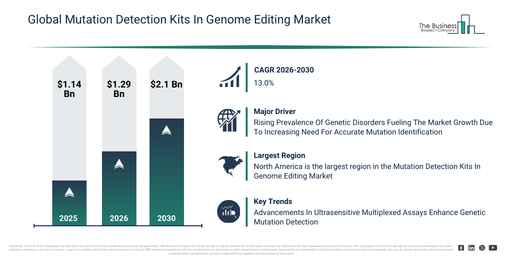
    The market for mutation detection kits used in genome editing has experienced swift expansion over recent years. Valued at $1.14 billion in 2025, this sector is projected to reach $1.29 billion by 2026, representing a compound annual growth rate (CAGR) of 13.2%. Historical growth has been driven by factors such as restricted access to mutation detection kits, dependence on manual and conventional detection methods, a rise in genome editing research, an increasing need for precise validation instruments, and the utilization of fundamental nucleic acid reagents.

    Over the coming years, the global market for mutation detection kits used in genome editing is anticipated to experience significant expansion. Projections indicate a rise to $2.1 billion by 2030, fueled by a compound annual growth rate (CAGR) of 13.0%. This upward trajectory in the forecast period is driven by factors such as the creation of sophisticated CRISPR-centric mutation validation kits, heightened investment in next-generation sequencing technologies, the growing availability of cloud-based bioinformatics tools, broader applications within clinical diagnostics and personalized medicine, and the incorporation of AI-driven data interpretation systems. Key developments expected during this timeframe involve a greater preference for mutation detection kits based on PCR and next-generation sequencing methods, the more frequent application of CRISPR mutation validation instruments in genome editing studies, the emergence of software platforms tailored for genomic data analysis and visualization, a wider scope for mutation detection within drug development and clinical diagnostics, and the combination of cloud-based bioinformatics frameworks designed to facilitate instantaneous data interpretation.

    Download A Free Sample Report For Comprehensive Market Insights:

    https://www.thebusinessresearchcompany.com/sample.aspx?id=27356&type=smp&utm_source=BlogsPR&utm_medium=Paid&utm_campaign=Jul_PR

    Mutation Detection Kits In Genome Editing Market Growth Factors Supporting Long-Term Expansion

    The growing occurrence of genetic disorders is anticipated to boost the expansion of mutation detection kits within the genome editing market. These disorders are conditions resulting from DNA abnormalities, often inherited or arising from fresh genetic mutations, with their increasing prevalence fueled by heightened awareness and improved diagnostic tools that facilitate earlier and more precise detection, subsequently raising reported case numbers. Such kits are instrumental in addressing these disorders by pinpointing disease-related gene mutations, which supports focused research and the creation of exact therapeutic solutions. For example, as reported by the National Health Service, a UK government agency, in May 2024, approximately 17,000 individuals in England suffer from sickle cell disease, an inherited blood condition, with roughly 250 new diagnoses annually. Hence, the escalating frequency of genetic disorders is propelling demand for mutation detection kits in the genome editing market.

    Mutation Detection Kits In Genome Editing Market Segment Analysis: What Are The Major Market Categories?

    The mutation detection kits in genome editing market covered in this report is segmented –

    1) By Product Type: Reagents, Kits, Software Solutions

    2) By Technology: Clustered Regularly Interspaced Short Palindromic Repeats (CRISPR), Transcription Activator-Like Effector Nucleases Or Meganuclease-TAL Effector Nucleases (TALENs/MegaTALs), Zinc Finger Nucleases (ZFN), Other Technologies

    3) By Application: Research, Clinical Diagnostics, Drug Development, Other Applications

    4) By End Use: Academic Institutions, Hospitals And Diagnostic Centers, Biotechnology Companies

    Subsegments:

    1) By Reagents: Deoxyribonucleic Acid Polymerases (DNA) Polymerases, Nucleases, Buffers And Enzymes, Fluorescent Dyes And Probes, Primers And Oligonucleotides

    2) By Kits: Polymerase Chain Reaction (PCR)-Based Mutation Detection Kits, Next-Generation Sequencing-Based Mutation Analysis Kits, Clustered Regularly Interspaced Short Palindromic Repeats (CRISPR) Mutation Validation Kits, Gel Electrophoresis-Based Detection Kits

    3) By Software Solutions: Mutation Analysis And Visualization Tools, Clustered Regularly Interspaced Short Palindromic Repeats (CRISPR) Off-Target Prediction Software, Genomic Alignment and Annotation Software, Data Interpretation Platforms For Next-Generation Sequencing, Cloud-Based Bioinformatics Platforms

    Mutation Detection Kits In Genome Editing Market Industry Trends Shaping Future Revenue Growth

    Leading firms within the genome editing mutation detection kit market are prioritizing the creation of sophisticated tools, like ultrasensitive multiplexed assays, to boost the accuracy, speed, and sensitivity of genetic mutation identification. These assays represent advanced diagnostic solutions capable of concurrently detecting and quantifying various genetic mutations, even at extremely low concentrations, thus empowering researchers and clinicians to conduct faster, more precise, and thorough mutation assessments that enhance disease diagnosis and treatment oversight. A case in point is Bio-Rad Laboratories Inc., a US-based research enterprise, which unveiled the ddPLEX ESR1 Mutation Detection Kit in April 2024. This kit is a highly sensitive multiplexed digital PCR assay tailored for detecting breast cancer mutations, allowing simultaneous identification and exact measurement of seven distinct ESR1 mutations with an analytical sensitivity down to a 0.01% variant allele fraction, and it accommodates both plasma and tissue sample analyses. These advancements highlight the industry’s dedication to refining diagnostic precision and facilitating more effective disease surveillance and individualized therapeutic approaches.

    Mutation Detection Kits In Genome Editing Market Leading Companies Driving Competitive Growth

    Major companies operating in the mutation detection kits in genome editing market are F. Hoffmann-La Roche Ltd, Merck KGaA, Thermo Fisher Scientific Inc., QIAGEN N.V., Eurofins Scientific SE, Agilent Technologies Inc., Illumina Inc., Bio-Rad Laboratories Inc., Integrated DNA Technologies Inc., GenScript Biotech Corporation, Takara Bio Inc., Promega Corporation, Analytik Jena AG, Twist Bioscience Corporation, New England Biolabs Inc., Applied Biological Materials Inc., Synthego Corporation, BioVision Inc., Creative Biogene Corporation

    Access The Complete Mutation Detection Kits In Genome Editing Market Report:

    https://www.thebusinessresearchcompany.com/report/mutation-detection-kits-in-genome-editing-global-market-report?utm_source=BlogsPR&utm_medium=Paid&utm_campaign=Jul_PR

    Mutation Detection Kits In Genome Editing Market Global Footprint: Which Region Holds Market Leadership?

    North America was the largest region in the mutation detection kits in genome editing market in 2025. Asia-Pacific is expected to be the fastest-growing region in the forecast period. The regions covered in the mutation detection kits in genome editing market report are Asia-Pacific, South East Asia, Western Europe, Eastern Europe, North America, South America, Middle East, Africa.

    Get in touch with us:

    The Business Research Company: https://www.thebusinessresearchcompany.com/?utm_source=BlogsPR&utm_medium=Paid&utm_campaign=home_page_test

    Americas: +1 310-496-7795

    Asia: +44 7882 955267 & +91 8897263534

    Europe: +44 7882 955267

    Email us at: marketing@tbrc.info

    Follow us on:

    LinkedIn: https://in.linkedin.com/company/the-business-research-company

    YouTube: https://www.youtube.com/channel/UC24_fI0rV8cR5DxlCpgmyFQ

    Global Market Model: https://www.thebusinessresearchcompany.com/global-market-model
  • Muscle Relaxant Drugs Market Forecast Signals New Revenue Opportunities Through 2030

    Muscle Relaxant Drugs Market Forecast Signals New Revenue Opportunities Through 2030

    Delivering more actionable and strategically valuable research, The Business Research Company’s 2026 market reports feature market attractiveness analysis, total addressable market evaluation, company benchmarking matrices, interactive Excel dashboards, expanded supply chain intelligence, emerging startup coverage, and detailed product insights.

    Muscle Relaxant Drugs Market Value Expansion And Long-Term Growth Outlook

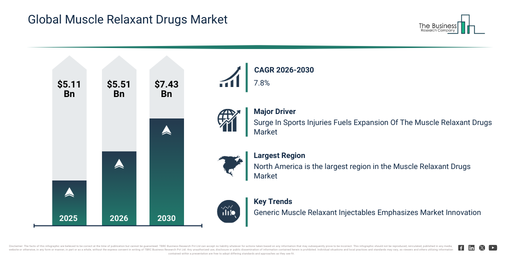
    The muscle relaxant drugs market has experienced robust expansion in recent years, with projections indicating an increase from $5.11 billion in 2025 to $5.51 billion in 2026, representing a compound annual growth rate (CAGR) of 7.8%. This historical growth has been driven by a higher incidence of musculoskeletal disorders, an uptick in back pain and muscle injuries, more frequent hospital visits for neurological conditions, an expanded hospital infrastructure, and improvements in both oral and injectable formulations.

    The muscle relaxant drugs market is projected to undergo robust expansion in the coming years. By 2030, its value is anticipated to reach $7.43 billion, reflecting a compound annual growth rate (CAGR) of 7.8%. This forecasted growth is driven by several key factors, including the growing uptake of homecare services and telemedicine, an increased focus on personalized medicine and precision therapy, a rising elderly population, new developments in targeted neuromuscular drugs, and the growth of emerging markets in Asia-Pacific and Latin America. Noteworthy trends expected to shape the forecast period comprise a greater shift toward non-opioid muscle relaxants, heightened demand for tailored therapies for muscle disorders, the proliferation of at-home muscle relaxation treatments, broader availability of injectable and topical formulations, and a higher level of public awareness regarding musculoskeletal health.

    Download A Free Sample Report For Comprehensive Market Insights:

    https://www.thebusinessresearchcompany.com/sample.aspx?id=8751&type=smp&utm_source=BlogsPR&utm_medium=Paid&utm_campaign=Jul_PR

    Muscle Relaxant Drugs Market Demand Drivers Creating New Revenue Opportunities

    The rising incidence of sports injuries is anticipated to fuel expansion in the muscle relaxant drugs market moving forward. Sports injuries encompass a wide variety of physical damages resulting from involvement in athletic or recreational pursuits, affecting structures such as muscles, bones, tendons, ligaments, and joints. Muscle relaxants, frequently utilized to address muscle spasms and injury-related discomfort, work by acting on the central nervous system to reduce muscle tightness and promote relaxation. As an example, data from Injury Facts published in 2024 by the National Safety Council, a U.S.-based organization focused on public health and safety, showed that emergency department visits due to sports and recreational equipment injuries climbed by 12% in 2022, increased by an additional 2% in 2023, and skyrocketed by 17% in 2024, with an estimated 4.4 million individuals receiving care that year. Consequently, this growing number of sports injuries is set to drive demand for muscle relaxant pharmaceuticals.

    Muscle Relaxant Drugs Market Segment Breakdown: Which Categories Generate The Most Revenue?

    The muscle relaxant drugs market covered in this report is segmented –

    1) By Drug Type: Facial Muscle Relaxant Drugs, Skeletal Muscle Relaxant Drugs, Neuromuscular Blocking Agents

    2) By Formulation: Cyclobenzaprine, Carisoprodol, Chlorzoxazone, Metaxalone, Methocarbamol, Baclofen, Tizanidine, Orphenadrine, Dantrolene

    3) By Route Of Administration: Oral, Injectable, Spray, Ointment

    4) By End-User: Hospitals, Homecare, Specialty Clinics, Other End-Users

    Subsegments:

    1) By Facial Muscle Relaxant Drugs: Botulinum Toxin, Dysport, Xeomin

    2) By Skeletal Muscle Relaxant Drugs: Centrally Acting Muscle Relaxants, Peripherally Acting Muscle Relaxants

    3) By Neuromuscular Blocking Agents: Non-Depolarizing Agents, Depolarizing Agents

    Muscle Relaxant Drugs Market Trends Driving Strategic Industry Expansion

    Leading players in the muscle relaxant drug industry are prioritizing the creation of new offerings, like generic injectable muscle relaxants, to secure a market edge and improve cost-effectiveness. These generic injectables represent affordable, unbranded medications delivered via injection, featuring the same active components as their brand-name equivalents. For example, in November 2023, Lupin Limited, a pharmaceutical firm based in India, introduced Rocuronium Bromide Injection in 50 mg/5 mL and 100 mg/10 mL multiple-dose vial formats. This product release followed the Abbreviated New Drug Application (ANDA) clearance obtained by Lupin’s collaboration partner, Caplin Steriles Limited, from the U.S. Food and Drug Administration (FDA). This newly launched generic option provides a substitute for Organon USA Inc.’s Zemuron Injection, aimed at inducing skeletal muscle relaxation during surgical procedures or mechanical ventilation. Designed for use with both hospitalized and outpatient individuals, it supports general anesthesia by enabling prompt sequence and routine tracheal intubation.

    Muscle Relaxant Drugs Market Key Players And Strategic Industry Positioning

    Major companies operating in the muscle relaxant drugs market are Pfizer Inc., Ipsen Pharma SA, Par Pharmaceutical Companies Inc., Novartis AG, Accord Healthcare Ltd., Amneal Pharmaceuticals LLC, Aurobindo Pharma Ltd., Mylan NV, Hikma Pharmaceuticals PLC, Akorn Incorporated, Merck & Co. Inc., Teva Pharmaceuticals Industries Ltd., Dr. Reddy’s Laboratories, Lannett Company Inc., Unichem Laboratories, Endo Pharmaceuticals Inc., Abbvie Inc., Merz Pharmaceuticals LLC, Vertical Pharmaceuticals LLC, Mallinckrodt Pharmaceuticals, Eisai Co. Ltd., Sun Pharmaceutical Industries Ltd., Cadila Healthcare Ltd., Torrent Pharmaceuticals Ltd., Alembic Pharmaceuticals Ltd., Wockhardt Ltd., Glenmark Pharmaceuticals Ltd., Cipla Ltd., Lupin Ltd., Intas Pharmaceuticals Ltd., Alkem Laboratories Ltd.

    Access The Complete Muscle Relaxant Drugs Market Report:

    https://www.thebusinessresearchcompany.com/report/muscle-relaxant-drugs-global-market-report?utm_source=BlogsPR&utm_medium=Paid&utm_campaign=Jul_PR

    Muscle Relaxant Drugs Market Regional Distribution: Which Areas Drive Market Expansion?

    North America was the largest region in the muscle relaxant drugs market share in 2025. The regions covered in the muscle relaxant drugs market report are Asia-Pacific, South East Asia, Western Europe, Eastern Europe, North America, South America, Middle East, Africa.

    Get in touch with us:

    The Business Research Company: https://www.thebusinessresearchcompany.com/?utm_source=BlogsPR&utm_medium=Paid&utm_campaign=home_page_test

    Americas: +1 310-496-7795

    Asia: +44 7882 955267 & +91 8897263534

    Europe: +44 7882 955267

    Email us at: marketing@tbrc.info

    Follow us on:

    LinkedIn: https://in.linkedin.com/company/the-business-research-company

    YouTube: https://www.youtube.com/channel/UC24_fI0rV8cR5DxlCpgmyFQ

    Global Market Model: https://www.thebusinessresearchcompany.com/global-market-model
  • Multivitamin Capsules And Tablets Market Growth Is Accelerating As Industry Transformation Continues

    Multivitamin Capsules And Tablets Market Growth Is Accelerating As Industry Transformation Continues

    Enhanced with market attractiveness analysis, total addressable market evaluation, company benchmarking matrices, interactive Excel dashboards, expanded supply chain intelligence, emerging startup coverage, and detailed product insights, The Business Research Company’s 2026 market reports deliver more actionable and strategically valuable research.

    Multivitamin Capsules And Tablets Market Expected To Reach $40.59 Billion By 2030 At 6.2% CAGR

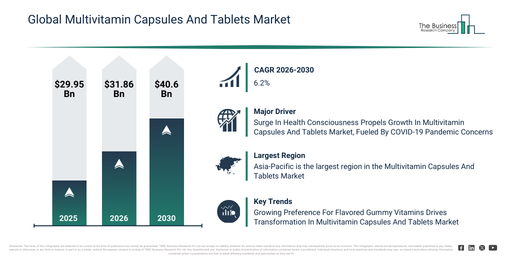
    The market for multivitamin capsules and tablets has experienced robust expansion over the past few years. Projections indicate it will increase from $29.95 billion in 2025 to $31.86 billion in 2026, reflecting a compound annual growth rate (CAGR) of 6.3%. This historical growth has been driven by factors such as heightened health awareness, a greater frequency of vitamin deficiencies, the widening reach of retail pharmacy chains, rising consumer interest in immune-supporting supplements, and the growing proportion of elderly individuals.

    The multivitamin capsules and tablets market is projected to experience robust expansion over the coming years. By 2030, its value is anticipated to reach $40.6 billion, driven by a compound annual growth rate (CAGR) of 6.2%. This forecasted growth is fueled by several key factors, including the rising adoption of personalized supplements, increased utilization of e-commerce platforms, a heightened emphasis on preventive healthcare, advancements in bioavailable vitamin formulations, and the broadening of prenatal and pediatric multivitamin product lines. Notable trends shaping this period encompass personalized nutrition solutions, growing awareness of micronutrient deficiencies, the development of fortified multivitamin products tailored to specific age groups, the proliferation of online and e-commerce sales channels, and the integration of herbal and natural ingredients.

    Download A Free Sample Report For Comprehensive Market Insights:

    https://www.thebusinessresearchcompany.com/sample.aspx?id=5299&type=smp&utm_source=BlogsPR&utm_medium=Paid&utm_campaign=Jul_PR

    Multivitamin Capsules And Tablets Market Expansion Supported By Key Demand Factors

    A growing awareness of personal health and wellness among people is fueling the demand for multivitamin capsules and tablets. These supplements, frequently recommended by healthcare providers, are used to prevent or treat vitamin deficiencies resulting from inadequate nutrition, specific medical conditions, or pregnancy, as they supply a blend of vitamins naturally present in food and other sources. Additionally, heightened health concerns linked to the COVID-19 pandemic have further boosted the popularity of multivitamins. For example, in 2024, the International Food Information Council, a nonprofit based in the US, reported that the proportion of consumers aiming to boost their protein intake rose steadily, climbing from 59% in 2022 to 67% in 2023, and reaching 71% in 2024. Consequently, this escalating emphasis on health is anticipated to propel growth in the multivitamin capsule and tablet market over the forecast period.

    Multivitamin Capsules And Tablets Market Segmentation: How Is The Market Structured Across Key Categories?

    The multivitamin capsules and tablets market covered in this report is segmented –

    1) By Type: Multivitamins Tablets, Multivitamins Capsules

    2) By Distribution Channel: Store Based, Non-Store Based

    3) By Application: Energy And Weight Management, General Health, Bone And Joint Health, Gastrointestinal Health, Immunity, Cardiac Health, Diabetes, Anti-Cancer, Other Applications

    4) By End User: Adults, Geriatric, Pregnant Women, Children, Infants

    Subsegments:

    1) By Multivitamins Tablets: Chewable Tablets, Effervescent Tablets, Coated Tablets, Standard Tablets

    2) By Multivitamins Capsules: Softgel Capsules, Hard Capsules, Liquid-Filled Capsules

    Multivitamin Capsules And Tablets Market Growth Trends Influencing Competitive Dynamics

    In the multivitamin capsules and tablets market, prominent companies are placing a strong emphasis on creating advanced product formats, with flavored gummy vitamins emerging as a key innovation designed to improve user convenience, taste satisfaction, and the overall experience of taking supplements. These flavored gummy varieties are crafted to attract individuals across different age groups while also catering to various dietary requirements and specific health issues. A notable example of this trend occurred in May 2023, when SmartyPants Vitamins, a U.S.-based firm specializing in gummy multivitamins, introduced a fresh range of gelatin-free multivitamin gummies that became available for purchase at Walmart. These particular gummies utilize pectin sourced from citrus fruits and apples, which makes them an appropriate choice for individuals who follow a vegetarian lifestyle or who choose to avoid gelatin for reasons related to their diet or faith. Furthermore, the company’s Kids & Toddler gummy formula is designed to contain significantly less sugar compared to many of the leading competing products, thus providing a more health-conscious alternative without compromising on flavor or the product’s overall appeal to consumers.

    Multivitamin Capsules And Tablets Market Competitive Landscape And Leading Companies

    Major companies operating in the multivitamin capsules and tablets market are Abbott Laboratories, Otsuka Holdings Co., GlaxoSmithKline Plc, Bayer, Natures Bounty Co., Glanbia Plc, Nu Skin Entreprises, Arkopharma, Nutramarks, Nestle S.A, Usana Health Sciences Inc, Lasons India Pvt. Ltd, VOOST, Berocca, Blackmores, Swisse, Nature’s Way, Centrum, Cenovis, MuscleBlaze MB-Vite, HK Vitals, Rainbow Light, One A Day Men’s Multivitamin, Zhejiang NHU, Simply Supplements, Evolution Organics, Nutri-Link, BioCare, Solgar, Evalar, Biovea, Herbalife Ltd, NBTY Inc, Forever Living, Grupo Omnilife, Shaklee Corporation, American Health Inc, Atrium Innovations, NOW Foods, HealthVit, Nature Made, GNC Holdings Inc, Vital Health Foods, Vitabiotics Ltd, SA Natural Products, Beauty Gen, BSN, Grenade, Nature’s Nutrition, PharmaFreak

    Access The Complete Multivitamin Capsules And Tablets Market Report:

    https://www.thebusinessresearchcompany.com/report/multivitamin-capsules-and-tablets-global-market-report?utm_source=BlogsPR&utm_medium=Paid&utm_campaign=Jul_PR

    Multivitamin Capsules And Tablets Market Leading Geography: Which Region Generates The Most Revenue?

    Asia-Pacific was the largest region in the multivitamin capsules and tablets market in 2025. North America was the second-largest market in the multivitamin capsules and tablets market. The regions covered in the multivitamin capsules and tablets market report are Asia-Pacific, South East Asia, Western Europe, Eastern Europe, North America, South America, Middle East, Africa.

    Get in touch with us:

    The Business Research Company: https://www.thebusinessresearchcompany.com/?utm_source=BlogsPR&utm_medium=Paid&utm_campaign=home_page_test

    Americas: +1 310-496-7795

    Asia: +44 7882 955267 & +91 8897263534

    Europe: +44 7882 955267

    Email us at: marketing@tbrc.info

    Follow us on:

    LinkedIn: https://in.linkedin.com/company/the-business-research-company

    YouTube: https://www.youtube.com/channel/UC24_fI0rV8cR5DxlCpgmyFQ

    Global Market Model: https://www.thebusinessresearchcompany.com/global-market-model
  • Multivalent Vaccines Market Outlook Highlights The Next Major Growth Opportunities

    Multivalent Vaccines Market Outlook Highlights The Next Major Growth Opportunities

    Through market attractiveness analysis, total addressable market evaluation, company benchmarking matrices, interactive Excel dashboards, expanded supply chain intelligence, emerging startup coverage, and detailed product insights, The Business Research Company’s 2026 market reports provide more actionable and strategically valuable research.

    Multivalent Vaccines Market Size And Revenue Forecast Through 2030

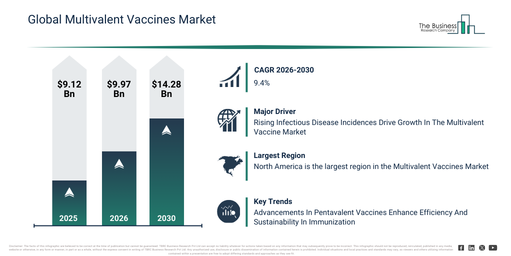
    The market for multivalent vaccines has experienced robust expansion in recent years. Projected figures indicate a rise from $9.12 billion in 2025 to $9.97 billion in 2026, reflecting a compound annual growth rate (CAGR) of 9.4%. Several factors drove this historical growth, including worldwide immunization efforts, a significant prevalence of infectious diseases, government-led vaccination initiatives, upgrades to cold chain systems, and heightened public health education campaigns.

    The multivalent vaccines market is anticipated to experience robust expansion in the coming years, with projections reaching $14.28 billion by 2030, reflecting a compound annual growth rate (CAGR) of 9.4%. This forecasted growth is driven by heightened attention to pandemic readiness, a growing proportion of elderly individuals, advances in recombinant vaccine development, broader implementation of universal immunization initiatives, and increased healthcare investments. Key trends shaping this period include a heightened preference for broad-spectrum immunization, a stronger emphasis on combination vaccines, the extension of both pediatric and geriatric vaccination programs, a rising uptake of preventive healthcare approaches, and augmented funding for vaccine research and development pipelines.

    Download A Free Sample Report For Comprehensive Market Insights:

    https://www.thebusinessresearchcompany.com/sample.aspx?id=19120&type=smp&utm_source=BlogsPR&utm_medium=Paid&utm_campaign=Jul_PR

    Multivalent Vaccines Market Growth Drivers And Industry Catalysts

    The growing frequency of infectious disease outbreaks is anticipated to boost the multivalent vaccines market in the coming years. Infectious diseases are those caused by bacteria, viruses, fungi, or parasites, and they can be transmitted via direct contact, contaminated surfaces, air, or water. This rise in cases is largely fueled by increased global travel, which facilitates the rapid spread of pathogens across different regions. The multivalent vaccines market aids in disease prevention by providing vaccines that target multiple strains of a pathogen in a single shot, thereby minimizing the need for separate immunizations and enhancing herd immunity. For example, in April 2024, TravelHealthPro, a UK-based travel health resource supported by the UK Health Security Agency, reported that the UK saw 2,004 malaria cases in 2023, compared to 1,369 imported cases in 2022. Consequently, the increasing incidence of infectious diseases is propelling the expansion of the multivalent vaccines market.

    Multivalent Vaccines Market Segmentation Trends And Revenue Drivers

    The multivalent vaccines market covered in this report is segmented –

    1) By Type: Conjugate Vaccines, Inactivated And Subunit Vaccines, Live Attenuated Vaccines, Toxoid Vaccines, Recombinant Vaccines

    2) By Disease: Influenza, Pneumonia, Hepatitis, Meningitis, Rotavirus

    3) By Route Of Administration: Oral, Injectable

    4) By Age Group: Pediatrics, Adults, Geriatrics

    5) By Distribution Channel: Hospital Pharmacies, Retail Pharmacies, Online Pharmacies

    Subsegments:

    1) By Conjugate Vaccines: Polysaccharide Conjugate Vaccines, Protein Conjugate Vaccines

    2) By Inactivated And Subunit Vaccines: Inactivated Whole Virus Vaccines, Subunit Protein Vaccines, Virus-Like Particle Vaccines

    3) By Live Attenuated Vaccines: Live Attenuated Bacterial Vaccines, Live Attenuated Viral Vaccines

    4) By Toxoid Vaccines: Diphtheria Toxoid Vaccines, Tetanus Toxoid Vaccines

    5) By Recombinant Vaccines: Recombinant Protein Vaccines, Recombinant DNA Vaccines

    Multivalent Vaccines Market Trends Influencing Long-Term Demand

    Leading players in the multivalent vaccines market are prioritizing the creation of next-generation pentavalent vaccines aimed at broadening immunization coverage, streamlining vaccination schedules, and enhancing population health outcomes. These pentavalent vaccines are multivalent formulations specifically engineered to guard against five different pathogens within a single shot, thereby cutting down the number of injections needed, boosting patient adherence, and smoothing out the execution of vaccination programs. A concrete example is Panacea Biotec Ltd., an Indian biotech firm, which introduced EasyFourPol in December 2023. This is recognized as the world’s initial completely liquid pentavalent vaccine, offering protection from diphtheria, tetanus, pertussis, polio, and Haemophilus influenzae Type B. Its ready-to-use format removes any preparatory steps for medical staff, lowers the frequency of clinic visits and related immunization expenses, and lessens environmental strain by decreasing the demand for extra vials, syringes, and packaging.

    Multivalent Vaccines Market Industry Leaders: Which Organizations Are Driving Competition?

    Major companies operating in the multivalent vaccines market are Pfizer Inc., Merck & Co. Inc., Sanofi SA, GlaxoSmithKline plc, Novartis AG, CSL Seqirus, Zydus Lifesciences Limited, Sinovac Biotech Ltd., GC Biopharma Corp., Serum Institute of India Pvt. Ltd., Indian Immunologicals Ltd., Bavarian Nordic, Panacea Biotec Ltd., VBI Vaccines Inc., WestVac Biopharma Co. Ltd., Emergent BioSolutions Inc., Moderna Inc., BioNTech SE, Abbott Laboratories, Boehringer Ingelheim International GmbH

    Access The Complete Multivalent Vaccines Market Report:

    https://www.thebusinessresearchcompany.com/report/multivalent-vaccines-global-market-report?utm_source=BlogsPR&utm_medium=Paid&utm_campaign=Jul_PR

    Multivalent Vaccines Market Regional Outlook: Where Are The Largest Opportunities Located?

    North America was the largest region in the multivalent vaccines market in 2025. The regions covered in the multivalent vaccines market report are Asia-Pacific, South East Asia, Western Europe, Eastern Europe, North America, South America, Middle East, Africa.

    Get in touch with us:

    The Business Research Company: https://www.thebusinessresearchcompany.com/?utm_source=BlogsPR&utm_medium=Paid&utm_campaign=home_page_test

    Americas: +1 310-496-7795

    Asia: +44 7882 955267 & +91 8897263534

    Europe: +44 7882 955267

    Email us at: marketing@tbrc.info

    Follow us on:

    LinkedIn: https://in.linkedin.com/company/the-business-research-company

    YouTube: https://www.youtube.com/channel/UC24_fI0rV8cR5DxlCpgmyFQ

    Global Market Model: https://www.thebusinessresearchcompany.com/global-market-model