Month: July 2026

  • Enzyme Replacement Therapy Market Forecast Highlights Expansion From $13.42 Billion To $19.28 Billion Through 2030

    Enzyme Replacement Therapy Market Forecast Highlights Expansion From $13.42 Billion To $19.28 Billion Through 2030

    Enhanced with market attractiveness analysis, total addressable market evaluation, company benchmarking matrices, interactive Excel dashboards, expanded supply chain intelligence, emerging startup coverage, and detailed product insights, The Business Research Company’s 2026 market reports deliver more actionable and strategically valuable research.

    Enzyme Replacement Therapy Market Size Forecast: How Large Could The Market Become By 2030?

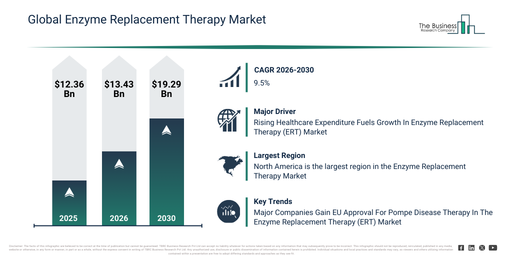
    The enzyme replacement therapy market has experienced robust expansion over the past few years, with projections indicating a rise from $12.36 billion in 2025 to $13.43 billion in 2026, reflecting a compound annual growth rate (CAGR) of 8.6%. This historical growth has been largely driven by several key factors: the escalating incidence of lysosomal storage disorders, significant progress in recombinant DNA technology, heightened awareness surrounding rare diseases, improved hospital infrastructure, and supportive government policies aimed at treating rare conditions.

    The enzyme replacement therapy market is projected to experience robust growth over the coming years, reaching $19.29 billion by 2030 with a compound annual growth rate (CAGR) of 9.5%. This anticipated expansion in the forecast period is driven by the broadening scope of precision medicine, the creation of advanced enzyme formulations, a higher uptake of home infusion therapies, the incorporation of digital health technologies, and an increase in partnerships between biotechnology firms and research organizations. Key developments shaping this period include the rise of customized enzyme replacement treatments, the broadening of initiatives targeting rare diseases, the advancement of enzymes with prolonged activity, the implementation of less invasive delivery methods, and the use of real-world evidence to refine therapeutic approaches.

    Download A Free Sample Report For Comprehensive Market Insights:

    https://www.thebusinessresearchcompany.com/sample.aspx?id=10512&type=smp&utm_source=BlogsPR&utm_medium=Paid&utm_campaign=Jul_PR

    Enzyme Replacement Therapy Market Expansion Supported By Key Demand Factors

    The anticipated growth of the enzyme replacement therapy (ERT) market is being driven by increasing healthcare spending. This spending encompasses all financial resources allocated to healthcare services, associated goods, and related activities within a given system or economy over a set timeframe. Such expenditures are crucial for ERT because these specialized and often costly treatments require significant investment in research and development, as well as clinical trials and testing. As an example, the Centers for Medicare & Medicaid Services (CMS), a federal agency in the US, reported that in June 2025, National Health Expenditure (NHE) rose by 7.5% to $4.9 trillion in 2023, equating to $14,570 per person and representing 17.6% of the Gross Domestic Product (GDP). Additionally, hospital expenditures saw a 10.4% increase to $1,519.7 billion in 2023, a faster pace compared to the 3.2% growth recorded in 2022. Consequently, the upward trend in healthcare spending is fueling the expansion of the enzyme replacement therapy (ERT) market.

    Enzyme Replacement Therapy Market Segmentation: How Is The Market Structured Across Key Categories?

    The enzyme replacement therapy market covered in this report is segmented –

    1) By Enzyme Type: Agalsidase Alfa, Agalsidase Beta, Galsulfase, Other Enzyme Types

    2) By Route Of Administration: Oral, Parenteral

    3) By Application: Gaucher Disease, Pompe Disease, Fabry Disease, Other Applications

    4) By End-Users: Hospitals, Infusion Centers, Other End-Users

    Enzyme Replacement Therapy Market Growth Trends Influencing Competitive Dynamics

    Key players in the enzyme replacement therapy (ERT) market are prioritizing the development of novel treatment options and securing regulatory approvals for Pompe disease therapies to address the unmet needs of patients with late-onset Pompe disease. For example, in June 2023, Amicus Therapeutics, a biotechnology firm based in the United States, received approval and introduced a new Pompe disease therapy in the European Union, driven by clinical evidence, the potential market demand, and regulatory encouragement. This therapy, combining Pombiliti (cipaglucosidase alfa) with Opfolda (miglustat), serves as an enzyme replacement treatment specifically designed for adults suffering from late-onset Pompe disease.

    Enzyme Replacement Therapy Market Competitive Landscape And Leading Companies

    Major companies operating in the enzyme replacement therapy market are Biomarin Pharmaceutical Inc., Leadiant Biosciences Inc., Pfizer Inc., Sanofi S.A., AbbVie Inc., Alexion Pharmaceuticals Inc., Recordati Rare Diseases Inc., JCR Pharmaceuticals Co. Ltd., Horizon Pharma Public Limited Company, Protalix Biotherapeutics Ltd., Amicus Therapeutics Inc., AstraZeneca plc, Novartis AG, Roche Holding AG, GlaxoSmithKline plc, Merck & Co. Inc., Eli Lilly and Company, Bristol-Myers Squibb Company, Retrophin Inc., Abeona Therapeutics Inc., Orchard Therapeutics plc, Ultragenyx Pharmaceutical Inc.

    Access The Complete Enzyme Replacement Therapy Market Report:

    https://www.thebusinessresearchcompany.com/report/enzyme-replacement-therapy-global-market-report?utm_source=BlogsPR&utm_medium=Paid&utm_campaign=Jul_PR

    Enzyme Replacement Therapy Market Regional Analysis: Which Region Leads By Revenue?

    North America was the largest region in the enzyme replacement therapy market in 2025. Asia-Pacific is expected to be the fastest-growing region in the global enzyme replacement therapy market report during the forecast period. The regions covered in the enzyme replacement therapy market report are Asia-Pacific, South East Asia, Western Europe, Eastern Europe, North America, South America, Middle East, Africa.

    Get in touch with us:

    The Business Research Company: https://www.thebusinessresearchcompany.com/?utm_source=BlogsPR&utm_medium=Paid&utm_campaign=home_page_test

    Americas: +1 310-496-7795

    Asia: +44 7882 955267 & +91 8897263534

    Europe: +44 7882 955267

    Email us at: marketing@tbrc.info

    Follow us on:

    LinkedIn: https://in.linkedin.com/company/the-business-research-company

    YouTube: https://www.youtube.com/channel/UC24_fI0rV8cR5DxlCpgmyFQ

    Global Market Model: https://www.thebusinessresearchcompany.com/global-market-model
  • Enzyme Inhibitor Market Expected To Reach $232.05 Billion By 2030 As Growth Accelerates At 4.4% CAGR

    Enzyme Inhibitor Market Expected To Reach $232.05 Billion By 2030 As Growth Accelerates At 4.4% CAGR

    Through market attractiveness analysis, total addressable market evaluation, company benchmarking matrices, interactive Excel dashboards, expanded supply chain intelligence, emerging startup coverage, and detailed product insights, The Business Research Company’s 2026 market reports provide more actionable and strategically valuable research.

    Enzyme Inhibitor Market Revenue Outlook: What CAGR Is Expected Through 2030?

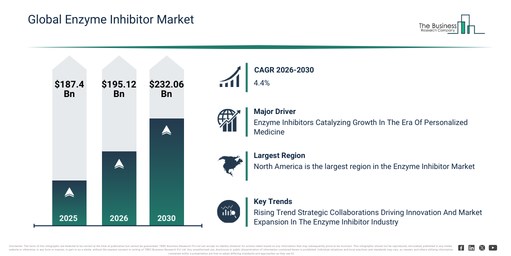
    The enzyme inhibitor market has experienced consistent expansion in recent years, with projections indicating an increase from $187.4 billion in 2025 to $195.12 billion in 2026, reflecting a compound annual growth rate (CAGR) of 4.1%. This historical growth has been driven by factors such as the rising incidence of chronic diseases, heightened investment in pharmaceutical research and development, robust demand for proton pump inhibitors and statins, a growing elderly demographic, and the broader availability of generic enzyme inhibitor medications.

    The size of the enzyme inhibitor market is predicted to experience consistent growth over the coming years. By 2030, it is projected to reach $232.06 billion, reflecting a compound annual growth rate (CAGR) of 4.4%. This anticipated expansion during the forecast period is driven by progress in precision medicine, a growing number of oncology drug pipelines, heightened investments in the biotechnology sector, an increased need for personalized treatment approaches, and broader usage in industries outside of pharmaceuticals. Key developments shaping this period include the growing embrace of targeted enzyme inhibitor therapies, the greater incorporation of these inhibitors in managing chronic diseases, enhanced research efforts focused on creating safer and more selective inhibitors, a broader application of enzyme inhibitors beyond therapeutic uses, and a notable shift towards employing combination drug strategies.

    Download A Free Sample Report For Comprehensive Market Insights:

    https://www.thebusinessresearchcompany.com/sample.aspx?id=6728&type=smp&utm_source=BlogsPR&utm_medium=Paid&utm_campaign=Jul_PR

    Enzyme Inhibitor Market Growth Drivers And Industry Catalysts

    The enzyme inhibitor market is anticipated to experience growth over the coming years, fueled by a rising demand for personalized medicine. This healthcare approach, also known as precision medicine, customizes treatment based on an individual’s unique genetic profile, environment, and lifestyle. Its increasing adoption is propelled by progress in targeted therapies, precise diagnostics, and drug development, where enzyme inhibitors are essential as they are specifically designed for particular patients or disease subtypes. To illustrate, in February 2024, the Personalised Medicine Coalition, a US-based hospital and healthcare organization, reported that in 2023, the FDA approved 16 new personalized treatments for rare disease patients, compared to just 6 in 2022. As a result, the growing need for personalized medicine is accelerating the expansion of the enzyme inhibitor market.

    Enzyme Inhibitor Market Segmentation Trends And Revenue Drivers

    The enzyme inhibitor market covered in this report is segmented –

    1) By Type: Proton Pump Inhibitors (PPIs), Protease Inhibitors, Reverse Transcriptase Inhibitors, Aromatase Inhibitors, Kinase Inhibitors, Neuraminidase Inhibitors, Statins, Other Types

    2) By Disease Indication: Chronic Obstructive Pulmonary Disorders, Cardiovascular Disease, Gastrointestinal Disorders, Arthritis, Inflammatory Diseases, Other Disease Indications

    3) By Application: Chemotherapy, Antibiotics, Pesticides, Cardiovascular Treatments, Other Applications

    4) By End User: Pharmaceutical, Biotechnology, Food And Beverage, Other End Users

    Subsegments:

    1) By Proton Pump Inhibitors (PPIs): Omeprazole, Esomeprazole, Lansoprazole, Pantoprazole, Rabeprazole

    2) By Protease Inhibitors: Ritonavir, Lopinavir, Atazanavir, Saquinavir, Darunavir

    3) By Reverse Transcriptase Inhibitors: NRTIs (Nucleoside Reverse Transcriptase Inhibitors), NNRTIs (Non-Nucleoside Reverse Transcriptase Inhibitors)

    4) By Aromatase Inhibitors: Anastrozole, Letrozole, Exemestane

    5) By Kinase Inhibitors: BCR-ABL Inhibitors, EGFR Inhibitors, ALK Inhibitors, MEK Inhibitors

    6) By Neuraminidase Inhibitors: Oseltamivir, Zanamivir, Peramivir

    7) By Statins: Atorvastatin, Simvastatin, Rosuvastatin, Lovastatin

    8) By Other Types: Antifolates, Phosphodiesterase Inhibitors, Cyclooxygenase Inhibitors

    Enzyme Inhibitor Market Trends Influencing Long-Term Demand

    Key players in the enzyme inhibitor market are prioritizing innovative therapeutic strategies, including selective kinase inhibitors, to enhance treatment options and clinical results for a wide range of diseases. Jaypirca (pirtobrutinib) is a highly selective, non-covalent Bruton’s tyrosine kinase (BTK) inhibitor that has received FDA approval for use in adult patients with relapsed or refractory mantle cell lymphoma following at least two prior lines of systemic therapy. As an example, in January 2023, Loxo Oncology at Lilly, the oncology division of the US-based pharmaceutical company Eli Lilly and Company, introduced Jaypirca tablets. This drug is the first and only non-covalent (reversible) BTK inhibitor to gain approval from the Food and Drug Administration, a US health regulatory body. This milestone marks a notable leap forward for MCL patients who face limited options after falling back on existing therapies. By offering a fresh method of attacking the BTK pathway, Jaypirca may enhance outcomes for this specific group.

    Enzyme Inhibitor Market Industry Leaders: Which Organizations Are Driving Competition?

    Major companies operating in the enzyme inhibitor market are Abbott Laboratories, Amgen Inc., AstraZeneca plc, Bayer AG, F. Hoffmann-La Roche AG, Pfizer Inc., Takeda Pharmaceutical Company, Merck and Co. Inc., Eli Lilly and Company, Bristol-Myers Squibb Company, Cipla USA Inc., AbbVie Inc., Teva Pharmaceutical Industries Ltd., Janssen Pharmaceuticals, Acellera Ltd., BioSolveIT GmbH, Cresset BioMolecular Discovery Ltd., Dotmatics Limited, Inte:Ligand GmbH, LeadIT, Chemical Computing Group Inc.

    Access The Complete Enzyme Inhibitor Market Report:

    https://www.thebusinessresearchcompany.com/report/enzyme-inhibitor-global-market-report?utm_source=BlogsPR&utm_medium=Paid&utm_campaign=Jul_PR

    Enzyme Inhibitor Market Geographic Distribution And Regional Opportunities

    North America was the largest region in the enzyme inhibitor market in 2025. Asia-Pacific is expected to be the fastest-growing region in the forecast period. The regions covered in the enzyme inhibitor market report are Asia-Pacific, South East Asia, Western Europe, Eastern Europe, North America, South America, Middle East, Africa.

    Get in touch with us:

    The Business Research Company: https://www.thebusinessresearchcompany.com/?utm_source=BlogsPR&utm_medium=Paid&utm_campaign=home_page_test

    Americas: +1 310-496-7795

    Asia: +44 7882 955267 & +91 8897263534

    Europe: +44 7882 955267

    Email us at: marketing@tbrc.info

    Follow us on:

    LinkedIn: https://in.linkedin.com/company/the-business-research-company

    YouTube: https://www.youtube.com/channel/UC24_fI0rV8cR5DxlCpgmyFQ

    Global Market Model: https://www.thebusinessresearchcompany.com/global-market-model
  • Environmental Biotechnology Market Set To Grow From $18.38 Billion In 2026 To $34.68 Billion By 2030 At A CAGR Of 17.2%

    Environmental Biotechnology Market Set To Grow From $18.38 Billion In 2026 To $34.68 Billion By 2030 At A CAGR Of 17.2%

    Delivering more actionable and strategically valuable research, The Business Research Company’s 2026 market reports feature market attractiveness analysis, total addressable market evaluation, company benchmarking matrices, interactive Excel dashboards, expanded supply chain intelligence, emerging startup coverage, and detailed product insights.

    Environmental Biotechnology Market Growth Analysis: How Will Revenue Expand During The Forecast Period?

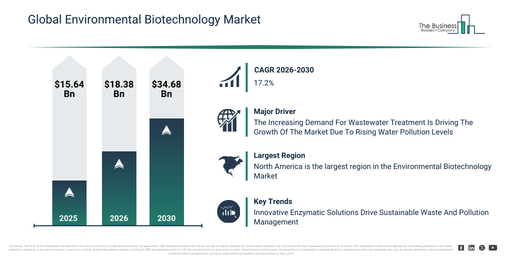
    The environmental biotechnology market has experienced robust expansion in recent years, with its value projected to increase from $15.64 billion in 2025 to $18.38 billion in 2026, reflecting a compound annual growth rate (CAGR) of 17.5%. Historical growth has been driven by several factors, including limited understanding of environmental biotechnology options, continued dependence on traditional chemical methods, rising volumes of industrial wastewater, insufficient regulatory structures governing microbial use, and gradual uptake in the agriculture and waste management sectors.

    The environmental biotechnology market is projected to experience rapid expansion over the coming years, reaching an estimated value of $34.68 billion by 2030, driven by a compound annual growth rate (CAGR) of 17.2%. This forecasted growth is fueled by key developments such as advancements in microbial consortia and enzyme formulations, enhanced government incentives promoting sustainable practices, stricter environmental regulations focused on wastewater and soil treatment, broader industrial and agricultural bioremediation applications, and increased investment in genetically engineered microorganisms. Notable trends shaping the market include a rising preference for microbial blends in waste treatment, expanded use of enzymes for pollution control, greater implementation of nutrient-based bioremediation strategies, increased focus on soil and water bioremediation solutions, and a growing emphasis on genetically engineered microorganisms to address environmental challenges.

    Download A Free Sample Report For Comprehensive Market Insights:

    https://www.thebusinessresearchcompany.com/sample.aspx?id=25762&type=smp&utm_source=BlogsPR&utm_medium=Paid&utm_campaign=Jul_PR

    Environmental Biotechnology Market Opportunity Drivers: What Is Creating New Revenue Potential?

    Rising demand for wastewater treatment is anticipated to drive growth in the environmental biotechnology sector in the coming years. This treatment process involves removing contaminants, pollutants, and harmful substances from used or dirty water, ensuring it is safe for environmental release or reuse. This growing demand largely stems from escalating water pollution levels, which endanger public health, ecosystems, and the availability of clean water. Environmental biotechnology leverages biological processes and organisms to enhance wastewater treatment by efficiently breaking down pollutants, reducing hazardous waste, and promoting cleaner water discharge. For example, as per a 2024 report published by the American Society of Civil Engineers, a US-based professional body, the estimated annual investment shortfall for water infrastructure—covering drinking water, wastewater, and stormwater—stood at $99 billion in 2025, up from $81 billion in the previous year. Consequently, the increasing need for wastewater treatment is fueling market expansion in environmental biotechnology.

    Environmental Biotechnology Market Segment Analysis Highlighting Growth Areas

    The environmental biotechnology market covered in this report is segmented –

    1) By Product: Microbial Blends, Nutrients, Enzymes, Microbes

    2) By Technology: Cell-Based Assays, Nanobiotechnology, Fermentation, Deoxyribonucleic Acid (DNA) Sequencing, Polymerase Chain Reaction Technology, Other Technologies

    3) By Application: Wastewater Treatment, Bioremediation, Other Applications

    4) By End User: Agriculture, Water Treatment, Energy, Waste Management, Food And Beverage, Pharmaceuticals

    Subsegments:

    1) By Microbial Blends: Bioaugmentation Blends, Bioremediation Microbial Consortia, Waste Decomposition Microbial Mixes, Odor Control Microbial Formulations

    2) By Nutrients: Nitrogen Supplements, Phosphorus Additives, Trace Mineral Blends, Carbon Source Additives

    3) By Enzymes: Waste Degrading Enzymes, Oil And Grease-Degrading Enzymes, Sludge Reduction Enzymes, Odor Control Enzymes

    4) By Microbes: Bacteria, Fungi, Algae, Genetically Engineered Microorganisms

    Environmental Biotechnology Market Innovation Trends Driving Future Development

    Key players within the environmental biotechnology sector are concentrating their efforts on creating advanced innovations, among them enzyme-based biocatalysts, to improve both the effectiveness and eco-friendliness of pollution management and waste handling systems. These particular biocatalysts, derived from biological molecules, speed up chemical reactions, making it possible to achieve quicker and more efficient outcomes in environmental tasks like breaking down waste and eliminating harmful contaminants. Take November 2024 as an example: Novonesis A/S, a biotechnology firm headquartered in Denmark, unveiled Eversa Advance. This enzymatic biosolution was designed to boost the efficiency and sustainability of processing biodiesel feedstocks, specifically targeting materials that contain as much as 20% free fatty acids. With this novel offering, biodiesel manufacturers can now handle waste-derived feedstocks without relying on acid esterification, reducing their pretreatment operational expenses by up to 45% and consequently minimizing equipment degradation and downtime. By offering greater feedstock adaptability, this innovation enhances plant profitability and encourages a more eco-friendly approach to biodiesel production.

    Environmental Biotechnology Market Leading Companies: Who Holds Significant Market Presence?

    Major companies operating in the environmental biotechnology market are BASF SE, Dow Chemical Company, Evonik Industries AG, Ecolab Inc., DuPont de Nemours Inc., Suez SA, Novonesis A/S, Ginkgo Bioworks Holdings Inc., Praj Industries Limited, Genomatica Inc., LanzaTech Global Inc., Biorem Inc., Green Biologics Ltd., Veolia Environnement S.A.

    Access The Complete Environmental Biotechnology Market Report:

    https://www.thebusinessresearchcompany.com/report/environmental-biotechnology-global-market-report?utm_source=BlogsPR&utm_medium=Paid&utm_campaign=Jul_PR

    Environmental Biotechnology Market Largest Region By Revenue And Market Share

    North America was the largest region in the environmental biotechnology market in 2025. The regions covered in the environmental biotechnology market report are Asia-Pacific, South East Asia, Western Europe, Eastern Europe, North America, South America, Middle East, Africa.

    Get in touch with us:

    The Business Research Company: https://www.thebusinessresearchcompany.com/?utm_source=BlogsPR&utm_medium=Paid&utm_campaign=home_page_test

    Americas: +1 310-496-7795

    Asia: +44 7882 955267 & +91 8897263534

    Europe: +44 7882 955267

    Email us at: marketing@tbrc.info

    Follow us on:

    LinkedIn: https://in.linkedin.com/company/the-business-research-company

    YouTube: https://www.youtube.com/channel/UC24_fI0rV8cR5DxlCpgmyFQ

    Global Market Model: https://www.thebusinessresearchcompany.com/global-market-model
  • Enteral Feeding Formula Market Opportunities Are Emerging Beyond Traditional Growth Areas

    Enteral Feeding Formula Market Opportunities Are Emerging Beyond Traditional Growth Areas

    Enhanced with market attractiveness analysis, total addressable market evaluation, company benchmarking matrices, interactive Excel dashboards, expanded supply chain intelligence, emerging startup coverage, and detailed product insights, The Business Research Company’s 2026 market reports deliver more actionable and strategically valuable research.

    Enteral Feeding Formula Market Forecast: What Market Value Is Expected By 2030?

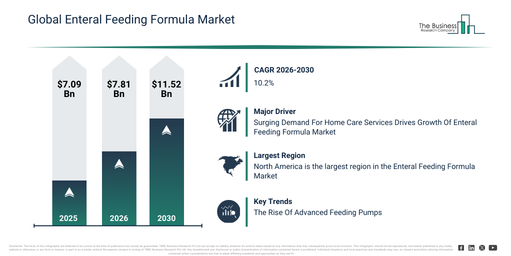
    The enteral feeding formula market has experienced swift expansion in recent times, with its valuation climbing from $7.09 billion in 2025 to $7.81 billion in 2026, achieving a compound annual growth rate (CAGR) of 10.1%. This surge during the historical phase was driven by a higher number of ICU admissions, a growing incidence of chronic conditions, an expanding elderly demographic, improved hospital infrastructure, and enhanced recognition of the importance of clinical nutrition.

    The enteral feeding formula market is projected to experience substantial expansion over the coming years, reaching an estimated $11.52 billion by 2030, driven by a compound annual growth rate (CAGR) of 10.2%. This anticipated growth during the forecast period is fueled by several key factors, including the expansion of home healthcare nutrition, a rise in the prevalence of cancer and neurological disorders, a growing demand for tailored nutritional solutions, technological advancements in feeding tubes and pumps, and improved healthcare accessibility in developing regions. Notable trends shaping this period encompass a heightened focus on disease-specific enteral formulas, a greater emphasis on high-protein and specialized nutrition, increased adoption of pediatric enteral nutrition, broader utilization of enteral feeding within home care environments, and ongoing innovations aimed at enhancing taste, texture, and patient tolerance.

    Download A Free Sample Report For Comprehensive Market Insights:

    https://www.thebusinessresearchcompany.com/sample.aspx?id=7744&type=smp&utm_source=BlogsPR&utm_medium=Paid&utm_campaign=Jul_PR

    Enteral Feeding Formula Market Growth Momentum: Which Factors Are Influencing Demand?

    The market for enteral feeding formulas is anticipated to be driven forward by a rising need for home care services. These services encompass a broad spectrum of assistance provided to individuals who require help with daily tasks while preferring to stay in their own homes. In home settings, enteral feeding is being utilized more frequently for patients needing extended nutritional support. As an example, data from November 2024 released by the U.S. Bureau of Labor Statistics—a federal agency in the United States—revealed that in May 2023, New York had 60 home health and personal care aide positions per 1,000 people, a rate 2.5 times greater than the national figure of 24 per 1,000. Consequently, this growing demand for home-based care is set to fuel expansion in the enteral feeding formula market.

    Enteral Feeding Formula Market Segment Performance And Strategic Opportunities

    The enteral feeding formula market covered in this report is segmented –

    1) By Product: Standard Formulas, Disease-Specific Formulas

    2) By Stage: Adults, Pediatrics

    3) By Application: Oncology, Gastroenterology, Neurology, Diabetes, Critical Care, Other Applications

    4) By End User: Hospitals, Long-Term Care Facilities

    Subsegments:

    1) By Standard Formulas: Polymer-Based Formulas, Oligomeric Formulas, High-Protein Formulas

    2) By Disease-Specific Formulas: Diabetic Formulas, Renal Formulas, Pulmonary Formulas, Oncology Formulas

    Enteral Feeding Formula Market Trends Reshaping Industry Growth

    Key players in the enteral feeding formulas market are actively innovating with advanced products, including specialized enteral feeding pumps, to strengthen their market offerings. An enteral feeding pump is a medical device that delivers liquid nutrition directly to a patient’s stomach or intestines via a feeding tube, allowing for accurate and controlled nutrient administration for those unable to eat orally. In September 2023, Cardinal Health, a US-based healthcare firm, introduced the Kangaroo OMNI enteral feeding pump, which is designed to give patients personalized feeding options with portability and versatility for managing thick formulas and hydration across different settings. This pump features enhanced water resistance for cleaning under running water and includes compatible accessories like a pole clamp and table stand, while also offering multilingual screen display in 19 languages.

    Enteral Feeding Formula Market Key Players: Which Companies Shape Industry Competition?

    Major companies operating in the enteral feeding formula market are Abbott Laboratories, Nestlé S.A., Danone S.A., Fresenius Kabi AG, B. Braun Melsungen AG, Meiji Holdings Co. Ltd., Real Food Blends, Ajinomoto Cambrooke Inc., Otsuka Pharmaceutical Co. Ltd., Medtrition Inc., Nutri-Force Nutrition, Global Health Product Inc., VICTUS, Kate Farms, Baxter International Inc., Perrigo Nutritionals LLC, Reckitt Benckiser Group plc, Bio-Serv Inc., Nutrabalace Ltd., Med-Diet Laboratories Inc., Precision Foods-Kent Corporation, SimplyThick LLC, Vitaflow LLC

    Access The Complete Enteral Feeding Formula Market Report:

    https://www.thebusinessresearchcompany.com/report/enteral-feeding-formula-global-market-report?utm_source=BlogsPR&utm_medium=Paid&utm_campaign=Jul_PR

    Enteral Feeding Formula Market Regional Analysis And Leading Geography

    North America was the largest region in the enteral feeding formula market in 2025. Asia-Pacific is expected to be the fastest-growing region in the forecast period. The regions covered in the enteral feeding formula market report are Asia-Pacific, South East Asia, Western Europe, Eastern Europe, North America, South America, Middle East, Africa.

    Get in touch with us:

    The Business Research Company: https://www.thebusinessresearchcompany.com/?utm_source=BlogsPR&utm_medium=Paid&utm_campaign=home_page_test

    Americas: +1 310-496-7795

    Asia: +44 7882 955267 & +91 8897263534

    Europe: +44 7882 955267

    Email us at: marketing@tbrc.info

    Follow us on:

    LinkedIn: https://in.linkedin.com/company/the-business-research-company

    YouTube: https://www.youtube.com/channel/UC24_fI0rV8cR5DxlCpgmyFQ

    Global Market Model: https://www.thebusinessresearchcompany.com/global-market-model
  • Entecavir Market Expansion Is Opening New Pathways For Strategic Investment

    Entecavir Market Expansion Is Opening New Pathways For Strategic Investment

    Through market attractiveness analysis, total addressable market evaluation, company benchmarking matrices, interactive Excel dashboards, expanded supply chain intelligence, emerging startup coverage, and detailed product insights, The Business Research Company’s 2026 market reports provide more actionable and strategically valuable research.

    Entecavir Market Size Outlook: How Fast Will Revenue Grow Through 2030?

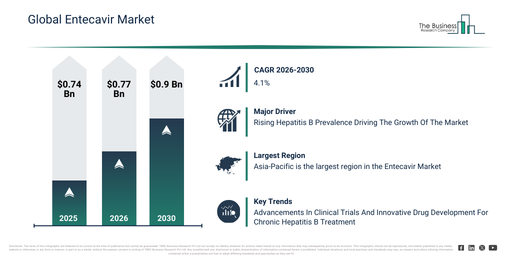
    The entecavir market has experienced consistent expansion over recent years, with projections indicating an increase from $0.74 billion in 2025 to $0.77 billion in 2026, reflecting a compound annual growth rate (CAGR) of 4.2%. This historical growth is largely driven by the widespread prevalence of hepatitis B worldwide, the clinical effectiveness of nucleoside analogs, the broadening of antiviral treatment protocols, enhanced diagnosis rates for hepatitis B, and the growing burden of liver diseases.

    The market for entecavir is projected to experience consistent expansion over the coming years, reaching a valuation of $0.9 billion by 2030 with a compound annual growth rate (CAGR) of 4.1%. This anticipated growth during the forecast period is driven by factors such as the enlargement of the chronic hepatitis B patient population, improved accessibility to antiviral treatments in emerging economies, a greater emphasis on long-term viral suppression strategies, the broadening of public health initiatives targeting hepatitis, and an uptick in demand for cost-effective generic options. Key developments shaping this period involve the rising utilization of prolonged antiviral therapy, a heightened focus on managing chronic hepatitis B, increased preference for oral antiviral drugs, wider availability of generic entecavir, and more thorough tracking of viral load suppression.

    Download A Free Sample Report For Comprehensive Market Insights:

    https://www.thebusinessresearchcompany.com/sample.aspx?id=21183&type=smp&utm_source=BlogsPR&utm_medium=Paid&utm_campaign=Jul_PR

    Entecavir Market Expansion Drivers: What Is Shaping Future Growth?

    The growing incidence of hepatitis B is anticipated to drive expansion in the entecavir market in the future. Hepatitis B is a viral liver infection characterized by symptoms such as jaundice, fatigue, and abdominal pain, and if not addressed, it may progress to chronic liver disease or liver cancer. This rise in cases is linked to causes like unprotected sexual activity, needle sharing, transmission from mother to child during birth, and inadequate vaccination coverage in some areas. Entecavir functions by suppressing the replication of hepatitis B virus (HBV) DNA, thereby lowering viral load and protecting the liver from damage. For example, in August 2025, the Centers for Disease Control and Prevention, a US government agency, reported that in 2023, non-Hispanic Asian/Pacific Islander individuals experienced a rate of newly reported chronic hepatitis B cases nearly ten times greater than that of non-Hispanic White individuals. Consequently, the increasing prevalence of hepatitis B is fueling growth in the entecavir market.

    Increased healthcare spending is set to boost the entecavir market going forward, as healthcare expenditure encompasses all financial resources dedicated to medical products and services aimed at preserving and enhancing public health. This spending is climbing due to an aging population that demands more frequent medical attention and long-term care services. Higher healthcare expenditure supports entecavir adoption by enabling broader access to hepatitis B treatments through greater national investment in antiviral drugs and chronic disease management. In April 2025, the Office for National Statistics, a UK government agency, noted that between 2023 and 2024, total healthcare spending grew by 6.5% in nominal terms and by 2.4% after adjusting for inflation. Thus, rising healthcare expenditure is expected to drive the entecavir market forward.

    Entecavir Market Segment Landscape And Growth Potential

    The entecavir market covered in this report is segmented –

    1) By Product Type: Tablets, Oral Solution

    2) By Application: Hepatitis B Treatment, Liver Transplantation, Other Applications

    3) By Distribution Channel: Hospital Pharmacies, Retail Pharmacies, Online Pharmacies

    Subsegments:

    1) By Tablets: Standard Dose Tablets, High Dose Tablets

    2) By Oral Solution: Ready-to-Use Liquid Solution, Powder For Oral Solution

    Entecavir Market Strategic Trends: What Is Defining The Next Phase Of Growth?

    Key players in the entecavir market are concentrating on the development of innovative therapies through clinical trials to boost treatment effectiveness and improve outcomes for chronic hepatitis B patients, with a focus on minimizing drug resistance and achieving durable long-term viral suppression. These clinical investigations are designed to rigorously assess new drugs, therapies, or treatments for their safety, efficacy, and potential adverse effects in human subjects. A notable example is the phase 2 trial for ALG-000184, initiated by Aligos Therapeutics Inc., a US-based biotechnology firm, in October 2024, aimed at treating hepatitis B. As a capsid assembly modulator, ALG-000184 operates by interfering with the construction of the viral capsid, which is the protective casing for the virus’s genetic material. The ongoing fourth stage of this study is now evaluating the sustained effects of ALG-000184 (administered at 300 mg), either by itself or paired with the established antiviral entecavir, in individuals living with chronic hepatitis B. Findings indicated that combining ALG-000184 with entecavir led to considerably greater decreases in viral load compared to using entecavir alone, while ALG-000184 showed comparable efficacy whether taken with entecavir or not. Viral suppression remained steady throughout the trial period in both HBeAg-positive and HBeAg-negative patient groups.

    Entecavir Market Competitive Landscape: Who Are The Leading Companies?

    Major companies operating in the entecavir market are Bristol-Myers Squibb Company, GSK plc, Teva Pharmaceutical Industries Ltd., Qingfeng Pharmaceutical Group, Aurobindo Pharma Ltd., ScinoPharm Taiwan Ltd., Dr. Reddy’s Laboratories Ltd., Cipla Inc., Zhejiang Huahai Pharmaceuticals Co. Ltd., Qianjin Group, Genix Pharma Ltd., Dawnrays Pharmaceutical Holidings Ltd., Zhejiang Ausun Pharmaceutical Co. Ltd., Hunan Warrant Chiral Pharmaceutical Co. Ltd., Camber Pharmaceuticals Inc., Century Pharmaceuticals Ltd., Aligos Therapeutics Inc. , HRV Global Life Sceince, Solco Healthcare LLC, Accela ChemBio Inc.

    Access The Complete Entecavir Market Report:

    https://www.thebusinessresearchcompany.com/report/entecavir-global-market-report?utm_source=BlogsPR&utm_medium=Paid&utm_campaign=Jul_PR

    Entecavir Market Geographic Analysis: Where Is Demand Growing The Fastest?

    Asia-Pacific was the largest region in the entecavir market in 2025. North America is expected to be the fastest-growing region in the forecast period. The regions covered in the entecavir market report are Asia-Pacific, South East Asia, Western Europe, Eastern Europe, North America, South America, Middle East, Africa.

    Get in touch with us:

    The Business Research Company: https://www.thebusinessresearchcompany.com/?utm_source=BlogsPR&utm_medium=Paid&utm_campaign=home_page_test

    Americas: +1 310-496-7795

    Asia: +44 7882 955267 & +91 8897263534

    Europe: +44 7882 955267

    Email us at: marketing@tbrc.info

    Follow us on:

    LinkedIn: https://in.linkedin.com/company/the-business-research-company

    YouTube: https://www.youtube.com/channel/UC24_fI0rV8cR5DxlCpgmyFQ

    Global Market Model: https://www.thebusinessresearchcompany.com/global-market-model
  • Ensartinib Market Trends Are Creating New Opportunities For Industry Leaders

    Ensartinib Market Trends Are Creating New Opportunities For Industry Leaders

    Delivering more actionable and strategically valuable research, The Business Research Company’s 2026 market reports feature market attractiveness analysis, total addressable market evaluation, company benchmarking matrices, interactive Excel dashboards, expanded supply chain intelligence, emerging startup coverage, and detailed product insights.

    Ensartinib Market Size, Value And Growth Trends Through 2030

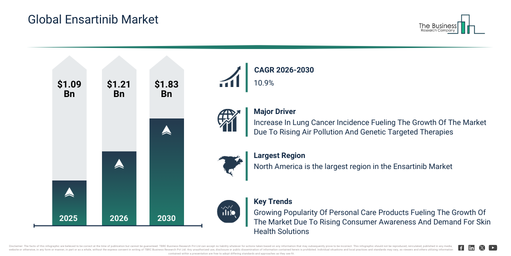
    The size of the ensartinib market has experienced swift expansion over recent years. Projected figures indicate it will rise from $1.09 billion in 2025 to $1.21 billion in 2026, reflecting a compound annual growth rate (CAGR) of 11.2%. This historic growth has been driven by several factors, including the growing prevalence of ALK-positive lung cancer, the constraints posed by first-generation ALK inhibitors, the broader establishment of oncology specialty clinics, increased availability of molecular diagnostic testing, and heightened awareness surrounding targeted cancer treatments.

    The market for ensartinib is projected to experience significant growth over the coming years, with a forecasted increase to $1.83 billion by 2030, reflecting a compound annual growth rate (CAGR) of 10.9%. This anticipated expansion is driven by the broader implementation of biomarker-based therapeutic strategies, the rising number of approvals for oncology drugs that target specific genetic mutations, and heightened demand for second- and third-line cancer treatments. Additionally, growing investments in precision medicine research and a stronger emphasis on enhancing patient survival rates are fueling this upward trajectory. Key trends shaping the market include the growing adoption of next-generation ALK inhibitors, a greater focus on precision oncology methods, the expanding application of targeted therapies in cases of resistant non-small cell lung cancer (NSCLC), the evolution of personalized cancer care plans, and more rigorous monitoring of clinical outcomes in treatment settings.

    Download A Free Sample Report For Comprehensive Market Insights:

    https://www.thebusinessresearchcompany.com/sample.aspx?id=28213&type=smp&utm_source=BlogsPR&utm_medium=Paid&utm_campaign=Jul_PR

    Ensartinib Market Development Factors: Which Trends Are Supporting Demand?

    The rising prevalence of lung cancer is set to drive the growth of the ensartinib market in the coming period. Lung cancer is a condition characterized by the uncontrollable proliferation of abnormal cells in the lungs, frequently resulting in tumors that disrupt normal respiratory function and can metastasize to other areas of the body. This increase in lung cancer cases is largely attributed to extended exposure to air pollution, especially fine particulate matter that gradually damages lung tissue. Ensartinib functions to treat lung cancer by inhibiting the aberrant activity of the ALK gene, thereby managing tumor progression in individuals with ALK-positive non-small cell lung cancer. As an example, data from the Centers for Disease Control and Prevention, a U.S.-based government agency, revealed in June 2025 that new lung cancer cases in the United States climbed from 218,893 in 2022 to 238,340 in 2023. Consequently, the growing incidence of lung cancer is fueling the expansion of the ensartinib market.

    The growth of the ensartinib market is anticipated to be propelled forward by rising healthcare expenditure. Healthcare expenditure encompasses the total funds allocated by individuals, organizations, or governments toward medical services, public health initiatives, medications, and other endeavors designed to preserve or enhance health. This spending is on the rise because an aging population demands more frequent and specialized medical attention, which pushes overall healthcare costs higher. Healthcare expenditure facilitates the use of ensartinib by financing access to advanced cancer therapies and ensuring their availability within medical institutions. For illustration, the American Medical Association, a U.S.-based professional organization and lobbying entity for physicians and medical students, reported in April 2025 that U.S. health spending grew by 7.5% in 2023, reaching $4.9 trillion, or $14,570 per person—a substantial increase from the 4.6% growth observed in 2022. Thus, the escalation in healthcare expenditure is driving the advancement of the ensartinib market.

    Ensartinib Market Categorization By Product Type And Application

    The ensartinib market covered in this report is segmented –

    1) By Drug Type: Oral, Injectable

    2) By Patient Demographics: Pediatric Patients, Adult Patients, Geriatric Patients

    3) By Indication: Non-Small Cell Lung Cancer (NSCLC), Other Lung Cancers, Potential New Indications

    4) By Treatment Line: First-Line Treatment, Second-Line Treatment, Third-Line And Beyond Treatment

    5) By End-User: Hospitals, Specialty Clinics, Other End-Users

    Subsegments:

    1) By Oral: Capsules, Tablets, Liquid Formulations, Powder For Oral Suspension

    2) By Injectable: Vials, Prefilled Syringes, Lyophilized Powder, Solution For Injection

    Ensartinib Market Transformation Trends: Which Innovations Are Driving Change?

    Key players in the ensartinib sector are directing their efforts toward securing regulatory clearances in order to expand patient reach in major world markets and to obtain label extensions for further ALK-positive NSCLC uses. Such approvals represent official permissions granted by regulatory bodies, enabling a medication like ensartinib to be sold and prescribed following successful demonstration of its safety, effectiveness, and quality. A case in point is Xcovery Holdings, Inc., a US-based biopharmaceutical firm, which gained FDA approval in December 2024 for ensartinib (marketed as Ensacove), indicated for adult patients with anaplastic lymphoma kinase (ALK)-positive locally advanced or metastatic non-small cell lung cancer (NSCLC) who have not previously received an ALK inhibitor. The phase 3 eXALT3 trial served as the basis for this authorization, where ensartinib demonstrated a notable progression-free survival advantage over crizotinib (with medians of 25.8 versus 12.7 months), even though overall survival rates were comparable across the two arms. As a second-generation ALK inhibitor, ensartinib is engineered to counteract resistance and attack abnormal ALK proteins; its frequently reported side effects comprise rash, muscle pain, constipation, cough, pruritus, nausea, edema, pyrexia, and fatigue.

    Ensartinib Market Company Landscape And Strategic Competition

    Major companies operating in the ensartinib market are Xcovery Holdings Inc., Betta Pharmaceuticals Co. Ltd.

    Access The Complete Ensartinib Market Report:

    https://www.thebusinessresearchcompany.com/report/ensartinib-global-market-report?utm_source=BlogsPR&utm_medium=Paid&utm_campaign=Jul_PR

    Ensartinib Market Global Footprint: Which Region Holds Market Leadership?

    North America was the largest region in the ensartinib market in 2025. Asia-Pacific is expected to be the fastest-growing region in the forecast period. The regions covered in the ensartinib market report are Asia-Pacific, South East Asia, Western Europe, Eastern Europe, North America, South America, Middle East, Africa.

    Get in touch with us:

    The Business Research Company: https://www.thebusinessresearchcompany.com/?utm_source=BlogsPR&utm_medium=Paid&utm_campaign=home_page_test

    Americas: +1 310-496-7795

    Asia: +44 7882 955267 & +91 8897263534

    Europe: +44 7882 955267

    Email us at: marketing@tbrc.info

    Follow us on:

    LinkedIn: https://in.linkedin.com/company/the-business-research-company

    YouTube: https://www.youtube.com/channel/UC24_fI0rV8cR5DxlCpgmyFQ

    Global Market Model: https://www.thebusinessresearchcompany.com/global-market-model
  • Endometrial Cancer Treatment Market Growth Is Reshaping Competitive Advantage Across The Industry

    Endometrial Cancer Treatment Market Growth Is Reshaping Competitive Advantage Across The Industry

    Enhanced with market attractiveness analysis, total addressable market evaluation, company benchmarking matrices, interactive Excel dashboards, expanded supply chain intelligence, emerging startup coverage, and detailed product insights, The Business Research Company’s 2026 market reports deliver more actionable and strategically valuable research.

    Endometrial Cancer Treatment Market CAGR Analysis And Future Market Development

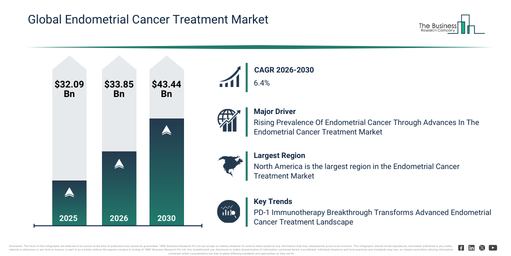
    The endometrial cancer treatment market has experienced robust growth in recent years, with its size projected to rise from $32.09 billion in 2025 to $33.85 billion in 2026, reflecting a compound annual growth rate (CAGR) of 5.5%. This historic expansion is largely driven by the increasing prevalence of endometrial cancer, a shortage of early diagnostic methods, a continued reliance on conventional chemotherapy, the absence of effective targeted therapies, and limited public awareness regarding preventive healthcare measures.

    The endometrial cancer treatment market is anticipated to experience substantial expansion over the coming years. By 2030, its value is projected to reach $43.44 billion, representing a compound annual growth rate (CAGR) of 6.4%. Several factors are expected to drive this growth during the forecast period, including progress in genomics and precision medicine, a greater reliance on artificial intelligence for diagnostics, an increase in targeted and immunotherapeutic drugs, a growing elderly population, and enhanced healthcare facilities. Key trends shaping this period involve the adoption of personalized treatment plans, a shift toward less invasive surgical procedures, the development of targeted therapies, the use of combination therapy approaches, and improved systems for patient monitoring and follow-up care.

    Download A Free Sample Report For Comprehensive Market Insights:

    https://www.thebusinessresearchcompany.com/sample.aspx?id=10735&type=smp&utm_source=BlogsPR&utm_medium=Paid&utm_campaign=Jul_PR

    Endometrial Cancer Treatment Market Industry Drivers: What Is Driving Revenue Growth?

    The increasing incidence of endometrial cancer is anticipated to drive expansion in the endometrial cancer treatment market moving forward. This rise in prevalence refers to a growing number of endometrial cancer cases observed within a defined population or over a specific timeframe. Such a trend has emerged due to evolving risk factors, enhanced detection and diagnostic techniques, heightened public awareness, and an aging demographic. Endometrial cancer treatments facilitate early detection, deliver targeted therapies, help prevent recurrence, and support clinical trials and research aimed at improving therapeutic options. With the prevalence of endometrial cancer climbing and treatment advancements broadening, the market for these treatments is projected to grow. For example, in 2023, Cancer.Net—a source of oncologist-approved cancer information—estimated that around 66,200 individuals in the United States would be diagnosed with uterine or endometrial cancer. Consequently, the rising prevalence of endometrial cancer is fueling growth in the endometrial cancer treatment market.

    Endometrial Cancer Treatment Market Segment Analysis And Revenue Opportunities

    The endometrial cancer treatment market covered in this report is segmented –

    1) By Type: Adenocarcinoma, Uterine Carcinosarcoma, Squamous Cell Carcinoma, Small Cell Carcinoma, Transitional Carcinoma, Serous Carcinoma, Other Types

    2) By Diagnosis Method: Biopsy, Pelvic Ultrasound, Hysteroscopy, CT Scan, Other Diagnosis Methods

    3) By Route Of Administration: Oral, Intravenous

    4) By Distribution Channel: Hospital Pharmacies, Retail Pharmacies, Online Pharmacies

    Subsegments:

    1) By Adenocarcinoma: Endometrioid Adenocarcinoma, Non-Endometrioid Adenocarcinoma

    2) By Uterine Carcinosarcoma: High-Grade Uterine Carcinosarcoma, Low-Grade Uterine Carcinosarcoma

    3) By Squamous Cell Carcinoma: Keratinizing Squamous Cell Carcinoma, Non-Keratinizing Squamous Cell Carcinoma

    4) By Small Cell Carcinoma: Small Cell Neuroendocrine Carcinoma

    5) By Transitional Carcinoma: Transitional Cell Carcinoma Of The Uterus

    6) By Serous Carcinoma: High-Grade Serous Carcinoma, Low-Grade Serous Carcinoma

    7) By Other Types: Mixed Cell Type Carcinomas, Undifferentiated Carcinoma, Other Rare Histological Types

    Endometrial Cancer Treatment Market Growth Trends: What Is Influencing The Future Outlook?

    Key players in the endometrial cancer treatment market are prioritizing the creation of cutting-edge therapies, particularly PD-1 pathway blocking immunotherapy, aimed at improving treatment efficacy and ensuring longer-lasting patient responses. This immunotherapy operates by disrupting the PD-1 mechanism that cancer cells exploit to avoid immune detection, thereby empowering immune cells to identify and attack tumors with enhanced accuracy. It presents a targeted therapeutic choice for advanced or recurring cases, where chemotherapy has frequently yielded insufficient long-term outcomes. For example, in August 2025, GSK Plc, a UK-based biopharmaceutical firm, introduced Jemperli, which utilizes a PD-1 blocking mechanism. This treatment represents India’s first approved immunotherapy for second-line management of advanced endometrial cancer specifically characterized by mismatch repair deficiency or high microsatellite instability, achieving a 45.5% objective response rate in the GARNET trial. It also demonstrates strong probabilities of sustained response at 12 and 24 months, alongside a favorable safety profile. This introduction addresses a significant unmet need in India, where patients often present with advanced illness and require more dependable and effective therapeutic options.

    Endometrial Cancer Treatment Market Leading Players Shaping Industry Direction

    Major companies operating in the endometrial cancer treatment market are Novartis AG, GlaxoSmithKline plc, F. Hoffmann-La Roche AG, Merck & Co. Inc., Sanofi-Aventis, Teva Pharmaceutical Industries Limited, AstraZeneca plc, Pfizer Inc., Bristol-Myers Squibb Company, Eisai Co. Ltd., AbbVie Inc., Roche Holding AG, Janssen Biotech Inc., Takeda Pharmaceutical Company Limited, Amgen Inc., Bayer AG, Eli Lilly and Company, Varian Medical Systems Inc., Seattle Genetics Inc., Spectrum Pharmaceuticals Inc., Stemline Therapeutics Inc.

    Access The Complete Endometrial Cancer Treatment Market Report:

    https://www.thebusinessresearchcompany.com/report/endometrial-cancer-treatment-global-market-report?utm_source=BlogsPR&utm_medium=Paid&utm_campaign=Jul_PR

    Endometrial Cancer Treatment Market Regional Distribution: Which Areas Drive Market Expansion?

    North America was the largest region in the endometrial cancer treatment market in 2025. Asia-Pacific is expected to be the fastest-growing region in the global endometrial cancer treatment market report during the forecast period. The regions covered in the endometrial cancer treatment market report are Asia-Pacific, South East Asia, Western Europe, Eastern Europe, North America, South America, Middle East, Africa.

    Get in touch with us:

    The Business Research Company: https://www.thebusinessresearchcompany.com/?utm_source=BlogsPR&utm_medium=Paid&utm_campaign=home_page_test

    Americas: +1 310-496-7795

    Asia: +44 7882 955267 & +91 8897263534

    Europe: +44 7882 955267

    Email us at: marketing@tbrc.info

    Follow us on:

    LinkedIn: https://in.linkedin.com/company/the-business-research-company

    YouTube: https://www.youtube.com/channel/UC24_fI0rV8cR5DxlCpgmyFQ

    Global Market Model: https://www.thebusinessresearchcompany.com/global-market-model
  • Endocrinology Drugs Market Forecast Signals New Revenue Opportunities Through 2030

    Endocrinology Drugs Market Forecast Signals New Revenue Opportunities Through 2030

    Through market attractiveness analysis, total addressable market evaluation, company benchmarking matrices, interactive Excel dashboards, expanded supply chain intelligence, emerging startup coverage, and detailed product insights, The Business Research Company’s 2026 market reports provide more actionable and strategically valuable research.

    Endocrinology Drugs Market Expansion From $26.24 Billion In 2026 To $26.42 Billion In 2030

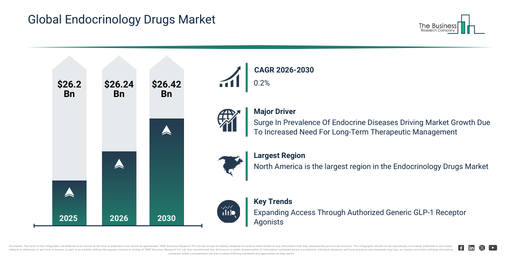
    The endocrinology drugs market has experienced only slight expansion in recent years. By 2025, its value is projected at $26.2 billion, with an anticipated increase to $26.24 billion by 2026, reflecting a compound annual growth rate (CAGR) of just 0.1%. This modest historic growth has been largely driven by factors like the growing number of diabetes cases, a higher rate of thyroid disorder diagnoses, greater utilization of hormone replacement therapies, the broader reach of hospital pharmacies, and enhanced public understanding of endocrine health issues.

    The endocrinology drugs market is projected to experience slight expansion in the coming years, reaching $26.42 billion by 2030, representing a compound annual growth rate (CAGR) of just 0.2%. This forecasted growth is driven by factors such as an aging population, a higher prevalence of lifestyle-related conditions, advancements in diabetes drug development, the growing reach of online pharmacies, and rising rates of endocrine screenings. Key trends shaping this period encompass the increasing focus on long-term management of chronic endocrine conditions, greater adoption of combination hormonal therapies, heightened demand for medications targeting diabetes and thyroid disorders, the broadening of outpatient endocrine services, and a stronger emphasis on hormonal therapies for specific therapies.

    Download A Free Sample Report For Comprehensive Market Insights:

    https://www.thebusinessresearchcompany.com/sample.aspx?id=20769&type=smp&utm_source=BlogsPR&utm_medium=Paid&utm_campaign=Jul_PR

    #Endocrinology Drugs Market Growth Factors: Which Forces Are Supporting Market Expansion?

    The anticipated expansion of the endocrinology drugs market is being driven by the growing incidence of endocrine diseases. These conditions involve disruptions to the endocrine system, leading to imbalances in hormone production or regulation and consequently interfering with normal physiological processes. A combination of factors, such as evolving lifestyle patterns, an older demographic, and enhanced diagnostic capabilities, has fueled the increased detection and occurrence of these disorders. Endocrinology drugs are utilized to manage such conditions by modulating hormone levels, correcting glandular dysfunction, and restoring hormonal equilibrium, thereby reducing symptoms and improving patient health outcomes. As an example, the World Health Organization—a Switzerland-based United Nations body dedicated to global public health—reported in February 2025 that polycystic ovary syndrome (PCOS) affects an estimated 6 to 13% of women of reproductive age, with up to 70% of those affected remaining undiagnosed globally. Consequently, the rising prevalence of endocrine diseases is propelling growth within the endocrinology drugs market.

    Endocrinology Drugs Market Segmentation And Category Breakdown

    The endocrinology drugs market covered in this report is segmented –

    1) By Indication: Hyperthyroidism, Hypothyroidism, Diabetes, Polycystic Ovarian Syndrome, Growth Hormone Disorders, Pituitary Gland Disorders, Other Indications

    2) By Therapy Area: Diabetes Drugs, Thyroid Hormone Disorder Drugs, Human Growth Hormone, Testosterone Replacement Therapy, Other Therapy Areas

    3) By Distribution Channel: Hospital pharmacies, Online Pharmacies, Retail pharmacies

    4) By End User: Hospitals, Ambulatory Surgical Centers, Other End Users

    Subsegments:

    1) By Hyperthyroidism: Antithyroid Medications, Radioactive Iodine Therapy, Beta Blockers

    2) By Hypothyroidism: Levothyroxine-based Medications, Liothyronine-based Medications, Combination Hormonal Therapies

    3) By Diabetes: Insulin Therapies, Oral Antidiabetic Drugs (OADs), GLP-1 Receptor Agonists, SGLT-2 Inhibitors, DPP-4 Inhibitors

    4) By Polycystic Ovarian Syndrome (PCOS): Oral Contraceptives, Metformin, Clomiphene Citrate, Anti-Androgens

    5) By Growth Hormone Disorders: Recombinant Human Growth Hormone (rhGH), Growth Hormone Secretagogues, Growth Hormone Receptor Antagonists

    6) By Pituitary Gland Disorders: Somatostatin Analogs, Gonadotropins, Dopamine Agonists

    7) By Other Indications: Adrenal Gland Disorders, Osteoporosis, Parathyroid Disorders, Male Hormonal Imbalances

    Endocrinology Drugs Market Industry Trends: What Changes Are Reshaping Demand?

    Major players within the endocrinology drugs industry are prioritizing product innovation and the development of formulations, including authorized generics of GLP-1 receptor agonists, aimed at expanding patient access, lowering treatment expenses, and strengthening their competitive position in the market, all while preserving safety and efficacy standards. These approaches facilitate broader distribution of essential treatments for diabetes and obesity, as well as promote consistent adherence to long-term therapy regimens. As an illustration, in June 2024, Teva Pharmaceuticals, a pharmaceutical firm headquartered in the US, introduced an authorized generic version of Victoza (liraglutide) injection 1.8 mg across the United States. This authorized generic maintains the identical composition and therapeutic benefits as the original brand, offering both healthcare providers and patients an affordable solution for managing type 2 diabetes and obesity. The launch underscores a sector-wide movement towards improving access to critical endocrinology therapies via generic and authorized generic alternatives, thereby addressing the rising global need for effective diabetes management solutions.

    Endocrinology Drugs Market Competitive Analysis Of Major Industry Participants

    Major companies operating in the endocrinology drugs market are Johnson & Johnson Inc., Merck & Co. Inc., AbbVie Inc., Bayer Aktiengesellschaft, Novartis International AG, Sanofi S.A., AstraZeneca plc, Abbott Laboratories, GlaxoSmithKline plc, Takeda Pharmaceutical Company Limited, Eli Lilly and Company, Amgen Inc., Novo Nordisk A/S, Biocon Limited, Boehringer Ingelheim International GmbH, Mylan N.V., Sandoz International GmbH, Ipsen Pharma, Ferring Pharmaceuticals Inc., Endocrine Pharma Private Limited

    Access The Complete Endocrinology Drugs Market Report:

    https://www.thebusinessresearchcompany.com/report/endocrinology-drugs-global-market-report?utm_source=BlogsPR&utm_medium=Paid&utm_campaign=Jul_PR

    Endocrinology Drugs Market Leading Geography: Which Region Generates The Most Revenue?

    North America was the largest region in the endocrinology drugs market in 2025. Asia-Pacific is expected to be the fastest-growing region in the forecast period. The regions covered in the endocrinology drugs market report are Asia-Pacific, South East Asia, Western Europe, Eastern Europe, North America, South America, Middle East, Africa.

    Get in touch with us:

    The Business Research Company: https://www.thebusinessresearchcompany.com/?utm_source=BlogsPR&utm_medium=Paid&utm_campaign=home_page_test

    Americas: +1 310-496-7795

    Asia: +44 7882 955267 & +91 8897263534

    Europe: +44 7882 955267

    Email us at: marketing@tbrc.info

    Follow us on:

    LinkedIn: https://in.linkedin.com/company/the-business-research-company

    YouTube: https://www.youtube.com/channel/UC24_fI0rV8cR5DxlCpgmyFQ

    Global Market Model: https://www.thebusinessresearchcompany.com/global-market-model
  • End Stage Renal Disease (ESRD) Drug Market Growth Is Accelerating As Industry Transformation Continues

    End Stage Renal Disease (ESRD) Drug Market Growth Is Accelerating As Industry Transformation Continues

    Delivering more actionable and strategically valuable research, The Business Research Company’s 2026 market reports feature market attractiveness analysis, total addressable market evaluation, company benchmarking matrices, interactive Excel dashboards, expanded supply chain intelligence, emerging startup coverage, and detailed product insights.

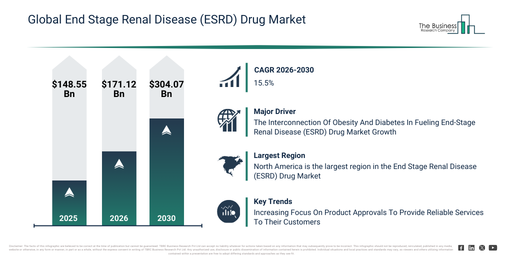
    End Stage Renal Disease (ESRD) Drug Market Forecast Highlighting Growth From $171.11 Billion To $304.06 Billion

    The market for end-stage renal disease (ESRD) pharmaceuticals has seen significant expansion in recent times. Its value is projected to rise from $148.55 billion in 2025 to $171.12 billion in 2026, achieving a compound annual growth rate (CAGR) of 15.2%. This past growth has been driven by several factors, including the increasing number of chronic kidney disease (CKD) cases, heightened awareness of ESRD, a growing number of dialysis facilities, improvements in kidney disease treatments, and supportive government healthcare programs.

    The market for end-stage renal disease (ESRD) drugs is anticipated to experience significant expansion over the coming years, with projections indicating it will reach $304.07 billion by 2030, reflecting a compound annual growth rate (CAGR) of 15.5%. Growth during this forecast period is driven by factors such as advances in precision medicine, the increasing availability of home-based dialysis options, the incorporation of artificial intelligence into patient monitoring, heightened investment in ESRD research and development, and a rising preference for combination therapies. Key emerging trends likely to shape the future include tailored drug therapies for ESRD, home-delivered dialysis approaches, the use of telemedicine in chronic kidney disease (CKD) management, innovative drug formulations targeting secondary complications, and broader implementation of combined therapeutic regimens.

    Download A Free Sample Report For Comprehensive Market Insights:

    https://www.thebusinessresearchcompany.com/sample.aspx?id=9437&type=smp&utm_source=BlogsPR&utm_medium=Paid&utm_campaign=Jul_PR

    End Stage Renal Disease (ESRD) Drug Market Demand Drivers: What Is Fueling Industry Growth?

    The growing prevalence of obesity and diabetes is anticipated to accelerate the expansion of the end-stage renal disease (ESRD) drug market moving forward. Obesity is defined as an abnormal or excessive accumulation of fat that presents a health risk, while diabetes is a chronic illness resulting from insufficient insulin production by the pancreas or ineffective use of the insulin that is produced. In individuals with renal disease, controlling fluid and electrolyte levels, blood pressure, and waste removal via dialysis can enhance overall health and well-being, potentially leading to weight loss and better blood sugar management. To illustrate, the World Obesity Federation, a nonprofit membership organization, predicted in 2023 that the annual global economic impact of overweight and obesity would reach US$4.32 trillion by 2035, representing nearly 3% of the world’s GDP. Additionally, data from the National Health Service, a UK government department, showed in June 2024 that 3,615,330 people registered with a general practitioner had been diagnosed with non-diabetic hyperglycemia or pre-diabetes—a condition involving elevated blood sugar levels not severe enough to be classified as diabetes—in 2023, an 18% rise compared to 3,065,825 cases in 2022. Consequently, the rising incidence of obesity and diabetes is set to drive demand for end-stage renal disease (ESRD) drugs.

    End Stage Renal Disease (ESRD) Drug Market Segment Outlook: Which Categories Are Expanding The Fastest?

    The end stage renal disease (esrd) drug market covered in this report is segmented –

    1) By Product Type: Calcimimetics, Vitamin D, Sterols, Potassium Binders, Calcium-Based Phosphate Binders, Other Products

    2) By Indication: End Stage Renal Disease (ESRD) Induced Hyperparathyroidism, End Stage Renal Disease (ESRD) Induced Hyperphosphatemia, End Stage Renal Disease (ESRD) Induced Hyperkaliemia

    3) By Distribution Channel: Hospital Pharmacy, Online Pharmacy, Retail Pharmacy

    4) By End User: Hospitals, Homecare, Specialty Clinics, Other End Users

    Subsegments:

    1) By Calcimimetics: Cinacalcet, Etelcalcetide

    2) By Vitamin D: Calcitriol, Doxercalciferol, Paricalcitol

    3) By Sterols: Ergocalciferol, Cholecalciferol

    4) By Potassium Binders: Sodium Polystyrene Sulfonate, Patiromer, Sodium Zirconium Cyclosilicate

    5) By Calcium-Based Phosphate Binders: Calcium Acetate, Calcium Carbonate

    6) By Other Products: Iron Supplements, Erythropoiesis-Stimulating Agents

    End Stage Renal Disease (ESRD) Drug Market Innovation Trends: Which Developments Are Transforming The Industry?

    Top corporations within the end-stage renal disease (ESRD) pharmaceutical space are prioritizing product approvals like Jardiance as a strategy to boost their market revenues. Empagliflozin is designed to assist individuals with type 2 diabetes and reduce the risk of cardiovascular complications in those with type 2 diabetes who also have heart failure or cardiovascular disease. In September 2023, Boehringer Ingelheim Pharmaceuticals Inc., a pharmaceutical company based in the United States, secured FDA approval for Jardiance. This medication has been authorized for multiple uses, including decreasing the likelihood of end-stage kidney disease, cardiovascular death, and hospitalization in adults with chronic kidney disease that is at risk of deterioration, along with lowering the risk of a sustained drop in estimated glomerular filtration rate (eGFR) in adults with heart failure. As a sodium-glucose cotransporter 2 (SGLT2) inhibitor, Jardiance is not recommended for patients with type 1 diabetes or those whose eGFR measures below 20 ml/min/1.73 m.

    End Stage Renal Disease (ESRD) Drug Market Key Companies And Competitive Benchmarking

    Major companies operating in the end stage renal disease (esrd) drug market are Pfizer Inc., AstraZeneca plc, Sanofi SA, Astellas Pharma Inc., Novartis AG, Fresenius SE & Co. KGaA, Takeda Pharmaceutical Company Limited, F. Hoffmann-La Roche Ltd., Kissei Pharmaceutical Co. Ltd., Baxter International Inc., AbbVie Inc., Amgen Inc., Akebia Drugs Inc., Bayer AG, Bristol-Myers Squibb Company, B. Braun SE, Asahi Kasei Medical Co. Ltd., Nikkiso Co. Ltd., Abbott Laboratories, Merck Co. & KGaA

    Access The Complete End Stage Renal Disease (ESRD) Drug Market Report:

    https://www.thebusinessresearchcompany.com/report/end-stage-renal-disease-esrd-drug-global-market-report?utm_source=BlogsPR&utm_medium=Paid&utm_campaign=Jul_PR

    End Stage Renal Disease (ESRD) Drug Market Regional Outlook: Where Are The Largest Opportunities Located?

    North America was the largest region in the end stage renal disease (ESRD) drug market in 2025. The regions covered in the end stage renal disease (esrd) drug market report are Asia-Pacific, South East Asia, Western Europe, Eastern Europe, North America, South America, Middle East, Africa.

    Get in touch with us:

    The Business Research Company: https://www.thebusinessresearchcompany.com/?utm_source=BlogsPR&utm_medium=Paid&utm_campaign=home_page_test

    Americas: +1 310-496-7795

    Asia: +44 7882 955267 & +91 8897263534

    Europe: +44 7882 955267

    Email us at: marketing@tbrc.info

    Follow us on:

    LinkedIn: https://in.linkedin.com/company/the-business-research-company

    YouTube: https://www.youtube.com/channel/UC24_fI0rV8cR5DxlCpgmyFQ

    Global Market Model: https://www.thebusinessresearchcompany.com/global-market-model
  • Enamel Strengthening Varnish Market Outlook Highlights The Next Major Growth Opportunities

    Enamel Strengthening Varnish Market Outlook Highlights The Next Major Growth Opportunities

    Enhanced with market attractiveness analysis, total addressable market evaluation, company benchmarking matrices, interactive Excel dashboards, expanded supply chain intelligence, emerging startup coverage, and detailed product insights, The Business Research Company’s 2026 market reports deliver more actionable and strategically valuable research.

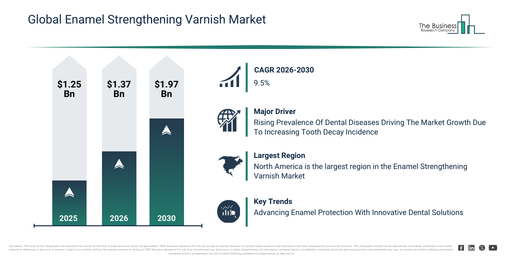
    Enamel Strengthening Varnish Market Revenue Growth Supported By A CAGR Of 1.97% Through 2030

    In recent years, the market for enamel strengthening varnish has experienced robust growth. Projections indicate it will rise from $1.25 billion in 2025 to $1.37 billion in 2026, reflecting a compound annual growth rate (CAGR) of 9.8%. This historical expansion is driven by factors such as the growing incidence of dental cavities, heightened awareness around preventive oral hygiene, broader availability of pediatric dental care, frequent incorporation of fluoride applications in clinical settings, and the expansion of professional dental service infrastructure.

    The enamel strengthening varnish market is projected to experience robust expansion over the coming years. By 2030, its value is anticipated to reach $1.97 billion, reflecting a compound annual growth rate (CAGR) of 9.5%. This forecasted growth is driven by several factors, including an increased emphasis on minimally invasive dental procedures, a growing preference for preventive oral care products used at home, the expanding need for oral care among the aging population, wider incorporation of advanced bioactive components, and a heightened focus on preserving enamel health over the long term. Key developments shaping the future of this sector involve the rising utilization of bioactive dental varnish formulations, a greater implementation of composite remineralization varnishes, increased demand for pediatric preventive dental services, the advancement of nano-technology-based dental coatings, and a stronger focus on achieving durable enamel protection.

    Download A Free Sample Report For Comprehensive Market Insights:

    https://www.thebusinessresearchcompany.com/sample.aspx?id=28212&type=smp&utm_source=BlogsPR&utm_medium=Paid&utm_campaign=Jul_PR

    Enamel Strengthening Varnish Market Growth Drivers: What Factors Are Accelerating Expansion?

    The growing occurrence of dental conditions is anticipated to fuel the expansion of the enamel-strengthening varnish market moving forward. Dental conditions encompass various disorders impacting the teeth, gums, and mouth’s supporting structures. This increase is primarily driven by elevated sugar intake, which encourages acid-generating bacteria to wear down enamel and trigger tooth decay. Enamel-strengthening varnish aids in combating dental conditions by applying a protective coating over tooth surfaces, supplying fluoride or calcium-phosphate compounds to rebuild weakened enamel, lessening acid damage, and decreasing cavity and decay risks. For example, in September 2024, data from Gov.UK, a UK government agency, revealed that a survey for the 2022 to 2023 academic year indicated 16.2% of Year 6 students in England suffered from permanent tooth decay. Hence, the rising frequency of dental conditions is accelerating the enamel-strengthening varnish market’s growth.

    Enamel Strengthening Varnish Market Segment Landscape: Which Areas Lead Market Development?

    The enamel strengthening varnish market covered in this report is segmented –

    1) By Product Type: Fluoride Varnish, Calcium Phosphate Varnish, Combination Varnish, Other Product Types

    2) By Age Group: Pediatric, Adult, Geriatric

    3) By Distribution Channel: Online Pharmacies, Retail Pharmacies, Dental Supply Stores, Other Distribution Channels

    4) By Application: Dental Clinics, Hospitals, Home Care, Other Applications

    Subsegments:

    1) By Fluoride Varnish: Sodium Fluoride Varnish, Stannous Fluoride Varnish, Difluorosilane Varnish

    2) By Calcium Phosphate Varnish: Tricalcium Phosphate Varnish, Hydroxyapatite Varnish

    3) By Combination Varnish: Fluoride + Calcium Phosphate Varnish, Fluoride + Hydroxyapatite Varnish

    4) By Other Product Types: Herbal Varnish, Nano-Technology Based Varnish, Resin-Based Varnish

    Enamel Strengthening Varnish Market Trends: What Is Shaping Future Industry Growth?

    Key players in the enamel-strengthening varnish market are concentrating on creating next-generation products, including advanced fluoride varnishes, to boost enamel protection, increase patient adherence, and ensure sustained cavity prevention. Advanced fluoride varnish is defined as a modern dental coating that incorporates improved fluoride release mechanisms, supplementary active components, or enhanced application methods to more effectively reinforce tooth enamel and offer extended defense against tooth decay. As an example, in May 2025, Kettenbach LP, a manufacturing firm based in the United States, introduced profisil fluoride varnish plus, which improves enamel safeguarding through cutting-edge fluoride technology that fortifies tooth enamel and alleviates sensitivity, featuring a smooth, non-adhesive, alcohol-free, and rosin-free formulation that is well-tolerated by patients across all age groups. Its sophisticated composition facilitates remineralization via fluoride, calcium, and phosphate, while appealing flavors and straightforward application encourage better patient compliance. This varnish is engineered to shield teeth, avert decay, and ensure enduring comfort, thereby streamlining and enhancing the effectiveness of preventive care for dental practitioners.

    Enamel Strengthening Varnish Market Industry Leaders And Market Competition

    Major companies operating in the enamel strengthening varnish market are McKesson Corporation, Colgate-Palmolive Company, Dentsply Sirona Inc., Ivoclar Vivadent AG, Ultradent Products Inc., AMD Medicom Inc., VOCO GmbH, Safco Dental Supply LLC, GC Europe N.V., 3M Oral Care, Pulpdent Corporation, Sultan Healthcare Inc., Medicom Technologies Inc., Kettenbach Dental, Nanova Biomaterials Inc., DMG America, Elevate Oral Care LLC, Preventive Technologies Inc., ApaCare GmbH, Fygg Inc.

    Access The Complete Enamel Strengthening Varnish Market Report:

    https://www.thebusinessresearchcompany.com/report/enamel-strengthening-varnish-global-market-report?utm_source=BlogsPR&utm_medium=Paid&utm_campaign=Jul_PR

    Enamel Strengthening Varnish Market Geographic Landscape: Which Region Dominates Industry Growth?

    North America was the largest region in the enamel strengthening varnish market in 2025. Asia Pacific is expected to be the fastest-growing region in the forecast period. The regions covered in the enamel strengthening varnish market report are Asia-Pacific, South East Asia, Western Europe, Eastern Europe, North America, South America, Middle East, Africa.

    Get in touch with us:

    The Business Research Company: https://www.thebusinessresearchcompany.com/?utm_source=BlogsPR&utm_medium=Paid&utm_campaign=home_page_test

    Americas: +1 310-496-7795

    Asia: +44 7882 955267 & +91 8897263534

    Europe: +44 7882 955267

    Email us at: marketing@tbrc.info

    Follow us on:

    LinkedIn: https://in.linkedin.com/company/the-business-research-company

    YouTube: https://www.youtube.com/channel/UC24_fI0rV8cR5DxlCpgmyFQ

    Global Market Model: https://www.thebusinessresearchcompany.com/global-market-model