Month: July 2026

  • Craniomaxillofacial Bone Plate Market Expected To Reach $2.3 Billion By 2030 As Growth Accelerates At 8.1% CAGR

    Craniomaxillofacial Bone Plate Market Expected To Reach $2.3 Billion By 2030 As Growth Accelerates At 8.1% CAGR

    Delivering more actionable and strategically valuable research, The Business Research Company’s 2026 market reports feature market attractiveness analysis, total addressable market evaluation, company benchmarking matrices, interactive Excel dashboards, expanded supply chain intelligence, emerging startup coverage, and detailed product insights.

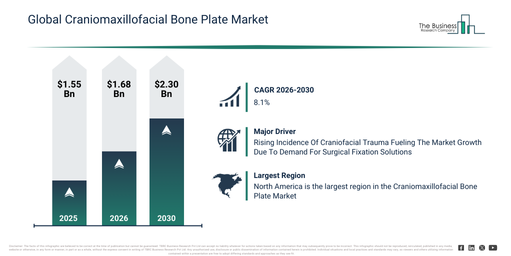
    Craniomaxillofacial Bone Plate Market Growth From $1.68 Billion In 2026 To $2.3 Billion By 2030 At A CAGR Of 8.1%

    The craniomaxillofacial bone plate market size has demonstrated strong expansion in recent years. It is anticipated to increase from $1.55 billion in 2025 to $1.68 billion in 2026, with a compound annual growth rate (CAGR) of 8.4%. This historical growth can be attributed to several factors, including an escalating incidence of facial trauma, a rising demand for reconstructive surgeries, the increasing adoption of titanium plates, the expansion of hospitals and specialty clinics, and a growing awareness of minimally invasive surgical techniques.

    The craniomaxillofacial bone plate market is projected for significant expansion over the coming years, expected to reach $2.30 billion by 2030, driven by an 8.1% compound annual growth rate (CAGR). This anticipated growth during the forecast period is fueled by several factors, including a greater demand for patient-specific implants, the increasing acceptance of bioresorbable materials, heightened investment in 3D printing technologies, the broader implementation of robotic-assisted surgeries, and the improvement of healthcare infrastructure in developing economies. Concurrently, key trends influencing this period involve ongoing technological progress in 3D printing, breakthroughs in bioresorbable materials, the creation of minimally invasive fixation methods, intensive research into antibacterial and drug-eluting coatings, and the integration of AI and AR into surgical planning.

    Download A Free Sample Report For Comprehensive Market Insights:

    https://www.thebusinessresearchcompany.com/sample.aspx?id=30565&type=smp&utm_source=Blogs&utm_medium=Paid&utm_campaign=Jul_PR

    Craniomaxillofacial Bone Plate Market Development Factors: Which Trends Are Supporting Demand?

    The growing occurrence of facial trauma and accidents is projected to drive the expansion of the craniomaxillofacial bone plate market. These incidents encompass injuries to the skull and facial bones that often require surgical stabilization, such as bone plates, to restore their anatomical structure and support the healing process. The rise in facial trauma and accidents is attributed to an increasing number of emergency department visits for unintentional injuries, reflecting a greater exposure to falls, accidents, and other traumatic events. Craniomaxillofacial bone plates play a crucial role in addressing facial trauma and accidents by enabling surgeons to reconstruct anatomy and achieve better recovery outcomes. For instance, in April 2025, the Royal Society for the Prevention of Accidents, a UK-based charity focused on accident prevention, reported that accident-related hospital admissions for serious injuries in England have increased by 48% over the last two decades, with over 740,000 people admitted to hospital due to an accident in England in 2022/23 and over 870,000 people across the United Kingdom. Therefore, the escalating incidence of facial trauma and accidents is stimulating the growth of the craniomaxillofacial bone plate market.

    Craniomaxillofacial Bone Plate Market Segment Analysis Highlighting Growth Areas

    The craniomaxillofacial bone plate market covered in this report is segmented –

    1) By Product Type: Locking Plates, Non-Locking Plates, Reconstruction Plates, Mesh And Flap Fixation Systems

    2) By Material Type: Titanium, Polylactic Acid, Other Material Types

    3) By Mechanism: Standard Plates, Customized And Patient-Specific Implants

    4) By Application: Orthognathic Surgery, Neurosurgery, Plastic Surgery, ENT Surgery, Other Applications

    5) By End-User: Hospitals, Ambulatory Surgical Centers, Specialty Clinics, Other End-Users

    Subsegments:

    1) By Locking Plates: Pre-Contoured Plates, Straight Plates, Mini Plates, Micro Plates, Pediatric Plates

    2) By Non-Locking Plates: Standard Plates, Reconstruction Plates, Mini Plates, Micro Plates

    3) By Reconstruction Plates: Mandibular Plates, Maxillofacial Plates, Zygomatic Plates, Orbital Plates

    4) By Mesh and Flap Fixation Systems: Titanium Mesh, Resorbable Mesh, Bone Flap Fixation System, Plate and Screw System

    Craniomaxillofacial Bone Plate Market Leading Companies: Who Holds Significant Market Presence?

    Major companies operating in the craniomaxillofacial bone plate market are Johnson & Johnson, Medtronic plc, Stryker Corporation, B. Braun Melsungen AG, Zimmer Biomet Holdings Inc., Integra LifeSciences Corporation, Orthofix Medical Inc., KLS Martin Group, Medartis AG, Acumed LLC, Titaniumfix GmbH, Inion Oy, Jeil Medical Corporation, Aesculap Implant Systems LLC, OsteoMed L.P., Stema Medizintechnik GmbH, Changzhou Huida Medical Equipment Co. Ltd., Xilloc Medical B.V., Zhengtian Medical, Calavera Surgical Design

    Access The Complete Craniomaxillofacial Bone Plate Market Report:

    https://www.thebusinessresearchcompany.com/report/craniomaxillofacial-bone-plate-market-report?utm_source=Blogs&utm_medium=Paid&utm_campaign=Jul_PR

    Craniomaxillofacial Bone Plate Market Geographic Distribution And Regional Opportunities

    North America was the largest region in the craniomaxillofacial bone plate market in 2025. Asia-Pacific is expected to be the fastest-growing region in the forecast period. The regions covered in the craniomaxillofacial bone plate market report are Asia-Pacific, South East Asia, Western Europe, Eastern Europe, North America, South America, Middle East, Africa.

    Get in touch with us:

    The Business Research Company: https://www.thebusinessresearchcompany.com/

    Americas: +1 310-496-7795

    Asia: +44 7882 955267 & +91 8897263534

    Europe: +44 7882 955267

    Email us at: marketing@tbrc.info

    Follow us on:

    LinkedIn: https://in.linkedin.com/company/the-business-research-company

    YouTube: https://www.youtube.com/channel/UC24_fI0rV8cR5DxlCpgmyFQ

    Global Market Model: https://www.thebusinessresearchcompany.com/global-market-model
  • Cortical Grid Electrodes Market Set To Grow From $1.25 Billion In 2026 To $1.77 Billion By 2030 At A CAGR Of 9.2%

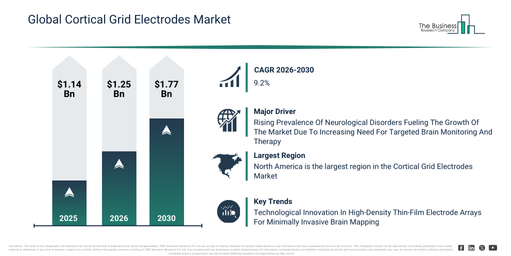
    Cortical Grid Electrodes Market Set To Grow From $1.25 Billion In 2026 To $1.77 Billion By 2030 At A CAGR Of 9.2%

    Enhanced with market attractiveness analysis, total addressable market evaluation, company benchmarking matrices, interactive Excel dashboards, expanded supply chain intelligence, emerging startup coverage, and detailed product insights, The Business Research Company’s 2026 market reports deliver more actionable and strategically valuable research.

    Cortical Grid Electrodes Market Expansion Outlook: What Revenue Opportunities Lie Ahead?

    The cortical grid electrodes market has shown significant growth in recent years. This market is anticipated to expand from $1.14 billion in 2025 to $1.25 billion in 2026, achieving a compound annual growth rate (CAGR) of 9.4%. The observed growth during the historical period is attributable to increasing demand for neuroprosthetics, growing funding for neurological research, rising prevalence of neurological disorders, expanding applications in brain-computer interfaces, and technological advancements in electrodes.

    The market for cortical grid electrodes is anticipated to experience substantial expansion over the upcoming years. This market is projected to reach a valuation of $1.77 billion by 2030, exhibiting a compound annual growth rate (CAGR) of 9.2%. The projected growth during this period stems from factors such as an escalating need for neurological interventions, expanding uses in brain-related studies, augmented financial commitments to research and development, broadening clinical implementation, and a heightened emphasis on customized neuromodulation solutions. Key trends anticipated during the forecast encompass technological progress in making electrodes smaller, novel approaches in conductive polymer substances, the evolution of high-density electrode configurations, ongoing research and development in AI-driven brain mapping techniques, and improvements in integration with neurosurgical systems.

    Download A Free Sample Report For Comprehensive Market Insights:

    https://www.thebusinessresearchcompany.com/sample.aspx?id=30564&type=smp&utm_source=Blogs&utm_medium=Paid&utm_campaign=Jul_PR

    Cortical Grid Electrodes Market Industry Drivers: What Is Driving Revenue Growth?

    The increasing incidence of neurological conditions is projected to drive the expansion of the cortical grid electrodes market. These medical conditions impact the brain, spinal cord, and nerves, resulting in various symptoms like cognitive, motor, and sensory deficits. The growing occurrence of neurological disorders is tied to an aging demographic, as advanced age progressively diminishes neuronal capabilities, reduces brain adaptability, and heightens oxidative stress, thereby fostering the onset and progression of these ailments. Cortical grid electrodes assist in managing neurological disorders by allowing accurate monitoring and stimulation of brain activity to restore or adjust neural function. They enhance patient results through supporting focused treatments for conditions such as epilepsy, movement disorders, and chronic pain. For instance, in July 2024, the National Health Service, a UK-based government agency, reported 487,432 patients diagnosed with dementia (a progressive brain disorder affecting memory, thinking, and daily activities) by June 30, 2024, marking an increase of 3,155 cases from May 31, 2024. Consequently, the rising prevalence of neurological disorders is propelling the growth of the cortical grid electrodes market.

    Cortical Grid Electrodes Market Segment Performance And Strategic Opportunities

    The cortical grid electrodes market covered in this report is segmented –

    1) By Product: Epidural Cortical Grid Electrodes, High-Density Cortical Grid Electrodes, Flexible Cortical Grid Electrodes, Penetrating Cortical Grid Electrodes, Multi-Contact Cortical Grid Electrodes, Customized Cortical Grid Electrodes, Reusable Cortical Grid Electrodes

    2) By Material Type: Silicone, Polyimide, Metal, Conductive Polymer

    3) By Electrode Configuration: Strip Electrode, Grid Electrode, Cylindrical Electrode, Custom Designs

    4) By Application: Neuroprosthetics, Brain Mapping, Seizure Monitoring, Research

    5) By End User: Hospitals, Research Institutions, Neurology Clinics, Educational Institutions

    Subsegments:

    1) By Epidural Cortical Grid Electrodes: Single Contact Epidural Electrode, Multi Contact Epidural Electrode, Strip Epidural Electrode, Square Grid Epidural Electrode, Rectangular Grid Epidural Electrode

    2) By High Density Cortical Grid Electrodes: Ultra High Density Electrode, Dense Array Electrode, Small Contact Spacing Electrode, High Resolution Electrode, Compact High Density Electrode

    3) By Flexible Cortical Grid Electrodes: Silicone Based Flexible Electrode, Polyimide Flexible Electrode, Stretchable Flexible Electrode, Conformable Flexible Electrode, Thin Film Flexible Electrode

    4) By Penetrating Cortical Grid Electrodes: Microwire Penetrating Electrode, Depth Penetrating Electrode, Multi Shank Penetrating Electrode, Linear Array Penetrating Electrode, Three Dimensional Penetrating Electrode

    5) By Multi Contact Cortical Grid Electrodes: Double Contact Electrode, Triple Contact Electrode, Quadruple Contact Electrode, Multiple Contact Strip Electrode, High Contact Count Electrode

    6) By Customized Cortical Grid Electrodes: Patient Specific Electrode, Tailor Made Electrode, Bespoke Size Electrode, Custom Shape Electrode, Special Design Electrode

    7) By Reusable Cortical Grid Electrodes: Sterilizable Reusable Electrode, Durable Reusable Electrode, Long Life Reusable Electrode, Multiple Use Reusable Electrode, Washable Reusable Electrode

    #Cortical Grid Electrodes Market Growth Trends: What Is Influencing The Future Outlook?

    Leading companies in the cortical grid electrodes market are concentrating on developing advanced products, such as high-density thin-film electrode arrays, to improve the resolution and safety of neural recording. These high-density thin-film electrode arrays utilize flexible, biocompatible substrates like polyimide to create micro-electrode arrays that conform closely to the brain’s surface, enabling the recording of thousands of channels of neural data with minimal tissue displacement and reversibility, thereby overcoming the limitations of traditional, rigid subdural grids. For instance, in March 2025, Precision Neuroscience Corporation, a US-based brain-computer interface company, obtained Food and Drug Administration (FDA) 510(k) clearance for its Layer 7-T (Layer 7 Cortical Interface). This device is a high-density thin-film 1024-channel cortical electrode array designed for temporary use (less than 30 days) to record, monitor, and stimulate electrical signals on the brain’s surface. The system allows surgeons to map brain activity with exceptional resolution using a minimally invasive micro-slit technique, aiding in the preservation of eloquent tissue during neurosurgical procedures.

    Cortical Grid Electrodes Market Key Players: Which Companies Shape Industry Competition?

    Major companies operating in the cortical grid electrodes market are Abbott Laboratories, Medtronic plc, Integra Life Sciences Corporation, Nihon Kohden Corporation, Natus Medical Incorporated, NeuroPace Inc., Blackrock Neurotech LLC, Cadwell Industries Inc., Precision Neuroscience Corporation, AD-tech Medical Instrument, Inomed Medizintechnik Gmbh, PMT Corporation, Ripple Neuro LLC, Neuroone Medical Technology corporation, Plexon Inc., Cortec Gmbh, Microprobes for Lifesciences Inc, Dixi Medical SAS, Cortera Neurotechnologies Inc., Neurosoft Bioelectronics Ltd., Alpha Omega Engineering Ltd.

    Access The Complete Cortical Grid Electrodes Market Report:

    https://www.thebusinessresearchcompany.com/report/cortical-grid-electrodes-market-report?utm_source=Blogs&utm_medium=Paid&utm_campaign=Jul_PR

    Cortical Grid Electrodes Market Largest Region By Revenue And Market Share

    North America was the largest region in the cortical grid electrodes market in 2025. Asia-Pacific is expected to be the fastest-growing region in the forecast period. The regions covered in the cortical grid electrodes market report are Asia-Pacific, South East Asia, Western Europe, Eastern Europe, North America, South America, Middle East, Africa.

    Get in touch with us:

    The Business Research Company: https://www.thebusinessresearchcompany.com/

    Americas: +1 310-496-7795

    Asia: +44 7882 955267 & +91 8897263534

    Europe: +44 7882 955267

    Email us at: marketing@tbrc.info

    Follow us on:

    LinkedIn: https://in.linkedin.com/company/the-business-research-company

    YouTube: https://www.youtube.com/channel/UC24_fI0rV8cR5DxlCpgmyFQ

    Global Market Model: https://www.thebusinessresearchcompany.com/global-market-model
  • Cloud-Connected Automated Intravenous (IV) Compounding Market Growth Is Accelerating As Industry Transformation Continues

    Cloud-Connected Automated Intravenous (IV) Compounding Market Growth Is Accelerating As Industry Transformation Continues

    Enhanced with market attractiveness analysis, total addressable market evaluation, company benchmarking matrices, interactive Excel dashboards, expanded supply chain intelligence, emerging startup coverage, and detailed product insights, The Business Research Company’s 2026 market reports deliver more actionable and strategically valuable research.

    Cloud-Connected Automated Intravenous (IV) Compounding Market Forecast: What Market Value Is Expected By 2030?

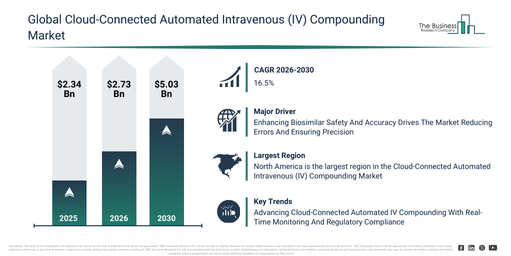
    The cloud-connected automated intravenous (IV) compounding market has expanded significantly over recent years. Its value is forecast to increase from $2.34 billion in 2025 to $2.73 billion in 2026, demonstrating a compound annual growth rate (CAGR) of 16.8%. Historically, this expansion has been driven by several factors, including the rising adoption of automated IV compounding systems, an increasing demand for medication safety and accuracy, greater hospital investments in pharmacy automation, the expansion of oncology and specialized treatment centers, and a heightened awareness of sterile compounding standards.

    The cloud-connected automated intravenous (IV) compounding market is projected to experience substantial growth in the upcoming years. It is anticipated to expand to $5.03 billion by 2030, demonstrating a compound annual growth rate (CAGR) of 16.5%. This growth throughout the forecast period can be attributed to the rising integration of cloud-based monitoring solutions, the advancing development of AI-powered error detection systems, increased investment in compact and modular robotic designs, the expansion of homecare and decentralized pharmacy applications, and a heightened focus on interoperability and data analytics platforms. Prominent trends for the forecast period include technological advancements in cloud-connected workflow management, innovations in AI and machine learning for predictive compounding, the creation of smart consumables and sensors, dedicated research and development in oncology-specific automation solutions, and strategic investment in scalable and remote monitoring deployment models.

    Download A Free Sample Report For Comprehensive Market Insights:

    https://www.thebusinessresearchcompany.com/sample.aspx?id=30558&type=smp&utm_source=Blogs&utm_medium=Paid&utm_campaign=Jul_PR

    Cloud-Connected Automated Intravenous (IV) Compounding Market Expansion Supported By Key Demand Factors

    The escalating need for biosimilars is projected to fuel the expansion of the cloud-connected automated IV compounding market moving forward. Biosimilars are biologic medical products that exhibit high similarity to an already approved reference biologic, demonstrating no clinically significant distinctions in terms of safety, purity, or efficacy. The growing requirement for biosimilars is attributed to their greater cost-effectiveness compared to branded biologics. Automated IV compounding enhances the secure and precise preparation of biosimilars by minimizing human error, guaranteeing accurate dosing, and preserving product integrity. For instance, in January 2023, according to Cardinal Health Inc., a US-based healthcare company, the U.S. had 33 FDA-approved biosimilar products as of January 2022, with 21 available on the market, and by 2023, this figure rose to 40 FDA-approved biosimilars, 25 of which were commercially available. Consequently, the rising demand for biosimilars is a key impetus for the cloud-connected automated IV compounding market.

    Cloud-Connected Automated Intravenous (IV) Compounding Market Segment Landscape: Which Areas Lead Market Development?

    The cloud-connected automated intravenous (iv) compounding market covered in this report is segmented –

    1) By Product Type: Robotic Compounding Systems, Software Solutions, Consumables

    2) By Deployment Mode: Cloud-Hosted Deployment, Hybrid Cloud Deployment, On-Premise With Cloud Integration

    3) By Application: Hospital Pharmacies, Oncology Centers, Homecare Settings, Other Applications

    4) By End User: Hospitals, Clinics, Ambulatory Surgical Centers, Other End-Users

    Subsegments:

    1) By Robotic Compounding Systems: Automated Intravenous Preparation Robots, Modular Robotic Compounding Units, Sterile Compounding Robotic Arms, Integrated Safety Monitoring Systems

    2) By Software Solutions: Workflow Management Software, Inventory Management Software, Dose Verification Software, Remote Monitoring And Analytics Software

    3) By Consumables: Sterile Syringes, Intravenous Bags, Vials And Ampoules, Filters And Tubing Sets, Protective Personal Equipment

    Cloud-Connected Automated Intravenous (IV) Compounding Market Growth Trends Influencing Competitive Dynamics

    Leading companies within the cloud-connected automated intravenous (IV) compounding market are prioritizing enhancements to automated systems, such as cloud-enabled monitoring and compliance tracking, to boost sterile preparation accuracy, decrease medication errors, and strengthen regulatory adherence. Cloud-enabled monitoring and compliance tracking involves integrated software and hardware features that allow healthcare facilities to access real-time data on IV compounding processes, maintain electronic audit trails, and ensure adherence to sterility and quality standards across various sites. As an illustration, in May 2025, the United States Food and Drug Administration (FDA), a US-based regulatory authority, highlighted updated guidance and enforcement initiatives under section 503B of the Federal Food, Drug, and Cosmetic Act, which mandates outsourcing facilities to maintain rigorous quality control and documentation for compounded sterile products. These directives promote the adoption of automated IV compounding systems equipped with cloud-based monitoring, electronic record-keeping, and remote quality oversight functionalities.

    Cloud-Connected Automated Intravenous (IV) Compounding Market Industry Leaders And Market Competition

    Major companies operating in the cloud-connected automated intravenous (iv) compounding market are McKesson Corporation, Becton Dickinson and Company, Baxter International Inc., B. Braun Melsungen SE, Fresenius Kabi AG, Grifols S.A., ICU Medical Inc., Syntegon Technology GmbH, Omnicell Inc., Marchesini Group S.p.A., Swisslog Healthcare, ScriptPro LLC, Parata Systems LLC, ARxIUM Inc., Equashield LLC, Health Robotics S.r.l., Rommelag AG, NewIcon Oy, DoseEdge, Aesynt Inc.

    Access The Complete Cloud-Connected Automated Intravenous (IV) Compounding Market Report:

    https://www.thebusinessresearchcompany.com/report/cloud-connected-automated-intravenous-iv-compounding-market-report?utm_source=Blogs&utm_medium=Paid&utm_campaign=Jul_PR

    Cloud-Connected Automated Intravenous (IV) Compounding Market Regional Outlook: Where Are The Largest Opportunities Located?

    North America was the largest region in the cloud-connected automated intravenous (IV) compounding market in 2025. Asia-Pacific is expected to be the fastest-growing region in the forecast period. The regions covered in the cloud-connected automated intravenous (iv) compounding market report are Asia-Pacific, South East Asia, Western Europe, Eastern Europe, North America, South America, Middle East, Africa.

    Get in touch with us:

    The Business Research Company: https://www.thebusinessresearchcompany.com/

    Americas: +1 310-496-7795

    Asia: +44 7882 955267 & +91 8897263534

    Europe: +44 7882 955267

    Email us at: marketing@tbrc.info

    Follow us on:

    LinkedIn: https://in.linkedin.com/company/the-business-research-company

    YouTube: https://www.youtube.com/channel/UC24_fI0rV8cR5DxlCpgmyFQ

    Global Market Model: https://www.thebusinessresearchcompany.com/global-market-model
  • Cell Therapy Manufacturing Automation Market Growth Outlook Reveals A CAGR Of 14.5% And A Market Value Of $3.58 Billion By 2030

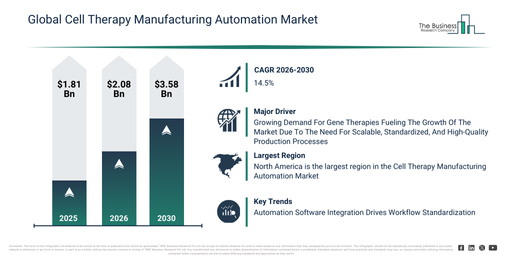
    Cell Therapy Manufacturing Automation Market Growth Outlook Reveals A CAGR Of 14.5% And A Market Value Of $3.58 Billion By 2030

    Through market attractiveness analysis, total addressable market evaluation, company benchmarking matrices, interactive Excel dashboards, expanded supply chain intelligence, emerging startup coverage, and detailed product insights, The Business Research Company’s 2026 market reports provide more actionable and strategically valuable research.

    Cell Therapy Manufacturing Automation Market Value Expansion And Long-Term Growth Outlook

    The cell therapy manufacturing market’s size has expanded swiftly in recent years. It is anticipated to grow from $1.81 billion in 2025 to $2.08 billion by 2026, at a compound annual growth rate (CAGR) of 14.8%. This historical expansion can be attributed to several factors, including heightened cell-processing demand, an increasing need for manufacturing scalability, the rising adoption of automated bioreactors, the expansion of GMP-compliant workflows, and a greater emphasis on production consistency.

    The cell therapy manufacturing market is projected to experience swift expansion in the coming years, with its size set to reach $3.58 billion by 2030, exhibiting a compound annual growth rate (CAGR) of 14.5%. During the forecast period, this growth is anticipated due to several factors, including the increasing volume of personalized therapies, greater investment in automation platforms, a growing demand for contamination-free workflows, the expansion of large-scale commercial manufacturing, and more stringent regulatory quality requirements. Key trends expected over this period encompass technological advancements in closed systems, process innovations driven by automation, the evolution of integrated workflows, research into real-time analytics, and ongoing research and development in advanced robotics.

    Download A Free Sample Report For Comprehensive Market Insights:

    https://www.thebusinessresearchcompany.com/sample.aspx?id=30551&type=smp&utm_source=Blogs&utm_medium=Paid&utm_campaign=Jul_PR

    #Cell Therapy Manufacturing Automation Market Growth Factors: Which Forces Are Supporting Market Expansion?

    The increasing need for gene therapies is anticipated to drive the expansion of the cell therapy manufacturing automation market in the future. Gene therapy is defined as a medical approach where faulty genes are altered or substituted to address or avert illnesses. This rising demand for gene therapy stems from progress in genetic sequencing and diagnostic methods, allowing for accurate identification of disease-causing genes to enable specific treatments. Cell therapy manufacturing automation aids gene therapy by simplifying and standardizing intricate production procedures, guaranteeing uniform quality and scalability. It improves therapeutic development through error reduction, increased efficiency, and the facilitation of dependable, large-scale production of gene-modified cells. As an illustration, in December 2024, the American Society of Gene & Cell Therapy (ASGCT), a US-based non-profit medical and scientific organization, reported that the Food and Drug Administration (FDA) approved six gene therapy products in 2023, an increase from five approvals in 2022. Consequently, the expanding demand for gene therapies is fueling the growth of the cell therapy manufacturing automation market.

    Cell Therapy Manufacturing Automation Market Segment Performance And Strategic Opportunities

    The cell therapy manufacturing automation market covered in this report is segmented –

    1) By Component: Hardware, Software, Services

    2) By Cell Type: T-Cells, Stem Cells, Natural Killer (NK) Cells, Other Cell Types

    3) By Process: Upstream Processing, Downstream Processing, Fill-Finish, Quality Control, Other Processes

    4) By End-User: Pharmaceutical And Biotechnology Companies, Research Institutes, Contract Manufacturing Organizations (CMOs), Other End-Users

    Subsegments:

    1) By Hardware: Automated Bioreactor Systems, Robotic Handling Platforms, Automated Separation Devices, Automated Expansion Units, In Line Quality Analyzers

    2) By Software: Electronic Batch Record Software, Manufacturing Execution Software, Workflow Management Software, Data Monitoring Software, Compliance Management Software

    3) By Services: Installation Services, Maintenance Services, Validation Services, Training Services, Technical Support Services

    Cell Therapy Manufacturing Automation Market Industry Trends: What Changes Are Reshaping Demand?

    Leading companies active in the cell therapy manufacturing automation market are concentrating on creating sophisticated solutions, like automated cell therapy systems, to consolidate multi-stage manufacturing processes into unified, validated digital structures that diminish manual involvement and bolster regulatory adherence. An automated cell therapy system denotes a readily available, validated automation offering that electronically connects various cell therapy instruments, such as magnetic separation, centrifugation, electroporation, and incubators, into a single control panel. This integration ensures traceability, repeatability, and cGMP compliance across all production stages. As an illustration, in January 2024, Thermo Fisher Scientific Inc., a US-based life sciences enterprise, unveiled Gibco CTS Cellmation Software, an unprecedented automation solution. This is a unique, off-the-shelf validated software system designed to digitally link instruments from Thermo Fisher’s extensive cell therapy portfolio to automate manufacturing workflows. It incorporates a pre-validated automation infrastructure powered by Emerson’s DeltaV technology, facilitating seamless integration and command over multiple instruments without the need for costly bespoke projects. Additionally, it establishes traceable and repeatable workflows that help guarantee compliance with cGMP and data security regulations, thus reducing manual touchpoints for developers of cell and gene therapies.

    Cell Therapy Manufacturing Automation Market Key Players: Which Companies Shape Industry Competition?

    Major companies operating in the cell therapy manufacturing automation market are Thermo Fisher Scientific Inc., Merck KGaA, Fujifilm Holdings Corporation, Corning Incorporated, Lonza Group AG, Cytiva, WuXi AppTecCo. Ltd., Hitachi High Technologies Corp., CatalentInc., Sartorius AG, Beckman Coulter Life Sciences, Terumo BCT Inc., Miltenyi Biotec, Oxford Biomedica Plc, National Resilience LLC, Minaris Regenerative Medicine LLC, Tulip Interfaces Inc., Invetech Pty Ltd., BlueRock Therapeutics LLC, Cellares Inc., Ascential Medical & Life Sciences, Cell and Gene Therapy Catapult

    Access The Complete Cell Therapy Manufacturing Automation Market Report:

    https://www.thebusinessresearchcompany.com/report/cell-therapy-manufacturing-automation-market-report?utm_source=Blogs&utm_medium=Paid&utm_campaign=Jul_PR

    Cell Therapy Manufacturing Automation Market Geographic Analysis: Where Is Demand Growing The Fastest?

    North America was the largest region in the cell therapy manufacturing market in 2025. Asia-Pacific is expected to be the fastest-growing region in the forecast period. The regions covered in the cell therapy manufacturing automation market report are Asia-Pacific, South East Asia, Western Europe, Eastern Europe, North America, South America, Middle East, Africa.

    Get in touch with us:

    The Business Research Company: https://www.thebusinessresearchcompany.com/

    Americas: +1 310-496-7795

    Asia: +44 7882 955267 & +91 8897263534

    Europe: +44 7882 955267

    Email us at: marketing@tbrc.info

    Follow us on:

    LinkedIn: https://in.linkedin.com/company/the-business-research-company

    YouTube: https://www.youtube.com/channel/UC24_fI0rV8cR5DxlCpgmyFQ

    Global Market Model: https://www.thebusinessresearchcompany.com/global-market-model
  • Cell Therapy Bioreactors Market Forecast Highlights Expansion From $1.44 Billion To $2.61 Billion Through 2030

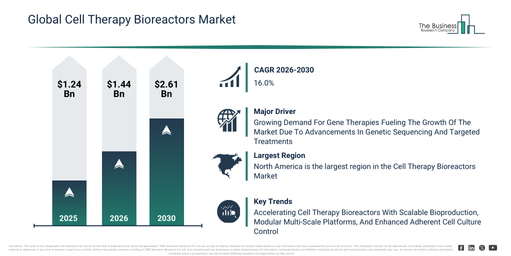
    Cell Therapy Bioreactors Market Forecast Highlights Expansion From $1.44 Billion To $2.61 Billion Through 2030

    Delivering more actionable and strategically valuable research, The Business Research Company’s 2026 market reports feature market attractiveness analysis, total addressable market evaluation, company benchmarking matrices, interactive Excel dashboards, expanded supply chain intelligence, emerging startup coverage, and detailed product insights.

    Cell Therapy Bioreactors Market Expected To Reach $2.61 Billion By 2030 At 16% CAGR

    The cell therapy bioreactors market has experienced rapid growth in recent years. Its size is projected to increase from $1.24 billion in 2025 to $1.44 billion in 2026, reflecting a compound annual growth rate (CAGR) of 16.3%. This expansion in the preceding period can be linked to a rising demand for cell-based therapies, increasing investment in regenerative medicine, the growing adoption of automated cell culture systems, the ongoing expansion of stem cell research, and an escalating need for scalable cell production.

    The cell therapy bioreactors market is anticipated to experience significant expansion over the coming years. By 2030, its value is projected to reach $2.61 billion, demonstrating a compound annual growth rate (CAGR) of 16.0%. This growth during the forecast period is attributable to several factors, including the increasing integration of cell therapy bioreactors in manufacturing processes, greater investment in sophisticated bioprocessing technologies, an enhanced emphasis on optimizing processes and ensuring quality control, the broadening scope of clinical trials for cell therapies, and the escalating need for personalized medicine solutions. Key trends anticipated in this period encompass improvements in automated cell culture techniques, novel designs for bioreactors to boost scalability, progress in platforms for stem cell expansion, ongoing research and development into systems for process monitoring and control, and the advent of integrated manufacturing solutions for cell therapy.

    Download A Free Sample Report For Comprehensive Market Insights:

    https://www.thebusinessresearchcompany.com/sample.aspx?id=30550&type=smp&utm_source=Blogs&utm_medium=Paid&utm_campaign=Jul_PR

    Cell Therapy Bioreactors Market Demand Drivers: What Is Fueling Industry Growth?

    The expanding need for gene therapies is anticipated to boost the growth of the cell therapy bioreactors market in the coming years. Gene therapy, a medical approach, involves altering or substituting faulty genes to address or avert illnesses. This heightened demand for gene therapy stems from progress in genetic sequencing and diagnostic tools, which facilitate the accurate detection of disease-causing genes for precise treatments. Cell therapy bioreactors expedite gene therapies by offering ideal conditions for the cultivation, alteration, and proliferation of therapeutic cells. These bioreactors improve treatment advancement and scale-up by guaranteeing uniform cell quality, enhancing efficiency, and aiding quicker creation of customized gene-based therapies. For example, in December 2024, the American Society of Gene & Cell Therapy (ASGCT), a US-based non-profit medical and scientific organization, reported that the Food and Drug Administration (FDA) sanctioned 6 gene therapy products in 2023, an increase from 5 approvals in 2022. Consequently, the rising demand for gene therapies is fueling the expansion of the cell therapy bioreactors market. Increasing Prevalence Of Chronic And Rare Diseases Fueling The Growth Of The Market Due To Rising Demand For Advanced Cell-Based Therapies

    #Cell Therapy Bioreactors Market Segment Landscape And Growth Potential

    The cell therapy bioreactors market covered in this report is segmented –

    1) By Product: Stirred Tank Bioreactors, Wave-Induced Bioreactors, Fixed-Bed Bioreactors, Other Products

    2) By Cell Type: Stem Cells, Immune Cells, Differentiated Cells, Other Cell Types

    3) By Material: Single-Use Bioreactors, Reusable Bioreactors

    4) By Application: Research, Clinical, Commercial Production

    5) By End-Users: Pharmaceutical And Biotechnology Companies, Academic And Research Institutes, Contract Manufacturing Organizations (CMOs), Other End Users

    Subsegments:

    1) By Stirred Tank Bioreactors: Stainless Steel Stirred Tank Systems, Glass Stirred Tank Systems, Single Use Stirred Tank Systems, Automated Stirred Tank Systems

    2) By Wave Induced Bioreactors: Rocking Motion Bioreactor Systems, Single Use Wave Bag Systems, Modular Wave Platform Systems, Automated Wave Based Culture Systems

    3) By Fixed Bed Bioreactors: Packed Bed Bioreactor Systems, Scaffold Based Fixed Bed Systems, Microcarrier Based Fixed Bed Systems, Perfusion Enabled Fixed Bed Systems

    4) By Other Products: Hollow Fiber Bioreactor Systems, Perfusion Bioreactor Systems, Rotary Cell Culture Systems, Microfluidic Bioreactor Systems

    Cell Therapy Bioreactors Market Innovation Trends: Which Developments Are Transforming The Industry?

    Companies prominent in the cell therapy bioreactors market are concentrating on creating advanced platforms, like modular, multi-scale bioreactor platforms, with the goal of enhancing process scalability, cell expansion efficiency, and consistency across all stages, from initial research to commercial manufacturing. Such a modular multi-scale bioreactor platform is defined as an adaptable system that allows researchers to carry out small-scale experiments concurrently, refine conditions, and transition smoothly to mid- or large-scale production, all while preserving consistent culture environments and achieving high yields. As an illustration, in July 2024, EXO-Harvest, a biomanufacturing technology firm based in Belgium, introduced its innovative multi-scale bioreactor platform designed for the effective manufacturing of mesenchymal stem cells and extracellular vesicles, thereby facilitating scalable adherent cell culture from the discovery phase to industrial production. This platform encompasses small-scale multi-bioreactor screening alongside mid/large-scale systems, all structured to quicken development, decrease expenditures, and provide high-quality cultures under accurate environmental regulation.

    Cell Therapy Bioreactors Market Competitive Landscape: Who Are The Leading Companies?

    Major companies operating in the cell therapy bioreactors market are Thermo Fisher Scientific Inc., Merck KGaA, FUJIFILM Holdings Corporation, Danaher Corporation, Corning Incorporated, Lonza Group, Terumo Corporation, Sartorius AG, Eppendorf AG, Miltenyi Biotec B.V. & Co. KG, PBS Biotech Inc., Meissner Filtration Products Inc., Infors AG, Bionet Engineering & Technologies Pvt. Ltd., Wilson Wolf Manufacturing Corporation, Synthecon Incorporated, Cellexus Limited, Celartia Inc., Able Biott Inc., CelVivo ApS

    Access The Complete Cell Therapy Bioreactors Market Report:

    https://www.thebusinessresearchcompany.com/report/cell-therapy-bioreactors-market-report?utm_source=Blogs&utm_medium=Paid&utm_campaign=Jul_PR

    Cell Therapy Bioreactors Market Global Footprint: Which Region Holds Market Leadership?

    North America was the largest region in the cell therapy bioreactors market in 2025. Asia-Pacific is expected to be the fastest-growing region in the forecast period. The regions covered in the cell therapy bioreactors market report are Asia-Pacific, South East Asia, Western Europe, Eastern Europe, North America, South America, Middle East, Africa.

    Get in touch with us:

    The Business Research Company: https://www.thebusinessresearchcompany.com/

    Americas: +1 310-496-7795

    Asia: +44 7882 955267 & +91 8897263534

    Europe: +44 7882 955267

    Email us at: marketing@tbrc.info

    Follow us on:

    LinkedIn: https://in.linkedin.com/company/the-business-research-company

    YouTube: https://www.youtube.com/channel/UC24_fI0rV8cR5DxlCpgmyFQ

    Global Market Model: https://www.thebusinessresearchcompany.com/global-market-model
  • Cell Therapy Bioreactors Market Forecast Highlights Expansion From $1.44 Billion To $2.61 Billion Through 2030

    Delivering more actionable and strategically valuable research, The Business Research Company’s 2026 market reports feature market attractiveness analysis, total addressable market evaluation, company benchmarking matrices, interactive Excel dashboards, expanded supply chain intelligence, emerging startup coverage, and detailed product insights.

    Cell Therapy Bioreactors Market Expected To Reach $2.61 Billion By 2030 At 16% CAGR

    The cell therapy bioreactors market has experienced rapid growth in recent years. Its size is projected to increase from $1.24 billion in 2025 to $1.44 billion in 2026, reflecting a compound annual growth rate (CAGR) of 16.3%. This expansion in the preceding period can be linked to a rising demand for cell-based therapies, increasing investment in regenerative medicine, the growing adoption of automated cell culture systems, the ongoing expansion of stem cell research, and an escalating need for scalable cell production.

    The cell therapy bioreactors market is anticipated to experience significant expansion over the coming years. By 2030, its value is projected to reach $2.61 billion, demonstrating a compound annual growth rate (CAGR) of 16.0%. This growth during the forecast period is attributable to several factors, including the increasing integration of cell therapy bioreactors in manufacturing processes, greater investment in sophisticated bioprocessing technologies, an enhanced emphasis on optimizing processes and ensuring quality control, the broadening scope of clinical trials for cell therapies, and the escalating need for personalized medicine solutions. Key trends anticipated in this period encompass improvements in automated cell culture techniques, novel designs for bioreactors to boost scalability, progress in platforms for stem cell expansion, ongoing research and development into systems for process monitoring and control, and the advent of integrated manufacturing solutions for cell therapy.

    Download A Free Sample Report For Comprehensive Market Insights:

    https://www.thebusinessresearchcompany.com/sample.aspx?id=30550&type=smp&utm_source=Blogs&utm_medium=Paid&utm_campaign=Jul_PR

    Cell Therapy Bioreactors Market Demand Drivers: What Is Fueling Industry Growth?

    The expanding need for gene therapies is anticipated to boost the growth of the cell therapy bioreactors market in the coming years. Gene therapy, a medical approach, involves altering or substituting faulty genes to address or avert illnesses. This heightened demand for gene therapy stems from progress in genetic sequencing and diagnostic tools, which facilitate the accurate detection of disease-causing genes for precise treatments. Cell therapy bioreactors expedite gene therapies by offering ideal conditions for the cultivation, alteration, and proliferation of therapeutic cells. These bioreactors improve treatment advancement and scale-up by guaranteeing uniform cell quality, enhancing efficiency, and aiding quicker creation of customized gene-based therapies. For example, in December 2024, the American Society of Gene & Cell Therapy (ASGCT), a US-based non-profit medical and scientific organization, reported that the Food and Drug Administration (FDA) sanctioned 6 gene therapy products in 2023, an increase from 5 approvals in 2022. Consequently, the rising demand for gene therapies is fueling the expansion of the cell therapy bioreactors market. Increasing Prevalence Of Chronic And Rare Diseases Fueling The Growth Of The Market Due To Rising Demand For Advanced Cell-Based Therapies

    #Cell Therapy Bioreactors Market Segment Landscape And Growth Potential

    The cell therapy bioreactors market covered in this report is segmented –

    1) By Product: Stirred Tank Bioreactors, Wave-Induced Bioreactors, Fixed-Bed Bioreactors, Other Products

    2) By Cell Type: Stem Cells, Immune Cells, Differentiated Cells, Other Cell Types

    3) By Material: Single-Use Bioreactors, Reusable Bioreactors

    4) By Application: Research, Clinical, Commercial Production

    5) By End-Users: Pharmaceutical And Biotechnology Companies, Academic And Research Institutes, Contract Manufacturing Organizations (CMOs), Other End Users

    Subsegments:

    1) By Stirred Tank Bioreactors: Stainless Steel Stirred Tank Systems, Glass Stirred Tank Systems, Single Use Stirred Tank Systems, Automated Stirred Tank Systems

    2) By Wave Induced Bioreactors: Rocking Motion Bioreactor Systems, Single Use Wave Bag Systems, Modular Wave Platform Systems, Automated Wave Based Culture Systems

    3) By Fixed Bed Bioreactors: Packed Bed Bioreactor Systems, Scaffold Based Fixed Bed Systems, Microcarrier Based Fixed Bed Systems, Perfusion Enabled Fixed Bed Systems

    4) By Other Products: Hollow Fiber Bioreactor Systems, Perfusion Bioreactor Systems, Rotary Cell Culture Systems, Microfluidic Bioreactor Systems

    Cell Therapy Bioreactors Market Innovation Trends: Which Developments Are Transforming The Industry?

    Companies prominent in the cell therapy bioreactors market are concentrating on creating advanced platforms, like modular, multi-scale bioreactor platforms, with the goal of enhancing process scalability, cell expansion efficiency, and consistency across all stages, from initial research to commercial manufacturing. Such a modular multi-scale bioreactor platform is defined as an adaptable system that allows researchers to carry out small-scale experiments concurrently, refine conditions, and transition smoothly to mid- or large-scale production, all while preserving consistent culture environments and achieving high yields. As an illustration, in July 2024, EXO-Harvest, a biomanufacturing technology firm based in Belgium, introduced its innovative multi-scale bioreactor platform designed for the effective manufacturing of mesenchymal stem cells and extracellular vesicles, thereby facilitating scalable adherent cell culture from the discovery phase to industrial production. This platform encompasses small-scale multi-bioreactor screening alongside mid/large-scale systems, all structured to quicken development, decrease expenditures, and provide high-quality cultures under accurate environmental regulation.

    Cell Therapy Bioreactors Market Competitive Landscape: Who Are The Leading Companies?

    Major companies operating in the cell therapy bioreactors market are Thermo Fisher Scientific Inc., Merck KGaA, FUJIFILM Holdings Corporation, Danaher Corporation, Corning Incorporated, Lonza Group, Terumo Corporation, Sartorius AG, Eppendorf AG, Miltenyi Biotec B.V. & Co. KG, PBS Biotech Inc., Meissner Filtration Products Inc., Infors AG, Bionet Engineering & Technologies Pvt. Ltd., Wilson Wolf Manufacturing Corporation, Synthecon Incorporated, Cellexus Limited, Celartia Inc., Able Biott Inc., CelVivo ApS

    Access The Complete Cell Therapy Bioreactors Market Report:

    https://www.thebusinessresearchcompany.com/report/cell-therapy-bioreactors-market-report?utm_source=Blogs&utm_medium=Paid&utm_campaign=Jul_PR

    Cell Therapy Bioreactors Market Global Footprint: Which Region Holds Market Leadership?

    North America was the largest region in the cell therapy bioreactors market in 2025. Asia-Pacific is expected to be the fastest-growing region in the forecast period. The regions covered in the cell therapy bioreactors market report are Asia-Pacific, South East Asia, Western Europe, Eastern Europe, North America, South America, Middle East, Africa.

    Get in touch with us:

    The Business Research Company: https://www.thebusinessresearchcompany.com/

    Americas: +1 310-496-7795

    Asia: +44 7882 955267 & +91 8897263534

    Europe: +44 7882 955267

    Email us at: marketing@tbrc.info

    Follow us on:

    LinkedIn: https://in.linkedin.com/company/the-business-research-company

    YouTube: https://www.youtube.com/channel/UC24_fI0rV8cR5DxlCpgmyFQ

    Global Market Model: https://www.thebusinessresearchcompany.com/global-market-model

  • Les mécanismes de sécurité sur Larabet Casino : une analyse

    La sécurité est un enjeu primordial dans le secteur des jeux en ligne, et larabet casino se distingue par ses mécanismes de protection robustes. Cette plateforme garantit un environnement de jeu sûr pour ses utilisateurs, grâce à des mesures de sécurité avancées et des protocoles stricts. Dans cette analyse, nous détaillerons les principaux éléments qui renforcent la sécurité des joueurs sur Larabet Casino.

    Licences et régulations

    Larabet Casino opère sous des licences délivrées par des autorités de régulation reconnues. Cela assure non seulement la légitimité de ses opérations, mais aussi le respect de normes strictes en matière de fonctionnement. Ces licences témoignent de l’engagement du casino envers un jeu équitable et transparent.

    Les joueurs peuvent ainsi avoir confiance dans le respect des lois et des réglementations en vigueur, ce qui réduit les risques de fraudes et d’abus. En choisissant une plateforme régulée, les utilisateurs bénéficient également d’un recours en cas de litige, ajoutant une couche supplémentaire de sécurité.

    Technologie de cryptage avancée

    La protection des données des utilisateurs est une priorité sur Larabet Casino. La plateforme utilise des protocoles de cryptage SSL (Secure Socket Layer) de haut niveau pour garantir la confidentialité des informations personnelles et financières. Grâce à cette technologie, toutes les transactions effectuées sur le site sont sécurisées et les données des joueurs sont protégées contre d’éventuelles intrusions.

    Le cryptage SSL est un standard dans l’industrie du jeu en ligne, et sa présence sur Larabet Casino souligne l’engagement du casino à offrir un environnement sécurisé. Les joueurs peuvent donc se concentrer sur leur expérience de jeu, sans craindre pour la sécurité de leurs informations.

    Mesures de responsabilité et protection des joueurs

    Larabet Casino met également en place des outils de jeu responsable. Les joueurs sont encouragés à établir des limites sur leurs dépôts et à prendre des pauses lorsque cela est nécessaire. Ces fonctionnalités visent à prévenir les comportements de jeu compulsif et à promouvoir une expérience de jeu saine.

    • Limites de dépôt personnalisées
    • Options d’auto-exclusion
    • Outils de suivi des activités de jeu
    • Accès à des ressources d’aide pour les joueurs

    Ces mesures témoignent de la volonté de Larabet Casino de protéger ses utilisateurs et de promouvoir un environnement de jeu sûr et responsable.

    Assistance et support 24/7

    La disponibilité d’une assistance efficace est également un élément clé de la sécurité des joueurs. Larabet Casino propose un service client accessible 24 heures sur 24, 7 jours sur 7. Les joueurs peuvent poser leurs questions ou signaler des problèmes via divers canaux, notamment le chat en direct, l’email, et les réseaux sociaux. Ce soutien constant rassure les utilisateurs et leur permet de résoudre rapidement d’éventuels soucis.

    Canal de support Disponibilité
    Chat en direct 24/7
    Email Réponse sous 24 heures

    Questions fréquentes

    Larabet Casino est-il fiable ?
    C’est une plateforme entièrement régulée, avec des protocoles de sécurité en place pour protéger les données des utilisateurs.

    Quelles mesures de sécurité sont mises en œuvre ?
    Larabet Casino utilise le cryptage SSL et offre des outils de jeu responsable pour garantir la sécurité des joueurs.

    Comment contacter le support client ?
    Le support est disponible 24/7 via chat en direct, email et réseaux sociaux.

  • Virtopsy Market Size Projected To Increase From $1.7 Billion To $3.15 Billion During The Forecast Period

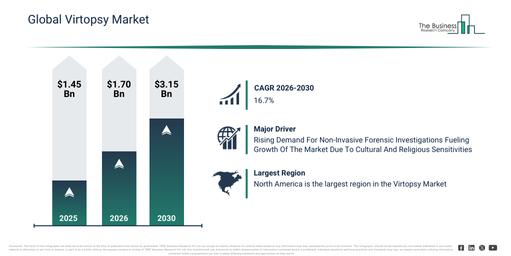
    Virtopsy Market Size Projected To Increase From $1.7 Billion To $3.15 Billion During The Forecast Period

    Through market attractiveness analysis, total addressable market evaluation, company benchmarking matrices, interactive Excel dashboards, expanded supply chain intelligence, emerging startup coverage, and detailed product insights, The Business Research Company’s 2026 market reports provide more actionable and strategically valuable research.

    Virtopsy Market CAGR Analysis And Future Market Development

    The virtopsy market has experienced swift expansion recently. It is projected to expand from $1.45 billion in 2025 to $1.70 billion by 2026, demonstrating a compound annual growth rate (CAGR) of 17.0%. Historically, this expansion is a result of several factors, such as the increasing embrace of non-invasive autopsy methods, a rising call for accurate forensic investigations, the expanded utilization of advanced medical imaging systems, an increasing requirement for more rapid post-mortem procedures, and a growing inclination towards body preservation in autopsy practices.

    The virtopsy market is projected to experience substantial growth over the next few years. Its valuation is anticipated to reach $3.15 billion by 2030, exhibiting a compound annual growth rate (CAGR) of 16.7%. This expansion during the forecast period is driven by factors such as the increasing integration of artificial intelligence in virtual autopsy, a heightened demand for digital forensic documentation, the broader adoption of high-resolution imaging technologies, greater investment in healthcare digitization, and a growing emphasis on efficient forensic workflow automation. Significant trends expected in the forecast period include advancements in three-dimensional imaging technologies, innovations in artificial intelligence-based forensic analysis, developments in robotic scanning systems, ongoing research and development in digital pathology tools, and improvements in integrated forensic data management systems.

    Download A Free Sample Report For Comprehensive Market Insights:

    https://www.thebusinessresearchcompany.com/sample.aspx?id=30776&type=smp&utm_source=Blogs&utm_medium=Paid&utm_campaign=Jul_PR

    Virtopsy Market Growth Factors Supporting Long-Term Expansion

    The increasing need for non-invasive forensic examinations is anticipated to drive the expansion of the virtopsy market in the future. Non-invasive forensic investigations involve imaging-based methods, such as CT scans and MRI, to inspect bodies or evidence without physical dissection or tissue damage, thereby maintaining their integrity for subsequent analysis. This growing demand stems primarily from the necessity to preserve the original condition of the body or evidence during forensic procedures. Virtopsy supports non-invasive forensic investigations by employing advanced imaging technologies, including CT and MRI, to scrutinize bodies without resorting to conventional autopsy methods. This approach enhances investigative precision and safeguards evidence while concurrently minimizing procedural hazards. For example, in November 2024, the National Institute of Justice, a US-based research, development, and evaluation agency of the United States Department of Justice, reported that the New Mexico Office of the Medical Investigator (OMI) conducts CT scans on nearly all incoming bodies, effectively reducing full autopsy rates from 80–85 % to about 50 %, all while managing approximately 4,500 cases each year. Consequently, the escalating requirement for non-invasive forensic investigations is a significant factor propelling the growth of the virtopsy market.

    Virtopsy Market Segment Breakdown: Which Categories Generate The Most Revenue?

    The virtopsy market covered in this report is segmented –

    1) By Component: Hardware, Software, Services

    2) By Technology: Computed Tomography, Magnetic Resonance Imaging, Three Dimensional Surface Scanning, Angiography, Others

    3) By Deployment Mode: On Premise, Cloud Based

    4) By Application: Forensic Pathology, Clinical Research, Education And Training, Veterinary Forensics, Others

    5) By End-User: Hospitals, Forensic Laboratories, Academic And Research Institutes, Others

    Subsegments:

    1) By Hardware: Imaging Systems, Robotic Scanning Tools, High Resolution Scanners, Digital Angiography Equipment, Three Dimensional Surface Scanning Devices

    2) By Software: Forensic Visualization Software, Digital Reconstruction Platforms, Image Processing Solutions, Data Analytics Software, Workflow Automation Systems

    3) By Services: Installation Services, Maintenance And Support Services, Training And Education Services, Cloud Based Data Management Services, Forensic Consultation Services

    Virtopsy Market Key Players And Strategic Industry Positioning

    Major companies operating in the virtopsy market are Siemens Healthineers AG, FUJIFILM Holdings Corp., Shimadzu Corporation, Canon Medical Systems Corporation, Virtual Autopsy UK Ltd., Virtopsy Canada Inc., Alrize Global Tech Pvt. Ltd., Advanced Detection Solutions LLC, Forensic Radiology Group LLC, Thanato Group, Digital Autopsy UK, iQ IMAGE, RMS Scanning

    Access The Complete Virtopsy Market Report:

    https://www.thebusinessresearchcompany.com/report/virtopsy-market-report?utm_source=Blogs&utm_medium=Paid&utm_campaign=Jul_PR

    #Virtopsy Market Largest Region: Which Geography Holds The Highest Market Share?

    North America was the largest region in the virtopsy market in 2025. Asia-Pacific is expected to be the fastest-growing region in the forecast period. The regions covered in the virtopsy market report are Asia-Pacific, South East Asia, Western Europe, Eastern Europe, North America, South America, Middle East, Africa.

    Get in touch with us:

    The Business Research Company: https://www.thebusinessresearchcompany.com/

    Americas: +1 310-496-7795

    Asia: +44 7882 955267 & +91 8897263534

    Europe: +44 7882 955267

    Email us at: marketing@tbrc.info

    Follow us on:

    LinkedIn: https://in.linkedin.com/company/the-business-research-company

    YouTube: https://www.youtube.com/channel/UC24_fI0rV8cR5DxlCpgmyFQ

    Global Market Model: https://www.thebusinessresearchcompany.com/global-market-model
  • Sports Psychology Services Market Forecast Reveals Where Future Industry Value Will Be Created

    Sports Psychology Services Market Forecast Reveals Where Future Industry Value Will Be Created

    Enhanced with market attractiveness analysis, total addressable market evaluation, company benchmarking matrices, interactive Excel dashboards, expanded supply chain intelligence, emerging startup coverage, and detailed product insights, The Business Research Company’s 2026 market reports deliver more actionable and strategically valuable research.

    Sports Psychology Services Market Forecast: What Market Value Is Expected By 2030?

    The sports psychology services market size has shown substantial growth over recent years. Its expansion is anticipated to be from $2.12 billion in 2025 to $2.34 billion in 2026, achieving a compound annual growth rate (CAGR) of 10.3%. The historical increase in this market can be attributed to factors such as a greater understanding of athlete mental health, an increased emphasis on performance optimization, the growing acceptance of sports counseling programs, expanded involvement in competitive sports, and a heightened need for managing stress and anxiety in athletes.

    The sports psychology services market is projected to experience substantial expansion in the coming years, anticipated to reach $3.43 billion by 2030, exhibiting a compound annual growth rate (CAGR) of 10.0%. This growth during the forecast period is primarily driven by the increasing integration of digital mental training tools, the rising adoption of personalized psychological coaching, a growing demand for data-driven performance assessment, the wider utilization of virtual and remote therapy platforms, and an enhanced focus on holistic athlete well-being. Key trends anticipated during this period encompass technological advancements within digital mental training platforms, innovations in AI-supported performance psychology tools, the evolution of biofeedback and neurofeedback systems, ongoing research and development into cognitive performance enhancement methods, and progress in immersive VR-based mental conditioning tools.

    Download A Free Sample Report For Comprehensive Market Insights:

    https://www.thebusinessresearchcompany.com/sample.aspx?id=30762&type=smp&utm_source=Blogs&utm_medium=Paid&utm_campaign=Jul_PR

    Sports Psychology Services Market Expansion Supported By Key Demand Factors

    The escalating involvement in professional sports is set to advance the expansion of the sports psychology services market moving forward. Professional sports participation entails individuals engaging in structured athletic pursuits as their primary occupation, demanding rigorous training and competition at elite levels. This participation is increasing because heightened media coverage and lucrative sponsorship agreements are attracting more athletes by offering both financial stability and global exposure. Sports psychology services facilitate professional sports participation through the provision of mental training strategies aimed at improving focus, managing competitive stress, and enhancing overall performance consistency. For instance, in August 2024, according to the Bureau of Labor Statistics, a US-based federal government agency, the employment of athletes and sports competitors in the United States is projected to grow 5% from 2024 to 2034. Therefore, the rising professional sports participation is propelling the growth of the sports psychology services market.

    Sports Psychology Services Market Segmentation: How Is The Market Structured Across Key Categories?

    The sports psychology services market covered in this report is segmented –

    1) By Service Type: Performance Enhancement, Counseling, Mental Skills Training, Rehabilitation, Other Service Types

    2) By Delivery Mode: In-Person, Online Or Telehealth

    3) By Provider Type: Independent Sports Psychologists, Sports Psychology Clinics, Sports Performance Centers, University And Institutional Providers, Multidisciplinary Wellness Centers

    4) By Application: Individual Athletes, Teams, Coaches, Other Applications

    5) By End-User: Professional Sports, Amateur Sports, Educational Institutions, Other End-Users

    Subsegments:

    1) By Performance Enhancement: Goal Setting And Achievement Planning, Focus And Concentration Improvement Sessions, Competitive Strategy Development Programs, Reaction Time And Agility Training, Motivation And Confidence Building Programs

    2) By Counseling: Stress And Anxiety Management Counseling, Career Transition And Retirement Counseling, Personal Development And Self Awareness Sessions, Team Dynamics And Interpersonal Counseling, Emotional Resilience Support Programs

    3) By Mental Skills Training: Visualization And Imagery Training Programs, Attention And Concentration Enhancement Sessions, Cognitive Behavioral Techniques For Athletes, Mindfulness And Relaxation Skill Development, Performance Anxiety Reduction Programs

    4) By Rehabilitation: Post Injury Psychological Recovery Sessions, Rehabilitation Motivation And Support Programs, Mental Recovery Planning For Athletes, Coping Strategy Development For Injured Athletes, Resilience And Confidence Restoration Programs

    5) By Other Service Types: Nutritional Psychology Counseling Sessions, Sleep And Recovery Optimization Programs, Stress Management Workshops For Teams, Sports Related Trauma Counseling, Integrative Mental Health Enhancement Programs

    Sports Psychology Services Market Growth Trends Influencing Competitive Dynamics

    Leading companies operating within the sports psychology services market are prioritizing the development of innovative solutions, such as integrated digital health platforms, to offer comprehensive assistance for athletes’ mental and physical well-being. Integrated digital health platforms are defined as extensive software systems that consolidate multiple digital health services and tools into a single interface, facilitating the collection, management, analysis, and sharing of health data among patients, providers, and various care settings. For instance, in October 2023, CaringWire LLC, a US-based digital health platform provider, partnered with the U.S. Council for Athletes’ Health (USCAH) to launch Holistic Athlete Health Solutions (HAHS). This platform connects athletes with telehealth providers and delivers self-paced online courses and webinars covering subjects pertinent to sports health, wellness, and mental resilience. The solution is engineered to integrate smoothly into existing athletic department programs, supplying 24/7 access to care that addresses the physical, mental, and emotional needs of today’s athletes.

    Sports Psychology Services Market Competitive Landscape And Leading Companies

    Major companies operating in the sports psychology services market are California Baptist University (CBU), United States Olympic & Paralympic Committee, Conscious Mind Solutions, Discovery Sport & Performance Lab, ORKA Performance, Premier Sport Psychology, Performance in Mind, Jo Hopkins Consulting, KPEX Consulting, Flourish & Thrive, Grow Wellness Group, SportPsych Consulting, Athlete Mind Performance (AMP), The Performance Pursuit Consulting, Head In The Game, Pete Jackson Sport Psychology, Focus Perform, Clark Performance Consulting, University of Wisconsin–Green Bay, Nudge Sports, Tacomi Training Solutions Pvt. Ltd.

    Access The Complete Sports Psychology Services Market Report:

    https://www.thebusinessresearchcompany.com/report/sports-psychology-services-market-report?utm_source=Blogs&utm_medium=Paid&utm_campaign=Jul_PR

    Sports Psychology Services Market Largest Region By Revenue And Market Share

    North America was the largest region in the sports psychology services market in 2025. Asia-Pacific is expected to be the fastest-growing region in the forecast period. The regions covered in the sports psychology services market report are Asia-Pacific, South East Asia, Western Europe, Eastern Europe, North America, South America, Middle East, Africa.

    Get in touch with us:

    The Business Research Company: https://www.thebusinessresearchcompany.com/

    Americas: +1 310-496-7795

    Asia: +44 7882 955267 & +91 8897263534

    Europe: +44 7882 955267

    Email us at: marketing@tbrc.info

    Follow us on:

    LinkedIn: https://in.linkedin.com/company/the-business-research-company

    YouTube: https://www.youtube.com/channel/UC24_fI0rV8cR5DxlCpgmyFQ

    Global Market Model: https://www.thebusinessresearchcompany.com/global-market-model

  • Smart Hospital Command Center Market Trends And Growth Drivers Point To Strong Future Potential

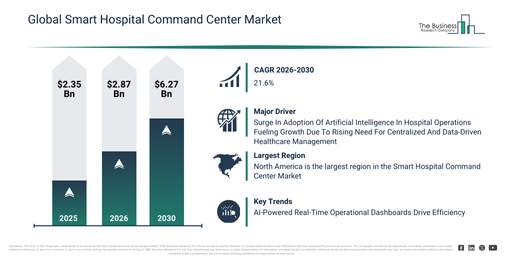
    Smart Hospital Command Center Market Trends And Growth Drivers Point To Strong Future Potential

    Delivering more actionable and strategically valuable research, The Business Research Company’s 2026 market reports feature market attractiveness analysis, total addressable market evaluation, company benchmarking matrices, interactive Excel dashboards, expanded supply chain intelligence, emerging startup coverage, and detailed product insights.

    Smart Hospital Command Center Market Size Forecast: How Large Could The Market Become By 2030?

    The smart hospital command center market size has seen substantial growth in recent years. It is projected to expand from $2.35 billion in 2025 to $2.87 billion in 2026, exhibiting a compound annual growth rate (CAGR) of 21.9%. This historical growth can be linked to factors such as the increasing digitalization of hospitals, a growing demand for real-time operational visibility, a rising focus on enhancing patient safety and quality, the expanding adoption of data analytics in healthcare, and an increasing need for coordinated emergency responses.

    The smart hospital command center market size is anticipated to undergo significant expansion in the coming years, projected to reach $6.27 billion by 2030, exhibiting a compound annual growth rate (CAGR) of 21.6%. This expansion during the forecast period is primarily driven by the increasing integration of artificial intelligence into hospital operations, growing investments in smart healthcare infrastructure, a rising demand for predictive analytics in patient flow management, the wider implementation of connected medical devices, and an enhanced focus on operational efficiency and resource optimization. Key trends expected in this period include technological advancements in real-time monitoring platforms, innovations in artificial intelligence-powered decision support systems, developments in integrated hospital automation solutions, ongoing research and developments in digital health analytics, and novel approaches in digital twin-based hospital operations management.

    Download A Free Sample Report For Comprehensive Market Insights:

    https://www.thebusinessresearchcompany.com/sample.aspx?id=30748&type=smp&utm_source=Blogs&utm_medium=Paid&utm_campaign=Jul_PR

    Smart Hospital Command Center Market Opportunity Drivers: What Is Creating New Revenue Potential?

    The smart hospital command center market is anticipated to grow as a result of the swift integration of artificial intelligence (AI) into hospital operations. Artificial intelligence (AI) in hospital operations involves the use of machine learning algorithms and automation to optimize administrative functions such as scheduling, staffing, inventory management, and resource allocation, consequently boosting efficiency and lowering operational costs. The incorporation of artificial intelligence (AI) into hospital operations is increasing due to the rising need to optimize complex administrative and operational workflows. Smart hospital command centers facilitate artificial intelligence (AI) in hospital operations by applying real-time data integration and predictive analytics, which enhances responsiveness across hospital services. For instance, in September 2025, according to the Assistant Secretary for Technology Policy, a US-based government office, in 2024, 71% of hospitals reported using predictive AI integrated with the electronic health record (EHR), an increase from 66% in 2023, with about 7 in 10 hospitals reporting predictive AI usage in 2024. Therefore, the rapid integration of artificial intelligence (AI) in hospital operations is a key driver for the growth of the smart hospital command center market.

    Smart Hospital Command Center Market Segmentation Trends And Revenue Drivers

    The smart hospital command center market covered in this report is segmented –

    1) By Component: Software, Hardware, Services

    2) By Deployment Mode: On-Premises, Cloud-Based

    3) By Application: Patient Flow Management, Resource Allocation, Clinical Operations, Asset Management, Communication And Coordination, Others

    4) By End User: Large Hospitals, Medium Hospitals, Small Hospitals

    Subsegments:

    1) By Software: Real-Time Analytics Platforms, Hospital Workflow Automation Systems, Patient Flow Management Software, Digital Communication And Coordination Tools, Integrated Dashboard And Visualization Software, Clinical Decision Support Solutions, Resource Allocation Optimization Software

    2) By Hardware: Centralized Monitoring Systems, Internet Of Things Enabled Devices, Servers And Data Storage Units, Networking And Connectivity Equipment, Control Room Display Panels, Sensor Based Tracking Devices, Integrated Command Center Consoles

    3) By Services: Implementation And Integration Services, Training And Education Services, Maintenance And Technical Support Services, Consulting And Workflow Optimization Services, System Upgradation And Enhancement Services, Remote Monitoring And Management Services, Customization And Configuration Services

    Smart Hospital Command Center Market Innovation Trends Driving Future Development

    Leading companies active in the smart hospital command center market are focused on developing sophisticated solutions, such as real-time predictive analytics, to enhance operational efficiency, patient flow, and clinical decision-making across various health systems. Real-time predictive analytics encompasses software-driven functionalities that continuously gather and analyze live hospital data to forecast demand, identify bottlenecks, and enable proactive operational interventions. For instance, in October 2024, GE HealthCare Technologies Inc., a US-based medical technology company, introduced the Hospital Pulse Tile for its Command Center Software. This launch integrates real-time predictive analytics to offer system-wide visibility into capacity, staffing, patient throughput, and the performance of care delivery. The Command Center leverages advanced analytics and AI to convert complex hospital data into actionable insights, thereby enabling leaders to anticipate surges, optimize resource utilization, and reduce delays in care.

    #Smart Hospital Command Center Market Industry Leaders: Which Organizations Are Driving Competition?

    Major companies operating in the smart hospital command center market are IBM Corporation, Oracle Corporation, Honeywell International Inc., Siemens Healthineers AG, Koninklijke Philips N.V., GE HealthCare Technologies Inc., Palantir Technologies Inc., Huron Consulting Group Inc., Dedalus Group, Allscripts Healthcare Solutions Inc., Everbridge Inc., Ascom Ltd., Care Logistics LLC, Spok Holdings Inc., TeleTracking Technologies Inc., LeanTaaS Inc., Qventus Inc., Connexall, Pointcore, Epic Systems Corporation

    Access The Complete Smart Hospital Command Center Market Report:

    https://www.thebusinessresearchcompany.com/report/smart-hospital-command-center-market-report?utm_source=Blogs&utm_medium=Paid&utm_campaign=Jul_PR

    Smart Hospital Command Center Market Global Footprint: Which Region Holds Market Leadership?

    North America was the largest region in the smart hospital command center market in 2025. Asia-Pacific is expected to be the fastest-growing region in the forecast period. The regions covered in the smart hospital command center market report are Asia-Pacific, South East Asia, Western Europe, Eastern Europe, North America, South America, Middle East, Africa.

    Get in touch with us:

    The Business Research Company: https://www.thebusinessresearchcompany.com/

    Americas: +1 310-496-7795

    Asia: +44 7882 955267 & +91 8897263534

    Europe: +44 7882 955267

    Email us at: marketing@tbrc.info

    Follow us on:

    LinkedIn: https://in.linkedin.com/company/the-business-research-company

    YouTube: https://www.youtube.com/channel/UC24_fI0rV8cR5DxlCpgmyFQ

    Global Market Model: https://www.thebusinessresearchcompany.com/global-market-model