Month: July 2026

  • Mixed-Reality Radiation Planning Market Opportunities Are Emerging Beyond Traditional Growth Areas

    Mixed-Reality Radiation Planning Market Opportunities Are Emerging Beyond Traditional Growth Areas

    Through market attractiveness analysis, total addressable market evaluation, company benchmarking matrices, interactive Excel dashboards, expanded supply chain intelligence, emerging startup coverage, and detailed product insights, The Business Research Company’s 2026 market reports provide more actionable and strategically valuable research.

    Mixed-Reality Radiation Planning Market Size Outlook: How Fast Will Revenue Grow Through 2030?

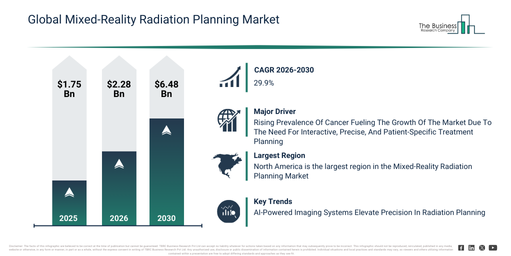
    The mixed-reality radiation planning market has experienced substantial growth in recent years. It is projected to expand from $1.75 billion in 2025 to $2.28 billion in 2026, demonstrating a compound annual growth rate (CAGR) of 30.2%. This historical growth can be attributed to several factors, including the increasing adoption of advanced imaging tools, the growing integration of AR and VR in clinical workflows, a rising focus on precise radiation planning, the expanding use of 3D anatomical visualization, and an increasing demand for patient-specific treatment planning.

    The mixed-reality radiation planning market size is anticipated to experience substantial growth over the next few years. It is projected to expand to $6.48 billion by 2030, with a compound annual growth rate (CAGR) of 29.9%. This projected growth can be attributed to several factors, including increasing investment in mixed-reality healthcare solutions, the rising adoption of immersive planning tools, a growing demand for high-precision radiation therapy, the expanding use of real-time visualization technologies, and the increasing integration of AI with mixed-reality systems. Notable trends during this period include technological advancements in mixed-reality platforms, innovations in immersive treatment planning tools, progress in real-time imaging integration, continued research and development in VR/AR-based medical applications, and improvements in motion-adaptive visualization systems.

    Download A Free Sample Report For Comprehensive Market Insights:

    https://www.thebusinessresearchcompany.com/sample.aspx?id=30659&type=smp&utm_source=Blogs&utm_medium=Paid&utm_campaign=Jul_PR

    #Mixed-Reality Radiation Planning Market Growth Factors: Which Forces Are Supporting Market Expansion?

    The increasing incidence of cancer is anticipated to fuel the expansion of the mixed-reality radiation planning market in the future. Cancer is defined as a condition marked by the unregulated proliferation and dissemination of atypical cells, capable of harming nearby tissues and organs if left untreated. The growing occurrence of cancer stems from lifestyle factors like unhealthy eating habits, tobacco use, excessive alcohol intake, and exposure to environmental contaminants, which heighten the likelihood of developing different types of cancer. Mixed-reality radiation planning assists in managing cancer by offering an interactive, three-dimensional visual representation of a patient’s anatomy and tumor site, thereby facilitating accurate treatment design. This technology enhances patient results by boosting precision, minimizing radiation exposure to healthy tissues, and supporting the delivery of more efficacious therapy. For example, in October 2025, according to NHS Digital, a UK government organisation, 354,820 new cancer diagnoses were recorded in England in 2023, averaging 972 diagnoses daily. This represented an increase of 8,605 cases from 2022, with prostate cancer being the most frequently diagnosed at 58,137 new cases, showing a 6% rise in registrations compared to the preceding year. Consequently, the increasing prevalence of cancer is a key driver for the expansion of the mixed-reality radiation planning market.

    Mixed-Reality Radiation Planning Market Segment Breakdown: Which Categories Generate The Most Revenue?

    The mixed-reality radiation planning market covered in this report is segmented –

    1) By Component: Hardware, Software, Services

    2) By Technology: Virtual Reality (VR), Mixed Reality (MR), Augmented Reality (AR)

    3) By Deployment Mode: On-Premises, Cloud-Based, Hybrid

    4) By Application: Oncology, Radiology, Surgery, Medical Training, Others

    5) By End-User: Hospitals, Cancer Treatment Centers, Research Institutes, Others

    Subsegments:

    1) By Hardware: Head Mounted Displays, Tracking Sensors, Workstations, Input Devices, Projection Systems

    2) By Software: Treatment Planning Software, Visualization And Rendering Software, Image Fusion And Registration Software, Motion Management Software, Dosimetry Analysis Software

    3) By Services: Installation And Implementation Services, Training And Education Services, Maintenance And Support Services, Consulting And Advisory Services, Workflow Optimization Services

    Mixed-Reality Radiation Planning Market Industry Trends: What Changes Are Reshaping Demand?

    Major companies in the mixed-reality radiation planning market are concentrating on creating sophisticated products, such as AI-driven CT and MR systems, to improve treatment accuracy, boost clinical effectiveness, and lower both operational expenses and environmental footprint. These AI-powered CT and MR systems are advanced diagnostic platforms that leverage artificial intelligence to enhance image resolution, streamline workflows, and facilitate more precise planning for therapies like radiation treatment. For example, in September 2025, the Netherlands-based health technology firm Royal Philips introduced the Rembra RT and Areta RT CT platforms, along with the helium-free BlueSeal RT 1.5T MR system. These systems are designed to establish new benchmarks in precise cancer care, featuring advancements such as an AI-based detector for clearer tumor visualization and eco-friendly helium-free operation. They integrate rapid image processing and workflow efficiencies, allowing care teams to operate more quickly while delivering dependable, long-term value through aspects like an extended service life guarantee.

    Mixed-Reality Radiation Planning Market Key Players And Strategic Industry Positioning

    Major companies operating in the mixed-reality radiation planning market are Microsoft Corporation, Medtronic plc, Siemens Healthineers AG, Fujifilm Holdings Corporation, GE HealthCare Technologies Inc., Varian Medical Systems, Elekta AB, Brainlab AG, Magic Leap Inc., Materialise NV, Canon Medical Systems Corporation, C-RAD AB, Medivis Inc., Surgical Theater Inc., Koninklijke Philips N.V., ImmersiveTouch Inc., EchoPixel Inc., Hindsyt, Spectronic Medical AB, ViewRay Inc.

    Access The Complete Mixed-Reality Radiation Planning Market Report:

    https://www.thebusinessresearchcompany.com/report/mixed-reality-radiation-planning-market-report?utm_source=Blogs&utm_medium=Paid&utm_campaign=Jul_PR

    Mixed-Reality Radiation Planning Market Regional Distribution: Which Areas Drive Market Expansion?

    North America was the largest region in mixed reality radiation planning market in 2025. Asia-Pacific is expected to be the fastest-growing region in the forecast period. The regions covered in the mixed-reality radiation planning market report are Asia-Pacific, South East Asia, Western Europe, Eastern Europe, North America, South America, Middle East, Africa.

    Get in touch with us:

    The Business Research Company: https://www.thebusinessresearchcompany.com/

    Americas: +1 310-496-7795

    Asia: +44 7882 955267 & +91 8897263534

    Europe: +44 7882 955267

    Email us at: marketing@tbrc.info

    Follow us on:

    LinkedIn: https://in.linkedin.com/company/the-business-research-company

    YouTube: https://www.youtube.com/channel/UC24_fI0rV8cR5DxlCpgmyFQ

    Global Market Model: https://www.thebusinessresearchcompany.com/global-market-model
  • Mental Health Tech Market Growth Is Accelerating As Industry Transformation Continues

    Mental Health Tech Market Growth Is Accelerating As Industry Transformation Continues

    Enhanced with market attractiveness analysis, total addressable market evaluation, company benchmarking matrices, interactive Excel dashboards, expanded supply chain intelligence, emerging startup coverage, and detailed product insights, The Business Research Company’s 2026 market reports deliver more actionable and strategically valuable research.

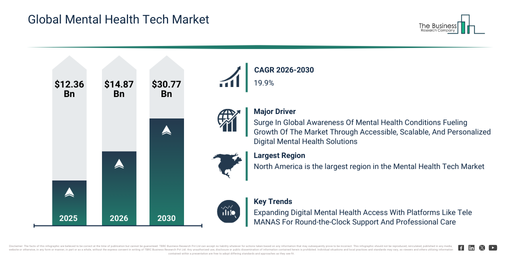
    Mental Health Tech Market Revenue Growth Supported By A CAGR Of 30.77% Through 2030

    The mental health tech market has experienced significant expansion in recent years. It is anticipated to increase from $12.36 billion in 2025 to $14.87 billion in 2026, exhibiting a compound annual growth rate (CAGR) of 20.2%. The growth observed in the past can be credited to a heightened awareness of mental health conditions, the growing acceptance of digital therapy solutions, increased investment in health IT infrastructures for behavioral care, the wider spread of smartphone and internet penetration, and an intensified focus on employee wellbeing programs.

    The mental health tech market is projected to experience rapid expansion in the coming years. This market is set to reach a value of $30.77 billion by 2030, demonstrating a compound annual growth rate (CAGR) of 19.9%. Several factors contribute to this growth during the forecast period, including the increasing need for individualized mental health support, the widespread occurrence of stress and anxiety conditions, broader insurance coverage for online mental health services, greater incorporation of mental health into general healthcare, and expanding government efforts to promote e-mental health. Key trends anticipated for this period encompass breakthroughs in AI-driven tools for diagnosing and monitoring mental health, novel approaches in virtual and augmented reality for exposure and relaxation treatments, progress in wearable sensor technology for ongoing mood surveillance, dedicated research into digital biomarkers relevant to mental well-being, and the creation of interoperable platforms that consolidate mental health data across various systems.

    Download A Free Sample Report For Comprehensive Market Insights:

    https://www.thebusinessresearchcompany.com/sample.aspx?id=30654&type=smp&utm_source=Blogs&utm_medium=Paid&utm_campaign=Jul_PR

    Mental Health Tech Market Expansion Supported By Key Demand Factors

    Enhanced global understanding of mental health conditions is anticipated to significantly contribute to the expansion of the mental health tech market in the coming years. Mental health awareness refers to the degree to which individuals, communities, healthcare systems, and governments recognize the prevalence, impact, and importance of timely identification and support for mental health conditions. This growing recognition is fueled by expanded public education campaigns, global advocacy efforts, and coordinated observances aimed at reducing stigma and emphasizing mental health as a vital aspect of overall well-being. The mental health tech market aligns with this trend by offering accessible, scalable, and increasingly personalized digital tools that enable individuals to recognize symptoms, seek early assistance, and engage with mental health services beyond traditional clinical settings. For instance, in October 2024, according to the World Health Organization, a United Nations agency focused on global public health, World Mental Health Day was observed in more than 150 countries, an increase from approximately 120 countries in 2023, reflecting a substantial expansion in global participation and institutional engagement in mental health awareness initiatives. Therefore, the increasing awareness of mental health conditions worldwide is driving the growth of the mental health tech market.

    #Mental Health Tech Market Segment Landscape And Growth Potential

    The mental health tech market covered in this report is segmented –

    1) By Component: Software, Hardware, Services

    2) By Deployment Mode: On-Premises, Cloud

    3) By Application: Teletherapy, Self-Help Apps, Mental Health Assessment Tools, VR Therapy, Other Applications

    4) By End-User: Hospitals, Clinics, Individuals, Other End-Users

    Subsegments:

    1) By Software: Clinical Information Systems, Non Clinical Information Systems, Artificial Intelligence Platforms, Data Management Tools, Analytics And Reporting Tools, Population Health Management Tools, Clinical Decision Support Systems

    2) By Hardware: Processors, Memory Devices, Network Equipment, Storage Devices, Sensors And Monitoring Devices

    3) By Services: Integration Services, Deployment Services, Maintenance Services, Managed Services, Training And Consulting Services

    Mental Health Tech Market Growth Trends Influencing Competitive Dynamics

    Leading mental health technology firms are intensifying efforts to broaden digital mental health accessibility, leveraging platforms such as Tele MANAS to offer continuous support, self-help resources, and direct consultations with professionals through mobile and telephone methods. Tele MANAS is defined as a government-initiated digital mental health platform, purposed to deliver accessible, private, and multilingual assistance, allowing users to link with qualified mental health experts and utilize evidence-supported stress management and self-care materials. As an illustration, in October 2024, the Government of India’s Ministry of Health and Family Welfare (MoHFW) introduced the Tele MANAS mobile app, providing self-care techniques, emergency assistance modules, and expert counseling via phone and video consultations. The platform facilitates over 20 languages and has processed in excess of 1.8 million calls since it began operations, highlighting its critical function in enhancing mental health service reach for populations in underserved and distant areas.

    Mental Health Tech Market Competitive Landscape: Who Are The Leading Companies?

    Major companies operating in the mental health tech market are Lyra Health Inc., Headspace Inc., Charlie Health Inc., Talkspace Inc., Spring Care Inc., BetterUp Inc., Calm Inc., Modern Health Inc., SonderMind Inc., Unmind Ltd., Meru Health Inc., Woebot Labs Inc., KOA Health Digital Solutions Limited, Kaia Health Software Inc., Talkiatry Management Services LLC, Big Health Inc., Mental Fuel Inc., Wysa Ltd., Upheal Inc., Youper Inc.

    Access The Complete Mental Health Tech Market Report:

    https://www.thebusinessresearchcompany.com/report/mental-health-tech-market-report?utm_source=Blogs&utm_medium=Paid&utm_campaign=Jul_PR

    Mental Health Tech Market Regional Analysis: Which Region Leads By Revenue?

    North America was the largest region in the mental health tech market in 2025. Asia-Pacific is expected to be the fastest-growing region in the forecast period. The regions covered in the mental health tech market report are Asia-Pacific, South East Asia, Western Europe, Eastern Europe, North America, South America, Middle East, Africa.

    Get in touch with us:

    The Business Research Company: https://www.thebusinessresearchcompany.com/

    Americas: +1 310-496-7795

    Asia: +44 7882 955267 & +91 8897263534

    Europe: +44 7882 955267

    Email us at: marketing@tbrc.info

    Follow us on:

    LinkedIn: https://in.linkedin.com/company/the-business-research-company

    YouTube: https://www.youtube.com/channel/UC24_fI0rV8cR5DxlCpgmyFQ

    Global Market Model: https://www.thebusinessresearchcompany.com/global-market-model
  • Longevity Clinic Market Growth Is Reshaping Competitive Advantage Across The Industry

    Longevity Clinic Market Growth Is Reshaping Competitive Advantage Across The Industry

    Delivering more actionable and strategically valuable research, The Business Research Company’s 2026 market reports feature market attractiveness analysis, total addressable market evaluation, company benchmarking matrices, interactive Excel dashboards, expanded supply chain intelligence, emerging startup coverage, and detailed product insights.

    Longevity Clinic Market CAGR Analysis And Future Market Development

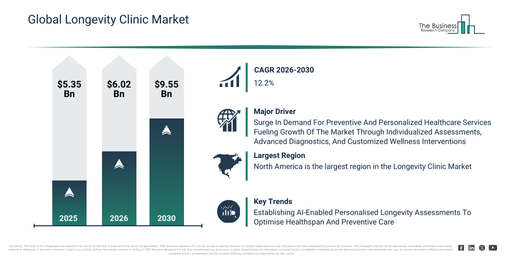
    The longevity clinic market has shown rapid expansion in recent years. It is anticipated to increase from $5.35 billion in 2025 to $6.02 billion in 2026, exhibiting a compound annual growth rate (CAGR) of 12.5%. This historical growth is attributable to an escalating demand for preventive healthcare, enhanced awareness of anti-aging therapies, wider implementation of personalized wellness programs, an intensified focus on extending healthy lifespans, and a developing interest in regenerative medicine services.

    The longevity clinic market is projected to experience substantial expansion in the coming years. By 2030, its size is anticipated to reach $9.55 billion, exhibiting a compound annual growth rate (CAGR) of 12.2%. This projected growth during the forecast period can be linked to several factors, including increasing consumer interest in longevity services, expanding investment in regenerative medicine, wider adoption of digital wellness platforms, a greater emphasis on personalized anti-aging therapies, and a rising preference for preventive care models. Key trends expected during this period encompass progress in biomarker-based diagnostics, developments in regenerative medicine therapies, novel personalized longevity programs, inventive age-reversal treatment models, and breakthroughs in cellular rejuvenation therapies.

    Download A Free Sample Report For Comprehensive Market Insights:

    https://www.thebusinessresearchcompany.com/sample.aspx?id=30640&type=smp&utm_source=Blogs&utm_medium=Paid&utm_campaign=Jul_PR

    Longevity Clinic Market Opportunity Drivers: What Is Creating New Revenue Potential?

    The longevity clinic market is projected to see significant expansion in the coming years, primarily driven by the escalating demand for preventive and personalized healthcare services. This healthcare approach involves medical strategies focused on proactively pinpointing health risks, facilitating early intervention, and providing treatment and lifestyle plans customized to an individual’s genetic, metabolic, and behavioral profile. The heightened interest in these services largely stems from increased public awareness of healthy aging, longer life expectancies, and the understanding that promptly addressing chronic disease risk factors can greatly enhance long-term health outcomes. Longevity clinics contribute to preventive and personalized healthcare by providing comprehensive individual assessments, sophisticated diagnostic testing, and bespoke interventions designed to optimize healthspan and defer the appearance of age-related conditions. For example, a survey published in July 2025 by the National University of Singapore’s Academy for Healthy Longevity, a research institution in Singapore, indicated that around 58% of those surveyed showed interest in attending healthy longevity or preventive medicine clinics offering personalized health assessments. This data further demonstrated a consistent increase in public interest over time, with reported levels rising from approximately 40% in 2021 to nearly 58% in 2025, representing a growth of more than 40% over four years. Thus, the expanding demand for preventive and personalized healthcare services serves as a key driver for the growth of the longevity clinic market.

    Longevity Clinic Market Categorization By Product Type And Application

    The longevity clinic market covered in this report is segmented –

    1) By Service Type: Preventive Care, Diagnostic Services, Personalized Medicine, Wellness Programs, Anti-Aging Treatments, Other Service Types

    2) By Therapy Type: Senolytic Therapies, Stem Cell Therapies, Peptide Therapies, IV Infusions And Nutrient Therapy, Hyperbaric Oxygen Therapy

    3) By Technology: Multi-Omics (Genomics, Epigenetics), Artificial Intelligence (AI) And Machine Learning Platforms, Wearable Devices And Sensors, Advanced Imaging And Diagnostics

    4) By Age Group: Adults, Geriatric, Other Age Groups

    5) By End-User: Hospitals, Specialty Clinics, Other End-Users

    Subsegments:

    1) By Preventive Care: Routine health screenings, Immunization services, Lifestyle counseling, Nutritional guidance, Chronic disease prevention programs

    2) By Diagnostic Services: Imaging diagnostics, Laboratory testing, Genetic testing, Biomarker analysis, Functional diagnostics

    3) By Personalized Medicine: Pharmacogenomics, Customized treatment planning, Gene-based therapies, Tailored nutrition plans, Precision drug selection

    4) By Wellness Programs: Stress management programs, Weight management programs, Physical fitness coaching, Mental wellness programs, Corporate wellness solutions

    5) By Anti-Aging Treatments: Hormone therapy, Skin rejuvenation treatments, Regenerative therapies, Cellular repair therapies, Nutritional anti-aging programs

    6) By Others Service Type: Telehealth services, Home healthcare support, Integrative medicine services, Alternative therapy programs, Remote monitoring solutions

    Longevity Clinic Market Innovation Trends Driving Future Development

    Entities operating in the longevity clinic market are increasingly concentrating on developing regulated healthy longevity medicine centres. These facilities are designed to incorporate AI-enabled personalised longevity assessments to expand preventive care services, optimize an individual’s healthspan, and support interventions specifically targeting different age groups. AI-enabled personalised longevity assessments are defined as clinical instruments that synthesize genetic, lifestyle, and biomarker data to formulate customized prevention and wellness blueprints. This capability allows clinicians to effectively stratify patient risk, prioritize early interventions, and customize care pathways to suit individual patient needs. For instance, in November 2024, the Department of Health – Abu Dhabi, a government health authority located in the United Arab Emirates, inaugurated the Institute for Healthier Living Abu Dhabi, marking it as the region’s first licensed Healthy Longevity Medicine Centre. The centre is structured to deliver comprehensive longevity-focused care by integrating personalized diagnostics, lifestyle optimization programmes, and precision therapeutic planning. It also features collaborative multi-specialty care models and AI-driven risk stratification systems, all aimed at enhancing the delivery of preventive care and achieving improved long-term patient outcomes.

    Longevity Clinic Market Company Landscape And Strategic Competition

    Major companies operating in the longevity clinic market are Six Senses, Healthspan Ltd., Fountain Life LLC, Cenegenics LLC, Parsley Health Inc., SHA Wellness Clinic S.L., The Golden Door, VIVAMAYR Medical Center, Longevity Medical Clinic USA, AEON Medical Pvt Ltd., Chenot, Defy Medical Inc., Nescens SA, AYUN Longevity Clinic, Paracelsus Clinic, Longevity Center Switzerland AG, Aluna Longevity Clinics, Vivant Medical Group, Optimum Performance Physical Therapy LLC, VidaVital Medical Clinics

    Access The Complete Longevity Clinic Market Report:

    https://www.thebusinessresearchcompany.com/report/longevity-clinic-market-report?utm_source=Blogs&utm_medium=Paid&utm_campaign=Jul_PR

    Longevity Clinic Market Regional Analysis And Leading Geography

    North America was the largest region in the longevity clinic market in 2025. Asia-Pacific is expected to be the fastest-growing region in the forecast period. The regions covered in the longevity clinic market report are Asia-Pacific, South East Asia, Western Europe, Eastern Europe, North America, South America, Middle East, Africa.

    Get in touch with us:

    The Business Research Company: https://www.thebusinessresearchcompany.com/

    Americas: +1 310-496-7795

    Asia: +44 7882 955267 & +91 8897263534

    Europe: +44 7882 955267

    Email us at: marketing@tbrc.info

    Follow us on:

    LinkedIn: https://in.linkedin.com/company/the-business-research-company

    YouTube: https://www.youtube.com/channel/UC24_fI0rV8cR5DxlCpgmyFQ

    Global Market Model: https://www.thebusinessresearchcompany.com/global-market-model
  • Longevity BioTech Market Forecast Signals New Revenue Opportunities Through 2030

    Longevity BioTech Market Forecast Signals New Revenue Opportunities Through 2030

    Enhanced with market attractiveness analysis, total addressable market evaluation, company benchmarking matrices, interactive Excel dashboards, expanded supply chain intelligence, emerging startup coverage, and detailed product insights, The Business Research Company’s 2026 market reports deliver more actionable and strategically valuable research.

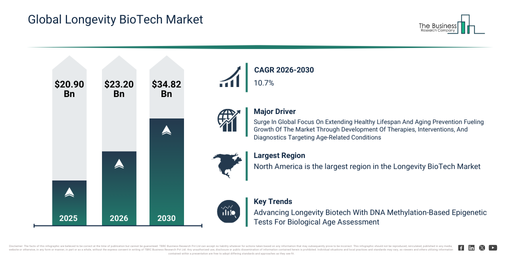
    Longevity BioTech Market Expansion From $23.2 Billion In 2026 To $34.82 Billion In 2030

    The longevity biotech market has demonstrated rapid expansion in recent years. It is forecast to grow from $20.90 billion in 2025 to $23.20 billion in 2026, at a compound annual growth rate (CAGR) of 11.0%. The historical growth in this sector can be attributed to several factors, including increased investment in anti-aging research, a rising prevalence of age-related chronic diseases, a growing interest in extending healthspan, increasing funding from biotech venture capital, and the rising adoption of genetic and cellular therapies.

    The longevity biotechnology market is projected to experience substantial expansion in the coming years. This market is forecast to reach $34.82 billion by 2030, exhibiting a compound annual growth rate (CAGR) of 10.7%. This anticipated growth during the forecast period is driven by several factors, including the expanding pipelines of regenerative medicine, an increase in partnerships between pharmaceutical companies and longevity biotechnology firms, a growing demand for gene-based therapies, the proliferation of personalized wellness diagnostics, and heightened collaboration among research institutes and biotech enterprises. Key trends expected over the forecast period encompass progress in cellular rejuvenation therapies, advancements in gene-editing technologies, developments in stem-cell-based regeneration, novel approaches in senolytic drug development, and inventive applications of epigenetic reprogramming tools.

    Download A Free Sample Report For Comprehensive Market Insights:

    https://www.thebusinessresearchcompany.com/sample.aspx?id=30639&type=smp&utm_source=Blogs&utm_medium=Paid&utm_campaign=Jul_PR

    Longevity BioTech Market Growth Momentum: Which Factors Are Influencing Demand?

    The growing emphasis on extending healthy lifespans and preventing age-related decline is anticipated to drive the future growth of the longevity biotech market. Healthy aging refers to the process of maintaining functional capabilities, delaying the onset of age-related diseases, and fostering physical and mental well-being throughout life. This increased focus on healthy aging is largely due to demographic shifts, particularly rapidly aging populations, which have amplified the demand for medical innovations and preventive health solutions. Longevity biotechnology supports this objective by developing therapies, diagnostics, and preventive interventions that target the biological mechanisms of aging, enhance cellular resilience, and reduce the risk of age-related conditions. For instance, in November 2023, the World Health Organization, a Geneva-based global health authority, projected that the global population aged 60 years and older will increase from 1.1 billion in 2023 to 1.4 billion by 2030 and reach 2.1 billion by 2050, illustrating the escalating scale of health challenges associated with aging. Consequently, the increasing global attention on extending healthy lifespans and preventing aging is fueling the expansion of the longevity biotech market.

    Longevity BioTech Market Segment Analysis And Revenue Opportunities

    The longevity biotech market covered in this report is segmented –

    1) By Service: Longevity Consultation, Biological Age Testing, Preventive Health Programs

    2) By Therapeutic Approach: Senolytics, Gene Therapies, Regenerative Medicine, Metabolic Modulators, Mitochondrial Therapies

    3) By Technology: Gene Editing Technology, Artificial Intelligence And Machine Learning, Stem Cell And Regenerative Medicine, Multi-Omics Analysis Platforms, Advanced Drug Screening

    4) By Application: Healthcare, Biotech, Pharmaceuticals, Wellness, Aging Population

    5) By End User: Clinics, Hospitals, Research Institutes, Direct-To-Consumer

    Subsegments:

    1) By Longevity Consultation: Initial Health Assessment, Personalized Longevity Planning, Lifestyle And Nutrition Counseling, Risk Assessment And Mitigation Planning, Follow-Up Longevity Monitoring, Genetic And Epigenetic Review

    2) By Biological Age Testing: DNA Methylation Age Testing, Telomere Length Testing, Metabolic Age Assessment, Inflammatory Biomarker Testing, Hormonal Age Profiling, Organ-Specific Aging Analysis

    3) By Preventive Health Programs: Chronic Disease Prevention Programs, Nutrition And Diet Optimization Plans, Fitness And Mobility Enhancement Programs, Stress And Sleep Management Programs, Immune Strengthening Protocols, Personalized Supplementation Programs

    Longevity BioTech Market Trends Reshaping Industry Growth

    Major companies operating in the longevity biotech market are primarily engaged in developing biological-age diagnostics, such as DNA methylation-based epigenetic Index tests that quantify biological age and system-specific aging rates. These Epigenetic Index tests function by measuring patterns of DNA methylation at CpG sites to generate a biological-age estimate, which companies then use as an outcome measure for product development and consumer feedback. For instance, in March 2023, Elysium Health, a U.S.-based life-science company, introduced the TIME-A longitudinal research study, linked to its Index epigenetic test. This initiative enrolls Index users, combines survey and epigenetic data for longitudinal mapping, and provides participants access to system-level biological-age readouts.

    Longevity BioTech Market Leading Players Shaping Industry Direction

    Major companies operating in the longevity biotech market are Insilico Medicine Inc., Calico Life Sciences LLC, Retro Biosciences Inc., Altos Labs Inc., LyGenesis Inc., NewLimit Inc., Halia Therapeutics Inc., Life Biosciences Inc., BioAge Labs Inc., Rubedo Life Sciences Inc., Juvenescence Limited, Cambrian BioPharma Inc., Elevian Inc., Oisin Biotechnologies Inc., Rejuvenate Bio Inc., Unity Biotechnology Inc., Cleara Biotech B.V., Junevity Inc., Liv Longevity Labs, Genflow Biosciences plc, Centenara Labs AG

    Access The Complete Longevity BioTech Market Report:

    https://www.thebusinessresearchcompany.com/report/longevity-biotech-market-report?utm_source=Blogs&utm_medium=Paid&utm_campaign=Jul_PR

    Longevity BioTech Market Geographic Analysis: Where Is Demand Growing The Fastest?

    North America was the largest region in the longevity biotech market in 2025. Asia-Pacific is expected to be the fastest-growing region in the forecast period. The regions covered in the longevity biotech market report are Asia-Pacific, South East Asia, Western Europe, Eastern Europe, North America, South America, Middle East, Africa.

    Get in touch with us:

    The Business Research Company: https://www.thebusinessresearchcompany.com/

    Americas: +1 310-496-7795

    Asia: +44 7882 955267 & +91 8897263534

    Europe: +44 7882 955267

    Email us at: marketing@tbrc.info

    Follow us on:

    LinkedIn: https://in.linkedin.com/company/the-business-research-company

    YouTube: https://www.youtube.com/channel/UC24_fI0rV8cR5DxlCpgmyFQ

    Global Market Model: https://www.thebusinessresearchcompany.com/global-market-model
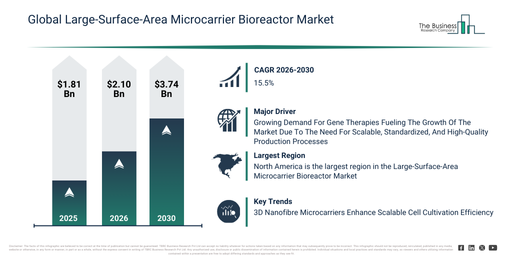
  • Large-Surface-Area Microcarrier Bioreactor Market Size Projected To Increase From $2.1 Billion To $3.74 Billion During The Forecast Period

    Large-Surface-Area Microcarrier Bioreactor Market Size Projected To Increase From $2.1 Billion To $3.74 Billion During The Forecast Period

    Through market attractiveness analysis, total addressable market evaluation, company benchmarking matrices, interactive Excel dashboards, expanded supply chain intelligence, emerging startup coverage, and detailed product insights, The Business Research Company’s 2026 market reports provide more actionable and strategically valuable research.

    Large-Surface-Area Microcarrier Bioreactor Market Expansion Outlook: What Revenue Opportunities Lie Ahead?

    The large-surface-area microcarrier bioreactor market has experienced rapid expansion in recent years. This market is anticipated to climb from $1.81 billion in 2025 to $2.10 billion in 2026, demonstrating a compound annual growth rate (CAGR) of 15.8%. This historical growth can be attributed to several factors, including the increasing integration of large-surface-area microcarrier bioreactors, a surging demand for high-density adherent cell cultures, heightened investment in regenerative medicine research, the proliferation of automated cell expansion technologies, and the increasing implementation of single-use microcarrier systems.

    The large-surface-area microcarrier bioreactor market is projected for substantial expansion over the upcoming years, set to reach a valuation of $3.74 billion by 2030, exhibiting a compound annual growth rate (CAGR) of 15.5%. This expansion during the projection period is primarily driven by an increased emphasis on scalable stem cell manufacturing, heightened investment in sophisticated microcarrier bioprocessing, a rising need for clinical-grade cell expansion, the broadening of biotechnology and pharmaceutical research and development efforts, and the significant uptake of automated and high-precision systems. Key developments anticipated within this timeframe involve technological progress in microcarrier bioreactors, new ideas in automated cell expansion solutions, advancements in high-density adherent cell culture methods, ongoing research and development in single-use microcarrier setups, and improvements in real-time surveillance and process governance.

    Download A Free Sample Report For Comprehensive Market Insights:

    https://www.thebusinessresearchcompany.com/sample.aspx?id=30632&type=smp&utm_source=Blogs&utm_medium=Paid&utm_campaign=Jul_PR

    Large-Surface-Area Microcarrier Bioreactor Market Growth Factors Supporting Long-Term Expansion

    The increased need for gene therapies is projected to drive the expansion of the large-surface-area microcarrier bioreactor market moving forward. Gene therapy is defined as a medical technique involving the modification or replacement of faulty genes to address or prevent diseases. The growing requirement for gene therapy is attributed to advancements in genetic sequencing and diagnostics, which facilitate the precise identification of disease-causing genes for targeted treatment. Large-surface-area microcarrier bioreactors support gene therapy by offering an extensive surface for the efficient growth of adherent cells utilized in gene-modified treatments. They enhance therapeutic development by boosting cell yield, ensuring consistency, and enabling the scalable manufacturing of gene therapy products. For instance, in December 2024, according to the American Society of Gene & Cell Therapy (ASGCT), a US-based non-profit medical and scientific organization, the Food and Drug Administration (FDA) approved six gene therapy products in 2023, an increase from five approvals in 2022. Consequently, the rising demand for gene therapies is fueling the growth of the large-surface-area microcarrier bioreactor market.

    Large-Surface-Area Microcarrier Bioreactor Market Segmentation: How Is The Market Structured Across Key Categories?

    The large-surface-area microcarrier bioreactor market covered in this report is segmented –

    1) By Product Type: Single-Use Bioreactors, Multi-Use Bioreactors

    2) By Microcarrier Type: Synthetic Microcarriers, Natural Microcarriers, Hybrid Microcarriers

    3) By Distribution Channel: Hospital Pharmacy, Online Pharmacy, Retail Pharmacy

    4) By Application: Cell Therapy, Vaccine Production, Tissue Engineering, Stem Cell Research, Other Appplications

    5) By End User: Pharmaceutical And Biotechnology Companies, Research Institutes, Contract Manufacturing Organizations, Other End Users

    Subsegments:

    1) By Single-Use Bioreactors: Disposable Microcarrier Vessels, Pre-Sterilized Culture Chambers, Single-Cycle Expansion Units, Plug-And-Play Bioprocessing Modules, Disposable Agitation Systems

    2) By Multi-Use Bioreactors: Autoclavable Microcarrier Vessels, Cleanable Stainless Steel Chambers, Reusable Agitation Systems, Long-Term Operation Bioprocess Units, Reprocessable Culture Modules

    Large-Surface-Area Microcarrier Bioreactor Market Industry Trends Shaping Future Revenue Growth

    Leading companies within the large-surface-area microcarrier bioreactor market are prioritizing the development of advanced products, such as 3D nanofibre scaffolds, with the aim of boosting operational efficiency, enhancing cellular proliferation, and minimizing both process variability and overall development timelines. 3D nanofibre microcarriers are defined as sophisticated, biomimetic scaffolds that provide a three-dimensional setting conducive to cell adhesion and growth, effectively mimicking the native extracellular matrix. For example, Cellevate AB, a Sweden-based innovator in cell culture materials, launched its Cellevat3D nanofibre microcarrier in February 2025. This product is a customizable, synthetic microcarrier designed for scalable cell cultivation, featuring a distinctive nanofibrous architecture that increases surface area, thereby improving cell attachment and overall yield. It offers precise control over biochemical and physical parameters, which facilitates optimal growth conditions for various cell types, including stem cells and therapeutic cells, without requiring extensive process re-development. Additionally, it incorporates xeno-free and animal-free material options, which enhances product safety and aids regulatory compliance for both biopharmaceutical and cultivated meat producers.

    Large-Surface-Area Microcarrier Bioreactor Market Competitive Landscape And Leading Companies

    Major companies operating in the large-surface-area microcarrier bioreactor market are Thermo Fisher Scientific Inc., Merck KGaA, Corning Incorporated, Lonza Group AG, Cytiva Sweden AB, Sartorius AG, Bio-Rad Laboratories Inc., Eppendorf SE, Repligen Corporation, Pall Corporation, PBS Biotech Inc., Applikon Biotechnology B.V., Esco VacciXcell, Meissner Filtration Products Inc., Distek Inc., Infors HT AG, Adolf Kühner AG, Kuhner Shaker GmbH, Cellexus Ltd., Solaris Biotech S.r.l.

    Access The Complete Large-Surface-Area Microcarrier Bioreactor Market Report:

    https://www.thebusinessresearchcompany.com/report/large-surface-area-microcarrier-bioreactor-market-report?utm_source=Blogs&utm_medium=Paid&utm_campaign=Jul_PR

    Large-Surface-Area Microcarrier Bioreactor Market Regional Analysis: Which Region Leads By Revenue?

    North America was the largest region in the large-surface-area microcarrier bioreactor market in 2025. Asia-Pacific is expected to be the fastest-growing region in the forecast period. The regions covered in the large-surface-area microcarrier bioreactor market report are Asia-Pacific, South East Asia, Western Europe, Eastern Europe, North America, South America, Middle East, Africa.

    Get in touch with us:

    The Business Research Company: https://www.thebusinessresearchcompany.com/

    Americas: +1 310-496-7795

    Asia: +44 7882 955267 & +91 8897263534

    Europe: +44 7882 955267

    Email us at: marketing@tbrc.info

    Follow us on:

    LinkedIn: https://in.linkedin.com/company/the-business-research-company

    YouTube: https://www.youtube.com/channel/UC24_fI0rV8cR5DxlCpgmyFQ

    Global Market Model: https://www.thebusinessresearchcompany.com/global-market-model
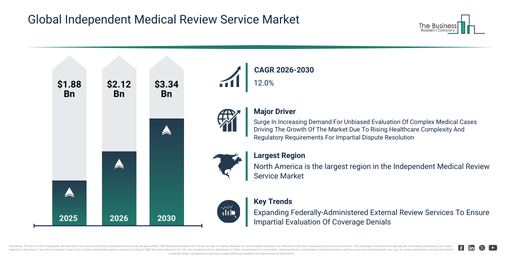
  • Independent Medical Review Service Market Expansion Is Reshaping Competitive Dynamics Across The Industry

    Independent Medical Review Service Market Expansion Is Reshaping Competitive Dynamics Across The Industry

    Delivering more actionable and strategically valuable research, The Business Research Company’s 2026 market reports feature market attractiveness analysis, total addressable market evaluation, company benchmarking matrices, interactive Excel dashboards, expanded supply chain intelligence, emerging startup coverage, and detailed product insights.

    Independent Medical Review Service Market Value Expansion And Long-Term Growth Outlook

    The independent medical review service market has observed rapid expansion in recent years. Its valuation is expected to increase from $1.88 billion in 2025 to $2.12 billion in 2026, advancing at a compound annual growth rate (CAGR) of 12.3%. This historical growth can be linked to the rising need for impartial medical evaluations, an uptick in insurance claim disagreements, the increasing implementation of value-based healthcare, broader healthcare quality monitoring, and stricter regulatory compliance mandates.

    The independent medical review service market is projected to experience swift expansion in the coming years. It is anticipated to reach a valuation of $3.34 billion by 2030, demonstrating a compound annual growth rate (CAGR) of 12.0%. This projected growth during the forecast period is primarily driven by factors such as the increasing embrace of telehealth and remote review services, a heightened demand for economical healthcare dispute resolution, the expanding incorporation of advanced data analytics, the broader digitalization of healthcare, and increased public understanding of patient rights and the importance of transparency. Key trends expected to shape the market in this period encompass technological progress in remote medical review platforms, novel developments in clinical decision support systems, advancements in healthcare data management, ongoing research and development in artificial intelligence-assisted case evaluation, and improvements in cybersecurity and privacy measures for healthcare information.

    Download A Free Sample Report For Comprehensive Market Insights:

    https://www.thebusinessresearchcompany.com/sample.aspx?id=30619&type=smp&utm_source=Blogs&utm_medium=Paid&utm_campaign=Jul_PR

    #Independent Medical Review Service Market Demand Drivers Creating New Revenue Opportunities

    The independent medical review service market is projected to expand in the future due to the escalating need for impartial assessments of intricate medical cases. Unbiased evaluation encompasses the objective scrutiny of medical judgments, treatment strategies, and disagreements over insurance claims by a neutral third-party medical reviewer, aiming to guarantee fairness and appropriate patient care. This heightened demand for unbiased evaluations is a result of the increasing complexity of healthcare treatments and the expanded implementation of independent dispute mechanisms mandated by regulatory bodies to protect patients and resolve conflicts between providers and payers. Independent medical review service supports this trajectory by providing objective evaluations that inform the resolution of disputes, enhance adherence to regulations, and uphold quality benchmarks across healthcare systems. For example, in April 2025, according to the California Division of Workers’ Compensation annual report, Health systems, LLC, a US-based firm specializing in Pharmacy Benefit Management (PBM) and Ancillary Benefits Management (ABM), reported that the volume of independent medical review applications received surged to 199,651 in 2024, representing a 14.07% increase from 2023, while the number of final determinations issued also grew by 8.29% compared to the prior year. Consequently, the rising requirement for unbiased evaluation of complex medical cases is a key driver for the growth of the independent medical review service market.

    Independent Medical Review Service Market Segmentation: How Is The Market Structured Across Key Categories?

    The independent medical review service market covered in this report is segmented –

    1) By Type Of Review: Prior Authorization Reviews, Utilization Reviews, Peer Reviews, Independent Medical Evaluations (IME), Disability Claim Reviews

    2) By Delivery Mode: Onsite Review Services, Remote Or Virtual Review Services

    3) By Medical Specialty: Orthopedics And Musculoskeletal Disorders, Oncology, Cardiology, Neurology And Mental Health, Behavioral Health Or Substance Use Disorder, Internal Medicine

    4) By Application: Treatment Approval Disputes, Coverage Denial Disputes, Disability And Workers’ Compensation Review, Experimental Or Investigational Treatment Review, Quality Of Care Disputes

    5) By Client Type: Healthcare Providers, Legal Firms, Corporate Employers, Government Agencies, Healthcare Networks

    Subsegments:

    1) By Prior Authorization Reviews: Inpatient Authorization Review, Outpatient Authorization Review, Procedure Authorization Review, Medication Authorization Review, Diagnostic Test Authorization Review

    2) By Utilization Reviews: Prospective Utilization Review, Concurrent Utilization Review, Retrospective Utilization Review, Case Management Review, Resource Utilization Review

    3) By Peer Reviews: Physician Peer Review, Specialist Peer Review, Multidisciplinary Peer Review, Quality Of Care Peer Review, Clinical Outcome Peer Review

    4) By Independent Medical Evaluations: Physical Examination Evaluation, Mental Health Evaluation, Functional Capacity Evaluation, Medical Necessity Evaluation, Second Opinion Evaluation

    5) By Disability Claim Reviews: Short-Term Disability Claim Review, Long-Term Disability Claim Review, Workers Compensation Claim Review, Social Security Disability Claim Review, Critical Illness Claim Review

    Independent Medical Review Service Market Trends Driving Strategic Industry Expansion

    Leading companies in the independent medical review service market are prioritizing the expansion of federally-administered external review services, such as the HHS-Administered Federal External Review Process. This effort aims to standardize impartial evaluation of adverse benefit determinations, enhance transparency, and protect consumer appeal rights. The HHS-Administered Federal External Review Process is a government-supervised service that enables individuals whose health plans deny coverage based on medical judgment to request an independent review. It offers unbiased evaluation for denials concerning medical necessity, appropriateness, level of care, or investigational treatment, and ensures timely decision-making by establishing standardized timelines for submissions and responses. For instance, in September 2024, the Centers for Medicare & Medicaid Services (CMS), a U.S.-based federal healthcare agency, introduced enhancements to the HHS-Administered Federal External Review Process. This process allows consumers to file written requests for external review within four months of denial, requires insurers to submit all supporting documents within five business days, and mandates that standard external review decisions are issued within 45 days, with expedited reviews completed in 72 hours when urgent.

    Independent Medical Review Service Market Competitive Landscape And Leading Companies

    Major companies operating in the independent medical review service market are Optum IME & Review Services, MCMC LLC, MAXIMUS Federal Services Inc., IME Plus LLC, ReviewMed Inc., CorVel Corporation, MedRisk LLC, MedReview Inc., Paradigm Outcomes LLC, Advanced Medical Reviews Inc., eQHealth Solutions Inc., URAC-Accredited Review Services Inc., Healthcare Resolution Services Inc., AllMed Healthcare Management Inc., Kepro Technologies Pvt. Ltd., ProPeer Resources LLC, Independent Review Inc. (IRI), Physician Review Network LLC, Independent Medical Review Associates (IMRA), California Department of Industrial Relations

    Access The Complete Independent Medical Review Service Market Report:

    https://www.thebusinessresearchcompany.com/report/independent-medical-review-service-market-report?utm_source=Blogs&utm_medium=Paid&utm_campaign=Jul_PR

    Independent Medical Review Service Market Largest Region By Revenue And Market Share

    North America was the largest region in the independent medical review service market in 2025. Asia-Pacific is expected to be the fastest-growing region in the forecast period. The regions covered in the independent medical review service market report are Asia-Pacific, South East Asia, Western Europe, Eastern Europe, North America, South America, Middle East, Africa.

    Get in touch with us:

    The Business Research Company: https://www.thebusinessresearchcompany.com/

    Americas: +1 310-496-7795

    Asia: +44 7882 955267 & +91 8897263534

    Europe: +44 7882 955267

    Email us at: marketing@tbrc.info

    Follow us on:

    LinkedIn: https://in.linkedin.com/company/the-business-research-company

    YouTube: https://www.youtube.com/channel/UC24_fI0rV8cR5DxlCpgmyFQ

    Global Market Model: https://www.thebusinessresearchcompany.com/global-market-model
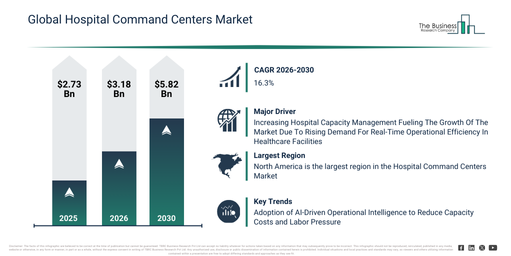
  • Hospital Command Centers Market Opportunities Are Emerging Beyond Traditional Growth Areas

    Hospital Command Centers Market Opportunities Are Emerging Beyond Traditional Growth Areas

    Through market attractiveness analysis, total addressable market evaluation, company benchmarking matrices, interactive Excel dashboards, expanded supply chain intelligence, emerging startup coverage, and detailed product insights, The Business Research Company’s 2026 market reports provide more actionable and strategically valuable research.

    Hospital Command Centers Market Revenue Outlook: What CAGR Is Expected Through 2030?

    The hospital command centers market size has experienced rapid expansion in recent years. It is anticipated to increase from $2.73 billion in 2025 to $3.18 billion in 2026, exhibiting a compound annual growth rate (CAGR) of 16.6%. The historical surge in this market can be linked to factors such as the increasing complexities in hospital operations, a greater emphasis on optimizing patient flow, the growing adoption of centralized decision support systems, the expansion of emergency preparedness programs, and the rising implementation of real-time hospital monitoring solutions.

    The market size for hospital command centers is projected to experience swift expansion in the coming years. This sector is anticipated to reach $5.82 billion by 2030, demonstrating a compound annual growth rate (CAGR) of 16.3%. The drivers behind this growth within the forecast period include an increasing demand for integrated operations management platforms, the rising adoption of data-driven decision-making in hospitals, a growing necessity for enhanced patient safety and improved quality outcomes, the expansion of value-based healthcare models, and increasing investment in digital hospital infrastructure. Prominent trends for the forecast period encompass technological advancements in real-time analytics, innovations in artificial intelligence-enabled hospital operations, progress in telehealth-supported command functions, ongoing research and development in predictive hospital management systems, and advancements in cloud-based hospital coordination platforms.

    Download A Free Sample Report For Comprehensive Market Insights:

    https://www.thebusinessresearchcompany.com/sample.aspx?id=30611&type=smp&utm_source=Blogs&utm_medium=Paid&utm_campaign=Jul_PR

    #Hospital Command Centers Market Growth Factors: Which Forces Are Supporting Market Expansion?

    The heightened emphasis on managing hospital capacity is anticipated to drive the expansion of the hospital command center market in the future. This management involves the strategic planning and operational supervision of hospital resources, including beds and personnel, to effectively meet patient needs. The increased attention on hospital capacity management stems from growing patient numbers coupled with limited beds, staff, and budgets, compelling hospitals to optimize resource utilization to provide care that is timely, safe, and economical. A hospital command center aids capacity management by consolidating data from different departments, offering a comprehensive operational overview that facilitates improved decision-making and resource distribution. For example, in January 2024, the National Health Service (NHS) England, a UK-based publicly funded healthcare system, reported that it met its objective of adding 5,000 permanent core beds by early 2024, starting from a 2022-23 baseline of 94,500 core beds, ultimately reaching an average of 99,750 core beds by the week ending January 21, 2024. Consequently, the growing focus on hospital capacity management is fueling the expansion of the hospital command center market.

    Hospital Command Centers Market Segment Outlook: Which Categories Are Expanding The Fastest?

    The hospital command centers market covered in this report is segmented –

    1) By Component: Software, Hardware, Services

    2) By Function: Patient Flow Management, Resource Allocation, Emergency Response, Bed Management, Clinical Operations, Others

    3) By Deployment Mode: On-Premises, Cloud-Based

    4) By End User: Hospitals, Specialty Clinics, Ambulatory Surgical Centers, Others

    Subsegments:

    1) By Software: Real Time Analytics Platforms, Operational Workflow Management Software, Patient Flow Optimization Systems, Communication And Collaboration Software, Capacity And Bed Management Software

    2) By Hardware: Command Center Display Systems, Real Time Monitoring Devices, Communication And Network Infrastructure, Sensor And Tracking Hardware, Server And Data Storage Equipment

    3) By Services: Implementation And Integration Services, Consulting And Workflow Optimization Services, Training And Skill Development Services, Maintenance And Support Services, Managed Command Center Operation Services

    Hospital Command Centers Market Industry Trends: What Changes Are Reshaping Demand?

    Leading companies in the hospital command centers market are prioritizing the development of sophisticated platforms, such as AI-driven operational intelligence systems. Their aim is to decrease capacity-related expenditures, address staffing shortages, and enhance the efficiency of resource allocation for beds, personnel, and critical equipment. These AI-driven operational intelligence platforms are defined as centralized digital systems that gather real-time clinical, operational, and administrative data. They then apply analytics and machine learning to foresee potential bottlenecks, streamline patient movement, and facilitate swift operational decisions that directly influence the cost per admission and the utilization of resources. For instance, in August 2025, NHS England, a UK-based public healthcare authority, rolled out AI-enabled virtual hospital command center capabilities through its Federated Data Platform program to assist hospitals in managing bed occupancy, backlogs in elective care, and delays in patient discharges. This intelligent platform integrates live data from various hospital systems, employs predictive analytics to forecast demand and capacity limitations, and enables coordination across the entire system. This coordination helps to reduce reliance on expensive agency staff and minimize avoidable lengths of stay, especially at a time when hospitals are contending with persistent inflation in labor and infrastructure costs.

    Hospital Command Centers Market Key Companies And Competitive Benchmarking

    Major companies operating in the hospital command centers market are IBM Corporation, Oracle Corporation, Honeywell International Inc., Siemens Healthineers AG, Koninklijke Philips N.V., GE HealthCare Technologies Inc., Palantir Technologies Inc., Huron Consulting Group Inc., Dedalus Group, Allscripts Healthcare Solutions Inc., Everbridge Inc., Ascom Ltd., Care Logistics LLC, Spok Holdings Inc., TeleTracking Technologies Inc., LeanTaaS Inc., Qventus Inc., Connexall, Pointcore, Epic Systems Corporation

    Access The Complete Hospital Command Centers Market Report:

    https://www.thebusinessresearchcompany.com/report/hospital-command-centers-market-report?utm_source=Blogs&utm_medium=Paid&utm_campaign=Jul_PR

    #Hospital Command Centers Market Largest Region: Which Geography Holds The Highest Market Share?

    North America was the largest region in the hospital command centers market in 2025. Asia-Pacific is expected to be the fastest-growing region in the forecast period. The regions covered in the hospital command centers market report are Asia-Pacific, South East Asia, Western Europe, Eastern Europe, North America, South America, Middle East, Africa.

    Get in touch with us:

    The Business Research Company: https://www.thebusinessresearchcompany.com/

    Americas: +1 310-496-7795

    Asia: +44 7882 955267 & +91 8897263534

    Europe: +44 7882 955267

    Email us at: marketing@tbrc.info

    Follow us on:

    LinkedIn: https://in.linkedin.com/company/the-business-research-company

    YouTube: https://www.youtube.com/channel/UC24_fI0rV8cR5DxlCpgmyFQ

    Global Market Model: https://www.thebusinessresearchcompany.com/global-market-model
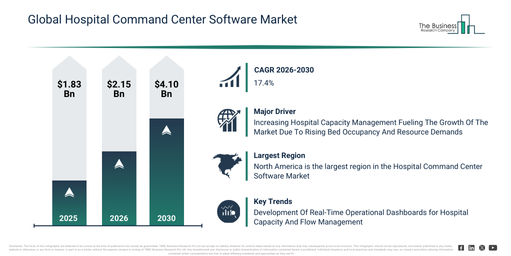
  • Hospital Command Center Software Market Expansion Is Opening New Pathways For Strategic Investment

    Hospital Command Center Software Market Expansion Is Opening New Pathways For Strategic Investment

    Delivering more actionable and strategically valuable research, The Business Research Company’s 2026 market reports feature market attractiveness analysis, total addressable market evaluation, company benchmarking matrices, interactive Excel dashboards, expanded supply chain intelligence, emerging startup coverage, and detailed product insights.

    Hospital Command Center Software Market Growth Analysis: How Will Revenue Expand During The Forecast Period?

    The market for hospital command center software has experienced rapid expansion in recent years. It is projected to increase from $1.83 billion in 2025 to $2.15 billion by 2026, achieving a compound annual growth rate (CAGR) of 17.7%. The growth observed in the past can be attributed to the rising necessity for real-time hospital visibility, the increasing adoption of digital health systems, a growing demand for patient flow optimization, the broader implementation of hospital capacity management initiatives, and a greater emphasis on reducing operational inefficiencies.

    The hospital command center software market is projected to experience significant expansion over the coming years. This market is forecast to reach $4.10 billion by 2030, exhibiting a compound annual growth rate (CAGR) of 17.4%. The anticipated growth during this period stems from factors such as the increasing incorporation of AI and predictive analytics, heightened investments in automating hospital operations, a growing requirement for adaptable cloud-based command centers, the broadening scope of telehealth and remote monitoring systems, and an escalating need for effective emergency preparedness and swift response mechanisms. Key developments expected within the forecast timeframe encompass technological progress in AI-powered workflow automation, novel advancements in integrated hospital command platforms, the evolution of cloud-native tools for healthcare orchestration, expanding research and development efforts in real-time operational analytics, and a greater uptake of interoperability and data integration protocols.

    Download A Free Sample Report For Comprehensive Market Insights:

    https://www.thebusinessresearchcompany.com/sample.aspx?id=30610&type=smp&utm_source=Blogs&utm_medium=Paid&utm_campaign=Jul_PR

    Hospital Command Center Software Market Demand Drivers: What Is Fueling Industry Growth?

    A growing emphasis on managing hospital capacity is anticipated to propel the hospital command center software market’s expansion moving forward. Hospital capacity management involves the strategic planning and operational oversight of hospital resources, such as beds and staff, to efficiently meet patient demand. The heightened focus on hospital capacity management arises from increasing patient volumes coupled with constraints on beds, staff, and budgets, necessitating that hospitals optimize resource utilization to provide timely, safe, and cost-effective care. Hospital command center software assists hospital capacity management by centralizing data from various departments to offer a comprehensive view of operations, thereby enabling improved decision-making and resource allocation. For instance, in January 2024, according to the National Health Service (NHS) England, a UK-based publicly funded healthcare system, the organization met its target of adding 5,000 permanent core beds by early 2024 against a 2022-23 baseline of 94,500 core beds, achieving an average of 99,750 core beds by the week ending January 21, 2024. Consequently, the increasing importance of hospital capacity management is fueling the growth of the hospital command center software market.

    Hospital Command Center Software Market Segment Landscape: Which Areas Lead Market Development?

    The hospital command center software market covered in this report is segmented –

    1) By Component: Software, Services

    2) By Deployment Mode: On-Premises, Cloud-Based

    3) By Application: Patient Flow Management, Resource Allocation, Bed Management, Emergency Response, Operational Analytics, Other Applications

    4) By End-User: Hospitals, Specialty Clinics, Ambulatory Surgical Centers, Other End-Users

    Subsegments:

    1) By Software: Hospital Information Management Software, Patient Flow Software, Resource Scheduling Software, Bed Management Software, Emergency Response Software, Operational Analytics Software

    2) By Services: Implementation Services, Training And Support Services, Maintenance Services, Cloud Hosting Services, Data Analytics Services, Telehealth Integration Services

    Hospital Command Center Software Market Innovation Trends: Which Developments Are Transforming The Industry?

    Companies operating in the hospital command center software market are concentrating on developing advanced solutions, such as real-time predictive analytics, to enhance operational efficiency, patient flow, and clinical decision-making across health systems. Real-time predictive analytics refers to software-driven capabilities that continuously gather and analyze live hospital data to forecast demand, identify bottlenecks, and enable proactive operational interventions. For instance, in October 2024, GE HealthCare Technologies Inc., a US-based medical technology company, launched the Hospital Pulse Tile for its Command Center Software. This launch integrates real-time predictive analytics to provide system-wide visibility into capacity, staffing, patient throughput, and care delivery performance. The Command Center utilizes advanced analytics and AI to convert complex hospital data into actionable insights, allowing leaders to anticipate surges, optimize resource utilization, and reduce delays in care.

    Hospital Command Center Software Market Industry Leaders And Market Competition

    Major companies operating in the hospital command center software market are Oracle Corporation, GE HealthCare Technologies Inc., Koninklijke Philips N.V., Baxter International Inc., Palantir Technologies Inc., Epic Systems Corporation, Getinge AB, Dedalus Group S.p.A., Ascom Holding AG, Biofourmis Inc., TeleTracking Technologies Inc., Qmatic Group AB, LeanTaaS Inc., CenTrak Inc., Qventus Inc., Spok Holdings Inc., Alcidion Group Limited, Connexall Corporation, Q-nomy Inc., ABOUT Healthcare Inc., Zebra Technologies Corporation

    Access The Complete Hospital Command Center Software Market Report:

    https://www.thebusinessresearchcompany.com/report/hospital-command-center-software-market-report?utm_source=Blogs&utm_medium=Paid&utm_campaign=Jul_PR

    Hospital Command Center Software Market Regional Analysis: Which Region Leads By Revenue?

    North America was the largest region in the hospital command center software market in 2025. Asia-Pacific is expected to be the fastest-growing region in the forecast period. The regions covered in the hospital command center software market report are Asia-Pacific, South East Asia, Western Europe, Eastern Europe, North America, South America, Middle East, Africa.

    Get in touch with us:

    The Business Research Company: https://www.thebusinessresearchcompany.com/

    Americas: +1 310-496-7795

    Asia: +44 7882 955267 & +91 8897263534

    Europe: +44 7882 955267

    Email us at: marketing@tbrc.info

    Follow us on:

    LinkedIn: https://in.linkedin.com/company/the-business-research-company

    YouTube: https://www.youtube.com/channel/UC24_fI0rV8cR5DxlCpgmyFQ

    Global Market Model: https://www.thebusinessresearchcompany.com/global-market-model
  • Hodgkin’s Lymphoma Treatment Market Forecast Signals New Revenue Opportunities Through 2030

    Hodgkin’s Lymphoma Treatment Market Forecast Signals New Revenue Opportunities Through 2030

    Delivering more actionable and strategically valuable research, The Business Research Company’s 2026 market reports feature market attractiveness analysis, total addressable market evaluation, company benchmarking matrices, interactive Excel dashboards, expanded supply chain intelligence, emerging startup coverage, and detailed product insights.

    Hodgkin’s Lymphoma Treatment Market Size, Value And Growth Trends Through 2030

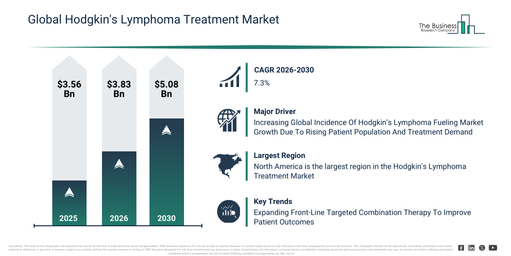
    The hodgkin’s lymphoma treatment market size has experienced robust expansion over recent years. It is projected to increase from $3.56 billion in 2025 to $3.83 billion in 2026, reflecting a compound annual growth rate (CAGR) of 7.6%. The historical growth in this market can be attributed to factors such as the rising incidence of hodgkin’s lymphoma, increased awareness leading to earlier diagnosis, greater adoption of chemotherapy and radiation therapy, the expansion of oncology healthcare infrastructure, and augmented government funding for cancer research.

    The hodgkin’s lymphoma treatment market is projected to experience robust expansion in the coming years, with its value anticipated to reach $5.08 billion by 2030, demonstrating a compound annual growth rate (CAGR) of 7.3%. This growth during the forecast period is primarily driven by factors such as the increasing adoption of immunotherapy and targeted therapies, enhanced availability of stem cell transplantation, a growing patient preference for individualized treatments, the expansion of cancer centers in emerging economies, and improved insurance coverage along with reimbursement support. Significant trends expected in this period include technological advancements in diagnostic imaging, groundbreaking innovations in immunotherapy and targeted therapies, the development of minimally invasive treatment options, continued research and development in stem cell transplantation, and the integration of digital health and telemedicine into follow-up care.

    Download A Free Sample Report For Comprehensive Market Insights:

    https://www.thebusinessresearchcompany.com/sample.aspx?id=30607&type=smp&utm_source=Blogs&utm_medium=Paid&utm_campaign=Jul_PR

    #Hodgkin’s Lymphoma Treatment Market Demand Drivers Creating New Revenue Opportunities

    The escalating occurrence of Hodgkin’s lymphoma is projected to drive the expansion of the Hodgkin’s lymphoma treatment market in the coming years. This condition is a lymphatic system cancer, marked by atypical Reed–Sternberg cells found in lymph nodes, frequently impacting B-lymphocytes, and often manifests through symptoms like painless enlarged glands, fever, nocturnal sweating, and a reduction in weight. The prevalence of Hodgkin’s lymphoma is on the rise, attributed to increased exposure to risk factors including smoking, obesity, and hypertension, coupled with evolving socioeconomic circumstances in numerous regions, all contributing to a greater disease frequency over time. Treatment for Hodgkin’s lymphoma aids in its management by identifying and eradicating malignant lymphocytes via methods like chemotherapy, radiation, or immunotherapy. Such treatment improves patient results by slowing disease progression, fostering remission, and boosting overall survival rates. For instance, in October 2025, the American Cancer Society, a US-based nonprofit organization, projected that Hodgkin lymphoma in the United States would involve approximately 8,720 new cases, consisting of 4,840 in males and 3,880 in females, and around 1,150 deaths, comprising 720 males and 430 females. Consequently, the growing incidence of Hodgkin’s lymphoma is stimulating the expansion of the Hodgkin’s lymphoma treatment market.

    Hodgkin’s Lymphoma Treatment Market Segment Breakdown: Which Categories Generate The Most Revenue?

    The hodgkin’s lymphoma treatment market covered in this report is segmented –

    1) By Type of Treatment: Chemotherapy, Radiation Therapy, Targeted Therapy, Immunotherapy

    2) By Disease Type: Classical Hodgkin Lymphoma (CHL), Nodular Lymphocyte-Predominant Hodgkin Lymphoma (NLPHL)

    3) By Treatment Stage: Early-Stage, Advanced-Stage, Relapsed

    4) By Stem Cell Transplantation: Autologous Stem Cell Transplant, Allogeneic Stem Cell Transplant

    5) By End-Use: Hospitals, Specialty Clinics, Cancer Centers, Ambulatory Care Centers, Home Healthcare Services

    Subsegments:

    1) By Chemotherapy: Combination Chemotherapy, Single Agent Chemotherapy, High Dose Chemotherapy with Stem Cell Transplantation

    2) By Radiation Therapy: External Beam Radiation Therapy, Proton Beam Radiation Therapy, Intensity Modulated Radiation Therapy

    3) By Targeted Therapy: Monoclonal Antibody Therapy, Antibody Drug Conjugate Therapy, Small Molecule Inhibitor Therapy

    4) By Immunotherapy: Immune Checkpoint Inhibitor Therapy, Chimeric Antigen Receptor T Cell Therapy, Cytokine Based Immunotherapy

    Hodgkin’s Lymphoma Treatment Market Trends Driving Strategic Industry Expansion

    Companies operating in the Hodgkin’s lymphoma treatment market are concentrating on developing sophisticated therapies, such as front-line targeted combination treatments. Their objectives include enhancing treatment efficacy, reducing morbidity linked to treatment, and expanding initial options for patients afflicted with advanced disease. Front-line targeted combination therapies involve administering two or more precision medicines together as the initial course of action, aiming to simultaneously target multiple disease-driving pathways, improve response rates, and delay resistance in newly diagnosed individuals. For instance, in June 2025, Takeda, a Japan-based pharmaceutical company, obtained European Commission approval for ADCETRIS in combination with etoposide, cyclophosphamide, doxorubicin, dacarbazine and dexamethasone (ECADD) for adults newly diagnosed with Stage IIb with risk factors, Stage III, or Stage IV Hodgkin lymphoma. This approval was based on Phase 3 HD21 trial results that demonstrated superior safety and non-inferior progression-free survival when compared to standard eBEACOPP chemotherapy. This specific front-line targeted combination therapy features a targeted ADC backbone, a chemotherapy-optimized regimen designed to lower acute toxicity, and expanded indications for frontline treatment, representing a notable advancement in Hodgkin’s lymphoma care.

    Hodgkin’s Lymphoma Treatment Market Key Players And Strategic Industry Positioning

    Major companies operating in the hodgkin’s lymphoma treatment market are F. Hoffmann-La Roche Ltd., Merck & Co. Inc., Pfizer Inc., Novartis AG, AstraZeneca plc, Bristol-Myers Squibb Company, Takeda Pharmaceutical Company Limited, Gilead Sciences Inc., Ono Pharmaceutical Co. Ltd., Jiangsu Hengrui Medicine Co. Ltd., Seagen Inc., Zhejiang Hisun Pharmaceutical Co. Ltd., BeiGene Ltd., Innovent Biologics Inc., HUTCHMED (China) Limited, Aurigene Discovery Technologies Limited, ADC Therapeutics SA, CStone Pharmaceuticals, Emcure Pharmaceuticals Ltd., Sorrento Therapeutics Inc.

    Access The Complete Hodgkin’s Lymphoma Treatment Market Report:

    https://www.thebusinessresearchcompany.com/report/hodgkins-lymphoma-treatment-market-report?utm_source=Blogs&utm_medium=Paid&utm_campaign=Jul_PR

    Hodgkin’s Lymphoma Treatment Market Regional Analysis And Leading Geography

    North America was the largest region in the hodgkin’s lymphoma treatment market in 2025. Asia-Pacific is expected to be the fastest-growing region in the forecast period. The regions covered in the hodgkin’s lymphoma treatment market report are Asia-Pacific, South East Asia, Western Europe, Eastern Europe, North America, South America, Middle East, Africa.

    Get in touch with us:

    The Business Research Company: https://www.thebusinessresearchcompany.com/

    Americas: +1 310-496-7795

    Asia: +44 7882 955267 & +91 8897263534

    Europe: +44 7882 955267

    Email us at: marketing@tbrc.info

    Follow us on:

    LinkedIn: https://in.linkedin.com/company/the-business-research-company

    YouTube: https://www.youtube.com/channel/UC24_fI0rV8cR5DxlCpgmyFQ

    Global Market Model: https://www.thebusinessresearchcompany.com/global-market-model
  • High-Throughput Slide Scanning-As-A-Service Market Growth Is Accelerating As Industry Transformation Continues

    High-Throughput Slide Scanning-As-A-Service Market Growth Is Accelerating As Industry Transformation Continues

    Enhanced with market attractiveness analysis, total addressable market evaluation, company benchmarking matrices, interactive Excel dashboards, expanded supply chain intelligence, emerging startup coverage, and detailed product insights, The Business Research Company’s 2026 market reports deliver more actionable and strategically valuable research.

    High-Throughput Slide Scanning-As-A-Service Market CAGR Analysis And Future Market Development

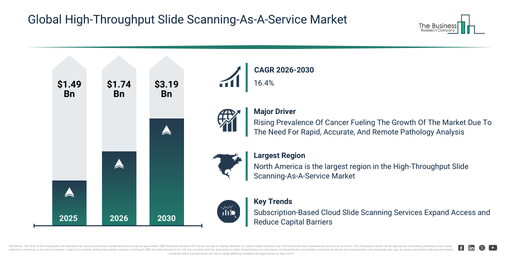
    The high-throughput slide scanning-as-a-service market size has seen rapid expansion in recent years. It is projected to grow from $1.49 billion in 2025 to $1.74 billion in 2026, at a compound annual growth rate (CAGR) of 16.7%. The historical growth in this market can be attributed to several factors, including the rising adoption of digital pathology, the growing demand for high-throughput scanning, increasing investment in pharmaceutical research, the expansion of academic and research applications, and the rising integration of AI in pathology workflows.

    The high-throughput slide scanning-as-a-service market size is projected to experience substantial expansion in the coming years. By 2030, its valuation is anticipated to reach $3.19 billion, exhibiting a compound annual growth rate (CAGR) of 16.4%. This projected increase throughout the forecast period stems from factors such as a heightened demand for remote diagnostics, increased integration of telepathology services, a growing requirement for multiplexed imaging, the proliferation of cloud-based slide platforms, and an intensified focus on precision medicine applications. Key developments expected during this period involve technological progress in AI-powered image analysis, novelties in cloud-based digital slide platforms, advancements in whole slide imaging for efficient high-throughput scanning, significant research findings in automated pathology workflows, and improvements in multiplexed fluorescence imaging techniques.

    Download A Free Sample Report For Comprehensive Market Insights:

    https://www.thebusinessresearchcompany.com/sample.aspx?id=30605&type=smp&utm_source=Blogs&utm_medium=Paid&utm_campaign=Jul_PR

    High-Throughput Slide Scanning-As-A-Service Market Expansion Supported By Key Demand Factors

    The expanding occurrence of cancer is projected to stimulate the growth of the high-throughput slide scanning-as-a-service market in the coming years. Cancer is a condition marked by the uncontrolled multiplication and dispersion of atypical cells, which can harm nearby tissues and organs if left untreated. The incidence of cancer is growing due to factors such as lifestyle choices like inadequate diet, smoking, drinking alcohol, and contact with environmental pollutants, which heighten the chances of developing different forms of cancer. High-throughput slide scanning-as-a-service assists in addressing cancer by quickly converting vast quantities of pathology slides into digital format for in-depth examination and virtual expert opinions. This service enhances the precision and speed of diagnosis, leading to prompt decisions about treatment and improved results for patients. For example, in October 2025, as reported by NHS Digital, a UK government organisation, England registered 354,820 new cancer diagnoses in 2023, averaging 972 diagnoses daily and indicating an increase of 8,605 cases from 2022; prostate cancer was the most frequently diagnosed type, with 58,137 new cases, showing a 6% rise in registrations compared to the prior year. Consequently, the increasing prevalence of cancer is propelling the high-throughput slide scanning-as-a-service market forward.

    High-Throughput Slide Scanning-As-A-Service Market Segmentation: How Is The Market Structured Across Key Categories?

    The high-throughput slide scanning-as-a-service market covered in this report is segmented –

    1) By Service Type: Brightfield Scanning, Fluorescence Scanning, Multiplexed Imaging, Other Service Types

    2) By Technology: Optical System, Automation Level, Scanning Resolution

    3) By Application: Pathology, Research, Drug Discovery, Clinical Diagnostics, Other Applications

    4) By End User: Hospitals And Clinics, Research Institutes, Pharmaceutical And Biotechnology Companies, Other End Users

    Subsegments:

    1) By Brightfield Scanning: Single Channel Brightfield, Multi-Channel Brightfield, High-Resolution Brightfield

    2) By Fluorescence Scanning: Single Fluorescence Channel, Multi-Fluorescence Channel, High-Sensitivity Fluorescence

    3) By Multiplexed Imaging: Sequential Multiplexing, Simultaneous Multiplexing, High-Plex Imaging

    4) By Other Service Types: Slide Quality Control, Tissue Morphology Analysis, Custom Imaging Services

    High-Throughput Slide Scanning-As-A-Service Market Growth Trends Influencing Competitive Dynamics

    Leading companies in the high-throughput slide scanning-as-a-service market are prioritizing the development of subscription services, such as cloud-enabled slide scanning service models, to facilitate remote access to high-throughput whole slide imaging without necessitating on-site infrastructure investment. These cloud-enabled slide scanning service models are defined as outsourced whole-slide imaging solutions where glass slides are digitized and securely stored on cloud platforms, enabling remote viewing, sharing, and analysis without requiring on-premise scanners or IT infrastructure. For instance, in March 2023, OptraSCAN Inc., a US-based digital pathology solutions provider, launched OnDemand Digital Pathology, which is a cloud-enabled slide scanning service model that offers subscription access to whole slide scanners with a 15–480 slide loading capacity and rapid scanning. This service will provide access to OptraSCAN whole-slide digital scanners (brightfield and fluorescence) with a 15–480 slide capacity that can scan a slide in about 58 seconds at 40x. It also includes a high-end workstation preconfigured with workflow software, telepathology tools, and AI analysis modules for IHC, morphology, immunofluorescence, and cytology, alongside Microsoft Azure–based cloud storage and round-the-clock support and services.

    High-Throughput Slide Scanning-As-A-Service Market Competitive Landscape And Leading Companies

    Major companies operating in the high-throughput slide scanning-as-a-service market are Koninklijke Philips N.V., IQVIA Holdings Inc., Laboratory Corporation of America Holdings, Roche Diagnostics International AG, Iron Mountain Incorporated, WuXi AppTec Co. Ltd., PerkinElmer Inc., Leica Biosystems Nussloch GmbH, Medical Imaging Solutions Pvt. Ltd., Charles River Laboratories International Inc., OptraSCAN Inc., Scopio Labs Inc., Pramana Inc., Molecular Pathology Laboratory Network Inc., 3DHISTECH Ltd., Experimental Pathology Laboratories Inc., Labtron Equipment Ltd., Applied Spectral Imaging Ltd., HistoWiz Inc., iHisto LLC

    Access The Complete High-Throughput Slide Scanning-As-A-Service Market Report:

    https://www.thebusinessresearchcompany.com/report/highly-functional-plasticizer-market-report?utm_source=Blogs&utm_medium=Paid&utm_campaign=Jul_PR

    High-Throughput Slide Scanning-As-A-Service Market Geographic Analysis: Where Is Demand Growing The Fastest?

    North America was the largest region in the high-throughput slide scanning-as-a-service market in 2025. Asia-Pacific is expected to be the fastest-growing region in the forecast period. The regions covered in the high-throughput slide scanning-as-a-service market report are Asia-Pacific, South East Asia, Western Europe, Eastern Europe, North America, South America, Middle East, Africa.

    Get in touch with us:

    The Business Research Company: https://www.thebusinessresearchcompany.com/

    Americas: +1 310-496-7795

    Asia: +44 7882 955267 & +91 8897263534

    Europe: +44 7882 955267

    Email us at: marketing@tbrc.info

    Follow us on:

    LinkedIn: https://in.linkedin.com/company/the-business-research-company

    YouTube: https://www.youtube.com/channel/UC24_fI0rV8cR5DxlCpgmyFQ

    Global Market Model: https://www.thebusinessresearchcompany.com/global-market-model