Month: September 2026

  • Bioactive Wound Care Market Forecast 2026–2030: Market Size, Trends And Growth Opportunities

    Bioactive Wound Care Market Forecast 2026–2030: Market Size, Trends And Growth Opportunities

    Backed by market attractiveness analysis, total addressable market sizing, company benchmarking matrices, interactive Excel dashboards, wider supply chain intelligence, emerging startup coverage, and detailed product-level insights, The Business Research Company’s 2026 market reports are designed to offer research that is more actionable and strategically valuable than ever.

    Bioactive Wound Care Market Growth From $9 Billion In 2026 To $12.48 Billion By 2030 At A CAGR Of 8.5%

    The size of the bioactive wound care market has seen substantial growth recently. It is anticipated to expand from $8.28 billion in 2025 to $9 billion in 2026, registering a compound annual growth rate (CAGR) of 8.7%. The expansion observed over the past period can be attributed to several factors, including the limited availability of bioactive wound care alternatives, a reliance on traditional gauze and bandages, an increasing occurrence of chronic wounds, the development of hospital and clinical infrastructure, and a heightened awareness of infection control.

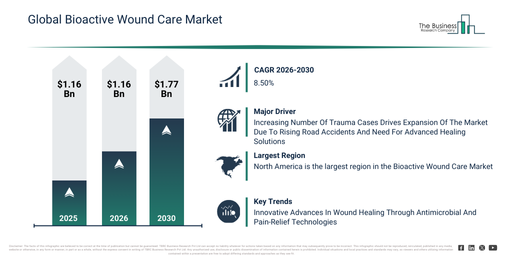
    The bioactive wound care market is poised for significant expansion in the upcoming years, with its valuation expected to climb to $12.48 billion by 2030, exhibiting a compound annual growth rate (CAGR) of 8.5%. This projected increase during the forecast period is attributed to several factors such as the development of nanocrystalline silver and iodine-based dressings, the broadening of home care and ambulatory wound management services, a rising diabetic and aging population, more stringent regulatory standards and quality certifications, and the adoption of personalized wound care solutions. Prominent trends for this period include the increasing use of antimicrobial and silver-based dressings, greater application of hydrogels and alginates for chronic wounds, continued growth in home care and ambulatory wound management, an intensified focus on advanced collagen and hydrofiber dressings, and an elevated emphasis on infection control and favorable wound healing outcomes.

    Get A Free Sample Report With In-Depth Market Insights:

    https://thebusinessresearchcompany.com/sample_request?id=62439409&type=smp&name=Bioactive%20Wound%20Care%20Market%20Report%202026&utm_source=Blogs&utm_medium=Paid&utm_campaign=Sep_PR

    Bioactive Wound Care Market Growth Backed By Core Demand Fundamentals

    The bioactive wound care market is projected to grow owing to the increasing prevalence of trauma cases. Trauma cases are defined as instances of physical injury resulting from external forces such as accidents, falls, or violence, frequently requiring urgent medical intervention. This rise in trauma cases is largely driven by an escalating number of road traffic accidents, attributed to greater vehicle usage and inadequate road safety measures. Bioactive wound care assists in trauma cases by promoting faster healing, preventing infections, and supporting tissue regeneration in complex or severe wounds. For instance, in December 2024, the Transport Accident Commission, an Australia-based government agency, reported that there were 267 fatal crashes on Victorian roads in the 12 months to the end of June 2024, marking an increase of 20 compared to the 247 fatal crashes recorded during the previous year. Therefore, the growing number of trauma cases is stimulating the expansion of the bioactive wound care market.

    Bioactive Wound Care Market Segment Trends And Revenue Contributors

    The bioactive wound care market covered in this report is segmented –

    1) By Product Type: Antimicrobial Dressings, Hydrogels, Alginates, Foams, Collagen Dressings, Silver-Based Dressings, Hydrofiber Dressings

    2) By Mode Of Action: Antibacterial Action, Anti-Inflammatory Action, Wound Healing Promotion, Moisture Control

    3) By Application: Chronic Wounds, Acute Wounds, Burns, Surgical Wounds, Diabetic Foot Ulcers, Pressure Ulcers

    4) By End User: Hospitals, Clinics, Home Care Settings, Ambulatory Surgical Centers, Nursing Homes

    Subsegments:

    1) By Antimicrobial Dressings: Silver-Impregnated Dressings, Iodine-Based Dressings, Honey-Based Dressings

    2) By Hydrogels: Amorphous Hydrogel, Hydrogel Sheets, Hydrogel Impregnated Gauze

    3) By Alginates: Calcium Alginate Dressings, Calcium Sodium Alginate Dressings

    4) By Foams: Silicone Foam Dressings, Polyurethane Foam Dressings, Adhesive And Non-Adhesive Foams

    5) By Collagen Dressings: Bovine Collagen, Porcine Collagen, Synthetic Collagen

    6) By Silver-Based Dressings: Nanocrystalline Silver Dressings, Silver Sulfadiazine Dressings

    7) By Hydrofiber Dressings: Adhesive Hydrofiber, Non-Adhesive Hydrofiber

    Bioactive Wound Care Market Growth Trends Reshaping The Competitive Landscape

    Major companies within the bioactive wound care market are concentrating on developing advanced solutions, such as antimicrobial wound dressings, to improve infection management, expedite healing processes, and lessen the risk of complications in both chronic and acute wounds. An antimicrobial wound dressing is a type of wound care product infused with antimicrobial agents like silver, iodine, or honey, designed to prevent or reduce microbial contamination, control infections, and encourage faster wound recovery. For instance, in October 2024, Imbed Biosciences Inc., a US-based medical device company, obtained FDA 510(k) clearance for Microlyte Ag, or lidocaine, which is the first antimicrobial wound dressing to incorporate lidocaine for managing painful skin wounds. This wound dressing combines antimicrobial silver and lidocaine to both deter infection and deliver local pain relief in various partial- and full-thickness wounds. It supports healing by maintaining a moist environment and decreasing pain, potentially reducing the need for systemic antibiotics and opioids.

    Bioactive Wound Care Market Key Participants And Competitive Landscape

    Major companies operating in the bioactive wound care market are 3M Company, Smith & Nephew PLC, Coloplast A/S, PAUL HARTMANN AG, Mölnlycke Health Care AB, CONVATEC GROUP PLC, Hollister Incorporated, Organogenesis Holdings Inc., DeRoyal Industries Inc., MiMedx Group Inc., B. Braun SE, Kerecis Inc., Sanara MedTech Inc., Aroa Biosurgery Limited, BioMonde GmbH, DermaRite Industries LLC., BSN MEDICAL PRIVATE LIMITED, Covalon Technologies Ltd., Sonoma Pharmaceuticals Inc., Integra LifeSciences Holdings Corporation.

    View The Full Bioactive Wound Care Market Report:

    https://thebusinessresearchcompany.com/report/bioactive-wound-care-global-market-report?utm_source=Blogs&utm_medium=Paid&utm_campaign=Sep_PR

    Bioactive Wound Care Market Geographic Analysis: Where Is Demand Accelerating Fastest?

    North America was the largest region in the bioactive wound care market in 2025. Asia-Pacific is expected to be the fastest-growing region in the forecast period. The regions covered in the bioactive wound care market report are Asia-Pacific, South East Asia, Western Europe, Eastern Europe, North America, South America, Middle East, Africa.

    Reach Out To Our Team:

    The Business Research Company: https://www.thebusinessresearchcompany.com/

    Americas: +1 310-496-7795

    Asia: +44 7882 955267 & +91 8897263534

    Europe: +44 7882 955267

    Email us at: marketing@tbrc.info

    Follow us on:

    LinkedIn: https://in.linkedin.com/company/the-business-research-company

    YouTube: https://www.youtube.com/channel/UC24_fI0rV8cR5DxlCpgmyFQ

    Global Market Model: https://www.thebusinessresearchcompany.com/global-market-model
  • Bioabsorbable Surgical Mesh Market Size Reaches $1.36 Billion In 2026: What Is Driving Growth?

    Bioabsorbable Surgical Mesh Market Size Reaches $1.36 Billion In 2026: What Is Driving Growth?

    Featuring market attractiveness scoring, total addressable market sizing, company benchmarking matrices, interactive Excel dashboards, deeper supply chain intelligence, emerging startup tracking, and granular product-level insights, The Business Research Company’s 2026 market reports are built to deliver research that is both more actionable and more strategically valuable.

    Bioabsorbable Surgical Mesh Market Expansion Outlook: What Revenue Opportunities Are Ahead?

    The bioabsorbable surgical mesh market has seen considerable growth recently. It is projected to expand from $1.25 billion in 2025 to $1.36 billion in 2026, achieving a compound annual growth rate (CAGR) of 8.8%. This historical growth stemmed from the drawbacks of permanent surgical mesh, an increase in hernia and soft tissue repair operations, enhanced understanding of post-surgical complications, a rise in hospital-based surgical procedures, and the initial implementation of absorbable polymers.

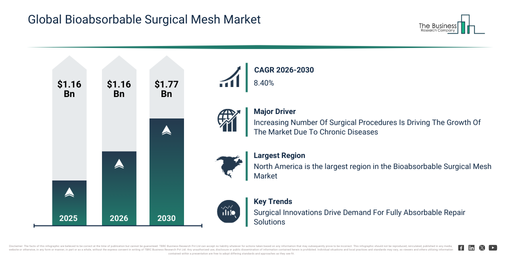
    The bioabsorbable surgical mesh market is projected to experience substantial expansion over the coming years. This market is anticipated to reach a valuation of $1.88 billion by 2030, exhibiting a compound annual growth rate (CAGR) of 8.4%. This projected growth during the forecast period is largely driven by improvements in bioabsorbable polymer technology, a heightened demand for less invasive surgical procedures, increased application of bioactive and drug-releasing meshes, the expanding number of surgeries among older demographics, and broader clinical acceptance in specialized surgical fields. Key developments expected within this period involve the greater use of bioabsorbable mesh for hernia repairs, an increasing inclination towards temporary rather than permanent mesh implants, a surge in the utilization of composite and bioactive mesh substances, a concerted effort to mitigate post-operative complications and infections, and the further spread of minimally invasive surgical techniques.

    Get A Free Sample Report With In-Depth Market Insights:

    https://thebusinessresearchcompany.com/sample_request?id=22826409&type=smp&name=Bioabsorbable%20Surgical%20Mesh%20Market%20Report%202026&utm_source=Blogs&utm_medium=Paid&utm_campaign=Sep_PR

    Bioabsorbable Surgical Mesh Market Growth Catalysts And Demand Drivers

    An anticipated increase in surgical procedures is set to boost the expansion of the bioabsorbable surgical mesh market in the future. A surgical procedure is defined as a medical intervention involving the deliberate, lasting modification of body structures, often by incising tissue, or mending or excising a body part, to address, identify, or avert disease, injury, or other medical issues. This uptick in surgical procedures is mainly attributable to the growing occurrence of chronic illnesses like cardiovascular diseases, cancer, and obesity-related conditions. Bioabsorbable surgical mesh assists in these procedures by offering temporary support to healing tissues and progressively dissolving, thereby lowering the likelihood of long-term issues linked with permanent implants. For example, data from June 2024, provided by the International Society of Aesthetic Plastic Surgery (ISAPS), a US-based professional organization for board-certified aesthetic plastic surgeons, indicated a 5.5% increase in surgical procedures in 2023, with over 15.8 million surgeries and 19.1 million non-surgical procedures conducted worldwide. Consequently, the rising volume of surgical procedures is propelling the growth of the bioabsorbable surgical mesh market.

    Bioabsorbable Surgical Mesh Market Segment Analysis Spotlighting Growth Areas

    The bioabsorbable surgical mesh market covered in this report is segmented –

    1) By Product Type: Polymer-Based Mesh, Composite Mesh, Bioactive Mesh

    2) By Material Type: Polylactic Acid, Polyglycolic Acid, Polycaprolactone, Composite Materials, Natural Polymers

    3) By Distribution Channel: Direct Sales, Online Sales, Distributors And Wholesalers

    4) By Application: Hernia Repair, Dural Repair, Urological Surgery, Cardiovascular Surgery, Orthopedic Surgery, Other Applications

    5) By End-Use: Hospitals, Ambulatory Surgical Centers, Specialty Clinics, Research Institutions

    Subsegments:

    1) By Polymer-Based Mesh: Polyglycolic Acid (PGA) Mesh, Polylactic Acid (PLA) Mesh, Polycaprolactone (PCL) Mesh, Polydioxanone (PDO) Mesh

    2) By Composite Mesh: Polymer-Collagen Composite Mesh, Polymer-Coated Composite Mesh, Synthetic-Biological Composite Mesh, Polymer-Hydrogel Composite Mesh

    3) By Bioactive Mesh: Antimicrobial-Embedded Mesh, Growth Factor-Embedded Mesh, Drug-Eluting Mesh, Stem Cell-Seeded Mesh

    Bioabsorbable Surgical Mesh Market Trends Shaping Long-Term Demand

    Leading companies in the bioabsorbable surgical mesh market are concentrating on developing advanced products, such as completely bioabsorbable pocket and strap designs, to improve the ease of placement and fixation during hernia repair procedures. A fully bioabsorbable pocket and strap design integrates absorbable structural components into the mesh, allowing for precise positioning and lateral fixation while removing the necessity for permanent implants. For example, in April 2025, Becton, Dickinson and Company, a US-based medical device company, introduced the Phasix ST Umbilical Hernia Patch. This patch is the first fully absorbable hernia patch specifically engineered for umbilical hernias, featuring a pocket and strap configuration made from poly-4-hydroxybutyrate (P4HB), a biologically derived polymer. This innovative design imitates the handling and placement techniques of permanent mesh, while being entirely absorbed by the body over a period. The patch further includes a hydrogel barrier based on Sepra Technology to minimize tissue adhesion. Available in various sizes, the product addresses a broad array of umbilical hernia defects and reflects the expanding market demand for non-permanent, patient-focused solutions in soft tissue reconstruction.

    Bioabsorbable Surgical Mesh Market Top Companies Driving Competitive Growth

    Major companies operating in the bioabsorbable surgical mesh market are Johnson And Johnson, Medtronic plc, Integra LifeSciences Holdings Corporation, B Braun Melsungen AG, Advanced Medical Solutions Group plc, TELA Bio Inc, Kerecis Limited, W L Gore And Associates Inc, Assut Europe S p A, BioHealth Medical Technology Co Ltd, Aroa Biosurgery Limited, Cook Biotech Incorporated, Tissue Regenix Group plc, Aran Biomedical Teoranta, Deep Blue Medical Advances Inc, Meccellis Biotech, PrintBio Inc, Atrium Medical Corporation, Cousin Biotech, Surgical Mesh Technologies Inc, Gore Medical Bioabsorbables, MedSkin Solutions Dr Suwelack AG

    View The Full Bioabsorbable Surgical Mesh Market Report:

    https://thebusinessresearchcompany.com/report/bioabsorbable-surgical-mesh-global-market-report?utm_source=Blogs&utm_medium=Paid&utm_campaign=Sep_PR

    Bioabsorbable Surgical Mesh Market Global Footprint: Which Region Leads The Industry?

    North America was the largest region in the bioabsorbable surgical mesh market in 2025. Asia-Pacific is expected to be the fastest-growing region in the forecast period. The regions covered in the bioabsorbable surgical mesh market report are Asia-Pacific, South East Asia, Western Europe, Eastern Europe, North America, South America, Middle East, Africa.

    Reach Out To Our Team:

    The Business Research Company: https://www.thebusinessresearchcompany.com/

    Americas: +1 310-496-7795

    Asia: +44 7882 955267 & +91 8897263534

    Europe: +44 7882 955267

    Email us at: marketing@tbrc.info

    Follow us on:

    LinkedIn: https://in.linkedin.com/company/the-business-research-company

    YouTube: https://www.youtube.com/channel/UC24_fI0rV8cR5DxlCpgmyFQ

    Global Market Model: https://www.thebusinessresearchcompany.com/global-market-model
  • Bioabsorbable Stents Market Valued At $0.65 Billion In 2026: Key Trends And Growth Drivers

    Bioabsorbable Stents Market Valued At $0.65 Billion In 2026: Key Trends And Growth Drivers

    Built to provide research that’s more actionable and strategically valuable, The Business Research Company’s 2026 market reports include market attractiveness analysis, total addressable market sizing, company benchmarking matrices, interactive Excel dashboards, broader supply chain intelligence, emerging startup tracking, and in-depth product insights.

    Bioabsorbable Stents Market Growth Potential: How Will Market Size Shift Through 2030?

    The bioabsorbable stents market size has shown rapid growth in recent years. It is anticipated to expand from $0.41 billion in 2025 to $0.45 billion in 2026, achieving a compound annual growth rate (CAGR) of 10.3%. The market’s historical growth can be attributed to several factors, including the increasing prevalence of cardiovascular diseases, the widespread adoption of interventional cardiology procedures, the early utilization of biodegradable polymers in medical implants, the rise in coronary stent procedures, and advancements in vascular intervention techniques.

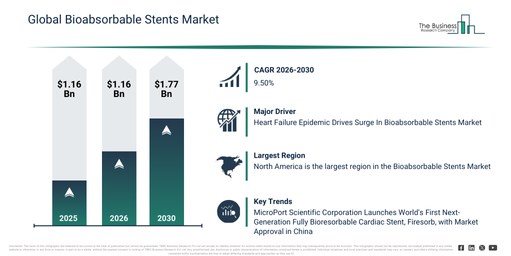
    The bioabsorbable stents market is projected to experience substantial expansion in the coming years. This market is forecast to reach $0.65 billion by 2030, exhibiting a compound annual growth rate (CAGR) of 9.5%. This projected growth is driven by factors such as the increasing need for temporary vascular support, a heightened emphasis on long-term patient results, the expanding scope of treatments for peripheral artery disease, increased investments in biodegradable implant research, and a rise in regulatory approvals for new stent materials. Key trends anticipated during this period involve the accelerating development of advanced bioabsorbable materials, the growing uptake of polymer-based bioabsorbable stents, a concentrated effort to minimize long-term complications, the broadening of clinical trials for peripheral applications, and a stronger focus on ensuring biocompatibility and safety.

    Get A Free Sample Report With In-Depth Market Insights:

    https://thebusinessresearchcompany.com/sample_request?id=24766769&type=smp&name=Bioabsorbable%20Stents%20Market%20Report%202026&utm_source=Blogs&utm_medium=Paid&utm_campaign=Sep_PR

    Bioabsorbable Stents Market Opportunity Drivers: What’s Unlocking New Revenue Potential?

    The expansion of the bioabsorbable stents market is projected to be propelled by the growing incidence of heart failure. This condition arises when the heart muscle’s capacity to effectively pump blood diminishes, leading to an accumulation of surplus fluid in the body. Bioabsorbable stents offer a solution for managing heart failure, as they can improve cardiac function and alleviate associated symptoms. For example, the Heart and Stroke Foundation of Canada, a Canada-based information provider on stroke, heart disease, surgeries, and treatments, currently identifies 750,000 people with a heart failure diagnosis, alongside an annual addition of 100,000 new instances of this irreversible illness. Furthermore, forecasts suggest that by 2030, annual healthcare spending related to heart failure in Canada is expected to reach $2.8 billion. Consequently, the escalating occurrence of heart failure is set to significantly foster the expansion of the bioabsorbable stents market in the future.

    Bioabsorbable Stents Market Segment Performance And Emerging Opportunities

    The bioabsorbable stents market covered in this report is segmented –

    1) By Product Type: Polymer-Based Bioabsorbable Stents, Metal-Based Bioabsorbable Stents

    2) By Absorption Rate: Slow- Absorption Stents, Fast- Absorption Stents

    3) By Applications: Coronary Artery Diseases, Peripheral Artery Diseases

    Subsegments:

    1) By Polymer-Based Bioabsorbable Stents: PLGA (Poly(Lactic-Co-Glycolic Acid)) Stents, PGA (Polyglycolic Acid) Stents, PLLA (Poly(L-Lactic Acid)) Stents, Other Biodegradable Polymer Stents

    2) By Metal-Based Bioabsorbable Stents: Magnesium-Based Stents, Iron-Based Stents, Zinc-Based Stents, Other Metal-Based Bioabsorbable Stents

    Bioabsorbable Stents Market Innovation Trends Shaping Future Development

    Companies operating within the bioabsorbable stents market are increasingly concentrating on developing innovative technologies, including the Latest Generation of Bioresorbable Cardiac Stent, to enhance their profitability. The latest generation of bioresorbable cardiac stents represents advanced medical devices specifically engineered for the treatment of coronary artery disease, constructed from biodegradable materials that gradually dissipate after effectively keeping the artery open. For instance, in July 2024, MicroPort Scientific Corporation, a China-based medical device manufacturer, successfully obtained market authorization from China’s National Medical Products Administration (NMPA) for the world’s first next-generation fully bioresorbable cardiac stent. Developed by MicroPort Scientific Corporation, the Firesorb stent is designed to completely resorb within three years, leading to a substantial reduction in long-term complications such as thrombosis. Clinical trials conducted with 1,468 patients have revealed impressive results, including a low thrombosis rate of 0.32% and a 4-year target lesion failure rate of just 4.3%. Prominent medical experts have lauded its innovative thin strut design and its superior endothelial coverage when compared to earlier stent generations.

    Bioabsorbable Stents Market Leading Players And Competitive Positioning

    Major companies operating in the bioabsorbable stents market are Abbott Laboratories, REVA Medical Inc., Elixir Medical Corporation, Biotronik SE & Co. KG, Amaranth Medical Inc., Tepha Inc., S3V Vascular Technologies, Arterius Limited, MicroPort Scientific Corporation, Meril Life Sciences Pvt. Ltd., Stentys SA, OrbusNeich, Arterial Remodeling Technologies, Cardionovum GmbH, Envision Scientific Pvt. Ltd., Eurocor GmbH, Hexacath, Lifetech Scientific (Shenzhen) Co. Ltd., Manli Cardiology Limited, Sahajanand Medical Technologies Pvt. Ltd.

    View The Full Bioabsorbable Stents Market Report:

    https://thebusinessresearchcompany.com/report/bioabsorbable-stents-global-market-report?utm_source=Blogs&utm_medium=Paid&utm_campaign=Sep_PR

    Bioabsorbable Stents Market Regional Distribution: Which Areas Power Market Growth?

    North America was the largest region in the bioabsorbable stents market in 2025. Western Europe was the second-largest region in the bioabsorbable stents market report. The regions covered in the bioabsorbable stents market report are Asia-Pacific, South East Asia, Western Europe, Eastern Europe, North America, South America, Middle East, Africa.

    Reach Out To Our Team:

    The Business Research Company: https://www.thebusinessresearchcompany.com/

    Americas: +1 310-496-7795

    Asia: +44 7882 955267 & +91 8897263534

    Europe: +44 7882 955267

    Email us at: marketing@tbrc.info

    Follow us on:

    LinkedIn: https://in.linkedin.com/company/the-business-research-company

    YouTube: https://www.youtube.com/channel/UC24_fI0rV8cR5DxlCpgmyFQ

    Global Market Model: https://www.thebusinessresearchcompany.com/global-market-model
  • Bio Implant Allograft And Xenograft Market Size In 2026: Growth Outlook And Forecast Through 2030

    Bio Implant Allograft And Xenograft Market Size In 2026: Growth Outlook And Forecast Through 2030

    Backed by market attractiveness analysis, total addressable market sizing, company benchmarking matrices, interactive Excel dashboards, wider supply chain intelligence, emerging startup coverage, and detailed product-level insights, The Business Research Company’s 2026 market reports are designed to offer research that is more actionable and strategically valuable than ever.

    Bio Implant Allograft And Xenograft Market Value Analysis: What Growth Lies Ahead Over The Forecast Period?

    The bio implant allograft and xenograft market size has experienced robust expansion in recent years. This market is projected to expand from $2.66 billion in 2025 to $2.9 billion in 2026, exhibiting a compound annual growth rate (CAGR) of 8.9%. Historically, factors such as the restricted supply of donor tissue, the high incidence of orthopedic and reconstructive procedures, increasing need for wound healing products, limitations of traditional implants, and the absence of sophisticated preservation technologies have contributed to its expansion.

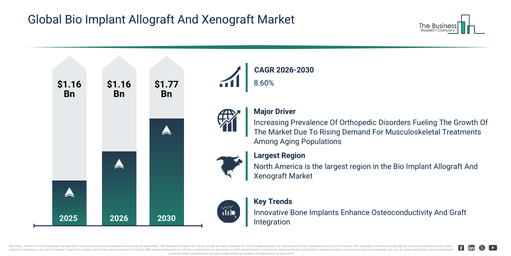
    The bio implant allograft and xenograft market is projected to experience robust expansion over the coming years. This market is anticipated to reach a valuation of $4.03 billion by 2030, demonstrating a compound annual growth rate (CAGR) of 8.6%. Factors contributing to this growth during the forecast period include advances in 3D bioprinting and regenerative medicine, intensified research and development efforts in allograft/xenograft processing, the incorporation of AI for precise tissue matching, an increasing elderly demographic requiring implants, and the worldwide proliferation of surgical facilities. Key developments expected during the forecast period encompass AI-driven tissue compatibility assessment, the 3D bioprinting of grafts, the broader integration of regenerative medicine, procedures for minimally invasive implants, and sophisticated sterilization and preservation methodologies.

    Get A Free Sample Report With In-Depth Market Insights:

    https://thebusinessresearchcompany.com/sample_request?id=71865263&type=smp&name=Bio%20Implant%20Allograft%20And%20Xenograft%20Market%20Report%202026&utm_source=Blogs&utm_medium=Paid&utm_campaign=Sep_PR

    Bio Implant Allograft And Xenograft Market Growth Momentum: What Factors Are Shaping Demand?

    The future expansion of the bio implant allograft and xenograft market is anticipated to be driven by the rising occurrence of orthopedic disorders. These disorders encompass conditions impacting the musculoskeletal system, specifically bones, joints, muscles, ligaments, tendons, and nerves. A growing global elderly population contributes to higher demand for orthopedic treatments, given that older people are more susceptible to musculoskeletal conditions like osteoarthritis, osteoporosis, and fractures. Bio implant allografts and xenografts play a crucial role in managing orthopedic disorders by facilitating the repair of damaged bone and tissue, encouraging natural healing, and enhancing structural integrity. Furthermore, they boost patient recovery through successful surgical methods and by lowering the potential for complications during orthopedic operations. As an illustration, a survey study from August 2023 by the Institute for Health Metrics and Evaluation, a US-based public health research institute, indicated that 15% of people aged 30 and above suffered from osteoarthritis in 2023, with projections showing this figure could climb to approximately 1 billion by 2050. Consequently, the escalating incidence of orthopedic disorders is directly fueling the expansion of the bio implant allograft and xenograft market.

    Bio Implant Allograft And Xenograft Market Segment Landscape And Growth Outlook

    The bio implant allograft and xenograft market covered in this report is segmented –

    1) By Product Type: Allografts, Xenografts, Composite Grafts

    2) By Storage Type: Freeze-Dried (Lyophilized), Fresh Tissue, Preserved Tissue

    3) By Distribution Channel: Direct Sales, Third-Party Distributors, Online Sales Platforms

    4) By Application Area: Orthopedic Surgery, Dental Surgery, Cardiovascular Procedures, Plastic And Reconstructive Surgery, Trauma Surgery

    5) By End-User: Hospitals, Ambulatory Surgical Centers, Specialty Clinics, Research And Academic Institutes

    Subsegments:

    1) By Allografts: Fresh Allografts, Frozen Allografts, Freeze-Dried Allografts

    2) By Xenografts: Bovine-Derived Xenografts, Porcine-Derived Xenografts, Equine-Derived Xenografts

    3) By Composite Grafts: Ceramic-Polymer Composite Grafts, Polymer-Metal Composite Grafts, Biologic-Synthetic Composite Grafts

    Bio Implant Allograft And Xenograft Market Trends Redefining Industry Growth

    Major companies operating in the bioimplant allograft and xenograft market are concentrating on developing innovative solutions, such as demineralized bone allograft implants, to improve osteoconductivity, enhance graft integration, and accelerate bone regeneration. Demineralized bone allograft implants are derived from donor bone grafts with their minerals removed, while retaining collagen and growth factors to foster new bone formation and integration in orthopedic, spinal, and dental procedures. For instance, in February 2024, Tetrous Inc., a US-based regenerative medicine company, launched the EnFix TAC, a 100% demineralized bone allograft implant designed to complement its existing EnFix RC implant for rotator cuff surgery. The EnFix TAC focuses on healing at the tendon-to-bone interface (enthesis), aiming to improve biologic repair where traditional surgery often results in scar tissue and high failure rates. This implant offers osteoinductive and osteoconductive properties through proprietary demineralized bone fibers and is available in two configurations to suit different rotator cuff tear sizes.

    Bio Implant Allograft And Xenograft Market Competitive Overview And Top Companies

    Major companies operating in the bio implant allograft and xenograft market are Stryker Corporation, Zimmer Biomet Holdings Inc., Arthrex Inc., Institut Straumann AG, Integra LifeSciences, NuVasive Inc., Orthofix Medical Inc., MTF Biologics, BioHorizons Inc., MiMedx Group Inc., RTI Surgical Holdings Inc., LifeNet Health, AxoGen Inc., AlloSource, Xtant Medical Holdings Inc., Alpha Bio Tec, Geistlich Pharma AG, Bioventus Inc., Medtronic plc, Organogenesis Inc., Conmed Corporation, Collagen Matrix Inc.

    View The Full Bio Implant Allograft And Xenograft Market Report:

    https://thebusinessresearchcompany.com/report/bio-implant-allograft-and-xenograft-global-market-report?utm_source=Blogs&utm_medium=Paid&utm_campaign=Sep_PR

    Bio Implant Allograft And Xenograft Market Leading Geography: Which Region Contributes The Most Revenue?

    North America was the largest region in the bio implant allograft and xenograft market in 2025. Asia-Pacific is expected to be the fastest-growing region in the forecast period. The regions covered in the bio implant allograft and xenograft market report are Asia-Pacific, South East Asia, Western Europe, Eastern Europe, North America, South America, Middle East, Africa.

    Reach Out To Our Team:

    The Business Research Company: https://www.thebusinessresearchcompany.com/

    Americas: +1 310-496-7795

    Asia: +44 7882 955267 & +91 8897263534

    Europe: +44 7882 955267

    Email us at: marketing@tbrc.info

    Follow us on:

    LinkedIn: https://in.linkedin.com/company/the-business-research-company

    YouTube: https://www.youtube.com/channel/UC24_fI0rV8cR5DxlCpgmyFQ

    Global Market Model: https://www.thebusinessresearchcompany.com/global-market-model
  • Bio Decontamination Equipment Market Trends Supporting 11.4% CAGR Growth Through 2030

    Bio Decontamination Equipment Market Trends Supporting 11.4% CAGR Growth Through 2030

    Featuring market attractiveness scoring, total addressable market sizing, company benchmarking matrices, interactive Excel dashboards, deeper supply chain intelligence, emerging startup tracking, and granular product-level insights, The Business Research Company’s 2026 market reports are built to deliver research that is both more actionable and more strategically valuable.

    Bio Decontamination Equipment Market Size Forecast: How Big Could The Market Get By 2030?

    The bio decontamination equipment market has experienced significant growth in recent years. This market is projected to expand from $1.21 billion in 2025 to $1.35 billion in 2026, at a compound annual growth rate (CAGR) of 11.7%. Historically, the expansion of the market was driven by stringent biosafety regulations, concerns regarding hospital-acquired infections, inefficiencies in manual cleaning methods, the early adoption of UV and hydrogen peroxide systems, and increasing demand from pharmaceutical laboratories.

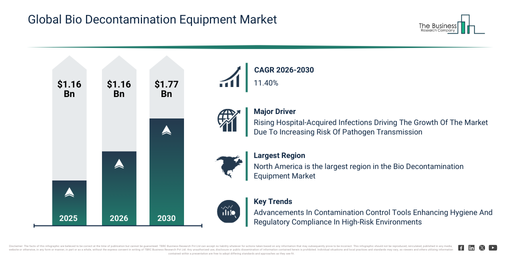
    The bio decontamination equipment market is projected for significant expansion over the coming years. Its valuation is anticipated to reach $2.08 billion by 2030, exhibiting a compound annual growth rate (CAGR) of 11.4%. This projected expansion is primarily driven by factors such as the incorporation of AI and automation, an increase in cleanroom facilities, wider acceptance in the food and aerospace sectors, growing understanding of pathogen management, and governmental backing for adherence to hygiene standards. Significant developments expected during this period involve AI-powered contamination detection, IoT-enabled decontamination machinery, automatic room and surface disinfection, monitoring systems linked to the cloud, and environmental regulation based on data.

    Get A Free Sample Report With In-Depth Market Insights:

    https://thebusinessresearchcompany.com/sample_request?id=40397102&type=smp&name=Bio%20Decontamination%20Equipment%20Market%20Report%202026&utm_source=Blogs&utm_medium=Paid&utm_campaign=Sep_PR

    Bio Decontamination Equipment Market Expansion Drivers: What’s Shaping Future Growth?

    The anticipated expansion of the bio decontamination equipment market is linked to the growing occurrence of hospital-acquired infections. Hospital-acquired infections, or HAIs, refer to infections contracted by patients during their medical care in hospitals or similar healthcare settings, usually manifesting at least 48 hours post-admission. The surge in HAIs stems from a greater number of patient admissions, with increased occupancy leading to a heightened risk of cross-contamination and wider infection dissemination. This equipment plays a crucial role in preventing HAIs by efficiently removing detrimental microorganisms from essential surfaces and the air, consequently lowering the potential for pathogen spread within healthcare facilities. For example, data from March 2025, provided by the UK’s Health Security Agency, indicated that in 2023, 7.6% of patients had hospital-acquired infections. The most prevalent types were pneumonia and lower respiratory tract infections at 29.6%, followed by urinary tract infections at 17.5%, and sepsis or disseminated infections at 10.6%. Thus, the rising frequency of hospital-acquired infections is a primary impetus for the expansion of the bio decontamination equipment market.

    Bio Decontamination Equipment Market Breakdown By Product Type And Application

    The bio decontamination equipment market covered in this report is segmented –

    1) By Product Type: Chamber Decontamination, Room Decontamination

    2) By Technology Type: Hydrogen Peroxide Vapor, Chlorine Dioxide, Ultraviolet (UV) Radiation, Others Technology Types

    3) By Application: Surface Decontamination, Air Decontamination

    4) By End User: Hospitals, Pharmaceutical Companies, Research Laboratories, Food Processing Plants, Aerospace Enterprises

    Subsegments:

    1) By Chamber Decontamination: Hydrogen Peroxide Vapor Systems, Ultraviolet Light Chambers, Ozone-Based Chambers, Dry Fog Systems, Chlorine Dioxide Chambers

    2) By Room Decontamination: Mobile Hydrogen Peroxide Units, Fixed Ultraviolet Systems, Fogging Machines

    Bio Decontamination Equipment Market Strategic Trends: What Defines The Next Growth Phase?

    Companies operating in the bio decontamination equipment market are increasingly focused on creating advanced solutions, particularly contamination control tools, to uphold regulatory compliance and quality standards across vital industries. Contamination control tools are defined as instruments or systems utilized to maintain clean conditions by minimizing or eliminating harmful microbes and particles within a controlled environment. For example, in May 2025, UMF Corporation, a US-based producer of cleaning and hygiene products, unveiled its RPM (Ridged Performance Material) product line. This system is a comprehensive 10-piece collection of contamination control tools engineered to ensure optimal hygiene in high-risk settings, including hospital pharmacies, vivariums, food processing facilities, and areas requiring remediation of hazardous substances. The core of these tools lies in the Ridged Performance Material, a cleaning medium designed for efficient removal and absorption of contaminants from surfaces. The collection encompasses specialized contamination control tools such as flat mops, wipers, applicators, and various accessories, all engineered for peak lint-free performance. A significant feature is the OTU Hook and Loop Frame, a single-use, completely recyclable polypropylene frame that offers a cost-effective alternative to conventional stainless steel or reusable mop frames.

    Bio Decontamination Equipment Market Competitive Landscape: Which Companies Lead The Industry?

    Major companies operating in the bio decontamination equipment market are Steris Plc, Labconco Corporation, Turnkey Modular Systems Inc., AM Instruments Srl, Air Science LLC, Automated Systems of Tacoma LLC, UVDI Inc., Brinda Pharma Technologies Pvt. Ltd., TOMI Environmental Solutions Inc., De Lama S.p.A., Sanosil International AG, Suncombe Ltd., Weike Group, LifeAire Systems LLC, Germitec, CURIS Decontamination System, JCE Biotechnology, Noxilizer Inc., Hunan Kehuan Biological Technology Co. Ltd., LAF Technologies Pty Ltd., Cleamix Ltd., Solidfog Technologies

    View The Full Bio Decontamination Equipment Market Report:

    https://thebusinessresearchcompany.com/report/bio-decontamination-equipment-global-market-report?utm_source=Blogs&utm_medium=Paid&utm_campaign=Sep_PR

    Bio Decontamination Equipment Market Regional Outlook: Where Is Opportunity Concentrated?

    North America was the largest region in the bio decontamination equipment market in 2025. Asia-Pacific is expected to be the fastest-growing region in the forecast period. The regions covered in the bio decontamination equipment market report are Asia-Pacific, South East Asia, Western Europe, Eastern Europe, North America, South America, Middle East, Africa.

    Reach Out To Our Team:

    The Business Research Company: https://www.thebusinessresearchcompany.com/

    Americas: +1 310-496-7795

    Asia: +44 7882 955267 & +91 8897263534

    Europe: +44 7882 955267

    Email us at: marketing@tbrc.info

    Follow us on:

    LinkedIn: https://in.linkedin.com/company/the-business-research-company

    YouTube: https://www.youtube.com/channel/UC24_fI0rV8cR5DxlCpgmyFQ

    Global Market Model: https://www.thebusinessresearchcompany.com/global-market-model
  • Bilirubin Blood Test Market Forecast Highlights A $2.08 Billion Opportunity For Industry Participants

    Bilirubin Blood Test Market Forecast Highlights A $2.08 Billion Opportunity For Industry Participants

    Built to provide research that’s more actionable and strategically valuable, The Business Research Company’s 2026 market reports include market attractiveness analysis, total addressable market sizing, company benchmarking matrices, interactive Excel dashboards, broader supply chain intelligence, emerging startup tracking, and in-depth product insights.

    Bilirubin Blood Test Market Revenue Outlook: What CAGR Lies Ahead Through 2030?

    The bilirubin blood test market size has experienced robust growth over recent years. It is anticipated to expand from $1.46 billion in 2025 to $1.57 billion in 2026, registering a compound annual growth rate (CAGR) of 7.4%. This historical expansion can be linked to several factors, including the increase in neonatal jaundice screening programs, a rise in hospital-based liver function testing, enhanced diagnostic awareness of liver disorders, the regular integration of serum bilirubin testing into clinical practice, and the broader availability of pediatric and infant diagnostic services.

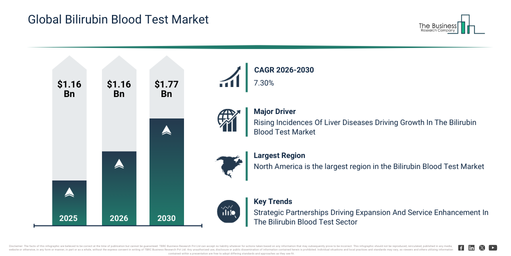
    The bilirubin blood test market is anticipated to experience substantial growth in the upcoming years, projected to reach $2.08 billion in 2030 with a compound annual growth rate (CAGR) of 7.3%. This expansion during the forecast period is primarily driven by the increasing incidence of chronic liver disease and hepatitis, a heightened need for early assessment of liver health, and the growing application of bilirubin testing in primary care environments. Additionally, higher rates of testing among aging and at-risk patient groups, coupled with the advancement of point-of-care and specialized liver diagnostics, contribute to this trajectory. Major developments expected in this period include the wider use of bilirubin testing for evaluating liver function, its increasing adoption in screening for neonatal jaundice, and a rising demand for such tests in hematology and for preliminary liver disorder assessments. Furthermore, there will be an expansion of bilirubin monitoring across various hospital and clinical settings, emphasizing proactive detection and routine screening for maintaining liver health.

    Get A Free Sample Report With In-Depth Market Insights:

    https://thebusinessresearchcompany.com/sample_request?id=57935499&type=smp&name=Bilirubin%20Blood%20Test%20Market%20Report%202026&utm_source=Blogs&utm_medium=Paid&utm_campaign=Sep_PR

    Bilirubin Blood Test Market Development Factors: What’s Supporting Demand?

    The increasing occurrence of liver conditions is anticipated to drive expansion in the bilirubin blood test market moving forward. Liver ailments encompass various conditions that hinder the liver’s proper functioning, potentially stemming from factors like infections, excessive alcohol consumption, or metabolic issues. The surge in liver disease cases is linked to higher rates of obesity, heavy alcohol intake, viral pathogens, and poor lifestyle decisions, all of which contribute to liver impairment and harm. Liver conditions can markedly affect the body’s bilirubin levels, with bilirubin blood tests assisting in diagnosing and tracking liver function. These tests offer vital information about patient health and support healthcare professionals in efficiently addressing and treating liver-associated issues. For example, data from GOV.UK, a UK department for science, innovation, and technology, showed that in April 2023, hospital admission rates for liver disease climbed from 150.6 (148.2–152.9) to 155.2 (152.9–157.5) per 100,000 population between the fiscal years concluding 2022 and 2023, highlighting a persistent rise in hospitalizations due to liver conditions. Consequently, the increasing prevalence of liver ailments is stimulating the bilirubin blood test market.

    Bilirubin Blood Test Market Segment Analysis And Revenue Potential

    The bilirubin blood test market covered in this report is segmented –

    1) By Test Type: Total Serum Bilirubin Test, Indirect Or Unconjugated Bilirubin Test, Direct Or Conjugated Bilirubin Test

    2) By Age Group: Adults, Pediatrics, Infants

    3) By Application: Hospital, Clinic, Other Applications

    Subsegments:

    1) By Total Serum Bilirubin Test: Routine Screening, Liver Function Assessment, Newborn Jaundice Detection

    2) By Indirect Or Unconjugated Bilirubin Test: Hemolytic Anemia Diagnosis, Gilbert’s Syndrome Detection, Monitoring For Preliver Conditions

    3) By Direct Or Conjugated Bilirubin Test: Bile Duct Obstruction Diagnosis, Hepatitis And Liver Disease Monitoring, Post-Liver Condition Assessment

    Bilirubin Blood Test Market Transformation Trends: What Innovations Are Driving Change?

    Companies operating within the bilirubin blood test market are increasingly adopting strategic partnership approaches to expand their reach and enhance their service offerings. Such a strategic partnership typically denotes a collaborative relationship between two or more organizations that merge their resources, expertise, and efforts to achieve common goals or objectives. For instance, in December 2023, Calmark Sweden AB, an Israel-based company specializing in medical diagnostic biotechnology solutions, finalized an exclusive distributor agreement with Techno Orbits in Saudi Arabia for Calmark’s bilirubin test specifically designed for newborns. Techno Orbits will manage the distribution and sales of this product, leveraging its existing network and relationships, including those with the Ministry of Health. This alliance aims to facilitate the introduction of Calmark’s bilirubin test into the Saudi market, where regulatory registration is projected to take between 3 to 6 months.

    Bilirubin Blood Test Market Competitive Landscape: Who Leads The Industry?

    Major companies operating in the bilirubin blood test market are Abbott Laboratories, Thermo Fisher Scientific, F. Hoffmann‑La Roche Ltd, Siemens Healthineers, Danaher Corporation, Sysmex Corporation, Bio‑Rad Laboratories Inc, Ortho Clinical Diagnostics Inc, Mindray Medical International Limited, Randox Laboratories Ltd, bioMérieux SA, DiaSorin S.p.A, Horiba Ltd, ELITech Group SAS, Erba Mannheim, Hitachi High‑Technologies, DIRUI Industrial Co Ltd, Agappe Diagnostics, Awareness Technology Inc, Sekisui Diagnostics

    View The Full Bilirubin Blood Test Market Report:

    https://thebusinessresearchcompany.com/report/bilirubin-blood-test-global-market-report?utm_source=Blogs&utm_medium=Paid&utm_campaign=Sep_PR

    Bilirubin Blood Test Market Geographic Landscape: Which Region Leads Industry Growth?

    North America was the largest region in the bilirubin blood test market in 2025. The regions covered in the bilirubin blood test market report are Asia-Pacific, South East Asia, Western Europe, Eastern Europe, North America, South America, Middle East, Africa.

    Reach Out To Our Team:

    The Business Research Company: https://www.thebusinessresearchcompany.com/

    Americas: +1 310-496-7795

    Asia: +44 7882 955267 & +91 8897263534

    Europe: +44 7882 955267

    Email us at: marketing@tbrc.info

    Follow us on:

    LinkedIn: https://in.linkedin.com/company/the-business-research-company

    YouTube: https://www.youtube.com/channel/UC24_fI0rV8cR5DxlCpgmyFQ

    Global Market Model: https://www.thebusinessresearchcompany.com/global-market-model
  • Biliary Stents Market Analysis: How The Industry Is Evolving Toward A $0.66 Billion Future

    Biliary Stents Market Analysis: How The Industry Is Evolving Toward A $0.66 Billion Future

    Backed by market attractiveness analysis, total addressable market sizing, company benchmarking matrices, interactive Excel dashboards, wider supply chain intelligence, emerging startup coverage, and detailed product-level insights, The Business Research Company’s 2026 market reports are designed to offer research that is more actionable and strategically valuable than ever.

    Biliary Stents Market Growth Analysis: How Will Revenue Trend Over The Forecast Period?

    The biliary stents market has seen strong growth in recent years. Its value is projected to increase from $0.5 billion in 2025 to $0.53 billion in 2026, at a compound annual growth rate (CAGR) of 6.0%. This historical expansion was driven by a limited variety of stent materials, a reliance on traditional plastic stents, a rising incidence of biliary obstructions, an increase in hospital-based procedures, and a lack of advanced endoscopic equipment.

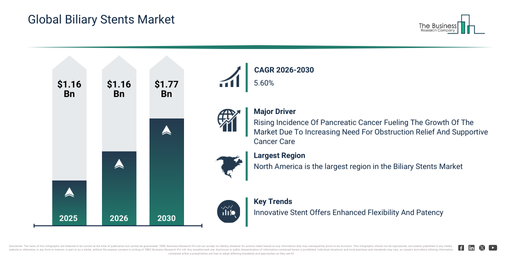
    The biliary stents market size is projected to experience substantial growth over the coming years, with an anticipated increase to $0.66 billion in 2030, achieving a compound annual growth rate (CAGR) of 5.6%. This expansion during the forecast period is driven by factors such as the development of covered and partially covered metal stents, a rising demand for biodegradable polymer stents, the increasing prevalence of minimally invasive surgical procedures, greater awareness of stent-related complications, and the integration of imaging and smart stent technologies. Significant trends for the forecast period include the growing use of self-expandable metal stents (sems), an uptick in the adoption of biodegradable polymer stents, a surge in endoscopic and minimally invasive procedures, the broadening of biliary stent applications for pancreatic and gallstone treatments, and an increased focus on stent safety and patient outcomes.

    Get A Free Sample Report With In-Depth Market Insights:

    https://thebusinessresearchcompany.com/sample_request?id=42903786&type=smp&name=Biliary%20Stents%20Market%20Report%202026&utm_source=Blogs&utm_medium=Paid&utm_campaign=Sep_PR

    Biliary Stents Market Industry Drivers: What’s Behind The Revenue Growth?

    An anticipated increase in pancreatic cancer cases is poised to drive expansion in the biliary stents market moving ahead. This condition describes a malignancy originating in the pancreatic tissues, a vital organ for digestion and blood glucose control. The increasing occurrence of pancreatic cancer is primarily attributable to an aging populace coupled with the growing prevalence of risk elements like obesity, diabetes, and tobacco use. Biliary stents play a crucial role in managing pancreatic cancer by alleviating blockages in the bile duct, enhancing hepatic function, and diminishing jaundice. These devices contribute to patient well-being through promoting superior bile flow, enabling uninterrupted cancer therapy, and elevating the overall quality of life. As an illustration, in February 2025, data from Cancer Australia, an Australian government body, indicated 4,641 new pancreatic cancer diagnoses in 2024, comprising 2,414 in males and 2,227 in females. Consequently, the escalating incidence of pancreatic cancer is fueling expansion within the biliary stents market.

    Biliary Stents Market Segmentation And Category Overview

    The biliary stents market covered in this report is segmented –

    1) By Type: Metal, Polymer, Plastic

    2) By Design: Single Stent, Double Stent, Triple Stent

    3) By Procedure: Endoscopic Retrograde Cholangiopancreatography, Percutaneous Transhepatic Cholangiography

    4) By Application: Biliopancreatic Leakages, Pancreatic Cancer, Benign Biliary Structures, Gallstones, Other Applications

    5) By End User: Hospitals, Ambulatory Surgical Centers, Specialty clinics, Other End-Users

    Subsegments:

    1) By Metal: Self-Expandable Metal Stents (SEMS), Covered Metal Stents, Uncovered Metal Stents, Partially Covered Metal Stents

    2) By Polymer: Biodegradable Polymer Stents, Non-Biodegradable Polymer Stents

    3) By Plastic: Straight Plastic Stents, Double Pigtail Plastic Stents, Multiple Side Hole Stents, Teflon Stents, Polyurethane Stents

    #Biliary Stents Market Growth Trends: What’s Shaping The Future Outlook?

    Major companies in the biliary stents market are concentrating on developing advanced products, including drug-eluting stents, to improve patient outcomes, enhance durability, and minimize complications such as restenosis. Drug-eluting stents are specialized biliary stents that feature a medication coating slowly released to prevent tissue overgrowth and blockages in the bile ducts. For instance, in July 2024, CGBIO, a medical device company based in South Korea, obtained Pharmaceuticals and Medical Devices Agency (PMDA) approval in Japan for its biliary ARISTENT. This stent is engineered to treat bile duct blockages and incorporates a patented ‘HOOK & CROSS’ structure for superior flexibility and long-term patency. The ARISTENT adapts to the bile duct’s anatomy, which helps reduce migration risk and enhance patient comfort. Furthermore, it includes an advanced drug-eluting coating designed to minimize inflammation and prolong stent patency, thereby offering a more effective solution for biliary obstructions.

    Biliary Stents Market Company Landscape And Competitive Strategy

    Major companies operating in the biliary stents market are Cardinal Health Inc., Abbott Laboratories, Medtronic plc, Becton Dickinson & Company, Stryker Corporation, Boston Scientific Corporation, Olympus Corporation, Smith & Nephew Plc., W. L. Gore & Associates Inc., Nipro Corporation, Teleflex Incorporated, Cook Group, NuVasive Inc., Merit Medical Systems Inc., CONMED Corporation, Brainlab, Bard Peripheral Vascular Inc., Argon Medical Devices Inc., B Braun Melsungen AG, M.I Tech

    View The Full Biliary Stents Market Report:

    https://thebusinessresearchcompany.com/report/biliary-stents-global-market-report?utm_source=Blogs&utm_medium=Paid&utm_campaign=Sep_PR

    Biliary Stents Market Largest Region: Which Geography Holds The Biggest Share?

    North America was the largest region in the biliary stents market in 2025. Asia-Pacific is expected to be the fastest-growing region in the forecast period. The regions covered in the biliary stents market report are Asia-Pacific, South East Asia, Western Europe, Eastern Europe, North America, South America, Middle East, Africa.

    Reach Out To Our Team:

    The Business Research Company: https://www.thebusinessresearchcompany.com/

    Americas: +1 310-496-7795

    Asia: +44 7882 955267 & +91 8897263534

    Europe: +44 7882 955267

    Email us at: marketing@tbrc.info

    Follow us on:

    LinkedIn: https://in.linkedin.com/company/the-business-research-company

    YouTube: https://www.youtube.com/channel/UC24_fI0rV8cR5DxlCpgmyFQ

    Global Market Model: https://www.thebusinessresearchcompany.com/global-market-model
  • Biliary Catheters Market Outlook Through 2030: Understanding The Growth Opportunity

    Biliary Catheters Market Outlook Through 2030: Understanding The Growth Opportunity

    Featuring market attractiveness scoring, total addressable market sizing, company benchmarking matrices, interactive Excel dashboards, deeper supply chain intelligence, emerging startup tracking, and granular product-level insights, The Business Research Company’s 2026 market reports are built to deliver research that is both more actionable and more strategically valuable.

    Biliary Catheters Market Forecast: What Value Will The Market Reach By 2030?

    The biliary catheters market size has experienced considerable growth in recent years. Projections indicate it will expand from $3.75 billion in 2025 to $4.12 billion in 2026, achieving a compound annual growth rate (CAGR) of 9.7%. This historic growth can be attributed to several factors including the limited availability of advanced biliary catheters, a reliance on conventional plastic catheters, an increasing incidence of bile duct disorders, a rise in hospital and clinic-based procedures, and the adoption of standard drainage techniques.

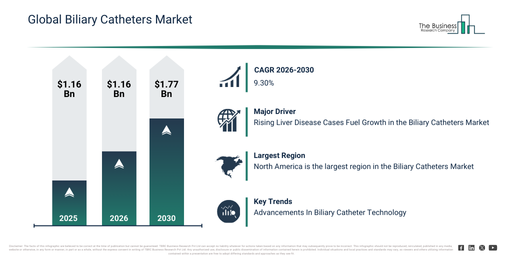
    The biliary catheters market is anticipated to experience robust expansion over the coming years, with its size projected to reach $5.88 billion by 2030, exhibiting a compound annual growth rate (CAGR) of 9.3%. This projected growth during the forecast period is fueled by several factors, including the advancement of expandable and metal biliary drainage catheters, an increase in interventional radiology procedures, the surge in minimally invasive surgeries, heightened regulatory compliance and quality certifications, and the integration of imaging-guided catheter placement technologies. Key trends for the upcoming period encompass the growing acceptance of minimally invasive procedures, a rise in the utilization of plastic and metal biliary drainage catheters, an expansion of catheter-based drainage and stent applications, an escalating demand for single-channel and double-channel sump catheters, and an intensified emphasis on patient safety and sterilization standards.

    Get A Free Sample Report With In-Depth Market Insights:

    https://thebusinessresearchcompany.com/sample_request?id=50317968&type=smp&name=Biliary%20Catheters%20Market%20Report%202026&utm_source=Blogs&utm_medium=Paid&utm_campaign=Sep_PR

    Biliary Catheters Market Growth Factors: What’s Supporting Expansion?

    The growing occurrence of liver disease is projected to boost the biliary catheters market in the future. The rise in liver diseases stems from factors like the increasing prevalence of chronic hepatitis infections, alcohol misuse, and non-alcoholic fatty liver disease (NAFLD). Biliary catheters are essential for managing liver disease complications by ensuring effective bile drainage, which assists in diminishing symptoms, preventing infections, and safeguarding liver function. For example, in April 2024, the Office for Health Improvement & Disparities, a UK-based government organization, reported 85,665 hospital admissions attributable to liver disease in England in 2023, translating to a rate of 155.2 (152.9 to 157.5) per 100,000 population. Thus, the escalating incidence of liver disease is fueling the expansion of the biliary catheters market.

    Biliary Catheters Market Segment Outlook: Which Categories Are Growing Fastest?

    The biliary catheters market covered in this report is segmented –

    1) By Product: Biliary Drainage Catheter, Multi-Purpose Drainage Catheter, Other Biliary-Specific Types

    2) By Application: Drainage, Aspiration, Diagnostic, Stent Delivery, Dilatation

    3) By End-User: Hospitals, Clinics, Specialized Centers, Other End Users

    Subsegments:

    1) By Biliary Drainage Catheter: Plastic Biliary Drainage Catheter, Metal Biliary Drainage Catheter, Expandable Biliary Drainage Catheter

    2) By Multi-Purpose Drainage Catheter: Multi-Purpose Drainage Catheter, Multi-Purpose Drainage Catheter With Sump

    3) By Other Biliary-Specific Types: Biliary Balloon Catheter, Biliary Stent Catheter, Special Procedure Catheter (Biliary-Specific)

    Biliary Catheters Market Industry Trends: What’s Reshaping Demand?

    Leading firms within the biliary catheter market are actively developing groundbreaking products that feature advanced coating technologies, such as trueglide hydrophilic coating, aimed at elevating the performance and user-friendliness of catheters. The TrueGlide hydrophilic coating significantly reduces friction, thereby ensuring a seamless catheter insertion process during medical procedures. For example, in June 2024, B. Braun Interventional Systems Inc., a US-based medical device company, introduced its ACCEL all-purpose and biliary drainage catheters, which incorporate the trueGlide hydrophilic coating. This innovation is specifically engineered to improve patient comfort and clinical outcomes. These particular catheters are distinguished by large oval holes designed to maximize fluid drainage, coupled with a hydrophilic coating to facilitate smooth insertion. This pioneering addition expands B. Braun’s existing percutaneous drainage portfolio, delivering a comprehensive solution for managing fluid drainage and addressing a wide array of clinical demands.

    Biliary Catheters Market Key Players Shaping Industry Direction

    Major companies operating in the biliary catheters market are Medtronic plc, Boston Scientific Corporation, Cook Medical Incorporated, Abbott Laboratories, Becton Dickinson and Company, B Braun Melsungen AG, ConMed Corporation, Teleflex Incorporated, Smiths Medical, Asahi Intecc Co. Ltd., AngioDynamics Inc., Endo Flex GmbH, Micro‑Tech (Nanjing) Co. Ltd., Rontis Medical, Cardinal Health Inc., Beijing Lepu Medical Technology Co. Ltd., Hanmi Medical Co. Ltd., JW Medical Corporation, Medinol Ltd., MicroPort Scientific Corporation, SMT Medical GmbH, EndoChoice Inc., Argon Medical, Medi‑Globe, Infiniti Medical, Lifetech Scientific Corporation, SCW Medicath Ltd.

    View The Full Biliary Catheters Market Report:

    https://thebusinessresearchcompany.com/report/biliary-catheters-global-market-report?utm_source=Blogs&utm_medium=Paid&utm_campaign=Sep_PR

    Biliary Catheters Market Regional Analysis: Which Geography Leads On Revenue?

    North America was the largest region in the biliary catheters market in 2025. Asia-Pacific is expected to be the fastest-growing region in the forecast period. The regions covered in the biliary catheters market report are Asia-Pacific, South East Asia, Western Europe, Eastern Europe, North America, South America, Middle East, Africa.

    Reach Out To Our Team:

    The Business Research Company: https://www.thebusinessresearchcompany.com/

    Americas: +1 310-496-7795

    Asia: +44 7882 955267 & +91 8897263534

    Europe: +44 7882 955267

    Email us at: marketing@tbrc.info

    Follow us on:

    LinkedIn: https://in.linkedin.com/company/the-business-research-company

    YouTube: https://www.youtube.com/channel/UC24_fI0rV8cR5DxlCpgmyFQ

    Global Market Model: https://www.thebusinessresearchcompany.com/global-market-model
  • Bifurcation Lesions Market Growth Potential: What The Latest Forecast Reveals

    Bifurcation Lesions Market Growth Potential: What The Latest Forecast Reveals

    Built to provide research that’s more actionable and strategically valuable, The Business Research Company’s 2026 market reports include market attractiveness analysis, total addressable market sizing, company benchmarking matrices, interactive Excel dashboards, broader supply chain intelligence, emerging startup tracking, and in-depth product insights.

    Bifurcation Lesions Market Size Outlook: How Quickly Will Revenue Expand Through 2030?

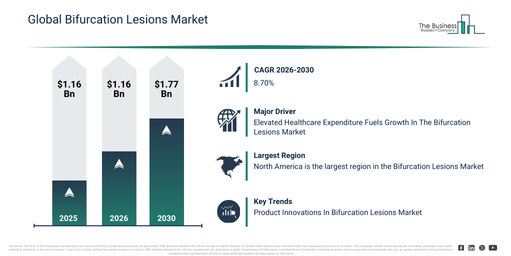
    The bifurcation lesions market size has seen significant expansion in recent years. It is projected to increase from $2.84 billion in 2025 to $3.1 billion in 2026, achieving a compound annual growth rate (CAGR) of 9.4%. The expansion observed in the past can be attributed to the rising prevalence of coronary artery disease, an increase in interventional cardiology procedures, the adoption of stenting as an alternative to surgical bypass, the development of specialized bifurcation stents, and a growing clinical proficiency in complex interventions.

    The market for bifurcation lesions is projected to experience substantial expansion in the coming years, set to reach a valuation of $4.34 billion by 2030, exhibiting a compound annual growth rate (CAGR) of 8.7%. The anticipated growth during this period is primarily driven by the escalating implementation of precision-guided coronary interventions, a heightened need for advanced stent technologies, the broadening scope of personalized cardiovascular therapies, the deepening incorporation of imaging and analytical tools, and a sharpened emphasis on achieving successful procedural outcomes. Key developments expected in the forecast period encompass a greater embrace of sophisticated stent methods for intricate lesions, an increase in imaging-guided interventions for bifurcations, a developing preference for drug-eluting stents, the expansion of less invasive coronary procedures, and a stronger commitment to ensuring long-term vessel openness.

    Get A Free Sample Report With In-Depth Market Insights:

    https://thebusinessresearchcompany.com/sample_request?id=91634142&type=smp&name=Bifurcation%20Lesions%20Market%20Report%202026&utm_source=Blogs&utm_medium=Paid&utm_campaign=Sep_PR

    Bifurcation Lesions Market Demand Drivers: What’s Powering Industry Growth?

    The rising healthcare expenditure is projected to stimulate the growth of the bifurcation lesions market in the coming years. Healthcare infrastructure refers to all financial outlays for medical services, preventative measures, public health initiatives, rehabilitation, community health activities, and health-related research. Increased healthcare spending allows medical facilities to invest in advanced equipment and technologies, including sophisticated interventional cardiology devices for the treatment of bifurcation lesions. For instance, in May 2024, data from the Office for National Statistics, a UK-based government department, revealed that total healthcare expenditure increased by 5.6% in nominal terms in 2023, marking a 0.9% higher growth compared to 2022. Therefore, the escalating healthcare expenditure is a key driver for the expansion of the bifurcation lesions market.

    Bifurcation Lesions Market Segment Landscape: Which Areas Lead Development?

    The bifurcation lesions market covered in this report is segmented –

    1) By Type: One-Stent, Two-Stent

    2) By Application: Coronary Vascular, Peripheral Vascular

    3) By End‑User: Hospitals & Cardiac Care Centers, Ambulatory Surgical Centers, Specialty Clinics, Diagnostic Centers

    Subsegments:

    1) By One-Stent: Single-Stent Deployment, Balloon-Expandable Stents, Self-Expanding Stents

    2) By Two-Stent: Crush Technique, T- or Y-Configuration Stenting, Side Branch Stenting Techniques

    Bifurcation Lesions Market Innovation Trends: What Developments Are Reshaping The Industry?

    Leading firms within the bifurcation lesions market are actively creating advanced solutions, such as drug-eluting coronary stent systems, to attract a wider clientele, elevate sales figures, and enhance their earnings. This particular medical device is employed in interventional cardiology for the management of coronary artery disease. For example, in August 2023, Medtronic Plc, a medical device company based in Ireland, introduced the Onyx Frontier drug-eluting stent (DES) specifically for addressing non-left main bifurcation lesions through the provisional stenting approach. Key distinguishing features of this product include significant design improvements, incorporating an innovative dual-layer balloon, a more slender crossing profile, and increased catheter flexibility. These upgrades contribute to a 16% improvement in deliverability when compared to the previous generation Resolute Onyx DES, all while retaining its original radial strength. Beyond the advancements in its delivery system, Onyx Frontier offers an extensive array of sizes, catering to patients with vessel diameters from 2.0 mm to 5.0 mm. Notably, its 4.50-5.00 mm sizes can be expanded up to 6.00 mm, specifically designed for treating extra-large vessels, including those in the left main. The Onyx Frontier shares the same clinical data and approved indications as the Resolute Onyx, encompassing authorization for the treatment of bifurcation lesions, left main percutaneous coronary intervention (PCI), and a recommended one-month duration of dual antiplatelet therapy (DAPT) for individuals at high risk of bleeding.

    Bifurcation Lesions Market Competitive Analysis Of Leading Industry Participants

    Major companies operating in the bifurcation lesions market are Boston Scientific Corporation, Terumo Medical Corporation, Spectranetics Corporation, Medtronic plc, Abbott Laboratories, Biosensors International Group Ltd., B. Braun Melsungen AG, Cook Medical LLC, Cordis Corporation, InspireMD Inc., MicroPort Scientific Corporation, OrbusNeich Medical Company Limited, Biotronik SE & Co. KG, Medinol Ltd., Meril Life Sciences Pvt. Ltd., Sahajanand Medical Technologies Pvt. Ltd., Elixir Medical Corporation, Veryan Medical Ltd., Zorion Medical Inc., Svelte Medical Systems Inc., Amaranth Medical Inc., Cardiva Medical Inc.

    View The Full Bifurcation Lesions Market Report:

    https://thebusinessresearchcompany.com/report/bifurcation-lesions-global-market-report?utm_source=Blogs&utm_medium=Paid&utm_campaign=Sep_PR

    Bifurcation Lesions Market Geographic Spread And Regional Opportunities

    North America was the largest region in the bifurcation lesions market in 2025. Asia-Pacific is expected to be the fastest-growing region in the forecast period. The regions covered in the bifurcation lesions market report are Asia-Pacific, South East Asia, Western Europe, Eastern Europe, North America, South America, Middle East, Africa.

    Reach Out To Our Team:

    The Business Research Company: https://www.thebusinessresearchcompany.com/

    Americas: +1 310-496-7795

    Asia: +44 7882 955267 & +91 8897263534

    Europe: +44 7882 955267

    Email us at: marketing@tbrc.info

    Follow us on:

    LinkedIn: https://in.linkedin.com/company/the-business-research-company

    YouTube: https://www.youtube.com/channel/UC24_fI0rV8cR5DxlCpgmyFQ

    Global Market Model: https://www.thebusinessresearchcompany.com/global-market-model
  • Benign Prostatic Hyperplasia (BPH) Treatment Devices And Equipment Market Growth Outlook: Why Analysts Expect Continued Expansion

    Benign Prostatic Hyperplasia (BPH) Treatment Devices And Equipment Market Growth Outlook: Why Analysts Expect Continued Expansion

    Backed by market attractiveness analysis, total addressable market sizing, company benchmarking matrices, interactive Excel dashboards, wider supply chain intelligence, emerging startup coverage, and detailed product-level insights, The Business Research Company’s 2026 market reports are designed to offer research that is more actionable and strategically valuable than ever.

    Benign Prostatic Hyperplasia (BPH) Treatment Devices And Equipment Market Size, Value And Growth Trajectory Through 2030

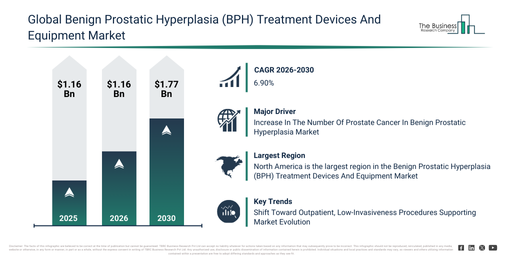
    The market size for benign prostatic hyperplasia (bph) treatment devices and equipment has demonstrated strong growth in recent years. It is anticipated to expand from $1.34 billion in 2025 to $1.43 billion in 2026, achieving a compound annual growth rate (CAGR) of 6.3%. This historical growth can be attributed to factors such as the increasing prevalence of benign prostatic hyperplasia, heightened awareness of urological disorders, the adoption of transurethral procedures, the expansion of hospital urology departments, and improvements in endoscopic surgical tools.

    The benign prostatic hyperplasia (bph) treatment devices and equipment market is expected to experience substantial growth over the next few years, with its size projected to reach $1.86 billion in 2030, demonstrating a compound annual growth rate (CAGR) of 6.9%. This anticipated growth can be attributed to an expanding aging male population, a rising preference for minimally invasive therapies, the proliferation of outpatient urology clinics, increasing adoption of laser and implant-based treatments, and a greater emphasis on reducing hospital stays. Key trends for the forecast period include the increasing uptake of minimally invasive bph treatment devices, a growing utilization of laser-based prostate therapies, a heightened demand for implant-based treatment options, the expansion of office-based bph procedures, and an enhanced focus on patient comfort and recovery.

    Get A Free Sample Report With In-Depth Market Insights:

    https://thebusinessresearchcompany.com/sample_request?id=56829717&type=smp&name=Benign%20Prostatic%20Hyperplasia%20%28BPH%29%20Treatment%20Devices%20And%20Equipment%20Market%20Report%202026&utm_source=Blogs&utm_medium=Paid&utm_campaign=Sep_PR

    Benign Prostatic Hyperplasia (BPH) Treatment Devices And Equipment Market Growth Drivers: What’s Behind The Acceleration?

    A rise in prostate cancer diagnoses is expected to propel the expansion of the benign prostatic hyperplasia market. This malignancy originates in the prostate gland, a small, walnut-shaped organ situated just beneath the bladder in males. More frequent occurrences of prostate cancer often prompt an increased number of older males to seek medical consultation for prostate-related concerns. This, in turn, facilitates the detection and treatment of benign prostatic hyperplasia. For example, data from February 2023, released by the American Society of Clinical Oncology (ASCO), a US-based professional body providing patient information via the cancer.net website, indicated approximately 288,300 men in the United States had prostate cancer in 2023. Additionally, 268,490 new cases and 34,500 fatalities were attributed to prostate cancer in 2022. Consequently, the rising incidence of prostate cancer is acting as a catalyst for the expansion of the benign prostatic hyperplasia market.

    Benign Prostatic Hyperplasia (BPH) Treatment Devices And Equipment Market Segments: Where Is Growth Concentrated?

    The benign prostatic hyperplasia (bph) treatment devices and equipment market covered in this report is segmented –

    1) By Product: Resectoscopes, Radiofrequency Ablation Device, Urology Lasers, Prostatic Stents, Implants

    2) By Procedure Type: Transurethral Needle Ablation (TUNA), Transurethral Resection Of Prostate (TURP), Transurethral Incision Of Prostate (TUIP), Transurethral Microwave Thermotherapy (TUMT), Laser Surgery, Other Procedure Types

    3) By End-User: Hospitals, Ambulatory Surgical Centres (ASC), Clinics, Specialty Urology Centers

    Subsegments:

    1) By Resectoscopes: Bipolar Resectoscopes, Monopolar Resectoscopes, High-Performance Resectoscopes

    2) By Radiofrequency Ablation Device: Single-Needle Radiofrequency Ablation, Multi-Needle Radiofrequency Ablation

    3) By Urology Lasers: Holmium Lasers, Diode Lasers, Green Light Lasers

    4) By Prostatic Stents: Temporary Prostatic Stents, Permanent Prostatic Stents

    5) By Implants: Prostatic Urethral Lift (PUL) Implants, Balloon-Expandable Stents, Permanent Implants for BPH Treatment

    Benign Prostatic Hyperplasia (BPH) Treatment Devices And Equipment Market Trends: What’s Defining The Industry’s Next Phase?

    Key players in the benign prostatic hyperplasia (BPH) treatment devices and equipment market are concentrating on creating innovative, minimally invasive options, including temporary implants, to increase access to outpatient care and lessen dependence on ongoing medication or tissue removal surgeries. These temporarily implantable BPH devices are either single-use or short-duration implants, engineered to reshape the prostatic urethra and alleviate lower urinary tract symptoms (LUTS) resulting from an enlarged prostate. As an illustration, in February 2025, Olympus, a Japan-based medical technology firm, reported a significant development for its iTind device, expanding its presence across key APAC markets (Thailand, Australia, Hong Kong, Singapore, India, with a forthcoming launch in Korea). They emphasized that the iTind procedure offers a minimally invasive, clinic-based choice achievable with local anaesthesia, bolstered by an extensive physician training program to facilitate its clinical integration. The iTind itself is a temporarily implantable nitinol device that works by reshaping the prostatic urethra, thereby enhancing urinary flow and improving patients’ quality of life, with recent advancements in guidelines and reimbursement aiding its faster acceptance.

    Benign Prostatic Hyperplasia (BPH) Treatment Devices And Equipment Market Leading Companies And Competitive Benchmarking

    Major companies operating in the benign prostatic hyperplasia (bph) treatment devices and equipment market are Karl Storz, Lumenis Ltd., Olympus Corporation, Urologix LLC, Boston Scientific Inc., NeoTract Inc., OmniGuide Inc., ProArc Medical Ltd., Urotech Devices, Prostalund Operations AB, NxThera Inc., Richard Wolf GmbH, Coloplast A/S, Biolitec AG, BVM Medical, Convergent Laser Technologies, Cook Medical, GreenLight Technologies, PROCEPT BioRobotics, Quanta System

    View The Full Benign Prostatic Hyperplasia (BPH) Treatment Devices And Equipment Market Report:

    https://thebusinessresearchcompany.com/report/benign-prostatic-hyperplasia-BPH-treatment-devices-and-equipment-global-market-report?utm_source=Blogs&utm_medium=Paid&utm_campaign=Sep_PR

    Benign Prostatic Hyperplasia (BPH) Treatment Devices And Equipment Market Top Region By Revenue And Market Share

    North America was the largest region in the benign prostatic hyperplasia (BPH) treatment devices and equipment market in 2025. Western Europe was the second-largest region in the global benign prostatic hyperplasia (BPH) treatment devices and equipment market. The regions covered in the benign prostatic hyperplasia (bph) treatment devices and equipment market report are Asia-Pacific, South East Asia, Western Europe, Eastern Europe, North America, South America, Middle East, Africa.

    Reach Out To Our Team:

    The Business Research Company: https://www.thebusinessresearchcompany.com/

    Americas: +1 310-496-7795

    Asia: +44 7882 955267 & +91 8897263534

    Europe: +44 7882 955267

    Email us at: marketing@tbrc.info

    Follow us on:

    LinkedIn: https://in.linkedin.com/company/the-business-research-company

    YouTube: https://www.youtube.com/channel/UC24_fI0rV8cR5DxlCpgmyFQ

    Global Market Model: https://www.thebusinessresearchcompany.com/global-market-model