Month: September 2026

  • Bed-Exit Warning Robot Market Forecast Insights: The Road To $3.26 Billion By 2030

    Bed-Exit Warning Robot Market Forecast Insights: The Road To $3.26 Billion By 2030

    Featuring market attractiveness scoring, total addressable market sizing, company benchmarking matrices, interactive Excel dashboards, deeper supply chain intelligence, emerging startup tracking, and granular product-level insights, The Business Research Company’s 2026 market reports are built to deliver research that is both more actionable and more strategically valuable.

    Bed-Exit Warning Robot Market CAGR Outlook And Future Development

    The bed-exit warning robot market size has witnessed substantial growth in recent years. It is projected to expand from $1.55 billion in 2025 to $1.8 billion in 2026, reflecting a compound annual growth rate (CAGR) of 16.3%. The historical expansion of this market can be attributed to factors such as an increasing elderly population, a high occurrence of patient falls, limitations in caregiver monitoring efficiency, stricter hospital safety standards, and the initial incorporation of robotics into healthcare.

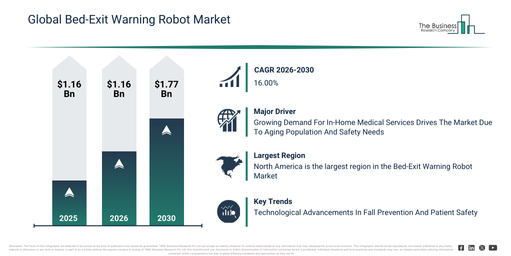
    The bed-exit warning robot market size is anticipated to experience substantial growth over the next few years. It is projected to expand to $3.26 billion by 2030, achieving a compound annual growth rate (CAGR) of 16.0%. This expansion during the forecast period can be attributed to the integration of AI with robotic monitoring, the development of smart hospital infrastructure, increasing automation in homecare, the rising adoption of wearable alert devices, and growing government support for patient safety technology. Noteworthy trends expected in this period include AI-enabled fall prediction systems, IoT-based patient monitoring, smart robotics for assisted mobility, cloud-based alert management platforms, and predictive analytics for elderly care.

    Get A Free Sample Report With In-Depth Market Insights:

    https://thebusinessresearchcompany.com/sample_request?id=20427246&type=smp&name=Bed-Exit%20Warning%20Robot%20Market%20Report%202026&utm_source=Blogs&utm_medium=Paid&utm_campaign=Sep_PR

    Bed-Exit Warning Robot Market Growth Factors Behind Sustained Expansion

    The bed-exit warning robot market is projected to expand due to the increasing adoption of in-home medical services. In-home medical services encompass healthcare and medical support provided directly at a patient’s residence, including nursing, therapeutic care, and disease management. The demand for these services is escalating, primarily driven by the aging population, as older individuals prefer receiving healthcare at home for enhanced comfort, convenience, and consistent oversight of chronic conditions. The bed-exit warning robot plays a crucial role in in-home medical services by alerting caregivers when patients attempt to leave the bed unsafely, thereby preventing falls, enabling timely assistance, and supporting continuous monitoring for elderly or mobility-impaired individuals. For instance, in August 2025, according to the Department of Health and Human Services, a US-based government administration, in 2024, nearly 1 million enrollees received remote patient monitoring, a 27% increase from 2023. This trend indicates that the rising preference for in-home medical services is indeed fueling the growth of the bed-exit warning robot market.

    Bed-Exit Warning Robot Market Segment Analysis: What Are The Core Market Categories?

    The bed-exit warning robot market covered in this report is segmented –

    1) By Product Type: Pressure Sensor-Based, Infrared Sensor-Based

    2) By Distribution Channel: Direct Sales, Distributors, Online Retail, Other Distribution Channels

    3) By Application: Hospitals, Nursing Homes, Home Care, Rehabilitation Centers, Other Applications

    4) By End-User: Adults, Pediatrics, Elderly

    Subsegments:

    1) By Pressure Sensor-Based: Capacitive Pressure Sensors, Resistive Pressure Sensors, Piezoelectric Pressure Sensors

    2) By Infrared Sensor-Based: Active Infrared Sensors, Passive Infrared Sensors, Dual Infrared Sensors

    Bed-Exit Warning Robot Market Industry Trends Fueling Future Revenue Growth

    Major companies engaged in the bed-exit warning robot market are prioritizing the development of sophisticated methodologies, such as real-time fall prevention alerts, to bolster patient safety and facilitate prompt caregiver intervention. A real-time fall prevention alert system continuously monitors a patient’s movements and immediately notifies caregivers or activates automated safety protocols upon detecting a potential bed exit or fall risk. For example, in September 2025, Tochtech Technologies Inc., a digital healthcare company based in Canada, launched an AI-driven predictive bed exit feature for its renowned Toch Sleepsense device, aiming to anticipate patient movements and reduce fall risks. This provides caregivers with vital advance notifications before a resident attempts to leave their bed, enabling timely action and significantly diminishing fall risks. This non-invasive, real-time solution enhances safety and supports improved care by tracking sleep quality, vital signs, and movement without disturbing the resident. Its objective is to revolutionize senior care by preventing injuries, enhancing response times, and elevating overall well-being through intelligent, data-driven insights.

    Bed-Exit Warning Robot Market Industry Leaders And Competitive Landscape

    Major companies operating in the bed-exit warning robot market are Vayyar Imaging Ltd, Emfit Ltd, Smart Caregiver Corporation, EarlySense Ltd, CarePredict Inc, CareView Communications Inc, Linet Group SE, Stryker Corporation, Arjo AB, VirtuSense Technologies Pvt. Ltd., Lunderg AB, Tunstall Healthcare Group Ltd, Ascom Holding AG, Stanley Healthcare, Securitas Healthcare, Kami Vision, BAM Labs, Joerns Healthcare, Invacare Corporation, Völker Sensify, Nurse Assist

    View The Full Bed-Exit Warning Robot Market Report:

    https://thebusinessresearchcompany.com/report/bed-exit-warning-robot-global-market-report?utm_source=Blogs&utm_medium=Paid&utm_campaign=Sep_PR

    Bed-Exit Warning Robot Market Regional Analysis And Top Geography

    North America was the largest region in the bed-exit warning robot in 2025. Asia-Pacific is expected to be the fastest-growing region in the forecast period. The regions covered in the bed-exit warning robot market report are Asia-Pacific, South East Asia, Western Europe, Eastern Europe, North America, South America, Middle East, Africa.

    Reach Out To Our Team:

    The Business Research Company: https://www.thebusinessresearchcompany.com/

    Americas: +1 310-496-7795

    Asia: +44 7882 955267 & +91 8897263534

    Europe: +44 7882 955267

    Email us at: marketing@tbrc.info

    Follow us on:

    LinkedIn: https://in.linkedin.com/company/the-business-research-company

    YouTube: https://www.youtube.com/channel/UC24_fI0rV8cR5DxlCpgmyFQ

    Global Market Model: https://www.thebusinessresearchcompany.com/global-market-model
  • Base-Editing Tools Market Explained: What Is Fueling Growth To $4.82 Billion By 2030?

    Base-Editing Tools Market Explained: What Is Fueling Growth To $4.82 Billion By 2030?

    Built to provide research that’s more actionable and strategically valuable, The Business Research Company’s 2026 market reports include market attractiveness analysis, total addressable market sizing, company benchmarking matrices, interactive Excel dashboards, broader supply chain intelligence, emerging startup tracking, and in-depth product insights.

    Base-Editing Tools Market Set To Climb From $2.22 Billion In 2026 To $4.82 Billion By 2030

    The base-editing tools market has experienced significant growth in recent years. It is anticipated to expand from $1.83 billion in 2025 to $2.22 billion in 2026, achieving a compound annual growth rate (CAGR) of 21.7%. The historical increase can be ascribed to elements such as the early adoption of crispr-cas systems, the availability of research funding, an uptick in academic-genomic collaborations, rising awareness of genetic disorders, and progress in enzyme engineering.

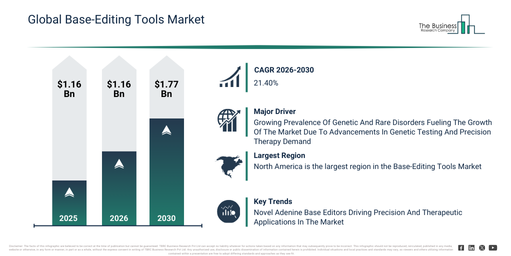
    The base-editing tools market is projected to experience substantial growth in the upcoming years. This market is anticipated to reach a valuation of $4.82 billion by 2030, exhibiting a compound annual growth rate (CAGR) of 21.4%. Key factors driving this expansion during the forecast period include the increasing need for precision medicine, the proliferation of biotechnology startups, obtaining regulatory approvals for various base-editing applications, the incorporation of AI-driven analytics, and the rising utilization in agricultural biotechnology. Significant trends expected in the same period involve personalized gene editing solutions, seamless integration with laboratory information systems (LIS), enhanced automation in base editing workflows, the emergence of cloud-based platforms for data analysis, and the development of predictive modeling for genetic outcomes.

    Get A Free Sample Report With In-Depth Market Insights:

    https://thebusinessresearchcompany.com/sample_request?id=78136739&type=smp&name=Base-Editing%20Tools%20Market%20Report%202026&utm_source=Blogs&utm_medium=Paid&utm_campaign=Sep_PR

    Base-Editing Tools Market Demand Drivers Opening New Revenue Streams

    The base-editing tools market is projected to expand due to the rising occurrence of genetic and rare disorders. These conditions are characterized as medical ailments stemming from modifications or mutations in an individual’s genes or chromosomes, frequently affecting a small segment of the population and often inherited across generations. The increasing prevalence of genetic and rare disorders is attributed to advancements in genomic testing and newborn screening, which facilitate earlier and more accurate identification of previously undetected instances. Base-editing tools enable precise correction of genetic mutations, thereby assisting in the diagnosis and treatment of rare and inherited disorders. By improving genetic testing and enabling targeted therapies, these tools contribute to sophisticated diagnostics, personalized interventions, and potential cures. For example, in May 2024, as per the National Health Service, a UK-based government department, in England, approximately 17,000 people live with sickle cell disease, an inherited blood disorder, with around 250 new cases diagnosed each year. Thus, the growing prevalence of genetic and rare disorders is a key driver for the base-editing tools market’s growth.

    Base-Editing Tools Market Segment Breakdown: Which Categories Lead On Revenue?

    The base-editing tools market covered in this report is segmented –

    1) By Product Type: Deoxyribonucleic Acid (DNA) Base Editors, Ribonucleic Acid (RNA) Base Editors, Other Product Types

    2) By Application: Genetic Research, Drug Development, Disease Modeling, Agricultural Biotechnology, Other Applications

    3) By End-User: Academic And Research Institutes, Biotechnology And Pharmaceutical Companies, Contract Research Organizations, Other End-Users

    Subsegments:

    1) By Deoxyribonucleic Acid (DNA) Base Editors: Cytosine Base Editors, Adenine Base Editors, Dual Base Editors, Prime Editors

    2) By Ribonucleic Acid (RNA) Base Editors: Cytidine Deaminase Based Editors, Adenosine Deaminase Based Editors, Programmable Ribonucleic Acid (RNA) Editors

    3) By Other Product Types: Delivery Systems, Research Reagents, Computational Tools, Screening Platforms

    Base-Editing Tools Market Trends Powering Strategic Industry Growth

    Major companies operating in the base-editing tools market are focusing on introducing innovative solutions, such as novel adenine base editors, to enhance the precision and efficiency of gene editing. These novel adenine base editors are advanced genome editing tools that precisely convert adenine (A) to guanine (G) in DNA without causing double-stranded breaks, enabling safe and specific genetic modifications. For instance, in October 2024, Metagenomi, Inc., a US-based precision genetic medicines company, launched novel ABEs capable of editing a broad range of genomic targets with over 95% targetability. These editors enable precise base conversions with minimal off-target effects in tested cell lines, supporting multiplex gene editing that can lead to significant functional protein reduction in primary T-cells. The platform is compatible with various non-viral delivery methods and engineered Cas variants, making it suitable for both in vivo genome editing and ex vivo cell therapies, including CAR-T treatments.

    Base-Editing Tools Market Key Participants And Competitive Landscape

    Major companies operating in the base-editing tools market are Thermo Fisher Scientific Inc., Danaher Corporation, Merck KGaA, Revvity Inc., GenScript Biotech Corporation, Beam Therapeutics Inc., CRISPR Therapeutics AG, Maravai LifeSciences Holdings Inc., Aldevron L.L.C., Arcturus Therapeutics Holdings Inc., ElevateBio LLC, Editas Medicine Inc., Synthego Corporation, Metagenomi Inc., Intellia Therapeutics Inc., Mammoth Biosciences Inc., Verve Therapeutics Inc., Precede Biosciences Inc., Cellectis S.A., Creative Biogene Inc., Bio Palette Co. Ltd., Prime Medicine Inc., Base Therapeutics.

    View The Full Base-Editing Tools Market Report:

    https://thebusinessresearchcompany.com/report/base-editing-tools-global-market-report?utm_source=Blogs&utm_medium=Paid&utm_campaign=Sep_PR

    Base-Editing Tools Market Geographic Analysis: Where Is Demand Rising Fastest?

    North America was the largest region in the base-editing tools market in 2025. Asia-Pacific is expected to be the fastest-growing region in the forecast period. The regions covered in the base-editing tools market report are Asia-Pacific, South East Asia, Western Europe, Eastern Europe, North America, South America, Middle East, Africa.

    Reach Out To Our Team:

    The Business Research Company: https://www.thebusinessresearchcompany.com/

    Americas: +1 310-496-7795

    Asia: +44 7882 955267 & +91 8897263534

    Europe: +44 7882 955267

    Email us at: marketing@tbrc.info

    Follow us on:

    LinkedIn: https://in.linkedin.com/company/the-business-research-company

    YouTube: https://www.youtube.com/channel/UC24_fI0rV8cR5DxlCpgmyFQ

    Global Market Model: https://www.thebusinessresearchcompany.com/global-market-model
  • Bariatric Transport Wheelchairs Market Forecast To Reach $1.63 Billion By 2030: Key Trends Explained

    Bariatric Transport Wheelchairs Market Forecast To Reach $1.63 Billion By 2030: Key Trends Explained

    Backed by market attractiveness analysis, total addressable market sizing, company benchmarking matrices, interactive Excel dashboards, wider supply chain intelligence, emerging startup coverage, and detailed product-level insights, The Business Research Company’s 2026 market reports are designed to offer research that is more actionable and strategically valuable than ever.

    Bariatric Transport Wheelchairs Market Forecast: Value Set To Climb From $1.26 Billion To $1.63 Billion

    The market size for bariatric transport wheelchairs has experienced robust growth over recent years. It is forecast to expand from $1.18 billion in 2025 to $1.26 billion in 2026, at a compound annual growth rate (CAGR) of 6.8%. The expansion observed in the past can be attributed to factors like increasing obesity prevalence rates, a rising demand for bariatric patient mobility solutions, the expansion of long-term care facilities, the growing need for assisted patient transport, and the wider availability of specialized wheelchairs.

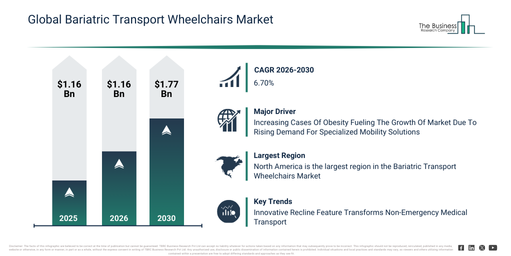
    The bariatric transport wheelchairs market size is projected to experience robust expansion over the next few years. Its valuation is anticipated to reach $1.63 billion by 2030, demonstrating a compound annual growth rate (CAGR) of 6.7%. This projected increase during the forecast period is attributable to an expanding aging population with mobility limitations, a surging demand for home healthcare equipment, a heightened focus on inclusive medical device design, the broadening of bariatric care services, and increased procurement by healthcare institutions. Prominent trends for this period encompass a rising need for reinforced mobility devices, a greater emphasis on patient safety and comfort, the increasing adoption of foldable and transport-friendly designs, the development of lightweight yet high-capacity materials, and an enhanced focus on caregiver ergonomics.

    Get A Free Sample Report With In-Depth Market Insights:

    https://thebusinessresearchcompany.com/sample_request?id=12248468&type=smp&name=Bariatric%20Transport%20Wheelchairs%20Market%20Report%202026&utm_source=Blogs&utm_medium=Paid&utm_campaign=Sep_PR

    Bariatric Transport Wheelchairs Market Growth Backed By Core Demand Fundamentals

    The rising incidence of obesity is anticipated to fuel the expansion of the bariatric transport wheelchairs market. Obesity, a medical condition characterized by excessive body fat that can negatively impact health, is becoming more prevalent. This surge in obesity rates stems from evolving lifestyles, unhealthy eating patterns, and decreased physical activity, consequently elevating the need for specialized healthcare devices to assist individuals with restricted mobility. Bariatric transport wheelchairs cater to obese individuals by providing enhanced frames and broader seating, guaranteeing secure and comfortable movement. These wheelchairs also lessen the physical burden on caregivers through their easy maneuverability and improve patient transfers within medical environments. For example, in May 2025, data from the Food and Agriculture Organization of the United Nations, an Italy-based food security entity, indicated that around 2.5 billion adults aged 18 and above were overweight in 2022, with 890 million specifically categorized as obese, accounting for 43% of the world’s adult population. Furthermore, projections suggest that by 2030, more than one billion adults globally will be affected by obesity. Consequently, the escalating prevalence of obesity is a key factor propelling the expansion of the bariatric transport wheelchairs market.

    Bariatric Transport Wheelchairs Market Segmentation: How Does The Market Break Down By Category?

    The bariatric transport wheelchairs market covered in this report is segmented –

    1) By Product Type: Bariatric Transport Wheelchairs, Powered Bariatric Transport Wheelchairs, Transport Wheelchairs

    2) By Weight Capacity: 300 To 350 Pounds (lbs), 301 To 400 Pounds (lbs), 401 To 500 Pounds (lbs), Over 500 Pounds (lbs)

    3) By Application: Healthcare Facilities, Home Care, Transportation Services, Emergency Services

    4) By End User: Adult, Adult Bariatric Patients, Geriatric

    Subsegments:

    1) By Bariatric Transport Wheelchairs: Bariatric Folding Transport Wheelchairs, Bariatric Rigid Frame Transport Wheelchairs, Bariatric Reclining Transport Wheelchairs, Bariatric Tilt-In-Space Transport Wheelchairs

    2) By Powered Bariatric Transport Wheelchairs: Powered Bariatric Transport Wheelchairs, Powered Bariatric Transport Wheelchairs, Powered Bariatric Transport Wheelchairs, Powered Bariatric Transport Wheelchairs, Powered Bariatric Reclining Transport Wheelchairs

    3) By Transport Wheelchairs: Standard Transport Wheelchairs, Lightweight Transport Wheelchairs, Heavy-Duty Transport Wheelchairs, Foldable Transport Wheelchairs

    Bariatric Transport Wheelchairs Market Growth Trends Reshaping The Competitive Landscape

    Key players in the bariatric transport wheelchairs market are concentrating on developing innovative products, such as the 90-degree recline, to enhance patient comfort, improve safety during transport, and offer more dignified and versatile mobility solutions for individuals with restricted mobility or higher weight needs. A 90-degree recline signifies the chair’s capacity to fully flatten the backrest, creating a horizontal position from an upright seated posture. For example, in March 2025, Mity Inc., a US-based manufacturer of healthcare mobility solutions, launched Traversa, an advanced bariatric transport wheelchair engineered to improve patient mobility, comfort, and caregiver efficiency during medical transport. This inventive bariatric transport wheelchair, featuring a 90-degree recline, integrates sophisticated mobility technology, an ergonomic design, and adaptive features to boost patient comfort, enhance caregiver efficiency, and meet the evolving demands of modern healthcare environments. The Traversa is designed to optimize non-emergency medical transport through its easy reclining and tilting functions and single-operator usability, thereby increasing operational efficiency and reducing labor costs.

    Bariatric Transport Wheelchairs Market Top Companies Driving Competitive Growth

    Major companies operating in the bariatric transport wheelchairs market are Medline Industries LP, Invacare Corporation, GF Health Products Inc., Graham-Field Health Products, Dynarex Corporation, Nova Medical Products, Karman Healthcare Inc., ProHeal Healthcare Private Limited, Z&Z Medical Inc., Forza Medi Pvt. Ltd., Drive DeVilbiss Healthcare, Sunrise Medical, Cardinal Health Inc., McKesson Corporation, Joerns Healthcare, Arjo, Hillrom (Baxter), Stryker Corporation, Med-Mizer Inc., Winco Mfg. LLC

    View The Full Bariatric Transport Wheelchairs Market Report:

    https://thebusinessresearchcompany.com/report/bariatric-transport-wheelchairs-global-market-report?utm_source=Blogs&utm_medium=Paid&utm_campaign=Sep_PR

    Bariatric Transport Wheelchairs Market Global Footprint: Which Region Leads The Market?

    North America was the largest region in the bariatric transport wheelchairs market in 2025. Asia-Pacific is expected to be the fastest-growing region in the forecast period. The regions covered in the bariatric transport wheelchairs market report are Asia-Pacific, South East Asia, Western Europe, Eastern Europe, North America, South America, Middle East, Africa.

    Reach Out To Our Team:

    The Business Research Company: https://www.thebusinessresearchcompany.com/

    Americas: +1 310-496-7795

    Asia: +44 7882 955267 & +91 8897263534

    Europe: +44 7882 955267

    Email us at: marketing@tbrc.info

    Follow us on:

    LinkedIn: https://in.linkedin.com/company/the-business-research-company

    YouTube: https://www.youtube.com/channel/UC24_fI0rV8cR5DxlCpgmyFQ

    Global Market Model: https://www.thebusinessresearchcompany.com/global-market-model
  • Bariatric Surgery Devices Market Analysis: Understanding The Drivers Behind 9.8% CAGR Through 2030 Growth

    Bariatric Surgery Devices Market Analysis: Understanding The Drivers Behind 9.8% CAGR Through 2030 Growth

    Featuring market attractiveness scoring, total addressable market sizing, company benchmarking matrices, interactive Excel dashboards, deeper supply chain intelligence, emerging startup tracking, and granular product-level insights, The Business Research Company’s 2026 market reports are built to deliver research that is both more actionable and more strategically valuable.

    Bariatric Surgery Devices Market Revenue Growth On Track For A 9.8% CAGR Through 2030

    The bariatric surgery devices market has seen rapid expansion in recent years. Its valuation is projected to increase from $2.2 billion in 2025 to $2.43 billion in 2026, reflecting a compound annual growth rate (CAGR) of 10.2%. Historically, this growth has been fueled by factors including the escalating prevalence of obesity and severe obesity, the expansion of bariatric surgery programs, greater surgeon expertise in minimally invasive procedures, increased acceptance of surgical weight loss solutions, and the availability of advanced surgical instruments.

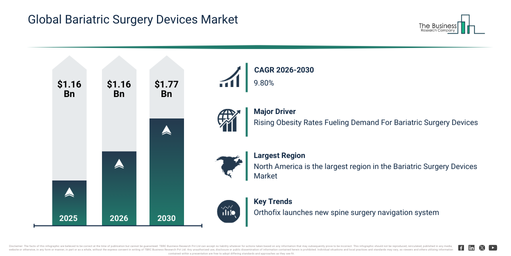
    The bariatric surgery devices market size is poised for substantial expansion in the coming years. Its valuation is projected to reach $3.53 billion by 2030, demonstrating a compound annual growth rate (CAGR) of 9.8%. This anticipated growth is driven by factors such as the increasing demand for non-invasive bariatric treatments, rising investments in robotic surgery platforms, the expansion of specialized bariatric centers, a growing emphasis on patient safety and faster recovery, and the increasing adoption of advanced energy-based surgical devices. Key trends during this period include a wider embrace of minimally invasive bariatric devices, a rise in the use of robotic-assisted bariatric surgery tools, increasing demand for stapling and energy-based devices, the expansion of non-invasive weight loss devices, and an enhanced focus on surgical precision.

    Get A Free Sample Report With In-Depth Market Insights:

    https://thebusinessresearchcompany.com/sample_request?id=29398424&type=smp&name=Bariatric%20Surgery%20Devices%20Market%20Report%202026&utm_source=Blogs&utm_medium=Paid&utm_campaign=Sep_PR

    Bariatric Surgery Devices Market Growth Catalysts And Demand Drivers

    The expanding obese demographic is a major factor driving the expansion of the bariatric surgery devices market. Obesity is characterized by an unhealthy or excessive buildup of fat that can compromise an individual’s well-being. Globally, obesity has emerged as a significant public health issue recently, playing a considerable role in worldwide mortality and morbidity rates. The increasing adoption of surgical interventions by obese individuals worldwide to reduce fat accumulation is projected to elevate the demand for bariatric surgery devices. As an illustration, figures from May 2025, published by the Office for Health Improvement & Disparities, a UK-based government department, indicated a persistent rise, with approximately 64.5 percent of adults in England classified as overweight or obese in 2023–2024, an increase from 64.0 percent in 2022–2023. Consequently, the expanding obese population will fuel the growth of the bariatric surgery devices market.

    Bariatric Surgery Devices Market Segment Trends And Revenue Contributors

    The bariatric surgery devices market covered in this report is segmented –

    1) By Type: Minimally Invasive Surgical Devices, Stapling Devices, Energy Or Vessel Sealing Devices, Suturing Devices, Accessories, Non-Invasive Surgical Devices

    2) By Procedure: Sleeve Gastrectomy, Gastric Bypass, Revision Bariatric Surgery, Non-Invasive Bariatric Surgery, Adjustable Gastric Banding, Mini-gastric Bypass, Biliopancreatic Diversion With Duodenal Switch

    3) By End User: Clinics, Hospitals, Specialty Centers, Ambulatory Surgical Centers

    Subsegments:

    1) By Minimally Invasive Surgical Devices: Laparoscopic Adjustable Gastric Banding Systems, Laparoscopic Sleeve Gastrectomy Kits, Robotic-Assisted Surgical Devices

    2) By Stapling Devices: Linear Staplers, Circular Staplers, Endoscopic Staplers

    3) By Energy Or Vessel Sealing Devices: Ultrasonic Devices, Radiofrequency Devices, Electrosurgical Devices

    4) By Suturing Devices: Automatic Suturing Devices, Manual Suturing Devices

    5) By Accessories: Trocar And Cannula Systems, Bariatric Surgery Instruments, Laparoscopic Graspers And Scissors

    6) By Non-Invasive Surgical Devices: Intragastric Balloons, Endoscopic Sleeve Gastroplasty Devices

    Bariatric Surgery Devices Market Trends Shaping Long-Term Demand

    Leading companies within the bariatric surgery devices market are prioritizing the development of technological advancements, such as new spine surgery navigation, to refine surgical methods and enhance patient care. This new spine surgery navigation represents an advanced technology that boosts the precision and safety of spinal procedures through the integration of real-time imaging, robotic assistance, and augmented reality. For instance, in October 2024, Johnson & Johnson MedTech, a US-based medical device and technology company, unveiled ECHELON ENDOPATH, which marks a significant leap in surgical technology aimed at improving bariatric surgery devices. This innovative buttressing device is engineered to provide sterile, bioabsorbable reinforcement to staple lines, thereby lowering the risk of complications such as internal bleeding both during and after surgical procedures. The launch of the ECHELON ENDOPATH SLR is especially pertinent for bariatric surgeons, as studies indicate that a considerable percentage, approximately 70%, of these professionals employ staple line reinforcement techniques in sleeve gastrectomy procedures.

    Bariatric Surgery Devices Market Leading Players And Competitive Positioning

    Major companies operating in the bariatric surgery devices market are Medtronic Plc, Johnson & Johnson, Apollo Endosurgery Inc., Intuitive Surgical Inc., Aspire Bariatrics Inc., ReShape Lifesciences Inc., Cousin Biotech, USGI Medical Inc., TransEnterix Inc., Olympus Corporation, Spatz FGIA Inc., GI Dynamics Inc., Mediflex Surgical Products, Bariatric Solutions GmbH, W. L. Gore & Associates Inc., Conmed Corporation, Standard Bariatrics Inc., Covidien Plc, EndoGastric Solutions Inc., Mediflex Surgical Products

    View The Full Bariatric Surgery Devices Market Report:

    https://thebusinessresearchcompany.com/report/bariatric-surgery-devices-global-market-report?utm_source=Blogs&utm_medium=Paid&utm_campaign=Sep_PR

    Bariatric Surgery Devices Market Regional Split: Which Areas Are Fueling Growth?

    North America was the largest region in the bariatric surgery devices market in 2025. Asia-Pacific is expected to be the fastest-growing region in the forecast period. The regions covered in the bariatric surgery devices market report are Asia-Pacific, South East Asia, Western Europe, Eastern Europe, North America, South America, Middle East, Africa.

    Reach Out To Our Team:

    The Business Research Company: https://www.thebusinessresearchcompany.com/

    Americas: +1 310-496-7795

    Asia: +44 7882 955267 & +91 8897263534

    Europe: +44 7882 955267

    Email us at: marketing@tbrc.info

    Follow us on:

    LinkedIn: https://in.linkedin.com/company/the-business-research-company

    YouTube: https://www.youtube.com/channel/UC24_fI0rV8cR5DxlCpgmyFQ

    Global Market Model: https://www.thebusinessresearchcompany.com/global-market-model
  • Balloon Valvuloplasty Device Market Growth To $3.35 Billion By 2030: What’s Driving The Expansion?

    Balloon Valvuloplasty Device Market Growth To $3.35 Billion By 2030: What’s Driving The Expansion?

    Built to provide research that’s more actionable and strategically valuable, The Business Research Company’s 2026 market reports include market attractiveness analysis, total addressable market sizing, company benchmarking matrices, interactive Excel dashboards, broader supply chain intelligence, emerging startup tracking, and in-depth product insights.

    Balloon Valvuloplasty Device Market Value Growth And Long-Term Outlook

    The balloon valvuloplasty device market size has observed substantial growth in recent years. It is projected to expand from $2.57 billion in 2025 to $2.73 billion in 2026, at a compound annual growth rate (CAGR) of 5.9%. Historically, this expansion can be attributed to a rise in the prevalence of cardiac valve stenosis, the early adoption of minimally invasive interventional cardiology procedures, the development of standard and compliant balloon technologies, the expansion of hospital-based cardiac catheterization labs, and increasing treatment volumes in pediatric congenital heart cases.

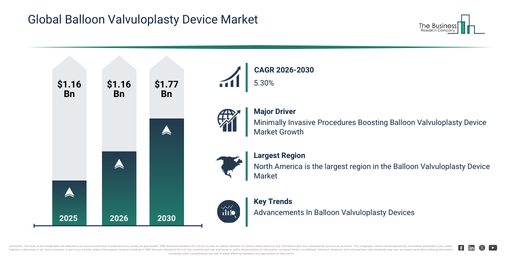
    The balloon valvuloplasty device market is anticipated to experience substantial growth over the coming years. By 2030, its value is projected to reach $3.35 billion, demonstrating a compound annual growth rate (CAGR) of 5.3%. This expansion during the forecast period can be attributed to an aging population increasingly affected by aortic and mitral valve stenosis, a rising demand for high-pressure and scoring balloon devices, the broader application of balloon valvuloplasty in ambulatory and specialty clinics, a growing shift towards non-surgical cardiac treatment options, and ongoing innovations in balloon materials and device design. Significant trends expected during this period include a growing preference for minimally invasive valve repair procedures, the increasing adoption of balloon valvuloplasty as an alternative to open-heart surgery, its expanded use in pediatric and adult congenital heart valve disorders, the proliferation of valve dilation procedures in specialized cardiology centers, and a concentrated effort on improving patient outcomes and shortening recovery times.

    Get A Free Sample Report With In-Depth Market Insights:

    https://thebusinessresearchcompany.com/sample_request?id=14767232&type=smp&name=Balloon%20Valvuloplasty%20Device%20Market%20Report%202026&utm_source=Blogs&utm_medium=Paid&utm_campaign=Sep_PR

    Balloon Valvuloplasty Device Market Opportunity Drivers: What’s Unlocking New Revenue Potential?

    The increasing preference for minimally invasive procedures is anticipated to fuel the expansion of the balloon valvuloplasty device market in the coming years. These medical techniques involve making small incisions or utilizing natural body openings, leading to reduced patient trauma and quicker recovery periods compared to conventional surgical methods. The escalating demand for minimally invasive procedures stems from their benefits, which include shorter recovery durations, a reduced likelihood of complications, and less post-operative discomfort when contrasted with traditional surgeries. Balloon valvuloplasty devices are employed in minimally invasive surgical interventions to enlarge constricted heart valves, enhance blood circulation, and alleviate associated symptoms. An illustrative example of this trend is seen in January 2024, when Intuitive Surgical Inc., a US-based producer of robotic healthcare equipment, announced the deployment of 415 da Vinci surgical systems (robotic systems utilizing a minimally invasive approach) during the fourth quarter of 2023, marking a 12% increase over 2022. Consequently, the growing adoption of minimally invasive procedures is a key factor propelling the development of the balloon valvuloplasty device market.

    Balloon Valvuloplasty Device Market Segment Analysis Spotlighting Growth Areas

    The balloon valvuloplasty device market covered in this report is segmented –

    1) By Product Type: Standard Balloon, Cutting Balloon, Scoring Balloon, High-Pressure Balloon, Low-Pressure Balloon

    2) By Age Group: Pediatric, Adult

    3) By End-use: Hospitals, Ambulatory Surgical Centers, Specialty Clinics, Other End Uses

    Subsegments:

    1) By Standard Balloon: Non-Compliant Balloons, Compliant Balloons

    2) By Cutting Balloon: Single-Cutting Balloon, Multi-Cutting Balloon

    3) By Scoring Balloon: Single-Score Balloons, Dual-Score Balloons

    4) By High-Pressure Balloon: Non-Compliant High-Pressure Balloons, Compliant High-Pressure Balloons

    5) By Low-Pressure Balloon: Semi-Compliant Low-Pressure Balloons, Non-Compliant Low-Pressure Balloons

    Balloon Valvuloplasty Device Market Innovation Trends Shaping Future Development

    Leading companies operating in the balloon valvuloplasty device market are concentrating on developing advanced offerings, such as Pacing Guidewires, to gain a competitive edge. A pacing guidewire is a specialized instrument utilized to deliver temporary cardiac pacing during the procedure, guaranteeing the heart maintains a stable rhythm while the balloon catheter is inserted and inflated to dilate the narrowed valve. For instance, in June 2023, Teleflex Incorporated, a US-based medical device company, received clearance from the Food and Drug Administration (FDA) for the Wattson Temporary Pacing Guidewire. This novel device is specifically designed for use during transcatheter aortic valve replacement (TAVR) and balloon aortic valvuloplasty (BAV) procedures. The Wattson Temporary Pacing Guidewire offers dual functionality, supporting both valve delivery and ventricular bipolar pacing during these structural heart procedures. Its flexible distal pigtail shape, multiple electrodes, and bipolar design are engineered to help reduce the risk of ventricular perforation while providing reliable electrical capture during rapid pacing.

    Balloon Valvuloplasty Device Market Competitive Overview And Top Companies

    Major companies operating in the balloon valvuloplasty device market are Boston Scientific Corporation, Medtronic plc, Abbott Laboratories, Edwards Lifesciences Corporation, Terumo Corporation, B Braun Melsungen AG, Cook Medical Incorporated, Balton Sp z o o, Meril Life Sciences Pvt Ltd, JenaValve Technology Inc, Osypka Medical GmbH, Scitech Medical, Translumina GmbH, AndraTec GmbH, Palex Medical SA, Biosensors International Group Ltd, Hexacath, MicroPort Scientific Corporation, Lepu Medical Technology Beijing Co Ltd, QT Vascular Ltd

    View The Full Balloon Valvuloplasty Device Market Report:

    https://thebusinessresearchcompany.com/report/balloon-valvuloplasty-device-global-market-report?utm_source=Blogs&utm_medium=Paid&utm_campaign=Sep_PR

    Balloon Valvuloplasty Device Market Top Region: Where Does Most Revenue Come From?

    North America was the largest region in the balloon valvuloplasty device market in 2025. Asia-Pacific is expected to be the fastest-growing region in the forecast period. The regions covered in the balloon valvuloplasty device market report are Asia-Pacific, South East Asia, Western Europe, Eastern Europe, North America, South America, Middle East, Africa.

    Reach Out To Our Team:

    The Business Research Company: https://www.thebusinessresearchcompany.com/

    Americas: +1 310-496-7795

    Asia: +44 7882 955267 & +91 8897263534

    Europe: +44 7882 955267

    Email us at: marketing@tbrc.info

    Follow us on:

    LinkedIn: https://in.linkedin.com/company/the-business-research-company

    YouTube: https://www.youtube.com/channel/UC24_fI0rV8cR5DxlCpgmyFQ

    Global Market Model: https://www.thebusinessresearchcompany.com/global-market-model
  • Balloon Introducer System Market Trends Reshaping Industry Growth Through 2030

    Balloon Introducer System Market Trends Reshaping Industry Growth Through 2030

    Backed by market attractiveness analysis, total addressable market sizing, company benchmarking matrices, interactive Excel dashboards, wider supply chain intelligence, emerging startup coverage, and detailed product-level insights, The Business Research Company’s 2026 market reports are designed to offer research that is more actionable and strategically valuable than ever.

    Balloon Introducer System Market Poised To Hit $5.23 Billion By 2030 With A 9.8% CAGR

    The balloon introducer system market has experienced rapid growth in recent years. It is projected to increase from $3.27 billion in 2025 to $3.6 billion in 2026, demonstrating a compound annual growth rate (CAGR) of 10.1%. Historically, this growth can be attributed to factors such as the limited availability of advanced balloon introducers, reliance on conventional normal balloons, the increasing prevalence of coronary artery diseases, growing hospital interventional capabilities, and the adoption of stent graft procedures.

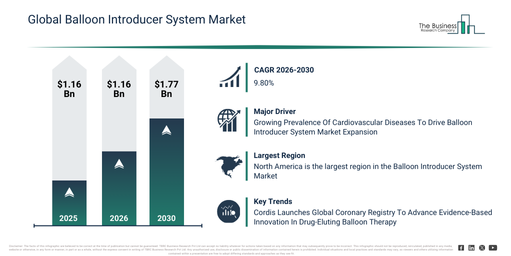
    The balloon introducer system market size is anticipated to undergo significant expansion in the coming years. It is projected to achieve a valuation of $5.23 billion in 2030, demonstrating a compound annual growth rate (CAGR) of 9.8%. This growth throughout the forecast period can be linked to factors such as the advancement of cutting and scoring balloon introducers, the wider adoption of drug-coated balloons, an increase in neurovascular intervention procedures, greater acceptance by ambulatory surgical centers, and the integration of intelligent and automated delivery systems. Prominent trends observed during this period encompass the increasing use of drug-coated balloon technologies, the proliferation of minimally invasive cardiovascular procedures, a developing preference for rapid exchange and over-the-wire systems, heightened understanding of peripheral and neurovascular disease treatments, and a focus on improving catheterization laboratory efficiency and operational flow.

    Get A Free Sample Report With In-Depth Market Insights:

    https://thebusinessresearchcompany.com/sample_request?id=84435912&type=smp&name=Balloon%20Introducer%20System%20Market%20Report%202026&utm_source=Blogs&utm_medium=Paid&utm_campaign=Sep_PR

    Balloon Introducer System Market Growth Momentum: What Factors Are Shaping Demand?

    The rising incidence of cardiovascular diseases is anticipated to boost the expansion of the balloon introducer system market in the future. These diseases encompass conditions impacting the heart and blood vessels, such as heart attacks, strokes, and high blood pressure. The growing occurrence of cardiovascular diseases stems from the global increase in obesity and diabetes, alongside the widespread adoption of inactive lifestyles and unhealthy eating patterns. A balloon introducer system facilitates minimally invasive interventions to unblock blood vessels, thereby enhancing blood circulation for cardiovascular disease management. As an illustration, in October 2025, the Australian Institute Of Health And Welfare, an Australia-based government entity, disclosed that in 2023, approximately 57,100 individuals aged 25 and over suffered acute coronary events, which translates to about 156 incidents daily. Consequently, the surge in cardiovascular diseases is fueling the development of the balloon introducer system market.

    Balloon Introducer System Market Segment Performance And Emerging Opportunities

    The balloon introducer system market covered in this report is segmented –

    1) By Product Type: Normal Balloon, Cutting And Scoring Balloon, Drug-Coated Balloon, Stent Graft Balloon Introducer

    2) By Technology: Rapid Exchange, Over The Wire, Fixed Wire Balloon Catheter

    3) By Application: Coronary Artery Diseases, Peripheral Artery Diseases, Neurovascular Diseases

    4) By End User: Hospitals, Ambulatory Surgical Centers, Catheterization Laboratories

    Subsegments:

    1) By Normal Balloon: Standard Balloon Introducers, Specialty Balloon Introducers

    2) By Cutting And Scoring Balloon: Cutting Balloon Introducers, Scoring Balloon Introducers

    3) By Drug-Coated Balloon: Paclitaxel-Coated Balloons, Sirolimus-Coated Balloons

    4) By Stent Graft Balloon Introducer: Stent Graft Delivery Systems, Balloon Expandable Stent Graft Introducers

    Balloon Introducer System Market Trends Redefining Industry Growth

    Leading companies in the balloon introducer system market are concentrating on developing evidence-based product innovations and initiating large-scale clinical programs to verify performance in real-world environments, a strategy exemplified by Cordis’ establishment of the SELUTION Global Coronary Registry. For instance, in May 2025, Cordis Corporation, a US-based medical technology firm, announced the unveiling of its SELUTION Global Coronary Registry. This significant project is designed to evaluate real-world patient outcomes for the SELUTION SLR Drug-Eluting Balloon across a cohort of up to 10,000 patients worldwide. This extensive, five-year registry is poised to reinforce the data already compiled from pre-clinical research, proof-of-concept trials, and five ongoing Level-1 randomized studies. Benefiting from the support of a respected global steering committee comprising leading interventional cardiologists, the program intends to enhance understanding of DEB application in modern PCI practice. With promising initial data and increasing clinical enthusiasm, Cordis reiterates its commitment to innovation driven by evidence and projects the release of important findings later this year.

    Balloon Introducer System Market Competitive Landscape: Which Companies Lead The Industry?

    Major companies operating in the balloon introducer system market are Cardinal Health Inc., Johnson & Johnson, Abbott Laboratories, Medtronic plc, Boston Scientific Corporation, B. Braun Melsungen AG, Terumo Corporation, Nipro Corporation, Cook Medical Inc., Teleflex Incorporated, BIOTRONIK SE & Co. KG, Merit Medical Systems Inc., MicroPort Scientific Corporation, Blue Sail Medical Co. Ltd., Asahi Intecc Co. Ltd., Japan Lifeline Co. Ltd., AngioDynamics Inc., OrbusNeich Medical, Biosensors International Group Ltd., Alvimedica Medical Technologies, Hexacath, Cardionovum GmbH, Concept Medical Inc, Endocor GmbH

    View The Full Balloon Introducer System Market Report:

    https://thebusinessresearchcompany.com/report/balloon-introducer-system-global-market-report?utm_source=Blogs&utm_medium=Paid&utm_campaign=Sep_PR

    Balloon Introducer System Market Regional Breakdown: Where Is Demand Concentrated?

    North America was the largest region in the balloon introducer system market in 2025. The regions covered in the balloon introducer system market report are Asia-Pacific, South East Asia, Western Europe, Eastern Europe, North America, South America, Middle East, Africa.

    Reach Out To Our Team:

    The Business Research Company: https://www.thebusinessresearchcompany.com/

    Americas: +1 310-496-7795

    Asia: +44 7882 955267 & +91 8897263534

    Europe: +44 7882 955267

    Email us at: marketing@tbrc.info

    Follow us on:

    LinkedIn: https://in.linkedin.com/company/the-business-research-company

    YouTube: https://www.youtube.com/channel/UC24_fI0rV8cR5DxlCpgmyFQ

    Global Market Model: https://www.thebusinessresearchcompany.com/global-market-model
  • Balance Rehabilitation Virtual Reality Pods Market Growth To $3.28 Billion Creates New Opportunities Across The Industry

    Balance Rehabilitation Virtual Reality Pods Market Growth To $3.28 Billion Creates New Opportunities Across The Industry

    Featuring market attractiveness scoring, total addressable market sizing, company benchmarking matrices, interactive Excel dashboards, deeper supply chain intelligence, emerging startup tracking, and granular product-level insights, The Business Research Company’s 2026 market reports are built to deliver research that is both more actionable and more strategically valuable.

    Balance Rehabilitation Virtual Reality Pods Market Size And Revenue Outlook Through 2030

    The balance rehabilitation virtual reality pods market has experienced substantial expansion in recent years. Projections indicate this market will increase from $1.56 billion in 2025 to $1.81 billion in 2026, demonstrating a compound annual growth rate (CAGR) of 16.3%. Historically, this market’s development is attributable to factors such as a rising incidence of balance disorders, the incorporation of VR into rehabilitation facilities, advancements in VR hardware technology, the initial integration of AI in therapy, and an escalation in clinical research concerning neurorehabilitation.

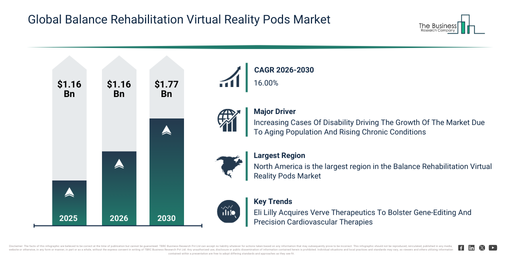
    The balance rehabilitation virtual reality pods market is anticipated to experience significant expansion in the coming years. Projections indicate it will reach a value of $3.28 billion by 2030, exhibiting a compound annual growth rate (CAGR) of 16.0%. This projected increase during the forecast period is due to factors such as the rise of home-based VR rehabilitation, the incorporation of AI analytics, a growing need for tailored therapy, regulatory green lights for VR rehabilitation tools, and increased usage among elderly and pediatric populations. Key developments expected in this period encompass gamified balance therapy, monitoring patients remotely, rehabilitation using motion tracking, AI-powered progress analysis, and customized VR therapy initiatives.

    Get A Free Sample Report With In-Depth Market Insights:

    https://thebusinessresearchcompany.com/sample_request?id=75624270&type=smp&name=Balance%20Rehabilitation%20Virtual%20Reality%20Pods%20Market%20Report%202026&utm_source=Blogs&utm_medium=Paid&utm_campaign=Sep_PR

    Balance Rehabilitation Virtual Reality Pods Market Expansion Drivers: What’s Shaping Future Growth?

    The expanding incidence of disability is projected to drive the expansion of the balance rehabilitation virtual reality pods market moving forward. Disability covers various challenges such as impairments, restrictions in activities, and limitations in participation, which hinder a person’s capability to carry out everyday tasks, frequently stemming from neurological conditions, advancing age, injuries, or persistent illnesses. The prevalence of disability is increasing due to the worldwide aging demographic, since older age elevates the probability of acquiring chronic ailments like stroke, arthritis, and neurodegenerative conditions, often leading to deficits in movement, equilibrium, and general functional capacity. Balance rehabilitation virtual reality pods provide advantages to individuals with disabilities by offering a secure, regulated setting where patients can conduct balance routines and virtually practice navigating complex situations, thereby lowering the chance of falls while boosting self-assurance and aiding effective functional recuperation. For example, in July 2025, data from Eurostat, the European Union’s statistical office situated in Luxembourg, showed that in 2024, 28.8% of individuals with a disability faced a risk of poverty or social exclusion, in contrast to 17.9% of individuals without such limitations. Consequently, the expanding number of disability cases is fueling the growth of the balance rehabilitation virtual reality pods market. Growing healthcare spending is anticipated to boost the expansion of the balance rehabilitation virtual reality pods market in the future. Healthcare expenditure denotes the overall financial sum allocated to health services, encompassing medical therapies, hospital treatment, pharmaceuticals, and public health programs, by states, corporations, and private citizens. The growing need for healthcare funding stems from the increasing occurrence of chronic illnesses, necessitating prolonged and expensive care. Increased healthcare spending supports balance rehabilitation virtual reality pods by facilitating investments in cutting-edge rehabilitation technologies. This funding promotes the incorporation of immersive VR therapy solutions into clinical and hospital settings, thereby improving patient access, boosting therapy efficacy, and enhancing general rehabilitation results. For example, in May 2024, data from the Office for National Statistics, a government department in the UK, indicated that total healthcare spending experienced a 5.6% rise in nominal value in 2023, representing a 0.9% growth compared to 2022. Consequently, the escalation in healthcare expenditure is fueling the growth of the balance rehabilitation virtual reality pods market.

    Balance Rehabilitation Virtual Reality Pods Market Segment Landscape And Growth Outlook

    The balance rehabilitation virtual reality pods market covered in this report is segmented –

    1) By Product: Stationary Virtual Reality Pods, Portable Virtual Reality Pods

    2) By Technology: Non-Immersive Virtual Reality, Semi-Immersive Virtual Reality, Fully Immersive Virtual Reality

    3) By Distribution Channel: Direct Sales, Online Retail, Distributors

    4) By Application: Hospitals And Clinics, Rehabilitation Centers, Home Care Settings, Other Applications

    5) By End-User: Adults, Pediatrics, Geriatrics

    Subsegments:

    1) By Stationary Virtual Reality Pods: Single-User Systems, Multi-User Systems, Therapy-Centric Pods, Assessment Pods, Immersive Pods

    2) By Portable Virtual Reality Pods: Compact Kits, Wearable Systems, Tablet-Based Systems, Modular Kits, Mobile App-Integrated Systems

    Balance Rehabilitation Virtual Reality Pods Market Strategic Trends: What Defines The Next Growth Phase?

    Leading companies in the balance rehabilitation virtual reality pods market are prioritizing the development of sophisticated solutions, such as AI-driven adaptive therapy software, to improve treatment customization, boost patient engagement, and equip clinicians with precise, data-backed progress monitoring. This AI-driven adaptive therapy software is an advanced algorithmic system that employs real-time performance data to automatically adjust exercise intensity and parameters, thereby generating a continuously optimized, patient-specific rehabilitation plan designed to maximize recovery. For example, in September 2024, Interacoustics A/S, a Denmark-based producer of diagnostic and therapeutic systems, introduced its Virtualis balance rehabilitation system, which features immersive virtual reality technology. Patients wear a head-mounted display with an expansive field of view to engage with a variety of gamified exercises aimed at boosting motivation and balance during vestibular and neurological rehabilitation. This development signifies Interacoustics’ strategic entry into integrated digital therapeutics, offering objective, data-informed therapy to enhance patient results while providing clinicians with advanced tools for assessment and progress oversight.

    Balance Rehabilitation Virtual Reality Pods Market Competitive Landscape: Who Leads The Industry?

    Major companies operating in the balance rehabilitation virtual reality pods market are Interacoustics A/S., MindMaze SA, XRHealth, Vicon Motion Systems Ltd., Ekso Bionics Holdings Inc., Tyromotion GmbH, Bertec Corporation, Reha Stim Medtec AG, balanceback, THERA-Trainer, DIH Technologies Corp., Saebo Inc., NEURO REHAB VR, KineQuantum SAS, Movendo Technology S.r.l., Protokinetics LLC, Silverfit Ltd., zebris Medical GmbH, LPG Group Ltd., Sensing Future Technologies.

    View The Full Balance Rehabilitation Virtual Reality Pods Market Report:

    https://thebusinessresearchcompany.com/report/balance-rehabilitation-virtual-reality-pods-global-market-report?utm_source=Blogs&utm_medium=Paid&utm_campaign=Sep_PR

    Balance Rehabilitation Virtual Reality Pods Market Geographic Landscape: Which Region Dominates Industry Growth?

    North America was the largest region in the balance rehabilitation virtual reality pods market in 2025. Asia-Pacific is expected to be the fastest-growing region in the forecast period. The regions covered in the balance rehabilitation virtual reality pods market report are Asia-Pacific, South East Asia, Western Europe, Eastern Europe, North America, South America, Middle East, Africa.

    Reach Out To Our Team:

    The Business Research Company: https://www.thebusinessresearchcompany.com/

    Americas: +1 310-496-7795

    Asia: +44 7882 955267 & +91 8897263534

    Europe: +44 7882 955267

    Email us at: marketing@tbrc.info

    Follow us on:

    LinkedIn: https://in.linkedin.com/company/the-business-research-company

    YouTube: https://www.youtube.com/channel/UC24_fI0rV8cR5DxlCpgmyFQ

    Global Market Model: https://www.thebusinessresearchcompany.com/global-market-model
  • Balance Assessment Systems Market Forecast: Breaking Down The Numbers Behind Future Expansion

    Balance Assessment Systems Market Forecast: Breaking Down The Numbers Behind Future Expansion

    Built to provide research that’s more actionable and strategically valuable, The Business Research Company’s 2026 market reports include market attractiveness analysis, total addressable market sizing, company benchmarking matrices, interactive Excel dashboards, broader supply chain intelligence, emerging startup tracking, and in-depth product insights.

    Balance Assessment Systems Market Growth From $1.68 Billion In 2026 To $2.53 Billion By 2030 At A CAGR Of 10.9%

    The balance assessment systems market has experienced rapid expansion in recent years. Its size is projected to reach $1.68 billion in 2026, increasing from $1.51 billion in 2025, at a compound annual growth rate (CAGR) of 11.2%. This historical growth can be attributed to factors such as an increase in fall-related injuries, the growth of the aging population, the adoption of rehabilitation technology, the demand for objective balance measurement, and sports performance analysis.

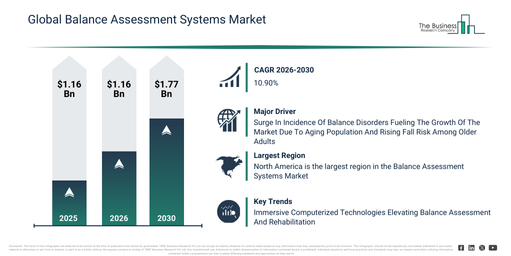
    The balance assessment systems market is expected to undergo rapid expansion in the coming years. This market is set to reach a value of $2.53 billion by 2030, achieving a compound annual growth rate (CAGR) of 10.9%. The impetus for this growth throughout the forecast period stems from advancements like AI-based movement analytics, the availability of home-based balance testing, an increase in neurological disorder diagnostics, the expansion of sports medicine, and the incorporation of tele-rehabilitation. Significant trends anticipated during this period include computerized balance analysis, assessments using wearable sensors, comprehensive gait and posture evaluation, virtual reality balance testing, and remote balance monitoring.

    Get A Free Sample Report With In-Depth Market Insights:

    https://thebusinessresearchcompany.com/sample_request?id=32301419&type=smp&name=Balance%20Assessment%20Systems%20Market%20Report%202026&utm_source=Blogs&utm_medium=Paid&utm_campaign=Sep_PR

    Balance Assessment Systems Market Development Factors: What’s Supporting Demand?

    The projected rise in balance disorder cases is anticipated to drive the expansion of the balance assessment systems market in the future. These disorders are defined as medical conditions where individuals experience unsteadiness, dizziness, or a sensation of spinning or movement even while stationary. The primary reason for this increase in balance disorders is the growing elderly population, given that age-related changes affecting the inner ear, vision, and muscle strength predispose older adults to dizziness, instability, and falls. Balance assessment systems aid in the diagnosis and management of such conditions through precise measurements of postural stability, body sway, and coordination, allowing clinicians to pinpoint underlying vestibular or neurological problems and create tailored rehabilitation plans to enhance balance and mobility. As an illustration, in 2024, the Stroke Foundation, an Australia-based developer of national stroke guidelines, reported that in 2023, approximately 440,481 Australians were living with stroke, and 45,785 new stroke events were documented during that year. It is projected that annual incident strokes will climb to 72,000 by 2050, representing an increase of approximately 57.3%, which indicates a significant rise in future service requirements and long-term care expenses. Consequently, the rising prevalence of balance disorders is fueling the expansion of the balance assessment systems market.

    Balance Assessment Systems Market Breakdown By Product Type And Application

    The balance assessment systems market covered in this report is segmented –

    1) By Product Type: Portable Balance Assessment Systems, Non-Portable Balance Assessment Systems

    2) By Application: Hospitals, Clinics, Rehabilitation Centers, Other Applications

    3) By End User: Adults, Pediatrics, Geriatrics

    Subsegments:

    1) By Portable Balance Assessment Systems: Wearable Sensor Based Balance Assessment Systems, Portable Force Plate Balance Assessment Systems, Portable Posturography Balance Assessment Systems, Handheld Vestibular Assessment Devices

    2) By Non Portable Balance Assessment Systems: Static Posturography Balance Assessment Systems, Dynamic Posturography Balance Assessment Systems, Force Platform Balance Assessment Systems, Virtual Reality Based Balance Assessment Systems, Gait And Balance Analysis Treadmill Systems

    Balance Assessment Systems Market Transformation Trends: What Innovations Are Driving Change?

    Leading companies within the balance assessment systems market are increasingly concentrating on integrating computerized assessment solutions, such as immersive virtual reality-based computerized dynamic posturography platforms, to facilitate objective, data-rich balance evaluation and rehabilitation in real time. The integration of computerized assessment solutions involves the deployment of software-driven systems, including force plates, motion sensors, and advanced analytics, which serve to quantify postural control and vestibular function while simultaneously guiding personalized therapy within interactive digital settings. For example, in September 2024, Interacoustics A/S, a diagnostic equipment manufacturer and supplier based in Denmark, unveiled its Virtualis balance rehabilitation solutions, specifically MotionVR, StaticVR, and BalanceVR. These systems merge dynamic and static force plates with fully immersive virtual reality to simulate authentic surfaces and scenarios, thereby capturing precise postural responses for clinicians. They enable healthcare professionals to customize assessment and training modules, such as those for sensory organization, adaptation, and functional balance tasks, for each patient, objectively monitor their progress, and assist individuals with dizziness and other balance disorders in recovering confidence and enhancing their daily functioning.

    Balance Assessment Systems Market Company Landscape And Competitive Strategy

    Major companies operating in the balance assessment systems market are Kistler Group, Bertec Corporation, Advanced Mechanical Technology Inc., zebris Medical GmbH, TecnoBody S.r.l., Balance Tracking Systems Inc., Vestibular Technologies LLC, NeuroEquilibrium Diagnostic Systems Pvt. Ltd., BioSensics LLC, Motek Medical, Natus Medical Incorporated, Biodex Medical Systems, Hocoma AG, DIERS International GmbH, Xsens Technologies, Qualisys AB, Noraxon USA Inc., AMTI Force Platforms, Charnwood Dynamics, Balance Systems SRL

    View The Full Balance Assessment Systems Market Report:

    https://thebusinessresearchcompany.com/report/global-balance-assessment-systems-market-report?utm_source=Blogs&utm_medium=Paid&utm_campaign=Sep_PR

    Balance Assessment Systems Market Largest Region: Which Geography Holds The Highest Market Share?

    North America was the largest region in the balance assessment systems market in 2025. Asia-Pacific is expected to be the fastest-growing region in the forecast period. The regions covered in the balance assessment systems market report are Asia-Pacific, South East Asia, Western Europe, Eastern Europe, North America, South America, Middle East, Africa.

    Reach Out To Our Team:

    The Business Research Company: https://www.thebusinessresearchcompany.com/

    Americas: +1 310-496-7795

    Asia: +44 7882 955267 & +91 8897263534

    Europe: +44 7882 955267

    Email us at: marketing@tbrc.info

    Follow us on:

    LinkedIn: https://in.linkedin.com/company/the-business-research-company

    YouTube: https://www.youtube.com/channel/UC24_fI0rV8cR5DxlCpgmyFQ

    Global Market Model: https://www.thebusinessresearchcompany.com/global-market-model
  • Baby Thermometers Market Expected To Grow At 9.7% CAGR Through 2030: What Businesses Need To Know

    Baby Thermometers Market Expected To Grow At 9.7% CAGR Through 2030: What Businesses Need To Know

    Backed by market attractiveness analysis, total addressable market sizing, company benchmarking matrices, interactive Excel dashboards, wider supply chain intelligence, emerging startup coverage, and detailed product-level insights, The Business Research Company’s 2026 market reports are designed to offer research that is more actionable and strategically valuable than ever.

    Baby Thermometers Market Expansion Outlook: What Revenue Opportunities Are Ahead?

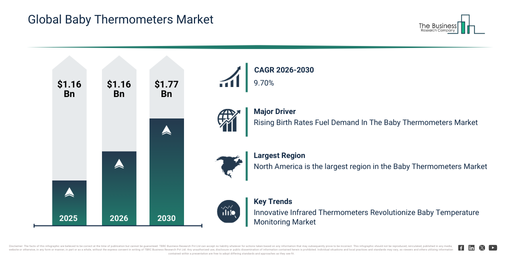
    The baby thermometers market size has seen substantial growth in recent years. It is anticipated to expand from $13.49 billion in 2025 to $14.96 billion in 2026, achieving a compound annual growth rate (CAGR) of 10.9%. The factors contributing to this historical growth include an increase in infant healthcare awareness, the rise in at-home child temperature monitoring, the shift towards digital thermometers over mercury devices, a demand for safer and non-invasive temperature measurement, and the broadening of retail options for pediatric healthcare products.

    The market size for baby thermometers is anticipated to undergo significant expansion over the forthcoming years. It is projected to increase to $21.68 billion by 2030, exhibiting a compound annual growth rate (CAGR) of 9.7%. This expected growth during the forecast period is driven by factors such as the expanding newborn and infant populations in emerging economies, a rising preference for infrared and non-contact thermometers, greater demand for portable and travel-friendly baby thermometers, an increasing focus on hygienic and infection-free temperature monitoring, and the broadening of online and pharmacy-based baby care distribution channels. Prominent trends within the forecast period encompass a growing inclination towards non-contact and infrared baby thermometers, an escalating demand for rapid-reading and child-appropriate thermometer designs, the increasing adoption of models with flexible tips, waterproof features, and pediatric-specific designs, the wider application of baby thermometers for use at home, during travel, and for portable purposes, and a continued emphasis on comfort, safety, and user convenience in monitoring infant temperatures.

    Get A Free Sample Report With In-Depth Market Insights:

    https://thebusinessresearchcompany.com/sample_request?id=81845411&type=smp&name=Baby%20Thermometers%20Market%20Report%202026&utm_source=Blogs&utm_medium=Paid&utm_campaign=Sep_PR

    Baby Thermometers Market Industry Drivers: What’s Behind The Revenue Growth?

    The expected increase in birth rates is set to drive the growth of the baby thermometers market in the future. Birth rates are defined as the number of live births per 1,000 individuals within a population over a specific period, typically one year. Factors contributing to rising birth rates include advancements in healthcare leading to reduced infant mortality, cultural shifts favoring larger families, stable economic conditions that encourage family planning, and supportive government policies promoting childbirth and family development. Baby thermometers are vital for monitoring newborns’ temperatures to ensure stability and to quickly detect any signs of fever or illness. These devices offer rapid and accurate readings, which are essential for obtaining prompt medical attention when required. For example, in April 2024, a report from National Vital Statistics Reports, a regular publication of the US-based inter-governmental National Vital Statistics System (NVSS), revealed that female birth rates grew by 1% to 5% among women aged 25–29 and 35–44, and increased by 12% for women aged 45–49. Thus, the upward trend in birth rates is propelling the expansion of the baby thermometers market.

    Baby Thermometers Market Segment Analysis And Revenue Potential

    The baby thermometers market covered in this report is segmented –

    1) By Type: Rectal, Oral, Infrared, Ear Canal, Pacifier, Armpit

    2) By Thermometer Type: Digital Baby Thermometers, Infrared Baby Thermometers, Pacifier Baby Thermometers, Smart Baby Thermometers

    3) By Connectivity: Non-Connected Baby Thermometers, Connected Baby Thermometers

    4) By Distribution Channel: Retail Store, Online Store, Supermarket, Pharma Store

    5) By Application: Home Use, Clinical Use, Travel And Portable Use, Other Applications

    Subsegments:

    1) By Rectal Thermometers: Digital Rectal Thermometers, Flexible Tip Rectal Thermometers, Disposable Rectal Thermometers, Fast-Read Rectal Thermometers, Waterproof Rectal Thermometers

    2) By Oral Thermometers: Digital Oral Thermometers, Flexible Tip Oral Thermometers, Quick-Read Oral Thermometers, Non-Contact Oral Thermometers, Oral Thermometers With Memory Recall

    3) By Infrared Thermometers: Non-Contact Infrared Thermometers, Forehead Infrared Thermometers, Temporal Artery (Forehead) Infrared Thermometers, Dual-Mode Infrared Thermometers (Forehead And Ear), Touchless Infrared Thermometers

    4) By Ear Canal Thermometers: Digital Ear Thermometers, Infrared Ear Thermometers, Disposable Ear Thermometer Covers, Fast-Reading Ear Thermometers, Pediatric-Specific Ear Thermometers

    5) By Pacifier Thermometers: Digital Pacifier Thermometers, Flexible Tip Pacifier Thermometers, Bpa-Free Pacifier Thermometers, Pacifier Thermometers With Memory Function, Thermometer Pacifiers For Infants

    6) By Armpit (Axillary) Thermometers: Digital Axillary Thermometers, Mercury-Free Axillary Thermometers, Flexible Tip Armpit Thermometers, Fast-Reading Axillary Thermometers, Pediatric-Specific Axillary Thermometers

    #Baby Thermometers Market Growth Trends: What’s Shaping The Future Outlook?

    Leading companies in the baby thermometers market are introducing innovative products, such as infrared thermometers, to gain a competitive advantage. Infrared thermometers utilize infrared technology for non-contact temperature measurement, typically by scanning the forehead or ear, which provides quick and hygienic readings. These devices are extensively used in both medical settings and households for rapid and non-invasive temperature monitoring. For instance, in July 2023, Tenovi, a US-based remote patient monitoring (RPM) solution, launched a cellular-enabled Infrared Thermometer. This new FDA approved infrared thermometer allows patients to automatically transmit real-time temperature readings to doctors and clinicians. By fusing infrared temperature measurement with cellular connectivity, a cellular-enabled infrared thermometer enables real-time data transfer and remote monitoring. In large-scale settings like medical institutions, manufacturing facilities, and field sites, its cellular functionality facilitates smooth data logging and centralized access through cloud systems. Many versions are engineered for durability, often featuring resistance to dust and water, along with the capacity to tolerate high temperatures, thus ensuring dependable operation in a variety of environments.

    Baby Thermometers Market Key Players Shaping Industry Direction

    Major companies operating in the baby thermometers market are Braun GmbH, Omron Healthcare, Exergen Corporation, Microlife Corporation, American Diagnostic Corporation, Contec Medical Systems Co Ltd, Geratherm Medical AG, Kinsa Inc, Withings, Vicks (The Procter & Gamble Company) , Beurer GmbH, Easywell Biomedicals Inc, Berrcom, Rossmax International Ltd, Innovo Medical Group Inc, TempTraq, Elepho, Raiing Medical, Zhongshan Bisen Plastic Electronic Products Co Ltd

    View The Full Baby Thermometers Market Report:

    https://thebusinessresearchcompany.com/report/baby-thermometers-global-market-report?utm_source=Blogs&utm_medium=Paid&utm_campaign=Sep_PR

    Baby Thermometers Market Regional Analysis: Which Region Leads By Revenue?

    North America was the largest region in the baby thermometers market in 2025. Asia-Pacific is expected to be the fastest-growing region in the forecast period. The regions covered in the baby thermometers market report are Asia-Pacific, South East Asia, Western Europe, Eastern Europe, North America, South America, Middle East, Africa.

    Reach Out To Our Team:

    The Business Research Company: https://www.thebusinessresearchcompany.com/

    Americas: +1 310-496-7795

    Asia: +44 7882 955267 & +91 8897263534

    Europe: +44 7882 955267

    Email us at: marketing@tbrc.info

    Follow us on:

    LinkedIn: https://in.linkedin.com/company/the-business-research-company

    YouTube: https://www.youtube.com/channel/UC24_fI0rV8cR5DxlCpgmyFQ

    Global Market Model: https://www.thebusinessresearchcompany.com/global-market-model
  • Baby Monitoring Devices Market Forecast To Reach $8.65 Billion By 2030: Key Trends Explained

    Baby Monitoring Devices Market Forecast To Reach $8.65 Billion By 2030: Key Trends Explained

    Featuring market attractiveness scoring, total addressable market sizing, company benchmarking matrices, interactive Excel dashboards, deeper supply chain intelligence, emerging startup tracking, and granular product-level insights, The Business Research Company’s 2026 market reports are built to deliver research that is both more actionable and more strategically valuable.

    Baby Monitoring Devices Market Growth Potential: How Will Market Size Shift Through 2030?

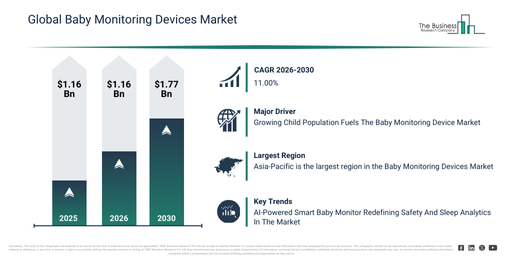
    The market size for baby monitoring devices has seen rapid growth in recent years. It will grow from $5.14 billion in 2025 to $5.7 billion in 2026 at a compound annual growth rate (CAGR) of 11.0%. The expansion observed historically can be attributed to factors such as increasing urbanization and the rise of nuclear family structures, heightened parental awareness regarding infant safety, a surge in consumer electronics adoption, advancements in internet connectivity, and the proliferation of e-commerce distribution channels.

    The baby monitoring devices market is projected to experience substantial expansion over the upcoming years. By 2030, its size is anticipated to reach $8.65 billion, demonstrating a compound annual growth rate (CAGR) of 11.0%. This growth during the forecast period is attributable to several factors, including the increasing demand for smart home integration, the rising adoption of AI-powered infant monitoring solutions, the expansion of remote childcare options, a growing emphasis on cybersecurity features, and technological improvements in sensor accuracy. Key trends anticipated during the same period encompass the increasing adoption of smart baby monitors offering app connectivity, a heightened demand for video and night vision capabilities, the expanding integration of AI-based audio and motion detection, the proliferation of wireless and Wi-Fi enabled devices, and an enhanced focus on ensuring data privacy and security.

    Get A Free Sample Report With In-Depth Market Insights:

    https://thebusinessresearchcompany.com/sample_request?id=23418346&type=smp&name=Baby%20Monitoring%20Devices%20Market%20Report%202026&utm_source=Blogs&utm_medium=Paid&utm_campaign=Sep_PR

    Baby Monitoring Devices Market Growth Factors: What’s Supporting Expansion?

    The increasing number of children is anticipated to stimulate the expansion of the baby monitoring device market in the future. This term defines the count of people between 0 and 17 years old residing in a specific area, including a village, city, state, province, country, or continent. Parents frequently utilize baby monitoring devices to guarantee the safety and welfare of their babies. Such equipment is frequently deemed crucial for newborns and infants, offering parents reassurance and enabling prompt responses to their child’s requirements. As an illustration, data from 2023, reported by the Federal Interagency Forum on Child and Family – an assembly of 23 Federal government bodies engaged in studies and initiatives concerning children and families – indicated that in 2022, the United States accounted for 72.5 million children. This overall count of children is projected to increase to 78.2 million by 2050. Consequently, the expanding child population is fueling the development of the baby monitoring device market.

    Baby Monitoring Devices Market Segmentation And Category Overview

    The baby monitoring devices market covered in this report is segmented –

    1) By Type: Internet Baby Monitor, Video Baby Monitor, Audio Baby Monitor

    2) By Mode Of Connection: Wired, Wireless

    3) By Application: Home And Family Care, Daycare And Childcare Centers, Neonatal And Pediatric Care Units, Other Applications

    Subsegments:

    1) By Internet Baby Monitor: Wi-Fi Baby Monitors, Smart Baby Monitors With App Connectivity

    2) By Video Baby Monitor: Traditional Video Monitors, Pan-And-Tilt Video Monitors, Night Vision Video Monitors

    3) By Audio Baby Monitor: Standard Audio Monitors, DECT Audio Monitors, Two-Way Communication Audio Monitors

    Baby Monitoring Devices Market Industry Trends: What’s Reshaping Demand?

    Key companies within the baby monitoring devices market are concentrating on introducing intelligent AI-powered solutions, such as AI-based smart baby monitoring devices, to gain a competitive advantage. Such a device represents a technologically sophisticated system designed to oversee and ensure the safety and well-being of infants. For instance, in September 2023, VTech, a Hong Kong-based parenting technology company, launched the V-Care VC2105 Smart Nursery Baby Monitor. This product leverages unique local AI capabilities, providing baby sleep analytics and real-time alerts, with the aim of creating the ideal baby monitoring system on the market. Utilizing cutting-edge local AI-powered technology enables parents to guarantee a safe and serene sleep environment for their babies, thereby eliminating restless evenings. The 5-inch, 720p High-Definition Parent Unit Display facilitates parents in keeping an eye on their child from home, or they can opt for remote monitoring using a smartphone. Beyond offering valuable sleep analysis and advantages, this Over-the-Crib WiFi video baby monitor grants parents a complete view of their babies. Through Sleep Analytics, parents can maximize their babies’ sleep efficiency by identifying when they sleep the longest or how often they visit them during the night.

    Baby Monitoring Devices Market Competitive Analysis Of Leading Industry Participants

    Major companies operating in the baby monitoring devices market are Dorel Industries Inc., Samsung Electronics Co. Ltd., Angelcare Monitors Inc., Motorola Solutions Inc., iBaby Labs Inc., VTech Holdings Limited, Summer Infant Inc., Nanit Inc., Owlet Baby Care Inc., Respisense, Safetosleep, Miku Inc., Infant Optics, MOBI Technologies Inc., Panasonic Corporation, Levana Infotech Pvt. Ltd., Baby Delight Inc., Invidyo LLC, Snuza Inc., Foscam LLC, Mayborn Group Limited, Arlo Technologies Inc.

    View The Full Baby Monitoring Devices Market Report:

    https://thebusinessresearchcompany.com/report/baby-monitoring-devices-global-market-report?utm_source=Blogs&utm_medium=Paid&utm_campaign=Sep_PR

    Baby Monitoring Devices Market Geographic Distribution And Regional Opportunities

    Asia-Pacific was the largest region in the baby monitoring devices market in 2025. The regions covered in the baby monitoring devices market report are Asia-Pacific, South East Asia, Western Europe, Eastern Europe, North America, South America, Middle East, Africa.

    Reach Out To Our Team:

    The Business Research Company: https://www.thebusinessresearchcompany.com/

    Americas: +1 310-496-7795

    Asia: +44 7882 955267 & +91 8897263534

    Europe: +44 7882 955267

    Email us at: marketing@tbrc.info

    Follow us on:

    LinkedIn: https://in.linkedin.com/company/the-business-research-company

    YouTube: https://www.youtube.com/channel/UC24_fI0rV8cR5DxlCpgmyFQ

    Global Market Model: https://www.thebusinessresearchcompany.com/global-market-model