Month: October 2026

  • Hair Loss Treatment Products Market Forecast To 2030: Starting From $4.05 Billion In 2026

    Hair Loss Treatment Products Market Forecast To 2030: Starting From $4.05 Billion In 2026

    Built to provide research that’s more actionable and strategically valuable, The Business Research Company’s 2026 market reports include market attractiveness analysis, total addressable market sizing, company benchmarking matrices, interactive Excel dashboards, broader supply chain intelligence, emerging startup tracking, and in-depth product insights.

    Hair Loss Treatment Products Market Size And Revenue Outlook Through 2030

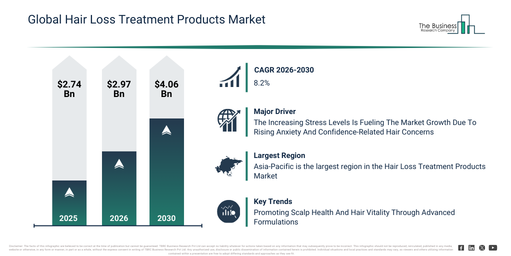
    The hair loss treatment products market has observed significant expansion in recent years. It is anticipated to grow from $2.74 billion in 2025 to $2.97 billion in 2026, demonstrating a compound annual growth rate (CAGR) of 8.2%. This historical growth can be attributed to an increasing incidence of alopecia conditions, the broad adoption of minoxidil products, the proliferation of dermatology clinics, heightened consumer awareness regarding grooming, and the wider availability of over-the-counter hair care solutions.

    The hair loss treatment products market is projected to experience robust expansion over the coming years. It will grow to $4.06 billion in 2030 at a compound annual growth rate (CAGR) of 8.2%. This anticipated growth during the forecast period is primarily attributed to factors such as the development of personalized hair care products, a rise in demand for plant-based formulations, the expansion of e-commerce sales channels, an increase in stress-related hair loss cases, and innovation in non-invasive hair treatments. Key trends in the forecast period encompass a heightened demand for topical hair regrowth solutions, the growing use of nutritional supplements for hair health, an increasing preference for natural and herbal products, the expansion of at-home hair loss treatments, and greater awareness of hair loss linked to stress and hormones.

    Get A Free Sample Report With In-Depth Market Insights:

    https://thebusinessresearchcompany.com/sample_request?id=72269520&type=smp&name=Hair%20Loss%20Treatment%20Products%20Market%20Report%202026&utm_source=Blogs&utm_medium=Paid&utm_campaign=Oct_PR

    Hair Loss Treatment Products Market Opportunity Drivers: What’s Unlocking New Revenue Potential?

    Elevated stress levels are projected to boost the expansion of the hair loss treatment products market moving forward. Stress levels denote the mental or emotional pressure an individual encounters. A key contributor to escalating stress is growing work demands, with staff confronting extended hours, stricter deadlines, and heightened performance standards in intense professional settings. Higher stress contributes to an increase in instances of hair loss, encouraging a greater number of individuals to look for treatment options. This escalating worry is fueling the need for hair loss treatment products. For example, data from May 2024, shared by the American Psychiatric Association, a US-based organization, indicated that in 2024, 43% of U.S. adults experienced increased anxiety compared to the prior year, an increase from 37% in 2023 and 32% in 2022, underscoring a consistent upward trend in anxiety levels over the last three years. Consequently, heightened stress levels are a significant factor propelling the expansion of the hair loss treatment products market.

    Hair Loss Treatment Products Market Segmentation And Category Overview

    The hair loss treatment products market covered in this report is segmented –

    1) By Product Type: Shampoo And Conditioner, Supplements And Vitamins, Serum And Oil, Other Product Types

    2) By Disease Type: Alopecia Areata, Cicatricial Alopecia, Traction Alopecia, Alopecia Totalis, Alopecia Universalis, Other Disease Types

    3) By Distribution Channel: Supermarkets And Hypermarkets, Convenience Stores, Specialist Retailers, Pharmacies Or Drugstores, Online Retail, Medical Or Pharmacy Stores, E-Commerce, Departmental Stores, Other Distribution Channels

    4) By End-User: Hospitals, Home Healthcare Settings, Dermatology Centres, Other End-Users

    Subsegments:

    1) By Shampoo And Conditioner: Anti-Dandruff Shampoo, Thickening Or Volumizing Shampoo, Sulfate-Free Shampoo, Hair Regrowth Conditioner, Herbal Or Natural Shampoo And Conditioner

    2) By Supplements And Vitamins: Biotin Supplements, Multivitamins, Iron Supplements, Collagen Supplements, Omega-3 Fatty Acids

    3) By Serum And Oil: Minoxidil-Based Serums, Herbal Hair Serums, Essential Oil Blends, Argan Oil-Based Products, Castor Oil-Based Treatments

    4) By Other Product Types: Hair Masks, Hair Sprays and Mists, Scalp Exfoliators, Leave-In Treatments, Laser Hair Growth Devices

    Hair Loss Treatment Products Market Innovation Trends Shaping Future Development

    Leading businesses in the hair loss treatment products market are concentrating on creating novel solutions, including anti-hair loss systems, to improve effectiveness and cater to varied consumer requirements. An anti-hair loss system, defined as a collective of products or therapies engineered to halt hair thinning and foster growth, aids in addressing hair loss by enriching the scalp, fortifying hair follicles, and diminishing hair fall. As an illustration, in July 2024, Aveda Corporation, a cosmetics firm located in the US, introduced the Invati Ultra Advanced Collection. This collection is formulated to lessen hair loss and reinforce thinning hair through plant-derived technology. It comprises a shampoo, conditioner, and scalp serum, all crafted with botanical components. Its objective is to provide noticeably thicker, fuller hair when used consistently. Furthermore, the line promotes a healthy scalp setting, encouraging sustained hair vitality.

    Hair Loss Treatment Products Market Competitive Analysis Of Leading Industry Participants

    Major companies operating in the hair loss treatment products market are Pfizer Inc., Johnson & Johnson Services Inc., Unilever PLC, Bayer Aktiengesellschaft, L’Oréal S.A., The Estée Lauder Companies Inc., Kao Corporation, Shiseido Company Limited, Galderma S.A., Dr. Reddy’s Laboratories Ltd., Taisho Pharmaceutical Holdings Co. Ltd., Revlon Inc., Merz Pharma GmbH & Co. KGaA, Hims & Hers Health Inc., Pierre Fabre S.A., Roman Health Ventures Inc, Aclaris Therapeutics Inc., HUM Nutrition Inc., OMI Industries Inc., Thirty Madison Inc., ULO LLC, TYPEBEA Inc.

    View The Full Hair Loss Treatment Products Market Report:

    https://thebusinessresearchcompany.com/report/hair-loss-treatment-products-global-market-report?utm_source=Blogs&utm_medium=Paid&utm_campaign=Oct_PR

    Hair Loss Treatment Products Market Geographic Landscape: Which Region Dominates Industry Growth?

    Asia-Pacific was the largest region in the hair loss treatment products market in 2025. North America is expected to be the fastest-growing region in the forecast period. The regions covered in the hair loss treatment products market report are Asia-Pacific, South East Asia, Western Europe, Eastern Europe, North America, South America, Middle East, Africa.

    Reach Out To Our Team:

    The Business Research Company: https://www.thebusinessresearchcompany.com/

    Americas: +1 310-496-7795

    Asia: +44 7882 955267 & +91 8897263534

    Europe: +44 7882 955267

    Email us at: marketing@tbrc.info

    Follow us on:

    LinkedIn: https://in.linkedin.com/company/the-business-research-company

    YouTube: https://www.youtube.com/channel/UC24_fI0rV8cR5DxlCpgmyFQ

    Global Market Model: https://www.thebusinessresearchcompany.com/global-market-model
  • H2 Receptor Antagonist Market Size In 2026 And Beyond: Understanding Future Growth Potential

    H2 Receptor Antagonist Market Size In 2026 And Beyond: Understanding Future Growth Potential

    Backed by market attractiveness analysis, total addressable market sizing, company benchmarking matrices, interactive Excel dashboards, wider supply chain intelligence, emerging startup coverage, and detailed product-level insights, The Business Research Company’s 2026 market reports are designed to offer research that is more actionable and strategically valuable than ever.

    H2 Receptor Antagonist Market Growth From $4.49 Billion In 2026 To $5.5 Billion By 2030 At A CAGR Of 5.2%

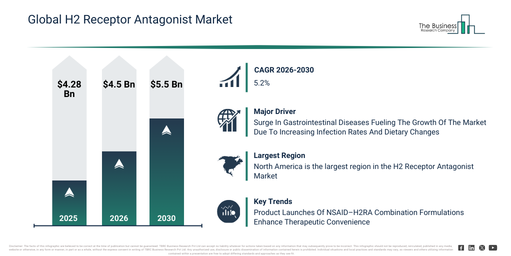
    The h2 receptor antagonist market has experienced significant expansion in recent years. It is projected to increase from $4.28 billion in 2025 to $4.5 billion in 2026, at a compound annual growth rate (CAGR) of 5.2%. The historical growth in this sector can be primarily attributed to a high prevalence of acid-related disorders, the widespread adoption of ranitidine and famotidine, the expansion of hospital pharmacy networks, an increase in GERD diagnoses, and the growth of treatments for peptic ulcers.

    The h2 receptor antagonist market is poised for substantial expansion in the upcoming years. Its value is expected to escalate to $5.5 billion by 2030, exhibiting a compound annual growth rate (CAGR) of 5.2%. This anticipated increase during the forecast period can be attributed to several factors, including the surging need for cost-effective acid suppressants, the growth in generic drug manufacturing, an uptick in self-medication practices, the proliferation of online pharmacy channels, and an aging population prone to digestive issues. Prominent trends for the forecast period encompass the sustained application of h2 blockers in acid suppression therapies, a rising preference for oral medications to reduce acid, the wider availability of generic h2 receptor antagonists, steady demand in the management of gastrointestinal disorders, and improved accessibility via both retail and online pharmacies.

    Get A Free Sample Report With In-Depth Market Insights:

    https://thebusinessresearchcompany.com/sample_request?id=31760708&type=smp&name=H2%20Receptor%20Antagonist%20Market%20Report%202026&utm_source=Blogs&utm_medium=Paid&utm_campaign=Oct_PR

    H2 Receptor Antagonist Market Growth Momentum: What Factors Are Shaping Demand?

    The rising occurrence of gastrointestinal illnesses is projected to fuel the expansion of the H2 receptor antagonist market moving ahead. These diseases encompass ailments impacting the digestive system, such as infections, inflammation, and various disorders of the stomach and intestines. The surge in gastrointestinal diseases stems from poor dietary habits and a greater intake of processed foods, factors that can impair gut health and trigger numerous digestive ailments like acid reflux, irritable bowel syndrome (IBS), and ulcers. H2 receptor antagonists aid in managing gastrointestinal conditions by inhibiting histamine receptors in the stomach, thereby decreasing acid secretion and easing symptoms like acid reflux, ulcers, and gastritis. An example illustrating this trend is provided by the American Cancer Society (ACS), a professional organization based in the US, which reported in January 2023 that gastrointestinal cancer cases within the United States saw an increase of 3.18%, rising from 338,090 in 2022 to 348,840 in 2023. Consequently, the escalating prevalence of gastrointestinal diseases is propelling the growth of the H2 receptor antagonist market.

    H2 Receptor Antagonist Market Segment Outlook: Which Categories Are Growing Fastest?

    The h2 receptor antagonist market covered in this report is segmented –

    1) By Drug Class: Cimetidine, Ranitidine, Famotidine, Nizatidine

    2) By Route of Administration: Oral, Intravenous, Intramuscular

    3) By Indication: Gastroesophageal Reflux Disease (GERD), Peptic Ulcers, Zollinger-Ellison Syndrome, Other Indications

    4) By Distribution Channel: Hospital Pharmacies, Retail Pharmacies, Online Pharmacies, Other Distribution Channels

    5) By End-User: Hospitals, Clinics, Home Care Settings

    Subsegments:

    1) By Cimetidine: Standard-Dose Formulations, Low-Dose Maintenance Therapy, Hospital-Use Injectable Formulations

    2) By Ranitidine: Oral Solid Dosage Forms, Injectable Ranitidine Formulations, Short-Term Acid Suppression Therapy

    3) By Famotidine: Low-Dose OTC Formulations, Prescription-Strength Formulations, Injectable Famotidine Preparations

    4) By Nizatidine: Oral Capsule Formulations, Oral Liquid Formulations, Maintenance Acid-Reduction Therapy

    H2 Receptor Antagonist Market Trends Redefining Industry Growth

    Leading companies operating within the H2 receptor antagonists market are concentrating on product advancements, such as NSAID–H2RA fixed-dose combination tablets, to enhance therapeutic convenience and ensure gastrointestinal safety. These NSAID–H2RA fixed-dose combination tablets are single-tablet formulations that combine a nonsteroidal anti-inflammatory drug with an H2 receptor antagonist, aiming to provide pain relief while simultaneously diminishing the risk of NSAID-induced gastric and duodenal ulcers. For instance, in March 2024, Endo International plc, a U.-based specialty pharmaceutical company, introduced Ibuprofen-Famotidine Tablets 800 mg/26.6 mg, the generic alternative to DUEXIS. This launch offers a high-strength ibuprofen dose suitable for managing chronic pain, features integrated gastroprotection through famotidine, and presents a cost-effective generic option designed to improve affordability for long-term therapy.

    H2 Receptor Antagonist Market Leading Companies And Competitive Benchmarking

    Major companies operating in the h2 receptor antagonist market are Pfizer Inc., Sanofi S.A., Abbott Laboratories, Novartis AG, GlaxoSmithKline plc, Takeda Pharmaceutical Company Limited, Eli Lilly and Company, Viatris Inc., Teva Pharmaceutical Industries Limited, Boehringer Ingelheim International GmbH, Sun Pharmaceutical Industries Limited, Apotex Inc., Aurobindo Pharma Limited, Dr. Reddy’s Laboratories Limited, Cipla Limited, Hikma Pharmaceuticals plc, Lupin Ltd., Zydus Lifesciences Limited, Torrent Pharmaceuticals Limited, Accord Healthcare Limited

    View The Full H2 Receptor Antagonist Market Report:

    https://thebusinessresearchcompany.com/report/h2-receptor-antagonist-global-market-report?utm_source=Blogs&utm_medium=Paid&utm_campaign=Oct_PR

    H2 Receptor Antagonist Market Largest Region: Which Geography Holds The Highest Market Share?

    North America was the largest region in the H2 receptor antagonist market in 2025. Asia-Pacific is expected to be the fastest-growing region in the forecast period. The regions covered in the h2 receptor antagonist market report are Asia-Pacific, South East Asia, Western Europe, Eastern Europe, North America, South America, Middle East, Africa.

    Reach Out To Our Team:

    The Business Research Company: https://www.thebusinessresearchcompany.com/

    Americas: +1 310-496-7795

    Asia: +44 7882 955267 & +91 8897263534

    Europe: +44 7882 955267

    Email us at: marketing@tbrc.info

    Follow us on:

    LinkedIn: https://in.linkedin.com/company/the-business-research-company

    YouTube: https://www.youtube.com/channel/UC24_fI0rV8cR5DxlCpgmyFQ

    Global Market Model: https://www.thebusinessresearchcompany.com/global-market-model
  • H2 Antagonists Market Reaches $25.13 Billion In 2026: Key Developments Shaping Expansion

    H2 Antagonists Market Reaches $25.13 Billion In 2026: Key Developments Shaping Expansion

    Featuring market attractiveness scoring, total addressable market sizing, company benchmarking matrices, interactive Excel dashboards, deeper supply chain intelligence, emerging startup tracking, and granular product-level insights, The Business Research Company’s 2026 market reports are built to deliver research that is both more actionable and more strategically valuable.

    H2 Antagonists Market Expansion Outlook: What Revenue Opportunities Are Ahead?

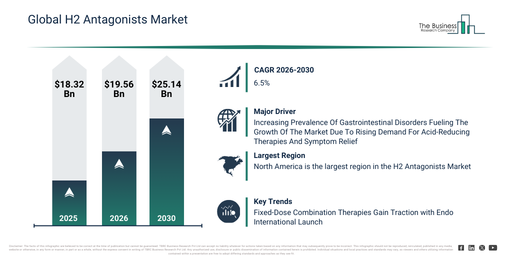
    The h2 antagonists market has experienced robust expansion in recent years. Projections show it will increase from $18.32 billion in 2025 to $19.56 billion in 2026, exhibiting a compound annual growth rate (CAGR) of 6.8%. Key drivers for this historical growth include the prevalence of peptic ulcers, the incidence of GERD, the adoption of OTC drugs, the expansion of hospital pharmacies, and heightened awareness of gastrointestinal disorders.

    The h2 antagonists market size is anticipated to experience robust expansion over the next few years. It is projected to reach $25.14 billion in 2030, demonstrating a compound annual growth rate (CAGR) of 6.5%. This growth in the forecast period is primarily driven by an aging population, the increasing demand for affordable acid reducers, a rise in self-medication practices, the expansion of online pharmacies, and effective management of chronic GERD. Significant trends during this period include a sustained need for acid suppression therapies, the increasing over-the-counter (OTC) availability of h2 antagonists, their expanded application in managing mild GERD and ulcers, the proliferation of liquid and injectable formulations, and a rising preference for cost-effective medications for acid control.

    Get A Free Sample Report With In-Depth Market Insights:

    https://thebusinessresearchcompany.com/sample_request?id=21342610&type=smp&name=H2%20Antagonists%20Market%20Report%202026&utm_source=Blogs&utm_medium=Paid&utm_campaign=Oct_PR

    H2 Antagonists Market Expansion Drivers: What’s Shaping Future Growth?

    The escalating occurrence of gastrointestinal disorders is projected to stimulate the expansion of the H2 antagonists market in the coming period. Gastrointestinal (GI) disorders are defined as medical conditions that impact the digestive system, encompassing organs such as the esophagus, stomach, intestines, liver, pancreas, and gallbladder. The rising frequency of these disorders is attributed to unhealthy eating habits, which promote excessive stomach acid generation and irritate the digestive tract. H2 antagonists aid in the management of gastrointestinal disorders by lowering stomach acid production, proving effective for treating conditions like acid reflux and ulcers. They contribute to improved patient comfort by offering rapid symptom relief and fostering long-term digestive health. For example, in March 2024, the World Health Organization (WHO), a specialized agency of the United Nations based in Switzerland, reported that diarrheal diseases cause roughly 1.7 billion cases each year and lead to approximately 443,832 deaths in children under the age of 5, in addition to 50,851 deaths among children aged 5 to 9. Consequently, the increasing prevalence of gastrointestinal disorders is a key driver for the growth of the H2 antagonists market.

    H2 Antagonists Market Segment Landscape: Which Areas Lead Development?

    The h2 antagonists market covered in this report is segmented –

    1) By Drug Type: Prescription H2 Antagonists, Over-The-Counter H2 Antagonists

    2) By Indication: Gastroesophageal Reflux Disease (GERD), Peptic Ulcer Disease, Zollinger-Ellison Syndrome, Other Indications

    3) By Dosage Form: Tablets, Capsules, Injectable Solutions, Liquid Formulations

    4) By Distribution Channel: Retail Pharmacies, Hospital Pharmacies, Online Pharmacies, Drug Stores

    Subsegments:

    1) By Prescription H2 Antagonists: Gastroesophageal Reflux Disease (GERD), Peptic Ulcers, Zollinger-Ellison Syndrome

    2) By Over-The-Counter (OTC) H2 Antagonist: Heartburn, Occasional Acid Reflux, Indigestion

    H2 Antagonists Market Strategic Trends: What Defines The Next Growth Phase?

    Leading companies in the H2 antagonists market are concentrating on developing innovative solutions, such as fixed-dose combination therapies, to enhance patient compliance and reduce gastrointestinal side effects. These combination therapies integrate two or more active drugs into a single dosage form, thereby streamlining treatment regimens, improving patient adherence, and lessening the risk of side effects compared to taking multiple individual medications. For example, in March 2024, Endo International plc, a US-based pharmaceutical company, introduced ibuprofen-famotidine 800 mg/26.6 mg tablets, which is a generic version of the brand combination previously marketed as Duexis. This novel product comprises 800 mg of the non-steroidal anti-inflammatory drug ibuprofen along with 26.6 mg of the H2-receptor antagonist famotidine. It is formulated to relieve symptoms of rheumatoid arthritis and osteoarthritis (through ibuprofen) while simultaneously reducing the danger of NSAID-induced upper gastrointestinal ulcers (through famotidine). Key characteristics include its fixed-dose co-formulation within a single tablet, simplifying the regimen compared to separate administration of an NSAID and a gastro-protective agent; its suitability for patients requiring chronic NSAID therapy with concurrent ulcer-risk mitigation; and the advantage of cost-effective generic access in the US market.

    H2 Antagonists Market Industry Leaders And Competitive Landscape

    Major companies operating in the h2 antagonists market are Aurobindo Pharma Limited, Cipla Limited, Lupin Limited, Alkem Laboratories Limited, Intas Pharmaceuticals Limited, Mylan N.V. (Viatris Inc.), Glenmark Pharmaceuticals Limited, Hikma Pharmaceuticals PLC, Zydus Lifesciences Limited, Wockhardt Limited, Sandoz International GmbH, Alembic Pharmaceuticals Limited, Micro Labs Limited, IPCA Laboratories Limited, Emcure Pharmaceuticals Limited

    View The Full H2 Antagonists Market Report:

    https://thebusinessresearchcompany.com/report/h2-antagonists-global-market-report?utm_source=Blogs&utm_medium=Paid&utm_campaign=Oct_PR

    H2 Antagonists Market Regional Analysis: Which Region Leads By Revenue?

    North America was the largest region in the H2 receptor antagonists market in 2025. Asia-Pacific is expected to be the fastest-growing region in the forecast period. The regions covered in the h2 antagonists market report are Asia-Pacific, South East Asia, Western Europe, Eastern Europe, North America, South America, Middle East, Africa.

    Reach Out To Our Team:

    The Business Research Company: https://www.thebusinessresearchcompany.com/

    Americas: +1 310-496-7795

    Asia: +44 7882 955267 & +91 8897263534

    Europe: +44 7882 955267

    Email us at: marketing@tbrc.info

    Follow us on:

    LinkedIn: https://in.linkedin.com/company/the-business-research-company

    YouTube: https://www.youtube.com/channel/UC24_fI0rV8cR5DxlCpgmyFQ

    Global Market Model: https://www.thebusinessresearchcompany.com/global-market-model
  • H1N1 Vaccine Market Growth Outlook For 2026: Drivers, Trends And Future Opportunities

    H1N1 Vaccine Market Growth Outlook For 2026: Drivers, Trends And Future Opportunities

    Built to provide research that’s more actionable and strategically valuable, The Business Research Company’s 2026 market reports include market attractiveness analysis, total addressable market sizing, company benchmarking matrices, interactive Excel dashboards, broader supply chain intelligence, emerging startup tracking, and in-depth product insights.

    H1N1 Vaccine Market Growth Potential: How Will Market Size Shift Through 2030?

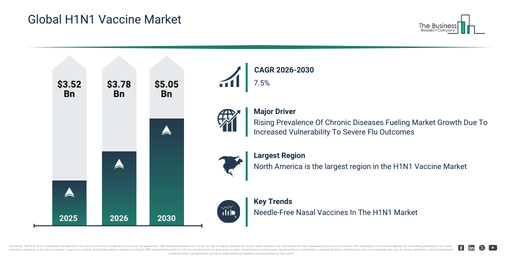
    The h1n1 vaccine market size has demonstrated significant expansion in recent years. Its value is expected to grow from $3.52 billion in 2025 to $3.78 billion in 2026, reflecting a compound annual growth rate (CAGR) of 7.3%. Historically, this market’s growth has been driven by factors such as past h1n1 pandemic outbreaks, extensive government-led mass immunization campaigns, increasing global influenza incidence, dedicated public health funding for vaccines, and the presence of established cold chain infrastructure.

    The h1n1 vaccine market is projected to experience substantial expansion over the coming years. It will grow to $5.05 billion in 2030 at a compound annual growth rate (CAGR) of 7.5%. This anticipated growth during the forecast period is fueled by factors such as enhanced pandemic readiness efforts, the escalating susceptibility of the older demographic, broader national immunization programs, improved healthcare accessibility within developing nations, and the continuous threat of influenza virus mutations. Key trends anticipated during the same period involve the enlargement of both seasonal and pandemic influenza immunization campaigns, the growing adoption of intranasal vaccines to boost patient adherence, increased governmental reserves of h1n1 vaccines, improved vaccination rates among children and the elderly, and a heightened emphasis on swift vaccine delivery during disease outbreaks.

    Get A Free Sample Report With In-Depth Market Insights:

    https://thebusinessresearchcompany.com/sample_request?id=22553209&type=smp&name=H1N1%20Vaccine%20Market%20Report%202026&utm_source=Blogs&utm_medium=Paid&utm_campaign=Oct_PR

    H1N1 Vaccine Market Development Factors: What’s Supporting Demand?

    The increasing occurrence of chronic diseases is anticipated to boost the expansion of the H1N1 vaccine market in the future. These conditions are persistent health issues, typically lasting over three months, demanding continuous medical care or management, encompassing ailments like diabetes, cardiac disease, and arthritis. The growth in chronic diseases is largely attributable to unhealthy lifestyle habits such as inadequate diet, lack of physical activity, and consumption of tobacco or alcohol, which lead to obesity, elevated blood pressure, and other enduring health risks. H1N1 vaccines are vital for safeguarding individuals suffering from chronic diseases, mitigating the likelihood of severe influenza complications and averting the worsening of conditions, hospital admissions, or fatalities within susceptible populations. For example, in June 2024, the National Health Service, a UK-based government department, reported that 3,615,330 individuals registered with a general practitioner (GP) had been diagnosed with non-diabetic hyperglycemia or pre-diabetes (a state characterized by higher-than-normal blood sugar levels, yet not meeting the criteria for diabetes) in 2023, representing an 18% surge from 3,065,825 instances in 2022. Consequently, the growing prevalence of chronic diseases is fueling the development of the H1N1 vaccine market.

    H1N1 Vaccine Market Segments: Where Is Growth Concentrated?

    The h1n1 vaccine market covered in this report is segmented –

    1) By Product Type: Inactivated Vaccine, Live Attenuated Vaccine

    2) By Route Of Administration: Intradermal Vaccination, Intramuscular Vaccination, Subcutaneous Vaccination

    3) By End Users: Hospitals, Clinics, Research And Diagnostic Laboratories, Other End Users

    Subsegments:

    1) By Inactivated Vaccine: Injectable Inactivated Vaccine, Intranasal Inactivated Vaccine

    2) By Live Attenuated Vaccine: Injectable Live Attenuated Vaccine, Intranasal Live Attenuated Vaccine

    H1N1 Vaccine Market Transformation Trends: What Innovations Are Driving Change?

    Leading firms within the H1N1 vaccine market are introducing novel products and innovative solutions, for instance, a unique needle-free nasal vaccine, aiming to maintain their competitive standing. This form of vaccination, a needle-free nasal vaccine, dispenses with conventional needles or syringes. Rather, its administration occurs via a non-invasive, pain-free, and needleless method, predominantly through the nasal passage. As an illustration, during October 2023, Serum Institute, an India-based manufacturer of vaccines, partnered with Mylab, an India-based diagnostic company, to release Nasovac S4. This needle-free nasal influenza vaccine is designed to provide active immunity against influenza resulting from the H1N1 virus and H3N2 virus. It employs strains from the Type A and Type B virus to generate antibodies combating influenza. Nasovac S4 is suitable for all individuals older than the age of 2, assisting in stimulating the immune system’s defense against influenza.

    H1N1 Vaccine Market Key Participants And Competitive Landscape

    Major companies operating in the h1n1 vaccine market are Sanofi SA, GlaxoSmithKline PLC, CSL Limited, AstraZeneca Inc., Zydus Lifesciences Limited, Merck and Co.Inc., Novavax Inc., Panacea Biotec Ltd., Sinovac Biotech Ltd., Green Cross Corp., Pfizer Inc., Seqirus Ltd., Cipla Inc., Protein Sciences Corporation, Hualan Biological Engineering Inc., Changsheng Bio-Technology Co. Ltd., Bharat Biotech International Limited, Serum Institute of India Pvt. Ltd., Bio Farma Group, PT Kalbe Farma Tbk, Moderna Inc., CureVac NV, BioNTech SE, Inovio Pharmaceuticals Inc., Vaxart Inc., Altimmune Inc., Dynavax Technologies Corporation, VBI Vaccines Inc., GeoVax Labs Inc.

    View The Full H1N1 Vaccine Market Report:

    https://thebusinessresearchcompany.com/report/H1N1-vaccine-global-market-report?utm_source=Blogs&utm_medium=Paid&utm_campaign=Oct_PR

    H1N1 Vaccine Market Geographic Distribution And Regional Opportunities

    North America was the largest region in the H1N1 vaccine market in 2025. The regions covered in the h1n1 vaccine market report are Asia-Pacific, South East Asia, Western Europe, Eastern Europe, North America, South America, Middle East, Africa.

    Reach Out To Our Team:

    The Business Research Company: https://www.thebusinessresearchcompany.com/

    Americas: +1 310-496-7795

    Asia: +44 7882 955267 & +91 8897263534

    Europe: +44 7882 955267

    Email us at: marketing@tbrc.info

    Follow us on:

    LinkedIn: https://in.linkedin.com/company/the-business-research-company

    YouTube: https://www.youtube.com/channel/UC24_fI0rV8cR5DxlCpgmyFQ

    Global Market Model: https://www.thebusinessresearchcompany.com/global-market-model
  • Gynecology Drugs Market Size Forecast From 2026 To 2030: Key Industry Trends

    Gynecology Drugs Market Size Forecast From 2026 To 2030: Key Industry Trends

    Backed by market attractiveness analysis, total addressable market sizing, company benchmarking matrices, interactive Excel dashboards, wider supply chain intelligence, emerging startup coverage, and detailed product-level insights, The Business Research Company’s 2026 market reports are designed to offer research that is more actionable and strategically valuable than ever.

    Gynecology Drugs Market Value Analysis: What Growth Lies Ahead Over The Forecast Period?

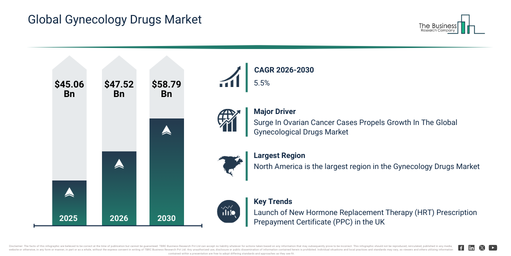
    The gynecology drugs market size has shown robust growth in recent years. Projections indicate it will expand from $45.06 billion in 2025 to $47.52 billion in 2026, exhibiting a compound annual growth rate (CAGR) of 5.5%. Historically, the market’s expansion stemmed from factors such as the increasing incidence of gynecological conditions, heightened awareness regarding women’s health, an increase in hospital networks, the availability of generic gynecology medications, and the uptake of traditional hormonal therapies.

    The gynecology drugs market size is anticipated to experience robust growth in the upcoming years. It is forecasted to grow to $58.79 billion in 2030, achieving a compound annual growth rate (CAGR) of 5.5%. The expansion during the forecast period can be attributed to advancements in personalized medicine, an increase in telemedicine adoption, enhanced investment in reproductive health research, the creation of minimally invasive drug delivery systems, and the broadening of online pharmacy channels. Significant trends for this period include personalized gynecology treatments, the adoption of telemedicine and remote consultations, innovations in minimally invasive drug delivery, an increase in fertility and reproductive health therapies, and a heightened awareness of women’s health issues.

    Get A Free Sample Report With In-Depth Market Insights:

    https://thebusinessresearchcompany.com/sample_request?id=51942621&type=smp&name=Gynecology%20Drugs%20Market%20Report%202026&utm_source=Blogs&utm_medium=Paid&utm_campaign=Oct_PR

    Gynecology Drugs Market Industry Drivers: What’s Behind The Revenue Growth?

    The increasing number of women afflicted with ovarian cancer is anticipated to propel the growth of the global gynecological drugs market. Ovarian cancer refers to a malignancy that originates in the ovaries, which are vital organs of the female reproductive system. Gynecological medications play a significant role in the treatment of ovarian cancer by offering targeted and effective therapeutic choices, thereby boosting survival rates and elevating patients’ quality of life. For instance, in February 2023, according to the National Center for Biotechnology Information, a US-based government agency, the global incidence of ovarian cancer is projected to rise to 434,184 new cases, with an estimated 293,039 deaths by 2040. This escalating incidence of ovarian cancer is expected to invigorate the market for gynecological drugs in the forecast period.

    Gynecology Drugs Market Segment Analysis: What Are The Core Market Categories?

    The gynecology drugs market covered in this report is segmented –

    1) By Therapeutics: Hormonal Therapy, Non-Hormonal Therapy

    2) By Indication: Gynecology Cancers, Menopausal Disorder, Polycystic Ovary Syndrome, Contraception, Other Indications

    3) By Distribution Channel: Hospital Pharmacies, Retail Pharmacies, Online Pharmacies

    Subsegments:

    1) By Hormonal Therapy: Estrogen Replacement Therapy, Progesterone Therapy, Combination Hormonal Therapy

    2) By Non-Hormonal Therapy: Antidepressants (For menopausal symptoms), Non-Hormonal Anticonvulsants, Herbal And Dietary Supplements

    #Gynecology Drugs Market Growth Trends: What’s Shaping The Future Outlook?

    Leading companies in the gynecology drug market are concentrating on developing innovative therapies like hormone replacement therapy to secure a competitive advantage. Hormone Replacement Therapy (HRT) is a medical treatment involving hormone administration to relieve symptoms linked to menopause, such as hot flashes, night sweats, mood swings, and vaginal dryness, thereby improving the general well-being of women undergoing these changes. For example, in April 2023, the Department of Health and Social Care, a UK government administration, alongside NHS England and the NHS Business Services Authority, a UK non-departmental public body, launched a new Hormone Replacement Therapy (HRT) prescription prepayment certificate (PPC). This new Hormone Replacement Therapy (HRT) PPC allows women in England to access HRT for only £19.30 per year (approximately $24.50 USD), considerably easing the financial cost of managing menopause symptoms.

    Gynecology Drugs Market Top Companies Driving Competitive Growth

    Major companies operating in the gynecology drugs market are Pfizer Inc., Bayer AG, Merck & Co. Inc., Teva Pharmaceutical Industries Ltd., Ferring Pharmaceuticals, Lupin Pharmaceuticals, Organon & Co., Allergan plc, Gedeon Richter, Besins Healthcare, Theramex, Amgen Inc., Agile Therapeutics, Sanofi S.A., Novartis AG, Eli Lilly and Company, Johnson & Johnson, AstraZeneca Plc, Cipla Limited, Kissei Pharmaceutical, Shionogi, Mylan N.V., Bristol-Myers Squibb Company, Endo International PLC, Apothecus Pharmaceutical Corp., Ani Pharmaceuticals, Medicines360, Blairex Laboratories

    View The Full Gynecology Drugs Market Report:

    https://thebusinessresearchcompany.com/report/gynecology-drugs-global-market-report?utm_source=Blogs&utm_medium=Paid&utm_campaign=Oct_PR

    Gynecology Drugs Market Largest Region By Revenue And Market Share

    North America was the largest region in the gynecology drugs market in 2025. Asia-Pacific is expected to be the fastest-growing region in the forecast period. The regions covered in the gynecology drugs market report are Asia-Pacific, South East Asia, Western Europe, Eastern Europe, North America, South America, Middle East, Africa.

    Reach Out To Our Team:

    The Business Research Company: https://www.thebusinessresearchcompany.com/

    Americas: +1 310-496-7795

    Asia: +44 7882 955267 & +91 8897263534

    Europe: +44 7882 955267

    Email us at: marketing@tbrc.info

    Follow us on:

    LinkedIn: https://in.linkedin.com/company/the-business-research-company

    YouTube: https://www.youtube.com/channel/UC24_fI0rV8cR5DxlCpgmyFQ

    Global Market Model: https://www.thebusinessresearchcompany.com/global-market-model
  • Gynecological Cancer Drugs Market 2026: Market Size, Growth Drivers And Emerging Opportunities

    Gynecological Cancer Drugs Market 2026: Market Size, Growth Drivers And Emerging Opportunities

    Featuring market attractiveness scoring, total addressable market sizing, company benchmarking matrices, interactive Excel dashboards, deeper supply chain intelligence, emerging startup tracking, and granular product-level insights, The Business Research Company’s 2026 market reports are built to deliver research that is both more actionable and more strategically valuable.

    Gynecological Cancer Drugs Market Size Forecast: How Big Could The Market Get By 2030?

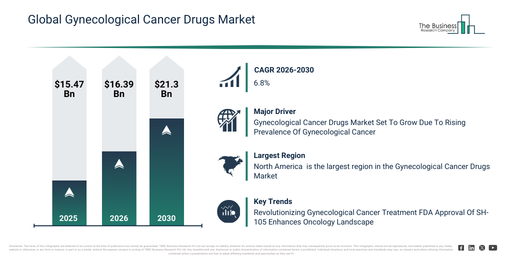
    The gynecological cancer drugs market has seen robust growth in recent years. It is anticipated to expand from $15.47 billion in 2025 to $16.39 billion in 2026, achieving a compound annual growth rate (CAGR) of 5.9%. Historically, this growth can be ascribed to factors such as limited treatment alternatives, elevated mortality rates, diagnoses made at advanced stages, a reliance on conventional chemotherapy, and inadequate awareness programs.

    The gynecological cancer drugs market size is expected to experience significant expansion in the coming years. Its valuation is projected to attain $21.3 billion in 2030, demonstrating a compound annual growth rate (CAGR) of 6.8%. This anticipated growth during the forecast period is driven by factors such as increased adoption of precision medicine, higher investments in research and development, the rise of targeted therapies, the broadening of screening programs, and advancements in drug delivery technology. Dominant trends anticipated for this period include customized cancer treatments, improvements in immunotherapy, regimens combining multiple drugs, less invasive treatment methodologies, and initiatives for early detection and screening.

    Get A Free Sample Report With In-Depth Market Insights:

    https://thebusinessresearchcompany.com/sample_request?id=91528290&type=smp&name=Gynecological%20Cancer%20Drugs%20Market%20Report%202026&utm_source=Blogs&utm_medium=Paid&utm_campaign=Oct_PR

    Gynecological Cancer Drugs Market Growth Factors: What’s Supporting Expansion?

    The increasing incidence of gynecological cancer is projected to drive the expansion of the gynecological cancer drugs market in the future. Gynecological cancer is defined as any malignancy originating in the reproductive organs of women. These drugs contribute to lowering the incidence of gynecological cancer by offering treatment and management, averting its return, and enhancing patient prognosis through various therapeutic approaches. As an illustration, figures from August 2025 by the American Cancer Society, a US-based non-profit body, estimate that in 2025, around 20,890 women in the United States will receive a new diagnosis of ovarian cancer, and approximately 12,730 are anticipated to succumb to the condition. Consequently, the widespread occurrence of gynecological cancer is fueling the expansion of the gynecological cancer drugs market.

    Gynecological Cancer Drugs Market Segment Breakdown: Which Categories Lead On Revenue?

    The gynecological cancer drugs market covered in this report is segmented –

    1) By Type: Alkylating Agent, Plant Alkaloid, Anthracyclines, Antitumor Antibiotic, Other Types

    2) By Therapeutic Modality: Chemotherapy, Targeted Therapy, Hormonal Therapy

    3) By Indication: Cervical Cancer, Uterine Cancer, Ovarian And Fallopian Tube Cancer, Vulvar Cancer, Vaginal Cancer

    4) By End Users: Hospitals, Clinics, Specialized Cancer Treatment Centers, Other End Users

    Subsegments:

    1) By Alkylating Agent: Cyclophosphamide, Ifosfamide, Carmustine

    2) By Plant Alkaloid: Paclitaxel, Docetaxel, Vincristine

    3) By Anthracyclines: Doxorubicin, Epirubicin, Daunorubicin

    4) By Antitumor Antibiotic: Actinomycin D, Mitomycin C

    5) By Other Types: Hormonal Therapies, Targeted Therapies, Immunotherapies

    Gynecological Cancer Drugs Market Industry Trends: What’s Reshaping Demand?

    Leading companies in the gynecological cancer drugs market are developing alkylating agents to enhance treatment effectiveness by targeting the DNA of cancer cells, thereby preventing them from multiplying. Alkylating agents operate by adding alkyl groups to DNA, causing the strands to break or form abnormal cross-links, which disrupts the cell cycle. For instance, in June 2024, Shorla Oncology, an Ireland-based pharmaceutical company, announced FDA approval for Tepylute, an alkylating agent. Tepylute is presented as a liquid formulation, eliminating the need for complex reconstitution processes typically required with powder forms. Tepylute is indicated for patients with adenocarcinoma of the breast and ovary, conditions often challenging to treat due to late-stage diagnosis and varying responses to existing therapies.

    Gynecological Cancer Drugs Market Leading Players And Competitive Positioning

    Major companies operating in the gynecological cancer drugs market are Pfizer Inc., Johnson & Johnson, F. Hoffmann-La Roche AG, AbbVie Inc., Bayer AG, Novartis AG, Bristol-Myers Squibb, Sanofi S.A., AstraZeneca, GlaxoSmithKline, Takeda Pharmaceutical Company Limited, Eli Lilly and Company, Amgen Inc., Merck KGaA, Baxter International Inc., Eisai Co. Ltd., Sun Pharmaceutical Industries Ltd., Teva Pharmaceutical Industries, Ipsen, Dr. Reddy’s Laboratories, Cipla Ltd., Apotex Inc., Hikma Pharmaceuticals, Seagen Inc., CSL Vifor, Accord Healthcare

    View The Full Gynecological Cancer Drugs Market Report:

    https://thebusinessresearchcompany.com/report/gynecological-cancer-drugs-global-market-report?utm_source=Blogs&utm_medium=Paid&utm_campaign=Oct_PR

    Gynecological Cancer Drugs Market Regional Analysis And Leading Geography

    North America was the dominant region in the gynecological cancer drugs market in 2025. The regions covered in the gynecological cancer drugs market report are Asia-Pacific, South East Asia, Western Europe, Eastern Europe, North America, South America, Middle East, Africa.

    Reach Out To Our Team:

    The Business Research Company: https://www.thebusinessresearchcompany.com/

    Americas: +1 310-496-7795

    Asia: +44 7882 955267 & +91 8897263534

    Europe: +44 7882 955267

    Email us at: marketing@tbrc.info

    Follow us on:

    LinkedIn: https://in.linkedin.com/company/the-business-research-company

    YouTube: https://www.youtube.com/channel/UC24_fI0rV8cR5DxlCpgmyFQ

    Global Market Model: https://www.thebusinessresearchcompany.com/global-market-model
  • Gummy Vitamins Market Set To Expand From $12.75 Billion In 2026: Growth Outlook Through 2030

    Gummy Vitamins Market Set To Expand From $12.75 Billion In 2026: Growth Outlook Through 2030

    Built to provide research that’s more actionable and strategically valuable, The Business Research Company’s 2026 market reports include market attractiveness analysis, total addressable market sizing, company benchmarking matrices, interactive Excel dashboards, broader supply chain intelligence, emerging startup tracking, and in-depth product insights.

    Gummy Vitamins Market Revenue Outlook: What CAGR Lies Ahead Through 2030?

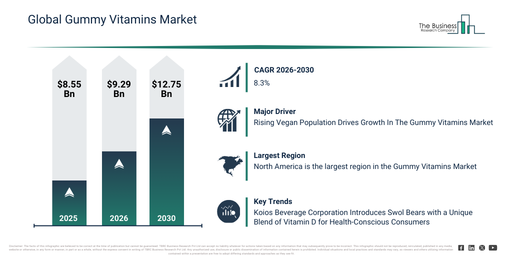
    The gummy vitamins market has experienced significant growth in recent years. Its value is set to increase from $8.55 billion in 2025 to $9.29 billion in 2026, demonstrating a compound annual growth rate (CAGR) of 8.6%. Historically, this growth can be ascribed to several factors, including heightened awareness of vitamin deficiencies, a preference for child-friendly supplements, the expansion of retail pharmacy chains, a rise in health consciousness, and the wide availability of diverse gummy formulations.

    The gummy vitamins market size is anticipated to experience robust expansion in the upcoming years. Its value is projected to reach $12.75 billion by 2030, exhibiting a compound annual growth rate (CAGR) of 8.3%. This growth during the forecast period can be attributed to factors such as an increase in personalized nutrition, the flourishing of e-commerce and online sales channels, advancements in flavor and formulation, a growing consumer base of adults and seniors, and market broadening into emerging regions. Key trends expected in the forecast period include an uptick in chewable supplement consumption, creative innovations in gummy flavor and texture, tailored nutrition and vitamin formulations, wider adoption among adults and seniors, and the continued expansion of online and e-commerce sales channels.

    Get A Free Sample Report With In-Depth Market Insights:

    https://thebusinessresearchcompany.com/sample_request?id=41671294&type=smp&name=Gummy%20Vitamins%20Market%20Report%202026&utm_source=Blogs&utm_medium=Paid&utm_campaign=Oct_PR

    Gummy Vitamins Market Demand Drivers: What’s Powering Industry Growth?

    The expanding vegan demographic is projected to drive the growth of the gummy vitamins market. A vegan is an individual who follows a vegan lifestyle, which involves abstaining from the consumption of animal products and, in many cases, avoiding the use of other animal-derived goods or by-products. This growing vegan population presents a market opportunity for gummy vitamin manufacturers to align their products with the values and preferences of an increasing consumer segment. For instance, in May 2024, according to the Food Navigator USA, a US-based association, plant-based foods achieved a sales increased 16.4% over three years to $394 million in 2023, and captured 6.8% of online market share compared to 3.8% in retail. Therefore, the increasing vegan population is expected to support the demand for the growth of the gummy vitamins market.

    Gummy Vitamins Market Segmentation: How Does The Market Break Down By Category?

    The gummy vitamins market covered in this report is segmented –

    1) By Product Type: Single Vitamin, Multi Vitamin, Probiotics

    2) By Source: Plant, Animal

    3) By End User: Adult, Children

    4) By Sales Channel: Hypermarket, Supermarket, Specialty Stores, Retail Pharmacies, Online Sales Channel, Other Sales Channel

    Subsegments:

    1) By Single Vitamin: Vitamin C Gummies, Vitamin D Gummies, Vitamin B12 Gummies

    2) By Multi-Vitamin: Adult Multi-Vitamin Gummies, Children’s Multi-Vitamin Gummies, Women’s And Men’s Specific Multi-Vitamin Gummies

    3) By Probiotics: Probiotic Gummies For Digestive Health, Immune Support Probiotic Gummies, Probiotic Gummies For Women’s Health

    Gummy Vitamins Market Innovation Trends: What Developments Are Reshaping The Industry?

    Leading businesses within the gummy vitamins market are concentrating on creating a novel gummy product range designed to offer consumers a tasty and more health-conscious snack choice. Among these offerings are Swol Bears, formulated with a unique blend of vitamin D to deliver essential daily nutrients in every bag. An example of this is Koios Beverage Corporation, a Canada-based firm specializing in unique food and wellness items, which introduced a new gummy product line featuring Swol Bears in May 2023. Composed of natural ingredients and containing only 1g of sugar per bag, Swol Bears present an excellent choice for individuals desiring a sweet treat without compromising their health and wellness goals.

    Gummy Vitamins Market Competitive Overview And Top Companies

    Major companies operating in the gummy vitamins market are Church & Dwight Co Inc, Unilever PLC, Otsuka Pharmaceutical, Reckitt Benckiser Group plc, Sirio Pharma Co., Hero Nutritionals Llc, Herbaland Naturals Inc, Nature’s Way Products Llc, Zanon Lifesciences Private Limited, India Private Label Supplements, Biovencer Healthcare Private Limited, Radius Healthcare Private Limited, Estrellas Life Sciences Private Limited, Nanchang Xinouli Trading Co. Ltd, Jiangsu Handian Biotechnology Co. Ltd, Biocaro Pharmaceutical Co. Ltd, Shantou Sweet Road Industry And Trading Co. Ltd, The Good Vitamin Co, Garden Of Life, Vegums, Amway Corp, Noreva Biotech, Vtf, Solgar, Evalar, Biovea, Terezia, Zarbee’s Inc, Olly Public Benefit Corporation, Atrium Innovations, Pfizer Inc, Now Foods, Healthvit, Ascendis Health, Inova Pharmaceuticals, Vitabiotics Ltd, GlaxoSmithKline Plc, Abbott Laboratories, Nestle S.A, Gnc Holdings Inc., Life Science Nutritionals, Bettera Brands Llc, Bayer Ag, Santa Cruz Nutritionals Inc, Makers Nutrition Llc, Nutra Solutions, Ferrara Candy Company

    View The Full Gummy Vitamins Market Report:

    https://thebusinessresearchcompany.com/report/gummy-vitamins-global-market-report?utm_source=Blogs&utm_medium=Paid&utm_campaign=Oct_PR

    Gummy Vitamins Market Geographic Analysis: Where Is Demand Accelerating Fastest?

    North America was the largest region in the gummy vitamins market in 2025. Asia-Pacific is expected to be the fastest-growing region in the forecast period. The regions covered in the gummy vitamins market report are Asia-Pacific, South East Asia, Western Europe, Eastern Europe, North America, South America, Middle East, Africa.

    Reach Out To Our Team:

    The Business Research Company: https://www.thebusinessresearchcompany.com/

    Americas: +1 310-496-7795

    Asia: +44 7882 955267 & +91 8897263534

    Europe: +44 7882 955267

    Email us at: marketing@tbrc.info

    Follow us on:

    LinkedIn: https://in.linkedin.com/company/the-business-research-company

    YouTube: https://www.youtube.com/channel/UC24_fI0rV8cR5DxlCpgmyFQ

    Global Market Model: https://www.thebusinessresearchcompany.com/global-market-model
  • Guillain-Barre Syndrome Drugs Market Size And Growth In 2026: Key Factors Shaping Future Demand

    Guillain-Barre Syndrome Drugs Market Size And Growth In 2026: Key Factors Shaping Future Demand

    Backed by market attractiveness analysis, total addressable market sizing, company benchmarking matrices, interactive Excel dashboards, wider supply chain intelligence, emerging startup coverage, and detailed product-level insights, The Business Research Company’s 2026 market reports are designed to offer research that is more actionable and strategically valuable than ever.

    Guillain-Barre Syndrome Drugs Market Growth Analysis: How Will Revenue Trend Over The Forecast Period?

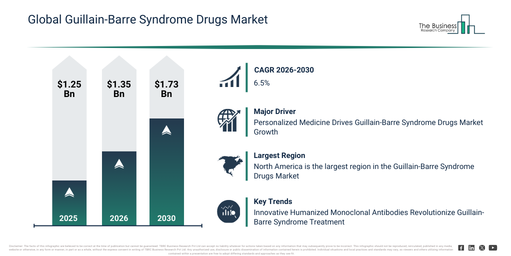
    The guillain-barre syndrome drugs market size has experienced significant growth in recent years. It is projected to expand from $1.25 billion in 2025 to $1.35 billion in 2026, at a compound annual growth rate (CAGR) of 7.5%. This historical growth can be attributed to the established clinical effectiveness of IVIG therapy, the enduring application of plasma exchange in neurological disorders, the availability of corticosteroids for symptom management, the expansion of hospital neurology departments, and an increased recognition of GBS as a medical emergency.

    The guillain-barre syndrome drugs market size is set for robust expansion over the next few years. It is forecast to grow to $1.73 billion in 2030, achieving a compound annual growth rate (CAGR) of 6.5%. This projected growth can be attributed to several factors including a rising incidence of autoimmune neurological disorders, increasing awareness of post-infectious GBS cases, enhanced access to advanced hospital care, the expansion of IVIG manufacturing capacity, and a growing demand for rapid immune-modulating therapies in acute care. Throughout the forecast period, major trends are expected to include continued reliance on intravenous immunoglobulin as the primary line of therapy, an increase in the use of plasma exchange for severe guillain-barre cases, a heightened emphasis on early diagnosis and prompt treatment initiation, a rising need for hospital-based intensive GBS management, and the steady application of supportive and adjunctive drug therapies.

    Get A Free Sample Report With In-Depth Market Insights:

    https://thebusinessresearchcompany.com/sample_request?id=44807287&type=smp&name=Guillain-Barre%20Syndrome%20Drugs%20Market%20Report%202026&utm_source=Blogs&utm_medium=Paid&utm_campaign=Oct_PR

    Guillain-Barre Syndrome Drugs Market Growth Drivers: What’s Behind The Acceleration?

    The escalating need for personalized medicine is projected to stimulate the expansion of the Guillain-Barré syndrome drugs market in the future. Personalized medicine defines medical treatment that is tailored to an individual’s distinct genetic composition, specific biological markers, or lifestyle elements, with the goal of enhancing therapeutic efficacy and mitigating adverse reactions. The increasing requirement for personalized medicine arises from progress in genomics, the increasing complexity of various diseases, advancements in diagnostic technologies, and robust regulatory backing. The Guillain-Barré syndrome drugs market benefits from personalized medicine through the implementation of customized treatment plans, which lead to improved patient results and a reduction in complications often associated with more general therapeutic approaches. For instance, in February 2024, the US-based non-profit organization Personalized Medicine Coalition reported that the U.S. Food and Drug Administration (FDA) approved 16 novel personalized therapies for patients with rare diseases in 2023, an increase from six therapies approved in 2022. Consequently, the rising demand for personalized medicine is a primary force behind the growth of the Guillain-Barré syndrome drugs market.

    Guillain-Barre Syndrome Drugs Market Segment Trends And Revenue Contributors

    The guillain-barre syndrome drugs market covered in this report is segmented –

    1) By Drug Class: Immunoglobulins (IVIG), Corticosteroids, Plasma Exchange

    2) By Treatment Type: First-Line Treatment, Adjunctive Or Supportive Treatment

    3) By Application: Clinic, Hospital, Other Applications

    Subsegments:

    1) By Immunoglobulins (Ivig): Intravenous Immunoglobulin (Ivig) Therapy, Human Normal Immunoglobulin (Hnig), Hyperimmune Immunoglobulin Products, Ivig Formulations For GBS Treatment

    2) By Corticosteroids: Methylprednisolone, Prednisolone, Dexamethasone, Hydrocortisone, Betamethasone

    3) By Plasma Exchange: Therapeutic Plasma Exchange (TPE), Plasmapheresis

    Guillain-Barre Syndrome Drugs Market Trends: What’s Defining The Industry’s Next Phase?

    Leading companies within the Guillain-Barré syndrome (GBS) drugs market are concentrating on developing innovative products, such as humanized monoclonal antibodies, to enhance therapeutic precision, reduce immune-mediated nerve damage, and strengthen their competitive standing. A humanized monoclonal antibody is defined as a laboratory-engineered antibody primarily composed of human antibody sequences, with a small part derived from mouse or rat monoclonal antibodies, specifically designed to target immune components involved in GBS pathology and limit complement-mediated inflammation. For instance, in October 2023, Annexon Inc., a US-based clinical-stage biopharmaceutical company, announced that ANX005, a humanized monoclonal antibody that selectively inhibits C1q to prevent complement-driven neuronal injury in GBS, had been granted orphan drug designation by both the European Medicines Agency and the U.S. Food and Drug Administration. The company further reported having completed target enrollment for its Phase 3 trial, with topline results anticipated in the first half of 2024, emphasizing ANX005’s potential to rapidly halt autoimmune damage and support muscle strength recovery in affected patients.

    Guillain-Barre Syndrome Drugs Market Competitive Landscape: Which Companies Lead The Industry?

    Major companies operating in the guillain-barre syndrome drugs market are CSL Behring LLC, Grifols SA, Octapharma AG, Takeda Pharmaceutical Company Limited, Biotest AG, Kedrion Biopharma Inc., Alexion Pharmaceuticals Inc., Argenx SE, Annexon Inc., Hansa Medical AB, F. Hoffmann-La Roche Ltd., Novartis AG, AbbVie Inc., Biogen Inc., Chugai Pharmaceutical Co. Ltd., Cadila Healthcare Limited, Akari Therapeutics Plc, Cellenkos Inc., Regenesance BV, Cresence AS

    View The Full Guillain-Barre Syndrome Drugs Market Report:

    https://thebusinessresearchcompany.com/report/guillain-barre-syndrome-drugs-global-market-report?utm_source=Blogs&utm_medium=Paid&utm_campaign=Oct_PR

    Guillain-Barre Syndrome Drugs Market Global Footprint: Which Region Leads The Industry?

    North America was the largest region in the guillain-barre syndrome drugs market in 2025. Asia-Pacific is expected to be the fastest-growing region in the forecast period. The regions covered in the guillain-barre syndrome drugs market report are Asia-Pacific, South East Asia, Western Europe, Eastern Europe, North America, South America, Middle East, Africa.

    Reach Out To Our Team:

    The Business Research Company: https://www.thebusinessresearchcompany.com/

    Americas: +1 310-496-7795

    Asia: +44 7882 955267 & +91 8897263534

    Europe: +44 7882 955267

    Email us at: marketing@tbrc.info

    Follow us on:

    LinkedIn: https://in.linkedin.com/company/the-business-research-company

    YouTube: https://www.youtube.com/channel/UC24_fI0rV8cR5DxlCpgmyFQ

    Global Market Model: https://www.thebusinessresearchcompany.com/global-market-model
  • Grand Mal Seizure Treatment Market Forecast 2026–2030: Market Size, Trends And Growth Opportunities

    Grand Mal Seizure Treatment Market Forecast 2026–2030: Market Size, Trends And Growth Opportunities

    Featuring market attractiveness scoring, total addressable market sizing, company benchmarking matrices, interactive Excel dashboards, deeper supply chain intelligence, emerging startup tracking, and granular product-level insights, The Business Research Company’s 2026 market reports are built to deliver research that is both more actionable and more strategically valuable.

    Grand Mal Seizure Treatment Market Forecast: What Value Will The Market Reach By 2030?

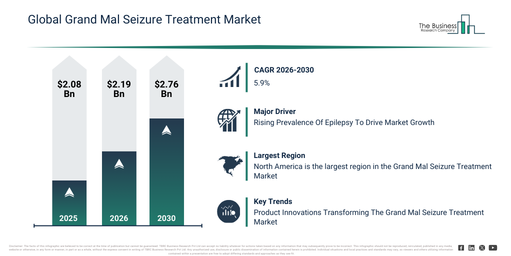
    The grand mal seizure treatment market has demonstrated strong expansion in recent years. It is anticipated to increase from $2.08 billion in 2025 to $2.19 billion in 2026, exhibiting a compound annual growth rate (CAGR) of 5.1%. The historical growth in this market can be ascribed to elements like the constrained access to advanced antiepileptic medications, the widespread incidence of tonic-clonic seizures, a growing understanding of epilepsy care, a reliance on hospital-centric treatment approaches, and the scarcity of individualized therapeutic alternatives.

    The grand mal seizure treatment market is projected to experience robust expansion over the coming years. This sector is forecast to reach $2.76 billion in 2030, exhibiting a compound annual growth rate (CAGR) of 5.9%. This anticipated growth is driven by several factors, including advancements in AI-driven seizure prediction, the increasing adoption of precision medicine in neurology, the broadening reach of telehealth platforms, intensified research and development in new drug formulations, and the integration of wearable seizure monitoring devices. Key trends emerging during this forecast period encompass personalized epilepsy management, the rise of minimally invasive surgical techniques, widespread home-based seizure monitoring, the introduction of novel antiepileptic drug formulations, and the increased reliance on telehealth and remote neurological consultations.

    Get A Free Sample Report With In-Depth Market Insights:

    https://thebusinessresearchcompany.com/sample_request?id=83973542&type=smp&name=Grand%20Mal%20Seizure%20Treatment%20Market%20Report%202026&utm_source=Blogs&utm_medium=Paid&utm_campaign=Oct_PR

    Grand Mal Seizure Treatment Market Growth Factors Behind Sustained Expansion

    The significant occurrence of epilepsy is projected to fuel expansion within the grand mal seizure treatment market in the future. This neurological condition involves individuals experiencing repeated seizures. These severe seizures, frequently triggered by epilepsy, manifest as violent episodes. An escalating prevalence intensifies the demand for more effective therapies, which grand mal seizure treatment can provide. For example, data from February 2023, released by the World Health Organization, the United Nations’ public health agency based in Switzerland, indicated that around 50 million individuals globally were afflicted with epilepsy, positioning it as one of the world’s most widespread neurological conditions. Annually, roughly 5 million new diagnoses of epilepsy are made. Consequently, the widespread incidence of epilepsy is stimulating the expansion of the grand mal seizure treatment market.

    Grand Mal Seizure Treatment Market Segment Analysis Spotlighting Growth Areas

    The grand mal seizure treatment market covered in this report is segmented –

    1) By Type: Barbiturates, Hydantoin, Phenyltriazine, Iminostilbenes, Benzodiazepines, Aliphatic Carboxylic Acids, Other Types

    2) By Diagnosis: Magnetic Resonance Imaging (MRI), Electroencephalogram (EEG), Blood Tests, Computed Tomography (CT), Other Diagnosis

    3) By Treatment: Antiepileptic Drugs, Surgery, Vagus Nerve Stimulation, Ketogenic Diet, Other Treatments

    4) By End Users: Academic And Research Centers, Neurological Centers, Hospitals, Other End Users

    Subsegments:

    1) By Barbiturates: Phenobarbital, Primidone

    2) By Hydantoins: Phenytoin, Phenytek

    3) By Phenyltriazines: Lamotrigine, Subvenite

    4) By Iminostilbenes: Carbamazepine, Oxcabazepine

    5) By Benzodiazepines: Clonazepam, Diazepam, Lorazepam

    6) By Aliphatic Carboxylic Acids: Valproic Acid, Divalproex Sodium

    7) By Other Types: Levetiracetam, Topiramate, Zonisamide

    Grand Mal Seizure Treatment Market Industry Trends Fueling Future Revenue Growth

    Leading firms within the grand mal seizure treatment market are creating innovative offerings, including anti-epilepsy medications, to enhance their market position. These anti-epilepsy medications, interchangeably referred to as antiepileptic drugs (AEDs) or anticonvulsants, constitute a category of pharmaceutical agents formulated to control and address epileptic seizures and associated conditions. As an illustration, in January 2023, Zydus Lifesciences Limited, an Indian pharmaceutical enterprise, introduced its Topiramate extended-release capsules into the U.S. market. This generic anti-epilepsy drug is provided in dosages of USP 25 mg, 50 mg, and 100 mg, establishing Zydus as the first company to obtain ultimate approval and launch the product in these specific strengths. The capsules are prescribed for the treatment of epilepsy, particularly as an initial single therapy for individuals six and older experiencing partial-onset or primary generalized tonic-clonic seizures, and also for preventing migraines in patients aged 12 and older.

    Grand Mal Seizure Treatment Market Leading Companies: Who Holds The Strongest Market Presence?

    Major companies operating in the grand mal seizure treatment market are Novartis AG, Sanofi S.A., GlaxoSmithKline PLC, Takeda Pharmaceuticals Inc., Mylan N.V., UCB Celltech Ltd., Sun Pharmaceutical Industries Ltd., Teva Pharmaceutical Industries Ltd., Aurobindo Pharma Limited, Lupin Pharmaceuticals Inc., Dr. Reddy’s Laboratories Ltd., Cipla Inc., Apotex Inc., Hikma Pharmaceuticals PLC, Alkem Laboratories Ltd., Jubilant Life Sciences Limited, Torrent Pharmaceuticals Ltd., Zydus Cadila, Strides Pharma Science Limited, Glenmark Pharmaceuticals Ltd., Wockhardt Ltd., Macleods Pharmaceuticals Ltd., Intas Pharmaceuticals Ltd., Alembic Pharmaceuticals Limited, Indoco Remedies Limited

    View The Full Grand Mal Seizure Treatment Market Report:

    https://thebusinessresearchcompany.com/report/grand-mal-seizure-treatment-global-market-report?utm_source=Blogs&utm_medium=Paid&utm_campaign=Oct_PR

    Grand Mal Seizure Treatment Market Regional Distribution: Which Areas Power Market Growth?

    North America was the largest region in the grand mal seizure treatment market in 2025. The regions covered in the grand mal seizure treatment market report are Asia-Pacific, South East Asia, Western Europe, Eastern Europe, North America, South America, Middle East, Africa.

    Reach Out To Our Team:

    The Business Research Company: https://www.thebusinessresearchcompany.com/

    Americas: +1 310-496-7795

    Asia: +44 7882 955267 & +91 8897263534

    Europe: +44 7882 955267

    Email us at: marketing@tbrc.info

    Follow us on:

    LinkedIn: https://in.linkedin.com/company/the-business-research-company

    YouTube: https://www.youtube.com/channel/UC24_fI0rV8cR5DxlCpgmyFQ

    Global Market Model: https://www.thebusinessresearchcompany.com/global-market-model
  • Gonadotropin-Releasing Hormone (GnRH) Receptor Antagonists Market Size Reaches $1.72 Billion In 2026: What Is Driving Growth?

    Gonadotropin-Releasing Hormone (GnRH) Receptor Antagonists Market Size Reaches $1.72 Billion In 2026: What Is Driving Growth?

    Built to provide research that’s more actionable and strategically valuable, The Business Research Company’s 2026 market reports include market attractiveness analysis, total addressable market sizing, company benchmarking matrices, interactive Excel dashboards, broader supply chain intelligence, emerging startup tracking, and in-depth product insights.

    Gonadotropin-Releasing Hormone (GnRH) Receptor Antagonists Market Size Outlook: How Quickly Will Revenue Expand Through 2030?

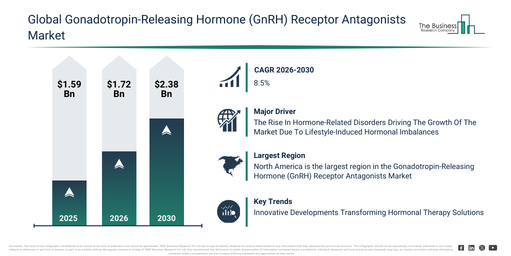
    The gonadotropin-releasing hormone (gnrh) receptor antagonists market has witnessed significant expansion over recent years. It is projected to further expand, reaching $1.72 billion in 2026 from $1.59 billion in 2025, demonstrating a compound annual growth rate (CAGR) of 8.2%. The growth observed in earlier periods can be ascribed to several factors, including the initial limited availability of gnrh receptor antagonists, the prevalent reliance on injectable peptide formulations, increasing public awareness of hormone-related disorders, a rise in hospital and oncology clinic procedures, and the successful approval of early-generation drugs.

    The gonadotropin-releasing hormone (gnrh) receptor antagonists market is projected to experience substantial expansion in the coming years. This market is anticipated to reach $2.38 billion by 2030, exhibiting a compound annual growth rate (CAGR) of 8.5%. Factors driving this growth during the forecast period include the introduction of oral and transdermal non-peptide antagonists, the increasing occurrence of prostate and breast cancer, a wider array of endometriosis treatment choices, greater use in pediatric precocious puberty cases, and the rise of telemedicine along with remote prescription services. Key trends expected during the forecast period involve the growing incidence of hormone-dependent cancers, enhanced acceptance of non-peptide gnrh antagonists, an increase in treatments for endometriosis and uterine fibroids, broader management strategies for pediatric precocious puberty, and the creation of patient-focused administration methods.

    Get A Free Sample Report With In-Depth Market Insights:

    https://thebusinessresearchcompany.com/sample_request?id=27698963&type=smp&name=Gonadotropin-Releasing%20Hormone%20%28GnRH%29%20Receptor%20Antagonists%20Market%20Report%202026&utm_source=Blogs&utm_medium=Paid&utm_campaign=Oct_PR

    Gonadotropin-Releasing Hormone (GnRH) Receptor Antagonists Market Demand Drivers Opening New Revenue Streams

    The expanding occurrence of hormone-related conditions is anticipated to stimulate the growth of the gonadotropin-releasing hormone (GnRH) receptor antagonists market in the future. These disorders are medical states stemming from an imbalance or impaired functioning in the body’s hormone creation, release, or activity, impacting diverse bodily processes like metabolism, growth, reproduction, and mood. The rising incidence of hormone-related ailments is largely attributed to shifts in lifestyle, including inadequate diet, insufficient physical activity, stress, and irregular sleep cycles, all of which can considerably influence hormonal equilibrium. GnRH receptor antagonists aid in addressing hormone-related conditions by directly obstructing gonadotropin-releasing hormone receptors, thereby decreasing the synthesis of sex hormones that foster disease advancement. As an illustration, in February 2025, data from the World Health Organization, an intergovernmental body situated in Switzerland, indicated that polycystic ovary syndrome, a prevalent hormonal disorder among women of childbearing age, impacts an estimated 6–13% women annually, with as many as 70% of these instances going undiagnosed. Consequently, the growing frequency of hormone-related disorders is propelling the expansion of the gonadotropin-releasing hormone (GnRH) receptor antagonists market.

    Gonadotropin-Releasing Hormone (GnRH) Receptor Antagonists Market Segment Performance And Emerging Opportunities

    The gonadotropin-releasing hormone (gnrh) receptor antagonists market covered in this report is segmented –

    1) By Type: Peptide Gonadotropin-Releasing Hormone Receptor Antagonists, Non-Peptide Gonadotropin-Releasing Hormone Receptor Antagonists

    2) By Route Of Administration: Oral, Injectable, Transdermal

    3) By Patient Demographics: Adult Males, Adult Females, Pediatric Patients

    4) By Application: Prostate Cancer, Breast Cancer, Endometriosis, Uterine Fibroids, Precocious Puberty

    5) By Distribution Channel: Hospital Pharmacies, Retail Pharmacies, Online Pharmacies, Other Distribution Channels

    Subsegments:

    1) By Peptide Gonadotropin-Releasing Hormone Receptor Antagonists: Cetrorelix, Ganirelix, Degarelix

    2) By Non-Peptide Gonadotropin-Releasing Hormone Receptor Antagonists: Elagolix, Relugolix, Linzagolix

    Gonadotropin-Releasing Hormone (GnRH) Receptor Antagonists Market Trends Powering Strategic Industry Growth

    Leading companies in the gonadotropin-releasing hormone (GnRH) receptor antagonists market are concentrating on integrating therapeutic innovations, such as advanced oral GnRH receptor antagonist formulations, to enhance the effectiveness of treatment, patient convenience, and safety outcomes. Oral GnRH receptor antagonists are small-molecule therapies that directly block GnRH receptors in the pituitary gland, enabling capabilities like rapid testosterone suppression, fewer complications related to injections, and improved patient adherence. For instance, in October 2023, Sumitomo Pharma Canada Inc., a Canada-based pharmaceutical company specializing in oncology and specialty therapeutics, secured approval for ORGOVYX (relugolix), an oral GnRH receptor antagonist developed to manage androgen-deprivation therapy in adult men with advanced prostate cancer. This treatment offers rapid testosterone reduction, once-daily oral dosing, and a decreased risk of cardiovascular adverse events compared to traditional injectable GnRH agonists. ORGOVYX improves the accessibility of treatment, patient comfort, and the clinical management of hormone-sensitive prostate cancer.

    Gonadotropin-Releasing Hormone (GnRH) Receptor Antagonists Market Key Players: Which Companies Lead Industry Competition?

    Major companies operating in the gonadotropin-releasing hormone (gnrh) receptor antagonists market are Pfizer Inc, AbbVie Inc., Bayer AG, Novartis AG, Takeda Pharmaceutical Company Limited., Merck KGaA, Astellas Pharma Inc., Intas Pharmaceuticals Ltd., Organon And Co., Sun Pharmaceutical Industries Ltd., Jiangsu Hengrui Medicine Co. Ltd., Dr. Reddy’s Laboratories Ltd., Zydus Lifesciences Limited., Gland Pharma Limited., Bachem Holding AG, Kissei Pharmaceutical Co. Ltd., Myovant Sciences GmbH, Ferring International Center S.A., Theramex HQ UK Limited, Veru Inc

    View The Full Gonadotropin-Releasing Hormone (GnRH) Receptor Antagonists Market Report:

    https://thebusinessresearchcompany.com/report/gonadotropin-releasing-hormone-gnrh-receptor-antagonists-global-market-report?utm_source=Blogs&utm_medium=Paid&utm_campaign=Oct_PR

    Gonadotropin-Releasing Hormone (GnRH) Receptor Antagonists Market Leading Geography: Which Region Contributes The Most Revenue?

    North America was the largest region in the gonadotropin-releasing hormone (GnRH) receptor antagonists receptor antagonists market in 2025. Asia-Pacific is expected to be the fastest-growing region in the forecast period. The regions covered in the gonadotropin-releasing hormone (gnrh) receptor antagonists market report are Asia-Pacific, South East Asia, Western Europe, Eastern Europe, North America, South America, Middle East, Africa.

    Reach Out To Our Team:

    The Business Research Company: https://www.thebusinessresearchcompany.com/

    Americas: +1 310-496-7795

    Asia: +44 7882 955267 & +91 8897263534

    Europe: +44 7882 955267

    Email us at: marketing@tbrc.info

    Follow us on:

    LinkedIn: https://in.linkedin.com/company/the-business-research-company

    YouTube: https://www.youtube.com/channel/UC24_fI0rV8cR5DxlCpgmyFQ

    Global Market Model: https://www.thebusinessresearchcompany.com/global-market-model