Month: October 2026

  • Generic Pharmaceuticals Market Forecast To Reach $588.23 Billion By 2030: Key Trends Explained

    Generic Pharmaceuticals Market Forecast To Reach $588.23 Billion By 2030: Key Trends Explained

    Featuring market attractiveness scoring, total addressable market sizing, company benchmarking matrices, interactive Excel dashboards, deeper supply chain intelligence, emerging startup tracking, and granular product-level insights, The Business Research Company’s 2026 market reports are built to deliver research that is both more actionable and more strategically valuable.

    Generic Pharmaceuticals Market Growth Potential: How Will Market Size Shift Through 2030?

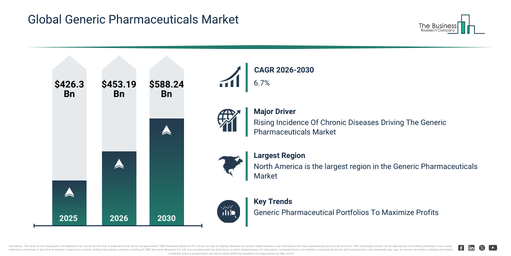
    The generic pharmaceuticals market size has experienced significant expansion in recent years. It is projected to increase from $426.3 billion in 2025 to $453.19 billion in 2026, demonstrating a compound annual growth rate (CAGR) of 6.3%. The historic growth in this market can be attributed to factors such as the expiry of patents for major drugs, rising concerns about healthcare expenses, increased understanding and acceptance of generics among patients and doctors, the expansion of hospital and retail pharmacy networks, and the wider adoption of oral and injectable generic formulations.

    The generic pharmaceuticals market is projected to experience substantial expansion in the coming years, reaching $588.24 billion in 2030 at a compound annual growth rate (CAGR) of 6.7%. This anticipated growth during the forecast period is largely driven by factors such as the introduction of complex generics and extended-release formulations, augmented government backing for generics, escalating demand for biosimilars, the expansion of e-pharmacy platforms, and strategic investments in manufacturing automation and digital quality control. Key trends expected during this period involve a growing inclination towards cost-effective generic medications, broadening of generic drug offerings across various therapeutic segments, increased uptake of branded generics and over-the-counter (OTC) generics, the development of online and physical retail pharmacy distribution networks, and a heightened emphasis on regulatory adherence and quality assurance within generic drug production.

    Get A Free Sample Report With In-Depth Market Insights:

    https://thebusinessresearchcompany.com/sample_request?id=21454769&type=smp&name=Generic%20Pharmaceuticals%20Market%20Report%202026&utm_source=Blogs&utm_medium=Paid&utm_campaign=Oct_PR

    Generic Pharmaceuticals Market Growth Factors Behind Sustained Expansion

    The increasing prevalence of chronic diseases is anticipated to propel the growth of the generic pharmaceuticals market in the coming years. Chronic diseases are long-term medical conditions that usually advance gradually and demand ongoing medical attention, examples being diabetes, cardiovascular diseases, and hypertension. This rise in chronic disease incidence is fueled by elements like aging populations, sedentary lifestyles, and unhealthy dietary habits. Generic pharmaceuticals effectively support the management of chronic diseases by providing cost-effective, widely available, and therapeutically equivalent substitutes for brand-name medications. This contributes to improved long-term treatment adherence, reduces financial strain on patients and healthcare systems, and enhances overall disease control and patient quality of life. For instance, in January 2023, the Centers for Disease Control and Prevention (CDC), a US-based federal agency, reported that in 2023, 76.4% of U.S. adults, approximately 194 million people, stated they had at least one chronic condition, with prevalence rates reaching 59.5% among young adults, 78.4% among midlife adults, and 93.0% among older adults. Therefore, the expanding incidence of chronic diseases is a significant driver for the growth of the generic pharmaceuticals market.

    Generic Pharmaceuticals Market Segment Trends And Revenue Contributors

    The generic pharmaceuticals market covered in this report is segmented –

    1) By Type: Biosimilars, Generics

    2) By Drug Delivery: Oral, Injectables, Dermal/Topical, Inhaled

    3) By Therapy: CNS, Cardiovascular, Dermatology, Genitourinary/Harmonal, Respiratory, Rheumatology, Diabetes, Oncology, Biosimilars, Others

    4) By Distribution Channel: Hospital Pharmacies, Retail Pharmacies, And Online Pharmacies

    Subsegments:

    1) By Biosimilars: Monoclonal Antibodies, Recombinant Proteins, Other Biologic Products

    2) By Generics: Branded Generics, Generic Small Molecules, Generic Extended-Release Formulations, Over-The-Counter (OTC) Generics

    Generic Pharmaceuticals Market Industry Trends Fueling Future Revenue Growth

    Leading companies within the generic pharmaceuticals market are increasingly focusing their efforts on introducing new generic drug products to maximize their market profits. The launch of generic pharmaceutical products involves making available a generic variant of a branded medication in the market. For example, in July 2023, Amneal Pharmaceuticals Inc., a publicly traded generics and specialty pharmaceutical company based in the US, introduced its authorized generic version of Xyrem 1 (Sodium Oxybate) oral solution CIII across the United States. Sodium oxybate oral solution, 0.5 g/mL, is a central nervous system depressant prescribed for narcolepsy patients aged seven years and older who experience cataplexy or excessive daytime sleepiness (EDS).

    Generic Pharmaceuticals Market Competitive Landscape: Which Companies Lead The Industry?

    Major companies operating in the generic pharmaceuticals market are Teva Pharmaceutical Industries Ltd., Sun Pharmaceutical Industries Ltd., Fresenius Kabi, Aurobindo Pharma Limited, Cipla Limited, Stada Arzneimittel AG, Lupin Pharmaceuticals Inc., Dr. Reddy’s Laboratories, Mylan Inc., Shanghai Generic Pharmaceuticals, Shanghai Acebright Generic Pharmaceuticals Group Co. Ltd., Sandoz, Glenmark, Kent Pharma, Zentiva, Apotex, Accord Healthcare Inc., AA Pharma Inc, LABORATORIOS SENOSIAIN SA DE CV (Senosiain), EMS Pharma, Eurofarma, Teuto Brasileiro, Biolab Farmaceutica, Cristalia, União Quimica, Mantecorp Farmasa, Libbs, Cimed, FQM Grupo, Spimaco, Jamjoom Pharma, Tabuk Pharmaceutical Manufacturing, Jazeera Pharmaceutical Industries, Adcock Ingram, Eurolab, Ranbaxy (Pty) Ltd, Aspen

    View The Full Generic Pharmaceuticals Market Report:

    https://thebusinessresearchcompany.com/report/generic-pharmaceuticals-global-market-report?utm_source=Blogs&utm_medium=Paid&utm_campaign=Oct_PR

    Generic Pharmaceuticals Market Top Region: Where Does Most Revenue Come From?

    North America was the largest region in the generic pharmaceuticals market in 2025. Middle East is expected to be the fastest-growing region in the generic pharmaceuticals market report during the forecast period. The regions covered in the generic pharmaceuticals market report are Asia-Pacific, South East Asia, Western Europe, Eastern Europe, North America, South America, Middle East, Africa.

    Reach Out To Our Team:

    The Business Research Company: https://www.thebusinessresearchcompany.com/

    Americas: +1 310-496-7795

    Asia: +44 7882 955267 & +91 8897263534

    Europe: +44 7882 955267

    Email us at: marketing@tbrc.info

    Follow us on:

    LinkedIn: https://in.linkedin.com/company/the-business-research-company

    YouTube: https://www.youtube.com/channel/UC24_fI0rV8cR5DxlCpgmyFQ

    Global Market Model: https://www.thebusinessresearchcompany.com/global-market-model

  • Generic Oncology Drugs Market Analysis: Understanding The Drivers Behind 7% CAGR Through 2030 Growth

    Generic Oncology Drugs Market Analysis: Understanding The Drivers Behind 7% CAGR Through 2030 Growth

    Built to provide research that’s more actionable and strategically valuable, The Business Research Company’s 2026 market reports include market attractiveness analysis, total addressable market sizing, company benchmarking matrices, interactive Excel dashboards, broader supply chain intelligence, emerging startup tracking, and in-depth product insights.

    Generic Oncology Drugs Market Value Analysis: What Growth Lies Ahead Over The Forecast Period?

    The generic oncology drugs market size has experienced robust expansion in recent years. It is forecast to increase from $28.75 billion in 2025 to $30.52 billion in 2026, demonstrating a compound annual growth rate (CAGR) of 6.1%. Historically, this growth was driven by the expiration of patents on blockbuster oncology drugs, the worldwide growth of cancer prevalence, enhanced awareness regarding affordable cancer treatments, the emergence of hospital and retail pharmacies, and government incentives for generic drug manufacturing.

    The generic oncology drugs market size is projected to experience substantial expansion in the coming years, with expectations to reach $39.99 billion in 2030, exhibiting a compound annual growth rate (CAGR) of 7.0%. This growth during the forecast period is primarily driven by the increasing adoption of precision medicine technologies, the incorporation of AI in drug development, the proliferation of online pharmacies, improvements in healthcare infrastructure within emerging markets, and strategic alliances for the distribution of oncology drugs. Key trends anticipated over the forecast period encompass the growing prominence of biosimilars in cancer therapy, the broadening of generic drug production in developing economies, the rising preference for oral and parenteral chemotherapy methods, strategic cooperative ventures and licensing deals among pharmaceutical firms, and a strong emphasis on affordable cancer treatment options.

    Get A Free Sample Report With In-Depth Market Insights:

    https://thebusinessresearchcompany.com/sample_request?id=11642193&type=smp&name=Generic%20Oncology%20Drugs%20Market%20Report%202026&utm_source=Blogs&utm_medium=Paid&utm_campaign=Oct_PR

    Generic Oncology Drugs Market Demand Drivers Opening New Revenue Streams

    An anticipated substantial increase in individuals suffering from cancer is poised to drive the expansion of the generic oncology drugs market in the future. Cancer is characterized by unregulated cellular proliferation, affecting numerous organs and being a major cause of illness and death globally. The presence of affordable generic oncology drugs is vital for treating cancer, as it enhances accessibility to crucial treatments, fosters competition within the market, and lowers expenses in the healthcare sector. For example, data from January 2022 by the National Cancer Institute (NCI), a US-based government entity, indicated that roughly 5.4% of the population, amounting to 18.1 million people, in the United States had survived cancer. Furthermore, in 2022, 623,405 individuals were living with metastatic forms of breast, prostate, lung, colorectal, or bladder cancer, or metastatic melanoma, with this number anticipated to grow to 693,452 by 2025. Consequently, the notable increase in individuals with cancer is fueling the expansion of the generic oncology drugs market.

    Generic Oncology Drugs Market Segment Analysis Spotlighting Growth Areas

    The generic oncology drugs market covered in this report is segmented –

    1) By Molecule Type: Large Molecule, Small Molecule

    2) By Route Of Administration: Oral, Parenteral

    3) By Distribution Channel: Hospital Pharmacy, Retail Pharmacy, Online Pharmacies, Managed Care Institutions

    Subsegments:

    1) By Large Molecule: Monoclonal Antibodies, Biologics, Biosimilars

    2) By Small Molecule: Chemotherapeutics, Targeted Therapy Agents, Hormonal Therapy Drugs

    Generic Oncology Drugs Market Trends Powering Strategic Industry Growth

    Major companies operating in the generic oncology drugs market are directing their attention towards developing innovative advancements, particularly next-generation oral oncology generics, with the goal of improving treatment accessibility, enhancing patient convenience, and ensuring therapeutic equivalence to high-cost branded cancer therapies. Next-generation oral oncology generics refer to advanced, bioequivalent oral formulations of established oncology drugs that incorporate improved dosing flexibility, enhanced stability, and patient-friendly administration features, thereby expanding access to high-value cancer treatments in cost-constrained healthcare settings. For instance, in January 2023, MSN Laboratories Private Limited, an India-based pharmaceutical company specializing in generic drugs, launched Palborest, the world’s first generic Palbociclib tablets for advanced breast cancer treatment. This generic breast cancer drug offers a cost-effective alternative to the innovator tablet while maintaining bioequivalence. Its tablet dosage form provides a notable advantage over capsules as it can be taken with or without food and co-administered with proton pump inhibitors or antacids. Furthermore, the tablet formulation is free from lactose and gelatin, enhancing the drug’s efficacy.

    Generic Oncology Drugs Market Leading Companies: Who Holds The Strongest Market Presence?

    Major companies operating in the generic oncology drugs market are Pfizer Inc., AbbVie, Novartis AG, Bristol-Myers Squibb Company, AstraZeneca Plc, Abbott Laboratories, Fresenius Kabi AG, GlaxoSmithKline PLC, Eli Lilly and Company, Merck & Co. Inc., Baxter International Inc., Mylan N.V., Sun Pharmaceutical Industries Ltd., Teva Pharmaceutical Industries Ltd., Dr. Reddy’s Laboratories Ltd., Aurobindo Pharma Limited, Cipla Inc., Hikma Pharmaceuticals, Lupin Limited, Torrent Pharmaceuticals Ltd., Cadila Healthcare Ltd., Accord Healthcare

    View The Full Generic Oncology Drugs Market Report:

    https://thebusinessresearchcompany.com/report/generic-oncology-drugs-global-market-report?utm_source=Blogs&utm_medium=Paid&utm_campaign=Oct_PR

    Generic Oncology Drugs Market Regional Breakdown: Where Is Demand Concentrated?

    North America was the largest region in the generic oncology drugs market in 2025. The regions covered in the generic oncology drugs market report are Asia-Pacific, South East Asia, Western Europe, Eastern Europe, North America, South America, Middle East, Africa.

    Reach Out To Our Team:

    The Business Research Company: https://www.thebusinessresearchcompany.com/

    Americas: +1 310-496-7795

    Asia: +44 7882 955267 & +91 8897263534

    Europe: +44 7882 955267

    Email us at: marketing@tbrc.info

    Follow us on:

    LinkedIn: https://in.linkedin.com/company/the-business-research-company

    YouTube: https://www.youtube.com/channel/UC24_fI0rV8cR5DxlCpgmyFQ

    Global Market Model: https://www.thebusinessresearchcompany.com/global-market-model

  • Generic Musculoskeletal Disorders Drugs Market Growth To $0.08 Billion By 2030: What’s Driving The Expansion?

    Generic Musculoskeletal Disorders Drugs Market Growth To $0.08 Billion By 2030: What’s Driving The Expansion?

    Backed by market attractiveness analysis, total addressable market sizing, company benchmarking matrices, interactive Excel dashboards, wider supply chain intelligence, emerging startup coverage, and detailed product-level insights, The Business Research Company’s 2026 market reports are designed to offer research that is more actionable and strategically valuable than ever.

    Generic Musculoskeletal Disorders Drugs Market Size Forecast: How Big Could The Market Get By 2030?

    The generic musculoskeletal disorders drugs market size has experienced significant growth in recent years. It is projected to expand from $0.06 billion in 2025 to $0.07 billion in 2026, achieving a compound annual growth rate (CAGR) of 6.9%. The expansion observed in the historic period was driven by the high prevalence of osteoarthritis and arthritis, an increasing aging demographic, the widespread use of pain management drugs, the expansion of hospital and retail pharmacies, and the availability of low-cost generics.

    The market for generic musculoskeletal disorder drugs is projected to experience substantial expansion over the upcoming years, reaching $0.09 billion in 2030 at a compound annual growth rate (CAGR) of 6.9%. This anticipated growth during the forecast period is largely due to factors such as an escalating occurrence of lifestyle-associated musculoskeletal conditions, enhanced healthcare accessibility in developing nations, a heightened emphasis on prompt diagnosis and therapeutic interventions, the proliferation of online pharmacy channels, and a greater need for economical solutions for chronic pain management. Key trends expected during this period involve the increasing uptake of generic NSAIDs and analgesics, a growing inclination towards oral drug forms, the broadening availability of over-the-counter medications for musculoskeletal pain, a rising requirement for long-term treatments that are also cost-efficient, and a more extensive application of combination drug regimens.

    Get A Free Sample Report With In-Depth Market Insights:

    https://thebusinessresearchcompany.com/sample_request?id=21564770&type=smp&name=Generic%20Musculoskeletal%20Disorders%20Drugs%20Market%20Report%202026&utm_source=Blogs&utm_medium=Paid&utm_campaign=Oct_PR

    Generic Musculoskeletal Disorders Drugs Market Growth Backed By Core Demand Fundamentals

    The growing integration of telemedicine is anticipated to fuel the expansion of the generic musculoskeletal disorders drugs market in the future. Telemedicine involves leveraging telecommunications and digital tools to offer healthcare services from a distance to both patients and medical professionals. Through telemedicine, patients can connect with medical experts remotely, facilitating prompt advice, enhancing accessibility, ensuring ongoing care, lowering medical expenditures, boosting adherence to prescriptions, and streamlining interactions between patients and providers. As an illustration, data from April 2023, provided by FAIR Health Inc., a US-based non-profit organization, showed that national telehealth utilization rose by 7.3%, moving from 5.5% of medical claim lines in December 2022 to 5.9% in January 2023. Consequently, the expanding use of telemedicine is a significant factor propelling the growth of the generic musculoskeletal disorders drugs market.

    Generic Musculoskeletal Disorders Drugs Market Segment Performance And Emerging Opportunities

    The generic musculoskeletal disorders drugs market covered in this report is segmented –

    1) By Treatment Type: Medication, Therapy, Other Treatment Types

    2) By Disorder Type: Osteoarthritis, Rheumatoid Arthritis, Spondylarthritis, Juvenile Idiopathic Arthritis, Psoriatic Arthritis, Fibromyalgia, Other Disorder Types

    3) By Route Of Administration: Oral, Parenteral, Other Routes

    4) By Distribution Channel: Hospital Pharmacy, Retail Pharmacy, Drug Store, Online Pharmacy

    Subsegments:

    1) By Medication: Non-Steroidal Anti-Inflammatory Drugs (NSAIDs), Analgesics, Corticosteroids, Disease-Modifying Antirheumatic Drugs (DMARDs), Biologics

    2) By Therapy: Physical Therapy, Occupational Therapy, Chiropractic Treatment, Massage Therapy

    3) By Other Treatment Types: Lifestyle Modifications, Alternative Therapies, Assistive Devices

    Generic Musculoskeletal Disorders Drugs Market Growth Trends Reshaping The Competitive Landscape

    Major companies operating in the generic musculoskeletal disorders drugs market are concentrating on innovative products, such as the non-permanent ossiofiber compression staple, to enhance their revenue streams. This non-permanent ossiofiber compression staple is a medical device utilized in orthopedic and musculoskeletal surgeries for the purpose of fracture fixation and bone fusion, specifically engineered to offer temporary stability and compression that facilitates the healing and fusion of bones. For instance, in February 2023, Ossio Inc., a US-based company specializing in creating advanced products for orthopedic and musculoskeletal applications, launched the non-permanent ossiofiber compression staple. Ossiofiber combines mechanical strength with spontaneous bone regeneration, providing an alternative to traditional resorbable and allograft implants and permanent metal hardware. By employing Ossiofiber Compression Staples, the company can provide solutions for various midfoot and hindfoot procedures, including flatfoot corrective procedures, Lapidus fusions, and midfoot fusions.

    Generic Musculoskeletal Disorders Drugs Market Key Players: Which Companies Lead Industry Competition?

    Major companies operating in the generic musculoskeletal disorders drugs market are Pfizer Inc., Sanofi S.A., Eli Lilly and Company, Ampio Pharmaceuticals Inc., Amgen Inc., Boehringer Ingelheim International GmbH, Merck & Co. Inc., Sun Pharmaceutical Industries Ltd., Teva Pharmaceuticals Industries Ltd., AstraZeneca plc, Mitsubishi Tanabe Pharma Corporation, Horizon Therapeutics plc, Eisai Co. Ltd., Biogen Inc., Sino Biopharmaceutical Limited, Bristol-Myers Squibb Company, Johnson & Johnson Services Inc., AbbVie Inc., Novartis AG, F. Hoffmann-La Roche Ltd., Bayer AG, Mylan Pharmaceuticals Inc., Taisho Pharmaceutical Holdings Co. Ltd., Flexion Therapeutics Inc.

    View The Full Generic Musculoskeletal Disorders Drugs Market Report:

    https://thebusinessresearchcompany.com/report/generic-musculoskeletal-disorders-drugs-global-market-report?utm_source=Blogs&utm_medium=Paid&utm_campaign=Oct_PR

    Generic Musculoskeletal Disorders Drugs Market Geographic Landscape: Which Region Dominates Industry Growth?

    Asia-Pacific was the largest region in the generic musculoskeletal disorders drugs market in 2025. The regions covered in the generic musculoskeletal disorders drugs market report are Asia-Pacific, South East Asia, Western Europe, Eastern Europe, North America, South America, Middle East, Africa.

    Reach Out To Our Team:

    The Business Research Company: https://www.thebusinessresearchcompany.com/

    Americas: +1 310-496-7795

    Asia: +44 7882 955267 & +91 8897263534

    Europe: +44 7882 955267

    Email us at: marketing@tbrc.info

    Follow us on:

    LinkedIn: https://in.linkedin.com/company/the-business-research-company

    YouTube: https://www.youtube.com/channel/UC24_fI0rV8cR5DxlCpgmyFQ

    Global Market Model: https://www.thebusinessresearchcompany.com/global-market-model
  • Generic Injectables Market Trends Reshaping Industry Growth Through 2030

    Generic Injectables Market Trends Reshaping Industry Growth Through 2030

    Featuring market attractiveness scoring, total addressable market sizing, company benchmarking matrices, interactive Excel dashboards, deeper supply chain intelligence, emerging startup tracking, and granular product-level insights, The Business Research Company’s 2026 market reports are built to deliver research that is both more actionable and more strategically valuable.

    Generic Injectables Market Revenue Outlook: What CAGR Lies Ahead Through 2030?

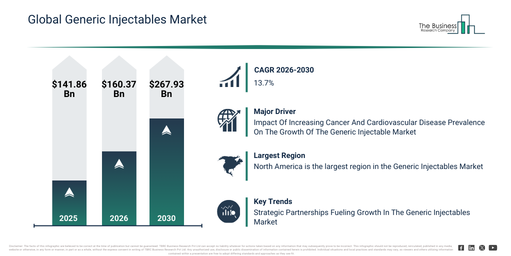
    The generic injectables market has seen substantial growth recently. Its value is anticipated to rise from $141.86 billion in 2025 to $160.37 billion in 2026, achieving a compound annual growth rate (CAGR) of 13.0%. This historical expansion is attributable to several factors, including the expiry of patents for branded injectables, a growing incidence of chronic diseases, increased healthcare spending, the rising demand for biosimilars, and advancements in sterile manufacturing technologies.

    The generic injectables market is projected to experience swift expansion over the coming years, reaching $267.93 billion by 2030, driven by a compound annual growth rate (CAGR) of 13.7%. This anticipated growth during the forecast period is fueled by several factors, including progress in biosimilar research, the development of healthcare infrastructure in emerging markets, enhanced government support for generic medications, the incorporation of AI and digital technologies into manufacturing, and an increase in collaborations among pharmaceutical firms. Key trends expected within this period encompass a rise in the adoption of generic biologics, a growing preference for more affordable injectable medications, an increase in regulatory clearances for biosimilars, the expansion of hospital and retail pharmacy networks, and a heightened emphasis on sterility and quality assurance.

    Get A Free Sample Report With In-Depth Market Insights:

    https://thebusinessresearchcompany.com/sample_request?id=48451064&type=smp&name=Generic%20Injectables%20Market%20Report%202026&utm_source=Blogs&utm_medium=Paid&utm_campaign=Oct_PR

    Generic Injectables Market Growth Catalysts And Demand Drivers

    The increasing incidence of cancer and cardiovascular ailments is anticipated to drive the expansion of the generic injectable market moving forward. Cardiovascular diseases encompass a range of conditions affecting the heart and blood vessels, while cancer is characterized by uncontrolled cellular growth and migration within the body. Generic injectables are employed in the treatment of cancer and cardiac conditions, offering comparable pharmaceutical equivalence or bioequivalence to brand-name drugs, along with improved drug availability and accessibility for more economical treatment. For example, data released by the American Cancer Society, a US-based non-profit organization, in January 2024, projected that the United States would record 2,001,140 new cancer cases and 611,720 cancer fatalities in 2024, a rise from 1,958,310 cases and 609,820 deaths in 2023. Furthermore, in September 2025, the British Heart Foundation, a UK-based charity, reported that over 7.6 million people in the UK, including more than 4 million men and over 3.6 million women, are living with cardiovascular disease. Projections indicate that this number might increase by approximately 1 million by 2030 and about 2 million by 2040, influenced by an aging population and enhanced survival rates. Hence, the growing occurrence of cancer and cardiovascular diseases is propelling the growth of the generic injectable market.

    Generic Injectables Market Segment Landscape And Growth Outlook

    The generic injectables market covered in this report is segmented –

    1) By Product Type: Monoclonal Antibodies, Cytokines, Insulin, Vaccines, Other Products

    2) By Container Type: Vials, Ampoules, Premix, Prefilled Syringes, Other Containers

    3) By Route Of Administration: Intravenous, Intramuscular, Subcutaneous, Other Routes Of Administration

    4) By Distribution Channel: Hospital Pharmacy, Retail Pharmacy, Drug Stores, Online Prescription Stores

    5) By Application: Oncology, Diabetes , Infectious Diseases , Blood Disorders , Musculoskeletal Disorders , Hormonal Disorders , Pain Management , CNS Diseases , Cardiovascular Diseases

    Subsegments:

    1) By Monoclonal Antibodies: IgG Monoclonal Antibodies, IgM Monoclonal Antibodies, Other Types Of Monoclonal Antibodies

    2) By Cytokines: Interferons, Interleukins, Tumor Necrosis Factor (TNF) Inhibitors

    3) By Insulin: Rapid-Acting Insulin, Long-Acting Insulin, Combination Insulin

    4) By Vaccines: Inactivated Vaccines, Live Attenuated Vaccines, Recombinant Vaccines

    5) By Other Products: Hormones, Peptides, Enzymes

    Generic Injectables Market Trends Shaping Long-Term Demand

    Key players in the generic injectables market are engaging in strategic alliances and collaborations to uphold their presence. These strategic partnerships are cooperative relationships established between two or more organizations to achieve specific commercial goals or objectives. For example, in December 2023, ITAAN Pharma, a Canada-based pharmaceutical company specializing in injectable medications, formed a partnership with ACIC Pharmaceuticals, also a Canada-based pharmaceutical company. Through this collaboration, both companies are combining their efforts in a joint venture to develop generic injectables for the North American market.

    Generic Injectables Market Competitive Landscape: Who Leads The Industry?

    Major companies operating in the generic injectables market are Baxter International Inc., Sanofi SA, AstraZeneca plc., Johnson & Johnson, Merck & Co. Inc., Biocon Limited, Lupin Limited, Dr. Reddy’s Laboratories Ltd., Teva Pharmaceutical Industries Ltd., Cipla Limited, Aurobindo Pharma Limited, Samsung Biologics Co. Ltd., Piramal Pharma Limited, Bristol-Myers Squibb Company, Pfizer Inc., Hikma Pharmaceuticals PLC, Sandoz International GmbH, Mylan N.V., Sun Pharmaceutical Industries Ltd., Wockhardt Limited

    View The Full Generic Injectables Market Report:

    https://thebusinessresearchcompany.com/report/generic-injectables-global-market-report?utm_source=Blogs&utm_medium=Paid&utm_campaign=Oct_PR

    Generic Injectables Market Largest Region: Which Geography Holds The Highest Market Share?

    North America was the largest region in the generic injectable market in 2025. Asia-Pacific is expected to be the fastest-growing region in the forecast period. The regions covered in the generic injectables market report are Asia-Pacific, South East Asia, Western Europe, Eastern Europe, North America, South America, Middle East, Africa.

    Reach Out To Our Team:

    The Business Research Company: https://www.thebusinessresearchcompany.com/

    Americas: +1 310-496-7795

    Asia: +44 7882 955267 & +91 8897263534

    Europe: +44 7882 955267

    Email us at: marketing@tbrc.info

    Follow us on:

    LinkedIn: https://in.linkedin.com/company/the-business-research-company

    YouTube: https://www.youtube.com/channel/UC24_fI0rV8cR5DxlCpgmyFQ

    Global Market Model: https://www.thebusinessresearchcompany.com/global-market-model
  • Generic Central Nervous System Drugs Market Growth To $132.44 Billion Creates New Opportunities Across The Industry

    Generic Central Nervous System Drugs Market Growth To $132.44 Billion Creates New Opportunities Across The Industry

    Built to provide research that’s more actionable and strategically valuable, The Business Research Company’s 2026 market reports include market attractiveness analysis, total addressable market sizing, company benchmarking matrices, interactive Excel dashboards, broader supply chain intelligence, emerging startup tracking, and in-depth product insights.

    Generic Central Nervous System Drugs Market Growth Analysis: How Will Revenue Trend Over The Forecast Period?

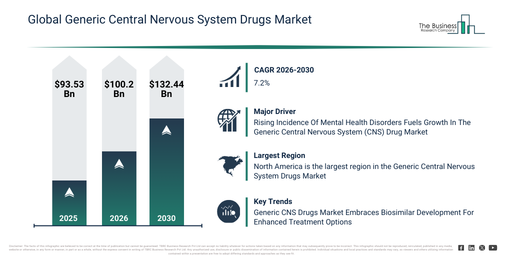
    The generic central nervous system drugs market has experienced robust expansion over recent years. This market is projected to expand from $93.53 billion in 2025 to $100.2 billion in 2026, demonstrating a compound annual growth rate (CAGR) of 7.1%. Factors contributing to its historical growth include an escalating incidence of anxiety and insomnia, the restricted availability of branded CNS drugs, increased research and development spending on generics, heightened public awareness concerning mental health, and existing cost limitations within healthcare systems.

    The market for generic central nervous system drugs is projected to experience substantial expansion in the coming years. This market is anticipated to reach $132.44 billion by 2030, exhibiting a compound annual growth rate (CAGR) of 7.2%. This projected growth is driven by factors such as the expansion of generic drug production, the uptake of digital therapeutics, the incorporation of AI into CNS drug discovery, a rising need for outpatient and home care services, and an increase in the population affected by neurodegenerative diseases. Key trends expected during this period involve a growing incidence of neurological disorders, an increase in the embrace of generic drugs, the spread of home-based and outpatient care, a heightened emphasis on mental health and stress management, and the creation of multi-mechanism CNS drugs.

    Get A Free Sample Report With In-Depth Market Insights:

    https://thebusinessresearchcompany.com/sample_request?id=89036401&type=smp&name=Generic%20Central%20Nervous%20System%20Drugs%20Market%20Report%202026&utm_source=Blogs&utm_medium=Paid&utm_campaign=Oct_PR

    Generic Central Nervous System Drugs Market Opportunity Drivers: What’s Unlocking New Revenue Potential?

    The growing prevalence of mental health disorders is anticipated to fuel the expansion of the generic central nervous system (CNS) drug market in the coming years. A mental health disorder is defined as a clinically significant impairment in an individual’s cognition, emotional regulation, or behavior, often associated with distress or functional difficulties in crucial areas. Generic central nervous system (CNS) drugs play a critical role in managing mental health disorders by offering affordable and accessible treatment options. For example, in November 2023, the National Health Service, a UK-based government department, reported that in 2023, approximately one in five individuals aged 8 to 25 years were estimated to have a probable mental disorder, affecting 20.3% of 8 to 16-year-olds, 23.3% of 17 to 19-year-olds, and 21.7% of 20 to 25-year-olds. Therefore, the increasing incidence of mental health disorders is serving as a key driver for the generic central nervous system (CNS) drug market.

    Generic Central Nervous System Drugs Market Breakdown By Product Type And Application

    The generic central nervous system drugs market covered in this report is segmented –

    1) By Type: Multiple Sclerosis (MS), Anti-Psychotic, Analgesics, Anti-Parkinson Drugs, Anesthetics, Anti-Epileptics, Anti-Depressants, Other Types

    2) By Drug Classification: Branded Drugs, Generic Drugs

    3) By Disease: Neurovascular Diseases, CNS Trauma, Mental Health, Neurodegenerative Diseases, Infectious Diseases, CNS Cancer

    4) By Route Of Administration: Oral, Intravenous, Intranasal Or Inhalation, Other Route Of Administrations

    5) By Mode Of Purchase: Over-The-counter drugs, Prescription-Based Drugs

    6) By Distribution Channel: Hospital Pharmacies, Retail Pharmacies, Other Distribution Channels

    Subsegments:

    1) By Multiple Sclerosis (MS): Interferons, Glatiramer Acetate, Sphingosine-1 Phosphate Receptor Modulators, Monoclonal Antibodies

    2) By Anti-Psychotic: Atypical Antipsychotics, Typical Antipsychotics

    3) By Analgesics: Non-Opioid Analgesics, Opioid Analgesics, Combination Analgesics

    4) By Anti-Parkinson Drugs: Dopamine Agonists, MAO-B Inhibitors, COMT Inhibitors, Anticholinergics

    5) By Anesthetics: General Anesthetics, Local Anesthetics

    6) By Anti-Epileptics: Sodium Channel Blockers, GABA Enhancers, Glutamate Modulators, Other Mechanisms

    7) By Anti-Depressants: Selective Serotonin Reuptake Inhibitors (SSRIs), Serotonin-Norepinephrine Reuptake Inhibitors (SNRIs), Tricyclic Antidepressants (TCAs), Monoamine Oxidase Inhibitors (MAOIs), Atypical Antidepressants

    8) By Other Types: Cognitive Enhancers, Anxiolytics, Sleep Aids

    Generic Central Nervous System Drugs Market Innovation Trends Shaping Future Development

    Key players within the generic central nervous system drugs market are concentrating on developing biosimilar versions for central nervous system (CNS) conditions. The emergence and authorization of biosimilars for specific biologic medications used in CNS disorders are observed as a growing pattern, providing more economical options compared to their branded counterparts. An illustration of this is Sandoz, a pharmaceutical firm based in Switzerland, which in October 2023, introduced natalizumab-sztn, notable as the inaugural biosimilar designed for treating recurrent types of multiple sclerosis (MS). This encompasses clinically isolated syndrome, relapsing-remitting MS, and active secondary progressive MS. MS is characterized as a chronic and progressive autoimmune illness that impacts the central nervous system. Most individuals afflicted by the disease experience cycles of remission and relapse, which detrimentally affects their quality of life. This therapy is not suitable for patients suffering from progressive multifocal leukoencephalopathy (PML) or those with a history of PML.

    Generic Central Nervous System Drugs Market Company Landscape And Competitive Strategy

    Major companies operating in the generic central nervous system drugs market are Biogen Inc., Johnson & Johnson, Hoffmann-La Roche Ltd, Novartis AG, UCB, Sanofi, Pfizer Inc., Merck KGaA, Sumitomo Dainippon Pharma, AbbVie, Recipharm AB, Neuraxpharm, Sun Pharmaceutical Ltd, Ranbaxy Laboratories, Merz Pharma GmbH & Co. KGaA, AstraZeneca, Apotex, Bayer, GlaxoSmithKline, Amgen, Abbott Laboratories, Janssen Pharmaceutica, Teva Canada, Accord Healthcare Inc., Acerus Pharmaceuticals, EMS Pharma, Hypermarcas, Eurofarma, Teuto Brasileiro, Biolab Farmaceutica, Cristalia, União Quimica, Boehringer Ingelheim, Eli Lilly and Company, Adcock Ingram

    View The Full Generic Central Nervous System Drugs Market Report:

    https://thebusinessresearchcompany.com/report/generic-central-nervous-system-drugs-global-market-report?utm_source=Blogs&utm_medium=Paid&utm_campaign=Oct_PR

    Generic Central Nervous System Drugs Market Regional Analysis: Which Region Leads By Revenue?

    North America was the largest region in the generic central nervous system drugs market in 2025. The regions covered in the generic central nervous system drugs market report are Asia-Pacific, South East Asia, Western Europe, Eastern Europe, North America, South America, Middle East, Africa.

    Reach Out To Our Team:

    The Business Research Company: https://www.thebusinessresearchcompany.com/

    Americas: +1 310-496-7795

    Asia: +44 7882 955267 & +91 8897263534

    Europe: +44 7882 955267

    Email us at: marketing@tbrc.info

    Follow us on:

    LinkedIn: https://in.linkedin.com/company/the-business-research-company

    YouTube: https://www.youtube.com/channel/UC24_fI0rV8cR5DxlCpgmyFQ

    Global Market Model: https://www.thebusinessresearchcompany.com/global-market-model

  • General Anesthesia Drugs Market Forecast: Breaking Down The Numbers Behind Future Expansion

    General Anesthesia Drugs Market Forecast: Breaking Down The Numbers Behind Future Expansion

    Backed by market attractiveness analysis, total addressable market sizing, company benchmarking matrices, interactive Excel dashboards, wider supply chain intelligence, emerging startup coverage, and detailed product-level insights, The Business Research Company’s 2026 market reports are designed to offer research that is more actionable and strategically valuable than ever.

    General Anesthesia Drugs Market Forecast: What Value Will The Market Reach By 2030?

    The market size for general anesthesia drugs has experienced consistent expansion in recent years. It is anticipated to grow from $5.17 billion in 2025 to $5.35 billion in 2026, achieving a compound annual growth rate (CAGR) of 3.5%. This historical growth can be largely attributed to an increase in surgical interventions, global hospital expansion, the established clinical efficacy of anesthetic agents, a rise in trauma and emergency surgeries, and advancements in surgical infrastructure.

    The general anesthesia drugs market size is anticipated to experience consistent expansion over the upcoming years. This market is projected to reach $6.16 billion in 2030, exhibiting a compound annual growth rate (CAGR) of 3.6%. This projected growth is driven by several factors, including a rise in minimally invasive surgical procedures, the expansion of ambulatory surgical centers, an aging global population, increased demand for cosmetic and elective surgeries, and advancements in anesthesia monitoring technology. Noteworthy trends for the forecast period encompass a global increase in surgical procedure volumes, a growing inclination towards short-acting anesthetic agents, their expanded application in outpatient and day-care settings, the broadening adoption of multimodal anesthesia protocols, and an elevated demand from an aging surgical demographic.

    Get A Free Sample Report With In-Depth Market Insights:

    https://thebusinessresearchcompany.com/sample_request?id=27945245&type=smp&name=General%20Anesthesia%20Drugs%20Market%20Report%202026&utm_source=Blogs&utm_medium=Paid&utm_campaign=Oct_PR

    General Anesthesia Drugs Market Growth Momentum: What Factors Are Shaping Demand?

    The general anesthesia drugs market is projected to grow due to the increasing volume of surgical procedures. These procedures involve medical operations performed by trained professionals to address diseases, injuries, or abnormalities, often requiring an incision or specialized instruments to access internal structures and tissues. The uptick in surgical procedures is primarily driven by the escalating prevalence of chronic diseases, which frequently necessitate surgical intervention for effective treatment. General anesthesia drugs are vital during these operations to induce unconsciousness and eliminate pain, ensuring patients remain immobile and unaware throughout complex or invasive surgeries. For instance, in June 2024, the American Society of Plastic Surgeons, a US-based non-profit organization focused on minimally invasive procedures, reported a 7% growth in 2023, which was a 2% increase from 2022. Thus, the rising number of surgical procedures is a key factor propelling the expansion of the general anesthesia drugs market.

    General Anesthesia Drugs Market Segment Analysis And Revenue Potential

    The general anesthesia drugs market covered in this report is segmented –

    1) By Drug: Sevoflurane, Propofol, Dexmedetomidine, Remifentanil, Desflurane, Midazolam, Other Drugs

    2) By Route Of Administration: Intravenous, Inhaled

    3) By Application: Cardiovascular Surgery, Orthopedic Surgery, Neurosurgery, General Surgery, Cosmetic Surgery, Other Applications

    4) By End-Use: Hospitals, Ambulatory Surgical Centers, Clinics, Other End-Users

    Subsegments:

    1) By Sevoflurane: Inhalation Anesthesia, Pediatric Anesthesia, Outpatient Procedures

    2) By Propofol: Induction Anesthesia, Maintenance Anesthesia, ICU Sedation

    3) By Dexmedetomidine: Procedural Sedation, ICU Sedation, Postoperative Sedation

    4) By Remifentanil: Opioid-Based Anesthesia, Short Surgical Procedures, Pain Management

    5) By Desflurane: Inhalation Anesthesia, Rapid Recovery Procedures, Outpatient Surgeries

    6) By Midazolam: Preoperative Sedation, Procedural Sedation, ICU Sedation

    7) By Other Drugs: Thiopental Sodium, Etomidate, Isoflurane, Ketamine

    General Anesthesia Drugs Market Trends Redefining Industry Growth

    Leading companies in the general anesthesia drugs market are concentrating on creating innovative anesthetic medications, such as fast-acting benzodiazepines, to boost patient safety, speed up recuperation, and enhance surgical effectiveness. A fast-acting benzodiazepine, like midazolam, is frequently employed for procedural sedation because of its quick start and short effect. For instance, in August 2023, PAION AG, a Germany-based biotechnology firm, introduced Byfavo (remimazolam) for general anesthesia in the Netherlands, marking its initial commercial availability within Europe. It is characterized by a swift onset and termination of action, with effects typically appearing within 1 to 1.5 minutes and patients recovering within 11 to 14 minutes after administration, rendering it a highly effective choice for brief surgical procedures. Its primary breakdown mechanism involves hepatic esterases, enzymes that are extensively distributed, rather than cytochrome-dependent liver pathways in humans. Similar to other benzodiazepines, it possesses a readily accessible antagonist, flumazenil, capable of promptly reversing sedation or anesthesia when required.

    General Anesthesia Drugs Market Key Players Shaping Industry Direction

    Major companies operating in the general anesthesia drugs market are Baxter International Inc., Fresenius Kabi USA LLC, Piramal Critical Care, B. Braun SE, Hikma Pharmaceuticals PLC, Mylan N.V., Viatris Inc., Jiangsu Hengrui Pharmaceutical Co. Ltd., Sun Pharmaceutical Industries Ltd., Aspen Pharmacare Holdings Limited, Claris Lifesciences Limited, Pfizer CentreOne, Abbott Laboratories Inc., Dr. Reddy’s Laboratories Ltd., Aurobindo Pharma Limited, Lupin Limited, Sini Pharma Pvt Ltd., Safeline Pharmaceuticals (Pty) Ltd, Rouzel Pharma Pvt Ltd, Avet Pharmaceuticals Inc.

    View The Full General Anesthesia Drugs Market Report:

    https://thebusinessresearchcompany.com/report/general-anesthesia-drugs-global-market-report?utm_source=Blogs&utm_medium=Paid&utm_campaign=Oct_PR

    General Anesthesia Drugs Market Geographic Distribution And Regional Opportunities

    North America was the largest region in the general anesthesia drugs market in 2025. Asia-Pacific is expected to be the fastest-growing region in the forecast period. The regions covered in the general anesthesia drugs market report are Asia-Pacific, South East Asia, Western Europe, Eastern Europe, North America, South America, Middle East, Africa.

    Reach Out To Our Team:

    The Business Research Company: https://www.thebusinessresearchcompany.com/

    Americas: +1 310-496-7795

    Asia: +44 7882 955267 & +91 8897263534

    Europe: +44 7882 955267

    Email us at: marketing@tbrc.info

    Follow us on:

    LinkedIn: https://in.linkedin.com/company/the-business-research-company

    YouTube: https://www.youtube.com/channel/UC24_fI0rV8cR5DxlCpgmyFQ

    Global Market Model: https://www.thebusinessresearchcompany.com/global-market-model
  • Gene-Editing Transfection Chemicals Market Expected To Grow At 7.7% CAGR Through 2030: What Businesses Need To Know

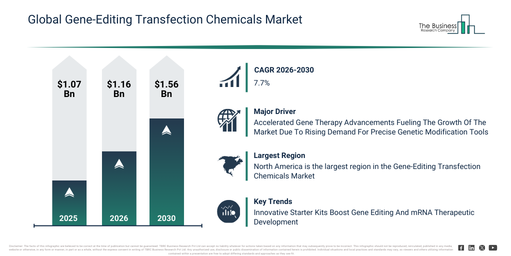
    Gene-Editing Transfection Chemicals Market Expected To Grow At 7.7% CAGR Through 2030: What Businesses Need To Know

    Featuring market attractiveness scoring, total addressable market sizing, company benchmarking matrices, interactive Excel dashboards, deeper supply chain intelligence, emerging startup tracking, and granular product-level insights, The Business Research Company’s 2026 market reports are built to deliver research that is both more actionable and more strategically valuable.

    nan

  • Gene-Circuit Cell Therapy Market Forecast To Reach $3.56 Billion By 2030: Key Trends Explained

    Gene-Circuit Cell Therapy Market Forecast To Reach $3.56 Billion By 2030: Key Trends Explained

    Built to provide research that’s more actionable and strategically valuable, The Business Research Company’s 2026 market reports include market attractiveness analysis, total addressable market sizing, company benchmarking matrices, interactive Excel dashboards, broader supply chain intelligence, emerging startup tracking, and in-depth product insights.

    Gene-Circuit Cell Therapy Market Size, Value And Growth Trajectory Through 2030

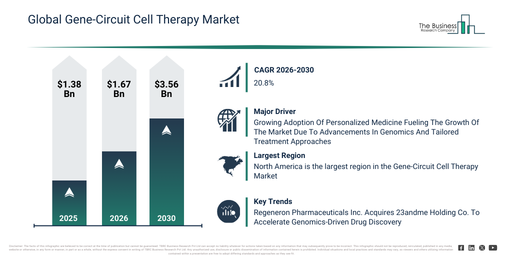
    The gene-circuit cell therapy market has observed substantial growth in recent years. It is anticipated to expand from $1.38 billion in 2025 to $1.67 billion in 2026, exhibiting a compound annual growth rate (CAGR) of 21.1%. This historical growth can be linked to progress in cell engineering technologies, the successful application of CAR-T cell therapies, the development of gene editing platforms, increasing clinical expertise with cell therapies, and a rise in biotechnology investments.

    The gene-circuit cell therapy market size is anticipated to experience substantial growth over the next few years. It is projected to expand to $3.56 billion in 2030, demonstrating a compound annual growth rate (CAGR) of 20.8%. This expansion in the forecast period is driven by factors such as the increasing commercialization of gene-circuit cell therapies, a rising demand for controllable immunotherapies, the expansion of oncology-focused pipelines, a growing embrace of allogeneic platforms, and advancements in scalable cell manufacturing. Key trends expected during this period include the increased adoption of synthetic gene circuits in cell therapy, the rising development of logic-controlled immune cells, the growing utilization of off-the-shelf allogeneic therapies, the expansion of dynamic cellular response systems, and an enhanced focus on treatment safety and control.

    Get A Free Sample Report With In-Depth Market Insights:

    https://thebusinessresearchcompany.com/sample_request?id=77777270&type=smp&name=Gene-Circuit%20Cell%20Therapy%20Market%20Report%202026&utm_source=Blogs&utm_medium=Paid&utm_campaign=Oct_PR

    Gene-Circuit Cell Therapy Market Development Factors: What’s Supporting Demand?

    The future expansion of the gene-circuit cell therapy market is anticipated due to the increasing integration of personalized medicine. Personalized medicine is defined as a healthcare strategy that customizes treatment and prevention plans based on an individual’s distinct genetic profile, way of life, and surroundings. This rising acceptance of personalized medicine stems largely from breakthroughs in genomics, allowing for accurate detection of genetic differences and customized therapies for patients. Gene-circuit cell therapy complements personalized medicine by offering precise and controllable therapeutic methods, making it highly suitable for managing intricate and persistent illnesses. It elevates the accuracy of treatments by adapting interventions to each patient’s specific requirements, thereby boosting therapeutic success and general health results. For example, data from February 2024, released by the US-based nonprofit Personalized Medicine Coalition (PMC), shows that the U.S. Food and Drug Administration (FDA) sanctioned 26 novel personalized medicines in 2023, representing a notable rise from the 12 approved in 2022. Consequently, the expanding use of personalized medicine is fueling the development of the gene-circuit cell therapy market.

    Gene-Circuit Cell Therapy Market Segment Outlook: Which Categories Are Growing Fastest?

    The gene-circuit cell therapy market covered in this report is segmented –

    1) By Product Type: Autologous, Allogeneic

    2) By Technology: Clustered Regularly Interspaced Short Palindromic Repeats (CRISPR), Transcription Activator-Like Effector Nuclease (TALEN), Zinc Finger Nuclease (ZFN), Other Technologies

    3) By Application: Oncology, Genetic Disorders, Infectious Diseases, Other Applications

    4) By End-User: Hospitals And Clinics, Research Institutes, Biotechnology And Pharmaceutical Companies, Other End Users

    Subsegments:

    1) By Autologous: Chimeric Antigen Receptor (CAR)-T Cell Therapies, T-Cell Receptor (TCR)-T Cell Therapies, Natural Killer (NK) Cell Therapies, Stem Cell-Based Therapies

    2) By Allogeneic: Off-The-Shelf Chimeric Antigen Receptor (CAR)-T Cell Therapies, Off-The-Shelf Natural Killer (NK) Cell Therapies, TT-Cell Receptor (TCR)-T Cell Therapies, Stem Cell-Derived Therapies

    Gene-Circuit Cell Therapy Market Transformation Trends: What Innovations Are Driving Change?

    Leading companies in the gene-circuit cell therapy market are prioritizing the development of advanced therapeutic platforms, such as CRISPR-based gene editing systems. This focus aims to enhance treatment precision, improve therapeutic outcomes, and tackle genetic conditions that were previously untreatable. CRISPR-based gene editing systems represent innovative technologies designed for making exact alterations to the genome, facilitating either the rectification of genetic defects or the introduction of therapeutic genes into cells. As an illustration, in December 2023, Vertex Pharmaceuticals Inc., a US-based biopharmaceutical company, collaborated with CRISPR Therapeutics Inc., a US-based biotechnology research company. This partnership resulted in conditional marketing authorization from the United Kingdom (U.K.) Medicines and Healthcare products Regulatory Agency (MHRA) for CASGEVY (exagamglogene autotemcel, exa-cel). It is indicated for patients aged 12 and older with sickle cell disease (SCD) experiencing recurrent vaso-occlusive crises, or those with transfusion-dependent beta thalassemia (TDT). Casgevy operates by editing a patient’s hematopoietic stem cells to reactivate fetal hemoglobin production, which in turn reduces or eliminates disease symptoms and offers a potential functional cure for these conditions.

    Gene-Circuit Cell Therapy Market Leading Companies And Competitive Benchmarking

    Major companies operating in the gene-circuit cell therapy market are Tmunity Therapeutics Inc., Ginkgo Bioworks Holdings Inc., Arcellx Inc., Beam Therapeutics Inc., CRISPR Therapeutics AG, Intellia Therapeutics Inc., Orchard Therapeutics plc, Fate Therapeutics Inc., Rubius Therapeutics Inc., BlueRock Therapeutics LP (a subsidiary of Bayer AG), Precigen Inc., SparingVision, Alaunos Therapeutics Inc., Cartesian Therapeutics Inc., Lyell Immunopharma Inc., Synlogic Inc., Senti Biosciences Inc., Autolus Therapeutics plc, Cellectis S.A., Sotio Biotech

    View The Full Gene-Circuit Cell Therapy Market Report:

    https://thebusinessresearchcompany.com/report/gene-circuit-cell-therapy-global-market-report?utm_source=Blogs&utm_medium=Paid&utm_campaign=Oct_PR

    Gene-Circuit Cell Therapy Market Regional Analysis And Leading Geography

    North America was the largest region in the gene-circuit cell therapy market in 2025. The regions covered in the gene-circuit cell therapy market report are Asia-Pacific, South East Asia, Western Europe, Eastern Europe, North America, South America, Middle East, Africa.

    Reach Out To Our Team:

    The Business Research Company: https://www.thebusinessresearchcompany.com/

    Americas: +1 310-496-7795

    Asia: +44 7882 955267 & +91 8897263534

    Europe: +44 7882 955267

    Email us at: marketing@tbrc.info

    Follow us on:

    LinkedIn: https://in.linkedin.com/company/the-business-research-company

    YouTube: https://www.youtube.com/channel/UC24_fI0rV8cR5DxlCpgmyFQ

    Global Market Model: https://www.thebusinessresearchcompany.com/global-market-model
  • Gene Therapy On Neurological Diseases Market Analysis Through 2030: Market Size, Growth Trends And Industry Outlook

    Gene Therapy On Neurological Diseases Market Analysis Through 2030: Market Size, Growth Trends And Industry Outlook

    Backed by market attractiveness analysis, total addressable market sizing, company benchmarking matrices, interactive Excel dashboards, wider supply chain intelligence, emerging startup coverage, and detailed product-level insights, The Business Research Company’s 2026 market reports are designed to offer research that is more actionable and strategically valuable than ever.

    Gene Therapy On Neurological Diseases Market CAGR Outlook And Future Development

    The gene therapy on neurological diseases market size has experienced swift expansion in recent years. It is projected to increase from $3.55 billion in 2025 to $4.01 billion in 2026, demonstrating a compound annual growth rate (CAGR) of 13.0%. The market’s past growth can be attributed to elements such as the scarcity of gene therapy alternatives for neurological conditions, the rising occurrence of Alzheimer’s and Parkinson’s disease, a dependence on traditional treatment methods, growing recognition of genetic methodologies, and the initial clinical testing of viral vectors.

    The market size for gene therapy on neurological diseases is anticipated to experience substantial expansion in the coming years. It is projected to grow to $6.48 billion in 2030, demonstrating a compound annual growth rate (CAGR) of 12.7%. This growth over the forecast period can be attributed to the advancement of adeno-associated virus and lentiviral therapies, the broadening of non-viral delivery platforms, a rise in regulatory approvals for neurological gene therapies, increased investment in research and development for targeted genetic interventions, and the incorporation of digital monitoring and AI-based patient management. Significant trends during the forecast period involve heightened investment in viral and non-viral gene therapy platforms, the expanding application of gene therapy across various neurological disorders, a growing emphasis on personalized and targeted genetic treatments, an increase in hospital and clinic-based gene therapy initiatives, and the creation of advanced delivery methods for neurological gene therapy.

    Get A Free Sample Report With In-Depth Market Insights:

    https://thebusinessresearchcompany.com/sample_request?id=27294&type=smp&name=Gene%20Therapy%20On%20Neurological%20Diseases%20Market%20Report%202026&utm_source=Blogs&utm_medium=Paid&utm_campaign=Oct_PR

    Gene Therapy On Neurological Diseases Market Industry Drivers: What’s Behind The Revenue Growth?

    The expanding occurrence of neurological conditions is projected to boost the gene therapy on neurological diseases market moving forward. These disorders are health conditions impacting the brain, spinal cord, and nerves, resulting in various symptoms like cognitive, motor, and sensory difficulties. Their rising frequency is associated with an aging demographic, given that aging progressively harms neuronal function, diminishes brain plasticity, and heightens oxidative stress, thus aiding in the onset and advancement of these conditions. Gene therapy on neurological diseases assists in managing neurological disorders by addressing their underlying genetic origins, providing potential enduring or permanent treatment options. This therapy enhances patient results through restoring or altering gene function, alleviating symptoms, and lessening the requirement for repeated medical procedures, consequently improving overall quality of life. For example, data from the National Health Service, a UK government body, indicated that by June 30, 2024, 487,432 patients had been diagnosed with dementia (a progressive brain disorder affecting memory, thinking, and daily activities) in July 2024, marking an increase of 3,155 cases from May 31, 2024. Consequently, the growing incidence of neurological disorders is fueling the expansion of the gene therapy on neurological diseases market.

    Gene Therapy On Neurological Diseases Market Segment Landscape: Which Areas Lead Development?

    The gene therapy on neurological diseases market covered in this report is segmented –

    1) By Type: Viral Gene Therapy, Non-Viral Gene Therapy

    2) By Target Disease: Alzheimer’s Disease, Parkinsons Disease, Amyotrophic Lateral Sclerosis (ALS), Huntington’s Disease, Multiple Sclerosis

    3) By Administration Route: Intravenous, Intrathecal, Intranasal, Intracerebral, Other Administration Routes

    4) By Application: Hospital, Clinic, Other Applications

    Subsegments:

    1) By Viral Gene Therapy Type: Adeno Associated Virus, Lentivirus, Retrovirus, Herpes Simplex Virus, Adenovirus

    2) By Non-Viral Gene Therapy Type: Liposomes, Nanoparticles, Electroporation, Gene Gun, Naked Plasmid Deoxyribonucleic Acid (DNA)

    #Gene Therapy On Neurological Diseases Market Growth Trends: What’s Shaping The Future Outlook?

    Leading companies in the gene therapy on neurological diseases market are prioritizing the development of advanced viral delivery systems, such as the adeno-associated virus serotype 2 (AAV2) vector. Their aim is to enhance targeted gene delivery, increase efficacy, lessen immune reactions, and enable prolonged treatments. The adeno-associated virus serotype 2 (AAV2) vector is a modified, non-pathogenic viral delivery system employed in gene therapy to transport therapeutic genes into specific cells, especially neurons, for sustained expression. As an illustration, in November 2024, PTC Therapeutics Inc., a biopharmaceutical company located in the US, obtained U.S. Food and Drug Administration (FDA) approval for a gene therapy designed for the treatment of aromatic L-amino acid decarboxylase (AADC) deficiency. This therapy utilizes an AAV2 vector to deliver a functional copy of the DDC gene into the putamen, which facilitates dopamine production and improves motor functions. It is characterized by a single, intraputaminal infusion engineered to provide sustained therapeutic benefits, leading to significant improvements in motor function and a reduction in debilitating symptoms without the necessity for repeated interventions.

    Gene Therapy On Neurological Diseases Market Industry Leaders And Competitive Landscape

    Major companies operating in the gene therapy on neurological diseases market are Novartis AG, Biogen Inc., Sarepta Therapeutics Inc., PTC Therapeutics Inc., Oxford Biomedica plc, Regenxbio Inc., Passage Bio Inc., Intellia Therapeutics Inc., Voyager Therapeutics Inc., UniQure N.V., AviadoBio Ltd., Capsida Biotherapeutics Inc., StrideBio Inc., Lysogene S.A., Wave Life Sciences Ltd., Taysha Gene Therapies Inc., Abeona Therapeutics Inc., CRISPR Therapeutics AG

    View The Full Gene Therapy On Neurological Diseases Market Report:

    https://thebusinessresearchcompany.com/report/gene-therapy-on-neurological-diseases-global-market-report?utm_source=Blogs&utm_medium=Paid&utm_campaign=Oct_PR

    Gene Therapy On Neurological Diseases Market Geographic Analysis: Where Is Demand Accelerating Fastest?

    North America was the largest region in the gene therapy on neurological diseases market in 2025. Asia-Pacific is expected to be the fastest-growing region in the forecast period. The regions covered in the gene therapy on neurological diseases market report are Asia-Pacific, South East Asia, Western Europe, Eastern Europe, North America, South America, Middle East, Africa.

    Reach Out To Our Team:

    The Business Research Company: https://www.thebusinessresearchcompany.com/

    Americas: +1 310-496-7795

    Asia: +44 7882 955267 & +91 8897263534

    Europe: +44 7882 955267

    Email us at: marketing@tbrc.info

    Follow us on:

    LinkedIn: https://in.linkedin.com/company/the-business-research-company

    YouTube: https://www.youtube.com/channel/UC24_fI0rV8cR5DxlCpgmyFQ

    Global Market Model: https://www.thebusinessresearchcompany.com/global-market-model

  • Gene Therapy For Parkinson’s Disease Market Outlook From 2026 To 2030: Key Growth Factors And Future Opportunities

    Gene Therapy For Parkinson’s Disease Market Outlook From 2026 To 2030: Key Growth Factors And Future Opportunities

    Featuring market attractiveness scoring, total addressable market sizing, company benchmarking matrices, interactive Excel dashboards, deeper supply chain intelligence, emerging startup tracking, and granular product-level insights, The Business Research Company’s 2026 market reports are built to deliver research that is both more actionable and more strategically valuable.

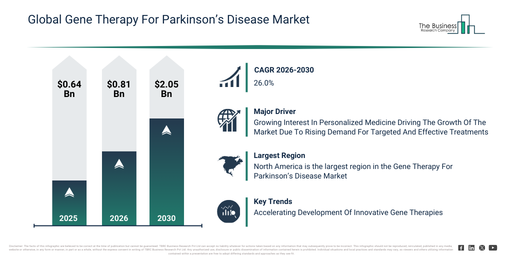
    Gene Therapy For Parkinson’s Disease Market Set To Climb From $0.81 Billion In 2026 To $2.04 Billion By 2030

    The market for gene therapy targeting Parkinson’s disease has experienced significant expansion in recent years. This market is projected to expand from $0.64 billion in 2025 to $0.81 billion in 2026, at a compound annual growth rate (CAGR) of 26.3%. The growth observed in the historic period can be attributed to several factors, including advancements in viral vector engineering, a deeper understanding of Parkinson’s disease pathology, increased funding for neuroscience research, the availability of enhanced delivery technologies, and promising outcomes from initial clinical trials.

    The gene therapy sector for Parkinson’s disease is anticipated to undergo substantial expansion in the upcoming years. Its valuation is predicted to reach $2.05 billion by 2030, demonstrating a compound annual growth rate (CAGR) of 26.0%. This projected growth can be attributed to several factors including increased funding for neurodegenerative disease treatments, the rising adoption of personalized gene therapy approaches, the expansion of late-stage clinical trial pipelines, an escalating demand for disease-modifying therapies, and advancements in minimally invasive delivery methods. Prominent trends for the forecast period encompass the increasing development of viral vector-based therapies, a growing focus on dopamine restoration strategies, the expanding application of neurotrophic factor gene delivery, the proliferation of precision intracerebral delivery techniques, and an elevated emphasis on long-term therapeutic efficacy.

    Get A Free Sample Report With In-Depth Market Insights:

    https://thebusinessresearchcompany.com/sample_request?id=11194409&type=smp&name=Gene%20Therapy%20For%20Parkinson%E2%80%99s%20Disease%20Market%20Report%202026&utm_source=Blogs&utm_medium=Paid&utm_campaign=Oct_PR

    Gene Therapy For Parkinson’s Disease Market Growth Factors: What’s Supporting Expansion?

    The gene therapy for Parkinson’s disease market is anticipated to expand propelled by the increasing focus on personalized medicine. This medical strategy customizes treatment and prevention plans based on an individual’s genetic makeup, lifestyle, and environment. The rising demand for targeted therapies, which improve treatment effectiveness and minimize adverse side effects, is fueling the growing interest in personalized medicine. In this context, gene therapy for Parkinson’s disease delivers tailored genetic modifications to restore dopamine function and address unique patient-specific disease mechanisms. For example, in February 2024, the Personalized Medicine Coalition, a US-based non-profit organization, stated that in 2023, the US Food and Drug Administration (FDA) approved 16 new personalized treatments for rare disease patients, representing a notable increase from the 6 approvals in 2022. Therefore, the surging interest in personalized medicine is a primary driver for the growth of the gene therapy for Parkinson’s disease market.

    Gene Therapy For Parkinson’s Disease Market Segments: Where Is Growth Concentrated?

    The gene therapy for parkinson’s disease market covered in this report is segmented –

    1) By Therapy Type: In Vivo Gene Therapy, Ex Vivo Gene Therapy

    2) By Vector Type: Viral Vectors, Non-Viral Vectors

    3) By Target Gene: Aromatic L-Amino Acid Decarboxylase (AADC), Glial Cell Line-Derived Neurotrophic Factor (GDNF), Neurturin, Other Target Genes

    4) By Delivery Method: Intracerebral, Intravenous, Other Delivery Methods

    5) By End-User: Hospitals, Specialty Clinics, Research Institutes, Other End-Users

    Subsegments:

    1) By In Vivo Gene Therapy: Viral Vectors, Non-Viral Vectors

    2) By Ex Vivo Gene Therapy: Autologous Cell-Based Gene Therapy, Allogeneic Cell-Based Gene Therapy

    Gene Therapy For Parkinson’s Disease Market Industry Trends: What’s Reshaping Demand?

    Within the gene therapy for Parkinson’s disease market, major companies are actively developing more precise therapies, such as regenerative medicine advanced therapy, aiming to improve neuronal survival, restore dopamine function, and offer long-lasting disease-modifying advantages for patients. Regenerative medicine advanced therapy (RMAT) is a specific designation from the United States Food and Drug Administration (FDA), granted to regenerative medicine products like cell therapies, gene therapies, and tissue-engineered products, designed to treat, modify, reverse, or cure serious or life-threatening conditions. For example, in February 2025, Asklepios BioPharmaceutical, Inc. (AskBio), a US-based gene therapy company, introduced AB-1005, an investigational AAV2-GDNF gene therapy that received FDA regenerative medicine advanced therapy (RMAT) designation. This designation, intended to accelerate the development and review of promising therapies, was provided based on data submitted by AskBio, including clinical evidence from its Phase Ib open-label, uncontrolled trial, which demonstrated AB-1005’s potential to slow disease progression and enhance motor function in Parkinson’s patients.

    Gene Therapy For Parkinson’s Disease Market Key Participants And Competitive Landscape

    Major companies operating in the gene therapy for parkinson’s disease market are Merck & Co. Inc., Bayer AG, Sanofi S.A., Eli Lilly and Company, Biogen Inc., PTC Therapeutics Inc., Zambon S.p.A., Oxford BioMedica plc, Voyager Therapeutics Inc., Insilico Medicine Inc., Spur Therapeutics Inc., Cerevance Inc., MeiraGTx Holdings plc, BlackfinBio Inc., Partner Therapeutics Inc., Kenai Therapeutics Inc., CureSen Therapeutics Inc., BioVie Inc., Clexio Biosciences Ltd., Tetraneuron S.L.

    View The Full Gene Therapy For Parkinson’s Disease Market Report:

    https://thebusinessresearchcompany.com/report/gene-therapy-for-parkinsons-disease-global-market-report?utm_source=Blogs&utm_medium=Paid&utm_campaign=Oct_PR

    Gene Therapy For Parkinson’s Disease Market Global Footprint: Which Region Leads The Industry?

    North America was the largest region in the gene therapy for parkinson’s disease market in 2025. Asia-Pacific is expected to be the fastest-growing region in the forecast period. The regions covered in the gene therapy for parkinson’s disease market report are Asia-Pacific, South East Asia, Western Europe, Eastern Europe, North America, South America, Middle East, Africa.

    Reach Out To Our Team:

    The Business Research Company: https://www.thebusinessresearchcompany.com/

    Americas: +1 310-496-7795

    Asia: +44 7882 955267 & +91 8897263534

    Europe: +44 7882 955267

    Email us at: marketing@tbrc.info

    Follow us on:

    LinkedIn: https://in.linkedin.com/company/the-business-research-company

    YouTube: https://www.youtube.com/channel/UC24_fI0rV8cR5DxlCpgmyFQ

    Global Market Model: https://www.thebusinessresearchcompany.com/global-market-model