Month: October 2026

  • Gonadotropin-Releasing Hormone (GnRH) Agonists And Antagonists Drugs Market Valued At $2.72 Billion In 2026: Key Trends And Growth Drivers

    Gonadotropin-Releasing Hormone (GnRH) Agonists And Antagonists Drugs Market Valued At $2.72 Billion In 2026: Key Trends And Growth Drivers

    Backed by market attractiveness analysis, total addressable market sizing, company benchmarking matrices, interactive Excel dashboards, wider supply chain intelligence, emerging startup coverage, and detailed product-level insights, The Business Research Company’s 2026 market reports are designed to offer research that is more actionable and strategically valuable than ever.

    Gonadotropin-Releasing Hormone (GnRH) Agonists And Antagonists Drugs Market Size, Value And Growth Trajectory Through 2030

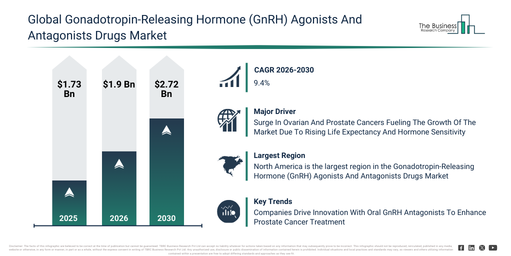
    The gonadotropin-releasing hormone (gnrh) agonists and antagonists drugs market has experienced substantial growth in recent years. It is projected to expand from $1.73 billion in 2025 to $1.9 billion in 2026, at a compound annual growth rate (CAGR) of 9.8%. The historical growth in this market can be attributed to factors such as the limited availability of synthetic gnrh drugs, a reliance on conventional hormone therapies, the growing prevalence of prostate and gynecological cancers, increasing awareness of fertility treatments, and the adoption of depot and implant formulations.

    The gonadotropin-releasing hormone (gnrh) agonists and antagonists drugs market is projected to experience substantial expansion over the upcoming years. This market is anticipated to reach a valuation of $2.72 billion by 2030, exhibiting a compound annual growth rate (CAGR) of 9.4%. The expansion anticipated during this period is driven by the creation of long-acting and sustained-release formulations, increasing capital allocation in oncology and reproductive healthcare, a rise in regulatory approvals for new gnrh antagonists, the growth of specialty clinics and hospitals, and the incorporation of precision medicine with customized treatment approaches. Key developments expected during the forecast timeframe encompass a growing embrace of long-acting gnrh formulations, wider application in oncology and gynecology therapies, an increase in fertility and assisted reproductive treatments, rising consumer demand for pediatric and adult prostate cancer interventions, and a heightened emphasis on individualized hormonal therapy.

    Get A Free Sample Report With In-Depth Market Insights:

    https://thebusinessresearchcompany.com/sample_request?id=94350520&type=smp&name=Gonadotropin-Releasing%20Hormone%20%28GnRH%29%20Agonists%20And%20Antagonists%20Drugs%20Market%20Report%202026&utm_source=Blogs&utm_medium=Paid&utm_campaign=Oct_PR

    Gonadotropin-Releasing Hormone (GnRH) Agonists And Antagonists Drugs Market Growth Backed By Core Demand Fundamentals

    The anticipated rise in the occurrence of ovarian and prostate cancers is projected to fuel the expansion of the gonadotropin-releasing hormone (GnRH) agonists and antagonists drugs market in the foreseeable future. These specific cancers are classified as hormone-sensitive, meaning their development is impacted by hormones like estrogen and testosterone, necessitating treatment approaches that regulate hormones, including GnRH agonists or antagonists. A contributing factor to the upward trend in ovarian and prostate cancer diagnoses is the global increase in life expectancy, given that the likelihood of developing these age-related, hormone-sensitive cancers escalates with advancing age. Gonadotropin-releasing hormone (GnRH) agonists and antagonists play a crucial role in managing ovarian and prostate cancers by inhibiting the synthesis of sex hormones like estrogen and testosterone, which are known to promote the progression of these hormone-dependent tumors. As an illustration, data from Cancer Australia, an Australian government body, indicates that around 1,786 new cases of ovarian cancer were anticipated in Australia in 2023. Furthermore, women face approximately a 1 in 87 chance (or 1.2% risk) of receiving an ovarian cancer diagnosis by the age of 85. Consequently, the growing incidence of ovarian and prostate cancers is serving as a primary catalyst for the expansion of the gonadotropin-releasing hormone (GnRH) agonists and antagonists drugs market.

    Gonadotropin-Releasing Hormone (GnRH) Agonists And Antagonists Drugs Market Segment Landscape And Growth Outlook

    The gonadotropin-releasing hormone (gnrh) agonists and antagonists drugs market covered in this report is segmented –

    1) By Drug Type: GnRH Agonists, Leuprorelin, Goserelin, Triptorelin, Histrelin, Buserelin, GnRH Antagonists, Degarelix, Abarelix, Other Drug Types

    2) By Application: Gynecology, Oncology, Other Applications

    3) By End-User: Hospitals, Specialty Clinics, Other End-Users

    Subsegments:

    1) By GnRH Agonists: Deslorelin, Gonadorelin, Zoladex Long-Acting Goserelin Variant, Lupron Depot-Ped, Sustained-Release Microsphere Formulations

    2) By Leuprorelin: Depot Injection, Implant, Combination Therapy Formulations

    3) By Goserelin: Subcutaneous Implant, Oncology-Specific Formulation, Gynecology-Specific Formulation

    4) By Triptorelin: Intramuscular Injection, Long-Acting (1-, 3-, 6-Month) Depot, Fertility Treatment Formulation

    5) By Histrelin: Subcutaneous Implant, Pediatric (Precocious Puberty) Formulation, Adult Prostate Cancer-Specific Version

    6) By Buserelin: Nasal Spray, Subcutaneous Injection, In Vitro Fertilization And Fertility Cycle Formulations

    7) By GnRH Antagonists: Teverelix DP, Elagolix, Relugolix, Ganirelix, Linzagolix

    8) By Degarelix: Subcutaneous Injection, Monthly Dosing, Prostate Cancer-Specific Formulation

    9) By Abarelix: Intramuscular Injection, Advanced Prostate Cancer, Short-Acting Formulation

    10) By Other Drug Types: Subcutaneous Injection, In Vitro Fertilization-Specific Use, Multiple Dosing Regimens

    Gonadotropin-Releasing Hormone (GnRH) Agonists And Antagonists Drugs Market Growth Trends Reshaping The Competitive Landscape

    Leading companies within the gonadotropin-releasing hormone (GnRH) agonists and antagonists drugs market are concentrating on developing innovative solutions, such as oral gonadotropin-releasing hormone (GnRH) receptor antagonists. This focus aims to enhance patient convenience, improve treatment adherence, and minimize the need for injectable therapies. An oral gonadotropin-releasing hormone (GnRH) receptor antagonist operates as a pill that blocks GnRH receptors, swiftly reducing sex hormone levels and aiding in the treatment of hormone-related conditions like prostate cancer and endometriosis. For instance, in March 2024, Sumitomo Pharma Co. Ltd., a Japan-based pharmaceutical company, announced the availability of ORGOVYX (relugolix) in Canada, following Health Canada’s approval. This drug is notable as the first and only oral androgen deprivation therapy (ADT) specifically for advanced prostate cancer. ORGOVYX is a once-daily oral gonadotropin-releasing hormone (GnRH) receptor antagonist that works by suppressing testosterone production, a crucial element in prostate cancer progression. Its approval was founded on the Phase 3 HERO study, which exhibited effective and sustained testosterone suppression, a reduction in major cardiovascular events, and a castration resistance-free survival comparable to established injectable therapies.

    Gonadotropin-Releasing Hormone (GnRH) Agonists And Antagonists Drugs Market Competitive Landscape: Who Leads The Industry?

    Major companies operating in the gonadotropin-releasing hormone (gnrh) agonists and antagonists drugs market are AbbVie Inc., Merck KGaA, Intas Pharmaceuticals Limited, Ipsen S.A., Dr. Reddy’s Laboratories Limited, Gedeon Richter Plc, Zydus Lifesciences Limited, Bachem Holding AG, Ferring International Center S.A., Tolmar Inc., Debiopharm International SA, TerSera Therapeutics LLC, TiumBio Co. Ltd.

    View The Full Gonadotropin-Releasing Hormone (GnRH) Agonists And Antagonists Drugs Market Report:

    https://thebusinessresearchcompany.com/report/gonadotropin-releasing-hormone-gnrh-agonists-and-antagonists-drugs-global-market-report?utm_source=Blogs&utm_medium=Paid&utm_campaign=Oct_PR

    Gonadotropin-Releasing Hormone (GnRH) Agonists And Antagonists Drugs Market Regional Outlook: Where Is Opportunity Concentrated?

    North America was the largest region in the gonadotropin-releasing hormone (GnRH) agonists and antagonists drugs market in 2025. Asia-Pacific is expected to be the fastest-growing region in the forecast period. The regions covered in the gonadotropin-releasing hormone (gnrh) agonists and antagonists drugs market report are Asia-Pacific, South East Asia, Western Europe, Eastern Europe, North America, South America, Middle East, Africa.

    Reach Out To Our Team:

    The Business Research Company: https://www.thebusinessresearchcompany.com/

    Americas: +1 310-496-7795

    Asia: +44 7882 955267 & +91 8897263534

    Europe: +44 7882 955267

    Email us at: marketing@tbrc.info

    Follow us on:

    LinkedIn: https://in.linkedin.com/company/the-business-research-company

    YouTube: https://www.youtube.com/channel/UC24_fI0rV8cR5DxlCpgmyFQ

    Global Market Model: https://www.thebusinessresearchcompany.com/global-market-model
  • Glycopeptide Antibiotics Market Size In 2026: Growth Outlook And Forecast Through 2030

    Glycopeptide Antibiotics Market Size In 2026: Growth Outlook And Forecast Through 2030

    Featuring market attractiveness scoring, total addressable market sizing, company benchmarking matrices, interactive Excel dashboards, deeper supply chain intelligence, emerging startup tracking, and granular product-level insights, The Business Research Company’s 2026 market reports are built to deliver research that is both more actionable and more strategically valuable.

    Glycopeptide Antibiotics Market CAGR Outlook And Future Development

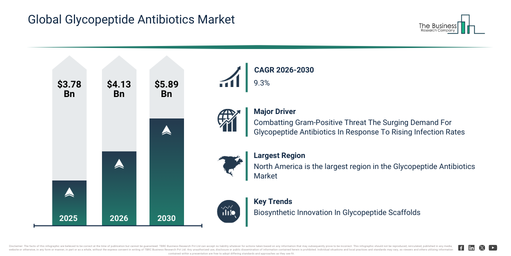
    The glycopeptide antibiotics market has experienced substantial growth in recent years. This market is expected to expand from $3.78 billion in 2025 to $4.13 billion in 2026, achieving a compound annual growth rate (CAGR) of 9.0%. Historically, this growth can be attributed to factors such as an increase in hospital-acquired infections, the widespread application of vancomycin as a standard therapeutic option, the rising prevalence of gram-positive bacterial infections, the limited availability of alternative antibiotics, and the ongoing expansion of inpatient healthcare infrastructure.

    The glycopeptide antibiotics market size is anticipated to experience substantial growth over the next few years, projecting to reach $5.89 billion in 2030 with a compound annual growth rate (CAGR) of 9.3%. This expansion during the forecast period can be attributed to the rise in multidrug-resistant pathogens, the increasing uptake of long-acting glycopeptides, a growing demand for outpatient and home-based antibiotic therapies, ongoing research and development in next-generation glycopeptides, and increasing global healthcare expenditure. Prominent trends for the forecast period include an escalating reliance on glycopeptides for resistant infections, an expansion of the lipoglycopeptide antibiotics portfolio, increased hospital utilization of intravenous glycopeptides, an enhanced focus on optimized dosing and therapeutic monitoring, and broader adoption in severe gram-positive infections.

    Get A Free Sample Report With In-Depth Market Insights:

    https://thebusinessresearchcompany.com/sample_request?id=83826269&type=smp&name=Glycopeptide%20Antibiotics%20Market%20Report%202026&utm_source=Blogs&utm_medium=Paid&utm_campaign=Oct_PR

    Glycopeptide Antibiotics Market Growth Catalysts And Demand Drivers

    The increasing incidence of gram-positive infections is projected to drive the expansion of the glycopeptide antibiotic market in the upcoming years. Gram-positive infections are caused by specific gram-positive bacteria such as *Staphylococcus aureus*, *Streptococcus pneumoniae*, and *Streptococcus pyogenes*. Glycopeptide antibiotics effectively combat many gram-positive bacteria by targeting their cell wall formation through a unique mechanism. As an illustration, in June 2023, the “Group A Streptococcal Infections: Report on Seasonal Activity in England 2022–2023” from the UK Health Security Agency, a UK-based government body focused on public health and infectious-disease protection, indicated a sharp increase in invasive Group A Streptococcus (iGAS) activity, with 509 laboratory-confirmed iGAS notifications recorded by week 46 of 2023, including a weekly high of 73 cases. This surge highlights a growing burden from infectious diseases, thereby escalating the demand for effective antimicrobial therapies throughout the healthcare system. Thus, the rising prevalence of gram-positive infections is a significant driver for the glycopeptide antibiotic market.

    Glycopeptide Antibiotics Market Breakdown By Product Type And Application

    The glycopeptide antibiotics market covered in this report is segmented –

    1) By Drug: Vancomycin, Dalbavancin, Oritavancin, Other Drugs

    2) By Route of Administration: Oral, Parenteral, Other Routes

    3) By Indication: Skin And Structure Infection, Meningitis, Clostridioides Difficile Infection, Enterocolitis, Other Indications

    4) By End-User: Hospitals, Specialty Clinics, Homecare, Other End-Users

    Subsegments:

    1) By Vancomycin: Vancomycin Injection, Vancomycin Oral Solution, Vancomycin Capsules, Vancomycin Powder for Solution

    2) By Dalbavancin: Dalbavancin IV (Intravenous) Formulation, Dalbavancin Powder for Injection

    3) By Oritavancin: Oritavancin IV (Intravenous) Formulation, Oritavancin Powder for Injection

    4) By Other Drugs: Teicoplanin, Glycopeptide and Lipoglycopeptide Antibiotics

    Glycopeptide Antibiotics Market Trends Shaping Long-Term Demand

    Leading companies in the glycopeptide antibiotics market are concentrating on developing innovative products, such as novel glycopeptide scaffolds, to achieve a competitive edge. These novel glycopeptide scaffolds represent structurally distinct antibiotic backbones, derived through advanced biosynthetic methods or natural-product mining techniques. For instance, in May 2025, a Chinese-European research consortium, a China-based cross-continental expertise, unveiled Saarvienin A, a newly discovered glycopeptide featuring a halogenated peptide core, an unusual ureido linkage, and five distinct sugar or aminosugar units. Saarvienin A does not bind the traditional cell-wall target of other glycopeptides, indicating a potentially novel mechanism, and exhibits potent in vitro activity against resistant Gram-positive pathogens such as MRSA and vancomycin-resistant Enterococcus. While this innovation marks a significant step forward in addressing antibiotic resistance, it faces challenges including clinical translation, optimization for safety, and the scale-up of production.

    Glycopeptide Antibiotics Market Company Landscape And Competitive Strategy

    Major companies operating in the glycopeptide antibiotics market are ANI Pharmaceuticals Inc., Fresenius SE & Co. KGaA, Pfizer Inc., Novartis AG, Hikma Pharmaceuticals Plc., Aurobindo Pharma Limited, Abbvie Inc., Cumberland Pharmaceuticals Inc., Janssen Global, Bristol-Myers Squibb Company, Shenwei Pharmaceutical Hainan Co. Ltd., Zhejiang Hisun Pharmaceutical Co. Ltd., Alvogen, Bayer AG, Merck & Co. Inc., Teva Pharmaceutical Industries Ltd., Sanofi SA, GlaxoSmithKline plc, Johnson & Johnson, AstraZeneca, Boehringer Ingelheim GmbH, Cipla Inc.

    View The Full Glycopeptide Antibiotics Market Report:

    https://thebusinessresearchcompany.com/report/glycopeptide-antibiotics-global-market-report?utm_source=Blogs&utm_medium=Paid&utm_campaign=Oct_PR

    Glycopeptide Antibiotics Market Geographic Landscape: Which Region Leads Industry Growth?

    North America was the largest region in the glycopeptide antibiotics market in 2025. The regions covered in the glycopeptide antibiotics market report are Asia-Pacific, South East Asia, Western Europe, Eastern Europe, North America, South America, Middle East, Africa.

    Reach Out To Our Team:

    The Business Research Company: https://www.thebusinessresearchcompany.com/

    Americas: +1 310-496-7795

    Asia: +44 7882 955267 & +91 8897263534

    Europe: +44 7882 955267

    Email us at: marketing@tbrc.info

    Follow us on:

    LinkedIn: https://in.linkedin.com/company/the-business-research-company

    YouTube: https://www.youtube.com/channel/UC24_fI0rV8cR5DxlCpgmyFQ

    Global Market Model: https://www.thebusinessresearchcompany.com/global-market-model
  • GLP-1 Receptor Agonist Market Trends Supporting 5.4% CAGR Growth Through 2030

    GLP-1 Receptor Agonist Market Trends Supporting 5.4% CAGR Growth Through 2030

    Built to provide research that’s more actionable and strategically valuable, The Business Research Company’s 2026 market reports include market attractiveness analysis, total addressable market sizing, company benchmarking matrices, interactive Excel dashboards, broader supply chain intelligence, emerging startup tracking, and in-depth product insights.

    GLP-1 Receptor Agonist Market Set To Climb From $14.83 Billion In 2026 To $18.32 Billion By 2030

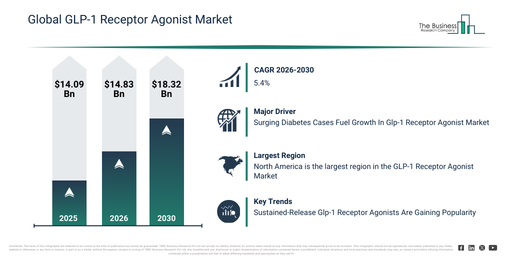
    The glp-1 receptor agonist market has experienced strong growth in recent years. It is forecast to grow from $14.09 billion in 2025 to $14.83 billion in 2026, at a compound annual growth rate (CAGR) of 5.3%. This historic growth is attributable to the increasing prevalence of type 2 diabetes, greater awareness of glycemic control therapies, robust clinical efficacy compared to traditional antidiabetics, physician preference for incretin-based therapies, and favorable reimbursement in developed markets.

    The glp-1 receptor agonist market is projected to experience substantial expansion in the coming years, with its size anticipated to reach $18.32 billion in 2030, demonstrating a compound annual growth rate (CAGR) of 5.4%. This growth during the forecast period can be attributed to factors such as the increasing global obesity population, broader approvals for cardiovascular risk reduction, advancements in oral and combination treatments, deeper market penetration in developing regions, and a growing patient preference for the benefits of weight loss. Furthermore, key trends expected during this period include the application of glp-1 therapies extending beyond diabetes, a heightened demand for long-acting and once-weekly dosage forms, the development of oral glp-1 receptor agonists, an intensified focus on managing weight, and the formation of strategic alliances and licensing deals.

    Get A Free Sample Report With In-Depth Market Insights:

    https://thebusinessresearchcompany.com/sample_request?id=9631&type=smp&name=GLP-1%20Receptor%20Agonist%20Market%20Report%202026&utm_source=Blogs&utm_medium=Paid&utm_campaign=Oct_PR

    GLP-1 Receptor Agonist Market Opportunity Drivers: What’s Unlocking New Revenue Potential?

    The increasing occurrence of diabetes is anticipated to propel the GLP-1 receptor agonist market moving forward. This chronic condition arises when the pancreas either fails to produce enough insulin or when the body struggles to use the insulin it produces effectively. Diabetes mellitus is a metabolic disorder characterized by elevated blood sugar. GLP-1 receptor agonists are utilized in diabetes management to encourage the body’s insulin production, thereby assisting in the reduction of blood sugar levels, which is why the rising prevalence of diabetes is set to drive market expansion. For instance, in March 2024, the Office for Health Improvement and Disparities, a UK-based government department, reported that between March 2022 and March 2023, the percentage of individuals with type 1 diabetes receiving all eight recommended care processes increased by 22%. For type 2 diabetes, this percentage grew by 21%, while the proportion achieving target HbA1c levels climbed to 37.9%. These developments underscore how the rising prevalence of diabetes is driving the GLP-1 receptor agonist market.

    GLP-1 Receptor Agonist Market Segment Analysis And Revenue Potential

    The glp-1 receptor agonist market covered in this report is segmented –

    1) By Drug Class: Exenatide, Liraglutide, Dulaglutide, Lixisenatide, Other Drugs

    2) By Route Of Administration: Parenteral, Oral

    3) By End Users: Hospitals, Surgical Clinics, Other Users

    GLP-1 Receptor Agonist Market Innovation Trends Shaping Future Development

    Leading companies in the GLP-1 receptor agonist market are prioritizing the development of sustained-release GLP-1 receptor agonists to enhance their market competitiveness. These medications, known as sustained-release GLP-1RAs, are designed to gradually introduce the agonist into the bloodstream, resulting in prolonged effects and fewer required injections compared to conventional GLP-1RAs. For instance, in April 2023, the Japan-based pharmaceuticals firm, Mitsubishi Tanabe Pharma Corporation, introduced Mounjaro 2.5 mg or 5 mg Ateos. This product stands as the world’s inaugural sustained-release GIP/GLP-1 receptor agonist, targeting both GLP-1 and GIP receptors for type 2 diabetes management. While the GLP-1 receptor helps regulate blood sugar, the GIP receptor is crucial for stimulating insulin release and curbing appetite.

    GLP-1 Receptor Agonist Market Key Players Shaping Industry Direction

    Major companies operating in the glp-1 receptor agonist market are Novo Nordisk A/S, Sanofi SA, Eli Lilly and Company, AstraZeneca Inc., Boehringer Ingelheim International GmbH, Hanmi Pharm Co. Ltd., Pfizer Inc., Amgen Inc., Innovent Biologics Inc., Jiangsu Hengrui Medicine Co., Sun Pharmaceuticals Industries Ltd., PegBio Co. Ltd., Zealand Pharma A/S, Bristol-Myers Squibb Company, Chongqing Lummy Pharmaceutical Co. Ltd., Daiichi Sankyo Company Limited, Dong-A ST Co. Ltd., Eisai Co. Ltd., HanAll Biopharma Co. Ltd., Ipsen SA, Johnson & Johnson, Merck & Co. Inc., Novartis AG.

    View The Full GLP-1 Receptor Agonist Market Report:

    https://thebusinessresearchcompany.com/report/GLP-1-receptor-agonist-global-market-report?utm_source=Blogs&utm_medium=Paid&utm_campaign=Oct_PR

    GLP-1 Receptor Agonist Market Largest Region: Which Geography Holds The Biggest Share?

    North America was the largest region in the GLP-1 receptor agonist market in 2025. Asia-Pacific is expected to be the fastest-growing region in the GLP-1 receptor agonist market report during the forecast period. The regions covered in the glp-1 receptor agonist market report are Asia-Pacific, South East Asia, Western Europe, Eastern Europe, North America, South America, Middle East, Africa.

    Reach Out To Our Team:

    The Business Research Company: https://www.thebusinessresearchcompany.com/

    Americas: +1 310-496-7795

    Asia: +44 7882 955267 & +91 8897263534

    Europe: +44 7882 955267

    Email us at: marketing@tbrc.info

    Follow us on:

    LinkedIn: https://in.linkedin.com/company/the-business-research-company

    YouTube: https://www.youtube.com/channel/UC24_fI0rV8cR5DxlCpgmyFQ

    Global Market Model: https://www.thebusinessresearchcompany.com/global-market-model
  • Genomic Cancer Panel And Profiling Market Forecast Highlights A $15.44 Billion Opportunity For Industry Participants

    Genomic Cancer Panel And Profiling Market Forecast Highlights A $15.44 Billion Opportunity For Industry Participants

    Backed by market attractiveness analysis, total addressable market sizing, company benchmarking matrices, interactive Excel dashboards, wider supply chain intelligence, emerging startup coverage, and detailed product-level insights, The Business Research Company’s 2026 market reports are designed to offer research that is more actionable and strategically valuable than ever.

    Genomic Cancer Panel And Profiling Market Forecast: Value Set To Climb From $11.17 Billion To $15.44 Billion

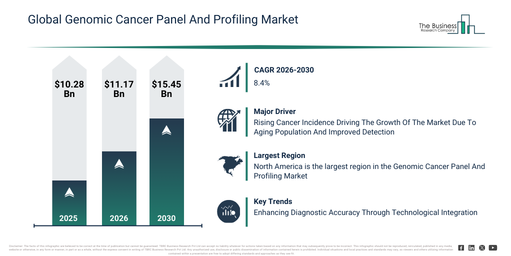
    The genomic cancer panel and profiling market size has demonstrated robust growth in recent years. It will grow from $10.28 billion in 2025 to $11.17 billion in 2026 at a compound annual growth rate (CAGR) of 8.7%. This historical expansion is primarily attributable to factors such as an increase in cancer prevalence, progress in sequencing technologies, the broadening of oncology diagnostics, enhanced funding for genomic research, and the escalating adoption of precision medicine.

    The genomic cancer panel and profiling market is anticipated to experience substantial growth over the coming years. Projections indicate it will reach $15.45 billion by 2030, exhibiting a compound annual growth rate (CAGR) of 8.4%. This expansion during the forecast period is driven by factors such as the increasing use of companion diagnostics, the rising adoption of liquid biopsy, the incorporation of AI into genomic analysis, the proliferation of oncology screening programs, and the creation of more affordable sequencing platforms. Key developments expected in this period include the wider acceptance of multi-gene cancer panels, the growing application of next-generation sequencing, the broadening of liquid biopsy testing, the escalating need for personalized oncology solutions, and the seamless integration of genomic data into clinical decision-making processes.

    Get A Free Sample Report With In-Depth Market Insights:

    https://thebusinessresearchcompany.com/sample_request?id=41197447&type=smp&name=Genomic%20Cancer%20Panel%20And%20Profiling%20Market%20Report%202026&utm_source=Blogs&utm_medium=Paid&utm_campaign=Oct_PR

    Genomic Cancer Panel And Profiling Market Growth Momentum: What Factors Are Shaping Demand?

    The genomic cancer panel and profiling market is projected to expand in the future due to an increasing incidence of cancer. Cancer is a disease characterized by the uncontrolled proliferation and dissemination of abnormal cells throughout the body. The rise in cancer cases is attributable to an aging global population, where a longer life expectancy correlates with an elevated probability of developing cancer. Genomic cancer panels and profiling are instrumental in oncology care by identifying genetic mutations and biomarkers, facilitating personalized treatment strategies, and enhancing early detection and monitoring. For instance, in January 2024, according to the American Cancer Society, a U.S.-based nonprofit organization, around 20 million new cancer cases were reported globally in 2022, resulting in 9.7 million deaths; primarily driven by population growth, the global cancer burden is forecasted to increase to 35 million cases by 2050. Therefore, the growing incidence of cancer will stimulate the growth of the genomic cancer panel and profiling market.

    Genomic Cancer Panel And Profiling Market Segmentation And Category Overview

    The genomic cancer panel and profiling market covered in this report is segmented –

    1) By Tissue Testing: Solid Tissue Testing, Liquid Tissue Testing

    2) By Technology: Next-Generation Sequencing (NGS), Polymerase Chain Reaction (PCR), Fluorescence In-Situ Hybridization (FISH), Immunohistochemistry (IHC), Other Technologies

    3) By Cancer Panel Type: Single-Gene Panel, Multi-Gene Panel

    4) By Application: Clinical, Research

    5) By End User: Hospitals, Research And Academic Institutes, Clinical And Diagnostic Laboratories, Other End Users

    Subsegments:

    1) By Solid Tissue Testing: Biopsy Samples, Surgical Resection Samples, Formalin-Fixed Paraffin-Embedded (FFPE) Tissues, Fresh Frozen Tissues

    2) By Liquid Tissue Testing: Blood, Urine, Saliva, Cerebrospinal Fluid (CSF), Other Bodily Fluids

    Genomic Cancer Panel And Profiling Market Trends Redefining Industry Growth

    Leading firms within the genomic cancer panel and profiling market are prioritizing innovations such as next-generation sequencers to enhance the accuracy, speed, and comprehensiveness of cancer diagnostics, thereby facilitating more personalized treatment decisions. Next-generation sequencers represent sophisticated DNA sequencing methods that allow for swift and extensive examination of genetic material for pinpointing mutations, variations, and other genomic features. For instance, in April 2025, QIAGEN N.V., a Netherlands-based biotechnology company, introduced QIAseq panels tailored for use with next-generation sequencers, which facilitate thorough genomic profiling through the analysis of over 700 genes. These panels serve both research and clinical applications, with the objective of enhancing cancer diagnostics and treatment strategies.

    Genomic Cancer Panel And Profiling Market Competitive Analysis Of Leading Industry Participants

    Major companies operating in the genomic cancer panel and profiling market are Hoffmann-La Roche Ltd, Thermo Fisher Scientific Inc., Agilent Technologies Inc., Hologic Inc., Illumina Inc., Sysmex Corporation, QIAGEN N.V., Exact Sciences Corporation, ARUP Laboratories, Tempus Labs, Genscript Biotech Corporation, NeoGenomics Inc., Foundation Medicine, Invitae Corporation, Guardant Health Inc., Caris Life Sciences, Fulgent Genetics, NanoString Technologies Inc., Genecast Biotechnology Co. Ltd, Burning Rock DX, HTG Molecular Diagnostics Inc., Predictive Oncology Inc.

    View The Full Genomic Cancer Panel And Profiling Market Report:

    https://thebusinessresearchcompany.com/report/genomic-cancer-panel-and-profiling-global-market-report?utm_source=Blogs&utm_medium=Paid&utm_campaign=Oct_PR

    Genomic Cancer Panel And Profiling Market Regional Analysis: Which Geography Leads On Revenue?

    North America was the largest region in the genomic cancer panel and profiling market in 2025. The regions covered in the genomic cancer panel and profiling market report are Asia-Pacific, South East Asia, Western Europe, Eastern Europe, North America, South America, Middle East, Africa.

    Reach Out To Our Team:

    The Business Research Company: https://www.thebusinessresearchcompany.com/

    Americas: +1 310-496-7795

    Asia: +44 7882 955267 & +91 8897263534

    Europe: +44 7882 955267

    Email us at: marketing@tbrc.info

    Follow us on:

    LinkedIn: https://in.linkedin.com/company/the-business-research-company

    YouTube: https://www.youtube.com/channel/UC24_fI0rV8cR5DxlCpgmyFQ

    Global Market Model: https://www.thebusinessresearchcompany.com/global-market-model
  • Genomic Biomarker Market Analysis: How The Industry Is Evolving Toward A $22.22 Billion Future

    Genomic Biomarker Market Analysis: How The Industry Is Evolving Toward A $22.22 Billion Future

    Featuring market attractiveness scoring, total addressable market sizing, company benchmarking matrices, interactive Excel dashboards, deeper supply chain intelligence, emerging startup tracking, and granular product-level insights, The Business Research Company’s 2026 market reports are built to deliver research that is both more actionable and more strategically valuable.

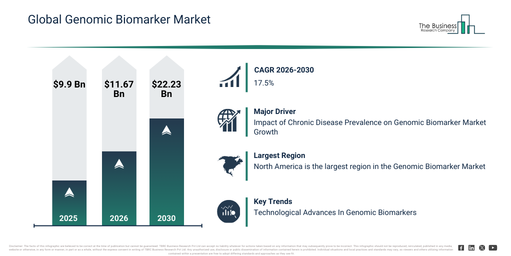
    Genomic Biomarker Market Revenue Growth On Track For A 17.5% CAGR Through 2030

    The genomic biomarker market has experienced substantial growth in recent years. This market is projected to expand from $9.9 billion in 2025 to reach $11.67 billion by 2026, demonstrating a compound annual growth rate (CAGR) of 17.8%. Factors contributing to its historical growth include greater investment in genomic investigations, wider scope of biomarker studies concentrating on oncology, enhanced accessibility of next-generation sequencing methods, increasing partnerships between diagnostic firms and pharmaceutical enterprises, and the pioneering embrace of tailored medicine strategies.

    The genomic biomarker market is set to undergo significant expansion in the coming years. It is projected to achieve a size of $22.23 billion in 2030, exhibiting a compound annual growth rate (CAGR) of 17.5%. The projected increase in this period can be attributed to factors like the escalating demand for precision medicine therapies, the expanding utilization of biomarkers in drug development, the wider adoption of companion diagnostics, an increased emphasis on detecting diseases early, and strengthened regulatory backing for biomarker-based approvals. Key trends anticipated during the forecast period include the rising acceptance of predictive genomic biomarkers, an increase in pharmacogenomic testing, the growing integration of genomic data into clinical decision-making, the broadening scope of biomarker-based oncology diagnostics, and a sharpened focus on clinical validation standards.

    Get A Free Sample Report With In-Depth Market Insights:

    https://thebusinessresearchcompany.com/sample_request?id=91788221&type=smp&name=Genomic%20Biomarker%20Market%20Report%202026&utm_source=Blogs&utm_medium=Paid&utm_campaign=Oct_PR

    Genomic Biomarker Market Expansion Drivers: What’s Shaping Future Growth?

    The expanding occurrence of chronic illnesses is anticipated to boost the development of the genomic biomarker market in the future. Chronic ailments represent enduring health states that persist for extended periods and frequently advance gradually. The growing frequency of chronic diseases stems from an aging global populace and escalating instances of lifestyle-associated issues like obesity and diabetes. Through the identification of genetic predispositions and the customization of interventions, genomic biomarkers facilitate early diagnosis and individualized preventive approaches for chronic illnesses. Such a forward-thinking method aids in lowering the incidence by focusing on susceptible individuals prior to the emergence of the disease. As an illustration, in September 2023, the World Health Organization (WHO), a Switzerland-based intergovernmental body, reported that 41 million global deaths occur annually, constituting 74% of all deaths linked to chronic diseases. These figures encompass 17.9 million fatalities from cardiovascular diseases, 9.3 million from cancer, 4.1 million from chronic respiratory diseases, and 2.0 million from diabetes. Consequently, the rising incidence of chronic diseases fuels the expansion of genomic biomarkers.

    Genomic Biomarker Market Segment Outlook: Which Categories Are Growing Fastest?

    The genomic biomarker market covered in this report is segmented –

    1) By Type: Predictive Biomarkers, Prognostic Biomarkers

    2) By Disease Indication: Oncology, Cardiovascular Diseases, Neurological Diseases, Renal Disorders, Other Disease Indications

    3) By Validation: Analytical Validation, Clinical Validation, Clinical Utility

    4) By End-User: Hospitals, Diagnostic Centers, Research Laboratories, Other End Users

    Subsegments:

    1) By Predictive Biomarkers: Genetic Biomarkers For Disease Susceptibility, Pharmacogenomic Biomarkers For Drug Response, Early Detection Biomarkers For Disease Prediction, Biomarkers For Treatment Response Prediction

    2) By Prognostic Biomarkers: Biomarkers For Disease Progression, Biomarkers For Outcome Prediction, Survival And Recurrence Biomarkers, Biomarkers For Treatment Efficacy And Prognosis

    Genomic Biomarker Market Strategic Trends: What Defines The Next Growth Phase?

    Major companies operating in the genomic biomarker market are concentrating on creating sophisticated products, such as advanced liquid biopsy assays, to enable thorough genomic profiling of solid tumors. A liquid biopsy assay serves as a diagnostic test that examines genetic material, typically circulating tumor DNA (ctDNA), obtained from a blood sample to identify and track cancer. Pinpointing genomic biomarkers can yield information about specific mutations, gene expression profiles, or other genetic modifications associated with cancer. For example, in November 2023, Illumina Inc., a US-based biotechnology company, introduced an advanced liquid biopsy assay, the TruSight Oncology 500 ctDNA v2 (TSO 500 ctDNA v2), designed for comprehensive genomic profiling of solid tumors. This assay offers improved analytical sensitivity by detecting low-frequency variants with just 20 ng of cell-free DNA, a reduction from the prior 30 ng. It provides results in under four days, significantly expediting genomic profiling compared to conventional techniques. The optimized workflow and forthcoming automation are expected to simplify lab integration and enhance efficiency.

    Genomic Biomarker Market Leading Companies And Competitive Benchmarking

    Major companies operating in the genomic biomarker market are Pfizer Inc., Roche Diagnostics, Thermo Fisher Scientific Inc., Merck KGaA, Eurofins Scientific SE, Agilent Technologies Inc., Illumina Inc., PerkinElmer Inc., Beckman Coulter Inc., Bio-Rad Laboratories Inc., Foundation Medicine Inc., QIAGEN N.V., Almac Group Ltd., Myriad Genetics Inc., Invitae Inc., Guardant Health Inc., Novogene Inc., Twist Bioscience Corp., NanoString Technologies Inc., Quanterix Corp., Personalis Inc., GENEWIZ Inc., Agena Bioscience Inc., Creative Diagnostics Ltd., OncoDNA SA, Genome Life Sciences Ltd., Epigenomics AG.

    View The Full Genomic Biomarker Market Report:

    https://thebusinessresearchcompany.com/report/genomic-biomarker-global-market-report?utm_source=Blogs&utm_medium=Paid&utm_campaign=Oct_PR

    Genomic Biomarker Market Geographic Spread And Regional Opportunities

    North America was the largest region in the genomic biomarker market in 2025. Asia-Pacific is expected to be the fastest-growing region in the forecast period. The regions covered in the genomic biomarker market report are Asia-Pacific, South East Asia, Western Europe, Eastern Europe, North America, South America, Middle East, Africa.

    Reach Out To Our Team:

    The Business Research Company: https://www.thebusinessresearchcompany.com/

    Americas: +1 310-496-7795

    Asia: +44 7882 955267 & +91 8897263534

    Europe: +44 7882 955267

    Email us at: marketing@tbrc.info

    Follow us on:

    LinkedIn: https://in.linkedin.com/company/the-business-research-company

    YouTube: https://www.youtube.com/channel/UC24_fI0rV8cR5DxlCpgmyFQ

    Global Market Model: https://www.thebusinessresearchcompany.com/global-market-model
  • Genome Sequencing Market Outlook Through 2030: Understanding The Growth Opportunity

    Genome Sequencing Market Outlook Through 2030: Understanding The Growth Opportunity

    Built to provide research that’s more actionable and strategically valuable, The Business Research Company’s 2026 market reports include market attractiveness analysis, total addressable market sizing, company benchmarking matrices, interactive Excel dashboards, broader supply chain intelligence, emerging startup tracking, and in-depth product insights.

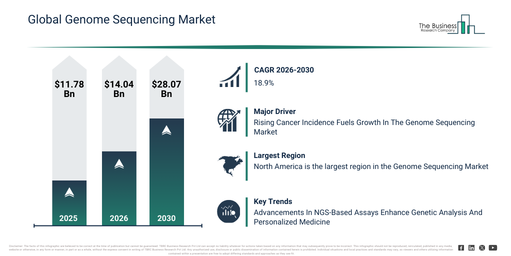
    Genome Sequencing Market Value Growth And Long-Term Outlook

    The genome sequencing market has recently undergone rapid expansion. Its value is expected to escalate from $11.78 billion in 2025 to $14.04 billion in 2026, showing a compound annual growth rate (CAGR) of 19.2%. This growth in the preceding period can be attributed to various elements, including the restricted availability of advanced sequencing systems, continued reliance on conventional Sanger sequencing, burgeoning genomics research initiatives, increased government investment in genome projects, and a heightened understanding of personalized medicine.

    The genome sequencing market is poised for significant expansion in the coming years, projected to reach $28.07 billion in 2030, exhibiting a compound annual growth rate (CAGR) of 18.9%. This anticipated growth during the forecast period is driven by several factors, including advancements in next-generation sequencing systems, the broadening of bioinformatics platforms, greater integration of precision medicine programs, increased partnerships between biotech and pharmaceutical firms, and the proliferation of solutions for genomic data storage and management. Key trends expected within this period encompass the growing acceptance of next-generation sequencing (NGS) technologies, an escalating need for precision medicine and tailored therapies, the broadening scope of bioinformatics and data analysis offerings, an uptick in environmental and microbiome genomics applications, and the incorporation of specialized genome sequencing solutions into research.

    Get A Free Sample Report With In-Depth Market Insights:

    https://thebusinessresearchcompany.com/sample_request?id=22664680&type=smp&name=Genome%20Sequencing%20Market%20Report%202026&utm_source=Blogs&utm_medium=Paid&utm_campaign=Oct_PR

    Genome Sequencing Market Development Factors: What’s Supporting Demand?

    The increasing incidence of cancer is poised to boost the growth of the genome sequencing market moving forward. Cancer, a group of conditions defined by the unrestrained proliferation and dissemination of abnormal cells which can be fatal if not controlled, is becoming more prevalent. This rise in cancer cases stems from several factors, including an aging population, lifestyle choices, environmental exposures, and genetic predispositions. Genome sequencing is instrumental in pinpointing genetic mutations and susceptibilities to cancer, thus enabling prompt detection and customized treatment plans. It further identifies inherited cancer risks and assists in tracking the development of cancerous cells. As an illustration, in February 2024, the World Health Organization, a Switzerland-based intergovernmental body, forecasted that new cancer cases are expected to surpass 35 million by 2050, representing a 77% increase compared to 20 million cases in 2022. Therefore, the escalating occurrence of cancer is a primary catalyst for the expansion of the genome sequencing market.

    Genome Sequencing Market Segment Landscape: Which Areas Lead Development?

    The genome sequencing market covered in this report is segmented –

    1) By Product: Consumables, Systems And Software, Services

    2) By Technology: Polymerase Chain Reaction (PCR), Sequencing, Microarray, Nucleic Acid Extraction, Purification, Other Technologies

    3) By Applications: Diagnostics, Drug Discovery, Precision Medicine, Environmental Genomics, Research, Other Applications

    4) By End-User: Hospitals And Clinics, Biotechnology And Pharmaceutical Companies, Contract Research Organizations (CROs), Government, Research Centers, Academic And Government Institutes, Other End-Users

    Subsegments:

    1) By Consumables: Reagents And Kits, Sequencing Chips And Plates, Sample Preparation Products, Library Preparation Kits, DNA And RNA Extraction Kits

    2) By Systems And Software: Next-Generation Sequencing (NGS) Systems, Sanger Sequencing Systems, Bioinformatics Software And Analysis Tools, Data Management And Storage Solutions, Laboratory Information Management Systems (LIMS)

    3) By Services: Sequencing Services, Bioinformatics Analysis Services, Consultation And Support Services, Custom Genome Sequencing Solutions, Sample Collection And Preparation Services.

    Genome Sequencing Market Transformation Trends: What Innovations Are Driving Change?

    Leading companies in the genome sequencing market are concentrating on developing sophisticated solutions, particularly next-generation sequencing (NGS)-based assays, to improve the precision of genetic analysis and support personalized medicine approaches. Next-generation sequencing (NGS)-based assays refer to advanced genomic technologies that allow for swift, high-throughput sequencing of DNA or RNA to examine genetic material. NGS facilitates the simultaneous sequencing of millions of DNA or RNA fragments, generating substantial amounts of data quickly and cost-effectively. As an illustration, in April 2023, Centogene N.V., a Germany-based company specializing in genetic diagnostics for rare diseases, unveiled CentoGenome, an enhanced NGS-based assay. This assay provides continuous diagnostic assistance through proactive diagnosis confirmation and reclassification programs at no additional charge, ensuring consistent patient care and accurate disease management. Utilizing a PCR-free method, CentoGenome reduces bias and boosts sequencing quality, resulting in improved coverage of challenging genomic regions and better insights into coding, regulatory, and intronic areas. The platform incorporates an automated bioinformatics pipeline and medical expert analysis, drawing upon CENTOGENE’s vast bio databank, which comprises data from approximately 700,000 patients across more than 120 countries. This extensive dataset significantly enhances the detection of disease-causing variants, including those associated with spinal muscular atrophy and Parkinson’s disease.

    Genome Sequencing Market Industry Leaders And Competitive Landscape

    Major companies operating in the genome sequencing market are F. Hoffmann-La Roche Ltd., Thermo Fisher Scientific Inc., Abbott Laboratories, Danaher Corporation, Merck KGaA, Siemens Healthineers, Becton Dickinson and Company, Eurofins Genomics, Agilent Technologies Inc., PerkinElmer, Illumina Inc., bioMérieux, Bio-Rad Laboratories Inc., QIAGEN N.V., 10x Genomics Inc., BGI Group, Oxford Nanopore Technologies plc, Pacific Biosciences of California Inc., GENEWIZ Inc., LI-COR Inc., CENTOGENE N.V., Bioneer Corporation, Strand Life Sciences Pvt Ltd., Nebula Genomics

    View The Full Genome Sequencing Market Report:

    https://thebusinessresearchcompany.com/report/genome-sequencing-global-market-report?utm_source=Blogs&utm_medium=Paid&utm_campaign=Oct_PR

    Genome Sequencing Market Top Region By Revenue And Market Share

    North America was the largest region in the genome sequencing market in 2025. Asia-Pacific is expected to be the fastest-growing region in the forecast period. The regions covered in the genome sequencing market report are Asia-Pacific, South East Asia, Western Europe, Eastern Europe, North America, South America, Middle East, Africa.

    Reach Out To Our Team:

    The Business Research Company: https://www.thebusinessresearchcompany.com/

    Americas: +1 310-496-7795

    Asia: +44 7882 955267 & +91 8897263534

    Europe: +44 7882 955267

    Email us at: marketing@tbrc.info

    Follow us on:

    LinkedIn: https://in.linkedin.com/company/the-business-research-company

    YouTube: https://www.youtube.com/channel/UC24_fI0rV8cR5DxlCpgmyFQ

    Global Market Model: https://www.thebusinessresearchcompany.com/global-market-model
  • Genitourinary Drugs Market Growth Potential: What The Latest Forecast Reveals

    Genitourinary Drugs Market Growth Potential: What The Latest Forecast Reveals

    Backed by market attractiveness analysis, total addressable market sizing, company benchmarking matrices, interactive Excel dashboards, wider supply chain intelligence, emerging startup coverage, and detailed product-level insights, The Business Research Company’s 2026 market reports are designed to offer research that is more actionable and strategically valuable than ever.

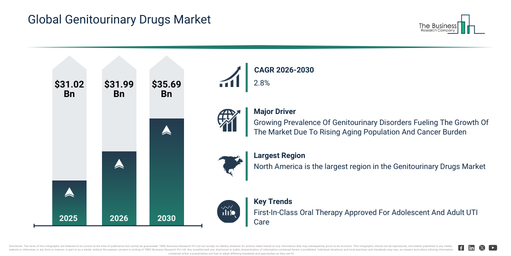
    Genitourinary Drugs Market Poised To Hit $35.69 Billion By 2030 With A 2.8% CAGR

    The genitourinary drugs market size has expanded consistently in recent years. It is forecast to increase from $31.02 billion in 2025 to $31.99 billion in 2026, growing at a compound annual growth rate (CAGR) of 3.1%. The expansion observed in the historical period can be attributed to factors such as the prevalence of urinary tract infections, an aging populace, the incidence of hormonal disorders, the broadening of hospital pharmacies, and the uptake of prescription drugs.

    The genitourinary drugs market is anticipated to experience consistent expansion in the coming years. Its valuation is projected to reach $35.69 billion by 2030, demonstrating a compound annual growth rate (CAGR) of 2.8%. This projected growth during the forecast timeframe is primarily driven by factors such as personalized urology treatments, the rise of digital health platforms, increasing reproductive health awareness, the adoption of minimally invasive therapies, and the expansion of specialty clinics. Key trends anticipated within this period encompass an escalating demand for UTI and BPH treatments, the increasing application of hormonal and fertility therapies, a wider availability of oral and topical drug formulations, an enhanced emphasis on women’s and men’s urological health, and the proliferation of online pharmacy distribution channels.

    Get A Free Sample Report With In-Depth Market Insights:

    https://thebusinessresearchcompany.com/sample_request?id=59312941&type=smp&name=Genitourinary%20Drugs%20Market%20Report%202026&utm_source=Blogs&utm_medium=Paid&utm_campaign=Oct_PR

    Genitourinary Drugs Market Industry Drivers: What’s Behind The Revenue Growth?

    The increasing occurrence of genitourinary disorders is anticipated to boost the expansion of the genitourinary drugs market moving forward. These disorders are medical ailments impacting the genitourinary system, which encompasses both urinary and reproductive organs, covering infections, cancers, and functional or structural problems. The rising incidence of genitourinary disorders stems from the aging population, as age-related changes heighten the risk of urinary and reproductive health conditions. Genitourinary drugs assist in managing these disorders by addressing conditions of the urinary and reproductive systems, offering alleviation from infections, inflammation, and dysfunction. They enhance patient outcomes by facilitating effective, convenient, and tailored treatment, thereby improving overall quality of life. For example, in April 2024, data from the American Cancer Society, a US-based non-profit organization, indicated that around 20 million new cancer cases were identified worldwide in 2022, resulting in 9.7 million deaths, with the number of cancer cases projected to increase to 35 million by 2050. Consequently, the expanding prevalence of genitourinary disorders is propelling the growth of the genitourinary drugs market.

    Genitourinary Drugs Market Segments: Where Is Growth Concentrated?

    The genitourinary drugs market covered in this report is segmented –

    1) By Product: Urologicals, Hormonal Therapy, Gynecological, Anti-Infectives, Other Products

    2) By Route Of Administration: Oral, Parenteral, Topical

    3) By Application: Urinary Tract Infections (UTIs), Benign Prostatic Hyperplasia (BPH), Prostate Cancer, Overactive Bladder, Bladder Cancer, Other Applications

    4) By Distribution Channel: Hospital Pharmacies, Drug Store And Retail Pharmacies, Online Pharmacies

    Subsegments:

    1) By Urologicals: Benign Prostatic Hyperplasia (BPH) Drugs, Urinary Incontinence Drugs, Overactive Bladder (OAB) Drugs, Urolithiasis (Kidney Stone) Drugs, Erectile Dysfunction Drugs

    2) By Hormonal Therapy: Estrogen Therapy, Progestin Therapy, Gonadotropin-Releasing Hormone (GnRH) Agonists/Antagonists, Androgen Replacement Therapy, Selective Estrogen Receptor Modulators (SERMs)

    3) By Gynecological: Contraceptives, Menopausal Hormone Therapy, Fertility Drugs, Drugs for Endometriosis, Drugs for Polycystic Ovary Syndrome (PCOS)

    4) By Anti-Infectives: Urinary Tract Infection (UTI) Drugs, Sexually Transmitted Infection (STI) Drugs, Vaginal Antifungals, Antivirals

    5) By Other Products: Drugs for Chronic Pelvic Pain, Bladder Cancer Therapies, Interstitial Cystitis Drugs, Pelvic Organ Prolapse Treatment Drugs, Adjunctive Therapies

    #Genitourinary Drugs Market Growth Trends: What’s Shaping The Future Outlook?

    Major companies operating in the genitourinary drugs market are concentrating on creating novel products, like oral antibiotics, to boost the convenience of treatment, improve patient compliance, and effectively fight infections. Oral antibiotics are antibacterial medicines taken by mouth to address infections caused by bacteria. For instance, in March 2025, GSK plc, a UK-based pharmaceutical company, received approval from the US Food and Drug Administration (FDA) for Blujepa (gepotidacin) for treating uncomplicated urinary tract infections caused by susceptible bacteria in women and girls aged 12 and older. This medication is a novel, first-in-class oral antibiotic that functions by impeding the replication of bacterial DNA, targeting two critical enzymes, namely DNA gyrase and topoisomerase IV. Unlike traditional antibiotics, it attaches to unique sites to overcome resistance, offering a targeted mechanism with enhanced safety and efficacy.

    Genitourinary Drugs Market Key Participants And Competitive Landscape

    Major companies operating in the genitourinary drugs market are Pfizer Inc., Johnson & Johnson, F. Hoffmann-La Roche AG, Merck & Co. Inc., Bayer AG, Novartis AG, Sanofi S.A., Bristol Myers Squibb, AstraZeneca plc, Abbott Laboratories, GSK plc, Eli Lilly and Company, Amgen Inc., Teva Pharmaceutical Industries Ltd., Astellas Pharma Inc., Ipsen Société Anonyme, Aurobindo Pharma Limited, Dr. Reddy’s Laboratories Limited, Cipla Limited, Hikma Pharmaceuticals Public Limited Company, Endo International Public Limited Company, Takeda Pharmaceutical Company Limited, Zydus Lifesciences Limited, Melinta Therapeutics Inc., Asieris Pharmaceuticals, Sun Pharmaceutical Industries Ltd.

    View The Full Genitourinary Drugs Market Report:

    https://thebusinessresearchcompany.com/report/genitourinary-drugs-global-market-report?utm_source=Blogs&utm_medium=Paid&utm_campaign=Oct_PR

    Genitourinary Drugs Market Regional Analysis And Top Geography

    North America was the largest region in the genitourinary drugs market in 2025. Asia-Pacific is expected to be the fastest-growing region in the forecast period. The regions covered in the genitourinary drugs market report are Asia-Pacific, South East Asia, Western Europe, Eastern Europe, North America, South America, Middle East, Africa.

    Reach Out To Our Team:

    The Business Research Company: https://www.thebusinessresearchcompany.com/

    Americas: +1 310-496-7795

    Asia: +44 7882 955267 & +91 8897263534

    Europe: +44 7882 955267

    Email us at: marketing@tbrc.info

    Follow us on:

    LinkedIn: https://in.linkedin.com/company/the-business-research-company

    YouTube: https://www.youtube.com/channel/UC24_fI0rV8cR5DxlCpgmyFQ

    Global Market Model: https://www.thebusinessresearchcompany.com/global-market-model

  • Genetic Mutation Analysis Market Growth Outlook: Why Analysts Expect Continued Expansion

    Genetic Mutation Analysis Market Growth Outlook: Why Analysts Expect Continued Expansion

    Featuring market attractiveness scoring, total addressable market sizing, company benchmarking matrices, interactive Excel dashboards, deeper supply chain intelligence, emerging startup tracking, and granular product-level insights, The Business Research Company’s 2026 market reports are built to deliver research that is both more actionable and more strategically valuable.

    Genetic Mutation Analysis Market Size And Revenue Outlook Through 2030

    The genetic mutation analysis market has seen substantial growth in its size over recent years. Its value is forecast to rise from $6.65 billion in 2025 to $7.43 billion in 2026, achieving a compound annual growth rate (CAGR) of 11.7%. The expansion observed in prior periods can be linked to several factors, including limited availability of advanced sequencing technologies, increasing public awareness of genetic disorders, intensified research in oncology and inherited diseases, the widespread adoption of PCR and microarray technologies, and the early development of bioinformatics tools.

    The genetic mutation analysis market is projected to expand quickly over the coming years, anticipated to reach $11.47 billion by 2030, exhibiting a compound annual growth rate (CAGR) of 11.5%. This expansion during the projection period stems from progress in CRISPR and NGS platforms, a broadening of pharmacogenomics research, increased funding for genetic testing infrastructure, the incorporation of AI-powered data interpretation tools, and growing partnerships between research institutions and biotechnology firms. Key trends observed for this period encompass a greater uptake of next-generation sequencing and CRISPR technologies, a surge in the need for personalized medicine and targeted treatments, the broadening of genetic testing provisions within clinical diagnostics, the amalgamation of bioinformatics and data analysis platforms, and increased investigation into rare genetic disorders and pharmacogenomics.

    Get A Free Sample Report With In-Depth Market Insights:

    https://thebusinessresearchcompany.com/sample_request?id=20369708&type=smp&name=Genetic%20Mutation%20Analysis%20Market%20Report%202026&utm_source=Blogs&utm_medium=Paid&utm_campaign=Oct_PR

    Genetic Mutation Analysis Market Growth Factors: What’s Supporting Expansion?

    The increasing incidence of genetic conditions is anticipated to drive the expansion of the genetic mutation analysis market in the coming years. These disorders are illnesses resulting from anomalies or changes in an individual’s DNA, which can be passed down or emerge spontaneously. A contributing factor to the heightened occurrence of genetic disorders is advanced parental age, as it elevates the risk of genetic mutations during reproduction, subsequently increasing the probability of these conditions in children. Genetic mutation analysis identifies alterations in genes that may cause or indicate genetic disorders, facilitating early detection, precise treatment strategies, and well-informed choices regarding reproduction or lifestyle. For example, in October 2024, data from the Cystic Fibrosis Trust, a UK-based charity dedicated to supporting people with cystic fibrosis, showed that 11,148 cystic fibrosis patients were registered in 2022, and this figure rose to 11,318 in 2023, representing a 1.5% increase in patient registrations year-over-year. Consequently, the growing prevalence of genetic disorders is fueling the expansion of the genetic mutation analysis market.

    Genetic Mutation Analysis Market Segment Analysis: What Are The Core Market Categories?

    The genetic mutation analysis market covered in this report is segmented –

    1) By Component: Hardware, Software, Services

    2) By Technology: Next-Generation Sequencing (NGS), Polymerase Chain Reaction (PCR), Microarray, Sanger Sequencing, Clustered Regularly Interspaced Short Palindromic Repeats (CRISPR)

    3) By Application: Oncology, Cardiovascular Diseases, Neurological Disorders, Infectious Diseases, Genetic Disorders, Pharmacogenomics

    4) By End User: Hospitals And Clinics, Research Institutes, Pharmaceutical And Biotechnology Companies, Diagnostic Laboratories

    Subsegments:

    1) By Hardware: Sequencers, Polymerase Chain Reaction (PCR) Machines, Microarray Instruments, Electrophoresis Systems, Imaging Systems

    2) By Software: Data Analysis Software, Sequence Alignment Tools, Variant Calling Software, Genome Annotation Software, Visualization Tools

    3) By Services: Genetic Testing Services, Data Interpretation Services, Bioinformatics Services, Sample Preparation Services, Clinical Reporting Services

    Genetic Mutation Analysis Market Industry Trends: What’s Reshaping Demand?

    Companies operating in the genetic mutation analysis market are concentrating on creating advanced solutions, such as tissue-based next-generation sequencing (NGS) tests, to improve accuracy in detecting actionable genetic changes and inform tailored treatment approaches. Tissue-based next-generation sequencing (NGS) tests serve as sophisticated diagnostic instruments that examine DNA or RNA from tissue samples to find genetic mutations, alterations, or biomarkers linked to conditions like cancer. As an illustration, Guardant Health Inc., a US-based oncology firm, introduced the Guardant360 TissueNext test in June 2024, which expanded the detection of genes in a tumor tissue sample to 498. These specific genes, or cancer biomarkers, assist oncologists in pinpointing the most effective targeted therapies or treatment strategies for individuals with advanced cancer. Furthermore, Guardant has enhanced the test’s operational processes for quicker results. The new Guardant360 TissueNext test will be eligible for coverage for Medicare fee-for-service patients suffering from advanced solid tumor cancers as a distinct offering, according to coverage provided by Palmetto GBA, a Medicare administrative contractor for the Molecular Diagnostics Services program (MolDX), under the existing local coverage determination.

    Genetic Mutation Analysis Market Top Companies Driving Competitive Growth

    Major companies operating in the genetic mutation analysis market are F. Hoffmann-La Roche Ltd., Thermo Fisher Scientific Inc., Agilent Technologies Inc., Illumina Inc., Revvity Inc., Bio-Rad Laboratories Inc., QIAGEN N.V., Natera Inc., Myriad Genetics Inc., GenScript Biotech Corporation, Takara Bio Inc., 10x Genomics Inc., Oxford Nanopore Technologies Plc, Genomic Health Inc., Color Genomics Inc., Blueprint Medicines Corporation, GENEWIZ Inc., Pacific Biosciences of California Inc., Standard BioTools Inc., Personalis Inc., LGC Biosearch Technologies LLC, BGI Genomics Co. Ltd.

    View The Full Genetic Mutation Analysis Market Report:

    https://thebusinessresearchcompany.com/report/genetic-mutation-analysis-global-market-report?utm_source=Blogs&utm_medium=Paid&utm_campaign=Oct_PR

    Genetic Mutation Analysis Market Geographic Analysis: Where Is Demand Rising Fastest?

    North America was the largest region in the genetic mutation analysis market in 2025. The regions covered in the genetic mutation analysis market report are Asia-Pacific, South East Asia, Western Europe, Eastern Europe, North America, South America, Middle East, Africa.

    Reach Out To Our Team:

    The Business Research Company: https://www.thebusinessresearchcompany.com/

    Americas: +1 310-496-7795

    Asia: +44 7882 955267 & +91 8897263534

    Europe: +44 7882 955267

    Email us at: marketing@tbrc.info

    Follow us on:

    LinkedIn: https://in.linkedin.com/company/the-business-research-company

    YouTube: https://www.youtube.com/channel/UC24_fI0rV8cR5DxlCpgmyFQ

    Global Market Model: https://www.thebusinessresearchcompany.com/global-market-model
  • Genetic Analysis Market Forecast Insights: The Road To $18.75 Billion By 2030

    Genetic Analysis Market Forecast Insights: The Road To $18.75 Billion By 2030

    Built to provide research that’s more actionable and strategically valuable, The Business Research Company’s 2026 market reports include market attractiveness analysis, total addressable market sizing, company benchmarking matrices, interactive Excel dashboards, broader supply chain intelligence, emerging startup tracking, and in-depth product insights.

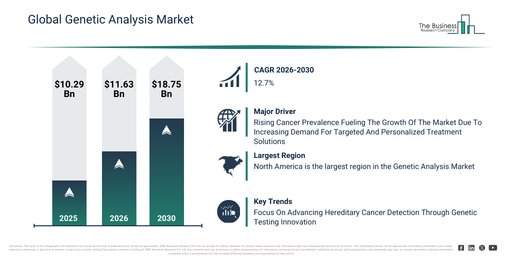
    Genetic Analysis Market Growth From $11.62 Billion In 2026 To $18.75 Billion By 2030 At A CAGR Of 12.7%

    The genetic analysis market has seen substantial expansion in recent years. Its value is anticipated to rise from $10.29 billion in 2025 to $11.63 billion in 2026, achieving a compound annual growth rate (CAGR) of 13.0%. This historical growth can be attributed to several factors including the restricted access to high-throughput sequencing platforms, a reliance on conventional genetic testing methods, increasing public understanding of genetic disorders, greater investment in research laboratories, and a growing number of diagnostic facilities.

    The genetic analysis market size is anticipated to experience substantial growth in the coming years. It is projected to reach $18.75 billion by 2030, demonstrating a compound annual growth rate (CAGR) of 12.7%. This expansion during the forecast period is propelled by advancements in NGS and real-time PCR technologies, the development of cloud-based genomic data platforms, increasing embrace of personalized medicine, rising government initiatives for genetic disease screening, and the integration of AI and bioinformatics tools within diagnostics. Notable trends expected in this period include the broadening of next-generation sequencing (NGS) and PCR-based genetic testing, a growing adoption of pharmacogenomic testing for personalized medicine, an increase in prenatal and newborn genetic screening programs, a heightened focus on rare disease and cancer genetic diagnostics, and the integration of bioinformatics and genomic data analysis tools.

    Get A Free Sample Report With In-Depth Market Insights:

    https://thebusinessresearchcompany.com/sample_request?id=65183864&type=smp&name=Genetic%20Analysis%20Market%20Report%202026&utm_source=Blogs&utm_medium=Paid&utm_campaign=Oct_PR

    Genetic Analysis Market Demand Drivers: What’s Powering Industry Growth?

    The genetic analysis market is projected to expand due to the growing incidence of cancer. Cancer is a condition where body cells multiply uncontrollably and can spread to other areas. The rise in cancer cases is linked to an aging demographic, given that elderly individuals are more prone to developing genetic mutations and prolonged exposure to environmental and lifestyle factors associated with cancer. Genetic analysis proves valuable in cancer care by identifying particular genetic mutations causing the illness, enabling physicians to select more effective targeted therapies with reduced side effects. For example, a report from the National Cancer Institute (NCI), a US-based entity focused on cancer research and training, stated in May 2025 that approximately 20 million individuals globally received a new cancer diagnosis in 2022, and around 9.7 million succumbed to the disease. Projections indicate that by 2050, the yearly figure for new cancer diagnoses might reach 33 million, with cancer fatalities anticipated to increase to 18.2 million. Consequently, the escalating number of cancer cases is fueling the expansion of the genetic analysis market.

    Genetic Analysis Market Segment Breakdown: Which Categories Lead On Revenue?

    The genetic analysis market covered in this report is segmented –

    1) By Product: Reagents And Kits, Instruments, Software

    2) By Test: Predictive Genetic Testing, Carrier Testing, Prenatal And Newborn Testing, Disease Diagnostic Testing, Pharmacogenomic Testing, Other Tests

    3) By Technology: Next-Generation Sequencing (NGS), Real-Time PCR System, Other Technologies

    4) By Application: Cancer, Genetic Diseases, Cardiovascular Diseases, Rare Diseases, Infectious Diseases, Other Applications

    5) By End-Use: Hospitals, Research And Development Laboratories, Diagnostic Centers, Other End-Uses

    Subsegments:

    1) By Reagents And Kits: DNA Extraction Kits, RNA Extraction Kits, PCR Reagents, Sequencing Reagents, Library Preparation Kits, Electrophoresis Reagents, Microarray Kits, Genotyping Assay Kits, Target Enrichment Kits, Nucleic Acid Labeling Kits

    2) By Instruments: DNA Sequencers, PCR Machines, Microarray Scanners, Electrophoresis Systems, Real-Time PCR Systems, Automated Sample Preparation Systems, Genetic Analyzers, Bioanalyzers, Fragment Analyzers, Next-Generation Sequencing (NGS) Platforms

    3) By Software: Data Analysis Software, Bioinformatics Tools, Laboratory Information Management Systems (LIMS), Genomic Data Interpretation Software, DNA Sequence Alignment Tools, Variant Annotation Software, Clinical Decision Support Software, Cloud-Based Genomic Platforms, Workflow Management Software, Data Visualization Tools

    Genetic Analysis Market Innovation Trends: What Developments Are Reshaping The Industry?

    Leading companies in the genetic analysis market are concentrating on developing advanced solutions, such as genetic testing, to facilitate preventive measures or early monitoring. Genetic testing involves analyzing a person’s DNA to identify changes or variations in genes that might be linked to specific health conditions or inherited traits. For example, in June 2023, Devyser, a Sweden-based company specializing in diagnostic kit development, launched Devyser LynchFAP and Devyser BRCA PALB2, two genetic testing solutions designed for hereditary cancer. Devyser LynchFAP distinguishes itself by offering a complete solution for analyzing PMS2 and nine additional genes associated with hereditary colorectal cancer, effectively resolving the intricate challenge of differentiating PMS2 from its pseudogene PMS2CL. It represents the first commercial kit specifically engineered for the precise analysis of the PMS2 gene. Devyser BRCA PALB2 allows for the targeted detection of genetic variants in BRCA1, BRCA2, and PALB2, which are key genes linked to an increased risk of breast and ovarian cancer. Its user-friendly design enables quick integration into lab workflows and supports the analysis of DNA from both blood and tumor samples within a single test.

    Genetic Analysis Market Leading Players And Competitive Positioning

    Major companies operating in the genetic analysis market are Hoffmann-La Roche AG, Thermo Fisher Scientific Inc., Abbott Laboratories Inc., Danaher Corporation, Quest Diagnostics Inc., Illumina Inc., PerkinElmer Inc., BioRad Laboratories Inc., Qiagen NV, Oxford Nanopore Technologies Plc, 23andMe Inc., ELITech Group, MyHeritage Ltd., Dante Labs Inc., AutoGenomics Inc., IntegraGen SA, Family Tree DNA, 24 genetics, Centrillion Biosciences Inc., DNA Worldwide Group Ltd., Genebase.

    View The Full Genetic Analysis Market Report:

    https://thebusinessresearchcompany.com/report/genetic-analysis-global-market-report?utm_source=Blogs&utm_medium=Paid&utm_campaign=Oct_PR

    Genetic Analysis Market Global Footprint: Which Region Leads The Market?

    North America was the largest region in the genetic analysis market in 2025. Asia-Pacific is expected to be the fastest-growing region in the forecast period. The regions covered in the genetic analysis market report are Asia-Pacific, South East Asia, Western Europe, Eastern Europe, North America, South America, Middle East, Africa.

    Reach Out To Our Team:

    The Business Research Company: https://www.thebusinessresearchcompany.com/

    Americas: +1 310-496-7795

    Asia: +44 7882 955267 & +91 8897263534

    Europe: +44 7882 955267

    Email us at: marketing@tbrc.info

    Follow us on:

    LinkedIn: https://in.linkedin.com/company/the-business-research-company

    YouTube: https://www.youtube.com/channel/UC24_fI0rV8cR5DxlCpgmyFQ

    Global Market Model: https://www.thebusinessresearchcompany.com/global-market-model
  • Generic Pharmaceuticals Contract Manufacturing Market Explained: What Is Fueling Growth To $93.56 Billion By 2030?

    Generic Pharmaceuticals Contract Manufacturing Market Explained: What Is Fueling Growth To $93.56 Billion By 2030?

    Backed by market attractiveness analysis, total addressable market sizing, company benchmarking matrices, interactive Excel dashboards, wider supply chain intelligence, emerging startup coverage, and detailed product-level insights, The Business Research Company’s 2026 market reports are designed to offer research that is more actionable and strategically valuable than ever.

    Generic Pharmaceuticals Contract Manufacturing Market Expansion Outlook: What Revenue Opportunities Are Ahead?

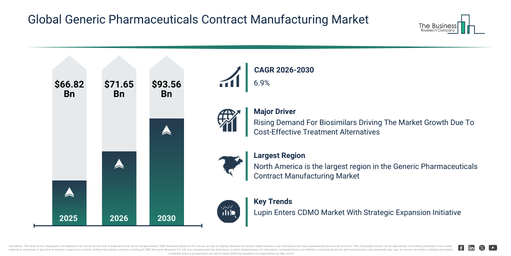
    The market size for generic pharmaceuticals contract manufacturing has shown substantial growth in recent years. It is anticipated to expand from $66.82 billion in 2025 to $71.65 billion in 2026, at a compound annual growth rate (CAGR) of 7.2%. The growth observed during the past period stemmed from factors such as limited contract manufacturing alternatives, a reliance on in-house generic drug manufacturing, an increasing demand for off-patent APIs, a rise in generic drug approvals, and cost containment pressures affecting pharmaceutical companies.

    The generic pharmaceuticals contract manufacturing market is projected to experience substantial expansion in the coming years. Its value is forecast to reach $93.56 billion by 2030, driven by a compound annual growth rate (CAGR) of 6.9%. This anticipated growth is due to several factors, including an increase in worldwide generic drug demand, the enlargement of contract manufacturing organizations (CMOs), the integration of sophisticated formulation technologies, a heightened emphasis on biologics and intricate generics, and stronger international regulatory partnerships. Key trends during this period are expected to encompass a surge in the outsourcing of generic drug production, an emphasis on economical production and packaging methods, the broadening of services for manufacturing injectables and tablets, enhanced regulatory assistance and compliance provisions, and an increase in licensing and technology transfer for generic items.

    Get A Free Sample Report With In-Depth Market Insights:

    https://thebusinessresearchcompany.com/sample_request?id=96273534&type=smp&name=Generic%20Pharmaceuticals%20Contract%20Manufacturing%20Market%20Report%202026&utm_source=Blogs&utm_medium=Paid&utm_campaign=Oct_PR

    Generic Pharmaceuticals Contract Manufacturing Market Growth Drivers: What’s Behind The Acceleration?

    The increasing demand for biosimilars is anticipated to drive the expansion of the generic pharmaceuticals contract manufacturing market moving forward. Biosimilars are biological medical products that are very similar to already approved reference biologics, showing no clinically meaningful differences in their safety, purity, or potency. This growing demand for biosimilars primarily stems from their capacity to offer cost-effective alternatives to expensive biologic drugs, thereby enhancing the accessibility of advanced treatments for patients and healthcare systems. Generic pharmaceuticals contract manufacturing supports biosimilars by providing economical, large-scale production capabilities and the necessary regulatory expertise to accelerate their market entry and ensure consistent quality. For instance, in January 2023, according to Cardinal Health Inc., a US-based healthcare company, as of January 2022, the U.S. had 33 biosimilar products approved by the FDA, with 21 of them available on the market and by 2023, the number of FDA-approved biosimilars had risen to 40, with 25 commercially available. Thus, the escalating demand for biosimilars is propelling the growth of the generic pharmaceuticals contract manufacturing market.

    Generic Pharmaceuticals Contract Manufacturing Market Segmentation: How Does The Market Break Down By Category?

    The generic pharmaceuticals contract manufacturing market covered in this report is segmented –

    1) By Drug Type: Branded Generics, Unbranded Generics

    2) By Product Type: Pharmaceutical Active Pharmaceutical Ingredients, Formulations, Capsules, Tablets, Injectables

    3) By Route Of Administration: Oral, Parenteral, Topical, Other Routes Of Administration

    4) By Application: Oncology, Immunology, Antidiabetic, Neurology, Anticoagulants, Cardiovascular, Respiratory, Pain, Human Immunodeficiency Virus Antivirals

    5) By End-User Industry: Pharmaceutical Companies, Contract Research Organizations, Biotechnology Companies, Generic Drug Manufacturers

    Subsegments:

    1) By Branded Generics: Contract Development of Branded Formulations, Branded Generic Tablet Manufacturing, Branded Injectable Manufacturing, Packaging and Labeling for Branded Generics, Regulatory Support For Branded Generics

    2) By Unbranded Generics: Bulk Manufacturing of Off-Patent Active Pharmaceutical Ingredients, Generic Tablet Or Capsule Production, Parenteral Or Injectable Generic Manufacturing, Cost-Efficient Packaging for Unbranded Products, Licensing And Tech Transfer for Generic Products

    Generic Pharmaceuticals Contract Manufacturing Market Trends: What’s Defining The Industry’s Next Phase?

    Leading firms within the generic pharmaceutical contract manufacturing sector are broadening their range of services through the formation of specialized subsidiaries, addressing the increasing need for external development and manufacturing capabilities. The strategic establishment of these focused subsidiaries allows entities to optimize the manufacturing process for active pharmaceutical ingredients (APIs), guaranteeing adherence to regulations, capacity for growth, and streamlined operations throughout the entire drug development timeline. An example of this is seen in July 2025, when Lupin, an India-based generic pharmaceutical company, unveiled its new subsidiary, Lupin Manufacturing Solutions (LMS), to penetrate the contract development and manufacturing organization (CDMO) market. This specialized division is designed to facilitate the development, production, and distribution of APIs for its international pharmaceutical collaborators. Comprising a leadership team with extensive experience in the biotechnology and pharmaceutical sectors, the subsidiary is well-placed to provide premium contract services, assisting pharmaceutical enterprises in shortening their market entry timelines while upholding regulatory compliance and cost-effectiveness.

    Generic Pharmaceuticals Contract Manufacturing Market Competitive Overview And Top Companies

    Major companies operating in the generic pharmaceuticals contract manufacturing market are WuXi AppTec Co. Ltd., Recipharm AB, Siegfried Holding AG, Curia Global Inc., Piramal Pharma Solutions, Laurus Labs Limited., Cambrex Corp., Alcami Corp. Inc, Neuland Laboratories Limited.

    View The Full Generic Pharmaceuticals Contract Manufacturing Market Report:

    https://thebusinessresearchcompany.com/report/generic-pharmaceuticals-contract-manufacturing-global-market-report?utm_source=Blogs&utm_medium=Paid&utm_campaign=Oct_PR

    Generic Pharmaceuticals Contract Manufacturing Market Regional Split: Which Areas Are Fueling Growth?

    North America was the largest region in the generic pharmaceuticals contract manufacturing market in 2025. Asia-Pacific is expected to be the fastest-growing region in the forecast period. The regions covered in the generic pharmaceuticals contract manufacturing market report are Asia-Pacific, South East Asia, Western Europe, Eastern Europe, North America, South America, Middle East, Africa.

    Reach Out To Our Team:

    The Business Research Company: https://www.thebusinessresearchcompany.com/

    Americas: +1 310-496-7795

    Asia: +44 7882 955267 & +91 8897263534

    Europe: +44 7882 955267

    Email us at: marketing@tbrc.info

    Follow us on:

    LinkedIn: https://in.linkedin.com/company/the-business-research-company

    YouTube: https://www.youtube.com/channel/UC24_fI0rV8cR5DxlCpgmyFQ

    Global Market Model: https://www.thebusinessresearchcompany.com/global-market-model