Month: October 2026

  • Estrogen Replacement Therapy Market Growth Outlook From $10.42 Billion In 2026 To $12.51 Billion By 2030

    Estrogen Replacement Therapy Market Growth Outlook From $10.42 Billion In 2026 To $12.51 Billion By 2030

    Backed by market attractiveness analysis, total addressable market sizing, company benchmarking matrices, interactive Excel dashboards, wider supply chain intelligence, emerging startup coverage, and detailed product-level insights, The Business Research Company’s 2026 market reports are designed to offer research that is more actionable and strategically valuable than ever.

    Estrogen Replacement Therapy Market Size And Revenue Outlook Through 2030

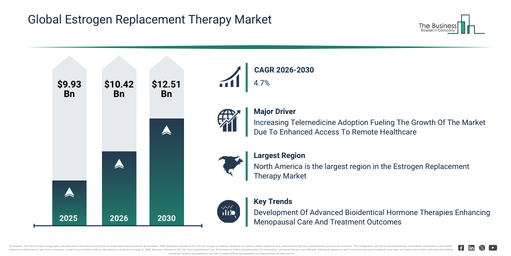
    The estrogen replacement therapy market has demonstrated consistent expansion in recent years. It is projected to increase from $9.93 billion in 2025 to $10.42 billion in 2026, achieving a compound annual growth rate (CAGR) of 4.9%. Historically, this market’s growth has been fueled by elements such as restricted awareness of hormone replacement benefits, a dependency on oral estrogen formulations, the expanding aging female population, a surge in clinical research pertaining to menopause, and the widening reach of hospital and clinic networks.

    The estrogen replacement therapy market is anticipated to experience consistent expansion in the coming years. Its valuation is projected to reach $12.51 billion in 2030, exhibiting a compound annual growth rate (CAGR) of 4.7%. This projected expansion over the forecast period is driven by factors such as the development of transdermal and vaginal delivery systems, an increase in the adoption of personalized and bioidentical estrogen therapies, the broadening of online and retail pharmacy channels, a rise in regulatory approvals for innovative dosage forms, and an intensified focus on managing osteoporosis and hypogonadism. Key trends expected during this period encompass a surging demand for menopause management therapies, an increasing preference for non-oral estrogen delivery methods, the expansion of homecare and remote patient monitoring services, a heightened emphasis on treating osteoporosis and hypogonadism, and the widespread adoption of personalized hormone replacement therapies.

    Get A Free Sample Report With In-Depth Market Insights:

    https://thebusinessresearchcompany.com/sample_request?id=98412343&type=smp&name=Estrogen%20Replacement%20Therapy%20Market%20Report%202026&utm_source=Blogs&utm_medium=Paid&utm_campaign=Oct_PR

    Estrogen Replacement Therapy Market Growth Momentum: What Factors Are Shaping Demand?

    The estrogen replacement therapy market is expected to expand in the coming years, propelled by the rising adoption of telemedicine. Telemedicine utilizes digital communication technologies to deliver remotely, enabling patients to receive medical consultations and treatment without needing to be physically present. Its increasing usage is attributed to improved accessibility, particularly for individuals in remote or underserved areas who can now connect with healthcare professionals more readily. The growing integration of telemedicine supports the demand for estrogen replacement therapy, as it allows women to consult specialists and obtain prescriptions for hormone treatments without the need for frequent in-person visits, especially where gynecological care is limited. For instance, in November 2025, according to the Australian Bureau of Statistics (ABS), an Australia-based government statistical agency, 22.5% of Australians used telehealth services in 2024–25. Among those who had a telehealth consultation, 90.3% reported they would use telehealth again if offered, an increase from 89.2% in 2023–24, indicating growing acceptance and continued adoption. Therefore, the expanding use of telemedicine is driving the growth of the estrogen replacement therapy market.

    Estrogen Replacement Therapy Market Segment Trends And Revenue Contributors

    The estrogen replacement therapy market covered in this report is segmented –

    1) By Type: Oral, Topical, Transdermal, Vaginal, Parenteral

    2) By Dosage Form: Tablets, Patches, Gels, Implants, Injections, Suppositories

    3) By Distribution Channel: Hospital Pharmacies, Retail Pharmacies, Online Pharmacies, Other Distribution Channels

    4) By Application: Menopause, Hypogonadism, Osteoporosis, Other Applications

    5) By End-User: Hospitals, Clinics, Homecare, Other End-Users

    Subsegments:

    1) By Oral: Conjugated Estrogens Tablets, Estradiol Tablets, Estropipate Tablets, Combined Estrogen-Progestin Tablets

    2) By Topical: Estrogen Creams, Estrogen Gels, Estrogen Sprays, Estrogen Emulsions

    3) By Transdermal: Transdermal Patches, Transdermal Gels, Microneedle Patches

    4) By Vaginal: Vaginal Creams, Vaginal Tablets Or Inserts, Vaginal Rings, Vaginal Suppositories

    5) By Parenteral: Intramuscular Injections, Subcutaneous Implants, Intravenous Formulations

    Estrogen Replacement Therapy Market Trends Redefining Industry Growth

    Leading companies operating in the estrogen replacement therapy market are focusing on developing advanced solutions, such as bioidentical estradiol, to meet individual hormonal needs and specific dosage requirements. Bioidentical estradiol is a lab-produced form of estrogen that has the same molecular structure as the estrogen naturally made by the human body and is often used in hormone therapy. For instance, in May 2024, Jagsonpal Pharmaceuticals Limited, an India-based pharmaceutical company, launched MemUp, a hormone replacement therapy (HRT) option that delivers a single daily oral dose containing a combination of bioidentical estradiol and bioidentical progesterone, both approved by the United States Food and Drug Administration. This marks a notable advancement in women’s healthcare, designed to effectively manage menopause-related symptoms such as hot flashes, night sweats, and sleep issues. It fulfills the growing demand for contemporary and efficient hormone therapy solutions. By utilizing a combination that closely resembles the body’s own hormones, it offers a more natural and balanced therapeutic approach. Its convenient, single-capsule formulation also helps improve patient consistency and treatment success.

    Estrogen Replacement Therapy Market Competitive Landscape: Which Companies Lead The Industry?

    Major companies operating in the estrogen replacement therapy market are Pfizer Inc., Merck & Co. Inc., Bayer AG, AstraZeneca PLC, Abbott Laboratories Inc., Novartis AG, Novo Nordisk A/S, Viatris Inc., Teva Pharmaceutical Industries Ltd., Perrigo Company Plc, Gedeon Richter Plc, Orion Corporation, Hisamitsu Pharmaceutical Co. Inc., ANI Pharmaceuticals Inc., Theramex Limited, Noven Pharmaceuticals Inc., Besins Healthcare S.A., TherapeuticsMD Inc., Montage Labs Inc., Gynogen GmbH.

    View The Full Estrogen Replacement Therapy Market Report:

    https://thebusinessresearchcompany.com/report/estrogen-replacement-therapy-global-market-report?utm_source=Blogs&utm_medium=Paid&utm_campaign=Oct_PR

    Estrogen Replacement Therapy Market Regional Split: Which Areas Are Fueling Growth?

    North America was the largest region in the estrogen replacement therapy market in 2025. Asia-Pacific is expected to be the fastest-growing region in the forecast period. The regions covered in the estrogen replacement therapy market report are Asia-Pacific, South East Asia, Western Europe, Eastern Europe, North America, South America, Middle East, Africa.

    Reach Out To Our Team:

    The Business Research Company: https://www.thebusinessresearchcompany.com/

    Americas: +1 310-496-7795

    Asia: +44 7882 955267 & +91 8897263534

    Europe: +44 7882 955267

    Email us at: marketing@tbrc.info

    Follow us on:

    LinkedIn: https://in.linkedin.com/company/the-business-research-company

    YouTube: https://www.youtube.com/channel/UC24_fI0rV8cR5DxlCpgmyFQ

    Global Market Model: https://www.thebusinessresearchcompany.com/global-market-model
  • Estrogen Receptor Modulators Market Forecast To Reach $25.65 Billion By 2030: Key Growth Drivers And Industry Trends

    Estrogen Receptor Modulators Market Forecast To Reach $25.65 Billion By 2030: Key Growth Drivers And Industry Trends

    Featuring market attractiveness scoring, total addressable market sizing, company benchmarking matrices, interactive Excel dashboards, deeper supply chain intelligence, emerging startup tracking, and granular product-level insights, The Business Research Company’s 2026 market reports are built to deliver research that is both more actionable and more strategically valuable.

    Estrogen Receptor Modulators Market Growth From $18.6 Billion In 2026 To $25.65 Billion By 2030 At A CAGR Of 8.4%

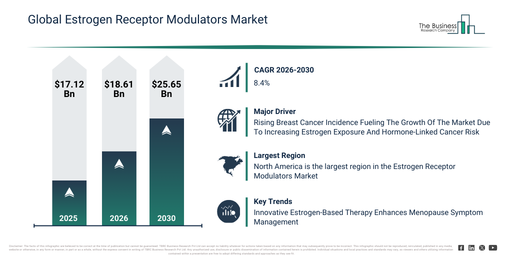
    The estrogen receptor modulators market has experienced significant expansion over recent years. Its projected growth trajectory indicates an increase from $17.12 billion in 2025 to $18.61 billion in 2026, demonstrating a compound annual growth rate (CAGR) of 8.7%. This historical expansion can be primarily ascribed to factors such as the widespread prevalence of breast cancer, the uptake of tamoxifen, the acceptance of hormone therapy, the approval of various oncology drugs, and the overall growth of hospital oncology services.

    The estrogen receptor modulators market size is anticipated to undergo significant expansion in the coming years. It is projected to grow to $25.65 billion in 2030 at a compound annual growth rate (CAGR) of 8.4%. The increase observed during the forecast period can be attributed to the development of oral SERDs, advancements in precision oncology, an expanding aging female population, broader oncology indications, and the growth of specialty pharmacies. Noteworthy trends for the forecast period include a rising adoption in breast cancer treatment, the proliferation of oral SERDs, an expansion of applications for osteoporosis, an intensified focus on targeted hormonal therapy, and increased generic drug penetration.

    Get A Free Sample Report With In-Depth Market Insights:

    https://thebusinessresearchcompany.com/sample_request?id=28375285&type=smp&name=Estrogen%20Receptor%20Modulators%20Market%20Report%202026&utm_source=Blogs&utm_medium=Paid&utm_campaign=Oct_PR

    Estrogen Receptor Modulators Market Expansion Drivers: What’s Shaping Future Growth?

    The increasing incidence of breast cancer is anticipated to drive the expansion of the estrogen receptor modulators market in the future. Breast cancer is defined as a condition where abnormal breast cells multiply without control, creating a tumor capable of invading adjacent tissues or metastasizing to other bodily areas. The increasing occurrence of breast cancer is attributed to a growing number of women postponing childbirth, which results in modified hormone levels and extended lifetime exposure to estrogen, thereby heightening cancer risk. Estrogen receptor modulators are employed in the management of breast cancer to obstruct or modify estrogen’s impact on breast cancer cells, thereby decelerating or halting their proliferation and decreasing the likelihood of disease advancement or return. As an example, in February 2025, the United Nations, a US-based intergovernmental organization, reported that in 2022, breast cancer was responsible for roughly 2.3 million new cases and 670,000 global deaths. Global forecasts suggest that by 2050, there will be a 38% surge in new cases and a 68% increase in yearly fatalities, underscoring a considerable escalating burden of the illness. Consequently, the escalating prevalence of breast cancer is fueling the expansion of the estrogen receptor modulators market.

    Estrogen Receptor Modulators Market Segment Analysis Spotlighting Growth Areas

    The estrogen receptor modulators market covered in this report is segmented –

    1) By Type: Select Estrogen Receptor Modulators, Non-Selective Estrogen Receptor Modulators, Selective Estrogen Receptor Downregulators (SERDs)

    2) By Route Of Administration: Oral, Injectable, Topical

    3) By Application: Breast Cancer Treatment, Osteoporosis Treatment, Infertility Treatment, Hormone Replacement Therapy (HRT)

    4) By Distribution Channel: Hospital Pharmacy, Online Pharmacy, Retail Pharmacy

    5) By End-Users: Homecare, Speciality Centres, Other End Users

    Subsegments:

    1) By Select Estrogen Receptor Modulators: Tamoxifen, Raloxifene, Toremifene, Bazedoxifene, Lasofoxifene

    2) By Non-Selective Estrogen Receptor Modulators: Clomiphene, Diethylstilbestrol (DES), Other Non-Selective Modulators

    3) By Selective Estrogen Receptor Downregulators (SERDs): Fulvestrant, Elacestrant, OP-1250 (Investigational), Other Oral SERDs

    Estrogen Receptor Modulators Market Strategic Trends: What Defines The Next Growth Phase?

    Key companies within the estrogen receptor modulators market are focusing on developing innovative solutions, such as estrogen-based menopause hormone therapy, to effectively manage menopausal symptoms like hot flashes while simultaneously reducing the risk of hormone-related cancers and cardiovascular complications. Estrogen-based menopause hormone therapy refers to a medical treatment that involves administering estrogen, either alone or in combination with progestin, to alleviate symptoms associated with menopause. For instance, in June 2023, Pfizer Inc., a US-based pharmaceutical and biotechnology company, launched DUAVEE (conjugated estrogens/bazedoxifene), a hormone therapy for postmenopausal women with a uterus, which is now back in stock with improved packaging. This therapy combines conjugated estrogens with bazedoxifene, a selective estrogen receptor modulator, providing an alternative to traditional estrogen-progestin therapies by diminishing the risk of uterine lining thickening. The medication is taken as a once-daily oral tablet and is recommended for the shortest duration necessary to manage symptoms, with common side effects including muscle spasms, nausea, and stomach discomfort.

    Estrogen Receptor Modulators Market Leading Companies: Who Holds The Strongest Market Presence?

    Major companies operating in the estrogen receptor modulators market are Gedeon Richter Plc., Pfizer CentreOne, Viatris Inc., Amneal Pharmaceuticals Inc., Lupin Limited, Cipla Limited, Hikma Pharmaceuticals PLC, Zydus Lifesciences Ltd., Dr. Reddy’s Laboratories Ltd., Glenmark Pharmaceuticals Ltd., Torrent Pharmaceuticals Ltd., Natco Pharma Ltd., Cadila Healthcare Ltd., Mylan N.V., Accord Healthcare Ltd., Intas Pharmaceuticals Ltd., Sunovion Pharmaceuticals Inc., Taiho Pharmaceutical Co. Ltd., Radius Health Inc., Menarini Group, Chugai Pharmaceutical Co. Ltd., Eisai Co. Ltd., Jiangsu Chia Tai Tianqing Pharmaceutical Co. Ltd., Shanghai Fosun Pharmaceutical Group Co. Ltd., Zhejiang Hisun Pharmaceutical Co. Ltd., Laurus Labs Ltd., Strides Pharma Science Ltd., Alembic Pharmaceuticals Ltd., Wockhardt Ltd., Emcure Pharmaceuticals Ltd., Macleods Pharmaceuticals Ltd., Biocon Ltd.

    View The Full Estrogen Receptor Modulators Market Report:

    https://thebusinessresearchcompany.com/report/estrogen-receptor-modulators-global-market-report?utm_source=Blogs&utm_medium=Paid&utm_campaign=Oct_PR

    Estrogen Receptor Modulators Market Top Region: Where Does Most Revenue Come From?

    North America was the largest region in the estrogen receptor modulators market in 2025. Asia-Pacific is expected to be the fastest-growing region in the forecast period. The regions covered in the estrogen receptor modulators market report are Asia-Pacific, South East Asia, Western Europe, Eastern Europe, North America, South America, Middle East, Africa.

    Reach Out To Our Team:

    The Business Research Company: https://www.thebusinessresearchcompany.com/

    Americas: +1 310-496-7795

    Asia: +44 7882 955267 & +91 8897263534

    Europe: +44 7882 955267

    Email us at: marketing@tbrc.info

    Follow us on:

    LinkedIn: https://in.linkedin.com/company/the-business-research-company

    YouTube: https://www.youtube.com/channel/UC24_fI0rV8cR5DxlCpgmyFQ

    Global Market Model: https://www.thebusinessresearchcompany.com/global-market-model
  • Estrogen Blockers Market Research 2026: Market Size, Trends, Segments And Growth Forecast

    Estrogen Blockers Market Research 2026: Market Size, Trends, Segments And Growth Forecast

    Built to provide research that’s more actionable and strategically valuable, The Business Research Company’s 2026 market reports include market attractiveness analysis, total addressable market sizing, company benchmarking matrices, interactive Excel dashboards, broader supply chain intelligence, emerging startup tracking, and in-depth product insights.

    Estrogen Blockers Market Expansion Outlook: What Revenue Opportunities Are Ahead?

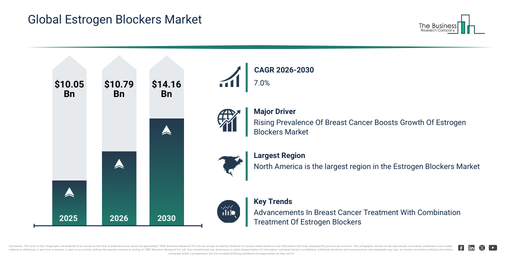
    The market size for estrogen blockers has experienced significant growth in recent years. Its value is projected to rise from $10.05 billion in 2025 to $10.79 billion in 2026, reflecting a compound annual growth rate (CAGR) of 7.3%. Historically, this expansion can be linked to factors such as the restricted supply of estrogen blockers, a dependence on traditional chemotherapy, the increasing occurrence of breast cancer, insufficient knowledge about hormone therapies, and the development of hospital and oncology clinic infrastructure.

    The estrogen blockers market size is anticipated to experience substantial growth in the coming years. It will grow to $14.16 billion in 2030 at a compound annual growth rate (CAGR) of 7.0%. This expansion during the forecast period is driven by the development of combination therapies and natural estrogen blockers, the broadening of personalized medicine approaches, an increasing uptake of online pharmacy channels, rising government and healthcare initiatives for breast cancer, and advancements in diagnostics for hormone receptor testing. Key trends observed within this period include the increasing adoption of selective estrogen receptor modulators (serms) and aromatase inhibitors, the expanded use of estrogen blockers in hormone replacement therapy (hrt), the growth of personalized breast cancer treatment protocols, the extension of online and retail pharmacy distribution channels, and enhanced awareness of infertility and post-menopausal osteoporosis management.

    Get A Free Sample Report With In-Depth Market Insights:

    https://thebusinessresearchcompany.com/sample_request?id=23413810&type=smp&name=Estrogen%20Blockers%20Market%20Report%202026&utm_source=Blogs&utm_medium=Paid&utm_campaign=Oct_PR

    Estrogen Blockers Market Development Factors: What’s Supporting Demand?

    The increasing occurrence of breast cancer is anticipated to drive the expansion of the estrogen blocker market in the future. Breast cancer is defined as a malignancy that develops within the breast tissue, predominantly impacting the milk ducts and lobules. This condition arises when regular breast cells mutate, resulting in uncontrolled proliferation and the development of tumors. The growing incidence of breast cancer is attributable to various factors, including an aging demographic, shifts in lifestyle like increased alcohol intake and inactive routines, and enhanced detection facilitated by advanced screening and diagnostic methods. Estrogen blockers assist in combating breast cancer by suppressing the hormone estrogen, which is known to stimulate the proliferation of specific breast cancer cell types. This action can decelerate or halt the progression of hormone receptor-positive breast cancers, thereby contributing to treatment and potentially lowering the risk of recurrence. As an illustration, the Australian Institute of Health and Welfare, an Australia-based government agency, reported in January 2024 that an estimated 20,458 cases of breast cancer were diagnosed in females in 2023, representing an age-standardized incidence rate of 128.6 cases per 100,000 females. Furthermore, in 2022, approximately 20,004 cases of breast cancer were identified in females, with an age-standardized incidence rate of 128.2 cases per 100,000 females. Consequently, the increasing occurrence of breast cancer is fueling the expansion of the estrogen blocker market.

    Estrogen Blockers Market Segment Performance And Emerging Opportunities

    The estrogen blockers market covered in this report is segmented –

    1) By Product: Selective Estrogen Receptor Modulators (SERMs), Aromatase Inhibitors, Estrogen Receptor Downregulators (ERDs), Other Products

    2) By Distribution Channel: Hospital Pharmacies, Retail Pharmacies, Online Pharmacies

    3) By Application: Breast Cancer Treatment, Hormone Replacement Therapy (HRT), Infertility Treatment, Post-Menopausal Osteoporosis, Other Applications

    Subsegments:

    1) By Selective Estrogen Receptor Modulators (SERMs): Tamoxifen, Raloxifene, Toremifene, Fulvestrant

    2) By Aromatase Inhibitors: Anastrozole, Letrozole, Exemestane, Vorozole

    3) By Estrogen Receptor Downregulators (ERDs): Fulvestrant, Elacestrant, Giredestrant

    4) By Other Products: Phytochemicals, Natural Estrogen Blockers, Combination Therapies

    Estrogen Blockers Market Transformation Trends: What Innovations Are Driving Change?

    Major companies within the estrogen blocker market are concentrating on developing advanced estrogen blocker drugs. These drugs integrate AKT (Protein Kinase B) inhibitors and selective estrogen receptor degraders (SERD) to enhance treatment effectiveness and address resistance in breast cancer therapy. This therapeutic approach, combining AKT (Protein Kinase B) inhibitors and selective estrogen receptor degraders (SERDs), is employed for treating hormone receptor-positive breast cancer. Its mechanism involves targeting cancer cell survival pathways and degrading estrogen receptors, thereby inhibiting tumor growth and overcoming resistance to hormonal therapies. For example, in November 2023, AstraZeneca, a UK-based pharmaceutical industry company, obtained approval from the U.S. Food and Drug Administration (FDA) for Truqap (capivasertib), an AKT (Protein Kinase B) inhibitor, when used in conjunction with Faslodex (fulvestrant), a selective estrogen receptor degrader (SERD). This approval pertains to adult patients with hormone receptor (HR)-positive, HER2-negative locally advanced or metastatic breast cancer who possess specific biomarker alterations, namely PIK3CA, AKT1, or PTEN. This authorization is significant as it addresses patients whose disease has progressed on at least one endocrine-based therapy or experienced recurrence within 12 months after completing adjuvant therapy.

    Estrogen Blockers Market Key Players: Which Companies Lead Industry Competition?

    Major companies operating in the estrogen blockers market are Pfizer Inc, F. Hoffmann-La Roche AG, Merck & Co. Inc, Novartis AG, Sanofi S.A, AstraZeneca PLC, GlaxoSmithKline plc, Eli Lilly and Company, Viatris Inc, Teva Pharmaceutical Industries Ltd., Fresenius Kabi AG, Sun Pharmaceutical Industries Ltd., Ipsen S.A., Cadila Pharmaceuticals Ltd., Intas Pharmaceuticals Limited, Dr. Reddy’s Laboratories Ltd., Hikma Pharmaceuticals PLC, Amneal Pharmaceuticals Inc., Lupin Limited, Glenmark Pharmaceuticals Limited, Alvogen Inc., Alembic Pharmaceuticals Limited, Olema Pharmaceuticals Inc, Cipla Inc, Criterium Inc

    View The Full Estrogen Blockers Market Report:

    https://thebusinessresearchcompany.com/report/estrogen-blockers-global-market-report?utm_source=Blogs&utm_medium=Paid&utm_campaign=Oct_PR

    Estrogen Blockers Market Regional Breakdown: Where Is Demand Concentrated?

    North America was the largest region in the estrogen blockers market in 2025. The regions covered in the estrogen blockers market report are Asia-Pacific, South East Asia, Western Europe, Eastern Europe, North America, South America, Middle East, Africa.

    Reach Out To Our Team:

    The Business Research Company: https://www.thebusinessresearchcompany.com/

    Americas: +1 310-496-7795

    Asia: +44 7882 955267 & +91 8897263534

    Europe: +44 7882 955267

    Email us at: marketing@tbrc.info

    Follow us on:

    LinkedIn: https://in.linkedin.com/company/the-business-research-company

    YouTube: https://www.youtube.com/channel/UC24_fI0rV8cR5DxlCpgmyFQ

    Global Market Model: https://www.thebusinessresearchcompany.com/global-market-model
  • Esketamine Market Forecast 2026: Market Size, Competitive Landscape And Growth Drivers

    Esketamine Market Forecast 2026: Market Size, Competitive Landscape And Growth Drivers

    Backed by market attractiveness analysis, total addressable market sizing, company benchmarking matrices, interactive Excel dashboards, wider supply chain intelligence, emerging startup coverage, and detailed product-level insights, The Business Research Company’s 2026 market reports are designed to offer research that is more actionable and strategically valuable than ever.

    Esketamine Market Growth Potential: How Will Market Size Shift Through 2030?

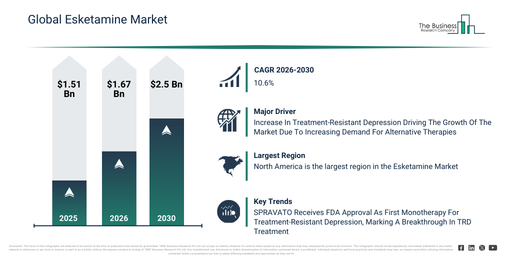
    The esketamine market has seen substantial growth in recent years. The market is forecast to expand from $1.51 billion in 2025 to $1.67 billion in 2026, achieving a compound annual growth rate (CAGR) of 10.8%. Historically, this growth can be attributed to unmet needs in major depressive disorder, limitations of traditional antidepressants, regulatory approvals for nasal esketamine, rising mental health awareness, and the expansion of specialty psychiatric clinics.

    The esketamine market is anticipated to experience significant expansion in the coming years. Its valuation is projected to reach $2.5 billion by 2030, demonstrating a compound annual growth rate (CAGR) of 10.6%. This expansion during the projection period stems from factors such as the rising incidence of treatment-resistant depression, a need for swift-acting treatments, the broader adoption of supervised outpatient delivery, an expanding mental health infrastructure, and ongoing investment in clinical research. Key developments anticipated within this timeframe involve the increasing uptake for treatment-resistant depression, the wider availability of nasal spray administration, greater utilization in acute psychiatric care environments, enhanced monitoring and regulated distribution, and intensified research efforts into rapid-acting antidepressants.

    Get A Free Sample Report With In-Depth Market Insights:

    https://thebusinessresearchcompany.com/sample_request?id=96700594&type=smp&name=Esketamine%20Market%20Report%202026&utm_source=Blogs&utm_medium=Paid&utm_campaign=Oct_PR

    Esketamine Market Industry Drivers: What’s Behind The Revenue Growth?

    The anticipated expansion of the esketamine market over the next few years is largely attributed to the growing occurrence of treatment-resistant depression (TRD). TRD is defined as a form of depression that fails to respond even after trials of at least two distinct antidepressant drugs administered in appropriate dosages for an adequate period. The rise in TRD cases stems from the inadequate effectiveness of traditional antidepressants, resulting in extended and recurring depressive states. Esketamine offers assistance for TRD by utilizing a rapid-onset mechanism that targets NMDA receptors, thereby providing relief to individuals unresponsive to conventional antidepressant therapies. For instance, in September 2023, the National Institute of Mental Health (NIMH), a US-based federal agency, reported that, in 2023, approximately 30% of individuals with major depressive disorder in the U.S. were resistant to standard treatments. Consequently, the escalating occurrence of treatment-resistant depression is serving as a key driver for the growth of the esketamine market.

    Esketamine Market Segment Landscape And Growth Outlook

    The esketamine market covered in this report is segmented –

    1) By Formulation Type: Nasal Spray, Injectable Form

    2) By Indication: Treatment-Resistant Depression (TRD), Major Depressive Disorder with Suicidal Ideation or Behavior

    3) By Patient Type: Adult Patients

    4) By Treatment Setting: Hospital-Based Administration, Certified Specialty Clinics

    5) By Distribution Channel: Hospital Pharmacies, Specialty Pharmacies

    Subsegments:

    1) By Nasal Spray: Single-Agent Esketamine Nasal Spray, Esketamine + Oral Antidepressant Combination Therapy

    2) By Injectable Form: Intravenous (IV) Esketamine, Intramuscular (IM) Esketamine

    #Esketamine Market Growth Trends: What’s Shaping The Future Outlook?

    Leading companies within the esketamine market are focusing on developing advanced treatment solutions like monotherapy, aiming to improve depressive symptom relief beyond placebo effects. Monotherapy refers to managing a disease or medical condition using a single drug or treatment, rather than multiple combined therapies. For instance, in January 2025, US-based pharmaceutical company Johnson & Johnson announced that the U.S. Food and Drug Administration (FDA) approved SPRAVATO (esketamine) as the first and only monotherapy for adults with treatment-resistant depression (TRD). Clinical trials supported this approval, demonstrating SPRAVATO’s rapid ability to alleviate depressive symptoms, with significant improvements observed within 24 hours. This breakthrough offers a crucial option for approximately 30% of individuals unresponsive to traditional antidepressants, removing the need for concurrent oral medications. Although SPRAVATO has a favorable safety profile, it is administered under a Risk Evaluation and Mitigation Strategy (REMS) to address potential side effects. This achievement represents a significant advancement in TRD treatment, providing renewed hope for better patient outcomes.

    Esketamine Market Competitive Landscape: Who Leads The Industry?

    Major companies operating in the esketamine market are Johnson & Johnson, Janssen Pharmaceuticals, Sage Therapeutics Inc., VistaGen Therapeutics Inc., Cerecor Inc., Celon Pharma S.A., Hikma Pharmaceuticals plc, Seqens Group, Arevipharma GmbH, Nortec Química S.A., Supriya Lifescience Ltd., Maithri Drugs Pvt. Ltd., SynZeal Research Pvt. Ltd., XWPharma Ltd., Sun Pharmaceutical Industries Ltd., Dr. Reddy’s Laboratories Ltd., Lupin Limited, Aurobindo Pharma Ltd., H. Lundbeck A/S, Otsuka Pharmaceutical Co. Ltd.

    View The Full Esketamine Market Report:

    https://thebusinessresearchcompany.com/report/esketamine-global-market-report?utm_source=Blogs&utm_medium=Paid&utm_campaign=Oct_PR

    Esketamine Market Geographic Landscape: Which Region Dominates Industry Growth?

    North America was the largest region in the esketamine market in 2025. The regions covered in the esketamine market report are Asia-Pacific, South East Asia, Western Europe, Eastern Europe, North America, South America, Middle East, Africa.

    Reach Out To Our Team:

    The Business Research Company: https://www.thebusinessresearchcompany.com/

    Americas: +1 310-496-7795

    Asia: +44 7882 955267 & +91 8897263534

    Europe: +44 7882 955267

    Email us at: marketing@tbrc.info

    Follow us on:

    LinkedIn: https://in.linkedin.com/company/the-business-research-company

    YouTube: https://www.youtube.com/channel/UC24_fI0rV8cR5DxlCpgmyFQ

    Global Market Model: https://www.thebusinessresearchcompany.com/global-market-model
  • Erythropoietin (EPO) Market Size In 2026: Regional Growth, Key Segments And Future Outlook

    Erythropoietin (EPO) Market Size In 2026: Regional Growth, Key Segments And Future Outlook

    Featuring market attractiveness scoring, total addressable market sizing, company benchmarking matrices, interactive Excel dashboards, deeper supply chain intelligence, emerging startup tracking, and granular product-level insights, The Business Research Company’s 2026 market reports are built to deliver research that is both more actionable and more strategically valuable.

    Erythropoietin (EPO) Market Value Analysis: What Growth Lies Ahead Over The Forecast Period?

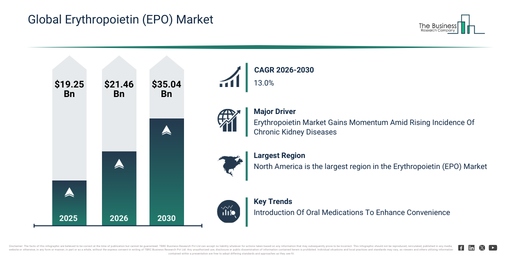
    The erythropoietin (epo) market has seen substantial growth in recent times. Its value is forecast to expand from $19.25 billion in 2025 to $21.46 billion by 2026, achieving a compound annual growth rate (CAGR) of 11.5%. Key drivers for this historical expansion include the increasing prevalence of anemia, a growing incidence of chronic kidney disease, the established clinical effectiveness of epo therapy, progress in recombinant biologic manufacturing, and the expanded application of epo in the management of cancer-related anemia.

    The erythropoietin (epo) market is projected to experience significant growth in the upcoming years. It is anticipated to expand to $35.04 billion by 2030, achieving a compound annual growth rate (CAGR) of 13.0%. This growth during the forecast period can be attributed to an increase in biosimilar approvals, a growing elderly demographic, a rising global volume of dialysis patients, innovations in sustained-release epo drugs, and improved access to biologic therapies in emerging economies. Noteworthy trends for the forecast period include the expanded use of erythropoietin in chronic kidney disease, increasing adoption of biosimilar erythropoietin therapies, growing demand for long-acting epo formulations, more frequent use of epo in oncology supportive care, and stricter regulatory oversight concerning epo safety and dosing.

    Get A Free Sample Report With In-Depth Market Insights:

    https://thebusinessresearchcompany.com/sample_request?id=32132342&type=smp&name=Erythropoietin%20%28EPO%29%20Market%20Report%202026&utm_source=Blogs&utm_medium=Paid&utm_campaign=Oct_PR

    Erythropoietin (EPO) Market Growth Factors: What’s Supporting Expansion?

    The erythropoietin market is expected to experience increased demand in the upcoming years, driven by the growing occurrence of chronic kidney diseases. Erythropoietin is administered in an increasing number of chronic kidney disease cases because it helps produce red blood cells to boost immunity. For example, data from 2023, as per the Centers for Disease Control, a US-based federal agency, estimates that roughly 14% of U.S. adults, which translates to about 35.5 million people, are affected by chronic kidney disease (CKD). Consequently, the escalating incidence of chronic kidney diseases directly raises the demand for erythropoietin, thus propelling the market’s revenues.

    Erythropoietin (EPO) Market Breakdown By Product Type And Application

    The erythropoietin (epo) market covered in this report is segmented –

    1) By Product: Epoetin-alfa, Epoetin-beta, Darbepoetin-alfa, Other Products

    2) By Drug Class: Biologist, Biosimilar

    3) By Application: Cancer, Hematology, Renal Diseases, Neurology, Other Applications

    Subsegments:

    1) By Epoetin-Alfa: Epoetin-Alfa, Epoetin-Alfa Biosimilars

    2) By Epoetin-Beta: Epoetin-Beta, Epoetin-Beta Biosimilars

    3) By Darbepoetin-Alfa: Darbepoetin-Alfa, Darbepoetin-Alfa Biosimilars

    4) By Other Products: Peginesatide, Novel EPO Products

    Erythropoietin (EPO) Market Industry Trends: What’s Reshaping Demand?

    Leading companies within the erythropoietin market are concentrating on introducing oral medications, which serve as more convenient options than conventional injectable therapies. This initiative seeks to enhance patient comfort, adherence, and treatment flexibility, particularly for individuals managing chronic ailments such as anemia associated with chronic kidney disease (CKD). For example, in February 2023, GlaxoSmithKline (GSK), a UK-based multinational pharmaceutical and biotechnology company, released Jesduvroq (daprodustat) tablets. This oral medicine works to elevate erythropoietin levels, thereby aiding in the management of anemia in CKD patients by sustaining hemoglobin levels within a specified range. The core purpose of Jesduvroq is to present a more accessible alternative to injectable treatments, thereby improving patient comfort, compliance, and treatment flexibility for dialysis patients.

    Erythropoietin (EPO) Market Company Landscape And Competitive Strategy

    Major companies operating in the erythropoietin (epo) market are Amgen Inc., Roche Holding AG, Pfizer Inc., Merck & Co., Teva Pharmaceutical Industries Ltd., 3SBio Inc., Celltrion Inc., Intas Pharmaceuticals Ltd., Boehringer Ingelheim GmbH, Dr. Reddy’s Laboratories Ltd., Sun Pharmaceutical Industries Ltd., Reliance Life Sciences Pvt. Ltd., Biocon Limited, Chugai Pharmaceutical Co., Kyowa Kirin Co. Ltd., Apotex Inc., CJ Healthcare Corp., STADA Arzneimittel AG, Hospira Inc., Sandoz International GmbH, Torrent Pharmaceuticals Ltd., LG Life Sciences Ltd., Sanofi S.A., Bayer AG, Hikma Pharmaceuticals.

    View The Full Erythropoietin (EPO) Market Report:

    https://thebusinessresearchcompany.com/report/erythropoietins-global-market-report?utm_source=Blogs&utm_medium=Paid&utm_campaign=Oct_PR

    Erythropoietin (EPO) Market Largest Region: Which Geography Holds The Highest Market Share?

    North America was the largest region in the erythropoietin (EPO) market in 2025. The Middle East is expected to be the fastest growing region in the global erythropoietin (EPO) market analysis in the forecast period. The regions covered in the erythropoietin (epo) market report are Asia-Pacific, South East Asia, Western Europe, Eastern Europe, North America, South America, Middle East, Africa.

    Reach Out To Our Team:

    The Business Research Company: https://www.thebusinessresearchcompany.com/

    Americas: +1 310-496-7795

    Asia: +44 7882 955267 & +91 8897263534

    Europe: +44 7882 955267

    Email us at: marketing@tbrc.info

    Follow us on:

    LinkedIn: https://in.linkedin.com/company/the-business-research-company

    YouTube: https://www.youtube.com/channel/UC24_fI0rV8cR5DxlCpgmyFQ

    Global Market Model: https://www.thebusinessresearchcompany.com/global-market-model
  • Erythrocytes Monoclonal Antibody Market Growth Forecast Through 2030: Market Size And Trends In 2026

    Erythrocytes Monoclonal Antibody Market Growth Forecast Through 2030: Market Size And Trends In 2026

    Built to provide research that’s more actionable and strategically valuable, The Business Research Company’s 2026 market reports include market attractiveness analysis, total addressable market sizing, company benchmarking matrices, interactive Excel dashboards, broader supply chain intelligence, emerging startup tracking, and in-depth product insights.

    Erythrocytes Monoclonal Antibody Market Size Forecast: How Big Could The Market Get By 2030?

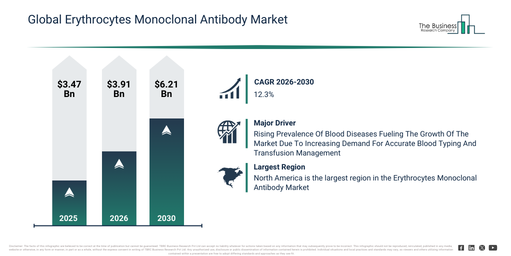
    The erythrocytes monoclonal antibody market has experienced substantial expansion in recent years. This market is set to increase from $3.47 billion in 2025 to $3.91 billion in 2026, at a compound annual growth rate (CAGR) of 12.6%. Historically, this growth can be ascribed to the proliferation of clinical diagnostic laboratories, an uptick in blood transfusion procedures, the wider adoption of standardized blood testing protocols, advancements in immunohematology research, and the improved accessibility of monoclonal antibody technologies.

    The erythrocytes monoclonal antibody market is anticipated to experience swift expansion over the coming years. Its value is projected to reach $6.21 billion by 2030, demonstrating a compound annual growth rate (CAGR) of 12.3%. This expansion during the forecast period is primarily driven by greater investments in automated blood testing platforms, a growing need for swift and precise diagnostics, the expansion of precision laboratory medicine, increasing incorporation of AI into diagnostic processes, and a heightened emphasis on blood safety regulations. Key developments expected in this period encompass the expanded application of monoclonal antibodies in blood typing, a wider implementation of automated immunohematology systems, the proliferation of advanced diagnostic assays, an escalating demand for high-specificity antibody reagents, and a stronger focus on transfusion safety.

    Get A Free Sample Report With In-Depth Market Insights:

    https://thebusinessresearchcompany.com/sample_request?id=41585922&type=smp&name=Erythrocytes%20Monoclonal%20Antibody%20Market%20Report%202026&utm_source=Blogs&utm_medium=Paid&utm_campaign=Oct_PR

    Erythrocytes Monoclonal Antibody Market Demand Drivers: What’s Powering Industry Growth?

    An anticipated increase in blood disease cases is projected to boost the expansion of the erythrocytes monoclonal antibody market going forward. These conditions encompass medical issues impacting the makeup, operation, or generation of blood, involving anomalies in red blood cells, white blood cells, platelets, hemoglobin, or plasma. This growing occurrence of blood diseases primarily stems from the increasing rates of chronic illnesses, which directly affect blood health and necessitate continuous oversight. Erythrocytes monoclonal antibodies assist in managing blood disorders by precisely targeting red blood cell antigens, thereby facilitating accurate blood typing and compatibility assessments. These antibodies also contribute to the diagnosis and surveillance of transfusion-associated issues, enhancing patient safety and therapeutic results. For example, as reported in July 2024 by the Perth Blood Institute, an Australia-based nonprofit organization, approximately 19,400 Australians receive a blood cancer diagnosis each year, with projections indicating 275,000 cases by 2035. Consequently, the increasing occurrence of blood diseases is a key factor propelling the growth of the erythrocytes monoclonal antibody market.

    Erythrocytes Monoclonal Antibody Market Segment Analysis And Revenue Potential

    The erythrocytes monoclonal antibody market covered in this report is segmented –

    1) By Type: Immunoglobulin G (IgG) Monoclonal Antibody, Immunoglobulin M (IgM) Monoclonal Antibody, Immunoglobulin A (IgA) Monoclonal Antibody, Immunoglobulin E (IgE) Monoclonal Antibody

    2) By Source: Human-Derived, Mouse- Derived, Chimeric, Humanized

    3) By Application: Flow Cytometry, ELISA (Enzyme-Linked Immunosorbent Assay), Western Blot, Immunoprecipitation, Other Applications

    4) By End Use: Hospital, Clinical Laboratories, Academic And Research Institutes, Pharmaceutical Companies

    Subsegments:

    1) By Immunoglobulin G (IgG) Monoclonal Antibody: Humanized Immunoglobulin G, Fully Human Immunoglobulin G, Chimeric Immunoglobulin G, Murine Immunoglobulin G

    2) By Immunoglobulin M (IgM) Monoclonal Antibody: Pentameric Immunoglobulin M, Hexameric Immunoglobulin M, Recombinant Immunoglobulin M

    3) By Immunoglobulin A (IgA) Monoclonal Antibody: Secretory Immunoglobulin A, Serum Immunoglobulin A, Dimeric Immunoglobulin A

    4) By Immunoglobulin E (IgE) Monoclonal Antibody: Allergen-Specific Immunoglobulin E, Anti-Immunoglobulin E Therapeutic Antibody

    Erythrocytes Monoclonal Antibody Market Key Players Shaping Industry Direction

    Major companies operating in the erythrocytes monoclonal antibody market are Micro Life Sciences Pvt. Ltd., Bio-Rad Laboratories Inc., Bio-Techne Corporation, OriGene Technologies Inc., RayBiotech Inc., Creative Diagnostics Inc., Diagast S.A., JMitra & Co. Pvt. Ltd., Mediclone Biotech Pvt. Ltd., LifeSpan BioSciences Inc., Arigo Biolaboratories Corporation, Alba Bioscience Ltd., MyBioSource Inc., Siwa Biotech Corp., Lorne Laboratories Ltd., Tulip Diagnostics Pvt. Ltd., Shiva Scientific Pvt. Ltd., Biorbyt Ltd., Assay Genie Pvt. Ltd., Abbexa Ltd.

    View The Full Erythrocytes Monoclonal Antibody Market Report:

    https://thebusinessresearchcompany.com/report/global-erythrocytes-monoclonal-antibody-market-report?utm_source=Blogs&utm_medium=Paid&utm_campaign=Oct_PR

    Erythrocytes Monoclonal Antibody Market Regional Analysis: Which Region Leads By Revenue?

    North America was the largest region in the erythrocytes monoclonal antibody market in 2025. Asia-Pacific is expected to be the fastest-growing region in the forecast period. The regions covered in the erythrocytes monoclonal antibody market report are Asia-Pacific, South East Asia, Western Europe, Eastern Europe, North America, South America, Middle East, Africa.

    Reach Out To Our Team:

    The Business Research Company: https://www.thebusinessresearchcompany.com/

    Americas: +1 310-496-7795

    Asia: +44 7882 955267 & +91 8897263534

    Europe: +44 7882 955267

    Email us at: marketing@tbrc.info

    Follow us on:

    LinkedIn: https://in.linkedin.com/company/the-business-research-company

    YouTube: https://www.youtube.com/channel/UC24_fI0rV8cR5DxlCpgmyFQ

    Global Market Model: https://www.thebusinessresearchcompany.com/global-market-model
  • Erleada Market Analysis: $3.3 Billion Market Size In 2026 And Future Growth Prospects

    Erleada Market Analysis: $3.3 Billion Market Size In 2026 And Future Growth Prospects

    Backed by market attractiveness analysis, total addressable market sizing, company benchmarking matrices, interactive Excel dashboards, wider supply chain intelligence, emerging startup coverage, and detailed product-level insights, The Business Research Company’s 2026 market reports are designed to offer research that is more actionable and strategically valuable than ever.

    Erleada Market Revenue Outlook: What CAGR Lies Ahead Through 2030?

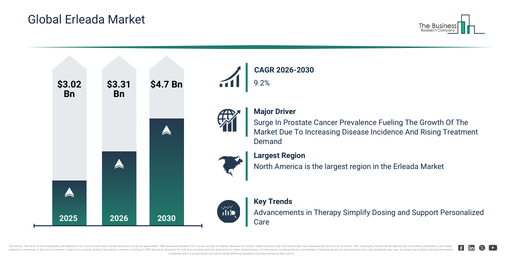
    The erleada market has demonstrated robust growth in recent years. Projections indicate it will expand from $3.02 billion in 2025 to $3.31 billion by 2026, reflecting a compound annual growth rate (CAGR) of 9.5%. This historical upward trend was driven by factors including an increase in prostate cancer diagnoses, enhanced availability of advanced oncology medications, the broader adoption of hormone-based cancer treatments, a rise in the utilization of oral cancer drugs, and successful regulatory clearances for targeted prostate cancer therapies.

    The erleada market is projected for substantial expansion over the coming years, reaching $4.7 billion in 2030 at a compound annual growth rate (CAGR) of 9.2%. This forecasted expansion is driven by a rising need for tailored prostate cancer interventions, broader management strategies for metastatic prostate cancer, a greater emphasis on patient-focused oral treatments, wider implementation of precision oncology methods, and ongoing innovation in next-generation androgen inhibitors. Key developments anticipated during this period encompass the expanded application of androgen receptor inhibitors in prostate cancer care, increased uptake of combined hormone therapies, a wider availability of oral oncology treatment choices, an intensified focus on managing prostate cancer at earlier stages, and improved oversight of treatment efficacy.

    Get A Free Sample Report With In-Depth Market Insights:

    https://thebusinessresearchcompany.com/sample_request?id=91727013&type=smp&name=Erleada%20Market%20Report%202026&utm_source=Blogs&utm_medium=Paid&utm_campaign=Oct_PR

    Erleada Market Growth Drivers: What’s Behind The Acceleration?

    The increasing incidence of prostate cancer is projected to fuel the expansion of the Erleada market in the future. Prostate cancer is defined as a cancerous growth originating in the prostate gland, an organ integral to the male reproductive system. The growing occurrence of prostate cancer is linked to longer life expectancies, given that advanced age substantially increases the risk of developing this condition. Erleada addresses prostate cancer by inhibiting androgen receptors, thereby stopping male hormones from encouraging the proliferation and metastasis of cancer cells. For example, figures released by the Australian Government in November 2025 indicated approximately 28,868 new prostate cancer cases, representing about 30% of all new male cancer diagnoses, alongside an estimated 3,975 deaths. Consequently, the escalating prevalence of prostate cancer is a key factor propelling the Erleada market’s expansion. Increased healthcare spending is anticipated to stimulate the future growth of the Erleada market. Healthcare expenditure encompasses the overall financial outlay by individuals, entities, or governments dedicated to preventing, addressing, and overseeing health-related conditions. This rise in expenditure stems from progress in medical technology, where novel diagnostic methods, treatments, and pioneering therapies frequently entail higher expenses, consequently elevating total healthcare spending. Elevated healthcare spending facilitates the adoption of Erleada by enhancing patient accessibility, affordability, reimbursement mechanisms, and the foundational infrastructure for oncology care. As an illustration, data from December 2024 by the Centers for Medicare & Medicaid Services—a U.S. agency managing Medicare and Medicaid—revealed that in 2023, U.S. health care spending rose by 7.5%, reaching $4.9 trillion, which translates to approximately $14,570 per person. Consequently, the escalation in healthcare expenditure is a primary driver for the expansion of the Erleada market.

    Erleada Market Segmentation And Category Overview

    The erleada market covered in this report is segmented –

    1) By Type: Branded, Generic

    2) By Indication Or Disease Stage: Metastatic Castration-Resistant Prostate Cancer (mCRPC), Non-Metastatic Castration-Resistant Prostate Cancer (nmCRPC), Metastatic Castration-Sensitive Prostate Cancer (mCSPC)

    3) By Distribution Channel: Hospital Pharmacies, Retail Pharmacies, Other Distribution Channels

    4) By Patient Type Or End User: Hospitals, Specialty Clinics Or Oncology Centers, Home Care Or Outpatient Settings

    Subsegments:

    1) By Branded: Innovator Brand, Co-Branded Formulation, Licensed Brand Extension

    2) By Generic: Unbranded Generic, Authorized Generic, Parallel Import Generic

    Erleada Market Trends: What’s Defining The Industry’s Next Phase?

    Within the erleada market, major companies are concentrating on innovations like reduced pill burden to improve patient convenience, foster better treatment adherence, and offer more personalized therapy options for prostate cancer patients. Reduced pill burden entails decreasing the number of pills a patient needs to take, either by combining medications or lessening dosing frequency, which helps enhance treatment adherence and overall patient comfort. Illustratively, in April 2023, Johnson & Johnson, a U.S.-based company engaged in developing, manufacturing, and selling pharmaceuticals for various diseases including oncology, immunology, and neuroscience, as well as medical devices for surgery, orthopedics, and vision, announced the availability of an additional tablet strength of Erleada (apalutamide) in the United States. This introduction of the 240 mg tablet establishes the first and only option for a once-daily, single-tablet Androgen Receptor Inhibitor (ARI) approved for the treatment of patients with non-metastatic castration-resistant prostate cancer (nmCRPC) and for patients with metastatic castration-sensitive prostate cancer (mCSPC).

    Erleada Market Competitive Analysis Of Leading Industry Participants

    Major companies operating in the erleada market are Johnson & Johnson

    View The Full Erleada Market Report:

    https://thebusinessresearchcompany.com/report/global-erleada-market-report?utm_source=Blogs&utm_medium=Paid&utm_campaign=Oct_PR

    Erleada Market Geographic Distribution And Regional Opportunities

    North America was the largest region in the erleada market in 2025. Asia-Pacific is expected to be the fastest-growing region in the forecast period. The regions covered in the erleada market report are Asia-Pacific, South East Asia, Western Europe, Eastern Europe, North America, South America, Middle East, Africa.

    Reach Out To Our Team:

    The Business Research Company: https://www.thebusinessresearchcompany.com/

    Americas: +1 310-496-7795

    Asia: +44 7882 955267 & +91 8897263534

    Europe: +44 7882 955267

    Email us at: marketing@tbrc.info

    Follow us on:

    LinkedIn: https://in.linkedin.com/company/the-business-research-company

    YouTube: https://www.youtube.com/channel/UC24_fI0rV8cR5DxlCpgmyFQ

    Global Market Model: https://www.thebusinessresearchcompany.com/global-market-model
  • Epinephrine Market 2026 Market Size And Growth Forecast: Key Trends To Watch

    Epinephrine Market 2026 Market Size And Growth Forecast: Key Trends To Watch

    Featuring market attractiveness scoring, total addressable market sizing, company benchmarking matrices, interactive Excel dashboards, deeper supply chain intelligence, emerging startup tracking, and granular product-level insights, The Business Research Company’s 2026 market reports are built to deliver research that is both more actionable and more strategically valuable.

    Epinephrine Market Growth Analysis: How Will Revenue Trend Over The Forecast Period?

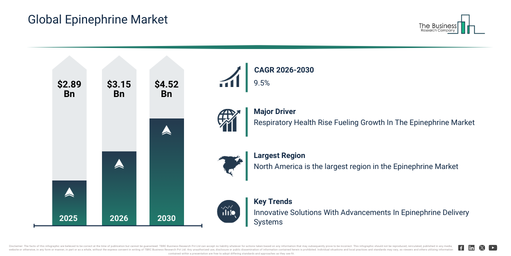
    The epinephrine market has experienced substantial expansion in recent years. Its valuation is projected to increase from $2.89 billion in 2025 to $3.15 billion in 2026, at a compound annual growth rate (CAGR) of 8.8%. This historical growth can be ascribed to several factors, including the rising incidence of severe allergic reactions, the increasing prevalence of food and drug allergies, heightened awareness of anaphylaxis management, the expansion of hospital-based emergency care, and the accessibility of branded epinephrine injections.

    The epinephrine market is expected to demonstrate robust expansion in the coming years, with projections indicating it will reach $4.52 billion by 2030, exhibiting a compound annual growth rate (CAGR) of 9.5%. This anticipated growth during the forecast period is primarily driven by factors such as the increasing development of self-administration devices, the expansion of epinephrine programs in schools and public spaces, the rising prevalence of online pharmacies, an increase in generic drug approvals, and improvements in cold-chain and drug delivery infrastructure. Significant trends in the forecast period include the growing adoption of auto-injectors for emergency use, an escalating demand for prefilled, ready-to-use epinephrine devices, the wider application of epinephrine in community and homecare settings, a concentrated effort on extending shelf-life and improving formulation stability, and an increasing focus on affordable generic epinephrine products.

    Get A Free Sample Report With In-Depth Market Insights:

    https://thebusinessresearchcompany.com/sample_request?id=82754597&type=smp&name=Epinephrine%20Market%20Report%202026&utm_source=Blogs&utm_medium=Paid&utm_campaign=Oct_PR

    Epinephrine Market Growth Factors Behind Sustained Expansion

    The increasing occurrence of chronic respiratory diseases is projected to fuel the expansion of the epinephrine market. These conditions, which affect the lungs and airways of the human body’s respiratory system and can lead to complications, are growing in prevalence. Examples like asthma, chronic obstructive pulmonary disease (COPD), interstitial lung disease, pulmonary sarcoidosis, and pneumoconiosis are on the rise due to air pollution and harmful environmental, occupational, and behavioral inhalation exposures. Epinephrine serves as a vital medication in treating severe asthma attacks and anaphylactic reactions, which often cause respiratory distress and potentially fatal complications. For instance, in December 2023, a research study published by JAMA Network Open, a medical journal by the American Medical Association, estimated that the global burden of chronic obstructive pulmonary disease (COPD) could reach nearly 600 million cases worldwide by 2050, indicating a 23% increase in prevalence. Therefore, as the incidence of chronic respiratory diseases continues to climb, the need for epinephrine is also expected to rise.

    Epinephrine Market Segment Outlook: Which Categories Are Growing Fastest?

    The epinephrine market covered in this report is segmented –

    1) By Type: Prefilled Syringe, Auto-injector, Ampoules And Vials

    2) By Application: Anaphylaxis, Cardiac Arrest, Superficial Bleeding, Respiratory Disorders, Other Applications

    3) By Distribution Channel: Hospital Pharmacies, Retail Pharmacies, Online Pharmacies

    Subsegments:

    1) By Prefilled Syringe: Single-Dose Prefilled Syringes, Multi-Dose Prefilled Syringes

    2) By Auto-Injector: Manual Auto-Injectors, Electronic Auto-Injectors

    3) By Ampoules And Vials: Single-Dose Ampoules, Multi-Dose Vials

    Epinephrine Market Industry Trends Fueling Future Revenue Growth

    Leading companies within the epinephrine market are actively pursuing the development of innovative solutions, such as sulfite-free injections and advanced auto-injector technologies. This strategic focus aims to satisfy the increasing demand for safer formulations, enhanced user convenience, and improved emergency preparedness for anaphylaxis care. Sulfite-free epinephrine injections represent preservative-free formulations specifically designed to mitigate risks of sulfite-related hypersensitivity, thereby offering a more secure alternative compared to traditional epinephrine products containing sulfites. Illustratively, in March 2023, American Regent, a pharmaceutical firm based in the US, launched its sulfite-free Epinephrine Injection, USP. This Epinephrine Injection, USP, is indicated for the urgent treatment of Type I allergic reactions, including anaphylaxis, which can arise from insect stings or bites, foods, drugs, sera, diagnostic testing substances, and other allergens, along with idiopathic or exercise-induced anaphylaxis. Additionally, epinephrine is also prescribed to raise the mean arterial blood pressure in adult patients suffering from hypotension associated with septic shock.

    Epinephrine Market Leading Companies And Competitive Benchmarking

    Major companies operating in the epinephrine market are Pfizer Inc., Teva Pharmaceutical Industries Ltd., Amneal Pharmaceuticals Inc., Bausch Health Companies Inc., Sanofi SA, Viatris Inc., Kaleo Inc., Gland Pharma Limited, Adamis Pharmaceuticals Corporation, Merit Pharmaceutical, Antares Pharma Inc., Sandoz International GmbH, Tianjin Jinyao Group Co. Ltd., Amphastar Pharmaceuticals Inc., Par Sterile Products LLC, Amedra Pharmaceuticals LLC, Intas Pharmaceuticals Ltd., Cipla Limited, Sun Pharmaceutical Industries Ltd., Mylan N V

    View The Full Epinephrine Market Report:

    https://thebusinessresearchcompany.com/report/epinephrine-global-market-report?utm_source=Blogs&utm_medium=Paid&utm_campaign=Oct_PR

    Epinephrine Market Largest Region By Revenue And Market Share

    North America was the largest region in the epinephrine market in 2025. The regions covered in the epinephrine market report are Asia-Pacific, South East Asia, Western Europe, Eastern Europe, North America, South America, Middle East, Africa.

    Reach Out To Our Team:

    The Business Research Company: https://www.thebusinessresearchcompany.com/

    Americas: +1 310-496-7795

    Asia: +44 7882 955267 & +91 8897263534

    Europe: +44 7882 955267

    Email us at: marketing@tbrc.info

    Follow us on:

    LinkedIn: https://in.linkedin.com/company/the-business-research-company

    YouTube: https://www.youtube.com/channel/UC24_fI0rV8cR5DxlCpgmyFQ

    Global Market Model: https://www.thebusinessresearchcompany.com/global-market-model
  • Epilepsy Drugs Market Size Forecast: How The Industry Is Expected To Grow From 2026 To 2030

    Epilepsy Drugs Market Size Forecast: How The Industry Is Expected To Grow From 2026 To 2030

    Built to provide research that’s more actionable and strategically valuable, The Business Research Company’s 2026 market reports include market attractiveness analysis, total addressable market sizing, company benchmarking matrices, interactive Excel dashboards, broader supply chain intelligence, emerging startup tracking, and in-depth product insights.

    Epilepsy Drugs Market Forecast: What Value Will The Market Reach By 2030?

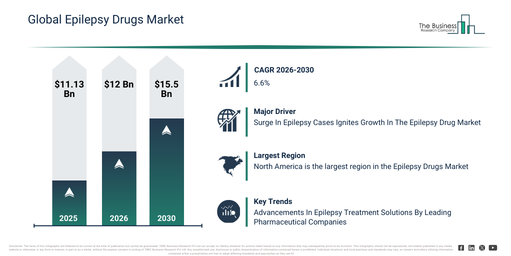
    The epilepsy drugs market has demonstrated robust expansion in recent years. Looking ahead, it is projected to expand from $11.13 billion in 2025 to $12 billion in 2026, exhibiting a compound annual growth rate (CAGR) of 7.8%. The historical growth can be linked to several factors, including the enduring prevalence of epilepsy across all age groups, the established clinical adoption of first-generation antiepileptic medications, the expansion of neurology care provisions, the accessibility of affordable generic antiseizure drugs, and an elevated rate of seizure disorder diagnoses.

    The epilepsy drugs market size is projected to experience substantial expansion over the upcoming years, reaching $15.5 billion by 2030, driven by a compound annual growth rate (CAGR) of 6.6%. This anticipated growth during the forecast period can be attributed to several factors, including the increasing global prevalence of epilepsy, the wider uptake of more recent antiepileptic medications, enhanced understanding and management of epilepsy, broadened availability of neurological care in developing regions, and the desire for drugs with better safety and tolerability characteristics. Key trends anticipated during this period involve a consistent need for broad-spectrum antiepileptic drugs, the expanding utilization of second and third-generation anti-epileptics, a heightened emphasis on treatments providing long-term seizure management, an increasing preference for oral antiepileptic forms, and ongoing dependence on combination drug regimens for epilepsy that is resistant to treatment.

    Get A Free Sample Report With In-Depth Market Insights:

    https://thebusinessresearchcompany.com/sample_request?id=91714732&type=smp&name=Epilepsy%20Drugs%20Market%20Report%202026&utm_source=Blogs&utm_medium=Paid&utm_campaign=Oct_PR

    Epilepsy Drugs Market Demand Drivers Opening New Revenue Streams

    The increasing incidence of individuals affected by epilepsy is anticipated to drive the expansion of the epilepsy drug market in the foreseeable future. Epilepsy is characterized as a neurological disorder marked by recurrent seizures, which can vary in intensity and their impact on daily life. This condition is more prevalent among older age groups, and individuals who are survivors of traumatic brain injuries (TBIs), strokes, brain tumors, and other neurological conditions face a higher risk of developing epilepsy. Epilepsy drugs function by stabilizing electrical activity in the brain, thereby reducing the likelihood and severity of seizures, which helps in the management and control of epilepsy. For instance, in February 2024, according to the world health organization, a US-based national agency, worldwide, approximately 5 million individuals receive an epilepsy diagnosis annually, with high-income countries reporting an estimated 49 cases per 100,000 people annually, while in low- and middle-income nations, this rate can soar to 139 cases per 100,000. Consequently, the rising in number of people affected with epilepsy is fueling the growth of the epilepsy drug market.

    Epilepsy Drugs Market Segment Landscape: Which Areas Lead Development?

    The epilepsy drugs market covered in this report is segmented –

    1) By Seizure Type: Focal Seizures, Generalized Seizures

    2) By Generation Type: First Generation Anti-Epileptics, Second Generation Anti-Epileptics, Third Generation Anti-Epileptics

    3) By Route Of Administration: Oral, Intravenous, Intra-Muscular

    4) By Distribution Channel: Drug Stores And Retail Pharmacies, Hospital Pharmacies

    Subsegments:

    1) By Focal Seizures: Simple Focal Seizures, Complex Focal Seizures

    2) By Generalized Seizures: Tonic-Clonic Seizures (Grand Mal), Absence Seizures (Petit Mal), Myoclonic Seizures, Tonic Seizures, Atonic Seizures

    Epilepsy Drugs Market Trends Powering Strategic Industry Growth

    Leading companies active in the epilepsy drug market are concentrating on developing innovative treatments to enhance seizure control and improve the quality of life for patients. These innovative epilepsy treatments may involve new drug formulations, advanced neurostimulation techniques, individualized precision medicine approaches, gene therapies, and emerging technologies such as closed-loop systems for seizure detection and intervention. For example, in January 2024, Akumentis Healthcare, an India-based pharmaceutical company, launched Clasepi, a prescription cannabidiol (CBD) drug specifically formulated to treat seizures associated with Lennox-Gastaut Syndrome (LGS), Dravet Syndrome, or Tuberous Sclerosis Complex (TSC) in patients aged 1 year and older. It has received approval from the Drug Controller General of India (DCGI) and has demonstrated effectiveness in reducing seizures, particularly in cases where conventional anti-seizure medications have proven unsuccessful.

    Epilepsy Drugs Market Industry Leaders And Competitive Landscape

    Major companies operating in the epilepsy drugs market are Pfizer Inc, SK Biopharmaceuticals, Sanofi, Abbott Laboratories, Novartis AG, GlaxoSmithKline plc, H. Lundbeck, Viatris, Otsuka America Pharmaceutical Inc, Bausch Health Companies Inc, UCB S.A, Sun Pharmaceutical Industries Ltd, Eisai Co Ltd, Sumitomo Pharma Co Ltd, Jazz Pharmaceuticals plc, Dr. Reddy’s Laboratories Ltd, Angelini S.p.a, Amneal Pharmaceuticals, Alkem Laboratories, Sunovion Pharmaceuticals Inc, Upsher-Smith, Zogenix, Neurelis Inc

    View The Full Epilepsy Drugs Market Report:

    https://thebusinessresearchcompany.com/report/epilepsy-drugs-global-market-report?utm_source=Blogs&utm_medium=Paid&utm_campaign=Oct_PR

    Epilepsy Drugs Market Regional Analysis And Leading Geography

    North America was the largest region in the epilepsy drugs market in 2025. The regions covered in the epilepsy drugs market report are Asia-Pacific, South East Asia, Western Europe, Eastern Europe, North America, South America, Middle East, Africa.

    Reach Out To Our Team:

    The Business Research Company: https://www.thebusinessresearchcompany.com/

    Americas: +1 310-496-7795

    Asia: +44 7882 955267 & +91 8897263534

    Europe: +44 7882 955267

    Email us at: marketing@tbrc.info

    Follow us on:

    LinkedIn: https://in.linkedin.com/company/the-business-research-company

    YouTube: https://www.youtube.com/channel/UC24_fI0rV8cR5DxlCpgmyFQ

    Global Market Model: https://www.thebusinessresearchcompany.com/global-market-model
  • Epigenetics Drugs And Diagnostic Technologies Market Reaches $49.78 Billion In 2026: Forecast And Growth Opportunities

    Epigenetics Drugs And Diagnostic Technologies Market Reaches $49.78 Billion In 2026: Forecast And Growth Opportunities

    Backed by market attractiveness analysis, total addressable market sizing, company benchmarking matrices, interactive Excel dashboards, wider supply chain intelligence, emerging startup coverage, and detailed product-level insights, The Business Research Company’s 2026 market reports are designed to offer research that is more actionable and strategically valuable than ever.

    Epigenetics Drugs And Diagnostic Technologies Market Size Outlook: How Quickly Will Revenue Expand Through 2030?

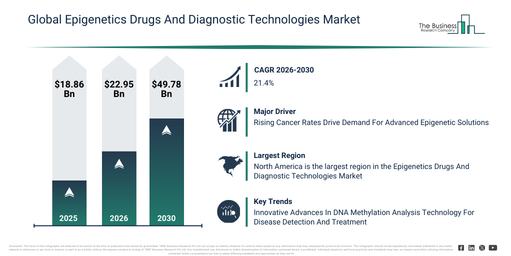
    The epigenetics drugs and diagnostic technologies market size has experienced significant growth in recent years. This market is projected to expand from $18.86 billion in 2025 to $22.95 billion in 2026, exhibiting a compound annual growth rate (CAGR) of 21.7%. The growth observed in the historical period can be attributed to factors such as the restricted access to epigenetic diagnostic technologies, a dependence on traditional genetic testing, the rising incidence of oncology and inflammatory conditions, increasing recognition of epigenetic therapies, and the implementation of fundamental methylation and acetylation assays.

    The epigenetics drugs and diagnostic technologies market size is anticipated to undergo significant growth in the coming years, projected to reach $49.78 billion in 2030, demonstrating a compound annual growth rate (CAGR) of 21.4%. This expansion during the forecast period is attributed to several factors, including the development of advanced microRNA and lncRNA therapeutics, the broadening of high-throughput chromatin profiling platforms, increasing investment in personalized epigenetic medicine, the greater adoption of bioinformatics tools for epigenetic analysis, and the integration of epigenetic diagnostics into routine clinical workflows. Major trends expected in this period include the wider availability of epigenetic biomarker-based diagnostics, the growing use of histone modification inhibitors for therapy, the continued development of microRNA and lncRNA-based therapeutics, a heightened focus on personalized epigenetic medicine, and the incorporation of high-throughput epigenetic profiling in clinical research.

    Get A Free Sample Report With In-Depth Market Insights:

    https://thebusinessresearchcompany.com/sample_request?id=11717258&type=smp&name=Epigenetics%20Drugs%20And%20Diagnostic%20Technologies%20Market%20Report%202026&utm_source=Blogs&utm_medium=Paid&utm_campaign=Oct_PR

    Epigenetics Drugs And Diagnostic Technologies Market Growth Backed By Core Demand Fundamentals

    The epigenetics drugs and diagnostic technologies market is projected to expand due to the rising incidence of cancer. Cancer refers to a range of illnesses characterized by uncontrolled cell division that can spread or invade other body parts. The widespread occurrence of cancer is attributable to factors such as aging populations, changes in lifestyle, environmental pollutants, genetic predispositions, and advancements in diagnostic techniques. Epigenetic drugs and diagnostic technologies are instrumental in addressing the growing cancer challenge by targeting and altering gene expression, thereby enabling early detection and customized treatment strategies. For illustration, the World Health Organization, a Switzerland-based international organization dedicated to global health policy and public health initiatives, reported in February 2024 that more than 35 million new cancer cases are anticipated by 2050. This signifies a 77% surge from the estimated 20 million cases in 2022. Thus, the increasing prevalence of cancer is a key driver for the growth of the epigenetics drugs and diagnostic technologies market.

    Epigenetics Drugs And Diagnostic Technologies Market Segments: Where Is Growth Concentrated?

    The epigenetics drugs and diagnostic technologies market covered in this report is segmented –

    1) By Technology: Deoxyribonucleic Acid (DNA) Methylation, Histone Methylation, Histone Acetylation, Large Non Coding Ribonucleic Acid (RNA), MicroRNA Modification, Chromatin Structures

    2) By Application: Oncology, Solid Tumors, Liquid Tumors, Non Oncology, Inflammatory Diseases, Metabolic Diseases, Infectious Diseases, Cardiovascular Diseases, Other Applications

    3) By End-User: Hospitals And Clinics, Diagnostic Centers, Other End Users

    Subsegments:

    1) By Deoxyribonucleic Acid (DNA) Methylation: Methylation Inhibitors, Methylation Detection Kits, Methylation Profiling Technologies, Bisulfite Sequencing

    2) By Histone Methylation: Histone Methyltransferase Inhibitors, Histone Demethylase Inhibitors, Histone Methylation Assays, Chromatin Immunoprecipitation (ChIP) Techniques

    3) By Histone Acetylation: Histone Acetyltransferase Inhibitors, Histone Deacetylase Inhibitors (HDACi), Acetylation Detection Kits, Western Blotting for Acetylation

    4) By Large Non-Coding Ribonucleic Acid (RNA): lncRNA Expression Profiling, lncRNA Modulation Technologies, lncRNA Detection Kits, Bioinformatics Tools for lncRNA Analysis

    5) By MicroRNA Modification: MicroRNA Mimics, MicroRNA Inhibitors, MicroRNA Expression Analysis, MicroRNA Detection Assays

    6) By Chromatin Structures: Chromatin Remodeling Agents, Chromatin Accessibility Assays, 3D Chromatin Architecture Technologies, Nuclear Imaging Techniques

    Epigenetics Drugs And Diagnostic Technologies Market Growth Trends Reshaping The Competitive Landscape

    Leading firms within the epigenetics drugs and diagnostic technologies market prioritize creating cutting-edge solutions, including DNA methylation analysis technology, to boost the accuracy and impact of identifying illnesses, refine tailored treatment approaches, and deepen knowledge of gene control across different conditions. This DNA methylation analysis technology encompasses various methods designed to examine DNA methylation patterns, a chemical alteration to DNA where a methyl group is attached to the cytosine base. As an illustration, in August 2023, Watchmaker Genomics Inc., a biotechnology firm located in the US, collaborated with Exact Sciences Corp., a US-based company specializing in molecular diagnostics, to create and market a new DNA methylation analysis technology called TET-assisted pyridine borane sequencing (TAPS). The partnership seeks to improve cancer screening and diagnostic abilities by utilizing Watchmaker’s proficiency in designing DNA-modifying enzymes to refine the TAPS chemistry. This is crucial for detecting cancer early and for tracking minimal residual disease (MRD) via liquid biopsies, as DNA methylation patterns function as indicators of health status.

    Epigenetics Drugs And Diagnostic Technologies Market Key Participants And Competitive Landscape

    Major companies operating in the epigenetics drugs and diagnostic technologies market are Pfizer Inc., F. Hoffmann-La Roche Ltd., Merck & Co Inc., Novartis AG, Bristol-Myers Squibb Company, Thermo Fisher Scientific Inc., AstraZeneca PLC, Illumina Inc., QIAGEN NV, Exact Sciences Corporation, Abcam PLC, Syndax Pharmaceuticals Inc., Astex Pharmaceuticals Inc., Diagenode LLC, Cisbio Bioassays, 4SC AG, Verogen Inc., Watchmaker Genomics Inc., Oryzon Genomics SA, Cell Centric Ltd., Epiaxis Therapeutics

    View The Full Epigenetics Drugs And Diagnostic Technologies Market Report:

    https://thebusinessresearchcompany.com/report/epigenetics-drugs-and-diagnostic-technologies-global-market-report?utm_source=Blogs&utm_medium=Paid&utm_campaign=Oct_PR

    Epigenetics Drugs And Diagnostic Technologies Market Geographic Analysis: Where Is Demand Accelerating Fastest?

    North America was the largest region in the epigenetics drugs and diagnostic technologies market in 2025. Asia-Pacific is expected to be the fastest-growing region in the forecast period. The regions covered in the epigenetics drugs and diagnostic technologies market report are Asia-Pacific, South East Asia, Western Europe, Eastern Europe, North America, South America, Middle East, Africa.

    Reach Out To Our Team:

    The Business Research Company: https://www.thebusinessresearchcompany.com/

    Americas: +1 310-496-7795

    Asia: +44 7882 955267 & +91 8897263534

    Europe: +44 7882 955267

    Email us at: marketing@tbrc.info

    Follow us on:

    LinkedIn: https://in.linkedin.com/company/the-business-research-company

    YouTube: https://www.youtube.com/channel/UC24_fI0rV8cR5DxlCpgmyFQ

    Global Market Model: https://www.thebusinessresearchcompany.com/global-market-model