Month: October 2026

  • Antivenom Market Forecast: Breaking Down The Numbers Behind Future Expansion

    Antivenom Market Forecast: Breaking Down The Numbers Behind Future Expansion

    Featuring market attractiveness scoring, total addressable market sizing, company benchmarking matrices, interactive Excel dashboards, deeper supply chain intelligence, emerging startup tracking, and granular product-level insights, The Business Research Company’s 2026 market reports are built to deliver research that is both more actionable and more strategically valuable.

    Antivenom Market Size And Revenue Outlook Through 2030

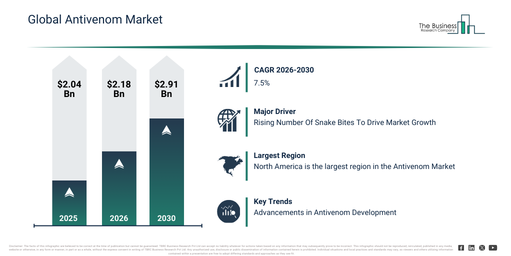
    The antivenom market has experienced robust expansion over recent years. This market is projected to expand from $2.04 billion in 2025 to $2.18 billion in 2026, demonstrating a compound annual growth rate (CAGR) of 6.8%. Historically, this expansion was fueled by factors such as the scarcity of antivenoms, the significant occurrence of venomous bites in remote regions, dependence on conventional manufacturing techniques, hurdles in regulatory compliance, and insufficient knowledge among medical professionals.

    The antivenom market is projected to experience substantial expansion in the coming years. Its valuation is set to reach $2.91 billion by 2030, demonstrating a compound annual growth rate (CAGR) of 7.5%. Key drivers for this growth during the forecast period include progress in recombinant technologies, increased government investment in antivenom initiatives, the rising trend of exotic pet ownership, the growth of healthcare infrastructure within developing economies, and the uptake of precision medicine strategies. Significant trends anticipated over the same period encompass the creation of recombinant antivenoms, improved cold chain management for these products, the availability of quick diagnostic instruments for venom detection, an increase in localized antivenom manufacturing, and individualized antivenom treatment options.

    Get A Free Sample Report With In-Depth Market Insights:

    https://www.thebusinessresearchcompany.com/sample.aspx?id=10798&type=smp&utm_source=Blogs&utm_medium=Paid&utm_campaign=Oct_PR

    Antivenom Market Growth Factors: What’s Supporting Expansion?

    The increasing occurrence of snake bites is projected to fuel the expansion of the antivenom market in the future. These injuries, resulting from toxins injected by venomous snakes, can cause a life-threatening condition. Antivenom, a specific medical intervention, has the potential to avert or mitigate the majority of snakebite envenoming symptoms if administered promptly and in a sufficient therapeutic quantity. For example, data released by the World Health Organization (WHO), a United Nations organization focused on public health and headquartered in Switzerland, indicated in September 2023 that approximately 5.4 million individuals worldwide suffer snake bites annually, leading to between 1.8 and 2.7 million instances of envenoming. Annually, fatalities from snake bites range from roughly 81,410 to 137,880 people. The goal of this initiative is to reduce deaths and disabilities due to snakebite envenoming by 50% by 2030. Consequently, the rising prevalence of snake bites is a key factor propelling the expansion of the antivenom market.

    Antivenom Market Segment Performance And Emerging Opportunities

    The antivenom market covered in this report is segmented –

    1) By Type: Monovalent, Polyvalent, Other Types

    2) By Animal: Snakes, Scorpions, Spiders, Other Animals

    3) By Mode of Action: Cytotoxic, Neurotoxic, Hemotoxic, Cardiotoxic, Myotoxic, Other Modes Of Action

    4) By End User: Hospitals, Clinics, Ambulatory Surgical Centers, Other End-Users

    Subsegments:

    1) By Monovalent: Specific Antivenoms For Individual Snake Species, Specific Antivenoms For Individual Venom Types

    2) By Polyvalent: Broad-Spectrum Antivenoms, Regional Polyvalent Antivenoms

    3) By Other Types: Antivenoms For Other Venoms, Recombinant Antivenoms, Antivenom For Rare Venoms

    Antivenom Market Industry Trends: What’s Reshaping Demand?

    Leading companies in the antivenom market are advancing technology, including public-benefit target products, to improve the effectiveness, safety, and reach of antivenoms, with the ultimate goal of better patient recovery and a reduced global impact of snakebite envenomation. Public-benefit target products are medical or healthcare innovations designed principally to address specific public health issues, especially among vulnerable or underserved populations. For example, in June 2023, Bharat Serums and Vaccines Ltd., a US-based biopharmaceutical company, partnered with the Indian Institute of Science, an India-based public institution, to create antivenoms specifically for snakebites in different regions of India. This collaboration aims to boost treatment efficacy and lessen the public health burden of snakebites in the affected areas.

    Antivenom Market Key Players: Which Companies Lead Industry Competition?

    Major companies operating in the antivenom market are Commonwealth Serum Laboratories, Incepta Pharmaceuticals Limited, Bharat Serums and Vaccines Limited, Rare Disease Therapeutics Inc., Vins Bioproducts Limited, Haffkine Bio-Pharmaceutical Corporation Limited, MicroPharm Limited, Latoxan SAS, Serum Institute of India Pvt. Ltd., BSV Group, Shanghai Serum Biotech Co Ltd., South African Vaccine Producers, Bioclon Institute, Inosan Biopharma, Instituto Bioclon S.A. de C.V., Protherics Inc., Sanofi Pasteur SA, Instituto Clodomiro Picado, Laboratorios Silanes S.A. de C.V., Instituto Biológico Argentino S.A., Instituto Vital Brazil, Instituto Butantan, Instituto Nacional de Producción de Biológicos, Instituto de Biotecnología de la UNAM

    View The Full Antivenom Market Report:

    https://www.thebusinessresearchcompany.com/report/antivenom-global-market-report?utm_source=Blogs&utm_medium=Paid&utm_campaign=Oct_PR

    Antivenom Market Global Footprint: Which Region Leads The Industry?

    North America was the largest region in the global antivenom market size in 2025. Asia-Pacific is expected to be the fastest-growing region in the forecast period. The regions covered in the antivenom market report are Asia-Pacific, South East Asia, Western Europe, Eastern Europe, North America, South America, Middle East, Africa.

    Reach Out To Our Team:

    The Business Research Company: https://www.thebusinessresearchcompany.com/

    Americas: +1 310-496-7795

    Asia: +44 7882 955267 & +91 8897263534

    Europe: +44 7882 955267

    Email us at: marketing@tbrc.info

    Follow us on:

    LinkedIn: https://in.linkedin.com/company/the-business-research-company

    YouTube: https://www.youtube.com/channel/UC24_fI0rV8cR5DxlCpgmyFQ

    Global Market Model: https://www.thebusinessresearchcompany.com/global-market-model

  • Anti-Vascular Endothelial Growth Factor Therapeutics Market Expected To Grow At 2.4% CAGR Through 2030: What Businesses Need To Know

    Anti-Vascular Endothelial Growth Factor Therapeutics Market Expected To Grow At 2.4% CAGR Through 2030: What Businesses Need To Know

    Built to provide research that’s more actionable and strategically valuable, The Business Research Company’s 2026 market reports include market attractiveness analysis, total addressable market sizing, company benchmarking matrices, interactive Excel dashboards, broader supply chain intelligence, emerging startup tracking, and in-depth product insights.

    Anti-Vascular Endothelial Growth Factor Therapeutics Market Growth From $12.36 Billion In 2026 To $13.59 Billion By 2030 At A CAGR Of 2.4%

    The anti-vascular endothelial growth factor therapeutics market size has seen slight growth in recent years. It is projected to increase from $12.17 billion in 2025 to $12.36 billion in 2026, at a compound annual growth rate (CAGR) of 1.6%. The market’s expansion in the past can be attributed to the approval of lucentis and eylea, the rising prevalence of age-related macular degeneration, the growing incidence of diabetic retinopathy, advancements in molecular biology for angiogenesis inhibition, and the expansion of hospital ophthalmology services.

    The anti-vascular endothelial growth factor therapeutics market is projected to experience consistent expansion over the upcoming years. Its valuation is anticipated to reach $13.59 billion by 2030, demonstrating a compound annual growth rate (CAGR) of 2.4%. This anticipated growth during the forecast period can be credited to factors such as the introduction of advanced anti-VEGF therapeutics, a rise in investment within precision oncology, increased penetration of the biosimilar market, escalating healthcare spending in developing economies, and the uptake of combination therapies for retinal conditions. Key developments expected during this period involve the greater use of anti-VEGF treatments in ophthalmology, the expansion of targeted cancer therapies, the creation of biosimilar anti-VEGF medications, an aging global population stimulating treatments for AMD, and the proliferation of outpatient and specialized clinics.

    Get A Free Sample Report With In-Depth Market Insights:

    https://www.thebusinessresearchcompany.com/sample.aspx?id=10683&type=smp&utm_source=Blogs&utm_medium=Paid&utm_campaign=Oct_PR

    Anti-Vascular Endothelial Growth Factor Therapeutics Market Demand Drivers: What’s Powering Industry Growth?

    The anticipated growth of the anti-vascular endothelial growth factor therapeutics market is driven by the rising prevalence of ophthalmic diseases. Ophthalmic disease prevalence denotes the count or percentage of individuals within a specific population diagnosed with or displaying particular eye conditions or illnesses. Anti-vascular endothelial growth factor (VEGF) treatments are instrumental in lowering the incidence of ophthalmic diseases by effectively managing conditions such as wet age-related macular degeneration (AMD), diabetic retinopathy, and retinal vein occlusion. As an illustration, in August 2023, the World Health Organization, an international public health organization situated in Switzerland, reported that globally, approximately 2.2 billion people experience near or distance vision impairment, and 1 billion people suffer from near or distance vision impairment. Furthermore, among these, 88.4 million are affected by refractive error, 94 million by cataracts, 8 million by age-related macular degeneration, and around 3.9 million by diabetic retinopathy. Consequently, the increasing prevalence of ophthalmic diseases is a key factor propelling the expansion of the anti-vascular endothelial growth factor therapeutics market.

    Anti-Vascular Endothelial Growth Factor Therapeutics Market Segment Landscape And Growth Outlook

    The anti-vascular endothelial growth factor therapeutics market covered in this report is segmented –

    1) By Product: Eylea, Lucentis, Beovu

    2) By Disease: Macular Edema, Diabetic Retinopathy, Retinal Vein Occlusion, Age-related Macular Degeneration

    3) By End Users: Hospitals, Clinics, Oncology Centers, Other End Users

    Anti-Vascular Endothelial Growth Factor Therapeutics Market Innovation Trends: What Developments Are Reshaping The Industry?

    Companies operating in the anti-VEGF therapeutics market are increasingly forging strategic partnerships to accelerate the development, commercialization, and adoption of VEGF inhibitors. Such collaborations enable companies to leverage complementary expertise, access innovative technologies, and expand their market presence. As an illustration, in January 2025, Teva Pharmaceuticals International GmbH, a Switzerland-based subsidiary of Teva Pharmaceutical Industries specializing in biosimilars and complex generics, entered a strategic collaboration with Klinge Biopharma GmbH and Formycon AG. This partnership aims to commercialize FYB203, a biosimilar candidate to Eylea (aflibercept), in Europe (excluding Italy) and Israel. Under this arrangement, Teva utilizes its established commercial infrastructure and distribution network to strengthen its presence in the anti-VEGF therapeutics market. Formycon AG is responsible for developing FYB203, and Klinge Biopharma GmbH holds exclusive global commercialization rights for the product.

    Anti-Vascular Endothelial Growth Factor Therapeutics Market Competitive Landscape: Who Leads The Industry?

    Major companies operating in the anti-vascular endothelial growth factor therapeutics market are F. Hoffmann-La Roche AG, Pfizer Inc., Coherus BioSciences Inc., Bausch Health Companies Inc., Viatris Inc., Xbrane Biopharma AB, Bayer AG, Regeneron Pharmaceuticals Inc., Genentech Inc., Allergan Inc., Novartis AG, Amgen Inc., AstraZeneca plc, Merck & Co. Inc., Johnson & Johnson Private Limited, Sanofi S.A., AbbVie Inc., Takeda Pharmaceutical Company Limited, Boehringer Ingelheim International GmbH, Daiichi Sankyo Company Limited

    View The Full Anti-Vascular Endothelial Growth Factor Therapeutics Market Report:

    https://www.thebusinessresearchcompany.com/report/anti-vascular-endothelial-growth-factor-therapeutics-global-market-report?utm_source=Blogs&utm_medium=Paid&utm_campaign=Oct_PR

    Anti-Vascular Endothelial Growth Factor Therapeutics Market Regional Distribution: Which Areas Power Market Growth?

    North America was the largest region in the anti-vascular endothelial growth factor therapeutics market in 2025. Europe is expected to be the fastest-growing region in the global anti-vascular endothelial growth factor therapeutics market report during the forecast period. The regions covered in the anti-vascular endothelial growth factor therapeutics market report are Asia-Pacific, South East Asia, Western Europe, Eastern Europe, North America, South America, Middle East, Africa.

    Reach Out To Our Team:

    The Business Research Company: https://www.thebusinessresearchcompany.com/

    Americas: +1 310-496-7795

    Asia: +44 7882 955267 & +91 8897263534

    Europe: +44 7882 955267

    Email us at: marketing@tbrc.info

    Follow us on:

    LinkedIn: https://in.linkedin.com/company/the-business-research-company

    YouTube: https://www.youtube.com/channel/UC24_fI0rV8cR5DxlCpgmyFQ

    Global Market Model: https://www.thebusinessresearchcompany.com/global-market-model

  • Anti-Tumor Drugs Market Forecast To Reach $345.02 Billion By 2030: Key Trends Explained

    Anti-Tumor Drugs Market Forecast To Reach $345.02 Billion By 2030: Key Trends Explained

    Backed by market attractiveness analysis, total addressable market sizing, company benchmarking matrices, interactive Excel dashboards, wider supply chain intelligence, emerging startup coverage, and detailed product-level insights, The Business Research Company’s 2026 market reports are designed to offer research that is more actionable and strategically valuable than ever.

    Anti-Tumor Drugs Market Expansion Outlook: What Revenue Opportunities Are Ahead?

    The anti-tumor drugs market size has seen rapid growth in recent years. This market is expected to increase from $206.81 billion in 2025 to $229.63 billion in 2026, achieving a compound annual growth rate (CAGR) of 11.0%. Historically, this expansion has been driven by factors such as the restricted access to targeted therapy drugs, the continued reliance on conventional cytotoxic drugs, a rising incidence of major cancers, the enhancement of basic hospital pharmacy infrastructure, and increasing public understanding of cancer treatment options.

    The anti-tumor drugs market is anticipated to experience substantial growth in the upcoming years, with projections indicating it will reach $345.02 billion by 2030, demonstrating a compound annual growth rate of 10.7%. This expansion during the forecast period is driven by factors such as progress in gene therapy and immunotherapy, the extension of precision medicine initiatives, increasing investments in pharmaceutical research and development, the rise in online pharmacy adoption, and the creation of innovative drug delivery systems. Prominent trends for this period encompass the growing acceptance of personalized cancer therapies, heightened investment in immunotherapy and targeted treatments, the broadening availability of injectable and oral anti-tumor drug formulations, the expansion of hospital and oncology clinic pharmacies, and a strong focus on drug safety, compliance, and pharmacovigilance.

    Get A Free Sample Report With In-Depth Market Insights:

    https://www.thebusinessresearchcompany.com/sample.aspx?id=25697&type=smp&utm_source=Blogs&utm_medium=Paid&utm_campaign=Oct_PR

    Anti-Tumor Drugs Market Growth Drivers: What’s Behind The Acceleration?

    The rising occurrence of cancer is projected to fuel the expansion of the anti-tumor drugs market in the future. Cancer encompasses a range of illnesses marked by the unregulated proliferation and dissemination of abnormal cells within the body, capable of infiltrating adjacent tissues and potentially migrating to other areas via the circulatory and lymphatic systems. This surge in cancer cases largely stems from detrimental lifestyle choices, including inadequate nutrition, insufficient physical exercise, tobacco use, heavy alcohol intake, and extended exposure to environmental contaminants, all of which substantially elevate the likelihood of contracting diverse forms of cancer. Anti-tumor drugs play a crucial role in fighting cancer by identifying and eliminating cancerous cells, impeding tumor development, and halting the advancement of the disease. As an illustration, the National Health Service (NHS), a government health agency in the UK, reported in October 2025 that 354,820 new cancer diagnoses were made in 2023, averaging 972 daily, representing an increase of 8,605 from 2022. Consequently, the growing frequency of cancer diagnoses is propelling the expansion of the anti-tumor drug market.

    Anti-Tumor Drugs Market Breakdown By Product Type And Application

    The anti-tumor drugs market covered in this report is segmented –

    1) By Drug Type: Cytotoxic Drugs, Targeted Therapy Drugs, Hormonal Therapy Drugs, Immunotherapy Drugs, Other Drug Types

    2) By Cancer Type: Lung Cancer, Breast Cancer, Colorectal Cancer, Prostate Cancer, Other Cancer Types

    3) By Route of Administration: Oral, Injectable, Other Routes Of Administration

    4) By Distribution Channel: Hospital Pharmacies, Retail Pharmacies, Online Pharmacies, Other Distribution Channels

    Subsegments:

    1) By Cytotoxic Drugs: Alkylating Agents, Antimetabolites, Plant Alkaloids, Antitumor Antibiotics, Other Cytotoxic Drugs

    2) By Targeted Therapy Drugs: Monoclonal Antibodies, Tyrosine Kinase Inhibitors, Mechanistic Target Of Rapamycin Inhibitors, Poly Polymerase Inhibitors, Other Targeted Therapy Drugs

    3) By Hormonal Therapy Drugs: Selective Estrogen Receptor Modulators, Aromatase Inhibitors, Luteinizing Hormone-Releasing Hormone Agonists, Anti-Androgens, Other Hormonal Therapy Drugs

    4) By Immunotherapy Drugs: Checkpoint Inhibitors, Chimeric Antigen Receptor T-Cell Therapy, Cancer Vaccines, Cytokines, Other Immunotherapy Drugs

    5) By Other Drug Types: Gene Therapy Drugs, Anti-Angiogenic Agents, Radioisotope-Based Drugs, Photodynamic Therapy Agents

    Anti-Tumor Drugs Market Trends: What’s Defining The Industry’s Next Phase?

    Leading firms within the anti-tumor drugs market are concentrating on creating novel treatments, including targeted breast cancer treatment, to improve patient results in advanced hormone receptor-positive scenarios. This specific type of treatment utilizes precise therapeutic approaches designed to target the growth mechanisms of cancer cells, thereby reducing harm to healthy tissues and enhancing how well patients tolerate the treatment. An example of this is the launch of Palbociclib in January 2023 by Sun Pharmaceutical Industries Ltd., an India-based pharmaceutical firm. This new anti-cancer drug is intended for advanced breast cancer treatment within India. Palbociclib functions as a highly specific oral inhibitor targeting cyclin-dependent kinases 4 and 6 (CDK4/6), enzymes crucial for controlling the cell cycle’s advancement. Its mechanism involves preventing the cell from moving from the G1 to S phase, leading to cell cycle arrest and consequently suppressing tumor development. The medication’s main application is in hormone receptor-positive, HER2-negative advanced breast cancer, where it targets the unchecked multiplication of malignant cells.

    Anti-Tumor Drugs Market Company Landscape And Competitive Strategy

    Major companies operating in the anti-tumor drugs market are Pfizer Inc, Johnson And Johnson, Roche Holding AG, Merck And Co. Inc., AbbVie Inc., Bayer AG, Sanofi S.A., Bristol-Myers Squibb Company, AstraZeneca PLC, Novartis AG., GlaxoSmithKline plc, Eli Lilly And Company, Gilead Sciences Inc., Amgen Inc., Boehringer Ingelheim GmbH, Astellas Pharma Inc., Incyte Corporation, BeOne Medicines Inc., Getwell Oncology Pvt Ltd., Shanghai Haihe Pharmaceutical Co. Ltd.

    View The Full Anti-Tumor Drugs Market Report:

    https://www.thebusinessresearchcompany.com/report/anti-tumor-drugs-global-market-report?utm_source=Blogs&utm_medium=Paid&utm_campaign=Oct_PR

    Anti-Tumor Drugs Market Leading Geography: Which Region Contributes The Most Revenue?

    North America was the largest region in the anti-tumor drugs market in 2025. Asia-Pacific is expected to be the fastest-growing region in the forecast period. The regions covered in the anti-tumor drugs market report are Asia-Pacific, South East Asia, Western Europe, Eastern Europe, North America, South America, Middle East, Africa.

    Reach Out To Our Team:

    The Business Research Company: https://www.thebusinessresearchcompany.com/

    Americas: +1 310-496-7795

    Asia: +44 7882 955267 & +91 8897263534

    Europe: +44 7882 955267

    Email us at: marketing@tbrc.info

    Follow us on:

    LinkedIn: https://in.linkedin.com/company/the-business-research-company

    YouTube: https://www.youtube.com/channel/UC24_fI0rV8cR5DxlCpgmyFQ

    Global Market Model: https://www.thebusinessresearchcompany.com/global-market-model

  • Anti-Thyroid Drugs Market Analysis Through 2030: Market Size, Growth Trends And Industry Outlook

    Anti-Thyroid Drugs Market Analysis Through 2030: Market Size, Growth Trends And Industry Outlook

    Featuring market attractiveness scoring, total addressable market sizing, company benchmarking matrices, interactive Excel dashboards, deeper supply chain intelligence, emerging startup tracking, and granular product-level insights, The Business Research Company’s 2026 market reports are built to deliver research that is both more actionable and more strategically valuable.

    Anti-Thyroid Drugs Market Growth Potential: How Will Market Size Shift Through 2030?

    The market size for anti-thyroid drugs has experienced a modest expansion in recent years. This sector is projected to grow from $2.49 billion in 2025 to $2.54 billion in 2026, achieving a compound annual growth rate (CAGR) of 2.0%. The historical increase can be ascribed to several factors, including the high prevalence of hyperthyroidism, the accessibility of oral therapies, widespread diagnostic testing practices, established endocrine care systems, and their utilization in radiation protection.

    The anti-thyroid drugs market size is projected to experience consistent expansion in the coming years. By 2030, it is anticipated to reach a value of $2.85 billion, exhibiting a compound annual growth rate (CAGR) of 2.9%. This projected growth during the forecast period stems from factors such as an increase in autoimmune thyroid diseases, enhanced screening initiatives, greater access to healthcare, advancements in thyroid regulation treatments, and an aging demographic. Key developments anticipated during this period include a rise in the diagnosis of thyroid disorders, increased adoption of thionamide-based medications, broader availability of outpatient thyroid care, more frequent monitoring of hormone levels, and enhancements in drug safety profiles.

    Get A Free Sample Report With In-Depth Market Insights:

    https://www.thebusinessresearchcompany.com/sample.aspx?id=3401&type=smp&utm_source=Blogs&utm_medium=Paid&utm_campaign=Oct_PR

    Anti-Thyroid Drugs Market Growth Factors Behind Sustained Expansion

    The rising incidence of thyroid cancer is anticipated to propel the expansion of the anti-thyroid drugs market in the future. Thyroid cancer is an ailment affecting the thyroid gland, located near the throat’s base, responsible for producing hormones that regulate body temperature, heart rate, blood pressure, and weight. This increased occurrence of thyroid cancer largely stems from enhanced exposure to medical radiation and environmental carcinogens. Anti-thyroid drugs aid in identifying thyroid cancer through early detection, which can lead to better treatment outcomes. For example, in August 2023, the American Society of Clinical Oncology, a US-based community for oncologists and surgeons, reported that in the United States, approximately 43,720 adults (comprising 12,540 men and 31,180 women) received a thyroid cancer diagnosis in 2023, with an estimated 2,120 deaths (970 men and 1,150 women) from the condition predicted for the same year. Consequently, the growing prevalence of thyroid cancer is driving the expansion of the anti-thyroid drugs market.

    Anti-Thyroid Drugs Market Segment Analysis And Revenue Potential

    The anti-thyroid drugs market covered in this report is segmented –

    1) By Drug Type: Thionamides (Inhibition Of Hormone Synthesis), Iodides (Inhibition Of Hormone Release)

    2) By Route of Administration: Oral, Intravenous, Other Route Of Administration

    3) By Distribution Channel: Wholesaler Or Distributors, Retail Chain, Online Distribution, Other Distribution Channels

    Subsegments:

    1) By Thionamides (Inhibition Of Hormone Synthesis): Methimazole, Propylthiouracil

    2) By Iodides (Inhibition Of Hormone Release): Potassium Iodide, Lugol’s Iodine Solution

    Anti-Thyroid Drugs Market Industry Trends Fueling Future Revenue Growth

    Leading companies within the anti-thyroid drugs market are concentrating on developing innovative products, including monoclonal antibodies, with the goal of improving patient outcomes, mitigating adverse effects, and strengthening their competitive position. Monoclonal antibodies are laboratory-engineered proteins designed to accurately target specific molecules in the body, thereby facilitating more effective disease treatment. For instance, in March 2025, Innovent Biologics, Inc., a biotechnology company based in China, announced that SYCUME, an anti-IGF-1R monoclonal antibody, received approval from China’s National Medical Products Administration (NMPA) for the treatment of thyroid eye disease (TED). SYCUME marks the first drug of its kind approved in China and the second worldwide, presenting a novel, effective treatment option that substantially reduces proptosis and inflammation while elevating patients’ quality of life. This approval is founded on positive clinical trial results that demonstrated SYCUME’s capability to address the unmet needs of TED patients, offering a safer, more accessible alternative to current therapies.

    Anti-Thyroid Drugs Market Key Players Shaping Industry Direction

    Major companies operating in the anti-thyroid drugs market are Mylan N.V., Abbott Laboratories, GlaxoSmithKline plc, Merck & Co., Pfizer Inc., Allergan plc, RLC LABS Inc., Lannett Company Inc., Sanofi S.A., Novartis AG, Teva Pharmaceutical Industries Ltd., Aspen Pharmacare Holdings Limited, Aurobindo Pharma Limited, Dr. Reddy’s Laboratories Ltd., Sun Pharmaceutical Industries Ltd., Cipla Inc., Lupin Limited, Cadila Healthcare Limited, Torrent Pharmaceuticals Ltd., Alkem Laboratories Ltd., Akorn Inc.

    View The Full Anti-Thyroid Drugs Market Report:

    https://www.thebusinessresearchcompany.com/report/anti-thyroid-drugs-global-market-report?utm_source=Blogs&utm_medium=Paid&utm_campaign=Oct_PR

    Anti-Thyroid Drugs Market Regional Outlook: Where Is Opportunity Concentrated?

    North America was the largest region in the anti-thyroid drugs market in 2025. The Middle East is expected to be the fastest-growing region in the anti-thyroid drugs market during the forecast period. The regions covered in the anti-thyroid drugs market report are Asia-Pacific, South East Asia, Western Europe, Eastern Europe, North America, South America, Middle East, Africa.

    Reach Out To Our Team:

    The Business Research Company: https://www.thebusinessresearchcompany.com/

    Americas: +1 310-496-7795

    Asia: +44 7882 955267 & +91 8897263534

    Europe: +44 7882 955267

    Email us at: marketing@tbrc.info

    Follow us on:

    LinkedIn: https://in.linkedin.com/company/the-business-research-company

    YouTube: https://www.youtube.com/channel/UC24_fI0rV8cR5DxlCpgmyFQ

    Global Market Model: https://www.thebusinessresearchcompany.com/global-market-model
  • Antispasmodics Drugs Market Outlook From 2026 To 2030: Key Growth Factors And Future Opportunities

    Antispasmodics Drugs Market Outlook From 2026 To 2030: Key Growth Factors And Future Opportunities

    Built to provide research that’s more actionable and strategically valuable, The Business Research Company’s 2026 market reports include market attractiveness analysis, total addressable market sizing, company benchmarking matrices, interactive Excel dashboards, broader supply chain intelligence, emerging startup tracking, and in-depth product insights.

    Antispasmodics Drugs Market Value Analysis: What Growth Lies Ahead Over The Forecast Period?

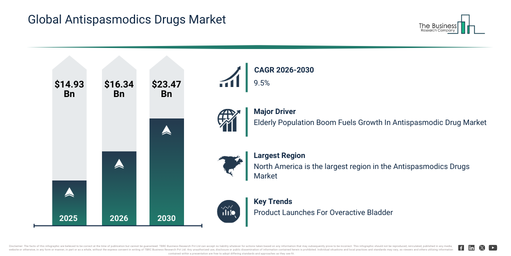
    The antispasmodics drugs market has seen significant expansion in recent years. It is projected to grow from $14.93 billion in 2025 to $16.34 billion in 2026, achieving a compound annual growth rate (CAGR) of 9.5%. This growth during the historic period can be ascribed to a rising incidence of IBS and stomach cramps, the development of hospital pharmacy infrastructure, the increasing adoption of oral antispasmodic tablets, greater awareness about gastrointestinal health, and improvements in drug formulation technologies.

    The antispasmodics drugs market is projected to experience robust expansion over the coming years, reaching a valuation of $23.47 billion in 2030, exhibiting a compound annual growth rate (CAGR) of 9.5%. This anticipated growth during the forecast period is propelled by several factors, including breakthroughs in precision medicine, the creation of injectable and liquid antispasmodic formulations, the widening reach of online pharmacy platforms, an expanding elderly and young patient demographic, and the incorporation of digital health monitoring systems. Key developments expected within this period encompass individualized antispasmodic treatments, sophisticated drug delivery methods, an escalation in gastrointestinal conditions, increased adoption of homecare medications, and an intensified concentration on both pediatric and geriatric patient groups.

    Get A Free Sample Report With In-Depth Market Insights:

    https://www.thebusinessresearchcompany.com/sample.aspx?id=9414&type=smp&utm_source=Blogs&utm_medium=Paid&utm_campaign=Oct_PR

    Antispasmodics Drugs Market Demand Drivers Opening New Revenue Streams

    The antispasmodic drug market is expected to grow, propelled by an increasing elderly population. Individuals aged 65 years and older, considered elderly, face numerous physical and psychological health issues. Antispasmodic drugs are beneficial for these populations in managing symptoms such as muscle spasms or cramping, and can also be used for conditions like irritable bowel syndrome (IBS), gastroesophageal reflux disease (GERD), interstitial cystitis, and uterine cramping. For instance, according to the UK Parliament’s House of Commons Library in July 2024, the UK had 12.7 million people aged 65 or older in 2022. This figure is projected to reach 22.1 million by 2072, making up 27% of the population, thus driving the antispasmodic drug market.

    Antispasmodics Drugs Market Segmentation And Category Overview

    The antispasmodics drugs market covered in this report is segmented –

    1) By Drug: Dicyclomine Hydrochloride, Loperamide Hydrochloride, Other Drugs

    2) By Indication: Irritable Bowel Syndrome, Stomach Cramps, Other Indications

    3) By Route Of Administration: Oral, Parenteral, Other Modes Of Administrations

    4) By Distribution Channel: Hospital Pharmacy, Online Pharmacy, Retail Pharmacy

    5) By End-User: Hospitals, Homecare, Specialty Clinics, Other End-Users

    Subsegments:

    1) By Dicyclomine Hydrochloride: Oral Tablets, Injectable Formulations

    2) By Loperamide Hydrochloride: Oral Tablets, Liquid Formulations

    3) By Other Drugs: Hyoscine Butylbromide (Scopolamine), Peppermint Oil, Atropine, Other Antispasmodics

    Antispasmodics Drugs Market Trends Powering Strategic Industry Growth

    Major companies operating within the antispasmodics drugs market are unveiling new products to maintain their market presence. An illustration of this occurred in January 2023, when Lupin Limited, an Indian pharmaceutical company, launched Fesoterodine Fumarate. This product had received approval from the Food and Drug Administration (FDA), a US federal government agency. Fesoterodine fumarate serves as a generic antispasmodic medication prescribed for certain bladder issues, such as overactive bladder and neurogenic detrusor overactivity. Categorized as an antispasmodic, it operates by relaxing the muscles of the bladder and is accessible as extended-release tablets.

    Antispasmodics Drugs Market Competitive Analysis Of Leading Industry Participants

    Major companies operating in the antispasmodics drugs market are Daiichi Sankyo Company Limited, Fresenius Kabi AG, Hikma Pharmaceuticals plc, Johnson & Johnson Services Inc., Pfizer Inc., Shanghai Fosun Pharmaceutical Co. Ltd., Takeda Pharmaceutical Company Limited, Akorn Inc., Aurobindo Pharma Limited, Lannett Company Inc., Nexus Pharmaceuticals Inc., Actiza Pharmaceutical Private Limited, Blue Cross Laboratories Pvt. Ltd., Dr. Reddy’s Laboratories Ltd., Lexicare Pharma Pvt. Ltd., Solitaire Pharmacia Private Limited, Strides Pharma Science Limited, Wellona Pharma Private Limited, SunGen Pharma LLC, GlaxoSmithKline plc, Novartis AG, Sanofi SA, AstraZeneca plc, Merck & Co. Inc., Bayer AG, Teva Pharmaceutical Industries Ltd., Endo Pharmaceuticals Inc., Sun Pharmaceutical Industries Ltd., Cipla Ltd., Lupin Ltd.

    View The Full Antispasmodics Drugs Market Report:

    https://www.thebusinessresearchcompany.com/report/antispasmodics-drugs-global-market-report?utm_source=Blogs&utm_medium=Paid&utm_campaign=Oct_PR

    Antispasmodics Drugs Market Geographic Landscape: Which Region Leads Industry Growth?

    North America was the largest region in the antispasmodics drugs market in 2025. Asia-Pacific is expected to be the fastest-growing region in the antispasmodics drugs market report during the forecast period. The regions covered in the antispasmodics drugs market report are Asia-Pacific, South East Asia, Western Europe, Eastern Europe, North America, South America, Middle East, Africa.

    Reach Out To Our Team:

    The Business Research Company: https://www.thebusinessresearchcompany.com/

    Americas: +1 310-496-7795

    Asia: +44 7882 955267 & +91 8897263534

    Europe: +44 7882 955267

    Email us at: marketing@tbrc.info

    Follow us on:

    LinkedIn: https://in.linkedin.com/company/the-business-research-company

    YouTube: https://www.youtube.com/channel/UC24_fI0rV8cR5DxlCpgmyFQ

    Global Market Model: https://www.thebusinessresearchcompany.com/global-market-model

  • Antiseptic Bathing Products Market Growth Forecast: Market Size, Key Trends And Emerging Opportunities Through 2030

    Antiseptic Bathing Products Market Growth Forecast: Market Size, Key Trends And Emerging Opportunities Through 2030

    Backed by market attractiveness analysis, total addressable market sizing, company benchmarking matrices, interactive Excel dashboards, wider supply chain intelligence, emerging startup coverage, and detailed product-level insights, The Business Research Company’s 2026 market reports are designed to offer research that is more actionable and strategically valuable than ever.

    Antiseptic Bathing Products Market Size Forecast: How Big Could The Market Get By 2030?

    The antiseptic bathing products market has seen robust expansion over recent years. Its valuation is set to increase from $21.11 billion in 2025 to $22.38 billion in 2026, advancing at a compound annual growth rate (CAGR) of 6.0%. This historical growth can be attributed to several factors including concerns regarding hospital-acquired infections, initiatives for surgical site infection prevention, specific care protocols for ICU patients, the widespread adoption of antiseptics, and established clinical hygiene regulations.

    The market for antiseptic bathing products is projected to experience substantial expansion over the coming years. Its valuation is set to reach $28.22 billion by 2030, demonstrating a compound annual growth rate (CAGR) of 6.0%. This anticipated growth throughout the forecast period stems from factors such as increased investments in infection prevention, a heightened awareness of antimicrobial resistance, the expansion of ICU capacity, the wider adoption of homecare hygiene practices, and evolving patient safety standards. Key trends expected during this period involve an increasing prevalence of chlorhexidine-based products, a sharper focus on infection control within hospitals, the proliferation of no-rinse antiseptic bathing options, the broadening of ICU hygiene protocols, and a growing demand for antimicrobial formulations that are gentle on the skin.

    Get A Free Sample Report With In-Depth Market Insights:

    https://www.thebusinessresearchcompany.com/sample.aspx?id=24147&type=smp&utm_source=Blogs&utm_medium=Paid&utm_campaign=Oct_PR

    Antiseptic Bathing Products Market Growth Backed By Core Demand Fundamentals

    The increasing occurrence of skin conditions is anticipated to fuel the expansion of the antiseptic bathing products market moving ahead. A skin disease is defined as any health issue impacting the skin, manifesting signs like redness, itching, swelling, or lesions. The incidence of skin ailments is significantly increasing as a result of environmental shifts, such as pollution and global warming, which disturb the skin’s natural equilibrium and trigger skin issues. Antiseptic bathing solutions prove beneficial for skin disorders because they aid in cleansing the skin, diminishing detrimental microorganisms, and averting infections, thereby fostering quicker recovery and alleviating inflammation. For example, in June 2025, a Public Health study on fungal skin diseases from Frontiers, a Switzerland-based source, utilized the Autoregressive Integrated Moving Average model to project an upward trajectory from 2022 to 2050, forecasting a 37.2 percent increase in global incidence cases and a 38.6 percent rise in disability-adjusted life years cases, with prevalence cases expected to grow by 40.4 percent. Consequently, the rising occurrence of skin diseases is propelling the expansion of the antiseptic bathing products market.

    Antiseptic Bathing Products Market Segment Outlook: Which Categories Are Growing Fastest?

    The antiseptic bathing products market covered in this report is segmented –

    1) By Product Type: Chlorhexidine Gluconate Bath Towels Or Wipes, Chlorhexidine Gluconate Solutions, Antiseptic Wipes, Antiseptic Bathing Solutions, Antiseptic Shampoo Caps

    2) By Function: Antibacterial, Antifungal, Antiviral, Moisturizing

    3) By Distribution Channel: Online Retailers, Supermarkets And Hypermarkets, Pharmacies And Drug Stores, Convenience Stores

    4) By Application: Intensive Care Units, Surgical Wards, Medical Wards, Other Applications

    5) By End User: Hospitals And Healthcare Centers, Home Care, Sports And Fitness, Personal Care

    Subsegments:

    1) By Chlorhexidine Gluconate Bath Towels Or Wipes: 2% CHG Impregnated Wipes, 4% CHG Impregnated Wipes, Alcohol-Free CHG Wipes, CHG Wipes For ICU And Preoperative Use

    2) By Chlorhexidine Gluconate Solutions: 2% CHG Aqueous Solution, 4% CHG Aqueous Solution, CHG Solution With Alcohol Base, CHG Solution For Surgical Site Preparation

    3) By Antiseptic Wipes: Alcohol-Based Antiseptic Wipes, Iodine-Based Wipes, Benzalkonium Chloride Wipes, Multi-Purpose Clinical Use Wipes

    4) By Antiseptic Bathing Solutions: Povidone-Iodine Bathing Solutions, Benzalkonium Chloride-Based Solutions, Octenidine-Based Bathing Solutions, Herbal And Plant-Derived Antiseptic Solutions

    5) By Antiseptic Shampoo Caps: CHG-Infused Shampoo Caps, Alcohol-Free Antiseptic Shampoo Caps, No-Rinse Shampoo Caps For Bedridden Patients, Shampoo Caps With Moisturizing Agents

    Antiseptic Bathing Products Market Growth Trends Reshaping The Competitive Landscape

    Leading companies in the antiseptic bathing products market are concentrating on developing novel solutions, such as ready-to-use disinfectant wipes, to satisfy the rising consumer demand for easy hygiene and efficient infection prevention. Ready-to-use disinfectant wipes are pre-moistened cleaning products infused with antimicrobial or disinfectant agents, formulated to rapidly and thoroughly eliminate detrimental microorganisms like bacteria, viruses, and fungi from both surfaces and skin. They offer convenient, portable, and instant sanitization without requiring any additional preparation or dilution. For instance, in July 2024, Ecolab Inc., a US-based provider of solutions for water, hygiene, and infection prevention, launched Disinfectant 1 Wipe. This EPA-registered disinfectant wipe is designed to neutralize 48 pathogens in as little as 15 seconds, including SARS-CoV-2, Candida auris, and other organisms responsible for healthcare-associated infections. Featuring a bleach-free composition, Disinfectant 1 Wipe is gentle on surfaces while still delivering powerful antimicrobial efficacy, making it suitable for high-touch surfaces in healthcare facilities, long-term care settings, and other critical environments. This enables healthcare facilities to significantly enhance their infection control protocols, improve patient safety, and curb the spread of healthcare-associated infections.

    Antiseptic Bathing Products Market Leading Companies And Competitive Benchmarking

    Major companies operating in the antiseptic bathing products market are Cardinal Health Inc., Johnson & Johnson, 3M Company, Kimberly-Clark Corporation, Ecolab Inc., B. Braun Melsungen AG, STERIS plc, Paul Hartmann AG, GOJO Industries Inc., Schulke & Mayr GmbH, DermaRite Industries LLC, Medline Industries Inc., Molnlycke Health Care AB, Coloplast A/S, Clorox Healthcare, Reckitt Benckiser Group plc, Cipla Ltd., Himalaya Wellness Company, Unilever plc, Amkay Products LLC

    View The Full Antiseptic Bathing Products Market Report:

    https://www.thebusinessresearchcompany.com/report/antiseptic-bathing-products-global-market-report?utm_source=Blogs&utm_medium=Paid&utm_campaign=Oct_PR

    Antiseptic Bathing Products Market Largest Region: Which Geography Holds The Biggest Share?

    North America was the largest region in the antiseptic bathing products market in 2025. Asia-Pacific is expected to be the fastest-growing region in the forecast period. The regions covered in the antiseptic bathing products market report are Asia-Pacific, South East Asia, Western Europe, Eastern Europe, North America, South America, Middle East, Africa.

    Reach Out To Our Team:

    The Business Research Company: https://www.thebusinessresearchcompany.com/

    Americas: +1 310-496-7795

    Asia: +44 7882 955267 & +91 8897263534

    Europe: +44 7882 955267

    Email us at: marketing@tbrc.info

    Follow us on:

    LinkedIn: https://in.linkedin.com/company/the-business-research-company

    YouTube: https://www.youtube.com/channel/UC24_fI0rV8cR5DxlCpgmyFQ

    Global Market Model: https://www.thebusinessresearchcompany.com/global-market-model

  • Antisense & RNAi Therapeutics Market CAGR Forecast Through 2030: Key Trends Shaping Industry Expansion

    Antisense & RNAi Therapeutics Market CAGR Forecast Through 2030: Key Trends Shaping Industry Expansion

    Featuring market attractiveness scoring, total addressable market sizing, company benchmarking matrices, interactive Excel dashboards, deeper supply chain intelligence, emerging startup tracking, and granular product-level insights, The Business Research Company’s 2026 market reports are built to deliver research that is both more actionable and more strategically valuable.

    Antisense & RNAi Therapeutics Market Revenue Outlook: What CAGR Lies Ahead Through 2030?

    The antisense & rnai therapeutics market size has seen swift expansion in recent years. It is projected to increase from $1.93 billion in 2025 to $2.17 billion in 2026, demonstrating a compound annual growth rate (CAGR) of 12.6%. The historical growth can be attributed to the early adoption of antisense therapies, initial rnai research breakthroughs, the development of oligonucleotide synthesis techniques, increasing demand for targeted therapeutics, and investments in biotech research.

    The antisense & rnai therapeutics market size is projected to experience rapid growth in the upcoming years. It is forecast to grow to $3.53 billion in 2030, achieving a compound annual growth rate (CAGR) of 12.9%. This expansion during the forecast period can be attributed to advancements in delivery technologies, the broadening scope of precision medicine, integration with AI-driven drug discovery, an increase in RNAi-based clinical trials, and rising healthcare investments in emerging markets. Major trends expected in this period include targeted gene silencing, novel delivery mechanisms, personalized therapeutics, nucleic acid stabilization techniques, and ongoing regulatory & clinical advancements.

    Get A Free Sample Report With In-Depth Market Insights:

    https://www.thebusinessresearchcompany.com/sample.aspx?id=3389&type=smp&utm_source=Blogs&utm_medium=Paid&utm_campaign=Oct_PR

    Antisense & RNAi Therapeutics Market Growth Catalysts And Demand Drivers

    The increasing occurrence of coronary artery diseases, neurodegenerative conditions, and infectious diseases is anticipated to fuel the demand for the antisense & RNAi therapeutics market. Gene suppression methods, such as RNA interference and antisense oligonucleotides, find application in treating numerous neurodegenerative conditions through the repair of mutant genes. As an illustration, a report released in January 2024 by the American Heart Association, an organization based in the US, indicated that the age-adjusted death rate attributed to cardiovascular diseases climbed to 233.3 per 100,000, which represented a 4.0% increase compared to the prior year. Consequently, the expanding prevalence of various neurodegenerative diseases and infectious diseases is foreseen to stimulate the expansion of the antisense & RNAi therapeutics market.

    Antisense & RNAi Therapeutics Market Segment Landscape: Which Areas Lead Development?

    The antisense & rnai therapeutics market covered in this report is segmented –

    1) By Technology: RNA Interference, Antisense RNA

    2) By Route Of Administration: Intravenous Injections, Intra-dermal Injections, Other Delivery Methods

    3) By Indication: Oncology, Cardiovascular Diseases (CVDs), Respiratory Disorders, Neurological Disorders, Infectious Diseases, Other Indications

    Subsegments:

    1) By RNA Interference (RNAi): Small Interfering RNA (siRNA), Short Hairpin RNA (shRNA), Dicer-substrate siRNA, MicroRNA (miRNA) Based Therapeutics

    2) By Antisense RNA: Antisense Oligonucleotides (ASOs), Morpholino Oligomers, Locked Nucleic Acids (LNAs), Gapmer Antisense Oligonucleotides

    Antisense & RNAi Therapeutics Market Trends Shaping Long-Term Demand

    Leading companies in the antisense & RNAi therapeutics market are pursuing strategic initiatives, including collaborations and partnerships, to thrive in the increasingly competitive landscape. A strategic collaboration represents a business approach where two or more entities work together towards a common goal or objective. For example, in January 2023, Orbit Discovery Limited, a US-based firm providing peptide discovery services, entered into a partnership with SanegeneBio Inc., a UK-based company developing novel RNAi-based medicines. This partnership aimed to identify tissue-specific delivery of RNA therapeutics for efficient gene knockdown, with the objective of developing a portfolio of advanced RNAi therapeutics. The collaboration involves hit identification and cell-based internalization studies, granting Sanegene the option to further develop the hits identified from screening activities, by leveraging Orbit’s proprietary technology for rapid peptide lead discovery. Orbit Discovery’s unique peptide display engine allows for the screening of large peptide libraries, leading to faster discovery times for relevant peptide leads based on affinity and functional screens.

    Antisense & RNAi Therapeutics Market Industry Leaders And Competitive Landscape

    Major companies operating in the antisense & rnai therapeutics market are Biogen Inc., Ionis Pharmaceuticals Inc., Alnylam Pharmaceuticals Inc., Arrowhead Pharmaceuticals Inc., Moderna Inc., Sanofi S.A., Dicerna Pharmaceuticals Inc., Arbutus Biopharma Corporation, Acuitas Therapeutics, Adhera Therapeutics Inc., EdiGene Inc., Sirnaomics Inc., Suzhou Ribo Life Science Co. Ltd, Biocon Limited, Quark Pharmaceuticals, GlaxoSmithKline Plc, Shanghai Junshi Biosciences Co. Ltd., AstraZeneca, Benitec Biopharma Limited, Silence Therapeutics, Dynacure, CN Bio Innovations, Sarepta Therapeutics, Mallinckrodt, Regeneron Pharmaceuticals Inc., Alcyone Lifesciences Inc., Bio-Path Holdings Inc, Calando Pharmaceuticals, Enzon Pharmaceuticals Inc, Celnova Pharma, Pfizer Inc., Taiba Pharma, Gen İlaç ve Sağlık Ürünleri A.Ş., Egypt Otsuka Pharmaceutical

    View The Full Antisense & RNAi Therapeutics Market Report:

    https://www.thebusinessresearchcompany.com/report/antisense-and-rnai-therapeutics-global-market-report?utm_source=Blogs&utm_medium=Paid&utm_campaign=Oct_PR

    Antisense & RNAi Therapeutics Market Regional Analysis: Which Geography Leads On Revenue?

    North America was the largest region in the antisense & RNAi therapeutics market in 2025. The regions covered in the antisense & rnai therapeutics market report are Asia-Pacific, South East Asia, Western Europe, Eastern Europe, North America, South America, Middle East, Africa.

    Reach Out To Our Team:

    The Business Research Company: https://www.thebusinessresearchcompany.com/

    Americas: +1 310-496-7795

    Asia: +44 7882 955267 & +91 8897263534

    Europe: +44 7882 955267

    Email us at: marketing@tbrc.info

    Follow us on:

    LinkedIn: https://in.linkedin.com/company/the-business-research-company

    YouTube: https://www.youtube.com/channel/UC24_fI0rV8cR5DxlCpgmyFQ

    Global Market Model: https://www.thebusinessresearchcompany.com/global-market-model

  • Anti-Rabies Serum Market To Witness 5.3% CAGR Growth Through 2030: Key Industry Drivers

    Anti-Rabies Serum Market To Witness 5.3% CAGR Growth Through 2030: Key Industry Drivers

    Built to provide research that’s more actionable and strategically valuable, The Business Research Company’s 2026 market reports include market attractiveness analysis, total addressable market sizing, company benchmarking matrices, interactive Excel dashboards, broader supply chain intelligence, emerging startup tracking, and in-depth product insights.

    Anti-Rabies Serum Market Growth Analysis: How Will Revenue Trend Over The Forecast Period?

    The anti-rabies serum market size has witnessed robust expansion in recent years. Its value is projected to increase from $1.5 billion in 2025 to $1.58 billion in 2026, maintaining a compound annual growth rate (CAGR) of 5.6%. Historically, this growth can be attributed to factors such as an escalating incidence of rabies exposure cases, the expansion of hospital-based emergency treatment protocols, the accessibility of equine-derived immunoglobulins, governmental support for rabies control initiatives, and a rising public awareness of post-exposure prophylaxis.

    The anti-rabies serum market size is anticipated to experience substantial growth in the upcoming years. It is projected to reach $1.95 billion in 2030, showing a compound annual growth rate (CAGR) of 5.3%. This expansion during the forecast period can be attributed to factors such as the increasing adoption of human anti-rabies immunoglobulin, the broadening of rabies prevention initiatives in developing regions, rising investments in biologics manufacturing, a growing emphasis on safer serum alternatives, and the strengthening of public health vaccination frameworks. Major trends expected in this period include the increasing use of human-derived immunoglobulins, a rising preference for prefilled syringe formats, the expansion of cold-chain optimized serum distribution, a heightened focus on high-purity antibody formulations, and improved standardization of post-exposure prophylaxis protocols.

    Get A Free Sample Report With In-Depth Market Insights:

    https://www.thebusinessresearchcompany.com/sample.aspx?id=20468&type=smp&utm_source=Blogs&utm_medium=Paid&utm_campaign=Oct_PR

    Anti-Rabies Serum Market Opportunity Drivers: What’s Unlocking New Revenue Potential?

    The increasing incidence of dog bites is anticipated to stimulate the expansion of the anti-rabies serum market. Dog bites are defined as injuries sustained when a dog bites or scratches a person, ranging in severity from minor to severe. These injuries can lead to infections, serious wounds, and, in some cases, the transmission of diseases like rabies. Effective prevention and immediate medical attention are essential for managing and minimizing the risks associated with dog bites. The escalating prevalence of dog bites is attributable to several factors, including heightened urbanization, which leads to more frequent interactions between people and dogs, a greater number of unrestrained or inadequately trained dogs, and insufficient public awareness or education regarding dog behavior and bite prevention. This rise in dog bite prevalence has subsequently increased the demand for anti-rabies serum, as its timely administration is critical for preventing rabies onset in individuals exposed to potentially infected animals. For instance, in 2023, the American Veterinary Medical Association, a US-based non-profit organization, stated that the average cost for dog bite insurance claims was $58,545. Insurers paid out $1.12B in liability claims related to dog bites and other dog-related injuries in 2023, with these claims increasing by nearly 10% in 2023. Thus, the growing prevalence of dog bites is a key driver for the growth of the anti-rabies serum market.

    Anti-Rabies Serum Market Segments: Where Is Growth Concentrated?

    The anti-rabies serum market covered in this report is segmented –

    1) By Type: Human Anti-rabies Immunoglobulin, Equine Anti-rabies Immunoglobulin

    2) By Dosage And Form: Vials, Prefilled Syringes

    3) By Route of Administration: Intravenous, Intramuscular

    4) By End User: Hospitals, Clinics, Veterinary Hospitals

    Subsegments:

    1) By Human Anti-Rabies Immunoglobulin: Monovalent Human Anti-Rabies Immunoglobulin, Polyvalent Human Anti-Rabies Immunoglobulin, Intramuscular Human Anti-Rabies Immunoglobulin, Intravenous Human Anti-Rabies Immunoglobulin, Freeze-Dried Human Anti-Rabies Immunoglobulin

    2) By Equine Anti-Rabies Immunoglobulin: Freeze-Dried Equine Anti-Rabies Immunoglobulin, Liquid Equine Anti-Rabies Immunoglobulin, Monovalent Equine Anti-Rabies Immunoglobulin, Polyvalent Equine Anti-Rabies Immunoglobulin

    Anti-Rabies Serum Market Innovation Trends Shaping Future Development

    Leading firms within the anti-rabies serum market are engaging in strategic collaborations with the goal of improving product innovation and broadening their market presence. These alliances represent a method where businesses utilize one another’s capabilities and assets to attain shared advantages and successful outcomes. An example of this is the July 2023 collaboration between Kedrion S.p.A., a US-based biopharmaceutical company, and Kamada, an Israel-based biopharmaceutical company, for the distribution of KEDRAB (Rabies Immune Globulin [Human]) within the US. This partnership has been crucial for the joint development and licensing of the product in the U.S., concurrently fostering greater awareness about the disease. As a result of their combined initiatives, the alliance has contributed to safeguarding people exposed to bites from rabid animals against severe and potentially fatal illnesses.

    Anti-Rabies Serum Market Key Participants And Competitive Landscape

    Major companies operating in the anti-rabies serum market are Merck & Co Inc., Sanofi SA, GlaxoSmithKline PLC, Takeda Pharmaceutical Company Limited, HCX Pharmaceuticals LLP, Intas Pharmaceuticals Ltd, Bavarian Nordic AS, Serum Institute of India Pvt Ltd., Bharat Serums And Vaccines Limited, Indian Immunologicals Ltd., Bharat Biotech., National Institute of Health Islamabad, ViNS Bioproducts Ltd., Shanghai Serum Bio-technology, Premium Serums and Vaccines Pvt Ltd., Congruent Pharmachem, Haffkine Bio Pharmaceutical Corporation Limited, LEXICARE PHARMA PVT. LTD., Avin Darou, Central Research Institute Kasauli, Vigilomed Pharmaceuticals

    View The Full Anti-Rabies Serum Market Report:

    https://www.thebusinessresearchcompany.com/report/anti-rabies-serum-global-market-report?utm_source=Blogs&utm_medium=Paid&utm_campaign=Oct_PR

    Anti-Rabies Serum Market Geographic Spread And Regional Opportunities

    North America was the largest region in the anti-rabies serum market in 2025. The regions covered in the anti-rabies serum market report are Asia-Pacific, South East Asia, Western Europe, Eastern Europe, North America, South America, Middle East, Africa.

    Reach Out To Our Team:

    The Business Research Company: https://www.thebusinessresearchcompany.com/

    Americas: +1 310-496-7795

    Asia: +44 7882 955267 & +91 8897263534

    Europe: +44 7882 955267

    Email us at: marketing@tbrc.info

    Follow us on:

    LinkedIn: https://in.linkedin.com/company/the-business-research-company

    YouTube: https://www.youtube.com/channel/UC24_fI0rV8cR5DxlCpgmyFQ

    Global Market Model: https://www.thebusinessresearchcompany.com/global-market-model

  • Antipyretic Drugs For Children Market Projected For Strong Expansion Through 2030: Key Trends And Future Outlook

    Antipyretic Drugs For Children Market Projected For Strong Expansion Through 2030: Key Trends And Future Outlook

    Backed by market attractiveness analysis, total addressable market sizing, company benchmarking matrices, interactive Excel dashboards, wider supply chain intelligence, emerging startup coverage, and detailed product-level insights, The Business Research Company’s 2026 market reports are designed to offer research that is more actionable and strategically valuable than ever.

    Antipyretic Drugs For Children Market Forecast: What Value Will The Market Reach By 2030?

    The antipyretic drugs for children market size has experienced robust growth in recent years. Its value is projected to climb from $3.4 billion in 2025 to $3.61 billion in 2026, achieving a compound annual growth rate (CAGR) of 6.3%. This expansion in the past can be attributed to the high prevalence of childhood infections, widespread use of acetaminophen, growth in hospital pediatric care, established dosing guidelines, and the expansion of retail pharmacies.

    The antipyretic drugs for children market is projected to experience substantial expansion over the next few years. It is anticipated to grow to $4.61 billion in 2030, demonstrating a compound annual growth rate (CAGR) of 6.3%. This projected increase throughout the forecast period can be attributed to factors such as a rising pediatric population, increasing self-care practices, the expansion of pediatric over-the-counter (OTC) products, improved healthcare access, and enhanced drug safety labeling. Key trends expected during the forecast period include a higher incidence of pediatric fever cases, a growing preference for liquid dosage forms, the continued expansion of OTC pediatric medications, increased parental awareness regarding fever management, and a greater demand for age-specific formulations.

    Get A Free Sample Report With In-Depth Market Insights:

    https://www.thebusinessresearchcompany.com/sample.aspx?id=18956&type=smp&utm_source=Blogs&utm_medium=Paid&utm_campaign=Oct_PR

    Antipyretic Drugs For Children Market Growth Momentum: What Factors Are Shaping Demand?

    The rising prevalence of viral and bacterial infections is projected to advance the antipyretic drugs for children market moving ahead. Viral infections are characterized by diseases resulting from viruses entering host cells, whereas bacterial infections stem from the proliferation of detrimental bacteria inside the body. The occurrence of these infections is on the rise, primarily due to the reappearance of respiratory pathogens following the easing of pandemic controls. The antipyretic drugs for children market plays a crucial role in patient management by offering medications that reduce fever, thereby alleviating discomfort and averting complications during pediatric infections. As an illustration, data from the Centers for Disease Control and Prevention, a US-based government agency, revealed in March 2024 that tuberculosis cases climbed from 8,320 in 2022 to 9,615 in 2023, marking an increase of 1,295 cases. Consequently, the increasing incidence of viral and bacterial infections is propelling the expansion of the antipyretic drugs for children market.

    Antipyretic Drugs For Children Market Segment Analysis: What Are The Core Market Categories?

    The antipyretic drugs for children market covered in this report is segmented –

    1) By Drug Class: Acetaminophen, Ibuprofen, Other Drug Classes

    2) By Dosage Form: Tablets, Syrups, Suppositories, Other Dosage Forms

    3) By Age Group: Newborns, Infants, Toddlers, Children

    Antipyretic Drugs For Children Market Trends Redefining Industry Growth

    Leading companies within the antipyretic drugs for children market are prioritizing the development of advanced drug formulations, such as medicine gummy bites, which offer chewable, flavorful, and easy-to-administer dosage forms to enhance compliance and comfort among young patients. Medicine gummy bites are child-friendly chewable formulations containing an accurately measured dose of an antipyretic agent, like acetaminophen, specifically designed to mask unpleasant tastes, reduce swallowing difficulties, and simplify administration for caregivers while ensuring a consistent therapeutic effect. For instance, in October 2023, DrKids, a US-based pharmaceutical company, launched an acetaminophen gummy bite, providing a child-friendly alternative for pain and fever relief that features an exact pre-measured dosing system for accurate administration, a palatable chewable gummy format to improve acceptance, and a convenient design that supports safe, stress-free dosing for parents.

    Antipyretic Drugs For Children Market Top Companies Driving Competitive Growth

    Major companies operating in the antipyretic drugs for children market are Pfizer Inc., Johnson & Johnson, Merck & Co. Inc., Bayer AG, Novartis AG, Sanofi S.A., Bristol Myers Squibb, GlaxoSmithKline plc, Reckitt Benckiser Group, Viatris Inc., Teva Pharmaceutical Industries Ltd., Sun Pharmaceutical Industries Ltd., Perrigo Company plc, Aurobindo Pharma Ltd., Dr. Reddy’s Laboratories Ltd., Cipla Ltd., Lupin Limited, Towa Pharmaceutical Co Ltd, Glenmark Pharmaceuticals Ltd., Alkem Laboratories Limited

    View The Full Antipyretic Drugs For Children Market Report:

    https://www.thebusinessresearchcompany.com/report/antipyretic-drugs-for-children-global-market-report?utm_source=Blogs&utm_medium=Paid&utm_campaign=Oct_PR

    Antipyretic Drugs For Children Market Top Region By Revenue And Market Share

    North America was the largest region in the antipyretic drugs for children market in 2025. Asia-Pacific is expected to be the fastest-growing region in the forecast period. The regions covered in the antipyretic drugs for children market report are Asia-Pacific, South East Asia, Western Europe, Eastern Europe, North America, South America, Middle East, Africa.

    Reach Out To Our Team:

    The Business Research Company: https://www.thebusinessresearchcompany.com/

    Americas: +1 310-496-7795

    Asia: +44 7882 955267 & +91 8897263534

    Europe: +44 7882 955267

    Email us at: marketing@tbrc.info

    Follow us on:

    LinkedIn: https://in.linkedin.com/company/the-business-research-company

    YouTube: https://www.youtube.com/channel/UC24_fI0rV8cR5DxlCpgmyFQ

    Global Market Model: https://www.thebusinessresearchcompany.com/global-market-model
  • Antipsychotic Drugs Market Outlook 2026–2030: Growth Trends, Market Dynamics And Emerging Opportunities

    Antipsychotic Drugs Market Outlook 2026–2030: Growth Trends, Market Dynamics And Emerging Opportunities

    Featuring market attractiveness scoring, total addressable market sizing, company benchmarking matrices, interactive Excel dashboards, deeper supply chain intelligence, emerging startup tracking, and granular product-level insights, The Business Research Company’s 2026 market reports are built to deliver research that is both more actionable and more strategically valuable.

    Antipsychotic Drugs Market Size Outlook: How Quickly Will Revenue Expand Through 2030?

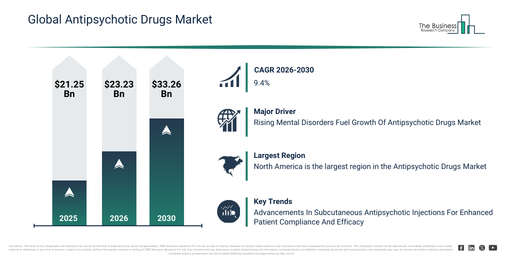
    The antipsychotic drugs market has experienced robust growth in recent years. It is forecast to increase from $21.25 billion in 2025 to $23.23 billion in 2026, exhibiting a compound annual growth rate (CAGR) of 9.3%. This historical expansion is largely due to the introduction of first-generation antipsychotics, a greater understanding of mental health disorders, the enhancement of hospital and clinical infrastructure, an uptick in the prevalence of schizophrenia and bipolar disorder, and elevated research and development investments in neuropsychiatric drugs.

    The antipsychotic drugs market is set for substantial growth in the upcoming years. It is projected to expand to a size of $33.26 billion in 2030, demonstrating a compound annual growth rate (CAGR) of 9.4%. This anticipated expansion during the forecast period is driven by factors such as advancements in atypical and partial dopamine agonists, the integration of precision medicine techniques, the adoption of AI in mental health diagnostics, the widening reach of online pharmacy distribution, and a greater emphasis on long-acting injectable formulations. Prominent trends expected in this period include personalized antipsychotic therapies, an increasing geriatric population, the rising prevalence of schizophrenia and bipolar disorder, the emergence of telepsychiatry and digital mental health platforms, and the continued development of long-acting injectable antipsychotics.

    Get A Free Sample Report With In-Depth Market Insights:

    https://www.thebusinessresearchcompany.com/sample.aspx?id=18780&type=smp&utm_source=Blogs&utm_medium=Paid&utm_campaign=Oct_PR

    Antipsychotic Drugs Market Expansion Drivers: What’s Shaping Future Growth?

    The increasing prevalence of mental disorders is anticipated to stimulate the expansion of the antipsychotic drug market in the future. Mental disorders, also referred to as mental illnesses, are conditions affecting an individual’s thought processes, conduct, emotional state, and overall mental well-being. Factors influencing instances of mental disorders include stress levels, societal pressures, genetic predispositions, biochemical imbalances, neurodevelopmental concerns, and existing physical health conditions. Antipsychotic drugs manage mental disorders through modifying the activity of neurotransmitters, chiefly dopamine and serotonin, thereby diminishing psychotic symptoms, steadying mood, and enhancing cognitive and emotional functions. For example, in November 2023, a survey by the Substance Abuse and Mental Health Services Administration (SAMHSA), a US public health agency, revealed that approximately 6% of adults aged 18 or older, amounting to 15.4 million people, reported serious mental illness (SMI). Additionally, in September 2024, the Australian Institute of Health and Welfare, an Australian government agency, projected that the population with dementia in Australia is anticipated to more than double from about 411,100 in 2023 to 849,300 by 2058, impacting approximately 315,500 men and 533,800 women. Consequently, the rising occurrence of mental disorders is fueling the antipsychotic drug market.

    Antipsychotic Drugs Market Segment Breakdown: Which Categories Lead On Revenue?

    The antipsychotic drugs market covered in this report is segmented –

    1) By Therapeutic Class: First Generation, Second Generation, Third Generation

    2) By Disease: Schizophrenia, Bipolar Disorder, Unipolar Depression, Dementia, Other Diseases

    3) By Distribution Channel: Hospital Pharmacies, Drug Stores, Online Pharmacies

    Subsegments:

    1) By First Generation: Typical Antipsychotics, Phenothiazines, Butyrophenones, Thioxanthenes, Dibenzoxazepines

    2) By Second Generation: Atypical Antipsychotics, Clozapine, Olanzapine, Risperidone, Quetiapine, Aripiprazole, Paliperidone, Lurasidone

    3) By Third Generation: Partial Dopamine Agonists, Aripiprazole, Brexpiprazole, Cariprazine

    Antipsychotic Drugs Market Strategic Trends: What Defines The Next Growth Phase?

    Leading companies in the antipsychotic drug market are concentrating on developing advanced medical solutions, such as subcutaneous atypical antipsychotic injections, to achieve better patient adherence and enhanced efficacy compared to traditional oral treatments. These subcutaneous atypical antipsychotic injections are psychiatric medications administered beneath the skin to manage mental illnesses, maintain stable blood levels, and improve symptom control. For instance, in April 2023, Teva Pharmaceutical Industries Ltd., an Israel-based pharmaceutical company, and MedinCell SA, a France-based producer of biological products and pharmaceutical preparations, introduced UZEDY, which received U.S. Food and Drug Administration (FDA) approval. This product is an extended-release injectable formulation of risperidone, designed as a long-acting subcutaneous injection offering flexible dosing intervals of one or two months. UZEDY incorporates MedinCell’s proprietary SteadyTeq technology, ensuring a consistent release of the medication, reaching therapeutic levels within 6–24 hours of administration. Clinical trials demonstrated that UZEDY reduced the risk of schizophrenia relapse by up to an 80% compared to a placebo. Its purpose is to address adherence issues commonly linked with oral antipsychotics, which frequently result in relapse.

    Antipsychotic Drugs Market Leading Players And Competitive Positioning

    Major companies operating in the antipsychotic drugs market are Pfizer Inc., Johnson & Johnson Services Inc., Merck And Co. Inc., AbbVie Inc., Bristol-Myers Squibb Company, AstraZeneca PLC, GlaxoSmithKline PLC, Takeda Pharmaceutical Company Limited, Eli Lilly And Company, Teva Pharmaceutical Industries Ltd., Sun Pharmaceutical Industries Ltd., Otsuka Pharmaceutical Co. Ltd., Aurobindo Pharma Ltd., Cipla Ltd., H. Lundbeck A/S, Dr. Reddy’s Laboratories Ltd., Intas Pharmaceuticals Ltd., Apotex Inc., Lupin Limited, Glenmark Pharmaceuticals Ltd., Torrent Pharmaceuticals Ltd., Alkermes plc

    View The Full Antipsychotic Drugs Market Report:

    https://www.thebusinessresearchcompany.com/report/antipsychotic-drugs-global-market-report?utm_source=Blogs&utm_medium=Paid&utm_campaign=Oct_PR

    Antipsychotic Drugs Market Regional Analysis And Top Geography

    North America was the largest region in the antipsychotic drugs market in 2025. Asia-Pacific is expected to be the fastest-growing region in the forecast period. The regions covered in the antipsychotic drugs market report are Asia-Pacific, South East Asia, Western Europe, Eastern Europe, North America, South America, Middle East, Africa.

    Reach Out To Our Team:

    The Business Research Company: https://www.thebusinessresearchcompany.com/

    Americas: +1 310-496-7795

    Asia: +44 7882 955267 & +91 8897263534

    Europe: +44 7882 955267

    Email us at: marketing@tbrc.info

    Follow us on:

    LinkedIn: https://in.linkedin.com/company/the-business-research-company

    YouTube: https://www.youtube.com/channel/UC24_fI0rV8cR5DxlCpgmyFQ

    Global Market Model: https://www.thebusinessresearchcompany.com/global-market-model