Month: October 2026

  • Anti-Parkinson Drugs Market Growth Outlook From $11.46 Billion In 2026 To $14.28 Billion By 2030

    Anti-Parkinson Drugs Market Growth Outlook From $11.46 Billion In 2026 To $14.28 Billion By 2030

    Built to provide research that’s more actionable and strategically valuable, The Business Research Company’s 2026 market reports include market attractiveness analysis, total addressable market sizing, company benchmarking matrices, interactive Excel dashboards, broader supply chain intelligence, emerging startup tracking, and in-depth product insights.

    Anti-Parkinson Drugs Market Size, Value And Growth Trajectory Through 2030

    The anti-parkinson drugs market has shown consistent expansion in recent years. It is projected to expand from $10.96 billion in 2025 to $11.46 billion in 2026, reflecting a compound annual growth rate (CAGR) of 4.6%. This historical expansion can be attributed to several factors such as the growth of the aging population, a rise in Parkinson’s disease diagnoses, the established use of levodopa, enhancements in neurological care, and the continuing requirements for managing chronic diseases.

    The anti-parkinson drugs market size is anticipated to expand significantly in the coming years, reaching $14.28 billion in 2030, driven by a compound annual growth rate (CAGR) of 5.6%. This projected growth throughout the forecast period stems from factors such as the increasing prevalence of neurodegenerative disorders, breakthroughs in neuroprotective drugs, the wider availability of transdermal therapies, improved healthcare accessibility, and a dedicated focus on enhancing quality of life. Notable trends during this period are expected to include a growing demand for dopaminergic therapies, an increased uptake of extended-release formulations, a heightened emphasis on symptom management, the development of more combination drug therapies, and advancements in drug delivery technologies.

    Get A Free Sample Report With In-Depth Market Insights:

    https://www.thebusinessresearchcompany.com/sample.aspx?id=3462&type=smp&utm_source=Blogs&utm_medium=Paid&utm_campaign=Oct_PR

    Anti-Parkinson Drugs Market Development Factors: What’s Supporting Demand?

    The increasing incidence of mental health disorders is expected to propel the growth of the mental wellness market going forward. Mental health disorders represent a clinically substantial impairment affecting a person’s cognition, emotional regulation, or conduct. The rising prevalence of mental disorders stems from increased exposure to chronic stress and adverse life experiences that overwhelm individual coping mechanisms and trigger psychological dysfunction. This escalating incidence of mental disorders also expands the anti-Parkinson drugs market, as these medications assist in minimizing and curing mental disorders. For instance, in October 2025, the Institute for Health Metrics and Evaluation, a US-based health research organization, reported that 15% of the world’s population experienced mental disorders in 2023, and 17% of the total years lived with disability globally were attributed to mental disorders in the same year. Consequently, the high prevalence of mental disorder is driving the growth of the anti-Parkinson drugs market.

    Anti-Parkinson Drugs Market Segmentation: How Does The Market Break Down By Category?

    The anti-parkinson drugs market covered in this report is segmented –

    1) By Drugs Class: Levodopa Or Carbidopa, Dopamine Receptor Agonists, Monoamine Oxidase Type B (MAO-B) Inhibitors, Catechol-O-Methyltransferase (COMT)-inhibitors, Anticholinergics, Other Drugs

    2) By Route of Administration: Oral, Injection, Transdermal

    3) By Distribution Channel: Hospital Pharmacies, Retailer Pharmacies, Online Pharmacies

    Subsegments:

    1) By Levodopa Or Carbidopa: Immediate-Release Levodopa Or Carbidopa, Extended-Release Levodopa Or Carbidopa

    2) By Dopamine Receptor Agonists: Pramipexole, Ropinirole, Rotigotine

    3) By Monoamine Oxidase Type B (MAO-B) Inhibitors: Selegiline, Rasagiline, Safinamide

    4) By Catechol-O-Methyltransferase (COMT)-Inhibitors: Entacapone, Tolcapone

    5) By Anticholinergics: Benztropine, Trihexyphenidyl

    6) By Other Drugs: Amantadine, Apomorphine

    Anti-Parkinson Drugs Market Transformation Trends: What Innovations Are Driving Change?

    Companies active in the anti-Parkinson drugs market are prioritizing the development of advanced therapeutic solutions, such as those targeting motor fluctuations and dyskinesia, to improve symptom control and reduce undesirable side effects. Motor fluctuations and dyskinesia often pose significant challenges in treating Parkinson’s disease, impacting patient well-being. For example, in January 2024, AbbVie Inc., a US-based pharmaceutical company, launched PRODUODOPA. PRODUODOPA (foslevodopa/foscarbidopa) stands as the first subcutaneous 24-hour infusion therapy for advanced Parkinson’s disease, specifically designed to address severe motor fluctuations and dyskinesia when other treatments have failed. It works by continuously delivering levodopa, which may lead to an increase in ‘on’ time and better symptom management.

    Anti-Parkinson Drugs Market Competitive Overview And Top Companies

    Major companies operating in the anti-parkinson drugs market are GlaxoSmithKline plc, Pfizer Inc., Novartis AG, F. Hoffmann-La Roche AG, UCB S.A, Teva Pharmaceutical Industries Ltd., AbbVie Inc., Mylan NV, C.H. Boehringer Sohn AG & Co. KG, Orion Pharma Ltd., Sun Pharmaceutical Industries Ltd., Wockhardt Ltd., Reddy’s Laboratories Ltd., Intas Pharmaceuticals Ltd., US WorldMeds LLC, Zydus Lifesciences Limited, Chemical Industrial & Pharmaceutical Laboratories Ltd., Strides Shasun Ltd., Upsher-Smith Laboratories LLC, H. Lundbeck A/S, Vertical Pharmaceuticals LLC, Zambon SPA, Valeant Pharmaceuticals International Inc., Neurocrine Biosciences Inc., Supernus Pharmaceuticals Inc.

    View The Full Anti-Parkinson Drugs Market Report:

    https://www.thebusinessresearchcompany.com/report/anti-parkinson-drugs-global-market-report?utm_source=Blogs&utm_medium=Paid&utm_campaign=Oct_PR

    Anti-Parkinson Drugs Market Geographic Analysis: Where Is Demand Rising Fastest?

    North America was the largest region in the anti-Parkinson drugs market in 2025. Middle East is expected to be the fastest-growing region in the anti-parkinson drugs market during the forecast period. The regions covered in the anti-parkinson drugs market report are Asia-Pacific, South East Asia, Western Europe, Eastern Europe, North America, South America, Middle East, Africa.

    Reach Out To Our Team:

    The Business Research Company: https://www.thebusinessresearchcompany.com/

    Americas: +1 310-496-7795

    Asia: +44 7882 955267 & +91 8897263534

    Europe: +44 7882 955267

    Email us at: marketing@tbrc.info

    Follow us on:

    LinkedIn: https://in.linkedin.com/company/the-business-research-company

    YouTube: https://www.youtube.com/channel/UC24_fI0rV8cR5DxlCpgmyFQ

    Global Market Model: https://www.thebusinessresearchcompany.com/global-market-model
  • Antiparasitic Drugs Market Forecast To Reach $36.13 Billion By 2030: Key Growth Drivers And Industry Trends

    Antiparasitic Drugs Market Forecast To Reach $36.13 Billion By 2030: Key Growth Drivers And Industry Trends

    Backed by market attractiveness analysis, total addressable market sizing, company benchmarking matrices, interactive Excel dashboards, wider supply chain intelligence, emerging startup coverage, and detailed product-level insights, The Business Research Company’s 2026 market reports are designed to offer research that is more actionable and strategically valuable than ever.

    Antiparasitic Drugs Market CAGR Outlook And Future Development

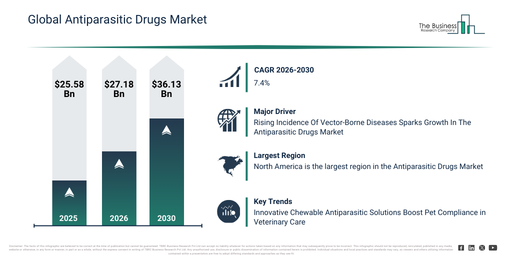
    The antiparasitic drugs market has shown substantial growth in recent years. It is projected to expand from $25.58 billion in 2025 to $27.18 billion in 2026, demonstrating a compound annual growth rate (CAGR) of 6.2%. The historical increase in this market can be attributed to the rising prevalence of parasitic diseases, restricted access to modern antiparasitic drugs in developing regions, a long-standing reliance on monotherapy drugs, growing demand for veterinary care, and inadequate awareness concerning preventive measures.

    The size of the antiparasitic drugs market is projected to experience substantial expansion in the coming years. This market is set to reach $36.13 billion in 2030, exhibiting a compound annual growth rate (CAGR) of 7.4%. The anticipated expansion during this period can be ascribed to several factors, including increased adoption of combination therapy, progress in precision medicine for parasitic infections, a heightened emphasis on animal health and livestock safeguarding, the widening of emerging markets, and the creation of innovative delivery mechanisms for antiparasitic drugs. Key trends anticipated during the forecast timeframe encompass a rising occurrence of parasitic infections, the evolution of combination antiparasitic drugs, an increase in animal healthcare uses, a preference shift towards oral and injectable treatments, and the appearance of new antiparasitic agents.

    Get A Free Sample Report With In-Depth Market Insights:

    https://www.thebusinessresearchcompany.com/sample.aspx?id=12927&type=smp&utm_source=Blogs&utm_medium=Paid&utm_campaign=Oct_PR

    Antiparasitic Drugs Market Industry Drivers: What’s Behind The Revenue Growth?

    The rising occurrence of vector-borne diseases is anticipated to drive the expansion of the antiparasitic drugs market in the future. These are defined as infectious illnesses spread to humans or animals via arthropod bites, mainly from insects such as mosquitoes, ticks, and flies. Notable examples of such diseases include malaria, dengue, and yellow fever. Antiparasitic drugs are crucial in preventing the dissemination of vector-borne diseases by targeting and eradicating the causative parasites. Certain antiparasitic medications, such as chloroquine, doxycycline, and atovaquone-proguanil, are frequently administered for malaria treatment. As an illustration, data from the Centers for Disease Control and Prevention, a US-based Government agency, for June 2024 indicates that from January to June 2024, the Americas saw over 9.7 million dengue cases, which is more than twice the 4.6 million cases reported in 2023. Within the United States, Puerto Rico recorded 1,498 dengue cases, and an additional 745 cases were found among U.S. travelers returning from regions where the disease is prevalent. Consequently, the rising prevalence of vector-borne diseases is a key factor propelling the expansion of the antiparasitic drugs market.

    Antiparasitic Drugs Market Segment Trends And Revenue Contributors

    The antiparasitic drugs market covered in this report is segmented –

    1) By Product Type: Anthelmintics, Antiprotozoals, Ectoparasiticide, Other Products

    2) By Treatment: Avermectins, Bezimidazoles, Pyrimidines, Imidazolesthiazoles

    3) By Route of Administration: Oral, Injectable, Topical

    4) By End User: Hospitals, Homecare, Specialty Clinics, Other End Users

    Subsegments:

    1) By Anthelmintics: Benzimidazoles, Ivermectin, Pyrantel Pamoate, Praziquantel

    2) By Antiprotozoals: Metronidazole, Tinidazole, Nitazoxanide, Pentamidine

    3) By Ectoparasiticides: Permethrin, Malathion, Fipronil

    4) By Other Products: Combination Antiparasitic Drugs, Novel Antiparasitic Agents

    #Antiparasitic Drugs Market Growth Trends: What’s Shaping The Future Outlook?

    Major companies within the antiparasitic drugs market are concentrating on developing innovative products, such as chewable veterinary items, to improve ease of administration and increase pet compliance. These chewable veterinary products are flavored, simple-to-administer tablets or treats specifically designed to deliver medication to animals. They boost pet compliance by making the treatment process more palatable and less stressful. For example, in April 2024, C.H. Boehringer Sohn AG and Co. KG, a Germany-based pharmaceutical company, introduced NexGard Spectra to provide comprehensive parasite control. NexGard SPECTRA is a soft, flavorful chew that offers complete internal and external parasite protection for dogs, effectively targeting fleas, ticks, heartworms, and various intestinal worms in a single monthly dose. It demonstrates rapid action, killing fleas within four hours of administration and achieving over 99% effectiveness against multiple parasites shortly thereafter.

    Antiparasitic Drugs Market Competitive Landscape: Which Companies Lead The Industry?

    Major companies operating in the antiparasitic drugs market are Pfizer Inc., Johnson & Johnson, Cadila Pharmaceuticals, Merck & Co. Inc., Bayer AG, Novartis AG, Sanofi S.A., GlaxoSmithKline plc, Takeda Pharmaceutical Company Limited, Boehringer Ingelheim Group, Zoetis Inc., Eisai Co. Ltd., Dr. Reddy’s Laboratories, Intas Pharmaceuticals Ltd., Alkem Laboratories Ltd., Ceva Santé Animale S.A., Elanco Animal Health Incorporated, Phibro Animal Health Corporation, Norbrook Laboratories Ltd., Mankind Pharma, Bimeda Inc., Indoco Remedies Ltd., ECO Animal Health, Lincoln Pharmaceuticals Ltd., Laboratorios Calier

    View The Full Antiparasitic Drugs Market Report:

    https://www.thebusinessresearchcompany.com/report/antiparasitic-drugs-global-market-report?utm_source=Blogs&utm_medium=Paid&utm_campaign=Oct_PR

    Antiparasitic Drugs Market Global Footprint: Which Region Leads The Market?

    North America was the largest region in the antiparasitic drugs market in 2025. Asia-Pacific is expected to be the fastest-growing region in the forecast period. The regions covered in the antiparasitic drugs market report are Asia-Pacific, South East Asia, Western Europe, Eastern Europe, North America, South America, Middle East, Africa.

    Reach Out To Our Team:

    The Business Research Company: https://www.thebusinessresearchcompany.com/

    Americas: +1 310-496-7795

    Asia: +44 7882 955267 & +91 8897263534

    Europe: +44 7882 955267

    Email us at: marketing@tbrc.info

    Follow us on:

    LinkedIn: https://in.linkedin.com/company/the-business-research-company

    YouTube: https://www.youtube.com/channel/UC24_fI0rV8cR5DxlCpgmyFQ

    Global Market Model: https://www.thebusinessresearchcompany.com/global-market-model
  • Antiobesity Market Research 2026: Market Size, Trends, Segments And Growth Forecast

    Antiobesity Market Research 2026: Market Size, Trends, Segments And Growth Forecast

    Featuring market attractiveness scoring, total addressable market sizing, company benchmarking matrices, interactive Excel dashboards, deeper supply chain intelligence, emerging startup tracking, and granular product-level insights, The Business Research Company’s 2026 market reports are built to deliver research that is both more actionable and more strategically valuable.

    Antiobesity Market Set To Climb From $4.47 Billion In 2026 To $6.55 Billion By 2030

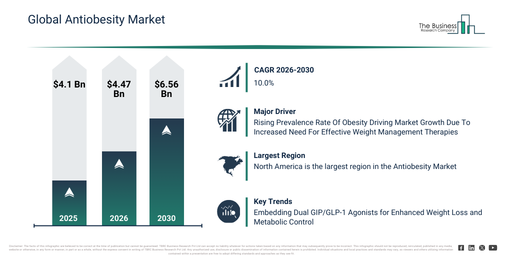
    The antiobesity market has seen substantial expansion in recent years. Its valuation is anticipated to climb from $4.1 billion in 2025 to $4.47 billion in 2026, reflecting a compound annual growth rate (CAGR) of 9.0%. This historic growth can be attributed to several factors including a rise in global obesity rates, the limited effectiveness of lifestyle-only interventions, the availability of appetite suppressants, an increasing burden of metabolic disorders, and physician-guided weight management efforts.

    The antiobesity market is projected to experience substantial expansion over the coming years. Its valuation is set to reach $6.56 billion by 2030, demonstrating a compound annual growth rate (CAGR) of 10.0%. Factors contributing to this growth during the projected period include the rising incidence of diabetes and obesity, advancements in hormone-based medications, broader reimbursement coverage, heightened awareness regarding obesity, and the demand for effective long-term weight loss methods. Key trends for the forecast duration encompass the swift uptake of GLP-1 based treatments, an increasing inclination towards prescribed weight loss medications, the growing application of combined antiobesity therapies, a heightened emphasis on sustained weight management, and improved access to obesity treatments.

    Get A Free Sample Report With In-Depth Market Insights:

    https://www.thebusinessresearchcompany.com/sample.aspx?id=3403&type=smp&utm_source=Blogs&utm_medium=Paid&utm_campaign=Oct_PR

    Antiobesity Market Growth Factors: What’s Supporting Expansion?

    The increasing incidence of obesity is expected to boost the expansion of the anti-obesity drugs market in the future. Obesity, a persistent metabolic condition marked by the excessive buildup of body fat, elevates the likelihood of severe health issues such as diabetes, cardiovascular ailments, osteoarthritis, and specific types of cancer. This growing prevalence of obesity stems from a higher intake of ultra-processed foods rich in sugars, unhealthy fats, and refined carbohydrates, coupled with inactive lifestyles that decrease physical exertion. The heightened incidence of obesity is driving demand for effective medical interventions for obesity, supportive weight management approaches, and sustained treatment options to lessen related health dangers and enhance patient results. For example, data from March 2024, provided by the World Obesity Federation, a UK-based body dedicated to obesity research and advocacy, indicates that by 2035, an estimated 79% of adults who are overweight or obese, and 88% of children who are overweight or obese, are anticipated to reside in low and middle income countries. Consequently, the escalating rate of obesity is fueling the expansion of the anti-obesity drugs market.

    Antiobesity Market Segment Analysis Spotlighting Growth Areas

    The antiobesity market covered in this report is segmented –

    1) By Drug Class: Peripherally Acting Anti-Obesity Drugs, Centrally Acting Anti-Obesity Drugs

    2) By Type: Prescription Drugs (Rx), OTC Drugs

    3) By Medication: Monotherapies, Polytherapies

    Subsegments:

    1) By Peripherally Acting Anti-Obesity Drugs: Orlistat, Lorcaserin

    2) By Centrally Acting Anti-Obesity Drugs: Phentermine, Topiramate, Naltrexone-Bupropion Combination, Liraglutide

    Antiobesity Market Industry Trends: What’s Reshaping Demand?

    Major companies within the antiobesity market are prioritizing product innovation and the development of new formulations, such as dual glucose-dependent insulinotropic peptide receptor agonists, with the goal of providing more significant weight loss, improved metabolic health, and better patient tolerability. These therapies harness synergistic actions on appetite suppression, insulin sensitivity, and energy expenditure to offer superior efficacy compared to earlier generation GLP-1-only treatments. For example, in December 2024, Eli Lilly, a US-based pharmaceutical company, obtained FDA approval for Zepbound (tirzepatide), making it the first and only prescription dual GIP/GLP-1 agonist sanctioned for chronic weight management. Tirzepatide has demonstrated robust weight-loss effectiveness, with participants in phase 3 trials achieving considerable reductions in body weight. With this new indication, Zepbound is expected to reinforce Lilly’s leadership in the precision obesity therapy domain, meeting the increasing demand for long-acting, highly effective treatments.

    Antiobesity Market Leading Companies: Who Holds The Strongest Market Presence?

    Major companies operating in the antiobesity market are Takeda Pharmaceutical Company Limited, Eisai Co. Ltd., Novo Nordisk A/S, Zafgen Inc., Rhythm Pharmaceuticals Inc., Zydus Cadila, Norgine B.V., Vivus Inc., Arena Pharmaceuticals Inc., Orexigen Therapeutics Inc., Eli Lilly and Company, Amgen Inc., AstraZeneca PLC, Viking Therapeutics Inc., Structure Therapeutics Inc., Gelesis Inc., Sanofi S.A., F. Hoffmann-La Roche Ltd, Teva Pharmaceutical Industries Limited, Sun Pharmaceutical Industries Ltd., Dr. Reddy’s Laboratories Ltd., Cipla Ltd., Lupin Ltd., Torrent Pharmaceuticals Ltd.

    View The Full Antiobesity Market Report:

    https://www.thebusinessresearchcompany.com/report/antiobesity-global-market-report?utm_source=Blogs&utm_medium=Paid&utm_campaign=Oct_PR

    Antiobesity Market Regional Split: Which Areas Are Fueling Growth?

    North America was the largest region in the anti-obesity market in 2025. Middle East is expected to be the fastest-growing region in the antiobesity market. The regions covered in the antiobesity market report are Asia-Pacific, South East Asia, Western Europe, Eastern Europe, North America, South America, Middle East, Africa.

    Reach Out To Our Team:

    The Business Research Company: https://www.thebusinessresearchcompany.com/

    Americas: +1 310-496-7795

    Asia: +44 7882 955267 & +91 8897263534

    Europe: +44 7882 955267

    Email us at: marketing@tbrc.info

    Follow us on:

    LinkedIn: https://in.linkedin.com/company/the-business-research-company

    YouTube: https://www.youtube.com/channel/UC24_fI0rV8cR5DxlCpgmyFQ

    Global Market Model: https://www.thebusinessresearchcompany.com/global-market-model

  • Anti-Neoplastic Agents Market Forecast 2026: Market Size, Competitive Landscape And Growth Drivers

    Anti-Neoplastic Agents Market Forecast 2026: Market Size, Competitive Landscape And Growth Drivers

    Built to provide research that’s more actionable and strategically valuable, The Business Research Company’s 2026 market reports include market attractiveness analysis, total addressable market sizing, company benchmarking matrices, interactive Excel dashboards, broader supply chain intelligence, emerging startup tracking, and in-depth product insights.

    Anti-Neoplastic Agents Market Forecast: Value Set To Climb From $156.07 Billion To $227.47 Billion

    The market size for anti-neoplastic agents has experienced significant growth in recent years. This market is expected to expand from $142.41 billion in 2025 to $156.08 billion in 2026, achieving a compound annual growth rate (CAGR) of 9.6%. Historically, this growth can be attributed to factors like limited treatment options, a high reliance on chemotherapy, the slow adoption of targeted therapies, manual manufacturing processes, and fragmented regulatory frameworks.

    The anti-neoplastic agents market is anticipated to show significant expansion in the coming years. It will grow to $227.48 billion in 2030 at a compound annual growth rate (CAGR) of 9.9%. The projected increase in the forecast period stems from the rise of precision medicine, an aging global population, increased financial backing for oncology research, the adoption of AI in drug discovery, and the expansion of oncology care centers worldwide. Noteworthy trends for this period involve personalized cancer therapies, advanced targeted drug delivery systems, the incorporation of immunotherapy, innovations in oral and injectable formulations, and the advancement of combination therapy approaches.

    Get A Free Sample Report With In-Depth Market Insights:

    https://www.thebusinessresearchcompany.com/sample.aspx?id=12901&type=smp&utm_source=Blogs&utm_medium=Paid&utm_campaign=Oct_PR

    Anti-Neoplastic Agents Market Demand Drivers: What’s Powering Industry Growth?

    The escalating prevalence of cancer is anticipated to drive the future growth of the antineoplastic agent market. Cancer refers to a collection of diseases that can emerge in virtually any organ or tissue within the body when abnormal cells multiply uncontrollably, breaching their normal limits to either invade adjacent body parts or spread to other organs. Antineoplastic agents are vital in cancer therapy, working to suppress the growth and division of cancer cells through various methods, including inflicting DNA (Deoxyribonucleic acid) damage, disrupting the cell cycle, and interfering with essential cellular pathways. For example, in July 2024, data from the Australian Institute of Health and Welfare, an Australia-based government agency, reported that in 2023, an estimated 165,000 Australians were newly diagnosed with cancer, translating to over 450 cases daily, with males comprising about 55% of these diagnoses. Thus, the rising count of cancer cases is a significant impetus for the antineoplastic agent market’s growth.

    Anti-Neoplastic Agents Market Segment Performance And Emerging Opportunities

    The anti-neoplastic agents market covered in this report is segmented –

    1) By Type: Alkylating Agents, Antimetabolites, Hormones And Antagonists, Miscellaneous

    2) By Disease Type: Gastrointestinal Cancer, Prostate Cancer, Lung Cancer, Breast Cancer, Other Disease Types

    3) By End User: Hospitals, Clinics

    Subsegments:

    1) By Alkylating Agents: Nitrogen Mustards, Alkyl Sulfonates, Nitrosoureas, Triazines

    2) By Antimetabolites: Purine Analogues, Pyrimidine Analogues, Folate Antagonists

    3) By Hormones and Antagonists: Estrogens and Antiestrogens, Androgens and Antiandrogens

    4) By Miscellaneous: Vinca Alkaloids, Taxanes, Antibiotic Antineoplastics, Targeted Therapy Agents

    Anti-Neoplastic Agents Market Innovation Trends: What Developments Are Reshaping The Industry?

    Major companies operating in the anti-neoplastic agents market are prioritizing the development of innovative solutions, such as selective estrogen receptor degraders, to more effectively target hormone receptor-driven cancers, improve patient outcomes, and expand treatment options. A selective estrogen receptor degrader (SERD) identifies a category of targeted cancer therapies that attach to estrogen receptors (ER) in cancer cells, impede their activity, and promote their breakdown, consequently inhibiting ER-driven tumor growth, especially in estrogen receptor-positive (ER+) breast cancers. For instance, in September 2025, Eli Lilly and Company, a US-based pharmaceutical company, obtained approval from the US FDA for Inluriyo (imlunestrant), for the management of adults with estrogen receptor-positive (ER+), HER2-negative (HER2–), ESR1-mutated advanced or metastatic breast cancer whose illness has progressed after at least one regimen of endocrine therapy. Inluriyo acts as an oral estrogen receptor antagonist that blocks and degrades estrogen receptors, including mutated ESR1 receptors responsible for driving cancer proliferation.

    Anti-Neoplastic Agents Market Key Players: Which Companies Lead Industry Competition?

    Major companies operating in the anti-neoplastic agents market are Pfizer Inc., F. Hoffmann-La Roche Ltd., Merck & Co. Inc., Bayer AG, Novartis AG, Bristol-Myers Squibb Company, AstraZeneca PLC, Fresenius SE & Co. KGaA, Takeda Pharmaceutical Company Limited, Boehringer Ingelheim International GmbH, Viatris Inc., Teva Pharmaceutical Industries Ltd., Eisai Co. Ltd., Sun Pharmaceutical Industries Limited, Ipsen SA, Cipla Limited, Dr. Reddy’s Laboratories Ltd., Intas Pharmaceuticals Limited, Hikma Pharmaceuticals PLC, Gland Pharma Limited, Zydus Lifesciences Limited, Glenmark Pharmaceuticals Ltd., Jubilant Life Sciences Ltd., Hutchison Medipharma Ltd., Natco Pharma Ltd., Accord Healthcare Limited, Qilu Pharmaceutical Co. Ltd.

    View The Full Anti-Neoplastic Agents Market Report:

    https://www.thebusinessresearchcompany.com/report/anti-neoplastic-agents-global-market-report?utm_source=Blogs&utm_medium=Paid&utm_campaign=Oct_PR

    Anti-Neoplastic Agents Market Top Region: Where Does Most Revenue Come From?

    North America was the largest region in the anti-neoplastic agents market in 2025. Asia-Pacific is expected to be the fastest-growing region in the forecast period. The regions covered in the anti-neoplastic agents market report are Asia-Pacific, South East Asia, Western Europe, Eastern Europe, North America, South America, Middle East, Africa.

    Reach Out To Our Team:

    The Business Research Company: https://www.thebusinessresearchcompany.com/

    Americas: +1 310-496-7795

    Asia: +44 7882 955267 & +91 8897263534

    Europe: +44 7882 955267

    Email us at: marketing@tbrc.info

    Follow us on:

    LinkedIn: https://in.linkedin.com/company/the-business-research-company

    YouTube: https://www.youtube.com/channel/UC24_fI0rV8cR5DxlCpgmyFQ

    Global Market Model: https://www.thebusinessresearchcompany.com/global-market-model
  • Antimetabolite Drug Market Size In 2026: Regional Growth, Key Segments And Future Outlook

    Antimetabolite Drug Market Size In 2026: Regional Growth, Key Segments And Future Outlook

    Backed by market attractiveness analysis, total addressable market sizing, company benchmarking matrices, interactive Excel dashboards, wider supply chain intelligence, emerging startup coverage, and detailed product-level insights, The Business Research Company’s 2026 market reports are designed to offer research that is more actionable and strategically valuable than ever.

    Antimetabolite Drug Market Revenue Growth On Track For A 4.5% CAGR Through 2030

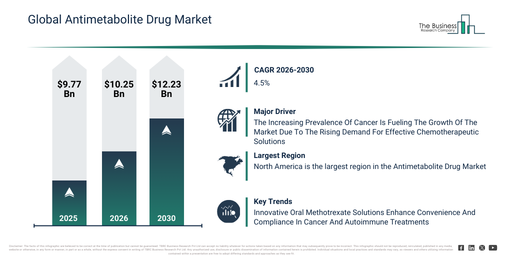
    The size of the antimetabolite drug market has demonstrated consistent growth over recent years. It will grow from $9.77 billion in 2025 to $10.25 billion in 2026 at a compound annual growth rate (CAGR) of 4.8%. Historically, this expansion has been driven by factors such as the implementation of cancer treatment protocols, increased adoption in hospital oncology departments, established chemotherapy standards, the availability of generic medications, and extensive research-driven applications.

    The antimetabolite drug market is projected to experience consistent expansion over the upcoming years. This market is anticipated to reach a valuation of $12.23 billion by 2030, exhibiting a compound annual growth rate (CAGR) of 4.5%. Key factors contributing to this anticipated growth include an expanding oncology pipeline, advancements in biosimilar development, wider availability of autoimmune disease treatments, an increase in outpatient chemotherapy, and the rise of precision oncology. Significant trends identified for the forecast period encompass their sustained application in oncology treatment, the broader adoption of combination chemotherapy regimens, an increase in generic antimetabolite drugs, growing demand in autoimmune disorders, and an emphasis on enhancing drug tolerability.

    Get A Free Sample Report With In-Depth Market Insights:

    https://www.thebusinessresearchcompany.com/sample.aspx?id=24466&type=smp&utm_source=Blogs&utm_medium=Paid&utm_campaign=Oct_PR

    Antimetabolite Drug Market Growth Drivers: What’s Behind The Acceleration?

    The expanding incidence of cancer is anticipated to fuel the expansion of the antimetabolite drug market in the future. Cancer is characterized by the swift, uncontrolled multiplication of atypical cells, which have the capacity to intrude upon and harm adjacent tissues and organs. The rise in cancer rates is primarily attributed to exposure to cancer-causing agents like tobacco smoke, which induce genetic alterations leading to unchecked cellular growth and tumor development. Antimetabolite drugs combat cancerous conditions by inhibiting the synthesis of DNA and RNA, thereby preventing the proliferation of cancer cells. These drugs emulate natural metabolites to interfere with essential metabolic processes, thereby effectively arresting tumor progression. As an illustration, in February 2024, the World Health Organization, a Switzerland-based intergovernmental organization, predicted that by 2050, more than 35 million new cancer cases would arise, signifying a 77% surge compared to the approximately 20 million cases in 2022. Consequently, the escalating occurrence of cancer is a key factor propelling the expansion of the antimetabolite drug market.

    Antimetabolite Drug Market Segment Landscape And Growth Outlook

    The antimetabolite drug market covered in this report is segmented –

    1) By Type: Purine Analogues, Pyrimidine Analogues, Folic Acid Analogs, Other Types

    2) By Route Of Administration: Oral, Intravenous, Subcutaneous

    3) By Distribution Channel: Hospital Pharmacy, Retail Pharmacy, Online Pharmacy

    4) By Application: Cancer, Autoimmune Disorders, Organ Transplantation

    5) By End-Use: Hospitals, Clinics

    Subsegments:

    1) By Purine Analogues: 6-Mercaptopurine (6-MP), Thioguanine (6-TG), Fludarabine, Cladribine, Pentostatin

    2) By Pyrimidine Analogues: 5-Fluorouracil (5-FU), Capecitabine, Cytarabine (Ara-C), Gemcitabine, Decitabine

    3) By Folic Acid Analogs: Methotrexate, Pemetrexed, Raltitrexed, Pralatrexate

    4) By Other Types: Hydroxyurea, Trifluridine Or Tipiracil, Nelarabine, Azacitidine

    Antimetabolite Drug Market Trends: What’s Defining The Industry’s Next Phase?

    Leading companies within the antimetabolite drug market are concentrating on creating advanced offerings, such as oral methotrexate solution, to provide more convenient and effective options for cancer treatment. This oral methotrexate solution is a liquid version of methotrexate, facilitating easier ingestion and precise dosage. It is utilized in managing cancers and autoimmune disorders by inhibiting cell growth and modulating the immune system. For example, in October 2024, Shorla Oncology, an Ireland-based pharmaceutical firm, announced the expansion of Jylamvo, which has been approved by the US Food and Drug Administration (FDA), a US-based government organization. This product is intended for children suffering from acute lymphoblastic leukemia and polyarticular juvenile idiopathic arthritis, standing as the sole liquid methotrexate that offers a palatable, easy-to-administer alternative for individuals who struggle with swallowing pills. Furthermore, it features an orange-flavored formula with a specific dosing syringe for accurate measurement, maintains stability at room temperature for up to 90 days after opening, thereby eliminating the need for refrigeration, and incorporates a user-friendly design that streamlines storage, preparation, and adherence for both patients and their caregivers.

    Antimetabolite Drug Market Competitive Landscape: Who Leads The Industry?

    Major companies operating in the antimetabolite drug market are Pfizer Inc., F. Hoffmann-La Roche Ltd., Teva Pharmaceutical Industries Ltd., Fresenius Kabi AG, Aurobindo Pharma Ltd., Lupin Pharmaceuticals Ltd., Natco Pharma Ltd., Shorla Oncology Ltd., Dr. Reddy’s Laboratories Ltd., Sun Pharmaceutical Industries Ltd., Cipla Ltd., Hikma Pharmaceuticals PLC, Accord Healthcare Ltd., Mylan N.V. (Viatris Inc.), Sandoz International GmbH, Zydus Lifesciences Ltd., Intas Pharmaceuticals Ltd., Alkem Laboratories Ltd., Apotex Inc., Amneal Pharmaceuticals LLC

    View The Full Antimetabolite Drug Market Report:

    https://www.thebusinessresearchcompany.com/report/antimetabolite-drug-global-market-report?utm_source=Blogs&utm_medium=Paid&utm_campaign=Oct_PR

    Antimetabolite Drug Market Regional Breakdown: Where Is Demand Concentrated?

    North America was the largest region in the antimetabolite drug market in 2025. The regions covered in the antimetabolite drug market report are Asia-Pacific, South East Asia, Western Europe, Eastern Europe, North America, South America, Middle East, Africa.

    Reach Out To Our Team:

    The Business Research Company: https://www.thebusinessresearchcompany.com/

    Americas: +1 310-496-7795

    Asia: +44 7882 955267 & +91 8897263534

    Europe: +44 7882 955267

    Email us at: marketing@tbrc.info

    Follow us on:

    LinkedIn: https://in.linkedin.com/company/the-business-research-company

    YouTube: https://www.youtube.com/channel/UC24_fI0rV8cR5DxlCpgmyFQ

    Global Market Model: https://www.thebusinessresearchcompany.com/global-market-model

  • Anti-Inflammatory Therapeutics Market Growth Forecast Through 2030: Market Size And Trends In 2026

    Anti-Inflammatory Therapeutics Market Growth Forecast Through 2030: Market Size And Trends In 2026

    Featuring market attractiveness scoring, total addressable market sizing, company benchmarking matrices, interactive Excel dashboards, deeper supply chain intelligence, emerging startup tracking, and granular product-level insights, The Business Research Company’s 2026 market reports are built to deliver research that is both more actionable and more strategically valuable.

    Anti-Inflammatory Therapeutics Market Value Growth And Long-Term Outlook

    The anti-inflammatory therapeutics market has experienced consistent expansion in its size over recent years. It is projected to expand from $117.28 billion in 2025 to $122.27 billion in 2026, demonstrating a compound annual growth rate (CAGR) of 4.3%. This historical growth can be attributed to factors such as the increasing prevalence of arthritis, a rise in inflammatory bowel disease cases, the expansion of hospital pharmacy networks, the adoption of corticosteroids, and the demand for pain management drugs.

    The anti-inflammatory therapeutics market size is projected to experience robust expansion in the coming years. This market is predicted to reach a valuation of $152.04 billion by 2030, demonstrating a compound annual growth rate (CAGR) of 5.6%. This anticipated growth is attributable to factors such as the advancement of targeted biologics, the incorporation of artificial intelligence in drug discovery, the proliferation of online pharmacies, the expanding elderly population, and a heightened emphasis on personalized medicine. Key trends anticipated during this period encompass tailored anti-inflammatory treatments, a greater adoption of biologic medications, the development of minimally invasive drug delivery methods, an increase in chronic pain management solutions, and a wider reach for online pharmacy distribution.

    Get A Free Sample Report With In-Depth Market Insights:

    https://www.thebusinessresearchcompany.com/sample.aspx?id=12861&type=smp&utm_source=Blogs&utm_medium=Paid&utm_campaign=Oct_PR

    Anti-Inflammatory Therapeutics Market Growth Factors Behind Sustained Expansion

    The expanding occurrence of inflammatory bowel disease is anticipated to boost the growth of the anti-inflammatory therapeutics market moving forward. Inflammatory bowel disease (IBD) is a persistent ailment that causes inflammation of the gastrointestinal tract. Anti-inflammatory therapeutics are essential in addressing Crohn’s disease by mitigating inflammation, managing its symptoms, and reducing the necessity for surgery. For example, in June 2023, Crohn’s and Colitis Canada, a non-profit organization based in Canada, reported that 470,000 individuals in Canada are projected to suffer from inflammatory bowel disease (IBD) by 2035, an increase from an estimated 322,600 in 2023. Thus, the rising prevalence of inflammatory bowel disease is propelling the expansion of the anti-inflammatory therapeutics market.

    Anti-Inflammatory Therapeutics Market Breakdown By Product Type And Application

    The anti-inflammatory therapeutics market covered in this report is segmented –

    1) By Drug Class: Nonsteroidal Anti-Inflammatory Drugs (NSAIDs), Corticosteroids, Anti-Inflammatory Biologics

    2) By Indication: Arthritis, Respiratory Diseases, Multiple Sclerosis, Psoriasis, Inflammatory Bowel Diseases, Other Inflammatory Diseases

    3) By Distribution Channel: Retail Pharmacies, Hospital Pharmacies

    Subsegments:

    1) By Nonsteroidal Anti-Inflammatory Drugs (NSAIDs): Ibuprofen, Aspirin, Naproxen, Diclofenac, Celecoxib, Indomethacin, Ketoprofen

    2) By Corticosteroids: Prednisone, Dexamethasone, Hydrocortisone, Methylprednisolone, Triamcinolone, Betamethasone

    3) By Anti-Inflammatory Biologics: Tumor Necrosis Factor (TNF) Inhibitors, Interleukin Inhibitors, Monoclonal Antibodies, Recombinant Proteins, Fusion Proteins

    Anti-Inflammatory Therapeutics Market Industry Trends Fueling Future Revenue Growth

    Leading firms in the anti-inflammatory therapeutics market are concentrating on creating cutting-edge biologic treatments to enhance patient results for those suffering from chronic inflammatory ailments. Such sophisticated treatments aim to provide precise immune regulation, improved effectiveness, and superior tolerability when contrasted with traditional options like corticosteroids. As an example, in February 2023, Regeneron Pharmaceuticals Inc., a US-based biotechnology company, and Sanofi, a France-based pharmaceutical and healthcare company, introduced Kevzara (sarilumab). This product is notable as the inaugural and sole anti-inflammatory biologic advised for adult patients diagnosed with polymyalgia rheumatica (PMR) who either show insufficient response to corticosteroids or cannot endure corticosteroid dosage reduction. This innovative IL-6 receptor inhibitor presents a more potent and corticosteroid-reducing treatment alternative, thereby addressing a considerable gap in PMR management and bolstering the standing of these companies within the anti-inflammatory therapeutics market.

    Anti-Inflammatory Therapeutics Market Company Landscape And Competitive Strategy

    Major companies operating in the anti-inflammatory therapeutics market are Pfizer Inc., Johnson and Johnson Limited, F. Hoffmann-La Roche Ltd., Merck and Co. Inc., AbbVie Inc., Bayer AG, Novartis AG, Sanofi-Aventis LLC, Bristol-Myers Squibb Company, AstraZeneca PLC, GlaxoSmithKline plc, Takeda Pharmaceutical Company Limited, Eli Lilly and Co. Ltd., Amgen Inc., Boehringer Ingelheim International GmbH, Viatris Inc., Teva Pharmaceutical Industries Ltd., Regeneron Pharmaceuticals Inc., Biogen Inc., Sun Pharmaceutical Industries Limited, Dr. Reddy’s Laboratories Ltd., Hikma Pharmaceuticals PLC, Cipla Inc., Zydus Lifesciences Ltd., Lupin Limited, Torrent Pharmaceuticals Ltd.

    View The Full Anti-Inflammatory Therapeutics Market Report:

    https://www.thebusinessresearchcompany.com/report/anti-inflammatory-therapeutics-global-market-report?utm_source=Blogs&utm_medium=Paid&utm_campaign=Oct_PR

    Anti-Inflammatory Therapeutics Market Geographic Landscape: Which Region Dominates Industry Growth?

    North America was the largest region in the anti-inflammatory therapeutics market in 2025. Europe is expected to be the fastest-growing region in the forecast period. The regions covered in the anti-inflammatory therapeutics market report are Asia-Pacific, South East Asia, Western Europe, Eastern Europe, North America, South America, Middle East, Africa.

    Reach Out To Our Team:

    The Business Research Company: https://www.thebusinessresearchcompany.com/

    Americas: +1 310-496-7795

    Asia: +44 7882 955267 & +91 8897263534

    Europe: +44 7882 955267

    Email us at: marketing@tbrc.info

    Follow us on:

    LinkedIn: https://in.linkedin.com/company/the-business-research-company

    YouTube: https://www.youtube.com/channel/UC24_fI0rV8cR5DxlCpgmyFQ

    Global Market Model: https://www.thebusinessresearchcompany.com/global-market-model
  • Anti-Inflammatory Drugs Market Analysis: $168.73 Billion Market Size In 2026 And Future Growth Prospects

    Anti-Inflammatory Drugs Market Analysis: $168.73 Billion Market Size In 2026 And Future Growth Prospects

    Built to provide research that’s more actionable and strategically valuable, The Business Research Company’s 2026 market reports include market attractiveness analysis, total addressable market sizing, company benchmarking matrices, interactive Excel dashboards, broader supply chain intelligence, emerging startup tracking, and in-depth product insights.

    Anti-Inflammatory Drugs Market Poised To Hit $252.87 Billion By 2030 With A 10.6% CAGR

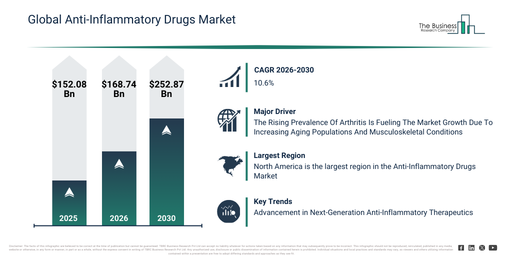
    The market size for anti-inflammatory drugs has shown rapid expansion over recent years. This sector is projected to grow from $152.08 billion in 2025 to $168.74 billion in 2026, exhibiting a compound annual growth rate (CAGR) of 11.0%. The historical growth of this market can be linked to factors such as arthritis prevalence, NSAID usage, hospital prescribing, the burden of autoimmune diseases, and the adoption of steroid therapy.

    The anti-inflammatory drugs market size is anticipated to undergo swift expansion over the coming years. This sector is projected to reach $252.87 billion by 2030, displaying a compound annual growth rate (CAGR) of 10.6%. The expansion during the forecast period is attributable to innovation in biologics, the increasing adoption of biosimilars, an aging global population, the rising prevalence of autoimmune diseases, and the integration of precision medicine. Significant developments expected in this period include the wider utilization of biologics and biosimilars, the broadening of treatment options for chronic inflammatory conditions, a movement towards more targeted anti-inflammatory treatments, the development of topical and localized formulations, and a heightened emphasis on long-term safety considerations.

    Get A Free Sample Report With In-Depth Market Insights:

    https://www.thebusinessresearchcompany.com/sample.aspx?id=24465&type=smp&utm_source=Blogs&utm_medium=Paid&utm_campaign=Oct_PR

    Anti-Inflammatory Drugs Market Demand Drivers Opening New Revenue Streams

    The increasing occurrence of arthritis is anticipated to boost the growth of the anti-inflammatory drugs market in the future. Arthritis is defined as the inflammation of one or more joints, resulting in pain, swelling, and stiffness that can intensify with age. The growing number of arthritis cases is mainly attributed to aging populations, as the natural deterioration of joints increases with age, leading to a higher likelihood of developing arthritis. Anti-inflammatory drugs assist in managing arthritis by diminishing joint inflammation and pain, thereby allowing patients to uphold better mobility and execute daily tasks more effortlessly, ultimately enhancing their overall quality of life. For instance, in July 2024, information from Restored CDC, a US-based nonprofit health information body, indicated that approximately 21.2% of adults aged 18 and older in the US received an arthritis diagnosis in 2023. Thus, the escalating prevalence of arthritis is propelling the expansion of the anti-inflammatory drugs market.

    Anti-Inflammatory Drugs Market Segment Analysis And Revenue Potential

    The anti-inflammatory drugs market covered in this report is segmented –

    1) By Drug Class: Steroids, Nonsteroidal Anti-Inflammatory Drugs (NSAIDs), Biologics And Biosimilars, Other Drug Classes

    2) By Route of Administration: Parenteral, Oral, Topical, Inhalation

    3) By Applications: Autoimmune Diseases, Respiratory Diseases, Other Diseases

    4) By Distribution Channel: Hospital Pharmacy, Retail Pharmacy, Online Pharmacy

    Subsegments:

    1) By Steroids: Corticosteroids, Mineralocorticoids

    2) By Nonsteroidal Anti-Inflammatory Drugs (NSAIDs): Non-Selective Nonsteroidal Anti-Inflammatory Drugs (NSAIDs), Selective Cyclooxygenase-2 (COX-2) Inhibitors

    3) By Biologics And Biosimilars: Tumor Necrosis Factor (TNF) Inhibitors, Interleukin (IL) Inhibitors, Janus Kinase (JAK) Inhibitors, Other Biologics And Biosimilars

    4) By Other Drug Classes: Disease-Modifying Anti-Rheumatic Drugs (DMARDs), Immunosuppressants

    Anti-Inflammatory Drugs Market Trends Powering Strategic Industry Growth

    Major companies in the anti-inflammatory drugs market are focusing on developing innovative solutions, such as advanced corticosteroid alternatives, to meet the increasing demand for safer long-term anti-inflammatory therapies. A next-generation corticosteroid alternative is a treatment engineered to maintain glucocorticoid anti-inflammatory effects while reducing the adverse outcomes commonly associated with traditional steroids, including bone loss, growth suppression, and weight gain. For instance, in October 2023, Santhera Pharmaceuticals, a Switzerland-based specialty pharmaceutical company, received US FDA approval for AGAMREE (vamorolone). AGAMREE is an oral dissociative steroid designed to provide anti-inflammatory activity with fewer steroid-related side effects by selectively modulating glucocorticoid receptor pathways and stabilizing cell membranes. Compared to traditional corticosteroids like prednisone and deflazacort, it offers a more favorable safety profile while retaining therapeutic benefits. It is used to manage chronic muscle inflammation in children aged two years and older with Duchenne muscular dystrophy.

    Anti-Inflammatory Drugs Market Key Players Shaping Industry Direction

    Major companies operating in the anti-inflammatory drugs market are Merck & Co. Inc., AbbVie Inc., Bayer AG, Novartis AG, Sanofi S.A., Bristol-Myers Squibb Company, AstraZeneca plc, Gilead Sciences Inc., Amgen Inc., Regeneron Pharmaceuticals Inc., Biogen Inc., Vertex Pharmaceuticals Inc., UCB S.A., Sun Pharmaceutical Industries Ltd., Aurobindo Pharma Limited, Dr. Reddy’s Laboratories, Cipla Limited, Cadila Pharmaceuticals, Samsung Bioepis, Lupin Limited

    View The Full Anti-Inflammatory Drugs Market Report:

    https://www.thebusinessresearchcompany.com/report/anti-inflammatory-drugs-global-market-report?utm_source=Blogs&utm_medium=Paid&utm_campaign=Oct_PR

    Anti-Inflammatory Drugs Market Largest Region: Which Geography Holds The Highest Market Share?

    North America was the largest region in the anti-inflammatory drugs market in 2025. Asia-Pacific is expected to be the fastest-growing region in the forecast period. The regions covered in the anti-inflammatory drugs market report are Asia-Pacific, South East Asia, Western Europe, Eastern Europe, North America, South America, Middle East, Africa.

    Reach Out To Our Team:

    The Business Research Company: https://www.thebusinessresearchcompany.com/

    Americas: +1 310-496-7795

    Asia: +44 7882 955267 & +91 8897263534

    Europe: +44 7882 955267

    Email us at: marketing@tbrc.info

    Follow us on:

    LinkedIn: https://in.linkedin.com/company/the-business-research-company

    YouTube: https://www.youtube.com/channel/UC24_fI0rV8cR5DxlCpgmyFQ

    Global Market Model: https://www.thebusinessresearchcompany.com/global-market-model

  • Anti-Inflammatory Biologics Market 2026 Market Size And Growth Forecast: Key Trends To Watch

    Anti-Inflammatory Biologics Market 2026 Market Size And Growth Forecast: Key Trends To Watch

    Backed by market attractiveness analysis, total addressable market sizing, company benchmarking matrices, interactive Excel dashboards, wider supply chain intelligence, emerging startup coverage, and detailed product-level insights, The Business Research Company’s 2026 market reports are designed to offer research that is more actionable and strategically valuable than ever.

    Anti-Inflammatory Biologics Market Size And Revenue Outlook Through 2030

    The anti-inflammatory biologics market size has demonstrated significant growth over recent years. It is projected to increase from $118.02 billion in 2025 to $128.84 billion in 2026, achieving a compound annual growth rate (CAGR) of 9.2%. This historical expansion can be attributed to various factors, including the increasing prevalence of conditions such as rheumatoid arthritis and psoriasis, the strengthening of hospital and clinic infrastructure, and greater investment in immunology research. Additionally, the initial limited availability of biologics and a previous reliance on traditional anti-inflammatory drugs also contributed to this growth.

    The anti-inflammatory biologics market size is projected to experience substantial growth in the upcoming years. It is expected to expand to $180.93 billion in 2030, exhibiting a compound annual growth rate (CAGR) of 8.9%. This anticipated growth can be attributed to several factors, including the advancement of next-generation cytokine inhibitors, the broadening of home care and self-administration choices, an increase in regulatory approvals coupled with swifter clinical trial processes, escalating investment in precision medicine and biologics research and development, and the expansion of partnerships between pharmaceutical and biotechnology enterprises. Significant trends for the forecast period comprise the increasing utilization of targeted biologics for persistent inflammatory conditions, the wider adoption of subcutaneous and injectable drug delivery methods, a surge in clinical trials and research dedicated to innovative anti-inflammatory biologics, an intensified focus on customized treatment approaches, and enhanced awareness and availability of biologics in developing markets.

    Get A Free Sample Report With In-Depth Market Insights:

    https://www.thebusinessresearchcompany.com/sample.aspx?id=25695&type=smp&utm_source=Blogs&utm_medium=Paid&utm_campaign=Oct_PR

    Anti-Inflammatory Biologics Market Growth Backed By Core Demand Fundamentals

    The increasing incidence of arthritis is projected to drive the expansion of the anti-inflammatory biologics market in the foreseeable future. Arthritis is defined as the inflammation or swelling in one or more joints, leading to pain, stiffness, and reduced movement, often worsening with advancing age. The heightened prevalence of arthritis primarily stems from rising obesity rates, as excess body weight places additional stress on joints, which in turn causes inflammation and joint degeneration. Anti-inflammatory biologics prove beneficial for arthritis by targeting specific components of the immune system to decrease inflammation, slow down joint damage, relieve symptoms, and enhance physical function and quality of life for individuals with moderate to severe arthritis. For example, in January 2024, the Office for Health Improvement and Disparities, a UK-based government department, reported that in 2023, 18.4% of people aged 16 and over indicated they had a long-term MSK condition, an increase from 17.6% in 2022. Thus, the growing prevalence of arthritis is fueling the growth of the anti-inflammatory biologics market.

    Anti-Inflammatory Biologics Market Segmentation And Category Overview

    The anti-inflammatory biologics market covered in this report is segmented –

    1) By Drug Class: Tumor Necrosis Factor Inhibitors, Interleukin Inhibitors, B-Cell Inhibitors, T-Cell Inhibitors, Other Drug Classes

    2) By Route Of Administration: Oral, Injection, Intravenous, Subcutaneous

    3) By Application: Rheumatoid Arthritis, Inflammatory Bowel Disease, Psoriasis, Other Applications

    4) By Distribution Channel: Hospital Pharmacies, Retail Pharmacies, Online Pharmacies, Other Distribution Channels

    5) By End-Users: Hospital, Clinics, Home Care Settings, Research And Academic Institutes

    Subsegments:

    1) By Tumor Necrosis Factor Inhibitors: Adalimumab, Infliximab, Etanercept, Golimumab, Certolizumab Pegol

    2) By Interleukin Inhibitors: Interleukin-1 Inhibitors, Interleukin-6 Inhibitors, Interleukin -12 Or 23 Inhibitors, Interleukin -17 Inhibitors, Interleukin -23 Inhibitors

    3) By B-Cell Inhibitors: Rituximab, Ocrelizumab, Ofatumumab

    4) By T-Cell Inhibitors: Abatacept, Alefacept

    5) By Other Drug Classes: Janus Kinase Inhibitors, Anti-IgE And Other Biologics

    Anti-Inflammatory Biologics Market Growth Trends Reshaping The Competitive Landscape

    Leading firms within the anti-inflammatory biologics sector are concentrating on creating novel treatments, including interleukin-6 (IL-6) receptor antagonists, to address chronic inflammatory conditions more precisely and with fewer adverse reactions. Interleukin-6 (IL-6) receptor antagonists are a class of biologic medications designed to obstruct the IL-6 receptor, thereby diminishing inflammation and immune activity in illnesses like rheumatoid arthritis. For example, in February 2023, Regeneron Pharmaceuticals Inc., a US-based biotechnology company, obtained clearance from the US Food and Drug Administration (FDA) for Kevzara. This marks Kevzara as the initial and sole biologic therapy for individuals suffering from polymyalgia rheumatica (PMR) who exhibit an insufficient response to corticosteroids. Kevzara functions as a fully human monoclonal antibody, inhibiting the IL-6 receptor to aid in lessening the inflammation associated with PMR, a condition predominantly affecting older adults with symptoms of muscle pain and stiffness. In contrast to conventional steroids, which pose long-term risks like osteoporosis and diabetes, Kevzara offers a more focused, steroid-reducing method, promoting better patient results and heightened long-term safety.

    Anti-Inflammatory Biologics Market Competitive Analysis Of Leading Industry Participants

    Major companies operating in the anti-inflammatory biologics market are Pfizer Inc., Johnson And Johnson, Roche Holding AG, AbbVie Inc, Sanofi S.A, Bristol-Myers Squibb, Novartis AG, Eli Lilly and Company, Amgen Inc., Regeneron Pharmaceuticals Inc, UCB S.A

    View The Full Anti-Inflammatory Biologics Market Report:

    https://www.thebusinessresearchcompany.com/report/anti-inflammatory-biologics-global-market-report?utm_source=Blogs&utm_medium=Paid&utm_campaign=Oct_PR

    Anti-Inflammatory Biologics Market Regional Analysis: Which Region Leads By Revenue?

    North America was the largest region in the anti-inflammatory biologics market in 2025. Europe is expected to be the fastest-growing region in the forecast period. The regions covered in the anti-inflammatory biologics market report are Asia-Pacific, South East Asia, Western Europe, Eastern Europe, North America, South America, Middle East, Africa.

    Reach Out To Our Team:

    The Business Research Company: https://www.thebusinessresearchcompany.com/

    Americas: +1 310-496-7795

    Asia: +44 7882 955267 & +91 8897263534

    Europe: +44 7882 955267

    Email us at: marketing@tbrc.info

    Follow us on:

    LinkedIn: https://in.linkedin.com/company/the-business-research-company

    YouTube: https://www.youtube.com/channel/UC24_fI0rV8cR5DxlCpgmyFQ

    Global Market Model: https://www.thebusinessresearchcompany.com/global-market-model
  • Anti-Hypertensive Drugs Market Size Forecast: How The Industry Is Expected To Grow From 2026 To 2030

    Anti-Hypertensive Drugs Market Size Forecast: How The Industry Is Expected To Grow From 2026 To 2030

    Featuring market attractiveness scoring, total addressable market sizing, company benchmarking matrices, interactive Excel dashboards, deeper supply chain intelligence, emerging startup tracking, and granular product-level insights, The Business Research Company’s 2026 market reports are built to deliver research that is both more actionable and more strategically valuable.

    Anti-Hypertensive Drugs Market Growth From $38.59 Billion In 2026 To $41.72 Billion By 2030 At A CAGR Of 2%

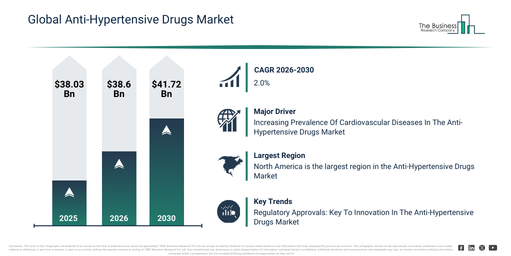
    The anti-hypertensive drugs market size has shown marginal expansion in recent years. This market is projected to grow from $38.03 billion in 2025 to $38.6 billion in 2026, achieving a compound annual growth rate (CAGR) of 1.5%. The increase observed in the historic period can be attributed to the rising prevalence of hypertension, the adoption of beta blockers and ace inhibitors, heightened awareness about cardiovascular diseases, the expansion of hospital and clinic networks, and substantial R&D investments in antihypertensive formulations.

    The anti-hypertensive drugs market is projected to experience modest expansion over the coming years. This market is anticipated to reach $41.72 billion by 2030, exhibiting a compound annual growth rate (CAGR) of 2.0%. Several factors are expected to drive this growth during the forecast period, including the advancement of precision medicine, increased adoption of telemedicine, a growing need for homecare monitoring, novelties in drug delivery systems, and the expansion into developing markets. Key trends shaping the market during this period encompass personalized management of hypertension, an expanding elderly population, a rise in hypertension linked to lifestyle, the broadening scope of homecare and remote monitoring solutions, and enhanced awareness and screening initiatives.

    Get A Free Sample Report With In-Depth Market Insights:

    https://www.thebusinessresearchcompany.com/sample.aspx?id=2410&type=smp&utm_source=Blogs&utm_medium=Paid&utm_campaign=Oct_PR

    Anti-Hypertensive Drugs Market Growth Catalysts And Demand Drivers

    The expanding presence of cardiovascular diseases is projected to drive the growth of the anti-hypertensive drugs market in the coming period. Cardiovascular diseases (CVDs) encompass a range of conditions affecting the heart and blood vessels, associated with risk factors such as smoking, high blood pressure, elevated cholesterol, diabetes, obesity, and a lack of physical activity. Anti-hypertensive drugs are employed to manage and decrease high blood pressure, which is a key risk factor for cardiovascular diseases (CVDs) among the elderly, with these treatments aiming to diminish the disease’s likelihood. For illustration, as per the Centers for Disease Control and Prevention, a US-based federal agency, in October 2024, it was reported that 919,032 individuals succumbed to cardiovascular disease in 2023, accounting for 1 in every 3 deaths. This demonstrates how the increasing prevalence of cardiovascular diseases is propelling the growth of the anti-hypertensive drugs market.

    Anti-Hypertensive Drugs Market Segment Outlook: Which Categories Are Growing Fastest?

    The anti-hypertensive drugs market covered in this report is segmented –

    1) By Therapeutics: Diuretics, Angiotensin Receptor Blockers (ARBs), Angiotensin Converting Enzyme (ACE) Inhibitors, Beta Blockers, Alpha Blockers, Calcium Channel Blockers, Renin Inhibitors, Vasodilators

    2) By Disease Source: Primary Hypertension, Secondary Hypertension

    3) By End Users: Hospitals, Clinics, Homecare

    Subsegments:

    1) By Diuretics: Thiazide Diuretics, Loop Diuretics, Potassium-Sparing Diuretics

    2) By Angiotensin Receptor Blockers (ARBs): Losartan, Valsartan, Irbesartan, Candesartan

    3) By Angiotensin Converting Enzyme (ACE) Inhibitors: Enalapril, Lisinopril, Ramipril, Benazepril

    4) By Beta Blockers: Metoprolol, Atenolol, Carvedilol, Bisoprolol

    5) By Alpha Blockers: Doxazosin, Prazosin, Terazosin

    6) By Calcium Channel Blockers: Amlodipine, Diltiazem, Verapamil, Nifedipine

    7) By Renin Inhibitors: Aliskiren

    8) By Vasodilators: Hydralazine, Minoxidil

    Anti-Hypertensive Drugs Market Trends Shaping Long-Term Demand

    Major companies within the anti-hypertensive drugs market are actively seeking regulatory approvals to broaden their product portfolios and enhance their market competitiveness. Regulatory approvals represent the official permissions granted by government agencies responsible for overseeing the safety and effectiveness of pharmaceutical products before they can be introduced and sold to the public. For example, in March 2024, Idorsia Pharmaceuticals, a US-based pharmaceutical company, obtained FDA approval for its new medication, aprocitentan, which is marketed under the brand name Tryvio. This drug is specifically developed to treat resistant hypertension in adults whose condition is not adequately managed by other antihypertensive medications. Aprocitentan is significant as the first endothelin receptor antagonist approved for this use and introduces a novel therapeutic pathway in hypertension treatment.

    Anti-Hypertensive Drugs Market Leading Companies And Competitive Benchmarking

    Major companies operating in the anti-hypertensive drugs market are Pfizer Inc., Johnson & Johnson Ltd., F. Hoffmann-La Roche Ltd, Merck & Co. Inc., AbbVie Inc., Bayer AG, Novartis AG, Sanofi SA, AstraZeneca plc, Abbott Laboratories, GlaxoSmithKline plc, Takeda Pharmaceutical Company Limited, Eli Lilly and Company, C.H. Boehringer Sohn AG & Ko. KG, Teva Pharmaceutical Industries Ltd., Mylan N.V., Daiichi Sankyo Company Limited, Sun Pharmaceuticals LLC, Cipla Limited, Dr. Reddy’s Laboratories, Hikma Pharmaceuticals PLC, Lupin Limited, Torrent Pharmaceuticals Ltd, Noden Pharma DAC, Actelion Pharmaceuticals Ltd.

    View The Full Anti-Hypertensive Drugs Market Report:

    https://www.thebusinessresearchcompany.com/report/anti-hypertensive-drugs-global-market-report?utm_source=Blogs&utm_medium=Paid&utm_campaign=Oct_PR

    Anti-Hypertensive Drugs Market Geographic Distribution And Regional Opportunities

    North America was the largest region in the anti-hypertensive drugs market in 2025. The Middle East is expected to be the largest growing region in the global anti-hypertensive drugs market during the forecast period. The regions covered in the anti-hypertensive drugs market report are Asia-Pacific, South East Asia, Western Europe, Eastern Europe, North America, South America, Middle East, Africa.

    Reach Out To Our Team:

    The Business Research Company: https://www.thebusinessresearchcompany.com/

    Americas: +1 310-496-7795

    Asia: +44 7882 955267 & +91 8897263534

    Europe: +44 7882 955267

    Email us at: marketing@tbrc.info

    Follow us on:

    LinkedIn: https://in.linkedin.com/company/the-business-research-company

    YouTube: https://www.youtube.com/channel/UC24_fI0rV8cR5DxlCpgmyFQ

    Global Market Model: https://www.thebusinessresearchcompany.com/global-market-model
  • Antiglaucoma Drugs Market Reaches $24.51 Billion In 2026: Forecast And Growth Opportunities

    Antiglaucoma Drugs Market Reaches $24.51 Billion In 2026: Forecast And Growth Opportunities

    Built to provide research that’s more actionable and strategically valuable, The Business Research Company’s 2026 market reports include market attractiveness analysis, total addressable market sizing, company benchmarking matrices, interactive Excel dashboards, broader supply chain intelligence, emerging startup tracking, and in-depth product insights.

    Antiglaucoma Drugs Market Expansion Outlook: What Revenue Opportunities Are Ahead?

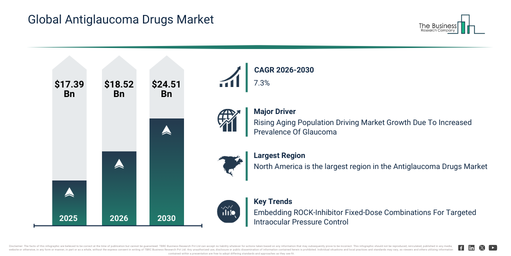
    The antiglaucoma drugs market has shown significant expansion in recent years. This market is projected to expand from $17.39 billion in 2025 to $18.52 billion in 2026, reflecting a compound annual growth rate (CAGR) of 6.5%. The historical growth can be attributed to an aging global population, initiatives for early diagnosis, the established application of beta blockers, persistent long-term glaucoma management requirements, and an increase in ophthalmology services.

    The antiglaucoma drugs market is projected to experience robust expansion over the coming years. It is anticipated to reach $24.51 billion in 2030 at a compound annual growth rate (CAGR) of 7.3%. This projected increase during the forecast period is due to factors such as a rise in vision impairment cases, broader access to eye care services, the introduction of innovative glaucoma medications, an increase in awareness initiatives, and a demand for therapies with prolonged effects. Key developments anticipated in this period encompass an escalating incidence of glaucoma, the expanded application of prostaglandin analogs, a greater acceptance of combination treatments, the proliferation of over-the-counter eye care products, and enhanced solutions for patient adherence.

    Get A Free Sample Report With In-Depth Market Insights:

    https://www.thebusinessresearchcompany.com/sample.aspx?id=3803&type=smp&utm_source=Blogs&utm_medium=Paid&utm_campaign=Oct_PR

    Antiglaucoma Drugs Market Opportunity Drivers: What’s Unlocking New Revenue Potential?

    The expanding elderly demographic is set to boost the antiglaucoma drugs market in the future. Glaucoma refers to a collection of eye conditions that harm the optic nerve, frequently stemming from elevated intraocular pressure, and disproportionately affects older individuals. The expansion of the aging population is fueled by extended life expectancy, better healthcare, and worldwide demographic transitions towards older age brackets. An increasing number of elderly people stimulates the antiglaucoma drugs market by creating more demand for medicines that control intraocular pressure, stop disease progression, and lower the chances of vision loss in older people. For instance, in October 2025, according to World Health Organization, a Switzerland-based specialized agency for public health, one in six people globally is projected to be aged sixty years or over by 2030 and the population of people aged sixty years and older is expected to double to 2.1 billion by 2050. Consequently, the rising old age population is propelling the antiglaucoma drugs market’s growth going forward.

    Antiglaucoma Drugs Market Segment Landscape: Which Areas Lead Development?

    The antiglaucoma drugs market covered in this report is segmented –

    1) By Mode Of Availability: Hospital Prescription Drugs, Non-Prescription Drugs

    2) By Product Type: Alpha Agonist, Beta Blockers, Prostaglandin Analogs, Combined Medication, Other Types

    3) By Disease Condition Type: Open-Angle Glaucoma, Angle-Closure Glaucoma, Normal-Tension Glaucoma, Congenital Glaucoma, Other Types Of Glaucoma

    Subsegments:

    1) By Hospital Prescription Drugs: Beta-Blockers (Timolol), Prostaglandin Analogs (Latanoprost), Alpha Agonists (Brimonidine), Carbonic Anhydrase Inhibitors (Dorzolamide), Rho Kinase Inhibitors (Netarsudil)

    2) By Non-Prescription Drugs: Ocular Lubricants, Natural Support Eye Drops

    Antiglaucoma Drugs Market Innovation Trends Shaping Future Development

    Leading companies in the antiglaucoma drugs market are concentrating on product innovation and advanced formulations, such as Rho‑kinase (ROCK) inhibitor–based therapeutics. These developments aim to address the underlying issues of the trabecular meshwork (TM) to enhance aqueous outflow and lower intraocular pressure (IOP). Such therapies present a novel mechanism of action when compared to conventional glaucoma treatments, specifically targeting the fundamental causes of outflow resistance for more effective disease management. For example, in July 2023, Santen, an ophthalmology specialist from Japan, launched Roclanda in the UK. This product is a fixed-dose combination eye drop containing netarsudil and latanoprost. Roclanda is indicated for adults with primary open-angle glaucoma or ocular hypertension who do not respond adequately to monotherapy. The netarsudil/latanoprost combination functions by increasing outflow through both the conventional trabecular and uveoscleral pathways, leveraging complementary mechanisms of action. Clinical findings from the MERCURY‑3 trial demonstrated that Roclanda achieved a sustained IOP reduction comparable to that of a bimatoprost/timolol combination over 6 months, without causing serious treatment-related adverse events. The introduction of Roclanda marks the first new class of glaucoma medication in Europe in 25 years, indicating a shift in glaucoma therapy toward targeted, mechanism-based treatments.

    Antiglaucoma Drugs Market Industry Leaders And Competitive Landscape

    Major companies operating in the antiglaucoma drugs market are Aerie Pharmaceuticals Inc., Allergan Inc., Novartis AG, Alcon AG, Santen Pharmaceutical Company Ltd., Bausch + Lomb Inc., Pfizer Inc., Merck & Co. Inc., Johnson & Johnson, Teva Pharmaceutical Industries Ltd., Sun Pharmaceutical Industries Ltd., Lupin Limited, Zydus Lifesciences Ltd., Wockhardt Ltd., Apotex Inc., Mylan N.V., Akorn Inc., Fera Pharmaceuticals LLC, Thea Pharma Inc., Rafarm S.A.

    View The Full Antiglaucoma Drugs Market Report:

    https://www.thebusinessresearchcompany.com/report/antiglaucoma-drugs-global-market-report?utm_source=Blogs&utm_medium=Paid&utm_campaign=Oct_PR

    Antiglaucoma Drugs Market Largest Region By Revenue And Market Share

    North America was the largest region in the antiglaucoma drugs market in 2025. Middle East is expected to be the fastest-growing region in the antiglaucoma drugs market during the forecast period. The regions covered in the antiglaucoma drugs market report are Asia-Pacific, South East Asia, Western Europe, Eastern Europe, North America, South America, Middle East, Africa.

    Reach Out To Our Team:

    The Business Research Company: https://www.thebusinessresearchcompany.com/

    Americas: +1 310-496-7795

    Asia: +44 7882 955267 & +91 8897263534

    Europe: +44 7882 955267

    Email us at: marketing@tbrc.info

    Follow us on:

    LinkedIn: https://in.linkedin.com/company/the-business-research-company

    YouTube: https://www.youtube.com/channel/UC24_fI0rV8cR5DxlCpgmyFQ

    Global Market Model: https://www.thebusinessresearchcompany.com/global-market-model