Month: October 2026

  • Bioprocess Chemometrics Market Forecast To Reach $3.28 Billion By 2030: Key Growth Drivers And Industry Trends

    Bioprocess Chemometrics Market Forecast To Reach $3.28 Billion By 2030: Key Growth Drivers And Industry Trends

    Built to provide research that’s more actionable and strategically valuable, The Business Research Company’s 2026 market reports include market attractiveness analysis, total addressable market sizing, company benchmarking matrices, interactive Excel dashboards, broader supply chain intelligence, emerging startup tracking, and in-depth product insights.

    Bioprocess Chemometrics Market Size, Value And Growth Trajectory Through 2030

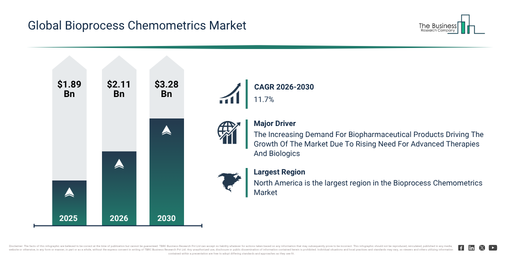
    The bioprocess chemometrics market size has shown swift growth in recent years. It is anticipated to expand from $1.89 billion in 2025 to $2.11 billion in 2026, registering a compound annual growth rate (CAGR) of 11.4%. The expansion observed in previous periods is primarily due to increasing biopharmaceutical manufacturing operations, the incorporation of analytical instrumentation, a rising need for process comprehension, technological breakthroughs in spectroscopy and chromatography, and an elevated demand for regulatory conformity.

    The bioprocess chemometrics market is anticipated to experience substantial growth over the next few years. It is forecast to attain a value of $3.28 billion in 2030, driven by a compound annual growth rate (CAGR) of 11.7%. This projected growth can be attributed to several factors, including the increasing deployment of AI-driven bioprocess analytics, the expansion of cloud-based bioprocess data platforms, the rising adoption of process automation, the broadening of food and environmental monitoring applications, and enhanced integration with bioreactor sensors and instrumentation. Notable trends expected during this forecast period encompass the increasing embrace of real-time bioprocess monitoring, a rising demand for advanced process modeling software, the growing integration of multivariate data analysis tools, an expansion of consulting and implementation services, and a heightened focus on process optimization within biomanufacturing.

    Get A Free Sample Report With In-Depth Market Insights:

    https://thebusinessresearchcompany.com/sample_request?id=40269341&type=smp&name=Bioprocess%20Chemometrics%20Market%20Report%202026&utm_source=Blogs&utm_medium=Paid&utm_campaign=Oct_PR

    Bioprocess Chemometrics Market Demand Drivers: What’s Powering Industry Growth?

    The increasing need for biopharmaceutical products is anticipated to fuel the expansion of the bioprocess chemometrics market. Biopharmaceutical products are biotechnologically produced medical drugs, encompassing proteins, antibodies, vaccines, and nucleic acids, designed to prevent, treat, or cure illnesses. The rising incidence of chronic and life-threatening diseases primarily drives the demand for these products, necessitating more advanced therapies and biologics to improve patient care. As biopharmaceutical manufacturing processes grow in complexity and scale, maintaining efficiency, consistency, and adherence to regulatory standards becomes progressively challenging. Bioprocess chemometrics addresses these challenges by employing advanced data analytics to monitor processes, streamline operations, and guarantee uniform product quality across different production scales. For instance, in July 2025, Sartorius AG, a Germany-based international life science technology company, reported that global sales of biopharmaceutical drugs reached USD 458 billion in 2024, representing 41% of the overall pharmaceutical market, an increase from 40% in 2023. Thus, the growing demand for biopharmaceutical products is expected to stimulate the bioprocess chemometrics market’s growth. The expanding demand for personalized medicine is projected to drive the growth of the bioprocess chemometrics market in the future. Personalized medicine involves medical treatments and therapies customized for individual patients based on their unique genetic profile, biomarkers, and specific disease characteristics. This demand is escalating due to advancements in genomic technologies and molecular diagnostics, which enable medical professionals to tailor treatments precisely to a patient’s genetic makeup, thereby enhancing therapeutic outcomes. Bioprocess chemometrics facilitates personalized medicine by analyzing intricate bioprocess data to optimize the creation of patient-specific biologics and therapies, ensuring greater efficacy and safety tailored to individual patient needs. For example, in February 2024, the Personalized Medicine Coalition, a US-based non-profit organization, stated that the Food and Drug Administration approved 16 new personalized treatments for patients with rare diseases in 2023, an increase from six in 2022, including seven cancer drugs and three for other conditions. Consequently, the rising demand for personalized medicine is propelling the growth of the bioprocess chemometrics market.

    Bioprocess Chemometrics Market Segment Breakdown: Which Categories Lead On Revenue?

    The bioprocess chemometrics market covered in this report is segmented –

    1) By Product Type: Software, Services, Instruments

    2) By Deployment Mode: On-Premises, Cloud-Based

    3) By Application: Biopharmaceutical Manufacturing, Food And Beverages, Environmental Monitoring, Chemical Industry, Other Applications

    Subsegments:

    1) By Software: Data Analysis Software, Process Modeling Software, Visualization Software, Workflow Management Software

    2) By Services: Consulting Services, Implementation Services, Training Services, Support And Maintenance Services

    3) By Instruments: Spectroscopy Instruments, Chromatography Instruments, Process Analyzers, Bioreactor Sensors

    Bioprocess Chemometrics Market Key Players Shaping Industry Direction

    Major companies operating in the bioprocess chemometrics market are JEOL Ltd., Siemens AG, ABB Ltd., Emerson Electric Co., Agilent Technologies Inc., Endress+Hauser Group, Mettler-Toledo International Inc., Yokogawa Electric Corporation, Sartorius AG, Shimadzu Corporation, Bruker Corporation, Revvity Inc., Bio‑Rad Laboratories Inc, HORIBA Ltd., Eppendorf SE, Metrohm AG, Advanced Chemistry Development Inc., Infors HT, Eigenvector Research Inc., FOSS Analytical A/S.

    View The Full Bioprocess Chemometrics Market Report:

    https://thebusinessresearchcompany.com/report/bioprocess-chemometrics-market-report?utm_source=Blogs&utm_medium=Paid&utm_campaign=Oct_PR

    Bioprocess Chemometrics Market Regional Analysis: Which Region Leads By Revenue?

    North America was the largest region in the bioprocess chemometrics market in 2025. Asia-Pacific is expected to be the fastest-growing region in the forecast period. The regions covered in the bioprocess chemometrics market report are Asia-Pacific, South East Asia, Western Europe, Eastern Europe, North America, South America, Middle East, Africa.

    Reach Out To Our Team:

    The Business Research Company: https://www.thebusinessresearchcompany.com/

    Americas: +1 310-496-7795

    Asia: +44 7882 955267 & +91 8897263534

    Europe: +44 7882 955267

    Email us at: marketing@tbrc.info

    Follow us on:

    LinkedIn: https://in.linkedin.com/company/the-business-research-company

    YouTube: https://www.youtube.com/channel/UC24_fI0rV8cR5DxlCpgmyFQ

    Global Market Model: https://www.thebusinessresearchcompany.com/global-market-model
  • Bioprocess Automation Software Market Research 2026: Market Size, Trends, Segments And Growth Forecast

    Bioprocess Automation Software Market Research 2026: Market Size, Trends, Segments And Growth Forecast

    Backed by market attractiveness analysis, total addressable market sizing, company benchmarking matrices, interactive Excel dashboards, wider supply chain intelligence, emerging startup coverage, and detailed product-level insights, The Business Research Company’s 2026 market reports are designed to offer research that is more actionable and strategically valuable than ever.

    Bioprocess Automation Software Market CAGR Outlook And Future Development

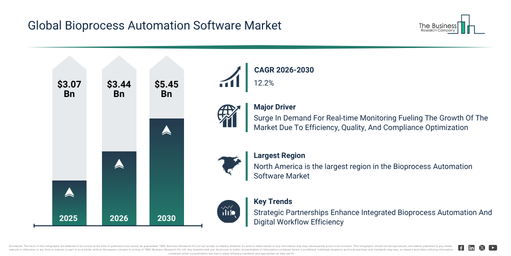
    The bioprocess automation software market has seen substantial expansion in recent times. Its value is projected to rise from $3.07 billion in 2025 to $3.44 billion in 2026, at a compound annual growth rate (CAGR) of 12.0%. This market’s historical growth can be attributed to several factors, including an increased demand for biopharmaceutical products, the uptake of automated process control systems, a growing need for consistent processes, the expansion of research and development activities, and the wider adoption of laboratory information management systems.

    The bioprocess automation software market is projected for swift expansion in the upcoming years. By 2030, this market is anticipated to reach a valuation of $5.45 billion, exhibiting a compound annual growth rate (CAGR) of 12.2%. This expansion during the projection period stems from several factors, including the increasing implementation of AI-powered process optimization, greater integration with cloud-based data management systems, an escalating need for predictive bioprocess monitoring, the broadening availability of hybrid automation solutions, and a heightened emphasis on minimizing human errors and operational expenditures. Key trends shaping the forecast period involve the wider embrace of cloud-based bioprocess automation software, an escalating requirement for real-time data analytics within bioprocessing, enhanced integration with IoT-capable bioreactors, the extension of automation for quality and regulatory compliance, and an intensified focus on optimizing both upstream and downstream processes.

    Get A Free Sample Report With In-Depth Market Insights:

    https://thebusinessresearchcompany.com/sample_request?id=70648650&type=smp&name=Bioprocess%20Automation%20Software%20Market%20Report%202026&utm_source=Blogs&utm_medium=Paid&utm_campaign=Oct_PR

    Bioprocess Automation Software Market Growth Drivers: What’s Behind The Acceleration?

    The increasing investment in research and development is anticipated to significantly advance the bioprocess automation software market. Research and development encompasses systematic activities undertaken by companies and institutions to generate new knowledge, improve existing offerings, or create innovative technologies and methods. This surge in R&D investment is primarily fueled by the rising demand for biologics and advanced therapeutics, leading pharmaceutical and biotechnology firms to dedicate substantial resources towards developing intricate biopharmaceutical products that necessitate sophisticated production processes. Such escalating R&D spending drives the demand for bioprocess automation software by requiring sophisticated digital systems to manage increasingly complex biomanufacturing workflows, ensure regulatory compliance, and optimize production efficiency across both research and commercial operations. For instance, in February 2025, the National Center for Science and Engineering Statistics (NCSES), a US-based government statistical agency, reported that U.S. research and development expenditures increased from $892 billion in 2022 to $940 billion in 2023, representing an expansion of $48 billion. Thus, the growing investment in research and development is a key factor boosting the bioprocess automation software market.

    Bioprocess Automation Software Market Segmentation: How Does The Market Break Down By Category?

    The bioprocess automation software market covered in this report is segmented –

    1) By Component: Software, Services

    2) By Deployment Type: On Premise, Cloud Based, Hybrid

    3) By Enterprise Size: Small And Medium Enterprises, Large Enterprises

    4) By Application: Upstream Processing, Downstream Processing, Quality Control, Manufacturing Operations, Data Management, Other Applications

    5) By End User: Pharmaceutical Companies, Research Institutes, Contract Manufacturing Organizations, Other End-Users

    Subsegments:

    1) By Software: Process Automation Software, Data Management Software, Quality Management Software, Regulatory Compliance Software, Analytics And Reporting Software

    2) By Services: Implementation Services, Consulting Services, Maintenance And Support Services, Training Services, Managed Services

    Bioprocess Automation Software Market Trends: What’s Defining The Industry’s Next Phase?

    Leading firms within the bioprocess automation software market are increasingly engaging in strategic collaborations. Their goal is to provide integrated digital solutions designed to enhance process control, strengthen data connectivity, and boost manufacturing efficiency. These strategic partnerships represent structured alliances where entities cooperate, leveraging their combined expertise and capabilities to achieve shared objectives. Such partnerships enable companies to foster innovation, access new markets, distribute risks, and reinforce their competitive standing, all without the need for a merger. An illustrative instance occurred in June 2024, when AGU, a German provider of bioprocess automation technologies, formed a partnership with Genedata, a bioinformatics software company based in Switzerland. This collaboration aimed to integrate AGU’s SmrtLine Data Cockpit middleware with the Genedata Biopharma Platform. The resulting unified bioprocess automation solution facilitates automated instrument data capture, optimizes data flow within GxP-regulated settings, and seeks to elevate efficiency and data integrity for biopharma process development.

    Bioprocess Automation Software Market Competitive Analysis Of Leading Industry Participants

    Major companies operating in the bioprocess automation software market are Honeywell International Inc., Danaher Corporation, Siemens Healthineers AG, Parker Hannifin Corporation, Rockwell Automation Inc., Yokogawa Electric Corporation, Getinge AB, Waters Corporation, Bioengineering AG, Eppendorf SE, Tecan Group Ltd., Repligen Corporation, Hamilton Company, Pierre Guerin SAS, Inscripta Inc., INFORS HT AG, Automated Control Concepts Inc., Synthace Ltd., Flownamics Inc., ILS Automation Inc., and PendoTECH Inc.

    View The Full Bioprocess Automation Software Market Report:

    https://thebusinessresearchcompany.com/report/bioprocess-automation-software-market-report?utm_source=Blogs&utm_medium=Paid&utm_campaign=Oct_PR

    Bioprocess Automation Software Market Geographic Distribution And Regional Opportunities

    North America was the largest region in the bioprocess automation software market in 2025. Asia-Pacific is expected to be the fastest-growing region in the forecast period. The regions covered in the bioprocess automation software market report are Asia-Pacific, South East Asia, Western Europe, Eastern Europe, North America, South America, Middle East, Africa.

    Reach Out To Our Team:

    The Business Research Company: https://www.thebusinessresearchcompany.com/

    Americas: +1 310-496-7795

    Asia: +44 7882 955267 & +91 8897263534

    Europe: +44 7882 955267

    Email us at: marketing@tbrc.info

    Follow us on:

    LinkedIn: https://in.linkedin.com/company/the-business-research-company

    YouTube: https://www.youtube.com/channel/UC24_fI0rV8cR5DxlCpgmyFQ

    Global Market Model: https://www.thebusinessresearchcompany.com/global-market-model
  • Biopharmaceutical Cold Chain Logistics Market Forecast 2026: Market Size, Competitive Landscape And Growth Drivers

    Biopharmaceutical Cold Chain Logistics Market Forecast 2026: Market Size, Competitive Landscape And Growth Drivers

    Featuring market attractiveness scoring, total addressable market sizing, company benchmarking matrices, interactive Excel dashboards, deeper supply chain intelligence, emerging startup tracking, and granular product-level insights, The Business Research Company’s 2026 market reports are built to deliver research that is both more actionable and more strategically valuable.

    Biopharmaceutical Cold Chain Logistics Market Set To Climb From $18 Billion In 2026 To $25.87 Billion By 2030

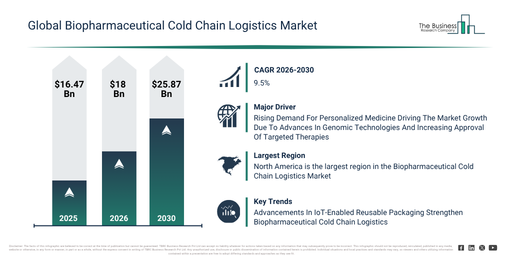
    The biopharmaceutical cold chain logistics market has seen substantial growth in recent years. It is forecast to expand from $16.47 billion in 2025 to $18 billion in 2026, demonstrating a compound annual growth rate (CAGR) of 9.3%. This historical development can be attributed to factors such as increasing biopharmaceutical production, higher demands for vaccine distribution, the expansion of clinical trial logistics, the development of refrigerated transport networks, and the implementation of passive insulated packaging.

    The biopharmaceutical cold chain logistics market size is anticipated to demonstrate substantial growth in the next few years. It is projected to reach $25.87 billion in 2030, expanding at a compound annual growth rate (CAGR) of 9.5%. This expansion during the forecast period is driven by factors such as the increasing implementation of active temperature-controlled containers, the heightened demand for cold chain monitoring services, the growing utilization of reusable thermal packaging, the broadening of short-term transit storage solutions, and the deeper integration with AI and IoT-enabled logistics systems. Noteworthy developments expected in this timeframe involve the greater adoption of temperature-controlled packaging solutions, the rising need for last-mile cold chain delivery, the increasing incorporation of real-time cold chain monitoring, the enlargement of refrigerated and cryogenic storage facilities, and an elevated focus on compliance and regulatory support services.

    Get A Free Sample Report With In-Depth Market Insights:

    https://thebusinessresearchcompany.com/sample_request?id=53471913&type=smp&name=Biopharmaceutical%20Cold%20Chain%20Logistics%20Market%20Report%202026&utm_source=Blogs&utm_medium=Paid&utm_campaign=Oct_PR

    Biopharmaceutical Cold Chain Logistics Market Growth Factors Behind Sustained Expansion

    The biopharmaceutical cold chain logistics market is projected to expand in the future due to the rising demand for personalized medicine. Personalized medicine is a strategy that customizes healthcare and treatments based on an individual patient’s distinct biological and personal characteristics. The utilization of personalized medicine is increasing, driven by developments in genomic technologies, which enable healthcare providers to analyze a patient’s genetic information swiftly and accurately, thereby facilitating more targeted and effective therapies. Biopharmaceutical cold chain logistics supports personalized medicine by maintaining the necessary temperature and handling conditions for individualized treatments, guaranteeing their effectiveness and safety until they are delivered to patients. For instance, in February 2024, according to the Personalized Medicine Coalition, a US-based non-profit organization, the FDA approved 16 new personalized treatments for rare disease patients in 2023, an increase from six in 2022. The personalized treatments newly approved in 2023 also comprised seven cancer drugs and three for other diseases and conditions. Therefore, the growing demand for personalized medicine is propelling the growth of the biopharmaceutical cold chain logistics market.

    Biopharmaceutical Cold Chain Logistics Market Segment Trends And Revenue Contributors

    The biopharmaceutical cold chain logistics market covered in this report is segmented –

    1) By Service Type: Transportation, Storage, Packaging, Other Service Types

    2) By Product Type: Vaccines, Clinical Trial Materials, Biopharmaceuticals, Other Product Types

    3) By Temperature Range: Refrigerated, Frozen, Cryogenic, Other Temperature Ranges

    4) By Mode Of Transportation: Airways, Roadways, Seaways, Railways

    5) By End-User: Pharmaceutical And Biotechnology Companies, Healthcare Providers, Research Institutes, Other End Users

    Subsegments:

    1) By Transportation: Refrigerated Road Transport, Temperature Controlled Air Freight, Insulated Sea Freight, Last Mile Cold Delivery

    2) By Storage: Refrigerated Warehousing, Frozen Storage Facilities, Cryogenic Storage, Short Term Transit Storage

    3) By Packaging: Passive Insulated Packaging, Active Temperature Controlled Containers, Reusable Thermal Packaging, Single Use Cold Chain Packaging

    4) By Other Service Types: Cold Chain Monitoring Services, Validation And Qualification Services, Inventory Management Services, Regulatory Compliance Support Services

    Biopharmaceutical Cold Chain Logistics Market Industry Trends Fueling Future Revenue Growth

    Major companies within the biopharmaceutical cold chain logistics market are concentrating on developing innovative solutions, such as reusable temperature-controlled pallet shippers, to ensure the safe, sustainable, and cost-efficient transportation of temperature-sensitive biologics. A reusable temperature-controlled pallet shipper is a durable, multi-use container designed to maintain stable temperatures for securely transporting sensitive biopharmaceuticals. For instance, in April 2025, Cold Chain Technologies LLC, a US-based packaging company, launched the reusable CCT Tower Elite, a 1600 L temperature-controlled pallet shipper specifically designed for life sciences logistics, which includes integrated IoT for real-time monitoring. This shipper is engineered to maintain stability for over 120 hours at temperatures such as <-60°C, +5°C, and +20°C through the use of phase-change materials, thereby supporting vaccines, biologics, and gene therapies in formats like RoSS® shells and API drums. Its lightweight, aircraft-compatible construction and global reuse network contribute to enhanced sustainability in pharmaceutical shipments.

    Biopharmaceutical Cold Chain Logistics Market Leading Companies And Competitive Benchmarking

    Major companies operating in the biopharmaceutical cold chain logistics market are Cencora Inc., DHL Group, United Parcel Service of America Inc., FedEx Corporation, A.P. Møller – Mærsk A/S, SF Holding Co. Ltd., Schenker AG, CEVA Logistics S.A., Nippon Express Holdings Inc., GXO Logistics Inc., Sonoco Products Company, Agility Public Warehousing Company K.S.C.P., Americold Realty Trust Inc., Marken Ltd., Pelican Products Inc., Cold Chain Technologies LLC, Controlant hf., Sensitech Inc., Envirotainer AB, QuickSTAT Global Life Science Logistics LLC, Cryopak Industries Inc., DGP Intelsius Ltd., Tower Cold Chain Solutions Ltd., and Snowman Logistics Limited.

    View The Full Biopharmaceutical Cold Chain Logistics Market Report:

    https://thebusinessresearchcompany.com/report/biopharmaceutical-cold-chain-logistics-market-report?utm_source=Blogs&utm_medium=Paid&utm_campaign=Oct_PR

    Biopharmaceutical Cold Chain Logistics Market Largest Region By Revenue And Market Share

    North America was the largest region in the biopharmaceutical cold chain logistics market in 2025. Asia-Pacific is expected to be the fastest-growing region in the forecast period. The regions covered in the biopharmaceutical cold chain logistics market report are Asia-Pacific, South East Asia, Western Europe, Eastern Europe, North America, South America, Middle East, Africa.

    Reach Out To Our Team:

    The Business Research Company: https://www.thebusinessresearchcompany.com/

    Americas: +1 310-496-7795

    Asia: +44 7882 955267 & +91 8897263534

    Europe: +44 7882 955267

    Email us at: marketing@tbrc.info

    Follow us on:

    LinkedIn: https://in.linkedin.com/company/the-business-research-company

    YouTube: https://www.youtube.com/channel/UC24_fI0rV8cR5DxlCpgmyFQ

    Global Market Model: https://www.thebusinessresearchcompany.com/global-market-model
  • Bioinductive Implant Market Size In 2026: Regional Growth, Key Segments And Future Outlook

    Bioinductive Implant Market Size In 2026: Regional Growth, Key Segments And Future Outlook

    Built to provide research that’s more actionable and strategically valuable, The Business Research Company’s 2026 market reports include market attractiveness analysis, total addressable market sizing, company benchmarking matrices, interactive Excel dashboards, broader supply chain intelligence, emerging startup tracking, and in-depth product insights.

    Bioinductive Implant Market Forecast: Value Set To Climb From $2.14 Billion To $3.2 Billion

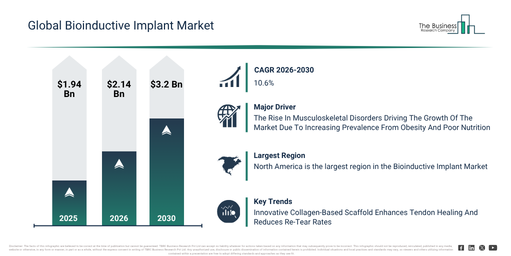
    The bioinductive implant market size has observed rapid growth over recent years. It is anticipated to expand from $1.94 billion in 2025 to $2.14 billion in 2026, at a compound annual growth rate (CAGR) of 10.3%. This historical growth can be ascribed to factors like the increasing prevalence of orthopedic and cardiovascular disorders, the growing adoption of implantable medical devices, rising investments in biomedical research, the development of synthetic resorbable polymers, and the expansion of hospital and clinical infrastructure.

    The bioinductive implant sector is projected to experience substantial expansion over the coming years. Its valuation is anticipated to reach $3.2 billion by 2030, exhibiting a compound annual growth rate (CAGR) of 10.6%. This projected expansion during the forecast period is driven by several factors, including the increasing need for personalized implants, the greater embrace of bioabsorbable composite materials, the expanded application of nanofiber and multilayered scaffold implants, the growth in dental and orthopedic surgical procedures, and a heightened emphasis on regenerative medicine and tissue engineering. Key developments expected within this period encompass the wider acceptance of biodegradable implants, a growing demand for 3D printed and customized implant solutions, the increased incorporation of growth factor-embedded technologies, the advancement of electrospinning and nanofiber-structured implants, and a sharpened focus on applications in orthopedics and dentistry.

    Get A Free Sample Report With In-Depth Market Insights:

    https://thebusinessresearchcompany.com/sample_request?id=65687162&type=smp&name=Bioinductive%20Implant%20Market%20Report%202026&utm_source=Blogs&utm_medium=Paid&utm_campaign=Oct_PR

    Bioinductive Implant Market Demand Drivers Opening New Revenue Streams

    The expansion of the bioinductive implant market is anticipated to be spurred by the increasing occurrence of musculoskeletal disorders (MSK). These disorders encompass a wide range of conditions impacting muscles, bones, joints, tendons, and ligaments, frequently leading to discomfort, restricted movement, and functional limitations. Factors contributing to the rising frequency of these conditions include higher obesity rates, inadequate nutrition, and inactive lifestyles, all of which progressively increase mechanical strain on joints and weaken musculoskeletal structures. Bioinductive implants facilitate recovery by encouraging natural tissue regeneration, improving the repair of tendons and ligaments, and fostering lasting healing while minimizing the chance of re-injury. For instance, in January 2024, the Office for Health Improvement and Disparities, a UK-based government department, stated that the proportion of individuals aged 16 and over experiencing a long-term musculoskeletal condition rose from 17.6% in 2022 to 18.4% in 2023. Consequently, the increasing prevalence of musculoskeletal disorders (MSK) is propelling the growth of the bioinductive implant market. The upward trend in sports-related injuries is projected to fuel the expansion of the bioinductive implant market moving forward. Sports-related injuries refer to physical damage or harm to the body’s muscles, bones, joints, ligaments, or tendons that occur during athletic pursuits or exercise. This escalating incidence of sports-related injuries stems from greater participation in high-intensity sports, which puts more strain on muscles, joints, and ligaments. Bioinductive implants assist in the recovery from sports-related injuries by supporting tissue regeneration and improving the healing process for damaged tendons and ligaments. For example, in October 2024, according to Inside World Football, a UK-based web-based news-driven service, sport injuries totaled 4,123 during the 2023-24 season, representing a 4% rise compared to 2022-23. Therefore, the increasing occurrence of sports-related injuries is driving the growth of the bioinductive implant market.

    Bioinductive Implant Market Segment Analysis Spotlighting Growth Areas

    The bioinductive implant market covered in this report is segmented –

    1) By Type: Biodegradable, Non-Biodegradable, Other Types

    2) By Material Type: Biological Grafts, Synthetic Resorbable Polymers, Hybrid Bio Synthetic Implants, Recombinant Protein Based Materials

    3) By Technology: Electrospinning, 3D Printing, Other Technologies

    4) By Application: Orthopedic, Cardiovascular, Dental, Other Applications

    5) By End-User: Hospitals, Clinics, Ambulatory Surgical Centres, Other End-Users

    Subsegments:

    1) By Biodegradable: Natural Polymer Based Implants, Collagen Based Implants, Gelatin Based Implants, Polylactic Acid Based Implants, Polyglycolic Acid Based Implants, Polycaprolactone Based Implants, Chitosan Based Implants, Bioabsorbable Composite Implants

    2) By Non-Biodegradable: Silicone Based Implants, Polyethylene Based Implants, Polyurethane Based Implants, Titanium Reinforced Implants, Stainless Steel Reinforced Implants, Permanent Composite Implants, Ceramic Based Implants

    3) By Other Types: Partially Degradable Implants, Smart Responsive Implants, Drug Eluting Implants, Growth Factor Embedded Implants, Nanofiber Structured Implants, Multi Layered Scaffold Implants, Customized Patient Specific Implants

    Bioinductive Implant Market Trends Powering Strategic Industry Growth

    Leading companies within the bioinductive implant market are increasingly concentrating on creating advanced solutions, including collagen-based and resorbable implants, aimed at fostering tendon regeneration and enhancing surgical results for rotator cuff repair. These collagen-based and resorbable implants are medical instruments crafted from natural or engineered collagen substances, offering transient structural support, encouraging tissue repair, and progressively dissolving within the body as the healing process unfolds. As an example, during July 2023, Smith & Nephew plc, a medical technology firm from the UK, introduced the REGENETEN Bioinductive Implant. This collagen-based scaffold is engineered to enhance rotator cuff repair by providing biological support for tendon healing, surpassing traditional sutured repair methods. This implant is inserted arthroscopically via a minimally invasive cut and has a size roughly equivalent to a postage stamp. It offers a biocompatible structure that utilizes the body’s natural healing mechanisms to stimulate the development of new tendon-like tissue, is completely absorbed over time, and has demonstrated associations with lower re-tear rates and better functional results when contrasted with solely traditional repair approaches.

    Bioinductive Implant Market Industry Leaders And Competitive Landscape

    Major companies operating in the bioinductive implant market are Baxter International Inc, Zimmer Biomet Holdings Inc., Smith Nephew plc, Arthrex Inc., CONMED Corporation, Footprint International Holdco Inc, MiMedx Group Inc., LifeNet Health Inc., Anika Therapeutics Inc., ZimVie Inc, Danimer Scientific Inc, Smurfit Kappa Group, NatureWorks LLC, Mondi Group, Novamont S.p.A, Tissue Regenix Group plc, Stora Enso Oyj, Collagen Matrix Inc., Polymateria Ltd, BioSphere Plastic LLC.

    View The Full Bioinductive Implant Market Report:

    https://thebusinessresearchcompany.com/report/bioinductive-implant-market-report?utm_source=Blogs&utm_medium=Paid&utm_campaign=Oct_PR

    Bioinductive Implant Market Regional Analysis And Leading Geography

    North America was the largest region in the bioinductive implant market in 2025. Asia-Pacific is expected to be the fastest-growing region in the forecast period. The regions covered in the bioinductive implant market report are Asia-Pacific, South East Asia, Western Europe, Eastern Europe, North America, South America, Middle East, Africa.

    Reach Out To Our Team:

    The Business Research Company: https://www.thebusinessresearchcompany.com/

    Americas: +1 310-496-7795

    Asia: +44 7882 955267 & +91 8897263534

    Europe: +44 7882 955267

    Email us at: marketing@tbrc.info

    Follow us on:

    LinkedIn: https://in.linkedin.com/company/the-business-research-company

    YouTube: https://www.youtube.com/channel/UC24_fI0rV8cR5DxlCpgmyFQ

    Global Market Model: https://www.thebusinessresearchcompany.com/global-market-model
  • Bioconjugation Reagents Market Analysis: $2.74 Billion Market Size In 2026 And Future Growth Prospects

    Bioconjugation Reagents Market Analysis: $2.74 Billion Market Size In 2026 And Future Growth Prospects

    Featuring market attractiveness scoring, total addressable market sizing, company benchmarking matrices, interactive Excel dashboards, deeper supply chain intelligence, emerging startup tracking, and granular product-level insights, The Business Research Company’s 2026 market reports are built to deliver research that is both more actionable and more strategically valuable.

    Bioconjugation Reagents Market Value Growth And Long-Term Outlook

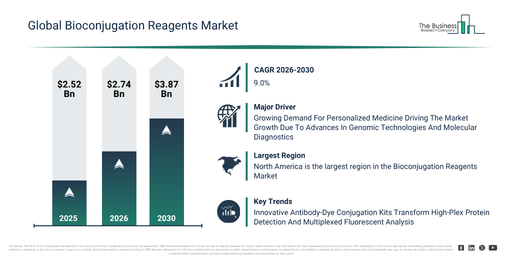
    The bioconjugation reagents market has experienced substantial growth in recent years. It is forecast to increase from $2.52 billion in 2025 to $2.74 billion in 2026, at a compound annual growth rate (CAGR) of 8.8%. This historical expansion can be linked to several key drivers, including heightened pharmaceutical and biotech research and development, the embrace of conventional bioconjugation reagents, a surging demand for proteomics and genomics research, the development of academic and research institutions, and the broadening of applications in diagnostics and molecular imaging.

    The bioconjugation reagents market is projected to experience substantial expansion over the upcoming years, reaching a valuation of $3.87 billion by 2030, demonstrating a compound annual growth rate (CAGR) of 9.0%. This growth during the projection period can be primarily attributed to several factors, including the escalating demand for antibody drug conjugates, the wider embrace of click chemistry and covalent conjugation techniques, an increased emphasis on precision medicine applications, the broadening availability of bioconjugation kits for oligonucleotide and enzyme research, and the incorporation of AI-driven reagent design and analytics. Key trends anticipated within the forecast timeframe encompass the expanding utilization of click chemistry-based conjugation methods, a surging requirement for antibody drug conjugates (ADC) in various applications, the increasing deployment of biotinylation and fluorescent labeling reagents, the development of covalent conjugation kits tailored for protein and enzyme research, and a heightened focus on high-precision molecular imaging and diagnostics.

    Get A Free Sample Report With In-Depth Market Insights:

    https://thebusinessresearchcompany.com/sample_request?id=53468548&type=smp&name=Bioconjugation%20Reagents%20Market%20Report%202026&utm_source=Blogs&utm_medium=Paid&utm_campaign=Oct_PR

    Bioconjugation Reagents Market Growth Catalysts And Demand Drivers

    The bioconjugation reagents market is anticipated to expand due to the increasing need for personalized medicine. This approach involves medical treatments and therapies customized for individual patients, considering their genetic profile, biomarkers, and particular disease traits. Enhanced genomic technologies and molecular diagnostics are fueling this demand, empowering doctors to customize treatments based on a patient’s genetic makeup, thereby improving treatment results. Bioconjugation reagents are crucial for developing personalized medicine as they facilitate the exact attachment of drugs, biomarkers, or imaging agents to specific molecules. This process enables targeted therapies and precise diagnostics, customized to an individual’s distinct genetic and molecular profile. For example, data from the Personalized Medicine Coalition, a US-based non-profit organization, indicates that in February 2024, the U.S. Food and Drug Administration approved 16 new personalized treatments for rare disease patients in 2023, a rise from six in 2022. These approvals included seven cancer drugs and three treatments for other diseases and conditions. Consequently, the escalating demand for personalized medicine is propelling the expansion of the bioconjugation reagents market.

    Bioconjugation Reagents Market Segment Landscape And Growth Outlook

    The bioconjugation reagents market covered in this report is segmented –

    1) By Product: Crosslinkers And Coupling Agents, Activated Esters, Thiol-Reactive Reagents, Amine-Reactive Reagents, Click Chemistry Reagents, Labeling Reagents And Linkers, Conjugation Kits, Covalent Conjugation, Click Chemistry-Based

    2) By Chemistry Type: Amine-Based Chemistry, Sulfhydryl-Based Chemistry, Carboxyl-Based Chemistry, Azide-Alkyne Chemistry, Photoreactive Chemistry

    3) By Sales Channel: Direct Sales, Distributors And Wholesalers, Online Platforms And Ecommerce, Specialty Retailers

    4) By Application: Drug Development, Antibody Drug Conjugates, Diagnostics, Molecular Imaging, Proteomics Research, Genomics Research

    5) By End-User: Pharmaceutical And Biotechnology Companies, Academic And Research Institutes, Diagnostic Laboratories, Other End Users

    Subsegments:

    1) By Crosslinkers And Coupling Agents: Homobifunctional Crosslinkers, Heterobifunctional Crosslinkers, Zero Length Crosslinkers, Cleavable Crosslinkers, Non Cleavable Crosslinkers

    2) By Activated Esters: N Hydroxysuccinimide Esters, Sulfo N Hydroxysuccinimide Esters, Tetrafluorophenyl Esters, Pentafluorophenyl Esters

    3) By Thiol-Reactive Reagents: Maleimide Reagents, Iodoacetyl Reagents, Pyridyl Disulfide Reagents, Bromoacetyl Reagents

    4) By Amine-Reactive Reagents: Isothiocyanate Reagents, Succinimidyl Ester Reagents, Carbodiimide Reagents, Imidoester Reagents

    5) By Click Chemistry Reagents: Azide Reagents, Alkyne Reagents, Strained Alkyne Reagents, Tetrazine Reagents

    6) By Labeling Reagents And Linkers: Fluorescent Labeling Reagents, Biotinylation Reagents, Enzyme Labeling Reagents, Polyethylene Glycol Linkers

    7) By Conjugation Kits: Antibody Conjugation Kits, Protein Conjugation Kits, Oligonucleotide Conjugation Kits, Enzyme Conjugation Kits

    8) By Covalent Conjugation: Amide Bond Formation, Thioether Bond Formation, Disulfide Bond Formation, Hydrazone Bond Formation

    9) By Click Chemistry-Based: Copper Catalyzed Azide Alkyne Cycloaddition, Strain Promoted Azide Alkyne Cycloaddition, Inverse Electron Demand Diels Alder Reaction

    Bioconjugation Reagents Market Trends Shaping Long-Term Demand

    Key companies operating in the bioconjugation reagents market are focusing on developing innovative products like antibody-dye conjugation kits to enable customizable, high-precision protein detection and multiplexed analysis. These kits allow researchers to attach fluorescent dyes to antibodies for targeted protein detection and aid in customizable, high-precision, and multiplexed analysis in assays such as flow cytometry and fluorescent western blots. For instance, in January 2025, Bio-Rad Laboratories Inc., a US-based life sciences and diagnostics company, launched the Trailblazer Tag and Trailblazer StarBright Dye Label Kits. These antibody-dye conjugation kits utilize SpyTag and SpyCatcher chemistry to covalently link StarBright Blue and StarBright Violet dyes to virtually any antibody. Such kits offer rapid, efficient conjugation with minimal antibody loss, enabling researchers to design bespoke high-plex panels for flow cytometry and streamline multiplex integration in fluorescent western blots. They provide flexibility in dye selection and compatibility with a wide range of antibodies, enhancing experimental customization while maintaining consistent fluorescence performance.

    Bioconjugation Reagents Market Top Companies Driving Competitive Growth

    Major companies operating in the bioconjugation reagents market are Thermo Fisher Scientific Inc., Merck KGaA, Danaher Corporation, Lonza Group Ltd, Bio-Rad Laboratories Inc., GenScript Biotech Corporation, Maravai LifeSciences, Santa Cruz Biotechnology Inc., Rockland Immunochemicals Inc., Amerigo Scientific, Creative Biolabs Inc., Bio-Synthesis Inc., TriLink BioTechnologies, Tonbo Biosciences, Lumiprobe Corporation, Biotium Inc., Jena Bioscience GmbH, Promega Corporation, SETA BioMedicals Srl, Dojindo Laboratories Inc., CellMosaic Inc.

    View The Full Bioconjugation Reagents Market Report:

    https://thebusinessresearchcompany.com/report/bioconjugation-reagents-market-report?utm_source=Blogs&utm_medium=Paid&utm_campaign=Oct_PR

    Bioconjugation Reagents Market Global Footprint: Which Region Leads The Industry?

    North America was the largest region in the bioconjugation reagents market in 2025. Asia-Pacific is expected to be the fastest-growing region in the forecast period. The regions covered in the bioconjugation reagents market report are Asia-Pacific, South East Asia, Western Europe, Eastern Europe, North America, South America, Middle East, Africa.

    Reach Out To Our Team:

    The Business Research Company: https://www.thebusinessresearchcompany.com/

    Americas: +1 310-496-7795

    Asia: +44 7882 955267 & +91 8897263534

    Europe: +44 7882 955267

    Email us at: marketing@tbrc.info

    Follow us on:

    LinkedIn: https://in.linkedin.com/company/the-business-research-company

    YouTube: https://www.youtube.com/channel/UC24_fI0rV8cR5DxlCpgmyFQ

    Global Market Model: https://www.thebusinessresearchcompany.com/global-market-model
  • Bioactive Bone Substitutes Market Reaches $3.16 Billion In 2026: Forecast And Growth Opportunities

    Bioactive Bone Substitutes Market Reaches $3.16 Billion In 2026: Forecast And Growth Opportunities

    Featuring market attractiveness scoring, total addressable market sizing, company benchmarking matrices, interactive Excel dashboards, deeper supply chain intelligence, emerging startup tracking, and granular product-level insights, The Business Research Company’s 2026 market reports are built to deliver research that is both more actionable and more strategically valuable.

    Bioactive Bone Substitutes Market Growth From $2.24 Billion In 2026 To $3.16 Billion By 2030 At A CAGR Of 9%

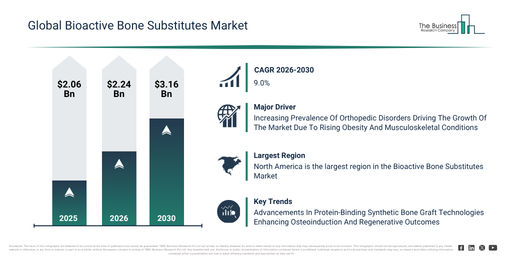
    The bioactive bone substitutes market has witnessed significant growth over recent years. The market is anticipated to expand from $2.06 billion in 2025 to $2.24 billion in 2026, demonstrating a compound annual growth rate (CAGR) of 8.7%. This historical expansion can be attributed to several factors, including the increasing occurrence of orthopedic and dental conditions, the embrace of synthetic hydroxyapatite and calcium phosphate materials, technological advancements in biomaterials, a rising number of dental and orthopedic surgical procedures, and heightened awareness of bone regeneration solutions.

    The market size for bioactive bone substitutes is anticipated to experience substantial growth in the upcoming years. Its value is projected to reach $3.16 billion in 2030, expanding at a compound annual growth rate (CAGR) of 9.0%. This forecasted growth can be attributed to the increasing adoption of bioactive glass and polymer-based substitutes, a rise in the usage of injectable and putty formulations, an expansion in the volumes of dental and orthopedic procedures, growing demand for nano hydroxyapatite composites, and advancements in collagen-ceramic composite matrices. Key trends for the forecast period include a heightened acceptance of injectable and paste formulations, an increased demand for nano hydroxyapatite and porous scaffolds, a stronger focus on composite regeneration matrices, the broadening of dental and orthopedic applications, and a growing preference for bioactive glass and polymer-based substitutes.

    Get A Free Sample Report With In-Depth Market Insights:

    https://thebusinessresearchcompany.com/sample_request?id=55375081&type=smp&name=Bioactive%20Bone%20Substitutes%20Market%20Report%202026&utm_source=Blogs&utm_medium=Paid&utm_campaign=Oct_PR

    Bioactive Bone Substitutes Market Expansion Drivers: What’s Shaping Future Growth?

    A heightened occurrence of orthopedic conditions is projected to stimulate the expansion of the bioactive bone substitutes market throughout the forecast period. These conditions encompass a wide array of ailments affecting bones, joints, muscles, ligaments, and other elements of the musculoskeletal system, often resulting in pain, limited mobility, and functional impairment. Several factors contribute to the rising incidence of these disorders, including an aging demographic, increasing levels of obesity, inactive lifestyles, and injuries related to sports. Bioactive bone substitutes assist in the management of orthopedic disorders by encouraging natural bone regeneration, improving structural integrity, accelerating the healing process in fractures and bone defects, and decreasing the requirement for subsequent surgical procedures. For example, in January 2024, as per the Office for Health Improvement and Disparities, a UK-based government department, 18.4% of individuals aged 16 and over in the United Kingdom indicated they had a long-term musculoskeletal condition in 2023, which was an increase from 17.6% in 2022. Thus, the escalating prevalence of orthopedic disorders is boosting the growth of the bioactive bone substitutes market.

    Bioactive Bone Substitutes Market Segmentation And Category Overview

    The bioactive bone substitutes market covered in this report is segmented –

    1) By Product: Calcium Phosphate Ceramics, Hydroxyapatite-Based Grafts, Bioactive Glass Materials, Polymer-Based Substitutes, Composite Regeneration Matrices

    2) By Material: Hydroxyapatite, Tricalcium Phosphate, Bioactive Glass, Collagen, Other Materials

    3) By Form: Granules, Putty, Blocks, Injectable Formulations, Paste

    4) By Application: Orthopedic Surgery, Dental Procedures, Trauma Reconstruction, Synthetics, Biologics Or Allografts, Hybrids Or Xenografts

    5) By End User: Hospitals, Dental Clinics And Specialized Dental Centers, Ambulatory Surgical Centers, Specialty Orthopedic And Dental Distributors

    Subsegments:

    1) By Calcium Phosphate Ceramics: Tricalcium Phosphate Ceramics, Biphasic Calcium Phosphate Ceramics, Injectable Calcium Phosphate Cements, Porous Calcium Phosphate Scaffolds, Calcium Deficient Phosphate Ceramics

    2) By Hydroxyapatite-Based Grafts: Synthetic Hydroxyapatite Grafts, Nano Hydroxyapatite Grafts, Porous Hydroxyapatite Blocks, Hydroxyapatite Granules, Collagen Hydroxyapatite Composites

    3) By Bioactive Glass Materials: Silicate Based Bioactive Glass, Phosphate Based Bioactive Glass, Borosilicate Bioactive Glass, Bioactive Glass Putty, Bioactive Glass Particulates

    4) By Polymer-Based Substitutes: Polylactic Acid Based Substitutes, Polyglycolic Acid Based Substitutes, Polycaprolactone Based Scaffolds, Collagen Based Matrices, Chitosan Based Substitutes

    5) By Composite Regeneration Matrices: Ceramic Polymer Composite Matrices, Collagen Ceramic Composite Scaffolds, Bioactive Glass Polymer Composites, Hydroxyapatite Polymer Composites, Fiber Reinforced Regeneration Matrices

    Bioactive Bone Substitutes Market Strategic Trends: What Defines The Next Growth Phase?

    Leading companies within the bioactive bone substitutes market are concentrating on developing innovative solutions, such as protein-binding synthetic bone graft substitutes, to boost osteoinductive performance, accelerate bone regeneration, and improve clinical outcomes in orthopedic and dental applications. These protein-binding synthetic bone graft substitutes are engineered biomaterials designed to attach and retain growth factors or proteins at the implantation site, thereby enhancing bone regeneration by stimulating natural healing and new bone formation. For example, in November 2025, Acuitive Technologies Inc., a US-based biomaterials company, introduced CitreGraft, a protein-binding synthetic bone graft substitute developed to improve protein binding and bone regeneration. CitreGraft is composed of a citrate-based polymer integrated with hydroxyapatite, which allows for strong protein affinity and improved cellular signaling at the defect site. This material mimics the natural composition of bone, supports osteoconduction, and promotes early-stage bone healing by facilitating growth factor retention. It is resorbable, biocompatible, and suitable for use in orthopedic trauma, spinal fusion, and dental bone grafting procedures. Its unique citrate chemistry differentiates it from conventional calcium phosphate grafts by enhancing biological interaction and mechanical stability.

    Bioactive Bone Substitutes Market Competitive Landscape: Which Companies Lead The Industry?

    Major companies operating in the bioactive bone substitutes market are Medtronic Plc, Stryker Corporation, Zimmer Biomet Holdings Inc., Globus Medical Inc., Orthofix Medical Inc., Bioventus Inc., ZimVie Inc., Xtant Medical Holdings Inc., Biocomposites Ltd., BONESUPPORT AB, Geistlich Pharma AG, Botiss Biomaterials GmbH, Kuros Biosciences AG, Ceraver, Thommen Medical AG, Osteogenics Biomedical Inc., Curasan AG, NovaBone Products LLC, Purgo Biologics Inc., Teknimed SA.

    View The Full Bioactive Bone Substitutes Market Report:

    https://thebusinessresearchcompany.com/report/bioactive-bone-substitutes-market-report?utm_source=Blogs&utm_medium=Paid&utm_campaign=Oct_PR

    Bioactive Bone Substitutes Market Regional Outlook: Where Is Opportunity Concentrated?

    North America was the largest region in the bioactive bone substitutes market in 2025. Asia-Pacific is expected to be the fastest-growing region in the forecast period. The regions covered in the bioactive bone substitutes market report are Asia-Pacific, South East Asia, Western Europe, Eastern Europe, North America, South America, Middle East, Africa.

    Reach Out To Our Team:

    The Business Research Company: https://www.thebusinessresearchcompany.com/

    Americas: +1 310-496-7795

    Asia: +44 7882 955267 & +91 8897263534

    Europe: +44 7882 955267

    Email us at: marketing@tbrc.info

    Follow us on:

    LinkedIn: https://in.linkedin.com/company/the-business-research-company

    YouTube: https://www.youtube.com/channel/UC24_fI0rV8cR5DxlCpgmyFQ

    Global Market Model: https://www.thebusinessresearchcompany.com/global-market-model
  • Bead-Linked Transposase Library Kits Market Growth In 2026: Market Size, Key Drivers And Future Outlook

    Built to provide research that’s more actionable and strategically valuable, The Business Research Company’s 2026 market reports include market attractiveness analysis, total addressable market sizing, company benchmarking matrices, interactive Excel dashboards, broader supply chain intelligence, emerging startup tracking, and in-depth product insights.

    Bead-Linked Transposase Library Kits Market Expansion Outlook: What Revenue Opportunities Are Ahead?

    The market size for bead-linked transposase library kits has expanded rapidly in recent years. Projections show it will increase from $1.13 billion in 2025 to $1.26 billion in 2026, achieving a compound annual growth rate (CAGR) of 11.4%. Historically, this expansion has been spurred by the increasing adoption of next-generation sequencing, the growth of genomics research, rising demand from academic and research institutes, technological advancements in bead-linked transposase systems, and the broadening scope of pharmaceutical and biotechnology research.

    The market for bead-linked transposase library kits is set for considerable expansion in the upcoming years. Its value is projected to reach $1.95 billion by 2030, demonstrating a compound annual growth rate (CAGR) of 11.6%. This growth during the forecast period is fueled by increasing demand for clinical diagnostics applications, expanding use in personalized medicine, a rise in the adoption of automated and high-throughput library kits, growth in metagenomic and transcriptomic studies, and greater integration with bioinformatics and AI-driven data analysis. Significant developments anticipated include the growing embrace of DNA library kits for high-throughput sequencing, an increasing need for RNA library kits in clinical diagnostics, an amplified focus on customized library preparation solutions, the broadening of single-cell and targeted sequencing applications, and the rising incorporation of automated library preparation workflows.

    Get A Free Sample Report With In-Depth Market Insights:

    https://thebusinessresearchcompany.com/sample_request?id=78021014&type=smp&name=Bead-Linked%20Transposase%20Library%20Kits%20Market%20Report%202026&utm_source=Blogs&utm_medium=Paid&utm_campaign=Oct_PR

    Bead-Linked Transposase Library Kits Market Development Factors: What’s Supporting Demand?

    The expanding occurrence and enhanced detection of genetic disorders are anticipated to boost the bead-linked transposase library kits market. Genetic disorders are conditions resulting from alterations or mutations in an individual’s DNA, which can be inherited or emerge spontaneously. The heightened identification of these disorders is largely attributable to advancements in diagnostic technologies and the expansion of genetic screening initiatives, which facilitate earlier and more thorough detection of genetic conditions that were previously undiagnosed. Bead-linked transposase library kits are crucial in genetic research and clinical genomics, enabling quick, efficient, and high-quality DNA library preparation for next-generation sequencing (NGS). For instance, in October 2024, the National Health Service (NHS) England, a UK-based government department, reported that as part of a pioneering study in NHS hospitals, hundreds of newborns are now being screened for more than 200 rare genetic conditions, with the program aiming to test up to 100,000 babies across England. Consequently, the rising prevalence of genetic disorders is fueling the expansion of the bead-linked transposase library kits market. Increased investments and government funding in genomics are projected to drive the growth of the bead-linked transposase library kits market going forward. Genomics is the field of biology focused on studying an organism’s complete set of DNA, including all its genes. Investments and government funding in genomics are escalating due to the growing recognition of its vital role in advancing precision medicine and improving public health outcomes. Such funding enables the expansion of large-scale sequencing projects, strengthens laboratory infrastructure, and accelerates research initiatives, thereby increasing the demand for sophisticated sample preparation technologies like bead-linked transposase library kits that support efficient and high-throughput genomic analysis. For instance, in February 2025, the Government of Canada, a Canada-based federal authority, launched the Canadian Genomics Strategy, backed by a federal investment of $175.1 million starting in 2024–25, to enhance genomics research and commercialization efforts. Therefore, the rising investments and government funding in genomics are propelling the growth of the bead-linked transposase library kits market.

    Bead-Linked Transposase Library Kits Market Segment Outlook: Which Categories Are Growing Fastest?

    The bead-linked transposase library kits market covered in this report is segmented –

    1) By Product Type: Deoxyribonucleic Acid (DNA) Library Kits, Ribonucleic Acid (RNA) Library Kits, Custom Library Kits, Other Product Types

    2) By Distribution Channel: Direct Sales, Distributors, Online Retailers, Other Distribution Channels

    3) By Application: Next-Generation Sequencing, Genomics Research, Clinical Diagnostics, Other Applications

    4) By End User: Academic And Research Institutes, Hospitals And Clinics, Pharmaceutical And Biotechnology Companies, Other End-Users

    Subsegments:

    1) By Deoxyribonucleic Acid (DNA) Library Kits: Whole Genome Library Kits, Targeted Sequencing Library Kits, Amplicon Library Kits, Exome Library Kits

    2) By Ribonucleic Acid (RNA) Library Kits: Messenger Ribonucleic Acid (mRNA) Library Kits, Total Ribonucleic Acid (RNA) Library Kits, Small Ribonucleic Acid (RNA) Library Kits, Long Non Coding Ribonucleic Acid (RNA) Library Kits

    3) By Custom Library Kits: Custom Targeted Library Kits, Custom Amplicon Library Kits, Custom Whole Genome Library Kits, Custom Ribonucleic Acid (RNA) Library Kits 4) By Other Product Types: Single Cell Sequencing Kits, Targeted Sequencing Kits, Whole Genome Sequencing Kits, Metagenomic Sequencing Kits, Epigenetic Sequencing Kits, Transcriptome Sequencing Kits, Custom Library Preparation Kits, Rapid Library Preparation Kits, Low Input Library Kits, High Throughput Library Kits

    Bead-Linked Transposase Library Kits Market Competitive Landscape: Who Leads The Industry?

    Major companies operating in the bead-linked transposase library kits market are F. Hoffmann-La Roche Ltd., Thermo Fisher Scientific Inc., Eurofins Scientific SE, Agilent Technologies Inc., Illumina Inc., PerkinElmer Inc., Bio-Rad Laboratories Inc., BGI Genomics Co. Ltd., Novogene Co. Ltd., Takara Bio Inc., Twist Bioscience Inc., Oxford Nanopore Technologies plc, Pacific Biosciences of California Inc., New England Biolabs Inc., Watchmaker Genomics Inc., Eurofins Genomics, Zymo Research Corporation, Yeasen Biotechnology Co. Ltd., Norgen Biotek Corp., Lexogen GmbH, Vazyme Biotech Co. Ltd., Gencove Inc., MagBio Genomics Inc., Aline Biosciences Inc.

    View The Full Bead-Linked Transposase Library Kits Market Report:

    https://thebusinessresearchcompany.com/report/bead-linked-transposase-library-kits-market-report?utm_source=Blogs&utm_medium=Paid&utm_campaign=Oct_PR

    Bead-Linked Transposase Library Kits Market Geographic Landscape: Which Region Leads Industry Growth?

    North America was the largest region in the bead-linked transposase library kits market in 2025. Asia-Pacific is expected to be the fastest-growing region in the forecast period. The regions covered in the bead-linked transposase library kits market report are Asia-Pacific, South East Asia, Western Europe, Eastern Europe, North America, South America, Middle East, Africa.

    Reach Out To Our Team:

    The Business Research Company: https://www.thebusinessresearchcompany.com/

    Americas: +1 310-496-7795

    Asia: +44 7882 955267 & +91 8897263534

    Europe: +44 7882 955267

    Email us at: marketing@tbrc.info

    Follow us on:

    LinkedIn: https://in.linkedin.com/company/the-business-research-company

    YouTube: https://www.youtube.com/channel/UC24_fI0rV8cR5DxlCpgmyFQ

    Global Market Model: https://www.thebusinessresearchcompany.com/global-market-model
  • Balloon Ablation Catheters Market Size And Forecast 2026–2030: Trends Driving Industry Expansion

    Balloon Ablation Catheters Market Size And Forecast 2026–2030: Trends Driving Industry Expansion

    Backed by market attractiveness analysis, total addressable market sizing, company benchmarking matrices, interactive Excel dashboards, wider supply chain intelligence, emerging startup coverage, and detailed product-level insights, The Business Research Company’s 2026 market reports are designed to offer research that is more actionable and strategically valuable than ever.

    Balloon Ablation Catheters Market Growth Potential: How Will Market Size Shift Through 2030?

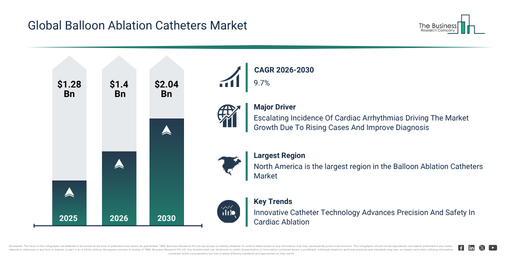
    The market for balloon ablation catheters has experienced significant expansion in recent years. This market is set to expand from $1.28 billion in 2025 to $1.4 billion in 2026, showing a compound annual growth rate (CAGR) of 9.5%. The historical growth of this market can be linked to factors such as the increasing occurrence of cardiac arrhythmias, the adoption of less invasive ablation procedures, continuous advancements in catheter technologies, a heightened awareness of cardiovascular diseases, and the expansion of hospital-based cardiac care units.

    The balloon ablation catheters market size is projected to demonstrate significant growth in the upcoming years. It is foreseen to expand to $2.04 billion in 2030, achieving a compound annual growth rate (CAGR) of 9.7%. The expansion over the forecast period is attributed to the increasing need for atrial fibrillation treatments, a rise in the adoption of advanced energy delivery mechanisms, the expanding use of catheter-based therapies in specialty clinics, the proliferation of ambulatory surgical centers, and enhanced integration with imaging and monitoring systems. Prominent developments anticipated in the forecast period include a greater embrace of single-use balloon ablation catheters, an escalating demand for radiofrequency and cryo balloon catheters, a heightened emphasis on minimally invasive cardiac procedures, an broadening of reusable balloon ablation catheter applications, and increased integration of catheter systems with real-time imaging.

    Get A Free Sample Report With In-Depth Market Insights:

    https://thebusinessresearchcompany.com/sample_request?id=59689800&type=smp&name=Balloon%20Ablation%20Catheters%20Market%20Report%202026&utm_source=Blogs&utm_medium=Paid&utm_campaign=Oct_PR

    Balloon Ablation Catheters Market Industry Drivers: What’s Behind The Revenue Growth?

    The increasing prevalence of cardiac arrhythmias is anticipated to fuel the expansion of the balloon ablation catheters market in the foreseeable future. These conditions involve an abnormal heart rhythm—either excessively fast, slow, or inconsistent—stemming from issues with the heart’s electrical signaling. The rise in cardiac arrhythmia cases is attributed to the demographic shift towards an older population, given that elderly individuals exhibit a greater susceptibility to such heart rhythm irregularities. Balloon ablation catheters serve to address cardiac arrhythmias by accurately delivering energy to specific heart tissue regions, thereby interrupting aberrant electrical paths, re-establishing a regular heart rhythm, and mitigating the dangers linked with erratic heartbeats. As an illustration, the Centers for Disease Control and Prevention (CDC), a U.S. government body, reported in March 2024 that approximately 12.1 million individuals in the United States are predicted to develop atrial fibrillation (AFib) by the year 2050. Consequently, the growing occurrence of cardiac arrhythmias is a primary factor propelling the demand within the balloon ablation catheters market.

    Balloon Ablation Catheters Market Segment Landscape: Which Areas Lead Development?

    The balloon ablation catheters market covered in this report is segmented –

    1) By Product Type: Single-Use Balloon Ablation Catheters, Reusable Balloon Ablation Catheters

    2) By Application: Cardiac Arrhythmia, Atrial Fibrillation, Ventricular Tachycardia, Other Applications

    3) By End User: Hospitals, Ambulatory Surgical Centers, Specialty Clinics, Other End-Users

    Subsegments:

    1) By Single-Use Balloon Ablation Catheters: Cryo Balloon Catheter, Radiofrequency Balloon Catheter, Laser Balloon Catheter, Microwave Balloon Catheter

    2) By Reusable Balloon Ablation Catheters: Cryo Balloon Catheter, Radiofrequency Balloon Catheter, Laser Balloon Catheter, Microwave Balloon Catheter

    #Balloon Ablation Catheters Market Growth Trends: What’s Shaping The Future Outlook?

    Leading companies operating within the balloon ablation catheters market are concentrating on developing innovative products, such as next-generation pulsed field ablation catheters, to enhance safety, reduce procedure duration, and improve patient outcomes. These advanced balloon-based devices, known as next-generation pulsed field ablation catheters, deliver precise electrical pulses to treat abnormal heart rhythms, contributing to shorter procedure times, minimized tissue damage, and improved patient recovery. For instance, in December 2025, Abbott Laboratories, a US-based medical device company, obtained U.S. Food and Drug Administration approval for its Volt Pulsed Field Ablation System, an innovative balloon-in-basket pulsed field ablation (PFA) catheter that is integrated with the EnSite X electroanatomical mapping system. This device empowers clinicians to map, pace, and ablate cardiac tissue using a single catheter, providing precise, non-thermal energy to create targeted lesions while minimizing damage to surrounding tissue. Its balloon-in-basket design, featuring multiple active splines, ensures optimal tissue contact and uniform energy delivery, thereby enhancing procedural efficiency and safety compared with traditional thermal ablation catheters. Designed to treat both paroxysmal and persistent atrial fibrillation, the system reduces procedure times and supports faster patient recovery.

    Balloon Ablation Catheters Market Company Landscape And Competitive Strategy

    Major companies operating in the balloon ablation catheters market are Johnson & Johnson, Abbott Laboratories, Medtronic plc, Toray Industries Inc., Boston Scientific Corporation, Cook Medical LLC, Biotronik SE & Co. KG, Merit Medical Systems Inc., CONMED Corporation, Lepu Medical Technology (Beijing) Co. Ltd., MicroPort Scientific Corporation, Avanos Medical Inc., Japan Lifeline Co. Ltd., AngioDynamics Inc., Imricor Medical Systems Inc., Kardium Inc., B. Braun SE, ERBE Elektromedizin GmbH, CathVision A/S, Osypka AG, CathRx Ltd., Pulse Biosciences Inc., CardioNXT Inc., Shanghai MicroPort EP MedTech Co. Ltd., Aurigen Medical Inc.

    View The Full Balloon Ablation Catheters Market Report:

    https://thebusinessresearchcompany.com/report/balloon-ablation-catheters-market-report?utm_source=Blogs&utm_medium=Paid&utm_campaign=Oct_PR

    Balloon Ablation Catheters Market Largest Region: Which Geography Holds The Biggest Share?

    North America was the largest region in the balloon ablation catheters market in 2025. Asia-Pacific is expected to be the fastest-growing region in the forecast period. The regions covered in the balloon ablation catheters market report are Asia-Pacific, South East Asia, Western Europe, Eastern Europe, North America, South America, Middle East, Africa.

    Reach Out To Our Team:

    The Business Research Company: https://www.thebusinessresearchcompany.com/

    Americas: +1 310-496-7795

    Asia: +44 7882 955267 & +91 8897263534

    Europe: +44 7882 955267

    Email us at: marketing@tbrc.info

    Follow us on:

    LinkedIn: https://in.linkedin.com/company/the-business-research-company

    YouTube: https://www.youtube.com/channel/UC24_fI0rV8cR5DxlCpgmyFQ

    Global Market Model: https://www.thebusinessresearchcompany.com/global-market-model
  • At-Home Thyroid Testing Market Size In 2026 And Beyond: Understanding Future Growth Potential

    At-Home Thyroid Testing Market Size In 2026 And Beyond: Understanding Future Growth Potential

    Built to provide research that’s more actionable and strategically valuable, The Business Research Company’s 2026 market reports include market attractiveness analysis, total addressable market sizing, company benchmarking matrices, interactive Excel dashboards, broader supply chain intelligence, emerging startup tracking, and in-depth product insights.

    At-Home Thyroid Testing Market Forecast: What Value Will The Market Reach By 2030?

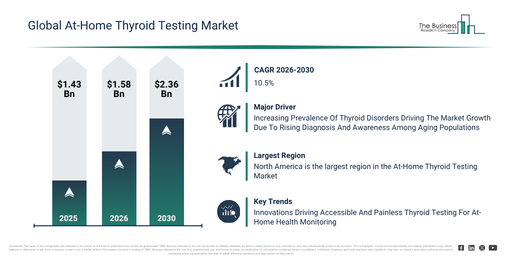
    The at-home thyroid testing market has witnessed substantial expansion in recent years. This market is set to increase from $1.43 billion in 2025 to $1.58 billion in 2026, progressing at a compound annual growth rate (CAGR) of 10.2%. The past growth in this sector can be attributed to factors including heightened awareness of thyroid disorders, an increase in the use of laboratory-based thyroid tests, a rising demand for convenient testing methods, the adoption of immunoassay-based diagnostics, and the expansion of online pharmacy platforms.

    The at-home thyroid testing market size is projected to experience substantial expansion in the next few years. This market is anticipated to grow to $2.36 billion in 2030, demonstrating a compound annual growth rate (CAGR) of 10.5%. The expansion during the forecast period can be attributed to the increasing adoption of digital and remote health solutions, a growing demand for rapid and accurate thyroid testing, the expansion of home healthcare services, rising integration with AI and predictive analytics, and an increasing consumer focus on preventive health. Key trends in the forecast period include the increasing adoption of at-home thyroid testing kits, a rising demand for rapid thyroid function assessment, growing integration with online and retail distribution channels, the expansion of molecular diagnostics-based tests, and an increasing focus on personalized health monitoring.

    Get A Free Sample Report With In-Depth Market Insights:

    https://thebusinessresearchcompany.com/sample_request?id=86346117&type=smp&name=At-Home%20Thyroid%20Testing%20Market%20Report%202026&utm_source=Blogs&utm_medium=Paid&utm_campaign=Oct_PR

    At-Home Thyroid Testing Market Demand Drivers Opening New Revenue Streams

    The expanding occurrence of thyroid ailments is anticipated to drive the future expansion of the at home thyroid testing market. These disorders are conditions where the thyroid gland’s hormone production is either excessive or insufficient, impacting metabolism and general well-being. The rise in thyroid disorder prevalence stems from an aging global demographic, coupled with heightened awareness and screening efforts, resulting in more individuals receiving diagnoses for conditions like hypothyroidism, hyperthyroidism, and various other thyroid malfunctions. At-home thyroid testing offers individuals a convenient method to monitor their thyroid hormone levels, identify early indicators of dysfunction, and track the efficacy of treatment, thereby facilitating proactive management of thyroid disorders without requiring numerous clinic visits. As an illustration, data from September 2023, provided by the Endocrine Society of Australia (ESA), an Australia-based non-profit body, indicates that hypothyroidism stands as the most prevalent thyroid disorder in Australia, impacting approximately 1 in 33 people, and is observed more often in women than in men, as well as in individuals over 60 years of age. Consequently, the growing occurrence of thyroid conditions is stimulating the expansion of the at home thyroid testing market.

    At-Home Thyroid Testing Market Segment Trends And Revenue Contributors

    The at-home thyroid testing market covered in this report is segmented –

    1) By Test Type: Thyroid Stimulating Hormone (TSH) Test, Triiodothyronine (T3) Test, Thyroxine (T4) Test, Thyroid Antibody Test, Other Types

    2) By Sample Type: Blood, Saliva, Other Types

    3) By Technology: Immunoassay, Molecular Diagnostics, Other Technologies

    4) By Distribution Channel: Online Pharmacies, Retail Pharmacies, Other Distribution Channels

    5) By End-User: Individuals, Diagnostic Laboratories, Other End-Users

    Subsegments:

    1) By Thyroid Stimulating Hormone (TSH) Test: Third Generation Thyroid Stimulating Hormone Test, Fourth Generation Thyroid Stimulating Hormone Test, Rapid Thyroid Stimulating Hormone Test, Laboratory Based Thyroid Stimulating Hormone Test

    2) By Triiodothyronine (T3) Test: Total T3 Test, Free T3 Test, Reverse T3 Test, Laboratory Based T3 Test

    3) By Thyroxine (T4) Test: Total T4 Test, Free T4 Test, Thyroxine Binding Test, Laboratory Based T4 Test

    4) By Thyroid Antibody Test: Thyroid Peroxidase Antibody Test, Thyroglobulin Antibody Test, Thyroid Stimulating Immunoglobulin Test, Thyroid Stimulating Hormone Receptor Antibody Test

    At-Home Thyroid Testing Market Trends Powering Strategic Industry Growth

    Leading companies in the At-Home Thyroid Testing market are prioritizing the development of innovative offerings, specifically clinical-grade home thyroid testing kits, to provide accessible, precise, and affordable thyroid monitoring without requiring laboratory visits. Clinical-grade home thyroid testing kits serve as at-home diagnostic tools capable of delivering lab-quality thyroid hormone measurements using small blood samples, thereby enabling users to accurately and conveniently monitor their thyroid health from home. For example, in February 2026, SiPhox Health Inc., a US-based biotech startup, introduced SiPhox Home, a novel at-home thyroid testing platform designed to measure TSH, Free T4, Free T3, TPOAb, TGAb, and TG for $79/month. This product seamlessly integrates with a digital health dashboard, allowing users to track results over time, synchronize with their doctors, and access telehealth support for individualized guidance. By leveraging silicon photonics to miniaturize lab-grade instruments, SiPhox Home reduces testing costs without sacrificing accuracy, thereby making frequent, at-home thyroid monitoring more widely available.

    At-Home Thyroid Testing Market Key Participants And Competitive Landscape

    Major companies operating in the at-home thyroid testing market are Labcorp OnDemand, Redcliffe Labs LLC, Apollo Diagnostics Inc., Dr. Lal PathLabs Ltd., Metropolis Healthcare Ltd., LetsGetChecked Ltd., Function Health Inc., Everlywell Inc., Healthians Pvt. Ltd., HealthPlix Inc., ZRT Laboratory LLC, Jane Software Inc., Paloma Health Inc., HealthLabs.com Inc., InsideTracker Inc., Verisana GmbH, myLAB Box Inc., Ulta Lab Tests LLC, Walk-In Lab LLC, Bloom Diagnostics Inc., SelfDecode Inc., Check My Body Health Inc., Blue Horizon Blood Tests LLC, Forth With Life Inc., Orange Health Labs Inc.

    View The Full At-Home Thyroid Testing Market Report:

    https://thebusinessresearchcompany.com/report/at-home-thyroid-testing-market-report?utm_source=Blogs&utm_medium=Paid&utm_campaign=Oct_PR

    At-Home Thyroid Testing Market Geographic Analysis: Where Is Demand Rising Fastest?

    North America was the largest region in the at-home thyroid testing market in 2025. Asia-Pacific is expected to be the fastest-growing region in the forecast period. The regions covered in the at-home thyroid testing market report are Asia-Pacific, South East Asia, Western Europe, Eastern Europe, North America, South America, Middle East, Africa.

    Reach Out To Our Team:

    The Business Research Company: https://www.thebusinessresearchcompany.com/

    Americas: +1 310-496-7795

    Asia: +44 7882 955267 & +91 8897263534

    Europe: +44 7882 955267

    Email us at: marketing@tbrc.info

    Follow us on:

    LinkedIn: https://in.linkedin.com/company/the-business-research-company

    YouTube: https://www.youtube.com/channel/UC24_fI0rV8cR5DxlCpgmyFQ

    Global Market Model: https://www.thebusinessresearchcompany.com/global-market-model

  • At-Home Dermatology Devices Market Reaches $17.7 Billion In 2026: Key Developments Shaping Expansion

    At-Home Dermatology Devices Market Reaches $17.7 Billion In 2026: Key Developments Shaping Expansion

    Backed by market attractiveness analysis, total addressable market sizing, company benchmarking matrices, interactive Excel dashboards, wider supply chain intelligence, emerging startup coverage, and detailed product-level insights, The Business Research Company’s 2026 market reports are designed to offer research that is more actionable and strategically valuable than ever.

    At-Home Dermatology Devices Market Size Outlook: How Quickly Will Revenue Expand Through 2030?

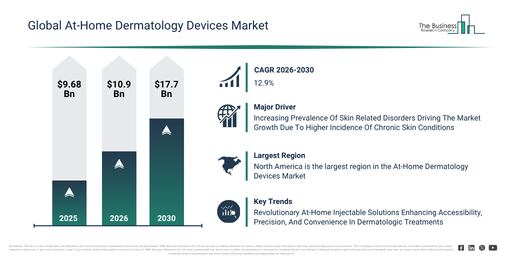
    The at-home dermatology devices market size has experienced rapid growth in recent years. This market is projected to expand from $9.68 billion in 2025 to $10.9 billion in 2026, at a compound annual growth rate (CAGR) of 12.6%. Historically, this growth can be attributed to heightened consumer awareness regarding skin health, increasing demand for anti-aging solutions, the rising popularity of non-invasive home treatments, advancements in laser and light therapy technology, and the expansion of e-commerce channels for skincare devices.

    The at-home dermatology devices market size is poised for substantial growth in the upcoming years. It is projected to expand to $17.7 billion by 2030, achieving a compound annual growth rate (CAGR) of 12.9%. This anticipated growth can be attributed to several factors, including the increasing incorporation of AI and diagnostic sensors into devices, a rise in the adoption of personalized skin treatment solutions, the development of online and subscription-based distribution models, the proliferation of multi-functional and combination therapy devices, and a heightened focus on safety and regulatory compliance for home-use dermatology tools. Noteworthy trends expected during this forecast period involve the growing adoption of portable at-home dermatology devices, an escalating demand for combination skincare therapy devices, the expanding integration of light and laser-based treatment devices, the widening use of automated microneedling and serum delivery systems, and an increased emphasis on online and direct-to-consumer distribution channels.

    Get A Free Sample Report With In-Depth Market Insights:

    https://thebusinessresearchcompany.com/sample_request?id=87340391&type=smp&name=At-Home%20Dermatology%20Devices%20Market%20Report%202026&utm_source=Blogs&utm_medium=Paid&utm_campaign=Oct_PR

    At-Home Dermatology Devices Market Growth Backed By Core Demand Fundamentals

    The expanding occurrence of skin conditions is anticipated to fuel the future expansion of the at home dermatology devices market. These disorders encompass conditions like eczema, dermatitis, psoriasis, and various other chronic or acute inflammatory skin ailments. The rise in their prevalence stems from evolving lifestyle factors, including inadequate diet, heightened stress, insufficient physical activity, and increased exposure to environmental contaminants, all of which can initiate or exacerbate conditions like eczema, acne, and psoriasis. At-home dermatology devices empower individuals to proactively manage these conditions through features such as real-time monitoring, tailored treatment application, and progress tracking, thereby decreasing reliance on face-to-face consultations and enhancing overall skin health. For example, in August 2023, Skin Health Institute Inc., a non-profit organization based in Australia, reported that psoriasis impacts an estimated 2–3% of the population in Australia, underscoring its status as a relatively common skin ailment. Consequently, the growing incidence of skin related disorders is a key impetus for the expansion of the at home dermatology devices market.

    At-Home Dermatology Devices Market Segment Analysis Spotlighting Growth Areas

    The at-home dermatology devices market covered in this report is segmented –

    1) By Product Type: Light Therapy Devices, Microdermabrasion Devices, Laser Devices, Radiofrequency Devices, Microneedling Devices, Other Product Types

    2) By Distribution Channel: Online Stores, Pharmacies, Specialty Stores, Other Distribution Channels

    3) By Application: Acne Treatment, Hair Removal, Skin Rejuvenation, Wrinkle Reduction, Psoriasis, Other Applications

    4) By End-User: Individuals, Home Care Settings

    Subsegments:

    1) By Light Therapy Devices: Blue Light Therapy Devices, Red Light Therapy Devices, Combination Red And Blue Light Therapy Devices, Portable Light Therapy Devices

    2) By Microdermabrasion Devices: Crystal-Based Microdermabrasion Devices, Diamond-Tip Microdermabrasion Devices, Handheld Microdermabrasion Devices, Professional-Grade At-Home Microdermabrasion Devices

    3) By Laser Devices: Fractional Laser Devices, Non-Ablative Laser Devices, Ablative Laser Devices, Portable At-Home Laser Devices

    4) By Radiofrequency Devices: Monopolar Radiofrequency Devices, Bipolar Radiofrequency Devices, Tripolar Radiofrequency Devices, Portable Radiofrequency Skin Devices

    5) By Microneedling Devices: Manual Microneedling Rollers, Automated Microneedling Pens, At-Home Microneedling Kits, Combination Microneedling And Serum Devices

    6) By Other Product Types: Ultrasonic Skin Devices, Hydration And Infusion Devices, Light Emitting Diode Facial Mask Devices, Combination Skincare Therapy Devices

    At-Home Dermatology Devices Market Growth Trends Reshaping The Competitive Landscape

    Leading companies in the At-Home Dermatology Devices market are concentrating on developing innovative products, such as at-home microneedle injectable devices, to offer convenient, effective, and self-administered treatments for common skin conditions. These compact tools deliver precise doses of medication directly into the skin, aiding in the reduction of inflammation, treating acne or other dermatologic conditions, and providing professional-level results within the home setting. For instance, in October 2025, Indomo Therapeutics Inc., a US-based clinical-stage company, introduced ClearPen, an investigational at-home injectable candidate designed for treating inflammatory acne lesions. ClearPen integrates a proprietary microneedle delivery device with triamcinolone acetonide, a corticosteroid consistent with American Academy of Dermatology guidelines. The device enables accurate, low-dose intradermal injections that decrease inflammation and lesion size, allowing patients to safely self-administer treatment at home. Its design emphasizes ease of use, accuracy, and convenience compared with traditional in-office intralesional injections. Beyond acne, Indomo aims to broaden the platform for other corticosteroid-responsive conditions, such as keloids and hidradenitis suppurativa, thereby providing wider access to timely dermatologic care.

    At-Home Dermatology Devices Market Top Companies Driving Competitive Growth

    Major companies operating in the at-home dermatology devices market are Procter & Gamble Co., Panasonic Corporation, L’Oréal S.A., Koninklijke Philips N.V., Nu Skin Enterprises Inc., YA-MAN Ltd., Therabody Inc., FOREO AB, CurrentBody Ltd., Home Skinovations Ltd., Project E Beauty Inc., The Beauty Tech Group Inc., LightStim Inc., Beurer GmbH, PMD Beauty Inc., ZIIP Beauty Inc., Microderm GLO LLC, BSG Aesthetics Solutions Inc., Nood Ventures LLC, Reviva Labs Inc., Kenzzi Limited, Homiley Brands LLC, Nooance Inc.

    View The Full At-Home Dermatology Devices Market Report:

    https://thebusinessresearchcompany.com/report/at-home-dermatology-devices-market-report?utm_source=Blogs&utm_medium=Paid&utm_campaign=Oct_PR

    At-Home Dermatology Devices Market Global Footprint: Which Region Leads The Market?

    North America was the largest region in the at-home dermatology devices market in 2025. Asia-Pacific is expected to be the fastest-growing region in the forecast period. The regions covered in the at-home dermatology devices market report are Asia-Pacific, South East Asia, Western Europe, Eastern Europe, North America, South America, Middle East, Africa.

    Reach Out To Our Team:

    The Business Research Company: https://www.thebusinessresearchcompany.com/

    Americas: +1 310-496-7795

    Asia: +44 7882 955267 & +91 8897263534

    Europe: +44 7882 955267

    Email us at: marketing@tbrc.info

    Follow us on:

    LinkedIn: https://in.linkedin.com/company/the-business-research-company

    YouTube: https://www.youtube.com/channel/UC24_fI0rV8cR5DxlCpgmyFQ

    Global Market Model: https://www.thebusinessresearchcompany.com/global-market-model