Month: October 2026

  • Diagnostic Tools Market Expected To Grow At 5.8% CAGR Through 2030: What Businesses Need To Know

    Diagnostic Tools Market Expected To Grow At 5.8% CAGR Through 2030: What Businesses Need To Know

    Backed by market attractiveness analysis, total addressable market sizing, company benchmarking matrices, interactive Excel dashboards, wider supply chain intelligence, emerging startup coverage, and detailed product-level insights, The Business Research Company’s 2026 market reports are designed to offer research that is more actionable and strategically valuable than ever.

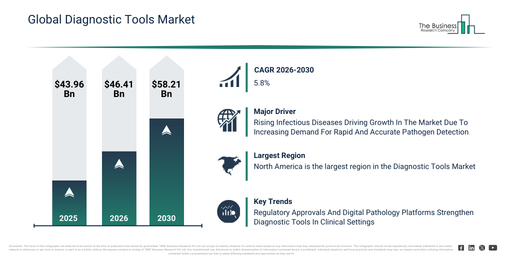
    Diagnostic Tools Market Growth From $46.41 Billion In 2026 To $58.21 Billion By 2030 At A CAGR Of 5.8%

    The diagnostic tools market has experienced significant expansion in recent years. It is forecast to grow from $43.96 billion in 2025 to $46.41 billion in 2026, achieving a compound annual growth rate (CAGR) of 5.6%. Historically, this growth has been fueled by elements such as the increasing prevalence of chronic diseases, a heightened demand for early disease detection, improvements in healthcare infrastructure, the wider adoption of laboratory testing devices, and expanding government healthcare initiatives.

    The diagnostic tools market is poised for significant expansion in the coming years. It is projected to reach $58.21 billion by 2030, growing at a compound annual growth rate (CAGR) of 5.8%. This anticipated growth during the forecast period is fueled by increasing telemedicine adoption, heightened investment in AI-driven diagnostics, the broadening of wearable health monitoring devices, a rising focus on personalized medicine, and the expansion of preventive healthcare services. Prominent trends throughout the forecast period include the increasing uptake of remote patient monitoring tools, a surging demand for point-of-care diagnostic devices, the development of imaging and radiology evaluation services, the expansion of laboratory testing and sample analysis solutions, and the integration of multi-parameter health screening systems.

    Get A Free Sample Report With In-Depth Market Insights:

    https://thebusinessresearchcompany.com/sample_request?id=47792717&type=smp&name=Diagnostic%20Tools%20Market%20Report%202026&utm_source=Blogs&utm_medium=Paid&utm_campaign=Oct_PR

    Diagnostic Tools Market Demand Drivers: What’s Powering Industry Growth?

    The expanding occurrence of infectious diseases is projected to boost the growth of the diagnostic tools market in the future. These diseases are conditions resulting from pathogens capable of transmission among individuals, animals, or from the environment. The escalation of infectious diseases stems from urbanization and population growth, which lead to increased close contact among people, thereby fostering optimal conditions for pathogens to proliferate rapidly. Diagnostic tools are crucial in combating infectious diseases by swiftly and precisely detecting and identifying the responsible pathogens, thus enabling prompt treatment and hindering further dissemination. For instance, in March 2024, the Centers for Disease Control and Prevention, a US-based government agency, indicated that tuberculosis cases rose from 8,320 in 2022 to 9,615 in 2023, marking an increase of 1,295 cases. Hence, the increasing prevalence of infectious diseases is a key factor propelling the expansion of the diagnostic tools market.

    Diagnostic Tools Market Segment Landscape And Growth Outlook

    The diagnostic tools market covered in this report is segmented –

    1) By Component: Software, Services

    2) By Deployment Mode: On-Premises, Cloud

    3) By Organization Size: Small And Medium Enterprises, Large Enterprises

    4) By Industry Vertical: Banking, Financial Services And Insurance (BFSI), Information Technology And Telecommunications, Healthcare, Retail, Manufacturing, Government, Other Industry Verticals

    Subsegments:

    1) By Software: Process Modeling And Design Software, Process Automation Software, Process Analytics And Monitoring Software, Process Integration Software, Case Management Software

    2) By Services: Consulting Services, Implementation Services, Training And Education Services, Managed And Support Services, Process Optimization Services

    Diagnostic Tools Market Innovation Trends: What Developments Are Reshaping The Industry?

    Major companies within the diagnostic tools market are concentrating on developing innovative solutions like digital pathology platforms to facilitate faster, more accurate disease detection and streamline clinical workflows. A digital pathology platform refers to a technological system that digitizes tissue samples and biopsy slides utilizing high-resolution scanners, allowing pathologists to view, analyze, and share these images on a computer or cloud-based platform, frequently enhanced with AI tools for quicker and more precise disease diagnosis. For instance, in June 2025, PathAI Inc., a US-based technology company, unveiled AISight Dx, a digital pathology image management system that received approval from the Food and Drug Administration (FDA), permitting its use for primary diagnosis in clinical settings. This system optimizes anatomic pathology workflows via intelligent case management, high-performance whole slide image review, multi-slide navigation, annotation tools, and real-time collaboration features. The system seamlessly integrates with scanners such as Hamamatsu NanoZoomer and Leica Aperio, enhancing efficiency and diagnostic consistency for laboratories and hospitals.

    Diagnostic Tools Market Leading Players And Competitive Positioning

    Major companies operating in the diagnostic tools market are F Hoffmann La Roche AG, Hitachi Ltd, Abbott Laboratories, Canon Medical Systems Corporation, Siemens Healthineers AG, Koninklijke Philips NV, Fujifilm Holdings Corporation, Danaher Corporation, GE HealthCare Technologies Inc, Becton Dickinson and Company, Konica Minolta Inc, Shenzhen Mindray Bio Medical Electronics Co Ltd, Illumina Inc, bioMerieux SA, Hologic Inc, Shimadzu Corporation, Bio Rad Laboratories Inc, DiaSorin SpA, Carestream Health Inc, and Sanrad Medical Systems Private Limited.

    View The Full Diagnostic Tools Market Report:

    https://thebusinessresearchcompany.com/report/diagnostic-tools-market-report?utm_source=Blogs&utm_medium=Paid&utm_campaign=Oct_PR

    Diagnostic Tools Market Regional Distribution: Which Areas Power Market Growth?

    North America was the largest region in the diagnostic tools market in 2025. Asia-Pacific is expected to be the fastest-growing region in the forecast period. The regions covered in the diagnostic tools market report are Asia-Pacific, South East Asia, Western Europe, Eastern Europe, North America, South America, Middle East, Africa.

    Reach Out To Our Team:

    The Business Research Company: https://www.thebusinessresearchcompany.com/

    Americas: +1 310-496-7795

    Asia: +44 7882 955267 & +91 8897263534

    Europe: +44 7882 955267

    Email us at: marketing@tbrc.info

    Follow us on:

    LinkedIn: https://in.linkedin.com/company/the-business-research-company

    YouTube: https://www.youtube.com/channel/UC24_fI0rV8cR5DxlCpgmyFQ

    Global Market Model: https://www.thebusinessresearchcompany.com/global-market-model
  • Cloud Based Drug Discovery Platform Market Growth To $6.75 Billion Creates New Opportunities Across The Industry

    Featuring market attractiveness scoring, total addressable market sizing, company benchmarking matrices, interactive Excel dashboards, deeper supply chain intelligence, emerging startup tracking, and granular product-level insights, The Business Research Company’s 2026 market reports are built to deliver research that is both more actionable and more strategically valuable.

    Cloud Based Drug Discovery Platform Market Value Growth And Long-Term Outlook

    The cloud based drug discovery platform market has seen rapid expansion in recent years. Its size is expected to increase from $3.61 billion in 2025 to $4.09 billion in 2026, achieving a compound annual growth rate (CAGR) of 13.1%. This historical growth can be attributed to the rising adoption of cloud computing in life sciences, increasing investment in r&d by pharmaceutical companies, growth of high-performance computing infrastructure, demand for faster drug discovery timelines, and expansion of bioinformatics research capabilities.

    The cloud based drug discovery platform market is poised for substantial expansion in the coming years. It is projected to achieve a value of $6.75 billion in 2030, demonstrating a compound annual growth rate (CAGR) of 13.4%. This anticipated growth during the forecast period is fueled by factors such as the increasing utilization of artificial intelligence for drug design, the expanding adoption of hybrid and private cloud deployment models, the growing integration of multi-omics data for drug discovery processes, the proliferation of contract research organizations and academic collaborations, and the rising demands for regulatory compliance and data security. Prominent trends expected in this period include the wider acceptance of cloud-based drug discovery platforms, a heightened demand for virtual screening and molecular simulation instruments, advancements in AI-driven predictive modeling for optimizing drug candidates, the expansion of secure collaboration and data management offerings, and the deeper integration of bioinformatics and computational chemistry solutions.

    Get A Free Sample Report With In-Depth Market Insights:

    https://thebusinessresearchcompany.com/sample_request?id=38889384&type=smp&name=Cloud%20Based%20Drug%20Discovery%20Platform%20Market%20Report%202026&utm_source=Blogs&utm_medium=Paid&utm_campaign=Oct_PR

    Cloud Based Drug Discovery Platform Market Demand Drivers: What’s Powering Industry Growth?

    The increasing acceptance of personalized medicine is anticipated to drive the expansion of the cloud based drug discovery platform market in the future. Personalized medicine defines a medical approach that customizes treatment and prevention strategies to an individual’s distinct genetic makeup, lifestyle, and environment. The rising adoption of personalized medicine is primarily attributed to advancements in genomics, which allow for precise identification of genetic variations and tailored treatments for individuals. Cloud-based drug discovery platforms enhance the uptake of personalized medicine by offering scalable computing power and advanced analytics for examining patient-specific genetic, molecular, and clinical data. These platforms accelerate the discovery of targeted therapies, improve drug efficacy, and enable customized treatment plans, thereby supporting more precise and effective healthcare solutions. For instance, in February 2024, the Personalized Medicine Coalition (PMC), a US-based nonprofit organization, reported that the U.S. Food and Drug Administration (FDA) approved 26 new personalized medicines in 2023, which was a notable increase from the 12 approved in 2022. Consequently, the growing adoption of personalized medicine is a key driver for the growth of the cloud based drug discovery platform market.

    Cloud Based Drug Discovery Platform Market Segmentation: How Does The Market Break Down By Category?

    The cloud based drug discovery platform market covered in this report is segmented –

    1) By Component: Software, Services

    2) By Drug Discovery Stage: Target Identification, Lead Discovery, Preclinical Development, Clinical Development

    3) By Technology: Machine Learning, Artificial Intelligence, Computational Chemistry, Bioinformatics

    4) By Deployment Model: Public Cloud, Private Cloud, Hybrid Cloud

    5) By End User: Pharmaceutical Companies, Bioscience Research Organizations, Academic Institutions, Contract Research Organizations

    Subsegments:

    1) By Software: Molecular Modeling Tools, Data Analysis Platforms, Predictive Simulation Software, Visualization Tools, Collaboration Platforms

    2) By Services: Consulting Services, Implementation Services, Integration Services, Training And Support Services, Data Management Services

    Cloud Based Drug Discovery Platform Market Innovation Trends: What Developments Are Reshaping The Industry?

    Leading companies in the cloud based drug discovery platform market are concentrating on creating advanced technological solutions, such as AI-driven drug discovery systems, to enhance efficiency, boost prediction accuracy, and minimize the time and cost involved in introducing new drugs to market. AI-driven drug discovery platforms are defined as sophisticated computational systems that utilize artificial intelligence, encompassing machine learning and structure prediction, to formulate and refine drug candidates by analyzing biological data and molecular structures. For example, in May 2025, Viva Biotech, a China-based biotechnology company, unveiled its AI-driven drug discovery (AIDD) platform, an advanced cloud-enabled tool designed for early-stage research. This sophisticated and comprehensive platform features three primary modules—V-Scepter, V-Orb, and V-Mantle—that combine structure prediction, molecular dynamics, and generative AI for novel drug design. The platform’s functionalities include AI-generated antibody sequences, which reduce initial discovery time from months to less than a week, alongside lab-in-the-loop iterative cycles and proprietary Free Energy Perturbation calculations.

    Cloud Based Drug Discovery Platform Market Company Landscape And Competitive Strategy

    Major companies operating in the cloud based drug discovery platform market are Microsoft Corporation, Accenture plc, International Business Machines Corporation, Oracle Corporation, Tata Consultancy Services Limited, Dassault Systèmes SE, WuXi AppTec Co. Ltd., SAS Institute Inc., Schrödinger Inc., Valo Health Inc., Owkin Inc., Insilico Medicine Inc., Recursion Pharmaceuticals Inc., Relay Therapeutics Inc., BenevolentAI Limited, Deep Genomics Inc., Collaborative Drug Discovery Inc., Iktos SAS, Nimbus Therapeutics LLC, and Optibrium Limited.

    View The Full Cloud Based Drug Discovery Platform Market Report:

    https://thebusinessresearchcompany.com/report/cloud-based-drug-discovery-platform-market-report?utm_source=Blogs&utm_medium=Paid&utm_campaign=Oct_PR

    Cloud Based Drug Discovery Platform Market Largest Region: Which Geography Holds The Biggest Share?

    North America was the largest region in the cloud based drug discovery platform market in 2025. Asia-Pacific is expected to be the fastest-growing region in the forecast period. The regions covered in the cloud based drug discovery platform market report are Asia-Pacific, South East Asia, Western Europe, Eastern Europe, North America, South America, Middle East, Africa.

    Reach Out To Our Team:

    The Business Research Company: https://www.thebusinessresearchcompany.com/

    Americas: +1 310-496-7795

    Asia: +44 7882 955267 & +91 8897263534

    Europe: +44 7882 955267

    Email us at: marketing@tbrc.info

    Follow us on:

    LinkedIn: https://in.linkedin.com/company/the-business-research-company

    YouTube: https://www.youtube.com/channel/UC24_fI0rV8cR5DxlCpgmyFQ

    Global Market Model: https://www.thebusinessresearchcompany.com/global-market-model
  • Cell Image Analysis Artificial Intelligence (AI) Market Expected To Grow At 24.2% CAGR Through 2030: What Businesses Need To Know

    Cell Image Analysis Artificial Intelligence (AI) Market Expected To Grow At 24.2% CAGR Through 2030: What Businesses Need To Know

    Backed by market attractiveness analysis, total addressable market sizing, company benchmarking matrices, interactive Excel dashboards, wider supply chain intelligence, emerging startup coverage, and detailed product-level insights, The Business Research Company’s 2026 market reports are designed to offer research that is more actionable and strategically valuable than ever.

    Cell Image Analysis Artificial Intelligence (AI) Market Size And Revenue Outlook Through 2030

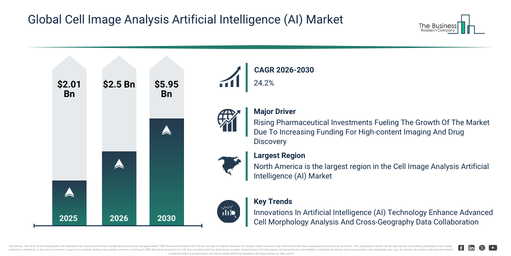
    The cell image analysis artificial intelligence (AI) market size has expanded significantly in recent years. It is projected to increase from $2.01 billion in 2025 to $2.5 billion in 2026, achieving a compound annual growth rate (CAGR) of 24.0%. This growth in the historic period can be attributed to several factors including intensified research in cell biology and molecular imaging, a heightened demand for drug discovery automation, the increasing integration of machine learning in life sciences, the proliferation of diagnostic laboratories, and greater investments in academic research institutes.

    The cell image analysis artificial intelligence (AI) market is projected to experience rapid expansion in the coming years, with expectations to reach a valuation of $5.95 billion by 2030, demonstrating a compound annual growth rate (CAGR) of 24.2%. This growth during the forecast period can be primarily attributed to the increasing adoption of personalized medicine applications, the greater integration of AI within diagnostic workflows, the rising embrace of cloud-based platforms, the expansion of high-throughput screening techniques, and the growing application of predictive analytics in pharmaceutical research. Significant trends anticipated over this period include the increased deployment of GPU-enabled workstations for image analysis, a surge in the use of multiplex and high-content imaging analytics, the development of more cloud-based cell image analysis platforms, the broadening of automated quality control and validation services, and an escalating demand for technical consulting and AI model training support.

    Get A Free Sample Report With In-Depth Market Insights:

    https://thebusinessresearchcompany.com/sample_request?id=69652213&type=smp&name=Cell%20Image%20Analysis%20Artificial%20Intelligence%20%28AI%29%20Market%20Report%202026&utm_source=Blogs&utm_medium=Paid&utm_campaign=Oct_PR

    Cell Image Analysis Artificial Intelligence (AI) Market Growth Factors Behind Sustained Expansion

    Increased financial commitments within the pharmaceutical sector are anticipated to boost the expansion of the cell image analysis artificial intelligence (AI) market in the future. Pharmaceutical investments involve capital deployment by firms, public bodies, and individuals into areas such as drug discovery, clinical trials, production, and cutting-edge research technologies, all aimed at creating novel treatments and enhancing health results. The primary driver behind the uptick in pharmaceutical funding is the escalating worldwide prevalence of chronic and intricate illnesses, necessitating an ongoing evolution of novel and more potent therapeutic solutions. These pharmaceutical expenditures support cell image analysis AI by financing high-content imaging systems, robust data infrastructure, and the creation of AI tools crucial for expediting drug discovery processes, conducting phenotypic screening, and generating profound cellular insights. As an illustration, the International Federation of Pharmaceutical Manufacturers & Associations (IFPMA), a global industry organization based in Switzerland that represents research-driven pharmaceutical entities, reported in February 2025 that the leading 50 pharmaceutical firms together invested around USD 167 billion in research and development in 2022. This spending is forecasted to increase by 6.7% annually, exceeding USD 200 billion by 2025. Consequently, the expanding financial commitments within the pharmaceutical sector are stimulating the growth of the cell image analysis artificial intelligence (AI) market.

    Cell Image Analysis Artificial Intelligence (AI) Market Segment Analysis Spotlighting Growth Areas

    The cell image analysis artificial intelligence (AI) market covered in this report is segmented –

    1) By Component: Software, Hardware, Services

    2) By Deployment Mode: On-Premises, Cloud

    3) By Application: Drug Discovery, Disease Diagnosis, Cell Classification, Image Segmentation, Other Applications

    4) By End-User: Pharmaceutical And Biotechnology Companies, Academic And Research Institutes, Hospitals And Diagnostic Laboratories, Other End-Users

    Subsegments:

    1) By Hardware: Robot Arms and Manipulators, Collaborative Robots (Cobots), End-Effectors and Grippers, Sensors and Perception Hardware, Actuators and Drives, Machine Vision Systems, Controllers and PLCs, AGVs and AMRs, Safety Systems and Fencing, Power and Cabling Infrastructure

    2) By Software: Robot Operating Systems and Firmware, Simulation and Digital-Twin Software, Motion Planning and Path Optimization, AI and Machine Learning Software, Vision and Perception Software, Cell and Fleet Management Software, MES or ERP Integration Software, Predictive Maintenance and Analytics, Cybersecurity Software, Low-Code or No-Code Programming Tools

    3) By Services: System Design and Engineering, Integration and Commissioning, Maintenance and Field Support, Training and Skill Development, Retrofit and Modernization Services, Custom Application Development, Robotics-as-a-Service (RaaS), Validation and Testing Services, Consulting and ROI Analysis, R&D and Co-innovation Services

    Cell Image Analysis Artificial Intelligence (AI) Market Industry Trends Fueling Future Revenue Growth

    Companies operating within the cell image analysis artificial intelligence (AI) market are concentrating on developing image analysis solutions, such as cloud-hosted AI-driven microscopy data platforms. These initiatives aim to facilitate the scalable processing of extensive microscopy datasets and deliver accurate, real-time cellular insights swiftly to laboratories and research centers. Cloud-hosted AI-driven microscopy data platforms are defined as online systems that leverage artificial intelligence to store, process, and analyze large volumes of microscopy images. This enables remote access, scalable computing power, and collaborative analysis without the constraints of local hardware. For example, in June 2025, ThinkCyte, a Japan-based biotechnology company, launched MorphoScan Cloud. This cloud-based platform is dedicated to AI-driven cell morphology data analysis and expands the capabilities of its VisionSort morphometric cell analysis system. It achieves this by providing secure cloud storage, enabling cross-geography data sharing, and offering access to advanced analytical tools powered by deep learning for both supervised and unsupervised insights. MorphoScan Cloud’s architecture integrates scalable cloud computing, built-in AI algorithms, and collaborative functionalities to streamline workflows, cut down processing times, and empower research teams to extract deeper biological understanding from complex cellular data, unhindered by local hardware limitations. Its applications include drug discovery, disease research, and cytometric studies.

    Cell Image Analysis Artificial Intelligence (AI) Market Competitive Analysis Of Leading Industry Participants

    Major companies operating in the cell image analysis artificial intelligence (AI) market are Danaher Corporation, Carl Zeiss AG, Lunit Inc, Deciphex Limited, OptraScan Inc, Proscia Inc, Deepcell Inc, Aignostics GmbH, Visiopharm A S, Indica Labs Inc, Ibex Medical Analytics Ltd, Deep Bio Inc, NucleAI Ltd, Reveal Biosciences Inc, TissueGnostics GmbH, ariadne AI AG, Vuno Inc, HistoIndex Pte Ltd, Aiforia Technologies Plc, and KOLAIDO GmbH.

    View The Full Cell Image Analysis Artificial Intelligence (AI) Market Report:

    https://thebusinessresearchcompany.com/report/cell-image-analysis-artificial-intelligence-ai-market-report?utm_source=Blogs&utm_medium=Paid&utm_campaign=Oct_PR

    Cell Image Analysis Artificial Intelligence (AI) Market Geographic Spread And Regional Opportunities

    North America was the largest region in the cell image analysis artificial intelligence (AI) market in 2025. Asia-Pacific is expected to be the fastest-growing region in the forecast period. The regions covered in the cell image analysis artificial intelligence (AI) market report are Asia-Pacific, South East Asia, Western Europe, Eastern Europe, North America, South America, Middle East, Africa.

    Reach Out To Our Team:

    The Business Research Company: https://www.thebusinessresearchcompany.com/

    Americas: +1 310-496-7795

    Asia: +44 7882 955267 & +91 8897263534

    Europe: +44 7882 955267

    Email us at: marketing@tbrc.info

    Follow us on:

    LinkedIn: https://in.linkedin.com/company/the-business-research-company

    YouTube: https://www.youtube.com/channel/UC24_fI0rV8cR5DxlCpgmyFQ

    Global Market Model: https://www.thebusinessresearchcompany.com/global-market-model
  • Bioelectronics Market Size Growth: From $15.42 Billion In 2026 To $23.49 Billion By 2030

    Built to provide research that’s more actionable and strategically valuable, The Business Research Company’s 2026 market reports include market attractiveness analysis, total addressable market sizing, company benchmarking matrices, interactive Excel dashboards, broader supply chain intelligence, emerging startup tracking, and in-depth product insights.

    Bioelectronics Market Size Forecast: How Big Could The Market Get By 2030?

    The bioelectronics market has seen substantial growth in recent years. Its value is projected to increase from $13.91 billion in 2025 to $15.42 billion in 2026, reflecting a compound annual growth rate (CAGR) of 10.9%. Historically, this expansion can be attributed to several factors, including the rising occurrence of chronic illnesses, the increased use of medical monitoring devices, progress in electrophysiology recording systems, enhanced understanding of personalized medicine, and the growth of healthcare infrastructure.

    The bioelectronics market size is projected to experience substantial growth in the coming years. It is predicted to reach $23.49 billion in 2030, at a compound annual growth rate (CAGR) of 11.1%. This anticipated growth can be attributed to the increasing adoption of AI-driven bioelectronic devices, greater integration with IoT-enabled healthcare systems, expansion in regenerative medicine applications, the spread of remote patient monitoring solutions, and the rising demand for electroceuticals. Prominent trends expected during this forecast period include the widespread use of wearable biosensors, deeper integration of implantable medical devices with monitoring systems, the broadening of neural stimulation and electroceutical therapies, a growing need for glucose and vital sign monitoring devices, and advancements in bioelectronic diagnostic instruments and biosignal amplifiers.

    Get A Free Sample Report With In-Depth Market Insights:

    https://thebusinessresearchcompany.com/sample_request?id=80503640&type=smp&name=Bioelectronics%20Market%20Report%202026&utm_source=Blogs&utm_medium=Paid&utm_campaign=Oct_PR

    Bioelectronics Market Demand Drivers: What’s Powering Industry Growth?

    The burgeoning need for remote patient monitoring is projected to fuel the expansion of the bioelectronics market. Remote patient monitoring involves utilizing connected medical devices and digital tools to gather and relay patient health information from non-clinical environments to healthcare providers for ongoing assessment and care. This surge in demand stems from the increasing necessity to manage chronic illnesses economically outside conventional healthcare settings. Bioelectronics facilitates remote patient monitoring by enabling wearable and implantable sensors to consistently acquire and transmit real-time physiological data for continuous clinical evaluation away from hospitals. For instance, data from August 2025, according to the Office of Inspector General (OIG), a US-based government entity, indicated that in 2024, Medicare expenditures for remote patient monitoring surpassed US $536 million, marking a 31% rise from 2023. Additionally, close to 1 million individuals accessed RPM services, representing a 27% increase from 2023, and approximately 4,600 medical practices regularly invoiced for RPM. Consequently, the escalating demand for remote patient monitoring and point-of-care testing is a key factor propelling the growth of the bioelectronics market.

    Bioelectronics Market Segment Analysis: What Are The Core Market Categories?

    The bioelectronics market covered in this report is segmented –

    1) By Type: Bio-Electronic Devices, Bio-Electronic Medicine

    2) By Application: Cardiovascular, Neurostimulation, Pain Management, Diabetes Management, Other Applications

    3) By End-User: Hospitals, Ambulatory Surgical Centers, Research Institutes, Other End-Users

    Subsegments:

    1) By Bio-Electronic Devices: Implantable Devices, Wearable Devices, Diagnostic Devices, Monitoring Devices

    2) By Bio-Electronic Medicine: Neuromodulation Therapy, Electroceuticals, Regenerative Medicine, Pain Management Therapy

    Bioelectronics Market Innovation Trends: What Developments Are Reshaping The Industry?

    Major companies in the bioelectronics market are increasingly incorporating artificial intelligence (AI), including AI-powered treatment, to enable real-time physiological signal analysis, personalize neuromodulation, and optimize adaptive therapies for improved clinical outcomes. AI-powered treatment entails the use of artificial intelligence algorithms to analyze patient physiological data in real time and automatically adjust therapeutic interventions for personalized, precise, and adaptive care. For instance, in July 2025, Fasikl Inc., a US-based medical device company, introduced the Felix NeuroAI wristband after obtaining FDA 510(k) clearance. Designed to aid adults with essential tremor, this wearable integrates cloud-based AI to modify stimulation in response to tremor frequency and amplitude, delivers continuous personalized therapy throughout daily activities, and offers a non-invasive treatment option that enhances patient comfort and long-term disease management.

    Bioelectronics Market Competitive Analysis Of Leading Industry Participants

    Major companies operating in the bioelectronics market are Johnson & Johnson, Roche Holding AG, Abbott Laboratories, Medtronic plc, Siemens Healthineers AG, Danaher Corporation, Koninklijke Philips N.V., GE HealthCare Technologies Inc., Becton Dickinson and Company, Boston Scientific Corporation, Omron Corporation, Dexcom Inc., Bio-Rad Laboratories Inc., Cochlear Limited, Nova Biomedical Corporation, Sensirion Holding AG, NeuroPace Inc., Cala Health Inc., AliveCor Inc., LifeSignals Inc., Salvia Bioelectronics B.V., Cortec Neuro GmbH, and SynCardia Systems LLC.

    View The Full Bioelectronics Market Report:

    https://thebusinessresearchcompany.com/report/bioelectronics-market-report?utm_source=Blogs&utm_medium=Paid&utm_campaign=Oct_PR

    Bioelectronics Market Geographic Spread And Regional Opportunities

    North America was the largest region in the bioelectronicss market in 2025. Asia-Pacific is expected to be the fastest-growing region in the forecast period. The regions covered in the bioelectronics market report are Asia-Pacific, South East Asia, Western Europe, Eastern Europe, North America, South America, Middle East, Africa.

    Reach Out To Our Team:

    The Business Research Company: https://www.thebusinessresearchcompany.com/

    Americas: +1 310-496-7795

    Asia: +44 7882 955267 & +91 8897263534

    Europe: +44 7882 955267

    Email us at: marketing@tbrc.info

    Follow us on:

    LinkedIn: https://in.linkedin.com/company/the-business-research-company

    YouTube: https://www.youtube.com/channel/UC24_fI0rV8cR5DxlCpgmyFQ

    Global Market Model: https://www.thebusinessresearchcompany.com/global-market-model
  • Wastewater Biothreat Genomics Market Growth To $3.01 Billion Creates New Opportunities Across The Industry

    Wastewater Biothreat Genomics Market Growth To $3.01 Billion Creates New Opportunities Across The Industry

    Featuring market attractiveness scoring, total addressable market sizing, company benchmarking matrices, interactive Excel dashboards, deeper supply chain intelligence, emerging startup tracking, and granular product-level insights, The Business Research Company’s 2026 market reports are built to deliver research that is both more actionable and more strategically valuable.

    Wastewater Biothreat Genomics Market Value Analysis: What Growth Lies Ahead Over The Forecast Period?

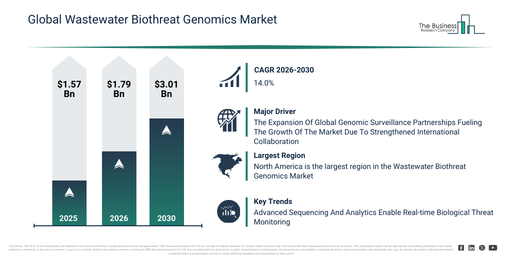
    The wastewater biothreat genomics market size has experienced significant growth recently. Forecasts indicate it will expand from $1.57 billion in 2025 to $1.79 billion in 2026, achieving a compound annual growth rate (CAGR) of 13.7%. Factors contributing to its growth during the past period include covid era wastewater surveillance, the proliferation of genomic sequencing labs, expanded public health monitoring, the emergence of more pathogen tracking programs, and advancements in molecular diagnostics.

    The wastewater biothreat genomics market size is anticipated to undergo significant expansion in the upcoming years. It is projected to reach $3.01 billion in 2030, demonstrating a compound annual growth rate (CAGR) of 14.0%. The expected increase during this period stems from factors such as elevated biosecurity investments, the enlargement of early outbreak detection systems, advancements in automated sample processing, a rise in government surveillance programs, and the increasing application of AI genomic analytics. Prominent trends for the forecast period encompass the expansion of sewage-based pathogen surveillance, an increase in metagenomic wastewater testing, the adoption of rapid field sequencing kits, the integration of bioinformatics threat dashboards, and a surge in community-level pathogen monitoring.

    Get A Free Sample Report With In-Depth Market Insights:

    https://thebusinessresearchcompany.com/sample_request?id=46581835&type=smp&name=Wastewater%20Biothreat%20Genomics%20Market%20Report%202026&utm_source=Blogs&utm_medium=Paid&utm_campaign=Oct_PR

    Wastewater Biothreat Genomics Market Demand Drivers: What’s Powering Industry Growth?

    The future growth of the wastewater biothreat genomics market is anticipated to be propelled by the expanding global genomic surveillance partnerships. These genomic surveillance partnerships are collaborative frameworks involving governments, international health organizations, and research institutions, working together to share genomic data and strengthen the early detection of biological threats. The increase in genomic surveillance partnerships is driven by a growing recognition among governments and health organizations of the need for coordinated, cross-border monitoring to detect emerging biological threats early. Wastewater biothreat genomics supports global genomic surveillance by enabling the standardized detection and comparison of pathogens in wastewater samples, thereby improving cross-border data integration and early warning capabilities. For instance, in July 2025, the World Health Organization (WHO), a Switzerland-based intergovernmental organization, reported that the International Pathogen Surveillance Network significantly expanded, growing from approximately 35 partner organizations in 18 countries to nearly 350 partners spanning over 100 countries. Consequently, the expansion of global genomic surveillance partnerships is a key driver for the growth of the wastewater biothreat genomics market.

    Wastewater Biothreat Genomics Market Segment Breakdown: Which Categories Lead On Revenue?

    The wastewater biothreat genomics market covered in this report is segmented –

    1) By Product Type: Portable Genomic Detection Devices; Laboratory Based Sequencing Instruments; Sample Collection and Preparation Kits; Consumables and Reagents; Software and Analytical Platforms

    2) By Technology: Polymerase Chain Reaction Systems; Next Generation Sequencing Systems; Microarray Based Detection Systems; Biosensor Based Detection Systems; Other Molecular Detection Technologies

    3) By Application: Pathogen Detection; Antimicrobial Resistance Surveillance; Environmental Monitoring; Other Applications

    4) By End-User: Municipal Utilities; Industrial Facilities; Academic and Research Institutes; Government Agencies; Other End-Users

    Subsegments:

    1) By Portable Genomic Detection Devices: Handheld Nucleic Acid Sequencers; Field Deployable Polymerase Chain Reaction Systems; Portable Isothermal Amplification Devices; Mobile Biosensor Based Genomic Detectors

    2) By Laboratory Based Sequencing Instruments: Next Generation Sequencing Systems; High Throughput Whole Genome Sequencers; Targeted Gene Sequencing Platforms; Metagenomic Sequencing Instruments

    3) By Sample Collection and Preparation Kits: Wastewater Sampling Kits; Nucleic Acid Extraction Kits; Pathogen Enrichment and Concentration Kits; Library Preparation Kits

    4) By Consumables and Reagents: Enzymes for Nucleic Acid Amplification; Sequencing Reagent Cartridges; Primers and Probes; Buffers and Chemical Solutions

    5) By Software and Analytical Platforms: Bioinformatics Data Analysis Software; Pathogen Identification and Surveillance Platforms; Genomic Data Management Systems; Artificial Intelligence Based Threat Detection Tools

    Wastewater Biothreat Genomics Market Innovation Trends: What Developments Are Reshaping The Industry?

    Major companies operating in the wastewater biothreat genomics market are focusing on developing advanced solutions, such as genomic-based pathogen surveillance systems, to enhance early detection of biological threats, improve public health response, and support environmental monitoring. These systems involve technologies that analyze wastewater samples using genomic sequencing and bioinformatics to identify viruses, bacteria, and other microbial threats, enabling real-time monitoring of population-level health risks. For instance, in January 2023, Fusion Genomics Corporation, a Canada-based biotechnology company, established a first-of-its-kind wastewater surveillance pilot study at Toronto Pearson International Airport. The system integrates high-throughput genomic sequencing with advanced analytics to detect and quantify potential biothreats in wastewater streams. This approach enables faster detection of emerging pathogens, supports data-driven public health interventions, and provides actionable insights for mitigating biological risks compared with conventional monitoring methods. By combining genomics, bioinformatics, and environmental sampling, the solution helps enhance situational awareness, strengthen biosecurity measures, and improve early warning capabilities for communities and critical infrastructure.

    Wastewater Biothreat Genomics Market Competitive Overview And Top Companies

    Major companies operating in the wastewater biothreat genomics market are Miniature Brain Stimulator, Danaher Corporation, Thermo Fisher Scientific Inc., Eurofins Scientific SE, Illumina Inc., IDEXX Laboratories Inc., Bio-Rad Laboratories Inc., QIAGEN N.V., Randox Laboratories Ltd., Promega Corporation, OraSure Technologies Inc., Verily Life Sciences LLC, Twist Bioscience Corporation, Ginkgo Bioworks Holdings Inc., Oxford Nanopore Technologies plc, Pacific Biosciences of California Inc., New England Biolabs Inc., LuminUltra Technologies Ltd., BaseClear B.V., Biobot Analytics Inc., GT Molecular Inc., Ceres Nanosciences Inc.

    View The Full Wastewater Biothreat Genomics Market Report:

    https://thebusinessresearchcompany.com/report/wastewater-biothreat-genomics-market-report?utm_source=Blogs&utm_medium=Paid&utm_campaign=Oct_PR

    Wastewater Biothreat Genomics Market Top Region: Where Does Most Revenue Come From?

    North America was the largest region in the wastewater biothreat genomics market in 2025. Asia-Pacific is expected to be the fastest-growing region in the forecast period. The regions covered in the wastewater biothreat genomics market report are Asia-Pacific, South East Asia, Western Europe, Eastern Europe, North America, South America, Middle East, Africa.

    Reach Out To Our Team:

    The Business Research Company: https://www.thebusinessresearchcompany.com/

    Americas: +1 310-496-7795

    Asia: +44 7882 955267 & +91 8897263534

    Europe: +44 7882 955267

    Email us at: marketing@tbrc.info

    Follow us on:

    LinkedIn: https://in.linkedin.com/company/the-business-research-company

    YouTube: https://www.youtube.com/channel/UC24_fI0rV8cR5DxlCpgmyFQ

    Global Market Model: https://www.thebusinessresearchcompany.com/global-market-model
  • Virtual Ward Market Analysis Through 2030: Market Size, Growth Trends And Industry Outlook

    Virtual Ward Market Analysis Through 2030: Market Size, Growth Trends And Industry Outlook

    Backed by market attractiveness analysis, total addressable market sizing, company benchmarking matrices, interactive Excel dashboards, wider supply chain intelligence, emerging startup coverage, and detailed product-level insights, The Business Research Company’s 2026 market reports are designed to offer research that is more actionable and strategically valuable than ever.

    Virtual Ward Market Forecast: What Value Will The Market Reach By 2030?

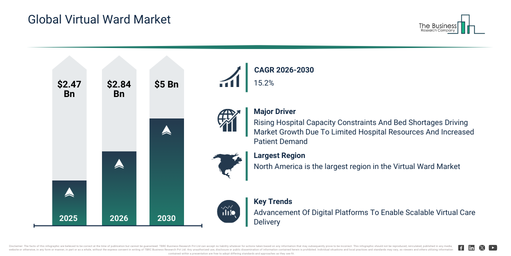
    The virtual ward market has experienced substantial expansion in recent times. Projections indicate its value will increase from $2.47 billion in 2025 to $2.84 billion in 2026, demonstrating a compound annual growth rate (CAGR) of 14.9%. Historically, this expansion has been driven by factors such as hospital capacity limitations, an uptick in remote monitoring pilot programs, the expansion of telehealth services, a rise in admissions for chronic diseases, and the initial digitalization of home care.

    The virtual ward market is projected to experience substantial expansion in the coming years, reaching $5 billion in 2030 with a compound annual growth rate (CAGR) of 15.2%. This anticipated growth during the forecast period is driven by several factors, including escalating healthcare cost pressures, an expanding elderly population, broader reimbursement for home care services, increased integration of connected medical devices, and enhanced governmental backing for at-home treatment approaches. Key trends anticipated during this period involve the increasing embrace of ‘hospital at home’ frameworks, the growing utilization of continuous remote patient monitoring, the expansion of virtual nursing provisions, the deeper integration of clinical decision support mechanisms, and the broader implementation of home-based acute care initiatives.

    Get A Free Sample Report With In-Depth Market Insights:

    https://thebusinessresearchcompany.com/sample_request?id=60542926&type=smp&name=Virtual%20Ward%20Market%20Report%202026&utm_source=Blogs&utm_medium=Paid&utm_campaign=Oct_PR

    Virtual Ward Market Growth Backed By Core Demand Fundamentals

    The expansion of the virtual ward market in the coming years is expected to be driven by increasing hospital capacity limitations and a lack of available beds. Hospital capacity constraints emerge when healthcare systems lack adequate beds, staff, or facilities to meet patient needs. These pressures are increasingly fueled by a growing elderly population, which requires longer hospital stays and more complex medical attention, thus reducing bed turnover and intensifying the demand for inpatient services. Virtual wards help mitigate these difficulties by allowing patients to receive hospital-level care at home, thereby freeing up physical beds, enhancing patient flow, and reducing pressure on hospital resources. For instance, in January 2026, according to the Australian Institute of Health and Welfare (AIHW), an Australian-based government agency, an average of 67,300 public hospital beds were available in 2023–24, equating to 2.5 beds per 1,000 people. This relatively limited bed availability, combined with growing healthcare demand, highlights ongoing capacity pressures within the hospital system. Therefore, increasing hospital capacity constraints and bed shortages are projected to stimulate the growth of the virtual ward market.

    Virtual Ward Market Segment Performance And Emerging Opportunities

    The virtual ward market covered in this report is segmented –

    1) By Component: Hardware; Software; Services

    2) By Service Type: Chronic Disease Management; Post-Operative Care; Preventive Care; Acute Care at Home; Virtual Nursing Services; Care Coordination Services

    3) By Patient Demographics: Children; Adults; Senior Citizens

    4) By Application: Cardiology; Neurology; Pulmonology; Oncology; Orthopedics; General Medicine; Geriatric Care

    5) By End User: Patients; Hospitals; Clinics; Home Healthcare Providers; Insurance Companies; Government Healthcare Agencies

    Subsegments:

    1) By Hardware: Remote Patient Monitoring Devices; Wearable Health Sensors; Vital Sign Monitoring Equipment; Mobile Medical Tablets; Home Diagnostic Devices

    2) By Software: Virtual Ward Management Platforms; Remote Monitoring Software; Patient Data Management Systems; Clinical Decision Support Software; Telehealth Integration Software

    3) By Services: Remote Patient Monitoring Services; Virtual Clinical Care Services; Technical Support Services; Data Management Services; Care Coordination Services

    Virtual Ward Market Growth Trends Reshaping The Competitive Landscape

    Leading companies in the virtual ward market are prioritizing the creation of advanced products, particularly digital platforms, to boost remote patient monitoring, enable immediate clinical decision-making, improve care coordination among healthcare teams, and reduce hospital admissions by providing ongoing, hospital-quality care in home environments. A digital platform is a technology-driven system, generally delivered over the internet, that facilitates interactions, transactions, or the exchange of value between two or more interdependent groups, such as users, businesses, developers, or service providers. For instance, in June 2025, Medway NHS Foundation Trust, a UK-based public healthcare provider, launched a new digital platform in partnership with health tech firm Feebris to expand its virtual hospital and virtual ward services, extending digital care beyond initial pilot programs. This platform incorporates adaptable technology supporting virtual monitoring and hospital-at-home services across all clinical specialties. It enables the remote capture of patient data and substantially reduces hospital bed days and costs by facilitating recovery at home. Additionally, it supports the submission of pseudonymised data to national health data systems, aiding broader adoption and evidence generation for virtual care models. This solution improves upon traditional models by shifting care delivery from physical wards into digitally enabled patient environments, thereby enhancing efficiency and patient experience.

    Virtual Ward Market Key Players Shaping Industry Direction

    Major companies operating in the virtual ward market are Amazon.com Inc., UnitedHealth Group Incorporated, CVS Health Corporation, The Cigna Group Inc., Elevance Health Inc., Siemens AG, Roche Holding AG, HCA Healthcare Inc., Best Buy Co. Inc., Abbott Laboratories, Medtronic plc, Stryker Corporation, Koninklijke Philips N.V, GE Healthcare Technologies Inc., Boston Scientific Corporation, Baxter International Inc., ResMed Inc., DexCom Inc., Teladoc Health Inc., Masimo Corporation, iRhythm Technologies Inc.

    View The Full Virtual Ward Market Report:

    https://thebusinessresearchcompany.com/report/virtual-ward-market-report?utm_source=Blogs&utm_medium=Paid&utm_campaign=Oct_PR

    Virtual Ward Market Regional Analysis: Which Region Leads By Revenue?

    North America was the largest region in the virtual ward market in 2025. Asia-Pacific is expected to be the fastest-growing region in the forecast period. The regions covered in the virtual ward market report are Asia-Pacific, South East Asia, Western Europe, Eastern Europe, North America, South America, Middle East, Africa.

    Reach Out To Our Team:

    The Business Research Company: https://www.thebusinessresearchcompany.com/

    Americas: +1 310-496-7795

    Asia: +44 7882 955267 & +91 8897263534

    Europe: +44 7882 955267

    Email us at: marketing@tbrc.info

    Follow us on:

    LinkedIn: https://in.linkedin.com/company/the-business-research-company

    YouTube: https://www.youtube.com/channel/UC24_fI0rV8cR5DxlCpgmyFQ

    Global Market Model: https://www.thebusinessresearchcompany.com/global-market-model

  • Virtual Care Management Market CAGR Forecast Through 2030: Key Trends Shaping Industry Expansion

    Virtual Care Management Market CAGR Forecast Through 2030: Key Trends Shaping Industry Expansion

    Backed by market attractiveness analysis, total addressable market sizing, company benchmarking matrices, interactive Excel dashboards, wider supply chain intelligence, emerging startup coverage, and detailed product-level insights, The Business Research Company’s 2026 market reports are designed to offer research that is more actionable and strategically valuable than ever.

    Virtual Clinics Market CAGR Outlook And Future Development

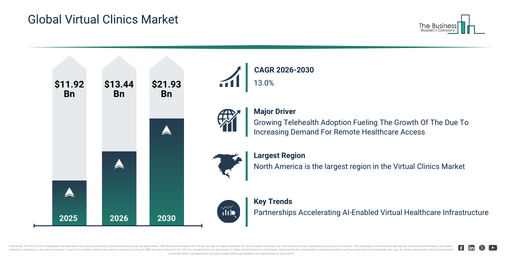
    The virtual clinics market has experienced substantial growth in recent years. This market is projected to expand from $11.92 billion in 2025 to $13.44 billion in 2026, achieving a compound annual growth rate (CAGR) of 12.8%. Historically, this expansion can be attributed to factors such as increased telemedicine usage, wider broadband access, the proliferation of digital health applications, a heightened demand for patient convenience, and the early adoption of virtual visits during the pandemic.

    The virtual clinics market is set for significant expansion in the coming years, projected to reach $21.93 billion by 2030, exhibiting a compound annual growth rate (CAGR) of 13.0%. This anticipated growth is driven by several factors, including the proliferation of hybrid care models, the emergence of digital-first healthcare policies, the broadening scope of remote diagnostics, increased insurer coverage for virtual appointments, and the rise in cross-border teleconsultations. Key trends expected during this period involve the increasing embrace of video consultation platforms, the growing utilization of virtual follow-up services, the expansion of integrated EHR teleclinic systems, the wider deployment of remote diagnostic kiosks, and a greater demand for mobile-first virtual clinics.

    Get A Free Sample Report With In-Depth Market Insights:

    https://thebusinessresearchcompany.com/sample_request?id=28982411&type=smp&name=Virtual%20Clinics%20Market%20Report%202026&utm_source=Blogs&utm_medium=Paid&utm_campaign=Oct_PR

    Virtual Clinics Market Growth Momentum: What Factors Are Shaping Demand?

    Increased adoption of telehealth is anticipated to fuel the expansion of the virtual clinics market moving ahead. This adoption signifies how widely patients, practitioners, and health systems utilize digital solutions for delivering clinical care and health services remotely on a regular basis. The primary driver behind the surge in telehealth adoption is the escalating demand for convenient healthcare access, eliminating the need for physical visits. As a crucial component of telehealth, virtual clinics offer structured platforms allowing patients to access consultations, diagnoses, and subsequent care completely online. For example, data from July 2025 by the International Trade Administration (ITA) shows that digital treatment penetration in the U.S. was 18.1% in 2024 and is forecast to climb to 28.08% by 2029, illustrating the broader utilization of digital and remote healthcare solutions. Consequently, the increasing adoption of telehealth is a significant factor driving the expansion of the virtual clinics market.

    Virtual Clinics Market Segment Analysis And Revenue Potential

    The virtual clinics market covered in this report is segmented –

    1) By Type: Teleconsultation Platforms; Virtual Primary Care; Specialty E-Clinics; Artificial Intelligence-Based Symptom Checkers; Mobile Health Services

    2) By Application: Primary Care; Mental Health; Dermatology; Pediatrics; Chronic Care

    3) By End Users: Healthcare Providers; Patients; Pharmaceutical Companies; Insurance Companies; Employers

    Subsegments:

    1) By Teleconsultation Platforms: Video Consultation Platforms; Audio Consultation Platforms; Chat-Based Consultation Platforms; Integrated Scheduling and Consultation Platforms

    2) By Virtual Primary Care: Preventive Care Platforms; Routine Checkup Platforms; Family Medicine Virtual Platforms; General Practice Virtual Platforms

    3) By Specialty E-Clinics: Cardiology Virtual Clinics; Dermatology Virtual Clinics; Endocrinology Virtual Clinics; Orthopedic Virtual Clinics; Neurology Virtual Clinics

    4) By Artificial Intelligence-Based Symptom Checkers: Rule Based Symptom Assessment Tools; Machine Learning Driven Symptom Analysis Tools; Natural Language Processing Based Triage Tools; Predictive Diagnostic Support Tools

    5) By Mobile Health Services: Mobile Consultation Applications; Remote Health Monitoring Applications; Medication Management Applications; Wellness and Preventive Care Applications

    Virtual Clinics Market Trends Redefining Industry Growth

    Leading companies within the virtual clinics market are increasingly adopting a strategic partnership approach to improve technology integration and broaden their market reach. Such a partnership typically involves a collaborative relationship between two or more organizations, where they combine their resources, expertise, and efforts to achieve common goals or objectives. For instance, in January 2026, VSee Health, Inc., a US-based telehealth technology company, formed a strategic partnership with DocBox, a US-based augmented intelligence platform for critical care, to develop a next-generation virtual ICU operating system for hospitals globally. This collaboration merges VSee’s telehealth and AI-driven workflows with DocBox’s vendor-agnostic bedside data infrastructure, empowering hospitals to utilize real-time, structured clinical data from ICU devices and monitoring systems. The resulting combined solution is conceived as a reimbursement-ready, AI-native virtual ICU platform that supports scalable remote critical care delivery, enhances revenue capture through automated billing processes, enables the deployment of AI decision-support tools on live physiological data, ensures hospital ownership of clinical data, and integrates VSee’s capabilities into core clinical operations.

    Virtual Clinics Market Industry Leaders And Competitive Landscape

    Major companies operating in the virtual clinics market are Optum Inc., The Cigna Group, Siemens Healthineers AG, Koninklijke Philips N.V., SSM Health Care Group, Teladoc Health Inc., Babylon Healthcare Services Limited, Hims & Hers Health Inc., Ping An Healthcare and Technology Company Limited, Kry International AB, American Well Corporation, MDLIVE Inc., Doctor On Demand Inc., CallHealth Services Private Limited, HealthTap Inc., Ada Health GmbH, Virinchi Hospitals Private Limited, Practo Technologies Private Limited, 98point6 Inc., PlushCare Inc.

    View The Full Virtual Clinics Market Report:

    https://thebusinessresearchcompany.com/report/virtual-clinics-market-report?utm_source=Blogs&utm_medium=Paid&utm_campaign=Oct_PR

    Virtual Clinics Market Regional Analysis And Leading Geography

    North America was the largest region in the virtual clinics market in 2025. Asia-Pacific is expected to be the fastest-growing region in the forecast period. The regions covered in the virtual clinics market report are Asia-Pacific, South East Asia, Western Europe, Eastern Europe, North America, South America, Middle East, Africa.

    Reach Out To Our Team:

    The Business Research Company: https://www.thebusinessresearchcompany.com/

    Americas: +1 310-496-7795

    Asia: +44 7882 955267 & +91 8897263534

    Europe: +44 7882 955267

    Email us at: marketing@tbrc.info

    Follow us on:

    LinkedIn: https://in.linkedin.com/company/the-business-research-company

    YouTube: https://www.youtube.com/channel/UC24_fI0rV8cR5DxlCpgmyFQ

    Global Market Model: https://www.thebusinessresearchcompany.com/global-market-model
  • Virtual Care Management Market To Witness 13.6% CAGR Growth Through 2030: Key Industry Drivers

    Virtual Care Management Market To Witness 13.6% CAGR Growth Through 2030: Key Industry Drivers

    Featuring market attractiveness scoring, total addressable market sizing, company benchmarking matrices, interactive Excel dashboards, deeper supply chain intelligence, emerging startup tracking, and granular product-level insights, The Business Research Company’s 2026 market reports are built to deliver research that is both more actionable and more strategically valuable.

    Virtual Care Management Market Set To Climb From $11.92 Billion In 2026 To $19.82 Billion By 2030

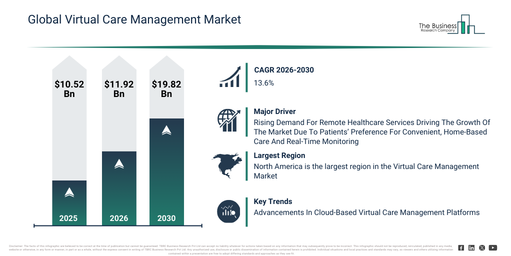
    The virtual care management market has experienced rapid expansion in recent years. This market is projected to increase from $10.52 billion in 2025 to $11.92 billion in 2026, exhibiting a compound annual growth rate (CAGR) of 13.3%. The historical growth trajectory can be attributed to factors such as increased telehealth adoption, a rising burden of chronic diseases, the expansion of digital health records, an increase in remote monitoring pilot programs, and early support for virtual care from insurers.

    The virtual care management market is anticipated to undergo substantial expansion in the upcoming years, with its valuation expected to climb to $19.82 billion in 2030, achieving a compound annual growth rate (CAGR) of 13.6%. This growth during the forecast period is propelled by factors such as the increasing prevalence of value-based care models, a rising aging population, the broadening scope of home-based monitoring programs, higher payer reimbursement for virtual services, and expanding provider budgets for digital transformation. Prominent trends for this period include the growing adoption of remote care coordination platforms, an increasing utilization of continuous chronic care monitoring, the expansion of digital care plan management tools, greater integration of patient engagement platforms, and enhanced deployment of virtual care analytics solutions.

    Get A Free Sample Report With In-Depth Market Insights:

    https://thebusinessresearchcompany.com/sample_request?id=54471316&type=smp&name=Virtual%20Care%20Management%20Market%20Report%202026&utm_source=Blogs&utm_medium=Paid&utm_campaign=Oct_PR

    Virtual Care Management Market Expansion Drivers: What’s Shaping Future Growth?

    An increasing need for remote healthcare services is anticipated to fuel the expansion of the virtual care management market over the next few years. Remote healthcare encompasses providing medical services, advice, and patient oversight from a distance, leveraging digital platforms and telecommunication tools. This escalating demand primarily stems from patients favoring convenient and readily available care, enabling them to access medical attention from their homes, thereby cutting down on travel, waiting periods, and related expenses. Virtual care management facilitates remote healthcare provision by offering coordinated, real-time monitoring, communication, and care strategy development involving both providers and patients. Such functionalities improve the uninterrupted flow of care, boost patient involvement, and enhance the overall efficiency of the healthcare system. The growing uptake of telehealth services demonstrates this escalating demand. For example, data from the U.S. Department of Health and Human Services (HHS), a US-based national health policy, indicates that approximately 25% of medicare fee-for-service beneficiaries accessed telehealth services, an increase from 18% in March 2023, showing a notable 7 percentage point rise year-over-year. Consequently, the increased demand for remote healthcare services is propelling the expansion of the virtual care management market.

    Virtual Care Management Market Segmentation And Category Overview

    The virtual care management market covered in this report is segmented –

    1) By Component: Software; Hardware; Services

    2) By Deployment Mode: On-Premises; Cloud

    3) By Application: Telehealth; Remote Patient Monitoring; Chronic Disease Management; Behavioral Health; Other Applications

    4) By End-Users: Hospitals; Clinics; Home Care Settings; Other End-Users

    Subsegments:

    1) By Software: Care Coordination Platforms; Patient Engagement Applications; Clinical Decision Support Systems; Population Health Management Tools

    2) By Hardware: Remote Monitoring Devices; Wearable Health Tracking Devices; Connected Diagnostic Equipment; Home Care Medical Devices

    3) By Services: Remote Care Coordination Services; Chronic Care Management Services; Virtual Patient Monitoring Services

    Virtual Care Management Market Strategic Trends: What Defines The Next Growth Phase?

    Key players within the virtual care management market are prioritizing innovations in cloud and teleconferencing technologies, including virtual care management (VCM) platforms, to bolster remote patient engagement, facilitate real-time interactions between clinicians and patients, optimize care coordination, and ensure the scalable, secure provision of healthcare services across diverse care environments. Virtual care management (VCM) refers to the synchronized delivery, oversight, and administration of patient care utilizing digital and remote healthcare solutions, serving as an alternative to traditional in-person appointments. For instance, in march 2023, Royal Philips, a Netherlands-based health technology company, unveiled Philips virtual care management. This offering encompasses condition-specific protocols (including diabetes and hypertension), integrates connected devices and engagement tools on a secure interoperable cloud-based platform, and provides licensed clinical professional monitoring alongside personalized health coaching.

    Virtual Care Management Market Key Participants And Competitive Landscape

    Major companies operating in the virtual care management market are Amazon.web service Inc., UnitedHealth Group Incorporated, CVS Health Corporation, The Cigna Group Inc., Elevance Health Inc., Centene Corporation, Humana Inc., HCA Healthcare Inc., Best Buy Co. Inc., Koninklijke Philips N.V., Boston Scientific Corporation, ResMed Inc., Agilon Health Inc., DexCom Inc., Teladoc Health Inc., Masimo Corporation, Evolent Health Inc., Privia Health Group Inc., Hims & Hers Health Inc., Doximity Inc., American Well Corporation, LifeMD Inc., Talkspace Inc.

    View The Full Virtual Care Management Market Report:

    https://thebusinessresearchcompany.com/report/virtual-care-management-market-report?utm_source=Blogs&utm_medium=Paid&utm_campaign=Oct_PR

    Virtual Care Management Market Geographic Analysis: Where Is Demand Accelerating Fastest?

    North America was the largest region in the virtual care management market in 2025. Asia-Pacific is expected to be the fastest-growing region in the forecast period. The regions covered in the virtual care management market report are Asia-Pacific, South East Asia, Western Europe, Eastern Europe, North America, South America, Middle East, Africa.

    Reach Out To Our Team:

    The Business Research Company: https://www.thebusinessresearchcompany.com/

    Americas: +1 310-496-7795

    Asia: +44 7882 955267 & +91 8897263534

    Europe: +44 7882 955267

    Email us at: marketing@tbrc.info

    Follow us on:

    LinkedIn: https://in.linkedin.com/company/the-business-research-company

    YouTube: https://www.youtube.com/channel/UC24_fI0rV8cR5DxlCpgmyFQ

    Global Market Model: https://www.thebusinessresearchcompany.com/global-market-model

  • Viral Arthritis Vaccine Market Projected For Strong Expansion Through 2030: Key Trends And Future Outlook

    Viral Arthritis Vaccine Market Projected For Strong Expansion Through 2030: Key Trends And Future Outlook

    Built to provide research that’s more actionable and strategically valuable, The Business Research Company’s 2026 market reports include market attractiveness analysis, total addressable market sizing, company benchmarking matrices, interactive Excel dashboards, broader supply chain intelligence, emerging startup tracking, and in-depth product insights.

    Viral Arthritis Vaccine Market Forecast: Value Set To Climb From $7.36 Billion To $11.09 Billion

    The viral arthritis vaccine market size has seen rapid growth in recent years. It is anticipated to expand from $6.66 billion in 2025 to $7.36 billion in 2026, achieving a compound annual growth rate (CAGR) of 10.6%. This historical expansion can be attributed to factors such as the history of chikungunya outbreaks, innovations in vaccine platforms, worldwide immunization initiatives, research into zoonotic viruses, and public health preparedness endeavors.

    The viral arthritis vaccine market is projected to experience substantial expansion over the upcoming years. This market is anticipated to reach a valuation of $11.09 billion by 2030, exhibiting a compound annual growth rate (CAGR) of 10.8%. Factors driving this growth throughout the projected period include advanced vaccine platforms, the increasing risks posed by arboviruses, expedited clinical trials, increased exposure due to international travel, and the broadening scope of preventive immunization efforts. Key developments expected during this forecast span encompass mRNA-based viral arthritis vaccines, recombinant vector vaccine technologies, multivalent vaccines targeting arthritogenic viruses, agile vaccine design strategies, and enhanced adjuvanted immunogenic formulations.

    Get A Free Sample Report With In-Depth Market Insights:

    https://thebusinessresearchcompany.com/sample_request?id=84069442&type=smp&name=Viral%20Arthritis%20Vaccine%20Market%20Report%202026&utm_source=Blogs&utm_medium=Paid&utm_campaign=Oct_PR

    Viral Arthritis Vaccine Market Development Factors: What’s Supporting Demand?

    The increasing occurrence of mosquito-borne viral infections is anticipated to stimulate the expansion of the viral arthritis vaccine market moving forward. These infections are illnesses transmitted to humans through the bite of infected mosquitoes, encompassing chikungunya, Zika, and dengue viruses. Such infections can manifest as fever, joint pain, rash, and in some instances, enduring complications like viral arthritis. The rise in mosquito-borne viral infections is attributed to climate change, which fosters warmer temperatures and altered rainfall patterns, thus enlarging mosquito habitats and breeding periods. A viral arthritis vaccine aids in curbing mosquito-borne viral infections by preventing both infection and the progression of diseases stemming from viruses that cause joint inflammation, thereby reducing transmission risk and the disease burden in affected populations. For instance, in 2024, the World Health Organization (WHO), a Switzerland-based intergovernmental organization, reported over 7.6 million cases globally by April. This total tripled the number recorded during the equivalent period in 2023, with transmission continuing to extend across more than 90 countries. Hence, the growing incidence of mosquito-borne viral infections is propelling the growth of the viral arthritis vaccine market.

    Viral Arthritis Vaccine Market Segment Outlook: Which Categories Are Growing Fastest?

    The viral arthritis vaccine market covered in this report is segmented –

    1) By Type: Viral Arthritis Vaccine, Live; Viral Arthritis Vaccine, Inactivated

    2) By Virus Targeted: Chikungunya Virus; Rubella Virus; Parvovirus; Other Viral Arthritis-Causing Viruses

    3) By Application: Farms; Individual

    4) By End-User: Hospitals And Clinics; Vaccination Centers; Homecare; Government Programs

    Subsegments:

    1) By Viral Arthritis Vaccine, Live: Single Dose; Combination Dose; Recombinant Live Vaccine

    2) By Viral Arthritis Vaccine, Inactivated: Whole Virus Inactivated Vaccine; Split Virus Inactivated Vaccine; Adjuvanted Inactivated Vaccine

    Viral Arthritis Vaccine Market Transformation Trends: What Innovations Are Driving Change?

    Leading companies operating within the viral arthritis vaccine market are prioritizing the development of innovative vaccine candidates, such as live-attenuated and next-generation chikungunya vaccines, to address the escalating demand for effective prevention of viral-induced joint pain and persistent arthritic complications, particularly among vulnerable groups. These live-attenuated and next-generation chikungunya vaccines are sophisticated formulations designed to avert chikungunya virus infection by stimulating powerful and lasting immune responses. Live-attenuated vaccines achieve this by using weakened forms of the virus to closely mimic a natural infection and provide durable protection, while next-generation vaccines utilize modern platforms like viral vectors, recombinant proteins, or novel attenuation technologies to improve safety, immunogenicity, and wider applicability across populations. For example, in June 2025, Bavarian Nordic A/S, a Denmark-based biotechnology company, initiated a Phase 3 clinical study of its chikungunya vaccine in children, aiming to extend protection to pediatric populations in endemic regions where exposure early in life can lead to significant disease burden. This advancement to late-stage clinical evaluation demonstrates increasing confidence in the vaccine’s safety and immunogenicity profile and highlights ongoing efforts to broaden age indications, strengthen population-level immunity, and mitigate the global long-term impact of chikungunya-associated viral arthritis.

    Viral Arthritis Vaccine Market Top Companies Driving Competitive Growth

    Major companies operating in the viral arthritis vaccine market are Bavarian Nordic A/S, Serum Institute of India Private Limited, Valneva SE, Bharat Biotech International Limited, Panacea Biotec Ltd., The Biologicals and Vaccines Institute of Southern Africa (Pty) Ltd.

    View The Full Viral Arthritis Vaccine Market Report:

    https://thebusinessresearchcompany.com/report/viral-arthritis-vaccine-market-report?utm_source=Blogs&utm_medium=Paid&utm_campaign=Oct_PR

    Viral Arthritis Vaccine Market Global Footprint: Which Region Leads The Industry?

    North America was the largest region in the viral arthritis vaccine market in 2025. Asia-Pacific is expected to be the fastest-growing region in the forecast period. The regions covered in the viral arthritis vaccine market report are Asia-Pacific, South East Asia, Western Europe, Eastern Europe, North America, South America, Middle East, Africa.

    Reach Out To Our Team:

    The Business Research Company: https://www.thebusinessresearchcompany.com/

    Americas: +1 310-496-7795

    Asia: +44 7882 955267 & +91 8897263534

    Europe: +44 7882 955267

    Email us at: marketing@tbrc.info

    Follow us on:

    LinkedIn: https://in.linkedin.com/company/the-business-research-company

    YouTube: https://www.youtube.com/channel/UC24_fI0rV8cR5DxlCpgmyFQ

    Global Market Model: https://www.thebusinessresearchcompany.com/global-market-model

  • Vibrating Mesh Nebulizer Market Outlook 2026–2030: Growth Trends, Market Dynamics And Emerging Opportunities

    Vibrating Mesh Nebulizer Market Outlook 2026–2030: Growth Trends, Market Dynamics And Emerging Opportunities

    Backed by market attractiveness analysis, total addressable market sizing, company benchmarking matrices, interactive Excel dashboards, wider supply chain intelligence, emerging startup coverage, and detailed product-level insights, The Business Research Company’s 2026 market reports are designed to offer research that is more actionable and strategically valuable than ever.

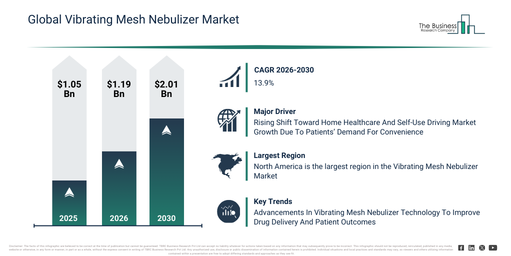
    Vibrating Mesh Nebulizer Market Revenue Growth On Track For A 13.9% CAGR Through 2030

    The vibrating mesh nebulizer market size has experienced swift expansion in recent years. Projections indicate it will grow from $1.05 billion in 2025 to $1.19 billion in 2026, reflecting a compound annual growth rate (CAGR) of 13.7%. The historical growth of this market can be attributed to an increase in asthma prevalence, the growing number of COPD patients, heightened demand for home respiratory care, advancements in portable device innovation, and the specific requirements for pediatric inhalation therapy.

    The vibrating mesh nebulizer market size is projected to experience swift expansion over the coming years. This market is anticipated to reach $2.01 billion in 2030, demonstrating a compound annual growth rate (CAGR) of 13.9%. Factors contributing to this expansion during the forecast period include the increasing adoption of connected respiratory devices, the rise of home-based chronic care, advancements in wearable inhalation monitoring, the growing demand for personalized drug delivery, and the expanding need for respiratory care among an aging population. Key developments expected in the forecast period encompass portable handheld mesh nebulizers, ultra-quiet nebulization devices, intelligent connected inhalation systems, highly efficient aerosol delivery methods, and rechargeable mesh nebulizer units.

    Get A Free Sample Report With In-Depth Market Insights:

    https://thebusinessresearchcompany.com/sample_request?id=88796702&type=smp&name=Vibrating%20Mesh%20Nebulizer%20Market%20Report%202026&utm_source=Blogs&utm_medium=Paid&utm_campaign=Oct_PR

    Vibrating Mesh Nebulizer Market Industry Drivers: What’s Behind The Revenue Growth?

    The escalating trend towards home healthcare and self-use is projected to stimulate the expansion of the vibrating mesh nebulizer market in the forthcoming years. Home healthcare and self-use pertain to medical treatments and devices that empower patients to manage their own care independently outside of clinical environments. This movement is largely fueled by patient demand for accessible and economical care, as receiving treatment at home reduces hospital visits, lowers overall healthcare expenditures, and enhances both comfort and adherence to therapy. Vibrating mesh nebulizers are particularly well-suited for home healthcare and self-administration due to their compact form factor, quiet operation, portability, and efficient delivery of precise respiratory drug dosages. For instance, data from July 2025, according to the Department of Health and Social Care (DHSC), a UK-based government body, indicates that approximately 489,000 people in England received community-based support in 2024, which is equivalent to 1,070 per 100,000 adults, showcasing year-on-year growth in the utilization of home-based care. Therefore, the growing transition toward home healthcare and self-use is driving the growth of the vibrating mesh nebulizer market.

    Vibrating Mesh Nebulizer Market Segment Landscape: Which Areas Lead Development?

    The vibrating mesh nebulizer market covered in this report is segmented –

    1) By Product Type: Active Mesh Nebulizer; Passive Mesh Nebulizer

    2) By Age Group: Adults; Paediatrics

    3) By Distribution Channel: Online; Offline

    4) By Application: Chronic Obstructive Pulmonary Disease; Asthma; Cystic Fibrosis; Other Applications

    5) By End User: Hospitals; Clinics; Home Healthcare; Emergency Medical Centres; Other End Users

    Subsegments:

    1) By Active Mesh Nebulizer: Portable Active Mesh Nebulizers; Handheld Active Mesh Nebulizers; Battery Operated Active Mesh Nebulizers; Rechargeable Active Mesh Nebulizers; High Frequency Vibration Active Mesh Nebulizers

    2) By Passive Mesh Nebulizer: Compact Passive Mesh Nebulizers; Tabletop Passive Mesh Nebulizers; Low Noise Passive Mesh Nebulizers; Single Patient Use Passive Mesh Nebulizers; Continuous Use Passive Mesh Nebulizers

    #Vibrating Mesh Nebulizer Market Growth Trends: What’s Shaping The Future Outlook?

    Leading companies engaged in the vibrating mesh nebulizer market are prioritizing technological advancements, particularly in vibrating mesh nebulizers, to elevate drug delivery efficiency, improve patient compliance, and enhance overall treatment outcomes. A vibrating mesh nebulizer is a medical instrument employed to administer medication as a fine aerosol directly into the lungs. As an illustration, in March 2025, Loxim, a medical technology company situated in China, unveiled the LX8201-0B chip. This chip is a dedicated drive solution for vibrating mesh nebulizers, engineered to enhance device performance. The LX8201-0B chip precisely adjusts vibration frequency and amplitude to guarantee uniform aerosol particle size, facilitates low power consumption for portable applications, and integrates effortlessly into existing nebulizer systems. Its key advantages encompass superior medication delivery effectiveness, an extended device lifespan, and adaptability for a range of therapeutic applications, including asthma, COPD, and other respiratory treatments. This product launch signifies the industry’s push towards miniaturized, energy-efficient, and high-precision nebulizer solutions.

    Vibrating Mesh Nebulizer Market Leading Players And Competitive Positioning

    Major companies operating in the vibrating mesh nebulizer market are McKesson Corporation, Medtronic plc, Koninklijke Philips N.V, Henry Schein Inc., OMRON Corporation, Jiangsu Yuyue Medical Equipment & Supply Co. Ltd., Beurer GmbH, Drive DeVilbiss Healthcare, AptarGroup Inc., Aerogen Ltd., PARI GmbH, BPL Medical Technologies Private Limited, GF Health Products Inc., Rossmax International Ltd., Shenzhen Feellife Health Technology Co. Ltd., Labtron Equipment Ltd., Honsun (Nantong) Co. Ltd., Well Lead Medical Co. Ltd., Medline Industries LP

    View The Full Vibrating Mesh Nebulizer Market Report:

    https://thebusinessresearchcompany.com/report/vibrating-mesh-nebulizer-market-report?utm_source=Blogs&utm_medium=Paid&utm_campaign=Oct_PR

    Vibrating Mesh Nebulizer Market Regional Distribution: Which Areas Power Market Growth?

    North America was the largest region in the vibrating mesh nebulizer market in 2025. Asia-Pacific is expected to be the fastest-growing region in the forecast period. The regions covered in the vibrating mesh nebulizer market report are Asia-Pacific, South East Asia, Western Europe, Eastern Europe, North America, South America, Middle East, Africa.

    Reach Out To Our Team:

    The Business Research Company: https://www.thebusinessresearchcompany.com/

    Americas: +1 310-496-7795

    Asia: +44 7882 955267 & +91 8897263534

    Europe: +44 7882 955267

    Email us at: marketing@tbrc.info

    Follow us on:

    LinkedIn: https://in.linkedin.com/company/the-business-research-company

    YouTube: https://www.youtube.com/channel/UC24_fI0rV8cR5DxlCpgmyFQ

    Global Market Model: https://www.thebusinessresearchcompany.com/global-market-model