Month: October 2026

  • Thermal Cyclers Market Analysis: $1.4 Billion Market Size In 2026 And Future Growth Prospects

    Thermal Cyclers Market Analysis: $1.4 Billion Market Size In 2026 And Future Growth Prospects

    Featuring market attractiveness scoring, total addressable market sizing, company benchmarking matrices, interactive Excel dashboards, deeper supply chain intelligence, emerging startup tracking, and granular product-level insights, The Business Research Company’s 2026 market reports are built to deliver research that is both more actionable and more strategically valuable.

    Thermal Cyclers Market Value Analysis: What Growth Lies Ahead Over The Forecast Period?

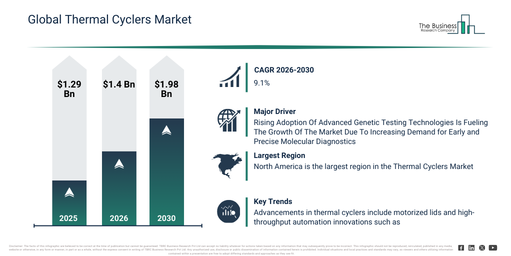
    The thermal cyclers market has experienced robust expansion in recent times. It is projected to expand from $1.29 billion in 2025 to $1.4 billion in 2026, demonstrating a compound annual growth rate (CAGR) of 8.9%. Historically, this market’s expansion was driven by factors such as growth in molecular diagnostics, expansion of genomics research, a rise in infectious disease testing, an increase in forensic analysis, and the growth in academic research labs.

    The thermal cyclers market size is anticipated to undergo significant expansion in the coming years, projected to reach $1.98 billion by 2030, exhibiting a compound annual growth rate (CAGR) of 9.1%. This growth during the forecast period is primarily driven by the increasing scope of point-of-care testing, advancements in precision medicine, a growing need for rapid diagnostics, enhanced funding for biotech research, and the broader acceptance of digital PCR. Noteworthy trends for the forecast period include the emergence of high-throughput PCR cycler systems, portable field-deployable cyclers, AI-assisted temperature optimization, cloud-connected PCR platforms, and rapid cycling thermal blocks.

    Get A Free Sample Report With In-Depth Market Insights:

    https://thebusinessresearchcompany.com/sample_request?id=29019782&type=smp&name=Thermal%20Cyclers%20Market%20Report%202026&utm_source=Blogs&utm_medium=Paid&utm_campaign=Oct_PR

    Thermal Cyclers Market Growth Catalysts And Demand Drivers

    The increasing integration of advanced genetic testing methods is set to propel the expansion of the thermal cyclers market going forward. Molecular diagnostics refers to sophisticated laboratory techniques utilized for precisely detecting and analyzing genetic material (DNA and RNA) to identify diseases, infections, and genetic conditions. The surge in molecular diagnostics is fueled by the growing demand for early and precise disease detection, which encourages the use of cutting-edge genetic testing approaches for faster and more reliable clinical outcomes. Thermal cyclers support molecular diagnostics by enabling accurate DNA amplification through controlled temperature cycling, thereby ensuring precise, rapid, and reliable molecular testing. For instance, in May 2025, Ellume, an Australia-based developer of rapid digital diagnostic tests, indicated that over 96,215 molecular diagnostic tests were carried out weekly in the US in 2023. This highlights the extensive clinical application and sustained importance of molecular diagnostics in disease surveillance and clinical decision-making. Therefore, the rising adoption of advanced genetic testing technologies is driving the growth of the thermal cyclers market.

    Thermal Cyclers Market Segment Performance And Emerging Opportunities

    The thermal cyclers market covered in this report is segmented –

    1) By Product Type: Standard Polymerase Chain Reaction (PCR) Thermal Cyclers; Real-Time Polymerase Chain Reaction (PCR) (qPCR) Systems; Digital Polymerase Chain Reaction (dPCR) Systems; High-Throughput Thermal Cyclers; Portable Or Compact Thermal Cyclers

    2) By Technology: Gradient Polymerase Chain Reaction (PCR); Touchdown Polymerase Chain Reaction (PCR); Fast Polymerase Chain Reaction (PCR); Reverse Transcription Polymerase Chain Reaction (RT-PCR); Other Technologies

    3) By Application: Clinical Diagnostics; Research And Academic Use; Forensic Applications; Agricultural Biotechnology; Environmental Testing

    4) By Distribution Channel: Direct Sales; Distributors Or Resellers; Online Sales

    5) By End User: Hospitals And Diagnostic Centers; Academic And Research Institutions; Biotechnology And Pharmaceutical Companies; Forensic Laboratories; Contract Research Organizations (CROs)

    Subsegments:

    1) By Standard Polymerase Chain Reaction (PCR) Thermal Cyclers: Conventional Block Thermal Cyclers; Gradient Thermal Cyclers; Touchscreen Controlled Thermal Cyclers; Multi Block Thermal Cyclers

    2) By Real-Time Polymerase Chain Reaction (PCR) (qPCR) Systems: Dye Based Detection Systems; Probe Based Detection Systems; Multiplex Real Time Systems; Fast Cycling Real Time Systems

    3) By Digital Polymerase Chain Reaction (dPCR) Systems: Droplet Based Digital Systems; Chip Based Digital Systems; Microfluidic Digital Systems; High Precision Quantification Systems

    4) By High-Throughput Thermal Cyclers: Ninety Six Well Thermal Cyclers; Three Hundred Eighty Four Well Thermal Cyclers; Automated High Capacity Thermal Cyclers; Parallel Processing Thermal Cyclers

    5) By Portable Or Compact Thermal Cyclers: Battery Operated Thermal Cyclers; Handheld Thermal Cyclers; Field Deployable Thermal Cyclers; Point Of Care Thermal Cyclers

    Thermal Cyclers Market Trends Shaping Long-Term Demand

    Leading firms within the thermal cyclers market are prioritizing sophisticated developments, particularly deep-well thermal cyclers, to secure a competitive advantage. These deep-well thermal cyclers are specialized lab devices designed for executing temperature-regulated reactions, including PCR, on samples within deep-well plates that accommodate greater volumes than conventional PCR tubes or plates. An illustrative example is Bio-Rad Laboratories, a research firm based in the US, which introduced the PTC Tempo 384 Thermal Cycler, the newest addition to its PTC Tempo series, in March 2025. This cutting-edge instrument is specifically engineered for high-throughput PCR uses across basic research, translational studies, process development, and quality control. The PTC Tempo 384 incorporates a 384-well reaction module with a motorized lid, facilitating effortless automation and robotic integration. It offers excellent thermal uniformity (±0.3°C at 95°C), rapid ramp rates reaching 5°C per second, and multizone gradient programming, thereby proving more efficient than alternatives like the dual-block PTC Tempo 48/48 for intensive, scalable operations. Constructed on the reliable C1000 Touch platform, the PTC Tempo 384 is equipped with an updated intuitive user interface, versatile connectivity choices such as BR.io cloud monitoring, and the latest software update v3.0.0.8, which improves API support. Consequently, the PTC Tempo 384 stands as an outstanding option for academic, commercial, and biopharma laboratories, providing unparalleled reproducibility and ease of use.

    Thermal Cyclers Market Leading Companies And Competitive Benchmarking

    Major companies operating in the thermal cyclers market are Roche Diagnostics, Thermo Fisher Scientific Inc., Agilent Technologies, Bio-Rad Laboratories, QIAGEN, Eppendorf, Cepheid, Bio-Techne, Hamilton Company, Heal Force Bio-Meditech, Takara Bio, Hangzhou Bioer Technology, Analytik Jena, Esco Lifesciences, ELITechGroup, Benchmark Scientific, Cole-Parmer Instrument Company, Biomeme, GNA Biosolutions, Cleaver Scientific, Starlab International, and Scilogex.

    View The Full Thermal Cyclers Market Report:

    https://thebusinessresearchcompany.com/report/thermal-cyclers-market-report?utm_source=Blogs&utm_medium=Paid&utm_campaign=Oct_PR

    Thermal Cyclers Market Top Region By Revenue And Market Share

    North America was the largest region in the thermal cyclers market in 2025. Asia-Pacific is expected to be the fastest-growing region in the forecast period. The regions covered in the thermal cyclers market report are Asia-Pacific, South East Asia, Western Europe, Eastern Europe, North America, South America, Middle East, Africa.

    Reach Out To Our Team:

    The Business Research Company: https://www.thebusinessresearchcompany.com/

    Americas: +1 310-496-7795

    Asia: +44 7882 955267 & +91 8897263534

    Europe: +44 7882 955267

    Email us at: marketing@tbrc.info

    Follow us on:

    LinkedIn: https://in.linkedin.com/company/the-business-research-company

    YouTube: https://www.youtube.com/channel/UC24_fI0rV8cR5DxlCpgmyFQ

    Global Market Model: https://www.thebusinessresearchcompany.com/global-market-model
  • Teleultrasound System Market Size Forecast: How The Industry Is Expected To Grow From 2026 To 2030

    Teleultrasound System Market Size Forecast: How The Industry Is Expected To Grow From 2026 To 2030

    Backed by market attractiveness analysis, total addressable market sizing, company benchmarking matrices, interactive Excel dashboards, wider supply chain intelligence, emerging startup coverage, and detailed product-level insights, The Business Research Company’s 2026 market reports are designed to offer research that is more actionable and strategically valuable than ever.

    Teleultrasound System Market Revenue Outlook: What CAGR Lies Ahead Through 2030?

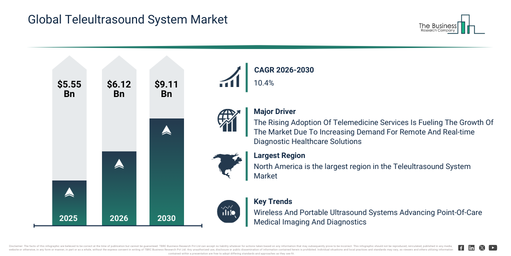
    The teleultrasound system market has witnessed rapid expansion in recent years. Its value is expected to climb from $5.55 billion in 2025 to $6.12 billion in 2026, achieving a compound annual growth rate (CAGR) of 10.2%. Historically, this market’s growth can be attributed to several factors, including the increasing adoption of telemedicine, a shortage of imaging specialists, the expansion of rural healthcare initiatives, a rise in the use of portable ultrasound devices, and the demand for faster diagnoses.

    The teleultrasound system market size is anticipated to expand quickly in the coming years, projected to reach $9.11 billion in 2030, exhibiting a compound annual growth rate (CAGR) of 10.4%. This projected growth stems from factors such as the increasing reach of remote diagnostics, the proliferation of connected medical devices, a heightened need for point-of-care imaging, the acceleration of healthcare digitization, and more extensive reimbursement policies for telehealth services. Key developments anticipated during this period encompass AI-powered remote ultrasound guidance, platforms for cloud-based image transmission, portable connected ultrasound devices, tools facilitating real-time specialist collaboration, and secure workflows for tele-imaging.

    Get A Free Sample Report With In-Depth Market Insights:

    https://thebusinessresearchcompany.com/sample_request?id=74405377&type=smp&name=Teleultrasound%20System%20Market%20Report%202026&utm_source=Blogs&utm_medium=Paid&utm_campaign=Oct_PR

    Teleultrasound System Market Growth Momentum: What Factors Are Shaping Demand?

    The increasing embrace of telemedicine services is anticipated to drive the expansion of the teleultrasound system market in the coming period. Telemedicine services refer to providing healthcare consultations, diagnoses, and monitoring through digital communication technologies, removing the need for in-person visits. The surge in telemedicine adoption stems from the rising demand for convenient and remote access to healthcare, especially prevalent in underserved and geographically distant areas. The teleultrasound system plays a crucial role in widening access to diagnostic imaging by enabling real-time remote guidance, image acquisition, and interpretation by specialists, particularly beneficial in underserved or remote healthcare settings. For example, in June 2025, Harmony Healthcare IT, a US-based data management firm, reported that 62% of Americans had utilized telehealth services for their medical requirements, with over 77% believing telehealth represents healthcare’s future, underscoring robust consumer confidence and ongoing usage growth. Thus, the growing adoption of telemedicine services is propelling the teleultrasound system market forward.

    Teleultrasound System Market Breakdown By Product Type And Application

    The teleultrasound system market covered in this report is segmented –

    1) By Component: Hardware; Software; Services

    2) By Technology: Two-Dimensional (2D) Ultrasound; Three-Dimensional (3D) Or Four Dimensional (4D) Ultrasound; Artificial Intelligence-Enabled Ultrasound; Cloud-Based Imaging Platforms

    3) By Product Type: Portable Teleultrasound Systems; Handheld Teleultrasound Systems; Cart-Based Teleultrasound Systems

    4) By Application: Cardiology; Obstetrics Or Gynecology; Radiology; Vascular; Musculoskeletal; Other Applications

    5) By End-User: Hospitals; Diagnostic Centers; Ambulatory Surgical Centers; Other End-Users

    Subsegments:

    1) By Hardware: Ultrasound Imaging Devices; Ultrasound Probes And Transducers; Communication And Transmission Modules; Display And Control Units; Peripheral And Accessory Equipment

    2) By Software: Image Processing Software; Real Time Image Transmission Software; Remote Collaboration And Guidance Software; Data Storage And Management Software; Integration And Workflow Management Software

    3) By Services: Installation And System Integration Services; Maintenance And Technical Support Services; Training And Education Services; Calibration And Quality Assurance Services; Operational And Consulting Services

    Teleultrasound System Market Trends Redefining Industry Growth

    Key players in the medical imaging and diagnostic ultrasound market are prioritizing the development of innovative solutions, including wireless and portable ultrasound systems, to enhance point-of-care diagnostics, improve clinical workflow efficiency, and extend imaging access to diverse healthcare environments. Wireless ultrasound systems are characterized as compact, cable-free imaging devices that wirelessly transmit ultrasound data to smartphones, tablets, or workstations, thereby enabling greater mobility, ease of use, and rapid deployment in hospitals, clinics, emergency care, and remote settings. For example, in November 2025, Mindray Bio-Medical Electronics Co. Ltd., a medical device manufacturer based in China, introduced a new wireless ultrasound system designed to deliver high-quality imaging through flexible, handheld operation. This system offers real-time imaging capabilities, seamless wireless connectivity, and compatibility with multiple clinical applications, allowing healthcare professionals to perform quick and accurate assessments directly at the bedside or in the field. This launch highlights the growing focus on portable, user-friendly diagnostic technologies that improve clinical decision-making while simultaneously boosting efficiency and accessibility across various healthcare scenarios.

    Teleultrasound System Market Key Participants And Competitive Landscape

    Major companies operating in the teleultrasound system market are Siemens Healthineers AG, FUJIFILM Holdings Corporation, Koninklijke Philips N.V., GE HealthCare Technologies Inc., Mindray Medical International Limited, Canon Medical Systems Corporation, DeepEcho Inc., Esaote S.p.A., TELSONIC AG, Butterfly Network Inc., EchoNous Inc., Clarius Mobile Health Corp., Telemed Medical Systems S.r.l., Healcerion Co. Ltd., Interson Corporation, Remote Medical Technologies LLC, Pulsenmore Ltd., e-Medical Systems Pty Ltd, Alpinion Medical Systems Co. Ltd., TeleGuidance Systems Inc.

    View The Full Teleultrasound System Market Report:

    https://thebusinessresearchcompany.com/report/teleultrasound-system-market-report?utm_source=Blogs&utm_medium=Paid&utm_campaign=Oct_PR

    Teleultrasound System Market Geographic Analysis: Where Is Demand Rising Fastest?

    North America was the largest region in the teleultrasound system market in 2025. Asia-Pacific is expected to be the fastest-growing region in the forecast period. The regions covered in the teleultrasound system market report are Asia-Pacific, South East Asia, Western Europe, Eastern Europe, North America, South America, Middle East, Africa.

    Reach Out To Our Team:

    The Business Research Company: https://www.thebusinessresearchcompany.com/

    Americas: +1 310-496-7795

    Asia: +44 7882 955267 & +91 8897263534

    Europe: +44 7882 955267

    Email us at: marketing@tbrc.info

    Follow us on:

    LinkedIn: https://in.linkedin.com/company/the-business-research-company

    YouTube: https://www.youtube.com/channel/UC24_fI0rV8cR5DxlCpgmyFQ

    Global Market Model: https://www.thebusinessresearchcompany.com/global-market-model
  • Wearable Fertility Trackers Market Outlook From 2026 To 2030: Key Growth Factors And Future Opportunities

    Wearable Fertility Trackers Market Outlook From 2026 To 2030: Key Growth Factors And Future Opportunities

    Featuring market attractiveness scoring, total addressable market sizing, company benchmarking matrices, interactive Excel dashboards, deeper supply chain intelligence, emerging startup tracking, and granular product-level insights, The Business Research Company’s 2026 market reports are built to deliver research that is both more actionable and more strategically valuable.

    Wearable Fertility Trackers Market Size Outlook: How Quickly Will Revenue Expand Through 2030?

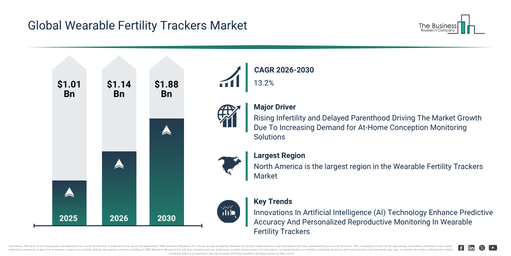
    The wearable fertility trackers market size has seen rapid expansion in recent years. It is projected to increase from $1.01 billion in 2025 to $1.14 billion in 2026, registering a compound annual growth rate (CAGR) of 13.0%. The growth observed in the historic period can be attributed to heightened awareness of fertility health, the embrace of wearable health devices, the proliferation of menstrual tracking apps, a rise in female health awareness, and the widening reach of mobile health platforms.

    The market for wearable fertility trackers is projected to experience substantial expansion in the coming years. This market is anticipated to reach a valuation of $1.88 billion by 2030, exhibiting a compound annual growth rate (CAGR) of 13.2%. This projected growth is driven by factors such as the integration of AI-based predictive algorithms, the incorporation of multi-sensor smart wearables, a rise in the adoption of hormone monitoring devices, the expansion of telehealth services, and an increasing demand for personalized fertility solutions. Key trends expected during this period involve continuous hormone monitoring, tracking basal body temperature, analyzing sleep patterns, providing app-integrated fertility insights, and employing predictive ovulation modeling.

    Get A Free Sample Report With In-Depth Market Insights:

    https://thebusinessresearchcompany.com/sample_request?id=37360910&type=smp&name=Wearable%20Fertility%20Trackers%20Market%20Report%202026&utm_source=Blogs&utm_medium=Paid&utm_campaign=Oct_PR

    Wearable Fertility Trackers Market Growth Catalysts And Demand Drivers

    The future expansion of the wearable fertility tracker market is anticipated to be driven by increasing infertility rates and the trend of postponing parenthood. Infertility is clinically defined as the failure to achieve pregnancy following 12 months or more of consistent, unprotected sexual activity, whereas delayed parenthood describes the inclination of individuals and partners to begin raising families later in life. The rising occurrence of both infertility and delayed parenthood is primarily linked to evolving societal values, with an increasing number of people focusing on advanced education and career development, consequently delaying decisions about starting a family until their late 30s and 40s, a time when natural fertility substantially diminishes. This surge in infertility and delayed parenthood fuels the need for wearable fertility trackers, as people look for accurate, live tracking of ovulation patterns and other reproductive health metrics to maximize their potential for natural conception. For example, in August 2025, the Office for National Statistics, a government body in the UK, reported that the overall infertility rate in 2024 was 1.41 children per woman, a slight decrease from 1.42 in 2023. Moreover, data from April 2025, provided by the Society for Assisted Reproductive Technology (SART), a US professional medical organization compiling and disseminating national IVF statistics for its member clinics, indicated that the cumulative count of IVF cycles conducted by these clinics increased from 389,993 in 2022 to 432,641 in 2023, marking a rise of 42,648 cycles. Consequently, the increase in infertility and the trend of delayed parenthood are propelling the expansion of the wearable fertility tracker market.

    Wearable Fertility Trackers Market Segment Landscape And Growth Outlook

    The wearable fertility trackers market covered in this report is segmented –

    1) By Product Type: Bracelets, Rings, Patches, Smartwatches, Other Product Types

    2) By Technology: Sensor-based, App-integrated, Temperature-based, Hormone-based, Other Technologies

    3) By Distribution Channel: Online Retail, Pharmacies, Specialty Stores, Other Distribution Channels

    4) By Application: Ovulation Prediction, Menstrual Cycle Tracking, Pregnancy Planning, Other Applications

    5) By End-Users: Women, Healthcare Providers, Other End Users

    Subsegments:

    1) By Bracelets: Temperature Sensing Bracelets, Heart Rate Variability Bracelets, Hormone Monitoring Bracelets, Sleep Tracking Bracelets, Multi Sensor Bracelets

    2) By Rings: Continuous Temperature Rings, Ovulation Prediction Rings, Basal Body Temperature Rings, Smart Notification Rings, Rechargeable Battery Rings

    3) By Patches: Disposable Skin Patches, Reusable Adhesive Patches, Hormone Detection Patches, Sweat Analysis Patches, Wireless Sync Patches

    4) By Smartwatches: Integrated Fertility Tracking Smartwatches, Third Party App Compatible Smartwatches, Medical Grade Sensor Smartwatches, Cycle Prediction Smartwatches, Wellness Focused Smartwatches

    5) By Other Product Types: Clip On Sensors, Underwear Embedded Sensors, Bedside Sensor Devices, Handheld Fertility Monitors, Hybrid Wearable Devices

    Wearable Fertility Trackers Market Trends Shaping Long-Term Demand

    Leading companies in the wearable fertility trackers market are concentrating on creating sophisticated AI-driven fertility monitoring systems to improve real-time cycle forecasting and provide data-informed reproductive health advice. This AI-powered fertility monitoring represents a technology utilizing artificial intelligence to examine physiological and hormonal information gathered via wearable sensors or digital interfaces, offering tailored, real-time understanding to precisely forecast ovulation, menstrual cycles, and fertile periods, thereby enhancing reproductive planning. As an illustration, OTO Fertility, a digital health and biometric intelligence firm based in Canada, introduced the globe’s first AI-enabled platform linked with a wearable device in December 2025, developed for providing predictive reproductive insights. This solution merges ongoing physiological tracking with sophisticated analytics to supply individualized fertility predictions, identify cycle irregularities early, and offer practical reproductive health guidance, ultimately enabling users with more accurate and forward-looking fertility management.

    Wearable Fertility Trackers Market Competitive Analysis Of Leading Industry Participants

    Major companies operating in the wearable fertility trackers market are Apple Inc., Samsung Electronics Co. Ltd., Ultrahuman PTE. Ltd., Garmin Ltd., Natural Cycles AB, Ava AG, Bellabeat d.o.o., kegg Fertility Inc., kegg Health Inc., Lady Technologies Inc., Tempdrop Ltd., VE Valley Electronics GmbH, Oura Health Oy, Mira Laboratories Inc., Trackle GmbH, WHOOP Inc., Femometer, Inito, OvuFirst Ltd., OTO Fertility, Movano Health.

    View The Full Wearable Fertility Trackers Market Report:

    https://thebusinessresearchcompany.com/report/wearable-fertility-trackers-market-report?utm_source=Blogs&utm_medium=Paid&utm_campaign=Oct_PR

    Wearable Fertility Trackers Market Geographic Distribution And Regional Opportunities

    North America was the largest region in the wearable fertility trackers market in 2025. Asia-Pacific is expected to be the fastest-growing region in the forecast period. The regions covered in the wearable fertility trackers market report are Asia-Pacific, South East Asia, Western Europe, Eastern Europe, North America, South America, Middle East, Africa.

    Reach Out To Our Team:

    The Business Research Company: https://www.thebusinessresearchcompany.com/

    Americas: +1 310-496-7795

    Asia: +44 7882 955267 & +91 8897263534

    Europe: +44 7882 955267

    Email us at: marketing@tbrc.info

    Follow us on:

    LinkedIn: https://in.linkedin.com/company/the-business-research-company

    YouTube: https://www.youtube.com/channel/UC24_fI0rV8cR5DxlCpgmyFQ

    Global Market Model: https://www.thebusinessresearchcompany.com/global-market-model
  • Wearable Fall Detection Market Growth Forecast: Market Size, Key Trends And Emerging Opportunities Through 2030

    Wearable Fall Detection Market Growth Forecast: Market Size, Key Trends And Emerging Opportunities Through 2030

    Built to provide research that’s more actionable and strategically valuable, The Business Research Company’s 2026 market reports include market attractiveness analysis, total addressable market sizing, company benchmarking matrices, interactive Excel dashboards, broader supply chain intelligence, emerging startup tracking, and in-depth product insights.

    Wearable Fall Detection Market Size, Value And Growth Trajectory Through 2030

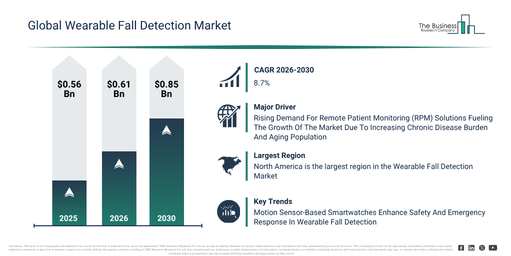
    The wearable fall detection market size has shown significant expansion in recent years. Its value is expected to rise from $0.56 billion in 2025 to $0.61 billion in 2026, achieving a compound annual growth rate (CAGR) of 8.5%. This earlier growth can be ascribed to several factors, including an expanding elderly population, the increasing uptake of wearable devices, heightened awareness of personal safety, continuous improvements in motion sensor technology, and the growing demand for home healthcare solutions.

    The wearable fall detection market is set for considerable expansion in the coming years. It is forecast to achieve a valuation of $0.85 billion by 2030, propelled by a compound annual growth rate (CAGR) of 8.7%. This projected growth throughout the forecast period stems from the integration of AI and machine learning, the expansion of telehealth services, escalating demand within senior living facilities, the adoption of multi-sensor wearable devices, and advancements in cloud-based monitoring platforms. Significant trends for the forecast duration include multi-sensor integration in wearables, the provision of real-time fall alerts, remote health monitoring capabilities, AI-powered predictive analytics, and seamless integration with emergency response systems.

    Get A Free Sample Report With In-Depth Market Insights:

    https://thebusinessresearchcompany.com/sample_request?id=96661418&type=smp&name=Wearable%20Fall%20Detection%20Market%20Report%202026&utm_source=Blogs&utm_medium=Paid&utm_campaign=Oct_PR

    Wearable Fall Detection Market Opportunity Drivers: What’s Unlocking New Revenue Potential?

    The escalating need for remote patient monitoring (RPM) solutions is anticipated to propel the growth of the wearable fall detection market in the future. Remote patient monitoring (RPM) is defined as the utilization of connected digital technologies and wearable devices to collect medical and health data from individuals in one location and electronically transmit it to healthcare providers for assessment and recommendations. The growing demand for RPM solutions is primarily driven by the increasing prevalence of chronic diseases, the expanding geriatric population, and the necessity for continuous monitoring outside of traditional clinical settings. Wearable fall detection devices enhance remote patient monitoring by enabling real-time tracking of patient movement, automatically identifying falls, and instantly alerting carers or healthcare providers, thereby improving patient safety and response time. For instance, in August 2025, according to the U.S. Department of Health & Human Services, a US-based executive branch department, Medicare spending on remote patient monitoring in 2024 surpassed US$536 million, representing a 31% increase compared to 2023, while nearly 1 million beneficiaries utilized RPM services, indicating a 27% year-over-year rise, and approximately 4,600 medical practices regularly billed for RPM services. Therefore, the rising demand for remote patient monitoring (RPM) solutions is a key driver for the growth of the wearable fall detection market.

    Wearable Fall Detection Market Breakdown By Product Type And Application

    The wearable fall detection market covered in this report is segmented –

    1) By Product Type: Smart Watches, Pendants, Clip-Ons, Belt-Worn Devices, Other Product Types

    2) By Technology: Accelerometer-Based, Gyroscope-Based, Multi-Sensor, Other Technologies

    3) By Distribution Channel: Online, Offline

    4) By Application: Home Care, Senior Living Facilities, Hospitals And Clinics, Other Applications

    5) By End-User: Elderly, Patients with Chronic Diseases, Other End-Users

    Subsegments:

    1) By Smart Watches: Standalone Smart Watches, Companion Smart Watches, Medical Alert Smart Watches, Cellular-Enabled Smart Watches

    2) By Pendants: Emergency Response Pendants, Fall Detection Pendants, Waterproof Pendants, Two Way Communication Pendants

    3) By Clip-Ons: Waist Clip Devices, Pocket Clip Devices, Magnetic Clip Devices, Lightweight Clip Devices

    4) By Belt-Worn Devices: Motion Sensor Devices, Impact Detection Devices, GPS-Enabled Devices, Rechargeable Belt Devices

    5) By Other Product Types: Smart Insoles, Smart Patches, Smart Clothing, Wristbands

    Wearable Fall Detection Market Innovation Trends Shaping Future Development

    Major companies in the wearable fall detection market are prioritizing the creation of advanced solutions, such as motion sensor-based fall detection and prevention watches, to enhance the safety and independence of elderly and high-risk individuals. These sensor-equipped fall detection and prevention watches are sophisticated wearable devices, featuring motion and positioning sensors that identify unexpected falls and quickly send out emergency alerts for prompt support. For example, in September 2023, Antara Senior Care, an India-based integrated senior care service provider, launched ‘AGEasy ‘Empower’ Smart Watches’ to strengthen its comprehensive care ecosystem for seniors. These smartwatches offer advanced fall detection using motion sensors that automatically alert emergency contacts if a user does not respond after a fall, alongside real-time health tracking (heart rate, blood pressure, SpO2, and temperature), GPS location, geo-fencing, and two-way voice/video calling, developed in collaboration with US firm LifeQ and available on the AGEasyByAntara site and Amazon India.

    Wearable Fall Detection Market Leading Companies And Competitive Benchmarking

    Major companies operating in the wearable fall detection market are Apple Inc., Samsung Electronics Co. Ltd., Huawei Technologies Co. Ltd., Xiaomi Corporation, Koninklijke Philips N.V., Garmin Ltd., Blackline Safety Corp, LifeStation Inc., Medical Guardian LLC, LifeFone Inc., VitalConnect Inc., UnaliWear Inc., Mytrex Inc., CarePredict Inc., AlertOne Services LLC, Ranix Co. Ltd., Qmedic Health Inc., Bay Alarm Medical LLC, Aloe Care Health Inc., FallCall Solutions LLC.

    View The Full Wearable Fall Detection Market Report:

    https://thebusinessresearchcompany.com/report/wearable-fall-detection-market-report?utm_source=Blogs&utm_medium=Paid&utm_campaign=Oct_PR

    Wearable Fall Detection Market Largest Region By Revenue And Market Share

    North America was the largest region in the wearable fall detection market in 2025. Asia-Pacific is expected to be the fastest-growing region in the forecast period. The regions covered in the wearable fall detection market report are Asia-Pacific, South East Asia, Western Europe, Eastern Europe, North America, South America, Middle East, Africa.

    Reach Out To Our Team:

    The Business Research Company: https://www.thebusinessresearchcompany.com/

    Americas: +1 310-496-7795

    Asia: +44 7882 955267 & +91 8897263534

    Europe: +44 7882 955267

    Email us at: marketing@tbrc.info

    Follow us on:

    LinkedIn: https://in.linkedin.com/company/the-business-research-company

    YouTube: https://www.youtube.com/channel/UC24_fI0rV8cR5DxlCpgmyFQ

    Global Market Model: https://www.thebusinessresearchcompany.com/global-market-model
  • Water For Injection System Market CAGR Forecast Through 2030: Key Trends Shaping Industry Expansion

    Water For Injection System Market CAGR Forecast Through 2030: Key Trends Shaping Industry Expansion

    Backed by market attractiveness analysis, total addressable market sizing, company benchmarking matrices, interactive Excel dashboards, wider supply chain intelligence, emerging startup coverage, and detailed product-level insights, The Business Research Company’s 2026 market reports are designed to offer research that is more actionable and strategically valuable than ever.

    Water For Injection System Market CAGR Outlook And Future Development

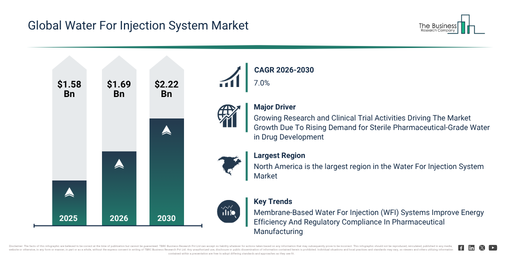
    The water for injection system market size has experienced robust growth recently. This market is projected to expand from $1.58 billion in 2025 to $1.69 billion in 2026, demonstrating a compound annual growth rate (CAGR) of 6.8%. The historical growth of the market can be linked to several factors, including the increasing demand for sterile injectable medicines, strict regulatory compliance requirements, the integration of traditional distillation and filtration systems, the expansion within pharmaceutical and biotech manufacturing, and a heightened emphasis on product safety and patient protection.

    The water for injection system market is projected to experience substantial expansion over the upcoming years, reaching $2.22 billion in 2030, driven by a compound annual growth rate (CAGR) of 7.0%. This anticipated growth throughout the forecast period stems from factors such as the increasing adoption of automated WFI systems, their integration with IoT-enabled monitoring, the implementation of predictive maintenance solutions, investments in energy-efficient systems, and the expanding infrastructure of the biotech and pharmaceutical sectors. Key developments anticipated during this period encompass automated WFI systems, continuous water quality monitoring, integration with manufacturing execution systems (MES), proactive maintenance for water systems, and the development of energy-efficient water generation technologies.

    Get A Free Sample Report With In-Depth Market Insights:

    https://thebusinessresearchcompany.com/sample_request?id=29877293&type=smp&name=Water%20For%20Injection%20System%20Market%20Report%202026&utm_source=Blogs&utm_medium=Paid&utm_campaign=Oct_PR

    Water For Injection System Market Growth Momentum: What Factors Are Shaping Demand?

    An anticipated surge in the Water for Injection (WFI) systems market is projected, driven by the expansion of research and clinical trial endeavors. These activities encompass structured scientific inquiries and controlled experiments designed to assess the safety, effectiveness, and caliber of novel pharmaceuticals, biologics, and therapeutic interventions prior to obtaining regulatory clearance. The uptick in research and clinical trials stems from the escalating incidence of intricate and enduring illnesses, which necessitates the creation of more potent and precise treatment options. This broadened scope of research and clinical trials directly fuels the need for pure, sterile water essential for the preparation, formulation, and processing stages of injectable pharmaceutical products and biologics. As an illustration, in December 2024, the Association of the British Pharmaceutical Industry, a trade association located in the UK, reported that the number of pharmaceutical industry trials initiated within the UK saw an increase for the second year in a row, progressing from 411 in 2022 to 426 in 2023. Consequently, the expanding volume of research and clinical trial activities is propelling the expansion of the Water for Injection (WFI) systems market.

    Water For Injection System Market Segment Analysis And Revenue Potential

    The water for injection system market covered in this report is segmented –

    1) By Product Type: Distillation Systems, Filtration Systems, Reverse Osmosis Systems, Other Product Types

    2) By Capacity: Small (<1000 L/h), Medium (1000–5000 L/h), Large (>5000 L/h)

    3) By Distribution Channel: Direct Sales, Distributors, Other Distribution Channels

    4) By End-User: Pharmaceutical Companies, Biotech Companies, Hospitals, Research Institutes, Other End-Users

    Subsegments:

    1) By Distillation Systems: Single Effect Distillation Systems, Multiple Effect Distillation Systems, Hybrid Distillation Systems, Steam Distillation Systems

    2) By Filtration Systems: Microfiltration Systems, Ultrafiltration Systems, Nanofiltration Systems, Crossflow Filtration Systems

    3) By Reverse Osmosis Systems: High Recovery Reverse Osmosis Systems, Low Energy Reverse Osmosis Systems, Brackish Water Reverse Osmosis Systems, Seawater Reverse Osmosis Systems

    4) By Other Product Types: Continuous Water For Injection Systems, Modular Water For Injection Systems, Automated Water For Injection Systems, Custom Engineered Water For Injection Systems

    Water For Injection System Market Trends Redefining Industry Growth

    Leading companies in the water for injection (WFI) system market are concentrating on developing advanced solutions, such as Sterile Water for Injection (WFI), to enhance the efficiency of pharmaceutical manufacturing, ensure regulatory adherence, and uphold high standards for product purity and patient safety. Sterile water for injection (WFI) is purified, sterile, and non-pyrogenic water utilized to dilute or dissolve injectable drugs, produced under stringent pharmacopeial standards to guarantee it is free from contaminants and endotoxins. For instance, in June 2024, Asahi Kasei Corporation, a Japan-based chemical and technology company, introduced a Microza hollow-fiber membrane system designed to produce WFI (water for injection), which is sterile water essential for preparing pharmaceutical injections. This system provides an energy-efficient alternative to conventional steam distillation, a process reliant on high CO₂-emitting steam generation, and offers advantages including reduced emissions, lower operating costs, a compact design, simplified operation, and exceptional endotoxin removal efficiency (>99.999%), thereby ensuring a safe and reliable WFI supply for pharmaceutical manufacturing.

    Water For Injection System Market Industry Leaders And Competitive Landscape

    Major companies operating in the water for injection system market are Thermo Fisher Scientific Inc., Asahi Kasei Corporation, Xylem Inc., BWT Holding GmbH, Sartorius AG, Organo Corporation, Nomura Micro Science Co Ltd, Fabtech Technologies Pvt Ltd, Kurita Water Industries Ltd., BRAM COR SpA, SKion Water GmbH, Suncombe Limited, Techno Hipurity Water Systems Pvt Ltd, Adinath International, Shanghai GenTech Co Ltd, SWJAL Process Pvt Ltd, Indu IonPure India Pvt Ltd, HANS Scientific LLC, Nanjing TianSure Machinery Co Ltd, VENPURE SYSTEM PVT LTD.

    View The Full Water For Injection System Market Report:

    https://thebusinessresearchcompany.com/report/water-for-injection-system-market-report?utm_source=Blogs&utm_medium=Paid&utm_campaign=Oct_PR

    Water For Injection System Market Regional Analysis And Leading Geography

    North America was the largest region in the water for injection system market in 2025. Asia-Pacific is expected to be the fastest-growing region in the forecast period. The regions covered in the water for injection system market report are Asia-Pacific, South East Asia, Western Europe, Eastern Europe, North America, South America, Middle East, Africa.

    Reach Out To Our Team:

    The Business Research Company: https://www.thebusinessresearchcompany.com/

    Americas: +1 310-496-7795

    Asia: +44 7882 955267 & +91 8897263534

    Europe: +44 7882 955267

    Email us at: marketing@tbrc.info

    Follow us on:

    LinkedIn: https://in.linkedin.com/company/the-business-research-company

    YouTube: https://www.youtube.com/channel/UC24_fI0rV8cR5DxlCpgmyFQ

    Global Market Model: https://www.thebusinessresearchcompany.com/global-market-model
  • Wastewater Pathogen Variant Analytics Market To Witness 17.6% CAGR Growth Through 2030: Key Industry Drivers

    Wastewater Pathogen Variant Analytics Market To Witness 17.6% CAGR Growth Through 2030: Key Industry Drivers

    Featuring market attractiveness scoring, total addressable market sizing, company benchmarking matrices, interactive Excel dashboards, deeper supply chain intelligence, emerging startup tracking, and granular product-level insights, The Business Research Company’s 2026 market reports are built to deliver research that is both more actionable and more strategically valuable.

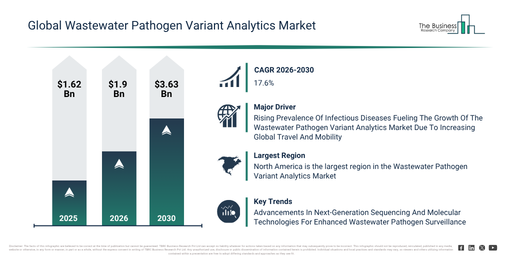
    Wastewater Pathogen Variant Analytics Market Set To Climb From $1.9 Billion In 2026 To $3.63 Billion By 2030

    The wastewater pathogen variant analytics market has experienced substantial growth in recent years. It is projected to expand from $1.62 billion in 2025 to $1.9 billion in 2026, showing a compound annual growth rate (CAGR) of 17.4%. This historical expansion can be attributed to an increasing awareness of community-level disease monitoring, the adoption of PCR-based pathogen detection, a rise in municipal wastewater testing, the establishment of environmental monitoring laboratories, and increased funding for public health surveillance.

    The wastewater pathogen variant analytics market is projected to experience substantial expansion in the coming years, reaching a valuation of $3.63 billion by 2030, driven by a compound annual growth rate (CAGR) of 17.6%. This growth during the forecast period stems from factors such as the proliferation of next-generation sequencing technologies, the incorporation of AI and big data analytics, intensified government efforts for predicting outbreaks, the necessity for real-time wastewater monitoring, and partnerships between municipalities and research institutions. Prominent trends identified for the forecast period include wastewater genomic surveillance, the tracking of pathogen variants in real-time, AI-driven outbreak prediction, the merging with public health dashboards, and the development of predictive environmental risk analytics.

    Get A Free Sample Report With In-Depth Market Insights:

    https://thebusinessresearchcompany.com/sample_request?id=23025615&type=smp&name=Wastewater%20Pathogen%20Variant%20Analytics%20Market%20Report%202026&utm_source=Blogs&utm_medium=Paid&utm_campaign=Oct_PR

    Wastewater Pathogen Variant Analytics Market Expansion Drivers: What’s Shaping Future Growth?

    The increasing occurrence of infectious diseases is projected to stimulate expansion in the wastewater pathogen variant analytics market. These diseases are defined as ailments stemming from pathogenic microbes like bacteria, viruses, fungi, or parasites, capable of direct or indirect transmission among people. An escalating burden from such diseases is fueled by elements including greater global travel and movement, urban development, and an elevated potential for cross-border spread, all of which hasten the dissemination of new and recurring pathogens. Wastewater pathogen variant analytics tackles this increasing load by facilitating early discovery of pathogens and their mutations within communities, leading to quicker public health actions and more focused strategies to restrict their spread. For example, in February 2026, data from the US-based public health agency, the Centers for Disease Control and Prevention (CDC), indicated that seasonal influenza in the United States typically leads to about 290,000–450,000 hospitalizations and 34,000–53,000 deaths each year. Concurrently, respiratory syncytial virus (RSV) contributed to an estimated 190,000–350,000 hospitalizations and 10,000–23,000 deaths. Consequently, the heightened incidence of infectious diseases is anticipated to spur growth within the wastewater pathogen variant analytics market.

    Wastewater Pathogen Variant Analytics Market Segmentation And Category Overview

    The wastewater pathogen variant analytics market covered in this report is segmented –

    1) By Pathogen Type: Viruses, Bacteria, Parasites, Fungi

    2) By Technology: Polymerase Chain Reaction (PCR)-Based, Next-Generation Sequencing, Immunoassays, Biosensors, Other Technologies

    3) By Application: Public Health Surveillance, Environmental Monitoring, Industrial Wastewater, Municipal Wastewater, Other Applications

    4) By End-User: Municipalities, Research Institutes, Industrial Facilities, Healthcare Facilities, Other End-Users

    Subsegments:

    1) By Viruses: Ribonucleic Acid (RNA) Viruses, Deoxyribonucleic Acid (DNA) Viruses

    2) By Bacteria: Pathogenic Bacterial Species, Antimicrobial-Resistant Strains

    3) By Parasites: Protozoa, Helminth-Related Pathogens

    4) By Fungi: Fungal Pathogens, Environmental Fungal Variants

    Wastewater Pathogen Variant Analytics Market Strategic Trends: What Defines The Next Growth Phase?

    Leading companies in the wastewater pathogen variant analytics market are increasingly prioritizing technological advancements in advanced molecular diagnostics platforms. This focus aims to enhance detection accuracy, improve real-time pathogen surveillance, and facilitate the early identification of emerging public health threats. Molecular diagnostic technologies employ nucleic-acid–based methods, such as PCR and sequencing, to detect and quantify DNA or RNA from pathogens found in complex samples, including wastewater. For instance, in April 2025, bioMérieux, a France-based company specializing in in-vitro diagnostics, launched WATCHFIRE. This innovative molecular testing solution is designed to strengthen wastewater pathogen surveillance through rapid, multiplex PCR detection of up to 22 respiratory pathogens directly from sewage influent samples. The system provides results in approximately 45 minutes and integrates with FIREWORKS software, enabling real-time trend analysis and automated alerts to support early warning and outbreak monitoring. WATCHFIRE operates on the BIOFIRE FILMARRAY TORCH instrument, allowing for decentralized, near-source testing with minimal hands-on time. It is expected to expand later in the year to include a gastrointestinal panel, thereby broadening pathogen coverage and complementing sequencing-based variant analytics for public health authorities.

    Wastewater Pathogen Variant Analytics Market Key Participants And Competitive Landscape

    Major companies operating in the wastewater pathogen variant analytics market are Roche Diagnostics International Ltd., Thermo Fisher Scientific Inc., SGS SA, Eurofins Scientific SE, Agilent Technologies Inc., Illumina Inc., BioMérieux SA, IDEXX Laboratories Inc., Bio-Rad Laboratories, QIAGEN N.V., ALS Limited, Promega Corporation, Ginkgo Bioworks Inc., Oxford Nanopore Technologies plc, LuminUltra Technologies Ltd., Verily Life Sciences LLC, Zymo Research Corp., PathogenDx Inc., Clear Labs Inc., GT Molecular Inc.

    View The Full Wastewater Pathogen Variant Analytics Market Report:

    https://thebusinessresearchcompany.com/report/wastewater-pathogen-variant-analytics-market-report?utm_source=Blogs&utm_medium=Paid&utm_campaign=Oct_PR

    Wastewater Pathogen Variant Analytics Market Geographic Analysis: Where Is Demand Accelerating Fastest?

    North America was the largest region in the wastewater pathogen variant analytics market in 2025. Asia-Pacific is expected to be the fastest-growing region in the forecast period. The regions covered in the wastewater pathogen variant analytics market report are Asia-Pacific, South East Asia, Western Europe, Eastern Europe, North America, South America, Middle East, Africa.

    Reach Out To Our Team:

    The Business Research Company: https://www.thebusinessresearchcompany.com/

    Americas: +1 310-496-7795

    Asia: +44 7882 955267 & +91 8897263534

    Europe: +44 7882 955267

    Email us at: marketing@tbrc.info

    Follow us on:

    LinkedIn: https://in.linkedin.com/company/the-business-research-company

    YouTube: https://www.youtube.com/channel/UC24_fI0rV8cR5DxlCpgmyFQ

    Global Market Model: https://www.thebusinessresearchcompany.com/global-market-model
  • Virtual Ward Care Solutions Market Research 2026: Market Size, Trends, Segments And Growth Forecast

    Virtual Ward Care Solutions Market Research 2026: Market Size, Trends, Segments And Growth Forecast

    Backed by market attractiveness analysis, total addressable market sizing, company benchmarking matrices, interactive Excel dashboards, wider supply chain intelligence, emerging startup coverage, and detailed product-level insights, The Business Research Company’s 2026 market reports are designed to offer research that is more actionable and strategically valuable than ever.

    Virtual Ward Care Solutions Market Size And Revenue Outlook Through 2030

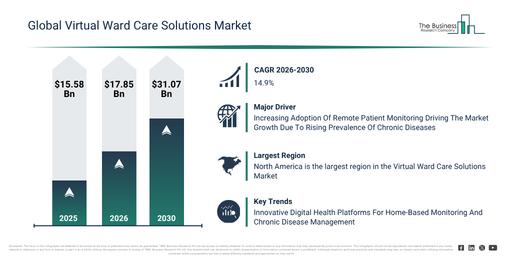
    The virtual ward care solutions market has seen a substantial increase in its size over recent years. It is anticipated to expand from $15.58 billion in 2025 to $17.85 billion in 2026, exhibiting a compound annual growth rate (CAGR) of 14.6%. This historical upward trend can be attributed to several factors including the rising demand for home healthcare, advancements in telemedicine technology, the increasing prevalence of chronic diseases, efforts to contain healthcare costs, and a growing awareness of hospital-acquired infections.

    The virtual ward care solutions market is projected to experience substantial expansion in the coming years, set to reach $31.07 billion by 2030, exhibiting a compound annual growth rate (CAGR) of 14.9%. This anticipated growth during the forecast period is fueled by the expansion of AI-enabled monitoring solutions, the integration of IoT health devices, governmental backing for virtual care programs, the increasing adoption of cloud-based health platforms, and investments in predictive patient care analytics. Key trends anticipated for this period encompass remote patient monitoring expansion, telehealth integration, the adoption of wearable health devices, predictive analytics for patient outcomes, and virtual care workflow automation.

    Get A Free Sample Report With In-Depth Market Insights:

    https://thebusinessresearchcompany.com/sample_request?id=76966049&type=smp&name=Virtual%20Ward%20Care%20Solutions%20Market%20Report%202026&utm_source=Blogs&utm_medium=Paid&utm_campaign=Oct_PR

    Virtual Ward Care Solutions Market Growth Drivers: What’s Behind The Acceleration?

    The increasing integration of remote patient monitoring is projected to stimulate the expansion of the virtual ward care solutions market in the coming period. Remote patient monitoring (RPM) refers to the application of digital technologies and instruments to collect patients’ health information from outside traditional healthcare facilities and transmit it to healthcare providers for ongoing supervision and treatment. The adoption of remote patient monitoring is expanding driven by the heightened necessity for continuous healthcare management, as it enables healthcare providers to track patients’ health status in real time. Virtual ward care solutions facilitate remote patient monitoring by furnishing an integrated platform that allows healthcare providers to continuously observe patients’ vital signs, symptoms, and adherence to treatment in real time, while orchestrating care remotely to ensure timely actions and individualized management beyond conventional hospital environments. For example, in August 2025, according to the Office of Inspector General, a US-based independent organization, the count of Medicare enrollees employing remote patient monitoring grew significantly, reaching nearly 1 million in 2024, which denotes a 27% increase compared to 2023. Therefore, the growing uptake of remote patient monitoring is fueling the growth of the virtual ward care solutions market.

    Virtual Ward Care Solutions Market Segment Breakdown: Which Categories Lead On Revenue?

    The virtual ward care solutions market covered in this report is segmented –

    1) By Component: Hardware, Software, Services

    2) By Patient Type: Chronic Disease Patients, Acute Care Patients, Elderly And Frail Patients

    3) By Care Type: Hospital-At-Home Care, Transitional Care, Preventive Care, Rehabilitation And Recovery Care, Palliative Care

    4) By Technology: Telehealth And Teleconsultation Technology, Remote Patient Monitoring, Wearable And Internet of Things (IoT) Health Technology, Artificial Intelligence And Predictive Analytics, Cloud-Based Solutions, Mobile Applications

    5) By End User: Hospitals And Health Systems, Home Healthcare Providers, Insurance Providers, Government And Public Health Organizations, Long-Term Care Facilities

    Subsegments:

    1) By Hardware: Patient Monitoring Devices, Wearable Health Sensors, Telecommunication Equipment, Tablet And Mobile Devices

    2) By Software: Remote Patient Monitoring Software, Electronic Health Record Integration Software, Care Coordination And Workflow Software, Analytics And Reporting Software

    3) By Services: Implementation And Integration Services, Training And Education Services, Maintenance And Support Services, Telehealth Consultation Services

    Virtual Ward Care Solutions Market Trends: What’s Defining The Industry’s Next Phase?

    Major companies within the virtual ward care solutions market are concentrating on incorporating innovative solutions, particularly digital health platforms, to bolster remote patient monitoring and improve home-based care provision. Digital health platforms are software-driven systems that collect, analyze, and share patient health data remotely, enabling healthcare providers to oversee patient conditions in real-time, facilitate timely interventions, and reduce the need for in-person hospital visits. For example, in February 2023, Hull University Teaching Hospitals NHS Trust (HUTH), a UK-based hospital trust, collaborated with Lenus Health, a UK-based digital health company, to launch the Lenus Virtual Ward and Remote Monitoring Services, an advanced digital platform aimed at supporting patients outside traditional hospital settings. This solution integrates wearable sensors, mobile applications, and clinician dashboards to continuously track vital signs, detect early warning signs, and facilitate rapid clinical responses. The platform’s disease management features enable tailored care pathways for chronic conditions such as COPD and heart failure, combining symptom tracking, personalized treatment plans, and automated care prompts to improve outcomes. Key features include real-time data monitoring, automated alerts for healthcare teams, secure integration with electronic health records, and enhanced patient engagement through educational resources and notifications.

    Virtual Ward Care Solutions Market Competitive Landscape: Who Leads The Industry?

    Major companies operating in the virtual ward care solutions market are Medtronic plc, Siemens Healthineers AG, Koninklijke Philips N.V., GE HealthCare Technologies Inc., Masimo Corporation, HealthSnap Inc., Huma Therapeutics Limited, Telli Health LLC, Health Recovery Solutions Inc., Accuhealth Solutions Inc., Lark Technologies Inc., Optimize Health Inc., VitalTech Holdings Inc., BioIntelliSense Inc., CareSimple Inc., Doccla Ltd, Whzan Digital Health Ltd, Vitls Inc., Spirit Health Group Limited, HealthArc Inc., 100Plus Inc., Docobo Limited, Cadence Care Inc., and Docly Technologies AB.

    View The Full Virtual Ward Care Solutions Market Report:

    https://thebusinessresearchcompany.com/report/virtual-ward-care-solutions-market-report?utm_source=Blogs&utm_medium=Paid&utm_campaign=Oct_PR

    Virtual Ward Care Solutions Market Geographic Landscape: Which Region Leads Industry Growth?

    North America was the largest region in the virtual ward care solutions market in 2025. Asia-Pacific is expected to be the fastest-growing region in the forecast period. The regions covered in the virtual ward care solutions market report are Asia-Pacific, South East Asia, Western Europe, Eastern Europe, North America, South America, Middle East, Africa.

    Reach Out To Our Team:

    The Business Research Company: https://www.thebusinessresearchcompany.com/

    Americas: +1 310-496-7795

    Asia: +44 7882 955267 & +91 8897263534

    Europe: +44 7882 955267

    Email us at: marketing@tbrc.info

    Follow us on:

    LinkedIn: https://in.linkedin.com/company/the-business-research-company

    YouTube: https://www.youtube.com/channel/UC24_fI0rV8cR5DxlCpgmyFQ

    Global Market Model: https://www.thebusinessresearchcompany.com/global-market-model
  • Virtual Sleep Clinics Market Forecast 2026: Market Size, Competitive Landscape And Growth Drivers

    Virtual Sleep Clinics Market Forecast 2026: Market Size, Competitive Landscape And Growth Drivers

    Featuring market attractiveness scoring, total addressable market sizing, company benchmarking matrices, interactive Excel dashboards, deeper supply chain intelligence, emerging startup tracking, and granular product-level insights, The Business Research Company’s 2026 market reports are built to deliver research that is both more actionable and more strategically valuable.

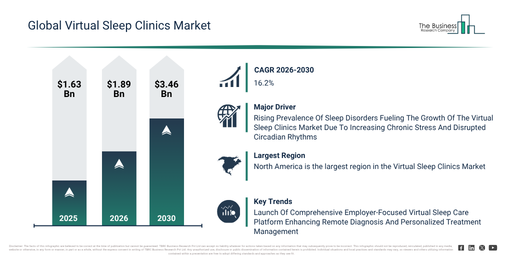
    Virtual Sleep Clinics Market Growth From $1.89 Billion In 2026 To $3.46 Billion By 2030 At A CAGR Of 16.2%

    The virtual sleep clinics market has experienced substantial growth in recent years. This market is projected to expand from $1.63 billion in 2025 to $1.89 billion in 2026, achieving a compound annual growth rate (CAGR) of 16.0%. The historical expansion can be ascribed to a rising prevalence of sleep disorders, restricted access to traditional in-person sleep clinics, the increasing integration of telehealth solutions, a strong demand for patient convenience, and the proliferation of wearable sleep devices.

    The virtual sleep clinics market is projected for significant expansion in the coming years. Its valuation is anticipated to reach $3.46 billion by 2030, demonstrating a compound annual growth rate (CAGR) of 16.2%. This anticipated increase during the forecast period stems from several factors, including the continued expansion of virtual sleep clinics, the incorporation of AI-driven diagnostic tools, supportive regulations for telemedicine, greater investment in remote monitoring technologies, increasing public awareness of sleep health, and the demand for personalized care. Key developments anticipated for this period encompass remote monitoring for sleep disorders, the growth of tele-consultation services, wider adoption of home-based sleep testing, the availability of digital services for insomnia care, and enhanced integrated care coordination.

    Get A Free Sample Report With In-Depth Market Insights:

    https://thebusinessresearchcompany.com/sample_request?id=36653584&type=smp&name=Virtual%20Sleep%20Clinics%20Market%20Report%202026&utm_source=Blogs&utm_medium=Paid&utm_campaign=Oct_PR

    Virtual Sleep Clinics Market Growth Factors Behind Sustained Expansion

    The escalating occurrence of sleep disorders is projected to drive the expansion of the virtual sleep clinics market in the future. These medical conditions, which include insomnia, sleep apnea, and circadian rhythm disorders, compromise sleep quality, timing, or duration, thereby impairing daytime functioning. The increasing burden of sleep disorders stems from factors such as chronic stress linked to modern lifestyles, heightened screen exposure, irregular work schedules, and an aging demographic, all of which disrupt circadian rhythms and hormonal balance. Virtual sleep clinics address this growing demand by offering broader remote access to diagnosis, monitoring, and personalized treatment, enabling timely intervention and continuous management for an expanding patient population. For instance, in July 2025, according to SleepFoundation.org, a US-based non-profit organization focused on sleep health education, insomnia was estimated to affect over 850 million adults globally, representing approximately 16.2% of the adult population, with severe cases impacting nearly 415 million individuals. Thus, the rising prevalence of sleep disorders is fueling the growth of the virtual sleep clinics market.

    Virtual Sleep Clinics Market Segmentation: How Does The Market Break Down By Category?

    The virtual sleep clinics market covered in this report is segmented –

    1) By Service Components: Tele-Consultation And Sleep Specialist Visits, Home Sleep Apnea Testing (HSAT) Programs, Remote Positive Airway Pressure Titration And Adherence Monitoring, Digital Insomnia Care Pathways (CBT-I Services), Care Coordination And Durable Medical Equipment (DME) Integration Services

    2) By Technology Platform: Integrated Virtual Clinic Platforms, Standalone Telehealth Solutions, Remote Monitoring Systems, Digital Therapeutic Applications

    3) By Clinical Indication: Obstructive Sleep Apnea (OSA), Insomnia, Circadian Rhythm Disorders, Restless Legs Syndrome, Other Clinical Indications

    4) By End User Or Channel: Direct-To-Patient Virtual Clinics, Hospital-Affiliated Virtual Programs, Payers Or Employers, Durable Medical Equipment (DME) Providers Or PAP Networks, Other End User Or Channels

    Subsegments:

    1) By Tele-Consultation And Sleep Specialist Visits: Real-Time Virtual Consultations With Sleep Medicine Specialists, Follow-Up Visits And Treatment Planning Via Telehealth, Second-Opinion Services

    2) By Home Sleep Apnea Testing (HSAT) Programs: Portable Diagnostic Devices For Sleep Apnea, Remote Data Transmission And Interpretation, Prescription And Setup Support

    3) By Remote Positive Airway Pressure Titration And Adherence Monitoring: Remote Pressure Adjustment For PAP Devices, Compliance Tracking And Reporting, Feedback Loops To Clinicians

    4) By Digital Insomnia Care Pathways (CBT-I Services): Online Cognitive Behavioral Therapy For Insomnia, Self-Guided Modules And Clinician Support, Outcome Tracking And Personalized Care Plans

    5) By Care Coordination And Durable Medical Equipment (DME) Integration Services: Centralized Care Navigation, Coordination Between Providers, Labs, Equipment Suppliers, Insurers, Integration Of Sleep Devices And Accessories

    Virtual Sleep Clinics Market Industry Trends Fueling Future Revenue Growth

    Key companies operating in the virtual sleep clinics market are concentrating on technological advancements in sleep monitoring devices, such as virtual sleep care solutions, to improve remote diagnostic accuracy, increase patient engagement and treatment adherence, and deliver personalized, data-driven sleep disorder management through integrated digital platforms. A virtual sleep care solution refers to a digitally-enabled healthcare platform that provides comprehensive diagnosis, treatment, monitoring, and management of sleep disorders remotely, leveraging telemedicine technologies, connected medical devices, and data analytics tools. For example, in September 2023, Neura Health, a US-based digital neurology company, introduced a Comprehensive Virtual Sleep Care Solution designed for Employers. This solution offers end-to-end sleep care delivered by board-certified sleep specialists via telehealth, supported by at-home sleep testing kits, personalized treatment plans, and continuous virtual follow-ups. It integrates behavioral sleep therapy, prescription management, and care coordination within a single digital platform, enabling employers to provide scalable sleep health benefits to their workforce. The service also utilizes data-driven insights to enhance diagnosis accuracy and treatment adherence while simultaneously reducing costs traditionally associated with sleep labs.

    Virtual Sleep Clinics Market Company Landscape And Competitive Strategy

    Major companies operating in the virtual sleep clinics market are Kaiser Foundation Health Plan Inc., Koninklijke Philips N.V., ResMed Inc., Teladoc Health Inc., Sleep Number Corporation, Carbon Health Inc., Amwell Group Inc., Compumedics Limited, Big Health Inc., BetterNight Inc., Gem Sleep LLC, Fullpower Technologies Inc., Sleep Data Holdings LLC, Sleepio Ltd., Haleo Inc., TeleSleep Clinic LLC, Sliiip Holdings Inc., WakeWell LLC, Ognomy Inc., Oura Health Ltd.

    View The Full Virtual Sleep Clinics Market Report:

    https://thebusinessresearchcompany.com/report/virtual-sleep-clinics-market-report?utm_source=Blogs&utm_medium=Paid&utm_campaign=Oct_PR

    Virtual Sleep Clinics Market Largest Region: Which Geography Holds The Biggest Share?

    North America was the largest region in the virtual sleep clinic market in 2025. Asia-Pacific is expected to be the fastest-growing region in the forecast period. The regions covered in the virtual sleep clinics market report are Asia-Pacific, South East Asia, Western Europe, Eastern Europe, North America, South America, Middle East, Africa.

    Reach Out To Our Team:

    The Business Research Company: https://www.thebusinessresearchcompany.com/

    Americas: +1 310-496-7795

    Asia: +44 7882 955267 & +91 8897263534

    Europe: +44 7882 955267

    Email us at: marketing@tbrc.info

    Follow us on:

    LinkedIn: https://in.linkedin.com/company/the-business-research-company

    YouTube: https://www.youtube.com/channel/UC24_fI0rV8cR5DxlCpgmyFQ

    Global Market Model: https://www.thebusinessresearchcompany.com/global-market-model
  • Virtual Patient Avatars Market Size In 2026: Regional Growth, Key Segments And Future Outlook

    Virtual Patient Avatars Market Size In 2026: Regional Growth, Key Segments And Future Outlook

    Built to provide research that’s more actionable and strategically valuable, The Business Research Company’s 2026 market reports include market attractiveness analysis, total addressable market sizing, company benchmarking matrices, interactive Excel dashboards, broader supply chain intelligence, emerging startup tracking, and in-depth product insights.

    Virtual Patient Avatars Market Expansion Outlook: What Revenue Opportunities Are Ahead?

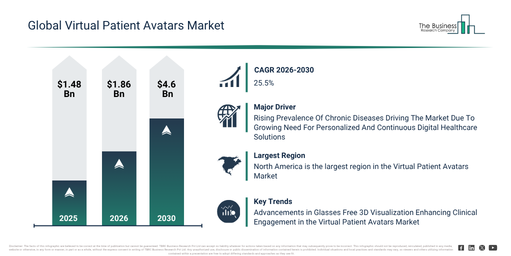
    The virtual patient avatars market has experienced substantial growth in recent years. It is projected to expand from $1.48 billion in 2025 to $1.86 billion in 2026, exhibiting a compound annual growth rate (CAGR) of 25.3%. The historical increase in this market can be attributed to several factors, including the increasing adoption of simulation-based medical training, the integration of basic digital health records, a rising demand for personalized medicine, the growth of academic and research institutes, and the expansion of clinical trial activities.

    The virtual patient avatars market is projected to experience substantial expansion in the coming years. Its valuation is anticipated to reach $4.6 billion by 2030, exhibiting a compound annual growth rate (CAGR) of 25.5%. This projected increase during the forecast period is driven by factors such as AI-driven predictive analytics, the incorporation of multi-omics data, cloud-based avatar deployment, the broadening of virtual therapy solutions, and the implementation of immersive AR/VR platforms for medical education. Key developments anticipated over this period encompass real-time patient simulation, predictive disease modeling, personalized therapy planning, integration with electronic health records, and the emergence of virtual clinical trial platforms.

    Get A Free Sample Report With In-Depth Market Insights:

    https://thebusinessresearchcompany.com/sample_request?id=98633247&type=smp&name=Virtual%20Patient%20Avatars%20Market%20Report%202026&utm_source=Blogs&utm_medium=Paid&utm_campaign=Oct_PR

    Virtual Patient Avatars Market Demand Drivers Opening New Revenue Streams

    The increasing burden of chronic diseases is projected to stimulate the expansion of the virtual patient avatars market moving forward. Long-term illnesses such as cardiovascular disorders, diabetes, cancer, and respiratory diseases necessitate continuous monitoring, tailored treatment plans, and sustained patient engagement, thereby escalating the demand for advanced digital healthcare solutions. The rising frequency and intensity of chronic diseases are influenced by factors like sedentary lifestyles, aging populations, and unhealthy dietary habits, which heighten the risk of obesity, diabetes, and cardiovascular disease. Virtual patient avatars empower clinicians and researchers to simulate disease progression, customize therapies, and enhance patient education and adherence, positioning them as valuable tools for managing complex chronic conditions and supporting clinical decision-making. For instance, in June 2025, according to the Office for Health Improvement and Disparities (OHID), a UK-based government organization, emergency admissions for respiratory diseases in England increased between 2023 and 2024, with particularly sharp rises for chronic conditions such as COPD (9%) and adult asthma (17%). Therefore, the increasing prevalence of chronic diseases is driving the growth of the virtual patient avatars market.

    Virtual Patient Avatars Market Segment Trends And Revenue Contributors

    The virtual patient avatars market covered in this report is segmented –

    1) By Component: Software, Services

    2) By Technology: AI-Based, Virtual Reality Or Augmented Reality-Based, 3D Modeling, Other Technologies

    3) By Deployment Mode: Cloud-Based, On-Premise

    4) By Application: Medical Training, Patient Education, Therapy And Rehabilitation, Clinical Trials, Other Applications

    5) By End-User: Hospitals And Clinics, Academic And Research Institutes, Pharmaceutical And Biotechnology Companies, Other End-Users

    Subsegments:

    1) By Software: Anatomy Visualization Software, Simulation And Modeling Software, Analytics And Assessment Tools

    2) By Services: Installation And Integration, Training Services, Content Customization, Support And Maintenance

    Virtual Patient Avatars Market Trends Powering Strategic Industry Growth

    Major companies in the virtual patient avatars market are focusing on developing advanced solutions like glasses-free 3D visualization to improve clinical communication and patient understanding. Glasses-free 3D visualization is an imaging method that converts traditional CT and MRI scans into spatially accurate three-dimensional representations, enabling clinicians and patients to view anatomy together in real time, enhancing clarity and shared decision-making. For instance, in November 2025, Avatar Medical and Barco, a France-based medtech company, introduced Eonis Vision, which features integrated 3D visualization software and an autostereoscopic medical display. This solution combines software and hardware to transform medical imaging into lifelike anatomical avatars within the exam room. It instantly converts imaging scans into interactive three-dimensional models without manual segmentation, allowing real-time rendering designed for clinical speed and accuracy. The system launches directly from the patient’s medical record and connects with existing imaging infrastructure to maintain routine workflows. The display provides natural depth perception without requiring headsets or specialized goggles, supporting collaborative visualization and clearer consultation experiences.

    Virtual Patient Avatars Market Key Players Shaping Industry Direction

    Major companies operating in the virtual patient avatars market are CAE Healthcare, Laerdal Medical, InSimu, Immersive Labz, Osso VR, BioDigital Inc., VirtaMed AG, Oxford Medical Simulation, Shadow Health (Elsevier), SimX Inc., Brahmarsive, Virtual Medical Coaching, SimforHealth, GIGXR Inc., Health Scholars, Body Interact, Medscape (WebMD), VirtaMed, 3D Systems (Simbionix), Patient Communication Simulations (PCS), MedVR Education.

    View The Full Virtual Patient Avatars Market Report:

    https://thebusinessresearchcompany.com/report/virtual-patient-avatars-market-report?utm_source=Blogs&utm_medium=Paid&utm_campaign=Oct_PR

    Virtual Patient Avatars Market Regional Analysis: Which Geography Leads On Revenue?

    North America was the largest region in the virtual patient avatars market in 2025. Asia-Pacific is expected to be the fastest-growing region in the forecast period. The regions covered in the virtual patient avatars market report are Asia-Pacific, South East Asia, Western Europe, Eastern Europe, North America, South America, Middle East, Africa.

    Reach Out To Our Team:

    The Business Research Company: https://www.thebusinessresearchcompany.com/

    Americas: +1 310-496-7795

    Asia: +44 7882 955267 & +91 8897263534

    Europe: +44 7882 955267

    Email us at: marketing@tbrc.info

    Follow us on:

    LinkedIn: https://in.linkedin.com/company/the-business-research-company

    YouTube: https://www.youtube.com/channel/UC24_fI0rV8cR5DxlCpgmyFQ

    Global Market Model: https://www.thebusinessresearchcompany.com/global-market-model

  • Virtual Dissection Labs Market Analysis: $2.15 Billion Market Size In 2026 And Future Growth Prospects

    Virtual Dissection Labs Market Analysis: $2.15 Billion Market Size In 2026 And Future Growth Prospects

    Featuring market attractiveness scoring, total addressable market sizing, company benchmarking matrices, interactive Excel dashboards, deeper supply chain intelligence, emerging startup tracking, and granular product-level insights, The Business Research Company’s 2026 market reports are built to deliver research that is both more actionable and more strategically valuable.

    Virtual Dissection Labs Market Value Analysis: What Growth Lies Ahead Over The Forecast Period?

    The virtual dissection labs market size has expanded significantly in recent years. It is forecast to increase from $1.77 billion in 2025 to $2.15 billion in 2026, achieving a compound annual growth rate (CAGR) of 21.2%. This historical growth can be linked to factors such as the increasing acceptance of digital learning tools, a heightened demand for anatomy visualization, a limited availability of physical cadavers, the expansion within medical and veterinary education, and the integration of simulation software into educational programs.

    The virtual dissection labs market size is set for significant expansion in the foreseeable future. It is forecast to reach $4.67 billion in 2030, demonstrating a compound annual growth rate (CAGR) of 21.5%. This projected growth is attributed to factors such as the expansion of cloud-based virtual laboratories, advancements in AI and AR/VR technologies, increasing adoption across K-12 and higher education, the rising demand for personalized learning experiences, and greater investment in content customization and analytics. Key trends anticipated during the forecast period encompass interactive 3D anatomical simulations, AR/VR-based collaborative learning, AI-powered assessment and analytics, the emergence of cloud-based virtual dissection platforms, and customizable curriculum integration.

    Get A Free Sample Report With In-Depth Market Insights:

    https://thebusinessresearchcompany.com/sample_request?id=94365732&type=smp&name=Virtual%20Dissection%20Labs%20Market%20Report%202026&utm_source=Blogs&utm_medium=Paid&utm_campaign=Oct_PR

    Virtual Dissection Labs Market Growth Catalysts And Demand Drivers

    The accelerating pace of digital transformation is expected to propel the growth of the virtual dissection labs market going forward. Digital transformation refers to the integration of advanced technologies like cloud computing, artificial intelligence, 3D visualization, and immersive learning platforms into conventional systems to enhance efficiency, accessibility, and data-driven decision-making. This transformation is driven by the increasing need for scalable, software-based solutions that allow for quicker deployment and remote access across various sectors, including education and healthcare. Virtual dissection labs support digital transformation by offering interactive, digital anatomy learning environments that lessen dependence on physical cadavers, improve accessibility, and integrate advanced visualization and analytics tools into medical education and training. For instance, in December 2023, according to Eurostat, a Luxemburg-based government agency, around 45.2% of European Union enterprises purchased cloud computing services in 2023, an increase of 12% from previous year. Therefore, increasing digital transformation is driving the growth of the virtual dissection labs market.

    Virtual Dissection Labs Market Segment Performance And Emerging Opportunities

    The virtual dissection labs market covered in this report is segmented –

    1) By Component: Software, Hardware, Services

    2) By Deployment Mode: On-Premises, Cloud-Based

    3) By Application: Medical Education, Veterinary Education, Biological Research, K-12 Education, Other Applications

    4) By End-User: Academic Institutions, Research Centers, Hospitals And Clinics, Other End-Users

    Subsegments:

    1) By Software: Anatomy Visualization Software, Simulation And Modeling Software, Analytics And Assessment Tools

    2) By Hardware: Virtual Dissection Tables, VR/AR Devices, Interactive Displays, Tracking Sensors And Controllers

    3) By Services: Installation And Integration, Training Services, Content Customization, Support And Maintenance

    Virtual Dissection Labs Market Trends Shaping Long-Term Demand

    Leading companies in the virtual dissection labs market are increasingly concentrating on creating advanced solutions, such as immersive virtual reality-based platforms for anatomy learning, to elevate student engagement and foster interactive science education. Immersive virtual reality platforms for anatomy learning utilize VR environments, allowing students to examine and dissect digital specimens within a realistic three-dimensional space, thereby eliminating the necessity for physical materials and enabling repeated, self-paced practice. For example, in April 2024, Xennial Digital, a US-based educational technology company, launched its VR Dissection Lab, a virtual reality learning platform developed for biology programs in middle and high schools. This solution empowers students to conduct dissections in a fully guided virtual setting that aligns with curriculum objectives and offers a safe and ethical substitute for traditional specimen use. The platform supports continuous exploration, interactive visualization of anatomical structures, and teacher-led instruction via an easy-to-implement classroom system, thus contributing to the broader integration of virtual dissection labs in K–12 education while reducing preparation time and material costs.

    Virtual Dissection Labs Market Leading Companies And Competitive Benchmarking

    Major companies operating in the virtual dissection labs market are Pearson Education, Mentice AB, Froggipedia, Leap Motion, Eisco Scientific, zSpace, Synaptive Medical, Labster, Anatomage, Realityworks, BioDigital, Inovus Medical, Visible Body, 3D4Medical, Touch of Life Technologies (TolTech), VIVED Learning, Brahmarsive, Elsevier, Cyber-Anatomy, Medical Augmented Intelligence (MedAI), Immersive Labz, Primal Pictures, Pirogov Interactive Anatomy.

    View The Full Virtual Dissection Labs Market Report:

    https://thebusinessresearchcompany.com/report/virtual-dissection-labs-market-report?utm_source=Blogs&utm_medium=Paid&utm_campaign=Oct_PR

    Virtual Dissection Labs Market Top Region By Revenue And Market Share

    North America was the largest region in the virtual dissection Labs market in 2025. Asia-Pacific is expected to be the fastest-growing region in the forecast period. The regions covered in the virtual dissection labs market report are Asia-Pacific, South East Asia, Western Europe, Eastern Europe, North America, South America, Middle East, Africa.

    Reach Out To Our Team:

    The Business Research Company: https://www.thebusinessresearchcompany.com/

    Americas: +1 310-496-7795

    Asia: +44 7882 955267 & +91 8897263534

    Europe: +44 7882 955267

    Email us at: marketing@tbrc.info

    Follow us on:

    LinkedIn: https://in.linkedin.com/company/the-business-research-company

    YouTube: https://www.youtube.com/channel/UC24_fI0rV8cR5DxlCpgmyFQ

    Global Market Model: https://www.thebusinessresearchcompany.com/global-market-model