Month: October 2026

  • Viral Genome Sequencing Market Size Forecast: How The Industry Is Expected To Grow From 2026 To 2030

    Viral Genome Sequencing Market Size Forecast: How The Industry Is Expected To Grow From 2026 To 2030

    Backed by market attractiveness analysis, total addressable market sizing, company benchmarking matrices, interactive Excel dashboards, wider supply chain intelligence, emerging startup coverage, and detailed product-level insights, The Business Research Company’s 2026 market reports are designed to offer research that is more actionable and strategically valuable than ever.

    Viral Genome Sequencing Market Revenue Outlook: What CAGR Lies Ahead Through 2030?

    The viral genome sequencing market size has demonstrated significant expansion in recent years. This market is expected to surge from $6.71 billion in 2025 to $7.72 billion in 2026, achieving a compound annual growth rate (CAGR) of 14.9%. Historically, this growth has been fueled by factors such as the increasing frequency of viral outbreaks, the integration of next-generation sequencing, the advancement of clinical diagnostics, government financial support for research, and the rising demand for epidemiological studies.

    The viral genome sequencing market size is anticipated to experience swift expansion over the coming years. It is projected to reach $13.57 billion in 2030, exhibiting a compound annual growth rate (CAGR) of 15.1%. This growth during the projected period can be attributed to several factors, including AI-driven genome analysis, the expansion of vaccine development initiatives, the uptake of portable sequencing technologies, their integration with predictive bioinformatics, and a growing emphasis on real-time pathogen monitoring. Key trends anticipated within this forecast period encompass high-throughput viral genome sequencing, the development of portable sequencing devices, their integration with advanced bioinformatics platforms, automated sample processing, and real-time mutation tracking.

    Get A Free Sample Report With In-Depth Market Insights:

    https://thebusinessresearchcompany.com/sample_request?id=46888988&type=smp&name=Viral%20Genome%20Sequencing%20Market%20Report%202026&utm_source=Blogs&utm_medium=Paid&utm_campaign=Oct_PR

    Viral Genome Sequencing Market Growth Momentum: What Factors Are Shaping Demand?

    The future expansion of the viral genome sequencing market is anticipated to be fueled by the escalating occurrence of infectious diseases. These illnesses, brought on by harmful microorganisms, are experiencing a continuous global increase, driven by factors such as a rise in international travel, urban development, and swift cross-border spread of pathogens. The mounting impact of these diseases has prompted governments and health systems to reinforce their genomic surveillance and outbreak response capacities. Viral genome sequencing is crucial in managing infectious diseases by facilitating quick identification of viral types, tracking genetic changes, mapping transmission routes, and aiding focused public health strategies. For example, in February 2026, data from the Centers for Disease Control and Prevention (CDC), a US-based government department, indicated that in 2026, influenza led to roughly 290,000–450,000 hospitalizations and 34,000–53,000 deaths each year in the United States, alongside RSV causing an estimated 190,000–350,000 hospitalizations and 10,000–23,000 deaths. Consequently, the rising incidence of infectious diseases is set to stimulate the growth of the viral genome sequencing market.

    Viral Genome Sequencing Market Breakdown By Product Type And Application

    The viral genome sequencing market covered in this report is segmented –

    1) By Sequencing Technology: Next-Generation Sequencing, Sanger Sequencing, Third-Generation Sequencing

    2) By Sample Type: Blood, Nasal Or Throat Swabs, Saliva, Other Sample Types

    3) By Application: Clinical Diagnostics, Research, Epidemiology, Vaccine Development, Other Applications

    4) By End-User: Hospitals And Clinics, Research Institutes, Pharmaceutical And Biotechnology Companies, Other End-Users

    Subsegments:

    1) By Next-Generation Sequencing: Sequencing By Synthesis, Ion Semiconductor Sequencing, Reversible Terminator Chemistry Sequencing, Targeted Amplicon Sequencing, Whole Genome Shotgun Sequencing

    2) By Sanger Sequencing: Capillary Electrophoresis Sequencing, Automated Fluorescent Chain Termination Sequencing, Dideoxy Chain Termination Sequencing, Low Throughput Mutation Verification Sequencing, Plasmid Insert Verification Sequencing

    3) By Third-Generation Sequencing: Single Molecule Real Time Sequencing, Nanopore Based Sequencing, Zero Mode Waveguide Sequencing, Long Read Direct Ribonucleic Acid Sequencing, Real Time Field Deployable Sequencing

    Viral Genome Sequencing Market Trends Redefining Industry Growth

    Leading companies active in the viral genome sequencing market are prioritizing technological advancements in long-read sequencing, such as benchtop long-read sequencing platforms, to achieve a competitive advantage. A benchtop long-read sequencing platform is an integrated laboratory system crafted to generate highly accurate, extended nucleotide sequences from viral genomes within a small footprint, enabling extensive structural variant detection, improved genome assembly, and faster turnaround times for pathogen characterization. This strengthens surveillance capabilities, supports outbreak response efforts, and enhances research precision, although it necessitates higher capital investment and advanced data analysis infrastructure at scale. For instance, in November 2024, Pacific Biosciences, a US-based biotechnology company, unveiled the Revio benchtop HiFi sequencing platform. This platform delivers high-fidelity long reads, offers increased throughput compared to older systems, and features a scalable configuration for clinical and research laboratories, thereby improving viral mutation tracking and genome completeness within the viral genome sequencing market.

    Viral Genome Sequencing Market Key Participants And Competitive Landscape

    Major companies operating in the viral genome sequencing market are F. Hoffmann‑La Roche Ltd., Thermo Fisher Scientific Inc., Agilent Technologies Inc., Illumina Inc., PerkinElmer Inc., Bio‑Rad Laboratories Inc., QIAGEN N.V., Integrated DNA Technologies Inc., GenScript Biotech Corporation, Novogene Co. Ltd., Takara Bio Inc., Twist Bioscience Corporation, Oxford Nanopore Technologies Ltd., Pacific Biosciences of California Inc., Genewiz, Macrogen Inc., MedGenome Labs Ltd., Eurofins Scientific SE, CD Genomics, BGI Genomics Co. Ltd.

    View The Full Viral Genome Sequencing Market Report:

    https://thebusinessresearchcompany.com/report/viral-genome-sequencing-market-report?utm_source=Blogs&utm_medium=Paid&utm_campaign=Oct_PR

    Viral Genome Sequencing Market Geographic Analysis: Where Is Demand Rising Fastest?

    North America was the largest region in the viral genome sequencing market in 2025. Asia-Pacific is expected to be the fastest-growing region in the forecast period. The regions covered in the viral genome sequencing market report are Asia-Pacific, South East Asia, Western Europe, Eastern Europe, North America, South America, Middle East, Africa.

    Reach Out To Our Team:

    The Business Research Company: https://www.thebusinessresearchcompany.com/

    Americas: +1 310-496-7795

    Asia: +44 7882 955267 & +91 8897263534

    Europe: +44 7882 955267

    Email us at: marketing@tbrc.info

    Follow us on:

    LinkedIn: https://in.linkedin.com/company/the-business-research-company

    YouTube: https://www.youtube.com/channel/UC24_fI0rV8cR5DxlCpgmyFQ

    Global Market Model: https://www.thebusinessresearchcompany.com/global-market-model

  • Urine Tumor Deoxyribonucleic Acid (DNA) Testing Market Size And Forecast 2026–2030: Trends Driving Industry Expansion

    Urine Tumor Deoxyribonucleic Acid (DNA) Testing Market Size And Forecast 2026–2030: Trends Driving Industry Expansion

    Backed by market attractiveness analysis, total addressable market sizing, company benchmarking matrices, interactive Excel dashboards, wider supply chain intelligence, emerging startup coverage, and detailed product-level insights, The Business Research Company’s 2026 market reports are designed to offer research that is more actionable and strategically valuable than ever.

    Urine Tumor Deoxyribonucleic Acid (DNA) Testing Market Size Outlook: How Quickly Will Revenue Expand Through 2030?

    The urine tumor deoxyribonucleic acid (DNA) testing market has experienced substantial expansion in recent years. It is forecast to grow from $1.18 billion in 2025 to $1.36 billion in 2026, demonstrating a compound annual growth rate (CAGR) of 14.6%. The historical surge in this market can be attributed to various factors, including the increasing incidence of urinary cancers, the adoption of pcr-based urine testing, advancements in sequencing technologies, a growing awareness of early cancer detection, and the expansion of hospital diagnostic facilities.

    The urine tumor deoxyribonucleic acid (DNA) testing market size is poised for significant expansion in the foreseeable future. This market is expected to expand to $2.36 billion in 2030, demonstrating a compound annual growth rate (CAGR) of 14.9%. The projected growth can be attributed to several factors such as AI-driven urine DNA analysis, the development of multiplex and high-throughput assays, the broadening scope of personalized medicine, integration with electronic health records, and an increasing demand for non-invasive monitoring solutions. Key trends anticipated during this period include non-invasive cancer monitoring, advancements in liquid biopsy, AI-powered genetic analysis, high-sensitivity urine DNA detection, and the integration of these systems with clinical decision support systems.

    Get A Free Sample Report With In-Depth Market Insights:

    https://thebusinessresearchcompany.com/sample_request?id=79218814&type=smp&name=Urine%20Tumor%20Deoxyribonucleic%20Acid%20%28DNA%29%20Testing%20Market%20Report%202026&utm_source=Blogs&utm_medium=Paid&utm_campaign=Oct_PR

    Urine Tumor Deoxyribonucleic Acid (DNA) Testing Market Industry Drivers: What’s Behind The Revenue Growth?

    The rising prevalence of urological cancers is projected to fuel the expansion of the urine tumor deoxyribonucleic acid (DNA) testing market in the upcoming years. These cancers affect the urinary system and male reproductive organs, specifically the kidneys, bladder, prostate, and testes, with their occurrence primarily increasing due to aging demographics, given that cancer risk escalates with advancing age. Urine tumor DNA testing plays a crucial role in managing urological cancers by enabling the non-invasive identification of cancer-specific genetic mutations in urine, thereby facilitating prompt diagnosis, continuous disease monitoring, and tailored treatment planning. As an example, in December 2025, Cancer Australia, an Australia-based government department, noted an estimated 28,868 new prostate cancer cases were diagnosed, accounting for approximately 30% of all new cancer diagnoses among men. Consequently, the growing incidence of urological cancers is anticipated to propel the demand for urine tumor deoxyribonucleic acid (DNA) testing.

    Urine Tumor Deoxyribonucleic Acid (DNA) Testing Market Segment Outlook: Which Categories Are Growing Fastest?

    The urine tumor deoxyribonucleic acid (DNA) testing market covered in this report is segmented –

    1) By Technology: Polymerase Chain Reaction-based, Next-Generation Sequencing, Other technologies

    2) By Product Type: Assay Kits, Instruments, Services

    3) By Cancer Type: Bladder Cancer, Prostate Cancer, Kidney Cancer, Other Cancer Types

    4) By Sample Type: First-Morning Urine, Random Urine Samples, Catheterized Urine Samples

    5) By End-User: Hospitals, Diagnostic Laboratories, Research Institutes, Other End-Users

    Subsegments:

    1) By Polymerase Chain Reaction Based: Real Time Polymerase Chain Reaction, Digital Polymerase Chain Reaction, Multiplex Polymerase Chain Reaction, Reverse Transcription Polymerase Chain Reaction

    2) By Next Generation Sequencing: Whole Genome Sequencing, Targeted Gene Sequencing, Exome Sequencing, Transcriptome Sequencing

    3) By Other Technologies: Microarray Based Testing, Hybridization Based Assays, Mass Spectrometry Based Analysis, Fluorescence In Situ Hybridization

    #Urine Tumor Deoxyribonucleic Acid (DNA) Testing Market Growth Trends: What’s Shaping The Future Outlook?

    Leading companies in the urine tumor deoxyribonucleic acid (DNA) testing market are increasingly concentrating on developing advanced solutions, such as urine-based liquid biopsy platforms, to facilitate non-invasive cancer detection, improve diagnostic accuracy, and support personalized treatment planning. These urine-based liquid biopsy platforms are non-invasive diagnostic systems engineered to detect and analyze tumor-derived DNA and other biomarkers from urine samples for cancer identification, monitoring, and assessment of disease progression. For instance, in September 2024, PreAnalytiX, a joint venture between QIAGEN, a Netherlands-based sample-to-insight provider, and Becton, Dickinson and Company, a US-based medical technology firm, introduced a novel urine-based liquid biopsy solution designed to enable high-quality DNA stabilization and extraction for subsequent molecular analyses. This platform, developed for both clinical and research applications, features standardized urine collection, efficient DNA preservation, and compatibility with next-generation sequencing workflows, thereby assisting in early cancer detection, accurate biomarker assessment, and enhanced patient management.

    Urine Tumor Deoxyribonucleic Acid (DNA) Testing Market Competitive Overview And Top Companies

    Major companies operating in the urine tumor deoxyribonucleic acid (DNA) testing market are Roche Diagnostics, Thermo Fisher Scientific Inc., Abbott Laboratories, Illumina Inc., QIAGEN N.V., Bio-Techne Corporation, NeoGenomics Laboratories Inc., Freenome Holdings Inc., MDxHealth SA, Biodesix Inc., Sysmex Inostics GmbH, Pacific Edge Limited, Apostle Inc., Lucence Diagnostics, Pangea Laboratory, Nucleix Ltd, Genomica Lab, Vesica Health, Biocept Inc., Promis Diagnostics Inc.

    View The Full Urine Tumor Deoxyribonucleic Acid (DNA) Testing Market Report:

    https://thebusinessresearchcompany.com/report/urine-tumor-deoxyribonucleic-acid-dna-testing-market-report?utm_source=Blogs&utm_medium=Paid&utm_campaign=Oct_PR

    Urine Tumor Deoxyribonucleic Acid (DNA) Testing Market Top Region: Where Does Most Revenue Come From?

    North America was the largest region in the urine tumor deoxyribonucleic acid (DNA) market in 2025. Asia-Pacific is expected to be the fastest-growing region in the forecast period. The regions covered in the urine tumor deoxyribonucleic acid (DNA) testing market report are Asia-Pacific, South East Asia, Western Europe, Eastern Europe, North America, South America, Middle East, Africa.

    Reach Out To Our Team:

    The Business Research Company: https://www.thebusinessresearchcompany.com/

    Americas: +1 310-496-7795

    Asia: +44 7882 955267 & +91 8897263534

    Europe: +44 7882 955267

    Email us at: marketing@tbrc.info

    Follow us on:

    LinkedIn: https://in.linkedin.com/company/the-business-research-company

    YouTube: https://www.youtube.com/channel/UC24_fI0rV8cR5DxlCpgmyFQ

    Global Market Model: https://www.thebusinessresearchcompany.com/global-market-model
  • Tumor-Informed Minimal Residual Disease (MRD) Tests Market 2026 Outlook: Market Size, CAGR And Key Growth Opportunities

    Tumor-Informed Minimal Residual Disease (MRD) Tests Market 2026 Outlook: Market Size, CAGR And Key Growth Opportunities

    Featuring market attractiveness scoring, total addressable market sizing, company benchmarking matrices, interactive Excel dashboards, deeper supply chain intelligence, emerging startup tracking, and granular product-level insights, The Business Research Company’s 2026 market reports are built to deliver research that is both more actionable and more strategically valuable.

    Tumor-Informed Minimal Residual Disease (MRD) Tests Market Size, Value And Growth Trajectory Through 2030

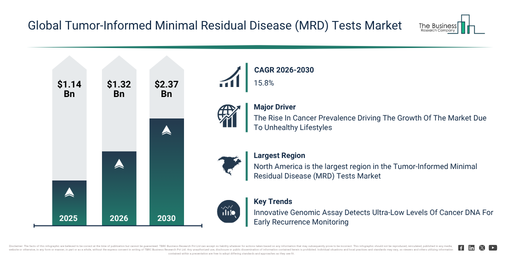
    The tumor-informed minimal residual disease (MRD) tests market size has experienced considerable expansion in recent years. This market is forecasted to grow from $1.14 billion in 2025 to $1.32 billion in 2026, achieving a compound annual growth rate (CAGR) of 15.6%. The historical growth of this market can be attributed to several factors including the rising prevalence of cancer, continuous advancements in genetic sequencing, the increasing demand for post-treatment monitoring, various regulatory approvals for molecular diagnostics, and the broader adoption of PCR and NGS technologies.

    The tumor-informed minimal residual disease (MRD) tests market is anticipated to experience swift expansion over the coming years. Its valuation is projected to reach $2.37 billion by 2030, exhibiting a compound annual growth rate (CAGR) of 15.8%. This expansion during the forecast period is primarily fueled by factors such as the rise of personalized medicine, the application of AI-driven data analytics for MRD, increased oncology research, the creation of non-invasive diagnostic assays, and the incorporation of these systems into hospital IT infrastructure. Key developments expected during this period involve personalized MRD monitoring, integration with clinical decision support tools, non-invasive sample analysis, detection of high-sensitivity ctDNA, and models for predicting disease recurrence.

    Get A Free Sample Report With In-Depth Market Insights:

    https://thebusinessresearchcompany.com/sample_request?id=58198541&type=smp&name=Tumor-Informed%20Minimal%20Residual%20Disease%20%28MRD%29%20Tests%20Market%20Report%202026&utm_source=Blogs&utm_medium=Paid&utm_campaign=Oct_PR

    Tumor-Informed Minimal Residual Disease (MRD) Tests Market Growth Factors: What’s Supporting Expansion?

    The expanding occurrence of cancer is anticipated to fuel the expansion of the tumor-informed minimal residual disease (MRD) tests market in the future. Cancer is defined as a collection of illnesses marked by the unregulated proliferation and division of atypical cells, capable of infiltrating adjacent tissues and disseminating throughout the body. The rising incidence of cancer stems from unhealthy habits such as inadequate nutrition, insufficient exercise, tobacco use, and excessive alcohol intake, all of which elevate the likelihood of developing diverse cancer forms. Tumor-informed minimal residual disease (MRD) tests assist in cancer management by identifying minute quantities of cancer-specific genetic material post-treatment, thereby allowing for prompt detection of recurrence and informing tailored treatment choices. For example, in February 2024, the World Health Organization, an international body based in Switzerland focused on global health policy and public health, projected that more than 35 million new cancer cases will arise in 2050, representing a 77% surge from the approximate 20 million cases in 2022. Consequently, the increasing prevalence of cancer is accelerating the swift expansion of the tumor-informed minimal residual disease (MRD) tests market.

    Tumor-Informed Minimal Residual Disease (MRD) Tests Market Segment Landscape: Which Areas Lead Development?

    The tumor-informed minimal residual disease (MRD) tests market covered in this report is segmented –

    1) By Technology: Next-Generation Sequencing, Polymerase Chain Reaction (PCR)-based, Other Technologies

    2) By Product Type: Assay Kits, Instruments, Software, Services

    3) By Sample Type: Peripheral Blood (Ctdna), Bone Marrow, Tissue Biopsy, Other Body Fluids

    4) By Application: Colorectal Cancer, Lung Cancer, Breast Cancer, Hematological Malignancies, Other Applications

    5) By End-User: Hospitals, Diagnostic Laboratories, Research Institutes, Other End-Users

    Subsegments:

    1) By Next-Generation Sequencing: Targeted Sequencing, Whole Genome Sequencing, Whole Exome Sequencing, Single Cell Sequencing, Other Sequencing Approaches

    2) By Polymerase Chain Reaction (PCR)-Based: Digital Polymerase Chain Reaction, Real Time Polymerase Chain Reaction, Multiplex Polymerase Chain Reaction, Other Polymerase Chain Reaction Methods

    3) By Other Technologies: Hybrid Capture Based, Bead Based Assays, Electrochemical Detection, Other Emerging Technologies

    Tumor-Informed Minimal Residual Disease (MRD) Tests Market Industry Trends: What’s Reshaping Demand?

    Major companies within the tumor informed minimal residual disease (MRD) tests market are concentrating on developing novel solutions, such as tissue informed whole genome sequencing (WGS) MRD assays, designed to detect extremely low levels of circulating tumor DNA for the early monitoring of cancer recurrence and treatment response. A tissue-informed whole genome sequencing (WGS) MRD assay functions by using a patient’s tumor tissue to pinpoint specific genetic mutations, then tracking these mutations in blood samples to identify minimal residual disease at very low levels. As an illustration, in September 2025, Foundation Medicine, Inc., a US-based precision medicine company, introduced the Tissue-informed WGS MRD test via the FlexOMx Lab. This innovative, tumor-informed whole-genome sequencing test for molecular residual disease is purposed for research across early- to late-stage cancers. It accurately tracks hundreds to thousands of tumor-specific variants in circulating tumor DNA, facilitating the precise detection of minimal residual disease even at minute tumor levels, while also supplying comprehensive genomic profiling to enhance understanding of recurrence and treatment resistance in clinical studies.

    Tumor-Informed Minimal Residual Disease (MRD) Tests Market Competitive Landscape: Which Companies Lead The Industry?

    Major companies operating in the tumor-informed minimal residual disease (MRD) tests market are Roche Diagnostics International Ltd., Thermo Fisher Scientific Inc., Laboratory Corporation of America Holdings, ICON Public Limited Company, Illumina Inc., Bio-Rad Laboratories Inc., Exact Sciences Corporation, QIAGEN N.V., Integrated DNA Technologies Inc., Natera Inc., NeoGenomics Laboratories Inc., Veracyte Inc., Foundation Medicine Inc., Adaptive Biotechnologies Corporation, Genetron Holdings Limited, Burning Rock Biotech Co Ltd., Personalis Inc., Foresight Diagnostics Inc., Predicine Inc., Guardant Health Inc.

    View The Full Tumor-Informed Minimal Residual Disease (MRD) Tests Market Report:

    https://thebusinessresearchcompany.com/report/tumor-informed-minimal-residual-disease-mrd-tests-market-report?utm_source=Blogs&utm_medium=Paid&utm_campaign=Oct_PR

    Tumor-Informed Minimal Residual Disease (MRD) Tests Market Regional Breakdown: Where Is Demand Concentrated?

    North America was the largest region in the tumor-informed minimal residual disease (MRD) tests market in 2025. Asia-Pacific is expected to be the fastest-growing region in the forecast period. The regions covered in the tumor-informed minimal residual disease (MRD) tests market report are Asia-Pacific, South East Asia, Western Europe, Eastern Europe, North America, South America, Middle East, Africa.

    Reach Out To Our Team:

    The Business Research Company: https://www.thebusinessresearchcompany.com/

    Americas: +1 310-496-7795

    Asia: +44 7882 955267 & +91 8897263534

    Europe: +44 7882 955267

    Email us at: marketing@tbrc.info

    Follow us on:

    LinkedIn: https://in.linkedin.com/company/the-business-research-company

    YouTube: https://www.youtube.com/channel/UC24_fI0rV8cR5DxlCpgmyFQ

    Global Market Model: https://www.thebusinessresearchcompany.com/global-market-model

  • Tumor Exosome Profiling Market Size Growth: From $1.32 Billion In 2026 To $2.49 Billion By 2030

    Tumor Exosome Profiling Market Size Growth: From $1.32 Billion In 2026 To $2.49 Billion By 2030

    Built to provide research that’s more actionable and strategically valuable, The Business Research Company’s 2026 market reports include market attractiveness analysis, total addressable market sizing, company benchmarking matrices, interactive Excel dashboards, broader supply chain intelligence, emerging startup tracking, and in-depth product insights.

    Tumor Exosome Profiling Market CAGR Outlook And Future Development

    The tumor exosome profiling market size has seen rapid expansion in recent years. It is anticipated to increase from $1.13 billion in 2025 to $1.32 billion in 2026, exhibiting a compound annual growth rate (CAGR) of 16.9%. The market’s historic growth can be attributed to factors such as the rising prevalence of cancer, continuous advancements in molecular biology techniques, the increasing adoption of liquid biopsy methods, a surge in research funding for oncology, and the growing demand for non-invasive diagnostic tools.

    The tumor exosome profiling market size is projected for swift expansion over the next few years. It is anticipated to reach $2.49 billion by 2030, progressing at a compound annual growth rate (CAGR) of 17.1%. This growth during the forecast period can be attributed to the integration of AI and bioinformatics in exosome profiling, the development of personalized medicine solutions, the expansion of diagnostic laboratories, the adoption of high-throughput exosome analysis platforms, and the growth in cancer biomarker discovery. Significant trends expected during this period include liquid biopsy integration, high-throughput exosome analysis, automated sample preparation, multi-omics data profiling, and personalized cancer therapeutics.

    Get A Free Sample Report With In-Depth Market Insights:

    https://thebusinessresearchcompany.com/sample_request?id=84097660&type=smp&name=Tumor%20Exosome%20Profiling%20Market%20Report%202026&utm_source=Blogs&utm_medium=Paid&utm_campaign=Oct_PR

    Tumor Exosome Profiling Market Demand Drivers: What’s Powering Industry Growth?

    The expanding occurrence of cancer is anticipated to fuel the expansion of the tumor exosome profiling market in the future. Cancer encompasses a collection of illnesses marked by the unregulated proliferation and division of irregular cells, capable of invading adjacent tissues and disseminating throughout the body. The rising incidence of cancer stems from unwholesome lifestyles, such as inadequate diet, insufficient physical activity, smoking, and excessive intake of alcohol, all of which elevate the likelihood of contracting diverse forms of cancer. Tumor exosome profiling assists in combating cancer by facilitating early detection, tracking tumor advancement, and directing tailored treatment approaches via the examination of tumor-originated exosomes found in bodily fluids. For example, data from February 2024, provided by the World Health Organization, a Switzerland-based international entity focused on global health policy and public health endeavors, indicates that more than 35 million new cancer cases are projected for 2050, representing a 77% rise from the approximately 20 million cases recorded in 2022. Consequently, the increasing occurrence of cancer is a primary catalyst for the swift expansion of the tumor exosome profiling market.

    Tumor Exosome Profiling Market Segments: Where Is Growth Concentrated?

    The tumor exosome profiling market covered in this report is segmented –

    1) By Product Type: Kits And Reagents, Instruments, Software, Services

    2) By Sample Type: Blood, Urine, Saliva, Other Sample Types

    3) By Application: Cancer Diagnostics, Prognostics, Therapeutics, Research

    4) By End-User: Hospitals And Clinics, Research Institutes, Diagnostic Laboratories, Other End-Users

    Subsegments:

    1) By Kits And Reagents: Isolation Kits, Detection Kits, Quantification Kits, Labeling Reagents, Antibodies

    2) By Instruments: Flow Cytometers, Nanoparticle Tracking Analyzers, Ultracentrifuges, Microfluidic Devices, Polymerase Chain Reaction Machines (PCR) Machines

    3) By Software: Data Analysis Software, Visualization Software, Bioinformatics Platforms, Statistical Modeling Software, Exosome Tracking Software

    4) By Services: Sample Preparation Services, Exosome Isolation Services, Molecular Profiling Services, Data Analysis Services, Custom Assay Development Services

    Tumor Exosome Profiling Market Innovation Trends: What Developments Are Reshaping The Industry?

    Leading enterprises within the tumor exosome profiling market are concentrating on developing advanced solutions, such as assays based on liquid biopsies of exosomes, to facilitate early cancer detection and personalized treatment monitoring. This type of assay functions as a blood test capable of identifying minute vesicles, called exosomes, released by tumor cells, thus enabling medical practitioners to pinpoint and supervise cancer without resorting to invasive tissue biopsies. For example, in June 2024, Mercy BioAnalytics Inc., a US-based biotechnology company, formed a partnership with University College London (UCL), a UK-based university, to introduce the Mercy Halo Ovarian Cancer Screening Test. This next-generation extracellular vesicle liquid biopsy is engineered to detect ovarian cancer in asymptomatic, postmenopausal women by identifying multiple co-localized cancer biomarkers found on individual tumor-derived vesicles using a low volume blood sample and a quantitative polymerase chain reaction (qPCR) based readout, delivering high sensitivity and specificity several years before clinical diagnosis.

    Tumor Exosome Profiling Market Competitive Landscape: Who Leads The Industry?

    Major companies operating in the tumor exosome profiling market are Thermo Fisher Scientific Inc., Lonza Group Ltd., NanoFCM Inc., QIAGEN N.V., Bio-Techne Corporation, Miltenyi Biotec B.V. And Co. KG, Aethlon Medical Inc., Cusabio Technology LLC, Norgen Biotek Corp., Kimera Labs Inc, Diagenode Inc., Creative Biolabs Inc, Izon Science Ltd., System Biosciences LLC, Mercy Bioanalytics Inc, MtoZ Biolab, Capital Biosciences Inc., ExoCan Healthcare Technologies Private Limited, INOVIQ Ltd, Codiak BioSciences Inc.

    View The Full Tumor Exosome Profiling Market Report:

    https://thebusinessresearchcompany.com/report/tumor-exosome-profiling-market-report?utm_source=Blogs&utm_medium=Paid&utm_campaign=Oct_PR

    Tumor Exosome Profiling Market Geographic Landscape: Which Region Dominates Industry Growth?

    North America was the largest region in the tumor exosome profiling market in 2025. Asia-Pacific is expected to be the fastest-growing region in the forecast period. The regions covered in the tumor exosome profiling market report are Asia-Pacific, South East Asia, Western Europe, Eastern Europe, North America, South America, Middle East, Africa.

    Reach Out To Our Team:

    The Business Research Company: https://www.thebusinessresearchcompany.com/

    Americas: +1 310-496-7795

    Asia: +44 7882 955267 & +91 8897263534

    Europe: +44 7882 955267

    Email us at: marketing@tbrc.info

    Follow us on:

    LinkedIn: https://in.linkedin.com/company/the-business-research-company

    YouTube: https://www.youtube.com/channel/UC24_fI0rV8cR5DxlCpgmyFQ

    Global Market Model: https://www.thebusinessresearchcompany.com/global-market-model

  • Tracheal Tubes And Airway Products Market Analysis 2026: Market Size, Growth Trends And Industry Outlook

    Tracheal Tubes And Airway Products Market Analysis 2026: Market Size, Growth Trends And Industry Outlook

    Backed by market attractiveness analysis, total addressable market sizing, company benchmarking matrices, interactive Excel dashboards, wider supply chain intelligence, emerging startup coverage, and detailed product-level insights, The Business Research Company’s 2026 market reports are designed to offer research that is more actionable and strategically valuable than ever.

    Tracheal Tubes And Airway Products Market Set To Climb From $3.54 Billion In 2026 To $4.56 Billion By 2030

    The tracheal tubes and airway products market has experienced substantial growth in recent years. It is anticipated to expand from $3.33 billion in 2025 to $3.54 billion in 2026, exhibiting a compound annual growth rate (CAGR) of 6.3%. The historical expansion can be attributed to several factors, including an increase in surgical procedures, a rise in emergency care cases, heightened awareness of airway management, the adoption of reusable airway devices, and advancements in anesthesia administration.

    The tracheal tubes and airway products market is projected to experience substantial expansion over the upcoming years. This market is anticipated to reach $4.56 billion by 2030, exhibiting a compound annual growth rate (CAGR) of 6.6%. Several factors contribute to this growth during the forecast period, including the increasing demand for disposable airway products, the integration of video laryngoscopes, the adoption of AI-assisted airway monitoring, the expansion of critical care infrastructure, and the rising prevalence of minimally invasive surgical procedures. Key trends expected within this period encompass the increased adoption of video laryngoscopy, the use of disposable airway devices, the rise of high-flow ventilation systems, the implementation of integrated airway management solutions, and the development of advanced airway monitoring systems.

    Get A Free Sample Report With In-Depth Market Insights:

    https://thebusinessresearchcompany.com/sample_request?id=28784292&type=smp&name=Tracheal%20Tubes%20And%20Airway%20Products%20Market%20Report%202026&utm_source=Blogs&utm_medium=Paid&utm_campaign=Oct_PR

    Tracheal Tubes And Airway Products Market Growth Drivers: What’s Behind The Acceleration?

    The rising occurrence of severe respiratory conditions is anticipated to fuel the expansion of the tracheal tubes and airway products market. These conditions are health disorders that affect the lungs and airways, impeding normal breathing and oxygen exchange. Elevated air pollution levels and the persistent spread of respiratory viruses have contributed to a rise in serious respiratory illnesses, leading to increased hospitalization and ICU admission rates. Tracheal tubes and airway products are vital in addressing these conditions by maintaining airway patency, enabling effective ventilation, and ensuring safe oxygen delivery during emergency care, critical care, and surgical procedures. For instance, in December 2024, data from MedRxiv, an US-based non-profit organization, revealed that respiratory virus-related hospitalizations in the United States climbed to 9.3% of all hospital admissions, a significant rise from 3.0% in late November, which underscores the escalating demand for advanced respiratory support due to acute respiratory illnesses. Thus, the growing occurrence of respiratory diseases is propelling the growth of the tracheal tubes and airway products market.

    Tracheal Tubes And Airway Products Market Segment Analysis: What Are The Core Market Categories?

    The tracheal tubes and airway products market covered in this report is segmented –

    1) By Product Type: Endotracheal Tube, Oral Airway Tube, Nasal Airway Tube, Oral And Nasal Airway Tube, Laryngoscope, Other Product Types

    2) By Material: Polyvinyl Chloride (PVC), Thermoplastic Polyurethane (TPU), Silicone, Polyolefins, Other Materials

    3) By Performance: Single Use Disposable, Reusable, High Flow, Low Flow

    4) By Application: Surgical Procedures, Emergency Care, Critical Care, Anesthesia Administration, Respiratory Therapy

    5) By End User: Hospitals, Ambulatory Surgical Centers, Emergency Medical Services (EMS), Clinics

    Subsegments:

    1) By Endotracheal Tube: Cuffed Endotracheal Tube, Uncuffed Endotracheal Tube, Reinforced Endotracheal Tube, Preformed Endotracheal Tube, Double Lumen Endotracheal Tube, Tapered Cuff Endotracheal Tube

    2) By Oral Airway Tube: Guedel Oral Airway, Berman Oral Airway, Color Coded Oral Airway, Disposable Oral Airway, Reusable Oral Airway

    3) By Nasal Airway Tube: Standard Nasopharyngeal Airway, Flared Nasopharyngeal Airway, Soft Nasal Airway, Pre Lubricated Nasal Airway, Disposable Nasal Airway

    4) By Oral And Nasal Airway Tube: Combination Airway Tube, Dual Channel Airway Tube, Esophageal Tracheal Combitube, Multi Lumen Airway Tube, Disposable Combination Airway Tube

    5) By Laryngoscope: Direct Laryngoscope, Video Laryngoscope, Fiber Optic Laryngoscope, Rigid Laryngoscope, Flexible Laryngoscope, Disposable Blade Laryngoscope

    6) By Other Product Types: Airway Introducer, Intubation Stylet, Airway Exchange Catheter, Bite Block Airway Device, Tracheostomy Tube, Supraglottic Airway Device

    Tracheal Tubes And Airway Products Market Trends: What’s Defining The Industry’s Next Phase?

    Major companies operating in the tracheal tubes and airway products market are intensifying their focus on developing sophisticated airway management solutions, such as closed suction catheters, to enhance patient safety, improve clinical efficiency, and reduce the likelihood of ventilator-associated infections. Closed suction catheters are specialized medical instruments designed to extract respiratory secretions from intubated or tracheostomized individuals without detaching them from mechanical ventilators, thereby sustaining lung volume, oxygenation, and continuous respiratory support. For instance, in November 2025, Dynarex Corporation, a US-based medical device company, introduced the Resp-O₂ Vortex 72 Closed Suction Catheter, engineered for continuous operation for up to 72 hours. This product is formulated to support infection control through its closed-system design and features smooth, flexible tubing, clear depth markings, and is compatible with both endotracheal and tracheostomy applications. Such advancements enable safer suctioning procedures, decrease clinician workload, and promote improved patient outcomes during prolonged mechanical ventilation, reinforcing the growing demand for advanced airway management products.

    Tracheal Tubes And Airway Products Market Company Landscape And Competitive Strategy

    Major companies operating in the tracheal tubes airway products market are Medtronic Public Limited Company, Becton Dickinson Company, Boston Scientific Corporation, Teleflex Incorporated, Karl Storz SE & Co. Kommanditgesellschaft, Cook Medical LLC, ICU Medical Inc., ConvaTec Group Public Limited Company, Nihon Kohden Corporation, Ambu Aktieselskab, Vygon S.A., Atos Medical AB, SunMed LLC, Fuji Systems Corporation, Mercury Medical Inc., Medis Medical (UK) Limited, Penlon Limited, Flexicare Medical Limited, Intersurgical Limited, Well Lead Medical Co. Ltd.

    View The Full Tracheal Tubes And Airway Products Market Report:

    https://thebusinessresearchcompany.com/report/tracheal-tubes-and-airway-products-market-report?utm_source=Blogs&utm_medium=Paid&utm_campaign=Oct_PR

    Tracheal Tubes And Airway Products Market Largest Region: Which Geography Holds The Highest Market Share?

    North America was the largest region in the tracheal tubes and airway products market in 2025. Asia-Pacific is expected to be the fastest-growing region in the forecast period. The regions covered in the tracheal tubes and airway products market report are Asia-Pacific, South East Asia, Western Europe, Eastern Europe, North America, South America, Middle East, Africa.

    Reach Out To Our Team:

    The Business Research Company: https://www.thebusinessresearchcompany.com/

    Americas: +1 310-496-7795

    Asia: +44 7882 955267 & +91 8897263534

    Europe: +44 7882 955267

    Email us at: marketing@tbrc.info

    Follow us on:

    LinkedIn: https://in.linkedin.com/company/the-business-research-company

    YouTube: https://www.youtube.com/channel/UC24_fI0rV8cR5DxlCpgmyFQ

    Global Market Model: https://www.thebusinessresearchcompany.com/global-market-model
  • Tissue Protectors Market Reaches $2.2 Billion In 2026: Key Developments Shaping Expansion

    Backed by market attractiveness analysis, total addressable market sizing, company benchmarking matrices, interactive Excel dashboards, wider supply chain intelligence, emerging startup coverage, and detailed product-level insights, The Business Research Company’s 2026 market reports are designed to offer research that is more actionable and strategically valuable than ever.

    Tissue Protectors Market Value Growth And Long-Term Outlook

    The tissue protectors market size has shown substantial growth in recent years. It will grow from $1.56 billion in 2025 to $1.66 billion in 2026 at a compound annual growth rate (CAGR) of 7.0%. Historically, this expansion has been driven by increasing surgical procedures globally, rising awareness of surgical site infections, demand for disposable surgical devices, innovations in surgical materials, and the growth of hospital infrastructure.

    The tissue protectors market is projected to experience substantial expansion in the coming years. Its valuation is anticipated to reach $2.2 billion by 2030, demonstrating a compound annual growth rate (CAGR) of 7.2%. This projected growth throughout the forecast period stems from factors such as the increasing adoption of antimicrobial wound edge protectors, their integration with robotic surgery systems, the ongoing development of sustainable surgical materials, the proliferation of ambulatory surgical centers, and the rising demand for automated surgical workflow solutions. Key trends anticipated during this period encompass the widespread adoption of disposable surgical devices, advancements in antimicrobial barrier technologies, greater integration with minimally invasive surgery, continued development of advanced materials, and the implementation of automated surgical workflow solutions.

    Get A Free Sample Report With In-Depth Market Insights:

    https://thebusinessresearchcompany.com/sample_request?id=41778647&type=smp&name=Tissue%20Protectors%20Market%20Report%202026&utm_source=Blogs&utm_medium=Paid&utm_campaign=Oct_PR

    Tissue Protectors Market Growth Backed By Core Demand Fundamentals

    The expansion of the tissue protectors market is anticipated to be driven by an increase in surgical interventions. These procedures involve operative techniques carried out by skilled surgeons to diagnose, manage, or avert illnesses and injuries. The aging demographic in developed nations contributes to this rise, as older individuals frequently need surgeries for age-related issues like joint replacements, heart-related operations, and cancer therapies. Tissue protectors play a crucial role by protecting healthy tissues from harm during operations, thereby enabling surgeons to operate with greater efficiency and precision, minimizing complication risks, and ultimately enhancing patient recuperation and clinical results. For example, Intuitive Surgical Inc., a US-based medical device company, reported approximately 2,683,000 surgical procedures using da Vinci systems in March 2025. This shows an increase from about 2,286,000 procedures in 2023 and 1,875,000 procedures in 2022, demonstrating consistent annual growth in their usage. Consequently, the expanding volume of surgical procedures is fueling the growth of the tissue protectors market.

    Tissue Protectors Market Segment Trends And Revenue Contributors

    The tissue protectors market covered in this report is segmented –

    1) By Product Type: Wound Edge Protectors, Surgical Retractors, Incision Drapes

    2) By Material Type: Polyurethane, Silicone, Polyethylene, Latex-Free Elastomers

    3) By Usability: Disposable, Reusable

    4) By Application: General Surgery, Obstetrics And Gynecology, Colorectal Surgery, Cardiac Surgery

    5) By End User: Hospitals, Ambulatory Surgical Centers, Specialty Clinics

    Subsegments:

    1) By Wound Edge Protectors: Disposable Wound Edge Protectors, Reusable Wound Edge Protectors, Self-Retaining Wound Edge Protectors, Non-Self-Retaining Wound Edge Protectors, Circular Wound Edge Protectors

    2) By Surgical Retractors: Handheld Surgical Retractors, Self-Retaining Surgical Retractors, Rib Spreaders, Abdominal Surgical Retractors, Orthopedic Surgical Retractors

    3) By Incision Drapes: Adhesive Incision Drapes, Non-Adhesive Incision Drapes, Fenestrated Incision Drapes, Non-Fenestrated Incision Drapes, Antimicrobial Incision Drapes

    Tissue Protectors Market Growth Trends Reshaping The Competitive Landscape

    Major companies operating in the tissue protectors market are prioritizing the development of innovative solutions, such as flowable collagen-based gels, to enhance post-surgical recovery and mitigate tissue adhesion. These gels are injectable, collagen-rich hydrogels that conform to complex tissue surfaces, creating a protective barrier that effectively reduces adhesions, supports natural tissue regeneration, minimizes inflammation, and promotes faster, smoother post-surgical healing compared to traditional solid barriers. For instance, in January 2026, TYBR Health Inc., a US-based regenerative medicine and medical device company, introduced the B3 GEL System. This flowable collagen-based tissue protection gel was specifically developed to support post-surgical soft-tissue healing. The system has been applied in orthopedic soft-tissue procedures to assist tendon repair and help reduce tissue tethering during recovery. The B3 GEL system readily conforms to the surgical site, maintains biomechanical separation during the initial healing phase, and is gradually resorbed by the body. Its unique extracellular matrix composition interacts with the body’s native repair mechanisms, promoting tissue regeneration while simultaneously preserving flexibility and glide for tendons and ligaments.

    Tissue Protectors Market Leading Companies And Competitive Benchmarking

    Major companies operating in the tissue protectors market are Cardinal Health Inc., Johnson & Johnson, Medtronic plc, 3M Company, Stryker Corporation, Becton Dickinson Company, B. Braun Melsungen AG, Smith & Nephew plc, Coloplast A/S, Cooper Surgical Inc., Hartmann Group, ConvaTec Group plc, Integra LifeSciences Holdings Corporation, Applied Medical Resources Corporation, Geister Medizintechnik GmbH, Prescient Surgical Inc., BetaTech Medical Inc., SunMedica Inc., PRAN Medsystems LLP, TYBR Health Inc.

    View The Full Tissue Protectors Market Report:

    https://thebusinessresearchcompany.com/report/tissue-protectors-market-report?utm_source=Blogs&utm_medium=Paid&utm_campaign=Oct_PR

    Tissue Protectors Market Largest Region By Revenue And Market Share

    North America was the largest region in the tissue protectors market in 2025. Asia-Pacific is expected to be the fastest-growing region in the forecast period. The regions covered in the tissue protectors market report are Asia-Pacific, South East Asia, Western Europe, Eastern Europe, North America, South America, Middle East, Africa.

    Reach Out To Our Team:

    The Business Research Company: https://www.thebusinessresearchcompany.com/

    Americas: +1 310-496-7795

    Asia: +44 7882 955267 & +91 8897263534

    Europe: +44 7882 955267

    Email us at: marketing@tbrc.info

    Follow us on:

    LinkedIn: https://in.linkedin.com/company/the-business-research-company

    YouTube: https://www.youtube.com/channel/UC24_fI0rV8cR5DxlCpgmyFQ

    Global Market Model: https://www.thebusinessresearchcompany.com/global-market-model
  • Tinnitus Treatment Devices Market Growth Outlook For 2026: Drivers, Trends And Future Opportunities

    Featuring market attractiveness scoring, total addressable market sizing, company benchmarking matrices, interactive Excel dashboards, deeper supply chain intelligence, emerging startup tracking, and granular product-level insights, The Business Research Company’s 2026 market reports are built to deliver research that is both more actionable and more strategically valuable.

    Tinnitus Treatment Devices Market Poised To Hit $3.06 Billion By 2030 With A 7.6% CAGR

    The market size for tinnitus treatment devices has demonstrated robust growth in recent years. It is projected to expand from $2.13 billion in 2025 to $2.28 billion in 2026, achieving a compound annual growth rate (CAGR) of 7.4%. The historical growth of this market can be attributed to factors including the growing prevalence of tinnitus, increasing awareness of auditory health, adoption of conventional hearing aids, a rising geriatric population, and the expansion of otolaryngology clinics.

    The tinnitus treatment devices market is poised for significant expansion in the foreseeable future. It is projected to grow to $3.06 billion in 2030 at a compound annual growth rate (CAGR) of 7.6%. This anticipated growth during the forecast period stems from the integration of AI and ML in tinnitus devices, the development of wearable sound therapy solutions, the increasing reach of tele-audiology services, a growing demand for homecare tinnitus management, and increased investment in personalized auditory devices. Prominent trends expected in this period include personalized sound therapy devices, AI-enabled tinnitus management, wearable monitoring solutions, the adoption of home-based treatments, and integration with mobile health applications.

    Get A Free Sample Report With In-Depth Market Insights:

    https://thebusinessresearchcompany.com/sample_request?id=49185431&type=smp&name=Tinnitus%20Treatment%20Devices%20Market%20Report%202026&utm_source=Blogs&utm_medium=Paid&utm_campaign=Oct_PR

    Tinnitus Treatment Devices Market Growth Catalysts And Demand Drivers

    An increasing incidence of hearing impairment is anticipated to drive the expansion of the tinnitus treatment devices market in the future. Hearing loss is defined as a partial or complete inability to perceive sounds in one or both ears, resulting from issues within the outer, middle, or inner ear, or the auditory nerve. The growing occurrence of hearing loss is primarily due to an aging population, as age-related degeneration of the auditory system increases the risk of impaired hearing and long-term auditory disorders. Tinnitus treatment devices assist in managing hearing loss by providing targeted sound therapy or neuromodulation, which aims to reduce the perception of ringing and enhance auditory function. These devices also improve patient quality of life by alleviating symptoms, supporting communication, and complementing conventional hearing rehabilitation strategies. For example, data from March 2025, provided by the Ministers for the Department of Social Services, an Australia-based government agency, indicates that over 3.6 million people in Australia are living with hearing loss, and this number is expected to double by 2060. Consequently, the rising prevalence of hearing loss is propelling the growth of the tinnitus treatment devices market.

    Tinnitus Treatment Devices Market Segment Analysis Spotlighting Growth Areas

    The tinnitus treatment devices market covered in this report is segmented –

    1) By Product Type: Sound Masking Devices, Notched Music Devices, Hearing Aids, Cochlear Implants

    2) By Technology: Wearable Devices, Non-wearable Devices

    3) By Patient Type: Adults, Pediatrics

    4) By Distribution Channel: Online, Offline

    5) By Application: Hospitals, Ear, Nose, And Throat Clinics, Homecare Settings

    Subsegments:

    1) By Sound Masking Devices: Tabletop Sound Generators, Wearable Sound Generators, In Ear Sound Maskers, Combination Sound And Sleep Devices, Environmental Sound Machines, Bedside White Noise Devices, Smartphone Controlled Sound Maskers

    2) By Notched Music Devices: Customized Frequency Notched Music Players, Software Based Notched Music Therapy Platforms, Portable Notched Music Devices, Integrated Notched Music Hearing Devices, Personalized Streaming Notched Music Applications

    3) By Hearing Aids: Behind The Ear Hearing Aids, Receiver In Canal Hearing Aids, In The Ear Hearing Aids, In The Canal Hearing Aids, Completely In Canal Hearing Aids, Rechargeable Digital Hearing Aids, Bluetooth Enabled Hearing Aids

    4) By Cochlear Implants: Unilateral Cochlear Implants, Bilateral Cochlear Implants, Hybrid Cochlear Implants, Implantable Sound Processor Systems, External Sound Processor Units

    Tinnitus Treatment Devices Market Trends Shaping Long-Term Demand

    Leading companies in the tinnitus treatment devices market are prioritizing the development of innovative products, such as bimodal neuromodulation devices, to deliver non-invasive, personalized relief from persistent tinnitus symptoms. These bimodal neuromodulation devices are wearable medical technologies that integrate precise sound therapy with gentle electrical stimulation, typically applied to the tongue, to re-educate the brain’s auditory pathways, reduce abnormal neural activity, and gradually diminish the perception and severity of tinnitus. For example, in March 2023, Neuromod Devices Ltd., an Ireland-based medical technology company, obtained U.S. Food and Drug Administration approval for Lenire, a bimodal neuromodulation device specifically designed to treat chronic tinnitus. Lenire merges auditory stimulation delivered through headphones with mild electrical pulses directed to the tongue, effectively retraining the brain’s auditory pathways to decrease the sensation of ringing or buzzing. This device aims at the neurological underpinnings of tinnitus rather than simply masking symptoms; furthermore, it is wearable, customizable for individual patient needs, and purposed for home use, offering a non-invasive therapy that has been clinically validated to improve tinnitus outcomes over time. This unique combination of sound and tongue-based electrical stimulation signifies a considerable advancement in neuromodulation therapies for auditory disorders.

    Tinnitus Treatment Devices Market Industry Leaders And Competitive Landscape

    Major companies operating in the tinnitus treatment devices market are Sonova Holding AG, Demant A/S, GN Store Nord A/S, WS Audiology A/S, Starkey Hearing Technologies Inc., Cochlear Limited, Widex A/S, MED-EL Elektromedizinische Geräte GmbH, Starkey Laboratories Inc., Rion Co. Ltd., Neuromod Devices Ltd., Puretone Ltd., Micro-DSP Technology Co. Ltd., Neosensory Inc., Neuromonics Inc., Arches Natural Products Inc., Otoharmonics Corporation, SoundCure Inc., Desyncra Technologies Ltd., AlgorKorea Co. Ltd.

    View The Full Tinnitus Treatment Devices Market Report:

    https://thebusinessresearchcompany.com/report/tinnitus-treatment-devices-market-report?utm_source=Blogs&utm_medium=Paid&utm_campaign=Oct_PR

    Tinnitus Treatment Devices Market Regional Analysis And Leading Geography

    North America was the largest region in the tinnitus treatment devices market in 2025. Asia-Pacific is expected to be the fastest-growing region in the forecast period. The regions covered in the tinnitus treatment devices market report are Asia-Pacific, South East Asia, Western Europe, Eastern Europe, North America, South America, Middle East, Africa.

    Reach Out To Our Team:

    The Business Research Company: https://www.thebusinessresearchcompany.com/

    Americas: +1 310-496-7795

    Asia: +44 7882 955267 & +91 8897263534

    Europe: +44 7882 955267

    Email us at: marketing@tbrc.info

    Follow us on:

    LinkedIn: https://in.linkedin.com/company/the-business-research-company

    YouTube: https://www.youtube.com/channel/UC24_fI0rV8cR5DxlCpgmyFQ

    Global Market Model: https://www.thebusinessresearchcompany.com/global-market-model
  • Three-Dimensional (3D) Protein Structure Analysis Market 2026: Market Size, Growth Drivers And Emerging Opportunities

    Three-Dimensional (3D) Protein Structure Analysis Market 2026: Market Size, Growth Drivers And Emerging Opportunities

    Backed by market attractiveness analysis, total addressable market sizing, company benchmarking matrices, interactive Excel dashboards, wider supply chain intelligence, emerging startup coverage, and detailed product-level insights, The Business Research Company’s 2026 market reports are designed to offer research that is more actionable and strategically valuable than ever.

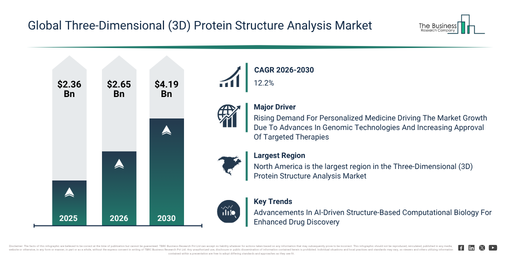
    Three-Dimensional (3D) Protein Structure Analysis Market Growth From $2.65 Billion In 2026 To $4.19 Billion By 2030 At A CAGR Of 12.2%

    The three-dimensional (3D) protein structure analysis market size has experienced rapid growth in recent years. It is anticipated to expand from $2.36 billion in 2025 to $2.65 billion in 2026, achieving a compound annual growth rate (CAGR) of 11.9%. The growth observed in the historic period can be linked to increasing investment in structural genomics, the adoption of x-ray crystallography and nmr spectroscopy, the growth of pharmaceutical r&d, a rising demand for biomarker identification, and the development of cryo-em technology.

    The three-dimensional (3D) protein structure analysis market is poised for significant expansion in the coming years. This sector is projected to reach $4.19 billion in 2030, growing at a compound annual growth rate (CAGR) of 12.2%. This forecasted increase is driven by the uptake of AI-driven structure prediction, the broadening use of cloud-based computational tools, the incorporation of multi-modal imaging techniques, an increasing emphasis on enzyme engineering, and a greater need for personalized medicine applications. Key trends anticipated during this period include AI-powered protein structure prediction, advanced high-resolution imaging methods, the integration of computational and experimental workflows, automated data processing and analysis, and the emergence of cloud-based structural biology platforms.

    Get A Free Sample Report With In-Depth Market Insights:

    https://thebusinessresearchcompany.com/sample_request?id=71406395&type=smp&name=Three-Dimensional%20%283D%29%20Protein%20Structure%20Analysis%20Market%20Report%202026&utm_source=Blogs&utm_medium=Paid&utm_campaign=Oct_PR

    Three-Dimensional (3D) Protein Structure Analysis Market Growth Momentum: What Factors Are Shaping Demand?

    The increasing requirement for individualized healthcare is anticipated to fuel the expansion of the three-dimensional (3D) protein structure analysis market. Personalized medicine involves customizing medical care and treatments to align with a patient’s unique biological and clinical profiles. Its wider implementation is propelled by breakthroughs in genomic technologies, which facilitate the discovery of genetic variations linked to diseases and specific molecular targets. Given that personalized medicine progressively depends on molecular insights for drug discovery and therapeutic development, 3D protein structure analysis is crucial in explaining how genetic differences affect protein shape and how drugs bind to them. As an illustration, in February 2024, data from the US-based non-profit Personalized Medicine Coalition revealed that the US Food and Drug Administration had endorsed 16 novel personalized treatments for rare disease patients, an increase from six in 2022, with this total comprising seven cancer therapies. Consequently, the rising demand for personalized medicine is a primary factor behind the expansion of the three-dimensional (3D) protein structure analysis market.

    Three-Dimensional (3D) Protein Structure Analysis Market Segment Landscape And Growth Outlook

    The three-dimensional (3D) protein structure analysis market covered in this report is segmented –

    1) By Component: Instruments and Imaging Systems, Software and Computational Tools, Reagents and Consumables, Services

    2) By Workflow: Sample Preparation, Data Acquisition, Data Processing, Structure Determination, Visualization and Interpretation

    3) By Technology: X-Ray Crystallography, Cryo-Electron Microscopy (Cryo-EM), Nuclear Magnetic Resonance (NMR) Spectroscopy, Small Angle X-Ray Scattering (SAXS), Computational Modeling and AI-Based Prediction, Mass Spectrometry-Based Methods

    4) By Application: Drug Discovery and Development, Structural Genomics, Biomarker Identification, Protein-Protein Interaction Studies, Enzyme Engineering and Industrial Biotech, Academic Research and Education

    5) By End-Use Industry: Pharmaceutical and Biotechnology Companies, Academic and Research Institutes, Contract Research Organizations, Healthcare and Diagnostics Companies, Agricultural and Industrial Biotech Firms

    Subsegments:

    1) By Instruments and Imaging Systems: X Ray Crystallography Systems, Cryogenic Electron Microscopy Systems, Nuclear Magnetic Resonance Spectroscopy Systems, Mass Spectrometry Systems For Structural Analysis, Protein Crystallization And Sample Preparation Instruments

    2) By Software and Computational Tools: Molecular Modeling And Simulation Software, Protein Structure Visualization Software, Structure Prediction And Folding Analysis Software, Molecular Docking And Interaction Analysis Software, Data Processing And Image Reconstruction Software

    3) By Reagents and Consumables: Protein Crystallization Reagents, Sample Preparation Kits, Labeling And Detection Reagents, Buffers And Stabilization Solutions, Microplates And Laboratory Consumables

    4) By Services: Protein Structure Determination Services, Molecular Modeling And Simulation Services, Structural Data Analysis Services, Instrument Maintenance And Technical Support Services, Contract Research And Custom Analysis Services

    Three-Dimensional (3D) Protein Structure Analysis Market Trends Redefining Industry Growth

    Companies engaged in the three-dimensional (3D) protein structure analysis market are concentrating on developing innovative solutions, including structure-based computational biology platforms, to accelerate drug discovery, achieve accurate protein modeling, and enhance target identification through advanced molecular simulations and AI-driven structural analysis. A structure-based computational biology platform functions as a digital system that utilizes three-dimensional protein structure data, molecular modeling, and simulation algorithms to analyze biomolecular interactions and support rational drug design and target validation. For instance, in March 2024, Basecamp Research, a UK-based AI company, introduced BaseFold, a deep learning model that substantially advances 3D protein structure prediction for large, complex proteins. By augmenting AlphaFold2 with its proprietary BaseGraph dataset sourced from global biodiversity, it achieves up to 6-fold higher accuracy and 3-fold better small molecule docking. This breakthrough serves to accelerate AI-driven drug discovery by enabling the precise modeling of challenging protein structures that were previously underrepresented in public data.

    Three-Dimensional (3D) Protein Structure Analysis Market Top Companies Driving Competitive Growth

    Major companies operating in the three-dimensional (3D) protein structure analysis market are Merck KGaA, Lonza Group AG, Agilent Technologies Inc., Dassault Systèmes, WuXi AppTec, Charles River Laboratories Inc., Bruker Corporation, Waters Corporation, Revvity, JEOL Ltd., Greiner Bio-One International GmbH, Cambridge Isotope Laboratories Inc., Creative Biostructure, Cambridge Crystallographic Data Centre, NanoImaging Services Inc., Molecular Dimensions Inc., DNASTAR Inc., Jena Bioscience GmbH, Arinax Scientific Instrumentation, Bio-Prodict B.V., CD ComputaBio, and Discngine SAS.

    View The Full Three-Dimensional (3D) Protein Structure Analysis Market Report:

    https://thebusinessresearchcompany.com/report/three-dimensional-3d-protein-structure-analysis-market-report?utm_source=Blogs&utm_medium=Paid&utm_campaign=Oct_PR

    Three-Dimensional (3D) Protein Structure Analysis Market Global Footprint: Which Region Leads The Industry?

    North America was the largest region in the three-dimensional (3D) protein structure analysis market in 2025. Asia-Pacific is expected to be the fastest-growing region in the forecast period. The regions covered in the three-dimensional (3D) protein structure analysis market report are Asia-Pacific, South East Asia, Western Europe, Eastern Europe, North America, South America, Middle East, Africa.

    Reach Out To Our Team:

    The Business Research Company: https://www.thebusinessresearchcompany.com/

    Americas: +1 310-496-7795

    Asia: +44 7882 955267 & +91 8897263534

    Europe: +44 7882 955267

    Email us at: marketing@tbrc.info

    Follow us on:

    LinkedIn: https://in.linkedin.com/company/the-business-research-company

    YouTube: https://www.youtube.com/channel/UC24_fI0rV8cR5DxlCpgmyFQ

    Global Market Model: https://www.thebusinessresearchcompany.com/global-market-model

  • Three-Dimensional (3D) Printed Surgical Models Market Set To Expand From $1.61 Billion In 2026: Growth Outlook Through 2030

    Three-Dimensional (3D) Printed Surgical Models Market Set To Expand From $1.61 Billion In 2026: Growth Outlook Through 2030

    Featuring market attractiveness scoring, total addressable market sizing, company benchmarking matrices, interactive Excel dashboards, deeper supply chain intelligence, emerging startup tracking, and granular product-level insights, The Business Research Company’s 2026 market reports are built to deliver research that is both more actionable and more strategically valuable.

    Three-Dimensional (3D) Printed Surgical Models Market Expansion Outlook: What Revenue Opportunities Are Ahead?

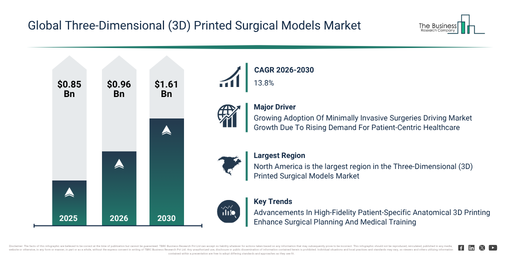
    The three-dimensional (3D) printed surgical models market has experienced substantial growth in recent years. This market is projected to expand from $0.85 billion in 2025 to $0.96 billion in 2026, exhibiting a compound annual growth rate (CAGR) of 13.6%. Historically, this expansion has been driven by a rising demand for surgical planning tools, advancements in 3D printing technologies, the adoption of polymer and biomaterials, the growth of medical training programs, and increasing research in anatomical modeling.

    The three-dimensional (3D) printed surgical models market size is projected to experience swift expansion in the coming years. This market is set to reach $1.61 billion by 2030, exhibiting a compound annual growth rate (CAGR) of 13.8%. Several factors contribute to this anticipated growth, including the integration of AI and machine learning, the creation of multi-material and composite models, the growth of surgical simulation centers, the demand for tailored patient-specific solutions, and investments in real-time surgical planning platforms. Key trends expected during this period involve the development of patient-specific models, advanced surgical simulation techniques, integration with medical imaging software, the availability of customizable organ and tissue models, and optimization of preoperative planning processes.

    Get A Free Sample Report With In-Depth Market Insights:

    https://thebusinessresearchcompany.com/sample_request?id=81635611&type=smp&name=Three-Dimensional%20%283D%29%20Printed%20Surgical%20Models%20Market%20Report%202026&utm_source=Blogs&utm_medium=Paid&utm_campaign=Oct_PR

    Three-Dimensional (3D) Printed Surgical Models Market Expansion Drivers: What’s Shaping Future Growth?

    The expanding acceptance of minimally invasive surgeries is anticipated to fuel the expansion of the three-dimensional (3D)-printed surgical models market moving forward. These surgeries involve techniques that restrict the number and size of necessary incisions, often employing small instruments, cameras, and robotic assistance to lessen postoperative issues and shorten recovery periods. The increased embrace of minimally invasive surgeries stems from a rising demand for procedures that decrease patient recuperation time, lessen discomfort, and diminish the likelihood of complications after surgery. In this context, 3D-printed surgical models furnish surgeons with exact, personalized anatomical models, facilitating comprehensive preoperative preparation and rehearsal. This boosts precision and security during minimally invasive operations, simultaneously reducing complication risks. For example, as per the Annual Report 2023 from Intuitive Surgical Inc., a US-based medical device company, roughly 2,286,000 surgical procedures were performed using da Vinci surgical systems in 2023, an increase from approximately 1,875,000 procedures in 2022. Consequently, the rising uptake of minimally invasive surgeries is propelling the development of the three-dimensional (3D) printed surgical models market.

    Three-Dimensional (3D) Printed Surgical Models Market Breakdown By Product Type And Application

    The three-dimensional (3D) printed surgical models market covered in this report is segmented –

    1) By Model Type: Soft Tissue Models, Bone Models, Organ Models, Vascular Models, Tumor Models

    2) By Material Type: Polymer, Metal, Ceramic, Composite, Biomaterials

    3) By Technology: Fused Deposition Modeling, Stereolithography, Selective Laser Sintering, Digital Light Processing, Binder Jetting

    4) By Application: Preoperative Planning, Surgical Training, Patient-Specific Models, Anatomical Education, Surgical Simulation

    5) By End User: Hospitals And Surgical Centers, Diagnostic Imaging Centers, Academic And Research Institutes, Medical Device Companies, Specialty Clinics, Other End Users

    Subsegments:

    1) By Soft Tissue Models: Skin Layer Models, Muscle Structure Models, Ligament And Tendon Models, Cartilage Structure Models, Multilayer Soft Tissue Models, Facial Soft Tissue Models, Reconstructive Soft Tissue Models

    2) By Bone Models: Cranial Bone Models, Dental And Jaw Bone Models, Spinal Bone Models, Orthopedic Bone Models

    3) By Organ Models: Heart Organ Models, Liver Organ Models, Kidney Organ Models, Lung Organ Models, Brain Organ Models, Gastrointestinal Organ Models

    4) By Vascular Models: Arterial System Models, Venous System Models, Cardiac Vascular Models, Neurovascular Models, Peripheral Vascular Models

    5) By Tumor Models: Brain Tumor Models, Breast Tumor Models, Lung Tumor Models, Liver Tumor Models, Bone Tumor Models, Prostate Tumor Models, Customized Tumor Models

    Three-Dimensional (3D) Printed Surgical Models Market Strategic Trends: What Defines The Next Growth Phase?

    Leading companies within the three-dimensional (3D)-printed surgical models market are concentrating on developing advanced products, specifically high-fidelity patient-specific anatomical 3D printers, to boost surgical planning, elevate medical training, and speed up device development. These sophisticated 3D printing systems generate precise, lifelike duplicates of a patient’s anatomy utilizing materials that simulate real tissue and bone, offering surgeons superior tools for procedure planning, medical staff training, and device evaluation compared to conventional generic models or cadavers. For instance, in June 2024, Stratasys Ltd., a US-based 3D printing technology firm, introduced its J5 Digital Anatomy 3D printer, which is designed to produce realistic patient-specific anatomical models with high fidelity. The J5 Digital Anatomy printer incorporates biomechanically accurate materials that replicate human tissue behavior, features a compact office-compatible design, and ensures high repeatability for accurate modeling. It supports uses such as preoperative surgical planning, medical education, and iterative device prototyping, simultaneously decreasing the need for animal testing and reducing operating room expenses.

    Three-Dimensional (3D) Printed Surgical Models Market Leading Players And Competitive Positioning

    Major companies operating in the three-dimensional (3D) printed surgical models market are Stratasys Ltd, 3D Systems Corporation, Formlabs Inc, Materialise NV, WhiteClouds Inc, 3D Medical Support BV, Axial3D Ltd, Onkos Surgical Inc, GPI Prototype & Manufacturing Services LLC, DF3D Creations Private Limited, 3D Surgical, Lazarus 3D LLC, 3D LifePrints U.K. Ltd., 3Deus Dynamics, CliniModel 3D, MedCAD, Graft3D Health Care Solutions Pvt Ltd, MedScan3D, 3D Incredible, Curewith3D, Customy, MCare360.

    View The Full Three-Dimensional (3D) Printed Surgical Models Market Report:

    https://thebusinessresearchcompany.com/report/three-dimensional-3d-printed-surgical-models-market-report?utm_source=Blogs&utm_medium=Paid&utm_campaign=Oct_PR

    Three-Dimensional (3D) Printed Surgical Models Market Regional Distribution: Which Areas Power Market Growth?

    North America was the largest region in the three-dimensional (3D) printed surgical models market in 2025. Asia-Pacific is expected to be the fastest-growing region in the forecast period. The regions covered in the three-dimensional (3D) printed surgical models market report are Asia-Pacific, South East Asia, Western Europe, Eastern Europe, North America, South America, Middle East, Africa.

    Reach Out To Our Team:

    The Business Research Company: https://www.thebusinessresearchcompany.com/

    Americas: +1 310-496-7795

    Asia: +44 7882 955267 & +91 8897263534

    Europe: +44 7882 955267

    Email us at: marketing@tbrc.info

    Follow us on:

    LinkedIn: https://in.linkedin.com/company/the-business-research-company

    YouTube: https://www.youtube.com/channel/UC24_fI0rV8cR5DxlCpgmyFQ

    Global Market Model: https://www.thebusinessresearchcompany.com/global-market-model