Month: October 2026

  • Internet Of Things (IoT)-Powered Virtual Hospitals And Telemedicine 2.0 Market Analysis: How The Industry Is Evolving Toward A $332.57 Billion Future

    Internet Of Things (IoT)-Powered Virtual Hospitals And Telemedicine 2.0 Market Analysis: How The Industry Is Evolving Toward A $332.57 Billion Future

    Backed by market attractiveness analysis, total addressable market sizing, company benchmarking matrices, interactive Excel dashboards, wider supply chain intelligence, emerging startup coverage, and detailed product-level insights, The Business Research Company’s 2026 market reports are designed to offer research that is more actionable and strategically valuable than ever.

    Internet Of Things (IoT)-Powered Virtual Hospitals And Telemedicine 2.0 Market Growth Analysis: How Will Revenue Trend Over The Forecast Period?

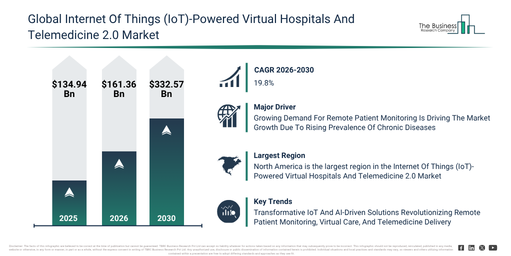
    The market for Internet of Things (IoT)-powered virtual hospitals and telemedicine 2.0 has experienced significant expansion recently. This market is projected to expand from $134.94 billion in 2025 to $161.36 billion in 2026, exhibiting a compound annual growth rate (CAGR) of 19.6%.

    The 0 market has also shown rapid expansion in recent years. Its valuation is anticipated to increase from $4.55 billion in 2025 to $5.36 billion in 2026, achieving a compound annual growth rate (CAGR) of 17.6%.

    Historically, this expansion has been driven by factors such as the increasing need for remote healthcare services, the growing incidence of chronic illnesses, enhanced internet adoption in healthcare, the proliferation of telemedicine platforms, and the desire for economical care solutions.

    The Internet of Things (IoT)-powered virtual hospitals and telemedicine 2.0 market is anticipated to experience substantial growth over the next few years. This sector is projected to expand to $332.57 billion in 2030, showing a compound annual growth rate (CAGR) of 19.8%. The projected increase during the forecast period is largely due to factors like the increasing adoption of AI-driven diagnostics, the expanding use of cloud-based healthcare infrastructure, a growing elderly population, the proliferation of connected medical devices, and a heightened emphasis on personalized and preventive healthcare. Major developments expected in this period include the wider application of hospital-at-home care models, a rise in continuous remote patient monitoring, the integration of virtual intensive care units (tele-icu), the expansion of digital chronic disease management programs, and the increasing deployment of smart wearable health devices.

    Get A Free Sample Report With In-Depth Market Insights:

    https://thebusinessresearchcompany.com/sample_request?id=50755095&type=smp&name=Internet%20Of%20Things%20%28IoT%29-Powered%20Virtual%20Hospitals%20And%20Telemedicine%202.0%20Market%20Report%202026&utm_source=Blogs&utm_medium=Paid&utm_campaign=Oct_PR

    Internet Of Things (IoT)-Powered Virtual Hospitals And Telemedicine 2.0 Market Industry Drivers: What’s Behind The Revenue Growth?

    The increasing need for remote patient monitoring is anticipated to drive the expansion of the internet of things (IoT)-powered virtual hospitals and telemedicine 2.0 market in the future. Remote patient monitoring involves utilizing linked digital tools to gather and send individuals’ physiological health data from their homes or other non-clinical locations to medical professionals, enabling constant oversight and prompt treatment. This demand is escalating because of the growing occurrence of chronic illnesses, where individuals with long-term ailments necessitate ongoing supervision and immediate medical care, something infrequent physical appointments cannot adequately provide. internet of things (IoT)-powered virtual hospitals and Telemedicine 2.0 improve remote patient monitoring by linking smart devices, real-time data systems, and virtual care platforms, facilitating uninterrupted patient observation and prompt medical interventions beyond conventional hospital environments. As an illustration, in August 2025, the Office of Inspector General (OIG), a US-based independent organization, reported a substantial increase in Medicare beneficiaries utilizing remote patient monitoring, nearly reaching 1 million in 2024, which signifies a 27% rise from 2023. Consequently, the expanding need for remote patient monitoring is indeed propelling the growth of the internet of things (IoT)-powered virtual hospitals and telemedicine 2.0 market.

    Internet Of Things (IoT)-Powered Virtual Hospitals And Telemedicine 2.0 Market Segmentation And Category Overview

    The internet of things (IoT)-powered virtual hospitals and telemedicine 2.0 market covered in this report is segmented –

    1) By Component: Hardware, Software, Services

    2) By Technology: Internet Of Things (IoT) Devices And Sensors, Telemedicine Platform

    3) By Deployment: Cloud-Based, On-Premises, Hybrid

    4) By Application: Chronic Disease Management, Emergency Care And Triage, Mental Health Services, Post Surgery Monitoring, Elderly Care And Assisted Living

    5) By End User: Healthcare Provider Organizations, Public Health And Government Agencies, Health Insurance Payers, Home Care And Individual Patients

    Subsegments:

    1) By Hardware: Remote Patient Monitoring Devices, Wearable Health Monitoring Devices, Medical Sensors And Biosensors, Connected Diagnostic Devices, Home Care Medical Equipment, Smart Medical Imaging Devices

    2) By Software: Virtual Care Platform Software, Clinical Decision Support Software, Remote Monitoring And Data Analytics Software, Electronic Health Record Integration Software, Telemedicine Management Software, Artificial Intelligence Enabled Care Coordination Software

    3) By Services: Virtual Clinical Consultation Services, Remote Patient Monitoring Services, Tele Intensive Care Unit Services, Virtual Ward And Hospital At Home Services, Tele Pharmacy And Medication Management Services, Technical Support And System Integration Services

    #Internet Of Things (IoT)-Powered Virtual Hospitals And Telemedicine 2.0 Market Growth Trends: What’s Shaping The Future Outlook?

    Major companies operating in the internet of things (IoT)-powered virtual hospitals and telemedicine 2.0 market are focusing on developing innovative solutions, such as artificial intelligence (AI)-driven remote patient management systems, to enable continuous patient monitoring, improve care outcomes, and reduce hospital readmissions. These AI-driven remote patient management systems are platforms that utilize AI algorithms to continuously collect, analyze, and interpret patient health data from IoT devices and wearables, assisting healthcare providers in detecting early warning signs, personalizing treatment plans, and proactively managing patient care, all without requiring in-person visits. For instance, in February 2025, Validic Inc., a US-based healthcare technology company, launched the Validic Inform Health IoT platform and Remote Patient Management solutions powered by generative AI, available through AWS Marketplace. The platform connects hundreds of personal health data sources, streaming real-world data into client applications for comprehensive patient engagement, while the Remote Patient Management solutions leverage AI to generate actionable insights, detect trends, and streamline clinician workflows. Together, these solutions integrate logistics and patient service desk support for device provisioning and onboarding, enabling healthcare providers to deliver continuous, personalized care across multiple clinical programs without relying on fragmented point solutions.

    Internet Of Things (IoT)-Powered Virtual Hospitals And Telemedicine 2.0 Market Company Landscape And Competitive Strategy

    Major companies operating in the internet of things (IoT)-powered virtual hospitals and telemedicine 2.0 market are F. Hoffmann-La Roche AG, Medtronic plc, Koninklijke Philips N.V., GE HealthCare Technologies Inc., Omron Healthcare Co. Ltd., Teladoc Health Inc., Advantech Co. Ltd., Oura Health Oy, Digi International Inc., TMA Solutions, American Well Corporation, Biofourmis Inc., HealthSnap Inc., Viz.ai Inc., AMC Health Inc., Accuhealth Technologies LLC, Mend VIP Inc., Heidi Health Pty Ltd, GlobalMedia Group LLC, CareSimple Inc., and NuraLogix Corporation.

    View The Full Internet Of Things (IoT)-Powered Virtual Hospitals And Telemedicine 2.0 Market Report:

    https://thebusinessresearchcompany.com/report/internet-of-things-iot-powered-virtual-hospitals-and-telemedicine-20-market-report?utm_source=Blogs&utm_medium=Paid&utm_campaign=Oct_PR

    Internet Of Things (IoT)-Powered Virtual Hospitals And Telemedicine 2.0 Market Largest Region: Which Geography Holds The Biggest Share?

    North America was the largest region in the internet of things (IoT)-powered virtual hospitals and telemedicine 2.0 market in 2025. Asia-Pacific is expected to be the fastest-growing region in the forecast period. The regions covered in the internet of things (IoT)-powered virtual hospitals and telemedicine 2.0 market report are Asia-Pacific, South East Asia, Western Europe, Eastern Europe, North America, South America, Middle East, Africa.

    Reach Out To Our Team:

    The Business Research Company: https://www.thebusinessresearchcompany.com/

    Americas: +1 310-496-7795

    Asia: +44 7882 955267 & +91 8897263534

    Europe: +44 7882 955267

    Email us at: marketing@tbrc.info

    Follow us on:

    LinkedIn: https://in.linkedin.com/company/the-business-research-company

    YouTube: https://www.youtube.com/channel/UC24_fI0rV8cR5DxlCpgmyFQ

    Global Market Model: https://www.thebusinessresearchcompany.com/global-market-model
  • Internet Of Things (IoT) And Virtual Hospital Market Outlook Through 2030: Understanding The Growth Opportunity

    Internet Of Things (IoT) And Virtual Hospital Market Outlook Through 2030: Understanding The Growth Opportunity

    Featuring market attractiveness scoring, total addressable market sizing, company benchmarking matrices, interactive Excel dashboards, deeper supply chain intelligence, emerging startup tracking, and granular product-level insights, The Business Research Company’s 2026 market reports are built to deliver research that is both more actionable and more strategically valuable.

    Internet Of Things (IoT) And Virtual Hospital Market Forecast: What Value Will The Market Reach By 2030?

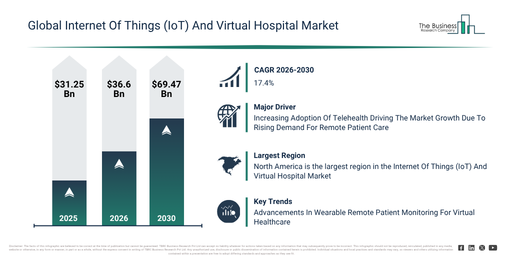
    The internet of things (IoT) and virtual hospital market size has experienced rapid expansion in recent years. This market is expected to grow from $31.25 billion in 2025 to $36.6 billion in 2026, at a compound annual growth rate (CAGR) of 17.1%. The growth observed in the historical period is attributable to several factors, including the rising prevalence of chronic diseases, increasing healthcare digitization initiatives, growing internet penetration, the expansion of telemedicine services, and an increasing demand for cost-effective healthcare delivery.

    The internet of things (IoT) and virtual hospital market is projected to experience rapid growth in the next few years. It is anticipated to reach $69.47 billion in 2030, demonstrating a compound annual growth rate (CAGR) of 17.4%. This expansion during the forecast period can be attributed to increased investment in connected healthcare infrastructure, the rising adoption of AI-driven clinical decision support, a growing demand for home-based healthcare services, expanding government support for digital health programs, and the increasing integration of smart medical sensors and wearable devices. Significant trends in the forecast period include the broader adoption of remote patient monitoring solutions, the expansion of virtual consultation platforms, the growing deployment of wearable health devices, the rising integration of telemedicine in chronic disease management, and an increasing demand for cloud-based health applications.

    Get A Free Sample Report With In-Depth Market Insights:

    https://thebusinessresearchcompany.com/sample_request?id=25469903&type=smp&name=Internet%20Of%20Things%20%28IoT%29%20And%20Virtual%20Hospital%20Market%20Report%202026&utm_source=Blogs&utm_medium=Paid&utm_campaign=Oct_PR

    Internet Of Things (IoT) And Virtual Hospital Market Growth Factors: What’s Supporting Expansion?

    The growing adoption of telehealth is projected to drive the expansion of the Internet of Things (IoT) and the virtual hospital market moving forward. Telehealth refers to utilizing digital communication technologies to offer healthcare services, consultations, and remote patient monitoring without requiring physical visits. The increasing embrace of telehealth stems from improved access to high-speed internet, allowing patients to conveniently connect with healthcare providers, receive timely care, and overcome various barriers. Internet of Things (IoT) and virtual hospital technologies enhance telehealth by enabling real-time patient supervision, seamless data exchange, and distant medical consultations, which collectively improve care efficiency, personalize treatment, and broaden access to healthcare services regardless of location. For example, in April 2023, FAIR Health Inc., a US-based non-profit organization, reported a national telehealth usage increase of 7.3%, rising from 5.5% of medical claim lines in December 2022 to 5.9% in January 2023. Thus, the increasing adoption of telehealth is a key driver for the growth of the Internet of Things (IoT) and the virtual hospital market.

    Internet Of Things (IoT) And Virtual Hospital Market Segment Outlook: Which Categories Are Growing Fastest?

    The internet of things (IoT) and virtual hospital market covered in this report is segmented –

    1) By Component: Hardware, Software, Services

    2) By Technology: Internet Of Things Medical Devices, Cloud Computing Platforms, Artificial Intelligence And Analytics, Wireless Communication Technologies

    3) By Deployment Mode: Cloud Based, On Premises, Hybrid

    4) By Application: Remote Patient Monitoring, Telemedicine, Store And Forward Telemedicine, Mobile Health, Other Applications

    5) By End User: Hospitals And Surgical Centers, Clinical Research Organizations, Government And Defense Organizations, Research And Diagnostics Laboratories

    Subsegments:

    1) By Hardware: Patient Monitoring Devices, Wearable Health Devices, Smart Medical Sensors, Connected Imaging Devices, Home Diagnostic Equipment, Telehealth Kiosks

    2) By Software: Remote Patient Monitoring Platforms, Virtual Care Management Systems, Clinical Workflow Software, Health Data Analytics Platforms, Device Integration Software, Cloud Based Health Applications

    3) By Services: Remote Clinical Monitoring Services, Virtual Consultation Services, System Integration Services, Technical Support Services, Data Management Services, Training And Education Services

    Internet Of Things (IoT) And Virtual Hospital Market Industry Trends: What’s Reshaping Demand?

    Leading firms in the Internet of Things (IoT) and virtual hospital market are concentrating on creating novel solutions, specifically wearable remote vital signs monitoring systems, to facilitate ongoing, real-time patient oversight beyond conventional hospital environments. These wearable systems are small, sensor-integrated devices placed on the body, constantly tracking health indicators like heart rate, blood oxygen, temperature, and respiratory rate, which assists clinicians in real-time patient monitoring, early detection of health problems, and remote care delivery without the need for hospital attendance. As an illustration, in May 2024, Sempulse Corporation, a US-based manufacturer of medical devices, introduced the Sempulse Halo Vital Signs Monitoring System, a wearable remote vital sign monitoring solution that obtained U.S. Food and Drug Administration (FDA) 510(k) clearance. The Halo system incorporates a compact, non-invasive sensor, worn either behind the ear or on the neck, which continuously gathers various vital signs and relays them through Bluetooth to the LiveCharts mobile application. This system connects with the Command Cloud platform, offering centralized remote oversight, automated notifications, and support for clinical decisions, thereby allowing healthcare professionals to effectively supervise patients in hospitals, at home, or in field environments. The widespread use of these wearable technologies is fueling the expansion of virtual hospitals, enhancing patient results, and lowering healthcare expenditures.

    Internet Of Things (IoT) And Virtual Hospital Market Key Players Shaping Industry Direction

    Major companies operating in the internet of things (IoT) and virtual hospital market are Amazon.com Inc., Microsoft Corporation, F. Hoffmann-La Roche AG, Oracle Corporation, Medtronic plc, Siemens Healthineers AG, Koninklijke Philips N.V., GE HealthCare Technologies Inc., Cadence Solutions Inc., Teladoc Health Inc., Masimo Corporation, iRhythm Technologies Inc., American Well Corporation, Withings SA, Ada Health GmbH, Doxy.me Inc., Tyto Care Ltd., Cloudbreak Health LLC, VSee Health Inc., BioIntelliSense Inc., and Huma Therapeutics Limited.

    View The Full Internet Of Things (IoT) And Virtual Hospital Market Report:

    https://thebusinessresearchcompany.com/report/internet-of-things-iot-and-virtual-hospital-market-report?utm_source=Blogs&utm_medium=Paid&utm_campaign=Oct_PR

    Internet Of Things (IoT) And Virtual Hospital Market Regional Analysis: Which Geography Leads On Revenue?

    North America was the largest region in the internet of things (IoT) and virtual hospital market in 2025. Asia-Pacific is expected to be the fastest-growing region in the forecast period. The regions covered in the internet of things (IoT) and virtual hospital market report are Asia-Pacific, South East Asia, Western Europe, Eastern Europe, North America, South America, Middle East, Africa.

    Reach Out To Our Team:

    The Business Research Company: https://www.thebusinessresearchcompany.com/

    Americas: +1 310-496-7795

    Asia: +44 7882 955267 & +91 8897263534

    Europe: +44 7882 955267

    Email us at: marketing@tbrc.info

    Follow us on:

    LinkedIn: https://in.linkedin.com/company/the-business-research-company

    YouTube: https://www.youtube.com/channel/UC24_fI0rV8cR5DxlCpgmyFQ

    Global Market Model: https://www.thebusinessresearchcompany.com/global-market-model
  • Insulin Resistance Biomarker Panels Market Growth Outlook: Why Analysts Expect Continued Expansion

    Insulin Resistance Biomarker Panels Market Growth Outlook: Why Analysts Expect Continued Expansion

    Backed by market attractiveness analysis, total addressable market sizing, company benchmarking matrices, interactive Excel dashboards, wider supply chain intelligence, emerging startup coverage, and detailed product-level insights, The Business Research Company’s 2026 market reports are designed to offer research that is more actionable and strategically valuable than ever.

    Insulin Resistance Biomarker Panels Market Size, Value And Growth Trajectory Through 2030

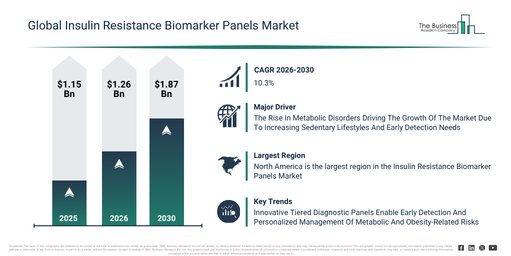
    The insulin resistance biomarker panels market has experienced significant growth in recent years. It is forecast to increase from $1.15 billion in 2025 to $1.26 billion in 2026, achieving a compound annual growth rate (CAGR) of 10.1%. The expansion observed in prior periods is attributable to factors such as the rising prevalence of type 2 diabetes, increasing obesity rates, a growing awareness of metabolic syndrome, the expansion of clinical diagnostic laboratories, and an increasing focus on early disease detection.

    The market for insulin resistance biomarker panels is projected to experience substantial expansion in the coming years. This market is anticipated to reach $1.87 billion by 2030, exhibiting a compound annual growth rate (CAGR) of 10.3%. Factors contributing to this growth during the forecast period include the increasing demand for tailored treatment approaches, the greater incorporation of biomarker panels into preventive healthcare, the surging uptake of sophisticated multiplex assays, the expansion of health screening initiatives in developing markets, and enhanced investment in metabolic research and innovation. Key trends expected over the forecast horizon encompass the wider acceptance of multi-biomarker panels, a heightened need for preventive metabolic health screening, the expanding utilization of point-of-care testing tools, the broadening of cardiometabolic risk evaluation programs, and an intensified clinical emphasis on identifying diabetes risk at an early stage.

    Get A Free Sample Report With In-Depth Market Insights:

    https://thebusinessresearchcompany.com/sample_request?id=39120998&type=smp&name=Insulin%20Resistance%20Biomarker%20Panels%20Market%20Report%202026&utm_source=Blogs&utm_medium=Paid&utm_campaign=Oct_PR

    Insulin Resistance Biomarker Panels Market Growth Drivers: What’s Behind The Acceleration?

    The expansion of the insulin resistance biomarker panels market is projected to be driven by the increasing occurrence of metabolic disorders. Metabolic disorders are medical conditions where the body’s natural chemical processes are disturbed, leading to metabolic imbalances such as diabetes, obesity, and thyroid disorders. The escalating prevalence of these disorders is mainly attributed to progressively sedentary lifestyles, which diminish physical activity and disrupt the body’s regular metabolism. Insulin resistance biomarker panels aid in managing metabolic disorders by enabling early detection and precise monitoring of insulin resistance, allowing for timely intervention to prevent or handle conditions like type 2 diabetes and complications linked to obesity. For instance, in 2023, according to the National Health Service, a UK-based government department, the number of individuals in England with non-diabetic hyperglycemia, or pre-diabetes, registered with a GP increased from 3,065,825 in 2022 to 3,615,330 in 2023. Thus, the growing prevalence of metabolic disorders is propelling the growth of the insulin resistance biomarker panels market.

    Insulin Resistance Biomarker Panels Market Segments: Where Is Growth Concentrated?

    The insulin resistance biomarker panels market covered in this report is segmented –

    1) By Product Type: Single Biomarker Panels, Multi-Biomarker Panels

    2) By Sample Type: Blood, Plasma, Serum, Other Sample Types

    3) By Technology or Platform: Immunoassays, Clinical Chemistry Analyzers, Mass Spectrometry, Multiplex Assays, Point of Care Devices

    4) By Application: Diabetes Risk Assessment, Metabolic Syndrome Diagnosis, Obesity Related Metabolic Analysis, Clinical Disease Monitoring, Preventive Health Screening

    5) By End-User: Hospitals and Clinics, Diagnostic Laboratories, Research Institutes

    Subsegments:

    1) By Single Biomarker Panels: Fasting Insulin Biomarker Panels, Fasting Glucose Biomarker Panels, C Peptide Biomarker Panels, Adiponectin Biomarker Panels, Inflammatory Marker Biomarker Panels

    2) By Multi-Biomarker Panels: Glucose and Insulin Combination Panels, Hormonal and Adipokine Biomarker Panels, Inflammatory and Metabolic Biomarker Panels, Comprehensive Metabolic Biomarker Panels, Cardiometabolic Risk Biomarker Panels

    Insulin Resistance Biomarker Panels Market Trends: What’s Defining The Industry’s Next Phase?

    Major companies operating within the insulin resistance biomarker panels market are concentrating on developing advanced testing solutions, such as tiered metabolic health panels, to address the increasing prevalence of obesity, support evolving therapies, and deliver comprehensive clinical understanding. Tiered metabolic health panels represent a structured collection of diagnostic blood test packages, organized into distinct levels or tiers based on their depth, complexity, and the number of biomarkers analyzed for assessing metabolic health. For example, in December 2025, Agilus Diagnostics Ltd., an India-based diagnostic service provider, introduced the Complete Care Vital Shape test suite (Lite, Core, and Ultra). This suite comprises a structured portfolio of up to 86 parameters, engineered for more intelligent weight management and metabolic health monitoring, incorporating tiered panels that feature advanced markers such as leptin, adiponectin, and HOMA-IR. The suite allows for the early detection of insulin resistance and comprehensive metabolic risk assessment, which is particularly relevant amidst the growing global utilization of GLP-1–based therapies for obesity, providing clinicians with deeper insights for preventive and personalized care without necessitating multiple test orders.

    Insulin Resistance Biomarker Panels Market Leading Companies And Competitive Benchmarking

    Major companies operating in the insulin resistance biomarker panels market are Laboratory Corporation of America Holdings, Quest Diagnostics Incorporated, Eurofins Scientific SE, Cleveland Clinic Laboratories, Sonic Healthcare Limited, SYNLAB International GmbH, Unilabs AB, BioReference Health LLC, Dr. Lal PathLabs Limited, Life Extension Clinical Laboratory Inc., Metropolis Healthcare Limited, Everly Health Inc., Boston Heart Diagnostics Corporation, Genova Diagnostics Inc., Metabolon Inc., Vibrant America LLC, ZRT Laboratory LLC, Superpower Health Inc, DiagnosTechs Inc., Ulta Lab Tests LLC.

    View The Full Insulin Resistance Biomarker Panels Market Report:

    https://thebusinessresearchcompany.com/report/insulin-resistance-biomarker-panels-market-report?utm_source=Blogs&utm_medium=Paid&utm_campaign=Oct_PR

    Insulin Resistance Biomarker Panels Market Top Region By Revenue And Market Share

    North America was the largest region in the insulin resistance biomarker panels market in 2025. Asia-Pacific is expected to be the fastest-growing region in the forecast period. The regions covered in the insulin resistance biomarker panels market report are Asia-Pacific, South East Asia, Western Europe, Eastern Europe, North America, South America, Middle East, Africa.

    Reach Out To Our Team:

    The Business Research Company: https://www.thebusinessresearchcompany.com/

    Americas: +1 310-496-7795

    Asia: +44 7882 955267 & +91 8897263534

    Europe: +44 7882 955267

    Email us at: marketing@tbrc.info

    Follow us on:

    LinkedIn: https://in.linkedin.com/company/the-business-research-company

    YouTube: https://www.youtube.com/channel/UC24_fI0rV8cR5DxlCpgmyFQ

    Global Market Model: https://www.thebusinessresearchcompany.com/global-market-model
  • Incretin Mimetics Market Forecast To Reach $30.57 Billion By 2030: Key Trends Explained

    Incretin Mimetics Market Forecast To Reach $30.57 Billion By 2030: Key Trends Explained

    Backed by market attractiveness analysis, total addressable market sizing, company benchmarking matrices, interactive Excel dashboards, wider supply chain intelligence, emerging startup coverage, and detailed product-level insights, The Business Research Company’s 2026 market reports are designed to offer research that is more actionable and strategically valuable than ever.

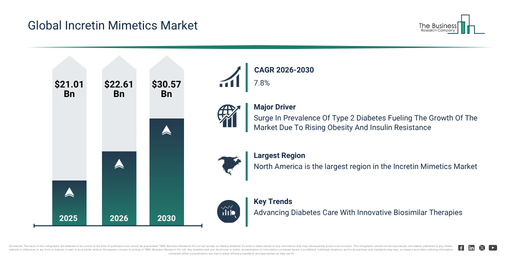
    Incretin Mimetics Market Forecast: Value Set To Climb From $22.61 Billion To $30.57 Billion

    The incretin mimetics market has demonstrated robust growth in recent years. It is projected to expand from $21.01 billion in 2025 to $22.61 billion in 2026, at a compound annual growth rate (CAGR) of 7.6%. This historical growth can be attributed to several factors including the increasing prevalence of type 2 diabetes, rising global obesity rates, advancements in GLP-1 receptor agonist development, growing awareness of metabolic syndrome management, and the expansion of reimbursement coverage for diabetes therapies.

    The incretin mimetics market is projected for substantial expansion in the coming years. It is anticipated to reach $30.57 billion in 2030, demonstrating a compound annual growth rate (CAGR) of 7.8%. This projected growth is primarily driven by factors such as the increasing demand for dual and triple agonist therapies, the growing acceptance of weight management pharmacotherapy, a heightened focus on cardiovascular risk reduction within diabetes care, the expansion of biologic drug manufacturing capacity, and a rising patient preference for convenient dosing regimens. Key trends anticipated during this period encompass the increasing uptake of once-weekly GLP-1 injectable treatments, a rising demand for oral GLP-1 formulations, the expanding application of incretin mimetics in obesity management, the incorporation of cardiovascular outcome benefits into treatment protocols, and an increase in combination therapy approaches for metabolic disorders.

    Get A Free Sample Report With In-Depth Market Insights:

    https://thebusinessresearchcompany.com/sample_request?id=63573991&type=smp&name=Incretin%20Mimetics%20Market%20Report%202026&utm_source=Blogs&utm_medium=Paid&utm_campaign=Oct_PR

    Incretin Mimetics Market Growth Backed By Core Demand Fundamentals

    The growing occurrence of Type 2 diabetes is anticipated to boost the expansion of the incretin mimetics market over the next few years. This chronic ailment involves the body’s resistance to insulin or inadequate insulin production, leading to high blood glucose levels. The increasing prevalence of Type 2 diabetes is primarily fueled by a higher incidence linked to rising obesity rates, given that excessive body weight considerably increases insulin resistance and the likelihood of developing the condition. Incretin mimetics are crucial for managing Type 2 diabetes, especially for individuals who are overweight or obese, as they improve glucose-dependent insulin secretion, inhibit glucagon release, and encourage weight reduction. For instance, as per Diabetes Australia, an Australia-based non-for-profit organization, approximately 1.5 million Australians (5.6% of the population) were diagnosed with diabetes in 2023, with Type 2 diabetes constituting 86.7% of all cases. Consequently, the expanding occurrence of Type 2 diabetes is propelling the growth of the incretin mimetics market.

    Incretin Mimetics Market Segmentation: How Does The Market Break Down By Category?

    The incretin mimetics market covered in this report is segmented –

    1) By Drug Type: GLP-1 Agonists, DPP-4 Inhibitors

    2) By Route of Administration: Injectable Formulations, Oral Formulations

    3) By Distribution Channel: Hospital Pharmacies, Retail Pharmacies, Online Pharmacies

    4) By Application: Type 2 Diabetes, Obesity, Cardiovascular Diseases

    5) By End User: Hospitals, Specialty Clinics (Diabetology And Endocrinology Clinics), Homecare Settings

    Subsegments:

    1) By GLP-1 Agonists: Exenatide, Liraglutide, Dulaglutide, Semaglutide, Lixisenatide

    2) By DPP-4 Inhibitors: Sitagliptin, Saxagliptin, Linagliptin, Alogliptin, Vildagliptin

    Incretin Mimetics Market Growth Trends Reshaping The Competitive Landscape

    Leading companies in the incretin mimetics market are increasingly concentrating on developing biosimilar and innovative therapeutic approaches to enhance glycemic regulation and improve outcomes for individuals with Type 2 diabetes. These advanced therapeutic solutions are defined as cutting-edge or novel treatments crafted to boost efficacy, safety, affordability, or patient compliance compared to existing conventional therapies. For example, in January 2024, Glenmark Pharmaceuticals Limited, an India-based pharmaceutical firm, introduced a biosimilar variant of the widely used anti-diabetic medication liraglutide in India. This biosimilar GLP-1 receptor agonist intends to offer a more accessible and economical treatment choice, thereby expanding patient access and promoting better treatment adherence. The biosimilar is engineered to provide equivalent efficacy, safety, and quality as its reference product. These kinds of innovations support consistent glycemic control across various patient groups and help reduce disease-related complications, ultimately improving the comprehensive management of Type 2 diabetes.

    Incretin Mimetics Market Top Companies Driving Competitive Growth

    Major companies operating in the incretin mimetics market are Roche Holding AG, Merck Co Inc, Pfizer Inc., Sanofi S.A., AstraZeneca PLC, Eli Lilly Company, Novo Nordisk A/S, Takeda Pharmaceutical Company Limited, Amgen Inc., Boehringer Ingelheim International GmbH, Sun Pharmaceutical Industries Limited, Dr Reddys Laboratories Limited, Cipla Limited, Hikma Pharmaceuticals PLC, Lupin Limited, Biocon Limited, Torrent Pharmaceuticals Limited, Hanmi Pharmaceutical Co Ltd, Innovent Biologics Inc., Zealand Pharma A/S, Gan Lee Pharmaceuticals Co Ltd, Jiangsu Hansoh Pharmaceutical Group Company Limited.

    View The Full Incretin Mimetics Market Report:

    https://thebusinessresearchcompany.com/report/incretin-mimetics-market-report?utm_source=Blogs&utm_medium=Paid&utm_campaign=Oct_PR

    Incretin Mimetics Market Global Footprint: Which Region Leads The Market?

    North America was the largest region in the incretin mimetics market in 2025. Asia-Pacific is expected to be the fastest-growing region in the forecast period. The regions covered in the incretin mimetics market report are Asia-Pacific, South East Asia, Western Europe, Eastern Europe, North America, South America, Middle East, Africa.

    Reach Out To Our Team:

    The Business Research Company: https://www.thebusinessresearchcompany.com/

    Americas: +1 310-496-7795

    Asia: +44 7882 955267 & +91 8897263534

    Europe: +44 7882 955267

    Email us at: marketing@tbrc.info

    Follow us on:

    LinkedIn: https://in.linkedin.com/company/the-business-research-company

    YouTube: https://www.youtube.com/channel/UC24_fI0rV8cR5DxlCpgmyFQ

    Global Market Model: https://www.thebusinessresearchcompany.com/global-market-model
  • In Vitro Diagnostic (IVD) Labware Market Growth To $6.06 Billion By 2030: What’s Driving The Expansion?

    In Vitro Diagnostic (IVD) Labware Market Growth To $6.06 Billion By 2030: What’s Driving The Expansion?

    Built to provide research that’s more actionable and strategically valuable, The Business Research Company’s 2026 market reports include market attractiveness analysis, total addressable market sizing, company benchmarking matrices, interactive Excel dashboards, broader supply chain intelligence, emerging startup tracking, and in-depth product insights.

    In Vitro Diagnostic (IVD) Labware Market Value Growth And Long-Term Outlook

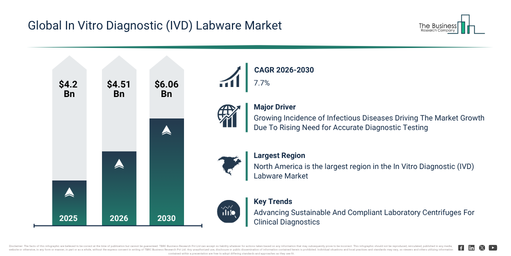
    The in vitro diagnostic (IVD) labware market has shown robust expansion in recent years. Projections indicate a rise from $4.2 billion in 2025 to $4.51 billion in 2026, achieving a compound annual growth rate (CAGR) of 7.4%. This market’s historical growth can be attributed to several factors, including the increasing prevalence of infectious diseases, the expansion of clinical laboratory networks, growth in hospital diagnostic services, a rising demand for routine blood and urine testing, and the adoption of standardized laboratory protocols.

    The in vitro diagnostic (IVD) labware market is anticipated to experience substantial expansion over the coming years. It is projected to reach $6.06 billion by 2030, exhibiting a compound annual growth rate (CAGR) of 7.7%. This expansion during the forecast period can be attributed to increased funding for molecular and genetic testing, growing automation within diagnostic laboratories, a heightened need for point-of-care testing solutions, the development of healthcare infrastructure in developing economies, and an emphasis on environmentally friendly laboratory consumables. Key developments expected during this period include the wider adoption of disposable labware, an escalating requirement for precise sample handling instruments, greater integration of labware compatible with automated systems, an increase in molecular diagnostics testing, and an enhanced focus on preventing contamination and upholding biosafety protocols.

    Get A Free Sample Report With In-Depth Market Insights:

    https://thebusinessresearchcompany.com/sample_request?id=31911203&type=smp&name=In%20Vitro%20Diagnostic%20%28IVD%29%20Labware%20Market%20Report%202026&utm_source=Blogs&utm_medium=Paid&utm_campaign=Oct_PR

    In Vitro Diagnostic (IVD) Labware Market Opportunity Drivers: What’s Unlocking New Revenue Potential?

    An anticipated expansion in the in vitro diagnostics (IVD) labware market is linked to the increasing occurrence of infectious diseases. These diseases are health conditions stemming from detrimental microorganisms like bacteria, viruses, fungi, or parasites, which can spread between individuals or via environmental contact. The uptick in infectious disease cases is attributed to heightened urbanization and denser populations, leading to more frequent human interaction and a faster spread of disease-causing agents. IVD labware plays a crucial role in the identification, surveillance, and control of infectious diseases by facilitating precise and prompt analysis of blood, tissue, and various biological specimens. This capability assists medical practitioners in recognizing pathogens, monitoring disease outbreaks, and applying suitable treatment and preventive strategies. For example, data from March 2024, released by the Centers for Disease Control and Prevention, a US government body, indicated an increase in tuberculosis cases from 8,320 in 2022 to 9,615 in 2023, marking an increment of 1,295 cases. Consequently, the escalating frequency of infectious diseases is propelling the expansion of the in vitro diagnostics (IVD) labware market.

    In Vitro Diagnostic (IVD) Labware Market Segment Analysis Spotlighting Growth Areas

    The in vitro diagnostic (IVD) labware market covered in this report is segmented –

    1) By Product Type: Plastic Labware, Glass Labware, Other Product Types

    2) By Usage Type: Single-Use Labware, Reusable Labware

    3) By Application: Clinical Chemistry, Immunoassays, Molecular Diagnostics, Hematology, Microbiology, Other Applications

    4) By End User: Clinical Laboratories, Hospitals, Academic Institutes, Other End Users

    Subsegments:

    1) By Plastic Labware: Test Tubes, Pipette Tips, Multiwell Plates, Petri Dishes, Cuvettes, Specimen Containers

    2) By Glass Labware: Glass Test Tubes, Beakers, Flasks, Slides And Cover Slips, Measuring Cylinders

    3) By Other Product Types: Ceramic Labware, Metal Labware, Coated Vessels, Specialty Assay Trays

    In Vitro Diagnostic (IVD) Labware Market Innovation Trends Shaping Future Development

    Leading firms within the in vitro diagnostics (IVD) labware market are prioritizing the creation of novel offerings, including IVD-compliant refrigerated centrifuges, with the aim of boosting diagnostic precision and adhering to regulatory standards. These centrifuges are specialized lab instruments designed to separate biological materials, operating under stringent regulatory requirements and featuring accurate temperature regulation, which contributes to achieving precise test outcomes, consistent results, and secure processing of clinical samples. As an illustration, OHAUS Corporation, a US-based producer of laboratory equipment, introduced the frontier multi-pro, multi, and micro IVD series compliant centrifuges in December 2025. This advanced series of IVD-compliant refrigerated centrifuges was specifically developed to fulfill the exacting requirements of clinical diagnostics. The compliant centrifuges in this range incorporate natural R290 refrigerant, possessing a warming potential of just 3, which is more than 700 times lower than typical synthetic coolants, and they simultaneously uphold precise temperature control essential for delicate biological samples. The frontier IVD Series finds diverse utility in settings such as hospitals, diagnostic centers, and research laboratories, guaranteeing robust reproducibility, enhanced safety, and operational efficiency for in vitro testing procedures.

    In Vitro Diagnostic (IVD) Labware Market Competitive Overview And Top Companies

    Major companies operating in the in vitro diagnostics (IVD) labware market are market are Thermo Fisher Scientific Inc., Abbott Laboratories, Corning Incorporated, Avantor Inc., bioMérieux SA, Sartorius AG, Sysmex Corporation, Greiner AG, QIAGEN N.V., Eppendorf SE, Sarstedt AG & Co. KG, Azenta Inc., Biolyst Scientific Inc., Zhejiang Bioland Biotechnology Co. Ltd., WuXi NEST Biotechnology Co. Ltd., Tarsons Products Limited, Abdos Group, Heathrow Scientific LLC, Labcon North America Inc., Kangjian Medical Apparatus Co. Ltd., Accumax Lab Devices Pvt. Ltd.

    View The Full In Vitro Diagnostic (IVD) Labware Market Report:

    https://thebusinessresearchcompany.com/report/in-vitro-diagnostic-ivd-labware-market-report?utm_source=Blogs&utm_medium=Paid&utm_campaign=Oct_PR

    In Vitro Diagnostic (IVD) Labware Market Top Region: Where Does Most Revenue Come From?

    North America was the largest region in the in vitro diagnostics (IVD) labware market in 2025. Asia-Pacific is expected to be the fastest-growing region in the forecast period. The regions covered in the in vitro diagnostics (IVD) labware market report are Asia-Pacific, South East Asia, Western Europe, Eastern Europe, North America, South America, Middle East, Africa.

    Reach Out To Our Team:

    The Business Research Company: https://www.thebusinessresearchcompany.com/

    Americas: +1 310-496-7795

    Asia: +44 7882 955267 & +91 8897263534

    Europe: +44 7882 955267

    Email us at: marketing@tbrc.info

    Follow us on:

    LinkedIn: https://in.linkedin.com/company/the-business-research-company

    YouTube: https://www.youtube.com/channel/UC24_fI0rV8cR5DxlCpgmyFQ

    Global Market Model: https://www.thebusinessresearchcompany.com/global-market-model
  • Implantable Pressure Sensor Market Trends Reshaping Industry Growth Through 2030

    Implantable Pressure Sensor Market Trends Reshaping Industry Growth Through 2030

    Backed by market attractiveness analysis, total addressable market sizing, company benchmarking matrices, interactive Excel dashboards, wider supply chain intelligence, emerging startup coverage, and detailed product-level insights, The Business Research Company’s 2026 market reports are designed to offer research that is more actionable and strategically valuable than ever.

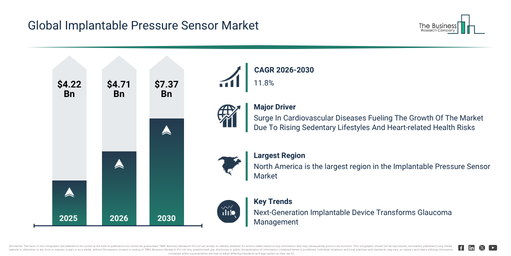
    Implantable Pressure Sensor Market Poised To Hit $7.37 Billion By 2030 With A 11.8% CAGR

    The implantable pressure sensor market has experienced rapid growth in its size over recent years. It is projected to expand from $4.22 billion in 2025 to $4.71 billion in 2026, exhibiting a compound annual growth rate (CAGR) of 11.6%. This historical growth is primarily due to the rising prevalence of cardiovascular diseases, increasing demand for continuous patient monitoring, technological advances in MEMS technology, growth in minimally invasive surgeries, and expanding hospital infrastructure.

    The implantable pressure sensor market size is projected to experience substantial growth over the next few years. It is forecasted to reach $7.37 billion in 2030, exhibiting a compound annual growth rate (CAGR) of 11.8%. This anticipated growth during the forecast period is primarily attributed to the increasing adoption of remote patient monitoring, greater integration with digital health platforms, a rising demand for personalized treatment solutions, the expanding geriatric population, and heightened investment in implantable medical device research and development. Major trends foreseen in this period include the increasing prevalence of wireless implantable pressure sensors, a rising demand for continuous real-time internal monitoring, the ongoing miniaturization of implantable sensor devices, the expansion of minimally invasive implantation procedures, and growing clinical use in cardiovascular and neurological applications.

    Get A Free Sample Report With In-Depth Market Insights:

    https://thebusinessresearchcompany.com/sample_request?id=37972136&type=smp&name=Implantable%20Pressure%20Sensor%20Market%20Report%202026&utm_source=Blogs&utm_medium=Paid&utm_campaign=Oct_PR

    Implantable Pressure Sensor Market Growth Momentum: What Factors Are Shaping Demand?

    The rising occurrence of cardiovascular diseases (CVDs) is anticipated to drive the expansion of the implantable pressure sensor market in the future. These diseases include various conditions impacting the heart and blood vessels, such as heart failure, coronary artery disease, hypertension, and stroke. Sedentary lifestyles are a primary cause of the growing impact of CVDs, leading to obesity, high blood pressure, and a heightened risk of complications related to the heart. Crucially, implantable pressure sensors aid in managing cardiovascular diseases by allowing for ongoing monitoring of internal heart or artery pressure, especially for individuals with long-term conditions like heart failure. For example, data from October 2024, provided by the US-based Centers for Disease Control and Prevention, a national public health agency, indicates that cardiovascular disease resulted in 919,032 deaths in the US, accounting for about 1 in 3 fatalities, alongside approximately 805,000 heart attacks, comprising 605,000 first-time and 200,000 repeat cases. Consequently, the expanding prevalence of cardiovascular diseases is fueling the development of the implantable pressure sensor market.

    Implantable Pressure Sensor Market Segment Performance And Emerging Opportunities

    The implantable pressure sensor market covered in this report is segmented –

    1) By Product Type: Wireless Implantable Pressure Sensors, Wired Implantable Pressure Sensors

    2) By Technology: Microelectromechanical Systems (MEMS), Fiber Optic, Other Technologies

    3) By Application: Cardiovascular, Neurology, Urology, Intraocular, Other Applications

    4) By End-User: Hospitals, Ambulatory Surgical Centers, Specialty Clinics, Other End-Users

    Subsegments:

    1) By Wireless Implantable Pressure Sensors: Telemetric Pressure Sensor, Inductive Coupling Sensor, Radiofrequency Pressure Sensor

    2) By Wired Implantable Pressure Sensors: Microelectromechanical Pressure Sensor, Strain Gauge Pressure Sensor, Piezoelectric Pressure Sensor

    Implantable Pressure Sensor Market Trends Redefining Industry Growth

    Leading companies in the implantable pressure sensor market are increasingly dedicated to developing cutting-edge implantable devices that facilitate continuous, real-time intraocular pressure (IOP) monitoring, aiming to enhance patient outcomes in glaucoma management. Implantable devices represent medical technologies engineered for placement within the body to monitor, support, or treat physiological functions over prolonged durations. As an illustration, in August 2024, Injectsense Inc., a US-based medical device firm, announced the initial human implantation of its ultraminiaturized intraocular pressure sensor, which also received FDA Breakthrough Device designation. This implantable sensor is engineered to deliver continuous and minimally invasive pressure monitoring, enabling clinicians and patients to more precisely track glaucoma progression and adjust treatment approaches with improved accuracy. The device ensures reliable real-time data collection while minimizing patient discomfort. These innovations support consistent oversight, prompt detection of intraocular pressure fluctuations, and enhanced long-term disease management, thereby leading to better clinical results for patients with glaucoma.

    Implantable Pressure Sensor Market Competitive Landscape: Which Companies Lead The Industry?

    Major companies operating in the implantable pressure sensor market are Abbott Laboratories, Medtronic plc, Koninklijke Philips N.V., TE Connectivity Ltd, Analog Devices Inc., Keller America Inc., ICU Medical Inc., Integra LifeSciences Holdings Corporation, Raumedic AG, Endotronix Inc., Sophysa SA, Silex Microsystems AB, Millar Inc., Spiegelberg GmbH Co. KG, InjectSense Inc., Implandata Ophthalmic Products GmbH, Opsens Inc, MEMSCAP S.A., Aesculap Miethke GmbH Co. KG, First Sensor AG.

    View The Full Implantable Pressure Sensor Market Report:

    https://thebusinessresearchcompany.com/report/implantable-pressure-sensor-market-report?utm_source=Blogs&utm_medium=Paid&utm_campaign=Oct_PR

    Implantable Pressure Sensor Market Regional Breakdown: Where Is Demand Concentrated?

    North America was the largest region in the implantable pressure sensor market in 2025. Asia-Pacific is expected to be the fastest-growing region in the forecast period. The regions covered in the implantable pressure sensor market report are Asia-Pacific, South East Asia, Western Europe, Eastern Europe, North America, South America, Middle East, Africa.

    Reach Out To Our Team:

    The Business Research Company: https://www.thebusinessresearchcompany.com/

    Americas: +1 310-496-7795

    Asia: +44 7882 955267 & +91 8897263534

    Europe: +44 7882 955267

    Email us at: marketing@tbrc.info

    Follow us on:

    LinkedIn: https://in.linkedin.com/company/the-business-research-company

    YouTube: https://www.youtube.com/channel/UC24_fI0rV8cR5DxlCpgmyFQ

    Global Market Model: https://www.thebusinessresearchcompany.com/global-market-model
  • Human Leukocyte Antigen (HLA) Typing For Oncology Immunotherapy Market Expected To Grow At 8% CAGR Through 2030: What Businesses Need To Know

    Human Leukocyte Antigen (HLA) Typing For Oncology Immunotherapy Market Expected To Grow At 8% CAGR Through 2030: What Businesses Need To Know

    Backed by market attractiveness analysis, total addressable market sizing, company benchmarking matrices, interactive Excel dashboards, wider supply chain intelligence, emerging startup coverage, and detailed product-level insights, The Business Research Company’s 2026 market reports are designed to offer research that is more actionable and strategically valuable than ever.

    Human Leukocyte Antigen (HLA) Typing For Oncology Immunotherapy Market Expansion Outlook: What Revenue Opportunities Are Ahead?

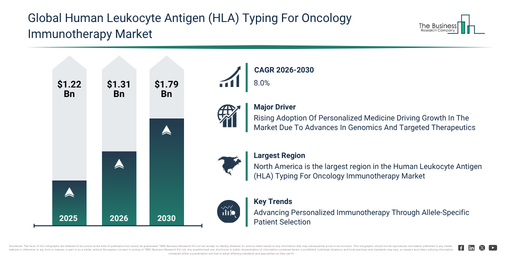
    The human leukocyte antigen (HLA) typing for oncology immunotherapy market size has experienced significant expansion in recent years. This market is anticipated to expand from $1.22 billion in 2025 to $1.31 billion in 2026, demonstrating a compound annual growth rate (CAGR) of 7.8%. Factors contributing to its growth in the past include the increasing global incidence of cancer, advancements in PCR and sequencing technologies, the growing embrace of precision oncology strategies, an uptick in clinical research for immunotherapies, and the broader application of biomarker-driven treatment selection.

    The human leukocyte antigen (HLA) typing for oncology immunotherapy market is projected to experience robust expansion over the coming years. This market is forecast to reach $1.79 billion by 2030, exhibiting a compound annual growth rate (CAGR) of 8.0%. This anticipated growth is driven by factors such as an expanding pipeline of cell and gene therapies, increased investment in personalized immunotherapy research, a growing need for companion diagnostics, the global expansion of oncology clinical trials, and enhanced regulatory backing for precision medicine. Key trends anticipated during this period encompass the wider adoption of next-generation sequencing-based HLA typing, greater integration of HLA profiling into adoptive T-cell therapies, increased utilization of high-resolution HLA typing in clinical trials, the proliferation of personalized cancer vaccine development, and an intensified focus on predictive immune compatibility testing.

    Get A Free Sample Report With In-Depth Market Insights:

    https://thebusinessresearchcompany.com/sample_request?id=79521900&type=smp&name=Human%20Leukocyte%20Antigen%20%28HLA%29%20Typing%20For%20Oncology%20Immunotherapy%20Market%20Report%202026&utm_source=Blogs&utm_medium=Paid&utm_campaign=Oct_PR

    Human Leukocyte Antigen (HLA) Typing For Oncology Immunotherapy Market Industry Drivers: What’s Behind The Revenue Growth?

    The increasing adoption of personalized medicine is anticipated to propel the expansion of the human leukocyte antigen (HLA) typing for oncology immunotherapy market. Personalized medicine involves customizing medical treatments and healthcare decisions based on an individual’s unique genetic, molecular, and clinical characteristics, aiming for more precise and effective therapies. Its rise is primarily attributed to advancements in genomics, which enable clinicians to identify specific genetic variations influencing disease risk and drug responses, leading to more targeted and impactful treatments. Human leukocyte antigen typing is instrumental in personalized oncology immunotherapy by determining a patient’s distinct immune profile, thereby allowing for tailored treatments that optimize tumor antigen recognition and immune response. For example, the US-based nonprofit Personalized Medicine Coalition reported in February 2024 that the FDA approved 16 new personalized treatments for rare disease patients in 2023, a notable increase from 6 in 2022. The 2023 approvals further included 7 cancer drugs and 3 for other diseases and conditions. This growing embrace of personalized medicine is thus a significant factor driving the growth of the human leukocyte antigen (HLA) typing for oncology immunotherapy market.

    Human Leukocyte Antigen (HLA) Typing For Oncology Immunotherapy Market Segment Analysis And Revenue Potential

    The human leukocyte antigen (HLA) typing for oncology immunotherapy market covered in this report is segmented –

    1) By Technology: Polymerase Chain Reaction (PCR)-Based, Sequencing-Based, Sequence-Specific Oligonucleotide (SSO), Sequence-Specific Primer (SSP), Other Technologies

    2) By Product Type: Reagents And Kits, Instruments, Software

    3) By Application: Cancer Diagnosis, Personalized Medicine, Research, Clinical Trials, Other Applications

    4) By End-User: Hospitals And Diagnostic Laboratories, Research Institutes, Academic Centers, Pharmaceutical And Biotechnology Companies, Other End-Users

    Subsegments:

    1) By Polymerase Chain Reaction Based: Real Time Polymerase Chain Reaction, Nested Polymerase Chain Reaction, Multiplex Polymerase Chain Reaction, Digital Polymerase Chain Reaction

    2) By Sequencing Based: Next Generation Sequencing, Sanger Sequencing, Whole Genome Sequencing, Targeted Gene Sequencing

    3) By Sequence Specific Oligonucleotide: Luminex Based Sequence Specific Oligonucleotide, Microarray Based Sequence Specific Oligonucleotide, Bead Based Sequence Specific Oligonucleotide, Plate Based Sequence Specific Oligonucleotide

    4) By Sequence Specific Primer: Conventional Sequence Specific Primer, Multiplex Sequence Specific Primer, Real Time Sequence Specific Primer, Nested Sequence Specific Primer

    5) By Other Technologies: Flow Cytometry Based Typing, Mass Spectrometry Based Typing, Immunoassay Based Typing, Hybridization Based Typing

    #Human Leukocyte Antigen (HLA) Typing For Oncology Immunotherapy Market Growth Trends: What’s Shaping The Future Outlook?

    Major companies within the human leukocyte antigen (HLA) typing for oncology immunotherapy market are concentrating on developing innovative solutions, such as allele-specific patient selection, to enhance personalized immunotherapy efficacy and improve clinical outcomes. Allele-specific patient selection involves identifying patients based on their specific HLA gene variants to tailor immunotherapy for optimal effectiveness. For instance, in August 2024, Thermo Fisher Scientific Inc., a US-based biotechnology company, received approval from the FDA for the SeCore HLA typing kit for use as a companion diagnostic with a T-cell receptor therapy for synovial sarcoma. This approval significantly expands HLA sequencing from transplant diagnostics into oncology immunotherapy by enabling precise patient selection for TCR-based treatments targeting tumor antigens.

    Human Leukocyte Antigen (HLA) Typing For Oncology Immunotherapy Market Key Players Shaping Industry Direction

    Major companies operating in the human leukocyte antigen (HLA) typing for oncology immunotherapy market are Thermo Fisher Scientific Inc., Danaher Corporation, Becton, Dickinson Company, Eurofins Scientific SE, Illumina Inc., Werfen, QIAGEN N.V., Versiti Inc., CareDx Inc., Oxford Nanopore Technologies Plc., Pacific Biosciences of California Inc., Takara Bio Inc., HistoGenetics LLC, Biofortuna Limited, Bio‑Rad Laboratories Inc., DKMS Life Science Lab, ClinImmune Inc., BGI Genomics Co. Ltd., Immudex A/S, ProImmune Ltd.

    View The Full Human Leukocyte Antigen (HLA) Typing For Oncology Immunotherapy Market Report:

    https://thebusinessresearchcompany.com/report/human-leukocyte-antigen-hla-typing-for-oncology-immunotherapy-market-report?utm_source=Blogs&utm_medium=Paid&utm_campaign=Oct_PR

    Human Leukocyte Antigen (HLA) Typing For Oncology Immunotherapy Market Regional Analysis: Which Region Leads By Revenue?

    North America was the largest region in the human leukocyte antigen (HLA) typing for oncology immunotherapy market in 2025. Asia-Pacific is expected to be the fastest-growing region in the forecast period. The regions covered in the human leukocyte antigen (HLA) typing for oncology immunotherapy market report are Asia-Pacific, South East Asia, Western Europe, Eastern Europe, North America, South America, Middle East, Africa.

    Reach Out To Our Team:

    The Business Research Company: https://www.thebusinessresearchcompany.com/

    Americas: +1 310-496-7795

    Asia: +44 7882 955267 & +91 8897263534

    Europe: +44 7882 955267

    Email us at: marketing@tbrc.info

    Follow us on:

    LinkedIn: https://in.linkedin.com/company/the-business-research-company

    YouTube: https://www.youtube.com/channel/UC24_fI0rV8cR5DxlCpgmyFQ

    Global Market Model: https://www.thebusinessresearchcompany.com/global-market-model
  • Human Leukocyte Antigen (HLA) Antibody Screening Market Forecast To Reach $1.47 Billion By 2030: Key Trends Explained

    Human Leukocyte Antigen (HLA) Antibody Screening Market Forecast To Reach $1.47 Billion By 2030: Key Trends Explained

    Featuring market attractiveness scoring, total addressable market sizing, company benchmarking matrices, interactive Excel dashboards, deeper supply chain intelligence, emerging startup tracking, and granular product-level insights, The Business Research Company’s 2026 market reports are built to deliver research that is both more actionable and more strategically valuable.

    Human Leukocyte Antigen (HLA) Antibody Screening Market Growth Potential: How Will Market Size Shift Through 2030?

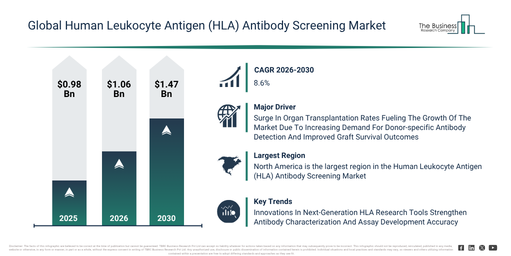
    The human leukocyte antigen (HLA) antibody screening market has experienced substantial growth in its size over recent years. This market is projected to expand from $0.98 billion in 2025 to $1.06 billion by 2026, demonstrating a compound annual growth rate (CAGR) of 8.4%. Historically, this expansion can be linked to several factors, including an escalating number of organ transplant operations, a higher occurrence of end-stage organ failure, enhanced understanding of transplant rejection dangers, the broadening scope of transfusion medicine practices, and advancements in immunoassay platform technology.

    The human leukocyte antigen (HLA) antibody screening market is expected to experience significant expansion in the coming years. Its valuation is projected to reach $1.47 billion by 2030, demonstrating a compound annual growth rate (CAGR) of 8.6%. This anticipated growth during the forecast period is driven by factors such as the increasing need for precise transplant matching, the wider adoption of multiplex bead-based assays, rising investments in transplant immunology research, the broadening of transplant programs in developing markets, and technological advancements in automated HLA antibody screening systems. Dominant trends during this period include the growing utilization of single antigen bead assays for superior sensitivity, an increasing demand for thorough pre-transplant immunological risk assessments, the expanded application of high-throughput flow cytometry in HLA screening, the development of post-transplant antibody monitoring protocols, and enhanced standardization of HLA antibody detection methodologies.

    Get A Free Sample Report With In-Depth Market Insights:

    https://thebusinessresearchcompany.com/sample_request?id=72197599&type=smp&name=Human%20Leukocyte%20Antigen%20%28HLA%29%20Antibody%20Screening%20Market%20Report%202026&utm_source=Blogs&utm_medium=Paid&utm_campaign=Oct_PR

    Human Leukocyte Antigen (HLA) Antibody Screening Market Growth Factors: What’s Supporting Expansion?

    The increasing rates of organ transplantation are anticipated to drive the future expansion of the HLA antibody screening market. Organ transplantation rates quantify the total number of organ transplant operations performed within a specific population over a period, typically expressed annually or per million people. This surge in transplantation procedures is largely a result of the escalating burden of chronic and end-stage diseases; as more patients progress to organ failure, the demand for organ replacement therapies concurrently rises. HLA antibody screening significantly contributes to higher organ transplantation success by ensuring superior donor-recipient compatibility before surgery, thereby reducing the likelihood of immune-mediated rejection. This process minimizes graft loss and complications, enhances long-term transplant outcomes, and facilitates more effective utilization of available donor organs. For example, in January 2025, the Health Resources and Services Administration, a US-based agency of the Department of Health and Human Services, reported that lung transplants saw the highest proportional increase between 2023 and 2024, climbing from 3,026 procedures to 3,340, which indicates a 10.4% growth. Thus, the escalating organ transplantation rates are propelling the growth of the HLA antibody screening market.

    Human Leukocyte Antigen (HLA) Antibody Screening Market Segmentation And Category Overview

    The human leukocyte antigen (HLA) antibody screening market covered in this report is segmented –

    1) By Technology: Enzyme-Linked Immunosorbent Assay (ELISA), Flow Cytometry, Luminex, Other Technologies

    2) By Product Type: Reagents And Kits, Instruments, Software

    3) By Target Class: Human Leukocyte Antigen Class I Antibodies, Human Leukocyte Antigen Class II Antibodies, Non- Human Leukocyte Antigen Antibodies

    4) By Application: Pre-Transplant Screening, Post-Transplant Monitoring, Transfusion Medicine, Research Applications

    5) By End-User: Hospitals And Transplant Centers, Diagnostic Laboratories, Research Institutes, Other End-Users

    Subsegments:

    1) By Enzyme Linked Immunosorbent Assay: Direct Enzyme Linked Immunosorbent Assay, Indirect Enzyme Linked Immunosorbent Assay, Sandwich Enzyme Linked Immunosorbent Assay, Competitive Enzyme Linked Immunosorbent Assay

    2) By Flow Cytometry: Conventional Flow Cytometry, Bead Based Flow Cytometry, Imaging Flow Cytometry, High Throughput Flow Cytometry

    3) By Luminex: Single Antigen Luminex Assay, Multi Antigen Luminex Assay, Bead Based Multiplex Luminex Assay, Custom Luminex Panels

    4) By Other Technologies: Western Blotting, Radioimmunoassay, Complement Dependent Cytotoxicity Assay, Microarray Based Assay

    Human Leukocyte Antigen (HLA) Antibody Screening Market Industry Trends: What’s Reshaping Demand?

    Major companies in the HLA antibody screening market are concentrating on developing advanced HLA research instruments to enhance the accuracy of immune checkpoint research, antibody validation, and assay development. These next-generation HLA research tools integrate innovative recombinant reagents, multiplexed analytical platforms, and high-resolution molecular technologies, which enable precise profiling of HLA molecules and how they interact with antibodies. For example, in November 2025, HLA Protein Technologies, a US-based biotechnology company, unveiled its sHLA-G Monomer and Tetramer Portfolio, an advanced HLA research tool that supports high-fidelity checkpoint biology studies, target validation, and assay development. This portfolio offers structurally validated recombinant HLA-G reagents, optimized for immune receptor interaction studies, thereby facilitating improved characterization of HLA-associated antibodies and driving progress in transplant immunology, oncology, and immune tolerance research applications.

    Human Leukocyte Antigen (HLA) Antibody Screening Market Competitive Analysis Of Leading Industry Participants

    Major companies operating in the human leukocyte antigen (HLA) antibody screening market are Hoffmann-La Roche AG, Thermo Fisher Scientific Inc., Abbott Laboratories, Becton Dickinson Company, Laboratory Corporation of America Holdings, Quest Diagnostics Incorporated, Grifols S A, Beckman Coulter Inc., Bio Rad Laboratories Inc., QIAGEN N V, Takara Bio Inc., Fujirebio Inc., CareDx Inc., Histogenetics LLC, Creative Biolabs Inc., Biofortuna Ltd., Stanford Blood Center, GenDx B V, Omixon Biocomputing Ltd., BAG Diagnostics GmbH, Scisco Genetics Inc., TBG Diagnostics Ltd., American Red Cross.

    View The Full Human Leukocyte Antigen (HLA) Antibody Screening Market Report:

    https://thebusinessresearchcompany.com/report/human-leukocyte-antigen-hla-antibody-screening-market-report?utm_source=Blogs&utm_medium=Paid&utm_campaign=Oct_PR

    Human Leukocyte Antigen (HLA) Antibody Screening Market Geographic Distribution And Regional Opportunities

    North America was the largest region in the human leukocyte antigen (HLA) antibody screening market in 2025. Asia-Pacific is expected to be the fastest-growing region in the forecast period. The regions covered in the human leukocyte antigen (HLA) antibody screening market report are Asia-Pacific, South East Asia, Western Europe, Eastern Europe, North America, South America, Middle East, Africa.

    Reach Out To Our Team:

    The Business Research Company: https://www.thebusinessresearchcompany.com/

    Americas: +1 310-496-7795

    Asia: +44 7882 955267 & +91 8897263534

    Europe: +44 7882 955267

    Email us at: marketing@tbrc.info

    Follow us on:

    LinkedIn: https://in.linkedin.com/company/the-business-research-company

    YouTube: https://www.youtube.com/channel/UC24_fI0rV8cR5DxlCpgmyFQ

    Global Market Model: https://www.thebusinessresearchcompany.com/global-market-model
  • Hospice Indoor Air Quality (IAQ) Monitoring Market Analysis Through 2030: Market Size, Growth Trends And Industry Outlook

    Hospice Indoor Air Quality (IAQ) Monitoring Market Analysis Through 2030: Market Size, Growth Trends And Industry Outlook

    Backed by market attractiveness analysis, total addressable market sizing, company benchmarking matrices, interactive Excel dashboards, wider supply chain intelligence, emerging startup coverage, and detailed product-level insights, The Business Research Company’s 2026 market reports are designed to offer research that is more actionable and strategically valuable than ever.

    Hospice Indoor Air Quality (IAQ) Monitoring Market Value Analysis: What Growth Lies Ahead Over The Forecast Period?

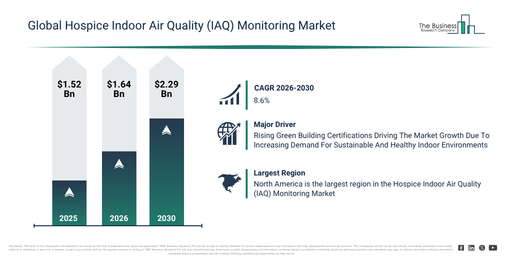
    The hospice indoor air quality (IAQ) monitoring market has experienced substantial growth in recent years. It is projected to increase from $1.52 billion in 2025 to $1.64 billion in 2026, achieving a compound annual growth rate (CAGR) of 8.4%. Historically, this growth has been driven by heightened awareness of indoor air pollution risks, growing respiratory health concerns among elderly patients, the expansion of hospice and palliative care facilities, evolving regulatory standards for healthcare environments, and the implementation of basic sensor-based monitoring systems.

    The hospice indoor air quality (IAQ) monitoring market is set for significant expansion in the coming years, with projections indicating it will reach $2.29 billion in 2030, exhibiting a compound annual growth rate (CAGR) of 8.6%. This anticipated growth is primarily driven by the increasing adoption of smart healthcare infrastructure, greater investment in patient-centric care environments, the growing integration of AI-driven air quality analytics, the expansion of home-based hospice services, and a stronger emphasis on sustainable and energy-efficient ventilation systems. Furthermore, major trends anticipated for this forecast period include the wider deployment of zoned IAQ monitoring systems, an escalating demand for real-time air quality alerts, enhanced integration of IAQ data with HVAC systems, the proliferation of portable multifunction IAQ devices, and a heightened focus on infection control and respiratory comfort.

    Get A Free Sample Report With In-Depth Market Insights:

    https://thebusinessresearchcompany.com/sample_request?id=63673973&type=smp&name=Hospice%20Indoor%20Air%20Quality%20%28IAQ%29%20Monitoring%20Market%20Report%202026&utm_source=Blogs&utm_medium=Paid&utm_campaign=Oct_PR

    Hospice Indoor Air Quality (IAQ) Monitoring Market Demand Drivers: What’s Powering Industry Growth?

    The expansion of green building certifications is anticipated to fuel the demand for the hospice indoor air quality (IAQ) monitoring market in the coming years. These certifications are official recognitions given to structures that fulfill criteria for sustainability, energy efficiency, and a reduced environmental footprint. The increase in such certifications stems from heightened environmental consciousness, which in turn boosts the desire for buildings designed to conserve resources and lower carbon emissions. Hospice IAQ monitoring plays a crucial role in achieving green building certifications by offering ongoing data on air quality, thereby guaranteeing healthy indoor conditions, mitigating pollutants, and assisting in meeting the sustainability and wellness benchmarks necessary for certification. For example, the Green Building Council, a US-based non-profit organization, reported in July 2024 that more than 46,000 residential projects obtained LEED green building certification, indicating an increase of almost 5% in new registrations when compared to 2023. Consequently, the proliferation of green building certifications is a key factor propelling the expansion of the hospice indoor air quality (IAQ) monitoring market. Escalating pollution levels are projected to drive the expansion of the hospice indoor air quality (IAQ) monitoring market in the future. These levels denote the amount of detrimental substances present in air, water, or soil, which can adversely affect health and the environment. The rise in pollution levels is attributed to swift industrialization, leading to the discharge of significant quantities of noxious gases, particulates, and chemicals into the surroundings, thereby degrading air and water quality and impacting public health. Hospice IAQ monitoring assists in managing pollution by consistently identifying airborne contaminants and facilitating prompt ventilation or filtration actions, thereby cultivating a healthier and safer setting for patients and personnel. For example, the United States Environmental Protection Agency, a US-based government agency, reported in February 2026 that roughly 64 million tons of pollutants were discharged into the atmosphere across the United States in 2024. Consequently, the escalating pollution levels are a significant catalyst for the growth of the hospice indoor air quality (IAQ) monitoring market.

    Hospice Indoor Air Quality (IAQ) Monitoring Market Segment Outlook: Which Categories Are Growing Fastest?

    The hospice indoor air quality (IAQ) monitoring market covered in this report is segmented –

    1) By Product Type: Portable Monitors, Fixed Monitors, Wearable Devices, Other Product Types

    2) By Pollutant Type: Particulate Matter, Carbon Dioxide, Volatile Organic Compounds, Biological Contaminants, Other Pollutant Types

    3) By Technology: Sensor-Based, Internet of Things (IoT)-Enabled, Wireless, Other Technologies

    4) By Application: Patient Rooms, Common Areas, Administrative Offices, Other Applications

    5) By End-User: Hospices, Palliative Care Centers, Home Care Settings, Other End-Users

    Subsegments:

    1) By Portable Monitors: Handheld Monitors, Tabletop Portable Stations, Portable Multifunction Devices

    2) By Fixed Monitors: Wall Mounted Fixed Monitors, Networked Fixed Systems, Zoned IAQ Monitoring

    3) By Wearable Devices: Pendant Wearables, Wrist Mounted Monitors, Badge Style Devices

    4) By Other Product Types: Environmental Sensor Kits, Integrated Smart Building Sensors, Retrofit Add On Sensors

    Hospice Indoor Air Quality (IAQ) Monitoring Market Leading Companies And Competitive Benchmarking

    Major companies operating in the hospice indoor air quality (IAQ) monitoring market are Thermo Fisher Scientific Inc., Honeywell International Incorporated, Johnson Controls International plc, Carrier Global Corporation, Trane Technologies plc., Emerson Electric Company, SGS SA, HORIBA Ltd., Camfil AB, Sensirion Aktiengesellschaft, TSI Incorporated, Siemens Aktiengesellschaft, IQAir AG, Airthings ASA, Awair Inc., BGE Indoor Air Quality Solutions Ltd., Testo SE & Co. Kommanditgesellschaft auf Aktien, Anewtech Systems, Aeroqual Limited, Critical Environment Technologies Canada Inc., DevineAir Limited.

    View The Full Hospice Indoor Air Quality (IAQ) Monitoring Market Report:

    https://thebusinessresearchcompany.com/report/hospice-indoor-air-quality-iaq-monitoring-market-report?utm_source=Blogs&utm_medium=Paid&utm_campaign=Oct_PR

    Hospice Indoor Air Quality (IAQ) Monitoring Market Largest Region By Revenue And Market Share

    North America was the largest region in the hospice indoor air quality (IAQ) monitoring market in 2025. Asia-Pacific is expected to be the fastest-growing region in the forecast period. The regions covered in the hospice indoor air quality (IAQ) monitoring market report are Asia-Pacific, South East Asia, Western Europe, Eastern Europe, North America, South America, Middle East, Africa.

    Reach Out To Our Team:

    The Business Research Company: https://www.thebusinessresearchcompany.com/

    Americas: +1 310-496-7795

    Asia: +44 7882 955267 & +91 8897263534

    Europe: +44 7882 955267

    Email us at: marketing@tbrc.info

    Follow us on:

    LinkedIn: https://in.linkedin.com/company/the-business-research-company

    YouTube: https://www.youtube.com/channel/UC24_fI0rV8cR5DxlCpgmyFQ

    Global Market Model: https://www.thebusinessresearchcompany.com/global-market-model
  • High-Plex Protein Biomarker Platforms Market Outlook From 2026 To 2030: Key Growth Factors And Future Opportunities

    High-Plex Protein Biomarker Platforms Market Outlook From 2026 To 2030: Key Growth Factors And Future Opportunities

    Featuring market attractiveness scoring, total addressable market sizing, company benchmarking matrices, interactive Excel dashboards, deeper supply chain intelligence, emerging startup tracking, and granular product-level insights, The Business Research Company’s 2026 market reports are built to deliver research that is both more actionable and more strategically valuable.

    High-Plex Protein Biomarker Platforms Market Size Forecast: How Big Could The Market Get By 2030?

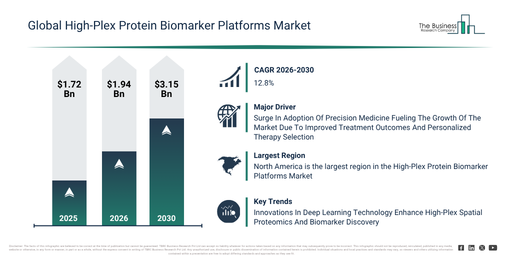
    The high-plex protein biomarker platforms market has experienced significant growth in recent years. It will grow from $1.72 billion in 2025 to $1.94 billion in 2026 at a compound annual growth rate (CAGR) of 12.6%. This historical expansion can be attributed to factors such as increased investment in proteomics research, a rising prevalence of chronic and complex diseases, the expansion of pharmaceutical research and development activities, a growing demand for tools for early disease detection, and advancements in mass spectrometry technologies.

    The high-plex protein biomarker platforms market size is anticipated to experience significant expansion over the coming years. This market is projected to reach $3.15 billion by 2030, demonstrating a compound annual growth rate (CAGR) of 12.8%. Factors contributing to this growth during the forecast period include the increasing uptake of precision medicine initiatives, a rising need for companion diagnostics development, increased funding for translational research programs, the broadening scope of oncology and immunology biomarker studies, and advancements in next-generation proteomic platforms. Key trends anticipated during this period encompass the wider adoption of ultra-high multiplex protein profiling, a surging demand for integrated multi-omics platforms, the increased application of high-sensitivity immunoassay technologies, the broadening of biomarker validation within clinical trials, and an enhanced emphasis on standardization and reproducibility in proteomics.

    Get A Free Sample Report With In-Depth Market Insights:

    https://thebusinessresearchcompany.com/sample_request?id=92473546&type=smp&name=High-Plex%20Protein%20Biomarker%20Platforms%20Market%20Report%202026&utm_source=Blogs&utm_medium=Paid&utm_campaign=Oct_PR

    High-Plex Protein Biomarker Platforms Market Growth Drivers: What’s Behind The Acceleration?

    The expanded use of precision medicine is anticipated to stimulate the growth of the high-plex protein biomarker platforms market in the foreseeable future. Precision medicine signifies a healthcare approach that customizes the prevention, diagnosis, and treatment of illnesses based on an individual’s unique genetic composition, biological characteristics, and environmental influences. The increasing embrace of precision medicine is propelled by enhanced treatment outcomes, given that therapies specifically designed for individual genetic and molecular profiles boost effectiveness while diminishing adverse effects. High-plex protein biomarker platforms aid in accelerating the adoption of precision medicine by enabling comprehensive analysis of multiple protein biomarkers, which facilitates more accurate patient stratification, selection of personalized therapies, and improved monitoring of treatment response. For instance, in February 2024, the Personalized Medicine Coalition, a US-based nonprofit advocacy organization, indicated that 16 new personalized treatments for rare diseases received approval, a rise from six in 2022. Thus, the escalating adoption of precision medicine is driving the growth of the high-plex protein biomarker platforms market.

    High-Plex Protein Biomarker Platforms Market Segment Landscape: Which Areas Lead Development?

    The high-plex protein biomarker platforms market covered in this report is segmented –

    1) By Technology: Mass Spectrometry, Immunoassays, Multiplexed Immunofluorescence, Next-Generation Sequencing, Other Technologies

    2) By Product: Protein Biomarker Detection Instruments, Reagents And Assay Kits, Software And Data Analysis Tools, Consumables And Accessories, Service And Support Contracts

    3) By Application: Biomarker Discovery, Translational Research, Drug Discovery And Development, Clinical Diagnostics, Precision Medicine, Immunology And Oncology Research, Other Applications

    4) By End User: Pharmaceutical And Biotechnology Companies, Academic And Research Institutes, Contract Research Organizations (CROs), Healthcare And Diagnostic Centers, Biopharmaceutical Service Providers

    Subsegments:

    1) By Mass Spectrometry: Matrix Assisted Laser Desorption Ionization, Electrospray Ionization, Tandem Mass Spectrometry, Time Of Flight Mass Spectrometry

    2) By Immunoassays: Enzyme Linked Immunosorbent Assay, Radioimmunoassay, Fluorescence Immunoassay, Chemiluminescence Immunoassay

    3) By Multiplexed Immunofluorescence: Tissue Based Multiplexed Immunofluorescence, Cell Based Multiplexed Immunofluorescence, Quantitative Multiplexed Immunofluorescence

    4) By Next Generation Sequencing: Targeted Protein Sequencing, Whole Proteome Sequencing, Transcriptome Based Protein Sequencing

    5) By Other Technologies: Protein Microarray Platforms, Surface Plasmon Resonance Platforms, Electrochemical Biosensor Platforms, Label Free Detection Platforms

    High-Plex Protein Biomarker Platforms Market Trends: What’s Defining The Industry’s Next Phase?

    Leading companies within the high-plex protein biomarker platforms market are concentrating on developing advanced solutions, such as deep learning-powered spatial proteomics models, to automate multiplexed protein analysis, improve biomarker identification accuracy, and accelerate therapeutic development. These deep learning-powered spatial proteomics models are artificial intelligence-based computational systems that analyze highly multiplexed protein expression data in intact tissue samples, facilitating precise spatial mapping and quantitative profiling of biomarkers at single-cell resolution. For example, Nucleai, a US-based spatial biology company, introduced its pioneering deep learning model in April 2025, designed to automate spatial proteomics analysis. This solution enhances the discovery and validation of protein biomarkers by combining high-dimensional imaging data with AI-driven analytics, thereby supporting the development of antibody-drug conjugates (ADCs), bispecific antibodies, and immunotherapies by offering deeper insights into tumor microenvironments and target expression patterns.

    High-Plex Protein Biomarker Platforms Market Industry Leaders And Competitive Landscape

    Major companies operating in the high-plex protein biomarker platforms market are SomaLogic Inc, F. Hoffmann-La Roche AG, Thermo Fisher Scientific Inc, Merck KGaA, Agilent Technologies Inc, PerkinElmer Inc, Bio-Rad Laboratories Inc, Bio-Techne Corporation, Novogene Co Ltd, Meso Scale Diagnostics LLC, Quanterix Corporation, Akoya Biosciences Inc, RayBiotech Inc, Protavio Ltd, Proteome Sciences plc, Lucence Diagnostics Pte Ltd, Applied Biomics Inc, Sword Bio, BGI Group, Immudex A/S.

    View The Full High-Plex Protein Biomarker Platforms Market Report:

    https://thebusinessresearchcompany.com/report/high-plex-protein-biomarker-platforms-market-report?utm_source=Blogs&utm_medium=Paid&utm_campaign=Oct_PR

    High-Plex Protein Biomarker Platforms Market Regional Analysis And Leading Geography

    North America was the largest region in the high-plex protein biomarker platforms market in 2025. Asia-Pacific is expected to be the fastest-growing region in the forecast period. The regions covered in the high-plex protein biomarker platforms market report are Asia-Pacific, South East Asia, Western Europe, Eastern Europe, North America, South America, Middle East, Africa.

    Reach Out To Our Team:

    The Business Research Company: https://www.thebusinessresearchcompany.com/

    Americas: +1 310-496-7795

    Asia: +44 7882 955267 & +91 8897263534

    Europe: +44 7882 955267

    Email us at: marketing@tbrc.info

    Follow us on:

    LinkedIn: https://in.linkedin.com/company/the-business-research-company

    YouTube: https://www.youtube.com/channel/UC24_fI0rV8cR5DxlCpgmyFQ

    Global Market Model: https://www.thebusinessresearchcompany.com/global-market-model