Month: October 2026

  • Orthopedic Surgery Tourism Market Forecast To 2030: Starting From $14.7 Billion In 2026

    Orthopedic Surgery Tourism Market Forecast To 2030: Starting From $14.7 Billion In 2026

    Featuring market attractiveness scoring, total addressable market sizing, company benchmarking matrices, interactive Excel dashboards, deeper supply chain intelligence, emerging startup tracking, and granular product-level insights, The Business Research Company’s 2026 market reports are built to deliver research that is both more actionable and more strategically valuable.

    Orthopedic Surgery Tourism Market CAGR Outlook And Future Development

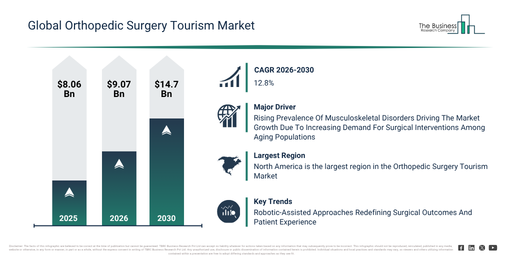
    The orthopedic surgery tourism market has experienced considerable growth in recent years. Its projected expansion will see it increase from $8.06 billion in 2025 to $9.07 billion in 2026, achieving a compound annual growth rate (CAGR) of 12.6%. This historical development is linked to factors such as the increasing global prevalence of musculoskeletal disorders, extended waiting periods for orthopedic surgeries in developed nations, disparities in healthcare costs across different regions, the development of medical tourism infrastructure, and a growing understanding of international orthopedic expertise.

    The orthopedic surgery tourism market is anticipated to experience significant expansion over the next few years, projected to reach $14.7 billion by 2030, demonstrating a compound annual growth rate (CAGR) of 12.8%. This foreseen growth is driven by factors such as the increasing adoption of robotic-assisted orthopedic surgeries, rising preference for minimally invasive procedures, broader international insurance coverage for medical travel, a growing elderly demographic requiring joint replacement, and increased investment in specialized orthopedic hospitals. Noteworthy trends during this forecast period include a surge in cross-border demand for joint replacement procedures, a growing inclination towards cost-effective orthopedic surgeries, the expansion of internationally accredited orthopedic centers, the development of integrated surgery and rehabilitation packages, and an increase in collaborations among medical travel facilitators.

    Get A Free Sample Report With In-Depth Market Insights:

    https://thebusinessresearchcompany.com/sample_request?id=30587093&type=smp&name=Orthopedic%20Surgery%20Tourism%20Market%20Report%202026&utm_source=Blogs&utm_medium=Paid&utm_campaign=Oct_PR

    Orthopedic Surgery Tourism Market Opportunity Drivers: What’s Unlocking New Revenue Potential?

    The increasing occurrence of musculoskeletal disorders is anticipated to fuel the expansion of the orthopedic surgery tourism market in the future. Musculoskeletal disorders (MSDs) refer to ailments impacting muscles, bones, joints, and associated connective tissues, potentially hindering movement and normal function. The rise in musculoskeletal disorders is mainly attributed to the aging demographics in developed nations, given that elderly individuals are more susceptible to joint deterioration, persistent pain, and restrictions in mobility. For patients with musculoskeletal disorders, orthopedic surgery tourism offers a chance to access premium orthopedic operations overseas, benefiting from skilled surgeons, advanced medical facilities, and extensive rehabilitation programs designed to restore joint function, relieve discomfort, and enhance everyday mobility. An example illustrating this trend is data from January 2024, released by the Office for Health Improvement and Disparities, a UK government body, which reported that 18.4% of individuals aged 16 and above had long-term musculoskeletal conditions in 2023, an uptick from 17.6% recorded in 2022. Consequently, the expanding incidence of musculoskeletal disorders is propelling the development of the orthopedic surgery tourism market.

    Orthopedic Surgery Tourism Market Segment Outlook: Which Categories Are Growing Fastest?

    The orthopedic surgery tourism market covered in this report is segmented –

    1) By Surgery Type: Joint Replacement, Spine Surgery, Sports Medicine, Trauma Surgery, Arthroscopic Surgery, Other Surgery Types

    2) By Patient Type: Domestic, International

    3) By Age Group: Pediatric, Adult, Geriatric

    4) By Service Provider: Hospitals, Specialty Clinics, Ambulatory Surgical Centers, Other Service Providers

    Subsegments:

    1) By Joint Replacement: Total Knee Replacement, Partial Knee Replacement, Total Hip Replacement, Hip Resurfacing, Total Shoulder Replacement, Reverse Shoulder Replacement, Elbow Joint Replacement, Ankle Joint Replacement

    2) By Spine Surgery: Spinal Fusion Surgery, Artificial Disc Replacement, Laminectomy Surgery, Discectomy Surgery, Foraminotomy Surgery, Scoliosis Correction Surgery, Kyphoplasty Procedure, Vertebroplasty Procedure

    3) By Sports Medicine: Anterior Cruciate Ligament Reconstruction, Posterior Cruciate Ligament Reconstruction, Meniscus Repair Surgery, Rotator Cuff Repair Surgery, Shoulder Labral Repair, Tendon Repair Surgery, Cartilage Restoration Procedure, Ulnar Collateral Ligament Reconstruction

    4) By Trauma Surgery: Open Reduction And Internal Fixation, External Fixation Procedure, Fracture Repair Surgery, Intramedullary Nailing Procedure, Complex Pelvic Fracture Surgery, Clavicle Fracture Surgery, Hip Fracture Surgery, Multiple Trauma Reconstruction

    5) By Arthroscopic Surgery: Knee Arthroscopy, Shoulder Arthroscopy, Hip Arthroscopy, Ankle Arthroscopy, Elbow Arthroscopy, Wrist Arthroscopy, Subacromial Decompression Procedure, Synovectomy Procedure

    6) By Other Surgery Types: Osteotomy Procedure, Limb Lengthening Surgery, Bone Grafting Procedure, Joint Revision Surgery, Pediatric Orthopedic Surgery, Orthopedic Oncology Surgery, Hand Surgery, Foot Reconstruction Surgery

    Orthopedic Surgery Tourism Market Innovation Trends Shaping Future Development

    Leading companies in the orthopedic surgery tourism sector are focused on developing advanced solutions, such as robotic-assisted knee replacement systems, to improve surgical accuracy and speed up patient recovery. These sophisticated surgical technologies provide precise guidance to surgeons during knee replacement procedures, ensuring accurate implant placement, minimizing tissue damage, and accelerating patient recuperation. For instance, in April 2023, Pristyn Care, an India-based healthcare technology company, unveiled Cuvis Robotic-Assisted Knee Replacement Surgery, an innovative robotic-assisted technology designed to enhance precision and patient outcomes for orthopedic surgery tourism. The Cuvis system integrates pre-operative 3D planning with robotic guidance during the operation, enabling surgeons to customize the procedure for each patient’s unique anatomy. A robotic arm ensures exact bone cuts and implant positioning, thereby reducing surgical errors and post-operative complications. Robotic-assisted techniques like Cuvis support quicker recovery, less pain, and improved long-term functionality, making them a significant advancement for patients traveling for orthopedic surgery.

    Orthopedic Surgery Tourism Market Competitive Analysis Of Leading Industry Participants

    Major companies operating in the orthopedic surgery tourism market are Asklepios Kliniken GmbH, Acibadem Healthcare Group, Apollo Hospitals Enterprise Limited, Fortis Healthcare Limited, KPJ Healthcare Berhad, Raffles Medical Group Ltd, Pristyn Care Pvt. Ltd., Shalby Limited, Gleneagles Global Hospitals Pvt. Ltd., PlacidWay Inc., Tour2India4Health Pvt. Ltd., Medmonks Pvt. Ltd., Medsurge India Pvt. Ltd., Healthbase Inc., Vaidam Health Pvt. Ltd., IndiCure Health Tours Pvt. Ltd., MyMedTrip Inc., HealthTrip Inc., Medtripz Pvt. Ltd., MedGinnie Pvt. Ltd.

    View The Full Orthopedic Surgery Tourism Market Report:

    https://thebusinessresearchcompany.com/report/orthopedic-surgery-tourism-market-report?utm_source=Blogs&utm_medium=Paid&utm_campaign=Oct_PR

    Orthopedic Surgery Tourism Market Geographic Spread And Regional Opportunities

    North America was the largest region in the orthopedic surgery tourism market in 2025. Asia-Pacific is expected to be the fastest-growing region in the forecast period. The regions covered in the orthopedic surgery tourism market report are Asia-Pacific, South East Asia, Western Europe, Eastern Europe, North America, South America, Middle East, Africa.

    Reach Out To Our Team:

    The Business Research Company: https://www.thebusinessresearchcompany.com/

    Americas: +1 310-496-7795

    Asia: +44 7882 955267 & +91 8897263534

    Europe: +44 7882 955267

    Email us at: marketing@tbrc.info

    Follow us on:

    LinkedIn: https://in.linkedin.com/company/the-business-research-company

    YouTube: https://www.youtube.com/channel/UC24_fI0rV8cR5DxlCpgmyFQ

    Global Market Model: https://www.thebusinessresearchcompany.com/global-market-model

  • Organ Transport Vehicle Market Reaches $1.06 Billion In 2026: Key Developments Shaping Expansion

    Organ Transport Vehicle Market Reaches $1.06 Billion In 2026: Key Developments Shaping Expansion

    Backed by market attractiveness analysis, total addressable market sizing, company benchmarking matrices, interactive Excel dashboards, wider supply chain intelligence, emerging startup coverage, and detailed product-level insights, The Business Research Company’s 2026 market reports are designed to offer research that is more actionable and strategically valuable than ever.

    Organ Transport Vehicle Market Forecast: Value Set To Climb From $0.75 Billion To $1.06 Billion

    The market for organ transport vehicles has shown robust growth recently. This market is set to expand from $0.69 billion in 2025 to $0.75 billion in 2026, achieving a compound annual growth rate (CAGR) of 8.8%. Historically, this expansion has been driven by factors such as an increasing number of organ transplant procedures, heightened awareness regarding organ donation programs, the expansion of healthcare infrastructure, a greater demand for reduced organ ischemic time, and advancements in temperature-controlled medical transport systems.

    The organ transport vehicle market is projected to experience substantial expansion in the coming years. It will grow to $1.06 billion in 2030 at a compound annual growth rate (CAGR) of 9.0%. This projected increase is driven by factors such as the advancements in precision medicine and transplant innovations, the growing use of autonomous drone delivery solutions, heightened investment in intelligent medical logistics, the widening of international organ sharing networks, and a greater emphasis on electric and low-emission vehicles for medical transport. Key developments expected during this period involve a greater uptake of sophisticated temperature-regulated storage solutions, a surge in demand for swift air and drone-facilitated organ transportation, the expanding integration of devices for real-time organ monitoring, the proliferation of specialized vehicles and mobile units for organ transport, and an intensified commitment to adhering to transplantation safety regulations.

    Get A Free Sample Report With In-Depth Market Insights:

    https://thebusinessresearchcompany.com/sample_request?id=27574679&type=smp&name=Organ%20Transport%20Vehicle%20Market%20Report%202026&utm_source=Blogs&utm_medium=Paid&utm_campaign=Oct_PR

    Organ Transport Vehicle Market Expansion Drivers: What’s Shaping Future Growth?

    The increasing volume of organ transplant operations is anticipated to drive expansion in the organ transport vehicle market in the future. These procedures entail moving healthy organs from donors to recipients who require them, necessitating exact timing and controlled environments. The need for organ transplants is growing, driven by the increasing incidence of chronic end-stage organ conditions, where an aging global population and lifestyle factors like diabetes and hypertension contribute to permanent organ damage. Organ transport vehicles play a crucial role in these procedures by providing swift, temperature-regulated, and safe movement of donor organs between facilities where they are retrieved and where transplants occur. Such vehicles contribute to preserving organ viability, reducing the time organs are without blood supply, and enhancing communication and logistics within transplant networks, thereby boosting the success rates of procedures and improving patient survival. As an illustration, in May 2025, data from the Health Resources and Services Administration (HRSA), a US-based federal agency, indicated approximately 103,000 patients were on the organ transplant waiting list, including 89,792 patients awaiting a kidney transplant by September 2024, a significant increase from the 27,332 patients waiting in 2023. Consequently, the expanding volume of organ transplant operations is fueling the expansion of the organ transport vehicle market.

    Organ Transport Vehicle Market Segments: Where Is Growth Concentrated?

    The organ transport vehicle market covered in this report is segmented –

    1) By Vehicle Type: Ambulance, Airplane, Helicopter, Drone, Other Types

    2) By Technology: Temperature-Controlled, Non-Temperature-Controlled

    3) By Application: Heart, Kidney, Liver, Lungs, Other Applications

    4) By End-User: Hospitals, Organ Transplant Centers, Research Institutes, Other End-Users

    Subsegments:

    1) By Ambulance: Ground Ambulance, Mobile Intensive Care Unit, Neonatal Ambulance, Organ Transport Van

    2) By Airplane: Fixed Wing Aircraft, Charter Aircraft, Cargo Aircraft, Medical Evacuation Aircraft

    3) By Helicopter: Medical Helicopter, Air Ambulance Helicopter, Transport Helicopter, Twin Engine Helicopter

    4) By Drone: Delivery Drone, Long Range Drone, Hybrid VTOL Drone, Autonomous Drone

    5) By Other Types: Train Ambulance, Boat Ambulance, Mobile Laboratory Vehicle, Specialized Organ Transport Vehicle

    Organ Transport Vehicle Market Strategic Trends: What Defines The Next Growth Phase?

    Leading firms within the organ transport vehicle market are concentrating on creating sophisticated offerings, including portable hypothermic perfusion systems, aiming to boost organ viability, improve logistical adaptability, and elevate the volume of successful transplant procedures. These portable hypothermic perfusion systems are sophisticated apparatuses designed to preserve donated organs during transit by circulating a cooling solution through them, thereby sustaining their function ex-vivo. An illustrative instance occurred in January 2025, when Paragonix Technologies, a medical device company situated in the US, unveiled the inaugural human application of its KidneyVault Portable Renal Perfusion System globally. This system is a lightweight, transportable instrument engineered for comprehensive hypothermic perfusion. Its capabilities include real-time, remote data oversight accessible through a dashboard, which monitors perfusion parameters and temperature, facilitating uninterrupted organ transportation by land or commercial flight without requiring operator involvement. Furthermore, it integrates controlled hypothermic perfusion to maintain organ viability across extended distances, consequently decreasing cold ischemia periods and broadening the geographical scope for organ matching.

    Organ Transport Vehicle Market Industry Leaders And Competitive Landscape

    Major companies operating in the organ transport vehicle market are Eberspächer Group, Terumo Corporation, TransMedics Group Inc., CareDx Inc., Cryoport Systems Inc., Air Charter Service Inc., XVIVO Perfusion AB, Angel MedFlight Healthcare Solutions LLC, Organ Recovery Systems Inc., Mile High Ambulance, Preservation Solutions Inc., OrganBank Transport, Hybrit Transport, Tranzum Courier Service, Garuda Aerospace Ltd., OrganJet.

    View The Full Organ Transport Vehicle Market Report:

    https://thebusinessresearchcompany.com/report/organ-transport-vehicle-market-report?utm_source=Blogs&utm_medium=Paid&utm_campaign=Oct_PR

    Organ Transport Vehicle Market Regional Analysis And Top Geography

    North America was the largest region in the organ transport vehicle market in 2025. Asia-Pacific is expected to be the fastest-growing region in the forecast period. The regions covered in the organ transport vehicle market report are Asia-Pacific, South East Asia, Western Europe, Eastern Europe, North America, South America, Middle East, Africa.

    Reach Out To Our Team:

    The Business Research Company: https://www.thebusinessresearchcompany.com/

    Americas: +1 310-496-7795

    Asia: +44 7882 955267 & +91 8897263534

    Europe: +44 7882 955267

    Email us at: marketing@tbrc.info

    Follow us on:

    LinkedIn: https://in.linkedin.com/company/the-business-research-company

    YouTube: https://www.youtube.com/channel/UC24_fI0rV8cR5DxlCpgmyFQ

    Global Market Model: https://www.thebusinessresearchcompany.com/global-market-model
  • Oncology Treatment Tourism Market Growth Outlook For 2026: Drivers, Trends And Future Opportunities

    Oncology Treatment Tourism Market Growth Outlook For 2026: Drivers, Trends And Future Opportunities

    Featuring market attractiveness scoring, total addressable market sizing, company benchmarking matrices, interactive Excel dashboards, deeper supply chain intelligence, emerging startup tracking, and granular product-level insights, The Business Research Company’s 2026 market reports are built to deliver research that is both more actionable and more strategically valuable.

    Oncology Treatment Tourism Market Revenue Growth On Track For A 10.6% CAGR Through 2030

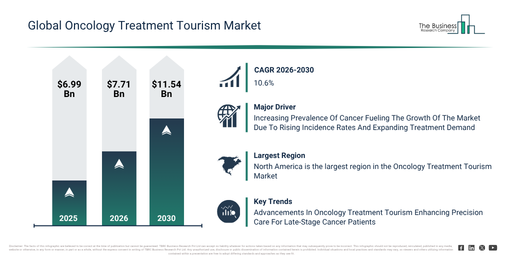
    The oncology treatment tourism market has experienced rapid expansion in recent years. It is projected to increase from $6.99 billion in 2025 to $7.71 billion in 2026, at a compound annual growth rate (CAGR) of 10.4%. The historic growth of this market can be attributed to factors including the rising global prevalence of cancer, the high expenses of oncology treatment in developed nations, restricted access to advanced therapies within home countries, the development of medical tourism infrastructure, and increasing awareness of international treatment options.

    The oncology treatment tourism market size is anticipated to undergo rapid expansion over the next few years. It is projected to increase to $11.54 billion in 2030, exhibiting a compound annual growth rate (CAGR) of 10.6%. This growth during the forecast period is fueled by the increased embrace of personalized oncology therapies, the broadening of international insurance coverage for cross-border medical services, rising investment in specialized cancer treatment centers, a surging demand for shorter treatment waiting periods, and greater cooperation among healthcare providers globally. Significant trends expected in the forecast period encompass enhanced cross-border accessibility to advanced cancer therapies, a growing need for cost-effective oncology treatments, the proliferation of international cancer centers of excellence, an increase in partnerships between hospitals and medical tourism agencies, and a rising preference for comprehensive treatment and hospitality packages.

    Get A Free Sample Report With In-Depth Market Insights:

    https://thebusinessresearchcompany.com/sample_request?id=35801232&type=smp&name=Oncology%20Treatment%20Tourism%20Market%20Report%202026&utm_source=Blogs&utm_medium=Paid&utm_campaign=Oct_PR

    Oncology Treatment Tourism Market Development Factors: What’s Supporting Demand?

    The expanding occurrence of cancer is projected to stimulate the expansion of the oncology treatment tourism market in the future. Cancer refers to a collection of illnesses marked by the unregulated proliferation and dissemination of atypical cells within the body, capable of invading adjacent tissues and spreading to remote organs. The escalation in cancer cases stems from aging demographics, given that older individuals face an elevated likelihood of acquiring genetic mutations that may result in cancer. Oncology treatment tourism assists cancer patients by facilitating access to sophisticated therapies, expert oncologists, and novel treatment approaches that might not be easily accessible in their native countries. It contributes to lowering treatment expenses and wait times, concurrently providing extensive care packages, thereby enhancing accessibility, ensuring continuity of care, and boosting overall treatment outcomes. For example, in February 2024, the World Health Organization, an international organization based in Switzerland, projected that more than 35 million new cancer cases are anticipated by 2050, representing a 77% increase from the 20 million cases recorded in 2022. Consequently, the rising occurrence of cancer is fueling the expansion of the oncology treatment tourism market.

    Oncology Treatment Tourism Market Segment Analysis: What Are The Core Market Categories?

    The oncology treatment tourism market covered in this report is segmented –

    1) By Treatment Type: Chemotherapy, Radiation Therapy, Immunotherapy, Targeted Therapy, Surgical Oncology, Other Treatment Types

    2) By Patient Profile: Adults, Pediatrics, Geriatrics

    3) By Booking Channel: Direct, Online Platforms, Medical Tourism Agencies

    4) By Service Provider: Hospitals, Specialty Clinics, Cancer Centers, Other Services

    Subsegments:

    1) By Chemotherapy: Adjuvant Chemotherapy, Neoadjuvant Chemotherapy, Palliative Chemotherapy, Combination Chemotherapy

    2) By Immunotherapy: Immune Checkpoint Inhibitor Therapy, Monoclonal Antibody Therapy, Cancer Vaccine Therapy, Adoptive Cell Transfer Therapy

    3) By Radiation Therapy: External Beam Radiation Therapy, Intensity Modulated Radiation Therapy, Image Guided Radiation Therapy, Brachytherapy

    4) By Targeted Therapy: Small Molecule Targeted Therapy, Monoclonal Antibody Targeted Therapy, Angiogenesis Inhibitor Therapy, Hormone Targeted Therapy

    5) By Surgical Oncology: Minimally Invasive Surgery, Robotic Assisted Surgery, Open Cancer Surgery, Cytoreductive Surgery

    6) By Other Treatment Types: Hormone Therapy, Stem Cell Transplantation, Hyperthermia Therapy, Photodynamic Therapy

    Oncology Treatment Tourism Market Transformation Trends: What Innovations Are Driving Change?

    Leading companies within the oncology treatment tourism market are concentrating on developing sophisticated solutions, particularly advanced oncology therapeutics, to improve the accuracy of treatment and clinical results for individuals with late-stage cancer. Advanced oncology therapeutics refers to a category of innovative medical interventions designed to target cancer at the molecular, cellular, or genetic level. For instance, in September 2025, Booking Health, a Germany-based medical travel facilitator, expanded its services to enhance international access to advanced stage 4 cancer treatments, including immunotherapy, CAR T-cell therapy, and theranostics. The platform offers extensive coordination for patients, encompassing second opinions, personalized treatment plans, travel logistics, and follow-up care. By connecting patients with highly certified German hospitals such as LMU Klinikum, these services facilitate access to cutting-edge oncology options like HIPEC, PIPAC, and radioembolization (Y-90), which are intended to boost survival outcomes, refine treatment precision, and support patient-centered cancer care.

    Oncology Treatment Tourism Market Key Participants And Competitive Landscape

    Major companies operating in the oncology treatment tourism market are Mayo Clinic, Memorial Sloan Kettering Cancer Center, Cleveland Clinic, Johns Hopkins Medicine, Apollo Hospitals, Charité-Universitätsmedizin Berlin, Sheba Medical Center, Dana-Farber Cancer Institute, The Royal Marsden Hospital, Seoul National University Hospital, Clínica Universidad de Navarra, Karolinska University Hospital, Institut Curie, Istituto Nazionale dei Tumori, Asan Medical Center, Netherlands Cancer Institute, The Christie NHS Foundation Trust, Cancer Institute Hospital of JFCR, HCG Cancer Centre, Princess Margaret Cancer Centre, MD Anderson Cancer Center.

    View The Full Oncology Treatment Tourism Market Report:

    https://thebusinessresearchcompany.com/report/oncology-treatment-tourism-market-report?utm_source=Blogs&utm_medium=Paid&utm_campaign=Oct_PR

    Oncology Treatment Tourism Market Geographic Analysis: Where Is Demand Rising Fastest?

    North America was the largest region in the oncology treatment tourism market in 2025. Asia-Pacific is expected to be the fastest-growing region in the forecast period. The regions covered in the oncology treatment tourism market report are Asia-Pacific, South East Asia, Western Europe, Eastern Europe, North America, South America, Middle East, Africa.

    Reach Out To Our Team:

    The Business Research Company: https://www.thebusinessresearchcompany.com/

    Americas: +1 310-496-7795

    Asia: +44 7882 955267 & +91 8897263534

    Europe: +44 7882 955267

    Email us at: marketing@tbrc.info

    Follow us on:

    LinkedIn: https://in.linkedin.com/company/the-business-research-company

    YouTube: https://www.youtube.com/channel/UC24_fI0rV8cR5DxlCpgmyFQ

    Global Market Model: https://www.thebusinessresearchcompany.com/global-market-model
  • Needle Protection Systems Market Valued At $4.89 Billion In 2026: Key Trends And Growth Drivers

    Needle Protection Systems Market Valued At $4.89 Billion In 2026: Key Trends And Growth Drivers

    Built to provide research that’s more actionable and strategically valuable, The Business Research Company’s 2026 market reports include market attractiveness analysis, total addressable market sizing, company benchmarking matrices, interactive Excel dashboards, broader supply chain intelligence, emerging startup tracking, and in-depth product insights.

    Needle Protection Systems Market Value Analysis: What Growth Lies Ahead Over The Forecast Period?

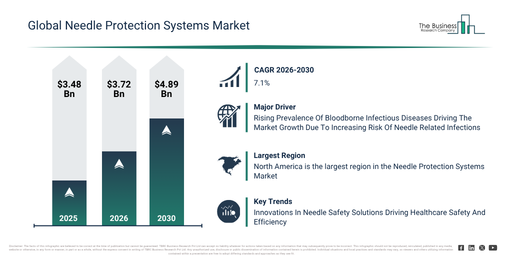
    The needle protection systems market size has seen robust growth in recent years. This market is forecasted to increase from $3.48 billion in 2025 to $3.72 billion in 2026, achieving a compound annual growth rate (CAGR) of 6.9%. Historically, this expansion has been driven by factors including a rising incidence of needlestick injuries, the implementation of occupational safety regulations, an increase in hospital and outpatient procedures, growing awareness of bloodborne pathogen risks, and the expansion of vaccination and injectable drug programs.

    The needle protection systems market is projected to experience substantial expansion in the coming years. This market is forecast to reach $4.89 billion by 2030, exhibiting a compound annual growth rate (CAGR) of 7.1%. The anticipated growth during this period stems from factors such as increasing demand for home care self-injection devices, a rise in the adoption of automated retractable mechanisms, heightened emphasis on healthcare worker safety compliance, the broader implementation of infection prevention protocols, and increased investment in smart safety monitoring solutions. Key trends expected over the forecast horizon encompass the growing adoption of auto-disable and retractable safety syringes, an uptick in demand for needleless connectors in IV therapy, the expanding integration of closed medication transfer systems, greater utilization of prefilled safety syringes, and an increasing focus on infection control and sharps injury prevention programs.

    Get A Free Sample Report With In-Depth Market Insights:

    https://thebusinessresearchcompany.com/sample_request?id=61947307&type=smp&name=Needle%20Protection%20Systems%20Market%20Report%202026&utm_source=Blogs&utm_medium=Paid&utm_campaign=Oct_PR

    Needle Protection Systems Market Growth Backed By Core Demand Fundamentals

    The escalating incidence and ongoing danger from bloodborne infectious diseases are projected to drive the expansion of the needle protection systems market in the future. These diseases are illnesses transmitted through contact with infected blood or certain bodily fluids, including HIV, hepatitis B, and hepatitis C. The persistence of these infections is attributed to factors such as unsafe injection practices, occupational exposure among healthcare workers, and shortcomings in preventive and protective measures, which enable new infections to occur annually. Needle protection systems are vital in mitigating the risk of bloodborne pathogen transmission by facilitating safer handling, use, and disposal of needles and sharps, thereby minimizing accidental needlestick injuries and occupational exposure to infected blood. For instance, in April 2025, data from the Centers for Disease Control and Prevention, a US-based government agency, showed that in 2023, acute hepatitis B cases in the United States totaled 2,214, with the estimated true number of infections reaching approximately 14,400 after accounting for under ascertainment. Consequently, the increasing prevalence of bloodborne infectious diseases is fueling the growth of the needle protection systems market.

    Needle Protection Systems Market Breakdown By Product Type And Application

    The needle protection systems market covered in this report is segmented –

    1) By Device Type: Safety Syringes, Safety Intravenous (IV) Catheters And Blood Collection Sets, Needleless Connectors And Closed Intravenous (IV) Systems, Sharps Containers And Disposal Systems, Training, Compliance And Monitoring Services

    2) By Mechanism: Manual Retractable, Automated Retractable, Hinged Or Sliding Shields

    3) By Distribution Channel: Direct Tender, Retail Pharmacies, Online Pharmacies

    4) By Clinical Application: Medication Administration, Phlebotomy And Blood Collection, Intravenous (IV) Therapy And Vascular Access, Surgical Procedures, Home Care Self-Injection

    5) By End User: Hospitals, Ambulatory And Outpatient Clinics, Home Healthcare Providers, Blood Banks And Laboratories, Diagnostic Centers

    Subsegments:

    1) By Safety Syringes: Auto Disable Safety Syringes, Retractable Safety Syringes, Sliding Shield Safety Syringes, Spring Activated Safety Syringes, Prefilled Safety Syringes

    2) By Safety Intravenous Catheters And Blood Collection Sets: Winged Infusion Safety Sets, Peripheral Intravenous Safety Catheters, Vacuum Blood Collection Safety Needles, Butterfly Blood Collection Sets, Closed Blood Sampling Systems

    3) By Needleless Connectors And Closed Intravenous Systems: Positive Displacement Needleless Connectors, Negative Displacement Needleless Connectors, Neutral Displacement Needleless Connectors, Closed Medication Transfer Systems, Split Septum Connectors

    4) By Sharps Containers And Disposal Systems: Single Use Sharps Containers, Reusable Sharps Containers, Wall Mounted Sharps Disposal Units, Portable Sharps Disposal Containers, Safety Needle Destruction Devices

    5) By Training, Compliance And Monitoring Services: Healthcare Worker Safety Training Programs, Sharps Injury Prevention Compliance Programs, Digital Safety Monitoring Platforms, Occupational Safety Assessment Services, Infection Control Education Programs

    Needle Protection Systems Market Growth Trends Reshaping The Competitive Landscape

    Leading companies within the needle protection systems market are concentrating on employing cutting-edge technologies, like passive safety technology, to boost user safety and avert needle-stick incidents. This passive safety technology operates by automatically covering or withdrawing the needle post-use, thereby assisting in the prevention of unintended needle-stick injuries, lowering the likelihood of blood-borne infections, elevating the general safety for healthcare personnel, and guaranteeing adherence to contemporary safety benchmarks in medical environments. An example is the introduction of the SurTract Safety Syringe by Terumo Medical Corporation, a US-based medical device manufacturer, in January 2026, which incorporates Roncadelle Operations S.r.l.’s SafeR passive safety technology. This syringe features a customizable needle choice, a blunt needle design to avoid blunting, and a low dead-space build to cut down on medication wastage. Furthermore, it includes ergonomic design elements designed to improve user comfort and lessen hand strain during frequent injections. The SurTract maintains conventional injection methods while providing greater reliability, ease of use, and a smaller ecological footprint, rendering it appropriate for hospitals, clinics, emergency care facilities, and vaccination programs. The fusion of advanced safety technology with practical usability enables these solutions to assist healthcare organizations in fulfilling strict occupational safety regulations and enhancing patient care results generally.

    Needle Protection Systems Market Key Players Shaping Industry Direction

    Major companies operating in the needle protection systems market are Cardinal Health Inc., Medtronic plc, Becton Dickinson Company, Baxter International Inc., B. Braun Melsungen AG, Terumo Corporation, Nipro Corporation, Smiths Group plc, West Pharmaceutical Services Inc., ICU Medical Inc., Gerresheimer AG, Merit Medical Systems Inc., Vygon S.A., Codan Ltd, SOL-Millennium Medical Group Inc., Retractable Technologies Inc., HMD Healthcare Ltd., Revolution Medical Corporation, Lifelong Meditech Ltd., DMC Medical Ltd.

    View The Full Needle Protection Systems Market Report:

    https://thebusinessresearchcompany.com/report/needle-protection-systems-market-report?utm_source=Blogs&utm_medium=Paid&utm_campaign=Oct_PR

    Needle Protection Systems Market Regional Analysis: Which Region Leads By Revenue?

    North America was the largest region in the needle protection systems market in 2025. Asia-Pacific is expected to be the fastest-growing region in the forecast period. The regions covered in the needle protection systems market report are Asia-Pacific, South East Asia, Western Europe, Eastern Europe, North America, South America, Middle East, Africa.

    Reach Out To Our Team:

    The Business Research Company: https://www.thebusinessresearchcompany.com/

    Americas: +1 310-496-7795

    Asia: +44 7882 955267 & +91 8897263534

    Europe: +44 7882 955267

    Email us at: marketing@tbrc.info

    Follow us on:

    LinkedIn: https://in.linkedin.com/company/the-business-research-company

    YouTube: https://www.youtube.com/channel/UC24_fI0rV8cR5DxlCpgmyFQ

    Global Market Model: https://www.thebusinessresearchcompany.com/global-market-model
  • Nasal Aspirate Testing Market Size In 2026: Growth Outlook And Forecast Through 2030

    Nasal Aspirate Testing Market Size In 2026: Growth Outlook And Forecast Through 2030

    Backed by market attractiveness analysis, total addressable market sizing, company benchmarking matrices, interactive Excel dashboards, wider supply chain intelligence, emerging startup coverage, and detailed product-level insights, The Business Research Company’s 2026 market reports are designed to offer research that is more actionable and strategically valuable than ever.

    Nasal Aspirate Testing Market Size Forecast: How Big Could The Market Get By 2030?

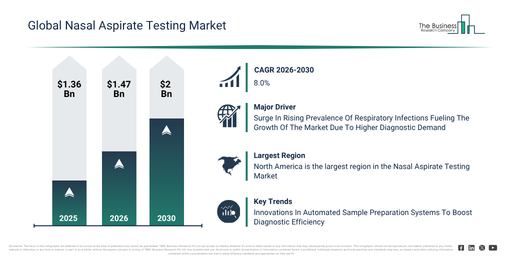
    The nasal aspirate testing market has demonstrated robust growth in recent years. Its value is set to expand from $1.36 billion in 2025 to $1.47 billion in 2026, reflecting a compound annual growth rate (CAGR) of 7.8%. This market’s past expansion is largely due to factors including the rising prevalence of respiratory infections, advancements in diagnostic laboratory infrastructure, increased awareness concerning early disease detection, enhanced hospital testing capabilities, and the integration of molecular diagnostic technologies.

    The nasal aspirate testing market size is poised for robust expansion in the coming years, with projections indicating it will reach $2 billion in 2030, exhibiting a compound annual growth rate (CAGR) of 8.0%. This anticipated growth during the forecast period is fueled by an increasing demand for highly sensitive pathogen detection, escalating investment in rapid point-of-care diagnostics, the growing integration of AI-assisted diagnostic analysis, the broadening of infectious disease surveillance programs, and a heightened focus on personalized respiratory treatment approaches. Concurrently, significant trends for the forecast period encompass the rising adoption of rapid molecular diagnostic testing, a surge in demand for pediatric respiratory infection screening, the expanding use of automated sample processing systems, the proliferation of point-of-care respiratory testing, and an intensified emphasis on the early detection of infectious diseases.

    Get A Free Sample Report With In-Depth Market Insights:

    https://thebusinessresearchcompany.com/sample_request?id=12261546&type=smp&name=Nasal%20Aspirate%20Testing%20Market%20Report%202026&utm_source=Blogs&utm_medium=Paid&utm_campaign=Oct_PR

    Nasal Aspirate Testing Market Growth Catalysts And Demand Drivers

    The increasing incidence of respiratory infections is anticipated to boost the expansion of the nasal aspirate testing market in the future. These infections are illnesses brought on by viral or bacterial agents attacking the nasal passages, throat, and lungs, leading to symptoms like coughing, fever, and troubled breathing. The frequency of these infections continues to climb due to the widespread presence of seasonal respiratory viruses, particularly in crowded and high-interaction environments where transmission is more probable. Nasal aspirate testing aids in the effective handling of respiratory infections by allowing medical professionals to gather concentrated respiratory samples from nasal passages, which enhances the accuracy of pathogen detection, facilitates prompt and accurate diagnosis, and assists in guiding rapid treatment decisions. For instance, in June 2024, the UK Health Security Agency, a UK-based government agency, reported that approximately 1,681 patients were admitted to critical care in England with confirmed influenza between week 40 of 2022 and week 15 of 2023. Consequently, the growing prevalence of respiratory infections is projected to stimulate the growth of the nasal aspirate testing market.

    Nasal Aspirate Testing Market Segment Analysis And Revenue Potential

    The nasal aspirate testing market covered in this report is segmented –

    1) By Product Type: Instruments, Consumables

    2) By Test Type: Molecular Testing, Antigen Testing, Microbiological Culture Testing, Allergy Testing

    3) By Age Group: Pediatric, Adult

    4) By Application: Infectious Diseases, Respiratory Diseases, Other Applications

    5) By End-User: Hospitals, Diagnostic Laboratories, Research Institutes, Other End Users

    Subsegments:

    1) By Instruments: Nasal Aspirate Collection Devices, Suction Pumps And Vacuum Systems, Sample Processing Analyzers, Molecular Diagnostic Instruments, Automated Laboratory Workstations

    2) By Consumables: Sterile Suction Catheters, Sample Collection Tubes, Transport Media Kits, Reagents And Assay Kits, Disposable Filters And Tips

    Nasal Aspirate Testing Market Trends Shaping Long-Term Demand

    Leading companies in the nasal aspirate testing market are concentrating on developing advanced solutions, such as automated sample preparation systems, to enhance testing speed, accuracy, and standardization. These automated systems are technologies designed to streamline the collection, processing, and preparation of nasal aspirate samples with minimal human intervention, effectively reducing errors, saving time, and improving consistency and accuracy in diagnostic analyses. For instance, in December 2023, Thermo Fisher Scientific Inc., a US-based biotechnology company, introduced the Thermo Scientific KingFisher Apex Automated Sample Preparation Solution. This innovative system aims to simplify and automate respiratory diagnostic testing. The KingFisher Apex is a sophisticated automated sample preparation system that integrates magnetic particle technology with customizable protocols, allowing laboratories to efficiently process multiple sample types with minimal hands-on time, decrease errors, and accelerate diagnostic turnaround. As a next-generation automated sample preparation system, it features a modular design for scalability, broad compatibility with a wide range of assays, and integrated software for workflow monitoring and optimization, making it particularly valuable across clinical, research, and high-volume testing environments.

    Nasal Aspirate Testing Market Competitive Analysis Of Leading Industry Participants

    Major companies operating in the nasal aspirate testing market are Thermo Fisher Scientific Inc., Abbott Laboratories, Siemens Healthineers AG, Becton Dickinson Company, bioMérieux SA, Hologic Inc., QuidelOrtho Corporation, Bio-Rad Laboratories Inc., QIAGEN N.V., Cepheid Inc., DiaSorin S.p.A., SD Biosensor Inc., Meridian Bioscience Inc., Seegene Inc., Sekisui Diagnostics LLC, QuantuMDx Group Limited, Altona Diagnostics GmbH, Fast Track Diagnostics Ltd., Sherlock Biosciences Inc., Coris BioConcept S.A.

    View The Full Nasal Aspirate Testing Market Report:

    https://thebusinessresearchcompany.com/report/nasal-aspirate-testing-market-report?utm_source=Blogs&utm_medium=Paid&utm_campaign=Oct_PR

    Nasal Aspirate Testing Market Geographic Distribution And Regional Opportunities

    North America was the largest region in the nasal aspirate testing market in 2025. Asia-Pacific is expected to be the fastest-growing region in the forecast period. The regions covered in the nasal aspirate testing market report are Asia-Pacific, South East Asia, Western Europe, Eastern Europe, North America, South America, Middle East, Africa.

    Reach Out To Our Team:

    The Business Research Company: https://www.thebusinessresearchcompany.com/

    Americas: +1 310-496-7795

    Asia: +44 7882 955267 & +91 8897263534

    Europe: +44 7882 955267

    Email us at: marketing@tbrc.info

    Follow us on:

    LinkedIn: https://in.linkedin.com/company/the-business-research-company

    YouTube: https://www.youtube.com/channel/UC24_fI0rV8cR5DxlCpgmyFQ

    Global Market Model: https://www.thebusinessresearchcompany.com/global-market-model
  • Nanobody-Based Diagnostics Market Forecast Highlights A $2.07 Billion Opportunity For Industry Participants

    Nanobody-Based Diagnostics Market Forecast Highlights A $2.07 Billion Opportunity For Industry Participants

    Built to provide research that’s more actionable and strategically valuable, The Business Research Company’s 2026 market reports include market attractiveness analysis, total addressable market sizing, company benchmarking matrices, interactive Excel dashboards, broader supply chain intelligence, emerging startup tracking, and in-depth product insights.

    Nanobody-Based Diagnostics Market Growth Analysis: How Will Revenue Trend Over The Forecast Period?

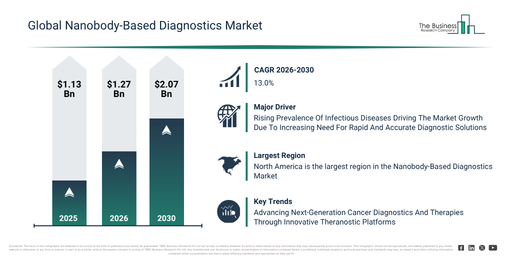
    The nanobody-based diagnostics market size has demonstrated rapid expansion in recent years. Projections indicate it will grow from $1.13 billion in 2025 to $1.27 billion in 2026, achieving a compound annual growth rate (CAGR) of 12.7%. The market’s historical growth is attributable to several factors, including advancements in antibody engineering technologies, an escalating prevalence of infectious diseases, a rise in cancer diagnostics demand, increased research funding in immunodiagnostics, and the proliferation of rapid diagnostic testing platforms.

    The nanobody-based diagnostics market is projected to experience swift expansion over the coming years. Its valuation is anticipated to reach $2.07 billion by 2030, demonstrating a compound annual growth rate (CAGR) of 13.0%. Several factors are contributing to this growth during the forecast period, including an escalating need for precision diagnostics, greater integration of AI-driven assay analysis instruments, the surging uptake of microfluidic biosensor technologies, the broadening scope of decentralized diagnostic testing, and a heightened emphasis on biomarkers for early disease detection. Key trends observed over the forecast duration encompass the increasing acceptance of lateral flow nanobody assays, a heightened requirement for high-affinity single-domain antibody reagents, the expanding incorporation of nanobodies into point-of-care diagnostic solutions, the proliferation of platforms for multiplexed biomarker detection, and the growing application of nanobody-centric imaging in monitoring diseases.

    Get A Free Sample Report With In-Depth Market Insights:

    https://thebusinessresearchcompany.com/sample_request?id=36295748&type=smp&name=Nanobody-Based%20Diagnostics%20Market%20Report%202026&utm_source=Blogs&utm_medium=Paid&utm_campaign=Oct_PR

    Nanobody-Based Diagnostics Market Growth Momentum: What Factors Are Shaping Demand?

    The increasing incidence of infectious diseases is anticipated to fuel the expansion of the nanobody based diagnostics market in the future. These diseases are defined as conditions resulting from harmful microorganisms like bacteria, viruses, fungi, or parasites, capable of spreading between individuals or via contaminated surroundings. The rise in infectious disease prevalence is attributed to increased human interaction, which facilitates pathogen transmission within populations. Nanobody-based diagnostic tools offer quick, highly specific, and sensitive identification of infectious agents, allowing for prompt diagnosis and intervention. This, in turn, helps manage the propagation of these diseases and enhances patient recovery. For example, in March 2024, the Centers for Disease Control and Prevention, a US-based government agency, reported that tuberculosis cases climbed from 8,320 in 2022 to 9,615 in 2023, representing an increase of 1,295 cases. Consequently, the growing occurrence of infectious diseases is a key factor driving the nanobody based diagnostics market. The escalating healthcare investments are projected to stimulate the expansion of the nanobody based diagnostics market moving forward. Healthcare investments involve the channeling of funds by governments, entities, and medical providers to upgrade medical infrastructure, services, technology, and overall healthcare provision. These investments are growing due to a heightened demand for sophisticated medical services and modern technologies aimed at enhancing patient care and health outcomes. Such funding fosters the advancement and adoption of nanobody based diagnostics by financing cutting-edge research, upgrading laboratory facilities, and empowering healthcare providers to deploy advanced diagnostic tools for more precise and prompt disease identification. For instance, in January 2026, the Centers for Medicare & Medicaid Services, a US-based government agency, reported that in 2024, Medicare spending saw a 7.8% rise, reaching $1,118.0 billion and constituting 21% of total national health expenditures (NHE), concurrently, Medicaid spending increased by 6.6% to $931.7 billion, making up 18% of total NHE. Thus, the increase in healthcare investments is propelling the growth of the nanobody based diagnostics market.

    Nanobody-Based Diagnostics Market Segment Outlook: Which Categories Are Growing Fastest?

    The nanobody-based diagnostics market covered in this report is segmented –

    1) By Technology: Immunoassays, Molecular Diagnostics, Biosensor-Based Detection, Fluorescence And Imaging Diagnostics

    2) By Product Type: Reagents, Kits, Instruments, Other Product Types

    3) By Application: Infectious Diseases, Oncology, Autoimmune Disorders, Cardiovascular Diseases, Other Applications

    4) By End-User: Hospitals And Clinics, Diagnostic Laboratories, Research Institutes, Other End Users

    Subsegments:

    1) By Immunoassays: Enzyme Linked Immunosorbent Assay, Western Blotting, Lateral Flow Assay, Radioimmunoassay

    2) By Molecular Diagnostics: Polymerase Chain Reaction Based Assays, Nucleic Acid Hybridization, Next Generation Sequencing, Isothermal Amplification Techniques

    3) By Biosensor Based Detection: Electrochemical Biosensors, Optical Biosensors, Piezoelectric Biosensors, Microfluidic Biosensors

    4) By Fluorescence and Imaging Diagnostics: Fluorescence Microscopy, Flow Cytometry, Fluorescence In Situ Hybridization, Molecular Imaging Techniques

    Nanobody-Based Diagnostics Market Trends Redefining Industry Growth

    Major companies operating in the nanobody-based diagnostics market are prioritizing the development of innovative solutions, including advanced nanobody platforms, to enhance the accuracy and speed of disease detection. These sophisticated nanobody platforms employ small, single-domain antibodies known for their high specificity and stability, which enables more rapid tissue penetration, improved targeting of disease biomarkers, and superior diagnostic and therapeutic effectiveness compared to conventional antibodies. For example, in September 2025, Cyclotek Pty Ltd, an Australia-based radiopharmaceutical company, was awarded a CRC-P Round 16 grant by the Australian Government to advance a nanobody-based theranostic platform for cancer. This project, undertaken in collaboration with the University of Melbourne, Revela Bio Inc., and several local SMEs, concentrates on creating targeted diagnostics and therapeutics that leverage nanobodies against the Fibroblast Activation Protein (FAP), a biomarker highly expressed in aggressive cancers such as lung, pancreatic, and ovarian cancer. Nanobodies merge the precise targeting of antibodies with the pharmacokinetics of small molecules, rendering them highly suitable for both diagnostic imaging and therapeutic applications. The initiative aims to develop advanced radiolabelling chemistry, conduct pre-clinical evaluations, and progress to first-in-human clinical trials, thereby enabling Cyclotek Pty Ltd to scale and commercialize this innovative platform across Australia, New Zealand, and the broader Asia-Pacific region.

    Nanobody-Based Diagnostics Market Industry Leaders And Competitive Landscape

    Major companies operating in the nanobody-based diagnostics market are Sanofi S.A., Thermo Fisher Scientific Inc., Merck KGaA, Agilent Technologies Inc., PerkinElmer Inc., Bruker Corporation, Bio-Rad Laboratories Inc., GenScript Biotech Corporation, Biocytogen LLC, Sino Biological Inc., Abzena plc, NanoTemper Technologies GmbH, RayBiotech Inc., Proteintech Group Inc., Creative Biolabs Inc., Isogenica Ltd., Beroni Group Limited, Immudex ApS, Cyclotek Pty Ltd, NanoTag Biotechnologies GmbH.

    View The Full Nanobody-Based Diagnostics Market Report:

    https://thebusinessresearchcompany.com/report/nanobody-based-diagnostics-market-report?utm_source=Blogs&utm_medium=Paid&utm_campaign=Oct_PR

    Nanobody-Based Diagnostics Market Regional Analysis And Leading Geography

    North America was the largest region in the nanobody-based diagnostics market in 2025. Asia-Pacific is expected to be the fastest-growing region in the forecast period. The regions covered in the nanobody-based diagnostics market report are Asia-Pacific, South East Asia, Western Europe, Eastern Europe, North America, South America, Middle East, Africa.

    Reach Out To Our Team:

    The Business Research Company: https://www.thebusinessresearchcompany.com/

    Americas: +1 310-496-7795

    Asia: +44 7882 955267 & +91 8897263534

    Europe: +44 7882 955267

    Email us at: marketing@tbrc.info

    Follow us on:

    LinkedIn: https://in.linkedin.com/company/the-business-research-company

    YouTube: https://www.youtube.com/channel/UC24_fI0rV8cR5DxlCpgmyFQ

    Global Market Model: https://www.thebusinessresearchcompany.com/global-market-model
  • Mobile Health (mHealth) Ecosystem Market Growth Outlook: Why Analysts Expect Continued Expansion

    Mobile Health (mHealth) Ecosystem Market Growth Outlook: Why Analysts Expect Continued Expansion

    Backed by market attractiveness analysis, total addressable market sizing, company benchmarking matrices, interactive Excel dashboards, wider supply chain intelligence, emerging startup coverage, and detailed product-level insights, The Business Research Company’s 2026 market reports are designed to offer research that is more actionable and strategically valuable than ever.

    Mobile Health (mHealth) Ecosystem Market CAGR Outlook And Future Development

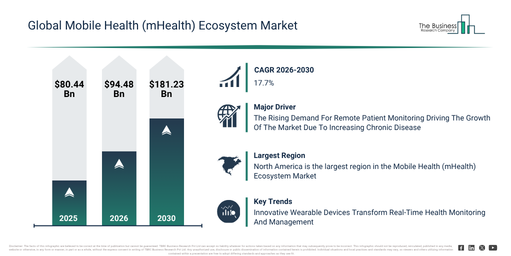
    The mobile health (mHealth) ecosystem market has experienced considerable growth in recent years. Its size is anticipated to escalate from $80.44 billion in 2025 to $94.48 billion in 2026, achieving a compound annual growth rate (CAGR) of 17.4%. Historically, this expansion has been driven by several factors, including the global rise in smartphone penetration, the increasing prevalence of chronic diseases, a greater acceptance of telehealth, the expansion of healthcare digitization efforts, and a growing patient demand for convenient healthcare access.

    The mobile health (mHealth) ecosystem market size is poised for significant expansion in the next few years. It is projected to achieve a valuation of $181.23 billion by 2030, exhibiting a compound annual growth rate (CAGR) of 17.7%. This anticipated growth is fueled by factors such as the increasing integration of AI-powered health analytics, a rising demand for personalized mobile healthcare solutions, the proliferation of 5G-enabled health services, heightened investment in digital health infrastructure, and the expanded use of predictive health monitoring tools. Notable trends for this forecast period encompass the wider adoption of remote patient monitoring applications, greater synergy between wearable health devices and mobile platforms, an escalating need for chronic disease management solutions, the broadening of telemedicine and virtual consultation services, and an increased focus on interoperable health data systems.

    Get A Free Sample Report With In-Depth Market Insights:

    https://thebusinessresearchcompany.com/sample_request?id=71810004&type=smp&name=Mobile%20Health%20%28mHealth%29%20Ecosystem%20Market%20Report%202026&utm_source=Blogs&utm_medium=Paid&utm_campaign=Oct_PR

    Mobile Health (mHealth) Ecosystem Market Growth Factors: What’s Supporting Expansion?

    The growing requirement for remote patient monitoring (RPM) is anticipated to boost the development of the mobile health (mHealth) ecosystem market. RPM involves employing digital tools to collect and transmit patients’ health information from distant locations to healthcare providers for continuous monitoring, management, and prompt intervention. The need for RPM is increasing due to the rising occurrence of chronic conditions, particularly among high-risk and aging populations, where consistent health tracking supports more effective management of ailments such as diabetes, heart disease, and hypertension outside conventional clinical settings. The mHealth ecosystem facilitates RPM by integrating wearable devices, mobile applications, and cloud-based analytics platforms to support uninterrupted data collection, remote clinical oversight, and care coordination. For instance, in August 2025, according to the Office of Inspector General, a US-based independent organization, the number of Medicare enrollees using remote patient monitoring reached nearly 1 million in 2024, representing a 27% increase compared to 2023. Therefore, the escalating demand for remote patient monitoring is fueling the growth of the mobile health (mHealth) ecosystem market.

    Mobile Health (mHealth) Ecosystem Market Segment Breakdown: Which Categories Lead On Revenue?

    The mobile health (mHealth) ecosystem market covered in this report is segmented –

    1) By Component: Devices, Software, Services

    2) By Business Model: Direct-to-Consumer, Business-to-Business, Business-to-Government

    3) By Deployment Mode: On-Premises, Cloud

    4) By Application: Chronic Disease Management, Fitness And Wellness, Remote Monitoring, Diagnostics, Other Applications

    5) By End-User: Hospitals, Clinics, Home Healthcare, Other End-Users

    Subsegments:

    1) By Devices: Wearable Devices, Portable Monitoring Devices, Diagnostic Devices, Fitness Trackers

    2) By Software: Health Management Applications, Remote Patient Monitoring Platforms, Electronic Health Records Software, Telemedicine Software

    3) By Services: Remote Monitoring Services, Data Analytics Services, Healthcare Consultation Services, Disease Management Services

    Mobile Health (mHealth) Ecosystem Market Industry Trends: What’s Reshaping Demand?

    Key companies operating within the mobile health (mHealth) ecosystem market are prioritizing the development of cutting-edge products, such as wearable health monitoring devices, to enable continuous tracking and management of users’ health and well-being. Wearable health monitoring devices are electronic gadgets affixed to the body that consistently monitor and document essential health metrics, including heart rate, activity levels, sleep patterns, and blood oxygen. For example, in September 2024, Apple Inc., a US-based consumer technology company, released the Apple Watch and AirPods Pro 2, introducing wearable devices equipped with advanced health-monitoring functionalities. The Apple Watch launched sleep apnea notifications by employing a breathing disturbances metric to detect interruptions in breathing during sleep, assisting users in identifying a condition that impacts more than a billion people globally. Simultaneously, AirPods Pro 2 improved hearing health with features like loud sound reduction, a clinical-grade hearing test, and an over-the-counter hearing aid alternative for individuals with mild to moderate hearing loss.

    Mobile Health (mHealth) Ecosystem Market Competitive Overview And Top Companies

    Major companies operating in the mobile health (mHealth) ecosystem market are Apple Inc., Samsung Electronics Co Ltd., AT And T Inc., Huawei Technologies Co Ltd., Vodafone Group Plc, Xiaomi Corporation, Medtronic PLC, Koninklijke Philips N.V, GE HealthCare Technologies Inc, Omron Healthcare Inc., Garmin Ltd., ResMed Inc., Dexcom Inc., Steelcase Inc., Masimo Corporation, Polar Electro Oy, Whoop Inc., AliveCor Inc., iHealth Lab Inc., AirStrip Technologies Inc., and Oura Health Ltd.

    View The Full Mobile Health (mHealth) Ecosystem Market Report:

    https://thebusinessresearchcompany.com/report/mobile-health-mhealth-ecosystem-market-report?utm_source=Blogs&utm_medium=Paid&utm_campaign=Oct_PR

    Mobile Health (mHealth) Ecosystem Market Leading Geography: Which Region Contributes The Most Revenue?

    North America was the largest region in the mobile health (mHealth) ecosystem market in 2025. Asia-Pacific is expected to be the fastest-growing region in the forecast period. The regions covered in the mobile health (mHealth) ecosystem market report are Asia-Pacific, South East Asia, Western Europe, Eastern Europe, North America, South America, Middle East, Africa.

    Reach Out To Our Team:

    The Business Research Company: https://www.thebusinessresearchcompany.com/

    Americas: +1 310-496-7795

    Asia: +44 7882 955267 & +91 8897263534

    Europe: +44 7882 955267

    Email us at: marketing@tbrc.info

    Follow us on:

    LinkedIn: https://in.linkedin.com/company/the-business-research-company

    YouTube: https://www.youtube.com/channel/UC24_fI0rV8cR5DxlCpgmyFQ

    Global Market Model: https://www.thebusinessresearchcompany.com/global-market-model
  • Mental Health-Sleep Overlap Market Forecast To Reach $8.44 Billion By 2030: Key Trends Explained

    Mental Health-Sleep Overlap Market Forecast To Reach $8.44 Billion By 2030: Key Trends Explained

    Featuring market attractiveness scoring, total addressable market sizing, company benchmarking matrices, interactive Excel dashboards, deeper supply chain intelligence, emerging startup tracking, and granular product-level insights, The Business Research Company’s 2026 market reports are built to deliver research that is both more actionable and more strategically valuable.

    Mental Health-Sleep Overlap Market Value Analysis: What Growth Lies Ahead Over The Forecast Period?

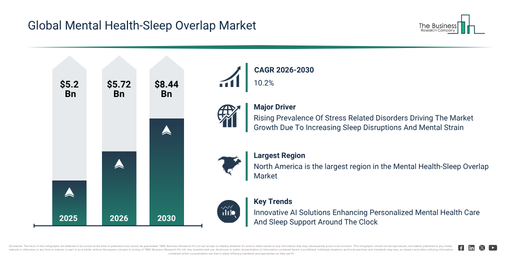
    The mental health-sleep overlap market has shown strong expansion in recent years. It is forecast to rise from $5.2 billion in 2025 to $5.72 billion in 2026, achieving a compound annual growth rate (CAGR) of 10.0%. This historical growth can be attributed to factors such as the increasing prevalence of anxiety and depression disorders, growing recognition of sleep disorders, wider acceptance of behavioral therapy, the rise of telehealth services for mental health, and enhanced research into sleep and circadian rhythm science.

    The mental health-sleep overlap market is projected to experience substantial expansion in the coming years, with its size forecast to reach $8.44 billion in 2030, growing at a compound annual growth rate (CAGR) of 10.2%. This anticipated growth during the forecast period can be attributed to various factors, including the increasing adoption of personalized sleep-mental health treatment plans, greater use of AI-driven behavioral analytics, rising employer investment in mental wellness programs, the expansion of remote patient monitoring technologies, and the increasing integration of sleep biomarkers in psychiatric care. Key trends expected over this period involve a greater integration of sleep assessment into mental health screening, the rising adoption of combined CBT-I and CBT treatment programs, a growing demand for digital tools to monitor sleep and mood, the expansion of tele-psychiatry services addressing sleep disorders, and an increased focus on preventive mental health and sleep wellness programs.

    Get A Free Sample Report With In-Depth Market Insights:

    https://thebusinessresearchcompany.com/sample_request?id=80399960&type=smp&name=Mental%20Health-Sleep%20Overlap%20Market%20Report%202026&utm_source=Blogs&utm_medium=Paid&utm_campaign=Oct_PR

    Mental Health-Sleep Overlap Market Development Factors: What’s Supporting Demand?

    The increasing occurrence of stress-related conditions is anticipated to fuel the expansion of the mental health–sleep overlap market in the future. These disorders are defined as states where prolonged encounters with psychological or environmental pressures lead to manifestations such as anxiety, depression, difficulties in emotional regulation, and hindered daily activities. Their incidence is growing because of ongoing exposure to persistent psychosocial stressors, including work pressures, financial strain, social challenges, and lifestyle changes that surpass individual coping abilities and detrimentally impact mental well-being. A strong connection exists between stress-related conditions and sleep disturbances, given that chronic stress interferes with neurobiological functions crucial for mood control and circadian cycles, resulting in issues like insomnia, fragmented sleep, or hypersomnia. As an illustration, data from May 2024, stemming from the 2024 annual mental health poll carried out by the American Psychiatric Association, a US-based organization, indicated that in 2024, 43% of adults reported elevated anxiety levels compared to the prior year, an increase from 37% in 2023 and 32% in 2022. Consequently, the expanding occurrence of stress-related conditions is propelling the growth of the mental health–sleep overlap market.

    Mental Health-Sleep Overlap Market Segment Landscape: Which Areas Lead Development?

    The mental health-sleep overlap market covered in this report is segmented –

    1) By Treatment And Service Mix: Psychiatric Pharmacotherapy With Sleep Impact, Cognitive Behavioral Therapy (CBT-I) + Cognitive Behavioral Therapy (CBT) Integrated Programs, Tele-Psychiatry Or Therapy Services, Digital Monitoring And Relapse Prevention Tools, Adjunct Devices

    2) By Age Group: Pediatric, Adult, Geriatric

    3) By Delivery Mode: Mobile Applications, Web-Based Platforms, Telehealth Integrations

    4) By Application: Preventive Healthcare And Wellness, Clinical Treatment And Disease Management, Long-Term Care And Assisted Living

    5) By End User Or Channel: Outpatient Mental Health Clinics, Telehealth Platforms, Hospitals Or Behavioral Health Centers, Employer Or Payer Programs, Other End Users

    Subsegments:

    1) By Psychiatric Pharmacotherapy With Sleep Impact: Antidepressant Medications, Anxiolytic Medications, Mood Stabilizing Agents, Atypical Antipsychotic Medications, Sedative Hypnotic Medications

    2) By Cognitive Behavioral Therapy (CBT-I) + Cognitive Behavioral Therapy (CBT) Integrated Programs: Sleep Restriction Therapy Programs, Stimulus Control Therapy Programs, Cognitive Restructuring Therapy, Relaxation Training Programs, Mindfulness-Based Behavioral Therapy

    3) By Tele-Psychiatry Or Therapy Services: Video Consultation Services, Audio-Based Therapy Sessions, Text-Based Counseling Platforms, Remote Psychological Assessment Services, Virtual Group Therapy Programs

    4) By Digital Monitoring And Relapse Prevention Tools: Sleep Pattern Tracking Software, Mood Monitoring Applications, Behavioral Analytics Platforms, Predictive Risk Assessment Tools, Remote Patient Monitoring Dashboards

    5) By Adjunct Devices: Light Therapy Lamps, Smart Sleep Tracking Watches, Biometric Monitoring Bands, Heart Rate Variability Sensors, Circadian Rhythm Regulation Devices

    Mental Health-Sleep Overlap Market Transformation Trends: What Innovations Are Driving Change?

    Leading companies in the mental health-sleep overlap sector are concentrating on developing advanced solutions, such as artificial intelligence (AI)-powered mental health platforms, to deliver personalized, continuous support for issues related to stress and sleep. These AI-driven mental health platforms are digital tools that utilize AI to offer individualized mental health assistance, including real-time advice, coping mechanisms, and symptom monitoring, thereby assisting users in managing stress, improving sleep, and accessing care at any time without needing to wait for in-person appointments. For instance, in October 2025, Lyra Health, a US-based digital mental health company, introduced Lyra AI, a clinical-grade AI platform engineered to provide personalized mental health support. Lyra AI integrates sophisticated conversational AI with the existing Lyra Empower platform to offer 24/7 guidance for difficulties like stress, burnout, and sleep disturbances. The platform blends digital skill-building exercises with live provider sessions, incorporates a risk-flagging system that escalates urgent situations to human clinicians, and adheres to stringent clinical and ethical benchmarks through its Polaris Principles. Its applications include enhancing sleep quality, alleviating stress, and supporting overall mental wellness, delivering scalable, evidence-based care while maintaining human oversight.

    Mental Health-Sleep Overlap Market Leading Players And Competitive Positioning

    Major companies operating in the mental health-sleep overlap market are Johnson & Johnson, Koninklijke Philips N.V., Teladoc Health, Lyra Health Inc., Headspace Health Inc., Included Health Inc., Talkspace Inc., Spring Health, Whoop Inc., Transcarent Inc., Calm.com Inc., Modern Health Inc., Unmind Ltd., Big Health Inc., Click Therapeutics Inc., Welldoc Inc., Quartet Health Inc., Meru Health Inc., Ieso Digital Health Ltd., Wysa LTD., Oura Health Oy.

    View The Full Mental Health-Sleep Overlap Market Report:

    https://thebusinessresearchcompany.com/report/mental-health-sleep-overlap-market-report?utm_source=Blogs&utm_medium=Paid&utm_campaign=Oct_PR

    Mental Health-Sleep Overlap Market Regional Split: Which Areas Are Fueling Growth?

    North America was the largest region in the mental health-sleep overlap market in 2025. Asia-Pacific is expected to be the fastest-growing region in the forecast period. The regions covered in the mental health-sleep overlap market report are Asia-Pacific, South East Asia, Western Europe, Eastern Europe, North America, South America, Middle East, Africa.

    Reach Out To Our Team:

    The Business Research Company: https://www.thebusinessresearchcompany.com/

    Americas: +1 310-496-7795

    Asia: +44 7882 955267 & +91 8897263534

    Europe: +44 7882 955267

    Email us at: marketing@tbrc.info

    Follow us on:

    LinkedIn: https://in.linkedin.com/company/the-business-research-company

    YouTube: https://www.youtube.com/channel/UC24_fI0rV8cR5DxlCpgmyFQ

    Global Market Model: https://www.thebusinessresearchcompany.com/global-market-model
  • Medical Washers Disinfectors Market Growth Forecast: Market Size, Key Trends And Emerging Opportunities Through 2030

    Medical Washers Disinfectors Market Growth Forecast: Market Size, Key Trends And Emerging Opportunities Through 2030

    Built to provide research that’s more actionable and strategically valuable, The Business Research Company’s 2026 market reports include market attractiveness analysis, total addressable market sizing, company benchmarking matrices, interactive Excel dashboards, broader supply chain intelligence, emerging startup tracking, and in-depth product insights.

    Medical Washers Disinfectors Market Growth Analysis: How Will Revenue Trend Over The Forecast Period?

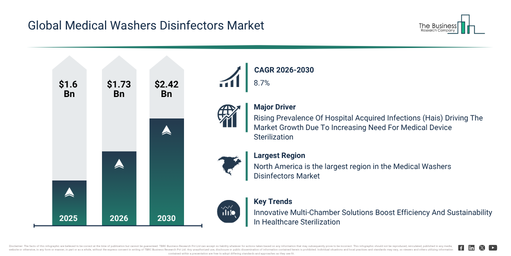
    The medical washers disinfectors market has experienced substantial growth in recent years. Its size is expected to expand from $1.6 billion in 2025 to $1.73 billion in 2026, achieving a compound annual growth rate (CAGR) of 8.5%. This historical growth can be attributed to several factors including increasing hospital-acquired infection rates, a global increase in surgical procedures, stricter regulatory standards for sterilization, the expansion of healthcare infrastructure, and the adoption of automated disinfection technologies.

    Significant expansion is anticipated for the medical washers disinfectors market size over the coming years. The market is projected to reach $2.42 billion in 2030, exhibiting a compound annual growth rate (CAGR) of 8.7%. This expansion during the forecast period stems from factors such as an escalating need for high-throughput sterilization systems, greater investment in sophisticated healthcare facilities, a heightened emphasis on sustainable water and energy-efficient solutions, the proliferation of ambulatory surgical centers, and enhanced integration of digital monitoring and validation systems. Key developments expected throughout the forecast timeframe involve the wider uptake of fully automated washer disinfectors, an increasing requirement for high-capacity multi-chamber systems, a stronger focus on infection prevention and control benchmarks, the enlargement of central sterile processing departments, and an escalating inclination towards validated and standardized cleaning procedures.

    Get A Free Sample Report With In-Depth Market Insights:

    https://thebusinessresearchcompany.com/sample_request?id=51569612&type=smp&name=Medical%20Washers%20Disinfectors%20Market%20Report%202026&utm_source=Blogs&utm_medium=Paid&utm_campaign=Oct_PR

    Medical Washers Disinfectors Market Demand Drivers: What’s Powering Industry Growth?

    The increasing occurrence of hospital-acquired infections (HAIs) is anticipated to drive the expansion of the medical washers disinfectors market in the future. HAIs refer to infections contracted by patients during their medical care in healthcare facilities, which were absent upon their admission. The rising incidence of HAIs is attributed to more intricate medical procedures and a greater population of patients with compromised immune systems, rendering them more vulnerable to infections during hospitalization. Medical Washers Disinfectors play a crucial role in preventing HAIs by effectively cleaning, disinfecting, and sterilizing medical instruments and equipment, thereby eradicating dangerous pathogens and reducing the likelihood of infection transmission within healthcare environments. As an illustration, in May 2024, data from the Center for Infectious Disease Research and Policy (CIDRAP), a US-based disease research organization, indicated that approximately 4.3 million patients contracted at least one healthcare-acquired infection annually in 2022 and 2023 throughout hospitals in the European Union and European economic area. Consequently, the increasing prevalence of hospital-acquired infections (HAIs) is stimulating the growth of the medical washers disinfectors market.

    Medical Washers Disinfectors Market Segment Breakdown: Which Categories Lead On Revenue?

    The medical washers disinfectors market covered in this report is segmented –

    1) By Type: Single Chamber, Multi-Chamber

    2) By Technology: Fully Automated, Semi-Automated

    3) By Capacity: Small Capacity (< 100 Liters), Medium Capacity (100–300 Liters), Large Capacity (> 300 Liters)

    4) By End-Use: Hospitals And Clinics, Ambulatory Surgical Centers, Laboratories, Other End-Users

    Subsegments:

    1) By Single Chamber: Undercounter Single Chamber Systems, Floor Standing Single Chamber Systems, Pass Through Single Chamber Systems, Compact Clinical Single Chamber Systems, High Capacity Single Chamber Systems

    2) By Multi-Chamber: Continuous Flow Multi Chamber Systems, Tunnel Type Multi Chamber Systems, High Throughput Multi Chamber Systems, Automated Conveyor Multi Chamber Systems, Central Sterile Multi Chamber Systems

    Medical Washers Disinfectors Market Innovation Trends: What Developments Are Reshaping The Industry?

    Major companies in the medical washers disinfectors market are prioritizing the development of innovative products, such as multi-chamber washer-disinfectors, to enhance efficiency, reduce resource consumption, and improve sterilization throughput. These advanced medical cleaning systems feature separate washing and disinfection chambers, which effectively increase throughput, conserve water and energy, and ensure consistent sterilization of instruments compared to traditional single-chamber washers. For instance, in March 2024, Getinge AB, a Sweden-based medical technology company, launched the Aquadis Index, an innovative multi-chamber washer-disinfector introduced after 2022. The Aquadis Index offers a high-capacity design capable of processing up to 18 DIN-sized trays per load, along with a user-friendly interface suitable for all experience levels. It also incorporates utility-saving technologies like dynamic water filling, optimized detergent dosing, reuse tanks, and heat/energy recovery. Its ergonomic one-side service access simplifies daily operation and maintenance, while a fully connected system enables central sterile supply department (CSSD) staff to maximize uptime and maintain cleaning efficacy. This product supports hospitals’ sustainability goals by combining premium cleaning performance with minimal resource consumption, positioning it as a next-generation alternative to conventional washer-disinfectors.

    Medical Washers Disinfectors Market Competitive Landscape: Who Leads The Industry?

    Major companies operating in the medical washers disinfectors market are Olympus Corporation, STERIS plc, Getinge AB, Miele & Cie. KG, Shinva Medical Instrument Co. Ltd., MEIKO Maschinenbau GmbH & Co. KG, Biobase Group, Belimed AG, SMEG Instruments S.p.A., Skytron LLC, KEN Hygiene Systems A S, MELAG Medizintechnik GmbH, Tuttnauer Company, BMM Weston Ltd, MMM Group, IC Medical GmbH, AT-OS Srl, Steelco S.p.A., Scitek Global, DDC Dolphin Ltd.

    View The Full Medical Washers Disinfectors Market Report:

    https://thebusinessresearchcompany.com/report/medical-washers-disinfectors-market-report?utm_source=Blogs&utm_medium=Paid&utm_campaign=Oct_PR

    Medical Washers Disinfectors Market Geographic Landscape: Which Region Dominates Industry Growth?

    North America was the largest region in the medical washers disinfectors market in 2025. Asia-Pacific is expected to be the fastest-growing region in the forecast period. The regions covered in the medical washers disinfectors market report are Asia-Pacific, South East Asia, Western Europe, Eastern Europe, North America, South America, Middle East, Africa.

    Reach Out To Our Team:

    The Business Research Company: https://www.thebusinessresearchcompany.com/

    Americas: +1 310-496-7795

    Asia: +44 7882 955267 & +91 8897263534

    Europe: +44 7882 955267

    Email us at: marketing@tbrc.info

    Follow us on:

    LinkedIn: https://in.linkedin.com/company/the-business-research-company

    YouTube: https://www.youtube.com/channel/UC24_fI0rV8cR5DxlCpgmyFQ

    Global Market Model: https://www.thebusinessresearchcompany.com/global-market-model
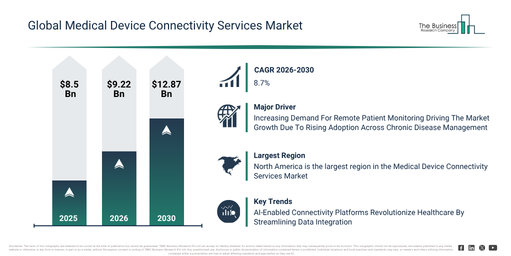
  • Medical Device Connectivity Services Market CAGR Forecast Through 2030: Key Trends Shaping Industry Expansion

    Medical Device Connectivity Services Market CAGR Forecast Through 2030: Key Trends Shaping Industry Expansion

    Backed by market attractiveness analysis, total addressable market sizing, company benchmarking matrices, interactive Excel dashboards, wider supply chain intelligence, emerging startup coverage, and detailed product-level insights, The Business Research Company’s 2026 market reports are designed to offer research that is more actionable and strategically valuable than ever.

    Medical Device Connectivity Services Market Forecast: What Value Will The Market Reach By 2030?

    The medical device connectivity services market has shown robust expansion in recent years. Its valuation is forecast to climb from $8.5 billion in 2025 to $9.22 billion in 2026, registering a compound annual growth rate (CAGR) of 8.5%. This growth observed in past periods is largely due to the increasing digitization of healthcare systems, greater investments in hospital IT infrastructure, a growing need for centralized clinical data management, the expansion of telehealth services, and more stringent regulatory requirements for device interoperability.

    The medical device connectivity services market is projected to demonstrate significant expansion in the coming years. It is forecast to reach $12.87 billion in 2030, growing at a compound annual growth rate (CAGR) of 8.7%. This growth during the forecast period can be attributed to the increasing embrace of AI-driven clinical decision support systems, the expanded implementation of cloud-based healthcare platforms, a surging demand for home healthcare device integration, the proliferation of connected wearable medical devices, and a heightened focus on cybersecurity within healthcare networks. Key trends anticipated in this period include the wider adoption of real-time remote patient monitoring, a rising necessity for interoperability across multi-vendor devices, deeper integration with electronic health record systems, the expansion of cloud-based device connectivity platforms, and an elevated concentration on regulatory compliance and data security.

    Get A Free Sample Report With In-Depth Market Insights:

    https://thebusinessresearchcompany.com/sample_request?id=43358957&type=smp&name=Medical%20Device%20Connectivity%20Services%20Market%20Report%202026&utm_source=Blogs&utm_medium=Paid&utm_campaign=Oct_PR

    Medical Device Connectivity Services Market Growth Drivers: What’s Behind The Acceleration?

    The medical device connectivity services market is anticipated to expand due to the rising demand for remote patient monitoring. This refers to technologies and services enabling healthcare professionals to track patients’ vital signs and health information remotely, outside conventional clinical environments, using connected devices. The surge in demand for remote patient monitoring stems from an increasing necessity for continuous home-based tracking of patients’ vital signs, which assists in effective management of chronic conditions and minimizes the frequency of hospital visits. These medical device connectivity services facilitate remote patient monitoring by ensuring a smooth connection between medical devices and digital health platforms. This allows for real-time transmission, collection, and analysis of patient data, empowering healthcare providers to make prompt decisions, monitor health trends, and provide timely interventions without the patient needing to visit a hospital. As an illustration, in August 2025, the Office of Inspector General, an independent organization based in the US, reported a significant rise in Medicare enrollees using remote patient monitoring, reaching nearly 1 million in 2024, which represents a 27% increase compared to 2023. Consequently, the escalating demand for remote patient monitoring is a key factor propelling the expansion of the medical device connectivity services market.

    Medical Device Connectivity Services Market Segmentation: How Does The Market Break Down By Category?

    The medical device connectivity services market covered in this report is segmented –

    1) By Service Type: Device Integration Services, Interoperability Consulting Services, Network Configuration Services, Cloud Connectivity Services, Data Management Services, Cybersecurity Services, System Deployment Services, Technical Support And Maintenance Services, Regulatory Compliance Services, Remote Monitoring Support Services

    2) By Connectivity Technology: Wired Connectivity, Wireless Connectivity, Hybrid Connectivity

    3) By Deployment Model: On-Premise Connectivity Services, Cloud-Based Connectivity Services, Hybrid Connectivity Services

    4) By End-Users: Hospitals And Clinics, Diagnostic Centers, Healthcare Research Centers, Other End Users

    Subsegments:

    1) By Device Integration Services: Bedside Device Integration, Wearable Device Integration, Imaging Equipment Integration, Laboratory Device Integration, Home Healthcare Device Integration

    2) By Interoperability Consulting Services: Workflow Assessment Services, Standards Implementation Consulting, System Compatibility Analysis, Integration Architecture Design, Vendor Neutral Strategy Consulting

    3) By Network Configuration Services: Hospital Network Setup, Wireless Network Configuration, Secure Device Network Design, Bandwidth Optimization Services, Network Performance Testing

    4) By Cloud Connectivity Services: Cloud Platform Integration, Hybrid Cloud Connectivity, Secure Data Transmission Setup, Cloud Migration For Medical Devices, Cloud Interface Configuration

    5) By Data Management Services: Clinical Data Aggregation, Device Data Storage Management, Data Normalization Services, Real Time Data Processing, Historical Data Archiving

    6) By Cybersecurity Services: Device Security Risk Assessment, Secure Access Configuration, Data Encryption Implementation, Threat Monitoring Services, Security Compliance Auditing

    7) By System Deployment Services: On Site Installation Services, Pilot Testing And Validation, Full Scale System Rollout, User Acceptance Testing Support, Go Live Implementation Assistance

    8) By Technical Support And Maintenance Services: Remote Troubleshooting Support, Preventive Maintenance Services, Software Update Management, Performance Monitoring Services, Helpdesk Support Services

    9) By Regulatory Compliance Services: Documentation And Certification Support, Quality Management Compliance, Clinical Safety Validation, Audit Preparation Services, Post Market Compliance Monitoring

    10) By Remote Monitoring Support Services: Central Monitoring Station Setup, Alert Management Configuration, Remote Device Performance Tracking, Virtual Clinical Support Services, Continuous Patient Data Surveillance

    Medical Device Connectivity Services Market Trends: What’s Defining The Industry’s Next Phase?

    Leading entities within the medical device connectivity services sector are concentrating on creating advanced solutions, including artificial intelligence (AI)-enabled connectivity platforms, aimed at streamlining data integration and improving real-time patient observation. These AI-enabled connectivity platforms function as systems that leverage AI to gather, assess, and distribute information from numerous medical devices, thereby facilitating smoother device integration, offering continuous patient monitoring, and aiding quicker clinical judgments. For example, in October 2025, Becton, Dickinson and Company (BD), a US-based medical technology firm, introduced the BD Incada Connected Care Platform, an advanced AI-enabled connectivity solution specifically engineered to consolidate medical device data throughout various healthcare environments. This platform merges diverse devices into one digital interface, facilitating automated data gathering, live monitoring, and predictive analysis to support proactive clinical actions. Key features include secure cloud storage, compatibility with electronic health record (EHR) systems, customizable notification alerts, and remote device management functionalities. Ultimately, this AI-enabled connectivity platform enhances workflow efficiency, boosts patient safety, refines clinical decision-making, and promotes a more coordinated approach to care provision.

    Medical Device Connectivity Services Market Company Landscape And Competitive Strategy

    Major companies operating in the medical device connectivity services market are Cisco Systems Inc., Honeywell International Inc., Qualcomm Technologies Inc., Medtronic plc, Siemens Healthineers AG, Stryker Corporation, Koninklijke Philips N.V., GE HealthCare, Infosys Limited, TE Connectivity Ltd., Baxter International Inc., Mindray Medical International Limited, Drägerwerk AG & Co. KGaA, ICU Medical Inc., Masimo Corporation, Nihon Kohden Corporation, Digi International Inc., Lantronix Inc., Minnetronix Inc., iHealth Labs Inc., EDevice Inc., S3 Connected Health Inc., and Vyne Inc.

    View The Full Medical Device Connectivity Services Market Report:

    https://thebusinessresearchcompany.com/report/medical-device-connectivity-services-market-report?utm_source=Blogs&utm_medium=Paid&utm_campaign=Oct_PR

    Medical Device Connectivity Services Market Largest Region: Which Geography Holds The Highest Market Share?

    North America was the largest region in the medical device connectivity services market in 2025. Asia-Pacific is expected to be the fastest-growing region in the forecast period. The regions covered in the medical device connectivity services market report are Asia-Pacific, South East Asia, Western Europe, Eastern Europe, North America, South America, Middle East, Africa.

    Reach Out To Our Team:

    The Business Research Company: https://www.thebusinessresearchcompany.com/

    Americas: +1 310-496-7795

    Asia: +44 7882 955267 & +91 8897263534

    Europe: +44 7882 955267

    Email us at: marketing@tbrc.info

    Follow us on:

    LinkedIn: https://in.linkedin.com/company/the-business-research-company

    YouTube: https://www.youtube.com/channel/UC24_fI0rV8cR5DxlCpgmyFQ

    Global Market Model: https://www.thebusinessresearchcompany.com/global-market-model