Month: October 2026

  • Medical Countermeasures Market To Witness 7.8% CAGR Growth Through 2030: Key Industry Drivers

    Medical Countermeasures Market To Witness 7.8% CAGR Growth Through 2030: Key Industry Drivers

    Featuring market attractiveness scoring, total addressable market sizing, company benchmarking matrices, interactive Excel dashboards, deeper supply chain intelligence, emerging startup tracking, and granular product-level insights, The Business Research Company’s 2026 market reports are built to deliver research that is both more actionable and more strategically valuable.

    Medical Countermeasures Market Size Outlook: How Quickly Will Revenue Expand Through 2030?

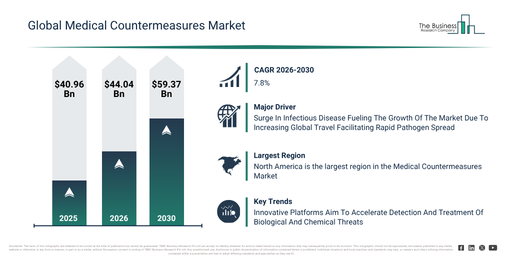
    The medical countermeasures market has experienced substantial growth in recent years. It is projected to expand from $40.96 billion in 2025 to $44.04 billion in 2026, exhibiting a compound annual growth rate (CAGR) of 7.5%. This historical growth can be attributed to factors like outbreaks of infectious diseases, government funding for biodefense programs, a heightened awareness of chemical and radiological threats, the expansion of vaccine development programs, and increased global health security initiatives.

    The medical countermeasures market is poised for significant expansion over the next few years, with its size projected to reach $59.37 billion by 2030, growing at a compound annual growth rate (CAGR) of 7.8%. This anticipated growth during the forecast period stems from a heightened emphasis on rapid response platform technologies, the increasing integration of AI into drug discovery processes, greater investment in national stockpile programs, the widespread adoption of decentralized diagnostic capabilities, and strengthened international public health collaborations. Foremost trends for the forecast period encompass an increase in the stockpiling of vaccines and therapeutics, a rising demand for rapid point-of-care diagnostics, increased funding for pandemic preparedness programs, the expansion of public-private partnerships for emergency response, and a growing focus on developing broad-spectrum antiviral and antitoxin therapies.

    Get A Free Sample Report With In-Depth Market Insights:

    https://thebusinessresearchcompany.com/sample_request?id=49484050&type=smp&name=Medical%20Countermeasures%20Market%20Report%202026&utm_source=Blogs&utm_medium=Paid&utm_campaign=Oct_PR

    Medical Countermeasures Market Growth Factors Behind Sustained Expansion

    The increasing prevalence of infectious diseases is anticipated to fuel the expansion of the medical countermeasures market in the future. These diseases, caused by pathogenic microorganisms like bacteria, viruses, fungi, or parasites, are capable of spreading quickly both domestically and internationally. Factors such as growing global travel, urbanization, and population density contribute to the escalating occurrence of these illnesses by accelerating pathogen transmission across borders. Medical countermeasures are vital for preventing, identifying, and treating infectious diseases, thereby lessening transmission, disease severity, and their impact on public health. The rising incidence of illnesses boosts the necessity for vaccination initiatives, prompt diagnostic tools, and potent therapies, directly boosting the demand for these countermeasures. As an illustration, in April 2025, data from the World Health Organization, a Switzerland-based intergovernmental public health agency, revealed that worldwide measles cases hit an estimated 10.3 million in 2023, showing a 20% rise from 2022. Consequently, the escalating frequency of infectious diseases is propelling the growth of the medical countermeasures market.

    Medical Countermeasures Market Segment Trends And Revenue Contributors

    The medical countermeasures market covered in this report is segmented –

    1) By Product: Vaccines, Therapeutics, Diagnostics, Personal Protective Equipment, Other Products

    2) By Application: Infectious Disease, Chemical Threats, Radiological And Nuclear Threats, Other Applications

    3) By End User: Hospitals, Government And Defense, Research Institutes, Other End User

    Subsegments:

    1) By Vaccines: Live Attenuated Vaccines, Inactivated Vaccines, Subunit Vaccines, Toxoid Vaccines, Conjugate Vaccines

    2) By Therapeutics: Antiviral Drugs, Monoclonal Antibodies, Immunomodulators, Antibiotics, Antitoxins

    3) By Diagnostics: Molecular Diagnostics, Immunoassays, Point of Care Tests, Imaging Diagnostics, Serological Tests

    4) By Personal Protective Equipment: Face Masks, Gloves, Protective Clothing, Eye Protection, Respirators

    5) By Other Products: Disinfectants, Sanitizers, Emergency Medical Kits, Sterilization Equipment, Decontamination Solutions

    Medical Countermeasures Market Industry Trends Fueling Future Revenue Growth

    Leading firms within the medical countermeasures market are concentrating on creating sophisticated solutions, including rapid diagnostic and therapeutic platforms. These efforts aim to bolster readiness, enhance treatment results, and expedite reactions to biological, chemical, radiological, and nuclear (CBRN) dangers. Such platforms are defined as integrated systems capable of swiftly identifying diseases or threats and providing prompt treatments or interventions. As an example, in September 2023, the Biomedical Advanced Research and Development Authority (BARDA), a U.S. government organization, revised its Broad Agency Announcement (BAA) to back the creation of medical countermeasures, encompassing antibacterial, antifungal, antiviral, and diagnostic products. This program, established to advance worldwide health security, emphasizes quick development, FDA clearance or approval, and pioneering technologies like antimicrobial resistance diagnostics and broad-spectrum therapeutics. These advancements facilitate early detection, precise intervention, and better patient outcomes amidst widespread health crises.

    Medical Countermeasures Market Key Players Shaping Industry Direction

    Major companies operating in the medical countermeasures market are Johnson & Johnson, Merck & Co. Inc., Pfizer Inc., AbbVie Inc., Sanofi SA, Abbott Laboratories, GlaxoSmithKline plc, Quest Diagnostics Incorporated, Moderna Inc., BioNTech SE, bioMérieux SA, Emergent BioSolutions Inc., Bavarian Nordic A/S, Ichor Medical Systems Inc., Dynavax Technologies Corporation, SIGA Technologies Inc., Sanaria Inc., Soligenix Inc., Elusys Therapeutics Inc., XOMA Corporation, Altimmune Inc., Ology Bioservices Inc., DynPort Vaccine Company LLC.

    View The Full Medical Countermeasures Market Report:

    https://thebusinessresearchcompany.com/report/medical-countermeasures-market-report?utm_source=Blogs&utm_medium=Paid&utm_campaign=Oct_PR

    Medical Countermeasures Market Regional Analysis: Which Region Leads By Revenue?

    North America was the largest region in the medical countermeasures market in 2025. Asia-Pacific is expected to be the fastest-growing region in the forecast period. The regions covered in the medical countermeasures market report are Asia-Pacific, South East Asia, Western Europe, Eastern Europe, North America, South America, Middle East, Africa.

    Reach Out To Our Team:

    The Business Research Company: https://www.thebusinessresearchcompany.com/

    Americas: +1 310-496-7795

    Asia: +44 7882 955267 & +91 8897263534

    Europe: +44 7882 955267

    Email us at: marketing@tbrc.info

    Follow us on:

    LinkedIn: https://in.linkedin.com/company/the-business-research-company

    YouTube: https://www.youtube.com/channel/UC24_fI0rV8cR5DxlCpgmyFQ

    Global Market Model: https://www.thebusinessresearchcompany.com/global-market-model
  • Magneto-Nanosensor Multiplex Assays Market Growth Forecast Through 2030: Market Size And Trends In 2026

    Magneto-Nanosensor Multiplex Assays Market Growth Forecast Through 2030: Market Size And Trends In 2026

    Backed by market attractiveness analysis, total addressable market sizing, company benchmarking matrices, interactive Excel dashboards, wider supply chain intelligence, emerging startup coverage, and detailed product-level insights, The Business Research Company’s 2026 market reports are designed to offer research that is more actionable and strategically valuable than ever.

    Magneto-Nanosensor Multiplex Assays Market Size And Revenue Outlook Through 2030

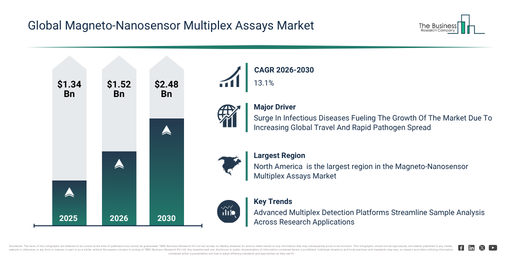
    The magneto-nanosensor multiplex assays market size has experienced significant expansion in recent years. This market is forecasted to increase from $1.34 billion in 2025 to $1.52 billion in 2026, exhibiting a compound annual growth rate (CAGR) of 12.9%. The historical growth can be linked to several factors, including advancements in nanotechnology research, the rising demand for early disease detection, the development of proteomics and genomics studies, increased funding for biomedical research, and the widening reach of clinical diagnostic laboratories.

    The magneto-nanosensor multiplex assays market is projected to experience substantial expansion over the upcoming years. Its valuation is anticipated to reach $2.48 billion in 2030, exhibiting a compound annual growth rate (CAGR) of 13.1%. This projected increase during the forecast period stems from factors such as the expanding embrace of precision medicine, the heightened incorporation of AI-powered data analysis tools, a growing need for point-of-care multiplex testing, the broadening scope of pharmaceutical biomarker discovery initiatives, and increased partnerships between academic institutions and biotechnology firms. Significant developments expected within this period encompass the continued creation of highly sensitive multiplex biomarker panels, a rise in the use of smaller, portable detection instruments, greater integration of microfluidic assay cartridges, the extension of clinical diagnostic uses beyond cancer treatment, and an increasing desire for tailored reagent and consumable kits.

    Get A Free Sample Report With In-Depth Market Insights:

    https://thebusinessresearchcompany.com/sample_request?id=79766664&type=smp&name=Magneto-Nanosensor%20Multiplex%20Assays%20Market%20Report%202026&utm_source=Blogs&utm_medium=Paid&utm_campaign=Oct_PR

    Magneto-Nanosensor Multiplex Assays Market Industry Drivers: What’s Behind The Revenue Growth?

    The escalating worldwide prevalence of infectious illnesses is anticipated to propel the expansion of the magneto-nanosensor multiplex assays market over the forecast period. These diseases, stemming from harmful microorganisms like bacteria, viruses, fungi, or parasites, are transmissible among people. Elements such as expanded international travel, growing urban areas, and the danger of disease spreading across borders have intensified the requirement for robust surveillance and diagnostic methods for infectious diseases, particularly for prompt and precise identification. Magneto-nanosensor multiplex assays are crucial for diagnosing infectious diseases, offering fast, sensitive, and concurrent detection of numerous pathogens from a single specimen, thereby facilitating timely diagnoses and suitable therapeutic choices. For example, the World Health Organization, a Switzerland-based intergovernmental organization, forecasts that global demand for malaria vaccines will hit 40–60 million doses yearly by 2026 and further climb to 80–100 million doses annually by 2030, highlighting ongoing global initiatives against infectious diseases. Consequently, the increasing occurrence of infectious diseases is stimulating the growth of the magneto-nanosensor multiplex assays market.

    Magneto-Nanosensor Multiplex Assays Market Segment Landscape: Which Areas Lead Development?

    The magneto-nanosensor multiplex assays market covered in this report is segmented –

    1) By Product: Magneto-Nano Sensor Platforms, Multiplex Assay Kits, Magnetic Nanoparticles, Reagents And Consumables, Biosensor Chips, Assay Cartridges, Detection Instruments, Supporting Software Systems

    2) By Technology: Magnetoresistive Sensors, Magnetic Relaxation Switching, Magnetic Particle Spectroscopy

    3) By Applications: Clinical Diagnostics, Research, Environmental Monitoring, Food Safety, Other Applications

    4) By End-User: Hospitals And Clinics, Research Institutes, Diagnostic Laboratories, Pharmaceutical And Biotechnology Companies, Other End Users

    Subsegments:

    1) By Magneto-Nano Sensor Platforms: Giant Magnetoresistance Sensors, Tunnel Magnetoresistance Sensors, Spin Valve Sensors, Hall Effect Sensors, Fluxgate Sensors

    2) By Multiplex Assay Kits: Immunoassay Kits, Nucleic Acid Assay Kits, Enzyme-Linked Assay Kits, Protein Detection Kits, Cytokine Detection Kits

    3) By Magnetic Nanoparticles: Iron Oxide Nanoparticles, Cobalt Nanoparticles, Nickel Nanoparticles, Core-Shell Nanoparticles, Functionalized Magnetic Nanoparticles

    4) By Reagents And Consumables: Buffers, Enzymes, Substrates, Antibodies, Sample Preparation Kit

    5) By Biosensor Chips: Electrochemical Chips, Optical Chips, Piezoelectric Chips, Thermal Chips, Field Effect Transistor Chips

    6) By Assay Cartridges: Microfluidic Cartridges, Disposable Cartridges, Integrated Sample Cartridges, Multiwell Cartridges, Flow-Through Cartridge

    7) By Detection Instruments: Magnetometers, Fluorescence Readers, Electrochemical Detectors, Optical Sensors, Imaging Systems

    8) By Supporting Software Systems: Data Analysis Software, Signal Processing Software, Instrument Control Software, Visualization Software, Workflow Management Software

    #Magneto-Nanosensor Multiplex Assays Market Growth Trends: What’s Shaping The Future Outlook?

    Leading companies within the magneto-nanosensor multiplex assays market are prioritizing the creation of sophisticated, high-capacity multiplex detection platforms. These platforms utilize magnetic nanoparticles and nanosensor-based readout technologies to improve sensitivity, decrease the duration of sample processing, and heighten analytical accuracy across both clinical and research settings. Such systems facilitate the concurrent identification and measurement of numerous biomarkers from a single specimen with notable specificity and consistent results. As an illustration, in February 2026, the US nanotechnology firm CD Bioparticles broadened its range of assays by launching magnetic bead-based multiplex assay solutions, engineered for integration with magneto-nanosensor detection systems, enabling researchers to quantify up to 500 analytes from a single sample. This method employs optimized antibody–magnetic nanoparticle conjugation and magnetically responsive detection to facilitate scalable, high-throughput biomarker analysis in preclinical and clinical research processes.

    Magneto-Nanosensor Multiplex Assays Market Competitive Landscape: Which Companies Lead The Industry?

    Major companies operating in the magneto-nanosensor multiplex assays market are Thermo Fisher Scientific Inc., Siemens Healthineers AG, Merck KGaA, Danaher Corporation, Becton Dickinson Company, Illumina Inc., Revvity Inc., Bio‑Rad Laboratories Inc., QIAGEN N.V., Tecan Group Ltd., DiaSorin S.p.A., Bio‑Techne Corporation, Promega Corporation, Takara Bio Inc., Seegene Inc., Meso Scale Diagnostics LLC, Cell Signaling Technology Inc., Quanterix Corporation, Theradiag S.A., Quansys Bioscience Inc.

    View The Full Magneto-Nanosensor Multiplex Assays Market Report:

    https://thebusinessresearchcompany.com/report/magneto-nanosensor-multiplex-assays-market-report?utm_source=Blogs&utm_medium=Paid&utm_campaign=Oct_PR

    Magneto-Nanosensor Multiplex Assays Market Regional Outlook: Where Is Opportunity Concentrated?

    North America was the largest region in the magneto-nanosensor multiplex assays market in 2025. Asia-Pacific is expected to be the fastest-growing region in the forecast period. The regions covered in the magneto-nanosensor multiplex assays market report are Asia-Pacific, South East Asia, Western Europe, Eastern Europe, North America, South America, Middle East, Africa.

    Reach Out To Our Team:

    The Business Research Company: https://www.thebusinessresearchcompany.com/

    Americas: +1 310-496-7795

    Asia: +44 7882 955267 & +91 8897263534

    Europe: +44 7882 955267

    Email us at: marketing@tbrc.info

    Follow us on:

    LinkedIn: https://in.linkedin.com/company/the-business-research-company

    YouTube: https://www.youtube.com/channel/UC24_fI0rV8cR5DxlCpgmyFQ

    Global Market Model: https://www.thebusinessresearchcompany.com/global-market-model

  • Magneto-Deoxyribonucleic Acid (DNA) Biosensors Market Analysis: $1.64 Billion Market Size In 2026 And Future Growth Prospects

    Magneto-Deoxyribonucleic Acid (DNA) Biosensors Market Analysis: $1.64 Billion Market Size In 2026 And Future Growth Prospects

    Featuring market attractiveness scoring, total addressable market sizing, company benchmarking matrices, interactive Excel dashboards, deeper supply chain intelligence, emerging startup tracking, and granular product-level insights, The Business Research Company’s 2026 market reports are built to deliver research that is both more actionable and more strategically valuable.

    Magneto-Deoxyribonucleic Acid (DNA) Biosensors Market Growth From $1.64 Billion In 2026 To $2.66 Billion By 2030 At A CAGR Of 12.9%

    The magneto-deoxyribonucleic acid (DNA) biosensors market has experienced rapid growth in recent years. It will grow from $1.46 billion in 2025 to $1.64 billion in 2026 at a compound annual growth rate (CAGR) of 12.7%. This historic growth can be attributed to advancements in nanotechnology research, an increasing prevalence of infectious diseases, rising demand for cancer diagnostics, increased investment in biomedical research, and the expanding utilization of magnetic nanoparticles in biosensing.

    The magneto-deoxyribonucleic acid (DNA) biosensors market is anticipated to experience substantial expansion in the coming years. This market is projected to reach a valuation of $2.66 billion in 2030, exhibiting a compound annual growth rate (CAGR) of 12.9%. Factors contributing to this growth during the forecast period include the increasing embrace of personalized medicine, a heightened need for early disease detection methods, the growing incorporation of AI-based data analytics, the spread of decentralized diagnostic testing, and advancements in high-sensitivity portable biosensor devices. Key developments expected within this period involve the greater use of superparamagnetic nanoparticle-based sensors, a surging requirement for quick point-of-care genetic diagnostics, the broader integration of magnetoresistive (GMR/TMR) technologies, the widening scope of liquid biopsy applications, and increased application in multiplexed pathogen detection.

    Get A Free Sample Report With In-Depth Market Insights:

    https://thebusinessresearchcompany.com/sample_request?id=82199537&type=smp&name=Magneto-Deoxyribonucleic%20Acid%20%28DNA%29%20Biosensors%20Market%20Report%202026&utm_source=Blogs&utm_medium=Paid&utm_campaign=Oct_PR

    Magneto-Deoxyribonucleic Acid (DNA) Biosensors Market Growth Factors: What’s Supporting Expansion?

    The increasing worldwide prevalence of infectious diseases is anticipated to fuel the expansion of the magneto-deoxyribonucleic acid (DNA) biosensors market in upcoming years. These conditions originate from disease-causing microorganisms like bacteria, viruses, fungi, or parasites and can propagate directly or indirectly among people. A higher risk of disease spread and global outbreaks has been created by elements such as greater international travel, urbanization, shifts in climate, and changing resistance patterns in pathogens. In managing infectious diseases, magneto-deoxyribonucleic acid (DNA) biosensors are crucial because they allow for highly sensitive, quick detection and identification of particular pathogen DNA sequences, thereby aiding in prompt diagnosis, monitoring, and swift medical action. For instance, according to World Health Organization, a Switzerland-based intergovernmental organization global demand for malaria vaccines is projected to reach 40–60 million doses annually by 2026 and increase further to 80–100 million doses per year by 2030, highlighting sustained efforts to combat infectious diseases worldwide. Consequently, the growing incidence of infectious diseases is propelling the expansion of the magneto-deoxyribonucleic acid (DNA) biosensors market.

    Magneto-Deoxyribonucleic Acid (DNA) Biosensors Market Segments: Where Is Growth Concentrated?

    The magneto-deoxyribonucleic acid (DNA) biosensors market covered in this report is segmented –

    1) By Product: Electrochemical Magneto-Deoxyribonucleic Acid Biosensors, Optical Magneto-Deoxyribonucleic Acid Biosensors

    2) By Component: Hardware or Devices, Assay Kits And Reagents, Consumables, Software And Data Analytics

    3) By Technology: Magnetoresistive Sensors (GMR/TMR), Superparamagnetic Nanoparticle-Based Sensors, Hall Effect Sensors, Magneto-Elastic Biosensors

    4) By Application: Infectious Disease Diagnostics, Oncology And Liquid Biopsy, Genetic Testing And Screening, Food Safety Testing, Environmental Monitoring, Research And Drug Development

    5) By End User: Hospitals And Diagnostic Laboratories, Academic And Research Institutions, Pharmaceutical And Biotechnology Companies, Food And Beverage Testing Laboratories, Environmental Testing Agencies, Contract Research Organizations

    Subsegments:

    1) By Electrochemical Magneto-DNA Biosensors: Voltammetric Detection, Amperometric Detection, Impedimetric Detection, Potentiometric Detection

    2) By Optical Magneto-DNA Biosensors: Fluorescence Detection, Surface Plasmon Resonance Detection, Colorimetric Detection, Chemiluminescence Detection

    Magneto-Deoxyribonucleic Acid (DNA) Biosensors Market Competitive Landscape: Who Leads The Industry?

    Major companies operating in the magneto-deoxyribonucleic acid (DNA) biosensors market are Roche Diagnostics, Thermo Fisher Scientific, Siemens Healthineers, Merck KGaA, Danaher Corporation, GE Healthcare, Becton, Dickinson Company (BD), Agilent Technologies, Illumina Inc., Endress+Hauser Group, Sysmex Corporation, Revvity Inc., Bio-Rad Laboratories, Miltenyi Biotec, GenScript Biotech Corporation, Promega Corporation, Quanterix Corporation, MagArray, Inc., Creative Diagnostics, Pluslife.

    View The Full Magneto-Deoxyribonucleic Acid (DNA) Biosensors Market Report:

    https://thebusinessresearchcompany.com/report/magneto-deoxyribonucleic-acid-dna-biosensors-market-report?utm_source=Blogs&utm_medium=Paid&utm_campaign=Oct_PR

    Magneto-Deoxyribonucleic Acid (DNA) Biosensors Market Geographic Landscape: Which Region Leads Industry Growth?

    North America was the largest region in the magneto-deoxyribonucleic acid (DNA) biosensors market in 2025. Asia-Pacific is expected to be the fastest-growing region in the forecast period. The regions covered in the magneto-deoxyribonucleic acid (DNA) biosensors market report are Asia-Pacific, South East Asia, Western Europe, Eastern Europe, North America, South America, Middle East, Africa.

    Reach Out To Our Team:

    The Business Research Company: https://www.thebusinessresearchcompany.com/

    Americas: +1 310-496-7795

    Asia: +44 7882 955267 & +91 8897263534

    Europe: +44 7882 955267

    Email us at: marketing@tbrc.info

    Follow us on:

    LinkedIn: https://in.linkedin.com/company/the-business-research-company

    YouTube: https://www.youtube.com/channel/UC24_fI0rV8cR5DxlCpgmyFQ

    Global Market Model: https://www.thebusinessresearchcompany.com/global-market-model
  • Low-Dose Computed Tomography (CT) Lung Screening Programs Market Size Forecast: How The Industry Is Expected To Grow From 2026 To 2030

    Low-Dose Computed Tomography (CT) Lung Screening Programs Market Size Forecast: How The Industry Is Expected To Grow From 2026 To 2030

    Backed by market attractiveness analysis, total addressable market sizing, company benchmarking matrices, interactive Excel dashboards, wider supply chain intelligence, emerging startup coverage, and detailed product-level insights, The Business Research Company’s 2026 market reports are designed to offer research that is more actionable and strategically valuable than ever.

    Low-Dose Computed Tomography (CT) Lung Screening Programs Market Growth Potential: How Will Market Size Shift Through 2030?

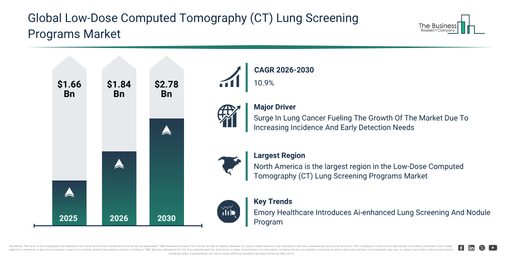
    The low-dose computed tomography (CT) lung screening programs market has witnessed rapid growth in recent years. Its size is expected to increase from $1.66 billion in 2025 to $1.84 billion in 2026, achieving a compound annual growth rate (CAGR) of 10.7%. This historical expansion can be attributed to the rising prevalence of lung cancer cases, increasing awareness about early cancer detection, growing recommendations from clinical guidelines, the expansion of hospital-based screening infrastructure, and increasing healthcare reimbursement support.

    The low-dose computed tomography (CT) lung screening programs market is poised for significant expansion in the coming years. This market is projected to reach $2.78 billion by 2030, exhibiting a compound annual growth rate (CAGR) of 10.9%. Factors contributing to this growth over the forecast period include the increasing integration of AI in CT screening, the broadening of precision oncology efforts, a surge in investments in mobile healthcare models, the greater incorporation of telehealth for consultations, and the development of more public-private collaborations in preventive health. Key developments anticipated during this timeframe involve an increase in government-backed lung cancer screening programs, a higher uptake of mobile screening facilities in remote regions, the enhanced bundling of smoking cessation support with screening, a greater focus on identifying patients based on risk, and the broadening of services for radiology interpretation and subsequent monitoring.

    Get A Free Sample Report With In-Depth Market Insights:

    https://thebusinessresearchcompany.com/sample_request?id=64834292&type=smp&name=Low-Dose%20Computed%20Tomography%20%28CT%29%20Lung%20Screening%20Programs%20Market%20Report%202026&utm_source=Blogs&utm_medium=Paid&utm_campaign=Oct_PR

    Low-Dose Computed Tomography (CT) Lung Screening Programs Market Growth Drivers: What’s Behind The Acceleration?

    The increasing prevalence of lung cancer is a significant factor propelling the expansion of the low-dose computed tomography (CT) lung screening programs market. This disease, a malignancy developing in lung tissue, involves the uncontrolled proliferation of abnormal cells, frequently showing no symptoms until its later stages. Its rising occurrence is largely attributable to ongoing tobacco consumption, supplemented by other risk factors such as exposure to environmental pollutants and workplace carcinogens. Low-dose CT lung screening programs are vital for managing lung cancer, facilitating the early identification of tumors, especially in high-risk individuals like long-term smokers. As an illustration, the Australian Government reported in February 2026 that approximately 15,108 new instances of lung cancer were identified in 2025, constituting 9.0% of all new cancer diagnoses. Consequently, the growing impact of lung cancer is fostering the development of the low-dose computed tomography (CT) lung screening programs market.

    Low-Dose Computed Tomography (CT) Lung Screening Programs Market Segment Breakdown: Which Categories Lead On Revenue?

    The low-dose computed tomography (CT) lung screening programs market covered in this report is segmented –

    1) By Type: Hospital-Based, Independent Imaging Centers, Mobile Screening Units

    2) By Service: Screening Services, Diagnostic Follow-Up Services, Radiology Interpretation Services, Patient Identification And Risk Assessment Services, Program Management Services, Telehealth And Remote Consultation Services

    3) By Technology: Standard Low-Dose CT Screening, AI-Assisted/Computer-Aided Detection (CAD) Screening, Integrated Smoking Cessation And Screening Programs

    4) By Application: Early Detection, Risk Assessment, Follow-Up Monitoring

    5) By End User: Hospitals And Multi-Specialty Clinics, Standalone Diagnostic Imaging Centers, Mobile Screening Service Providers, Government And Public Health Agencies, Private Healthcare Networks And Insurance Providers, Employer And Corporate Wellness Programs, Academic And Research Institutions, Community Health Centers

    Subsegments:

    1) By Hospital-Based: Outpatient Department, Inpatient Department, Radiology Department

    2) By Independent Imaging Centers: Standalone Imaging Clinics, Diagnostic Centers, Specialized Lung Screening Centers

    3) By Mobile Screening Units: Bus-Based Screening Units, Van-Based Screening Units, Temporary Pop-Up Screening Units

    Low-Dose Computed Tomography (CT) Lung Screening Programs Market Trends: What’s Defining The Industry’s Next Phase?

    Leading companies in the low-dose computed tomography (CT) lung screening programs market are concentrating on developing advanced solutions, notably artificial intelligence (AI)–assisted nodule detection, to improve early cancer discovery, enhance diagnostic precision, and streamline patient management. AI-assisted nodule detection specifically utilizes machine-learning algorithms within lung screening programs to automatically identify, characterize, and prioritize pulmonary nodules found on low-dose CT scans, enabling prompt follow-up and intervention. As an illustration, in December 2025, Emory Healthcare, a US-based health system, unveiled the Emory Healthcare Lung Screening and Nodule Program, which incorporates low-dose CT screening with AI-enhanced imaging technology. This program supports multidisciplinary care by integrating advanced diagnostic and treatment options, including robot-assisted bronchoscopy, minimally invasive lung cancer surgery, and coordinated care navigation, thereby facilitating early diagnosis, personalized treatment planning, and improved patient outcomes across several metro Atlanta locations.

    Low-Dose Computed Tomography (CT) Lung Screening Programs Market Key Players Shaping Industry Direction

    Major companies operating in the low-dose computed tomography (CT) lung screening programs market are Hitachi Medical Systems America Inc., Medtronic plc, Siemens Healthineers AG, Koninklijke Philips N.V., GE HealthCare Inc., Mayo Clinic, Columbia University Herbert Irving Comprehensive Cancer Center, Duke University Health System, Emory Healthcare, Canon Medical Systems Corporation, RadNet Inc., University of Tennessee Medical Center, McLeod Health, Holy Cross Health, Lima Memorial Health System, Memorial Sloan Kettering Cancer Center, Independence Health System, Weill Cornell Medicine & NewYork-Presbyterian Mobile Unit, Optellum Ltd., 4DMedical Pty Ltd.

    View The Full Low-Dose Computed Tomography (CT) Lung Screening Programs Market Report:

    https://thebusinessresearchcompany.com/report/low-dose-computed-tomography-ct-lung-screening-programs-market-report?utm_source=Blogs&utm_medium=Paid&utm_campaign=Oct_PR

    Low-Dose Computed Tomography (CT) Lung Screening Programs Market Regional Analysis: Which Geography Leads On Revenue?

    North America was the largest region in the low-dose computed tomography (CT) lung screening programs market in 2025. Asia-Pacific is expected to be the fastest-growing region in the forecast period. The regions covered in the low-dose computed tomography (CT) lung screening programs market report are Asia-Pacific, South East Asia, Western Europe, Eastern Europe, North America, South America, Middle East, Africa.

    Reach Out To Our Team:

    The Business Research Company: https://www.thebusinessresearchcompany.com/

    Americas: +1 310-496-7795

    Asia: +44 7882 955267 & +91 8897263534

    Europe: +44 7882 955267

    Email us at: marketing@tbrc.info

    Follow us on:

    LinkedIn: https://in.linkedin.com/company/the-business-research-company

    YouTube: https://www.youtube.com/channel/UC24_fI0rV8cR5DxlCpgmyFQ

    Global Market Model: https://www.thebusinessresearchcompany.com/global-market-model
  • Long-Read Full-Length Complementary Deoxyribonucleic Acid (cDNA) Sequencing Market Reaches $3.18 Billion In 2026: Forecast And Growth Opportunities

    Long-Read Full-Length Complementary Deoxyribonucleic Acid (cDNA) Sequencing Market Reaches $3.18 Billion In 2026: Forecast And Growth Opportunities

    Featuring market attractiveness scoring, total addressable market sizing, company benchmarking matrices, interactive Excel dashboards, deeper supply chain intelligence, emerging startup tracking, and granular product-level insights, The Business Research Company’s 2026 market reports are built to deliver research that is both more actionable and more strategically valuable.

    Long-Read Full-Length Complementary Deoxyribonucleic Acid (cDNA) Sequencing Market Value Analysis: What Growth Lies Ahead Over The Forecast Period?

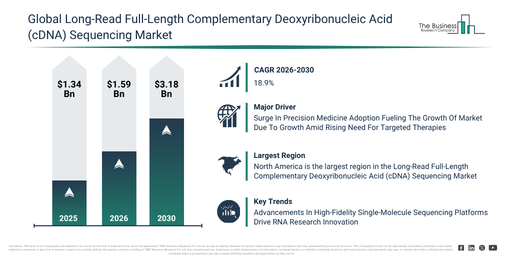
    The long-read full-length complementary deoxyribonucleic acid (cDNA) sequencing market has witnessed rapid expansion in recent years. This market is expected to grow from $1.34 billion in 2025 to $1.59 billion in 2026, achieving a compound annual growth rate (CAGR) of 18.6%. The historical surge in growth can be attributed to several factors, including progress in long-read sequencing technologies, a rise in research focused on transcriptome analysis, increased financial support for genomics research, the expanding adoption of PacBio and Nanopore platforms, and the broadening uses in gene expression studies.

    The long-read full-length complementary deoxyribonucleic acid (cDNA) sequencing market is projected to experience substantial expansion in the coming years. This market is predicted to reach $3.18 billion in 2030, exhibiting a compound annual growth rate (CAGR) of 18.9%. Factors contributing to this growth include the increasing need for precision medicine applications, greater integration of AI-driven bioinformatics tools, expanded application in rare disease research, the broadening scope of clinical transcriptomics, and the creation of more cost-effective long-read sequencing workflows. Key trends anticipated during this period encompass the increased uptake of single-cell full-length cDNA sequencing, a heightened demand for high-fidelity long-read platforms, its expanding utility in alternative splicing detection, the proliferation of transcript isoform characterization studies, and the increasing incorporation of sophisticated library preparation kits.

    Get A Free Sample Report With In-Depth Market Insights:

    https://thebusinessresearchcompany.com/sample_request?id=26736354&type=smp&name=Long-Read%20Full-Length%20Complementary%20Deoxyribonucleic%20Acid%20%28cDNA%29%20Sequencing%20Market%20Report%202026&utm_source=Blogs&utm_medium=Paid&utm_campaign=Oct_PR

    Long-Read Full-Length Complementary Deoxyribonucleic Acid (cDNA) Sequencing Market Growth Factors Behind Sustained Expansion

    An increasing emphasis on precision medicine is anticipated to fuel expansion within the long-read full-length complementary deoxyribonucleic acid (cDNA) sequencing market in the foreseeable future. This medical strategy involves tailoring prevention methods and treatments based on a person’s unique genetic and molecular profiles. The heightened attention on precision medicine stems from an escalating demand for efficacious treatments for conditions that are diverse and do not respond well to conventional therapies. Long-read full-length cDNA sequencing improves clinical judgments by offering extensive understanding of transcript variants and relevant biomarkers, facilitating the more accurate choice of specific treatments. As an illustration, data from February 2024, provided by the US non-profit Personalized Medicine Coalition, showed that in 2023, the U.S. Food and Drug Administration (FDA) authorized 16 novel personalized treatments for individuals with rare illnesses, which signifies a considerable increase from the six approvals noted in 2022. Consequently, the expanding emphasis on precision medicine is a key impetus behind the advancement of the long-read full-length complementary deoxyribonucleic acid (cDNA) sequencing market.

    Long-Read Full-Length Complementary Deoxyribonucleic Acid (cDNA) Sequencing Market Segmentation: How Does The Market Break Down By Category?

    The long-read full-length complementary deoxyribonucleic acid (cDNA) sequencing market covered in this report is segmented –

    1) By Technology: Pacific Biosciences Single-Molecule Real-Time (PacBio SMRT), Oxford Nanopore, Other Technologies

    2) By Product Type: Instruments And Sequencing Platforms, Reagents And Consumables, Library Preparation Kits, Flow Cells And Chips, Data Analysis Software And Bioinformatics Tools

    3) By Sample Type: Human, Animal, Plant, Microbial

    4) By Application: Transcriptome Analysis, Gene Expression Studies, Alternative Splicing Detection, Fusion Gene Detection, Other Application

    5) By End-Users: Academic And Research Institutes, Pharmaceutical And Biotechnology Companies, Clinical Laboratories, Other End Users

    Subsegments:

    1) By Pacific Biosciences Single-Molecule Real-Time (PacBio SMRT): Sequel System, Sequel II System, RS II System, High-Fidelity Sequencing Systems

    2) By Oxford Nanopore: MinION Sequencing Devices, GridION Sequencing Platforms, PromethION Sequencing Platforms, Flongle Sequencing Modules

    3) By Other Technologies: Synthetic Long-Read Sequencing, Linked-Read Sequencing, Single-Cell Full-Length cDNA Sequencing, Hybrid Sequencing Approaches

    Long-Read Full-Length Complementary Deoxyribonucleic Acid (cDNA) Sequencing Market Industry Trends Fueling Future Revenue Growth

    Major companies engaged in the long-read full-length complementary deoxyribonucleic acid (cDNA) sequencing market are concentrating on developing innovative solutions, such as high-fidelity single-molecule sequencing platforms, to enhance transcript accuracy and detect complex RNA isoforms. These high-fidelity single-molecule sequencing platforms facilitate the accurate capture of full-length transcripts and the detection of complex RNA isoforms in one run, by reading entire cDNA molecules with low error rates and without fragmentation. For instance, in December 2023, Pacific Biosciences of California Inc., a US-based biotechnology company, launched Kinnex RNA kits specifically designed to advance RNA research. This technology integrates high-fidelity single-molecule sequencing platforms with optimized library preparation workflows to generate highly accurate, long-read transcriptome data. Its defining features include ultra-long reads spanning whole transcripts, high consensus accuracy, and adaptability to complex RNA samples, enabling researchers to identify alternative splicing, fusion transcripts, and novel isoforms with unparalleled precision. Kinex finds utility in genomics, transcriptomics, biomarker discovery, and therapeutic target identification, offering a more comprehensive understanding of RNA biology than conventional methodologies.

    Long-Read Full-Length Complementary Deoxyribonucleic Acid (cDNA) Sequencing Market Competitive Analysis Of Leading Industry Participants

    Major companies operating in the long-read full-length complementary deoxyribonucleic acid (cDNA) sequencing market are Eurofins Scientific SE, Bio-Rad Laboratories Inc., QIAGEN N.V., 10x Genomics Inc., Azenta Life Sciences Inc., BGI Genomics Co. Ltd., Novogene Co. Ltd., Takara Bio Inc., Oxford Nanopore Technologies plc, Pacific Biosciences of California Inc., New England Biolabs Inc., Macrogen Inc., DNAnexus Inc., Zymo Research Corporation, CD Genomics Inc., BaseClear B.V., Microsynth AG, Creative Biogene Inc., Nucleome Informatics Inc., Operify Tech Pvt. Ltd., Signios Bio Inc.

    View The Full Long-Read Full-Length Complementary Deoxyribonucleic Acid (cDNA) Sequencing Market Report:

    https://thebusinessresearchcompany.com/report/long-read-full-length-complementary-deoxyribonucleic-acid-cdna-sequencing-market-report?utm_source=Blogs&utm_medium=Paid&utm_campaign=Oct_PR

    Long-Read Full-Length Complementary Deoxyribonucleic Acid (cDNA) Sequencing Market Geographic Spread And Regional Opportunities

    North America was the largest region in the long-read full-length complementary deoxyribonucleic acid (cDNA) sequencing market in 2025. Asia-Pacific is expected to be the fastest-growing region in the forecast period. The regions covered in the long-read full-length complementary deoxyribonucleic acid (cDNA) sequencing market report are Asia-Pacific, South East Asia, Western Europe, Eastern Europe, North America, South America, Middle East, Africa.

    Reach Out To Our Team:

    The Business Research Company: https://www.thebusinessresearchcompany.com/

    Americas: +1 310-496-7795

    Asia: +44 7882 955267 & +91 8897263534

    Europe: +44 7882 955267

    Email us at: marketing@tbrc.info

    Follow us on:

    LinkedIn: https://in.linkedin.com/company/the-business-research-company

    YouTube: https://www.youtube.com/channel/UC24_fI0rV8cR5DxlCpgmyFQ

    Global Market Model: https://www.thebusinessresearchcompany.com/global-market-model
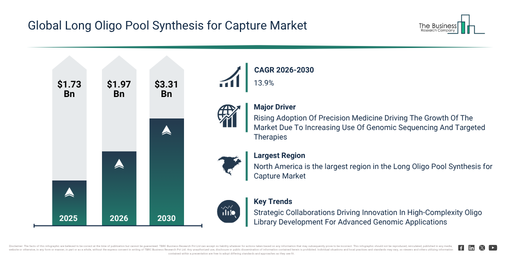
  • Long Oligo Pool Synthesis for Capture Market Size Growth: From $1.97 Billion In 2026 To $3.31 Billion By 2030

    Long Oligo Pool Synthesis for Capture Market Size Growth: From $1.97 Billion In 2026 To $3.31 Billion By 2030

    Built to provide research that’s more actionable and strategically valuable, The Business Research Company’s 2026 market reports include market attractiveness analysis, total addressable market sizing, company benchmarking matrices, interactive Excel dashboards, broader supply chain intelligence, emerging startup tracking, and in-depth product insights.

    Long Oligo Pool Synthesis for Capture Market Forecast: What Value Will The Market Reach By 2030?

    The market for long oligo pool synthesis for capture has expanded significantly in recent years. This market is expected to surge from $1.73 billion in 2025 to $1.97 billion in 2026, demonstrating a compound annual growth rate (CAGR) of 13.7%. The historical growth of this market can be attributed to several factors, including the increased adoption of next-generation sequencing, the growing demand for targeted sequencing solutions, the expansion of cancer genomics research, the rising utilization of gene panel testing, and progress in array-based synthesis technologies.

    The market for long oligo pool synthesis in capture applications is projected for significant expansion in the coming years. This market is anticipated to reach $3.31 billion by 2030, exhibiting a compound annual growth rate (CAGR) of 13.9%. This growth during the projection period stems from several factors, including the escalating demand for precision oncology, the increased adoption of AI-driven probe design tools, growing investments in synthetic biology, the expansion of clinical genomic diagnostics, and the rising requirement for scalable and multiplexed enrichment techniques. Key trends anticipated during the forecast period involve the growing uptake of high-plex target enrichment panels, a rising call for custom capture probe libraries, greater integration of automated probe design platforms, the broadening of CRISPR screening applications, and an enhanced emphasis on economical, high-throughput oligo synthesis.

    Get A Free Sample Report With In-Depth Market Insights:

    https://thebusinessresearchcompany.com/sample_request?id=60039848&type=smp&name=Long%20Oligo%20Pool%20Synthesis%20for%20Capture%20Market%20Report%202026&utm_source=Blogs&utm_medium=Paid&utm_campaign=Oct_PR

    Long Oligo Pool Synthesis for Capture Market Opportunity Drivers: What’s Unlocking New Revenue Potential?

    The increasing requirement for precision medicine methods is anticipated to boost the growth of the long oligo pool synthesis for the capture market in the future. Precision medicine approaches are medical strategies designed to customize the prevention, diagnosis, and treatment of illnesses for individual patients, based on their distinct characteristics. The rising adoption of genomic sequencing, which allows for personalized and more effective treatments, is driving the demand for these precision medicine strategies. Long oligo pool synthesis for capture aids precision medicine by enabling highly precise genomic enrichment and probe design, which are vital for targeted sequencing, the identification of biomarkers, and patient classification in both clinical and research environments. For instance, in February 2024, the Personalized Medicine Coalition, a US-based non-profit organization, reported that the U.S. Food and Drug Administration (FDA) approved 16 new personalized treatments for patients with rare diseases in 2023, representing a significant increase from the six approvals in 2022. Among these newly approved treatments, seven are cancer drugs, while three address other diseases and conditions. Therefore, the growing demand for precision medicine approaches is a key driver for the long oligo pool synthesis for the capture market.

    Long Oligo Pool Synthesis for Capture Market Segment Landscape And Growth Outlook

    The long oligo pool synthesis for capture market covered in this report is segmented –

    1) By Product Type: Custom Capture Probe Libraries, Pre Designed Capture Panels, Capture Reagent Kits, Amplification And Enrichment Reagents, Design Software And Analytical Tools

    2) By Synthesis Method: Array-Based Synthesis, Column-Based Synthesis, Microfluidic Synthesis, Other Synthesis Methods

    3) By Application: Targeted Sequencing, Gene Synthesis, Clustered Regularly Interspaced Short Palindromic Repeats (CRISPR) Screening, Synthetic Biology, Other Applications

    4) By End-Users: Academic And Research Institutes, Biotechnology And Pharmaceutical Companies, Clinical Laboratories, Other End Users

    Subsegments:

    1) By Custom Capture Probe Libraries: Human Whole Exome Probe Libraries, Human Whole Genome Targeted Probe Libraries, Cancer Specific Gene Panel Probe Libraries, Inherited Disease Gene Panel Probe Libraries, Microbial And Pathogen Target Probe Libraries, Plant And Agricultural Genomics Probe Libraries, Custom Research Target Probe Libraries

    2) By Pre Designed Capture Panels: Pan Cancer Gene Panels, Hereditary Disease Screening Panels, Pharmacogenomics Testing Panels, Immunology And Inflammation Panels, Neurology Related Disorder Panels, Cardiovascular Disease Panels, Metabolic Disorder Panels

    3) By Capture Reagent Kits: Hybridization Buffer Reagent Kits, Washing And Elution Reagent Kits, Blocking Oligonucleotide Reagent Kits, Target Enrichment Reagent Kits, Library Preparation Reagent Kits, Quality Control Reagent Kits

    4) By Amplification And Enrichment Reagents: Polymerase Based Amplification Reagents, Isothermal Amplification Reagents, Target Enrichment Bead Reagents, Adapter Ligation Reagents, Post Capture Amplification Reagents, Purification And Cleanup Reagents

    5) By Design Software And Analytical Tools: Probe Design Software Platforms, Target Region Selection Tools, Sequencing Data Alignment Tools, Variant Detection Analysis Tools, Coverage And Quality Assessment Tools, Visualization And Reporting Tools

    Long Oligo Pool Synthesis for Capture Market Innovation Trends Shaping Future Development

    Companies prominently engaged in long oligo pool synthesis for the capture market are prioritizing strategic alliances to expedite the creation of high-complexity custom oligo libraries for sophisticated genomic applications. Strategic partnerships signify structured collaborations between organizations that utilize complementary strengths, specialized knowledge, and market access to enhance competitive advantage and promote enduring, sustainable expansion. As an illustration, in January 2023, Twist Bioscience Corporation, a US-based biotechnology enterprise, formed a partnership with Centogene N.V., a Germany-based diagnosis and research firm focused on rare diseases, to introduce three next-generation sequencing (NGS) target enrichment panels. These panels are intended to further rare disease and hereditary cancer research and diagnostics. The offerings comprise the Twist Alliance CNTG Exome Panel (designed for whole exome rare disease analysis), the CNTG Rare Disease Panel (which covers >2,500 genes relevant to conditions like treatable rare diseases and metabolic issues), and the CNTG Hereditary Oncology Panel (featuring 72 genes for identifying cancer predisposition biomarkers). These panels are meticulously developed from CENTOGENE’s Biodatabank, containing data from nearly 700,000 diverse patients, and are synthesized by Twist to ensure precise variant detection.

    Long Oligo Pool Synthesis for Capture Market Top Companies Driving Competitive Growth

    Major companies operating in the long oligo pool synthesis for capture market are Eurofins Genomics GmbH, Agilent Technologies Inc, BGI Genomics, GenScript Biotech Corporation, Twist Bioscience Corporation, Azenta Inc, DNA Script SAS, Synbio Technologies Inc, LGC Biosearch Technologies Inc, Bioneer Corporation, Gene Universal Inc, Ansa Biotechnologies Inc, Microsynth AG, Daicel Arbor Biosciences, iGeneTech Bioscience Co Ltd, Moligo Technologies AB, Creative Biogene LLC, SBS Genetech Co Ltd, MaxPrecision Labs Inc, Integrated DNA Technologies, Dynegene.

    View The Full Long Oligo Pool Synthesis for Capture Market Report:

    https://thebusinessresearchcompany.com/report/long-oligo-pool-synthesis-for-capture-market-report?utm_source=Blogs&utm_medium=Paid&utm_campaign=Oct_PR

    Long Oligo Pool Synthesis for Capture Market Global Footprint: Which Region Leads The Market?

    North America was the largest region in the long oligo pool synthesis for capture market in 2025. Asia-Pacific is expected to be the fastest-growing region in the forecast period. The regions covered in the long oligo pool synthesis for capture market report are Asia-Pacific, South East Asia, Western Europe, Eastern Europe, North America, South America, Middle East, Africa.

    Reach Out To Our Team:

    The Business Research Company: https://www.thebusinessresearchcompany.com/

    Americas: +1 310-496-7795

    Asia: +44 7882 955267 & +91 8897263534

    Europe: +44 7882 955267

    Email us at: marketing@tbrc.info

    Follow us on:

    LinkedIn: https://in.linkedin.com/company/the-business-research-company

    YouTube: https://www.youtube.com/channel/UC24_fI0rV8cR5DxlCpgmyFQ

    Global Market Model: https://www.thebusinessresearchcompany.com/global-market-model
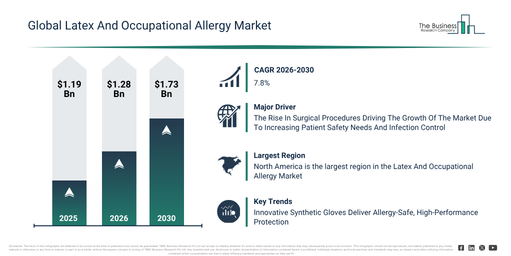
  • Latex And Occupational Allergy Market Size In 2026 And Beyond: Understanding Future Growth Potential

    Latex And Occupational Allergy Market Size In 2026 And Beyond: Understanding Future Growth Potential

    Built to provide research that’s more actionable and strategically valuable, The Business Research Company’s 2026 market reports include market attractiveness analysis, total addressable market sizing, company benchmarking matrices, interactive Excel dashboards, broader supply chain intelligence, emerging startup tracking, and in-depth product insights.

    Latex And Occupational Allergy Market CAGR Outlook And Future Development

    The market size for latex and occupational allergies has demonstrated robust growth in recent years. This market is expected to expand from $1.19 billion in 2025 to $1.28 billion in 2026, progressing at a compound annual growth rate (CAGR) of 7.5%. Key drivers behind the historical period’s expansion include the escalating prevalence of occupational allergies, a heightened use of latex gloves in healthcare environments, an increasing regulatory emphasis on worker safety, the broadening of hospital and laboratory infrastructure, and a rise in reported instances of latex-induced anaphylaxis.

    The market size for latex and occupational allergy is projected to experience robust growth in the coming years. It is expected to expand to $1.73 billion in 2030, achieving a compound annual growth rate (CAGR) of 7.8 percent. This anticipated growth during the forecast period is attributable to an increasing demand for medical supplies that are latex-free, greater investment in allergy diagnostic technologies, the proliferation of workplace health surveillance programs, the expansion of industrial safety compliance standards, and a rise in awareness campaigns concerning occupational allergies. Noteworthy trends identified for the forecast period include the increasing adoption of alternatives that are latex-free, the growing implementation of occupational health screening programs, heightened awareness regarding workplace allergen exposure risks, the expansion of rapid diagnostic testing for latex-specific IgE, and a stronger emphasis on preventive workplace safety policies.

    Get A Free Sample Report With In-Depth Market Insights:

    https://thebusinessresearchcompany.com/sample_request?id=90754743&type=smp&name=Latex%20And%20Occupational%20Allergy%20Market%20Report%202026&utm_source=Blogs&utm_medium=Paid&utm_campaign=Oct_PR

    Latex And Occupational Allergy Market Development Factors: What’s Supporting Demand?

    The growing volume of surgical interventions is anticipated to boost the expansion of the latex and occupational allergy market in the future. These medical operations involve making cuts, manipulating, or excising tissues to identify, address, or mend various injuries, illnesses, or anomalies. Several factors contribute to the rise in surgical procedures, including the rising occurrence of chronic conditions, a maturing global population, and progress in medical technology enabling more viable and successful operations. This increase in surgeries leads to greater latex exposure for both medical personnel and patients, thereby stimulating the need for efficient solutions within the Latex and Occupational Allergy sector. As an illustration, the 2024 annual report from Intuitive Surgical Inc., a US-based medical device company, noted that about 2,683,000 surgical procedures were performed using da Vinci surgical systems, an increase from approximately 2,286,000 procedures in 2023 and 1,875,000 procedures in 2022, demonstrating consistent year-on-year growth in usage. Consequently, the increasing frequency of surgical procedures is propelling the growth of the latex and occupational allergy market.

    Latex And Occupational Allergy Market Segmentation And Category Overview

    The latex and occupational allergy market covered in this report is segmented –

    1) By Product Type: Latex-specific IgE Testing, Patch Testing Systems, Latex-free Product Alternatives, Occupational Health Screening Programs, Clinical Management Solutions

    2) By Treatment Type: Epinephrine injections (emergency management of severe reactions), Antihistamines and allergy medications, Avoidance strategies and substitution with latex-free materials

    3) By Reaction Or Allergy Type: Allergic contact dermatitis (Type IV hypersensitivity), Immediate hypersensitivity (Type I reactions, including anaphylaxis), Other mild to moderate reactions

    4) By Application Setting: Healthcare Facilities, Industrial Manufacturing, Food Service Operations, Educational Institutions, Other Occupational Environments

    5) By End-User: Hospitals and Clinics, Occupational Health Centers, Diagnostic Laboratories, Government and Regulatory Agencies, Industrial Laboratories and Workplaces

    Subsegments:

    1) By Latex-Specific Immunoglobulin E Testing: Enzyme-Linked Immunosorbent Assay Testing, Fluorescent Enzyme Immunoassay Testing, Radioallergosorbent Testing, Rapid Diagnostic Testing

    2) By Patch Testing Systems: Standard Patch Test Panels, Customized Patch Test Panels, Ready-To-Use Patch Kits, Allergen-Specific Patch Strips

    3) By Latex-Free Product Alternatives: Nitrile Gloves, Vinyl Gloves, Neoprene Gloves, Polyisoprene Gloves

    4) By Occupational Health Screening Programs: Pre-Employment Screening Programs, Periodic Health Surveillance Programs, Risk Assessment Programs, Workplace Exposure Monitoring Programs

    5) By Clinical Management Solutions: Pharmacological Treatment Solutions, Immunotherapy Solutions, Emergency Anaphylaxis Management Solutions, Patient Education and Counseling Programs

    Latex And Occupational Allergy Market Transformation Trends: What Innovations Are Driving Change?

    Major companies operating in the latex and occupational allergy market are concentrating on developing innovative solutions, such as synthetic disposable latex gloves, to offer latex-free, allergy-safe alternatives with superior performance and durability. Synthetic disposable latex gloves are single-use items made from a synthetic material that mimics natural latex’s flexibility and feel but contains no natural latex proteins, thereby reducing allergy risks. For instance, in April 2025, Intco Medical Technology Co. Ltd., a China-based manufacturing company, launched its Synte Synthetic Disposable Latex Gloves, which boast a material composition free from natural latex proteins and conventional accelerators, comply with EN455, EN374, Food and Drug Administration, and European conformity standards, and improve supply chain stability by reducing reliance on natural rubber plantations. These gloves deliver an optimal combination of comfort, robust protective performance, and environmental benefits, catering to professionals who require reliable, allergy-safe hand protection in various applications.

    Latex And Occupational Allergy Market Competitive Landscape: Which Companies Lead The Industry?

    Major companies operating in the latex and occupational allergy market are Thermo Fisher Scientific Incorporated, Honeywell International Incorporated, 3M Company, Siemens Healthineers Aktiengesellschaft, Medline Industries Inc., Quest Diagnostics Inc., Eurofins Scientific SE, EUROIMMUN Medizinische Labordiagnostika Aktiengesellschaft, Bio-Rad Laboratories Inc., Ansell Limited, ALK‑Abelló A/S, Top Glove Corporation Berhad, Hartalega Holdings Berhad, Kossan Rubber Industries Berhad, R-Biopharm Aktiengesellschaft, HYCOR Biomedical Inc., AESKU.GROUP GmbH And Co. KG, RFB Latex Limited, TG Medical Sdn Bhd, SHIELD Scientific Limited.

    View The Full Latex And Occupational Allergy Market Report:

    https://thebusinessresearchcompany.com/report/latex-and-occupational-allergy-market-report?utm_source=Blogs&utm_medium=Paid&utm_campaign=Oct_PR

    Latex And Occupational Allergy Market Regional Breakdown: Where Is Demand Concentrated?

    North America was the largest region in the latex and occupational allergy market in 2025. Asia-Pacific is expected to be the fastest-growing region in the forecast period. The regions covered in the latex and occupational allergy market report are Asia-Pacific, South East Asia, Western Europe, Eastern Europe, North America, South America, Middle East, Africa.

    Reach Out To Our Team:

    The Business Research Company: https://www.thebusinessresearchcompany.com/

    Americas: +1 310-496-7795

    Asia: +44 7882 955267 & +91 8897263534

    Europe: +44 7882 955267

    Email us at: marketing@tbrc.info

    Follow us on:

    LinkedIn: https://in.linkedin.com/company/the-business-research-company

    YouTube: https://www.youtube.com/channel/UC24_fI0rV8cR5DxlCpgmyFQ

    Global Market Model: https://www.thebusinessresearchcompany.com/global-market-model
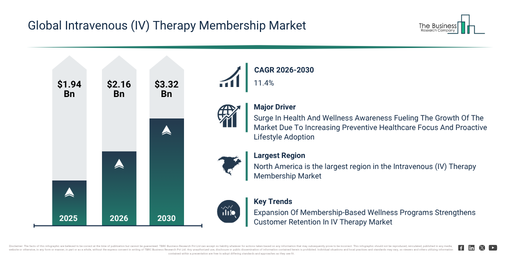
  • Intravenous (IV) Therapy Membership Market Valued At $3.32 Billion In 2026: Key Trends And Growth Drivers

    Intravenous (IV) Therapy Membership Market Valued At $3.32 Billion In 2026: Key Trends And Growth Drivers

    Built to provide research that’s more actionable and strategically valuable, The Business Research Company’s 2026 market reports include market attractiveness analysis, total addressable market sizing, company benchmarking matrices, interactive Excel dashboards, broader supply chain intelligence, emerging startup tracking, and in-depth product insights.

    Intravenous (IV) Therapy Membership Market Growth Potential: How Will Market Size Shift Through 2030?

    The intravenous (IV) therapy membership market size has seen rapid expansion in recent years. This market is projected to expand from $1.94 billion in 2025 to $2.16 billion in 2026, demonstrating a compound annual growth rate (CAGR) of 11.2%. Factors contributing to this historical growth include an escalating consumer emphasis on preventive healthcare, a surging demand for hydration and vitamin infusion therapies, increased disposable income allocated to wellness services, the proliferation of boutique wellness clinics, and heightened awareness concerning immunity and energy-boosting treatments.

    The intravenous (IV) therapy membership market size is projected to undergo substantial expansion in the coming years. It is expected to reach $3.32 billion in 2030, demonstrating a compound annual growth rate (CAGR) of 11.4%. This growth during the forecast period can be attributed to a heightened interest in personalized health optimization, increased corporate investment in employee wellness benefits, the rising adoption of digital booking and subscription platforms, expanding demand for concierge and in-home healthcare services, and a greater focus on anti-aging and recovery therapies. Significant trends anticipated in this period include the wider embrace of subscription-based wellness models, an escalating demand for preventive and performance-oriented IV therapies, the increasing popularity of at-home IV infusion services, the development of customized nutrient therapy plans, and the proliferation of corporate wellness membership programs.

    Get A Free Sample Report With In-Depth Market Insights:

    https://thebusinessresearchcompany.com/sample_request?id=77717902&type=smp&name=Intravenous%20%28IV%29%20Therapy%20Membership%20Market%20Report%202026&utm_source=Blogs&utm_medium=Paid&utm_campaign=Oct_PR

    Intravenous (IV) Therapy Membership Market Opportunity Drivers: What’s Unlocking New Revenue Potential?

    The increasing focus on health and wellness is projected to advance the IV therapy membership market moving forward. This health and wellness awareness signifies an expanding understanding and deliberate adoption of behaviors, products, and services that support physical, mental, and overall well-being. The growth in health and wellness awareness is fueled by a stronger emphasis on preventive healthcare, as individuals proactively embrace healthier lifestyles to mitigate the risk of chronic conditions and enhance long-term health. IV therapy membership contributes to health and wellness awareness by fostering regular preventive care through scheduled nutrient infusions, assisting individuals in actively managing hydration, immunity, and general well-being. For example, in June 2024, data from the International Food Information Council (IFIC), a US-based non-profit organization, revealed that the percentage of Americans following a specific diet or eating pattern over the past year remained substantial at 54%. Most people aim to increase their protein intake, with interest climbing from 59% in 2022 to 67% in 2023, and reaching 71% in 2024. Additionally, about half of consumers are endeavoring to consume more fresh foods, which are widely considered the healthiest dietary choices. Hence, the escalating health and wellness awareness is propelling the growth of the IV therapy membership market.

    Intravenous (IV) Therapy Membership Market Segment Performance And Emerging Opportunities

    The intravenous (IV) therapy membership market covered in this report is segmented –

    1) By Membership Tier: Basic (Starter), Standard (Wellness), Premium (Elite), Family Or Group Plans

    2) By Service Type: Hydration Therapy, Vitamin Therapy, Detox Therapy, Beauty Therapy, Immunity Boosting, Other Service Types

    3) By Frequency Or Subscription Plan: Weekly Memberships, Biweekly Memberships, Monthly Memberships, Custom Or Flexible Memberships

    4) By Distribution Channel: In-Clinic, At-Home, Online Platforms

    5) By End User: Individuals, Corporate Or Employees, Athletes And Fitness Enthusiasts, Medical Or Clinical Patients

    Subsegments:

    1) By Basic (Starter): Single Session Plan, Limited Monthly Infusion Plan, Introductory Detox Plan, Hydration Only Plan, Essential Vitamin Plan

    2) By Standard (Wellness): Monthly Wellness Infusion Plan, Immunity Boost Plan, Energy Enhancement Plan, Recovery And Performance Plan, Seasonal Preventive Care Plan

    3) By Premium (Elite): Unlimited Monthly Infusion Plan, Customized Nutrient Therapy Plan, Priority Booking And Concierge Plan, Comprehensive Anti Aging Plan, Executive Health Optimization Plan

    4) By Family Or Group Plans: Couple Wellness Plan, Family Preventive Care Plan, Corporate Employee Wellness Plan, Group Detox Program Plan, Shared Membership Bundle Plan

    Intravenous (IV) Therapy Membership Market Innovation Trends Shaping Future Development

    Major companies operating in the IV therapy membership market are prioritizing the development of structured membership programs to enhance client retention, boost consistent revenue streams, and expand the availability of preventative wellness services. These structured membership programs function as systematic subscription models, providing customers with access to pre-defined services, products, or benefits at regular intervals, which helps reinforce long-term customer commitment, establish predictable recurring income, and ensure affordable, continuous access to necessary services or treatments. For instance, in August 2025, REVIV Global, a UK-based wellness and IV therapy provider, announced the introduction of its IV therapy membership programs, crafted to provide adaptable monthly treatment options, exclusive pricing advantages, and individualized wellness solutions. This program allows members to receive routine hydration and vitamin infusions customized to their health objectives, promoting sustained customer engagement and consistent wellness management while fortifying the company’s subscription-based service framework.

    Intravenous (IV) Therapy Membership Market Leading Players And Competitive Positioning

    Major companies operating in the intravenous (IV) therapy membership market are The I.V. Doc LLC, Elixir IV LLC, The IV League LLC, Mobile IV Drip LLC, REVIV Global Limited, Liquivida Franchising LLC, Hydrate IV Bar LLC, DripIV Therapy Hydration LLC, GIV Wellness LLC, The IV Lounge LLC, Prime IV Hydration Wellness LLC, PurelyIV LLC, Vitamin Injections London Ltd, GLO IV Spa LLC, Core IV Therapy LLC, IV Drips LLC, PureDropIV LLC, Drip Hydration LLC, Longiva Wellness LLC, IV Therapy Greece PC, Refresh Biohacking Clinic LLC, Pure Drip IV LLC.

    View The Full Intravenous (IV) Therapy Membership Market Report:

    https://thebusinessresearchcompany.com/report/intravenous-iv-therapy-membership-market-report?utm_source=Blogs&utm_medium=Paid&utm_campaign=Oct_PR

    Intravenous (IV) Therapy Membership Market Regional Distribution: Which Areas Power Market Growth?

    North America was the largest region in the intravenous (IV) therapy membership market in 2025. Asia-Pacific is expected to be the fastest-growing region in the forecast period. The regions covered in the intravenous (IV) therapy membership market report are Asia-Pacific, South East Asia, Western Europe, Eastern Europe, North America, South America, Middle East, Africa.

    Reach Out To Our Team:

    The Business Research Company: https://www.thebusinessresearchcompany.com/

    Americas: +1 310-496-7795

    Asia: +44 7882 955267 & +91 8897263534

    Europe: +44 7882 955267

    Email us at: marketing@tbrc.info

    Follow us on:

    LinkedIn: https://in.linkedin.com/company/the-business-research-company

    YouTube: https://www.youtube.com/channel/UC24_fI0rV8cR5DxlCpgmyFQ

    Global Market Model: https://www.thebusinessresearchcompany.com/global-market-model
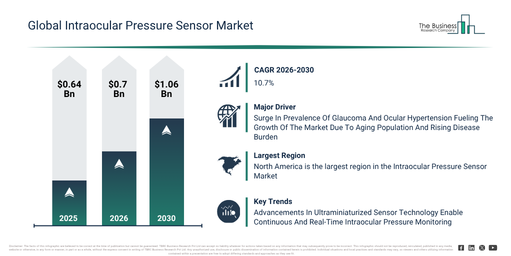
  • Intraocular Pressure Sensor Market Size In 2026: Growth Outlook And Forecast Through 2030

    Intraocular Pressure Sensor Market Size In 2026: Growth Outlook And Forecast Through 2030

    Backed by market attractiveness analysis, total addressable market sizing, company benchmarking matrices, interactive Excel dashboards, wider supply chain intelligence, emerging startup coverage, and detailed product-level insights, The Business Research Company’s 2026 market reports are designed to offer research that is more actionable and strategically valuable than ever.

    Intraocular Pressure Sensor Market Value Analysis: What Growth Lies Ahead Over The Forecast Period?

    The market size for intraocular pressure sensors has experienced substantial growth in recent years. It is projected to increase from $0.64 billion in 2025 to $0.7 billion in 2026, achieving a compound annual growth rate (CAGR) of 10.4%. Historically, this expansion has been driven by factors such as the rising prevalence of glaucoma cases, an increasing geriatric population, growing awareness about early eye disease diagnosis, advancements in microsensor technology, and an increasing number of ophthalmic surgeries.

    The intraocular pressure sensor market is poised for rapid expansion in the upcoming years. It is forecast to grow to $1.06 billion in 2030, achieving a compound annual growth rate (CAGR) of 10.7%. This projected growth is attributed to factors such as the increasing demand for remote patient monitoring, the greater adoption of wireless implantable sensors, rising investments in ophthalmic research and development, the expansion of homecare-based eye monitoring, and a heightened focus on personalized ophthalmic treatment. Significant trends within the forecast period encompass the increasing use of implantable intraocular pressure sensors, a growing demand for continuous glaucoma monitoring solutions, the ongoing development of smart contact lens-based sensors, the proliferation of minimally invasive ocular monitoring devices, and an amplified emphasis on early diagnosis and preventive eye care.

    Get A Free Sample Report With In-Depth Market Insights:

    https://thebusinessresearchcompany.com/sample_request?id=40693178&type=smp&name=Intraocular%20Pressure%20Sensor%20Market%20Report%202026&utm_source=Blogs&utm_medium=Paid&utm_campaign=Oct_PR

    Intraocular Pressure Sensor Market Growth Momentum: What Factors Are Shaping Demand?

    The increasing occurrence of glaucoma and ocular hypertension is anticipated to propel the growth of the intraocular pressure sensor market going forward. Glaucoma and ocular hypertension are eye conditions defined by elevated intraocular pressure that can damage the optic nerve, potentially leading to vision loss. The escalating prevalence of these conditions is driven by an aging population, as advanced age increases the risk of elevated intraocular pressure and optic nerve damage. An intraocular pressure sensor assists in glaucoma and ocular hypertension management by continuously monitoring eye pressure, enabling early detection of spikes, guiding timely treatment, and preventing irreversible vision loss. For instance, in June 2023, according to Glaucoma Australia, an Australia-based non-profit organization, nearly 300,000 Australians have glaucoma, only half of whom are diagnosed, and the associated costs are projected to rise from $1.9 billion to $4.3 billion. Consequently, the rising prevalence of glaucoma and ocular hypertension is driving the growth of the intraocular pressure sensor market.

    Intraocular Pressure Sensor Market Segment Landscape And Growth Outlook

    The intraocular pressure sensor market covered in this report is segmented –

    1) By Product Type: Implantable (Intraocular) Sensors, Passive Sensors, Active Sensors, Contact Lens-Based Sensors, Embedded Micro-Sensors, Implantable Drainage Devices

    2) By Technology: Optical Technology, Electromechanical Technology, Capacitive Or Inductive Technology, Microfluidic Technology

    3) By Distribution Channel: Direct Sales, Distributors, Online Sales

    4) By Application: Glaucoma Management, Post-Operative Monitoring, Ocular Hypertension Monitoring, Research Applications

    5) By End-User: Hospitals, Ophthalmic Clinics, Ambulatory Surgical Centers, Homecare Settings, Other End-Users

    Subsegments:

    1) By Implantable (Intraocular) Sensors: Wireless Implantable Sensors, Telemetric Implantable Sensors, Microfluidic Implantable Sensors

    2) By Passive Sensors: Strain Gauge-Based Sensors, Capacitive Passive Sensors, Piezoelectric Passive Sensors

    3) By Active Sensors: Microelectromechanical System Sensors, Optical Active Sensors, Electrochemical Active Sensors

    4) By Contact Lens-Based Sensors: Smart Contact Lens Sensors, Hydrogel Contact Lens Sensors, Embedded Electronics Contact Lens Sensors

    5) By Embedded Micro-Sensors: Nanoelectronic Embedded Sensors, Photonic Embedded Sensors, MEMS-Based Embedded Sensors

    6) By Implantable Drainage Devices: Microshunt Drainage Devices, Valved Drainage Devices, Non-Valved Drainage Devices

    Intraocular Pressure Sensor Market Trends Redefining Industry Growth

    Leading companies within the intraocular pressure sensor market are concentrating their efforts on creating sophisticated battery-free implantable devices. These innovations aim to facilitate continuous, real-time monitoring of intraocular pressure (IOP), thereby improving glaucoma management and fostering better long-term patient outcomes. Battery-free implantable devices represent medical implants that operate without an internal power source, instead drawing energy wirelessly from external electromagnetic or radiofrequency sources. This design supports extended, maintenance-free performance inside the body, enabling more compact device designs, fewer replacement procedures, and enhanced patient safety and comfort. As an illustration, in August 2024, Injectsense Inc., a US-based medical device company, successfully completed the initial human implantation of its ultraminiaturized intraocular pressure sensor. This wireless, battery-free implantable device is engineered to provide continuous IOP monitoring, allowing physicians to track pressure variations over time and refine glaucoma treatment strategies through data-driven clinical decision-making.

    Intraocular Pressure Sensor Market Competitive Overview And Top Companies

    Major companies operating in the intraocular pressure sensor market are Carl Zeiss Meditec AG, Topcon Corporation, Tomey Corporation, Appasamy Associates Private Limited, Rexxam Co. Ltd., Huvitz Co. Ltd., Reichert Inc., IOP Medical Ltd, OCULUS Optikgeräte GmbH, Marco Ophthalmic Inc., Luneau Technology Group, Takagi Seiko Corporation, NIDEK Co. Ltd., iCare Finland Oy, Haag-Streit Group AG, CSO Srl, Sensimed SA, Implandata Ophthalmic Products GmbH, Ziemer Ophthalmic Systems AG, Kowa Company Ltd, Rumax International Pvt Ltd, Bon Optic Vertriebsgesellschaft mbH, Diaton, Suzhou Suowei Electronic Technology Co Ltd, Tianjin Suowei Electronic Technology Co Ltd.

    View The Full Intraocular Pressure Sensor Market Report:

    https://thebusinessresearchcompany.com/report/intraocular-pressure-sensor-market-report?utm_source=Blogs&utm_medium=Paid&utm_campaign=Oct_PR

    Intraocular Pressure Sensor Market Leading Geography: Which Region Contributes The Most Revenue?

    North America was the largest region in the intraocular pressure sensor market in 2025. Asia-Pacific is expected to be the fastest-growing region in the forecast period. The regions covered in the intraocular pressure sensor market report are Asia-Pacific, South East Asia, Western Europe, Eastern Europe, North America, South America, Middle East, Africa.

    Reach Out To Our Team:

    The Business Research Company: https://www.thebusinessresearchcompany.com/

    Americas: +1 310-496-7795

    Asia: +44 7882 955267 & +91 8897263534

    Europe: +44 7882 955267

    Email us at: marketing@tbrc.info

    Follow us on:

    LinkedIn: https://in.linkedin.com/company/the-business-research-company

    YouTube: https://www.youtube.com/channel/UC24_fI0rV8cR5DxlCpgmyFQ

    Global Market Model: https://www.thebusinessresearchcompany.com/global-market-model
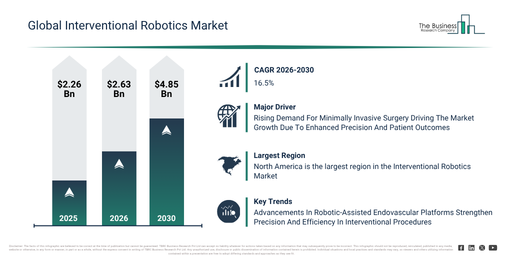
  • Interventional Robotics Market Trends Supporting 16.5% CAGR Growth Through 2030

    Interventional Robotics Market Trends Supporting 16.5% CAGR Growth Through 2030

    Featuring market attractiveness scoring, total addressable market sizing, company benchmarking matrices, interactive Excel dashboards, deeper supply chain intelligence, emerging startup tracking, and granular product-level insights, The Business Research Company’s 2026 market reports are built to deliver research that is both more actionable and more strategically valuable.

    Interventional Robotics Market Size Forecast: How Big Could The Market Get By 2030?

    The interventional robotics market has experienced rapid expansion in its size over recent years. This market is projected to increase from $2.26 billion in 2025 to $2.63 billion in 2026, exhibiting a compound annual growth rate (CAGR) of 16.3%. Historically, this growth has been driven by several factors, including a greater need for minimally invasive surgical procedures, an increase in cardiovascular and neurological conditions, progress in medical robotics technology, expanding investments in hospital facilities, and an enhanced emphasis on achieving greater surgical accuracy.

    The interventional robotics market is projected to experience substantial growth in the upcoming years. It is expected to expand to $4.85 billion in 2030, achieving a compound annual growth rate (CAGR) of 16.5%. This growth throughout the forecast period can be attributed to the increasing integration of AI-enabled robotic systems, the rising adoption of image-guided interventions, escalating healthcare expenditure, the expansion of specialty surgical centers, and a growing demand for improved patient safety and outcomes. Significant trends during the forecast period include the increasing uptake of minimally invasive robotic procedures, the growing incorporation of image-guided navigation systems, a rising demand for robotic-assisted catheter-based interventions, the expansion of simulation and training platforms for surgeons, and an increasing focus on procedure-specific robotic platforms.

    Get A Free Sample Report With In-Depth Market Insights:

    https://thebusinessresearchcompany.com/sample_request?id=91212199&type=smp&name=Interventional%20Robotics%20Market%20Report%202026&utm_source=Blogs&utm_medium=Paid&utm_campaign=Oct_PR

    Interventional Robotics Market Expansion Drivers: What’s Shaping Future Growth?

    The expanding requirement for minimally invasive surgery (MIS) is anticipated to propel the future growth of the interventional robotics market. MIS involves surgical operations carried out through tiny cuts using specific instruments and cameras, resulting in less bodily harm compared to traditional open surgeries. The increasing patient preference for MIS stems from its established clinical advantages, such as quicker recovery periods, reduced discomfort after surgery, and shorter hospital stays. This growing embrace of MIS methods consequently drives the need for sophisticated robotic surgical systems, which offer surgeons improved accuracy and command during intricate operations. As an illustration, in April 2025, the British Association of Aesthetic Plastic Surgeons, a surgical organization based in the UK, reported that cosmetic surgical procedures saw a 5% rise between 2023 and 2024, totaling 27,462 procedures in 2024. Consequently, the escalating demand for minimally invasive surgery is fueling the expansion of the interventional robotics market.

    Interventional Robotics Market Breakdown By Product Type And Application

    The interventional robotics market covered in this report is segmented –

    1) By Product Type: Robotic Systems, Accessories, Software

    2) By Procedure Type: Minimally Invasive Surgery (MIS), Catheter-Based Interventions, Image-Guided Interventions, Biopsy Procedures, Ablation Procedures

    3) By Technology: Image-Guided Robotic Systems, Artificial Intelligence (AI)-Integrated Robotic Systems, Electromechanical Robotic Systems, Magnetic Navigation Systems

    4) By Application: Cardiology, Neurology, Orthopedics, Urology, Oncology, Other Applications

    5) By End-User: Hospitals, Ambulatory Surgical Centers, Specialty Clinics, Other End-Users

    Subsegments:

    1) By Robotic Systems: Surgical Robotic Systems, Orthopedic Robotic Systems, Neurosurgical Robotic Systems, Cardiovascular Robotic Systems, Urological Robotic Systems, General Surgery Robotic Systems, Image Guided Robotic Systems

    2) By Accessories: Robotic Arms, Disposable Instruments, End Effectors, Catheters And Guidewires, Imaging Probes, Sterilization Trays, System Carts

    3) By Software: Procedure Planning Software, Navigation And Mapping Software, Imaging And Visualization Software, Data Management Software, Simulation And Training Software, Analytics And Reporting Software, Workflow Management Software

    Interventional Robotics Market Strategic Trends: What Defines The Next Growth Phase?

    Leading companies in the interventional robotics market are prioritizing the development of sophisticated single-use endovascular robotic systems. These systems aim to boost procedural accuracy, improve physician control, and minimize radiation exposure during minimally invasive vascular interventions. A single-use endovascular robotic system is a disposable robotic solution that enables physicians to perform minimally invasive vascular interventions with enhanced precision through remote control of guidewires and catheters. For instance, in February 2026, Microbot Medical Inc., a US-based medical device company, launched the LIBERTY Endovascular Robotic System, which is the first FDA-cleared single-use, remotely operated robotic platform for peripheral endovascular procedures, and it was featured at the International Symposium on Endovascular Therapy (ISET) conference. During a town hall session dedicated to advances in endovascular robotics, key opinion leaders, including interventional radiologists, cardiologists, and vascular surgeons, shared their practical clinical experiences, the seamless integration into workflows, and the potential for reducing radiation exposure and physical strain while simultaneously improving precision and efficiency.

    Interventional Robotics Market Competitive Landscape: Which Companies Lead The Industry?

    Major companies operating in the interventional robotics market are Stereotaxis Inc, Intuitive Surgical Inc, Accuray Incorporated, Brainlab AG, PROCEPT BioRobotics Corporation, MMI S.p.A., Noah Medical Corporation, Vicarious Surgical Inc, Neocis Inc, Think Surgical Inc, Titan Medical Inc, MicroPort MedBot Shanghai Co Ltd, Asensus Surgical Inc, Microsure B.V., XACT Robotics Ltd, Robocath SA, Microbot Medical Inc, EndoQuest Robotics Inc, Insight Medbotics Inc, Medicaroid Corporation, Medrobotics Corporation, EndoMaster Pte Ltd, Magnetecs Corporation, Catheter Precision Inc, Aibo Medical Technology Co Ltd.

    View The Full Interventional Robotics Market Report:

    https://thebusinessresearchcompany.com/report/interventional-robotics-market-report?utm_source=Blogs&utm_medium=Paid&utm_campaign=Oct_PR

    Interventional Robotics Market Regional Outlook: Where Is Opportunity Concentrated?

    North America was the largest region in the interventional robotics market in 2025. Asia-Pacific is expected to be the fastest-growing region in the forecast period. The regions covered in the interventional robotics market report are Asia-Pacific, South East Asia, Western Europe, Eastern Europe, North America, South America, Middle East, Africa.

    Reach Out To Our Team:

    The Business Research Company: https://www.thebusinessresearchcompany.com/

    Americas: +1 310-496-7795

    Asia: +44 7882 955267 & +91 8897263534

    Europe: +44 7882 955267

    Email us at: marketing@tbrc.info

    Follow us on:

    LinkedIn: https://in.linkedin.com/company/the-business-research-company

    YouTube: https://www.youtube.com/channel/UC24_fI0rV8cR5DxlCpgmyFQ

    Global Market Model: https://www.thebusinessresearchcompany.com/global-market-model