Month: October 2026

  • Robot-Assisted Rehabilitation Treadmills Market Research 2026: Market Size, Trends, Segments And Growth Forecast

    Robot-Assisted Rehabilitation Treadmills Market Research 2026: Market Size, Trends, Segments And Growth Forecast

    Backed by market attractiveness analysis, total addressable market sizing, company benchmarking matrices, interactive Excel dashboards, wider supply chain intelligence, emerging startup coverage, and detailed product-level insights, The Business Research Company’s 2026 market reports are designed to offer research that is more actionable and strategically valuable than ever.

    Robot-Assisted Rehabilitation Treadmills Market Value Growth And Long-Term Outlook

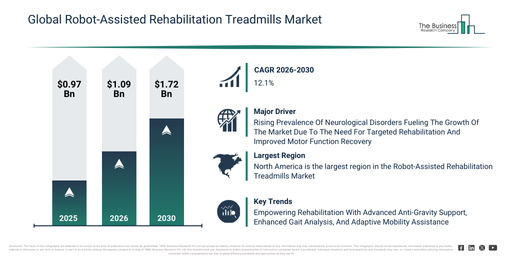
    The market size for robot-assisted rehabilitation treadmills has seen significant growth recently. It is anticipated to expand from $0.97 billion in 2025 to $1.09 billion in 2026, at a compound annual growth rate (CAGR) of 12.4%. This historical increase can be attributed to several factors, including the increasing integration of robotic rehabilitation devices, the rising incidence of neurological disorders, a growing need for advanced physiotherapy solutions, the expansion of rehabilitation centers, and an increased focus on helping patients regain mobility.

    The robot-assisted rehabilitation treadmills market is anticipated to experience substantial expansion over the coming years, with projections indicating it will reach $1.72 billion by 2030, growing at a compound annual growth rate (CAGR) of 12.1%. This growth during the forecast period is fueled by increasing investments in medical robotics, a rising demand for technology-supported rehabilitation, a heightened focus on personalized therapy solutions, the expansion of outpatient rehabilitation services, and a growing elderly demographic requiring mobility assistance. Major trends expected in this period include technological advancements in robotic gait training systems, innovations in sensor-integrated rehabilitation treadmills, progress in artificial intelligence-assisted rehabilitation, ongoing research and development in neurorehabilitation robotics, and developments in immersive rehabilitation technologies.

    Get A Free Sample Report With In-Depth Market Insights:

    https://thebusinessresearchcompany.com/sample_request?id=84945611&type=smp&name=Robot-Assisted%20Rehabilitation%20Treadmills%20Market%20Report%202026&utm_source=Blogs&utm_medium=Paid&utm_campaign=Oct_PR

    Robot-Assisted Rehabilitation Treadmills Market Growth Catalysts And Demand Drivers

    A growing incidence of neurological disorders is anticipated to stimulate the expansion of the robot-assisted rehabilitation treadmills market in the coming years. These conditions are medical ailments impacting the brain, spinal cord, and nerves, thereby disturbing typical nervous system operations and resulting in deficiencies in movement, thought processes, sensation, conduct, or general bodily regulation. The rising occurrence of neurological disorders stems from detrimental lifestyle practices such as inadequate nutrition, lack of physical activity, smoking, excessive alcohol intake, and persistent stress. Robot-assisted rehabilitation treadmills assist in managing neurological disorders by offering guided, repetitive gait training, complete with immediate feedback and assistance. These devices enhance patient recovery by improving mobility, boosting muscle strength, refining balance, and aiding functional recuperation during the rehabilitation process. For example, in June 2025, data from Brain Research UK, a neurological charity based in the United Kingdom, indicated that the incidence of neurological conditions grew from 10.5 million individuals in 2024 to an estimated 11 million in 2025, representing a 4.8 % annual increase. Consequently, the increasing need for precise CNS drug delivery is fueling the expansion of the robot-assisted rehabilitation treadmills market.

    Robot-Assisted Rehabilitation Treadmills Market Segment Outlook: Which Categories Are Growing Fastest?

    The robot-assisted rehabilitation treadmills market covered in this report is segmented –

    1) By Product Type: End-Effector Based Treadmills, Exoskeleton Based Treadmills, Gait Training Treadmills, Other Product Types

    2) By Technology: Semi-Automated, Fully Automated

    3) By Application: Neurological Rehabilitation, Orthopedic Rehabilitation, Geriatric Rehabilitation, Other Applications

    4) By End-User: Hospitals, Rehabilitation Centers, Clinics, Home Care Settings, Other End-Users

    Subsegments:

    1) By End-Effector Based Treadmills: Footplate Based Gait Systems, Distal Joint Guidance Systems, Force Feedback Assisted Platforms, Balance And Stability Training Platforms

    2) By Exoskeleton Based Treadmills: Lower Limb Robotic Exoskeletons, Hip And Knee Joint Assisted Exoskeletons, Full Leg Support Robotic Frames, Wearable Motorized Gait Support Systems

    3) By Gait Training Treadmills: Body Weight Support Treadmills, Robotic Assisted Speed Regulated Treadmills, Dynamic Gait And Posture Training Systems, Multidirectional Gait Correction Treadmills

    4) By Other Product Types: Hybrid Gait Rehabilitation Systems, Robotic Balance Training Platforms, Neuromuscular Reeducation Devices, Specialized Rehabilitation Motion Platforms

    Robot-Assisted Rehabilitation Treadmills Market Trends Shaping Long-Term Demand

    Companies within the robot-assisted rehabilitation treadmills market are concentrating on developing advanced products, such as anti-gravity body weight support systems, to enhance patient mobility outcomes, expedite recovery timelines, and improve clinical rehabilitation protocols. Anti-gravity body weight support systems are integrated mechanisms designed to reduce a patient’s effective body weight during treadmill walking, thereby enabling individuals with mobility challenges to engage in gait training with decreased risk of falls and less physical strain. For example, in June 2024, ReWalk Robotics Ltd., an Israel-based provider of rehabilitation technology solutions, introduced the AlterG NEO Anti-Gravity Treadmill. This treadmill is a cost-effective and user-friendly device featuring the company’s patented Differential Air Pressure (DAP) technology. This core technology delivers precise and consistent unweighting, allowing for safe rehabilitation and athletic training by minimizing stress on injured joints and muscles. Its refreshed design and accessible price point are specifically aimed at making the advantages of anti-gravity therapy available to a broader spectrum of physical rehabilitation clinics and athletic training facilities.

    Robot-Assisted Rehabilitation Treadmills Market Company Landscape And Competitive Strategy

    Major companies operating in the robot-assisted rehabilitation treadmills market are HIWIN Corp., Biodex Medical Systems Inc., Reha Technology AG, Guangzhou Longest Science & Technology Co. Ltd., Hocoma AG, Motek Medical B.V., Ekso Bionics Holdings Inc., Tyromotion GmbH, ReWalk Robotics Ltd., Meditouch Ltd., Woodway USA Inc., Restorative Therapies Inc., BAMA Teknoloji A.S., Aretech LLC, Bionik Laboratories Corp., Techno Concept Inc., Rex Bionics Plc, Rehab-Robotics Company Limited, LokoHelp Group GmbH, ZARYA

    View The Full Robot-Assisted Rehabilitation Treadmills Market Report:

    https://thebusinessresearchcompany.com/report/robot-assisted-rehabilitation-treadmills-market-report?utm_source=Blogs&utm_medium=Paid&utm_campaign=Oct_PR

    Robot-Assisted Rehabilitation Treadmills Market Largest Region: Which Geography Holds The Highest Market Share?

    North America was the largest region in the robot-assisted rehabilitation treadmills market in 2025. Asia-Pacific is expected to be the fastest-growing region in the forecast period. The regions covered in the robot-assisted rehabilitation treadmills market report are Asia-Pacific, South East Asia, Western Europe, Eastern Europe, North America, South America, Middle East, Africa.

    Reach Out To Our Team:

    The Business Research Company: https://www.thebusinessresearchcompany.com/

    Americas: +1 310-496-7795

    Asia: +44 7882 955267 & +91 8897263534

    Europe: +44 7882 955267

    Email us at: marketing@tbrc.info

    Follow us on:

    LinkedIn: https://in.linkedin.com/company/the-business-research-company

    YouTube: https://www.youtube.com/channel/UC24_fI0rV8cR5DxlCpgmyFQ

    Global Market Model: https://www.thebusinessresearchcompany.com/global-market-model

  • Responder Hydration Monitoring Systems Market Forecast 2026: Market Size, Competitive Landscape And Growth Drivers

    Responder Hydration Monitoring Systems Market Forecast 2026: Market Size, Competitive Landscape And Growth Drivers

    Featuring market attractiveness scoring, total addressable market sizing, company benchmarking matrices, interactive Excel dashboards, deeper supply chain intelligence, emerging startup tracking, and granular product-level insights, The Business Research Company’s 2026 market reports are built to deliver research that is both more actionable and more strategically valuable.

    Responder Hydration Monitoring Systems Market Poised To Hit $9.98 Billion By 2030 With A 15.4% CAGR

    The responder hydration monitoring systems market size has seen swift expansion in recent years. This market is set to grow from $4.87 billion in 2025 to $5.63 billion in 2026, demonstrating a compound annual growth rate (CAGR) of 15.7%. The historical growth of this market can be attributed to the rising adoption of wearable health devices, increasing awareness of hydration and wellness, a surge in demand from sports and fitness users, the expansion of occupational safety initiatives, and the growing utilization of remote patient monitoring.

    The responder hydration monitoring systems market is projected to experience significant expansion in the coming years. It is expected to grow to $9.98 billion in 2030, achieving a compound annual growth rate (CAGR) of 15.4%. This anticipated growth can be attributed to factors such as the increasing integration of hydration sensors into smart wearables, greater adoption by first responders and industrial workers, a heightened focus on preventive healthcare, the broadening scope of corporate wellness programs, and a rising demand for cloud-based analytics services. Prominent trends anticipated during the forecast period include technological improvements in hydration sensing, novel developments in non-invasive wearable patches, advancements in AI-based hydration analytics, continued research and development to enhance biosensor accuracy, and the expanding integration of IoT and cloud platforms.

    Get A Free Sample Report With In-Depth Market Insights:

    https://thebusinessresearchcompany.com/sample_request?id=35716076&type=smp&name=Responder%20Hydration%20Monitoring%20Systems%20Market%20Report%202026&utm_source=Blogs&utm_medium=Paid&utm_campaign=Oct_PR

    Responder Hydration Monitoring Systems Market Opportunity Drivers: What’s Unlocking New Revenue Potential?

    The escalating occurrence of heat-stress incidents is anticipated to drive the growth of the responder hydration monitoring systems market going forward. Heat-stress incidents are medical emergencies resulting from the body’s inability to cool itself, often due to prolonged exposure to high temperatures or strenuous physical exertion. The frequency of these incidents is increasing primarily because of more frequent and intense heat conditions, combined with demanding occupational and emergency response activities. Responder hydration monitoring systems assist in mitigating heat-stress by continuously tracking fluid loss, body temperature, and physiological strain in real-time. They enhance responder safety and performance by enabling early alerts and timely interventions to prevent heat-related illnesses. For example, in July 2024, the Korea Disease Control and Prevention Agency (KDCA), a South Korea-based government agency managing organ transplant and disease control, reported 2,818 patients with heat-related illnesses, including 32 presumed deaths, in 2023. This represented an 80.2% increase from 2022, with male patients accounting for 77.8% (2,192 cases) and female patients for 22.2% (626 cases). Therefore, the surge in heat-stress incidents is propelling the expansion of the responder hydration monitoring systems market.

    Responder Hydration Monitoring Systems Market Segment Landscape: Which Areas Lead Development?

    The responder hydration monitoring systems market covered in this report is segmented –

    1) By Product Type: Wearable Hydration Monitors, Smart Water Bottles, Patch-Based Sensors, Other Products

    2) By Technology: Bioimpedance, Optical Sensors, Electrochemical Sensors, Other Technologies

    3) By Sales / Distribution Channel: Direct Device Sales, B2B Institutional Sales, E-Commerce And Retail Sales

    4) By Application: Military, Firefighters, Emergency Medical Services, Sports And Fitness, Other Applications

    5) By End-User: Individual, Institutional

    Subsegments:

    1) By Wearable Hydration Monitors: Wrist-Worn Hydration Trackers, Chest-Strap Hydration Monitoring Devices, Headband Hydration Sensor Units, Smart Armband Hydration Monitors, Clip-On Hydration Detection Devices

    2) By Smart Water Bottles: Hydration-Tracking Smart Bottles, Temperature-Sensing Smart Bottles, App-Connected Water Intake Bottles, Self-Monitoring Fluid Level Bottles, Sensor-Embedded Hydration Bottles

    3) By Patch-Based Sensors: Sweat-Analysis Hydration Patches, Skin-Adhesive Hydration Sensor Patches, Real-Time Hydration Tracking Patches, Heat-Responsive Hydration Patch Sensors, Flexible Wearable Hydration Patches

    4) By Other Products: Handheld Hydration Testing Devices, Hydration Monitoring Chest Modules, Portable Electrolyte Measurement Tools, Hydration Assessment Field Kits, Multi-Parameter Wearable Sensor Units

    Responder Hydration Monitoring Systems Market Innovation Trends Shaping Future Development

    Key entities operating in the responder hydration monitoring systems market are concentrating on developing sophisticated features, such as real-time sweat analysis, with the goal of enhancing hydration assessment, monitoring electrolyte balance, and offering comprehensive physiological insight for first responders, athletes, and high-performance professionals. Real-time sweat analysis describes the ongoing measurement of biomarkers found in sweat, including electrolytes and hydration indicators, utilizing wearable sensors that deliver immediate feedback on an individual’s hydration status as conditions transform. For example, in October 2025, Innovosens AB, a Sweden-based wearable sensing solutions company, unveiled HydroSense, a next-generation sweat sensor engineered for continuous hydration and electrolyte monitoring. The HydroSense platform integrates miniature, skin-mounted sensors that analyze sweat composition in real time, providing actionable hydration data directly to wearable devices or mobile applications. This empowers users and support teams to make informed decisions concerning fluid and electrolyte replacement to optimize performance and lessen heat-related stress.

    Responder Hydration Monitoring Systems Market Key Players Shaping Industry Direction

    Major companies operating in the responder hydration monitoring systems market are GE HealthCare Technologies Inc., Masimo Corporation, Abena A/S, John Wiley & Sons Inc., ResearchGate GmbH, Nix Biosensors Inc., Wearable Technologies AG, BSX Technologies Inc., Mode Sensors Inc., Kenzen Inc., WearOptimo Pty Ltd., GraphWear Technologies Inc., MX3 Diagonistics Inc., DC Rainmaker Inc., Intake Health Inc., Epicore Biosystems Inc, Sixty Inc., HDrop Inc., iHydrate Technologies Inc., Oura Health Oy

    View The Full Responder Hydration Monitoring Systems Market Report:

    https://thebusinessresearchcompany.com/report/responder-hydration-monitoring-systems-market-report?utm_source=Blogs&utm_medium=Paid&utm_campaign=Oct_PR

    Responder Hydration Monitoring Systems Market Regional Analysis: Which Region Leads By Revenue?

    North America was the largest region in the responder hydration monitoring systems market in 2025. Asia-Pacific is expected to be the fastest-growing region in the forecast period. The regions covered in the responder hydration monitoring systems market report are Asia-Pacific, South East Asia, Western Europe, Eastern Europe, North America, South America, Middle East, Africa.

    Reach Out To Our Team:

    The Business Research Company: https://www.thebusinessresearchcompany.com/

    Americas: +1 310-496-7795

    Asia: +44 7882 955267 & +91 8897263534

    Europe: +44 7882 955267

    Email us at: marketing@tbrc.info

    Follow us on:

    LinkedIn: https://in.linkedin.com/company/the-business-research-company

    YouTube: https://www.youtube.com/channel/UC24_fI0rV8cR5DxlCpgmyFQ

    Global Market Model: https://www.thebusinessresearchcompany.com/global-market-model
  • Xultophy 100/3.6 Market Valued At $ Billion In 2026: Key Trends And Growth Drivers

    Xultophy 100/3.6 Market Valued At $ Billion In 2026: Key Trends And Growth Drivers

    Featuring market attractiveness scoring, total addressable market sizing, company benchmarking matrices, interactive Excel dashboards, deeper supply chain intelligence, emerging startup tracking, and granular product-level insights, The Business Research Company’s 2026 market reports are built to deliver research that is both more actionable and more strategically valuable.

    Xultophy 100/3.6 Market Size And Revenue Outlook Through 2030

    The historical period’s expansion was fueled by several factors, including the escalating prevalence of type 2 diabetes, the broadened use of insulin therapy, the growing clinical embrace of combination injectable treatments, improved access to endocrinology care, and the introduction of advanced insulin analogs.

    Throughout the forecast period, growth is expected due to the broader integration of combination therapies, a heightened demand for simpler diabetes management regimens, an increasing emphasis on achieving weight-neutral glycemic regulation, escalating investments in metabolic disorder treatments, and the development of next-generation injectable combinations. Significant trends identified for this period encompass the growing uptake of fixed-ratio combination diabetes therapies, a rising inclination towards once-daily injectable treatments, increased prioritization of optimizing glycemic control, the expansion of GLP-1-based combination products, and a stronger focus on enhancing patient adherence.

    Get A Free Sample Report With In-Depth Market Insights:

    https://thebusinessresearchcompany.com/sample_request?id=48460917&type=smp&name=Xultophy%20100%2F3.6%20Market%20Report%202026&utm_source=Blogs&utm_medium=Paid&utm_campaign=Oct_PR

    Xultophy 100/3.6 Market Growth Factors Behind Sustained Expansion

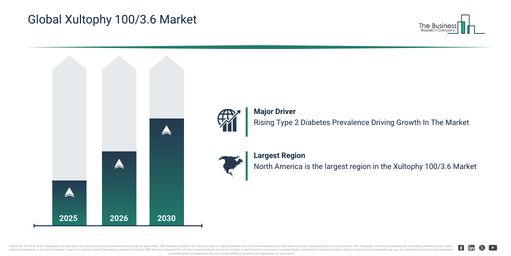
    The increasing prevalence of type 2 diabetes is projected to fuel the expansion of the xultophy 100/3.6 market in the future. Type 2 diabetes is a long-term condition marked by the body’s resistance to insulin and inadequate insulin production, resulting in elevated blood sugar levels. This rise in type 2 diabetes cases is linked to an increase in obesity, sedentary habits, poor dietary choices, and genetic susceptibility. Xultophy 100/3.6 offers a solution for type 2 diabetes patients by integrating insulin degludec and liraglutide into a single product, leading to better blood sugar management, fewer required injections, enhanced adherence to treatment plans, and reduced risks of hypoglycemia and weight gain. As an illustration, the Centers for Disease Control and Prevention, a US-based government agency, reported in May 2024 that over 38 million Americans suffer from diabetes (roughly 1 in 10), with type 2 diabetes accounting for about 90% to 95% of these cases. Consequently, the growing incidence of type 2 diabetes is a key driver for the xultophy 100/3.6 market. The expanding geriatric population is anticipated to stimulate the growth of the xultophy 100/3.6 market moving forward. The geriatric population consists of individuals generally aged 65 years or older, encompassing seniors who may experience various health, social, and functional alterations due to the aging process. The increase in the geriatric population is due to factors such as medical advancements, improved living standards, better nutrition, and longer life expectancies. Xultophy 100/3.6 benefits geriatric patients by offering a convenient and effective treatment option that decreases the frequency of daily interventions, promotes better adherence to prescribed regimens, minimizes common adverse effects like low blood sugar episodes, and supports comprehensive health management tailored to the needs of older adults. For example, in July 2024, the UK Parliament’s House of Commons Library, a UK-based government administration, stated that in 2022, there were 12.7 million people aged 65 or older in the UK, making up 19% of the total population. This figure is projected to reach 22.1 million by 2072, representing 27% of the population. Therefore, the growing geriatric population is driving the xultophy 100/3.6 market.

    Xultophy 100/3.6 Market Segment Analysis Spotlighting Growth Areas

    The xultophy 100/3.6 market covered in this report is segmented –

    1) By Indication: Type 2 Diabetes Mellitus, Others

    2) By Distribution Channel: Hospital Pharmacies, Retail Pharmacies, Online Pharmacies

    3) By End User: Adult, Geriatric

    Xultophy 100/3.6 Market Leading Companies: Who Holds The Strongest Market Presence?

    Major companies operating in the xultophy 100/3.6 market are Novo Nordisk A/S

    View The Full Xultophy 100/3.6 Market Report:

    https://thebusinessresearchcompany.com/report/xultophy-100-3-6-global-market-report?utm_source=Blogs&utm_medium=Paid&utm_campaign=Oct_PR

    Xultophy 100/3.6 Market Geographic Spread And Regional Opportunities

    North America was the largest region in the xultophy 100/3.6 market in 2025. The regions covered in the xultophy 100/3.6 market report are Asia-Pacific, Western Europe, Eastern Europe, North America, South America, Middle East, Africa.

    Reach Out To Our Team:

    The Business Research Company: https://www.thebusinessresearchcompany.com/

    Americas: +1 310-496-7795

    Asia: +44 7882 955267 & +91 8897263534

    Europe: +44 7882 955267

    Email us at: marketing@tbrc.info

    Follow us on:

    LinkedIn: https://in.linkedin.com/company/the-business-research-company

    YouTube: https://www.youtube.com/channel/UC24_fI0rV8cR5DxlCpgmyFQ

    Global Market Model: https://www.thebusinessresearchcompany.com/global-market-model
  • Xolair Market Size In 2026: Growth Outlook And Forecast Through 2030

    Xolair Market Size In 2026: Growth Outlook And Forecast Through 2030

    Built to provide research that’s more actionable and strategically valuable, The Business Research Company’s 2026 market reports include market attractiveness analysis, total addressable market sizing, company benchmarking matrices, interactive Excel dashboards, broader supply chain intelligence, emerging startup tracking, and in-depth product insights.

    Xolair Market Expansion Outlook: What Revenue Opportunities Are Ahead?

    Historical period growth is attributable to the increasing occurrence of asthma and allergic conditions, the broadening of biologic drug approvals, higher diagnosis rates for chronic urticaria, the establishment of specialty allergy clinics, and enhanced physician understanding of monoclonal antibodies.

    Anticipated growth during the projection period stems from a heightened need for tailored allergy solutions, the broader application of biologics for more inflammatory conditions, increasing capital dedicated to immunology studies, the expanding use of extended-release injectable treatments, and enhanced availability of specialized biologic medications.

    Key developments projected for the forecast period encompass the growing uptake of specific monoclonal antibody interventions, heightened need for biologic interventions for persistent allergic ailments, the broadening of strategies for sustained disease control, an escalating emphasis on exact immunology therapies, and greater prioritization of patient-focused biologic healthcare.

    Get A Free Sample Report With In-Depth Market Insights:

    https://thebusinessresearchcompany.com/sample_request?id=53275028&type=smp&name=Xolair%20Market%20Report%202026&utm_source=Blogs&utm_medium=Paid&utm_campaign=Oct_PR

    Xolair Market Demand Drivers Opening New Revenue Streams

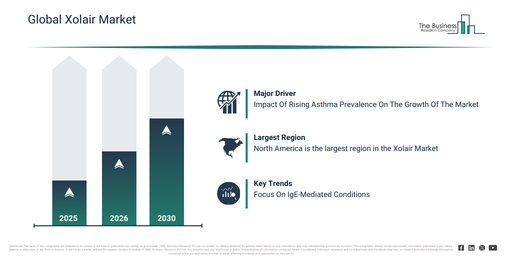
    The rising incidence of asthma is anticipated to drive the future expansion of the xolair market. Asthma is a chronic medical condition where the airways become inflamed and constricted, resulting in breathing difficulties, wheezing, and coughing. The increasing occurrence of asthma and allergic conditions can be attributed to factors such as elevated exposure to pollutants, rising temperatures, evolving weather patterns, and higher population density. Xolair provides an effective treatment for asthma by targeting IgE antibodies, which reduces airway inflammation and prevents asthma attacks in patients with moderate to severe allergic asthma. For example, data released in December 2024 by the National Center for Health Statistics (NCHS), a U.S.-based health statistics agency, indicated that the prevalence of current asthma among adults aged 18 and over in the United States saw an increase from 3.7% in 2022 to 3.8% in 2023. This upward trend in asthma prevalence is therefore a key driver for the growth of the xolair market.

    Xolair Market Segment Performance And Emerging Opportunities

    The xolair market covered in this report is segmented –

    1) By Indication: Asthma, Chronic Spontaneous Urticaria (CSU), Nasal Polyposis

    2) By Distribution Channel: Hospital Pharmacies, Retail Pharmacies, Online Pharmacies

    3) By End User: Adults, Geriatric, Pediatric

    Xolair Market Trends Powering Strategic Industry Growth

    The primary trend in the xolair market centers on expanding approved indications for existing drugs, particularly in allergy and immunology treatments like Omalizumab, to widen market reach and address unmet medical needs in niche and high-demand areas. IgE-mediated food allergies are immune responses triggered by immunoglobulin E (IgE) antibodies, causing rapid allergic reactions upon exposure to specific food allergens. For instance, in February 2024, F. Hoffmann-La Roche Ltd., a Switzerland-based healthcare company, secured FDA approval for Xolair (omalizumab) to reduce allergic reactions, including anaphylaxis, in patients aged 1 and older with IgE-mediated food allergies. Xolair is recognized as the first FDA-approved treatment for mitigating allergic reactions to multiple food allergens, though it is not designed for emergency use, and patients are advised to continue avoiding allergens. This treatment is now accessible for eligible patients in the U.S.

    Xolair Market Key Players: Which Companies Lead Industry Competition?

    Major companies operating in the xolair market are F. Hoffmann-La Roche AG, Novartis AG

    View The Full Xolair Market Report:

    https://thebusinessresearchcompany.com/report/xolair-global-market-report?utm_source=Blogs&utm_medium=Paid&utm_campaign=Oct_PR

    Xolair Market Top Region By Revenue And Market Share

    North America was the largest region in the xolair market in 2025. Asia-Pacific is expected to be the fastest-growing region in the forecast period. The regions covered in the xolair market report are Asia-Pacific, Western Europe, Eastern Europe, North America, South America, Middle East, Africa.

    Reach Out To Our Team:

    The Business Research Company: https://www.thebusinessresearchcompany.com/

    Americas: +1 310-496-7795

    Asia: +44 7882 955267 & +91 8897263534

    Europe: +44 7882 955267

    Email us at: marketing@tbrc.info

    Follow us on:

    LinkedIn: https://in.linkedin.com/company/the-business-research-company

    YouTube: https://www.youtube.com/channel/UC24_fI0rV8cR5DxlCpgmyFQ

    Global Market Model: https://www.thebusinessresearchcompany.com/global-market-model

  • Rescue Airway Devices Market Size In 2026: Regional Growth, Key Segments And Future Outlook

    Rescue Airway Devices Market Size In 2026: Regional Growth, Key Segments And Future Outlook

    Built to provide research that’s more actionable and strategically valuable, The Business Research Company’s 2026 market reports include market attractiveness analysis, total addressable market sizing, company benchmarking matrices, interactive Excel dashboards, broader supply chain intelligence, emerging startup tracking, and in-depth product insights.

    Rescue Airway Devices Market Size And Revenue Outlook Through 2030

    The rescue airway devices market size has experienced rapid growth in recent years. It is projected to increase from $2.76 billion in 2025 to $3.05 billion in 2026, at a compound annual growth rate (CAGR) of 10.4%. The expansion observed in the historic period is attributable to increasing mobile connectivity, rising sensor integration, expanding IoT adoption, growing data analytics usage, and increasing indoor positioning demand.

    The rescue airway devices market is expected to experience swift expansion over the next few years. It is projected to grow to $4.49 billion by 2030, demonstrating a compound annual growth rate (CAGR) of 10.2%. This anticipated growth during the forecast period is primarily driven by factors such as the rise of context-aware automation, increasing demands for real-time localization, the expansion of smart infrastructure, the broader adoption of AI-enabled processing, and the growing prevalence of multi-modal sensing. Key trends anticipated in the upcoming period encompass progress in adaptive sensing, novelties in ambient automation, significant developments in multimodal fusion, ongoing research in predictive intelligence, and technological enhancements in spatial computing.

    Get A Free Sample Report With In-Depth Market Insights:

    https://thebusinessresearchcompany.com/sample_request?id=37435659&type=smp&name=Rescue%20Airway%20Devices%20Market%20Report%202026&utm_source=Blogs&utm_medium=Paid&utm_campaign=Oct_PR

    Rescue Airway Devices Market Growth Momentum: What Factors Are Shaping Demand?

    The increasing prevalence of emergency cases is anticipated to propel the expansion of the rescue airway devices market moving forward. Emergency situations refer to critical medical events such as traffic accidents, cardiac arrests, respiratory failure, and severe injuries that necessitate immediate life-saving interventions. The rise in emergency cases is attributed to a growing number of road traffic accidents and violence-related injuries among increasingly urbanized and motorized populations, which leads people to seek urgent hospital care. Rescue airway devices are crucial in managing these emergency situations by facilitating quick, reliable, and effective airway management in both pre-hospital and hospital settings, thereby ensuring adequate oxygenation and reducing the risk of complications during emergency care. For instance, in October 2025, according to the NHS England, a UK-based government health agency, there were around 401,800 admissions to hospital in an emergency via all accident and emergency departments in September 2025, averaging 13,400 people per day. Furthermore, 133,800 emergency admissions did not originate via accident and emergency, averaging 4,500 per day. Consequently, the growing number of emergency cases is driving the growth of the rescue airway devices market.

    Rescue Airway Devices Market Segments: Where Is Growth Concentrated?

    The rescue airway devices market covered in this report is segmented –

    1) By Product Type: Supraglottic Airway Devices (SGA), Laryngeal Mask Airways (LMA), Intubating Laryngeal Mask Airways (ILMA), Laryngeal Tubes, I-Gel Airway Devices, Other Product Types

    2) By Material: Silicone, Polyvinyl Chloride (PVC), Thermoplastic Elastomers (TPE), Other Materials

    3) By Anatomical Placement: Simple Adjuncts (Upper Airway), Supraglottic Or Extraglottic Airway Devices (SADs Or EGDs), Infraglottic Or Tracheal Devices (Definitive Airway), Airway Access Or Visualization Tools, Ventilation Or Resuscitation Devices

    4) By End User: Hospitals, Ambulatory Surgery Centers (ASC), Clinics, Emergency Medical Services (EMS) Providers, Military And Government Medical Units, Other End Users

    Subsegments:

    1) By Supraglottic Airway Devices (SGA): First Generation Supraglottic Devices, Second Generation Supraglottic Devices, Reusable Supraglottic Devices, Disposable Supraglottic Devices

    2) By Laryngeal Mask Airways (LMA): Reusable Laryngeal Mask Airways, Disposable Laryngeal Mask Airways, First Generation Laryngeal Mask Airways, Second Generation Laryngeal Mask Airways

    3) By Intubating Laryngeal Mask Airways (ILMA): Reusable Intubating Laryngeal Mask Airways, Disposable Intubating Laryngeal Mask Airways, Silicone Intubating Mask Airways, Polyvinyl Chloride Intubating Mask Airways

    4) By Laryngeal Tubes: Single Lumen Laryngeal Tubes, Dual Lumen Laryngeal Tubes, Reusable Laryngeal Tubes, Disposable Laryngeal Tubes

    5) By I-Gel Airway Devices: Standard I-Gel Airway Devices, Pediatric I-Gel Airway Devices, Adult I-Gel Airway Devices, Disposable I-Gel Airway Devices

    6) By Other Product Types: Pharyngeal Airway Devices, Oropharyngeal Airway Devices, Nasopharyngeal Airway Devices, Cuffed Pharyngeal Airway Devices

    Rescue Airway Devices Market Trends Redefining Industry Growth

    Companies operating in the rescue airway devices market are increasingly concentrating on developing sophisticated visual technologies, such as integrated video laryngoscopy solutions, to enhance clinician visibility, procedural accuracy, and patient safety during airway management in both routine and complex clinical situations. These integrated video laryngoscopy solutions are devices that combine high-resolution video imaging with ergonomic controls and software connectivity, enabling medical professionals to visually guide intubation in real time and share imaging data seamlessly with hospital information systems. For example, in January 2025, Ambu A/S, a Denmark-based medical technology company, introduced the Ambu SureSight Connect video laryngoscopy solution, specifically designed to facilitate efficient endotracheal intubation in operating rooms and intensive care units. This solution integrates with Ambu’s digital platforms, including Ambu aView 2 Advance and Ambu aBox 2, aiming to simplify workflows, reduce task complexity, and provide clinicians with comprehensive airway visualization tools. It is distinctive as the sole airway visualization offering that features a one-lung ventilation solution and encompasses all devices recommended for airway assessment and intubation, thereby expanding its utility across diverse clinical settings.

    Rescue Airway Devices Market Competitive Analysis Of Leading Industry Participants

    Major companies operating in the rescue airway devices market are Medtronic plc, Medline Industries LP, GE HealthCare Technologies Inc., Becton, Dickinson and Company, Olympus Corporation, Smiths Group plc, Drägerwerk AG & Co. KGaA, Teleflex Incorporated, Cook Medical LLC, Nihon Kohden Corporation, Fisher & Paykel Healthcare Corporation Limited, Ambu A/S, Armstrong Medical Ltd., Vyaire Medical Inc., Vygon S.A., Intersurgical Ltd., Mercury Enterprises LLC, SunMed LLC, Verathon Inc., SourceMark LLC

    View The Full Rescue Airway Devices Market Report:

    https://thebusinessresearchcompany.com/report/rescue-airway-devices-market-report?utm_source=Blogs&utm_medium=Paid&utm_campaign=Oct_PR

    Rescue Airway Devices Market Geographic Distribution And Regional Opportunities

    North America was the largest region in the rescue airway devices market in 2025. Asia-Pacific is expected to be the fastest-growing region in the forecast period. The regions covered in the rescue airway devices market report are Asia-Pacific, South East Asia, Western Europe, Eastern Europe, North America, South America, Middle East, Africa.

    Reach Out To Our Team:

    The Business Research Company: https://www.thebusinessresearchcompany.com/

    Americas: +1 310-496-7795

    Asia: +44 7882 955267 & +91 8897263534

    Europe: +44 7882 955267

    Email us at: marketing@tbrc.info

    Follow us on:

    LinkedIn: https://in.linkedin.com/company/the-business-research-company

    YouTube: https://www.youtube.com/channel/UC24_fI0rV8cR5DxlCpgmyFQ

    Global Market Model: https://www.thebusinessresearchcompany.com/global-market-model
  • Xiaflex Market Trends Supporting % CAGR Growth Through 2030

    Xiaflex Market Trends Supporting % CAGR Growth Through 2030

    Backed by market attractiveness analysis, total addressable market sizing, company benchmarking matrices, interactive Excel dashboards, wider supply chain intelligence, emerging startup coverage, and detailed product-level insights, The Business Research Company’s 2026 market reports are designed to offer research that is more actionable and strategically valuable than ever.

    Xiaflex Market Growth Potential: How Will Market Size Shift Through 2030?

    Historical growth has been driven by a rise in the occurrence of Dupuytren’s contracture, enhanced recognition of non-surgical treatment options, the wider uptake of specialty biologics, the presence of skilled healthcare providers, and increasing receptiveness to injectable treatments.

    Anticipated growth during the forecast period stems from a rising need for biologic therapies administered outside hospital settings, a heightened emphasis on decreasing the reliance on surgical procedures, the broadening application of individualized medical strategies, an expanding elderly demographic, and ongoing advancements in treatments specifically targeting collagen.

    Key developments projected for the forecast period encompass a greater uptake of enzyme-based non-surgical treatments, an escalating preference for treatment methods that are less invasive, an intensifying concentration on biologic injectables designed for specific targets, the broadening availability of specialized therapies managed by physicians, and a strengthened focus on crafting treatment plans tailored to individual patients.

    Get A Free Sample Report With In-Depth Market Insights:

    https://thebusinessresearchcompany.com/sample_request?id=58969260&type=smp&name=Xiaflex%20Market%20Report%202026&utm_source=Blogs&utm_medium=Paid&utm_campaign=Oct_PR

    Xiaflex Market Growth Backed By Core Demand Fundamentals

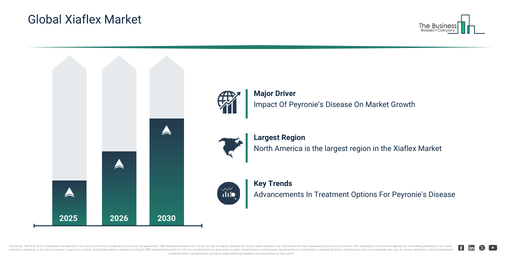
    The increasing occurrence of Peyronie’s disease is projected to boost the expansion of the xiaflex market in the future. Peyronie’s disease is a condition affecting connective tissue, marked by the formation of fibrous plaques within the penis, leading to curvature and pain. Its increase is influenced by elements like aging, genetic predispositions, and damage to tissues resulting from injury. XIAFLEX serves to dissolve these fibrous plaques in Peyronie’s disease, thereby enhancing penile curvature and functionality. As an illustration, data released in February 2023 by The Urology Care Foundation, the US-based organization of the American Urological Association focused on improving urological care through research, education, and community efforts, indicated that roughly 4 out of 100 men aged 40 to 70 suffer from Peyronie’s disease. Further findings suggest that approximately 0.5% of adult American men receive a diagnosis of Peyronie’s disease. Consequently, the growing occurrence of Peyronie’s disease is anticipated to stimulate the expansion of the xiaflex market.

    Xiaflex Market Segment Landscape And Growth Outlook

    The xiaflex market covered in this report is segmented –

    1) By Indication: Dupuytren’s Contracture, Peyronie’s Disease, Other Indications

    2) By Distribution Channel: Hospital Pharmacies, Retail Pharmacies, Online Pharmacies

    3) By End User: Adult, Geriatric

    Xiaflex Market Growth Trends Reshaping The Competitive Landscape

    The main trend in the xiaflex market centers on investigating alternative treatment methods for resistant conditions, such as focused research into xiaflex’s role in surgery and expanding its therapeutic applications to address unmet needs in hand and connective tissue disorders. Xiaflex is being examined for its potential benefits in surgical contexts, especially for reducing the necessity of invasive procedures and improving patient recuperation. For example, in May 2024, Endo International Plc, a US-based pharmaceutical company, revealed the presentation of new data concerning Peyronie’s disease and XIAFLEX at the American Urological Association’s (AUA) annual meeting. These studies, supported by Endo’s investigator-initiated research grants, concentrated on evaluating XIAFLEX against surgery and exploring new treatment protocols for patients who had not responded to previous therapies. The company’s ongoing dedication to advancing XIAFLEX’s clinical outcomes reflects its commitment to enhancing patient care and broadening its potential therapeutic applications.

    Xiaflex Market Competitive Landscape: Who Leads The Industry?

    Major companies operating in the xiaflex market are Endo Inc.

    View The Full Xiaflex Market Report:

    https://thebusinessresearchcompany.com/report/xiaflex-global-market-report?utm_source=Blogs&utm_medium=Paid&utm_campaign=Oct_PR

    Xiaflex Market Regional Analysis And Top Geography

    North America was the largest region in the xiaflex market in 2025. Asia-Pacific is expected to be the fastest-growing region in the forecast period. The regions covered in the xiaflex market report are Asia-Pacific, Western Europe, Eastern Europe, North America, South America, Middle East, Africa.

    Reach Out To Our Team:

    The Business Research Company: https://www.thebusinessresearchcompany.com/

    Americas: +1 310-496-7795

    Asia: +44 7882 955267 & +91 8897263534

    Europe: +44 7882 955267

    Email us at: marketing@tbrc.info

    Follow us on:

    LinkedIn: https://in.linkedin.com/company/the-business-research-company

    YouTube: https://www.youtube.com/channel/UC24_fI0rV8cR5DxlCpgmyFQ

    Global Market Model: https://www.thebusinessresearchcompany.com/global-market-model

  • Remote Visualization Workstations Market Growth Forecast Through 2030: Market Size And Trends In 2026

    Remote Visualization Workstations Market Growth Forecast Through 2030: Market Size And Trends In 2026

    Backed by market attractiveness analysis, total addressable market sizing, company benchmarking matrices, interactive Excel dashboards, wider supply chain intelligence, emerging startup coverage, and detailed product-level insights, The Business Research Company’s 2026 market reports are designed to offer research that is more actionable and strategically valuable than ever.

    Remote Visualization Workstations Market Growth From $5.44 Billion In 2026 To $9.53 Billion By 2030 At A CAGR Of 15%

    The remote visualization workstations market has seen rapid growth in recent years. It is projected to expand from $4.72 billion in 2025 to $5.44 billion in 2026, achieving a compound annual growth rate (CAGR) of 15.3%. This historical growth can be attributed to the increasing embrace of remote work models, a rising demand for high-performance remote computing solutions, the ongoing digital transformation across various industries, the expansion of virtualization and remote desktop infrastructure usage, and a growing need for secure remote access and collaboration.

    The remote visualization workstations market is projected to experience substantial expansion over the upcoming years. This market is set to reach $9.53 billion in 2030, demonstrating a compound annual growth rate (CAGR) of 15.0%. This anticipated growth during the forecast timeframe stems from several factors, including an increasing need for hybrid and remote work arrangements, the broadening availability of cloud-based remote visualization platforms, the greater acceptance of AI and machine learning-driven visualization tools, increased reach into developing economies and industries currently not well-served, and a surging requirement for integrated hardware, software, and services in remote visualization solutions. Key trends anticipated over the forecast period encompass technological progress in graphics processing unit (GPU) and processor performance as well as graphic capabilities, breakthroughs in artificial intelligence (AI) and machine learning (ML) alongside advanced analytics integration, the emergence of immersive visualization through augmented reality (AR) and virtual reality (VR) coupled with sophisticated remote collaboration tools, an expansion of cloud-based and hybrid deployment methods for visualization workstations, and intensified research and development funding resulting in remote visualization environments that are more scalable, effective, and secure.

    Get A Free Sample Report With In-Depth Market Insights:

    https://thebusinessresearchcompany.com/sample_request?id=95936908&type=smp&name=Remote%20Visualization%20Workstations%20Market%20Report%202026&utm_source=Blogs&utm_medium=Paid&utm_campaign=Oct_PR

    Remote Visualization Workstations Market Expansion Drivers: What’s Shaping Future Growth?

    The expansion of digital transformation is anticipated to boost the remote visualization workstations market in the future. Digital transformation involves embedding digital technologies throughout business operations to refine processes, improve value delivery, and foster innovation through agile, data-driven methods. This shift is gaining momentum as businesses increasingly strive to provide quicker, more tailored, and smooth customer interactions to maintain competitiveness. Remote visualization workstations significantly contribute to digital transformation by allowing secure, remote access to high-performance computing and graphics processing. They facilitate collaborative projects, lessen reliance on physical infrastructure, and expedite decision-making in sectors like engineering, healthcare, and media, by enhancing adaptability, expandability, and operational effectiveness. For example, the Office for National Statistics, a UK-based government agency, reported in July 2024 that a digital infrastructure initiative secured a $535 million (£434 million) investment by 2022, with an additional $907 million (£736 million) designated for 2023 to 2025. Consequently, the increasing prevalence of digital transformation is fueling the expansion of the remote visualization workstations market.

    Remote Visualization Workstations Market Segment Analysis: What Are The Core Market Categories?

    The remote visualization workstations market covered in this report is segmented –

    1) By Component: Hardware, Software, Services

    2) By Deployment Mode: On-Premises, Cloud-Based, Hybrid

    3) By Application: Engineering And Design, Medical Imaging, Scientific Research, Media And Entertainment, Oil And Gas, Other Applications

    4) By End-User: Healthcare, Education, Manufacturing, Energy, Media And Entertainment, Research Institutes, Other End-Users

    Subsegments:

    1) By Hardware: Central Processing Unit, Graphics Processing Unit, Memory, Storage, Input Devices, Output Devices

    2) By Software: Virtualization Software, Rendering Software, Simulation Software, Monitoring Software, Collaboration Software

    3) By Services: Installation Services, Maintenance Services, Consulting Services, Training Services, Technical Support Services

    Remote Visualization Workstations Market Strategic Trends: What Defines The Next Growth Phase?

    Leading companies in the remote visualization workstations market are concentrating on developing advanced hardware and software capabilities, such as Multi-Instance GPU (MIG) technology, to facilitate high-density virtualized graphics, accelerated AI workloads, and responsive remote compute experiences. Multi-Instance GPU (MIG) itself defines a GPU architecture that partitions a single physical GPU into multiple isolated instances, enabling the simultaneous execution of various tasks or user sessions with guaranteed performance and resource allocation, which is ideal for distributed visualization, simulation, and AI inference within virtual environments. For example, in March 2025, NVIDIA Corporation, a US-based provider of accelerated computing, unveiled its Blackwell RTX platform for professional workstations and servers, notably featuring support for Multi-Instance GPU (MIG) configurations. This innovation allows enterprises to run multiple remote visualization sessions and agentic AI workflows concurrently from a single GPU, thereby enhancing utilization efficiency and delivering consistent performance for designers, engineers, and content creators engaged with complex 3D visuals or large datasets. By incorporating Multi-Instance GPU technology into its RTX-powered workstations and servers, NVIDIA empowers organizations to effectively virtualize high-end graphics and AI workloads, reduce infrastructure costs, and support flexible distributed work environments across sectors like media and entertainment, engineering, and scientific research.

    Remote Visualization Workstations Market Leading Companies And Competitive Benchmarking

    Major companies operating in the remote visualization workstations market are Amazon Web Services Inc., Google LLC, Microsoft Corporation, Dell Technologies Inc., Lenovo Group Limited, Intel Corporation, HP Inc., NVIDIA Corporation, Fujitsu Limited, Atos SE, Super Micro Computer Inc., CoreWeave Inc., Red Hat Inc., Penguin Solutions Inc., Recently Published, Scale Computing Inc., Cirrascale Cloud Services LLC, Puget Systems Inc., BOXX Technologies Inc., NoMachine S.à r.l.

    View The Full Remote Visualization Workstations Market Report:

    https://thebusinessresearchcompany.com/report/remote-visualization-workstations-market-report?utm_source=Blogs&utm_medium=Paid&utm_campaign=Oct_PR

    Remote Visualization Workstations Market Largest Region By Revenue And Market Share

    North America was the largest region in the remote visualization workstations market in 2025. Asia-Pacific is expected to be the fastest-growing region in the forecast period. The regions covered in the remote visualization workstations market report are Asia-Pacific, South East Asia, Western Europe, Eastern Europe, North America, South America, Middle East, Africa.

    Reach Out To Our Team:

    The Business Research Company: https://www.thebusinessresearchcompany.com/

    Americas: +1 310-496-7795

    Asia: +44 7882 955267 & +91 8897263534

    Europe: +44 7882 955267

    Email us at: marketing@tbrc.info

    Follow us on:

    LinkedIn: https://in.linkedin.com/company/the-business-research-company

    YouTube: https://www.youtube.com/channel/UC24_fI0rV8cR5DxlCpgmyFQ

    Global Market Model: https://www.thebusinessresearchcompany.com/global-market-model
  • Xgeva Market Forecast Highlights A $ Billion Opportunity For Industry Participants

    Xgeva Market Forecast Highlights A $ Billion Opportunity For Industry Participants

    Featuring market attractiveness scoring, total addressable market sizing, company benchmarking matrices, interactive Excel dashboards, deeper supply chain intelligence, emerging startup tracking, and granular product-level insights, The Business Research Company’s 2026 market reports are built to deliver research that is both more actionable and more strategically valuable.

    Xgeva Market Value Analysis: What Growth Lies Ahead Over The Forecast Period?

    Historical growth was propelled by a deeper comprehension of bone metastasis management, advancements in RANK ligand inhibition research, higher cancer survival rates, the broadening of oncology treatment protocols, and the accessibility of injectable biologics.

    Anticipated growth over the forecast period stems from a higher incidence of metastatic cancers, a growing need for osteoporosis and bone health management, the broadening of oncology supportive care provisions, increased uptake of biologic injectable medications, and ongoing advancements in bone-targeted therapeutic approaches.

    Key trends observed during the forecast period encompass the expanding application of bone-targeted monoclonal antibodies, a heightened emphasis on preventing skeletal-related events, the broadening scope of oncology supportive care treatments, increased acceptance of injectable biologic remedies, and a stronger focus on sustained bone health administration.

    Get A Free Sample Report With In-Depth Market Insights:

    https://thebusinessresearchcompany.com/sample_request?id=64803835&type=smp&name=Xgeva%20Market%20Report%202026&utm_source=Blogs&utm_medium=Paid&utm_campaign=Oct_PR

    Xgeva Market Growth Catalysts And Demand Drivers

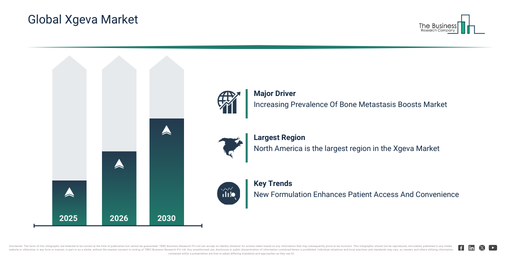
    The rising incidence of bone metastasis is propelling the expansion of the xgeva market. Bone metastasis signifies the spread of cancer cells from their initial site to the bones, often resulting in pain, fractures, and various other complications. This increase in the prevalence of bone metastasis is attributed to the growing global occurrence of cancers, particularly breast, prostate, and lung cancers, which have a higher likelihood of metastasizing to the bones. As the prevalence of bone metastasis grows, so does the demand for effective treatments to manage bone-related complications, positioning xgeva as a crucial therapeutic option for preventing fractures and improving patient outcomes in individuals affected by metastatic bone disease. For instance, according to Cancer Research UK, a UK-based cancer charity, projections for 2038 to 2040 suggest that approximately 510 new cases of bone sarcoma may be diagnosed annually in the UK. Therefore, the increasing prevalence of bone metastasis is expected to drive the growth of the xgeva market.

    Xgeva Market Breakdown By Product Type And Application

    The xgeva market covered in this report is segmented –

    1) By Formulation: 60 Mg Injection, 120 Mg Injection

    2) By Indication: Bone Metastases, Giant Cell Tumor of Bone (GCTB), Hypercalcemia of Malignancy

    3) By End User: Hospitals, Homecare, Specialty Clinics, Ambulatory Surgical Centers

    4) By Distribution Channel: Hospital Pharmacies, Retail Pharmacies, Online Pharmacies

    Xgeva Market Trends Shaping Long-Term Demand

    A primary direction in the xgeva market involves expanding product ranges, improving formulations like prefilled syringes, and making treatment more accessible for patients. A prefilled syringe is a single-use, pre-filled syringe containing medication, intended to simplify administration, ensure accurate dosing, and boost patient convenience. For example, in March 2024, the UK’s Medicines and Healthcare Products Regulatory Agency, which regulates medicines, approved a new, concentrated 120 mg Amgen’s Xgeva (denosumab) solution for injection in a prefilled syringe. This approval, given via the new International Recognition Procedure (IRP), offers UK patients a more convenient and efficient treatment choice. Moreover, this development improves patient experience by streamlining administration, decreasing the injected liquid volume, and minimizing the potential for dosing inaccuracies.

    Xgeva Market Company Landscape And Competitive Strategy

    Major companies operating in the xgeva market are Amgen Inc.

    View The Full Xgeva Market Report:

    https://thebusinessresearchcompany.com/report/xgeva-global-market-report?utm_source=Blogs&utm_medium=Paid&utm_campaign=Oct_PR

    Xgeva Market Geographic Analysis: Where Is Demand Rising Fastest?

    North America was the largest region in the xgeva market in 2025. Asia-Pacific is expected to be the fastest-growing region in the forecast period. The regions covered in the xgeva market report are Asia-Pacific, Western Europe, Eastern Europe, North America, South America, Middle East, Africa.

    Reach Out To Our Team:

    The Business Research Company: https://www.thebusinessresearchcompany.com/

    Americas: +1 310-496-7795

    Asia: +44 7882 955267 & +91 8897263534

    Europe: +44 7882 955267

    Email us at: marketing@tbrc.info

    Follow us on:

    LinkedIn: https://in.linkedin.com/company/the-business-research-company

    YouTube: https://www.youtube.com/channel/UC24_fI0rV8cR5DxlCpgmyFQ

    Global Market Model: https://www.thebusinessresearchcompany.com/global-market-model

  • Remote Patient Monitoring Market Analysis: $63.75 Billion Market Size In 2026 And Future Growth Prospects

    Remote Patient Monitoring Market Analysis: $63.75 Billion Market Size In 2026 And Future Growth Prospects

    Featuring market attractiveness scoring, total addressable market sizing, company benchmarking matrices, interactive Excel dashboards, deeper supply chain intelligence, emerging startup tracking, and granular product-level insights, The Business Research Company’s 2026 market reports are built to deliver research that is both more actionable and more strategically valuable.

    Remote Patient Monitoring Market Expansion Outlook: What Revenue Opportunities Are Ahead?

    The remote patient monitoring market has witnessed significant growth in recent years. This market is projected to expand from $55.24 billion in 2025 to $63.75 billion in 2026, demonstrating a compound annual growth rate (CAGR) of 15.4%. Historically, this expansion is attributed to an increasing prevalence of chronic conditions, a steadily aging global populace, a heightened demand for healthcare services delivered at home, the broader integration of telehealth solutions, and an intensified emphasis on decreasing hospital readmission rates.

    The remote patient monitoring market is projected to experience substantial expansion over the upcoming years. Its valuation is set to reach $111.93 billion by 2030, exhibiting a compound annual growth rate (CAGR) of 15.1%. This anticipated growth stems from several factors, including the increasing occurrence of chronic and lifestyle-related conditions, a rising need for in-home healthcare services, greater patient understanding of the advantages of remote monitoring, a global increase in healthcare spending, and an intensified focus on care that is value-based and outcome-oriented. Significant developments during this period are expected to encompass breakthroughs in wearable sensor technologies, novelties in remote monitoring platforms and software, enhancements in integrating remote patient data with electronic health records, progress in predictive analytics for patient monitoring, and advancements in artificial intelligence-powered clinical decision support.

    Get A Free Sample Report With In-Depth Market Insights:

    https://thebusinessresearchcompany.com/sample_request?id=11955371&type=smp&name=Remote%20Patient%20Monitoring%20Market%20Report%202026&utm_source=Blogs&utm_medium=Paid&utm_campaign=Oct_PR

    Remote Patient Monitoring Market Development Factors: What’s Supporting Demand?

    The increasing incidence of chronic diseases is anticipated to drive the growth of the remote patient monitoring market in the future. Chronic diseases are long-term health conditions, including hypertension, diabetes, and cardiovascular disorders, that necessitate continuous monitoring and ongoing management. The rise in their prevalence stems from aging populations combined with widespread unhealthy lifestyle patterns like physical inactivity, poor nutrition, tobacco use, and excessive alcohol consumption, which collectively lead to long-term risks such as obesity, hypertension, and diabetes. Remote patient monitoring supports chronic disease management by continuously tracking patients’ vital signs, symptoms, and treatment adherence from home. It improves patient outcomes by allowing for early detection of complications, timely interventions, and personalized care adjustments. For instance, in June 2024, data from the National Health Service, a UK-based government department, revealed that 3,615,330 individuals registered with a general practitioner (GP) were diagnosed with non-diabetic hyperglycemia or pre-diabetes (a condition characterized by elevated blood sugar levels, not severe enough to be classified as diabetes) in 2023, marking an 18% increase from 3,065,825 cases in 2022. Therefore, the expanding prevalence of chronic diseases is propelling the growth of the remote patient monitoring market.

    Remote Patient Monitoring Market Segment Breakdown: Which Categories Lead On Revenue?

    The remote patient monitoring market covered in this report is segmented –

    1) By Component: Devices, Services, Software

    2) By Application: Chronic Disease Management, Post-Acute Care Monitoring, Preventive Care And Wellness, Home Health Monitoring, Rehabilitation Monitoring

    3) By End User: Hospitals, Clinics, Home Healthcare Providers, Ambulatory Care Centers, Long-Term Care Facilities

    Subsegments:

    1) By Devices: Remote Monitoring Sensors, Wearable Health Trackers, Blood Pressure Monitors, Blood Glucose Monitors, Pulse Oximetry Devices, Electrocardiogram Devices, Temperature Monitoring Devices, Smart Scales, Multi-Parameter Monitoring Devices

    2) By Services: Installation Services, Maintenance Services, Training Services, Technical Support Services, Remote Monitoring Services, Data Management Services, Consultation Services

    3) By Software: Patient Data Management Software, Clinical Decision Support Software, Remote Monitoring Platforms, Mobile Health Applications, Cloud-Based Analytics Software, Alert And Notification Software, Electronic Health Record Integration Software

    Remote Patient Monitoring Market Transformation Trends: What Innovations Are Driving Change?

    Major companies in the remote patient monitoring market are dedicating efforts to developing advanced remote monitoring products, aiming to enhance patient care, improve clinical decision-making, and expand accessibility to medical-grade data. Remote vital signs monitoring systems refer to wearable devices that offer continuous and accurate tracking of crucial physiological parameters for use in clinical, emergency, and home settings. For instance, in May 2024, Sempulse Corporation, a US-based medical device manufacturer, launched the FDA 510(k)-cleared Halo Vital Signs Monitoring System. This miniature wearable device integrates with the LiveCharts mobile app and the Command Cloud platform to allow for centralized data visualization and management. The solution’s capabilities include a reusable design suitable for both home and clinical environments, cloud-based data analytics for prioritizing patient care, and the ability to continuously monitor vital signs even during patient activity.

    Remote Patient Monitoring Market Industry Leaders And Competitive Landscape

    Major companies operating in the remote patient monitoring market are Siemens AG, Abbott Laboratories, Medtronic plc, Koninklijke Philips N.V., GE HealthCare Technologies Inc., Boston Scientific Corporation, Baxter International Inc., Roche Diagnostics, Omron Corporation, Shenzhen Mindray Bio-Medical Electronics Co. Ltd., ResMed Inc., Dräger Medical, Dexcom Inc., Teladoc Health Inc., Nihon Kohden Corporation, OSI Systems Inc, Biofourmis Inc., Masimo Corp., VitalConnect Inc., Guangdong Transtek Medical Electronics Co. Ltd.

    View The Full Remote Patient Monitoring Market Report:

    https://thebusinessresearchcompany.com/report/remote-patient-monitoring-market-report?utm_source=Blogs&utm_medium=Paid&utm_campaign=Oct_PR

    Remote Patient Monitoring Market Regional Analysis And Leading Geography

    North America was the largest region in the remote patient monitoring market in 2025. Asia-Pacific is expected to be the fastest-growing region in the forecast period. The regions covered in the remote patient monitoring market report are Asia-Pacific, South East Asia, Western Europe, Eastern Europe, North America, South America, Middle East, Africa.

    Reach Out To Our Team:

    The Business Research Company: https://www.thebusinessresearchcompany.com/

    Americas: +1 310-496-7795

    Asia: +44 7882 955267 & +91 8897263534

    Europe: +44 7882 955267

    Email us at: marketing@tbrc.info

    Follow us on:

    LinkedIn: https://in.linkedin.com/company/the-business-research-company

    YouTube: https://www.youtube.com/channel/UC24_fI0rV8cR5DxlCpgmyFQ

    Global Market Model: https://www.thebusinessresearchcompany.com/global-market-model
  • Xeomin Market Analysis: How The Industry Is Evolving Toward A $ Billion Future

    Xeomin Market Analysis: How The Industry Is Evolving Toward A $ Billion Future

    Built to provide research that’s more actionable and strategically valuable, The Business Research Company’s 2026 market reports include market attractiveness analysis, total addressable market sizing, company benchmarking matrices, interactive Excel dashboards, broader supply chain intelligence, emerging startup tracking, and in-depth product insights.

    Xeomin Market Expansion Outlook: What Revenue Opportunities Are Ahead?

    Historical growth was driven by the established clinical application of botulinum toxin treatments, an expansion in aesthetic medicine practices, the increasing prevalence of neurological movement disorders, the broadening of outpatient care settings, and strong physician familiarity with neurotoxin products.

    The expansion into new therapeutic applications, increased adoption in managing migraine and spasticity, growing demand for non-surgical aesthetic interventions, advancements in toxin formulation technologies, and rising global aesthetic treatment volumes are all factors contributing to the projected growth in the upcoming period.

    Forecasting major trends reveals an expansion of botulinum toxins into various medical and aesthetic uses, a rising demand for minimally invasive procedures, an increasing preference for purified neurotoxin formulations, greater utilization in neurological disorder management, and an enhanced focus on the precision and safety of treatments.

    Get A Free Sample Report With In-Depth Market Insights:

    https://thebusinessresearchcompany.com/sample_request?id=66533065&type=smp&name=Xeomin%20Market%20Report%202026&utm_source=Blogs&utm_medium=Paid&utm_campaign=Oct_PR

    Xeomin Market Opportunity Drivers: What’s Unlocking New Revenue Potential?

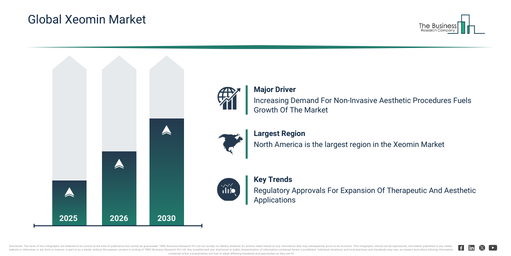
    The xeomin market is anticipated to expand due to the escalating demand for non-invasive aesthetic procedures. These procedures are defined as cosmetic treatments that bypass surgery, frequently entailing quick recovery and lower risks. The surge in popularity for non-invasive aesthetic procedures stems from multiple reasons, such as a greater inclination for brief recovery periods, innovations in aesthetic technology, and an increasing wish for outcomes that appear natural. Xeomin works by relaxing facial muscles to smooth out wrinkles such as frown lines and glabellar lines, providing a non-surgical option with zero downtime. Its refined composition delivers effective, natural-looking results while reducing the chance of developing resistance. As an illustration, in January 2023, the International Society of Aesthetic Plastic Surgery, a US-based professional body focused on promoting aesthetic plastic surgery, disclosed that more than 12.8 million surgical procedures and 17.5 million non-surgical procedures were performed worldwide, indicating a 19.3% increase in overall procedures compared to the preceding reporting period. Moreover, plastic surgeons are projected to have carried out more than 14.9 million surgical and 18.8 million non-surgical operations worldwide in 2022, reflecting an 11.2% increase in total procedures performed. Consequently, the growing demand for non-invasive aesthetic procedures is set to propel the expansion of the xeomin market.

    Xeomin Market Segment Analysis And Revenue Potential

    The xeomin market covered in this report is segmented –

    1) By Indication: Chronic Migraine, Cervical Dystonia, Blepharospasm, Upper Limb Spasticity, Glabellar Lines

    2) By Distribution Channel: Hospital Pharmacies, Retail Pharmacies, Online Pharmacies, Direct Sales, Specialty Pharmacies

    3) By End-User: Adult, Geriatric

    Xeomin Market Innovation Trends Shaping Future Development

    A significant trend within the xeomin market involves obtaining drug approval from authorities to expand its therapeutic and aesthetic applications, thereby increasing its adoption across various patient demographics. Drug approval is the process by which regulatory bodies evaluate and authorize a new medication for commercial sale and use, verifying its safety, efficacy, and quality based on findings from clinical trials. For instance, in July 2024, Merz Aesthetics, a US-based medical aesthetics company, announced that the U.S. Food and Drug Administration (FDA) had approved XEOMIN (incobotulinumtoxinA). This makes it the first and only neurotoxin indicated for the simultaneous treatment of upper facial lines, including forehead lines, frown lines, and crow’s feet. This recent approval builds upon XEOMIN’s initial 2011 indication for treating glabellar lines (frown lines). The product’s innovative formulation, designed to exclude unnecessary ingredients, highlights its potential to minimize adverse immune responses commonly associated with other neurotoxin therapies.

    Xeomin Market Key Players Shaping Industry Direction

    Major companies operating in the xeomin market are Merz Pharmaceuticals GmbH

    View The Full Xeomin Market Report:

    https://thebusinessresearchcompany.com/report/xeomin-global-market-report?utm_source=Blogs&utm_medium=Paid&utm_campaign=Oct_PR

    Xeomin Market Global Footprint: Which Region Leads The Market?

    North America was the largest region in the xeomin market in 2025. The regions covered in the xeomin market report are Asia-Pacific, Western Europe, Eastern Europe, North America, South America, Middle East, Africa.

    Reach Out To Our Team:

    The Business Research Company: https://www.thebusinessresearchcompany.com/

    Americas: +1 310-496-7795

    Asia: +44 7882 955267 & +91 8897263534

    Europe: +44 7882 955267

    Email us at: marketing@tbrc.info

    Follow us on:

    LinkedIn: https://in.linkedin.com/company/the-business-research-company

    YouTube: https://www.youtube.com/channel/UC24_fI0rV8cR5DxlCpgmyFQ

    Global Market Model: https://www.thebusinessresearchcompany.com/global-market-model