Month: October 2026

  • Zinplava Market Forecast To 2030: Starting From $ Billion In 2026

    Zinplava Market Forecast To 2030: Starting From $ Billion In 2026

    Backed by market attractiveness analysis, total addressable market sizing, company benchmarking matrices, interactive Excel dashboards, wider supply chain intelligence, emerging startup coverage, and detailed product-level insights, The Business Research Company’s 2026 market reports are designed to offer research that is more actionable and strategically valuable than ever.

    Zinplava Market Size Forecast: How Big Could The Market Get By 2030?

    The growth in the historic period can be attributed to the escalating prevalence of Clostridioides difficile infections, a rise in hospital-acquired infection incidents, the integration of adjunctive biologic treatments, enhanced understanding of recurrent CDI dangers, and the presence of monoclonal antibody production capabilities.

    The market expansion during the forecast period is driven by a heightened emphasis on preventive biological treatments, an increasing elderly demographic vulnerable to C. difficile infection, the expanding application of precision medicine for infectious diseases, elevated hospital investments in advanced therapeutic options, and a rising demand for solutions aimed at reducing recurrences.

    Significant trends anticipated in the forecast period encompass a growing adoption of monoclonal antibody therapies, an increasing focus on preventing recurrence in C. difficile infection treatment, the expanding use of targeted immunotherapies, an increase in hospital-based biologic administration, and a reinforced emphasis on infection control outcomes.

    Get A Free Sample Report With In-Depth Market Insights:

    https://thebusinessresearchcompany.com/sample_request?id=70542488&type=smp&name=Zinplava%20Market%20Report%202026&utm_source=Blogs&utm_medium=Paid&utm_campaign=Oct_PR

    Zinplava Market Growth Backed By Core Demand Fundamentals

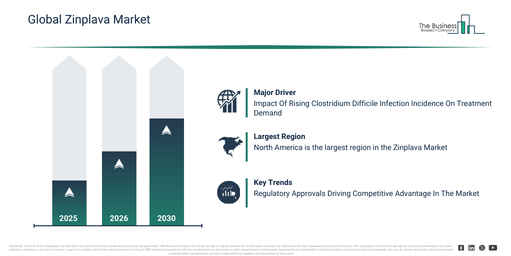
    The zinplava market is anticipated to expand due to the escalating occurrence of clostridium difficile infection. Clostridium difficile infection (CDI), a bacterial ailment affecting the colon, manifests with symptoms from mild diarrhea to severe, life-threatening colitis, frequently linked to recent antibiotic usage. The rise in CDI cases is primarily attributed to increased antibiotic consumption, the emergence of highly virulent strains such as ribotype 027, and a greater number of community-acquired infections. Zinplava is administered to adults undergoing antibiotic treatment for CDI to mitigate the risk of recurrence, especially in patients at high risk, by targeting and neutralizing toxin B produced by C. difficile, thereby preventing further gut damage and reinfection. For example, a report from the UK Health Security Agency in November 2024 indicated a 17.6% increase in the all-reported incidence rate of clostridioides difficile infection (CDI) from April to June 2024, rising from 28.4 to 33.4 cases per 100,000 population compared to the same quarter in the prior year. Consequently, the rising incidence of Clostridium difficile infection is a key factor driving the growth of the zinplava market. The zinplava market is also projected to grow as a result of increasing healthcare spending. Healthcare spending encompasses the total expenditure on health services and goods, covering personal health care like hospital services, outpatient care, and pharmaceuticals, alongside collective services such as public health initiatives and health administration, all aimed at improving health outcomes. This rise in healthcare expenditure is largely propelled by factors including population growth, an aging demographic requiring more intricate care, the growing prevalence of chronic diseases, higher costs for medical services and pharmaceuticals, and increased demand for advanced healthcare technologies. Augmented healthcare spending benefits zinplava by providing more financial resources for its adoption and utilization in managing Clostridium difficile infections, which is critical for preventing infection recurrence in high-risk patients. For instance, in May 2024, the Office for National Statistics, a UK government agency, reported that approximately $292 billion was allocated to current healthcare in the UK at nominal prices in 2023, representing a 5.6% increase in total healthcare expenditure from 2022 to 2023, significantly higher than the 0.9% growth rate seen in 2022. Therefore, the increasing healthcare spending is significantly contributing to the expansion of the zinplava market.

    Zinplava Market Breakdown By Product Type And Application

    The zinplava market covered in this report is segmented –

    1) By Indication: Clostridium Difficile Infection (CDI), Other Gastrointestinal Infections

    2) By Distribution Channel: Hospital Pharmacies, Retail Pharmacies, Online Pharmacies

    3) By End User: Adult, Geriatric

    Zinplava Market Growth Trends Reshaping The Competitive Landscape

    A key trend in the zinplava market focuses on obtaining drug approval from authorities to gain a competitive advantage within the industry. Drug approval represents the process through which regulatory bodies evaluate and authorize a new drug for sale and use, confirming its safety, efficacy, and quality based on clinical trial data. For instance, in May 2023, Merck & Co. Inc., a US-based pharmaceutical company, announced that the U.S. Food and Drug Administration (FDA) approved Zinplava (bezlotoxumab) for treating adults and pediatric patients. Zinplava is intended to reduce the recurrence of clostridioides difficile infection (CDI) in adults and children aged 1 year and older who are receiving antibacterial treatment for CDI and are at high risk for recurrence. The use of Zinplava in pediatric patients is supported by evidence from well-controlled trials conducted in adults, in addition to pharmacokinetic and safety data for those aged 1 year and older. The adverse reactions and pharmacokinetics observed in pediatric patients were comparable to those reported in adults.

    Zinplava Market Company Landscape And Competitive Strategy

    Major companies operating in the zinplava market are Merck & Co. Inc.

    View The Full Zinplava Market Report:

    https://thebusinessresearchcompany.com/report/zinplava-global-market-report?utm_source=Blogs&utm_medium=Paid&utm_campaign=Oct_PR

    Zinplava Market Largest Region By Revenue And Market Share

    North America was the largest region in the zinplava market in 2025. The regions covered in the zinplava market report are Asia-Pacific, Western Europe, Eastern Europe, North America, South America, Middle East, Africa.

    Reach Out To Our Team:

    The Business Research Company: https://www.thebusinessresearchcompany.com/

    Americas: +1 310-496-7795

    Asia: +44 7882 955267 & +91 8897263534

    Europe: +44 7882 955267

    Email us at: marketing@tbrc.info

    Follow us on:

    LinkedIn: https://in.linkedin.com/company/the-business-research-company

    YouTube: https://www.youtube.com/channel/UC24_fI0rV8cR5DxlCpgmyFQ

    Global Market Model: https://www.thebusinessresearchcompany.com/global-market-model
  • Smart Hospital Command Center Market Forecast Insights: The Road To $6.27 Billion By 2030

    Smart Hospital Command Center Market Forecast Insights: The Road To $6.27 Billion By 2030

    Featuring market attractiveness scoring, total addressable market sizing, company benchmarking matrices, interactive Excel dashboards, deeper supply chain intelligence, emerging startup tracking, and granular product-level insights, The Business Research Company’s 2026 market reports are built to deliver research that is both more actionable and more strategically valuable.

    Smart Hospital Command Center Market Forecast: Value Set To Climb From $2.87 Billion To $6.27 Billion

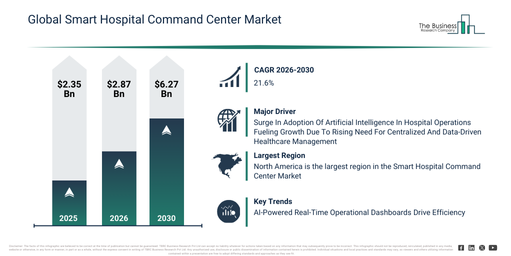
    The smart hospital command center market has seen exponential growth in recent years. Its value is forecast to expand from $2.35 billion in 2025 to $2.87 billion in 2026, achieving a compound annual growth rate (CAGR) of 21.9%. Historically, this growth can be linked to increasing hospital digitalization, a growing demand for real-time operational visibility, a rising focus on patient safety and quality improvement, the expanding adoption of data analytics in healthcare, and the increasing need for coordinated emergency response.

    The smart hospital command center market size is expected to undergo significant growth in the coming years. It is projected to reach $6.27 billion in 2030, showing a compound annual growth rate (CAGR) of 21.6%. This expansion during the forecast period is attributed to the increasing integration of artificial intelligence in hospital operations, growing investments in smart healthcare infrastructure, a rising need for predictive analytics for patient flow management, the expanding implementation of connected medical devices, and a stronger focus on operational efficiency and resource optimization. Key trends anticipated in the forecast period include technological advancements in real-time monitoring platforms, innovations in artificial intelligence-powered decision support systems, developments in integrated hospital automation solutions, research and developments in digital health analytics, and new approaches in digital twin-based hospital operations management.

    Get A Free Sample Report With In-Depth Market Insights:

    https://thebusinessresearchcompany.com/sample_request?id=72148221&type=smp&name=Smart%20Hospital%20Command%20Center%20Market%20Report%202026&utm_source=Blogs&utm_medium=Paid&utm_campaign=Oct_PR

    Smart Hospital Command Center Market Industry Drivers: What’s Behind The Revenue Growth?

    The swift incorporation of artificial intelligence (AI) into hospital operations is anticipated to drive the future expansion of the smart hospital command center market. Artificial intelligence (AI) in hospital operations refers to employing machine learning algorithms and automation to streamline administrative duties such as scheduling, staffing, inventory management, and resource allocation, thereby boosting efficiency and reducing operational expenses. The adoption of artificial intelligence (AI) in hospital operations is increasing due to the growing need to optimize intricate administrative and operational workflows. Smart hospital command centers aid artificial intelligence (AI) in hospital operations by utilizing real-time data integration and predictive analytics that improve responsiveness across various hospital services. For instance, in September 2025, data from the Assistant Secretary for Technology Policy, a US-based government office, showed that in 2024, 71% of hospitals reported using predictive AI integrated with the electronic health record (EHR), an increase from 66% in 2023, with roughly 7 in 10 hospitals confirming predictive AI usage in 2024. Therefore, the quick integration of artificial intelligence (AI) in hospital operations is fostering the growth of the smart hospital command center market.

    Smart Hospital Command Center Market Segment Analysis Spotlighting Growth Areas

    The smart hospital command center market covered in this report is segmented –

    1) By Component: Software, Hardware, Services

    2) By Deployment Mode: On-Premises, Cloud-Based

    3) By Application: Patient Flow Management, Resource Allocation, Clinical Operations, Asset Management, Communication And Coordination, Others

    4) By End User: Large Hospitals, Medium Hospitals, Small Hospitals

    Subsegments:

    1) By Software: Real-Time Analytics Platforms, Hospital Workflow Automation Systems, Patient Flow Management Software, Digital Communication And Coordination Tools, Integrated Dashboard And Visualization Software, Clinical Decision Support Solutions, Resource Allocation Optimization Software

    2) By Hardware: Centralized Monitoring Systems, Internet Of Things Enabled Devices, Servers And Data Storage Units, Networking And Connectivity Equipment, Control Room Display Panels, Sensor Based Tracking Devices, Integrated Command Center Consoles

    3) By Services: Implementation And Integration Services, Training And Education Services, Maintenance And Technical Support Services, Consulting And Workflow Optimization Services, System Upgradation And Enhancement Services, Remote Monitoring And Management Services, Customization And Configuration Services

    #Smart Hospital Command Center Market Growth Trends: What’s Shaping The Future Outlook?

    Leading companies within the smart hospital command center market are concentrating on creating sophisticated solutions, such as real-time predictive analytics, to bolster operational efficiency, streamline patient movement, and enhance clinical decision-making across health systems. Real-time predictive analytics denotes software-powered functionalities that consistently compile and examine live hospital information to predict demand, pinpoint obstacles, and facilitate preemptive operational actions. For instance, in October 2024, GE HealthCare Technologies Inc., a US-based medical technology company, introduced the Hospital Pulse Tile for its Command Center Software. This launch integrates real-time predictive analytics to deliver system-wide insight into capacity, staffing levels, patient flow, and the effectiveness of care delivery. The Command Center employs advanced analytics and AI to transform complex hospital data into practical insights, empowering leaders to anticipate patient surges, optimize resource deployment, and minimize delays in care.

    Smart Hospital Command Center Market Leading Companies And Competitive Benchmarking

    Major companies operating in the smart hospital command center market are IBM Corporation, Oracle Corporation, Honeywell International Inc., Siemens Healthineers AG, Koninklijke Philips N.V., GE HealthCare Technologies Inc., Palantir Technologies Inc., Huron Consulting Group Inc., Dedalus Group, Allscripts Healthcare Solutions Inc., Everbridge Inc., Ascom Ltd., Care Logistics LLC, Spok Holdings Inc., TeleTracking Technologies Inc., LeanTaaS Inc., Qventus Inc., Connexall, Pointcore, Epic Systems Corporation

    View The Full Smart Hospital Command Center Market Report:

    https://thebusinessresearchcompany.com/report/smart-hospital-command-center-market-report?utm_source=Blogs&utm_medium=Paid&utm_campaign=Oct_PR

    Smart Hospital Command Center Market Largest Region By Revenue And Market Share

    North America was the largest region in the smart hospital command center market in 2025. Asia-Pacific is expected to be the fastest-growing region in the forecast period. The regions covered in the smart hospital command center market report are Asia-Pacific, South East Asia, Western Europe, Eastern Europe, North America, South America, Middle East, Africa.

    Reach Out To Our Team:

    The Business Research Company: https://www.thebusinessresearchcompany.com/

    Americas: +1 310-496-7795

    Asia: +44 7882 955267 & +91 8897263534

    Europe: +44 7882 955267

    Email us at: marketing@tbrc.info

    Follow us on:

    LinkedIn: https://in.linkedin.com/company/the-business-research-company

    YouTube: https://www.youtube.com/channel/UC24_fI0rV8cR5DxlCpgmyFQ

    Global Market Model: https://www.thebusinessresearchcompany.com/global-market-model
  • Zevalin Market Size In 2026 And Beyond: Understanding Future Growth Potential

    Zevalin Market Size In 2026 And Beyond: Understanding Future Growth Potential

    Featuring market attractiveness scoring, total addressable market sizing, company benchmarking matrices, interactive Excel dashboards, deeper supply chain intelligence, emerging startup tracking, and granular product-level insights, The Business Research Company’s 2026 market reports are built to deliver research that is both more actionable and more strategically valuable.

    Zevalin Market Revenue Outlook: What CAGR Lies Ahead Through 2030?

    Growth witnessed during the historic period was primarily a consequence of the advancement of monoclonal antibody development, the expansion of nuclear medicine capabilities, an increase in the diagnosis of non-hodgkin lymphoma, the early clinical use of radiolabeled therapies, and improvements in oncology imaging technologies.

    The anticipated expansion during the projection period is driven by greater funding for specific cancer treatments, a heightened need for customized cancer care, the enlargement of facilities for radioactive drugs, a prioritization of effective treatments with fewer side effects, and ongoing advancements in antibody-driven cancer therapies.

    Key developments expected during this timeframe involve broader acceptance of focused radioimmunotherapy, wider application of precise cancer treatment methods, the expansion of lymphoma-specific treatment guidelines, improved integration of nuclear medicine facilities, and an increased emphasis on treatment specificity.

    Get A Free Sample Report With In-Depth Market Insights:

    https://thebusinessresearchcompany.com/sample_request?id=16821915&type=smp&name=Zevalin%20Market%20Report%202026&utm_source=Blogs&utm_medium=Paid&utm_campaign=Oct_PR

    Zevalin Market Growth Catalysts And Demand Drivers

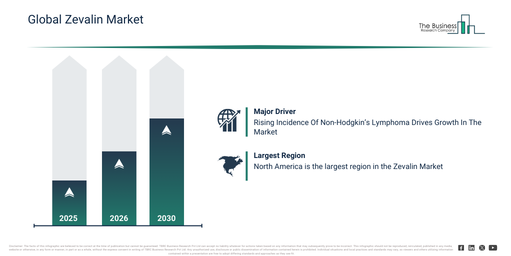
    The increasing occurrence of non-Hodgkin’s lymphoma is poised to boost the expansion of the zevalin market in the coming period. This type of lymphoma comprises various blood cancers originating in lymphocytes, affecting both the lymphatic and immune systems. Factors contributing to its prevalence include an aging demographic, heightened exposure to risk elements such as immunosuppression, alongside environmental factors and evolving lifestyles. Zevalin functions as a monoclonal antibody, specifically targeting CD20, a protein present on B-cells frequently impacted in non-Hodgkin’s lymphoma. It provides focused radiation to eliminate cancerous B-cells, leading to tumor reduction and a higher chance of remission. As an illustration, a January 2024 report from the American Cancer Society, Inc., a US-based nonprofit, identified non-Hodgkin lymphoma as one of the most common cancers in the United States, accounting for roughly 4% of all new cancer diagnoses. In 2024, an estimated 80,620 people are projected to receive this diagnosis, with 44,590 being males and 36,030 females. Consequently, the growing incidence of non-Hodgkin’s lymphoma is fueling the expansion of the zevalin market. The expansion of healthcare infrastructure is a key factor propelling the zevalin market’s growth moving forward. Healthcare infrastructure encompasses the facilities, operational frameworks, equipment, and personnel essential for delivering medical services. This expansion is influenced by an aging population, increasing demand for high-quality medical care, greater government funding and backing, and progress in medical technology. Improved healthcare infrastructure facilitates better access to sophisticated cancer treatments, elevating the importance of zevalin in cancer therapy, with its targeted radioimmunotherapy enhancing patient recovery within a more robust healthcare system. For example, data from May 2023, provided by the American Health Care Association, a US-based nonprofit, indicated that the United States possessed 6,129 hospitals, marking a 0.591% rise from 6,093 hospitals recorded in the preceding year. Thus, the development of healthcare infrastructure is fueling the expansion of the zevalin market.

    Zevalin Market Segment Analysis And Revenue Potential

    The zevalin market covered in this report is segmented –

    1) By Indication: Relapsed Or Refractory Low-Grade Non-Hodgkin Lymphoma (NHL), Previously Untreated Follicular Non-Hodgkin Lymphoma (NHL)

    2) By Formulation: In-111 Zevalin, Y-90 Zevalin

    3) By Distribution Channel: Hospitals, Specialty Pharmacies, Online Pharmacies

    4) By End-User: Adult Patients, Geriatric Patients

    Zevalin Market Key Players Shaping Industry Direction

    Major companies operating in the zevalin market are Acrotech Biopharma Inc.

    View The Full Zevalin Market Report:

    https://thebusinessresearchcompany.com/report/zevalin-global-market-report?utm_source=Blogs&utm_medium=Paid&utm_campaign=Oct_PR

    Zevalin Market Regional Analysis And Leading Geography

    North America was the largest region in the zevalin market in 2025. The regions covered in the zevalin market report are Asia-Pacific, Western Europe, Eastern Europe, North America, South America, Middle East, Africa.

    Reach Out To Our Team:

    The Business Research Company: https://www.thebusinessresearchcompany.com/

    Americas: +1 310-496-7795

    Asia: +44 7882 955267 & +91 8897263534

    Europe: +44 7882 955267

    Email us at: marketing@tbrc.info

    Follow us on:

    LinkedIn: https://in.linkedin.com/company/the-business-research-company

    YouTube: https://www.youtube.com/channel/UC24_fI0rV8cR5DxlCpgmyFQ

    Global Market Model: https://www.thebusinessresearchcompany.com/global-market-model
  • Smart Home Medical System Market Explained: What Is Fueling Growth To $27.94 Billion By 2030?

    Smart Home Medical System Market Explained: What Is Fueling Growth To $27.94 Billion By 2030?

    Built to provide research that’s more actionable and strategically valuable, The Business Research Company’s 2026 market reports include market attractiveness analysis, total addressable market sizing, company benchmarking matrices, interactive Excel dashboards, broader supply chain intelligence, emerging startup tracking, and in-depth product insights.

    Smart Home Medical System Market Revenue Growth On Track For A 15.1% CAGR Through 2030

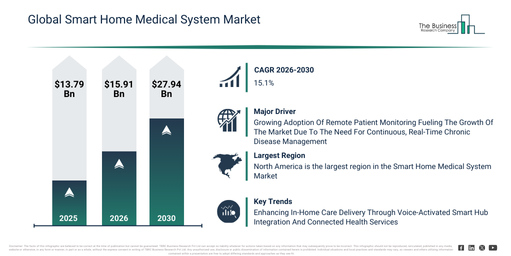
    The smart home medical system market size has experienced swift expansion in recent years. It is projected to increase from $13.79 billion in 2025 to $15.91 billion in 2026, at a compound annual growth rate (CAGR) of 15.4%. The growth observed in the past can be attributed to several factors, including the increasing adoption of wearable health devices, a growing awareness of home healthcare, rising demand for remote patient monitoring, the expansion of IoT connectivity within homes, and the increasing prevalence of chronic diseases.

    The smart home medical system market is anticipated to experience substantial expansion over the next few years. It is projected to attain a value of $27.94 billion by 2030, demonstrating a compound annual growth rate (CAGR) of 15.1%. This projected growth throughout the forecast period stems from factors such as increasing investment in smart home healthcare infrastructure, the escalating integration of artificial intelligence (AI) and IoT into medical systems, the broadening reach of telemedicine services, enhanced government support for home-based healthcare, and a rising consumer inclination towards personalized healthcare. Prominent trends expected during this period include technological improvements in sensor accuracy, novel developments in artificial intelligence (AI)-driven health monitoring, evolution in telehealth integration, ongoing research and development in predictive health analytics, and advancements in wireless and cloud-based health platforms.

    Get A Free Sample Report With In-Depth Market Insights:

    https://thebusinessresearchcompany.com/sample_request?id=35666654&type=smp&name=Smart%20Home%20Medical%20System%20Market%20Report%202026&utm_source=Blogs&utm_medium=Paid&utm_campaign=Oct_PR

    Smart Home Medical System Market Growth Factors: What’s Supporting Expansion?

    The increasing uptake of remote patient monitoring is anticipated to fuel the expansion of the smart home medical system market moving forward. Remote patient monitoring involves utilizing connected medical devices and digital platforms to gather, transmit, and analyze health data from patients outside conventional clinical settings, thereby aiding in the continuous management of chronic conditions. The rise in remote patient monitoring adoption stems from the growing prevalence of chronic respiratory diseases, as consistent monitoring assists in symptom management and prevents hospitalizations. Smart home medical systems facilitate remote patient monitoring by incorporating connected devices that monitor vital signs, ensure medication adherence, and track daily health activities. These systems enhance patient care through real-time data transfer, early identification of health problems, and prompt medical interventions by healthcare providers. For example, a report from December 2025 by Intuition Labs, a US-based healthcare technology firm, indicates that almost 50 million Americans currently employ some type of remote patient monitoring device, 80% of Americans view the integration of remote patient monitoring into medical care positively, and by 2025, more than 71 million Americans, making up 26% of the population, are projected to use remote patient monitoring services. Consequently, the rising adoption of remote patient monitoring is propelling the growth of the smart home medical system market.

    Smart Home Medical System Market Segment Performance And Emerging Opportunities

    The smart home medical system market covered in this report is segmented –

    1) By Component: Hardware, Software, Services

    2) By Technology: Internet Of Things (IoT), Artificial Intelligence (AI), Cloud Computing, Wearable Technology

    3) By Applications: Remote Patient Monitoring, Chronic Disease Management, Elderly Care, Home-Based Recovery, Emergency Assistance, Preventive And Wellness Monitoring

    4) By End User: Patients, Caregivers, Healthcare Providers, Insurance Companies

    Subsegments:

    1) By Hardware: Health Monitoring Devices, Medication Management Devices, Emergency Alert Devices, Diagnostic Equipment, Connectivity Modules

    2) By Software: Data Analytics Platforms, Remote Monitoring Applications, Telehealth Management Software, Visualization And Reporting Tools, Artificial Intelligence Enabled Software

    3) By Services: Installation And Setup Services, Maintenance And Support Services, Remote Patient Monitoring Services, Training And Consultation Services, Data Management Services

    Smart Home Medical System Market Industry Trends: What’s Reshaping Demand?

    Leading companies within the smart home medical system market are concentrating on creating sophisticated solutions, such as voice-activated smart hubs, to enhance accessibility, real-time oversight, and smooth communication among patients, caregivers, and healthcare professionals. A voice-activated smart hub functions as a central in-home medical control system utilizing voice recognition and integrated sensors to facilitate hands-free engagement, activate notifications, streamline care processes, and assist with daily health and safety requirements, particularly for elderly individuals and those with long-term illnesses. For example, in September 2024, Aloe Care Health Inc., a US provider of connected care and remote monitoring, introduced a new division named Aloe Care Health Solutions. This division was established to offer a comprehensive solution addressing the growing demands of healthcare organizations like Medicare Advantage, Medicaid, Home Health, and Senior Living providers. It comprises a data-focused platform and a device ecosystem featuring a patented Smart Hub, incorporating technologies such as a radar fall detector and the Withings Sleep Tracking Mat to allow for AI-powered fall prediction, avoidance of emergency room visits, and more effective triage without continuous caregiver involvement. Additionally, it features an adaptable, customizable platform that adjusts to individual needs, helping healthcare collaborators achieve improved health results, manage expenses, and boost member satisfaction.

    Smart Home Medical System Market Industry Leaders And Competitive Landscape

    Major companies operating in the smart home medical system market are Abbott Laboratories, Medtronic plc, Koninklijke Philips N.V., Omron Healthcare Inc., ResMed Inc., Dexcom Inc., Teladoc Health Inc., Masimo Corporation, Tunstall Healthcare Group Ltd., iRhythm Technologies Inc., Athelas Inc., Withings SA, HealthSnap Inc., Current Health Ltd., AliveCor Inc., Cadence Care Inc., Qardio Inc., Empatica Inc., Vivify Health Inc., BioIntelliSense Inc., CarePredict Inc., HealthBeacon plc, Sensara BV, Essence SmartCare Ltd.

    View The Full Smart Home Medical System Market Report:

    https://thebusinessresearchcompany.com/report/smart-home-medical-system-market-report?utm_source=Blogs&utm_medium=Paid&utm_campaign=Oct_PR

    Smart Home Medical System Market Regional Analysis And Leading Geography

    North America was the largest region in the smart home medical system market in 2025. Asia-Pacific is expected to be the fastest-growing region in the forecast period. The regions covered in the smart home medical system market report are Asia-Pacific, South East Asia, Western Europe, Eastern Europe, North America, South America, Middle East, Africa.

    Reach Out To Our Team:

    The Business Research Company: https://www.thebusinessresearchcompany.com/

    Americas: +1 310-496-7795

    Asia: +44 7882 955267 & +91 8897263534

    Europe: +44 7882 955267

    Email us at: marketing@tbrc.info

    Follow us on:

    LinkedIn: https://in.linkedin.com/company/the-business-research-company

    YouTube: https://www.youtube.com/channel/UC24_fI0rV8cR5DxlCpgmyFQ

    Global Market Model: https://www.thebusinessresearchcompany.com/global-market-model
  • Zenpep Market Reaches $ Billion In 2026: Key Developments Shaping Expansion

    Zenpep Market Reaches $ Billion In 2026: Key Developments Shaping Expansion

    Built to provide research that’s more actionable and strategically valuable, The Business Research Company’s 2026 market reports include market attractiveness analysis, total addressable market sizing, company benchmarking matrices, interactive Excel dashboards, broader supply chain intelligence, emerging startup tracking, and in-depth product insights.

    Zenpep Market Growth Analysis: How Will Revenue Trend Over The Forecast Period?

    Historical growth stemmed from the rising prevalence of cystic fibrosis, the advancement of pancrelipase formulations, an expansion of gastroenterology care services, improved diagnostic awareness of EPI, and the early adoption of enzyme therapies.

    The projected growth during this period is driven by a escalating demand for long-term digestive support therapies, an increased emphasis on personalized dosing regimens, the broadening of access to pediatric and adult epi treatment, the expansion of specialty pharmacy distribution, and breakthroughs in enzyme delivery technologies.

    Significant trends expected within the forecast period comprise the broader utilization of enzyme replacement therapy, an increase in the diagnosis of exocrine pancreatic insufficiency, a heightened focus on digestive disorder management, substantial improvements in formulation stability, and the implementation of more robust patient adherence programs.

    Get A Free Sample Report With In-Depth Market Insights:

    https://thebusinessresearchcompany.com/sample_request?id=42562684&type=smp&name=Zenpep%20Market%20Report%202026&utm_source=Blogs&utm_medium=Paid&utm_campaign=Oct_PR

    Zenpep Market Opportunity Drivers: What’s Unlocking New Revenue Potential?

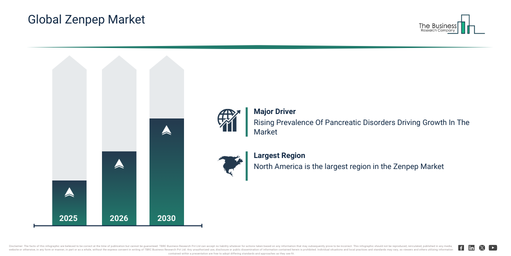
    The zenpep market is anticipated to expand due to the growing occurrence of pancreatic disorders. These conditions, which include inflammation, cancer, and enzyme imbalances, hinder the pancreas’s ability to regulate blood sugar and aid digestion. Factors such as rising obesity rates, poor diets, significant alcohol consumption, smoking, and genetic factors contribute to the increased prevalence of pancreatic disorders. Zenpep provides pancreatic enzyme replacement therapy (PERT) with enzymes designed to break down fats, carbohydrates, and proteins. This therapy assists individuals with pancreatic insufficiency in digesting food and absorbing essential nutrients, thereby alleviating issues like malnutrition and digestive discomfort. For example, an August 2024 report by NHS England, a UK-based government agency, highlighted cystic fibrosis as a common, life-limiting, inherited condition impacting approximately 9,259 people in England compared to 11,148 across the entire UK. Consequently, the rising incidence of pancreatic disorders is a primary driver for the zenpep market’s expansion. The zenpep market is experiencing significant growth propelled by increasing awareness of gastrointestinal disorders. These are conditions affecting the digestive system, including the stomach and intestines, often leading to symptoms such as discomfort, bloating, and digestive problems. Enhanced awareness of gastrointestinal disorders stems from their rising prevalence, advancements in diagnostic techniques, improved patient understanding, and a stronger emphasis on digestive health in public initiatives. Zenpep is utilized to manage specific gastrointestinal conditions, providing a blend of pancreatic enzymes that facilitate the breakdown and absorption of nutrients from food, thereby supporting healthy digestion. As an illustration, a report released in April 2024 by the ME Association, a UK-based charitable organization, indicated that irritable bowel syndrome affects roughly 10 to 15% of the population, making it one of the most common gastrointestinal disorders. It also noted that between 35% and 70% of individuals with fibromyalgia also experience irritable bowel syndrome. Thus, the growing understanding of gastrointestinal disorders is a key factor driving the expansion of the zenpep market.

    Zenpep Market Segmentation And Category Overview

    The zenpep market covered in this report is segmented –

    1) By Indication: Cystic Fibrosis, Chronic Pancreatitis, Pancreatic Cancer, Post-Surgical Patients

    2) By Distribution Channel: Hospital Pharmacies, Retail Pharmacies, Online Pharmacies

    3) By End-User: Adult, Geriatric, Pediatric

    Zenpep Market Competitive Analysis Of Leading Industry Participants

    Major companies operating in the zenpep market are Nestle Health Science S.A.

    View The Full Zenpep Market Report:

    https://thebusinessresearchcompany.com/report/zenpep-global-market-report?utm_source=Blogs&utm_medium=Paid&utm_campaign=Oct_PR

    Zenpep Market Geographic Analysis: Where Is Demand Accelerating Fastest?

    North America was the largest region in the zenpep market in 2025. The regions covered in the zenpep market report are Asia-Pacific, Western Europe, Eastern Europe, North America, South America, Middle East, Africa.

    Reach Out To Our Team:

    The Business Research Company: https://www.thebusinessresearchcompany.com/

    Americas: +1 310-496-7795

    Asia: +44 7882 955267 & +91 8897263534

    Europe: +44 7882 955267

    Email us at: marketing@tbrc.info

    Follow us on:

    LinkedIn: https://in.linkedin.com/company/the-business-research-company

    YouTube: https://www.youtube.com/channel/UC24_fI0rV8cR5DxlCpgmyFQ

    Global Market Model: https://www.thebusinessresearchcompany.com/global-market-model
  • Smart Electrolyte Patch Market Analysis: Understanding The Drivers Behind 19.5% CAGR Through 2030 Growth

    Smart Electrolyte Patch Market Analysis: Understanding The Drivers Behind 19.5% CAGR Through 2030 Growth

    Featuring market attractiveness scoring, total addressable market sizing, company benchmarking matrices, interactive Excel dashboards, deeper supply chain intelligence, emerging startup tracking, and granular product-level insights, The Business Research Company’s 2026 market reports are built to deliver research that is both more actionable and more strategically valuable.

    Smart Electrolyte Patch Market Poised To Hit $4.2 Billion By 2030 With A 19.5% CAGR

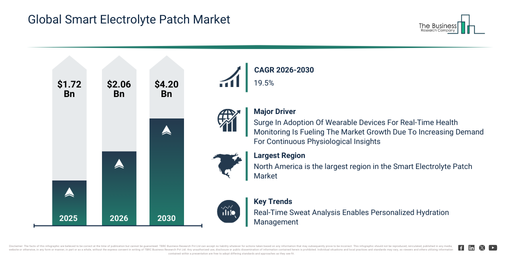
    The smart electrolyte patch market has experienced rapid expansion in recent years. This market is projected to expand from $1.72 billion in 2025 to $2.06 billion in 2026, driven by a compound annual growth rate (CAGR) of 19.9%. Historically, this growth can be attributed to increased awareness of electrolyte imbalance, a rising demand for wearable health monitoring devices, the growing adoption of smart patches in sports and fitness sectors, an increasing prevalence of chronic diseases that require electrolyte monitoring, the rising trend of remote patient monitoring, growing consumer interest in personalized healthcare solutions, increased integration of biosensors in wearable technologies, rising investments in digital health devices, a growing demand for non-invasive monitoring solutions, and increasing awareness among healthcare professionals.

    The smart electrolyte patch market is poised for significant expansion in the coming years, with its size projected to reach $4.20 billion by 2030, demonstrating a robust compound annual growth rate (CAGR) of 19.5%. This growth trajectory is fueled by several factors including the increasing adoption of wearable health devices, a rising demand for continuous electrolyte monitoring, expanding applications in sports and fitness, growing investment in digital health technologies, the emerging trend of personalized healthcare, deeper integration with mobile applications, enhanced chronic disease management, greater telehealth adoption, heightened awareness of hydration management, and an increasing need for real-time monitoring. Major trends influencing this period encompass advancements in continuous real-time electrolyte monitoring technology, improvements in biocompatible and flexible sensor materials, the development of energy-efficient wearable devices, innovative integration with smartphones and health apps, the incorporation of AI-based predictive analytics for hydration and electrolyte balance, enhanced multi-parameter monitoring capabilities, integration with telehealth and remote patient monitoring systems, the use of cloud-based data storage and analytics, personalized health recommendations and alerts, and progress in cost-effective production techniques for mass adoption.

    Get A Free Sample Report With In-Depth Market Insights:

    https://thebusinessresearchcompany.com/sample_request?id=82741916&type=smp&name=Smart%20Electrolyte%20Patch%20Market%20Report%202026&utm_source=Blogs&utm_medium=Paid&utm_campaign=Oct_PR

    Smart Electrolyte Patch Market Growth Drivers: What’s Behind The Acceleration?

    The smart electrolyte patch market is anticipated to expand as the integration of wearable devices for continuous health metric monitoring increases. The uptake of wearable devices signifies the percentage of individuals employing health-tracking gadgets like smartwatches and fitness bands, which consistently gather and relay physiological information. This growing use of wearables for live health data tracking is driven by consumers’ enhanced access to connected health solutions that facilitate continuous personal health oversight and wellness maintenance. The smart electrolyte patch complements wearable devices for real-time monitoring by broadening their capacity to encompass hydration and electrolyte equilibrium, thereby fulfilling the rising consumer need for extensive, immediate health data. For example, data from Intuition Labs, a US-based healthcare technology firm, indicates that by December 2025, approximately 50 million Americans will already be utilizing a remote patient monitoring device. Furthermore, 80% of Americans view the inclusion of remote patient monitoring in medical care positively, and projections suggest that by 2025, more than 71 million Americans, making up 26% of the population, will be employing some form of remote patient monitoring service. Consequently, the expanding use of wearable technology for continuous health surveillance is propelling the smart electrolyte patch market forward.

    Smart Electrolyte Patch Market Breakdown By Product Type And Application

    The smart electrolyte patch market covered in this report is segmented –

    1) By Product Type: Single Electrolyte Patch, Multi-Electrolyte Patch

    2) By Connectivity: Bluetooth-Enabled Patches, NFC Or Passive Connected Patches, Standalone Data-Logging Patches

    3) By Distribution Channel: Online Retail, Pharmacies, Specialty Stores, Others Distribution Channel

    4) By Application: Sports And Fitness, Medical Monitoring, Military And Defense, Others Application

    5) By End-User: Athletes, Patients, Military Personnel, Others End-User

    Subsegments:

    1) By Single Electrolyte Patch: Sodium Electrolyte Patch, Potassium Electrolyte Patch, Chloride Electrolyte Patch, Magnesium Electrolyte Patch, Calcium Electrolyte Patch, Lithium Electrolyte Patch, Hydration-Level Single-Ion Patch, Sports Single-Ion Monitoring Patch

    2) By Multi-Electrolyte Patch: Dual-Ion Monitoring Patch, Triple-Ion Monitoring Patch, Comprehensive Multi-Ion Patch, Sweat Analysis Multi-Ion Patch, Fitness Multi-Electrolyte Patch, Point-Of-Care Multi-Ion Patch, Chronic Disease Multi-Ion Patch, ICU Multi-Electrolyte Patch, Sports Science Multi-Ion Patch

    Smart Electrolyte Patch Market Trends: What’s Defining The Industry’s Next Phase?

    Leading companies within the smart electrolyte patch market are prioritizing the development of analytical tools, such as wearable hydration tracking platforms, to offer continuous feedback on electrolyte concentrations and fluid balance. These wearable hydration tracking platforms are technologies employed to measure sweat biomarkers, evaluate hydration status, and assist in personalized fluid and electrolyte management during physical activity. For example, in June 2024, hDrop Technologies Inc., a US-based hydration wearable company, introduced hDrop Sweat Zones. This is a function of their primary reusable wearable device that delivers continuous, real-time observation of sweat composition. It creates a customized hydration profile for the user and monitors alterations during activity, allowing athletes to quickly ascertain if they require more water or electrolytes. The system tracks significant metrics including sweat loss, sodium loss, and potassium loss.

    Smart Electrolyte Patch Market Top Companies Driving Competitive Growth

    Major companies operating in the smart electrolyte patch market are The Gatorade Co., Nix Inc., Epicore Biosystems Inc., Eccrine Systems Inc., GraphWear Technologies Inc., Kenzen Inc., HydraPatch USA Corp.

    View The Full Smart Electrolyte Patch Market Report:

    https://thebusinessresearchcompany.com/report/smart-electrolyte-patch-market-report?utm_source=Blogs&utm_medium=Paid&utm_campaign=Oct_PR

    Smart Electrolyte Patch Market Global Footprint: Which Region Leads The Industry?

    North America was the largest region in the smart electrolyte patch market in 2025. Asia-Pacific is expected to be the fastest-growing region in the forecast period. The regions covered in the smart electrolyte patch market report are Asia-Pacific, South East Asia, Western Europe, Eastern Europe, North America, South America, Middle East, Africa.

    Reach Out To Our Team:

    The Business Research Company: https://www.thebusinessresearchcompany.com/

    Americas: +1 310-496-7795

    Asia: +44 7882 955267 & +91 8897263534

    Europe: +44 7882 955267

    Email us at: marketing@tbrc.info

    Follow us on:

    LinkedIn: https://in.linkedin.com/company/the-business-research-company

    YouTube: https://www.youtube.com/channel/UC24_fI0rV8cR5DxlCpgmyFQ

    Global Market Model: https://www.thebusinessresearchcompany.com/global-market-model
  • Zemaira Market Growth Outlook For 2026: Drivers, Trends And Future Opportunities

    Zemaira Market Growth Outlook For 2026: Drivers, Trends And Future Opportunities

    Backed by market attractiveness analysis, total addressable market sizing, company benchmarking matrices, interactive Excel dashboards, wider supply chain intelligence, emerging startup coverage, and detailed product-level insights, The Business Research Company’s 2026 market reports are designed to offer research that is more actionable and strategically valuable than ever.

    Zemaira Market Forecast: What Value Will The Market Reach By 2030?

    The notable growth observed over the historical period stems from a rising awareness of alpha-1 antitrypsin deficiency, coupled with the evolution of plasma fractionation technologies, the proliferation of specialty respiratory clinics, the enhancement of diagnostic screening programs, and the swift uptake of augmentation therapy.

    The expansion observed in the projection period stems from heightened investments in therapies for rare diseases, an escalating need for ongoing respiratory management, the broader reach of specialty pharmacy distribution, an intensified emphasis on individualized respiratory care, and breakthroughs in plasma protein therapeutics. Prominent developments anticipated in the forecast period include the increased uptake of augmentation therapy, a growing concentration on rare respiratory conditions, a heightened demand for plasma-derived treatments, improved oversight of long-term respiratory results, and a strengthened focus on early detection.

    Get A Free Sample Report With In-Depth Market Insights:

    https://thebusinessresearchcompany.com/sample_request?id=46396159&type=smp&name=Zemaira%20Market%20Report%202026&utm_source=Blogs&utm_medium=Paid&utm_campaign=Oct_PR

    Zemaira Market Growth Momentum: What Factors Are Shaping Demand?

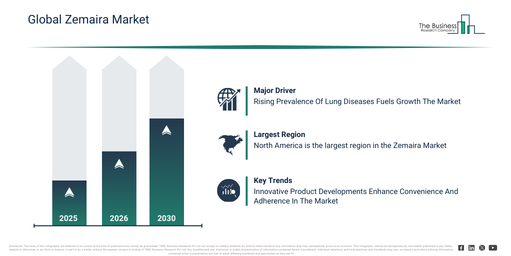
    The expansion of the zemaira market is anticipated to be fueled by the rising occurrence of lung diseases. These illnesses, which hinder normal lung function, include conditions like asthma, pneumonia, chronic obstructive pulmonary disease (COPD), and lung cancer. Key contributors to the widespread nature of lung diseases are increased tobacco consumption, exposure to atmospheric pollutants, workplace dangers, and a greater frequency of respiratory infections. Zemaira, an intravenous human alpha-1 antitrypsin (AAT) infusion, works by replenishing inadequate AAT levels in individuals, thereby preventing further lung damage, improving pulmonary function, and mitigating the likelihood of associated respiratory complications. Illustratively, data from November 2024 released by the Australian Institute of Health and Welfare, an Australian government body, indicated that in 2022, 2.8 million individuals (11%) had asthma. This condition was responsible for 2.5% of the total disease burden and 35% of the respiratory disease burden in 2023, with 467 fatalities (1.8 per 100,000 population) reported in 2022, constituting 0.2% of all deaths. Consequently, the expanding occurrence of lung diseases is fueling the growth of the zemaira market.

    Zemaira Market Segment Outlook: Which Categories Are Growing Fastest?

    The zemaira market covered in this report is segmented –

    1) By Indication: Alpha-1 Antitrypsin Deficiency, Pulmonary Emphysema, Chronic Obstructive Pulmonary Disease (COPD), Other Respiratory Disorders

    2) By Distribution Channel: Hospital Pharmacies, Retail Pharmacies, Online Pharmacies, Specialty Pharmacies

    3) By End-User: Adults, Geriatric Patients

    Zemaira Market Trends Redefining Industry Growth

    A prominent development in the zemaira market involves the introduction of advancements, such as larger vial sizes, intended to boost convenience and reduce the frequency of treatment. These larger vial sizes optimize the dosing regimen by enabling healthcare professionals to reconstitute fewer vials per dose, thereby simplifying the treatment process and improving adherence for patients who often struggle with the burden of frequent infusions. For instance, in January 2024, CSL Behring, a US-based biotechnology company, demonstrated its continued dedication to the Alpha-1 community through the launch of 4- and 5-gram vials of ZEMAIRA (Alpha1-Proteinase Inhibitor [Human]). This new offering builds upon the previously available 1-gram vials and aims to simplify the preparation process for patients. By decreasing the number of vials required per treatment, CSL Behring strives to minimize waste, supporting its sustainability goals, while ZEMAIRA continues to play a vital role in managing Alpha-1 Antitrypsin Deficiency by maintaining adequate protein levels in patients’ blood.

    Zemaira Market Leading Companies And Competitive Benchmarking

    Major companies operating in the zemaira market are CSL Behring LLC

    View The Full Zemaira Market Report:

    https://thebusinessresearchcompany.com/report/zemaira-global-market-report?utm_source=Blogs&utm_medium=Paid&utm_campaign=Oct_PR

    Zemaira Market Global Footprint: Which Region Leads The Industry?

    North America was the largest region in the zemaira market in 2025. The regions covered in the zemaira market report are Asia-Pacific, Western Europe, Eastern Europe, North America, South America, Middle East, Africa.

    Reach Out To Our Team:

    The Business Research Company: https://www.thebusinessresearchcompany.com/

    Americas: +1 310-496-7795

    Asia: +44 7882 955267 & +91 8897263534

    Europe: +44 7882 955267

    Email us at: marketing@tbrc.info

    Follow us on:

    LinkedIn: https://in.linkedin.com/company/the-business-research-company

    YouTube: https://www.youtube.com/channel/UC24_fI0rV8cR5DxlCpgmyFQ

    Global Market Model: https://www.thebusinessresearchcompany.com/global-market-model
  • Sleep Disorder Market Growth To $65.51 Billion By 2030: What’s Driving The Expansion?

    Sleep Disorder Market Growth To $65.51 Billion By 2030: What’s Driving The Expansion?

    Built to provide research that’s more actionable and strategically valuable, The Business Research Company’s 2026 market reports include market attractiveness analysis, total addressable market sizing, company benchmarking matrices, interactive Excel dashboards, broader supply chain intelligence, emerging startup tracking, and in-depth product insights.

    Sleep Disorder Market Size And Revenue Outlook Through 2030

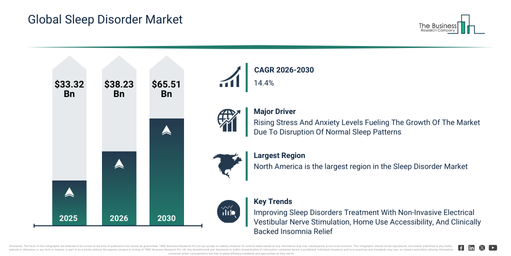
    The sleep disorder market has experienced substantial expansion in recent years. It is projected to grow from $33.32 billion in 2025 to $38.23 billion in 2026, demonstrating a compound annual growth rate (CAGR) of 14.7%. The market’s historical growth can be attributed to factors such as increasing awareness about sleep health, a rising prevalence of insomnia and sleep apnea, greater adoption of sleep diagnostic services, an expanding geriatric population, an increase in stress and lifestyle-related sleep issues, and the growing usage of smartphones and wearable devices for sleep tracking.

    The sleep disorder market is projected to experience substantial expansion over the upcoming years. Its valuation is anticipated to reach $65.51 billion by 2030, exhibiting a compound annual growth rate (CAGR) of 14.4%. This anticipated growth during the forecast period can be primarily ascribed to factors such as the increasing availability of telemedicine services for sleep-related conditions, the growing embrace of wearable sleep tracking devices, a surge in home-based diagnostic assessments, the proliferation of cognitive behavioral therapy applications, and heightened governmental efforts to promote awareness of sleep health. Key trends defining this forecast period encompass advancements in wearable devices for sleep monitoring, enhancements in home-based tools for sleep diagnosis, progress in AI-powered sleep analysis, novel developments in non-invasive treatments for sleep apnea, new approaches in telemedicine for sleep consultations, and creative improvements in cognitive behavioral therapy applications.

    Get A Free Sample Report With In-Depth Market Insights:

    https://thebusinessresearchcompany.com/sample_request?id=66780852&type=smp&name=Sleep%20Disorder%20Market%20Report%202026&utm_source=Blogs&utm_medium=Paid&utm_campaign=Oct_PR

    Sleep Disorder Market Growth Factors Behind Sustained Expansion

    Rising stress and anxiety levels are anticipated to fuel the expansion of the sleep disorder market moving ahead. These levels denote the occurrence of psychological strain and undue concern in a population, frequently stemming from environmental, societal, or financial pressures. An uptick in stress and anxiety is observed, driven by work-related pressures where individuals contend with increased workloads, stringent deadlines, and employment instability. Such levels contribute to sleep disorders by interfering with regular sleep cycles and making it harder to initiate or maintain sleep. Furthermore, they deteriorate general health through hindering restorative sleep, which results in tiredness, reduced mental function, and an elevated susceptibility to chronic illnesses. For example, in May 2024, data from the American Psychiatric Association (APA), a US-based professional organization, indicated that 43% of U.S. adults reported feeling more anxious in 2024 compared to the prior year, an increase from 37% in 2023 and 32% in 2022. Consequently, the escalation of stress and anxiety levels is propelling the expansion of the sleep disorder market.

    Sleep Disorder Market Segment Analysis And Revenue Potential

    The sleep disorder market covered in this report is segmented –

    1) By Disorder Type: Insomnia, Sleep Apnea, Restless Legs Syndrome, Narcolepsy, Circadian Rhythm Disorders

    2) By Treatment: Cognitive Behavioral Therapy, Medication Therapy, Psychiatric Treatment, Behavioral Treatment

    3) By Diagnostic Method: Polysomnography, Home Sleep Testing, Actigraphy, Sleep Diaries, Questionnaires and Screening

    4) By Distribution Channel: Retail Pharmacies, Online Sales, Hospital Pharmacies

    5) By End-User: Hospitals And Sleep Centers, Home Care Settings, Academic

    Subsegments:

    1) By Insomnia: Acute Insomnia, Chronic Insomnia, Onset Insomnia, Maintenance Insomnia, Behavioral Insomnia, Medication-Induced Insomnia

    2) By Sleep Apnea: Obstructive Sleep Apnea, Central Sleep Apnea, Complex Sleep Apnea Syndrome, Mild Sleep Apnea, Moderate Sleep Apnea, Severe Sleep Apnea, Pediatric Sleep Apnea, Treatment-Resistant Sleep Apnea

    3) By Restless Legs Syndrome: Primary Restless Legs Syndrome, Secondary Restless Legs Syndrome, Mild Restless Legs Syndrome, Moderate Restless Legs Syndrome, Severe Restless Legs Syndrome, Intermittent Restless Legs Syndrome, Chronic Persistent Restless Legs Syndrome

    4) By Narcolepsy: Narcolepsy Type 1, Narcolepsy Type 2, Idiopathic Hypersomnia, Pediatric Narcolepsy, Treatment-Resistant Narcolepsy, Secondary Narcolepsy

    5) By Circadian Rhythm Disorders: Delayed Sleep Phase Disorder, Advanced Sleep Phase Disorder, Shift Work Sleep Disorder, Jet Lag Disorder, Irregular Sleep-Wake Rhythm Disorder, Non-24-Hour Sleep-Wake Disorder

    Sleep Disorder Market Industry Trends Fueling Future Revenue Growth

    Leading companies in the sleep disorder market are directing their efforts towards developing advanced therapeutic technologies, such as electrical vestibular nerve stimulation (VeNS) methods. The objective is to provide non-pharmacological treatment options designed to enhance sleep quality, regulate circadian rhythms, and support patients dealing with chronic insomnia. The electrical vestibular nerve stimulation (VeNS) method itself describes a non-invasive therapeutic approach that administers low-level electrical pulses to the vestibular nerve. This nerve is a critical neural pathway influencing brain regions involved in sleep regulation, without the need for surgical intervention or pharmaceutical drugs. For example, in October 2024, Neurovalens Ltd., a health-tech company based in the UK, launched Modius Sleep. This FDA-cleared non-invasive device is engineered to treat chronic insomnia by employing electrical vestibular nerve stimulation (VeNS). This headset-style medical device is intended to be worn for about 30 minutes each evening. It works by sending safe electrical pulses to the vestibular nerve, thereby influencing the hypothalamus and brainstem areas that control circadian rhythm and sleep patterns, which helps users to fall asleep more quickly and sustain sleep for longer periods.

    Sleep Disorder Market Leading Players And Competitive Positioning

    Major companies operating in the sleep disorder market are Johnson & Johnson, Merck & Co. Inc., Pfizer Inc., Sanofi S.A., GlaxoSmithKline plc, Eli Lilly and Company, Takeda Pharmaceutical Company Limited, Teva Pharmaceutical Industries Ltd., Otsuka Holdings Co. Ltd., Biogen Inc., Union Chimique Belge S.A., Sun Pharmaceutical Industries Ltd., Eisai Co. Ltd., Jazz Pharmaceuticals plc, Aurobindo Pharma Ltd., Dr. Reddy’s Laboratories Limited, H. Lundbeck A/S, Sumitomo Pharma Co. Ltd., Neurocrine Biosciences Inc., Harmony Biosciences Holdings Inc., Vanda Pharmaceuticals Inc.

    View The Full Sleep Disorder Market Report:

    https://thebusinessresearchcompany.com/report/sleep-disorder-market-report?utm_source=Blogs&utm_medium=Paid&utm_campaign=Oct_PR

    Sleep Disorder Market Regional Distribution: Which Areas Power Market Growth?

    North America was the largest region in the sleep disorder market in 2025. Asia-Pacific is expected to be the fastest-growing region in the forecast period. The regions covered in the sleep disorder market report are Asia-Pacific, South East Asia, Western Europe, Eastern Europe, North America, South America, Middle East, Africa.

    Reach Out To Our Team:

    The Business Research Company: https://www.thebusinessresearchcompany.com/

    Americas: +1 310-496-7795

    Asia: +44 7882 955267 & +91 8897263534

    Europe: +44 7882 955267

    Email us at: marketing@tbrc.info

    Follow us on:

    LinkedIn: https://in.linkedin.com/company/the-business-research-company

    YouTube: https://www.youtube.com/channel/UC24_fI0rV8cR5DxlCpgmyFQ

    Global Market Model: https://www.thebusinessresearchcompany.com/global-market-model
  • Zaltrap Market Size Forecast From 2026 To 2030: Key Industry Trends

    Zaltrap Market Size Forecast From 2026 To 2030: Key Industry Trends

    Featuring market attractiveness scoring, total addressable market sizing, company benchmarking matrices, interactive Excel dashboards, deeper supply chain intelligence, emerging startup tracking, and granular product-level insights, The Business Research Company’s 2026 market reports are built to deliver research that is both more actionable and more strategically valuable.

    Zaltrap Market Size Outlook: How Quickly Will Revenue Expand Through 2030?

    Historical expansion can be attributed to several factors, including a rise in colorectal cancer incidence rates, advancements in monoclonal antibody therapies, the broadening of hospital oncology departments, the early clinical adoption of VEGF inhibitors, and enhanced diagnostic capabilities.

    Growth during the projection period is driven by a heightened demand for tailored oncology treatments, augmented investment in cancer biologics, broader access to cancer care in developing regions, an increasing emphasis on multi-target therapeutic approaches, and continuous innovation in angiogenesis inhibition.

    Significant tendencies anticipated for the forecast horizon encompass the more widespread application of specific anti-angiogenic treatments, greater integration of combined chemotherapy protocols, an escalating focus on selecting therapies based on biomarkers, a broader network for oncology infusion services, and improved oversight of therapeutic results.

    Get A Free Sample Report With In-Depth Market Insights:

    https://thebusinessresearchcompany.com/sample_request?id=78604462&type=smp&name=Zaltrap%20Market%20Report%202026&utm_source=Blogs&utm_medium=Paid&utm_campaign=Oct_PR

    Zaltrap Market Expansion Drivers: What’s Shaping Future Growth?

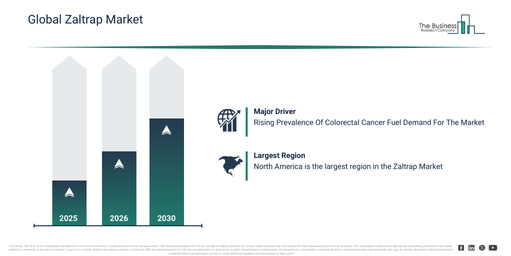
    The increasing prevalence of colorectal cancer is anticipated to propel the growth of the zaltrap market moving forward. Colorectal cancer is a malignancy originating in the colon or rectum, typically commencing as benign polyps and potentially advancing if not addressed. The prevalence of colorectal cancer is on the rise due to factors such as an aging population, unhealthy diets, obesity and overweight, and genetic predisposition. Zaltrap is a vascular endothelial growth factor (VEGF) inhibitor that obstructs the formation of new blood vessels (angiogenesis), thereby cutting off the tumor’s blood supply. This action aids in slowing disease progression and improving survival outcomes for colorectal cancer patients. For instance, in July 2024, a report published by Bowel Cancer UK, a UK-based bowel cancer charitable organization, stated that approximately 44,000 individuals are diagnosed with bowel cancer each year in the UK. Over 90% of these new cases (94%) are identified in individuals aged 50 and older; however, bowel cancer can affect people of any age, with over 2,600 new cases diagnosed annually in those under 50. Consequently, the rising prevalence of colorectal cancer is driving the growth of the zaltrap market.

    Zaltrap Market Driver: Rising Cancer Care Expenditure Boosts Growth Of The Market

    Zaltrap Market Segment Landscape: Which Areas Lead Development?

    The zaltrap market covered in this report is segmented –

    1) By Indication: Metastatic Colorectal Cancer (mCRC), Metastatic Breast Cancer

    2) By Formulation: 100 mg/4 mL, 200 mg/8 mL

    3) By Distribution Channel: Hospitals, Oncology Clinics, Pharmacies

    4) By End-User: Adult Patients, Geriatric Patients

    Zaltrap Market Industry Leaders And Competitive Landscape

    Major companies operating in the zaltrap market are Sanofi S.A.

    View The Full Zaltrap Market Report:

    https://thebusinessresearchcompany.com/report/zaltrap-global-market-report?utm_source=Blogs&utm_medium=Paid&utm_campaign=Oct_PR

    Zaltrap Market Regional Distribution: Which Areas Power Market Growth?

    North America was the largest region in the zaltrap market in 2025. The regions covered in the zaltrap market report are Asia-Pacific, Western Europe, Eastern Europe, North America, South America, Middle East, Africa.

    Reach Out To Our Team:

    The Business Research Company: https://www.thebusinessresearchcompany.com/

    Americas: +1 310-496-7795

    Asia: +44 7882 955267 & +91 8897263534

    Europe: +44 7882 955267

    Email us at: marketing@tbrc.info

    Follow us on:

    LinkedIn: https://in.linkedin.com/company/the-business-research-company

    YouTube: https://www.youtube.com/channel/UC24_fI0rV8cR5DxlCpgmyFQ

    Global Market Model: https://www.thebusinessresearchcompany.com/global-market-model
  • Single-Detector Gamma Camera Market Trends Reshaping Industry Growth Through 2030

    Single-Detector Gamma Camera Market Trends Reshaping Industry Growth Through 2030

    Backed by market attractiveness analysis, total addressable market sizing, company benchmarking matrices, interactive Excel dashboards, wider supply chain intelligence, emerging startup coverage, and detailed product-level insights, The Business Research Company’s 2026 market reports are designed to offer research that is more actionable and strategically valuable than ever.

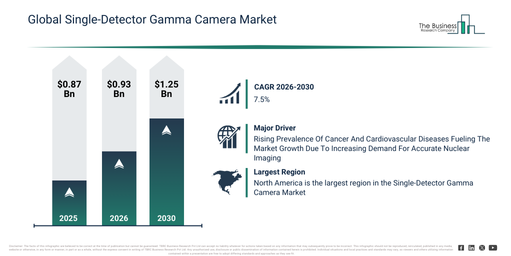
    Single-Detector Gamma Camera Market Growth From $0.93 Billion In 2026 To $1.25 Billion By 2030 At A CAGR Of 7.5%

    The single-detector gamma camera market has shown robust growth in recent years. This market is projected to expand from $0.87 billion in 2025 to $0.93 billion in 2026, demonstrating a compound annual growth rate (CAGR) of 7.8%. The growth observed in prior periods can be attributed to the increasing prevalence of chronic diseases, the rising adoption of nuclear medicine diagnostics, an expanding geriatric population, the development of healthcare infrastructure, and a heightened demand for early disease detection.

    The single-detector gamma camera market is projected to experience robust expansion over the coming years. Its valuation is anticipated to reach $1.25 billion by 2030, driven by a compound annual growth rate (CAGR) of 7.5%. This anticipated growth during the forecast period stems from several factors, including the escalating worldwide prevalence of cancer and cardiovascular ailments, increased capital expenditure in healthcare facilities (particularly in developing economies), the growing embrace of sophisticated gamma camera technologies, the broadening application of nuclear medicine in both diagnostic procedures and research, and an elevated need for non-invasive diagnostic imaging solutions. Key trends defining this period involve technological improvements in detection and imaging apparatuses, breakthroughs in hybrid imaging techniques, progress in digital and solid-state gamma camera designs, extensive research and development into new radiopharmaceuticals and imaging protocols, and the increasing incorporation of artificial intelligence (AI) and automated image processing.

    Get A Free Sample Report With In-Depth Market Insights:

    https://thebusinessresearchcompany.com/sample_request?id=25044623&type=smp&name=Single-Detector%20Gamma%20Camera%20Market%20Report%202026&utm_source=Blogs&utm_medium=Paid&utm_campaign=Oct_PR

    Single-Detector Gamma Camera Market Demand Drivers Opening New Revenue Streams

    The increasing occurrence of cancer and cardiovascular diseases is projected to boost the expansion of the single-detector gamma camera market. The prevalence of these conditions, defined as the number of individuals within a population suffering from cancer or heart and blood-vessel disorders at a given time, is growing due to an aging population and increased exposure to risk factors such as poor diets and lack of physical activity. Single-detector gamma cameras play a crucial role in diagnosing cancer and cardiovascular diseases by offering essential nuclear imaging, which allows medical professionals to identify, evaluate, and track functional changes in affected organs. For example, data from August 2025 by the Centers for Disease Control and Prevention, a Switzerland-based public health agency, indicated that 90% of the nation’s 4.9 trillion dollars in annual health care spending is linked to individuals with chronic and mental health issues, with over 84,000 Americans succumbing to heart disease or stroke each year. Furthermore, the expenses related to cardiovascular diseases are anticipated to reach approximately $2 trillion by 2050. Consequently, the rising prevalence of cancer and cardiovascular diseases is propelling the growth of the single-detector gamma camera market.

    Single-Detector Gamma Camera Market Segmentation And Category Overview

    The single-detector gamma camera market covered in this report is segmented –

    1) By Type Of Detector: High-Energy General-Purpose Gamma Cameras, Low-Energy High-Resolution Gamma Cameras, Specialized Gamma Cameras

    2) By Type Or Design: Stationary Type Single-Detector Gamma Camera, Mobile Type Single-Detector Gamma Camera Or Single-Head Mobile Gamma Cameras

    3) By Technology: Static Imaging, Dynamic Imaging, Tomographic Imaging (Single Photon Emission Computed Tomography (SPECT)), Quantitative Imaging

    4) By Application: Oncology, Cardiology, Neurology, Bone Scintigraphy, Pulmonary Scintigraphy

    5) By End-User: Hospitals, Diagnostic Imaging Centers, Research Institutions, Outpatient Clinics

    Subsegments:

    1) By High-Energy General-Purpose Gamma Cameras: Cardiac Imaging Gamma Cameras, Whole-Body Imaging Gamma Cameras, Multi-Purpose Imaging Gamma Cameras

    2) By Low-Energy High-Resolution Gamma Cameras: Thyroid Imaging Gamma Cameras, Bone Scintigraphy Gamma Cameras, Renal Imaging Gamma Cameras

    3) By Specialized Gamma Cameras: Cardiac SPECT Imaging Gamma Cameras, Brain SPECT Imaging Gamma Cameras, Liver SPECT Imaging Gamma Cameras

    Single-Detector Gamma Camera Market Competitive Overview And Top Companies

    Major companies operating in the single-detector gamma camera market are Siemens Healthineers AG, GE HealthCare Technologies Inc., Koninklijke Philips N.V., Canon Medical Systems Corporation, Digirad Corporation, Serac Life Sciences Limited, Biodex Medical Systems Inc., Beijing Huitai Medical Equipment Co. Ltd., Electronic & Engineering Co. Private Limited, DVS Medical Inc., NUVIATech Instruments, Dilon Technologies Inc., Serac Imaging Systems Limited, RadRays Medical Technology, AdvanScint Imaging Solutions, MedNova Imaging Ltd., GBT Medical Technologies, United Imaging Healthcare Co. Ltd.

    View The Full Single-Detector Gamma Camera Market Report:

    https://thebusinessresearchcompany.com/report/single-detector-gamma-camera-market-report?utm_source=Blogs&utm_medium=Paid&utm_campaign=Oct_PR

    Single-Detector Gamma Camera Market Leading Geography: Which Region Contributes The Most Revenue?

    North America was the largest region in the single-detector gamma camera market in 2025. Asia-Pacific is expected to be the fastest-growing region in the forecast period. The regions covered in the single-detector gamma camera market report are Asia-Pacific, South East Asia, Western Europe, Eastern Europe, North America, South America, Middle East, Africa.

    Reach Out To Our Team:

    The Business Research Company: https://www.thebusinessresearchcompany.com/

    Americas: +1 310-496-7795

    Asia: +44 7882 955267 & +91 8897263534

    Europe: +44 7882 955267

    Email us at: marketing@tbrc.info

    Follow us on:

    LinkedIn: https://in.linkedin.com/company/the-business-research-company

    YouTube: https://www.youtube.com/channel/UC24_fI0rV8cR5DxlCpgmyFQ

    Global Market Model: https://www.thebusinessresearchcompany.com/global-market-model