Month: October 2026

  • Deep Brain Stimulation In Parkinson`s Disease Market Size Growth: From $3.49 Billion In 2026 To $4.49 Billion By 2030

    Deep Brain Stimulation In Parkinson`s Disease Market Size Growth: From $3.49 Billion In 2026 To $4.49 Billion By 2030

    Built to provide research that’s more actionable and strategically valuable, The Business Research Company’s 2026 market reports include market attractiveness analysis, total addressable market sizing, company benchmarking matrices, interactive Excel dashboards, broader supply chain intelligence, emerging startup tracking, and in-depth product insights.

    Deep Brain Stimulation In Parkinson`s Disease Market Revenue Outlook: What CAGR Lies Ahead Through 2030?

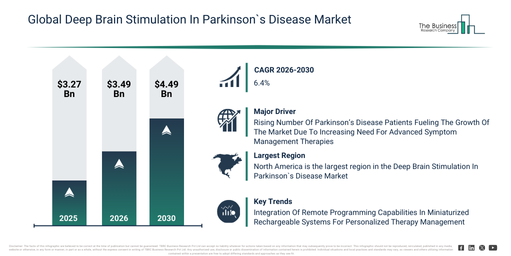
    The market for deep brain stimulation in Parkinson’s disease has experienced strong growth in recent years. It is forecast to grow from $3.27 billion in 2025 to $3.49 billion in 2026, achieving a compound annual growth rate (CAGR) of 6.7%. The expansion observed in prior periods can be attributed to the rising occurrence of Parkinson’s disease, increased adoption of DBS devices, enhanced awareness of advanced neuromodulation therapies, the development of neurosurgical infrastructure, and growing healthcare spending.

    The deep brain stimulation in parkinson’s disease market size is poised for robust expansion in the upcoming years. It is forecast to grow to $4.49 billion in 2030 at a compound annual growth rate (CAGR) of 6.4%. This anticipated growth throughout the forecast period can be attributed to several factors: a rising demand for tailored neuromodulation therapies, increased investments in research and clinical trials, enhanced access to tele-neurology services, expanded reimbursement coverage, and a greater adoption of MRI-compatible and rechargeable devices. Significant trends expected during this period include technological advancements in closed-loop and directional stimulation, innovations in rechargeable and long-life IPGs, progress in AI-assisted DBS programming, continuous research and development in minimally invasive surgical techniques, and advancements in remote monitoring and telemedicine functionalities.

    Get A Free Sample Report With In-Depth Market Insights:

    https://thebusinessresearchcompany.com/sample_request?id=17396746&type=smp&name=Deep%20Brain%20Stimulation%20In%20Parkinson%60s%20Disease%20Market%20Report%202026&utm_source=Blogs&utm_medium=Paid&utm_campaign=Oct_PR

    Deep Brain Stimulation In Parkinson`s Disease Market Industry Drivers: What’s Behind The Revenue Growth?

    The increasing population of individuals diagnosed with Parkinson’s disease is projected to stimulate expansion within the deep brain stimulation in Parkinson’s disease market. Parkinson’s disease, a progressive neurological condition, impairs movement through symptoms such as tremors, rigidity, slowed motion, and balance issues, stemming from the deterioration of dopamine-producing neurons in the brain. The increase in Parkinson’s disease patient numbers is linked to an aging demographic, as the likelihood of developing the condition significantly escalates with advancing age. Deep brain stimulation offers a management strategy for Parkinson’s disease by delivering precise electrical impulses to specific brain areas, thereby alleviating motor symptoms, enhancing patients’ quality of life, and lessening reliance on long-term medications. For example, the Parkinson’s Foundation, a US-based non-profit organization, estimated that in 2025, approximately 1.1 million people in the United States are living with Parkinson’s disease, a figure expected to climb to 1.2 million by 2030, with almost 90,000 new diagnoses each year and more than 10 million people affected worldwide. Consequently, the growing prevalence of Parkinson’s disease patients is a key driver for the growth of the deep brain stimulation in Parkinson’s disease market.

    Deep Brain Stimulation In Parkinson`s Disease Market Segmentation: How Does The Market Break Down By Category?

    The deep brain stimulation in parkinson`s disease market covered in this report is segmented –

    1) By Product Type: Implantable Pulse Generators (IPGs), Electrodes And Leads, External Programmers, Accessories And Consumables

    2) By Technology: Conventional Deep Brain Stimulation (DBS) Systems, Closed Loop Deep Brain Stimulation (DBS) Systems, Wireless Deep Brain Stimulation (DBS) Systems

    3) By Service Type: Pre-Surgical Evaluation Services, Surgical Implantation Services, Device Programming Services, Patient Monitoring Services, Maintenance And Follow-Up Services, Rehabilitation Support Services, Tele-Neurology Support Services, Training And Education Services

    4) By Application: Tremor Management, Rigidity And Stiffness Management, Bradykinesia (Slow Movement) Management, Dyskinesia Management

    5) By End-Users: Hospitals, Ambulatory Surgical Centres, Neurology Clinics

    Subsegments:

    1) By Implantable Pulse Generators (IPGs): Rechargeable Implantable Pulse Generators, Non-Rechargeable Implantable Pulse Generators, Directional Implantable Pulse Generators

    2) By Electrodes And Leads: Cylindrical Electrodes, Directional Electrodes, Stimulation Leads

    3) By External Programmers: Handheld External Programmers, Desktop External Programmers, Wireless External Programmers

    4) By Accessories And Consumables: Extension Cables, Battery Chargers, Surgical Tool Kits

    #Deep Brain Stimulation In Parkinson`s Disease Market Growth Trends: What’s Shaping The Future Outlook?

    Leading companies in the deep brain stimulation in Parkinson’s disease market are concentrating on developing sophisticated products, including miniaturized rechargeable implantable pulse generators and integrated remote programming platforms, to enhance patient comfort and access to care. Miniaturizing rechargeable implantable pulse generators involves crafting these battery-powered neurostimulation devices into much smaller, thinner forms, allowing for less invasive implantation while still delivering consistent therapeutic electrical pulses over extended durations. For instance, in January 2024, Abbott Laboratories, a US-based multinational medical devices and healthcare company, launched its Liberta RC DBS system. This platform is a miniaturized rechargeable deep brain stimulation system featuring remote programming capabilities, designed to treat individuals living with movement disorders such as Parkinson’s disease and essential tremor. Furthermore, this solution offers the longest recharge interval of any FDA-approved DBS system, requiring only 10 recharge sessions a year for most people, and utilizes the NeuroSphere Virtual Clinic to enable patients to communicate with their doctors and receive treatment adjustments from the convenience of their homes.

    Deep Brain Stimulation In Parkinson`s Disease Market Leading Players And Competitive Positioning

    Major companies operating in the deep brain stimulation in parkinson`s disease market are Abbott Laboratories, Medtronic plc, Boston Scientific Corporation, Mayo Foundation for Medical Education and Research, Cleveland Clinic, Renishaw plc, Neuralink Corp., NeuroPace Inc., PINS Medical Co. Ltd., Neurosoft Ltd., BrainsWay Ltd., Medscape, Inomed Medizintechnik GmbH, SceneRay Corporation Ltd., Neuroelectrics Barcelona S.L., Soterix Medical Inc., CorTec GmbH, Aleva Neurotherapeutics SA, NeuroSigma Inc., BrainGate Company Inc.

    View The Full Deep Brain Stimulation In Parkinson`s Disease Market Report:

    https://thebusinessresearchcompany.com/report/deep-brain-stimulation-in-parkinsons-disease-market-report?utm_source=Blogs&utm_medium=Paid&utm_campaign=Oct_PR

    Deep Brain Stimulation In Parkinson`s Disease Market Regional Distribution: Which Areas Power Market Growth?

    North America was the largest region in the deep brain stimulation in parkinson’s disease market in 2025. Asia-Pacific is expected to be the fastest-growing region in the forecast period. The regions covered in the deep brain stimulation in parkinson`s disease market report are Asia-Pacific, South East Asia, Western Europe, Eastern Europe, North America, South America, Middle East, Africa.

    Reach Out To Our Team:

    The Business Research Company: https://www.thebusinessresearchcompany.com/

    Americas: +1 310-496-7795

    Asia: +44 7882 955267 & +91 8897263534

    Europe: +44 7882 955267

    Email us at: marketing@tbrc.info

    Follow us on:

    LinkedIn: https://in.linkedin.com/company/the-business-research-company

    YouTube: https://www.youtube.com/channel/UC24_fI0rV8cR5DxlCpgmyFQ

    Global Market Model: https://www.thebusinessresearchcompany.com/global-market-model
  • Craniomaxillofacial Bone Plate Market Size In 2026 And Beyond: Understanding Future Growth Potential

    Craniomaxillofacial Bone Plate Market Size In 2026 And Beyond: Understanding Future Growth Potential

    Built to provide research that’s more actionable and strategically valuable, The Business Research Company’s 2026 market reports include market attractiveness analysis, total addressable market sizing, company benchmarking matrices, interactive Excel dashboards, broader supply chain intelligence, emerging startup tracking, and in-depth product insights.

    Craniomaxillofacial Bone Plate Market Size Outlook: How Quickly Will Revenue Expand Through 2030?

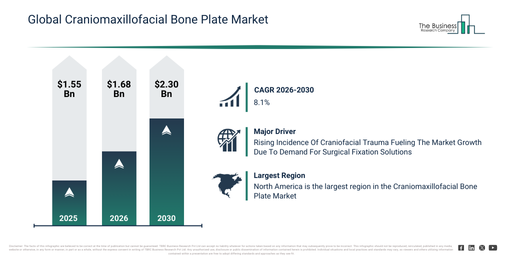
    The craniomaxillofacial bone plate market has demonstrated substantial expansion in recent years. It is anticipated to increase from $1.55 billion in 2025 to $1.68 billion in 2026, progressing at a compound annual growth rate (CAGR) of 8.4%. Historically, this expansion has been driven by several key factors, including a higher incidence of facial trauma, an escalating demand for reconstructive surgical procedures, the increased acceptance of titanium plates, the broadening reach of hospitals and specialty clinics, and an enhanced understanding of minimally invasive surgical techniques.

    The craniomaxillofacial bone plate market size is anticipated to experience substantial expansion in the coming years. This market is projected to reach $2.30 billion by 2030, exhibiting a compound annual growth rate (CAGR) of 8.1%. The expansion during this forecast period is driven by factors such as a growing preference for patient-specific implants, increasing embrace of bioresorbable materials, rising investments in 3D printing technologies, broader application of robotic-assisted surgeries, and the development of healthcare infrastructure in emerging economies. Key trends anticipated in the forecast horizon include advancements in 3D printing technology, breakthroughs in bioresorbable materials, the creation of less invasive fixation methods, exploration into antibacterial and drug-eluting coatings, and the integration of AI and AR into surgical planning.

    Get A Free Sample Report With In-Depth Market Insights:

    https://thebusinessresearchcompany.com/sample_request?id=28527037&type=smp&name=Craniomaxillofacial%20Bone%20Plate%20Market%20Report%202026&utm_source=Blogs&utm_medium=Paid&utm_campaign=Oct_PR

    Craniomaxillofacial Bone Plate Market Growth Drivers: What’s Behind The Acceleration?

    The increasing occurrence of facial injuries and accidents is anticipated to boost the expansion of the craniomaxillofacial bone plate market in the future. These involve harm to the skull and facial bones, frequently necessitating surgical stabilization, such as bone plates, to rebuild anatomical form and aid recovery. This rise in facial trauma and accidents stems from a greater volume of emergency room visits for unintentional injuries, indicating increased vulnerability to falls, mishaps, and various forms of trauma. Craniomaxillofacial bone plates facilitate the treatment of facial trauma and accidents by allowing surgeons to reconstruct the affected anatomy and enhance patient recovery. For example, in April 2025, data from the Royal Society for the Prevention of Accidents, a UK-based charity dedicated to preventing accidents, revealed that accident-related hospital admissions for severe injuries in England have climbed by 48% over the past two decades, with over 740,000 people hospitalized due to an accident in England in 2022/23 and over 870,000 people throughout the United Kingdom. Consequently, the increasing frequency of facial trauma and accidents is a key factor driving the expansion of the craniomaxillofacial bone plate market.

    Craniomaxillofacial Bone Plate Market Segment Performance And Emerging Opportunities

    The craniomaxillofacial bone plate market covered in this report is segmented –

    1) By Product Type: Locking Plates, Non-Locking Plates, Reconstruction Plates, Mesh And Flap Fixation Systems

    2) By Material Type: Titanium, Polylactic Acid, Other Material Types

    3) By Mechanism: Standard Plates, Customized And Patient-Specific Implants

    4) By Application: Orthognathic Surgery, Neurosurgery, Plastic Surgery, ENT Surgery, Other Applications

    5) By End-User: Hospitals, Ambulatory Surgical Centers, Specialty Clinics, Other End-Users

    Subsegments:

    1) By Locking Plates: Pre-Contoured Plates, Straight Plates, Mini Plates, Micro Plates, Pediatric Plates

    2) By Non-Locking Plates: Standard Plates, Reconstruction Plates, Mini Plates, Micro Plates

    3) By Reconstruction Plates: Mandibular Plates, Maxillofacial Plates, Zygomatic Plates, Orbital Plates

    4) By Mesh and Flap Fixation Systems: Titanium Mesh, Resorbable Mesh, Bone Flap Fixation System, Plate and Screw System

    Craniomaxillofacial Bone Plate Market Competitive Landscape: Who Leads The Industry?

    Major companies operating in the craniomaxillofacial bone plate market are Johnson & Johnson, Medtronic plc, Stryker Corporation, B. Braun Melsungen AG, Zimmer Biomet Holdings Inc., Integra LifeSciences Corporation, Orthofix Medical Inc., KLS Martin Group, Medartis AG, Acumed LLC, Titaniumfix GmbH, Inion Oy, Jeil Medical Corporation, Aesculap Implant Systems LLC, OsteoMed L.P., Stema Medizintechnik GmbH, Changzhou Huida Medical Equipment Co. Ltd., Xilloc Medical B.V., Zhengtian Medical, Calavera Surgical Design

    View The Full Craniomaxillofacial Bone Plate Market Report:

    https://thebusinessresearchcompany.com/report/craniomaxillofacial-bone-plate-market-report?utm_source=Blogs&utm_medium=Paid&utm_campaign=Oct_PR

    Craniomaxillofacial Bone Plate Market Geographic Landscape: Which Region Leads Industry Growth?

    North America was the largest region in the craniomaxillofacial bone plate market in 2025. Asia-Pacific is expected to be the fastest-growing region in the forecast period. The regions covered in the craniomaxillofacial bone plate market report are Asia-Pacific, South East Asia, Western Europe, Eastern Europe, North America, South America, Middle East, Africa.

    Reach Out To Our Team:

    The Business Research Company: https://www.thebusinessresearchcompany.com/

    Americas: +1 310-496-7795

    Asia: +44 7882 955267 & +91 8897263534

    Europe: +44 7882 955267

    Email us at: marketing@tbrc.info

    Follow us on:

    LinkedIn: https://in.linkedin.com/company/the-business-research-company

    YouTube: https://www.youtube.com/channel/UC24_fI0rV8cR5DxlCpgmyFQ

    Global Market Model: https://www.thebusinessresearchcompany.com/global-market-model
  • Cortical Grid Electrodes Market Reaches $1.77 Billion In 2026: Key Developments Shaping Expansion

    Cortical Grid Electrodes Market Reaches $1.77 Billion In 2026: Key Developments Shaping Expansion

    Backed by market attractiveness analysis, total addressable market sizing, company benchmarking matrices, interactive Excel dashboards, wider supply chain intelligence, emerging startup coverage, and detailed product-level insights, The Business Research Company’s 2026 market reports are designed to offer research that is more actionable and strategically valuable than ever.

    Cortical Grid Electrodes Market Size, Value And Growth Trajectory Through 2030

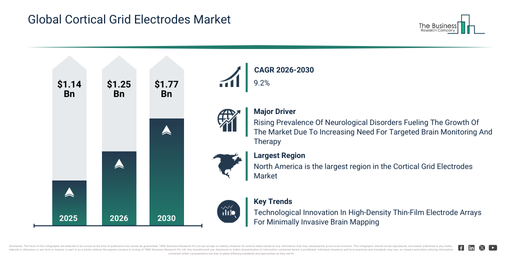
    The cortical grid electrodes market has experienced robust growth in recent years. Its valuation is projected to increase from $1.14 billion in 2025 to $1.25 billion by 2026, demonstrating a compound annual growth rate (CAGR) of 9.4%. This historical expansion can be attributed to several factors, including the rising demand for neuroprosthetics, increased funding for neurological research, a growing prevalence of neurological disorders, the broadening applications of brain-computer interfaces, and technological advancements in electrodes.

    The market size for cortical grid electrodes is projected to experience robust expansion over the next few years. It is forecast to increase to $1.77 billion in 2030, achieving a compound annual growth rate (CAGR) of 9.2%. This growth during the forecast period is primarily driven by an increasing demand for neurological treatments, wider applications in brain research, growing investments in research and development, expanded clinical adoption, and a heightened focus on personalized neuromodulation therapies. Significant trends anticipated in this period encompass technological progress in electrode miniaturization, innovations in conductive polymer materials, the development of high-density electrode systems, research and advancements in AI-based brain mapping, and improved integration with neurosurgical platforms.

    Get A Free Sample Report With In-Depth Market Insights:

    https://thebusinessresearchcompany.com/sample_request?id=22468341&type=smp&name=Cortical%20Grid%20Electrodes%20Market%20Report%202026&utm_source=Blogs&utm_medium=Paid&utm_campaign=Oct_PR

    Cortical Grid Electrodes Market Growth Factors Behind Sustained Expansion

    The growing incidence of neurological disorders is anticipated to drive the expansion of the cortical grid electrodes market moving forward. These medical conditions impact the brain, spinal cord, and nerves, leading to diverse symptoms including cognitive, motor, and sensory impairments. The heightened prevalence of neurological disorders is associated with the aging population, as aging gradually diminishes neuronal function, reduces brain plasticity, and elevates oxidative stress, contributing to the onset and progression of these conditions. Cortical grid electrodes assist in treating neurological disorders by enabling precise monitoring and stimulation of brain activity to restore or modify neural function. They enhance patient outcomes by supporting targeted therapies for conditions such as epilepsy, movement disorders, and chronic pain. For instance, in July 2024, according to the National Health Service, a UK-based government agency, there were 487,432 patients diagnosed with dementia by June 30, 2024, representing an increase of 3,155 cases compared to May 31, 2024. Therefore, the increasing prevalence of neurological disorders is fueling the growth of the cortical grid electrodes market.

    Cortical Grid Electrodes Market Segment Landscape And Growth Outlook

    The cortical grid electrodes market covered in this report is segmented –

    1) By Product: Epidural Cortical Grid Electrodes, High-Density Cortical Grid Electrodes, Flexible Cortical Grid Electrodes, Penetrating Cortical Grid Electrodes, Multi-Contact Cortical Grid Electrodes, Customized Cortical Grid Electrodes, Reusable Cortical Grid Electrodes

    2) By Material Type: Silicone, Polyimide, Metal, Conductive Polymer

    3) By Electrode Configuration: Strip Electrode, Grid Electrode, Cylindrical Electrode, Custom Designs

    4) By Application: Neuroprosthetics, Brain Mapping, Seizure Monitoring, Research

    5) By End User: Hospitals, Research Institutions, Neurology Clinics, Educational Institutions

    Subsegments:

    1) By Epidural Cortical Grid Electrodes: Single Contact Epidural Electrode, Multi Contact Epidural Electrode, Strip Epidural Electrode, Square Grid Epidural Electrode, Rectangular Grid Epidural Electrode

    2) By High Density Cortical Grid Electrodes: Ultra High Density Electrode, Dense Array Electrode, Small Contact Spacing Electrode, High Resolution Electrode, Compact High Density Electrode

    3) By Flexible Cortical Grid Electrodes: Silicone Based Flexible Electrode, Polyimide Flexible Electrode, Stretchable Flexible Electrode, Conformable Flexible Electrode, Thin Film Flexible Electrode

    4) By Penetrating Cortical Grid Electrodes: Microwire Penetrating Electrode, Depth Penetrating Electrode, Multi Shank Penetrating Electrode, Linear Array Penetrating Electrode, Three Dimensional Penetrating Electrode

    5) By Multi Contact Cortical Grid Electrodes: Double Contact Electrode, Triple Contact Electrode, Quadruple Contact Electrode, Multiple Contact Strip Electrode, High Contact Count Electrode

    6) By Customized Cortical Grid Electrodes: Patient Specific Electrode, Tailor Made Electrode, Bespoke Size Electrode, Custom Shape Electrode, Special Design Electrode

    7) By Reusable Cortical Grid Electrodes: Sterilizable Reusable Electrode, Durable Reusable Electrode, Long Life Reusable Electrode, Multiple Use Reusable Electrode, Washable Reusable Electrode

    Cortical Grid Electrodes Market Industry Trends Fueling Future Revenue Growth

    Leading companies in the cortical grid electrodes market are focusing on developing advanced products, such as high-density thin-film electrode arrays, to improve the resolution and safety of neural recording. These high-density thin-film electrode arrays utilize flexible, biocompatible substrates like polyimide to create micro-electrode arrays that conform closely to the brain’s surface, enabling the recording of thousands of channels of neural data with minimal tissue displacement and reversibility, thereby overcoming the limitations of traditional, rigid subdural grids. For instance, in March 2025, Precision Neuroscience Corporation, a US-based brain-computer interface company, received Food and Drug Administration (FDA) 510(k) clearance for its Layer 7-T (Layer 7 Cortical Interface). This device is a high-density thin-film 1024-channel cortical electrode array designed for temporary use (less than 30 days) to record, monitor, and stimulate electrical signals on the brain’s surface. The system allows surgeons to map brain activity with unprecedented resolution using a minimally invasive micro-slit technique, facilitating the preservation of eloquent tissue during neurosurgical procedures.

    Cortical Grid Electrodes Market Company Landscape And Competitive Strategy

    Major companies operating in the cortical grid electrodes market are Abbott Laboratories, Medtronic plc, Integra Life Sciences Corporation, Nihon Kohden Corporation, Natus Medical Incorporated, NeuroPace Inc., Blackrock Neurotech LLC, Cadwell Industries Inc., Precision Neuroscience Corporation, AD-tech Medical Instrument, Inomed Medizintechnik Gmbh, PMT Corporation, Ripple Neuro LLC, Neuroone Medical Technology corporation, Plexon Inc., Cortec Gmbh, Microprobes for Lifesciences Inc, Dixi Medical SAS, Cortera Neurotechnologies Inc., Neurosoft Bioelectronics Ltd., Alpha Omega Engineering Ltd.

    View The Full Cortical Grid Electrodes Market Report:

    https://thebusinessresearchcompany.com/report/cortical-grid-electrodes-market-report?utm_source=Blogs&utm_medium=Paid&utm_campaign=Oct_PR

    Cortical Grid Electrodes Market Largest Region: Which Geography Holds The Biggest Share?

    North America was the largest region in the cortical grid electrodes market in 2025. Asia-Pacific is expected to be the fastest-growing region in the forecast period. The regions covered in the cortical grid electrodes market report are Asia-Pacific, South East Asia, Western Europe, Eastern Europe, North America, South America, Middle East, Africa.

    Reach Out To Our Team:

    The Business Research Company: https://www.thebusinessresearchcompany.com/

    Americas: +1 310-496-7795

    Asia: +44 7882 955267 & +91 8897263534

    Europe: +44 7882 955267

    Email us at: marketing@tbrc.info

    Follow us on:

    LinkedIn: https://in.linkedin.com/company/the-business-research-company

    YouTube: https://www.youtube.com/channel/UC24_fI0rV8cR5DxlCpgmyFQ

    Global Market Model: https://www.thebusinessresearchcompany.com/global-market-model
  • Cognitive Neuroscience Market Set To Expand From $35.02 Billion In 2026: Growth Outlook Through 2030

    Cognitive Neuroscience Market Set To Expand From $35.02 Billion In 2026: Growth Outlook Through 2030

    Featuring market attractiveness scoring, total addressable market sizing, company benchmarking matrices, interactive Excel dashboards, deeper supply chain intelligence, emerging startup tracking, and granular product-level insights, The Business Research Company’s 2026 market reports are built to deliver research that is both more actionable and more strategically valuable.

    Cognitive Neuroscience Market Revenue Growth On Track For A 6% CAGR Through 2030

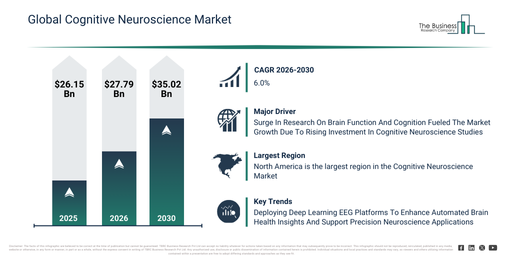
    In recent years, the cognitive neuroscience market has demonstrated substantial growth. Its value is projected to rise from $26.15 billion in 2025 to $27.79 billion in 2026, exhibiting a compound annual growth rate (CAGR) of 6.3%. This historical expansion stems from several factors, including the wider uptake of neuroimaging techniques, increased funding for brain research, a rise in neurological disorder cases, the broadening of academic research efforts, and the creation of sophisticated imaging technologies.

    The cognitive neuroscience market is projected to experience substantial expansion in the coming years, forecast to reach $35.02 billion by 2030, driven by a compound annual growth rate (CAGR) of 6.0%. Factors contributing to this growth include the greater incorporation of AI and machine learning within cognitive neuroscience, an increase in public and private sector funding, a heightened need for personalized medicine solutions, the proliferation of portable and non-invasive imaging technologies, and enhanced partnerships between pharmaceutical firms and research organizations. Key trends expected during this period involve technological improvements in functional and multimodal imaging, breakthroughs in real-time brain monitoring systems, the evolution of neuroinformatics and big data integration, progress in tailored treatment options, and increased investment in cognitive neuroscience applications particularly for psychiatry.

    Get A Free Sample Report With In-Depth Market Insights:

    https://thebusinessresearchcompany.com/sample_request?id=81403309&type=smp&name=Cognitive%20Neuroscience%20Market%20Report%202026&utm_source=Blogs&utm_medium=Paid&utm_campaign=Oct_PR

    Cognitive Neuroscience Market Opportunity Drivers: What’s Unlocking New Revenue Potential?

    The expansion of studies into brain function and cognition is anticipated to fuel the future expansion of the cognitive neuroscience market. This rise in research signifies a growing volume of scientific investigations, financial backing, and project endeavors, all aimed at improving comprehension of the neural foundations governing perception, memory, attention, language, decision-making, and associated cognitive processes. The heightened research activity is due to governments and public bodies designating neuroscience as a crucial scientific and health field. The cognitive neuroscience sector aids this research by providing essential experimental instruments, analytical methodologies, training programs, and collaborative research structures necessary for investigators to conduct and disseminate their neuroscience findings. For example, in December 2023, data from the US-based government program, the NIH BRAIN Initiative, indicated that it allocated funding to over 150 new neuroscience research projects, amounting to more than $220 million. This was an increase from 130 projects and $180 million in 2022, representing a 15.4 % growth in project numbers and a 22.2 % annual increase in funding. Consequently, the heightened research focus on brain function and cognition is a primary driver behind the expansion of the cognitive neuroscience market.

    Cognitive Neuroscience Market Segment Outlook: Which Categories Are Growing Fastest?

    The cognitive neuroscience market covered in this report is segmented –

    1) By Type: Magnetic Resonance Imaging (MRI), Functional Magnetic Resonance Imaging (fMRI), Positron Emission Tomography (PET), Magnetoencephalography (MEG), Encephalography (EEC), Near Infrared Spectroscopy (NIRS), Single Photon Emission Computed Tomography (SPECT)

    2) By Technology: Neuroimaging Technology, Electrophysiological Monitoring Technology, Neurostimulation Technology, Digital And Software-Based

    3) By Application: Brain Imaging, Neurological Research, Neurological Disorders, Psychiatry

    4) By End User: Pharmaceutical Companies, Clinical And Research Laboratories, Academic Research Institutes, Hospitals And Pathology Laboratories, Other End Users

    Subsegments:

    1) By Magnetic Resonance Imaging (MRI): Structural Imaging, Diffusion Imaging, Spectroscopy Imaging, Perfusion Imaging

    2) By Functional Magnetic Resonance Imaging (fMRI): Task-Based Imaging, Resting-State Imaging, Connectivity Analysis, Perfusion Functional Imaging

    3) By Positron Emission Tomography (PET): Neuroreceptor Imaging, Metabolic Imaging, Blood Flow Imaging, Neuroinflammation Imaging

    4) By Magnetoencephalography (MEG): Source Localization, Functional Mapping, Connectivity Analysis, Event-Related Analysis

    5) By Encephalography (EEC): Routine Recording, Ambulatory Recording, Sleep Study, Evoked Potentials

    6) By Near Infrared Spectroscopy (NIRS): Continuous Wave Imaging, Frequency Domain Imaging, Time-Resolved Imaging, Functional Monitoring

    7) By Single Photon Emission Computed Tomography (SPECT): Perfusion Imaging, Neuroreceptor Imaging, Metabolic Imaging, Blood Flow Imaging

    Cognitive Neuroscience Market Innovation Trends Shaping Future Development

    Leading companies in the cognitive neuroscience market are prioritizing the implementation of next-generation deep learning EEG platforms, such as large neural model platforms, to enhance brain signal analysis, cognitive monitoring, and the early identification of neurological disorders. Large neural model platforms are defined as computational frameworks or systems engineered to develop, train, deploy, and manage extensive neural network models, commonly utilized in artificial intelligence (AI) and machine learning (ML) applications. For example, in June 2025, BrainScope Inc., a US-based neurotechnology company, unveiled its advanced EEG-based Large Neural Model deep learning platform. This platform incorporates deep learning-driven automated EEG interpretation, offers wider clinical condition support including concussion, stroke, and early Alzheimer’s detection, and provides improved real-time biomarker extraction for precise diagnostics and clinical trial assistance. The platform empowers clinicians and researchers to gain clinically relevant brain function insights more rapidly, reducing the need for specialized qEEG interpretation. This launch marks a substantial technological step forward by integrating AI-powered EEG analytics with adaptable clinical applications, thus connecting neurotechnology innovation with enhanced patient care and research effectiveness.

    Cognitive Neuroscience Market Industry Leaders And Competitive Landscape

    Major companies operating in the cognitive neuroscience market are Magstim Company Limited, Philips International B.V., GE HealthCare Technologies Inc., Bruker Corporation, United Imaging Healthcare Co. Ltd., Brainbox Ltd., iMotions A/S, Blackrock Neurotech LLC, Advanced Brain Monitoring Inc., Compumedics Limited, BrainGate Inc., NeuroBehavioral Systems Inc., Neurospec AG, Emotiv Inc., Cogstate Ltd., Akili Interactive Labs Inc., MindMaze SA, Brain Products GmbH, Cambridge Cognition Ltd., ANT Neuro B.V., Canon Medical Systems Corporation

    View The Full Cognitive Neuroscience Market Report:

    https://thebusinessresearchcompany.com/report/cognitive-neuroscience-market-report?utm_source=Blogs&utm_medium=Paid&utm_campaign=Oct_PR

    Cognitive Neuroscience Market Regional Analysis And Top Geography

    North America was the largest region in the cognitive neuroscience market in 2025. Asia-Pacific is expected to be the fastest-growing region in the forecast period. The regions covered in the cognitive neuroscience market report are Asia-Pacific, South East Asia, Western Europe, Eastern Europe, North America, South America, Middle East, Africa.

    Reach Out To Our Team:

    The Business Research Company: https://www.thebusinessresearchcompany.com/

    Americas: +1 310-496-7795

    Asia: +44 7882 955267 & +91 8897263534

    Europe: +44 7882 955267

    Email us at: marketing@tbrc.info

    Follow us on:

    LinkedIn: https://in.linkedin.com/company/the-business-research-company

    YouTube: https://www.youtube.com/channel/UC24_fI0rV8cR5DxlCpgmyFQ

    Global Market Model: https://www.thebusinessresearchcompany.com/global-market-model
  • Cloud-Connected Automated Intravenous (IV) Compounding Market Forecast 2026–2030: Market Size, Trends And Growth Opportunities

    Cloud-Connected Automated Intravenous (IV) Compounding Market Forecast 2026–2030: Market Size, Trends And Growth Opportunities

    Backed by market attractiveness analysis, total addressable market sizing, company benchmarking matrices, interactive Excel dashboards, wider supply chain intelligence, emerging startup coverage, and detailed product-level insights, The Business Research Company’s 2026 market reports are designed to offer research that is more actionable and strategically valuable than ever.

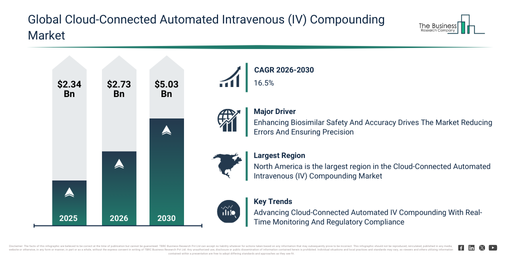
    Cloud-Connected Automated Intravenous (IV) Compounding Market Poised To Hit $5.03 Billion By 2030 With A 16.5% CAGR

    The cloud-connected automated intravenous (IV) compounding market size has experienced rapid growth in recent years. It is projected to increase from $2.34 billion in 2025 to $2.73 billion in 2026, achieving a compound annual growth rate (CAGR) of 16.8%. This historical expansion can be attributed to several factors: the increasing adoption of automated IV compounding systems, a growing demand for medication safety and accuracy, rising hospital investments in pharmacy automation, the expansion of oncology and specialized treatment centers, and a growing awareness of sterile compounding standards.

    The cloud-connected automated intravenous (IV) compounding market is projected to experience swift expansion in the coming years. This market is anticipated to reach $5.03 billion by 2030, exhibiting a compound annual growth rate (CAGR) of 16.5%. Several factors contribute to this growth during the forecast period, including the increased adoption of cloud-based monitoring solutions, the advancement of AI-powered error detection systems, greater investment in compact and modular robotic designs, the broadening of homecare and decentralized pharmacy applications, and a stronger emphasis on interoperability and data analytics platforms. Key trends projected for this period encompass technological enhancements in cloud-connected workflow management, breakthroughs in AI and machine learning for predictive compounding, the creation of smart consumables and sensors, intensified research and development into oncology-specific automation solutions, and significant investment in scalable and remote monitoring deployment models.

    Get A Free Sample Report With In-Depth Market Insights:

    https://thebusinessresearchcompany.com/sample_request?id=60027972&type=smp&name=Cloud-Connected%20Automated%20Intravenous%20%28IV%29%20Compounding%20Market%20Report%202026&utm_source=Blogs&utm_medium=Paid&utm_campaign=Oct_PR

    Cloud-Connected Automated Intravenous (IV) Compounding Market Expansion Drivers: What’s Shaping Future Growth?

    The escalating demand for biosimilars is projected to propel the expansion of the cloud-connected automated IV compounding market in the foreseeable future. Biosimilars are biologic medical products that exhibit high similarity to an already approved reference biologic, demonstrating no clinically meaningful differences in safety, purity, or efficacy. The heightened demand for biosimilars is attributable to their cost-effectiveness when compared to branded biologics. Automated IV compounding plays a vital role in enhancing the safe and accurate preparation of biosimilars by reducing human error, ensuring precise dosing, and upholding product integrity. For instance, according to Cardinal Health Inc., a US-based healthcare company, it was reported in January 2023 that, as of January 2022, the U.S. had 33 FDA-approved biosimilar products, with 21 available on the market, and by 2023, this figure increased to 40 FDA-approved biosimilars, with 25 of them commercially accessible. Thus, the growing demand for biosimilars is a significant driver for the cloud-connected automated IV compounding market.

    Cloud-Connected Automated Intravenous (IV) Compounding Market Segments: Where Is Growth Concentrated?

    The cloud-connected automated intravenous (iv) compounding market covered in this report is segmented –

    1) By Product Type: Robotic Compounding Systems, Software Solutions, Consumables

    2) By Deployment Mode: Cloud-Hosted Deployment, Hybrid Cloud Deployment, On-Premise With Cloud Integration

    3) By Application: Hospital Pharmacies, Oncology Centers, Homecare Settings, Other Applications

    4) By End User: Hospitals, Clinics, Ambulatory Surgical Centers, Other End-Users

    Subsegments:

    1) By Robotic Compounding Systems: Automated Intravenous Preparation Robots, Modular Robotic Compounding Units, Sterile Compounding Robotic Arms, Integrated Safety Monitoring Systems

    2) By Software Solutions: Workflow Management Software, Inventory Management Software, Dose Verification Software, Remote Monitoring And Analytics Software

    3) By Consumables: Sterile Syringes, Intravenous Bags, Vials And Ampoules, Filters And Tubing Sets, Protective Personal Equipment

    Cloud-Connected Automated Intravenous (IV) Compounding Market Strategic Trends: What Defines The Next Growth Phase?

    Major companies operating in the cloud-connected automated intravenous (IV) compounding market are concentrating on enhancing automated systems, such as cloud-enabled monitoring and compliance tracking, to improve sterile preparation accuracy, reduce medication errors, and strengthen regulatory adherence. Cloud-enabled monitoring and compliance tracking refers to integrated software and hardware features that permit healthcare facilities to access real-time data on IV compounding processes, maintain electronic audit trails, and ensure adherence to sterility and quality standards across multiple sites. For instance, in May 2025, the United States Food and Drug Administration (FDA), a US-based regulatory authority, highlighted updated guidance and enforcement initiatives under section 503B of the Federal Food, Drug, and Cosmetic Act, which require outsourcing facilities to maintain rigorous quality control and documentation for compounded sterile products. These guidelines encourage the adoption of automated IV compounding systems with cloud-based monitoring, electronic record-keeping, and remote quality oversight capabilities.

    Cloud-Connected Automated Intravenous (IV) Compounding Market Top Companies Driving Competitive Growth

    Major companies operating in the cloud-connected automated intravenous (iv) compounding market are McKesson Corporation, Becton Dickinson and Company, Baxter International Inc., B. Braun Melsungen SE, Fresenius Kabi AG, Grifols S.A., ICU Medical Inc., Syntegon Technology GmbH, Omnicell Inc., Marchesini Group S.p.A., Swisslog Healthcare, ScriptPro LLC, Parata Systems LLC, ARxIUM Inc., Equashield LLC, Health Robotics S.r.l., Rommelag AG, NewIcon Oy, DoseEdge, Aesynt Inc.

    View The Full Cloud-Connected Automated Intravenous (IV) Compounding Market Report:

    https://thebusinessresearchcompany.com/report/cloud-connected-automated-intravenous-iv-compounding-market-report?utm_source=Blogs&utm_medium=Paid&utm_campaign=Oct_PR

    Cloud-Connected Automated Intravenous (IV) Compounding Market Global Footprint: Which Region Leads The Market?

    North America was the largest region in the cloud-connected automated intravenous (IV) compounding market in 2025. Asia-Pacific is expected to be the fastest-growing region in the forecast period. The regions covered in the cloud-connected automated intravenous (iv) compounding market report are Asia-Pacific, South East Asia, Western Europe, Eastern Europe, North America, South America, Middle East, Africa.

    Reach Out To Our Team:

    The Business Research Company: https://www.thebusinessresearchcompany.com/

    Americas: +1 310-496-7795

    Asia: +44 7882 955267 & +91 8897263534

    Europe: +44 7882 955267

    Email us at: marketing@tbrc.info

    Follow us on:

    LinkedIn: https://in.linkedin.com/company/the-business-research-company

    YouTube: https://www.youtube.com/channel/UC24_fI0rV8cR5DxlCpgmyFQ

    Global Market Model: https://www.thebusinessresearchcompany.com/global-market-model
  • Cloud Medical Imaging Platform Market Size Reaches $4.2 Billion In 2026: What Is Driving Growth?

    Cloud Medical Imaging Platform Market Size Reaches $4.2 Billion In 2026: What Is Driving Growth?

    Featuring market attractiveness scoring, total addressable market sizing, company benchmarking matrices, interactive Excel dashboards, deeper supply chain intelligence, emerging startup tracking, and granular product-level insights, The Business Research Company’s 2026 market reports are built to deliver research that is both more actionable and more strategically valuable.

    Cloud Medical Imaging Platform Market Size And Revenue Outlook Through 2030

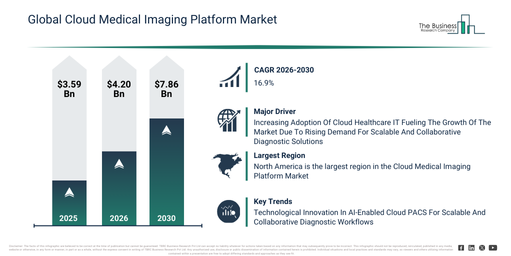
    The cloud medical imaging platform market has experienced significant expansion recently. It is projected to expand from $3.59 billion in 2025 to $4.20 billion in 2026, exhibiting a compound annual growth rate (CAGR) of 17.6%. Historically, this growth has been driven by factors such as the greater acceptance of cloud-based healthcare IT systems, the escalating need for remote accessibility to medical images, the increased volume of imaging procedures in healthcare facilities, the proliferation of telemedicine and teleradiology offerings, and the heightened requirement for economical imaging storage options.

    The cloud medical imaging platform market is poised for substantial expansion over the coming years, with projections indicating a value of $7.86 billion by 2030, demonstrating a compound annual growth rate of 16.9%. This anticipated growth is primarily driven by factors such as the increasing adoption of AI-powered imaging instruments, a growing shift towards hybrid cloud deployment strategies, the heightened need for image sharing and collaborative efforts across multiple facilities, the broadening scope of healthcare digitalization projects in developing nations, and an intensified emphasis on automating workflows within radiology departments. Noteworthy trends expected during this forecast timeframe encompass progress in artificial intelligence-driven cloud imaging analytics, technological breakthroughs in zero-footprint medical image viewing solutions, advancements in cloud systems based on vendor-neutral archives, ongoing research and development in secure blockchain imaging exchange, and novel applications for mobile-compatible cloud imaging.

    Get A Free Sample Report With In-Depth Market Insights:

    https://thebusinessresearchcompany.com/sample_request?id=60619830&type=smp&name=Cloud%20Medical%20Imaging%20Platform%20Market%20Report%202026&utm_source=Blogs&utm_medium=Paid&utm_campaign=Oct_PR

    Cloud Medical Imaging Platform Market Development Factors: What’s Supporting Demand?

    The expansion of the cloud medical imaging platform market is anticipated to be driven by the rising uptake of cloud healthcare IT. This adoption signifies the broad integration of web-based computing solutions for storing, managing, and processing medical information off-site, rather than on premises. Progress in cloud computing infrastructure fuels this trend by providing medical professionals with scalable storage, improved data security, and immediate access. Cloud medical imaging platforms streamline diagnostic processes through the effortless storage, retrieval, and distribution of detailed medical images across various healthcare settings and devices. As an illustration, data from September 2025 by the Office of the National Coordinator for Health Information Technology, a US Department of Health and Human Services division, showed that 71% of hospitals incorporated predictive AI with electronic health records in 2024, an increase from 66% in 2023. Consequently, the expanding use of cloud healthcare IT is boosting the growth of the cloud medical imaging platform market.

    Cloud Medical Imaging Platform Market Segment Analysis: What Are The Core Market Categories?

    The cloud medical imaging platform market covered in this report is segmented –

    1) By Component: Software, Services

    2) By Imaging Modality: X-ray, Computed Tomography (CT), Magnetic Resonance Imaging (MRI), Ultrasound, Nuclear Imaging, Other Imaging Modalities

    3) By Pricing Model: Subscription-Based (Software As A Service), Pay-Per-Use Or Consumption-Based, Hybrid Pricing Models

    4) By Deployment Mode: Public Cloud, Private Cloud, Hybrid Cloud

    5) By End-User: Hospitals, Diagnostic Centers, Research And Academic Institutes, Other End-Users

    Subsegments:

    1) By Software: Picture Archiving And Communication System Software, Radiology Information System Software, Vendor Neutral Archive Software, Enterprise Viewers And Universal Workstations, Image Analysis Software, Telemedicine Platform Software

    2) By Services: Implementation And Integration Services, Training And Education Services, Support And Maintenance Services, Consulting Services, Managed Services

    Cloud Medical Imaging Platform Market Transformation Trends: What Innovations Are Driving Change?

    Key companies in the cloud medical imaging platform market are concentrating on technological breakthroughs, including next-generation cloud-based Picture Archiving and Communication Systems (PACS) with integrated artificial intelligence (AI). These platforms are engineered to optimize diagnostic workflows through features like high-speed remote access, automated study coordination, and sophisticated image processing available from any location, which in turn lowers IT infrastructure costs and boosts operational efficiency. For example, in November 2023, Royal Philips, a health technology company from the Netherlands, introduced HealthSuite Imaging. This cloud-based PACS solution, hosted on Amazon Web Services (AWS), provides rapid remote access for diagnostic interpretation, consolidated reporting, and AI-driven workflow orchestration, enabling healthcare systems to securely scale operations and lessen the demands of on-premises IT administration.

    Cloud Medical Imaging Platform Market Leading Players And Competitive Positioning

    Major companies operating in the cloud medical imaging platform market are FUJIFILM Holdings Corp., GE HealthCare Technologies Inc., Sectra AB, Viz.ai Inc., Aidoc Medical Ltd., Arterys Inc., Lunit Inc., INFINITT Healthcare Co. Ltd., Qure.ai Technologies Pvt. Ltd., Novarad Corporation, RamSoft Inc., Annalise.ai Pty Ltd., Subtle Medical Inc., Gleamer SAS, VUNO Inc., PaxeraHealth Inc., Medixant Sp. z o.o., Medicai Ltd., MedDream UAB, Visbion Ltd., Studycast Inc.

    View The Full Cloud Medical Imaging Platform Market Report:

    https://thebusinessresearchcompany.com/report/cloud-medical-imaging-platform-market-report?utm_source=Blogs&utm_medium=Paid&utm_campaign=Oct_PR

    Cloud Medical Imaging Platform Market Regional Split: Which Areas Are Fueling Growth?

    North America was the largest region in the cloud medical imaging platform market in 2025. Asia-Pacific is expected to be the fastest-growing region in the forecast period. The regions covered in the cloud medical imaging platform market report are Asia-Pacific, South East Asia, Western Europe, Eastern Europe, North America, South America, Middle East, Africa.

    Reach Out To Our Team:

    The Business Research Company: https://www.thebusinessresearchcompany.com/

    Americas: +1 310-496-7795

    Asia: +44 7882 955267 & +91 8897263534

    Europe: +44 7882 955267

    Email us at: marketing@tbrc.info

    Follow us on:

    LinkedIn: https://in.linkedin.com/company/the-business-research-company

    YouTube: https://www.youtube.com/channel/UC24_fI0rV8cR5DxlCpgmyFQ

    Global Market Model: https://www.thebusinessresearchcompany.com/global-market-model
  • Cell Therapy Manufacturing Automation Market Outlook Through 2030: Understanding The Growth Opportunity

    Cell Therapy Manufacturing Automation Market Outlook Through 2030: Understanding The Growth Opportunity

    Featuring market attractiveness scoring, total addressable market sizing, company benchmarking matrices, interactive Excel dashboards, deeper supply chain intelligence, emerging startup tracking, and granular product-level insights, The Business Research Company’s 2026 market reports are built to deliver research that is both more actionable and more strategically valuable.

    Cell Therapy Manufacturing Automation Market Revenue Outlook: What CAGR Lies Ahead Through 2030?

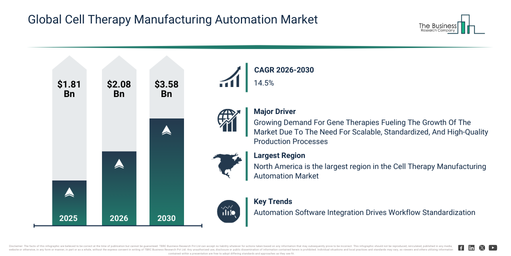
    The cell therapy manufacturing market has experienced rapid expansion in recent years. It is projected to grow from $1.81 billion in 2025 to $2.08 billion in 2026, reflecting a compound annual growth rate (CAGR) of 14.8%. The historical growth of this market can be attributed to the rising demand for cell processing, the increasing requirements for manufacturing scalability, the growing adoption of automated bioreactors, the expansion of GMP-compliant workflows, and a heightened focus on achieving production consistency.

    The cell therapy manufacturing market size is anticipated to undergo substantial growth in the upcoming years. It is projected to expand to $3.58 billion in 2030, with a compound annual growth rate (CAGR) of 14.5%. This expected growth over the forecast period stems from factors such as increasing volumes of personalized therapies, augmented investment in automation platforms, a rising imperative for contamination-free workflows, the broadening of large-scale commercial manufacturing, and more rigorous regulatory quality demands. Key trends during this period are expected to include technological progress in closed systems, process innovations driven by automation, the evolution of integrated workflows, research into real-time analytics, and advancements in robotics research and development.

    Get A Free Sample Report With In-Depth Market Insights:

    https://thebusinessresearchcompany.com/sample_request?id=93169603&type=smp&name=Cell%20Therapy%20Manufacturing%20Automation%20Market%20Report%202026&utm_source=Blogs&utm_medium=Paid&utm_campaign=Oct_PR

    Cell Therapy Manufacturing Automation Market Demand Drivers Opening New Revenue Streams

    The expanding need for gene therapies is projected to fuel the advancement of the cell therapy manufacturing automation market moving ahead. Gene therapy constitutes a medical method centered on altering or substituting faulty genes to address or avert illnesses. This heightened demand for gene therapy arises from progress in genetic sequencing and diagnostics, which permit accurate identification of disease-causing genes for focused intervention. Cell therapy manufacturing automation assists gene therapy by optimizing and regularizing intricate production procedures, thereby guaranteeing uniform quality and potential for scaling. It improves therapeutic progress by lessening errors, enhancing operational effectiveness, and enabling dependable large-scale production of gene-modified cells. For instance, in December 2024, as per the American Society of Gene & Cell Therapy (ASGCT), a US-based non-profit medical and scientific organization, the Food and Drug Administration (FDA) authorized six gene therapy products in 2023, an increase from five approvals in 2022. Consequently, the increasing requirement for gene therapies is propelling the expansion of the cell therapy manufacturing automation market.

    Cell Therapy Manufacturing Automation Market Segment Landscape And Growth Outlook

    The cell therapy manufacturing automation market covered in this report is segmented –

    1) By Component: Hardware, Software, Services

    2) By Cell Type: T-Cells, Stem Cells, Natural Killer (NK) Cells, Other Cell Types

    3) By Process: Upstream Processing, Downstream Processing, Fill-Finish, Quality Control, Other Processes

    4) By End-User: Pharmaceutical And Biotechnology Companies, Research Institutes, Contract Manufacturing Organizations (CMOs), Other End-Users

    Subsegments:

    1) By Hardware: Automated Bioreactor Systems, Robotic Handling Platforms, Automated Separation Devices, Automated Expansion Units, In Line Quality Analyzers

    2) By Software: Electronic Batch Record Software, Manufacturing Execution Software, Workflow Management Software, Data Monitoring Software, Compliance Management Software

    3) By Services: Installation Services, Maintenance Services, Validation Services, Training Services, Technical Support Services

    Cell Therapy Manufacturing Automation Market Trends Powering Strategic Industry Growth

    Leading companies within the cell therapy manufacturing automation market are concentrating on creating sophisticated solutions, like automated cell therapy systems, aimed at integrating multi-stage manufacturing workflows into unified, validated digital frameworks that minimize manual interventions and bolster regulatory compliance. An automated cell therapy system is defined as an off-the-shelf validated automation solution which digitally links various cell therapy instruments (for example, magnetic separation, centrifugation, electroporation, and incubators) into a unified interface, thereby ensuring traceability, repeatability, and cGMP compliance throughout all production stages. As an example, in January 2024, the US-based life sciences company Thermo Fisher Scientific Inc. introduced Gibco CTS Cellmation Software, an innovative automation solution. This unique, off-the-shelf validated software solution digitally connects instruments across Thermo Fisher’s cell therapy portfolio to automate manufacturing workflows. It incorporates a pre-validated automation system, driven by Emerson’s DeltaV technology, facilitating the seamless integration and control of numerous instruments without requiring expensive custom projects. Furthermore, it establishes traceable and repeatable workflows that aid in ensuring adherence to cGMP and data security regulations, ultimately diminishing manual efforts for ground therapy developers.

    Cell Therapy Manufacturing Automation Market Competitive Analysis Of Leading Industry Participants

    Major companies operating in the cell therapy manufacturing automation market are Thermo Fisher Scientific Inc., Merck KGaA, Fujifilm Holdings Corporation, Corning Incorporated, Lonza Group AG, Cytiva, WuXi AppTecCo. Ltd., Hitachi High Technologies Corp., CatalentInc., Sartorius AG, Beckman Coulter Life Sciences, Terumo BCT Inc., Miltenyi Biotec, Oxford Biomedica Plc, National Resilience LLC, Minaris Regenerative Medicine LLC, Tulip Interfaces Inc., Invetech Pty Ltd., BlueRock Therapeutics LLC, Cellares Inc., Ascential Medical & Life Sciences, Cell and Gene Therapy Catapult

    View The Full Cell Therapy Manufacturing Automation Market Report:

    https://thebusinessresearchcompany.com/report/cell-therapy-manufacturing-automation-market-report?utm_source=Blogs&utm_medium=Paid&utm_campaign=Oct_PR

    Cell Therapy Manufacturing Automation Market Geographic Distribution And Regional Opportunities

    North America was the largest region in the cell therapy manufacturing market in 2025. Asia-Pacific is expected to be the fastest-growing region in the forecast period. The regions covered in the cell therapy manufacturing automation market report are Asia-Pacific, South East Asia, Western Europe, Eastern Europe, North America, South America, Middle East, Africa.

    Reach Out To Our Team:

    The Business Research Company: https://www.thebusinessresearchcompany.com/

    Americas: +1 310-496-7795

    Asia: +44 7882 955267 & +91 8897263534

    Europe: +44 7882 955267

    Email us at: marketing@tbrc.info

    Follow us on:

    LinkedIn: https://in.linkedin.com/company/the-business-research-company

    YouTube: https://www.youtube.com/channel/UC24_fI0rV8cR5DxlCpgmyFQ

    Global Market Model: https://www.thebusinessresearchcompany.com/global-market-model
  • Cell Therapy Bioreactors Market Growth Potential: What The Latest Forecast Reveals

    Cell Therapy Bioreactors Market Growth Potential: What The Latest Forecast Reveals

    Built to provide research that’s more actionable and strategically valuable, The Business Research Company’s 2026 market reports include market attractiveness analysis, total addressable market sizing, company benchmarking matrices, interactive Excel dashboards, broader supply chain intelligence, emerging startup tracking, and in-depth product insights.

    Cell Therapy Bioreactors Market Growth Analysis: How Will Revenue Trend Over The Forecast Period?

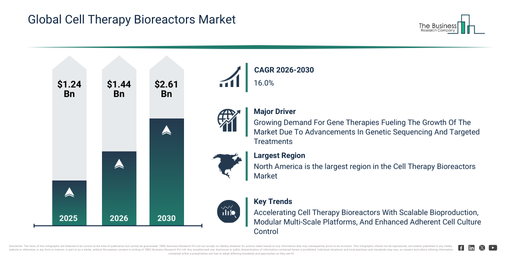
    The cell therapy bioreactors market has experienced rapid expansion in recent years. It is projected to grow from $1.24 billion in 2025 to $1.44 billion in 2026, demonstrating a compound annual growth rate (CAGR) of 16.3%. Historically, this growth can be attributed to a rising demand for cell-based therapies, increasing investment in regenerative medicine, the growing adoption of automated cell culture systems, the expansion of stem cell research, and a heightened need for scalable cell production.

    The cell therapy bioreactors market size is predicted to undergo significant expansion in the coming years. It is expected to reach $2.61 billion in 2030, showing a compound annual growth rate (CAGR) of 16.0%. This anticipated growth is driven by several factors including the increasing use of cell therapy bioreactors in manufacturing, a rise in investments towards advanced bioprocessing technologies, a stronger focus on process optimization and quality control, the expansion of clinical trials for cell therapies, and the growing demand for personalized medicine applications. Throughout the forecast period, key trends are set to involve advancements in automated cell culture technologies, innovations in bioreactor design aimed at enhanced scalability, developments in stem cell expansion platforms, ongoing research and development in process monitoring and control systems, and emerging upgrades in integrated cell therapy manufacturing solutions.

    Get A Free Sample Report With In-Depth Market Insights:

    https://thebusinessresearchcompany.com/sample_request?id=17864756&type=smp&name=Cell%20Therapy%20Bioreactors%20Market%20Report%202026&utm_source=Blogs&utm_medium=Paid&utm_campaign=Oct_PR

    Cell Therapy Bioreactors Market Growth Backed By Core Demand Fundamentals

    The increasing demand for gene therapies is projected to drive the expansion of the cell therapy bioreactors market in the coming years. Gene therapy is a medical approach focused on altering or substituting faulty genes to address or prevent various illnesses. The heightened interest in gene therapy stems from progress in genetic sequencing and diagnostic tools, which facilitate the accurate detection of disease-causing genes for focused treatments. Cell therapy bioreactors contribute to the advancement of gene therapies by offering ideal conditions for the cultivation, alteration, and proliferation of therapeutic cells. These bioreactors improve the development and scalability of treatments by guaranteeing uniform cell quality, enhancing operational effectiveness, and enabling quicker manufacturing of tailored gene-based therapies. For example, in December 2024, the American Society of Gene & Cell Therapy (ASGCT), a US-based non-profit medical and scientific organization, reported that the Food and Drug Administration (FDA) authorized 6 gene therapy products in 2023, an increase from 5 approvals in 2022. Consequently, the increasing requirement for gene therapies is a significant factor propelling the growth of the cell therapy bioreactors market. The rising occurrence of chronic and rare diseases is anticipated to accelerate the expansion of the cell therapy bioreactors market in the future. These conditions denote enduring health issues and uncommon ailments, respectively, frequently necessitating specialized therapeutic strategies, such as individualized and regenerative treatments. The surge in chronic diseases is largely attributable to unhealthy lifestyle choices, including poor nutrition, sedentary behavior, and smoking, which elevate the risk of conditions like diabetes, heart disease, and obesity. Cell therapy bioreactors play a crucial role in managing chronic diseases by offering regulated settings for growing and multiplying therapeutic cells. They boost the efficacy and widespread applicability of treatments through guaranteeing uniform cell quality, facilitating customized therapies, and aiding sustained patient care. For instance, in 2025, as per the International Diabetes Federation, a Belgium-based health organization, approximately 589 million adults aged 20-79 were living with diabetes in 2024, with this figure expected to climb to 853 million by 2050. Thus, the growing incidence of chronic and rare diseases is a key factor propelling the cell therapy bioreactors market forward.

    Cell Therapy Bioreactors Market Breakdown By Product Type And Application

    The cell therapy bioreactors market covered in this report is segmented –

    1) By Product: Stirred Tank Bioreactors, Wave-Induced Bioreactors, Fixed-Bed Bioreactors, Other Products

    2) By Cell Type: Stem Cells, Immune Cells, Differentiated Cells, Other Cell Types

    3) By Material: Single-Use Bioreactors, Reusable Bioreactors

    4) By Application: Research, Clinical, Commercial Production

    5) By End-Users: Pharmaceutical And Biotechnology Companies, Academic And Research Institutes, Contract Manufacturing Organizations (CMOs), Other End Users

    Subsegments:

    1) By Stirred Tank Bioreactors: Stainless Steel Stirred Tank Systems, Glass Stirred Tank Systems, Single Use Stirred Tank Systems, Automated Stirred Tank Systems

    2) By Wave Induced Bioreactors: Rocking Motion Bioreactor Systems, Single Use Wave Bag Systems, Modular Wave Platform Systems, Automated Wave Based Culture Systems

    3) By Fixed Bed Bioreactors: Packed Bed Bioreactor Systems, Scaffold Based Fixed Bed Systems, Microcarrier Based Fixed Bed Systems, Perfusion Enabled Fixed Bed Systems

    4) By Other Products: Hollow Fiber Bioreactor Systems, Perfusion Bioreactor Systems, Rotary Cell Culture Systems, Microfluidic Bioreactor Systems

    Cell Therapy Bioreactors Market Growth Trends Reshaping The Competitive Landscape

    Companies active in the cell therapy bioreactors market are concentrating on developing advanced platforms, including modular, multi-scale bioreactor platforms, to enhance process scalability, cell expansion efficiency, and uniformity from initial research to commercial production. A modular multi-scale bioreactor platform is a versatile system that allows researchers to conduct concurrent small-scale experiments, optimize settings, and effortlessly scale up to mid- or large-scale manufacturing while upholding consistent culture conditions and high yields. For example, in July 2024, EXO-Harvest, a biomanufacturing technology company situated in Belgium, unveiled its innovative multi-scale bioreactor platform, intended for the efficient manufacturing of mesenchymal stem cells and extracellular vesicles, supporting scalable adherent cell culture from discovery through industrial production. The platform encompasses small-scale multi-bioreactor screening and mid/large-scale systems, designed to expedite development, lower costs, and deliver high-quality cultures with accurate environmental control.

    Cell Therapy Bioreactors Market Leading Companies And Competitive Benchmarking

    Major companies operating in the cell therapy bioreactors market are Thermo Fisher Scientific Inc., Merck KGaA, FUJIFILM Holdings Corporation, Danaher Corporation, Corning Incorporated, Lonza Group, Terumo Corporation, Sartorius AG, Eppendorf AG, Miltenyi Biotec B.V. & Co. KG, PBS Biotech Inc., Meissner Filtration Products Inc., Infors AG, Bionet Engineering & Technologies Pvt. Ltd., Wilson Wolf Manufacturing Corporation, Synthecon Incorporated, Cellexus Limited, Celartia Inc., Able Biott Inc., CelVivo ApS

    View The Full Cell Therapy Bioreactors Market Report:

    https://thebusinessresearchcompany.com/report/cell-therapy-bioreactors-market-report?utm_source=Blogs&utm_medium=Paid&utm_campaign=Oct_PR

    Cell Therapy Bioreactors Market Largest Region By Revenue And Market Share

    North America was the largest region in the cell therapy bioreactors market in 2025. Asia-Pacific is expected to be the fastest-growing region in the forecast period. The regions covered in the cell therapy bioreactors market report are Asia-Pacific, South East Asia, Western Europe, Eastern Europe, North America, South America, Middle East, Africa.

    Reach Out To Our Team:

    The Business Research Company: https://www.thebusinessresearchcompany.com/

    Americas: +1 310-496-7795

    Asia: +44 7882 955267 & +91 8897263534

    Europe: +44 7882 955267

    Email us at: marketing@tbrc.info

    Follow us on:

    LinkedIn: https://in.linkedin.com/company/the-business-research-company

    YouTube: https://www.youtube.com/channel/UC24_fI0rV8cR5DxlCpgmyFQ

    Global Market Model: https://www.thebusinessresearchcompany.com/global-market-model
  • Brain Cancer Market Growth To $4.76 Billion By 2030: What’s Driving The Expansion?

    Brain Cancer Market Growth To $4.76 Billion By 2030: What’s Driving The Expansion?

    Built to provide research that’s more actionable and strategically valuable, The Business Research Company’s 2026 market reports include market attractiveness analysis, total addressable market sizing, company benchmarking matrices, interactive Excel dashboards, broader supply chain intelligence, emerging startup tracking, and in-depth product insights.

    Brain Cancer Market Forecast: Value Set To Climb From $3.6 Billion To $4.76 Billion

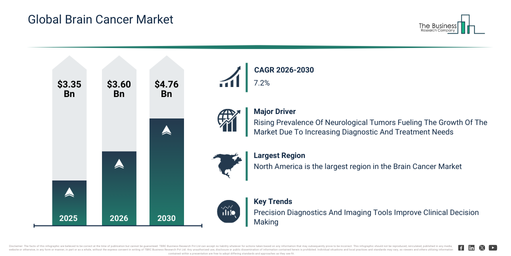
    The brain cancer market has experienced substantial expansion in recent years. Projections indicate an increase from $3.35 billion in 2025 to $3.60 billion in 2026, demonstrating a compound annual growth rate (CAGR) of 7.5%. Historically, this expansion can be linked to factors such as a rise in brain cancer cases, increased use of neuroimaging techniques, a heightened need for chemotherapy and radiotherapy, broadened availability of specialized cancer treatment facilities, and greater healthcare spending.

    The brain cancer market is projected to undergo significant expansion in the coming years. It is forecast to achieve a size of $4.76 billion by 2030, exhibiting a compound annual growth rate (CAGR) of 7.2%. This growth over the forecast period is attributable to an increasing demand for targeted therapies, the rising adoption of immunotherapies, a wider application of minimally invasive neurosurgeries, an intensified focus on early diagnosis, and increasing investment in oncology infrastructure. Prominent trends for this period include advancements in AI-based diagnostic tools, the development of personalized medicine solutions, innovations in immunotherapy combinations, progress in liquid biopsy technologies, and continued research and development in high-precision imaging systems.

    Get A Free Sample Report With In-Depth Market Insights:

    https://thebusinessresearchcompany.com/sample_request?id=50073029&type=smp&name=Brain%20Cancer%20Market%20Report%202026&utm_source=Blogs&utm_medium=Paid&utm_campaign=Oct_PR

    Brain Cancer Market Industry Drivers: What’s Behind The Revenue Growth?

    The escalating occurrence of neurological tumors is projected to advance the expansion of the brain cancer market in the future. Neurological tumors are characterized as unusual and frequently malignant formations within the brain or central nervous system, which hinder neurological function and demand elaborate clinical management. The incidence of neurological tumors is growing due to demographic transformations, including an aging and increasing population, as older individuals face a higher risk of developing brain cancers. The brain cancer market addresses neurological tumor prevalence by broadening diagnostic, treatment, and care offerings to cater to the clinical requirements of the expanding patient demographic. For example, in January 2025, the American Cancer Society, a US-based non-profit organization, anticipates approximately 14,040 new cases of brain tumors and other nervous system cancers among males and 10,780 among females in 2025, with an estimated 18,330 total deaths. Hence, the rising prevalence of neurological tumors is a primary force behind the growth of the brain cancer market.

    Brain Cancer Market Segment Analysis: What Are The Core Market Categories?

    The brain cancer market covered in this report is segmented –

    1) By Product Type: Therapeutic Treatments, Diagnostic Imaging, Surgical Devices, Supportive Care Products

    2) By Surgical Treatment: Tumor Resection, Minimally Invasive Surgery, Stereotactic Surgery

    3) By Diagnosis: Imaging Techniques, Biopsy, Molecular Testing, Genetic Testing

    4) By Supportive Care: Rehabilitation, Palliative Care, Counseling, Follow-Up Care

    5) By End User: Hospitals, Specialty Clinics, Research Institutes

    Subsegments:

    1) By Therapeutic Treatments: Chemotherapy Drugs, Targeted Therapy Drugs, Immunotherapy Agents, Radiation Therapy Products, Hormone Therapy Products, Tumor Treating Fields Devices

    2) By Diagnostic Imaging: Magnetic Resonance Imaging Systems, Computed Tomography Scanners, Positron Emission Tomography Systems, Ultrasound Imaging Systems, Nuclear Imaging Systems

    3) By Surgical Devices: Neurosurgical Navigation Systems, Craniotomy Instruments, Neuroendoscopy Devices, Surgical Microscopes, Stereotactic Surgical Equipment

    4) By Supportive Care Products: Pain Management Medications, Anti Nausea Medications, Nutritional Support Products, Rehabilitation Equipment, Symptom Management Products

    #Brain Cancer Market Growth Trends: What’s Shaping The Future Outlook?

    Leading companies active in the brain cancer market are concentrating on developing sophisticated diagnostic and imaging instruments, such as AI-powered MRI segmentation platforms, to enhance clinical decision-making and treatment strategies. These AI-driven MRI segmentation platforms are software systems that utilize artificial intelligence to automatically identify and delineate anatomical structures or lesions on MRI scans, thereby supporting faster and more consistent diagnosis and treatment planning. For instance, in July 2025, Cortechs.ai, a US-based medical imaging software company, launched NeuroQuant Brain Tumor, featuring enhanced AI-driven MRI segmentation models. This offers automated volumetric quantification and metastasis/meningioma segmentation, which improves radiologist efficiency and diagnostic consistency compared to manual interpretation, with cloud-based deployment and PACS integration for rapid scalability. By offering objective segmentations and volumetric reports, this innovative technology boosts the efficiency and standardization for radiologists, neurosurgeons, and neuro-oncologists, while saving time and improving clinical consistency and diagnostic confidence. Clinicians can directly foster improved patient outcomes by tracking tumor changes over time and gaining vital insights into therapy response and disease progression.

    Brain Cancer Market Competitive Landscape: Which Companies Lead The Industry?

    Major companies operating in the brain cancer market are Providence Health & Services, Ascension Health, Trinity Health, Mayo Clinic, Memorial Sloan Kettering Cancer Center, Cleveland Clinic, The Mount Sinai Hospital, The University of Texas MD Anderson Cancer Center, CommonSpirit Health, City of Hope National Medical Center, Stanford Health Care, Apollo Hospitals Enterprise Limited, Elekta AB, H. Lee Moffitt Cancer Center & Research Institute Inc., Roswell Park Comprehensive Cancer Center, Fred Hutchinson Cancer Center, Fortis Healthcare Limited, Dana-Farber Cancer Institute Inc., The Johns Hopkins Hospital, The Regents of the University of California

    View The Full Brain Cancer Market Report:

    https://thebusinessresearchcompany.com/report/brain-cancer-market-report?utm_source=Blogs&utm_medium=Paid&utm_campaign=Oct_PR

    Brain Cancer Market Regional Outlook: Where Is Opportunity Concentrated?

    North America was the largest region in the brain cancer market in 2025. Asia-Pacific is expected to be the fastest-growing region in the forecast period. The regions covered in the brain cancer market report are Asia-Pacific, South East Asia, Western Europe, Eastern Europe, North America, South America, Middle East, Africa.

    Reach Out To Our Team:

    The Business Research Company: https://www.thebusinessresearchcompany.com/

    Americas: +1 310-496-7795

    Asia: +44 7882 955267 & +91 8897263534

    Europe: +44 7882 955267

    Email us at: marketing@tbrc.info

    Follow us on:

    LinkedIn: https://in.linkedin.com/company/the-business-research-company

    YouTube: https://www.youtube.com/channel/UC24_fI0rV8cR5DxlCpgmyFQ

    Global Market Model: https://www.thebusinessresearchcompany.com/global-market-model
  • Blood Pressure Telemonitoring Hubs Market Forecast: Breaking Down The Numbers Behind Future Expansion

    Blood Pressure Telemonitoring Hubs Market Forecast: Breaking Down The Numbers Behind Future Expansion

    Built to provide research that’s more actionable and strategically valuable, The Business Research Company’s 2026 market reports include market attractiveness analysis, total addressable market sizing, company benchmarking matrices, interactive Excel dashboards, broader supply chain intelligence, emerging startup tracking, and in-depth product insights.

    Blood Pressure Telemonitoring Hubs Market Poised To Hit $2.82 Billion By 2030 With A 14.9% CAGR

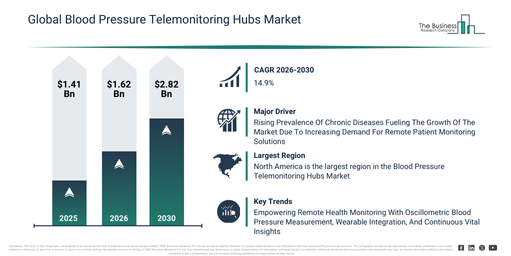
    The blood pressure telemonitoring hubs market has seen rapid expansion in recent years. Its value is forecast to climb from $1.41 billion in 2025 to $1.62 billion in 2026, achieving a compound annual growth rate (CAGR) of 15.2%. This historical growth can be ascribed to elements such as the increasing prevalence of hypertension, the rising acceptance of home healthcare, a heightened requirement for continuous patient oversight, the broader utilization of digital health tools, and increasing patient awareness for self-monitoring.

    The blood pressure telemonitoring hubs market is projected to experience significant expansion over the upcoming years. By 2030, this market is anticipated to reach $2.82 billion, exhibiting a compound annual growth rate (CAGR) of 14.9%. This expansion during the forecast period stems from factors such as increasing demand for remote monitoring, greater integration of smart connected devices, a societal move towards preventive healthcare, broader support for telehealth reimbursement, and an enhanced emphasis on managing chronic diseases. Key trends shaping the forecast period involve technological progress in telemonitoring platforms, new developments in wireless blood pressure devices, advancements in AI-driven analytics, ongoing research and development in remote patient monitoring systems, and improvements in cloud-based health data integration.

    Get A Free Sample Report With In-Depth Market Insights:

    https://thebusinessresearchcompany.com/sample_request?id=28562600&type=smp&name=Blood%20Pressure%20Telemonitoring%20Hubs%20Market%20Report%202026&utm_source=Blogs&utm_medium=Paid&utm_campaign=Oct_PR

    Blood Pressure Telemonitoring Hubs Market Growth Drivers: What’s Behind The Acceleration?

    The increasing occurrence of chronic illnesses is anticipated to fuel the expansion of the blood pressure telemonitoring hubs market in the future. These conditions encompass persistent health issues like hypertension, diabetes, and cardiovascular disorders, which demand continuous oversight and ongoing care. The rise in chronic disease prevalence stems from an aging global population combined with common unhealthy lifestyle choices, including lack of physical activity, inadequate diet, tobacco use, and excessive alcohol consumption, all contributing to elevated long-term risks such as obesity, hypertension, and diabetes. Blood pressure telemonitoring hubs assist in managing chronic diseases by providing interconnected devices and data platforms that relay real-time blood pressure data to medical professionals, thereby enhancing disease management and decreasing the need for hospital admissions. For example, in June 2024, data from the National Health Service, a UK-based government entity, revealed that 3,615,330 individuals registered with a general practitioner (GP) were diagnosed with non-diabetic hyperglycemia or pre-diabetes (a condition characterized by elevated blood sugar levels that are not yet high enough to be classified as diabetes) in 2023. This figure marked an 18% increase from the 3,065,825 cases recorded in 2022. Consequently, the growing prevalence of chronic illnesses is spurring the expansion of the blood pressure telemonitoring hubs market.

    Blood Pressure Telemonitoring Hubs Market Segment Trends And Revenue Contributors

    The blood pressure telemonitoring hubs market covered in this report is segmented –

    1) By Component: Hardware, Software, Services

    2) By Connectivity: Wired, Wireless

    3) By Technology: Bluetooth Enabled Monitoring, WiFi Connected Devices, Cloud-Based Telemonitoring Platforms, Internet-Of-Things (IoT) Enabled Devices, Artificial Intelligence (AI) Integrated Systems

    4) By Application: Hypertension Management, Cardiovascular Disease Monitoring, Remote Patient Tracking, Post-surgical Care, Chronic Disease Surveillance

    5) By End-User: Home Care Settings, Hospitals And Clinics, Ambulatory Surgical Centers, Telemedicine Providers, Corporate Wellness Programs

    Subsegments:

    1) By Hardware: Connected Blood Pressure Monitors, Wireless Monitoring Hubs, Digital Arm Cuff Devices, Wearable Blood Pressure Sensors, Portable Telemonitoring Units

    2) By Software: Remote Monitoring Applications, Cloud Data Management Platforms, Digital Health Analytics Systems, Patient Data Visualization Tools, Telehealth Integration Software

    3) By Services: Remote Patient Monitoring Services, Technical Support And Maintenance Services, Device Installation And Setup Services, Data Management And Reporting Services, Telehealth Assistance Services

    Blood Pressure Telemonitoring Hubs Market Trends: What’s Defining The Industry’s Next Phase?

    Major companies engaged in the blood pressure telemonitoring hubs market are concentrating on developing advanced technology, such as oscillometric blood pressure measurement techniques, to enhance accessibility, accuracy, and patient involvement in blood pressure management. The oscillometric blood pressure measurement method describes a non-invasive procedure for measuring blood pressure that detects pressure fluctuations in an inflatable cuff caused by arterial blood flow during the cuff’s deflation. For example, in October 2025, uTime Limited, a China-based technology company, launched a smartwatch with built-in blood pressure monitoring that utilizes the oscillometric method to deliver accurate, continuous blood pressure tracking on the wrist, certified under China’s NMPA Class II Medical Device Registration. The smartwatch combines this clinically recognized technique with seamless integration into telemonitoring hubs, allowing users and healthcare providers to access real-time blood pressure data, track trends over time, and support proactive health decisions.

    Blood Pressure Telemonitoring Hubs Market Key Players Shaping Industry Direction

    Major companies operating in the blood pressure telemonitoring hubs market are GE Healthcare Technologies Inc., Koninklijke Philips N.V., Masimo Corporation, Beurer GmbH, Microlife Corporation, OMRON Healthcare Inc., Athelas Inc., Withings, HealthSnap Inc., A&D Medical Inc., Cadence Solutions Inc., TimeDoc Health Inc., iHealth Labs Inc., Health Recovery Solutions (HRS), ForaCare Suisse AG, Validic Inc., CareSimple, CarePredict Inc., Zephyr Technology Corporation, Accuhealth Inc., Luscii Healthtech B.V., RPM Healthcare LLC

    View The Full Blood Pressure Telemonitoring Hubs Market Report:

    https://thebusinessresearchcompany.com/report/blood-pressure-telemonitoring-hubs-market-report?utm_source=Blogs&utm_medium=Paid&utm_campaign=Oct_PR

    Blood Pressure Telemonitoring Hubs Market Regional Analysis: Which Geography Leads On Revenue?

    North America was the largest region in the blood pressure telemonitoring hubs in 2025. Asia-Pacific is expected to be the fastest-growing region in the forecast period. The regions covered in the blood pressure telemonitoring hubs market report are Asia-Pacific, South East Asia, Western Europe, Eastern Europe, North America, South America, Middle East, Africa.

    Reach Out To Our Team:

    The Business Research Company: https://www.thebusinessresearchcompany.com/

    Americas: +1 310-496-7795

    Asia: +44 7882 955267 & +91 8897263534

    Europe: +44 7882 955267

    Email us at: marketing@tbrc.info

    Follow us on:

    LinkedIn: https://in.linkedin.com/company/the-business-research-company

    YouTube: https://www.youtube.com/channel/UC24_fI0rV8cR5DxlCpgmyFQ

    Global Market Model: https://www.thebusinessresearchcompany.com/global-market-model