Author: Marketing Posting

  • Where Is The Aortic Aneurysm Market Heading? Size, Trends And Forecast Through 2030

    Where Is The Aortic Aneurysm Market Heading? Size, Trends And Forecast Through 2030

    The Business Research Company’s 2026 market reports combine market attractiveness scoring, total addressable market sizing, company benchmarking matrices, interactive Excel dashboards, deeper supply chain intelligence, emerging startup tracking, and granular product-level insights to deliver research that is more actionable and strategically valuable.

    Aortic Aneurysm Market Size Review: What Shaped Past Growth And What Will Drive Future Expansion?

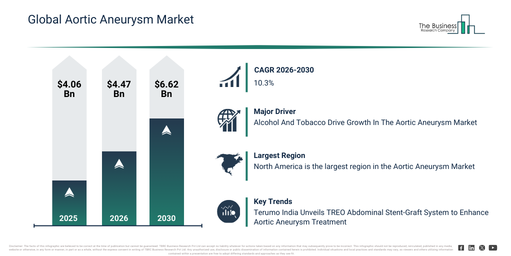
    The aortic aneurysm market size has experienced swift expansion in recent years. It is projected to increase from $4.06 billion in 2025 to $4.47 billion in 2026, demonstrating a compound annual growth rate (CAGR) of 10.0%. This historical growth can be attributed to several factors, including an aging population, the rising prevalence of cardiovascular diseases, advancements in diagnostic imaging technologies, the expansion of vascular surgery capabilities, and the wider adoption of surgical repair techniques.

    The aortic aneurysm market is projected to experience substantial expansion over the coming years, reaching a valuation of $6.62 billion by 2030, driven by a compound annual growth rate (CAGR) of 10.3%. This anticipated growth during the forecast period is fueled by several factors, including a heightened demand for minimally invasive cardiovascular interventions, increased capital expenditure in sophisticated vascular devices, the broader implementation of screening initiatives for aneurysm identification, the rising incorporation of AI-powered diagnostic solutions, and a stronger emphasis on enhancing long-term patient outcomes. Key trends expected within this period encompass the wider adoption of minimally invasive EVAR procedures, greater utilization of advanced imaging techniques for early diagnosis, a rising inclination towards individualized surgical strategies, ongoing innovation in endovascular devices, and an intensified focus on patient monitoring after procedures.

    Access Free Sample Pages From The Aortic Aneurysm Market Report 2026:

    https://thebusinessresearchcompany.com/sample_request?id=62396792&type=smp&name=Aortic%20Aneurysm%20Market%20Report%202026&utm_source=Blogs&utm_medium=Paid&utm_campaign=Nov_PR

    Understanding The Main Driver Of The Aortic Aneurysm Market

    Increased alcohol and tobacco consumption is anticipated to fuel the expansion of the aortic aneurysm market in the future. These refer to the intake of alcoholic drinks and tobacco items, substances known to significantly affect cardiovascular well-being. The expanding use of alcohol and tobacco is primarily driven by their greater social acceptance and availability, even with documented health hazards. This heightened consumption elevates the need for aortic aneurysm treatments because prolonged exposure to these substances weakens arterial walls and hastens vascular deterioration, resulting in more instances of aneurysm development that necessitate medical intervention. Consequently, the rising consumption of alcohol and tobacco is propelling the growth of the aortic aneurysm market.

    Aortic Aneurysm Market Segment Mapping For 2026 And Beyond

    The aortic aneurysm market covered in this report is segmented –

    1) By Type: Thoracic Aortic Aneurysm (TAA), Abdominal Aortic Aneurysm (AAA)

    2) By Treatment: Open Surgical Repair (OSR), Endovascular Aneurysm Repair (EVAR)

    3) By End User: Hospitals And Clinics, Ambulatory Surgery Centers (ASCs), Other End Users

    Subsegments:

    1) By Thoracic Aortic Aneurysm (TAA): Ascending Aortic Aneurysm, Arch Aortic Aneurysm, Descending Aortic Aneurysm

    2) By Abdominal Aortic Aneurysm (AAA): Infrarenal Aneurysm, Pararenal Aneurysm, Juxtarenal Aneurysm

    What Key Trend Is Expected To Shape The Aortic Aneurysm Market Over The Forecast Period?

    Leading companies within the aortic aneurysm market are concentrating on developing and launching innovative solutions like the Stent-Graft System. This medical device is designed to address vascular conditions, particularly aneurysms or tears in blood vessels, by integrating a stent for structural support with a synthetic material graft that lines the blood vessel.

    Aortic Aneurysm Market Major Players And Industry Competition Overview

    Major companies operating in the aortic aneurysm market are Cardiatis SA, Cook Medical Inc., Endologix LLC, W L Gore & Associates Inc., JOTEC GmbH, Lombard Medical Limited, Medtronic plc, Terumo Corporation, MicroPort Scientific Corporation, Boston Scientific Corporation, Endospan Ltd., LifeTech Scientific Corporation, B. Braun Melsungen AG, EndoEvolution LLC, CryoLife Inc., Intuitive Surgical Inc., Synovis Micro Companies Alliance Inc., Meril Life Sciences Pvt. Ltd., Vitalitec International GmbH, Getinge AB, CONMED Corporation, TriVascular Technologies Inc., Vascutek Ltd., Aptus Endosystems Inc., Bolton Medical Inc., EndoVascular Technologies Inc., Endurant Energy LLC, LeMaitre Vascular Inc.

    Full Aortic Aneurysm Market Report: Market Size, Trends, Segments And Key Players:

    https://thebusinessresearchcompany.com/report/aortic-aneurysm-global-market-report?utm_source=Blogs&utm_medium=Paid&utm_campaign=Nov_PR

    Aortic Aneurysm Market Geographic Segmentation: Regions Covered In The Report

    North America was the largest region in the aortic aneurysm market in 2025. The regions covered in the aortic aneurysm market report are Asia-Pacific, South East Asia, Western Europe, Eastern Europe, North America, South America, Middle East, Africa.

    Reach Out To Our Team:

    The Business Research Company: https://www.thebusinessresearchcompany.com/

    Americas: +1 310-496-7795

    Asia: +44 7882 955267 & +91 8897263534

    Europe: +44 7882 955267

    Email us at: marketing@tbrc.info

    Follow us on:

    LinkedIn: https://in.linkedin.com/company/the-business-research-company

    YouTube: https://www.youtube.com/channel/UC24_fI0rV8cR5DxlCpgmyFQ

    Global Market Model: https://www.thebusinessresearchcompany.com/global-market-model
  • AIoT-Enabled Sleep Technologies Revolutionize Anti-Snoring Treatments And Improve Sleep Quality: The Key Trend Shaping The Anti-Snoring Treatment Market Through 2030

    AIoT-Enabled Sleep Technologies Revolutionize Anti-Snoring Treatments And Improve Sleep Quality: The Key Trend Shaping The Anti-Snoring Treatment Market Through 2030

    Market attractiveness scoring, total addressable market sizing, company benchmarking matrices, interactive Excel dashboards, deeper supply chain intelligence, emerging startup tracking, and granular product-level insights are among the key offerings featured in The Business Research Company’s 2026 market reports, designed to deliver more actionable and strategically valuable research.

    Anti-Snoring Treatment Market On Course To Reach $3.78 Billion By 2030: Size And Growth Overview

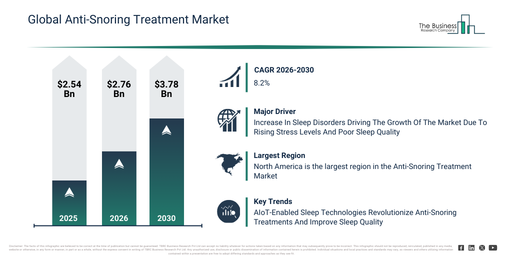
    The anti-snoring treatment market size has demonstrated strong growth in recent years. Its expansion is anticipated to take it from $2.54 billion in 2025 to $2.76 billion in 2026, at a compound annual growth rate (CAGR) of 8.5%. This historical growth can be linked to factors including the increasing prevalence of sleep-related breathing disorders, a rise in consumer awareness about sleep health, broader availability of over-the-counter snoring devices, the expansion of sleep clinics, and the growing utilization of oral appliance therapy.

    The anti-snoring treatment market is projected to experience substantial expansion in the coming years. This market is forecast to reach $3.78 billion by 2030, exhibiting a compound annual growth rate (CAGR) of 8.2%. This anticipated growth during the forecast period is driven by several factors, including the increasing integration of digital sleep monitoring technologies, the rising adoption of personalized sleep therapy solutions, the expansion of online distribution channels, a growing emphasis on preventive sleep health management, and the increasing demand for minimally invasive snoring treatments. Key trends expected during this period involve the increasing adoption of smart wearable anti-snoring devices, a rising demand for non-invasive treatment options, a growing preference for home-based snoring solutions, the expansion of personalized oral appliance therapies, and an enhanced focus on improving sleep quality.

    Need Anti-Snoring Treatment Market Forecasts? Get Your Free Sample Report Here:

    https://thebusinessresearchcompany.com/sample_request?id=62362896&type=smp&name=Anti-Snoring%20Treatment%20Market%20Report%202026&utm_source=Blogs&utm_medium=Paid&utm_campaign=Nov_PR

    Anti-Snoring Treatment Market Growth Factors: What Is Strengthening Demand Worldwide?

    An increasing number of individuals experiencing sleep disorders is anticipated to fuel expansion in the anti-snoring treatment market going forward. These conditions are characterized by interruptions to regular sleep cycles, impacting sleep’s quality, length, or schedule, thereby hindering everyday activities. A growing incidence of sleep disorders is often linked to elevated stress, which boosts stress hormones in the body and impedes both falling and remaining asleep. Such treatments enhance sleep quality by minimizing disruptions in breathing, effectively easing conditions like sleep apnea and warding off associated health complications. Consequently, the increasing occurrence of sleep disorders is accelerating the expansion of the anti-snoring treatment market.

    Anti-Snoring Treatment Market By Segment: Complete Category And Subcategory Breakdown

    The anti-snoring treatment market covered in this report is segmented –

    1) By Device: Mandible Advancement Devices, Tongue Stabilizing Devices, Nasal Devices, Continuous Positive Airway Pressure Devices, Chin Straps, Other Devices

    2) By Distribution Channel: Hospital Pharmacies, Retail Pharmacies, Online, Other Distribution Channels

    3) By Application: Somnoplasty, Maxillo-Mandibular And Genioglossus Advancement Surgeries, Radiofrequency Ablation Surgery, Other Applications

    4) By End-User: Hospital And Clinics, Ambulatory Surgical Centers, Day Care Centers, Other End-Users

    Subsegments:

    1) By Mandible Advancement Devices: Custom-Fitted Mandibular Advancement Devices, Semi-Custom Mandibular Advancement Devices, Over-The-Counter Mandibular Advancement Devices

    2) By Tongue Stabilizing Devices: Standard Tongue Stabilizing Devices, Custom-Fitted Tongue Stabilizing Devices

    3) By Nasal Devices: Nasal Strips, Nasal Dilators (Internal & External), Nasal Sprays

    4) By Continuous Positive Airway Pressure (CPAP) Devices: Auto-Adjusting CPAP Devices, Fixed Pressure CPAP Devices, Bi-Level Positive Airway Pressure (BiPAP) Devices

    5) By Chin Straps: Adjustable Chin Straps, Non-Adjustable Chin Straps

    6) By Other Devices: Positional Therapy Devices, Smart Wearable Anti-Snoring Devices, Vestibular Shields

    Anti-Snoring Treatment Market Trend Outlook: Developments Defining The Forecast Period

    Leading companies within the anti-snoring treatment market are concentrating on developing advanced solutions, such as AIoT-powered smart pillows and mattresses. These innovations aim to improve sleep quality, mitigate snoring, and diminish related health risks. AIoT sleep technologies combine artificial intelligence and the Internet of Things to track physiological data, examine sleep patterns, and offer immediate modifications for ideal rest.

    Who Is Competing For Share In The Anti-Snoring Treatment Market?

    Major companies operating in the anti-snoring treatment market are GlaxoSmithKline plc, Medtronic plc, Koninklijke Philips N.V, Mitsui Chemicals Inc, ResMed, Fisher & Paykel Healthcare?, PANTHERA DENTAL, SomnoMed, ProSomnus Sleep Technologies, Airing Inc., Apnea Sciences Corporation, Hupnos, MEDiTAS Ltd, MPowrx Health & Wellness, Sleeping Well LLC, Smart Nora Inc., The Pure Sleep Company, The Snore Reliever Company LLC, Theravent Inc, Oscimed SA, Zzoma.

    Get The Full Picture With The Anti-Snoring Treatment Market Report:

    https://thebusinessresearchcompany.com/report/anti-snoring-treatment-global-market-report?utm_source=Blogs&utm_medium=Paid&utm_campaign=Nov_PR

    Anti-Snoring Treatment Market Regional Snapshot: Leading Geography In 2025

    North America was the largest region in the anti-snoring treatment market in 2025. The regions covered in the anti-snoring treatment market report are Asia-Pacific, South East Asia, Western Europe, Eastern Europe, North America, South America, Middle East, Africa.

    Reach Out To Our Team:

    The Business Research Company: https://www.thebusinessresearchcompany.com/

    Americas: +1 310-496-7795

    Asia: +44 7882 955267 & +91 8897263534

    Europe: +44 7882 955267

    Email us at: marketing@tbrc.info

    Follow us on:

    LinkedIn: https://in.linkedin.com/company/the-business-research-company

    YouTube: https://www.youtube.com/channel/UC24_fI0rV8cR5DxlCpgmyFQ

    Global Market Model: https://www.thebusinessresearchcompany.com/global-market-model
  • Antiphospholipid Syndrome Treatment Market To Expand At A 11% CAGR On The Back Of Increasing Prevalence Of Autoimmune Disorders

    Antiphospholipid Syndrome Treatment Market To Expand At A 11% CAGR On The Back Of Increasing Prevalence Of Autoimmune Disorders

    Designed to make market research more actionable and strategically valuable, The Business Research Company’s 2026 market reports feature market attractiveness scoring, total addressable market sizing, company benchmarking matrices, interactive Excel dashboards, deeper supply chain intelligence, emerging startup tracking, and granular product-level insights.

    Antiphospholipid Syndrome Treatment Market Revenue Expansion Outlook For The 2026–2030 Forecast Period

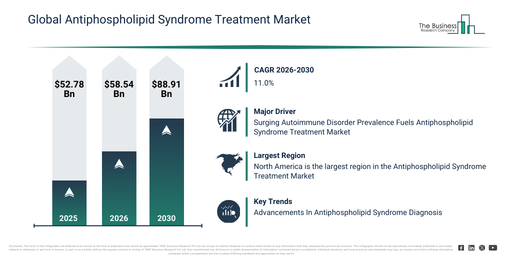
    The antiphospholipid syndrome treatment market has shown significant growth in recent years. This market is projected to expand from $52.78 billion in 2025 to $58.54 billion in 2026, demonstrating a compound annual growth rate (CAGR) of 10.9%. Historically, this expansion has stemmed from factors such as heightened clinical understanding of autoimmune conditions, the more extensive application of anticoagulant therapies, enhanced accessibility of diagnostic antibody tests, the proliferation of hospital-based treatment options, and increasing acknowledgement of pregnancy-associated complications.

    The antiphospholipid syndrome treatment market size is anticipated to undergo significant expansion in the next few years, with projections indicating it will reach $88.91 billion in 2030, demonstrating a compound annual growth rate (CAGR) of 11.0%. This growth during the forecast period is fueled by increasing investments in precision medicine research, the rising development of novel anticoagulant drugs, the growing adoption of digital patient monitoring tools, the expansion of specialty autoimmune care centers, and an increasing focus on preventive thrombosis management. Prominent trends expected in this period encompass the increasing adoption of targeted anticoagulation therapies, the growing use of personalized treatment protocols, a rising focus on early and accurate diagnosis, the expansion of combination therapy approaches, and enhanced monitoring of long-term thrombotic risk.

    Download A Free Sample For In-Depth Antiphospholipid Syndrome Treatment Market Intelligence:

    https://thebusinessresearchcompany.com/sample_request?id=22047433&type=smp&name=Antiphospholipid%20Syndrome%20Treatment%20Market%20Report%202026&utm_source=Blogs&utm_medium=Paid&utm_campaign=Nov_PR

    Antiphospholipid Syndrome Treatment Market Demand Driver: How It Is Shaping Industry Growth

    The expanding occurrence of autoimmune disorders is anticipated to stimulate the growth of the antiphospholipid syndrome treatment market. Autoimmune disorders are a group of medical conditions where the body’s own immune system erroneously targets and assaults its cells and tissues. Antiphospholipid syndrome (APS), an autoimmune disease, can involve the digestive system, including irritable bowel syndrome (IBS), which is an autoimmune condition affecting the intestinal tract. Antiphospholipid syndrome treatment is administered to patients with inflammatory bowel diseases who are undergoing therapy with anti-TNF drugs. Consequently, the rising incidence of autoimmune disorders is driving the expansion of the antiphospholipid syndrome treatment market.

    Antiphospholipid Syndrome Treatment Market Segmentation Overview: Detailed Category Analysis

    The antiphospholipid syndrome treatment market covered in this report is segmented –

    1) By Treatment Type: Medications, Preventative (Prophylaxis) Therapy, Other Treatment Types

    2) By Indication Type: Primary Antiphospholipid Syndrome, Secondary Antiphospholipid Syndrome, Catastrophic Antiphospholipid Syndrome

    3) By Route of Administration: Oral, Parental, Other Routes of Administration

    4) By End-Users: Hospitals, Homecare, Specialty Centers, Other End-Users

    Subsegments:

    1) By Medications: Anticoagulants, Antiplatelet Agents, Immunosuppressive Drugs

    2) By Preventative (Prophylaxis) Therapy: Anticoagulation Therapy, Aspirin Therapy

    3) By Other Treatment Types: Plasma Exchange, Intravenous Immunoglobulin (IVIG)

    Top Antiphospholipid Syndrome Treatment Market Trends And Recent Industry Developments

    Leading firms in the car covers market are creating new products, including immunoglobulin reagents, to improve the precision and dependability of diagnostic examinations. These reagents are laboratory instruments that contain antibodies, utilized for identifying, measuring, or examining particular antigens in both diagnostic and research contexts.

    Antiphospholipid Syndrome Treatment Market Company Landscape: Key Players To Watch

    Major companies operating in the antiphospholipid syndrome treatment market are Pfizer Inc., Johnson & Johnson, F. Hoffmann-La Roche Ltd., AbbVie Inc., Bayer AG, Novartis AG, Merck & Co., Bristol Myers Squibb, Abbott Laboratories, Sanofi S.A., GlaxoSmithKline PLC, Eli Lilly and Company, Cipla Ltd., Baxter International, Teva Pharmaceutical Industries Ltd., CSL Limited, Boehringer Ingelheim International GmbH, Fresenius Kabi, Aurobindo Pharma, Dr. Reddy’s Laboratories, Hikma Pharmaceutics plc, Aspen Pharmacare, Zydus Lifesciences Limited, Leo Pharma, Daiichi Sankyo Company

    Explore The Antiphospholipid Syndrome Treatment Global Market Report For Full Insights:

    https://thebusinessresearchcompany.com/report/antiphospholipid-syndrome-treatment-global-market-report?utm_source=Blogs&utm_medium=Paid&utm_campaign=Nov_PR

    Antiphospholipid Syndrome Treatment Market Region-Wise Analysis: Largest Regional Market Identified

    North America was the largest region in the antiphospholipid syndrome treatment market in 2025. The regions covered in the antiphospholipid syndrome treatment market report are Asia-Pacific, South East Asia, Western Europe, Eastern Europe, North America, South America, Middle East, Africa.

    Reach Out To Our Team:

    The Business Research Company: https://www.thebusinessresearchcompany.com/

    Americas: +1 310-496-7795

    Asia: +44 7882 955267 & +91 8897263534

    Europe: +44 7882 955267

    Email us at: marketing@tbrc.info

    Follow us on:

    LinkedIn: https://in.linkedin.com/company/the-business-research-company

    YouTube: https://www.youtube.com/channel/UC24_fI0rV8cR5DxlCpgmyFQ

    Global Market Model: https://www.thebusinessresearchcompany.com/global-market-model
  • Antinuclear Antibody Test Market Growth Rate Explained: 12.2% CAGR Projected Through 2030

    Antinuclear Antibody Test Market Growth Rate Explained: 12.2% CAGR Projected Through 2030

    The Business Research Company’s 2026 market reports are designed to deliver research that is more actionable and strategically valuable. Key offerings include market attractiveness scoring, total addressable market sizing, company benchmarking matrices, interactive Excel dashboards, deeper supply chain intelligence, emerging startup tracking, and granular product-level insights.

    Which Factors Will Shape The Antinuclear Antibody Test Market Size Through 2030?

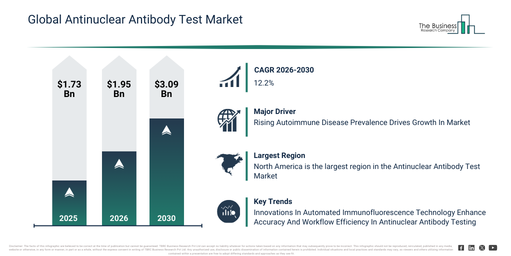
    The antinuclear antibody test market size has demonstrated significant expansion in recent years. This market is anticipated to expand from $1.73 billion in 2025 to $1.95 billion in 2026, exhibiting a compound annual growth rate (CAGR) of 12.5%. Key drivers for this historical growth include the escalating prevalence of autoimmune disorders, the expansion of clinical laboratory testing services, physicians’ increasing dependence on serological diagnostics, the availability of immunofluorescence assay technologies, and a rise in patient diagnostic testing volumes.

    The antinuclear antibody test market size is projected to experience substantial growth in the upcoming years. It is forecast to achieve a valuation of $3.09 billion by 2030, expanding at a compound annual growth rate (CAGR) of 12.2%. This projected expansion is primarily driven by the increasing integration of AI-assisted diagnostic interpretation, a rising need for point-of-care autoimmune testing, the broader deployment of integrated laboratory information systems, a growing emphasis on personalized autoimmune diagnostics, and escalating investments in advanced assay technologies. Furthermore, key trends anticipated during the forecast period encompass the rising adoption of multiplex and automated ANA testing, an increasing demand for early autoimmune disease screening, the wider use of digital pathology and LIMS integration, the expansion of high-throughput diagnostic platforms, and an enhanced focus on diagnostic accuracy and standardization.

    Request A Free Antinuclear Antibody Test Market Sample To Support Your Strategic Planning:

    https://thebusinessresearchcompany.com/sample_request?id=55372589&type=smp&name=Antinuclear%20Antibody%20Test%20Market%20Report%202026&utm_source=Blogs&utm_medium=Paid&utm_campaign=Nov_PR

    What Is Propelling The Antinuclear Antibody Test Market Toward $3.09 Billion By 2030?

    The increasing occurrence of autoimmune conditions is anticipated to drive expansion in the antinuclear antibody test market moving ahead. These are disorders where the immune system erroneously targets the body’s own healthy cells and tissues. Their growing prevalence stems from factors such as genetic susceptibility, environmental elements, shifts in hormones, and lifestyle aspects like dietary habits and stress. The antinuclear antibody test assists in prompt identification of autoimmune diseases by detecting antibodies that attack the body’s cells and tissues. Consequently, the increased prevalence of autoimmune diseases is fueling the expansion of the antinuclear antibody test market. The growing embrace of personalized medicine is projected to stimulate the expansion of the antinuclear antibody (ANA) test market in the future. This approach involves customizing medical treatments and diagnostic choices according to an individual’s genetic makeup, environmental exposure, and lifestyle attributes, instead of employing a standardized treatment method. The growth in personalized medicine is fueled by the necessity for more precise diagnostic instruments capable of aiding patient categorization, early detection of autoimmune diseases, and monitoring therapeutic progress. ANA tests are crucial in precision immunology, as they identify autoimmune biomarkers vital for directing tailored treatment plans. Consequently, the heightened emphasis on personalized medicine is propelling the growth of the antinuclear antibody test market.

    What Are The Key Segments And Subsegments In The Antinuclear Antibody Test Market?

    The antinuclear antibody test market covered in this report is segmented –

    1) By Product: Assay Kits, Reagent Kits, Software And Services

    2) By Technology: Immunofluorescence Assay, Multiplex Assay, ELISA

    3) By Application: Rheumatoid Arthritis, Systemic Lupus Erythematosus, Other Applications

    4) By End-User: Hospitals, Clinical, Physician Laboratories

    Subsegments:

    1) By Assay Kits: Enzyme-Linked Immunosorbent Assay (ELISA) Kits, Immunofluorescence Assay (IFA) Kits, Western Blot Assay Kits

    2) By Reagent Kits: Antigen Reagents, Conjugated Antibodies, Detection Reagents

    3) By Software And Services: Data Management Software, Laboratory Information Management Systems (LIMS), Technical Support And Consulting Services

    Antinuclear Antibody Test Market Trends Behind The 12.2% CAGR Forecast

    Major companies operating in the antinuclear antibody test market are concentrating on developing sophisticated solutions, including semi-automated image analysis, to enhance diagnostic accuracy and streamline laboratory processes. This semi-automated image analysis represents a technological capability in ANA testing that captures, sorts, and initially categorizes patient specimens based on their fluorescence patterns, thereby assisting in prioritizing cases that require thorough examination by a trained operator.

    Major Companies Profiled In The Antinuclear Antibody Test Market Report

    Major companies operating in the antinuclear antibody test market are Hoffmann-La Roche Ltd., Thermo Fisher Scientific Inc., Abbott Laboratories, Becton Dickinson and Company, LabCorp, Quest Diagnostics Incorporated, Grifols SA, PerkinElmer Inc., Bio-Rad Laboratories Inc., Werfen SA, DiaSorin SpA, EUROIMMUN AG, Abcam plc, Trinity Biotech plc, Zeus Scientific Inc., ERBA Diagnostics Inc., Quidel Corporation, Antibodies Incorporated, Immuno Concepts Inc., Inova Diagnostics

    Explore The Business Research Company’s Complete Antinuclear Antibody Test Market Report:

    https://thebusinessresearchcompany.com/report/antinuclear-antibody-test-global-market-report?utm_source=Blogs&utm_medium=Paid&utm_campaign=Nov_PR

    Where Does The Antinuclear Antibody Test Market Generate The Most Revenue?

    North America was the largest region in the antinuclear antibody test market in 2025. Asia-Pacific is expected to be the fastest-growing region in the forecast period. The regions covered in the antinuclear antibody test market report are Asia-Pacific, South East Asia, Western Europe, Eastern Europe, North America, South America, Middle East, Africa.

    Reach Out To Our Team:

    The Business Research Company: https://www.thebusinessresearchcompany.com/

    Americas: +1 310-496-7795

    Asia: +44 7882 955267 & +91 8897263534

    Europe: +44 7882 955267

    Email us at: marketing@tbrc.info

    Follow us on:

    LinkedIn: https://in.linkedin.com/company/the-business-research-company

    YouTube: https://www.youtube.com/channel/UC24_fI0rV8cR5DxlCpgmyFQ

    Global Market Model: https://www.thebusinessresearchcompany.com/global-market-model
  • Antineutrophil Cytoplasmic Antibody (ANCA) Associated Vasculitis Market Projected To Be Worth $0.95 Billion By 2030: Industry Outlook And Analysis

    Antineutrophil Cytoplasmic Antibody (ANCA) Associated Vasculitis Market Projected To Be Worth $0.95 Billion By 2030: Industry Outlook And Analysis

    With a focus on actionable insights and strategic value, The Business Research Company’s 2026 market reports include market attractiveness scoring, total addressable market sizing, company benchmarking matrices, interactive Excel dashboards, deeper supply chain intelligence, emerging startup tracking, and granular product-level insights.

    Antineutrophil Cytoplasmic Antibody (ANCA) Associated Vasculitis Market Size Snapshot: 2026 Valuation, 2030 Projection And Key Growth Factors

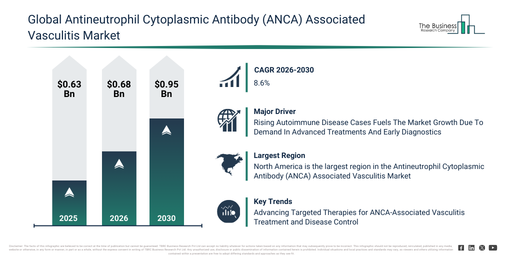
    The antineutrophil cytoplasmic antibody (anca) associated vasculitis market has experienced robust growth in recent years. It is projected to increase from $0.63 billion in 2025 to $0.68 billion in 2026, achieving a compound annual growth rate (CAGR) of 8.7%. This expansion in previous periods is attributable to advancements in autoimmune disease diagnostics, a greater utilization of corticosteroids and immunosuppressants, the expansion of nephrology and rheumatology care services, increasing clinical awareness of rare vasculitis disorders, and the availability of standardized treatment protocols.

    The antineutrophil cytoplasmic antibody (anca) associated vasculitis market is projected to experience substantial expansion over the coming years, with its size expected to reach $0.95 billion by 2030, achieving a compound annual growth rate (CAGR) of 8.6%. This anticipated growth during the forecast period is primarily driven by factors such as the increasing creation of targeted biologics, rising investments in rare disease research, the broadening of personalized treatment approaches, a growing emphasis on strategies for relapse prevention, and improved patient access to specialized care centers. Key trends identified for the forecast period include the greater adoption of biologic therapies, an elevated focus on early and accurate diagnosis, the expanding application of targeted immunosuppressive treatments, the widening scope of multidisciplinary disease management approaches, and a stronger commitment to continuous long-term disease monitoring.

    Get A No-Cost Sample Of The Antineutrophil Cytoplasmic Antibody (ANCA) Associated Vasculitis Market Study:

    https://thebusinessresearchcompany.com/sample_request?id=69568289&type=smp&name=Antineutrophil%20Cytoplasmic%20Antibody%20%28ANCA%29%20Associated%20Vasculitis%20Market%20Report%202026&utm_source=Blogs&utm_medium=Paid&utm_campaign=Nov_PR

    Major Factor Fueling The Antineutrophil Cytoplasmic Antibody (ANCA) Associated Vasculitis Market Through 2030

    An increasing occurrence of autoimmune diseases is anticipated to propel the expansion of the ANCA-associated vasculitis market in the future. These conditions involve the immune system erroneously targeting the body’s own healthy cells and tissues, perceiving them as harmful foreign agents such as bacteria or viruses. The growing prevalence of autoimmune disorders stems from environmental factors and lifestyle choices, particularly increased exposure to infections and pollutants, which disrupt immune tolerance and provoke irregular immune responses. ANCA-associated vasculitis positively contributes to the advancement of research and treatment for autoimmune diseases by fostering the creation of specific immunosuppressive treatments, improving early diagnosis, and refining general disease management approaches, leading to enhanced patient results and a greater comprehension of immune system control. Consequently, the escalating occurrence of autoimmune diseases will stimulate the ANCA-associated vasculitis market.

    Antineutrophil Cytoplasmic Antibody (ANCA) Associated Vasculitis Market Segment Landscape: Main Categories And Subcategories Covered

    The antineutrophil cytoplasmic antibody (anca) associated vasculitis market covered in this report is segmented –

    1) By Type: Granulomatosis With Polyangiitis (GPA Or Wegener’s), Microscopic Polyangiitis (MPA), Eosinophilic Granulomatosis With Polyangiitis (EGPA Or Churg-Strauss), Other Types

    2) By Treatment: Immunosuppressants, Corticosteroids, Biologics, Other Treatments

    3) By Diagnosis: Blood Tests, Biopsy, Imaging, Other Diagnosis

    Subsegments:

    1) By Granulomatosis With Polyangiitis (GPA or Wegener’s): Limited Granulomatosis With Polyangiitis, Severe Granulomatosis With Polyangiitis, Refractory Granulomatosis With Polyangiitis

    2) By Microscopic Polyangiitis (MPA): Renal Microscopic Polyangiitis, Pulmonary Microscopic Polyangiitis, Neurological Microscopic Polyangiitis

    3) By Eosinophilic Granulomatosis With Polyangiitis (EGPA or Churg-Strauss): Cardiac Eosinophilic Granulomatosis With Polyangiitis, Pulmonary Eosinophilic Granulomatosis With Polyangiitis, Neurological Eosinophilic Granulomatosis With Polyangiitis

    4) By Other Types: Drug-Induced ANCA-Associated Vasculitis, Infection-Related ANCA-Associated Vasculitis, Overlap Syndrome ANCA-Associated Vasculitis

    How Are Emerging Trends Influencing The Antineutrophil Cytoplasmic Antibody (ANCA) Associated Vasculitis Market’s Growth Path?

    Leading companies operating in the ANCA-associated vasculitis market are concentrating on developing innovative solutions, such as targeted therapies, to provide a fresh treatment option for patients with this rare and severe disease. Targeted therapy for ANCA-associated vasculitis functions by utilizing specialized biologic agents to selectively block immune system components responsible for inflammation and vascular damage, thereby reducing disease progression and minimizing treatment-related side effects.

    Antineutrophil Cytoplasmic Antibody (ANCA) Associated Vasculitis Market Leading Players And Key Industry Participants In 2026

    Major companies operating in the antineutrophil cytoplasmic antibody (anca) associated vasculitis market are ChemoCentryx Inc, Amgen Inc, AstraZeneca Plc, GlaxoSmithKline plc, Novartis AG, Bristol-Myers Squibb Company, Travere Therapeutics Inc, F. Hoffmann-La Roche AG, Pfizer Inc, Sanofi SA, Eli Lilly and Company, Takeda Pharmaceutical Company Limited, AbbVie Inc, UCB S.A., Bayer AG, Janssen Pharmaceuticals NV, Sobi AB, Alentis Therapeutics AG, InflaRx NV, NS Pharma Inc, Staidson Biopharmaceuticals Co Ltd, Genentech Inc, Regeneron Pharmaceuticals Inc, Mylan NV, Teva Pharmaceutical Industries Ltd, Biogen Inc, CSL Limited, Moderna Inc, Vertex Pharmaceuticals Inc.

    Check Out The Full Antineutrophil Cytoplasmic Antibody (ANCA) Associated Vasculitis Market Report 2026:

    https://thebusinessresearchcompany.com/report/antineutrophil-cytoplasmic-antibody-anca-associated-vasculitis-global-market-report?utm_source=Blogs&utm_medium=Paid&utm_campaign=Nov_PR

    Antineutrophil Cytoplasmic Antibody (ANCA) Associated Vasculitis Market By Geography: Revenue Leaders Among Global Regions

    North America was the largest region in the antineutrophil cytoplasmic antibody (ANCA) associated vasculitis market in 2025. Asia-Pacific is expected to be the fastest-growing region in the forecast period. The regions covered in the antineutrophil cytoplasmic antibody (anca) associated vasculitis market report are Asia-Pacific, South East Asia, Western Europe, Eastern Europe, North America, South America, Middle East, Africa.

    Reach Out To Our Team:

    The Business Research Company: https://www.thebusinessresearchcompany.com/

    Americas: +1 310-496-7795

    Asia: +44 7882 955267 & +91 8897263534

    Europe: +44 7882 955267

    Email us at: marketing@tbrc.info

    Follow us on:

    LinkedIn: https://in.linkedin.com/company/the-business-research-company

    YouTube: https://www.youtube.com/channel/UC24_fI0rV8cR5DxlCpgmyFQ

    Global Market Model: https://www.thebusinessresearchcompany.com/global-market-model
  • From $4.93 Billion To $6.01 Billion: Antimicrobial Susceptibility Testing Market Forecast 2026–2030

    From $4.93 Billion To $6.01 Billion: Antimicrobial Susceptibility Testing Market Forecast 2026–2030

    The Business Research Company’s 2026 market reports combine market attractiveness scoring, total addressable market sizing, company benchmarking matrices, interactive Excel dashboards, deeper supply chain intelligence, emerging startup tracking, and granular product-level insights to deliver research that is more actionable and strategically valuable.

    Antimicrobial Susceptibility Testing Market Value Projected To Grow At A 5.1% Compound Annual Growth Rate Through 2030

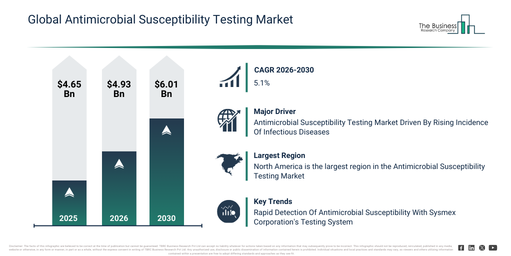
    The antimicrobial susceptibility testing market size has seen substantial growth over recent years. It is anticipated to expand from $4.65 billion in 2025 to $4.93 billion in 2026, reflecting a compound annual growth rate (CAGR) of 6.0%. Historically, this growth can be attributed to an increasing prevalence of infectious diseases, heightened awareness regarding antimicrobial resistance, the proliferation of clinical microbiology laboratories, a rise in hospital diagnostic testing volumes, and the availability of standardized AST protocols.

    The antimicrobial susceptibility testing market size is projected to experience robust expansion over the coming years, reaching $6.01 billion by 2030, exhibiting a compound annual growth rate (CAGR) of 5.1%. This anticipated growth is driven by several factors, including heightened investments in rapid diagnostic technologies, the increasing embrace of AI-assisted laboratory analysis, the broadening of surveillance programs aimed at antimicrobial resistance, an escalating demand for point-of-care AST solutions, and a stronger emphasis on precision antimicrobial therapy. Key developments expected during this period involve the wider implementation of automated AST systems, an increasing need for rapid diagnostic testing, the growing integration of molecular and phenotypic methodologies, the expansion of laboratory automation solutions, and a heightened focus on monitoring antimicrobial resistance.

    Evaluate The Antimicrobial Susceptibility Testing Market Report Before You Buy With A Free Sample:

    https://thebusinessresearchcompany.com/sample_request?id=53786851&type=smp&name=Antimicrobial%20Susceptibility%20Testing%20Market%20Report%202026&utm_source=Blogs&utm_medium=Paid&utm_campaign=Nov_PR

    Antimicrobial Susceptibility Testing Market Growth Driver Analysis For The 2026–2030 Forecast Period

    The global increase in infectious disease occurrences has fostered the expansion of the antimicrobial susceptibility testing market. These diseases originate from organisms such as bacteria, viruses, fungi, and parasites. Conditions stemming from bacteria include bacterial pneumonia and tuberculosis; viral conditions feature smallpox, AIDS, among others. Consequently, the growing frequency of infectious diseases is propelling the expansion of the antimicrobial susceptibility testing market.

    Antimicrobial Susceptibility Testing Market Segmentation Breakdown: Primary And Secondary Categories

    The antimicrobial susceptibility testing market covered in this report is segmented –

    1) By Testing Type: Antibacterial Testing, Antifungal Testing, Antiparasitic Testing, Other Testing Types

    2) By Product: Manual Antimicrobial Susceptibility Testing Products, Automated Laboratory Instruments, Consumables

    3) By Application: Diagnostics, Drug Discovery and Development, Epidemiology, Other Applications

    4) By End User: Hospitals And Diagnostic Centers, Pharmaceutical And Biotechnology Companies, Research And Academic Institutes, Clinical Research Organizations (CROs)

    Subsegments:

    1) By Antibacterial Testing: Disk Diffusion Method, Broth Dilution Method, E-Test Method, Automated Systems

    2) By Antifungal Testing: Broth Dilution Method, Agar Disk Diffusion Method, E-Test Method, Colorimetric Methods

    3) By Antiparasitic Testing: In vitro Susceptibility Testing, Microscopic Examination, Molecular Methods

    4) By Other Testing Types: Mycobacterial Susceptibility Testing, Biofilm Susceptibility Testing, Combination Antimicrobial Testing

    Antimicrobial Susceptibility Testing Market Industry Trends: New Developments From Leading Companies

    Leading firms in the antimicrobial susceptibility testing market are creating novel products, including the First POC Testing System. This system identifies the presence or absence of bacteria and evaluates antimicrobial efficacy from urine samples of individuals with suspected urinary tract infections (UTIs). This represents a notable advancement in AST technologies, facilitating quicker commencement of targeted antimicrobial therapy for infected patients.

    Who Are The Top Competitors In The Antimicrobial Susceptibility Testing Market?

    Major companies operating in the antimicrobial susceptibility testing market are BioMérieux SA, Becton Dickinson and Company, Thermo Fisher Scientific Inc., Danaher Corporation, Bio-Rad Laboratories Inc., Accelerate Diagnostics Inc., Alifax Holding S.p.A., Synbiosis Ltd., Mast Group Ltd., ELITechGroup, Genefluidics Inc., QuantaMatrix Inc., Bruker Corporation, Eurofins Scientific SE, Liofilchem s.r.l., Hardy Diagnostics, Bioanalyse GmbH, Lab M Limited, Microbiologics Inc., Quidel Corporation, R-Biopharm AG, SSI Diagnostica A/S

    Access The Antimicrobial Susceptibility Testing Market Report For Complete Segment-Level Analysis:

    https://thebusinessresearchcompany.com/report/Antimicrobial-Susceptibility-Testing-Global-Market-Report?utm_source=Blogs&utm_medium=Paid&utm_campaign=Nov_PR

    Which Region Leads The Antimicrobial Susceptibility Testing Market, And Which Regions Are Covered?

    North America was the largest region in the antimicrobial susceptibility testing market in 2025. Asia-Pacific is expected to be the fastest growing region in the forecast period. The regions covered in the antimicrobial susceptibility testing market report are Asia-Pacific, South East Asia, Western Europe, Eastern Europe, North America, South America, Middle East, Africa.

    Reach Out To Our Team:

    The Business Research Company: https://www.thebusinessresearchcompany.com/

    Americas: +1 310-496-7795

    Asia: +44 7882 955267 & +91 8897263534

    Europe: +44 7882 955267

    Email us at: marketing@tbrc.info

    Follow us on:

    LinkedIn: https://in.linkedin.com/company/the-business-research-company

    YouTube: https://www.youtube.com/channel/UC24_fI0rV8cR5DxlCpgmyFQ

    Global Market Model: https://www.thebusinessresearchcompany.com/global-market-model
  • Latest Antimicrobial Resistance (AMR) Genotyping Panels Market Size Estimate For 2026 And The Road Ahead To 2030

    Latest Antimicrobial Resistance (AMR) Genotyping Panels Market Size Estimate For 2026 And The Road Ahead To 2030

    Market attractiveness scoring, total addressable market sizing, company benchmarking matrices, interactive Excel dashboards, deeper supply chain intelligence, emerging startup tracking, and granular product-level insights are among the key offerings featured in The Business Research Company’s 2026 market reports, designed to deliver more actionable and strategically valuable research.

    Antimicrobial Resistance (AMR) Genotyping Panels Market Size Estimate For 2026 And Revenue Forecast Through 2030

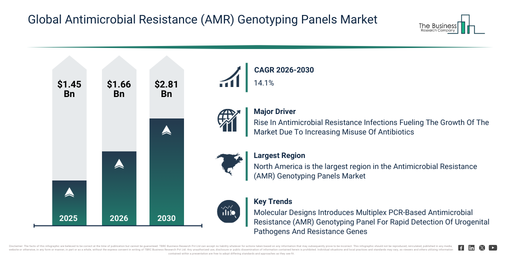
    The antimicrobial resistance (amr) genotyping panels market size has recently seen rapid expansion. This market is set to grow from $1.45 billion in 2025 to $1.66 billion in 2026, exhibiting a compound annual growth rate (CAGR) of 14.4%. Historically, this growth can be attributed to the rising prevalence of antimicrobial resistance, an increase in hospital-acquired infections, the expansion of molecular diagnostic capabilities, growing awareness of resistance monitoring, and the availability of advanced genotyping technologies.

    The antimicrobial resistance (amr) genotyping panels market is set for substantial growth over the next few years. It is projected to achieve a size of $2.81 billion by 2030, expanding at a compound annual growth rate (CAGR) of 14.1%. This growth during the forecast period is fueled by increasing investments in infectious disease diagnostics, a rising demand for rapid point-of-care testing, the expansion of genomic epidemiology programs, greater integration of amr data analytics, and a growing regulatory emphasis on resistance surveillance. Notable trends for this period involve the increasing adoption of multiplex resistance detection panels, a surge in the use of rapid molecular diagnostics, the growing integration of genomic surveillance tools, the expansion of hospital-based amr testing, and an enhanced focus on early resistance identification.

    Free Antimicrobial Resistance (AMR) Genotyping Panels Market Report Sample Available For Download:

    https://thebusinessresearchcompany.com/sample_request?id=15609721&type=smp&name=Antimicrobial%20Resistance%20%28AMR%29%20Genotyping%20Panels%20Market%20Report%202026&utm_source=Blogs&utm_medium=Paid&utm_campaign=Nov_PR

    Why Is Demand In The Antimicrobial Resistance (AMR) Genotyping Panels Market Expected To Keep Rising?

    The growing number of antimicrobial-resistant infections is anticipated to propel the expansion of the antimicrobial resistance (AMR) genotyping panels market moving forward. Antimicrobial-resistant infections are described as diseases caused by microorganisms such as bacteria, viruses, fungi, or parasites that have developed immunity to standard antimicrobial medications, rendering them more difficult to treat. Factors that contribute to the rise of antimicrobial resistance include the overuse and inappropriate application of antibiotics. These practices have hastened the development of resistant pathogens, thereby increasing the demand for AMR genotyping panels that can rapidly detect resistance genes and guide precise antimicrobial treatment. For instance, data from the Centers for Disease Control and Prevention (CDC) indicates that more than 2.8 million antimicrobial-resistant infections occur each year in the US. Consequently, the increasing prevalence of antimicrobial-resistant infections is driving the growth of the AMR genotyping panels market.

    How Is The Antimicrobial Resistance (AMR) Genotyping Panels Market Divided Across Segments And Subsegments?

    The antimicrobial resistance (amr) genotyping panels market covered in this report is segmented –

    1) By Product Type: Custom Panels, Pre-Designed Panels

    2) By Technology: Polymerase Chain Reaction (PCR)-Based, Microarray-Based, Next-Generation Sequencing (NSG)-Based, Other Technologies

    3) By Application: Clinical Diagnostics, Research, Drug Development, Other Applications

    4) By End-User: Hospitals And Clinics, Research Institutes, Pharmaceutical And Biotechnology Companies, Other End-users

    Subsegments:

    1) By Custom Panels: Pathogen-Specific Panels, Resistance Gene-Focused Panels, Multiplex Detection Panels, Targeted Mutation Panels, Research Application Panels

    2) By Pre-Designed Panels: Standardized Diagnostic Panels, Broad-Spectrum Resistance Panels, Disease-Specific Panels, Commercially Validated Panels, Ready-To-Use Screening Panels

    Antimicrobial Resistance (AMR) Genotyping Panels Market Trends Reshaping Customer Demand And Business Strategies

    Companies operating in the antimicrobial resistance (AMR) genotyping panels market are concentrating on creating advanced products like multiplex PCR-based research assays. These assays are designed to allow for the simultaneous detection of numerous pathogens and antibiotic resistance genes within a single test, thereby improving research efficiency and aiding in quicker identification of new resistance patterns. Multiplex PCR-based research assays are molecular tests capable of amplifying and detecting multiple genetic targets concurrently to identify pathogens and antibiotic resistance genes in a single reaction. For example, in September 2025, Molecular Designs, a US-based molecular diagnostics and research-assay firm, introduced the Urogenital Microbiota with ABX 53 Simplicity Panel. This multiplex PCR-based research assay aims to detect urinary pathogens and antibiotic resistance genes in one test. The panel facilitates the concurrent detection of 28 urogenital and urinary microbial targets (20 bacterial, 7 fungal, and 1 protozoan) along with 25 antibiotic-resistance gene markers. It offers a same-day turnaround time and is available in both 96-well and 384-well plate formats, with the 96-well version incorporating breakaway panels to minimize waste.

    Antimicrobial Resistance (AMR) Genotyping Panels Market Major Players: Companies At The Forefront Of The Industry

    Major companies operating in the antimicrobial resistance (amr) genotyping panels market are Thermo Fisher Scientific Inc., F Hoffmann La Roche Ltd., Abbott Laboratories, Illumina Inc., bioMérieux SA., Bruker Corporation, QIAGEN NV., Cepheid Inc., Integrated DNA Technologies Inc., Seegene Inc., Oxford Nanopore Technologies plc., Streck Inc., MedGenome Inc., Vela Diagnostics Pte. Ltd., Agena Bioscience Inc., CD Genomics Inc., Curetis GmbH, T2 Biosystems Inc., 3B BlackBio Biotech India Ltd., Genefirst Ltd., OpGen Inc.

    Read More About The Antimicrobial Resistance (AMR) Genotyping Panels Market In The Full Report:

    https://thebusinessresearchcompany.com/report/global-antimicrobial-resistance-amr-genotyping-panels-market-report?utm_source=Blogs&utm_medium=Paid&utm_campaign=Nov_PR

    Antimicrobial Resistance (AMR) Genotyping Panels Market Regional Share Analysis For 2025

    North America was the largest region in the antimicrobial resistance (AMR) genotyping panels market in 2025. Asia-Pacific is expected to be the fastest-growing region in the forecast period. The regions covered in the antimicrobial resistance (amr) genotyping panels market report are Asia-Pacific, South East Asia, Western Europe, Eastern Europe, North America, South America, Middle East, Africa.

    Reach Out To Our Team:

    The Business Research Company: https://www.thebusinessresearchcompany.com/

    Americas: +1 310-496-7795

    Asia: +44 7882 955267 & +91 8897263534

    Europe: +44 7882 955267

    Email us at: marketing@tbrc.info

    Follow us on:

    LinkedIn: https://in.linkedin.com/company/the-business-research-company

    YouTube: https://www.youtube.com/channel/UC24_fI0rV8cR5DxlCpgmyFQ

    Global Market Model: https://www.thebusinessresearchcompany.com/global-market-model
  • Antimicrobial Regenerative Wound Matrix Market Outlook 2026–2030: Everything You Need To Know

    Antimicrobial Regenerative Wound Matrix Market Outlook 2026–2030: Everything You Need To Know

    Designed to make market research more actionable and strategically valuable, The Business Research Company’s 2026 market reports feature market attractiveness scoring, total addressable market sizing, company benchmarking matrices, interactive Excel dashboards, deeper supply chain intelligence, emerging startup tracking, and granular product-level insights.

    How Fast Is The Antimicrobial Regenerative Wound Matrix Market Growing? Market Size, CAGR And Forecast Insights

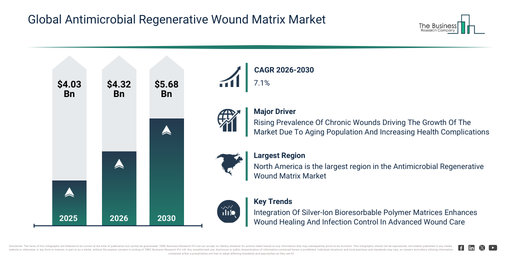
    The antimicrobial regenerative wound matrix market has experienced robust expansion in recent years. This market is projected to increase from $4.03 billion in 2025 to $4.32 billion in 2026, at a compound annual growth rate (CAGR) of 7.4%. The historical growth of this market can be attributed to factors such as the increasing prevalence of chronic wounds, a rising incidence of diabetes-related ulcers, the expansion of surgical procedures, growing awareness of advanced wound care solutions, and the availability of antimicrobial biomaterials.

    The antimicrobial regenerative wound matrix market is poised for significant expansion over the coming years, with projections indicating a rise to $5.68 billion by 2030, at a compound annual growth rate (CAGR) of 7.1%. This anticipated growth can be attributed to an expanding aging population, an increasing requirement for sophisticated wound management techniques, the broadening reach of home healthcare services, a heightened focus on mitigating hospital-acquired infections, and continuous advancements in regenerative biomaterials. Major developments expected during this period include a greater adoption of advanced wound care biomaterials, an escalating demand for infection-resistant healing solutions, wider application of bioactive regenerative matrices, an expansion of treatments for chronic wounds, and an intensified focus on accelerating tissue regeneration.

    Unlock Antimicrobial Regenerative Wound Matrix Market Insights With A Free Sample Report:

    https://thebusinessresearchcompany.com/sample_request?id=58458102&type=smp&name=Antimicrobial%20Regenerative%20Wound%20Matrix%20Market%20Report%202026&utm_source=Blogs&utm_medium=Paid&utm_campaign=Nov_PR

    Antimicrobial Regenerative Wound Matrix Market Momentum: Key Driver Expected To Boost Growth Through 2030

    The growing occurrence of chronic wounds is projected to drive the expansion of the antimicrobial regenerative wound matrix market moving forward. These injuries are defined as those that fail to progress through the expected healing stages within a typical timeframe, usually extending beyond 4 to 6 weeks, often stemming from underlying health issues such as diabetes, infection, or compromised circulation. The increased occurrence of chronic wounds stems from the growing rates of diabetes, obesity, and vascular diseases, alongside a demographic shift towards an older population, all of which hinder natural healing processes and result in a greater number of wounds that do not heal or heal slowly, necessitating advanced wound care solutions. Antimicrobial regenerative wound matrices function by promoting tissue regrowth while simultaneously warding off infection, thereby accelerating recovery in chronic, persistent wounds. Thus, the increasing prevalence of chronic wounds is a key driver for the growth of the antimicrobial regenerative wound matrix market.

    Antimicrobial Regenerative Wound Matrix Market Segments: A Category-By-Category Overview

    The antimicrobial regenerative wound matrix market covered in this report is segmented –

    1) By Product Type: Antimicrobial Matrix, Regenerative Matrix

    2) By Wound Type: Acute, Chronic

    3) By Material: Collagen-Based Matrix, Chitosan-Based Matrix, Hyaluronic Acid-Based Matrix

    4) By Application: Diabetic Foot Ulcers, Pressure Ulcers, Venous Leg Ulcers, Burns

    5) By End User: Hospitals, Clinics, Ambulatory Surgical Centers, Home Healthcare

    Subsegments:

    1) By Antimicrobial Matrix: Silver-Ion Impregnated Matrices, Iodine-Based Matrices, PHMB (Polyhexamethylene Biguanide)-Based Matrices, Honey-Infused Matrices, Chitosan-Based Matrices, Antibiotic-Loaded Polymer Matrices, Enzyme Or Peptide-Based Antimicrobial Matrices

    2) By Regenerative Matrix: Collagen-Based Matrices, Hydrogel Matrices, Hyaluronic Acid-Based Matrices, Human Or Animal-Derived Dermal Substitutes, Synthetic Polymer (Bioresorbable) Matrices, Amniotic Membrane-Derived Matrices, Composite (Hybrid) Regenerative Matrices

    Which Emerging Trends Are Gaining Traction In The Antimicrobial Regenerative Wound Matrix Market?

    Leading firms within the antimicrobial regenerative wound matrix market are progressively incorporating antimicrobial substances like silver-ion–impregnated bioresorbable polymer matrices. This integration aims to meet the escalating demand for quicker recovery, diminished infection hazards, and decreased hospitalization expenses in managing both chronic and surgical wounds. Such a matrix, specifically a silver-ion–impregnated bioresorbable polymer matrix, functions as a wound-healing framework. It is constructed from biodegradable polymers embedded with silver ions, intended to facilitate tissue regrowth while delivering ongoing antimicrobial defense as it slowly dissolves within the body. As an example, in August 2025, Imbed Biosciences Inc., a US-based medical device company focused on advanced wound care, introduced SAM PainGuard with Lidocaine. This product is a dual-action wound matrix, consisting of a bioresorbable polymer scaffold saturated with ionic silver to provide antimicrobial protection and lidocaine HCl for prompt pain alleviation. This matrix adapts to the minute textures of wounds, guarantees a sustained microbial reduction of =99.99% for as long as 72 hours, and delivers instant pain relief. Having received FDA 510(k) clearance for application in surgical, burn, donor-site, and trauma wounds, this product signifies a substantial improvement compared to conventional antimicrobial dressings and standard collagen matrices.

    Antimicrobial Regenerative Wound Matrix Market Key Participants: Prominent Companies At A Glance

    Major companies operating in the antimicrobial regenerative wound matrix market are Cardinal Health Inc., Medline Industries Inc., 3M Company, Essity AB, DSM Biomedical, Baxter International Inc., B. Braun Melsungen AG, Mölnlycke Health Care AB, ConvaTec Group plc, MTF Biologics, Organogenesis Inc., DeRoyal Industries Inc., MiMedx Group Inc., AdMedSol, Avita Medical, Aroa Biosurgery Ltd., Harbor Medtech Inc., Omeza LLC, ProgenaCare Global, RenovoDerm.

    Get Detailed Antimicrobial Regenerative Wound Matrix Market Forecasts In The Complete Report:

    https://thebusinessresearchcompany.com/report/global-antimicrobial-regenerative-wound-matrix-market-report?utm_source=Blogs&utm_medium=Paid&utm_campaign=Nov_PR

    Top Region In The Antimicrobial Regenerative Wound Matrix Market: A Global Perspective

    North America was the largest region in the antimicrobial regenerative wound matrix market in 2025. Asia-Pacific is expected to be the fastest-growing region in the forecast period. The regions covered in the antimicrobial regenerative wound matrix market report are Asia-Pacific, South East Asia, Western Europe, Eastern Europe, North America, South America, Middle East, Africa.

    Reach Out To Our Team:

    The Business Research Company: https://www.thebusinessresearchcompany.com/

    Americas: +1 310-496-7795

    Asia: +44 7882 955267 & +91 8897263534

    Europe: +44 7882 955267

    Email us at: marketing@tbrc.info

    Follow us on:

    LinkedIn: https://in.linkedin.com/company/the-business-research-company

    YouTube: https://www.youtube.com/channel/UC24_fI0rV8cR5DxlCpgmyFQ

    Global Market Model: https://www.thebusinessresearchcompany.com/global-market-model
  • Antidiabetics Market Forecast To 2030: Growth Outlook For Key Players Such As Pfizer Inc.

    Antidiabetics Market Forecast To 2030: Growth Outlook For Key Players Such As Pfizer Inc.

    The Business Research Company’s 2026 market reports are designed to deliver research that is more actionable and strategically valuable. Key offerings include market attractiveness scoring, total addressable market sizing, company benchmarking matrices, interactive Excel dashboards, deeper supply chain intelligence, emerging startup tracking, and granular product-level insights.

    Antidiabetics Market Historical Growth Vs. Forecast Growth: How Do The Numbers Compare?

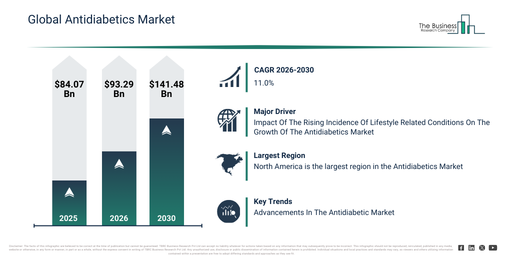
    The antidiabetics market has experienced rapid expansion recently. It is projected to expand from $84.07 billion in 2025 to $93.29 billion in 2026, exhibiting a compound annual growth rate (CAGR) of 11.0%. Historically, this growth was driven by factors such as the increasing worldwide prevalence of diabetes, greater access to insulin treatments, the proliferation of oral antidiabetic drugs, enhanced understanding and identification of the disease, and broader healthcare accessibility.

    The antidiabetics market is projected to experience swift expansion over the coming years. By 2030, its value is anticipated to reach $141.48 billion, demonstrating a compound annual growth rate (CAGR) of 11.0%. This anticipated growth during the forecast period stems from factors such as the increasing uptake of advanced diabetes medications, a heightened emphasis on long-acting and once-weekly treatment regimens, broader integration of digital diabetes management solutions, rising investments in metabolic disorder investigations, and a growing call for patient-focused treatment approaches. Key trends expected during this period involve a greater embrace of glp-1 and sglt2 therapies, an increased concentration on combination drug regimens, escalating demand for individualized diabetes care, wider utilization of oral antidiabetic drugs, and an amplified focus on cardiovascular and weight-related advantages.

    Start With A Free Sample Of The Antidiabetics Market Research Report:

    https://thebusinessresearchcompany.com/sample_request?id=60905750&type=smp&name=Antidiabetics%20Market%20Report%202026&utm_source=Blogs&utm_medium=Paid&utm_campaign=Nov_PR

    The Leading Growth Driver In The Antidiabetics Market Explained

    The increasing prevalence of lifestyle-related health conditions is projected to fuel the growth of the antidiabetics market in the future. Lifestyle-related conditions refer to health problems caused or worsened by behaviors such as inadequate diet, insufficient physical activity, smoking, and excessive alcohol consumption. The occurrence of these conditions is on the rise due to poor eating habits, a sedentary lifestyle, and heightened stress levels. Antidiabetic medications can assist in managing lifestyle-associated issues like obesity and metabolic syndrome by improving insulin sensitivity and regulating blood sugar levels. Consequently, a growing incidence of lifestyle-related conditions is a key driver for the antidiabetic market.

    Key Segments Shaping The Antidiabetics Market Landscape

    The antidiabetics market covered in this report is segmented –

    1) By Drug Class: Insulin, GLP-1 Receptor Agonists, DPP- 4 Inhibitors, SGLT2 Inhibitors, Other Drug Classes

    2) By Diabetes Type: Type 1, Type 2

    3) By Patient Population: Antidiabetics For Pediatrics, Antidiabetics For Adults, Antidiabetics For Geriatrics

    4) By Route Of Administration: Antidiabetics Administration Through Insulin Syringes Or Insulin Pens, Antidiabetics Administration Through Insulin Pumps, Intravenous Antidiabetics Infusion, Oral Antidiabetics Administration, Other Routes Of Antidiabetics Administration

    5) By Distribution Channel: Online Pharmacies, Hospital Pharmacies, Retail Pharmacies

    Subsegments:

    1) By Insulin: Rapid-Acting Insulin, Short-Acting Insulin, Intermediate-Acting Insulin, Long-Acting Insulin, Premixed Insulin

    2) By GLP-1 Receptor Agonists: Exenatide, Liraglutide, Dulaglutide, Semaglutide, Lixisenatide

    3) By DPP-4 Inhibitors: Sitagliptin, Saxagliptin, Linagliptin, Alogliptin

    4) By SGLT2 Inhibitors: Canagliflozin, Dapagliflozin, Empagliflozin, Ertugliflozin

    5) By Other Drug Classes: Sulfonylureas, Thiazolidinediones (TZDs), Alpha-Glucosidase Inhibitors, Meglitinides, GLP-1/Insulin Combination Therapy

    Antidiabetics Market Trend Spotlight: Key Shifts Shaping Future Demand

    Major companies operating in the antidiabetics market are developing advanced products, such as anti-diabetic biosimilars, to improve glycemic control, reduce the risk of cardiovascular events, and offer more effective treatment options for individuals with diabetes. An anti-diabetic biosimilar is a medication biologically similar to an already approved reference drug used for diabetes, providing comparable safety, effectiveness, and quality.

    Antidiabetics Market Competitive Analysis: Who Are The Main Competitors?

    Major companies operating in the antidiabetics market are Pfizer Inc., Johnson & Johnson, Merck & Co. Inc., Sanofi S.A., Bristol-Myers Squibb Company, AstraZeneca plc, Abbott Laboratories, Novartis AG, Takeda Pharmaceutical Company Limited, GSK plc, Eli Lilly and Company, Boehringer Ingelheim International GmbH, Novo Nordisk A/S, Teva Pharmaceutical Industries Ltd., Astellas Pharma Inc., Sun Pharmaceutical Industries Limited, Cipla Limited, Dr. Reddy’s Laboratories, Lupin Limited, Torrent Pharmaceuticals Ltd, Biocon Limited, Glenmark Pharmaceuticals Ltd.

    Find The Complete Antidiabetics Market Outlook In The Full Report:

    https://thebusinessresearchcompany.com/report/antidiabetics-global-market-report?utm_source=Blogs&utm_medium=Paid&utm_campaign=Nov_PR

    Mapping The Antidiabetics Market: Regional Leadership And Global Reach

    North America was the largest region in the antidiabetics market in 2025. The regions covered in the antidiabetics market report are Asia-Pacific, South East Asia, Western Europe, Eastern Europe, North America, South America, Middle East, Africa.

    Reach Out To Our Team:

    The Business Research Company: https://www.thebusinessresearchcompany.com/

    Americas: +1 310-496-7795

    Asia: +44 7882 955267 & +91 8897263534

    Europe: +44 7882 955267

    Email us at: marketing@tbrc.info

    Follow us on:

    LinkedIn: https://in.linkedin.com/company/the-business-research-company

    YouTube: https://www.youtube.com/channel/UC24_fI0rV8cR5DxlCpgmyFQ

    Global Market Model: https://www.thebusinessresearchcompany.com/global-market-model
  • Antibody Validation Market Led By North America: Size, Growth And Regional Outlook

    Antibody Validation Market Led By North America: Size, Growth And Regional Outlook

    With a focus on actionable insights and strategic value, The Business Research Company’s 2026 market reports include market attractiveness scoring, total addressable market sizing, company benchmarking matrices, interactive Excel dashboards, deeper supply chain intelligence, emerging startup tracking, and granular product-level insights.

    Antibody Validation Market Size Forecast Points To $1060.68 Billion In Revenue By 2030

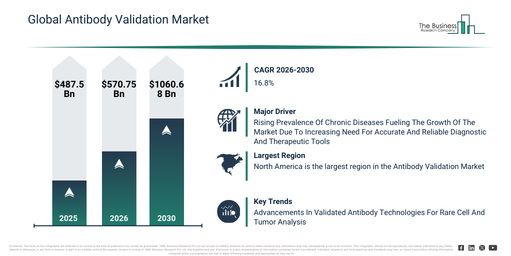
    The antibody validation market has experienced rapid expansion in recent years and is forecast to grow from $487.5 billion in 2025 to $570.75 billion in 2026, achieving a compound annual growth rate (CAGR) of 17.1%. This historical growth is primarily due to increasing concerns about variability in research antibodies, the expansion of proteomics and genomics research, heightened regulatory scrutiny on research reproducibility, the rise of antibody-based assays, and increased funding for life sciences research.

    The antibody validation market is projected to experience swift expansion over the coming years. By 2030, its size is anticipated to reach $1060.68 billion, exhibiting a compound annual growth rate (CAGR) of 16.8%. This growth during the forecast period is primarily driven by factors such as a heightened demand for rigor and reproducibility, the escalating use of antibodies in clinical research, the broadening scope of precision diagnostics, the increasing acceptance of validated antibodies in drug discovery processes, and the greater integration of digital validation data platforms. Key trends expected within this period encompass the increasing implementation of standardized antibody validation protocols, an uptick in demand for specialized application-specific validation services, the expanding utilization of multiplex validation techniques, the development of more reproducibility-focused testing frameworks, and a stronger focus on data transparency.

    Get A Free Antibody Validation Market Sample Covering Drivers, Trends And Key Players:

    https://thebusinessresearchcompany.com/sample_request?id=94488074&type=smp&name=Antibody%20Validation%20Market%20Report%202026&utm_source=Blogs&utm_medium=Paid&utm_campaign=Nov_PR

    Antibody Validation Market Driver Analysis: Key Factor Supporting Revenue Growth

    The increasing occurrence of chronic illnesses is anticipated to boost the expansion of the antibody validation market in the future. These are long-term health issues that progress gradually and persist for long durations, frequently necessitating ongoing medical attention. The growing incidence of chronic ailments can be partly attributed to sedentary habits, since extended periods of sitting and insufficient exercise elevate the likelihood of developing conditions like heart diseases and diabetes. Antibody validation assists in managing chronic diseases by guaranteeing the precision, distinctiveness, and trustworthiness of antibodies employed in diagnostic tests and treatments. This process improves the identification of disease indicators, facilitates accurate patient tracking, and refines the creation of specific therapies, thereby contributing to more effective and tailored chronic disease care. Consequently, the increasing prevalence of chronic illnesses is stimulating the expansion of the antibody validation market.

    Antibody Validation Market Segmentation Framework: Major Segments At A Glance

    The antibody validation market covered in this report is segmented –

    1) By Product Type: Monoclonal Antibodies, Polyclonal Antibodies, Anti-Body Drug Complexes

    2) By Disease Indication: Cardiovascular Diseases, Central Nervous System (CNS) Disorders, Cancer, Autoimmune Disorders

    3) By End User: Pharmaceutical And Biotechnological Firms, Contract Research Organizations, Research Institutes

    Subsegments:

    1) By Monoclonal Antibodies: Recombinant Monoclonal Antibodies, Humanized Monoclonal Antibodies, Chimeric Monoclonal Antibodies, Murine Monoclonal Antibodies

    2) By Polyclonal Antibodies: Rabbit Polyclonal Antibodies, Goat Polyclonal Antibodies, Sheep Polyclonal Antibodies, Donkey Polyclonal Antibodies

    3) By Antibody Drug Complexes: Immunoconjugates, Radioimmunoconjugates, Immunotoxins, Bispecific Antibody Drug Complexes

    Latest Antibody Validation Market Developments And Emerging Trends

    Major companies within the antibody validation market are emphasizing advanced innovations, such as Celselect slides enumeration stain kits, to improve the accuracy and sensitivity of identifying rare cells and circulating tumor cells, enhance validation efficiency, and support high-precision cancer research and diagnostic applications. Celselect slides enumeration stain kits are specialized reagent kits specifically designed to enable the detection, staining, and counting of rare cells and circulating tumor cells (CTCs).

    Which Companies Are Shaping The Antibody Validation Market?

    Major companies operating in the antibody validation market are F. Hoffmann-La Roche Ltd., Merck & Co. Inc., Thermo Fisher Scientific Inc., Danaher Corporation, Becton Dickinson and Company, Agilent Technologies Inc., PerkinElmer Inc., Bio-Rad Laboratories Inc., Azenta Inc., GenScript Biotech Corporation, Promega Corporation, Sino Biological Inc., Cell Signaling Technology Inc., Fortis Life Sciences, Proteintech Group Inc., Santa Cruz Biotechnology Inc., Novus Biologicals LLC, Creative Diagnostics, Rockland Immunochemicals Inc., Biorbyt Ltd.

    Dive Deeper Into The Antibody Validation Market With The Full Report:

    https://thebusinessresearchcompany.com/report/global-antibody-validation-market-report?utm_source=Blogs&utm_medium=Paid&utm_campaign=Nov_PR

    Antibody Validation Market Regional Distribution: Where Is Revenue Concentrated?

    North America was the largest region in the antibody validation market in 2025. The regions covered in the antibody validation market report are Asia-Pacific, South East Asia, Western Europe, Eastern Europe, North America, South America, Middle East, Africa.

    Reach Out To Our Team:

    The Business Research Company: https://www.thebusinessresearchcompany.com/

    Americas: +1 310-496-7795

    Asia: +44 7882 955267 & +91 8897263534

    Europe: +44 7882 955267

    Email us at: marketing@tbrc.info

    Follow us on:

    LinkedIn: https://in.linkedin.com/company/the-business-research-company

    YouTube: https://www.youtube.com/channel/UC24_fI0rV8cR5DxlCpgmyFQ

    Global Market Model: https://www.thebusinessresearchcompany.com/global-market-model