Author: Marketing Posting

  • Artificial Intelligence (AI)-Enhanced Chronic Obstructive Sleep Apnea Coach Market Segmentation And Growth Analysis: Insights Through 2030

    Artificial Intelligence (AI)-Enhanced Chronic Obstructive Sleep Apnea Coach Market Segmentation And Growth Analysis: Insights Through 2030

    Designed to make market research more actionable and strategically valuable, The Business Research Company’s 2026 market reports feature market attractiveness scoring, total addressable market sizing, company benchmarking matrices, interactive Excel dashboards, deeper supply chain intelligence, emerging startup tracking, and granular product-level insights.

    Artificial Intelligence (AI)-Enhanced Chronic Obstructive Sleep Apnea Coach Market Forecast 2026–2030: Size, Value And Compound Annual Growth Rate

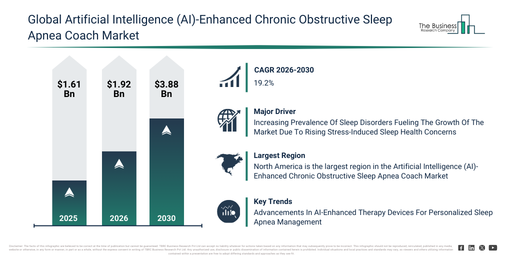
    The market for artificial intelligence (AI)-enhanced chronic obstructive sleep apnea coaches has experienced rapid growth in recent years. This market is projected to expand from $1.61 billion in 2025 to $1.92 billion in 2026, exhibiting a compound annual growth rate (CAGR) of 19.5%. Historically, this expansion can be attributed to the increasing prevalence of sleep apnea and respiratory disorders, rising awareness of sleep health management, the development of home-based sleep monitoring solutions, the expansion of digital health platforms, and an increased clinical focus on therapy compliance.

    The artificial intelligence (AI)-enhanced chronic obstructive sleep apnea coach market size is expected to undergo rapid growth in the upcoming years. It is projected to reach $3.88 billion in 2030, with a compound annual growth rate (CAGR) of 19.2%. The expansion during the forecast period can be attributed to the increasing adoption of AI-enabled chronic disease management tools, a rising demand for remote patient monitoring solutions, the expansion of personalized digital therapeutics, growing integration with connected medical devices, and an increasing healthcare shift toward preventive care models. Major trends anticipated in this period include the increasing adoption of continuous sleep and respiratory monitoring, rising use of AI-driven therapy adherence coaching, growing integration of wearable sleep diagnostics, the expansion of personalized sleep health platforms, and an enhanced focus on proactive disease management.

    Try Before You Buy: Free Sample Of The Artificial Intelligence (AI)-Enhanced Chronic Obstructive Sleep Apnea Coach Market Report:

    https://thebusinessresearchcompany.com/sample_request?id=24654786&type=smp&name=Artificial%20Intelligence%20%28AI%29-Enhanced%20Chronic%20Obstructive%20Sleep%20Apnea%20Coach%20Market%20Report%202026&utm_source=Blogs&utm_medium=Paid&utm_campaign=Nov_PR

    Artificial Intelligence (AI)-Enhanced Chronic Obstructive Sleep Apnea Coach Market Growth Engine: The Factor Boosting Demand Globally

    The rising incidence of sleep disorders is projected to boost the expansion of the artificial intelligence (AI)-enhanced chronic obstructive sleep apnea coach market going forward. These conditions are medical ailments that disrupt normal sleep, affecting sleep quality, general well-being, and daily functioning. The surge in sleep disorders is primarily attributed to heightened stress levels, with contemporary work pressures, educational requirements, and extensive screen usage leading to increased anxiety and disturbed sleep patterns. An artificial intelligence (AI)-enhanced chronic obstructive sleep apnea coach addresses sleep disorders by monitoring breathing and sleep patterns, providing tailored advice and therapeutic assistance. This facilitates the prompt identification of complications and fosters improved sleep quality and comprehensive health. Consequently, the growing occurrence of sleep disorders is stimulating the growth of the artificial intelligence (AI)-enhanced chronic obstructive sleep apnea coach market.

    Which Categories And Subcategories Shape The Artificial Intelligence (AI)-Enhanced Chronic Obstructive Sleep Apnea Coach Market?

    The artificial intelligence (AI)-enhanced chronic obstructive sleep apnea coach market covered in this report is segmented –

    1) By Component: Software, Hardware, Services

    2) By Deployment Mode: Cloud-Based, On-Premises

    3) By Application: Home Care, Sleep Clinics, Hospitals, Research Institutes, Other Applications

    4) By End-User: Patients, Healthcare Providers, Sleep Specialists, Other End-Users

    Subsegments:

    1) By Software: Cloud-Based Platforms, Mobile Applications, Patient Monitoring Dashboards, Sleep Data Analytics Tools, Therapeutic Guidance Systems, Compliance Management Software

    2) By Hardware: Wearable Sleep Trackers, Respiratory Monitoring Devices, Pulse Oximeters, Smart Sleep Masks, Connected Airflow Sensors, Portable Sleep Diagnostic Units

    3) By Services: Remote Patient Monitoring Services, Sleep Coaching Programs, Data Integration And Management Services, Technical Support And Maintenance, Clinical Consultation Services, Training And Education Services

    Artificial Intelligence (AI)-Enhanced Chronic Obstructive Sleep Apnea Coach Market Trend Insights: Strategic Focus Areas Of Leading Companies

    Major companies operating in the artificial intelligence (AI)-enhanced chronic obstructive sleep apnea coach market are concentrating on creating sophisticated products, such as positive airway pressure (PAP) devices, to offer tailored therapy and facilitate remote oversight through AI-driven insights. These positive airway pressure (PAP) devices function by delivering a consistent or adaptable airflow via a mask, which helps maintain open airways during sleep and prevents collapse in patients with obstructive sleep apnea, thereby enhancing both breathing and sleep quality.

    Leading Organizations In The Artificial Intelligence (AI)-Enhanced Chronic Obstructive Sleep Apnea Coach Market

    Major companies operating in the artificial intelligence (AI)-enhanced chronic obstructive sleep apnea coach market are Koninklijke Philips N.V., ResMed Inc., Sleep Number Corporation, Nihon Kohden Corporation, Fisher & Paykel Healthcare Corporation Limited, Verily Life Sciences LLC, Natus Medical Incorporated, SomnoMed Limited, BMC Medical Co.,Ltd., Eight Sleep,Inc., Sleepiz AG, Sleep.ai B.V. (SleepScore Labs), EnsoData,Inc., SovaSage,Inc., Somnics Inc., Sleep Doctor,LLC, Sommetrics,Inc., Nyxoah S.A., Neru Health Inc., Apnea-Tech Limited.

    Continue Reading: The Full Artificial Intelligence (AI)-Enhanced Chronic Obstructive Sleep Apnea Coach Market Report:

    https://thebusinessresearchcompany.com/report/artificial-intelligence-ai-enhanced-chronic-obstructive-sleep-apnea-coach-global-market-report?utm_source=Blogs&utm_medium=Paid&utm_campaign=Nov_PR

    Artificial Intelligence (AI)-Enhanced Chronic Obstructive Sleep Apnea Coach Market Regional Spotlight: Top Geography And Report Coverage

    North America was the largest region in the artificial intelligence (AI)-enhanced chronic obstructive sleep apnea coach market in 2025. Asia-Pacific is expected to be the fastest-growing region in the forecast period. The regions covered in the artificial intelligence (AI)-enhanced chronic obstructive sleep apnea coach market report are Asia-Pacific, South East Asia, Western Europe, Eastern Europe, North America, South America, Middle East, Africa.

    Reach Out To Our Team:

    The Business Research Company: https://www.thebusinessresearchcompany.com/

    Americas: +1 310-496-7795

    Asia: +44 7882 955267 & +91 8897263534

    Europe: +44 7882 955267

    Email us at: marketing@tbrc.info

    Follow us on:

    LinkedIn: https://in.linkedin.com/company/the-business-research-company

    YouTube: https://www.youtube.com/channel/UC24_fI0rV8cR5DxlCpgmyFQ

    Global Market Model: https://www.thebusinessresearchcompany.com/global-market-model
  • 3D Cell Culture Technologies Market Size To Reach $9.8 Billion By 2030: Growth Drivers, Trends And Forecast

    3D Cell Culture Technologies Market Size To Reach $9.8 Billion By 2030: Growth Drivers, Trends And Forecast

    Designed to make market research more actionable and strategically valuable, The Business Research Company’s 2026 market reports feature market attractiveness scoring, total addressable market sizing, company benchmarking matrices, interactive Excel dashboards, deeper supply chain intelligence, emerging startup tracking, and granular product-level insights.

    How Big Is The 3D Cell Culture Technologies Market In 2026, And How Fast Will It Grow?

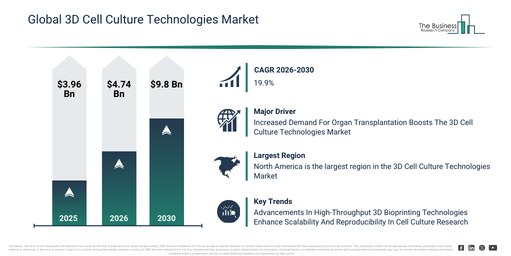
    The market size for 3D cell culture technologies has expanded significantly in recent years. It will grow from $3.96 billion in 2025 to $4.74 billion in 2026 at a compound annual growth rate (CAGR) of 19.7%. This historical growth can be attributed to factors such as the increasing use of cell culture in vaccine production, a rise in cancer research activities, the limitations inherent in 2D cell culture models, greater academic research funding, and the expansion of biotechnology research infrastructure.

    The 3D cell culture technologies market size is projected to experience substantial growth in the upcoming years. It is anticipated to expand to $9.8 billion by 2030, demonstrating a compound annual growth rate (CAGR) of 19.9%. This projected growth is driven by several factors, including advancements in 3D bioreactor technologies, increased investment in regenerative medicine, the expansion of pharmaceutical drug discovery pipelines, the growing adoption of personalized medicine, and technological enhancements in scaffold materials. Prominent trends throughout the forecast period include the increasing integration of 3D cell culture in cancer research, the rising utilization of organoids and spheroids for disease modeling, a growing demand for advanced drug screening platforms, the expansion of stem cell and regenerative medicine research, and a greater preference for in vitro models over animal testing.

    Download A Free 3D Cell Culture Technologies Market Sample Report With Size And Forecast Data:

    https://thebusinessresearchcompany.com/sample_request?id=57756938&type=smp&name=3D%20Cell%20Culture%20Technologies%20Market%20Report%202026&utm_source=Blogs&utm_medium=Paid&utm_campaign=Nov_PR

    3D Cell Culture Technologies Market Growth Driver: The Key Factor Behind Rising Demand

    The rising demand for organ transplantation is projected to boost the 3D cell culture technologies market in the future. 3D cell culture involves the creation of three-dimensional cellular structures that closely resemble the architecture and function of tissues or organs, thereby facilitating tissue and organ regeneration alongside drug toxicology screening. The increase in organ transplantation is fueled by the growing occurrence of organ failure and progress in medical technology, making transplants more viable. 3D cell culture technologies support this trend by offering models for organ development, regenerative treatments, and preclinical assessments. Consequently, the escalating need for organ transplantation is propelling the expansion of the 3D cell culture technologies market.

    3D Cell Culture Technologies Market Segmentation: Key Segments And Subsegments Covered

    The 3D cell culture technologies market covered in this report is segmented –

    1) By Type: Scaffold-Based, Scaffold-Free, 3D Bioreactors

    2) By Application: Cancer Research, Stem Cell Research, Drug Discovery, Regenerative Medicine

    3) By End Users: Research Laboratories and Institutes, Biotechnology and Pharmaceutical Companies, Other End Users

    Subsegments:

    1) By Scaffold-Based: Natural Scaffolds, Synthetic Scaffolds, Hybrid Scaffolds

    2) By Scaffold-Free: Spheroid-Based, Organoid-Based

    3) By 3D Bioreactors: Spinner Flask Bioreactors, Rotating Wall Bioreactors, Microcarrier-Based Bioreactors, Hollow Fiber Bioreactors

    3D Cell Culture Technologies Market Trends: Key Developments Shaping 2026 And Beyond

    Key players in the 3D cell culture technologies market are concentrating on creating sophisticated high-throughput scalability systems aimed at improving both efficiency and reproducibility. High-throughput scalability describes platforms capable of quickly producing numerous 3D cell models of uniform quality, which in turn minimizes variability and per-sample cost. As an example, Inventia Life Science, an Australian firm specializing in 3D cell culture technologies, introduced RASTRUM Allegro in January 2025. This system incorporates drop-on-demand bioprinting along with precision robotics. This system is capable of fabricating a 96-well plate in approximately 6 minutes and a 384-well plate in 9 minutes, achieving a daily throughput exceeding 35 plates. It provides post-print intra- and inter-plate coefficient of variation (CV) below 10 percent and downstream assay CVs below 19 percent, ensuring high reproducibility of results. The platform is specifically designed for patient-derived samples, allowing the generation of up to 3.5× more 3D models from a restricted number of cells, consequently lowering the cost per well and boosting accessibility for translational research.

    Leading Companies Operating In The 3D Cell Culture Technologies Market

    Major companies operating in the 3D cell culture technologies market are Becton Dickinson and Company, Corning Incorporated, Eppendorf AG, Merck KGaA, Thermo Fisher Scientific Inc., Lonza Group AG, HiMedia Laboratories Pvt. Ltd., PromoCell GmbH, CellGenix GmbH, Greiner Bio-One International GmbH, Irvine Scientific Sales Company Inc., American Type Culture Collection (ATCC), Miltenyi Biotec B.V. & Co. KG, Sartorius AG, CN Bio Innovations, Nortis Inc., Kiyatec, Nanofiber Solutions, Known Medicine, Synthecon Inc., 3D Biotek LLC, 3D Cell Culture Innovations LLC, 3D Matrix Inc., Allevi Inc., BioSpherix Ltd., Emulate Inc., MicroTissues Inc., Sumitomo Bakelite

    Access The Full 3D Cell Culture Technologies Market Research Report:

    https://thebusinessresearchcompany.com/report/3D-Cell-Culture-Technologies-Global-Market-Report?utm_source=Blogs&utm_medium=Paid&utm_campaign=Nov_PR

    3D Cell Culture Technologies Market Regional Analysis: Largest Region And Key Geographies Covered

    North America was the largest region in the 3D cell culture technologies market in 2025. Western Europe was the second largest region in the 3D cell culture technologies market. The regions covered in the 3D cell culture technologies market report are Asia-Pacific, South East Asia, Western Europe, Eastern Europe, North America, South America, Middle East, Africa.

    Reach Out To Our Team:

    The Business Research Company: https://www.thebusinessresearchcompany.com/

    Americas: +1 310-496-7795

    Asia: +44 7882 955267 & +91 8897263534

    Europe: +44 7882 955267

    Email us at: marketing@tbrc.info

    Follow us on:

    LinkedIn: https://in.linkedin.com/company/the-business-research-company

    YouTube: https://www.youtube.com/channel/UC24_fI0rV8cR5DxlCpgmyFQ

    Global Market Model: https://www.thebusinessresearchcompany.com/global-market-model
  • Artificial Intelligence (AI)-Driven Virtual Nursing Assistants Market Analysis 2026: Major Companies Including Microsoft Corporation

    Artificial Intelligence (AI)-Driven Virtual Nursing Assistants Market Analysis 2026: Major Companies Including Microsoft Corporation

    The Business Research Company’s 2026 market reports are designed to deliver research that is more actionable and strategically valuable. Key offerings include market attractiveness scoring, total addressable market sizing, company benchmarking matrices, interactive Excel dashboards, deeper supply chain intelligence, emerging startup tracking, and granular product-level insights.

    Artificial Intelligence (AI)-Driven Virtual Nursing Assistants Market Size Insights: Annual Growth Rate, Revenue Outlook And Forecast Drivers

    The artificial intelligence (AI)-driven virtual nursing assistants market size has seen significant expansion in recent years. It is anticipated to increase from $1.76 billion in 2025 to $2.19 billion in 2026, achieving a compound annual growth rate (CAGR) of 24.4%. This historical growth can be attributed to several factors, including increasing healthcare staff shortages, the early adoption of telehealth services, a growing demand for patient self-management tools, the expansion of digital health platforms, and the availability of conversational AI technologies.

    The market size for artificial intelligence (AI)-driven virtual nursing assistants is projected to experience substantial expansion over the upcoming years. This market is anticipated to reach $5.19 billion by 2030, exhibiting a compound annual growth rate (CAGR) of 24.1%. Key drivers for this growth during the projection period include heightened investments in virtual care infrastructure, a growing need for ongoing patient assistance, the expansion of AI-supported clinical processes, an increasing emphasis on delivering healthcare affordably, and the wider uptake of remote patient monitoring solutions. Notable trends expected in this forecast timeframe encompass the expanding utilization of virtual nursing support tools, the growing application of AI-powered patient engagement platforms, the increasing integration of remote monitoring features, the broadened provision of round-the-clock digital care assistance, and a strengthened focus on automating care coordination.

    Request A Free Excerpt Of The Artificial Intelligence (AI)-Driven Virtual Nursing Assistants Global Market Report 2026:

    https://thebusinessresearchcompany.com/sample_request?id=92650637&type=smp&name=Artificial%20Intelligence%20%28AI%29%E2%80%91Driven%20Virtual%20Nursing%20Assistants%20Market%20Report%202026&utm_source=Blogs&utm_medium=Paid&utm_campaign=Nov_PR

    What Will Drive Artificial Intelligence (AI)-Driven Virtual Nursing Assistants Market Growth Through 2030?

    The escalating requirement for remote patient monitoring is anticipated to spur the growth of the artificial intelligence (AI)-driven virtual nursing assistants market in the future. Remote patient monitoring (RPM) utilizes digital technologies to gather patient health information from outside traditional healthcare environments and transmit it to healthcare providers for evaluation and care management. The rising adoption of RPM stems from the increasing necessity for ongoing, real-time healthcare supervision beyond conventional clinical settings. Within remote patient monitoring, artificial intelligence (AI)-driven virtual nursing assistants enable real-time tracking of patient health data, deliver timely notifications, and support tailored care, thereby lessening the workload on healthcare staff. Consequently, the burgeoning demand for remote patient monitoring is a key driver for the expansion of the artificial intelligence (AI)-driven virtual nursing assistants market.

    Artificial Intelligence (AI)-Driven Virtual Nursing Assistants Market Segment Analysis Covering All Major Categories

    The artificial intelligence (AI)-driven virtual nursing assistants market covered in this report is segmented –

    1) By Component: Software, Services

    2) By Technology: Automatic Speech Recognition(ASR), Text-To-Speech(TTS), Text-Based Interface, Natural Language Processing (NLP), Other Technologies

    3) By Deployment: Cloud Based, On-Premise, Hybrid

    4) By Application: Symptom Checking And Virtual Triage, Appointment Scheduling And Reminders, Medication Management, Medical Information Retrieval, Patient Engagement And Education, Clinical Decision Support, Administrative Support, Remote Monitoring

    5) By End User: Hospitals And Clinics, Patients, Healthcare Payers Pharmaceutical And Life Sciences Companies, Other End Users

    Subsegments:

    1) By Software: Clinical Decision Support, Patient Monitoring And Engagement, Workflow And Care Coordination, Medication Management, Predictive Analytics And Risk Assessment, Communication And Chat Interfaces

    2) By Services: Training And Education, Consulting And Advisory, Support And Maintenance, Managed Services, Data Management And Security, Implementation And Integration

    Major Trends Shaping The Future Of The Artificial Intelligence (AI)-Driven Virtual Nursing Assistants Market

    Major companies operating in the artificial intelligence (AI)-driven virtual nursing assistants market are developing new technologies, such as LIDAR-based spatial intelligence, to enable real-time patient monitoring, enhance safety through early detection of risks like falls or sudden deterioration, and support virtual nursing models. Light detection and ranging (LIDAR) is an advanced remote sensing technology that employs laser light pulses to measure distances with extreme accuracy. For instance, in March 2025, Emory Healthcare, a US-based healthcare system, launched a virtual nursing initiative using AI-driven technology to enhance patient care. It utilizes Llght detection and ranging (LIDAR) technology in patient rooms to monitor movements and detect falls up to 30 seconds before they occur, with automated voice alerts prompting patients to stay in bed. This enables nurses situated in a central control room to conduct admissions paperwork, medication management, patient education, and discharge activities remotely, thereby freeing bedside nurses to focus on direct patient care. It continuously analyzes patient data to spot early signs of clinical deterioration or emergencies, enabling timely alerts to bedside care teams.

    Artificial Intelligence (AI)-Driven Virtual Nursing Assistants Market Competitive Environment And Key Companies

    Major companies operating in the artificial intelligence (AI)-driven virtual nursing assistants market are Microsoft Corporation, HealthTap Inc., Artera Inc., Caregility LLC, Luma Health Inc., Infermedica Sp. z o.o., Memora Health Inc., Buoy Health Inc., Hyro AI Ltd., Care Angel Inc., Sensely Inc., Artisight Inc., K Health Inc., Mediktor International S.L., Corti ApS, AvaSure LLC, Care.AI Inc., Tap Health Inc., GetWellNetwork Inc., Biofourmis Inc.

    Access Expert Artificial Intelligence (AI)-Driven Virtual Nursing Assistants Market Analysis In The Full Report:

    https://thebusinessresearchcompany.com/report/artificial-intelligence-ai-driven-virtual-nursing-assistants-global-market-report?utm_source=Blogs&utm_medium=Paid&utm_campaign=Nov_PR

    Which Regions Are Covered In The Artificial Intelligence (AI)-Driven Virtual Nursing Assistants Market Report?

    North America was the largest region in the artificial intelligence (AI)-driven virtual nursing assistants market in 2025. Asia-Pacific is expected to be the fastest-growing region in the forecast period. The regions covered in the artificial intelligence (AI)-driven virtual nursing assistants market report are Asia-Pacific, South East Asia, Western Europe, Eastern Europe, North America, South America, Middle East, Africa.

    Reach Out To Our Team:

    The Business Research Company: https://www.thebusinessresearchcompany.com/

    Americas: +1 310-496-7795

    Asia: +44 7882 955267 & +91 8897263534

    Europe: +44 7882 955267

    Email us at: marketing@tbrc.info

    Follow us on:

    LinkedIn: https://in.linkedin.com/company/the-business-research-company

    YouTube: https://www.youtube.com/channel/UC24_fI0rV8cR5DxlCpgmyFQ

    Global Market Model: https://www.thebusinessresearchcompany.com/global-market-model
  • Artificial Intelligence (AI)-Driven Remote Cardiac Rehab Market Regional Analysis: North America Holds The Largest Share

    Artificial Intelligence (AI)-Driven Remote Cardiac Rehab Market Regional Analysis: North America Holds The Largest Share

    With a focus on actionable insights and strategic value, The Business Research Company’s 2026 market reports include market attractiveness scoring, total addressable market sizing, company benchmarking matrices, interactive Excel dashboards, deeper supply chain intelligence, emerging startup tracking, and granular product-level insights.

    How Large Could The Artificial Intelligence (AI)-Driven Remote Cardiac Rehab Market Become By 2030 At A 21.1% CAGR?

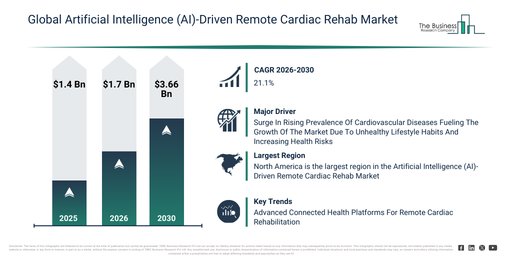
    The artificial intelligence (AI)-driven remote cardiac rehab market size has experienced substantial growth in recent years. This market is set to expand from $1.4 billion in 2025 to $1.7 billion in 2026, achieving a compound annual growth rate (CAGR) of 21.4%. Factors contributing to its historical growth include the expansion of cardiac rehabilitation programs, the increasing prevalence of cardiovascular diseases, greater adoption of telehealth services, the development of wearable cardiac devices, and improved remote monitoring capabilities.

    The artificial intelligence (AI)-driven remote cardiac rehab market is projected to experience substantial expansion over the coming years. This market is anticipated to reach $3.66 billion by 2030, exhibiting a compound annual growth rate (CAGR) of 21.1%. Factors contributing to this growth include escalating investments in AI-based cardiac care, a heightened demand for home-based rehabilitation services, the broadening of cloud-based cardiac analytics platforms, an intensified emphasis on preventive cardiac health, and greater integration with digital health records. Key trends for this period encompass the increased application of AI-driven cardiac monitoring algorithms, a surge in the adoption of wearable heart monitoring devices, an expanding requirement for personalized rehabilitation programs, the development of remote patient engagement tools, and an amplified focus on continuous outcome tracking.

    Get A Free Artificial Intelligence (AI)-Driven Remote Cardiac Rehab Market Sample With 2030 Forecast Insights:

    https://thebusinessresearchcompany.com/sample_request?id=24802432&type=smp&name=Artificial%20Intelligence%20%28AI%29-Driven%20Remote%20Cardiac%20Rehab%20Market%20Report%202026&utm_source=Blogs&utm_medium=Paid&utm_campaign=Nov_PR

    Artificial Intelligence (AI)-Driven Remote Cardiac Rehab Market Outlook: Key Driver Supporting Long-Term Growth

    The increasing occurrence of cardiovascular diseases is anticipated to boost the expansion of the artificial intelligence (AI)-driven remote cardiac rehab market in the coming years. Cardiovascular diseases are conditions affecting the heart and blood vessels, such as heart attack, stroke, and hypertension. The rise in these diseases is largely attributable to unhealthy habits that contribute to obesity, elevated blood pressure, and high cholesterol, thereby straining the heart and arteries. AI-driven remote cardiac rehab assists patients with cardiovascular diseases by remotely monitoring heart health, tailoring exercise and medication strategies, and offering immediate feedback, which improves recovery, encourages adherence, and lowers hospital readmissions. For example, in August 2025, the National Institutes of Health, a US-based government agency, indicated that between 2025 and 2050, cardiovascular prevalence is projected to increase by 90%, mortality by 73%, and DALYs by 55%, with deaths escalating from 20.5 million to 35.6 million. Thus, the growing prevalence of cardiovascular diseases is fueling the growth of the artificial intelligence (AI)-driven remote cardiac rehab market.

    Segmentation Of The Artificial Intelligence (AI)-Driven Remote Cardiac Rehab Market: Key Categories Explained

    The artificial intelligence (AI)-driven remote cardiac rehab market covered in this report is segmented –

    1) By Component: Software, Hardware, Services

    2) By Delivery Mode: Web-Based, App-Based, Telehealth Platforms

    3) By Deployment Mode: Cloud-Based, On-Premises

    4) By Application: Chronic Heart Failure, Post-Myocardial Infarction, Post-Cardiac Surgery, Hypertension Management, Other Applications

    5) By End-User: Hospitals And Clinics, Homecare Settings, Rehabilitation Centers, Other End-Users

    Subsegments:

    1) By Software: Remote Monitoring Software, Patient Engagement Software, Data Analytics Software

    2) By Hardware: Wearable Devices, Sensors And Monitors, Mobile Devices

    3) By Services: Telehealth Services, Consultation Services, Training And Support Services

    Artificial Intelligence (AI)-Driven Remote Cardiac Rehab Market Evolving Trends: What Businesses Should Know

    Major companies operating in the artificial intelligence (AI)-driven remote cardiac rehab market are concentrating on developing innovative solutions, such as advanced connected health platforms. These platforms aim to enable continuous remote monitoring, deliver personalized rehabilitation programs, and enhance patient engagement for improved cardiovascular outcomes. An advanced connected health platform typically refers to a digital system that integrates wearable devices, sensors, mobile apps, and cloud-based analytics to remotely track patients’ health, provide tailored care, and facilitate real-time communication between patients and healthcare providers. For instance, in July 2025, OMRON Healthcare, a Japan-based healthcare company, partnered with Tricog Health Services Pvt Limited, an India-based medtech company, to introduce KeeboHealth. This platform was designed to address India’s cardiac crisis and further OMRON’s Going for Zero vision, which is a goal to eliminate cardiovascular events such as heart attacks and strokes. KeeboHealth enables real-time monitoring by combining OMRON’s home ECG and blood pressure devices with Tricog’s AI cardiac analysis, facilitating early detection of heart issues and timely medical intervention. This platform ultimately helps reduce hospitalizations, improves therapy adherence, and supports personalized heart health management.

    Who Competes In The Artificial Intelligence (AI)-Driven Remote Cardiac Rehab Market? Major Companies Listed

    Major companies operating in the artificial intelligence (AI)-driven remote cardiac rehab market are Medtronic PLC, Philips Healthcare, Biofourmis Inc., Neurosoft Ltd., Cadence Health Solutions, Wellframe Inc., Amwell, Datos Health Ltd., VivaLNK Inc., Carda Health Inc., Heartbeat Health Inc., Cardihab Pty Ltd., Chanl Health Inc., HealthSnap Inc., Kento Health Inc., Lyfe by Lupin Digital Health, Movn Health Inc., RecoveryPlus Health, Wellinks Inc., CardioCare Fit.

    Read The Complete Artificial Intelligence (AI)-Driven Remote Cardiac Rehab Market Forecast Report Through 2030:

    https://thebusinessresearchcompany.com/report/artificial-intelligence-ai-driven-remote-cardiac-rehab-global-market-report?utm_source=Blogs&utm_medium=Paid&utm_campaign=Nov_PR

    Artificial Intelligence (AI)-Driven Remote Cardiac Rehab Market Regional Ranking: Which Geography Comes First?

    North America was the largest region in the artificial intelligence (AI)-driven remote cardiac rehab market in 2025. Asia-Pacific is expected to be the fastest-growing region in the forecast period. The regions covered in the artificial intelligence (AI)-driven remote cardiac rehab market report are Asia-Pacific, South East Asia, Western Europe, Eastern Europe, North America, South America, Middle East, Africa.

    Reach Out To Our Team:

    The Business Research Company: https://www.thebusinessresearchcompany.com/

    Americas: +1 310-496-7795

    Asia: +44 7882 955267 & +91 8897263534

    Europe: +44 7882 955267

    Email us at: marketing@tbrc.info

    Follow us on:

    LinkedIn: https://in.linkedin.com/company/the-business-research-company

    YouTube: https://www.youtube.com/channel/UC24_fI0rV8cR5DxlCpgmyFQ

    Global Market Model: https://www.thebusinessresearchcompany.com/global-market-model
  • 3D Cardiac Mapping System Market Report 2026: Size, Segmentation, Regional Analysis And Key Players

    3D Cardiac Mapping System Market Report 2026: Size, Segmentation, Regional Analysis And Key Players

    The Business Research Company’s 2026 market reports are designed to deliver research that is more actionable and strategically valuable. Key offerings include market attractiveness scoring, total addressable market sizing, company benchmarking matrices, interactive Excel dashboards, deeper supply chain intelligence, emerging startup tracking, and granular product-level insights.

    3D Cardiac Mapping System Market Size 2026: Valuation, Growth Rate And Forecast To 2030

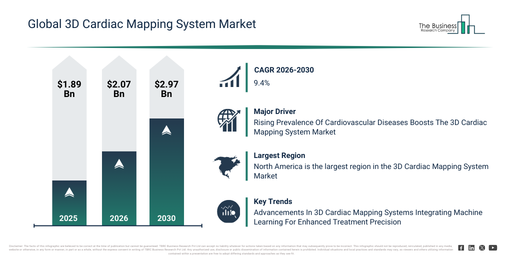
    The 3D cardiac mapping system market has experienced robust growth in recent years. It is projected to increase from $1.89 billion in 2025 to $2.07 billion in 2026, demonstrating a compound annual growth rate (CAGR) of 9.6%. This historical expansion can be attributed to the rising prevalence of cardiac arrhythmias, increased adoption of catheter ablation procedures, growing investment in cardiac care infrastructure, technological advancements in electrophysiology devices, and heightened awareness of early arrhythmia diagnosis.

    The 3D cardiac mapping system market is projected for significant expansion in the coming years, reaching $2.97 billion by 2030, demonstrating a compound annual growth rate (CAGR) of 9.4%. This anticipated growth during the forecast period is fueled by several factors, including the integration of AI-based cardiac mapping algorithms, an increasing need for precision-guided ablation therapies, the proliferation of ambulatory surgical centers, heightened healthcare spending on cardiovascular diseases, and ongoing innovation in mapping software and visualization tools. Key trends expected over the forecast period encompass the increasing use of 3D mapping in intricate arrhythmia procedures, a greater requirement for high-resolution cardiac mapping, an uptick in minimally invasive electrophysiology procedures, improvements in catheter design and electrode density, and the worldwide expansion of cardiac electrophysiology laboratories.

    Get A Free Sample Of The 3D Cardiac Mapping System Market Report 2026:

    https://thebusinessresearchcompany.com/sample_request?id=29208867&type=smp&name=3D%20Cardiac%20Mapping%20System%20Market%20Report%202026&utm_source=Blogs&utm_medium=Paid&utm_campaign=Nov_PR

    What Is Driving The Growth Of The 3D Cardiac Mapping System Market?

    The increasing prevalence of cardiovascular diseases is anticipated to drive the expansion of the 3D cardiac mapping system market in the future. This surge in cardiovascular conditions stems from various factors such as advancing age, poor lifestyle choices, obesity, diabetes, high blood pressure, stress, genetic predispositions, environmental contamination, restricted access to healthcare, and socioeconomic inequalities. A 3D Cardiac Mapping System assists individuals suffering from cardiovascular diseases by offering comprehensive, live maps of cardiac activity, thereby facilitating accurate diagnosis and therapeutic interventions for arrhythmias and related disorders. Consequently, the increasing prevalence of cardiovascular diseases is fueling the expansion of the 3D cardiac mapping system market.

    How Is The 3D Cardiac Mapping System Market Segmented?

    The 3D cardiac mapping system market covered in this report is segmented –

    1) By Product: Mapping Systems, Mapping Catheters, Mapping Accessories, Mapping Software

    2) By Application: Atrial Fibrillation, Ventricular Tachycardia, Atrial Flutter, Supraventricular Tachycardia, Other Applications

    3) By End Users: Hospitals, Cardiac Catheterization Laboratories, Ambulatory Surgical Centers, Academic And Research Institutes, Other End Users

    Subsegments:

    1) By Mapping Systems: Electroanatomical Mapping Systems, Contact Mapping Systems, Non-Contact Mapping Systems

    2) By Mapping Catheters: High-Density Mapping Catheters, Single-Point Mapping Catheters, Multi-Electrode Mapping Catheters

    3) By Mapping Accessories: Introducers, Sheaths, Electrodes

    4) By Mapping Software: Signal Analysis Software, 3D Visualization Software, Real-Time Mapping Software

    What Are The Latest Trends In The 3D Cardiac Mapping System Market?

    Key companies active in the 3D cardiac mapping system market are concentrating on developing advanced technological solutions, such as 3D cardiac mapping systems equipped with machine learning capabilities, to elevate diagnostic accuracy and improve treatment outcomes. 3D cardiac mapping systems that incorporate machine learning refer to sophisticated medical technologies used in cardiology that combine three-dimensional mapping of the heart’s electrical activity with artificial intelligence algorithms.

    Who Are The Key Players In The 3D Cardiac Mapping System Market?

    Major companies operating in the 3D cardiac mapping system market are Abbott Laboratories, Medtronic PLC, Boston Scientific Corporation, Biotronik SE & Co. KG, MicroPort Scientific Corporation, Stereotaxis Inc., Kardium Inc., Acutus Medical Inc., Catheter Precision Inc., BioSig Technologies Inc., Volta Medical, Osypka Medical, CoreMap Inc., APN Health LLC, Japan Lifeline Co. Ltd., Lepu Medical Technology, CathRx Ltd., Adagio Medical Inc., Nihon Kohden Corporation, EP Solutions SA, Sino Medical Sciences Technology

    Read The Complete 3D Cardiac Mapping System Market Report 2026:

    https://thebusinessresearchcompany.com/report/3d-cardiac-mapping-system-global-market-report?utm_source=Blogs&utm_medium=Paid&utm_campaign=Nov_PR

    Which Region Is The Largest In The 3D Cardiac Mapping System Market?

    North America was the largest region in the 3D cardiac mapping system market in 2025. Asia-Pacific is expected to be the fastest-growing region in the forecast period. The regions covered in the 3D cardiac mapping system market report are Asia-Pacific, South East Asia, Western Europe, Eastern Europe, North America, South America, Middle East, Africa.

    Reach Out To Our Team:

    The Business Research Company: https://www.thebusinessresearchcompany.com/

    Americas: +1 310-496-7795

    Asia: +44 7882 955267 & +91 8897263534

    Europe: +44 7882 955267

    Email us at: marketing@tbrc.info

    Follow us on:

    LinkedIn: https://in.linkedin.com/company/the-business-research-company

    YouTube: https://www.youtube.com/channel/UC24_fI0rV8cR5DxlCpgmyFQ

    Global Market Model: https://www.thebusinessresearchcompany.com/global-market-model
  • Where Is The Artificial Intelligence (AI)-Driven Rare Disease Patient Finder Market Heading? Size, Trends And Forecast Through 2030

    Where Is The Artificial Intelligence (AI)-Driven Rare Disease Patient Finder Market Heading? Size, Trends And Forecast Through 2030

    The Business Research Company’s 2026 market reports combine market attractiveness scoring, total addressable market sizing, company benchmarking matrices, interactive Excel dashboards, deeper supply chain intelligence, emerging startup tracking, and granular product-level insights to deliver research that is more actionable and strategically valuable.

    Artificial Intelligence (AI)-Driven Rare Disease Patient Finder Market Size Review: What Shaped Past Growth And What Will Drive Future Expansion?

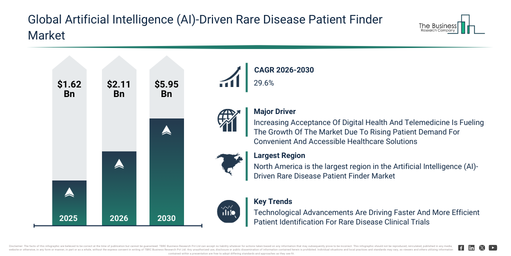
    The artificial intelligence (AI)-driven rare disease patient finder market has experienced substantial expansion in recent years. This market is set to increase from $1.62 billion in 2025 to $2.11 billion in 2026, exhibiting a compound annual growth rate (CAGR) of 29.9%. Historically, this growth has been fueled by the growing availability of electronic health records, the early adoption of data analytics in clinical research, the expansion of genomic databases, an increasing focus on orphan diseases, and the initial application of AI in trial recruitment.

    The artificial intelligence (AI)-driven rare disease patient finder market is projected to experience substantial expansion in the coming years, reaching $5.95 billion by 2030, exhibiting a compound annual growth rate (CAGR) of 29.6%. This anticipated growth throughout the forecast period stems from factors such as heightened investments in precision medicine research, an escalating need for quicker clinical trial enrollment, the broadening scope of real-world evidence analytics, increased partnerships between healthcare and life sciences organizations, and enhanced regulatory backing for innovations in rare diseases. Key trends defining this period involve the expanding application of AI-based patient identification algorithms, greater integration of multi-source health data, increased automation in clinical trial recruitment, the proliferation of precision patient matching platforms, and a strengthened emphasis on facilitating rare disease research.

    Access Free Sample Pages From The Artificial Intelligence (AI)-Driven Rare Disease Patient Finder Market Report 2026:

    https://thebusinessresearchcompany.com/sample_request?id=87524721&type=smp&name=Artificial%20Intelligence%20%28AI%29-Driven%20Rare%20Disease%20Patient%20Finder%20Market%20Report%202026&utm_source=Blogs&utm_medium=Paid&utm_campaign=Nov_PR

    Understanding The Main Driver Of The Artificial Intelligence (AI)-Driven Rare Disease Patient Finder Market

    The expansion of the artificial intelligence (AI)-driven rare disease patient finder market is anticipated to be driven by the growing adoption of digital health and telemedicine in the future. Digital health involves utilizing technology, software, and electronic instruments to oversee, handle, and enhance health and overall well-being. Telemedicine refers to the provision of medical services from a distance, employing telecommunications technologies like video conferencing, mobile applications, and internet-based platforms. This rising acceptance of digital health and telemedicine stems from both patients and healthcare providers looking for convenient, efficient, and readily available healthcare options. The artificial intelligence (AI)-driven rare disease patient finder facilitates digital health and telemedicine by precisely identifying patients, allowing for distant monitoring, prompt virtual doctor visits, and tailored treatment plans. An example of this trend is a report from November 2025 by the Organisation for Economic Co operation and Development, a France-based intergovernmental organization, which stated that OECD countries have advanced in broadening access to EHRs. Consequently, the growing adoption of digital health and telemedicine is a key factor propelling the expansion of the artificial intelligence (AI)-driven rare disease patient finder market.

    Artificial Intelligence (AI)-Driven Rare Disease Patient Finder Market Segment Mapping For 2026 And Beyond

    The artificial intelligence (AI)-driven rare disease patient finder market covered in this report is segmented –

    1) By Component: Software, Services

    2) By Deployment Mode: Cloud-Based, On-Premises

    3) By Application: Hospitals, Clinics, Research Institutes, Pharmaceutical Companies, Other Applications

    4) By End-User: Healthcare Providers, Life Sciences Companies, Payers, Other End-Users

    Subsegments:

    1) By Software: Electronic Data Capture, Data Management Platform, Analytics And Reporting Tools, Patient Engagement Tools, Clinical Trial Management System

    2) By Services: Implementation And Integration, Training And Support, Data Hosting And Security, Consulting Services, Maintenance And Upgrades

    What Key Trend Is Expected To Shape The Artificial Intelligence (AI)-Driven Rare Disease Patient Finder Market Over The Forecast Period?

    Major companies operating in the AI-driven rare disease patient finder market are concentrating on creating technological advancements, such as precision patient recruitment solutions. This focus aims to boost the accuracy, speed, and effectiveness of identifying eligible patients for rare disease clinical trials, simultaneously shortening recruitment periods and increasing trial success rates. A precision patient recruitment solution is a technology-driven method that employs advanced algorithms and real-world data to accurately identify and engage patients who fulfill specific clinical trial eligibility criteria.

    Artificial Intelligence (AI)-Driven Rare Disease Patient Finder Market Major Players And Industry Competition Overview

    Major companies operating in the artificial intelligence (AI)-driven rare disease patient finder market are UnitedHealth Group Incorporated, Dassault Systèmes SE, GeneDx Holdings Corp., HealthVerity Inc., ConcertAI Inc., Komodo Health Inc., Unlearn.AI Inc., Antidote Technologies Inc., Healx Ltd., FDNA Inc., Saventic Health Sp. z o.o., Digital Pharma Lab SAS, AnnieGuard Ltd., Rapid Innovation Labs Inc., Sqilline EOOD, TrialX Inc., enGenome Srl, EveryCure Inc., ThinkGenetic Inc., RareSum Inc.

    Full Artificial Intelligence (AI)-Driven Rare Disease Patient Finder Market Report: Market Size, Trends, Segments And Key Players:

    https://thebusinessresearchcompany.com/report/artificial-intelligence-ai-driven-rare-disease-patient-finder-global-market-report?utm_source=Blogs&utm_medium=Paid&utm_campaign=Nov_PR

    Artificial Intelligence (AI)-Driven Rare Disease Patient Finder Market Geographic Segmentation: Regions Covered In The Report

    North America was the largest region in the artificial intelligence (AI)-driven rare disease patient finder market in 2025. Asia-Pacific is expected to be the fastest-growing region in the forecast period. The regions covered in the artificial intelligence (AI)-driven rare disease patient finder market report are Asia-Pacific, South East Asia, Western Europe, Eastern Europe, North America, South America, Middle East, Africa.

    Reach Out To Our Team:

    The Business Research Company: https://www.thebusinessresearchcompany.com/

    Americas: +1 310-496-7795

    Asia: +44 7882 955267 & +91 8897263534

    Europe: +44 7882 955267

    Email us at: marketing@tbrc.info

    Follow us on:

    LinkedIn: https://in.linkedin.com/company/the-business-research-company

    YouTube: https://www.youtube.com/channel/UC24_fI0rV8cR5DxlCpgmyFQ

    Global Market Model: https://www.thebusinessresearchcompany.com/global-market-model
  • Advancements In AI-Powered Post- Device Surveillance Enhancing Patient Safety And Device Performance: The Key Trend Shaping The Artificial Intelligence (AI)-Driven Medical Device Vigilance Platform Market Through 2030

    Advancements In AI-Powered Post- Device Surveillance Enhancing Patient Safety And Device Performance: The Key Trend Shaping The Artificial Intelligence (AI)-Driven Medical Device Vigilance Platform Market Through 2030

    Market attractiveness scoring, total addressable market sizing, company benchmarking matrices, interactive Excel dashboards, deeper supply chain intelligence, emerging startup tracking, and granular product-level insights are among the key offerings featured in The Business Research Company’s 2026 market reports, designed to deliver more actionable and strategically valuable research.

    Artificial Intelligence (AI)-Driven Medical Device Vigilance Platform Market On Course To Reach $5.61 Billion By 2030: Size And Growth Overview

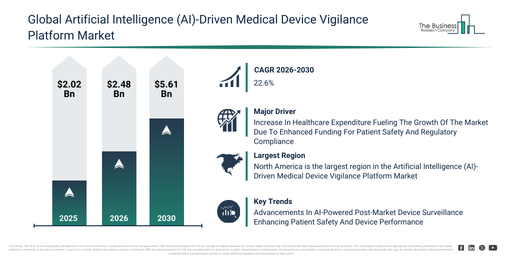
    The artificial intelligence (AI)-driven medical device vigilance platform market size has experienced significant expansion in recent years. It is projected to increase from $2.02 billion in 2025 to $2.48 billion in 2026, demonstrating a compound annual growth rate (CAGR) of 22.9%. This historical growth can be attributed to several factors, including rising medical device adoption rates, an expansion of post-market surveillance requirements, the increasing complexity of device portfolios, growth in adverse event reporting databases, and the early utilization of data analytics in vigilance.

    The artificial intelligence (AI)-driven medical device vigilance platform market size is anticipated to experience substantial growth in the coming years. It is projected to expand to $5.61 billion by 2030, demonstrating a compound annual growth rate (CAGR) of 22.6%. This expected expansion is driven by several factors, including increasing regulatory scrutiny on device safety, a rising demand for real-time risk monitoring, the expansion of cloud-based vigilance platforms, growing integration with hospital device data, and the increasing adoption of AI-driven compliance tools. Key trends foreseen in this period encompass the increasing adoption of AI-based signal detection systems, a rising use of predictive analytics for device safety, growing integration of real-time vigilance platforms, the expansion of automated regulatory reporting, and an enhanced focus on proactive risk management.

    Need Artificial Intelligence (AI)-Driven Medical Device Vigilance Platform Market Forecasts? Get Your Free Sample Report Here:

    https://thebusinessresearchcompany.com/sample_request?id=82993025&type=smp&name=Artificial%20Intelligence%20%28AI%29-Driven%20Medical%20Device%20Vigilance%20Platform%20Market%20Report%202026&utm_source=Blogs&utm_medium=Paid&utm_campaign=Nov_PR

    Artificial Intelligence (AI)-Driven Medical Device Vigilance Platform Market Growth Factors: What Is Strengthening Demand Worldwide?

    The increasing spending on healthcare is anticipated to fuel the expansion of the artificial intelligence (AI)-driven medical device vigilance platform market in the future. Healthcare expenditure encompasses the total funds spent by individuals, organizations, and governmental bodies on services and initiatives designed to preserve or enhance health. This expenditure is climbing because of the increasing incidence of chronic illnesses, which necessitates ongoing medical attention, prolonged therapies, and management resources. The financial support from healthcare spending enables hospitals and healthcare providers to deploy extensive safety and monitoring programs for AI-driven medical device vigilance platforms, thereby guaranteeing compliance with regulations and better patient protection. Consequently, the escalation in healthcare expenditure is a primary driver for the expansion of the artificial intelligence (AI)-driven medical device vigilance platform market. The increasing scope of clinical research is projected to stimulate the growth of the artificial intelligence (AI)-driven medical device vigilance platform market in the coming years. This expansion involves a rise in clinical trials, research facilities, and resources dedicated to advancing medical understanding and enhancing patient results. The surge in public-private funding is driving this growth, boosting the capability to execute more trials, optimize research procedures, and broaden access to novel treatments. The growth in clinical research aids AI-driven medical device vigilance platforms by equipping healthcare providers and research organizations with the required infrastructure and financial backing to implement thorough monitoring programs, secure regulatory adherence, and uplift patient safety. Consequently, the expanding landscape of clinical research is a significant catalyst for the growth of the artificial intelligence (AI)-driven medical device vigilance platform market.

    Artificial Intelligence (AI)-Driven Medical Device Vigilance Platform Market By Segment: Complete Category And Subcategory Breakdown

    The artificial intelligence (AI)-driven medical device vigilance platform market covered in this report is segmented –

    1) By Component: Software, Hardware, Services

    2) By Deployment Mode: On-Premises, Cloud-Based

    3) By Application: Adverse Event Detection, Regulatory Compliance, Risk Management, Data Analytics, Other Applications

    4) By End-User: Hospitals, Medical Device Manufacturers, Regulatory Agencies, Contract Research Organizations, Other End-Users

    Subsegments:

    1) By Software: Predictive Analytics, Signal Detection, Data Integration, Reporting And Visualization

    2) By Hardware: Servers, Storage Devices, Networking Equipment, Sensors, Monitoring Devices

    3) By Services: Implementation Services, Maintenance And Support, Consulting Services, Training Services, Data Management Services

    Artificial Intelligence (AI)-Driven Medical Device Vigilance Platform Market Trend Outlook: Developments Defining The Forecast Period

    Leading firms within the artificial intelligence (AI)-driven medical device vigilance platform sector are concentrating on creating sophisticated offerings, including post-market device surveillance systems. These aim to furnish healthcare providers and manufacturers with practical data to enhance patient results and streamline device utilization. Such post-market device surveillance platforms are systems designed to monitor and evaluate the safety and efficacy of medical devices once they become available for use in clinical environments. As an illustration, in October 2025, Basil Systems, a US-based developer of AI-powered platforms, introduced its MedTech Safety Signaling platform. This system leverages AI to detect potential hazards at an early stage, thereby converting traditional post-market device surveillance into a forward-thinking safety strategy. It processes regulatory documentation, inspection findings, and adverse event reports using large language models, which are trained on an extensive industry dataset, to uncover patterns that would be challenging to identify through manual methods. The system organizes and interprets this data, linking correlated events back to their initial sources with specified confidence levels. This capability empowers manufacturers to identify emerging safety trends, refine preventative actions, foresee regulatory scrutiny, and inform product development choices.

    Who Is Competing For Share In The Artificial Intelligence (AI)-Driven Medical Device Vigilance Platform Market?

    Major companies operating in the artificial intelligence (AI)-driven medical device vigilance platform market are Amazon Web Services Inc., Johnson & Johnson Services Inc., International Business Machines Corporation, Oracle Corporation, Abbott Laboratories, Medtronic Plc, Siemens Healthineers AG, Stryker Corporation, Koninklijke Philips N.V., GE HealthCare Technologies Inc., Cognizant Technology Solutions Corporation, Boston Scientific Corporation, DXC TECHNOLOGY COMPANY, Baxter International Inc., Wipro Limited, Zimmer Biomet Holdings Inc., Veeva Systems Inc., Medidata Solutions Inc., Tata Consultancy Services Limited, AssurX Inc.

    Get The Full Picture With The Artificial Intelligence (AI)-Driven Medical Device Vigilance Platform Market Report:

    https://thebusinessresearchcompany.com/report/artificial-intelligence-ai-driven-medical-device-vigilance-platform-global-market-report?utm_source=Blogs&utm_medium=Paid&utm_campaign=Nov_PR

    Artificial Intelligence (AI)-Driven Medical Device Vigilance Platform Market Regional Snapshot: Leading Geography In 2025

    North America was the largest region in the artificial intelligence (AI)-driven medical device vigilance platform market in 2025. Asia-Pacific is expected to be the fastest-growing region in the forecast period. The regions covered in the artificial intelligence (AI)-driven medical device vigilance platform market report are Asia-Pacific, South East Asia, Western Europe, Eastern Europe, North America, South America, Middle East, Africa.

    Reach Out To Our Team:

    The Business Research Company: https://www.thebusinessresearchcompany.com/

    Americas: +1 310-496-7795

    Asia: +44 7882 955267 & +91 8897263534

    Europe: +44 7882 955267

    Email us at: marketing@tbrc.info

    Follow us on:

    LinkedIn: https://in.linkedin.com/company/the-business-research-company

    YouTube: https://www.youtube.com/channel/UC24_fI0rV8cR5DxlCpgmyFQ

    Global Market Model: https://www.thebusinessresearchcompany.com/global-market-model
  • Zygomatic And Pterygoid Implants Market Expected To Grow At 6% CAGR Through 2030: What Businesses Need To Know

    Zygomatic And Pterygoid Implants Market Expected To Grow At 6% CAGR Through 2030: What Businesses Need To Know

    Built to provide research that’s more actionable and strategically valuable, The Business Research Company’s 2026 market reports include market attractiveness analysis, total addressable market sizing, company benchmarking matrices, interactive Excel dashboards, broader supply chain intelligence, emerging startup tracking, and in-depth product insights.

    Zygomatic And Pterygoid Implants Market Size, Value And Growth Trajectory Through 2030

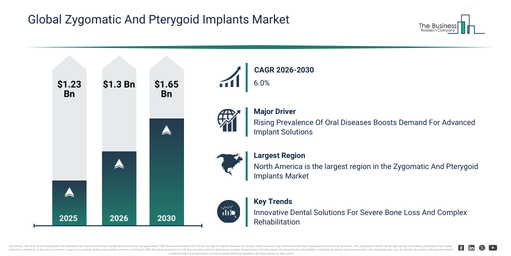
    The zygomatic and pterygoid implants market size has shown robust expansion in recent years. It is anticipated to increase from $1.23 billion in 2025 to $1.3 billion in 2026, registering a compound annual growth rate (CAGR) of 6.3%. The market’s historical development can be ascribed to several factors, including the rising incidence of severe maxillary bone loss cases, enhanced understanding of alternative implant solutions, increased uptake of dental implants among geriatric patients, the expansion of specialized dental clinics, and progress in implant material design.

    The zygomatic and pterygoid implants market size is anticipated to demonstrate robust growth over the coming years, with its valuation expected to reach $1.65 billion by 2030, exhibiting a compound annual growth rate (CAGR) of 6.0%. This expansion during the forecast period is primarily fueled by an escalating demand for full-arch rehabilitation solutions, the increasing adoption of digital dentistry workflows, growing investments directed towards advanced dental implant systems, a rising preference for graftless implant procedures, and the broader availability of implant-supported prosthetic solutions. Key trends influencing the market in this forecast span include the escalating adoption of advanced implant placement techniques, a greater utilization of digital surgical planning tools, an increasing desire for immediate load implant solutions, the expansion of specialized dental implant training programs, and a heightened focus on minimally invasive implant procedures.

    Get A Free Sample Report With In-Depth Market Insights:

    https://thebusinessresearchcompany.com/sample_request?id=49007021&type=smp&name=Zygomatic%20And%20Pterygoid%20Implants%20Market%20Report%202026&utm_source=Blogs&utm_medium=Paid&utm_campaign=Nov_PR

    Zygomatic And Pterygoid Implants Market Opportunity Drivers: What’s Unlocking New Revenue Potential?

    The increasing occurrence of oral diseases is anticipated to propel the growth of the zygomatic and pterygoid implants market going forward. Oral diseases encompass various conditions impacting the mouth, teeth, gums, and surrounding tissues, including cavities, gum disease, oral infections, and oral cancer, often caused by poor hygiene, dietary habits, or underlying health issues. These conditions are increasing due to factors such as poor oral hygiene, unhealthy diets high in sugar, lack of access to dental care, and rising rates of tobacco and alcohol use. Zygomatic and pterygoid implants help address oral diseases by providing stable support for dental prostheses in patients with severe bone loss, improving overall oral health, and restoring function when traditional implants are not feasible. For instance, in March 2025, according to the World Health Organization (WHO), oral diseases were estimated to affect nearly 3.7 billion people worldwide, while severe periodontal disease impacted more than 1 billion individuals globally, with complete tooth loss occurring in about 7% of adults aged 20 years and older and rising to roughly 23% among those aged 60 years or above. Therefore, the rising prevalence of oral diseases is driving growth in the zygomatic and pterygoid implants market.

    Zygomatic And Pterygoid Implants Market Segment Trends And Revenue Contributors

    The zygomatic and pterygoid implants market covered in this report is segmented –

    1) By Type: Zygomatic Implants, Pterygoid Implants, Combined Implants

    2) By Length: Up To 30 Mm, 30–50 Mm, Above 50 Mm

    3) By Application: Maxillary Sinuses, Severe Atrophy Of Maxillary Bone, Other Applications

    4) By End User: Dental Clinics, Hospital Dental Departments, Research Institutions

    Subsegments:

    1) By Zygomatic Implants: Single Zygomatic Implants, Multiple Zygomatic Implants

    2) By Pterygoid Implants: Single Pterygoid Implants, Multiple Pterygoid Implants

    3) By Combined Implants: Zygomatic And Pterygoid Combined Implants, Hybrid Zygomatic And Pterygoid Implant Systems

    Zygomatic And Pterygoid Implants Market Innovation Trends Shaping Future Development

    Major companies operating in the zygomatic and pterygoid implants market are concentrating on bringing forth innovative solutions, such as metal-free implants. This initiative aims to serve patients with metal allergies, enhance the body’s compatibility, and improve the durability of treatment results. Metal-free implants are medical devices made entirely from non-metallic substances, including ceramics or polymers, which are biocompatible and crafted to reduce metal-related allergic reactions, corrosion, or interference with medical imaging methods like MRI.

    Zygomatic And Pterygoid Implants Market Competitive Landscape: Which Companies Lead The Industry?

    Major companies operating in the zygomatic and pterygoid implants market are Straumann Holding AG, Zimmer Biomet Holding Inc., Nobel Biocare, BioHorizons Implant Systems Inc., MIS Implants Technologies Ltd., Southern Implants (Pty) Ltd., Camlog Vertriebs GmbH, Jeil Medical Corporation, Osstem Implant Co Ltd, Megagen Implant Co Ltd, Dentsply Sirona Inc, Bicon Dental Implants, Hiossen Inc, Euroteknika SAS.

    View The Full Zygomatic And Pterygoid Implants Market Report:

    https://thebusinessresearchcompany.com/report/zygomatic-and-pterygoid-implants-global-market-report?utm_source=Blogs&utm_medium=Paid&utm_campaign=Nov_PR

    Zygomatic And Pterygoid Implants Market Regional Breakdown: Where Is Demand Concentrated?

    North America was the largest region in the zygomatic and pterygoid implants market in 2025. Asia-Pacific is expected to be the fastest-growing region in the forecast period. The regions covered in the zygomatic and pterygoid implants market report are Asia-Pacific, South East Asia, Western Europe, Eastern Europe, North America, South America, Middle East, Africa.

    Reach Out To Our Team:

    The Business Research Company: https://www.thebusinessresearchcompany.com/

    Americas: +1 310-496-7795

    Asia: +44 7882 955267 & +91 8897263534

    Europe: +44 7882 955267

    Email us at: marketing@tbrc.info

    Follow us on:

    LinkedIn: https://in.linkedin.com/company/the-business-research-company

    YouTube: https://www.youtube.com/channel/UC24_fI0rV8cR5DxlCpgmyFQ

    Global Market Model: https://www.thebusinessresearchcompany.com/global-market-model
  • Artificial Intelligence (AI)-Driven Gamified Language Therapy Market To Expand At A 22.4% CAGR On The Back Of Rising Adoption Of Digital Health Therapeutics

    Artificial Intelligence (AI)-Driven Gamified Language Therapy Market To Expand At A 22.4% CAGR On The Back Of Rising Adoption Of Digital Health Therapeutics

    Designed to make market research more actionable and strategically valuable, The Business Research Company’s 2026 market reports feature market attractiveness scoring, total addressable market sizing, company benchmarking matrices, interactive Excel dashboards, deeper supply chain intelligence, emerging startup tracking, and granular product-level insights.

    Artificial Intelligence (AI)-Driven Gamified Language Therapy Market Revenue Expansion Outlook For The 2026–2030 Forecast Period

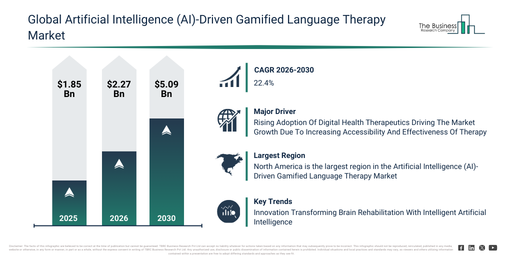
    The artificial intelligence (AI)-driven gamified language therapy market size has experienced substantial growth in recent years. This market is projected to expand from $1.85 billion in 2025 to $2.27 billion in 2026, achieving a compound annual growth rate (CAGR) of 22.6%. The expansion observed in the historic period can be attributed to factors such as increasing awareness of speech and language disorders, the early adoption of digital therapy tools, the growing prevalence of mobile health applications, the broadening of pediatric therapy programs, and the accessibility of remote therapy platforms.

    Significant growth is projected for the artificial intelligence (AI)-driven gamified language therapy market size over the next few years. By 2030, this market is forecasted to reach $5.09 billion, demonstrating a compound annual growth rate (CAGR) of 22.4%. This anticipated expansion during the forecast period is fueled by several factors, including a heightened demand for rehabilitation solutions accessible from home, the increasing integration of AI-personalized therapy models, the broadening scope of virtual and immersive therapy tools, an intensified emphasis on ensuring long-term patient adherence, and a rise in investments directed towards digital therapeutics. Key trends shaping this period encompass the wider adoption of gamified therapy platforms, the growing utilization of personalized language rehabilitation tools, a greater integration of real-time progress adaptation features, the expansion of interactive therapy environments, and an amplified focus on patient engagement and motivation.

    Download A Free Sample For In-Depth Artificial Intelligence (AI)-Driven Gamified Language Therapy Market Intelligence:

    https://thebusinessresearchcompany.com/sample_request?id=69828044&type=smp&name=Artificial%20Intelligence%20%28AI%29-Driven%20Gamified%20Language%20Therapy%20Market%20Report%202026&utm_source=Blogs&utm_medium=Paid&utm_campaign=Nov_PR

    Artificial Intelligence (AI)-Driven Gamified Language Therapy Market Demand Driver: How It Is Shaping Industry Growth

    The increasing integration of digital health therapeutics is anticipated to fuel the expansion of the artificial intelligence (AI)-driven gamified language therapy market. Digital health therapeutics involves scientifically supported treatment methods provided through digital channels to prevent, manage, or address various medical ailments. This growing adoption stems from patients’ desire for more readily available care for chronic diseases, tailored treatment options, and the convenience of health monitoring from their residences. Artificial intelligence (AI)-driven gamified language therapy complements digital health therapeutics by offering customized, engaging exercises that enhance patient participation, allow for real-time progress tracking, and speed up language recovery. As an illustration, a November 2025 report from the France-based intergovernmental Organisation for Economic Co operation and Development indicated that OECD nations have advanced in broadening access to EHRs. Consequently, the increasing embrace of digital health therapeutics is propelling the expansion of the artificial intelligence (AI)-driven gamified language therapy market.

    Artificial Intelligence (AI)-Driven Gamified Language Therapy Market Segmentation Overview: Detailed Category Analysis

    The artificial intelligence (AI)-driven gamified language therapy market covered in this report is segmented –

    1) By Component: Software, Hardware, Services

    2) By Deployment Mode: Cloud-Based, On-Premises

    3) By Therapy: Speech Therapy, Language Therapy, Cognitive Therapy, Other Therapies

    4) By Application: Children, Adults, Geriatric

    5) By End-User: Hospitals And Clinics, Rehabilitation Centers, Educational Institutions, Homecare, Other End Users

    Subsegments:

    1) By Software: Mobile Applications, Web-Based Platforms, Gamification Engines, Analytics And Reporting Tools

    2) By Hardware: Virtual Reality Headsets, Augmented Reality Devices, Wearables And Sensors, Interactive Consoles

    3) By Services: Implementation And Integration, Training And Education, Support And Maintenance, Consulting Services

    Top Artificial Intelligence (AI)-Driven Gamified Language Therapy Market Trends And Recent Industry Developments

    Major companies operating in the artificial intelligence (AI)-driven gamified language therapy market are primarily focused on developing innovative solutions, including personalized adaptive learning platforms, to elevate engagement, accelerate recovery, and enhance therapy outcomes for users. These personalized adaptive learning platforms are digital systems that consistently adjust exercises, content, and difficulty according to an individual’s performance and specific needs, thereby assisting users in learning or recovering more efficiently, staying motivated, tracking real-time progress, and achieving superior long-term results. For instance, in April 2025, Constant Therapy Health, a U.S.-based digital health company, revealed the expansion of its AI-driven speech, language, and cognitive therapy platform to feature Spanish and Indian English editions. This update allows non-native speakers recovering from stroke, traumatic brain injury (TBI), aphasia, dementia, or other neurological conditions to access more than 1 million evidence-based exercises, tailored both culturally and linguistically. The platform’s AI continuously monitors user advancement, customizes therapy in real time, and enables caregivers and clinicians to track outcomes, making therapy more captivating, effective, and accessible from home.

    Artificial Intelligence (AI)-Driven Gamified Language Therapy Market Company Landscape: Key Players To Watch

    Major companies operating in the artificial intelligence (AI)-driven gamified language therapy market are Babbel GmbH, Rosetta Stone LLC, SAY IT Labs BV, SPRY Ally, MINDMAZE SA, Busuu Ltd., Memrise Ltd., Lingvist Technologies OÜ, Constant Therapy Inc., Lingraphica LLC, Gemiini Systems LLC, Speechace LLC, Otsimo Inc., Blub Blub Inc., Melospeech Inc., LiriCare BV, Gabify Ltd., FunWattle Inc., TikTalk Inc., Hevolve AI

    Explore The Artificial Intelligence (AI)-Driven Gamified Language Therapy Global Market Report For Full Insights:

    https://thebusinessresearchcompany.com/report/artificial-intelligence-ai-driven-gamified-language-therapy-global-market-report?utm_source=Blogs&utm_medium=Paid&utm_campaign=Nov_PR

    Artificial Intelligence (AI)-Driven Gamified Language Therapy Market Region-Wise Analysis: Largest Regional Market Identified

    North America was the largest region in the artificial intelligence (AI)-driven gamified language therapy market in 2025. Asia-Pacific is expected to be the fastest-growing region in the forecast period. The regions covered in the artificial intelligence (AI)-driven gamified language therapy market report are Asia-Pacific, South East Asia, Western Europe, Eastern Europe, North America, South America, Middle East, Africa.

    Reach Out To Our Team:

    The Business Research Company: https://www.thebusinessresearchcompany.com/

    Americas: +1 310-496-7795

    Asia: +44 7882 955267 & +91 8897263534

    Europe: +44 7882 955267

    Email us at: marketing@tbrc.info

    Follow us on:

    LinkedIn: https://in.linkedin.com/company/the-business-research-company

    YouTube: https://www.youtube.com/channel/UC24_fI0rV8cR5DxlCpgmyFQ

    Global Market Model: https://www.thebusinessresearchcompany.com/global-market-model
  • Zollinger-Ellison Syndrome Treatment Market Forecast To Reach $1.82 Billion By 2030: Key Trends Explained

    Zollinger-Ellison Syndrome Treatment Market Forecast To Reach $1.82 Billion By 2030: Key Trends Explained

    Backed by market attractiveness analysis, total addressable market sizing, company benchmarking matrices, interactive Excel dashboards, wider supply chain intelligence, emerging startup coverage, and detailed product-level insights, The Business Research Company’s 2026 market reports are designed to offer research that is more actionable and strategically valuable than ever.

    Zollinger-Ellison Syndrome Treatment Market CAGR Outlook And Future Development

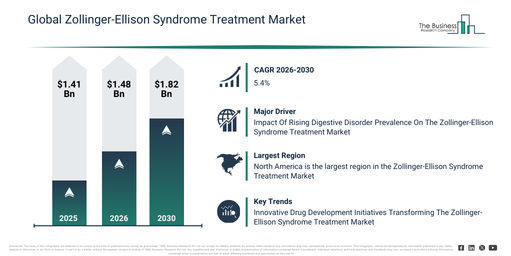
    The zollinger-ellison syndrome treatment market has shown consistent expansion in recent years. This market is anticipated to increase from $1.41 billion in 2025 to $1.48 billion in 2026, progressing at a compound annual growth rate (CAGR) of 4.5%. The historical growth of the market can be ascribed to elements like a better clinical understanding of gastrinomas, the presence of effective acid-suppressive medicines, wider access to diagnostic imaging techniques, the proliferation of specialty gastroenterology clinics, and the use of surgical intervention strategies.

    The zollinger-ellison syndrome treatment market size is set to experience significant expansion in the upcoming years, with projections indicating it will reach $1.82 billion by 2030, growing at a compound annual growth rate (CAGR) of 5.4%. This anticipated growth can be attributed to several factors such as the increasing embrace of personalized treatment plans, the rising application of advanced imaging diagnostics, the expansion of multidisciplinary care models, intensified research into targeted therapies, and a stronger emphasis on early diagnosis and ongoing monitoring. Throughout the forecast period, key trends are expected to involve the increased utilization of proton pump inhibitors for acid management, a growing adoption of sophisticated diagnostic imaging, the broadening of minimally invasive surgical techniques, a heightened focus on detecting tumors at an early stage, and improved long-term surveillance of the disease.

    Get A Free Sample Report With In-Depth Market Insights:

    https://thebusinessresearchcompany.com/sample_request?id=36555130&type=smp&name=Zollinger-Ellison%20Syndrome%20Treatment%20Market%20Report%202026&utm_source=Blogs&utm_medium=Paid&utm_campaign=Nov_PR

    Zollinger-Ellison Syndrome Treatment Market Growth Momentum: What Factors Are Shaping Demand?

    The rising occurrence of digestive issues is projected to drive expansion within the Zollinger-Ellison syndrome treatment market in the future. These disorders encompass various ailments that disrupt the typical operation of the digestive system. The digestive system, also known as the gastrointestinal (GI) tract, plays a crucial role in processing food and assimilating nutrients. Treatment for Zollinger-Ellison syndrome (ZES) addresses digestive conditions like peptic ulcer disease and gastroesophageal reflux disease (GERD) by decreasing stomach acid production, thereby aiding in the prevention or management of complications from peptic ulcers or acid reflux. Consequently, the growing prevalence of digestive disorders is anticipated to stimulate the expansion of the Zollinger-Ellison syndrome treatment market.

    Zollinger-Ellison Syndrome Treatment Market Segment Analysis Spotlighting Growth Areas

    The zollinger-ellison syndrome treatment market covered in this report is segmented –

    1) By Diagnosis: Blood Test, CT Scan, Ultrasound, X-Ray, Other Diagnosis

    2) By Treatment: Chemotherapy, Surgical Resection, Other Treatments

    3) By Distribution Channel: Hospital Pharmacy, Retail Pharmacy, Online Pharmacies, Other Distribution Channels

    4) By End User: Hospitals, Specialty Clinics, Other End Users

    Subsegments:

    1) By Blood Test: Gastrin Level Measurement, Other Blood Biomarkers

    2) By CT Scan: Contrast-Enhanced CT, Non-Contrast CT

    3) By Ultrasound: Abdominal Ultrasound, Endoscopic Ultrasound

    4) By X-Ray: Standard X-Ray Imaging, Fluoroscopy

    5) By Other Diagnosis: MRI (Magnetic Resonance Imaging), Endoscopy

    Zollinger-Ellison Syndrome Treatment Market Trends Redefining Industry Growth

    Leading companies in the zollinger-ellison syndrome treatment market are prioritizing the development of innovative drugs and securing their approval to maintain their market position. Current treatments for ZES can result in considerable adverse effects, such as damage to the kidneys and liver. Advanced therapies have the potential to minimize the negative impacts of conventional medications and improve patient outcomes.

    Zollinger-Ellison Syndrome Treatment Market Leading Companies: Who Holds The Strongest Market Presence?

    Major companies operating in the zollinger-ellison syndrome treatment market are Pfizer Inc., F. Hoffmann-La Roche Ltd., Merck & Co. Inc., Bayer AG, Novartis AG, Sanofi S.A., AstraZeneca PLC, Takeda Pharmaceutical Company Limited, Eli Lilly and Company, Daiichi Sankyo Company Limited, Bristol Myers Squibb Company, Boehringer Ingelheim International GmbH, Amgen Inc., AbbVie Inc., Astellas Pharma Inc., Ipsen S.A., RayzeBio Inc., ITM Isotope Technologies Munich SE, PharmaMar S.A., Crinetics Pharmaceuticals Inc., Gilead Sciences Inc.

    View The Full Zollinger-Ellison Syndrome Treatment Market Report:

    https://thebusinessresearchcompany.com/report/zollinger-ellison-syndrome-treatment-global-market-report?utm_source=Blogs&utm_medium=Paid&utm_campaign=Nov_PR

    Zollinger-Ellison Syndrome Treatment Market Geographic Landscape: Which Region Leads Industry Growth?

    North America was the largest region in the zollinger-ellison syndrome treatment market in 2025. The regions covered in the zollinger-ellison syndrome treatment market report are Asia-Pacific, South East Asia, Western Europe, Eastern Europe, North America, South America, Middle East, Africa.

    Reach Out To Our Team:

    The Business Research Company: https://www.thebusinessresearchcompany.com/

    Americas: +1 310-496-7795

    Asia: +44 7882 955267 & +91 8897263534

    Europe: +44 7882 955267

    Email us at: marketing@tbrc.info

    Follow us on:

    LinkedIn: https://in.linkedin.com/company/the-business-research-company

    YouTube: https://www.youtube.com/channel/UC24_fI0rV8cR5DxlCpgmyFQ

    Global Market Model: https://www.thebusinessresearchcompany.com/global-market-model