Author: Marketing Posting

  • Artificial Intelligence (AI) In Regulatory Affairs Market Led By North America: Size, Growth And Regional Outlook

    Artificial Intelligence (AI) In Regulatory Affairs Market Led By North America: Size, Growth And Regional Outlook

    With a focus on actionable insights and strategic value, The Business Research Company’s 2026 market reports include market attractiveness scoring, total addressable market sizing, company benchmarking matrices, interactive Excel dashboards, deeper supply chain intelligence, emerging startup tracking, and granular product-level insights.

    Artificial Intelligence (AI) In Regulatory Affairs Market Size Forecast Points To $4.78 Billion In Revenue By 2030

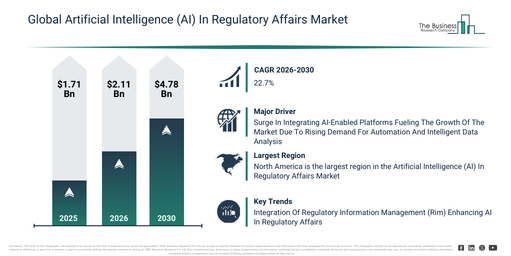
    The market for artificial intelligence (AI) in regulatory affairs has experienced substantial growth in recent years. It is forecast to increase from $1.71 billion in 2025 to $2.11 billion in 2026, achieving a compound annual growth rate (CAGR) of 23.0%. The expansion observed in the historic period is attributable to factors including rising regulatory complexity in life sciences, increasing volumes of regulatory documentation, a growing demand for expedited approvals, the broadening of global clinical trials, and the enhanced digitization of regulatory processes.

    The artificial intelligence (AI) in regulatory affairs market size is anticipated to undergo substantial expansion over the upcoming years, with projections indicating it will reach $4.78 billion in 2030, exhibiting a compound annual growth rate (CAGR) of 22.7%. This growth during the forecast period is primarily fueled by the increasing adoption of end-to-end regulatory automation, rising investments in cloud-based compliance platforms, the growing utilization of predictive analytics for regulatory strategy, the expansion of AI-enabled pharmacovigilance, and an escalating demand for regulatory efficiency. Furthermore, significant trends for this period encompass the increasing integration of AI-driven regulatory intelligence platforms, a rise in the use of automated submission management tools, the growing incorporation of natural language processing in compliance, the broadening of cloud-based regulatory solutions, and an amplified focus on real-time regulatory monitoring.

    Get A Free Artificial Intelligence (AI) In Regulatory Affairs Market Sample Covering Drivers, Trends And Key Players:

    https://thebusinessresearchcompany.com/sample_request?id=57178023&type=smp&name=Artificial%20Intelligence%20%28AI%29%20In%20Regulatory%20Affairs%20Market%20Report%202026&utm_source=Blogs&utm_medium=Paid&utm_campaign=Nov_PR

    Artificial Intelligence (AI) In Regulatory Affairs Market Driver Analysis: Key Factor Supporting Revenue Growth

    The future expansion of the artificial intelligence (AI) in regulatory affairs market is anticipated to be fueled by the rising integration of AI-enabled platforms. These platforms are defined as digital systems or solutions incorporating AI technologies like machine learning, natural language processing, and predictive analytics to automate functions, improve decision-making, and boost operational efficiency across diverse sectors. Their increased integration stems from the escalating demand for automation and efficiency in managing intricate regulatory duties, facilitating quicker data processing and heightened accuracy in decision-making. In the context of regulatory affairs, AI supports these platforms by streamlining compliance procedures, expediting regulatory approvals, and enhancing data precision, thereby accelerating innovation and readiness for the market. Consequently, the increasing integration of AI-enabled platforms is a key factor propelling the expansion of the artificial intelligence (AI) in regulatory affairs market.

    Artificial Intelligence (AI) In Regulatory Affairs Market Segmentation Framework: Major Segments At A Glance

    The artificial intelligence (AI) in regulatory affairs market covered in this report is segmented –

    1) By Component: Software Or Platforms, Services

    2) By Deployment Mode: Cloud-based, On-Premises

    3) By Application: Regulatory Intelligence, Data Migration And Integration, Dossier Management, Product Registration And Approvals, Pharmacovigilance And Safety Reporting, Regulatory Submissions And Publishing, Other Applications

    4) By End-User: Pharmaceutical Companies, Biotechnology Companies, Other End-Users

    Subsegments:

    1) By Software Or Platforms: Regulatory Information Management, Document Management, Data Analytics And Insights, Natural Language Processing Tools, Cloud-Based Compliance Solutions, Workflow Automation Systems, Artificial Intelligence-Powered Decision Support, Submission Management Platforms

    2) By Services: Implementation And Integration, Training And Consulting, Support And Maintenance, Regulatory Process Outsourcing, Data Migration And Validation, Compliance Monitoring Services, Managed Services, Customization And Configuration

    Latest Artificial Intelligence (AI) In Regulatory Affairs Market Developments And Emerging Trends

    Leading companies within the artificial intelligence (AI) in regulatory affairs market are concentrating on advanced innovations like Regulatory Information Management (RIM) to centralize regulatory data, automate submission workflows, guarantee compliance across global markets, and enhance visibility throughout the product lifecycle. Regulatory Information Management defines the systematic methodology for gathering, organizing, and overseeing regulatory data, documents, and submissions across a product’s entire lifecycle, aiming to ensure adherence to global regulatory mandates and streamline communications with health authorities.

    Which Companies Are Shaping The Artificial Intelligence (AI) In Regulatory Affairs Market?

    Major companies operating in the artificial intelligence (AI) in regulatory affairs market are Freyr Software Services Private Limited, Celegence LLC, Wipro Limited, Indegene Limited, Clarivate Plc, Zenovel Pharma Services LLP, RegDesk Inc, Compliance.ai Inc, IONI AI INC., Interfacing Technologies Corporation, OneTrust LLC, Xapien Ltd., SpringsApps Technologies Pvt Ltd., Fairnow Inc., Navitas Life Sciences Private Limited, S&P Global Inc., International Business Machines Corporation, ZS Associates International Inc., Vistaar Technologies Inc., Lexim AI Inc.

    Dive Deeper Into The Artificial Intelligence (AI) In Regulatory Affairs Market With The Full Report:

    https://thebusinessresearchcompany.com/report/global-artificial-intelligence-ai-in-regulatory-affairs-market-report?utm_source=Blogs&utm_medium=Paid&utm_campaign=Nov_PR

    Artificial Intelligence (AI) In Regulatory Affairs Market Regional Distribution: Where Is Revenue Concentrated?

    North America was the largest region in the artificial intelligence (AI) in regulatory affairs market in 2025. Asia-Pacific is expected to be the fastest-growing region in the forecast period. The regions covered in the artificial intelligence (AI) in regulatory affairs market report are Asia-Pacific, South East Asia, Western Europe, Eastern Europe, North America, South America, Middle East, Africa.

    Reach Out To Our Team:

    The Business Research Company: https://www.thebusinessresearchcompany.com/

    Americas: +1 310-496-7795

    Asia: +44 7882 955267 & +91 8897263534

    Europe: +44 7882 955267

    Email us at: marketing@tbrc.info

    Follow us on:

    LinkedIn: https://in.linkedin.com/company/the-business-research-company

    YouTube: https://www.youtube.com/channel/UC24_fI0rV8cR5DxlCpgmyFQ

    Global Market Model: https://www.thebusinessresearchcompany.com/global-market-model
  • Artificial Intelligence (AI) In Orthopedic Surgery Market Forecast To 2030: The Growing Role Of AI-Based Surgical Guidance Systems Revolutionize Precision And Outcomes In Orthopedic Surgery

    Artificial Intelligence (AI) In Orthopedic Surgery Market Forecast To 2030: The Growing Role Of AI-Based Surgical Guidance Systems Revolutionize Precision And Outcomes In Orthopedic Surgery

    The Business Research Company’s 2026 market reports combine market attractiveness scoring, total addressable market sizing, company benchmarking matrices, interactive Excel dashboards, deeper supply chain intelligence, emerging startup tracking, and granular product-level insights to deliver research that is more actionable and strategically valuable.

    Artificial Intelligence (AI) In Orthopedic Surgery Market Size Trajectory: Key Numbers Every Industry Stakeholder Should Know

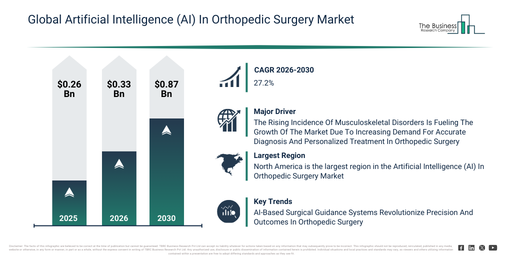
    Recent years have witnessed substantial growth in the artificial intelligence (AI) in orthopedic surgery market. It will grow from $0.26 billion in 2025 to $0.33 billion in 2026 at a compound annual growth rate (CAGR) of 27.5%. Factors contributing to this historical rise include an uptick in orthopedic surgical volumes, developments in medical imaging, broader adoption of minimally invasive procedures, enhanced digital frameworks in hospitals, and a sharpened focus on surgical accuracy.

    The artificial intelligence (AI) in orthopedic surgery market is anticipated to experience significant expansion in the coming years. It is projected to grow to $0.87 billion by 2030, achieving a compound annual growth rate (CAGR) of 27.2%. This growth over the forecast period is attributable to factors such as increasing demand for personalized orthopedic treatments, rising investments in surgical robotics, the expansion of AI-based clinical decision support systems, a growing focus on outcome-based healthcare, and increased integration of AI with electronic health records. Key trends during this period encompass the increasing adoption of AI-assisted surgical planning tools, a rising use of computer vision in orthopedic procedures, the growing integration of robotic surgical systems, the expansion of predictive analytics for patient outcomes, and enhanced precision in implant placement.

    Looking For Reliable Artificial Intelligence (AI) In Orthopedic Surgery Market Data? Request A Free Sample:

    https://thebusinessresearchcompany.com/sample_request?id=69577030&type=smp&name=Artificial%20Intelligence%20%28AI%29%20In%20Orthopedic%20Surgery%20Market%20Report%202026&utm_source=Blogs&utm_medium=Paid&utm_campaign=Nov_PR

    What Is Behind The Rising Demand In The Artificial Intelligence (AI) In Orthopedic Surgery Market?

    The growing prevalence of musculoskeletal disorders is anticipated to propel the expansion of the artificial intelligence (AI) in orthopedic surgery market. Musculoskeletal disorders are defined as injuries or conditions affecting the muscles, bones, joints, tendons, or ligaments, often resulting in pain and restricted movement. The increase in these disorders is largely attributed to sedentary lifestyles, as extended inactivity weakens muscles and puts stress on joints. AI in orthopedics aids in the management of musculoskeletal disorders by offering accurate and early diagnosis through advanced image analysis and data pattern recognition. It also supports personalized treatment plans and predicts recovery outcomes, thereby enhancing overall patient care. Hence, the rising incidence of musculoskeletal disorders is a key driver for the growth of the artificial intelligence (AI) in orthopedic surgery market.

    Artificial Intelligence (AI) In Orthopedic Surgery Market Segment Coverage And Subsegment Analysis

    The artificial intelligence (AI) in orthopedic surgery market covered in this report is segmented –

    1) By Component Type: Software, Services, Hardware

    2) By Technology: Machine Learning, Natural Language Processing, Computer Vision, Context-Aware Computing

    3) By Anatomy: Knee, Hip, Spine, Other Anatomies

    4) By End-User: Hospitals, Orthopedic Clinics, Other End-Users

    Subsegments:

    1) By Software: Clinical Decision Support Systems (CDSS), Drug Interaction Software, Electronic Health Record (EHR) Integration Modules, Prescription Management Software, Patient Monitoring Software

    2) By Services: Consulting Services, Training and Education, Support and Maintenance, Implementation Services, Drug Distribution Services

    3) By Hardware: Robotic Surgical Systems, Handheld Navigation Devices, Wearable Monitoring Devices, Imaging Systems, Sensors and Actuators, Computing Infrastructure

    Artificial Intelligence (AI) In Orthopedic Surgery Market Future Trends: Where Is The Industry Heading?

    Leading companies operating in the artificial intelligence (AI) orthopedic surgery market are focused on developing advanced solutions, such as AI-based surgical guidance systems, to improve surgical precision and enhance patient outcomes. An AI-based surgical guidance system utilizes real-time data, imaging, and predictive algorithms to assist surgeons with accurate navigation and decision-making during procedures. This technology boosts surgical accuracy and minimizes the risk of errors. For instance, in April 2025, Proprio, a US-based provider of AI-powered surgical technology, launched its Paradigm platform, which received clearance from the Food and Drug Administration (FDA). This platform allows for real-time, 3D, dynamic measurement and visualization of anatomy during surgery. This innovation enables surgeons to instantly assess and measure surgical outcomes, thereby eliminating the need for intraoperative X-rays or CT scans and reducing both delays and radiation exposure. The technology is poised to transform surgical procedures, especially in spine surgery, by offering continuous, data-driven guidance and improving patient outcomes.

    Artificial Intelligence (AI) In Orthopedic Surgery Market Top Players List For 2026

    Major companies operating in the artificial intelligence (AI) in orthopedic surgery market are Medtronic plc, Stryker Corporation, Zimmer Biomet Holdings Inc., Smith & Nephew PLC, Globus Medical Inc., Brainlab AG, Proprio, Augmedics LTD, OrthAlign Inc., Caresyntax, Activ Surgical, THINK Surgical Inc., Perlove Medical, Pixee Medical, Formus Labs, Intuitive Surgical Inc., Johnson & Johnson DePuy Synthes, Renishaw plc, Medacta Group SA, Curexo Inc., Exactech Inc., AlgoSurg Inc., RSIP Vision, Surgalign HOLO Portal Technologies

    Order Your Copy Of The Artificial Intelligence (AI) In Orthopedic Surgery Market Report 2026:

    https://thebusinessresearchcompany.com/report/artificial-intelligence-ai-in-orthopedic-surgery-global-market-report?utm_source=Blogs&utm_medium=Paid&utm_campaign=Nov_PR

    How Does The Artificial Intelligence (AI) In Orthopedic Surgery Market Vary By Region?

    North America was the largest region in the AI in orthopedic surgery market in 2025. The regions covered in the artificial intelligence (AI) in orthopedic surgery market report are Asia-Pacific, South East Asia, Western Europe, Eastern Europe, North America, South America, Middle East, Africa.

    Reach Out To Our Team:

    The Business Research Company: https://www.thebusinessresearchcompany.com/

    Americas: +1 310-496-7795

    Asia: +44 7882 955267 & +91 8897263534

    Europe: +44 7882 955267

    Email us at: marketing@tbrc.info

    Follow us on:

    LinkedIn: https://in.linkedin.com/company/the-business-research-company

    YouTube: https://www.youtube.com/channel/UC24_fI0rV8cR5DxlCpgmyFQ

    Global Market Model: https://www.thebusinessresearchcompany.com/global-market-model
  • Wound Care Centers Market Forecast 2026–2030: Market Size, Trends And Growth Opportunities

    Wound Care Centers Market Forecast 2026–2030: Market Size, Trends And Growth Opportunities

    Built to provide research that’s more actionable and strategically valuable, The Business Research Company’s 2026 market reports include market attractiveness analysis, total addressable market sizing, company benchmarking matrices, interactive Excel dashboards, broader supply chain intelligence, emerging startup tracking, and in-depth product insights.

    Wound Care Centers Market Poised To Hit $57.26 Billion By 2030 With A 4.6% CAGR

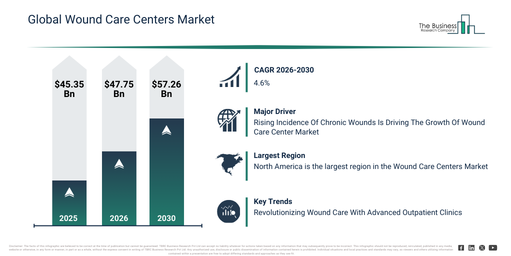
    The wound care centers market size has experienced significant growth in recent years. It is projected to expand from $45.35 billion in 2025 to $47.75 billion in 2026, demonstrating a compound annual growth rate (CAGR) of 5.3%. The market’s historical growth can be attributed to a rising incidence of chronic wounds, the expansion of specialized wound care facilities, an increasing prevalence of diabetes and vascular disorders, the adoption of advanced wound therapies, and improved access to outpatient care.

    The wound care centers market is projected to experience consistent expansion over the upcoming years. By 2030, this market is anticipated to reach $57.26 billion, demonstrating a compound annual growth rate (CAGR) of 4.6%. This anticipated growth throughout the forecast period stems from factors such as a heightened demand for sophisticated wound healing methods, the wider acceptance of digital wound monitoring, the enlargement of home-based wound care provisions, an intensified emphasis on care that prioritizes outcomes, and greater capital expenditure in dedicated wound clinics. Key developments predicted for the forecast period encompass a surge in the utilization of innovative wound management technologies, the increasing implementation of multidisciplinary care approaches, the expanding incorporation of remote wound monitoring systems, the broadening of specialized therapies for chronic wounds, and a stronger commitment to patient-focused care.

    Get A Free Sample Report With In-Depth Market Insights:

    https://thebusinessresearchcompany.com/sample_request?id=60995748&type=smp&name=Wound%20Care%20Centers%20Market%20Report%202026&utm_source=Blogs&utm_medium=Paid&utm_campaign=Nov_PR

    Wound Care Centers Market Demand Drivers: What’s Powering Industry Growth?

    An anticipated increase in chronic wound cases is projected to drive the expansion of the wound care center market moving ahead. These wounds are characterized by their failure to heal within an expected duration, typically three months, even with proper medical attention. The growing occurrences of chronic wounds stem from the rising prevalence of conditions like diabetes and obesity, which hinder healing and lead to further complications. Managing chronic wounds necessitates advanced therapeutic approaches, often found in dedicated wound care centers that also offer psychosocial assistance to aid patients in addressing the emotional and mental challenges associated with their health status. Consequently, the escalating frequency of chronic wounds is fueling the expansion of the wound care center market.

    Wound Care Centers Market Segmentation And Category Overview

    The wound care centers market covered in this report is segmented –

    1) By Type: Hospitals, Clinics

    2) By Wound Type: Acute Wound, Chronic Wound

    3) By Procedure: Debridement, Negative Pressure Wound Therapy, Compression Therapy, Hyperbaric Oxygen Therapy, Specialized Dressings, Infection Control

    Subsegments:

    1) By Hospitals: Inpatient Wound Care Services, Outpatient Wound Care Services, Specialty Wound Care Units

    2) By Clinics: Ambulatory Wound Care Clinics, Private Practice Wound Care Centers, Multi-Specialty Clinics With Wound Care Services

    Wound Care Centers Market Innovation Trends: What Developments Are Reshaping The Industry?

    Leading companies within the wound care center market are establishing outpatient wound care clinics to offer specialized care for intricate and persistent wounds, including diabetic foot ulcers and venous stasis ulcers. These specialized medical facilities help eliminate facility expenses and reduce travel time, allowing patients to successfully complete their treatment without experiencing a relapse.

    Wound Care Centers Market Competitive Analysis Of Leading Industry Participants

    Major companies operating in the wound care centers market are UPMC Wound Healing Services, Mayo Clinic Health System, Cleveland Clinic, Mercy Health, Vanderbilt University Medical Center, Banner Health, Novant Health, Kindred Healthcare, Orlando Health, Emory Healthcare, Hartford HealthCare, Sentara Health, Memorial Hermann, Texas Health Resources, OSF HealthCare, Amedisys, Stormont Vail Health, Healogics Inc., RestorixHealth, OakBend Medical Center, EmergeOrtho

    View The Full Wound Care Centers Market Report:

    https://thebusinessresearchcompany.com/report/wound-care-centers-global-market-report?utm_source=Blogs&utm_medium=Paid&utm_campaign=Nov_PR

    Wound Care Centers Market Regional Analysis And Top Geography

    North America was the largest region in the wound care centers market in 2025. Asia-Pacific is expected to be the fastest-growing region in the forecast period. The regions covered in the wound care centers market report are Asia-Pacific, South East Asia, Western Europe, Eastern Europe, North America, South America, Middle East, Africa.

    Reach Out To Our Team:

    The Business Research Company: https://www.thebusinessresearchcompany.com/

    Americas: +1 310-496-7795

    Asia: +44 7882 955267 & +91 8897263534

    Europe: +44 7882 955267

    Email us at: marketing@tbrc.info

    Follow us on:

    LinkedIn: https://in.linkedin.com/company/the-business-research-company

    YouTube: https://www.youtube.com/channel/UC24_fI0rV8cR5DxlCpgmyFQ

    Global Market Model: https://www.thebusinessresearchcompany.com/global-market-model
  • Artificial Intelligence (AI) in Hospital Management Market Set To Reach $9.19 Billion By 2030, Driven By Growing Adoption Of Remote Patient Monitoring Systems

    Artificial Intelligence (AI) in Hospital Management Market Set To Reach $9.19 Billion By 2030, Driven By Growing Adoption Of Remote Patient Monitoring Systems

    Market attractiveness scoring, total addressable market sizing, company benchmarking matrices, interactive Excel dashboards, deeper supply chain intelligence, emerging startup tracking, and granular product-level insights are among the key offerings featured in The Business Research Company’s 2026 market reports, designed to deliver more actionable and strategically valuable research.

    What Is The Artificial Intelligence (AI) in Hospital Management Market Size In 2026, And Where Is It Heading By 2030?

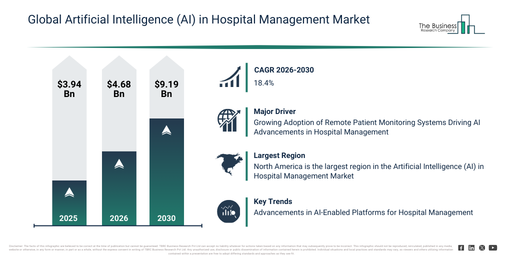
    The artificial intelligence (AI) in hospital management market has experienced rapid growth in recent years. Projections indicate its expansion from $3.94 billion in 2025 to $4.68 billion in 2026, demonstrating a compound annual growth rate (CAGR) of 18.7%. This historic growth can be attributed to several factors, including increasing hospital digitization efforts, a rise in patient admission volumes, the widespread adoption of electronic health records, mounting pressure to reduce operational expenses, and the early integration of analytics tools within the healthcare sector.

    The artificial intelligence (AI) in hospital management market size is projected to experience substantial expansion in the coming years. It is forecast to grow to $9.19 billion in 2030, at a compound annual growth rate (CAGR) of 18.4%. This anticipated growth during the forecast period is primarily driven by factors such as increasing investments in smart hospital infrastructure, a rising demand for optimizing operational efficiency, the expansion of AI-enabled patient care management, the growing adoption of cloud-based hospital platforms, and an increasing focus on value-based healthcare delivery. Significant trends expected in this period include the increasing adoption of predictive analytics for hospital operations, a rising use of AI-based clinical decision support systems, the growing automation of administrative workflows, the expansion of AI-driven patient flow management, and enhanced integration of data-driven resource optimization.

    Request Your Free Artificial Intelligence (AI) in Hospital Management Market Sample With Segment And Regional Data:

    https://thebusinessresearchcompany.com/sample_request?id=35644232&type=smp&name=Artificial%20Intelligence%20%28AI%29%20in%20Hospital%20Management%20Market%20Report%202026&utm_source=Blogs&utm_medium=Paid&utm_campaign=Nov_PR

    Artificial Intelligence (AI) in Hospital Management Market Growth Drivers And Their Impact On Future Demand

    The increasing integration of remote patient monitoring systems is anticipated to propel the growth of the artificial intelligence (AI) in hospital management market. A remote patient monitoring system describes a technology-enabled approach allowing healthcare providers to continuously track and manage patient health data from a distance. These systems enhance patient care through real-time data, timely interventions, and increased engagement. AI in hospital management improves remote patient monitoring by offering advanced data analytics, predictive insights, and personalized treatment recommendations, which enhance patient outcomes and operational efficiency. Therefore, the growing adoption of remote patient monitoring systems is driving the artificial intelligence (AI) in hospital management market.

    What Categories Define The Artificial Intelligence (AI) in Hospital Management Market?

    The artificial intelligence (AI) in hospital management market covered in this report is segmented –

    1) By Component: Software, Hardware, Services

    2) By Technology: Computer Vision, Context-Aware Computing, Machine Learning, Natural Language Processing

    3) By Deployment: Cloud-Based, On-Premises

    4) By Application: Patient Care Management, Administrative Processes, Diagnostic Imaging And Radiology, Drug Discovery, Other Applications

    5) By End-User: Healthcare Payers, Hospital And Healthcare Providers, Patients, Pharmaceuticals And Biotechnology Companies, Other End-Users

    Subsegments:

    1) By Software: AI-Based Clinical Decision Support Systems (CDSS), Patient Management Software, Medical Imaging Software, Natural Language Processing (NLP), Administrative Software, Population Health Management Software, AI-Driven Cybersecurity Tools

    2) By Hardware: AI Servers, Wearables and IoT Devices, Medical Imaging Devices, Robotics Systems, AI Chips and Processors, Healthcare Robotics Hardware

    3) By Services: AI Consulting Services, AI System Integration Services, AI Maintenance and Support Services, AI Training and Education Services, Managed AI Services, Analytics as a Service (AaaS)

    What New Developments Are Emerging In The Artificial Intelligence (AI) in Hospital Management Market?

    Leading companies active in the artificial intelligence (AI) in the hospital management market are developing AI-powered platforms to enhance the precision and effectiveness of hospital operations, patient care, and administrative tasks. These AI-enabled platforms utilize artificial intelligence to analyze data and automate processes, thereby assisting hospital management in improving operational efficiency, patient support, and decision-making.

    Major Players Driving Competition In The Artificial Intelligence (AI) in Hospital Management Market

    Major companies operating in the artificial intelligence (AI) in hospital management market are Google LLC, McKesson Corporation, Microsoft Corporation, Amazon Web Service, Johnson & Johnson Services Inc., Intel Corporation, Accenture plc, International Business Machines Corporation, Oracle Corporation, Medtronic plc, SAP SE, Micron Technology Inc., Nvidia Corporation, Capgemini SE, Siemens Healthineers AG, Cognizant Technology Solutions Corporation, Koninklijke Philips N.V., GE HealthCare Technologies Inc., Zebra Medical Vision, Infor Inc., Change Healthcare, Epic Systems Corporation, Nuance Communications Inc., Veradigm Inc., Corti ApS

    View The Comprehensive Artificial Intelligence (AI) in Hospital Management Market Analysis:

    https://thebusinessresearchcompany.com/report/artificial-intelligence-ai-in-hospital-management-global-market-report?utm_source=Blogs&utm_medium=Paid&utm_campaign=Nov_PR

    Artificial Intelligence (AI) in Hospital Management Market Regional Leaders: Insights From The 2026 Report

    North America was the largest region in the artificial intelligence (AI) in hospital management market in 2025. The regions covered in the artificial intelligence (AI) in hospital management market report are Asia-Pacific, South East Asia, Western Europe, Eastern Europe, North America, South America, Middle East, Africa.

    Reach Out To Our Team:

    The Business Research Company: https://www.thebusinessresearchcompany.com/

    Americas: +1 310-496-7795

    Asia: +44 7882 955267 & +91 8897263534

    Europe: +44 7882 955267

    Email us at: marketing@tbrc.info

    Follow us on:

    LinkedIn: https://in.linkedin.com/company/the-business-research-company

    YouTube: https://www.youtube.com/channel/UC24_fI0rV8cR5DxlCpgmyFQ

    Global Market Model: https://www.thebusinessresearchcompany.com/global-market-model
  • Womens Health Diagnostics Market Size Reaches $40.38 Billion In 2026: What Is Driving Growth?

    Womens Health Diagnostics Market Size Reaches $40.38 Billion In 2026: What Is Driving Growth?

    Backed by market attractiveness analysis, total addressable market sizing, company benchmarking matrices, interactive Excel dashboards, wider supply chain intelligence, emerging startup coverage, and detailed product-level insights, The Business Research Company’s 2026 market reports are designed to offer research that is more actionable and strategically valuable than ever.

    Womens Health Diagnostics Market Size And Revenue Outlook Through 2030

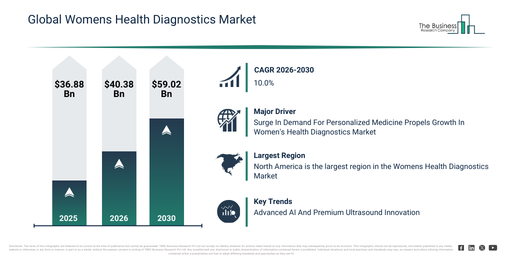
    The womens health diagnostics market has experienced significant growth over recent years. Projections indicate a rise from $36.88 billion in 2025 to $40.38 billion by 2026, demonstrating a compound annual growth rate (CAGR) of 9.5%. Historically, this expansion has been driven by factors such as the increasing prevalence of women-specific diseases, the expansion of diagnostic infrastructure, greater awareness regarding early screening benefits, the growth in laboratory testing services, and the adoption of imaging-based diagnostics.

    The womens health diagnostics market is projected to experience substantial expansion over the upcoming years. This market is anticipated to reach $59.02 billion by 2030, demonstrating a compound annual growth rate (CAGR) of 10.0%. This projected growth can be attributed to several factors during the forecast period, including a heightened demand for personalized diagnostics, increased investments in precision testing technologies, the expansion of home-based diagnostic solutions, the growing integration of AI analytics, and an intensified focus on preventive screening programs. Key trends identified for the forecast period encompass a greater adoption of advanced imaging and testing technologies, an increased reliance on at-home diagnostic kits, the expanding integration of AI in diagnostic interpretation, the broadening scope of genetic and hormonal testing, and an enhanced emphasis on early disease detection.

    Get A Free Sample Report With In-Depth Market Insights:

    https://thebusinessresearchcompany.com/sample_request?id=60875909&type=smp&name=Womens%20Health%20Diagnostics%20Market%20Report%202026&utm_source=Blogs&utm_medium=Paid&utm_campaign=Nov_PR

    Womens Health Diagnostics Market Growth Drivers: What’s Behind The Acceleration?

    The increasing need for personalized medicine is projected to stimulate expansion within the women’s health diagnostics market in the future. Personalized medicine is defined as a form of treatment that leverages an individual’s genetic makeup or protein information to prevent, identify, or address illnesses. This approach enables healthcare professionals to develop treatment strategies precisely customized to a woman’s distinct genetic, molecular, and clinical characteristics. Such plans may incorporate targeted therapies informed by genetic markers or particular biomarkers. Consequently, the heightened demand for personalized medicine is fueling the expansion of the women’s health diagnostics market.

    Womens Health Diagnostics Market Segment Outlook: Which Categories Are Growing Fastest?

    The womens health diagnostics market covered in this report is segmented –

    1) By Type: Accessories And Consumables, Diagnostic Tests, Diagnostic Devices

    2) By Application: Osteoporosis Testing, Ovarian Cancer Testing (OVC), Cervical Cancer Testing, Breast Cancer Testing, Pregnancy And Fertility Testing, Prenatal Genetic Screening And Carrier Testing, Infectious Disease Testing, Sexually Transmitted Diseases (STD) Testing, Ultrasound Tests

    3) By End User: Hospitals And Clinics, Diagnostic And Imaging Centers, Homecare, Other End Users

    Subsegments:

    1) By Accessories And Consumables: Test Kits, Sample Collection Devices, Reagents, Control Materials

    2) By Diagnostic Tests: Blood Tests, Imaging Tests, Genetic Tests, Hormonal Tests

    3) By Diagnostic Devices: Imaging Devices, Invasive Diagnostic Devices, Non-Invasive Diagnostic Devices, Monitoring Devices

    Womens Health Diagnostics Market Trends: What’s Defining The Industry’s Next Phase?

    Leading companies within the women’s health diagnostics market are concentrating on product innovations, including advanced ultrasound systems, to maintain their market position. A premium ultrasound system is defined as a sophisticated medical imaging device engineered to capture detailed, high-quality images of internal structures within the human body. These systems are part of Samsung’s HERA platform, specifically tailored for obstetrics and gynecology.

    Womens Health Diagnostics Market Leading Companies And Competitive Benchmarking

    Major companies operating in the womens health diagnostics market are Becton Dickinson And Company, F. Hoffmann-La Roche AG, General Electric Company, Koninklijke Philips N.V., Quest Diagnostics Incorporated, Siemens Healthineers, Abbott Laboratories, BioMérieux SA, Hologic Inc., PerkinElmer Inc., Alere Inc., Carestream Health Inc., Procter & Gamble Co., Trinity Biotech plc, Medgyn Products Inc., URIT Medical Electronic Co. Ltd, Sonic Healthcare Limited, Fujifilm Holdings Corporation, Thermo Fisher Scientific Inc., Illumina Inc., Myriad Genetics Inc., Agilent Technologies Inc., Bio-Rad Laboratories Inc., Danaher Corporation, Genomic Health Inc., Invitae Corporation, Natera Inc., QIAGEN N.V., Opko Health Inc., Sysmex Corporation, Exact Sciences Corporation, Foundation Medicine Inc., Laboratory Corporation of America Holdings, NeoGenomics Laboratories Inc.

    View The Full Womens Health Diagnostics Market Report:

    https://thebusinessresearchcompany.com/report/womens-health-diagnostics-global-market-report?utm_source=Blogs&utm_medium=Paid&utm_campaign=Nov_PR

    Womens Health Diagnostics Market Geographic Analysis: Where Is Demand Rising Fastest?

    North America was the largest region in the women’s health diagnostics market in 2025. Asia-Pacific is expected to be the fastest-growing region in the global women’s health diagnostics market report during the forecast period. The regions covered in the womens health diagnostics market report are Asia-Pacific, South East Asia, Western Europe, Eastern Europe, North America, South America, Middle East, Africa.

    Reach Out To Our Team:

    The Business Research Company: https://www.thebusinessresearchcompany.com/

    Americas: +1 310-496-7795

    Asia: +44 7882 955267 & +91 8897263534

    Europe: +44 7882 955267

    Email us at: marketing@tbrc.info

    Follow us on:

    LinkedIn: https://in.linkedin.com/company/the-business-research-company

    YouTube: https://www.youtube.com/channel/UC24_fI0rV8cR5DxlCpgmyFQ

    Global Market Model: https://www.thebusinessresearchcompany.com/global-market-model
  • Artificial Intelligence (AI) In Drug Discovery Market CAGR Of 26.2% Forecast For 2026–2030: What It Means For The Industry

    Artificial Intelligence (AI) In Drug Discovery Market CAGR Of 26.2% Forecast For 2026–2030: What It Means For The Industry

    Designed to make market research more actionable and strategically valuable, The Business Research Company’s 2026 market reports feature market attractiveness scoring, total addressable market sizing, company benchmarking matrices, interactive Excel dashboards, deeper supply chain intelligence, emerging startup tracking, and granular product-level insights.

    Artificial Intelligence (AI) In Drug Discovery Market To Expand At A 26.2% CAGR: Size And Growth Projections Through 2030

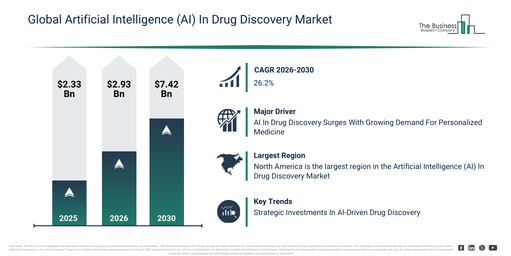
    The artificial intelligence (AI) in drug discovery market size has experienced rapid and substantial growth in recent years. It is projected to expand from $2.33 billion in 2025 to $2.93 billion in 2026 at a compound annual growth rate (CAGR) of 25.9%. The expansion witnessed during the historic period can be attributed to several factors, including an increase in pharmaceutical R&D spending, the growing complexity of drug discovery pipelines, a rising availability of biological and chemical datasets, the early adoption of machine learning in bioinformatics, and enhanced collaboration between pharmaceutical and technology firms.

    The artificial intelligence (AI) in drug discovery market is set for significant expansion in the coming years, projected to reach $7.42 billion by 2030, with a compound annual growth rate (CAGR) of 26.2%. This growth over the forecast period is fueled by the growing adoption of generative AI models, the increasing demand for precision therapeutics, the broadening scope of AI-enabled clinical trial design, rising investments in cloud-based discovery platforms, and the regulatory acceptance of AI-assisted drug development. Prominent trends anticipated during this period include a heightened use of AI-driven target identification, increased reliance on deep learning for molecule screening, the expanding integration of virtual drug screening platforms, the development of AI-based lead optimization tools, and a stronger emphasis on reducing drug development timelines.

    Get Your Free Artificial Intelligence (AI) In Drug Discovery Market Report Sample Today:

    https://thebusinessresearchcompany.com/sample_request?id=79642654&type=smp&name=Artificial%20Intelligence%20%28AI%29%20In%20Drug%20Discovery%20Market%20Report%202026&utm_source=Blogs&utm_medium=Paid&utm_campaign=Nov_PR

    Which Factor Is Expected To Drive The Artificial Intelligence (AI) In Drug Discovery Market Over The Forecast Period?

    The increasing need for personalized medicine is projected to fuel the expansion of artificial intelligence (AI) within the drug discovery market in the future. Personalized medicine constitutes a tailored strategy for preventing, diagnosing, and treating diseases, utilizing an individual’s unique genetic, proteomic, or biological makeup to inform clinical choices. The increasing embrace of personalized medicine stems from a growing requirement for exact, patient-specific treatments capable of enhancing therapeutic efficacy and minimizing negative side effects. AI facilitates this transition by speeding up the discovery of molecular targets, refining potential drug compounds, and improving clinical judgment across the entire development process. Consequently, the escalating demand for personalized medicine is powering the expansion of artificial intelligence (AI) in the drug discovery market.

    Artificial Intelligence (AI) In Drug Discovery Market Segmentation Insights: How Is The Industry Categorized?

    The artificial intelligence (AI) in drug discovery market covered in this report is segmented –

    1) By Technology: Context-Aware Processing, Natural Language Processing, Deep Learning

    2) By Drug Type: Small Molecules, Large Molecules

    3) By Therapeutic Type: Metabolic Disease, Cardiovascular Disease, Oncology, Neurodegenerative Diseases, Anti-Infective Diseases, Respiratory Diseases, Other Therapeutics

    4) By End User: Pharmaceutical Companies, Biopharmaceutical Companies, Academic And Research Institutes, Other End-Users

    Subsegments:

    1) By Context-Aware Processing: Contextual Data Integration, Predictive Modeling, Adaptive Learning Systems

    2) By Natural Language Processing (NLP): Text Mining And Analysis, Drug Interaction Extraction, Clinical Trial Data Analysis

    3) By Deep Learning: Neural Networks, Convolutional Neural Networks (CNNs), Recurrent Neural Networks (RNNs), Reinforcement Learning Applications

    Artificial Intelligence (AI) In Drug Discovery Market Trends Explained: What Is Changing And Why It Matters

    Leading corporations are channeling capital into enterprises utilizing artificial intelligence (AI) within the drug discovery market, intending to identify and design novel therapies and provide these models to other drugmakers. This strategic capital injection provides essential funding for the research and development of new drugs, a process often characterized by significant cost and time consumption. Such financial support allows companies to advance their drug discovery programs and introduce new treatments to the market.

    Artificial Intelligence (AI) In Drug Discovery Market Competitor Landscape: Who Are The Major Companies?

    Major companies operating in the artificial intelligence (AI) in drug discovery market are Exscientia, Insilico Medicine, Owkin Inc., XtalPi Inc., Standigm Inc., Innoplexus AG, Atomwise, Inc., BenevolentAI, Deep Genomics Inc., NuMedii, Inc., Verge Genomics, Inc., Berg LLC, Cyclica Inc., Iktos, Quris, Adagene Inc., Gero Pte. Ltd., IBM Corporation, Microsoft Corporation, NVIDIA Corporation, Alphabet Inc., DeepMind Technologies Limited, IQVIA Holdings Inc., GNS Healthcare, Inc., GE HealthCare Technologies Inc., Novartis AG, Pfizer Inc., F. Hoffmann-La Roche Ltd., Merck & Co., Inc., AbbVie Inc., AstraZeneca PLC, Amgen Inc., GlaxoSmithKline plc, Johnson & Johnson, Takeda Pharmaceutical Company Limited, Ipsen S.A., Galderma S.A.

    See The Full Artificial Intelligence (AI) In Drug Discovery Market Report For Complete Market Sizing And Trends:

    https://thebusinessresearchcompany.com/report/Artificial-Intelligence-In-Drug-Discovery-Global-Market-Report?utm_source=Blogs&utm_medium=Paid&utm_campaign=Nov_PR

    Artificial Intelligence (AI) In Drug Discovery Market Regional Demand Analysis And Leading Geography

    North America was the largest region in the artificial intelligence (AI) in drug discovery market in 2025. Western Europe was the second largest region in the global artificial intelligence (AI) in drug discovery market share. The regions covered in the artificial intelligence (AI) in drug discovery market report are Asia-Pacific, South East Asia, Western Europe, Eastern Europe, North America, South America, Middle East, Africa.

    Reach Out To Our Team:

    The Business Research Company: https://www.thebusinessresearchcompany.com/

    Americas: +1 310-496-7795

    Asia: +44 7882 955267 & +91 8897263534

    Europe: +44 7882 955267

    Email us at: marketing@tbrc.info

    Follow us on:

    LinkedIn: https://in.linkedin.com/company/the-business-research-company

    YouTube: https://www.youtube.com/channel/UC24_fI0rV8cR5DxlCpgmyFQ

    Global Market Model: https://www.thebusinessresearchcompany.com/global-market-model
  • Women’s Health App Market Valued At $14.54 Billion In 2026: Key Trends And Growth Drivers

    Women’s Health App Market Valued At $14.54 Billion In 2026: Key Trends And Growth Drivers

    Featuring market attractiveness scoring, total addressable market sizing, company benchmarking matrices, interactive Excel dashboards, deeper supply chain intelligence, emerging startup tracking, and granular product-level insights, The Business Research Company’s 2026 market reports are built to deliver research that is both more actionable and more strategically valuable.

    Women’s Health App Market Growth From $7.11 Billion In 2026 To $14.54 Billion By 2030 At A CAGR Of 19.6%

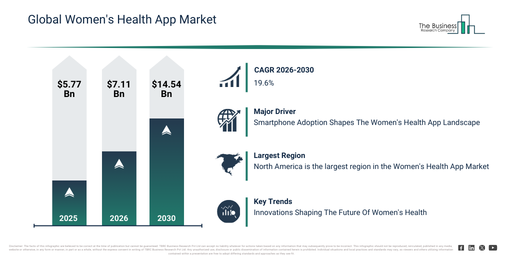
    The women’s health app market has experienced substantial expansion in recent times. This market is projected to expand from $5.77 billion in 2025 to $7.11 billion in 2026, demonstrating a compound annual growth rate (CAGR) of 23.3%. Historically, this expansion has been driven by factors such as the heightened adoption of smartphones by women, the proliferation of app-driven wellness offerings, greater understanding of menstrual and fertility well-being, the broadening scope of digital lifestyle platforms, and a higher willingness to utilize self-care instruments.

    The women’s health app market size is anticipated to grow significantly in the near future, reaching $14.54 billion by 2030, driven by a compound annual growth rate (CAGR) of 19.6%. This expansion during the forecast period is attributed to several factors, including an increasing demand for personalized mobile health solutions, greater integration of wearables with applications, the development of data-driven wellness insights, a growing focus on preventive digital health, and enhanced monetization of premium app features. Major trends projected for this period encompass the rising utilization of AI-powered health recommendations, increased adoption of subscription-based health apps, broader integration of mental wellness functionalities, the expansion of personalized fertility and cycle tracking options, and an intensified focus on user engagement and retention.

    Get A Free Sample Report With In-Depth Market Insights:

    https://thebusinessresearchcompany.com/sample_request?id=67475734&type=smp&name=Women%27s%20Health%20App%20Market%20Report%202026&utm_source=Blogs&utm_medium=Paid&utm_campaign=Nov_PR

    Women’s Health App Market Growth Factors Behind Sustained Expansion

    The increasing integration of smartphones is anticipated to stimulate the expansion of the women’s health app market moving forward. A smartphone is defined as a mobile device that combines the functionalities of both a computer and a cellular phone. Several factors fostering the growth of smartphone penetration include continuous advancements in smartphone technology, the decreasing cost of these devices, the proliferation of digital services, and rising urbanization and globalization trends. Smartphones empower women to conveniently access health-related information, monitor their health metrics, and utilize health applications at any time and in any location. Furthermore, these devices offer access to a diverse array of educational resources, including articles, videos, podcasts, webinars, and online communities pertinent to women’s health topics. Thus, the expanding adoption of smartphones is driving the growth of the women’s health app market.

    Women’s Health App Market Segment Landscape: Which Areas Lead Development?

    The women’s health app market covered in this report is segmented –

    1) By Type: Menstrual Health, Pregnancy Monitoring, Fertility Monitoring, Breastfeeding Management, Gynecological Health, Other Types

    2) By Modality: Smartphone, Tablet, Other Modalities

    3) By Age: Adolescent, Adult, Geriatric

    4) By Application: General Healthcare And Fitness, Reproductive Health, Lifestyle Management, Disease Management, Other Applications

    Subsegments:

    1) By Menstrual Health: Period Tracker, Ovulation Calendar, Pms Management, Pregnancy Monitoring

    2) By Pregnancy Monitoring: Pregnancy Trackers, Contraction Timer, Baby Growth Tracker

    3) By Fertility Monitoring: Ovulation Prediction, Fertility Tracker, Basal Body Temperature (Bbt) Monitoring

    4) By Breastfeeding Management: Milk Supply Tracker, Feeding Timer, Nursing Log

    5) By Gynecological Health: Pelvic Health Trackers, Cervical Health Trackers, Uterine Health Monitoring

    6) By Other Types: General Health Trackers, Mental Health Apps, Exercise And Diet Apps

    Women’s Health App Market Industry Trends Fueling Future Revenue Growth

    Leading companies in the women’s health app market are developing innovative products, such as smart rings, to better serve customers with advanced features. A smart ring is a compact, wearable electronic device that integrates mobile technology with functionalities for convenient on-the-go use. These rings are capable of monitoring physical activity levels, steps taken, calories burned, and sleep patterns, assisting women in maintaining an active and healthy lifestyle.

    Women’s Health App Market Industry Leaders And Competitive Landscape

    Major companies operating in the women’s health app market are Apple Inc., Flo Health Inc., Clue Inc., Natural Cycles Nordic AB, DotDash, Emme Inc., Wildflower Health, HelloBaby Inc., Rosy Wellness Inc., Evvy Inc., Kindara Inc., Ava AG, FertilityIQ, Kegg Inc., Glow Inc., Tia Health, Maya Health Inc., Peanut App Ltd., Ovia Health, Maven Clinic, LactApp, Caria, Grace Health, Every Mother

    View The Full Women’s Health App Market Report:

    https://thebusinessresearchcompany.com/report/womens-health-app-global-market-report?utm_source=Blogs&utm_medium=Paid&utm_campaign=Nov_PR

    Women’s Health App Market Global Footprint: Which Region Leads The Market?

    North America was the largest region in the women’s health app market in 2025. Asia-Pacific is expected to be the fastest-growing region in the forecast period. The regions covered in the women’s health app market report are Asia-Pacific, South East Asia, Western Europe, Eastern Europe, North America, South America, Middle East, Africa.

    Reach Out To Our Team:

    The Business Research Company: https://www.thebusinessresearchcompany.com/

    Americas: +1 310-496-7795

    Asia: +44 7882 955267 & +91 8897263534

    Europe: +44 7882 955267

    Email us at: marketing@tbrc.info

    Follow us on:

    LinkedIn: https://in.linkedin.com/company/the-business-research-company

    YouTube: https://www.youtube.com/channel/UC24_fI0rV8cR5DxlCpgmyFQ

    Global Market Model: https://www.thebusinessresearchcompany.com/global-market-model
  • Artificial Intelligence (AI) In Aging And Elderly Care Market Forecast: $158.49 Billion Valuation Expected By 2030

    Artificial Intelligence (AI) In Aging And Elderly Care Market Forecast: $158.49 Billion Valuation Expected By 2030

    The Business Research Company’s 2026 market reports are designed to deliver research that is more actionable and strategically valuable. Key offerings include market attractiveness scoring, total addressable market sizing, company benchmarking matrices, interactive Excel dashboards, deeper supply chain intelligence, emerging startup tracking, and granular product-level insights.

    Artificial Intelligence (AI) In Aging And Elderly Care Market Size, Growth Rate And Key Forecast Highlights For 2026–2030

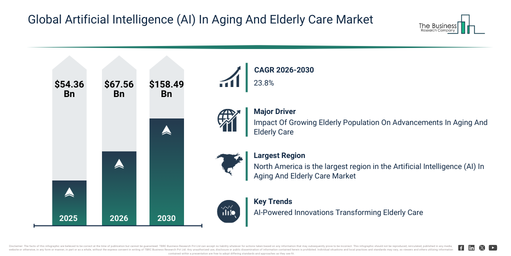
    The market for artificial intelligence (AI) in aging and elderly care has witnessed exponential growth recently. This market is projected to expand from $54.36 billion in 2025 to $67.56 billion in 2026, demonstrating a compound annual growth rate (CAGR) of 24.3%. Historically, this expansion has been driven by factors such as an aging global population, the increasing incidence of chronic conditions, the broadening of remote healthcare services, the rising adoption of digital health tools, and a growing need for assisted living solutions.

    The market for artificial intelligence (AI) in aging and elderly care is poised for rapid expansion in the coming years, projected to reach $158.49 billion by 2030, at a compound annual growth rate (CAGR) of 23.8%. This growth is primarily driven by augmented investments in AI-powered healthcare platforms, a surge in demand for tailored elderly care solutions, the broader adoption of smart home healthcare, an increased emphasis on preventive healthcare, and the growing incorporation of robotics into eldercare services. Concurrently, significant trends anticipated include the expanded deployment of AI-enabled health monitoring systems, a rise in the use of wearable devices for elder care, increased application of predictive analytics for health risk management, the proliferation of robotic assistance solutions, and a heightened focus on remote care models.

    See What’s Inside The Artificial Intelligence (AI) In Aging And Elderly Care Market Report With A Free Sample:

    https://thebusinessresearchcompany.com/sample_request?id=92691760&type=smp&name=Artificial%20Intelligence%20%28AI%29%20In%20Aging%20And%20Elderly%20Care%20Market%20Report%202026&utm_source=Blogs&utm_medium=Paid&utm_campaign=Nov_PR

    Artificial Intelligence (AI) In Aging And Elderly Care Market Expansion: The Major Factor Driving Growth

    The increasing elderly demographic is projected to fuel the expansion of artificial intelligence (AI) within the aging and elderly care market. This demographic consists of individuals aged 60 or 65 and above, who require specialized care and services to address health and lifestyle issues associated with aging. The expansion of the elderly population is attributed to extended lifespans, a consequence of advancements in healthcare, coupled with decreasing birth rates that reduce the proportion of younger individuals. AI is revolutionizing aging and elderly care by significantly improving healthcare provisions, increasing accessibility, and fostering greater independence for older adults. Consequently, the share of this age group within the total U.S. population is expected to climb from 17% to 23% over the same timeframe. Therefore, the growth in the elderly population is a key catalyst for the advancement of artificial intelligence (AI) in the aging and elderly care market.

    Understanding Artificial Intelligence (AI) In Aging And Elderly Care Market Segmentation For Strategic Planning

    The artificial intelligence (AI) in aging and elderly care market covered in this report is segmented –

    1) By Type: Natural Language Processing (NLP) Systems, Robotics And Robotic Assistance, Smart Home Devices And IoT Solutions, Machine Learning And Predictive Analytics, Virtual Health Assistants

    2) By Technology: Wearable Devices, Smart Home Systems, Mobile Apps, Cloud Computing, Internet Of Things (IoT)

    3) By Applications: Fall Detection And Prevention, Medication Management, Remote Health Monitoring, Social Engagement And Companion AI, Cognitive Stimulation And Brain Training

    4) By End User: Home Care Settings, Assisted Living Facilities, Nursing Homes And Long-Term Care Centers, Hospitals And Healthcare Institutions

    Subsegments:

    1) By Natural Language Processing (NLP) Systems: Voice-Activated Assistants, AI-Powered Speech Recognition Systems, NLP for Cognitive Health Monitoring

    2) By Robotics And Robotic Assistance: Elderly Care Robots, Robotic Mobility Assistance Devices, Robotic Companions For Seniors

    3) By Smart Home Devices And IoT Solutions: Smart Sensors (Fall Detection, Monitoring), AI-Enabled Smart Home Automation Systems, Wearable IoT Devices For Health Monitoring

    4) By Machine Learning And Predictive Analytics: AI-Based Health Risk Prediction Models, Machine Learning For Personalized Care Plans, Predictive Analytics For Medication Management

    5) By Virtual Health Assistants: AI-Powered Virtual Care Assistants, Telemedicine Virtual Assistants, Virtual Health Coaching And Support Systems

    Key Artificial Intelligence (AI) In Aging And Elderly Care Market Trends To Watch In 2026

    Leading firms within the artificial intelligence (AI) in aging and elderly care market are concentrating on creating cutting-edge technologies, for example, AI-powered virtual caregivers, with the aim of delivering customized care options, boosting monitoring functions, and elevating the general quality of life for older individuals. Such an AI virtual caregiver functions as an intelligent digital assistant designed to assist with health monitoring, medication reminders, companionship, and emergency responses, thereby primarily supporting elderly individuals in preserving their autonomy and welfare.

    Key Companies Active In The Artificial Intelligence (AI) In Aging And Elderly Care Market

    Major companies operating in the artificial intelligence (AI) in aging and elderly care market are Amazon.com Inc., Google LLC, Samsung Electronics Co. Ltd., Microsoft Corporation, Intel Corporation, General Electric Company, International Business Machines Corporation, Oracle Corporation, Medtronic plc, NVIDIA Corporation, Siemens Healthineers AG, Koninklijke Philips N.V., AARP Services Inc., Suki AI Inc., AiCure LLC, Sensi.AI, Orbita Inc., Sensely Inc., CarePredict Inc., Cognivue Corporation, Reemo Health Inc., Canary Health Technologies Inc., Somatix Inc.

    Explore Detailed Artificial Intelligence (AI) In Aging And Elderly Care Market Research And Forecasts:

    https://thebusinessresearchcompany.com/report/artificial-intelligence-ai-in-aging-and-elderly-care-global-market-report?utm_source=Blogs&utm_medium=Paid&utm_campaign=Nov_PR

    Which Geography Dominates The Artificial Intelligence (AI) In Aging And Elderly Care Market?

    North America was the largest region in the artificial intelligence (AI) in aging and elderly care market in 2025. Asia-Pacific is expected to be the fastest-growing region in the forecast period. The regions covered in the artificial intelligence (AI) in aging and elderly care market report are Asia-Pacific, South East Asia, Western Europe, Eastern Europe, North America, South America, Middle East, Africa.

    Reach Out To Our Team:

    The Business Research Company: https://www.thebusinessresearchcompany.com/

    Americas: +1 310-496-7795

    Asia: +44 7882 955267 & +91 8897263534

    Europe: +44 7882 955267

    Email us at: marketing@tbrc.info

    Follow us on:

    LinkedIn: https://in.linkedin.com/company/the-business-research-company

    YouTube: https://www.youtube.com/channel/UC24_fI0rV8cR5DxlCpgmyFQ

    Global Market Model: https://www.thebusinessresearchcompany.com/global-market-model
  • Artificial Intelligence (AI) Heart Sound Digital Twin Analytics Market Overview: Size, Growth Drivers, Trends And Competitive Landscape

    Artificial Intelligence (AI) Heart Sound Digital Twin Analytics Market Overview: Size, Growth Drivers, Trends And Competitive Landscape

    With a focus on actionable insights and strategic value, The Business Research Company’s 2026 market reports include market attractiveness scoring, total addressable market sizing, company benchmarking matrices, interactive Excel dashboards, deeper supply chain intelligence, emerging startup tracking, and granular product-level insights.

    How Much Will The Artificial Intelligence (AI) Heart Sound Digital Twin Analytics Market Be Worth By 2030?

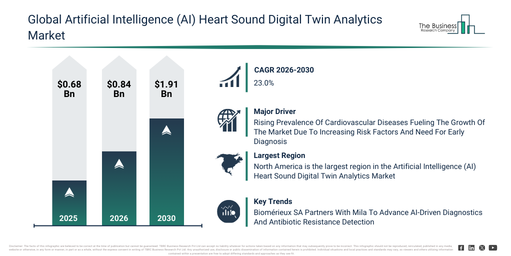
    The artificial intelligence (AI) heart sound digital twin analytics market has experienced significant expansion in its size in recent years. This market is projected to grow from $0.68 billion in 2025 to $0.84 billion in 2026, exhibiting a compound annual growth rate (CAGR) of 23.3%. Historically, this expansion has been driven by several factors, including an increase in cardiovascular disease prevalence, advancements in digital auscultation devices, the growing adoption of AI in clinical diagnostics, the broadening of remote patient monitoring, and the accessibility of substantial cardiac datasets.

    The artificial intelligence (AI) heart sound digital twin analytics market is projected to experience rapid expansion over the coming years. This market is anticipated to reach $1.91 billion by 2030, driven by a compound annual growth rate (CAGR) of 23.0%. Several factors contribute to this projected growth, including the escalating demand for prompt cardiac risk identification, the wider acceptance of customized cardiology approaches, the growth of cloud-based clinical data analysis, a heightened emphasis on ongoing cardiac surveillance, and the greater incorporation of AI into clinical processes. Key trends anticipated during this period involve the increasing embrace of digital twin cardiac models, a surge in the application of AI-driven heart sound analytics, the proliferation of remote cardiac monitoring tools, the expanding integration of wearable cardiac sensors, and a reinforced focus on diagnostic methods that predict cardiovascular issues.

    Get Access To A Free Artificial Intelligence (AI) Heart Sound Digital Twin Analytics Market Report Sample:

    https://thebusinessresearchcompany.com/sample_request?id=38179772&type=smp&name=Artificial%20Intelligence%20%28AI%29%20Heart%20Sound%20Digital%20Twin%20Analytics%20Market%20Report%202026&utm_source=Blogs&utm_medium=Paid&utm_campaign=Nov_PR

    The Key Driver Behind The Artificial Intelligence (AI) Heart Sound Digital Twin Analytics Market’s 23% CAGR

    An anticipated increase in cardiovascular disease cases is set to fuel expansion in the artificial intelligence (AI) heart sound digital twin analytics market. These conditions encompass a range of issues impacting the heart and circulatory system, such as coronary heart disease, heart failure, stroke, and hypertension. The growing incidence of CVDs largely stems from unhealthy dietary habits, where excessive intake of saturated fats, trans fats, added sugars, and sodium leads to elevated blood pressure, obesity, and high cholesterol, all significant contributors to cardiac ailments. Artificial intelligence (AI) heart sound digital twin analytics aids in diagnosing cardiovascular conditions through the creation of customized digital heart models for patients, facilitating early detection and ongoing oversight. This technology also lessens the burden on clinicians by delivering real-time heart sound analysis, thereby enhancing diagnostic precision and tailored therapeutic approaches. Consequently, the increasing prevalence of cardiovascular diseases is serving as a key driver for the expansion of the artificial intelligence (AI) heart sound digital twin analytics market.

    Artificial Intelligence (AI) Heart Sound Digital Twin Analytics Market Classification: Main Segments And Detailed Subsegments

    The artificial intelligence (AI) heart sound digital twin analytics market covered in this report is segmented –

    1) By Component: Software, Hardware, Services

    2) By Deployment Mode: On-Premises, Cloud

    3) By Application: Cardiology, Remote Patient Monitoring, Clinical Diagnostics, Research, Other Applications

    4) By End-User: Hospitals, Clinics, Research Institutes, Diagnostic Centers, Other End-Users

    Subsegments:

    1) By Software: AI Algorithms And Models, Predictive Analytics Platforms, Simulation And Modeling Tools, Data Integration And Management Software, Visualization And Reporting Dashboards

    2) By Hardware: Sensors, Digital Stethoscopes, Wearable Devices, Edge Devices Or Processing Units, Cloud Or Server Infrastructure

    3) By Services: Implementation And Integration Services, Consulting And Advisory Services, Training And Education Services, Support And Maintenance Services, Data-As-A-Service (DaaS)

    Artificial Intelligence (AI) Heart Sound Digital Twin Analytics Market Strategic Shifts: What Leading Players Are Prioritizing

    Leading companies within the artificial intelligence (AI) heart sound digital twin analytics market are concentrating on developing advanced products, such as digital stethoscopes, designed to analyze heart sounds, facilitate early diagnosis, and support personalized patient care. A digital stethoscope functions as an electronic device that both amplifies and records body sounds, incorporating features like noise reduction and connectivity with applications for improved diagnosis and data sharing. For instance, in April 2025, Eko Health Inc., a US-based digital health company, introduced the CORE 500 digital stethoscope and Eko+ membership in Canada. The CORE 500 digital stethoscope stands out as a highly advanced device, featuring patented audio technology with three listening modes, offering ECG and heart sound visualization, and utilizing active noise cancellation for precise auscultation, while also enabling seamless data capture, sharing, and monitoring. The Eko+ membership further enhances its functionality with AI-powered murmur and arrhythmia detection, waveform visualization, guided exam flows, and secure sharing. This strategic launch provides Canadian clinicians with sophisticated AI-driven tools to advance cardiac and pulmonary care and ultimately improve patient outcomes.

    Artificial Intelligence (AI) Heart Sound Digital Twin Analytics Market Company Analysis: Major Industry Participants

    Major companies operating in the artificial intelligence (AI) heart sound digital twin analytics market are Medtronic plc, Tata Consultancy Services Limited (TCS), Siemens Healthineers AG, Fujifilm Healthcare Corporation, GE Healthcare Technologies Inc., Dassault Systemes SE, Synopsys Inc., Tempus Labs Inc., Biofourmis Inc., HeartFlow Inc., Viz.ai Inc., Aidoc Medical Ltd., Butterfly Network Inc., Eko Health Inc., Shenzhen Minttihealth Co. Ltd., Ultromics Limited, Thinklabs Medical LLC, Acorai AB, Sensydia Corporation, CardioSignal, Cardionics Inc., Ayu Devices Pvt. Ltd., Ai Health Highway India Pvt Ltd., Aevice Health Pte Ltd., CSD Labs, Sanolla Ltd., HeartTronics AI

    Get Full Access To The Artificial Intelligence (AI) Heart Sound Digital Twin Analytics Market Report 2026:

    https://thebusinessresearchcompany.com/report/artificial-intelligence-ai-heart-sound-digital-twin-analytics-global-market-report?utm_source=Blogs&utm_medium=Paid&utm_campaign=Nov_PR

    Artificial Intelligence (AI) Heart Sound Digital Twin Analytics Market Global Regional Breakdown: Key Regions Analyzed

    North America was the largest region in the artificial intelligence (AI) heart sound digital twin analytics market in 2025. The regions covered in the artificial intelligence (AI) heart sound digital twin analytics market report are Asia-Pacific, South East Asia, Western Europe, Eastern Europe, North America, South America, Middle East, Africa.

    Reach Out To Our Team:

    The Business Research Company: https://www.thebusinessresearchcompany.com/

    Americas: +1 310-496-7795

    Asia: +44 7882 955267 & +91 8897263534

    Europe: +44 7882 955267

    Email us at: marketing@tbrc.info

    Follow us on:

    LinkedIn: https://in.linkedin.com/company/the-business-research-company

    YouTube: https://www.youtube.com/channel/UC24_fI0rV8cR5DxlCpgmyFQ

    Global Market Model: https://www.thebusinessresearchcompany.com/global-market-model
  • Women’s Health Market Size In 2026: Growth Outlook And Forecast Through 2030

    Women’s Health Market Size In 2026: Growth Outlook And Forecast Through 2030

    Built to provide research that’s more actionable and strategically valuable, The Business Research Company’s 2026 market reports include market attractiveness analysis, total addressable market sizing, company benchmarking matrices, interactive Excel dashboards, broader supply chain intelligence, emerging startup tracking, and in-depth product insights.

    Women’s Health Market Expansion Outlook: What Revenue Opportunities Are Ahead?

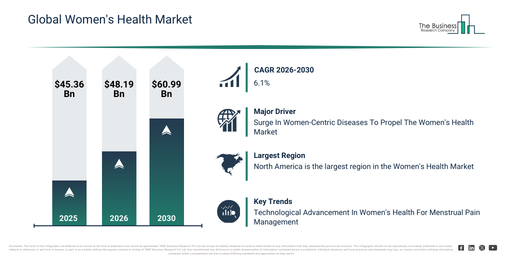
    The women’s health market has experienced strong growth in its size over recent years. It is forecast to increase from $45.36 billion in 2025 to $48.19 billion in 2026, achieving a compound annual growth rate (CAGR) of 6.2%. The expansion observed in the past can be attributed to the rising incidence of chronic conditions among women, the broadening of gynecological healthcare services, enhanced awareness of diseases specific to women, an increase in pharmaceutical research activities, and improved access to healthcare facilities.

    The women’s health market size is projected to experience robust expansion over the coming years. It is anticipated to grow to $60.99 billion by 2030, exhibiting a compound annual growth rate (CAGR) of 6.1%. This projected growth throughout the forecast period can be attributed to several factors: increasing investments in drug development specifically for women, a rising demand for individualized treatment plans, the expansion of early screening programs, the growing integration of digital health technologies, and an increasing focus on long-term women’s health management. Prominent trends expected in the forecast period involve the increasing development of targeted therapies for women, a rising adoption of precision medicine approaches, the growing utilization of advanced diagnostic tools, the expansion of non-hormonal treatment options, and an enhanced focus on preventive women’s healthcare.

    Get A Free Sample Report With In-Depth Market Insights:

    https://thebusinessresearchcompany.com/sample_request?id=69994091&type=smp&name=Women%27s%20Health%20Market%20Report%202026&utm_source=Blogs&utm_medium=Paid&utm_campaign=Nov_PR

    Women’s Health Market Demand Drivers Opening New Revenue Streams

    The increasing incidence of diseases predominantly affecting women is projected to stimulate the expansion of the women’s health market. Conditions such as anemia, osteoporosis, breast cancer, and menopause are highly prevalent due to various risk factors, including family history, advancing age, early onset of periods or menopause after 55 years, and obesity. This growing occurrence of women-centric diseases drives the demand for women’s health products and services necessary to treat these ailments and ensure women’s health and wellness. Therefore, the rising prevalence of women-centric diseases is a primary driver for the growth of the women’s health market.

    Women’s Health Market Segments: Where Is Growth Concentrated?

    The women’s health market covered in this report is segmented –

    1) By Product Type: Devices, Drugs, Pharmaceutical Pipeline

    2) By Age: 50 Years & above , Other Ages

    3) By Treatment Type: Hormonal Treatment, Non-Hormonal Treatment, Surgeries

    4) By Application: Postmenopausal Osteoporosis, Hormonal Infertility, Endometriosis And Uterine Fibroids, Contraceptives, Menopause, Polycystic Ovary Syndrome (PCOS)

    5) By Distribution Channel: Hospital Pharmacies, Retail Pharmacies, Online Pharmacies

    Subsegments:

    1) By Devices: Diagnostic Devices, Contraceptive Devices, Fertility Monitoring Devices, Gynecological Surgical Devices, Breast Pumps

    2) By Drugs: Hormonal Therapies, Fertility Drugs, Osteoporosis Drugs, Menopause Treatment Drugs, Endometriosis Drugs, Contraceptives

    3) By Pharmaceutical Pipeline: Emerging Drugs for Menopause, New Fertility Treatments, Novel Contraceptives, Drugs for Gynecological Conditions, Hormone Replacement Therapy Developments

    Women’s Health Market Trends Powering Strategic Industry Growth

    Major companies operating in the women’s health market are implementing new technologies to sustain their market position, such as transcutaneous electrical nerve stimulation (TENS) technology. Transcutaneous Electrical Nerve Stimulation (TENS) technology is a non-invasive therapeutic method that utilizes a small, battery-operated device to deliver low-voltage electrical currents to specific body areas through electrode pads placed on the skin.

    Women’s Health Market Key Participants And Competitive Landscape

    Major companies operating in the women’s health market are AbbVie Inc., Bayer AG, Merck & Co Inc., Pfizer Inc., Agile Therapeutics, Novartis AG, AstraZeneca PLC, F. Hoffmann-La Roche Ltd., Ferring Pharmaceuticals, Lupin Pharmaceuticals Inc., Johnson & Johnson Services Inc., Eli Lilly and Company, Teva Pharmaceutical Industries Ltd., Hologic Inc., Celmatix Inc., HERA Biotech Inc., Maven Clinic Inc., MobileODT Ltd., ObsEva SA, Syrona Health AG.

    View The Full Women’s Health Market Report:

    https://thebusinessresearchcompany.com/report/womens-health-global-market-report?utm_source=Blogs&utm_medium=Paid&utm_campaign=Nov_PR

    Women’s Health Market Regional Split: Which Areas Are Fueling Growth?

    North America was the largest region in the women’s health market in 2025. Asia-Pacific is expected to be the fastest-growing region in the women’s health market report during the forecast period. The regions covered in the women’s health market report are Asia-Pacific, South East Asia, Western Europe, Eastern Europe, North America, South America, Middle East, Africa.

    Reach Out To Our Team:

    The Business Research Company: https://www.thebusinessresearchcompany.com/

    Americas: +1 310-496-7795

    Asia: +44 7882 955267 & +91 8897263534

    Europe: +44 7882 955267

    Email us at: marketing@tbrc.info

    Follow us on:

    LinkedIn: https://in.linkedin.com/company/the-business-research-company

    YouTube: https://www.youtube.com/channel/UC24_fI0rV8cR5DxlCpgmyFQ

    Global Market Model: https://www.thebusinessresearchcompany.com/global-market-model