Author: Marketing Posting

  • Total Knee Replacement Revision System Market Growth Potential: What The Latest Forecast Reveals

    Total Knee Replacement Revision System Market Growth Potential: What The Latest Forecast Reveals

    Featuring market attractiveness scoring, total addressable market sizing, company benchmarking matrices, interactive Excel dashboards, deeper supply chain intelligence, emerging startup tracking, and granular product-level insights, The Business Research Company’s 2026 market reports are built to deliver research that is both more actionable and more strategically valuable.

    Total Knee Replacement Revision System Market Growth Analysis: How Will Revenue Trend Over The Forecast Period?

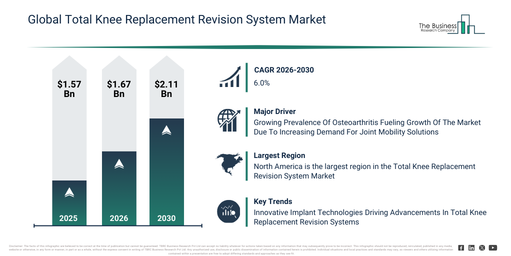
    The total knee replacement revision system market size has shown robust expansion in recent years. It is anticipated to increase from $1.57 billion in 2025 to $1.67 billion in 2026, achieving a compound annual growth rate (CAGR) of 6.1%. Historically, this market’s growth has been linked to increasing failure rates of primary knee implants, a rising number of revision surgeries, the expansion of orthopedic specialty centers, improved surgeon expertise in revision procedures, and the availability of advanced revision implant systems.

    The total knee replacement revision system market is projected to experience substantial expansion over the coming years. This market is anticipated to reach a valuation of $2.11 billion by 2030, exhibiting a compound annual growth rate (CAGR) of 6.0%. Several factors are expected to drive this growth during the forecast period, including a growing elderly patient demographic, the increasing intricacy of revision procedures, the wider adoption of robotic-assisted orthopedic surgery, a greater emphasis on customized revision implants, and heightened investment in advanced orthopedic reconstruction techniques. Key trends identified for the forecast period encompass a rising need for highly constrained revision systems, the increasing acceptance of modular revision implants, the expanding application of robotic-assisted revision procedures, the development of tailored revision solutions, and a stronger emphasis on ensuring long-term implant stability.

    Get A Free Sample Report With In-Depth Market Insights:

    https://thebusinessresearchcompany.com/sample_request?id=14564161&type=smp&name=Total%20Knee%20Replacement%20Revision%20System%20Market%20Report%202026&utm_source=Blogs&utm_medium=Paid&utm_campaign=Nov_PR

    Total Knee Replacement Revision System Market Expansion Drivers: What’s Shaping Future Growth?

    The increasing occurrence of osteoarthritis is anticipated to drive the expansion of the total knee replacement revision system market in the future. This condition, osteoarthritis, is a degenerative joint ailment marked by the deterioration of cartilage and underlying bone, resulting in discomfort, rigidity, and limited movement in the impacted joints. Its widespread nature stems from inactive lifestyles, which diminish joint flexibility, weaken musculature, and exert greater pressure on weight-bearing joints, consequently causing cartilage erosion and decline. Total knee replacement revision systems address osteoarthritis treatments by providing efficient methods for replacing damaged or unsuccessful knee implants, thereby alleviating pain, recovering movement, and improving the life quality for those suffering. The increasing prevalence of osteoarthritis acts as a significant catalyst for the expansion of the total knee replacement revision system market.

    Total Knee Replacement Revision System Market Segments: Where Is Growth Concentrated?

    The total knee replacement revision system market covered in this report is segmented –

    1) By Product Type: Standard Revision Systems, Partial Revision Systems, Hinged or Highly Constrained Revision Systems, Mobile Bearing Revision Systems

    2) By Material Type: Metal, Polyethylene, Ceramics, Composite Materials

    3) By Procedure Type: Unilateral Total Knee Replacement Revision, Bilateral Total Knee Replacement Revision, Robotic-Assisted Knee Replacement Revision, Minimally Invasive Knee Replacement Revision

    4) By Distribution Channel: Direct Sales, Distributors And Wholesalers, Hospital Procurement And Group Purchasing Organizations (GPOs), Specialized Orthopedic Retailers, E-Commerce

    5) By End User: Hospitals, Ambulatory Surgical Centers (ASCs), Orthopedic Clinics, Research And Rehabilitation Centers

    Subsegments:

    1) By Standard Revision Systems: Femoral Revision Components, Tibial Revision Components, Patellar Components, Modular Stems

    2) By Partial Revision Systems: Unicompartmental Revision Components, Isolated Femoral or Tibial Revisions, Patellofemoral Revision Components

    3) By Hinged or Highly Constrained Revision Systems: Rotating Hinge Knee Systems, Fixed Hinge Knee Systems, Constrained Condylar Knee (CCK) Systems

    4) By Mobile Bearing Revision Systems: Rotating Platform Bearings, Medial Pivot Bearings, Dual Mobility Bearings

    Total Knee Replacement Revision System Market Industry Trends Fueling Future Revenue Growth

    Companies operating within the total knee replacement revision system are concentrating on developing innovative technologies, such as OXINIUM implant technology, to improve implant longevity, reduce wear, and enhance long-term outcomes for patients undergoing complex revision procedures. OXINIUM implant technology is a patented material utilized for orthopedic implants, particularly for knee and hip replacements.

    Total Knee Replacement Revision System Market Key Participants And Competitive Landscape

    Major companies operating in the total knee replacement revision system market are Zimmer Biomet Holdings Inc, Stryker Corporation, Smith & Nephew plc, DePuy Synthes (Johnson & Johnson MedTech)¹, Conformis Inc, Medacta International SA, Corin Group plc, MicroPort Scientific Corporation, Kinamed Incorporated, OrthoPediatrics Corp, Arthrex Inc, Wright Medical Group N V, Integra LifeSciences Holdings Corporation, Tornier Inc, DJO Global Inc, Aesculap Implant Systems LLC, Waldemar LINK GmbH & Co KG, Beijing Chunlizhengda Medical Instruments Co Ltd, Allegra Orthopaedics Limited, United Orthopedics Corporation

    View The Full Total Knee Replacement Revision System Market Report:

    https://thebusinessresearchcompany.com/report/total-knee-replacement-revision-system-global-market-report?utm_source=Blogs&utm_medium=Paid&utm_campaign=Nov_PR

    Total Knee Replacement Revision System Market Largest Region: Which Geography Holds The Biggest Share?

    North America was the largest region in the total knee replacement revision system market in 2025. The regions covered in the total knee replacement revision system market report are Asia-Pacific, South East Asia, Western Europe, Eastern Europe, North America, South America, Middle East, Africa.

    Reach Out To Our Team:

    The Business Research Company: https://www.thebusinessresearchcompany.com/

    Americas: +1 310-496-7795

    Asia: +44 7882 955267 & +91 8897263534

    Europe: +44 7882 955267

    Email us at: marketing@tbrc.info

    Follow us on:

    LinkedIn: https://in.linkedin.com/company/the-business-research-company

    YouTube: https://www.youtube.com/channel/UC24_fI0rV8cR5DxlCpgmyFQ

    Global Market Model: https://www.thebusinessresearchcompany.com/global-market-model
  • Total Hip and Knee Replacements Market Growth Outlook: Why Analysts Expect Continued Expansion

    Total Hip and Knee Replacements Market Growth Outlook: Why Analysts Expect Continued Expansion

    Built to provide research that’s more actionable and strategically valuable, The Business Research Company’s 2026 market reports include market attractiveness analysis, total addressable market sizing, company benchmarking matrices, interactive Excel dashboards, broader supply chain intelligence, emerging startup tracking, and in-depth product insights.

    Total Hip and Knee Replacements Market Forecast: What Value Will The Market Reach By 2030?

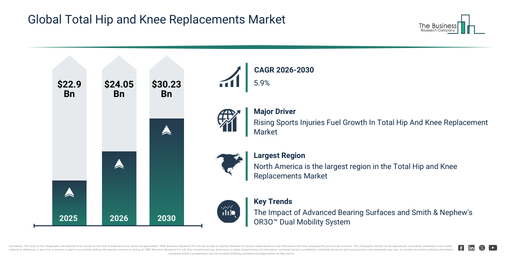
    The market size for total hip and knee replacements has experienced significant growth in recent years. This market is projected to expand from $22.9 billion in 2025 to $24.05 billion by 2026, demonstrating a compound annual growth rate (CAGR) of 5.0%. The historical growth can be ascribed to several factors, including the increasing prevalence of osteoarthritis, a growing aging population, the expansion of orthopedic surgical infrastructure, improved clinical outcomes of joint replacements, and broader insurance coverage for joint procedures.

    The total hip and knee replacements market size is expected to show significant expansion in the coming years. It is projected to reach $30.23 billion by 2030, growing at a compound annual growth rate (CAGR) of 5.9%. The anticipated growth during this period can be attributed to a rising demand for solutions that offer faster recovery, the increasing adoption of robotic and navigation-assisted surgical procedures, the proliferation of ambulatory surgical centers, a heightened focus on the longevity of implants, and growing investments in orthopedic innovation. Prominent trends expected in the forecast period include the increasing use of minimally invasive joint replacement techniques, the rising application of advanced implant materials, the deeper integration of robotic-assisted surgery, the expansion of outpatient joint replacement programs, and an enhanced emphasis on patient-specific implants.

    Get A Free Sample Report With In-Depth Market Insights:

    https://thebusinessresearchcompany.com/sample_request?id=78665691&type=smp&name=Total%20Hip%20and%20Knee%20Replacements%20Market%20Report%202026&utm_source=Blogs&utm_medium=Paid&utm_campaign=Nov_PR

    Total Hip and Knee Replacements Market Development Factors: What’s Supporting Demand?

    The total hip and knee replacement market is anticipated to expand, driven by a rising incidence of sports injuries. These injuries, encompassing various physical ailments sustained during athletic or sports participation, impact diverse bodily areas such as muscles, bones, tendons, ligaments, and joints. High-impact or repetitive sports injuries, including torn ligaments, cartilage damage, and fractures, often necessitate joint replacement surgery as a long-term solution for significant damage to the hip and knee joints. The escalating occurrence of sports injuries is set to fuel the growth of the total hip and knee replacement market.

    Total Hip and Knee Replacements Market Segment Analysis: What Are The Core Market Categories?

    The total hip and knee replacements market covered in this report is segmented –

    1) By Procedure Type: Total Hip Replacement, Partial Hip Replacement, Revision Hip Replacement, Total Knee Replacement, Partial Knee Replacement, Revision Knee Replacement

    2) By Implant Type: Mobile Bearing, Fixed Bearing, Other Implant Types

    3) By End-User: Hospitals, Ambulatory Surgical Centers, Orthopedic Clinics, Other End-Users

    Subsegments:

    1) By Total Hip Replacement: Primary Total Hip Replacement, Revision Total Hip Replacement

    2) By Partial Hip Replacement: Hemiarthroplasty, Resurfacing Procedures

    3) By Revision Hip Replacement: Complex Revision Procedures, Standard Revision Procedures

    4) By Total Knee Replacement: Primary Total Knee Replacement, Revision Total Knee Replacement

    5) By Partial Knee Replacement: Unicompartmental Knee Replacement, Patellofemoral Replacement

    6) By Revision Knee Replacement: Complex Revision Procedures, Standard Revision Procedures

    Total Hip and Knee Replacements Market Trends Powering Strategic Industry Growth

    Major companies within the total hip and knee replacement market are actively developing technologies, particularly advanced bearing surfaces, to extend implant durability, minimize wear and corrosion, improve patient recovery, and decrease the potential for complications like dislocation, thereby offering safer and more effective options for joint replacement surgeries. An advanced bearing surface refers to innovative materials and designs utilized in joint implants to reduce wear and enhance longevity. This technology boosts the effectiveness of hip and knee replacements by lowering friction and corrosion, which contributes to superior patient outcomes.

    Total Hip and Knee Replacements Market Top Companies Driving Competitive Growth

    Major companies operating in the total hip and knee replacements market are Johnson & Johnson, Stryker Corporation, Zimmer Biomet Holdings Inc, Smith & Nephew Plc, NuVasive Inc, Globus Medical Inc, Wright Medical Group N.V., MicroPort Scientific Corp, Exactech Inc, AK Medical Holdings Ltd, Corin Group, Waldemar Link GmbH Co., DJO Global Inc, Conformis Inc, Peter Brehm GmbH, Adler Ortho S.R.L, implantcast GmbH, Medacta International SA, Ortho Development (ODEV), FH Orthopedics S.A.S, Groupe Lépine

    View The Full Total Hip and Knee Replacements Market Report:

    https://thebusinessresearchcompany.com/report/total-hip-and-knee-replacements-global-market-report?utm_source=Blogs&utm_medium=Paid&utm_campaign=Nov_PR

    Total Hip and Knee Replacements Market Regional Analysis: Which Geography Leads On Revenue?

    North America was the largest region in the total hip and knee replacements market in 2025. Asia Pacific is expected to be the fastest-growing region in the forecast period. The regions covered in the total hip and knee replacements market report are Asia-Pacific, South East Asia, Western Europe, Eastern Europe, North America, South America, Middle East, Africa.

    Reach Out To Our Team:

    The Business Research Company: https://www.thebusinessresearchcompany.com/

    Americas: +1 310-496-7795

    Asia: +44 7882 955267 & +91 8897263534

    Europe: +44 7882 955267

    Email us at: marketing@tbrc.info

    Follow us on:

    LinkedIn: https://in.linkedin.com/company/the-business-research-company

    YouTube: https://www.youtube.com/channel/UC24_fI0rV8cR5DxlCpgmyFQ

    Global Market Model: https://www.thebusinessresearchcompany.com/global-market-model
  • Topical Pain Relief Market Forecast Insights: The Road To $14.88 Billion By 2030

    Topical Pain Relief Market Forecast Insights: The Road To $14.88 Billion By 2030

    Backed by market attractiveness analysis, total addressable market sizing, company benchmarking matrices, interactive Excel dashboards, wider supply chain intelligence, emerging startup coverage, and detailed product-level insights, The Business Research Company’s 2026 market reports are designed to offer research that is more actionable and strategically valuable than ever.

    Topical Pain Relief Market Size Outlook: How Quickly Will Revenue Expand Through 2030?

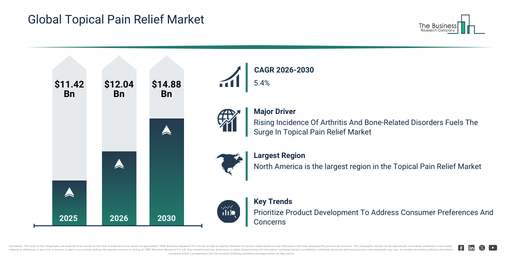
    The market for topical pain relief products has seen substantial growth recently. This market is projected to expand from $11.42 billion in 2025 to $12.04 billion in 2026, demonstrating a compound annual growth rate (CAGR) of 5.4%. Historically, this expansion has been driven by factors such as the increasing occurrence of musculoskeletal disorders, a higher frequency of sports and lifestyle-related injuries, the broad accessibility of OTC pain relief solutions, an expanding elderly demographic, and the growth of pharmacy retail networks.

    The topical pain relief market is projected to experience robust expansion in the coming years. It is forecast to reach $14.88 billion by 2030, exhibiting a compound annual growth rate (CAGR) of 5.4%. This growth in the forecast period is primarily driven by an increasing adoption of self-care pain management, a rising demand for opioid-free alternatives, the expansion of e-commerce pharmaceutical sales, a growing focus on chronic pain management, and continuous innovation in topical drug delivery. Key trends for this period include a heightened demand for non-opioid topical analgesics, an increasing preference for over-the-counter pain relief products, the development of advanced transdermal delivery systems, increased use of combination formulations, and an enhanced focus on fast-acting and long-lasting relief.

    Get A Free Sample Report With In-Depth Market Insights:

    https://thebusinessresearchcompany.com/sample_request?id=19009261&type=smp&name=Topical%20Pain%20Relief%20Market%20Report%202026&utm_source=Blogs&utm_medium=Paid&utm_campaign=Nov_PR

    Topical Pain Relief Market Industry Drivers: What’s Behind The Revenue Growth?

    The rising occurrence of arthritis and bone-related disorders is set to drive the expansion of the topical pain relief market moving ahead. These disorders include health conditions that impact the joints, bones, and their surrounding tissues. Topical pain relief solutions are commonly utilized to manage arthritis and bone-related disorders, aiming to relieve localized pain, reduce inflammation, and ease discomfort linked to these conditions, especially in more superficial joints. The increasing prevalence of arthritis and bone-related disorders is accelerating the growth of the topical pain relief market.

    Topical Pain Relief Market Segment Breakdown: Which Categories Lead On Revenue?

    The topical pain relief market covered in this report is segmented –

    1) By Type: Prescription Pain Relief, Over-The-Counter (OTC) Pain Relief

    2) By Formulation: Cream, Gel, Spray, Patch, Other Formulations

    3) By Therapeutic: Non-Opioids, Opioids

    4) By Distribution Channel: Pharmacies And Drug Stores, E-Commerce, Retail And Grocery Stores

    Subsegments:

    1) By Prescription Pain Relief: Prescription Creams And Gels, Prescription Patches, Compounded Topical Analgesics

    2) By Over-The-Counter (OTC) Pain Relief: Nonsteroidal Anti-Inflammatory Drugs (NSAIDs), Counterirritants, Analgesic Creams And Gels

    Topical Pain Relief Market Growth Trends Reshaping The Competitive Landscape

    Leading firms operating in the topical pain relief market are concentrating on developing innovative products, such as pain-relieving cream, to satisfy the increasing demand for effective pain relief items. Pain-relieving cream is an external application that offers deep pain relief to help alleviate minor joint and muscle soreness.

    Topical Pain Relief Market Leading Players And Competitive Positioning

    Major companies operating in the topical pain relief market are Pfizer Inc., Johnson & Johnson, AbbVie Inc., Bayer AG, Novartis AG, Sanofi S.A., GlaxoSmithKline Plc, Eli Lilly and Company, Reckitt Benckiser Group plc, Viatris Inc., Teva Pharmaceutical Industries Ltd., Mylan N.V., Sun Pharmaceutical Industries Ltd., Perrigo Company PLC, Dr. Reddy’s Laboratories Ltd., Aurobindo Pharma Limited, Cipla Ltd., Lupin Limited, Almirall S.A., AdvaCare Pharma, Topical BioMedics Inc.

    View The Full Topical Pain Relief Market Report:

    https://thebusinessresearchcompany.com/report/topical-pain-relief-global-market-report?utm_source=Blogs&utm_medium=Paid&utm_campaign=Nov_PR

    Topical Pain Relief Market Geographic Spread And Regional Opportunities

    North America was the largest region in the topical pain relief market in 2025. The regions covered in the topical pain relief market report are Asia-Pacific, South East Asia, Western Europe, Eastern Europe, North America, South America, Middle East, Africa.

    Reach Out To Our Team:

    The Business Research Company: https://www.thebusinessresearchcompany.com/

    Americas: +1 310-496-7795

    Asia: +44 7882 955267 & +91 8897263534

    Europe: +44 7882 955267

    Email us at: marketing@tbrc.info

    Follow us on:

    LinkedIn: https://in.linkedin.com/company/the-business-research-company

    YouTube: https://www.youtube.com/channel/UC24_fI0rV8cR5DxlCpgmyFQ

    Global Market Model: https://www.thebusinessresearchcompany.com/global-market-model
  • Tokenized Health Loyalty Programs Market Explained: What Is Fueling Growth To $4.03 Billion By 2030?

    Tokenized Health Loyalty Programs Market Explained: What Is Fueling Growth To $4.03 Billion By 2030?

    Featuring market attractiveness scoring, total addressable market sizing, company benchmarking matrices, interactive Excel dashboards, deeper supply chain intelligence, emerging startup tracking, and granular product-level insights, The Business Research Company’s 2026 market reports are built to deliver research that is both more actionable and more strategically valuable.

    Tokenized Health Loyalty Programs Market Size, Value And Growth Trajectory Through 2030

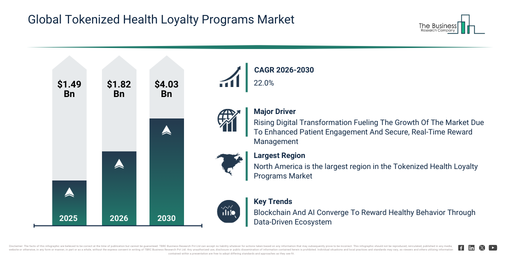
    The tokenized health loyalty programs market size has undergone substantial growth in recent years. It is projected to expand from $1.49 billion in 2025 to $1.82 billion in 2026, demonstrating a compound annual growth rate (CAGR) of 22.3%. The historical expansion of this market can be attributed to factors such as the rising demand for patient engagement solutions, the early adoption of blockchain in healthcare systems, an increasing focus on preventive healthcare programs, the growth of digital health platforms, and the expansion of wellness incentive models.

    The market for tokenized health loyalty programs is projected to experience substantial expansion in the coming years, anticipated to reach $4.03 billion by 2030, demonstrating a compound annual growth rate (CAGR) of 22.0%. Key drivers for this growth throughout the forecast period include the increasing uptake of decentralized healthcare applications, enhanced integration with insurance and payer systems, the broadening of interoperable digital health ecosystems, greater regulatory certainty surrounding blockchain technology, and a heightened focus on long-term patient engagement initiatives. Significant trends expected during this period involve the increasing embrace of blockchain-based reward platforms, greater integration with existing patient engagement applications, the rising deployment of smart contracts for managing incentives, the expansion of secure tokenized wellness ecosystems, and an increased emphasis on ensuring data transparency and building trust.

    Get A Free Sample Report With In-Depth Market Insights:

    https://thebusinessresearchcompany.com/sample_request?id=48250566&type=smp&name=Tokenized%20Health%20Loyalty%20Programs%20Market%20Report%202026&utm_source=Blogs&utm_medium=Paid&utm_campaign=Nov_PR

    Tokenized Health Loyalty Programs Market Growth Factors: What’s Supporting Expansion?

    The expansion of digital transformation is anticipated to boost the growth of the tokenized health loyalty programs market moving forward. This involves incorporating digital technologies across all business facets to enhance operations, improve customer experiences, and generate increased value. Its rise stems from the increasing demand for swift, tailored, and convenient digital services, leveraging technologies like AI, cloud platforms, and advanced analytics. The tokenized health loyalty programs market contributes to this driver by facilitating secure, transparent, and real-time reward management, thereby improving patient engagement and fostering trust within digital health ecosystems. The growing digital transformation is fueling the expansion of the tokenized health loyalty programs market.

    Tokenized Health Loyalty Programs Market Segmentation: How Does The Market Break Down By Category?

    The tokenized health loyalty programs market covered in this report is segmented –

    1) By Component: Platform, Services

    2) By Technology: Blockchain, Smart Contracts, Tokenization Platforms

    3) By Application: Patient Engagement, Wellness Programs, Prescription Management, Insurance Claims, Other Applications

    4) By End-User: Hospitals And Clinics, Pharmacies, Insurance Providers, Wellness Centers, Other End-Users

    Subsegments:

    1) By Platform: Patient Engagement Platform, Reward Management Platform, Data Analytics Platform, Blockchain-Based Platform

    2) By Services: Consulting Services, Implementation Services, Support And Maintenance Services, Integration Services

    Tokenized Health Loyalty Programs Market Trends Shaping Long-Term Demand

    Companies operating within the tokenized health loyalty program market are concentrating on creating advanced solutions, particularly blockchain-based health data ecosystems, to incentivize healthy habits, improve data control, and offer tailored wellness rewards. Such an ecosystem functions as a secure, decentralized platform where individuals can store, manage, and share their health information while retaining full ownership and privacy. For example, in June 2025, CUDIS, an AI-powered Web3 wellness firm based on an island, introduced its proprietary $CUDIS token on the Solana blockchain. This token is an integral component of CUDIS’s decentralized healthcare system, designed to compensate users based on validated health data gathered through their AI-integrated smart ring and associated application. It allows users to gain rewards for authenticated biometric data, including steps, sleep patterns, and heart rate, collected by the CUDIS smart ring, thereby establishing a tokenized loyalty mechanism tied to actual health activities. The token also facilitates entry to advanced AI coaching, a health data exchange, DeSci decentralized applications, and governance functions via staking and collective voting. The launch features a staggered airdrop of 50 million tokens, availability on exchanges such as Bybit and Bitget, and integration with the Longevity Hub for various third-party wellness applications.

    Tokenized Health Loyalty Programs Market Competitive Overview And Top Companies

    Major companies operating in the tokenized health loyalty programs market are TELUS Health, Health Hero, Calo, Vitality Group Inc., Brave Software, Wellable Inc., Sweatco Ltd., Solve.Care Inc., Sprout at Work, IncentFit Corp., VitaDAO, StepN, qiibee, Lympo, Genopets, Actifit Inc., Ocean Protocol, Streamr, Loyyal Corp., Dotmoovs, IOTA, Healthereum LLC, Healthcoin, Clinicoin, Coinhealth, Dentacoin

    View The Full Tokenized Health Loyalty Programs Market Report:

    https://thebusinessresearchcompany.com/report/tokenized-health-loyalty-programs-global-market-report?utm_source=Blogs&utm_medium=Paid&utm_campaign=Nov_PR

    Tokenized Health Loyalty Programs Market Top Region By Revenue And Market Share

    North America was the largest region in the tokenized health loyalty programs market in 2025. Asia-Pacific is expected to be the fastest-growing region in the forecast period. The regions covered in the tokenized health loyalty programs market report are Asia-Pacific, South East Asia, Western Europe, Eastern Europe, North America, South America, Middle East, Africa.

    Reach Out To Our Team:

    The Business Research Company: https://www.thebusinessresearchcompany.com/

    Americas: +1 310-496-7795

    Asia: +44 7882 955267 & +91 8897263534

    Europe: +44 7882 955267

    Email us at: marketing@tbrc.info

    Follow us on:

    LinkedIn: https://in.linkedin.com/company/the-business-research-company

    YouTube: https://www.youtube.com/channel/UC24_fI0rV8cR5DxlCpgmyFQ

    Global Market Model: https://www.thebusinessresearchcompany.com/global-market-model
  • Tobramycin Eye Drop Market Forecast To Reach $1.61 Billion By 2030: Key Trends Explained

    Tobramycin Eye Drop Market Forecast To Reach $1.61 Billion By 2030: Key Trends Explained

    Built to provide research that’s more actionable and strategically valuable, The Business Research Company’s 2026 market reports include market attractiveness analysis, total addressable market sizing, company benchmarking matrices, interactive Excel dashboards, broader supply chain intelligence, emerging startup tracking, and in-depth product insights.

    Tobramycin Eye Drop Market CAGR Outlook And Future Development

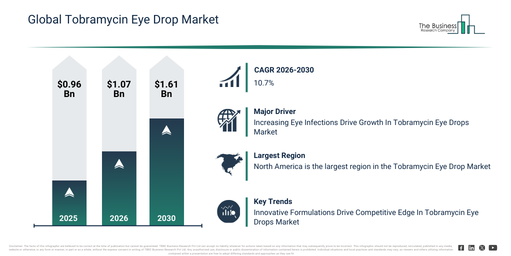
    The tobramycin eye drop market has experienced substantial expansion in recent years. This market is expected to grow from $0.96 billion in 2025 to $1.07 billion in 2026, achieving a compound annual growth rate (CAGR) of 11.9%. The observed growth in previous periods can be linked to factors like a rising occurrence of bacterial eye infections, the prevalent clinical usage of ophthalmic antibiotics, the broadening of outpatient ophthalmology services, enhanced accessibility to prescribed eye medications, and an increase in hospital pharmacy dispensing.

    The tobramycin eye drop market is projected for significant expansion, with its size expected to reach $1.61 billion by 2030, exhibiting a compound annual growth rate (CAGR) of 10.7%. This growth in the upcoming period is attributed to factors such as increasing demand for cost-effective ophthalmic treatments, rising awareness concerning eye infection management, the expansion of specialty eye care clinics, a growing preference for combination therapies, and increasing regulatory scrutiny on ophthalmic drug quality. Major trends during this forecast period include the increasing availability of generic tobramycin formulations, a rising use of combination antibiotic-steroid eye drops, a growing focus on sterile and preservative-free formulations, an expansion of pediatric and geriatric usage, and an enhanced emphasis on regulatory compliance and quality control.

    Get A Free Sample Report With In-Depth Market Insights:

    https://thebusinessresearchcompany.com/sample_request?id=63975125&type=smp&name=Tobramycin%20Eye%20Drop%20Market%20Report%202026&utm_source=Blogs&utm_medium=Paid&utm_campaign=Nov_PR

    Tobramycin Eye Drop Market Demand Drivers: What’s Powering Industry Growth?

    The future expansion of the tobramycin eye drops market is anticipated to be driven by the rising incidence of eye infections. Eye infections, characterized by inflammation or irritation, result from bacteria, viruses, fungi, or various microorganisms impacting ocular components like the conjunctiva, cornea, or eyelids. Globally, factors such as escalating urbanization, increased environmental pollution, and extended screen time have contributed to a greater widespread occurrence of these infections. Tobramycin eye drops serve as a treatment for bacterial eye infections, functioning by impeding bacterial protein synthesis, thereby effectively diminishing both the infection and associated inflammation. The rising prevalence of eye infections is a key factor propelling the expansion of the tobramycin eye drops market.

    Tobramycin Eye Drop Market Segment Trends And Revenue Contributors

    The tobramycin eye drop market covered in this report is segmented –

    1) By Product Type: Tobramycin Ophthalmic Suspension, Tobramycin And Dexamethasone Ophthalmic Suspension, Other Product Types

    2) By Indication: Bacterial Eye Infections, Keratitis, Pre Or Post Ocular Surgery Prophylaxis, Other Indications

    3) By Application: Adult, Children

    4) By End User: Hospitals, Homecare, Specialty Clinics, Other End Users

    Subsegments:

    1) By Tobramycin Ophthalmic Suspension: Standard Tobramycin Ophthalmic Suspension, High-Concentration Tobramycin Ophthalmic Suspension

    2) By Tobramycin And Dexamethasone Ophthalmic Suspension: Fixed-Dose Combination (Tobramycin And Dexamethasone)

    3) By Other Product Types: Tobramycin Ophthalmic Ointment, Tobramycin Eye Drops (Non-Suspension Forms), Generic Tobramycin Ophthalmic Products

    Tobramycin Eye Drop Market Innovation Trends Shaping Future Development

    Leading companies in the tobramycin eye drops market are prioritizing technological advancements, such as sophisticated formulation techniques, to achieve a competitive edge. These advancements encompass enhanced drug delivery systems and increased efficacy, addressing the growing consumer need for effective treatments.

    Tobramycin Eye Drop Market Competitive Landscape: Which Companies Lead The Industry?

    Major companies operating in the tobramycin eye drop market are Novartis AG, Teva Pharmaceuticals Industries Ltd., Alcon Vision LLC, Bausch Health Companies Inc., Sun Pharmaceutical Industries Ltd., Hikma Pharmaceuticals Plc, Apotex Inc., Alembic Pharmaceuticals Limited, Incepta Pharmaceuticals Ltd., Jubilant Cadista Pharmaceuticals Inc., Zydus Lifesciences, Cipla Limited, Lupin Limited, Glenmark Pharmaceuticals Limited, Santen Pharmaceutical Co Ltd, FDC Limited, Micro Labs Limited, Alkem Laboratories Limited, Intas Pharmaceuticals Limited, Wockhardt Limited, Pfizer Inc, Abbott Laboratories

    View The Full Tobramycin Eye Drop Market Report:

    https://thebusinessresearchcompany.com/report/tobramycin-eye-drop-global-market-report?utm_source=Blogs&utm_medium=Paid&utm_campaign=Nov_PR

    Tobramycin Eye Drop Market Regional Analysis And Top Geography

    North America was the largest region in the tobramycin eye drops market in 2025. Asia-Pacific is expected to be the fastest-growing region in the forecast period. The regions covered in the tobramycin eye drop market report are Asia-Pacific, South East Asia, Western Europe, Eastern Europe, North America, South America, Middle East, Africa.

    Reach Out To Our Team:

    The Business Research Company: https://www.thebusinessresearchcompany.com/

    Americas: +1 310-496-7795

    Asia: +44 7882 955267 & +91 8897263534

    Europe: +44 7882 955267

    Email us at: marketing@tbrc.info

    Follow us on:

    LinkedIn: https://in.linkedin.com/company/the-business-research-company

    YouTube: https://www.youtube.com/channel/UC24_fI0rV8cR5DxlCpgmyFQ

    Global Market Model: https://www.thebusinessresearchcompany.com/global-market-model
  • Tissue Sectioning Market Analysis: Understanding The Drivers Behind 9% CAGR Through 2030 Growth

    Tissue Sectioning Market Analysis: Understanding The Drivers Behind 9% CAGR Through 2030 Growth

    Backed by market attractiveness analysis, total addressable market sizing, company benchmarking matrices, interactive Excel dashboards, wider supply chain intelligence, emerging startup coverage, and detailed product-level insights, The Business Research Company’s 2026 market reports are designed to offer research that is more actionable and strategically valuable than ever.

    Tissue Sectioning Market Set To Climb From $0.91 Billion In 2026 To $1.28 Billion By 2030

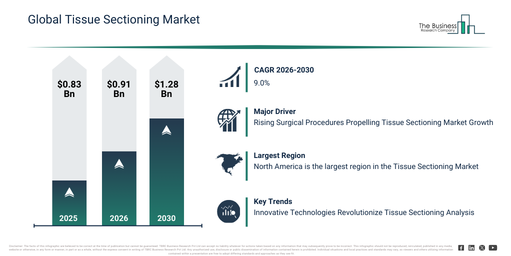
    The tissue sectioning market has shown significant growth in recent years. It is projected to increase from $0.83 billion in 2025 to $0.91 billion in 2026, registering a compound annual growth rate (CAGR) of 9.9%. This past growth can be attributed to an escalating volume of diagnostic pathology procedures, the expansion of hospital laboratory infrastructure, a heightened demand for cancer diagnostics, an increase in biomedical research activities, and the broader adoption of histology-based testing.

    The tissue sectioning market is anticipated to experience significant expansion in the coming years, reaching $1.28 billion by 2030 with a compound annual growth rate (CAGR) of 9.0%. This growth during the forecast period is fueled by increasing investments in advanced diagnostic laboratories, the rising adoption of digital pathology workflows, growing demand for personalized medicine diagnostics, the expansion of academic and clinical research programs, and an increasing focus on laboratory automation. Major trends expected during this period include the wider adoption of automated tissue sectioning systems, a rising demand for high-precision microtomes and cryostats, the growing use of disposable and standardized consumables, enhanced workflow integration in histopathology labs, and an increased emphasis on reproducibility and section quality.

    Get A Free Sample Report With In-Depth Market Insights:

    https://thebusinessresearchcompany.com/sample_request?id=99698102&type=smp&name=Tissue%20Sectioning%20Market%20Report%202026&utm_source=Blogs&utm_medium=Paid&utm_campaign=Nov_PR

    Tissue Sectioning Market Growth Drivers: What’s Behind The Acceleration?

    An anticipated increase in surgical procedures is set to drive expansion within the tissue sectioning market moving ahead. These procedures constitute medical interventions employing instruments for the purpose of diagnosis, treatment, or bodily repair. This uptick in surgical interventions stems from progress in medical technology, demographic shifts, and evolving healthcare methodologies. Tissue sectioning supports surgical operations by furnishing accurate, delicate tissue slices for histological examination, thereby facilitating precise diagnosis, effective treatment strategies, and successful transplantation. The growing number of surgical procedures is acting as a primary driver for the tissue sectioning market.

    Tissue Sectioning Market Segment Analysis Spotlighting Growth Areas

    The tissue sectioning market covered in this report is segmented –

    1) By Product: Accessories And Consumables, Instruments, Services

    2) By Technology: Automatic, Manual, Semi-Automatic

    3) By Application: Diagnosis, Research

    4) By End-User: Clinics, Diagnostic Laboratories, Hospitals, Research Centers

    Subsegments:

    1) By Accessories And Consumables: Microtome Blades, Staining Reagents, Tissue Embedding Media, Mounting Media, Disposable Consumables (Slides, Coverslips)

    2) By Instruments: Microtomes (Manual, Semi-Automated, Fully Automated), Cryostats, Tissue Processors, Tissue Embedding Stations, Sectioning Systems

    3) By Services: Maintenance And Repair Services, Calibration Services, Installation Services, Training Services

    Tissue Sectioning Market Trends Redefining Industry Growth

    Companies operating in the tissue sectioning market are developing advanced solutions, such as next-generation spatial gene expression technology, to enhance tissue analysis and diagnostics. This next-generation spatial gene expression technology enables detailed mapping of gene activity within tissue sections, offering insights into the spatial organization of gene expression and tissue architecture.

    Tissue Sectioning Market Leading Companies: Who Holds The Strongest Market Presence?

    Major companies operating in the tissue sectioning market are Thermo Fisher Scientific Inc., Danaher Corporation, Leica Biosystems Nussloch GmbH, Sakura Finetek USA Inc., Ted Pella Inc., Milestone Srl, Diapath S.p.A., Bio-Optica Milano S.p.A, MEDITE Medical GmbH, PathnSitu Biotechnologies Pvt Ltd, Tanner Scientific Inc., Boeckeler Instruments Inc., SLEE Medical GmbH, Amos Scientific PTY. LTD., SM Scientific Instruments Pvt. Ltd., Bright Instrument Co. Ltd., RWD Life Science Co. Ltd., Hacker Instruments & Industries Inc., MICROM International GmbH, Epredia Inc, Histo-Line Laboratories, PHC Holdings Co. Ltd, AGD Biomedicals Pvt Ltd, Avantik Labs

    View The Full Tissue Sectioning Market Report:

    https://thebusinessresearchcompany.com/report/tissue-sectioning-global-market-report?utm_source=Blogs&utm_medium=Paid&utm_campaign=Nov_PR

    Tissue Sectioning Market Geographic Analysis: Where Is Demand Rising Fastest?

    North America was the largest region in the tissue sectioning market in 2025. Asia-Pacific is expected to be the fastest-growing region in the forecast period. The regions covered in the tissue sectioning market report are Asia-Pacific, South East Asia, Western Europe, Eastern Europe, North America, South America, Middle East, Africa.

    Reach Out To Our Team:

    The Business Research Company: https://www.thebusinessresearchcompany.com/

    Americas: +1 310-496-7795

    Asia: +44 7882 955267 & +91 8897263534

    Europe: +44 7882 955267

    Email us at: marketing@tbrc.info

    Follow us on:

    LinkedIn: https://in.linkedin.com/company/the-business-research-company

    YouTube: https://www.youtube.com/channel/UC24_fI0rV8cR5DxlCpgmyFQ

    Global Market Model: https://www.thebusinessresearchcompany.com/global-market-model
  • Tissue Engineering Market Growth To $33.31 Billion By 2030: What’s Driving The Expansion?

    Tissue Engineering Market Growth To $33.31 Billion By 2030: What’s Driving The Expansion?

    Featuring market attractiveness scoring, total addressable market sizing, company benchmarking matrices, interactive Excel dashboards, deeper supply chain intelligence, emerging startup tracking, and granular product-level insights, The Business Research Company’s 2026 market reports are built to deliver research that is both more actionable and more strategically valuable.

    Tissue Engineering Market Forecast: Value Set To Climb From $19.78 Billion To $33.31 Billion

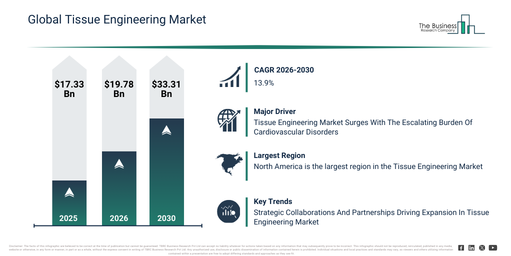
    The tissue engineering market has experienced rapid expansion in recent years. This market is projected to expand from $17.33 billion in 2025 to $19.78 billion in 2026, demonstrating a compound annual growth rate (CAGR) of 14.1%. Historically, this growth stemmed from advancements in biomaterial science, the expansion of academic tissue engineering research, a rising demand for organ repair solutions, the availability of biocompatible scaffold materials, and an increase in clinical regenerative studies.

    The tissue engineering market is projected to experience substantial expansion in the coming years. Its valuation is set to reach $33.31 billion by 2030, demonstrating a compound annual growth rate (CAGR) of 13.9%. This anticipated growth is driven by factors such as enhanced investments in regenerative medicine, the increasing acceptance of personalized tissue therapies, the broader clinical application of engineered tissues, the expanding incorporation of AI-driven tissue design, and a rising need for sophisticated organ replacement solutions. Key trends expected during this period involve the wider use of advanced scaffold materials, a heightened concentration on regenerative medicine applications, the increasing integration of 3D bioprinting technologies, the broadening of cell-based tissue therapies, and a stronger emphasis on restoring tissue functionality.

    Get A Free Sample Report With In-Depth Market Insights:

    https://thebusinessresearchcompany.com/sample_request?id=76354732&type=smp&name=Tissue%20Engineering%20Market%20Report%202026&utm_source=Blogs&utm_medium=Paid&utm_campaign=Nov_PR

    Tissue Engineering Market Growth Factors Behind Sustained Expansion

    The increasing occurrence of cardiovascular disorders is projected to fuel the expansion of the tissue engineering market in the future. These conditions, also referred to as cardiovascular diseases (CVD), encompass various medical ailments impacting the heart and blood vessels. These medical conditions prompt tissue engineering to develop promising solutions aimed at repairing and regenerating damaged cardiac and vascular tissues. The growing incidence of cardiovascular disorders is indeed stimulating the growth of the tissue engineering market.

    Tissue Engineering Market Segment Performance And Emerging Opportunities

    The tissue engineering market covered in this report is segmented –

    1) By Type: Synthetic Scaffold Material, Biologically Derived Scaffold Material, Other Types

    2) By Application: Orthopedics And Musculoskeletal, Neurology, Cardiovascular, Skin And Integumentary, Dental, Other Applications

    3) By End-User: Hospitals And Clinics, Ambulatory Facilities

    Subsegments:

    1) By Synthetic Scaffold Material: Polymeric Scaffolds, Ceramic Scaffolds, Composite Scaffolds

    2) By Biologically Derived Scaffold Material: Natural Polymers, Decellularized Tissues, Hydrogels

    3) By Other Types: Self-Healing Scaffolds, Smart Scaffolds

    Tissue Engineering Market Strategic Trends: What Defines The Next Growth Phase?

    Leading companies are increasingly forming strategic alliances and partnerships with startups and mid-sized businesses within the tissue engineering market, aiming to diversify their product and service offerings. These strategic collaborations and partnership agreements enable companies to enhance their current product portfolios and extend their geographical reach.

    Tissue Engineering Market Key Players: Which Companies Lead Industry Competition?

    Major companies operating in the tissue engineering market are Medtronic plc, Zimmer Biomet, Organogenesis Holdings Inc., Integra LifeSciences, Stryker Corporation, DePuy Synthes Companies, RTI Surgical Inc., Vericel Corporation, Athersys Inc., Tissue Regenix Group plc, Xeltis AG, Prellis Biologics, Bit Bio, Be Biopharma Inc., TELA Bio Inc., Orthocell Limited, Organovo Holdings Inc., EpiBone, TissueLabs, CollPlant Biotechnologies Ltd., Osiris Therapeutics Inc.

    View The Full Tissue Engineering Market Report:

    https://thebusinessresearchcompany.com/report/tissue-engineering-global-market-report?utm_source=Blogs&utm_medium=Paid&utm_campaign=Nov_PR

    Tissue Engineering Market Global Footprint: Which Region Leads The Market?

    North America was the largest region in the tissue engineering market in 2025. Asia-Pacific is expected to be the fastest-growing region in the tissue engineering market during the forecast period. The regions covered in the tissue engineering market report are Asia-Pacific, South East Asia, Western Europe, Eastern Europe, North America, South America, Middle East, Africa.

    Reach Out To Our Team:

    The Business Research Company: https://www.thebusinessresearchcompany.com/

    Americas: +1 310-496-7795

    Asia: +44 7882 955267 & +91 8897263534

    Europe: +44 7882 955267

    Email us at: marketing@tbrc.info

    Follow us on:

    LinkedIn: https://in.linkedin.com/company/the-business-research-company

    YouTube: https://www.youtube.com/channel/UC24_fI0rV8cR5DxlCpgmyFQ

    Global Market Model: https://www.thebusinessresearchcompany.com/global-market-model
  • Tissue Engineered Skin Substitute Market Trends Reshaping Industry Growth Through 2030

    Tissue Engineered Skin Substitute Market Trends Reshaping Industry Growth Through 2030

    Built to provide research that’s more actionable and strategically valuable, The Business Research Company’s 2026 market reports include market attractiveness analysis, total addressable market sizing, company benchmarking matrices, interactive Excel dashboards, broader supply chain intelligence, emerging startup tracking, and in-depth product insights.

    Tissue Engineered Skin Substitute Market Revenue Growth On Track For A 8.5% CAGR Through 2030

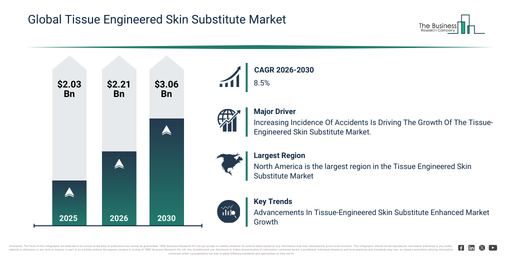
    The tissue engineered skin substitute market size has experienced robust growth in recent years. This market is anticipated to expand from $2.03 billion in 2025 to $2.21 billion in 2026, achieving a compound annual growth rate (CAGR) of 8.8%. The historical growth was propelled by factors including a higher frequency of chronic wounds and burns, the broadened scope of reconstructive surgery procedures, increased utilization of biologic wound care products, advancements in clinical research pertaining to skin regeneration, and the accessibility of advanced biomaterials.

    The tissue engineered skin substitute market is projected to experience substantial expansion over the upcoming years, reaching a valuation of $3.06 billion by 2030, demonstrating a compound annual growth rate (CAGR) of 8.5%. This anticipated growth during the forecast period is driven by several factors, including an expanding elderly demographic requiring wound care, an increased demand for regenerative medicine therapies, the broadening scope of personalized tissue engineering uses, rising capital expenditure in bioprinting technologies, and a heightened emphasis on accelerated healing and minimized scar formation. Key developments anticipated in this period encompass the growing acceptance of 3D bioprinted skin structures, an uptick in the utilization of stem cell-derived skin substitutes, the wider incorporation of sophisticated biomaterials, the proliferation of tailored wound healing remedies, and an intensified focus on technologies for rapid skin regeneration.

    Get A Free Sample Report With In-Depth Market Insights:

    https://thebusinessresearchcompany.com/sample_request?id=72799088&type=smp&name=Tissue%20Engineered%20Skin%20Substitute%20Market%20Report%202026&utm_source=Blogs&utm_medium=Paid&utm_campaign=Nov_PR

    Tissue Engineered Skin Substitute Market Demand Drivers Opening New Revenue Streams

    A rising frequency of accidents is anticipated to stimulate the expansion of the tissue-engineered skin substitute market in the future. This escalation in accident occurrences can be attributed to factors such as elevated traffic volumes, impaired attention while driving, insufficient upkeep of roads, and a greater prevalence of mobile device usage behind the wheel. Tissue-engineered skin substitutes offer benefits by supplying a working and biologically compatible replacement for injured skin, encouraging quicker recovery, and minimizing adverse effects like infections and scar formation. The growing occurrence of accidents is fueling the expansion of the tissue-engineered skin substitute market.

    Tissue Engineered Skin Substitute Market Segment Landscape And Growth Outlook

    The tissue engineered skin substitute market covered in this report is segmented –

    1) By Product: Acellular Skin Substitutes, Biologic Skin Substitute, Cellular Skin Substitutes, Synthetic Skin Substitutes

    2) By Material: Synthetic, Natural

    3) By Technology: Laser Assisted Bio-Printing, Robotic Technology, Other Technologies

    4) By Application: Chronic Wounds, Acute Wounds, Other Applications

    5) By End User: Hospital, Specialty Clinics, Ambulatory Surgical Centers, Research Laboratory

    Subsegments:

    1) By Acellular Skin Substitutes: Decellularized Dermis, Collagen-Based Scaffolds, Amniotic Membrane

    2) By Biologic Skin Substitutes: Living Cell-Containing Substitutes, Allogeneic Skin Grafts, Xenogeneic Skin Grafts

    3) By Cellular Skin Substitutes: Cultured Epithelial Autografts (CEA), Dermal Substitutes with Cells, Stem Cell-Derived Skin Constructs

    4) By Synthetic Skin Substitutes: Polymer-Based Scaffolds, Biodegradable Scaffolds, Hydrogel-Based Substitutes

    Tissue Engineered Skin Substitute Market Transformation Trends: What Innovations Are Driving Change?

    Leading firms within the tissue-engineered skin substitute market are prioritizing the development of innovative laser technologies featuring enhanced wavelengths, including sophisticated biofabricated dermo-epidermal graft systems, aiming to achieve a competitive edge. Such a system integrates living skin cells with a scaffold to produce full-thickness skin substitutes that emulate human skin structure and facilitate post-grafting integration.

    Tissue Engineered Skin Substitute Market Competitive Landscape: Who Leads The Industry?

    Major companies operating in the tissue engineered skin substitute market are Stryker Corporation, DePuy Synthes, Smith & Nephew Plc, ConvaTec Group PLC, Mallinckrodt Pharmaceuticals plc, Integra LifeSciences Holdings Corporation, Gunze Limited, Organogenesis Inc., LifeNet Health Inc., MiMedx Group Inc., Vericel Corporation, AlloSource Inc., Sientra Inc., PolyNovo Limited, Avita Medical Limited, Tissue Regenix Group, PolarityTE, Promethean LifeSciences Inc., Regenicin Inc., Kerecis Ltd.

    View The Full Tissue Engineered Skin Substitute Market Report:

    https://thebusinessresearchcompany.com/report/tissue-engineered-skin-substitute-global-market-report?utm_source=Blogs&utm_medium=Paid&utm_campaign=Nov_PR

    Tissue Engineered Skin Substitute Market Regional Split: Which Areas Are Fueling Growth?

    North America was the largest region in the tissue engineered skin substitute market in 2025. The regions covered in the tissue engineered skin substitute market report are Asia-Pacific, South East Asia, Western Europe, Eastern Europe, North America, South America, Middle East, Africa.

    Reach Out To Our Team:

    The Business Research Company: https://www.thebusinessresearchcompany.com/

    Americas: +1 310-496-7795

    Asia: +44 7882 955267 & +91 8897263534

    Europe: +44 7882 955267

    Email us at: marketing@tbrc.info

    Follow us on:

    LinkedIn: https://in.linkedin.com/company/the-business-research-company

    YouTube: https://www.youtube.com/channel/UC24_fI0rV8cR5DxlCpgmyFQ

    Global Market Model: https://www.thebusinessresearchcompany.com/global-market-model
  • Tinea Pedis Treatment Market Growth To $1.83 Billion Creates New Opportunities Across The Industry

    Tinea Pedis Treatment Market Growth To $1.83 Billion Creates New Opportunities Across The Industry

    Backed by market attractiveness analysis, total addressable market sizing, company benchmarking matrices, interactive Excel dashboards, wider supply chain intelligence, emerging startup coverage, and detailed product-level insights, The Business Research Company’s 2026 market reports are designed to offer research that is more actionable and strategically valuable than ever.

    Tinea Pedis Treatment Market Value Growth And Long-Term Outlook

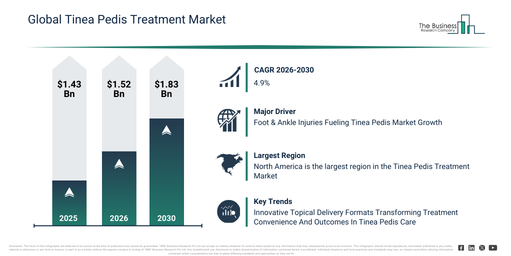
    The tinea pedis treatment market has experienced robust growth in recent years. It is projected to increase from $1.43 billion in 2025 to $1.52 billion in 2026, achieving a compound annual growth rate (CAGR) of 5.7%. The market’s historical expansion is largely due to factors such as the rising incidence of fungal skin infections, the prevalent use of occlusive footwear, the wide availability of topical antifungal medications, the expansion of retail pharmacy networks, and growing awareness of personal hygiene.

    The tinea pedis treatment market is projected to experience consistent expansion over the coming years, with its valuation anticipated to reach $1.83 billion by 2030, demonstrating a compound annual growth rate (CAGR) of 4.9%. This anticipated growth during the forecast period is primarily driven by several factors, including a heightened demand for quick-acting antifungal solutions, the broadening reach of online drug distribution channels, an escalating emphasis on combination treatment approaches, the increasing uptake of preventive antifungal measures, and a growing consumer inclination towards self-medication choices. Key trends expected during this period encompass a surge in demand for topical antifungal applications, a heightened preference for combination drug formulations, the expanding accessibility of over-the-counter treatments, the proliferation of e-commerce platforms for pharmaceuticals, and an intensified focus on patient adherence to treatment.

    Get A Free Sample Report With In-Depth Market Insights:

    https://thebusinessresearchcompany.com/sample_request?id=27070221&type=smp&name=Tinea%20Pedis%20Treatment%20Market%20Report%202026&utm_source=Blogs&utm_medium=Paid&utm_campaign=Nov_PR

    Tinea Pedis Treatment Market Growth Backed By Core Demand Fundamentals

    The increasing occurrence of foot and ankle injuries is projected to stimulate the expansion of the tinea pedis treatment market in the future. These injuries involve any harm or damage to the bones, ligaments, tendons, muscles, or other tissues within the foot or ankle area, frequently resulting from mishaps, athletic endeavors, or repetitive strain. Several elements contribute to these injuries, such as evolving lifestyles, greater involvement in sports and physical pursuits, unsuitable footwear, incorrect training methods, susceptibility to falls, and degenerative conditions. Furthermore, the widespread presence of obesity and chronic illnesses like diabetes intensifies the likelihood of foot and ankle issues. Such injuries can worsen tinea Pedis treatment by fostering an environment conducive to fungal proliferation and extending periods of immobility. The rising number of foot and ankle injuries propels the tinea pedis treatment market.

    Tinea Pedis Treatment Market Breakdown By Product Type And Application

    The tinea pedis treatment market covered in this report is segmented –

    1) By Drug Class: Antifungals, Combinations

    2) By Route of Administration: Oral, Topical

    3) By Disease Indication: Interdigital Tinea Pedis, Plantar Tinea pedis, Vesicular Tinea Pedis

    4) By Distribution Channel: Hospital Pharmacies, Retail Pharmacies, E-commerce

    Subsegments:

    1) By Antifungals: Topical Antifungal Drugs, Oral Antifungal Drugs

    2) By Combinations: Antifungal And Corticosteroid Combinations, Antifungal And Antiseptic Combinations

    #Tinea Pedis Treatment Market Growth Trends: What’s Shaping The Future Outlook?

    Leading companies in the tinea pedis treatment market are focusing on developing innovative topical delivery methods, such as dry stick applicators and nano-formulated sprays, to gain a competitive advantage. Dry stick applicators are solid topical sticks that allow for smooth treatment application without liquids or mess, ensuring an easy and clean process. For instance, in September 2025, Propedix, a US-based dermatology company, introduced Dryello, which is the first dry-stick antifungal treatment for Athlete’s Foot, marking a significant advancement in topical dermatology. Formulated with tolnaftate 1%, Dryello employs the company’s proprietary DryStik Technology Platform to deliver medication in a clean, portable, mess-free stick format that applies and remains dry, unlike traditional creams and sprays. Developed with dermatologists, the product is designed to boost patient compliance and improve treatment outcomes. In clinical testing, 90% of users were cured within four weeks, and most reported a reduction in foot sweating. As Propedix’s inaugural commercial product from its DryStik platform, Dryello indicates a broader pipeline of advanced anti-infective dermatology solutions.

    Tinea Pedis Treatment Market Company Landscape And Competitive Strategy

    Major companies operating in the tinea pedis treatment market are Pfizer Inc., Bayer AG, GlaxoSmithKline plc, Sandoz International GmbH, Perrigo Company plc, Aurobindo Pharma, Dr. Reddy’s Laboratories Ltd., Cipla Ltd., Lupin Limited, Glenmark Pharmaceuticals Ltd., Almirall S.A., Taro Pharmaceutical Industries Ltd., Ego Pharmaceuticals Pty. Ltd., Fougera Pharmaceuticals Inc., Sun Pharmaceutical Industries Ltd., Blueberry Therapeutics Ltd., Johnson & Johnson, Merck & Co. Inc., Sanofi S.A., Teva Pharmaceutical Industries Ltd., Astellas Pharma Inc.

    View The Full Tinea Pedis Treatment Market Report:

    https://thebusinessresearchcompany.com/report/tinea-pedis-treatment-global-market-report?utm_source=Blogs&utm_medium=Paid&utm_campaign=Nov_PR

    Tinea Pedis Treatment Market Top Region: Where Does Most Revenue Come From?

    North America was the largest region in the tinea pedis treatment market in 2025. Asia-Pacific is expected to be the fastest-growing region in the forecast period. The regions covered in the tinea pedis treatment market report are Asia-Pacific, South East Asia, Western Europe, Eastern Europe, North America, South America, Middle East, Africa.

    Reach Out To Our Team:

    The Business Research Company: https://www.thebusinessresearchcompany.com/

    Americas: +1 310-496-7795

    Asia: +44 7882 955267 & +91 8897263534

    Europe: +44 7882 955267

    Email us at: marketing@tbrc.info

    Follow us on:

    LinkedIn: https://in.linkedin.com/company/the-business-research-company

    YouTube: https://www.youtube.com/channel/UC24_fI0rV8cR5DxlCpgmyFQ

    Global Market Model: https://www.thebusinessresearchcompany.com/global-market-model
  • Tildrakizumab Market Forecast: Breaking Down The Numbers Behind Future Expansion

    Tildrakizumab Market Forecast: Breaking Down The Numbers Behind Future Expansion

    Featuring market attractiveness scoring, total addressable market sizing, company benchmarking matrices, interactive Excel dashboards, deeper supply chain intelligence, emerging startup tracking, and granular product-level insights, The Business Research Company’s 2026 market reports are built to deliver research that is both more actionable and more strategically valuable.

    Tildrakizumab Market Poised To Hit $3.02 Billion By 2030 With A 11.4% CAGR

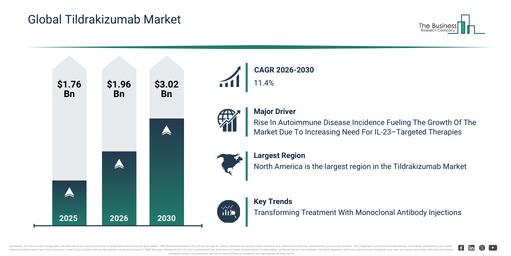
    The market for tildrakizumab has demonstrated rapid growth over the past few years. Its projected growth trajectory shows an ascent from $1.76 billion in 2025 to $1.96 billion by 2026, at an 11.7% compound annual growth rate (CAGR). Several factors contributed to historical growth, including a higher prevalence of plaque psoriasis, the robust clinical validation of biologic efficacy, the expansion of specialized dermatology clinics, increasing acceptance of injectable biologics, and available reimbursement support for biologics.

    The market for tildrakizumab is projected to experience substantial expansion over the upcoming years. Its valuation is anticipated to reach $3.02 billion by 2030, demonstrating a compound annual growth rate (CAGR) of 11.4%. This expansion during the projection period stems from several factors, including the surging need for tailored autoimmune treatments, the broadening range of biologic pipeline uses, an intensifying emphasis on managing diseases over the long term, the increasing acceptance of at-home biologic delivery, and greater financial commitment to immunology research. Key developments expected within the forecast timeframe encompass a greater deployment of targeted biologic treatments, a heightened uptake of IL-23 inhibitors, an increasing preference for injectable therapies with extended action, the widening of specialty biologic distribution networks, and a reinforced emphasis on patient-centered treatment plans.

    Get A Free Sample Report With In-Depth Market Insights:

    https://thebusinessresearchcompany.com/sample_request?id=69398516&type=smp&name=Tildrakizumab%20Market%20Report%202026&utm_source=Blogs&utm_medium=Paid&utm_campaign=Nov_PR

    Tildrakizumab Market Growth Catalysts And Demand Drivers

    The tildrakizumab market is projected to expand due to the rising prevalence of autoimmune diseases. These conditions occur when the immune system mistakenly attacks the body’s healthy tissues, with their increase often linked to growing environmental factors like pollution and chemical exposure. Tildrakizumab addresses autoimmune diseases by inhibiting the IL-23 pathway, thereby reducing inflammation and managing symptoms. The increasing occurrence of autoimmune diseases is fueling the growth of the tildrakizumab market.

    Tildrakizumab Market Driver: Improvement In Healthcare Facilities Drives Growth Of The Market

    The tildrakizumab market is anticipated to grow with advancements in healthcare facilities. These facilities, including hospitals, clinics, and diagnostic centers, provide medical care and support to patients. Their improvement is attributed to various factors, such as increased investment in healthcare infrastructure, a focus on patient-centric care, population expansion, and an aging demographic. Enhanced healthcare facilities facilitate greater patient access to advanced biologic treatments, streamline the diagnostic process and specialist referrals, ensure superior cold chain management for biologics, and broaden healthcare provider knowledge. These factors collectively bolster the uptake and effectiveness of tildrakizumab in managing chronic inflammatory conditions like psoriasis. The enhancement of healthcare facilities is propelling the expansion of the tildrakizumab market.

    Tildrakizumab Market Segment Analysis And Revenue Potential

    The tildrakizumab market covered in this report is segmented –

    1) By Indication: Plaque Psoriasis, Psoriatic Arthritis, Other Indications

    2) By Dosage Form: Injectable, Oral

    3) By Distribution Channel: Hospital Pharmacies, Retail Pharmacies, Online Pharmacies

    4) By End-User: Hospitals, Specialty Clinics, Homecare

    Subsegments:

    1) By Plaque Psoriasis: Moderate Plaque Psoriasis, Severe Plaque Psoriasis, Treatment-Resistant Plaque Psoriasis

    2) By Psoriatic Arthritis: Peripheral Psoriatic Arthritis, Axial Psoriatic Arthritis, Enthesitis-related Psoriatic Arthritis

    3) By Other Indications: Inflammatory Skin Disorders, Off-Label Autoimmune Conditions, Emerging Therapeutic Applications

    Tildrakizumab Market Industry Trends: What’s Reshaping Demand?

    Leading companies in the tildrakizumab market are prioritizing the creation of advanced formulations, including monoclonal antibody injections, to elevate treatment efficacy and enhance patient outcomes. A monoclonal antibody injection entails the delivery of laboratory-engineered antibodies specifically designed to target distinct antigens within the body for either therapeutic or preventative applications.

    Tildrakizumab Market Key Players Shaping Industry Direction

    Major companies operating in the tildrakizumab market are Almirall S.A., Sun Pharmaceutical Industries Ltd., Novartis, Pfizer, Eli Lilly, Bristol Myers Squibb, Roche, Merck & Co, Janssen Biotech (Johnson & Johnson), Amgen, GSK, AbbVie, Sanofi, AstraZeneca, Innovent Biologics, Boehringer Ingelheim, LEO Pharma, Kyowa Kirin, Takeda Pharmaceutical, Regeneron Pharmaceuticals, Biocon Ltd.

    View The Full Tildrakizumab Market Report:

    https://thebusinessresearchcompany.com/report/tildrakizumab-global-market-report?utm_source=Blogs&utm_medium=Paid&utm_campaign=Nov_PR

    Tildrakizumab Market Regional Breakdown: Where Is Demand Concentrated?

    North America was the largest region in the tildrakizumab market in 2025. Asia-Pacific expected to be the fastest-growing region in the forecast period. The regions covered in the tildrakizumab market report are Asia-Pacific, South East Asia, Western Europe, Eastern Europe, North America, South America, Middle East, Africa.

    Reach Out To Our Team:

    The Business Research Company: https://www.thebusinessresearchcompany.com/

    Americas: +1 310-496-7795

    Asia: +44 7882 955267 & +91 8897263534

    Europe: +44 7882 955267

    Email us at: marketing@tbrc.info

    Follow us on:

    LinkedIn: https://in.linkedin.com/company/the-business-research-company

    YouTube: https://www.youtube.com/channel/UC24_fI0rV8cR5DxlCpgmyFQ

    Global Market Model: https://www.thebusinessresearchcompany.com/global-market-model