Author: Marketing Posting

  • Top Trends Driving Innovation and Change in the Implantable Collamer Lens Market: New Approvals And Innovations Transforming The Vision Correction Landscape

    Top Trends Driving Innovation and Change in the Implantable Collamer Lens Market: New Approvals And Innovations Transforming The Vision Correction Landscape

    Stay ahead with our updated market reports featuring the latest on tariffs, trade flows, and supply chain transformations.

    How Has The Implantable Collamer Lens Market Size Shifted, And What Is the Outlook Through 2034?

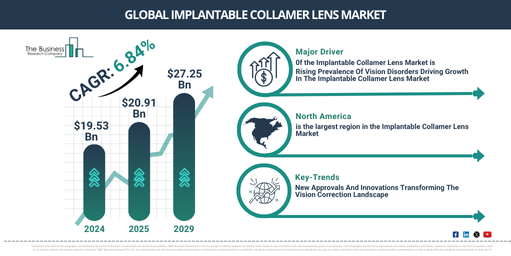
    The market for implantable collamer lenses has seen robust growth in the past few years. The market value, which stood at $19.53 billion in 2024, is projected to reach $20.91 billion in 2025, reflecting a compound annual growth rate (CAGR) of 7.10%. Factors contributing to this significant growth in the historical period include the amplified awareness of vision correction alternatives, the increase in acceptance of minimally invasive surgical procedures, the escalating prevalence of refractive errors, favorable reimbursement regulations in key areas, and greater investment in research within the field of ophthalmology.

    Anticipations for strong expansion are seen within the implantable collamer lens market in the upcoming years, with predictions of reaching $27.25 billion by 2029 with a CAGR of 6.84%. The predicted growth within this timeframe can be associated with the increased demand for long-lasting vision correction alternatives, a rise in conditions such as myopia and astigmatism, a greater emphasis on patient-centric and personalized implants, an elder population requiring more eye care, and development of ambulatory surgery centers. In the forecast period, major trends to watch out for include AI integration into pre-surgery planning, creation of foldable and biocompatible lens materials, collaborations between product manufacturers and health service providers, technological improvements in lens materials and designs, and progress in implantable lens technologies.

    Download a free sample to assess the report’s scope and structure:

    https://www.thebusinessresearchcompany.com/sample.aspx?id=20840&type=smp

    What External and Internal Drivers Are Contributing to the Growth of the Implantable Collamer Lens Market?

    The escalating incidences of vision impairments are anticipated to catalyze the implantable collamer lens market. Vision impairments, marked by a gradual depletion in visual acuity and ocular health, hinder clear sight. Factors such as an aging populace, prolonged screen exposure, and the increasing instances of conditions like myopia and age-related macular degeneration contribute to the spread of these disorders globally. Implantable Collamer Lenses (ICLs) provide a safe, reversible alternative to regular refractive surgeries like LASIK, effectively rectifying myopia, hyperopia, and astigmatism. For example, the World Health Organization revealed in a report from August 2023 that globally, more than 2.2 billion people are affected by near or distance vision impairment, from which 1 billion cases can either be prevented or are still not addressed. Furthermore, according to the UK Welsh Government in July 2023, about 1,563 new certificates of vision impairment (CVI) were released in 2021-22, an upsurge of 49.1% compared to the prior year. Consequently, the surge in vision impairments is propelling the implantable collamer lens market’s growth. Implications Of An Aging Populace On The Expansion Of The Implantable Collamer Lens Market

    What Segment Types Define the Implantable Collamer Lens Market Structure?

    The implantable collamer lens market covered in this report is segmented –

    1) By Type: Visian Implantable Collamer Lens (ICL), EVO Implantable Collamer Lens (ICL)

    2) By Technology Adoption: Laser-Assisted Techniques, Traditional Techniques

    3) By Application: Myopia, Hyperopia, Astigmatism

    4) By End User: Ophthalmic Clinics, Hospitals, Ambulatory Surgical Center, Other End User

    Subsegments:

    1) By Visian Implantable Collamer Lens (ICL): Visian ICL for Myopia, Visian ICL For Hyperopia, Visian ICL For Astigmatism, Visian ICL For Presbyopia

    2) By EVO Implantable Collamer Lens (ICL): EVO ICL For Myopia, EVO ICL For Hyperopia, EVO ICL For Astigmatism, EVO ICL For Presbyopia

    Request customized data on this market:

    https://www.thebusinessresearchcompany.com/customise?id=20840&type=smp

    Which Geographic Areas Hold the Strongest Growth Potential in the Implantable Collamer Lens Market?

    North America was the largest region in the implantable collamer lens market in 2024. Asia-Pacific is expected to be the fastest-growing region in the forecast period. The regions covered in the implantable collamer lens market report are Asia-Pacific, Western Europe, Eastern Europe, North America, South America, Middle East, Africa.

    What Are the Current Market Growth and Trends in the Implantable Collamer Lens Industry?

    Key players in the implantable collamer lens (ICL) market are aiming to edge out competition by innovating lens technology and securing necessary approvals. The Implantable Collamer Lens is specifically crafted to rectify refractive vision issues and offers a less invasive remedy for myopia and astigmatism. For instance, the U.S. Food and Drug Administration (FDA) approved the EVO/EVO+ Visian Implantable Collamer Lens (EVO) developed by STAAR Surgical Company, a U.S. firm specializing in manufacturing and marketing implantable lenses and associated delivery systems for the eye, in April 2022. The approval was for the correction of myopia and myopia coupled with astigmatism. The EVO Visian ICL lens is made to rectify or lessen nearsightedness within the range of -3.0 D to -20.0 D and treat astigmatism from 1.0 D to 4.0 D.

    View the full report here:

    https://www.thebusinessresearchcompany.com/report/implantable-collamer-lens-global-market-report

    What Is the Definition of the Implantable Collamer Lens Market?

    Implantable collamer lenses (ICLs), often referred to as implantable contact lenses, are refractive lens implants that are placed into the eye to treat various disorders. It works just like a contact lens, with the exception that it is surgically placed in front of your natural lens and behind the iris, the colored portion of the eye.

    Purchase the full report and get a swift delivery:

    https://www.thebusinessresearchcompany.com/purchaseoptions.aspx?id=20840

    About The Business Research Company:

    With over 15000+ reports from 27 industries covering 60+ geographies, The Business Research Company has built a reputation for offering comprehensive, data-rich research and insights. Armed with 1,500,000 datasets, the optimistic contribution of in-depth secondary research, and unique insights from industry leaders, you can get the information you need to stay ahead in the game.

    Get in touch with us:

    The Business Research Company: https://www.thebusinessresearchcompany.com/

    Americas +1 3156230293

    Asia +44 2071930708

    Europe +44 2071930708

    Email us at info@tbrc.info

    Follow us on:

    LinkedIn: https://in.linkedin.com/company/the-business-research-company

    YouTube: https://www.youtube.com/channel/UC24_fI0rV8cR5DxlCpgmyFQ

    Global Market Model: https://www.thebusinessresearchcompany.com/global-market-model
  • Emerging Trends Redefining the Immersive Simulator Market Landscape: Enhancing Device Efficiency and Patient Comfort with Low Current Consumption Defibrillators

    Emerging Trends Redefining the Immersive Simulator Market Landscape: Enhancing Device Efficiency and Patient Comfort with Low Current Consumption Defibrillators

    Stay ahead with our updated market reports featuring the latest on tariffs, trade flows, and supply chain transformations.

    How Has the Implantable Cardioverter Defibrillators (ICDs) Market Growth Performance Trended Historically, And What Lies Ahead?

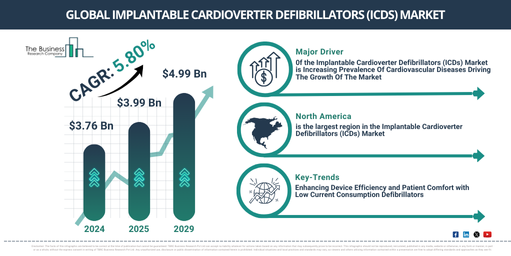
    The market for implantable cardioverter defibrillators (ICDs) has shown significant growth in the recent past. Predictions suggest an increase from $3.76 billion in 2024 to $3.99 billion in 2025, indicating a compound annual growth rate (CAGR) of 6.0%. Factors contributing to this rise during the historical period include a surge in cases of sudden cardiac arrest, the use of the implantable cardioverter defibrillator in preventing secondary sudden cardiac arrest instances, heightened public knowledge, an increase in the elderly population, encouraging policies from governing bodies and healthcare institutions, and improved accessibility to healthcare.

    The market for implantable cardioverter defibrillators (ICDs) is poised for substantial expansion in the forthcoming years, with projections indicating growth to $4.99 billion by 2029, reflecting a compound annual growth rate (CAGR) of 5.8%. This growth, predicted for the forecast period, is attributable to factors such as increased adoption of implantable defibrillators, demand surge for customized cardiac care, increasing incidents of cardiac rhythm issues, and growing demand in budding markets. The forecast period is also set to witness several trends including technological progression, launch of subcutaneous ICDs eliminating the need for transvenous leads, demand surge for combined ICD devices with pacemaker capabilities, improved sensing and detection algorithms, persistent advancements in wireless charging and battery technology, and the advent of artificial intelligence (AI) in healthcare and data analytics.

    Download a free sample to assess the report’s scope and structure:

    https://www.thebusinessresearchcompany.com/sample.aspx?id=20839&type=smp

    What Are the Core Market Drivers Propelling Growth in the Implantable Cardioverter Defibrillators (ICDs) Industry?

    The proliferating incidence of heart-related illnesses, collectively referred to as cardiovascular diseases (CVDs), is predicted to significantly contribute to the expansion of the implantable cardioverter defibrillators (ICDs) market. CVDs encompass a variety of afflictions impacting the heart and blood vessels like stroke, hypertension, and heart attacks, frequently resulting from genetics, inadequate physical activity, smoking, and poor dietary habits. The rising prevalence is predominantly attributed to aging populace, unhealthy lifestyle habits, and spiking frequency of risk factors such as hypertension, diabetes, and obesity. To combat such conditions, implantable cardioverter defibrillators (ICDs) are employed to deliver crucial electrical shocks to restore regular heart patterns for those facing the danger of unanticipated cardiac arrest. Drawing from a December 2023 report from the Australian Institute of Health and Welfare, a governmental body based in Australia, deaths validated by doctors due to coronary heart disease (CHD) accelerated to 14,100 in 2021 and further augmented to 14,900 in 2022. Therefore, the escalating prevalence of cardiovascular diseases (CVDs) is stimulating the expansion of the implantable cardioverter defibrillators (ICDs) market.

    How Is the Implantable Cardioverter Defibrillators (ICDs) Market Segmented?

    The implantable cardioverter defibrillators (ICDs) market covered in this report is segmented –

    1) By Type: Single Chamber Implantable Cardioverter Defibrillators (ICDs), Dual Chamber Implantable Cardioverter Defibrillators (ICDs), Biventricular Devices

    2) By Applications: Bradycardia, Tachycardia, Heart Failure, Other Applications

    3) By End User: Hospitals, Specialty Clinics, Ambulatory Surgical Centers, Other End Users

    Subsegments:

    1) By Single Chamber Implantable Cardioverter Defibrillators (ICDs): Standard Single Chamber ICDs, MRI-Compatible Single Chamber ICDs, Wireless Single Chamber ICDs

    2) By Dual Chamber Implantable Cardioverter Defibrillators (ICDs): Standard Dual Chamber ICDs, MRI-Compatible Dual Chamber ICDs, Wireless Dual Chamber ICDs

    3) By Biventricular Devices: CRT-D (Cardiac Resynchronization Therapy Defibrillator), CRT-P (Cardiac Resynchronization Therapy Pacemaker), Biventricular ICDs With Advanced Features (Remote Monitoring, Wireless Capabilities)

    Request customized data on this market:

    https://www.thebusinessresearchcompany.com/customise?id=20839&type=smp

    Which Regions Are Driving the Next Phase of the Implantable Cardioverter Defibrillators (ICDs) Market Growth?

    North America was the largest region in the implantable cardioverter defibrillators market in 2024. Asia-Pacific is expected to be the fastest-growing region in the forecast period. The regions covered in the implantable cardioverter defibrillators (ICDs) market report are Asia-Pacific, Western Europe, Eastern Europe, North America, South America, Middle East, Africa.

    What Are the Strategic Trends Steering the Implantable Cardioverter Defibrillators (ICDs) Market Direction?

    Significant players in the implantable cardioverter defibrillators (ICDs) market are striving to advance technology to increase device efficacy, extend battery life, and boost patient comfort. This includes development of low current consumption defibrillators that use less energy when delivering electric shocks to the heart, effectively extending battery life and treating arrhythmias. A case in point is the October 2023 release of the ULYS implantable cardioverter defibrillator (ICD) and INVICTA defibrillation lead in Japan by MicroPort CRM, a French medical device company. This marked significant progress in cardiac care technology. Their devices boast innovative features such as low current consumption for increased battery longevity and MRI compatibility, making them perfect for patients requiring imaging procedures. The ULYS ICD features the PARAD+ arrhythmia discrimination algorithm and AutoMRI capabilities, guaranteeing patient safety during MRI scans. In addition, the INVICTA lead had an outstanding record in clinical trials, achieving a 100% implantation success rate and a 97.4% complication-free rate, demonstrating its reliability and efficiency.

    View the full report here:

    https://www.thebusinessresearchcompany.com/report/implantable-cardioverter-defibrillators-icds-global-market-report

    How Is the Implantable Cardioverter Defibrillators (ICDs) Market Defined and What Are Its Core Parameters?

    Implantable cardioverter defibrillators (ICDs) are small devices implanted under the skin, typically near the chest, designed to monitor the heart’s rhythm and deliver electrical shocks if a life-threatening arrhythmia, such as ventricular fibrillation, is detected. Their purpose is to prevent sudden cardiac arrest by restoring a normal heart rhythm.

    Purchase the full report and get a swift delivery:

    https://www.thebusinessresearchcompany.com/purchaseoptions.aspx?id=20839

    About The Business Research Company:

    With over 15000+ reports from 27 industries covering 60+ geographies, The Business Research Company has built a reputation for offering comprehensive, data-rich research and insights. Armed with 1,500,000 datasets, the optimistic contribution of in-depth secondary research, and unique insights from industry leaders, you can get the information you need to stay ahead in the game.

    Get in touch with us:

    The Business Research Company: https://www.thebusinessresearchcompany.com/

    Americas +1 3156230293

    Asia +44 2071930708

    Europe +44 2071930708

    Email us at info@tbrc.info

    Follow us on:

    LinkedIn: https://in.linkedin.com/company/the-business-research-company

    YouTube: https://www.youtube.com/channel/UC24_fI0rV8cR5DxlCpgmyFQ

    Global Market Model: https://www.thebusinessresearchcompany.com/global-market-model

  • Next-Gen Pleural Diseases : Market Forecast, Transformation, and Long-Term Trajectories

    Next-Gen Pleural Diseases : Market Forecast, Transformation, and Long-Term Trajectories

    Discover trends, market shifts, and competitive outlooks for the pleural diseases industry through 2025-2034 with The Business Research Company’s reliable data and in-depth research

    What Are the Projected Market Size and Growth Rates for the Pleural Diseases Market From 2025 To 2029?

    There has been substantial growth in the market size of pleural diseases in the past few years. With an expected rise from $4.86 billion in 2024 to $5.23 billion in 2025, it is set to experience a compound annual growth rate (CAGR) of 7.6%. This growth during the prior period can be tied to factors such as the growing number of cases of pleural effusion, enhanced awareness of pleural diseases, an increased emphasis on early detection, amplification of healthcare facilities, and a surge in clinical trials related to pleural diseases.

    Expectations are high for robust expansion in the pleural diseases market size in the coming years, with a projection to reach $6.94 billion by 2029, having a compound annual growth rate (CAGR) of 7.3%. This anticipated increase within the forecast period is linked to several factors including an upsurge in pleural diseases prevalence, an aging population trend, growing instances of occupational hazards, an escalation in clinical trials, and the proliferation of diagnostic centers. Key trends projected for this period include enhancements in diagnostic procedures and tools, the embracing of less invasive procedures, boosts in drug development, and the implementation of telemedicine.

    Download a free sample to assess the report’s scope and structure:

    https://www.thebusinessresearchcompany.com/sample.aspx?id=22099&type=smp

    Which Major Market Drivers Are Expected to Boost the Growth Potential of the Pleural Diseases Market?

    The rise in the occurrence of infectious diseases is projected to instigate the expansion of the pleural diseases market in the future. Such diseases, triggered by harmful microorganisms including bacteria, viruses, fungi, or parasites, are influenced by shifts in human behavior and advancements in international travel. Certain infectious diseases, like bacterial pneumonia, tuberculosis, or viral infections, could lead to pleural disease by inciting inflammation, infection, or fluid buildup in the pleural cavity. For example, in January 2023, the National Library of Medicine, which is a US-based medical library for research and information, reported that infectious diseases are responsible for over 52 million deaths yearly, putting half of the world’s population in danger. Moreover, around 14 million children less than five years of age die each year, with 70% of these deaths linked to preventable diseases through vaccination. Thus, the escalating occurrence of infectious diseases fuels the advancements in the pleural diseases market.

    Which Key Market Segments Comprise the Pleural Diseases Market and Drive Its Revenue Growth?

    The pleural diseases market covered in this report is segmented –

    1) By Disease Type: Pleurisy, Pleural Effusion, Pneumothelioma, Mesothelioma, Other Disease Types

    2) By Treatment Modalities: Medications, Thoracentesis And Pleurodesis, Minimally Invasive Interventions, Surgical Interventions

    3) By Diagnostic Tools: Imaging Techniques, Molecular Diagnostics, Thoracoscopy, Pleuroscopy

    4) By End User: Hospitals And Clinics, Diagnostic Centers, Research And Academic Institutions

    Subsegments:

    1) By Pleurisy: Acute Pleurisy, Chronic Pleurisy, Infectious Pleurisy, Non-infectious Pleurisy

    2) By Pleural Effusion: Transudative Pleural Effusion, Exudative Pleural Effusion, Malignant Pleural Effusion, Parapneumonic Pleural Effusion, Hemothorax, Chylothorax

    3) By Pneumothelioma: Primary Pneumothelioma, Secondary Pneumothelioma (Metastatic), Localized Pneumothelioma, Diffuse Pneumothelioma

    4) By Mesothelioma: Pleural Mesothelioma, Peritoneal Mesothelioma, Pericardial Mesothelioma, Testicular Mesothelioma

    5) Other Disease Types: Pulmonary Embolism, Fibrothorax, Pneumothorax, Lung Cancer, Tuberculosis-Related Pleural Disease, Sarcoidosis

    Request customized data on this market:

    https://www.thebusinessresearchcompany.com/customise?id=22099&type=smp

    Which Areas Are Leading Regions in the Pleural Diseases Market Expansion Across the Globe?

    North America was the largest region in the pleural diseases market in 2024. Asia-Pacific is expected to be the fastest-growing region in the forecast period. The regions covered in the pleural diseases market report are Asia-Pacific, Western Europe, Eastern Europe, North America, South America, Middle East, Africa.

    What Are the Key Market Trends in thePleural Diseases Market Over the Coming Years?

    Top firms in the pleural diseases market are channeling their efforts into creating innovative treatments, including ready-to-use injectable medicines, with an aim to elevate convenience, cut down on preparation time, and limit dosage mistakes. These injectable solutions come pre-mixed and pre-diluted, making them ready for use without needing any additional reconstitution or mixing. This ensures precision, simplicity and a quicker preparation period. For instance, in April 2024, Amneal Pharmaceuticals, an American pharmaceutical firm, introduced PEMRYDI RTU, the first-of-its-kind ready-to-use version of pemetrexed for injection. This offers individuals suffering from pleural diseases a handy, ready-to-use treatment that eliminates the reconstitution or dilution process, abbreviates preparation time, curtails the possibility of dosage mistakes, and enhances availability to effective treatment for diseases like malignant pleural mesothelioma.

    View the full report here:

    https://www.thebusinessresearchcompany.com/report/pleural-diseases-global-market-report

    How Is the Pleural Diseases Market Conceptually Defined?

    Pleural diseases refer to a group of conditions that affect the pleura, which is the double-layered membrane surrounding the lungs. These diseases can involve inflammation, infection, or other pathological pleural changes. Pleural diseases cause chest pain, shortness of breath, coughing, and difficulty breathing and are often diagnosed with imaging tests such as chest X-rays or CT scans.

    Purchase the full report and get a swift delivery:

    https://www.thebusinessresearchcompany.com/purchaseoptions.aspx?id=22099

    About The Business Research Company:

    With over 15000+ reports from 27 industries covering 60+ geographies, The Business Research Company has built a reputation for offering comprehensive, data-rich research and insights. Armed with 1,500,000 datasets, the optimistic contribution of in-depth secondary research, and unique insights from industry leaders, you can get the information you need to stay ahead in the game.

    Get in touch with us:

    The Business Research Company: https://www.thebusinessresearchcompany.com/

    Americas +1 3156230293

    Asia +44 2071930708

    Europe +44 2071930708

    Email us at info@tbrc.info

    Follow us on:

    LinkedIn: https://in.linkedin.com/company/the-business-research-company

    YouTube: https://www.youtube.com/channel/UC24_fI0rV8cR5DxlCpgmyFQ

    Global Market Model: https://www.thebusinessresearchcompany.com/global-market-model

  • From Insight to Impact: Strategic Growth Mapping in the Physiotherapy Equipment Market

    Discover trends, market shifts, and competitive outlooks for the physiotherapy equipment industry through 2025-2034 with The Business Research Company’s reliable data and in-depth research

    How Fast Is The Physiotherapy Equipment Market Expected to Grow Between 2025 And 2029?

    The market size for physiotherapy equipment has seen vigorous growth in the past few years. It is projected that the market will escalate from $19.56 billion in 2024 to $21.05 billion in 2025, with a compound annual growth rate (CAGR) of 7.6%. Factors contributing to the growth during the historic period include an elevated demand for physical rehabilitation, intensified attention on personalized healthcare, a growth in the elderly population, an increase in sports-related injuries, and a surge in occurrence of chronic conditions.

    In the coming years, the market size of physiotherapy equipment is projected to witness substantial growth, escalating to $27.87 billion in 2029 at a robust compound annual growth rate (CAGR) of 7.3%. The upward trend during the forecast period is attributable to factors like increased expenditure on healthcare, elevated cases of musculoskeletal disorders, progression in digital physiotherapy solutions, burgeoning obesity rates, and heightened efforts to enhance patient outcomes. Key emerging trends during the prediction span include upgraded healthcare structures, state-of-the-art medical technologies, and sophisticated and ingenious physiotherapy equipment.

    Download a free sample to assess the report’s scope and structure:

    https://www.thebusinessresearchcompany.com/sample.aspx?id=22097&type=smp

    What are the Fundamental Drivers and Innovations Shaping the Physiotherapy Equipment Market?

    The escalating prevalence of osteoporosis is likely to spur the advancement of the physiotherapy equipment market in the future. Osteoporosis, identified by fragile bones that have a high chances of fractures due to diminished bone density and vigor, is becoming prevalent due to increasing aging populations, inactive lifestyles, and improper diet patterns. As more individuals attain old age due to rising life expectancy, they naturally experience a decrease in bone density, making them more vulnerable to osteoporosis. Physiotherapy equipment aids in handling osteoporosis by providing treatments that fortify bones, better balance, and boost muscle function, thus reducing the likelihood of falls and fractures. For example, as per the Australian Institute of Health and Welfare, a government agency from Australia, in June 2024, osteoporosis caused 2,659 deaths in 2022, translating to 10.2 deaths per 100,000 people, and made up 1.4% of all deaths. Consequently, the increasing rate of osteoporosis fuels the progression of the physiotherapy equipment market.

    How Is the Physiotherapy Equipment Market Segmented?

    The physiotherapy equipment market covered in this report is segmented –

    1) By Type: Cryotherapy, Hydrotherapy, Continuous Passive Motion (CPM), Ultrasound, Electric Stimulation, Heat Therapy, Therapeutic Exercise, Other Types

    2) By Application: Neurology, Musculoskeletal, Pediatric, Cardiovascular And Pulmonary, Other Applications

    3) By End-User: Hospitals And Clinics, Rehabilitation Centers, Other End-Users

    Subsegments:

    1) By Cryotherapy: Ice Packs, Cold Compression Therapy Units, Cryo Chambers, Vapocoolant Sprays

    2) By Hydrotherapy: Whirlpool Therapy Equipment, Underwater Treadmills, Aquatic Therapy Pools, Hydrotherapy Tanks

    3) By Continuous Passive Motion (CPM): Knee CPM Machines, Shoulder CPM Machines, Elbow CPM Machines, Ankle CPM Machines

    4) By Ultrasound: Therapeutic Ultrasound Devices, High-Intensity Focused Ultrasound (HIFU), Low-Intensity Pulsed Ultrasound (LIPUS)

    5) By Electric Stimulation: Transcutaneous Electrical Nerve Stimulation (TENS) Units, Neuromuscular Electrical Stimulation (NMES) Devices, Functional Electrical Stimulation (FES) Devices, Interferential Current Therapy (IFC) Units

    6) By Heat Therapy: Infrared Lamps, Heating Pads, Paraffin Wax Baths, Hot Packs

    7) By Therapeutic Exercise: Resistance Bands And Tubes, Balance And Stability Equipment, Exercise Balls, Strength Training Machines

    8) By Other Types: Laser Therapy Devices, Traction Therapy Equipment, Shockwave Therapy Machines, Magnetotherapy Devices

    Request customized data on this market:

    https://www.thebusinessresearchcompany.com/customise?id=22097&type=smp

    Which Regions Are Driving the Next Phase of the Physiotherapy Equipment Market Growth?

    North America was the largest region in the physiotherapy equipment market in 2024. The regions covered in the physiotherapy equipment market report are Asia-Pacific, Western Europe, Eastern Europe, North America, South America, Middle East, Africa.

    What Key Trends Are Shaping the Future of the Physiotherapy Equipment Market?

    Key participants in the physiotherapy equipment market, such as global corporations, are channeling their resources towards crafting innovative products like rehabilitation robots to supplement patient recovery processes and boost therapeutic results. Such state-of-the-art robots integrate groundbreaking features, including AI, brain-computer interfaces (BCI), and highly precise sensors, which collectively contribute to patient recovery, motor function restoration, and improved rehabilitation outcomes. Syrebo, a tech firm based in China, launched the Hand Rehabilitation Robot (BCI) SY-BR09 and the Upper Limb Rehabilitation Robot SY-UEA2 in November 2023 as an example. The BCI technology in the hand rehabilitation robot (BCI) SY-BR09 supports ‘top-down’ neural reshaping by stimulating the brain and heightening active movement consciousness, critically boosting the effectiveness of rehabilitation. Simultaneously, the upper limb rehabilitation robot SY-UEA2, equipped with a fully-functional mobile frame and high-precision optical positioning technology, offers specific upper limb exercises to support functional recovery.

    View the full report here:

    https://www.thebusinessresearchcompany.com/report/physiotherapy-equipment-global-market-report

    How Is the Physiotherapy Equipment Market Defined and What Are Its Core Parameters?

    Physiotherapy equipment refers to a range of specialized tools, devices, and machines used by physiotherapists to assist in rehabilitating, treating, and preventing physical impairments, injuries, and movement disorders. Physiotherapy equipment aims to improve mobility, reduce pain, enhance strength, and support overall physical function.

    Purchase the full report and get a swift delivery:

    https://www.thebusinessresearchcompany.com/purchaseoptions.aspx?id=22097

    About The Business Research Company:

    With over 15000+ reports from 27 industries covering 60+ geographies, The Business Research Company has built a reputation for offering comprehensive, data-rich research and insights. Armed with 1,500,000 datasets, the optimistic contribution of in-depth secondary research, and unique insights from industry leaders, you can get the information you need to stay ahead in the game.

    Get in touch with us:

    The Business Research Company: https://www.thebusinessresearchcompany.com/

    Americas +1 3156230293

    Asia +44 2071930708

    Europe +44 2071930708

    Email us at info@tbrc.info

    Follow us on:

    LinkedIn: https://in.linkedin.com/company/the-business-research-company

    YouTube: https://www.youtube.com/channel/UC24_fI0rV8cR5DxlCpgmyFQ

    Global Market Model: https://www.thebusinessresearchcompany.com/global-market-model

  • PhosphoramiditeMarket Overview 2025–2034: CAGR Trends, Long-Term Growth Paths, and Business Implications

    Discover trends, market shifts, and competitive outlooks for the phosphoramidite industry through 2025-2034 with The Business Research Company’s reliable data and in-depth research

    What Are the Key Projections for the CAGR of the Phosphoramidite Market Size From 2025 to 2034?

    The phosphoramidite market has seen robust growth in recent years. Its size is expected to increase from $1.01 billion in 2024 to $1.09 billion in 2025, marking a compound annual growth rate (CAGR) of 7.7%. The growth observed during the historical period is due to factors like the escalating need for DNA and RNA synthesis, increased acceptance of mRNA-based therapeutics, a surge in genetic disorders, high demand for synthetic biology, and increasing capital flow into genomic research.

    The phosphoramidite market is anticipated to experience robust growth in the coming years, expanding to $1.44 billion by 2029 with a 7.4% CAGR. This projected growth in future years can be credited to increasing use of phosphoramidites, surging demand for customized DNA and RNA synthesis, the escalating requirement for high-purity phosphoramidites, the rising emphasis on personalized medicine, and an increase in biopharmaceutical firms. Key trends during this forecast period encompass the expansion of synthetic biology, novel phosphoramidite chemistry innovations, progression in genomic technologies, development endeavors in biotechnology, and the evolution of personalized medicine.

    Download a free sample to assess the report’s scope and structure:

    https://www.thebusinessresearchcompany.com/sample.aspx?id=22096&type=smp

    What Are the Primary Drivers Supporting the Market Growth of the Phosphoramidite Market?

    Growth in the phosphoramidite market is projected to surge, driven by the expansion of the biopharmaceutical sector. Defined as the industry that conducts research, creates, produces, and markets biologically originated medicinal goods such as vaccines, gene therapies, recombinant proteins, and monoclonal antibodies, the biopharmaceutical sector is growing due to advances in biotechnology, the surge in chronic diseases and increased investment in research and development. Revolutionary biotechnological methods involving gene editing and monoclonal antibody therapies have led to more accurate and efficient treatment options. The biopharmaceutical sector expansion directly influences phosphoramidite demand since it’s instrumental in DNA and RNA synthesis for gene therapies, mRNA vaccines, and oligonucleotide-based medications. With more acceptance of these therapies, the requirement for phosphoramidites in the manufacturing of synthetic nucleic acids escalates, thereby enhancing their application in biopharmaceutical research and production. For example, data from the UK government shows that in 2022, £46.7 ($58.4 billion) billion in revenue was collected by the core biopharmaceutical sector, accounting for 43% of the life sciences industry’s total earnings. Additionally, the sector sustains over 126,000 positions and has seen significant growth in R&D investments. Hence, the biopharmaceutical sector’s expansion is a key driver for the phosphoramidite market growth.

    Which Primary Segments of the Phosphoramidite Market Are Driving Growth and Industry Transformations?

    The phosphoramidite market covered in this report is segmented –

    1) By Type: Deoxyribonucleic Acid (DNA) Phosphoramidites, Ribonucleic Acid (RNA) Phosphoramidites, Labeled Phosphoramidites, Modifier Phosphoramidites, Other Types

    2) By Synthesis Method: H-Phosphonate Method, Phosphoramidite Method, Trivalent Phosphorus Compounds Method

    3) By Application: Gene Synthesis, Deoxyribonucleic Acid (DNA) Sequencing, Deoxyribonucleic Acid (DNA) Amplification

    4) By End-User: Academic Research, Pharmaceutical Industry, Biotechnology Industry

    Subsegments:

    1) By Deoxyribonucleic Acid (DNA) Phosphoramidites: Standard DNA Phosphoramidites, Degenerate DNA Phosphoramidites, Methylated DNA Phosphoramidites, Backbone-Modified DNA Phosphoramidites

    2) By Ribonucleic Acid (RNA) Phosphoramidites: Standard RNA Phosphoramidites, 2′-O-Methyl RNA Phosphoramidites, 2′-Fluoro RNA Phosphoramidites, 2′-O-TBDMS Protected RNA Phosphoramidites

    3) By Labeled Phosphoramidites: Fluorescent-Labeled Phosphoramidites, Biotin-Labeled Phosphoramidites, Digoxigenin-Labeled Phosphoramidites, Radioisotope-Labeled Phosphoramidites

    4) By Modifier Phosphoramidites: Amine-Modified Phosphoramidites, Thiol-Modified Phosphoramidites, Spacer Phosphoramidites, Azide-Modified Phosphoramidites

    5) By Other Types: Chimeric Phosphoramidites, Phosphorothioate Phosphoramidites, PEGylated Phosphoramidites, Photo-Cleavable Phosphoramidites

    Request customized data on this market:

    https://www.thebusinessresearchcompany.com/customise?id=22096&type=smp

    Which Regions Are Key Players in the Growth of the #What Are the Primary Drivers Supporting the Market Growth of the Phosphoramidite Market?# Market?

    North America was the largest region in the phosphoramidite market in 2024. Europe is expected to be the fastest-growing region during the forecast period. The regions covered in the phosphoramidite market report are Asia-Pacific, Western Europe, Eastern Europe, North America, South America, Middle East, Africa.

    What Are the Most Significant Market Trends in the Phosphoramidite Market?

    The phosphoramidite market is witnessing a renewed emphasis on enhancing DNA synthesis technologies by the leading companies. Their primary aim is to boost the accuracy, speed, and environmental friendliness of DNA production while minimizing the generation of harmful waste. DNA synthesis, a practice that employs enzymes to form DNA sequences rather than chemical reagents, offers increased precision, speed, and sustainability. For example, Ansa Biotechnologies Inc., a biotech firm based in the United States, publicized the successful wrap-up of a $68 million Series A funding round in April 2022. Brought to a close by Northpond Ventures, it saw inputs from several new and existing investors. The objective of this fundraising effort was to speed up the evolution of Ansa’s up-and-coming enzymatic DNA synthesis technology or phosphoramidite synthesis and bolster the expansion of its research and development along with manufacturing capacities. Additionally, it aimed at commencing a modifiable DNA synthesis service. The firm, an offshoot of the University of California, Berkeley, employs a patented procedure that facilitates swift and precise long DNA sequences synthesis, thereby tackling the present challenges of the sector.

    View the full report here:

    https://www.thebusinessresearchcompany.com/report/phosphoramidite-global-market-report

    What Parameters Are Used to Define the Phosphoramidite Market?

    Phosphoramidite is a chemical compound commonly used in the synthesis of deoxyribonucleic acid (DNA) and ribonucleic acid (RNA) through solid-phase synthesis. It consists of a phosphate group linked to an amine (-NR2) and is highly reactive, allowing for the stepwise addition of nucleotide bases in oligonucleotide synthesis. Phosphoramidites are crucial in producing synthetic nucleic acids for research, diagnostics, and therapeutic applications.

    Purchase the full report and get a swift delivery:

    https://www.thebusinessresearchcompany.com/purchaseoptions.aspx?id=22096

    About The Business Research Company:

    With over 15000+ reports from 27 industries covering 60+ geographies, The Business Research Company has built a reputation for offering comprehensive, data-rich research and insights. Armed with 1,500,000 datasets, the optimistic contribution of in-depth secondary research, and unique insights from industry leaders, you can get the information you need to stay ahead in the game.

    Get in touch with us:

    The Business Research Company: https://www.thebusinessresearchcompany.com/

    Americas +1 3156230293

    Asia +44 2071930708

    Europe +44 2071930708

    Email us at info@tbrc.info

    Follow us on:

    LinkedIn: https://in.linkedin.com/company/the-business-research-company

    YouTube: https://www.youtube.com/channel/UC24_fI0rV8cR5DxlCpgmyFQ

    Global Market Model: https://www.thebusinessresearchcompany.com/global-market-model
  • Personal Emergency Response Systems (PERS) Outlook 2034: Key Drivers, Trends, and Market Frontiers

    Personal Emergency Response Systems (PERS) Outlook 2034: Key Drivers, Trends, and Market Frontiers

    Discover trends, market shifts, and competitive outlooks for the personal emergency response systems (pers) industry through 2025-2034 with The Business Research Company’s reliable data and in-depth research

    How Has The Personal Emergency Response Systems (PERS) Market Growth Evolved From 2024 To 2025, And What’s Ahead?

    The market size for personal emergency response systems (PERS) has seen significant growth in recent times. It’s projected to increase from a value of $7.58 billion in 2024 to $8.30 billion in 2025, indicating a compound annual growth rate (CAGR) of 9.5%. Factors contributing to this growth during the historical period include the increasing acceptance of smart home integration, heightened health consciousness, a rising necessity for emergency help, an escalating incidence of heart diseases, and amplified investment in healthcare technology.

    The size of the market for personal emergency response systems (PERS) is predicted to experience significant expansion in the coming few years, reaching $11.83 billion in 2029 with a compound annual growth rate (CAGR) of 9.3%. This projected growth throughout the forecasted period is due to factors such as increasing demand for elderly care solutions, the growing aging population, a surge in insurance policies, heightened reliance on IoT devices and integration of GPS technology. Key trends anticipated during this forecast period include progress in fall detection technology, evolution in remote monitoring services, the rising use of wearable medical devices, advancements in geofencing technology, and improvements in smartphone technologies.

    Download a free sample to assess the report’s scope and structure:

    https://www.thebusinessresearchcompany.com/sample.aspx?id=22095&type=smp

    How Are Key Drivers in the Industry Acting as Catalysts for the Growth of the Personal Emergency Response Systems (PERS) Market?

    Forecasted growth in the personal emergency response systems (PERS) market is largely due to the increasing incidence of chronic illnesses. These long-term health issues – such as diabetes, heart disease, and arthritis – evolve slowly over time and require ongoing care. Lifestyle factors like poor diet, lack of exercise, smoking, and heavy drinking contribute significantly to the rise of chronic diseases, including diabetes, hypertension, and heart diseases. These poor lifestyle habits contribute to obesity, insulin resistance, and inflammation which are central to the development of chronic conditions. As the prevalence of these chronic illnesses grows, so does the demand for personal emergency response systems (PERS) which provide continuous monitoring and timely medical assistance. PERS offer an essential solution, giving users the ability to call for emergency help or notify caregivers during health emergencies, enhancing patient safety and offering peace of mind. For example, the National Health Service reported in June 2024 that in 2023, an additional half a million individuals (549,000) in England were at risk of developing type 2 diabetes, bringing the total number of pre-diabetic individuals registered with a GP to 3,615,330. This figure is significantly higher than the 3,065,825 reported in 2022, representing an increase of nearly 20%. Hence, the growth in the incidence of chronic diseases is a key driver for the expansion of the PERS market.

    Which Segments in the Personal Emergency Response Systems (PERS) Offer the Most Growth?

    The personal emergency response systems (PERS) market covered in this report is segmented –

    1) By Type: Landline Personal Emergency Response System (PERS), Mobile Personal Emergency Response System (PERS)

    2) By Component: Smoke Detectors, Bed Sensors, Pull-Cord Residential, Fall Detection Sensors, Flood Detectors

    3) By End-User: Nursing Home, Home-Based User, Assisted Living Facilities, Hospices, Senior Living Facilities

    Subsegments:

    1) By Landline Personal Emergency Response System (PERS): Basic Landline PERS, Auto-Alert Landline PERS, Voice-Activated Landline PERS

    2) By Mobile Personal Emergency Response System (PERS): GPS-enabled Mobile PERS, Non-GPS Mobile PERS, Wearable Mobile PERS, Smartphone-based Mobile PERS

    Request customized data on this market:

    https://www.thebusinessresearchcompany.com/customise?id=22095&type=smp

    What Are the Fastest-Growing Geographies in the #How Are Key Drivers in the Industry Acting as Catalysts for the Growth of the Personal Emergency Response Systems (PERS) Market?# Market?

    North America was the largest region in the personal emergency response systems market in 2024. The regions covered in the personal emergency response systems (PERS) market report are Asia-Pacific, Western Europe, Eastern Europe, North America, South America, Middle East, Africa.

    What Are the Current Market Growth and Trends in the Personal Emergency Response Systems (PERS) Industry?

    Major players in the personal emergency response systems (PERS) industry are focusing on the creation of sophisticated products, including medical alert devices, to optimize real-time observation for superior emergency reaction and the proactive handling of healthcare. A medical alert device is a digital system that provides instant help during health emergencies and incorporates a wearable help button that connects users to emergency response services. For instance, in February 2025, LogicMark, Inc., a medical equipment manufacturer based in the US, introduced the cutting-edge Guardian Alert 911 Plus. This advance in the PERS device market includes fall detection, 4G LTE technology, and a modern yet unobtrusive design, ensuring crucial, hand-free fall detection and immediate connection to emergency services. This presents older individuals and those with health conditions improved safety and autonomy without the added stress of continuous costs.

    View the full report here:

    https://www.thebusinessresearchcompany.com/report/personal-emergency-response-systems-pers-global-market-report

    What Are the Key Elements That Define the Personal Emergency Response Systems (PERS) Market?

    Personal emergency response systems (PERS) refer to wearable or home-based devices that enable users, especially older people or individuals with medical conditions, to call for emergency assistance with a button. These systems typically use wireless communication and GPS technology to connect users with caregivers or emergency services for immediate support.

    Purchase the full report and get a swift delivery:

    https://www.thebusinessresearchcompany.com/purchaseoptions.aspx?id=22095

    About The Business Research Company:

    With over 15000+ reports from 27 industries covering 60+ geographies, The Business Research Company has built a reputation for offering comprehensive, data-rich research and insights. Armed with 1,500,000 datasets, the optimistic contribution of in-depth secondary research, and unique insights from industry leaders, you can get the information you need to stay ahead in the game.

    Get in touch with us:

    The Business Research Company: https://www.thebusinessresearchcompany.com/

    Americas +1 3156230293

    Asia +44 2071930708

    Europe +44 2071930708

    Email us at info@tbrc.info

    Follow us on:

    LinkedIn: https://in.linkedin.com/company/the-business-research-company

    YouTube: https://www.youtube.com/channel/UC24_fI0rV8cR5DxlCpgmyFQ

    Global Market Model: https://www.thebusinessresearchcompany.com/global-market-model
  • Global Pemphigus Vulgaris Market Trends: Regional Breakdowns and Strategic Insights

    Global Pemphigus Vulgaris Market Trends: Regional Breakdowns and Strategic Insights

    Discover trends, market shifts, and competitive outlooks for the pemphigus vulgaris industry through 2025-2034 with The Business Research Company’s reliable data and in-depth research

    What is the Projected CAGR for the Pemphigus Vulgaris Market Size from 2025 to 2034?

    The market for pemphigus vulgaris has seen robust expansion in the past few years. The market is expected to rise from $1.80 billion in 2024 to $1.95 billion in 2025, with a compound annual growth rate (CAGR) of 8.1%. Factors contributing to the past growth include a broader acceptance of biologic therapies, a surge in genetic predisposition instances, an increased prevalence of pemphigus vulgaris, the emerging importance of biosimilars, and improvements in healthcare infrastructure.

    The market for pemphigus vulgaris is expected to experience a significant increase over the next few years, reaching a value of $2.63 billion in 2029 with a compound annual growth rate (CAGR) of 7.8%. This projected surge over the forecast period is driven by an increase in clinical trials, precision medicine advancements, the rise of digital health solutions, a growing demand for biologics, and an expanded application of telemedicine. Key trends impacting the forecast period include breakthroughs in biologic therapies, regulatory authorizations, the uptake of combination therapies, progress in personalized medicine, and the introduction of innovative oral formulations for biologic therapies.

    Download a free sample to assess the report’s scope and structure:

    https://www.thebusinessresearchcompany.com/sample.aspx?id=22094&type=smp

    What Are the Major Market Drivers Behind the Rising Adoption of Pemphigus Vulgaris Market?

    The increasing rate of autoimmune diseases is predicted to advance the growth of the pemphigus vulgaris market. These types of diseases occur when the immune system mistakenly attacks the body’s cells, tissues, or organs. The rising trend of autoimmune diseases can be attributed to genetic disposition, environmental influences, and alterations in lifestyle. Genetic factors are integral as individuals with a familial history of autoimmune diseases have a heightened probability of developing them due to inherited immune system weaknesses. As instances of autoimmune diseases increase because of genetic factors, environmental causes, and lifestyle modifications, diagnoses of conditions like pemphigus vulgaris are increasing, necessitating the need for advanced treatments. For example, the Mayo Clinic Health System, a network of US-based community-based healthcare providers, reported in January 2025 that the global incidence and prevalence of autoimmune diseases are on the rise, with estimated annual increases of 19.1% and 12.5% respectively. Thus, the escalating number of autoimmune diseases is influencing the growth of the pemphigus vulgaris market.

    Which Key Market Segments Comprise the Pemphigus Vulgaris Market and Drive Its Revenue Growth?

    The pemphigus vulgaris market covered in this report is segmented –

    1) By Diagnosis And Treatment: Diagnosis, Treatment

    2) By Population Type: Pediatric, Adults, Geriatric

    3) By Distribution Channel: Hospitals Pharmacy, Retail Pharmacy, Online Pharmacy

    4) By End-User: Hospitals, Specialty Clinics, Research Institutes, Other End-Users

    Subsegments:

    1) By Diagnosis: Clinical Examination, Skin Biopsy, Direct Immunofluorescence, Serological Tests, Polymerase Chain Reaction (PCR)

    2) By Treatment: Pharmacological Therapy, Non-Pharmacological Therapy

    Request customized data on this market:

    https://www.thebusinessresearchcompany.com/customise?id=22094&type=smp

    Which Areas Are Leading Regions in the Pemphigus Vulgaris Market Expansion Across the Globe?

    North America was the largest region in the pemphigus vulgaris market in 2024. Asia-Pacific is expected to be the fastest-growing region in the forecast period. The regions covered in the pemphigus vulgaris market report are Asia-Pacific, Western Europe, Eastern Europe, North America, South America, Middle East, Africa.

    What Are the Strategic Trends Steering thePemphigus Vulgaris Market Direction?

    Key firms active in the pemphigus vulgaris industry are concentrating their efforts on developing innovative financing solutions to enhance treatment effectiveness and widen therapeutic choices. This involves allocating financial strategies and resources to treatment development, research, and market introduction. In January 2023, for example, the Patient Access Network Foundation (PAN), a not-for-profit organization based in the United States, started a financial aid program that offers up to $6,600 on an annual basis to eligible pemphigus vulgaris patients to assist them with deductibles, copays, and coinsurance expenses. In order to be considered eligible for this financial help, patients must be undergoing treatment for pemphigus vulgaris, be covered by Medicare health insurance for necessary medications, and possess an income that is at or beneath 400% of the federal poverty level. PAN Foundation also provides transport assistance and links patients to support organizations.

    View the full report here:

    https://www.thebusinessresearchcompany.com/report/pemphigus-vulgaris-global-market-report

    How Is the Pemphigus Vulgaris Market Conceptually Defined?

    Pemphigus vulgaris is a rare, autoimmune disorder that causes blistering and sores on the skin and mucous membranes, such as the mouth, throat, and genitals. It occurs when the immune system mistakenly attacks the proteins that hold skin cells together, forming painful blisters. These blisters can rupture easily, resulting in raw, open sores. Pemphigus vulgaris is a chronic condition and can be life-threatening if not treated effectively, typically with immunosuppressive medications to control the immune system’s abnormal response.

    Purchase the full report and get a swift delivery:

    https://www.thebusinessresearchcompany.com/purchaseoptions.aspx?id=22094

    About The Business Research Company:

    With over 15000+ reports from 27 industries covering 60+ geographies, The Business Research Company has built a reputation for offering comprehensive, data-rich research and insights. Armed with 1,500,000 datasets, the optimistic contribution of in-depth secondary research, and unique insights from industry leaders, you can get the information you need to stay ahead in the game.

    Get in touch with us:

    The Business Research Company: https://www.thebusinessresearchcompany.com/

    Americas +1 3156230293

    Asia +44 2071930708

    Europe +44 2071930708

    Email us at info@tbrc.info

    Follow us on:

    LinkedIn: https://in.linkedin.com/company/the-business-research-company

    YouTube: https://www.youtube.com/channel/UC24_fI0rV8cR5DxlCpgmyFQ

    Global Market Model: https://www.thebusinessresearchcompany.com/global-market-model

  • PD-1 Resistant Head And Neck Cancer Market in Focus: Forecasting Growth Drivers, Scaling Potential, and Global Opportunities

    Discover trends, market shifts, and competitive outlooks for the pd-1 resistant head and neck cancer industry through 2025-2034 with The Business Research Company’s reliable data and in-depth research

    What is the Anticipated CAGR of the PD-1 Resistant Head And Neck Cancer Market, and What Factors Will Drive It?

    The market size of the PD-1 resistant head and neck cancer has seen a swift expansion in recent times. Predictions show that it will increase from $1.28 billion in 2024 to reach $1.43 billion in 2025 with a compound annual growth rate (CAGR) of 11.7%. The historical growth could be linked to a higher occurrence rate, expanded use of immunotherapy, an upturn in clinical trial activities, a growing resistance to PD-1 inhibitors, and an escalated focus on combining therapies.

    Anticipations are high for the PD-1 resistant head and neck cancer market size, as it is predicted to experience fast-paced growth in the coming years. The market value is projected to reach $2.20 billion by 2029, with a compound annual growth rate of 11.4%. The growth expected in this period can be linked to the expansion of biomarker research, the advancement of innovative therapeutic techniques, an uplift in personalized medicine strategies, heightened investments in oncology research and development, and a surge in regulatory approval. Notable trend developments in the forecast period encompass superior mix treatment techniques, advancements in precision oncology, the onset of next-generation sequencing, high-end research in tumor microenvironment, and the prevalence of Artificial Intelligence-supported drug discovery processes.

    Download a free sample to assess the report’s scope and structure:

    https://www.thebusinessresearchcompany.com/sample.aspx?id=22092&type=smp

    What Are the Core Market Drivers Propelling Growth in the PD-1 Resistant Head And Neck Cancer Industry?

    The escalation in cognizance as well as initial detection of PD-1-resistant head and neck cancer is anticipated to stimulate the progression of its market in the future. This rise can be attributed to enhanced health screening programs, healthcare initiatives and developments in diagnostic technology, all of which make prompt detection and treatment possible. Prompt detection of PD-1-resistant head and neck cancer encourages timely action with alternative therapies, thereby boosting treatment results and patient survival rates. For example, in January 2025, The National Health Service (NHS) in the UK reported that out of 206,038 common cancers diagnosed from September 2023 to August 2024, 120,958 cases (or 58.7%) were identified at an early stage. This marks an increase of 2.7 percentage points compared to pre-pandemic levels, which approximates to an extra 7,000 patients diagnosed early. As such, the amplifying cognizance and early detection are propelling the progression of the PD-1-resistant head and neck cancer market.

    How Is the PD-1 Resistant Head And Neck Cancer Market Segmented?

    The PD-1 resistant head and neck cancer market covered in this report is segmented –

    1) By Treatment Type: Chemotherapy, Radiation Therapy, Surgery, Targeted Therapy

    2) By Stage Of Cancer: Early Stage, Locally Advanced Stage, Metastatic Stage

    3) By Application: Squamous Cell Carcinoma, Adenocarcinoma, Nasopharyngeal Carcinoma, Throat Cancer

    4) By End User: Hospitals, Cancer Research Centers, Clinics

    Subsegments:

    1) By Chemotherapy: Platinum-Based Chemotherapy, Taxanes, Antimetabolites, Topoisomerase Inhibitors

    2) By Radiation Therapy: Intensity-Modulated Radiation Therapy (IMRT), Stereotactic Body Radiation Therapy (SBRT), Proton Beam Therapy, Brachytherapy

    3) By Surgery: Tumor Resection, Neck Dissection, Reconstructive Surgery, Laser Surgery

    4) By Targeted Therapy: EGFR Inhibitors, Angiogenesis Inhibitors, Cyclin-Dependent Kinase Inhibitors, PI3K/AKT/mTOR Inhibitors

    Request customized data on this market:

    https://www.thebusinessresearchcompany.com/customise?id=22092&type=smp

    Which Regions Are Driving the Next Phase of the PD-1 Resistant Head And Neck Cancer Market Growth?

    North America was the largest region in the PD-1 resistant head and neck cancer market 2024. The regions covered in the PD-1 resistant head and neck cancer market report are Asia-Pacific, Western Europe, Eastern Europe, North America, South America, Middle East, Africa.

    What Key Market Trends and Innovations Are Shaping the Future of the PD-1 Resistant Head And Neck Cancer Industry?

    A priority for leading firms in the PD-1 resistant head and neck cancer market is to foster advanced innovations like personalized cancer treatments to boost effectiveness and counter resistance. Personalized treatment for cancer tailors therapies to a patient’s genetic makeup, tumor features, and immune responses, resulting in improved precision and effectiveness in treatment. For instance, in November 2024, the FDA granted approval to CEL-SCI Corporation, a biotechnology company based in the US, to use the PD-L1 biomarker for a head and neck cancer study. The trial, which is slated to start in early 2025, will target newly diagnosed patients with low PD-L1 expression and no lymph nodes involved, and will assess the safety and efficacy of the Multikine (Leukocyte Interleukin, Injection). In light of desirable outcomes from an earlier Phase 3 trial, this research represents a major progression in personalized cancer treatment, promising greater effectiveness in dealing with PD-1-resistant cancers.

    View the full report here:

    https://www.thebusinessresearchcompany.com/report/pd-1-resistant-head-and-neck-cancer-global-market-report

    How Is the PD-1 Resistant Head And Neck Cancer Market Defined and What Are Its Core Parameters?

    PD-1 resistant head and neck cancer refers to head and neck squamous cell carcinomas (HNSCCs) that do not respond to therapies targeting the programmed death-1 (PD-1) pathway. PD-1 is an immune checkpoint protein that, when inhibited, can enhance the body’s immune response against cancer cells. However, some HNSCCs develop resistance to these therapies, either from the start (de novo resistance) or after an initial response (acquired resistance).

    Purchase the full report and get a swift delivery:

    https://www.thebusinessresearchcompany.com/purchaseoptions.aspx?id=22092

    About The Business Research Company:

    With over 15000+ reports from 27 industries covering 60+ geographies, The Business Research Company has built a reputation for offering comprehensive, data-rich research and insights. Armed with 1,500,000 datasets, the optimistic contribution of in-depth secondary research, and unique insights from industry leaders, you can get the information you need to stay ahead in the game.

    Get in touch with us:

    The Business Research Company: https://www.thebusinessresearchcompany.com/

    Americas +1 3156230293

    Asia +44 2071930708

    Europe +44 2071930708

    Email us at info@tbrc.info

    Follow us on:

    LinkedIn: https://in.linkedin.com/company/the-business-research-company

    YouTube: https://www.youtube.com/channel/UC24_fI0rV8cR5DxlCpgmyFQ

    Global Market Model: https://www.thebusinessresearchcompany.com/global-market-model

  • Palmoplantar Pustulosis Market Valuation Expected To Reach $2.84 Billion By 2029, Growing At A Rate Of 7.9%

    Palmoplantar Pustulosis Market Valuation Expected To Reach $2.84 Billion By 2029, Growing At A Rate Of 7.9%

    Discover trends, market shifts, and competitive outlooks for the palmoplantar pustulosis industry through 2025-2034 with The Business Research Company’s reliable data and in-depth research

    How Has The Palmoplantar Pustulosis Market Size Shifted, And What Is the Outlook Through 2034?

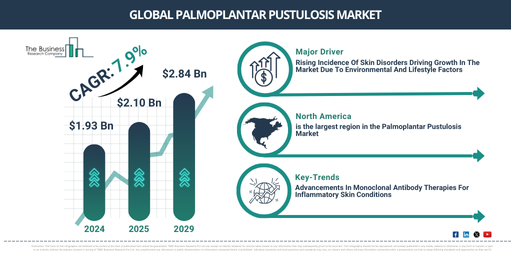
    In the previous years, the market size of palmoplantar pustulosis has experienced substantial growth. It is expected to rise from $1.93 billion in 2024 to $2.10 billion in 2025, demonstrating a compound annual growth rate (CAGR) of 8.3%. This growth during the historic period is linked to factors such as the increasing incidence of autoimmune diseases, growing education regarding uncommon skin conditions, a surge in healthcare spending, and the expanding adoption of telemedicine for dermatology.

    Expectations for the palmoplantar pustulosis market size indicate robust expansion in the coming years. The market estimates to reach $2.84 billion in 2029, growing at a compound annual growth rate (CAGR) of 7.9%. The anticipated growth during the forecast period is attributed to the increasing adoption of biologic therapies, expansion in dermatology research, an escalating pipeline of unique treatments, surging demand for personalized medicine, and a rise in chronic skin conditions. Major trends projected for the forecast period encompass advancements in dermatology research, a drift towards biologics and immunomodulators, the inclusion of artificial intelligence in dermatological diagnosis, progress in advanced topical formulations, and the implementation of machine learning in dermatological research.

    Download a free sample to assess the report’s scope and structure:

    https://www.thebusinessresearchcompany.com/sample.aspx?id=22090&type=smp

    Which Factors and External Forces Are Driving Demand in the Palmoplantar Pustulosis Market?

    The escalating occurrence of skin conditions is anticipated to drive the expansion of the palmoplantar pustulosis market. Skin conditions are those which alter the skin’s structure, function or looks, and they are on the rise due to environmental shifts, lifestyle practices and genetic susceptibility. Factors such as air pollution, severe weather, and exposure to hazardous substances can inflame the skin, causing issues like eczema or acne. Palmoplantar pustulosis is a persistent skin condition which majorly impacts the skin on the palms and foot soles, resulting in pustules, reddening, and scaling. These symptoms can be controlled with different therapies to enhance skin wellbeing and relieve discomfort. For instance, the International Eczema Council, a United States-based entity, reported in 2022 that about 223 million people suffered from atopic dermatitis, with around 43 million of them aged between 1 and 4. Therefore, the burgeoning occurrence of skin conditions bolsters the growth of the palmoplantar pustulosis market.

    Which Segments in the Palmoplantar Pustulosis Offer the Most Growth?

    The palmoplantar pustulosis market covered in this report is segmented –

    1) By Treatment Type: Topical Treatments, Systemic Treatments, Biologics, Phototherapy

    2) By Application: Hospitals, Dermatology Clinics, Homecare Settings

    3) By Distribution Channel: Online Pharmacies, Retail Pharmacies, Hospitals

    Subsegments:

    1) By Topical Treatments: Corticosteroids, Vitamin D Analogues, Calcineurin Inhibitors, Keratolytics

    2) By Systemic Treatments: Retinoids, Immunosuppressants, Phosphodiesterase-4 (PDE4) Inhibitors, Corticosteroids

    3) By Biologics: Tumor Necrosis Factor (TNF) Inhibitors, Interleukin-17 (IL-17) Inhibitors, Interleukin-23 (IL-23) Inhibitors, Interleukin-12/23 (IL-12/23) Inhibitors

    4) By Phototherapy: Narrowband UVB Therapy (NB-UVB), Psoralen plus Ultraviolet A (PUVA) Therapy, Excimer Laser Therapy, Targeted Phototherapy

    Request customized data on this market:

    https://www.thebusinessresearchcompany.com/customise?id=22090&type=smp

    What Are the Fastest-Growing Geographies in the Palmoplantar Pustulosis Market?

    North America was the largest region in the palmoplantar pustulosis market in 2024. The regions covered in the palmoplantar pustulosis market report are Asia-Pacific, Western Europe, Eastern Europe, North America, South America, Middle East, Africa.

    Which Cutting-Edge Market Trends Are Expected to Drive thePalmoplantar Pustulosis Market’s Growth?

    The palmoplantar pustulosis market is primarily dominated by significant firms who tend to focus their efforts on creating innovative treatments. A common method these companies employ involves monoclonal antibodies that target inflammatory pathways to provide improved results for patients. Monoclonal antibodies are identical antibodies which are created by a single clone of B cells that specifically target therapeutic or diagnostic antigens. For example, in August 2023, Kyowa Kirin Co., Ltd., a pharmaceutical company based in Japan, gained partial change approval for the utilization of LUMICEF for treating palmoplantar pustulosis in Japan. LUMICEF is a specialized therapy that inhibits IL-17, which effectively provides quick and long-lasting relief for inflammatory conditions such as psoriasis and palmoplantar pustulosis. Its main objective is to minimize inflammation and enhance the life quality for patients suffering from these chronic ailments.

    View the full report here:

    https://www.thebusinessresearchcompany.com/report/palmoplantar-pustulosis-global-market-report

    What Are the Key Elements That Define the Palmoplantar Pustulosis Market?

    Palmoplantar pustulosis is a chronic skin condition characterized by the formation of pustules (small, pus-filled blisters) on the palms of the hands and soles of the feet. It often leads to redness, scaling, and thickened skin in these areas. The condition can be painful and is usually associated with other skin diseases, like psoriasis.

    Purchase the full report and get a swift delivery:

    https://www.thebusinessresearchcompany.com/purchaseoptions.aspx?id=22090

    About The Business Research Company:

    With over 15000+ reports from 27 industries covering 60+ geographies, The Business Research Company has built a reputation for offering comprehensive, data-rich research and insights. Armed with 1,500,000 datasets, the optimistic contribution of in-depth secondary research, and unique insights from industry leaders, you can get the information you need to stay ahead in the game.

    Get in touch with us:

    The Business Research Company: https://www.thebusinessresearchcompany.com/

    Americas +1 3156230293

    Asia +44 2071930708

    Europe +44 2071930708

    Email us at info@tbrc.info

    Follow us on:

    LinkedIn: https://in.linkedin.com/company/the-business-research-company

    YouTube: https://www.youtube.com/channel/UC24_fI0rV8cR5DxlCpgmyFQ

    Global Market Model: https://www.thebusinessresearchcompany.com/global-market-model

  • $2.57 Billion Forecast for Paget Disease Treatment Market by 2029, Backed by Demand and Innovation

    $2.57 Billion Forecast for Paget Disease Treatment Market by 2029, Backed by Demand and Innovation

    Discover trends, market shifts, and competitive outlooks for the paget disease treatment industry through 2025-2034 with The Business Research Company’s reliable data and in-depth research

    What Are the Projected Market Size and Growth Rates for the Paget Disease Treatment Market From 2025 To 2029?

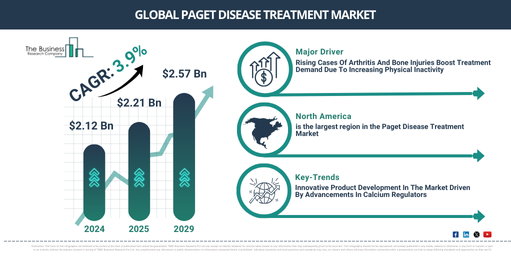
    In recent times, there has been a consistent growth in the market size for Paget’s disease treatment. The market is projected to escalate from $2.12 billion in 2024 to $2.21 billion in 2025, projecting a compound annual growth rate (CAGR) of 4.1%. Factors contributing to this growth throughout the past years include increased incidents of Paget’s disease, amplified awareness and diagnostic rates, a surge in the elderly population, the expansion of healthcare infrastructure, and a growing inclination towards the use of bisphosphonates.

    Expectations for the Paget disease market point towards a steady expansion in the coming years. By 2029, it is projected to reach $2.57 billion, propelled by a compound annual growth rate (CAGR) of 3.9%. The anticipated growth during this forecast period can be attributed to various factors like the surging demand for targeted therapies, an incline in healthcare spending, an ever-increasing elderly population, a rising number of clinical trials for new therapy options, and an enhanced emphasis on personalized medicine. Major trends that will define this forecast period include progress in treatment alternatives, a shift towards biologic treatments, the advent of combination therapies, adoption of digital health solutions, and advancements in technologies used in diagnostics.

    Download a free sample to assess the report’s scope and structure:

    https://www.thebusinessresearchcompany.com/sample.aspx?id=22088&type=smp

    What Are the Core Growth Drivers Propelling the Paget Disease Treatment Market Forward?

    The growth of the paget disease treatment market is projected to be fueled by the escalating number of arthritis and bone injury cases. Arthritis incites inflammation in joints, while bone injuries can pave the way for its onset. The surge in arthritis and bone injuries is largely due to insufficient physical activity, which results in weakened muscles and joints that lose their ability to facilitate movement and withstand impact. This can lead to increased joint degeneration, rigidity, and fractures over time. Paget disease treatment aims to control arthritis and bone injuries by alleviating bone pain, enhancing joint function, and preventing subsequent complications such as fractures and deformities due to irregular bone remodeling. For example, the Centers for Disease Control and Prevention (CDC) reported in February 2024 that in 2022, the age-adjusted prevalence of diagnosed arthritis in adults 18 years and older was 18.9%, with females (21.5%) showing a higher occurrence than males (16.1%). Arthritis prevalence ascended with age, varying from 3.6% in people aged 18–34 to 53.9% in those aged 75 and above. As a result, the increasing number of arthritis and bone injury cases are propelling the growth of the paget disease treatment market.

    What Segment Types Define the Paget Disease Treatment Market Structure?

    The paget disease treatment market covered in this report is segmented –

    1) By Treatment Type: Actonel, Reclast, Zoledronic Acid, Fosamax, Miacalcin, Aredia, Calcitonin, Zometa, Other Treatments

    2) By Route Of Administration: Oral, Intravenous, Topical

    3) By Distribution Channels: Hospital Pharmacies, Retail Pharmacies, Online Pharmacie, Drug stores

    4) By End User: Hospitals, Clinics, Other End-Users

    Subsegmentss:

    1) By Actonel: Risedronate Sodium Tablets, Delayed-Release Risedronate.

    2) By Reclast: Intravenous Reclast, Annual Reclast Infusion.

    3) By Zoledronic Acid: Zoledronic Acid 5 mg Injection, Zoledronic Acid 4 mg Injection.

    4) By Fosamax: Alendronate Sodium Tablets, Alendronate Oral Solution

    5) By Miacalcin: Miacalcin Nasal Spray, Miacalcin Injection

    6) By Aredia: Pamidronate Disodium 30 mg Injection, Pamidronate Disodium 90 mg Injection

    7) By Calcitonin: Synthetic Salmon Calcitonin, Human Calcitonin

    8) By Zometa: Zometa 4 mg/5 mL Concentrate, Zometa 4 mg Infusion

    9) By Other Treatments: Pain Management Medications, Physical Therapy, Surgical Interventions

    Request customized data on this market:

    https://www.thebusinessresearchcompany.com/customise?id=22088&type=smp

    Which Geographic Areas Hold the Strongest Growth Potential in the Paget Disease Treatment Market?

    North America was the largest region in the paget disease treatment market in 2024. Asia-Pacific is expected to be the fastest-growing region in the forecast period. The regions covered in the paget disease treatment market report are Asia-Pacific, Western Europe, Eastern Europe, North America, South America, Middle East, Africa.

    Which Emerging Trends that Are Influencing thePaget Disease Treatment Industry Evolution?

    Predominant enterprises in the paget disease treatment market are honing in on the creation of inventive products, including calcium regulators, to amplify the effectiveness of treatments, enhance patient results, and bolster their footprint in the market. A calcium regulator is a drug or substance that assists in managing levels of calcium in blood and bones, maintaining a balance necessary for various bodily functions. For example, in February 2025, Fresenius Kabi AG, a notable healthcare firm based in Germany, unveiled its Calcitonin Salmon Injection, USP Synthetic – a calcium regulator crafted to manage symptomatic Paget’s disease of the bone, hypercalcemia, and postmenopausal osteoporosis. The introduction of this treatment is set to provide a more budget-friendly therapy alternative, fortify their supply chain and broaden their array of generic injectables. Fresenius Kabi has heavily invested in its facilities, ensuring a constant availability of necessary medicines, with a goal to improve patient care and position itself as a premier healthcare provider.

    View the full report here:

    https://www.thebusinessresearchcompany.com/report/paget-disease-treatment-global-market-report

    What Is the Definition of the Paget Disease Treatment Market?

    Paget’s disease is a chronic bone disorder characterized by abnormal bone remodeling, leading to weakened and enlarged bones. Treatment typically involves medications to regulate bone metabolism and manage symptoms, along with pain relievers and in some cases, surgery for severe bone deformities.

    Purchase the full report and get a swift delivery:

    https://www.thebusinessresearchcompany.com/purchaseoptions.aspx?id=22088

    About The Business Research Company:

    With over 15000+ reports from 27 industries covering 60+ geographies, The Business Research Company has built a reputation for offering comprehensive, data-rich research and insights. Armed with 1,500,000 datasets, the optimistic contribution of in-depth secondary research, and unique insights from industry leaders, you can get the information you need to stay ahead in the game.

    Get in touch with us:

    The Business Research Company: https://www.thebusinessresearchcompany.com/

    Americas +1 3156230293

    Asia +44 2071930708

    Europe +44 2071930708

    Email us at info@tbrc.info

    Follow us on:

    LinkedIn: https://in.linkedin.com/company/the-business-research-company

    YouTube: https://www.youtube.com/channel/UC24_fI0rV8cR5DxlCpgmyFQ

    Global Market Model: https://www.thebusinessresearchcompany.com/global-market-model