Author: Marketing Posting

  • Sodium Glucose Cotransporter 2 (SGLT2) Inhibitors Market Forecast To Reach $16.35 Billion By 2030: Key Growth Drivers And Industry Trends

    Sodium Glucose Cotransporter 2 (SGLT2) Inhibitors Market Forecast To Reach $16.35 Billion By 2030: Key Growth Drivers And Industry Trends

    Featuring market attractiveness scoring, total addressable market sizing, company benchmarking matrices, interactive Excel dashboards, deeper supply chain intelligence, emerging startup tracking, and granular product-level insights, The Business Research Company’s 2026 market reports are built to deliver research that is both more actionable and more strategically valuable.

    Sodium Glucose Cotransporter 2 (SGLT2) Inhibitors Market Forecast: What Value Will The Market Reach By 2030?

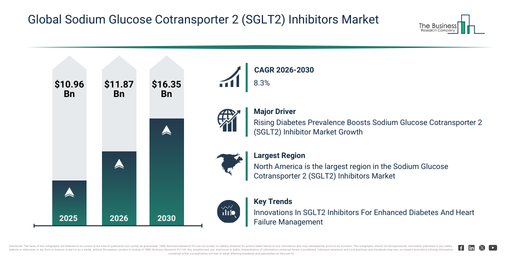
    The sodium glucose cotransporter 2 (sglt2) inhibitors market size has demonstrated robust growth in recent years. It is anticipated to expand from $10.96 billion in 2025 to $11.87 billion in 2026, achieving a compound annual growth rate (CAGR) of 8.3%. The historical expansion of this market can be ascribed to an increase in type 2 diabetes cases, unfulfilled requirements for glycemic control, successful outcomes in clinical trials, heightened physician awareness, and various regulatory approvals.

    The sodium glucose cotransporter 2 (sglt2) inhibitors market is projected to experience robust expansion in the coming years. This market is forecast to reach $16.35 billion by 2030, exhibiting a compound annual growth rate (CAGR) of 8.3%. Factors contributing to this growth during the forecast period include increasing recognition of cardio-renal benefits, a rising aging diabetic population, broader reimbursement coverage, the introduction of new drugs, and deeper penetration into emerging markets. Key trends anticipated in the forecast period encompass their expanded application beyond diabetes, a rise in the adoption of combination therapies, growth in their use for heart failure indications, enhanced safety profiling, and broader inclusion in clinical guidelines.

    Get A Free Sample Report With In-Depth Market Insights:

    https://thebusinessresearchcompany.com/sample_request?id=42110494&type=smp&name=Sodium%20Glucose%20Cotransporter%202%20%28SGLT2%29%20Inhibitors%20Market%20Report%202026&utm_source=Blogs&utm_medium=Paid&utm_campaign=Nov_PR

    Sodium Glucose Cotransporter 2 (SGLT2) Inhibitors Market Expansion Drivers: What’s Shaping Future Growth?

    The expanding occurrence of diabetes is projected to fuel the expansion of the sodium glucose cotransporter 2 (SGLT2) inhibitor market moving ahead. Diabetes encompasses a set of metabolic conditions marked by elevated blood glucose levels, stemming from deficiencies in either insulin secretion, insulin action, or a combination of both. This increase in diabetes incidents is linked to elements like urbanization, stress, environmental contaminants, and inadequate access to medical care. In diabetes management, sodium glucose cotransporter 2 (SGLT2) inhibitors are employed to reduce blood glucose by hindering glucose reabsorption in the kidneys, thus promoting its elimination through urine. These inhibitors also provide cardiovascular and renal advantages, positioning them as a significant choice for addressing diabetes and its associated complications. The rising occurrence of diabetes is propelling the expansion of the sodium glucose cotransporter 2 (SGLT2) inhibitor market.

    Sodium Glucose Cotransporter 2 (SGLT2) Inhibitors Market Segmentation: How Does The Market Break Down By Category?

    The sodium glucose cotransporter 2 (sglt2) inhibitors market covered in this report is segmented –

    1) By Type: Invokana, Jardiance, Farxiga Or Forxiga, Suglat

    2) By Route Of Administration: Oral Route, Other Route Of Administration

    3) By End User: Hospitals, Homecare Settings, Clinics

    Subsegments:

    1) By Invokana: Generic Invokana (Canagliflozin), Branded Invokana

    2) By Jardiance: Generic Jardiance (Empagliflozin), Branded Jardiance

    3) By Farxiga Or Forxiga: Generic Farxiga (Dapagliflozin), Branded Farxiga

    4) By Suglat: Suglat (Sotagliflozin) For Diabetes, Suglat (Sotagliflozin) For Heart Failure

    Sodium Glucose Cotransporter 2 (SGLT2) Inhibitors Market Industry Trends Fueling Future Revenue Growth

    Leading companies within the sodium glucose cotransporter 2 (SGLT2) inhibitor market are concentrating on developing dual inhibitor therapeutic solutions to enhance patient outcomes and manage blood sugar levels. These dual inhibitor therapeutic solutions are treatments that concurrently target two different sodium-glucose cotransporters (SGLT1 and SGLT2), boosting their efficacy in managing conditions such as heart failure and diabetes.

    Sodium Glucose Cotransporter 2 (SGLT2) Inhibitors Market Competitive Overview And Top Companies

    Major companies operating in the sodium glucose cotransporter 2 (sglt2) inhibitors market are Johnson & Johnson Inc., Merck & Co Inc., Bristol-Myers Squibb Company, AstraZeneca plc, Eli Lilly and Company, Boehringer Ingelheim International GmbH, Astellas Pharma Inc, Sun Pharmaceutical Industries Ltd, Sumitomo Dainippon Pharma Co Ltd, Taisho Pharmaceutical Holdings Co Ltd, Lupin Limited, Glenmark Pharmaceuticals, Torrent Pharmaceuticals Ltd, Mankind Pharma Ltd, Kissei Pharmaceutical Co Ltd, Kotobuki Pharmaceutical Co Ltd, Lexicon Pharmaceuticals Inc, Novartis AG, Takeda Pharmaceutical Company Limited, Hanmi Pharmaceutical Co Ltd, Chong Kun Dang Pharmaceutical Corp, Mitsubishi Tanabe Pharma Corporation

    View The Full Sodium Glucose Cotransporter 2 (SGLT2) Inhibitors Market Report:

    https://thebusinessresearchcompany.com/report/sodium-glucose-cotransporter-2-sglt2-inhibitors-global-market-report?utm_source=Blogs&utm_medium=Paid&utm_campaign=Nov_PR

    Sodium Glucose Cotransporter 2 (SGLT2) Inhibitors Market Geographic Landscape: Which Region Leads Industry Growth?

    North America was the largest region in the sodium glucose cotransporter 2 (SGLT2) inhibitors market in 2025. Asia-Pacific is expected to be the fastest-growing region in the forecast period. The regions covered in the sodium glucose cotransporter 2 (sglt2) inhibitors market report are Asia-Pacific, South East Asia, Western Europe, Eastern Europe, North America, South America, Middle East, Africa.

    Reach Out To Our Team:

    The Business Research Company: https://www.thebusinessresearchcompany.com/

    Americas: +1 310-496-7795

    Asia: +44 7882 955267 & +91 8897263534

    Europe: +44 7882 955267

    Email us at: marketing@tbrc.info

    Follow us on:

    LinkedIn: https://in.linkedin.com/company/the-business-research-company

    YouTube: https://www.youtube.com/channel/UC24_fI0rV8cR5DxlCpgmyFQ

    Global Market Model: https://www.thebusinessresearchcompany.com/global-market-model
  • Sober Living Homes Market Forecast 2026: Market Size, Competitive Landscape And Growth Drivers

    Sober Living Homes Market Forecast 2026: Market Size, Competitive Landscape And Growth Drivers

    Backed by market attractiveness analysis, total addressable market sizing, company benchmarking matrices, interactive Excel dashboards, wider supply chain intelligence, emerging startup coverage, and detailed product-level insights, The Business Research Company’s 2026 market reports are designed to offer research that is more actionable and strategically valuable than ever.

    Sober Living Homes Market Size, Value And Growth Trajectory Through 2030

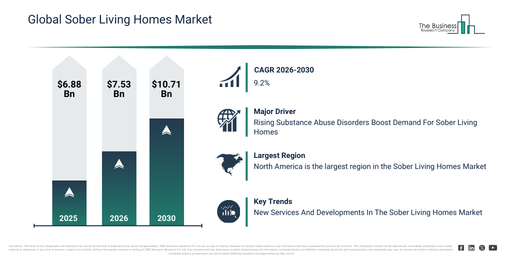
    The market size for sober living homes has experienced robust expansion in recent years. This market is anticipated to expand from $6.88 billion in 2025 to $7.53 billion in 2026, exhibiting a compound annual growth rate (CAGR) of 9.5%. Historically, the growth witnessed can be attributed to several factors including rising substance abuse prevalence, the expansion of outpatient recovery programs, increasing awareness of relapse prevention, the growth of community-based recovery models, and the development of supportive housing frameworks.

    The sober living homes market is projected to experience robust expansion over the coming years. This market is anticipated to reach $10.71 billion by 2030, demonstrating a compound annual growth rate (CAGR) of 9.2%. This anticipated growth can be linked to an increasing focus on holistic recovery approaches, the rising integration of telehealth and digital support tools, the expansion of luxury and specialized sober living facilities, growing partnerships with healthcare providers, and increasing regulatory oversight and accreditation requirements. Furthermore, significant trends expected during this period involve the increasing adoption of structured recovery housing models, a rising demand for long-term recovery support services, the growing integration of digital monitoring and case management tools, an expansion of specialized and inclusive sober living programs, and an enhanced focus on compliance and quality standards.

    Get A Free Sample Report With In-Depth Market Insights:

    https://thebusinessresearchcompany.com/sample_request?id=45720532&type=smp&name=Sober%20Living%20Homes%20Market%20Report%202026&utm_source=Blogs&utm_medium=Paid&utm_campaign=Nov_PR

    Sober Living Homes Market Industry Drivers: What’s Behind The Revenue Growth?

    The rising incidence of substance abuse disorders is projected to drive the expansion of the sober living home market in the foreseeable future. These conditions are enduring illnesses defined by the uncontrollable consumption of drugs or alcohol, regardless of detrimental effects, resulting in considerable functional impairment or emotional distress. The escalating occurrence of substance abuse disorders is influenced by a blend of genetic predispositions, environmental pressures, and co-occurring mental health challenges, all of which contribute to an elevated risk of addiction. Sober living homes are instrumental in substance abuse recovery, offering a structured and supportive setting that assists individuals in reintegrating into daily life while upholding their sobriety. The heightened prevalence of substance abuse disorders is stimulating the growth of the sober living home market.

    Sober Living Homes Market Segment Analysis Spotlighting Growth Areas

    The sober living homes market covered in this report is segmented –

    1) By Type: Residential Sober Living Homes, Halfway Houses With Sober Living Programs, Gender-Specific Sober Living Homes, LGBTQ+ Inclusive Sober Living Homes, Luxury Sober Living Homes

    2) By Type Of Operator: Public Operator, Private Operator

    3) By Application: Fully Furnished, Semi-Furnished, Unfurnished

    Subsegments:

    1) By Residential Sober Living Homes: Structured Sober Living Environments, Supportive Housing for Recovery, Transitional Living Facilities

    2) By Halfway Houses With Sober Living Programs: Transitional Halfway Houses, Programs With Integrated Treatment Services, Community-Based Halfway Houses

    3) By Gender-Specific Sober Living Homes: Women-Only Sober Living Homes, Men-Only Sober Living Homes, Co-Ed Sober Living Homes With Gender-Specific Programming

    4) By LGBTQ+ Inclusive Sober Living Homes: LGBTQ+ Affirmative Housing, Supportive Environments for LGBTQ+ Individuals, Specialized Programs Addressing Unique Challenges

    5) By Luxury Sober Living Homes: High-End Accommodations, Comprehensive Wellness Services, Private and Personalized Care, Amenities-Focused Living

    Sober Living Homes Market Growth Trends Reshaping The Competitive Landscape

    Leading companies in the sober living homes market are actively developing innovative health services, such as opioid use disorder services, to enhance real-time care coordination and resident support. Opioid use disorder services encompass customized treatments and support systems designed to assist individuals in managing and overcoming opioid addiction, typically integrating medications, therapy, and counseling.

    Sober Living Homes Market Leading Companies: Who Holds The Strongest Market Presence?

    Major companies operating in the sober living homes market are Casa de las Amigas, American Addiction Centers (AAC) Holdings Inc., Turning Point Alcohol and Drug Centre, Oxford House Inc., Bright Futures Treatment Centers, Sober Living America Inc., Ascension Recovery Services, The Recovery Village, The Phoenix Recovery Center, New Beginnings Sober Living, Next Step Recovery (NSR), Fresh Start Recovery Centre, A New Start Recovery, Retreat Inc., The Haven at College, Harmony Foundation International Inc., The Recovery House Inc., Lighthouse Recovery Center Inc., Hope Recovery Homes Inc., The Lighthouse Sober Living, Sober Nest Recovery Homes, The Oasis Recovery Center Of Western Pa, Safe Harbor Recovery Center, Alano Club Inc.

    View The Full Sober Living Homes Market Report:

    https://thebusinessresearchcompany.com/report/sober-living-homes-global-market-report?utm_source=Blogs&utm_medium=Paid&utm_campaign=Nov_PR

    Sober Living Homes Market Regional Analysis: Which Geography Leads On Revenue?

    North America was the largest region in the sober living homes market in 2025. Asia-Pacific is expected to be the fastest-growing region in the forecast period. The regions covered in the sober living homes market report are Asia-Pacific, South East Asia, Western Europe, Eastern Europe, North America, South America, Middle East, Africa.

    Reach Out To Our Team:

    The Business Research Company: https://www.thebusinessresearchcompany.com/

    Americas: +1 310-496-7795

    Asia: +44 7882 955267 & +91 8897263534

    Europe: +44 7882 955267

    Email us at: marketing@tbrc.info

    Follow us on:

    LinkedIn: https://in.linkedin.com/company/the-business-research-company

    YouTube: https://www.youtube.com/channel/UC24_fI0rV8cR5DxlCpgmyFQ

    Global Market Model: https://www.thebusinessresearchcompany.com/global-market-model
  • Snail Mucin Skincare Market Size In 2026: Regional Growth, Key Segments And Future Outlook

    Snail Mucin Skincare Market Size In 2026: Regional Growth, Key Segments And Future Outlook

    Featuring market attractiveness scoring, total addressable market sizing, company benchmarking matrices, interactive Excel dashboards, deeper supply chain intelligence, emerging startup tracking, and granular product-level insights, The Business Research Company’s 2026 market reports are built to deliver research that is both more actionable and more strategically valuable.

    Snail Mucin Skincare Market CAGR Outlook And Future Development

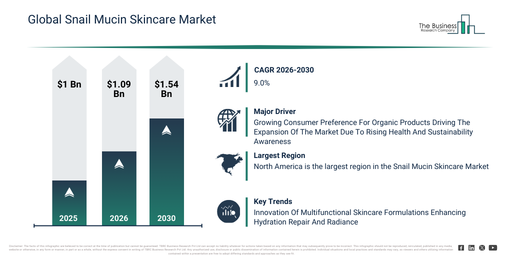
    The snail mucin skincare market has demonstrated strong growth in recent years. It is projected to increase from $1 billion in 2025 to $1.09 billion in 2026, at a compound annual growth rate (CAGR) of 9.2%. This historical expansion can be attributed to factors such as rising consumer awareness of skin health, the expansion of premium skincare product lines, the growing popularity of Asian beauty trends, increased use of dermocosmetic products, and wider availability of specialty skincare retail.

    The snail mucin skincare market is anticipated to experience substantial expansion over the upcoming years. This market is projected to reach $1.54 billion by 2030, exhibiting a compound annual growth rate (CAGR) of 9.0%. This forecasted growth is primarily driven by the escalating demand for anti-aging remedies, a growing inclination towards sustainable beauty products, the proliferation of online beauty retail platforms, the increasing acceptance of male grooming, and a heightened emphasis on customized skincare formulations. Key developments expected during this period involve a rising need for natural and bio-active skincare components, the increasing popularity of K-beauty products, a greater focus on skin repair and barrier improvement, the expansion of multi-purpose skincare items, and an amplified commitment to clean label and ethical sourcing practices.

    Get A Free Sample Report With In-Depth Market Insights:

    https://thebusinessresearchcompany.com/sample_request?id=58187557&type=smp&name=Snail%20Mucin%20Skincare%20Market%20Report%202026&utm_source=Blogs&utm_medium=Paid&utm_campaign=Nov_PR

    Snail Mucin Skincare Market Growth Factors: What’s Supporting Expansion?

    The increasing consumer interest in organic items is anticipated to fuel the expansion of the snail mucin skincare sector in the future. Organic products are defined as foods and other merchandise produced free from artificial chemicals, thereby encouraging natural cultivation methods and ecological sustainability. The rise in consumer demand for organic goods stems from a growing health awareness among individuals who seek foods devoid of synthetic pesticides, artificial additives, and genetically modified ingredients. Snail mucin is highly regarded in organic skincare due to its natural ability to hydrate and repair skin without relying on synthetic chemicals, thus aligning perfectly with clean and sustainable beauty formulations. The escalating consumer preference for organic products is acting as a catalyst for the expansion of the snail mucin skincare market.

    Snail Mucin Skincare Market Segment Performance And Emerging Opportunities

    The snail mucin skincare market covered in this report is segmented –

    1) By Product Type: Serums, Creams, Masks, Lotions

    2) By Skin Type: Dry Skin, Oily Skin, Combination Skin, Sensitive Skin

    3) By Distribution Channel: Online Retail, Retail Stores, Specialty Stores, Pharmacies

    4) By Application: Hydration, Anti-Aging, Acne Treatment, Brightening, Scar Healing, Pore Minimizing, Soothing Or Calming, Firming, Other Applications

    5) By End User: Men, Women, Unisex

    Subsegments:

    1) By Serums: Hydrating Serums, Anti-Aging Serums, Brightening Serums, Repair Serums

    2) By Creams: Moisturizing Creams, Night Creams, Anti-Wrinkle Creams, Soothing Creams

    3) By Masks: Sheet Masks, Peel-Off Masks, Clay Masks, Sleeping Masks

    4) By Lotions: Body Lotions, Face Lotions, Whitening Lotions, Repair Lotions

    Snail Mucin Skincare Market Trends Shaping Long-Term Demand

    Major companies operating in the snail mucin skincare market are focusing on developing sophisticated skincare formulations, such as advanced snail mucin power essence, to improve skin hydration, mend damaged skin, and offer anti-aging benefits. Advanced snail mucin power essence is characterized as a highly concentrated skincare product that utilizes purified snail mucin combined with other active ingredients to deeply hydrate, repair, and rejuvenate the skin for enhanced anti-aging and healing effects.

    Snail Mucin Skincare Market Key Players: Which Companies Lead Industry Competition?

    Major companies operating in the snail mucin skincare market are Lifevision Cosmetics Co. Ltd., TONYMOLY Co. Ltd., Able C&C Co. Ltd., O3+ International Private Limited, Peach & Lily Inc., Dr. Organic Limited, Dr. Gowoonsesang Cosmetics Co. Ltd., COSRX Co. Ltd., Be Bodywise, Benton Cosmetics Co. Ltd., Laboratorios Elicina S.A., Holika Holika Co. Ltd., IUNIK Co. Ltd., La Pure Co. Ltd., Mirabelle Cosmetics Co. Ltd., Mizon Co. Ltd., Seoul Ceuticals Inc., Snailwhite Co. Ltd., The Derma Co. Ltd., Nature Republic Co. Ltd.

    View The Full Snail Mucin Skincare Market Report:

    https://thebusinessresearchcompany.com/report/snail-mucin-skincare-global-market-report?utm_source=Blogs&utm_medium=Paid&utm_campaign=Nov_PR

    Snail Mucin Skincare Market Geographic Spread And Regional Opportunities

    North America was the largest region in the snail mucin skincare market in 2025. North America is expected to be the fastest-growing region in the forecast period. The regions covered in the snail mucin skincare market report are Asia-Pacific, South East Asia, Western Europe, Eastern Europe, North America, South America, Middle East, Africa.

    Reach Out To Our Team:

    The Business Research Company: https://www.thebusinessresearchcompany.com/

    Americas: +1 310-496-7795

    Asia: +44 7882 955267 & +91 8897263534

    Europe: +44 7882 955267

    Email us at: marketing@tbrc.info

    Follow us on:

    LinkedIn: https://in.linkedin.com/company/the-business-research-company

    YouTube: https://www.youtube.com/channel/UC24_fI0rV8cR5DxlCpgmyFQ

    Global Market Model: https://www.thebusinessresearchcompany.com/global-market-model
  • Smart Weight, Body Composition, And Body-Mass Index Scales Market Growth Forecast Through 2030: Market Size And Trends In 2026

    Smart Weight, Body Composition, And Body-Mass Index Scales Market Growth Forecast Through 2030: Market Size And Trends In 2026

    Built to provide research that’s more actionable and strategically valuable, The Business Research Company’s 2026 market reports include market attractiveness analysis, total addressable market sizing, company benchmarking matrices, interactive Excel dashboards, broader supply chain intelligence, emerging startup tracking, and in-depth product insights.

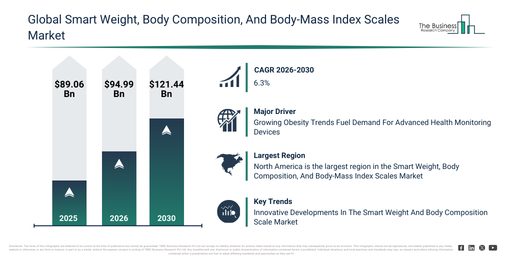
    Smart Weight, Body Composition, And Body-Mass Index Scales Market Set To Climb From $94.99 Billion In 2026 To $121.44 Billion By 2030

    The smart weight, body composition, and body-mass index scales market size has demonstrated robust growth in recent years. It is projected to expand from $89.06 billion in 2025 to $94.99 billion in 2026, exhibiting a compound annual growth rate (CAGR) of 6.7%. This historical expansion is largely due to factors such as an increasing consumer emphasis on health and fitness, the broadening of wearable health ecosystems, greater smartphone penetration, the rising uptake of home fitness solutions, and the accessibility of affordable smart devices.

    The market for smart weight, body composition, and body-mass index scales is set for robust expansion in the coming years. This sector is forecast to reach $121.44 billion by 2030, growing at a compound annual growth rate (CAGR) of 6.3%. This projected growth over the forecast period can be linked to several factors, such as the rising demand for personalized health insights, increased integration with digital health platforms, broader adoption of preventive healthcare, the expanding use of AI-driven wellness analytics, and a greater emphasis on long-term health monitoring. Significant trends for the forecast period include the increasing uptake of app-connected smart scales, a growing need for comprehensive body composition analysis, enhanced integration with fitness and health platforms, the expansion of personalized health tracking capabilities, and an elevated focus on data accuracy and user experience.

    Get A Free Sample Report With In-Depth Market Insights:

    https://thebusinessresearchcompany.com/sample_request?id=62833485&type=smp&name=Smart%20Weight%2C%20Body%20Composition%2C%20And%20Body-Mass%20Index%20Scales%20Market%20Report%202026&utm_source=Blogs&utm_medium=Paid&utm_campaign=Nov_PR

    Smart Weight, Body Composition, And Body-Mass Index Scales Market Demand Drivers: What’s Powering Industry Growth?

    The rising incidence of obesity is anticipated to significantly boost the expansion of the smart weight, body composition, and body mass index scale markets in the coming period. Obesity is defined as a medical condition characterized by excessive body fat accumulation, which leads to various health risks. It is typically assessed using the Body Mass Index (BMI), where a BMI of 30 or higher signifies obesity. The widespread occurrence of obesity is attributed to escalating rates of unhealthy dietary practices, inactive lifestyles, and socio-economic factors, contributing to its higher prevalence and associated health complications. Smart weight, body composition, and body mass index (BMI) scales serve a crucial role in managing obesity by offering detailed and accurate measurements of body weight, fat percentage, muscle mass, and BMI. This enables individuals to closely monitor their progress, implement informed lifestyle adjustments, and effectively track their weight management strategies. The increasing prevalence of obesity rates is a primary driver for the growth of the smart weight, body composition, and body mass index scales market.

    Smart Weight, Body Composition, And Body-Mass Index Scales Market Segment Landscape And Growth Outlook

    The smart weight, body composition, and body-mass index scales market covered in this report is segmented –

    1) By Type: Wi-Fi Scales, Bluetooth Scales

    2) By Price: Less Than USD 100, More Than USD 100

    3) By Distribution Channel: Offline, Online

    Subsegments:

    1) By Wi-Fi Scales: Cloud-Connected Scales, Multi-User Scales, Scales with Health Tracking Features

    2) By Bluetooth Scales: Smartphone-Connected Scales, App-Integrated Scales, Portable Bluetooth Scales

    Smart Weight, Body Composition, And Body-Mass Index Scales Market Innovation Trends Shaping Future Development

    Companies primarily engaged in the smart weight, body composition, and body-mass index scales market are concentrating on developing innovative technologies, specifically body composition analyzers, to enhance the tracking of health and fitness. A body composition analyzer serves as a device that measures various bodily components like fat, muscle, bone, and water percentages, providing a thorough analysis of an individual’s physical condition.

    Smart Weight, Body Composition, And Body-Mass Index Scales Market Competitive Landscape: Who Leads The Industry?

    Major companies operating in the smart weight, body composition, and body-mass index scales market are Huawei Technologies Co. Ltd., Xiaomi Communications Co. Ltd., Nureca Ltd., Garmin Ltd., Anker Technology UK Ltd., Fitbit Inc., Polar Electro Oy, Beurer GmbH, InBody Co. Ltd., Withings France SA, Etekcity, Wyze Labs Inc., iHealth Labs Inc., Pyle USA, Renpho Technology Co. Ltd., Tanita Corporation, Salter Housewares Limited, Vandelay Brands Limited, Greater Goods LLC, Qardio Inc., Koogeek Inc., Blipcare Inc., PICOOC Technology Co. Ltd., Actxa Pte Ltd.

    View The Full Smart Weight, Body Composition, And Body-Mass Index Scales Market Report:

    https://thebusinessresearchcompany.com/report/smart-weight-body-composition-and-body-mass-index-scales-global-market-report?utm_source=Blogs&utm_medium=Paid&utm_campaign=Nov_PR

    Smart Weight, Body Composition, And Body-Mass Index Scales Market Top Region By Revenue And Market Share

    North America was the largest region in the smart weight, body composition, and body-mass index scales market in 2025. The regions covered in the smart weight, body composition, and body-mass index scales market report are Asia-Pacific, South East Asia, Western Europe, Eastern Europe, North America, South America, Middle East, Africa.

    Reach Out To Our Team:

    The Business Research Company: https://www.thebusinessresearchcompany.com/

    Americas: +1 310-496-7795

    Asia: +44 7882 955267 & +91 8897263534

    Europe: +44 7882 955267

    Email us at: marketing@tbrc.info

    Follow us on:

    LinkedIn: https://in.linkedin.com/company/the-business-research-company

    YouTube: https://www.youtube.com/channel/UC24_fI0rV8cR5DxlCpgmyFQ

    Global Market Model: https://www.thebusinessresearchcompany.com/global-market-model
  • Smart Textile-Based Physiotherapy Market Analysis: $2.48 Billion Market Size In 2026 And Future Growth Prospects

    Smart Textile-Based Physiotherapy Market Analysis: $2.48 Billion Market Size In 2026 And Future Growth Prospects

    Backed by market attractiveness analysis, total addressable market sizing, company benchmarking matrices, interactive Excel dashboards, wider supply chain intelligence, emerging startup coverage, and detailed product-level insights, The Business Research Company’s 2026 market reports are designed to offer research that is more actionable and strategically valuable than ever.

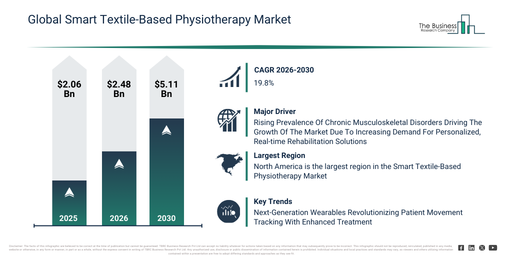
    Smart Textile-Based Physiotherapy Market Forecast: Value Set To Climb From $2.48 Billion To $5.11 Billion

    The smart textile-based physiotherapy market size has seen substantial growth over recent years. It is projected to increase from $2.06 billion in 2025 to $2.48 billion in 2026, achieving a compound annual growth rate (CAGR) of 20.1%. Historically, the market’s expansion has been driven by factors such as the growing prevalence of musculoskeletal disorders, the rising adoption of wearable health technologies, the expansion of physiotherapy and rehabilitation centers, increasing demand for remote rehabilitation monitoring, and improvements in textile sensor durability.

    The market for smart textile-based physiotherapy solutions is projected to experience substantial expansion in the coming years. This sector is anticipated to reach a valuation of $5.11 billion by 2030, exhibiting a robust compound annual growth rate (CAGR) of 19.8%. Key drivers for this growth during the projected period include the enhanced incorporation of AI-driven therapy analytics, a surge in the need for rehabilitation options at home, the broadening of digital healthcare networks, a greater emphasis on customized physiotherapy results, and increased funding directed towards smart medical textiles. Noteworthy developments expected throughout this period encompass the greater uptake of rehabilitation garments featuring embedded sensors, an increase in the application of textiles for real-time motion and muscle monitoring, deeper integration of systems providing personalized therapy feedback, the proliferation of smart physiotherapy solutions for home use, and a heightened commitment to patient-focused rehabilitation design.

    Get A Free Sample Report With In-Depth Market Insights:

    https://thebusinessresearchcompany.com/sample_request?id=12647220&type=smp&name=Smart%20Textile-Based%20Physiotherapy%20Market%20Report%202026&utm_source=Blogs&utm_medium=Paid&utm_campaign=Nov_PR

    Smart Textile-Based Physiotherapy Market Growth Drivers: What’s Behind The Acceleration?

    An increase in chronic musculoskeletal disorders is anticipated to drive the expansion of the smart textile-based physiotherapy market in the future. These conditions are enduring ailments impacting muscles, bones, joints, ligaments, or tendons, leading to pain, stiffness, and restricted movement. The increasing occurrence of chronic musculoskeletal disorders stems mainly from their progressive and degenerative characteristics, which typically deteriorate over time and become more widespread in the population with extended life expectancy. Smart textile-based physiotherapy assists in monitoring patient movements, delivering real-time biofeedback, and enhancing rehabilitation for quicker and more efficient recovery for individuals with chronic musculoskeletal disorders. The growing incidence of chronic musculoskeletal disorders is fueling the expansion of the smart textile-based physiotherapy market.

    Smart Textile-Based Physiotherapy Market Breakdown By Product Type And Application

    The smart textile-based physiotherapy market covered in this report is segmented –

    1) By Product Type: Wearable Devices, Garments, Sensors, Other Product Types

    2) By Technology: Conductive Textiles, E-Textiles, Nanotechnology, Other Technologies

    3) By Distribution Channel: Online, Offline

    4) By Application: Rehabilitation, Pain Management, Sports Medicine, Geriatric Care, Other Applications

    5) By End User: Hospitals And Clinics, Homecare, Sports And Fitness Centers, Other End Users

    Subsegments:

    1) By Wearable Devices: Smart Gloves, Smart Insoles, Smart Shirts, Smart Pants, Smart Sleeves

    2) By Garments: Compression Garments, Rehabilitation Suits, Posture Correcting Garments, Therapy Vests, Exoskeleton Clothing

    3) By Sensors: Motion Sensors, Pressure Sensors, Temperature Sensors, Flex Sensors, Heart Rate Sensors

    4) By Other Product Types: Smart Braces, Electrotherapy Devices, Virtual Reality Equipment, Balance Trainers, Muscle Stimulators

    Smart Textile-Based Physiotherapy Market Trends Redefining Industry Growth

    Companies operating significantly within the smart textile-based physiotherapy market are concentrating on technological advancements, particularly wearable technology. These innovations serve to monitor patient movements, track rehabilitation progress, provide real-time biofeedback, and optimize therapy outcomes for a faster, more effective recovery. Wearable technology refers to electronic devices or smart fabrics worn directly on the body that monitor, track, and deliver real-time data related to health, fitness, or performance.

    Smart Textile-Based Physiotherapy Market Company Landscape And Competitive Strategy

    Major companies operating in the smart textile-based physiotherapy market are IMEC, Myant Inc., Wave Company, Syrebo ApS, Sensoria Inc., AiQ Smart Clothing Inc., LOOMIA Inc., Sensing Tex Co. Ltd., Saebo Inc., KOB GmbH, Elitac Wearables B.V., Schoeller Textil AG, Outlast Technologies LLC, Hexoskin Inc., Xenoma Inc., Nextiles Inc., Myontec Ltd., Ohmatex A/S, 3E Smart Solutions GmbH, Biotronix Solution Forever

    View The Full Smart Textile-Based Physiotherapy Market Report:

    https://thebusinessresearchcompany.com/report/smart-textile-based-physiotherapy-global-market-report?utm_source=Blogs&utm_medium=Paid&utm_campaign=Nov_PR

    Smart Textile-Based Physiotherapy Market Regional Analysis And Top Geography

    North America was the largest region in the smart textile-based physiotherapy market in 2025. Asia-Pacific is expected to be the fastest-growing region in the forecast period. The regions covered in the smart textile-based physiotherapy market report are Asia-Pacific, South East Asia, Western Europe, Eastern Europe, North America, South America, Middle East, Africa.

    Reach Out To Our Team:

    The Business Research Company: https://www.thebusinessresearchcompany.com/

    Americas: +1 310-496-7795

    Asia: +44 7882 955267 & +91 8897263534

    Europe: +44 7882 955267

    Email us at: marketing@tbrc.info

    Follow us on:

    LinkedIn: https://in.linkedin.com/company/the-business-research-company

    YouTube: https://www.youtube.com/channel/UC24_fI0rV8cR5DxlCpgmyFQ

    Global Market Model: https://www.thebusinessresearchcompany.com/global-market-model
  • Smart Precision Medicine Software Market 2026 Market Size And Growth Forecast: Key Trends To Watch

    Smart Precision Medicine Software Market 2026 Market Size And Growth Forecast: Key Trends To Watch

    Featuring market attractiveness scoring, total addressable market sizing, company benchmarking matrices, interactive Excel dashboards, deeper supply chain intelligence, emerging startup tracking, and granular product-level insights, The Business Research Company’s 2026 market reports are built to deliver research that is both more actionable and more strategically valuable.

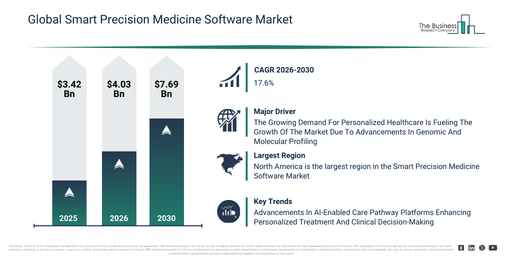
    Smart Precision Medicine Software Market Revenue Growth On Track For A 17.6% CAGR Through 2030

    The smart precision medicine software market has experienced swift expansion recently. It is forecast to rise from $3.42 billion in 2025 to $4.03 billion in 2026, exhibiting a compound annual growth rate (CAGR) of 17.9%. The growth observed in prior periods stems from advancements in clinical data digitization, the enlargement of genomic research databases, increasing adoption of electronic health records, the development of personalized medicine programs, and the availability of high-performance computing infrastructure.

    The smart precision medicine software market is anticipated to experience substantial growth in the next few years. Its valuation is projected to climb to $7.69 billion by 2030, at a compound annual growth rate (CAGR) of 17.6%. This expansion during the forecast period is driven by factors such as an increasing demand for real-time personalized treatment insights, heightened investments in AI-powered healthcare software, the broadening of precision oncology and rare disease programs, augmented regulatory support for digital health, and advancements in secure health data sharing. Key trends for the forecast period encompass the increasing implementation of AI-driven clinical decision support, greater integration of genomic and clinical data platforms, a rising adoption of cloud-based precision medicine solutions, the expansion of predictive analytics in treatment planning, and an enhanced focus on interoperability and data security.

    Get A Free Sample Report With In-Depth Market Insights:

    https://thebusinessresearchcompany.com/sample_request?id=78550296&type=smp&name=Smart%20Precision%20Medicine%20Software%20Market%20Report%202026&utm_source=Blogs&utm_medium=Paid&utm_campaign=Nov_PR

    Smart Precision Medicine Software Market Growth Factors Behind Sustained Expansion

    The rising need for personalized healthcare is anticipated to fuel the expansion of the smart precision medicine software market going forward. This approach involves tailoring medical interventions based on an individual’s distinct genetic makeup, environmental factors, and lifestyle characteristics. Personalized healthcare is gaining traction as genomic and molecular profiling enables treatments specifically designed for a person’s genetics, enhancing effectiveness and minimizing side effects. Smart precision medicine software supports personalized healthcare by evaluating a patient’s genetic, clinical, and lifestyle information. This allows it to suggest customized treatment plans, improve decision-making, forecast therapy responses, and optimize outcomes while reducing side effects. The escalating demand for personalized healthcare is a significant driver for the growth of the smart precision medicine software market.

    Smart Precision Medicine Software Market Segment Analysis And Revenue Potential

    The smart precision medicine software market covered in this report is segmented –

    1) By Type: Data Analysis, Data Management, Other Types

    2) By Technology: Artificial Intelligence And Machine Learning, Bioinformatics Tools, Cloud Computing Solutions, Blockchain Technology, Wearable Technology Integration

    3) By Delivery Mode: On-Premise Solutions, Cloud-Based Solutions, Hybrid Solutions, Mobile Applications, Software As A Service (SaaS)

    4) By Application: Clinical Decision Support Systems (CDSS), Genetic Disease Management, Personalized Drug Discovery, Therapeutic Monitoring, Patient Management Solutions

    5) By End-User: Healthcare Providers, Pharmaceutical Companies, Research Organizations, Diagnostic Laboratories, Healthcare Information Technology (IT) Vendors

    Subsegments:

    1) By Data Analysis: Genomic Data Analysis, Proteomic Data Analysis, Metabolomic Data Analysis, Clinical Data Analysis, Predictive Analytics, Artificial Intelligence (AI) Algorithms, Machine Learning (ML) Models

    2) By Data Management: Electronic Health Records (EHR) Management, Laboratory Information Management Systems (LIMS), Clinical Trial Data Management, Data Integration Platforms, Cloud-Based Data Storage, Data Security And Compliance Solutions

    3) By Other Types: Decision Support Systems, Population Health Management Tools, Patient Engagement And Monitoring Platforms, Precision Medicine Reporting Tools, Interoperability Solutions

    Smart Precision Medicine Software Market Strategic Trends: What Defines The Next Growth Phase?

    Leading companies within the smart precision medicine software market are concentrating on developing advanced solutions, such as the care pathway intelligence platform, to efficiently streamline clinical decision-making and enhance patient outcomes. A care pathway intelligence platform refers to software that assesses patient data to generate optimized, personalized treatment pathways and improve both care efficiency and patient outcomes.

    Smart Precision Medicine Software Market Key Players Shaping Industry Direction

    Major companies operating in the smart precision medicine software market are Oracle Corporation, Siemens Healthineers AG, IQVIA Holdings Inc., Agilent Technologies Inc., Illumina Inc., Epic Systems Corporation, Athenahealth, Tempus AI Inc., Flatiron Health Inc., Human Longevity Inc., SOPHiA GENETICS SA, Velsera Inc., PierianDx Inc., 2bPrecise Inc., Translational Software Inc., Golden Helix Inc., PhenoTips Inc., bio.logis digital health GmbH, Geneyx Genomex Ltd., Fabric Genomics Inc.

    View The Full Smart Precision Medicine Software Market Report:

    https://thebusinessresearchcompany.com/report/smart-precision-medicine-software-global-market-report?utm_source=Blogs&utm_medium=Paid&utm_campaign=Nov_PR

    Smart Precision Medicine Software Market Geographic Analysis: Where Is Demand Rising Fastest?

    North America was the largest region in the smart precision medicine software market in 2025. Asia-Pacific is expected to be the fastest-growing region in the forecast period. The regions covered in the smart precision medicine software market report are Asia-Pacific, South East Asia, Western Europe, Eastern Europe, North America, South America, Middle East, Africa.

    Reach Out To Our Team:

    The Business Research Company: https://www.thebusinessresearchcompany.com/

    Americas: +1 310-496-7795

    Asia: +44 7882 955267 & +91 8897263534

    Europe: +44 7882 955267

    Email us at: marketing@tbrc.info

    Follow us on:

    LinkedIn: https://in.linkedin.com/company/the-business-research-company

    YouTube: https://www.youtube.com/channel/UC24_fI0rV8cR5DxlCpgmyFQ

    Global Market Model: https://www.thebusinessresearchcompany.com/global-market-model
  • Smart Portable Rehabilitation Devices Market Size Forecast: How The Industry Is Expected To Grow From 2026 To 2030

    Smart Portable Rehabilitation Devices Market Size Forecast: How The Industry Is Expected To Grow From 2026 To 2030

    Built to provide research that’s more actionable and strategically valuable, The Business Research Company’s 2026 market reports include market attractiveness analysis, total addressable market sizing, company benchmarking matrices, interactive Excel dashboards, broader supply chain intelligence, emerging startup tracking, and in-depth product insights.

    Smart Portable Rehabilitation Devices Market Value Growth And Long-Term Outlook

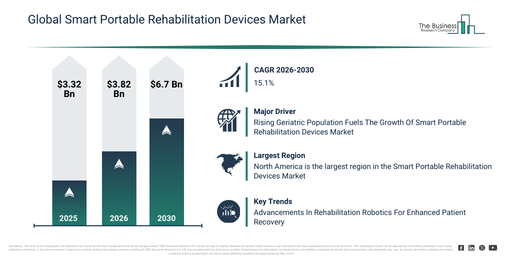
    The smart portable rehabilitation devices market size has experienced significant expansion in recent years. This market is forecast to increase from $3.32 billion in 2025 to $3.82 billion in 2026, achieving a compound annual growth rate (CAGR) of 15.1%. The historic growth in this sector is attributable to an increase in musculoskeletal injuries, limited access to rehab centers, the needs of an aging population, growth in wearable devices, and greater rehabilitation awareness.

    The smart portable rehabilitation devices market is anticipated to experience significant expansion over the next few years, with projections indicating it will reach $6.7 billion by 2030, growing at a compound annual growth rate (CAGR) of 15.1%. This growth during the forecast period is fueled by factors such as the increasing reach of tele-rehabilitation, the demand for cost-effective care solutions, improvements in motion sensor technology, an uptick in post-surgical rehabilitation, and the wider acceptance of digital therapy. Prominent trends expected in this timeframe include the proliferation of sensor-enabled rehabilitation devices, the integration of AI-guided therapy, the expansion of home physiotherapy programs, the incorporation of gamification into rehabilitation, and a rising need for post-stroke recovery support.

    Get A Free Sample Report With In-Depth Market Insights:

    https://thebusinessresearchcompany.com/sample_request?id=56375084&type=smp&name=Smart%20Portable%20Rehabilitation%20Devices%20Market%20Report%202026&utm_source=Blogs&utm_medium=Paid&utm_campaign=Nov_PR

    Smart Portable Rehabilitation Devices Market Demand Drivers Opening New Revenue Streams

    The increasing geriatric population is projected to stimulate the growth of the smart portable rehabilitation devices market. This demographic, encompassing elderly individuals or senior citizens, can utilize these smart portable rehabilitation devices to uphold their independence and autonomy through tools that facilitate health monitoring and personalized rehabilitation activities. The growing number of elderly individuals is a primary factor driving the expansion of the smart portable rehabilitation devices market.

    Smart Portable Rehabilitation Devices Market Segmentation And Category Overview

    The smart portable rehabilitation devices market covered in this report is segmented –

    1) By Type: Daily Living Aids, Mobility Equipment, Exercise Equipment, Body Support Devices

    2) By Rehabilitation Type: Passive Rehabilitation, Active-Assistive Rehabilitation

    3) By End-User: Hospitals And Clinics, Rehabilitation Centers, Physiotherapy Centers, Other End-Users

    Subsegments:

    1) By Daily Living Aids: Smart Pill Dispensers, Smart Meal Preparation Devices, Smart Home Automation Devices, Assistive Communication Devices

    2) By Mobility Equipment: Smart Wheelchairs, Smart Walkers, Smart Scooters, Smart Canes

    3) By Exercise Equipment: Smart Resistance Bands, Smart Exercise Bikes, Smart Treadmills, Wearable Fitness Trackers

    4) By Body Support Devices: Smart Back Supports, Smart Knee Braces, Smart Ankle Supports, Smart Posture Correctors

    Smart Portable Rehabilitation Devices Market Transformation Trends: What Innovations Are Driving Change?

    Leading firms within the smart portable rehabilitation devices sector are prioritizing the creation of advanced robotic and AI-powered systems designed to enhance patient recovery, improve therapeutic precision, and facilitate remote monitoring of rehabilitation journeys. These robotic and AI-driven systems represent rehabilitation tools that integrate mechanical support with intelligent algorithms to guide patient actions, track improvements, and personalize treatment plans for superior recovery outcomes.

    Smart Portable Rehabilitation Devices Market Competitive Analysis Of Leading Industry Participants

    Major companies operating in the smart portable rehabilitation devices market are Invacare Corporation, Caremax Rehabilitation Equipment Ltd, Hinge Health, Drive Devilbiss Healthcare, Kinova Robotics, GF Health Products Inc., Dynatronics Corporation, Bioness Inc., Motion Composites, MindMaze, Neofect, Hocoma, Tyromotion, Myomo Inc., Esko Bionics, AlterG, ReWalk Robotics, LiteGait, suitX, Rifton Equipment, InnoMotion, Reha Technology AG, Rex Bionics, Kinestica, DyCare, Bionik Laboratories

    View The Full Smart Portable Rehabilitation Devices Market Report:

    https://thebusinessresearchcompany.com/report/smart-portable-rehabilitation-devices-global-market-report?utm_source=Blogs&utm_medium=Paid&utm_campaign=Nov_PR

    Smart Portable Rehabilitation Devices Market Global Footprint: Which Region Leads The Market?

    North America was the largest region in the smart portable rehabilitation devices market in 2025. The regions covered in the smart portable rehabilitation devices market report are Asia-Pacific, South East Asia, Western Europe, Eastern Europe, North America, South America, Middle East, Africa.

    Reach Out To Our Team:

    The Business Research Company: https://www.thebusinessresearchcompany.com/

    Americas: +1 310-496-7795

    Asia: +44 7882 955267 & +91 8897263534

    Europe: +44 7882 955267

    Email us at: marketing@tbrc.info

    Follow us on:

    LinkedIn: https://in.linkedin.com/company/the-business-research-company

    YouTube: https://www.youtube.com/channel/UC24_fI0rV8cR5DxlCpgmyFQ

    Global Market Model: https://www.thebusinessresearchcompany.com/global-market-model
  • Smart Inhalers Market Reaches $2.88 Billion In 2026: Forecast And Growth Opportunities

    Smart Inhalers Market Reaches $2.88 Billion In 2026: Forecast And Growth Opportunities

    Backed by market attractiveness analysis, total addressable market sizing, company benchmarking matrices, interactive Excel dashboards, wider supply chain intelligence, emerging startup coverage, and detailed product-level insights, The Business Research Company’s 2026 market reports are designed to offer research that is more actionable and strategically valuable than ever.

    Smart Inhalers Market Poised To Hit $2.88 Billion By 2030 With A 9.8% CAGR

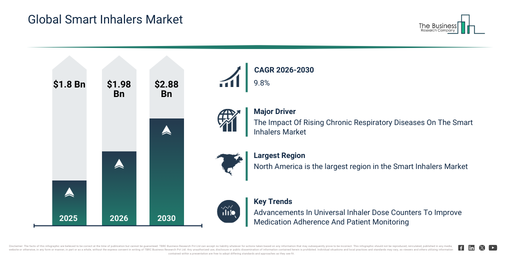
    The smart inhalers market has experienced substantial expansion in recent years. Its valuation is set to increase from $1.8 billion in 2025 to $1.98 billion in 2026, at a compound annual growth rate (CAGR) of 9.7%. This past growth can be attributed to several factors such as a rise in asthma prevalence, low medication adherence rates, an increase in respiratory diseases, enhancements in inhaler technology, and growing awareness of digital health.

    The smart inhalers market is projected to experience substantial expansion in the coming years, reaching a valuation of $2.88 billion by 2030, demonstrating a compound annual growth rate (CAGR) of 9.8%. This anticipated growth during the forecast period is primarily driven by factors such as the rise of remote patient monitoring, the broader adoption of value-based care, increased reliance on smartphone health applications, successful regulatory approvals, and a concentrated effort on pediatric asthma management. Key trends anticipated within this period encompass the incorporation of usage tracking sensors, the proliferation of app-connected inhalers, the development of more comprehensive asthma management platforms, the implementation of real-time adherence alerts, and enhanced support from payers.

    Get A Free Sample Report With In-Depth Market Insights:

    https://thebusinessresearchcompany.com/sample_request?id=24793615&type=smp&name=Smart%20Inhalers%20Market%20Report%202026&utm_source=Blogs&utm_medium=Paid&utm_campaign=Nov_PR

    Smart Inhalers Market Growth Backed By Core Demand Fundamentals

    The increasing occurrence of chronic respiratory diseases (CRDs) is expected to stimulate the expansion of the smart inhaler market going forward. Chronic respiratory diseases (CRDs) encompass a range of persistent conditions that affect the airways and other structures of the lungs. Smart inhalers aid in the management of chronic respiratory diseases such as asthma and COPD by tracking usage and providing reminders for missed doses, thereby ensuring consistent medication use for symptom control and prevention of exacerbations. The rising prevalence of chronic respiratory diseases (CRDs) is a significant driver for the growth of the smart inhaler market.

    Smart Inhalers Market Segment Outlook: Which Categories Are Growing Fastest?

    The smart inhalers market covered in this report is segmented –

    1) By Type: Dry Powdered Inhalers (DPIs), Metered Dose Inhalers (MDIs)

    2) By Indication: Asthma, Chronic Obstructive Pulmonary Disease (COPD), Other Indications

    3) By Distribution Channel: Hospital Pharmacies, Retail Pharmacies, Online Pharmacies

    4) By End-User: Hospitals, Homecare Settings, Other End-Users

    Subsegments:

    1) By Dry Powdered Inhalers (DPIs): Single-Dose DPIs, Multi-Dose DPIs

    2) By Metered Dose Inhalers (MDIs): Digitally Enabled MDIs, Smart MDIs With Connectivity Features

    #Smart Inhalers Market Growth Trends: What’s Shaping The Future Outlook?

    Leading companies in the smart inhaler market are prioritizing the creation of technological advancements, such as universal dose counters and connected inhaler systems, to elevate medication adherence, enhance usability, and improve patient monitoring. Universal dose counters represent devices designed to attach to various inhaler types, accurately recording the number of doses administered, thus enhancing both medication adherence and monitoring capabilities.

    Smart Inhalers Market Leading Companies And Competitive Benchmarking

    Major companies operating in the smart inhalers market are Novartis AG, AstraZeneca Plc, GlaxoSmithKline Plc, Boehringer Ingelheim International GmbH, Teva Pharmaceutical Industries Ltd., Lupin Limited, Aptar Group Inc., Nemera France SAS, Vectura Group Limited, Propeller Health, Findair Sp.z o.o., Biocorp Production, Cohero Health Inc., Pneuma Respiratory Inc., Amiko Digital Health Limited, AireHealth Inc., Adherium Ltd., Zeolr Technologies Pvt Ltd., H&T Presspart Manufacturing Ltd., Cognita Labs LLC, Teva Respiratory LLC, AstraZeneca Respiratory Devices

    View The Full Smart Inhalers Market Report:

    https://thebusinessresearchcompany.com/report/smart-inhalers-global-market-report?utm_source=Blogs&utm_medium=Paid&utm_campaign=Nov_PR

    Smart Inhalers Market Regional Split: Which Areas Are Fueling Growth?

    North America was the largest region in the smart inhalers market in 2025. The regions covered in the smart inhalers market report are Asia-Pacific, South East Asia, Western Europe, Eastern Europe, North America, South America, Middle East, Africa.

    Reach Out To Our Team:

    The Business Research Company: https://www.thebusinessresearchcompany.com/

    Americas: +1 310-496-7795

    Asia: +44 7882 955267 & +91 8897263534

    Europe: +44 7882 955267

    Email us at: marketing@tbrc.info

    Follow us on:

    LinkedIn: https://in.linkedin.com/company/the-business-research-company

    YouTube: https://www.youtube.com/channel/UC24_fI0rV8cR5DxlCpgmyFQ

    Global Market Model: https://www.thebusinessresearchcompany.com/global-market-model
  • Smart Hospital Wayfinding Robot Market Growth In 2026: Market Size, Key Drivers And Future Outlook

    Smart Hospital Wayfinding Robot Market Growth In 2026: Market Size, Key Drivers And Future Outlook

    Featuring market attractiveness scoring, total addressable market sizing, company benchmarking matrices, interactive Excel dashboards, deeper supply chain intelligence, emerging startup tracking, and granular product-level insights, The Business Research Company’s 2026 market reports are built to deliver research that is both more actionable and more strategically valuable.

    Smart Hospital Wayfinding Robot Market Size And Revenue Outlook Through 2030

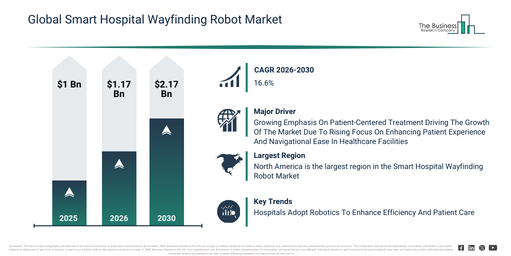
    The smart hospital wayfinding robot market size has experienced significant expansion in recent years. It is anticipated to increase from $1 billion in 2025 to $1.17 billion in 2026, registering a compound annual growth rate (CAGR) of 16.9%. Historically, this growth can be attributed to the increasing complexity of hospital layouts, a rising volume of patient footfall in large healthcare facilities, the adoption of service robots in hospitals, a growing demand for operational efficiency, and improvements in indoor navigation technologies.

    The smart hospital wayfinding robot market is projected for significant expansion, with its size expected to reach $2.17 billion by 2030, growing at a compound annual rate of 16.6%. This anticipated growth is primarily fueled by increasing investments in smart hospital infrastructure, a rising demand for contactless patient services, the expansion of digital tools for patient engagement, the growing application of robotics in healthcare operations, and advancements in indoor positioning technologies. Key trends during this forecast period include the expanding deployment of autonomous navigation robots, the increasing adoption of AI-driven wayfinding systems, deeper integration with hospital information systems, the proliferation of voice-enabled patient assistance, and a stronger focus on enhancing patient experience optimization.

    Get A Free Sample Report With In-Depth Market Insights:

    https://thebusinessresearchcompany.com/sample_request?id=77017175&type=smp&name=Smart%20Hospital%20Wayfinding%20Robot%20Market%20Report%202026&utm_source=Blogs&utm_medium=Paid&utm_campaign=Nov_PR

    Smart Hospital Wayfinding Robot Market Growth Catalysts And Demand Drivers

    A growing focus on patient-centered treatment is anticipated to drive expansion in the smart hospital wayfinding robot market going forward. This healthcare approach prioritizes the individual needs, preferences, and values of patients throughout their care process. The rise in patient-centered treatment stems from enhanced patient empowerment, as better access to information allows individuals to actively participate in decisions about their care. Smart hospital wayfinding robots support patient-centered treatment by mitigating stress and confusion often encountered when navigating complex hospital environments, thereby enabling patients to concentrate more on their care and well-being. The expanding emphasis on patient-centered treatment is fueling the growth of the smart hospital wayfinding robot market.

    Smart Hospital Wayfinding Robot Market Segment Landscape: Which Areas Lead Development?

    The smart hospital wayfinding robot market covered in this report is segmented –

    1) By Component: Hardware, Software, Services

    2) By Technology: Artificial Intelligence-Based, Sensor-Based, Radio Frequency Identification, Other Technologies

    3) By Application: Patient Navigation, Visitor Assistance, Asset Tracking, Emergency Response, Other Applications

    4) By End-User: Hospitals, Clinics, Specialty Centers, Other End-Users

    Subsegments:

    1) By Hardware: Display Screens, Sensors, Wheels And Motors, Cameras, Battery Systems

    2) By Software: Navigation Management, Voice Recognition, Mapping And Localization, User Interface, Data Analytics

    3) By Services: Installation Services, Maintenance Services, Training Services, Technical Support, Software Updates

    Smart Hospital Wayfinding Robot Market Industry Trends: What’s Reshaping Demand?

    Major companies operating in the smart hospital wayfinding robot market are prioritizing advanced innovations, such as medicine delivery robots, to boost operational effectiveness, alleviate staff workload, enhance patient care, and optimize medication distribution within healthcare facilities. Medicine delivery robots are autonomous systems designed to transport medications within hospitals, thereby improving efficiency, reducing personnel workload, and ensuring timely delivery to patient care areas.

    Smart Hospital Wayfinding Robot Market Industry Leaders And Competitive Landscape

    Major companies operating in the smart hospital wayfinding robot market are LG Electronics Inc., Panasonic Corporation, Singapore Technologies Engineering Ltd., Keenon Robotics Co. Ltd., Changi General Hospital Pte Ltd., UBTech Robotics Corp., SoftBank Robotics Group Corp., CenTrak Inc., Yujin Robot Co. Ltd., Pudu Robotics Co. Ltd., OrionStar Technology Co. Ltd., Pointr Ltd., Ateago Technology Co. Ltd., Bivocom Co. Ltd., PAL Robotics S.L., Robotlab Ltd., Botzee Inc., RIFE TECHNOLOGIES, PredictML Inc., iHub Robotics.

    View The Full Smart Hospital Wayfinding Robot Market Report:

    https://thebusinessresearchcompany.com/report/smart-hospital-wayfinding-robot-global-market-report?utm_source=Blogs&utm_medium=Paid&utm_campaign=Nov_PR

    Smart Hospital Wayfinding Robot Market Top Region: Where Does Most Revenue Come From?

    North America was the largest region in the smart hospital wayfinding robot market in 2025. Asia-Pacific is expected to be the fastest-growing region in the forecast period. The regions covered in the smart hospital wayfinding robot market report are Asia-Pacific, South East Asia, Western Europe, Eastern Europe, North America, South America, Middle East, Africa.

    Reach Out To Our Team:

    The Business Research Company: https://www.thebusinessresearchcompany.com/

    Americas: +1 310-496-7795

    Asia: +44 7882 955267 & +91 8897263534

    Europe: +44 7882 955267

    Email us at: marketing@tbrc.info

    Follow us on:

    LinkedIn: https://in.linkedin.com/company/the-business-research-company

    YouTube: https://www.youtube.com/channel/UC24_fI0rV8cR5DxlCpgmyFQ

    Global Market Model: https://www.thebusinessresearchcompany.com/global-market-model