Author: Marketing Posting

  • Small Lymphocytic Lymphoma Market Set To Expand From $3.95 Billion In 2026: Growth Outlook Through 2030

    Small Lymphocytic Lymphoma Market Set To Expand From $3.95 Billion In 2026: Growth Outlook Through 2030

    Backed by market attractiveness analysis, total addressable market sizing, company benchmarking matrices, interactive Excel dashboards, wider supply chain intelligence, emerging startup coverage, and detailed product-level insights, The Business Research Company’s 2026 market reports are designed to offer research that is more actionable and strategically valuable than ever.

    Small Lymphocytic Lymphoma Market CAGR Outlook And Future Development

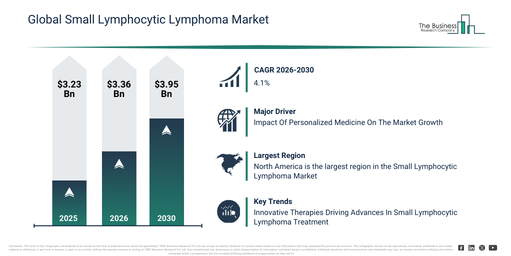
    The small lymphocytic lymphoma market has seen consistent growth in recent years. Its value is projected to increase from $3.23 billion in 2025 to $3.36 billion in 2026, achieving a compound annual growth rate (CAGR) of 4.1%. Historically, this growth has been fueled by developments in hematology research, a rise in cancer awareness, enhanced diagnostic precision, the expansion of oncology centers, and the availability of chemotherapy agents.

    The market for small lymphocytic lymphoma is forecast to show consistent expansion over the upcoming years. It is predicted to reach a value of $3.95 billion by 2030, advancing at a compound annual growth rate (CAGR) of 4.1%. This anticipated growth is driven by factors such as an increase in approvals for targeted drugs, the wider availability of companion diagnostics, an aging global population, better survival rates, and increased spending in oncology healthcare. Prominent trends expected in this timeframe include the growing adoption of targeted therapies, a move towards oral oncology drugs, enhancements in molecular diagnostics, the expansion of combination therapies, and an increase in clinical trial activities.

    Get A Free Sample Report With In-Depth Market Insights:

    https://thebusinessresearchcompany.com/sample_request?id=45224679&type=smp&name=Small%20Lymphocytic%20Lymphoma%20Market%20Report%202026&utm_source=Blogs&utm_medium=Paid&utm_campaign=Nov_PR

    Small Lymphocytic Lymphoma Market Growth Backed By Core Demand Fundamentals

    The small lymphocytic lymphoma market is expected to experience growth driven by the increasing prevalence of personalized medicine. This medical approach involves tailoring treatments and healthcare decisions based on an individual’s distinct genetic, environmental, and lifestyle attributes. Advancements in genomics, biotechnology, and data analytics are propelling the expansion of personalized medicine, facilitating more precise, effective, and individualized therapies. Small lymphocytic lymphoma (SLL) contributes to this progress by offering insights into specific genetic mutations and biomarkers, which enables the development of targeted treatments and customized strategies. The advancement of personalized medicine will fuel the growth of the small lymphocytic lymphoma market.

    Small Lymphocytic Lymphoma Market Segmentation And Category Overview

    The small lymphocytic lymphoma market covered in this report is segmented –

    1) By Product: Capsules, Tablets, Injections, Other Products

    2) By Route of Administration: Oral, Parenteral, Other Route of Administrations

    3) By Treatment: Chemotherapy, Targeted Therapy, Stem Cell Transplant, Monoclonal antibody therapy, Other Treatments

    4) By Distribution Channel: Hospital Pharmacy, Retail Pharmacy, Online Pharmacy, Other Distribution Channels

    5) By End-Users: Hospitals, Specialty Clinics, Homecare, Other End Users

    Subsegments:

    1) By Capsules: Oral Chemotherapy Capsules, Targeted Therapy Capsules, Immunomodulatory Capsules

    2) By Tablets: Oral Chemotherapy Tablets, Targeted Therapy Tablets, Immunotherapy Tablets

    3) By Injections: Chemotherapy Injections, Monoclonal Antibody Injections, Immunotherapy Injections, Biologic Injections

    4) By Other Products: Oral Targeted Combination Therapies, Infusion Therapies, Biosimilars For SLL, CAR-T Cell Therapies

    #Small Lymphocytic Lymphoma Market Growth Trends: What’s Shaping The Future Outlook?

    Major companies active in the small lymphocytic lymphoma market are developing innovative products, such as non-covalent BTK inhibitors, to enhance treatment efficacy, overcome resistance to existing therapies, and improve patient outcomes. Non-covalent BTK inhibitors represent a class of drugs that reversibly bind to the Bruton’s tyrosine kinase (BTK) enzyme, specifically targeting B-cell malignancies while reducing resistance and adverse effects commonly associated with covalent inhibitors.

    Small Lymphocytic Lymphoma Market Competitive Analysis Of Leading Industry Participants

    Major companies operating in the small lymphocytic lymphoma market are Pfizer Inc., Johnson & Johnson, AbbVie Inc., Sanofi S.A., Bristol-Myers Squibb Company, AstraZeneca PLC, Eli Lilly and Company, Gilead Sciences Inc., Amgen Inc., Regeneron Pharmaceuticals, Incyte Corporation, Exelixis Inc., Kite Pharma Inc., Spectrum Pharmaceuticals Inc., Aptose Biosciences Inc., Secura Bio Inc., Infinity Pharmaceuticals Inc., TG Therapeutics Inc., Roche Holding AG, Novartis AG, BeiGene Ltd., Merck & Co. Inc., Takeda Pharmaceutical Company Limited

    View The Full Small Lymphocytic Lymphoma Market Report:

    https://thebusinessresearchcompany.com/report/small-lymphocytic-lymphoma-global-market-report?utm_source=Blogs&utm_medium=Paid&utm_campaign=Nov_PR

    Small Lymphocytic Lymphoma Market Top Region: Where Does Most Revenue Come From?

    North America was the largest region in the small lymphocytic lymphoma market in 2025. Asia-Pacific is expected to be the fastest-growing region in the forecast period. The regions covered in the small lymphocytic lymphoma market report are Asia-Pacific, South East Asia, Western Europe, Eastern Europe, North America, South America, Middle East, Africa.

    Reach Out To Our Team:

    The Business Research Company: https://www.thebusinessresearchcompany.com/

    Americas: +1 310-496-7795

    Asia: +44 7882 955267 & +91 8897263534

    Europe: +44 7882 955267

    Email us at: marketing@tbrc.info

    Follow us on:

    LinkedIn: https://in.linkedin.com/company/the-business-research-company

    YouTube: https://www.youtube.com/channel/UC24_fI0rV8cR5DxlCpgmyFQ

    Global Market Model: https://www.thebusinessresearchcompany.com/global-market-model
  • Slip Disc Market Size And Growth In 2026: Key Factors Shaping Future Demand

    Slip Disc Market Size And Growth In 2026: Key Factors Shaping Future Demand

    Featuring market attractiveness scoring, total addressable market sizing, company benchmarking matrices, interactive Excel dashboards, deeper supply chain intelligence, emerging startup tracking, and granular product-level insights, The Business Research Company’s 2026 market reports are built to deliver research that is both more actionable and more strategically valuable.

    Slip Disc Market Set To Climb From $9.72 Billion In 2026 To $12.53 Billion By 2030

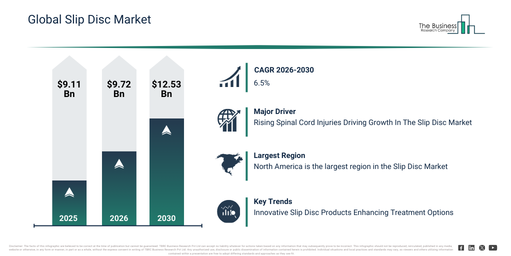
    The slip disc market has experienced substantial expansion recently. Forecasts indicate a rise from $9.11 billion in 2025 to $9.72 billion in 2026, demonstrating a compound annual growth rate (CAGR) of 6.7%. Historically, this expansion has been driven by factors such as sedentary lifestyles, back injuries linked to the workplace, advancements in diagnostic imaging, increasing orthopedic awareness, and the growth of urban populations.

    The slip disc market is projected to experience substantial growth in the upcoming years. It is forecast to expand to $12.53 billion by 2030, demonstrating a compound annual growth rate (CAGR) of 6.5%. This anticipated growth during the forecast period is primarily driven by advancements in minimally invasive techniques, an increasing geriatric population, improved healthcare access, the expansion of physiotherapy services, and innovations in spinal implants. Significant trends expected in this period include the rising popularity of non-surgical treatments, greater utilization of spinal injections, the adoption of robotic-assisted spine surgery, the expansion of outpatient spine centers, and a growing demand for pain management therapies.

    Get A Free Sample Report With In-Depth Market Insights:

    https://thebusinessresearchcompany.com/sample_request?id=58818762&type=smp&name=Slip%20Disc%20Market%20Report%202026&utm_source=Blogs&utm_medium=Paid&utm_campaign=Nov_PR

    Slip Disc Market Growth Catalysts And Demand Drivers

    An anticipated rise in spinal cord injuries is projected to stimulate the expansion of the slip disc market in the coming years. Spinal cord injuries are defined as damage to the spinal cord, leading to a loss of function, such as mobility or feeling, which frequently results in conditions like slipped disks. The incidence of spinal cord injuries is increasing due to a higher number of motor vehicle accidents, sports injuries, and falls. As more individuals experience spinal cord injuries, the requirement for treatments and interventions for slipped disks consequently rises. The growing number of spinal cord injuries is a significant driver for the growth of the slip disc market.

    Slip Disc Market Segment Outlook: Which Categories Are Growing Fastest?

    The slip disc market covered in this report is segmented –

    1) By Type: Thoracic Herniated Discs, Lumbar Herniated Disc, Cervical Herniated Discs

    2) By Diagnosis: Physical Examination, Nerve Conduction Test, Imaging Tests

    3) By Medications: Therapy, Surgery

    4) By Application: Hospital Use, Clinic Use, Homecare Support, Other Applications

    Subsegments:

    1) By Thoracic Herniated Discs: Central Herniation, Paracentral Herniation, Foraminal Herniation

    2) By Lumbar Herniated Discs: L4-L5 Disc Herniation, L5-S1 Disc Herniation, L3-L4 Disc Herniation, Other Lumbar Disc Herniations

    3) By Cervical Herniated Discs: C5-C6 Disc Herniation, C6-C7 Disc Herniation, C4-C5 Disc Herniation, Other Cervical Disc Herniations

    Slip Disc Market Industry Trends: What’s Reshaping Demand?

    Major companies in the slip disc market are concentrating on creating innovative products, such as biologic patches, to advance treatment options and improve patient outcomes. A biologic patch is a regenerative tissue scaffold designed to promote healing and repair of damaged intervertebral discs using biological materials and growth factors.

    Slip Disc Market Leading Companies And Competitive Benchmarking

    Major companies operating in the slip disc market are Medacta International SA, Medtronic plc, Stryker Corporation, DePuy Synthes Companies, Zimmer Biomet Holdings Inc, Smith & Nephew plc, NuVasive Inc, Globus Medical Inc, Orthofix Medical Inc, Accuray Incorporated, Corin Group, Precision Spine Care, BioSpine Institute, Vertebral Technologies Inc, Captiva Spine Inc, Aesculap Implant Systems, K2M Inc, SpineCraft Inc, Simplify Medical, Alphatec Spine Inc, Spineology Inc, Medicrea International

    View The Full Slip Disc Market Report:

    https://thebusinessresearchcompany.com/report/slip-disc-global-market-report?utm_source=Blogs&utm_medium=Paid&utm_campaign=Nov_PR

    Slip Disc Market Regional Breakdown: Where Is Demand Concentrated?

    North America was the largest region in the slipped disc market in 2025. The regions covered in the slip disc market report are Asia-Pacific, South East Asia, Western Europe, Eastern Europe, North America, South America, Middle East, Africa.

    Reach Out To Our Team:

    The Business Research Company: https://www.thebusinessresearchcompany.com/

    Americas: +1 310-496-7795

    Asia: +44 7882 955267 & +91 8897263534

    Europe: +44 7882 955267

    Email us at: marketing@tbrc.info

    Follow us on:

    LinkedIn: https://in.linkedin.com/company/the-business-research-company

    YouTube: https://www.youtube.com/channel/UC24_fI0rV8cR5DxlCpgmyFQ

    Global Market Model: https://www.thebusinessresearchcompany.com/global-market-model
  • Sleeping Aids Market Forecast 2026–2030: Market Size, Trends And Growth Opportunities

    Sleeping Aids Market Forecast 2026–2030: Market Size, Trends And Growth Opportunities

    Built to provide research that’s more actionable and strategically valuable, The Business Research Company’s 2026 market reports include market attractiveness analysis, total addressable market sizing, company benchmarking matrices, interactive Excel dashboards, broader supply chain intelligence, emerging startup tracking, and in-depth product insights.

    Sleeping Aids Market Forecast: Value Set To Climb From $102.13 Billion To $137.07 Billion

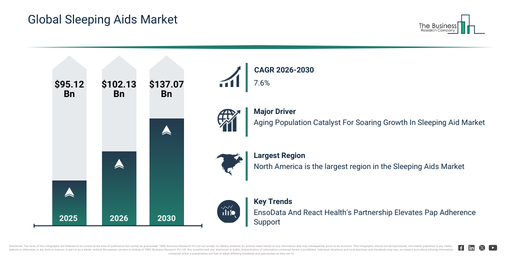
    The sleeping aids market has experienced robust expansion over recent years. It is projected to increase from $95.12 billion in 2025 to $102.13 billion in 2026, exhibiting a compound annual growth rate (CAGR) of 7.4%. The upward trend observed historically can be linked to factors such as an increase in insomnia prevalence, elevated work-related stress, evolving urban lifestyle patterns, the expanded availability of over-the-counter (OTC) drugs, and public awareness campaigns addressing sleep disorders.

    The sleeping aids market is projected to experience substantial expansion over the upcoming years. This market is forecast to reach $137.07 billion by 2030, exhibiting a compound annual growth rate (CAGR) of 7.6%. Key factors contributing to this anticipated growth include an aging population, the proliferation of wearable sleep technology, increased acceptance of digital therapeutics, higher rates of diagnosis, and advancements in natural sleep aid products. Significant trends expected during this period involve a greater uptake of over-the-counter sleep supplements, the incorporation of AI-driven sleep monitoring, the development of non-addictive formulations, growing interest in at-home sleep treatment, and the broadening reach of online pharmacies.

    Get A Free Sample Report With In-Depth Market Insights:

    https://thebusinessresearchcompany.com/sample_request?id=77230768&type=smp&name=Sleeping%20Aids%20Market%20Report%202026&utm_source=Blogs&utm_medium=Paid&utm_campaign=Nov_PR

    Sleeping Aids Market Opportunity Drivers: What’s Unlocking New Revenue Potential?

    The expanding worldwide elderly demographic is anticipated to stimulate future expansion in the sleeping aid market. An aging population refers to demographic changes where a greater proportion of individuals are older. As various age-related factors contribute to sleep disorders and disruptions, there’s a rising demand for sleep solutions, making the elderly population a primary driver for sleeping aids. The growing global aging population is fueling the expansion of the sleeping aid market.

    Sleeping Aids Market Segment Landscape: Which Areas Lead Development?

    The sleeping aids market covered in this report is segmented –

    1) By Product: Mattresses And Pillows, Sleep Laboratories, Medications, Prescription-Based Drugs, OTC Drugs, Herbal Drugs, Sleep Apnea Devices

    2) By Indication: Insomnia, Sleep Deprivation, Narcolepsy, Sleep Apnea, Other Indications

    3) By Distribution Channel: Hospital Pharmacies, Retail Pharmacies, E-Commerce, Drug Stores, Other Distribution Channels

    Subsegments:

    1) By Mattresses And Pillows: Memory Foam Mattresses, Latex Mattresses, Airbed Mattresses, Waterbed Mattresses, Cervical Pillows, Contoured Pillows

    2) By Sleep Laboratories: Sleep Disorder Diagnostic Services, Polysomnography, Home Sleep Testing Services

    3) By Medications: Prescription-Based Drugs, Over-The-counter (OTC) Drugs, Herbal And Natural Remedies

    4) By Prescription-Based Drugs: Benzodiazepines, Non-Benzodiazepines, Antidepressants, Antihistamines

    5) By OTC Drugs: Antihistamines (Diphenhydramine, Doxylamine), Melatonin Supplements, Herbal Sleep Aids

    6) By Herbal Drugs: Valerian Root, Chamomile, Lavender, Passionflower, Lemon Balm

    7) By Sleep Apnea Devices: Continuous Positive Airway Pressure (CPAP) Devices, Bi-level Positive Airway Pressure (BiPAP) Devices, Adaptive Servo-Ventilation (ASV) Devices, Oral Appliances, Masks

    Sleeping Aids Market Innovation Trends: What Developments Are Reshaping The Industry?

    Leading companies in the manufacturing of sleeping aids are concentrating on strategic collaborations with major manufacturing firms to solidify their market position. Such strategic alliances empower businesses to form partnerships with other entities that possess the necessary expertise to transform their conceptual ideas into concrete realities.

    Sleeping Aids Market Industry Leaders And Competitive Landscape

    Major companies operating in the sleeping aids market are Cadwell Industries Inc., Compumedics Limited, DeVilbiss Healthcare Pvt. Ltd., Natus Medical Incorporated, Sleepmed Inc., ResMed Inc., Fisher & Paykel Healthcare Corporation Limited, Braebon Medical Corporation, Löwenstein Medical GmbH & Co. KG, Koninklijke Philips N.V., Apnea Sciences Corp., BMC Medical Co. Ltd., Cleveland Medical Devices Inc., Serta Simmons Bedding LLC, Tempur Sealy International Inc., Sleep Number Corporation, Casper Sleep Inc., Purple Innovation Inc., Leesa Sleep LLC, Lowenstein Medical

    View The Full Sleeping Aids Market Report:

    https://thebusinessresearchcompany.com/report/sleeping-aids-global-market-report?utm_source=Blogs&utm_medium=Paid&utm_campaign=Nov_PR

    Sleeping Aids Market Geographic Landscape: Which Region Leads Industry Growth?

    North America was the largest region in the sleeping aids market in 2025. Asia-Pacific is expected to be the fastest-growing region in the forecast period. The regions covered in the sleeping aids market report are Asia-Pacific, South East Asia, Western Europe, Eastern Europe, North America, South America, Middle East, Africa.

    Reach Out To Our Team:

    The Business Research Company: https://www.thebusinessresearchcompany.com/

    Americas: +1 310-496-7795

    Asia: +44 7882 955267 & +91 8897263534

    Europe: +44 7882 955267

    Email us at: marketing@tbrc.info

    Follow us on:

    LinkedIn: https://in.linkedin.com/company/the-business-research-company

    YouTube: https://www.youtube.com/channel/UC24_fI0rV8cR5DxlCpgmyFQ

    Global Market Model: https://www.thebusinessresearchcompany.com/global-market-model
  • Sleep Testing Services Market Size Reaches $9.15 Billion In 2026: What Is Driving Growth?

    Sleep Testing Services Market Size Reaches $9.15 Billion In 2026: What Is Driving Growth?

    Backed by market attractiveness analysis, total addressable market sizing, company benchmarking matrices, interactive Excel dashboards, wider supply chain intelligence, emerging startup coverage, and detailed product-level insights, The Business Research Company’s 2026 market reports are designed to offer research that is more actionable and strategically valuable than ever.

    Sleep Testing Services Market Revenue Growth On Track For A 9.9% CAGR Through 2030

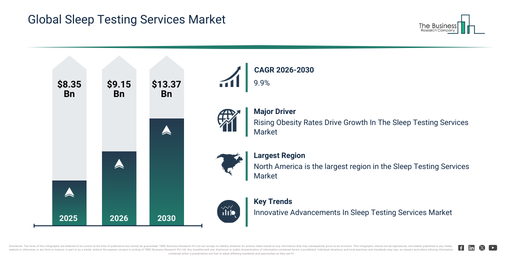
    The sleep testing services market has experienced significant growth in recent years. It is anticipated to expand from $8.35 billion in 2025 to $9.15 billion in 2026, progressing at a compound annual growth rate (CAGR) of 9.6%. Historically, this market’s expansion can be attributed to factors like restricted patient awareness, a reliance on in-lab sleep studies, the rising occurrence of sleep disorders, the early adoption of home testing services, and insufficient insurance coverage.

    The sleep testing services market size is projected to undergo significant expansion over the coming years. It is forecast to achieve a valuation of $13.37 billion by 2030, progressing at a compound annual growth rate (CAGR) of 9.9%. This anticipated growth throughout the forecast period stems from the increasing adoption of remote and telehealth sleep testing methods, the integration of AI-driven sleep analysis, the widening availability of home sleep care programs, growing insurance reimbursement, and the rise of cloud-based sleep data management. Prominent trends for the forecast duration involve the embrace of remote patient monitoring, an increase in home sleep test kits, a growing integration with AI analytics, the development of personalized sleep care programs, and a greater reliance on cloud-based data management for sleep tests.

    Get A Free Sample Report With In-Depth Market Insights:

    https://thebusinessresearchcompany.com/sample_request?id=90219754&type=smp&name=Sleep%20Testing%20Services%20Market%20Report%202026&utm_source=Blogs&utm_medium=Paid&utm_campaign=Nov_PR

    Sleep Testing Services Market Growth Momentum: What Factors Are Shaping Demand?

    The escalating prevalence of obesity is anticipated to drive the expansion of the sleep testing services market. Obesity is defined as a medical condition where excessive body fat accumulates, potentially causing harm to one’s health. It serves as a significant risk factor for both the emergence and worsening of obstructive sleep apnea. Having too much weight can lead to a constriction of the airways during sleep, resulting in instances where breathing temporarily stops. The rising obesity rates are stimulating demand in the sleep testing services market.

    Sleep Testing Services Market Segments: Where Is Growth Concentrated?

    The sleep testing services market covered in this report is segmented –

    1) By Diagnostic Type: Home Sleep Testing, In-Lab Sleep Testing

    2) By Application: Obstructive Sleep Apnea, Insomnia, Rapid Eye Movement (REM) Sleep Disorder, Restless Legs Syndrome, Narcolepsy, Circadian Rhythm Sleeping Disorders

    3) By End-User: Sleep Centers, Hospitals, Home Care Settings

    Subsegments:

    1) By Home Sleep Testing: Portable Monitors, Oximetry Testing, Full-Body Sleep Monitors

    2) By In-Lab Sleep Testing: Polysomnography (PSG), Multiple Sleep Latency Test (MSLT), Maintenance Of Wakefulness Test (MWT)

    Sleep Testing Services Market Trends: What’s Defining The Industry’s Next Phase?

    Leading companies in the sleep testing services market are concentrating on technological advancements in their new offerings, such as a contactless and privacy-centric sleep quality solution, to uphold their market presence. A contactless and privacy-centric sleep quality solution refers to a system or technology designed to evaluate and improve an individual’s sleep quality without requiring physical contact and with a strong emphasis on user privacy protection. The announcement primarily concerns the launch of a new technology for sleep quality measurement and improvement.

    Sleep Testing Services Market Key Participants And Competitive Landscape

    Major companies operating in the sleep testing services market are ResMed Inc., Natus Medical Incorporated, SleepMed Incorporated, Midwest Sleep Services Inc., Koala Centers For Sleep & TMJ Disorders, Sleep Dynamics, Advara HeartCare, St. Luke’s Sleep Medicine and Research Center, SOVA Sleep Services Inc., Total Sleep Solutions OPC Private Limited, Atrium Health Group LLC, HomeSleep LLC, SleepWorks LLC, Healthy Sleep Solutions, Sleep Data Holdings LLC, Sleep Solutions Inc, ApneaMed, BetterNight, UAB Medicine Sleep/Wake Disorders Center, Sleepwell Diagnostics, Snore Australia Pty Ltd

    View The Full Sleep Testing Services Market Report:

    https://thebusinessresearchcompany.com/report/sleep-testing-services-global-market-report?utm_source=Blogs&utm_medium=Paid&utm_campaign=Nov_PR

    Sleep Testing Services Market Largest Region: Which Geography Holds The Biggest Share?

    North America was the largest region in the sleep testing services market in 2025. Europe is expected to be the fastest-growing region in the forecast period. The regions covered in the sleep testing services market report are Asia-Pacific, South East Asia, Western Europe, Eastern Europe, North America, South America, Middle East, Africa.

    Reach Out To Our Team:

    The Business Research Company: https://www.thebusinessresearchcompany.com/

    Americas: +1 310-496-7795

    Asia: +44 7882 955267 & +91 8897263534

    Europe: +44 7882 955267

    Email us at: marketing@tbrc.info

    Follow us on:

    LinkedIn: https://in.linkedin.com/company/the-business-research-company

    YouTube: https://www.youtube.com/channel/UC24_fI0rV8cR5DxlCpgmyFQ

    Global Market Model: https://www.thebusinessresearchcompany.com/global-market-model
  • Sleep Studies Market Valued At $9.55 Billion In 2026: Key Trends And Growth Drivers

    Sleep Studies Market Valued At $9.55 Billion In 2026: Key Trends And Growth Drivers

    Featuring market attractiveness scoring, total addressable market sizing, company benchmarking matrices, interactive Excel dashboards, deeper supply chain intelligence, emerging startup tracking, and granular product-level insights, The Business Research Company’s 2026 market reports are built to deliver research that is both more actionable and more strategically valuable.

    Sleep Studies Market Value Growth And Long-Term Outlook

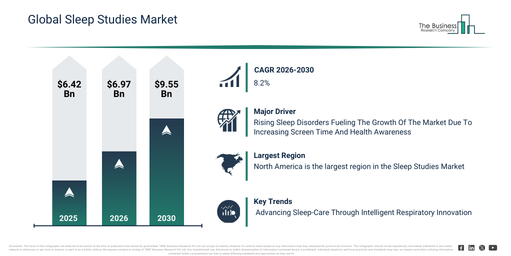
    The sleep studies market size has demonstrated robust growth in recent years. It is projected to expand from $6.42 billion in 2025 to $6.97 billion in 2026, with a compound annual growth rate (CAGR) of 8.5%. The growth observed in the historic period can be linked to rising awareness of sleep disorders, the expansion of sleep clinics and diagnostic centers, an increased diagnosis of obstructive sleep apnea, a growing geriatric population, and the availability of advanced sleep monitoring devices.

    The sleep studies market is projected to experience substantial growth in the coming years, with its size anticipated to reach $9.55 billion by 2030, expanding at a compound annual growth rate (CAGR) of 8.2%. This growth over the forecast period is primarily driven by factors such as the increasing demand for remote diagnostics, the rising integration of AI-based sleep analytics, the expansion of home-based healthcare services, a growing focus on personalized sleep therapy, and increased investments in digital health diagnostics. Concurrently, major trends expected during this period include the increasing adoption of home sleep testing devices, the rising use of wireless and wearable sleep monitoring systems, the growing integration of multi-parameter diagnostic platforms, the expansion of remote sleep disorder diagnosis services, and an enhanced focus on patient-centric sleep assessments.

    Get A Free Sample Report With In-Depth Market Insights:

    https://thebusinessresearchcompany.com/sample_request?id=21110993&type=smp&name=Sleep%20Studies%20Market%20Report%202026&utm_source=Blogs&utm_medium=Paid&utm_campaign=Nov_PR

    Sleep Studies Market Expansion Drivers: What’s Shaping Future Growth?

    The increasing prevalence of sleep disorders is projected to fuel the expansion of the sleep studies market moving forward. Sleep disorders are health conditions that interfere with a person’s typical sleep patterns, resulting in challenges with initiating sleep, maintaining it, or achieving restful sleep. The surge in sleep disorders is largely attributable to increased screen time, which disrupts the body’s natural sleep-wake cycle by inhibiting melatonin production. Sleep studies aid in diagnosing sleep disorders by observing brain activity, breathing, and body movements, offering vital information for accurate treatment and management. The rising prevalence of sleep disorders is driving the growth of the sleep studies market.

    Sleep Studies Market Segment Analysis: What Are The Core Market Categories?

    The sleep studies market covered in this report is segmented –

    1) By Device Type: Polysomnography (PSG) Machines, Electroencephalography (EEG), Electrocardiography (EKG or ECG), Electromyogram (EMG), Respiratory Inductive Plethysmography (RIP) Belt, Breathing Sensors, Video And Audio Monitoring

    2) By Testing: Home Sleep Testing, In-Lab Testing

    3) By Indication: Obstructive Sleep Apnea, Insomnia, Restless Leg Syndrome, Circadian Rhythm Sleeping Disorders, Narcolepsy, Rapid Eye Movement (REM) Sleeping Disorders, Periodic Limb Movement Disorders, Bruxism, Other Indications

    4) By End-user: Hospitals, Clinics And Ambulatory Surgical Centers (ASCs), Sleep Testing Centres, Home Care Settings, Diagnostic Laboratories, Other End-users

    Subsegments:

    1) By Polysomnography (PSG) Machines: Type I PSG Systems, Type II PSG Systems, Type III PSG Systems, Type IV PSG Systems

    2) By Electroencephalography (EEG): Scalp EEG Devices, Ambulatory EEG Devices, Wireless EEG Devices, Dry Electrode EEG Systems

    3) By Electrocardiography (EKG Or ECG): Resting ECG Machines, Holter Monitors (Ambulatory ECG), Event Monitors, Mobile Or Portable ECG Devices, Wireless ECG Systems

    4) By Electromyogram (EMG): Needle EMG, Surface EMG, Wireless EMG Systems

    5) By Respiratory Inductive Plethysmography (RIP) Belt: Elastic RIP Belts, Non-elastic RIP Belts, Wireless RIP Belts

    6) By Breathing Sensors: Nasal Pressure Sensors, Thermistors Or Thermocouples, Capnography Sensors, Flow Sensors

    7) By Video and Audio Monitoring: Infrared Video Monitoring, Standard Video Monitoring, Audio Recording Devices, Combined Audio-Video Monitoring Systems

    Sleep Studies Market Industry Trends Fueling Future Revenue Growth

    Leading companies in the sleep study market are concentrating on innovations in care for sleep-disordered breathing, specifically through automatic breathing-stabilizer algorithms designed to offer real-time, adaptive support and improve outcomes for sleep apnea therapy. These algorithms are intelligent systems that continuously monitor each breath, automatically adjusting pressure to maintain stable ventilation when breathing is irregular or absent.

    Sleep Studies Market Top Companies Driving Competitive Growth

    Major companies operating in the sleep studies market are Koninklijke Philips NV, Itamar Medical Ltd, ResMed Inc, Cadwell Industries Inc, Singular Sleep LLC, SleepMed Inc, BMC Medical Co Ltd, BioSerenity Inc, Snap Diagnostics Inc, DeVilbiss Healthcare LLC, Omni Sleep Health, SOVA Health, Nihon Kohden Corporation, Natus Medical Incorporated, Compumedics Limited, SOMNOmedics GmbH, Neurosoft Ltd, Cleveland Medical Devices Inc, Advanced Brain Monitoring Inc, SOMNOmed Ltd, Vyaire Medical Inc, Masimo Corporation

    View The Full Sleep Studies Market Report:

    https://thebusinessresearchcompany.com/report/sleep-studies-global-market-report?utm_source=Blogs&utm_medium=Paid&utm_campaign=Nov_PR

    Sleep Studies Market Regional Analysis: Which Geography Leads On Revenue?

    North America was the largest region in the sleep studies market in 2025. Asia-Pacific is expected to be the fastest-growing region in the forecast period. The regions covered in the sleep studies market report are Asia-Pacific, South East Asia, Western Europe, Eastern Europe, North America, South America, Middle East, Africa.

    Reach Out To Our Team:

    The Business Research Company: https://www.thebusinessresearchcompany.com/

    Americas: +1 310-496-7795

    Asia: +44 7882 955267 & +91 8897263534

    Europe: +44 7882 955267

    Email us at: marketing@tbrc.info

    Follow us on:

    LinkedIn: https://in.linkedin.com/company/the-business-research-company

    YouTube: https://www.youtube.com/channel/UC24_fI0rV8cR5DxlCpgmyFQ

    Global Market Model: https://www.thebusinessresearchcompany.com/global-market-model
  • Sleep Apnea Diagnostic Systems Market Size In 2026: Growth Outlook And Forecast Through 2030

    Sleep Apnea Diagnostic Systems Market Size In 2026: Growth Outlook And Forecast Through 2030

    Built to provide research that’s more actionable and strategically valuable, The Business Research Company’s 2026 market reports include market attractiveness analysis, total addressable market sizing, company benchmarking matrices, interactive Excel dashboards, broader supply chain intelligence, emerging startup tracking, and in-depth product insights.

    Sleep Apnea Diagnostic Systems Market Poised To Hit $9.84 Billion By 2030 With A 7.7% CAGR

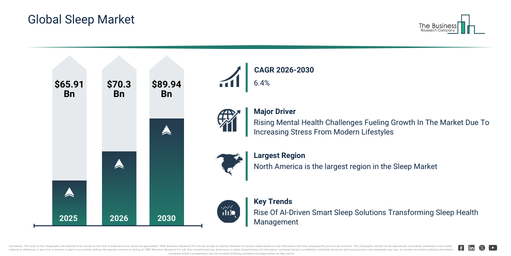
    The sleep apnea diagnostic systems market has experienced robust expansion in recent years. This market is anticipated to increase from $6.78 billion in 2025 to $7.32 billion in 2026, demonstrating a compound annual growth rate (CAGR) of 7.9%. Historically, this growth was driven by elements such as limited diagnostic awareness, the reliance on in-lab sleep studies, an increasing prevalence of obstructive sleep apnea, the adoption of traditional polysomnography, and escalating obesity rates.

    The sleep apnea diagnostic systems market is poised for significant expansion in the upcoming years. Its value is predicted to reach $9.84 billion by 2030, exhibiting a compound annual growth rate (CAGR) of 7.7%. This anticipated growth during the forecast period stems from factors such as the rise in home sleep apnea testing, the creation of AI-driven diagnostic algorithms, their incorporation into telehealth platforms, the wider availability of wearable sleep devices, and increased insurance coverage for sleep diagnostics. Prominent trends throughout this period involve the development of portable sleep monitoring devices, a greater embrace of home-based polysomnography, advancements in AI-assisted sleep analysis, integration with wearable health devices, and a growing call for patient-focused diagnostic solutions.

    Get A Free Sample Report With In-Depth Market Insights:

    https://thebusinessresearchcompany.com/sample_request?id=17098415&type=smp&name=Sleep%20Apnea%20Diagnostic%20Systems%20Market%20Report%202026&utm_source=Blogs&utm_medium=Paid&utm_campaign=Nov_PR

    Sleep Apnea Diagnostic Systems Market Development Factors: What’s Supporting Demand?

    The expanding elderly demographic is anticipated to drive the advancement of the sleep apnea diagnostic systems market. This demographic shift signifies an increase in the proportion of older individuals within the overall population, a result of extended life expectancy and declining birth rates. The rise in the aging population stems from a longer life expectancy, which is facilitated by improved healthcare and living standards, enabling more individuals to attain older ages. Sleep apnea diagnostic systems assist the elderly by identifying and tracking sleep apnea, a condition prevalent among older adults, thereby enhancing sleep quality, mitigating cardiovascular disease risks, and boosting general health and daily activities. The expanding aging population is a key factor propelling the growth of the sleep apnea diagnostic systems market.

    Sleep Apnea Diagnostic Systems Market Segment Breakdown: Which Categories Lead On Revenue?

    The sleep apnea diagnostic systems market covered in this report is segmented –

    1) By Product: Polysomnography Devices, Nasal Flow Sensors, Peripheral Capillary Oxygen Saturation, Actigraphy Monitoring Devices

    2) By Technology: Non-Invasive Technology, Wearable Technology, Diagnostic Software

    3) By End Users: Home Care Settings, Hospitals, Sleep Centers And Clinics

    Subsegments:

    1) By Polysomnography Devices: Full-Polysomnography Systems, Portable Polysomnography Devices, Wireless Polysomnography Devices

    2) By Nasal Flow Sensors: Single-Channel Nasal Flow Sensors, Multi-Channel Nasal Flow Sensors, Wireless Nasal Flow Sensors

    3) By Peripheral Capillary Oxygen Saturation (SpO2) Monitors: Finger Pulse Oximeters, Wrist Pulse Oximeters, Fingertip Pulse Oximeters

    4) By Actigraphy Monitoring Devices: Wrist-Worn Actigraphs, Chest-Worn Actigraphs, Smartwatch-Based Actigraphy Systems

    Sleep Apnea Diagnostic Systems Market Trends Powering Strategic Industry Growth

    Major companies within the sleep apnea diagnostic systems market are concentrating on developing advanced technologies, such as pneumatic sensors, to enhance the accuracy, efficiency, and comfort of sleep apnea detection and monitoring, thereby improving patient outcomes and expanding their market presence. Pneumatic sensors operate by monitoring changes in airflow and pressure within the respiratory system to identify irregular breathing patterns, assisting in sleep apnea diagnosis.

    Sleep Apnea Diagnostic Systems Market Leading Players And Competitive Positioning

    Major companies operating in the sleep apnea diagnostic systems market are Koninklijke Philips N.V., GE Healthcare Technologies Inc., ResMed Inc., Nihon Kohden Corporation, Fisher And Paykel Healthcare, DeVilbiss Healthcare LLC, Natus Medical Incorporated, Itamar Medical Ltd., BMC Medical Co. Ltd., Compumedics Ltd., Advanced Brain Monitoring Inc., Cleveland Medical Devices Inc., NeuroVirtual, FusionSleep, Lowenstein Medical, Braebon Medical Corporation, Acurable, SOMNOmedics GmbH, Nox Medical, Drive DeVilbiss Healthcare, Masimo Corporation, Nonin Medical

    View The Full Sleep Apnea Diagnostic Systems Market Report:

    https://thebusinessresearchcompany.com/report/sleep-apnea-diagnostic-systems-global-market-report?utm_source=Blogs&utm_medium=Paid&utm_campaign=Nov_PR

    Sleep Apnea Diagnostic Systems Market Geographic Spread And Regional Opportunities

    North America was the largest region in the sleep apnea diagnostic systems market in 2025. Asia-Pacific is expected to be the fastest-growing region in the forecast period. The regions covered in the sleep apnea diagnostic systems market report are Asia-Pacific, South East Asia, Western Europe, Eastern Europe, North America, South America, Middle East, Africa.

    Reach Out To Our Team:

    The Business Research Company: https://www.thebusinessresearchcompany.com/

    Americas: +1 310-496-7795

    Asia: +44 7882 955267 & +91 8897263534

    Europe: +44 7882 955267

    Email us at: marketing@tbrc.info

    Follow us on:

    LinkedIn: https://in.linkedin.com/company/the-business-research-company

    YouTube: https://www.youtube.com/channel/UC24_fI0rV8cR5DxlCpgmyFQ

    Global Market Model: https://www.thebusinessresearchcompany.com/global-market-model
  • Sleep Market Trends Supporting 6.4% CAGR Growth Through 2030

    Sleep Market Trends Supporting 6.4% CAGR Growth Through 2030

    Backed by market attractiveness analysis, total addressable market sizing, company benchmarking matrices, interactive Excel dashboards, wider supply chain intelligence, emerging startup coverage, and detailed product-level insights, The Business Research Company’s 2026 market reports are designed to offer research that is more actionable and strategically valuable than ever.

    Sleep Market Size And Revenue Outlook Through 2030

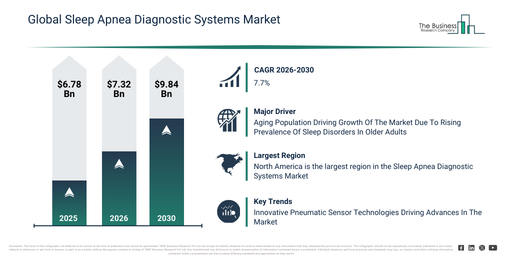
    The sleep market has experienced substantial growth in recent times. Its size is expected to increase from $65.91 billion in 2025 to $70.3 billion in 2026, with a compound annual growth rate (CAGR) of 6.7%. This expansion observed historically is driven by a rising prevalence of sleep disorders, heightened stress and lifestyle-induced sleep problems, an increase in consumer spending on wellness, the accessibility of over-the-counter sleep aids, and greater medical understanding of sleep health.

    The sleep market is expected to experience substantial expansion in the upcoming years, with projections indicating a rise to $89.94 billion by 2030, demonstrating a compound annual growth rate (CAGR) of 6.4%. This anticipated growth can be attributed to several factors, including the increasing integration of AI-driven sleep analytics, a growing demand for home-based sleep diagnostics, the expansion of digital health platforms, a rising interest in holistic sleep improvement methods, and heightened investment in sleep technology innovation. During this forecast period, prominent trends will involve the increasing adoption of sleep monitoring technologies, a growing demand for personalized sleep solutions, the expanding use of smart bedding and wearables, the wider availability of non-pharmacological sleep aids, and an enhanced focus on sleep health awareness.

    Get A Free Sample Report With In-Depth Market Insights:

    https://thebusinessresearchcompany.com/sample_request?id=95430434&type=smp&name=Sleep%20Market%20Report%202026&utm_source=Blogs&utm_medium=Paid&utm_campaign=Nov_PR

    Sleep Market Industry Drivers: What’s Behind The Revenue Growth?

    The rising occurrence of mental health conditions is projected to drive the growth of the sleep market in the future. Mental illnesses are medical issues defined by changes in emotion, thinking, or behavior, often hindering a person’s ability to manage daily activities. The increasing prevalence of these conditions is linked to heightened stress from modern lifestyles, such as work pressures, financial insecurity, and continuous digital engagement. Good and sound sleep improves mental health by enhancing emotional resilience, alleviating anxiety, and assisting the brain’s capacity to cope with stress and mood disorders. The increasing prevalence of mental illnesses is a key factor stimulating the expansion of the sleep market.

    Sleep Market Segmentation: How Does The Market Break Down By Category?

    The sleep market covered in this report is segmented –

    1) By Product Type: Sleep Aids, Sleep Technologies, Sleep Devices, Bedding, Mattresses, Pillows, Other Product Types

    2) By Indication: Insomnia, Sleep Apnea, Narcolepsy, Restless Leg Syndrome, Rapid Eye Movement Sleep Behavior Disorder, Other Indications

    3) By Distribution Channel: Online, Offline

    Subsegments:

    1) By Sleep Aids: Prescription Sleep Medications, Melatonin Supplements, Cannabidiol (CBD) Products

    2) By Sleep Technologies: Smart Sleep Monitoring Apps, Artificial Intelligence-Based Sleep Platforms, Smart Sleep Environment Systems

    3) By Sleep Devices: Oral Appliances, Sleep Masks, Anti-Snoring Devices

    4) By Bedding: Bed Sheets, Mattress Toppers, Weighted Blankets

    5) By Mattresses: Innerspring Mattresses, Memory Foam Mattresses, Latex Mattresses

    6) By Pillows: Memory Foam Pillows, Latex Pillows, Cooling Pillows

    7) By Other Product Types: White Noise Machines, Sleepwear, Sleep Aromatherapy Products

    Sleep Market Growth Trends Reshaping The Competitive Landscape

    Key companies operating in the sleep sector are concentrating on developing advanced technologies, such as smart sleep analytics solutions, to elevate sleep quality, enable personalized sleep therapy, and deliver real-time monitoring and insights into sleep patterns. Smart sleep analytics solutions are technology-powered systems that utilize sensors and artificial intelligence to observe and analyze sleep patterns, providing tailored insights and supporting improved sleep quality.

    Sleep Market Competitive Overview And Top Companies

    Major companies operating in the sleep market are Koninklijke Philips N.V., Garmin Ltd, ResMed Inc., Sleep Number Corporation, Nihon Kohden Corporation, Fisher & Paykel Healthcare Corporation Limited, Natus Medical Incorporated, Itamar Medical Ltd., Withings S.A.S., Cadwell Industries Inc., BMC Medical Co. LTD., Eight Sleep Inc., Compumedics Limited, Simba Sleep Limited, Shenzhen Sleepace Technology Co. Ltd., Cleveland Medical Devices Inc., Advanced Brain Monitoring Inc., Braebon Medical Corporation, SOMNOMEDICS AG., Somnox B.V., Apex Medical Corporation

    View The Full Sleep Market Report:

    https://thebusinessresearchcompany.com/report/sleep-global-market-report?utm_source=Blogs&utm_medium=Paid&utm_campaign=Nov_PR

    Sleep Market Top Region By Revenue And Market Share

    North America was the largest region in the sleep market in 2025. Asia-Pacific is expected to be the fastest-growing region in the forecast period. The regions covered in the sleep market report are Asia-Pacific, South East Asia, Western Europe, Eastern Europe, North America, South America, Middle East, Africa.

    Reach Out To Our Team:

    The Business Research Company: https://www.thebusinessresearchcompany.com/

    Americas: +1 310-496-7795

    Asia: +44 7882 955267 & +91 8897263534

    Europe: +44 7882 955267

    Email us at: marketing@tbrc.info

    Follow us on:

    LinkedIn: https://in.linkedin.com/company/the-business-research-company

    YouTube: https://www.youtube.com/channel/UC24_fI0rV8cR5DxlCpgmyFQ

    Global Market Model: https://www.thebusinessresearchcompany.com/global-market-model
  • Skin-Pigmentation Laser Clinic Market Forecast Highlights A $2.29 Billion Opportunity For Industry Participants

    Skin-Pigmentation Laser Clinic Market Forecast Highlights A $2.29 Billion Opportunity For Industry Participants

    Featuring market attractiveness scoring, total addressable market sizing, company benchmarking matrices, interactive Excel dashboards, deeper supply chain intelligence, emerging startup tracking, and granular product-level insights, The Business Research Company’s 2026 market reports are built to deliver research that is both more actionable and more strategically valuable.

    Skin-Pigmentation Laser Clinic Market Growth From $1.6 Billion In 2026 To $2.29 Billion By 2030 At A CAGR Of 9.3%

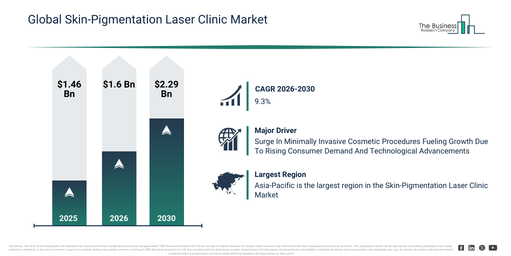
    The skin-pigmentation laser clinic market has experienced robust growth in recent years. It is projected to increase from $1.46 billion in 2025 to $1.6 billion in 2026, reflecting a compound annual growth rate (CAGR) of 9.6%. This historical expansion can be attributed to several factors, including a growing awareness of cosmetic dermatology, the increasing prevalence of pigmentation disorders, the expansion of aesthetic clinic networks, rising disposable income levels, and the wider availability of laser treatment technologies.

    The skin-pigmentation laser clinic market is projected to experience robust expansion over the coming years. This market is forecast to reach $2.29 billion by 2030, exhibiting a compound annual growth rate (CAGR) of 9.3%. Factors contributing to this growth during the projected timeframe include a surge in demand for non-surgical cosmetic interventions, the increasing uptake of AI-assisted skin analysis, the spread of medical aesthetics tourism, a heightened emphasis on customized skincare treatments, and ongoing innovations in laser technologies. Key trends anticipated within this forecast period encompass the wider utilization of sophisticated laser platforms, an escalating need for tailored pigmentation therapies, the increasing integration of combination treatment methods, the proliferation of minimally invasive aesthetic interventions, and an intensified commitment to ensuring treatment safety and accuracy.

    Get A Free Sample Report With In-Depth Market Insights:

    https://thebusinessresearchcompany.com/sample_request?id=19960448&type=smp&name=Skin-Pigmentation%20Laser%20Clinic%20Market%20Report%202026&utm_source=Blogs&utm_medium=Paid&utm_campaign=Nov_PR

    Skin-Pigmentation Laser Clinic Market Growth Factors: What’s Supporting Expansion?

    The increasing preference for minimally invasive cosmetic procedures is anticipated to fuel the expansion of the skin-pigmentation laser clinic market. These procedures are defined as aesthetic treatments that improve appearance using minimal incisions or entirely non-invasive methods, providing advantages like quicker recovery, reduced associated risks, and more natural-looking outcomes compared to conventional surgical approaches. This rising demand stems from technological progress that has enhanced the safety, efficacy, and accessibility of such treatments, thereby boosting consumer acceptance and engagement. Skin-pigmentation laser clinics contribute to this demand by delivering specialized treatments for conditions like hyperpigmentation, employing cutting-edge laser technologies to provide efficient and non-invasive remedies. The escalating demand for minimally invasive cosmetic procedures is a significant driver for the growth of the skin-pigmentation laser clinic market.

    Skin-Pigmentation Laser Clinic Market Segment Trends And Revenue Contributors

    The skin-pigmentation laser clinic market covered in this report is segmented –

    1) By Treatment Type: Laser Toning, Q-Switched Laser, Fractional Laser, Intense Pulsed Light (IPL), Other Treatment Types

    2) By Application: Hyperpigmentation, Melasma, Age Spots, Sun Damage, Other Applications

    3) By End User: Hospitals, Dermatology Clinics, Aesthetic Clinics, Other End Users

    Subsegments:

    1) By Laser Toning: Nd:YAG Laser, Ruby Laser, Alexandrite Laser

    2) By Q Switched Laser: Nd:YAG Laser, Ruby Laser, Alexandrite Laser

    3) By Fractional Laser: Carbon Dioxide Laser, Erbium Laser, Fractional Non Ablative Laser

    4) By Intense Pulsed Light: Broad Spectrum Light, Pulsed Light Therapy, Multi Wavelength Light

    5) By Other Treatment Types: Cryotherapy, Chemical Peels, Microdermabrasion, Photodynamic Therapy

    Skin-Pigmentation Laser Clinic Market Competitive Landscape: Which Companies Lead The Industry?

    Major companies operating in the skin-pigmentation laser clinic market are Cynosure Inc., BTL Industries Inc., Lumenis Ltd. (Boston Scientific), Alma Lasers Ltd., Cutera Inc., Candela Medical Inc. (Apax Partners), Lutronic Co. Ltd., Solta Medical Inc., Fotona d.o.o., Venus Concept Inc., Sciton Inc., Quanta System S.p.A., Sharplight Technologies Ltd., Aerolase Medical LLC, Wontech Co. Ltd., Lynton Lasers Ltd., DEKA M.E.L.A. S.r.l., Laseroptek Co. Ltd., Novoxel Ltd., Advalight Corp.

    View The Full Skin-Pigmentation Laser Clinic Market Report:

    https://thebusinessresearchcompany.com/report/skin-pigmentation-laser-clinic-global-market-report?utm_source=Blogs&utm_medium=Paid&utm_campaign=Nov_PR

    Skin-Pigmentation Laser Clinic Market Regional Analysis And Top Geography

    Asia-Pacific was the largest region in the skin-pigmentation laser clinic market in 2025. Asia-Pacific is expected to be the fastest-growing region in the forecast period. The regions covered in the skin-pigmentation laser clinic market report are Asia-Pacific, South East Asia, Western Europe, Eastern Europe, North America, South America, Middle East, Africa.

    Reach Out To Our Team:

    The Business Research Company: https://www.thebusinessresearchcompany.com/

    Americas: +1 310-496-7795

    Asia: +44 7882 955267 & +91 8897263534

    Europe: +44 7882 955267

    Email us at: marketing@tbrc.info

    Follow us on:

    LinkedIn: https://in.linkedin.com/company/the-business-research-company

    YouTube: https://www.youtube.com/channel/UC24_fI0rV8cR5DxlCpgmyFQ

    Global Market Model: https://www.thebusinessresearchcompany.com/global-market-model
  • Skin Tightening Market Analysis: How The Industry Is Evolving Toward A $3.41 Billion Future

    Skin Tightening Market Analysis: How The Industry Is Evolving Toward A $3.41 Billion Future

    Built to provide research that’s more actionable and strategically valuable, The Business Research Company’s 2026 market reports include market attractiveness analysis, total addressable market sizing, company benchmarking matrices, interactive Excel dashboards, broader supply chain intelligence, emerging startup tracking, and in-depth product insights.

    Skin Tightening Market Expansion Outlook: What Revenue Opportunities Are Ahead?

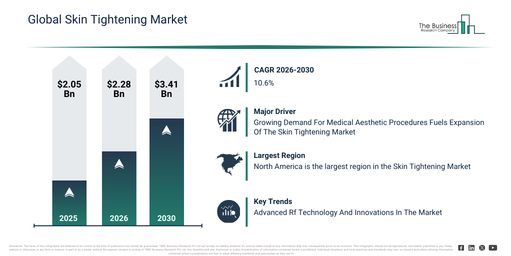
    The skin tightening market has experienced significant expansion in recent years. It is anticipated to increase from $2.05 billion in 2025 to $2.28 billion by 2026, exhibiting a compound annual growth rate (CAGR) of 10.9%. In previous periods, this growth has been fueled by factors such as rising consumer awareness of aesthetic treatments, an increasing aging population, the proliferation of cosmetic dermatology clinics, the broader adoption of minimally invasive procedures, and the accessibility of advanced aesthetic technologies.

    The skin tightening market is projected for significant expansion in the coming years. This market is forecast to reach $3.41 billion by 2030, exhibiting a compound annual growth rate (CAGR) of 10.6%. Factors driving this growth during the forecast period include a heightened demand for non-surgical cosmetic options, increased investments in innovative aesthetic devices, the proliferation of medical aesthetics tourism, a growing preference for treatments with rapid recovery, and the increasing incorporation of AI-assisted treatment planning. Key trends anticipated over this period involve the rising adoption of non-invasive skin tightening procedures, greater utilization of energy-based aesthetic devices, an expanding demand for personalized cosmetic treatments, the broadening of combination therapy methods, and an intensified emphasis on treatment safety and precision.

    Get A Free Sample Report With In-Depth Market Insights:

    https://thebusinessresearchcompany.com/sample_request?id=57528252&type=smp&name=Skin%20Tightening%20Market%20Report%202026&utm_source=Blogs&utm_medium=Paid&utm_campaign=Nov_PR

    Skin Tightening Market Demand Drivers: What’s Powering Industry Growth?

    The increasing volume of medical aesthetic procedures is anticipated to fuel the expansion of the skin tightening market in the future. An aesthetic procedure refers to a medical or cosmetic intervention designed to enhance an individual’s facial or bodily appearance, frequently utilizing surgical or minimally invasive methods. These procedures are gaining prominence owing to the escalating demand for less invasive treatments, the expanding influence of social media, continuous technological progress, and an older demographic seeking non-surgical alternatives to preserve a youthful look. Skin tightening is frequently necessary during aesthetic procedures to enhance skin elasticity, diminish looseness, and achieve a firmer, more youthful look after occurrences like weight loss, aging, or other elements impacting skin tone. The growing volume of medical aesthetic procedures is fueling the expansion of the skin tightening market.

    Skin Tightening Market Segment Analysis Spotlighting Growth Areas

    The skin tightening market covered in this report is segmented –

    1) By Type: Radiofrequency (RF) Skin Tightening, Ultrasound Skin Tightening, Laser Skin Tightening, Infrared Skin Tightening, Other Types

    2) By Portability: Portable, Stand-Alone

    3) By Treatment Type: Non-invasive, Minimally Invasive

    4) By Application: Reduce Wrinkles, Face Lifting, Anti-Aging

    5) By End User: Hospitals And Clinics, Beauty And Aesthetic Centers, Home Use, Other End Users

    Subsegments:

    1) By Radiofrequency (RF) Skin Tightening: Monopolar RF Devices, Bipolar RF Devices, Fractional RF Devices

    2) By Ultrasound Skin Tightening: High-Intensity Focused Ultrasound (HIFU), Ultrasound-Lift Devices, Microfocused Ultrasound Systems

    3) By Laser Skin Tightening: Ablative Laser Treatments, Non-Ablative Laser Treatments, Fractional Laser Systems

    4) By Infrared Skin Tightening: Infrared Light Therapy Devices, Near-Infrared Systems, Combination Infrared Devices

    5) By Other Types: Microneedling With Radiofrequency, Combination Therapies, Chemical Peels For Skin Tightening

    Skin Tightening Market Innovation Trends Shaping Future Development

    Leading companies within the skin tightening market are developing sophisticated offerings, such as radiofrequency (RF) skin tightening devices, to provide customers with advanced capabilities. A radiofrequency (RF) skin tightening device utilizes targeted radiofrequency energy to warm the deeper layers of the skin, thereby stimulating collagen production and enhancing skin elasticity to diminish sagging and achieve a firmer look.

    Skin Tightening Market Leading Companies: Who Holds The Strongest Market Presence?

    Major companies operating in the skin tightening market are Johnson & Johnson, L’Oréal SA, Softway Medical, Estee Lauder, Beiersdorf AG, Shiseido, Merz Pharma GmbH & Co. KGaA, InMode Ltd., Lumenis, Venus Concept Co., Solta Medical Inc., Alma Lasers, Lynton Lasers Ltd., SmarterSkin Dermatology, Beijing Honkon Technologies, Pollogen, Cutera Inc., Cynosure, Fotona d. o. o., BTL Industries Ltd.

    View The Full Skin Tightening Market Report:

    https://thebusinessresearchcompany.com/report/skin-tightening-global-market-report?utm_source=Blogs&utm_medium=Paid&utm_campaign=Nov_PR

    Skin Tightening Market Geographic Analysis: Where Is Demand Rising Fastest?

    North America was the largest region in the skin tightening market in 2025. Asia-Pacific is expected to be the fastest-growing region in the forecast period. The regions covered in the skin tightening market report are Asia-Pacific, South East Asia, Western Europe, Eastern Europe, North America, South America, Middle East, Africa.

    Reach Out To Our Team:

    The Business Research Company: https://www.thebusinessresearchcompany.com/

    Americas: +1 310-496-7795

    Asia: +44 7882 955267 & +91 8897263534

    Europe: +44 7882 955267

    Email us at: marketing@tbrc.info

    Follow us on:

    LinkedIn: https://in.linkedin.com/company/the-business-research-company

    YouTube: https://www.youtube.com/channel/UC24_fI0rV8cR5DxlCpgmyFQ

    Global Market Model: https://www.thebusinessresearchcompany.com/global-market-model
  • Skin Repair Market Outlook Through 2030: Understanding The Growth Opportunity

    Skin Repair Market Outlook Through 2030: Understanding The Growth Opportunity

    Backed by market attractiveness analysis, total addressable market sizing, company benchmarking matrices, interactive Excel dashboards, wider supply chain intelligence, emerging startup coverage, and detailed product-level insights, The Business Research Company’s 2026 market reports are designed to offer research that is more actionable and strategically valuable than ever.

    Skin Repair Market Growth Potential: How Will Market Size Shift Through 2030?

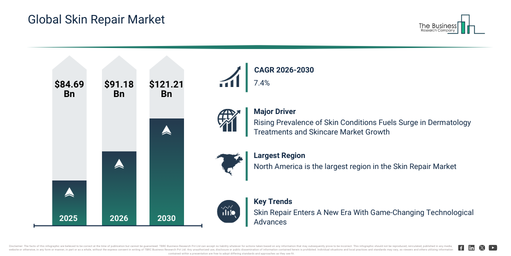
    The skin repair market has experienced significant growth over recent years. Looking ahead, this market is projected to expand from $84.69 billion in 2025 to $91.18 billion in 2026, demonstrating a compound annual growth rate (CAGR) of 7.7%. Historically, this expansion has been driven by factors such as the increasing occurrence of chronic wounds, the growing prevalence of ulcers linked to diabetes, the rise in surgical interventions, advancements in burn injury care, and the availability of sophisticated topical formulations.

    The skin repair market size is anticipated to demonstrate robust expansion over the next few years. It is projected to achieve $121.21 billion by 2030, growing at a compound annual growth rate (CAGR) of 7.4%. This expected growth within the forecast period can be attributed to the rising embrace of regenerative medicine techniques, increasing need for home-based wound care, the broadening of aesthetic skin repair treatments, a heightened focus on personalized skincare solutions, and progress in biomaterial-based dressings. Prominent trends for the forecast period include a surging demand for advanced wound healing formulations, the growing adoption of growth factor and stem cell-based products, the expansion of chronic wound care options, an intensifying emphasis on scar reduction and tissue regeneration, and enhanced product innovation in skin repair therapies.

    Get A Free Sample Report With In-Depth Market Insights:

    https://thebusinessresearchcompany.com/sample_request?id=94002520&type=smp&name=Skin%20Repair%20Market%20Report%202026&utm_source=Blogs&utm_medium=Paid&utm_campaign=Nov_PR

    Skin Repair Market Growth Drivers: What’s Behind The Acceleration?

    The increasing occurrence of skin conditions is anticipated to propel the expansion of the skin repair market. These conditions encompass a broad spectrum of issues impacting skin health, such as acne, eczema, psoriasis, and infections, frequently demanding medical or cosmetic intervention. The growing prevalence of skin conditions is attributed to environmental pollution, as continuous exposure to pollutants can harm the skin barrier, trigger inflammation, and exacerbate existing skin problems. Skin repair addresses the rising incidence of skin conditions by offering effective solutions for treatment and recovery. For instance, in November 2025, according to the Cancer Australia, an Australia-based government agency, in 2025, melanoma deaths in Australia are estimated at 1,455 (990 males and 465 females), with a 1 in 253 lifetime risk of death by age 85 (1 in 181 for males and 1 in 422 for females). Therefore, the rising prevalence of skin conditions is driving the growth of the skin repair market.

    Skin Repair Market Segment Performance And Emerging Opportunities

    The skin repair market covered in this report is segmented –

    1) By Type: Collagen-based Skin Repair Products, Hyaluronic Acid-based Skin Repair Products, Growth Factor-based Skin Repair Products, Stem Cell-based Skin Repair Products, Peptides-based Skin Repair Products

    2) By Product Form: Creams, Ointments, Gels, Pads And Dressings, Other Product Form

    3) By Distribution Channel: Retail Pharmacies, Online Retail, Hospital Pharmacies, Specialty Stores, Other Distribution Channel

    4) By Application: Burns, Diabetic Foot Ulcers, Surgical Wounds, Traumatic Wounds, Pressure Sores, Other Applications

    5) By End-user: Hospitals And Clinics, Home Care Settings, Skincare And Aesthetic Centers, Other End-Users

    Subsegments:

    1) By Collagen-Based Skin Repair Products: Collagen Creams, Collagen Serums, Collagen Gels, Collagen Dressings, Collagen Patches

    2) By Hyaluronic Acid-Based Skin Repair Products: Hyaluronic Acid Creams, Hyaluronic Acid Serums, Hyaluronic Acid Lotions, Hyaluronic Acid Injections, Hyaluronic Acid Masks

    3) By Growth Factor-Based Skin Repair Products: Epidermal Growth Factor Serums, Fibroblast Growth Factor Creams, Platelet-Derived Growth Factor Gels, Vascular Endothelial Growth Factor Solutions, Combination Growth Factor Formulations

    4) By Stem Cell-Based Skin Repair Products: Plant Stem Cell Creams, Human Stem Cell Serums, Stem Cell Patches, Stem Cell Infused Masks, Stem Cell Lotions

    5) By Peptides-Based Skin Repair Products: Peptide Creams, Peptide Serums, Peptide Gels, Peptide Masks, Peptide Lotions

    Skin Repair Market Trends Redefining Industry Growth

    Major companies in the skin repair market are concentrating on technological improvements in therapeutic methods, particularly cell-based gene therapy (CBGT). This treatment utilizes a patient’s own genetically altered cells to repair damaged skin tissue, correct genetic defects, and foster long-term regeneration. For example, in April 2025, Abeona Therapeutics, a U.S.-based biopharmaceutical company, gained U.S. FDA approval for Zevaskyn. This product is the first cell-based gene therapy targeting recessive dystrophic epidermolysis bullosa (RDEB), a rare genetic skin disorder. Zevaskyn signifies a novel dermatological strategy, employing autologous cell-based gene therapy to mend skin tissue, which could potentially redefine the care standard for those with recessive dystrophic epidermolysis bullosa.

    Skin Repair Market Key Players: Which Companies Lead Industry Competition?

    Major companies operating in the skin repair market are Beiersdorf AG, Kao Corporation, Shiseido, Obagi Medical, Dermalogica, Revision Skincare, SkinCeuticals, PCA Skin, Lucas Meyer Cosmetics, Derma Made, OneSkin, Rubedo Life Sciences, Smith & Nephew plc, Mölnlycke Health Care AB, Coloplast A/S, ConvaTec Group plc, Integra LifeSciences Holdings Corporation, MiMedx Group Inc., Organogenesis Holdings Inc., Acelity L.P. Inc., Medline Industries Inc., Paul Hartmann AG

    View The Full Skin Repair Market Report:

    https://thebusinessresearchcompany.com/report/skin-repair-global-market-report?utm_source=Blogs&utm_medium=Paid&utm_campaign=Nov_PR

    Skin Repair Market Global Footprint: Which Region Leads The Market?

    North America was the largest region in the skin repair market in 2025. Asia-Pacific is expected to be the fastest-growing region in the forecast period. The regions covered in the skin repair market report are Asia-Pacific, South East Asia, Western Europe, Eastern Europe, North America, South America, Middle East, Africa.

    Reach Out To Our Team:

    The Business Research Company: https://www.thebusinessresearchcompany.com/

    Americas: +1 310-496-7795

    Asia: +44 7882 955267 & +91 8897263534

    Europe: +44 7882 955267

    Email us at: marketing@tbrc.info

    Follow us on:

    LinkedIn: https://in.linkedin.com/company/the-business-research-company

    YouTube: https://www.youtube.com/channel/UC24_fI0rV8cR5DxlCpgmyFQ

    Global Market Model: https://www.thebusinessresearchcompany.com/global-market-model