Author: Marketing Posting

  • Skin Regeneration Stem Cell Therapy Market Growth Potential: What The Latest Forecast Reveals

    Skin Regeneration Stem Cell Therapy Market Growth Potential: What The Latest Forecast Reveals

    Featuring market attractiveness scoring, total addressable market sizing, company benchmarking matrices, interactive Excel dashboards, deeper supply chain intelligence, emerging startup tracking, and granular product-level insights, The Business Research Company’s 2026 market reports are built to deliver research that is both more actionable and more strategically valuable.

    Skin Regeneration Stem Cell Therapy Market Value Analysis: What Growth Lies Ahead Over The Forecast Period?

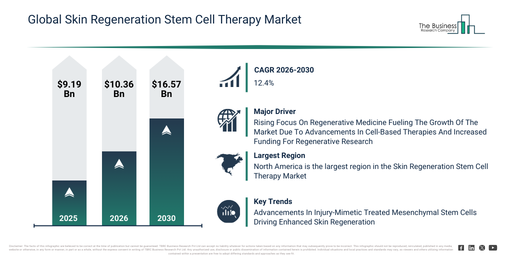
    The skin regeneration stem cell therapy market has experienced rapid growth in recent years. It is anticipated to expand from $9.19 billion in 2025 to $10.36 billion in 2026, at a compound annual growth rate (CAGR) of 12.7%. This historical expansion can be attributed to advancements in regenerative medicine research, the increasing prevalence of chronic wounds and burns, greater acceptance of cell-based therapies, the broadening of cosmetic and aesthetic procedures, and improvements in stem cell isolation techniques.

    The skin regeneration stem cell therapy market is projected to experience rapid expansion in the coming years, with its size anticipated to reach $16.57 billion by 2030, exhibiting a compound annual growth rate (CAGR) of 12.4%. This growth during the forecast period is primarily driven by factors such as a surge in demand for minimally invasive regenerative treatments, heightened clinical trial engagement within dermatology, increased financial commitments towards personalized medicine, the enlargement of stem cell banking infrastructure, and improved regulatory clarity pertaining to cell therapies. Key trends expected over the same period encompass a wider acceptance of autologous stem cell therapies, a heightened emphasis on minimizing scars and repairing tissue, increased application of stem cells in cosmetic dermatology, broader clinical uses in burn and wound care, and a greater focus on skin rejuvenation methods utilizing cells.

    Get A Free Sample Report With In-Depth Market Insights:

    https://thebusinessresearchcompany.com/sample_request?id=16261432&type=smp&name=Skin%20Regeneration%20Stem%20Cell%20Therapy%20Market%20Report%202026&utm_source=Blogs&utm_medium=Paid&utm_campaign=Nov_PR

    Skin Regeneration Stem Cell Therapy Market Growth Factors Behind Sustained Expansion

    An increasing emphasis on regenerative medicine is projected to fuel the expansion of the skin regeneration stem cell therapy market in the future. This scientific domain concentrates on mending, substituting, or regenerating impaired cells, tissues, or organs to reinstate their proper functionality. The heightened attention on regenerative medicine stems from the increasing incidence of chronic and degenerative conditions, given its capacity to mend damaged tissues and deliver enduring recovery, going beyond mere symptom control. Skin regeneration stem cell therapy contributes to regenerative medicine through progress in cell-based treatments, which are fostering novel methods to mend and revitalize aged or compromised skin. The increased emphasis on regenerative medicine is anticipated to stimulate the expansion of the skin regeneration stem cell therapy market.

    Skin Regeneration Stem Cell Therapy Market Segment Landscape And Growth Outlook

    The skin regeneration stem cell therapy market covered in this report is segmented –

    1) By Type: Autologous, Allogeneic

    2) By Cell Source: Adipose-Derived Stem Cells, Bone Marrow-Derived Stem Cells, Umbilical Cord-Derived Stem Cells

    3) By Application: Burn Treatment, Chronic Wound Healing, Cosmetic Surgery, Skin Rejuvenation

    4) By End-User: Hospitals, Cosmetic Clinics, Research Laboratories

    Subsegments:

    1) By Autologous: Autologous Adipose Derived Stem Cells, Autologous Bone Marrow Derived Stem Cells, Autologous Hair Follicle Derived Stem Cells, Autologous Umbilical Cord Derived Stem Cells, Autologous Placenta Derived Stem Cells

    2) By Allogeneic: Allogeneic Adipose Derived Stem Cells, Allogeneic Bone Marrow Derived Stem Cells, Allogeneic Umbilical Cord Derived Stem Cells, Allogeneic Placenta Derived Stem Cells, Allogeneic Induced Pluripotent Stem Cells

    Skin Regeneration Stem Cell Therapy Market Strategic Trends: What Defines The Next Growth Phase?

    Major companies within the skin regeneration stem cell therapy market are concentrating on injury-mimetic treated mesenchymal stem cells to amplify the secretion of regenerative elements, stimulate collagen production, and accelerate the repair and rejuvenation of skin. These injury-mimetic treated mesenchymal stem cells are defined as stem cells exposed to simulated injury conditions, which improves their generation of regenerative factors for enhanced tissue repair. For example, in January 2025, Robles BioCeutics LLC, a US-based regenerative dermatology company, launched Glowselle, a stem cell-powered cosmetic product designed with three distinct features: it promotes collagen synthesis, delivers regenerative factors via skin-permeable formulations, and utilizes injury-mimetic treated mesenchymal stem cells for optimized regenerative effects.

    Skin Regeneration Stem Cell Therapy Market Competitive Landscape: Who Leads The Industry?

    Major companies operating in the skin regeneration stem cell therapy market are KenCare Holdings Pte Ltd, Vericel Corporation, AVITA Medical Inc., Celularity Inc., StemRIM Inc., Stem Health Plus Ltd., Castle Creek Biosciences, Cutiss AG, Bioscience Institute S.p.A., Acorn Biomedical Inc., RepliCel Life Sciences Inc., Anterogen Co. Ltd., Cynata Therapeutics Limited, TOPs Cells Co. Ltd., STEM CELLS CARE (INDIA) PRIVATE LIMITED, R3 Stem Cell LLC., Lipogems International S.p.A., PolarityTE Inc., CellReg Aesthetics GmbH, MITAKY High-Tech Corporation.

    View The Full Skin Regeneration Stem Cell Therapy Market Report:

    https://thebusinessresearchcompany.com/report/global-skin-regeneration-stem-cell-therapy-market-report?utm_source=Blogs&utm_medium=Paid&utm_campaign=Nov_PR

    Skin Regeneration Stem Cell Therapy Market Regional Split: Which Areas Are Fueling Growth?

    North America was the largest region in the skin regeneration stem cell therapy market in 2025. Asia-Pacific is expected to be the fastest-growing region in the forecast period. The regions covered in the skin regeneration stem cell therapy market report are Asia-Pacific, South East Asia, Western Europe, Eastern Europe, North America, South America, Middle East, Africa.

    Reach Out To Our Team:

    The Business Research Company: https://www.thebusinessresearchcompany.com/

    Americas: +1 310-496-7795

    Asia: +44 7882 955267 & +91 8897263534

    Europe: +44 7882 955267

    Email us at: marketing@tbrc.info

    Follow us on:

    LinkedIn: https://in.linkedin.com/company/the-business-research-company

    YouTube: https://www.youtube.com/channel/UC24_fI0rV8cR5DxlCpgmyFQ

    Global Market Model: https://www.thebusinessresearchcompany.com/global-market-model
  • Skin Moisturizers Market Growth Outlook: Why Analysts Expect Continued Expansion

    Skin Moisturizers Market Growth Outlook: Why Analysts Expect Continued Expansion

    Built to provide research that’s more actionable and strategically valuable, The Business Research Company’s 2026 market reports include market attractiveness analysis, total addressable market sizing, company benchmarking matrices, interactive Excel dashboards, broader supply chain intelligence, emerging startup tracking, and in-depth product insights.

    Skin Moisturizers Market Size Forecast: How Big Could The Market Get By 2030?

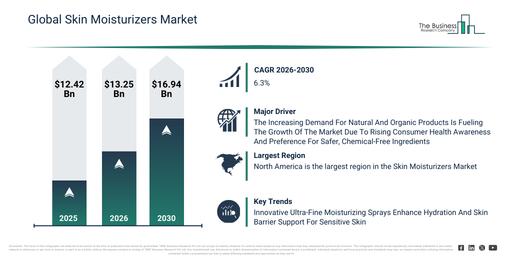
    The skin moisturizers market size has experienced robust growth recently. It is set to increase from $12.42 billion in 2025 to $13.25 billion in 2026, achieving a compound annual growth rate (CAGR) of 6.6%. The expansion observed in the past can be credited to rising consumer knowledge of skincare routines, an uptick in personal care product consumption, a higher prevalence of dry and sensitive skin conditions, the enlargement of cosmetic retail outlets, and the provision of varied moisturizing formulations.

    The skin moisturizers market is anticipated to experience robust growth in the upcoming years, with its valuation expected to reach $16.94 billion by 2030, demonstrating a compound annual growth rate (CAGR) of 6.3%. This expansion during the forecast period can be primarily attributed to the escalating demand for clean-label skincare products, the increasing adoption of customized beauty solutions, the broadening presence of online skincare retail, a heightened focus on preventive skin health, and continued innovation in multifunctional moisturizers. Significant trends for the forecast period encompass a rising consumer preference for dermatologically tested formulations, the increasing popularity of natural and organic moisturizers, a stronger emphasis on skin barrier repair and overall skin health, the expansion of personalized skincare offerings, and an enhanced focus on products delivering extended hydration.

    Get A Free Sample Report With In-Depth Market Insights:

    https://thebusinessresearchcompany.com/sample_request?id=99579411&type=smp&name=Skin%20Moisturizers%20Market%20Report%202026&utm_source=Blogs&utm_medium=Paid&utm_campaign=Nov_PR

    Skin Moisturizers Market Demand Drivers Opening New Revenue Streams

    The future expansion of the skin moisturizers market is anticipated to be fueled by the rising consumer demand for natural and organic products. These products originate from plant or mineral sources and are manufactured without synthetic chemicals, additives, or pesticides. Heightened health consciousness among consumers is escalating the demand for such products, which are perceived as safer and free from detrimental chemicals. When incorporated into skin moisturizers, natural and organic ingredients provide gentle, nourishing hydration, reducing the likelihood of irritation often associated with synthetic chemicals. They also improve skin health through antioxidants and essential oils that fortify the skin’s natural barrier. The increased demand for natural and organic products is a key factor propelling the expansion of the skin moisturizers market.

    Skin Moisturizers Market Breakdown By Product Type And Application

    The skin moisturizers market covered in this report is segmented –

    1) By Product Type: Creams, Lotions, Gels, Ointments, Other Product Types

    2) By Skin Type: Dry, Oily, Sensitive, Combination, Normal

    3) By Distribution Channel: Online Retail, Supermarkets Or Hypermarkets, Specialty Stores, Pharmacies, Other Distribution Channels

    4) By End-User: Men, Women, Unisex

    Subsegments:

    1) By Creams: Face Creams, Body Creams, Hand Creams, Night Creams, Eye Creams

    2) By Lotions: Body Lotions, Hand Lotions, Face Lotions, Baby Lotions

    3) By Gels: Gel Moisturizers For Oily Or Acne-Prone Skin, Aloe Vera Gels, After-Sun Gels, Hydrating Gels

    4) By Ointments: Healing Ointments For Dry Or Cracked Skin, Barrier Ointments For Eczema Or Psoriasis, Medicated Ointments, Protective Ointments

    5) By Other Product Types: Balms, Serums, Mists And Sprays, Butters, Organic Or Natural Variants

    Skin Moisturizers Market Transformation Trends: What Innovations Are Driving Change?

    Major companies within the skin moisturizers market are prioritizing the development of advanced spray-based moisturizing products to enhance convenience and user experience. Moisturizing sprays are lightweight skincare products that deliver hydration as a fine mist, allowing for quick and even application across the face or body without the need for rubbing.

    Skin Moisturizers Market Company Landscape And Competitive Strategy

    Major companies operating in the skin moisturizers market are Johnson & Johnson, The Procter & Gamble Company, Unilever PLC, L’Oréal S.A., Colgate-Palmolive, The Estée Lauder Companies Inc., Kao Corporation, Beiersdorf AG, Amway Corporation, Shiseido Company Limited, Coty Inc., Galderma SA, Amorepacific Corporation, Avon Products Inc., Revlon Inc., Mary Kay Inc., Burt’s Bees Inc., Minimalist, CeraVe, Himalaya Wellness Company

    View The Full Skin Moisturizers Market Report:

    https://thebusinessresearchcompany.com/report/skin-moisturizers-global-market-report?utm_source=Blogs&utm_medium=Paid&utm_campaign=Nov_PR

    Skin Moisturizers Market Top Region: Where Does Most Revenue Come From?

    North America was the largest region in the skin moisturizers market in 2025. Asia-Pacific is expected to be the fastest-growing region in the forecast period. The regions covered in the skin moisturizers market report are Asia-Pacific, South East Asia, Western Europe, Eastern Europe, North America, South America, Middle East, Africa.

    Reach Out To Our Team:

    The Business Research Company: https://www.thebusinessresearchcompany.com/

    Americas: +1 310-496-7795

    Asia: +44 7882 955267 & +91 8897263534

    Europe: +44 7882 955267

    Email us at: marketing@tbrc.info

    Follow us on:

    LinkedIn: https://in.linkedin.com/company/the-business-research-company

    YouTube: https://www.youtube.com/channel/UC24_fI0rV8cR5DxlCpgmyFQ

    Global Market Model: https://www.thebusinessresearchcompany.com/global-market-model
  • Skin Microbiome Market Forecast Insights: The Road To $1.72 Billion By 2030

    Skin Microbiome Market Forecast Insights: The Road To $1.72 Billion By 2030

    Backed by market attractiveness analysis, total addressable market sizing, company benchmarking matrices, interactive Excel dashboards, wider supply chain intelligence, emerging startup coverage, and detailed product-level insights, The Business Research Company’s 2026 market reports are designed to offer research that is more actionable and strategically valuable than ever.

    Skin Microbiome Market Revenue Outlook: What CAGR Lies Ahead Through 2030?

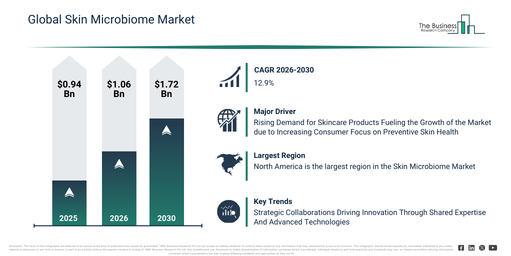
    The skin microbiome market has seen rapid expansion in recent years. It is projected to increase from $0.94 billion in 2025 to $1.06 billion in 2026, exhibiting a compound annual growth rate (CAGR) of 13.3%. Historical growth was influenced by factors including the evolving understanding of the skin microbiome, the expansion within cosmetic dermatology, the initial adoption of probiotics, a rise in skin disorder prevalence, and increasing consumer interest in natural skincare.

    The skin microbiome market is projected to experience substantial expansion in the coming years. This market is anticipated to reach a valuation of $1.72 billion by 2030, exhibiting a compound annual growth rate (CAGR) of 12.9%. The projected growth during this period is largely driven by factors such as the increasing use of microbiome-targeted therapeutics, their integration into personalized skincare solutions, wider adoption in dermatology treatments, rising investment in microbiome research, and the advancement of microbiome-based diagnostic tools. Key trends expected during the forecast timeframe encompass the innovation of probiotic skincare products, the expanding application of microbiome-based diagnostics, continued growth in microbiome-targeted therapeutics, their incorporation into cosmetic formulations, and the broadening scope of skin microbiome research studies.

    Get A Free Sample Report With In-Depth Market Insights:

    https://thebusinessresearchcompany.com/sample_request?id=36822685&type=smp&name=Skin%20Microbiome%20Market%20Report%202026&utm_source=Blogs&utm_medium=Paid&utm_campaign=Nov_PR

    Skin Microbiome Market Growth Backed By Core Demand Fundamentals

    The increasing consumer demand for skincare items is anticipated to drive the future expansion of the skin microbiome market. Skincare products refer to preparations created to cleanse, safeguard, enrich, or improve the skin’s look and well-being. This surge in demand stems from heightened consumer awareness regarding skin health and the significance of proactive self-care, prompting individuals to incorporate daily skincare practices for enduring well-being and improved aesthetics. Skin microbiomes are crucial in skincare products as they aid in preserving a balanced skin barrier and mitigating problems such as dryness, inflammation, and acne, achieved by bolstering the skin’s inherent defense mechanisms. The growing consumer interest in skincare products is set to drive the expansion of the skin microbiome market.

    Skin Microbiome Market Segment Analysis And Revenue Potential

    The skin microbiome market covered in this report is segmented –

    1) By Product Type: Skin Care Products, Dietary Supplements, Medical Devices, Diagnostic Tests

    2) By Skin Type: Normal, Dry, Oily, Combination

    3) By Distribution Channel: Online, Retail Stores, Pharmacies, Hospitals

    4) By Application: Acne, Eczema, Psoriasis, Anti-Aging, Wound Healing

    5) By End User: Consumers, Healthcare Professionals, Research Institutions

    Subsegments:

    1) By Skin Care Products: Moisturizers, Cleansers, Serums And Oils, Face Masks, Sunscreens, Anti-Aging Products, Acne Treatment Products

    2) By Dietary Supplements: Probiotics, Prebiotics, Postbiotics, Collagen Supplements, Antioxidants, Vitamins And Minerals

    3) By Medical Devices: Microbiome-based Topical Therapeutics, Skin Microbiome Modulation Devices, Light And Laser Therapy Devices, Electrotherapy Devices

    4) By Diagnostic Tests: Skin Microbiome Profiling Kits, PCR-based Testing Kits, Next-Generation Sequencing (NGS) Tests, Microbial Culture-Based Tests, Biomarker-based Skin Analysis

    #Skin Microbiome Market Growth Trends: What’s Shaping The Future Outlook?

    Leading companies active in the skin microbiome market are prioritizing strategic collaborations to diminish risks and accelerate innovation within a highly competitive and dynamic market landscape. Such strategic collaborations are cooperative agreements between two or more entities, intended to utilize their respective strengths to achieve shared goals such as market growth, innovation, or competitive advantage.

    Skin Microbiome Market Key Players Shaping Industry Direction

    Major companies operating in the skin microbiome market are The Procter & Gamble Company, Johnson & Johnson, Unilever PLC, L’Oréal S.A., Beiersdorf AG, Clinique LaboratoriesLLC, Symrise AG, Amorepacific Corporation, Lallemand Inc., Elizabeth ArdenInc., Drunk Elephant, AOBiome LLC, Codex Labs, SkinBioTherapeutics, Naturium LLC, AzitraInc., GALLINÉE Ltd, BEBE & BELLALLC, Esse Skincare, Glowbiotics Inc.

    View The Full Skin Microbiome Market Report:

    https://thebusinessresearchcompany.com/report/skin-microbiome-global-market-report?utm_source=Blogs&utm_medium=Paid&utm_campaign=Nov_PR

    Skin Microbiome Market Regional Breakdown: Where Is Demand Concentrated?

    North America was the largest region in the skin microbiome market in 2025. Asia-Pacific is expected to be the fastest-growing region in the forecast period. The regions covered in the skin microbiome market report are Asia-Pacific, South East Asia, Western Europe, Eastern Europe, North America, South America, Middle East, Africa.

    Reach Out To Our Team:

    The Business Research Company: https://www.thebusinessresearchcompany.com/

    Americas: +1 310-496-7795

    Asia: +44 7882 955267 & +91 8897263534

    Europe: +44 7882 955267

    Email us at: marketing@tbrc.info

    Follow us on:

    LinkedIn: https://in.linkedin.com/company/the-business-research-company

    YouTube: https://www.youtube.com/channel/UC24_fI0rV8cR5DxlCpgmyFQ

    Global Market Model: https://www.thebusinessresearchcompany.com/global-market-model
  • Skin Cancer Diagnostics Market Explained: What Is Fueling Growth To $5.09 Billion By 2030?

    Skin Cancer Diagnostics Market Explained: What Is Fueling Growth To $5.09 Billion By 2030?

    Featuring market attractiveness scoring, total addressable market sizing, company benchmarking matrices, interactive Excel dashboards, deeper supply chain intelligence, emerging startup tracking, and granular product-level insights, The Business Research Company’s 2026 market reports are built to deliver research that is both more actionable and more strategically valuable.

    Skin Cancer Diagnostics Market Growth Analysis: How Will Revenue Trend Over The Forecast Period?

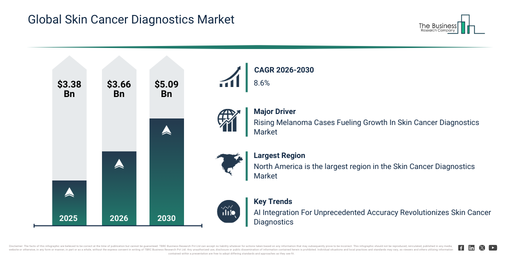
    The skin cancer diagnostics market size has seen substantial growth in recent years. It is anticipated to grow from $3.38 billion in 2025 to $3.66 billion in 2026, with a compound annual growth rate (CAGR) of 8.2%. The expansion witnessed in the historic period can be attributed to the rising incidence of skin cancers, the presence of limited early detection options, the growth in dermatology clinics, a continued reliance on biopsies, and increased public awareness campaigns.

    The skin cancer diagnostics market is anticipated to experience robust expansion over the coming years. Projections indicate it will reach $5.09 billion by 2030, driven by an 8.6% compound annual growth rate (CAGR). This growth during the forecast period is attributable to factors such as the increasing embrace of AI and advanced imaging diagnostics, the development of non-invasive molecular methods, the widening scope of teledermatology, a rise in early detection efforts, and the incorporation of personalized treatment strategies. Key trends anticipated within this period involve the proliferation of non-invasive diagnostic approaches, the merging with AI-powered skin imaging, broader acceptance of molecular diagnostics, an increase in programs aimed at early detection, and the broadening of teledermatology platforms.

    Get A Free Sample Report With In-Depth Market Insights:

    https://thebusinessresearchcompany.com/sample_request?id=60217815&type=smp&name=Skin%20Cancer%20Diagnostics%20Market%20Report%202026&utm_source=Blogs&utm_medium=Paid&utm_campaign=Nov_PR

    Skin Cancer Diagnostics Market Growth Catalysts And Demand Drivers

    The rising occurrence of melanoma is anticipated to boost the expansion of the skin cancer diagnostics market in the future. Melanoma, a form of skin cancer, originates in cells responsible for producing melanin, the pigment giving color to skin, hair, and eyes. Skin cancer diagnostics play a vital role in identifying and characterizing skin lesions, thereby assisting in the early detection, precise diagnosis, and successful treatment planning for skin cancer. The increasing incidence of melanoma is a key factor propelling the growth of the skin cancer diagnostics market.

    Skin Cancer Diagnostics Market Segmentation And Category Overview

    The skin cancer diagnostics market covered in this report is segmented –

    1) By Cancer Type: Basal Cell Carcinoma, Squamous Cell Carcinoma, Malignant Melanoma, Other Cancer Types

    2) By Type: Diagnosis, Detection Solutions

    3) By Application: Hospital, Clinic, Laboratory, Other Applications

    Subsegments:

    1) By Basal Cell Carcinoma: Diagnostic imaging Techniques, Biopsy Procedures, Molecular Diagnostic Tests

    2) By Squamous Cell Carcinoma: Diagnostic imaging Techniques, Biopsy Procedures, Molecular Diagnostic Tests

    3) By Malignant Melanoma: Diagnostic Imaging Techniques, Biopsy Procedures, Molecular Diagnostic Tests

    4) By Other Cancer Types: Non-Melanoma Skin Cancers, Dermatofibrosarcoma Protuberans, Merkel Cell Carcinoma

    Skin Cancer Diagnostics Market Industry Trends: What’s Reshaping Demand?

    Leading companies within the skin cancer diagnostics market are prioritizing advanced offerings such as AI-driven pop-up clinics to achieve a competitive advantage. An AI-powered pop-up clinic is a temporary healthcare establishment equipped with artificial intelligence technologies, intended to provide efficient and technologically superior medical services in a particular location or for a specific purpose.

    Skin Cancer Diagnostics Market Competitive Analysis Of Leading Industry Participants

    Major companies operating in the skin cancer diagnostics market are Pfizer Inc., F. Hoffmann-La Roche Limited, Merck & Co., Novartis AG, Bristol-Myers Squibb Company, Canon Medical Systems Corporation, Amgen Inc., GE Healthcare, Agilent Technologies Inc., bioMerieux SA, Teva Pharmaceutical Industries, Bruker Corp, Genentech, Castle Biosciences, DermTech Inc., SkylineDx BV, DermLite LLC, Biolitec Ag, Alma Lasers, AMLo Biosciences Limited, National Cancer Institute, Almirall

    View The Full Skin Cancer Diagnostics Market Report:

    https://thebusinessresearchcompany.com/report/skin-cancer-diagnostics-global-market-report?utm_source=Blogs&utm_medium=Paid&utm_campaign=Nov_PR

    Skin Cancer Diagnostics Market Geographic Landscape: Which Region Leads Industry Growth?

    North America was the largest region in the skin cancer diagnostics market in 2025. Asia-Pacific is expected to be the fastest-growing region in the forecast period. The regions covered in the skin cancer diagnostics market report are Asia-Pacific, South East Asia, Western Europe, Eastern Europe, North America, South America, Middle East, Africa.

    Reach Out To Our Team:

    The Business Research Company: https://www.thebusinessresearchcompany.com/

    Americas: +1 310-496-7795

    Asia: +44 7882 955267 & +91 8897263534

    Europe: +44 7882 955267

    Email us at: marketing@tbrc.info

    Follow us on:

    LinkedIn: https://in.linkedin.com/company/the-business-research-company

    YouTube: https://www.youtube.com/channel/UC24_fI0rV8cR5DxlCpgmyFQ

    Global Market Model: https://www.thebusinessresearchcompany.com/global-market-model
  • Skilled Nursing Facility Market Forecast To Reach $541.14 Billion By 2030: Key Trends Explained

    Skilled Nursing Facility Market Forecast To Reach $541.14 Billion By 2030: Key Trends Explained

    Built to provide research that’s more actionable and strategically valuable, The Business Research Company’s 2026 market reports include market attractiveness analysis, total addressable market sizing, company benchmarking matrices, interactive Excel dashboards, broader supply chain intelligence, emerging startup tracking, and in-depth product insights.

    Skilled Nursing Facility Market Forecast: What Value Will The Market Reach By 2030?

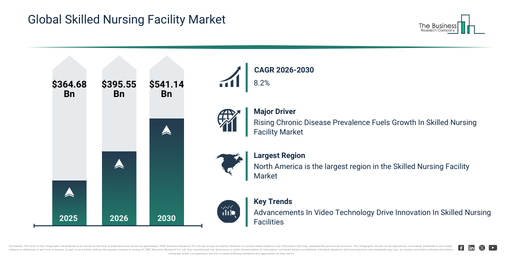
    The skilled nursing facility market has experienced substantial growth in recent years. It is projected to expand from $364.68 billion in 2025 to $395.55 billion in 2026, achieving a compound annual growth rate (CAGR) of 8.5%. Historically, this growth can be attributed to factors such as aging population growth, rising prevalence of chronic diseases, expansion of post-acute care services, increasing hospital discharge rates, and the development of long-term care infrastructure.

    The skilled nursing facility market size is projected to experience substantial expansion in the coming years. This market is anticipated to reach a valuation of $541.14 billion by 2030, exhibiting a compound annual growth rate (CAGR) of 8.2%. The expansion over the forecast period is primarily driven by factors such as the rising demand for value-based care models, the growing acceptance of telehealth services, the broadening of transitions from home to facility care, increasing investments in the digitalization of healthcare, and a heightened emphasis on patient-centric care delivery. Key trends projected for this period encompass the increased uptake of digital health record systems, the greater integration of remote patient monitoring tools, an escalating focus on measuring quality outcomes, the development of specialized rehabilitation programs, and an amplified concentration on care coordination.

    Get A Free Sample Report With In-Depth Market Insights:

    https://thebusinessresearchcompany.com/sample_request?id=72380521&type=smp&name=Skilled%20Nursing%20Facility%20Market%20Report%202026&utm_source=Blogs&utm_medium=Paid&utm_campaign=Nov_PR

    Skilled Nursing Facility Market Opportunity Drivers: What’s Unlocking New Revenue Potential?

    The rising incidence of chronic illnesses is projected to fuel the expansion of the skilled nursing facility market in the future. These conditions are defined as persistent, frequently incurable yet manageable ailments that substantially affect health, contribute to disability, and incur significant healthcare expenditures. The widespread occurrence of chronic disease stems from an aging demographic, poor dietary habits, alongside environmental and socioeconomic influences. Such facilities offer specialized care and extended support to individuals facing intricate health requirements. This provision facilitates more effective management of chronic conditions and enhances patient results via dedicated medical and rehabilitation services. The widespread presence of chronic diseases is a key impetus for the skilled nursing facility market.

    Skilled Nursing Facility Market Segment Outlook: Which Categories Are Growing Fastest?

    The skilled nursing facility market covered in this report is segmented –

    1) By Type: Freestanding, Hospital

    2) By Ownership: For Profit, Non-Profit, Government

    3) By Services Type: Intensive Rehabilitation Therapy, Low And Medium Rehabilitation, Medically Complex, Other Service Types

    Subsegments:

    1) By Freestanding: Independent Skilled Nursing Facilities, Specialty Skilled Nursing Facilities, Transitional Care Units

    2) By Hospital: Acute Care Hospitals with Skilled Nursing Units, Rehabilitation Hospitals, Long-Term Acute Care Hospitals

    Skilled Nursing Facility Market Innovation Trends: What Developments Are Reshaping The Industry?

    Leading companies in the skilled nursing facility market are actively developing technologically advanced solutions, such as sensors for nursing facilities, aimed at improving patient outcomes, boosting staff efficiency, and ensuring adherence to regulatory standards. These nursing facility sensors are specifically engineered to monitor and identify various conditions or activities related to residents’ health, safety, and overall well-being.

    Skilled Nursing Facility Market Leading Companies And Competitive Benchmarking

    Major companies operating in the skilled nursing facility market are Encompass Health Corporation, Genesis HealthCare Inc., Sunrise Senior Living LLC, Life Care Centers of America, The Ensign Group Inc., Brookdale Senior Living Solutions, LHC Group Inc., Saber Healthcare Group, Amedisys Inc., Sava SeniorCare LLC, Consulate Health Care, PruittHealth Corp., Signature HealthCARE LLC, National HealthCare Corporation, Extendicare, The Evangelical Lutheran Good Samaritan Society, Vibra Healthcare LLC, Diversicare Healthcare Services Inc., Trilogy Health Services LLC, ProMedica Senior Care, Life Care Companies LLC, Atrium Health & Senior Living, Golden Living, ManorCare Health Services, CommuniCare Health Centers

    View The Full Skilled Nursing Facility Market Report:

    https://thebusinessresearchcompany.com/report/skilled-nursing-facility-global-market-report?utm_source=Blogs&utm_medium=Paid&utm_campaign=Nov_PR

    Skilled Nursing Facility Market Largest Region: Which Geography Holds The Biggest Share?

    North America was the largest region in the skilled nursing facility market in 2025. Asia-Pacific is expected to be the fastest-growing region in the forecast period. The regions covered in the skilled nursing facility market report are Asia-Pacific, South East Asia, Western Europe, Eastern Europe, North America, South America, Middle East, Africa.

    Reach Out To Our Team:

    The Business Research Company: https://www.thebusinessresearchcompany.com/

    Americas: +1 310-496-7795

    Asia: +44 7882 955267 & +91 8897263534

    Europe: +44 7882 955267

    Email us at: marketing@tbrc.info

    Follow us on:

    LinkedIn: https://in.linkedin.com/company/the-business-research-company

    YouTube: https://www.youtube.com/channel/UC24_fI0rV8cR5DxlCpgmyFQ

    Global Market Model: https://www.thebusinessresearchcompany.com/global-market-model
  • Size Exclusion Chromatography (SEC) HPLC Column Market Analysis: Understanding The Drivers Behind 9.4% CAGR Through 2030 Growth

    Size Exclusion Chromatography (SEC) HPLC Column Market Analysis: Understanding The Drivers Behind 9.4% CAGR Through 2030 Growth

    Backed by market attractiveness analysis, total addressable market sizing, company benchmarking matrices, interactive Excel dashboards, wider supply chain intelligence, emerging startup coverage, and detailed product-level insights, The Business Research Company’s 2026 market reports are designed to offer research that is more actionable and strategically valuable than ever.

    Size Exclusion Chromatography (SEC) HPLC Column Market Size Outlook: How Quickly Will Revenue Expand Through 2030?

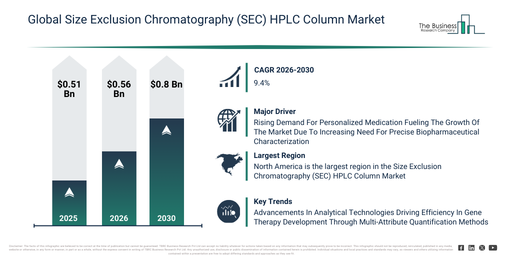
    The size exclusion chromatography (sec) hplc column market has experienced robust expansion in recent years. This market is set to increase from $0.51 billion in 2025 to $0.56 billion in 2026, achieving a compound annual growth rate (CAGR) of 9.7%. The market’s historic growth was primarily influenced by the expansion of polymer characterization studies, a rise in protein analysis applications, increasing pharmaceutical research activity, the wider use of chromatography in academic research, and improvements in column manufacturing techniques.

    The size exclusion chromatography (sec) hplc column market is anticipated to experience robust expansion over the coming years, with projections indicating it will reach $0.8 billion by 2030, demonstrating a compound annual growth rate (CAGR) of 9.4%. This projected growth throughout the forecast period stems from factors such as a heightened demand for biologics characterization, increased investments in analytical instrumentation, the broadening of quality control measures in biopharma manufacturing, the increasing uptake of advanced chromatography workflows, and an intensified focus on analytical precision and consistency. Significant trends expected during this period include a surging demand for high-resolution SEC columns, a rise in the utilization of UHPLC-compatible columns, their increasing integration into biopharmaceutical analysis, the widening application of 2D chromatography, and a strengthened emphasis on column resilience and consistent performance.

    Get A Free Sample Report With In-Depth Market Insights:

    https://thebusinessresearchcompany.com/sample_request?id=83221917&type=smp&name=Size%20Exclusion%20Chromatography%20%28SEC%29%20HPLC%20Column%20Market%20Report%202026&utm_source=Blogs&utm_medium=Paid&utm_campaign=Nov_PR

    Size Exclusion Chromatography (SEC) HPLC Column Market Growth Momentum: What Factors Are Shaping Demand?

    The increasing need for personalized medication is anticipated to propel the growth of the size exclusion chromatography (SEC) HPLC column market. Personalized medication involves adapting medical treatments to an individual’s genetic makeup, lifestyle, and health condition to achieve the most effective and safe outcomes. This growing demand is driven by genetic advancements and the need for more effective, customized therapies. Size exclusion chromatography (SEC) HPLC columns are crucial for precisely analyzing the molecular size and aggregation state of therapeutic proteins, thereby ensuring their safety and efficacy for individualized treatment. The escalating demand for personalized medication will boost the expansion of the size exclusion chromatography (SEC) HPLC column market.

    Size Exclusion Chromatography (SEC) HPLC Column Market Segment Landscape: Which Areas Lead Development?

    The size exclusion chromatography (sec) hplc column market covered in this report is segmented –

    1) By Type: Standard Size Exclusion Chromatography (SEC) Column, High-Resolution Size Exclusion Chromatography (SEC) Column, Ultra-High-Performance Size Exclusion Chromatography (SEC) Column, 2D Size Exclusion Chromatography (SEC) Column

    2) By Material: Solvent-Compatible Stationary Phases, Polymeric Materials, Silica-Based Materials, Modified Silica Particles

    3) By Application: Biopharmaceutical Analysis, Protein Purification, Nucleic Acid Analysis, Polymer Characterization

    4) By End-User: Pharmaceutical Industry, Academic And Research Institutions, Biotechnology Firms, Environmental Testing Laboratories

    Subsegments:

    1) By Standard Size Exclusion Chromatography (SEC) Column: Polymer-Based Columns, Silica-Based Columns, Composite Material Columns, Bio-based Columns

    2) By High-Resolution Size Exclusion Chromatography (SEC) Column: Narrow Pore Size Columns, Medium Pore Size Columns, Wide Pore Size Columns, Monodisperse Particle Columns

    3) By Ultra-High-Performance Size Exclusion Chromatography (SEC) Column: Sub-2 µm Particle Size Columns, Core-Shell Particle Columns, Superficially Porous Particle Columns, High Mechanical Strength Columns

    4) By 2D Size Exclusion Chromatography (SEC) Column: SEC × Reversed Phase Chromatography Columns, SEC × Ion Exchange Chromatography Columns, SEC × Affinity Chromatography Columns, SEC × Hydrophilic Interaction Chromatography (HILIC) Columns

    Size Exclusion Chromatography (SEC) HPLC Column Market Trends: What’s Defining The Industry’s Next Phase?

    Leading firms within the size exclusion chromatography (SEC) HPLC column market are concentrating on creating sophisticated solutions, like multi-attribute quantification methods, to tackle significant obstacles in gene therapy development. Such approaches allow for the concurrent assessment of various characteristics, thereby enhancing analytical accuracy and operational effectiveness.

    Size Exclusion Chromatography (SEC) HPLC Column Market Industry Leaders And Competitive Landscape

    Major companies operating in the size exclusion chromatography (sec) hplc column market are Thermo Fisher Scientific Inc, Danaher Corporation, Agilent Technologies Inc, Sartorius AG, PerkinElmer Inc, Shimadzu Corporation, Waters Corporation, Bio Rad Laboratories Inc, Phenomenex Inc, Tosoh Bioscience LLC, Knauer, JASCO Inc, Sepax Technologies Inc, SIELC Technologies, Eprogen Inc, Wyatt Technology, MZ Analysentechnik GmbH, Merck KGaA, Bruker Corporation, Restek Corporation, GL Sciences Inc

    View The Full Size Exclusion Chromatography (SEC) HPLC Column Market Report:

    https://thebusinessresearchcompany.com/report/size-exclusion-chromatography-sec-hplc-column-global-market-report?utm_source=Blogs&utm_medium=Paid&utm_campaign=Nov_PR

    Size Exclusion Chromatography (SEC) HPLC Column Market Regional Analysis: Which Geography Leads On Revenue?

    North America was the largest region in the size exclusion chromatography (SEC) HPLC column market in 2025. Asia-Pacific is expected to be the fastest-growing region in the forecast period. The regions covered in the size exclusion chromatography (sec) hplc column market report are Asia-Pacific, South East Asia, Western Europe, Eastern Europe, North America, South America, Middle East, Africa.

    Reach Out To Our Team:

    The Business Research Company: https://www.thebusinessresearchcompany.com/

    Americas: +1 310-496-7795

    Asia: +44 7882 955267 & +91 8897263534

    Europe: +44 7882 955267

    Email us at: marketing@tbrc.info

    Follow us on:

    LinkedIn: https://in.linkedin.com/company/the-business-research-company

    YouTube: https://www.youtube.com/channel/UC24_fI0rV8cR5DxlCpgmyFQ

    Global Market Model: https://www.thebusinessresearchcompany.com/global-market-model
  • Sinusitis Treatment Market Growth To $4.1 Billion By 2030: What’s Driving The Expansion?

    Sinusitis Treatment Market Growth To $4.1 Billion By 2030: What’s Driving The Expansion?

    Featuring market attractiveness scoring, total addressable market sizing, company benchmarking matrices, interactive Excel dashboards, deeper supply chain intelligence, emerging startup tracking, and granular product-level insights, The Business Research Company’s 2026 market reports are built to deliver research that is both more actionable and more strategically valuable.

    Sinusitis Treatment Market Size, Value And Growth Trajectory Through 2030

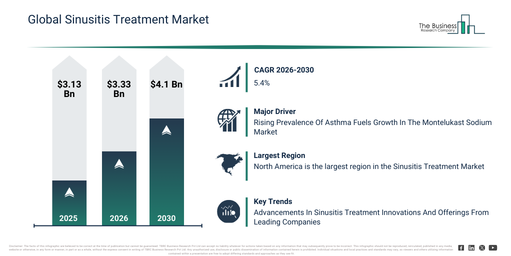
    The sinusitis treatment market has experienced robust growth in recent years. It is projected to expand from $3.13 billion in 2025 to $3.33 billion in 2026, exhibiting a compound annual growth rate (CAGR) of 6.1%. Historically, this growth can be ascribed to the high prevalence of sinusitis, the restricted range of available treatment options, the reliance on corticosteroids, the increasing number of ENT specialty clinics, and the early adoption of minimally invasive procedures.

    The market for sinusitis treatment is projected to experience robust expansion over the coming years. By 2030, this market is anticipated to reach a valuation of $4.1 billion, growing at a compound annual growth rate (CAGR) of 5.4%. This anticipated growth during the forecast period is fueled by several factors, including the advancement of biologics and targeted therapies, a rise in the adoption of balloon sinuplasty, the broadening of outpatient ENT care services, the incorporation of telemedicine, and an increase in programs aimed at raising awareness about chronic rhinosinusitis. Key trends expected throughout this period encompass an upsurge in the use of biologics for chronic sinusitis, a proliferation of balloon sinuplasty procedures, the uptake of steroid-eluting sinus implants, a growing utilization of nasal irrigation devices, and an expansion of telemedicine consultations within ENT.

    Get A Free Sample Report With In-Depth Market Insights:

    https://thebusinessresearchcompany.com/sample_request?id=82822827&type=smp&name=Sinusitis%20Treatment%20Market%20Report%202026&utm_source=Blogs&utm_medium=Paid&utm_campaign=Nov_PR

    Sinusitis Treatment Market Expansion Drivers: What’s Shaping Future Growth?

    A rise in respiratory conditions like asthma is projected to fuel the expansion of the sinusitis treatment market in the future. Asthma is a persistent respiratory ailment marked by airway inflammation and constriction, resulting in repeated bouts of wheezing, breathlessness, chest discomfort, and coughing. The occurrence of asthma is growing attributed to factors such as environmental contamination, allergen contact, inherited susceptibility, increasing urbanization, evolving lifestyles, and respiratory infections. Treatments for sinusitis assist in clearing obstructions and facilitating improved drainage, thereby lessening postnasal drip and lowering the chances of secondary infections impacting the respiratory system. The growing incidence of asthma is a key factor propelling the development of the sinusitis treatment market.

    Sinusitis Treatment Market Segments: Where Is Growth Concentrated?

    The sinusitis treatment market covered in this report is segmented –

    1) By Treatment: Analgesics, Antibiotics, Antihistamines, Surgery, Corticosteroids, Sulfonamides, Quinolones

    2) By Disease Type: Acute Sinusitis, Sub-Acute Sinusitis, Chronic Sinusitis

    3) By Route Of Administration: Topical, Nasal, Oral, Injectable

    4) By Distribution Channel: Online Pharmacies, Retail Pharmacies, Hospital Pharmacies

    Subsegments:

    1) By Analgesics: Over-The-Counter Pain Relievers (Acetaminophen, Ibuprofen), Prescription Pain Medications, Combination Pain Relief Medications (With Decongestants)

    2) By Antibiotics: Penicillin-Based Antibiotics, Cephalosporins, Macrolides (Azithromycin), Fluoroquinolones (Levofloxacin), Aminoglycosides, Broad-Spectrum Antibiotics

    3) By Antihistamines: First-Generation Antihistamines (Diphenhydramine), Second-Generation Antihistamine (Loratadine, Cetirizine), Nasal Antihistamines (Azelastine)

    4) By Surgery: Functional Endoscopic Sinus Surgery (Fess), Balloon Sinuplasty, Sinus Drainage And Removal, Septoplasty (For Structural Issues), Other Surgical Interventions For Chronic Sinusitis

    5) By Corticosteroids: Oral Corticosteroids (Prednisone), Nasal Steroid Sprays (Fluticasone, Budesonide), Topical Corticosteroids For Sinus Inflammation

    6) By Sulfonamides: Sulfamethoxazole Or Trimethoprim (Bactrim), Other Sulfonamide-Based Antibiotics For Sinus Infections

    7) By Quinolones: Ciprofloxacin, Levofloxacin, Moxifloxacin, Other Fluoroquinolones For Sinusitis

    Sinusitis Treatment Market Industry Trends Fueling Future Revenue Growth

    Leading enterprises within the sinusitis treatment market are engineering novel medications, including steroid nasal sprays, with the aim of enhancing effectiveness, mitigating adverse reactions, and providing more user-friendly dosing alternatives. Steroid nasal sprays, also known as corticosteroid sprays, function as anti-inflammatory drugs delivered through the nasal passage to manage a range of conditions.

    Sinusitis Treatment Market Key Participants And Competitive Landscape

    Major companies operating in the sinusitis treatment market are Johnson & Johnson, Pfizer Inc, Bayer AG, GlaxoSmithKline Plc, Teva Pharmaceutical Industries Ltd, Baxter International Inc, Fresenius Kabi AG, Boehringer Ingelheim GmbH, Perrigo Company plc, Dr Reddys Laboratories Ltd, Aurobindo Pharma, Cipla Ltd, Hikma Pharmaceuticals Plc, Apotex Inc, Lupin Pharmaceuticals Inc, Bionorica SE, Wockhardt Ltd, Zydus Cadila Ltd, Intersect ENT Inc, Novartis AG, Sanofi S A, Alembic Pharmaceuticals Ltd, Sun Pharmaceutical Industries Ltd, Glenmark Pharmaceuticals Ltd, Abbott Laboratories

    View The Full Sinusitis Treatment Market Report:

    https://thebusinessresearchcompany.com/report/sinusitis-treatment-global-market-report?utm_source=Blogs&utm_medium=Paid&utm_campaign=Nov_PR

    Sinusitis Treatment Market Geographic Spread And Regional Opportunities

    North America was the largest region in the sinusitis treatment market in 2025. Asia-Pacific is expected to be the fastest-growing region in the forecast period. The regions covered in the sinusitis treatment market report are Asia-Pacific, South East Asia, Western Europe, Eastern Europe, North America, South America, Middle East, Africa.

    Reach Out To Our Team:

    The Business Research Company: https://www.thebusinessresearchcompany.com/

    Americas: +1 310-496-7795

    Asia: +44 7882 955267 & +91 8897263534

    Europe: +44 7882 955267

    Email us at: marketing@tbrc.info

    Follow us on:

    LinkedIn: https://in.linkedin.com/company/the-business-research-company

    YouTube: https://www.youtube.com/channel/UC24_fI0rV8cR5DxlCpgmyFQ

    Global Market Model: https://www.thebusinessresearchcompany.com/global-market-model
  • Single-Use Mixers Market Trends Reshaping Industry Growth Through 2030

    Single-Use Mixers Market Trends Reshaping Industry Growth Through 2030

    Built to provide research that’s more actionable and strategically valuable, The Business Research Company’s 2026 market reports include market attractiveness analysis, total addressable market sizing, company benchmarking matrices, interactive Excel dashboards, broader supply chain intelligence, emerging startup tracking, and in-depth product insights.

    Single-Use Mixers Market CAGR Outlook And Future Development

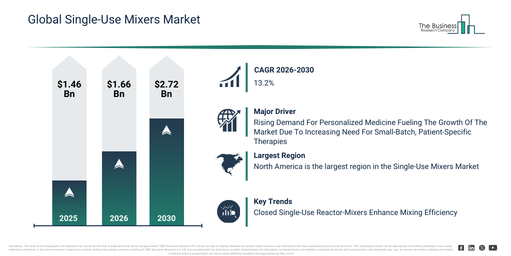
    The single-use mixers market has experienced significant expansion recently. Projections indicate it will expand from $1.46 billion in 2025 to $1.66 billion in 2026, exhibiting a compound annual growth rate (CAGR) of 13.4%. Historically, this growth has been driven by factors such as the expansion of biopharmaceutical manufacturing, the increasing uptake of disposable process equipment, the proliferation of contract manufacturing organizations, the growing need for small-batch production, and innovations in polymer materials.

    The single-use mixers market is projected for significant expansion over the coming years, reaching a valuation of $2.72 billion by 2030, demonstrating a compound annual growth rate (CAGR) of 13.2%. This anticipated growth during the forecast period is driven by factors such as the increasing need for personalized biologics, higher investments in the production of cell and gene therapies, the proliferation of adaptable manufacturing facilities, a heightened emphasis on operational efficiency, and advancements in sustainable single-use components. Key developments expected over the forecast period encompass a wider embrace of single-use bioprocessing systems, an escalating requirement for swift batch turnaround solutions, an intensified commitment to manufacturing free from contamination, the expansion of adaptable and modular production configurations, and improved incorporation of disposable mixing technologies.

    Get A Free Sample Report With In-Depth Market Insights:

    https://thebusinessresearchcompany.com/sample_request?id=63226208&type=smp&name=Single-Use%20Mixers%20Market%20Report%202026&utm_source=Blogs&utm_medium=Paid&utm_campaign=Nov_PR

    Single-Use Mixers Market Development Factors: What’s Supporting Demand?

    The growing need for tailored medical treatments is projected to fuel the expansion of the single-use mixers market in the future. Personalized medicine represents a healthcare strategy focused on customizing therapies for each patient, considering their unique genetic makeup, environmental influences, and lifestyle choices to enhance results and patient care. This demand is escalating because of innovations in genomic technologies, which allow for the accurate detection of genetic differences and the creation of bespoke treatments. Single-use mixers support personalized medicine by offering adaptable, sterile, and effective mixing capabilities, perfectly suited for producing small quantities of patient-specific treatments. These mixers lower the chances of contamination and simplify biomanufacturing operations, thereby boosting the accuracy of treatments and efficiency of production. The expanding need for personalized medicine is propelling the growth of the single-use mixers market.

    Single-Use Mixers Market Segment Analysis: What Are The Core Market Categories?

    The single-use mixers market covered in this report is segmented –

    1) By Product Type: Disposable Mixers, Reusable Mixers

    2) By Material: Polypropylene, Polyethylene, Polycarbonate, Glass, Stainless Steel

    3) By Distribution Channel: Online Retail, Offline Retail, Wholesale

    4) By Application: Biopharmaceutical Manufacturing, Pharmaceutical, Food And Beverage, Chemical, Other Applications

    5) By End-User: Food And Beverage Industry, Healthcare, Household Consumers

    Subsegments:

    1) By Disposable Mixers: Magnetic Drive Mixers, Levitated Impeller Mixers, Rocking Motion Mixers, Overhead Impeller Mixers, Recirculation Jet Mixers, Static Inline Mixers, Paddle Mixers, Tumbler Drum Mixers

    2) By Reusable Mixers: Top Entry Agitators, Bottom Entry Magnetic Mixers, Side Entry Agitators, High Shear Mixers, Planetary Mixers, Anchor Agitator Mixers, Turbine Agitator Mixers

    Single-Use Mixers Market Trends Powering Strategic Industry Growth

    Leading companies in the single-use mixers market are prioritizing the development of advanced products, such as closed single-use reactor-mixers, to enhance efficiency, guarantee sterility, and streamline biomanufacturing operations. A closed single-use reactor-mixer refers to a disposable mixing system where the mixing process occurs within a sealed, pre-sterilized bag or chamber, thereby preventing environmental exposure.

    Single-Use Mixers Market Top Companies Driving Competitive Growth

    Major companies operating in the single-use mixers market are Thermo Fisher Scientific Inc., Danaher Corporation, Merck KGaA, Avantor Inc., Sartorius AG, Repligen Corporation, LePure Biotech LLC, Tofflon Science and Technology Group Co. Ltd., ABEC Inc., Ami Polymer Pvt. Ltd., Morimatsu LifeSciences Co. Ltd., Dr. Mueller AG, Meissner Filtration Products Inc., BioLink-BioHub Single-Use Mixing Systems, Hangzhou Cobetter Filtration Co. Ltd., PharmNXT Biotech, White Mountain Process, BioPulse Solutions, Tezalon Biotech, Pall Corporation

    View The Full Single-Use Mixers Market Report:

    https://thebusinessresearchcompany.com/report/global-single-use-mixers-market-report?utm_source=Blogs&utm_medium=Paid&utm_campaign=Nov_PR

    Single-Use Mixers Market Top Region By Revenue And Market Share

    North America was the largest region in the single-use mixers market in 2025. Asia-Pacific is expected to be the fastest-growing region in the forecast period. The regions covered in the single-use mixers market report are Asia-Pacific, South East Asia, Western Europe, Eastern Europe, North America, South America, Middle East, Africa.

    Reach Out To Our Team:

    The Business Research Company: https://www.thebusinessresearchcompany.com/

    Americas: +1 310-496-7795

    Asia: +44 7882 955267 & +91 8897263534

    Europe: +44 7882 955267

    Email us at: marketing@tbrc.info

    Follow us on:

    LinkedIn: https://in.linkedin.com/company/the-business-research-company

    YouTube: https://www.youtube.com/channel/UC24_fI0rV8cR5DxlCpgmyFQ

    Global Market Model: https://www.thebusinessresearchcompany.com/global-market-model
  • Single-Molecule Real-Time Sequencing (SMRT) Market Growth To $4.9 Billion Creates New Opportunities Across The Industry

    Single-Molecule Real-Time Sequencing (SMRT) Market Growth To $4.9 Billion Creates New Opportunities Across The Industry

    Backed by market attractiveness analysis, total addressable market sizing, company benchmarking matrices, interactive Excel dashboards, wider supply chain intelligence, emerging startup coverage, and detailed product-level insights, The Business Research Company’s 2026 market reports are designed to offer research that is more actionable and strategically valuable than ever.

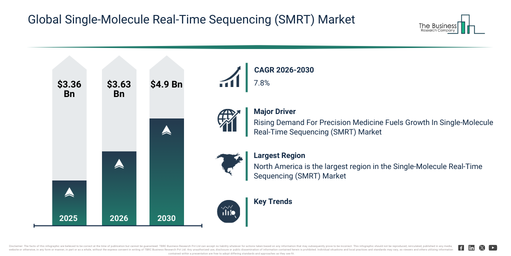
    Single-Molecule Real-Time Sequencing (SMRT) Market Set To Climb From $3.63 Billion In 2026 To $4.9 Billion By 2030

    The single-molecule real-time sequencing (smrt) market size has experienced robust expansion over recent years. This market is projected to expand from $3.36 billion in 2025 to $3.63 billion in 2026, demonstrating a compound annual growth rate (CAGR) of 8.1%. Historically, this growth has been driven by several factors, including the proliferation of genomic research initiatives, a rise in the uptake of next-generation sequencing platforms, increasing requirements for whole genome sequencing, escalating investments in life sciences research, and continuous improvements in sequencing chemistry.

    The single-molecule real-time sequencing (smrt) market is anticipated to experience substantial expansion in the coming years, with projections indicating it will reach $4.9 billion by 2030, driven by a compound annual growth rate (CAGR) of 7.8%. This growth during the forecast period can be attributed to several factors, including the increased application of precision medicine approaches, a rising demand for population-scale genomics, the broadening scope of clinical genomics applications, the expanding integration of AI-driven bioinformatics, and a notable increase in funding for advanced sequencing technologies. Furthermore, key developments expected in this period involve the rising adoption of long-read sequencing technologies, the increasing utilization of smrt sequencing for identifying structural variants, a growing need for highly accurate epigenetic analysis, the broadening of real-time sequencing workflows, and a greater emphasis on resolving complex genomes.

    Get A Free Sample Report With In-Depth Market Insights:

    https://thebusinessresearchcompany.com/sample_request?id=93126452&type=smp&name=Single-Molecule%20Real-Time%20Sequencing%20%28SMRT%29%20Market%20Report%202026&utm_source=Blogs&utm_medium=Paid&utm_campaign=Nov_PR

    Single-Molecule Real-Time Sequencing (SMRT) Market Industry Drivers: What’s Behind The Revenue Growth?

    The increasing need for precision medicine is anticipated to fuel the expansion of the single-molecule real-time sequencing (SMRT) market moving forward. This approach, also known as personalized medicine, involves customizing treatment and healthcare plans for individuals, taking into account their unique genetic makeup, environmental influences, and lifestyle choices. The heightened call for personalized medicine stems from breakthroughs in genomic technologies, which facilitate more exact and customized treatments, alongside an increased focus on individual patient care to achieve superior results. Single-molecule real-time sequencing (SMRT) plays a crucial role in advancing precision medicine by offering precise and comprehensive genomic and epigenetic data, thereby enabling improved diagnosis, tailored treatments, and better patient outcomes. The escalating demand for precision medicine is a key factor propelling growth in the single-molecule real-time sequencing (SMRT) market.

    Single-Molecule Real-Time Sequencing (SMRT) Market Segment Breakdown: Which Categories Lead On Revenue?

    The single-molecule real-time sequencing (smrt) market covered in this report is segmented –

    1) By Product: Consumable, Instrument, Services

    2) By Application: DNA Sequencing, RNA Sequencing, Epigenetics, Whole Genome Sequencing, Other Applications

    3) By End-Users: Hospitals, Diagnostic Laboratories, Biopharmaceutical Companies, Academic Institutes And Research Centers, Other End-Users

    Subsegments:

    1) By Consumable: Reagents, Sample Preparation Kits, Flow Cells

    2) By Instrument: SMRT Sequencers, Accessories, Software

    3) By Services: Data Analysis Services, Sequencing Services, Technical Support Services

    Single-Molecule Real-Time Sequencing (SMRT) Market Leading Players And Competitive Positioning

    Major companies operating in the single-molecule real-time sequencing (smrt) market are Thermo Fisher Scientific Inc., Illumina Inc., Qiagen N.V., BGI Group, 10x Genomics Inc., Ginkgo Bioworks Inc., Oxford Nanopore Technologies Limited, Genewiz Inc., Pacific Biosciences of California Inc., Macrogen Inc., Element Biosciences Inc., Asuragen Inc., BioNano Genomics Inc., Zymo Research Corporation, Dovetail Genomics LLC, SeqWell Inc., Paragon Genomics Inc., Nabsys Inc., Eurofins Scientific SE, Novogene Corporation

    View The Full Single-Molecule Real-Time Sequencing (SMRT) Market Report:

    https://thebusinessresearchcompany.com/report/single-molecule-real-time-sequencing-smrt-global-market-report?utm_source=Blogs&utm_medium=Paid&utm_campaign=Nov_PR

    Single-Molecule Real-Time Sequencing (SMRT) Market Regional Analysis And Top Geography

    North America was the largest region in the single-molecule real-time sequencing (SMRT) market in 2025. The regions covered in the single-molecule real-time sequencing (smrt) market report are Asia-Pacific, South East Asia, Western Europe, Eastern Europe, North America, South America, Middle East, Africa.

    Reach Out To Our Team:

    The Business Research Company: https://www.thebusinessresearchcompany.com/

    Americas: +1 310-496-7795

    Asia: +44 7882 955267 & +91 8897263534

    Europe: +44 7882 955267

    Email us at: marketing@tbrc.info

    Follow us on:

    LinkedIn: https://in.linkedin.com/company/the-business-research-company

    YouTube: https://www.youtube.com/channel/UC24_fI0rV8cR5DxlCpgmyFQ

    Global Market Model: https://www.thebusinessresearchcompany.com/global-market-model
  • Single-Cell Protein Market Forecast: Breaking Down The Numbers Behind Future Expansion

    Single-Cell Protein Market Forecast: Breaking Down The Numbers Behind Future Expansion

    Featuring market attractiveness scoring, total addressable market sizing, company benchmarking matrices, interactive Excel dashboards, deeper supply chain intelligence, emerging startup tracking, and granular product-level insights, The Business Research Company’s 2026 market reports are built to deliver research that is both more actionable and more strategically valuable.

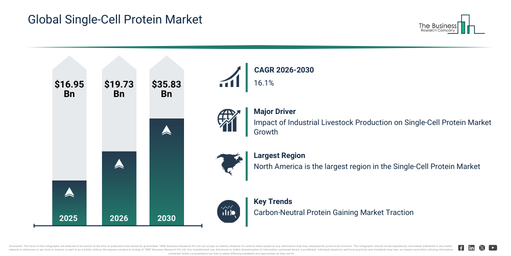
    Single-Cell Protein Market Forecast: Value Set To Climb From $19.73 Billion To $35.83 Billion

    The single-cell protein market has experienced rapid expansion in recent years. It is projected to grow from $16.95 billion in 2025 to $19.73 billion in 2026, achieving a compound annual growth rate (CAGR) of 16.4%. The historical growth of this market can be attributed to several factors: rising global protein demand, the expansion of fermentation-based food production, an increasing use of microbial biomass in feed, growing interest in alternative protein sources, and the availability of industrial fermentation infrastructure.

    The single-cell protein market is anticipated to undergo significant expansion in the coming years. This market is projected to reach $35.83 billion by 2030, exhibiting a compound annual growth rate (CAGR) of 16.1%. The growth over the forecast period is primarily driven by increasing adoption in human food products, rising investments in sustainable food technologies, the expansion of circular bioeconomy initiatives, growing regulatory support for novel proteins, and an increasing demand for low-carbon protein solutions. Key trends during this period include the wider acceptance of microbial protein fermentation, a rising demand for sustainable protein alternatives, the growing utilization of waste-based feedstocks, the expansion of scp applications in animal nutrition, and an enhanced focus on scalable protein production.

    Get A Free Sample Report With In-Depth Market Insights:

    https://thebusinessresearchcompany.com/sample_request?id=97007123&type=smp&name=Single-Cell%20Protein%20Market%20Report%202026&utm_source=Blogs&utm_medium=Paid&utm_campaign=Nov_PR

    Single-Cell Protein Market Growth Factors: What’s Supporting Expansion?

    The future expansion of the single-cell protein market is anticipated, driven by the rising industrial livestock production. This involves the rearing of animals such as cattle, pigs, and poultry to produce food, fiber, and various other goods that satisfy market needs. Its significance lies in fulfilling worldwide food requirements, bolstering rural economies, and supplying resources like meat, milk, and leather. Furthermore, livestock production facilitates the advancement of single-cell proteins by supplying organic waste, including manure and agricultural residues. These materials act as substrates for microbial growth, thereby allowing the cultivation of single-cell organisms for use as sustainable protein sources. The expanding industrial livestock production acts as a catalyst for the growth of the single-cell protein market.

    Single-Cell Protein Market Segmentation: How Does The Market Break Down By Category?

    The single-cell protein market covered in this report is segmented –

    1) By Species: Algae, Fungi, Bacteria, Yeast

    2) By Feedstock: Organic, Conventional

    3) By Application: Food And Beverages, Dietary Supplements, Animal Feed, Pharmaceuticals, Cosmetics, Other Applications

    Subsegments:

    1) By Algae: Spirulina, Chlorella, Dunaliella

    2) By Fungi: Mycoprotein, Edible Mushrooms, Filamentous Fungi Proteins

    3) By Bacteria: Methylophilus Methylotrophus, Propionibacterium Spp., Rhizobium Spp.

    4) By Yeast: Saccharomyces Cerevisiae, Candida Utilis, Kluyveromyces Marxianus

    Single-Cell Protein Market Trends Shaping Long-Term Demand

    Major companies operating in the single cell protein market are concentrating on technological advancements, such as precision microbial fermentation, to obtain a competitive advantage. Precision microbial fermentation refers to the controlled cultivation of selected microorganisms (like yeast, bacteria, or fungi) in bioreactors utilizing defined feedstock, efficiently generating protein-rich biomass.

    Single-Cell Protein Market Competitive Overview And Top Companies

    Major companies operating in the single-cell protein market are Cargill Incorporated, Archer Daniels Midland Company, Evonik Industries AG, Koninklijke DSM N.V., Nutreco N.V., Green Plains Inc., GNC Holdings Inc., Novozymes A/S, Angel Yeast Co. Ltd., Lallemand Inc., Chr. Hansen Holding A/S, Marlow Foods Ltd., Cyanotech Corporation, Novus Biologicals LLC, TerraVia Holdings Inc., Calysta Inc., Algatechnologies Ltd, Mara Renewables Corporation, KnipBio Inc., Deep Branch Biotechnology Ltd., Solar Foods, BioProcess Algae LLC, Blue Bio Tech International GmbH, Unibio A/S, Willows Ingredients Ltd.

    View The Full Single-Cell Protein Market Report:

    https://thebusinessresearchcompany.com/report/single-cell-protein-global-market-report?utm_source=Blogs&utm_medium=Paid&utm_campaign=Nov_PR

    Single-Cell Protein Market Geographic Analysis: Where Is Demand Rising Fastest?

    North America was the largest region in the single-cell protein market in 2025. The regions covered in the single-cell protein market report are Asia-Pacific, South East Asia, Western Europe, Eastern Europe, North America, South America, Middle East, Africa.

    Reach Out To Our Team:

    The Business Research Company: https://www.thebusinessresearchcompany.com/

    Americas: +1 310-496-7795

    Asia: +44 7882 955267 & +91 8897263534

    Europe: +44 7882 955267

    Email us at: marketing@tbrc.info

    Follow us on:

    LinkedIn: https://in.linkedin.com/company/the-business-research-company

    YouTube: https://www.youtube.com/channel/UC24_fI0rV8cR5DxlCpgmyFQ

    Global Market Model: https://www.thebusinessresearchcompany.com/global-market-model