Author: Marketing Posting

  • Quadriplegia Treatment Market Expected To Grow At 6.9% CAGR Through 2030: What Businesses Need To Know

    Quadriplegia Treatment Market Expected To Grow At 6.9% CAGR Through 2030: What Businesses Need To Know

    Built to provide research that’s more actionable and strategically valuable, The Business Research Company’s 2026 market reports include market attractiveness analysis, total addressable market sizing, company benchmarking matrices, interactive Excel dashboards, broader supply chain intelligence, emerging startup tracking, and in-depth product insights.

    Quadriplegia Treatment Market CAGR Outlook And Future Development

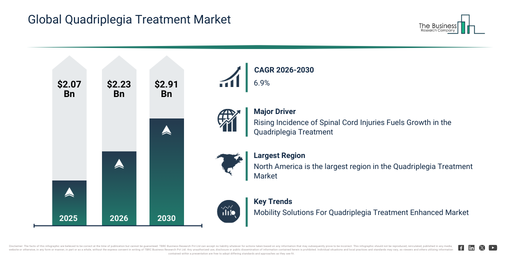
    The quadriplegia treatment market size has demonstrated significant growth over recent years. It is anticipated to increase from $2.07 billion in 2025 to $2.23 billion in 2026, achieving a compound annual growth rate (CAGR) of 7.9%. Historically, this expansion can be attributed to several factors including a higher occurrence of spinal cord injuries, the proliferation of rehabilitation centers, the availability of pharmacological solutions for pain management, heightened awareness regarding long-term care necessities, and enhanced access to mobility aids.

    The quadriplegia treatment market size is anticipated to experience substantial growth in the coming years. This market is projected to reach $2.91 billion by 2030, exhibiting a compound annual growth rate (CAGR) of 6.9%. Several factors contribute to this growth during the forecast period, including the increased embrace of neurorehabilitation technologies, a heightened need for home-based care solutions, the broadening of digital health platforms, a greater emphasis on enhancing patient quality of life, and boosted investments in assistive technology innovation. Key trends expected during this period encompass the growing acceptance of advanced rehabilitation technologies, an uptick in the utilization of assistive and mobility devices, the expanding incorporation of digital therapy and remote monitoring, the proliferation of multidisciplinary treatment approaches, and a stronger emphasis on individualized pain and spasticity management.

    Get A Free Sample Report With In-Depth Market Insights:

    https://thebusinessresearchcompany.com/sample_request?id=99168507&type=smp&name=Quadriplegia%20Treatment%20Market%20Report%202026&utm_source=Blogs&utm_medium=Paid&utm_campaign=Nov_PR

    Quadriplegia Treatment Market Opportunity Drivers: What’s Unlocking New Revenue Potential?

    The increasing occurrence of spinal cord injuries (SCIs) is projected to boost the expansion of the quadriplegia treatment market in the future. These injuries involve harm to the spinal cord due to trauma or illness, frequently leading to diminished mobility, feeling, or motor control beneath the point of injury. An uptick in SCI occurrences stems from causes like traffic accidents, tumbles, sports-related harm, and acts of violence. The objective of quadriplegia treatment is to regain functional autonomy and enhance the standard of living via methods such as rehabilitation, supportive technologies, nerve stimulation, and medical care.

    Quadriplegia Treatment Market Segment Outlook: Which Categories Are Growing Fastest?

    The quadriplegia treatment market covered in this report is segmented –

    1) By Treatment Type: Corticosteroids, Non-Steroidal Anti-Inflammatory Drugs (NSAIDs), Antidepressants, Anticonvulsants, Narcotic Analgesics, Antispasmodics And Muscle Relaxants, Antibiotics

    2) By Route Of Administration: Oral, Intravenous, Other Routes Of Administration

    3) By Distribution Channel: Online Stores, Drug Stores, Retail Pharmacies, Hospital Pharmacies

    Subsegments:

    1) By Corticosteroids: Methylprednisolone, Prednisone, Dexamethasone

    2) By Non-Steroidal Anti-Inflammatory Drugs (NSAIDs): Ibuprofen, Naproxen, Aspirin

    3) By Antidepressants: Tricyclic Antidepressants, Selective Serotonin Reuptake Inhibitors (SSRIs), Serotonin And Norepinephrine Reuptake Inhibitors (SNRIs)

    4) By Anticonvulsants: Gabapentin, Pregabalin, Carbamazepine

    5) By Narcotic Analgesics: Morphine, Fentanyl, Oxycodone

    6) By Antispasmodics And Muscle Relaxants: Baclofen, Tizanidine, Cyclobenzaprine

    7) By Antibiotics: Broad-Spectrum Antibiotics, Infection-Specific Antibiotics

    Quadriplegia Treatment Market Innovation Trends: What Developments Are Reshaping The Industry?

    Leading companies within the quadriplegia treatment market are developing novel solutions, such as wireless tongue-controlled interfaces, aimed at improving patient mobility and autonomy. These interfaces in quadriplegia treatment empower individuals to manage devices or communicate through precise tongue movements, thereby elevating their independence and overall quality of life.

    Quadriplegia Treatment Market Leading Companies And Competitive Benchmarking

    Major companies operating in the quadriplegia treatment market are Johnson And Johnson Services Inc., Merck And Co., Sanofi S.A., Bristol Myers Squibb Co., AstraZeneca plc, Abbott Laboratories, GlaxoSmithKline plc, Roche Holdings Inc., Takeda Pharmaceutical Co Ltd, Medtronic plc, Eli Lilly And Co., Koninklijke Philips NV, Stryker Corporation, Teva Pharmaceutical Industries Ltd., Baxter International, Zimmer Biomet Holdings Inc., Sun Pharmaceutical Industries Limited, Cipla Ltd, Ottobock SE And Co. KGaA, Zydus Lifesciences Ltd., Invacare Corporation, Sunrise Medical Company Private Limited, Pride Mobility Products Corp., Pfizer Inc., Novartis AG

    View The Full Quadriplegia Treatment Market Report:

    https://thebusinessresearchcompany.com/report/quadriplegia-treatment-global-market-report?utm_source=Blogs&utm_medium=Paid&utm_campaign=Nov_PR

    Quadriplegia Treatment Market Geographic Spread And Regional Opportunities

    North America was the largest region in the quadriplegia treatment market in 2025. The regions covered in the quadriplegia treatment market report are Asia-Pacific, South East Asia, Western Europe, Eastern Europe, North America, South America, Middle East, Africa.

    Reach Out To Our Team:

    The Business Research Company: https://www.thebusinessresearchcompany.com/

    Americas: +1 310-496-7795

    Asia: +44 7882 955267 & +91 8897263534

    Europe: +44 7882 955267

    Email us at: marketing@tbrc.info

    Follow us on:

    LinkedIn: https://in.linkedin.com/company/the-business-research-company

    YouTube: https://www.youtube.com/channel/UC24_fI0rV8cR5DxlCpgmyFQ

    Global Market Model: https://www.thebusinessresearchcompany.com/global-market-model
  • Q Switched Ruby Laser Treatments Market Forecast To Reach $27.67 Billion By 2030: Key Trends Explained

    Q Switched Ruby Laser Treatments Market Forecast To Reach $27.67 Billion By 2030: Key Trends Explained

    Backed by market attractiveness analysis, total addressable market sizing, company benchmarking matrices, interactive Excel dashboards, wider supply chain intelligence, emerging startup coverage, and detailed product-level insights, The Business Research Company’s 2026 market reports are designed to offer research that is more actionable and strategically valuable than ever.

    Q Switched Ruby Laser Treatments Market Set To Climb From $18.57 Billion In 2026 To $27.67 Billion By 2030

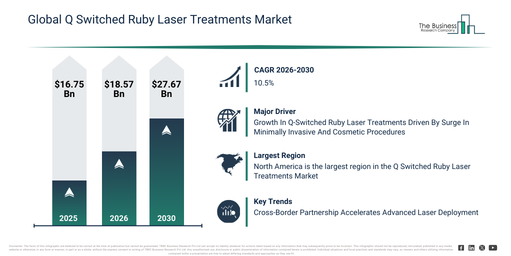
    The q switched ruby laser treatments market size has experienced rapid expansion in recent years. It is projected to increase from $16.75 billion in 2025 to $18.57 billion in 2026, exhibiting a compound annual growth rate (CAGR) of 10.8%. Historically, this growth can be ascribed to an increase in aesthetic medicine procedures, greater awareness of non-invasive skin treatments, the expansion of dermatology and cosmetic clinics, advancements in laser energy delivery systems, and a rising demand for pigmentation correction.

    The q switched ruby laser treatments market size is poised for significant expansion over the next few years. It is forecast to reach $27.67 billion by 2030, exhibiting a compound annual growth rate (CAGR) of 10.5%. This growth during the forecast period is primarily driven by the increasing integration of advanced aesthetic laser systems, the rising preference for minimally invasive cosmetic procedures, the proliferation of medical aesthetics clinics in nascent markets, a heightened focus on laser technologies that are safe for the skin, and the broader application of combination laser therapies. Noteworthy trends predicted for this period include the escalating adoption of laser-based pigmentation treatments, a surging demand for tattoo removal processes, expanding usage within dermatology clinics, the development of multi-wavelength laser platforms, and a sharpened emphasis on the precision and safety of treatments.

    Get A Free Sample Report With In-Depth Market Insights:

    https://thebusinessresearchcompany.com/sample_request?id=42060378&type=smp&name=Q%20Switched%20Ruby%20Laser%20Treatments%20Market%20Report%202026&utm_source=Blogs&utm_medium=Paid&utm_campaign=Nov_PR

    Q Switched Ruby Laser Treatments Market Growth Momentum: What Factors Are Shaping Demand?

    The increasing need for minimally invasive and cosmetic procedures is anticipated to fuel the expansion of the Q-switched ruby laser treatments market in the future. These procedures involve various medical interventions aimed at improving appearance and aesthetic results with minimal physical disruption. The growing requirement for such procedures stems from a preference for non-surgical alternatives and greater public knowledge disseminated by media. These influences also heighten the acceptance and desirability of minimally invasive treatments. Q-switched ruby laser treatments cater to this escalating demand for minimally invasive and cosmetic procedures by providing effective solutions for skin conditions like pigmentation and tattoos, characterized by quick recovery and fewer adverse effects.

    Q Switched Ruby Laser Treatments Market Segment Landscape: Which Areas Lead Development?

    The q switched ruby laser treatments market covered in this report is segmented –

    1) By Laser Configuration: Standard Q-Switched Ruby Laser Systems, High-Pulse Energy Q-Switched Ruby Laser Systems, Compact Or Portable Q-Switched Ruby Laser Systems

    2) By Pulse And Technical Characteristics: Single-Pulse Q-Switched Ruby Lasers, Multi-Pulse Or Repetition-Controlled Q-Switched Ruby Lasers, High-Peak-Power Short-Pulse Ruby Lasers

    3) By Application: Pigmented Lesions Treatment, Tattoo Removal, Selective Melasma Treatment (Pigment-Focused Cases Only), Other Pigment-Related Dermatological Treatments

    4) By Treatment Setting: Dermatology Clinics, Aesthetic & Cosmetic Laser Centers, Hospital-Based Dermatology Departments

    5) By End User: Hospitals, Specialty Dermatology Centers, Aesthetic Clinics, Other End Users

    Subsegments:

    1) By Standard Q-Switched Ruby Laser Systems: Fixed-console Q-switched ruby laser platforms, Single-wavelength 694 nm clinical systems, Conventional pulse-energy ruby laser systems, Clinic-based stationary ruby laser units

    2) By High-Pulse Energy Q-Switched Ruby Laser Systems: High-peak-power ruby laser systems, Deep-pigment penetration ruby lasers, Tattoo-focused high-energy ruby platforms, Enhanced pulse-stability ruby laser systems

    3) By Compact And Portable Q-Switched Ruby Laser Systems: Space-efficient compact ruby laser systems, Portable clinic-use Q-switched ruby lasers, Mobile dermatology ruby laser platforms, Lightweight ruby laser systems for outpatient settings

    Q Switched Ruby Laser Treatments Market Trends: What’s Defining The Industry’s Next Phase?

    Major companies operating in the Q-switched ruby laser treatments market are increasingly adopting a strategic partnership approach to improve technology integration and broaden their market reach. A strategic partnership generally signifies a cooperative relationship between two or more organizations, where they combine their resources, expertise, and efforts to achieve mutual goals or objectives. For example, in August 2025, Primelaze, an India-based medical aesthetics and laser technology company, initiated a strategic collaboration with Hypertech Laser Systems (HLS), a Germany-based dermatological laser manufacturer, to introduce cutting-edge Q-switched laser technology in India. This launch includes two advanced platforms, BiAxis QS (Nano) and BiAxis Pico, both Q-switched Nd:YAG systems specifically engineered to offer greater precision, improved safety, and expanded clinical versatility across all skin phototypes.

    Q Switched Ruby Laser Treatments Market Industry Leaders And Competitive Landscape

    Major companies operating in the q switched ruby laser treatments market are DEKA Laser, Quanta System, Asclepion Laser Technologies, Candela Medical, Cynosure, Lumenis, Syneron Medical, Nidek, Ellex Medical, Guilin Woodpecker, Wontech, Lutronic, Union Medical, ADSS Laser, Jeisys Medical, Eunsung Global, KLS Martin, Biotec Italia, Laseroptek, Hoya ConBio

    View The Full Q Switched Ruby Laser Treatments Market Report:

    https://thebusinessresearchcompany.com/report/q-switched-ruby-laser-treatments-global-market-report?utm_source=Blogs&utm_medium=Paid&utm_campaign=Nov_PR

    Q Switched Ruby Laser Treatments Market Top Region By Revenue And Market Share

    North America was the largest region in the Q switched ruby laser treatments market in 2025. Europe is expected to be the fastest-growing region in the forecast period. The regions covered in the q switched ruby laser treatments market report are Asia-Pacific, South East Asia, Western Europe, Eastern Europe, North America, South America, Middle East, Africa.

    Reach Out To Our Team:

    The Business Research Company: https://www.thebusinessresearchcompany.com/

    Americas: +1 310-496-7795

    Asia: +44 7882 955267 & +91 8897263534

    Europe: +44 7882 955267

    Email us at: marketing@tbrc.info

    Follow us on:

    LinkedIn: https://in.linkedin.com/company/the-business-research-company

    YouTube: https://www.youtube.com/channel/UC24_fI0rV8cR5DxlCpgmyFQ

    Global Market Model: https://www.thebusinessresearchcompany.com/global-market-model
  • Pyrogen Testing Market Analysis Through 2030: Market Size, Growth Trends And Industry Outlook

    Pyrogen Testing Market Analysis Through 2030: Market Size, Growth Trends And Industry Outlook

    Featuring market attractiveness scoring, total addressable market sizing, company benchmarking matrices, interactive Excel dashboards, deeper supply chain intelligence, emerging startup tracking, and granular product-level insights, The Business Research Company’s 2026 market reports are built to deliver research that is both more actionable and more strategically valuable.

    Pyrogen Testing Market Forecast: Value Set To Climb From $2.16 Billion To $3.42 Billion

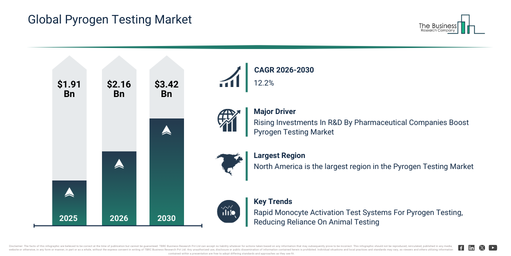
    The pyrogen testing market has seen considerable expansion in recent years. It is anticipated to expand from $1.91 billion in 2025 to $2.16 billion in 2026, registering a compound annual growth rate (CAGR) of 13.0%. The primary drivers for its historical growth include the increasing capacity of pharmaceutical manufacturing, a rise in the production of injectable medications and vaccines, regulatory requirements for pyrogen testing, the continued reliance on LAL-based assays, and the progress in biologics development.

    The pyrogen testing market is poised for significant expansion in the coming years. This market is projected to reach $3.42 billion by 2030, exhibiting a compound annual growth rate (CAGR) of 12.2%. Factors contributing to this anticipated growth include the greater uptake of rFC and MAT assays, increasing financial commitments to biopharmaceutical research and development, the broadening scope of cell and gene therapy production, a heightened emphasis on testing solutions that do not involve animals, and the growing integration of automation within quality control laboratories. Key trends during this period are expected to encompass the increased use of recombinant and in vitro pyrogen tests, a notable move away from animal-derived testing approaches, a surging need for swift and highly sensitive detection assays, the proliferation of automated endotoxin testing equipment, and a stronger emphasis on adhering to regulatory standards in biopharmaceutical production.

    Get A Free Sample Report With In-Depth Market Insights:

    https://thebusinessresearchcompany.com/sample_request?id=62506941&type=smp&name=Pyrogen%20Testing%20Market%20Report%202026&utm_source=Blogs&utm_medium=Paid&utm_campaign=Nov_PR

    Pyrogen Testing Market Expansion Drivers: What’s Shaping Future Growth?

    Increased research and development (R&D) spending by pharmaceutical and biotechnology firms is projected to boost the growth of the pyrogen testing market. This testing involves evaluating drugs and biologics to ensure they are free from fever-inducing contaminants, such as endotoxins, which is crucial for safe product manufacturing. The rise in R&D expenditures is primarily driven by the need to develop advanced therapies and biologics that demand rigorous quality control and safety assessments. Pyrogen testing, by verifying the safety and regulatory compliance of new drugs and biologics, encourages pharmaceutical and biotechnology companies to invest more in R&D, fostering the confident development of innovative treatments.

    Pyrogen Testing Market Segments: Where Is Growth Concentrated?

    The pyrogen testing market covered in this report is segmented –

    1) By Test Type: LAL Test, In Vitro Test, Rabbit Test

    2) By Product And Service: Assays, Kits, And Reagents, Instruments, Services

    3) By Application: Pharmaceutical And Biologics, Medical Devices, Other Applications

    Subsegments:

    1) By Test Limulus Amebocyte Lysate (LAL) Test: Gel Clot LAL Test, Chromogenic LAL Test, Turbidimetric LAL Test

    2) By In Vitro Test: Monocyte Activation Test (MAT), Recombinant Factor C (rFC) Assay, Other In Vitro Tests

    3) By Rabbit Test: Pyrogen Test in Rabbits, Other Animal-Based Tests

    Pyrogen Testing Market Industry Trends Fueling Future Revenue Growth

    Key players in the pyrogen testing market are creating advanced products, like sustainable monocyte activation test (MAT) systems, to boost their business offerings and expand market presence. The monocyte activation test (MAT) System itself is an in vitro assay utilized for pyrogen testing within the biopharmaceutical and medical device industries.

    Pyrogen Testing Market Key Participants And Competitive Landscape

    Major companies operating in the pyrogen testing market are Thermo Fisher Scientific Inc., Merck KGaA, Charles River Laboratories Inc., Lonza Group Ltd., Ellab A S, Nelson Laboratories LLC, Associates of Cape Cod Inc., GenScript Biotech Corporation, bioMerieux SA, Hyglos GmbH, Wako Chemicals USA Inc., Pyrostar International Inc., Eurofins Scientific SE, SGS SA, WuXi AppTec Group, Sigma Aldrich Co. LLC, Bio Rad Laboratories Inc., Microcoat Biotechnologie GmbH, Sartorius AG, Pacific Biolabs Inc., Toxikon Corporation, STERIS Corporation, Avance Biosciences Inc., BioReliance Corporation, Microbiological Consulting LLC, Microbac Laboratories Inc., North American Science Associates Inc., Pace Analytical Life Sciences LLC

    View The Full Pyrogen Testing Market Report:

    https://thebusinessresearchcompany.com/report/pyrogen-testing-global-market-report?utm_source=Blogs&utm_medium=Paid&utm_campaign=Nov_PR

    Pyrogen Testing Market Regional Analysis And Top Geography

    North America was the largest region in the pyrogen testing market in 2025. Asia-Pacific is expected to continue to be the fastest growing region in the pyrogen testing market share during the forecast period. The regions covered in the pyrogen testing market report are Asia-Pacific, South East Asia, Western Europe, Eastern Europe, North America, South America, Middle East, Africa.

    Reach Out To Our Team:

    The Business Research Company: https://www.thebusinessresearchcompany.com/

    Americas: +1 310-496-7795

    Asia: +44 7882 955267 & +91 8897263534

    Europe: +44 7882 955267

    Email us at: marketing@tbrc.info

    Follow us on:

    LinkedIn: https://in.linkedin.com/company/the-business-research-company

    YouTube: https://www.youtube.com/channel/UC24_fI0rV8cR5DxlCpgmyFQ

    Global Market Model: https://www.thebusinessresearchcompany.com/global-market-model
  • Push-To-Talk Telemedicine And mHealth Convergence Market Outlook From 2026 To 2030: Key Growth Factors And Future Opportunities

    Push-To-Talk Telemedicine And mHealth Convergence Market Outlook From 2026 To 2030: Key Growth Factors And Future Opportunities

    Built to provide research that’s more actionable and strategically valuable, The Business Research Company’s 2026 market reports include market attractiveness analysis, total addressable market sizing, company benchmarking matrices, interactive Excel dashboards, broader supply chain intelligence, emerging startup tracking, and in-depth product insights.

    Push-To-Talk Telemedicine And mHealth Convergence Market Revenue Growth On Track For A 15% CAGR Through 2030

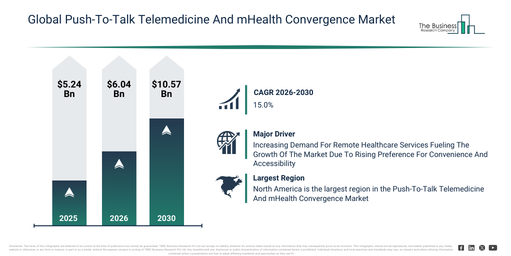
    The push-to-talk telemedicine and mhealth convergence market size has seen substantial growth in recent years. It is anticipated to expand from $5.24 billion in 2025 to $6.04 billion by 2026, demonstrating a compound annual growth rate (CAGR) of 15.3%. This historical expansion can be linked to several factors, including the increasing use of mobile devices in healthcare, the wider deployment of telemedicine services in rural communities, a rising need for prompt clinical communication, the increasing demand for chronic disease monitoring, and the adoption of secure tools for healthcare communication.

    The push-to-talk telemedicine and mhealth convergence market is poised for significant expansion in the coming years, projected to reach $10.57 billion by 2030, exhibiting a compound annual growth rate (CAGR) of 15.0%. This anticipated growth during the forecast period is propelled by factors such as a surge in investments within connected healthcare ecosystems, a heightened need for immediate patient interaction, the broadening of care models enabled by wearables, a sharpened emphasis on emergency telehealth services, and the incorporation of AI-powered communication analytics. Key trends anticipated for the forecast period encompass a greater merging of push-to-talk technology with wearable health devices, an increasing implementation of real-time mobile communication platforms across healthcare settings, wider embrace of cloud-centric telemedicine infrastructure, an enlargement of emergency response communication offerings, and a stronger emphasis on coordinating remote care.

    Get A Free Sample Report With In-Depth Market Insights:

    https://thebusinessresearchcompany.com/sample_request?id=24281793&type=smp&name=Push-To-Talk%20Telemedicine%20And%20mHealth%20Convergence%20Market%20Report%202026&utm_source=Blogs&utm_medium=Paid&utm_campaign=Nov_PR

    Push-To-Talk Telemedicine And mHealth Convergence Market Development Factors: What’s Supporting Demand?

    The future expansion of the push-to-talk (PTT) telemedicine and mHealth convergence market is anticipated to be driven by the rising need for remote healthcare services. Remote healthcare involves providing medical assistance and care remotely, utilizing digital tools instead of requiring physical attendance. This demand is escalating because patients increasingly prefer convenience and easy access, as it enables them to obtain medical attention without travel, thus conserving time and minimizing infection risk. Push-to-talk telemedicine and mHealth convergence facilitate remote healthcare by allowing immediate voice communication between patients and healthcare providers. These solutions improve care coordination via instant connections, leading to quicker response times and better accessibility in both urgent and standard health situations.

    Push-To-Talk Telemedicine And mHealth Convergence Market Segment Analysis: What Are The Core Market Categories?

    The push-to-talk telemedicine and mhealth convergence market covered in this report is segmented –

    1) By Device Type: Smartphones And Tablets, Telehealth Kiosks, Wearable Health Monitors, Dedicated Push-To-Talk Devices, Medical-Grade Smartphones

    2) By Deployment Type: Cloud-Based Solutions, On-Premise Solutions, Hybrid Deployment Models

    3) By Technology: Voice Over Internet Protocol, Mobile Messaging Services, Video Conferencing Solutions, Push-To-Talk Applications, Wearable Telehealth Devices

    4) By Application: Remote Patient Monitoring, Virtual Consultations, Emergency Response Services, Medication Management, Chronic Disease Management

    5) By End User: Healthcare Providers, Patients, Emergency Medical Services (EMS), Healthcare Payers, Clinics And Hospitals

    Subsegments:

    1) By Smartphones and Tablets: Android-Based Devices, iOS-Based Devices, Enterprise or Medical App-Enabled Devices, Consumer Health App-Enabled Devices, Ruggedized Smartphones for Field Use

    2) By Telehealth Kiosks: Stationary Telehealth Kiosks, Mobile or Portable Telehealth Kiosks, Pharmacy-Based Kiosks, Workplace or Corporate Wellness Kiosks, School-Based Kiosks

    3) By Wearable Health Monitors: Smartwatches with Health Sensors, Fitness Bands with Push-To-Talk Capability, Wearable ECG or Heart Monitors, Wearable Blood Pressure Monitors, Wearable Respiratory Monitors

    4) By Dedicated Push-To-Talk Devices: Two-Way Radio Medical Communication Devices, Field-Use Push-To-Talk Medical Handsets, Rugged Push-To-Talk Devices for Emergency Responders, Wi-Fi Enabled Push-To-Talk Devices for Hospitals, Long-Term Evolution or 5G Push-To-Talk Communication Devices

    5) By Medical-Grade Smartphones: Antimicrobial Smartphones, Intrinsically Safe Medical Smartphones, Push-To-Talk-Enabled Smartphones for Clinical Staff, Smartphones Integrated with Electronic Health Record Systems, Hospital-Specific Communication Devices

    Push-To-Talk Telemedicine And mHealth Convergence Market Top Companies Driving Competitive Growth

    Major companies operating in the push-to-talk telemedicine and mhealth convergence market are Kyocera Corporation, Motorola Solutions Inc., Zebra Technologies Corporation, Avaya Inc., Alcatel-Lucent Enterprise SA, Doximity Inc., Vocera Communications Inc., Thuraya Telecommunications Company, TigerConnect Inc., QliqSOFT Inc., AVTEC Inc., A&D Company Limited, pMDsoft Inc., Zello Inc., Hytera Communications Corporation Limited, Diga-Talk Plus, SwyMed Inc., Spruce Health Inc., Voxer LLC, Cardiocom LLC.

    View The Full Push-To-Talk Telemedicine And mHealth Convergence Market Report:

    https://thebusinessresearchcompany.com/report/push-to-talk-telemedicine-and-mhealth-convergence-global-market-report?utm_source=Blogs&utm_medium=Paid&utm_campaign=Nov_PR

    Push-To-Talk Telemedicine And mHealth Convergence Market Geographic Analysis: Where Is Demand Rising Fastest?

    North America was the largest region in the push-to-talk telemedicine and mhealth convergence market in 2025. Asia-Pacific is expected to be the fastest-growing region in the forecast period. The regions covered in the push-to-talk telemedicine and mhealth convergence market report are Asia-Pacific, South East Asia, Western Europe, Eastern Europe, North America, South America, Middle East, Africa.

    Reach Out To Our Team:

    The Business Research Company: https://www.thebusinessresearchcompany.com/

    Americas: +1 310-496-7795

    Asia: +44 7882 955267 & +91 8897263534

    Europe: +44 7882 955267

    Email us at: marketing@tbrc.info

    Follow us on:

    LinkedIn: https://in.linkedin.com/company/the-business-research-company

    YouTube: https://www.youtube.com/channel/UC24_fI0rV8cR5DxlCpgmyFQ

    Global Market Model: https://www.thebusinessresearchcompany.com/global-market-model
  • Purpura Treatment Market Growth Forecast: Market Size, Key Trends And Emerging Opportunities Through 2030

    Purpura Treatment Market Growth Forecast: Market Size, Key Trends And Emerging Opportunities Through 2030

    Backed by market attractiveness analysis, total addressable market sizing, company benchmarking matrices, interactive Excel dashboards, wider supply chain intelligence, emerging startup coverage, and detailed product-level insights, The Business Research Company’s 2026 market reports are designed to offer research that is more actionable and strategically valuable than ever.

    Purpura Treatment Market Value Growth And Long-Term Outlook

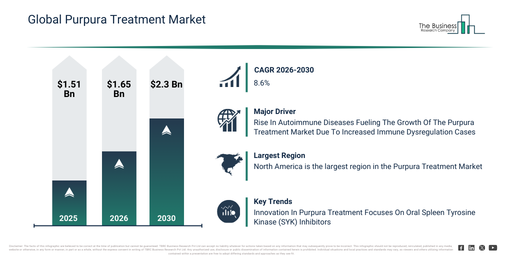
    The purpura treatment market has observed substantial growth in recent times. This market is projected to expand from $1.51 billion in 2025 to $1.65 billion in 2026, achieving a compound annual growth rate (CAGR) of 8.9%. Historically, this growth has been fueled by several factors, including the increasing occurrence of autoimmune and platelet disorders, greater awareness regarding rare bleeding conditions, the expansion of hospital-based dermatology services, advancements in diagnostic capabilities for vascular disorders, and the availability of corticosteroid and immunosuppressive treatments.

    The purpura treatment market is anticipated to show significant expansion over the next few years, reaching a valuation of $2.3 billion by 2030, at a compound annual growth rate (CAGR) of 8.6%. This projected growth during the forecast period is driven by factors such as enhanced research in immune-mediated conditions, the increasing acceptance of biologics and targeted therapies, the establishment of more specialty clinics for hematological disorders, a heightened emphasis on chronic disease management, and increased capital allocated to precision medicine approaches. Prominent trends for the forecast period involve the rising implementation of targeted immunomodulatory treatments, an expanding utilization of personalized treatment protocols, an increased focus on early diagnosis and disease stratification, the wider application of combination drug therapies, and improved monitoring of chronic purpura cases.

    Get A Free Sample Report With In-Depth Market Insights:

    https://thebusinessresearchcompany.com/sample_request?id=69937724&type=smp&name=Purpura%20Treatment%20Market%20Report%202026&utm_source=Blogs&utm_medium=Paid&utm_campaign=Nov_PR

    Purpura Treatment Market Industry Drivers: What’s Behind The Revenue Growth?

    The purpura treatment market is expected to experience growth due to the rising incidence of autoimmune diseases. Autoimmune diseases are conditions where the body’s immune system mistakenly attacks its own healthy cells and tissues, perceiving them as harmful invaders such as viruses or bacteria. The increasing occurrence of these diseases is attributed to environmental triggers that promote inflammation or molecular mimicry, causing the body to inadvertently attack its own tissues, thereby elevating the risk of autoimmune diseases. Purpura treatment assists in managing autoimmune diseases by suppressing an overactive immune response, boosting platelet production, and decreasing blood vessel inflammation, which helps control symptoms like bruising, bleeding, and low platelet count, common in autoimmune-related purpura such as immune thrombocytopenic purpura (ITP).

    Purpura Treatment Market Segment Breakdown: Which Categories Lead On Revenue?

    The purpura treatment market covered in this report is segmented –

    1) By Type: Non-Thrombocytopenic Purpura, Thrombocytopenic Purpura, Allergic Purpura

    2) By Treatment Type: Topical Treatments, Oral Medications, Injectable Systemic Therapies, Immunoglobulin Therapy, Plasma-Derived Therapies

    3) By Cases: Acute, Chronic

    4) By Distribution Channel: Hospital Pharmacy, Online Pharmacy, Retail Pharmacy

    5) By End-User: Hospitals, Clinics, Other End-Users

    Subsegments:

    1) By Non-Thrombocytopenic Purpura: Idiopathic Purpura, Senile Purpura, Vascular Abnormalities

    2) By Thrombocytopenic Purpura: Immune Thrombocytopenic Purpura (ITP), Drug-induced Thrombocytopenic Purpura, Secondary Thrombocytopenic Purpura

    3) By Allergic Purpura: Drug-induced Allergic Purpura, Food-induced Allergic Purpura, Infectious-related Allergic Purpura

    Purpura Treatment Market Growth Trends Reshaping The Competitive Landscape

    Major companies operating in the purpura treatment market are directing their efforts towards advancements in diagnostic tools, specifically oral spleen tyrosine kinase (SYK) inhibitors, to elevate treatment efficacy and enhance patient outcomes. An oral spleen tyrosine kinase (SYK) inhibitor is a medication administered by mouth that obstructs the activity of the SYK enzyme, which plays a pivotal role in the immune system’s signaling pathways.

    Purpura Treatment Market Leading Players And Competitive Positioning

    Major companies operating in the purpura treatment market are Merck & Co Inc., Sanofi S.A., GlaxoSmithKline plc, Takeda Pharmaceutical Company Limited, Amgen Inc., CSL Limited, Intas Pharmaceuticals Ltd., Biogen Inc., Chugai Pharmaceutical Co Ltd., Sun Pharmaceutical Industries Limited, Octapharma AG, Grifols S.A., GC Pharma, Emergent BioSolutions Inc., Kissei Pharmaceutical Co Ltd., Ablynx N.V. , Shire plc , Lee’s Pharmaceutical Holdings Limited, Omeros Corporation, KM Biologics Co Ltd.

    View The Full Purpura Treatment Market Report:

    https://thebusinessresearchcompany.com/report/purpura-treatment-global-market-report?utm_source=Blogs&utm_medium=Paid&utm_campaign=Nov_PR

    Purpura Treatment Market Global Footprint: Which Region Leads The Market?

    North America was the largest region in the purpura treatment market in 2025. Asia-Pacific is expected to be the fastest-growing region in the forecast period. The regions covered in the purpura treatment market report are Asia-Pacific, South East Asia, Western Europe, Eastern Europe, North America, South America, Middle East, Africa.

    Reach Out To Our Team:

    The Business Research Company: https://www.thebusinessresearchcompany.com/

    Americas: +1 310-496-7795

    Asia: +44 7882 955267 & +91 8897263534

    Europe: +44 7882 955267

    Email us at: marketing@tbrc.info

    Follow us on:

    LinkedIn: https://in.linkedin.com/company/the-business-research-company

    YouTube: https://www.youtube.com/channel/UC24_fI0rV8cR5DxlCpgmyFQ

    Global Market Model: https://www.thebusinessresearchcompany.com/global-market-model
  • Pulmonary Embolism Market CAGR Forecast Through 2030: Key Trends Shaping Industry Expansion

    Pulmonary Embolism Market CAGR Forecast Through 2030: Key Trends Shaping Industry Expansion

    Featuring market attractiveness scoring, total addressable market sizing, company benchmarking matrices, interactive Excel dashboards, deeper supply chain intelligence, emerging startup tracking, and granular product-level insights, The Business Research Company’s 2026 market reports are built to deliver research that is both more actionable and more strategically valuable.

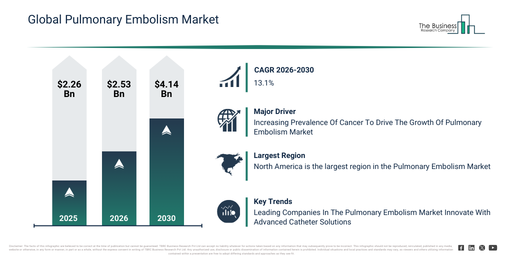
    Pulmonary Embolism Market Poised To Hit $4.14 Billion By 2030 With A 13.1% CAGR

    The pulmonary embolism market has experienced rapid expansion over recent years. Future projections show the market advancing from $2.26 billion in 2025 to $2.53 billion in 2026, maintaining a compound annual growth rate (CAGR) of 12.0%. The expansion witnessed historically is attributable to a rise in cardiovascular and thromboembolic disorders, the development of hospital emergency services, the broader application of anticoagulant medications, increased understanding of pulmonary embolism symptoms, and the advent of advanced diagnostic imaging.

    The market for pulmonary embolism is projected to experience substantial growth in the coming years, with its size expanding to $4.14 billion by 2030, exhibiting a compound annual growth rate (CAGR) of 13.1%. This anticipated expansion during the forecast period is fueled by factors such as increasing investments in advanced anticoagulant drugs, the rising adoption of catheter-based intervention techniques, the expansion of early diagnostic screening programs, a growing focus on outpatient management strategies, and an increasing demand for personalized cardiovascular care. Key trends expected over this period include the increasing uptake of novel anticoagulant therapies, a rising use of minimally invasive thrombectomy devices, a growing emphasis on early and accurate diagnosis, the expansion of integrated care pathways, and an enhanced focus on risk stratification and prevention.

    Get A Free Sample Report With In-Depth Market Insights:

    https://thebusinessresearchcompany.com/sample_request?id=82616000&type=smp&name=Pulmonary%20Embolism%20Market%20Report%202026&utm_source=Blogs&utm_medium=Paid&utm_campaign=Nov_PR

    Pulmonary Embolism Market Growth Factors: What’s Supporting Expansion?

    The rising occurrence of cancer is projected to stimulate expansion within the pulmonary embolism market. Cancer constitutes a collection of illnesses marked by the uncontrolled and anomalous multiplication of cells within the organism. A higher incidence of cancer elevates the likelihood of blood clot formation, such as pulmonary embolism, among individuals with cancer. Consequently, this fuels an escalated need for diagnostic tools and therapeutic interventions, notably specialized medications.

    Pulmonary Embolism Market Segmentation: How Does The Market Break Down By Category?

    The pulmonary embolism market covered in this report is segmented –

    1) By Treatment: Medications, Mechanical Devices, Other Treatments

    2) By Diagnosis: Chest X-Ray, Electrocardiogram (ECG), Magnetic Resonance Imaging (MRI), Computed Tomography Scan, Pulmonary Angiography, Venography, Venous Ultrasound, D-Dimer Test, Other Diagnosis

    3) By Symptoms: Shortness Of Breath, Chest Pain, Cough, Irregular Heartbeat, Dizziness, Fever, Cyanosis, Other Symptoms

    4) By Distribution Channel: Hospital Pharmacy, Retail Pharmacy, Online Pharmacy, Other Distribution Channels

    5) By End-User: Hospitals, Specialty Clinics, Homecare, Other End-Users

    Subsegments:

    1) By Medications: Anticoagulants, Thrombolytics

    2) By Mechanical Devices: Inferior Vena Cava (IVC) Filters, Catheter-Assisted Thrombectomy

    3) By Other Treatments: Surgical Embolectomy, Supportive Care

    Pulmonary Embolism Market Trends Shaping Long-Term Demand

    Major companies operating in the pulmonary embolism market are concentrating on developing innovative products like the Triever16 Curve catheter and the RevCore thrombectomy catheter to gain a competitive edge.

    Pulmonary Embolism Market Competitive Overview And Top Companies

    Major companies operating in the pulmonary embolism market are Pfizer Inc., Johnson And Johnson Private Limited, F Hoffmann La Roche Ltd., Merck And Co Inc., Novartis AG, Bayer AG, Sanofi S.A., Bristol Myers Squibb Company, GSK plc, Abbott Laboratories, AstraZeneca plc, Medtronic plc, Baxter International Inc., Teva Pharmaceutical Industries Ltd., Mylan N.V., Daiichi Sankyo Co. Ltd., Boehringer Ingelheim International GmbH, Mitsubishi Tanabe Pharma Corporation, Genentech Inc., Hikma Pharmaceuticals plc, Aspen Pharmacare Holdings Limited, Nippon Shinyaku Co. Ltd., Fresenius Kabi AG, Inari Medical Inc., AngioDynamics Inc., Otsuka Pharmaceutical Co. Ltd., CSL Behring GmbH, Grifols S.A., Octapharma AG, Kedrion S.p.A

    View The Full Pulmonary Embolism Market Report:

    https://thebusinessresearchcompany.com/report/pulmonary-embolism-global-market-report?utm_source=Blogs&utm_medium=Paid&utm_campaign=Nov_PR

    Pulmonary Embolism Market Regional Split: Which Areas Are Fueling Growth?

    North America was the largest region in the pulmonary embolism market in 2025. Asia-Pacific is expected to be the fastest-growing region in the forecast period. The regions covered in the pulmonary embolism market report are Asia-Pacific, South East Asia, Western Europe, Eastern Europe, North America, South America, Middle East, Africa.

    Reach Out To Our Team:

    The Business Research Company: https://www.thebusinessresearchcompany.com/

    Americas: +1 310-496-7795

    Asia: +44 7882 955267 & +91 8897263534

    Europe: +44 7882 955267

    Email us at: marketing@tbrc.info

    Follow us on:

    LinkedIn: https://in.linkedin.com/company/the-business-research-company

    YouTube: https://www.youtube.com/channel/UC24_fI0rV8cR5DxlCpgmyFQ

    Global Market Model: https://www.thebusinessresearchcompany.com/global-market-model
  • Psychosis Market To Witness 5.5% CAGR Growth Through 2030: Key Industry Drivers

    Psychosis Market To Witness 5.5% CAGR Growth Through 2030: Key Industry Drivers

    Built to provide research that’s more actionable and strategically valuable, The Business Research Company’s 2026 market reports include market attractiveness analysis, total addressable market sizing, company benchmarking matrices, interactive Excel dashboards, broader supply chain intelligence, emerging startup tracking, and in-depth product insights.

    Psychosis Market Size And Revenue Outlook Through 2030

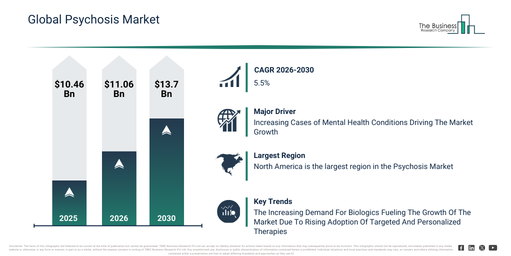
    The psychosis market size has experienced strong growth in recent years. It is anticipated to increase from $10.46 billion in 2025 to $11.06 billion in 2026, achieving a compound annual growth rate (CAGR) of 5.8%. This historical expansion can be attributed to a rise in the diagnosis of schizophrenia and related disorders, the broadening of hospital-based psychiatric care, the more widespread use of antipsychotic medications, increasing mental health awareness, and the presence of specialized mental health clinics.

    The psychosis market is projected to experience substantial expansion over the coming years. The market is set to reach $13.7 billion by 2030, exhibiting a compound annual growth rate (CAGR) of 5.5%. This growth during the projected period stems from several factors, such as increased funding for new antipsychotic drug development, a heightened emphasis on managing psychosis in its early stages, the broadening of community-based mental health support, wider uptake of digital therapeutic solutions, and a surging need for managing the disease over the long term. Key developments anticipated in this period encompass the increased deployment of long-acting injectable antipsychotics, a rise in the implementation of early intervention initiatives, a stronger drive towards integrated care frameworks, the proliferation of digital tools for monitoring psychosis, and a greater emphasis on customized treatment strategies.

    Get A Free Sample Report With In-Depth Market Insights:

    https://thebusinessresearchcompany.com/sample_request?id=80572110&type=smp&name=Psychosis%20Market%20Report%202026&utm_source=Blogs&utm_medium=Paid&utm_campaign=Nov_PR

    Psychosis Market Demand Drivers: What’s Powering Industry Growth?

    The increasing prevalence of mental health conditions is expected to drive the growth of the psychosis market moving forward. These conditions are disorders that impact an individual’s mood, thinking, behavior, and overall mental well-being. The rising incidence of mental health conditions is attributed to escalating stress levels, changes in lifestyle, social isolation, economic pressures, and genetic predisposition. Psychosis treatment assists patients suffering from mental health issues through early diagnosis, medical intervention, and specialized therapies, leading to an increased utilization of antipsychotic medications and various therapy options.

    Psychosis Market Segment Trends And Revenue Contributors

    The psychosis market covered in this report is segmented –

    1) By Product: Tablet, Capsule, Injection

    2) By Disease Type: Schizophrenia, Bipolar Disorder, Unipolar Depression, Dementia, Other Disease Types

    3) By Distribution Channel: Online, Offline

    4) By End-User: Hospitals, Healthcare Clinics, Speciality Clinics, Other End-Users

    Subsegments:

    1) By Tablet: Antipsychotic Tablets, Mood Stabilizer Tablets

    2) By Capsule: Antipsychotic Capsules, Antidepressant Capsules

    3) By Injection: Long-acting Injectable Antipsychotics, Short-acting Injectable Antipsychotics

    Psychosis Market Innovation Trends Shaping Future Development

    Key organizations operating within the psychosis market are concentrating on creating advanced initiatives for patient voice and data collection. These efforts aim to enhance service design, guide policy decisions, and improve recovery-oriented care. Patient-voice initiatives allow individuals with lived experience and their families to directly convey their needs, challenges, and outcomes via structured surveys and research. This provides a foundation for data-driven advocacy and more effective system reforms. As an example, in November 2025, Shine, an Ireland-based national mental health organization, in partnership with Mental Health Reform, an Ireland coalition on mental health, and the HSE National Clinical Programme for Early Intervention in Psychosis (EIP), launched the 2025 National Survey of the Experiences of People Living with Psychosis. This undertaking gathers firsthand insights from people with psychosis and their families to identify real-world experiences in care access, highlight systemic deficiencies and stigma, and inform improvements in national policy, investment in specialist early intervention services, and the expansion of community-based and crisis support options.

    Psychosis Market Competitive Landscape: Which Companies Lead The Industry?

    Major companies operating in the psychosis market are Pfizer Inc., Johnson And Johnson, AbbVie Inc., Bristol Myers Squibb Company, AstraZeneca plc, Novartis International AG, GlaxoSmithKline plc, Takeda Pharmaceuticals Inc., Eli Lilly And Company, Teva Pharmaceutical Industries Ltd., Otsuka Pharmaceutical Co., Dr Reddys Laboratories Ltd., Lundbeck AS, Gedeon Richter, Alkermes, Supernus Pharmaceuticals, Acadia Pharmaceuticals, Mapi Pharma, Astellas Pharma Inc., Newron Pharmaceuticals SpA, BioXcel Therapeutics, Sun Pharmaceutical Industries Ltd., Cipla Ltd., Zydus Lifesciences Ltd.

    View The Full Psychosis Market Report:

    https://thebusinessresearchcompany.com/report/psychosis-global-market-report?utm_source=Blogs&utm_medium=Paid&utm_campaign=Nov_PR

    Psychosis Market Top Region: Where Does Most Revenue Come From?

    North America was the largest region in the psychosis market in 2025. Asia-Pacific is expected to be the fastest-growing region in the forecast period. The regions covered in the psychosis market report are Asia-Pacific, South East Asia, Western Europe, Eastern Europe, North America, South America, Middle East, Africa.

    Reach Out To Our Team:

    The Business Research Company: https://www.thebusinessresearchcompany.com/

    Americas: +1 310-496-7795

    Asia: +44 7882 955267 & +91 8897263534

    Europe: +44 7882 955267

    Email us at: marketing@tbrc.info

    Follow us on:

    LinkedIn: https://in.linkedin.com/company/the-business-research-company

    YouTube: https://www.youtube.com/channel/UC24_fI0rV8cR5DxlCpgmyFQ

    Global Market Model: https://www.thebusinessresearchcompany.com/global-market-model
  • Psychiatry Clinics Market Projected For Strong Expansion Through 2030: Key Trends And Future Outlook

    Psychiatry Clinics Market Projected For Strong Expansion Through 2030: Key Trends And Future Outlook

    Backed by market attractiveness analysis, total addressable market sizing, company benchmarking matrices, interactive Excel dashboards, wider supply chain intelligence, emerging startup coverage, and detailed product-level insights, The Business Research Company’s 2026 market reports are designed to offer research that is more actionable and strategically valuable than ever.

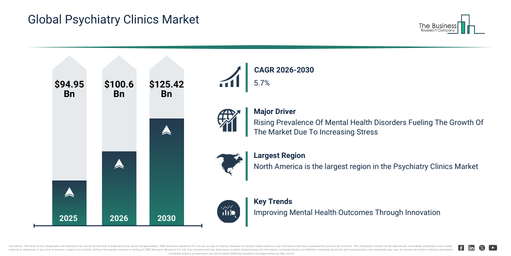
    Psychiatry Clinics Market Growth From $100.6 Billion In 2026 To $125.42 Billion By 2030 At A CAGR Of 5.7%

    The psychiatry clinics market has experienced robust growth recently. Its expansion is projected from $94.95 billion in 2025 to $100.6 billion in 2026, demonstrating a compound annual growth rate (CAGR) of 6.0%. This historic growth is primarily due to factors such as the increasing prevalence of mental health disorders, the expansion of outpatient psychiatric services, a rising awareness of mental health care, advancements in psychotropic medications, and the growth in private mental health clinics.

    The psychiatry clinics market size is anticipated to experience substantial expansion in the coming years. By 2030, this market is projected to reach $125.42 billion, demonstrating a compound annual growth rate (CAGR) of 5.7%. Several factors will drive this growth during the forecast period, including the growing adoption of virtual mental health services, an escalating demand for easily accessible psychiatric care, the broadening use of AI-supported mental health tools, a heightened emphasis on early intervention strategies, and increased investment in behavioral health infrastructure. Key trends anticipated within the forecast period encompass a rise in the uptake of telepsychiatry services, increasing utilization of digital mental health platforms, a burgeoning demand for integrated therapy models, an expansion of remote patient monitoring within psychiatry, and a greater focus on personalized mental health treatment.

    Get A Free Sample Report With In-Depth Market Insights:

    https://thebusinessresearchcompany.com/sample_request?id=38041647&type=smp&name=Psychiatry%20Clinics%20Market%20Report%202026&utm_source=Blogs&utm_medium=Paid&utm_campaign=Nov_PR

    Psychiatry Clinics Market Growth Drivers: What’s Behind The Acceleration?

    An increase in mental health conditions is anticipated to fuel the expansion of the psychiatry clinics market in the future. These disorders encompass various states impacting an individual’s emotional state, cognitive processes, conduct, and general psychological health. The growing occurrence of mental health issues stems from heightened stress levels, which can surpass an individual’s ability to cope, resulting in conditions like anxiety and depression. Psychiatry clinics address mental health disorders through specialized support, timely identification, and tailored treatment strategies, empowering patients to effectively manage their illnesses and enhance their general well-being.

    Psychiatry Clinics Market Segment Analysis Spotlighting Growth Areas

    The psychiatry clinics market covered in this report is segmented –

    1) By Treatment Type: Combined Therapy, Psychotherapy, Psychotropic Medication

    2) By Insurance Type: Private Insurance, Public Insurance, Self Pay

    3) By Service Setting: Inpatient, Outpatient, Telepsychiatry

    4) By Patient Age Group: Adult, Child And Adolescent, Geriatric

    5) By Disorder Category: Anxiety Disorders, Mood Disorders, Psychotic Disorders

    Subsegments:

    1) By Combined Therapy: Cognitive Behavioral Therapy With Medication, Dialectical Behavior Therapy With Medication, Interpersonal Therapy With Medication, Family Therapy With Medication

    2) By Psychotherapy: Cognitive Behavioral Therapy, Dialectical Behavior Therapy, Interpersonal Therapy, Psychodynamic Therapy, Family And Couples Therapy, Group Therapy

    3) By Psychotropic Medication: Antidepressants, Antipsychotics, Mood Stabilizers, Anxiolytics, Stimulants

    Psychiatry Clinics Market Trends Redefining Industry Growth

    Leading companies operating within the psychiatry clinics market are prioritizing the development of innovative therapeutic approaches, such as transcranial magnetic stimulation (TMS) therapy, to boost treatment efficacy, broaden non-invasive care options, and achieve improved patient outcomes for mental health conditions. Transcranial magnetic stimulation (TMS) therapy is a non-invasive treatment method that utilizes magnetic fields to stimulate nerve cells in the brain.

    Psychiatry Clinics Market Leading Companies: Who Holds The Strongest Market Presence?

    Major companies operating in the psychiatry clinics market are Universal Health Services, Ramsay Health Care Limited, Acadia Healthcare, Rogers Behavioral Health, AltaPointe Health, Thriveworks Counseling, The Center for Health Care Services, Sheppard Pratt Health System, Oceans Healthcare, Harris Center for Mental Health and IDD, Amen Clinics, Med Park Hospital, Menninger Clinic, Bay Psychiatric Associates, Austen Riggs Center, Peninsula Behavioral Health, MindSpot Clinic, Oakland Psychological Clinic, Citrus Health Group LLC, Tucker Psychiatric Clinic.

    View The Full Psychiatry Clinics Market Report:

    https://thebusinessresearchcompany.com/report/psychiatry-clinics-global-market-report?utm_source=Blogs&utm_medium=Paid&utm_campaign=Nov_PR

    Psychiatry Clinics Market Regional Breakdown: Where Is Demand Concentrated?

    North America was the largest region in the psychiatry clinics market in 2025. Asia-Pacific is expected to be the fastest-growing region in the forecast period. The regions covered in the psychiatry clinics market report are Asia-Pacific, South East Asia, Western Europe, Eastern Europe, North America, South America, Middle East, Africa.

    Reach Out To Our Team:

    The Business Research Company: https://www.thebusinessresearchcompany.com/

    Americas: +1 310-496-7795

    Asia: +44 7882 955267 & +91 8897263534

    Europe: +44 7882 955267

    Email us at: marketing@tbrc.info

    Follow us on:

    LinkedIn: https://in.linkedin.com/company/the-business-research-company

    YouTube: https://www.youtube.com/channel/UC24_fI0rV8cR5DxlCpgmyFQ

    Global Market Model: https://www.thebusinessresearchcompany.com/global-market-model
  • Psychiatrists Market Outlook 2026–2030: Growth Trends, Market Dynamics And Emerging Opportunities

    Psychiatrists Market Outlook 2026–2030: Growth Trends, Market Dynamics And Emerging Opportunities

    Featuring market attractiveness scoring, total addressable market sizing, company benchmarking matrices, interactive Excel dashboards, deeper supply chain intelligence, emerging startup tracking, and granular product-level insights, The Business Research Company’s 2026 market reports are built to deliver research that is both more actionable and more strategically valuable.

    Psychiatrists Market Expansion Outlook: What Revenue Opportunities Are Ahead?

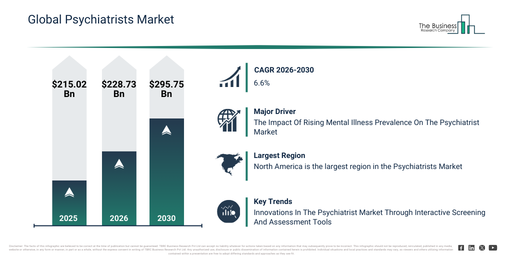
    The psychiatrists market has experienced robust growth in recent years. It is projected to increase from $215.02 billion in 2025 to $228.73 billion by 2026, achieving a compound annual growth rate (CAGR) of 6.4%. This historical expansion can be attributed to the rising occurrence of mental health disorders, the expansion of outpatient psychiatric care options, greater awareness of mental health conditions, increasing public acceptance of psychiatric treatment, and the presence of qualified mental health professionals.

    The market size for psychiatrists is set to experience robust expansion over the next few years, with projections indicating a rise to $295.75 billion by 2030, demonstrating a compound annual growth rate (CAGR) of 6.6%. This growth during the forecast period is primarily attributed to increased investments in digital mental health solutions, a growing demand for personalized psychiatric treatment, the expansion of AI-assisted diagnostic tools, greater integration of behavioral health analytics, and an intensified focus on preventive mental healthcare. Significant trends anticipated for this period include the rising adoption of telepsychiatry services, increased utilization of digital mental health platforms, the growing integration of precision psychiatry approaches, the expansion of multidisciplinary treatment models, and an enhanced emphasis on outcome-based mental healthcare.

    Get A Free Sample Report With In-Depth Market Insights:

    https://thebusinessresearchcompany.com/sample_request?id=72611630&type=smp&name=Psychiatrists%20Market%20Report%202026&utm_source=Blogs&utm_medium=Paid&utm_campaign=Nov_PR

    Psychiatrists Market Growth Factors Behind Sustained Expansion

    The expanding backing from governments for mental health improvements is anticipated to fuel the expansion of the psychiatrist market in the future. These mental health reforms represent modifications implemented to enhance the structure, funding, and provision of mental health services, with the goal of delivering superior care, assistance, and treatment to individuals facing mental health challenges. The increase in such reforms stems from a growing understanding of mental health conditions, prompting governments to dedicate more resources to services and policies that aid those affected. Psychiatrists play a key role in promoting this increased government support by offering expert advice on treatment requirements and results, identifying service deficiencies, and championing policies that improve mental health provisions.

    Psychiatrists Market Segment Performance And Emerging Opportunities

    The psychiatrists market covered in this report is segmented –

    1) By Mental Disorder Type: Alcohol Abuse Mental And Behavioral Disorders, Psychoactive Substance Use Mental And Behavioral Disorders, Schizophrenia, Schizotypal And Delusional Disorders, Mood (Anxiety And Depression) Disorders, Other Mental And Behavioral Disorders

    2) By Patient Type: Inpatient, Outpatient

    3) By Psychology Type: Social, Abnormal, Biological, Other Psychology Types

    Subsegments:

    1) By Alcohol Abuse Mental And Behavioral Disorders: Alcohol Dependence, Alcohol Abuse

    2) By Psychoactive Substance Use Mental And Behavioral Disorders: Opioid Use Disorder, Stimulant Use Disorder, Hallucinogen Use Disorder

    3) By Schizophrenia, Schizotypal And Delusional Disorders: Schizophrenia, Schizotypal Disorder, Delusional Disorder

    4) By Mood (Anxiety and Depression) Disorders: Major Depressive Disorder, Generalized Anxiety Disorder, Bipolar Disorder

    5) By Other Mental And Behavioral Disorders: Attention Deficit Hyperactivity Disorder (ADHD), Post-Traumatic Stress Disorder (PTSD), Obsessive-Compulsive Disorder (OCD)

    Psychiatrists Market Strategic Trends: What Defines The Next Growth Phase?

    Major companies operating within the psychiatrists market are creating innovative products, such as mental disorder screening instruments, to reach larger customer groups, boost sales, and elevate revenue. A mental disorder screening instrument is a standardized test or collection of inquiries designed to evaluate and pinpoint the potential presence of mental health issues or conditions in individuals.

    Psychiatrists Market Key Players: Which Companies Lead Industry Competition?

    Major companies operating in the psychiatrists market are Massachusetts General Hospital, Mayo Clinic, Universal Health Services Inc., NewYork Presbyterian University Hospital of Columbia and Cornell, Johns Hopkins Hospital, McLean Hospital, National Center for Neurology and Psychiatry, Wenzhou Kangning Hospital, National Institute of Mental Health and Neurosciences, East London Health and Social Care Partnership NHS Trust, Vidyasagar Institute of Mental Health and Neurosciences, Central Institute of Psychiatry, Institute of Behaviour and Allied Sciences, The University of Tokyo Hospital, Baillie Henderson Hospital, Graylands Hospital, Seiwa Hospital, Tokyo Metropolitan Matsuzawa Hospital, Tokyo Saiseikai Central Hospital, St. Luke’s International Hospital, Nightingale Hospital, Tyne and Wear Hospitals NHS Foundation Trust, Forest Independent Hospital, Max Planck Institute of Psychiatry, Kursk Clinical Psychiatric Hospital, Menninger Clinic, Sheppard Pratt Health System, Resnick Neuropsychiatric Hospital at UCLA, Centre for Addiction and Mental Health, Al Amal Psychiatric Complex, King Faisal Specialist Hospital and Research Centre, Denmar Specialist Psychiatrist Hospital PTY Ltd, Umzimzulu Hospital

    View The Full Psychiatrists Market Report:

    https://thebusinessresearchcompany.com/report/psychiatrists-global-market-report?utm_source=Blogs&utm_medium=Paid&utm_campaign=Nov_PR

    Psychiatrists Market Geographic Landscape: Which Region Leads Industry Growth?

    North America was the largest region in the Psychiatrists market in 2025. The regions covered in the psychiatrists market report are Asia-Pacific, South East Asia, Western Europe, Eastern Europe, North America, South America, Middle East, Africa.

    Reach Out To Our Team:

    The Business Research Company: https://www.thebusinessresearchcompany.com/

    Americas: +1 310-496-7795

    Asia: +44 7882 955267 & +91 8897263534

    Europe: +44 7882 955267

    Email us at: marketing@tbrc.info

    Follow us on:

    LinkedIn: https://in.linkedin.com/company/the-business-research-company

    YouTube: https://www.youtube.com/channel/UC24_fI0rV8cR5DxlCpgmyFQ

    Global Market Model: https://www.thebusinessresearchcompany.com/global-market-model
  • Pruritus Therapeutic Market Growth Outlook From $16.76 Billion In 2026 To $24.04 Billion By 2030

    Pruritus Therapeutic Market Growth Outlook From $16.76 Billion In 2026 To $24.04 Billion By 2030

    Built to provide research that’s more actionable and strategically valuable, The Business Research Company’s 2026 market reports include market attractiveness analysis, total addressable market sizing, company benchmarking matrices, interactive Excel dashboards, broader supply chain intelligence, emerging startup tracking, and in-depth product insights.

    Pruritus Therapeutic Market Growth Potential: How Will Market Size Shift Through 2030?

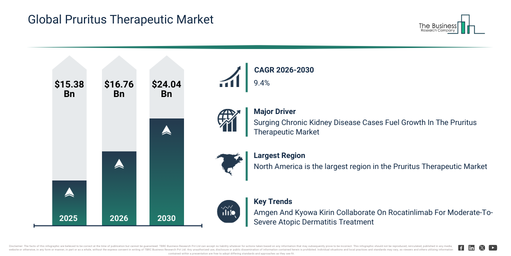
    The pruritus therapeutic market has experienced substantial growth in recent years. It is projected to expand from $15.38 billion in 2025 to $16.76 billion in 2026, demonstrating a compound annual growth rate (CAGR) of 9.0%. The expansion observed historically can be attributed to the increasing prevalence of dermatological and systemic conditions, a broader adoption of antihistamines and corticosteroids, the growth of outpatient dermatology services, increased patient awareness of itch-related disorders, and the availability of diverse therapeutic options.

    The pruritus therapeutic market is projected to experience robust expansion over the coming years. By 2030, its value is anticipated to reach $24.04 billion, exhibiting a compound annual growth rate (CAGR) of 9.4%. This projected growth during the forecast period is attributable to several factors, including increasing investments in new itch-modulating therapies, a heightened emphasis on individualized pruritus treatment, the broadening of biologic and immunomodulatory drug pipelines, an escalating demand for non-steroidal therapies, and expanded clinical research efforts. Key trends expected during this period encompass the accelerated development of targeted antipruritic drugs, a growing uptake of combination drug regimens, a stronger focus on managing pruritus specific to certain diseases, the proliferation of advanced topical formulations, and an increased commitment to delivering long-term symptom relief.

    Get A Free Sample Report With In-Depth Market Insights:

    https://thebusinessresearchcompany.com/sample_request?id=41438458&type=smp&name=Pruritus%20Therapeutic%20Market%20Report%202026&utm_source=Blogs&utm_medium=Paid&utm_campaign=Nov_PR

    Pruritus Therapeutic Market Demand Drivers Opening New Revenue Streams

    The growing prevalence of chronic kidney disease is anticipated to fuel the expansion of the pruritus therapeutic market in the forthcoming period. Chronic Kidney Disease (CKD) is a persistent condition where the kidneys progressively lose their ability to operate properly and is categorized into five stages of severity. Itching, or pruritus, is a common manifestation experienced by individuals with chronic kidney disease (CKD). While the precise mechanisms remain unclear, pruritus in CKD can stem from multiple causes.

    Pruritus Therapeutic Market Segment Landscape And Growth Outlook

    The pruritus therapeutic market covered in this report is segmented –

    1) By Type: Corticosteroids, Antihistamines, Local Anesthetics, Counterirritants, Immunosuppressant, Calcineurin Inhibitors, Others Types

    2) By Disease Type: Atopic Dermatitis Or Eczema, Allergic Contact Dermatitis, Urticaria, Cutaneous T-Cell, Other Disease Types

    3) By Application: External Use, Oral, Injection

    4) By End Use: Hospitals, Clinics, Other Uses

    Subsegments:

    1) By Corticosteroids: Topical Corticosteroids, Systemic Corticosteroids

    2) By Antihistamines: First-Generation Antihistamines, Second-Generation Antihistamines

    3) By Local Anesthetics: Topical Local Anesthetics, Injectable Local Anesthetics

    4) By Counterirritants: Menthol-Based Products, Camphor-Based Products

    5) By Immunosuppressants: Systemic Immunosuppressants, Topical Immunosuppressants

    6) By Calcineurin Inhibitors: Tacrolimus, Pimecrolimus

    7) By Other Types: Antidepressants, Phototherapy Treatments, Biologic And Targeted Therapies

    Pruritus Therapeutic Market Transformation Trends: What Innovations Are Driving Change?

    Leading companies in the pruritus therapeutic market are increasingly utilizing strategic partnerships, specifically targeting the treatment of moderate-to-severe atopic dermatitis. These collaborations involve companies combining their respective strengths and resources to achieve shared advantages and successful outcomes.

    Pruritus Therapeutic Market Competitive Landscape: Who Leads The Industry?

    Major companies operating in the pruritus therapeutic market are Astellas Pharma Inc., Bristol Myers Squibb Company, Cipla Inc., Eli Lilly And Company, Galderma Laboratories LP, GlaxoSmithKline plc, Merck And Co. Inc., Novartis AG, Pfizer Inc., Sanofi SA, Abbott Laboratories, Almirall SA, Eisai Co. Ltd., Glenmark Pharmaceuticals Ltd., Ipca Laboratories Ltd., Lupin Chemicals Ltd., Cara Therapeutics Inc., EPI Health LLC, AbbVie Inc., Bayer AG, Bausch Health Companies Inc., Regeneron Pharmaceuticals Inc., Huapont Life Sciences Co. Ltd., LEO Pharma AS, MC2 Therapeutics Ltd., Novan Inc., Trevi Therapeutics Inc., UCB SA, Viatris Inc., Teva Pharmaceutical Industries Ltd.

    View The Full Pruritus Therapeutic Market Report:

    https://thebusinessresearchcompany.com/report/pruritus-therapeutic-global-market-report?utm_source=Blogs&utm_medium=Paid&utm_campaign=Nov_PR

    Pruritus Therapeutic Market Largest Region: Which Geography Holds The Biggest Share?

    North America was the largest region in the pruritus therapeutic market in 2025. The regions covered in the pruritus therapeutic market report are Asia-Pacific, South East Asia, Western Europe, Eastern Europe, North America, South America, Middle East, Africa.

    Reach Out To Our Team:

    The Business Research Company: https://www.thebusinessresearchcompany.com/

    Americas: +1 310-496-7795

    Asia: +44 7882 955267 & +91 8897263534

    Europe: +44 7882 955267

    Email us at: marketing@tbrc.info

    Follow us on:

    LinkedIn: https://in.linkedin.com/company/the-business-research-company

    YouTube: https://www.youtube.com/channel/UC24_fI0rV8cR5DxlCpgmyFQ

    Global Market Model: https://www.thebusinessresearchcompany.com/global-market-model