Author: The Business Research Company

  • Future Growth Forecast For The Gastrointestinal Bleeding Treatment Devices Global Market 2024-2033

    Future Growth Forecast For The Gastrointestinal Bleeding Treatment Devices Global Market 2024-2033

    The Business Research Company’s global market reports provide comprehensive analysis on the various markets in 27 industries across 60 geographies.

     The gastrointestinal bleeding treatment devices market has witnessed robust growth, surging from $0.84 billion in 2023 to $0.9 billion in 2024, showcasing a commendable Compound Annual Growth Rate (CAGR) of 6.9%. This growth is attributed to various factors such as the aging population, lifestyle factors, healthcare infrastructure, and advancements in endoscopy. Looking ahead, the market is set for strong expansion, reaching $1.2 billion by 2028 at a CAGR of 7.6%.

    Rise in Incidences of Upper Gastrointestinal Bleeding

    • Increasing incidences of upper gastrointestinal bleeding contribute significantly to market growth.
    • Occurring in the esophagus, stomach, or upper small intestine, it can result from peptic ulcers, cancer, and other causes.
    • UK reports an incidence range of 84-172 per 100,000 of the population per year.

    Key Players and Market Segmentation

    • Major companies shaping the market include Boston Scientific Corporation, Olympus Corporation, and Medtronic.
    • Market segmentation involves products (Endoscopic Thermal Devices), GI Tract Division (Upper GI Tract, Lower GI Tract), and end-users (Hospitals, Ambulatory Surgical Centers).

    Investment in Artificial Intelligence for Gastroenterology

    • Companies are investing in artificial intelligence (AI) to enhance efficiency and reduce R&D costs.
    • The U.S. FDA granted authorization for GI Genius, an AI-powered device aiding in the immediate detection of lesions during colonoscopy procedures.

    Olympus and Hitachi Collaboration for Endoscopic Ultrasound Systems

    • Olympus Corporation and Hitachi Ltd collaborated to develop Endoscopic Ultrasound Systems (EUS) in January 2021.
    • EUS is used to treat digestive diseases and assess cancer stages in various organs, contributing to minimally invasive care.

    View More On The Gastrointestinal Bleeding Treatment Devices Market Report 2024 – https://www.thebusinessresearchcompany.com/report/gastrointestinal-bleeding-treatment-devices-global-market-report

    Market Trends Shaping the Future

    • Notable trends in the forecast period include the adoption of non-invasive diagnostic technologies, precision medicine, remote monitoring and telehealth, and the integration of artificial intelligence and machine learning.
    • These trends signify the industry’s response to evolving healthcare needs and technological advancements.

    Regional Dynamics: North America Leading, Asia-Pacific Emerging

    • North America held the largest share in the gastrointestinal bleeding treatment devices market in 2023.
    • Asia-Pacific is expected to be the fastest-growing region in the forecast period, reflecting a rising demand for advanced healthcare solutions.

    Conclusion
    The gastrointestinal bleeding treatment devices market stands at the forefront of healthcare innovation, driven by a surge in upper gastrointestinal bleeding incidences and strategic collaborations. With a focus on artificial intelligence, precision medicine, and cutting-edge technologies, the industry is poised for substantial growth. As we navigate the path towards 2028, the market’s response to patient-centric care, regulatory changes, and the increasing prevalence of gastrointestinal disorders paints a promising picture of an industry at the forefront of transformative healthcare solutions.

    Request A Sample Of The Global Gastrointestinal Bleeding Treatment Devices Market Report 2024:
    https://www.thebusinessresearchcompany.com/sample_request?id=5307&type=smp

  • Overview Of The Healthcare Data Storage Market 2024-2033: Growth And Major Players Analysis

    Overview Of The Healthcare Data Storage Market 2024-2033: Growth And Major Players Analysis

    The Business Research Company’s global market reports are now updated with the latest market sizing information for the year 2024 and forecasted to 2033

    The healthcare data storage market has undergone an explosive growth phase, surging from $5.51 billion in 2023 to an anticipated $6.34 billion in 2024, exhibiting a robust compound annual growth rate (CAGR) of 15.2%. The historic period’s growth is attributed to several key factors, including the escalating healthcare data volume, regulatory compliance demands, data backups, disaster recovery, increased research, clinical trials, and the imperative for interoperability and health information exchange (HIE).

    Continued Momentum: Projected Growth and Key Drivers

    The momentum is set to continue with the market projected to reach a staggering $12.03 billion by 2028, fueled by a CAGR of 17.4%. The forecasted growth is underpinned by pivotal factors such as big data and analytics, genomics, precision medicine, artificial intelligence (AI), machine learning, cybersecurity, and the advent of 5G connectivity. Notable trends in the forecast period include the expansion of electronic health records (EHR), the embrace of cloud-based healthcare storage, a heightened focus on data security and compliance, the integration of healthcare IoT data, and the adoption of edge computing for healthcare data.

    Explosive Growth in Healthcare Data: A Driving Force

    1. Volume Surge:The healthcare data storage market is propelled by a substantial increase in the volume of digital data within healthcare organizations.
    2. Tools Advancements:Advances in big data analytics tools and medical imaging contribute to the surge.
    3. Real-time Decision Support:Availability of real-time data aids clinical decision-making, improving patient care quality.
    4. Industry Impact:According to RBC Capital Markets, the healthcare industry generates 30% of the world’s total data volume.
    5. Future Projections:Data for healthcare is expected to grow at a CAGR of 36% by 2025.

    Key Players Shaping the Landscape

    1. Major Companies:Dell Technologies, IBM, NetApp, Hewlett Packard Enterprise, Pure Storage, Hitachi, Western Digital, Huawei, Toshiba, Scality, Fujitsu, Drobo, Cloudian, Samsung, Tintri, Cisco Systems, Nutanix, Commvault, Cohesity, Rubrik, and many more.
    2. Innovative Solutions:Companies are focusing on innovative solutions like Healthcare Data Engine (HDE) accelerators to meet evolving consumer needs.

    View More On The Healthcare Data Storage Market Report 2024 – https://www.thebusinessresearchcompany.com/report/healthcare-data-storage-global-market-report

    Innovative Healthcare Data Engine (HDE) Accelerators: A Paradigm Shift

    1. Product Innovations:Major companies are leveraging Healthcare Data Engine (HDE) accelerators to cater to consumer demands effectively.
    2. Use Case Focus:HDE accelerators are insights and tools based on use cases, enhancing patient care, health equality, and value-based care.
    3. Strategic Launch:Google Cloud Platform launched HDE accelerators in collaboration with industry experts and healthcare organizations.
    4. Infrastructure Deployment:HDE accelerators provide specialized infrastructure deployment options, data models, and dashboard templates.
    5. HIPAA Compliance:HDE utilizes Google Cloud’s infrastructure for secure data storage, ensuring HIPAA compliance.

    Strategic Acquisitions Driving Innovation

    1. Hitachi’s Strategic Move:Hitachi’s acquisition of Global Logic Inc. for $9.6 billion in March 2021 expands digital solutions and strengthens social innovation in healthcare.
    2. Digital Transformation:The acquisition allows Hitachi to expedite the digital transformation of social infrastructure globally.
    3. Core Business Growth:Hitachi enhances its core Lumada digital solutions business through Global Logic’s AI/ML-based healthcare case management software solutions.

    Market Segmentation: Unveiling Dynamics

    1. Type Segmentation:Magnetic Storage, Flash Storage, Solid-State Storage
    2. Architecture Segmentation:Block Storage, File Storage, Object Storage
    3. Deployment Segmentation:On-Premise Solutions, Remote Solutions, Hybrid Solutions
    4. End User Segmentation:Pharmaceutical, Hospitals, Other End-Users

    Regional Dominance: North America Leads

    In 2023, North America emerged as the largest region in the healthcare data storage market, showcasing its dominance in this burgeoning sector. The region’s contribution underscores the global significance of the healthcare data storage revolution.

    Conclusion: Navigating the Future

    As the healthcare data storage market continues its meteoric rise, fueled by technological advancements, innovative solutions, and strategic acquisitions, it emerges as a critical player in reshaping the healthcare landscape. With a future marked by big data, analytics, AI, and transformative trends, stakeholders must navigate this dynamic terrain to harness the full potential of healthcare data storage solutions.

    Request A Sample Of The Global Healthcare Data Storage Market Report 2024:
    https://www.thebusinessresearchcompany.com/sample_request?id=5845&type=smp

  • Key Trends And Drivers In The Healthcare Distribution Market 2024

    Key Trends And Drivers In The Healthcare Distribution Market 2024

    The Business Research Company’s market reports offer an in-depth analysis on the market’s growth potential, major drivers, key trends and more.

    The healthcare distribution market has experienced robust growth, witnessing an ascent from $1122.79 billion in 2023 to $1225.18 billion in 2024, marked by a commendable Compound Annual Growth Rate (CAGR) of 9.1%. This upward trend is poised to persist, forecasting a market size of $1774.44 billion by 2028, with a compelling CAGR of 9.7%. The historic and forecasted growth is attributed to various factors, including expanding healthcare infrastructure, an aging population, regulatory compliance, the globalization of pharmaceuticals, and supply chain optimization.

    Disease Incidence’s Influence on Healthcare Distribution

    Challenges and Opportunities

    The escalating incidence of diseases is anticipated to be a significant driver for the healthcare distribution market. Diseases, affecting individuals, plants, or animals, necessitate efficient and prompt distribution of therapeutic resources, vaccinations, and healthcare services. The distribution networks must be adaptable, responsive, and well-coordinated to manage outbreaks effectively. For instance, the World Health Organization reported a 4.5% rise in individuals ill with tuberculosis (TB) in 2021, totaling 10.6 million cases. This underscores the critical role of healthcare distribution in combating evolving health threats and enhancing public health outcomes.

    Key Players in Healthcare Distribution

    Industry Giants Shaping the Landscape

    Major companies contributing to the healthcare distribution market include Alliance Healthcare UK, AmerisourceBergen Corporation, Cardinal Health Inc., and many others. These industry giants play a crucial role in shaping the healthcare distribution landscape and ensuring the seamless flow of medical products across the globe.

    Innovative Collaborations: Transforming Healthcare Distribution

    Strategic Partnerships for Enhanced Patient Care

    Major players in the healthcare distribution market are strategically collaborating to better meet the needs of consumers. One notable example is the partnership between Evernorth Health Services and CarepathRx Health System Solutions. This collaboration aims to improve patient-specialized care by combining Evernorth’s specialty and care experience with CHSS’s pharmacy and infusion management skills, digital solutions, and health system contacts. Such collaborations contribute to diversifying services, strengthening patient linkages, and enhancing care for chronic and complicated disorders.

    Read More On The Healthcare Distribution Market Report 2024 – https://www.thebusinessresearchcompany.com/report/healthcare-distribution-global-market-report

    Market Expansion Through Acquisitions: DKSH’s Strategic Moves

    Consolidation in the Asia-Pacific Region

    In April 2021, DKSH, a Switzerland-based transportation services company, expanded its market presence in the Asia-Pacific region through strategic acquisitions. The company acquired Bosung, a South Korea-based life sciences distributor, and Medworkz, a Singapore-based distributor of medical products. This move reflects a commitment to market consolidation and an expansion strategy in one of the fastest-growing regions for healthcare distribution.

    Segmentation Insights: Understanding Market Dynamics

    Breaking Down the Healthcare Distribution Market

    The healthcare distribution market is segmented based on type and end user. Notable segments include Pharmaceutical Product Distribution Services, Biopharmaceutical Product Distribution Services, and Medical Device Distribution Services under type, and Retail Pharmacies, Hospital Pharmacies, and Other End-Users under end user. This segmentation provides a comprehensive understanding of the diverse dynamics within the healthcare distribution landscape.

    Regional Leadership and Growth: North America and Asia-Pacific

    Dominance and Potential

    In 2023, North America emerged as the largest region in the healthcare distribution market. The region’s dominance is attributed to a robust healthcare infrastructure and a proactive approach to regulatory compliance. Looking forward, Asia-Pacific is poised to be the fastest-growing region in the forecast period. This underscores the evolving global dynamics of healthcare distribution and the potential for significant market expansion in diverse geographical regions.

    Future Trends: Shaping the Healthcare Distribution Landscape

    Adapting to Changing Realities

    The forecast period brings forth transformative trends in healthcare distribution. Notable trends include cold chain logistics, e-commerce and direct-to-consumer (DTC) models, medical device tracking and traceability, data-driven decision-making, and advanced inventory management solutions. As the industry adapts to these trends, stakeholders must remain agile to navigate the evolving landscape and capitalize on emerging opportunities.

    In conclusion, the healthcare distribution market is navigating a dynamic landscape fueled by various factors, including technological advancements, strategic collaborations, and the evolving needs of a global population. Stakeholders in this space need to stay attuned to market dynamics, innovate, and collaborate strategically to ensure efficient healthcare distribution and enhance patient outcomes.

    Request for A Sample Of The Global Healthcare Distribution Market Report:
    https://www.thebusinessresearchcompany.com/sample_request?id=7326&type=smp

  • Global Digestive Health Market Analysis: Estimated Market Size And Growth Rate

    Global Digestive Health Market Analysis: Estimated Market Size And Growth Rate

    The Business Research Company’s global market reports are now updated with the latest market sizing information for the year 2024 and forecasted to 2033

    The digestive health market has witnessed substantial growth in recent years, escalating from $54.06 billion in 2023 to $59.83 billion in 2024, reflecting a remarkable Compound Annual Growth Rate (CAGR) of 10.7%. This momentum is poised to continue, projecting a market size of $92.69 billion by 2028, at an even higher CAGR of 11.6%. Several factors contribute to this surge, spanning increased awareness, a spike in digestive disorders, an aging population with heightened health concerns, consumer fascination with probiotics and prebiotics, and a noticeable uptick in functional food and beverage consumption.

    The Impact of an Aging Population on Digestive Health

    Understanding the Demographic Shift

    The geriatric population, defined as individuals aged 65 and above, plays a pivotal role in propelling the digestive health market forward. As individuals age, the efficiency of the digestive system diminishes due to various biological processes slowing down. Muscles become stiffer and less effective, necessitating support for efficient digestion and nutrient absorption. According to the World Health Organization, the global population of individuals aged 60 and above is projected to reach 1.4 billion by 2022, a significant increase from 1 billion in 2020. With 1 in 6 people worldwide expected to be 60 or older by 2030, the rising geriatric population is a key driver for the digestive health market.

    Market Players and Innovations: A Competitive Landscape

    Leading Companies in Digestive Health

    Major players in the digestive health market include Chr. Hansen Holdings A/S, Yakult Honsha Co. Ltd., Nestle SA, DuPont de Nemours Inc., and others. These companies are actively shaping the market landscape by introducing innovative products. Noteworthy examples include GastroImmune, a transformative supplement launched by Daiwa Health Development, Inc. in April 2023. GastroImmune leverages ImmunoLin, an agglomerated powder purified from edible bovine plasma, to support digestive health and a robust mucosal immune system.

    View More On The Digestive Health Market Report 2024 – https://www.thebusinessresearchcompany.com/report/digestive-health-global-market-report

    Strategic Moves: Pantheryx’s Probiotic Portfolio Boost

    Acquisitions Driving Market Dynamics

    In a strategic move, PanTheryx, a colostrum-based nutrition and biotechnology company, acquired TruBiotics from Bayer HealthCare LLC in March 2021. This acquisition not only remains undisclosed in amount but also marks Pantheryx’s expansion into the probiotics and microbiome category. TruBiotics, a probiotic brand under Bayer AG, now contributes to Pantheryx’s strengthened probiotics portfolio.

    Segmentation Insights: Understanding the Market Dynamics

    Breaking Down the Digestive Health Market

    The digestive health market is segmented based on product type, ingredient type, and distribution channel. Notable segments include Functional Foods and Beverages, Vitamins and Dietary Supplements, and Other Products under product types; Probiotics, Prebiotics, Digestive Enzymes, and Other Ingredients under ingredient types; and Supermarkets/Hypermarkets, Hospital Pharmacies, Online Pharmacies, and Other Distribution Channels under distribution channels. This granular approach enables a comprehensive understanding of the market dynamics.

    Regional Dominance: North America’s Leadership Role

    Powerhouse in Digestive Health

    In 2023, North America emerged as the dominant region in the digestive health market. The region’s market leadership is attributed to various factors such as a robust healthcare infrastructure, a health-conscious population, and an increasing focus on preventive healthcare. Understanding regional dynamics is crucial for stakeholders looking to navigate and capitalize on the evolving digestive health market.

    Future Trends: Navigating the Path Ahead

    Innovations and Emphasis on Natural Ingredients

    Looking ahead, the digestive health market is poised for transformative trends. These include innovation in formulations, the incorporation of digestive enzymes in supplements, collaborations between supplements and gut health testing, an emphasis on natural and organic ingredients, and strategic marketing campaigns highlighting the gut-brain connection. As the market evolves, staying attuned to these trends will be crucial for industry players aiming to stay ahead in this dynamic landscape.

    In conclusion, the digestive health market is on a trajectory of substantial growth, fueled by a convergence of demographic shifts, technological advancements, and evolving consumer preferences. Industry players must strategically position themselves to harness the full potential of this burgeoning market.

    Request A Sample Of The Global Digestive Health Market Report 2024:
    https://www.thebusinessresearchcompany.com/sample_request?id=7756&type=smp

  • What’s The Growth Forecast For Healthcare EDI Market Through 2024-2033?

    What’s The Growth Forecast For Healthcare EDI Market Through 2024-2033?

    The Business Research Company’s global market reports provide comprehensive analysis on the various markets in 27 industries across 60 geographies. 

    The healthcare Electronic Data Interchange (EDI) market is experiencing a significant surge, fueled by technological advancements, government support, and transformative mergers. Let’s explore the key drivers, trends, and future projections shaping this dynamic landscape.

    Rapid Expansion: A Snapshot of Market Growth

    • Historic Momentum: In 2023, the healthcare EDI market stood at $4.58 billion, poised to reach $5.07 billion in 2024 at a commendable CAGR of 10.7%. The historical growth is attributed to regulatory compliance, administrative efficiency, cost reduction, error reduction, and streamlined claims processing.
    • Future Projections: Looking ahead, the market is anticipated to witness accelerated growth, reaching $7.84 billion by 2028 at a CAGR of 11.5%. This optimistic forecast is underpinned by factors such as telehealth expansion, data standardization, data privacy, inter-organizational data sharing, and enhanced pandemic preparedness.

    Government Backing: A Catalyzing Force for Market Surge

    • Government Support Dynamics: The rising support from governments worldwide for the healthcare sector is a pivotal driver for the healthcare EDI market. Increased public healthcare spending, as seen in India, facilitates the development of new equipment, better services, and technological advancements in government hospitals.
    • Indian Economic Survey: India’s public healthcare spending rose from 1.8% in 2020-21 to 2.1% in 2021-22, and the Union budget for 2022 allocated $11.28 billion for healthcare growth, signifying a significant impetus for the healthcare EDI market.
    • Key Players: Major companies contributing to the market’s growth include McKesson Corporation, Optum Inc., Allscripts, and GE Healthcare, among others, actively participating in the transformation of healthcare data management.

    View More On The Healthcare EDI Market Report 2024 – https://www.thebusinessresearchcompany.com/report/healthcare-edi-global-market-report

    Technological Triumph: NextGen Healthcare Leads the Way

    • Technological Advancements in Focus: NextGen Healthcare Inc., a prominent player, exemplifies the industry’s commitment to technological innovation. The launch of NextGen Health Data Hub Insights in May 2022 showcases the company’s dedication to providing cutting-edge solutions.
    • Innovative Data Warehouse: NextGen Health Data Hub Insights offers a state-of-the-art data warehouse and bespoke analytics solution, simplifying data access, analytics, and report production for healthcare providers and health information exchanges (HIEs).

    Mergers Shaping a Smarter Healthcare System

    • Change Healthcare and Optum Merger: The merger of Change Healthcare Inc. and Optum Inc. in October 2022 is a monumental development in the healthcare EDI landscape. The unified companies aim to create a more intelligent and adaptive health system, streamlining clinical, administrative, and financial procedures.
    • Efficiency and Cost Reduction: The merger aims to increase efficiency, reduce friction, and ultimately benefit the entire healthcare system, translating to reduced expenses and heightened satisfaction for stakeholders, including individuals, payers, and providers.

    Segmentation Insights: Navigating Components and Transactions

    • Components: The market is segmented into Software, Hardware, and Services, reflecting the diverse elements shaping the healthcare EDI landscape.
    • Transactions: Key transaction types include Claim Management, Healthcare Supply Chain, and Other Transactions, underlining the varied applications of EDI in the healthcare sector.
    • Modes of Delivery and End Users: The market further distinguishes itself through modes of delivery (Mobile, VAN, Web & Cloud-based, Point-to-point) and end users (Healthcare Provider, Payer, Pharmacies, and Other End Users), showcasing a nuanced understanding of the industry’s intricacies.

    Global Outlook: North America Leads, Asia-Pacific Surges Ahead

    • Regional Dynamics: In 2023, North America dominated the healthcare EDI market, and moving forward, Asia-Pacific is positioned as the fastest-growing region. This shift underscores the global relevance of EDI in healthcare data management.
    • Factors Driving Growth: The forecasted growth in Asia-Pacific is attributed to factors like increased adoption of technology, rising healthcare investments, and a growing focus on digitization in the healthcare sector.

    In conclusion, the healthcare EDI market is on an upward trajectory, fueled by a confluence of factors ranging from government support to technological innovations. As the industry evolves, stakeholders must remain attuned to these transformative trends, paving the way for a more efficient, adaptive, and interconnected healthcare ecosystem.

    Request A Sample Of The Global Healthcare EDI Market Report 2024:
    https://www.thebusinessresearchcompany.com/sample_request?id=6129&type=smp

  • 5 Key Insights On The Digestive Health Supplements Market 2024

    5 Key Insights On The Digestive Health Supplements Market 2024

    The Business Research Company’s global market reports are now updated with the latest market sizing information for the year 2024 and forecasted to 2033

    As per The Business Research Company’s Digestive Health Supplements Global Market Report 2024, the digestive health supplements market is expected to show significant growth in the forecast period.

    The digestive health supplements market is experiencing unprecedented growth, driven by various factors that span from rising awareness to innovative product formulations. Let’s delve into the dynamics propelling this surge and explore key trends shaping the future.

    Unveiling Market Growth: A Digestive Transformation
    The digestive health supplements market, valued at $15.69 billion in 2023, is set to burgeon to $17.39 billion in 2024, showcasing a commendable Compound Annual Growth Rate (CAGR) of 10.9%. The momentum doesn’t stop here; projections indicate a substantial leap to $26.61 billion by 2028 at a CAGR of 11.2%. The growth trajectory in both historic and forecast periods is attributed to multifaceted factors.

    A Healthy Surge: Underpinned by Digestive Disorders

    • Digestive Disease Prevalence: A surge in digestive diseases is a primary catalyst, with conditions like irritable bowel syndrome affecting 10–15% of the global population. This trend is compelling individuals to turn to supplements for relief, thus amplifying market growth.
    • Diverse Health Benefits: Probiotics, prebiotics, and enzymes in supplements address a spectrum of digestive issues, from diarrhea to inflammatory bowel disease, presenting a versatile solution for consumers seeking relief from gastrointestinal problems.
    • Market Leaders: Notable companies in this space, including Amway Corp., Bayer AG, and Pfizer Inc., are pivotal players steering the market’s growth through innovative solutions and effective marketing strategies.

    View More On The Digestive Health Supplements Market Report 2024 – https://www.thebusinessresearchcompany.com/report/digestive-health-supplements-global-market-report

    Probiotic Revolution: Innovative Offerings Reshape the Landscape

    • Advanced Formulations: Companies are not just meeting demand but exceeding it by introducing cutting-edge products like Probiotic Gummies. For instance, Nutrazee’s Probiotic Gummies, featuring a patented strain known for its effectiveness in addressing irritable bowel syndrome symptoms, exemplify this innovative trend.
    • Stability and Efficacy: Innovations like Nutrazee’s Probiotic Gummies, designed to withstand stomach acid and maintain stability, highlight a commitment to providing convenient and effective gut health support, appealing to a broader consumer base.

    Industry Dynamics: Strategic Moves Shape Market Landscape

    • Strategic Acquisitions: Notable events, such as Glanbia Nutritionals’ acquisition of Sterling Technology for $60 million in May 2022, underscore the industry’s strategic approach to fortifying bioactive solutions portfolios. Sterling Technology’s focus on digestive health aligns seamlessly with market demands.
    • Segmentation Insights: The market’s diverse offerings are segmented by product (Prebiotics, Probiotics, Enzymes, Fulvic Acid, and Others), form (Capsules, Tablets, Powders, Liquids, and Others), and distribution channel (Supermarkets/Hypermarkets, Convenience Stores, Specialty Stores, Pharmacies, E-Commerce, and Others), reflecting the industry’s dynamic landscape.

    Global Landscape: North America Takes the Lead, Asia-Pacific Accelerates

    • Regional Dynamics: In 2023, North America emerged as the largest region in the digestive health supplements market, propelled by heightened awareness and consumer interest. Meanwhile, Asia-Pacific is poised to be the fastest-growing region, indicating a global shift in focus towards digestive health.
    • Consumer Behavior and Preferences: The forecasted growth is attributed to factors like the rising demand for personalized nutrition, expanding e-commerce platforms, and a heightened focus on preventive healthcare in developing markets.

    Future Perspectives: Navigating Trends and Opportunities

    • Innovations in Formulations: As we move forward, anticipate ongoing innovations in formulations, with a spotlight on incorporating digestive enzymes, emphasizing natural and organic ingredients, and exploring the symbiotic relationship between supplements and gut health testing.
    • Marketing Strategies: The future will witness an evolution in marketing strategies, with an increased emphasis on the gut-brain connection, offering a holistic approach to digestive health that resonates with consumers.

    In conclusion, the digestive health supplements market is not just a segment of the wellness industry; it’s a dynamic arena shaped by health concerns, consumer preferences, and innovative solutions. As companies continue to invest in research, product development, and strategic acquisitions, the journey toward better digestive health appears promising, offering a rich landscape of opportunities for both businesses and consumers alike.

    Request A Sample Of The Global Digestive Health Supplements Market Report 2024:
    https://www.thebusinessresearchcompany.com/sample_request?id=7292&type=smp

  • 5 Takeaways From The Contract Development Manufacturing Organizations Market Overview 2024

    5 Takeaways From The Contract Development Manufacturing Organizations Market Overview 2024

    The Business Research Company’s global market reports are now updated with the latest market sizing information for the year 2024 and forecasted to 2033

    According to The Business Research Company’s Contract Development Manufacturing Organizations Global Market Report 2024, the contract development manufacturing organizations market is expected to show promising growth in the forecast period.

    The contract development manufacturing organizations (CDMO) market has witnessed an exponential surge in recent years, with its market size escalating from $222.5 billion in 2023 to an estimated $249.96 billion in 2024. This upward trajectory is fueled by various factors, including the complexity and specialization in drug development, heightened demand for outsourcing in the pharmaceutical industry, cost containment pressures, advancements in biotechnology, and the globalization of pharmaceutical and biopharmaceutical industries.

    Rapid Expansion on the Horizon
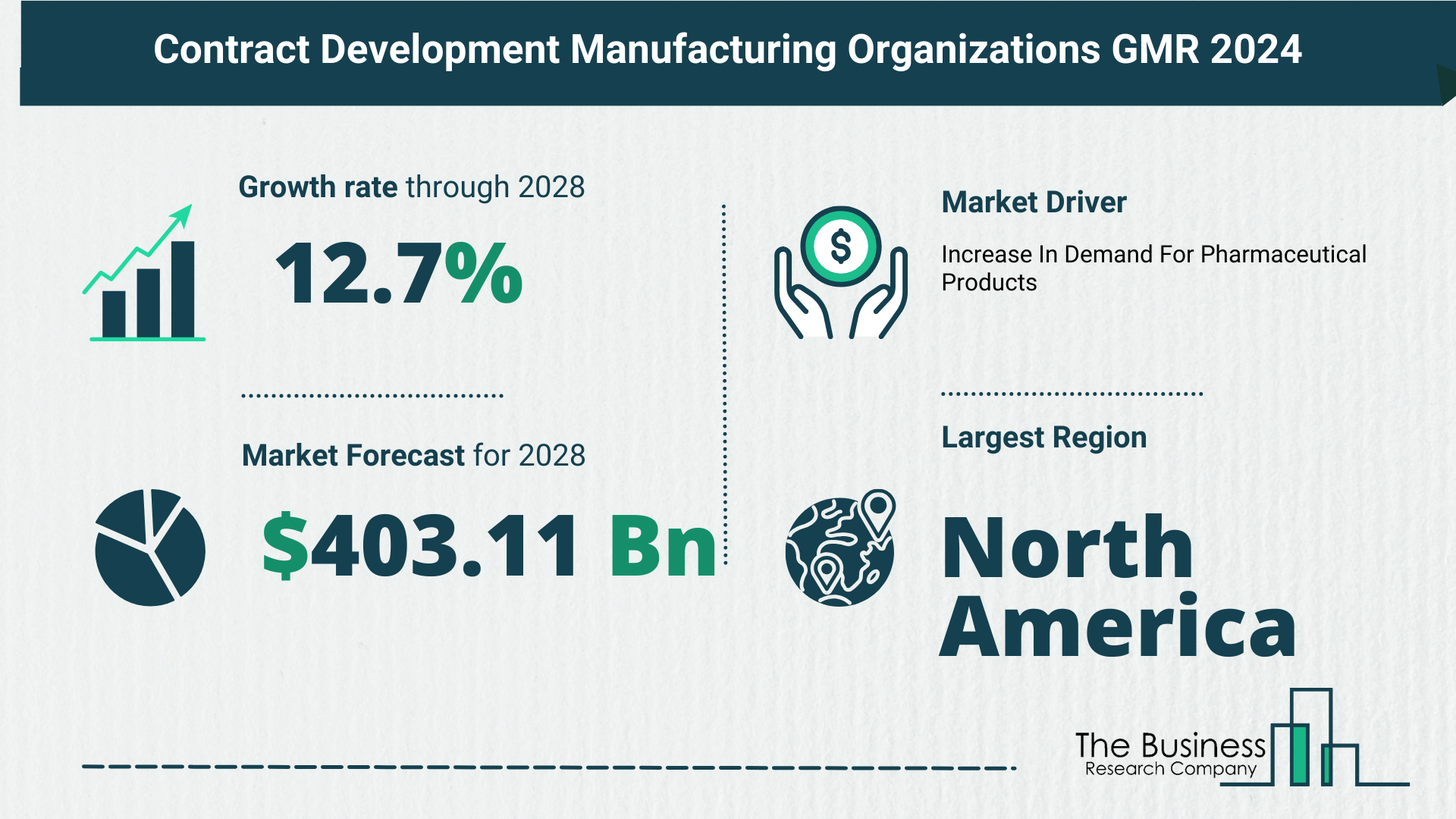
    The growth projections for the CDMO market indicate a remarkable future. By 2028, the market size is anticipated to soar to $403.11 billion, boasting a compound annual growth rate (CAGR) of 12.7%. The forecasted surge can be attributed to the accelerated adoption of personalized medicine, an increasing demand for biologics and biosimilars, a heightened focus on research and development outsourcing, and regulatory changes impacting pharmaceutical manufacturing.

    Trends Shaping the Future
    The forecast period is marked by significant trends that are reshaping the landscape of contract development manufacturing organizations:

    1. Technological Advancements: Continuous improvement in manufacturing processes.
    2. Digital Integration: Incorporation of digital technologies in manufacturing processes.
    3. Sustainability: A shift towards environmentally friendly practices.
    4. Virtual and Decentralized Models: The rise of non-traditional CDMO approaches.
    5. Data Analytics: Growing importance of data analytics in optimizing manufacturing operations.

    Clinical Trials as Catalysts
    The escalating number of clinical trials plays a pivotal role in propelling the growth of the CDMO market. These trials, aimed at evaluating the safety and efficacy of new drugs or treatments in humans, present a lucrative avenue for CDMOs. The benefits include:

    • Additional Revenue Stream: Engaging in clinical trials adds a supplementary income source.
    • Long-Term Partnerships: Trials can lead to enduring partnerships with pharmaceutical companies.
    • Enhanced Reputation: Successful trial involvement enhances a CDMO’s industry standing.
    • Collaborative Relationships: Clinical trials facilitate the establishment of collaborative relationships.

    As of May 2023, there are a staggering 452,604 registered clinical studies on ClinicalTrials.gov, with 64,838 actively seeking participants. This surge signifies a substantial increase from the 365,000 trials registered in 2021, underlining the market’s growth fueled by clinical trials.

    Key Players Shaping the Landscape

    Major companies driving the CDMO market include:

    • Recipharm AB
    • AbbVie Contract Manufacturing LLC
    • Almac Group Limited
    • Boehringer Ingelheim International GmbH
    • Catalent Pharma Solutions Inc.
    • Pfizer CentreOne
    • Thermo Fisher Scientific Inc.

    View More On The Contract Development Manufacturing Organizations Market Report 2024 – https://www.thebusinessresearchcompany.com/report/contract-development-manufacturing-organizations-global-market-report

    Innovative Developments for Market Domination
    Major CDMO players are not just riding the wave; they are actively shaping the market through innovative developments. An exemplary case is the introduction of Lifera, a commercial-scale CDMO launched by Saudi Arabia’s Public Investment Fund (PIF) in June 2023. Lifera focuses on producing vital biopharmaceutical goods, including insulin, vaccinations, monoclonal antibodies, plasma treatments, cell and gene therapies, and advanced small chemicals. The organization aims to increase local capacity and support domestic manufacturing through alliances with both domestic and foreign businesses.

    Strategic Acquisitions Paving the Way
    In February 2022, Recipharm AB made a strategic move by acquiring Arranta Bio, a US-based CDMO. This acquisition aimed to expand Recipharm’s capabilities in biologics, providing unique scientific offerings to innovative drug developers. It positioned Recipharm as a key player in new biologics modalities, ensuring diversification across various technologies and modalities.

    Market Segmentation: Understanding the Dynamics

    The CDMO market, as covered in this report, is segmented based on:

    1. Service: CMO, CRO
    2. Product: Small Molecules, Biologics
    3. End User: Big Pharma, Small and Mid-size Pharma, Generic Pharmaceutical Companies, Other End Users

    Conclusion: North America Takes the Lead

    In 2023, North America emerged as the largest region in the contract development manufacturing organizations market, underscoring the region’s dominance in this rapidly expanding sector. As the industry continues to evolve, these trends and developments are steering the CDMO market toward unprecedented growth, solidifying its crucial role in the pharmaceutical and biopharmaceutical landscape.

    Request A Sample Of The Global Contract Development Manufacturing Organizations Market Report 2024:
    https://www.thebusinessresearchcompany.com/sample_request?id=3885&type=smp

  • Key Trends And Drivers In The Healthcare Claims Management Solutions Market 2024

    Key Trends And Drivers In The Healthcare Claims Management Solutions Market 2024

    The Business Research Company’s market reports offer an in-depth analysis on the market’s growth potential, major drivers, key trends and more.

    The healthcare claims management solutions market has experienced robust growth in recent years, with the market size surging from $15.32 billion in 2023 to $16.34 billion in 2024, exhibiting a substantial Compound Annual Growth Rate (CAGR) of 6.7%. This growth is attributed to various factors, including increased healthcare costs, regulatory compliance, the shift to paperless claims processing, improved accuracy, and enhanced collaboration between providers and payers.

    Future Trajectory: Strong Growth Anticipated
    Forward Momentum
    The healthcare claims management solutions market is poised for continued growth, expecting to reach $21.24 billion in 2028 at a CAGR of 6.8%. This anticipated growth in the forecast period can be attributed to key factors such as the expansion of telehealth, the adoption of value-based care, emphasis on interoperability, cybersecurity measures, and improved pandemic preparedness.

    Chronic Disease Surge: A Driving Force
    Impact on Market Dynamics
    The surge in chronic diseases is expected to be a significant driver for the healthcare claims management solutions market. Chronic diseases, necessitating ongoing medical management, underscore the importance of efficient claims processing for timely reimbursement of services. The National Center for Biotechnology Information projects a 99.5% surge in individuals aged 50 years and older with at least one chronic illness by 2050. This surge, from 71.522 million in 2020 to 142.66 million, emphasizes the critical role of claims management in addressing the challenges posed by chronic diseases.

    Key Market Players: Industry Giants Shaping the Landscape
    Major Companies at the Helm
    Prominent companies driving the healthcare claims management solutions market include Allscripts Healthcare Solutions Inc., Athenahealth, McKesson Corporation, Oracle Corporation, and others. These industry giants play a pivotal role in shaping the market dynamics and contributing to the seamless functioning of healthcare claims management.

    Read More On The Healthcare Claims Management Solutions Market Report 2024 – https://www.thebusinessresearchcompany.com/report/healthcare-claims-management-solutions-global-market-report

    Technological Advancements: Revolutionizing the Landscape
    Innovations for Sustainability
    Major companies are channeling efforts into product innovation to maintain their market position. An example of this is Google LLC’s launch of an AI-enabled claims data activator suite in April 2023. This solution utilizes Document AI, the Healthcare Natural Language API, and the Healthcare API to convert unstructured data into structured data, facilitating data interoperability, intelligent analytics, and smart reporting. Such technological advancements are revolutionizing the healthcare claims management solutions market.

    Strategic Acquisitions: Athenahealth Under New Ownership
    Market Consolidation
    In a significant move, Hellman & Friedman and Bain Capital acquired Athenahealth in February 2022 for a deal amount of $17 billion. This acquisition positions Hellman & Friedman and Bain Capital as leaders in cloud-based electronic medical records and physician practice solutions. Athenahealth, a key player in the healthcare claims management solutions market, is set to contribute to the innovative landscape under its new ownership.

    Market Segmentation: Understanding Dynamics
    Breaking Down the Components
    The healthcare claims management solutions market is segmented based on type, deployment mode, and end-user. Notable segments include Software and Services under type, Web-Based, Cloud-Based, and On-Premise under deployment mode, and Healthcare Payers, Healthcare Providers, and Other End-Users. This segmentation offers a comprehensive understanding of the diverse dynamics within the healthcare claims management solutions landscape.

    Regional Leadership and Growth: North America and Asia-Pacific
    Market Dynamics Across Regions
    In 2023, North America emerged as the largest region in the healthcare claims management solutions market, showcasing its robust healthcare infrastructure and advanced technology adoption. Looking ahead, Asia-Pacific is expected to be the fastest-growing region in the forecast period, reflecting the global shift in market dynamics and the potential for substantial growth in diverse geographical areas.

    Future Trends: Shaping the Landscape Ahead
    Innovations on the Horizon
    As the healthcare claims management solutions market evolves, several trends are anticipated in the forecast period. Noteworthy trends include the integration of blockchain for claims processing, AI-powered claims analytics, predictive analytics for fraud detection, mobile claims submission, and automated claims adjudication. These trends highlight the industry’s commitment to innovation and efficiency.

    In conclusion, the healthcare claims management solutions market is navigating a dynamic landscape marked by technological advancements, strategic acquisitions, and a focus on addressing the challenges posed by chronic diseases. Stakeholders in this space must remain agile, innovative, and collaborative to harness the full potential of this evolving market.

    Request for A Sample Of The Global Healthcare Claims Management Solutions Market Report:
    https://www.thebusinessresearchcompany.com/sample_request?id=7298&type=smp

  • Healthcare Business Intelligence Market Report 2024: Market Size, Drivers, And Trends

    Healthcare Business Intelligence Market Report 2024: Market Size, Drivers, And Trends

    The Business Research Company’s global market reports are now updated with the latest market sizing information for the year 2024 and forecasted to 2033

    The healthcare business intelligence (BI) market is on a remarkable growth trajectory, reflecting a surge from $8.92 billion in 2023 to an estimated $10.32 billion in 2024, with a robust compound annual growth rate (CAGR) of 15.7%. This growth, observed in the historic period, is attributed to crucial factors such as regulatory compliance, increased data integration, cost control, population health management, and quality improvement.

    Continued Momentum: Forecasts and Influencing Factors
    The momentum is set to continue, with the market projected to witness rapid growth in the upcoming years, reaching an impressive $18.49 billion by 2028, supported by a CAGR of 15.7%. Key drivers in the forecast period include telehealth and remote monitoring, interoperability, cybersecurity concerns, pandemic preparedness, and the advancement of precision medicine. Notable trends shaping the future include real-time data analytics, predictive analytics, data security and privacy, the prevalence of cloud-based BI solutions, and the integration of artificial intelligence (AI) and machine learning.

    Healthcare Spending Surge: A Catalyst for BI Market Growth

    1. Defining Healthcare Spending: It encompasses all expenditures for health services, family planning, nutrition, and emergency aid designated for healthcare.
    2. Benefits of BI in Healthcare Spending: Healthcare BI provides benefits for patient safety and healthcare improvements.
    3. UK’s Exemplary Case: In the UK, healthcare spending increased by 9.4% in nominal terms and 9.7% in real terms between 2020 and 2021.
    4. Market Demand: The rise in healthcare spending intensifies the demand for healthcare business intelligence solutions.

    Key Players Steering the Landscape

    1. Major Companies: Microsoft Corporation, Oracle Corporation, Tableau Software, SAP SE, IBM Corporation, and more.
    2. Market Impact: These companies contribute significantly to the growth and innovation in the healthcare BI market.
    3. Industry Dominance: Inclusion of global leaders like Microsoft, Oracle, and IBM underscores the market’s substantial presence.

    View More On The Healthcare Business Intelligence Market Report 2024 – https://www.thebusinessresearchcompany.com/report/healthcare-business-intelligence-global-market-report

    Technological Advancements: A Driving Trend

    1. Innovative Solutions: Companies are developing cutting-edge solutions to fortify their positions in the healthcare BI market.
    2. Experity’s Launch: In July 2022, Experity launched Experity Business Intelligence, featuring pre-built dashboards for urgent care.
    3. Brazil’s Contribution: Experity, a Brazil-based company, adds to the global trend of leveraging technology in healthcare BI.

    Strategic Acquisition: Azalea Health’s Move

    1. Azalea Health’s Acquisition: Acquired DashboardMD in September 2021, enhancing their BI portfolio.
    2. Cloud-Based Solutions: DashboardMD offers cloud-based software solutions, providing actionable insights from electronic health records.
    3. Improving Patient Outcomes: The acquisition emphasizes technology and data-augmented care for better patient outcomes.

    Market Segmentation: Understanding the Dynamics

    1. Component Segmentation: Platforms, Software, Services
    2. Function Segmentation: Query and Reporting, OLAP and Visualization, Performance Management, Hybrid Model, Cloud-Based Model
    3. Mode of Delivery Segmentation: On-Premise Model, Hybrid Model, Cloud-Based Model
    4. Application Segmentation: Financial Analysis, Clinical Data Analysis, Patient Care Analysis, Other Applications
    5. End-User Segmentation: Payers, Healthcare Providers, Other End-Users

    Regional Insights: North America Leads, Asia-Pacific Emerges

    1. North America’s Dominance: The largest region in the healthcare business intelligence market in 2023.
    2. Asia-Pacific’s Growth: Expected to be the fastest-growing region in the forecast period, highlighting the global spread of healthcare BI solutions.

    Conclusion: Navigating the Future of Healthcare BI
    As healthcare business intelligence continues to evolve, driven by technological advancements, strategic acquisitions, and a global increase in healthcare spending, stakeholders must navigate a landscape marked by innovation and dynamic trends. The future promises not only substantial market growth but also a transformative impact on patient care and healthcare outcomes.

    Request A Sample Of The Global Healthcare Business Intelligence Market Report 2024:
    https://www.thebusinessresearchcompany.com/sample_request?id=6928&type=smp

  • Global Healthcare Automation Market Key Insights 2024-2033

    Global Healthcare Automation Market Key Insights 2024-2033

    The Business Research Company’s global market reports are now updated with the latest market sizing information for the year 2024 and forecasted to 2033

    According to The Business Research Company’s Healthcare Automation Global Market Report 2024, the healthcare automation market is expected to show promising growth in the forecast period.

    The healthcare automation market has witnessed substantial growth in recent years, with the market size projected to increase from $64.93 billion in 2023 to $72.14 billion in 2024, boasting a compound annual growth rate (CAGR) of 11.1%. This growth is attributed to various factors, including regulatory compliance, patient safety, increased adoption of electronic health records (EHR), operational efficiency, and the integration of medical devices.

    Driving Forces Behind Automation Adoption

    • Regulatory Compliance and Patient Safety: Automation supports adherence to regulatory standards and enhances patient safety measures.
    • Increased EHR Adoption: The rising use of electronic health records contributes to the demand for automation in healthcare facilities.
    • Operational Efficiency: Automation streamlines activities, leading to improved overall work efficiency.
    • Medical Device Integration: Integration of medical devices enhances the effectiveness of healthcare automation solutions.

    Cost Savings Through Automation

    • According to Dignity Health, the healthcare industry has saved $122 billion in administrative expenses through automation.
    • Continued adoption of Robotic Process Automation (RPA) solutions is considered by 30% of healthcare industry players, potentially leading to additional savings.

    Key Players in Healthcare Automation

    • Major companies operating in the healthcare automation market include 3M Company, Cerner Corporation, General Electric Company, McKesson Corporation, Siemens Healthineers, and many others.
    • These companies play a vital role in shaping the landscape of healthcare automation, offering innovative solutions and driving market growth.

    View More On The Healthcare Automation Market Report 2024 – https://www.thebusinessresearchcompany.com/report/healthcare-automation-global-market-report

    Artificial Intelligence Revolutionizes Healthcare Automation Market
    One of the significant trends shaping the healthcare automation market is the adoption of artificial intelligence (AI). Major players in the sector are focusing on integrating AI to enhance patient care and streamline administrative operations. Innovaccer Inc., a US-based healthcare data platform company, launched the AI Automation Suite, Sara for Healthcare, in August 2023, providing solutions for population health management, customer relationship management, value-based care, self-serve analytics, and care management and coordination.

    AI’s Impact on Patient Care and Operations

    • The use of AI in healthcare automation aids healthcare providers in various aspects of patient care and administrative tasks.
    • Innovaccer’s AI Automation Suite, Sara for Healthcare, ensures safety, accuracy, security, compliance, and scalability specific to healthcare information technology (IT) needs.

    Siemens Healthineers Expands Healthcare Automation Portfolio
    In April 2021, Siemens Healthineers AG acquired Varian Medical Systems Inc., a US-based radiation oncology treatment and software company, for an undisclosed amount. This strategic acquisition aimed to strengthen the partnership between Varian and Siemens Healthineers, creating a comprehensive digital, diagnostic, and therapeutic ecosystem, including treatment management.

    Varian Medical Systems’ Role in Healthcare Automation

    • Varian Medical Systems specializes in radiation oncology treatment and software, contributing to Siemens Healthineers’ healthcare automation portfolio.
    • The acquisition underscores the industry’s commitment to advancing digital solutions for improved patient outcomes.

    Healthcare Automation Market Segmentation
    The healthcare automation market is segmented based on components, applications, and end-users.

    Market Segments

    1. Components: Equipment, Software, Services
    2. Applications: Therapeutic Automation, Lab And Pharmacy Automation, Logistics And Training Automation, Diagnostics And Monitoring Automation, Other Applications
    3. End-Users: Pharmacies, Research Institutes And Labs, Home Care, Other End-Users

    North America’s Leadership in Healthcare Automation
    In 2023, North America emerged as the largest region in the healthcare automation market, highlighting the region’s advanced healthcare infrastructure and extensive adoption of automation technologies. The dominance of North America is expected to persist, further shaping the global landscape of healthcare automation.

    In conclusion, the surge in automation adoption, integration of artificial intelligence, strategic acquisitions, and market segmentation are driving the rapid growth of the healthcare automation market. As the industry continues to evolve, stakeholders should stay abreast of emerging trends to harness the full potential of automation for improved healthcare outcomes.

    Request A Sample Of The Global Healthcare Automation Market Report 2024:
    https://www.thebusinessresearchcompany.com/sample_request?id=7323&type=smp