Author: The Business Research Company

  • Healthcare Analytical Testing Services Global Market Outlook 2024-2033: Size And Growth Rate Analysis

    Healthcare Analytical Testing Services Global Market Outlook 2024-2033: Size And Growth Rate Analysis

    The Business Research Company’s global market reports provide comprehensive analysis on the various markets in 27 industries across 60 geographies.

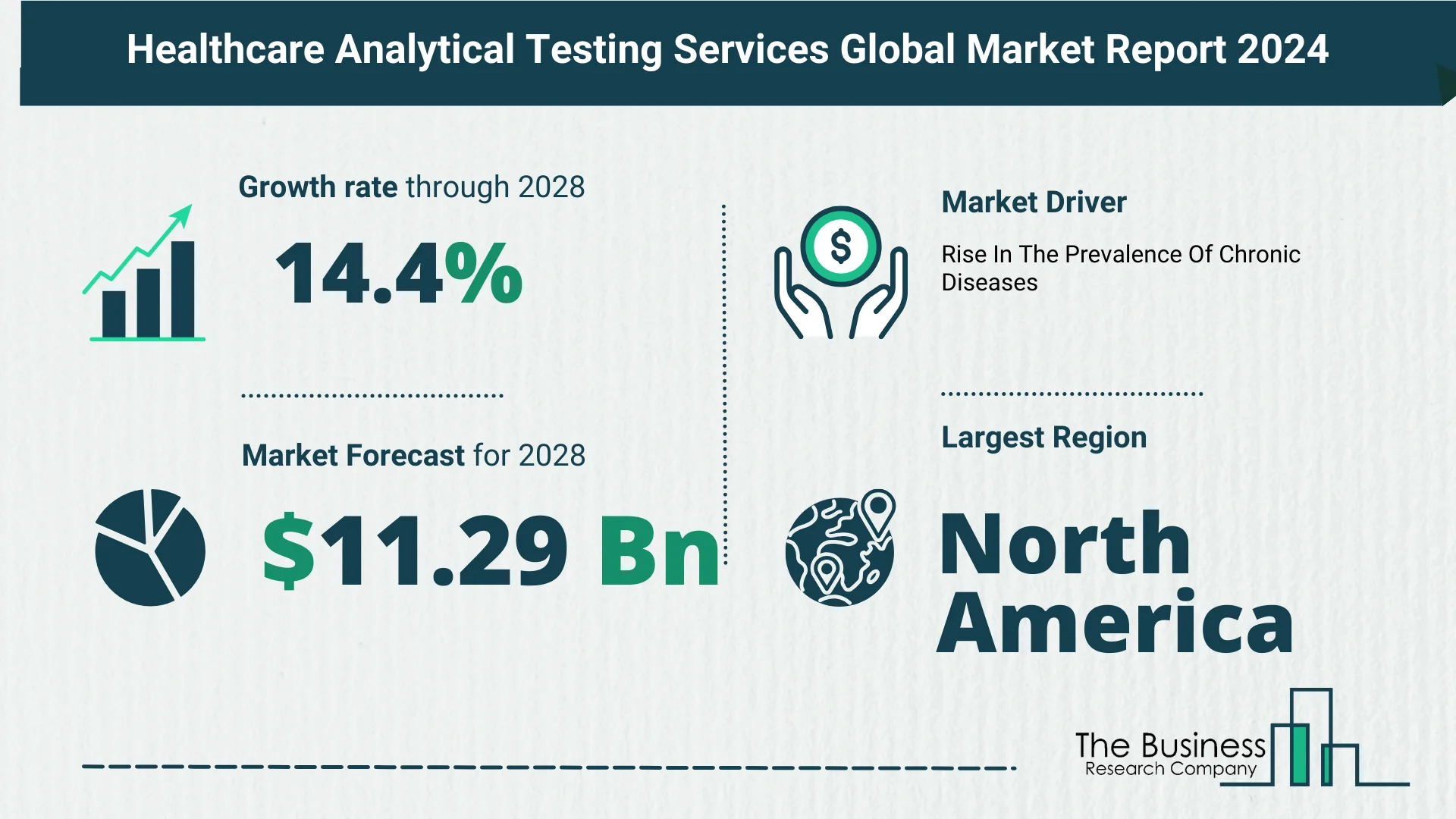
    The healthcare analytical testing services market has experienced substantial growth in recent years, evolving from $5.72 billion in 2023 to $6.59 billion in 2024, boasting an impressive Compound Annual Growth Rate (CAGR) of 15.3%. This surge is attributed to factors such as regulatory compliance, drug development, clinical trials expansion, the rise of the aging population, and increased prevalence of chronic diseases. Looking forward, the market is poised for even more rapid growth, reaching $11.29 billion by 2028 at a CAGR of 14.4%.

    Clinical Trials Surge Propels Market Growth

    • The escalating number of clinical trials is a significant driver for the healthcare analytical testing services market.
    • Clinical trials, assessing safety and efficacy of medical treatments, contribute to increased demand for analytical testing services.
    • According to ClinicalTrials.gov, the number of registered studies surged from 437,523 in 2022 to 468,457 globally by October 2023.

    Key Players and Market Segmentation

    • Major companies driving the market include Almac Group, Charles River Laboratories International Inc., Thermo Fisher Scientific Inc., and WuXi AppTec.
    • Market segmentation involves types of services (Bioanalytical Testing, Physical Characterization, Method Development, Stability Testing, etc.) and end-users (Pharmaceutical Companies, Medical Device Companies, Contract Research Organizations).

    View More On The Healthcare Analytical Testing Services Market Report 2024 – https://www.thebusinessresearchcompany.com/report/healthcare-analytical-testing-services-global-market-report

    Innovative Analytical Services Redefine the Market

    • Companies are focusing on innovative services to gain a competitive edge.
    • LGM Pharma LLC launched new analytical services in July 2021, providing testing and stability services to pharmaceutical developers and manufacturers, including compounding pharmacies.

    Strategic Acquisitions Reshape the Landscape

    • Laboratory Corporation’s acquisition of Toxikon Corporation in December 2021 expanded its non-clinical analytical services.
    • This strategic move aimed to enhance Laboratory Corporation’s product portfolio in non-clinical analytical drug development and medical device testing services.

    Market Trends Shaping the Future

    • Advanced analytical techniques, data security, personalized medicine testing, AI and machine learning applications, and environmental contaminant testing are prominent trends in the forecast period.
    • These trends signify the industry’s response to evolving challenges and opportunities.

    Regional Dynamics: North America Leads, Asia-Pacific Emerges

    • North America held the largest share in the healthcare analytical testing services market in 2023.
    • Asia-Pacific is anticipated to be the fastest-growing region in the forecast period, reflecting evolving healthcare needs and increasing demand for analytical testing services.

    Conclusion
    The healthcare analytical testing services market stands at the intersection of technological innovation, regulatory demands, and the dynamic landscape of healthcare. With an ever-increasing number of clinical trials, strategic acquisitions, and a focus on innovative analytical services, the market is not just growing but evolving. As we venture into the future, the integration of advanced analytical techniques, coupled with a robust response to market trends, positions this sector as a vital player in ensuring the quality, safety, and efficacy of pharmaceutical products. The trajectory of growth appears promising, promising a healthcare landscape where analytical testing services play an indispensable role in shaping the future of medicine.

    Request A Sample Of The Global Healthcare Analytical Testing Services Market Report 2024:
    https://www.thebusinessresearchcompany.com/sample_request?id=7448&type=smp
  • 5 Key Insights On The Healthcare Adhesive Tapes Market 2024

    5 Key Insights On The Healthcare Adhesive Tapes Market 2024

    The Business Research Company’s global market reports are now updated with the latest market sizing information for the year 2024 and forecasted to 2033

    As per The Business Research Company’s Healthcare Adhesive Tapes Global Market Report 2024, the healthcare adhesive tapes market is expected to show significant growth in the forecast period.

    The healthcare adhesive tapes market is experiencing robust growth, fueled by factors such as the increasing demand for medical procedures, a rising aging population, and emerging trends in patient care. Let’s delve into the dynamics propelling this expansion and explore the innovative trends shaping the future of healthcare adhesive tapes.

    Unveiling Growth Trajectory: Market Expansion Overview

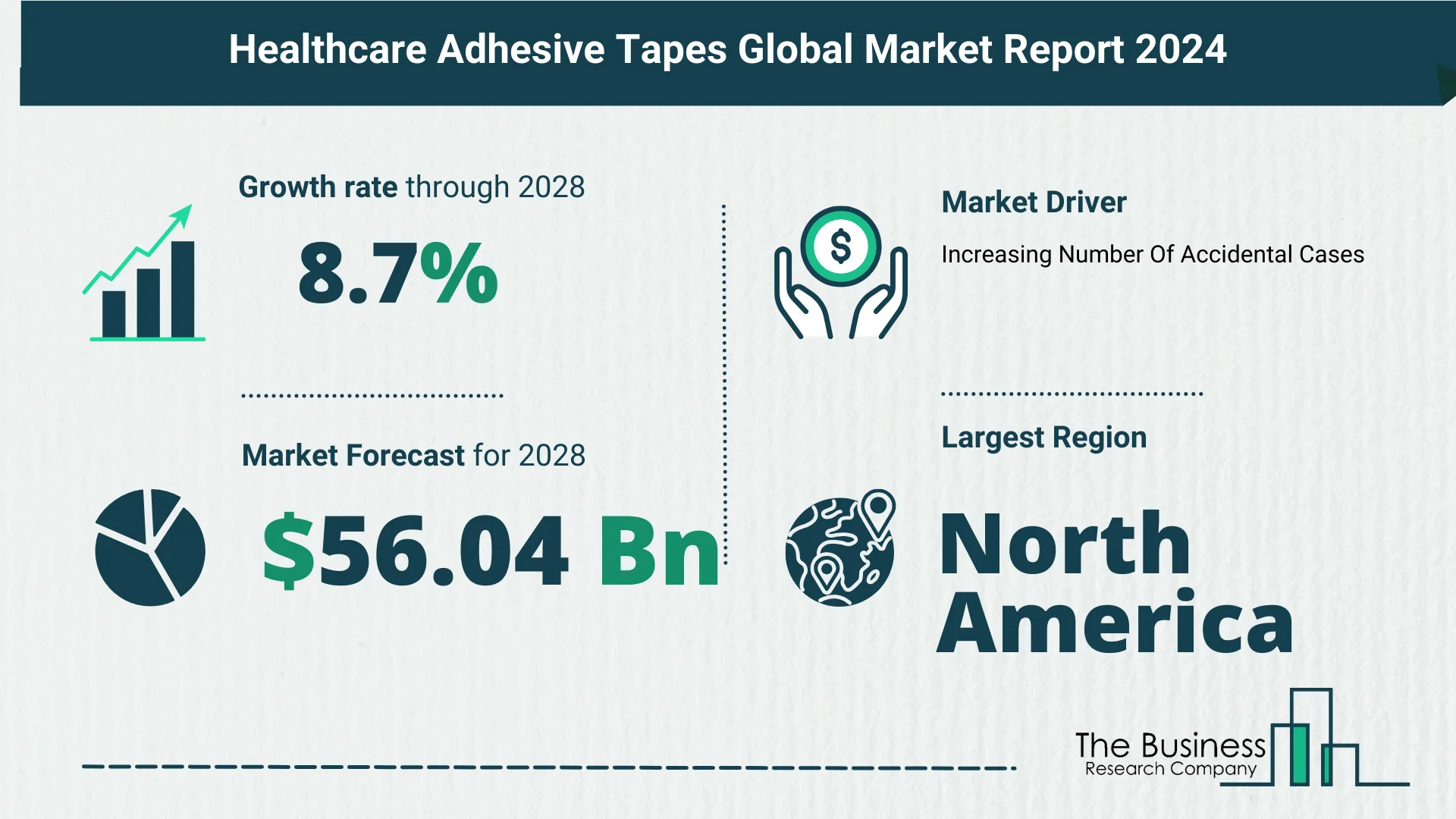
    • Historical Momentum: The healthcare adhesive tapes market has witnessed significant growth, soaring from $37.13 billion in 2023 to $40.12 billion in 2024 at a notable CAGR of 8.1%. The surge is attributed to heightened medical procedures and surgeries, a growing aging population, and an increase in chronic diseases, coupled with regulatory compliance demands.
    • Future Projections: Anticipating strong growth ahead, the market is projected to reach $56.04 billion in 2028, with a robust CAGR of 8.7%. The forecasted expansion is driven by factors like the increasing adoption of telemedicine and remote care, personalized medicine, home healthcare, emergency response, and a rising demand for geriatric care.

    Accidents and Adhesive Tapes: A Driving Force

    • Traffic-Related Accidents: The healthcare adhesive tape market is witnessing an upsurge due to the increasing number of traffic-related accidents. These incidents demand immediate medical attention, and adhesive tapes play a crucial role in providing initial care. Road traffic accidents, contributing to millions of non-fatal injuries and fatalities annually, underscore the significance of adhesive tapes in emergency healthcare.
    • Market Leaders: Key companies driving growth in this context include 3M Company, Cardinal Health Inc., Johnson & Johnson, and Nitto Denko Corporation, contributing to the evolution of adhesive tapes in emergency care.

    View More On The Healthcare Adhesive Tapes Market Report 2024 – https://www.thebusinessresearchcompany.com/report/healthcare-adhesive-tapes-global-market-report

    Innovative Product Solutions Redefining Patient Care

    • 3M Medical Tape 4578: Major players in the healthcare adhesive tapes market, like 3M Inc., are focusing on innovative product solutions. The introduction of 3M medical tape 4578 exemplifies this trend. This hypoallergenic, conformable, and highly breathable adhesive tape is designed for secure and gentle wound dressings and medical applications.
    • Extended Wear Time: 3M medical tape 4578 offers an extended wear time of up to 28 days, redefining patient care. Its application extends beyond traditional wound dressings to health monitors, sensors, and long-term medical wearables, aligning with a patient-centric care approach.

    Strategic Acquisitions: Boyd Corporation and MBK Tape Solutions

    • Boyd Corporation’s Acquisition: In December 2021, Boyd Corporation strengthened its medical material science capabilities by acquiring MBK Tape Solutions. This strategic move enhances Boyd Corporation’s expertise in medical adhesive tapes, particularly for applications like biosensors, transdermal patches, and advanced wound care.
    • Market Evolution: The acquisition reflects the evolution of the healthcare adhesive tapes market, with companies strategically aligning to broaden their capabilities and cater to the growing demand for advanced medical materials.

    Segmentation Insights: Resin Types, Backing Materials, and Applications

    • Resin Types: The market segmentation includes various resin types such as Acrylic, Rubber, Silicone, and Other Resin Types, showcasing the diversity in adhesive tape formulations.
    • Backing Materials: The backing material types encompass Paper, Fabric, Plastic, and Other Backing Material Types, offering options tailored to different medical applications.
    • Applications: Adhesive tapes find applications in Surgery, Wound Dressing, Splints, Secure IV Line, Ostomy Seal, Hygiene, Bandages, Transdermal Patches, Blister Protection, Diagnostic Monitoring and Medical Devices, Optical Care, and Other Applications, highlighting their versatility in healthcare.

    Regional Dynamics: North America Leads, Asia-Pacific Accelerates

    • North America’s Dominance: In 2023, North America held the largest share in the healthcare adhesive tapes market, showcasing early adoption and prominence in the industry. The region continues to be a pivotal player in the market’s growth.
    • Asia-Pacific’s Growth Trajectory: Asia-Pacific is poised to be the fastest-growing region in the forecast period, reflecting the region’s increasing focus on healthcare infrastructure, rising healthcare awareness, and growing demand for advanced medical materials.

    In conclusion, the healthcare adhesive tapes market’s journey reflects a resilient trajectory, driven by innovations, strategic acquisitions, and the evolving landscape of patient care. As the industry continues to respond to emergent healthcare needs, adhesive tapes stand as essential tools in providing efficient, immediate, and reliable medical solutions.

    Request A Sample Of The Global Healthcare Adhesive Tapes Market Report 2024:
    https://www.thebusinessresearchcompany.com/sample_request?id=7283&type=smp

  • What Is The Forecast Growth Rate For The Hand-Held Surgical Instruments Market?

    What Is The Forecast Growth Rate For The Hand-Held Surgical Instruments Market?

    The Business Research Company’s market reports offer an in-depth analysis on the market’s growth potential, major drivers, key trends and more.

    The hand-held surgical instruments market has witnessed strong growth in recent years, projecting an increase from $6.59 billion in 2023 to $7.2 billion in 2024, reflecting a commendable Compound Annual Growth Rate (CAGR) of 9.1%. This growth can be attributed to advancements in minimally invasive surgery, an aging population, healthcare infrastructure development, a surge in chronic diseases, and adherence to regulatory compliance.

    Anticipating Rapid Growth
    Forward Momentum
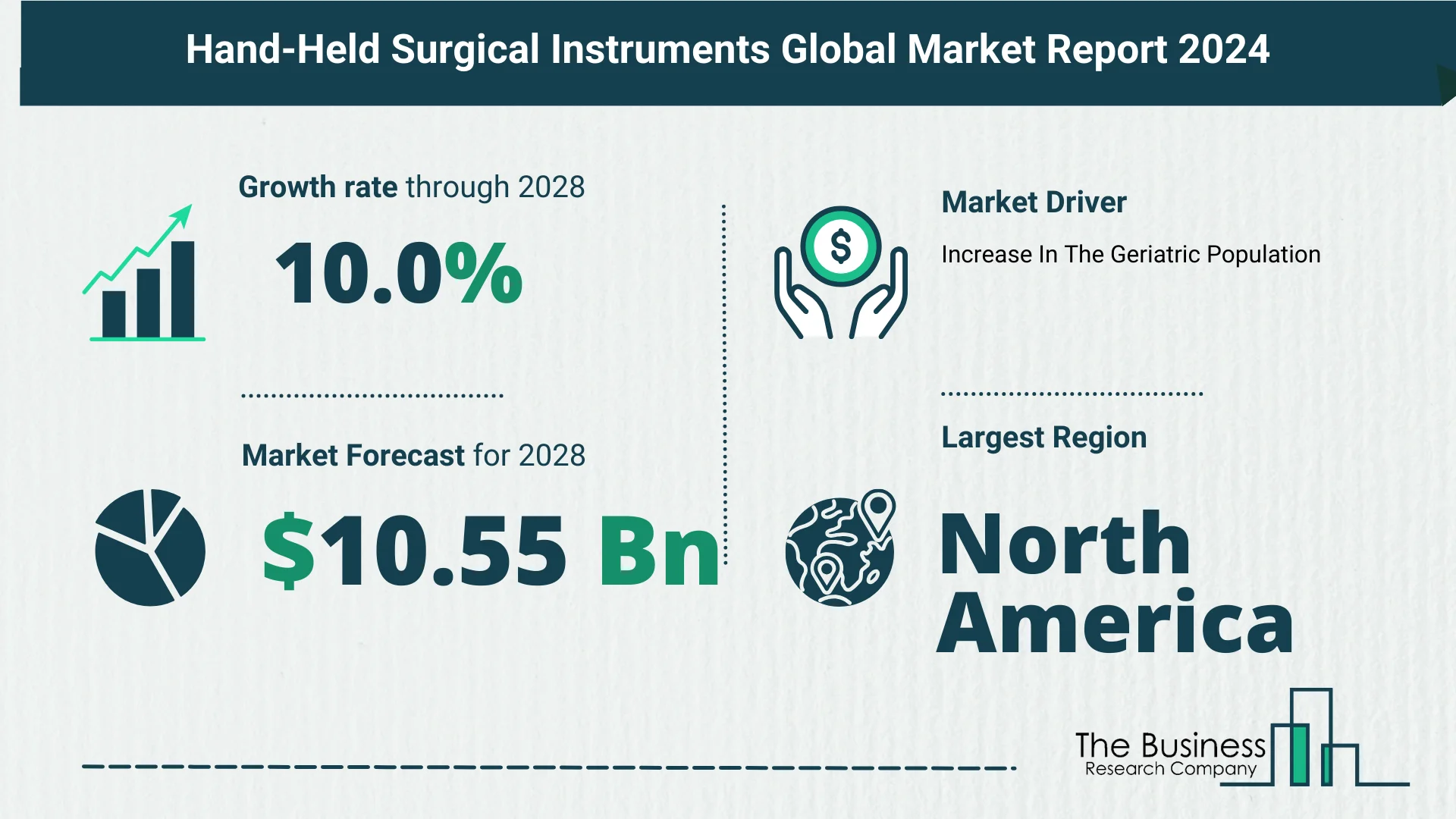
    The hand-held surgical instruments market is poised for rapid growth in the coming years, expecting to reach $10.55 billion in 2028, with a robust CAGR of 10.0%. Key factors driving this anticipated growth include the advent of personalized medicine, the expansion of telemedicine and remote surgery, an upsurge in healthcare expenditure, the emergence of new healthcare markets, and the emphasis on surgical training and skill development.

    Chronic Diseases Fueling Market Dynamics
    Impact on Surgical Instrumentation
    The rising prevalence of chronic diseases is set to be a significant driver for the hand-held surgical instruments market. These instruments play a crucial role in the management and treatment of chronic diseases, aiding in diagnosis, biopsy, tissue sampling, pain management, and overall improvement of patient outcomes. The National Center for Biotechnology Information projects a substantial surge of 99.5% in individuals aged 50 years and older with at least one chronic illness by 2050, emphasizing the pivotal role of hand-held surgical instruments in addressing the challenges posed by chronic diseases.

    Industry Giants Shaping the Market
    Key Players at the Helm
    Major companies operating in the hand-held surgical instruments market include industry giants like Johnson & Johnson, B. Braun Melsungen AG, Medtronic PLC, Zimmer Biomet Holdings Inc., and others. These players contribute significantly to shaping the market dynamics and ensuring the seamless functioning of hand-held surgical instruments in diverse healthcare settings.

    Read More On The Hand-Held Surgical Instruments Market Report 2024 – https://www.thebusinessresearchcompany.com/report/hand-held-surgical-instruments-global-market-report

    Innovative Product Illumination
    Revolutionizing with Sunoptic Surgical Light Wand
    Companies in the hand-held surgical instruments market are focusing on innovative product solutions to sustain their position. An exemplary innovation is the sunoptic surgical light wand, launched by SURE Retractors Inc. in June 2023. This single-use, sterile light wand illuminates the surgical site from within, providing excellent lighting and affordability for hospitals and clinics. With a guaranteed 90-minute strong LED light, it eliminates the need for external light sources, enhancing visibility and reducing eye strain during lengthy treatments.

    Strategic Acquisition for Portfolio Expansion
    Steris PLC’s Move into Surgical Instrumentation
    In August 2023, STERIS PLC, an Ireland-based medical equipment provider, strategically acquired surgical instrumentation assets from Becton, Dickinson, and Company. This undisclosed amount acquisition strengthens, complements, and expands STERIS’s product offerings in the healthcare segment. The acquired assets include surgical instrumentation, laparoscopic instrumentation, and sterilization container assets. Becton, Dickinson and Company, a U.S.-based medical technology company, played a crucial role in this strategic move.

    Market Segmentation: Understanding the Dynamics
    Breaking Down the Components
    The hand-held surgical instruments market is segmented based on product type, application, and end-user. Notable segments include Forceps, Retractors, Dilators, Graspers, Scalpels, and other products under product type, Neurosurgery, Cardiovascular, Orthopedic, Plastic and Reconstructive Surgery, Obstetrics and Gynecology, and other applications under application, and Clinics, Ambulatory Surgical Centers, and other end-users. This segmentation provides a comprehensive understanding of the diverse dynamics within the hand-held surgical instruments market.

    Regional Dynamics: Leadership and Growth
    North America Dominates, Asia-Pacific Emerges
    In 2023, North America emerged as the largest region in the hand-held surgical instruments market, showcasing its robust healthcare infrastructure. Looking ahead, Asia-Pacific is anticipated to be the fastest-growing region in the forecast period, reflecting the global shift in market dynamics and the potential for substantial growth in diverse geographical areas.

    Illuminating the Path Ahead
    Innovations and Sustainability
    As the hand-held surgical instruments market evolves, several trends are anticipated in the forecast period. Noteworthy trends include the integration of surgical robotics, eco-friendly and sustainable solutions, advanced materials and coatings, telemedicine and remote surgery, and smart and connected instruments. These trends highlight the industry’s commitment to innovation, sustainability, and efficiency.

    In conclusion, the hand-held surgical instruments market is navigating a dynamic landscape marked by technological advancements, strategic acquisitions, and a focus on addressing the challenges posed by chronic diseases. Stakeholders in this space must remain agile, innovative, and collaborative to harness the full potential of this evolving market.

    Request for A Sample Of The Global Hand-Held Surgical Instruments Market Report:
    https://www.thebusinessresearchcompany.com/sample_request?id=7428&type=smp

  • How Is The Healthcare Technology Management Market Expected To Grow Through 2024-2033

    How Is The Healthcare Technology Management Market Expected To Grow Through 2024-2033

    The Business Research Company’s global market reports are now updated with the latest market sizing information for the year 2024 and forecasted to 2033

    According to The Business Research Company’s Healthcare Technology Management Global Market Report 2024, the healthcare technology management market is expected to show promising growth in the forecast period.

    The healthcare technology management market has experienced remarkable growth, reaching $18.51 billion in 2023 and projecting a surge to $21.26 billion in 2024, reflecting a Compound Annual Growth Rate (CAGR) of 14.9%. This expansion in the historic period can be attributed to factors such as medical device integration, regulatory compliance, equipment maintenance, cost control, and asset tracking.

    Future Projections

    A Promising Trajectory

    The healthcare technology management market is poised for rapid growth in the upcoming years, anticipating a climb to $37.92 billion in 2028, with a CAGR of 15.6%. This surge in the forecast period is driven by factors like telehealth expansion, increasing emphasis on value-based care, cybersecurity, data protection, and a growing commitment to sustainability in healthcare.

    Emerging Trends
    Key trends in the forecast period include a focus on telehealth technology management, IoT device management, adoption of AI and machine learning, embracing cloud-based solutions, and efficient mobile device management.

    Catalysts for Growth

    1. Growing Telemedicine Services

    The expansion of telemedicine services is a significant driver propelling the growth of the healthcare technology management market. As telemedicine gains prominence in healthcare, with 37.0% of adults reported utilizing telemedicine services in 2021, there is a heightened demand for healthcare technology management to maintain and support the associated devices. The surge in telemedicine usage is evident across demographics, with women exhibiting a higher likelihood of use, and usage rates increasing with age.

    1. Major Market Players

    Leading companies in the healthcare technology management market include ABM Industries Inc., Agility Inc., Allscripts Healthcare Solutions Inc., Siemens Healthcare GmbH, and many others. These companies play a pivotal role in providing essential technology management services to healthcare organizations.

    View More On The Healthcare Technology Management Market Report 2024 – https://www.thebusinessresearchcompany.com/report/healthcare-technology-management-global-market-report

    Strategies for Evolution

    Innovation and Product Diversification

    Major companies operating in the market are actively engaged in developing new products, focusing on automated management solutions to cater to larger customer bases, increase sales, and boost revenue. An automated management solution streamlines administrative and operational processes within an organization, reducing the need for manual intervention. For example, TeleVox Software Inc. launched an automated reputation management solution, enabling healthcare entities to manage and enhance their online visibility and reputation. This technology facilitates automated patient notifications, feedback collection, and sentiment analysis.

    Strategic Acquisitions: Sodexo and TOPMED Information Technology Co. Ltd.

    In February 2022, Sodexo, a France-based technology management company, made a significant move by acquiring Shanghai TOPMED Information Technology Co. Ltd. for an undisclosed amount. This strategic acquisition expanded Sodexo’s reach in the Chinese market, reinforcing its healthcare technology management services and product portfolio.

    Market Segmentation

    The healthcare technology management market is segmented based on the type of service and facility type:

    1. Type of Service: Includes Maintenance and Repair, Capital Planning, Integrated Software Platform, Labor Management, Supply Chain (Procurement), Cyber Security, Quality and Regulatory Compliance.
    2. Facility Type: Encompasses Acute Care Facility, Post Acute Care Facility, Non Acute Care Facility.

    Regional Dominance

    North America emerged as the largest region in the healthcare technology management market in 2023, underscoring its pivotal role in steering the market’s trajectory.

    In conclusion, the healthcare technology management market is on an upward trajectory, fueled by the increasing adoption of telemedicine services, technological advancements, and strategic innovations. As healthcare organizations continue to embrace cutting-edge solutions, the role of technology management becomes increasingly crucial, ensuring seamless operations, regulatory compliance, and the efficient integration of evolving technologies.

    Request A Sample Of The Global Healthcare Technology Management Market Report 2024:
    https://www.thebusinessresearchcompany.com/sample_request?id=7460&type=smp

  • Key Insights On The Companion Animal Arthritis Market 2024 – Size, Driver, And Major Players

    Key Insights On The Companion Animal Arthritis Market 2024 – Size, Driver, And Major Players

    The Business Research Company’s global market reports are now updated with the latest market sizing information for the year 2024 and forecasted to 2033

    As per The Business Research Company’s Companion Animal Arthritis Global Market Report 2024, the companion animal arthritis market is expected to show significant growth in the forecast period.

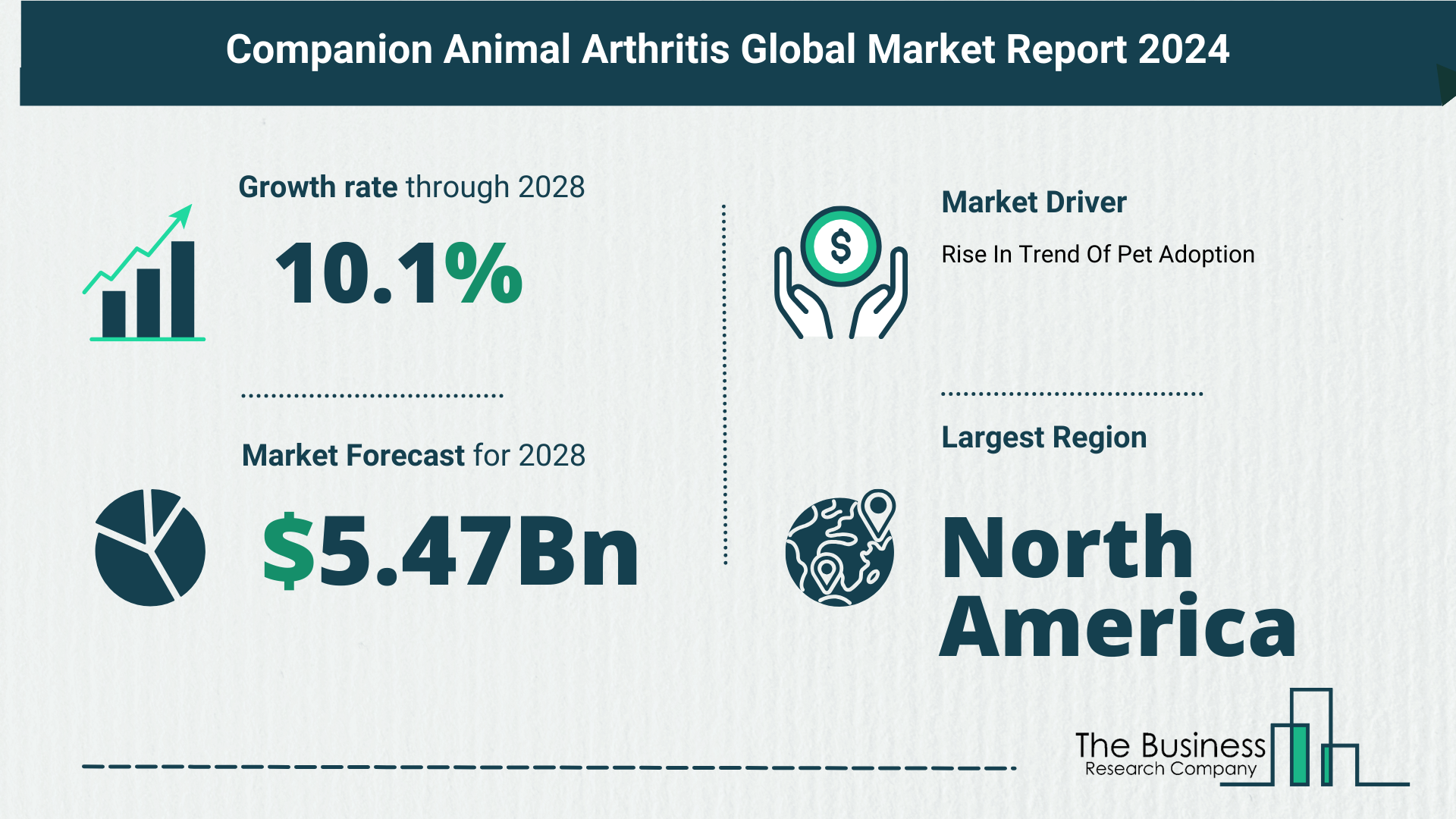
    The companion animal arthritis market has experienced robust growth in recent years, evolving into a crucial sector within the pet healthcare industry. The market size surged from $3.4 billion in 2023 to $3.72 billion in 2024, boasting a notable compound annual growth rate (CAGR) of 9.7%. Looking ahead, the forecast anticipates even more robust growth, reaching $5.47 billion by 2028 at a CAGR of 10.1%. This expansion is fueled by factors such as increased spending on pet healthcare, innovations in therapeutics, and a growing focus on the well-being of our four-legged companions.

    Growth Of Companion Animal Arthritis Market Fueled By Increased Spending On Pet Healthcare:

    • Financial Commitment to Pet Well-being:
      • The increased spending on pet healthcare is expected to boost demand for companion animal arthritis solutions.
      • Pet owners are demonstrating a growing commitment to improving the overall well-being and quality of life of their beloved animals.
    • Rising Expenditure Trends:
      • According to the American Pet Products Association Inc., spending on supplies, live animals, and OTC medicine was $32.1 billion in 2023, reflecting a slight increase from $31.5 billion in 2022.
      • Expenditure on veterinary care and products also rose from $35.9 billion in 2022 to $37 billion in 2023.

    Major Players in the Companion Animal Arthritis Market:

    • Prominent Companies:
      • Zoetis Inc., Virbac S. A., Elanco Animal Health Incorporated, and others play a pivotal role in advancing solutions for companion animal arthritis.
      • These companies contribute to the growth and innovation in the market.
    • Market Dynamics:
      • Increased spending on pet healthcare has a direct impact on the growth of major companies operating in the companion animal arthritis market.

    View More On The Companion Animal Arthritis Market Report 2024 – https://www.thebusinessresearchcompany.com/report/companion-animal-arthritis-global-market-report

    Increasing Focus On Introducing Stem Cell Treatment To Gain A Competitive Edge:

    • Stem Cell Therapy as a Game-Changer:
      • Major companies are focusing on developing stem cell treatments to gain a competitive edge.
      • Stem cell therapy holds promise in providing relief and regeneration of damaged joints in animals with arthritis.
    • Innovative Offerings:
      • UK-based animal health company TVM introduced DogStem in January 2023, the first licensed stem cell therapy for canine osteoarthritis in Europe.
      • DogStem, utilizing mesenchymal stem cells from equine umbilical cords, demonstrates effectiveness in reducing pain and enhancing mobility.

    Zoetis Acquired NewMetrica:

    • Strategic Acquisition:
      • In September 2022, Zoetis, a key player in the market, acquired NewMetrica for an undisclosed amount.
      • The acquisition enhances Zoetis’ capabilities in quality-of-life evaluations, deepening the understanding of an animal’s well-being, particularly in conditions like canine arthritis.
    • Quality-of-Life Focus:
      • NewMetrica, a UK-based provider, specializes in scientifically developed instruments to measure quality-of-life in animals, aligning with Zoetis’ commitment to comprehensive care.

    Market Segmentation:

    • Comprehensive Segmentation:
      • The companion animal arthritis market is segmented based on types of animals, indications, treatments, and distribution channels.
      • This segmentation allows for tailored approaches in addressing the diverse needs of pet owners and their furry friends.

    Trends Shaping the Future of Companion Animal Arthritis Market:

    • Biologics in Veterinary Medicine:
      • Advancements in biologics contribute to more effective treatments for companion animal arthritis.
      • These innovative solutions offer a new dimension to veterinary care.
    • Digital Health Solutions:
      • The integration of digital health solutions enhances monitoring and care, ensuring pet owners have real-time insights into their animals’ well-being.
    • Nutraceuticals and Functional Foods:
      • Customized nutrition and the introduction of nutraceuticals and functional foods cater to specific dietary needs, promoting joint health in companion animals.
    • Collaborations and Partnerships:
      • Collaborations and partnerships within the industry foster innovation and the development of comprehensive solutions.
      • These alliances contribute to a holistic approach in addressing companion animal arthritis.

    Conclusion:

    As the companion animal arthritis market continues to expand, driven by increased spending on pet healthcare, innovative therapies, and a humanized approach to pet well-being, the future looks promising. With a forecasted CAGR of 10.1%, leading to a market size of $5.47 billion by 2028, the industry is not only addressing the immediate needs of pets but is also paving the way for advanced and compassionate veterinary care. The bond between humans and their animal companions is stronger than ever, and the companion animal arthritis market reflects this enduring connection.

    Request A Sample Of The Global Companion Animal Arthritis Market Report 2024:
    https://www.thebusinessresearchcompany.com/sample_request?id=7772&type=smp

  • Key Insights On The Companion Animal Arthritis Market 2024 – Size, Driver, And Major Players

    Key Insights On The Companion Animal Arthritis Market 2024 – Size, Driver, And Major Players

    The Business Research Company’s market reports offer an in-depth analysis on the market’s growth potential, major drivers, key trends and more.

    The compression therapy market has experienced remarkable growth in recent years, ascending from $4 billion in 2023 to an estimated $4.36 billion in 2024, showcasing a substantial Compound Annual Growth Rate (CAGR) of 8.9%. The historic growth is attributed to factors like the aging population, increased prevalence of chronic venous diseases, heightened awareness of the therapeutic benefits of compression, rising cases of diabetes, and expanding indications for compression therapy.

    Key Growth Metrics:

    • Market Size Growth:From $4 billion (2023) to $4.36 billion (2024) at a CAGR of 8.9%
    • Contributing Factors:Aging population, chronic venous diseases, awareness, diabetes-related conditions, expanded indications

    A Vision for the Future

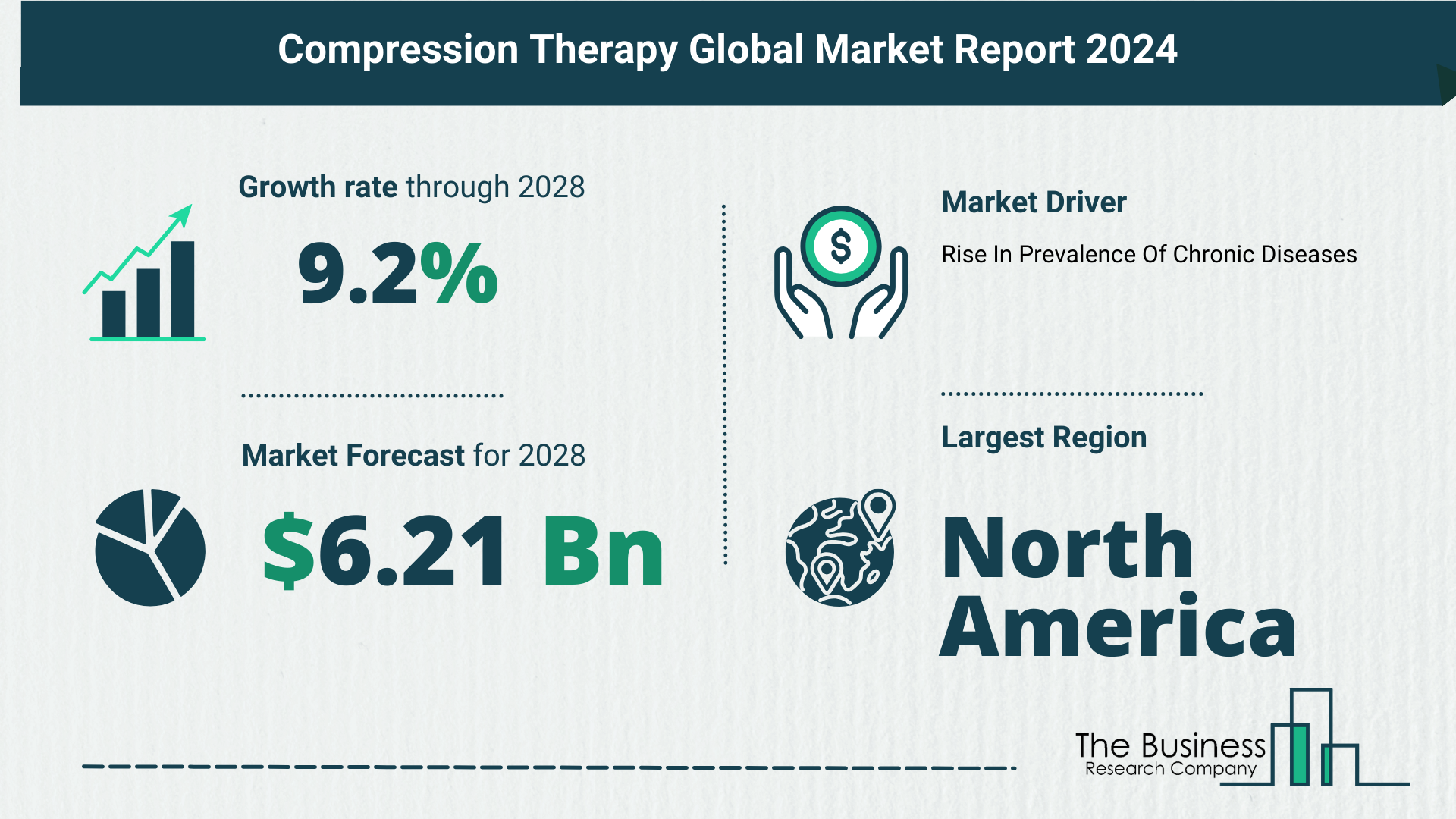
    The compression therapy market is poised for robust expansion, with a forecasted size of $6.21 billion in 2028, boasting a CAGR of 9.2%. This anticipated growth is propelled by factors such as increased healthcare spending, improved accessibility to compression therapy, a growing geriatric population, rising prevalence of conditions like lymphedema, expansion of applications in sports and fitness, and a surge in the adoption of compression therapy within hospital settings.

    Future Trends:

    • Wearable and Smart Compression Devices:Integrating technology for enhanced functionality
    • Customization of Compression Solutions:Tailoring therapy to individual needs
    • Integration in Wound Care Management:Utilizing compression therapy for wound healing
    • Emphasis on Patient Comfort:Prioritizing user comfort and compliance
    • Collaboration for Improved Outcomes:Partnerships between manufacturers and healthcare providers

    Chronic Diseases Driving Market Growth

    The increasing prevalence of chronic diseases emerges as a key driver propelling the growth of the compression therapy market. Chronic diseases, characterized by long-term health conditions, often necessitate the use of compression therapy to address symptoms such as diabetes, edema, ulcers, and circulatory issues. Notably, the International Diabetes Federation predicts a global diabetic population reaching 537 million in 2021, escalating to 643 million in 2030 and 783 million in 2045, accentuating the need for effective compression therapy.

    Notable Statistic:

    • In 2021, the International Diabetes Federation estimated 537 million people globally with diabetes.

    Innovative Product Developments

    Major players in the compression therapy market are at the forefront of innovation, introducing products such as wearable compression systems to cater to a broader customer base and boost revenue. An exemplary case is Koya Medical Inc., which launched the Dayspring active compression system in April 2022. This dynamic system, catering to lymphedema and venous diseases in the lower extremities, represents a groundbreaking, FDA-approved non-pneumatic active compression treatment. It combines a comfortable, breathable mesh garment with intelligent, rechargeable controllers featuring Bluetooth capabilities and companion software for personalized treatment and progress assessment.

    Read More On The Compression Therapy Market Report 2024 – https://www.thebusinessresearchcompany.com/report/compression-therapy-global-market-report

    Noteworthy Product Launch:

    • Koya Medical Inc.’s Dayspring active compression system

    Strategic Acquisitions Shaping the Market Landscape

    In a strategic move in March 2021, Direct Healthcare Group (DHG) Ltd., a UK-based medical device company, acquired Talley Group Ltd., a US-based compression therapy provider. This acquisition enhances DHG’s pressure ulcer prevention portfolio and facilitates entry into the Negative Pressure Wound Therapy (NPWT) and Intermittent Pneumatic Compression (IPC) therapy markets. The synergy between DHG and Talley’s expertise ensures a comprehensive product portfolio for enhanced health outcomes.

    Acquisition Highlights:

    • Acquirer:Direct Healthcare Group (DHG) Ltd.
    • Acquired:Talley Group Ltd.
    • Objective:Expanding pressure ulcer prevention portfolio, entering NPWT and IPC therapy markets

    Market Segmentation

    The compression therapy market is segmented based on products, techniques, and applications.

    1. Product Segmentation:
      • Compression Pumps
      • Compression Stockings
      • Compression Bandages
      • Compression Tapes
    2. Technique Segmentation:
      • Static Compression Therapy
      • Dynamic Compression Therapy
    3. Application Segmentation:
      • Varicose Vein Treatment
      • Deep Vein Thrombosis Treatment
      • Lymphedema Treatment
      • Leg Ulcer Treatment
      • Other Applications

    Regional Dominance

    North America asserted itself as the largest region in the compression therapy market in 2023, underlining the region’s proactive approach toward adopting and advancing compression therapy solutions.

    Regional Insights:

    • Largest Market:North America (2023)

    In conclusion, the compression therapy market’s trajectory is marked by innovation, strategic collaborations, and a commitment to addressing the diverse needs of individuals with chronic conditions. As the market continues to evolve, the emphasis on technological integration, personalized solutions, and collaborative efforts between manufacturers and healthcare providers is set to redefine the landscape of compression therapy, promoting enhanced patient outcomes and well-being.

    Request for A Sample Of The Global Compression Therapy Market Report:
    https://www.thebusinessresearchcompany.com/sample_request?id=5238&type=smp

  • Contraceptives Market Forecast 2024: Forecast Market Size, Drivers And Key Segments

    Contraceptives Market Forecast 2024: Forecast Market Size, Drivers And Key Segments

    The Business Research Company’s global market reports are now updated with the latest market sizing information for the year 2024 and forecasted to 2033

    The contraceptives market has experienced a formidable surge, progressing from $26.2 billion in 2023 to a projected $28.25 billion in 2024, showcasing a commendable compound annual growth rate (CAGR) of 7.8%. The historical growth can be attributed to the landmark introduction of the birth control pill, heightened awareness and education about contraception, legal and social changes championing reproductive rights, global population control initiatives, and an uptick in the use of generic and low-cost drugs and devices.

    Anticipating Strong Future Growth

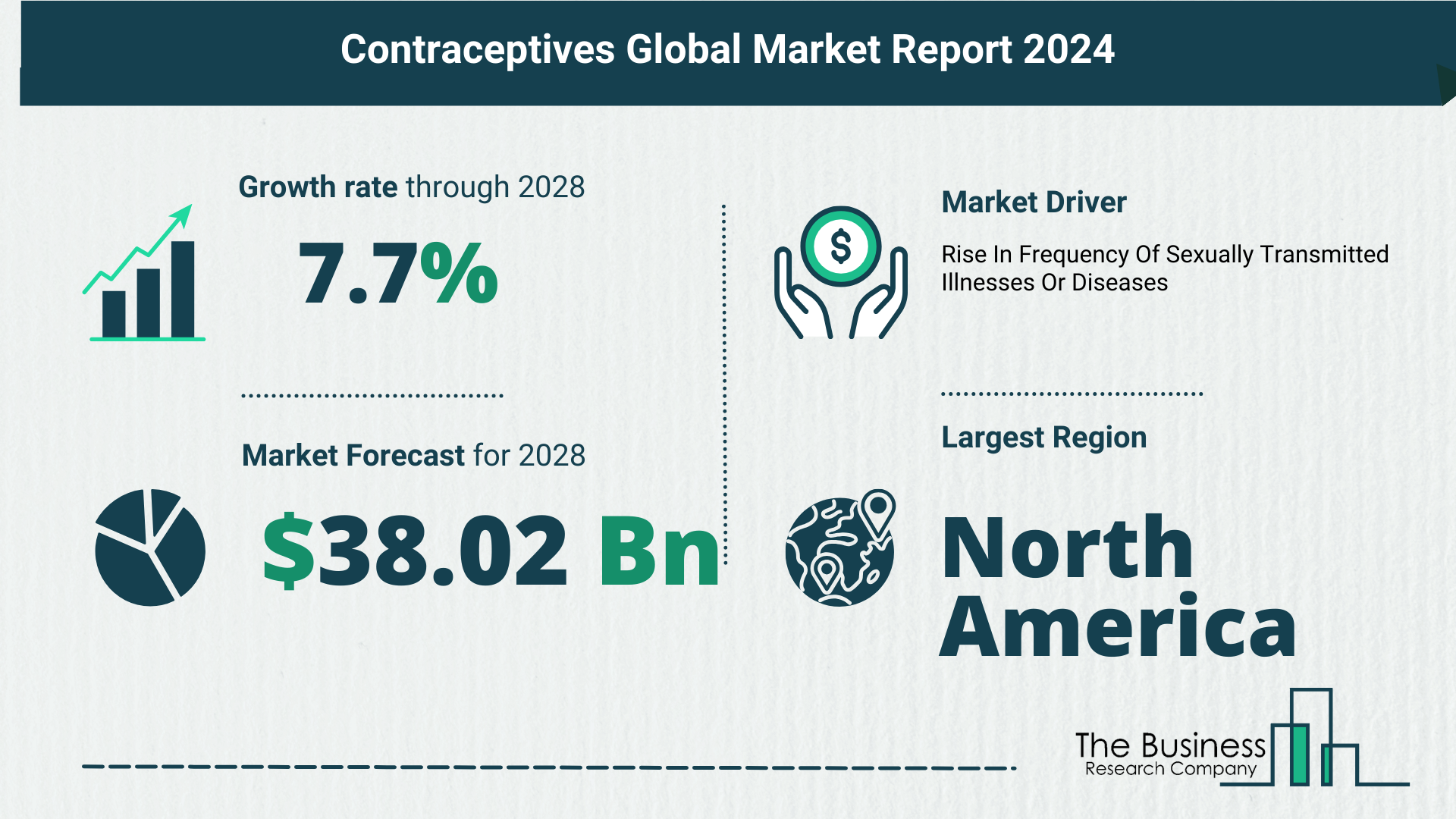
    As we look ahead, the contraceptives market is poised for robust expansion, projected to reach $38.02 billion in 2028 with a CAGR of 7.7%. The anticipated growth in the forecast period is driven by a myriad of factors, including an increasing focus on male contraceptives, enhanced access to contraception in developing countries, the integration of digital health technologies, a rising demand for long-acting reversible contraceptives (LARCS), and the growing accessibility to over-the-counter drugs through online platforms. Key trends in this period encompass technological advancements, a shift towards non-hormonal and natural contraceptive methods, expansion of over-the-counter access, an emphasis on user-friendly options, and the integration of telemedicine in contraceptive counseling and prescriptions.

    Disease Prevention Driving Contraceptive Demand

    Surge in Sexually Transmitted Diseases

    The escalating frequency of sexually transmitted diseases (STDs) is emerging as a significant driver for the increased demand for contraceptives. These diseases, spread through sexual interaction, necessitate effective preventive measures. Contraceptives play a crucial role in managing the transmission of STDs such as herpes and HPV, primarily transmitted through skin-to-skin contact. A notable example is the rise in primary and secondary syphilis cases, reported by the Minnesota Department of Health in May 2023, underlining the importance of contraceptives in disease prevention.

    Key Players Shaping the Market Landscape

    Major companies contributing to the dynamism of the contraceptives market include Merck & Co. Inc., Bayer AG, Church & Dwight Co. Inc., Cipla Inc., and many more. These entities play a pivotal role in offering innovative solutions and products to cater to the diverse needs of consumers in the contraceptive landscape.

    View More On The Contraceptives Market Report 2024 – https://www.thebusinessresearchcompany.com/report/contraceptives-global-market-report

    Innovations in Product Offerings

    Major players in the contraceptives market are focusing on innovative product offerings to stay at the forefront of meeting consumer needs. For instance, Perrigo Company plc introduced Opill, the first non-prescription progestin-only daily oral contraceptive in the United States. This milestone product provides women with greater accessibility to contraceptives, showcasing a commitment to meaningful solutions that enhance lives.

    Bayer’s Strategic Acquisition

    In December 2021, Bayer AG made a strategic move by acquiring Vividion Therapeutics Inc., a biotechnology company, fortifying their drug development capabilities through chemo-proteomics technology. This acquisition enhances Bayer’s ability to discover new medicines, particularly in areas with significant unmet medical needs.

    Market Segmentation

    The contraceptives market is segmented based on:

    1. Product:
      • Oral Contraceptive Pills
      • Topical Contraceptives
      • Injectables
      • Diaphragms
      • Vaginal Rings
      • Condoms
      • Contraceptive Sponges
      • Subdermal Implants
      • Intra-Uterine Devices
    2. Age Group:
      • 15-24 Years
      • 25-34 Years
      • 35-44 Years
      • 44 Years
    3. Distribution Channel:
      • Hospital Pharmacies
      • Independent Pharmacies
      • Online Pharmacies
      • Clinics
      • Other Distribution Channels

    Regional Dynamics

    In 2023, North America emerged as the largest region in the contraceptives market and is anticipated to be the fastest-growing region in the forecast period.

    In conclusion, the contraceptives market’s trajectory reflects a profound impact on healthcare and societal dynamics. With a focus on innovation, inclusivity, and disease prevention, the market is poised to play a pivotal role in shaping reproductive health and family planning on a global scale.

    Request A Sample Of The Global Contraceptives Market Report 2024:
    https://www.thebusinessresearchcompany.com/sample_request?id=6920&type=smp

  • Key Insights On The Diabetic Footwear Market 2024 – Size, Driver, And Major Players

    Key Insights On The Diabetic Footwear Market 2024 – Size, Driver, And Major Players

    The Business Research Company’s global market reports are now updated with the latest market sizing information for the year 2024 and forecasted to 2033

    As per The Business Research Company’s Diabetic Footwear Global Market Report 2024, the diabetic footwear market is expected to show significant growth in the forecast period.

    The diabetic footwear market has witnessed rapid growth in recent years, surging from $7.86 billion in 2023 to an estimated $8.67 billion in 2024, reflecting a remarkable Compound Annual Growth Rate (CAGR) of 10.3%. This growth is attributed to several factors, including the increasing prevalence of diabetes, the aging population, complications associated with diabetic feet, the emphasis on footwear comfort and support, and a growing awareness of health issues.

    Key Market Metrics:

    • Market Size Growth:From $7.86 billion (2023) to $8.67 billion (2024) at a CAGR of 10.3%
    • Contributing Factors:Diabetes prevalence, aging population, diabetic foot complications, footwear comfort, health awareness

    A Vision for the Future

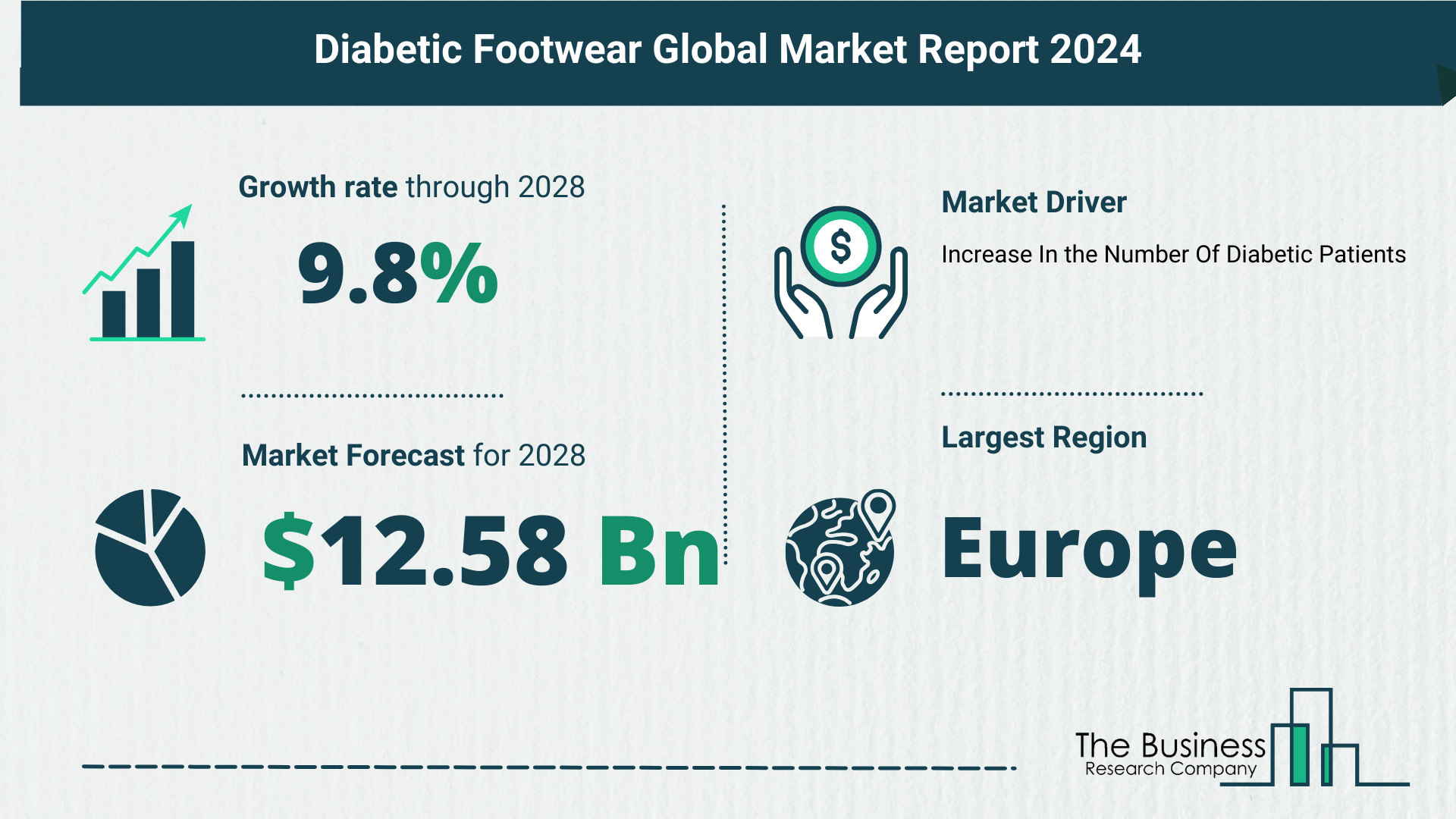
    The diabetic footwear market is poised for continued robust growth, projecting a substantial increase to $12.58 billion in 2028, with a CAGR of 9.8%. This optimistic forecast is underpinned by factors such as the intensifying focus on diabetic foot health education, the demand for footwear suited to active lifestyles, the integration of sustainable and eco-friendly materials, expanding into emerging markets, and the rise of non-invasive monitoring technologies.

    Future Trends:

    • Personalized Orthopedic Footwear:Tailoring solutions for individual needs
    • Technological Footwear Innovations:Integrating cutting-edge technologies into footwear
    • Telehealth and Remote Consultations:Leveraging technology for remote patient care
    • Strategic Partnerships:Collaborations for mutual growth

    The Diabetic Population Surge

    The escalating number of diabetic patients is a key driver fueling the growth of the diabetic footwear market. With diabetes affecting over 537 million people globally in 2021, and projections indicating an increase to 643 million by 2030 and 783 million by 2045, the demand for specialized footwear is on the rise. Diabetic footwear not only aids in preventing foot complications but also offers benefits such as enhanced blood circulation, a wider toe box, and massaging capabilities to alleviate pressure in vulnerable areas of the foot.

    Notable Statistic:

    • In 2021, the International Diabetes Federation reported 537 million people with diabetes globally.

    View More On The Diabetic Footwear Market Report 2024 – https://www.thebusinessresearchcompany.com/report/diabetic-footwear-global-market-report

    Technological Marvels in Footwear

    Technological advancements are transforming the diabetic footwear landscape, with companies introducing innovations to strengthen their market positions. An exemplary case is Von Wellx, a Germany-based company that launched diabetic footwear incorporating reflex zones technology. These shoes provide a unique massaging experience, simulating walking barefoot on grass. The technology stimulates blood circulation and oxygen flow, reducing fatigue even during extended periods of standing or walking.

    Noteworthy Product Launch:

    • Von Wellx’s diabetic footwear with reflex zones technology

    Strategic Acquisitions for Market Evolution

    In a strategic move in November 2021, Aiglon Capital and Merit Capital acquired Propét, a US-based manufacturer of comfort and diabetic footwear. This acquisition is poised to enhance Aiglon and Merit’s market position, providing a robust foundation and unlocking new avenues for brand expansion.

    Acquisition Highlights:

    • Acquirers:Aiglon Capital and Merit Capital
    • Acquired:Propét
    • Objective:Strengthening market position and facilitating brand expansion

    Market Segmentation

    The diabetic footwear market is segmented based on types of footwear, distribution channels, and end-users.

    1. Type Segmentation:
      • Shoes
      • Sandals
      • Slippers
    2. Distribution Channel Segmentation:
      • Online Platform
      • Specialty Stores
      • Footwear Stores
      • Other Distribution Channels
    3. End-User Segmentation:
      • Men
      • Women

    Regional Dominance

    North America emerged as the largest region in the diabetic footwear market in 2023, reflecting the region’s heightened focus on diabetic health and footwear solutions.

    Regional Insights:

    • Largest Market:North America (2023)

    In conclusion, the diabetic footwear market is not merely expanding; it is undergoing a transformative journey fueled by technological innovations, strategic acquisitions, and an unwavering commitment to addressing the unique needs of an ever-growing diabetic population. As the market evolves, expect a surge in personalized solutions, cutting-edge technologies, and collaborative efforts to define the next chapter in diabetic footwear.

    Request A Sample Of The Global Diabetic Footwear Market Report 2024:
    https://www.thebusinessresearchcompany.com/sample_request?id=6855&type=smp

  • Global Digital Therapeutics Market Analysis: Estimated Market Size And Growth Rate

    Global Digital Therapeutics Market Analysis: Estimated Market Size And Growth Rate

    The Business Research Company’s global market reports are now updated with the latest market sizing information for the year 2024 and forecasted to 2033

    The digital therapeutics market has undergone exponential growth, marking a significant surge from $7.05 billion in 2023 to an estimated $8.93 billion in 2024. This remarkable expansion is fueled by a Compound Annual Growth Rate (CAGR) of 26.7%, attributed to several factors in the historic period. The driving forces encompass an aging population, the prevalence of chronic diseases, digital health adoption, considerations for healthcare costs and efficiency, the rise of remote patient monitoring, and the surge in pandemic-induced demand.

    Future Prospects: An Exponential Leap Forward

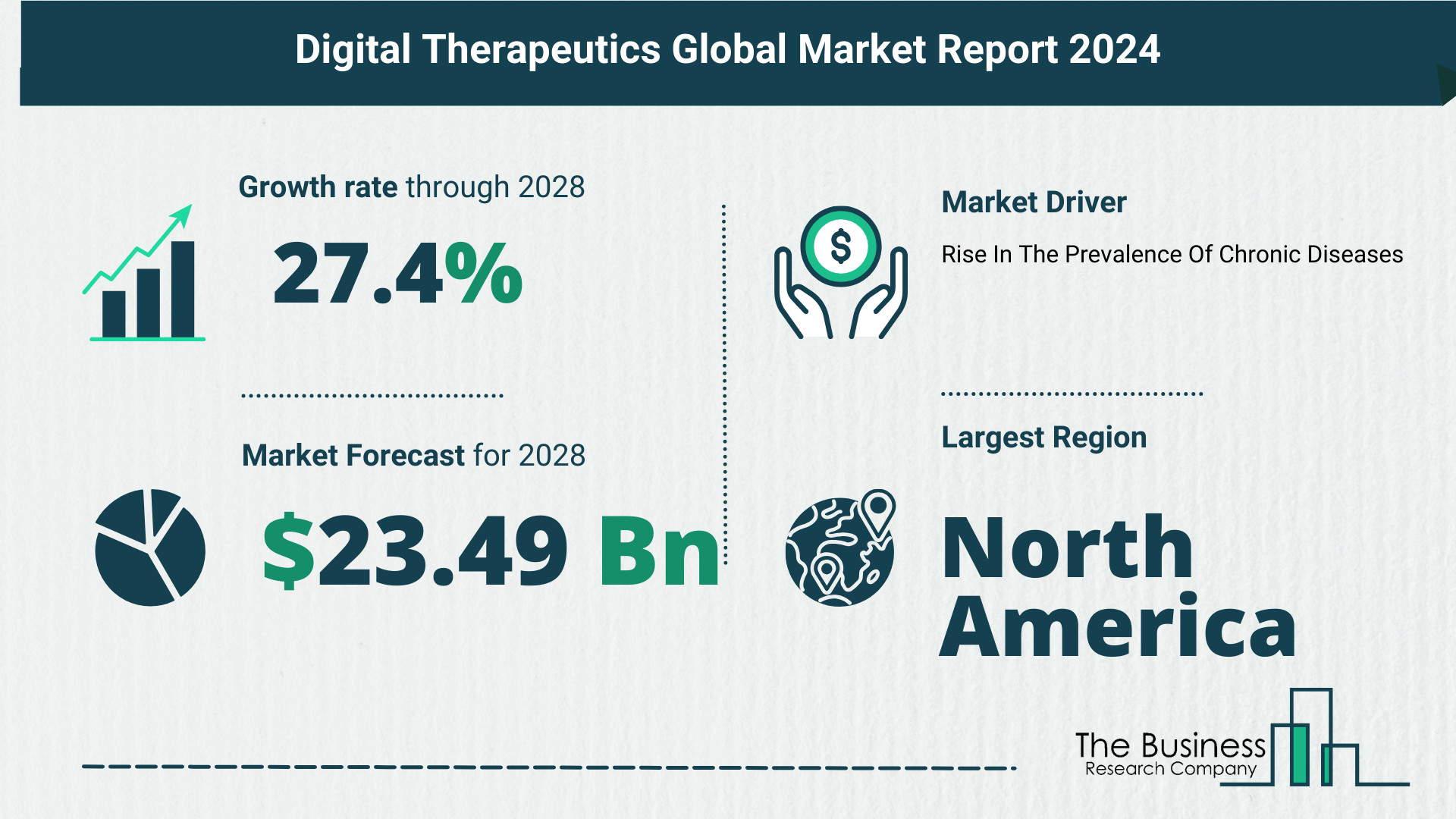
    1. Projected Growth:The digital therapeutics market is anticipated to experience unprecedented growth, reaching $23.49 billion in 2028, with a robust CAGR of 27.4%.
    2. Factors Driving Growth:
      • Increasing adoption of personalized medicine.
      • Advancements in health data interoperability.
      • Shift towards value-based care models.
      • Growing focus on mental health and well-being.
      • Initiatives for healthcare access and equity.
      • Rising concerns for cybersecurity and data protection.
      • Escalating demand for population health management.

    Emerging Trends: A Technological Resonance

    1. Expansion of IoT Devices and Sensors:The integration of Internet of Things (IoT) devices and sensors is a prevailing trend, enhancing the capabilities of digital therapeutics.
    2. Artificial Intelligence in Healthcare:The incorporation of artificial intelligence is revolutionizing diagnostics, treatment planning, and patient engagement.
    3. Wearable Health Technology:Wearable devices are becoming integral for monitoring health metrics and facilitating personalized healthcare experiences.
    4. Technological Advancements and Product Innovations:The industry is witnessing continual advancements and innovations, shaping the future landscape of digital therapeutics.

    Smartphone and Tablet Surge: Catalysts for Market Growth

    1. Rise in Smartphone and Tablet Use:The surge in smartphone and tablet usage, coupled with healthcare apps, is a pivotal driver for the digital therapeutics market.
    2. Advantages of Mobile Health Apps:
      • Lower rate of medication errors.
      • Facilitation of preventive care.
      • Improved accuracy in staffing.
    3. Global Smartphone Ownership:According to the State of Mobile Internet Connectivity Report 2023 by GSMA, 54% of the world’s population owned smartphones in 2022, showcasing the widespread impact of these devices.

    View More On The Digital Therapeutics Market Report 2024 – https://www.thebusinessresearchcompany.com/report/digital-therapeutics-global-market-report

    Industry Players and Innovations

    1. Major Companies Shaping the Market:
      • Omada Health Inc., WellDoc Inc., 2Morrow Inc., Livongo Health, and others.
    2. Revolutionizing Chronic Disease Management:
      • Companies are developing advanced platforms for ordering, dispensing, and fulfillment to enhance chronic disease management.
      • AmerisourceBergen’s DTx Connect platform seamlessly integrates with electronic medical records, streamlining the prescription and fulfillment process.

    Strategic Acquisitions: Paving the Way Forward

    1. Big Health’s Expansion:In July 2023, Big Health acquired Limbix, broadening its product portfolio. This includes Sleepio for insomnia, Daylight for anxiety, and Limbix’s offerings for teenage medication in development.
    2. Leveraging Acquisitions for Growth:Strategic acquisitions are becoming pivotal in shaping companies’ portfolios and expanding their influence in the digital therapeutics landscape.

    Market Segmentation: Understanding Diverse Needs

    1. By Product:Segmentation includes Software and Devices, catering to the diverse needs of the market.
    2. By Sales Channel:The market is divided into Business-To-Business (B2B) and Business-To-Consumers (B2C), reflecting the various channels through which digital therapeutics reach consumers.
    3. By Application:Distinguishing between Preventive Applications and Treatment or Care-Related Applications offers insights into the multifaceted applications of digital therapeutics.

    Regional Dynamics: North America Leads, Asia-Pacific Emerges

    1. North America Dominance:North America emerged as the largest region in the digital therapeutics market in 2023.
    2. Asia-Pacific Growth:The forecast points towards the Asia-Pacific region as the fastest-growing, underlining the global distribution of digital therapeutics influence.

    In conclusion, the digital therapeutics market is not just witnessing growth but is on the brink of a transformative revolution. Driven by technological advancements, strategic acquisitions, and a profound focus on personalized healthcare, the industry is poised for an exponential leap forward. As the digital therapeutics landscape continues to evolve, the integration of innovative technologies and the expansion of applications will shape the future of healthcare delivery.

    Request A Sample Of The Global Digital Therapeutics Market Report 2024:
    https://www.thebusinessresearchcompany.com/sample_request?id=5343&type=smp

  • What’s The Growth Forecast For E-Prescribing Market Through 2024-2033?

    What’s The Growth Forecast For E-Prescribing Market Through 2024-2033?

    The Business Research Company’s global market reports provide comprehensive analysis on the various markets in 27 industries across 60 geographies.

    The e-prescribing market has witnessed exponential growth in recent years, with the market size surging from $2.12 billion in 2023 to $2.65 billion in 2024, showcasing a remarkable compound annual growth rate (CAGR) of 25.0%. The historical growth can be attributed to regulatory mandates, medication errors reduction, improved patient safety, enhanced prescription workflow, and increased prescriber efficiency.

    Key Figures:

    • Market Size in 2023: $2.12 billion
    • Projected Growth Rate (CAGR): 25.0%
    • Forecasted Market Size in 2024: $2.65 billion

    The Future Landscape: Projected Growth and Influencing Factors

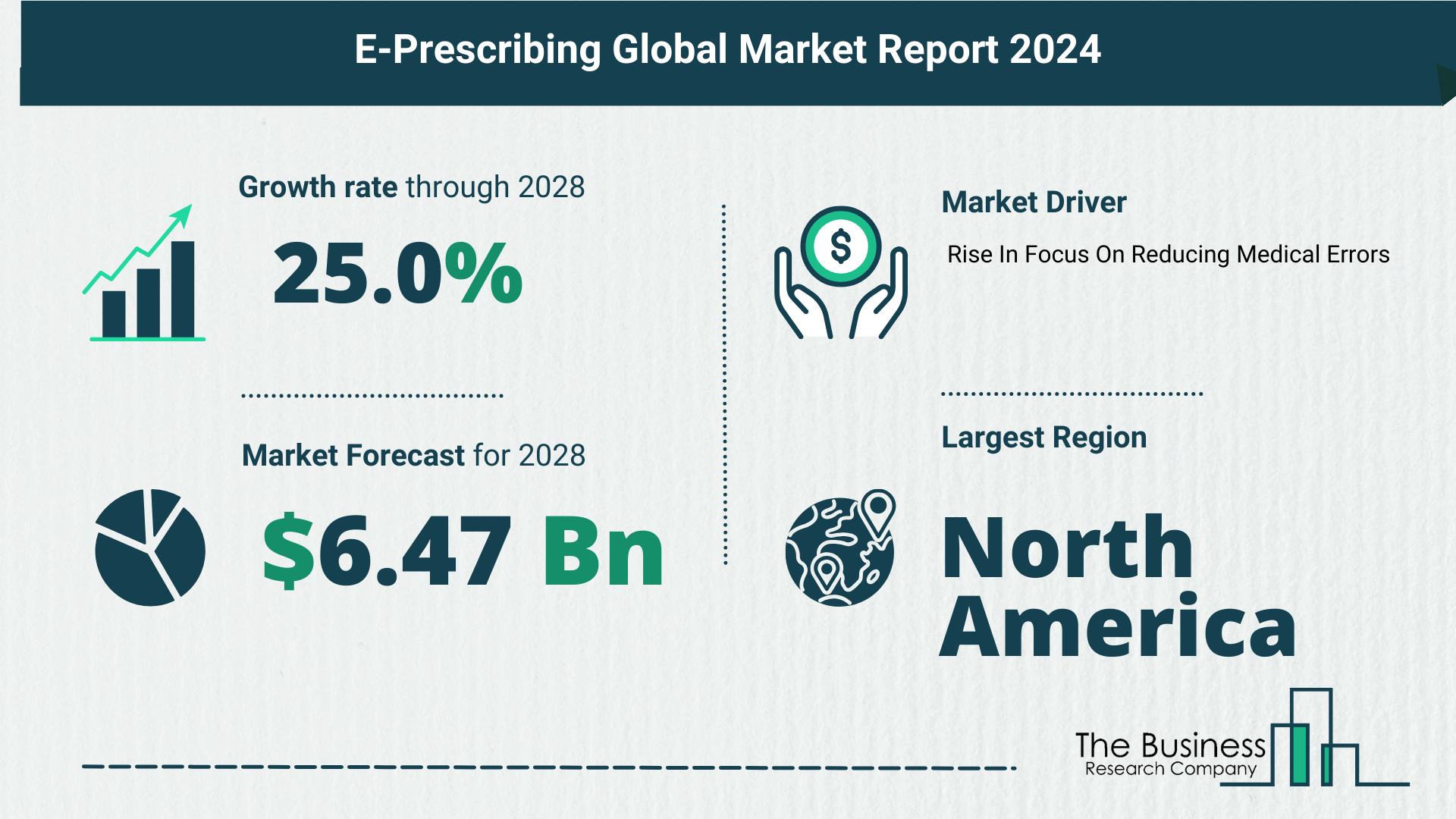
    Looking ahead, the e-prescribing market is expected to continue its upward trajectory, reaching an impressive $6.47 billion in 2028, again at a CAGR of 25.0%. This forecasted growth is underpinned by factors such as the expanding telehealth sector, personalized medicine, prescription drug monitoring programs, medication therapy management, and global e-prescribing initiatives. Key trends in the forecast period encompass interoperability, health information exchange, medication reconciliation, electronic prior authorization, medication adherence tools, erx for controlled substances, and AI-driven alerts and decision support.

    Projected Market Size in 2028: $6.47 billion

    Driving Forces: Increase in Telehealth and Telemedicine

    The burgeoning expansion of telehealth and telemedicine is set to be a major catalyst for the e-prescribing market’s growth. Telehealth, leveraging telecommunications technology for remote healthcare services, and telemedicine, specifically remote clinical consultations, contribute by streamlining prescription processes, enhancing efficiency, and fostering patient engagement. The integration of e-prescribing with telehealth platforms facilitates direct transmission of electronic prescriptions to pharmacies, reducing errors, enhancing patient safety, and ensuring convenient access to medications.

    Supporting Data:

    • In 2021, telemedicine was utilized by 37.0% of adults (CDC, October 2022)

    Market Players: Dominant Companies in E-Prescribing

    Several major players operate in the e-prescribing market, each contributing to its evolution and growth. Notable companies include Epic Systems Corporation, Allscripts Healthcare Solutions Inc., NextGen Healthcare Inc., Athenahealth, Relay Health, Henry Schein Inc., GE Healthcare, and many others. These entities play a crucial role in shaping the market landscape and driving innovation.

    Key Companies:

    • Epic Systems Corporation
    • Allscripts Healthcare Solutions Inc.
    • NextGen Healthcare Inc.
    • Athenahealth
    • Relay Health
    • Henry Schein Inc.
    • GE Healthcare

    Cloud-Native E-Prescribing Networks: Facilitating Healthcare Collaboration

    Innovative solutions in the form of cloud-native e-prescribing networks are gaining prominence as major companies strive to gain a competitive edge. These networks serve as digital platforms facilitating electronic exchange of prescription information among healthcare professionals, pharmacies, and payers. For instance, First Databank Inc. introduced FDB Vela, a cloud-native ePrescribing network designed to enhance collaboration and streamline critical medication prescription information, benefits verification, and clinical decision support among stakeholders.

    Example:

    • FDB Vela by First Databank Inc. (March 2022)

    Oracle’s Strategic Move: A Game-Changing Acquisition

    Oracle’s acquisition of Cerner in December 2021 for $28.3 billion signals a significant expansion in the healthcare sector. Cerner, a health information technology company, plays a crucial role in the e-prescribing domain. This acquisition underscores Oracle’s commitment to investing heavily in healthcare, marking a strategic move to strengthen its global footprint.

    Key Acquisition:

    • Oracle acquires Cerner for $28.3 billion (December 2021)

    Market Segmentation: Understanding the Dynamics

    The e-prescribing market is segmented based on various factors, providing a nuanced understanding of its dynamics. Key segments include components (solutions, services), deployment methods (web and cloud-based, on-premise), and end-users (hospitals, office-based physicians, pharmaceuticals).

    Market Segmentation:

    1. By Component:
      • Solutions
      • Services
    2. By Deployment:
      • Web and Cloud-Based
      • On-Premise
    3. By End-User:
      • Hospitals
      • Office-Based Physicians
      • Pharmaceuticals

    Regional Dynamics: North America Leading, Asia-Pacific Emerging

    In 2023, North America held the largest share in the e-prescribing market. Looking forward, Asia-Pacific is anticipated to be the fastest-growing region during the forecast period, highlighting the global nature of the e-prescribing market’s expansion.

    Regional Insights:

    • North America (2023): Largest market
    • Asia-Pacific: Fastest-growing region

    In conclusion, the e-prescribing market is on a robust growth trajectory, driven by factors like telehealth expansion, strategic acquisitions, and innovative solutions. As technology continues to revolutionize healthcare, the landscape of e-prescribing is set to evolve, promising better patient outcomes and enhanced healthcare collaboration.

    Request A Sample Of The Global E-Prescribing Market Report 2024:
    https://www.thebusinessresearchcompany.com/sample_request?id=6938&type=smp