Category: Healthcare Services

  • Global Neuroendocrine Carcinoma Market Report 2026–2035 Highlighting Expansion Outlook and Forecast Opportunities

    Global Neuroendocrine Carcinoma Market Report 2026–2035 Highlighting Expansion Outlook and Forecast Opportunities

    The Business Research Company’s 2026 market reports include new capabilities such as market attractiveness scoring and analysis, total addressable market analysis, company scoring matrix, interactive excel data dashboard, improved supply chain analysis, upcoming startups in the market, and overview of key products, aimed at improving the depth, usability, and strategic value of the insights delivered.

    What Market Value Is Expected For The Neuroendocrine Carcinoma Market At The End Of The 2026–2030 Forecast Period?

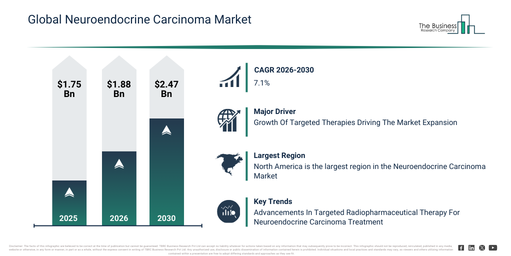
    The neuroendocrine carcinoma market has experienced significant expansion in recent years. Its valuation is set to increase from $1.75 billion in 2025 to $1.88 billion in 2026, achieving a compound annual growth rate (CAGR) of 7.3%. This historical growth can be attributed to the rising incidence of neuroendocrine carcinoma, greater application of imaging for prompt detection, the early implementation of surgical tumor removal, the formulation of initial chemotherapy approaches, and an expanding clinical understanding of nec subtypes.

    The neuroendocrine carcinoma market is anticipated to demonstrate robust growth in the upcoming years, with projections indicating it will reach $2.47 billion by 2030, expanding at a compound annual growth rate (CAGR) of 7.1%. This growth during the forecast period is fueled by several factors, including the expanding use of targeted biologic therapies, increasing investment in immunotherapy research, the growing availability of precision diagnostic tools, the development of advanced radiotherapy systems, and the rising adoption of multidisciplinary oncology centers. Significant trends expected during this period encompass the rising adoption of chemotherapy for aggressive tumor management, increasing use of targeted therapies in advanced nec cases, growing utilization of radiotherapy for localized tumor control, the expansion of biopsy and serology-based diagnostic approaches, and an increasing demand for multidisciplinary treatment planning.

    Download the Free Sample Report to Explore Key Market Insights:

    https://www.thebusinessresearchcompany.com/sample.aspx?id=21229&type=smp

    Which Market Drivers Are Supporting The Expansion Of The Neuroendocrine Carcinoma Market?

    The neuroendocrine carcinoma market is anticipated to expand as targeted therapies gain traction. These therapies are specific treatments engineered to precisely identify and disrupt the molecular processes or genetic alterations that contribute to a disease, particularly cancer. The increasing demand for targeted therapies stems from their ability to accurately treat specific genetic mutations, advancements in personalized medicine, and their capacity to deliver improved patient outcomes with fewer adverse effects. For neuroendocrine carcinoma, these therapies facilitate the development of treatments that specifically target the tumor’s genetic and biochemical profiles, thereby enhancing both precision and effectiveness. For instance, in July 2023, data published by the American Society of Gene & Cell Therapy (ASGCT) and Citeline showed that the number of gene therapies in Phase II rose by 5%, from 247 at the end of Q1 2023 to 260 by the end of Q2. This growth in targeted therapies is thus a key driver for the neuroendocrine carcinoma market.

    What Segment Types Make Up The Neuroendocrine Carcinoma Market?

    The neuroendocrine carcinoma market covered in this report is segmented –

    1) By Type: Gastroenteropancreatic Neuroendocrine Tumors, Carcinoid Tumors, Pheochromocytoma, Medullary Thyroid Carcinoma

    2) By Diagnostic Tools: Imaging, Biopsy, Serology

    3) By Treatment: Chemotherapy, Radiotherapy, Surgery, Other Treatments

    4) By Distribution Channel: Hospital Pharmacies, Retail Pharmacies, Online Pharmacies

    5) By End-User: Hospitals, Clinics, Oncology Centers, Ambulatory Surgery Centers

    Subsegments:

    1) By Gastroenteropancreatic Neuroendocrine Tumors (GEP-NETs): Pancreatic Neuroendocrine Tumors (pNETs), Small Intestinal Neuroendocrine Tumors, Gastric Neuroendocrine Tumors, Colorectal Neuroendocrine Tumors

    2) By Carcinoid Tumors: Pulmonary Carcinoid Tumors, Gastrointestinal Carcinoid Tumors

    3) By Pheochromocytoma: Adrenal Pheochromocytoma, Extra-Adrenal Paraganglioma

    4) By Medullary Thyroid Carcinoma: Sporadic Medullary Thyroid Carcinoma, Hereditary Medullary Thyroid Carcinoma (MEN2-Associated)

    What Trends Are Projected To Affect The Neuroendocrine Carcinoma Market?

    Leading firms within the neuroendocrine carcinoma sector are concentrating on creating innovative treatments, like targeted radiopharmaceutical therapy, aiming to enhance the accuracy of treatment and results for patients. This specific therapy utilizes radioactive molecules designed to precisely target and deliver radiation to cancer cells, thereby reducing damage to healthy tissues. An example of this is Abdera Therapeutics Inc., a Canadian biotechnology firm, which in September 2024, obtained orphan drug designation from the Food and Drug Administration (FDA) for its product ABD-147, intended for treating neuroendocrine carcinoma. ABD-147 is engineered to selectively home in on tumors that express the DLL3 protein, which is frequently elevated in aggressive forms of neuroendocrine cancers, including small cell lung cancer (SCLC) and large cell neuroendocrine carcinoma (LCNEC). Such a designation provides substantial benefits for development, such as tax credits for conducting clinical trials and the possibility of market exclusivity, thus establishing ABD-147 as a hopeful therapeutic option within this particular oncology field.

    Who Are The Key Players Driving Competition In The Neuroendocrine Carcinoma Market?

    Major companies operating in the neuroendocrine carcinoma market are Pfizer Inc., Merck & Co. Inc., AbbVie Inc., Bristol-Myers Squibb Company, AstraZeneca plc, Novartis AG, Amgen Inc., Boehringer Ingelheim GmbH, Exelixis Inc., Lantheus Holdings Inc., HUTCHMED Limited, Dana-Farber Cancer Institute Inc., Abdera Therapeutics Inc., Orano Med S.A, Eckert & Ziegler Radiopharma GmbH, Callisto Pharmaceuticals Inc., RadioMedix Inc., Clarity Pharmaceuticals Limited, Delcath Systems Inc., Provectus Biopharmaceuticals Inc.

    Read the full neuroendocrine carcinoma market report here:

    https://www.thebusinessresearchcompany.com/report/neuroendocrine-carcinoma-global-market-report

    How Is The Neuroendocrine Carcinoma Market Distributed Across Key Geographic Regions?

    North America was the largest region in the neuroendocrine carcinoma market in 2025. Asia-Pacific is expected to be the fastest-growing region in the forecast period. The regions covered in the neuroendocrine carcinoma market report are Asia-Pacific, South East Asia, Western Europe, Eastern Europe, North America, South America, Middle East, Africa.

    Request A Tailored Neuroendocrine Carcinoma Market Research Report For Competitive Advantage:

    https://www.thebusinessresearchcompany.com/customise?id=21229&type=smp

    Browse Through More Reports Similar to the Global Neuroendocrine Carcinoma Market 2026, By The Business Research Company

    Nephrologists Market Global Report 2020 2030 Covid 19 Implications And Growth

    https://www.thebusinessresearchcompany.com/report/nephrologists-market-global-report-2020-2030-covid-19-implications-and-growth

    Nephrologists Market Global Report 2020 2030 Covid 19 Implications And Growth

    https://www.thebusinessresearchcompany.com/report/nephrologists-market-global-report-2020-2030-covid-19-implications-and-growth

    Clinical Diagnostics Global Market Report

    https://www.thebusinessresearchcompany.com/report/clinical-diagnostics-global-market-report

    Get in touch with us:

    The Business Research Company: https://www.thebusinessresearchcompany.com/

    Americas +1 310-496-7795

    Asia +44 7882 955267 & +91 8897263534

    Europe +44 7882 955267

    Email us at info@tbrc.info

    Follow us on:

    LinkedIn: https://in.linkedin.com/company/the-business-research-company

    YouTube: https://www.youtube.com/channel/UC24_fI0rV8cR5DxlCpgmyFQ

    Global Market Model: https://www.thebusinessresearchcompany.com/global-market-model
  • Global Mail Order Pharmacy Industry Trends and Market Growth Forecast for 2026–2030

    Global Mail Order Pharmacy Industry Trends and Market Growth Forecast for 2026–2030

    The Business Research Company’s 2026 market reports include new capabilities such as market attractiveness scoring and analysis, total addressable market analysis, company scoring matrix, interactive excel data dashboard, improved supply chain analysis, upcoming startups in the market, and overview of key products, aimed at improving the depth, usability, and strategic value of the insights delivered.

    What Market Value Is Expected For The Mail Order Pharmacy Market At The End Of The 2026–2030 Forecast Period?

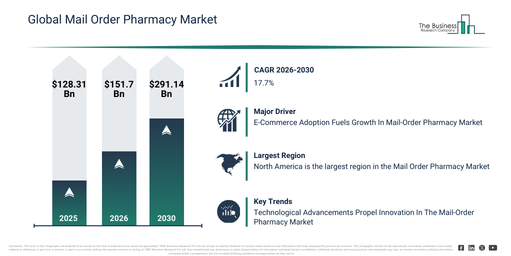
    The mail order pharmacy market has seen rapid expansion in recent years. Its size is forecast to increase from $128.31 billion in 2025 to $151.7 billion in 2026, achieving a compound annual growth rate (CAGR) of 18.2%. The growth observed in the past can be ascribed to the development of e-commerce in healthcare, increased internet and smartphone usage, a growing desire for ease in refilling prescriptions, the broadening of insurance-supported mail pharmacy services, and cost benefits from dispensing medication in bulk.

    The mail order pharmacy market size is projected for swift expansion over the coming years. By 2030, its valuation is anticipated to reach $291.14 billion, demonstrating a compound annual growth rate (CAGR) of 17.7%. This expansion during the forecast period is fueled by several factors, including the increasing occurrence of chronic illnesses, an expanding elderly demographic in need of ongoing medications, greater adoption of digital health platforms, the broadening integration of telemedicine with pharmacy services, and enhancements in logistics and last-mile delivery systems. Key trends anticipated during this period encompass the growing embrace of online prescription fulfillment, an increase in home delivery for chronic disease medications, broader utilization of pharmacy-specific mobile applications, an expansion in direct-to-consumer drug distribution channels, and a surging demand for contactless access to medicine.

    Download the Free Sample Report to Explore Key Market Insights:

    https://www.thebusinessresearchcompany.com/sample.aspx?id=12137&type=smp

    Which Market Drivers Are Supporting The Expansion Of The Mail Order Pharmacy Market?

    The expanding adoption of e-commerce is a key force propelling the mail-order pharmacy sector. This digital commerce encompasses the transmission of goods, services, funds, or information across electronic systems. Such pharmacies leverage e-commerce technologies, allowing consumers to conveniently order medications and refill prescriptions from their residences or remotely via mobile applications on their devices. For example, data from the US Census Bureau in May 2024 revealed that e-commerce sales in the first quarter of 2024 saw an 8.5% rise year-over-year. These sales constituted 15.6% of overall retail sales, which themselves advanced by 2.8% annually. Consequently, the heightened integration of e-commerce is serving as a primary catalyst for the growth of the mail-order pharmacy market.

    What Segment Types Make Up The Mail Order Pharmacy Market?

    The mail order pharmacy market covered in this report is segmented –

    1) By Product Type: Dermal Care, Diabetes, Cardiovascular Medicines, Blood Pressure, Asthma, Cold And Flu, Painkillers, Antacids, Other Products

    2) By Drug Type: Non-Prescription Drugs, Prescription Drugs

    3) By Mode Of Order: Online Store, Pharmacy Apps

    Subsegments:

    1) By Dermal Care: Moisturizers, Acne Treatments, Skin Condition Treatments

    2) By Diabetes: Insulin, Oral Hypoglycemic Agents, Blood Glucose Monitoring Supplies

    3) By Cardiovascular Medicines: Antihypertensives, Statins, Anticoagulants

    4) By Blood Pressure: Prescription Medications, Monitoring Devices

    5) By Asthma: Inhalers, Asthma Control Medications

    6) By Cold And Flu: Decongestants, Cough Syrups, Antihistamines

    7) By Painkillers: Prescription Opioids, Over-The-Counter Analgesics

    8) By Antacids: OTC Antacids, Prescription Antacid Medications

    9) By Other Products: Vitamins And Supplements, Home Health Care Products

    How Are Trends Shaping The Direction Of The Mail Order Pharmacy Market?

    Major companies active in the mail-order pharmacy market are prioritizing the creation of advanced technological solutions, including cloud-based analytics platforms, to boost operational clarity, delivery effectiveness, and overall patient care. A cloud-based analytics platform functions as an online software system that gathers, processes, and evaluates data from various sources, enabling organizations to monitor activities, identify evolving patterns, make more rapid decisions, and enhance efficiency in real time. For example, in April 2023, Innovation Associates, Inc., a pharmaceutical development company based in the US, introduced NEXiA Enterprise Analytics, the first cloud-based application for NEXiA software tailored for pharmacy fulfillment. This analytics platform allows customers to observe pharmacy operations across different fulfillment sites almost instantly, helping them uncover trends more quickly and support the delivery of medicines to patients with optimal speed and effectiveness.

    Who Are The Key Players Driving Competition In The Mail Order Pharmacy Market?

    Major companies operating in the mail order pharmacy market are CVS Health Corporation, UnitedHealth Group Inc., Accredo Health Group Inc., McKesson Corporation, Cigna, Cardinal Health, Walgreen Co., OptumRx Inc., Humana Pharmacy, Aetna Inc., Wellcare Health Plans Inc., Prime Therapeutics LLC., Express Scripts Inc., Zur Rose Group AG, MedImpact, Remedi SeniorCare Holding Corporation, RxAdvance Corporation, WellDyneRx Inc., PillPack Inc., BeneCard Services Inc., DocMorris N.V., EnvisionPharmacies, Freedom Fertility Pharmacy, Canada Drugs Online, Elixir Rx Solutions LLC., eDrugstore, Simple Meds LLC., SANICARE, Apex Specialty Pharmacy

    Read the full mail order pharmacy market report here:

    https://www.thebusinessresearchcompany.com/report/mail-order-pharmacy-global-market-report

    How Is The Mail Order Pharmacy Market Distributed Across Key Geographic Regions?

    North America was the largest region in the mail-order pharmacy market in 2025. Asia Pacific is expected to be the fastest-growing region in the forecast period. The regions covered in the mail order pharmacy market report are Asia-Pacific, South East Asia, Western Europe, Eastern Europe, North America, South America, Middle East, Africa.

    Request A Tailored Mail Order Pharmacy Market Research Report For Competitive Advantage:

    https://www.thebusinessresearchcompany.com/customise?id=12137&type=smp

    Browse Through More Reports Similar to the Global Mail Order Pharmacy Market 2026, By The Business Research Company

    Macular Degeneration Treatment Global Market Report

    https://www.thebusinessresearchcompany.com/report/macular-degeneration-treatment-global-market-report

    Age Related Macular Degeneration Global Market Report

    https://www.thebusinessresearchcompany.com/report/age-related-macular-degeneration-global-market-report

    Anemia And Other Blood Disorder Drugs Global Market Report

    https://www.thebusinessresearchcompany.com/report/anemia-and-other-blood-disorder-drugs-global-market-report

    Get in touch with us:

    The Business Research Company: https://www.thebusinessresearchcompany.com/

    Americas +1 310-496-7795

    Asia +44 7882 955267 & +91 8897263534

    Europe +44 7882 955267

    Email us at info@tbrc.info

    Follow us on:

    LinkedIn: https://in.linkedin.com/company/the-business-research-company

    YouTube: https://www.youtube.com/channel/UC24_fI0rV8cR5DxlCpgmyFQ

    Global Market Model: https://www.thebusinessresearchcompany.com/global-market-model
  • Macular Edema and Macular Degeneration Market Size Outlook and Demand Growth Across 2026–2030

    Macular Edema and Macular Degeneration Market Size Outlook and Demand Growth Across 2026–2030

    The Business Research Company’s 2026 market reports include new capabilities such as market attractiveness scoring and analysis, total addressable market analysis, company scoring matrix, interactive excel data dashboard, improved supply chain analysis, upcoming startups in the market, and overview of key products, aimed at improving the depth, usability, and strategic value of the insights delivered.

    What Is The Estimated Market Size Of The Macular Edema and Macular Degeneration Market During 2026–2030?

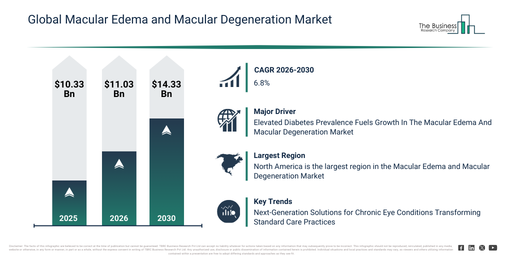
    The macular edema and macular degeneration market size has seen significant expansion in recent years. It is anticipated to increase from $10.33 billion in 2025 to $11.03 billion in 2026, achieving a compound annual growth rate (CAGR) of 6.8%. The historical growth of this market can be ascribed to several factors, including the rising occurrence of diabetes and retinal disorders, an aging demographic with a greater risk of vision impairment, the effectiveness of anti-VEGF injections in clinical settings, increased public understanding of macular diseases, and the expansion of ophthalmology clinics.

    The macular edema and macular degeneration market is anticipated to experience substantial growth in the upcoming years, with projections indicating an expansion to $14.33 billion by 2030, driven by a compound annual growth rate (CAGR) of 6.8%. This projected increase during the forecast period is primarily fueled by a rising global diabetic population, intensified screening for retinal diseases, an increasing preference for minimally invasive eye treatments, wider access to advanced ophthalmic care, and greater healthcare spending dedicated to vision preservation. Significant trends expected in this period encompass the growing adoption of anti-VEGF based therapies, an escalating demand for early diagnosis and intervention, the increased application of combination drug and laser therapies, a heightened focus on managing diabetic eye complications, and the ongoing expansion of outpatient and clinic-based eye care services.

    Download the Free Sample Report to Explore Key Market Insights:

    https://www.thebusinessresearchcompany.com/sample.aspx?id=13479&type=smp

    What Underlying Factors Are Accelerating The Growth Of The Macular Edema and Macular Degeneration Market?

    The increasing number of people with diabetes is anticipated to fuel the expansion of the macular edema and macular degeneration market in the future. Diabetes is a chronic health condition marked by elevated glucose (sugar) levels in the bloodstream. This condition can damage the blood vessels within the eye, potentially leading to the development of macular edema and macular degeneration. For instance, in June 2024, as per The National Health Service (NHS England), a publicly funded healthcare provider in the UK, the number of individuals identified with pre-diabetes by the NHS in England reached 3,615,330 in 2023, indicating an 18% increase from 3,065,825 recorded in 2022. Moreover, cases among those under 40 years old significantly rose by nearly 25%, climbing from 173,166 in 2022 to 216,440 in 2023. Consequently, the expanding diabetes population is a key factor driving the growth of the macular edema and macular degeneration market.

    How Are The Various Segments Of The Macular Edema and Macular Degeneration Market Categorized?

    The macular edema and macular degeneration market covered in this report is segmented –

    1) By Treatment Type: Drug Therapy, Laser Treatment

    2) By Application: Macular Edema, Diabetic Macular Edema (DME), Cystoid Macular Edema (CME), Macular Degeneration, Dry Age-Related Macular Degeneration, Wet Age-Related Macular Degeneration

    3) By End User: Hospitals, Clinics, Other End Users

    Subsegments:

    1) By Drug Therapy: Anti-VEGF (Vascular Endothelial Growth Factor) Injections, Steroid Injections, Combination Therapy (Anti-VEGF + Steroids)

    2) By Laser Treatment: Focal Laser Photocoagulation, Subthreshold Laser Therapy, MicroPulse Laser Therapy

    Which Market Trends Are Creating New Opportunities In The Macular Edema and Macular Degeneration Market?

    Leading firms in the macular edema and macular degeneration market are concentrating on creating novel solutions, such as continuous-delivery ocular implants, to lessen the burden of treatment, boost patient compliance, and ensure more stable, long-term therapeutic results. These ocular implants are compact, replenishable devices inserted into the eye, designed to gradually dispense medication over extended periods, thereby minimizing the necessity for frequent injections and offering consistent, prolonged therapy for retinal conditions. For instance, in February 2025, F. Hoffmann-La Roche Ltd, a Switzerland-based biotechnology company, obtained U.S. Food and Drug Administration (FDA) authorization for Susvimo. Susvimo is a refillable ocular implant that administers the anti-VEGF medication ranibizumab for treating diabetic macular edema (DME). Susvimo functions as a long-lasting, surgically placed reservoir engineered to consistently release a tailored version of ranibizumab, thereby sustaining therapeutic drug concentrations for prolonged periods. In contrast to conventional anti-VEGF intravitreal injections, which frequently necessitate monthly or bi-monthly doses, Susvimo provides a refill-exchange period of approximately six months, significantly alleviating the patient’s treatment load. This sustained-delivery approach improves adherence, simplifies clinical procedures, and delivers lasting anatomical and visual advantages for individuals suffering from chronic retinal disease.

    Which Major Firms Influence Developments In The Macular Edema and Macular Degeneration Market?

    Major companies operating in the macular edema and macular degeneration market are F. Hoffmann-La Roche Ltd., Novartis AG, Regeneron Pharmaceuticals Inc., Bayer AG, AbbVie Inc., Bausch Health Companies Inc., Santen Pharmaceutical Co Ltd, Apellis Pharmaceuticals Inc., Alimera Sciences Inc., Kodiak Sciences Inc., Opthea Limited, IVERIC bio Inc., Neurotech Pharmaceuticals Inc., Regenxbio Inc., Graybug Vision Inc., Clearside Biomedical Inc., Kubota Pharmaceutical Holdings Co Ltd, Acucela Inc., PanOptica Inc., Ocugen Inc.

    Read the full macular edema and macular degeneration market report here:

    https://www.thebusinessresearchcompany.com/report/macular-edema-and-macular-degeneration-global-market-report

    Which Region Is Projected To Dominate The Macular Edema and Macular Degeneration Market During The Forecast Period?

    North America was the largest region in the macular edema and macular degeneration market in 2025. The regions covered in the macular edema and macular degeneration market report are Asia-Pacific, South East Asia, Western Europe, Eastern Europe, North America, South America, Middle East, Africa.

    Request A Tailored Macular Edema and Macular Degeneration Market Research Report For Competitive Advantage:

    https://www.thebusinessresearchcompany.com/customise?id=13479&type=smp

    Browse Through More Reports Similar to the Global Macular Edema and Macular Degeneration Market 2026, By The Business Research Company

    Macular Edema And Macular Degeneration Global Market Report

    https://www.thebusinessresearchcompany.com/report/macular-edema-and-macular-degeneration-global-market-report

    Age Related Macular Degeneration Global Market Report

    https://www.thebusinessresearchcompany.com/report/age-related-macular-degeneration-global-market-report

    Retinal Disorder Treatment Global Market Report

    https://www.thebusinessresearchcompany.com/report/retinal-disorder-treatment-global-market-report

    Get in touch with us:

    The Business Research Company: https://www.thebusinessresearchcompany.com/

    Americas +1 310-496-7795

    Asia +44 7882 955267 & +91 8897263534

    Europe +44 7882 955267

    Email us at info@tbrc.info

    Follow us on:

    LinkedIn: https://in.linkedin.com/company/the-business-research-company

    YouTube: https://www.youtube.com/channel/UC24_fI0rV8cR5DxlCpgmyFQ

    Global Market Model: https://www.thebusinessresearchcompany.com/global-market-model
  • Macular Degeneration Treatment Market Insights Highlighting Opportunities and Drivers Supporting Growth to 2030

    Macular Degeneration Treatment Market Insights Highlighting Opportunities and Drivers Supporting Growth to 2030

    The Business Research Company’s 2026 market reports include new capabilities such as market attractiveness scoring and analysis, total addressable market analysis, company scoring matrix, interactive excel data dashboard, improved supply chain analysis, upcoming startups in the market, and overview of key products, aimed at improving the depth, usability, and strategic value of the insights delivered.

    What Market Size Expansion Is Predicted For The Macular Degeneration Treatment Market Between 2026 And 2030?

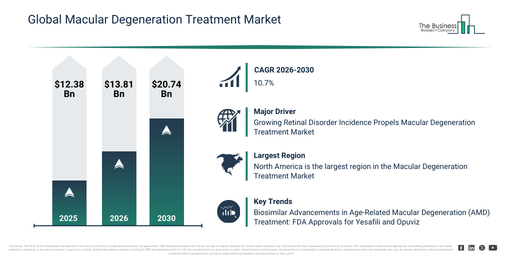
    The macular degeneration treatment market has experienced rapid expansion in its size over recent years. It is projected to grow from $12.38 billion in 2025 to $13.81 billion in 2026, at a compound annual growth rate (CAGR) of 11.5%. Historically, this market’s expansion can be attributed to factors such as the aging global population, an increased prevalence of age-related macular degeneration, the clinical success of anti-VEGF injections, improvements in ophthalmic diagnostic capabilities, and growing access to specialized eye care services.

    The macular degeneration treatment market is poised for substantial expansion over the next few years. It is projected to achieve a valuation of $20.74 billion by 2030, advancing at a compound annual growth rate (CAGR) of 10.7%. This anticipated growth during the forecast period can be attributed to several factors, including the increasing global elderly population, heightened investment in cutting-edge retinal therapies, a growing emphasis on early-stage amd management, the wider adoption of gene and regenerative therapies, and increased healthcare spending on vision care. Significant trends expected during this period involve a rising focus on early diagnosis and managing disease progression, the expanding use of anti-VEGF therapies, an increasing demand for treatments aimed at long-term vision preservation, the broader availability of minimally invasive treatment options, and greater public awareness of age-related eye disorders.

    Download the Free Sample Report to Explore Key Market Insights:

    https://www.thebusinessresearchcompany.com/sample.aspx?id=5799&type=smp

    Which Growth Drivers Are Contributing To The Progress Of The Macular Degeneration Treatment Market?

    The escalating incidence of retinal disorders is projected to boost the expansion of the macular degeneration treatment market. These conditions damage essential eye tissue, interfering with how people process visual information and leading to impaired or absent vision. For example, the American Academy of Ophthalmology estimates that by 2050, roughly 7.32 million individuals in the United States will be affected by primary open-angle glaucoma, a broad classification for various eye ailments, with the highest prevalence observed among populations aged 70 to 79 years (32%), women (50%), and Hispanics (50%). Within this group, Hispanic men represent the largest demographic. Therefore, the increasing burden of retinal disorders is a significant factor propelling the growth of the macular degeneration treatment market.

    Which Market Segments Are Examined In The Macular Degeneration Treatment Market Study?

    The macular degeneration treatment market covered in this report is segmented –

    1) By Stage of Disease: Early-Stage AMD, Intermediate AMD, Late-Stage AMD

    2) By Route of Administration: Oral, Injectable, Other Routes of Administration

    3) By End User: Ambulatory Surgical Centers, Ophthalmic Clinics, Hospitals

    Subsegments:

    1) By Early-Stage AMD: Nutritional Supplements, Lifestyle Modification Treatments

    2) By Intermediate AMD: Regular Disease Monitoring and Imaging Surveillance, Risk-Factor Management and Lifestyle Modification

    3) By Late-Stage AMD: Surgical Treatments, Advanced Anti-VEGF Therapies, Gene Therapy Options

    What Trends Are Affecting The Expansion Of The Macular Degeneration Treatment Market?

    Leading companies within the macular degeneration treatment market are concentrating on the creation of biosimilars for age-related macular degeneration (AMD) to enhance the availability of effective therapeutic options. Biosimilars are defined as biological medical products that share a high degree of similarity with an already approved reference product, exhibiting no clinically significant differences in terms of their safety, purity, or potency. For instance, in May 2024, Biocon Biologics Ltd, an Indian-based entity, and Samsung Bioepis Co. Ltd, a company situated in South Korea, secured FDA Approvals for Yesafili and Opuviz, two novel biosimilars. Both these biosimilars operate by inhibiting vascular endothelial growth factor (VEGF), which is known to cause abnormal blood vessel growth in the eye. This mechanism helps in preventing vision loss often associated with conditions like AMD and diabetic retinopathy. The FDA’s approval procedure involved comparative investigations that demonstrated no noteworthy distinctions in the efficacy or safety of Yesafili and Opuviz when compared to Eylea. These studies meticulously assessed the pharmacokinetics and immunogenicity of the biosimilars.

    Who Are The Primary Competitors In The Macular Degeneration Treatment Market?

    Major companies operating in the macular degeneration treatment market are F Hoffmann La Roche Ltd, Regeneron Pharmaceuticals Inc, Novartis AG, Bayer AG, Allergan Inc, Bausch Health Companies Inc, Santen Pharmaceutical Co Ltd, Alimera Sciences Inc, Apellis Pharmaceuticals Inc, Iveric Bio Inc, Aerie Pharmaceuticals Inc, Kodiak Sciences Inc, Neurotech Pharmaceuticals Inc, Regenxbio Inc, Adverum Biotechnologies Inc, Applied Genetic Technologies Corp, 4D Molecular Therapeutics Inc, GenSight Biologics SA, Nanoscope Therapeutics Inc, Annexon Inc, Ocular Therapeutix Inc, Graybug Vision Inc

    Read the full macular degeneration treatment market report here:

    https://www.thebusinessresearchcompany.com/report/macular-degeneration-treatment-global-market-report

    What Are The Leading Geographic Regions In The Macular Degeneration Treatment Market?

    North America was the largest region in the macular degeneration treatment market in 2025. Asia-Pacific is expected to be the fastest-growing region in the forecast period. The regions covered in the macular degeneration treatment market report are Asia-Pacific, South East Asia, Western Europe, Eastern Europe, North America, South America, Middle East, Africa.

    Request A Tailored Macular Degeneration Treatment Market Research Report For Competitive Advantage:

    https://www.thebusinessresearchcompany.com/customise?id=5799&type=smp

    Browse Through More Reports Similar to the Global Macular Degeneration Treatment Market 2026, By The Business Research Company

    Antibiotics Global Market Report

    https://www.thebusinessresearchcompany.com/report/antibiotics-global-market-report

    Peptide Antibiotics Global Market Report

    https://www.thebusinessresearchcompany.com/report/peptide-antibiotics-global-market-report

    Veterinary Antibiotics Global Market Report

    https://www.thebusinessresearchcompany.com/report/veterinary-antibiotics-global-market-report

    Get in touch with us:

    The Business Research Company: https://www.thebusinessresearchcompany.com/

    Americas +1 310-496-7795

    Asia +44 7882 955267 & +91 8897263534

    Europe +44 7882 955267

    Email us at info@tbrc.info

    Follow us on:

    LinkedIn: https://in.linkedin.com/company/the-business-research-company

    YouTube: https://www.youtube.com/channel/UC24_fI0rV8cR5DxlCpgmyFQ

    Global Market Model: https://www.thebusinessresearchcompany.com/global-market-model

  • Global Macrolide Antibiotics Market Expected to Reach $106.69 Billion by 2030 with 10% CAGR

    Global Macrolide Antibiotics Market Expected to Reach $106.69 Billion by 2030 with 10% CAGR

    The Business Research Company’s 2026 market reports include new capabilities such as market attractiveness scoring and analysis, total addressable market analysis, company scoring matrix, interactive excel data dashboard, improved supply chain analysis, upcoming startups in the market, and overview of key products, aimed at improving the depth, usability, and strategic value of the insights delivered.

    How Large Is The Macrolide Antibiotics Market Projected To Become By 2030 Based On Its 2026 Valuation?

    The macrolide antibiotics market size has experienced rapid expansion in recent years. Forecasts indicate it will expand from $65.42 billion in 2025 to $72.74 billion in 2026, achieving a compound annual growth rate (CAGR) of 11.2%. The historical growth of this market is attributable to the widespread prevalence of bacterial respiratory infections, the long-standing clinical use of erythromycin and azithromycin, broad physician familiarity with macrolides, the expansion of hospital and outpatient antibiotic use, and strong efficacy against gram-positive pathogens.

    The macrolide antibiotics market is projected to experience substantial expansion in the coming years. This market is set to reach a valuation of $106.7 billion by 2030, demonstrating a compound annual growth rate (CAGR) of 10.0%. This anticipated growth throughout the forecast period is fueled by several factors, including an increase in community-acquired infections, the expansion of outpatient and ambulatory care options, a growing need for affordable generic antibiotics, a heightened emphasis on managing antimicrobial resistance, and broadening healthcare accessibility in developing nations. Key developments expected during this period involve a sustained requirement for broad-spectrum antibiotics, their increased application in respiratory tract infections, a rising preference for orally administered antibiotic forms, the proliferation of generic macrolide antibiotics, and an intensified focus on programs for antibiotic stewardship.

    Download the Free Sample Report to Explore Key Market Insights:

    https://www.thebusinessresearchcompany.com/sample.aspx?id=16472&type=smp

    What Primary Drivers Are Shaping The Development Of The Macrolide Antibiotics Market?

    The macrolide antibiotics market is projected to experience growth driven by the rising incidence of skin infections. Such an infection occurs when detrimental microorganisms penetrate the skin, resulting in inflammation, frequently accompanied by redness, swelling, and discomfort. An increase in these infections can stem from various factors including insufficient hygiene, weakened immune defenses, exposure to environmental contaminants, bacterial resistance to antibiotics, and improper wound management. Macrolide antibiotics are commonly prescribed for treating bacterial skin infections, particularly those caused by Staphylococcus aureus or Streptococcus pyogenes, especially when patients have penicillin allergies or encounter resistance. For example, in August 2023, Skin Health Institute Inc., a non-profit organization based in Australia, reported that psoriasis impacts an estimated 2–3% of the population in Australia, underscoring its status as a relatively common skin condition. This escalating prevalence of skin infections is consequently fueling the expansion of the macrolide antibiotics market.

    What Segment Groups Are Identified Within The Macrolide Antibiotics Market?

    The macrolide antibiotics market covered in this report is segmented –

    1) By Drugs: Azithromycin, Clarithromycin, Erythromycin, Fidaxomicin, Telithromycin

    2) By Indication: Respiratory Tract Infections, Skin Infections, Sexually Transmitted Infections, Gastrointestinal Infections, Other Indications

    3) By Route Of Administration: Oral, Parenteral, Other Routes Of Administrations

    4) By Distribution Channel: Hospital Pharmacies, Drug Stores And Retail Pharmacies, Online Providers

    5) By End User: Hospital, Dermatology Clinic, Clinic, Ambulatory Centre

    Subsegments:

    1) By Azithromycin: Oral Tablets, Oral Suspension, Injection

    2) By Clarithromycin: Immediate-Release Tablets, Extended-Release Tablets, Oral Suspension

    3) By Erythromycin: Tablets, Capsules, Topical Solution, Injection

    4) By Fidaxomicin: Oral Tablets, Oral Suspension

    5) By Telithromycin: Oral Tablets, Oral Film-Coated Tablets

    Which Trends Are Influencing The Macrolide Antibiotics Market?

    Major companies within the macrolide antibiotics market are concentrating on developing advanced products such as ketolide antibiotics. These are designed to overcome antimicrobial resistance and shorten treatment durations, aiming to enhance patient adherence and reduce the burden on healthcare systems. Ketolide antibiotics represent a class of antimicrobials derived from macrolides, crafted to treat bacterial infections, including those resistant to standard macrolides, by inhibiting bacterial protein synthesis, thereby combating resistant strains and improving treatment effectiveness. For instance, in November 2024, Wockhardt Ltd., an India-based pharmaceutical company, initiated the soft launch of Nafithromycin, commercially known as Miqnaf. This innovative lactone-ketolide macrolide antibiotic is intended to address drug-resistant community-acquired bacterial pneumonia. The product is a novel small-molecule macrolide/ketolide (nafithromycin) formulated for oral administration as an ultra-short, once-daily, three-day course. It was developed to achieve high concentration in lung tissue, demonstrate superior in vitro potency against certain azithromycin-resistant strains, and offer a simplified regimen to improve compliance and decrease overall antibiotic exposure.

    Which Companies Hold Significant Positions In The Macrolide Antibiotics Market?

    Major companies operating in the macrolide antibiotics market are Pfizer Inc., AbbVie Inc., Bayer AG, Sanofi S.A., Abbott Laboratories, Novartis AG, GlaxoSmithKline plc, Teva Pharmaceutical Industries Limited, Viatris Inc., Daiichi Sankyo Company Limited, Sun Pharmaceutical Industries Limited, Cipla Limited, Lupin Limited, Zydus Lifesciences Limited, Alkem Laboratories Limited, Aurobindo Pharma Limited, Dr Reddys Laboratories Limited, Wockhardt Limited, Hikma Pharmaceuticals PLC, Sandoz Group AG

    Read the full macrolide antibiotics market report here:

    https://www.thebusinessresearchcompany.com/report/macrolide-antibiotics-global-market-report

    How Does The Macrolide Antibiotics Market Perform Across Major Global Regions?

    North America was the largest region in the macrolide antibiotics market in 2025. The regions covered in the macrolide antibiotics market report are Asia-Pacific, South East Asia, Western Europe, Eastern Europe, North America, South America, Middle East, Africa.

    Request A Tailored Macrolide Antibiotics Market Research Report For Competitive Advantage:

    https://www.thebusinessresearchcompany.com/customise?id=16472&type=smp

    Browse Through More Reports Similar to the Global Macrolide Antibiotics Market 2026, By The Business Research Company

    Rna Sequencing Services Global Market Report

    https://www.thebusinessresearchcompany.com/report/rna-sequencing-services-global-market-report

    Rna Targeting Small Molecules Therapeutics Global Market Report

    https://www.thebusinessresearchcompany.com/report/rna-targeting-small-molecules-therapeutics-global-market-report

    Microrna Global Market Report

    https://www.thebusinessresearchcompany.com/report/microrna-global-market-report

    Get in touch with us:

    The Business Research Company: https://www.thebusinessresearchcompany.com/

    Americas +1 310-496-7795

    Asia +44 7882 955267 & +91 8897263534

    Europe +44 7882 955267

    Email us at info@tbrc.info

    Follow us on:

    LinkedIn: https://in.linkedin.com/company/the-business-research-company

    YouTube: https://www.youtube.com/channel/UC24_fI0rV8cR5DxlCpgmyFQ

    Global Market Model: https://www.thebusinessresearchcompany.com/global-market-model
  • Lupus Therapeutics Market Future Outlook Showing Expansion Toward $4.34 Billion by 2030

    Lupus Therapeutics Market Future Outlook Showing Expansion Toward $4.34 Billion by 2030

    The Business Research Company’s 2026 market reports include new capabilities such as market attractiveness scoring and analysis, total addressable market analysis, company scoring matrix, interactive excel data dashboard, improved supply chain analysis, upcoming startups in the market, and overview of key products, aimed at improving the depth, usability, and strategic value of the insights delivered.

    What Market Value Is Anticipated For The Lupus Therapeutics Market Over The Period 2026–2030?

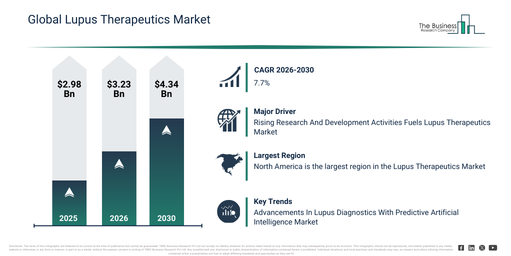
    The lupus therapeutics market has demonstrated substantial expansion in recent years. It is anticipated to increase from $2.98 billion in 2025 to $3.23 billion in 2026, exhibiting a compound annual growth rate (CAGR) of 8.7%. This historical growth can be linked to the rising occurrence of systemic lupus erythematosus, the extensive use of corticosteroids and antimalarial drugs, more refined clinical identification of autoimmune disorders, the expansion of rheumatology care within hospitals, and greater patient knowledge of lupus symptoms.

    The lupus therapeutics market is projected to experience substantial expansion in the coming years. This market is anticipated to reach $4.34 billion by 2030, demonstrating a compound annual growth rate (CAGR) of 7.7%. Factors contributing to this growth during the forecast period include increased investment in the development of biologic drugs, a growing need for steroid-sparing treatments, an uptick in funding for autoimmune disease research, wider availability of specialized rheumatology clinics, and greater healthcare spending on chronic autoimmune conditions. Key trends expected over the forecast period encompass a greater acceptance of biologic and targeted treatments, an increased emphasis on managing the disease long-term, a developing focus on individualized lupus care, the broadening of combination therapy strategies, and improved awareness regarding the early detection and management of lupus.

    Download the Free Sample Report to Explore Key Market Insights:

    https://www.thebusinessresearchcompany.com/sample.aspx?id=16471&type=smp

    Which Major Factors Are Driving The Expansion Of The Lupus Therapeutics Market?

    The growing engagement in research and development activities is anticipated to drive the expansion of the lupus therapeutics market moving forward. These activities involve systematic inquiry and experimentation aimed at advancing knowledge, technology, or product creation across various fields. The uptick in research and development efforts is often spurred by the demand for innovation, technological progress, addressing new challenges, improving healthcare outcomes, and stimulating economic growth through scientific discoveries and breakthroughs. Research and development plays a crucial role in advancing lupus therapeutics by uncovering new treatments, enhancing existing therapies, and deepening the understanding of the disease’s underlying mechanisms. As an illustration, in March 2023, a report issued by the Congressional Research Service, a U.S.-based federal legislative agency, highlighted that the President’s FY2024 budget proposal allocates approximately $209.7 billion to research and development (R&D), signifying an increase of $8.9 billion (4.4%) over the FY2023 estimated amount of $200.8 billion. When adjusted for inflation to FY2024 dollars, this proposal indicates a constant-dollar increase of 2.4% compared with the FY2023 actual level. Therefore, the rise in research and development activities is significantly contributing to the growth of the lupus therapeutics market.

    How Is The Lupus Therapeutics Market Divided Into Its Major Segments?

    The lupus therapeutics market covered in this report is segmented –

    1) By Disease Type: Systemic Lupus Erythematosus (SLE), Cutaneous Lupus Erythematosus, Drug-Induced Lupus Erythematosus, Neonatal Lupus

    2) By Treatment Type: Non-Steroidal Anti-Inflammatory Drugs (NSAIDs), Biologics, Antimalarial Drugs, Corticosteroids, Other Treatment Types

    3) By Route Of Administration: Oral, Subcutaneous, Intravenous, Other Routes Of Administration

    4) By End User: Hospitals And Clinics, Diagnostic Laboratories, Other End Users

    Subsegments:

    1) By Systemic Lupus Erythematosus (SLE): Mild SLE, Moderate SLE, Severe SLE

    2) By Cutaneous Lupus Erythematosus: Acute Cutaneous Lupus, Subacute Cutaneous Lupus, Chronic Cutaneous Lupus (Including Discoid Lupus)

    3) By Drug-Induced Lupus Erythematosus: Medications Known To Cause Drug-Induced Lupus, Hydralazine, Procainamide, Isoniazid

    4) By Neonatal Lupus: Heart-Related Neonatal Lupus, Skin-Related Neonatal Lupus

    What Trends Are Advancing Progress In The Lupus Therapeutics Market?

    Companies operating within the lupus therapeutics market are primarily directing their efforts toward creating advanced blood tests that incorporate predictive artificial intelligence to elevate the accuracy of diagnosis and the effectiveness of treatments. Such blood tests, equipped with predictive artificial intelligence, represent diagnostic instruments that utilize AI algorithms to scrutinize biomarkers in blood samples, thereby forecasting disease outcomes or therapeutic responses with enhanced precision. As an illustration, in March 2024, AMPEL BioSolutions LLC, a US-based precision medicine company, introduced the LuGENE blood test, which is capable of forecasting lupus flare-ups and identifying drug targets from gene expression analysis, leveraging predictive artificial intelligence (AI). This test aims to transform the management of lupus, an autoimmune disorder, by delivering customized treatment pathways for patients. It pinpoints real-time irregularities in gene expression that contribute to inflammation and immune system dysfunction, which are susceptible to targeting by medication.

    Who Are The Prominent Organizations Shaping The Lupus Therapeutics Market?

    Major companies operating in the lupus therapeutics market are Pfizer Inc., Johnson & Johnson, Merck & Co. Inc., AbbVie Inc., Sanofi SA, AstraZeneca PLC, Novartis AG, Roche Holdings Inc., GlaxoSmithKline plc, Eli Lilly and Company, Viatris Inc., Teva Pharmaceutical Industries Ltd., Bausch Health Companies Inc., Sun Pharmaceutical Industries Ltd., Aurobindo Pharma, Dr. Reddy’s Laboratories Ltd., Hikma Pharmaceuticals PLC, Amneal Pharmaceuticals LLC, Lupin Ltd, Zydus Lifesciences Limited, Glenmark Pharmaceuticals Limited

    Read the full lupus therapeutics market report here:

    https://www.thebusinessresearchcompany.com/report/lupus-therapeutics-global-market-report

    Which Region Currently Holds The Largest Share Of The Lupus Therapeutics Market?

    North America was the largest region in the lupus therapeutics market in 2025. Asia-Pacific is expected to be the fastest-growing region in the forecast period. The regions covered in the lupus therapeutics market report are Asia-Pacific, South East Asia, Western Europe, Eastern Europe, North America, South America, Middle East, Africa.

    Request A Tailored Lupus Therapeutics Market Research Report For Competitive Advantage:

    https://www.thebusinessresearchcompany.com/customise?id=16471&type=smp

    Browse Through More Reports Similar to the Global Lupus Therapeutics Market 2026, By The Business Research Company

    Systemic Lupus Erythematosus Treatment Global Market Report

    https://www.thebusinessresearchcompany.com/report/systemic-lupus-erythematosus-treatment-global-market-report

    Rheumatology Therapeutics Global Market Report

    https://www.thebusinessresearchcompany.com/report/rheumatology-therapeutics-global-market-report

    Anti Inflammatory Therapeutics Global Market Report

    https://www.thebusinessresearchcompany.com/report/anti-inflammatory-therapeutics-global-market-report

    Get in touch with us:

    The Business Research Company: https://www.thebusinessresearchcompany.com/

    Americas +1 310-496-7795

    Asia +44 7882 955267 & +91 8897263534

    Europe +44 7882 955267

    Email us at info@tbrc.info

    Follow us on:

    LinkedIn: https://in.linkedin.com/company/the-business-research-company

    YouTube: https://www.youtube.com/channel/UC24_fI0rV8cR5DxlCpgmyFQ

    Global Market Model: https://www.thebusinessresearchcompany.com/global-market-model
  • Lupus Nephritis Market Revenue Growth Expected to Reach $2.98 Billion by 2030 with 7.4% CAGR

    Lupus Nephritis Market Revenue Growth Expected to Reach $2.98 Billion by 2030 with 7.4% CAGR

    The Business Research Company’s 2026 market reports include new capabilities such as market attractiveness scoring and analysis, total addressable market analysis, company scoring matrix, interactive excel data dashboard, improved supply chain analysis, upcoming startups in the market, and overview of key products, aimed at improving the depth, usability, and strategic value of the insights delivered.

    What Is The Expected Market Size Of The Lupus Nephritis Market From 2026 To 2030?

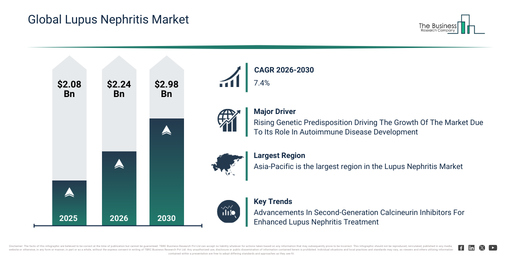
    The lupus nephritis market has experienced significant expansion in recent years. It is anticipated to grow from $2.08 billion in 2025 to $2.24 billion in 2026, achieving a compound annual growth rate (CAGR) of 7.7%. This growth observed in the past can be attributed to factors such as the increasing prevalence of systemic lupus erythematosus, improved kidney biopsy and diagnostic practices, the widespread use of corticosteroids in treatment, the expansion of hospital-based nephrology care, and increased awareness of autoimmune kidney diseases.

    The market for lupus nephritis is projected to experience substantial expansion in the coming years. By 2030, this market is anticipated to reach a value of $2.98 billion, demonstrating a compound annual growth rate (CAGR) of 7.4%. This projected growth is linked to several factors, including increased investment in the development of biologic drugs, a greater emphasis on early intervention to avert kidney failure, the wider acceptance of combination therapy treatments, the proliferation of specialized nephrology clinics, and increased expenditure on managing autoimmune diseases within healthcare. Key developments expected during this period involve a heightened focus on timely diagnosis and monitoring of the disease, the increasing use of immunosuppressive and biologic therapies, a greater drive towards tailored treatment strategies, the broadening of long-term disease management plans, and an improved understanding of kidney complications arising from autoimmune conditions.

    Download the Free Sample Report to Explore Key Market Insights:

    https://www.thebusinessresearchcompany.com/sample.aspx?id=22044&type=smp

    What Key Drivers Are Influencing The Growth Of The Lupus Nephritis Market?

    The increasing occurrence of genetic predisposition is projected to drive the expansion of the lupus nephritis market in the foreseeable future. Genetic predisposition refers to an individual’s inherited genetic traits that heighten their probability of developing particular diseases or conditions. The rising incidence of genetic predisposition results from factors such as inheritance, environmental influences, and mutations in specific genes. This growing prevalence plays a vital role in the manifestation of lupus nephritis, underscoring the significance of inherited genetic factors in autoimmune diseases, particularly those that affect kidney function. For instance, in October 2024, according to the Cystic Fibrosis Trust, a UK-based national charity, the UK CF Registry recorded 11,148 registered patients in 2022, which increased to 11,318 in 2024, reflecting a 1.52% increase in individuals with cystic fibrosis (CF). Consequently, the increasing prevalence of genetic predisposition is stimulating the growth of the lupus nephritis market.

    Which Segments Are Included In The Analysis Of The Lupus Nephritis Market?

    The lupus nephritis market covered in this report is segmented –

    1) By Stage: Class 1, Class 2, Class 3, Other Stages

    2) By Drug Class: Immunosuppressive Drugs, Corticosteroids, Biological Agents, Antimalarial Drugs

    3) By Route Of Administration: Oral, Parenteral, Other Routes Of Administration

    4) By Distribution Channel: Hospital Pharmacy, Retail Pharmacy, Online Pharmacy

    5) By End-User: Hospitals, Specialty Clinics, Other End-Users

    Subsegments:

    1) By Class 1: Asymptomatic Cases, Mild Proteinuria, Incidental Diagnosis

    2) By Class 2: Mild Hematuria, Low-Grade Proteinuria, Minimal Immune Complex Deposition

    3) By Class 3: Active Lesions, Chronic Sclerotic Lesions, Crescent Formation

    4) By Other Stages: Class 4 (Diffuse Lupus Nephritis), Class 5 (Membranous Lupus Nephritis), Class 6 (Advanced Sclerotic Lupus Nephritis)

    How Are Trends Transforming The Lupus Nephritis Market Landscape?

    Leading companies active in the lupus nephritis market are directing their efforts toward developing sophisticated second-generation calcineurin inhibitors, with the goal of enhancing treatment efficacy and improving long-term kidney outcomes for patients. These second-generation calcineurin inhibitors are utilized in lupus nephritis to alleviate inflammation and prevent kidney damage by moderating immune responses. For instance, in September 2024, Aurinia Pharmaceuticals Inc., a Canada-based commercial-stage biopharmaceutical company, announced that the Japanese Ministry of Health, Labour, and Welfare approved LUPKYNIS (voclosporin) for the treatment of lupus nephritis. This authorization permits voclosporin to be administered in conjunction with mycophenolate mofetil (MMF), based on findings from the AURORA Clinical Program, which confirmed its safety and efficacy. The approval signifies a major step forward in expanding therapeutic alternatives for lupus nephritis patients in Japan, leading to improved disease management and patient results.

    Which Key Industry Participants Are Active In The Lupus Nephritis Market?

    Major companies operating in the lupus nephritis market are F Hoffmann La Roche Ltd, Bristol Myers Squibb, Novartis AG, GlaxoSmithKline plc, Eli Lilly and Company, AstraZeneca PLC, Pfizer Inc, Johnson and Johnson, Merck and Co Inc, Sanofi, AbbVie Inc, Bayer AG, Amgen Inc, UCB SA, Otsuka Pharmaceutical Co Ltd, Aurinia Pharmaceuticals Inc, RemeGen Co Ltd, Kezar Life Sciences, Equillium Inc, Kyverna Therapeutics Inc, Biogen Inc

    Read the full lupus nephritis market report here:

    https://www.thebusinessresearchcompany.com/report/lupus-nephritis-global-market-report

    Which Region Is Expected To Register The Fastest Growth In The Lupus Nephritis Market?

    Asia-Pacific was the largest region in the lupus nephritis market in 2025. The regions covered in the lupus nephritis market report are Asia-Pacific, South East Asia, Western Europe, Eastern Europe, North America, South America, Middle East, Africa.

    Request A Tailored Lupus Nephritis Market Research Report For Competitive Advantage:

    https://www.thebusinessresearchcompany.com/customise?id=22044&type=smp

    Browse Through More Reports Similar to the Global Lupus Nephritis Market 2026, By The Business Research Company

    Cutaneous Lupus Erythematosus Global Market Report

    https://www.thebusinessresearchcompany.com/report/cutaneous-lupus-erythematosus-global-market-report

    Lupus Therapeutics Global Market Report

    https://www.thebusinessresearchcompany.com/report/lupus-therapeutics-global-market-report

    Kidney Disease Global Market Report

    https://www.thebusinessresearchcompany.com/report/kidney-disease-global-market-report

    Get in touch with us:

    The Business Research Company: https://www.thebusinessresearchcompany.com/

    Americas +1 310-496-7795

    Asia +44 7882 955267 & +91 8897263534

    Europe +44 7882 955267

    Email us at info@tbrc.info

    Follow us on:

    LinkedIn: https://in.linkedin.com/company/the-business-research-company

    YouTube: https://www.youtube.com/channel/UC24_fI0rV8cR5DxlCpgmyFQ

    Global Market Model: https://www.thebusinessresearchcompany.com/global-market-model
  • Lung Cancer Surgery Market Expected to Record Steady Growth and Approach $6.73 Billion by 2030

    Lung Cancer Surgery Market Expected to Record Steady Growth and Approach $6.73 Billion by 2030

    The Business Research Company’s 2026 market reports include new capabilities such as market attractiveness scoring and analysis, total addressable market analysis, company scoring matrix, interactive excel data dashboard, improved supply chain analysis, upcoming startups in the market, and overview of key products, aimed at improving the depth, usability, and strategic value of the insights delivered.

    What Market Valuation Is Forecasted For The Lung Cancer Surgery Market By 2030 Starting From Its 2026 Size?

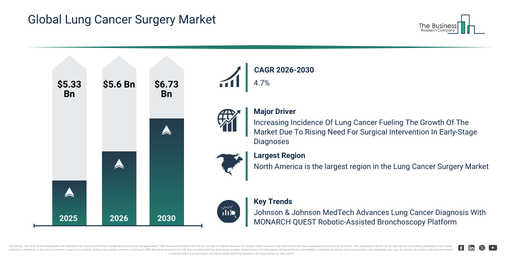
    The market for lung cancer surgery has demonstrated robust growth over recent years. It is anticipated to expand from $5.33 billion in 2025 to $5.6 billion in 2026, indicating a compound annual growth rate (CAGR) of 5.1%. Historically, this expansion has been propelled by several factors, including escalating lung cancer incidence rates, the broadening of hospital surgical capabilities, the availability of proficient thoracic surgeons, the increasing embrace of video-assisted thoracoscopic surgery, and heightened awareness regarding early-stage lung cancer treatment.

    The lung cancer surgery market is projected to experience consistent expansion over the coming years, with its value set to reach $6.73 billion by 2030, exhibiting a compound annual growth rate (CAGR) of 4.7%. This anticipated growth is primarily driven by factors such as the greater integration of robotic surgery platforms, a heightened need for precise surgical results, the proliferation of specialized cancer treatment facilities, increased capital allocation towards surgical innovations, and the wider implementation of enhanced recovery protocols following surgery. Key trends expected during this forecast period encompass the growing adoption of minimally invasive surgical approaches, an uptick in robotic-assisted thoracic surgery, a developing preference for procedures that preserve lung tissue, the expanded use of sophisticated surgical instruments, and an increased emphasis on improving post-operative recovery results.

    Download the Free Sample Report to Explore Key Market Insights:

    https://www.thebusinessresearchcompany.com/sample.aspx?id=25816&type=smp

    What Major Growth Drivers Are Shaping The Outlook Of The Lung Cancer Surgery Market?

    The rising occurrence of lung cancer is anticipated to drive the expansion of the lung cancer surgery market in the foreseeable future. This condition involves the unchecked proliferation of aberrant cells within one or both lungs, disrupting their natural functioning. The elevated incidence of lung cancer stems from extended exposure to air pollution and fine particulate matter; these minute particles can infiltrate deeply into the lungs, resulting in inflammation, cellular harm, and genetic mutations that may trigger cancer formation. Lung cancer surgery plays a crucial role in lowering lung cancer-related mortality by facilitating the prompt removal of malignant tumors before they can disseminate or advance. As an illustration, in June 2025, data from the Centers for Disease Control and Prevention, a US-based federal government agency, indicated that in 2023, lung cancer caused 131,584 deaths in the United States, after 218,893 newly reported cases in 2022. Consequently, the escalating number of lung cancer cases is significantly fueling the expansion of the lung cancer surgery market.

    Which Segment Categories Define The Lung Cancer Surgery Market?

    The lung cancer surgery market covered in this report is segmented –

    1) By Surgical Approach: Thoracotomy, Minimally Invasive Surgeries

    2) By Procedure: Lobectomy, Segmentectomy, Pneumonectomy, Sleeve Resection, Extended Reserction

    3) By Product: Thoracoscopes, Mediastinoscopes, Bronchoscopes, Robotic-Assistes Thoracic Surgery Systems, Surgical Staplers, Surgical Energy Instruments, Advanced Energy Instruments, Advanced Bipolar Instruments, Ultrasonic Instruments

    4) By Distribution Channels: Direct Tender, Retail Sales, Online Sales, Other Channels

    5) By End User: Hospitals, Ambulatory And Surgical Centres, Academic And Research Institutes, Specialiaty Cancer Care Centre, Other End Users

    Subsegments:

    1) By Thoracotomy: Lobectomy, Pneumonectomy, Segmentectomy, Wedge Resection

    2) By Minimally Invasive Surgeries: Video-Assisted Thoracoscopic Surgery (VATS), Robotic-Assisted Surgery

    Which Trends Are Impacting The Growth Of The Lung Cancer Surgery Market?

    Leading companies active in the lung cancer surgery market are concentrating on developing pioneering technologies, such as robotic-assisted operations, to elevate surgical precision, decrease recovery periods, and improve patient results. Robotic-assisted surgeries denote minimally invasive procedures executed with robotic systems guided by surgeons to heighten accuracy, mitigate complications, and enhance patient recovery outcomes. For example, in March 2025, Johnson & Johnson MedTech, a US-based medical devices and technology company, declared the regulatory clearance of MONARCH QUEST under U.S. 510(k). The MONARCH QUEST robotic-assisted bronchoscopy platform offers superior reach and stability to access small, hard-to-reach lung nodules, enhancing the capacity to diagnose lung cancer at earlier stages. Its advanced maneuverability and integration with imaging technologies enable more accurate biopsies while minimizing patient discomfort. Designed to expand procedural capabilities and streamline workflow, the platform fosters greater clinical confidence and consistency across an extensive range of bronchoscopic procedures.

    Who Are The Top Companies Competing In The Lung Cancer Surgery Market?

    Major companies operating in the lung cancer surgery market are Johnson And Johnson, Medtronic plc, Fujifilm Holdings Corporation, B Braun Melsungen AG, Olympus Corporation, Intuitive Surgical Inc, Teleflex Incorporated, Karl Storz SE, Lepu Medical Technology Beijing Co Ltd, Ambu AS, KLS Martin Group, Richard Wolf GmbH, Ethicon Inc, Ackermann Instrument GmbH, Scanlan International Inc, Sontec Instruments Inc, Covidien LLC, Stryker Corporation, Smith And Nephew plc, CONMED Corporation, Erbe Elektromedizin GmbH

    Read the full lung cancer surgery market report here:

    https://www.thebusinessresearchcompany.com/report/lung-cancer-surgery-global-market-report

    Which Regions Are Projected To Dominate The Lung Cancer Surgery Market In The Coming Years?

    North America was the largest region in the lung cancer surgery market in 2025. Asia-Pacific is expected to be the fastest-growing region in the forecast period. The regions covered in the lung cancer surgery market report are Asia-Pacific, South East Asia, Western Europe, Eastern Europe, North America, South America, Middle East, Africa.

    Request A Tailored Lung Cancer Surgery Market Research Report For Competitive Advantage:

    https://www.thebusinessresearchcompany.com/customise?id=25816&type=smp

    Browse Through More Reports Similar to the Global Lung Cancer Surgery Market 2026, By The Business Research Company

    Lung Cancer Diagnostic And Screening Global Market Report

    https://www.thebusinessresearchcompany.com/report/lung-cancer-diagnostic-and-screening-global-market-report

    Non Small Cell Lung Cancer Nsclc Global Market Report

    https://www.thebusinessresearchcompany.com/report/non-small-cell-lung-cancer-nsclc-global-market-report

    Non Small Cell Lung Cancer Nsclc Global Market Report

    https://www.thebusinessresearchcompany.com/report/non-small-cell-lung-cancer-nsclc-global-market-report

    Get in touch with us:

    The Business Research Company: https://www.thebusinessresearchcompany.com/

    Americas +1 310-496-7795

    Asia +44 7882 955267 & +91 8897263534

    Europe +44 7882 955267

    Email us at info@tbrc.info

    Follow us on:

    LinkedIn: https://in.linkedin.com/company/the-business-research-company

    YouTube: https://www.youtube.com/channel/UC24_fI0rV8cR5DxlCpgmyFQ

    Global Market Model: https://www.thebusinessresearchcompany.com/global-market-model
  • Lung Cancer Screening Industry Expansion Forecast Showing Market Size of $5.24 Billion by 2030 at 9.5% CAGR

    Lung Cancer Screening Industry Expansion Forecast Showing Market Size of $5.24 Billion by 2030 at 9.5% CAGR

    The Business Research Company’s 2026 market reports include new capabilities such as market attractiveness scoring and analysis, total addressable market analysis, company scoring matrix, interactive excel data dashboard, improved supply chain analysis, upcoming startups in the market, and overview of key products, aimed at improving the depth, usability, and strategic value of the insights delivered.

    How Is The Market Size Of The Lung Cancer Screening Market Expected To Change Between 2026 And 2030?

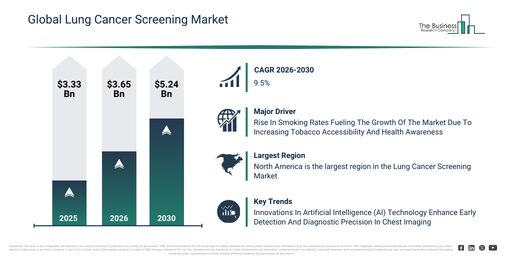
    The lung cancer screening market has experienced significant growth in recent years. It is anticipated to increase from $3.33 billion in 2025 to $3.65 billion in 2026, at a compound annual growth rate (CAGR) of 9.6%. The expansion observed in the past can be attributed to several factors, including the increasing occurrence of lung cancer among aging populations, greater awareness of the benefits of early screening, the development of diagnostic imaging infrastructure, improvements in CT imaging technology, and the implementation of guideline-based screening protocols.

    The lung cancer screening market size is anticipated to demonstrate robust expansion in the forthcoming years. It is projected to climb to $5.24 billion by 2030, achieving a compound annual growth rate (CAGR) of 9.5%. The expansion during the forecast period is driven by factors such as the increasing implementation of AI-assisted diagnostic workflows, the broadening scope of population-based screening programs, a heightened concentration on personalized risk assessment, rising investments in technologies for early cancer detection, and increased healthcare policy backing for screening. Key trends during this period involve the rising adoption of low-dose CT screening programs, a growing integration of AI in imaging analysis, an enhanced focus on screening high-risk populations, the expansion of preventive oncology initiatives, and a greater emphasis on the early detection of lung cancer.

    Download the Free Sample Report to Explore Key Market Insights:

    https://www.thebusinessresearchcompany.com/sample.aspx?id=27331&type=smp

    What Drivers Are Expected To Influence The Lung Cancer Screening Market During The Forecast Period?

    The increasing prevalence of smoking is projected to boost the expansion of the lung cancer screening market in the coming period. Smoking involves inhaling smoke from burning materials, primarily tobacco, into the mouth and lungs. Elevated stress levels are contributing to the uptick in smoking rates, as individuals increasingly resort to it as a coping mechanism. Lung cancer screening aids in tackling growing smoking rates by allowing for the early identification of health risks linked to smoking, thereby encouraging people to cease the habit and bolstering wider public health initiatives to decrease tobacco consumption. For instance, in October 2024, the Office for Health Improvement & Disparities, a UK-based government organisation, reported that the prevalence of current smokers in the routine and manual occupation group (aged 18 to 64) in 2023 was 19.5%. Consequently, the escalation in smoking rates is propelling the growth of the lung cancer screening market.

    How Is The Lung Cancer Screening Market Structured Across Different Segments?

    The lung cancer screening market covered in this report is segmented –

    1) By Diagnosis Type: Low Dose Spiral Computed Tomography Scan, Chest-X-Ray

    2) By Cancer Type: Non-Small Cell Lung Cancer, Small Cell Lung Cancer

    3) By Age Group: 50 And Older, Below 50

    4) By End-User: Hospitals And Clinics, Diagnostic Centers, Other End-Users

    Subsegments:

    1) By Low Dose Spiral Computed Tomography Scan: Screening, Diagnostic, Follow-Up

    2) By Chest X-Ray: Posterior Anterior, Lateral, Portable

    What Major Market Trends Are Driving Changes In The Lung Cancer Screening Market?

    Major companies operating in the lung cancer screening market are concentrating on developing advanced solutions, such as normal flagging, to improve diagnostic accuracy, reduce false positive results, and enhance the early identification of cancerous nodules. Normal flagging denotes a technological capability in lung cancer screening that automatically identifies and flags scans showing no abnormal findings, thus aiding in the prioritization of cases needing further evaluation. For example, in May 2025, Lunit Inc., a medical technology firm based in South Korea, introduced INSIGHT CXR4, its next-generation artificial intelligence (AI)-powered chest X-ray analysis solution, which has now achieved CE MDR-certification for deployment across Europe. This solution is engineered to assist radiologists by boosting diagnostic accuracy and workflow efficiency, detecting 12 chest abnormalities, including lung nodules, pneumonia, and acute bone fractures, and offering features like current-prior image comparison to support early disease detection and clinical decision-making.

    Which Major Players Dominate The Lung Cancer Screening Market?

    Major companies operating in the lung cancer screening market are Abbott Laboratories Inc., Canon Inc., Siemens Healthineers AG, Koninklijke Philips N.V., GE Healthcare Technologies Inc., Quest Diagnostics Incorporated, Shimadzu Corporation, NeoGenomics Laboratories Inc., Freenome Holdings Inc., Biodesix Inc., Lunit Inc., Infervision, Riverain Technologies, VisionGate, Delfi Diagnostics Inc., Hologic Inc., Fujifilm Holdings Corporation, United Imaging Healthcare Co. Ltd., Samsung Medison Co. Ltd., Carestream Health Inc., Analogic Corporation, Toshiba Medical Systems Corporation

    Read the full lung cancer screening market report here:

    https://www.thebusinessresearchcompany.com/report/lung-cancer-screening-global-market-report

    Which Region Is Forecast To Lead The Lung Cancer Screening Market In Terms Of Market Size?

    North America was the largest region in the lung cancer screening market in 2025. Asia-Pacific is expected to be the fastest-growing region in the forecast period. The regions covered in the lung cancer screening market report are Asia-Pacific, South East Asia, Western Europe, Eastern Europe, North America, South America, Middle East, Africa.

    Request A Tailored Lung Cancer Screening Market Research Report For Competitive Advantage:

    https://www.thebusinessresearchcompany.com/customise?id=27331&type=smp

    Browse Through More Reports Similar to the Global Lung Cancer Screening Market 2026, By The Business Research Company

    Financial Fraud Detection Software Global Market Report

    https://www.thebusinessresearchcompany.com/report/financial-fraud-detection-software-global-market-report

    Payment Monitoring Global Market Report

    https://www.thebusinessresearchcompany.com/report/payment-monitoring-global-market-report

    Ecommerce Fraud Detection And Prevention Global Market Report

    https://www.thebusinessresearchcompany.com/report/ecommerce-fraud-detection-and-prevention-global-market-report

    Get in touch with us:

    The Business Research Company: https://www.thebusinessresearchcompany.com/

    Americas +1 310-496-7795

    Asia +44 7882 955267 & +91 8897263534

    Europe +44 7882 955267

    Email us at info@tbrc.info

    Follow us on:

    LinkedIn: https://in.linkedin.com/company/the-business-research-company

    YouTube: https://www.youtube.com/channel/UC24_fI0rV8cR5DxlCpgmyFQ

    Global Market Model: https://www.thebusinessresearchcompany.com/global-market-model
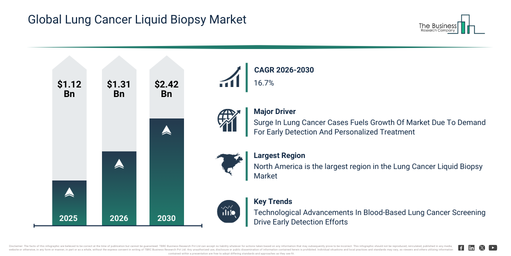
  • Lung Cancer Liquid Biopsy Market Revenue Expected to Reach $2.42 Billion by 2030 with 16.7% CAGR

    Lung Cancer Liquid Biopsy Market Revenue Expected to Reach $2.42 Billion by 2030 with 16.7% CAGR

    The Business Research Company’s 2026 market reports include new capabilities such as market attractiveness scoring and analysis, total addressable market analysis, company scoring matrix, interactive excel data dashboard, improved supply chain analysis, upcoming startups in the market, and overview of key products, aimed at improving the depth, usability, and strategic value of the insights delivered.

    What Is The Market Size Of The Lung Cancer Liquid Biopsy Market In 2026 And What Value Is Projected For 2030?

    The lung cancer liquid biopsy market size has experienced rapid growth in recent years. This market is expected to expand from $1.12 billion in 2025 to $1.31 billion in 2026, achieving a compound annual growth rate (CAGR) of 17.0%. The expansion observed in the past can be linked to factors such as rising lung cancer incidence rates, the limitations inherent in tissue biopsy procedures, breakthroughs in molecular diagnostics, the widespread availability of circulating biomarker technologies, and an increase in oncology research endeavors.

    The lung cancer liquid biopsy market is anticipated to experience substantial growth in the upcoming years. It is projected to expand to $2.42 billion by 2030, driven by a compound annual growth rate (CAGR) of 16.7%. This expansion during the forecast period is attributable to the increasing demand for precision oncology solutions, the broadening of liquid biopsy clinical applications, a rise in the adoption of companion diagnostics, the growing integration of AI-driven data analysis, and an increased focus on early cancer screening programs. Significant trends expected during this period include the rising adoption of non-invasive diagnostic techniques, increased utilization of NGS-based liquid biopsy tests, a growing demand for early cancer detection, the expansion of personalized oncology diagnostics, and enhanced integration of bioinformatics platforms.

    Download the Free Sample Report to Explore Key Market Insights:

    https://www.thebusinessresearchcompany.com/sample.aspx?id=24593&type=smp

    What Drivers Are Influencing The Lung Cancer Liquid Biopsy Market?

    The rising occurrence of lung cancer is projected to drive expansion within the lung cancer liquid biopsy market in the coming period. This condition involves the unchecked proliferation of atypical cells in the lungs, frequently stemming from tobacco use and exposure to environmental factors. The primary reason for the rise in lung cancer cases is ongoing tobacco consumption, as smoking introduces carcinogens to the lungs, stimulating irregular cell development. A lung cancer liquid biopsy aids in identifying genetic mutations linked to cancer and tumor DNA through a blood specimen, facilitating prompt diagnosis, choice of treatment, and tracking of disease advancement or therapeutic effectiveness. For example, a report from the American Cancer Society (ACS), a U.S.-based nonprofit organization, indicated in January 2023 that approximately 238,340 individuals, comprising 117,550 men and 120,790 women, are projected to receive a lung cancer diagnosis in 2023, with an anticipated 127,070 people succumbing to the illness. Consequently, the growing prevalence of lung cancer is fueling the expansion of the lung cancer liquid biopsy market.

    What Are The Key Segments Of The Lung Cancer Liquid Biopsy Market?

    The lung cancer liquid biopsy market covered in this report is segmented –

    1) By Product: Instruments, Consumables, Kits And Reagents, Software And Services

    2) By Technology: Multi-Gene-Parallel Analysis (Ngs), Single-Gene Analysis (PCR Microarrays)

    3) By Biomarker: Cell-Free Deoxyribonucleic Acid, Circulating Tumor Deoxyribonucleic Acid, Extracellular Vesicles, Circulating Tumor Cells, Other Biomarkers

    4) By Clinical Application: Therapy Selection, Treatment Monitoring, Early Cancer Screening, Recurrence Monitoring, Other Applications

    5) By End User: Diagnostics And Imaging Centres, Hospitals, Academics And Research Centers, Other End Users

    Subsegments:

    1) By Instruments: PCR Instruments, Microarray Instruments, Next-Generation Sequencing (NGS) Instruments

    2) By Consumables Kits And Reagents: Sample Collection Kits, Amplification Reagents, Sequencing Reagents

    3) By Software And Services: Data Analysis Software, Cloud-Based Services, Bioinformatics Tools

    Which Trends Are Shaping The Future Of The Lung Cancer Liquid Biopsy Market?

    Major companies operating in the lung cancer liquid biopsy market are prioritizing the development of technological advancements, including blood-based lung cancer screening tests, to enhance early detection capabilities, improve diagnostic accuracy, and enable non-invasive, real-time monitoring of tumor progression and treatment response. A blood-based lung cancer screening test represents a non-invasive method that analyzes specific biomarkers in the bloodstream to identify the presence of lung cancer at an early stage. For instance, in October 2023, DELFI Diagnostics Inc., a US-based biotechnology company, launched FirstLook Lung, a blood-based liquid biopsy test specifically designed to aid in early lung cancer detection. This test leverages fragmentomics to detect early lung cancer with high sensitivity and features a 99.8% negative predictive value, making it a convenient and accessible initial step for at-risk individuals. Its purpose is to improve early detection, increase screening rates, and help direct further imaging resources to those most likely to benefit.

    Who Are The Leading Companies Operating In The Lung Cancer Liquid Biopsy Market?

    Major companies operating in the lung cancer liquid biopsy market are F. Hoffmann-La Roche Ltd, Thermo Fisher Scientific Inc., Biocept Inc., Agilent Technologies Inc., Eurofins Scientific, Illumina Inc., Sysmex Corporation, Bio-Rad Laboratories Inc., QIAGEN N.V., Natera Inc., Myriad Genetics Inc., NeoGenomics Laboratories Inc., Guardant Health Inc., Exosome Diagnostics Inc., Menarini Silicon Biosystems S.p.A., Inivata Ltd, Lucence Diagnostics Pte Ltd, LungLife AI Inc., Biodesix Inc., Oncocyte Corporation

    Read the full lung cancer liquid biopsy market report here:

    https://www.thebusinessresearchcompany.com/report/lung-cancer-liquid-biopsy-global-market-report

    Which Regions Are Expected To Experience Rapid Expansion In The Lung Cancer Liquid Biopsy Market?

    North America was the largest region in the lung cancer liquid biopsy market in 2025. Asia-Pacific is expected to be the fastest-growing region in the forecast period. The regions covered in the lung cancer liquid biopsy market report are Asia-Pacific, South East Asia, Western Europe, Eastern Europe, North America, South America, Middle East, Africa.

    Request A Tailored Lung Cancer Liquid Biopsy Market Research Report For Competitive Advantage:

    https://www.thebusinessresearchcompany.com/customise?id=24593&type=smp

    Browse Through More Reports Similar to the Global Lung Cancer Liquid Biopsy Market 2026, By The Business Research Company

    Lung Cancer Diagnostic And Screening Global Market Report

    https://www.thebusinessresearchcompany.com/report/lung-cancer-diagnostic-and-screening-global-market-report

    Liquid Biopsy Global Market Report

    https://www.thebusinessresearchcompany.com/report/liquid-biopsy-global-market-report

    Lung Cancer Drugs Global Market Report

    https://www.thebusinessresearchcompany.com/report/lung-cancer-drugs-global-market-report

    Get in touch with us:

    The Business Research Company: https://www.thebusinessresearchcompany.com/

    Americas +1 310-496-7795

    Asia +44 7882 955267 & +91 8897263534

    Europe +44 7882 955267

    Email us at info@tbrc.info

    Follow us on:

    LinkedIn: https://in.linkedin.com/company/the-business-research-company

    YouTube: https://www.youtube.com/channel/UC24_fI0rV8cR5DxlCpgmyFQ

    Global Market Model: https://www.thebusinessresearchcompany.com/global-market-model