Category: Healthcare Services

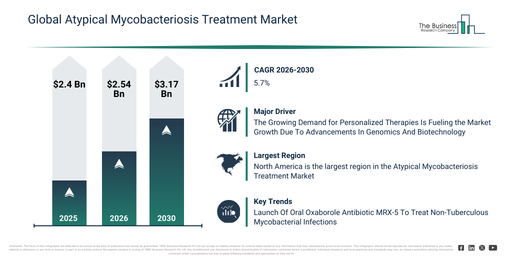
  • A key trend shaping the Atypical Mycobacteriosis Treatment Market involves the Launch Of Oral Oxaborole Antibiotic MRX-5 To Treat Non-Tuberculous Mycobacterial Infections

    A key trend shaping the Atypical Mycobacteriosis Treatment Market involves the Launch Of Oral Oxaborole Antibiotic MRX-5 To Treat Non-Tuberculous Mycobacterial Infections

    The Business Research Company’s 2026 market reports include new capabilities such as market attractiveness scoring and analysis, total addressable market analysis, company scoring matrix, interactive excel data dashboard, improved supply chain analysis, upcoming startups in the market, and overview of key products, aimed at improving the depth, usability, and strategic value of the insights delivered.

    What Is The Forecasted Market Value Of The Atypical Mycobacteriosis Treatment Market Across 2026–2030?

    The atypical mycobacteriosis treatment market size has shown strong expansion in recent years. It is projected to increase from $2.4 billion in 2025 to $2.54 billion in 2026, achieving a compound annual growth rate (CAGR) of 5.9%. The historical period’s growth can be attributed to several factors, including enhanced clinical identification of NTM infections, increased access to macrolide-based therapies, the expansion of specialized infectious disease care, a rise in the adoption of hospital-based treatments, and improved diagnostic methods for differentiating from tuberculosis.

    The atypical mycobacteriosis treatment market is anticipated to experience substantial expansion in the coming years. This market is projected to reach a valuation of $3.17 billion by 2030, demonstrating a compound annual growth rate (CAGR) of 5.7%. This anticipated expansion over the forecast period is fueled by several factors, including the increasing occurrence of immunocompromised individuals, heightened research into new antimycobacterial agents, a growing embrace of personalized treatment strategies, the spread of outpatient and home-based care options, and enhanced clinical guidelines for ntm management. Key trends expected during this period involve a rise in the application of combination antibiotic regimens, an elevated focus on managing drug-resistant ntm, the increased implementation of extended-duration treatment protocols, a broader scope for targeted surgical interventions, and a stronger emphasis on supportive and adjunctive care.

    Download the Free Sample Report to Explore Key Market Insights:

    https://www.thebusinessresearchcompany.com/sample.aspx?id=24157&type=smp

    What Drivers Are Shaping The Future Growth Of The Atypical Mycobacteriosis Treatment Market?

    The increasing need for individualized treatments is anticipated to drive the expansion of the atypical mycobacteriosis treatment market in the coming years. Individualized treatments are defined as medical interventions specifically designed based on a person’s unique genetic, biological, and environmental attributes to maximize their efficacy. This rising demand for personalized therapies largely stems from progress in genomics and biotechnology, which facilitate the creation of treatments customized to individual genetic blueprints, thereby enhancing effectiveness and reducing adverse reactions. Atypical mycobacteriosis treatment plays a crucial role in personalized therapies, enabling the development of tailored treatment approaches that address the distinct genetic and clinical profiles of individual patients, resulting in more accurate and potent care. For example, in February 2024, the Personalized Medicine Coalition, a US-based non-profit, reported that in 2023, the FDA gave approval to 16 new personalized treatments for individuals suffering from rare diseases, which marked a considerable rise from the six approved in 2022. Consequently, the escalating demand for personalized therapies is fueling the expansion of the atypical mycobacteriosis treatment market.

    What Segmentation Levels Are Considered In The Atypical Mycobacteriosis Treatment Market?

    The atypical mycobacteriosis treatment market covered in this report is segmented –

    1) By Treatment Type: Antibiotic Therapy, Surgical Interventions, Combination Therapy, Supportive Care

    2) By Type Of Disease: Atypical Mycobacterial Lung Infections, Disseminated Infections, Skin And Soft Tissue Infections

    3) By Route Of Administration: Oral, Intravenous

    4) By Patient Type: Immuncompromised Patients, Non-Immunocompromised Patients, Pediatric Patients

    5) By End Users: Hospitals, Clinics, Home Healthcare Settings

    Subsegments:

    1) By Antibiotic Therapy: Macrolides, Rifamycins, Ethambutol, Aminoglycosides, Fluoroquinolones

    2) By Surgical Interventions: Pulmonary Resection, Lymph Node Excision, Skin And Soft Tissue Debridement, Abscess Drainage, Bronchoscopic Interventions

    3) By Combination Therapy: Macrolide-Based Triple Drug Regimen, Macrolide Plus Injectable Aminoglycoside, Macrolide Plus Fluoroquinolone And Ethambutol

    4) By Supportive Care: Nutritional Support, Respiratory Therapy, Pain Management, Psychological Support

    How Are Trends Transforming The Atypical Mycobacteriosis Treatment Market Landscape?

    Major companies are active within the atypical mycobacteriosis treatment market, concentrating on developing innovative remedies such as oral oxaborole antibiotics to meet the increasing demand for safer, more effective, and long-term treatments for non-tuberculous mycobacterial (NTM) infections. Oxaboroles are a novel class of small-molecule drugs that inhibit bacterial protein synthesis via a boron-based mechanism, providing a distinct mode of action compared to traditional antimycobacterial therapies, which helps in reducing toxicity, resistance, and drug–drug interactions. For example, in January 2025, MicuRx Pharmaceuticals, a China-based biopharmaceutical company, launched MRX-5, an orally bioavailable oxaborole antibiotic created for NTM infections. This drug demonstrated dose-dependent reductions in lung bacterial load in preclinical models of Mycobacterium abscessus, showed favorable pharmacokinetics, minimal drug-drug interactions, and high oral bioavailability, and is designed for chronic use in patients requiring long-term therapy.

    Which Leading Firms Are Contributing To The Growth Of The Atypical Mycobacteriosis Treatment Market?

    Major companies operating in the atypical mycobacteriosis treatment market are Pfizer Inc., Johnson & Johnson, F. Hoffmann-La Roche Ltd., Merck & Co. Inc., AbbVie Inc., Bayer AG, Sanofi S.A., Bristol-Myers Squibb, AstraZeneca PLC, Novartis AG, GlaxoSmithKline plc, Eli Lilly and Company, Teva Pharmaceutical Industries Ltd., Astellas Pharma Inc., Zydus Pharmaceuticals, Lupin Limited, Gland Pharma Limited, Saphnix Lifesciences Pvt. Ltd., Gentec Pharmaceutical Group, Octavius Pharma Pvt. Ltd.

    Read the full atypical mycobacteriosis treatment market report here:

    https://www.thebusinessresearchcompany.com/report/atypical-mycobacteriosis-treatment-global-market-report

    Which Geographic Regions Are Influencing Demand In The Atypical Mycobacteriosis Treatment Market?

    North America was the largest region in the atypical mycobacteriosis treatment market in 2025. The regions covered in the atypical mycobacteriosis treatment market report are Asia-Pacific, South East Asia, Western Europe, Eastern Europe, North America, South America, Middle East, Africa.

    Request A Tailored Atypical Mycobacteriosis Treatment Market Research Report For Competitive Advantage:

    https://www.thebusinessresearchcompany.com/customise?id=24157&type=smp

    Browse Through More Reports Similar to the Global Atypical Mycobacteriosis Treatment Market 2026, By The Business Research Company

    Clinical Microbiology Global Market Report

    https://www.thebusinessresearchcompany.com/report/clinical-microbiology-global-market-report

    Pseudomonas Aeruginosa Infection Treatment Global Market Report

    https://www.thebusinessresearchcompany.com/report/pseudomonas-aeruginosa-infection-treatment-global-market-report

    Mycosis Fungoides Treatment Global Market Report

    https://www.thebusinessresearchcompany.com/report/mycosis-fungoides-treatment-global-market-report

    Get in touch with us:

    The Business Research Company: https://www.thebusinessresearchcompany.com/

    Americas +1 310-496-7795

    Asia +44 7882 955267 & +91 8897263534

    Europe +44 7882 955267

    Email us at info@tbrc.info

    Follow us on:

    LinkedIn: https://in.linkedin.com/company/the-business-research-company

    YouTube: https://www.youtube.com/channel/UC24_fI0rV8cR5DxlCpgmyFQ

    Global Market Model: https://www.thebusinessresearchcompany.com/global-market-model
  • Artificial Intelligence (AI)-Driven Remote Cardiac Rehab Market Revenue Growth Expected to Reach $3.66 Billion by 2030 with 21.1% CAGR

    Artificial Intelligence (AI)-Driven Remote Cardiac Rehab Market Revenue Growth Expected to Reach $3.66 Billion by 2030 with 21.1% CAGR

    The Business Research Company’s 2026 market reports include new capabilities such as market attractiveness scoring and analysis, total addressable market analysis, company scoring matrix, interactive excel data dashboard, improved supply chain analysis, upcoming startups in the market, and overview of key products, aimed at improving the depth, usability, and strategic value of the insights delivered.

    How Much Is The Artificial Intelligence (AI)-Driven Remote Cardiac Rehab Market Expected To Grow In Terms Of Market Value Between 2026 And 2030?

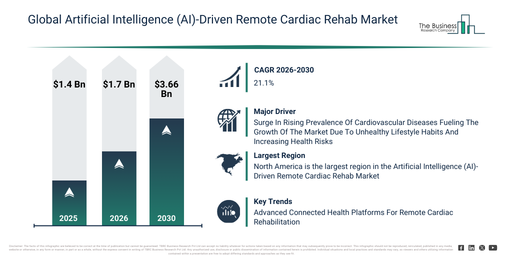
    The artificial intelligence (AI)-driven remote cardiac rehab market has experienced substantial growth in recent years. This market is set to expand from $1.4 billion in 2025 to $1.7 billion in 2026, at a compound annual growth rate (CAGR) of 21.4%. Its historical expansion can be attributed to factors such as the broadening of cardiac rehabilitation programs, the increasing prevalence of cardiovascular diseases, the greater adoption of telehealth services, the development of wearable cardiac devices, and enhanced remote monitoring capabilities.

    The artificial intelligence (AI)-driven remote cardiac rehab market size is projected for rapid expansion over the coming years. This market is anticipated to reach $3.66 billion by 2030, exhibiting a compound annual growth rate (CAGR) of 21.1%. Several factors contribute to this growth during the projected timeframe, including heightened investments in AI-powered cardiac care, a surging need for at-home rehabilitation, the proliferation of cloud-enabled cardiac analytics platforms, an intensified emphasis on proactive cardiac wellness, and greater integration with electronic health records. Key developments expected within the forecast period encompass a wider deployment of AI-powered cardiac monitoring algorithms, increased uptake of portable heart monitoring devices, a growing call for customized rehabilitation plans, the broadening availability of remote patient interaction instruments, and a stronger commitment to ongoing outcome assessment.

    Download the Free Sample Report to Explore Key Market Insights:

    https://www.thebusinessresearchcompany.com/sample.aspx?id=28913&type=smp

    What Major Drivers Are Influencing Demand In The Artificial Intelligence (AI)-Driven Remote Cardiac Rehab Market?

    The increasing occurrence of cardiovascular conditions is anticipated to fuel the expansion of the artificial intelligence (AI)-driven remote cardiac rehab market in the future. These conditions involve abnormalities of the heart and blood vessels, encompassing ailments such as heart attack, stroke, and high blood pressure. The surge in cardiovascular diseases is primarily attributable to unhealthy habits contributing to overweight, elevated blood pressure, and high cholesterol, which put a strain on the heart and arteries. AI-powered remote cardiac rehabilitation assists individuals with cardiovascular diseases through remote heart health monitoring, customized exercise and medication regimens, and instant feedback, thereby enhancing recovery, boosting compliance, and decreasing rehospitalizations. As an illustration, in August 2025, data from the National Institutes of Health, a US-based government agency, indicated that from 2025 to 2050, cardiovascular prevalence is projected to rise by 90%, mortality by 73%, and DALYs by 55%, with deaths increasing from 20.5 million to 35.6 million. Consequently, the growing incidence of cardiovascular diseases is propelling the expansion of the artificial intelligence (AI)-driven remote cardiac rehab market.

    What Major Segment Divisions Exist Within The Artificial Intelligence (AI)-Driven Remote Cardiac Rehab Market?

    The artificial intelligence (AI)-driven remote cardiac rehab market covered in this report is segmented –

    1) By Component: Software, Hardware, Services

    2) By Delivery Mode: Web-Based, App-Based, Telehealth Platforms

    3) By Deployment Mode: Cloud-Based, On-Premises

    4) By Application: Chronic Heart Failure, Post-Myocardial Infarction, Post-Cardiac Surgery, Hypertension Management, Other Applications

    5) By End-User: Hospitals And Clinics, Homecare Settings, Rehabilitation Centers, Other End-Users

    Subsegments:

    1) By Software: Remote Monitoring Software, Patient Engagement Software, Data Analytics Software

    2) By Hardware: Wearable Devices, Sensors And Monitors, Mobile Devices

    3) By Services: Telehealth Services, Consultation Services, Training And Support Services

    Which Trends Are Influencing The Artificial Intelligence (AI)-Driven Remote Cardiac Rehab Market?

    Leading companies in the artificial intelligence (AI)-driven remote cardiac rehab market are concentrating on developing innovative solutions, such as advanced connected health platforms. These platforms aim to enable continuous remote monitoring, personalized rehabilitation programs, and enhanced patient engagement, ultimately leading to improved cardiovascular outcomes. An advanced connected health platform is defined as a digital system that integrates wearable devices, sensors, mobile applications, and cloud-based analytics to remotely oversee patients’ health, deliver tailored care, and facilitate real-time communication between patients and healthcare providers. For instance, in July 2025, OMRON Healthcare, a Japan-based healthcare company, collaborated with Tricog Health Services Pvt Limited, an India-based medtech company. This partnership resulted in the launch of KeeboHealth, a platform designed to address India’s cardiac crisis and advance OMRON’s Going for Zero vision, which is a goal to eliminate cardiovascular events like heart attacks and strokes. KeeboHealth facilitates real-time monitoring by combining OMRON’s home ECG and blood pressure devices with Tricog’s AI cardiac analysis, thereby allowing for the early detection of heart issues and timely medical intervention. This platform helps in reducing hospitalizations, improving adherence to therapy, and supporting personalized heart health management.

    Which Companies Are Leading Innovation In The Artificial Intelligence (AI)-Driven Remote Cardiac Rehab Market?

    Major companies operating in the artificial intelligence (AI)-driven remote cardiac rehab market are Medtronic PLC, Philips Healthcare, Biofourmis Inc., Neurosoft Ltd., Cadence Health Solutions, Wellframe Inc., Amwell, Datos Health Ltd., VivaLNK Inc., Carda Health Inc., Heartbeat Health Inc., Cardihab Pty Ltd., Chanl Health Inc., HealthSnap Inc., Kento Health Inc., Lyfe by Lupin Digital Health, Movn Health Inc., RecoveryPlus Health, Wellinks Inc., CardioCare Fit.

    Read the full artificial intelligence (ai)-driven remote cardiac rehab market report here:

    https://www.thebusinessresearchcompany.com/report/artificial-intelligence-ai-driven-remote-cardiac-rehab-global-market-report

    Which Region Shows The Strongest Potential For Future Growth In The Artificial Intelligence (AI)-Driven Remote Cardiac Rehab Market?

    North America was the largest region in the artificial intelligence (AI)-driven remote cardiac rehab market in 2025. Asia-Pacific is expected to be the fastest-growing region in the forecast period. The regions covered in the artificial intelligence (AI)-driven remote cardiac rehab market report are Asia-Pacific, South East Asia, Western Europe, Eastern Europe, North America, South America, Middle East, Africa.

    Request A Tailored Artificial Intelligence (AI)-Driven Remote Cardiac Rehab Market Research Report For Competitive Advantage:

    https://www.thebusinessresearchcompany.com/customise?id=28913&type=smp

    Browse Through More Reports Similar to the Global Artificial Intelligence (AI)-Driven Remote Cardiac Rehab Market 2026, By The Business Research Company

    Cardiac Ai Monitoring And Diagnostics Global Market Report

    https://www.thebusinessresearchcompany.com/report/cardiac-ai-monitoring-and-diagnostics-global-market-report

    Artificial Intelligence Ai In Remote Patient Monitoring Global Market Report

    https://www.thebusinessresearchcompany.com/report/artificial-intelligence-ai-in-remote-patient-monitoring-global-market-report

    Rehabilitation Robotics Global Market Report

    https://www.thebusinessresearchcompany.com/report/rehabilitation-robotics-global-market-report

    Get in touch with us:

    The Business Research Company: https://www.thebusinessresearchcompany.com/

    Americas +1 310-496-7795

    Asia +44 7882 955267 & +91 8897263534

    Europe +44 7882 955267

    Email us at info@tbrc.info

    Follow us on:

    LinkedIn: https://in.linkedin.com/company/the-business-research-company

    YouTube: https://www.youtube.com/channel/UC24_fI0rV8cR5DxlCpgmyFQ

    Global Market Model: https://www.thebusinessresearchcompany.com/global-market-model
  • An Important Factor Driving the Attention Deficit Hyperactivity Disorder (ADHD) Apps Market Is the Rising Prevalence Of Mental Health Disorders Is Fueling The Market Growth Due To Increasing Demand For Tech-Based Support Tools

    An Important Factor Driving the Attention Deficit Hyperactivity Disorder (ADHD) Apps Market Is the Rising Prevalence Of Mental Health Disorders Is Fueling The Market Growth Due To Increasing Demand For Tech-Based Support Tools

    The Business Research Company’s 2026 market reports include new capabilities such as market attractiveness scoring and analysis, total addressable market analysis, company scoring matrix, interactive excel data dashboard, improved supply chain analysis, upcoming startups in the market, and overview of key products, aimed at improving the depth, usability, and strategic value of the insights delivered.

    What Market Size Increase Is Anticipated For The Attention Deficit Hyperactivity Disorder (ADHD) Apps Market Over The 2026–2030 Period?

    The market size for attention deficit hyperactivity disorder (ADHD) apps has expanded rapidly in recent years. It is anticipated to increase from $2.22 billion in 2025 to $2.59 billion in 2026, achieving a compound annual growth rate (CAGR) of 16.4%. Factors contributing to its historical growth include escalating ADHD diagnosis rates, wider smartphone penetration, increased adoption of digital mental health tools, the expansion of telehealth services, and heightened awareness regarding adult ADHD management.

    The market for attention deficit hyperactivity disorder (adhd) apps is projected to experience substantial expansion in the coming years. This market is anticipated to reach a valuation of $4.71 billion by 2030, demonstrating a compound annual growth rate (CAGR) of 16.1%. Several factors will drive this growth during the forecast period, including a heightened demand for personalized digital therapeutics, increased integration with clinical care pathways, the proliferation of subscription-based mental health applications, a growing emphasis on pediatric digital interventions, and progress in adaptive learning algorithms. Key trends expected over the forecast period encompass a greater utilization of AI-powered focus and productivity tools, the widening adoption of gamified cognitive training apps, the broadening of personalized symptom tracking capabilities, increasing integration with wearables and digital calendars, and a stronger emphasis on insights derived from behavioral data.

    Download the Free Sample Report to Explore Key Market Insights:

    https://www.thebusinessresearchcompany.com/sample.aspx?id=24474&type=smp

    Which Economic Or Industry Drivers Are Impacting The Attention Deficit Hyperactivity Disorder (ADHD) Apps Market?

    The increasing occurrence of mental health conditions is anticipated to fuel the expansion of the attention deficit hyperactivity disorder (ADHD) apps market in the future. These disorders encompass a broad spectrum of illnesses impacting an individual’s thoughts, emotions, actions, or state of mind, including examples like depression, anxiety, schizophrenia, and bipolar disorder. The growing incidence of mental health issues primarily stems from increased exposure to long-term stress, which can impair emotional control, diminish coping abilities, and lead to conditions such as anxiety, depression, and exhaustion. Attention deficit hyperactivity disorder (ADHD) apps offer support for mental health conditions by delivering customized tools designed to enhance concentration, regulate emotions, and manage behavior through readily available technological interventions. For example, data from the National Institute of Mental Health, a U.S. federal agency focused on mental disorder research, indicated that in 2023, approximately 58.7 million U.S. adults, representing 22.8% of the adult population, experienced a mental illness. Additionally, among adolescents, more than 5.3 million (20.3%) were diagnosed with a mental or behavioral condition, with anxiety being the most frequent at 16.1%. Consequently, the increasing occurrence of mental health disorders is propelling the expansion of the attention deficit hyperactivity disorder (ADHD) apps market.

    How Is The Attention Deficit Hyperactivity Disorder (ADHD) Apps Market Segmented Across Key Categories?

    The attention deficit hyperactivity disorder (adhd) apps market covered in this report is segmented –

    1) By Type: iPhone Operating System(iOS), Android

    2) By Application: Children, Adults

    3) By End-Use: Personal Use, Clinical Or Therapist Guided Use, School Or Educational Settings

    Subsegments:

    1) By iPhone Operating System (iOS): Attention Deficit Hyperactivity Disorder Tracking And Monitoring Apps, Attention Deficit Hyperactivity Disorder Learning And Educational Apps, Attention Deficit Hyperactivity Disorder Medication Reminder Apps, Attention Deficit Hyperactivity Disorder Therapy And Behavioral Support Apps, Attention Deficit Hyperactivity Disorder Gamified Cognitive Training Apps

    2) By Android: Attention Deficit Hyperactivity Disorder Symptom Management Apps, Attention Deficit Hyperactivity Disorder Focus And Productivity Apps, Attention Deficit Hyperactivity Disorder Parent And Caregiver Support Apps, Attention Deficit Hyperactivity Disorder Mindfulness And Relaxation Apps, Attention Deficit Hyperactivity Disorder Scheduling And Time Management Apps

    Which Trends Are Impacting The Growth Of The Attention Deficit Hyperactivity Disorder (ADHD) Apps Market?

    Major companies operating within the attention deficit hyperactivity disorder (ADHD) apps market are concentrating on developing innovative solutions, such as digital health options, to enhance symptom management and boost patient engagement. Digital health solutions are technology-based instruments and platforms like applications, wearable devices, and telehealth services that support healthcare provision by delivering personalized symptom tracking, behavior monitoring, and therapeutic exercises to improve treatment adherence and daily functioning for individuals with ADHD. For instance, in October 2024, Bonding Health Corporation, a US-based digital health company, introduced an innovative ADHD parenting app to provide parents with personalized, research-backed digital interventions. This app offers symptom-by-symptom management tools, step-by-step audio guides, and a community platform, aiming to transform ADHD parenting by making effective support both accessible and affordable.

    Who Are The Dominant Players Shaping The Attention Deficit Hyperactivity Disorder (ADHD) Apps Market Landscape?

    Major companies operating in the attention deficit hyperactivity disorder (adhd) apps market are Asana Inc, LearningRx Inc, Cogmed Systems AB, Focus@Will Labs, Focus Bear Pty Ltd, iFocus Health Inc, Auto Train Brain Inc, Akili Interactive Labs Inc, Mightier Inc, Inflow Inc, Tiimo ApS, Brili Inc, CogniFit Ltd, RescueTime Ltd, Habitica Ltd, Taskade Inc, Ready Labs Inc, Forest Inc, BrainFM Inc, Freedom Labs Inc, Lunatask Inc, Focus Friend LLC.

    Read the full attention deficit hyperactivity disorder (adhd) apps market report here:

    https://www.thebusinessresearchcompany.com/report/attention-deficit-hyperactivity-disorder-adhd-apps-global-market-report

    What Are The Top-Performing Regions Within The Attention Deficit Hyperactivity Disorder (ADHD) Apps Market?

    North America was the largest region in the attention deficit hyperactivity disorder (ADHD) apps market in 2025. Asia-Pacific is expected to be the fastest-growing region in the forecast period. The regions covered in the attention deficit hyperactivity disorder (adhd) apps market report are Asia-Pacific, South East Asia, Western Europe, Eastern Europe, North America, South America, Middle East, Africa.

    Request A Tailored Attention Deficit Hyperactivity Disorder (ADHD) Apps Market Research Report For Competitive Advantage:

    https://www.thebusinessresearchcompany.com/customise?id=24474&type=smp

    Browse Through More Reports Similar to the Global Attention Deficit Hyperactivity Disorder (ADHD) Apps Market 2026, By The Business Research Company

    Speech And Language Disorder Global Market Report

    https://www.thebusinessresearchcompany.com/report/speech-and-language-disorder-global-market-report

    Hyperpigmentation Disorder Treatment Global Market Report

    https://www.thebusinessresearchcompany.com/report/hyperpigmentation-disorder-treatment-global-market-report

    Behavioral Therapy Global Market Report

    https://www.thebusinessresearchcompany.com/report/behavioral-therapy-global-market-report

    Get in touch with us:

    The Business Research Company: https://www.thebusinessresearchcompany.com/

    Americas +1 310-496-7795

    Asia +44 7882 955267 & +91 8897263534

    Europe +44 7882 955267

    Email us at info@tbrc.info

    Follow us on:

    LinkedIn: https://in.linkedin.com/company/the-business-research-company

    YouTube: https://www.youtube.com/channel/UC24_fI0rV8cR5DxlCpgmyFQ

    Global Market Model: https://www.thebusinessresearchcompany.com/global-market-model
  • Artificial Intelligence (AI)-Driven Rare Disease Patient Finder Market Expected to Record Steady Growth and Approach $5.95 Billion by 2030

    Artificial Intelligence (AI)-Driven Rare Disease Patient Finder Market Expected to Record Steady Growth and Approach $5.95 Billion by 2030

    The Business Research Company’s 2026 market reports include new capabilities such as market attractiveness scoring and analysis, total addressable market analysis, company scoring matrix, interactive excel data dashboard, improved supply chain analysis, upcoming startups in the market, and overview of key products, aimed at improving the depth, usability, and strategic value of the insights delivered.

    What Market Value Is Expected For The Artificial Intelligence (AI)-Driven Rare Disease Patient Finder Market At The End Of The 2026–2030 Forecast Period?

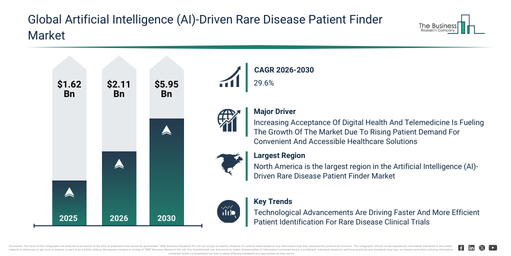
    The artificial intelligence (AI)-driven rare disease patient finder market has experienced substantial expansion in recent years. This market is expected to increase from $1.62 billion in 2025 to $2.11 billion in 2026, demonstrating a compound annual growth rate (CAGR) of 29.9%. The historical growth within this sector can be linked to factors such as the growing availability of electronic health records, the early integration of data analytics in clinical research, the expansion of genomic databases, an increased focus on orphan diseases, and the initial deployment of AI in trial recruitment.

    The artificial intelligence (AI)-driven rare disease patient finder market size is projected to experience substantial expansion over the upcoming years. This market is anticipated to reach $5.95 billion by 2030, exhibiting a compound annual growth rate (CAGR) of 29.6%. Several factors are contributing to this growth during the forecast period, including higher investments in precision medicine research, an increasing need for more rapid clinical trial enrollment, the broadened scope of real-world evidence analytics, enhanced collaboration among healthcare and life sciences entities, and greater regulatory encouragement for innovations in rare diseases. Key trends foreseen for this period encompass the expanded deployment of AI-based patient identification algorithms, the growing incorporation of multi-source health data, increased automation in clinical trial recruitment processes, the development of precision patient matching platforms, and a heightened emphasis on facilitating rare disease research.

    Download the Free Sample Report to Explore Key Market Insights:

    https://www.thebusinessresearchcompany.com/sample.aspx?id=28129&type=smp

    Which Market Drivers Are Supporting The Expansion Of The Artificial Intelligence (AI)-Driven Rare Disease Patient Finder Market?

    The market for artificial intelligence (AI)-driven rare disease patient finders is anticipated to expand, driven by the growing adoption of digital health and telemedicine. Digital health encompasses the application of technology, software, and electronic instruments to oversee, control, and enhance health and well-being. Meanwhile, telemedicine involves providing healthcare remotely through telecommunications, utilizing tools like video consultations, mobile applications, and web platforms. This rising acceptance stems from both patients and healthcare providers seeking convenient, efficient, and easily accessible healthcare options. Artificial intelligence (AI)-driven rare disease patient finders bolster digital health and telemedicine efforts by precisely identifying patients, facilitating remote oversight, prompt virtual consultations, and tailored treatment plans. For example, in November 2025, the France-based intergovernmental organization, Organisation for Economic Co operation and Development, reported advancements in EHR access within OECD countries. Data from comparable countries showed that in 2024, the average availability of online digital health services reached 82%, an increase from 79% in 2023. Consequently, the growing embrace of digital health and telemedicine is fueling the expansion of the artificial intelligence (AI)-driven rare disease patient finder market.

    What Segment Types Make Up The Artificial Intelligence (AI)-Driven Rare Disease Patient Finder Market?

    The artificial intelligence (AI)-driven rare disease patient finder market covered in this report is segmented –

    1) By Component: Software, Services

    2) By Deployment Mode: Cloud-Based, On-Premises

    3) By Application: Hospitals, Clinics, Research Institutes, Pharmaceutical Companies, Other Applications

    4) By End-User: Healthcare Providers, Life Sciences Companies, Payers, Other End-Users

    Subsegments:

    1) By Software: Electronic Data Capture, Data Management Platform, Analytics And Reporting Tools, Patient Engagement Tools, Clinical Trial Management System

    2) By Services: Implementation And Integration, Training And Support, Data Hosting And Security, Consulting Services, Maintenance And Upgrades

    What Trends Are Advancing Progress In The Artificial Intelligence (AI)-Driven Rare Disease Patient Finder Market?

    Major companies operating in the AI-driven rare disease patient finder market are prioritizing the creation of innovative technologies, specifically precision patient recruitment solutions. These efforts aim to improve the accuracy, speed, and efficiency with which suitable participants are located for rare disease clinical trials, thereby simultaneously shortening recruitment periods and elevating trial success rates. A precision patient recruitment solution represents a technology-led method that leverages sophisticated algorithms and real-world data to precisely pinpoint and connect with patients who meet specific clinical trial eligibility requirements. An example of this innovation is found in April 2024, when Citeline, a US-based business intelligence and data analytics company, introduced Citeline PatientMatch. This platform integrates advanced algorithms with extensive real-world data, including lab results, biomarkers, and electronic medical records sourced from over 400 hospitals and health systems. Its purpose is to assist sponsors and researchers in identifying eligible patients for clinical trials expeditiously and effectively, simplify patient onboarding, and facilitate intricate and varied research designs across multiple therapeutic areas.

    Who Are The Key Players Driving Competition In The Artificial Intelligence (AI)-Driven Rare Disease Patient Finder Market?

    Major companies operating in the artificial intelligence (AI)-driven rare disease patient finder market are UnitedHealth Group Incorporated, Dassault Systèmes SE, GeneDx Holdings Corp., HealthVerity Inc., ConcertAI Inc., Komodo Health Inc., Unlearn.AI Inc., Antidote Technologies Inc., Healx Ltd., FDNA Inc., Saventic Health Sp. z o.o., Digital Pharma Lab SAS, AnnieGuard Ltd., Rapid Innovation Labs Inc., Sqilline EOOD, TrialX Inc., enGenome Srl, EveryCure Inc., ThinkGenetic Inc., RareSum Inc.

    Read the full artificial intelligence (ai)-driven rare disease patient finder market report here:

    https://www.thebusinessresearchcompany.com/report/artificial-intelligence-ai-driven-rare-disease-patient-finder-global-market-report

    How Is The Artificial Intelligence (AI)-Driven Rare Disease Patient Finder Market Distributed Across Key Geographic Regions?

    North America was the largest region in the artificial intelligence (AI)-driven rare disease patient finder market in 2025. Asia-Pacific is expected to be the fastest-growing region in the forecast period. The regions covered in the artificial intelligence (AI)-driven rare disease patient finder market report are Asia-Pacific, South East Asia, Western Europe, Eastern Europe, North America, South America, Middle East, Africa.

    Request A Tailored Artificial Intelligence (AI)-Driven Rare Disease Patient Finder Market Research Report For Competitive Advantage:

    https://www.thebusinessresearchcompany.com/customise?id=28129&type=smp

    Browse Through More Reports Similar to the Global Artificial Intelligence (AI)-Driven Rare Disease Patient Finder Market 2026, By The Business Research Company

    Ai In Medical Diagnostics Global Market Report

    https://www.thebusinessresearchcompany.com/report/ai-in-medical-diagnostics-global-market-report

    Artificial Intelligence Ai In Clinical Trials Global Market Report

    https://www.thebusinessresearchcompany.com/report/artificial-intelligence-ai-in-clinical-trials-global-market-report

    Artificial Intelligence In Cancer Diagnostics Global Market Report

    https://www.thebusinessresearchcompany.com/report/artificial-intelligence-in-cancer-diagnostics-global-market-report

    Get in touch with us:

    The Business Research Company: https://www.thebusinessresearchcompany.com/

    Americas +1 310-496-7795

    Asia +44 7882 955267 & +91 8897263534

    Europe +44 7882 955267

    Email us at info@tbrc.info

    Follow us on:

    LinkedIn: https://in.linkedin.com/company/the-business-research-company

    YouTube: https://www.youtube.com/channel/UC24_fI0rV8cR5DxlCpgmyFQ

    Global Market Model: https://www.thebusinessresearchcompany.com/global-market-model
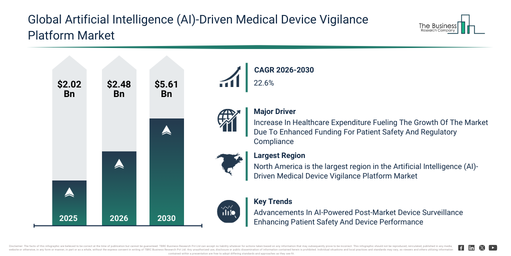
  • Artificial Intelligence (AI)-Driven Medical Device Vigilance Platform Industry Expansion Forecast Showing Market Size of $5.61 Billion by 2030 at 22.6% CAGR

    Artificial Intelligence (AI)-Driven Medical Device Vigilance Platform Industry Expansion Forecast Showing Market Size of $5.61 Billion by 2030 at 22.6% CAGR

    The Business Research Company’s 2026 market reports include new capabilities such as market attractiveness scoring and analysis, total addressable market analysis, company scoring matrix, interactive excel data dashboard, improved supply chain analysis, upcoming startups in the market, and overview of key products, aimed at improving the depth, usability, and strategic value of the insights delivered.

    What Is The Estimated Market Size Of The Artificial Intelligence (AI)-Driven Medical Device Vigilance Platform Market During 2026–2030?

    The artificial intelligence (AI)-driven medical device vigilance platform market size has seen remarkable growth in recent years. Forecasts indicate it will expand from $2.02 billion in 2025 to $2.48 billion in 2026, achieving a compound annual growth rate (CAGR) of 22.9%. This past growth can be attributed to increasing medical device adoption rates, the expansion of post-market surveillance requirements, the rising complexity of device portfolios, the growth in adverse event reporting databases, and the early use of data analytics in vigilance.

    The market for artificial intelligence (AI)-driven medical device vigilance platforms is projected to experience substantial expansion in the coming years. This market is anticipated to reach $5.61 billion by 2030, exhibiting a compound annual growth rate (CAGR) of 22.6%. Factors contributing to this growth over the forecast period include more rigorous regulatory oversight concerning device safety, a heightened need for real-time risk surveillance, the proliferation of cloud-based vigilance platforms, increasing incorporation with hospital device information, and wider uptake of AI-powered compliance instruments. Key trends anticipated during this period encompass a greater embrace of AI-powered signal detection systems, expanding utilization of predictive analytics for ensuring device safety, enhanced integration of real-time vigilance platforms, an increase in automated regulatory reporting, and a stronger emphasis on proactive risk management.

    Download the Free Sample Report to Explore Key Market Insights:

    https://www.thebusinessresearchcompany.com/sample.aspx?id=28912&type=smp

    What Underlying Factors Are Accelerating The Growth Of The Artificial Intelligence (AI)-Driven Medical Device Vigilance Platform Market?

    An anticipated factor contributing to the future expansion of the artificial intelligence (AI)-driven medical device vigilance platform market is the increasing healthcare expenditure. This expenditure encompasses all funds allocated by individuals, organizations, and governments towards health maintenance and enhancement services and initiatives. The increase in healthcare spending stems from the expanding occurrence of chronic illnesses, which necessitates ongoing medical attention, prolonged therapies, and extensive management provisions. Such expenditure assists artificial intelligence (AI)-driven medical device vigilance platforms by supplying hospitals and healthcare entities with the necessary financial means to establish extensive safety and surveillance systems, thereby guaranteeing compliance with regulations and enhancing patient safety. An illustration of this trend is observed in the UK, where, as reported by the Office for National Statistics in April 2025, government-financed healthcare constituted the majority of the nation’s health spending, amounting to $344 billion (£258 billion) in 2024, representing a real-terms increase of 2.5% compared to 2023. Consequently, the escalation in healthcare expenditure is a key factor propelling the expansion of the artificial intelligence (AI)-driven medical device vigilance platform market.

    How Are The Various Segments Of The Artificial Intelligence (AI)-Driven Medical Device Vigilance Platform Market Categorized?

    The artificial intelligence (AI)-driven medical device vigilance platform market covered in this report is segmented –

    1) By Component: Software, Hardware, Services

    2) By Deployment Mode: On-Premises, Cloud-Based

    3) By Application: Adverse Event Detection, Regulatory Compliance, Risk Management, Data Analytics, Other Applications

    4) By End-User: Hospitals, Medical Device Manufacturers, Regulatory Agencies, Contract Research Organizations, Other End-Users

    Subsegments:

    1) By Software: Predictive Analytics, Signal Detection, Data Integration, Reporting And Visualization

    2) By Hardware: Servers, Storage Devices, Networking Equipment, Sensors, Monitoring Devices

    3) By Services: Implementation Services, Maintenance And Support, Consulting Services, Training Services, Data Management Services

    How Are Trends Transforming The Artificial Intelligence (AI)-Driven Medical Device Vigilance Platform Market Landscape?

    Leading companies in the artificial intelligence (AI)-driven medical device vigilance platform market are concentrating on developing advanced solutions, such as post-market device surveillance platforms, to furnish healthcare providers and manufacturers with actionable insights for improving patient outcomes and optimizing device utilization. These post-market device surveillance platforms are systems specifically designed to track and assess the safety and performance of medical devices after their introduction into healthcare settings. For example, in October 2025, Basil Systems, a US-based company specializing in AI-powered platforms, launched its MedTech Safety Signaling platform. This platform employs AI to identify potential risks early, thereby transforming post-market device surveillance into a proactive safety approach. It processes regulatory documents, inspection reports, and adverse event narratives utilizing large language models trained on a comprehensive industry dataset to reveal patterns that are difficult to detect manually. The system organizes and interprets the gathered data, connecting related events to their original sources with associated confidence levels. This capability empowers manufacturers to discern safety trends, enhance preventive measures, anticipate regulatory attention, and guide decisions in product development.

    Which Major Firms Influence Developments In The Artificial Intelligence (AI)-Driven Medical Device Vigilance Platform Market?

    Major companies operating in the artificial intelligence (AI)-driven medical device vigilance platform market are Amazon Web Services Inc., Johnson & Johnson Services Inc., International Business Machines Corporation, Oracle Corporation, Abbott Laboratories, Medtronic Plc, Siemens Healthineers AG, Stryker Corporation, Koninklijke Philips N.V., GE HealthCare Technologies Inc., Cognizant Technology Solutions Corporation, Boston Scientific Corporation, DXC TECHNOLOGY COMPANY, Baxter International Inc., Wipro Limited, Zimmer Biomet Holdings Inc., Veeva Systems Inc., Medidata Solutions Inc., Tata Consultancy Services Limited, AssurX Inc.

    Read the full artificial intelligence (ai)-driven medical device vigilance platform market report here:

    https://www.thebusinessresearchcompany.com/report/artificial-intelligence-ai-driven-medical-device-vigilance-platform-global-market-report

    Which Region Is Projected To Dominate The Artificial Intelligence (AI)-Driven Medical Device Vigilance Platform Market During The Forecast Period?

    North America was the largest region in the artificial intelligence (AI)-driven medical device vigilance platform market in 2025. Asia-Pacific is expected to be the fastest-growing region in the forecast period. The regions covered in the artificial intelligence (AI)-driven medical device vigilance platform market report are Asia-Pacific, South East Asia, Western Europe, Eastern Europe, North America, South America, Middle East, Africa.

    Request A Tailored Artificial Intelligence (AI)-Driven Medical Device Vigilance Platform Market Research Report For Competitive Advantage:

    https://www.thebusinessresearchcompany.com/customise?id=28912&type=smp

    Browse Through More Reports Similar to the Global Artificial Intelligence (AI)-Driven Medical Device Vigilance Platform Market 2026, By The Business Research Company

    Ai In Medical Devices Global Market Report

    https://www.thebusinessresearchcompany.com/report/ai-in-medical-devices-global-market-report

    Artificial Intelligence Or Machine Learning Ai Or Ml Medical Device Global Market Report

    https://www.thebusinessresearchcompany.com/report/artificial-intelligence-or-machine-learning-ai-or-ml-medical-device-global-market-report

    Artificial Intelligence Ai In Remote Patient Monitoring Global Market Report

    https://www.thebusinessresearchcompany.com/report/artificial-intelligence-ai-in-remote-patient-monitoring-global-market-report

    Get in touch with us:

    The Business Research Company: https://www.thebusinessresearchcompany.com/

    Americas +1 310-496-7795

    Asia +44 7882 955267 & +91 8897263534

    Europe +44 7882 955267

    Email us at info@tbrc.info

    Follow us on:

    LinkedIn: https://in.linkedin.com/company/the-business-research-company

    YouTube: https://www.youtube.com/channel/UC24_fI0rV8cR5DxlCpgmyFQ

    Global Market Model: https://www.thebusinessresearchcompany.com/global-market-model
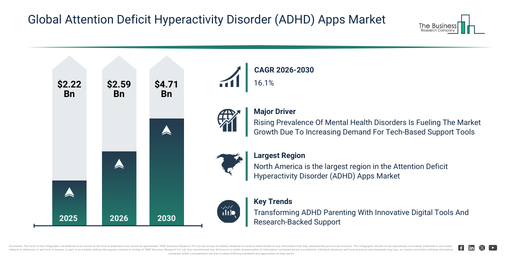
  • A Significant Growth Driver for the Attention Deficit Hyperactivity Disorder Market Is the The Growing Adoption Of Personalized Medicine Is Driving The Market

    A Significant Growth Driver for the Attention Deficit Hyperactivity Disorder Market Is the The Growing Adoption Of Personalized Medicine Is Driving The Market

    The Business Research Company’s 2026 market reports include new capabilities such as market attractiveness scoring and analysis, total addressable market analysis, company scoring matrix, interactive excel data dashboard, improved supply chain analysis, upcoming startups in the market, and overview of key products, aimed at improving the depth, usability, and strategic value of the insights delivered.

    How Much Is The Attention Deficit Hyperactivity Disorder Market Expected To Grow In Terms Of Market Value Between 2026 And 2030?

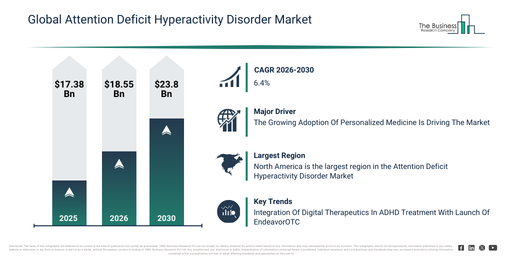
    The attention deficit hyperactivity disorder market size has seen significant growth in recent years. It is forecast to expand from $17.38 billion in 2025 to $18.55 billion in 2026, progressing at a compound annual growth rate (CAGR) of 6.7%. The expansion observed historically can be linked to enhanced awareness of neurodevelopmental disorders, broader diagnostic criteria applicable to various age groups, the accessibility of stimulant medications, the rise of behavioral therapy programs, and a heightened acknowledgment of adhd persistence into adulthood.

    The attention deficit hyperactivity disorder market is projected to experience robust expansion in the coming years. This market is anticipated to reach $23.8 billion by 2030, exhibiting a compound annual growth rate (CAGR) of 6.4%. Factors contributing to this growth during the forecast period include the rising demand for long-acting medication formulations, an enhanced focus on comprehensive mental health management, the broader availability of telepsychiatry services, increasing investments in digital mental health platforms, and expanded research into non-stimulant therapeutic options. Key trends expected during the forecast period encompass a greater adoption of non-stimulant medications, an uptick in the use of digital therapeutics and monitoring tools, an increasing emphasis on adult ADHD diagnosis, the development of personalized treatment approaches, and improved integration of behavioral and pharmacological therapies.

    Download the Free Sample Report to Explore Key Market Insights:

    https://www.thebusinessresearchcompany.com/sample.aspx?id=21108&type=smp

    What Major Drivers Are Influencing Demand In The Attention Deficit Hyperactivity Disorder Market?

    The increasing acceptance of personalized medicine is anticipated to drive forward the expansion of the attention deficit hyperactivity disorder (ADHD) market. This medical strategy customizes treatments based on a person’s unique genetic, environmental, and lifestyle elements to provide more accurate and impactful healthcare. Its uptake is largely due to progress in genomic technologies, allowing therapies to be specifically designed according to an individual’s genetic makeup, thereby resulting in more efficient and focused interventions. Attention deficit hyperactivity disorder (ADHD) plays a crucial role in personalized medicine, as it helps in developing individualized treatment plans that account for a person’s distinct genetic, environmental, and behavioral traits, leading to more successful and precise treatments. As an example, in February 2024, a report from the Personalized Medicine Coalition (PMC), a US-based non-profit organization, indicated that in 2023, personalized medicines made up over a third of the new FDA drug approvals, marking the fourth consecutive year for this trend. The FDA gave approval to 16 new personalized treatments for rare diseases (an increase from 6 in 2022), along with 7 cancer drugs and 3 for various other ailments. Consequently, the increasing adoption of personalized medicine is fueling the expansion of the attention deficit hyperactivity disorder market.

    What Major Segment Divisions Exist Within The Attention Deficit Hyperactivity Disorder Market?

    The attention deficit hyperactivity disorder market covered in this report is segmented –

    1) By Type: Stimulants, Non-Stimulants

    2) By Age Group: Children, Adults

    3) By Gender: Male, Female

    4) By Dosage Form: Tablets, Capsules, Other Dosage Forms

    5) By Distribution Channel: Retail Pharmacy, Hospital Pharmacy, Online Pharmacy

    Subsegments:

    1) By Stimulants: Methylphenidate-based Medications, Amphetamine-based Medications, Mixed Amphetamine Salts, Dexmethylphenidate

    2) By Non-Stimulants: Atomoxetine (Strattera), Guanfacine (Intuniv), Clonidine (Kapvay)

    What Major Market Trends Are Driving Changes In The Attention Deficit Hyperactivity Disorder Market?

    Leading companies within the ADHD market are concentrating on developing technological advancements, such as digital therapeutics in the form of video games, to offer non-pharmacological interventions, enhance attention management, and improve patient engagement. A digital therapeutic based on video games provides interactive, adaptive cognitive training via mobile devices, employing real-time performance tracking and closed-loop algorithms to boost focus, attention control, and executive functioning compared to conventional stimulant or non-stimulant medications. For instance, in June 2024, Akili Interactive, a US-based digital health company, released EndeavorOTC, which is the first FDA-cleared over-the-counter digital therapeutic designed for adult ADHD. The product utilizes Akili’s patented “Selective Stimulus Management Engine” to present game tasks that require multitasking and challenge attention, with difficulty levels automatically adjusting based on user performance. A six-week pivotal study indicated that 83% of participants experienced improved attentional control, and users additionally reported enhanced productivity and quality of life.

    Which Companies Are Leading Innovation In The Attention Deficit Hyperactivity Disorder Market?

    Major companies operating in the attention deficit hyperactivity disorder market are Takeda Pharmaceutical Company Limited, Pfizer Inc., Novartis International AG, Eli Lilly and Company, Johnson & Johnson, AstraZeneca PLC, Teva Pharmaceutical Industries Ltd., Otsuka Pharmaceutical Co. Ltd., Supernus Pharmaceuticals Inc., Tris Pharma Inc., Mallinckrodt Pharmaceuticals plc, Arbor Pharmaceuticals LLC, KemPharm Inc., Cingulate Therapeutics LLC, Adlon Therapeutics L.P., Ironshore Pharmaceuticals Inc., Rhodes Pharmaceuticals L.P., Sun Pharmaceutical Industries Ltd., Hikma Pharmaceuticals PLC, Amneal Pharmaceuticals Inc., Alkem Laboratories Ltd.

    Read the full attention deficit hyperactivity disorder market report here:

    https://www.thebusinessresearchcompany.com/report/attention-deficit-hyperactivity-disorder-global-market-report

    Which Region Shows The Strongest Potential For Future Growth In The Attention Deficit Hyperactivity Disorder Market?

    North America was the largest region in the attention deficit hyperactivity disorder market in 2025. Asia-Pacific is expected to be the fastest-growing region in the forecast period. The regions covered in the attention deficit hyperactivity disorder market report are Asia-Pacific, South East Asia, Western Europe, Eastern Europe, North America, South America, Middle East, Africa.

    Request A Tailored Attention Deficit Hyperactivity Disorder Market Research Report For Competitive Advantage:

    https://www.thebusinessresearchcompany.com/customise?id=21108&type=smp

    Browse Through More Reports Similar to the Global Attention Deficit Hyperactivity Disorder Market 2026, By The Business Research Company

    Mental Health Apps Global Market Report

    https://www.thebusinessresearchcompany.com/report/mental-health-apps-global-market-report

    Behavioral Health Software Global Market Report

    https://www.thebusinessresearchcompany.com/report/behavioral-health-software-global-market-report

    Behavioral And Mental Health Software Global Market Report

    https://www.thebusinessresearchcompany.com/report/behavioral-and-mental-health-software-global-market-report

    Get in touch with us:

    The Business Research Company: https://www.thebusinessresearchcompany.com/

    Americas +1 310-496-7795

    Asia +44 7882 955267 & +91 8897263534

    Europe +44 7882 955267

    Email us at info@tbrc.info

    Follow us on:

    LinkedIn: https://in.linkedin.com/company/the-business-research-company

    YouTube: https://www.youtube.com/channel/UC24_fI0rV8cR5DxlCpgmyFQ

    Global Market Model: https://www.thebusinessresearchcompany.com/global-market-model
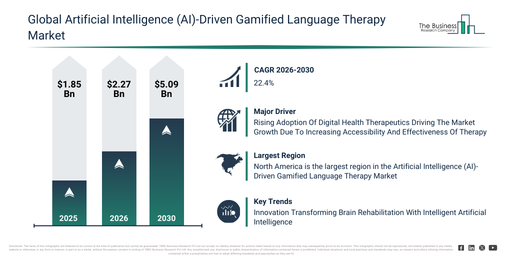
  • Artificial Intelligence (AI)-Driven Gamified Language Therapy Market Revenue Expected to Reach $5.09 Billion by 2030 with 22.4% CAGR

    Artificial Intelligence (AI)-Driven Gamified Language Therapy Market Revenue Expected to Reach $5.09 Billion by 2030 with 22.4% CAGR

    The Business Research Company’s 2026 market reports include new capabilities such as market attractiveness scoring and analysis, total addressable market analysis, company scoring matrix, interactive excel data dashboard, improved supply chain analysis, upcoming startups in the market, and overview of key products, aimed at improving the depth, usability, and strategic value of the insights delivered.

    What Market Size Expansion Is Predicted For The Artificial Intelligence (AI)-Driven Gamified Language Therapy Market Between 2026 And 2030?

    The artificial intelligence (AI)-driven gamified language therapy market size has shown rapid expansion over recent years. It is projected to increase from $1.85 billion in 2025 to $2.27 billion in 2026, demonstrating a compound annual growth rate (CAGR) of 22.6%. The historical growth of this market can be primarily linked to several factors, including rising awareness of speech and language disorders, the early implementation of digital therapy tools, the increasing acceptance of mobile health applications, the broadening of pediatric therapy programs, and the widespread availability of remote therapy platforms.

    The artificial intelligence (AI)-driven gamified language therapy market size is poised for substantial growth over the next few years, projected to expand to $5.09 billion by 2030, demonstrating a compound annual growth rate (CAGR) of 22.4%. This anticipated expansion during the forecast period stems from the escalating demand for home-based rehabilitation solutions, the increasing implementation of AI-personalized therapy models, the widening availability of virtual and immersive therapy tools, a strengthened focus on long-term patient adherence, and augmented investments in digital therapeutics. Prominent trends throughout this period include the rising adoption of gamified therapy platforms, the expanding utilization of personalized language rehabilitation tools, the deeper integration of real-time progress adaptation, the proliferation of interactive therapy environments, and an intensified emphasis on patient engagement and motivation.

    Download the Free Sample Report to Explore Key Market Insights:

    https://www.thebusinessresearchcompany.com/sample.aspx?id=28128&type=smp

    Which Growth Drivers Are Contributing To The Progress Of The Artificial Intelligence (AI)-Driven Gamified Language Therapy Market?

    The escalating embrace of digital health therapeutics is projected to stimulate the growth of the artificial intelligence (AI)-driven gamified language therapy market moving forward. Digital health therapeutics encompasses evidence-based therapeutic interventions delivered through digital platforms to prevent, manage, or treat various medical conditions. The uptake of digital health therapeutics is on the rise as individuals seek more accessible healthcare solutions for managing chronic illnesses, accessing personalized treatments, and conveniently monitoring their health from their residences. Artificial intelligence (AI)-driven gamified language therapy enhances digital health therapeutics by providing customized, interactive exercises designed to heighten patient engagement, monitor progress in real time, and expedite language rehabilitation. For instance, in November 2025, the Organisation for Economic Co operation and Development, a France-based intergovernmental organization, reported that OECD countries have shown progress in extending access to EHRs. In 2024, the average availability of online digital health services among countries with comparable data reached 82%, marking an increase from 79% in 2023. Hence, the increasing adoption of digital health therapeutics is propelling the expansion of the artificial intelligence (AI)-driven gamified language therapy market.

    Which Market Segments Are Examined In The Artificial Intelligence (AI)-Driven Gamified Language Therapy Market Study?

    The artificial intelligence (AI)-driven gamified language therapy market covered in this report is segmented –

    1) By Component: Software, Hardware, Services

    2) By Deployment Mode: Cloud-Based, On-Premises

    3) By Therapy: Speech Therapy, Language Therapy, Cognitive Therapy, Other Therapies

    4) By Application: Children, Adults, Geriatric

    5) By End-User: Hospitals And Clinics, Rehabilitation Centers, Educational Institutions, Homecare, Other End Users

    Subsegments:

    1) By Software: Mobile Applications, Web-Based Platforms, Gamification Engines, Analytics And Reporting Tools

    2) By Hardware: Virtual Reality Headsets, Augmented Reality Devices, Wearables And Sensors, Interactive Consoles

    3) By Services: Implementation And Integration, Training And Education, Support And Maintenance, Consulting Services

    Which Trends Are Impacting The Growth Of The Artificial Intelligence (AI)-Driven Gamified Language Therapy Market?

    Leading companies within the artificial intelligence (AI)-driven gamified language therapy market are concentrating on creating advanced solutions, such as personalized adaptive learning platforms, to boost user engagement, speed up recovery, and refine therapeutic results. These platforms represent digital frameworks that consistently adjust exercises, material, and challenge levels according to an individual’s performance and requirements, thereby assisting users in learning or recovering more effectively, maintaining motivation, monitoring their development instantly, and securing superior long-term achievements. For example, in April 2025, Constant Therapy Health, a digital health company based in the U.S., declared it was expanding its AI-powered speech, language, and cognitive therapy platform to incorporate Spanish and Indian English versions. This enhancement allows non-native speakers who are recovering from conditions like stroke, traumatic brain injury (TBI), aphasia, dementia, or other neurological issues to access more than 1 million evidence-backed exercises specifically customized both culturally and linguistically. The platform’s artificial intelligence continuously observes user advancement, personalizes therapy in real-time, and provides caregivers and clinicians with the ability to monitor results, consequently rendering therapy more engaging, impactful, and readily available from home.

    Who Are The Primary Competitors In The Artificial Intelligence (AI)-Driven Gamified Language Therapy Market?

    Major companies operating in the artificial intelligence (AI)-driven gamified language therapy market are Babbel GmbH, Rosetta Stone LLC, SAY IT Labs BV, SPRY Ally, MINDMAZE SA, Busuu Ltd., Memrise Ltd., Lingvist Technologies OÜ, Constant Therapy Inc., Lingraphica LLC, Gemiini Systems LLC, Speechace LLC, Otsimo Inc., Blub Blub Inc., Melospeech Inc., LiriCare BV, Gabify Ltd., FunWattle Inc., TikTalk Inc., Hevolve AI

    Read the full artificial intelligence (ai)-driven gamified language therapy market report here:

    https://www.thebusinessresearchcompany.com/report/artificial-intelligence-ai-driven-gamified-language-therapy-global-market-report

    What Are The Leading Geographic Regions In The Artificial Intelligence (AI)-Driven Gamified Language Therapy Market?

    North America was the largest region in the artificial intelligence (AI)-driven gamified language therapy market in 2025. Asia-Pacific is expected to be the fastest-growing region in the forecast period. The regions covered in the artificial intelligence (AI)-driven gamified language therapy market report are Asia-Pacific, South East Asia, Western Europe, Eastern Europe, North America, South America, Middle East, Africa.

    Request A Tailored Artificial Intelligence (AI)-Driven Gamified Language Therapy Market Research Report For Competitive Advantage:

    https://www.thebusinessresearchcompany.com/customise?id=28128&type=smp

    Browse Through More Reports Similar to the Global Artificial Intelligence (AI)-Driven Gamified Language Therapy Market 2026, By The Business Research Company

    Healthcare Gamification Global Market Report

    https://www.thebusinessresearchcompany.com/report/healthcare-gamification-global-market-report

    Artificial Intelligence Ai In Games Global Market Report

    https://www.thebusinessresearchcompany.com/report/artificial-intelligence-ai-in-games-global-market-report

    Conversational Ai Global Market Report

    https://www.thebusinessresearchcompany.com/report/conversational-ai-global-market-report

    Get in touch with us:

    The Business Research Company: https://www.thebusinessresearchcompany.com/

    Americas +1 310-496-7795

    Asia +44 7882 955267 & +91 8897263534

    Europe +44 7882 955267

    Email us at info@tbrc.info

    Follow us on:

    LinkedIn: https://in.linkedin.com/company/the-business-research-company

    YouTube: https://www.youtube.com/channel/UC24_fI0rV8cR5DxlCpgmyFQ

    Global Market Model: https://www.thebusinessresearchcompany.com/global-market-model
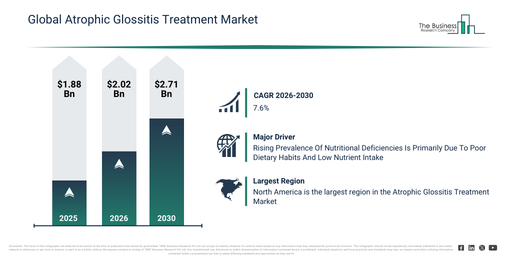
  • Global Atrophic Glossitis Treatment Industry Trends and Market Growth Forecast for 2026–2030

    Global Atrophic Glossitis Treatment Industry Trends and Market Growth Forecast for 2026–2030

    The Business Research Company’s 2026 market reports include new capabilities such as market attractiveness scoring and analysis, total addressable market analysis, company scoring matrix, interactive excel data dashboard, improved supply chain analysis, upcoming startups in the market, and overview of key products, aimed at improving the depth, usability, and strategic value of the insights delivered.

    What Market Value Is Expected For The Atrophic Glossitis Treatment Market At The End Of The 2026–2030 Forecast Period?

    The atrophic glossitis treatment market has shown significant growth in recent years. This market is expected to increase from $1.88 billion in 2025 to $2.02 billion in 2026, achieving a compound annual growth rate (CAGR) of 7.8%. Historically, this growth can be attributed to factors such as increased awareness of nutritional deficiency disorders, improved diagnosis of systemic causes, the widespread availability of oral supplements, the expansion of primary care treatment pathways, and the growing prevalence of anemia-related conditions.

    The atrophic glossitis treatment market is projected to experience substantial expansion in the coming years. Its valuation is anticipated to reach $2.71 billion by 2030, exhibiting a compound annual growth rate (CAGR) of 7.6%. This projected growth during the forecast period is driven by several factors, including a heightened emphasis on personalized treatment approaches, the increasing embrace of preventive oral healthcare, the broadening scope of digital health consultations, an escalating need for non-invasive symptom relief, and the greater incorporation of nutritional therapy into conventional care. Key trends emerging in this period encompass the expanded application of targeted nutritional supplements, a growing preference for combination therapy methods, a sharpened focus on diagnosing underlying conditions, the wider availability of over-the-counter oral care products, and a stronger commitment to patient-focused treatment strategies.

    Download the Free Sample Report to Explore Key Market Insights:

    https://www.thebusinessresearchcompany.com/sample.aspx?id=24155&type=smp

    Which Market Drivers Are Supporting The Expansion Of The Atrophic Glossitis Treatment Market?

    The future expansion of the atrophic glossitis treatment market is anticipated to be fueled by the increasing occurrence of nutritional deficiencies. These deficiencies occur when a person’s diet lacks crucial nutrients like vitamins, minerals, and proteins, often resulting in diverse health complications. The escalating incidence of nutritional deficiencies primarily stems from unhealthy eating patterns, where individuals frequently opt for nutrient-poor processed foods, thereby failing to consume adequate essential vitamins and minerals vital for maintaining overall well-being. Treatment for atrophic glossitis effectively targets these deficiencies by providing essential vitamins and minerals like iron, folate, and vitamin B12, which are crucial for restoring the health of tongue tissue and averting additional mucosal atrophy. As an illustration, the World Health Organization, an intergovernmental body located in Switzerland, reported in May 2025 that, during 2023, anemia impacted 30.7% of women between 15–49 years old and 35.5% of pregnant women within the same age bracket. Consequently, the growing frequency of nutritional deficiencies is a key catalyst for the expansion of the atrophic glossitis treatment market. The atrophic glossitis treatment market is projected to expand due to the rising occurrence of autoimmune conditions in the future. These conditions involve the immune system erroneously targeting the body’s healthy tissues, perceiving them as threats. The surge in autoimmune diseases is largely linked to a mix of genetic predispositions and environmental factors that disturb the immune system’s regulatory processes. Atrophic glossitis treatment aids in managing autoimmune diseases by tackling associated nutritional deficiencies and inflammation that frequently accompany immune system imbalances, thus fostering better immune function and easing symptoms. For example, the Society for Women’s Health Research, a non-profit organization situated in the U.S., reported in March 2023 that an estimated 23.5 million to 50 million individuals are impacted by autoimmune diseases. Worldwide, the incidence of these diseases is increasing annually by 3 to 9 percent. Consequently, the growing prevalence of autoimmune diseases is a significant impetus for the growth of the atrophic glossitis treatment market.

    What Segment Types Make Up The Atrophic Glossitis Treatment Market?

    The atrophic glossitis treatment market covered in this report is segmented –

    1) By Treatment Type: Medications, Topical Treatments, Nutritional Supplements, Oral Care Products

    2) By Symptoms: Inflammation, Discoloration, Itching, Burning Tongue

    3) By Distribution Channel: Direct Tender, Hospital Pharmacy, Retail Pharmacy, Online Pharmacy, Other Distribution Channels

    4) By End User: Hospitals, Home Care

    Subsegments:

    1) By Medications: Antibiotics, Antifungals, Corticosteroids

    2) By Topical Treatments: Mouthwashes, Oral Gels, Ointments, Lozenges

    3) By Nutritional Supplements: Vitamin B12, Iron Supplements, Folic Acid, Zinc Supplements, Multivitamins

    4) By Oral Care Products: Toothpaste for Sensitive Mouths, Alcohol-Free Mouth Rinses, Soft-Bristled Toothbrushes, Oral Moisturizers

    Who Are The Key Players Driving Competition In The Atrophic Glossitis Treatment Market?

    Major companies operating in the atrophic glossitis treatment market are Pfizer Inc., Merck & Co. Inc., Bayer AG, Abbott Laboratories, Novartis AG, Sanofi S.A., GSK plc, Johnson & Johnson, Takeda Pharmaceutical Company Limited, AstraZeneca Plc, Bristol Myers Squibb, Eli Lilly and Company, Teva Pharmaceutical Industries Ltd., Sun Pharmaceutical Industries Ltd., Cipla Limited, Dr. Reddy’s Laboratories Limited, Lupin Limited, Aurobindo Pharma Limited, Hikma Pharmaceuticals PLC, Perrigo Company plc

    Read the full atrophic glossitis treatment market report here:

    https://www.thebusinessresearchcompany.com/report/atrophic-glossitis-treatment-global-market-report

    How Is The Atrophic Glossitis Treatment Market Distributed Across Key Geographic Regions?

    North America was the largest region in the atrophic glossitis treatment market in 2025. Asia-Pacific is expected to be the fastest-growing region in the forecast period. The regions covered in the atrophic glossitis treatment market report are Asia-Pacific, South East Asia, Western Europe, Eastern Europe, North America, South America, Middle East, Africa.

    Request A Tailored Atrophic Glossitis Treatment Market Research Report For Competitive Advantage:

    https://www.thebusinessresearchcompany.com/customise?id=24155&type=smp

    Browse Through More Reports Similar to the Global Atrophic Glossitis Treatment Market 2026, By The Business Research Company

    Lip Gloss Global Market Report

    https://www.thebusinessresearchcompany.com/report/lip-gloss-global-market-report

    Allergy Treatment Global Market Report

    https://www.thebusinessresearchcompany.com/report/allergy-treatment-global-market-report

    Ankylosing Spondylitis Global Market Report

    https://www.thebusinessresearchcompany.com/report/ankylosing-spondylitis-global-market-report

    Get in touch with us:

    The Business Research Company: https://www.thebusinessresearchcompany.com/

    Americas +1 310-496-7795

    Asia +44 7882 955267 & +91 8897263534

    Europe +44 7882 955267

    Email us at info@tbrc.info

    Follow us on:

    LinkedIn: https://in.linkedin.com/company/the-business-research-company

    YouTube: https://www.youtube.com/channel/UC24_fI0rV8cR5DxlCpgmyFQ

    Global Market Model: https://www.thebusinessresearchcompany.com/global-market-model
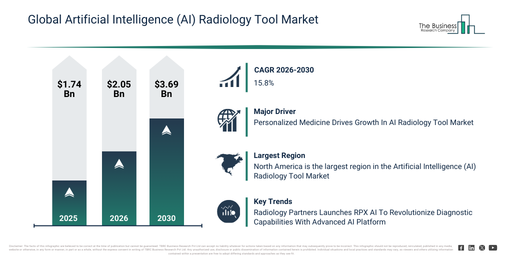
  • Global Artificial Intelligence (AI) Radiology Tool Market Set for Strong Expansion Reaching $3.68 Billion by 2030 at 15.8% CAGR

    Global Artificial Intelligence (AI) Radiology Tool Market Set for Strong Expansion Reaching $3.68 Billion by 2030 at 15.8% CAGR

    The Business Research Company’s 2026 market reports include new capabilities such as market attractiveness scoring and analysis, total addressable market analysis, company scoring matrix, interactive excel data dashboard, improved supply chain analysis, upcoming startups in the market, and overview of key products, aimed at improving the depth, usability, and strategic value of the insights delivered.

    How Large Is The Artificial Intelligence (AI) Radiology Tool Market Projected To Become By 2030 Based On Its 2026 Valuation?

    The artificial intelligence (AI) radiology tool market size has demonstrated rapid expansion in recent years. Projections indicate it will grow from $1.74 billion in 2025 to $2.05 billion in 2026, at a compound annual growth rate (CAGR) of 17.8%. This historical expansion can be credited to several factors, including increasing medical imaging volumes, a rising shortage of radiologists, the early adoption of computer-aided detection systems, the expansion of digital radiology infrastructure, and a growing demand for healthcare imaging.

    The artificial intelligence (AI) radiology tool market is anticipated to experience substantial expansion in the coming years. It is projected to grow to $3.69 billion in 2030, achieving a compound annual growth rate (CAGR) of 15.8%. The growth during this forecast period can be attributed to the increasing deployment of cloud-based radiology AI platforms, a rising focus on precision diagnostics, the expansion of AI in interventional radiology, growing investments in automated reporting systems, and an increase in regulatory approvals for AI imaging tools. Noteworthy trends for the forecast period include the increasing adoption of AI-based image interpretation tools, rising integration of workflow automation in radiology, growing use of AI for early anomaly detection, the expansion of AI-assisted diagnostic accuracy solutions, and an enhanced focus on reducing radiologist workload.

    Download the Free Sample Report to Explore Key Market Insights:

    https://www.thebusinessresearchcompany.com/sample.aspx?id=16341&type=smp

    What Primary Drivers Are Shaping The Development Of The Artificial Intelligence (AI) Radiology Tool Market?

    The escalating inclination towards personalized medicine is projected to propel the expansion of the artificial intelligence (AI) radiology tool market. Personalized medicine, also known as precision medicine, is an innovative medical approach that customizes treatment and healthcare strategies to the unique characteristics of each patient. This growing shift towards personalized medicine is driven by a combination of crucial elements, such as advancements in genomics and molecular biology. AI radiology tools enhance personalized medicine by delivering precise diagnostics, predictive analytics, real-time monitoring of treatment response, integration with genomic data, and improved patient stratification, enabling individualized and effective healthcare interventions. For instance, in February 2024, according to the Personalized Medicine Coalition, a US-based non-profit organization, the FDA approved 16 novel personalized therapies for patients with rare diseases in 2023, a rise from six in 2022. Therefore, the increasing shift toward personalized medicine is a key driver for the artificial intelligence (AI) radiology tool market.

    What Segment Groups Are Identified Within The Artificial Intelligence (AI) Radiology Tool Market?

    The artificial intelligence (AI) radiology tool market covered in this report is segmented –

    1) By Type: Diagnostic Radiology, Interventional Radiology

    2) By Application: Eye Care, Oncology, Radiology, Cardiovascular, Pathology, Other Applications

    3) By End-User: Clinics, Hospitals, Diagnostic Centers, Other End-Users

    Subsegments:

    1) By Diagnostic Radiology: AI For Image Interpretation (Detecting Fractures, Tumors, Or Abnormalities), Ai In Ct (Computed Tomography) Scanning, Ai In Mri (Magnetic Resonance Imaging) Scanning, Ai For X-Ray Imaging And Analysis, Ai In Ultrasound Imaging, Ai-Based Computer-Aided Detection (Cad) Systems, Ai For Radiology Workflow Automation (Prioritizing Cases, Report Generation)

    2) By Interventional Radiology: AI For Image-Guided Procedures (Guiding Catheter Placement), Ai In Minimally Invasive Surgery (Tumor Ablation, Biopsies), Ai For Real-Time Decision Support In Interventional Procedures, Ai In Radiation Dose Optimization For Interventional Radiology, Ai-Assisted Navigation Systems For Procedures Like Angioplasty, Ai In Post-Procedure Monitoring And Outcome Prediction

    What Major Market Trends Are Driving Changes In The Artificial Intelligence (AI) Radiology Tool Market?

    Major companies operating in the artificial intelligence (AI) radiology tool market are creating sophisticated solutions, such as artificial intelligence platforms, to elevate the diagnostic capabilities of radiologists. An advanced artificial intelligence platform integrates AI algorithms to scrutinize medical imaging data, offering radiologists enhanced insights and assisting in the precise detection and diagnosis of various medical conditions. For instance, in November 2023, Radiology Partners (RP), a US-based radiology practice company, unveiled RPX AI, a cloud-based advanced artificial intelligence platform for the rapid deployment of AI medical imaging tools at scale, leveraging Amazon Web Services (AWS) HealthImaging. This platform seeks to streamline the integration and implementation process for medical imaging AI models, thereby improving their accessibility and efficiency for hospitals and health systems.

    Which Companies Hold Significant Positions In The Artificial Intelligence (AI) Radiology Tool Market?

    Major companies operating in the artificial intelligence (AI) radiology tool market are Google LLC, Microsoft Corporation, NVIDIA Corporation, Siemens Healthcare Private Limited, Koninklijke Philips N.V., GE HealthCare, Nuance Communications Inc., Aidoc Medical, Subtle Medical Inc., Enlitic Inc., Arterys Inc., Aidence.com, Oxipit.ai, Zebra Medical Vision

    Read the full artificial intelligence (ai) radiology tool market report here:

    https://www.thebusinessresearchcompany.com/report/artificial-intelligence-ai-radiology-tool-global-market-report

    How Does The Artificial Intelligence (AI) Radiology Tool Market Perform Across Major Global Regions?

    North America was the largest region in the artificial intelligence (AI) radiology tool market in 2025. The regions covered in the artificial intelligence (AI) radiology tool market report are Asia-Pacific, South East Asia, Western Europe, Eastern Europe, North America, South America, Middle East, Africa.

    Request A Tailored Artificial Intelligence (AI) Radiology Tool Market Research Report For Competitive Advantage:

    https://www.thebusinessresearchcompany.com/customise?id=16341&type=smp

    Browse Through More Reports Similar to the Global Artificial Intelligence (AI) Radiology Tool Market 2026, By The Business Research Company

    Artificial Intelligence In Radiology Global Market Report

    https://www.thebusinessresearchcompany.com/report/artificial-intelligence-in-radiology-global-market-report

    Ai In Medical Diagnostics Global Market Report

    https://www.thebusinessresearchcompany.com/report/ai-in-medical-diagnostics-global-market-report

    Ai Enabled Medical Imaging Solutions Global Market Report

    https://www.thebusinessresearchcompany.com/report/ai-enabled-medical-imaging-solutions-global-market-report

    Get in touch with us:

    The Business Research Company: https://www.thebusinessresearchcompany.com/

    Americas +1 310-496-7795

    Asia +44 7882 955267 & +91 8897263534

    Europe +44 7882 955267

    Email us at info@tbrc.info

    Follow us on:

    LinkedIn: https://in.linkedin.com/company/the-business-research-company

    YouTube: https://www.youtube.com/channel/UC24_fI0rV8cR5DxlCpgmyFQ

    Global Market Model: https://www.thebusinessresearchcompany.com/global-market-model
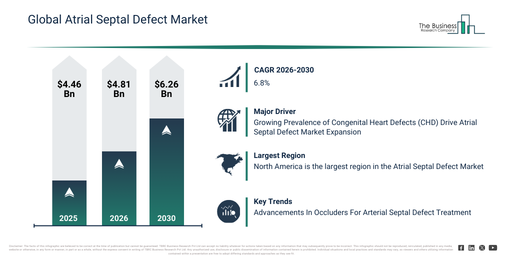
  • Atrial Septal Defect Market Size Outlook and Demand Growth Across 2026–2030

    Atrial Septal Defect Market Size Outlook and Demand Growth Across 2026–2030

    The Business Research Company’s 2026 market reports include new capabilities such as market attractiveness scoring and analysis, total addressable market analysis, company scoring matrix, interactive excel data dashboard, improved supply chain analysis, upcoming startups in the market, and overview of key products, aimed at improving the depth, usability, and strategic value of the insights delivered.

    What Is The Estimated Market Size Of The Atrial Septal Defect Market During 2026–2030?

    The atrial septal defect market size has experienced significant expansion in recent years. It is anticipated to increase from $4.46 billion in 2025 to $4.81 billion in 2026, reflecting a compound annual growth rate (CAGR) of 7.8%. This historical growth can be attributed to several factors including enhanced detection of congenital heart defects, improved access to surgical correction techniques, the expansion of pediatric cardiology services, accumulating clinical experience with device-based closures, and broader availability of diagnostic imaging technologies.

    The atrial septal defect market size is anticipated to experience robust expansion in the coming years. It is projected to reach $6.26 billion by 2030, achieving a compound annual growth rate (CAGR) of 6.8%. This growth during the forecast period is attributable to the increasing embrace of hybrid closure techniques, a heightened focus on early intervention in adults, the expansion of minimally invasive cardiac surgery capabilities, ongoing innovation in occluder device design, and a rising demand for long-term follow-up care solutions. Noteworthy trends expected in the forecast period involve the increasing adoption of transcatheter closure devices, a growing preference for minimally invasive repair procedures, the expanded use of advanced cardiac imaging techniques, the proliferation of pediatric and adult ASD screening programs, and an enhanced emphasis on long-term patient outcomes.

    Download the Free Sample Report to Explore Key Market Insights:

    https://www.thebusinessresearchcompany.com/sample.aspx?id=16345&type=smp

    What Underlying Factors Are Accelerating The Growth Of The Atrial Septal Defect Market?

    The rising incidence of congenital heart defects (CHD) is projected to boost the atrial septal defect market’s growth. CHD refers to structural heart abnormalities present at birth. The increasing number of people diagnosed with these birth-present structural heart conditions contributes to this trend. Atrial septal defect treatment helps manage CHD by correcting abnormal blood flow between heart chambers, improving heart function, and reducing complications. For instance, in September 2025, the British Heart Foundation, a UK-based non-profit, stated that 2.3 million people in the UK live with congenital heart disease. Moreover, at least 1 in 150 births are diagnosed with these defects, averaging 13 babies daily in the UK, with more diagnoses later. Estimates suggest 1-2 percent of the population may be affected. Thus, the prevalence of congenital heart defects will drive the atrial septal defect market.

    How Are The Various Segments Of The Atrial Septal Defect Market Categorized?

    The atrial septal defect market covered in this report is segmented –

    1) By Treatment Procedure: Surgical Closure, Transcatheter Closure, Hybrid Procedures, Medication Therapy

    2) By Diagnosis: Chest X-Ray, Electrocardiogram, Cardiac Catheterization, Transesophageal Echocardiography, Pulse Oximetry

    3) By Product Type: Medical Devices, Pharmaceutical Products

    4) By Age Group: Pediatric, Adult

    5) By End-User: Hospitals, Ambulatory Surgical Centers, Cardiac Clinics, Other End-Users

    Subsegments:

    1) By Surgical Closure: Open Heart Surgery (Traditional Surgical Closure), Minimally Invasive Surgical Closure, Patches (Pericardial, Synthetic) For Asd Closure

    2) By Transcatheter Closure: Device-Based Closure (Amplatzer Septal Occluder), Transcatheter Plug Closure Techniques, Catheter-Based Asd Repair For Adult And Pediatric Patients

    3) By Hybrid Procedures: Combination Of Surgical And Transcatheter Techniques, Minimally Invasive Hybrid Procedures, Hybrid Closure For Complex Or Large Asds

    4) By Medication Therapy: Anticoagulant Therapy (To Prevent Stroke), Diuretics (For Managing Symptoms), Antihypertensive Drugs (For Managing Associated Conditions), Off-Label Use Of Other Medications

    What Key Trends Are Influencing The Development Of The Atrial Septal Defect Market?

    Leading companies within the arterial septal defect market are developing advanced devices and seeking regulatory approval to enhance their availability and applications. Device approval refers to obtaining official authorization or certification for a device, typically from a regulatory body, before it can be legally manufactured, sold, or used in a specific market or for a particular purpose. For instance, in March 2024, Occlutech GmbH, a Sweden-based specialist in minimally invasive cardiac devices, announced that the United States Food and Drug Administration (FDA) had approved the Occlutech ASD Occluder and Occlutech Pistol Pusher for treating atrial septal defects (ASD). This approval signifies a major milestone for the company, which has been dedicated to advancing global healthcare. The Occlutech ASD Occluder is designed as a lifelong solution for patients with echocardiography-confirmed defects. It is a self-expanding nitinol device featuring two flexible discs attached to both sides of the patient’s atrial septum using the Occlutech Pistol Pusher. With this approval, Occlutech will initiate commercialization in the US through an exclusive partnership with B. Braun Interventional Systems.

    Which Major Firms Influence Developments In The Atrial Septal Defect Market?

    Major companies operating in the atrial septal defect market are Abbott Laboratories, Medtronic plc, Boston Scientific Corporation, Edwards Lifesciences Corporation, W. L. Gore & Associates Inc., Cook Medical, Lepu Medical Technology Co. Ltd., MicroPort Scientific Corporation, Lifetech Scientific Corporation, Venus Medtech Hangzhou Inc, Occlutech Holding AG, Osypka AG, Cardia Inc, Gore Medical, Pfm Medical AG, Balton Sp. z o.o., Meril Life Sciences, TTK Healthcare, Braile Biomedica, Shanghai Shape Memory Alloy

    Read the full atrial septal defect market report here:

    https://www.thebusinessresearchcompany.com/report/atrial-septal-defect-global-market-report

    Which Region Is Projected To Dominate The Atrial Septal Defect Market During The Forecast Period?

    North America was the largest region in the atrial septal defect market in 2025. Asia-Pacific is expected to be the fastest-growing region in the forecast period. The regions covered in the atrial septal defect market report are Asia-Pacific, South East Asia, Western Europe, Eastern Europe, North America, South America, Middle East, Africa.

    Request A Tailored Atrial Septal Defect Market Research Report For Competitive Advantage:

    https://www.thebusinessresearchcompany.com/customise?id=16345&type=smp

    Browse Through More Reports Similar to the Global Atrial Septal Defect Market 2026, By The Business Research Company

    Left Atrial Appendage Closure Device Global Market Report

    https://www.thebusinessresearchcompany.com/report/left-atrial-appendage-closure-device-global-market-report

    Atrial Fibrillation Global Market Report

    https://www.thebusinessresearchcompany.com/report/atrial-fibrillation-global-market-report

    Congenital Heart Defect Devices Global Market Report

    https://www.thebusinessresearchcompany.com/report/congenital-heart-defect-devices-global-market-report

    Get in touch with us:

    The Business Research Company: https://www.thebusinessresearchcompany.com/

    Americas +1 310-496-7795

    Asia +44 7882 955267 & +91 8897263534

    Europe +44 7882 955267

    Email us at info@tbrc.info

    Follow us on:

    LinkedIn: https://in.linkedin.com/company/the-business-research-company

    YouTube: https://www.youtube.com/channel/UC24_fI0rV8cR5DxlCpgmyFQ

    Global Market Model: https://www.thebusinessresearchcompany.com/global-market-model