Category: Healthcare Services

  • Artificial Intelligence (AI) Pathology Quality Control Market Growth Expected to Reach $4.64 Billion by 2030 with 21.1% CAGR

    Artificial Intelligence (AI) Pathology Quality Control Market Growth Expected to Reach $4.64 Billion by 2030 with 21.1% CAGR

    The Business Research Company’s 2026 market reports include new capabilities such as market attractiveness scoring and analysis, total addressable market analysis, company scoring matrix, interactive excel data dashboard, improved supply chain analysis, upcoming startups in the market, and overview of key products, aimed at improving the depth, usability, and strategic value of the insights delivered.

    What Market Value Is Anticipated For The Artificial Intelligence (AI) Pathology Quality Control Market Over The Period 2026–2030?

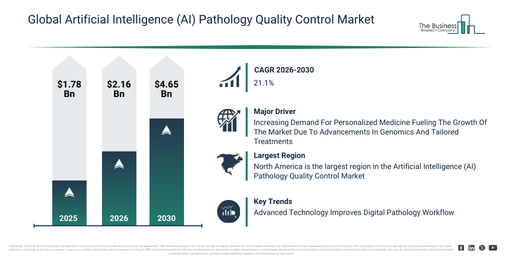
    The artificial intelligence (AI) pathology quality control market has experienced significant expansion in recent years. Projections indicate its expansion from $1.78 billion in 2025 to $2.16 billion in 2026, showcasing a compound annual growth rate (CAGR) of 21.4%. Historically, this growth has been driven by factors such as increasing pathology workload volumes, the early digitization of pathology slides, the growing complexity of cancer diagnostics, a demand for standardized reporting, and the initial adoption of AI-assisted pathology tools.

    The artificial intelligence (AI) pathology quality control market is anticipated to experience substantial growth over the next few years. It is projected to expand to $4.65 billion by 2030, with a compound annual growth rate (CAGR) of 21.1%. This projected growth is driven by factors such as increasing investments in digital pathology platforms, a rising demand for precision diagnostics, the expansion of AI validation in clinical workflows, the growing integration of pathology data analytics, and an increasing regulatory emphasis on diagnostic quality control. Key trends expected during this forecast period include the increasing deployment of AI-based slide quality assessment, a rising adoption of automated error detection tools, the growing standardization of pathology workflows, the expansion of digital pathology integration, and an enhanced focus on diagnostic accuracy assurance.

    Download the Free Sample Report to Explore Key Market Insights:

    https://www.thebusinessresearchcompany.com/sample.aspx?id=28124&type=smp

    Which Major Factors Are Driving The Expansion Of The Artificial Intelligence (AI) Pathology Quality Control Market?

    The anticipated surge in demand for personalized medicine is projected to stimulate the expansion of the artificial intelligence (AI) pathology quality control market in the future. This medical approach involves customizing treatment and prevention plans to suit an individual’s distinct genetic profile, lifestyle, and environmental factors. Its growing acceptance largely stems from progress in genomics, facilitating the accurate detection of genetic variations and the development of customized treatments. Artificial intelligence (AI) pathology quality control improves personalized medicine by offering accurate and reliable diagnostic information, thus supporting personalized therapeutic approaches. It minimizes diagnostic inaccuracies through automated quality assessments, boosting precision and dependability, which in turn elevates patient-specific care. As an illustration, in February 2024, the Personalized Medicine Coalition (PMC), a US-based nonprofit, reported that the U.S. Food and Drug Administration (FDA) approved 26 new personalized medicines in 2023, a notable rise from 12 approvals in 2022. Consequently, the heightened need for personalized medicine will propel the artificial intelligence (AI) pathology quality control market.

    How Is The Artificial Intelligence (AI) Pathology Quality Control Market Divided Into Its Major Segments?

    The artificial intelligence (AI) pathology quality control market covered in this report is segmented –

    1) By Component: Software, Hardware, Services

    2) By Deployment Mode: On-Premises, Cloud-Based

    3) By Application: Cancer Diagnostics, Infectious Disease Diagnostics, Digital Pathology, Research, Other Applications

    4) By End-User: Hospitals, Diagnostic Laboratories, Research Institutes, Pharmaceutical And Biotechnology Companies, Other End Users

    Subsegments:

    1) By Software: Image Analysis Software, Diagnostic Decision Support Software, Workflow Management Software, Reporting And Visualization Software

    2) By Hardware: Digital Pathology Scanners, Imaging Devices, Servers And Storage Systems, Laboratory Equipment

    3) By Services: Implementation Services, Training And Support Services, Maintenance And Upgrade Services, Consulting Services

    Which Trends Are Shaping The Future Of The Artificial Intelligence (AI) Pathology Quality Control Market?

    Companies prominently involved in the artificial intelligence (AI) pathology quality control market are concentrating on developing sophisticated solutions, particularly advanced AI-powered tools, to optimize diagnostic precision, streamline laboratory processes, and ensure the dependability of pathology data. These advanced AI-powered solutions signify next-generation technologies that leverage artificial intelligence to accomplish complex tasks with superior accuracy, speed, and efficiency. For instance, in November 2023, PathAI, a US-based biotechnology firm, unveiled Artifact Detect 1 on its AISight digital pathology platform. This instrument automates the identification and measurement of artifacts within whole slide images (WSI), which are irrelevant morphological characteristics capable of impairing diagnostic precision. ArtifactDetect minimizes misdiagnoses and the necessity for re-scans by automatically pre-screening slides for quality concerns, thereby boosting accuracy, laboratory operational efficiency, and overall processing capacity. This innovation supports timely corrective actions such as re-staining or re-scanning, ultimately refining the digital workflow and preserving valuable resources for both technicians and pathologists.

    Who Are The Prominent Organizations Shaping The Artificial Intelligence (AI) Pathology Quality Control Market?

    Major companies operating in the artificial intelligence (AI) pathology quality control market are Roche Diagnostics GmbH, Danaher Corporation, Philips Healthcare, Agilent Technologies Inc., Hologic Inc., Clinisys Group Ltd., Sectra AB, PathAI Inc., OptraSCAN Inc., Paige.AI Inc., Proscia Inc., Quibim S.L., 3DHISTECH Ltd., Visiopharm A/S, Indica Labs Inc., Ibex Medical Analytics Ltd., Aiosyn B.V., DeepBio Inc., Nucleai Ltd., Gestalt Diagnostics LLC

    Read the full artificial intelligence (ai) pathology quality control market report here:

    https://www.thebusinessresearchcompany.com/report/artificial-intelligence-ai-pathology-quality-control-global-market-report

    Which Region Currently Holds The Largest Share Of The Artificial Intelligence (AI) Pathology Quality Control Market?

    North America was the largest region in the artificial intelligence (AI) pathology quality control market in 2025. Asia-Pacific is expected to be the fastest-growing region in the forecast period. The regions covered in the artificial intelligence (AI) pathology quality control market report are Asia-Pacific, South East Asia, Western Europe, Eastern Europe, North America, South America, Middle East, Africa.

    Request A Tailored Artificial Intelligence (AI) Pathology Quality Control Market Research Report For Competitive Advantage:

    https://www.thebusinessresearchcompany.com/customise?id=28124&type=smp

    Browse Through More Reports Similar to the Global Artificial Intelligence (AI) Pathology Quality Control Market 2026, By The Business Research Company

    Ai In Medical Diagnostics Global Market Report

    https://www.thebusinessresearchcompany.com/report/ai-in-medical-diagnostics-global-market-report

    Ai In Cancer Diagnostics Global Market Report

    https://www.thebusinessresearchcompany.com/report/ai-in-cancer-diagnostics-global-market-report

    Artificial Intelligence In Healthcare Diagnosis Global Market Report

    https://www.thebusinessresearchcompany.com/report/artificial-intelligence-in-healthcare-diagnosis-global-market-report

    Get in touch with us:

    The Business Research Company: https://www.thebusinessresearchcompany.com/

    Americas +1 310-496-7795

    Asia +44 7882 955267 & +91 8897263534

    Europe +44 7882 955267

    Email us at info@tbrc.info

    Follow us on:

    LinkedIn: https://in.linkedin.com/company/the-business-research-company

    YouTube: https://www.youtube.com/channel/UC24_fI0rV8cR5DxlCpgmyFQ

    Global Market Model: https://www.thebusinessresearchcompany.com/global-market-model
  • Atrial Flutter Market Insights Highlighting Opportunities and Drivers Supporting Growth to 2030

    Atrial Flutter Market Insights Highlighting Opportunities and Drivers Supporting Growth to 2030

    The Business Research Company’s 2026 market reports include new capabilities such as market attractiveness scoring and analysis, total addressable market analysis, company scoring matrix, interactive excel data dashboard, improved supply chain analysis, upcoming startups in the market, and overview of key products, aimed at improving the depth, usability, and strategic value of the insights delivered.

    What Market Size Expansion Is Predicted For The Atrial Flutter Market Between 2026 And 2030?

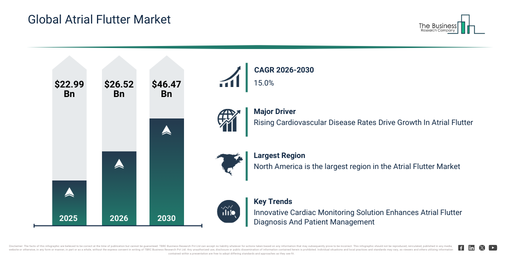
    The atrial flutter market has experienced rapid expansion in its size over recent years. Forecasts indicate it will expand from $22.99 billion in 2025 to reach $26.52 billion by 2026, exhibiting a compound annual growth rate (CAGR) of 15.4%. This historical growth is primarily due to factors such as the increasing occurrence of cardiac arrhythmias, an expanding aging demographic, the proliferation of cardiology specialty clinics, the integration of ECG-based diagnostic instruments, and the provision of pharmacological treatments for rhythm control.

    The atrial flutter market is projected to experience swift expansion over the coming years. By 2030, its size is anticipated to reach $46.47 billion, driven by a compound annual growth rate (CAGR) of 15.0%. This expansion during the projection period stems from factors such as the heightened demand for less invasive cardiac interventions, the increasing uptake of digital solutions for cardiac monitoring, the broadening of customized arrhythmia treatment methods, rising capital allocation towards electrophysiology advancements, and an intensified emphasis on strategies for preventing strokes. Key developments expected throughout the forecast horizon involve the wider embrace of sophisticated cardiac mapping tools, a surge in the application of catheter ablation techniques, the increasing incorporation of wearable devices for cardiac monitoring, the growth of initiatives for early detection and screening, and a stronger inclination towards minimally invasive therapeutic options.

    Download the Free Sample Report to Explore Key Market Insights:

    https://www.thebusinessresearchcompany.com/sample.aspx?id=20495&type=smp

    Which Growth Drivers Are Contributing To The Progress Of The Atrial Flutter Market?

    An increase in cardiovascular diseases is anticipated to drive expansion in the atrial flutter market in the future. Cardiovascular diseases (CVDs) encompass a wide array of health issues affecting the heart and blood vessels. The surge in cardiovascular diseases is primarily attributed to an aging population, inactive lifestyles, unhealthy eating habits, elevated obesity levels, and stress-related influences. As cardiovascular diseases become more widespread, the population susceptible to atrial flutter increases, thereby boosting the need for diagnostic tools and treatment solutions. For example, data from September 2024, provided by the British Heart Foundation, a UK cardiovascular research charity, indicates that around 7.6 million people in the UK are currently living with heart and circulatory conditions, with 4 million being men and 3.6 million women. This figure is projected to grow by 1 million by 2030 and potentially reach 2 million above current levels by 2040. Consequently, the expanding occurrence of cardiovascular diseases is fueling the advancement of the atrial flutter market.

    Which Market Segments Are Examined In The Atrial Flutter Market Study?

    The atrial flutter market covered in this report is segmented –

    1) By Type: Typical Atrial Flutter, Atypical Atrial Flutter, Left Atrial Flutter, Reverse Typical Atrial Flutter, Incisional Atrial Re-Entry

    2) By Treatment: Antiarrhythmics, Beta-Blockers, Anticoagulants, Cardioversion, Catheter Ablation, Surgery, Other Treatments

    3) By Diagnosis: Holter Monitoring, Blood Tests, Electrocardiography (ECG), Event Monitoring, Other Diagnosis

    4) By Route Of Administration: Oral, Intravenous, Other Routes Of Administration

    5) By End Users: Clinic, Hospital, Other End Users

    Subsegments:

    1) By Typical Atrial Flutter: Type I Atrial Flutter (Caval Tricuspid Isthmus Dependent), Type II Atrial Flutter (Right Atrial Macro-Reentry), Focal Typical Atrial Flutter, Post-Surgical Typical Atrial Flutter

    2) By Atypical Atrial Flutter: Left Atrial Atypical Flutter, Right Atrial Atypical Flutter, Focal Atypical Flutter, Multifocal Atypical Flutter

    3) By Left Atrial Flutter: Left Atrial Macro-Reentry Flutter, Left Atrial Focal Flutter, Left Atrial Flutter Post-Surgery

    4) By Reverse Typical Atrial Flutter: Reverse Typical Flutter With Counterclockwise Rotation, Reverse Typical Flutter With Clockwise Rotation, Post-Cardiac Surgery Reverse Typical Flutter

    5) By Incisional Atrial Re-Entry: Post-Surgical Atrial Flutter (Incisional Flutter), Incisional Re-Entry Flutter After Cardiac Procedures, Incisional Flutter Due To Atrial Scar Tissue

    What Key Trends Are Influencing The Development Of The Atrial Flutter Market?

    Leading companies operating within the atrial flutter market are concentrating on integrating monitoring technologies, such as arrhythmia detection algorithms, to bolster diagnostic accuracy, improve treatment outcomes, and optimize patient management. Arrhythmia detection algorithms represent specialized software tools designed to analyze data from electrocardiograms (ECGs) or wearable heart monitors, thereby identifying irregularities in heart rhythm and detecting abnormal patterns indicative of arrhythmias like atrial flutter. For instance, in May 2024, Vivalink, Inc., a US-based connected health technology company, unveiled a comprehensive ambulatory cardiac monitoring solution for mobile cardiac telemetry (MCT) and Holter monitoring, intending to enhance remote patient care. This solution employs cutting-edge software to continuously analyze data from electrocardiograms (ECGs) and wearable heart monitors, facilitating real-time identification of irregular heart rhythms such as atrial flutter. The solution incorporates a reusable electrocardiogram (ECG) patch featuring a 14-day rechargeable battery and up to 30 days of data storage. It additionally includes a mobile gateway integrated with a patient app for smooth data transmission, an advanced algorithm capable of detecting over 15 arrhythmias, and a clinician portal for thorough analysis and report customization.

    Who Are The Primary Competitors In The Atrial Flutter Market?

    Major companies operating in the atrial flutter market are Pfizer Inc., Johnson & Johnson, Siemens AG, Bristol-Myers Squibb Company, Abbott Laboratories, Novartis AG, Medtronic PLC, Boehringer Ingelheim GmbH, Stryker Corporation, GE HealthCare Technologies Inc., Boston Scientific Corporation, Astellas Pharma Inc., Zoll Medical Corporation, St. Jude Medical Inc., Biotronik SE & Co., iRhythm Technologies Inc., AtriCure Inc., Adagio Medical Inc., Acutus Medical Inc., Abbott Vascular

    Read the full atrial flutter market report here:

    https://www.thebusinessresearchcompany.com/report/atrial-flutter-global-market-report

    What Are The Leading Geographic Regions In The Atrial Flutter Market?

    North America was the largest region in the atrial flutter market in 2025. Asia-Pacific is expected to be the fastest-growing region in the forecast period. The regions covered in the atrial flutter market report are Asia-Pacific, South East Asia, Western Europe, Eastern Europe, North America, South America, Middle East, Africa.

    Request A Tailored Atrial Flutter Market Research Report For Competitive Advantage:

    https://www.thebusinessresearchcompany.com/customise?id=20495&type=smp

    Browse Through More Reports Similar to the Global Atrial Flutter Market 2026, By The Business Research Company

    Implantable Heart Pacemaker Global Market Report

    https://www.thebusinessresearchcompany.com/report/implantable-heart-pacemaker-global-market-report

    Heart Pump Devices Global Market Report

    https://www.thebusinessresearchcompany.com/report/heart-pump-devices-global-market-report

    Wearable Heart Monitoring Devices Global Market Report

    https://www.thebusinessresearchcompany.com/report/wearable-heart-monitoring-devices-global-market-report

    Get in touch with us:

    The Business Research Company: https://www.thebusinessresearchcompany.com/

    Americas +1 310-496-7795

    Asia +44 7882 955267 & +91 8897263534

    Europe +44 7882 955267

    Email us at info@tbrc.info

    Follow us on:

    LinkedIn: https://in.linkedin.com/company/the-business-research-company

    YouTube: https://www.youtube.com/channel/UC24_fI0rV8cR5DxlCpgmyFQ

    Global Market Model: https://www.thebusinessresearchcompany.com/global-market-model
  • Artificial Intelligence (AI) Oral Health App Market Forecast 2026–2035 Reflecting Expansion Opportunities Across Industries

    Artificial Intelligence (AI) Oral Health App Market Forecast 2026–2035 Reflecting Expansion Opportunities Across Industries

    The Business Research Company’s 2026 market reports include new capabilities such as market attractiveness scoring and analysis, total addressable market analysis, company scoring matrix, interactive excel data dashboard, improved supply chain analysis, upcoming startups in the market, and overview of key products, aimed at improving the depth, usability, and strategic value of the insights delivered.

    What Is The Expected Market Size Of The Artificial Intelligence (AI) Oral Health App Market From 2026 To 2030?

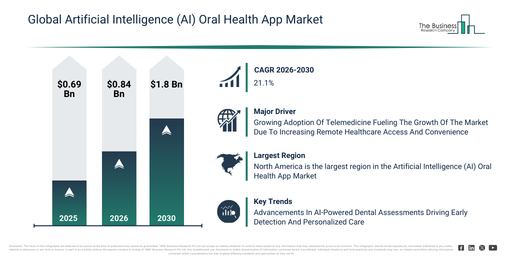
    The artificial intelligence (AI) oral health app market has experienced substantial expansion in recent years. Its valuation is expected to climb from $0.69 billion in 2025 to $0.84 billion in 2026, demonstrating a compound annual growth rate (CAGR) of 21.4%. Factors contributing to this historical growth include increasing smartphone penetration in healthcare, heightened awareness of oral hygiene, the early adoption of digital dental diagnostics, the expansion of telehealth platforms, and the availability of dental imaging data.

    The artificial intelligence (AI) oral health app market is projected to experience substantial growth in the coming years, with its size anticipated to reach $1.8 billion by 2030, exhibiting a compound annual growth rate (CAGR) of 21.1%. This expansion is primarily driven by an increasing demand for remote dental care solutions, the rising adoption of AI-driven preventive healthcare, the broadening of cloud-based health applications, a growing emphasis on personalized patient engagement, and increasing investments within digital health ecosystems. Significant trends expected during this period include a greater embrace of AI-based dental image analysis, the increasing use of personalized oral health monitoring tools, enhanced integration of remote dental diagnostics, the expansion of preventive dental care applications, and a stronger focus on the early detection of oral diseases.

    Download the Free Sample Report to Explore Key Market Insights:

    https://www.thebusinessresearchcompany.com/sample.aspx?id=28122&type=smp

    What Key Drivers Are Influencing The Growth Of The Artificial Intelligence (AI) Oral Health App Market?

    The increasing use of telemedicine is poised to drive the expansion of the artificial intelligence (AI) oral health app market. Telemedicine refers to the provision of clinical healthcare services remotely through digital communication technologies, allowing patients to consult medical professionals, receive diagnoses, and manage treatments without requiring in-person visits to a facility. Its increasing prevalence is due to the greater convenience it offers, enabling patients to access healthcare services from a distance, thereby saving time and removing the necessity for travel, which ultimately enhances accessibility and efficiency. Artificial intelligence (AI) oral health apps further integrate into telemedicine ecosystems by providing remote dental monitoring, making them highly suitable for individuals with limited access to traditional in-person care. They streamline diagnostic efforts through immediate analysis of oral images, thereby improving healthcare convenience and facilitating early detection of dental problems. For example, in February 2025, according to the PubMed Central, a US-based government-run digital repository, it was reported that in March 2023, 29% of all mental health care visits and 21% of substance use disorder care were delivered via telemedicine. Furthermore, payment parity mandates were linked to a 2.5 percentage point increase in telemedicine use in the first quarter of 2023 compared to states lacking such mandates. Thus, the increasing uptake of telemedicine is indeed stimulating the expansion of the artificial intelligence (AI) oral health app market.

    Which Segments Are Included In The Analysis Of The Artificial Intelligence (AI) Oral Health App Market?

    The artificial intelligence (AI) oral health app market covered in this report is segmented –

    1) By Component: Software, Services

    2) By Deployment Mode: Cloud-Based, On-Premises

    3) By Application: Dental Diagnostics, Oral Health Monitoring, Patient Education, Other Applications

    4) By End User: Dental Clinics, Hospitals, Individual Users, Other End-Users

    Subsegments:

    1) By Software: Diagnostic Software, Monitoring Software, Treatment Planning Software, Imaging Software

    2) By Services: Consultation Services, Data Analytics Services, Maintenance And Support Services, Integration Services

    What Key Trends Are Influencing The Development Of The Artificial Intelligence (AI) Oral Health App Market?

    Leading companies within the artificial intelligence (AI) oral health app market are concentrating on creating sophisticated solutions, such as AI-powered dental assessments. These solutions aim to improve early detection, personalize care, boost patient involvement, and make oral healthcare more accessible. Specifically, AI-powered dental assessments involve artificial intelligence algorithms analyzing images of teeth and gums. Their purpose is to pinpoint potential oral health problems and offer immediate, practical recommendations to users. An example of this is seen in May 2025, when Mars Inc., a US-based global pet nutrition and healthcare company, introduced GREENIES Canine Dental Check. This AI-powered dental assessment tool examines photographs of dogs’ teeth and gums to identify tartar buildup and gum irritation, delivering results in seconds, accompanied by subsequent advice. Furthermore, the tool connects users with licensed veterinary technicians via the PETconnect by GREENIES service. This exemplifies a contemporary method of utilizing AI for ongoing, home-based oral health surveillance and assistance. Such innovation enables pet owners to spot dental issues proactively, thereby decreasing the chances of serious oral diseases and expensive veterinary interventions.

    Which Key Industry Participants Are Active In The Artificial Intelligence (AI) Oral Health App Market?

    Major companies operating in the artificial intelligence (AI) oral health app market are Dentsply Sirona Inc., Align Technology Inc., Straumann Group, Planmeca Oy, 3Shape A/S, Dexis Corp., Dandy Inc., Carestream Health Inc., Dental Monitoring SAS, Pearl Inc., Overjet Inc., VideaHealth Inc., Zenyum Pte. Ltd., Candid Care Co., MouthWatch LLC, Dentem Inc., Denti.AI Technology Inc., OraQ AI Inc., Oryx Dental Software LLC, SOTA Imaging, Denota Ltd.

    Read the full artificial intelligence (ai) oral health app market report here:

    https://www.thebusinessresearchcompany.com/report/artificial-intelligence-ai-oral-health-app-global-market-report

    Which Region Is Expected To Register The Fastest Growth In The Artificial Intelligence (AI) Oral Health App Market?

    North America was the largest region in the artificial intelligence (AI) oral health app market in 2025. Asia-Pacific is expected to be the fastest-growing region in the forecast period. The regions covered in the artificial intelligence (AI) oral health app market report are Asia-Pacific, South East Asia, Western Europe, Eastern Europe, North America, South America, Middle East, Africa.

    Request A Tailored Artificial Intelligence (AI) Oral Health App Market Research Report For Competitive Advantage:

    https://www.thebusinessresearchcompany.com/customise?id=28122&type=smp

    Browse Through More Reports Similar to the Global Artificial Intelligence (AI) Oral Health App Market 2026, By The Business Research Company

    Oral Care Global Market Report

    https://www.thebusinessresearchcompany.com/report/oral-care-global-market-report

    Womens Health App Global Market Report

    https://www.thebusinessresearchcompany.com/report/womens-health-app-global-market-report

    Artificial Intelligence Ai Software Global Market Report

    https://www.thebusinessresearchcompany.com/report/artificial-intelligence-ai-software-global-market-report

    Get in touch with us:

    The Business Research Company: https://www.thebusinessresearchcompany.com/

    Americas +1 310-496-7795

    Asia +44 7882 955267 & +91 8897263534

    Europe +44 7882 955267

    Email us at info@tbrc.info

    Follow us on:

    LinkedIn: https://in.linkedin.com/company/the-business-research-company

    YouTube: https://www.youtube.com/channel/UC24_fI0rV8cR5DxlCpgmyFQ

    Global Market Model: https://www.thebusinessresearchcompany.com/global-market-model
  • Global Atrial Fibrillation (Afib) Alert Wearable App Market Expected to Reach $5.29 Billion by 2030 with 19.4% CAGR

    Global Atrial Fibrillation (Afib) Alert Wearable App Market Expected to Reach $5.29 Billion by 2030 with 19.4% CAGR

    The Business Research Company’s 2026 market reports include new capabilities such as market attractiveness scoring and analysis, total addressable market analysis, company scoring matrix, interactive excel data dashboard, improved supply chain analysis, upcoming startups in the market, and overview of key products, aimed at improving the depth, usability, and strategic value of the insights delivered.

    How Large Is The Atrial Fibrillation (Afib) Alert Wearable App Market Projected To Become By 2030 Based On Its 2026 Valuation?

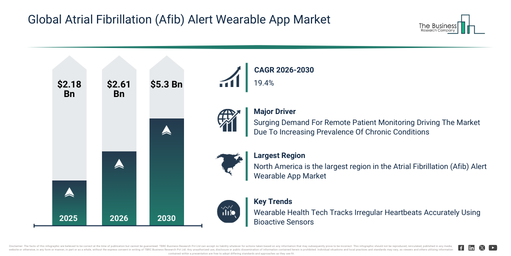
    The market size for atrial fibrillation (afib) alert wearable apps has experienced significant expansion over recent years. Projections indicate its expansion from $2.18 billion in 2025 to $2.61 billion by 2026, demonstrating a compound annual growth rate (CAGR) of 19.7%. Historically, this growth has been driven by factors such as the increasing prevalence of cardiovascular disorders, the widespread adoption of wearable health devices, heightened consumer awareness regarding heart health, an uptick in mobile health application usage, and the expansion of remote patient monitoring programs.

    The atrial fibrillation (afib) alert wearable app market size is projected to experience substantial expansion over the next few years. By 2030, this market is anticipated to attain a valuation of $5.3 billion, exhibiting a compound annual growth rate (CAGR) of 19.4%. This growth during the forecast period can be attributed to several factors, including an increasing demand for proactive cardiac care solutions, a rising adoption of AI-powered wearable analytics, the expansion of telecardiology services, growing integration with electronic health records, and an increasing focus on early afib detection. Major trends identified for the forecast period include a wider adoption of continuous heart rhythm monitoring, increasing integration with smartwatches and fitness bands, the growing utilization of AI-based arrhythmia detection algorithms, the expansion of remote cardiac care platforms, and an enhanced focus on preventive heart health.

    Download the Free Sample Report to Explore Key Market Insights:

    https://www.thebusinessresearchcompany.com/sample.aspx?id=28941&type=smp

    What Primary Drivers Are Shaping The Development Of The Atrial Fibrillation (Afib) Alert Wearable App Market?

    The escalating need for remote patient monitoring is set to drive the growth of the atrial fibrillation (Afib) alert wearable app market in the coming years. Remote patient monitoring (RPM) is defined by the application of digital tools and electronic devices to gather patient health information beyond conventional healthcare settings, thereby empowering healthcare providers to oversee, track, and manage patient health remotely. The increasing demand for RPM stems from a growing population afflicted with chronic conditions such as heart disease, diabetes, and hypertension, all of which require continuous observation and timely medical interventions for effective management. Atrial fibrillation (Afib) alert wearable apps contribute to remote patient monitoring by constantly tracking heart rhythms, detecting irregularities in real time, and securely transmitting this data to healthcare providers. This functionality facilitates prompt medical intervention and efficient management of a patient’s condition, reducing the need for frequent in-person visits. For instance, a survey conducted in August 2023 by Vivalink, a US-based healthcare technology company, indicated that 84% of respondents currently using RPM plan to increase their usage in 2024. Furthermore, 45% of providers utilize RPM for acute monitoring, including hospital-at-home programs, and 77% predict that RPM-based care will surpass traditional in-patient hospital care within the next five years. Consequently, the rising demand for remote patient monitoring is fueling the expansion of the atrial fibrillation (Afib) alert wearable app market.

    What Segment Groups Are Identified Within The Atrial Fibrillation (Afib) Alert Wearable App Market?

    The atrial fibrillation (afib) alert wearable app market covered in this report is segmented –

    1) By Product Type: Standalone Apps, Integrated Wearable Devices

    2) By Platform: iPhone Operating System (iOS), Android, Other Platforms

    3) By Distribution Channel: App Stores, Direct Sales, Third-Party Vendors

    4) By Application: Remote Patient Monitoring, Personal Health Tracking, Clinical Use, Other Applications

    5) By End-User: Hospitals And Clinics, Homecare, Individuals, Other End-Users

    Subsegments:

    1) By Standalone Apps: Mobile Standalone Atrial Fibrillation (AFib) Alert Apps, Cloud-Connected Standalone Atrial Fibrillation (AFib) Alert Apps, Subscription-Based Standalone Atrial Fibrillation (AFib) Alert Apps, Personalized Standalone Atrial Fibrillation (AFib) Alert Apps

    2) By Integrated Wearable Devices: Smartwatch-Integrated Atrial Fibrillation (AFib) Alert Apps, Fitness Band-Integrated Atrial Fibrillation (AFib) Alert Apps, Medical-Grade Wearable Integrated Atrial Fibrillation (AFib) Alert Apps, Continuous Monitoring Integrated Atrial Fibrillation (AFib) Alert Apps

    How Are Trends Impacting The Atrial Fibrillation (Afib) Alert Wearable App Market?

    Leading companies in the atrial fibrillation (AFib) alert wearable app market are prioritizing the creation of advanced products, such as smartwatches equipped with real-time electrocardiogram (ECG) monitoring, to enable early identification of irregular heart rhythms and help avert severe cardiovascular incidents. These smartwatches with real-time electrocardiogram (ECG) monitoring are wearable tools that constantly track the heart’s electrical signals to spot anomalies, assisting users in detecting possible atrial fibrillation (AFib) or other cardiac concerns promptly, facilitating timely medical intervention. For instance, in May 2023, Samsung Electronics Co. Ltd., a computer and electronics manufacturing firm based in South Korea, obtained U.S. Food and Drug Administration (FDA) clearance for its Irregular Heart Rhythm Notification (IHRN) feature within the Samsung Health Monitor app. This feature, combined with the on-demand ECG function, actively observes heart rhythms that might suggest atrial fibrillation (AFib), notifies users of potential irregularities, and encourages prompt medical consultation. The functionality utilizes the Galaxy Watch’s BioActive Sensor to continuously monitor heart activity in the background, offering users immediate insights into their cardiovascular well-being. The swift identification of abnormal heart rhythms allows individuals who might not show symptoms or be aware of their condition to implement preventive measures and seek medical advice promptly. This advancement signifies a broader pattern within the wearable technology market, where businesses are increasingly incorporating sophisticated health monitoring capabilities into consumer gadgets to provide users with practical health data and support the proactive management of chronic conditions such as AFib.

    Which Companies Hold Significant Positions In The Atrial Fibrillation (Afib) Alert Wearable App Market?

    Major companies operating in the atrial fibrillation (afib) alert wearable app market are Apple Inc., Google LLC, Samsung Electronics Co. Ltd., Huawei Technologies Co. Ltd., Koninklijke Philips N.V., Omron Healthcare Inc., Garmin Ltd., iRhythm Technologies Inc., Beurer GmbH, Bittium Corporation, Eko Devices Inc., AliveCor Inc., VitalConnect Inc., VivaLNK Inc., Biotricity Inc., Preventicus GmbH, cardiacSense Ltd., HeartBeam Inc., FibriCheck BV, CardioSignal Inc.

    Read the full atrial fibrillation (afib) alert wearable app market report here:

    https://www.thebusinessresearchcompany.com/report/atrial-fibrillation-afib-alert-wearable-app-global-market-report

    How Does The Atrial Fibrillation (Afib) Alert Wearable App Market Perform Across Major Global Regions?

    North America was the largest region in the atrial fibrillation (Afib) alert wearable app market in 2025. Asia-Pacific is expected to be the fastest-growing region in the forecast period. The regions covered in the atrial fibrillation (afib) alert wearable app market report are Asia-Pacific, South East Asia, Western Europe, Eastern Europe, North America, South America, Middle East, Africa.

    Request A Tailored Atrial Fibrillation (Afib) Alert Wearable App Market Research Report For Competitive Advantage:

    https://www.thebusinessresearchcompany.com/customise?id=28941&type=smp

    Browse Through More Reports Similar to the Global Atrial Fibrillation (Afib) Alert Wearable App Market 2026, By The Business Research Company

    Ventricular Fibrillation Global Market Report

    https://www.thebusinessresearchcompany.com/report/ventricular-fibrillation-global-market-report

    Arrhythmia Global Market Report

    https://www.thebusinessresearchcompany.com/report/arrhythmia-global-market-report

    Atrial Septal Defect Global Market Report

    https://www.thebusinessresearchcompany.com/report/atrial-septal-defect-global-market-report

    Get in touch with us:

    The Business Research Company: https://www.thebusinessresearchcompany.com/

    Americas +1 310-496-7795

    Asia +44 7882 955267 & +91 8897263534

    Europe +44 7882 955267

    Email us at info@tbrc.info

    Follow us on:

    LinkedIn: https://in.linkedin.com/company/the-business-research-company

    YouTube: https://www.youtube.com/channel/UC24_fI0rV8cR5DxlCpgmyFQ

    Global Market Model: https://www.thebusinessresearchcompany.com/global-market-model
  • Global Artificial Intelligence (AI) In Wound Care Market Analysis for 2026–2030 with Strategic Forecast Insights for Businesses

    Global Artificial Intelligence (AI) In Wound Care Market Analysis for 2026–2030 with Strategic Forecast Insights for Businesses

    The Business Research Company’s 2026 market reports include new capabilities such as market attractiveness scoring and analysis, total addressable market analysis, company scoring matrix, interactive excel data dashboard, improved supply chain analysis, upcoming startups in the market, and overview of key products, aimed at improving the depth, usability, and strategic value of the insights delivered.

    What Market Valuation Is Forecasted For The Artificial Intelligence (AI) In Wound Care Market By 2030 Starting From Its 2026 Size?

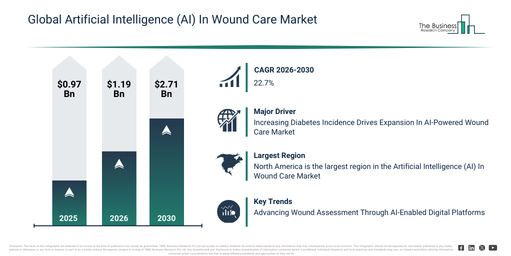
    The market size for artificial intelligence (AI) in wound care has seen remarkable expansion in recent years. Projections indicate it will expand from $0.97 billion in 2025 to $1.19 billion in 2026, demonstrating a compound annual growth rate (CAGR) of 23.0%. Historically, this growth stemmed from factors such as the increasing occurrence of chronic wounds, a rise in diabetes-related ulcers, the integration of digital wound documentation, the expansion of hospital-based wound care initiatives, and the availability of tools for imaging-based assessment.

    The artificial intelligence (AI) in wound care market is projected to experience substantial growth in the coming years, with its size forecast to reach $2.71 billion by 2030, demonstrating a compound annual growth rate (CAGR) of 22.7%. This expansion during the forecast period is attributed to several factors including a heightened demand for personalized wound treatment, the increasing uptake of remote patient monitoring, the broadening of AI-enabled clinical decision support, a growing emphasis on cost-effective wound management, and more extensive integration of AI with telehealth platforms. Key trends anticipated in the forecast period encompass the increasing deployment of AI-based wound assessment tools, a rise in the adoption of predictive healing analytics, greater integration of remote wound monitoring solutions, the expansion of personalized wound care algorithms, and enhanced automation of clinical documentation.

    Download the Free Sample Report to Explore Key Market Insights:

    https://www.thebusinessresearchcompany.com/sample.aspx?id=19316&type=smp

    What Major Growth Drivers Are Shaping The Outlook Of The Artificial Intelligence (AI) In Wound Care Market?

    Future expansion of the artificial intelligence (AI) in wound care market is anticipated due to the increasing occurrence of diabetes. This chronic condition, marked by elevated blood glucose, often results in complications like heart disease, kidney failure, neuropathy, and vision loss. The growing prevalence of diabetes is largely influenced by rising obesity rates, which heighten the risk of type 2 diabetes, and by an aging demographic, given that the likelihood of developing the condition increases with age. Artificial intelligence in wound care supports diabetes management through precise wound evaluations and customized treatment strategies, thereby improving the effectiveness and efficiency of care for diabetic ulcers. For example, data from May 2024 by the Centers for Disease Control and Prevention, a U.S. governmental body, indicated that 38.4 million Americans, representing 11.6% of the U.S. population, were living with diabetes. This prevalence rose considerably to 29.2% among adults aged 65 and above. Consequently, the increasing occurrence of diabetes is propelling the expansion of the artificial intelligence (AI) in wound care market.

    Which Segment Categories Define The Artificial Intelligence (AI) In Wound Care Market?

    The artificial intelligence (AI) in wound care market covered in this report is segmented –

    1) By Type Of Wound: Acute Wounds, Chronic Wounds

    2) By Technology: Deep Learning, Machine Learning, Other Technologies

    3) By End User: Clinical Trials And Research Centers, Home Health Agencies, Hospitals, Nursing Facilities, Other End Users

    Subsegments:

    1) By Acute Wounds: Surgical Wounds, Traumatic Wounds, Burns

    2) By Chronic Wounds: Diabetic Foot Ulcers, Pressure Ulcers (Bedsores), Venous Leg Ulcers, Arterial Ulcers

    What Key Trends Are Influencing The Development Of The Artificial Intelligence (AI) In Wound Care Market?

    Key entities in the artificial intelligence (AI) in wound care market are prioritizing the integration of innovative solutions, such as artificial intelligence (AI)-driven digital wound management solutions, to boost clinical effectiveness, enhance wound monitoring, improve documentation accuracy, and predict healing outcomes. Artificial intelligence (AI)-driven digital wound management solutions represent software systems that leverage computer vision and machine learning to analyze wound images and associated clinical data, facilitating real-time wound measurement, automated documentation, and tracking of healing progression. As an illustration, in October 2024, Swift Medical, a digital wound-care technology company based in Canada, introduced Skin & Wound 2. This AI-based digital wound-care platform is engineered to assist clinicians across various care settings, incorporating capabilities like sub-millimetre-accuracy imaging, electronic medical record (EMR) integration through fast healthcare interoperability resources (FHIR), and automated monitoring of healing timelines. Skin & Wound 2 contributes to more consistent wound assessment, diminishes the documentation workload, and supports care decisions informed by data.

    Who Are The Top Companies Competing In The Artificial Intelligence (AI) In Wound Care Market?

    Major companies operating in the artificial intelligence (AI) in wound care market are Medtronic plc, Stryker Corporation, Smith & Nephew plc, Convatec Group plc, Mölnlycke Health Care AB, Derma Sciences Inc., Implicity Inc., Cecelia Health, Swift Medical Inc., Spectral MD Inc., PolarityTE Inc., eKare Inc., KroniKare Pte Ltd, Perceptive Solutions Inc., Tissue Analytics Inc., WoundZoom Inc., Intellicure Inc., WoundMatrix Inc., WoundVision LLC, The Wound Pros LLC

    Read the full artificial intelligence (ai) in wound care market report here:

    https://www.thebusinessresearchcompany.com/report/artificial-intelligence-ai-in-wound-care-global-market-report

    Which Regions Are Projected To Dominate The Artificial Intelligence (AI) In Wound Care Market In The Coming Years?

    North America was the largest region in the artificial intelligence (AI) in wound care market in 2025. The regions covered in the artificial intelligence (AI) in wound care market report are Asia-Pacific, South East Asia, Western Europe, Eastern Europe, North America, South America, Middle East, Africa.

    Request A Tailored Artificial Intelligence (AI) In Wound Care Market Research Report For Competitive Advantage:

    https://www.thebusinessresearchcompany.com/customise?id=19316&type=smp

    Browse Through More Reports Similar to the Global Artificial Intelligence (AI) In Wound Care Market 2026, By The Business Research Company

    Ai In Construction Global Market Report

    https://www.thebusinessresearchcompany.com/report/ai-in-construction-global-market-report

    Ai In Manufacturing Global Market Report

    https://www.thebusinessresearchcompany.com/report/ai-in-manufacturing-global-market-report

    Ai In Real Estate Global Market Report

    https://www.thebusinessresearchcompany.com/report/ai-in-real-estate-global-market-report

    Get in touch with us:

    The Business Research Company: https://www.thebusinessresearchcompany.com/

    Americas +1 310-496-7795

    Asia +44 7882 955267 & +91 8897263534

    Europe +44 7882 955267

    Email us at info@tbrc.info

    Follow us on:

    LinkedIn: https://in.linkedin.com/company/the-business-research-company

    YouTube: https://www.youtube.com/channel/UC24_fI0rV8cR5DxlCpgmyFQ

    Global Market Model: https://www.thebusinessresearchcompany.com/global-market-model
  • Atrial Fibrillation Market Future Outlook Showing Expansion Toward $27.87 Billion by 2030

    Atrial Fibrillation Market Future Outlook Showing Expansion Toward $27.87 Billion by 2030

    The Business Research Company’s 2026 market reports include new capabilities such as market attractiveness scoring and analysis, total addressable market analysis, company scoring matrix, interactive excel data dashboard, improved supply chain analysis, upcoming startups in the market, and overview of key products, aimed at improving the depth, usability, and strategic value of the insights delivered.

    What Market Value Is Anticipated For The Atrial Fibrillation Market Over The Period 2026–2030?

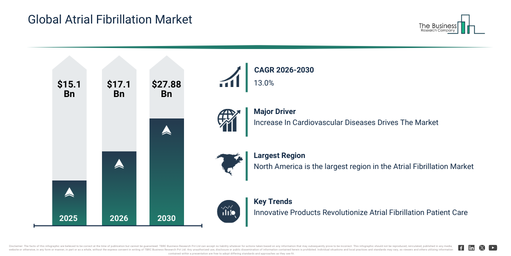
    The atrial fibrillation market size has observed rapid growth in recent years. It is projected to expand from $15.1 billion in 2025 to $17.1 billion in 2026, achieving a compound annual growth rate (CAGR) of 13.2%. The expansion seen in the historic period can be ascribed to the increasing prevalence of atrial fibrillation in aging populations, improved access to cardiac diagnostic technologies, wider availability of anticoagulant therapies, the expansion of electrophysiology labs, and growing awareness of stroke prevention.

    The atrial fibrillation market size is projected to experience significant expansion in the coming years. It is anticipated to reach $27.88 billion by 2030, exhibiting a compound annual growth rate (CAGR) of 13.0%. This growth during the forecast period can be attributed to several factors, including a heightened demand for personalized arrhythmia treatments, the increasing uptake of wearable cardiac monitoring devices, the broadening of hybrid treatment methods, increased investments in electrophysiology infrastructure, and a greater emphasis on long-term rhythm management outcomes. Key trends expected in the same period involve a greater acceptance of catheter ablation procedures, the expanding utilization of advanced cardiac mapping systems, a surging preference for minimally invasive treatments, the enlargement of pharmacological rhythm control therapies, and an intensified focus on early diagnosis and monitoring.

    Download the Free Sample Report to Explore Key Market Insights:

    https://www.thebusinessresearchcompany.com/sample.aspx?id=8007&type=smp

    Which Major Factors Are Driving The Expansion Of The Atrial Fibrillation Market?

    The growing prevalence of cardiovascular diseases is projected to propel the atrial fibrillation market. These disorders, which affect the heart and blood vessels and include conditions like coronary artery disease, heart failure, and arrhythmias, present considerable risks to cardiovascular health. The rising incidence of such conditions highlights an increasing need for advanced diagnostic and therapeutic interventions, thereby advancing the atrial fibrillation market as healthcare systems address these escalating challenges. For example, in October 2024, the CDC (Centers for Disease Control and Prevention), a U.S-based government agency, reported that 919,032 individuals died from cardiovascular disease in 2023, representing 1 in every 3 deaths. Additionally, approximately 805,000 people in the United States experience a heart attack annually. Consequently, the substantial global burden of cardiovascular diseases is set to drive the atrial fibrillation market.

    How Is The Atrial Fibrillation Market Divided Into Its Major Segments?

    The atrial fibrillation market covered in this report is segmented –

    1) By Type: Surgical, Non-Surgical

    2) By Technology: Radiofrequency, Laser, Cryotherapy, Other Technologies

    3) By Treatment Type: Pharmacological Treatment, Non-pharmacological Treatment, Maze Surgery, Electric Cardioversion

    4) By End User: Hospitals, Electrophysiology Labs, Ambulatory Surgical Centers

    Subsegments:

    1) By Surgical: Catheter Ablation, Maze Procedure, Hybrid Ablation Procedures

    2) By Non-Surgical: Antiarrhythmic Drugs, Anticoagulants, Cardioversion Procedures

    What Industry Trends Are Redefining The Atrial Fibrillation Market?

    Leading companies in the atrial fibrillation market are launching innovative products and solutions, such as patient-centric clinical decision support tools, to bolster their market position. Clinical decision support tools (CDSTs) are software or electronic systems engineered to assist healthcare professionals in making informed and timely decisions regarding patient care. These tools are developed to integrate relevant clinical information from various sources. For example, in August 2023, GE HealthCare, a US-based multinational medical technology company, introduced CardioVisio, a patient-centered clinical decision support tool designed to help doctors apply evidence-based clinical decision support guided by current atrial fibrillation guidelines and visualize longitudinal data from diverse sources relevant for illness progression. CardioVisio for atrial fibrillation can aid cardiologists by streamlining clinical image interpretation and providing a view of the patient’s heart history, as well as their entire healthcare journey, including previous diagnoses, prescribed medications, interventions, and comorbidities.

    Who Are The Prominent Organizations Shaping The Atrial Fibrillation Market?

    Major companies operating in the atrial fibrillation market are AtriCure Inc, Abbott Laboratories, Medtronic PLC, Boston Scientific Corporation, Johnson & Johnson, Boehringer Ingelheim International GmbH, Bristol-Myers Squibb Company, Sanofi SA, Bayer AG, Pfizer Inc, Daiichi Sankyo Company Limited, AstraZeneca PLC, Biotronik SE & Co KG, Kardium Inc, Acutus Medical Inc, Apama Medical Inc, CardioFocus Inc, AliveCor Inc, iRhythm Technologies Inc, BioSig Technologies Inc

    Read the full atrial fibrillation market report here:

    https://www.thebusinessresearchcompany.com/report/atrial-fibrillation-global-market-report

    Which Region Currently Holds The Largest Share Of The Atrial Fibrillation Market?

    North America was the largest region in the atrial fibrillation market in 2025. Asia-Pacific is expected to be the fastest-growing region in the atrial fibrillation market report forecast period. The regions covered in the atrial fibrillation market report are Asia-Pacific, South East Asia, Western Europe, Eastern Europe, North America, South America, Middle East, Africa.

    Request A Tailored Atrial Fibrillation Market Research Report For Competitive Advantage:

    https://www.thebusinessresearchcompany.com/customise?id=8007&type=smp

    Browse Through More Reports Similar to the Global Atrial Fibrillation Market 2026, By The Business Research Company

    Wearable Heart Monitoring Devices Global Market Report

    https://www.thebusinessresearchcompany.com/report/wearable-heart-monitoring-devices-global-market-report

    Cardiac Arrhythmia Monitoring Devices Global Market Report

    https://www.thebusinessresearchcompany.com/report/cardiac-arrhythmia-monitoring-devices-global-market-report

    Arrhythmia Monitoring Devices Global Market Report

    https://www.thebusinessresearchcompany.com/report/arrhythmia-monitoring-devices-global-market-report

    Get in touch with us:

    The Business Research Company: https://www.thebusinessresearchcompany.com/

    Americas +1 310-496-7795

    Asia +44 7882 955267 & +91 8897263534

    Europe +44 7882 955267

    Email us at info@tbrc.info

    Follow us on:

    LinkedIn: https://in.linkedin.com/company/the-business-research-company

    YouTube: https://www.youtube.com/channel/UC24_fI0rV8cR5DxlCpgmyFQ

    Global Market Model: https://www.thebusinessresearchcompany.com/global-market-model
  • Artificial Intelligence (AI) In Respiratory Diseases Market Outlook 2026–2035 Driven by Key Growth Factors and Industry Projections

    Artificial Intelligence (AI) In Respiratory Diseases Market Outlook 2026–2035 Driven by Key Growth Factors and Industry Projections

    The Business Research Company’s 2026 market reports include new capabilities such as market attractiveness scoring and analysis, total addressable market analysis, company scoring matrix, interactive excel data dashboard, improved supply chain analysis, upcoming startups in the market, and overview of key products, aimed at improving the depth, usability, and strategic value of the insights delivered.

    How Is The Market Size Of The Artificial Intelligence (AI) In Respiratory Diseases Market Expected To Change Between 2026 And 2030?

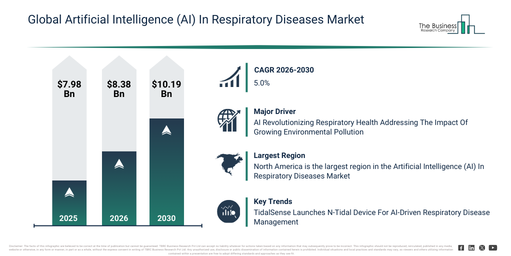
    The artificial intelligence (AI) in respiratory diseases market size has experienced consistent expansion over recent years. This market is projected to expand from $7.98 billion in 2025 to $8.38 billion in 2026, demonstrating a compound annual growth rate (CAGR) of 4.9%. Historically, this growth has been driven by several factors, including the increasing occurrence of respiratory diseases, a greater reliance on CT and MRI imaging, the ongoing digitalization of healthcare records, the early integration of AI-assisted diagnostics, and the enhancement of hospital diagnostic capacities.

    The market size for artificial intelligence (AI) in respiratory diseases is projected to experience robust expansion over the coming years. This market is predicted to reach $10.19 billion by 2030, exhibiting a compound annual growth rate (CAGR) of 5.0%. Factors contributing to this growth during the forecast period include a rising demand for tailored respiratory care, enhanced integration of AI with clinical decision support systems, the widening scope of remote monitoring for individuals with chronic respiratory conditions, an increasing emphasis on preventive pulmonology, and progress in medical imaging AI. Key trends anticipated within the forecast timeframe encompass the increasing utilization of AI-driven imaging analysis, the growing acceptance of predictive models for disease progression, the broader incorporation of AI into pulmonary diagnostics, the proliferation of remote respiratory monitoring technologies, and a heightened emphasis on identifying diseases early.

    Download the Free Sample Report to Explore Key Market Insights:

    https://www.thebusinessresearchcompany.com/sample.aspx?id=13792&type=smp

    What Drivers Are Expected To Influence The Artificial Intelligence (AI) In Respiratory Diseases Market During The Forecast Period?

    The respiratory disease market is influenced by various factors. Environmental pollution refers to the introduction of any substance or energy into the environment at a rate faster than it can be dispersed or stored in a harmless form. Artificial intelligence (AI) in respiratory diseases has the capability to substantially reduce the effects of environmental pollution on respiratory health by providing real-time monitoring, individualized risk assessments, data-driven decision-making, and innovative solutions for both individuals and communities. For example, in November 2024, according to the Global Carbon Budget, a Japan-based annual scientific assessment, fossil carbon dioxide emissions climbed to 37.4 billion tonnes, an increase of 0.8% over the previous year. Therefore, growing environmental pollution is a key factor driving the growth of artificial intelligence (AI) in the respiratory disease market.

    How Is The Artificial Intelligence (AI) In Respiratory Diseases Market Structured Across Different Segments?

    The artificial intelligence (AI) in respiratory diseases market covered in this report is segmented –

    1) By Imaging Type: Magnetic Resonance Imaging (MRI), Computed Tomography (CT) Scan, Electronic Patient-Reported Outcomes (ePRO)

    2) By Indication: Chronic Obstructive Pulmonary Disease, Interstitial Lung Disease, Pulmonary Infection

    3) By End Use: Hospital, Diagnostic Centers, Ambulatory Surgical Centers, Other End-Users

    Subsegments:

    1) By Magnetic Resonance Imaging (MRI): Lung Imaging, Thoracic Imaging, Cardiopulmonary Imaging

    2) By Computed Tomography (CT) Scan: High-Resolution CT (HRCT), Low-Dose CT, Thoracic CT

    3) By Electronic Patient-Reported Outcomes (ePRO): Symptom Tracking, Medication Adherence Monitoring, Quality Of Life Assessments

    How Are Trends Impacting The Artificial Intelligence (AI) In Respiratory Diseases Market?

    Leading companies in the artificial intelligence (AI) domain within the respiratory diseases market are developing innovative products such as N-Tidal devices to monitor patients’ tidal breathing. The n-Tidal device accurately measures the volume of air exchanged during normal breathing and provides valuable information concerning lung function. For instance, in August 2023, TidalSense, a UK-based respiratory technology company, introduced N-Tidal, which is a regulated AI technology for chronic obstructive pulmonary disease (COPD) diagnosis and management. This technology integrates N-Tidal’s CO2 sensor data with an artificial intelligence platform to gauge changes in lung function, seeking to improve the diagnosis and management of this respiratory condition. Clinical studies have shown the technology’s high accuracy, and it is expected to reform the diagnostic process for respiratory diseases. The launch represents a significant development in the application of AI for respiratory disease assessment, providing a more comfortable and efficient alternative to existing diagnostic tests.

    Which Major Players Dominate The Artificial Intelligence (AI) In Respiratory Diseases Market?

    Major companies operating in the artificial intelligence (AI) in respiratory diseases market are Siemens Healthineers, Philips Healthcare, GE Healthcare, Verily Life Sciences LLC, DeepMind Health, Merative L.P., Aidoc Medical, Butterfly Network, Infervision, Imagen Technologies, Caption Health, Swaasa AI, VIDA Diagnostics Inc., Enlitic, Thirona B.V., ArtiQ, Icometrix, Aidence, Arterys, PneumoWave Ltd

    Read the full artificial intelligence (ai) in respiratory diseases market report here:

    https://www.thebusinessresearchcompany.com/report/artificial-intelligence-ai-in-respiratory-diseases-global-market-report

    Which Region Is Forecast To Lead The Artificial Intelligence (AI) In Respiratory Diseases Market In Terms Of Market Size?

    North America was the largest region in the artificial Intelligence (AI) in respiratory diseases market in 2025. Asia-Pacific is expected to be the fastest-growing region in the forecast period. The regions covered in the artificial intelligence (AI) in respiratory diseases market report are Asia-Pacific, South East Asia, Western Europe, Eastern Europe, North America, South America, Middle East, Africa.

    Request A Tailored Artificial Intelligence (AI) In Respiratory Diseases Market Research Report For Competitive Advantage:

    https://www.thebusinessresearchcompany.com/customise?id=13792&type=smp

    Browse Through More Reports Similar to the Global Artificial Intelligence (AI) In Respiratory Diseases Market 2026, By The Business Research Company

    Artificial Intelligence In Healthcare Diagnosis Global Market Report

    https://www.thebusinessresearchcompany.com/report/artificial-intelligence-in-healthcare-diagnosis-global-market-report

    Ai In Medical Diagnostics Global Market Report

    https://www.thebusinessresearchcompany.com/report/ai-in-medical-diagnostics-global-market-report

    Artificial Intelligence Ai In Animal Health Global Market Report

    https://www.thebusinessresearchcompany.com/report/artificial-intelligence-ai-in-animal-health-global-market-report

    Get in touch with us:

    The Business Research Company: https://www.thebusinessresearchcompany.com/

    Americas +1 310-496-7795

    Asia +44 7882 955267 & +91 8897263534

    Europe +44 7882 955267

    Email us at info@tbrc.info

    Follow us on:

    LinkedIn: https://in.linkedin.com/company/the-business-research-company

    YouTube: https://www.youtube.com/channel/UC24_fI0rV8cR5DxlCpgmyFQ

    Global Market Model: https://www.thebusinessresearchcompany.com/global-market-model
  • Atorvastatin Market Revenue Growth Expected to Reach $20.63 Billion by 2030 with 9.3% CAGR

    Atorvastatin Market Revenue Growth Expected to Reach $20.63 Billion by 2030 with 9.3% CAGR

    The Business Research Company’s 2026 market reports include new capabilities such as market attractiveness scoring and analysis, total addressable market analysis, company scoring matrix, interactive excel data dashboard, improved supply chain analysis, upcoming startups in the market, and overview of key products, aimed at improving the depth, usability, and strategic value of the insights delivered.

    What Is The Expected Market Size Of The Atorvastatin Market From 2026 To 2030?

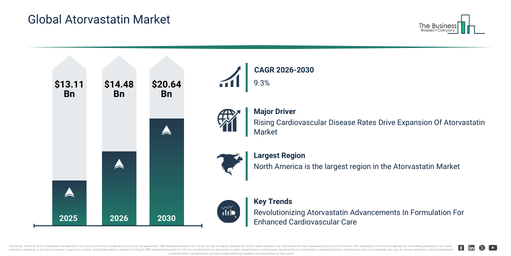
    The atorvastatin market has seen swift expansion in recent years. It is anticipated to expand from $13.11 billion in 2025 to $14.48 billion in 2026, achieving a compound annual growth rate (CAGR) of 10.5%. The historical growth can be ascribed to an escalating global prevalence of cardiovascular diseases, the widespread clinical acceptance of statin therapy, an increase in lipid disorder diagnosis rates, the presence of mature chemical synthesis pathways, and significant penetration of generic atorvastatin products.

    The atorvastatin market is projected to experience significant expansion in the coming years. It is anticipated to reach a valuation of $20.64 billion by 2030, demonstrating a compound annual growth rate (CAGR) of 9.3%. This projected growth within the forecast period can be attributed to several factors, including an expanding aging population with associated cardiovascular risks, a greater emphasis on preventive cardiology, the increasing adoption of combination lipid-lowering therapies, the ongoing expansion of pharmaceutical manufacturing in emerging markets, and an elevated focus on green chemistry approaches in drug production. Furthermore, key trends identified for the forecast period involve the growing implementation of biocatalytic manufacturing processes, a rising demand for generic statin formulations, an intensifying focus on high-purity active pharmaceutical ingredients, an expansion of large-scale commercial production capacities, and an enhanced emphasis on cost-optimized drug manufacturing.

    Download the Free Sample Report to Explore Key Market Insights:

    https://www.thebusinessresearchcompany.com/sample.aspx?id=16344&type=smp

    What Key Drivers Are Influencing The Growth Of The Atorvastatin Market?

    The increasing occurrence of cardiovascular diseases is anticipated to boost the atorvastatin market’s expansion in the future. Cardiovascular diseases (CVDs) are defined as various disorders affecting the heart and blood vessels. The surge in cardiovascular disease prevalence stems from a combination of lifestyle modifications, demographic shifts, and environmental influences. Atorvastatin effectively reduces the likelihood of major cardiovascular incidents like heart attacks and strokes by targeting these underlying contributors. Its extensive application among individuals with elevated cholesterol and other CVD risk factors has been crucial in lessening the overall burden of heart-related conditions. For example, in January 2024, the American Heart Association, a US-based nonprofit organization, reported a minor increase in total cardiovascular deaths this year, reaching 931,578, which represented a slight rise of 3,000 fatalities when contrasted with the previous year’s figure of 928,741. Consequently, the rising prevalence of cardiovascular diseases is propelling the growth of the atorvastatin market.

    Which Segments Are Included In The Analysis Of The Atorvastatin Market?

    The atorvastatin market covered in this report is segmented –

    1) By Type: Chemical Synthesis, Biocatalysis

    2) By Therapeutic Indication: Hypercholesterolemia, Dyslipidemia, Cardiovascular Disease Prevention, Other Therapeutic Indications

    3) By Application: Hospital Pharmacy, Retail Pharmacy, Online Pharmacy

    Subsegments:

    1) By Chemical Synthesis: Traditional Chemical Synthesis Of Atorvastatin, Semi-Synthetic Atorvastatin Production, Large-Scale Chemical Synthesis For Commercial Production

    2) By Biocatalysis: Enzyme-Catalyzed Synthesis Of Atorvastatin, Biocatalytic Pathways For Efficient Production, Green Chemistry Approaches In Atorvastatin Manufacturing, Biocatalysis For Higher Yield And Purity

    What Key Developments And Trends Are Impacting The Atorvastatin Market?

    Leading companies in the atorvastatin market are focusing on the development of innovative products, such as ready-made liquid oral suspension, to improve treatment for high cholesterol and certain risk factors for heart disease or stroke. A ready-made liquid oral suspension offers a convenient and effective pharmaceutical formulation, enabling easy medication administration, particularly for patients who have difficulty taking solid dosage forms. For instance, in June 2023, CMP Pharma, Inc., a US-based pharmaceutical company, introduced Atorvaliq (atorvastatin calcium) Oral Suspension, 20 mg/5 mL, which was approved by the Food and Drug Administration, a US-based government agency. Atorvaliq is specifically formulated for a subset of patients who require atorvastatin but experience dysphagia, or difficulty swallowing tablets. Its availability provides healthcare providers and suitable patients with a convenient, safe, and FDA-approved liquid formulation option.

    Which Key Industry Participants Are Active In The Atorvastatin Market?

    Major companies operating in the atorvastatin market are Zydus Lifesciences, Pfizer Inc., Viatris Inc., Teva Pharmaceutical Industries Ltd., Hetero Ltd., Sun Pharmaceutical Industries Ltd., Dr. Reddy’s Laboratories Ltd., Cadila Pharmaceuticals Ltd., Apotex Pharmachem Inc., Glenmark Pharmaceuticals Ltd., Alembic Pharmaceuticals Ltd., Centrient Pharmaceuticals, Accord Healthcare Ltd., Wockhardt Ltd., Zhejiang Hisun Pharmaceutical Co. Ltd., Unichem Laboratories Ltd., Morepen, Ind-Swift Labs Ltd., Smilax Laboratories Limited, Saneca Pharmaceuticals AS, Srini Pharmaceuticals Pvt. Ltd., Suvan Lifesciences Ltd., Zenfold Sustainable Technologies

    Read the full atorvastatin market report here:

    https://www.thebusinessresearchcompany.com/report/atorvastatin-global-market-report

    Which Region Is Expected To Register The Fastest Growth In The Atorvastatin Market?

    North America was the largest region in the atorvastatin market in 2025. Asia-Pacific is expected to be the fastest-growing region in the forecast period. The regions covered in the atorvastatin market report are Asia-Pacific, South East Asia, Western Europe, Eastern Europe, North America, South America, Middle East, Africa.

    Request A Tailored Atorvastatin Market Research Report For Competitive Advantage:

    https://www.thebusinessresearchcompany.com/customise?id=16344&type=smp

    Browse Through More Reports Similar to the Global Atorvastatin Market 2026, By The Business Research Company

    Atherosclerosis Drugs Global Market Report

    https://www.thebusinessresearchcompany.com/report/atherosclerosis-drugs-global-market-report

    Aspirin Global Market Report

    https://www.thebusinessresearchcompany.com/report/aspirin-global-market-report

    Oleoresin Global Market Report

    https://www.thebusinessresearchcompany.com/report/oleoresin-global-market-report

    Get in touch with us:

    The Business Research Company: https://www.thebusinessresearchcompany.com/

    Americas +1 310-496-7795

    Asia +44 7882 955267 & +91 8897263534

    Europe +44 7882 955267

    Email us at info@tbrc.info

    Follow us on:

    LinkedIn: https://in.linkedin.com/company/the-business-research-company

    YouTube: https://www.youtube.com/channel/UC24_fI0rV8cR5DxlCpgmyFQ

    Global Market Model: https://www.thebusinessresearchcompany.com/global-market-model
  • Artificial Intelligence (AI) In Remote Patient Monitoring Market Developments and Growth Opportunities Across 2026–2030

    Artificial Intelligence (AI) In Remote Patient Monitoring Market Developments and Growth Opportunities Across 2026–2030

    The Business Research Company’s 2026 market reports include new capabilities such as market attractiveness scoring and analysis, total addressable market analysis, company scoring matrix, interactive excel data dashboard, improved supply chain analysis, upcoming startups in the market, and overview of key products, aimed at improving the depth, usability, and strategic value of the insights delivered.

    What Is The Market Size Of The Artificial Intelligence (AI) In Remote Patient Monitoring Market In 2026 And What Value Is Projected For 2030?

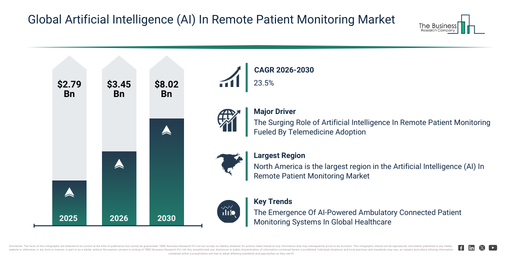
    The artificial intelligence (AI) in remote patient monitoring market size has seen substantial growth in recent years. This market is anticipated to expand from $2.79 billion in 2025 to $3.45 billion in 2026, registering a compound annual growth rate (CAGR) of 23.4%. The historical growth can be attributed to several factors including the rising prevalence of chronic diseases, increased adoption of telehealth services, the expansion of connected medical devices, growing healthcare digitization initiatives, and the early implementation of remote monitoring platforms.

    The artificial intelligence (AI) in remote patient monitoring market size is projected to experience substantial growth in the coming years. This market is anticipated to reach $8.02 billion by 2030, demonstrating a compound annual growth rate (CAGR) of 23.5%. Factors contributing to this expansion during the forecast period include the escalating demand for home-based care models, increased capital allocation towards AI-driven healthcare analytics, the broadening of personalized care pathways, greater integration of rpm with electronic health records, and an intensified emphasis on preventive healthcare. Key trends emerging over the forecast period encompass the wider implementation of AI-enabled predictive monitoring systems, the increasing use of wearable health sensors, enhanced integration of real-time health analytics platforms, the broadening availability of automated alert and decision support tools, and a heightened focus on continuous patient monitoring.

    Download the Free Sample Report to Explore Key Market Insights:

    https://www.thebusinessresearchcompany.com/sample.aspx?id=13791&type=smp

    What Drivers Are Influencing The Artificial Intelligence (AI) In Remote Patient Monitoring Market?

    The widespread embrace of telemedicine is anticipated to significantly boost the expansion of artificial intelligence (AI) within the remote patient monitoring market in the foreseeable future. Telemedicine involves leveraging telecommunications tools, including video calls, phone conversations, and digital messaging, for the remote delivery of medical care. When integrated with telemedicine, AI in remote patient monitoring processes this information instantly, identifying minor alterations and notifying medical practitioners of prospective problems prior to them escalating into critical situations. Illustratively, in May 2024, data from Eurostat, a government agency located in Luxembourg, indicated that during 2023, 8.5% of individuals in the EU between the ages of 16 and 74 engaged in virtual consultations online. Consequently, the extensive uptake of telemedicine will fuel the expansion of artificial intelligence (AI) in the remote patient monitoring market.

    What Are The Key Segments Of The Artificial Intelligence (AI) In Remote Patient Monitoring Market?

    The artificial intelligence (AI) in remote patient monitoring market covered in this report is segmented –

    1) By Solution: Software, Hardware, Services

    2) By Product: Vital Monitors, Special Monitors, Other Products

    3) By Technology: Natural Language Processing, Machine Learning, Speech Recognition

    4) By Application: Diabetes, Respiratory Issues, Cardiovascular Diseases, Sleep Disorder

    Subsegments:

    1) By Software: Predictive Analytics, Data Management, Monitoring Platforms, Mobile Applications

    2) By Hardware: Wearable Devices, Sensors, Medical Devices

    3) By Services: Implementation Services, Training And Education Services, Support And Maintenance Services

    What Industry Trends Are Redefining The Artificial Intelligence (AI) In Remote Patient Monitoring Market?

    Leading companies active in the artificial intelligence (AI) in remote patient monitoring market are prioritizing the incorporation of AI into wearable devices, such as an AI-powered ambulatory connected patient monitoring system, to gain a competitive advantage and improve healthcare delivery. An AI-powered ambulatory connected patient monitoring system is characterized as a healthcare solution that combines artificial intelligence (AI) with ambulatory monitoring technology to continuously track and analyze a patient’s vital signs and health metrics in real time. For instance, in October 2023, Dozee, an India-based medical equipment manufacturer, launched ‘Dozee Pro Ex,’ an innovative ambulatory connected patient monitoring system designed for global markets. This solution, developed in India, utilizes wireless wearable sensors for continuous observation of vital parameters, including ECG rhythm, blood pressure, heart rate, oxygen saturation, respiration rate, and temperature. Notably, ‘Dozee Pro Ex’ integrates an AI-powered early warning system that analyzes vital parameter trends, providing timely alerts for potential clinical deterioration. This next-generation product aims to reshape traditional healthcare boundaries by enabling 24/7 patient monitoring, whether individuals are in a hospital bed, off the bed, at a healthcare facility, or at home.

    Who Are The Leading Companies Operating In The Artificial Intelligence (AI) In Remote Patient Monitoring Market?

    Major companies operating in the artificial intelligence (AI) in remote patient monitoring market are Medtronic plc, Siemens Healthineers, Koninklijke Philips N.V., GE Healthcare, DexCom Inc, Cerner Corporation, Tunstall Healthcare, Connect America LLC, American Well, Biofourmis, Merative L.P., Vivify Health, Current Health, BioIntelliSense, Preventice Solutions, AiCure LLC, Orbita, MobileHelp, EarlySense, Gyant, Myia Labs, Sentrian, Biobeat, ChroniSense Medical Ltd., Somatix Inc., Twistle, HealthWatch Technologies

    Read the full artificial intelligence (ai) in remote patient monitoring market report here:

    https://www.thebusinessresearchcompany.com/report/artificial-intelligence-ai-in-remote-patient-monitoring-global-market-report

    Which Regions Are Expected To Experience Rapid Expansion In The Artificial Intelligence (AI) In Remote Patient Monitoring Market?

    North America was the largest region in the artificial intelligence (AI) in remote patient monitoring market in 2025. Asia-Pacific is expected to be the fastest-growing region in the forecast period. The regions covered in the artificial intelligence (AI) in remote patient monitoring market report are Asia-Pacific, South East Asia, Western Europe, Eastern Europe, North America, South America, Middle East, Africa.

    Request A Tailored Artificial Intelligence (AI) In Remote Patient Monitoring Market Research Report For Competitive Advantage:

    https://www.thebusinessresearchcompany.com/customise?id=13791&type=smp

    Browse Through More Reports Similar to the Global Artificial Intelligence (AI) In Remote Patient Monitoring Market 2026, By The Business Research Company

    Artificial Intelligence In Healthcare Market

    https://www.thebusinessresearchcompany.com/report/artificial-intelligence-in-healthcare-market

    Remote Patient Monitoring Devices And Equipment Global Market Report

    https://www.thebusinessresearchcompany.com/report/remote-patient-monitoring-devices-and-equipment-global-market-report

    Artificial Intelligence In Healthcare Diagnosis Global Market Report

    https://www.thebusinessresearchcompany.com/report/artificial-intelligence-in-healthcare-diagnosis-global-market-report

    Get in touch with us:

    The Business Research Company: https://www.thebusinessresearchcompany.com/

    Americas +1 310-496-7795

    Asia +44 7882 955267 & +91 8897263534

    Europe +44 7882 955267

    Email us at info@tbrc.info

    Follow us on:

    LinkedIn: https://in.linkedin.com/company/the-business-research-company

    YouTube: https://www.youtube.com/channel/UC24_fI0rV8cR5DxlCpgmyFQ

    Global Market Model: https://www.thebusinessresearchcompany.com/global-market-model
  • Atopic Dermatitis Clinical Trials Market Expected to Record Steady Growth and Approach $4.78 Billion by 2030

    Atopic Dermatitis Clinical Trials Market Expected to Record Steady Growth and Approach $4.78 Billion by 2030

    The Business Research Company’s 2026 market reports include new capabilities such as market attractiveness scoring and analysis, total addressable market analysis, company scoring matrix, interactive excel data dashboard, improved supply chain analysis, upcoming startups in the market, and overview of key products, aimed at improving the depth, usability, and strategic value of the insights delivered.

    What Market Valuation Is Forecasted For The Atopic Dermatitis Clinical Trials Market By 2030 Starting From Its 2026 Size?

    The market size for atopic dermatitis clinical trials has expanded significantly over recent years. This market is expected to increase from $2.74 billion in 2025 to $3.07 billion in 2026, driven by a compound annual growth rate (CAGR) of 12.0%. The historical growth in this sector is linked to the rising prevalence of atopic dermatitis, the broadening of dermatology-focused drug pipelines, increased investments in clinical research, greater involvement of Contract Research Organizations (CROs) in dermatology trials, and advancements in trial design methodologies.

    The atopic dermatitis clinical trials market size is projected to see substantial growth in the coming years. It is expected to expand to $4.78 billion by 2030, demonstrating a compound annual growth rate (CAGR) of 11.7%. The anticipated growth during this period can be attributed to the increasing demand for novel biologics and JAK inhibitors, the rising adoption of decentralized clinical trials, greater utilization of real-world evidence studies, the broadening of personalized treatment approaches, and an increase in regulatory approvals for advanced therapies. Key trends in the forecast period include a growing incorporation of biologic and targeted therapies into trials, the rising use of digital patient monitoring tools, a heightened focus on patient-centric trial designs, the expansion of late-phase multicenter studies, and an enhanced emphasis on long-term safety and quality of life endpoints.

    Download the Free Sample Report to Explore Key Market Insights:

    https://www.thebusinessresearchcompany.com/sample.aspx?id=27213&type=smp

    What Major Growth Drivers Are Shaping The Outlook Of The Atopic Dermatitis Clinical Trials Market?

    Increased pharmaceutical and biopharma investments are projected to drive the expansion of the atopic dermatitis clinical trials market. These investments represent the funding and capital allocated to the research, development, manufacturing, and commercialization of various drugs and biologic therapies. The uptick in pharmaceutical and biopharma investments is attributed to the growing need for innovative treatments, which offer precise therapeutic options and improved outcomes for patients. Such investments support atopic dermatitis clinical trials by providing financial backing for the research and rigorous testing of new therapies, thereby allowing scientists to conduct comprehensive studies that confirm their effectiveness and safety. As an illustration, in December 2024, according to the Association of Australian Medical Research Institutes (AAMRI), an Australia-based nonprofit organization, Australian medical research institutes together received approximately AUD 2.5 billion (~ USD 1.65 billion) in total revenue in 2023. Thus, the escalating pharmaceutical and biopharma investments are a key factor propelling the growth of the atopic dermatitis clinical trials market.

    Which Segment Categories Define The Atopic Dermatitis Clinical Trials Market?

    The atopic dermatitis clinical trials market covered in this report is segmented –

    1) By Phase: Phase I, Phase II, Phase III, Phase IV

    2) By Molecule Type: Small Molecules, Large Molecules

    3) By Study Designs: Interventional, Observational

    4) By Mode: Outsourced, In-House

    5) By Industry: Contract Research Organizations, Pharmaceutical And Biotechnology Companies, Research And Academic Institutes

    Subsegments:

    1) By Phase I: Safety And tolerability studies, Dose-Escalation studies, Pharmacokinetics (PK) And Pharmacodynamics (PD) Studies

    2) By Phase II: Dose-Ranging Studies, Efficacy And Safety Studies, Randomized Controlled Trials (RCTs), Biomarker Identification Studies

    3) By Phase III: Large-Scale Efficacy Studies, Comparative Effectiveness Trials, Multicenter Randomized Trials, Long-Term Safety Assessment

    4) By Phase IV: Post-Marketing Surveillance, Real-World Evidence Studies, Drug Utilization Studies, Health Outcomes And Quality Of Life Studies

    What Trends Are Projected To Affect The Atopic Dermatitis Clinical Trials Market?

    Leading companies operating in the atopic dermatitis clinical trials market are concentrating on developing innovative products, such as oral inhibitors, to maintain consistent therapeutic effects over time. Oral inhibitors are medications taken by mouth that function by obstructing specific enzymes or signaling pathways implicated in disease progression. For example, in February 2023, Pfizer Inc., a US-based pharmaceutical and biotechnology company, declared that the US Food and Drug Administration had approved its supplemental New Drug Application for CIBINQO (abrocitinib). This approval broadened the drug’s usage to include adolescents aged 12 to under 18 with moderate-to-severe atopic dermatitis that has not been adequately controlled by other systemic treatments or biologics. Previously, CIBINQO had only received approval for adults 18 and older. This expansion introduces a new treatment choice for younger patients experiencing difficult-to-treat AD. The decision is supported by clinical trial data showcasing its safety and effectiveness in this demographic.

    Who Are The Top Companies Competing In The Atopic Dermatitis Clinical Trials Market?

    Major companies operating in the atopic dermatitis clinical trials market are Pfizer Inc., Johnson & Johnson, AbbVie Inc., Novartis International AG, Sanofi S.A., GlaxoSmithKline Plc, Eli Lilly and Company, Amgen Inc., Regeneron Pharmaceuticals Inc., Organon & Co., Charles River Laboratories International Inc., LEO Pharma A/S, QIMA Limited, Medpace Holdings Inc., Novotech Health Holdings Pte Ltd., Biocytogen Pharmaceuticals Co. Ltd., REPROCELL Inc., AnaptysBio Inc., Imavita S.A.S., Oncodesign Services S.A.S.

    Read the full atopic dermatitis clinical trials market report here:

    https://www.thebusinessresearchcompany.com/report/atopic-dermatitis-clinical-trials-global-market-report

    Which Regions Are Projected To Dominate The Atopic Dermatitis Clinical Trials Market In The Coming Years?

    North America was the largest region in the atopic dermatitis clinical trials market in 2025. Asia-Pacific is expected to be the fastest-growing region in the forecast period. The regions covered in the atopic dermatitis clinical trials market report are Asia-Pacific, South East Asia, Western Europe, Eastern Europe, North America, South America, Middle East, Africa.

    Request A Tailored Atopic Dermatitis Clinical Trials Market Research Report For Competitive Advantage:

    https://www.thebusinessresearchcompany.com/customise?id=27213&type=smp

    Browse Through More Reports Similar to the Global Atopic Dermatitis Clinical Trials Market 2026, By The Business Research Company

    Dermatitis Drugs Global Market Report

    https://www.thebusinessresearchcompany.com/report/dermatitis-drugs-global-market-report

    Dermatology Global Market Report

    https://www.thebusinessresearchcompany.com/report/dermatology-global-market-report

    Allergic Rhinitis Global Market Report

    https://www.thebusinessresearchcompany.com/report/allergic-rhinitis-global-market-report

    Get in touch with us:

    The Business Research Company: https://www.thebusinessresearchcompany.com/

    Americas +1 310-496-7795

    Asia +44 7882 955267 & +91 8897263534

    Europe +44 7882 955267

    Email us at info@tbrc.info

    Follow us on:

    LinkedIn: https://in.linkedin.com/company/the-business-research-company

    YouTube: https://www.youtube.com/channel/UC24_fI0rV8cR5DxlCpgmyFQ

    Global Market Model: https://www.thebusinessresearchcompany.com/global-market-model