Category: Healthcare Services

  • Opioid Use Disorder (OUD) Market Growth In 2026: Market Size, Key Drivers And Future Outlook

    Opioid Use Disorder (OUD) Market Growth In 2026: Market Size, Key Drivers And Future Outlook

    Featuring market attractiveness scoring, total addressable market sizing, company benchmarking matrices, interactive Excel dashboards, deeper supply chain intelligence, emerging startup tracking, and granular product-level insights, The Business Research Company’s 2026 market reports are built to deliver research that is both more actionable and more strategically valuable.

    Opioid Use Disorder (OUD) Market CAGR Outlook And Future Development

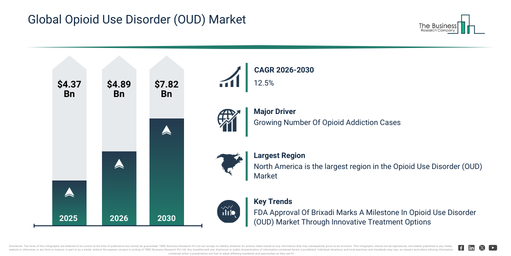
    The market for opioid use disorder (OUD) has seen rapid expansion in recent years. This market is projected to expand from $4.37 billion in 2025 to $4.89 billion in 2026, demonstrating a compound annual growth rate (CAGR) of 11.8%. Factors contributing to its historical growth include the overprescription of opioid painkillers, a rising prevalence of chronic pain conditions, restricted access to early addiction treatment, the social stigma associated with substance abuse treatment, and the increased availability of illicit opioids.

    The opioid use disorder (OUD) market is anticipated to experience substantial expansion in the coming years, reaching a size of $7.82 billion by 2030, exhibiting a compound annual growth rate (CAGR) of 12.5%. This growth throughout the forecast period is propelled by factors such as increased government funding for addiction treatment programs, broader acceptance of medication-assisted treatment, the expansion of online and telehealth-based addiction services, widening insurance coverage for OUD therapies, and a greater emphasis on preventive and harm reduction strategies. Significant trends identified for this period include the rising adoption of medication-assisted treatment programs, enhanced integration of behavioral therapy with pharmacological care, the continued expansion of community-based opioid treatment centers, an elevated focus on long-acting injectable therapies for OUD, and increased importance placed on relapse prevention and long-term recovery care.

    Get A Free Sample Report With In-Depth Market Insights:

    https://thebusinessresearchcompany.com/sample_request?id=92939179&type=smp&name=Opioid%20Use%20Disorder%20%28OUD%29%20Market%20Report%202026&utm_source=Blogs&utm_medium=Paid&utm_campaign=Nov_PR

    Opioid Use Disorder (OUD) Market Growth Catalysts And Demand Drivers

    The increasing incidence of opioid addiction is anticipated to drive the expansion of the opioid use disorder (OUD) market in the future. Opioid addiction describes a medical state defined by persistent and uncontrollable opioid consumption, leading to detrimental bodily impacts. Opioids are capable of inducing euphoria and alleviating pain; however, their ongoing use can result in tolerance, necessitating increased dosages for equivalent effects, potentially progressing to opioid use disorder. Consequently, the rising prevalence of opioid addiction cases fuels the expansion of the opioid use disorder (OUD) market.

    Opioid Use Disorder (OUD) Market Breakdown By Product Type And Application

    The opioid use disorder (oud) market covered in this report is segmented –

    1) By Drug Type: Buprenorphine, Naltrexone, Methadone

    2) By Route Of Administration: Oral, Parenteral

    3) By Age Group: 19 To 40, 41 To 60, 61 And Over

    4) By Distribution Channel: Hospital Pharmacies, Retail Pharmacies And Stores, Online Pharmacies

    Subsegments:

    1) By Buprenorphine: Suboxone, Buprenorphine Tablets, Buprenorphine Film

    2) By Naltrexone: Naltrexone Tablets, Vivitrol

    3) By Methadone: Methadone Tablets, Methadone Oral Solution

    Opioid Use Disorder (OUD) Market Trends Shaping Long-Term Demand

    Companies operating within the opioid use disorder (OUD) market are prioritizing the development of innovative solutions, including next-generation extended-release buprenorphine formulations. This effort aims to satisfy the increasing demand for long-acting, adherence-supportive treatment options that mitigate withdrawal symptoms and enhance recovery outcomes. Extended-release buprenorphine formulations deliver sustained medication over weekly or monthly periods, providing greater ease and consistency compared to daily oral or sublingual therapies, which can potentially heighten relapse risk.

    Opioid Use Disorder (OUD) Market Company Landscape And Competitive Strategy

    Major companies operating in the opioid use disorder (oud) market are Indivior Plc., Alkermes Inc., Braeburn Pharmaceuticals Inc., Titan Pharmaceuticals Inc., BioDelivery Sciences International Inc., Camurus AB, Orexo US Inc., Rhodes Pharmaceuticals L P, Mallinckrodt Pharmaceuticals, Hikma Pharmaceuticals Plc., Teva Pharmaceutical Industries Ltd., Viatris Inc., Mylan NV, Adapt Pharma Inc., Opiant Pharmaceuticals Inc., Dr Reddy’s Laboratories Ltd., Cipla Limited, Luye Pharma Group, Amneal Pharmaceuticals Inc., Sun Pharmaceutical Industries Ltd., Knight Therapeutics, BioCorRx Inc., Lannett Company Inc., Zydus Cadila, Apotex Inc., Intas Biopharmaceuticals, Glenmark Pharmaceuticals Ltd., InterveXion Therapeutics

    View The Full Opioid Use Disorder (OUD) Market Report:

    https://thebusinessresearchcompany.com/report/opioid-use-disorder-OUD-global-market-report?utm_source=Blogs&utm_medium=Paid&utm_campaign=Nov_PR

    Opioid Use Disorder (OUD) Market Geographic Landscape: Which Region Leads Industry Growth?

    North America was the largest region in the opioid use disorder (OUD) market in 2025. The regions covered in the opioid use disorder (oud) market report are Asia-Pacific, South East Asia, Western Europe, Eastern Europe, North America, South America, Middle East, Africa.

    Reach Out To Our Team:

    The Business Research Company: https://www.thebusinessresearchcompany.com/

    Americas: +1 310-496-7795

    Asia: +44 7882 955267 & +91 8897263534

    Europe: +44 7882 955267

    Email us at: marketing@tbrc.info

    Follow us on:

    LinkedIn: https://in.linkedin.com/company/the-business-research-company

    YouTube: https://www.youtube.com/channel/UC24_fI0rV8cR5DxlCpgmyFQ

    Global Market Model: https://www.thebusinessresearchcompany.com/global-market-model
  • Ophthalmoplegia Market Size And Forecast 2026–2030: Trends Driving Industry Expansion

    Ophthalmoplegia Market Size And Forecast 2026–2030: Trends Driving Industry Expansion

    Built to provide research that’s more actionable and strategically valuable, The Business Research Company’s 2026 market reports include market attractiveness analysis, total addressable market sizing, company benchmarking matrices, interactive Excel dashboards, broader supply chain intelligence, emerging startup tracking, and in-depth product insights.

    Ophthalmoplegia Market Set To Climb From $2.03 Billion In 2026 To $2.95 Billion By 2030

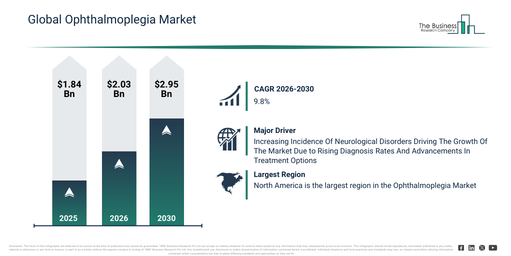
    The market for ophthalmoplegia has seen substantial expansion in its size over recent years. It is projected to expand from $1.84 billion in 2025 to $2.03 billion in 2026, with a compound annual growth rate (CAGR) of 10.1%. Several factors contributed to its historical growth, including restricted treatment choices for ophthalmoplegia, a shortage of specialized ophthalmic facilities, limited awareness regarding eye muscle disorders, a continued dependence on conventional surgical methods, and the increasing occurrence of neuromuscular conditions affecting the eyes.

    The ophthalmoplegia market is anticipated to experience substantial expansion over the coming years. It is projected to reach $2.95 billion by 2030, exhibiting a compound annual growth rate (CAGR) of 9.8%. This anticipated growth during the forecast period is driven by several factors, including breakthroughs in minimally invasive surgical procedures, the expansion of targeted pharmacological treatments, increased adoption of tele-ophthalmology, a rise in government efforts for managing rare eye disorders, and the advancement of personalized medicine and genetic diagnostics. Key developments expected during this period involve a greater embrace of minimally invasive ophthalmoplegia surgeries, the increased application of targeted drug therapies for eye muscle conditions, an intensified focus on early detection and screening, the broader implementation of tele-ophthalmology for patient observation, and heightened awareness regarding neurological and muscular eye ailments.

    Get A Free Sample Report With In-Depth Market Insights:

    https://thebusinessresearchcompany.com/sample_request?id=89959426&type=smp&name=Ophthalmoplegia%20Market%20Report%202026&utm_source=Blogs&utm_medium=Paid&utm_campaign=Nov_PR

    Ophthalmoplegia Market Opportunity Drivers: What’s Unlocking New Revenue Potential?

    The rising occurrence of neurological conditions is anticipated to drive expansion in the ophthalmoplegia market. These medical conditions impact the nervous system, encompassing the brain, spinal cord, and nerves, resulting in symptoms such as muscle feebleness, difficulties with coordination, and cognitive deficits. The heightened frequency of neurological disorders stems from genetic susceptibility, which increases an individual’s risk for conditions like Alzheimer’s and Parkinson’s, and alterations in lifestyle such as unhealthy eating habits, inactive routines, and prolonged stress, all contributing to neurodegeneration and compromised brain function. Ophthalmoplegia assists in identifying neurological disorders like Alzheimer’s disease, multiple sclerosis, and stroke by highlighting compromised eye muscle control, indicating underlying nervous system issues. Consequently, the growing prevalence of neurological disorders is fueling the growth of the ophthalmoplegia market. The increasing frequency of autoimmune conditions is projected to stimulate expansion within the ophthalmoplegia market. Autoimmune conditions are characterized by the immune system erroneously targeting healthy cells within the body, resulting in inflammation and harm to tissues. The increase in autoimmune diseases is linked to specific genetic variations that can lead to an overactive immune response, making individuals more prone to attacking their own tissues mistakenly. This genetic vulnerability, coupled with environmental elements such as infections, stress, and lifestyle aspects, contributes to the growing incidence of autoimmune conditions. When associated with autoimmune conditions, ophthalmoplegia treatment aids in uncovering underlying immune system malfunctions, allowing for precise therapies that address both muscular paralysis and the primary autoimmune disorder. Consequently, the rising prevalence of autoimmune conditions is fostering the growth of the ophthalmoplegia market.

    Ophthalmoplegia Market Segment Analysis And Revenue Potential

    The ophthalmoplegia market covered in this report is segmented –

    1) By Type: External Opthalmoplegia, Internuclear Opthalmoplegia

    2) By Treatment: Surgery, Drug Treatment

    3) By End-User: Hospitals, Clinics, Ambulatory Clinics

    Subsegments:

    1) By External Ophthalmoplegia: Chronic Progressive External Ophthalmoplegia (CPEO), Myasthenic External Ophthalmoplegia, Mitochondrial Myopathy-Associated External Ophthalmoplegia

    2) By Internuclear Ophthalmoplegia: Unilateral Internuclear Ophthalmoplegia, Bilateral Internuclear Ophthalmoplegia

    Ophthalmoplegia Market Key Players Shaping Industry Direction

    Major companies operating in the ophthalmoplegia market are Hoffmann-La Roche Ltd., AbbVie Inc., Novartis AG., Regeneron Pharmaceuticals Inc., Bausch Health Companies Inc., Sun Pharmaceutical Industries Limited, Bayer AG., Santen Pharmaceutical Co. Ltd., Oculis Holding AG., Clearside Biomedical Inc., ViGeneron GmbH, GenSight Biologics SA, EyeBio Inc., Pfizer Inc., Johnson & Johnson, Merck & Co. Inc., Eli Lilly and Company, Bristol-Myers Squibb, Amgen Inc., Vertex Pharmaceuticals Inc., Acorda Therapeutics Inc., Biogen Inc., NicOx S.A.

    View The Full Ophthalmoplegia Market Report:

    https://thebusinessresearchcompany.com/report/ophthalmoplegia-global-market-report?utm_source=Blogs&utm_medium=Paid&utm_campaign=Nov_PR

    Ophthalmoplegia Market Largest Region: Which Geography Holds The Biggest Share?

    North America was the largest region in the ophthalmoplegia market in 2025. Asia-Pacific is expected to be the fastest-growing region in the forecast period. The regions covered in the ophthalmoplegia market report are Asia-Pacific, South East Asia, Western Europe, Eastern Europe, North America, South America, Middle East, Africa.

    Reach Out To Our Team:

    The Business Research Company: https://www.thebusinessresearchcompany.com/

    Americas: +1 310-496-7795

    Asia: +44 7882 955267 & +91 8897263534

    Europe: +44 7882 955267

    Email us at: marketing@tbrc.info

    Follow us on:

    LinkedIn: https://in.linkedin.com/company/the-business-research-company

    YouTube: https://www.youtube.com/channel/UC24_fI0rV8cR5DxlCpgmyFQ

    Global Market Model: https://www.thebusinessresearchcompany.com/global-market-model
  • Ophthalmology Medical Service Market 2026 Outlook: Market Size, CAGR And Key Growth Opportunities

    Ophthalmology Medical Service Market 2026 Outlook: Market Size, CAGR And Key Growth Opportunities

    Backed by market attractiveness analysis, total addressable market sizing, company benchmarking matrices, interactive Excel dashboards, wider supply chain intelligence, emerging startup coverage, and detailed product-level insights, The Business Research Company’s 2026 market reports are designed to offer research that is more actionable and strategically valuable than ever.

    Ophthalmology Medical Service Market Forecast: Value Set To Climb From $52.17 Billion To $65.9 Billion

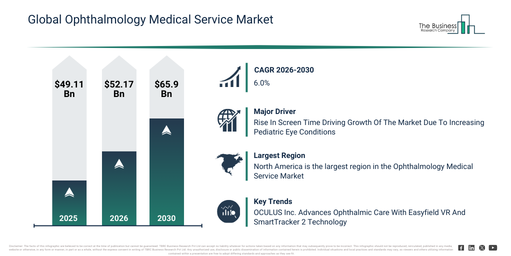
    The ophthalmology medical service market has demonstrated significant expansion in recent years. Its size is anticipated to grow from $49.11 billion in 2025 to $52.17 billion in 2026, achieving a compound annual growth rate (CAGR) of 6.2%. This historical growth can be linked to factors including the limited availability of specialized ophthalmic care, a dependence on traditional surgical methods, insufficient awareness of eye disease prevention, the increasing prevalence of cataract and glaucoma, and inadequate diagnostic infrastructure.

    The ophthalmology medical service market is projected for significant expansion in the coming years. Its valuation is set to reach $65.9 billion by 2030, demonstrating a compound annual growth rate (CAGR) of 6.0%. This anticipated expansion during the forecast period stems from various factors, including progress in imaging technologies such as OCT and fundus photography, an increase in cataract and refractive surgical procedures, the growing embrace of tele-ophthalmology, governmental initiatives promoting eye health, and the development of customized ophthalmology treatments leveraging genomics and biotechnology. Key trends anticipated during this period encompass the increasing integration of sophisticated diagnostic instruments in ophthalmology, a heightened demand for vision correction and refractive procedures, the wider application of minimally invasive surgical methods, the broadening scope of tele-ophthalmology and remote patient surveillance, and an intensified emphasis on eye care services for both pediatric and geriatric populations.

    Get A Free Sample Report With In-Depth Market Insights:

    https://thebusinessresearchcompany.com/sample_request?id=18414347&type=smp&name=Ophthalmology%20Medical%20Service%20Market%20Report%202026&utm_source=Blogs&utm_medium=Paid&utm_campaign=Nov_PR

    Ophthalmology Medical Service Market Growth Momentum: What Factors Are Shaping Demand?

    The growing occurrence of childhood eye ailments is anticipated to drive expansion within the ophthalmology medical service market in the future. These conditions encompass a broad spectrum of visual impairments and ocular diseases affecting youngsters from infancy through teenage years. An increase in digital screen exposure contributes to the surge in pediatric eye issues, resulting in ocular fatigue, dryness, and an elevated likelihood of early-onset myopia (nearsightedness). Ophthalmology medical service is vital for managing pediatric eye conditions, offering prompt diagnosis, tailored therapies, and preventative measures to foster healthy sight development in children. Consequently, the expanding incidence of pediatric eye conditions acts as a significant catalyst for the growth of the ophthalmology medical service market.

    Ophthalmology Medical Service Market Segmentation And Category Overview

    The ophthalmology medical service market covered in this report is segmented –

    1) By Type Of Services: Vision Correction Services, Diagnostic Services, Treatment Services

    2) By Product Type: Devices, Medications

    3) By Disease: Glaucoma, Cataract, Age-Related Macular Degeneration, Refractive Disorders

    4) By Age Group: Pediatric, Adult, Geriatric

    5) By End User Industry: Hospitals, Medical Institutes And Research Organizations, Healthcare Service Providers, Government And Academic Institutions

    Subsegments:

    1) By Vision Correction Services: Refractive Surgery, Eyeglasses And Contact, Implantable Lenses

    2) By Diagnostic Services: Eye Examinations And Screening, Optical Coherence Tomography (OCT), Visual Field Testing, Fundus Photography, Retinal Imaging, Fluorescein Angiography

    3) By Treatment Services: Cataract Surgery, Glaucoma Treatment, Retina Treatments, Corneal Transplant, Oculoplastic Surgery, Low Vision Rehabilitation, Pediatric Ophthalmology Treatments

    Ophthalmology Medical Service Market Trends Redefining Industry Growth

    Leading companies in the ophthalmology medical service market are concentrating on developing innovative technologies, such as SmartTracker 2 fixation tracking technology, to boost diagnostic accuracy, optimize workflows, and enhance patient comfort. SmartTracker 2 fixation tracking technology is an advanced system incorporated into ophthalmic diagnostic devices to observe and follow a patient’s eye fixation during examinations.

    Ophthalmology Medical Service Market Competitive Analysis Of Leading Industry Participants

    Major companies operating in the ophthalmology medical service market are Johnson & Johnson Vision Care Inc., Merck & Co. Inc., AbbVie Inc., Bayer AG, Novartis AG, Medtronic plc, Regeneron Pharmaceuticals Inc., Alcon Inc., Hoya Corporation, Bausch & Lomb Inc., Carl Zeiss Meditec AG, Santen Pharmaceutical Co. Ltd., Lumenis Be Ltd., Staar Surgical Company, Heidelberg Engineering GmbH, Rayner Surgical Group Limited, Iridex Corporation, Ellex Medical Lasers, Kowa Co. Ltd., TearLab Corporation.

    View The Full Ophthalmology Medical Service Market Report:

    https://thebusinessresearchcompany.com/report/ophthalmology-medical-service-global-market-report?utm_source=Blogs&utm_medium=Paid&utm_campaign=Nov_PR

    Ophthalmology Medical Service Market Regional Analysis: Which Geography Leads On Revenue?

    North America was the largest region in the ophthalmology medical service market in 2025. Asia-Pacific is expected to be the fastest-growing region in the forecast period. The regions covered in the ophthalmology medical service market report are Asia-Pacific, South East Asia, Western Europe, Eastern Europe, North America, South America, Middle East, Africa.

    Reach Out To Our Team:

    The Business Research Company: https://www.thebusinessresearchcompany.com/

    Americas: +1 310-496-7795

    Asia: +44 7882 955267 & +91 8897263534

    Europe: +44 7882 955267

    Email us at: marketing@tbrc.info

    Follow us on:

    LinkedIn: https://in.linkedin.com/company/the-business-research-company

    YouTube: https://www.youtube.com/channel/UC24_fI0rV8cR5DxlCpgmyFQ

    Global Market Model: https://www.thebusinessresearchcompany.com/global-market-model
  • Ophthalmology Contract Research Organization Market Size Growth: From $3.22 Billion In 2026 To $4.39 Billion By 2030

    Ophthalmology Contract Research Organization Market Size Growth: From $3.22 Billion In 2026 To $4.39 Billion By 2030

    Featuring market attractiveness scoring, total addressable market sizing, company benchmarking matrices, interactive Excel dashboards, deeper supply chain intelligence, emerging startup tracking, and granular product-level insights, The Business Research Company’s 2026 market reports are built to deliver research that is both more actionable and more strategically valuable.

    Ophthalmology Contract Research Organization Market Revenue Growth On Track For A 8.1% CAGR Through 2030

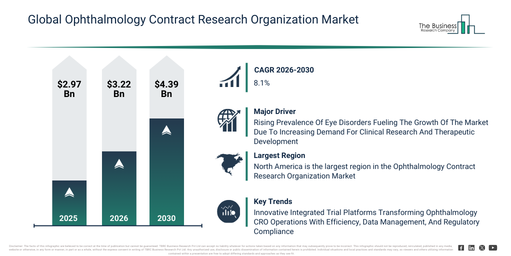
    The ophthalmology contract research organization market has experienced significant expansion in recent years. It is anticipated to increase from $2.97 billion in 2025 to $3.22 billion in 2026, achieving a compound annual growth rate (CAGR) of 8.4%. Historically, this expansion has been driven by factors including the increasing prevalence of ophthalmic diseases, heightened research and development activity in vision care, the growing complexity of clinical trials, a rising need for specialized trial expertise, and enhanced regulatory scrutiny.

    The ophthalmology contract research organization market is projected to experience substantial expansion in the coming years. This market is anticipated to reach $4.39 billion by 2030, exhibiting a compound annual growth rate (CAGR) of 8.1%. The projected expansion is linked to factors such as greater investment in gene and cell therapies for ocular ailments, an escalating need for real-world evidence examinations, the proliferation of digital platforms for trial management, a heightened emphasis on uncommon ophthalmic conditions, and the increasing worldwide scope of clinical research. Key developments expected during this period encompass a surge in the outsourcing of ophthalmic clinical trials, an increased requirement for specialized eye disease CRO services, the wider integration of advanced imaging and diagnostic tools, the broadening of international multi-center trials, and a strengthened commitment to supporting regulatory compliance.

    Get A Free Sample Report With In-Depth Market Insights:

    https://thebusinessresearchcompany.com/sample_request?id=29715109&type=smp&name=Ophthalmology%20Contract%20Research%20Organization%20Market%20Report%202026&utm_source=Blogs&utm_medium=Paid&utm_campaign=Nov_PR

    Ophthalmology Contract Research Organization Market Expansion Drivers: What’s Shaping Future Growth?

    The increasing occurrence of eye conditions is anticipated to drive the expansion of the ophthalmology contract research organization market in the future. Eye disorders encompass diverse ailments impacting the eye’s structure or function, potentially leading to visual impairment or unease. This growth in eye disorder prevalence primarily stems from an aging populace, given that age-associated conditions like cataracts, glaucoma, macular degeneration, and diabetic retinopathy are more frequently observed as people get older. Ophthalmology contract research organizations facilitate progress in treating eye disorders by offering specialized clinical research services, which hasten the creation, evaluation, and authorization of novel ophthalmic treatments. Consequently, the growing incidence of eye conditions is fueling the expansion of the ophthalmology contract research organization market.

    Ophthalmology Contract Research Organization Market Segment Outlook: Which Categories Are Growing Fastest?

    The ophthalmology contract research organization market covered in this report is segmented –

    1) By Service Type: Early Phase Development Services, Clinical Research, Laboratory Services, Regulatory Consulting Services

    2) By Therapy: Traditional Interventions, Anti-Inflammatory Interventions, Corticosteroids, Non-Steroidal Anti-Inflammatory Drugs, Other Anti-Inflammatory Interventions, Anti-Oxidative Interventions, Other Traditional Interventions, Advanced Interventions

    3) By End-User: Pharma Or Biopharma companies, Medical Device Companies, Academic Institutes

    Subsegments:

    1) By Early Phase Development Services: Preclinical Trials, Pharmacokinetics (PK) And Pharmacodynamics (PD) Studies, Toxicology Studies, First-In-Human (FIH) Studies, Formulation Development

    2) By Clinical Research: Phase I Trials, Phase II Trials, Phase III Trials, Phase IV (Post-Marketing Surveillance), Site Management, Patient Recruitment and Retention

    3) By Laboratory Services: Bioanalytical Testing, Biomarker Analysis, Central Laboratory Services, Histopathology, Genomic And Proteomic Services

    4) By Regulatory Consulting Services: Regulatory Strategy Development, Investigational New Drug Or Clinical Trial Application Preparation And Submission, Regulatory Writing And Documentation, Health Authority Meeting Support, Labeling And Compliance Consulting

    Ophthalmology Contract Research Organization Market Strategic Trends: What Defines The Next Growth Phase?

    Leading companies in the ophthalmology contract research organization market are concentrating on developing innovative solutions, such as integrated trial platforms, to streamline study execution and enhance data management efficiency. Integrated trial platforms represent unified digital systems that simplify all aspects of clinical trials, encompassing patient recruitment, data collection, and compliance, thereby assisting ophthalmology contract research organizations in improving efficiency, reducing errors, and accelerating the development of ophthalmic treatments.

    Ophthalmology Contract Research Organization Market Leading Companies And Competitive Benchmarking

    Major companies operating in the ophthalmology contract research organization market are IQVIA Holdings Inc, Eurofins Scientific SE, Syneos Health Inc, Charles River Laboratories International Inc, Parexel International Corporation, Fortrea Holdings Inc, Medpace Holdings Inc, PSI CRO AG, Worldwide Clinical Trials, The Emmes Company LLC, TFS HealthScience, QPS Holdings LLC, ProTrial Research Inc, Lexitas Pharma Services Inc, Covance Inc, Cliantha Research Limited, Iris Pharma, WuXi AppTec Co Ltd, ORA Inc, Novotech Health Holdings Pty Limited, SGS Life Sciences, ICON plc

    View The Full Ophthalmology Contract Research Organization Market Report:

    https://thebusinessresearchcompany.com/report/ophthalmology-contract-research-organization-global-market-report?utm_source=Blogs&utm_medium=Paid&utm_campaign=Nov_PR

    Ophthalmology Contract Research Organization Market Geographic Spread And Regional Opportunities

    North America was the largest region in the ophthalmology contract research organization market in 2025. Europe is expected to be the fastest-growing region in the forecast period. The regions covered in the ophthalmology contract research organization market report are Asia-Pacific, South East Asia, Western Europe, Eastern Europe, North America, South America, Middle East, Africa.

    Reach Out To Our Team:

    The Business Research Company: https://www.thebusinessresearchcompany.com/

    Americas: +1 310-496-7795

    Asia: +44 7882 955267 & +91 8897263534

    Europe: +44 7882 955267

    Email us at: marketing@tbrc.info

    Follow us on:

    LinkedIn: https://in.linkedin.com/company/the-business-research-company

    YouTube: https://www.youtube.com/channel/UC24_fI0rV8cR5DxlCpgmyFQ

    Global Market Model: https://www.thebusinessresearchcompany.com/global-market-model
  • Integrated Patient Care Systems Market Size In 2026: Regional Growth, Key Segments And Future Outlook

    Integrated Patient Care Systems Market Size In 2026: Regional Growth, Key Segments And Future Outlook

    Featuring market attractiveness scoring, total addressable market sizing, company benchmarking matrices, interactive Excel dashboards, deeper supply chain intelligence, emerging startup tracking, and granular product-level insights, The Business Research Company’s 2026 market reports are built to deliver research that is both more actionable and more strategically valuable.

    Integrated Patient Care Systems Market Forecast: Value Set To Climb From $30.19 Billion To $47.43 Billion

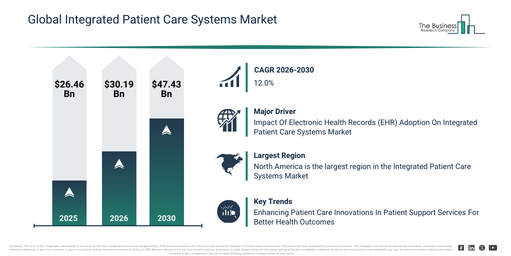
    The integrated patient care systems market has experienced swift expansion recently. Projections indicate an increase from $26.46 billion in 2025 to $30.19 billion in 2026, demonstrating a compound annual growth rate (CAGR) of 14.1%. Historically, this growth has been fueled by factors such as the splintering of healthcare delivery systems, a rising incidence of chronic diseases, the widespread implementation of electronic health records, escalating healthcare operational expenditures, and a persistent need for better clinical results.

    The integrated patient care systems market is projected to experience substantial expansion over the coming years. Its size is anticipated to reach $47.43 billion by 2030, demonstrating a compound annual growth rate (CAGR) of 12.0%. This growth trajectory throughout the forecast period can be primarily attributed to factors such as an escalating emphasis on population health management, the broadening of integrated care networks, a surge in healthcare digital transformation initiatives, an increasing need for cost-efficient care delivery, and favorable government healthcare reforms. Key trends observed within the same forecast period encompass a heightened focus on care coordination and continuity, the increasing embrace of value-based care models, a rising demand for patient-centric care pathways, the expansion of interoperable healthcare platforms, and the integration of multidisciplinary care teams.

    Get A Free Sample Report With In-Depth Market Insights:

    https://thebusinessresearchcompany.com/sample_request?id=51846617&type=smp&name=Integrated%20Patient%20Care%20Systems%20Market%20Report%202026&utm_source=Blogs&utm_medium=Paid&utm_campaign=Oct_PR

    Integrated Patient Care Systems Market Growth Catalysts And Demand Drivers

    The expanding adoption of electronic health records (EHR) is projected to stimulate the growth of the integrated patient care systems market moving forward. Electronic health records (EHR) represent digital systems that safely store and manage patient health information, allowing healthcare providers efficient access, sharing, and analysis. The escalating demand for electronic health records (EHR) systems is attributable to several factors, including improved efficiency, data centralization and accessibility, enhanced interoperability, and increased patient engagement. EHR systems are vital components of integrated healthcare systems, as they enable smoother information exchange, better care coordination, and superior patient outcomes. In integrated healthcare setups, EHR interoperability is critical for ensuring the secure and efficient transfer of patient information across various healthcare environments. For instance, in July 2024, according to the European Commission, a Belgium-based organization, the Digital Decade e Health Indicator Study indicated that the EU average access to electronic health records (EHR) via online portals rose to 79%, an increase from 72% in 2022. Consequently, the rising adoption of electronic health records (EHR) is propelling the expansion of the integrated patient care systems market.

    Integrated Patient Care Systems Market Segmentation And Category Overview

    The integrated patient care systems market covered in this report is segmented –

    1) By Component: Software, Hardware, Services

    2) By Delivery Mode: Web Or Cloud-Based Systems, On-Premise Systems, Hybrid Models

    3) By Application: Electronic Health Or Medical Records, Real-Time Healthcare, Patient Engagement, Prescription Management, Other Applications

    4) By End User: Hospitals, Clinics, Diagnostic Centers, Pharmacies, Other End Users

    Subsegments:

    1) By Software: Electronic Health Record (EHR) Systems, Patient Monitoring Software, Clinical Decision Support Systems (CDSS), Hospital Information Systems (HIS)

    2) By Hardware: Patient Monitoring Devices, Diagnostic Equipment, Medical Imaging Systems, Infusion Pumps

    3) By Services: Installation and Deployment Services, Maintenance and Support Services, Training and Consulting Services, Data Integration Services

    Integrated Patient Care Systems Market Trends Shaping Long-Term Demand

    Major companies involved in integrated patient care systems are focusing on developing innovative services, such as patient support services, to improve care coordination and increase patient engagement. Patient support services are a variety of healthcare offerings designed to provide ongoing help, resources, and information to patients, thereby assisting them in managing their health conditions more effectively. This type of service connects with multiple aspects of healthcare delivery. For instance, in July 2023, Inizio Engage, an Austrian-based pharmaceutical company, launched Patient Access Services. This is a comprehensive package created to enhance the patient experience, particularly for those living with specialty, rare, and orphan diseases. The goal of this initiative is to improve adherence to treatment and overall health outcomes by offering personalized support throughout the often complicated process of diagnosis and treatment.

    Integrated Patient Care Systems Market Competitive Analysis Of Leading Industry Participants

    Major companies operating in the integrated patient care systems market are McKesson Corporation, International Business Machines Corporation, Oracle Corporation, GE HealthCare, Koninklijke Philips N.V, Cerner Corporation, Epic Systems Corporation, Allscripts Healthcare LLC, eClinicalWorks, Siemens Healthineers, InterSystems Corporation, Medical Information Technology Inc, Computer Programs and Systems Inc, Optum Inc, Vocera Communications Inc, Advantech Co. Ltd, CareCloud Inc, Greenway Health LLC, NantHealth Inc, CureMD, GetWellNetwork Inc, PatientSafe Solutions Inc, SONIFI, Compulink Advantage

    View The Full Integrated Patient Care Systems Market Report:

    https://thebusinessresearchcompany.com/report/integrated-patient-care-systems-global-market-report?utm_source=Blogs&utm_medium=Paid&utm_campaign=Oct_PR

    Integrated Patient Care Systems Market Top Region By Revenue And Market Share

    North America was the largest region in the integrated patient care systems market in 2025. Asia-Pacific is expected to be the fastest-growing region in the forecast period. The regions covered in the integrated patient care systems market report are Asia-Pacific, South East Asia, Western Europe, Eastern Europe, North America, South America, Middle East, Africa.

    Reach Out To Our Team:

    The Business Research Company: https://www.thebusinessresearchcompany.com/

    Americas: +1 310-496-7795

    Asia: +44 7882 955267 & +91 8897263534

    Europe: +44 7882 955267

    Email us at: marketing@tbrc.info

    Follow us on:

    LinkedIn: https://in.linkedin.com/company/the-business-research-company

    YouTube: https://www.youtube.com/channel/UC24_fI0rV8cR5DxlCpgmyFQ

    Global Market Model: https://www.thebusinessresearchcompany.com/global-market-model
  • Insulin Infusion Pump Market Growth Forecast Through 2030: Market Size And Trends In 2026

    Insulin Infusion Pump Market Growth Forecast Through 2030: Market Size And Trends In 2026

    Built to provide research that’s more actionable and strategically valuable, The Business Research Company’s 2026 market reports include market attractiveness analysis, total addressable market sizing, company benchmarking matrices, interactive Excel dashboards, broader supply chain intelligence, emerging startup tracking, and in-depth product insights.

    Insulin Infusion Pump Market Revenue Growth On Track For A 10% CAGR Through 2030

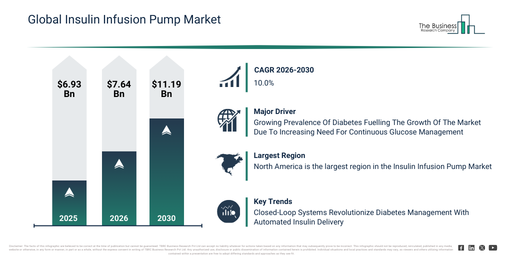
    The insulin infusion pump market size has seen rapid expansion in recent years. It is anticipated to increase from $6.93 billion in 2025 to $7.64 billion in 2026, demonstrating a compound annual growth rate (CAGR) of 10.1%. This historical growth can be attributed to several factors including the rising global prevalence of diabetes, the limitations associated with multiple daily insulin injections, advancements in insulin pump technology, heightened awareness regarding intensive insulin therapy, and the increasing adoption of self-monitoring blood glucose.

    The market for insulin infusion pumps is projected to experience swift expansion over the coming years. This market is anticipated to reach a valuation of $11.19 billion by 2030, exhibiting a compound annual growth rate (CAGR) of 10.0%. This projected growth is driven by factors such as a surge in demand for automated insulin delivery systems, a higher prevalence of both type 1 and type 2 diabetes, increased use of remote patient monitoring solutions, innovations in smart insulin pump technology, and broadened reimbursement policies for diabetes-related medical equipment. Key developments expected during this timeframe encompass a greater uptake of continuous glucose-guided insulin delivery, an increasing inclination towards wearable and tubeless insulin pumps, a significant move towards managing diabetes at home, the proliferation of closed-loop and hybrid insulin systems, and enhanced patient compliance due to more straightforward insulin delivery methods.

    Get A Free Sample Report With In-Depth Market Insights:

    https://thebusinessresearchcompany.com/sample_request?id=87441710&type=smp&name=Insulin%20Infusion%20Pump%20Market%20Report%202026&utm_source=Blogs&utm_medium=Paid&utm_campaign=Oct_PR

    Insulin Infusion Pump Market Opportunity Drivers: What’s Unlocking New Revenue Potential?

    The increasing incidence of diabetes is projected to fuel the expansion of the insulin infusion pump market in the future. This chronic medical condition is characterized by the body’s inability to adequately manage blood sugar or glucose levels. The rise in diabetes cases is primarily fueled by more inactive lifestyles and unhealthy eating patterns, which contribute to obesity, insulin resistance, and a greater occurrence of type 2 diabetes. Insulin infusion pumps assist in managing diabetes by providing constant and exact insulin doses, thereby sustaining steady blood glucose levels. These devices minimize the necessity for repeated injections, offering convenience and improved blood sugar regulation, which elevates the standard of overall diabetes care. As an illustration, in June 2024, data from the National Health Service, a UK-based government department, indicated that 3,615,330 individuals registered with a general practitioner (GP) received a diagnosis of non-diabetic hyperglycemia or pre-diabetes in 2023. This represents an 18% surge from 3,065,825 instances recorded in 2022. Consequently, the escalation in illnesses linked to lifestyle factors is anticipated to spur the expansion of the medical device safety testing market.

    Insulin Infusion Pump Market Segment Outlook: Which Categories Are Growing Fastest?

    The insulin infusion pump market covered in this report is segmented –

    1) By Type: Continuous Subcutaneous Insulin Infusion Pumps, Insulin Delivery Pens, Wearable Insulin Pumps

    2) By Technology: Remote Monitoring Systems, Closed Loop Systems, Smart Insulin Pumps

    3) By End Use: Hospitals, Home Care Settings, Diabetes Clinics

    Subsegments:

    1) By Continuous Subcutaneous Insulin Infusion (CSII) Pumps: Tubed Insulin Pumps, Tubeless Insulin Pumps

    2) By Insulin Delivery Pens: Reusable Insulin Pens, Disposable Insulin Pens, Smart Insulin Pens

    3) By Wearable Insulin Pumps: Adhesive Patch Pumps, Detachable Patch Pumps, Hybrid Closed-Loop Wearables

    Insulin Infusion Pump Market Innovation Trends Shaping Future Development

    Leading companies in the insulin infusion pumps market are concentrating on developing innovative products, such as insulin patch pump systems, to enhance convenience, improve portability, and offer patients more discreet and comfortable insulin delivery options. Insulin patch pump systems are small, wearable devices that administer insulin through the skin, eliminating the need for traditional tubing. For example, in November 2023, ViCentra BV, a Netherlands-based medical device company, introduced a hybrid closed-loop system for automated insulin delivery. This system integrates its Kaleido insulin patch pump with the Diabeloop DBLG1 algorithm and Dexcom G6 continuous glucose monitoring. This integrated artificial pancreas automatically adjusts insulin dosing in real time, substantially reducing hypoglycemia and improving glucose control and time in range for people with type 1 diabetes. The system is user-friendly, requires minimal setup without fingerstick tests, and uploads data to a cloud platform for effortless monitoring by both users and healthcare providers.

    Insulin Infusion Pump Market Leading Companies And Competitive Benchmarking

    Major companies operating in the insulin infusion pump market are Roche Holding AG, Medtronic plc, Insulet Corporation, Tandem Diabetes Care Inc., Ypsomed Holding AG, Beta Bionics Inc., SOOIL Development Co. Ltd.

    View The Full Insulin Infusion Pump Market Report:

    https://thebusinessresearchcompany.com/report/insulin-infusion-pump-global-market-report?utm_source=Blogs&utm_medium=Paid&utm_campaign=Oct_PR

    Insulin Infusion Pump Market Regional Analysis And Top Geography

    North America was the largest region in the insulin infusion pump market in 2025. Asia-Pacific is expected to be the fastest-growing region in the forecast period. The regions covered in the insulin infusion pump market report are Asia-Pacific, South East Asia, Western Europe, Eastern Europe, North America, South America, Middle East, Africa.

    Reach Out To Our Team:

    The Business Research Company: https://www.thebusinessresearchcompany.com/

    Americas: +1 310-496-7795

    Asia: +44 7882 955267 & +91 8897263534

    Europe: +44 7882 955267

    Email us at: marketing@tbrc.info

    Follow us on:

    LinkedIn: https://in.linkedin.com/company/the-business-research-company

    YouTube: https://www.youtube.com/channel/UC24_fI0rV8cR5DxlCpgmyFQ

    Global Market Model: https://www.thebusinessresearchcompany.com/global-market-model
  • Insomnia Market Analysis: $5.52 Billion Market Size In 2026 And Future Growth Prospects

    Insomnia Market Analysis: $5.52 Billion Market Size In 2026 And Future Growth Prospects

    Backed by market attractiveness analysis, total addressable market sizing, company benchmarking matrices, interactive Excel dashboards, wider supply chain intelligence, emerging startup coverage, and detailed product-level insights, The Business Research Company’s 2026 market reports are designed to offer research that is more actionable and strategically valuable than ever.

    Insomnia Market Value Growth And Long-Term Outlook

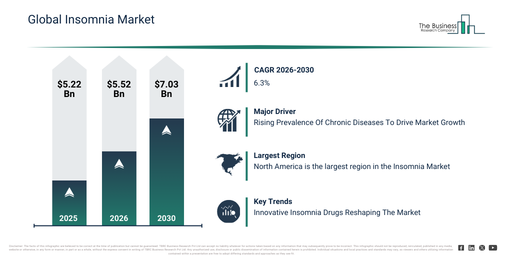
    The insomnia market has experienced significant growth in recent years. It is projected to expand from $5.22 billion in 2025 to $5.52 billion in 2026, exhibiting a compound annual growth rate (CAGR) of 5.7%. The historical period’s growth can be attributed to the rising prevalence of sleep disorders, increased stress and lifestyle changes, widespread use of benzodiazepines and sedatives, growing diagnosis rates of insomnia, and the expansion of sleep clinics and specialists.

    The insomnia market size is anticipated to experience substantial expansion over the coming years, projected to reach $7.03 billion by 2030, demonstrating a compound annual growth rate (CAGR) of 6.3%. This projected growth during the forecast period stems from factors such as the increasing uptake of digital therapeutics, a rising demand for safer and more enduring insomnia treatments, an expanding geriatric population, heightened mental health awareness, and wider accessibility to online and retail pharmacies. Key trends identified for this period encompass the growing preference for non-pharmacological insomnia interventions, an increase in the application of cognitive behavioral therapy for insomnia, a greater inclination towards personalized sleep management, the broader utilization of combination therapy methods, and an escalating recognition of chronic insomnia as a legitimate medical condition.

    Get A Free Sample Report With In-Depth Market Insights:

    https://thebusinessresearchcompany.com/sample_request?id=20025631&type=smp&name=Insomnia%20Market%20Report%202026&utm_source=Blogs&utm_medium=Paid&utm_campaign=Oct_PR

    Insomnia Market Growth Momentum: What Factors Are Shaping Demand?

    The rising occurrence of chronic diseases is anticipated to fuel the expansion of the insomnia market in the future. Chronic disease is defined as an ailment persisting for at least three months, with the potential to worsen over time. Individuals affected by long-term health problems, such as cardiovascular disorders, diabetes, and chronic pain conditions, frequently encounter insomnia or other sleep disturbances as a co-occurring condition. This escalating prevalence generates a need for effective treatments and management approaches for insomnia, thereby stimulating the market for products and services aimed at tackling sleep disorders. For instance, in April 2025, according to the Centers for Disease Control and Prevention, a US-based federal public health agency, 76.4% of US adults, representing about 194 million people, reported having one or more chronic conditions in 2023, with prevalence at 59.5% among young adults, 78.4% among midlife adults, and 93.0% among older adults. Consequently, the expanding occurrence of chronic diseases is propelling the growth of the insomnia market.

    Insomnia Market Segment Landscape: Which Areas Lead Development?

    The insomnia market covered in this report is segmented –

    1) By Therapy Type: Non-Pharmacological Therapy, Pharmacological Therapy

    2) By Drug Class: Anti-Depressants, Melatonin Antagonist, Benzodiazepines, Nonbenzodiazepines, Orexin Antagonist, Other Drug Classes

    3) By Route Of Administration: Oral, Parenteral, Other Route Of Administration

    4) By Distribution Channel: Hospital Pharmacies, Retail Pharmacies, Online Pharmacies

    Subsegments:

    1) By Non-Pharmacological Therapy: Cognitive Behavioral Therapy For Insomnia (CBT-I), Sleep Hygiene Education, Relaxation Techniques, Stimulus Control Therapy, Sleep Restriction Therapy

    2) By Pharmacological Therapy: Prescription Medications, Over-The-Counter, Herbal Supplements

    Insomnia Market Trends Redefining Industry Growth

    Major companies operating in the insomnia market are actively developing new products, including zaleplon-based insomnia drugs, to gain a competitive advantage. Zaleplon is a non-benzodiazepine sedative-hypnotic medication employed for the short-term management of insomnia. For instance, in April 2023, Bukwang Pharm Co Ltd., a South Korea-based pharmaceutical company, launched Zaledeep Cap., representing the first insomnia treatment in South Korea to utilize zaleplon as its primary ingredient. Zaleplon, an FDA-approved non-benzodiazepine drug for treating insomnia, is characterized by its rapid onset of action, short half-life, and minimal impact on daily activities. Given the increasing prevalence of insomnia cases in modern society, the introduction of Zaledeep Cap. is expected to provide a novel and effective treatment solution, aiming to improve sleep quality and overall well-being for individuals experiencing insomnia.

    Insomnia Market Industry Leaders And Competitive Landscape

    Major companies operating in the insomnia market are Pfizer Inc., Merck & Co Inc., Sanofi S.A., GlaxoSmithKline plc., Takeda Pharmaceutical Company Limited, Koninklijke Philips N.V., Viatris Inc., Astellas Pharma Inc., Sun Pharmaceutical Industries Limited, Eisai Co.Ltd., UCLA Health Insomnia Clinic, Jazz Pharmaceuticals PLC, Aurobindo Pharma Limited, Purdue Pharma LP, Cipla Inc., Dr. Reddy’s Laboratories Ltd., Zydus Lifesciences Limited, Lupin Limited, Mallinckrodt Pharmaceuticals Plc., Fisher & Paykel Healthcare Corporation Limited, ResMed Inc., Sunovion Pharmaceuticals Inc., Casper Sleep Inc., Biocodex Inc., Vanda Pharmaceuticals Inc., Pernix Therapeutics Holdings Inc., SleepScore Labs, Alpha-Stim, Neurim Pharmaceuticals Ltd., NightWare Inc.

    View The Full Insomnia Market Report:

    https://thebusinessresearchcompany.com/report/insomnia-global-market-report?utm_source=Blogs&utm_medium=Paid&utm_campaign=Oct_PR

    Insomnia Market Geographic Analysis: Where Is Demand Rising Fastest?

    North America was the largest region in the insomnia market in 2025. The regions covered in the insomnia market report are Asia-Pacific, South East Asia, Western Europe, Eastern Europe, North America, South America, Middle East, Africa.

    Reach Out To Our Team:

    The Business Research Company: https://www.thebusinessresearchcompany.com/

    Americas: +1 310-496-7795

    Asia: +44 7882 955267 & +91 8897263534

    Europe: +44 7882 955267

    Email us at: marketing@tbrc.info

    Follow us on:

    LinkedIn: https://in.linkedin.com/company/the-business-research-company

    YouTube: https://www.youtube.com/channel/UC24_fI0rV8cR5DxlCpgmyFQ

    Global Market Model: https://www.thebusinessresearchcompany.com/global-market-model
  • In-Situ Hybridization Market 2026 Market Size And Growth Forecast: Key Trends To Watch

    In-Situ Hybridization Market 2026 Market Size And Growth Forecast: Key Trends To Watch

    Featuring market attractiveness scoring, total addressable market sizing, company benchmarking matrices, interactive Excel dashboards, deeper supply chain intelligence, emerging startup tracking, and granular product-level insights, The Business Research Company’s 2026 market reports are built to deliver research that is both more actionable and more strategically valuable.

    In-Situ Hybridization Market Poised To Hit $2.76 Billion By 2030 With A 9.1% CAGR

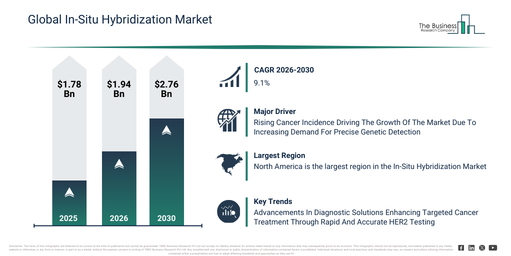
    The in-situ hybridization market has witnessed significant expansion in recent times. Its valuation is projected to increase from $1.78 billion in 2025 to $1.94 billion in 2026, achieving a compound annual growth rate (CAGR) of 9.5%. This historical growth can be attributed to the broadening of molecular pathology applications, an uptick in cancer biomarker testing, the expanded adoption of fluorescence microscopy, the rise in academic genomics research, and the increasing integration of ish in infectious disease investigations.

    The in-situ hybridization market is projected to experience robust expansion over the coming years. This market is anticipated to reach a valuation of $2.76 billion by 2030, demonstrating a compound annual growth rate (CAGR) of 9.1%. The anticipated growth during this period stems from several factors, including the escalating demand for precision oncology diagnostics, the increasing adoption of AI-driven image analysis, the widening scope of personalized medicine research, greater investments in molecular diagnostics infrastructure, and the ongoing development of advanced probe technologies. Key trends expected during the forecast period encompass the increasing uptake of multiplex in-situ hybridization (ISH) techniques, the growing deployment of automated slide scanning systems, a heightened demand for high-resolution spatial gene expression analysis, broader integration of digital pathology, and a stronger emphasis on companion diagnostics.

    Get A Free Sample Report With In-Depth Market Insights:

    https://thebusinessresearchcompany.com/sample_request?id=67614143&type=smp&name=In-Situ%20Hybridization%20Market%20Report%202026&utm_source=Blogs&utm_medium=Paid&utm_campaign=Oct_PR

    In-Situ Hybridization Market Expansion Drivers: What’s Shaping Future Growth?

    The increasing occurrence of cancer is expected to drive the expansion of the in-situ hybridization market over the next few years. Cancer is defined as a disease characterized by the uncontrolled proliferation of aberrant cells, capable of invading or metastasizing to other areas of the body. The rise in cancer diagnoses is linked to longer life expectancies, since aging provides a greater window for genetic alterations to accumulate and for individuals to encounter carcinogenic elements. In-situ hybridization (ISH) holds significant importance in managing cancer, as it facilitates the identification of particular genetic anomalies within cancerous cells. Its applications include precise diagnosis, prognosis assessment, and informing decisions for targeted therapies. For example, data from February 2024, published by the World Health Organization, a Switzerland-based intergovernmental body, indicates that new cancer cases are forecast to surpass 35 million by 2050. This represents a 77% surge from the estimated 20 million cases reported in 2022. Consequently, the escalating incidence of cancer is set to propel the expansion of the in-situ hybridization market.

    In-Situ Hybridization Market Segments: Where Is Growth Concentrated?

    The in-situ hybridization market covered in this report is segmented –

    1) By Product: Analytical Instruments, Kits And Reagents, Software And Services, Other Products

    2) By Technology: Fluorescence In Situ Hybridization, Chromogenic In Situ Hybridization, Dual-Color In Situ Hybridization

    3) By Application: Cancer Diagnosis, Cytogenetics, Developmental Biology, Infectious Diseases, Immunology, Other Applications

    4) By End User: Hospitals And Diagnostic Laboratories, Academic And Research Institutes, Contract Research Organizations, Pharmaceutical And Biotechnology Companies

    Subsegments:

    1) By Analytical Instruments: Fluorescence Microscopes, Brightfield Microscopes, Automated Slide Scanners, Hybridization Systems

    2) By Kits And Reagents: DNA Probes, RNA Probes, Labeling Kits, Detection Reagents, Pretreatment Reagents

    3) By Software And Services: Image Analysis Software, Data Management Software, Custom Probe Design Services, Sample Preparation Services

    4) By Other Products: Slides And Coverslips, Storage Reagents, Hybridization Buffers, Control Probes

    In-Situ Hybridization Market Strategic Trends: What Defines The Next Growth Phase?

    Leading entities within the in-situ hybridization market are concentrating on creating sophisticated solutions, including HER2 testing solutions, designed to assist in predicting how patients will respond to specific treatments. These HER2 testing solutions serve as diagnostic instruments for detecting the presence and quantity of the HER2 protein in cancerous cells, thereby facilitating informed decisions for targeted treatment. As an illustration, in December 2023, Cytelabs, a provider of cancer diagnostic services located in India, introduced dual in situ hybridization (DISH) testing specifically for individuals with breast cancer. This DISH technology, which has received approval from the US FDA, marks a substantial improvement in the precision of HER2 testing, a critical component for targeted breast cancer therapy. It considerably shortens the turnaround time by delivering HER2 status results typically within 24 to 48 hours, thus alleviating anxiety for patients and their relatives. The rapid provision of reliable results through DISH enables quick formulation and commencement of treatment plans. Given the vital role of HER2 status in establishing prognosis and therapeutic strategies, accurate and efficient testing remains imperative for the thorough assessment of all invasive breast cancers.

    In-Situ Hybridization Market Key Participants And Competitive Landscape

    Major companies operating in the in-situ hybridization market are F. Hoffmann-La Roche Ltd., Thermo Fisher Scientific Inc., Abbott Laboratories Inc., Danaher Corporation, Merck KGaA, Agilent Technologies Inc., PerkinElmer Inc., Bio-Rad Laboratories Inc., Qiagen NV, Bio-Techne Corporation, Leica Biosystems Nussloch GmbH, Biocare Medical LLC, BioGenex Srl, Oxford Gene Technology Inc., Creative Biolabs, Empire Genomics LLC, Abnova Corporation, BioView Ltd., Advanced Cell Diagnostics Inc., BioCat GmbH, Bio SB Inc., Genemed Biotechnologies Inc.

    View The Full In-Situ Hybridization Market Report:

    https://thebusinessresearchcompany.com/report/in-situ-hybridization-global-market-report?utm_source=Blogs&utm_medium=Paid&utm_campaign=Oct_PR

    In-Situ Hybridization Market Global Footprint: Which Region Leads The Market?

    North America was the largest region in the in-situ hybridization market in 2025. Asia-Pacific is expected to be the fastest-growing region in the forecast period. The regions covered in the in-situ hybridization market report are Asia-Pacific, South East Asia, Western Europe, Eastern Europe, North America, South America, Middle East, Africa.

    Reach Out To Our Team:

    The Business Research Company: https://www.thebusinessresearchcompany.com/

    Americas: +1 310-496-7795

    Asia: +44 7882 955267 & +91 8897263534

    Europe: +44 7882 955267

    Email us at: marketing@tbrc.info

    Follow us on:

    LinkedIn: https://in.linkedin.com/company/the-business-research-company

    YouTube: https://www.youtube.com/channel/UC24_fI0rV8cR5DxlCpgmyFQ

    Global Market Model: https://www.thebusinessresearchcompany.com/global-market-model
  • Insect Cell Culture Market Size Forecast: How The Industry Is Expected To Grow From 2026 To 2030

    Insect Cell Culture Market Size Forecast: How The Industry Is Expected To Grow From 2026 To 2030

    Built to provide research that’s more actionable and strategically valuable, The Business Research Company’s 2026 market reports include market attractiveness analysis, total addressable market sizing, company benchmarking matrices, interactive Excel dashboards, broader supply chain intelligence, emerging startup tracking, and in-depth product insights.

    Insect Cell Culture Market Size And Revenue Outlook Through 2030

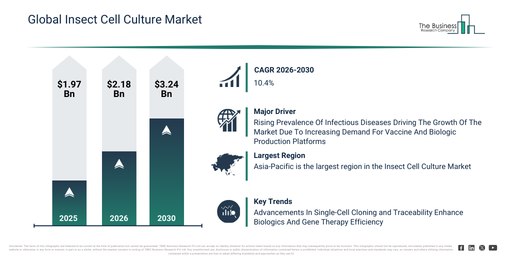
    The insect cell culture market has seen swift expansion in recent years. This market is set to expand from $1.97 billion in 2025 to $2.18 billion in 2026, achieving a compound annual growth rate (CAGR) of 10.7%. The historical increase in the market size can be linked to the rise in recombinant protein research, the increasing deployment of baculovirus expression systems, the growth in academic life science research, the expanding use of insect cells in virology studies, and the availability of sophisticated culture reagents.

    The insect cell culture market is projected for significant expansion in the coming years. This market is anticipated to reach $3.24 billion by 2030, demonstrating a compound annual growth rate (CAGR) of 10.4%. Key drivers for this growth include a surge in demand for viral vector production, the broadening of gene therapy pipelines, escalating investments in biopharmaceutical manufacturing, a heightened emphasis on scalable cell culture systems, and the wider integration of automated culture platforms. Notable trends anticipated during the forecast period encompass the increasing uptake of serum-free insect cell culture media, the growing application of insect cells in vaccine manufacturing, a burgeoning need for high-yield recombinant protein expression, the expansion of scalable bioreactor-based insect cell systems, and an intensified focus on refining process optimization and consistency.

    Get A Free Sample Report With In-Depth Market Insights:

    https://thebusinessresearchcompany.com/sample_request?id=13345117&type=smp&name=Insect%20Cell%20Culture%20Market%20Report%202026&utm_source=Blogs&utm_medium=Paid&utm_campaign=Oct_PR

    Insect Cell Culture Market Development Factors: What’s Supporting Demand?

    The increasing occurrence of infectious diseases is projected to drive the growth of the insect cell culture market going forward. These diseases are ailments triggered by microorganisms such as bacteria, viruses, fungi, or parasites, capable of transmission either directly or indirectly from one person to another, from animals to humans, or via contaminated food, water, or environmental sources. A primary factor contributing to the rise in infectious diseases is increased global travel, which accelerates the spread of pathogens across regions and populations. Insect cell culture aids in combating infectious diseases by facilitating the efficient production of vaccines, viral vectors, and recombinant proteins, thereby offering a safe and scalable platform for devising preventive and therapeutic solutions. For instance, in March 2025, the UK Health Security Agency (UKHSA), a UK-based government organization focused on protecting public health and preparing for infectious disease threats, reported that in 2024, tuberculosis (TB) cases in England increased by 13% to 5,480, up from 4,850 cases in 2023, signifying a notable year-over-year rise in incidence. Consequently, the expanding prevalence of infectious diseases is stimulating the growth of the insect cell culture market.

    Insect Cell Culture Market Segment Analysis: What Are The Core Market Categories?

    The insect cell culture market covered in this report is segmented –

    1) By Product Type: Media, Reagents, Sera, Equipment

    2) By Cell Type: S19 (Spodoptera Frugiperda), High Five (Trichoplusia Ni), Sf21 (Spodoptera Frugiperda), Drosophila Schneider 2 (s2)

    3) By Application: Biopharmaceutical Manufacturing, Gene Therapy, Tissue Culture And Engineering, Cytogenetics

    4) By End-User: Pharmaceutical And Biotechnology Companies, Academic And Research Institutes, Contract Research Organizations

    Subsegments:

    1) By Media: Growth Media, Serum-Free Media, Protein-Free Media, Chemically Defined Media, Specialty Media, Custom Media Formulations

    2) By Reagents: Attachment Factors, Dissociation Reagents, Buffers And Salts, Cryoprotectants, Antibiotics And Antimycotics, Transfection Reagents, Supplements

    3) By Sera: Fetal Bovine Serum (FBS), Insect-Derived Serum, Hybridoma Serum, Serum Substitutes, Heat-Inactivated Serum

    4) By Equipment: Bioreactors, Cell Culture Flasks And Plates, Shakers And Incubators, Centrifuges, Microscopes And Imaging Systems, Filtration Systems, Automated Cell Counters, Cryogenic Storage Systems

    Insect Cell Culture Market Transformation Trends: What Innovations Are Driving Change?

    Major corporations operating within the insect cell culture market are prioritizing advancements in insect cell culture technology, specifically focusing on single-cell cloning and traceability. This strategic emphasis aims to bolster product consistency, optimize bioprocessing efficiency, and ensure adherence to regulations for cutting-edge biologics and gene therapy applications. Single-cell cloning and traceability defines a cell culture methodology where individual cells are isolated to develop genetically homogeneous cell lines, while meticulous records of their origin, handling, and developmental history are maintained to guarantee reproducibility, quality control, and compliance with regulatory standards. An illustrative example occurred in June 2023 when Expression Systems, a company based in the US specializing in cell culture media, introduced its sf9 rv-free insect cell line, making it available for early access in research settings. This rhabdovirus-free cell line, cultured in suspension, is specifically formulated for ESF advanced chemically defined insect cell culture medium, achieving rapid proliferation, exceeding 95% viability, and reaching substantial cell densities within five days. It proves suitable for manufacturing recombinant proteins, adeno-associated viruses (AAV), and virus-like particles (VLPs), thereby supporting applications in gene therapy and viral vaccines. Furthermore, these cells are cloned using single-cell printing and come complete with comprehensive protocols, traceability information, and essential regulatory documentation.

    Insect Cell Culture Market Top Companies Driving Competitive Growth

    Major companies operating in the insect cell culture market are Thermo Fisher Scientific Inc., Danaher Corporation, Merck KGaA, GE Healthcare, Becton, Dickinson and Company, Corning Incorporated, Lonza Group Ltd., Charles River Laboratories, Sartorius AG, Wuxi Biologics, QIAGEN N.V., Eppendorf AG, Novavax Inc., Takara Bio Inc., GenScript Biotech Corporation, Promega Corporation, HiMedia Laboratories Pvt. Ltd., Cell Culture Company, Trenzyme, Proteogenix.

    View The Full Insect Cell Culture Market Report:

    https://thebusinessresearchcompany.com/report/global-insect-cell-culture-market-report?utm_source=Blogs&utm_medium=Paid&utm_campaign=Oct_PR

    Insect Cell Culture Market Regional Split: Which Areas Are Fueling Growth?

    Asia-Pacific was the largest region in the insect cell culture market in 2025, and it is expected to be the fastest-growing region in the forecast period. The regions covered in the insect cell culture market report are Asia-Pacific, South East Asia, Western Europe, Eastern Europe, North America, South America, Middle East, Africa.

    Reach Out To Our Team:

    The Business Research Company: https://www.thebusinessresearchcompany.com/

    Americas: +1 310-496-7795

    Asia: +44 7882 955267 & +91 8897263534

    Europe: +44 7882 955267

    Email us at: marketing@tbrc.info

    Follow us on:

    LinkedIn: https://in.linkedin.com/company/the-business-research-company

    YouTube: https://www.youtube.com/channel/UC24_fI0rV8cR5DxlCpgmyFQ

    Global Market Model: https://www.thebusinessresearchcompany.com/global-market-model
  • Inpatient Services Market Reaches $2390.08 Billion In 2026: Forecast And Growth Opportunities

    Inpatient Services Market Reaches $2390.08 Billion In 2026: Forecast And Growth Opportunities

    Backed by market attractiveness analysis, total addressable market sizing, company benchmarking matrices, interactive Excel dashboards, wider supply chain intelligence, emerging startup coverage, and detailed product-level insights, The Business Research Company’s 2026 market reports are designed to offer research that is more actionable and strategically valuable than ever.

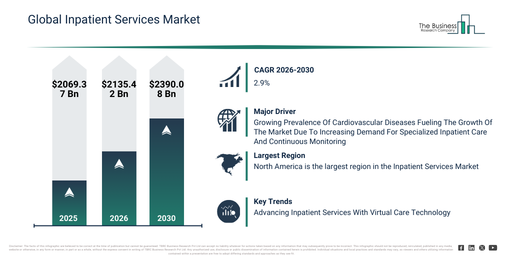
    Inpatient Services Market Growth From $2135.42 Billion In 2026 To $2390.08 Billion By 2030 At A CAGR Of 2.9%

    The inpatient services market has shown consistent growth recently. This market is projected to expand, moving from $2069.37 billion in 2025 to $2135.42 billion in 2026, demonstrating a compound annual growth rate (CAGR) of 3.2%. Historically, this expansion can be linked to factors such as an increasing elderly population, the growing occurrence of chronic illnesses, advancements in hospital facilities, a higher use of inpatient surgical procedures, and the presence of qualified healthcare personnel.

    The inpatient services market is projected to experience consistent expansion over the upcoming years, with its size anticipated to reach $2390.08 billion by 2030, demonstrating a compound annual growth rate (CAGR) of 2.9%. This expansion during the forecast period can be attributed to factors such as greater investments in smart hospital technologies, an increasing need for personalized inpatient care, the broadening of value-based care models, a rising adoption of remote patient monitoring, and an overall increase in healthcare expenditure. Key trends expected during the forecast period encompass a greater uptake of sophisticated inpatient monitoring technologies, an escalating demand for specialized acute care, the increasing integration of digital health systems, the development of multidisciplinary care approaches, and a stronger emphasis on patient-centric care delivery.

    Get A Free Sample Report With In-Depth Market Insights:

    https://thebusinessresearchcompany.com/sample_request?id=19595068&type=smp&name=Inpatient%20Services%20Market%20Report%202026&utm_source=Blogs&utm_medium=Paid&utm_campaign=Oct_PR

    Inpatient Services Market Industry Drivers: What’s Behind The Revenue Growth?

    The increasing incidence of cardiovascular diseases is anticipated to boost the expansion of the inpatient services market in the future. These diseases encompass a range of conditions impacting the heart and blood vessels, such as coronary artery disease, heart failure, arrhythmias, and stroke. The surge in cardiovascular diseases primarily stems from inactive lifestyles, which lead to obesity, compromised heart health, and a heightened susceptibility to hypertension and diabetes. Patients suffering from cardiovascular diseases increase the demand for inpatient services because they often necessitate hospitalizations for procedures, ongoing observation, and critical medical attention. This, in turn, leads to a higher utilization of hospital beds, specialized medical staff, and sophisticated treatment technologies. For example, as reported in October 2024 by the Centers for Disease Control and Prevention (CDC), a US-based federal agency, cardiovascular disease was responsible for 919,032 deaths in 2023, which represents approximately one in every three fatalities. Consequently, the expanding occurrence of cardiovascular diseases is fueling the growth of the inpatient services market.

    Inpatient Services Market Segment Breakdown: Which Categories Lead On Revenue?

    The inpatient services market covered in this report is segmented –

    1) By Service: Acute Care Services, Chronic Disease Management, Rehabilitation Services, Psychiatric Services, Palliative Care

    2) By Treatment: Cardiovascular Disorders, Cancer, Musculoskeletal Diseases, Emergency And Trauma, Respiratory Disorder, Gastroenterology, Central Nervous System Disorders, Pregnancy And Postpartum Care, Urology And Nephrology Disorders, Other Treatments

    3) By Specialty: Cardiology, Oncology, Orthopedic, Neurology, General Medicine

    4) By Ownership: Publicly Or Government-Owned, Not-For-Profit Privately Owned, For-Profit Privately Owned

    5) By End User: Patients, Healthcare Providers, Other End Users

    Subsegments:

    1) By Acute Care Services: Emergency Care, Intensive Care Unit (ICU) Services, Surgical Care, Trauma Care, Post-Operative Care

    2) By Chronic Disease Management: Diabetes Management, Cardiovascular Disease Management, Chronic Respiratory Disease Care, Renal Disease Management, Cancer Care Management

    3) By Rehabilitation Services: Physical Therapy, Occupational Therapy, Speech And Language Therapy, Neurological Rehabilitation, Orthopedic Rehabilitation

    4) By Psychiatric Services: Inpatient Psychiatric Hospitals, Substance Abuse And Detoxification Services, Geriatric Psychiatric Services, Adolescent And Child Psychiatry, Dual Diagnosis Treatment

    5) By Palliative Care: Hospice Care, Pain And Symptom Management, End-Of-Life Care, Bereavement Support, Hospital-Integrated Palliative Care Programs

    #Inpatient Services Market Growth Trends: What’s Shaping The Future Outlook?

    Major companies in the inpatient services market are prioritizing advanced technologies, such as inpatient television integration, for delivering virtual care to support remote clinical responsibilities and alleviate staff burdens. This integration allows hospitals to convert in-room televisions into comprehensive care tools capable of remote observation, patient interviews, educational delivery, and discharge coordination, thereby enhancing workflow flexibility for care teams. For example, in November 2023, Oneview Healthcare, an Ireland-based health-tech company, launched its updated Care Experience Platform (CXP), featuring the new Virtual Care API. This API enables hospitals to utilize Oneview’s patient television system for virtual inpatient care, including virtual observation and remote nursing assistance. This improvement ensures smooth integration with external virtual care solutions, allowing clinicians to initiate telehealth sessions directly from the electronic medical record (EMR). It accommodates both scheduled and on-demand video consultations, boosting care accessibility and efficiency.

    Inpatient Services Market Leading Players And Competitive Positioning

    Major companies operating in the inpatient services market are Kaiser Permanente, HCA Healthcare, Ascension Health, Fresenius Medical Care, Tenet Healthcare Corporation, Sutter Health, Mayo Clinic, Cleverland Clinic, Universal Health Services Inc., Community Health Systems (CHS), Advent Health, NewYork-Presbyterian Hospital, Ramsay Healthcare, Massachusetts General Hospital, UCLA Medical Centers, Cedars-Sinai, Mediclinic International, The Hospitals Contribution Fund of Australia Limited, The Johns Hopkins Hospital, Bangkok Dusit Medical Services, Singapore Health Services, Life Healthcare Group, Keio University (Medical Services), Burjeel Holdings, THE ROYAL MELBOURNE HOSPITAL, Fortis Healthcare, Apollo Hospitals Enterprise Ltd., West Suffolk NHS Foundation Trust, Royal Papworth Hospital NHS Foundation Trust, Max Healthcare.

    View The Full Inpatient Services Market Report:

    https://thebusinessresearchcompany.com/report/inpatient-services-global-market-report?utm_source=Blogs&utm_medium=Paid&utm_campaign=Oct_PR

    Inpatient Services Market Top Region: Where Does Most Revenue Come From?

    North America was the largest region in the inpatient services market in 2025. Asia-Pacific is expected to be the fastest-growing region in the forecast period. The regions covered in the inpatient services market report are Asia-Pacific, South East Asia, Western Europe, Eastern Europe, North America, South America, Middle East, Africa.

    Reach Out To Our Team:

    The Business Research Company: https://www.thebusinessresearchcompany.com/

    Americas: +1 310-496-7795

    Asia: +44 7882 955267 & +91 8897263534

    Europe: +44 7882 955267

    Email us at: marketing@tbrc.info

    Follow us on:

    LinkedIn: https://in.linkedin.com/company/the-business-research-company

    YouTube: https://www.youtube.com/channel/UC24_fI0rV8cR5DxlCpgmyFQ

    Global Market Model: https://www.thebusinessresearchcompany.com/global-market-model