Category: Healthcare Services

  • Infection Control Market 2026: Market Size, Growth Drivers And Emerging Opportunities

    Infection Control Market 2026: Market Size, Growth Drivers And Emerging Opportunities

    Built to provide research that’s more actionable and strategically valuable, The Business Research Company’s 2026 market reports include market attractiveness analysis, total addressable market sizing, company benchmarking matrices, interactive Excel dashboards, broader supply chain intelligence, emerging startup tracking, and in-depth product insights.

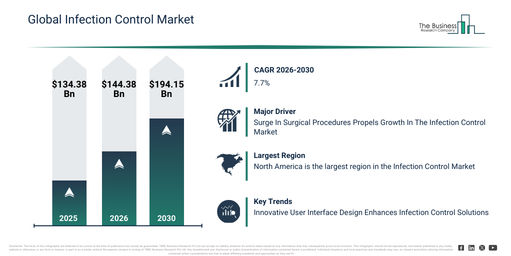
    Infection Control Market Set To Climb From $144.38 Billion In 2026 To $194.15 Billion By 2030

    The infection control market size has experienced significant expansion in recent years. This market is projected to grow from $134.38 billion in 2025 to $144.38 billion in 2026, achieving a compound annual growth rate (CAGR) of 7.4%. Historically, this growth can be attributed to factors such as an increase in hospital-acquired infections, a rising number of surgical procedures, the expansion of healthcare infrastructure, regulatory mandates for hygiene standards, and greater awareness of cross-contamination risks.

    The infection control market size is projected to experience substantial expansion over the coming years. It is anticipated to grow to $194.15 billion in 2030, exhibiting a compound annual growth rate (CAGR) of 7.7%. The expansion during the forecast period can be attributed to the ongoing threat of infectious disease outbreaks, the broadening of healthcare facilities in emerging markets, an escalating demand for preventive healthcare practices, more stringent infection control regulations, and the proliferation of outpatient and ambulatory care settings. Significant trends observed for the forecast period include a heightened focus on the prevention of hospital-acquired infections, an increasing demand for single-use and disposable products, the growing adoption of advanced sterilization techniques, the extension of infection control protocols beyond hospitals, and increased investment in staff training and compliance.

    Get A Free Sample Report With In-Depth Market Insights:

    https://thebusinessresearchcompany.com/sample_request?id=64678372&type=smp&name=Infection%20Control%20Market%20Report%202026&utm_source=Blogs&utm_medium=Paid&utm_campaign=Oct_PR

    Infection Control Market Development Factors: What’s Supporting Demand?

    The rising number of surgical procedures is projected to stimulate the expansion of the infection control market. A surgical procedure is defined as a medical intervention or operation performed by a skilled surgeon or medical professional to treat an ailment, alleviate a health condition, or repair a bodily structure. The increasing volume of these procedures intensifies the necessity for thorough sterilization and disinfection practices for surgical instruments, equipment, and operating rooms, thereby promoting the adoption of infection control products and services. For instance, in August 2023, according to The Aesthetic Society, a US-based organization of plastic surgery and cosmetic medicine, Americans collectively spent over $11.8 billion on aesthetic procedures, marking a 2% rise from the previous year. Thus, the growth in surgical procedures is acting as a key driver for the infection control market.

    Infection Control Market Segments: Where Is Growth Concentrated?

    The infection control market covered in this report is segmented –

    1) By Type: Disinfectors, Sterilization, Equipment, Consumables And Accessories, Services

    2) By Distribution Channel: Direct Tender, Retail Sales, Third Party Distributors

    3) By Application: Surgical Instruments, Endoscopes, Ultrasound Probes, Other Applications

    4) By End User: Hospitals And Clinics, Medical Device Companies, Pharmaceutical Companies, Life Science Industry, Food Industry, Other End Users

    Subsegments:

    1) By Disinfectors: Surface Disinfectors, Automated Disinfectors, Chemical Disinfectors

    2) By Sterilization: Steam Sterilizers, Ethylene Oxide Sterilizers, Hydrogen Peroxide Sterilizers

    3) By Equipment: Autoclaves, Washer-Disinfectors, Ultraviolet (UV) Sterilizers

    4) By Consumables and Accessories: Sterilization Pouches, Disinfection Wipes, Cleaning Agents

    5) By Services: Equipment Maintenance, Consulting Services, Training And Education Services

    Infection Control Market Transformation Trends: What Innovations Are Driving Change?

    Companies operating in the infection control market are prioritizing the development of intuitive user interface designs, enabling healthcare professionals to effortlessly access tools for monitoring cleanliness and tracking infection rates, thereby enhancing patient safety and operational efficiency. Intuitive design focuses on creating products or interfaces that are user-friendly and straightforward, minimizing the need for extensive instructions or prior knowledge. As an illustration, in January 2024, ICP Medical, an infection prevention company based in the US, introduced an updated website aimed at improving user experience while reflecting its mission, “Helping Those Who Help Others.” This modernized platform consolidates ICP Medical’s range of infection control products, such as Rapid Refresh quick-change privacy curtains and the BootieButler automatic shoe cover system, functioning as a convenient “one-stop shop” for clientele. The website, aligning with TEAM Technologies’ branding, is customized for the healthcare, industrial, and government sectors, featuring an easy-to-navigate layout. Its primary features encompass seamless e-commerce, comprehensive product views, FAQs, downloadable materials, and informative instructional videos to simplify the procurement process. Furthermore, a specific privacy curtain sample page displays various patterns and styles, emphasizing ICP Medical’s commitment to providing accessible and effective infection prevention solutions.

    Infection Control Market Key Participants And Competitive Landscape

    Major companies operating in the infection control market are Belimed AG, 3M Company, Ecolab Inc., Advanced Sterilization Products Services Inc., Getinge AB, Matachana Group, Sotera Health Inc., Steris plc., Reckitt Benckiser Group plc., Pal International, Metrex Research LLC, Stryker Corporation, B. Braun Melsungen AG, Olympus Corporation, Cantel Medical Corporation, MELAG Medizintechnik GmbH & Co. KG, Becton Dickinson and Company, Sterigenics International LLC, Bioquell Inc., Sterilmed Inc., Conmed Corporation, Johnson & Johnson

    View The Full Infection Control Market Report:

    https://thebusinessresearchcompany.com/report/infection-control-global-market-report?utm_source=Blogs&utm_medium=Paid&utm_campaign=Oct_PR

    Infection Control Market Top Region: Where Does Most Revenue Come From?

    North America was the largest region in the infection control market in 2025.Asia-Pacific is expected to be the fastest-growing region in the global infection control market report during the forecast period. The regions covered in the infection control market report are Asia-Pacific, South East Asia, Western Europe, Eastern Europe, North America, South America, Middle East, Africa.

    Reach Out To Our Team:

    The Business Research Company: https://www.thebusinessresearchcompany.com/

    Americas: +1 310-496-7795

    Asia: +44 7882 955267 & +91 8897263534

    Europe: +44 7882 955267

    Email us at: marketing@tbrc.info

    Follow us on:

    LinkedIn: https://in.linkedin.com/company/the-business-research-company

    YouTube: https://www.youtube.com/channel/UC24_fI0rV8cR5DxlCpgmyFQ

    Global Market Model: https://www.thebusinessresearchcompany.com/global-market-model
  • Indwelling Catheters Market Set To Expand From $7.21 Billion In 2026: Growth Outlook Through 2030

    Indwelling Catheters Market Set To Expand From $7.21 Billion In 2026: Growth Outlook Through 2030

    Backed by market attractiveness analysis, total addressable market sizing, company benchmarking matrices, interactive Excel dashboards, wider supply chain intelligence, emerging startup coverage, and detailed product-level insights, The Business Research Company’s 2026 market reports are designed to offer research that is more actionable and strategically valuable than ever.

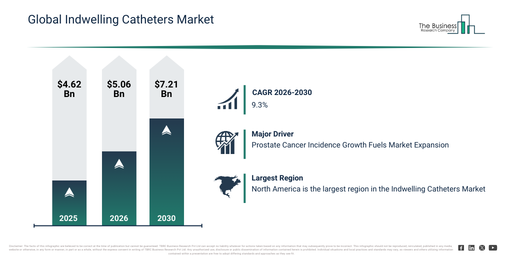
    Indwelling Catheters Market Forecast: Value Set To Climb From $5.06 Billion To $7.21 Billion

    The indwelling catheters market has shown significant growth in recent years. This market is expected to expand from $4.62 billion in 2025 to $5.06 billion in 2026, achieving a compound annual growth rate (CAGR) of 9.6%. Historically, this growth has been influenced by the increasing occurrence of urinary disorders, a rise in surgical procedures, an expanding hospitalized patient demographic, broader acceptance of foley catheters, and advancements in the core materials used for catheters.

    The indwelling catheters market is projected to experience robust expansion in the coming years. By 2030, its valuation is anticipated to reach $7.21 billion, demonstrating a compound annual growth rate (CAGR) of 9.3%. This expansion over the forecast period stems from factors such as an aging population, a growing need for chronic care management, the increased uptake of home healthcare services, improvements in catheter materials through technology, and heightened understanding regarding the prevention of catheter-associated infections. Key trends during this period are expected to encompass a heightened demand for long-term urinary care, a greater preference for silicone-based catheters, a stronger emphasis on infection prevention and patient safety, the broader application of catheters in home healthcare settings, and novel product developments aimed at enhancing patient comfort.

    Get A Free Sample Report With In-Depth Market Insights:

    https://thebusinessresearchcompany.com/sample_request?id=79367422&type=smp&name=Indwelling%20Catheters%20Market%20Report%202026&utm_source=Blogs&utm_medium=Paid&utm_campaign=Oct_PR

    Indwelling Catheters Market Industry Drivers: What’s Behind The Revenue Growth?

    The rising occurrence of prostate cancer is anticipated to stimulate the expansion of the indwelling catheters market in the coming years. This condition involves the unchecked proliferation of cells within the prostate gland, which may then extend beyond its original confines. Several factors contribute to this growing prevalence, including an older demographic, advancements in diagnostic methods, exposure to environmental elements, dietary habits, and inherent genetic susceptibilities observed in specific ethnic communities. These catheters are vital in prostate cancer management, offering an effective means for urinary drainage in individuals who suffer from urinary retention or blockages resulting from the tumor’s impact on the prostate. As an illustration, data from January 2023 provided by the American Cancer Society, a non-profit organization based in the US, indicates that new prostate cancer diagnoses in the US rose from 268,490 in 2022 to 288,300 in 2023. Fatalities linked to prostate cancer also saw a minor increase, moving from 34,500 in 2022 to 34,700 in 2023. Consequently, the rising occurrence of prostate cancer is a key factor boosting the expansion of the indwelling catheters market.

    Indwelling Catheters Market Segment Analysis: What Are The Core Market Categories?

    The indwelling catheters market covered in this report is segmented –

    1) By Type: Transurethral Catheters, Suprapubic Catheters

    2) By Material: Latex, Silicone, Polyvinyl Chloride (Pvc)

    3) By Application: Urinary Retention, Urinary Incontinence, Post Surgery, Other Applications

    4) By End-User: Hospitals And Clinics, Ambulatory Surgical Centers (ASCs)

    Subsegments:

    1) By Transurethral Catheters: Foley Catheters, External Male Catheters, Internal Male Catheters, Pediatric Transurethral Catheters

    2) By Suprapubic Catheters: Disposable Suprapubic Catheters, Reusable Suprapubic Catheters, Pediatric Suprapubic Catheters

    Indwelling Catheters Market Top Companies Driving Competitive Growth

    Major companies operating in the indwelling catheters market are Cardinal Health Inc., Medline Industries Inc., Becton, Dickinson, and Company, Coloplast Corp., Teleflex Incorporated, Cook Medical LLC, B. Braun Medical Inc., ConvaTec Inc., Amsino International Inc., Sterimed Medical Devices Pvt. Ltd., Angiplast Pvt. Ltd., Mais India Medical Devices, Bactiguard AB, GPC Medical Ltd., Rocket Medical plc, Nikotech Pvt. Ltd., Ribbel International Ltd., Poiesis Medical LLC, Manish Medi Innovation

    View The Full Indwelling Catheters Market Report:

    https://thebusinessresearchcompany.com/report/indwelling-catheters-global-market-report?utm_source=Blogs&utm_medium=Paid&utm_campaign=Oct_PR

    Indwelling Catheters Market Regional Breakdown: Where Is Demand Concentrated?

    North America was the largest region in the indwelling catheters market in 2025. The regions covered in the indwelling catheters market report are Asia-Pacific, South East Asia, Western Europe, Eastern Europe, North America, South America, Middle East, Africa.

    Reach Out To Our Team:

    The Business Research Company: https://www.thebusinessresearchcompany.com/

    Americas: +1 310-496-7795

    Asia: +44 7882 955267 & +91 8897263534

    Europe: +44 7882 955267

    Email us at: marketing@tbrc.info

    Follow us on:

    LinkedIn: https://in.linkedin.com/company/the-business-research-company

    YouTube: https://www.youtube.com/channel/UC24_fI0rV8cR5DxlCpgmyFQ

    Global Market Model: https://www.thebusinessresearchcompany.com/global-market-model
  • Induced Pluripotent Stem Cell (iPSC) Market Size And Growth In 2026: Key Factors Shaping Future Demand

    Induced Pluripotent Stem Cell (iPSC) Market Size And Growth In 2026: Key Factors Shaping Future Demand

    Featuring market attractiveness scoring, total addressable market sizing, company benchmarking matrices, interactive Excel dashboards, deeper supply chain intelligence, emerging startup tracking, and granular product-level insights, The Business Research Company’s 2026 market reports are built to deliver research that is both more actionable and more strategically valuable.

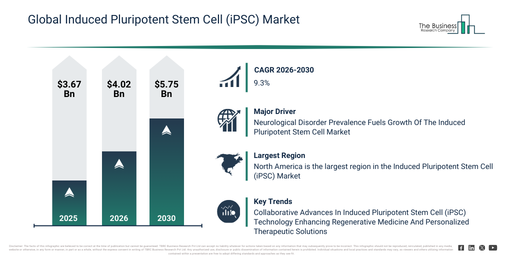
    Induced Pluripotent Stem Cell (iPSC) Market Revenue Growth On Track For A 9.3% CAGR Through 2030

    The induced pluripotent stem cell (ipsc) market has demonstrated significant expansion in recent times. Projections indicate its expansion from $3.67 billion in 2025 to $4.02 billion in 2026, achieving a compound annual growth rate (CAGR) of 9.5%. Historically, this growth is linked to breakthroughs in cellular reprogramming research, ethical concerns surrounding embryonic stem cells, enhanced funding for stem cell research, an increase in academic research collaborations, and the rising prevalence of chronic and degenerative diseases.

    The induced pluripotent stem cell (ipsc) market size is projected to experience substantial growth in the upcoming years, expanding to $5.75 billion by 2030 at a compound annual growth rate (CAGR) of 9.3%. This growth during the forecast period can be attributed to the broadening scope of regenerative medicine applications, a rising demand for personalized therapies, increasing investment in cell and gene therapy, the growing adoption of ipscs in neurological and cardiac research, and favorable regulatory support for advanced therapies. Key trends influencing the forecast period include the expanding use of ipscs in disease modeling, their increasing integration into drug discovery and toxicity testing, the proliferation of patient-specific cell line development, a heightened focus on ethical alternatives to embryonic stem cells, and ongoing advancements in reprogramming efficiency and cell stability.

    Get A Free Sample Report With In-Depth Market Insights:

    https://thebusinessresearchcompany.com/sample_request?id=2515&type=smp&name=Induced%20Pluripotent%20Stem%20Cell%20%28iPSC%29%20Market%20Report%202026&utm_source=Blogs&utm_medium=Paid&utm_campaign=Oct_PR

    Induced Pluripotent Stem Cell (iPSC) Market Growth Factors: What’s Supporting Expansion?

    The escalating occurrence of neurological conditions is expected to propel the growth of the induced pluripotent stem cell market moving forward. A neurological disorder refers to a medical ailment affecting the nervous system, including the brain, spinal cord, and nerves. Common examples include acute spinal cord injury, Alzheimer’s disease, and Amyotrophic Lateral Sclerosis (ALS). Pluripotent stem cells offer the potential to study disease mechanisms and facilitate drug testing, thereby providing insights into the causes of neurological disorders and assisting in the development of regenerative therapies for conditions like Parkinson’s and Alzheimer’s disease. For instance, in October 2023, the World Federation of Neurology (WFN), a UK-based international nonprofit neurological organization, reported that over 40% of the global population was living with a neurological condition, and the overall neurological disease burden is projected to nearly double by 2050. Therefore, the increasing prevalence of neurological disorders is driving the growth of the induced pluripotent stem cell market.

    Induced Pluripotent Stem Cell (iPSC) Market Segment Breakdown: Which Categories Lead On Revenue?

    The induced pluripotent stem cell (ipsc) market covered in this report is segmented –

    1) By Derived Cell Type: Hepatocytes, Fibroblasts, Keratinocytes, Amniotic Cells, Other Derived Cell Types

    2) By Application: Academic Research, Drug Discovery And Toxicity Studies, Regenerative Medicine, Cell And Gene Therapy

    3) By End-User: Hospitals, Research Laboratories

    Subsegments:

    1) By Hepatocytes: iPSC-Derived Liver Cells For Drug Toxicity Testing, Disease Modeling And Regenerative Therapies

    2) By Fibroblasts: iPSC-Derived Skin Cells For Wound Healing And Tissue Repair, Fibroblast-Based Disease Research

    3) By Keratinocytes: iPSC-Derived Skin Cells For Dermatological Research, Skin Regeneration Therapies

    4) By Amniotic Cells: iPSC-Derived Cells For Prenatal Research, Amniotic Fluid-Based Regenerative Applications

    5) By Other Derived Cell Types: Neurons For Neurological Disease Modeling, Cardiomyocytes For Heart Disease Studies, Endothelial Cells For Vascular Research

    Induced Pluripotent Stem Cell (iPSC) Market Industry Trends: What’s Reshaping Demand?

    Key players in the Induced Pluripotent Stem Cell (iPSC) market are partnering to push iPSC Technology forward, aiming to boost regenerative medicine, refine disease modeling, speed up drug discovery, and create tailored therapeutic options. Induced Pluripotent Stem Cell (iPSC) technology involves scientific methods to revert adult somatic cells (like skin or blood cells) to a pluripotent condition, enabling them to transform into any body cell type. As an example, in April 2024, SCG Cell Therapy Pte Ltd, a biotechnology firm from Singapore, along with the Agency for Science, Technology and Research, a Singaporean statutory board, established joint laboratories focused on progressing cellular immunotherapies. This venture is backed by nearly S$30 million, highlighting Singapore’s dedication to improving biotechnology and healthcare solutions. The partnership seeks to establish scalable production methods for GMP-grade iPSC products, tackling the difficulties of moving lab breakthroughs into practical clinical treatments.

    Induced Pluripotent Stem Cell (iPSC) Market Leading Players And Competitive Positioning

    Major companies operating in the induced pluripotent stem cell (ipsc) market are FUJIFILM Holdings Corporation (FUJIFILM Cellular Dynamics, Inc), Thermo Fisher Scientific, Inc, Takara Bio Inc, Lonza Group AG, Astellas Pharma Inc, ViaCyte, Inc, Ncardia, REPROCELL USA, Inc, Japan Tissue Engineering Co., Ltd, Merck KGaA, Cynata Therapeutics Limited, Dainippon Sumitomo Pharma, Shenzhen Bioscience, Shanghai Cell Therapy Group, Car-T Bio, JW therapeutics, Fosun Kite Biotechnology, Shanghai UniCar Therapy, SEED Biosciences SA, Cellerix, CellGenix, NsGene, TiGenix, Renuron Group, Smart Cells, Genenta Science, Biocad Rf, Selvita, Mabion, Pure Biologics, OncoArendi Therapeutics, Proteon Pharmaceuticals, Parexel, BrainStorm Cell Therapeutics, Cellular Biomedicine Group, Pluristem Therapeutics, Gamida Cell, Caladrius Biosciences, BioCanRx, CellCAN, CCRM, C3i, BioCells Argentina, Stem Cells, Royan Stem Cell Technology Co., Next BioSciences, CryoSave, BioHeart

    View The Full Induced Pluripotent Stem Cell (iPSC) Market Report:

    https://thebusinessresearchcompany.com/report/Induced-Pluripotent-Stem-Cell-Global-Market-Report?utm_source=Blogs&utm_medium=Paid&utm_campaign=Oct_PR

    Induced Pluripotent Stem Cell (iPSC) Market Geographic Landscape: Which Region Leads Industry Growth?

    North America was the largest region in the induced pluripotent stem cell (IPSC) market in 2025. Western Europe was the second largest region in the global induced pluripotent stem cell (IPSC) market share. The regions covered in the induced pluripotent stem cell (ipsc) market report are Asia-Pacific, South East Asia, Western Europe, Eastern Europe, North America, South America, Middle East, Africa.

    Reach Out To Our Team:

    The Business Research Company: https://www.thebusinessresearchcompany.com/

    Americas: +1 310-496-7795

    Asia: +44 7882 955267 & +91 8897263534

    Europe: +44 7882 955267

    Email us at: marketing@tbrc.info

    Follow us on:

    LinkedIn: https://in.linkedin.com/company/the-business-research-company

    YouTube: https://www.youtube.com/channel/UC24_fI0rV8cR5DxlCpgmyFQ

    Global Market Model: https://www.thebusinessresearchcompany.com/global-market-model
  • Inadequately Controlled Type-II Diabetes Treatment Market Forecast 2026–2030: Market Size, Trends And Growth Opportunities

    Inadequately Controlled Type-II Diabetes Treatment Market Forecast 2026–2030: Market Size, Trends And Growth Opportunities

    Built to provide research that’s more actionable and strategically valuable, The Business Research Company’s 2026 market reports include market attractiveness analysis, total addressable market sizing, company benchmarking matrices, interactive Excel dashboards, broader supply chain intelligence, emerging startup tracking, and in-depth product insights.

    Inadequately Controlled Type-II Diabetes Treatment Market Value Growth And Long-Term Outlook

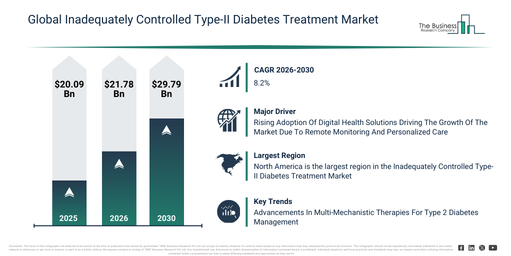
    The inadequately controlled type-ii diabetes treatment market size has seen robust expansion in recent years. It is anticipated to grow from $20.09 billion in 2025 to $21.78 billion in 2026, demonstrating a compound annual growth rate (CAGR) of 8.4%. This historical growth can be linked to the increasing global occurrence of type-ii diabetes, the broad utilization of first-line oral treatments, enhanced awareness of diabetes complications, the broadening of endocrinology care provisions, and the availability of various classes of drugs.

    The market for inadequately controlled type-ii diabetes treatment is projected to experience substantial expansion in the coming years. This sector is anticipated to swell to $29.79 billion by 2030, exhibiting a compound annual growth rate (CAGR) of 8.2%. The anticipated growth during this period stems from various factors, including the increasing need for sophisticated glucose regulation therapies, the growing uptake of GLP-1 and SGLT2 inhibitors, the broader implementation of personalized medicine strategies, the expanding application of digital health solutions in managing diabetes, and a heightened emphasis on mitigating long-term health issues. Key developments expected over the forecast horizon encompass the wider acceptance of combination drug treatments, the increased application of extended-release injectable medications, the deeper integration of digital tools for glucose monitoring, the diversification of customized diabetes treatment plans, and an improved concentration on remedies that boost patient compliance.

    Get A Free Sample Report With In-Depth Market Insights:

    https://thebusinessresearchcompany.com/sample_request?id=86405404&type=smp&name=Inadequately%20Controlled%20Type-II%20Diabetes%20Treatment%20Market%20Report%202026&utm_source=Blogs&utm_medium=Paid&utm_campaign=Oct_PR

    Inadequately Controlled Type-II Diabetes Treatment Market Demand Drivers: What’s Powering Industry Growth?

    The increasing integration of digital health solutions is projected to fuel the expansion of the inadequately controlled type-II diabetes treatment market in the future. Digital health solutions involve leveraging digital technologies to enhance healthcare delivery, patient results, and comprehensive health management. The uptake of these solutions is growing because they offer remote and convenient access to healthcare services, improving patient participation and the efficiency of care. For example, in April 2023, FAIR Health Inc., a US-based non-profit organization, reported a 7.3% national increase in telehealth usage. Thus, the escalating adoption of digital health solutions is propelling the growth of the inadequately controlled type II diabetes treatment market.

    Inadequately Controlled Type-II Diabetes Treatment Market Segmentation: How Does The Market Break Down By Category?

    The inadequately controlled type-ii diabetes treatment market covered in this report is segmented –

    1) By Treatment Type: Oral Medications, Insulin Therapy, Lifestyle Modifications, Combination Therapy, Alternative Therapies

    2) By Drug Class: Insulin, GLP-1 Receptor Agonists, SGLT2 Inhibitors, DPP-4 Inhibitors, Sulfonylureas, Thiazolidinediones, Other Drug Classes

    3) By Route Of Administration: Oral, Subcutaneous, Intravenous, Transdermal, Inhalation

    4) By Patient Demographics: Adults, Elderly, Pediatric

    5) By Distribution Channel: Retail Pharmacies, Online Pharmacies, Hospitals And Clinics, Direct-To-Consumer (DTC) Services

    Subsegments:

    1) By Oral Medications: Metformin, Sulfonylureas, DPP-4 Inhibitors, SGLT2 Inhibitors, Thiazolidinediones, Meglitinides, Alpha-Glucosidase Inhibitors

    2) By Insulin Therapy: Rapid-Acting Insulin, Short-Acting Insulin, Intermediate-Acting Insulin, Long-Acting Insulin, Ultra-Long-Acting Insulin, Premixed Insulin

    3) By Lifestyle Modifications: Dietary Management, Physical Activity Programs, Weight Management, Behavioral Therapy, Patient Education And Counseling

    4) By Combination Therapy: Oral–Oral Combinations, Oral–Insulin Combinations, Oral–Injectable Combinations

    5) By Alternative Therapies: Herbal Supplements, Nutraceuticals, Acupuncture, Yoga And Mind-Body Practices, Other Complementary Approaches

    Inadequately Controlled Type-II Diabetes Treatment Market Innovation Trends: What Developments Are Reshaping The Industry?

    Leading companies are active in the inadequately controlled type-II diabetes treatment market, concentrating on developing innovative therapies like triple-drug fixed-dose combinations. These allow for once-daily dosing to target multiple pathophysiologic mechanisms of type 2 diabetes and enhance patient adherence by reducing pill burden. A triple-drug fixed-dose combination (FDC) is defined as a single pharmaceutical capsule that integrates three active drugs in predetermined doses, designed for concurrent intake to achieve a complementary mechanism of action for patients whose condition is not adequately managed by monotherapy or dual therapy. For example, in October 2023, Glenmark Pharmaceuticals Limited, an India-based company specializing in specialty and generic medicines, launched Zita DM. This triple-drug fixed-dose combination (FDC) of teneligliptin, dapagliflozin, and metformin is intended for adults with type 2 diabetes and comorbidities, combining three complementary mechanisms of action: metformin lowers hepatic glucose production and improves insulin sensitivity, and teneligliptin boosts glucose-dependent insulin secretion. Additionally, it provides improved early therapy intensification for inadequately controlled type 2 diabetes, along with overall better treatment adherence and cost-effectiveness by consolidating three drugs into a single tablet.

    Inadequately Controlled Type-II Diabetes Treatment Market Competitive Overview And Top Companies

    Major companies operating in the inadequately controlled type-ii diabetes treatment market are Johnson & Johnson, Merck & Co. Inc., Pfizer Inc., Bayer AG, Sanofi S.A., Novartis AG, AstraZeneca PLC, Bristol Myers Squibb Company, GSK plc, Eli Lilly and Company, Novo Nordisk A/S, Takeda Pharmaceutical Company Limited, Amgen Inc., Gilead Sciences Inc., Teva Pharmaceutical Industries Ltd., Regeneron Pharmaceuticals, Inc., Incyte Corporation, Zylig Lifesciences, Boehringer Ingelheim GmbH, Oramed Pharmaceuticals Inc.

    View The Full Inadequately Controlled Type-II Diabetes Treatment Market Report:

    https://thebusinessresearchcompany.com/report/inadequately-controlled-type-ii-diabetes-treatment-global-market-report?utm_source=Blogs&utm_medium=Paid&utm_campaign=Oct_PR

    Inadequately Controlled Type-II Diabetes Treatment Market Largest Region: Which Geography Holds The Biggest Share?

    North America was the largest region in inadequately controlled type-II diabetes treatment market in 2025. Asia-Pacific is expected to be the fastest-growing region in the forecast period. The regions covered in the inadequately controlled type-ii diabetes treatment market report are Asia-Pacific, South East Asia, Western Europe, Eastern Europe, North America, South America, Middle East, Africa.

    Reach Out To Our Team:

    The Business Research Company: https://www.thebusinessresearchcompany.com/

    Americas: +1 310-496-7795

    Asia: +44 7882 955267 & +91 8897263534

    Europe: +44 7882 955267

    Email us at: marketing@tbrc.info

    Follow us on:

    LinkedIn: https://in.linkedin.com/company/the-business-research-company

    YouTube: https://www.youtube.com/channel/UC24_fI0rV8cR5DxlCpgmyFQ

    Global Market Model: https://www.thebusinessresearchcompany.com/global-market-model
  • In Vivo Contract Research Organization Market Size Reaches $5.68 Billion In 2026: What Is Driving Growth?

    In Vivo Contract Research Organization Market Size Reaches $5.68 Billion In 2026: What Is Driving Growth?

    Backed by market attractiveness analysis, total addressable market sizing, company benchmarking matrices, interactive Excel dashboards, wider supply chain intelligence, emerging startup coverage, and detailed product-level insights, The Business Research Company’s 2026 market reports are designed to offer research that is more actionable and strategically valuable than ever.

    In Vivo Contract Research Organization Market Poised To Hit $7.77 Billion By 2030 With A 8.1% CAGR

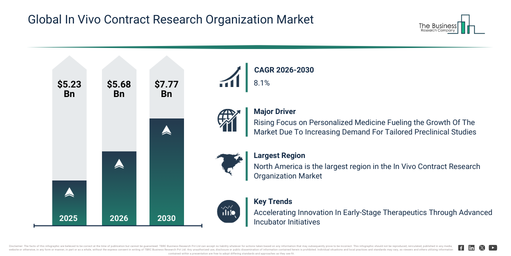
    The in vivo contract research organization market has experienced robust expansion in recent years. Its valuation is set to rise from $5.23 billion in 2025 to $5.68 billion in 2026, reflecting a compound annual growth rate (CAGR) of 8.6%. The growth observed historically is linked to factors such as increasing pharmaceutical R&D expenditure, the enlargement of biotechnology pipelines, the escalating intricacy of drug development processes, more stringent regulatory mandates for preclinical data, and the accessibility of advanced animal models.

    The in vivo contract research organization market is projected to experience substantial expansion in the coming years, reaching a valuation of $7.77 billion by 2030, driven by a compound annual growth rate (CAGR) of 8.1%. This anticipated growth during the forecast period stems from factors such as the heightened need for quicker drug development timelines, the increasing application of sophisticated in vivo disease models, the expansion of research into oncology and rare diseases, the growing integration of AI-enabled preclinical analytics, and stricter regulatory oversight of safety data. Key trends expected over this period involve a rise in the outsourcing of preclinical research activities, a growing requirement for specialized disease models, the wider adoption of GLP-compliant toxicology studies, the broadening of integrated preclinical service offerings, and a greater emphasis on ensuring data quality and reproducibility.

    Get A Free Sample Report With In-Depth Market Insights:

    https://thebusinessresearchcompany.com/sample_request?id=50560688&type=smp&name=In%20Vivo%20Contract%20Research%20Organization%20Market%20Report%202026&utm_source=Blogs&utm_medium=Paid&utm_campaign=Oct_PR

    In Vivo Contract Research Organization Market Growth Drivers: What’s Behind The Acceleration?

    An increasing emphasis on personalized medicine is anticipated to drive expansion in the in vivo contract research organization market moving ahead. This medical strategy involves customizing treatment and prevention plans based on an individual’s genetic profile, way of life, and surroundings to achieve optimal health results. The heightened attention on personalized medicine stems from the improved accessibility and reduced cost of genomic sequencing technologies. These innovations facilitate more precise detection of genetic mutations, leading to customized therapies that enhance patient results and minimize experimental treatment approaches. Consequently, this rising focus on personalized medicine is boosting demand within the in vivo CRO market, as specialized preclinical studies involving particular animal models are essential for assessing targeted treatments and their impact on unique genetic characteristics. As an example, in February 2024, data from the US-based nonprofit Personalized Medicine Coalition (PMC) revealed that the FDA sanctioned 16 novel personalized treatments in 2023, an increase from six in 2022. For the fourth year running, personalized medicines constituted over one-third of all new drug approvals by the U.S. Food and Drug Administration (FDA). Hence, the increasing emphasis on personalized medicine is a key factor propelling the expansion of the in vivo contract research organization market.

    In Vivo Contract Research Organization Market Segment Trends And Revenue Contributors

    The in vivo contract research organization market covered in this report is segmented –

    1) By Type: Rodent Based, Non-Rodent Based

    2) By Type Of Service: Translational And IND-Enabling In Vivo Studies, Preclinical Services, Post-Approval Nonclinical Safety And Mechanistic Studies

    3) By Good Laboratory Practice Type: Good Laboratory Practice Toxicology, Non Good Laboratory Practice

    4) By Applications: Oncology, Cardiovascular Diseases, Infectious Diseases, Neurological Disorders, Other Applications

    5) By End User: Pharmaceutical Companies, Biotechnology Companies, Contract Research Organizations (CROs), Academic And Research Institutes, Government And Regulatory Bodies

    Subsegments:

    1) By Rodent-Based: Mice Models, Rat Models, Genetically Engineered Rodents, Immunodeficient Rodents, Humanized Rodents

    2) By Non-Rodent-Based: Canine Models, Non-Human Primate Models, Swine Models, Rabbit Models, Zebrafish Models

    In Vivo Contract Research Organization Market Trends: What’s Defining The Industry’s Next Phase?

    Leading companies within the in vivo contract research organization market are concentrating on developing innovative solutions, such as advanced therapy incubator programs, to accelerate the progression of next-generation therapeutics and bolster early-stage clinical investigations. An advanced therapy incubator program represents a specialized initiative crafted to assist early-stage biotechnology enterprises by supplying resources, mentorship, and infrastructure, thereby speeding up the development of advanced therapies like gene, cell, and RNA-based treatments. For instance, in April 2025, Charles River Laboratories International Inc., a US-based pharmaceutical firm, launched its initial advanced therapy incubator program cohort. This innovative endeavor is structured to aid early-stage biotech companies focusing on the creation of next-generation therapies. Through this program, participants gain access to Charles River’s scientific knowledge, cutting-edge laboratory infrastructure, and customized in vivo models, empowering them to rapidly generate proof-of-concept data. The program further establishes a realistic preclinical environment for validating therapeutic candidates, contributing to a reduced time-to-clinic and an improved likelihood of regulatory success. By bridging the gap between academic innovation and clinical advancement, this initiative plays a crucial role in propelling the field of advanced therapies forward.

    In Vivo Contract Research Organization Market Competitive Landscape: Which Companies Lead The Industry?

    Major companies operating in the in vivo contract research organization market are Thermo Fisher Scientific Inc, Labcorp Drug Development Inc, Eurofins Scientific SE, WuXi AppTec, Charles River Laboratories International Inc, Evotec SE, GemPharmatech Co Ltd, BIOQUAL Inc, Crown Bioscience Inc, PsychoGenics Inc, Janvier Labs SAS, Taconic Bioscience Inc, Xentech SAS, Altogen Labs Inc, AniLocus Inc, Pharmaron Beijing Co Ltd, Southern Research Institute, SRI International, Envigo RMS LLC, Horizon Discovery Group plc, Inotiv Inc, GenScript ProBio

    View The Full In Vivo Contract Research Organization Market Report:

    https://thebusinessresearchcompany.com/report/in-vivo-contract-research-organization-global-market-report?utm_source=Blogs&utm_medium=Paid&utm_campaign=Oct_PR

    In Vivo Contract Research Organization Market Regional Analysis: Which Geography Leads On Revenue?

    North America was the largest region in the in vivo contract research organization market in 2025. Asia-Pacific is expected to be the fastest-growing region in the forecast period. The regions covered in the in vivo contract research organization market report are Asia-Pacific, South East Asia, Western Europe, Eastern Europe, North America, South America, Middle East, Africa.

    Reach Out To Our Team:

    The Business Research Company: https://www.thebusinessresearchcompany.com/

    Americas: +1 310-496-7795

    Asia: +44 7882 955267 & +91 8897263534

    Europe: +44 7882 955267

    Email us at: marketing@tbrc.info

    Follow us on:

    LinkedIn: https://in.linkedin.com/company/the-business-research-company

    YouTube: https://www.youtube.com/channel/UC24_fI0rV8cR5DxlCpgmyFQ

    Global Market Model: https://www.thebusinessresearchcompany.com/global-market-model
  • In Vitro Diagnostic (IVD) In Cardiology And Neurology Market Valued At $25.18 Billion In 2026: Key Trends And Growth Drivers

    In Vitro Diagnostic (IVD) In Cardiology And Neurology Market Valued At $25.18 Billion In 2026: Key Trends And Growth Drivers

    Featuring market attractiveness scoring, total addressable market sizing, company benchmarking matrices, interactive Excel dashboards, deeper supply chain intelligence, emerging startup tracking, and granular product-level insights, The Business Research Company’s 2026 market reports are built to deliver research that is both more actionable and more strategically valuable.

    In Vitro Diagnostic (IVD) In Cardiology And Neurology Market Size And Revenue Outlook Through 2030

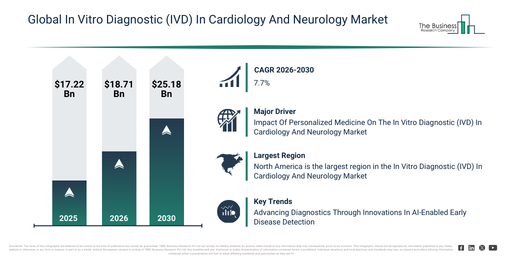
    The in vitro diagnostic (ivd) in cardiology and neurology market size has experienced significant expansion in recent years. It is anticipated to increase from $17.22 billion in 2025 to $18.71 billion in 2026, demonstrating a compound annual growth rate (CAGR) of 8.7%. Historically, this growth can be attributed to the rising prevalence of cardiovascular diseases, an increasing incidence of neurological disorders, the development of hospital diagnostic infrastructure, advancements in immunoassay technologies, and enhanced clinical awareness regarding early diagnosis.

    The in vitro diagnostic (ivd) in cardiology and neurology market is projected to experience substantial expansion over the coming years. Its valuation is anticipated to reach $25.18 billion by 2030, exhibiting a compound annual growth rate (CAGR) of 7.7%. This anticipated growth throughout the forecast period stems from factors such as an aging global populace, a heightened need for personalized diagnostic solutions, the proliferation of point-of-care testing amenities, increasing healthcare spending in developing economies, and the wider embrace of molecular diagnostics. Key developments expected during this timeframe encompass a surging desire for early disease identification, greater uptake of point-of-care tests for cardiac and neurological conditions, the broadening scope of biomarker-driven diagnostics, an intensified emphasis on both preventive and predictive testing, and the incorporation of diagnostic panels with multiple parameters.

    Get A Free Sample Report With In-Depth Market Insights:

    https://thebusinessresearchcompany.com/sample_request?id=51101818&type=smp&name=In%20Vitro%20Diagnostic%20%28IVD%29%20In%20Cardiology%20And%20Neurology%20Market%20Report%202026&utm_source=Blogs&utm_medium=Paid&utm_campaign=Oct_PR

    In Vitro Diagnostic (IVD) In Cardiology And Neurology Market Growth Factors Behind Sustained Expansion

    The expansion of personalized medicine is anticipated to propel the growth of the in vitro diagnostic (IVD) in cardiology and neurology market moving forward. Personalized medicine defines a medical approach where healthcare decisions, practices, interventions, and treatments are customized to each patient’s unique characteristics. This approach is expanding due to factors such as advancements in genomics, a deeper understanding of disease mechanisms, patient demand for tailored treatments, and regulatory support. In cardiology and neurology, in vitro diagnostic (IVD) tests are crucial to personalized medicine, as they provide essential information about an individual’s genetic makeup and disease status, thereby guiding customized treatment plans for enhanced efficacy and reduced risks. For instance, in February 2024, the U.S. Food and Drug Administration approved 16 new personalized treatments for rare disease patients in 2023, according to the Personalized Medicine Coalition (PMC), a US-based nonprofit research organization. This figure represents an increase from six approvals in 2022, with the 2023 approvals also covering seven oncology therapies and three treatments for various other conditions. Thus, the growing number of personalized medicines is fueling the growth of the in vitro diagnostic (IVD) in cardiology and neurology market.

    In Vitro Diagnostic (IVD) In Cardiology And Neurology Market Segment Analysis Spotlighting Growth Areas

    The in vitro diagnostic (ivd) in cardiology and neurology market covered in this report is segmented –

    1) By Product Type: Instruments, Reagents And Consumables, Software And Services

    2) By Technology: Immunoassays, Molecular Diagnostics, Hematology, Other Technologies

    3) By End-User: Hospitals, Clinical Laboratories, Other End-Users

    Subsegments:

    1) By Instruments: Diagnostic Analyzers, Point-Of-Care Devices

    2) By Reagents And Consumables: Diagnostic Reagents, Test Kits, Assay Consumables

    3) By Software And Services: Diagnostic Software, Data Management Software, IVD Consulting And Support Services

    In Vitro Diagnostic (IVD) In Cardiology And Neurology Market Industry Trends Fueling Future Revenue Growth

    Leading companies in the in vitro diagnostic (IVD) cardiology and neurology market are developing AI-driven integrated epigenetic engines for early disease detection and risk assessment. These AI-powered integrated epigenetic engines leverage machine-learning models and advanced biomarker analysis techniques to enhance sensitivity and accuracy in diagnosing and monitoring cardiovascular diseases, thereby addressing critical drivers of disease progression. For instance, in February 2023, Cardio Diagnostics Holdings Inc., a US-based biotechnology company, launched PrecisionCHD, an AI-based blood test, specifically designed for the early detection of coronary heart disease (CHD). Utilizing the company’s integrated epigenetic-genetic engine, this test evaluates CHD risk and aims to prevent and detect the most common form of cardiovascular disease. The new test combines epigenetic and genetic biomarkers with machine-learning algorithms, offering over 75% sensitivity for both men and women. It links a patient’s biomarker profile to modifiable risk factors, which are major contributors to CHD, including smoking, diabetes, hypertension, and high cholesterol. PrecisionCHD represents a non-invasive alternative to exercise stress tests or angiograms, with blood samples drawn conveniently in-office or at home.

    In Vitro Diagnostic (IVD) In Cardiology And Neurology Market Leading Companies: Who Holds The Strongest Market Presence?

    Major companies operating in the in vitro diagnostic (ivd) in cardiology and neurology market are F. Hoffmann-La Roche Ltd., Thermo Fisher Scientific Inc., Abbott Laboratories, Danaher Corporation, Siemens Healthineers AG, Becton Dickinson And Company, Quest Diagnostics Incorporated, Hologic Inc., Illumina Inc., Beckman Coulter Inc., Quidel Corporation, Sysmex Corporation, Bio-Rad Laboratories Inc., QIAGEN N.V., Instrumentation Laboratory, bioMérieux SA, Natera, Inc., Randox Laboratories Ltd., Fulgent Genetics Inc., DiaSorin S.p.A., Oxford Nanopore Technologies, Fujirebio Diagnostics Inc., Adaptive Biotechnologies, Biocartis Group NV, Agena Bioscience

    View The Full In Vitro Diagnostic (IVD) In Cardiology And Neurology Market Report:

    https://thebusinessresearchcompany.com/report/in-vitro-diagnostic-ivd-in-cardiology-and-neurology-global-market-report?utm_source=Blogs&utm_medium=Paid&utm_campaign=Oct_PR

    In Vitro Diagnostic (IVD) In Cardiology And Neurology Market Geographic Spread And Regional Opportunities

    North America was the largest region in the in vitro diagnostic (IVD) in cardiology and neurology market in 2025. Asia-Pacific is expected to be the fastest-growing region in the forecast period. The regions covered in the in vitro diagnostic (ivd) in cardiology and neurology market report are Asia-Pacific, South East Asia, Western Europe, Eastern Europe, North America, South America, Middle East, Africa.

    Reach Out To Our Team:

    The Business Research Company: https://www.thebusinessresearchcompany.com/

    Americas: +1 310-496-7795

    Asia: +44 7882 955267 & +91 8897263534

    Europe: +44 7882 955267

    Email us at: marketing@tbrc.info

    Follow us on:

    LinkedIn: https://in.linkedin.com/company/the-business-research-company

    YouTube: https://www.youtube.com/channel/UC24_fI0rV8cR5DxlCpgmyFQ

    Global Market Model: https://www.thebusinessresearchcompany.com/global-market-model
  • In The Canal (ITC) Hearing Aids Market Size In 2026: Growth Outlook And Forecast Through 2030

    In The Canal (ITC) Hearing Aids Market Size In 2026: Growth Outlook And Forecast Through 2030

    Built to provide research that’s more actionable and strategically valuable, The Business Research Company’s 2026 market reports include market attractiveness analysis, total addressable market sizing, company benchmarking matrices, interactive Excel dashboards, broader supply chain intelligence, emerging startup tracking, and in-depth product insights.

    In The Canal (ITC) Hearing Aids Market Growth From $2.72 Billion In 2026 To $3.97 Billion By 2030 At A CAGR Of 9.9%

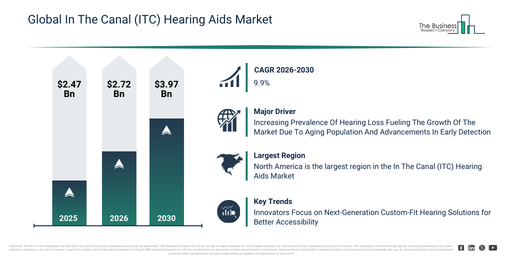
    The in the canal (itc) hearing aids market size has seen rapid expansion in recent years. It is anticipated to increase from $2.47 billion in 2025 to $2.72 billion in 2026, exhibiting a compound annual growth rate (CAGR) of 10.0%. Historically, this growth can be attributed to factors such as an aging population, greater awareness of hearing health, enhancements in digital sound processing, rising disposable income in urban regions, and the proliferation of audiology clinics.

    The in the canal (itc) hearing aids market is poised for significant expansion over the next few years. It is projected to achieve a valuation of $3.97 billion by 2030, growing at a compound annual growth rate (CAGR) of 9.9%. This anticipated growth throughout the forecast period is attributed to the increasing demand for discreet hearing solutions, continuous advancements in bluetooth-enabled itc devices, the expansion of online hearing aid sales, a rising prevalence of noise-induced hearing loss, and technological innovation in battery efficiency. Prominent trends for this period include enhanced miniaturization and discreet design, custom-fit personalization for optimized comfort, a growing adoption of rechargeable itc devices, the expansion of direct-to-consumer hearing solutions, and an increasing acceptance of mild hearing loss treatment.

    Get A Free Sample Report With In-Depth Market Insights:

    https://thebusinessresearchcompany.com/sample_request?id=49045579&type=smp&name=In%20The%20Canal%20%28ITC%29%20Hearing%20Aids%20Market%20Report%202026&utm_source=Blogs&utm_medium=Paid&utm_campaign=Oct_PR

    In The Canal (ITC) Hearing Aids Market Demand Drivers Opening New Revenue Streams

    The rising incidence of hearing loss is anticipated to drive the expansion of the in-the-canal (ITC) hearing aids market moving forward. Hearing loss signifies a partial or complete inability to perceive sounds in one or both ears, frequently resulting from damage to the ear or its auditory pathways. This increasing prevalence of hearing loss is primarily linked to the aging population, as age-related changes within the auditory system lead to a higher occurrence of hearing impairments among older adults. In-the-canal (ITC) hearing aids assist in managing hearing loss by offering discreet, custom-fit designs, making them well-suited for daily wear. They boost sound clarity through advanced technology, thereby minimizing listening effort and enhancing communication across various environments. For instance, in February 2025, data from the World Health Organization (WHO), an international public health agency of the United Nations headquartered in Switzerland, indicated that more than 5 percent of the global population, approximately 430 million people including 34 million children, were living with disabling hearing loss, a figure projected to increase to over 700 million people by 2050. Thus, the growing prevalence of hearing loss stimulates the growth of the in-the-canal (ITC) hearing aids market.

    In The Canal (ITC) Hearing Aids Market Segment Performance And Emerging Opportunities

    The in the canal (itc) hearing aids market covered in this report is segmented –

    1) By Product Type: Full-Shell In The Canal Hearing Aids, Half-Shell In The Canal Hearing Aids, Custom In The Canal Hearing Aids, Programmable In The Canal Hearing Aids

    2) By Technology: Analog In The Canal Hearing Aids, Digital In The Canal Hearing Aids, Bluetooth-Enabled In The Canal Hearing Aids, Rechargeable In The Canal Hearing Aids

    3) By Price Range: Economical In The Canal Hearing Aids, Mid-Range In The Canal Hearing Aids, Premium In The Canal Hearing Aids

    4) By Distribution Channel: Online Stores, Pharmacies, Specialty Stores, Direct Sales

    5) By End User: Children, Adults

    Subsegments:

    1) By Full-Shell In The Canal Hearing Aids: Custom-Fit For The Ear Canal, Offers Maximum Amplification

    2) By Half-Shell In The Canal Hearing Aids: Smaller Than Full-Shell Models, Partially Fills The Ear Canal

    3) By Custom In The Canal Hearing Aids: Single Custom Mold, Multi-Mold Custom Options

    4) By Programmable In The Canal Hearing Aids: Digital Programmable, Analog Programmable

    In The Canal (ITC) Hearing Aids Market Trends Powering Strategic Industry Growth

    Leading enterprises within the in-the-canal (ITC) hearing aid sector are prioritizing the creation of sophisticated custom-fit solutions, including completely personalized canal-style devices, aiming to enhance user comfort, discretion, and audio performance for individuals experiencing hearing loss. These fully custom canal-style devices are meticulously engineered to align with the distinct anatomical structure of each user’s ear canal, thereby guaranteeing a stable fit and boosting sound clarity, all while preserving an exceptionally discreet profile. As an illustration, in February 2024, Starkey Hearing Technologies, a US-based hearing technology firm, launched its Signature Series, a novel collection of custom hearing aids notable for introducing the world’s inaugural fully custom rechargeable canal-style device. This particular range encompasses ultra-compact designs like completely-in-canal (CIC) and IIC models, and integrates Starkey’s cutting-edge Neuro Sound Technology, which is designed to provide better speech comprehension, outstanding noise reduction, and heightened listening comfort across diverse settings.

    In The Canal (ITC) Hearing Aids Market Key Players: Which Companies Lead Industry Competition?

    Major companies operating in the in the canal (itc) hearing aids market are Siemens Healthineers AG, Sonova Holding AG, Demant A/S, ​Amplifon, GN Store Nord A/S, WS Audiology A/S, Sivantos, Argosy Hearing, Coselgi, Interton, Hansaton, MicroTech Hearing, Audina Hearing Instruments, Beltone, JINGHAO Medical Technology Co. Ltd., Banglijian Hearing Aids, Unitron, Zounds Hearing Inc., Eargo.

    View The Full In The Canal (ITC) Hearing Aids Market Report:

    https://thebusinessresearchcompany.com/report/in-the-canal-itc-hearing-aids-global-market-report?utm_source=Blogs&utm_medium=Paid&utm_campaign=Oct_PR

    In The Canal (ITC) Hearing Aids Market Top Region By Revenue And Market Share

    North America was the largest region in the in-the-canal (ITC) hearing aids market in 2025. Asia-Pacific is expected to be the fastest-growing region in the forecast period. The regions covered in the in the canal (itc) hearing aids market report are Asia-Pacific, South East Asia, Western Europe, Eastern Europe, North America, South America, Middle East, Africa.

    Reach Out To Our Team:

    The Business Research Company: https://www.thebusinessresearchcompany.com/

    Americas: +1 310-496-7795

    Asia: +44 7882 955267 & +91 8897263534

    Europe: +44 7882 955267

    Email us at: marketing@tbrc.info

    Follow us on:

    LinkedIn: https://in.linkedin.com/company/the-business-research-company

    YouTube: https://www.youtube.com/channel/UC24_fI0rV8cR5DxlCpgmyFQ

    Global Market Model: https://www.thebusinessresearchcompany.com/global-market-model
  • Implantable Cardioverter Defibrillators (ICDs) Market Trends Supporting 5.5% CAGR Growth Through 2030

    Implantable Cardioverter Defibrillators (ICDs) Market Trends Supporting 5.5% CAGR Growth Through 2030

    Backed by market attractiveness analysis, total addressable market sizing, company benchmarking matrices, interactive Excel dashboards, wider supply chain intelligence, emerging startup coverage, and detailed product-level insights, The Business Research Company’s 2026 market reports are designed to offer research that is more actionable and strategically valuable than ever.

    Implantable Cardioverter Defibrillators (ICDs) Market Expansion Outlook: What Revenue Opportunities Are Ahead?

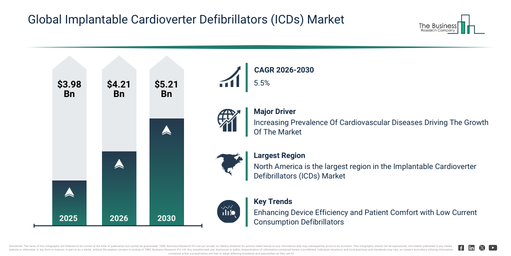
    The market for implantable cardioverter defibrillators (ICDs) has demonstrated vigorous growth in recent years. Its valuation is set to climb from $3.98 billion in 2025 to $4.21 billion in 2026, achieving a compound annual growth rate (CAGR) of 5.7%. The expansion observed historically is attributable to factors such as an escalating incidence of sudden cardiac arrest, the increasing prevalence of ventricular arrhythmias, confirmed clinical efficacy of ICDs, their rising adoption among high-risk cardiac patients, and the broadening infrastructure for cardiac care.

    The implantable cardioverter defibrillators (ICDs) market size is projected to experience robust expansion over the next few years. It is expected to grow to $5.21 billion by 2030, achieving a compound annual growth rate (CAGR) of 5.5%. This growth in the forecast period can be attributed to advancements in smart ICD technology, increasing demand for remote patient monitoring, a growing elderly population suffering from cardiac disorders, enhanced awareness of preventive cardiac therapies, and expanded reimbursement coverage for implantable devices. Prominent trends anticipated in the forecast period include the increasing adoption of remote monitoring-enabled ICDs, a rising preference for minimally invasive and wireless ICD systems, expanding use of MRI-compatible implantable devices, broadening indications of ICDs in heart failure management, and increased integration of predictive analytics in arrhythmia management.

    Get A Free Sample Report With In-Depth Market Insights:

    https://thebusinessresearchcompany.com/sample_request?id=33234018&type=smp&name=Implantable%20Cardioverter%20Defibrillators%20%28ICDs%29%20Market%20Report%202026&utm_source=Blogs&utm_medium=Paid&utm_campaign=Oct_PR

    Implantable Cardioverter Defibrillators (ICDs) Market Growth Backed By Core Demand Fundamentals

    The rising occurrence of cardiovascular diseases (CVDs) is anticipated to drive the expansion of the implantable cardioverter defibrillators (ICDs) market in the future. These diseases encompass various conditions impacting the heart and blood vessels, such as heart attacks, strokes, and hypertension, frequently resulting from elements like unhealthy eating habits, insufficient physical activity, smoking, and genetic predispositions. The growing incidence of cardiovascular diseases is predominantly fueled by an aging demographic, detrimental lifestyle decisions, and an escalation in risk factors including obesity, diabetes, and hypertension. Implantable cardioverter defibrillators (ICDs) aid in managing cardiovascular diseases (CVDs) by delivering critical electrical impulses to normalize heart rhythms for individuals susceptible to sudden cardiac arrest. As an illustration, data from October 2024, released by the Centers for Disease Control and Prevention (CDC), a US-based public health agency, indicated that 919,032 people succumbed to cardiovascular disease in 2023, representing roughly 1 in every 3 deaths across the United States. Consequently, the expanding occurrence of cardiovascular diseases (CVDs) is stimulating the development of the implantable cardioverter defibrillators (ICDs) market.

    Implantable Cardioverter Defibrillators (ICDs) Market Segment Landscape And Growth Outlook

    The implantable cardioverter defibrillators (icds) market covered in this report is segmented –

    1) By Type: Single Chamber Implantable Cardioverter Defibrillators (ICDs), Dual Chamber Implantable Cardioverter Defibrillators (ICDs), Biventricular Devices

    2) By Application: Bradycardia, Tachycardia, Heart Failure, Other Applications

    3) By End User: Hospitals, Specialty Clinics, Ambulatory Surgical Centers, Other End Users

    Subsegments:

    1) By Single Chamber Implantable Cardioverter Defibrillators (ICDs): Standard Single Chamber ICDs, MRI-Compatible Single Chamber ICDs, Wireless Single Chamber ICDs

    2) By Dual Chamber Implantable Cardioverter Defibrillators (ICDs): Standard Dual Chamber ICDs, MRI-Compatible Dual Chamber ICDs, Wireless Dual Chamber ICDs

    3) By Biventricular Devices: CRT-D (Cardiac Resynchronization Therapy Defibrillator), Biventricular ICDs With Advanced Features (Remote Monitoring, Wireless Capabilities)

    Implantable Cardioverter Defibrillators (ICDs) Market Growth Trends Reshaping The Competitive Landscape

    Leading firms within the implantable cardioverter defibrillators (ICDs) market are prioritizing technological innovations, specifically low current consumption defibrillators, with the aim of boosting device efficiency, prolonging battery life, and elevating patient comfort. These low current consumption defibrillators are engineered to administer electrical impulses to the heart with reduced energy requirements, thereby contributing to extended battery longevity while still effectively managing arrhythmias. As an illustration, in October 2023, MicroPort CRM, a medical devices company based in France, introduced the ULYS implantable cardioverter defibrillator (ICD) and the INVICTA defibrillation lead in Japan, representing a significant stride forward in cardiac care technology. Such devices incorporate cutting-edge features, including minimal current draw for extended battery duration and MRI compatibility, making them appropriate for individuals who require imaging procedures. The ULYS ICD specifically integrates the PARAD+ arrhythmia discrimination algorithm and AutoMRI functionality, which collectively improve patient safety during magnetic resonance imaging scans. Furthermore, the INVICTA lead demonstrated a 100% implantation success rate and a 97.4% complication-free rate during clinical trials, underscoring its dependable performance and efficacy.

    Implantable Cardioverter Defibrillators (ICDs) Market Competitive Landscape: Who Leads The Industry?

    Major companies operating in the implantable cardioverter defibrillators (icds) market are Abbott Laboratories, Medtronic Inc., Boston Scientific Corporation, St. Jude Medical Inc., BIOTRONIK SE & Co. KG, LivaNova PLC, MicroPort Scientific Corporation, Intermedics Inc., Sorin Group S.p.A.

    View The Full Implantable Cardioverter Defibrillators (ICDs) Market Report:

    https://thebusinessresearchcompany.com/report/implantable-cardioverter-defibrillators-icds-global-market-report?utm_source=Blogs&utm_medium=Paid&utm_campaign=Oct_PR

    Implantable Cardioverter Defibrillators (ICDs) Market Regional Analysis And Top Geography

    North America was the largest region in the implantable cardioverter defibrillators market in 2025. Asia-Pacific is expected to be the fastest-growing region in the forecast period. The regions covered in the implantable cardioverter defibrillators (icds) market report are Asia-Pacific, South East Asia, Western Europe, Eastern Europe, North America, South America, Middle East, Africa.

    Reach Out To Our Team:

    The Business Research Company: https://www.thebusinessresearchcompany.com/

    Americas: +1 310-496-7795

    Asia: +44 7882 955267 & +91 8897263534

    Europe: +44 7882 955267

    Email us at: marketing@tbrc.info

    Follow us on:

    LinkedIn: https://in.linkedin.com/company/the-business-research-company

    YouTube: https://www.youtube.com/channel/UC24_fI0rV8cR5DxlCpgmyFQ

    Global Market Model: https://www.thebusinessresearchcompany.com/global-market-model
  • Impetigo Market Forecast Highlights A $3.27 Billion Opportunity For Industry Participants

    Impetigo Market Forecast Highlights A $3.27 Billion Opportunity For Industry Participants

    Featuring market attractiveness scoring, total addressable market sizing, company benchmarking matrices, interactive Excel dashboards, deeper supply chain intelligence, emerging startup tracking, and granular product-level insights, The Business Research Company’s 2026 market reports are built to deliver research that is both more actionable and more strategically valuable.

    Impetigo Market Growth Potential: How Will Market Size Shift Through 2030?

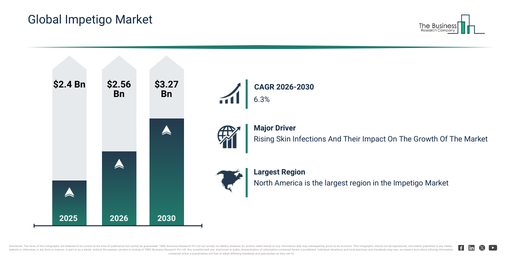
    The impetigo market has seen substantial growth over recent years. It is anticipated to expand from $2.4 billion in 2025 to $2.56 billion in 2026, achieving a compound annual growth rate (CAGR) of 6.6%. This historical development can be attributed to the high occurrence of pediatric skin infections, the broad use of topical antibiotics, inadequate hygiene and dense living conditions, increased understanding of contagious skin diseases, and the accessibility of inexpensive antibiotic treatments.

    The impetigo market is anticipated to show significant expansion over the next few years, with its size projected to reach $3.27 billion by 2030, growing at a compound annual growth rate (CAGR) of 6.3%. This expansion during the forecast period is driven by factors such as increasing concerns about antibiotic resistance, the development of innovative topical formulations, improved access to healthcare in emerging regions, a stronger emphasis on preventive dermatology, and enhanced public health education on skin infections. Prominent trends expected in this period include a rising preference for topical antibiotics over systemic therapies, a greater focus on early diagnosis and quick treatment initiation, increasing demand for impetigo treatments tailored for children, an intensified commitment to infection prevention and hygiene awareness, and the wider adoption of over-the-counter and outpatient treatment approaches.

    Get A Free Sample Report With In-Depth Market Insights:

    https://thebusinessresearchcompany.com/sample_request?id=68491038&type=smp&name=Impetigo%20Market%20Report%202026&utm_source=Blogs&utm_medium=Paid&utm_campaign=Oct_PR

    Impetigo Market Growth Catalysts And Demand Drivers

    An anticipated increase in the occurrence of skin infections is set to fuel the expansion of the impetigo market in the future. These infections are conditions where detrimental microorganisms, such as bacteria, viruses, fungi, or parasites, invade the skin, leading to irritation, inflammation, and other symptoms. The growing incidence of skin infections can be attributed to factors like elevated antibiotic resistance, inadequate hygiene, climatic shifts, compromised immune systems, and more frequent international travel. Managing impetigo involves addressing the bacterial agents, commonly Streptococcus or Staphylococcus species, with topical or oral antibiotics. This approach aids in alleviating symptoms like itching and discomfort, curbing the infection’s spread, and speeding up recovery, thereby decreasing the likelihood of complications and recurrence. For example, data from October 2023, released by the European Academy of Dermatology and Venereology (EADV), a non-profit medical organization based in Switzerland, indicated that approximately 43% of citizens in the EU had experienced at least one skin disease within the preceding 12 months, with fungal skin infections being frequently reported. Consequently, the increasing prevalence of skin infections is a key factor propelling the expansion of the impetigo market.

    Impetigo Market Breakdown By Product Type And Application

    The impetigo market covered in this report is segmented –

    1) By Treatment Type: Topical Antibiotics, Oral Antibiotics, Antiseptic Soaks

    2) By Causative Pathogen: Staphylococcus aureus, Streptococcus pyogenes, Other Bacteria

    3) By Severity: Mild, Moderate, Severe

    4) By Patient Age: Children, Adults, Elderly

    Subsegments:

    1) By Topical Antibiotics: Mupirocin, Retapamulin, Fusidic Acid

    2) By Oral Antibiotics: Cephalexin, Dicloxacillin, Clindamycin

    3) By Antiseptic Soaks: Chlorhexidine, Hydrogen Peroxide, Potassium Permanganate

    Impetigo Market Company Landscape And Competitive Strategy

    Major companies operating in the impetigo market are Teva Pharmaceutical Industries Ltd., Bausch Health Companies Inc., Sun Pharmaceutical Industries Ltd., Galderma SA, Dr. Reddy’s Laboratories Ltd., Leo Pharma A/S, Torrent Pharmaceuticals Ltd., Almirall S.A, Taro Pharmaceutical Industries Ltd., Cutanea Life Sciences Inc., InfectoPharm Arzneimittel und Consilium GmbH, NovaBay Pharmaceuticals Inc.

    View The Full Impetigo Market Report:

    https://thebusinessresearchcompany.com/report/impetigo-global-market-report?utm_source=Blogs&utm_medium=Paid&utm_campaign=Oct_PR

    Impetigo Market Geographic Analysis: Where Is Demand Rising Fastest?

    North America was the largest region in the impetigo market in 2025. Asia-Pacific is expected to be the fastest-growing region in the forecast period. The regions covered in the impetigo market report are Asia-Pacific, South East Asia, Western Europe, Eastern Europe, North America, South America, Middle East, Africa.

    Reach Out To Our Team:

    The Business Research Company: https://www.thebusinessresearchcompany.com/

    Americas: +1 310-496-7795

    Asia: +44 7882 955267 & +91 8897263534

    Europe: +44 7882 955267

    Email us at: marketing@tbrc.info

    Follow us on:

    LinkedIn: https://in.linkedin.com/company/the-business-research-company

    YouTube: https://www.youtube.com/channel/UC24_fI0rV8cR5DxlCpgmyFQ

    Global Market Model: https://www.thebusinessresearchcompany.com/global-market-model
  • Immunomodulator Market Analysis: How The Industry Is Evolving Toward A $327.94 Billion Future

    Immunomodulator Market Analysis: How The Industry Is Evolving Toward A $327.94 Billion Future

    Built to provide research that’s more actionable and strategically valuable, The Business Research Company’s 2026 market reports include market attractiveness analysis, total addressable market sizing, company benchmarking matrices, interactive Excel dashboards, broader supply chain intelligence, emerging startup tracking, and in-depth product insights.

    Immunomodulator Market Value Analysis: What Growth Lies Ahead Over The Forecast Period?

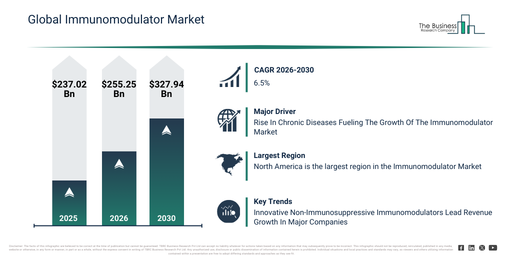
    The immunomodulator market has experienced significant growth over recent years. It is projected to expand from $237.02 billion in 2025 to $255.25 billion in 2026, demonstrating a compound annual growth rate (CAGR) of 7.7%. This past expansion can be linked to several factors, including the increasing prevalence of autoimmune conditions, the widening scope of oncology and transplant procedures, the enhanced application of corticosteroids and traditional immunosuppressants, the growing integration of hospital-based immunotherapy, and a deeper clinical understanding of immune pathways.

    The immunomodulator market size is projected to experience substantial growth in the coming years. It is expected to expand to $327.94 billion by 2030, demonstrating a compound annual growth rate (CAGR) of 6.5%. This growth during the forecast period is attributable to the development of innovative biologics and small molecule agents, increasing demand for immuno-oncology therapies, a greater emphasis on targeted and safer immunomodulators, the expansion of home-based and outpatient treatments, and broadening applications in emerging infectious and inflammatory diseases. Prominent trends within the forecast period include the increasing adoption of biologic and targeted immunotherapies, a growing reliance on combination immunomodulatory treatments, an elevated focus on personalized and precision immunotherapy, the wider application of immunomodulators in chronic and autoimmune diseases, and a noticeable shift towards outpatient and long-term immune management.

    Get A Free Sample Report With In-Depth Market Insights:

    https://thebusinessresearchcompany.com/sample_request?id=53529390&type=smp&name=Immunomodulator%20Market%20Report%202026&utm_source=Blogs&utm_medium=Paid&utm_campaign=Oct_PR

    Immunomodulator Market Opportunity Drivers: What’s Unlocking New Revenue Potential?

    An increase in chronic illnesses is projected to boost the expansion of the immunomodulator market. These are enduring health conditions that usually emerge slowly and persist for significant durations, frequently spanning years or an entire lifespan. Their increasing prevalence is linked to various interacting factors, including an aging global populace, lifestyle choices, genetic susceptibilities, and the availability and structure of healthcare services. Immunomodulators offer crucial treatment alternatives for addressing chronic conditions by adjusting immune reactions, decreasing inflammation, averting organ rejection, boosting immune monitoring, and enhancing symptom management. For example, in September 2023, the World Health Organization, a Switzerland-based specialized agency of the United Nations, reported 41 million global deaths annually attributable to non-communicable diseases (NCDs) or chronic diseases, representing 74% of total deaths. Among these, 17.9 million deaths stemmed from cardiovascular diseases, 9.3 million from cancer, 4.1 million from chronic respiratory conditions, and 2.0 million from diabetes. Consequently, the growing incidence of chronic diseases is propelling the expansion of the immunomodulator market.

    Immunomodulator Market Segment Analysis And Revenue Potential

    The immunomodulator market covered in this report is segmented –

    1) By Product Type: Immunosuppressants, Immunostimulants, Other Product Types

    2) By Distribution Channel: Hospital Pharmacy, Online Pharmacy, Retail Pharmacy, Other Distribution Channels

    3) By Application: Oncology, Respiratory, Human Immunodeficiency Virus, Other Applications

    4) By End-User: Hospitals, Clinics, Other End Users

    Subsegments:

    1) By Immunosuppressants: Corticosteroids, Calcineurin Inhibitors (Tacrolimus, Cyclosporine), Mtor Inhibitors (Sirolimus, Everolimus), Antimetabolites ( Azathioprine, Methotrexate), Biologic Immunosuppressants (Monoclonal Antibodies Like Rituximab), Janus Kinase (Jak) Inhibitors, T-Cell Inhibitors, Other Immunosuppressive Agents

    2) By Immunostimulants: Cytokine And Growth Factor-Based Immunostimulants ( Interferons, Interleukins), Monoclonal Antibodies For Immune Stimulation, Vaccines ( Cancer Vaccines, Preventive Vaccines), Adjuvants And Immune Modulatory Agents, Immunostimulatory Agents For Autoimmune Diseases, Toll-Like Receptor (Tlr) Agonists, Nucleic Acid-Based Immunostimulants ( Dna Or Rna Vaccines)

    3) By Other Product Types: Biologics ( Fusion Proteins, Immune Checkpoint Inhibitors), Small Molecule Immunomodulators, Immunotherapy Drugs, Stem Cell-Based Immunomodulators, Immuno-Oncology Drugs, Probiotics And Other Natural Immunomodulatory Agents

    Immunomodulator Market Innovation Trends Shaping Future Development

    Major companies operating in the immunomodulator market are focusing on the creation of non-immunosuppressive products. This effort aims to meet the growing demand for therapies that provide targeted immune modulation without negatively impacting the body’s general immune function. Non-immunosuppressive refers to treatments or substances that do not suppress or diminish the immune system’s response. For instance, in February 2024, Nuvig Therapeutics, Inc., a US-based biotechnology company, started early-stage clinical trials for NVG-2089, a next-generation immune modulator. NVG-2089 is a proprietary product intended for patients with inflammatory myopathies and severe dermatologic autoimmune diseases. The FDA has granted fast-track designation for NVG-2089’s development for bullous pemphigoid. This novel, recombinant, non-immunosuppressive immunomodulator works by targeting type II Fc receptors to activate an endogenous regulatory mechanism that lessens autoimmune dysregulation. The primary goal of the study is to evaluate the safety and tolerability of NVG-2089, with secondary objectives examining its pharmacokinetics and pharmacodynamics.

    Immunomodulator Market Key Players Shaping Industry Direction

    Major companies operating in the immunomodulator market are Pfizer Inc., Johnson & Johnson, F. Hoffmann-La Roche AG, AbbVie Inc., Sanofi S.A, Bristol Myers Squibb Company, AstraZeneca plc, Novartis AG, GlaxoSmithKline plc, Takeda Pharmaceutical Company Limited, Eli Lilly and Company, Gilead Sciences Inc., Regeneron Pharmaceuticals Inc., Biogen Inc., UCB S.A., Horizon Therapeutics plc, Incyte Corporation, Kyowa Kirin Co. Ltd.

    View The Full Immunomodulator Market Report:

    https://thebusinessresearchcompany.com/report/immunomodulator-global-market-report?utm_source=Blogs&utm_medium=Paid&utm_campaign=Oct_PR

    Immunomodulator Market Global Footprint: Which Region Leads The Market?

    North America was the largest region in the immunomodulator market in 2025. Asia-Pacific is expected to be the fastest-growing region in the forecast period. The regions covered in the immunomodulator market report are Asia-Pacific, South East Asia, Western Europe, Eastern Europe, North America, South America, Middle East, Africa.

    Reach Out To Our Team:

    The Business Research Company: https://www.thebusinessresearchcompany.com/

    Americas: +1 310-496-7795

    Asia: +44 7882 955267 & +91 8897263534

    Europe: +44 7882 955267

    Email us at: marketing@tbrc.info

    Follow us on:

    LinkedIn: https://in.linkedin.com/company/the-business-research-company

    YouTube: https://www.youtube.com/channel/UC24_fI0rV8cR5DxlCpgmyFQ

    Global Market Model: https://www.thebusinessresearchcompany.com/global-market-model