Category: Healthcare Services

  • Hereditary Transthyretin Amyloidosis Market Growth In 2026: Market Size, Key Drivers And Future Outlook

    Hereditary Transthyretin Amyloidosis Market Growth In 2026: Market Size, Key Drivers And Future Outlook

    Built to provide research that’s more actionable and strategically valuable, The Business Research Company’s 2026 market reports include market attractiveness analysis, total addressable market sizing, company benchmarking matrices, interactive Excel dashboards, broader supply chain intelligence, emerging startup tracking, and in-depth product insights.

    Hereditary Transthyretin Amyloidosis Market Growth Potential: How Will Market Size Shift Through 2030?

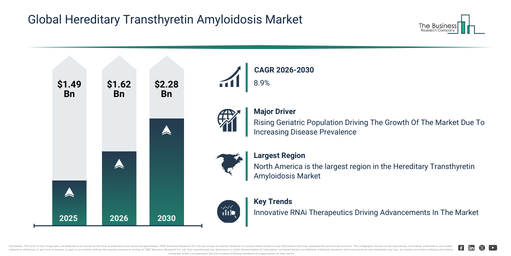
    The market size for hereditary transthyretin amyloidosis has experienced robust growth in recent years. It is projected to expand from $1.49 billion in 2025 to $1.62 billion in 2026, achieving a compound annual growth rate (CAGR) of 9.0%. Historically, this expansion has been fueled by several factors, including heightened clinical recognition of ATTR amyloidosis, the accessibility of tafamidis therapy, the proliferation of specialized neurology and cardiology centers, enhancements in genetic testing for TTR mutations, and the growth of patient registry programs.

    The hereditary transthyretin amyloidosis market is poised for robust expansion in the coming years. It is projected to attain a value of $2.28 billion in 2030, advancing at a compound annual growth rate (CAGR) of 8.9%. This anticipated growth during the forecast period stems from the proliferation of next-generation gene therapies, increased investment in rare disease research, the rising embrace of precision medicine approaches, the escalating development of CRISPR-based treatments, and enhanced technologies for monitoring disease outcomes. Prominent trends expected in the forecast period feature the increasing adoption of gene silencing therapies, a growing reliance on RNAi-based treatments, a heightened focus on early cardiac and neurological diagnosis, the broadening of oral therapeutic options, and improved long-term disease management strategies.

    Get A Free Sample Report With In-Depth Market Insights:

    https://thebusinessresearchcompany.com/sample_request?id=10201475&type=smp&name=Hereditary%20Transthyretin%20Amyloidosis%20Market%20Report%202026&utm_source=Blogs&utm_medium=Paid&utm_campaign=Nov_PR

    Hereditary Transthyretin Amyloidosis Market Development Factors: What’s Supporting Demand?

    The increasing number of elderly individuals is projected to drive expansion within the hereditary transthyretin amyloidosis market in the future. The term “geriatric population” encompasses people aged 65 and above, who frequently need specialized medical attention and assistance as they age. This demographic is expanding because of longer life expectancies, a result of improvements in medical care and general living standards. Hereditary transthyretin amyloidosis (hATTR) has a substantial effect on the elderly, inducing progressive nerve damage and heart muscle disease, which contributes to higher rates of illness among older people. For example, data from January 2024, provided by the US-based nonprofit Population Reference Bureau, indicates that the United States’ population aged 65 and older is predicted to climb from 58 million in 2022 to 82 million by 2050, representing a 47% rise. Consequently, the expanding elderly demographic is a key impetus for the hereditary transthyretin amyloidosis market’s development.

    Hereditary Transthyretin Amyloidosis Market Segments: Where Is Growth Concentrated?

    The hereditary transthyretin amyloidosis market covered in this report is segmented –

    1) By Type: Oral, Subcutaneous Injection, Other Types

    2) By Drug Class: RNAi Agents (Patisiran), Small Interfering RNAs (siRNAs) (Vutrisiran)

    3) By Distribution Channel: Hospital Pharmacies, Retail Pharmacies

    4) By Application: Hospital, Clinic, Other Applications

    Subsegments:

    1) By Oral: Tafamidis, Experimental Oral Therapies

    2) By Subcutaneous Injection: Inotersen, Vutrisiran

    3) By Other Types: Intravenous Therapies, Gene Silencing Therapies, CRISPR-Based Therapies

    Hereditary Transthyretin Amyloidosis Market Trends Powering Strategic Industry Growth

    Leading companies in the hereditary transthyretin amyloidosis market are actively developing innovative treatments, such as RNAi therapeutics, aimed at targeting and diminishing the generation of transthyretin (TTR) protein. These RNAi therapeutics constitute a class of medications that utilize RNA interference technology to silence specific genes, thereby reducing the synthesis of disease-causing proteins. For example, in October 2024, Alnylam Pharmaceuticals, Inc., a US-based biopharmaceutical company, submitted a supplemental new drug application (sNDA) to the US FDA for Vutrisiran (AMVUTTRA) for the treatment of transthyretin amyloidosis with cardiomyopathy. This submission emphasizes its inventive RNAi therapeutic strategy, specifically engineered to target and lower the transthyretin (TTR) protein, a crucial factor in the disease’s progression. Vutrisiran’s subcutaneous administration offers a more convenient and patient-friendly dosing regimen compared to conventional intravenous treatments, establishing it as a potentially transformative alternative for individuals suffering from this severe condition.

    Hereditary Transthyretin Amyloidosis Market Key Participants And Competitive Landscape

    Major companies operating in the hereditary transthyretin amyloidosis market are Alnylam Pharmaceuticals Inc., Ionis Pharmaceuticals Inc., BridgeBio Pharma Inc., Pfizer Inc., Eli Lilly and Company, Intellia Therapeutics Inc., Regeneron Pharmaceuticals Inc., AstraZeneca plc, Novartis AG, Roche Holding AG, Sanofi S.A., Takeda Pharmaceutical Company Limited, GlaxoSmithKline plc, Bristol Myers Squibb, Merck and Co Inc., Johnson and Johnson, AbbVie Inc., Biogen Inc., Vertex Pharmaceuticals Incorporated, Amgen Inc.

    View The Full Hereditary Transthyretin Amyloidosis Market Report:

    https://thebusinessresearchcompany.com/report/hereditary-transthyretin-amyloidosis-global-market-report?utm_source=Blogs&utm_medium=Paid&utm_campaign=Nov_PR

    Hereditary Transthyretin Amyloidosis Market Geographic Spread And Regional Opportunities

    North America was the largest region in the hereditary transthyretin amyloidosis market in 2025. Asia-Pacific is expected to be the fastest-growing region in the forecast period. The regions covered in the hereditary transthyretin amyloidosis market report are Asia-Pacific, South East Asia, Western Europe, Eastern Europe, North America, South America, Middle East, Africa.

    Reach Out To Our Team:

    The Business Research Company: https://www.thebusinessresearchcompany.com/

    Americas: +1 310-496-7795

    Asia: +44 7882 955267 & +91 8897263534

    Europe: +44 7882 955267

    Email us at: marketing@tbrc.info

    Follow us on:

    LinkedIn: https://in.linkedin.com/company/the-business-research-company

    YouTube: https://www.youtube.com/channel/UC24_fI0rV8cR5DxlCpgmyFQ

    Global Market Model: https://www.thebusinessresearchcompany.com/global-market-model
  • Hereditary Testing Market Size And Forecast 2026–2030: Trends Driving Industry Expansion

    Hereditary Testing Market Size And Forecast 2026–2030: Trends Driving Industry Expansion

    Backed by market attractiveness analysis, total addressable market sizing, company benchmarking matrices, interactive Excel dashboards, wider supply chain intelligence, emerging startup coverage, and detailed product-level insights, The Business Research Company’s 2026 market reports are designed to offer research that is more actionable and strategically valuable than ever.

    Hereditary Testing Market Value Analysis: What Growth Lies Ahead Over The Forecast Period?

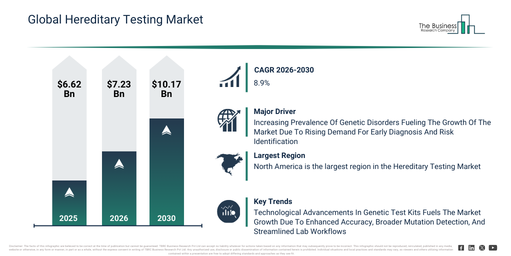
    The hereditary testing market size has shown robust growth over recent years. It is anticipated to expand from $6.62 billion in 2025 to $7.23 billion in 2026, exhibiting a compound annual growth rate (CAGR) of 9.2%. The expansion observed in the past can be credited to improvements in genetic sequencing technologies, heightened awareness of inherited disorders, the broadening of clinical genetics programs, a decrease in the cost of genetic testing, and the proliferation of diagnostic laboratory networks.

    The hereditary testing market is anticipated to experience substantial growth in the coming years. Its valuation is projected to reach $10.17 billion by 2030, demonstrating a compound annual growth rate (CAGR) of 8.9%. This expansion during the forecast period is primarily driven by factors such as the increasing integration of genomics into routine medical care, a rising demand for precision medicine applications, the broadening of population-scale genetic screening, the growing deployment of digital platforms for genetic data, and an increasing focus on preventive healthcare genomics. Key trends identified for the forecast period include the greater adoption of next-generation sequencing tests, an escalating need for predictive and carrier genetic testing, the expanded use of AI-based variant interpretation, the enlargement of prenatal and newborn screening programs, and an enhanced emphasis on personalized genetic counseling.

    Get A Free Sample Report With In-Depth Market Insights:

    https://thebusinessresearchcompany.com/sample_request?id=45064308&type=smp&name=Hereditary%20Testing%20Market%20Report%202026&utm_source=Blogs&utm_medium=Paid&utm_campaign=Nov_PR

    Hereditary Testing Market Industry Drivers: What’s Behind The Revenue Growth?

    The rising occurrence of genetic conditions is set to drive the expansion of the hereditary testing market moving forward. Genetic disorders are defined as medical ailments resulting from irregularities or alterations in an individual’s deoxyribonucleic acid, which can be passed down from one or both parents or emerge spontaneously. The escalation in genetic disorders is partially linked to increased parental age, which heightens the probability of genetic mutations being transferred to offspring. Hereditary testing provides support to patients with genetic disorders by enabling early diagnosis, guiding customized treatment plans, and assisting in family planning decisions through the identification of inherited mutations. For instance, in October 2024, data from the Cystic Fibrosis Trust, a UK-based charitable organization, indicated that the count of patients registered with cystic fibrosis climbed to 11,318 in 2023, an increase from 11,148 in 2022. Thus, the growing prevalence of genetic disorders is propelling the growth of the hereditary testing market.

    Hereditary Testing Market Segment Analysis: What Are The Core Market Categories?

    The hereditary testing market covered in this report is segmented –

    1) By Test Type: Predictive Testing, Carrier Testing, Prenatal Testing, Newborn Screening, Diagnostic Testing, Other Test Types

    2) By Sample Type: Blood Samples, Saliva Samples, Tissue Samples, Buccal Swabs, Amniotic Fluid And Cord Blood Samples

    3) By Technology Used: Next-Generation Sequencing (NGS), Polymerase Chain Reaction (PCR), Sanger Sequencing, Microarray Technology, Whole Genome Sequencing (WGS)

    4) By Application: Oncology, Cardiovascular Diseases, Neurological Disorders, Metabolic Disorders, Other Applications

    5) By End User: Hospitals, Diagnostic Laboratories, Research Institutes, Pharmaceutical Companies, Patients And Consumers

    Subsegments:

    1) By Predictive Testing: Breast Cancer 1 (BRCA1) and Breast Cancer 2 (BRCA2) Gene Mutation Testing, Lynch Syndrome Testing, Familial Hypercholesterolemia Testing, Huntington’s Disease Testing, Cardiomyopathy Genetic Testing

    2) By Carrier Testing: Cystic Fibrosis Carrier Screening, Tay-Sachs Carrier Screening, Spinal Muscular Atrophy (SMA) Carrier Screening, Thalassemia Carrier Screening, Sickle Cell Carrier Testing

    3) By Prenatal Testing: Non-Invasive Prenatal Testing (NIPT), Chorionic Villus Sampling (CVS), Amniocentesis, Expanded Carrier Screening (Prenatal Context), Cell-Free Fetal Deoxyribonucleic Acid Testing

    4) By Newborn Screening: Phenylketonuria (PKU) Screening, Congenital Hypothyroidism Screening, Cystic Fibrosis Screening, Sickle Cell Disease Screening, Hearing Loss and Metabolic Disorder Panels

    5) By Diagnostic Testing: Rare Disease Genetic Testing, Inherited Cancer Diagnostic Testing, Cardiogenetic Diagnostic Panels, Neurogenetic Disorder Testing, Monogenic Disease Panels

    6) By Other Test Types: Pharmacogenomics Testing, Preimplantation Genetic Diagnosis (PGD), Whole Exome Sequencing (WES), Whole Genome Sequencing (WGS), Mitochondrial Deoxyribonucleic Acid Testing

    Hereditary Testing Market Growth Trends Reshaping The Competitive Landscape

    Companies prominent in the hereditary testing market are concentrating on advancements in genetic test kit technology. This focus aims to improve testing precision, decrease processing times, and enable the identification of a wider array of genetic mutations. Genetic test kits are diagnostic instruments crafted for the analysis of an individual’s deoxyribonucleic acid (DNA), seeking to pinpoint genetic mutations or variations associated with inherited conditions or disease susceptibility. As an illustration, in July 2023, Devyser Diagnostics AB, a Sweden-based biotechnology firm dedicated to creating, producing, and selling DNA diagnostic kits for hereditary disease testing, introduced two novel targeted next-generation sequencing kits: Devyser LynchFAP and Devyser BRCA PALB2. Devyser LynchFAP provides an unparalleled comprehensive analysis of PMS2 (addressing issues presented by its pseudogene PMS2CL) in conjunction with nine other vital genes connected to hereditary colorectal cancer syndromes. Devyser BRCA PALB2 presents a straightforward single-tube method for screening BRCA1, BRCA2, and PALB2 mutations in both blood and tumor specimens. It is engineered to facilitate smoother laboratory procedures and deliver effective, simple-to-use sequencing with specialized software, thereby aiding in the reliable detection of hereditary cancer risks.

    Hereditary Testing Market Top Companies Driving Competitive Growth

    Major companies operating in the hereditary testing market are F. Hoffmann-La Roche Ltd., Thermo Fisher Scientific Inc., Laboratory Corporation of America Holdings, Quest Diagnostics Incorporated, Agilent Technologies Inc., Illumina Inc., CooperSurgical Inc., QIAGEN N.V, Natera Inc., Myriad Genetics Inc., Fulgent Genetics Inc, Invitae Corporation, GeneDx LLC, Twist Bioscience Corporation, Color Health Inc., MedGenome Inc, SOPHiA GENETICS SA, Gene By Gene Ltd., Dante Labs Inc., 23mofang Co. Ltd.

    View The Full Hereditary Testing Market Report:

    https://thebusinessresearchcompany.com/report/hereditary-testing-global-market-report?utm_source=Blogs&utm_medium=Paid&utm_campaign=Nov_PR

    Hereditary Testing Market Top Region By Revenue And Market Share

    North America was the largest region in the hereditary testing market in 2025. Asia-Pacific is expected to be the fastest-growing region in the forecast period. The regions covered in the hereditary testing market report are Asia-Pacific, South East Asia, Western Europe, Eastern Europe, North America, South America, Middle East, Africa.

    Reach Out To Our Team:

    The Business Research Company: https://www.thebusinessresearchcompany.com/

    Americas: +1 310-496-7795

    Asia: +44 7882 955267 & +91 8897263534

    Europe: +44 7882 955267

    Email us at: marketing@tbrc.info

    Follow us on:

    LinkedIn: https://in.linkedin.com/company/the-business-research-company

    YouTube: https://www.youtube.com/channel/UC24_fI0rV8cR5DxlCpgmyFQ

    Global Market Model: https://www.thebusinessresearchcompany.com/global-market-model
  • Hereditary Cancer Testing Market 2026 Outlook: Market Size, CAGR And Key Growth Opportunities

    Hereditary Cancer Testing Market 2026 Outlook: Market Size, CAGR And Key Growth Opportunities

    Featuring market attractiveness scoring, total addressable market sizing, company benchmarking matrices, interactive Excel dashboards, deeper supply chain intelligence, emerging startup tracking, and granular product-level insights, The Business Research Company’s 2026 market reports are built to deliver research that is both more actionable and more strategically valuable.

    Hereditary Cancer Testing Market Size Forecast: How Big Could The Market Get By 2030?

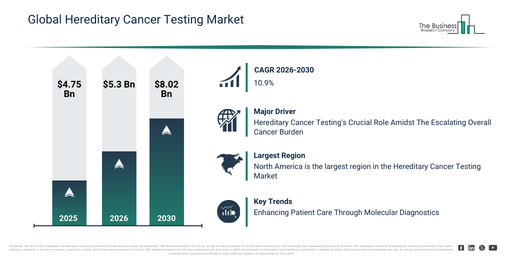
    The hereditary cancer testing market has witnessed rapid expansion over recent years. This market is projected to grow from $4.75 billion in 2025 to $5.3 billion in 2026, achieving a compound annual growth rate (CAGR) of 11.6%. In the past, this growth was primarily due to factors such as increased public awareness of hereditary cancer risks, the widespread availability of next-generation sequencing platforms, the broadening of diagnostic laboratory networks, an uptick in physician recommendations for genetic testing, and the development of personalized risk assessment models.

    The hereditary cancer testing market size is anticipated to experience substantial growth in the next few years, reaching $8.02 billion by 2030, at a compound annual growth rate (CAGR) of 10.9%. This expansion during the forecast period can be attributed to the broader implementation of population-scale genetic screening, the increasing application of AI-driven genomic analysis, a rise in preventive oncology initiatives, a growing need for cost-effective testing solutions, and strengthened regulatory support for genetic diagnostics. Noteworthy trends for this period include the increased adoption of multi-gene panel testing, a heightened demand for early cancer risk detection, the growing utilization of advanced genetic sequencing technologies, the expansion of preventive testing programs, and an improved integration of clinical decision support tools.

    Get A Free Sample Report With In-Depth Market Insights:

    https://thebusinessresearchcompany.com/sample_request?id=59427874&type=smp&name=Hereditary%20Cancer%20Testing%20Market%20Report%202026&utm_source=Blogs&utm_medium=Paid&utm_campaign=Nov_PR

    Hereditary Cancer Testing Market Growth Factors: What’s Supporting Expansion?

    The escalating burden of cancer is anticipated to propel the hereditary cancer testing market forward. Cancer refers to a group of diseases characterized by the uncontrolled and abnormal proliferation of cells, which can invade and disseminate to other tissues and parts of the body. In a healthy organism, cells typically adhere to a regulated cycle of growth, division, and death. Hereditary cancer testing plays a crucial role in addressing the comprehensive impact of cancer by identifying individuals with a genetic predisposition to specific cancers. By evaluating inherited mutations and familial risk factors, this testing assists in pinpointing individuals at higher risk, thereby enabling early intervention, personalized treatment strategies, and proactive preventive measures. For instance, in July 2024, according to the Australian Institute of Health and Welfare, an Australia-based government agency, in Australia the number of cancer cases diagnosed increased from 160,570 in 2022 to 164,694 in 2023, reflecting a notable rise over the year. This upward trend underscores the growing prevalence of cancer within the country. Consequently, an increase in the overall cancer burden is driving the hereditary cancer testing market.

    Hereditary Cancer Testing Market Segment Breakdown: Which Categories Lead On Revenue?

    The hereditary cancer testing market covered in this report is segmented –

    1) By Test Type: Multi Panel Test, Single-Site Genetic Test

    2) By Indication: Breast Cancer, Ovarian Cancer, Colorectal Cancer, Other Indications

    3) By End user: Hospital, Clinics, Diagnostic Centers

    Subsegments:

    1) By Multi Panel Test: Comprehensive Genetic Panels, Targeted Gene Panels

    2) By Single-Site Genetic Test: Specific Gene Testing, Familial Mutation Testing

    Hereditary Cancer Testing Market Trends Shaping Long-Term Demand

    Companies in the hereditary cancer testing market are prioritizing innovative technologies, such as molecular diagnostic tumor testing, to improve accuracy, enhance patient outcomes, and tailor treatment strategies. This testing method involves analyzing a tumor’s genetic and molecular traits to guide treatment decisions and predict future outcomes. For example, in February 2023, Chubb Business Services India Private Limited, an India-based global insurance company, introduced Cancer Advocate Plus. The program incorporates genetics-based testing to detect inherited genes that elevate cancer risk. This proactive methodology enables individuals to comprehend their predisposition to various cancers, thereby supporting early intervention and personalized care approaches.

    Hereditary Cancer Testing Market Leading Players And Competitive Positioning

    Major companies operating in the hereditary cancer testing market are Centogene NV, Ambry Genetics Inc., Myriad Genetics Inc., NeoGenomics Laboratories Inc., Quest Diagnostics, PreventionGenetics, Fulgent Genetics Inc., Invitae Corporation, Medical Diagnostic Laboratories LLC, Natera Inc., Color Health Inc., CooperSurgical Inc., OPKO Health Inc., Illumina Inc., Laboratory Corporation of America Holdings, Pathway Genomics Corporation, Strand Life Sciences Private Limited, Progenity Inc., Myogenes Ltd., Associated Regional and University Pathologists Inc., 4baseCare, Biocartis Group NV, F. Hoffmann-La Roche AG, Medgenome Pvt. Ltd., Abbott Laboratories, Agilent Technologies Inc., Bio-Rad Laboratories Inc., Thermo Fisher Scientific Inc., Oxford Nanopore Technologies PLC, PerkinElmer Inc.

    View The Full Hereditary Cancer Testing Market Report:

    https://thebusinessresearchcompany.com/report/hereditary-cancer-testing-global-market-report?utm_source=Blogs&utm_medium=Paid&utm_campaign=Nov_PR

    Hereditary Cancer Testing Market Regional Analysis And Top Geography

    North America was the largest region in the hereditary cancer testing market in 2025. The regions covered in the hereditary cancer testing market report are Asia-Pacific, South East Asia, Western Europe, Eastern Europe, North America, South America, Middle East, Africa.

    Reach Out To Our Team:

    The Business Research Company: https://www.thebusinessresearchcompany.com/

    Americas: +1 310-496-7795

    Asia: +44 7882 955267 & +91 8897263534

    Europe: +44 7882 955267

    Email us at: marketing@tbrc.info

    Follow us on:

    LinkedIn: https://in.linkedin.com/company/the-business-research-company

    YouTube: https://www.youtube.com/channel/UC24_fI0rV8cR5DxlCpgmyFQ

    Global Market Model: https://www.thebusinessresearchcompany.com/global-market-model
  • Hereditary Breast and Ovarian Cancer Syndrome Treatment Market Size Growth: From $7.47 Billion In 2026 To $9.69 Billion By 2030

    Hereditary Breast and Ovarian Cancer Syndrome Treatment Market Size Growth: From $7.47 Billion In 2026 To $9.69 Billion By 2030

    Built to provide research that’s more actionable and strategically valuable, The Business Research Company’s 2026 market reports include market attractiveness analysis, total addressable market sizing, company benchmarking matrices, interactive Excel dashboards, broader supply chain intelligence, emerging startup tracking, and in-depth product insights.

    Hereditary Breast and Ovarian Cancer Syndrome Treatment Market Revenue Outlook: What CAGR Lies Ahead Through 2030?

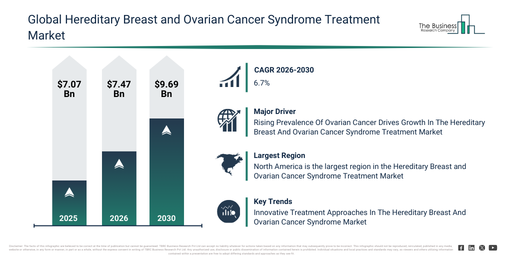
    The hereditary breast and ovarian cancer syndrome treatment market size has seen strong growth in recent years. This market is projected to expand from $7.07 billion in 2025 to $7.47 billion in 2026, with a compound annual growth rate (CAGR) of 5.6%. The expansion observed in the historic period can be attributed to increasing awareness of hereditary cancer syndromes, the availability of BRCA mutation testing, an expansion of cancer screening infrastructure, the rising use of hormonal therapies, and the growth of specialized oncology clinics.

    The hereditary breast and ovarian cancer syndrome treatment market is projected to experience substantial expansion in the coming years. This market is set to reach $9.69 billion by 2030, exhibiting a compound annual growth rate (CAGR) of 6.7%. This anticipated growth during the forecast period is driven by factors such as the proliferation of personalized oncology treatment approaches, the growing uptake of preventive surgeries, advancements in targeted and immunotherapy development, increasing capital allocation towards genetic diagnostics, and enhanced long-term patient monitoring solutions. Key trends anticipated during this period encompass the increasing acceptance of genetic counselling services, a surge in the application of preventive therapeutic strategies, the expanding integration of targeted cancer therapies, the widening scope of risk-based screening programs, and a heightened emphasis on early intervention methods.

    Get A Free Sample Report With In-Depth Market Insights:

    https://thebusinessresearchcompany.com/sample_request?id=15029929&type=smp&name=Hereditary%20Breast%20and%20Ovarian%20Cancer%20Syndrome%20Treatment%20Market%20Report%202026&utm_source=Blogs&utm_medium=Paid&utm_campaign=Nov_PR

    Hereditary Breast and Ovarian Cancer Syndrome Treatment Market Demand Drivers: What’s Powering Industry Growth?

    The hereditary breast and ovarian cancer syndrome treatment market is anticipated to expand due to the increasing prevalence of ovarian cancer. Ovarian cancer, a malignant tumor forming in the ovaries, which are female reproductive organs responsible for producing eggs and hormones, has seen an increase resulting from greater longevity, delayed childbearing, and shifts in lifestyle. Hereditary Breast and Ovarian Cancer Syndrome (HBOC) is a genetic condition elevating the risk of developing breast, ovarian, and other cancers. For instance, data from April 2024, provided by the World Ovarian Cancer Coalition, a Canada-based not-for-profit organization, indicated that approximately 324,603 women worldwide were diagnosed with ovarian cancer in 2022. This figure is projected to rise to nearly half a million annual cases by 2050, representing a 55% increase. Consequently, the growing occurrence of ovarian cancer is propelling the hereditary breast and ovarian cancer syndrome treatment market.

    Hereditary Breast and Ovarian Cancer Syndrome Treatment Market Segmentation: How Does The Market Break Down By Category?

    The hereditary breast and ovarian cancer syndrome treatment market covered in this report is segmented –

    1) By Treatment: Hormonal Therapy, Chemoprevention, Genetic Counselling, Medication, Other Treatments

    2) By Diagnosis: Genetic Testing, Magnetic Resonance Imaging (MRI), Mammography, Other Diagnosis

    3) By Route Of Administration: Oral, Parenteral, Other Routes Of Administration

    4) By End-User: Hospitals, Specialty Clinics, Homecare, Other End-Users

    Subsegments:

    1) By Hormonal Therapy: Selective Estrogen Receptor Modulators (SERMs), Aromatase Inhibitors

    2) By Chemoprevention: Tamoxifen, Raloxifene

    3) By Genetic Counselling: Risk Assessment, Family Planning Guidance

    4) By Medication: Targeted Therapies, Immune Checkpoint Inhibitors

    5) By Other Treatments: Preventive Surgery, Surveillance Strategies

    Hereditary Breast and Ovarian Cancer Syndrome Treatment Market Innovation Trends Shaping Future Development

    Leading firms within the hereditary breast and ovarian cancer syndrome treatment market are implementing innovative therapeutic approaches, including comprehensive risk assessments, to deliver dependable services to their clientele. Such comprehensive risk evaluations serve as instruments for discerning an individual’s propensity to develop a condition or manifest disease symptoms. An example is Genetic Technologies Limited, an Australian molecular diagnostics firm, which introduced a pioneering comprehensive risk assessment test for breast and ovarian cancer in February 2023. This test integrates gene mutation analysis for both breast and ovarian cancers, incorporating hereditary and non-hereditary risk factors, alongside the GeneType risk score pertinent to these cancers. Its distinctive methodology merges the identification of the 13 principal actionable susceptibility genes for breast and ovarian cancer with the GeneType testing platform. This novel testing platform targets women aged over 30 who, without considering rare genetic mutations, face an elevated risk of developing breast and ovarian cancer within the broader populace.

    Hereditary Breast and Ovarian Cancer Syndrome Treatment Market Competitive Overview And Top Companies

    Major companies operating in the hereditary breast and ovarian cancer syndrome treatment market are Pfizer Inc., Johnson & Johnson Private Limited, F. Hoffmann-La Roche Ltd., Merck & Co., AbbVie Inc., Bayer AG, Sanofi-Aventis LLC, AstraZeneca plc, GlaxoSmithKline plc, Eli Lilly and Company, Daiichi Sankyo Co. Ltd., Seagen Inc., Genentech Inc., CRISPR Therapeutics AG, Editas Medicine Inc., Myriad Genetics Inc., Invitae Corporation, Natera Inc., LifeLabs Genetics, Abbott Laboratories

    View The Full Hereditary Breast and Ovarian Cancer Syndrome Treatment Market Report:

    https://thebusinessresearchcompany.com/report/hereditary-breast-and-ovarian-cancer-syndrome-treatment-global-market-report?utm_source=Blogs&utm_medium=Paid&utm_campaign=Nov_PR

    Hereditary Breast and Ovarian Cancer Syndrome Treatment Market Geographic Analysis: Where Is Demand Rising Fastest?

    North America was the largest region in the hereditary breast and ovarian cancer syndrome treatment market in 2025. Asia-Pacific is expected to be the fastest-growing region in the forecast period. The regions covered in the hereditary breast and ovarian cancer syndrome treatment market report are Asia-Pacific, South East Asia, Western Europe, Eastern Europe, North America, South America, Middle East, Africa.

    Reach Out To Our Team:

    The Business Research Company: https://www.thebusinessresearchcompany.com/

    Americas: +1 310-496-7795

    Asia: +44 7882 955267 & +91 8897263534

    Europe: +44 7882 955267

    Email us at: marketing@tbrc.info

    Follow us on:

    LinkedIn: https://in.linkedin.com/company/the-business-research-company

    YouTube: https://www.youtube.com/channel/UC24_fI0rV8cR5DxlCpgmyFQ

    Global Market Model: https://www.thebusinessresearchcompany.com/global-market-model
  • Hereditary Angioedema Market Analysis 2026: Market Size, Growth Trends And Industry Outlook

    Hereditary Angioedema Market Analysis 2026: Market Size, Growth Trends And Industry Outlook

    Backed by market attractiveness analysis, total addressable market sizing, company benchmarking matrices, interactive Excel dashboards, wider supply chain intelligence, emerging startup coverage, and detailed product-level insights, The Business Research Company’s 2026 market reports are designed to offer research that is more actionable and strategically valuable than ever.

    Hereditary Angioedema Market Growth Analysis: How Will Revenue Trend Over The Forecast Period?

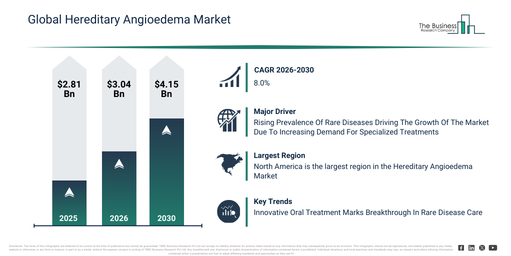
    The hereditary angioedema market has experienced robust growth over the past few years. Projections indicate it will expand from $2.81 billion in 2025 to reach $3.04 billion by 2026, exhibiting a compound annual growth rate (CAGR) of 8.2%. Historically, this expansion has been driven by factors such as a rise in clinical awareness concerning rare genetic disorders, the widespread availability of plasma-derived c1 esterase inhibitors, the proliferation of specialty treatment centers, enhanced diagnostic precision for hae, and burgeoning patient advocacy efforts.

    The hereditary angioedema market is anticipated to experience robust expansion over the coming years. It is projected to achieve a valuation of $4.15 billion by 2030, growing at a compound annual growth rate (CAGR) of 8.0%. This projected growth can be attributed to the proliferation of novel oral and subcutaneous therapies, increasing investment in the development of drugs for rare diseases, the rising integration of personalized medicine strategies, the expansion of genetic screening initiatives, and enhanced long-term disease management approaches. Significant trends during the forecast period encompass the growing adoption of targeted bradykinin therapies, an increase in the use of prophylactic treatment regimens, a heightened focus on early genetic diagnosis, the broadened availability of home-based self-administration therapies, and the refinement of patient-centric treatment methodologies.

    Get A Free Sample Report With In-Depth Market Insights:

    https://thebusinessresearchcompany.com/sample_request?id=48517837&type=smp&name=Hereditary%20Angioedema%20Market%20Report%202026&utm_source=Blogs&utm_medium=Paid&utm_campaign=Nov_PR

    Hereditary Angioedema Market Growth Drivers: What’s Behind The Acceleration?

    An increasing occurrence of rare diseases is anticipated to boost the expansion of the hereditary angioedema market in the future. These conditions, also termed orphan diseases, are medical ailments impacting a minor segment of the populace. Their rising frequency stems from several influences, including advancements in medical research, shifts in population demographics, and ecological effects. Hereditary angioedema (HAE) stands out as a critical rare disease, emphasizing the necessity for specialized interventions and public understanding because of its potentially fatal swelling attacks. Its infrequent occurrence and genetic basis underscore the importance of prompt diagnosis and specific treatments for efficient management and enhanced patient results. For illustration, in January 2025, information from The American Cancer Society, a US-based professional organization, indicates that in 2025, around 59,660 new diagnoses of oral cavity and oropharyngeal cancer are foreseen, with an estimated 12,770 individuals predicted to succumb to these forms of cancer. Consequently, the expanding occurrence of rare diseases is fueling the development of the hereditary angioedema market.

    Hereditary Angioedema Market Segment Trends And Revenue Contributors

    The hereditary angioedema market covered in this report is segmented –

    1) By Type: Hereditary Angioedema Type I, Hereditary Angioedema Type II

    2) By Treatment Type: Prophylaxis, On-demand

    3) By Drug Class: C-1 Esterase Inhibitors, Bradykynin Receptor Antagonist, Kallikrein Inhibitors, Other Drug Classes

    4) By Route Of Administration: Subcutaneous, Intravenous, Oral

    5) By Distribution channel: Hospital Pharmacies, Retail Pharmacies, Online Pharmacies

    Subsegments:

    1) By Hereditary Angioedema Type I: C1-Inhibitor Deficiency, Low C1-Inhibitor Levels

    2) By Hereditary Angioedema Type II: Normal C1-Inhibitor Levels, Dysfunctional C1-Inhibitor, Genetic Mutations In SERPING1 Gene

    Hereditary Angioedema Market Trends Redefining Industry Growth

    Major companies in the hereditary angioedema market are developing innovative products, such as oral plasma kallikrein inhibitors, to offer patients more convenient and effective on-demand treatment options. Oral plasma kallikrein inhibitors are medications that block plasma kallikrein to prevent excessive bradykinin production, primarily utilized for treating hereditary angioedema. For instance, in September 2024, KalVista Pharmaceuticals, Inc., a US-based pharmaceutical company, announced that the FDA had accepted its new drug application (NDA) for sebetralstat. This investigational oral plasma kallikrein inhibitor is intended for the immediate treatment of hereditary angioedema (HAE) attacks in both adult and pediatric patients aged 12 and older. Sebetralstat introduces a new treatment strategy by targeting and inhibiting plasma kallikrein activity. The acceptance of the NDA represents a significant milestone toward potential approval and commercialization.

    Hereditary Angioedema Market Competitive Landscape: Which Companies Lead The Industry?

    Major companies operating in the hereditary angioedema market are Takeda Pharmaceutical Company Limited, CSL Limited, Sanofi S.A., Pharming Group N.V., BioCryst Pharmaceuticals Inc., KalVista Pharmaceuticals Inc., Ionis Pharmaceuticals Inc., Intellia Therapeutics Inc., Arrowhead Pharmaceuticals Inc., Astria Therapeutics Inc., Pharvaris N.V., Adverum Biotechnologies Inc., ADARx Pharmaceuticals Inc., Attune Pharmaceuticals Inc., Lev Pharmaceuticals Inc., BioMarin Pharmaceutical Inc., Spark Therapeutics Inc., Otsuka Pharmaceutical Co. Ltd., Pfizer Inc., Regeneron Pharmaceuticals Inc., Vertex Pharmaceuticals Incorporated, Alnylam Pharmaceuticals Inc.

    View The Full Hereditary Angioedema Market Report:

    https://thebusinessresearchcompany.com/report/hereditary-angioedema-global-market-report?utm_source=Blogs&utm_medium=Paid&utm_campaign=Nov_PR

    Hereditary Angioedema Market Global Footprint: Which Region Leads The Market?

    North America was the largest region in the hereditary angioedema market in 2025. Asia-Pacific is expected to be the fastest-growing region in the forecast period. The regions covered in the hereditary angioedema market report are Asia-Pacific, South East Asia, Western Europe, Eastern Europe, North America, South America, Middle East, Africa.

    Reach Out To Our Team:

    The Business Research Company: https://www.thebusinessresearchcompany.com/

    Americas: +1 310-496-7795

    Asia: +44 7882 955267 & +91 8897263534

    Europe: +44 7882 955267

    Email us at: marketing@tbrc.info

    Follow us on:

    LinkedIn: https://in.linkedin.com/company/the-business-research-company

    YouTube: https://www.youtube.com/channel/UC24_fI0rV8cR5DxlCpgmyFQ

    Global Market Model: https://www.thebusinessresearchcompany.com/global-market-model
  • Herceptin Market Growth To $9.92 Billion Creates New Opportunities Across The Industry

    Herceptin Market Growth To $9.92 Billion Creates New Opportunities Across The Industry

    Featuring market attractiveness scoring, total addressable market sizing, company benchmarking matrices, interactive Excel dashboards, deeper supply chain intelligence, emerging startup tracking, and granular product-level insights, The Business Research Company’s 2026 market reports are built to deliver research that is both more actionable and more strategically valuable.

    Herceptin Market Forecast: What Value Will The Market Reach By 2030?

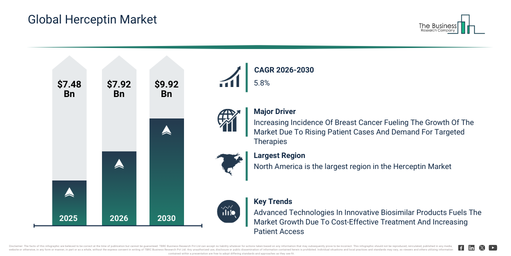
    Significant expansion has been observed in the herceptin market size during recent years. The market is projected to increase from $7.48 billion in 2025 to $7.92 billion in 2026, demonstrating a compound annual growth rate (CAGR) of 5.8%. The historical growth can be ascribed to several factors, including the expansion of her2-positive cancer diagnosis, widespread clinical acceptance of trastuzumab, growth in oncology infusion infrastructure, availability of biologic manufacturing capabilities, and the integration of herceptin into standard treatment guidelines.

    The herceptin market is poised for significant expansion over the coming years, with expectations to reach $9.92 billion by 2030, demonstrating a compound annual growth rate (CAGR) of 5.8%. This anticipated growth is primarily fueled by escalating biosimilar competition, a growing demand for cost-effective biologic therapies, the broadening of targeted oncology pipelines, the increasing adoption of individualized cancer treatments, and heightened investment in biologic drug innovation. Key developments during this forecast period are expected to include a greater embrace of biosimilar trastuzumab products, the expanding utilization of subcutaneous formulations, the diversification of combination therapy regimens, an intensified focus on economical biologic treatments, and improved monitoring of treatment outcomes.

    Get A Free Sample Report With In-Depth Market Insights:

    https://thebusinessresearchcompany.com/sample_request?id=21402492&type=smp&name=Herceptin%20Market%20Report%202026&utm_source=Blogs&utm_medium=Paid&utm_campaign=Nov_PR

    Herceptin Market Growth Factors Behind Sustained Expansion

    The rising prevalence of breast cancer is anticipated to fuel the expansion of the herceptin market in the future. This malignancy originates within the breast cells, typically commencing in the milk ducts or lobules. Common forms encompass invasive ductal carcinoma (IDC), invasive lobular carcinoma (ILC), and HER2-positive breast cancer. A contributing factor to the surge in breast cancer cases involves lifestyle modifications, including heightened alcohol intake, inadequate nutrition, and insufficient exercise, all of which elevate the risk. With a growing number of individuals receiving breast cancer diagnoses, especially those with HER2-positive conditions, the need for potent targeted treatments like herceptin consistently increases. For example, the American Cancer Society, a US-based cancer organization, estimated in January 2025 that 319,750 new breast cancer cases are projected for 2025, alongside an estimated 42,680 fatalities from the illness. Consequently, the heightened occurrence of breast cancer is propelling the growth of the herceptin market.

    Herceptin Market Segment Analysis Spotlighting Growth Areas

    The herceptin market covered in this report is segmented –

    1) By Product: Biologic, Biosimilar

    2) By Application: Breast Cancer, Gastric Cancer

    3) By Payer: Commercial And Private, Public

    4) By Distribution Channel: Hospital Pharmacy, Specialty Pharmacy

    Subsegments:

    1) By Biologic: Intravenous (IV) Biologics, Subcutaneous (SC) Biologic

    2) By Biosimilar: Intravenous (IV) Biosimilars, Subcutaneous (SC) Biosimilars

    Herceptin Market Strategic Trends: What Defines The Next Growth Phase?

    Key players within the herceptin market are actively developing innovative treatment options, including advanced biosimilar products, to expand patient access and enhance therapeutic outcomes for individuals with HER2-positive cancers. These innovative biosimilar products represent highly comparable versions of established biologic drugs, developed using sophisticated biotechnology to ensure similar levels of safety, efficacy, and quality. For example, in April 2024, Accord BioPharma Inc., a US-based pharmaceutical company, secured approval from the U.S. Food and Drug Administration for HERCESSI (trastuzumab-strf), a biosimilar to herceptin (trastuzumab), intended for the management of HER2-overexpressing breast and gastric cancers. Such biosimilars, including HERCESSI, demonstrate equivalent efficacy and safety when compared to their reference biologics, while also potentially providing more cost-effective treatment solutions.

    Herceptin Market Leading Companies: Who Holds The Strongest Market Presence?

    Major companies operating in the herceptin market are Roche Holding AG, Pfizer Inc., Amgen Inc., Viatris Inc., Teva Pharmaceutical Industries Ltd, Biocon Limited, Dr. Reddy’s Laboratories, Celltrion Inc., Samsung Biologics, Fresenius Kabi, Intas Pharmaceuticals Ltd, Zydus Lifesciences Ltd, AryoGen Pharmed, Shanghai Henlius Biotech Inc., Prestige Biopharma Pte Ltd, Alvotech, Coherus BioSciences, BioXpress Therapeutics, Amneal Pharmaceuticals, Novartis AG

    View The Full Herceptin Market Report:

    https://thebusinessresearchcompany.com/report/herceptin-global-market-report?utm_source=Blogs&utm_medium=Paid&utm_campaign=Nov_PR

    Herceptin Market Regional Split: Which Areas Are Fueling Growth?

    North America was the largest region in the herceptin market in 2025. Asia-Pacific is expected to be the fastest-growing region in the forecast period. The regions covered in the herceptin market report are Asia-Pacific, South East Asia, Western Europe, Eastern Europe, North America, South America, Middle East, Africa.

    Reach Out To Our Team:

    The Business Research Company: https://www.thebusinessresearchcompany.com/

    Americas: +1 310-496-7795

    Asia: +44 7882 955267 & +91 8897263534

    Europe: +44 7882 955267

    Email us at: marketing@tbrc.info

    Follow us on:

    LinkedIn: https://in.linkedin.com/company/the-business-research-company

    YouTube: https://www.youtube.com/channel/UC24_fI0rV8cR5DxlCpgmyFQ

    Global Market Model: https://www.thebusinessresearchcompany.com/global-market-model
  • Herbal Shampoo Market Forecast: Breaking Down The Numbers Behind Future Expansion

    Herbal Shampoo Market Forecast: Breaking Down The Numbers Behind Future Expansion

    Built to provide research that’s more actionable and strategically valuable, The Business Research Company’s 2026 market reports include market attractiveness analysis, total addressable market sizing, company benchmarking matrices, interactive Excel dashboards, broader supply chain intelligence, emerging startup tracking, and in-depth product insights.

    Herbal Shampoo Market Size Outlook: How Quickly Will Revenue Expand Through 2030?

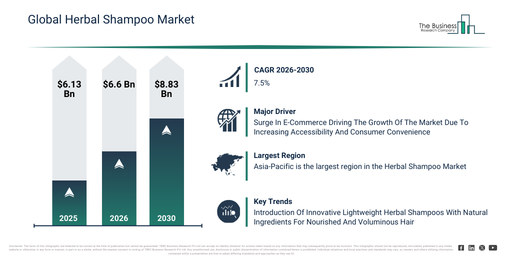
    The market for herbal shampoos has demonstrated substantial growth over the past few years. This market is projected to expand from $6.13 billion in 2025 to $6.6 billion by 2026, exhibiting a compound annual growth rate (CAGR) of 7.8%. Historically, this expansion has been driven by factors such as a heightened consumer understanding of natural personal care products, an increase in scalp sensitivity concerns, the growing influence of ayurvedic and herbal practices, the widening of retail distribution channels, and an improved supply of herbal raw materials.

    The herbal shampoo market is projected to experience substantial expansion in the coming years, forecast to reach $8.83 billion by 2030, exhibiting a compound annual growth rate (CAGR) of 7.5%. This growth during the projected period is attributed to a surge in demand for environmentally friendly personal care items, the growing embrace of clean beauty principles, the expansion of online beauty retail platforms, an enhanced focus on sustainable ingredient sourcing, and continuous innovation in herbal product formulations. Significant trends anticipated over the forecast timeframe involve a heightened demand for chemical-free hair care products, increased incorporation of plant-derived active components, the proliferation of dermatologically approved herbal formulations, a stronger consumer inclination towards solutions for sensitive scalps, and an elevated emphasis on sustainable packaging practices.

    Get A Free Sample Report With In-Depth Market Insights:

    https://thebusinessresearchcompany.com/sample_request?id=29841539&type=smp&name=Herbal%20Shampoo%20Market%20Report%202026&utm_source=Blogs&utm_medium=Paid&utm_campaign=Nov_PR

    Herbal Shampoo Market Demand Drivers Opening New Revenue Streams

    The expansion of online commerce is expected to fuel the growth of the herbal shampoo market in the foreseeable future. E-commerce involves buying and selling goods and services through digital platforms, facilitating transactions over the internet. Its growth is attributed to benefits such as the convenience of home shopping, straightforward product comparisons, expedited delivery, and access to international markets. For herbal shampoo products, e-commerce offers a broader consumer base, enables brands to engage directly with worldwide customers, and enhances the ease and accessibility of online purchases. As an illustration, a report from the US-based government agency, the Census Bureau, published in February 2025, indicated that e-commerce sales in the fourth quarter of 2024 saw a 9.4% (±1.1) increase compared to the same period in 2023, whereas overall retail sales grew by 3.8% (±0.5). Consequently, the expansion of e-commerce is set to boost the growth of the herbal shampoo market.

    Herbal Shampoo Market Segment Performance And Emerging Opportunities

    The herbal shampoo market covered in this report is segmented –

    1) By Product Type: Anti-Dandruff, Anti-Hair Fall, Nourishing, Volumizing, Other Product Types

    2) By Hair Type: Damaged, Normal, Dry, Oily, Colored, Curly

    3) By Ingredient: Aloe Vera, Neem, Tea Tree, Amla, Shikakai, Other Ingredients

    4) By Distribution Channel: Online Stores, Supermarkets Or Hypermarkets, Specialty Stores, Other Distribution Channels

    5) By End-User: Men, Women, Unisex

    Subsegments:

    1) By Anti-Dandruff: Neem-Based Shampoo, Tea Tree Oil Shampoo, Aloe Vera And Turmeric Shampoo, Zinc And Herbal Extract Shampoo, Ayurvedic Anti-Dandruff Shampoo

    2) By Anti-Hair Fall: Amla And Bhringraj Shampoo, Onion Extract Shampoo, Caffeine-Infused Herbal Shampoo, Ginseng And Ginkgo Biloba Shampoo, Keratin-Enriched Herbal Shampoo

    3) By Nourishing: Coconut Milk Shampoo, Argan Oil And Shea Butter Shampoo, Hibiscus And Aloe Vera Shampoo, Rice Water And Protein-Rich Herbal Shampoo, Vitamin E-Infused Herbal Shampoo

    4) By Volumizing: Biotin And Collagen Herbal Shampoo, Green Tea Extract Shampoo, Bamboo And Ginseng Shampoo, Honey And Lemon Shampoo, Fenugreek And Flaxseed Shampoo

    5) By Other Product Types: Herbal Dry Shampoo, Color-Protect Herbal Shampoo, PH-Balancing Herbal Shampoo, Herbal Baby Shampoo

    Herbal Shampoo Market Transformation Trends: What Innovations Are Driving Change?

    Leading businesses in the herbal shampoo sector are launching novel offerings, including lightweight herbal shampoos. These products are designed to clean and condition hair without imparting a heavy or oily sensation, thereby encouraging a naturally voluminous texture. These lightweight herbal shampoos are hair care solutions crafted from natural components, intended to purify and feed the hair without adding weight, resulting in a soft, invigorated, and full-bodied feel. An example of this is seen in February 2024, when Herbal Essences, a US-based hair care company, unveiled 11 updated herbal shampoos and conditioners. Each updated formulation incorporates a mixture of pure aloe and camellia oil. The camellia oil, extracted from the seeds of the camellia plant, bears a close resemblance to the natural oils found in healthy hair. This particular oil is rapidly absorbed by the hair, thereby amplifying the hydrating and safeguarding properties of pure aloe. The aloe utilized is verified as pure, manually selected, and processed to maintain its antioxidant qualities, establishing it as a primary characteristic of the shampoo.

    Herbal Shampoo Market Key Players: Which Companies Lead Industry Competition?

    Major companies operating in the herbal shampoo market are Shiseido Company Limited, Amway Corp., Hain Celestial Group, Avalon Organics, Dabur India Limited, Patanjali Ayurved, Himalaya Wellness Company, Lotus Herbals Pvt. Ltd., Burt’s Bees, Mamaearth, CavinKare Pvt. Ltd., Desert Essence, Biotique, Dr. Organic, Giovanni Cosmetics, Kama Ayurveda, MAC Biosciences Private Limited, Vaadi Herbals Private Limited, Khadi Natural, Forest Essentials

    View The Full Herbal Shampoo Market Report:

    https://thebusinessresearchcompany.com/report/herbal-shampoo-global-market-report?utm_source=Blogs&utm_medium=Paid&utm_campaign=Nov_PR

    Herbal Shampoo Market Top Region: Where Does Most Revenue Come From?

    Asia-Pacific was the largest region in the herbal shampoo market in 2025. North America is expected to be the fastest-growing region in the forecast period. The regions covered in the herbal shampoo market report are Asia-Pacific, South East Asia, Western Europe, Eastern Europe, North America, South America, Middle East, Africa.

    Reach Out To Our Team:

    The Business Research Company: https://www.thebusinessresearchcompany.com/

    Americas: +1 310-496-7795

    Asia: +44 7882 955267 & +91 8897263534

    Europe: +44 7882 955267

    Email us at: marketing@tbrc.info

    Follow us on:

    LinkedIn: https://in.linkedin.com/company/the-business-research-company

    YouTube: https://www.youtube.com/channel/UC24_fI0rV8cR5DxlCpgmyFQ

    Global Market Model: https://www.thebusinessresearchcompany.com/global-market-model
  • HER2-Positive Breast Cancer Market Expected To Grow At 6.8% CAGR Through 2030: What Businesses Need To Know

    HER2-Positive Breast Cancer Market Expected To Grow At 6.8% CAGR Through 2030: What Businesses Need To Know

    Backed by market attractiveness analysis, total addressable market sizing, company benchmarking matrices, interactive Excel dashboards, wider supply chain intelligence, emerging startup coverage, and detailed product-level insights, The Business Research Company’s 2026 market reports are designed to offer research that is more actionable and strategically valuable than ever.

    HER2-Positive Breast Cancer Market Size, Value And Growth Trajectory Through 2030

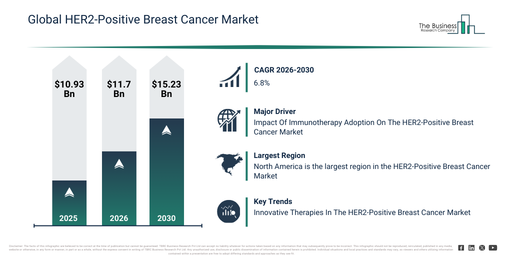
    The her2-positive breast cancer market size has demonstrated robust growth over recent years. It is anticipated to expand from $10.93 billion in 2025 to $11.7 billion in 2026, at a compound annual growth rate (CAGR) of 7.1%. The historical increase can be attributed to the rising identification of her2-positive cases, the expansion of targeted oncology drug approvals, developments in hospital oncology infrastructure, the availability of monoclonal antibody therapies, and heightened clinical trial activity.

    The her2-positive breast cancer market size is projected to undergo significant expansion in the coming years, anticipated to reach $15.23 billion in 2030, exhibiting a compound annual growth rate (CAGR) of 6.8%. The projected growth during this period stems from factors such as the increasing adoption of next-generation her2 inhibitors, the broadening penetration of biosimilars, a rising demand for precision oncology treatments, growing investment in targeted cancer research, and an increased focus on improving patient survival outcomes. Furthermore, prominent trends for the forecast period include the escalating adoption of her2-targeted antibody therapies, a greater utilization of antibody-drug conjugates, the expansion of companion diagnostic testing, an increased emphasis on early-stage targeted treatment, and improved integration of combination therapy approaches.

    Get A Free Sample Report With In-Depth Market Insights:

    https://thebusinessresearchcompany.com/sample_request?id=89928846&type=smp&name=HER2-Positive%20Breast%20Cancer%20Market%20Report%202026&utm_source=Blogs&utm_medium=Paid&utm_campaign=Nov_PR

    HER2-Positive Breast Cancer Market Growth Backed By Core Demand Fundamentals

    The HER2-positive breast cancer market is projected to grow significantly due to the increasing uptake of immunotherapy. Immunotherapy is a medical approach designed to enhance or modify the immune system’s natural ability to combat diseases such as cancer, infections, and autoimmune disorders. Its widespread adoption is attributed to its capacity to bolster the immune system’s ability to identify and eliminate cancer cells, offering superior efficacy and fewer side effects compared to conventional treatments. Specifically for HER2-positive breast cancer, immunotherapy aids by strengthening the body’s immune system to recognize and attack HER2-overexpressing cancer cells, leading to improved treatment outcomes and a reduced risk of recurrence. For instance, in July 2023, the American Association for Cancer Research, a US-based organization, noted that by 2023, the FDA had approved 11 immune checkpoint inhibitors (ICIs), with at least one ICI authorized for the treatment of 20 different cancer types and for any solid tumor exhibiting specific molecular characteristics. Therefore, the robust adoption of immunotherapy is a key driver for the expansion of the HER2-positive breast cancer market.

    HER2-Positive Breast Cancer Market Segment Landscape And Growth Outlook

    The her2-positive breast cancer market covered in this report is segmented –

    1) By Treatment Type: Targeted Therapy, Chemotherapy, Endocrine Therapy, Immunotherapy, Other Treatment Types

    2) By Route Of Administration: Parenteral, Oral, Other Routes Of Administrations

    3) By Distribution Channel: Hospital Pharmacy, Retail Pharmacy, Online Pharmacy

    4) By End User: Hospitals, Homecare, Specialty Clinics, Other End User

    Subsegments:

    1) By Targeted Therapy: HER2 Inhibitors (Trastuzumab, Pertuzumab), Tyrosine Kinase Inhibitors (TKIs), Antibody-Drug Conjugates (ADC), Small Molecule Inhibitors

    2) By Chemotherapy: Anthracycline-based Chemotherapy, Taxane-based Chemotherapy, Platinum-based Chemotherapy, Combination Chemotherapy Regimens

    3) By Endocrine Therapy: Selective Estrogen Receptor Modulators (SERMs), Aromatase Inhibitors, Estrogen Receptor Antagonists, Estrogen Deprivation Therapy

    4) By Immunotherapy: Immune Checkpoint Inhibitors (PD-1/PD-L1 Inhibitors), Monoclonal Antibodies for Immune Modulation

    5) By Other Treatment Types: Radiation Therapy, Surgical Interventions (Mastectomy, Breast Conserving Surgery)

    #HER2-Positive Breast Cancer Market Growth Trends: What’s Shaping The Future Outlook?

    Major companies operating within the HER2-positive breast cancer market are concentrating on developing innovative therapies, including HER2-directed antibody-drug conjugates (ADCs), to optimize and enhance patient treatment processes. These HER2-directed antibody-drug conjugates (ADCs) are precise cancer treatments that link an antibody specific to HER2 with a cytotoxic drug, ensuring the medication is delivered directly to HER2-positive cancer cells for improved effectiveness. For instance, in January 2024, AstraZeneca India Pharma Ltd., an India-based biopharmaceutical company, launched Trastuzumab deruxtecan. This groundbreaking therapy was developed through a collaboration between AstraZeneca and Daiichi Sankyo. As a HER2-directed antibody-drug conjugate (ADC), Trastuzumab deruxtecan delivers a cytotoxic drug straight to HER2-positive cancer cells, offering a more targeted and efficacious treatment for patients.

    HER2-Positive Breast Cancer Market Competitive Landscape: Who Leads The Industry?

    Major companies operating in the her2-positive breast cancer market are F. Hoffmann-La Roche AG, AstraZeneca plc, Novartis International AG, Pfizer Inc., Eli Lilly and Company, Merck & Co. Inc., Amgen Inc., Daiichi Sankyo Co. Ltd., Takeda Pharmaceutical Company Limited, Bristol Myers Squibb, Sanofi S.A., GlaxoSmithKline plc, Bayer AG, Seagen Inc., MacroGenics Inc., BioNTech SE, Incyte Corporation, Zymeworks Inc., Ambrx Biopharma Inc., Mersana Therapeutics Inc.

    View The Full HER2-Positive Breast Cancer Market Report:

    https://thebusinessresearchcompany.com/report/her2-positive-breast-cancer-global-market-report?utm_source=Blogs&utm_medium=Paid&utm_campaign=Nov_PR

    HER2-Positive Breast Cancer Market Regional Breakdown: Where Is Demand Concentrated?

    North America was the largest region in the HER2- positive breast cancer market in 2025. Asia-Pacific is expected to be the fastest-growing region in the forecast period. The regions covered in the her2-positive breast cancer market report are Asia-Pacific, South East Asia, Western Europe, Eastern Europe, North America, South America, Middle East, Africa.

    Reach Out To Our Team:

    The Business Research Company: https://www.thebusinessresearchcompany.com/

    Americas: +1 310-496-7795

    Asia: +44 7882 955267 & +91 8897263534

    Europe: +44 7882 955267

    Email us at: marketing@tbrc.info

    Follow us on:

    LinkedIn: https://in.linkedin.com/company/the-business-research-company

    YouTube: https://www.youtube.com/channel/UC24_fI0rV8cR5DxlCpgmyFQ

    Global Market Model: https://www.thebusinessresearchcompany.com/global-market-model
  • HER2-Negative Breast Cancer Market Forecast To Reach $25.41 Billion By 2030: Key Trends Explained

    HER2-Negative Breast Cancer Market Forecast To Reach $25.41 Billion By 2030: Key Trends Explained

    Featuring market attractiveness scoring, total addressable market sizing, company benchmarking matrices, interactive Excel dashboards, deeper supply chain intelligence, emerging startup tracking, and granular product-level insights, The Business Research Company’s 2026 market reports are built to deliver research that is both more actionable and more strategically valuable.

    HER2-Negative Breast Cancer Market CAGR Outlook And Future Development

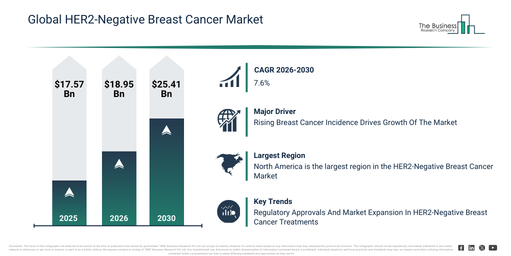
    The her2-negative breast cancer market size has experienced robust growth in recent years. Forecasts show it will climb from $17.57 billion in 2025 to $18.95 billion in 2026, with a compound annual growth rate (CAGR) of 7.9%. Attributing factors for this growth in earlier periods include an uptick in breast cancer screening rates, heightened awareness regarding hormone receptor-positive cancers, an increase in oncology treatment center availability, the presence of well-established chemotherapy protocols, and a surge in clinical oncology research.

    The her2-negative breast cancer market size is anticipated to experience substantial growth in the upcoming years. It is forecasted to reach $25.41 billion by 2030, exhibiting a compound annual growth rate (CAGR) of 7.6%. This projected growth within the forecast period can be attributed to several factors, including the increasing demand for personalized oncology treatments, the rising adoption of genomic-driven therapies, the expansion of immunotherapy pipelines, a growing focus on improving progression-free survival, and increasing investment in oncology drug development. Key trends identified for the forecast period encompass the increasing adoption of personalized hormone therapy regimens, the growing use of cdk4/6 inhibitors, the expansion of genomic testing for treatment selection, the rising integration of immunotherapy in advanced stages, and an enhanced focus on combination treatment protocols.

    Get A Free Sample Report With In-Depth Market Insights:

    https://thebusinessresearchcompany.com/sample_request?id=50962770&type=smp&name=HER2-Negative%20Breast%20Cancer%20Market%20Report%202026&utm_source=Blogs&utm_medium=Paid&utm_campaign=Nov_PR

    HER2-Negative Breast Cancer Market Growth Catalysts And Demand Drivers

    The increasing occurrence of breast cancer is anticipated to drive the expansion of the HER2-negative breast cancer market. This condition is defined by the unchecked proliferation of irregular cells within breast tissue, typically starting in the ducts or lobules. The growing number of breast cancer cases can be linked to multiple elements, such as heightened awareness and better screening techniques, which facilitate earlier and more regular diagnoses. HER2-Negative Breast Cancer is vital for progressing breast cancer research by offering understandings of unique tumor biology and therapeutic approaches, thus aiding in the creation of more focused treatments for patients. For example, the American Cancer Society, a US-based professional organization company, forecasts that in 2025, the United States will likely record around 316,950 new cases of invasive breast cancer in women and 2,800 cases in men, in addition to an estimated 59,080 cases of ductal carcinoma in situ (DCIS) diagnosed in women. Consequently, the escalating frequency of breast cancer cases is fueling the expansion of the HER2-negative breast cancer market.

    HER2-Negative Breast Cancer Market Breakdown By Product Type And Application

    The her2-negative breast cancer market covered in this report is segmented –

    1) By Treatment Type: Chemotherapy, Hormone Therapy, Targeted Therapy, Immunotherapy

    2) By Cancer Stage: Early Stage, Locally Advanced Stage, Metastatic Stage

    3) By Distribution Channel: Hospital Pharmacy, Retail Pharmacy, Online Pharmacy

    Subsegments:

    1) By Chemotherapy: Anthracyclines, Taxanes, Platinum-Based Chemotherapy, Alkylating Agents, Antimetabolites

    2) By Hormone Therapy: Selective Estrogen Receptor Modulators (SERMs), Aromatase Inhibitors, Selective Estrogen Receptor Degraders (SERDs)

    3) By Targeted Therapy: CDK4/6 Inhibitors, PI3K Inhibitors, PARP Inhibitors

    4) By Immunotherapy: Immune Checkpoint Inhibitors, Tumor-Infiltrating Lymphocyte (TIL) Therapy

    HER2-Negative Breast Cancer Market Industry Trends: What’s Reshaping Demand?

    Leading firms within the HER2-negative breast cancer sector are concentrating on obtaining regulatory clearances to launch novel therapies, broaden their range of products, and strengthen their position in the market. Such approvals signify the formal permission issued by governmental bodies, enabling companies to commercialize and supply medications or treatments once specific safety, effectiveness, and quality criteria have been satisfied. As an illustration, in October 2024, Genentech Inc., an American biotechnology company, secured FDA approval for Itovebi (inavolisib), which serves as a targeted therapy for advanced hormone receptor-positive (HR+), HER2-negative breast cancer characterized by a PIK3CA mutation. This clearance permits Itovebi’s use alongside palbociclib and fulvestrant, substantially enhancing progression-free survival rates for patients when contrasted with conventional therapies. This novel treatment approach offers a crucial alternative for individuals with restricted therapeutic options, underscoring the necessity of biomarker testing to pinpoint those most likely to gain from this particular treatment.

    HER2-Negative Breast Cancer Market Company Landscape And Competitive Strategy

    Major companies operating in the her2-negative breast cancer market are Pfizer Inc., Merck & Co. Inc., AbbVie Inc., Bayer AG, Bristol-Myers Squibb Company, Sanofi S.A., AstraZeneca PLC, Novartis International AG, Eli Lilly and Company, Amgen Inc., Daiichi Sankyo Company Limited, Jiangsu Hansoh Pharmaceutical Co. Ltd., BeiGene Ltd., Chipscreen Biosciences Ltd., F. Hoffmann-La Roche Ltd, PharmAbcine Inc., Adagene Inc., H3 Biomedicine Inc., Radius Health Inc., Zenith Epigenetics Ltd.

    View The Full HER2-Negative Breast Cancer Market Report:

    https://thebusinessresearchcompany.com/report/her2-negative-breast-cancer-global-market-report?utm_source=Blogs&utm_medium=Paid&utm_campaign=Nov_PR

    HER2-Negative Breast Cancer Market Geographic Landscape: Which Region Leads Industry Growth?

    North America was the largest region in the HER2-negative breast cancer market in 2025. Asia-Pacific is expected to be the fastest-growing region in the forecast period. The regions covered in the her2-negative breast cancer market report are Asia-Pacific, South East Asia, Western Europe, Eastern Europe, North America, South America, Middle East, Africa.

    Reach Out To Our Team:

    The Business Research Company: https://www.thebusinessresearchcompany.com/

    Americas: +1 310-496-7795

    Asia: +44 7882 955267 & +91 8897263534

    Europe: +44 7882 955267

    Email us at: marketing@tbrc.info

    Follow us on:

    LinkedIn: https://in.linkedin.com/company/the-business-research-company

    YouTube: https://www.youtube.com/channel/UC24_fI0rV8cR5DxlCpgmyFQ

    Global Market Model: https://www.thebusinessresearchcompany.com/global-market-model
  • Hepatorenal Syndrome Market Size Forecast From 2026 To 2030: Key Industry Trends

    Hepatorenal Syndrome Market Size Forecast From 2026 To 2030: Key Industry Trends

    Built to provide research that’s more actionable and strategically valuable, The Business Research Company’s 2026 market reports include market attractiveness analysis, total addressable market sizing, company benchmarking matrices, interactive Excel dashboards, broader supply chain intelligence, emerging startup tracking, and in-depth product insights.

    Hepatorenal Syndrome Market Set To Climb From $1.46 Billion In 2026 To $1.91 Billion By 2030

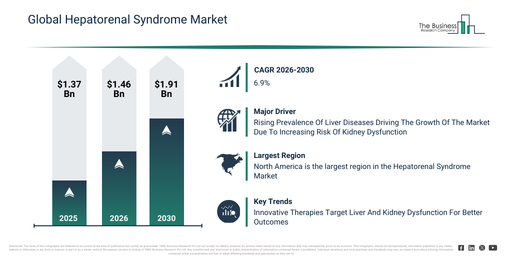
    The hepatorenal syndrome market has experienced substantial growth in recent years. It is anticipated to increase from $1.37 billion in 2025 to $1.46 billion in 2026, achieving a compound annual growth rate (CAGR) of 7.1%. This historical expansion is attributable to several factors, including the increasing prevalence of chronic liver disease, a rising incidence of cirrhosis-related complications, the expansion of intensive care unit infrastructure, enhanced clinical awareness of HRS diagnosis, and the availability of vasoconstrictor-based therapies.

    The hepatorenal syndrome market is poised for significant expansion in the upcoming years, with projections indicating it will reach $1.91 billion by 2030, exhibiting a compound annual growth rate (CAGR) of 6.9%. This anticipated growth stems from several factors, including an increase in liver transplant procedures, a greater focus on early-stage HRS detection, the broader deployment of advanced renal support therapies, the increasing adoption of precision medicine approaches, and elevated investment in hepatology-focused clinical research. Furthermore, notable trends anticipated during this period include the rising use of targeted vasoconstrictor therapies, an expanded application of early diagnostic biomarkers, a heightened emphasis on multidisciplinary critical care management, the growth of albumin-based combination treatments, and enhanced monitoring of renal function in patients with liver disease.

    Get A Free Sample Report With In-Depth Market Insights:

    https://thebusinessresearchcompany.com/sample_request?id=33704812&type=smp&name=Hepatorenal%20Syndrome%20Market%20Report%202026&utm_source=Blogs&utm_medium=Paid&utm_campaign=Nov_PR

    Hepatorenal Syndrome Market Opportunity Drivers: What’s Unlocking New Revenue Potential?

    The increasing incidence of liver diseases is anticipated to fuel the growth of the hepatorenal syndrome market. Liver diseases encompass conditions that compromise liver function, such as hepatitis, cirrhosis, fatty liver, liver cancer, genetic disorders, and autoimmune diseases, often exacerbated by factors like obesity, diabetes, alcohol consumption, viral infections, poor nutrition, and exposure to toxins. The rise in these liver conditions, particularly cirrhosis and acute liver failure, elevates the likelihood of hepatorenal syndrome (HRS) by inducing severe hemodynamic and kidney dysfunction resulting from progressive liver damage. For instance, in April 2024, the Office for Health Improvement & Disparities (OHID) in the UK reported that hospital admissions for liver disease in the UK climbed to 155.2 per 100,000 in 2023, an increase from 150.6 per 100,000 in 2022. Consequently, the growing occurrence of liver diseases is a significant factor propelling the expansion of the hepatorenal syndrome market.

    Hepatorenal Syndrome Market Segment Analysis And Revenue Potential

    The hepatorenal syndrome market covered in this report is segmented –

    1) By Type: Type 1 Hepatorenal Syndrome, Type 2 Hepatorenal Syndrome, Other Types

    2) By Treatment: Liver Transplantation, Terlipressin Infusion, Albumin Infusion, Hemodialysis, Vasoconstrictors

    3) By Diagnosis: Liver Function Tests, Urinalysis And Urine Electrolytes, Other Diagnoses

    4) By End Users: Hospitals, Specialty Clinics

    Subsegments:

    1) By Type 1 Hepatorenal Syndrome: Acute Kidney Injury-Associated HRS, Rapidly Progressive Renal Failure

    2) By Type 2 Hepatorenal Syndrome: Chronic Kidney Dysfunction-Associated HRS, Slowly Progressive Renal Failure

    3) By Other Types: HRS With Cirrhosis, HRS With Acute Liver Failure, HRS With Alcoholic Hepatitis

    Hepatorenal Syndrome Market Innovation Trends: What Developments Are Reshaping The Industry?

    Companies operating in the hepatorenal syndrome market are concentrating on developing innovative devices, such as cytopheretic devices, to enhance patient outcomes by lowering inflammation, stabilizing kidney function, and boosting the effectiveness of Hepatorenal Syndrome (HRS) treatments. The cytopheretic device (Cytosorb) is an extracorporeal blood purification therapy specifically designed to reduce systemic inflammation and immune activation in critically ill patients, including those with Hepatorenal Syndrome (HRS). For instance, in October 2023, SeaStar Medical Holding Corporation, a US-based medical device company, secured FDA approval for its Selective Cytopheretic Device (SCD) for the treatment of hepatorenal syndrome (HRS). This advanced, cell-directed therapy targets hyperinflammation, a primary factor contributing to kidney dysfunction in patients with acute-on-chronic liver failure. By employing immunomodulation, SCD assists in regulating abnormal immune responses, potentially supporting kidney recovery and improving patients’ eligibility for life-saving liver transplants. Its effectiveness in enhancing solid organ function has been demonstrated through preclinical and clinical studies across conditions such as sepsis, acute kidney injury (AKI), and cardiorenal syndrome.

    Hepatorenal Syndrome Market Key Players Shaping Industry Direction

    Major companies operating in the hepatorenal syndrome market are Eli Lilly and Company, Baxter International Inc., Mallinckrodt Pharmaceuticals, Ferring Pharmaceuticals Ltd, La Jolla Pharmaceutical Company, Teva Pharmaceutical Industries Ltd, Cumberland Pharmaceuticals Inc., Innoviva Specialty Therapeutics Inc, BioVie Inc., SeaStar Medical, Otsuka Pharmaceutical Co. Ltd, Pfizer Inc., AbbVie Inc., Bristol Myers Squibb, Novartis AG, Sanofi, Astellas Pharma Inc., Takeda Pharmaceutical Company Limited, Bayer AG, AstraZeneca

    View The Full Hepatorenal Syndrome Market Report:

    https://thebusinessresearchcompany.com/report/hepatorenal-syndrome-global-market-report?utm_source=Blogs&utm_medium=Paid&utm_campaign=Nov_PR

    Hepatorenal Syndrome Market Largest Region: Which Geography Holds The Biggest Share?

    North America was the largest region in the hepatorenal syndrome market in 2025. Asia-Pacific is expected to be the fastest-growing region in the forecast period. The regions covered in the hepatorenal syndrome market report are Asia-Pacific, South East Asia, Western Europe, Eastern Europe, North America, South America, Middle East, Africa.

    Reach Out To Our Team:

    The Business Research Company: https://www.thebusinessresearchcompany.com/

    Americas: +1 310-496-7795

    Asia: +44 7882 955267 & +91 8897263534

    Europe: +44 7882 955267

    Email us at: marketing@tbrc.info

    Follow us on:

    LinkedIn: https://in.linkedin.com/company/the-business-research-company

    YouTube: https://www.youtube.com/channel/UC24_fI0rV8cR5DxlCpgmyFQ

    Global Market Model: https://www.thebusinessresearchcompany.com/global-market-model