Category: Healthcare Services

  • Hemoglobin A1c (HbA1c) Testing Market Outlook Through 2030: Understanding The Growth Opportunity

    Hemoglobin A1c (HbA1c) Testing Market Outlook Through 2030: Understanding The Growth Opportunity

    Featuring market attractiveness scoring, total addressable market sizing, company benchmarking matrices, interactive Excel dashboards, deeper supply chain intelligence, emerging startup tracking, and granular product-level insights, The Business Research Company’s 2026 market reports are built to deliver research that is both more actionable and more strategically valuable.

    Hemoglobin A1c (HbA1c) Testing Market Revenue Outlook: What CAGR Lies Ahead Through 2030?

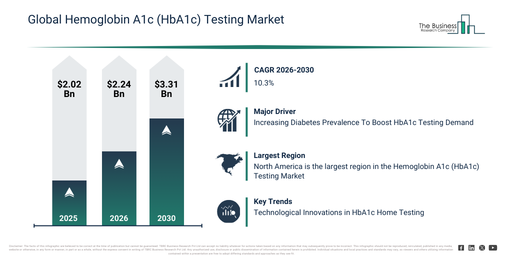
    The hemoglobin a1c (hba1c) testing market has experienced substantial expansion in recent years. It is projected to increase from $2.02 billion in 2025 to $2.24 billion in 2026, growing at a compound annual growth rate (CAGR) of 10.5%. The historical development of this market can be attributed to several factors, including the rising global prevalence of diabetes, the increased application of long-term glucose monitoring, the expansion of diagnostic laboratory infrastructure, growing awareness concerning diabetes screening, and the broader adoption of hba1c as a diagnostic standard.

    The hemoglobin a1c (hba1c) testing market size is anticipated to experience swift expansion over the coming years. It is projected to reach $3.31 billion by 2030, exhibiting a compound annual growth rate (CAGR) of 10.3%. This projected growth throughout the forecast period can be attributed to factors such as the increasing uptake of home-based diabetes monitoring, rising investments in connected diagnostic devices, the expansion of preventive healthcare initiatives, a growing emphasis on early diabetes detection, and an increasing demand for rapid diagnostic solutions. Significant trends emerging during this period include the wider adoption of point-of-care hba1c testing devices, a rising need for portable and home-use hba1c analyzers, the expanding integration of wireless and connected testing solutions, the proliferation of high-accuracy laboratory-based hba1c technologies, and an enhanced focus on standardization and diagnostic accuracy.

    Get A Free Sample Report With In-Depth Market Insights:

    https://thebusinessresearchcompany.com/sample_request?id=18632&type=smp&name=Hemoglobin%20A1c%20%28HbA1c%29%20Testing%20Market%20Report%202026&utm_source=Blogs&utm_medium=Paid&utm_campaign=Nov_PR

    Hemoglobin A1c (HbA1c) Testing Market Growth Catalysts And Demand Drivers

    The growing incidence of diabetes is anticipated to stimulate the expansion of the hemoglobin A1c (HbA1c) testing market in the future. Diabetes is a chronic medical condition characterized by the body’s inability to adequately regulate blood glucose levels, stemming from insufficient insulin production or resistance. The surge in diabetes cases is primarily attributed to poor dietary habits, notably high consumption of processed foods and sugary drinks, coupled with sedentary lifestyles. Additionally, the increasing elderly population and a family history of diabetes heighten the risk of developing the condition. HbA1c testing serves to track long-term blood glucose management in diabetic individuals by measuring the average blood sugar over the previous 2–3 months. For example, data released by The Lancet in June 2023 projected that global diabetes cases would climb from 529 million in 2021 to 1.3 billion by 2050. Hence, the rising prevalence of diabetes will be a key driver for the growth of the hemoglobin A1c (HbA1c) testing market.

    Hemoglobin A1c (HbA1c) Testing Market Segment Landscape And Growth Outlook

    The hemoglobin a1c (hba1c) testing market covered in this report is segmented –

    1) By Testing Method: Laboratory-Based Testing, Point Of Care (PoC) Testing

    2) By Product Type: Instruments, Reagents, Kits

    3) By Technology: Immunoassays, Chromatography, Enzymatic Assays, Boronate Affinity Chromatography, High Performance Liquid Chromatography

    4) By End User: Hospitals And Clinics, Diagnostic Laboratories, Homecare Settings

    Subsegments:

    1) By Laboratory-Based Testing: High-Performance Liquid Chromatography (HPLC) Testing, Ion-Exchange Chromatography, Capillary Electrophoresis

    2) By Point Of Care (PoC) Testing: Fingerstick Testing Devices, Portable Hba1c Analyzers, Handheld Hba1c Test Kits

    Hemoglobin A1c (HbA1c) Testing Market Industry Trends: What’s Reshaping Demand?

    Leading firms operating within the hemoglobin A1c (HbA1c) testing market are emphasizing innovative technologies in diagnostic screening, particularly HbA1c home tests, to provide solutions that are more convenient, precise, and readily available for the early detection and management of diabetes. HbA1c home tests are defined as self-administered diagnostic kits that enable people to assess their average blood sugar levels from the previous 2-3 months, assisting in the surveillance and control of diabetes. An example is Hurdle Health, a US-based company dedicated to delivering innovative healthcare solutions, including diagnostic tools for chronic disease management, which introduced the Hemoglobin A1c (HbA1c) Test in February 2023. This new at-home blood sample examination permits adults to check for and keep track of diabetes, supporting Chronomics’ objective to increase access to diagnostic screening and betterment of health results through direct-to-consumer options.

    Hemoglobin A1c (HbA1c) Testing Market Competitive Landscape: Who Leads The Industry?

    Major companies operating in the hemoglobin a1c (hba1c) testing market are Roche Holding AG, Thermo Fisher Scientific Inc., Abbott Laboratories, Danaher Corporation, Siemens Healthineers, Tosoh Corporation, Hitachi High-Technologies Corporation, Beckman Coulter Inc, Sysmex Corporation, Bio Rad Laboratories Inc, ARKRAY Inc, Randox Laboratories Ltd, Ortho Clinical Diagnostics, Agappe Diagnostics Ltd, SEKISUI Diagnostics LLC, Helena Laboratories, Transasia Bio Medicals Ltd, EKF Diagnostics, Trinity Biotech plc, HemoCue AB, CPC Diagnostics Pvt Ltd, PTS Diagnostics, Menarini Diagnostics srl, Diazyme Laboratories Inc, Osang HealthCare Co Ltd, Eurolyser Diagnostica GmbH, DiaSys Diagnostic Systems GmbH

    View The Full Hemoglobin A1c (HbA1c) Testing Market Report:

    https://thebusinessresearchcompany.com/report/hemoglobin-a1c-hba1c-testing-global-market-report?utm_source=Blogs&utm_medium=Paid&utm_campaign=Nov_PR

    Hemoglobin A1c (HbA1c) Testing Market Largest Region: Which Geography Holds The Biggest Share?

    North America was the largest region in the hemoglobin A1c (HbA1c) testing market in 2025. Asia-Pacific is expected to be the fastest-growing region in the forecast period. The regions covered in the hemoglobin a1c (hba1c) testing market report are Asia-Pacific, South East Asia, Western Europe, Eastern Europe, North America, South America, Middle East, Africa.

    Reach Out To Our Team:

    The Business Research Company: https://www.thebusinessresearchcompany.com/

    Americas: +1 310-496-7795

    Asia: +44 7882 955267 & +91 8897263534

    Europe: +44 7882 955267

    Email us at: marketing@tbrc.info

    Follow us on:

    LinkedIn: https://in.linkedin.com/company/the-business-research-company

    YouTube: https://www.youtube.com/channel/UC24_fI0rV8cR5DxlCpgmyFQ

    Global Market Model: https://www.thebusinessresearchcompany.com/global-market-model
  • Hemodynamic Monitoring Systems Market Growth Potential: What The Latest Forecast Reveals

    Hemodynamic Monitoring Systems Market Growth Potential: What The Latest Forecast Reveals

    Built to provide research that’s more actionable and strategically valuable, The Business Research Company’s 2026 market reports include market attractiveness analysis, total addressable market sizing, company benchmarking matrices, interactive Excel dashboards, broader supply chain intelligence, emerging startup tracking, and in-depth product insights.

    Hemodynamic Monitoring Systems Market Growth Analysis: How Will Revenue Trend Over The Forecast Period?

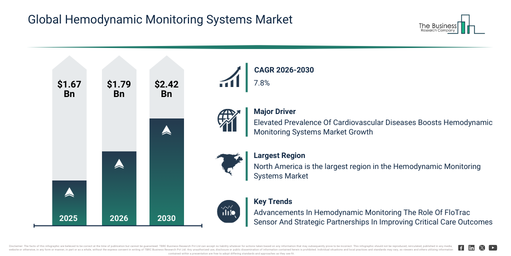
    The hemodynamic monitoring systems market has experienced substantial growth in recent years. This market is projected to expand from $1.67 billion in 2025 to $1.79 billion in 2026, driven by a compound annual growth rate (CAGR) of 7.1%. Its historical expansion was propelled by an increasing number of critical care admissions, the expansion of intensive care units, the rising adoption of invasive monitoring techniques, technological improvements in sensor accuracy, and increased clinician awareness.

    The hemodynamic monitoring systems market size is projected to undergo significant expansion in the upcoming years. This market is expected to reach $2.42 billion by 2030, demonstrating a compound annual growth rate (CAGR) of 7.8%. The projected growth over this period can be attributed to the escalating demand for remote patient observation, the increasing embrace of AI-assisted clinical decision support, the proliferation of minimally invasive monitoring solutions, a heightened emphasis on the early detection of shock, and greater investments in advanced monitoring systems. Prominent trends anticipated during the forecast period include the rising adoption of non-invasive monitoring techniques, the expanding integration of real-time data analytics, the growing utilization of portable hemodynamic monitors, the broadening of critical care monitoring applications, and an intensified focus on early hemodynamic intervention.

    Get A Free Sample Report With In-Depth Market Insights:

    https://thebusinessresearchcompany.com/sample_request?id=37002529&type=smp&name=Hemodynamic%20Monitoring%20Systems%20Market%20Report%202026&utm_source=Blogs&utm_medium=Paid&utm_campaign=Nov_PR

    Hemodynamic Monitoring Systems Market Opportunity Drivers: What’s Unlocking New Revenue Potential?

    The increasing occurrence of cardiovascular diseases is expected to boost the expansion of the hemodynamic monitoring systems market moving forward. Cardiovascular disease refers to a range of conditions that affect the heart and blood vessels. Hemodynamic monitoring systems offer real-time data and insights into a patient’s cardiovascular status, enabling healthcare professionals to carry out timely and precise interventions, optimize treatment approaches, and improve patient outcomes. For instance, in March 2024, according to the Government of the United Kingdom, a UK-based website, the financial year ending in 2023 saw slightly more than 1,862,500 people in England, accounting for 3% of the population, receive a GP diagnosis of coronary heart disease (CHD). Consequently, the rising prevalence of cardiovascular diseases will stimulate the growth of the hemodynamic monitoring systems market.

    Hemodynamic Monitoring Systems Market Breakdown By Product Type And Application

    The hemodynamic monitoring systems market covered in this report is segmented –

    1) By Product: Monitors, Consumables

    2) By Technique Type: Invasive, Non-Invasive

    3) By End-User: Hospitals, Cath Labs, Other End-Users

    Subsegments:

    1) By Monitors: Bedside Monitors, Handheld Monitors, Portable Monitors

    2) By Consumables: Catheters, Sensors, Tubing and Accessories

    Hemodynamic Monitoring Systems Market Innovation Trends: What Developments Are Reshaping The Industry?

    Major companies operating in the hemodynamic monitoring systems market are concentrating on creating sophisticated hemodynamic monitoring solutions to enhance patient outcomes, improve accuracy in cardiovascular assessments, and facilitate real-time data analysis for better clinical decision-making in critical care settings. The FloTrac Sensor is a minimally invasive instrument designed for ongoing hemodynamic monitoring in critically ill patients. It delivers real-time measurements of cardiac output and other key hemodynamic parameters by analyzing arterial waveforms through a standard arterial catheter. For instance, in June 2023, Mindray Medical International Ltd, a China-based company, collaborated with Edwards Lifesciences, a US-based company, to introduce a hemodynamic monitoring solution. The solution integrates the FloTrac™ sensor, which connects to an arterial line. This sensor automatically computes crucial hemodynamic parameters such as Cardiac Output (CO), Stroke Volume (SV), Stroke Volume Variation (SVV), Systemic Vascular Resistance (SVR), and Mean Arterial Pressure (MAP) every 20 seconds. Mindray’s BeneVision N series patient monitors serve as the host platform for this integration.

    Hemodynamic Monitoring Systems Market Company Landscape And Competitive Strategy

    Major companies operating in the hemodynamic monitoring systems market are Abbott Laboratories, Medtronic Plc., Siemens Healthineers AG, Koninklijke Philips N.V., GE HealthCare Technologies Inc., Baxter International Inc., CNSystems Medizintechnik GmbH, Edwards Lifesciences Corporation, Drägerwerk AG & Co. KGaA, Getinge AB, ICU Medical Inc., Masimo Corporation, N.I. Medical Ltd., Nihon Kohden Corporation, Deltex Medical Group plc, CareTaker Medical, Osypka Medical GmbH, Cnoga Digital Care, Tensys Medical Inc., Uscom Limited, Shenzhen Keman Medical Equipment Co. Ltd., Schwarzer Cardiotek GmbH, EMTEL Sliwa sp. k.

    View The Full Hemodynamic Monitoring Systems Market Report:

    https://thebusinessresearchcompany.com/report/hemodynamic-monitoring-systems-global-market-report?utm_source=Blogs&utm_medium=Paid&utm_campaign=Nov_PR

    Hemodynamic Monitoring Systems Market Regional Analysis: Which Geography Leads On Revenue?

    North America was the largest region in the hemodynamic monitoring systems market in 2025. The regions covered in the hemodynamic monitoring systems market report are Asia-Pacific, South East Asia, Western Europe, Eastern Europe, North America, South America, Middle East, Africa.

    Reach Out To Our Team:

    The Business Research Company: https://www.thebusinessresearchcompany.com/

    Americas: +1 310-496-7795

    Asia: +44 7882 955267 & +91 8897263534

    Europe: +44 7882 955267

    Email us at: marketing@tbrc.info

    Follow us on:

    LinkedIn: https://in.linkedin.com/company/the-business-research-company

    YouTube: https://www.youtube.com/channel/UC24_fI0rV8cR5DxlCpgmyFQ

    Global Market Model: https://www.thebusinessresearchcompany.com/global-market-model
  • Hemodialysis Catheter Market Growth Outlook: Why Analysts Expect Continued Expansion

    Hemodialysis Catheter Market Growth Outlook: Why Analysts Expect Continued Expansion

    Backed by market attractiveness analysis, total addressable market sizing, company benchmarking matrices, interactive Excel dashboards, wider supply chain intelligence, emerging startup coverage, and detailed product-level insights, The Business Research Company’s 2026 market reports are designed to offer research that is more actionable and strategically valuable than ever.

    Hemodialysis Catheter Market Forecast: What Value Will The Market Reach By 2030?

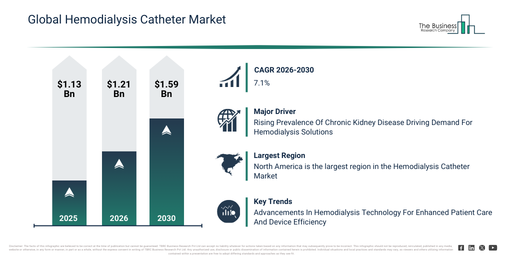
    The hemodialysis catheter market size has shown strong expansion in recent years. It is anticipated to increase from $1.13 billion in 2025 to $1.21 billion in 2026, exhibiting a compound annual growth rate (CAGR) of 7.4%. The historical period’s growth can be linked to the increasing prevalence of chronic kidney disease, the expansion of dialysis centers, the rising use of central venous access, advancements in catheter materials, and a growing demand for long-term dialysis solutions.

    The hemodialysis catheter market is projected to experience robust expansion over the coming years. This market is anticipated to reach $1.59 billion by 2030, exhibiting a compound annual growth rate (CAGR) of 7.1%. Drivers for this projected growth include the wider use of sophisticated biocompatible materials, a heightened emphasis on minimizing catheter-related infections, the expansion of home dialysis initiatives, increased financial commitments to vascular access advancements, and a growing call for patient-focused designs. Key trends for the forecast period encompass the increasing uptake of catheters coated with antimicrobial agents, a surge in the utilization of tunneled cuffed catheters, an intensifying focus on designs aimed at preventing infections, the broadening availability of home dialysis access methods, and a reinforced commitment to ensuring patient comfort and safety.

    Get A Free Sample Report With In-Depth Market Insights:

    https://thebusinessresearchcompany.com/sample_request?id=67590780&type=smp&name=Hemodialysis%20Catheter%20Market%20Report%202026&utm_source=Blogs&utm_medium=Paid&utm_campaign=Nov_PR

    Hemodialysis Catheter Market Growth Momentum: What Factors Are Shaping Demand?

    The increasing prevalence of chronic kidney disease (CKD) is anticipated to fuel the expansion of the hemodialysis catheters market going forward. Chronic kidney disease (CKD) refers to a progressive decrease in kidney function over time, often caused by diabetes, high blood pressure, and hereditary factors. The rising occurrence of chronic kidney disease (CKD) is influenced by an aging global population, unhealthy lifestyle choices, and the growing instances of diabetes and hypertension. Hemodialysis catheters are vital for providing vascular access to patients with chronic kidney disease who require long-term renal replacement therapy. For instance, in February 2024, according to Kidney Research UK, a UK-based government agency, approximately 3.25 million individuals in the UK are living with chronic kidney disease (CKD) stages 3-5. This number is projected to reach 3.9 million people with CKD stages 3-5 by 2033. Hence, the growing prevalence of chronic kidney disease (CKD) is propelling the growth of the hemodialysis catheters market.

    Hemodialysis Catheter Market Segment Analysis And Revenue Potential

    The hemodialysis catheter market covered in this report is segmented –

    1) By Product: Cuffed Tunneled Catheter, Non-Cuffed Tunneled Catheters, Non-tunneled Catheters

    2) By Tip Configuration: Step-Tip Catheters, Split-Tip Catheters, Symmetric Catheters

    3) By Material: Silicone, Carbothane, Polyurethane

    4) By End-User: Dialysis Centers, Hospitals, Other End Users

    Subsegments:

    1) By Cuffed Tunneled Catheter: Single Lumen Cuffed Tunneled Catheter, Double Lumen Cuffed Tunneled Catheter

    2) By Non-Cuffed Tunneled Catheters: Single Lumen Non-Cuffed Tunneled Catheter, Double Lumen Non-Cuffed Tunneled Catheter

    3) By Non-Tunneled Catheters: Single Lumen Non-Tunneled Catheter, Double Lumen Non-Tunneled Catheter

    Hemodialysis Catheter Market Trends: What’s Defining The Industry’s Next Phase?

    Key companies in the hemodialysis catheters market are concentrating on developing novel technologies, such as multi-mechanism hemodialysis, to improve patient outcomes, enhance catheter efficiency, reduce complications like infections or clotting, and extend the functional life of the devices. Multi-mechanism hemodialysis involves catheters with embedded features, including enhanced flow, clot prevention, and infection resistance, designed to boost treatment efficiency and safety. For instance, in April 2023, Becton, Dickinson and Company, a US-based manufacturer of medical devices, secured Food and Drug Administration (FDA) 510(k) clearance for its Aspirex mechanical aspiration thrombectomy system with 6- and 8-F catheters, intended for treating acute emboli and thrombi in hemodialysis access sites such as arteriovenous grafts (AVGs) and fistulas (AVFs). The Aspirex system utilizes a three-in-one mechanism, combining clot aspiration, continuous maceration to prevent clogging, and mechanical transportation for efficient clot removal. This system aims to restore patency in thrombosed AVGs or AVFs, supporting life-saving hemodialysis for patients with end-stage kidney disease.

    Hemodialysis Catheter Market Key Players Shaping Industry Direction

    Major companies operating in the hemodialysis catheter market are Medtronic plc, Fresenius Medical Care AG & Co. KGaA, Toray Industries Inc., Becton Dickinson and Company, Baxter International Inc., Nipro Corporation, Teleflex Incorporated, Cook Medical Incorporated, Asahi Kasei Medical Co. Ltd., Nikkiso Co. Ltd., Merit Medical System Inc., JMS Co. Ltd., AngioDynamics Inc., B. Braun Melsungen AG, Medikit Co. Ltd., Kawasumi Laboratories Inc., Amecath, Mais India Medical Devices Pvt. Ltd., Browndove Healthcare Private Limited, Duomed Ltd.

    View The Full Hemodialysis Catheter Market Report:

    https://thebusinessresearchcompany.com/report/hemodialysis-catheter-global-market-report?utm_source=Blogs&utm_medium=Paid&utm_campaign=Nov_PR

    Hemodialysis Catheter Market Geographic Spread And Regional Opportunities

    North America was the largest region in the hemodialysis catheter market in 2025. Asia-Pacific is expected to be the fastest-growing region in the forecast period. The regions covered in the hemodialysis catheter market report are Asia-Pacific, South East Asia, Western Europe, Eastern Europe, North America, South America, Middle East, Africa.

    Reach Out To Our Team:

    The Business Research Company: https://www.thebusinessresearchcompany.com/

    Americas: +1 310-496-7795

    Asia: +44 7882 955267 & +91 8897263534

    Europe: +44 7882 955267

    Email us at: marketing@tbrc.info

    Follow us on:

    LinkedIn: https://in.linkedin.com/company/the-business-research-company

    YouTube: https://www.youtube.com/channel/UC24_fI0rV8cR5DxlCpgmyFQ

    Global Market Model: https://www.thebusinessresearchcompany.com/global-market-model
  • Hemochromatosis (Iron Overload) Disease Treatment Market Forecast Insights: The Road To $34.8 Billion By 2030

    Hemochromatosis (Iron Overload) Disease Treatment Market Forecast Insights: The Road To $34.8 Billion By 2030

    Featuring market attractiveness scoring, total addressable market sizing, company benchmarking matrices, interactive Excel dashboards, deeper supply chain intelligence, emerging startup tracking, and granular product-level insights, The Business Research Company’s 2026 market reports are built to deliver research that is both more actionable and more strategically valuable.

    Hemochromatosis (Iron Overload) Disease Treatment Market Size Outlook: How Quickly Will Revenue Expand Through 2030?

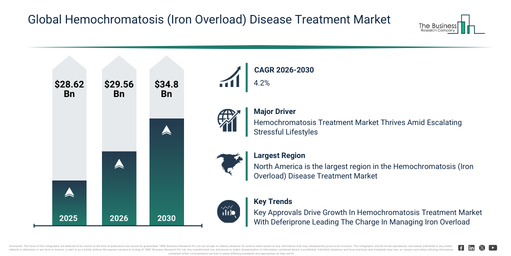
    The hemochromatosis (iron overload) disease treatment market size has experienced consistent expansion over recent years. It is anticipated to rise from $28.62 billion in 2025 to $29.56 billion in 2026, demonstrating a compound annual growth rate (CAGR) of 3.3%. The market’s past growth was driven by enhanced recognition of hereditary iron overload, a greater availability of diagnostic testing, increased adoption of phlebotomy as standard care, heightened clinical awareness, and the presence of chelation therapies.

    The hemochromatosis (iron overload) disease treatment market size is anticipated to experience consistent expansion over the upcoming years. It is projected to reach $34.8 billion by 2030, demonstrating a compound annual growth rate (CAGR) of 4.2%. This projected growth during the forecast period is driven by factors such as the greater acceptance of personalized treatment approaches, an increasing need for non-invasive monitoring solutions, the broadening availability of genetic counseling services, a heightened emphasis on early intervention, and more extensive research into novel therapeutic options. Key trends anticipated during this period encompass a stronger focus on early genetic screening, an increase in the implementation of therapeutic phlebotomy protocols, wider application of iron chelation therapies, the expansion of initiatives to raise disease awareness programs, and an enhanced commitment to long-term disease management.

    Get A Free Sample Report With In-Depth Market Insights:

    https://thebusinessresearchcompany.com/sample_request?id=87709816&type=smp&name=Hemochromatosis%20%28Iron%20Overload%29%20Disease%20Treatment%20Market%20Report%202026&utm_source=Blogs&utm_medium=Paid&utm_campaign=Nov_PR

    Hemochromatosis (Iron Overload) Disease Treatment Market Expansion Drivers: What’s Shaping Future Growth?

    The rising prevalence of stressful lifestyles is projected to stimulate growth in the hemochromatosis (iron overload) disease treatment market in the coming years. Stressful living significantly impacts a person’s physical and mental health, and extended periods of high stress can lead to numerous health problems, including hemochromatosis (iron overload) disease. The treatment for hemochromatosis, a condition characterized by an excess of iron in the body, not only addresses the physical symptoms but also plays a crucial role in mitigating the emotional and psychological stress that frequently accompanies managing a chronic illness. For instance, in November 2025, according to the American Psychiatric Association, a US-based professional organization of psychiatrists and trainee psychiatrists, 41% among U.S. adults stated they anticipate more stress related to the holidays this year than last year, representing a significant increase over 2024 (28%) and 2023 (29%). Therefore, the increasingly stressful lifestyle is a primary driver for the hemochromatosis (iron overload) disease treatment market.

    Hemochromatosis (Iron Overload) Disease Treatment Market Segmentation And Category Overview

    The hemochromatosis (iron overload) disease treatment market covered in this report is segmented –

    1) By Type: Hereditary Hemochromatosis, Acquired Hemochromatosis

    2) By Treatment: Therapeutic Phlebotomy, Iron Chelation Therapy, Other Treatments

    3) By End-Users: Hospitals, Surgical Centers, Other End-Users

    Subsegments:

    1) By Hereditary Hemochromatosis: Genetic Counseling, Phlebotomy, Chelation Therapy

    2) By Acquired Hemochromatosis: Treatment Of Underlying Conditions, Phlebotomy, Chelation Therapy

    Hemochromatosis (Iron Overload) Disease Treatment Market Industry Trends Fueling Future Revenue Growth

    Major companies engaged in the hemochromatosis (iron overload) disease treatment market obtain approvals for drugs like deferiprone, intended for patients suffering from transfusional iron overload to assist in reducing excess iron levels in the body and preventing complications associated with iron accumulation, such as organ damage. Deferiprone is a medication used to manage iron overload in individuals who have received multiple blood transfusions, a common occurrence in conditions including thalassemia, sickle cell anemia, or other chronic anemias. For example, in March 2023, Chiesi Global Rare Diseases Inc, a US-based business unit, disclosed the approval of FERRIPROX MR (deferiprone) extended-release tablets in Canada. FERRIPROX MR is indicated for addressing transfusional iron overload in patients with thalassemia syndromes when current chelation therapy proves inadequate, and also for patients with sickle cell disease (SCD) or other types of anemia. Deferiprone operates as an orally active iron-chelating agent that effectively lowers iron concentration within the body by penetrating cell membranes and binding to surplus iron, thus facilitating its removal from organs and tissues.

    Hemochromatosis (Iron Overload) Disease Treatment Market Competitive Analysis Of Leading Industry Participants

    Major companies operating in the hemochromatosis (iron overload) disease treatment market are Pfizer Inc., AbbVie Inc., Novartis AG, Merck KGaA, Sanofi SA, Takeda Pharmaceutical Company Limited, Bayer AG, GlaxoSmithKline plc, Roche Holding AG, Abbott Laboratories, Fresenius Kabi AG, Apotex Inc., Teva Pharmaceutical Industries Ltd., Recordati S.p.A., Chiesi Farmaceutici S.p.A., Ionis Pharmaceuticals Inc., Silence Therapeutics, DisperSol Technologies LLC., Hinoman Ltd., Pharmacosmos A/S

    View The Full Hemochromatosis (Iron Overload) Disease Treatment Market Report:

    https://thebusinessresearchcompany.com/report/hemochromatosis-iron-overload-disease-treatment-global-market-report?utm_source=Blogs&utm_medium=Paid&utm_campaign=Nov_PR

    Hemochromatosis (Iron Overload) Disease Treatment Market Top Region By Revenue And Market Share

    North America was the largest region in the hemochromatosis (Iron Overload) disease treatment market in 2025. The regions covered in the hemochromatosis (iron overload) disease treatment market report are Asia-Pacific, South East Asia, Western Europe, Eastern Europe, North America, South America, Middle East, Africa.

    Reach Out To Our Team:

    The Business Research Company: https://www.thebusinessresearchcompany.com/

    Americas: +1 310-496-7795

    Asia: +44 7882 955267 & +91 8897263534

    Europe: +44 7882 955267

    Email us at: marketing@tbrc.info

    Follow us on:

    LinkedIn: https://in.linkedin.com/company/the-business-research-company

    YouTube: https://www.youtube.com/channel/UC24_fI0rV8cR5DxlCpgmyFQ

    Global Market Model: https://www.thebusinessresearchcompany.com/global-market-model
  • Hematopoietic Stem Cell Transplantation Market Explained: What Is Fueling Growth To $8.57 Billion By 2030?

    Hematopoietic Stem Cell Transplantation Market Explained: What Is Fueling Growth To $8.57 Billion By 2030?

    Built to provide research that’s more actionable and strategically valuable, The Business Research Company’s 2026 market reports include market attractiveness analysis, total addressable market sizing, company benchmarking matrices, interactive Excel dashboards, broader supply chain intelligence, emerging startup tracking, and in-depth product insights.

    Hematopoietic Stem Cell Transplantation Market Size, Value And Growth Trajectory Through 2030

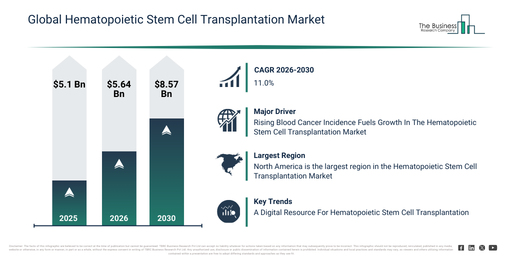
    The hematopoietic stem cell transplantation market has experienced rapid expansion in its size over recent years. This market is anticipated to increase from $5.1 billion in 2025 to $5.64 billion in 2026, achieving a compound annual growth rate (CAGR) of 10.6%. The historical growth can be attributed to several factors, including the increasing prevalence of hematologic disorders, the expansion of transplant centers, improved donor matching techniques, the rising use of autologous transplants, and advancements in supportive care protocols.

    The hematopoietic stem cell transplantation market is projected for significant expansion in the coming years. This market is anticipated to reach a value of $8.57 billion by 2030, exhibiting a compound annual growth rate (CAGR) of 11.0%. Factors contributing to this growth during the forecast period include the increasing uptake of gene-modified stem cell therapies, greater investments in transplant infrastructure, the broadening scope of allogeneic transplant procedures, a rising emphasis on personalized transplant approaches, and improved survival rates following transplantation. Key trends expected within the forecast period encompass the wider adoption of peripheral blood stem cell transplants, the increasing utilization of cord blood transplantation, the expanding incorporation of precision conditioning regimens, the enlargement of donor registry networks, and a heightened focus on monitoring after transplantation.

    Get A Free Sample Report With In-Depth Market Insights:

    https://thebusinessresearchcompany.com/sample_request?id=17408290&type=smp&name=Hematopoietic%20Stem%20Cell%20Transplantation%20Market%20Report%202026&utm_source=Blogs&utm_medium=Paid&utm_campaign=Nov_PR

    Hematopoietic Stem Cell Transplantation Market Development Factors: What’s Supporting Demand?

    An anticipated rise in the occurrence of blood cancer is poised to drive the expansion of the hematopoietic stem cell transplantation market. Blood cancers are defined as a category of malignant conditions affecting the creation and functioning of blood cells. The primary categories of blood cancer include leukemia, lymphoma, and myeloma. Hematopoietic stem cell transplantation is a common treatment for blood cancer, functioning by replacing stem cells and bone marrow cells that have been destroyed by the malignancy. Subsequently, these newly introduced stem cells migrate to the bone marrow and commence the generation of new blood cells. Consequently, these aspects enhance the hematopoietic stem cell transplantation market. For instance, in September 2025, as reported by Cancer Research UK, a UK-based charity, the United Kingdom’s leukemia incidence rate is approximated at 17.9 cases per 100,000 people per year from 2024 to 2026, with a projected reduction of 3% to approximately 17.4 per 100,000 by 2038 to 2040. Hence, the heightened incidence of blood cancer fuels the hematopoietic stem cell transplantation market.

    Hematopoietic Stem Cell Transplantation Market Segment Outlook: Which Categories Are Growing Fastest?

    The hematopoietic stem cell transplantation market covered in this report is segmented –

    1) By Type: Allogeneic, Autologous

    2) By Indication: Leukemia, Lymphatic Disorder, Myeloma, Other Non-Malignant Disorders

    3) By Application: Bone Marrow Transplant, Peripheral Blood Stem Cell Transplant, Cord Blood Transplant

    4) By End User: Hospital Pharmacy, Specialty Clinics

    Subsegments:

    1) By Allogeneic: Matched Related Donor Transplantation, Matched Unrelated Donor Transplantation, Cord Blood Transplantation

    2) By Autologous: Peripheral Blood Stem Cell Transplantation, Bone Marrow Stem Cell Transplantation

    Hematopoietic Stem Cell Transplantation Market Trends Powering Strategic Industry Growth

    Major companies in hematopoietic stem cell transplantation are concentrating on developing innovations such as digital tools to streamline patient management, enhance donor matching processes, and provide real-time data analytics for improved decision-making. Digital resources refer to various online instruments, platforms, or materials that deliver information, services, or functionalities in an electronic format. For instance, in September 2024, BioLineRx Ltd., an Israel-based biopharmaceutical company, launched Mobilization Matters, a digital resource. Mobilization Matters is an interactive platform designed to educate healthcare professionals and patients about the mobilization of stem cells for transplantation. It offers comprehensive guidelines, best practices, and real-time tracking tools to optimize the stem cell collection process, thereby improving patient outcomes and ensuring efficient use of resources in transplantation procedures.

    Hematopoietic Stem Cell Transplantation Market Leading Companies And Competitive Benchmarking

    Major companies operating in the hematopoietic stem cell transplantation market are Pluristem Therapeutics Inc., Lonza Group AG, Escape Therapeutics Inc., Regen Biopharma Inc., Bluebird Bio Inc., CellGenix GmbH, CBR Systems Inc., Merck KGaA, Cord Blood Corporation, Kiadis Pharma NV, Marker Therapeutics Inc., Taiga Biotechnologies Inc., Takeda Pharmaceutical Company Limited, Talaris Therapeutics Inc., ViaCord LLC, ScienCell Research Laboratories Inc., BiolineRx, Stemcell Technologies Inc., ThermoGenesis Holdings Inc., MEDIPOST Co. Ltd., Anterogen. Co. Ltd., Pharmicell Inc., JCR Pharmaceuticals Co. Ltd., Holostem Terapie Avanzate Srl, Regrow Biosciences Pvt Ltd., Stempeutics Research Pvt Ltd.

    View The Full Hematopoietic Stem Cell Transplantation Market Report:

    https://thebusinessresearchcompany.com/report/hematopoietic-stem-cell-transplantation-global-market-report?utm_source=Blogs&utm_medium=Paid&utm_campaign=Nov_PR

    Hematopoietic Stem Cell Transplantation Market Regional Analysis And Top Geography

    North America was the largest region in the hematopoietic stem cell transplantation market in 2025. Asia-Pacific is expected to be the fastest-growing region in the global hematopoietic stem cell transplantation market during the forecast period. The regions covered in the hematopoietic stem cell transplantation market report are Asia-Pacific, South East Asia, Western Europe, Eastern Europe, North America, South America, Middle East, Africa.

    Reach Out To Our Team:

    The Business Research Company: https://www.thebusinessresearchcompany.com/

    Americas: +1 310-496-7795

    Asia: +44 7882 955267 & +91 8897263534

    Europe: +44 7882 955267

    Email us at: marketing@tbrc.info

    Follow us on:

    LinkedIn: https://in.linkedin.com/company/the-business-research-company

    YouTube: https://www.youtube.com/channel/UC24_fI0rV8cR5DxlCpgmyFQ

    Global Market Model: https://www.thebusinessresearchcompany.com/global-market-model
  • Hematology Analyzers Market Forecast To Reach $5.66 Billion By 2030: Key Trends Explained

    Hematology Analyzers Market Forecast To Reach $5.66 Billion By 2030: Key Trends Explained

    Backed by market attractiveness analysis, total addressable market sizing, company benchmarking matrices, interactive Excel dashboards, wider supply chain intelligence, emerging startup coverage, and detailed product-level insights, The Business Research Company’s 2026 market reports are designed to offer research that is more actionable and strategically valuable than ever.

    Hematology Analyzers Market CAGR Outlook And Future Development

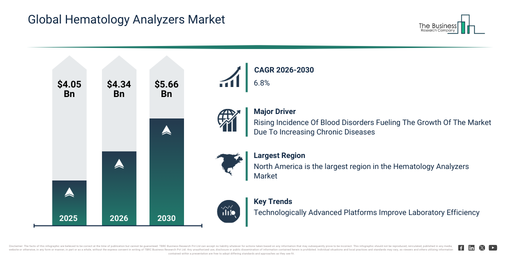
    The hematology analyzers market size has shown substantial growth in recent years. It is projected to expand from $4.05 billion in 2025 to $4.34 billion in 2026, achieving a compound annual growth rate (CAGR) of 7.2%. This historical growth can be attributed to several factors including an increase in clinical laboratory testing volumes, the rising prevalence of blood-related disorders, enhancements in hospital diagnostic capabilities, the adoption of automated lab instruments, and improved access to routine blood testing.

    The hematology analyzers market size is anticipated to experience robust expansion over the next few years, projected to reach $5.66 billion by 2030, demonstrating a compound annual growth rate (CAGR) of 6.8%. This growth during the forecast period is primarily driven by factors such as the increasing requirement for rapid diagnostics, the expanding decentralization of laboratory testing, the broadening scope of oncology and hematology diagnostics, the rising integration of digital pathology, and a stronger emphasis on workflow automation. Key trends expected in this period include the wider adoption of fully automated analyzers, the growing incorporation of AI-assisted cell analysis, an escalating demand for point-of-care hematology testing, the expansion of high-throughput laboratory systems, and an improved focus on diagnostic precision and speed.

    Get A Free Sample Report With In-Depth Market Insights:

    https://thebusinessresearchcompany.com/sample_request?id=12686308&type=smp&name=Hematology%20Analyzers%20Market%20Report%202026&utm_source=Blogs&utm_medium=Paid&utm_campaign=Nov_PR

    Hematology Analyzers Market Industry Drivers: What’s Behind The Revenue Growth?

    The escalating occurrence of blood disorders is anticipated to fuel the expansion of the hematology analyzers market in the foreseeable future. Blood disorders are medical conditions impacting various blood components such as red blood cells, white blood cells, platelets, or plasma. This increase in blood disorders largely stems from the growing prevalence of chronic illnesses, which directly compromise blood health and necessitate continuous oversight. Hematology analyzers assist in identifying blood disorders through precise and swift analysis of blood constituents, facilitating prompt discovery and therapy. These instruments refine clinical decision-making, thereby elevating patient care and improving outcomes. As an illustration, data from March 2024, provided by the National Institute for Health and Care Excellence, a UK-based non-departmental public body, revealed that in 2022/2023, 2,069 individuals in the UK were diagnosed with haemophilia B, comprising 374 with severe disease and 351 with moderate disease. Consequently, the growing occurrence of blood disorders is a key impetus for the expansion of the hematology analyzers market.

    Hematology Analyzers Market Segment Landscape: Which Areas Lead Development?

    The hematology analyzers market covered in this report is segmented –

    1) By Type: Fully-Automated Hematology Analyzers, Semi-Automated Hematology Analyzers

    2) By Component: Instruments, Consumables

    3) By Modality: Standalone, Point Of Care

    4) By Technology: Flow Cytometry, Electrical Impedance, Optical Technology

    5) By End User: Hospitals, Clinical Laboratories, Research Institutes, Other End Users

    Subsegments:

    1) By Fully-Automated Hematology Analyzers: 3-Part Differential Analyzers, 5-Part Differential Analyzers, 6-Part And Above Differential Analyzers, Integrated Hematology Systems

    2) By Semi-Automated Hematology Analyzers: Hemoglobin Analyzers, Coagulation Analyzers, Erythrocyte Sedimentation Rate (ESR) Analyzers, Platelet Function Analyzers

    Hematology Analyzers Market Growth Trends Reshaping The Competitive Landscape

    Leading companies in the hematology analyzers market are dedicated to developing advanced products, such as automated hematology systems, to enhance diagnostic accuracy, boost workflow efficiency, and deliver quicker test results with reduced manual effort. These automated hematology systems are sophisticated diagnostic devices employed in clinical laboratories to conduct various hematological examinations with minimal human intervention. For example, in January 2024, Horiba Medical, a Japan-based medical diagnostics company, introduced the HELO 2.0 high-throughput automated hematology platform, which is Conformité Européenne In Vitro Diagnostic Regulation (CE-IVDR) approved and has pending United States Food and Drug Administration (FDA) approval. HELO 2.0 presents a flexible, scalable, and efficient modular solution designed to fulfill the demands of mid- to large-scale laboratories. It also incorporates cutting-edge technologies from the Yumizen H2500 and H1500 analyzers, ensuring premium performance with comprehensive 360-degree sample mixing, optimized turnaround time, effective space utilization, and efficient reagent storage. The platform additionally provides assistance for ISO-15189 accreditation, covering all pre-analytical, post-analytical, and analytical requirements.

    Hematology Analyzers Market Industry Leaders And Competitive Landscape

    Major companies operating in the hematology analyzers market are F. Hoffmann-La Roche AG, Abbott Laboratories, Danaher Corporation, Siemens Healthineers AG, Shenzhen Mindray Bio-Medical Electronics Co. Ltd., Sysmex Corporation, Horiba Medical Ltd., Nihon Kohden Corporation, Trivitron Healthcare Pvt. Ltd., Transasia Bio-Medicals Ltd., Erba Mannheim GmbH, Boule Diagnostics AB, Diatron MI PLC, Rayto Life and Analytical Sciences Co. Ltd., Perlong Medical, PZ Cormay S.A., Bio-Rad Laboratories Inc., BioSystems, EKF Diagnostics, Ortho Clinical Diagnostics, URIT Medical Electronic Group, Agappe Diagnostics

    View The Full Hematology Analyzers Market Report:

    https://thebusinessresearchcompany.com/report/hematology-analyzers-global-market-report?utm_source=Blogs&utm_medium=Paid&utm_campaign=Nov_PR

    Hematology Analyzers Market Geographic Analysis: Where Is Demand Rising Fastest?

    North America was the largest region in the hematology analyzers market in 2025. Asia-Pacific is expected to be the fastest-growing region in the forecast period. The regions covered in the hematology analyzers market report are Asia-Pacific, South East Asia, Western Europe, Eastern Europe, North America, South America, Middle East, Africa.

    Reach Out To Our Team:

    The Business Research Company: https://www.thebusinessresearchcompany.com/

    Americas: +1 310-496-7795

    Asia: +44 7882 955267 & +91 8897263534

    Europe: +44 7882 955267

    Email us at: marketing@tbrc.info

    Follow us on:

    LinkedIn: https://in.linkedin.com/company/the-business-research-company

    YouTube: https://www.youtube.com/channel/UC24_fI0rV8cR5DxlCpgmyFQ

    Global Market Model: https://www.thebusinessresearchcompany.com/global-market-model
  • Hematologic Malignancies Testing Market Analysis: Understanding The Drivers Behind 13.2% CAGR Through 2030 Growth

    Hematologic Malignancies Testing Market Analysis: Understanding The Drivers Behind 13.2% CAGR Through 2030 Growth

    Featuring market attractiveness scoring, total addressable market sizing, company benchmarking matrices, interactive Excel dashboards, deeper supply chain intelligence, emerging startup tracking, and granular product-level insights, The Business Research Company’s 2026 market reports are built to deliver research that is both more actionable and more strategically valuable.

    Hematologic Malignancies Testing Market Set To Climb From $4.06 Billion In 2026 To $6.68 Billion By 2030

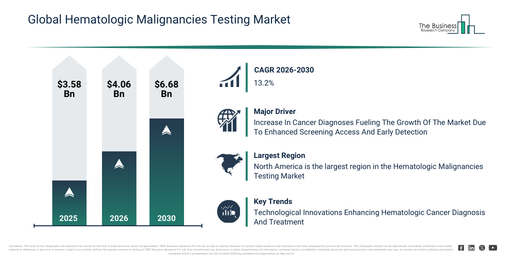
    The hematologic malignancies testing market has seen a rapid increase in size recently. Projections indicate it will expand from $3.58 billion in 2025 to $4.06 billion by 2026, demonstrating a compound annual growth rate (CAGR) of 13.4%. Historically, this growth has been driven by several factors, including an increasing incidence of hematologic cancers, broader adoption of molecular diagnostics, the expansion of diagnostic laboratory networks, the escalating use of cbc and flow cytometry, and enhanced access to oncology testing services.

    The hematologic malignancies testing market is projected to experience substantial expansion over the coming years. This market is anticipated to reach $6.68 billion by 2030, demonstrating a compound annual growth rate (CAGR) of 13.2%. The driving forces behind this growth during the forecast period include a heightened demand for precision oncology diagnostics, the increasing incorporation of AI-based data interpretation, the broadening scope of companion diagnostics, a greater uptake of MRD monitoring, and increased investments in sophisticated diagnostic technologies. Key trends expected within the forecast timeframe encompass the expanding adoption of NGS-based diagnostic testing, a surge in the application of flow cytometry for MRD detection, the growing convergence of molecular and genetic assays, the widening availability of personalized diagnostic profiling, and an intensified emphasis on early and precise subtyping.

    Get A Free Sample Report With In-Depth Market Insights:

    https://thebusinessresearchcompany.com/sample_request?id=48765230&type=smp&name=Hematologic%20Malignancies%20Testing%20Market%20Report%202026&utm_source=Blogs&utm_medium=Paid&utm_campaign=Nov_PR

    Hematologic Malignancies Testing Market Growth Factors: What’s Supporting Expansion?

    The increasing incidence of cancer diagnoses is anticipated to stimulate the expansion of the hematologic malignancies testing market in the future. Cancer diagnoses involve determining the existence, category, and progression of cancer in individuals through various medical examinations and assessments, including imaging, lab tests, and biopsies. This surge in cancer diagnoses stems from enhanced availability of screening initiatives and increased public understanding, leading to earlier detection. Hematologic malignancies testing supports cancer diagnoses by facilitating prompt discovery, precise categorization, and ongoing surveillance of blood-related cancers, which in turn informs specific treatment strategies and enhances patient outcomes. For instance, the American Cancer Society, an US-based nonprofit organization, projects that in 2024, over 2 million new cancer cases will be diagnosed in the US, representing a 4% increase from previous years. Consequently, the growing incidence of cancer diagnoses fuels expansion within the hematologic malignancies testing market.

    Hematologic Malignancies Testing Market Segments: Where Is Growth Concentrated?

    The hematologic malignancies testing market covered in this report is segmented –

    1) By Test Type: Complete Blood Count (CBC), Flow Cytometry, Molecular Testing, Genetic Testing, Others Test Type

    2) By Product: Kits, Services

    3) By Technology: Polymerase Chain Reaction (PCR), Next-Generation Sequencing (NGS), Immunohisto Chemistry (IHC), Cytogenetics, Others Technology

    4) By Therapeutic Indication: Leukemia, Lymphoma, Multiple Myeloma, Myeloproliferative Neoplasms, Others Therapeutic Indication

    5) By End User: Hospitals, Diagnostic Labs, Academic and Research Institutions, Others End Users

    Subsegments:

    1) By Complete Blood Count (CBC): Hemoglobin Testing, Hematocrit Measurement, White Blood Cell Count, Red Blood Cell Count, Platelet Count, Mean Corpuscular Volume (MCV), Mean Corpuscular Hemoglobin (MCH)

    2) By Flow Cytometry: Immunophenotyping, Cell Cycle Analysis, Apoptosis Detection, Minimal Residual Disease (MRD) Testing, DNA Content Analysis

    3) By Molecular Testing: Polymerase Chain Reaction (PCR), Next-Generation Sequencing (NGS), Reverse Transcriptase-PCR (RT-PCR), Fluorescence In Situ Hybridization (FISH), Microarray Analysis

    4) By Genetic Testing: Germline Mutation Testing, Somatic Mutation Testing, Cytogenetic Testing, Chromosomal Aberration Detection, Single Nucleotide Polymorphism (SNP) Analysis

    5) By Others Test Type: Bone Marrow Biopsy, Immunohistochemistry (IHC), Enzyme Assays, Serum Protein Electrophoresis (SPEP), Imaging Tests

    Hematologic Malignancies Testing Market Trends Shaping Long-Term Demand

    Major companies in the hematologic malignancies testing market are focusing on the development of innovative diagnostic approaches, such as rapid molecular profiling, to supply healthcare providers with precise and timely diagnostic tools that enhance early detection, treatment planning, and monitoring of blood cancers. Rapid molecular profiling is a diagnostic technique that analyzes a patient’s genetic makeup to identify mutations and variations, allowing for faster and more personalized treatment decisions. For instance, in November 2023, Roswell Park Comprehensive Cancer Center, a US-based comprehensive cancer center, launched PanHeme, a next-generation gene sequencing tool designed to diagnose hematologic cancers such as leukemia, lymphoma, and multiple myeloma more accurately and quickly. The test identifies mutations in hundreds of genes in under 72 hours, significantly improving the speed and precision of diagnosis and ultimately guiding more personalized treatment decisions for patients.

    Hematologic Malignancies Testing Market Key Participants And Competitive Landscape

    Major companies operating in the hematologic malignancies testing market are Abbott Laboratories, F. Hoffmann-La Roche Ltd, Siemens Healthineers AG, Becton Dickinson and Company, Bio-Rad Laboratories Inc., Agilent Technologies Inc., Illumina Inc., Thermo Fisher Scientific Inc., Danaher Corporation, Sysmex Corporation, QIAGEN N.V., PerkinElmer Inc., Adaptive Biotechnologies Corporation, Invivoscribe Inc., ArcherDx Inc., Guardant Health Inc., Sophia Genetics SA, Natera Inc., Roche Diagnostics International AG, Laboratory Corporation of America Holdings

    View The Full Hematologic Malignancies Testing Market Report:

    https://thebusinessresearchcompany.com/report/hematologic-malignancies-testing-global-market-report?utm_source=Blogs&utm_medium=Paid&utm_campaign=Nov_PR

    Hematologic Malignancies Testing Market Global Footprint: Which Region Leads The Market?

    North America was the largest region in the hematologic malignancies testing market in 2025. Asia-Pacific is expected to be the fastest-growing region in the forecast period. The regions covered in the hematologic malignancies testing market report are Asia-Pacific, South East Asia, Western Europe, Eastern Europe, North America, South America, Middle East, Africa.

    Reach Out To Our Team:

    The Business Research Company: https://www.thebusinessresearchcompany.com/

    Americas: +1 310-496-7795

    Asia: +44 7882 955267 & +91 8897263534

    Europe: +44 7882 955267

    Email us at: marketing@tbrc.info

    Follow us on:

    LinkedIn: https://in.linkedin.com/company/the-business-research-company

    YouTube: https://www.youtube.com/channel/UC24_fI0rV8cR5DxlCpgmyFQ

    Global Market Model: https://www.thebusinessresearchcompany.com/global-market-model
  • Hematologic Malignancies Detection Market Growth To $6.28 Billion By 2030: What’s Driving The Expansion?

    Hematologic Malignancies Detection Market Growth To $6.28 Billion By 2030: What’s Driving The Expansion?

    Built to provide research that’s more actionable and strategically valuable, The Business Research Company’s 2026 market reports include market attractiveness analysis, total addressable market sizing, company benchmarking matrices, interactive Excel dashboards, broader supply chain intelligence, emerging startup tracking, and in-depth product insights.

    Hematologic Malignancies Detection Market Forecast: Value Set To Climb From $3.57 Billion To $6.28 Billion

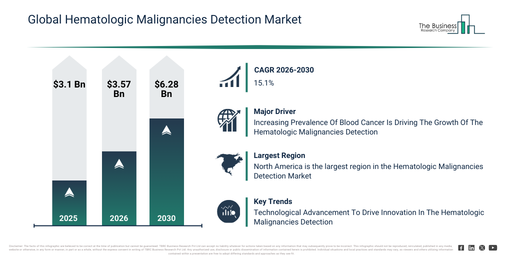
    The hematologic malignancies detection market has experienced rapid expansion recently. Projections indicate it will expand from $3.1 billion in 2025 to $3.57 billion in 2026, exhibiting a compound annual growth rate (CAGR) of 15.5%. This historical growth can be linked to factors such as a rising incidence of blood cancers, the uptake of PCR and immunochemistry methods, the development of clinical laboratory infrastructure, increased awareness regarding early cancer diagnosis, and the accessibility of sophisticated diagnostic kits.

    The hematologic malignancies detection market size is projected to experience substantial growth in the upcoming years. It is anticipated to expand to $6.28 billion by 2030, achieving a compound annual growth rate (CAGR) of 15.1%. This expansion during the forecast period can be attributed to the rising acceptance of liquid biopsy diagnostics, increased investments in precision oncology, the broadening of genomic testing programs, the growing implementation of AI-based diagnostic platforms, and a heightened focus on the early and accurate identification of cancer. Prominent trends expected in this period include the increased adoption of molecular diagnostic techniques, the expanding utilization of next-generation sequencing in oncology, the deeper integration of AI in diagnostic interpretation, the enlargement of early cancer screening initiatives, and an enhanced concentration on personalized oncology diagnostics.

    Get A Free Sample Report With In-Depth Market Insights:

    https://thebusinessresearchcompany.com/sample_request?id=48897373&type=smp&name=Hematologic%20Malignancies%20Detection%20Market%20Report%202026&utm_source=Blogs&utm_medium=Paid&utm_campaign=Nov_PR

    Hematologic Malignancies Detection Market Demand Drivers: What’s Powering Industry Growth?

    The expansion of the hematologic malignancy detection market is anticipated to be driven by the rising occurrence of blood cancer. Blood cancer encompasses various malignancies impacting the blood, bone marrow, or lymphatic system, thereby interfering with normal blood cell generation and operation. This elevated prevalence stems from an aging global demographic and advancements in diagnostic methodologies, enabling earlier and more precise identification. Detecting hematologic malignancies is crucial for treating blood cancer, as it facilitates prompt and precise diagnosis, paving the way for tailored and impactful therapeutic approaches. Illustratively, data from March 2024, based on the Cancer Facts & Figures 2023 report from the Leukemia & Lymphoma Society, a professional organization company situated in the US, indicates that around 437,337 individuals in the US are currently living with or in remission from leukemia. Moreover, projections suggest that approximately 59,610 new cases will be diagnosed during 2024. Consequently, the growing incidence of blood cancer is fueling the expansion of the hematologic malignancy detection market.

    Hematologic Malignancies Detection Market Segment Analysis: What Are The Core Market Categories?

    The hematologic malignancies detection market covered in this report is segmented –

    1) By Type: Polymerase Chain Reaction, Immunochemistry, Next Generation Sequencing, Fluorescence In Situ Hybridization

    2) By Application: Multiple Myeloma, Myelodysplastic Syndrome, Leukemia, Myeloproliferative Neoplasms, Lymphoma, Other Applications

    3) By End-Users: Hospitals, Specialty Clinics, Other End-Users

    Subsegments:

    1) By Polymerase Chain Reaction (PCR): Real-Time PCR (qPCR), Digital PCR, Reverse Transcription PCR (RT-PCR), Nested PCR, Multiplex PCR, PCR-Based Detection Kits

    2) By Immunochemistry: Enzyme-Linked Immunosorbent Assay (ELISA), Immunohistochemistry (IHC), Flow Cytometry, Immunofluorescence, Immunohistochemical Staining Kits

    3) By Next Generation Sequencing (NGS): Whole Genome Sequencing (WGS), Whole Exome Sequencing (WES), Targeted Sequencing, RNA Sequencing (RNA-Seq), Liquid Biopsy NGS, Next-Generation Sequencing Kits For Hematologic Malignancies

    4) By Fluorescence In Situ Hybridization (FISH): Chromosome-Specific FISH Probes, DNA FISH, RNA FISH, Multicolor FISH, FISH-Based Detection Kits For Leukemia And Lymphoma

    Hematologic Malignancies Detection Market Innovation Trends Shaping Future Development

    Leading companies in the hematologic malignancy detection market are concentrating on creating innovative solutions, like blood cancer diagnostic tests, to elevate diagnostic precision and enhance patient results. Blood cancer diagnostic tests are essential for detecting and confirming the existence of hematologic malignancies, including leukemia, lymphoma, and multiple myeloma. For example, in November 2023, Roswell Park Comprehensive Cancer Center, a US-based research and treatment facility, introduced PanHeme, an advanced blood cancer diagnostic test that employs next-generation gene sequencing technology for identifying hematologic malignancies. Through the application of next-generation sequencing technology, PanHeme detects genetic mutations in blood cancers such as leukemia, lymphoma, and multiple myeloma within 72 hours, offering a notable speed advantage over conventional methods. This swift processing time supports personalized treatment blueprints by empowering healthcare professionals to deploy targeted FDA-approved therapies based on particular mutations.

    Hematologic Malignancies Detection Market Top Companies Driving Competitive Growth

    Major companies operating in the hematologic malignancies detection market are Thermo Fisher Scientific Inc., Abbott Laboratories Inc., Roche Diagnostics International Ltd., Illumina Inc., Agilent Technologies Inc., Bio-Rad Laboratories Inc., QIAGEN N.V., Becton Dickinson and Company, Beckman Coulter Inc., Sysmex Corporation, Adaptive Biotechnologies Corporation, NeoGenomics Laboratories Inc., Invivoscribe Technologies Inc., ArcherDx Inc., Invitae Corporation, Natera Inc., Genetron Health, SOPHiA GENETICS, Guardant Health Inc., Genetica Diagnostics

    View The Full Hematologic Malignancies Detection Market Report:

    https://thebusinessresearchcompany.com/report/hematologic-malignancies-detection-global-market-report?utm_source=Blogs&utm_medium=Paid&utm_campaign=Nov_PR

    Hematologic Malignancies Detection Market Regional Split: Which Areas Are Fueling Growth?

    North America was the largest region in the hematologic malignancies’ detection market in 2025. Asia-Pacific is expected to be the fastest-growing region in the forecast period. The regions covered in the hematologic malignancies detection market report are Asia-Pacific, South East Asia, Western Europe, Eastern Europe, North America, South America, Middle East, Africa.

    Reach Out To Our Team:

    The Business Research Company: https://www.thebusinessresearchcompany.com/

    Americas: +1 310-496-7795

    Asia: +44 7882 955267 & +91 8897263534

    Europe: +44 7882 955267

    Email us at: marketing@tbrc.info

    Follow us on:

    LinkedIn: https://in.linkedin.com/company/the-business-research-company

    YouTube: https://www.youtube.com/channel/UC24_fI0rV8cR5DxlCpgmyFQ

    Global Market Model: https://www.thebusinessresearchcompany.com/global-market-model
  • Heart Transplant Market Trends Reshaping Industry Growth Through 2030

    Heart Transplant Market Trends Reshaping Industry Growth Through 2030

    Backed by market attractiveness analysis, total addressable market sizing, company benchmarking matrices, interactive Excel dashboards, wider supply chain intelligence, emerging startup coverage, and detailed product-level insights, The Business Research Company’s 2026 market reports are designed to offer research that is more actionable and strategically valuable than ever.

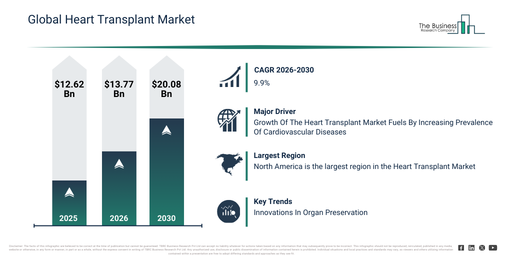
    Heart Transplant Market Revenue Growth On Track For A 9.9% CAGR Through 2030

    The heart transplant market has experienced substantial expansion in recent years. It is projected to grow from $12.62 billion in 2025 to $13.77 billion in 2026, at a compound annual growth rate (CAGR) of 9.1%. Historically, this growth can be attributed to factors such as the increasing prevalence of end-stage heart failure, the expansion of cardiac specialty centers, enhancements in surgical techniques, the growing availability of transplant programs, and the rising use of mechanical circulatory support.

    The heart transplant market size is projected to experience substantial growth in the coming years, reaching $20.08 billion by 2030, exhibiting a compound annual growth rate (CAGR) of 9.9%. This expansion is primarily driven by factors such as increasing investments in artificial heart research, a rising demand for long-term cardiac support solutions, the expansion of donor management technologies, a growing focus on precision post-transplant care, and the increasing adoption of digital health monitoring. Furthermore, significant trends expected during the forecast period include the increasing adoption of ventricular assist devices, the rising use of advanced transplant monitoring systems, the growing integration of digital patient management platforms, the expansion of artificial heart technologies, and an enhanced focus on post-transplant outcomes.

    Get A Free Sample Report With In-Depth Market Insights:

    https://thebusinessresearchcompany.com/sample_request?id=54718312&type=smp&name=Heart%20Transplant%20Market%20Report%202026&utm_source=Blogs&utm_medium=Paid&utm_campaign=Nov_PR

    Heart Transplant Market Growth Drivers: What’s Behind The Acceleration?

    The anticipated increase in cardiovascular diseases is projected to drive the expansion of the heart transplant market in the future. These diseases encompass various conditions impacting the heart and blood vessels. A heart transplant serves as a final therapeutic option for individuals suffering from end-stage heart failure, especially when alternative treatments have proven ineffective. This procedure enhances the quality of life and prolongs survival. As an illustration, data from September 2024, provided by the British Heart Foundation, a cardiovascular research charity based in the UK, indicates that around 7.6 million people in the UK are presently living with heart and circulatory conditions, with this figure split between 4 million men and 3.6 million women. Projections suggest this number could climb by 1 million by 2030, potentially reaching an additional 2 million above current totals by 2040. Consequently, the widespread occurrence of cardiovascular diseases is set to be a key driver for the heart transplant market.

    Heart Transplant Market Segment Breakdown: Which Categories Lead On Revenue?

    The heart transplant market covered in this report is segmented –

    1) By Transplant Procedure Type: Orthotopic Heart Transplant, Heterotopic Heart Transplant

    2) By Donor Type: Allograft, Extended-Criteria Donor Hearts

    3) By Indication: End-Stage Heart Failure, Ischemic Cardiomyopathy, Dilated Cardiomyopathy, Congenital Heart Disease, Valvular Heart Disease, Other Severe Cardiac Disorders

    4) By Recipient Age Group: Pediatric Patients, Adult Patients, Geriatric Patients

    5) By End User: Hospitals, Specialized Cardiac Transplant Centers, Academic & Research Institutes

    Subsegments:

    1) By Orthotopic Heart Transplant: Standard Orthotopic Heart Transplant, Donation After Brain Death (DBD) Orthotopic Transplant, Donation After Circulatory Death (DCD) Orthotopic Transplant, ABO-Compatible Orthotopic Transplant

    2) By Heterotopic Heart Transplant (HHT): Left Heterotopic Heart Transplant, Right Heterotopic Heart Transplant, Biventricular Heterotopic Heart Transplant, Bridge-to-Recovery Heterotopic Transplant

    Heart Transplant Market Trends Redefining Industry Growth

    Major companies in the heart transplant market are increasingly concentrating on crafting innovative solutions, such as heart preservation technology, to elevate patient outcomes and boost transplant success rates. This technology notably extends the duration a heart can be preserved outside the body compared to conventional ice storage, thereby yielding improved results and diminishing complications post-transplantation. Illustratively, in May 2023, Xvivo Perfusion AB, a medical technology firm based in Sweden, received approval from the U.S. Food and Drug Administration (FDA) for an Investigational Device Exemption (IDE) application concerning its heart preservation technology, paving the way for the initiation of the ‘PRESERVE Clinical Trial.’ This trial is structured as a prospective, multicenter, single-arm, open-label study, focused on evaluating hearts transplanted following non-ischemic heart preservation obtained from extended donors, specifically encompassing Donation after Circulatory Death (DCD) hearts. A key distinguishing characteristic of XVIVO’s heart preservation technology is its non-ischemic hypothermic perfusion system, which utilizes cold, oxygenated perfusion for the preservation of donor hearts during transportation.

    Heart Transplant Market Leading Players And Competitive Positioning

    Major companies operating in the heart transplant market are Mayo Clinic, Cleveland Clinic, Massachusetts General Hospital, Johns Hopkins Hospital, NewYork-Presbyterian Hospital, Cedars-Sinai Medical Center, Stanford Health Care, Baylor St Lukes Medical Center, The Texas Heart Institute, Duke University Hospital, UCLA Medical Center, Mount Sinai Hospital, Brigham and Womens Hospital, University of Pittsburgh Medical Center, Houston Methodist Hospital, Northwestern Memorial Hospital, NYU Langone Health, Toronto General Hospital, Royal Papworth Hospital, Harefield Hospital

    View The Full Heart Transplant Market Report:

    https://thebusinessresearchcompany.com/report/heart-transplant-global-market-report?utm_source=Blogs&utm_medium=Paid&utm_campaign=Nov_PR

    Heart Transplant Market Top Region: Where Does Most Revenue Come From?

    North America was the largest region in the heart transplant market in 2025. Asia-Pacific is expected to be the fastest-growing region in the forecast period. The regions covered in the heart transplant market report are Asia-Pacific, South East Asia, Western Europe, Eastern Europe, North America, South America, Middle East, Africa.

    Reach Out To Our Team:

    The Business Research Company: https://www.thebusinessresearchcompany.com/

    Americas: +1 310-496-7795

    Asia: +44 7882 955267 & +91 8897263534

    Europe: +44 7882 955267

    Email us at: marketing@tbrc.info

    Follow us on:

    LinkedIn: https://in.linkedin.com/company/the-business-research-company

    YouTube: https://www.youtube.com/channel/UC24_fI0rV8cR5DxlCpgmyFQ

    Global Market Model: https://www.thebusinessresearchcompany.com/global-market-model
  • Heart Rate Variability Biofeedback App Market Growth To $3.11 Billion Creates New Opportunities Across The Industry

    Heart Rate Variability Biofeedback App Market Growth To $3.11 Billion Creates New Opportunities Across The Industry

    Featuring market attractiveness scoring, total addressable market sizing, company benchmarking matrices, interactive Excel dashboards, deeper supply chain intelligence, emerging startup tracking, and granular product-level insights, The Business Research Company’s 2026 market reports are built to deliver research that is both more actionable and more strategically valuable.

    Heart Rate Variability Biofeedback App Market Value Growth And Long-Term Outlook

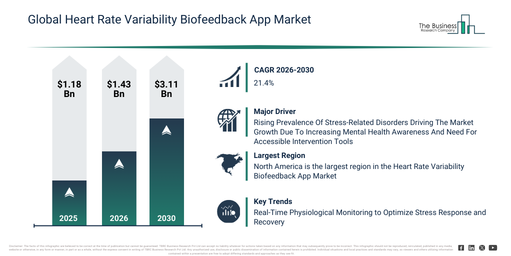
    The heart rate variability biofeedback app market size has experienced significant expansion in recent years. It is forecast to rise from $1.18 billion in 2025 to $1.43 billion in 2026, achieving a compound annual growth rate (CAGR) of 21.7%. The growth observed in the past can be attributed to factors like increasing awareness of stress-related health issues, a surge in the use of mobile health applications, the proliferation of wearable heart rate monitoring devices, greater adoption of preventive wellness tools, and improved smartphone sensor accuracy.

    The heart rate variability biofeedback app market size is projected to witness significant expansion in the coming years. It is foreseen to reach $3.11 billion by 2030, demonstrating a compound annual growth rate (CAGR) of 21.4%. This anticipated growth during the forecast period stems from factors such as increasing demand for mental wellness applications, growing integration with corporate wellness programs, the expansion of AI-driven physiological analytics, wider use in clinical stress management, and the increasing adoption of subscription-based digital health platforms. Prominent trends observed in the forecast period include the increasing uptake of guided breathing biofeedback programs, rising integration with wearable heart rate sensors, the growing application of personalized stress analytics, the expansion of cloud-based HRV tracking platforms, and an enhanced focus on user engagement and visualization.

    Get A Free Sample Report With In-Depth Market Insights:

    https://thebusinessresearchcompany.com/sample_request?id=93549789&type=smp&name=Heart%20Rate%20Variability%20Biofeedback%20App%20Market%20Report%202026&utm_source=Blogs&utm_medium=Paid&utm_campaign=Nov_PR

    Heart Rate Variability Biofeedback App Market Growth Factors Behind Sustained Expansion

    The increasing occurrence of stress-related conditions is projected to stimulate the expansion of the heart rate variability biofeedback app market in the future. These disorders are defined as mental health issues marked by enduring indicators of anxiety, depression, or psychological strain, which profoundly affect daily activities and general well-being. Their rise is attributed to heightened work demands, extended hours, strict deadlines, and elevated expectations, all contributing to chronic stress that adversely affects both mental and physical health. Heart rate variability biofeedback apps offer assistance in handling these conditions through real-time tracking, structured breathing techniques, customized wellness plans, and practical advice. This empowers users to control their autonomic nervous system, mitigate physical stress reactions, bolster emotional fortitude, and uplift their overall mental and physical state. For example, data from the American Psychological Association, a U.S.-based professional organization, showed in May 2024 that 43% of adults experienced greater anxiety compared to the prior year, an increase from 37% in 2023 and 32% in 2022. Among these, 70% identified current events as significant stress contributors, particularly the economy (77%), the 2024 U.S. election (73%), and gun violence (69%). Consequently, the growing occurrence of stress-related disorders is stimulating the expansion of the heart rate variability biofeedback app market.

    Heart Rate Variability Biofeedback App Market Segmentation: How Does The Market Break Down By Category?

    The heart rate variability biofeedback app market covered in this report is segmented –

    1) By Platform: iPhone Operating System (iOS), Android, Windows, Other Platforms

    2) By Distribution Channel: App Stores, Direct Sales, Third-Party Platforms

    3) By Application: Healthcare, Sports And Fitness, Stress Management, Research, Other Applications

    4) By End User: Individuals, Hospitals And Clinics, Research Institutes, Corporate Wellness Programs, Other End Users

    Subsegments:

    1) By iPhone Operating System (iOS): Standard iPhone Operating System (iOS) Biofeedback Apps, Premium iPhone Operating System (iOS) Biofeedback Apps, Subscription-Based iPhone Operating System (iOS) Biofeedback Apps, Personalized iPhone Operating System (iOS) Biofeedback Apps

    2) By Android: Standard Android Biofeedback Apps, Premium Android Biofeedback Apps, Subscription-Based Android Biofeedback Apps, Personalized Android Biofeedback Apps

    3) By Windows: Standard Windows Biofeedback Apps, Premium Windows Biofeedback Apps, Subscription-Based Windows Biofeedback Apps, Personalized Windows Biofeedback Apps

    4) By Other Platforms: Web-Based Biofeedback Apps, Cross-Platform Biofeedback Apps, Wearable-Integrated Biofeedback Apps, Cloud-Supported Biofeedback Apps

    Heart Rate Variability Biofeedback App Market Strategic Trends: What Defines The Next Growth Phase?

    Leading companies in the heart rate variability biofeedback app market are concentrating on developing innovative solutions such as real-time stress monitoring to enhance mental well-being and optimize physiological resilience. Real-time stress monitoring involves the continuous tracking of physiological signals, including heart rate variability, to detect stress levels as they occur, thereby helping users respond immediately with relaxation techniques to improve stress management and overall well-being. For instance, in May 2025, Cenli AS, a Norway-based technology company, introduced Cenli, a home-based biofeedback system that monitors heart rate variability, fingertip temperature, and muscle tension in real time. The system provides users with instant feedback through a redesigned app, enabling them to practice guided breathing and relaxation techniques for better stress management and improved nervous system balance. This system incorporates a user-friendly interface and enhanced sensor accuracy, allowing individuals to track their physiological responses over time, identify patterns of stress, and adopt personalized strategies for recovery. The product is designed for daily use without medical supervision, making advanced biofeedback accessible to a broader audience and supporting improved resilience, mental well-being, and overall health.

    Heart Rate Variability Biofeedback App Market Competitive Overview And Top Companies

    Major companies operating in the heart rate variability biofeedback app market are Garmin Ltd., Polar Electro Oy, Oura Health Oy, Whoop Inc., HeartMath Inc., Welltory Inc., Empatica S.r.l., Azumio Inc., Visible Health Inc., Elite HRV Inc., Biostrap Inc., Hexoskin Inc., Lief Therapeutics Inc., cardiacSense Ltd., MySASY Inc., CardioMood Inc., Vagus Health Ltd., HRV4Training B.V., SweetWater HRV Inc., Spire Health

    View The Full Heart Rate Variability Biofeedback App Market Report:

    https://thebusinessresearchcompany.com/report/heart-rate-variability-biofeedback-app-global-market-report?utm_source=Blogs&utm_medium=Paid&utm_campaign=Nov_PR

    Heart Rate Variability Biofeedback App Market Regional Breakdown: Where Is Demand Concentrated?

    North America was the largest region in the heart rate variability biofeedback app market in 2025. Asia-Pacific is expected to be the fastest-growing region in the forecast period. The regions covered in the heart rate variability biofeedback app market report are Asia-Pacific, South East Asia, Western Europe, Eastern Europe, North America, South America, Middle East, Africa.

    Reach Out To Our Team:

    The Business Research Company: https://www.thebusinessresearchcompany.com/

    Americas: +1 310-496-7795

    Asia: +44 7882 955267 & +91 8897263534

    Europe: +44 7882 955267

    Email us at: marketing@tbrc.info

    Follow us on:

    LinkedIn: https://in.linkedin.com/company/the-business-research-company

    YouTube: https://www.youtube.com/channel/UC24_fI0rV8cR5DxlCpgmyFQ

    Global Market Model: https://www.thebusinessresearchcompany.com/global-market-model