Category: Healthcare Services

  • Automated Next-Generation Sequencing (NGS) Library Preparation Market CAGR Forecast Through 2030: Key Trends Shaping Industry Expansion

    Automated Next-Generation Sequencing (NGS) Library Preparation Market CAGR Forecast Through 2030: Key Trends Shaping Industry Expansion

    Featuring market attractiveness scoring, total addressable market sizing, company benchmarking matrices, interactive Excel dashboards, deeper supply chain intelligence, emerging startup tracking, and granular product-level insights, The Business Research Company’s 2026 market reports are built to deliver research that is both more actionable and more strategically valuable.

    Automated Next-Generation Sequencing (NGS) Library Preparation Market Size Outlook: How Quickly Will Revenue Expand Through 2030?

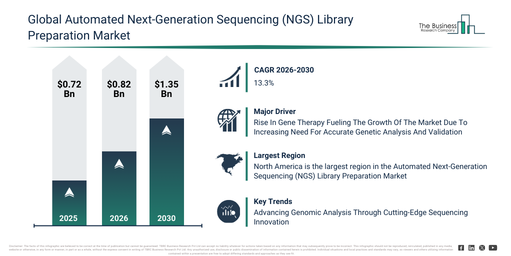
    The market size for automated next-generation sequencing (ngs) library preparation has experienced rapid expansion in recent years. It is projected to increase from $0.72 billion in 2025 to $0.82 billion by 2026, achieving a compound annual growth rate (CAGR) of 13.9%. The historical growth of this market can be attributed to the broader scope of genomic research activities, the growing integration of NGS in clinical research, the progression of precision medicine initiatives, the escalating demand for scalable sequencing workflows, and enhancements in sequencing chemistry technologies.

    The automated next-generation sequencing (ngs) library preparation market is projected to experience swift expansion in the coming years. Its valuation is anticipated to reach $1.35 billion by 2030, exhibiting a compound annual growth rate (CAGR) of 13.3%. This projected growth is driven by several factors, including the expanding application of NGS in diagnostic procedures, heightened investments in automated laboratory setups, the broadening scope of population genomics initiatives, a greater need for quicker sequencing results, and the wider integration of single-cell sequencing methodologies. Key trends anticipated during this period encompass the increased deployment of fully automated library preparation systems, a growing requirement for high-throughput sequencing processes, the augmented incorporation of robotics in sample handling, the development of more standardized and reliable ngs pipelines, and an intensified focus on minimizing errors and ensuring workflow consistency.

    Get A Free Sample Report With In-Depth Market Insights:

    https://thebusinessresearchcompany.com/sample_request?id=79386823&type=smp&name=Automated%20Next-Generation%20Sequencing%20%28NGS%29%20Library%20Preparation%20Market%20Report%202026&utm_source=Blogs&utm_medium=Paid&utm_campaign=Oct_PR

    Automated Next-Generation Sequencing (NGS) Library Preparation Market Growth Factors: What’s Supporting Expansion?

    The expansion of gene therapy is projected to drive the growth of the automated next-generation sequencing (NGS) library preparation market moving forward. Gene therapy is a medical approach that modifies a person’s genes to treat or prevent diseases. The prevalence of gene therapy is increasing due to the rising occurrence of genetic disorders that necessitate targeted and lasting treatment solutions. In gene therapy, automated NGS library preparation is utilized to precisely analyze and confirm genetic alterations by preparing high-quality DNA or RNA samples for sequencing. For example, in April 2024, data from the American Society of Gene and Cell Therapy, a US-based non-profit medical and scientific organization, showed that phase III gene therapy clinical trials grew by 10% in the fourth quarter of 2023, representing the first quarterly increase since the third quarter of 2022. Therefore, the surge in gene therapy is propelling the growth of the automated next-generation sequencing (NGS) library preparation market.

    Automated Next-Generation Sequencing (NGS) Library Preparation Market Segment Analysis Spotlighting Growth Areas

    The automated next-generation sequencing (ngs) library preparation market covered in this report is segmented –

    1) By Type: Targeted Genome Sequencing, Whole Genome Sequencing, Whole Exome Sequencing, Other Sequencing Types

    2) By Workflow: Nucleic Acid Extraction, Fragmentation, Adapter Ligation, Purification And Quantification

    3) By Application: Drug And Biomarker Discovery, Disease Diagnostics, Other Applications

    4) By End-Use: Hospitals And Clinics, Academic And Research Institutions, Pharmaceutical And Biotechnology Companies, Other End-Users

    Subsegments:

    1) By Targeted Genome Sequencing: Amplicon-Based Targeted Sequencing, Hybridization Capture-Based Targeted Sequencing, Custom Targeted Panels, Pre-designed Gene Panels

    2) By Whole Genome Sequencing: Human Whole Genome Sequencing, Animal Whole Genome Sequencing, Plant Whole Genome Sequencing, Microbial Whole Genome Sequencing

    3) By Whole Exome Sequencing: Standard Exome Sequencing, Clinical Exome Sequencing, Custom Exome Panels, Ultra-Rapid Exome Sequencing

    4) By Other Sequencing Types: RNA Sequencing (RNA-Seq), Epigenome Sequencing, Metagenomic Sequencing, Single-Cell Sequencing

    Automated Next-Generation Sequencing (NGS) Library Preparation Market Industry Trends: What’s Reshaping Demand?

    Leading companies in the automated next-generation sequencing (NGS) library preparation market are concentrating on developing advanced technologies, like Xpandomer technology, to improve sequencing speed, enhance data accuracy, and increase scalability, thereby optimizing workflows and supporting more efficient and reliable genomic analysis. Xpandomer technology is an advanced method for deoxyribonucleic acid (DNA) or ribonucleic acid (RNA) sequencing, converting a target nucleic acid molecule into a synthetic, expanded polymer called an Xpandomer, which is approximately 50 times longer than the original deoxyribonucleic acid (DNA) or ribonucleic acid (RNA) strand. For instance, in February 2025, Roche AG, a Switzerland-based biotechnology company, unveiled Sequencing by Expansion, a cutting-edge sequencing platform engineered to boost genomic resolution for advanced diagnostics, disease research, and precision medicine applications. This innovative automated next-generation sequencing (NGS) library preparation system streamlines complex workflows, improves data quality, and accelerates genomic analysis to support advanced research and personalized medicine. The Sequencing by Expansion platform is highly adaptable, enabling precise analysis of various genomic alterations across a wide spectrum of diseases, including cancer and rare genetic disorders, by enhancing resolution and accuracy for deeper biological insights.

    Automated Next-Generation Sequencing (NGS) Library Preparation Market Leading Companies: Who Holds The Strongest Market Presence?

    Major companies operating in the automated next-generation sequencing (ngs) library preparation market are F. Hoffmann-La Roche Ltd., Thermo Fisher Scientific Inc., Agilent Technologies India Private Limited, Illumina Inc., Beckman Coulter Inc., Bio-Rad Laboratories Inc., IDT Corporation, Tecan Group AG, Hamilton Company, Takara Bio Inc., 10x Genomics Inc., Oxford Nanopore Technologies plc, Twist Bioscience Corporation, New England Biolabs Inc., SPT Labtech Limited, Watchmaker Genomics Inc., Pillar Biosciences Inc., Aurora Biomed Inc., BGI Group, SEQWELL INC., Hudson Robotics Inc.

    View The Full Automated Next-Generation Sequencing (NGS) Library Preparation Market Report:

    https://thebusinessresearchcompany.com/report/automated-next-generation-sequencing-ngs-library-preparation-global-market-report?utm_source=Blogs&utm_medium=Paid&utm_campaign=Oct_PR

    Automated Next-Generation Sequencing (NGS) Library Preparation Market Geographic Analysis: Where Is Demand Rising Fastest?

    North America was the largest region in the automated next-generation sequencing (NGS) library preparation market in 2025. Asia-Pacific is expected to be the fastest-growing region in the forecast period. The regions covered in the automated next-generation sequencing (ngs) library preparation market report are Asia-Pacific, South East Asia, Western Europe, Eastern Europe, North America, South America, Middle East, Africa.

    Reach Out To Our Team:

    The Business Research Company: https://www.thebusinessresearchcompany.com/

    Americas: +1 310-496-7795

    Asia: +44 7882 955267 & +91 8897263534

    Europe: +44 7882 955267

    Email us at: marketing@tbrc.info

    Follow us on:

    LinkedIn: https://in.linkedin.com/company/the-business-research-company

    YouTube: https://www.youtube.com/channel/UC24_fI0rV8cR5DxlCpgmyFQ

    Global Market Model: https://www.thebusinessresearchcompany.com/global-market-model
  • Automated Microscopy Market To Witness 7% CAGR Growth Through 2030: Key Industry Drivers

    Automated Microscopy Market To Witness 7% CAGR Growth Through 2030: Key Industry Drivers

    Built to provide research that’s more actionable and strategically valuable, The Business Research Company’s 2026 market reports include market attractiveness analysis, total addressable market sizing, company benchmarking matrices, interactive Excel dashboards, broader supply chain intelligence, emerging startup tracking, and in-depth product insights.

    Automated Microscopy Market Size, Value And Growth Trajectory Through 2030

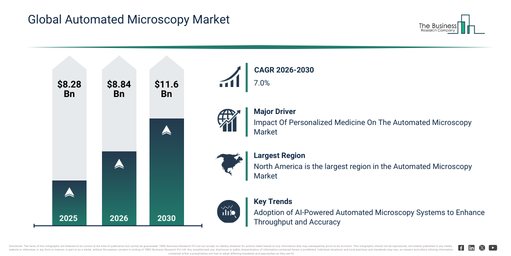
    The automated microscopy market size has experienced robust expansion in recent years. Its value is projected to increase from $8.28 billion in 2025 to $8.84 billion in 2026, achieving a compound annual growth rate (CAGR) of 6.8%. This historical growth can be attributed to several factors, including the increasing use of microscopy in life sciences research, the expansion of clinical diagnostics imaging, advancements in optical and electron microscopy, growth in materials science research, and a rising demand for reproducible imaging results.

    The market for automated microscopy is anticipated to experience robust expansion over the coming years. This market is projected to reach a valuation of $11.6 billion by 2030, demonstrating a compound annual growth rate (CAGR) of 7.0%. This projected increase can be attributed to several factors, including the rising acceptance of AI-assisted diagnostic methods, the broadening scope of semiconductor inspection uses, increased capital allocation towards automated research facilities, a surging need for adaptable imaging systems, and the enhanced integration of cloud-based microscopy solutions. Key developments during this period are expected to encompass the wider implementation of AI-driven image analysis, greater uptake of high-throughput imaging technologies, an increased incorporation of automated sample handling processes, the expansion of remote and digital microscopy capabilities, and a heightened emphasis on achieving accurate high-resolution imaging.

    Get A Free Sample Report With In-Depth Market Insights:

    https://thebusinessresearchcompany.com/sample_request?id=91171033&type=smp&name=Automated%20Microscopy%20Market%20Report%202026&utm_source=Blogs&utm_medium=Paid&utm_campaign=Oct_PR

    Automated Microscopy Market Demand Drivers: What’s Powering Industry Growth?

    The increasing need for personalized medicine is anticipated to drive expansion in the automated microscopy market going forward. Personalized medicine is a healthcare approach that accounts for individual differences in genes, environment, and lifestyle for each person. The adoption of personalized medicine is on the rise due to various factors, including heightened awareness of genetic variability, advancements in genomics, and the increasing prevalence of chronic diseases. Automated microscopy provides researchers and clinicians with essential tools and technologies to advance personalized medicine by elucidating disease mechanisms, identifying predictive biomarkers, and optimizing treatment strategies. For instance, in February 2024, the Personalized Medicine Coalition, a US-based advocacy group for tailored medical treatments, stated that the FDA approved 16 new personalized treatments for rare disease patients in 2023, a significant rise from six in 2022. Therefore, the expanding demand for personalized medicine is a key driver for the growth of the automated microscopy market.

    Automated Microscopy Market Segment Performance And Emerging Opportunities

    The automated microscopy market covered in this report is segmented –

    1) By Product Type: Optical Microscopes, Electron Microscopes, Scanning Probe Microscopes

    2) By Application: Medical Diagnostics, Nanotechnology, Material Science, Life Sciences, Semiconductors

    3) By End User: Hospitals, Research Facilities, Diagnostic Clinics

    Subsegments:

    1) By Optical Microscopes: Automated Light Microscopes, Confocal Microscopes, Fluorescence Microscopes

    2) By Electron Microscopes: Scanning Electron Microscopes (SEM), Transmission Electron Microscopes (TEM), Scanning Transmission Electron Microscopes (STEM)

    3) By Scanning Probe Microscopes: Atomic Force Microscopes (AFM), Scanning Tunneling Microscopes (STM)

    Automated Microscopy Market Innovation Trends: What Developments Are Reshaping The Industry?

    Key players in the automated microscopy sector are concentrating on innovative technological advancements, notably AI-driven automated fluorescence microscopes, in an effort to enhance throughput, refine image precision, and minimize human intervention in cell analysis and drug discovery procedures. An AI-enabled automated microscope typically incorporates motorized stages, autofocus functionality, multi-channel imaging, and sophisticated image analysis software, thereby facilitating automatic cell counting, confluency evaluation, and time-lapse imaging with significantly reduced human input. As an illustration, in August 2024, Leica Microsystems, a scientific instrumentation company from Germany, introduced the Mateo FL, which is an AI-powered digital fluorescence microscope created for automated cell-culture analysis. This product combines transmitted-light imaging for label-free observation with multi-channel fluorescence imaging, leverages AI algorithms for automatic confluency verification and cell counting, and delivers superior reproducibility coupled with expedited experimental workflows when juxtaposed with conventional manual microscopes.

    Automated Microscopy Market Key Players: Which Companies Lead Industry Competition?

    Major companies operating in the automated microscopy market are Thermo Fisher Scientific Inc., Zeiss Group, Agilent Technologies Inc., Keyence Corporation, Hitachi High-Tech Corporation, PerkinElmer Inc., Nikon Corporation, Bruker Corporation, Hamamatsu Photonics K.K., Jenoptik AG, HORIBA Scientific, Molecular Devices LLC, JEOL Ltd., Olympus Corporation, Prior Scientific Instruments Ltd., Phase Holographic Imaging PHI AB, Andor Technology Ltd., Crest Optics S.p.A, Delmic B.V., Nanolive SA, Nanosurf AG, Photometrics

    View The Full Automated Microscopy Market Report:

    https://thebusinessresearchcompany.com/report/automated-microscopy-global-market-report?utm_source=Blogs&utm_medium=Paid&utm_campaign=Oct_PR

    Automated Microscopy Market Global Footprint: Which Region Leads The Market?

    North America was the largest region in the automated microscopy market in 2025. Asia-Pacific is expected to be the fastest-growing region in the forecast period. The regions covered in the automated microscopy market report are Asia-Pacific, South East Asia, Western Europe, Eastern Europe, North America, South America, Middle East, Africa.

    Reach Out To Our Team:

    The Business Research Company: https://www.thebusinessresearchcompany.com/

    Americas: +1 310-496-7795

    Asia: +44 7882 955267 & +91 8897263534

    Europe: +44 7882 955267

    Email us at: marketing@tbrc.info

    Follow us on:

    LinkedIn: https://in.linkedin.com/company/the-business-research-company

    YouTube: https://www.youtube.com/channel/UC24_fI0rV8cR5DxlCpgmyFQ

    Global Market Model: https://www.thebusinessresearchcompany.com/global-market-model
  • Automated Microbiology Market Projected For Strong Expansion Through 2030: Key Trends And Future Outlook

    Automated Microbiology Market Projected For Strong Expansion Through 2030: Key Trends And Future Outlook

    Backed by market attractiveness analysis, total addressable market sizing, company benchmarking matrices, interactive Excel dashboards, wider supply chain intelligence, emerging startup coverage, and detailed product-level insights, The Business Research Company’s 2026 market reports are designed to offer research that is more actionable and strategically valuable than ever.

    Automated Microbiology Market CAGR Outlook And Future Development

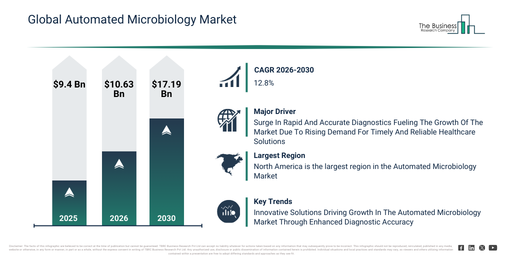
    The market size for automated microbiology has seen rapid expansion in recent years. This market is expected to increase from $9.4 billion in 2025 to $10.63 billion in 2026, reflecting a compound annual growth rate (CAGR) of 13.0%. Key drivers for this growth in the past include higher volumes of clinical testing, an escalating need for swifter diagnostic results, the enlargement of hospital laboratory facilities, a lack of proficient lab personnel, and the uptake of consistent diagnostic methods.

    The automated microbiology market is projected to experience substantial expansion over the upcoming years, with its size forecast to reach $17.19 billion by 2030, exhibiting a compound annual growth rate (CAGR) of 12.8%. This anticipated growth during the forecast period is primarily fueled by factors such as enhanced investments in smart laboratory infrastructure, a rising need for swift infectious disease diagnostics, the broadening scope of molecular microbiology applications, the increasing integration of data-driven laboratory systems, and a sharpened emphasis on diagnostic precision. Key trends expected within this period encompass the growing embrace of fully automated microbiology solutions, the escalating utilization of AI for pathogen identification, greater incorporation of lims platforms, the scaling up of high-throughput diagnostic tests, and a heightened emphasis on automating laboratory workflows.

    Get A Free Sample Report With In-Depth Market Insights:

    https://thebusinessresearchcompany.com/sample_request?id=37184026&type=smp&name=Automated%20Microbiology%20Market%20Report%202026&utm_source=Blogs&utm_medium=Paid&utm_campaign=Oct_PR

    Automated Microbiology Market Growth Drivers: What’s Behind The Acceleration?

    The expansion of the automated microbiology market is anticipated to be spurred by the increasing call for swift and precise diagnostic methods. Such diagnostics encompass medical testing approaches that swiftly and accurately identify illnesses or infections, facilitating prompt and effective treatment. This heightened demand stems from the growing necessity for early disease detection to avert complications and enhance patient health results, alongside reducing wait times for test outcomes. Automated microbiology supports this need by enabling high-volume, consistent, and less error-prone testing, leading to quicker results and improved patient care. A case in point is the data from 2024, where the World Health Organization, a Switzerland-based national agency, indicated that initial diagnostic testing was conducted for 54% (4.5 million) of the 8.3 million individuals newly diagnosed with TB in 2024. This marks an increase from 48% (out of a total of 8.2 million) in 2023. Consequently, the escalating requirement for rapid and accurate diagnostics is a significant factor propelling the growth of the automated microbiology market.

    Automated Microbiology Market Segment Landscape And Growth Outlook

    The automated microbiology market covered in this report is segmented –

    1) By Product: Instruments, Reagents And Kits, Software

    2) By Automation Type: Fully Automated, Semi-Automated

    3) By Diagnostic Technology: DNA And RNA Probe Technology, Detection Techniques

    4) By Application: Biopharmaceutical Production, Clinical Diagnostics, Environmental And Water Testing, Food And Beverage Testing, Other Applications

    5) By End Use: Pharmaceutical And Biotechnology Companies, Hospitals And Diagnostic Laboratories, Academic And Research Institutes, Other End Uses

    Subsegments:

    1) By Instruments: Automated Gram Stainers, Microbial Detection Systems, Automated ID/AST Systems, Blood Culture Systems, Sample Preparation Systems

    2) By Reagents And Kits: Culture Media, Identification Kits, Susceptibility Testing Kits, Staining Reagents, Molecular Diagnostic Reagents

    3) By Software: Data Analysis And Interpretation Tools, Laboratory Workflow Management Software, Integration And Connectivity Solutions, Quality Control And Compliance Software

    Automated Microbiology Market Trends: What’s Defining The Industry’s Next Phase?

    Prominent companies in the automated microbiology market are concentrating on creating advanced solutions, including matrix-assisted laser desorption or ionization (MALDI) biotyper systems, to improve the speed and precision of microbial identification. This technique employs mass spectrometry to identify microorganisms, such as bacteria and fungi, by examining their distinct protein profiles. For example, in April 2024, Bruker Corporation, a US-based maker of scientific instruments for molecular and materials research, introduced the MBT Pathfinder IVD robot for automated MALDI Biotyper target preparation. This innovation automates the target preparation for MALDI biotyper analysis, thereby increasing efficiency in clinical workflows. It streamlines sample loading, matrix application, and plate preparation, allowing for swifter and more accurate identification of microorganisms.

    Automated Microbiology Market Competitive Landscape: Who Leads The Industry?

    Major companies operating in the automated microbiology market are Thermo Fisher Scientific Inc, Danaher Corporation, Becton Dickinson and Company, bioMérieux SA, Abbott Laboratories, Merck KGaA, Agilent Technologies Inc, Sysmex Corporation, Bio-Rad Laboratories Inc, PerkinElmer Inc, HORIBA Ltd, DiaSorin SpA, Neogen Corporation, Rapid Micro Biosystems Inc, Bruker Corporation, Tecan Group AG, Roche Diagnostics International AG, QIAGEN NV, Illumina Inc, Luminex Corporation

    View The Full Automated Microbiology Market Report:

    https://thebusinessresearchcompany.com/report/automated-microbiology-global-market-report?utm_source=Blogs&utm_medium=Paid&utm_campaign=Oct_PR

    Automated Microbiology Market Regional Split: Which Areas Are Fueling Growth?

    North America was the largest region in the automated microbiology market in 2025. The regions covered in the automated microbiology market report are Asia-Pacific, South East Asia, Western Europe, Eastern Europe, North America, South America, Middle East, Africa.

    Reach Out To Our Team:

    The Business Research Company: https://www.thebusinessresearchcompany.com/

    Americas: +1 310-496-7795

    Asia: +44 7882 955267 & +91 8897263534

    Europe: +44 7882 955267

    Email us at: marketing@tbrc.info

    Follow us on:

    LinkedIn: https://in.linkedin.com/company/the-business-research-company

    YouTube: https://www.youtube.com/channel/UC24_fI0rV8cR5DxlCpgmyFQ

    Global Market Model: https://www.thebusinessresearchcompany.com/global-market-model

  • Automated Cell Cultures Market Outlook 2026–2030: Growth Trends, Market Dynamics And Emerging Opportunities

    Automated Cell Cultures Market Outlook 2026–2030: Growth Trends, Market Dynamics And Emerging Opportunities

    Featuring market attractiveness scoring, total addressable market sizing, company benchmarking matrices, interactive Excel dashboards, deeper supply chain intelligence, emerging startup tracking, and granular product-level insights, The Business Research Company’s 2026 market reports are built to deliver research that is both more actionable and more strategically valuable.

    Automated Cell Cultures Market Set To Climb From $7.78 Billion In 2026 To $11.58 Billion By 2030

    The automated cell cultures market size has expanded quickly in recent years. It is forecast to grow from $7.02 billion in 2025 to $7.78 billion in 2026, demonstrating a compound annual growth rate (CAGR) of 10.8%. The historical increase can be attributed to heightened biopharmaceutical research activities, a greater need for standardized cell culture processes, the expansion of drug discovery initiatives, the availability of modular automation solutions, and a rise in academic life science research.

    The automated cell cultures market is anticipated to experience rapid expansion over the next few years. It is predicted to grow to $11.58 billion in 2030, exhibiting a compound annual growth rate (CAGR) of 10.5%. This projected growth during the forecast period is primarily driven by escalating investments in cell and gene therapy manufacturing, a rising demand for high-throughput screening, the broadening scope of personalized medicine research, increasing adoption of automation within laboratories, and a heightened focus on scalable biologics production. Major developments expected in this timeframe include the greater deployment of fully automated cell culture platforms, a rising uptake of robotic liquid handling systems, an expanding use of scalable cell culture automation, the proliferation of closed-system cell processing, and an enhanced emphasis on reproducibility and sterility control.

    Get A Free Sample Report With In-Depth Market Insights:

    https://thebusinessresearchcompany.com/sample_request?id=28982308&type=smp&name=Automated%20Cell%20Cultures%20Market%20Report%202026&utm_source=Blogs&utm_medium=Paid&utm_campaign=Oct_PR

    Automated Cell Cultures Market Growth Factors Behind Sustained Expansion

    The expanding production of biopharmaceuticals is anticipated to drive the advancement of the automated cell cultures market in the future. Biopharmaceuticals are pharmaceutical products created through biotechnology approaches, such as recombinant DNA technology and cell culture methods. The rising need for biopharmaceuticals stems from their capacity to provide precise, potent treatments with reduced adverse effects when contrasted with conventional therapies. Automated cell culture improves both the efficiency and uniformity of biopharmaceutical manufacturing by optimizing processes like cell cultivation, oversight, and collection. For example, in July 2025, Sartorius, an international life science technology firm based in Germany, reported that worldwide sales of biopharmaceutical medicines increased by approximately 9% to hit USD 458 billion in 2024, an increase from the prior year, making up 41% of the total pharmaceutical market, up from 40% in 2023. Consequently, the heightened production of biopharmaceuticals is fueling the expansion of the automated cell cultures market.

    Automated Cell Cultures Market Breakdown By Product Type And Application

    The automated cell cultures market covered in this report is segmented –

    1) By Type: Modular Automation, Whole Label Automation

    2) By Equipment Type: Automated Liquid Handling Systems, Microplate Readers, Robotic Systems, Automated Storage And Retrieval Systems, Other Equipment Types

    3) By Application: Biopharmaceuticals Production, Diagnostics, Gene Therapy, Drug Screening And Development, Toxicity Testing, Stem Cell Research, Tissue Engineering And Regenerative Medicine, Personalized Medicine, Other Applications

    4) By End User: Pharmaceuticals And Biotechnology Companies, Hospital And Diagnostic Laboratories, Research Institutes, Cell Banks

    Subsegments:

    1) By Modular Automation: Automated Cell Culture Systems, Robotic Workstations, Modular Bioreactors

    2) By Whole Label Automation: Fully Automated Cell Culture Systems, Integrated Cell Culture Platforms, Automated Cell Handling Solutions

    Automated Cell Cultures Market Industry Trends Fueling Future Revenue Growth

    Major companies in the automated cell cultures market are concentrating on technological advancements, such as integrated artificial intelligence (AI)-powered software, to secure a competitive advantage. This integrated AI software within automated cell culture setups optimizes experimental conditions and boosts efficiency by analyzing real-time data to enhance cell growth and productivity. For instance, in October 2023, Molecular Devices LLC, a US-based biotechnology company, introduced the CellXpress.ai Automated Cell Culture System, a breakthrough innovation intended to improve drug discovery processes through advanced automation and artificial intelligence. This system is engineered to streamline complex cell culture workflows, freeing researchers to focus on more critical tasks while simultaneously increasing efficiency and reliability.

    Automated Cell Cultures Market Company Landscape And Competitive Strategy

    Major companies operating in the automated cell cultures market are Hitachi Ltd., Panasonic Holdings Corporation, Thermo Fisher Scientific Inc., Danaher Corporation, Corning Incorporated, Lonza Group AG, Nikon healthcare, Sartorius AG, Beckman Coulter Inc., Celltrio Inc., Eppendorf AG, Tecan Trading AG, Shibuya Corp, Hamilton Company, Molecular Devices LLC, FORMULATRIX, Highres Biosolutions, Biotron Healthcare, Agilent Technologies, Miltenyi Biotec

    View The Full Automated Cell Cultures Market Report:

    https://thebusinessresearchcompany.com/report/automated-cell-cultures-global-market-report?utm_source=Blogs&utm_medium=Paid&utm_campaign=Oct_PR

    Automated Cell Cultures Market Top Region: Where Does Most Revenue Come From?

    North America was the largest region in the automated cell cultures market in 2025. Asia-Pacific is expected to be the fastest-growing region in the forecast period. The regions covered in the automated cell cultures market report are Asia-Pacific, South East Asia, Western Europe, Eastern Europe, North America, South America, Middle East, Africa.

    Reach Out To Our Team:

    The Business Research Company: https://www.thebusinessresearchcompany.com/

    Americas: +1 310-496-7795

    Asia: +44 7882 955267 & +91 8897263534

    Europe: +44 7882 955267

    Email us at: marketing@tbrc.info

    Follow us on:

    LinkedIn: https://in.linkedin.com/company/the-business-research-company

    YouTube: https://www.youtube.com/channel/UC24_fI0rV8cR5DxlCpgmyFQ

    Global Market Model: https://www.thebusinessresearchcompany.com/global-market-model
  • Automated Cell Culture Equipment Market Growth Outlook From $2.6 Billion In 2026 To $4.03 Billion By 2030

    Automated Cell Culture Equipment Market Growth Outlook From $2.6 Billion In 2026 To $4.03 Billion By 2030

    Built to provide research that’s more actionable and strategically valuable, The Business Research Company’s 2026 market reports include market attractiveness analysis, total addressable market sizing, company benchmarking matrices, interactive Excel dashboards, broader supply chain intelligence, emerging startup tracking, and in-depth product insights.

    Automated Cell Culture Equipment Market Forecast: Value Set To Climb From $2.6 Billion To $4.03 Billion

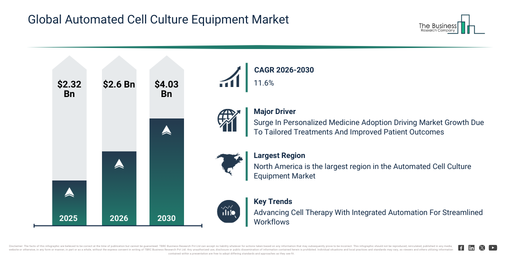
    The automated cell culture equipment market size has experienced swift expansion over the last few years. This market is projected to expand from $2.32 billion in 2025 to reach $2.6 billion in 2026, demonstrating a compound annual growth rate (CAGR) of 11.9%. Historically, this expansion has been linked to several factors, including an increase in pharmaceutical and biologics research, a greater need for uniform cell culture results, the broadening of drug discovery pipelines, the growing intricacy of cell-based assays, and the initial integration of laboratory automation.

    The automated cell culture equipment market size is projected to experience substantial growth in the coming years, reaching $4.03 billion by 2030, exhibiting a compound annual growth rate (CAGR) of 11.6%. This anticipated expansion during the forecast period is driven by factors such as increased investments in regenerative medicine, the broadening of cell and gene therapy pipelines, a rising need for scalable cell culture solutions, a greater emphasis on minimizing laboratory variability, and the expanding integration of AI-driven lab automation. Key developments expected during this period involve the wider implementation of fully automated cell culture platforms, a surge in the adoption of high-throughput cell processing systems, the increased incorporation of robotics and imaging technologies, the proliferation of closed-system and contamination-controlled workflows, and an intensified focus on reproducibility and process standardization.

    Get A Free Sample Report With In-Depth Market Insights:

    https://thebusinessresearchcompany.com/sample_request?id=62879707&type=smp&name=Automated%20Cell%20Culture%20Equipment%20Market%20Report%202026&utm_source=Blogs&utm_medium=Paid&utm_campaign=Oct_PR

    Automated Cell Culture Equipment Market Demand Drivers Opening New Revenue Streams

    The increasing embrace of personalized medicine is anticipated to fuel the expansion of the automated cell culture equipment market in the coming years. Personalized medicine involves customizing medical treatments based on an individual’s genetic, lifestyle, and environmental factors, leading to more precise and effective care. This growing adoption is driven by the development of more efficacious treatments, as therapies are specifically designed for a person’s genetic and biological profile, thereby improving patient outcomes. Automated cell culture equipment supports personalized medicine by delivering accurate, high-throughput, and consistent cell culture processes. These processes are essential for creating therapies tailored to individual patients and for conducting customized drug testing. For example, in February 2024, the Personalized Medicine Coalition, a US-based non-profit organization, announced that in 2023, the FDA authorized 16 new personalized treatments for patients suffering from rare diseases, which was a considerable jump from the six approved in 2022. Thus, the escalating adoption of personalized medicine is a key factor propelling the automated cell culture equipment market’s growth.

    Automated Cell Culture Equipment Market Segment Analysis And Revenue Potential

    The automated cell culture equipment market covered in this report is segmented –

    1) By Product Type: Instruments, Consumables, Software

    2) By Automation Level: Fully Automated Systems, Semi-Automated Systems, Manual Systems With Automation Features

    3) By Application: Drug Discovery And Development, Regenerative Medicine, Toxicology Testing, Vaccine Development, Stem Cell Research

    4) By End-User: Pharmaceutical Companies, Biotechnology Companies, Academic And Research Institutions, Contract Research Organizations (CROs), Diagnostics And Testing Laboratories

    Subsegments:

    1) By Instruments: Automated Cell Culture Systems, Bioreactors, Incubators, Centrifuges, Cell Counters And Analyzers, Liquid Handling Systems, Cell Imaging Systems, Robotic Arms And Manipulators, Cell Harvesting Systems, Filtration And Separation Devices

    2) By Consumables: Culture Media, Reagents And Supplements, Microplates And Culture Dishes, Flasks And Bottles, Single-Use Bags And Tubing, Filters And Membranes, Pipette Tips And Cartridges, Cell Culture Inserts, Sterile Connectors And Clamps

    3) By Software: Data Management Software, Process Control And Monitoring Software, Laboratory Information Management Systems (LIMS), Image Analysis Software, Workflow Automation Software, Quality Control And Compliance Software, Remote Monitoring And Cloud Integration Tools

    Automated Cell Culture Equipment Market Trends Powering Strategic Industry Growth

    Leading companies in the automated cell culture equipment market are prioritizing innovations in integrating workflows seamlessly, such as using closed single-use consumable systems. This focus aims to improve process standardization, reduce contamination risks, minimize manual handling, and facilitate efficient scaling from research to clinical production. A closed single-use consumable system is defined as a sterile, disposable setup that consolidates multiple cell culture processes into a single unit, thereby mitigating contamination and enabling reproducible, scalable workflows. For example, in March 2025, Limula SA, a Switzerland-based biotechnology firm specializing in automated solutions for cell therapy manufacturing, unveiled LimONE. This integrated system combines hardware, software, and single-use consumables to streamline and standardize cell culture and processing operations. The introduction of LimONE represents a commercial offering designed for both research and GMP-compliant manufacturing environments. LimONE aids in quicker technology transfer, reduces expenses related to labor and infrastructure, and facilitates the scalable production of advanced cell therapies, including CAR-T and gene-edited stem cells. The system also boosts workflow efficiency and guarantees consistent results across various cell therapy processes. Ultimately, this product launch solidifies Limula’s position in the automated cell culture equipment market and supports adherence to regulations.

    Automated Cell Culture Equipment Market Key Players Shaping Industry Direction

    Major companies operating in the automated cell culture equipment market are F. Hoffmann-La Roche Ltd, Hitachi Ltd., Merck KGaA, Panasonic Holdings Corporation, Thermo Fisher Scientific Inc., Danaher Corporation, Becton Dickinson and Company, Corning Incorporated, Lonza Group AG, Olympus Corporation, Sartorius AG, Eppendorf SE, Tecan Group Ltd., STEMCELL Technologies Inc., Miltenyi Biotec B.V. & Co. KG, Hamilton Company, Greiner Bio-One International GmbH, Solida Biotech GmbH, Biostream International B.V., HiMedia Laboratories Pvt. Ltd., Kuhner Shaker AG, Cellexus International Ltd.

    View The Full Automated Cell Culture Equipment Market Report:

    https://thebusinessresearchcompany.com/report/global-automated-cell-culture-equipment-market-report?utm_source=Blogs&utm_medium=Paid&utm_campaign=Oct_PR

    Automated Cell Culture Equipment Market Regional Breakdown: Where Is Demand Concentrated?

    North America was the largest region in the automated cell culture equipment market in 2025. Asia-Pacific is expected to be the fastest-growing region in the forecast period. The regions covered in the automated cell culture equipment market report are Asia-Pacific, South East Asia, Western Europe, Eastern Europe, North America, South America, Middle East, Africa.

    Reach Out To Our Team:

    The Business Research Company: https://www.thebusinessresearchcompany.com/

    Americas: +1 310-496-7795

    Asia: +44 7882 955267 & +91 8897263534

    Europe: +44 7882 955267

    Email us at: marketing@tbrc.info

    Follow us on:

    LinkedIn: https://in.linkedin.com/company/the-business-research-company

    YouTube: https://www.youtube.com/channel/UC24_fI0rV8cR5DxlCpgmyFQ

    Global Market Model: https://www.thebusinessresearchcompany.com/global-market-model
  • Atorvastatin Market Analysis 2026: Market Size, Growth Trends And Industry Outlook

    Atorvastatin Market Analysis 2026: Market Size, Growth Trends And Industry Outlook

    Featuring market attractiveness scoring, total addressable market sizing, company benchmarking matrices, interactive Excel dashboards, deeper supply chain intelligence, emerging startup tracking, and granular product-level insights, The Business Research Company’s 2026 market reports are built to deliver research that is both more actionable and more strategically valuable.

    Atorvastatin Market Size, Value And Growth Trajectory Through 2030

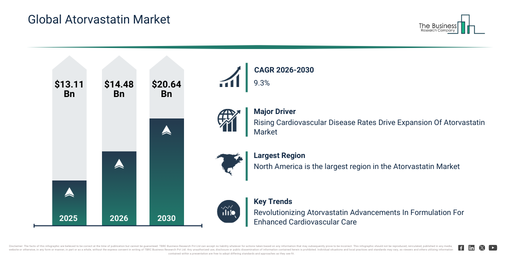
    The atorvastatin market size has experienced rapid expansion in recent years. Its value is projected to increase from $13.11 billion in 2025 to $14.48 billion in 2026, achieving a compound annual growth rate (CAGR) of 10.5%. The historic growth in this market can be primarily ascribed to the rising global prevalence of cardiovascular diseases, the widespread clinical acceptance of statin therapy, an expansion in lipid disorder diagnosis rates, the availability of mature chemical synthesis pathways, and the strong penetration of generic atorvastatin products.

    The atorvastatin market size is projected to experience substantial expansion in the coming years. This market is projected to reach $20.64 billion by 2030, exhibiting a compound annual growth rate (CAGR) of 9.3%. This anticipated expansion over the forecast period is driven by several factors, including a rising elderly population prone to cardiovascular issues, a heightened focus on preventive cardiology, the increasing use of combined lipid-lowering treatments, the growth of pharmaceutical manufacturing in developing markets, and a greater emphasis on sustainable chemistry methods in drug production. Key developments expected during this period involve the greater integration of biocatalytic production techniques, an escalating need for generic statin products, an intensified focus on high-purity active pharmaceutical ingredients, an increase in large-scale commercial manufacturing capabilities, and a stronger push for cost-efficient drug production.

    Get A Free Sample Report With In-Depth Market Insights:

    https://thebusinessresearchcompany.com/sample_request?id=38992616&type=smp&name=Atorvastatin%20Market%20Report%202026&utm_source=Blogs&utm_medium=Paid&utm_campaign=Oct_PR

    Atorvastatin Market Growth Catalysts And Demand Drivers

    The increasing occurrence of cardiovascular diseases is anticipated to drive the expansion of the atorvastatin market. Cardiovascular diseases (CVDs) are various conditions affecting the heart and blood vessels, with their rising prevalence linked to lifestyle changes, demographic shifts, and environmental factors. Atorvastatin is critical in significantly lowering the risk of major cardiovascular events like heart attacks and strokes, with its broad application among patients with high cholesterol and other CVD risk factors being key to reducing the overall impact of these diseases. For instance, in January 2024, the American Heart Association noted a slight rise in cardiovascular sector deaths, reaching 931,578, a marginal increase of 3,000 fatalities from the previous year’s 928,741. Consequently, the escalating prevalence of cardiovascular diseases is propelling the growth of the atorvastatin market.

    Atorvastatin Market Segmentation And Category Overview

    The atorvastatin market covered in this report is segmented –

    1) By Type: Chemical Synthesis, Biocatalysis

    2) By Therapeutic Indication: Hypercholesterolemia, Dyslipidemia, Cardiovascular Disease Prevention, Other Therapeutic Indications

    3) By Application: Hospital Pharmacy, Retail Pharmacy, Online Pharmacy

    Subsegments:

    1) By Chemical Synthesis: Traditional Chemical Synthesis Of Atorvastatin, Semi-Synthetic Atorvastatin Production, Large-Scale Chemical Synthesis For Commercial Production

    2) By Biocatalysis: Enzyme-Catalyzed Synthesis Of Atorvastatin, Biocatalytic Pathways For Efficient Production, Green Chemistry Approaches In Atorvastatin Manufacturing, Biocatalysis For Higher Yield And Purity

    Atorvastatin Market Trends Shaping Long-Term Demand

    Major companies in the atorvastatin market are focused on creating innovative products, such as ready-made liquid oral suspensions, to enhance the treatment of high cholesterol and specific risk factors for heart disease or stroke. This type of liquid oral suspension provides a practical and effective pharmaceutical formulation, simplifying medication administration, particularly for patients who struggle with solid dosage forms. For instance, in June 2023, CMP Pharma, Inc., a US-based pharmaceutical company, launched Atorvaliq (atorvastatin calcium) Oral Suspension, 20 mg/5 mL, which was approved by the Food and Drug Administration, a US-based government agency. Atorvaliq is specifically designed for a particular group of patients who require atorvastatin but experience dysphagia or difficulty swallowing tablets. Its introduction offers healthcare providers and suitable patients a convenient, safe, and FDA-approved liquid formulation option.

    Atorvastatin Market Competitive Analysis Of Leading Industry Participants

    Major companies operating in the atorvastatin market are Zydus Lifesciences, Pfizer Inc., Viatris Inc., Teva Pharmaceutical Industries Ltd., Hetero Ltd., Sun Pharmaceutical Industries Ltd., Dr. Reddy’s Laboratories Ltd., Cadila Pharmaceuticals Ltd., Apotex Pharmachem Inc., Glenmark Pharmaceuticals Ltd., Alembic Pharmaceuticals Ltd., Centrient Pharmaceuticals, Accord Healthcare Ltd., Wockhardt Ltd., Zhejiang Hisun Pharmaceutical Co. Ltd., Unichem Laboratories Ltd., Morepen, Ind-Swift Labs Ltd., Smilax Laboratories Limited, Saneca Pharmaceuticals AS, Srini Pharmaceuticals Pvt. Ltd., Suvan Lifesciences Ltd., Zenfold Sustainable Technologies

    View The Full Atorvastatin Market Report:

    https://thebusinessresearchcompany.com/report/atorvastatin-global-market-report?utm_source=Blogs&utm_medium=Paid&utm_campaign=Oct_PR

    Atorvastatin Market Regional Analysis: Which Geography Leads On Revenue?

    North America was the largest region in the atorvastatin market in 2025. Asia-Pacific is expected to be the fastest-growing region in the forecast period. The regions covered in the atorvastatin market report are Asia-Pacific, South East Asia, Western Europe, Eastern Europe, North America, South America, Middle East, Africa.

    Reach Out To Our Team:

    The Business Research Company: https://www.thebusinessresearchcompany.com/

    Americas: +1 310-496-7795

    Asia: +44 7882 955267 & +91 8897263534

    Europe: +44 7882 955267

    Email us at: marketing@tbrc.info

    Follow us on:

    LinkedIn: https://in.linkedin.com/company/the-business-research-company

    YouTube: https://www.youtube.com/channel/UC24_fI0rV8cR5DxlCpgmyFQ

    Global Market Model: https://www.thebusinessresearchcompany.com/global-market-model
  • Wellness And Preventive Healthcare Market Forecast 2026: Market Size, Competitive Landscape And Growth Drivers

    Wellness And Preventive Healthcare Market Forecast 2026: Market Size, Competitive Landscape And Growth Drivers

    Featuring market attractiveness scoring, total addressable market sizing, company benchmarking matrices, interactive Excel dashboards, deeper supply chain intelligence, emerging startup tracking, and granular product-level insights, The Business Research Company’s 2026 market reports are built to deliver research that is both more actionable and more strategically valuable.

    Wellness And Preventive Healthcare Market Growth Potential: How Will Market Size Shift Through 2030?

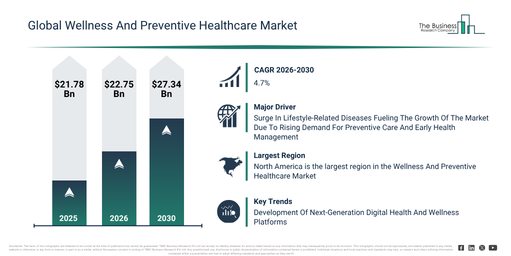
    The wellness and preventive healthcare market has experienced consistent expansion in recent years. It is anticipated to grow from $21.78 billion in 2025 to $22.75 billion in 2026, demonstrating a compound annual growth rate (CAGR) of 4.5%. The historical growth of this market can be ascribed to an increase in awareness concerning preventive healthcare, the rising adoption of health screening programs, a growing occurrence of chronic diseases, the spread of wellness and fitness culture, and the enhancement of healthcare infrastructure and diagnostic facilities.

    The wellness and preventive healthcare market is projected to experience consistent expansion over the upcoming years. Its value is anticipated to reach $27.34 billion by 2030, exhibiting a compound annual growth rate (CAGR) of 4.7%. This expansion during the projection period stems from various factors, such as the increasing desire for personalized health solutions and diagnostics based on genomics, the wider uptake of AI-powered health monitoring, the deeper integration of wellness applications with wearable technology, the spread of hybrid care models, and a greater emphasis on health data analytics and proactive health management. Key developments expected during this timeframe involve the rising usage of wearable health devices, the growing demand for online wellness platforms, the enhanced integration of lifestyle management programs, the broader availability of preventive diagnostic services, and an increased focus on corporate wellness programs.

    Get A Free Sample Report With In-Depth Market Insights:

    https://thebusinessresearchcompany.com/sample_request?id=72419950&type=smp&name=Wellness%20And%20Preventive%20Healthcare%20Market%20Report%202026&utm_source=Blogs&utm_medium=Paid&utm_campaign=Oct_PR

    Wellness And Preventive Healthcare Market Industry Drivers: What’s Behind The Revenue Growth?

    The increasing occurrence of lifestyle-related conditions such as diabetes and obesity is anticipated to fuel the expansion of the wellness and preventive healthcare market moving ahead. These conditions, encompassing diabetes and obesity, are persistent health issues predominantly linked to poor nutritional habits, a lack of physical activity, and prolonged behavioral patterns that negatively impact metabolic well-being and elevate the chances of complications like cardiovascular diseases. The proliferation of such ailments is significantly influenced by inactive lifestyles and inadequate eating patterns, especially in developed nations, thereby boosting the need for preventive health measures. To meet this requirement, the wellness and preventive healthcare sector provides services such as early health assessments, tailored dietary advice, exercise management schemes, and monitoring for chronic disease risks, empowering people to avert or proficiently handle these conditions. As an illustration, in September 2024, data from the Centers for Disease Control and Prevention (CDC), a U.S.-based federal public health agency, showed that 23 U.S. states had adult obesity prevalence rates of 35% or higher in 2023, underscoring the increasing impact of lifestyle-related illnesses. Consequently, the escalating occurrence of lifestyle-related diseases like diabetes and obesity is propelling the expansion of the wellness and preventive healthcare market.

    Wellness And Preventive Healthcare Market Segment Landscape And Growth Outlook

    The wellness and preventive healthcare market covered in this report is segmented –

    1) By Type: Health Screening, Preventive Diagnostics, Lifestyle Management, Wellness Apps, Wearables

    2) By Delivery Mode: Online Wellness Platforms, Offline Healthcare Centers, Hybrid Care Models

    3) By Age Group: Children And Adolescents, Adults, Geriatric Population

    4) By End User: Individuals, Corporate Organizations, Healthcare Providers, Insurance Companies

    Subsegments:

    1) By Health Screening: Blood Pressure Screening, Cholesterol And Lipid Screening, Cancer Screening, Diabetes Screening, Body Mass Index Assessment

    2) By Preventive Diagnostics: Genetic Risk Assessment, Immunization And Vaccination Testing, Cardiovascular Risk Diagnostics, Bone Density Testing, Hormonal Level Assessment

    3) By Lifestyle Management: Nutrition And Diet Counseling, Physical Activity Monitoring, Stress Management Programs, Sleep Pattern Monitoring, Behavioral Coaching Programs

    4) By Wellness Apps: Meditation And Mindfulness Applications, Nutrition Tracking Applications, Fitness Tracking Applications, Sleep Tracking Applications, Chronic Condition Management Applications

    5) By Wearables: Smart Watches With Health Sensors, Fitness Bands With Heart Rate Monitoring, Glucose Monitoring Devices, Sleep Tracking Devices, Activity And Step Tracking Devices

    #Wellness And Preventive Healthcare Market Growth Trends: What’s Shaping The Future Outlook?

    Major companies within the wellness and preventive healthcare sector are concentrating on creating integrated digital health solutions, including AI-driven personalized programs for managing obesity. These solutions are designed to support long-term weight management, enhance the prevention of chronic diseases, and deliver comprehensive patient care. Such programs integrate telehealth services, clinical support, and behavioral interventions to address both the physiological and lifestyle factors associated with weight management. For example, in May 2023, Noom, Inc., a U.S.-based provider of digital health platforms, launched Noom Med. This initiative offers a comprehensive obesity care program that combines telehealth services with personalized psychological tools. The program connects patients with clinicians and health coaches to deliver tailored treatment plans, incorporating medical evaluation, support for behavior change, and prescription-based interventions where appropriate, thereby promoting sustainable weight management and improved health outcomes.

    Wellness And Preventive Healthcare Market Competitive Landscape: Who Leads The Industry?

    Major companies operating in the wellness and preventive healthcare market are Cardinal Health Technologies LLC, Nestlé S.A., Johnson & Johnson, Merck & Co. Inc., Pfizer Inc., Bayer AG, Sanofi S.A., Novartis AG, AstraZeneca PLC, Thermo Fisher Scientific Inc., Abbott Laboratories Inc., Eli Lilly and Company, Medtronic PLC, Danone Corporation, Takeda Pharmaceutical Company, Amgen Inc., Siemens Healthineers AG, Philips Healthcare Inc., GE Healthcare Technologies Inc., Teva Pharmaceutical Industries, Baxter International, Biogen Inc., Herbalife Nutrition, Illumina Inc., Amway Inc.

    View The Full Wellness And Preventive Healthcare Market Report:

    https://thebusinessresearchcompany.com/report/wellness-and-preventive-healthcare-market-report?utm_source=Blogs&utm_medium=Paid&utm_campaign=Oct_PR

    Wellness And Preventive Healthcare Market Geographic Landscape: Which Region Dominates Industry Growth?

    North America was the largest region in the wellness and preventive healthcare market in 2025. Asia-Pacific is expected to be the fastest-growing region in the forecast period. The regions covered in the wellness and preventive healthcare market report are Asia-Pacific, South East Asia, Western Europe, Eastern Europe, North America, South America, Middle East, Africa.

    Reach Out To Our Team:

    The Business Research Company: https://www.thebusinessresearchcompany.com/

    Americas: +1 310-496-7795

    Asia: +44 7882 955267 & +91 8897263534

    Europe: +44 7882 955267

    Email us at: marketing@tbrc.info

    Follow us on:

    LinkedIn: https://in.linkedin.com/company/the-business-research-company

    YouTube: https://www.youtube.com/channel/UC24_fI0rV8cR5DxlCpgmyFQ

    Global Market Model: https://www.thebusinessresearchcompany.com/global-market-model
  • Secrets Hygiene Management Market Explained: What Is Fueling Growth To $43.39 Billion By 2030?

    Secrets Hygiene Management Market Explained: What Is Fueling Growth To $43.39 Billion By 2030?

    Built to provide research that’s more actionable and strategically valuable, The Business Research Company’s 2026 market reports include market attractiveness analysis, total addressable market sizing, company benchmarking matrices, interactive Excel dashboards, broader supply chain intelligence, emerging startup tracking, and in-depth product insights.

    Secrets Hygiene Management Market Poised To Hit $43.39 Billion By 2030 With A 9.1% CAGR

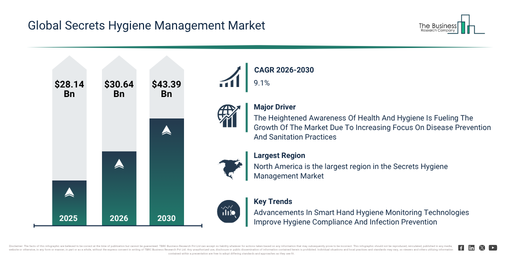
    The secrets hygiene management market has observed significant growth in recent years. It is projected to expand from $28.14 billion in 2025 to $30.64 billion in 2026, demonstrating a compound annual growth rate (CAGR) of 8.9%. This historical expansion was primarily fueled by an increasing awareness of feminine hygiene, the adoption of fundamental washroom hygiene solutions, a growing demand for sanitary disposal systems, the introduction of more corporate hygiene programs, and the broader provision of hygiene services in hospitals and various institutions.

    The secrets hygiene management market size is anticipated to experience robust expansion in the coming years. It is projected to reach $43.39 billion by 2030, demonstrating a compound annual growth rate (CAGR) of 9.1%. This growth during the forecast period is attributable to the increasing uptake of smart hygiene monitoring systems, a rising demand for eco-friendly and biodegradable hygiene products, the expansion of automated vending and replenishment solutions, growing corporate and workplace hygiene initiatives, and the enhanced integration of IoT-enabled hygiene management platforms. Significant trends expected in this period include the increased adoption of eco-friendly menstrual hygiene products, a rising demand for automated washroom hygiene solutions, the growing integration of smart IoT-enabled vending systems, the proliferation of subscription-based hygiene services, and an escalating focus on workplace and institutional hygiene programs.

    Get A Free Sample Report With In-Depth Market Insights:

    https://thebusinessresearchcompany.com/sample_request?id=31861454&type=smp&name=Secrets%20Hygiene%20Management%20Market%20Report%202026&utm_source=Blogs&utm_medium=Paid&utm_campaign=Oct_PR

    Secrets Hygiene Management Market Growth Momentum: What Factors Are Shaping Demand?

    The increased understanding of health and cleanliness is anticipated to drive expansion in the secret hygiene management market in the future. Health and hygiene encompass methods used to preserve cleanliness and avert disease transmission, thereby safeguarding human welfare. The recognition of health and hygiene is growing, attributed to a global focus on preventing illnesses and improving sanitation within communities and institutions. Secrets hygiene management facilitates health and hygiene awareness through structured oversight, systematic management of hygiene procedures, and enhanced responsibility for upholding sanitation levels across various locations. As an illustration, data from August 2025 by the United Nations International Children’s Emergency Fund (UNICEF), a humanitarian aid organization based in the US, indicated that in 2024, 1.7 billion individuals continued to lack essential hygiene provisions, with 611 million having no handwashing facilities. In contrast, four nations had already attained universal access (>99%) to fundamental hygiene services, and an additional nine were projected to achieve this by 2030. Consequently, an elevated understanding of health and hygiene serves as a key driver for the expansion of the secret hygiene management market.

    Secrets Hygiene Management Market Segmentation And Category Overview

    The secrets hygiene management market covered in this report is segmented –

    1) By Service Type: Menstrual Hygiene Services, Washroom Hygiene Solutions, Sanitary Disposal Systems, Vending Solutions, Smart Hygiene Monitoring, Subscription-Based Services, Workplace Hygiene Programs, Institutional Hygiene, Eco-Friendly Products, Customized Hygiene Plans

    2) By Product Type: Sanitizers, Disinfectants, Hygiene Monitoring Systems, Odor Control Products, Other Product Types

    3) By Distribution Channel: Online Stores, Supermarkets/Hypermarkets, Specialty Stores, Other Distribution Channels

    4) By Application: Residential, Commercial, Industrial, Other Applications

    5) By End-User: Hospitals, Restaurants, Hotels, Households, Offices, Other End-Users

    Subsegments:

    1) By Menstrual Hygiene Services: Sanitary Pad Disposal Services, Tampon Disposal Services, Menstrual Cup Hygiene Services, Sanitary Product Vending And Replenishment, Menstrual Waste Collection And Treatment

    2) By Washroom Hygiene Solutions: Automated Air Freshening Systems, Hand Wash And Sanitizer Dispensers, Toilet Seat Sanitization Systems, Surface Disinfectant Dispensers, Restroom Cleaning And Maintenance Services

    3) By Sanitary Disposal Systems: Feminine Hygiene Disposal Bins, Medical And Sanitary Waste Bins, Touch-Free Sanitary Disposal Units, Biodegradable Sanitary Disposal Systems, Waste Collection And Incineration Units

    4) By Vending Solutions: Sanitary Napkin Vending Machines, Tampon Vending Machines, Hygiene Essentials Vending Machines, Smart IoT-Enabled Vending Machines, Contactless Vending Systems

    5) By Smart Hygiene Monitoring: IoT Restroom Usage Sensors, Hygiene Compliance Monitoring Software, Smart Refill Alert Systems, Occupancy And Traffic Monitoring Sensors, Remote Hygiene Management Dashboards

    6) By Subscription-Based Services: Hygiene Product Replenishment Subscriptions, Washroom Consumables Supply Subscriptions, Scheduled Sanitary Waste Collection Plans, Periodic Hygiene Maintenance Contracts, Automated Refill Subscription Services

    7) By Workplace Hygiene Programs: Corporate Washroom Hygiene Management, Employee Menstrual Wellness Programs, Workplace Sanitation Compliance Services, Office Hygiene Training And Awareness Programs, Hygiene Supply Management Services

    8) By Institutional Hygiene: Hospital Hygiene Management Solutions, School And University Hygiene Programs, Airport And Transport Hub Hygiene Services, Government Facility Hygiene Services, Hospitality Sector Hygiene Management

    9) By Eco-Friendly Products: Biodegradable Sanitary Pads, Compostable Disposal Bags, Recyclable Hygiene Dispensers, Plant-Based Cleaning Agents, Low-Carbon Hygiene Product Solutions

    10) By Customized Hygiene Plans: Site-Specific Hygiene Service Packages, Industry-Specific Hygiene Programs, Tailored Waste Disposal Management Plans, Customized Hygiene Monitoring Systems, Integrated Facility Hygiene Solutions

    Secrets Hygiene Management Market Trends Redefining Industry Growth

    Leading firms within the secret hygiene management market are concentrating on creating sophisticated solutions, like automated hand hygiene tracking systems, aiming to elevate sanitation adherence, refine hygiene oversight, and lessen infection spread in medical and organizational settings. Automated hand hygiene tracking denotes a system leveraging technology to observe and log handwashing occurrences, thereby ensuring compliance with hygiene standards and boosting responsibility. As an illustration, in November 2024, BioVigil, a healthcare technology firm based in the US, commenced full-scale production of its AccuWash technology, following a successful pilot phase that showed enhanced individual hand hygiene monitoring. The AccuWash system is engineered to automatically observe and confirm handwashing activities, empowering healthcare facilities and various organizations to oversee hygiene adherence instantly, strengthen infection prevention methods, and foster safer sanitary conditions across different work settings and establishments.

    Secrets Hygiene Management Market Leading Companies And Competitive Benchmarking

    Major companies operating in the secrets hygiene management market are Rentokil Initial plc, PHS Group, American Specialties Inc., Bradley Corporation, Hagleitner Hygiene International GmbH, Bobrick Washroom Equipment Inc., Vectair Systems Limited, Fine Air System Private Limited, Mediclinics S.A., PadCare Labs Private Limited, Dolphin Solutions Ltd, Aunt Flow Inc., HLL Lifecare Limited, Sparkle Hygiene Products Private Limited, Mayflower Washroom Solutions Limited, Aakar Innovations Private Limited, Saathi Eco Innovations India Private Limited, Naree Care Private Limited, Nevex Limited, Kallisto Hygiene Private Limited, Sanipod Limited.

    View The Full Secrets Hygiene Management Market Report:

    https://thebusinessresearchcompany.com/report/secrets-hygiene-management-market-report?utm_source=Blogs&utm_medium=Paid&utm_campaign=Oct_PR

    Secrets Hygiene Management Market Top Region By Revenue And Market Share

    North America was the largest region in the secrets hygiene management market in 2025. Asia-Pacific is expected to be the fastest-growing region in the forecast period. The regions covered in the secrets hygiene management market report are Asia-Pacific, South East Asia, Western Europe, Eastern Europe, North America, South America, Middle East, Africa.

    Reach Out To Our Team:

    The Business Research Company: https://www.thebusinessresearchcompany.com/

    Americas: +1 310-496-7795

    Asia: +44 7882 955267 & +91 8897263534

    Europe: +44 7882 955267

    Email us at: marketing@tbrc.info

    Follow us on:

    LinkedIn: https://in.linkedin.com/company/the-business-research-company

    YouTube: https://www.youtube.com/channel/UC24_fI0rV8cR5DxlCpgmyFQ

    Global Market Model: https://www.thebusinessresearchcompany.com/global-market-model
  • Hospital Cloud Platform System Market To Witness 11.2% CAGR Growth Through 2030: Key Industry Drivers

    Hospital Cloud Platform System Market To Witness 11.2% CAGR Growth Through 2030: Key Industry Drivers

    Featuring market attractiveness scoring, total addressable market sizing, company benchmarking matrices, interactive Excel dashboards, deeper supply chain intelligence, emerging startup tracking, and granular product-level insights, The Business Research Company’s 2026 market reports are built to deliver research that is both more actionable and more strategically valuable.

    Hospital Cloud Platform System Market Size Outlook: How Quickly Will Revenue Expand Through 2030?

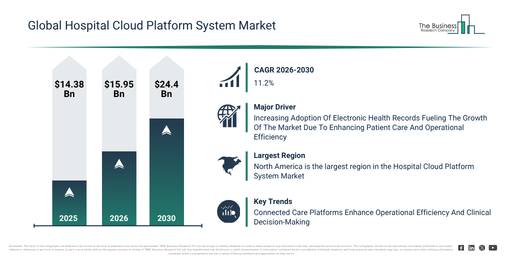
    The hospital cloud platform system market has seen substantial growth in recent years. Its size is anticipated to expand from $14.38 billion in 2025 to $15.95 billion in 2026, achieving a compound annual growth rate (CAGR) of 10.9%. This historical expansion can be attributed to several factors, including the increasing adoption of electronic health records, a rise in hospital digital transformation initiatives, augmented investments in healthcare IT infrastructure, regulatory mandates for data security and patient privacy, and the demand for enhanced operational efficiency in hospitals.

    The hospital cloud platform system market is expected to demonstrate significant expansion in the coming years. It is predicted to reach $24.4 billion by 2030, growing at a compound annual growth rate (CAGR) of 11.2%. This projected growth is driven by the increasing adoption of SaaS and PaaS models, rising demand for hybrid and private cloud deployments, the expansion of telehealth and remote monitoring services, the integration of AI and analytics into hospital workflows, and the proliferation of connected medical devices and IoT-enabled equipment. Major trends anticipated during this period include the wider embrace of cloud-based hospital information systems, the growing implementation of telehealth and remote patient monitoring, an increasing need for data analytics and reporting tools in hospitals, the broadened use of patient management and billing automation solutions, and a heightened focus on interoperability and secure data sharing.

    Get A Free Sample Report With In-Depth Market Insights:

    https://thebusinessresearchcompany.com/sample_request?id=23906949&type=smp&name=Hospital%20Cloud%20Platform%20System%20Market%20Report%202026&utm_source=Blogs&utm_medium=Paid&utm_campaign=Oct_PR

    Hospital Cloud Platform System Market Growth Factors Behind Sustained Expansion

    The hospital cloud platform system market is anticipated to expand due to the rising implementation of electronic health records (EHRs). EHRs are digital records of patient medical histories, systematically gathered, stored, and managed by healthcare providers to assist clinical care, promote information exchange, and enhance patient outcomes. This rise in EHR adoption stems from better patient care and safety, as they provide precise, real-time access to complete medical data, minimize mistakes, and support improved clinical choices. Hospital cloud platform systems improve electronic health records by offering secure, central storage, smooth data sharing, and immediate access for healthcare professionals, thereby enhancing patient care and operational effectiveness. As an illustration, in June 2022, the Department of Health and Social Care, a UK-based government department, declared that by March 2025, 100% of NHS trusts are projected to have implemented electronic health records, an increase from the 90% that had done so by December 2023. Consequently, the growing integration of electronic health records is fueling the expansion of the hospital cloud platform system market.

    Hospital Cloud Platform System Market Segment Trends And Revenue Contributors

    The hospital cloud platform system market covered in this report is segmented –

    1) By Component: Software, Hardware, Services

    2) By Service Model: Software As A Service, Platform As A Service, Infrastructure As A Service

    3) By Deployment Mode: Public Cloud, Private Cloud, Hybrid Cloud

    4) By Application: Electronic Health Records, Telehealth, Medical Imaging, Patient Management, Other Applications

    5) By End User: Hospitals, Clinics, Ambulatory Surgical Centers, Other End Users

    Subsegments:

    1) By Software: Cloud Based Hospital Information System, Electronic Health Records Software, Patient Management Software, Billing And Revenue Cycle Management Software, Inventory Management Software, Laboratory Information Management Software, Radiology Information System, Pharmacy Management Software, Data Analytics And Reporting Software

    2) By Hardware: Servers, Storage Devices, Networking Equipment, Workstations, Medical Devices With Cloud Connectivity, Security Appliances

    3) By Services: Implementation And Integration Services, Training And Education Services, Support And Maintenance Services, Consulting Services, Managed Services, Data Migration Services, Cloud Hosting And Backup Services

    Hospital Cloud Platform System Market Industry Trends Fueling Future Revenue Growth

    Leading companies operating in the hospital cloud platform system market are concentrating on developing AI-enabled, cloud-based solutions, including connected care platforms, to enhance data integration, operational efficiency, and clinical decision-making across healthcare settings. A connected care platform is a cloud-based system that interlinks medical devices, patient data, and healthcare applications, enabling seamless communication, real-time monitoring, and coordinated care throughout healthcare environments. For instance, in October 2025, Becton, Dickinson and Company, a US-based medication company, introduced the BD Incada™ Connected Care Platform. This scalable AI-enabled solution is designed to unify data from nearly 3 million connected BD devices into a single intelligent ecosystem. The platform aims to improve operational efficiency and connectivity across healthcare settings, supporting devices such as infusion pumps, patient monitors, and pharmacy robotics. Built on Amazon Web Services (AWS) infrastructure, it offers features like natural-language analytics, customizable dashboards, and secure cloud storage to facilitate data-driven clinical and operational decisions.

    Hospital Cloud Platform System Market Key Players Shaping Industry Direction

    Major companies operating in the hospital cloud platform system market are Epic Systems Corporation, Microsoft Corporation, Dell Technologies Inc. (Healthcare Cloud Solutions), Koninklijke Philips N.V., Siemens Healthineers AG, GE Healthcare Technologies Inc., MEDITECH (Medical Information Technology, Inc.), Athenahealth Inc., eClinicalWorks LLC, InterSystems Corporation, NextGen Healthcare Inc., Veradigm LLC, CitiusTech Healthcare Technology Private Limited, Infor Inc. (Healthcare Cloud Solutions), Health Catalyst Inc., CareCloud Inc., Netsmart Technologies Inc., AdvancedMD Inc., Vitera Healthcare Solutions LLC, Greenway Health LLC, Orion Health Group Limited, PracticeSuite Inc. , Practice Fusion Inc., DrChrono Inc., Medhost Inc., Azalea Health.

    View The Full Hospital Cloud Platform System Market Report:

    https://thebusinessresearchcompany.com/report/hospital-cloud-platform-system-market-report?utm_source=Blogs&utm_medium=Paid&utm_campaign=Oct_PR

    Hospital Cloud Platform System Market Regional Analysis: Which Region Leads By Revenue?

    North America was the largest region in the hospital cloud platform system market in 2025. Asia-Pacific is expected to be the fastest-growing region in the forecast period. The regions covered in the hospital cloud platform system market report are Asia-Pacific, South East Asia, Western Europe, Eastern Europe, North America, South America, Middle East, Africa.

    Reach Out To Our Team:

    The Business Research Company: https://www.thebusinessresearchcompany.com/

    Americas: +1 310-496-7795

    Asia: +44 7882 955267 & +91 8897263534

    Europe: +44 7882 955267

    Email us at: marketing@tbrc.info

    Follow us on:

    LinkedIn: https://in.linkedin.com/company/the-business-research-company

    YouTube: https://www.youtube.com/channel/UC24_fI0rV8cR5DxlCpgmyFQ

    Global Market Model: https://www.thebusinessresearchcompany.com/global-market-model
  • Boron Neutron Capture Therapy Market Outlook From 2026 To 2030: Key Growth Factors And Future Opportunities

    Boron Neutron Capture Therapy Market Outlook From 2026 To 2030: Key Growth Factors And Future Opportunities

    Featuring market attractiveness scoring, total addressable market sizing, company benchmarking matrices, interactive Excel dashboards, deeper supply chain intelligence, emerging startup tracking, and granular product-level insights, The Business Research Company’s 2026 market reports are built to deliver research that is both more actionable and more strategically valuable.

    Boron Neutron Capture Therapy Market Growth Potential: How Will Market Size Shift Through 2030?

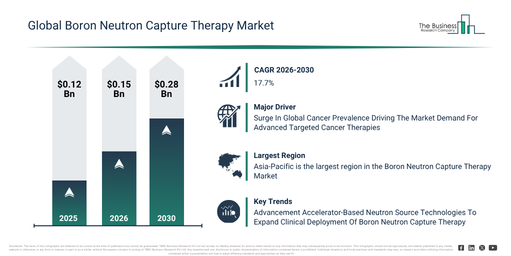
    The boron neutron capture therapy market has experienced rapid expansion in recent years. It is projected to expand from $0.12 billion in 2025 to $0.15 billion in 2026 at a compound annual growth rate (CAGR) of 17.5%. Historically, this growth can be ascribed to increasing prevalence of cancer cases, early development of neutron capture research, adoption of reactor-based radiation therapies, growth in oncology clinical research, and rising government funding for cancer treatment studies.

    The boron neutron capture therapy market size is anticipated to expand substantially over the next few years. It is projected to reach $0.28 billion by 2030, demonstrating a compound annual growth rate (CAGR) of 17.7%. This expansion during the forecast period is primarily driven by the increasing integration of precision medicine approaches, a growing shift towards targeted cancer therapies, the proliferation of accelerator-based BNCT systems, escalating investment in oncology research and development infrastructure, and more frequent regulatory approvals for advanced radiotherapy techniques. Noteworthy trends expected in this period include the wider acceptance of accelerator-based BNCT systems, the expanding utilization of next-generation boron delivery agents, an intensified focus on precision oncology treatment methods, advancements in neutron beam optimization technologies, and a surge in clinical trials for both brain and extracranial tumor applications.

    Get A Free Sample Report With In-Depth Market Insights:

    https://thebusinessresearchcompany.com/sample_request?id=15379704&type=smp&name=Boron%20Neutron%20Capture%20Therapy%20Market%20Report%202026&utm_source=Blogs&utm_medium=Paid&utm_campaign=Oct_PR

    Boron Neutron Capture Therapy Market Growth Catalysts And Demand Drivers

    The increasing global prevalence of cancer is expected to propel the growth of the boron neutron capture therapy market going forward. Cancer is a condition where abnormal cells grow uncontrollably and spread within the body, disrupting and damaging normal tissues. The growing incidence of cancer is driven by lifestyle risk factors such as tobacco use, poor diet, and physical inactivity, which cause chronic inflammation and genetic mutations that increase cancer risk over time. Boron neutron capture therapy supports cancer treatment by providing a targeted radiation approach that selectively destroys tumor cells while minimizing damage to surrounding healthy tissues, making it suitable for difficult or recurrent cancers. For instance, in February 2024, according to the World Health Organization, a Switzerland-based global health agency, over 35 million new cancer cases are predicted in 2050, a 77% increase from the estimated 20 million cases in 2022. Therefore, the increasing global prevalence of cancer is driving the growth of the boron neutron capture therapy market.

    Boron Neutron Capture Therapy Market Breakdown By Product Type And Application

    The boron neutron capture therapy market covered in this report is segmented –

    1) By Type: Thermal Beam, Epithermal Beam

    2) By Boron Agent Type: Boronophenylalanine (BPA), Sodium Borocaptate ( BSH), Next-Generation Boron Delivery Agents

    3) By Technology: Reactor-Based Boron Neutron Capture Therapy, Accelerator-Based Boron Neutron Capture Therapy

    4) By Application: Brain Tumor, Extracranial Tumor, Other Applications

    5) By End-User: Hospitals, Cancer Research Institutes, Specialty Clinics, Other End-Users

    Subsegments:

    1) By Thermal Beam: Thermal Neutron Beam Delivery Systems, Thermal Neutron Treatment Platforms

    2) By Epithermal Beam: Epithermal Neutron Beam Delivery Systems, Epithermal Neutron Treatment Platforms

    Boron Neutron Capture Therapy Market Trends Shaping Long-Term Demand

    Major companies operating in the boron neutron capture therapy market are prioritizing the advancement of novel boron delivery agents to enhance tumor targeting, improve imaging accuracy, and support effective therapeutic outcomes. These innovative boron delivery agents are specialized compounds engineered to selectively deliver and concentrate boron in tumor cells, thereby boosting the precision and therapeutic effectiveness in boron neutron capture therapy. For instance, in January 2025, Neuboron Medtech Ltd., a China -based R&D-oriented medical technology company, achieved IND approval for ¹8F-BPA, marking a key regulatory milestone in BNCT development. This highlights a rare combination of regulatory progress and clinical advancement, accelerating the translation of BNCT from research to real-world oncology applications.

    Boron Neutron Capture Therapy Market Key Participants And Competitive Landscape

    Major companies operating in the boron neutron capture therapy market are Hitachi Ltd., Mitsubishi Heavy Industries Ltd., Sumitomo Heavy Industries Ltd., RaySearch Laboratories AB, Toshiba Energy Systems & Solutions Corporation, Cancer Intelligence Care Systems Inc., Neuboron Medtech Ltd., TAE Life Sciences LLC, Neutron Therapeutics Inc., Katchem Ltd., Stella Pharma Corporation, Fukushima SiC Applied Engineering Inc., International Particle Therapy Inc., Aviko Radiopharmaceuticals Sp. z o.o., Helsinki University Hospital, University of Wisconsin–Madison.

    View The Full Boron Neutron Capture Therapy Market Report:

    https://thebusinessresearchcompany.com/report/boron-neutron-capture-therapy-market-report?utm_source=Blogs&utm_medium=Paid&utm_campaign=Oct_PR

    Boron Neutron Capture Therapy Market Geographic Analysis: Where Is Demand Rising Fastest?

    Asia-Pacific was the largest region in the boron neutron capture therapy market in 2025. Asia-Pacific is expected to be the fastest-growing region in the forecast period. The regions covered in the boron neutron capture therapy market report are Asia-Pacific, South East Asia, Western Europe, Eastern Europe, North America, South America, Middle East, Africa.

    Reach Out To Our Team:

    The Business Research Company: https://www.thebusinessresearchcompany.com/

    Americas: +1 310-496-7795

    Asia: +44 7882 955267 & +91 8897263534

    Europe: +44 7882 955267

    Email us at: marketing@tbrc.info

    Follow us on:

    LinkedIn: https://in.linkedin.com/company/the-business-research-company

    YouTube: https://www.youtube.com/channel/UC24_fI0rV8cR5DxlCpgmyFQ

    Global Market Model: https://www.thebusinessresearchcompany.com/global-market-model