Category: Healthcare Services

  • Drug Of Abuse Testing Market Growth Outlook: Why Analysts Expect Continued Expansion

    Drug Of Abuse Testing Market Growth Outlook: Why Analysts Expect Continued Expansion

    Backed by market attractiveness analysis, total addressable market sizing, company benchmarking matrices, interactive Excel dashboards, wider supply chain intelligence, emerging startup coverage, and detailed product-level insights, The Business Research Company’s 2026 market reports are designed to offer research that is more actionable and strategically valuable than ever.

    Drug Of Abuse Testing Market Size Outlook: How Quickly Will Revenue Expand Through 2030?

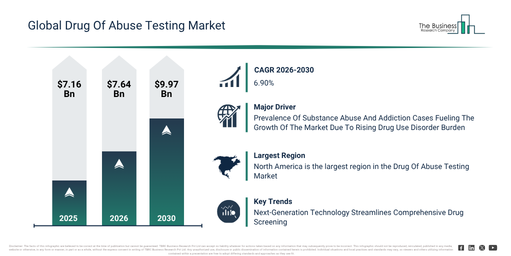
    The drug of abuse testing market has demonstrated robust expansion over recent years. Its size is anticipated to rise from $7.16 billion in 2025 to $7.64 billion in 2026, indicating a compound annual growth rate (CAGR) of 6.7%. The historical progression of this market can be attributed to the reliance on manual laboratory confirmation methods, the broadened scope of workplace drug screening regulations, the increase in forensic toxicology laboratories, the advent of immunoassay testing techniques, and growing awareness programs concerning the opioid crisis.

    The drug of abuse testing market is projected to experience substantial growth in the coming years, reaching $9.97 billion by 2030, driven by a compound annual growth rate (CAGR) of 6.9%. This anticipated expansion during the forecast period is due to several factors, including an increase in substance abuse monitoring initiatives, broader mandatory workplace testing policies, greater use of rapid point-of-care testing kits, a surge in demand from forensic and criminal investigations, and the proliferation of global rehabilitation and treatment programs. Key trends anticipated during this period encompass the adoption of point-of-care rapid drug screening, an expansion in workplace drug testing compliance, increased specialization in forensic toxicology laboratories, the development of sports and athletic anti-doping testing programs, and refined emergency department toxicology screening protocols.

    Get A Free Sample Report With In-Depth Market Insights:

    https://thebusinessresearchcompany.com/sample_request?id=54105937&type=smp&name=Drug%20Of%20Abuse%20Testing%20Market%20Report%202026&utm_source=Blogs&utm_medium=Paid&utm_campaign=Oct_PR

    Drug Of Abuse Testing Market Demand Drivers Opening New Revenue Streams

    The increasing occurrence of substance abuse and addiction is anticipated to drive the expansion of the drug of abuse testing market in the future. Substance abuse and addiction describe the detrimental or dangerous consumption of psychoactive substances, encompassing illegal drugs and prescribed medicines, which can negatively affect health, safety, and social or legal functions. The frequency of substance abuse and addiction is rising due to more straightforward access to drugs and evolving societal behaviors that either normalize or boost drug consumption. Drug of abuse testing aids in confronting substance abuse and addiction by facilitating the prompt identification of drug use, directing timely medical interventions, overseeing recovery progress, and bolstering public health initiatives aimed at lessening the adverse effects of substance misuse. For instance, in December 2025, according to the Addiction Policy Forum, a US-based non-profit organization, Of the 48.4 million people with a substance use disorder, 27.9 million had an alcohol use disorder and 28.2 million had a drug use disorder in 2024. Consequently, the growing prevalence of substance abuse and addiction is propelling the drug of abuse testing market’s growth.

    Drug Of Abuse Testing Market Segment Outlook: Which Categories Are Growing Fastest?

    The drug of abuse testing market covered in this report is segmented –

    1) By Product And Service: Rapid Testing Devices, Urine Testing Devices, Oral Fluid Saliva Testing Devices, Analyzers, Consumables, Laboratory Services

    2) By Sample Type: Urine, Oral Fluid Saliva, Hair, Breath, Blood, Sweat

    3) By Drug Type: Psychostimulants, Narcotics, Cannabinoids, Sedatives, Other Drug Types

    4) By Technique Type: Immunoassay, Chromatography

    5) By End User: Hospitals, Diagnostic Laboratories, Forensic Laboratories, Other End Users

    Subsegments:

    1) By Rapid Testing Devices: Point Of Care Testing Kits, Home Testing Kits, Immunoassay Rapid Test Strips, Portable Screening Devices

    2) By Urine Testing Devices: Urine Collection Kits, Urine Screening Test Strips, Cup Based Testing Devices, Laboratory Urine Test Kits

    3) By Oral Fluid Saliva Testing Devices: Saliva Collection Kits, Oral Fluid Screening Devices, Disposable Oral Swab Kits, Portable Saliva Analyzers

    4) By Analyzers: Immunoassay Analyzers, Chromatography Analyzers, Mass Spectrometry Analyzers, Point Of Care Analyzers

    5) By Consumables: Test Strips And Reagents, Sample Collection Tubes, Control And Calibration Kits, Disposable Pipettes And Swabs

    6) By Laboratory Services: Drug Screening Services, Confirmatory Testing Services, Sample Collection And Processing Services, Data Reporting And Analysis Services

    Drug Of Abuse Testing Market Trends Powering Strategic Industry Growth

    Leading companies in the drug of abuse testing market are concentrating on developing advanced products, such as multi-analyte clinical drug testing panels, to enable faster, more accurate, and comprehensive simultaneous detection of multiple drugs. These multi-analyte clinical drug testing panels are devices designed to detect several drugs of abuse from a single sample concurrently, aiding healthcare and forensic professionals in quickly identifying substance use with high accuracy and efficiency compared to traditional single-drug tests. For instance, in February 2026, Randox USA, a U. S.-based diagnostics company, secured 510(k) clearance from the U. S. Food and Drug Administration (FDA) for its Evidence MultiSTAT, an innovative multi-analyte clinical drug testing panel. This device is a fully automated, cartridge-based analyzer that utilizes patented Biochip Technology to simultaneously detect 15 drugs of abuse from urine in just 21 minutes. It features a straightforward three-step testing process, pre-filled reagent cartridges, and delivers highly accurate results comparable to confirmatory laboratory methods. The Evidence MultiSTAT covers a broad array of drug classes, including opioids, fentanyl, methamphetamine, cocaine, benzodiazepines, and cannabinoids, making it suitable for application in hospital laboratories, emergency departments, pain management clinics, behavioral health centers, and forensic settings. This technology significantly improves efficiency, reduces human error, and provides rapid, reliable results when compared to traditional single-analyte tests.

    Drug Of Abuse Testing Market Competitive Landscape: Which Companies Lead The Industry?

    Major companies operating in the drug of abuse testing market are F. Hoffmann-La Roche Ltd, Thermo Fisher Scientific Inc., Abbott Laboratories, Siemens Healthineers, Danaher Corporation, Laboratory Corporation of America Holdings (LabCorp), Quest Diagnostics Incorporated, Drägerwerk AG & Co. KGaA, Shimadzu Corporation, Bio-Rad Laboratories Inc., OraSure Technologies, Clinical Reference Laboratory (CRL) Inc., Legacy Medical Services, Intoximeters Inc., Cordant Health Solutions, DrugScan, Premier Biotech Inc., UCP Biosciences, American Screening Corporation Inc., SureHire Inc.

    View The Full Drug Of Abuse Testing Market Report:

    https://thebusinessresearchcompany.com/report/drug-of-abuse-testing-market-report?utm_source=Blogs&utm_medium=Paid&utm_campaign=Oct_PR

    Drug Of Abuse Testing Market Regional Breakdown: Where Is Demand Concentrated?

    North America was the largest region in the drug of abuse testing market in 2025. Asia-Pacific is expected to be the fastest-growing region in the forecast period. The regions covered in the drug of abuse testing market report are Asia-Pacific, South East Asia, Western Europe, Eastern Europe, North America, South America, Middle East and Africa.

    Reach Out To Our Team:

    The Business Research Company: https://www.thebusinessresearchcompany.com/

    Americas: +1 310-496-7795

    Asia: +44 7882 955267 & +91 8897263534

    Europe: +44 7882 955267

    Email us at: marketing@tbrc.info

    Follow us on:

    LinkedIn: https://in.linkedin.com/company/the-business-research-company

    YouTube: https://www.youtube.com/channel/UC24_fI0rV8cR5DxlCpgmyFQ

    Global Market Model: https://www.thebusinessresearchcompany.com/global-market-model

  • Computed Tomography (CT)-Guided Biopsy Market Size Forecast: How The Industry Is Expected To Grow From 2026 To 2030

    Computed Tomography (CT)-Guided Biopsy Market Size Forecast: How The Industry Is Expected To Grow From 2026 To 2030

    Backed by market attractiveness analysis, total addressable market sizing, company benchmarking matrices, interactive Excel dashboards, wider supply chain intelligence, emerging startup coverage, and detailed product-level insights, The Business Research Company’s 2026 market reports are designed to offer research that is more actionable and strategically valuable than ever.

    Computed Tomography (CT)-Guided Biopsy Market Growth From $0.82 Billion In 2026 To $1.06 Billion By 2030 At A CAGR Of 6.6%

    The computed tomography (CT)-guided biopsy market has experienced substantial growth in recent years. Forecasts indicate it is projected to expand from $0.77 billion in 2025 to $0.82 billion in 2026, achieving a compound annual growth rate (CAGR) of 6.4%. Several factors contributed to this historical expansion, including an uptick in worldwide cancer cases, greater acceptance of diagnostic imaging techniques, the development of hospital radiology facilities, a rising inclination towards less invasive medical interventions, and enhanced access to CT imaging systems.

    The computed tomography (CT)-guided biopsy market size is poised for substantial growth over the next few years. It is forecast to grow to $1.06 billion by 2030, achieving a compound annual growth rate (CAGR) of 6.6%. This projected expansion can be linked to several factors, including the increasing demand for early-stage cancer detection, a rising adoption of precision medicine-based diagnostics, the ongoing expansion of outpatient diagnostic centers, a growing aging population requiring diagnostic interventions, and continuous advancements in biopsy needle technologies and procedural safety. Major trends anticipated during this period encompass the increasing adoption of minimally invasive diagnostic procedures for early and accurate disease detection, a rising demand for image-guided precision interventions in oncology and infection diagnosis, a growing preference for outpatient and ambulatory biopsy procedures to alleviate hospital burden, the expansion of interventional radiology departments to improve access to CT-guided procedures, and an increasing focus on early cancer screening and tissue-based diagnostics in clinical workflows.

    Get A Free Sample Report With In-Depth Market Insights:

    https://thebusinessresearchcompany.com/sample_request?id=65495284&type=smp&name=Computed%20Tomography%20%28CT%29-Guided%20Biopsy%20Market%20Report%202026&utm_source=Blogs&utm_medium=Paid&utm_campaign=Oct_PR

    Computed Tomography (CT)-Guided Biopsy Market Growth Catalysts And Demand Drivers

    An increasing occurrence of cancer is projected to stimulate the expansion of the CT-guided biopsy market in the coming years. This rise in cancer cases is largely attributed to the growing elderly demographic, given that older individuals face an elevated likelihood of forming solid tumors necessitating precise and prompt diagnostic validation. CT-guided biopsy effectively addresses this requirement through its ability to facilitate accurate tissue collection from lesions that are deep within the body or structurally intricate, especially in organs like the lung, liver, pancreas, kidney, and bone, where conventional imaging frequently falls short of providing a conclusive diagnosis and guiding therapy. For example, data released in April 2024 by the International Agency for Research on Cancer, an intergovernmental body based in France and affiliated with the World Health Organization, reported around 20 million new cancer diagnoses and nearly 10 million fatalities linked to cancer worldwide in 2022. Future demographic forecasts suggest that by 2050, the yearly count of new cancer cases is anticipated to reach 35 million, marking a substantial 77% rise from the figures recorded in 2022. Consequently, the escalating incidence of cancer is a primary force propelling the growth of the CT-guided biopsy market.

    Computed Tomography (CT)-Guided Biopsy Market Segment Outlook: Which Categories Are Growing Fastest?

    The computed tomography (ct)-guided biopsy market covered in this report is segmented –

    1) By Biopsy Technique: Core Needle Biopsy, Fine Needle Aspiration, Vacuum-Assisted, Trephine Or Bone

    2) By Target Organ: Lung, Liver, Kidney, Bone, Pancreas, Other Target Organs

    3) By CT Modality: Conventional CT, CT-Fluoroscopy, Cone-Beam CT, Spectral Or Dual-Energy CT

    4) By Needle System: Coaxial Systems, Non-Coaxial, Semi-Automated, Fully Automated

    5) By End User: Hospitals, Imaging Centers, Ambulatory Surgical Centers

    Subsegments:

    1) By Core Needle Biopsy: Automated Core Needle Biopsy, Image Guided Core Needle Biopsy, Coaxial Core Needle Biopsy, Single Use Core Needle Biopsy

    2) By Fine Needle Aspiration: Image Guided Fine Needle Aspiration, Endoscopic Fine Needle Aspiration, Percutaneous Fine Needle Aspiration, Ultrasound Assisted Fine Needle Aspiration

    3) By Vacuum-Assisted: Image Guided Vacuum-Assisted Biopsy, Stereotactic Vacuum-Assisted Biopsy, Ultrasound Guided Vacuum-Assisted Biopsy, High Volume Vacuum-Assisted Biopsy

    4) By Trephine Or Bone: Bone Marrow Trephine Biopsy, Image Guided Bone Biopsy, Percutaneous Bone Biopsy, Orthopedic Bone Biopsy

    Computed Tomography (CT)-Guided Biopsy Market Trends Shaping Long-Term Demand

    Major companies within the CT-guided biopsy market are concentrating on developing advanced navigation technologies, such as real-time CT navigation systems, to improve procedural accuracy, lessen radiation exposure, and optimize workflow efficiency. These real-time CT navigation systems are integrated imaging and guidance platforms that leverage 3D visualization and electromagnetic tracking to assist clinicians in precisely guiding biopsy needles to target lesions, thereby reducing the necessity for repeated imaging. As an illustration, in April 2023, GE HealthCare, a US-based medical technology company, launched its CT-Navigation solution. This system provides real-time 3D CT imaging for stereotactic needle guidance across procedures like biopsies, ablations, and drainage. It incorporates electromagnetic navigation technology, which enables complex needle trajectories, allowing clinicians to avoid critical anatomical structures. Moreover, the solution decreases radiation dose and procedure time by minimizing the need for multiple control scans, while simultaneously enhancing targeting accuracy, thus improving safety and efficiency in interventional procedures.

    Computed Tomography (CT)-Guided Biopsy Market Competitive Analysis Of Leading Industry Participants

    Major companies operating in the computed tomography (ct)-guided biopsy market are Samsung Electronics, F. Hoffmann-La Roche AG, Thermo Fisher Scientific Inc., Stryker Corporation, Medtronic PLC, Boston Scientific Inc., Becton Dickinson and Company, Siemens Healthineers, Agilent Technologies Inc., GE HealthCare Technologies, Canon Inc., Zimmer Biomet Holdings Inc., Terumo Corporation, Fujifilm Corporation, Illumina Inc., Koninklijke Philips N. V., Olympus Corporation, Hologic Inc., Teleflex Incorporated, Sysmex Corporation, QIAGEN N. V., Bio-Rad Laboratories Inc., Shimadzu Corporation, Merit Medical Systems Inc., Guerbet (GBT. PA)

    View The Full Computed Tomography (CT)-Guided Biopsy Market Report:

    https://thebusinessresearchcompany.com/report/computed-tomography-ct-guided-biopsy-market-report?utm_source=Blogs&utm_medium=Paid&utm_campaign=Oct_PR

    Computed Tomography (CT)-Guided Biopsy Market Geographic Distribution And Regional Opportunities

    North America was the largest region in the CT-guided biopsy market in 2025. Asia-Pacific is expected to be the fastest-growing region in the forecast period. The regions covered in the computed tomography (CT)-guided biopsy market report are Asia-Pacific, South East Asia, Western Europe, Eastern Europe, North America, South America, Middle East and Africa.

    Reach Out To Our Team:

    The Business Research Company: https://www.thebusinessresearchcompany.com/

    Americas: +1 310-496-7795

    Asia: +44 7882 955267 & +91 8897263534

    Europe: +44 7882 955267

    Email us at: marketing@tbrc.info

    Follow us on:

    LinkedIn: https://in.linkedin.com/company/the-business-research-company

    YouTube: https://www.youtube.com/channel/UC24_fI0rV8cR5DxlCpgmyFQ

    Global Market Model: https://www.thebusinessresearchcompany.com/global-market-model
  • Biomarker-Based Immunoassays Market Growth Forecast: Market Size, Key Trends And Emerging Opportunities Through 2030

    Biomarker-Based Immunoassays Market Growth Forecast: Market Size, Key Trends And Emerging Opportunities Through 2030

    Built to provide research that’s more actionable and strategically valuable, The Business Research Company’s 2026 market reports include market attractiveness analysis, total addressable market sizing, company benchmarking matrices, interactive Excel dashboards, broader supply chain intelligence, emerging startup tracking, and in-depth product insights.

    Biomarker-Based Immunoassays Market Value Analysis: What Growth Lies Ahead Over The Forecast Period?

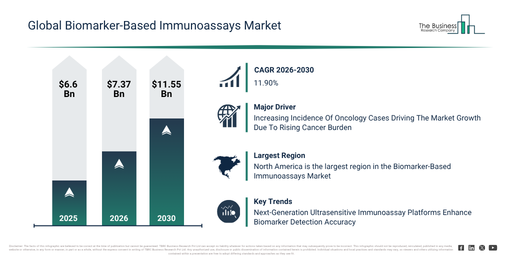
    The biomarker-based immunoassays market size has expanded quickly in recent years. Projections indicate it will expand from $6.6 billion in 2025 to $7.37 billion in 2026, with a compound annual growth rate (CAGR) of 11.6%. The historical growth has been driven by several factors, including the increasing prevalence of chronic diseases stimulating demand for early diagnostic testing, the expanding use of enzyme linked immunosorbent assay in clinical laboratories, the broadening of hospital diagnostic infrastructure and laboratory networks, the increasing adoption of antibody based detection techniques in research applications, and the evolution of standardized biomarker identification methods in biomedical research.

    The biomarker-based immunoassays market is poised for significant expansion in the upcoming years. It is projected to reach $11.55 billion by 2030, demonstrating a compound annual growth rate (CAGR) of 11.9%. This anticipated growth can be ascribed to several factors, including the increasing demand for personalized medicine and precision diagnostics, the growing integration of AI and machine learning in biomarker analysis, a wider adoption of multiplex and high-throughput immunoassay technologies, the expansion of point-of-care diagnostic testing into remote healthcare settings, and increased investment in pharmaceutical research and drug discovery applications. Prominent trends expected during this forecast period encompass AI-driven biomarker interpretation and predictive disease modeling for improved diagnostic accuracy, multiplex immunoassay platforms that facilitate the simultaneous detection of multiple biomarkers, cloud-integrated immunoassay systems for centralized management of diagnostic data, laboratory automation and robotic sample processing to enhance high-throughput immunoassay testing, and the emergence of next-generation point-of-care immunoassay devices for rapid clinical diagnostics.

    Get A Free Sample Report With In-Depth Market Insights:

    https://thebusinessresearchcompany.com/sample_request?id=54269245&type=smp&name=Biomarker-Based%20Immunoassays%20Market%20Report%202026&utm_source=Blogs&utm_medium=Paid&utm_campaign=Oct_PR

    Biomarker-Based Immunoassays Market Opportunity Drivers: What’s Unlocking New Revenue Potential?

    The escalating frequency of oncology cases is anticipated to boost the expansion of the biomarker-based immunoassays market. Oncology cases involve the manifestation of cancers, which stem from abnormal and uncontrolled cellular proliferation capable of spreading throughout the body. The uptick in oncology cases is primarily attributed to aging demographics, as the probability of developing cancer significantly increases with age, and longer lifespans contribute to a greater number of diagnoses. Biomarker-based immunoassays play a crucial role in managing oncology cases by facilitating prompt identification, accurate observation of disease progression, and informing tailored treatment choices through precise recognition of cancer-specific biomarkers. For instance, data from February 2024 by the World Health Organization, an international organization based in Switzerland focused on global health and public health initiatives, projects over 35 million new cancer cases in 2050, marking a 77% rise from the estimated 20 million cases in 2022. Consequently, the growing prevalence of oncology cases is fueling the growth of the biomarker-based immunoassays market.

    Biomarker-Based Immunoassays Market Segment Analysis And Revenue Potential

    The biomarker-based immunoassays market covered in this report is segmented –

    1) By Product: Consumables, Instruments And Analyzers, Reagents And Kits, Services

    2) By Biomarker Type: Protein Biomarkers, Hormone Biomarkers, Cardiac Biomarkers, Cancer Biomarkers, Infectious Disease Biomarkers, Neurological Biomarkers, Autoimmune Disease Biomarkers

    3) By Technology: Chemiluminescence, Enzyme Linked Immunosorbent Assay, Fluorescence, Multiplex, Radioimmunoassay, Other Technologies

    4) By Application: Oncology Diagnostics, Cardiology Diagnostics, Infectious Disease Testing, Endocrinology Testing, Autoimmune Disease Testing, Neurology Diagnostics, Drug Discovery And Development

    5) By End-User: Clinical Diagnostic Laboratories, Pharmaceutical Research And Development, Contract Research Organizations, Hospitals And Clinics, Academic Research Institutes

    Subsegments:

    1) By Consumables: Pipette Tips, Microplates, Sample Containers, Microcentrifuge Tubes, Reagent Reservoirs, Disposable Pipettes

    2) By Instruments And Analyzers: Enzyme Linked Immunosorbent Assay Analyzers, Chemiluminescence Immunoassay Analyzers, Fluorescence Immunoassay Systems, Multiplex Assay Platforms, Radioimmunoassay Instruments, Automated Immunoassay Analyzers

    3) By Reagents And Kits: Enzyme Linked Immunosorbent Assay Kits, Chemiluminescence Immunoassay Reagents, Fluorescence Immunoassay Reagents, Multiplex Assay Kits, Radioimmunoassay Kits, Controls And Standards

    4) By Services: Assay Development Services, Sample Testing Services, Data Analysis Services, Technical Support Services, Clinical Trial Support Services, Training And Consultation Services

    Biomarker-Based Immunoassays Market Innovation Trends Shaping Future Development

    Leading companies in the biomarker-based immunoassays market are directing their efforts towards developing innovative solutions, such as ultrasensitive immunoassay platforms, to facilitate the early and accurate detection of low-abundance biomarkers. These ultrasensitive immunoassay platforms are advanced diagnostic systems engineered to identify extremely low concentrations of biomarkers with high precision and specificity, which contributes to earlier disease detection, enhanced diagnostic accuracy, and improved monitoring of disease progression compared to conventional assays. For instance, in July 2025, Spear Bio Inc., a US-based biotechnology company, unveiled SPEAR UltraDetect, a next-generation ultrasensitive immunoassay solution crafted to improve biomarker detection in neurodegenerative disease research. The platform leverages proprietary homogeneous assay technology that eliminates the requirement for wash steps, unlike traditional heterogeneous immunoassays, thereby enabling faster and more streamlined workflows. It possesses the capability to detect protein biomarkers at attomolar concentrations using as little as 1 µL of sample, significantly enhancing both sensitivity and efficiency. This solution encompasses assays targeting vital neurological biomarkers including pTau217, pTau231, GFAP, and NfL, supporting early and accurate disease analysis.

    Biomarker-Based Immunoassays Market Top Companies Driving Competitive Growth

    Major companies operating in the biomarker-based immunoassays market are Thermo Fisher Scientific Inc., Abbott Laboratories, Merck KGaA, Eurofins Scientific SE, Bio-Rad Laboratories Inc., QIAGEN N. V., Tecan Trading AG, Autobio Diagnostics Co. Ltd., Promega Corporation, Sekisui Diagnostics LLC, Boditech Med Inc., Dynex Technologies Inc., NanoEntek Inc., J. Mitra & Co. Pvt. Ltd., ALPCO Diagnostics LLC, Micropoint Bioscience Inc., Coris BioConcept, MiCo BioMed Co. Ltd., Abionic SA, ANP Technologies Inc., Axela Inc., Epitope Diagnostics Inc., MedMira Inc., Nanomix Inc.

    View The Full Biomarker-Based Immunoassays Market Report:

    https://thebusinessresearchcompany.com/report/biomarker-based-immunoassays-market-report?utm_source=Blogs&utm_medium=Paid&utm_campaign=Oct_PR

    Biomarker-Based Immunoassays Market Global Footprint: Which Region Leads The Market?

    North America was the largest region in the biomarker-based immunoassays market in 2025. Asia-Pacific is expected to be the fastest-growing region in the forecast period. The regions covered in the biomarker-based immunoassays market report are Asia-Pacific, South East Asia, Western Europe, Eastern Europe, North America, South America, Middle East and Africa.

    Reach Out To Our Team:

    The Business Research Company: https://www.thebusinessresearchcompany.com/

    Americas: +1 310-496-7795

    Asia: +44 7882 955267 & +91 8897263534

    Europe: +44 7882 955267

    Email us at: marketing@tbrc.info

    Follow us on:

    LinkedIn: https://in.linkedin.com/company/the-business-research-company

    YouTube: https://www.youtube.com/channel/UC24_fI0rV8cR5DxlCpgmyFQ

    Global Market Model: https://www.thebusinessresearchcompany.com/global-market-model

  • At-Home Sexually Transmitted Infection (STI) Testing Market Size Growth: From $2.17 Billion In 2026 To $3.55 Billion By 2030

    At-Home Sexually Transmitted Infection (STI) Testing Market Size Growth: From $2.17 Billion In 2026 To $3.55 Billion By 2030

    Built to provide research that’s more actionable and strategically valuable, The Business Research Company’s 2026 market reports include market attractiveness analysis, total addressable market sizing, company benchmarking matrices, interactive Excel dashboards, broader supply chain intelligence, emerging startup tracking, and in-depth product insights.

    At-Home Sexually Transmitted Infection (STI) Testing Market Size Forecast: How Big Could The Market Get By 2030?

    The at-home sexually transmitted infection (STI) testing market size has experienced rapid expansion in recent years. This market is projected to expand from $1.93 billion in 2025 to reach $2.17 billion in 2026, exhibiting a compound annual growth rate (CAGR) of 12.8%. Factors contributing to this historical growth include the escalating global prevalence of sexually transmitted infections, greater recognition of the importance of early STI diagnosis and treatment, increased adoption of online healthcare and telemedicine services, broadening public health programs for HIV and STI screening, and a rising consumer preference for discreet home healthcare solutions.

    The at-home sexually transmitted infection (STI) testing market size is anticipated to experience substantial growth in the upcoming years. It is projected to reach $3.55 billion by 2030, exhibiting a compound annual growth rate (CAGR) of 13.0%. This expansion during the forecast period can be attributed to the increasing adoption of AI-enabled digital sexual health platforms, a rising demand for multiplex and rapid at-home STI diagnostic kits, the growing integration of connected and app-based testing ecosystems, the expanding availability of D2C healthcare distribution channels, and an increased focus on preventive sexual wellness and routine screening practices. Significant trends expected in this period include the rising adoption of discreet self-collection STI screening kits for private home-based testing, an increasing demand for rapid turnaround sexually transmitted infection diagnostic solutions, a growing preference among young adults for mail-in laboratory sexual health testing services, the expanding availability of multi-infection at-home sexual wellness testing panels, and the increasing expansion of online pharmacy and direct-to-consumer sexual health testing distribution channels.

    Get A Free Sample Report With In-Depth Market Insights:

    https://thebusinessresearchcompany.com/sample_request?id=84794065&type=smp&name=At-Home%20Sexually%20Transmitted%20Infection%20%28STI%29%20Testing%20Market%20Report%202026&utm_source=Blogs&utm_medium=Paid&utm_campaign=Oct_PR

    At-Home Sexually Transmitted Infection (STI) Testing Market Demand Drivers: What’s Powering Industry Growth?

    The expanding understanding of sexual health is anticipated to propel the growth of the at-home sexually transmitted infection (STI) testing market in the future. This awareness refers to individuals’ comprehension of STIs, their transmission routes, prevention methods, and the vital role of consistent testing for early detection and treatment. The intensified focus on sexual health awareness is largely driven by public health campaigns and the destigmatization of STI testing, which encourages more individuals to proactively seek information and testing options. This rising awareness of sexual health boosts demand for at-home STI testing as it motivates individuals to seek confidential, convenient, and accessible testing solutions outside of traditional clinical settings. For instance, in December 2025, according to the UK Health Security Agency, a UK-based government agency, infectious syphilis diagnoses rose by 1.7%, increasing from 9,375 cases in 2023 to 9,535 cases in 2024. Therefore, growing awareness of sexual health is driving the growth of the at-home sexually transmitted infection (STI) testing market.

    At-Home Sexually Transmitted Infection (STI) Testing Market Segment Analysis: What Are The Core Market Categories?

    The at-home sexually transmitted infection (sti) testing market covered in this report is segmented –

    1) By Type: Rapid Lateral Flow Immunoassays, Molecular Or Nucleic Acid Amplification Technology (NAAT)-Based Kits, Multiplex Panel Testing, Other Types

    2) By Infection: Human Immunodeficiency Virus (HIV), Chlamydia Trachomatis (CT), Neisseria Gonorrhoeae (NG), Syphilis, Trichomoniasis, Human Papillomavirus (HPV), Hepatitis B And C, Other Infections

    3) By Sample: Blood Samples, Urine Samples, Swab Samples

    4) By Distribution: Online Pharmacies And D2C Platforms, Retail Pharmacies, Public Health Distribution Programs, Other Distributions

    5) By End User: Individual Consumers, Healthcare Providers, Public Health Programs

    Subsegments:

    1) By Rapid Lateral Flow Immunoassays: Of Human Immunodeficiency Virus Antibody Detection, Of Syphilis Antibody Detection, Of Chlamydia Antigen Detection, Of Gonorrhea Antigen Detection, Of Hepatitis B Surface Antigen Detection

    2) By Molecular Or Nucleic Acid Amplification Technology (NAAT) Based Kits: Of Human Immunodeficiency Virus Nucleic Acid Detection, Of Chlamydia Trachomatis Nucleic Acid Detection, Of Neisseria Gonorrhoeae Nucleic Acid Detection, Of Trichomonas Vaginalis Nucleic Acid Detection, Of Mycoplasma Genitalium Nucleic Acid Detection

    3) By Multiplex Panel Testing: Of Combined Human Immunodeficiency Virus And Syphilis Detection, Of Combined Chlamydia And Gonorrhea Detection, Of Comprehensive Bacterial Sexually Transmitted Infection Panel, Of Comprehensive Viral Sexually Transmitted Infection Panel, Of Multi Pathogen Sexual Health Screening Panel

    4) By Other Types: Self-Collection Sample Kits, Mail-In Laboratory Testing Kits, Digital Or Connected At-Home Testing Kits, Microfluidic Lab-On-Chip Testing Kits

    At-Home Sexually Transmitted Infection (STI) Testing Market Innovation Trends: What Developments Are Reshaping The Industry?

    Major companies operating in the at-home STI testing market are concentrating on developing advanced diagnostic technologies, such as instrument-free polymerase chain reaction platforms. This effort is aimed at improving detection accuracy, shortening turnaround times, and expanding the availability of laboratory-quality results from home. Instrument-free polymerase chain reaction platforms are described as self-contained molecular diagnostic devices that enable users to collect samples at home and receive highly accurate pathogen detection results without needing traditional laboratory equipment, while also integrating digital systems for secure delivery of results and telehealth support. For instance, in November 2025, Visby Medical, a US-based medical diagnostics company, launched its FDA-authorized at-home PCR test for sexually transmitted infections. This test identifies chlamydia, gonorrhea, and trichomoniasis, delivers results in approximately 30 minutes, functions as an instrument-free single-use device, and integrates with digital platforms to provide secure result reporting and virtual care follow-up. It is designed to facilitate direct-to-consumer access, enhance molecular accuracy, improve testing convenience, and enable streamlined telehealth-supported treatment guidance.

    At-Home Sexually Transmitted Infection (STI) Testing Market Competitive Analysis Of Leading Industry Participants

    Major companies operating in the at-home sexually transmitted infection (sti) testing market are Becton Dickinson and Company (BD), Laboratory Corporation of America Holdings, Randox Laboratories Ltd, LetsGetChecked, Everly Health Inc, myLAB Box LLC, Preventx Ltd, MySTDTestKits, RapidTest. co. uk Ltd, Got Lucky Labs Inc, Biopanda Reagents Ltd, Rapid Labs Ltd, Walk-In Lab LLC, Any Lab Test Now Inc, 4U Health Ltd, Quest Diagnostics Incorporated, ACON Biotech (Hangzhou) Co. Ltd, UroSure Inc, Yoxly Ltd, Genedia Co. Ltd

    View The Full At-Home Sexually Transmitted Infection (STI) Testing Market Report:

    https://thebusinessresearchcompany.com/report/at-home-sexually-transmitted-infection-sti-testing-market-report?utm_source=Blogs&utm_medium=Paid&utm_campaign=Oct_PR

    At-Home Sexually Transmitted Infection (STI) Testing Market Geographic Spread And Regional Opportunities

    North America was the largest region in the at-home sexually transmitted infection (STI) testing market in 2025. Asia-Pacific is expected to be the fastest-growing region in the forecast period. The regions covered in the at-home sexually transmitted infection (STI) testing market report are Asia-Pacific, South East Asia, Western Europe, Eastern Europe, North America, South America, Middle East and Africa.

    Reach Out To Our Team:

    The Business Research Company: https://www.thebusinessresearchcompany.com/

    Americas: +1 310-496-7795

    Asia: +44 7882 955267 & +91 8897263534

    Europe: +44 7882 955267

    Email us at: marketing@tbrc.info

    Follow us on:

    LinkedIn: https://in.linkedin.com/company/the-business-research-company

    YouTube: https://www.youtube.com/channel/UC24_fI0rV8cR5DxlCpgmyFQ

    Global Market Model: https://www.thebusinessresearchcompany.com/global-market-model
  • Asthma-Chronic Obstructive Pulmonary Disease (COPD) Overlap Treatment Market Analysis 2026: Market Size, Growth Trends And Industry Outlook

    Asthma-Chronic Obstructive Pulmonary Disease (COPD) Overlap Treatment Market Analysis 2026: Market Size, Growth Trends And Industry Outlook

    Backed by market attractiveness analysis, total addressable market sizing, company benchmarking matrices, interactive Excel dashboards, wider supply chain intelligence, emerging startup coverage, and detailed product-level insights, The Business Research Company’s 2026 market reports are designed to offer research that is more actionable and strategically valuable than ever.

    Asthma-Chronic Obstructive Pulmonary Disease (COPD) Overlap Treatment Market Revenue Outlook: What CAGR Lies Ahead Through 2030?

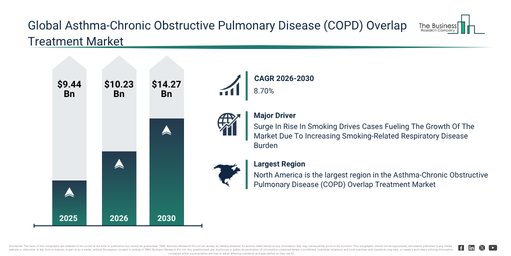
    The asthma-chronic obstructive pulmonary disease (COPD) overlap treatment market has experienced robust expansion in recent years. It is projected to increase from $9.44 billion in 2025 to $10.23 billion in 2026, demonstrating a compound annual growth rate (CAGR) of 8.4%. The growth observed in prior periods can be attributed to the rising occurrence of smoking-related respiratory illnesses, an increase in the misdiagnosis of asthma and COPD overlap conditions, insufficient personalized treatment options in respiratory care, a surge in hospital admissions resulting from exacerbations, and a reliance on traditional inhalation therapies.

    The asthma-chronic obstructive pulmonary disease (COPD) overlap treatment market size is anticipated to undergo significant expansion in the foreseeable future. It will grow to $14.27 billion by 2030 at a compound annual growth rate (CAGR) of 8.7%. The growth anticipated during the forecast period stems from the broadened application of biologics in respiratory disease management, the increasing adoption of digital respiratory monitoring equipment, a growing need for personalized treatment plans, the expansion of home-based chronic disease management, and advancements in targeted anti-inflammatory therapies. Noteworthy trends predicted for this period encompass personalized precision therapy tailored to asthma-COPD overlap phenotypes, digital monitoring of inhaler adherence coupled with connected respiratory care, the proliferation of biologic-based treatments for eosinophilic airway inflammation, the incorporation of remote patient monitoring into chronic respiratory disease management, and a transition towards combination inhalation therapies for enhanced airway control.

    Get A Free Sample Report With In-Depth Market Insights:

    https://thebusinessresearchcompany.com/sample_request?id=65617065&type=smp&name=Asthma-Chronic%20Obstructive%20Pulmonary%20Disease%20%28COPD%29%20Overlap%20Treatment%20Market%20Report%202026&utm_source=Blogs&utm_medium=Paid&utm_campaign=Oct_PR

    Asthma-Chronic Obstructive Pulmonary Disease (COPD) Overlap Treatment Market Growth Drivers: What’s Behind The Acceleration?

    The increasing incidence of cases primarily attributed to smoking is anticipated to fuel the expansion of the asthma chronic obstructive pulmonary disease (COPD) overlap treatment market moving forward. Such smoking-driven cases refer to instances of respiratory illnesses, including asthma or COPD, that arise predominantly from tobacco smoking. The surge in smoking-driven cases is observed due to a growing number of individuals using tobacco products, which results in inflammation of the lungs, harm to airways, and an elevated risk of developing chronic respiratory conditions. Asthma-COPD overlap treatment addresses these smoking-driven cases by offering specific therapies that concurrently manage the combined symptoms, restrictions in airflow, and lung damage caused by tobacco consumption, thereby enhancing respiratory function and the quality of life for patients afflicted with both asthma and COPD. For example, in February 2026, the Australian Institute of Health and Welfare, an Australia-based government agency, reported that chronic obstructive pulmonary disease (COPD) contributed to 3.7% of Australia’s total disease burden in 2024 and was the fundamental cause of 7,437 deaths in 2023, equivalent to 28 deaths per 100,000 people, representing 4.1% of all deaths. Consequently, the rise in smoking cases is projected to propel the growth of the asthma COPD overlap treatment market.

    Asthma-Chronic Obstructive Pulmonary Disease (COPD) Overlap Treatment Market Segment Breakdown: Which Categories Lead On Revenue?

    The asthma-chronic obstructive pulmonary disease (copd) overlap treatment market covered in this report is segmented –

    1) By Drug Class: Triple Therapy, Dual Therapy, Biologics, Systemic Therapies

    2) By Treatment Use Case: Exacerbation Prevention In Asthma Chronic Obstructive Pulmonary Disease Overlap Phenotypes, Severe Asthma With Fixed Airflow Limitation, Chronic Obstructive Pulmonary Disease With Eosinophilic Inflammation, Post Hospital Discharge Optimization, Comorbidity Driven Management

    3) By Route Of Administration: Inhalation, Oral

    4) By Patient Age Group: Pediatric, Adult, Geriatric

    5) By End User: Retail Pharmacy Channel, Hospitals, Pulmonology Clinics, Primary Care Centers, Other End Users

    Subsegments:

    1) By Triple Therapy: Inhaled Corticosteroid Long Acting Beta Agonist Long Acting Muscarinic Antagonist Combinations, Fixed Dose Combination Inhalers, Maintenance Therapy Combinations

    2) By Dual Therapy: Inhaled Corticosteroid Long Acting Beta Agonist Combinations, Long Acting Beta Agonist Long Acting Muscarinic Antagonist Combinations, Add On Bronchodilator Combinations

    3) By Biologics: Interleukin Five Inhibitors, Interleukin Four And Interleukin Thirteen Pathway Inhibitors, Immunoglobulin E Targeting Therapies, Monoclonal Antibody Treatments

    4) By Systemic Therapies: Oral Corticosteroids, Systemic Bronchodilators, Anti Inflammatory Agents, Immune Modulating Therapies

    Asthma-Chronic Obstructive Pulmonary Disease (COPD) Overlap Treatment Market Leading Companies And Competitive Benchmarking

    Major companies operating in the asthma-chronic obstructive pulmonary disease (copd) overlap treatment market are Pfizer Inc., Sanofi S. A., Novartis AG, AstraZeneca PLC, GlaxoSmithKline plc, Amgen Inc., Boehringer Ingelheim International GmbH, Teva Pharmaceutical Industries Ltd., Regeneron Pharmaceuticals Inc., Grifols S. A., Sun Pharmaceutical Industries Limited, Chiesi Farmaceutici S. p. A., Kyowa Kirin Co. Ltd., Cipla Limited, Hikma Pharmaceuticals PLC, Lupin Limited, Zydus Lifesciences Limited, Glenmark Pharmaceuticals Limited, Theravance Biopharma Inc., Orion Corporation

    View The Full Asthma-Chronic Obstructive Pulmonary Disease (COPD) Overlap Treatment Market Report:

    https://thebusinessresearchcompany.com/report/asthma-chronic-obstructive-pulmonary-disease-copd-overlap-treatment-market-report?utm_source=Blogs&utm_medium=Paid&utm_campaign=Oct_PR

    Asthma-Chronic Obstructive Pulmonary Disease (COPD) Overlap Treatment Market Top Region By Revenue And Market Share

    North America was the largest region in the asthma-chronic obstructive pulmonary disease (COPD) overlap treatment market in 2025. Asia-Pacific is expected to be the fastest-growing region in the forecast period. The regions covered in the asthma-chronic obstructive pulmonary disease (COPD) overlap treatment market report are Asia-Pacific, South East Asia, Western Europe, Eastern Europe, North America, South America, Middle East and Africa.

    Reach Out To Our Team:

    The Business Research Company: https://www.thebusinessresearchcompany.com/

    Americas: +1 310-496-7795

    Asia: +44 7882 955267 & +91 8897263534

    Europe: +44 7882 955267

    Email us at: marketing@tbrc.info

    Follow us on:

    LinkedIn: https://in.linkedin.com/company/the-business-research-company

    YouTube: https://www.youtube.com/channel/UC24_fI0rV8cR5DxlCpgmyFQ

    Global Market Model: https://www.thebusinessresearchcompany.com/global-market-model
  • Artificial Intelligence (AI)-Enabled Wound Analysis Market Growth Outlook For 2026: Drivers, Trends And Future Opportunities

    Artificial Intelligence (AI)-Enabled Wound Analysis Market Growth Outlook For 2026: Drivers, Trends And Future Opportunities

    Featuring market attractiveness scoring, total addressable market sizing, company benchmarking matrices, interactive Excel dashboards, deeper supply chain intelligence, emerging startup tracking, and granular product-level insights, The Business Research Company’s 2026 market reports are built to deliver research that is both more actionable and more strategically valuable.

    Artificial Intelligence (AI)-Enabled Wound Analysis Market Size, Value And Growth Trajectory Through 2030

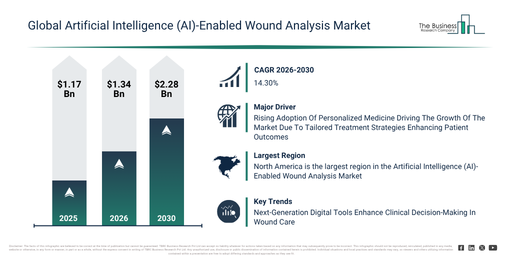
    The market for artificial intelligence (AI)-enabled wound analysis has expanded considerably in recent years. This market is projected to grow from $1.17 billion in 2025 to $1.34 billion in 2026, at a compound annual growth rate (CAGR) of 14.1%. Historically, this growth has been driven by factors such as the increasing prevalence of chronic wounds and diabetic ulcers, the limitations in accuracy of manual wound assessment, the rising workload in hospitals concerning wound care management, the growing adoption of digital imaging in clinical environments, and the need for standardized wound documentation practices.

    The artificial intelligence (AI)-enabled wound analysis market size is projected to experience rapid expansion in the coming years. It is forecast to grow to $2.28 billion by 2030, achieving a compound annual growth rate (CAGR) of 14.3%. The anticipated growth during this period stems from the increasing scope of remote patient monitoring and home healthcare, the greater utilization of AI-powered diagnostic imaging tools, the expanding integration of telemedicine in wound management, the heightened demand for predictive clinical analytics in treatment planning, and breakthroughs in computer vision for medical image analysis. Significant trends identified for the forecast period include the wider adoption of remote wound monitoring and telehealth integration, the emergence of AI-based systems for wound severity grading and classification, the rising implementation of automated chronic wound management platforms, the seamless integration of clinical decision support systems into wound care workflows, and an escalating application of predictive healing trajectory analytics.

    Get A Free Sample Report With In-Depth Market Insights:

    https://thebusinessresearchcompany.com/sample_request?id=58094623&type=smp&name=Artificial%20Intelligence%20%28AI%29-Enabled%20Wound%20Analysis%20Market%20Report%202026&utm_source=Blogs&utm_medium=Paid&utm_campaign=Oct_PR

    Artificial Intelligence (AI)-Enabled Wound Analysis Market Growth Catalysts And Demand Drivers

    The future expansion of the artificial intelligence (AI)-enabled wound analysis market is anticipated to be fueled by the increasing integration of personalized medicine approaches. This medical strategy customizes treatments based on a patient’s unique attributes, such as genetic makeup, biomarker levels, lifestyle, and specific disease aspects, aiming to enhance treatment effectiveness and lessen negative impacts. A primary catalyst for the wider acceptance of personalized medicine is the growing incorporation of genomic data into clinical care, given that progress in genetic profiling allows medical professionals to pinpoint disease susceptibilities and treatment responses with greater accuracy, leading to more precise and impactful therapeutic choices. AI-enabled wound analysis assists personalized medicine by real-time assessment of specific wound features like size, depth, tissue composition, and infection likelihood, empowering clinicians to customize treatment plans for each patient’s wound profile, thereby enhancing recovery and decreasing adverse events. As an illustration, in February 2024, a report from the US-based nonprofit Personalized Medicine Coalition (PMC) indicated that personalized therapies accounted for over one-third of new drug approvals by the U. S. Food and Drug Administration for four continuous years leading up to 2023. The approvals in 2023 specifically featured 16 rare disease treatments (an increase from six in 2022), along with seven oncology drugs and three addressing other conditions. Consequently, the expanding utilization of personalized medicine methods is a key contributor to the expansion of the artificial intelligence (AI)-enabled wound analysis market.

    Artificial Intelligence (AI)-Enabled Wound Analysis Market Segment Performance And Emerging Opportunities

    The artificial intelligence (AI)-enabled wound analysis market covered in this report is segmented –

    1) By Product Type: Smartphone Based Applications, Telemedicine Platforms, Electronic Medical Record Integration Software, Artificial Intelligence Enabled Imaging Hardware

    2) By Technology: Machine Learning, Deep Learning, Computer Vision

    3) By Application: Diabetic Foot Ulcers, Pressure Ulcers, Venous Leg Ulcers, Surgical Wounds, Burns

    4) By End User: Hospitals, Home Healthcare Agencies, Long Term Care Facilities, Specialty Clinics

    Subsegments:

    1) By Smartphone Based Applications: Chronic Wound Monitoring Applications, Post Surgical Wound Tracking Applications, Diabetic Ulcer Assessment Applications, Burn Wound Monitoring Applications, Infection Detection Applications

    2) By Telemedicine Platforms: Video Consultation Platforms, Remote Patient Monitoring Platforms, Cloud Based Wound Management Platforms, Mobile Health Teleconsultation Platforms, Virtual Care Coordination Platforms

    3) By Electronic Medical Record Integration Software: Hospital Information System Integration Software, Clinical Data Management Software, Interoperability And Data Exchange Software, Patient Record Management Software, Workflow Automation Software

    4) By Artificial Intelligence Enabled Imaging Hardware: Handheld Wound Imaging Devices, Three Dimensional Wound Imaging Systems, Thermal Imaging Devices For Wound Assessment, Optical Imaging Devices, Portable Diagnostic Imaging Devices

    Artificial Intelligence (AI)-Enabled Wound Analysis Market Trends Shaping Long-Term Demand

    Leading companies within the artificial intelligence (AI)-enabled wound analysis market are concentrating on creating sophisticated solutions, such as AI-powered digital platforms for wound assessment. These platforms aim to boost precision, standardize documentation, refine clinical decision-making, and quicken wound healing across various environments including home health, ambulatory, acute, and skilled nursing facilities. AI-driven digital wound assessment platforms utilize cutting-edge imaging, generative AI algorithms, and interoperability standards to deliver impartial diagnostics, exact measurements, and actionable clinical recommendations. For instance, in October 2024, Swift Medical, a Canadian digital wound care firm, introduced its Skin & Wound 2 platform, an AI-based digital wound care solution designed to assist patient evaluations across diverse care settings. This platform integrates FHIR standards, interfaces with EMR systems like Homecare Homebase, and employs AI to guarantee accurate and fair wound assessments for all skin tones. Skin & Wound 2 has been implemented in over 4,800 facilities, providing support to more than 21,000 clinicians and facilitating over 600,000 wound care evaluations in a single month, with the objective of improving healing rates and enhancing patient outcomes.

    Artificial Intelligence (AI)-Enabled Wound Analysis Market Leading Players And Competitive Positioning

    Major companies operating in the artificial intelligence (AI)-enabled wound analysis market are Smith + Nephew plc, Healthy. io Ltd., Spectral AI Inc., Swift Medical Inc., cureVision GmbH, ARANZ Medical Ltd., Entec Health Ltd., WoundVision LLC, eKare Inc., Intellicure LLC, MolecuLight Corp., Kent Imaging Inc., Mimosa Diagnostics Inc., CutoSense, WoundMatrix Inc., imito AG, KroniKare Pte Ltd., WoundZoom Inc., The Wound Pros Inc., Urgo Group

    View The Full Artificial Intelligence (AI)-Enabled Wound Analysis Market Report:

    https://thebusinessresearchcompany.com/report/artificial-intelligence-ai-enabled-wound-analysis-market-report?utm_source=Blogs&utm_medium=Paid&utm_campaign=Oct_PR

    Artificial Intelligence (AI)-Enabled Wound Analysis Market Regional Split: Which Areas Are Fueling Growth?

    North America was the largest region in the artificial intelligence (AI)-enabled wound analysis market in 2025. Asia-Pacific is expected to be the fastest-growing region in the forecast period. The regions covered in the artificial intelligence (AI)-enabled wound analysis market report are Asia-Pacific, South East Asia, Western Europe, Eastern Europe, North America, South America, Middle East and Africa.

    Reach Out To Our Team:

    The Business Research Company: https://www.thebusinessresearchcompany.com/

    Americas: +1 310-496-7795

    Asia: +44 7882 955267 & +91 8897263534

    Europe: +44 7882 955267

    Email us at: marketing@tbrc.info

    Follow us on:

    LinkedIn: https://in.linkedin.com/company/the-business-research-company

    YouTube: https://www.youtube.com/channel/UC24_fI0rV8cR5DxlCpgmyFQ

    Global Market Model: https://www.thebusinessresearchcompany.com/global-market-model
  • Massage Therapy Services Market Analysis Through 2030: Market Size, Growth Trends And Industry Outlook

    Massage Therapy Services Market Analysis Through 2030: Market Size, Growth Trends And Industry Outlook

    Backed by market attractiveness analysis, total addressable market sizing, company benchmarking matrices, interactive Excel dashboards, wider supply chain intelligence, emerging startup coverage, and detailed product-level insights, The Business Research Company’s 2026 market reports are designed to offer research that is more actionable and strategically valuable than ever.

    Massage Therapy Services Market Size Forecast: How Big Could The Market Get By 2030?

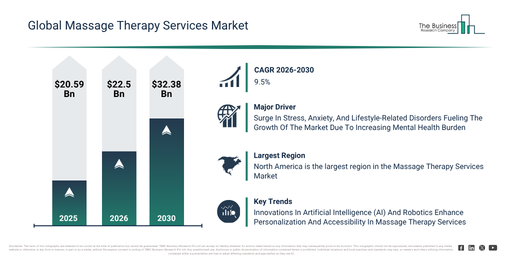
    The massage therapy services market has experienced robust expansion in recent years. This market is projected to expand from $20.59 billion in 2025 to $22.5 billion in 2026, demonstrating a compound annual growth rate (CAGR) of 9.3%. Historically, this growth was driven by factors such as a heightened understanding of physical wellness and the advantages of relaxation, an increase in stress levels among city dwellers, the proliferation of spa and wellness facilities, a rising need for pain management treatments, and the wider acceptance of traditional healing methods.

    The massage therapy services market size is predicted to achieve significant expansion over the next few years. It is forecast to grow to $32.38 billion by 2030, exhibiting a compound annual growth rate (CAGR) of 9.5%. This growth throughout the projection period can be attributed to the increasing incorporation of digital health and wellness platforms, a heightened corporate focus on employee well-being initiatives, the rising embrace of personalized therapy services, the expansion of home-based wellness offerings, and the growing demand for preventive healthcare solutions. Prominent trends for the forecast period include the increasing adoption of AI-assisted massage therapy personalization tools, a rising demand for mobile and on-demand massage booking platforms, the growing integration of wearable health monitoring into therapy sessions, the expansion of corporate wellness massage programs, and an increasing preference for holistic and preventive wellness treatments.

    Get A Free Sample Report With In-Depth Market Insights:

    https://thebusinessresearchcompany.com/sample_request?id=68008365&type=smp&name=Massage%20Therapy%20Services%20Market%20Report%202026&utm_source=Blogs&utm_medium=Paid&utm_campaign=Oct_PR

    Massage Therapy Services Market Industry Drivers: What’s Behind The Revenue Growth?

    The future expansion of the massage therapy services market is anticipated to be driven by the increasing occurrence of stress, anxiety, and lifestyle-related disorders. These disorders are defined as a collection of mental and physical health issues resulting from prolonged psychological strain, inactive lifestyles, and unhealthy habits that negatively impact overall well-being. The growth in such conditions is fueled by escalating work-related pressures and longer working hours, which diminish rest periods and adversely affect comprehensive mental and physical health. Massage therapy services assist in handling stress and anxiety by encouraging relaxation, enhancing blood flow, and easing muscle tension, thereby contributing to superior mental and physical health outcomes. An illustrative example shows that in May 2024, the American Psychological Association, a U.S.-based professional organization, reported 43% of adults experiencing increased anxiety compared to the previous year, a rise from 37% in 2023 and 32% in 2022. Of these, 70% identified current events as primary stressors, specifically the economy (77%), the 2024 U.S. election (73%), and gun violence (69%). Thus, the rising incidence of stress, anxiety, and lifestyle-related disorders is a key factor propelling the massage therapy services market forward.

    Massage Therapy Services Market Segments: Where Is Growth Concentrated?

    The massage therapy services market covered in this report is segmented –

    1) By Service Type: Swedish Massage, Deep Tissue Massage, Sports Massage, Aromatherapy Massage, Thai Massage, Prenatal Massage, Reflexology Massage, Hot Stone Massage

    2) By Service Provider: Spa And Wellness Centers, Hospitals And Rehabilitation Centers, Independent Practitioners, Home Service Providers

    3) By Application: Relaxation And Stress Relief, Pain Management, Injury Rehabilitation, Wellness And Preventive Care

    4) By Distribution Channel: Online Booking Platforms, Offline Direct Booking

    5) By End User: Individuals, Athletes And Sports Professionals, Geriatric Population, Corporate Clients

    Subsegments:

    1) By Swedish Massage: Full Body Swedish Massage, Upper Body Swedish Massage, Lower Body Swedish Massage, Chair Swedish Massage, Relaxation Swedish Massage

    2) By Deep Tissue Massage: Full Body Deep Tissue Massage, Trigger Point Therapy Massage, Chronic Pain Relief Massage, Muscle Recovery Deep Tissue Massage, Injury Rehabilitation Massage

    3) By Sports Massage: Pre Event Sports Massage, Post Event Sports Massage, Maintenance Sports Massage, Injury Prevention Sports Massage, Rehabilitation Sports Massage

    4) By Aromatherapy Massage: Essential Oil Relaxation Massage, Stress Relief Aromatherapy Massage, Detox Aromatherapy Massage, Energy Boost Aromatherapy Massage, Sleep Enhancement Aromatherapy Massage

    5) By Thai Massage: Traditional Thai Massage, Thai Yoga Massage, Herbal Compress Thai Massage, Foot Thai Massage, Oil Based Thai Massage

    6) By Prenatal Massage: First Trimester Prenatal Massage, Second Trimester Prenatal Massage, Third Trimester Prenatal Massage, Postnatal Massage, Pregnancy Pain Relief Massage

    7) By Reflexology Massage: Foot Reflexology Massage, Hand Reflexology Massage, Ear Reflexology Massage, Full Body Reflexology Massage, Therapeutic Reflexology Massage

    8) By Hot Stone Massage: Full Body Hot Stone Massage, Back Focus Hot Stone Massage, Therapeutic Hot Stone Massage, Relaxation Hot Stone Massage, Combination Hot Stone Massage

    #Massage Therapy Services Market Growth Trends: What’s Shaping The Future Outlook?

    Leading companies in the massage therapy services market are concentrating on integrating advanced technologies, such as artificial intelligence (AI) and robotics, to offer personalized, consistent, and on-demand wellness experiences. AI-driven massage systems utilize body-mapping and data analytics to customize treatments based on individual anatomy and preferences, thereby enhancing service precision and accessibility while also addressing therapist shortages. For instance, in March 2024, Aescape, a US-based AI and robotics-driven wellness company, partnered with Equinox, a US-based luxury fitness and lifestyle company, to roll out its AI-powered automated massage table at multiple locations in New York City. This system employs advanced scanning technology to generate over 1.1 million 3D data points, facilitating precise mapping of the user’s body and identifying key pressure points for targeted therapy. It delivers customizable massage sessions via an interactive interface, enabling users to adjust pressure, focus areas, and ambiance preferences while securely storing personal data for subsequent sessions, thereby significantly improving convenience, personalization, and scalability in massage therapy services.

    Massage Therapy Services Market Competitive Overview And Top Companies

    Major companies operating in the massage therapy services market are Marriott International Inc, The Ritz-Carlton Hotel Company LLC, Four Seasons Hotels Ltd, Elements Therapeutic Massage LLC, Mandarin Oriental International Ltd, Massage Heights Franchising LLC, Zeel Networks Inc, Hand & Stone Franchise Corp, Soothe Inc, Massage Green Franchise LLC, The NOW Massage LLC, Let’s Relax Spa Co Ltd, LaVida Massage Franchising LLC, Urban Massage Ltd, Woodhouse Spa LLC, MassageLuXe Franchising LLC, Spavia International LLC, Hyatt Hotels Corp, Thai Odyssey Sdn Bhd, Massage Republic Ltd

    View The Full Massage Therapy Services Market Report:

    https://thebusinessresearchcompany.com/report/massage-therapy-services-market-report?utm_source=Blogs&utm_medium=Paid&utm_campaign=Oct_PR

    Massage Therapy Services Market Top Region: Where Does Most Revenue Come From?

    North America was the largest region in the massage therapy services market in 2025. Asia-Pacific is expected to be the fastest-growing region in the forecast period. The regions covered in the massage therapy services market report are Asia-Pacific, South East Asia, Western Europe, Eastern Europe, North America, South America, Middle East, Africa.

    Reach Out To Our Team:

    The Business Research Company: https://www.thebusinessresearchcompany.com/

    Americas: +1 310-496-7795

    Asia: +44 7882 955267 & +91 8897263534

    Europe: +44 7882 955267

    Email us at: marketing@tbrc.info

    Follow us on:

    LinkedIn: https://in.linkedin.com/company/the-business-research-company

    YouTube: https://www.youtube.com/channel/UC24_fI0rV8cR5DxlCpgmyFQ

    Global Market Model: https://www.thebusinessresearchcompany.com/global-market-model
  • Health And Social Care Technology Market Explained: What Is Fueling Growth To $0.41 Billion By 2030?

    Health And Social Care Technology Market Explained: What Is Fueling Growth To $0.41 Billion By 2030?

    Built to provide research that’s more actionable and strategically valuable, The Business Research Company’s 2026 market reports include market attractiveness analysis, total addressable market sizing, company benchmarking matrices, interactive Excel dashboards, broader supply chain intelligence, emerging startup tracking, and in-depth product insights.

    Health And Social Care Technology Market Set To Climb From $0.29 Billion In 2026 To $0.41 Billion By 2030

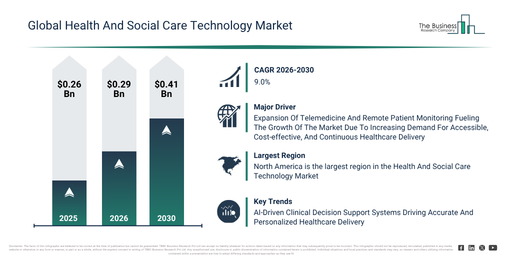
    The health and social care technology market size has experienced significant expansion over recent years. It is anticipated to grow from $0.26 billion in 2025 to $0.29 billion in 2026, reflecting a compound annual growth rate (CAGR) of 8.8%. Historically, this market’s growth can be attributed to elements such as paper-based patient records, limited remote care adoption, fragmented healthcare data systems, manual processes for appointment and care coordination, and the low penetration of digital health devices.

    The health and social care technology market is projected for substantial expansion over the coming years. It is anticipated to reach $0.41 billion by 2030, exhibiting a compound annual growth rate (CAGR) of 9.0%. This anticipated growth during the forecast period is propelled by factors such as the broadening use of electronic health records, an increasing need for remote patient monitoring, the growing uptake of telemedicine platforms, the proliferation of connected wearable health devices, and the wider deployment of AI-assisted clinical decision support systems. Key developments expected in this period encompass sustainability-focused green healthcare operations and low-carbon hospital infrastructure, frameworks for interoperability and standardized health data exchange, value-based care models featuring outcome-driven reimbursement, decentralized care delivery through community-based and hybrid networks, and the empowerment of a digital workforce via virtual clinical training platforms.

    Get A Free Sample Report With In-Depth Market Insights:

    https://thebusinessresearchcompany.com/sample_request?id=59720633&type=smp&name=Health%20And%20Social%20Care%20Technology%20Market%20Report%202026&utm_source=Blogs&utm_medium=Paid&utm_campaign=Oct_PR

    Health And Social Care Technology Market Demand Drivers Opening New Revenue Streams

    The anticipated growth of the health and social care technology market is set to be driven by the increasing adoption of telemedicine and remote patient monitoring. These technologies involve employing digital communication and connected medical devices to provide clinical services, consultations, and ongoing patient health surveillance beyond conventional healthcare settings. This expansion is fundamentally fueled by a rising need for affordable and accessible healthcare, allowing patients to get prompt medical advice and consistent health oversight without visiting traditional clinics. Health and social care technology facilitates telemedicine and remote patient monitoring through virtual appointments, real-time health data observation, and continuous care provision away from traditional clinical environments. As an illustration, the U.S. Department of Health & Human Services, a US-based executive branch department, reported in August 2025 that in 2024, Medicare expenditures for remote patient monitoring exceeded US$536 million, indicating a 31% rise from 2023. Concurrently, nearly 1 million beneficiaries engaged with RPM services, marking a 27% year-over-year increase, and approximately 4,600 medical practices consistently billed for these services. Consequently, the growing adoption of telemedicine and remote patient monitoring is a key factor driving the expansion of the health and social care technology market.

    Health And Social Care Technology Market Segment Breakdown: Which Categories Lead On Revenue?

    The health and social care technology market covered in this report is segmented –

    1) By Component: Hardware, Software And Platforms, Services

    2) By Deployment Mode: On Premises, Cloud Based

    3) By Technology Type: Internet Of Things Enabled Healthcare, Artificial Intelligence And Data Analytics, Mobile Health Applications, Wearable Technology

    4) By Application: Remote Patient Monitoring, Electronic Health Records Management, Telemedicine And Virtual Care, Chronic Disease Management, Assisted Living And Social Care, Population Health Management

    5) By End User: Hospitals And Clinics, Home Care Settings, Social Care Providers, Government And Public Health Organizations, Patients And Individuals

    Subsegments:

    1) By Hardware: Medical Devices Hardware, Wearable Health Monitoring Devices, Medical Imaging Systems Hardware, Remote Patient Monitoring Devices, Healthcare Networking Equipment, Healthcare Data Storage Devices

    2) By Software And Platforms: Electronic Health Record Platforms, Healthcare Analytics Platforms, Telemedicine Platforms, Clinical Decision Support Software, Patient Management Systems, Medical Billing Software

    3) By Services: Implementation Services, Integration Services, Managed Services, Consulting Services, Support And Maintenance Services, Training Services

    Health And Social Care Technology Market Trends Powering Strategic Industry Growth

    Major companies within the health and social care technology market are focusing on developing technological advancements in artificial intelligence-driven diagnostics and decision support systems, such as AI-powered clinical decision support platforms and intelligent care navigation tools, to improve accuracy, efficiency, and personalization in healthcare delivery. These AI-powered clinical decision support platforms and intelligent care navigation tools represent advanced AI-enabled healthcare technologies that analyze patient data, medical history, and clinical inputs to assist providers in diagnosis, treatment planning, and care coordination, while simultaneously enhancing real-time decision-making and patient outcomes. For instance, in December 2025, Included Health, a US-based digital healthcare company, launched Dot, an AI health assistant. The platform integrates AI-driven care navigation with clinician-in-the-loop oversight to deliver personalized healthcare guidance using medical records, claims, and benefits data, enabling automated appointment scheduling, care coordination, and preventive health support while ensuring clinical accuracy through human expert validation, thereby improving accessibility, efficiency, and continuity of care across physical, behavioral, and administrative health services.

    Health And Social Care Technology Market Key Participants And Competitive Landscape

    Major companies operating in the health and social care technology market are Oracle Corporation, Abbott Laboratories, Medtronic plc, Koninklijke Philips N.V., GE HealthCare Technologies Inc., ResMed Inc., DexCom Inc., Teladoc Health Inc., Oura Health Oy, iRhythm Technologies Inc., Huma Therapeutics Limited, HealthSnap Inc., Cala Health Inc., Sibel Health Inc., Health Recovery Solutions Inc., Lark Technologies Inc., Validic Inc., Innowise Group, BioIntelliSense Inc., Vitalist Inc., Biobeat Technologies Ltd., Videra Health Inc., CoachCare Inc.

    View The Full Health And Social Care Technology Market Report:

    https://thebusinessresearchcompany.com/report/health-and-social-care-technology-market-report?utm_source=Blogs&utm_medium=Paid&utm_campaign=Oct_PR

    Health And Social Care Technology Market Geographic Analysis: Where Is Demand Rising Fastest?

    North America was the largest region in the health and social care technology market in 2025. Asia-Pacific is expected to be the fastest-growing region in the forecast period. The regions covered in the health and social care technology market report are Asia-Pacific, South East Asia, Western Europe, Eastern Europe, North America, South America, Middle East, Africa.

    Reach Out To Our Team:

    The Business Research Company: https://www.thebusinessresearchcompany.com/

    Americas: +1 310-496-7795

    Asia: +44 7882 955267 & +91 8897263534

    Europe: +44 7882 955267

    Email us at: marketing@tbrc.info

    Follow us on:

    LinkedIn: https://in.linkedin.com/company/the-business-research-company

    YouTube: https://www.youtube.com/channel/UC24_fI0rV8cR5DxlCpgmyFQ

    Global Market Model: https://www.thebusinessresearchcompany.com/global-market-model
  • Albumin Market Analysis: $7.81 Billion Market Size In 2026 And Future Growth Prospects

    Albumin Market Analysis: $7.81 Billion Market Size In 2026 And Future Growth Prospects

    Built to provide research that’s more actionable and strategically valuable, The Business Research Company’s 2026 market reports include market attractiveness analysis, total addressable market sizing, company benchmarking matrices, interactive Excel dashboards, broader supply chain intelligence, emerging startup tracking, and in-depth product insights.

    Albumin Market Poised To Hit $10.62 Billion By 2030 With A 8% CAGR

    The albumin market has witnessed significant growth in recent years. It is projected to expand from $7.16 billion in 2025 to $7.81 billion in 2026, demonstrating a compound annual growth rate (CAGR) of 9.1%. This historical expansion was primarily driven by factors such as the restricted availability of plasma-derived albumin, a rising incidence of liver diseases and burns, its expanded application in diagnostic kits, increasing biopharmaceutical research and development activities, and its early integration into laboratory and research applications.

    The albumin market is projected to experience substantial expansion over the upcoming years, with its valuation anticipated to reach $10.62 billion by 2030, exhibiting a compound annual growth rate (CAGR) of 8.0%. This projected growth during the forecast period is primarily driven by improvements in recombinant albumin technology, the increasing need for personalized medicine, the broader integration of albumin into drug delivery systems, a surge in biopharmaceutical production, and escalating investments in both therapeutic and cosmetic uses. Key trends observed within this period encompass an escalating demand for human serum albumin in therapeutic contexts, the widening application of albumin in drug formulations and vaccines, the broadening scope of recombinant albumin in biopharmaceutical applications, increased incorporation of albumin in cell culture and diagnostic kits, and a heightened emphasis on albumin-centric research and personalized medical approaches.

    Get A Free Sample Report With In-Depth Market Insights:

    https://thebusinessresearchcompany.com/sample_request?id=63586830&type=smp&name=Albumin%20Market%20Report%202026&utm_source=Blogs&utm_medium=Paid&utm_campaign=Oct_PR

    Albumin Market Demand Drivers Opening New Revenue Streams

    The increasing occurrence of diabetes is anticipated to drive the expansion of the albumin market in the future. Diabetes, a persistent metabolic condition marked by high blood sugar levels, can progressively lead to kidney issues like diabetic nephropathy. A primary contributor to the growing prevalence of diabetes is the increase in obesity rates, as significant epidemiological data illustrates a robust link between elevated body mass index levels and a considerably heightened risk of diabetes. Albumin assists in patient care by aiding the monitoring of kidney function and directing therapeutic interventions for individuals with diabetes. For example, data from April 2025, supplied by the International Diabetes Federation (IDF), a Belgium-based non-profit organization, indicates that diabetes impacted an estimated 589 million adults and 9.5 million people with type 1 diabetes in 2024, including 1.9 million children and adolescents, with the total number of people living with the condition forecast to reach 853 million by 2050. Consequently, the escalating incidence of diabetes is fueling the expansion of the albumin market.

    Albumin Market Segment Analysis And Revenue Potential

    The albumin market covered in this report is segmented –

    1) By Type: Human Serum Albumin, Bovine Serum Albumin, Recombinant Albumin

    2) By Application: Therapeutics, Drug Formulation And Vaccines, Component Of Media, Other Applications

    3) By End-User: Hospitals And Clinics, Pharmaceutical And Biotechnology Companies, Research Institutes

    Subsegments:

    1) By Human Serum Albumin: Plasma-Derived Human Serum Albumin, Recombinant Human Serum Albumin, Human Serum Albumin For Therapeutic Use (In Liver Disease, Burns), Human Serum Albumin For Drug Delivery And Research Applications

    2) By Bovine Serum Albumin: Bovine Serum Albumin For Laboratory Use (In Cell Culture), Bovine Serum Albumin For Diagnostic Kits, Bovine Serum Albumin As A Stabilizer In Vaccines And Biopharmaceuticals

    3) By Recombinant Albumin: Recombinant Human Albumin For Therapeutic Applications, Recombinant Albumin For Biopharmaceutical Formulation, Recombinant Albumin For Cosmetic And Personal Care Applications, Recombinant Albumin For Research And Diagnostic Applications

    Albumin Market Trends Powering Strategic Industry Growth

    Leading companies in the albumin market are innovating products, such as recombinant albumin devoid of animal and human origins, to offer customers superior features. This animal- and human-origin-free recombinant albumin is manufactured using non-mammalian expression systems, like yeast, and contains no components derived from animals or humans. For example, in March 2023, Albumedix, a UK-based producer of recombinant human albumin (rHA), joined forces with Heartseed Inc., a Japan-based clinical-stage biotech company, to introduce Recombin. This vital excipient is intended for the manufacturing of Heartseed’s investigational cell therapy, HS-001, as its initial human clinical trial begins. This collaboration signifies a major advancement in the development of HS-001, which is set to revolutionize the treatment of diverse diseases. The incorporation of recombination in the production process ensures the cell therapy’s optimal performance and stability, reinforcing its potential for therapeutic triumph.

    Albumin Market Key Players Shaping Industry Direction

    Major companies operating in the albumin market are Bristol-Myers Squibb Company, Thermo Fisher Scientific Inc., Takeda Pharmaceutical Company Limited, Merck KGaA, Baxter International Inc., CSL Limited, Grifols SA, Mitsubishi Tanabe Pharma Corporation, Octapharma AG, Kedrion S.p.A., Biotest AG, Jiangxi Boya Bio-Pharmaceutical Co. Ltd., BPL (Bio Products Laboratory), Kamada Ltd., Proliant Biologicals, SeraCare Life Sciences Inc., HiMedia Laboratories, Albumedix Ltd., Medxbio Pte Ltd., Ventria Bioscience Inc., China Biologic Products Holdings Inc.

    View The Full Albumin Market Report:

    https://thebusinessresearchcompany.com/report/albumin-global-market-report?utm_source=Blogs&utm_medium=Paid&utm_campaign=Oct_PR

    Albumin Market Largest Region: Which Geography Holds The Biggest Share?

    North America was the largest region in the albumin market in 2025. Asia-Pacific is expected to be the fastest-growing region in the forecast period. The regions covered in the albumin market report are Asia-Pacific, South East Asia, Western Europe, Eastern Europe, North America, South America, Middle East, Africa.

    Reach Out To Our Team:

    The Business Research Company: https://www.thebusinessresearchcompany.com/

    Americas: +1 310-496-7795

    Asia: +44 7882 955267 & +91 8897263534

    Europe: +44 7882 955267

    Email us at: marketing@tbrc.info

    Follow us on:

    LinkedIn: https://in.linkedin.com/company/the-business-research-company

    YouTube: https://www.youtube.com/channel/UC24_fI0rV8cR5DxlCpgmyFQ

    Global Market Model: https://www.thebusinessresearchcompany.com/global-market-model

  • Recurrent Pericarditis Market Reaches $1.32 Billion In 2026: Forecast And Growth Opportunities

    Featuring market attractiveness scoring, total addressable market sizing, company benchmarking matrices, interactive Excel dashboards, deeper supply chain intelligence, emerging startup tracking, and granular product-level insights, The Business Research Company’s 2026 market reports are built to deliver research that is both more actionable and more strategically valuable.

    Recurrent Pericarditis Market Revenue Outlook: What CAGR Lies Ahead Through 2030?

    The recurrent pericarditis market has experienced rapid growth in recent years. It is projected to expand from $0.79 billion in 2025 to $0.88 billion in 2026, demonstrating a compound annual growth rate (CAGR) of 10.6%. The historical expansion can be attributed to factors like the traditional reliance on NSAIDs and colchicine, a rise in the diagnosis of inflammatory heart conditions, established cardiology care pathways, increased availability of echocardiography, and the utilization of guideline-driven anti inflammatory therapy.

    The recurrent pericarditis market is anticipated to experience significant expansion over the coming years, projected to reach $1.32 billion by 2030 at a compound annual growth rate (CAGR) of 10.8%. This growth during the forecast period is primarily due to several factors, including the increasing uptake of biologic drugs, enhanced recurrence risk stratification, the expansion of specialty cardiology clinics, a greater understanding of immune-mediated pericarditis, and the rising application of targeted cytokine inhibitors. Furthermore, key trends expected in this period encompass a greater reliance on targeted biologic therapies, the broadening of long-term disease monitoring, an increase in anti-inflammatory combination therapy, the heightened adoption of IL-1 inhibitors, and the implementation of structured recurrence prevention protocols.

    Get A Free Sample Report With In-Depth Market Insights:

    https://thebusinessresearchcompany.com/sample_request?id=18126144&type=smp&name=Recurrent%20Pericarditis%20Market%20Report%202026&utm_source=Blogs&utm_medium=Paid&utm_campaign=Oct_PR

    Recurrent Pericarditis Market Industry Drivers: What’s Behind The Revenue Growth?

    The recurrent pericarditis market is anticipated to expand due to an increasing focus on precision medicine strategies. This medical methodology involves customizing prevention and treatment plans for individual patients, taking into account their unique genetic profile, surrounding environment, and lifestyle choices. The heightened focus on precision medicine stems from its ability to enhance treatment effectiveness, given that therapies are designed to match a person’s specific genetic and biological characteristics, thereby achieving superior results and minimizing negative side effects. Recurrent pericarditis contributes to the progress of precision medicine by facilitating targeted treatment methods that concentrate on inflammatory pathways unique to each patient, for example, those mediated by interleukin-1, which leads to more individualized and successful disease management. As an illustration, in February 2025, NHS England, a public healthcare organization based in the UK, reported that its Genomic Medicine Service provided over 810,000 genomic tests for patients of all ages throughout England in 2024. This number has shown a continuous annual rise since the inception of the NHS Genomic Medicine Service, with an 8% increase observed when compared to 2023. Consequently, the expanding focus on precision medicine techniques is propelling the expansion of the recurrent pericarditis market.

    Recurrent Pericarditis Market Segment Landscape And Growth Outlook

    The recurrent pericarditis market covered in this report is segmented –

    1) By Product Type: Non-Steroidal Anti-Inflammatory Drugs (NSAIDs); Corticosteroids; Colchicine; Biologics; Other Product Types

    2) By Diagnosis And Assessment: Electrocardiography (ECG); Echocardiography; Physical Examination

    3) By Route of Administration: Oral; Injectable

    4) By Application: Colchicine Therapy; Corticosteroids; Non-Steroidal Anti-Inflammatory Drugs (NSAIDs)

    5) By End-User: Hospitals; Ambulatory Surgical Centers; Clinics; Home Care Settings; Emergency Medical Services (EMS)

    Subsegments:

    1) By Non Steroidal Anti Inflammatory Drugs: Ibuprofen; Aspirin; Indomethacin; Naproxen

    2) By Corticosteroids: Prednisone; Methylprednisolone; Hydrocortisone; Dexamethasone

    3) By Colchicine: Oral Colchicine; Low Dose Colchicine; Extended Duration Colchicine Therapy

    4) By Biologics: Interleukin One Inhibitors; Monoclonal Antibody Therapies; Targeted Cytokine Inhibitors

    5) By Other Product Types: Immunosuppressive Agents; Analgesic Therapies; Supportive Combination Therapies

    #Recurrent Pericarditis Market Growth Trends: What’s Shaping The Future Outlook?

    Companies operating within the recurrent pericarditis market are prioritizing the advancement of treatments that offer anti-inflammatory and anti-fibrotic properties. These efforts are aimed at lessening pericardial inflammation, preventing lasting cardiac harm, enhancing patient quality of life, and decreasing recurrence rates. Anti-inflammatory actions work to diminish tissue inflammation, while anti-fibrotic effects either prevent or reverse scar tissue formation, collectively aiding in organ protection and the preservation of normal function. For example, in October 2024, Cardiol Therapeutics Inc., a clinical-stage life sciences company based in Canada, announced progress with CardiolRx. This innovative oral, non-immunosuppressive therapy for recurrent pericarditis targets the NLRP3 inflammasome, a primary upstream driver of IL-1–mediated inflammation. Its development focuses on preventing disease recurrence, especially in patients experiencing relapse after discontinuing IL-1 blocker therapies like rilonacept or anakinra. Through ongoing late-stage clinical programs, CardiolRx seeks to reduce pericarditis flares, relieve chest pain, and normalize inflammatory markers (CRP).

    Recurrent Pericarditis Market Key Players Shaping Industry Direction

    Major companies operating in the recurrent pericarditis market are Johnson & Johnson Services Inc., Roche Holding AG, Merck & Co. Inc., Pfizer Inc., AbbVie Inc., Sanofi S.A., Novartis AG, AstraZeneca PLC, Bristol-Myers Squibb Company, GlaxoSmithKline plc, Eli Lilly and Company, Novo Nordisk A/S, Takeda Pharmaceutical Company Limited, Amgen Inc., Gilead Sciences Inc., Boehringer Ingelheim International GmbH, Regeneron Pharmaceuticals Inc., Biogen Inc., Lonza Group AG, Moderna Inc., and WuXi Biologics (Cayman) Inc.

    View The Full Recurrent Pericarditis Market Report:

    https://thebusinessresearchcompany.com/report/recurrent-pericarditis-market-report?utm_source=Blogs&utm_medium=Paid&utm_campaign=Oct_PR

    Recurrent Pericarditis Market Regional Analysis: Which Region Leads By Revenue?

    North America was the largest region in the recurrent pericarditis market in 2025. Asia-Pacific is expected to be the fastest-growing region in the forecast period. The regions covered in the recurrent pericarditis market report are Asia-Pacific, South East Asia, Western Europe, Eastern Europe, North America, South America, Middle East, Africa.

    Reach Out To Our Team:

    The Business Research Company: https://www.thebusinessresearchcompany.com/

    Americas: +1 310-496-7795

    Asia: +44 7882 955267 & +91 8897263534

    Europe: +44 7882 955267

    Email us at: marketing@tbrc.info

    Follow us on:

    LinkedIn: https://in.linkedin.com/company/the-business-research-company

    YouTube: https://www.youtube.com/channel/UC24_fI0rV8cR5DxlCpgmyFQ

    Global Market Model: https://www.thebusinessresearchcompany.com/global-market-model