Category: Healthcare Services

  • Pancreatic Stone Protein Testing Market Analysis: $1.31 Billion Market Size In 2026 And Future Growth Prospects

    Pancreatic Stone Protein Testing Market Analysis: $1.31 Billion Market Size In 2026 And Future Growth Prospects

    Featuring market attractiveness scoring, total addressable market sizing, company benchmarking matrices, interactive Excel dashboards, deeper supply chain intelligence, emerging startup tracking, and granular product-level insights, The Business Research Company’s 2026 market reports are built to deliver research that is both more actionable and more strategically valuable.

    Pancreatic Stone Protein Testing Market Growth Potential: How Will Market Size Shift Through 2030?

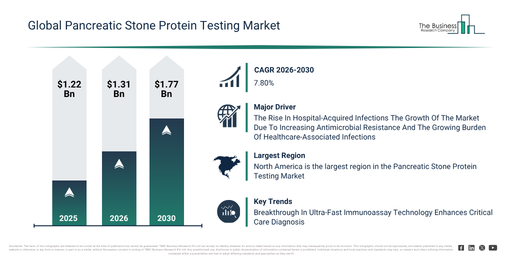
    The pancreatic stone protein testing market has experienced robust growth in recent years. It is projected to expand from $1. 22 billion in 2025 to $1. 31 billion in 2026, demonstrating a compound annual growth rate (CAGR) of 7. 5%. The historical market expansion can be attributed to the increasing incidence of sepsis and critical care conditions, rising awareness of early disease biomarker testing, the expansion of hospital laboratory infrastructure, growth in immunoassay diagnostic adoption, and increasing clinical research on pancreatic and inflammatory biomarkers.

    The pancreatic stone protein testing market is projected to experience substantial expansion in the coming years, with its size expected to reach $1.77 billion by 2030, exhibiting a compound annual growth rate (CAGR) of 7.8%. This anticipated growth is linked to factors such as an increasing need for early sepsis detection tools, greater adoption of point-of-care diagnostic testing, advancements in precision medicine and biomarker-based diagnostics, the expansion of automated laboratory systems, and rising investment in critical care diagnostic innovation. Key trends during this period are expected to involve the growing acceptance of pancreatic stone protein testing as an initial biomarker for sepsis and systemic inflammation detection, a rise in immunoassay-based diagnostic platforms for rapid PSP quantification, the wider integration of PSP testing into critical care and emergency diagnostics workflows, the development of point-of-care testing devices enabling faster PSP measurement in hospitals, and an increasing preference for multiplex biomarker panels that merge PSP with other inflammatory indicators.

    Get A Free Sample Report With In-Depth Market Insights:

    https://thebusinessresearchcompany.com/sample_request?id=73411241&type=smp&name=Pancreatic%20Stone%20Protein%20Testing%20Market%20Report%202026&utm_source=Blogs&utm_medium=Paid&utm_campaign=Oct_PR

    Pancreatic Stone Protein Testing Market Growth Momentum: What Factors Are Shaping Demand?

    The increasing occurrence of hospital-acquired infections (HAIs) is anticipated to boost the growth of the pancreatic stone protein testing market in the future. Hospital-acquired infections are defined as infections a patient contracts while receiving medical care in a hospital or healthcare facility, which were not present at the time of their admission. The escalating incidence of these infections is largely propelled by rising antimicrobial resistance, where microorganisms develop the ability to withstand common antibiotics, making infections more difficult to treat and control in healthcare environments. Pancreatic stone protein testing assists in combating hospital-acquired infections by enabling the early detection of infection and sepsis risk, which allows for timely intervention and improved patient management within hospital settings. For instance, in November 2024, data from the Australian Institute of Health and Welfare, an Australia-based government agency, showed that hospital-acquired complications (HACs) were recorded in 115,000 public hospitalizations (2.0%) and 34,200 private hospitalizations (0.8%) during 2022–23, with healthcare-associated infections representing the largest share (37%), followed by delirium (13%) and cardiac complications (12%). Thus, the growing incidence of hospital-acquired infections is a significant factor driving the expansion of the pancreatic stone protein testing market.

    Pancreatic Stone Protein Testing Market Segment Trends And Revenue Contributors

    The pancreatic stone protein testing market covered in this report is segmented –

    1) By Product Type: Assay Kits, Instruments, Reagents, Other Product Types

    2) By Technology: Immunoassay Based Testing, Enzyme-Linked Immunosorbent Assay Based Testing, Rapid Diagnostic Technologies, Other Technologies

    3) By Sample Type: Blood, Serum, Plasma, Other Sample Types

    4) By Application: Sepsis Diagnosis, Pancreatitis Diagnosis, Other Applications

    5) By End User: Hospitals, Diagnostic Laboratories, Research Institutes, Other End Users

    Subsegments:

    1) By Assay Kits: Enzyme Linked Immunosorbent Assay Kits, Chemiluminescence Immunoassay Kits, Fluorescence Immunoassay Kits, Rapid Diagnostic Test Kits, Multiplex Assay Kits

    2) By Instruments: Immunoassay Analyzers, Clinical Chemistry Analyzers, Automated Laboratory Analyzers, Point Of Care Testing Devices, Microplate Readers

    3) By Reagents: Antibodies, Calibrators, Controls, Buffers, Substrates

    4) By Other Product Types: Sample Collection Kits, Quality Control Materials, Diagnostic Consumables, Laboratory Accessories, Data Management Software

    Pancreatic Stone Protein Testing Market Trends Redefining Industry Growth

    Leading companies in the pancreatic stone protein testing market are concentrating on developing innovative platforms, such as ultra-rapid point-of-care immunoassay platforms, to enable prompt and accurate sepsis detection, enhance the speed of clinical decision-making, and decrease patient mortality in critical care environments. These ultra-rapid point-of-care immunoassay platforms represent diagnostic systems engineered to swiftly detect specific biomarkers in a patient’s sample at or near the bedside via antibody-based reactions, delivering results within minutes rather than hours or days. For example, in October 2024, Abionic SA, a Switzerland-based in vitro diagnostics company, secured approval from the U. S. Food and Drug Administration (FDA) for its IVD CAPSULE Pancreatic Stone Protein (PSP) test. This test is specifically designed for rapid, near-patient detection of PSP levels, thereby allowing for the early identification of sepsis in critically ill patients. It operates on ultra-rapid point-of-care immunoassay platforms, which enable biomarker detection at the bedside through antibody-based reactions, with results provided in minutes.

    Pancreatic Stone Protein Testing Market Competitive Landscape: Which Companies Lead The Industry?

    Major companies operating in the pancreatic stone protein testing market are Cusabio Technology Llc, Fapon Biotech Inc, BioVendor Laboratorní medicína a. s, RayBiotech Life Inc, Creative Diagnostics Inc, Abnova Corporation, Abionic SA, LASCCO SA, Abbexa Ltd

    View The Full Pancreatic Stone Protein Testing Market Report:

    https://thebusinessresearchcompany.com/report/pancreatic-stone-protein-testing-market-report?utm_source=Blogs&utm_medium=Paid&utm_campaign=Oct_PR

    Pancreatic Stone Protein Testing Market Regional Breakdown: Where Is Demand Concentrated?

    North America was the largest region in the pancreatic stone protein testing market in 2025. Asia-Pacific is expected to be the fastest-growing region in the forecast period. The regions covered in the pancreatic stone protein testing market report are Asia-Pacific, South East Asia, Western Europe, Eastern Europe, North America, South America, Middle East and Africa.

    Reach Out To Our Team:

    The Business Research Company: https://www.thebusinessresearchcompany.com/

    Americas: +1 310-496-7795

    Asia: +44 7882 955267 & +91 8897263534

    Europe: +44 7882 955267

    Email us at: marketing@tbrc.info

    Follow us on:

    LinkedIn: https://in.linkedin.com/company/the-business-research-company

    YouTube: https://www.youtube.com/channel/UC24_fI0rV8cR5DxlCpgmyFQ

    Global Market Model: https://www.thebusinessresearchcompany.com/global-market-model
  • Newborn Jaundice Treatment Market Analysis: How The Industry Is Evolving Toward A $3.49 Billion Future

    Newborn Jaundice Treatment Market Analysis: How The Industry Is Evolving Toward A $3.49 Billion Future

    Backed by market attractiveness analysis, total addressable market sizing, company benchmarking matrices, interactive Excel dashboards, wider supply chain intelligence, emerging startup coverage, and detailed product-level insights, The Business Research Company’s 2026 market reports are designed to offer research that is more actionable and strategically valuable than ever.

    Newborn Jaundice Treatment Market Size Outlook: How Quickly Will Revenue Expand Through 2030?

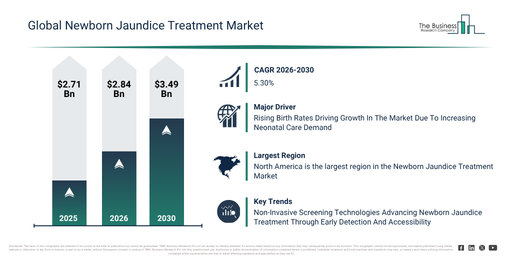
    The newborn jaundice treatment market size has demonstrated robust growth in recent years. This market is projected to expand from $2.71 billion in 2025 to $2.84 billion in 2026, achieving a compound annual growth rate (CAGR) of 5.0%. Historically, this growth has been driven by the high prevalence of neonatal jaundice cases globally, limited availability of advanced phototherapy devices in low-resource settings, reliance on conventional fluorescent lamp-based treatment systems, delayed diagnosis of hyperbilirubinemia in newborns, and a lack of standardized neonatal screening protocols.

    The newborn jaundice treatment market size is anticipated to expand significantly in the coming years, reaching $3.49 billion by 2030 with a compound annual growth rate (CAGR) of 5.3%. This forecasted growth can be linked to the increasing adoption of LED-based phototherapy systems, a greater focus on early neonatal screening programs, a rising demand for home-based newborn care options, advancements in non-invasive bilirubin monitoring technologies, and the worldwide expansion of neonatal intensive care infrastructure. Prominent trends for this period include LED-based intensive phototherapy systems for rapid bilirubin reduction in newborns, fiber-optic blanket phototherapy enabling continuous treatment with minimal infant disturbance, smart bilirubin monitoring systems integrated with real-time phototherapy adjustments, portable homecare phototherapy devices supporting early hospital discharge, and dual-surface phototherapy units enhancing treatment efficiency in neonatal intensive care.

    Get A Free Sample Report With In-Depth Market Insights:

    https://thebusinessresearchcompany.com/sample_request?id=40655770&type=smp&name=Newborn%20Jaundice%20Treatment%20Market%20Report%202026&utm_source=Blogs&utm_medium=Paid&utm_campaign=Oct_PR

    Newborn Jaundice Treatment Market Opportunity Drivers: What’s Unlocking New Revenue Potential?

    The anticipated increase in birth rates is expected to drive the growth of the newborn jaundice treatment market moving forward. Birth rates indicate the number of live births within a specific population over a given period, reflecting overall demographic expansion and reproductive trends. This uptick in birth rates is fueled by improved maternal healthcare access, overall population growth, and supportive government initiatives in certain regions, resulting in a higher demand for postnatal care for newborns. Newborn jaundice treatment supports this trend by enabling early diagnosis and effective management of bilirubin levels in a growing neonatal population through phototherapy and related interventions, thereby minimizing the risk of complications. For instance, in July 2025, the Office for National Statistics, a UK-based government department, reported 594,677 live births in England and Wales in 2024, an increase of 3,605 (0.6%) compared to 2023, marking the first rise since 2021. Therefore, rising birth rates are a significant driver for the growth of the newborn jaundice treatment market.

    Newborn Jaundice Treatment Market Segment Analysis: What Are The Core Market Categories?

    The newborn jaundice treatment market covered in this report is segmented –

    1) By Device Type: Overhead Phototherapy Units, Portable Phototherapy Units, Other Device Types

    2) By Modality: Conventional Phototherapy, Light Emitting Diode Phototherapy, Fiber Optic Phototherapy

    3) By Service Type: Diagnostic And Screening Services, Therapeutic And Nursing Services, Support And Monitoring Services

    4) By Technology: Light Emitting Diode Light Sources, Fluorescent, Halogen, Fiberoptic

    5) By End User: Hospitals, Neonatal Intensive Care Units, Pediatric Clinics, Homecare Settings

    Subsegments:

    1) By Overhead Phototherapy Units: Light Emitting Diode Overhead Phototherapy Units, Fluorescent Lamp Overhead Phototherapy Units, Halogen Lamp Overhead Phototherapy Units, Double Surface Overhead Phototherapy Units

    2) By Portable Phototherapy Units: Wearable Phototherapy Blanket Units, Fiber Optic Phototherapy Pad Units, Portable Light Emitting Diode Phototherapy Units, Compact Handheld Phototherapy Units

    3) By Other Device Types: Phototherapy Bassinet Systems, Phototherapy Incubator Integrated Systems, Combination Phototherapy And Warming Units, Multisurface Phototherapy Systems

    Newborn Jaundice Treatment Market Innovation Trends Shaping Future Development

    Leading companies in the newborn jaundice treatment market are increasingly focusing on advanced non-invasive screening solutions, particularly smartphone-based bilirubin detection technologies, to enable earlier diagnosis and improve the accessibility of care. Smartphone-based bilirubin detection operates by using mobile imaging and algorithm-based analysis of skin coloration to estimate bilirubin levels without requiring blood sampling or specialized equipment. A key development occurred in July 2024, when Konica Minolta, a Japan-based technology company, partnered with Picterus AS, a Norway-based digital health company, to enhance non-invasive jaundice screening solutions. This collaboration leverages smartphone-based imaging to facilitate early detection, enhance accessibility in low-resource settings, and support timely intervention while ensuring screening accuracy. Additionally, this solution diminishes dependence on hospital-based diagnostic tools and enables point-of-care screening within community and home settings, further supporting scalable neonatal screening programs by offering healthcare providers a cost-effective, user-friendly technology.

    Newborn Jaundice Treatment Market Competitive Landscape: Who Leads The Industry?

    Major companies operating in the newborn jaundice treatment market are Koninklijke Philips N. V., GE HealthCare Technologies, Drägerwerk AG & Co. KGaA, Heal Force Bio-Meditech Holdings Limited, Atom Medical, Ningbo David Medical Device, Fanem Ltd., MTTS Inc., Phoenix Medical Systems, Olidef Medical, Dixion Vertrieb Medizinischer Geräte GmbH, Anandic Medical Systems AG, Weyer GmbH, AVI Healthcare Pvt. Ltd., Nice Neotech, Natus Medical, Ibis Medical, Novos Medical Systems, GINEVRI Srl, Solarc Systems Inc., Cobams Srl, Kay & Company, Nareena Lifesciences Private Limited, Alfamedic, Delta

    View The Full Newborn Jaundice Treatment Market Report:

    https://thebusinessresearchcompany.com/report/newborn-jaundice-treatment-market-report?utm_source=Blogs&utm_medium=Paid&utm_campaign=Oct_PR

    Newborn Jaundice Treatment Market Geographic Landscape: Which Region Dominates Industry Growth?

    North America was the largest region in the newborn jaundice treatment market in 2025. Asia-Pacific is expected to be the fastest-growing region in the forecast period. The regions covered in the newborn jaundice treatment market report are Asia-Pacific, South East Asia, Western Europe, Eastern Europe, North America, South America, Middle East and Africa.

    Reach Out To Our Team:

    The Business Research Company: https://www.thebusinessresearchcompany.com/

    Americas: +1 310-496-7795

    Asia: +44 7882 955267 & +91 8897263534

    Europe: +44 7882 955267

    Email us at: marketing@tbrc.info

    Follow us on:

    LinkedIn: https://in.linkedin.com/company/the-business-research-company

    YouTube: https://www.youtube.com/channel/UC24_fI0rV8cR5DxlCpgmyFQ

    Global Market Model: https://www.thebusinessresearchcompany.com/global-market-model
  • Multicancer Early Detection Deoxyribonucleic Acid (DNA) Blood Tests Market Analysis: Understanding The Drivers Behind 13.4% CAGR Through 2030 Growth

    Multicancer Early Detection Deoxyribonucleic Acid (DNA) Blood Tests Market Analysis: Understanding The Drivers Behind 13.4% CAGR Through 2030 Growth

    Featuring market attractiveness scoring, total addressable market sizing, company benchmarking matrices, interactive Excel dashboards, deeper supply chain intelligence, emerging startup tracking, and granular product-level insights, The Business Research Company’s 2026 market reports are built to deliver research that is both more actionable and more strategically valuable.

    Multicancer Early Detection Deoxyribonucleic Acid (DNA) Blood Tests Market Poised To Hit $1.49 Billion By 2030 With A 13.4% CAGR

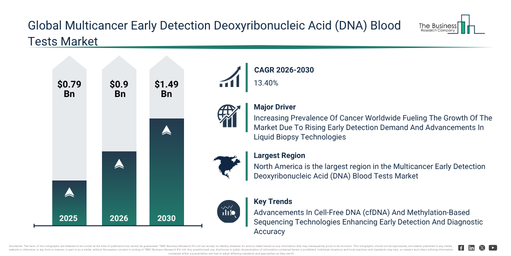
    The multicancer early detection deoxyribonucleic acid (DNA) blood tests market has experienced rapid growth recently. It is projected to expand from $0.79 billion in 2025 to $0.9 billion in 2026, demonstrating a compound annual growth rate (CAGR) of 13.2%. Historically, this growth has been driven by increasing global cancer incidence and mortality rates, the limited effectiveness of late-stage cancer diagnosis methods, the growing adoption of genomic sequencing technologies in oncology research, the expansion of centralized cancer diagnostic laboratories, and rising awareness of early cancer screening benefits among healthcare providers.

    The multicancer early detection deoxyribonucleic acid (DNA) blood tests market is projected to experience substantial expansion in the coming years. This market is anticipated to reach $1.49 billion by 2030, exhibiting a compound annual growth rate (CAGR) of 13.4%. This growth over the forecast period stems from several factors, including developments in multi-cancer early detection liquid biopsy techniques, increased incorporation of AI-based genomic interpretation systems, wider acceptance of personalized and precision oncology screening initiatives, the proliferation of preventive healthcare programs and population screening directives, and increased capital allocation for biomarker discovery and cancer genomics research. Key trends for this period encompass a greater uptake of liquid biopsy-based multi-cancer screening for prompt diagnosis, expanded application of circulating tumor DNA sequencing for non-invasive cancer assessment, deeper integration of AI-powered biomarker interpretation in foreseeing cancer risk, the broadening of preventive oncology screening programs across populations, and an escalating preference for less intrusive blood-based cancer tests compared to conventional biopsy procedures.

    Get A Free Sample Report With In-Depth Market Insights:

    https://thebusinessresearchcompany.com/sample_request?id=71903867&type=smp&name=Multicancer%20Early%20Detection%20Deoxyribonucleic%20Acid%20%28DNA%29%20Blood%20Tests%20Market%20Report%202026&utm_source=Blogs&utm_medium=Paid&utm_campaign=Oct_PR

    Multicancer Early Detection Deoxyribonucleic Acid (DNA) Blood Tests Market Growth Drivers: What’s Behind The Acceleration?

    The increasing prevalence of cancer worldwide is anticipated to drive the expansion of the multicancer early detection DNA blood tests market moving forward. Cancer is a set of illnesses characterized by uncontrolled cell growth and spread, capable of invading nearby tissues and, in advanced stages, spreading to other body parts. The global incidence of cancer is rising as health systems report higher rates and improved screening and detection technologies identify more cases earlier. Multicancer early detection DNA blood tests support this growing prevalence by offering non-invasive, blood-based screening solutions that enable the early identification of various cancer types through circulating tumor DNA analysis, thereby enhancing early diagnosis and patient outcomes. For example, in April 2024, data from the International Agency for Research on Cancer indicated nearly 20 million new cancer cases and close to 10 million deaths from cancer in 2022. Demographics-based forecasts predict that the annual number of new cancer cases will reach 35 million by 2050, representing a 77% increase from 2022. Therefore, the increasing global prevalence of cancer is propelling the growth of the multicancer early detection DNA blood tests market. The rising awareness of preventive healthcare is expected to propel the growth of the multicancer early detection DNA blood tests market going forward. Preventive healthcare encompasses medical practices and strategies focused on preventing disease, enabling early diagnosis, and maintaining health to lessen the risk of severe illnesses and improve long-term health outcomes. Awareness of preventive healthcare is increasing due to growing public health campaigns, expanding access to healthcare information, and a rising emphasis on early disease detection and personalized medicine. Multicancer early detection DNA blood tests support preventive healthcare by offering non-invasive and convenient screening methods that enable the early identification of multiple cancer types through circulating tumor DNA analysis, helping improve treatment outcomes and survival rates. For instance, in January 2025, according to the Prevent Cancer Foundation, participation in preventive cancer screening programs increased by 9.3% in 2024 compared to the previous year, reflecting growing public awareness and adoption of early detection practices. Therefore, the rising awareness of preventive healthcare is driving the growth of the multicancer early detection DNA blood tests market.

    Multicancer Early Detection Deoxyribonucleic Acid (DNA) Blood Tests Market Breakdown By Product Type And Application

    The multicancer early detection deoxyribonucleic acid (dna) blood tests market covered in this report is segmented –

    1) By Test Type: Pan-Cancer Minimal Residual Disease Early Detection Tests, Targeted Multi-Cancer Panels, Single-Cancer Deoxyribonucleic Acid Blood Tests

    2) By Technology: Circulating Cell-Free Deoxyribonucleic Acid Methylation Profiling, Circulating Cell-Free Deoxyribonucleic Acid Mutation Analysis, Fragmentomics, Multi-Analyte Approaches, Other Epigenomic Approaches

    3) By Sample Type: Blood, Plasma, Urine

    4) By Application: Asymptomatic Population Screening, Diagnostic Support, Cancer Recurrence Monitoring

    5) By End Users: Reference Laboratories, Hospital Laboratories, Clinics, Direct-To-Consumer Users

    Subsegments:

    1) By Pan-Cancer Minimal Residual Disease Early Detection Tests: Solid Tumor Detection Panels, Hematological Cancer Detection Panels, Early Stage Cancer Screening Panels, Late Stage Cancer Detection Panels, Whole Body Cancer Screening Tests

    2) By Targeted Multi-Cancer Panels: Organ Specific Cancer Panels, High Risk Population Screening Panels, Genetic Marker Based Panels, Epigenetic Marker Based Panels, Combination Biomarker Panels

    3) By Single-Cancer Deoxyribonucleic Acid Blood Tests: Breast Cancer Detection Tests, Lung Cancer Detection Tests, Colorectal Cancer Detection Tests, Prostate Cancer Detection Tests, Liver Cancer Detection Tests

    Multicancer Early Detection Deoxyribonucleic Acid (DNA) Blood Tests Market Trends: What’s Defining The Industry’s Next Phase?

    Leading companies operating in the multicancer early detection DNA blood tests market are focusing on developing innovative solutions, such as advancements in cell-free DNA (cfDNA) and methylation-based sequencing technologies, to address the increasing demand for early, non-invasive, and multi-cancer screening solutions. Cell-free DNA-based testing involves analyzing fragmented DNA released into the bloodstream by tumor cells, making it possible to detect multiple cancers from a single blood draw, unlike traditional diagnostic approaches that rely on invasive biopsies or organ-specific imaging techniques. For instance, in March 2025, Gene Solutions, a Vietnam-based biotechnology company, introduced an advanced multi-cancer early detection blood test crafted for population-scale screening. The test employs cfDNA analysis combined with machine learning algorithms to identify cancer-specific genomic and epigenomic signatures across numerous cancer types. It facilitates early-stage cancer detection with high predictive accuracy while minimizing false positives, making it suitable for routine health screening. Additionally, the test incorporates tumor origin prediction technology to help identify the likely source of cancer for further diagnosis and is designed to improve accessibility to early cancer detection, particularly in regions with limited screening infrastructure.

    Multicancer Early Detection Deoxyribonucleic Acid (DNA) Blood Tests Market Top Companies Driving Competitive Growth

    Major companies operating in the multicancer early detection deoxyribonucleic acid (dna) blood tests market are Thermo Fisher Scientific Inc., Prenetics Global Limited, Eurofins Scientific Inc., SeekIn Inc., VolitionRx Limited, Myriad Genetics Inc., Guardant Health, Freenome Holdings Inc., GENECAST Biotechnology Co. Ltd., Burning Rock Biotech Limited, Geneseeq Technology Inc.  , Quibim S. L., 1drop Inc., Bioneer Corporation, CellMax Life, Datar Cancer Genetics, Laboratory for Advanced Medicine Inc., Harbinger Health Inc., Norgen Biotek Corp., Singlera Genomics Inc., Elypta AB, StageZero Life Sciences, INOVIQ, AnPac Bio-Medical Science, EarlyDiagnostics, Micronoma

    View The Full Multicancer Early Detection Deoxyribonucleic Acid (DNA) Blood Tests Market Report:

    https://thebusinessresearchcompany.com/report/multicancer-early-detection-deoxyribonucleic-acid-dna-blood-tests-market-report?utm_source=Blogs&utm_medium=Paid&utm_campaign=Oct_PR

    Multicancer Early Detection Deoxyribonucleic Acid (DNA) Blood Tests Market Global Footprint: Which Region Leads The Industry?

    North America was the largest region in the multicancer early detection DNA blood tests market in 2025. Asia-Pacific is expected to be the fastest-growing region in the forecast period. The regions covered in the multicancer early detection deoxyribonucleic acid (DNA) blood tests market report are Asia-Pacific, South East Asia, Western Europe, Eastern Europe, North America, South America, Middle East and Africa.

    Reach Out To Our Team:

    The Business Research Company: https://www.thebusinessresearchcompany.com/

    Americas: +1 310-496-7795

    Asia: +44 7882 955267 & +91 8897263534

    Europe: +44 7882 955267

    Email us at: marketing@tbrc.info

    Follow us on:

    LinkedIn: https://in.linkedin.com/company/the-business-research-company

    YouTube: https://www.youtube.com/channel/UC24_fI0rV8cR5DxlCpgmyFQ

    Global Market Model: https://www.thebusinessresearchcompany.com/global-market-model
  • Mosquito-Borne Infections Testing Market Growth To $2.12 Billion Creates New Opportunities Across The Industry

    Mosquito-Borne Infections Testing Market Growth To $2.12 Billion Creates New Opportunities Across The Industry

    Featuring market attractiveness scoring, total addressable market sizing, company benchmarking matrices, interactive Excel dashboards, deeper supply chain intelligence, emerging startup tracking, and granular product-level insights, The Business Research Company’s 2026 market reports are built to deliver research that is both more actionable and more strategically valuable.

    Mosquito-Borne Infections Testing Market Expansion Outlook: What Revenue Opportunities Are Ahead?

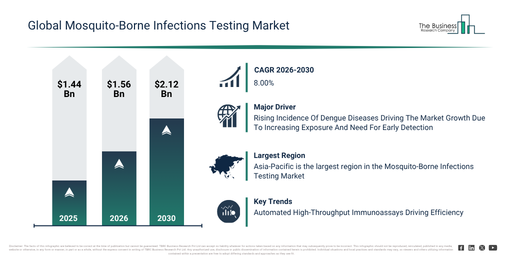
    The mosquito-borne infections testing market has experienced robust expansion in recent years. Its valuation is projected to rise from $1.44 billion in 2025 to $1.56 billion in 2026, demonstrating a compound annual growth rate (CAGR) of 7.8%. This historical growth can be linked to factors such as the increasing occurrence of dengue and malaria outbreaks, restricted availability of advanced diagnostic facilities in developing areas, heightened understanding of the burden of vector-borne diseases, increased laboratory testing capabilities within urban healthcare systems, and a rise in government financial support for initiatives aimed at controlling infectious diseases.

    The mosquito-borne infections testing market is projected to experience substantial expansion over the upcoming years, reaching a valuation of $2.12 billion by 2030, demonstrating a compound annual growth rate (CAGR) of 8.0%. This anticipated growth is primarily driven by factors such as the spread of mosquito habitats and disease zones due to climate change, the increasing integration of rapid molecular diagnostic technologies, advancements in real-time outbreak surveillance, a growing need for integrated public health data systems, and the development of personalized and precise infectious disease diagnostics. Key developments expected during this period include a surge in demand for swift diagnostic testing due to more frequent mosquito-borne outbreaks, the proliferation of decentralized and point-of-care testing in remote areas, greater use of multiplex assays for detecting multiple vector-borne pathogens concurrently, an increase in government-led surveillance and screening initiatives for early outbreak detection, and a rising preference for mobile and deployable diagnostic kits to accelerate epidemic responses.

    Get A Free Sample Report With In-Depth Market Insights:

    https://thebusinessresearchcompany.com/sample_request?id=26674881&type=smp&name=Mosquito-Borne%20Infections%20Testing%20Market%20Report%202026&utm_source=Blogs&utm_medium=Paid&utm_campaign=Oct_PR

    Mosquito-Borne Infections Testing Market Growth Backed By Core Demand Fundamentals

    The increasing occurrence of dengue illnesses is anticipated to boost the expansion of the Mosquito Borne Infections Testing market in the future. Dengue is a viral infection primarily transmitted by aedes mosquitoes carrying the dengue virus. The frequency of dengue cases is growing, attributed to elevated temperatures and heavier rainfall that foster suitable breeding environments for aedes mosquitoes, alongside rapid urban development leading to greater human contact with mosquito populations. Testing for mosquito-borne infections aids in the prompt identification and ongoing surveillance of dengue infections through detecting the virus in individuals, facilitating early medical care and public health initiatives to curb its dissemination. For example, data from July 2023, provided by the Switzerland-based intergovernmental organization, the World Health Organization, revealed that Brazil reported 2,376,522 dengue cases by epidemiological week 26; of these, 1,051,773 (44.2%) were confirmed by laboratory tests, and 1,249 (0.05%) were identified as severe dengue, indicating a 13% rise from the corresponding period in 2022. Consequently, the escalating prevalence of dengue diseases is fueling the expansion of the mosquito borne infections testing market.

    Mosquito-Borne Infections Testing Market Segment Outlook: Which Categories Are Growing Fastest?

    The mosquito-borne infections testing market covered in this report is segmented –

    1) By Test Type: Molecular Diagnostic Tests, Serological Tests, Rapid Antigen Tests, Polymerase Chain Reaction (PCR) Testing Services, Laboratory Reagent-Based Tests

    2) By Sample Type: Blood Samples, Serum Samples, Plasma Samples, Urine Samples, Saliva Samples

    3) By Infection Type: Dengue, Malaria, Zika Virus, Chikungunya, West Nile Virus, Other Infection Types

    4) By Technology: Enzyme-Linked Immunosorbent Assay, Lateral Flow Assay, Polymerase Chain Reaction, Next-Generation Sequencing, Other Technologies

    5) By End User: Hospitals And Clinics, Diagnostic Laboratories, Public Health Agencies, Research Institutes, Point-Of-Care Settings

    Subsegments:

    1) By Molecular Diagnostic Tests: Nucleic Acid Amplification Testing, Reverse Transcription Polymerase Chain Reaction Testing, Multiplex Molecular Testing, Isothermal Amplification Testing, Pathogen Specific Genetic Testing

    2) By Serological Tests: Immunoglobulin M Antibody Testing, Immunoglobulin G Antibody Testing, Antigen Detection Testing, Neutralization Assays, Enzyme Immunoassay Testing

    3) By Rapid Antigen Tests: Point Of Care Antigen Testing, Lateral Flow Antigen Testing, Immunochromatographic Antigen Testing, Portable Rapid Diagnostic Testing, Field Based Antigen Testing

    4) By Polymerase Chain Reaction Testing Services: Real Time Polymerase Chain Reaction Testing, Quantitative Polymerase Chain Reaction Testing, Multiplex Polymerase Chain Reaction Testing, Digital Polymerase Chain Reaction Testing, Reverse Transcription Polymerase Chain Reaction Testing

    5) By Laboratory Reagent Based Tests: Reagent Kit Based Diagnostic Testing, Chemical Reaction Based Testing, Enzyme Reagent Testing, Staining Reagent Testing, Buffer Solution Based Testing

    Mosquito-Borne Infections Testing Market Growth Trends Reshaping The Competitive Landscape

    Leading firms within the mosquito-borne infections testing market are prioritizing the creation of novel approaches, such as automated high-throughput immunoassays, aiming to provide swifter, more precise, and scalable identification of mosquito-borne pathogens. These advanced laboratory tests function by automatically identifying specific antigens or antibodies across a multitude of samples, thus facilitating a rapid, accurate, and scalable diagnosis of mosquito-borne infections, presenting a significant advantage over conventional manual methods. Illustratively, in October 2025, the Swiss biotechnology and diagnostics firm, F. Hoffmann-La Roche Ltd., secured CE mark approval for its Elecsys Dengue Ag test, an inventive automated immunoassay specifically engineered to detect the NS1 antigen of the dengue virus within human serum and plasma. Operating on Roche’s fully automated cobas e analysers, this test delivers results in a mere 18 minutes and consistently identifies all four dengue virus serotypes. Its prominent attributes encompass high clinical sensitivity and specificity, a medium-to-high throughput ranging from 120 to 300 tests per hour, improved traceability, and streamlined workflow efficiency, proving especially valuable during dengue outbreaks for prompt patient management and surveillance. Ultimately, the Elecsys Dengue Ag test marks a substantial stride forward from traditional methodologies, offering consistent, swift, and comprehensive diagnostic capabilities throughout the complete patient care continuum.

    Mosquito-Borne Infections Testing Market Competitive Landscape: Which Companies Lead The Industry?

    Major companies operating in the mosquito-borne infections testing market are F. Hoffmann-La Roche Ltd, Trinity Biotech plc, Thermo Fisher Scientific Inc., Abbott Laboratories, Laboratory Corporation of America Holdings (LabCorp), Grifols S. A., Hologic Inc., bioMérieux SA, Bio-Rad Laboratories Inc., QIAGEN N. V., DiaSorin S. p. A., Euroimmun Medizinische Diagnostika AG, SD Biosensor Inc., Promega Corporation, Mayo Clinic Laboratories, Meridian Bioscience Inc., R-Biopharm AG, Boditech Med Inc., NanoEntek Inc., Entomogen Inc., J. Mitra and Co. Pvt. Ltd., Today’s Clinical Lab Pvt. Ltd., Co-Dx Inc.

    View The Full Mosquito-Borne Infections Testing Market Report:

    https://thebusinessresearchcompany.com/report/mosquito-borne-infections-testing-market-report?utm_source=Blogs&utm_medium=Paid&utm_campaign=Oct_PR

    Mosquito-Borne Infections Testing Market Regional Outlook: Where Is Opportunity Concentrated?

    Asia-Pacific was the largest region in the mosquito-borne infections testing market in 2025. Latin America is expected to be the fastest-growing region in the forecast period. The regions covered in the mosquito-borne infections testing market report are Asia-Pacific, South East Asia, Western Europe, Eastern Europe, North America, South America, Middle East and Africa.

    Reach Out To Our Team:

    The Business Research Company: https://www.thebusinessresearchcompany.com/

    Americas: +1 310-496-7795

    Asia: +44 7882 955267 & +91 8897263534

    Europe: +44 7882 955267

    Email us at: marketing@tbrc.info

    Follow us on:

    LinkedIn: https://in.linkedin.com/company/the-business-research-company

    YouTube: https://www.youtube.com/channel/UC24_fI0rV8cR5DxlCpgmyFQ

    Global Market Model: https://www.thebusinessresearchcompany.com/global-market-model
  • Leptospirosis Market Outlook Through 2030: Understanding The Growth Opportunity

    Leptospirosis Market Outlook Through 2030: Understanding The Growth Opportunity

    Featuring market attractiveness scoring, total addressable market sizing, company benchmarking matrices, interactive Excel dashboards, deeper supply chain intelligence, emerging startup tracking, and granular product-level insights, The Business Research Company’s 2026 market reports are built to deliver research that is both more actionable and more strategically valuable.

    Leptospirosis Market Size Outlook: How Quickly Will Revenue Expand Through 2030?

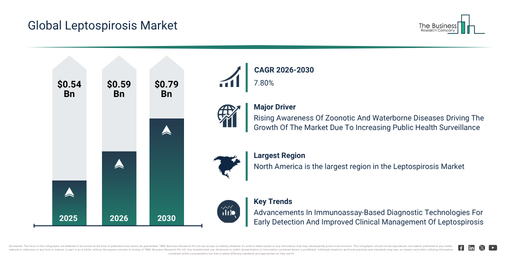
    The leptospirosis market size has experienced strong growth in recent years. It is anticipated to expand from $0.54 billion in 2025 to $0.59 billion in 2026, demonstrating a compound annual growth rate (CAGR) of 7.6%. This historical growth can be attributed to the increasing prevalence of zoonotic diseases in tropical regions, rising urbanization and poor sanitation conditions, growing exposure to contaminated water sources, the expansion of livestock and rodent populations in rural areas, and limited early diagnostic infrastructure in developing regions.

    The leptospirosis market is poised for robust expansion in the coming years. It is projected to reach $0.79 billion by 2030, exhibiting a compound annual growth rate (CAGR) of 7.8%. This anticipated growth during the forecast period is driven by increasing investment in infectious disease surveillance systems, wider adoption of rapid diagnostic technologies, escalating risks from climate change-induced flooding and water contamination, the broadening of public health awareness programs, and the rising implementation of AI-driven epidemic prediction systems. Significant trends expected during this period involve genome-based pathogen detection for leptospira diagnosis, cloud-based infectious disease surveillance platforms, AI-enabled outbreak prediction and epidemiological modeling, IoT-based environmental water contamination monitoring systems, and advanced point-of-care rapid diagnostic testing kits for tropical diseases.

    Get A Free Sample Report With In-Depth Market Insights:

    https://thebusinessresearchcompany.com/sample_request?id=28310780&type=smp&name=Leptospirosis%20Market%20Report%202026&utm_source=Blogs&utm_medium=Paid&utm_campaign=Oct_PR

    Leptospirosis Market Development Factors: What’s Supporting Demand?

    The escalating understanding of zoonotic diseases is anticipated to drive expansion in the leptospirosis market. These illnesses, which are transmissible from animals to humans, often through contact with contaminated water or environments, are caused by bacteria, viruses, or parasites. This increased awareness regarding zoonotic diseases is a result of expanding global public health surveillance and disease monitoring initiatives. Enhanced recognition of zoonotic diseases is consequently fueling demand for leptospirosis diagnostics and treatment solutions by improving risk identification and encouraging early medical intervention. For instance, in 2025, according to the National Centre for Disease Control, an India-based public health authority, zoonotic infections account for approximately 2.5 billion human disease cases and 2.7 million deaths globally each year. Therefore, the growing awareness of zoonotic and waterborne diseases is propelling the growth of the Leptospirosis market.

    Leptospirosis Market Segments: Where Is Growth Concentrated?

    The leptospirosis market covered in this report is segmented –

    1) By Treatment: Medication, Supportive Care, Other Treatments

    2) By Diagnosis: Complete Blood Count (CBC), Creatine Kinase, Liver Enzymes, Urinalysis, Blood Cultures

    3) By Symptoms: Headache, Muscle Ache, Jaundice, Vomiting, Diarrhea, Skin Rash, Other Symptoms

    4) By Route Of Administration: Oral, Parenteral, Other Route Of Administrations

    5) By End-Users: Hospitals, Specialty Clinics, Homecare, Other End-Users

    Subsegments:

    1) By Medication: Penicillin Therapy, Doxycycline Therapy, Azithromycin Therapy, Ceftriaxone Therapy, Amoxicillin Therapy

    2) By Supportive Care: Fluid And Electrolyte Management, Renal Support (Dialysis), Respiratory Support, Hemodynamic Support (Vasopressors), Management Of Complications

    3) By Other Treatments: Intravenous Fluid Therapy, Dialysis Therapy, Respiratory Support Therapy, Intensive Care Management, Electrolyte Replacement Therapy

    Leptospirosis Market Transformation Trends: What Innovations Are Driving Change?

    Major companies and research institutions operating in the leptospirosis market are increasingly concentrating on developing advanced diagnostic technologies to facilitate the early and accurate identification of the disease. Novel diagnostic solutions, such as immunoassay-based tests and biomarker detection platforms, are gaining prominence as they improve clinical outcomes by enabling prompt treatment. For instance, in September 2025, researchers at Yale School of Medicine, a US-based medical school of Yale University, created a new diagnostic test for leptospirosis based on monoclonal antibodies that detect virulence-modifying (VM) proteins produced by pathogenic Leptospira species. This test is designed to identify infection using blood and urine samples, presenting a more rapid and precise alternative to conventional diagnostic methods. This innovation supports early-stage diagnosis, enhances disease management, and has the potential to lessen severe complications.

    Leptospirosis Market Top Companies Driving Competitive Growth

    Major companies operating in the leptospirosis market are Zoetis Inc., Sun Pharmaceutical Industries Ltd., Cipla Inc., Lupin Limited, Virbac S. A., Merck & Co. Inc, Pfizer Inc., Bayer AG, Sanofi S. A., Thermo Fisher Scientific Inc., Abbott Laboratories, GlaxoSmithKline plc, Boehringer Ingelheim GmbH, BioMérieux SA, Hikma Pharmaceuticals PLC, Dr. Reddy’s Laboratories Ltd., Bio-Rad Laboratories Inc., Randox Laboratories Ltd., Indian Immunologicals Limited, InBios International Inc.

    View The Full Leptospirosis Market Report:

    https://thebusinessresearchcompany.com/report/leptospirosis-market-report?utm_source=Blogs&utm_medium=Paid&utm_campaign=Oct_PR

    Leptospirosis Market Global Footprint: Which Region Leads The Industry?

    North America was the largest region in the leptospirosis market in 2025. Asia-Pacific is expected to be the fastest-growing region in the forecast period. The regions covered in the leptospirosis market report are Asia-Pacific, South East Asia, Western Europe, Eastern Europe, North America, South America, Middle East and Africa.

    Reach Out To Our Team:

    The Business Research Company: https://www.thebusinessresearchcompany.com/

    Americas: +1 310-496-7795

    Asia: +44 7882 955267 & +91 8897263534

    Europe: +44 7882 955267

    Email us at: marketing@tbrc.info

    Follow us on:

    LinkedIn: https://in.linkedin.com/company/the-business-research-company

    YouTube: https://www.youtube.com/channel/UC24_fI0rV8cR5DxlCpgmyFQ

    Global Market Model: https://www.thebusinessresearchcompany.com/global-market-model
  • Ischemic Hepatitis Treatment Market Projected For Strong Expansion Through 2030: Key Trends And Future Outlook

    Ischemic Hepatitis Treatment Market Projected For Strong Expansion Through 2030: Key Trends And Future Outlook

    Built to provide research that’s more actionable and strategically valuable, The Business Research Company’s 2026 market reports include market attractiveness analysis, total addressable market sizing, company benchmarking matrices, interactive Excel dashboards, broader supply chain intelligence, emerging startup tracking, and in-depth product insights.

    Ischemic Hepatitis Treatment Market Size, Value And Growth Trajectory Through 2030

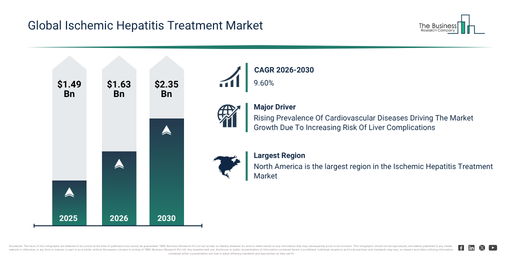
    The ischemic hepatitis treatment market has experienced robust expansion in recent years. It is forecast to grow from $1.49 billion in 2025 to $1.63 billion in 2026, demonstrating a compound annual growth rate (CAGR) of 9.3%. The market’s historical growth can be ascribed to several factors, including the increasing occurrence of cardiac failure and shock conditions, the limited availability of early diagnostic tools for liver ischemia, the elevated mortality rate in untreated ischemic hepatitis cases, deficiencies in ICU monitoring systems, and the rising prevalence of sepsis-related complications.

    The ischemic hepatitis treatment market size is projected to demonstrate substantial growth in the forthcoming years. It is expected to expand to $2. 35 billion by 2030, achieving a compound annual growth rate (CAGR) of 9. 6%. This projected growth during the forecast period can be attributed to advancements in AI-based critical care decision support systems, the increasing adoption of continuous hemodynamic monitoring technologies, progress in precision medicine for organ perfusion disorders, the global expansion of smart ICU infrastructure, and the development of advanced hepatoprotective drug therapies. Noteworthy trends for the forecast period include AI-assisted liver perfusion monitoring systems in critical care, real-time hemodynamic instability detection through predictive analytics, cloud-based intensive care liver function tracking platforms, smart ICU integration for optimizing organ perfusion, and remote patient monitoring systems for the management of shock and sepsis.

    Get A Free Sample Report With In-Depth Market Insights:

    https://thebusinessresearchcompany.com/sample_request?id=53444562&type=smp&name=Ischemic%20Hepatitis%20Treatment%20Market%20Report%202026&utm_source=Blogs&utm_medium=Paid&utm_campaign=Oct_PR

    Ischemic Hepatitis Treatment Market Demand Drivers Opening New Revenue Streams

    The increasing incidence of cardiovascular ailments is projected to boost the expansion of the ischemic hepatitis treatment market in the future. These conditions encompass various disorders impacting the heart and circulatory system, frequently resulting in inadequate blood flow and oxygen supply to crucial organs. Their occurrence is on the rise, primarily attributed to an aging global demographic, where older individuals face a greater susceptibility to cardiac and vascular issues. Ischemic hepatitis treatment offers support for cardiovascular diseases by stabilizing hepatic function and enhancing metabolic equilibrium in individuals with diminished cardiac output, thereby aiding in the reduction of complications stemming from inadequate blood circulation and improving the general clinical management of heart-related ailments. As an illustration, data from June 2025, provided by the UK Parliament’s House of Commons Library, a government body in the UK, revealed that from 2023 to 2024, England documented 218,606 hospital admissions for coronary heart disease and 111,137 admissions for stroke. Consequently, the growing prevalence of cardiovascular diseases is a significant factor driving the growth of the ischemic hepatitis treatment market. The escalating challenge posed by sepsis is anticipated to fuel the expansion of the ischemic hepatitis treatment market in the coming years. Sepsis is a critical, life-threatening condition that arises from the body’s severe reaction to an infection, often resulting in organ dysfunction and eventual failure. The increasing prevalence of severe infections, which can progress into widespread inflammatory responses impacting multiple organs, is contributing to the growing burden of sepsis. Ischemic hepatitis treatment aids in sepsis management through stabilizing liver function, enhancing oxygen delivery, and preventing additional liver damage, thereby helping to diminish systemic inflammation and promoting comprehensive organ recovery in individuals suffering from severe infection-induced circulatory impairment. For example, data from March 2026, released by the Centers for Disease Control and Prevention (CDC), a US national public health agency, indicates that annually in the United States, at least 1. 7 million adults and over 18,000 children contract sepsis, with more than 350,000 adults and 1,800 children succumbing during hospitalization or being discharged to hospice care. Thus, the rising burden of sepsis is a key driver for the growth of the ischemic hepatitis treatment market.

    Ischemic Hepatitis Treatment Market Segment Analysis Spotlighting Growth Areas

    The ischemic hepatitis treatment market covered in this report is segmented –

    1) By Treatment Type: Pharmacological Therapy, Hemodynamic Support Therapy, Oxygen Therapy, Underlying Cause Management, Supportive Liver Care

    2) By Drug Type: Vasopressors, Anticoagulant Medications, Intravenous Fluids, Antibiotics, Electrolyte Replacement Agents

    3) By Distribution Channel: Hospital Pharmacies, Retail Pharmacies, Online Portals, Direct Manufacturer Sales

    4) By Application: Perfusion Restoration And Hemodynamic Stabilization, Infection Control And Antibiotic Prophylaxis, Metabolic And Liver Function Monitoring, Mechanical Ventilation Support

    5) By End User: Tertiary Hospitals And Liver Transplant Centers, Academic Medical Centers, General Hospitals And Community Icus

    Subsegments:

    1) By Pharmacological Therapy: Vasodilator Agents, Anti Inflammatory Agents, Antioxidant Agents, Hepatoprotective Agents, Immunomodulatory Agents

    2) By Hemodynamic Support Therapy: Fluid Resuscitation Therapy, Vasoactive Drug Therapy, Cardiac Output Support Therapy, Blood Pressure Stabilization Therapy, Circulatory Volume Expansion Therapy

    3) By Oxygen Therapy: Supplemental Oxygen Delivery, High Flow Oxygen Therapy, Non Invasive Ventilation Support, Invasive Mechanical Ventilation, Hyperbaric Oxygen Therapy

    4) By Underlying Cause Management: Sepsis Management Therapy, Cardiac Failure Management, Hypovolemia Correction Therapy, Shock Management Therapy, Infection Source Control Therapy

    5) By Supportive Liver Care: Nutritional Support Therapy, Detoxification Support Therapy, Electrolyte Balance Management, Albumin Replacement Therapy, Liver Function Monitoring Support

    Ischemic Hepatitis Treatment Market Competitive Analysis Of Leading Industry Participants

    Major companies operating in the ischemic hepatitis treatment market are Pfizer Inc., Novartis AG, Bristol-Myers Squibb Company, Linde plc, Medtronic plc, Koninklijke Philips N. V., GE HealthCare Technologies Inc., Boehringer Ingelheim International GmbH, Otsuka Holdings Co. Ltd., Baxter International Inc., B. Braun SE, Fresenius Kabi AG, Grifols S. A., Terumo Corporation, Edwards Lifesciences Corporation, ResMed Inc., Drägerwerk AG & Co. KGaA, Getinge AB, ICU Medical Inc., Nihon Kohden Corporation, CAIRE Inc.

    View The Full Ischemic Hepatitis Treatment Market Report:

    https://thebusinessresearchcompany.com/report/ischemic-hepatitis-treatment-market-report?utm_source=Blogs&utm_medium=Paid&utm_campaign=Oct_PR

    Ischemic Hepatitis Treatment Market Geographic Distribution And Regional Opportunities

    North America was the largest region in the ischemic hepatitis treatment market in 2025. Asia-Pacific is expected to be the fastest-growing region in the forecast period. The regions covered in the ischemic hepatitis treatment market report are Asia-Pacific, South East Asia, Western Europe, Eastern Europe, North America, South America, Middle East and Africa.

    Reach Out To Our Team:

    The Business Research Company: https://www.thebusinessresearchcompany.com/

    Americas: +1 310-496-7795

    Asia: +44 7882 955267 & +91 8897263534

    Europe: +44 7882 955267

    Email us at: marketing@tbrc.info

    Follow us on:

    LinkedIn: https://in.linkedin.com/company/the-business-research-company

    YouTube: https://www.youtube.com/channel/UC24_fI0rV8cR5DxlCpgmyFQ

    Global Market Model: https://www.thebusinessresearchcompany.com/global-market-model
  • Inbound Medical Tourism Market Forecast To 2030: Starting From $165.73 Billion In 2026

    Inbound Medical Tourism Market Forecast To 2030: Starting From $165.73 Billion In 2026

    Featuring market attractiveness scoring, total addressable market sizing, company benchmarking matrices, interactive Excel dashboards, deeper supply chain intelligence, emerging startup tracking, and granular product-level insights, The Business Research Company’s 2026 market reports are built to deliver research that is both more actionable and more strategically valuable.

    Inbound Medical Tourism Market Size, Value And Growth Trajectory Through 2030

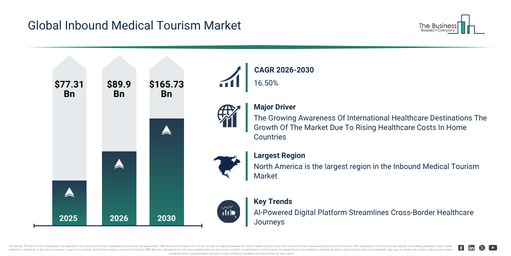
    The inbound medical tourism market has seen swift expansion in recent years. Its value is forecast to climb from $77. 31 billion in 2025 to $89. 9 billion in 2026, achieving a compound annual growth rate (CAGR) of 16. 3%. This historical growth can be linked to increasing healthcare expenses domestically, restricted availability of advanced medical procedures in patients’ native countries, extended waits for specialized treatments, improved global air travel connections, and the worldwide integration of healthcare services.

    The inbound medical tourism market is anticipated to undergo rapid expansion in the coming years, with its size projected to reach $165.73 billion by 2030, exhibiting a compound annual growth rate (CAGR) of 16.5%. This forecasted growth can be attributed to several factors, including an increasing demand for elective surgeries abroad, the development of structured medical tourism corridors, wider cross-border health insurance coverage, government support for medical visa relaxation policies, and a rising preference for value-based international healthcare packages. Prominent trends expected during this period involve simplified medical visa procedures and cross-border healthcare policies, an increase in international hospital accreditation and quality benchmarking systems, the growth of medical tourism facilitators and concierge healthcare services, bundled treatment pricing and cost transparency models for foreign patients, and stronger global healthcare insurance reimbursement partnerships.

    Get A Free Sample Report With In-Depth Market Insights:

    https://thebusinessresearchcompany.com/sample_request?id=83580719&type=smp&name=Inbound%20Medical%20Tourism%20Market%20Report%202026&utm_source=Blogs&utm_medium=Paid&utm_campaign=Oct_PR

    Inbound Medical Tourism Market Expansion Drivers: What’s Shaping Future Growth?

    The increasing recognition of international healthcare destinations is anticipated to drive the future growth of the inbound medical tourism market. These global medical hubs are countries or cities that attract patients from other nations by offering medical treatment, advanced healthcare services, and specialized procedures at competitive costs, often alongside high-quality care and accessible travel infrastructure. This heightened awareness of international healthcare destinations is primarily fueled by escalating healthcare expenses in patients’ home countries, which encourages them to seek more affordable treatment options abroad without compromising quality. The understanding of international healthcare destinations benefits inbound medical tourism by boosting patient confidence, fostering cross-border treatment choices, and directing the influx of international patients to preferred healthcare centers. For instance, in January 2025, a report from the National Center for Biotechnology Information (NCBI), a division of the US-based National Library of Medicine (NLM), indicated that the number of UK residents traveling abroad for medical treatment grew from approximately 348,000 in 2022 to around 431,000 in 2023, as more individuals pursued quicker or more economical healthcare alternatives overseas. Therefore, the expanding awareness of international healthcare destinations is propelling the growth of the inbound medical tourism market.

    Inbound Medical Tourism Market Segment Analysis And Revenue Potential

    The inbound medical tourism market covered in this report is segmented –

    1) By Component: Solutions, Services

    2) By Treatment Type: Cosmetic Surgery, Orthopedic Treatment, Cardiac Care, Fertility Treatment, Dental Treatment, Cancer Treatment, Wellness Procedures

    3) By Age Group: Below 18 Years, 18–40 Years, 41–60 Years, Above 60 Years

    4) By Booking Channel: Online Booking, Offline Booking

    5) By Application: Hospitals, Clinics, Ambulatory Care Centers, Pharmacies

    Subsegments:

    1) By Solutions: Patient Management Solutions, Medical Booking Platforms, Teleconsultation Solutions, Treatment Coordination Systems, Health Information Management Solutions, Travel And Accommodation Management Solutions, Billing And Payment Solutions

    2) By Services: Medical Consultation Services, Treatment Facilitation Services, Travel Assistance Services, Accommodation Arrangement Services, Interpreter And Language Services, Post Treatment Care Services, Patient Support Services

    Inbound Medical Tourism Market Strategic Trends: What Defines The Next Growth Phase?

    Leading companies in the inbound medical tourism market are concentrating on developing innovative platforms, such as digital patient facilitation platforms, to streamline cross-border healthcare journeys, enhance international patient matching, and improve end-to-end coordination between hospitals and medical travelers. These technology-driven systems manage and coordinate international patients’ medical travel by handling hospital selection, appointment scheduling, treatment planning, travel arrangements, and complete communication between patients and healthcare providers. For instance, in August 2024, HealthStay.io, a UAE-based healthcare technology company, partnered with Dubai Health Experience (DXH), an initiative under the Dubai Health Authority, to launch its AI-powered medical tourism platform. This platform is designed to automate the entire medical tourism process by using AI algorithms to connect international patients with accredited hospitals based on their medical requirements, budget, and preferences. It also offers integrated functionalities such as real-time appointment booking, digital management of medical records, coordination of travel and accommodation, and post-treatment follow-ups, delivering a seamless patient experience compared to traditional broker-based models.

    Inbound Medical Tourism Market Competitive Overview And Top Companies

    Major companies operating in the inbound medical tourism market are Manipal Hospitals, Mediclinic International, IHH Healthcare Berhad, Acibadem Healthcare Group, Bangkok Dusit Medical Services (BDMS), Apollo Hospitals Enterprise Limited, Fortis Healthcare Limited, KPJ Healthcare Berhad, Bumrungrad International Hospital, Max Healthcare Institute Limited, Narayana Health, Saudi German Health, Raffles Medical Group, Medanta – The Medicity, Samitivej Hospital, Memorial Healthcare Group, Mount Elizabeth Hospitals, Anadolu Medical Center, Clemenceau Medical Center, Vaidam Health

    View The Full Inbound Medical Tourism Market Report:

    https://thebusinessresearchcompany.com/report/inbound-medical-tourism-market-report?utm_source=Blogs&utm_medium=Paid&utm_campaign=Oct_PR

    Inbound Medical Tourism Market Top Region: Where Does Most Revenue Come From?

    North America was the largest region in the inbound medical tourism market in 2025. Asia-Pacific is expected to be the fastest-growing region in the forecast period. The regions covered in the inbound medical tourism market report are Asia-Pacific, South East Asia, Western Europe, Eastern Europe, North America, South America, Middle East and Africa.

    Reach Out To Our Team:

    The Business Research Company: https://www.thebusinessresearchcompany.com/

    Americas: +1 310-496-7795

    Asia: +44 7882 955267 & +91 8897263534

    Europe: +44 7882 955267

    Email us at: marketing@tbrc.info

    Follow us on:

    LinkedIn: https://in.linkedin.com/company/the-business-research-company

    YouTube: https://www.youtube.com/channel/UC24_fI0rV8cR5DxlCpgmyFQ

    Global Market Model: https://www.thebusinessresearchcompany.com/global-market-model
  • Implant-Grade Polyether Ether Ketone (PEEK) Polymer Machining Services Market Reaches $0.73 Billion In 2026: Key Developments Shaping Expansion

    Implant-Grade Polyether Ether Ketone (PEEK) Polymer Machining Services Market Reaches $0.73 Billion In 2026: Key Developments Shaping Expansion

    Backed by market attractiveness analysis, total addressable market sizing, company benchmarking matrices, interactive Excel dashboards, wider supply chain intelligence, emerging startup coverage, and detailed product-level insights, The Business Research Company’s 2026 market reports are designed to offer research that is more actionable and strategically valuable than ever.

    Implant-Grade Polyether Ether Ketone (PEEK) Polymer Machining Services Market Set To Climb From $0.45 Billion In 2026 To $0.73 Billion By 2030

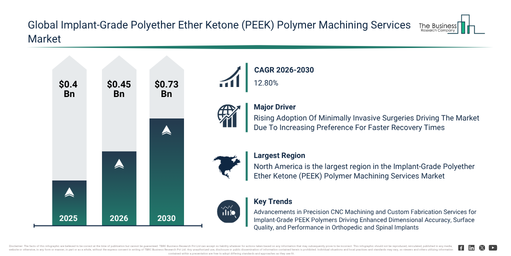
    The implant-grade polyether ether ketone (PEEK) polymer machining services market size has seen substantial growth in recent years. This market is projected to expand from $0.4 billion in 2025 to $0.45 billion in 2026, demonstrating a compound annual growth rate (CAGR) of 12.6%. The historical expansion can be attributed to factors such as the escalating demand for orthopedic and dental implant surgeries, the wider adoption of biocompatible high-performance polymers in healthcare, the development of medical device manufacturing capabilities, the increasing occurrence of musculoskeletal and spinal disorders, and the growing trend of medical device companies outsourcing precision machining services.

    The implant-grade polyether ether ketone (PEEK) polymer machining services market is anticipated to experience substantial expansion over the next few years. Its valuation is projected to reach $0.73 billion by 2030, exhibiting a compound annual growth rate (CAGR) of 12.8%. This expansion throughout the forecast period can be attributed to an increasing need for individualized and patient-specific implant solutions, the growing preference for minimally invasive surgical procedures, the deeper integration of automation within precision machining services, the development of healthcare infrastructure in emerging economies, and a greater focus on lightweight and robust implant materials for long-term effectiveness. Prominent trends for the forecast period include the escalating adoption of precision CNC machining for implant-grade PEEK components, a heightened demand for patient-specific customized orthopedic implant manufacturing, the increasing utilization of high-performance biomaterials machining for spinal and dental implants, the expansion of micro-machining and multi-axis machining techniques for medical-grade components, and the enhanced incorporation of advanced surface finishing methods for biocompatible implant production.

    Get A Free Sample Report With In-Depth Market Insights:

    https://thebusinessresearchcompany.com/sample_request?id=93299501&type=smp&name=Implant-Grade%20Polyether%20Ether%20Ketone%20%28PEEK%29%20Polymer%20Machining%20Services%20Market%20Report%202026&utm_source=Blogs&utm_medium=Paid&utm_campaign=Oct_PR

    Implant-Grade Polyether Ether Ketone (PEEK) Polymer Machining Services Market Industry Drivers: What’s Behind The Revenue Growth?

    The expanding adoption of minimally invasive surgeries is anticipated to drive the implant-grade PEEK polymer machining services market forward. These medical procedures involve small incisions, specialized instruments, and advanced imaging, resulting in reduced tissue damage and faster patient recovery times. The growing preference for minimally invasive procedures is due to benefits like quicker recuperation, fewer complications, and ongoing advancements in surgical technologies. Implant-grade PEEK (polyether ether ketone) is extensively utilized in applications such as spinal implants, orthopedic devices, and cranial components because of its biocompatibility, radiolucency, and mechanical strength. Precision machining services are crucial for producing these high-performance components with the exact accuracy needed for minimally invasive surgical techniques. As an illustration, in November 2024, the Private Healthcare Information Network (PHIN), a UK-based independent, government-mandated organization, reported that robot-assisted procedures in the UK climbed to 22,700 in 2024, marking a 45% increase compared to 2023. This exemplifies the broader growth in advanced minimally invasive surgical approaches. Therefore, the increasing volume of minimally invasive surgeries is a primary catalyst for the growth of the implant-grade PEEK polymer machining services market.

    Implant-Grade Polyether Ether Ketone (PEEK) Polymer Machining Services Market Segment Outlook: Which Categories Are Growing Fastest?

    The implant-grade polyether ether ketone (peek) polymer machining services market covered in this report is segmented –

    1) By Service Type: Computer Numerical Control Machining, Turning, Milling, Drilling, Other Types

    2) By Material Grade: Medical-Grade Polyether Ether Ketone, Reinforced Polyether Ether Ketone, Bio-Compatible Polyether Ether Ketone

    3) By Precision Level: Standard Precision, High Precision, Ultra Precision, Micro Machining

    4) By End-Use Application: Orthopedic Implants, Dental Implants, Spinal Implants, Cardiovascular Implants, Other Applications

    Subsegments:

    1) By Computer Numerical Control Machining: Multi Axis Machining, Precision Machining, Micro Machining, High Speed Machining

    2) By Turning: Precision Turning, Computer Numerical Control Turning, Swiss Type Turning, Hard Turning

    3) By Milling: Face Milling, End Milling, Slot Milling, Multi Axis Milling

    4) By Drilling: Deep Hole Drilling, Micro Drilling, High Precision Drilling, Computer Numerical Control Drilling

    5) By Other Types: Precision Machining, Surface Finishing, Custom Fabrication, Micro Machining, Prototyping Services, Assembly And Integration Services, Polishing Services, Drilling Services, Milling Services, Turning Services, Quality Inspection Services

    #Implant-Grade Polyether Ether Ketone (PEEK) Polymer Machining Services Market Growth Trends: What’s Shaping The Future Outlook?

    Leading companies within the implant-grade PEEK polymer machining services market are increasingly adopting advanced precision machining technologies, such as multi-axis CNC machining and micro-machining, to achieve the high accuracy, tight tolerances, and superior surface finishes essential for complex medical implants. These techniques allow for the creation of customized PEEK components featuring enhanced dimensional stability, improved biocompatibility, and optimized performance across orthopedic and spinal applications. For instance, in April 2024, Invibio Ltd, a UK-based biomaterial solutions company focused on high-performance implantable polymers for medical devices, expanded its medical manufacturing capabilities to provide end-to-end PEEK implant solutions, encompassing precision machining and finished component supply. The company leverages advanced CNC machining and quality control systems to manufacture implant-grade PEEK components with consistent mechanical properties and high surface integrity. These services aid medical device manufacturers in developing customized orthopedic and spinal implants, ensuring compliance with stringent regulatory standards and ultimately improving overall implant performance and longevity.

    Implant-Grade Polyether Ether Ketone (PEEK) Polymer Machining Services Market Competitive Landscape: Who Leads The Industry?

    Major companies operating in the implant-grade polyether ether ketone (peek) polymer machining services market are Saint-Gobain, Ensinger GmbH, EPTAM Precision, Peko Precision Products, ARCH Medical Solutions, The Gund Company, Cirtronics Corp., Tamshell Corporation, SRC Medical, BMP Medical, Hirsh Precision Products, WayKen Rapid Manufacturing, Senga Engineering, Genesis Medical Plastics, Upland Fab, Criterion Precision Machining, Reading Plastic Machining & Fabrication, Xilloc Medical, Pierhor-Gasser, Falcon CNC Machining, XTJ CNC

    View The Full Implant-Grade Polyether Ether Ketone (PEEK) Polymer Machining Services Market Report:

    https://thebusinessresearchcompany.com/report/implant-grade-polyether-ether-ketone-peek-polymer-machining-services-market-report?utm_source=Blogs&utm_medium=Paid&utm_campaign=Oct_PR

    Implant-Grade Polyether Ether Ketone (PEEK) Polymer Machining Services Market Geographic Landscape: Which Region Dominates Industry Growth?

    North America was the largest region in the implant-grade PEEK polymer machining services market in 2025. Asia-Pacific is expected to be the fastest-growing region in the forecast period. The regions covered in the implant-grade polyether ether ketone (PEEK) polymer machining services market report are Asia-Pacific, South East Asia, Western Europe, Eastern Europe, North America, South America, Middle East and Africa.

    Reach Out To Our Team:

    The Business Research Company: https://www.thebusinessresearchcompany.com/

    Americas: +1 310-496-7795

    Asia: +44 7882 955267 & +91 8897263534

    Europe: +44 7882 955267

    Email us at: marketing@tbrc.info

    Follow us on:

    LinkedIn: https://in.linkedin.com/company/the-business-research-company

    YouTube: https://www.youtube.com/channel/UC24_fI0rV8cR5DxlCpgmyFQ

    Global Market Model: https://www.thebusinessresearchcompany.com/global-market-model
  • Fat-Based Injectable Fillers Market Reaches $1.18 Billion In 2026: Forecast And Growth Opportunities

    Fat-Based Injectable Fillers Market Reaches $1.18 Billion In 2026: Forecast And Growth Opportunities

    Featuring market attractiveness scoring, total addressable market sizing, company benchmarking matrices, interactive Excel dashboards, deeper supply chain intelligence, emerging startup tracking, and granular product-level insights, The Business Research Company’s 2026 market reports are built to deliver research that is both more actionable and more strategically valuable.

    Fat-Based Injectable Fillers Market Growth Potential: How Will Market Size Shift Through 2030?

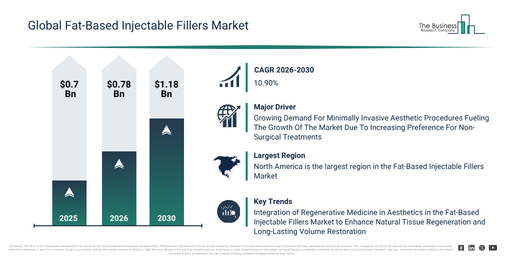
    The fat-based injectable fillers market has seen substantial growth recently. It is anticipated to expand from $0.7 billion in 2025 to $0.78 billion in 2026, achieving a compound annual growth rate (CAGR) of 10.7%. The historical growth of this market is attributable to a surge in demand for aesthetic enhancement and facial rejuvenation procedures, the increasing adoption of liposuction-based fat transfer techniques, a rise in cosmetic surgery clinics and dermatology centers, broader awareness of minimally invasive cosmetic treatments, and higher disposable incomes supporting elective aesthetic procedures.

    The fat-based injectable fillers market is projected to experience substantial expansion over the upcoming years, reaching a valuation of $1.18 billion by 2030, exhibiting a compound annual growth rate (CAGR) of 10.9%. This anticipated growth during the forecast period is driven by advancements in regenerative medicine and stem cell-enriched fat grafting, a growing desire for enduring and natural aesthetic solutions, the rise of customized cosmetic treatment planning, increasing utilization of enhanced fat processing technologies, and the expansion of medical tourism for cosmetic procedures. Key developments anticipated in this period include a rising demand for minimally invasive fat grafting techniques, a growing inclination towards natural and autologous aesthetic treatments, the proliferation of combination therapies involving fat and regenerative methods, an increase in outpatient cosmetic surgery facilities, and wider adoption of sophisticated fat processing and purification systems.

    Get A Free Sample Report With In-Depth Market Insights:

    https://thebusinessresearchcompany.com/sample_request?id=96863440&type=smp&name=Fat-Based%20Injectable%20Fillers%20Market%20Report%202026&utm_source=Blogs&utm_medium=Paid&utm_campaign=Oct_PR

    Fat-Based Injectable Fillers Market Growth Backed By Core Demand Fundamentals

    The expanding requirement for minimally invasive aesthetic procedures is anticipated to boost the fat-based injectable fillers market in the coming period. These procedures are cosmetic treatments that enhance physical appearance with little to no surgery, offer reduced recovery time, and present a lower risk compared to conventional surgical techniques. The escalating need for minimally invasive aesthetic procedures stems from a rising inclination towards swift treatments with minimal downtime. Fat-based injectable fillers align with this demand for minimally invasive aesthetic procedures by delivering natural-looking outcomes with decreased risk and minimal downtime compared to surgical alternatives. For instance, in June 2024, the American Society of Plastic Surgeons, a US-based organization of board-certified plastic surgeons, reported that approximately 25. 4 million minimally invasive cosmetic procedures were conducted in the U. S. in 2023, representing a 7% increase over 2022, thereby indicating significant and growing acceptance. Consequently, the increasing demand for minimally invasive aesthetic procedures is propelling the expansion of the fat-based injectable fillers market. The increasing proliferation of cosmetic and medical aesthetic clinics is projected to stimulate the growth of the fat-based injectable fillers market in the future. These clinics are specialized healthcare establishments that deliver non-surgical and minimally invasive cosmetic treatments focused on improving physical appearance and skin well-being. The rise in cosmetic and medical aesthetic clinics is attributed to escalating consumer interest in aesthetic procedures, greater awareness of cosmetic improvements, and technological innovations in aesthetic treatments. Fat-based injectable fillers contribute to the expansion of cosmetic and medical aesthetic clinics by supplying natural-looking, minimally invasive solutions for facial rejuvenation, which draws a wider range of patients seeking secure and efficient aesthetic treatments. For instance, in February 2024, the International Society of Aesthetic Plastic Surgery (ISAPS), a US-based professional organization for board-certified aesthetic plastic surgeons, reported that the worldwide volume of aesthetic procedures rose by 11. 2% in 2023 compared to the preceding year. Thus, the growth in cosmetic and medical aesthetic clinics is a key driver for the fat-based injectable fillers market.

    Fat-Based Injectable Fillers Market Segment Analysis: What Are The Core Market Categories?

    The fat-based injectable fillers market covered in this report is segmented –

    1) By Type: Autologous Fat Injections, Allogeneic Fat Injections, Other Types

    2) By Material: Micronized Fat, Nanofat, Macrofat

    3) By Gender: Female, Male

    4) By Application: Facial Line Correction, Lip Enhancement, Breast Augmentation, Buttock Augmentation, Other Applications

    5) By End User: Hospitals, Cosmetic Clinics, Ambulatory Surgical Centers, Other End-Users

    Subsegments:

    1) By Autologous Fat Injections: Micro Fat Grafting, Nano Fat Grafting, Structural Fat Grafting, Stem Cell Enriched Fat Grafting

    2) By Allogeneic Fat Injections: Processed Donor Fat, Cryopreserved Fat, Decellularized Fat Matrix, Sterilized Fat Derivatives

    Fat-Based Injectable Fillers Market Growth Trends Reshaping The Competitive Landscape

    Leading companies in the fat-based injectable fillers market are concentrating on developing innovative products, such as structural adipose allograft fillers, to meet the growing demand for natural-looking, long-lasting, and minimally invasive aesthetic treatments. Structural adipose allograft fillers are injectable items derived from processed human adipose (fat) tissue that retain extracellular matrix components, growth factors, and proteins, facilitating volumization and tissue regeneration. For instance, in September 2025, Tiger Aesthetics, a US-based medical aesthetics company, introduced alloClae, a novel structural adipose injectable specifically designed for body contouring applications. This product is made of purified, donor-derived adipose tissue processed to preserve regenerative elements such as collagen and growth factors, enabling its integration with host tissue and promoting natural fat regeneration. It is a ready-to-use, shelf-stable injectable that removes the requirement for liposuction needed in traditional autologous fat grafting, thereby decreasing procedure time and invasiveness.

    Fat-Based Injectable Fillers Market Competitive Overview And Top Companies

    Major companies operating in the fat-based injectable fillers market are Merz Aesthetics, MTF Biologics, Huons Co. Ltd., Dongkook Pharmaceutical, Anika Therapeutics Inc, Daehan New Pharm, Estetique International, MicroAire Surgical Instruments, RegenLab SA, Koru Pharma, SoftFil, Teoxane Laboratories, Cytori Therapeutics, Gana R&D, Nouvag AG, Lipogems International S. p. A., Iskra Medical, Black & Black Surgical Inc., HK Surgical, Marina Medical Instruments

    View The Full Fat-Based Injectable Fillers Market Report:

    https://thebusinessresearchcompany.com/report/fat-based-injectable-fillers-market-report?utm_source=Blogs&utm_medium=Paid&utm_campaign=Oct_PR

    Fat-Based Injectable Fillers Market Top Region: Where Does Most Revenue Come From?

    North America was the largest region in the fat-based injectable fillers market in 2025. Asia-Pacific is expected to be the fastest-growing region in the forecast period. The regions covered in the fat-based injectable fillers market report are Asia-Pacific, South East Asia, Western Europe, Eastern Europe, North America, South America, Middle East and Africa.

    Reach Out To Our Team:

    The Business Research Company: https://www.thebusinessresearchcompany.com/

    Americas: +1 310-496-7795

    Asia: +44 7882 955267 & +91 8897263534

    Europe: +44 7882 955267

    Email us at: marketing@tbrc.info

    Follow us on:

    LinkedIn: https://in.linkedin.com/company/the-business-research-company

    YouTube: https://www.youtube.com/channel/UC24_fI0rV8cR5DxlCpgmyFQ

    Global Market Model: https://www.thebusinessresearchcompany.com/global-market-model
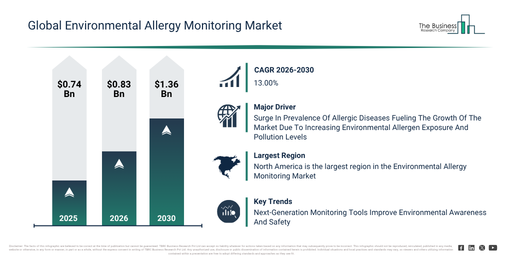
  • Environmental Allergy Monitoring Market Forecast To 2030: Starting From $1.36 Billion In 2026

    Environmental Allergy Monitoring Market Forecast To 2030: Starting From $1.36 Billion In 2026

    Featuring market attractiveness scoring, total addressable market sizing, company benchmarking matrices, interactive Excel dashboards, deeper supply chain intelligence, emerging startup tracking, and granular product-level insights, The Business Research Company’s 2026 market reports are built to deliver research that is both more actionable and more strategically valuable.

    Environmental Allergy Monitoring Market Size Outlook: How Quickly Will Revenue Expand Through 2030?

    The environmental allergy monitoring market has experienced significant expansion in recent years. This market is projected to grow from $0.74 billion in 2025 to $0.83 billion in 2026, showing a compound annual growth rate (CAGR) of 12.7%. The market’s historical growth was driven by factors such as basic manual pollen count reporting systems, limited awareness of environmental allergy triggers, the growth of basic air quality monitoring stations, the expansion of respiratory health surveillance programs, and the early adoption of digital weather forecasting tools.

    The environmental allergy monitoring market size is poised for significant expansion over the coming years. Its value is projected to grow to $1.36 billion by 2030, demonstrating a compound annual growth rate (CAGR) of 13.0%. This anticipated growth during the forecast period can be attributed to several factors, including the integration of AI-based allergen prediction models, the rising global incidence of respiratory allergies, the expansion of smart city environmental monitoring networks, an increasing demand for personalized health risk alerts, and the proliferation of IoT-enabled wearable health monitoring devices. Key trends expected in this period encompass hyperlocal allergen forecasting systems, wearable environmental exposure tracking devices, smart home integrated allergy alert systems, predictive air quality health risk modeling, and real-time urban pollution and allergen mapping platforms.

    Get A Free Sample Report With In-Depth Market Insights:

    https://thebusinessresearchcompany.com/sample_request?id=93435585&type=smp&name=Environmental%20Allergy%20Monitoring%20Market%20Report%202026&utm_source=Blogs&utm_medium=Paid&utm_campaign=Oct_PR

    Environmental Allergy Monitoring Market Industry Drivers: What’s Behind The Revenue Growth?

    The increasing incidence of allergic conditions is projected to propel the expansion of the environmental allergy monitoring market moving forward. Allergic diseases are characterized as immune system disorders where the body reacts excessively to typically harmless environmental substances, such as pollen, dust, or specific foods. The occurrence of allergic diseases is escalating due to heightened exposure to environmental pollutants and allergens, which subsequently amplify immune sensitivity among populations. Environmental allergy monitoring supports the management of allergic diseases by enabling the real-time detection and tracking of environmental allergens like pollen, dust, and pollutants, thereby assisting individuals and healthcare providers in managing exposure and mitigating allergy-related health risks. For instance, in January 2026, as per the Centers for Disease Control and Prevention, a US-based public health agency, in 2024, 31.7% of adults were diagnosed with a seasonal allergy, eczema, or food allergy. This contrasts with lower historical levels, with 25.2% reporting seasonal allergies, 7.7% reporting eczema, and 6.7% reporting food allergies. Therefore, the growing prevalence of allergic diseases is driving the growth of the environmental allergy monitoring market.

    Environmental Allergy Monitoring Market Segment Landscape And Growth Outlook

    The environmental allergy monitoring market covered in this report is segmented –

    1) By Type: Wearable Pollen Monitors, Internet Of Things Air Allergen Sensors, Real Time Air Quality Platforms

    2) By Allergen Type: Pollen Allergens, Dust Mites, Mold Spores, Pet Dander, Air Pollutants, Other Allergen Types

    3) By Distribution Channel: Direct Sales, Online Retail, Offline Retail, System Integrators And Solution Providers

    4) By Application: Outdoor Pollen Monitoring, Indoor Allergen Tracking, Workplace Allergy Risk, Smart Home Allergy Alerts

    5) By End User: Government Agencies, Healthcare Providers And Payers, Employers And Facility Managers, Consumers And Individuals, Universities And Research Institutes

    Subsegments:

    1) By Wearable Pollen Monitors: Personal Wearable Pollen Detection Devices, Clip On Pollen Monitoring Devices, Wrist Based Pollen Monitoring Devices, Portable Handheld Pollen Monitoring Devices, Smart Clothing Integrated Pollen Sensors

    2) By Internet Of Things Air Allergen Sensors: Indoor Air Allergen Monitoring Sensors, Outdoor Air Allergen Monitoring Sensors, Smart Home Integrated Allergen Sensors, Industrial Air Allergen Detection Sensors, Wireless Connected Allergen Sensor Networks

    3) By Real Time Air Quality Platforms: Cloud Based Air Quality Monitoring Platforms, Mobile Application Based Air Quality Platforms, Web Based Air Quality Analytics Platforms, Integrated Environmental Data Visualization Platforms, Predictive Air Quality Forecasting Platforms

    #Environmental Allergy Monitoring Market Growth Trends: What’s Shaping The Future Outlook?

    Key companies in the environmental allergy monitoring market are concentrating on creating sophisticated solutions, particularly AI-powered real-time air quality sensors. These innovations aim to improve the identification of airborne allergens, offer hyper-localized insights, enable individuals to make well-informed choices, and back citizen science endeavors. AI-powered real-time air quality sensors are instruments that employ artificial intelligence to automatically detect, categorize, and report airborne particles such as pollen, mold, and dust as they occur. For example, in November 2024, Pollen Sense LLC, a US-based air quality monitoring company, unveiled its APS400 sensor for consumer use. The APS400 leverages imaging and AI technologies to continuously sample and classify airborne particles, delivering real-time allergen data accessible via the ParticleSense app. This sensor is engineered for both indoor and outdoor settings, providing hyperlocal air quality insights, seamless app integration, and intuitive visualization, assisting allergy sufferers in managing their exposure and contributing to a broader automated monitoring network.

    Environmental Allergy Monitoring Market Leading Companies And Competitive Benchmarking

    Major companies operating in the environmental allergy monitoring market are Samsung Electronics Co. Ltd., Siemens AG, Thermo Fisher Scientific Inc., Honeywell International Inc., ABB Ltd., Merck KGaA, Danaher Corporation, Agilent Technologies Inc., AMETEK Inc., Sartorius AG, Waters Corporation, HORIBA Ltd., Sensirion AG, ACOEM Group, Bosch Sensortec GmbH, IQAir AG, Airthings ASA, Awair Inc., Kaiterra Inc., Clarity Movement Co. Inc.

    View The Full Environmental Allergy Monitoring Market Report:

    https://thebusinessresearchcompany.com/report/environmental-allergy-monitoring-market-report?utm_source=Blogs&utm_medium=Paid&utm_campaign=Oct_PR

    Environmental Allergy Monitoring Market Largest Region By Revenue And Market Share

    North America was the largest region in the environmental allergy monitoring market in 2025. Asia-Pacific is expected to be the fastest-growing region in the forecast period. The regions covered in the environmental allergy monitoring market report are Asia-Pacific, South East Asia, Western Europe, Eastern Europe, North America, South America, Middle East and Africa.

    Reach Out To Our Team:

    The Business Research Company: https://www.thebusinessresearchcompany.com/

    Americas: +1 310-496-7795

    Asia: +44 7882 955267 & +91 8897263534

    Europe: +44 7882 955267

    Email us at: marketing@tbrc.info

    Follow us on:

    LinkedIn: https://in.linkedin.com/company/the-business-research-company

    YouTube: https://www.youtube.com/channel/UC24_fI0rV8cR5DxlCpgmyFQ

    Global Market Model: https://www.thebusinessresearchcompany.com/global-market-model