Category: Healthcare Services

  • Emergency Medical Services Software Market Forecast To Reach $3.6 Billion By 2030: Key Trends Explained

    Backed by market attractiveness analysis, total addressable market sizing, company benchmarking matrices, interactive Excel dashboards, wider supply chain intelligence, emerging startup coverage, and detailed product-level insights, The Business Research Company’s 2026 market reports are designed to offer research that is more actionable and strategically valuable than ever.

    Emergency Medical Services Software Market Forecast: Value Set To Climb From $2.44 Billion To $3.6 Billion

    The emergency medical services software market has observed strong growth in recent years. It is anticipated to expand from $2.22 billion in 2025 to $2.44 billion in 2026, at a compound annual growth rate (CAGR) of 10.0%. The growth witnessed historically is due to factors such as the increasing demand for efficient pre-hospital care, the greater adoption of digital health solutions, the expansion of emergency medical services infrastructure, the rising need for patient data management, and the integration of communication tools in EMS operations.

    The emergency medical services software market size is anticipated to experience swift expansion over the coming years. This market is projected to reach $3.6 billion in 2030, demonstrating a compound annual growth rate (CAGR) of 10.2%. Factors contributing to this growth during the forecast period include advancements in AI-driven dispatch systems, the emergence of cloud-based emergency services solutions, increased adoption of interoperable health record sharing, the broader integration of telehealth within EMS, and a heightened emphasis on predictive analytics for resource allocation. Key trends anticipated in the same period encompass real-time emergency response coordination, enhanced patient data interoperability, optimization of fleet and resources, adherence to regulatory compliance and reporting standards, and the automation of clinical documentation processes.

    Get A Free Sample Report With In-Depth Market Insights:

    https://thebusinessresearchcompany.com/sample_request?id=32610&type=smp&name=Emergency%20Medical%20Services%20Software%20Market%20Report%202026&utm_source=Blogs&utm_medium=Paid&utm_campaign=Oct_PR

    Emergency Medical Services Software Market Growth Backed By Core Demand Fundamentals

    The increasing number of emergency call volumes and medical incidents is projected to stimulate the growth of the emergency medical services software market in the future. Emergency call volumes and medical incidents refer to the aggregate count of emergency service requests received by dispatch centers and the associated patient care events managed by EMS personnel. These emergency call volumes and medical incidents are rising due to factors such as increasing population density, an aging demographic, and a growing prevalence of chronic health conditions. Emergency medical services software aids in managing elevated call volumes by facilitating faster incident prioritization and more efficient dispatch, thereby enhancing response times when demand is high. For instance, in December 2025, the Midland Fire Department, a US-based provider of fire protection and emergency medical services, indicated that emergency medical services (EMS) calls increased from 14,895 during January to November 2024 to 15,592 over the same period in 2025, representing an approximate year-over-year increase of 4.08%. Therefore, the escalating emergency call volumes and medical incidents are driving the expansion of the emergency medical services software market.

    Emergency Medical Services Software Market Segmentation: How Does The Market Break Down By Category?

    The emergency medical services software market covered in this report is segmented –

    1) By Product Type: Computer-Aided Dispatch, Electronic Patient Care Reporting, Emergency Medical Services (EMS) Billing, Scheduling And Workforce Management, Fleet Management, Other Product Types

    2) By Deployment Mode: Cloud-Based, On-Premises

    3) By Functionality: Incident Reporting, Resource Allocation, Communication And Coordination, Reporting And Analytics, Compliance Management

    4) By Application: Hospitals And Clinics, Emergency Service Providers, Other Applications

    5) By End User: Public Ambulance Services, Private Ambulance Services, Healthcare Organizations, Fire Departments, Other Emergency Services

    Subsegments:

    1) By Computer-Aided Dispatch: Priority Based Dispatch, Real Time Unit Tracking, Call Taking And Triage, Location Based Dispatching, Inter Agency Dispatch Coordination

    2) By Electronic Patient Care Reporting: Clinical Documentation Management, Patient Data Capture, Treatment And Outcome Recording, Interoperable Health Record Sharing, Quality Assurance And Audit Support

    3) By Emergency Medical Services (EMS) Billing: Insurance Claim Processing, Automated Invoice Generation, Reimbursement Management, Revenue Cycle Optimization, Payment Tracking And Reporting

    4) By Scheduling And Workforce Management: Shift Scheduling, Staff Availability Management, Credential And Certification Tracking, Overtime And Leave Management, Workforce Performance Monitoring

    5) By Fleet Management: Vehicle Location Tracking, Maintenance And Service Scheduling, Fuel And Cost Monitoring, Asset And Equipment Tracking, Fleet Utilization Analysis

    6) By Other Product Types: Inventory And Supply Management, Compliance And Regulatory Reporting, Training And Simulation Management, Analytics And Performance Dashboards, Telehealth And Remote Support Integration

    Emergency Medical Services Software Market Growth Trends Reshaping The Competitive Landscape

    Leading companies in the emergency medical services software market are prioritizing the alignment of their platforms with evolving national incident data standards, such as NEMSIS and the National Emergency Response Information System (NERIS), to enhance data quality and usability. These NEMSIS-compliant and NERIS-aligned data architectures are standardized digital frameworks created to structure, validate, and facilitate the exchange of emergency medical and fire incident data, adhering to federal and state reporting requirements. For example, in April 2024, ImageTrend, a US-based public safety and healthcare software company, published a policy position statement explaining its method for NERIS data flow within its EMS and fire data platform. The company stressed its support for NERIS modernization while advocating for a state-centric data submission approach, where incident data proceeds from local agencies to state systems before transmission to NERIS. This endeavor showcases ImageTrend’s deployment of NERIS-aligned data frameworks and transitional resources within its software, designed to assist EMS and fire agencies in adapting to the National Emergency Response Information System while simultaneously upholding data governance, ensuring interoperability, and maintaining compliance with developing federal reporting mandates.

    Emergency Medical Services Software Market Top Companies Driving Competitive Growth

    Major companies operating in the emergency medical services software market are Motorola Solutions Incorporation, Hexagon AB, Tyler Technologies Inc., Eso Solutions Inc., ZOLL Medical Corporation, ImageTrend Inc., Forte Holdings Inc., Sansio, Emergency Reporting, Digitech Computer Inc., Ortivus AB, Traumasoft Inc., AngelTrack LLC, MP Cloud Technologies Inc., AIM System, EPIC EMS, Documed Systems International Inc., Healthware Corp., Macrologic Inc., Emergidata.

    View The Full Emergency Medical Services Software Market Report:

    https://thebusinessresearchcompany.com/report/emergency-medical-services-software-market-report?utm_source=Blogs&utm_medium=Paid&utm_campaign=Oct_PR

    Emergency Medical Services Software Market Global Footprint: Which Region Leads The Market?

    North America was the largest region in the emergency medical services software market in 2025. Asia-Pacific is expected to be the fastest-growing region in the forecast period. The regions covered in the emergency medical services software market report are Asia-Pacific, South East Asia, Western Europe, Eastern Europe, North America, South America, Middle East, Africa.

    Reach Out To Our Team:

    The Business Research Company: https://www.thebusinessresearchcompany.com/

    Americas: +1 310-496-7795

    Asia: +44 7882 955267 & +91 8897263534

    Europe: +44 7882 955267

    Email us at: marketing@tbrc.info

    Follow us on:

    LinkedIn: https://in.linkedin.com/company/the-business-research-company

    YouTube: https://www.youtube.com/channel/UC24_fI0rV8cR5DxlCpgmyFQ

    Global Market Model: https://www.thebusinessresearchcompany.com/global-market-model
  • Artificial Intelligence (AI) Medical Scribe Software Market Set To Expand From $5.08 Billion In 2026: Growth Outlook Through 2030

    Featuring market attractiveness scoring, total addressable market sizing, company benchmarking matrices, interactive Excel dashboards, deeper supply chain intelligence, emerging startup tracking, and granular product-level insights, The Business Research Company’s 2026 market reports are built to deliver research that is both more actionable and more strategically valuable.

    Artificial Intelligence (AI) Medical Scribe Software Market Forecast: Value Set To Climb From $1.94 Billion To $5.08 Billion

    The artificial intelligence (AI) medical scribe software market size has expanded significantly in recent years. It is forecast to increase from $1.53 billion in 2025 to $1.94 billion in 2026, exhibiting a compound annual growth rate (CAGR) of 26.9%. The historical growth of this market can be attributed to physician burnout, the growth in EHR adoption, the emergence of early speech recognition tools, the digitization of healthcare, and existing documentation inefficiencies.

    The artificial intelligence (AI) medical scribe software market is projected to experience significant expansion over the next few years. It is anticipated to reach a value of $5.08 billion by 2030, exhibiting a compound annual growth rate (CAGR) of 27.2%. This growth during the forecast period is attributed to factors like AI-driven healthcare automation, the expansion of telemedicine, the necessity for regulatory documentation, a focus on clinician productivity, and the rise of cloud healthcare platforms. Major developments expected in this period include automated clinical documentation, real-time speech recognition, optimization of healthcare workflows, AI-powered compliance support, and context-aware medical transcription.

    Get A Free Sample Report With In-Depth Market Insights:

    https://thebusinessresearchcompany.com/sample_request?id=92055440&type=smp&name=Artificial%20Intelligence%20%28AI%29%20Medical%20Scribe%20Software%20Market%20Report%202026&utm_source=Blogs&utm_medium=Paid&utm_campaign=Oct_PR

    Artificial Intelligence (AI) Medical Scribe Software Market Expansion Drivers: What’s Shaping Future Growth?

    The increasing occurrence of physician and clinician burnout is anticipated to fuel the expansion of the artificial intelligence medical scribe software market in the future. This burnout refers to a condition of physical, emotional, and mental depletion resulting from sustained occupational stress within healthcare environments. The growing incidence of physician and clinician burnout primarily stems from an expanding administrative burden, as extensive documentation and electronic health record responsibilities curtail time spent on patient care, leading to stress, weariness, and emotional drain. Artificial intelligence medical scribe software assists in tackling the increasing problem of physician and clinician burnout by automating clinical record-keeping, easing administrative load, and enabling medical professionals to concentrate more on treating patients and less on administrative tasks. For example, data from December 2024, reported by the Australian Journal of General Practice, an Australia-based general practitioner publication, indicated that 71% of 2,000 Australian GPs suffered from burnout in 2023. Consequently, the growing occurrence of physician and clinician burnout is projected to stimulate the expansion of the artificial intelligence medical scribe software market.

    Artificial Intelligence (AI) Medical Scribe Software Market Segment Analysis And Revenue Potential

    The artificial intelligence (AI) medical scribe software market covered in this report is segmented –

    1) By Component: Software, Services

    2) By Deployment Mode: Cloud-Based, On-Premises

    3) By Application: Hospitals, Clinics, Ambulatory Surgical Centers, Specialty Centers, Other Applications

    4) By End-User: Healthcare Providers, Medical Institutions, Other End-Users

    Subsegments:

    1) By Software: Clinical Documentation Software, Speech Recognition Software, Natural Language Processing Software, Workflow Automation Software, Analytics And Reporting Software

    2) By Services: Consulting And Advisory Services, Implementation And Integration Services, Training And Education Services, Support And Maintenance Services, Customization And Optimization Services

    Artificial Intelligence (AI) Medical Scribe Software Market Strategic Trends: What Defines The Next Growth Phase?

    Leading companies in the artificial intelligence medical scribe software market are concentrating on creating innovative solutions, such as native artificial intelligence charting tools, to boost clinical documentation accuracy and ultimately achieve improved patient care outcomes. These native artificial intelligence charting tools are either built-in or integrated with AI-powered data visualization features that automatically generate charts, graphs, and insights from data directly within a platform, eliminating the need for external plugins or manual coding. For instance, in August 2025, Epic, a US-based electronic health records (EHR) software provider, announced the development of its native AI charting tool. This tool utilizes integrated AI to automatically complete portions of a patient’s electronic patient record (EPR), thereby reducing the time spent on documentation and administrative tasks and allowing clinicians to better focus on patient care. This technology combines Microsoft’s Dragon Ambient AI for transcription with Epic’s proprietary processing to generate structured visit documentation directly within the EPR and is projected to be ready for limited deployment by early 2026, with further AI capabilities like discharge planning agents and virtual assistants slated for introduction afterward.

    Artificial Intelligence (AI) Medical Scribe Software Market Competitive Landscape: Who Leads The Industry?

    Major companies operating in the artificial intelligence (AI) medical scribe software market are TruBridge Inc, Innovaccer Inc, CureMDcom Inc, Abridge AI Inc, OmniMD Inc, Notable Health Inc, Nabla Labs Inc, Voicebrook Inc, Tandem Health AB, Sully AI Inc, Freed AI Inc, Heidi Health Pty Ltd, Ambience Healthcare Pty Ltd, Upheal Inc, Tali AI Inc, ScribeAmerica AI Inc, Playback Health Inc, SPRY Therapeutics Inc., Suki AI Inc, and Sunoh AI Inc

    View The Full Artificial Intelligence (AI) Medical Scribe Software Market Report:

    https://thebusinessresearchcompany.com/report/artificial-intelligence-ai-medical-scribe-software-market-report?utm_source=Blogs&utm_medium=Paid&utm_campaign=Oct_PR

    Artificial Intelligence (AI) Medical Scribe Software Market Geographic Landscape: Which Region Dominates Industry Growth?

    North America was the largest region in the artificial intelligence medical scribe software market in 2025. Asia-Pacific is expected to be the fastest-growing region in the forecast period. The regions covered in the artificial intelligence (AI) medical scribe software market report are Asia-Pacific, South East Asia, Western Europe, Eastern Europe, North America, South America, Middle East, Africa.

    Reach Out To Our Team:

    The Business Research Company: https://www.thebusinessresearchcompany.com/

    Americas: +1 310-496-7795

    Asia: +44 7882 955267 & +91 8897263534

    Europe: +44 7882 955267

    Email us at: marketing@tbrc.info

    Follow us on:

    LinkedIn: https://in.linkedin.com/company/the-business-research-company

    YouTube: https://www.youtube.com/channel/UC24_fI0rV8cR5DxlCpgmyFQ

    Global Market Model: https://www.thebusinessresearchcompany.com/global-market-model
  • Artificial Intelligence (AI) Dermatology Imaging Market Forecast Highlights A $2.9 Billion Opportunity For Industry Participants

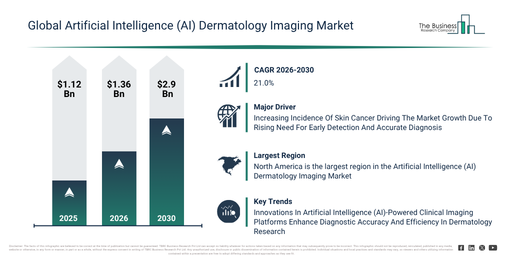
    Artificial Intelligence (AI) Dermatology Imaging Market Forecast Highlights A $2.9 Billion Opportunity For Industry Participants

    Built to provide research that’s more actionable and strategically valuable, The Business Research Company’s 2026 market reports include market attractiveness analysis, total addressable market sizing, company benchmarking matrices, interactive Excel dashboards, broader supply chain intelligence, emerging startup tracking, and in-depth product insights.

    Artificial Intelligence (AI) Dermatology Imaging Market Growth Potential: How Will Market Size Shift Through 2030?

    The artificial intelligence (AI) dermatology imaging market has experienced substantial expansion in recent years. It is forecast to rise from $1.12 billion in 2025 to $1.36 billion in 2026, achieving a compound annual growth rate (CAGR) of 20.7%. Historically, this growth can be attributed to the rising prevalence of skin conditions, an increasing need for accurate dermatology diagnoses, the integration of dermatoscopic and clinical imaging, the expansion of dermatology clinics and hospital facilities, and a growing enthusiasm for telehealth solutions.

    The artificial intelligence (AI) dermatology imaging market size is anticipated to see substantial expansion in the coming years. It is projected to grow to $2.9 billion in 2030 at a compound annual growth rate (CAGR) of 21.0%. The increase during the forecast period is attributable to the expanding integration of AI-enabled analytics, the rising adoption of cloud-based deployment models, a growing demand for automated disease screening and triage, the broadening of research applications in dermatology imaging, and an intensifying focus on teledermatology and remote patient monitoring. Key trends for the forecast period include the increasing adoption of cloud-based AI dermatology platforms, a surging demand for multispectral and total body imaging solutions, the wider integration of teledermatology services, the development of AI-enabled treatment monitoring tools, and a heightened focus on workflow automation and data management solutions.

    Get A Free Sample Report With In-Depth Market Insights:

    https://thebusinessresearchcompany.com/sample_request?id=80395884&type=smp&name=Artificial%20Intelligence%20%28AI%29%20Dermatology%20Imaging%20Market%20Report%202026&utm_source=Blogs&utm_medium=Paid&utm_campaign=Oct_PR

    Artificial Intelligence (AI) Dermatology Imaging Market Demand Drivers Opening New Revenue Streams

    The increasing occurrence of skin cancer is expected to propel the growth of the artificial intelligence (AI) dermatology imaging market going forward. Skin cancer refers to the irregular growth of skin cells, frequently due to UV radiation exposure, leading to malignant tumors like melanoma and non-melanoma types. The prevalence of skin cancer is rising because of heightened exposure to ultraviolet (UV) radiation from the sun and artificial tanning beds, which harms skin cells and elevates the risk of malignant growths. AI in dermatology imaging improves the early detection and accurate diagnosis of skin cancer by analyzing images of skin lesions with advanced algorithms, identifying subtle patterns and abnormalities that might be missed by the human eye, and enabling quicker, more reliable clinical decisions for prompt treatment. For instance, in January 2026, according to the Skin Cancer Foundation, a US-based non-profit organization, the number of new melanoma cases diagnosed is projected to rise by 10.6 percent. Therefore, the increasing incidence of skin cancer is driving the growth of the artificial intelligence (AI) dermatology imaging market.

    Artificial Intelligence (AI) Dermatology Imaging Market Segmentation: How Does The Market Break Down By Category?

    The artificial intelligence (AI) dermatology imaging market covered in this report is segmented –

    1) By Component: Software, Hardware, Services

    2) By Imaging Modality: Dermatoscopic Imaging, Clinical Imaging, Reflectance Confocal Microscopy, Optical Coherence Tomography, Total Body Photography, Multispectral Imaging

    3) By Deployment Mode: Cloud-Based, On-Premises

    4) By Application: Disease Diagnosis, Treatment Monitoring, Screening And Triage, Teledermatology, Research Applications

    5) By End User: Dermatology Clinics, Hospitals, Telehealth Platforms, Primary Care Networks, Other End Users

    Subsegments:

    1) By Software: Cloud Based Solutions, On Premise Solutions, Artificial Intelligence Enabled Analytics Platforms, Image Processing And Visualization Tools, Data Management And Integration Platforms, Workflow And Reporting Solutions

    2) By Hardware: Imaging Devices And Scanners, High Performance Computing Systems, Storage And Data Servers, Display And Visualization Systems, Networking And Connectivity Equipment, Peripheral Input And Output Devices

    3) By Services: System Integration And Deployment Services, Maintenance And Technical Support Services, Consulting And Implementation Services, Training And Education Services, Managed And Cloud Hosting Services, Upgradation And Optimization Services

    Artificial Intelligence (AI) Dermatology Imaging Market Trends Powering Strategic Industry Growth

    Leading firms within the artificial intelligence (AI) dermatology imaging market are prioritizing the creation of advanced solutions like AI-powered clinical imaging platforms. These innovations aim to improve diagnostic precision, optimize clinical trial processes, and deliver objective, real-time evaluations of skin conditions. Such platforms integrate sophisticated skin imaging with artificial intelligence algorithms to automate the capture, analysis, and scoring of dermatological conditions, enabling clinicians and researchers to achieve quicker, more objective, and consistent assessments than those derived from conventional manual methods. An example of this trend occurred in September 2025, when QuantifiCare, a France-based medical imaging company, collaborated with Legit.Health, a Spain-based AI healthcare company, to introduce the inaugural AI-powered dermatology imaging platform specifically designed for clinical trials. This particular platform merges QuantifiCare’s 2D and 3D imaging systems with Legit.Health’s AI algorithms, thereby offering instant severity grading, real-time insights into treatment response, and automated scoring for more than 300 skin conditions. Its core attributes encompass standardized imaging workflows, excellent reproducibility, a decrease in administrative tasks, and improved reliability of clinical endpoints, making it a robust instrument for sponsors, CROs, and investigators looking to expedite dermatology research.

    Artificial Intelligence (AI) Dermatology Imaging Market Top Companies Driving Competitive Growth

    Major companies operating in the artificial intelligence (AI) dermatology imaging market are Google LLC, Microsoft Corporation, Perfect Corp., Canfield Scientific Inc., Proscia Inc., Behold.ai Inc., FotoFinder Systems GmbH, SmartSkin AI Inc., MetaOptima Technology Inc., QuantifiCare SA, SkinVision B.V., DermaSensor Inc., Skin Analytics Ltd, Haut.AI Inc., First Derm Inc., Enspectra Health Inc., SkinIO Inc., SciBase Holding AB, SkinIO LLC, GlamAR Group Inc., IQONIC.AI Inc., TeleSkin d.o.o., DermAI Inc.

    View The Full Artificial Intelligence (AI) Dermatology Imaging Market Report:

    https://thebusinessresearchcompany.com/report/artificial-intelligence-ai-dermatology-imaging-market-report?utm_source=Blogs&utm_medium=Paid&utm_campaign=Oct_PR

    Artificial Intelligence (AI) Dermatology Imaging Market Global Footprint: Which Region Leads The Industry?

    North America was the largest region in the artificial intelligence (AI) dermatology imaging market in 2025. Asia-Pacific is expected to be the fastest-growing region in the forecast period. The regions covered in the artificial intelligence (AI) dermatology imaging market report are Asia-Pacific, South East Asia, Western Europe, Eastern Europe, North America, South America, Middle East, Africa.

    Reach Out To Our Team:

    The Business Research Company: https://www.thebusinessresearchcompany.com/

    Americas: +1 310-496-7795

    Asia: +44 7882 955267 & +91 8897263534

    Europe: +44 7882 955267

    Email us at: marketing@tbrc.info

    Follow us on:

    LinkedIn: https://in.linkedin.com/company/the-business-research-company

    YouTube: https://www.youtube.com/channel/UC24_fI0rV8cR5DxlCpgmyFQ

    Global Market Model: https://www.thebusinessresearchcompany.com/global-market-model
  • Adeno-Associated Virus (AAV) Packaging Services Market Growth To $2.52 Billion Creates New Opportunities Across The Industry

    Adeno-Associated Virus (AAV) Packaging Services Market Growth To $2.52 Billion Creates New Opportunities Across The Industry

    Featuring market attractiveness scoring, total addressable market sizing, company benchmarking matrices, interactive Excel dashboards, deeper supply chain intelligence, emerging startup tracking, and granular product-level insights, The Business Research Company’s 2026 market reports are built to deliver research that is both more actionable and more strategically valuable.

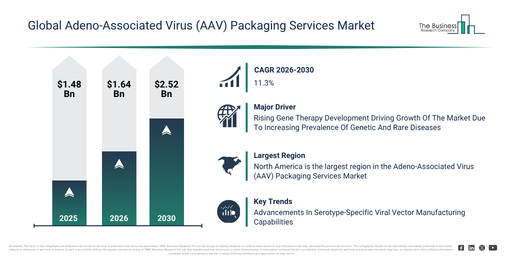
    Adeno-Associated Virus (AAV) Packaging Services Market Revenue Growth On Track For A 11.3% CAGR Through 2030

    The adeno-associated virus (AAV) packaging services market size has witnessed rapid expansion in recent years. This market is anticipated to expand from $1.48 billion in 2025 to $1.64 billion in 2026, achieving a compound annual growth rate (CAGR) of 11.1%. The historic period’s growth can be attributed to several factors, including an increase in gene therapy research activities, greater funding directed towards rare disease research, the expansion of preclinical and clinical trial pipelines, the emergence of more biotechnology startups, and advancements in viral vector production technologies.

    The adeno-associated virus (AAV) packaging services market is projected to experience swift expansion in the coming years. It will grow to $2.52 billion in 2030 at a compound annual growth rate (CAGR) of 11.3%. This anticipated growth during the forecast period is primarily fueled by a rise in gene therapy approvals, increasing demand for commercial-scale GMP manufacturing, greater investments in precision medicine, the broadening of cell and gene therapy pipelines, and a surge in strategic collaborations between biotechnology companies and CDMOs. Furthermore, significant trends expected over this period include a heightened demand for high-titer and high-purity AAV production, the expanded availability of GMP-compliant clinical-grade AAV packaging, an intensifying focus on scalable large-scale manufacturing solutions, the increasing use of advanced analytical and release testing services, and the growing practice of outsourcing AAV vector manufacturing to CDMOs.

    Get A Free Sample Report With In-Depth Market Insights:

    https://thebusinessresearchcompany.com/sample_request?id=54093627&type=smp&name=Adeno-Associated%20Virus%20%28AAV%29%20Packaging%20Services%20Market%20Report%202026&utm_source=Blogs&utm_medium=Paid&utm_campaign=Oct_PR

    Adeno-Associated Virus (AAV) Packaging Services Market Growth Factors Behind Sustained Expansion

    The increasing need for gene therapy development is anticipated to drive the expansion of the adeno-associated virus (AAV) packaging services market in the future. Gene therapy development involves the creation of treatments designed to alter or substitute defective genes for disease management. The demand for gene therapy development is escalating due to the increasing occurrence of genetic and rare diseases, thereby heightening the necessity for sophisticated treatments that address the fundamental genetic origins of these ailments. Adeno-associated virus (AAV) packaging services facilitate gene therapy development by offering expert viral vector production and purification, ensuring a scalable and premium AAV supply for both clinical investigations and therapeutic applications. For example, data from July 2023, provided by the American Society of Gene & Cell Therapy (ASGCT), a US-based professional membership body, showed that 247 gene therapies were in Phase II at the close of the first quarter of 2023. This figure subsequently grew by 5%, reaching 260 by the conclusion of the second quarter. Consequently, the growing requirement for gene therapy development is fueling the expansion of the adeno-associated virus (AAV) packaging services market.

    Adeno-Associated Virus (AAV) Packaging Services Market Segment Analysis: What Are The Core Market Categories?

    The adeno-associated virus (AAV) packaging services market covered in this report is segmented –

    1) By Service Type: Research-Grade Adeno-Associated Virus (AAV) Packaging (RUO), Good Manufacturing Practice (GMP) Clinical Adeno-Associated Virus (AAV) Packaging, Good Manufacturing Practice (GMP) Late-Stage And Commercial Supply, Analytical And Release Testing, Process Development And Tech Transfer

    2) By Vector Type: Adeno-Associated Virus (AAV) 2, Adeno-Associated Virus (AAV) 5, Adeno-Associated Virus (AAV) 8, Adeno-Associated Virus (AAV) 9

    3) By Scale Of Production: Small-Scale Production, Mid-Scale Production, Large-Scale Production

    4) By Therapeutic Application: Ophthalmology, Neuromuscular And Central Nervous System, Metabolic Or Rare Genetic Disorders, Oncology, Cardiovascular, Other Indications

    5) By End User: Biotechnology And Biopharmaceutical Companies, Academic And Research Institutes, Contract Research Organizations, Contract Manufacturing Organizations, Healthcare And Diagnostic Laboratories

    Subsegments:

    1) By Research-Grade Adeno-Associated Virus (AAV) Packaging (RUO): Small Scale Production, Pilot Scale Production, Custom Vector Design, Preclinical Study Supply

    2) By GMP Clinical Adeno-Associated Virus (AAV) Packaging: Phase One Clinical Supply, Phase Two Clinical Supply, Phase Three Clinical Supply, Patient Specific Batch Production

    3) By GMP Late-Stage And Commercial Supply: Commercial Batch Production, Technology Transfer Support, Large Scale Manufacturing, Regulatory Submission Support

    4) By Analytical And Release Testing: Potency Testing, Purity Testing, Identity Testing, Safety Testing, Stability Testing

    5) By Process Development And Tech Transfer: Upstream Process Development, Downstream Process Development, Scale-Up Process Optimization, Technology Transfer To Manufacturing, Process Characterization

    Adeno-Associated Virus (AAV) Packaging Services Market Industry Trends Fueling Future Revenue Growth

    Major companies in the adeno-associated virus (AAV) packaging services market are prioritizing the development of innovative solutions, including on-demand AAV viral vector packaging platforms, to improve flexibility, accelerate research schedules, and ensure consistent, high-quality viral vector manufacturing. On-demand AAV viral vector packaging platforms are services designed to provide custom AAV production in specific serotypes with integrated quality controls, helping researchers conserve time and obtain reliable, high-titer vectors for gene delivery applications. As an illustration, in January 2025, Addgene Inc., a US-based nonprofit scientific organization, launched its “Packaged on Request” AAV packaging service. This service allows scientists to select from over 3,000 AAV plasmids within Addgene’s repository and request packaging in serotypes such as AAV1, AAV2, AAV5, AAV8, and AAV Retrograde capsids. Each preparation undergoes extensive quality control procedures, including ddPCR titering, purity testing, sterility testing, and viral genome sequencing, guaranteeing research-grade standards comparable to their in-stock viral preparations. The service also simplifies legal approvals and technology transfer processes, thus reducing administrative burdens while maintaining high titers suitable for various in vivo and in vitro uses.

    Adeno-Associated Virus (AAV) Packaging Services Market Top Companies Driving Competitive Growth

    Major companies operating in the adeno-associated virus (AAV) packaging services market are Thermo Fisher Scientific Inc., AGC Biologics Inc., Lonza Group AG, Charles River Laboratories International Inc., Resilience Biotechnologies Inc., GenScript Biotech Corporation, Takara Bio Inc., OxB CDMO Inc., 3PBIOVIAN, VectorBuilder, Genezen Labs, Addgene Inc., PackGene Biotech Inc., Porton Advanced Solutions Ltd., Creative Biogene, Yposkesi SAS, AAVnerGene Inc., Virovek Inc., WuXi Advanced Therapies Co. Ltd., BioInnovatise Inc.

    View The Full Adeno-Associated Virus (AAV) Packaging Services Market Report:

    https://thebusinessresearchcompany.com/report/adeno-associated-virus-aav-packaging-services-market-report?utm_source=Blogs&utm_medium=Paid&utm_campaign=Oct_PR

    Adeno-Associated Virus (AAV) Packaging Services Market Global Footprint: Which Region Leads The Market?

    North America was the largest region in the adeno-associated virus (AAV) packaging services market in 2025. Asia-Pacific is expected to be the fastest-growing region in the forecast period. The regions covered in the adeno-associated virus (AAV) packaging services market report are Asia-Pacific, South East Asia, Western Europe, Eastern Europe, North America, South America, Middle East, Africa.

    Reach Out To Our Team:

    The Business Research Company: https://www.thebusinessresearchcompany.com/

    Americas: +1 310-496-7795

    Asia: +44 7882 955267 & +91 8897263534

    Europe: +44 7882 955267

    Email us at: marketing@tbrc.info

    Follow us on:

    LinkedIn: https://in.linkedin.com/company/the-business-research-company

    YouTube: https://www.youtube.com/channel/UC24_fI0rV8cR5DxlCpgmyFQ

    Global Market Model: https://www.thebusinessresearchcompany.com/global-market-model

  • Fetal Aneuploidy Confirmation Testing Market Size Forecast From 2026 To 2030: Key Industry Trends

    Built to provide research that’s more actionable and strategically valuable, The Business Research Company’s 2026 market reports include market attractiveness analysis, total addressable market sizing, company benchmarking matrices, interactive Excel dashboards, broader supply chain intelligence, emerging startup tracking, and in-depth product insights.

    Fetal Aneuploidy Confirmation Testing Market Forecast: Value Set To Climb From $1.58 Billion To $2.36 Billion

    The fetal aneuploidy confirmation testing market size has seen rapid expansion in recent years. It is projected to grow from $1.43 billion in 2025 to $1.58 billion in 2026, at a compound annual growth rate (CAGR) of 10.4%. The historical growth can be attributed to rising maternal age pregnancies, an increasing prevalence of chromosomal abnormalities, growing awareness of prenatal screening programs, advancements in cytogenetic testing methods, and the expansion of hospital-based diagnostic laboratories.

    The fetal aneuploidy confirmation testing market is projected to experience substantial expansion over the upcoming years. This market is anticipated to reach $2.36 billion by 2030, exhibiting a compound annual growth rate (CAGR) of 10.6%. This growth during the forecast period can be linked to several factors, including the wider acceptance of precision medicine strategies, the increasing incorporation of AI-powered genetic analysis tools, a heightened need for non-invasive prenatal testing confirmation, the proliferation of genomic research projects, and increased funding for healthcare infrastructure in developing economies. Key developments expected within this period involve the greater uptake of next-generation sequencing technologies, an elevated requirement for prompt and precise prenatal diagnosis, a stronger inclination towards confirmatory diagnostic testing following positive screening results, the extended application of advanced chromosomal microarray analysis, and an expanding supply of specialized prenatal diagnostic services.

    Get A Free Sample Report With In-Depth Market Insights:

    https://thebusinessresearchcompany.com/sample_request?id=30698761&type=smp&name=Fetal%20Aneuploidy%20Confirmation%20Testing%20Market%20Report%202026&utm_source=Blogs&utm_medium=Paid&utm_campaign=Oct_PR

    Fetal Aneuploidy Confirmation Testing Market Growth Factors Behind Sustained Expansion

    The increasing age at which women become mothers is projected to fuel the expansion of the fetal aneuploidy confirmation testing market. Maternal age refers to a woman’s age when she becomes pregnant or gives birth. This age is on the rise as women often postpone starting families to advance their education and careers. Fetal aneuploidy confirmation testing plays a crucial role in mitigating the risks linked to older maternal age by precisely identifying chromosomal abnormalities, which are more prevalent in pregnancies among older women, enabling prompt medical advice and well-informed choices regarding pregnancy. For example, data from June 2025, from the US-based government agency, the Centers for Disease Control and Prevention, showed that the average age of mothers at their first birth rose from 27.4 years in 2022 to 27.5 years in 2023, marking an increment of 0.1 years. Consequently, the rising maternal age is a key factor boosting the growth of the fetal aneuploidy confirmation testing market.

    Fetal Aneuploidy Confirmation Testing Market Segment Outlook: Which Categories Are Growing Fastest?

    The fetal aneuploidy confirmation testing market covered in this report is segmented –

    1) By Test Type: Non-Invasive Prenatal Testing, Invasive Testing, Other Test Types

    2) By Technology: Next-Generation Sequencing, Polymerase Chain Reaction, Fluorescence In Situ Hybridization, Microarray, Other Technologies

    3) By Application: Trisomy, Sex Chromosome Aneuploidy, Microdeletions, Other Applications

    4) By End-User: Hospitals, Diagnostic Laboratories, Specialty Clinics, Other End Users

    Subsegments:

    1) By Non-Invasive Prenatal Testing: Cell-Free Fetal Deoxyribonucleic Acid Testing, Maternal Serum Screening, Ultrasound-Based Risk Assessment, Next-Generation Sequencing-Based Non-Invasive Prenatal Testing, Chromosomal Microarray Analysis

    2) By Invasive Testing: Amniocentesis, Chorionic Villus Sampling, Cordocentesis, Fetal Biopsy, Fetal Karyotyping

    3) By Other Test Types: Preimplantation Genetic Testing, Targeted Gene Panels, Multiplex Polymerase Chain Reaction Testing, Fluorescence In Situ Hybridization Testing, Comparative Genomic Hybridization Testing

    Fetal Aneuploidy Confirmation Testing Market Leading Players And Competitive Positioning

    Major companies operating in the fetal aneuploidy confirmation testing market are Thermo Fisher Scientific Inc., Laboratory Corporation of America Holdings, Quest Diagnostics Incorporated, Eurofins Scientific SE, Agilent Technologies Inc., Illumina Inc., PerkinElmer Inc., SYNLAB AG, Myriad Genetics Inc., CapitalBio Technology Co. Ltd., BGI Genomics Co. Ltd., Centogene N.V., Yourgene Health plc, MedGenome Labs Ltd., Fulgent Genetics Inc., Annoroad Gene Technology Co. Ltd., CeGaT GmbH, LifeCodexx AG, Variantyx Inc., Igenomix S.L.U.

    View The Full Fetal Aneuploidy Confirmation Testing Market Report:

    https://thebusinessresearchcompany.com/report/fetal-aneuploidy-confirmation-testing-market-report?utm_source=Blogs&utm_medium=Paid&utm_campaign=Oct_PR

    Fetal Aneuploidy Confirmation Testing Market Regional Distribution: Which Areas Power Market Growth?

    North America was the largest region in the fetal aneuploidy confirmation testing market in 2025. Asia-Pacific is expected to be the fastest-growing region in the forecast period. The regions covered in the fetal aneuploidy confirmation testing market report are Asia-Pacific, South East Asia, Western Europe, Eastern Europe, North America, South America, Middle East, Africa.

    Reach Out To Our Team:

    The Business Research Company: https://www.thebusinessresearchcompany.com/

    Americas: +1 310-496-7795

    Asia: +44 7882 955267 & +91 8897263534

    Europe: +44 7882 955267

    Email us at: marketing@tbrc.info

    Follow us on:

    LinkedIn: https://in.linkedin.com/company/the-business-research-company

    YouTube: https://www.youtube.com/channel/UC24_fI0rV8cR5DxlCpgmyFQ

    Global Market Model: https://www.thebusinessresearchcompany.com/global-market-model

  • Fecal Occult Blood Test (FOBT) Market Set To Expand From $2.67 Billion In 2026: Growth Outlook Through 2030

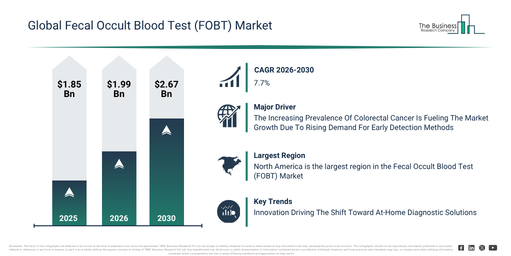
    Fecal Occult Blood Test (FOBT) Market Set To Expand From $2.67 Billion In 2026: Growth Outlook Through 2030

    Featuring market attractiveness scoring, total addressable market sizing, company benchmarking matrices, interactive Excel dashboards, deeper supply chain intelligence, emerging startup tracking, and granular product-level insights, The Business Research Company’s 2026 market reports are built to deliver research that is both more actionable and more strategically valuable.

    Fecal Occult Blood Test (FOBT) Market Value Growth And Long-Term Outlook

    The fecal occult blood test (FOBT) market size has shown significant expansion in recent years. It is anticipated to increase from $1.85 billion in 2025 to $1.99 billion in 2026, exhibiting a compound annual growth rate (CAGR) of 7.5%. Historically, this growth can be attributed to the rising prevalence of colorectal cancer, growing awareness of preventive health screening, expansion of national cancer screening programs, increasing geriatric population, and improvements in diagnostic laboratory infrastructure.

    The fecal occult blood test (FOBT) market is projected to experience substantial expansion over the upcoming years. This market is anticipated to reach a valuation of $2.67 billion by 2030, exhibiting a compound annual growth rate (CAGR) of 7.7%. Factors contributing to this growth during the projected period include a surging demand for non-invasive diagnostic techniques, the increasing uptake of at-home testing solutions, escalating healthcare spending in developing economies, the broadening of personalized medicine strategies, and the greater incorporation of digital health platforms. Key trends anticipated during this forecast period involve the rising adoption of immunochemical FOBT kits, an increased inclination towards home-based screening examinations, an intensified emphasis on the early detection of colorectal cancer, the proliferation of point-of-care FOBT devices, and the accelerated development of high-sensitivity test reagents.

    Get A Free Sample Report With In-Depth Market Insights:

    https://thebusinessresearchcompany.com/sample_request?id=19380326&type=smp&name=Fecal%20Occult%20Blood%20Test%20%28FOBT%29%20Market%20Report%202026&utm_source=Blogs&utm_medium=Paid&utm_campaign=Oct_PR

    Fecal Occult Blood Test (FOBT) Market Growth Backed By Core Demand Fundamentals

    The rising occurrence and public health burden of colorectal cancer are anticipated to drive the expansion of the fecal occult blood test (FOBT) market in the future. Colorectal cancer, a malignancy originating in the colon or rectum, frequently evolves from unusual growths called polyps. Its increasing presence is linked to elements like inactive lifestyles, an aging demographic, and dietary patterns, all of which elevate the likelihood of cancer forming in the digestive system. The fecal occult blood test (FOBT) aids in screening for colorectal cancer by identifying concealed blood in stool early, thus allowing for prompt diagnosis, better treatment results, and slower disease advancement. As an example, the Office for National Statistics (ONS), a UK-based government department, reported in February 2025 that approximately 15,552 colorectal cancer deaths were recorded in England and Wales in 2023, with 2024 provisional data showing a comparable figure. This underscores the substantial impact of the disease and the heightened demand for early screening and preventative diagnostic instruments. Consequently, the growing incidence of colorectal cancer is stimulating the expansion of the fecal occult blood test (FOBT) market.

    Fecal Occult Blood Test (FOBT) Market Segments: Where Is Growth Concentrated?

    The fecal occult blood test (fobt) market covered in this report is segmented –

    1) By Product Type: Guaiac-Based Fecal Occult Blood Test, Immunochemical Fecal Occult Blood Test, Other Product Types

    2) By Sample Type: Stool-Based, Other Sample Types

    3) By Application: Colorectal Cancer Screening, Gastrointestinal Bleeding, Other Applications

    4) By End User: Hospitals, Diagnostic Laboratories, Clinics, Home Care Settings, Other End Users

    Subsegments:

    1) By Guaiac-Based Fecal Occult Blood Test: Manual Guaiac Test Kits, Automated Guaiac Test Systems, Point-Of-Care Guaiac Test Devices, High Sensitivity Guaiac Reagents

    2) By Immunochemical Fecal Occult Blood Test: Qualitative Immunochemical Test Kits, Quantitative Immunochemical Test Systems, Point-Of-Care Immunochemical Devices, High Sensitivity Immunochemical Reagents

    3) By Other Product Types: Deoxyribonucleic Acid-Based Fecal Occult Blood Test Kits, Enzyme Immunoassay Test Kits, Chromatographic Fecal Occult Blood Test Devices, Combination Fecal Occult Blood Test Systems

    Fecal Occult Blood Test (FOBT) Market Growth Trends Reshaping The Competitive Landscape

    Major companies operating in the fecal occult blood test (FOBT) market are concentrating on the development of innovative products, such as at-home over-the-counter (OTC) FOBT kits, to elevate early detection rates and enhance patient convenience. At-home over-the-counter (OTC) FOBT kits represent non-invasive testing options that empower individuals to collect stool samples at home for the purpose of detecting hidden blood, thereby aiding in early colorectal cancer screening and offering increased convenience compared to traditional lab-based tests. For instance, in December 2023, DiaCarta Inc., a US-based precision diagnostic company, launched the iColon Fecal Occult Blood Test, an OTC at-home test designed to enable the early identification of blood in stool, which is clinically relevant for both gastrointestinal disorders and colorectal cancer. The iColon test has been developed to be user-friendly and non-invasive, permitting patients to gather samples without the need for medical supervision. It integrates sensitive detection methods that enhance accuracy beyond conventional guaiac-based FOBTs, consequently reducing false negatives and facilitating earlier intervention. Additionally, it promotes timely follow-up with healthcare providers if abnormal results are found, contributing to proactive colorectal health management.

    Fecal Occult Blood Test (FOBT) Market Competitive Landscape: Which Companies Lead The Industry?

    Major companies operating in the fecal occult blood test (fobt) market are F. Hoffmann-La Roche AG, Siemens Healthineers AG, Medline Industries Inc., Quest Diagnostics Incorporated, Sysmex Corporation, Quidel Corporation, Randox Laboratories Ltd., BIOMERICA Inc., Aidian Oy, Meridian Bioscience Inc., CTK Biotech Inc., Eiken Chemical Co. Ltd., Hemosure Inc., Alfa Scientific Designs Inc., AdvaCare Pharma Inc., Biohit Oyj, Immunostics Inc., Apacor Ltd., Humasis Co. Ltd., Firstep Bioresearch Inc., Biopanda Reagents Ltd, Ameritek Inc.

    View The Full Fecal Occult Blood Test (FOBT) Market Report:

    https://thebusinessresearchcompany.com/report/fecal-occult-blood-test-fobt-market-report?utm_source=Blogs&utm_medium=Paid&utm_campaign=Oct_PR

    Fecal Occult Blood Test (FOBT) Market Regional Outlook: Where Is Opportunity Concentrated?

    North America was the largest region in the fecal occult blood test (FOBT) market in 2025. Asia-Pacific is expected to be the fastest-growing region in the forecast period. The regions covered in the fecal occult blood test (fobt) market report are Asia-Pacific, South East Asia, Western Europe, Eastern Europe, North America, South America, Middle East, Africa.

    Reach Out To Our Team:

    The Business Research Company: https://www.thebusinessresearchcompany.com/

    Americas: +1 310-496-7795

    Asia: +44 7882 955267 & +91 8897263534

    Europe: +44 7882 955267

    Email us at: marketing@tbrc.info

    Follow us on:

    LinkedIn: https://in.linkedin.com/company/the-business-research-company

    YouTube: https://www.youtube.com/channel/UC24_fI0rV8cR5DxlCpgmyFQ

    Global Market Model: https://www.thebusinessresearchcompany.com/global-market-model

  • Fast Healthcare Interoperability Resources (FHIR) Integration Services Market Forecast 2026–2030: Market Size, Trends And Growth Opportunities

    Backed by market attractiveness analysis, total addressable market sizing, company benchmarking matrices, interactive Excel dashboards, wider supply chain intelligence, emerging startup coverage, and detailed product-level insights, The Business Research Company’s 2026 market reports are designed to offer research that is more actionable and strategically valuable than ever.

    Fast Healthcare Interoperability Resources (FHIR) Integration Services Market Size And Revenue Outlook Through 2030

    The market size for fast healthcare interoperability resources (FHIR) integration services has experienced significant expansion in recent years. It is projected to increase from $1.53 billion in 2025 to $1.85 billion in 2026, exhibiting a compound annual growth rate (CAGR) of 20.4%. Historically, this growth can be attributed to the increasing digitization of healthcare records, the growing adoption of electronic health record systems, a rising need for healthcare data standardization, government mandates for interoperability compliance, and the expansion of health information exchange networks.

    The fast healthcare interoperability resources (FHIR) integration services market is projected to experience substantial growth over the next few years. It is expected to expand to $3.91 billion by 2030, achieving a compound annual growth rate (CAGR) of 20.7%. This expansion during the forecast period is driven by factors such as the increasing adoption of cloud-native healthcare platforms, greater integration of AI-driven clinical decision support, a rising demand for patient-centric care models, the broadening of telehealth and remote monitoring services, and increased investment in healthcare data analytics. Significant trends anticipated for this period include the growing adoption of FHIR-based API integration, a heightened demand for real-time clinical data exchange, the expanding implementation of EHR interoperability solutions, the wider deployment of cloud-based FHIR models, and an intensified focus on secure patient data sharing.

    Get A Free Sample Report With In-Depth Market Insights:

    https://thebusinessresearchcompany.com/sample_request?id=77412184&type=smp&name=Fast%20Healthcare%20Interoperability%20Resources%20%28FHIR%29%20Integration%20Services%20Market%20Report%202026&utm_source=Blogs&utm_medium=Paid&utm_campaign=Oct_PR

    Fast Healthcare Interoperability Resources (FHIR) Integration Services Market Opportunity Drivers: What’s Unlocking New Revenue Potential?

    The increasing embrace of electronic health records is anticipated to boost the expansion of the fast healthcare interoperability resources (FHIR) integration services market. Electronic health records (EHRs) are digital archives of patients’ medical histories, maintained by healthcare providers, encompassing details like diagnoses, prescriptions, treatment regimens, vaccination schedules, sensitivities, radiology scans, and lab outcomes. The heightened adoption of EHRs stems from their capacity to enhance patient well-being and security through offering precise, immediate access to comprehensive health data, mitigating mistakes, and facilitating more informed clinical choices. These digital records optimize fast healthcare interoperability resources (FHIR) integration services by supplying standardized, organized patient information, thus enabling smooth data exchange, instant availability, and superior interoperability across various healthcare systems. For example, the Department of Health and Social Care, a UK government body, reported in March 2024 that the proportion of National Health Services trusts in the UK utilizing electronic health records rose from 90% in December 2023 to 100% in March 2025. Consequently, the rising prevalence of electronic health records is propelling the growth of the fast healthcare interoperability resources (FHIR) integration services market.

    Fast Healthcare Interoperability Resources (FHIR) Integration Services Market Segment Breakdown: Which Categories Lead On Revenue?

    The fast healthcare interoperability resources (FHIR) integration services market covered in this report is segmented –

    1) By Component: Software, Services

    2) By Integration Type: Fast Healthcare Interoperability Resources Application Programming Interface Integration, Electronic Health Record Integration, Health Information Exchange Integration, Cloud Based Fast Healthcare Interoperability Resources Integration, Mobile Health Application Integration, Clinical Data Repository Integration

    3) By Deployment Mode: On-Premises, Cloud-Based

    4) By Application: Clinical Data Exchange, Patient Management, Population Health Management, Other Applications

    5) By End-User: Healthcare Providers, Payers, Pharmacies, Other End-Users

    Subsegments:

    1) By Software: Fast Healthcare Interoperability Resources Engine Software, Interface Engine Software, Data Mapping Software, Application Programming Interface Management Software, Clinical Data Integration Software

    2) By Services: Implementation Services, Consulting Services, Training Services, Support And Maintenance Services, Data Migration Services

    Fast Healthcare Interoperability Resources (FHIR) Integration Services Market Innovation Trends Shaping Future Development

    Major companies operating in the fast healthcare interoperability resources (FHIR) integration services market are concentrating on developing innovative platforms, such as interoperability engine platforms, to improve seamless data exchange, enhance EHR integration, and ensure adherence to healthcare interoperability standards. An interoperability engine functions as a software platform that allows different healthcare systems, applications, and devices to exchange, interpret, and utilize data without friction. For instance, in July 2025, EMR Direct Inc., a US-based health information technology software company, launched enhanced HL7 FHIR services for its Interoperability Engine 2026, specifically targeting health IT developers. This update enables secure patient access and business-to-business data exchange, while also ensuring compliance with ONC Health IT certification criteria and the medicare promoting interoperability program. These advancements are designed to streamline healthcare data interoperability, improve information sharing among providers, and support the rising demand for standardized, efficient health IT solutions.

    Fast Healthcare Interoperability Resources (FHIR) Integration Services Market Company Landscape And Competitive Strategy

    Major companies operating in the fast healthcare interoperability resources (FHIR) integration services market are Google LLC, Microsoft Corporation, Salesforce Inc., Tata Consultancy Services Limited, Cognizant Technology Solutions Corporation, Infosys Limited, InterSystems Corporation, Eclinical Works LLC, Medical Information Technology Inc., Veradigm Inc., 1upHealth Inc., Epic Systems Corporation, Mindbowser Inc., DreamSoft4U Private Limited, Health Gorilla Inc., Taction Software LLC, BM Coder LLC, CapMinds Technologies Private Limited, Edenlab LLC, Firely B.V., Health Samurai Inc., Healthcare Integrations LLC, Smile Digital Health Inc., and Techbit Solutions Pvt. Ltd.

    View The Full Fast Healthcare Interoperability Resources (FHIR) Integration Services Market Report:

    https://thebusinessresearchcompany.com/report/fast-healthcare-interoperability-resources-fhir-integration-services-market-report?utm_source=Blogs&utm_medium=Paid&utm_campaign=Oct_PR

    Fast Healthcare Interoperability Resources (FHIR) Integration Services Market Largest Region: Which Geography Holds The Biggest Share?

    North America was the largest region in the fast healthcare interoperability resources (FHIR) integration services market in 2025. Asia-Pacific is expected to be the fastest-growing region in the forecast period. The regions covered in the fast healthcare interoperability resources (FHIR) integration services market report are Asia-Pacific, South East Asia, Western Europe, Eastern Europe, North America, South America, Middle East, Africa.

    Reach Out To Our Team:

    The Business Research Company: https://www.thebusinessresearchcompany.com/

    Americas: +1 310-496-7795

    Asia: +44 7882 955267 & +91 8897263534

    Europe: +44 7882 955267

    Email us at: marketing@tbrc.info

    Follow us on:

    LinkedIn: https://in.linkedin.com/company/the-business-research-company

    YouTube: https://www.youtube.com/channel/UC24_fI0rV8cR5DxlCpgmyFQ

    Global Market Model: https://www.thebusinessresearchcompany.com/global-market-model

  • Electroencephalogram (EEG) Analysis Artificial Intelligence (AI) Market Growth Potential: What The Latest Forecast Reveals

    Built to provide research that’s more actionable and strategically valuable, The Business Research Company’s 2026 market reports include market attractiveness analysis, total addressable market sizing, company benchmarking matrices, interactive Excel dashboards, broader supply chain intelligence, emerging startup tracking, and in-depth product insights.

    Electroencephalogram (EEG) Analysis Artificial Intelligence (AI) Market Forecast: What Value Will The Market Reach By 2030?

    The electroencephalogram (EEG) analysis artificial intelligence (AI) market has experienced rapid expansion in recent years. The market is projected to grow from $0.92 billion in 2025 to $1.08 billion in 2026, at a compound annual growth rate (CAGR) of 17.6%. This historical growth can be attributed to the increasing prevalence of neurological disorders, rising adoption of eeg devices in clinical diagnostics, growth of neuroscience research initiatives, advancements in signal acquisition technologies, and an increasing focus on patient safety and diagnostic accuracy.

    The electroencephalogram (EEG) analysis artificial intelligence (AI) market is projected to experience rapid expansion over the next few years, with its size expected to reach $2.08 billion in 2030, demonstrating a compound annual growth rate (CAGR) of 17.8%. This anticipated growth during the forecast period is driven by the increasing integration of AI-powered EEG analysis software, growing connections with brain-computer interfaces, a surge in demand for real-time cognitive assessments, the expansion of remote monitoring and tele-neurology services, and an intensified focus on predictive diagnostics and personalized neurology. Significant trends for this period include the rising adoption of cloud-based EEG analysis platforms, greater integration of real-time brain monitoring systems, an increased emphasis on automated clinical decision support, the proliferation of portable and wearable EEG devices, and a heightened demand for data visualization and interpretation tools.

    Get A Free Sample Report With In-Depth Market Insights:

    https://thebusinessresearchcompany.com/sample_request?id=40188057&type=smp&name=Electroencephalogram%20%28EEG%29%20Analysis%20Artificial%20Intelligence%20%28AI%29%20Market%20Report%202026&utm_source=Blogs&utm_medium=Paid&utm_campaign=Oct_PR

    Electroencephalogram (EEG) Analysis Artificial Intelligence (AI) Market Growth Factors Behind Sustained Expansion

    The electroencephalogram analysis artificial intelligence market is anticipated to experience growth due to the escalating incidence of neurological disorders. These conditions, which involve diseases of the nervous system, impair the typical functioning of the brain, spinal cord, or nerves. The rise in neurological disorder prevalence is linked to aging populations, as advanced age elevates the risk for ailments such as Alzheimer’s, Parkinson’s, and stroke. Artificial intelligence-driven Electroencephalogram (EEG) analysis assists in addressing neurological disorders by automatically identifying abnormal brain patterns, predicting seizures, and contributing to early diagnosis and personalized treatment strategies. For instance, data from the Australian Institute of Health and Welfare, an Australia-based government agency, indicated in December 2025 that around 425,000 Australians were living with dementia in 2024. This number is projected to increase 2.5 times, surpassing 1.1 million by 2065, with approximately 662,000 women and 390,000 men expected to be affected. Hence, the growing prevalence of neurological disorders is a key driver for the expansion of the electroencephalogram analysis artificial intelligence market.

    Electroencephalogram (EEG) Analysis Artificial Intelligence (AI) Market Segmentation And Category Overview

    The electroencephalogram (EEG) analysis artificial intelligence (AI) market covered in this report is segmented –

    1) By Component: Software, Hardware, Services

    2) By Deployment Mode: On-Premises, Cloud Based

    3) By Application: Clinical Diagnostics, Neuroscience Research, Brain-Computer Interface, Cognitive Assessment, Sleep Analysis, Other Applications

    4) By End-User: Hospitals And Clinics, Research Institutes, Academic Centers, Ambulatory Surgical Centers, Other End Users

    Subsegments:

    1) By Software: Signal Processing Software, Data Analysis And Visualization Software, Machine Learning And Artificial Intelligence Software, Brain Mapping And Modeling Software, Clinical Decision Support Software

    2) By Hardware: Electroencephalography Headsets, Amplifiers And Signal Acquisition Devices, Electrode Caps And Sensors, Wireless Electroencephalogram (EEG) Recording Devices, Portable Electroencephalogram (EEG) Monitoring Devices

    3) By Services: Installation And Configuration Services, Training And Education Services, Maintenance And Calibration Services, Cloud Data Storage And Management Services, Technical Support And Consulting Services

    Electroencephalogram (EEG) Analysis Artificial Intelligence (AI) Market Industry Trends Fueling Future Revenue Growth

    Leading companies within the electroencephalogram analysis artificial intelligence market are prioritizing the development of innovative solutions, such as AI-driven point-of-care electroencephalography devices, aimed at enabling swift and accurate brain activity analysis, thereby supporting real-time clinical decision-making at the bedside. An AI-driven point-of-care electroencephalography device is essentially a bedside system that utilizes AI to analyze electroencephalography signals and offer immediate clinical insights. A notable example occurred in May 2025, when Natus Medical Incorporated, a US-based neurodiagnostics company, unveiled BrainWatch, an AI-driven point-of-care EEG solution. This solution is specifically designed to enhance neurodiagnostics in critical care settings. The wearable, wireless device integrates FDA-cleared Persyst algorithms, facilitating on-device seizure detection, burden assessment, and electrographic status epilepticus diagnosis, allowing for rapid setup in under five minutes and remote neurologist review through any web browser.

    Electroencephalogram (EEG) Analysis Artificial Intelligence (AI) Market Competitive Overview And Top Companies

    Major companies operating in the electroencephalogram (EEG) analysis artificial intelligence (AI) market are NeuroPace Inc., NeuroSky Inc., Natus Medical Incorporated, Nihon Kohden Europe GmbH, BioSerenity, BIOPAC Systems Inc., Cumulus Neuroscience Inc., Neuroelectrics, Advanced Brain Monitoring Inc., Persyst Development Corporation, Compumedics Limited, Emotiv Inc., iMediSync, BrainScope Company Inc., BESA GmbH, ELMIKO Medical Equipment, ScienceBeam, SOMNOmedics GmbH, Brainify.AI, dEEGtal Insights SA, and Avinya NeuroTech.

    View The Full Electroencephalogram (EEG) Analysis Artificial Intelligence (AI) Market Report:

    https://thebusinessresearchcompany.com/report/electroencephalogram-eeg-analysis-artificial-intelligence-ai-market-report?utm_source=Blogs&utm_medium=Paid&utm_campaign=Oct_PR

    Electroencephalogram (EEG) Analysis Artificial Intelligence (AI) Market Top Region: Where Does Most Revenue Come From?

    North America was the largest region in the electroencephalogram (EEG) analysis artificial intelligence (AI) market in 2025. Asia-Pacific is expected to be the fastest-growing region in the forecast period. The regions covered in the electroencephalogram (EEG) analysis artificial intelligence (AI) market report are Asia-Pacific, South East Asia, Western Europe, Eastern Europe, North America, South America, Middle East, Africa.

    Reach Out To Our Team:

    The Business Research Company: https://www.thebusinessresearchcompany.com/

    Americas: +1 310-496-7795

    Asia: +44 7882 955267 & +91 8897263534

    Europe: +44 7882 955267

    Email us at: marketing@tbrc.info

    Follow us on:

    LinkedIn: https://in.linkedin.com/company/the-business-research-company

    YouTube: https://www.youtube.com/channel/UC24_fI0rV8cR5DxlCpgmyFQ

    Global Market Model: https://www.thebusinessresearchcompany.com/global-market-model

  • Direct-From-Blood Pathogen Detection Market Growth To $3.09 Billion Creates New Opportunities Across The Industry

    Featuring market attractiveness scoring, total addressable market sizing, company benchmarking matrices, interactive Excel dashboards, deeper supply chain intelligence, emerging startup tracking, and granular product-level insights, The Business Research Company’s 2026 market reports are built to deliver research that is both more actionable and more strategically valuable.

    Direct-From-Blood Pathogen Detection Market Poised To Hit $3.09 Billion By 2030 With A 12.4% CAGR

    The direct-from-blood pathogen detection market has experienced substantial growth recently. This market is projected to expand from $1.72 billion in 2025 to $1.93 billion in 2026, demonstrating a compound annual growth rate (CAGR) of 12.2%. Historically, this expansion has been driven by factors such as the rising occurrence of bloodstream infections, a greater need for quick diagnostic methods, the development of hospital and clinical laboratory infrastructure, advancements in molecular diagnostics technology, and heightened understanding of antimicrobial resistance.

    The direct-from-blood pathogen detection market is poised for swift expansion in the upcoming years. It is anticipated to grow to $3.09 billion in 2030, exhibiting a compound annual growth rate (CAGR) of 12.4%. This growth during the forecast period is propelled by factors such as the increasing adoption of digital and automated pathogen detection platforms, expanded use of multiplex PCR and targeted sequencing, escalating demand for point-of-care rapid diagnostics, the expansion of hospital and diagnostic laboratory networks in emerging markets, and a heightened focus on personalized antimicrobial therapy. Prominent trends observed in this period encompass the rising acceptance of rapid PCR-based diagnostics, increased application of next-generation sequencing for pathogen detection, broader implementation of mass spectrometry in clinical laboratories, growing deployment of immunoassay-based detection systems, and an intensifying focus on microfluidic and biosensor technologies.

    Get A Free Sample Report With In-Depth Market Insights:

    https://thebusinessresearchcompany.com/sample_request?id=33549401&type=smp&name=Direct-From-Blood%20Pathogen%20Detection%20Market%20Report%202026&utm_source=Blogs&utm_medium=Paid&utm_campaign=Oct_PR

    Direct-From-Blood Pathogen Detection Market Industry Drivers: What’s Behind The Revenue Growth?

    The direct-from-blood pathogen detection market is anticipated to grow as the incidence of infectious diseases continues to rise. Infectious diseases are defined as conditions caused by detrimental microorganisms that invade and reproduce within the body, with the potential to spread to others. This increase in infectious diseases is attributed to urbanization, where higher population densities in cities promote the quicker dissemination of pathogens through close human contact and shared resources. Direct-from-blood pathogen detection plays a crucial role in identifying infectious diseases by enabling the rapid, sensitive, and precise identification of pathogens directly from blood samples. It consequently shortens diagnostic waiting times, guides timely therapeutic decisions, and improves patient outcomes by fostering early intervention and targeted treatments. For instance, in 2023, according to the UK Health Security Agency, a UK-based government agency, the rate of yeast-related bloodstream infections across England rose by 4% compared to 2022. Therefore, the escalating prevalence of infectious diseases is a key factor driving the expansion of the direct-from-blood pathogen detection market.

    Direct-From-Blood Pathogen Detection Market Segment Analysis Spotlighting Growth Areas

    The direct-from-blood pathogen detection market covered in this report is segmented –

    1) By Technology: Polymerase Chain Reaction (PCR)-Based, Next-Generation Sequencing, Immunoassay, Mass Spectrometry, Other Technologies

    2) By Pathogen Type: Bacterial, Viral, Fungal, Parasitic

    3) By Application: Sepsis, Bloodstream Infections, Hospital-Acquired Infections, Other Applications

    4) By End-User: Hospitals, Diagnostic Laboratories, Research Institutes, Other End Users

    Subsegments:

    1) By Polymerase Chain Reaction (PCR)-Based: Real-Time Polymerase Chain Reaction (qPCR), Digital Polymerase Chain Reaction (PCR), Multiplex Polymerase Chain Reaction (PCR)

    2) By Next-Generation Sequencing: Whole Genome Sequencing, Targeted Sequencing

    3) By Immunoassay: Enzyme-Linked Immunosorbent Assay (ELISA), Lateral Flow Assays, Western Blot

    4) By Mass Spectrometry: Matrix-Assisted Laser Desorption or Ionization Time-of-Flight Mass Spectrometry, Liquid Chromatography–Tandem Mass Spectrometry

    5) By Other Technologies: Electrochemical Biosensors, Optical Biosensors, Microfluidic Chips

    #Direct-From-Blood Pathogen Detection Market Growth Trends: What’s Shaping The Future Outlook?

    Companies active in the direct-from-blood pathogen detection market are prioritizing the development of novel solutions, such as unbiased shotgun metagenomic pathogen detection assays. These advancements aim to facilitate comprehensive, culture-independent identification of a wide array of pathogens directly from blood samples, leading to quicker and more accurate diagnosis of bloodstream infections. An unbiased shotgun metagenomic pathogen detection assay is defined as a sequencing-based diagnostic approach that examines all genetic material in a sample without initial pathogen targeting, thereby identifying both known and novel infectious agents through a single analysis. For example, in February 2026, MedGenome Labs Limited, an India-based health tech enterprise, introduced MetaSeq, a metagenomic next-generation sequencing (NGS) blood test designed to detect over 1,400 pathogens, including bacteria, fungi, parasites, and DNA viruses, from one sample. This culture-free technology overcomes the limitations of traditional blood cultures, delivering results in around five days to allow for more rapid, targeted treatment of bloodstream infections, especially for immunocompromised patients.

    Direct-From-Blood Pathogen Detection Market Key Participants And Competitive Landscape

    Major companies operating in the direct-from-blood pathogen detection market are F. Hoffmann-La Roche Ltd., Thermo Fisher Scientific Inc., Abbott Laboratories, Becton, Dickinson Company, Illumina Inc., Charles River Laboratories, Hologic Inc., BIOMÉRIEUX, Bruker Corporation, Bio-Rad Laboratories Inc., QIAGEN N.V., Tecan Group Ltd., Fluxergy Inc., Q-linea AB, DNAe Group, Karius Inc., T2 Biosystems Inc., Spectral Platforms Inc., BOA Biomedical, Deepull Diagnostics S.L.

    View The Full Direct-From-Blood Pathogen Detection Market Report:

    https://thebusinessresearchcompany.com/report/direct-from-blood-pathogen-detection-market-report?utm_source=Blogs&utm_medium=Paid&utm_campaign=Oct_PR

    Direct-From-Blood Pathogen Detection Market Geographic Analysis: Where Is Demand Accelerating Fastest?

    North America was the largest region in the direct-from-blood pathogen detection market in 2025. Asia-Pacific is expected to be the fastest-growing region in the forecast period. The regions covered in the direct-from-blood pathogen detection market report are Asia-Pacific, South East Asia, Western Europe, Eastern Europe, North America, South America, Middle East, Africa.

    Reach Out To Our Team:

    The Business Research Company: https://www.thebusinessresearchcompany.com/

    Americas: +1 310-496-7795

    Asia: +44 7882 955267 & +91 8897263534

    Europe: +44 7882 955267

    Email us at: marketing@tbrc.info

    Follow us on:

    LinkedIn: https://in.linkedin.com/company/the-business-research-company

    YouTube: https://www.youtube.com/channel/UC24_fI0rV8cR5DxlCpgmyFQ

    Global Market Model: https://www.thebusinessresearchcompany.com/global-market-model

  • Digital Rounding Tools Market Expected To Grow At 13.5% CAGR Through 2030: What Businesses Need To Know

    Backed by market attractiveness analysis, total addressable market sizing, company benchmarking matrices, interactive Excel dashboards, wider supply chain intelligence, emerging startup coverage, and detailed product-level insights, The Business Research Company’s 2026 market reports are designed to offer research that is more actionable and strategically valuable than ever.

    Digital Rounding Tools Market Growth From $3.01 Billion In 2026 To $5 Billion By 2030 At A CAGR Of 13.5%

    The market size for digital rounding tools has seen rapid expansion in recent years. It is anticipated to increase from $2.66 billion in 2025 to $3.01 billion in 2026, exhibiting a compound annual growth rate (CAGR) of 13.3%. This historical growth can be attributed to the adoption of electronic rounding systems, a rising demand for clinical quality audits, integration with electronic health records, an increasing focus on patient experience, and the need for workflow efficiency improvements.

    The market for digital rounding tools is projected to experience substantial expansion in the coming years. This market is anticipated to reach a valuation of $5 billion by 2030, demonstrating a compound annual growth rate (CAGR) of 13.5%. This anticipated growth during the forecast period stems from factors such as the increasing deployment of AI-enabled rounding solutions, the rising adoption of cloud-based rounding platforms, a growing requirement for integrated multi-department systems, the expansion of real-time patient feedback mechanisms, and a heightened emphasis on staff engagement and the oversight of clinical safety. Key trends identified for the forecast period encompass a greater uptake of integrated rounding systems, an escalating demand for rounding tools accessible via mobile applications, a broader implementation of web-based platforms designed for workflow enhancement, the broader deployment of AI-enabled rounding tools, and an increased concentration on systems for real-time alerts and feedback collection.

    Get A Free Sample Report With In-Depth Market Insights:

    https://thebusinessresearchcompany.com/sample_request?id=93206355&type=smp&name=Digital%20Rounding%20Tools%20Market%20Report%202026&utm_source=Blogs&utm_medium=Paid&utm_campaign=Oct_PR

    Digital Rounding Tools Market Demand Drivers: What’s Powering Industry Growth?

    The anticipated expansion of the digital rounding tools market is propelled by the increasing adoption of digital transformation initiatives. These initiatives represent strategic endeavors by organizations to leverage digital technologies for improving processes, enhancing customer experiences, and driving innovation. Organizations are intensifying their digital transformation efforts to elevate operational efficiency through streamlining processes, minimizing errors, and optimizing resource allocation. Furthermore, digital transformation initiatives support digital rounding tools by incorporating data analytics, mobile platforms, and real-time reporting, which collectively streamline patient monitoring, improve workflow efficiency, and facilitate timely clinical decision-making. As an illustration, a report issued by the Central Digital and Data Office, a UK government body, indicated in November 2023 that the government’s commitment to digital transformation led to a 9% growth in the Government Digital and Data profession over the preceding six months, bringing the total count of professionals in this area to 28,337. Hence, the growing embrace of digital transformation initiatives is a key driver for the growth of the digital rounding tools market.

    Digital Rounding Tools Market Segment Landscape And Growth Outlook

    The digital rounding tools market covered in this report is segmented –

    1) By Product Type: Mobile Applications, Web-Based Platforms, Integrated Rounding Systems, Other Product Types

    2) By Deployment Mode: Cloud-Based, On-Premises

    3) By Organization Size: Large Hospitals And Health Systems, Community Hospitals And Clinics, Long Term Care Facilities

    4) By Application: Service Recovery, Quality Audit And Compliance, Clinical Safety Monitoring, Staff Engagement

    5) By End-User: Hospitals And Clinics, Educational Institutions, Hotels, Enterprises, Other End Users

    Subsegments:

    1) By Mobile Applications: Patient Rounding Mobile Applications, Nurse Rounding Mobile Applications, Physician Rounding Mobile Applications, Real Time Alert Mobile Applications, Patient Feedback Collection Mobile Applications

    2) By Web-Based Platforms: Browser Based Rounding Platforms, Cloud Hosted Rounding Platforms, Centralized Dashboard Rounding Platforms, Web Based Patient Experience Platforms, Web Based Reporting And Analytics Platforms

    3) By Integrated Rounding Systems: Electronic Health Record Integrated Rounding Systems, Workflow Integrated Rounding Systems, Communication Integrated Rounding Systems, Analytics Integrated Rounding Systems, Multi Department Integrated Rounding Systems

    4) By Other Product Types: Voice Enabled Rounding Tools, Artificial Intelligence Enabled Rounding Tools, Patient Experience Survey Tools, Customizable Rounding Workflow Tools

    Digital Rounding Tools Market Innovation Trends: What Developments Are Reshaping The Industry?

    Companies operating in the digital rounding tools market are primarily focused on developing innovative solutions, such as generative AI-driven patient summarization, to automate clinical note-taking, condense patient information, and offer real-time practical advice to healthcare staff. Generative AI-driven patient summarization refers to an AI technology that automatically condenses patient data into concise, actionable summaries, thereby enabling faster clinical decision-making. For instance, in June 2024, CipherHealth Inc., a US-based SaaS-based healthcare technology company, launched AI Summaries as part of its CipherRounds toolkit to streamline patient rounding in healthcare settings. This generative AI tool aggregates fragmented patient data from multiple sources into concise, unified snapshots, delivering tailored insights, talking points, and priority flags to clinicians prior to room entry. It streamlines preparation, reduces errors, enhances direct patient interactions, and transforms traditional rounding workflows, significantly boosting staff efficiency, care quality, and satisfaction at organizations like Norton Healthcare.

    Digital Rounding Tools Market Leading Players And Competitive Positioning

    Major companies operating in the digital rounding tools market are Lenovo Group Limited, Infor Inc, Huron Consulting Group Inc, Medical Information Technology Inc, Sonifi Health Inc, Mobile Heartbeat LLC, RLDatix Limited, LIO Health Ltd, Aiva Health Inc, NRC Health Inc, Veoci Inc, Uniguest Inc, CareView Communications Inc, CipherHealth Inc, GetWellNetwork Inc, Readiness Rounds Inc, RoundingWell Inc, Seyzo Health Inc, Palarum Inc, Zyter Inc, and Q-Rounds Inc.

    View The Full Digital Rounding Tools Market Report:

    https://thebusinessresearchcompany.com/report/digital-rounding-tools-market-report?utm_source=Blogs&utm_medium=Paid&utm_campaign=Oct_PR

    Digital Rounding Tools Market Regional Distribution: Which Areas Power Market Growth?

    North America was the largest region in the digital rounding tools market in 2025. Asia-Pacific is expected to be the fastest-growing region in the forecast period. The regions covered in the digital rounding tools market report are Asia-Pacific, South East Asia, Western Europe, Eastern Europe, North America, South America, Middle East, Africa.

    Reach Out To Our Team:

    The Business Research Company: https://www.thebusinessresearchcompany.com/

    Americas: +1 310-496-7795

    Asia: +44 7882 955267 & +91 8897263534

    Europe: +44 7882 955267

    Email us at: marketing@tbrc.info

    Follow us on:

    LinkedIn: https://in.linkedin.com/company/the-business-research-company

    YouTube: https://www.youtube.com/channel/UC24_fI0rV8cR5DxlCpgmyFQ

    Global Market Model: https://www.thebusinessresearchcompany.com/global-market-model