Category: Healthcare Services

  • Copay Maximizer Solutions Market Reaches $2.24 Billion In 2026: Forecast And Growth Opportunities

    Featuring market attractiveness scoring, total addressable market sizing, company benchmarking matrices, interactive Excel dashboards, deeper supply chain intelligence, emerging startup tracking, and granular product-level insights, The Business Research Company’s 2026 market reports are built to deliver research that is both more actionable and more strategically valuable.

    Copay Maximizer Solutions Market Expansion Outlook: What Revenue Opportunities Are Ahead?

    The copay maximizer solutions market has seen substantial expansion in recent years. This market is set to expand from $1.14 billion in 2025 to $1.3 billion in 2026, demonstrating a compound annual growth rate (CAGR) of 14.4%. Historical market growth was driven by factors including the increasing costs of specialty drugs, broader implementation of pharmacy benefit programs, a heightened focus by payers on cost management, the expansion of specialty pharmacies, and advancements in claims processing technology.

    The copay maximizer solutions market size is expected to witness substantial expansion in the coming years. It is forecast to grow to $2.24 billion in 2030, at a compound annual growth rate (CAGR) of 14.6%. This growth during the forecast period can be attributed to the increasing integration of AI-enabled analytics, growing demand for cloud-based copay maximizer solutions, rising adoption of patient assistance program software, expansion of real-time eligibility verification, and an increasing focus on outcome-based specialty drug management. Key trends expected in the forecast period include the increasing adoption of benefit optimization software, rising demand for patient assistance program management, growing integration of claims processing automation, expansion of eligibility verification solutions, and a rising focus on specialty pharmacy programs.

    Get A Free Sample Report With In-Depth Market Insights:

    https://thebusinessresearchcompany.com/sample_request?id=23697591&type=smp&name=Copay%20Maximizer%20Solutions%20Market%20Report%202026&utm_source=Blogs&utm_medium=Paid&utm_campaign=Oct_PR

    Copay Maximizer Solutions Market Opportunity Drivers: What’s Unlocking New Revenue Potential?

    The growing need for specialty medications is anticipated to propel the expansion of the copay maximizer solutions market in the upcoming period. These drugs encompass expensive, intricate treatments like biologics, gene therapies, and remedies for enduring, uncommon, or fatal illnesses, frequently necessitating expert management, delivery, and continuous medical oversight. The surge in demand for specialty pharmaceuticals stems from progress in biotechnology, broader treatment applications, better identification of complicated ailments, and a rising incidence of chronic and rare conditions. Greater usage of specialty drugs substantially elevates prescription medication costs for both employers and health plans, thereby generating a considerable requirement for expenditure-management strategies. Copay maximizer solutions meet this requirement by optimizing manufacturer-provided copay assistance, contributing to lower patient out-of-pocket expenses, enhancing adherence to prescribed medications, and curbing plans’ susceptibility to rising specialty drug costs. For example, data reported in February 2025 by the US-based non-profit, the Association of Health Care Journalists, revealed that in 2023, total U.S. prescription drug expenditures totaled around $600 billion, with specialty drugs making up $237 billion, which is approximately 39.5% of the total. Consequently, the escalating expenses associated with specialty drugs are fueling the expansion of the copay maximizer solutions market.

    Copay Maximizer Solutions Market Segment Landscape: Which Areas Lead Development?

    The copay maximizer solutions market covered in this report is segmented –

    1) By Component: Software, Services

    2) By Deployment Mode: On-Premises, Cloud-Based

    3) By Organization Size: Small And Medium Sized Enterprises, Large Enterprises

    4) By Application: Specialty Pharmacies, Retail Pharmacies, Hospitals, Pharmacy Benefit Managers, Other Applications

    5) By End-User: Pharmaceutical Companies, Healthcare Providers, Payers, Other End-Users

    Subsegments:

    1) By Software: Benefit Optimization Software, Claims Processing Software, Eligibility Verification Software, Patient Assistance Program Management Software, Analytics And Reporting Software

    2) By Services: Consulting Services, Implementation Services, Program Management Services, Compliance Management Services, Support And Maintenance Services

    Copay Maximizer Solutions Market Innovation Trends Shaping Future Development

    Leading companies in the copay maximizer solutions market are concentrating on developing innovative solutions, such as employer- and payer-administered copay maximizer platforms, to reduce patient out-of-pocket costs and manage prescription drug spending. Copay maximizer platforms are benefit-design and digital administration tools that enhance the use of manufacturer copay assistance by distributing it across the benefit year without applying it toward patient deductibles or out-of-pocket maximums. For example, in August 2024, Pfizer Inc., a U.S.-based pharmaceutical company, launched PfizerForAll, a direct-to-consumer digital platform that allows patients to access medications, utilize copay assistance programs, connect with healthcare providers, and navigate insurance processes through one interface. While PfizerForAll functions as a manufacturer-led patient engagement and affordability platform rather than a standalone copay maximizer solution, it supports the copay maximizer market by providing the copay assistance funding and digital infrastructure used by employer- and PBM-administered maximizer programs, thereby improving medication adherence and lowering administrative burden.

    Copay Maximizer Solutions Market Leading Companies And Competitive Benchmarking

    Major companies operating in the copay maximizer solutions market are CVS Health Corporation, Cigna Corporation, Prime Therapeutics LLC, MedImpact Healthcare Systems Inc., GoodRx Inc., ConnectiveRx Inc., AffirmedRx Inc., Abarca Health LLC, EmpiRx Health, ProCare Rx Inc., Verus Rx, Ventegra, Truveris Inc., LucyRx, SmithRx, Xevant Inc., Payer Matrix, Serve You Rx, InfinityRx LLC, RxPreferred, AmWINS Rx LLC, and MyModine Benefits Inc.

    View The Full Copay Maximizer Solutions Market Report:

    https://thebusinessresearchcompany.com/report/copay-maximizer-solutions-market-report?utm_source=Blogs&utm_medium=Paid&utm_campaign=Oct_PR

    Copay Maximizer Solutions Market Largest Region By Revenue And Market Share

    North America was the largest region in the copay maximizer solutions market in 2025. Asia-Pacific is expected to be the fastest-growing region in the forecast period. The regions covered in the copay maximizer solutions market report are Asia-Pacific, South East Asia, Western Europe, Eastern Europe, North America, South America, Middle East, Africa.

    Reach Out To Our Team:

    The Business Research Company: https://www.thebusinessresearchcompany.com/

    Americas: +1 310-496-7795

    Asia: +44 7882 955267 & +91 8897263534

    Europe: +44 7882 955267

    Email us at: marketing@tbrc.info

    Follow us on:

    LinkedIn: https://in.linkedin.com/company/the-business-research-company

    YouTube: https://www.youtube.com/channel/UC24_fI0rV8cR5DxlCpgmyFQ

    Global Market Model: https://www.thebusinessresearchcompany.com/global-market-model
  • Cloud-Based Radiology Picture Archiving And Communication System (PACS) System Market Size Forecast From 2026 To 2030: Key Industry Trends

    Cloud-Based Radiology Picture Archiving And Communication System (PACS) System Market Size Forecast From 2026 To 2030: Key Industry Trends

    Built to provide research that’s more actionable and strategically valuable, The Business Research Company’s 2026 market reports include market attractiveness analysis, total addressable market sizing, company benchmarking matrices, interactive Excel dashboards, broader supply chain intelligence, emerging startup tracking, and in-depth product insights.

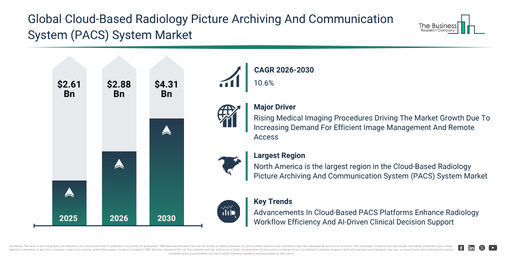
    Cloud-Based Radiology Picture Archiving And Communication System (PACS) System Market Set To Climb From $2.88 Billion In 2026 To $4.31 Billion By 2030

    The cloud-based radiology picture archiving and communication system (PACS) system market size has shown rapid development in recent years. This market is set to grow from $2.61 billion in 2025 to $2.88 billion in 2026, exhibiting a compound annual growth rate (CAGR) of 10.4%. The expansion observed in the historic period is attributable to several factors, including the increasing digitization of radiology departments, the adoption of on-premises PACS systems, rising imaging volumes, a growing demand for secure data storage, and the broader expansion of diagnostic imaging infrastructure.

    The cloud-based radiology picture archiving and communication system (PACS) system market is poised for significant expansion in the coming years. Its valuation is projected to reach $4.31 billion in 2030, exhibiting a compound annual growth rate (CAGR) of 10.6%. This anticipated expansion during the forecast period stems from factors such as the increasing embrace of cloud hosting services, greater integration with AI-powered diagnostic tools, a heightened need for sharing images across multiple sites, the proliferation of teleradiology offerings, and an intensified focus on system interoperability and integration. Key developments expected during this period involve the wider acceptance of cloud-based PACS solutions, a surge in demand for remote image access and collaborative tools, deeper integration with mobile access technologies, enhanced data storage and retrieval capabilities, and an elevated emphasis on automating workflows and reporting functions.

    Get A Free Sample Report With In-Depth Market Insights:

    https://thebusinessresearchcompany.com/sample_request?id=21910165&type=smp&name=Cloud-Based%20Radiology%20Picture%20Archiving%20And%20Communication%20System%20%28PACS%29%20System%20Market%20Report%202026&utm_source=Blogs&utm_medium=Paid&utm_campaign=Oct_PR

    Cloud-Based Radiology Picture Archiving And Communication System (PACS) System Market Growth Backed By Core Demand Fundamentals

    The cloud-based radiology picture archiving and communication system (PACS) market is anticipated to expand, driven by the rising number of medical imaging procedures. These procedures involve methods for producing internal body images, crucial for disease diagnosis, monitoring, and treatment guidance. The growing occurrence of chronic illnesses boosts the need for medical imaging, given its importance for precise diagnosis, tracking, and therapy. A cloud-based radiology picture archiving and communication system (PACS) supports medical imaging processes through secure online storage, management, and sharing of images, which facilitates quicker access, distant consultations, and more efficient operations for radiologists and healthcare professionals. As an illustration, the National Health Service, a UK-based government department, reported that referrals for brain magnetic resonance imaging (MRI) by general practitioners saw an increase from 8,695 in January 2022 to 8,745 in January 2023, as observed in May 2023. Consequently, the expanding volume of medical imaging procedures fuels the expansion of the cloud-based radiology picture archiving and communication system (PACS) market.

    Cloud-Based Radiology Picture Archiving And Communication System (PACS) System Market Segment Analysis And Revenue Potential

    The cloud-based radiology picture archiving and communication system (PACS) system market covered in this report is segmented –

    1) By Component: Software, Services

    2) By Technology Type: Artificial Intelligence Integration, Machine Learning Algorithms, Data Analytics Solutions, Mobile Access Solutions, Other Technology Types

    3) By Functionality: Image Storage And Retrieval, Image Sharing And Collaboration, Reporting Tools, Integration With Other Systems, Other Functionalities

    4) By Application Area: Diagnostic Imaging, X-Ray Imaging, Magnetic Resonance Imaging, Computed Tomography, Ultrasound

    5) By End-User: Hospitals, Imaging Centers, Research Institutions, Emergency Departments, Other End Users

    Subsegments:

    1) By Software: Image Storage And Archiving Software, Image Viewing And Visualization Software, Workflow And Reporting Software, Integration And Interoperability Software, Data Security And Access Control Software

    2) By Services: Installation And System Configuration Services, Maintenance And Technical Support Services, Cloud Hosting And Infrastructure Management Services, Data Migration And System Upgrade Services, Training And Consulting Services

    Cloud-Based Radiology Picture Archiving And Communication System (PACS) System Market Growth Trends Reshaping The Competitive Landscape

    Major companies engaged in the cloud-based radiology picture archiving and communication system (PACS) market are prioritizing the development of advanced solutions, including AI-enabled clinical workflow, to automate image analysis, streamline diagnostics, and enhance radiologist efficiency in real time. AI-enabled clinical workflow refers to the application of artificial intelligence to automate image analysis, prioritize cases, and support clinical decision-making, aiming for faster and more accurate patient care. For instance, in November 2023, Koninklijke Philips N.V., a Netherlands-based health technology company, unveiled HealthSuite Imaging, a cloud-based next generation of Vue PACS, incorporating new AI-enabled clinical and operational workflows at RSNA23. This cutting-edge platform unifies diagnostics, image management, reporting, and operational tools within a scalable environment, thereby enabling remote access, quicker AI adoption, and reduced IT costs for healthcare providers.

    Cloud-Based Radiology Picture Archiving And Communication System (PACS) System Market Competitive Analysis Of Leading Industry Participants

    Major companies operating in the cloud-based radiology picture archiving and communication system (PACS) system market are Siemens Healthineers AG, FUJIFILM Holdings Corporation, Koninklijke Philips N.V., General Electric Company, United Imaging Healthcare Co. Ltd., Carestream Health Inc., PaxeraHealth Inc., INFINITT Healthcare Co. Ltd., Visage Imaging Inc., Sectra AB, Novarad Corporation, Konica Minolta Inc., OnePACS LLC, Intelerad Medical Systems Inc., POSTDICOM Inc., CrelioHealth Inc., SARC MedIQ, OmniPACS Inc., eRAD Inc., Lifetrack, and Synthesis PACS Inc.

    View The Full Cloud-Based Radiology Picture Archiving And Communication System (PACS) System Market Report:

    https://thebusinessresearchcompany.com/report/cloud-based-radiology-picture-archiving-and-communication-system-pacs-system-market-report?utm_source=Blogs&utm_medium=Paid&utm_campaign=Oct_PR

    Cloud-Based Radiology Picture Archiving And Communication System (PACS) System Market Geographic Spread And Regional Opportunities

    North America was the largest region in the cloud-based radiology picture archiving and communication system (PACS) market in 2025. Asia-Pacific is expected to be the fastest-growing region in the forecast period. The regions covered in the cloud-based radiology picture archiving and communication system (PACS) system market report are Asia-Pacific, South East Asia, Western Europe, Eastern Europe, North America, South America, Middle East, Africa.

    Reach Out To Our Team:

    The Business Research Company: https://www.thebusinessresearchcompany.com/

    Americas: +1 310-496-7795

    Asia: +44 7882 955267 & +91 8897263534

    Europe: +44 7882 955267

    Email us at: marketing@tbrc.info

    Follow us on:

    LinkedIn: https://in.linkedin.com/company/the-business-research-company

    YouTube: https://www.youtube.com/channel/UC24_fI0rV8cR5DxlCpgmyFQ

    Global Market Model: https://www.thebusinessresearchcompany.com/global-market-model
  • Chromosomal Microarray Reflex Testing Market Trends Supporting 9.1% CAGR Growth Through 2030

    Chromosomal Microarray Reflex Testing Market Trends Supporting 9.1% CAGR Growth Through 2030

    Featuring market attractiveness scoring, total addressable market sizing, company benchmarking matrices, interactive Excel dashboards, deeper supply chain intelligence, emerging startup tracking, and granular product-level insights, The Business Research Company’s 2026 market reports are built to deliver research that is both more actionable and more strategically valuable.

    Chromosomal Microarray Reflex Testing Market Growth Potential: How Will Market Size Shift Through 2030?

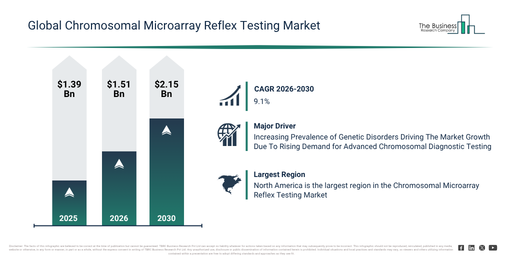
    The chromosomal microarray reflex testing market has experienced substantial expansion in recent years. It is projected to advance from $1.39 billion in 2025 to $1.51 billion in 2026, demonstrating a compound annual growth rate (CAGR) of 8.9%. This historical growth can be attributed to a heightened awareness of genetic disorders, the widespread adoption of array comparative genomic hybridization, increasing investments in molecular diagnostics, the expansion of hospital and laboratory infrastructure, and a rising demand for accurate prenatal testing.

    The chromosomal microarray reflex testing market is projected to experience substantial expansion over the coming years. This market is anticipated to reach $2.15 billion in 2030 at a compound annual growth rate (CAGR) of 9.1%. Factors contributing to this projected growth include the wider uptake of next-generation sequencing-based arrays, an increasing need for personalized medicine, the broadening scope of oncology and rare disease diagnostics, the greater incorporation of software for genomic data analysis, and an elevated emphasis on high-throughput and automated array platforms. Significant developments expected during this timeframe involve the increased use of high-resolution arrays, a surging requirement for genetic testing both before and after birth, enhanced incorporation of SNP arrays into clinical processes, further expansion within oncology and rare disease applications, and a heightened interest in bespoke and multiplexed array designs.

    Get A Free Sample Report With In-Depth Market Insights:

    https://thebusinessresearchcompany.com/sample_request?id=81210177&type=smp&name=Chromosomal%20Microarray%20Reflex%20Testing%20Market%20Report%202026&utm_source=Blogs&utm_medium=Paid&utm_campaign=Oct_PR

    Chromosomal Microarray Reflex Testing Market Demand Drivers: What’s Powering Industry Growth?

    The increasing occurrence of genetic disorders is anticipated to boost the growth of the chromosomal microarray (CMA) reflex testing market in the future. Genetic disorders are conditions stemming from irregularities in an individual’s DNA or chromosomes, which can be either inherited or develop from spontaneous mutations. This rising prevalence is largely attributed to the trend of delayed childbearing, as older maternal age significantly increases the probability of chromosomal abnormalities like Down syndrome and other trisomies, consequently expanding the population at risk who require genetic assessment. The heightened prevalence of genetic disorders fuels the need for chromosomal microarray testing, as it allows for high-resolution detection of submicroscopic deletions, duplications, and copy number variants that are not discernible through conventional karyotyping, thus enabling more precise diagnoses across a broader patient demographic. For instance, in October 2024, data from the Cystic Fibrosis Trust, a UK-based national charity, indicated that 11,148 individuals were living with cystic fibrosis (CF) in the UK in 2022, a number that rose to 11,318 in 2023. Consequently, the increasing prevalence of genetic disorders is a primary driver for the expansion of the chromosomal microarray (CMA) reflex testing market. The expanding prenatal screening is projected to drive the growth of the chromosomal microarray reflex testing market moving forward. Prenatal screening involves medical examinations performed during pregnancy to evaluate the risk of fetal abnormalities or genetic conditions. The increase in prenatal screening is driven by its capability for early detection, which allows for timely identification of fetal abnormalities and supports more informed healthcare decisions. Chromosomal microarray reflex testing aids prenatal screening by offering a detailed genetic analysis of the fetus, facilitating the identification of chromosomal abnormalities that might be overlooked by standard tests. For instance, in January 2026, the National Health Service, a UK-based government department, reported that the national performance rate for fetal anomaly ultrasound screening reached 97.0% in the second quarter of 2024–2025. Therefore, the growing prenatal screening is a key factor propelling the growth of the chromosomal microarray reflex testing market.

    Chromosomal Microarray Reflex Testing Market Segment Trends And Revenue Contributors

    The chromosomal microarray reflex testing market covered in this report is segmented –

    1) By Technology: Array Comparative Genomic Hybridization, Single Nucleotide Polymorphism Arrays, Other Technologies

    2) By Product Type: Consumables, Instruments, Software

    3) By Application: Genetic Disease Diagnosis, Oncology, Pre- And Post-Natal Testing, Other Applications

    4) By End-User: Hospitals And Clinics, Diagnostic Laboratories, Research And Academic Institutes, Other End-Users

    Subsegments:

    1) By Array Comparative Genomic Hybridization: Oligonucleotide Arrays, Bacterial Artificial Chromosome Arrays, cDNA Arrays, Custom Designed Arrays

    2) By Single Nucleotide Polymorphism Arrays: High Density SNP Arrays, Low Density SNP Arrays, Genome Wide SNP Arrays, Targeted SNP Arrays

    3) By Other Technologies: Multiplex Ligation Dependent Probe Amplification, Next Generation Sequencing Based Arrays, Fluorescence In Situ Hybridization, Quantitative PCR Based Arrays

    Chromosomal Microarray Reflex Testing Market Competitive Landscape: Who Leads The Industry?

    Major companies operating in the chromosomal microarray reflex testing market are Thermo Fisher Scientific Inc., Laboratory Corporation of America Holdings (LabCorp), Quest Diagnostics Incorporated, Agilent Technologies Inc., Illumina Inc., Natera Inc., Redcliffe Labs Inc., ARUP Laboratories LLC, Invitae Corporation, MedGenome Labs Ltd., Centogene N.V., Variantyx Inc., Baylor Genetics Laboratories LLC, Ganesh Diagnostic Pvt. Ltd., Partek Incorporated, ReproSource Inc., Paragon Genomics Inc., CURA4U Inc., Lucid Diagnostics Inc., Progenics Laboratories Pvt. Ltd.

    View The Full Chromosomal Microarray Reflex Testing Market Report:

    https://thebusinessresearchcompany.com/report/chromosomal-microarray-reflex-testing-market-report?utm_source=Blogs&utm_medium=Paid&utm_campaign=Oct_PR

    Chromosomal Microarray Reflex Testing Market Geographic Landscape: Which Region Dominates Industry Growth?

    North America was the largest region in the chromosomal microarray reflex testing market in 2025. Asia-Pacific is expected to be the fastest-growing region in the forecast period. The regions covered in the chromosomal microarray reflex testing market report are Asia-Pacific, South East Asia, Western Europe, Eastern Europe, North America, South America, Middle East, Africa.

    Reach Out To Our Team:

    The Business Research Company: https://www.thebusinessresearchcompany.com/

    Americas: +1 310-496-7795

    Asia: +44 7882 955267 & +91 8897263534

    Europe: +44 7882 955267

    Email us at: marketing@tbrc.info

    Follow us on:

    LinkedIn: https://in.linkedin.com/company/the-business-research-company

    YouTube: https://www.youtube.com/channel/UC24_fI0rV8cR5DxlCpgmyFQ

    Global Market Model: https://www.thebusinessresearchcompany.com/global-market-model
  • Cell And Gene Therapy (CGT) Scheduling Software Market Explained: What Is Fueling Growth To $0.8 Billion By 2030?

    Cell And Gene Therapy (CGT) Scheduling Software Market Explained: What Is Fueling Growth To $0.8 Billion By 2030?

    Built to provide research that’s more actionable and strategically valuable, The Business Research Company’s 2026 market reports include market attractiveness analysis, total addressable market sizing, company benchmarking matrices, interactive Excel dashboards, broader supply chain intelligence, emerging startup tracking, and in-depth product insights.

    Cell And Gene Therapy (CGT) Scheduling Software Market Size, Value And Growth Trajectory Through 2030

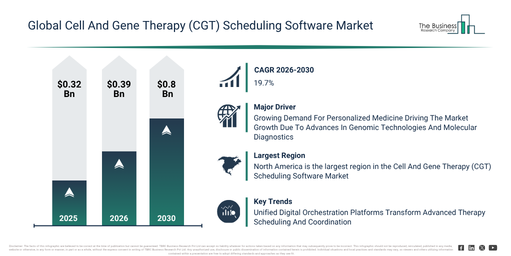
    The cell and gene therapy (CGT) scheduling software market size has experienced rapid expansion in recent years. It is projected to increase from $0.32 billion in 2025 to $0.39 billion in 2026, at a compound annual growth rate (CAGR) of 19.5%. The historical growth of this market can be attributed to the rising development of cell and gene therapies, the integration of digital scheduling tools into clinical workflows, an increasing emphasis on patient-centric treatment planning, stricter regulatory requirements for CGT tracking, and the expansion of biotechnology infrastructure.

    The cell and gene therapy (CGT) scheduling software market is projected for significant expansion over the coming years, reaching $0.8 billion by 2030, demonstrating a compound annual growth rate (CAGR) of 19.7%. This anticipated growth during the forecast period stems from factors such as the increasing deployment of AI-powered scheduling platforms, enhanced integration with cloud-based CGT systems, a heightened need for automated workflow and resource management, the broadening scope of tissue engineering applications, and the escalating requirement for predictive analytics in therapy delivery. Key trends anticipated within this period involve the greater uptake of cloud-based CGT scheduling software, an increasing call for integrated workflow management solutions, a sharpened emphasis on real-time supply chain synchronization, the proliferation of regulatory compliance and reporting instruments, and a growing implementation of training and support offerings.

    Get A Free Sample Report With In-Depth Market Insights:

    https://thebusinessresearchcompany.com/sample_request?id=86347428&type=smp&name=Cell%20And%20Gene%20Therapy%20%28CGT%29%20Scheduling%20Software%20Market%20Report%202026&utm_source=Blogs&utm_medium=Paid&utm_campaign=Oct_PR

    Cell And Gene Therapy (CGT) Scheduling Software Market Growth Momentum: What Factors Are Shaping Demand?

    The increasing need for personalized medical approaches is anticipated to fuel the expansion of the cell and gene therapy (CGT) scheduling software market in the future. Personalized medicine involves healthcare solutions and treatments customized for individual patients, considering their genetic composition, biological markers, and distinct disease traits. This demand is escalating due to progress in genomic technologies and molecular diagnostics, enabling medical professionals to customize treatments based on a patient’s genetic profile, thereby enhancing treatment effectiveness. Cell and gene therapy (CGT) scheduling software improves personalized medicine by simplifying the coordination of manufacturing processes unique to each patient, managing treatment schedules, and optimizing clinical procedures. This ensures that therapy is delivered precisely, promptly, and individually, aligned with each patient’s specific genetic characteristics. For example, data from February 2024, provided by the US-based non-profit Personalized Medicine Coalition, indicated that the Food and Drug Administration cleared 16 novel personalized therapies for rare disease patients in 2023, a significant rise from six in 2022. These approvals included seven drugs for cancer and three for various other conditions. Consequently, the escalating need for personalized medicine is a key impetus behind the growth of the cell and gene therapy (CGT) scheduling software market.

    Cell And Gene Therapy (CGT) Scheduling Software Market Segment Outlook: Which Categories Are Growing Fastest?

    The cell and gene therapy (CGT) scheduling software market covered in this report is segmented –

    1) By Component: Software, Services

    2) By Deployment Mode: Cloud-Based, On-Premises

    3) By Application: Cell Therapy, Gene Therapy, Tissue Engineering, Other Applications

    4) By End-User: Pharmaceutical Companies, Biotechnology Companies, Research Institutes, Hospitals And Clinics, Other End-Users

    Subsegments:

    1) By Software: Cloud-Based Software, On-Premises Software, Integrated Scheduling Platforms, Workflow Management Software, Supply Chain Coordination Software

    2) By Services: Implementation Services, Integration Services, Consulting Services, Training And Support Services, Maintenance Services

    Cell And Gene Therapy (CGT) Scheduling Software Market Trends Redefining Industry Growth

    Leading companies in the cell and gene therapy (CGT) scheduling software markets are concentrating on creating innovative solutions, such as unified digital orchestration platforms, to simplify intricate therapy scheduling, improve real-time supply chain visibility, and enhance coordination between manufacturers and healthcare providers. These unified digital orchestration platforms are integrated software systems designed to coordinate and automate complex workflows like patient scheduling, manufacturing slots, logistics tracking, and clinical site communication within a single centralized environment. For instance, in November 2025, TrakCel Ltd., a UK-based advanced therapy supply chain technology company, introduced Cell And Gene Therapy (CGT) Gateway, a digital orchestration platform aimed at streamlining access to cell and gene therapies for healthcare providers. This platform is a configurable, cloud-based solution that connects treatment centers, manufacturers, and logistics partners within a single digital ecosystem, facilitating automated referral management, patient onboarding, and scheduling workflows. The platform increases transparency through real-time tracking and milestone notifications, supports regulatory compliance with secure data management features, and reduces administrative burden by digitizing communication and documentation processes. It is engineered to accelerate therapy access, improve coordination among stakeholders, and minimize delays in time-sensitive autologous and allogeneic treatments.

    Cell And Gene Therapy (CGT) Scheduling Software Market Top Companies Driving Competitive Growth

    Major companies operating in the cell gene therapy (CGT) scheduling software market are market are Siemens AG, Deloitte Touche Tohmatsu Limited, Thermo Fisher Scientific Inc., GE Digital LLC, SAP SE, Rockwell Automation Inc., Dassault Systèmes SE, Infor Inc., Aspen Technology Inc., Azenta Life Sciences, Kinaxis Inc., QAD Inc., Bullhorn Inc., Cryoport Inc., MasterControl Inc., TrakCel Ltd., Bluecrux NV, MangoGem S.A., Title21 Health Solutions Inc, Vineti Inc.

    View The Full Cell And Gene Therapy (CGT) Scheduling Software Market Report:

    https://thebusinessresearchcompany.com/report/cell-and-gene-therapy-cgt-scheduling-software-market-report?utm_source=Blogs&utm_medium=Paid&utm_campaign=Oct_PR

    Cell And Gene Therapy (CGT) Scheduling Software Market Global Footprint: Which Region Leads The Industry?

    North America was the largest region in the cell and gene therapy (CGT) scheduling software market in 2025. Asia-Pacific is expected to be the fastest-growing region in the forecast period. The regions covered in the cell and gene therapy (cgt) scheduling software market report are Asia-Pacific, South East Asia, Western Europe, Eastern Europe, North America, South America, Middle East, Africa.

    Reach Out To Our Team:

    The Business Research Company: https://www.thebusinessresearchcompany.com/

    Americas: +1 310-496-7795

    Asia: +44 7882 955267 & +91 8897263534

    Europe: +44 7882 955267

    Email us at: marketing@tbrc.info

    Follow us on:

    LinkedIn: https://in.linkedin.com/company/the-business-research-company

    YouTube: https://www.youtube.com/channel/UC24_fI0rV8cR5DxlCpgmyFQ

    Global Market Model: https://www.thebusinessresearchcompany.com/global-market-model
  • Catheter-Associated Urinary Tract Infections Treatment Market Forecast To Reach $1.67 Billion By 2030: Key Trends Explained

    Catheter-Associated Urinary Tract Infections Treatment Market Forecast To Reach $1.67 Billion By 2030: Key Trends Explained

    Backed by market attractiveness analysis, total addressable market sizing, company benchmarking matrices, interactive Excel dashboards, wider supply chain intelligence, emerging startup coverage, and detailed product-level insights, The Business Research Company’s 2026 market reports are designed to offer research that is more actionable and strategically valuable than ever.

    Catheter-Associated Urinary Tract Infections Treatment Market CAGR Outlook And Future Development

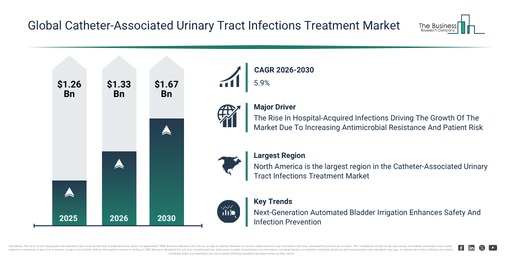
    The catheter-associated urinary tract infections treatment market has experienced robust expansion in recent years. It is projected to grow from $1.26 billion in 2025 to $1.33 billion in 2026, at a compound annual growth rate (CAGR) of 5.7%. This historical growth can be attributed to the increasing prevalence of catheter-associated urinary tract infections, a rise in patient volumes within hospitals and clinics, the adoption of antibiotics for treatment, the development of healthcare infrastructure, and heightened awareness of infection control measures.

    The catheter-associated urinary tract infections treatment market is poised for significant expansion over the coming years. Its valuation is projected to reach $1.67 billion by 2030, demonstrating a compound annual growth rate (CAGR) of 5.9%. This anticipated growth during the forecast period is primarily driven by factors such as the increasing embrace of urinary catheter coatings, the rising application of probiotics and immunotherapy, a heightened need for personalized treatment options, the expansion of online drug delivery and telehealth services, and a greater emphasis on preventive care and early intervention. Key developments expected in this period encompass the growing preference for non-antibiotic therapies, an escalating demand for catheter coatings and antimicrobial devices, a reinforced focus on customized CAUTI treatment approaches, the broadening of online and retail drug distribution channels, and enhanced public awareness regarding the early detection and prevention of CAUTI.

    Get A Free Sample Report With In-Depth Market Insights:

    https://thebusinessresearchcompany.com/sample_request?id=35565477&type=smp&name=Catheter-Associated%20Urinary%20Tract%20Infections%20Treatment%20Market%20Report%202026&utm_source=Blogs&utm_medium=Paid&utm_campaign=Oct_PR

    Catheter-Associated Urinary Tract Infections Treatment Market Expansion Drivers: What’s Shaping Future Growth?

    Future growth in the catheter-associated urinary tract infections treatment market is anticipated to be fueled by an increase in hospital-acquired infection rates. These rates signify how often patients acquire infections while hospitalized, which were not present upon their admission. The main cause of this increase is antimicrobial resistance, enabling pathogens to withstand typical treatments and spread readily within medical environments. Catheter-associated urinary tract infections treatment contributes to decreasing hospital-acquired infections by efficiently preventing and managing those linked to indwelling catheters, consequently boosting patient safety and diminishing healthcare-associated complications. As an illustration, the Center for Infectious Disease Research and Policy (CIDRAP), a US-based disease research organization, reported in May 2024 that approximately 4.3 million patients annually in hospitals throughout the European Union and European Economic Area contracted at least one healthcare-acquired infection during 2022 and 2023. Thus, the escalation in hospital-acquired infection rates is a key factor propelling the expansion of the catheter-associated urinary tract infections treatment market.

    Catheter-Associated Urinary Tract Infections Treatment Market Segment Landscape: Which Areas Lead Development?

    The catheter-associated urinary tract infections treatment market covered in this report is segmented –

    1) By Treatment Type: Antibiotics, Non-Antibiotic Therapies

    2) By Drug Type: Penicillin And Combinations, Quinolones, Cephalosporin, Aminoglycoside Antibiotics, Sulphonamides, Azoles And Amphotericin B, Tetracycline, Nitrofurans, Other Drug Types

    3) By Indication Type: Asymptomatic Catheter-Associated Urinary Tract Infection, Symptomatic Catheter-Associated Urinary Tract Infection

    4) By Distribution Channel: Hospital Pharmacies, Gynaecology And Urology Clinics, Drug Stores, Retail Pharmacies, Online Drug Stores

    5) By End-Users: Clinic, Hospital, Other End-Users

    Subsegments:

    1) By Antibiotics: Penicillins, Cephalosporins, Fluoroquinolones, Aminoglycosides, Sulfonamides

    2) By Non-Antibiotic Therapies: Urinary Catheter Coatings, Probiotics, Cranberry Extracts, Immunotherapy, Bladder Irrigation Solutions

    Catheter-Associated Urinary Tract Infections Treatment Market Strategic Trends: What Defines The Next Growth Phase?

    Companies operating within the catheter-associated urinary tract infection treatment market are increasingly focusing on the development of advanced solutions, such as automated bladder irrigation systems, to enhance infection prevention and standardize catheter care practices. These automated systems represent a technology designed to control the inflow and outflow of irrigation fluid via sensors, thereby delivering safe and consistent cleansing cycles while minimizing contamination risks through a closed-system design. As an illustration, in January 2026, UMED Inc., a healthcare company from South Korea, globally unveiled UroRinse Light at CES 2026. This product was introduced as the world’s first fully automated and standardized bladder irrigation system specifically engineered for individuals using long-term urinary catheters. The system employs sensor-based automated control to manage irrigation flow, ensuring reproducible treatment cycles and significantly reducing contamination thanks to its closed structure. It supports usage across various environments, including hospitals, care facilities, and home settings, thus enabling patients and their caregivers to perform safe and repeatable bladder irrigation procedures beyond conventional clinical environments. Furthermore, the device integrates with a mobile application and a cloud database to record irrigation history and track patient status, with future plans for integration into EMR systems and remote care platforms to bolster continuous monitoring and proactive infection prevention efforts.

    Catheter-Associated Urinary Tract Infections Treatment Market Leading Players And Competitive Positioning

    Major companies operating in the catheter-associated urinary tract infections treatment market are Cardinal Health Inc., Pfizer Incorporated, Bayer Aktiengesellschaft, AstraZeneca Public Limited Company, Medline Industries, Limited Partnership, Becton, Dickinson Company, B. Braun Societät mit beschränkter Haftung, Merck Company Inc, Coloplast A/S, Teleflex Incorporated, ConvaTec Group Public Limited Company, Hollister Incorporated, Vygon S.A., Wellspect Healthcare AB, Urocare Products Inc, Paul Hartmann Aktiengesellschaft, Bactiguard AB, NanoVibronix Inc, WellLead Medical Co Limited, Poiesis Medical LLC.

    View The Full Catheter-Associated Urinary Tract Infections Treatment Market Report:

    https://thebusinessresearchcompany.com/report/catheter-associated-urinary-tract-infections-treatment-market-report?utm_source=Blogs&utm_medium=Paid&utm_campaign=Oct_PR

    Catheter-Associated Urinary Tract Infections Treatment Market Regional Distribution: Which Areas Power Market Growth?

    North America was the largest region in the catheter-associated urinary tract infections treatment market in 2025. Asia-Pacific is expected to be the fastest-growing region in the forecast period. The regions covered in the catheter-associated urinary tract infections treatment market report are Asia-Pacific, South East Asia, Western Europe, Eastern Europe, North America, South America, Middle East, Africa.

    Reach Out To Our Team:

    The Business Research Company: https://www.thebusinessresearchcompany.com/

    Americas: +1 310-496-7795

    Asia: +44 7882 955267 & +91 8897263534

    Europe: +44 7882 955267

    Email us at: marketing@tbrc.info

    Follow us on:

    LinkedIn: https://in.linkedin.com/company/the-business-research-company

    YouTube: https://www.youtube.com/channel/UC24_fI0rV8cR5DxlCpgmyFQ

    Global Market Model: https://www.thebusinessresearchcompany.com/global-market-model
  • Cardiopulmonary Resuscitation (CPR) And First Aid Training Market Forecast: Breaking Down The Numbers Behind Future Expansion

    Cardiopulmonary Resuscitation (CPR) And First Aid Training Market Forecast: Breaking Down The Numbers Behind Future Expansion

    Built to provide research that’s more actionable and strategically valuable, The Business Research Company’s 2026 market reports include market attractiveness analysis, total addressable market sizing, company benchmarking matrices, interactive Excel dashboards, broader supply chain intelligence, emerging startup tracking, and in-depth product insights.

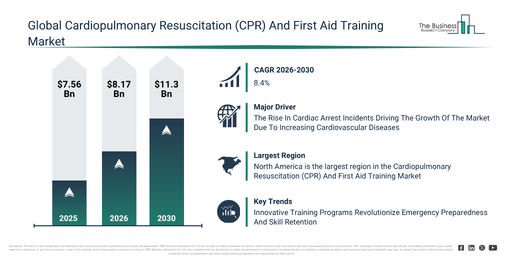
    Cardiopulmonary Resuscitation (CPR) And First Aid Training Market Poised To Hit $11.3 Billion By 2030 With A 8.4% CAGR

    The cardiopulmonary resuscitation (CPR) and first aid training market size has shown significant development in recent years. This market is expected to expand from $7.56 billion in 2025 to $8.17 billion in 2026, achieving a compound annual growth rate (CAGR) of 8.2%. Factors contributing to its historical growth include greater public understanding of cardiac arrest and the necessity of emergency response, an increase in corporate health and safety initiatives, the implementation of structured first aid programs within schools, rising training demands for healthcare providers, and strengthened regulatory requirements for safety in the workplace.

    The cardiopulmonary resuscitation (CPR) and first aid training market is projected to experience robust expansion over the upcoming years. Its value is forecast to reach $11.3 billion by 2030, exhibiting a compound annual growth rate (CAGR) of 8.4%. This anticipated growth is driven by several factors, including the increasing integration of digital and hybrid training platforms, a surge in demand for AI-powered simulation training, a heightened emphasis on community emergency preparedness, the broadening of corporate and institutional training initiatives, and a greater focus on pediatric and advanced life support curricula. Key trends anticipated during this period encompass the growing popularity of online and mixed-mode training programs, a heightened need for pediatric and specialized CPR courses, an increased dedication to workplace first aid and safety adherence, the expansion of community-centric and public awareness initiatives, and a greater incorporation of simulation alongside hands-on practical training.

    Get A Free Sample Report With In-Depth Market Insights:

    https://thebusinessresearchcompany.com/sample_request?id=74445111&type=smp&name=Cardiopulmonary%20Resuscitation%20%28CPR%29%20And%20First%20Aid%20Training%20Market%20Report%202026&utm_source=Blogs&utm_medium=Paid&utm_campaign=Oct_PR

    Cardiopulmonary Resuscitation (CPR) And First Aid Training Market Growth Drivers: What’s Behind The Acceleration?

    The rising occurrence of cardiac arrest is anticipated to boost the expansion of the cardiopulmonary resuscitation (CPR) and first aid training market in the coming years. Cardiac arrest signifies an abrupt medical crisis where the heart suddenly ceases effective pumping, leading to an instant cessation of blood circulation to the brain and other crucial organs, necessitating immediate action. This surge in cardiac arrest cases is mainly linked to the increasing prevalence of cardiovascular conditions that compromise heart function and heighten the likelihood of sudden heart failure. Training in CPR and first aid provides individuals with the necessary abilities and assurance to react swiftly and competently during cardiac arrest incidents, substantially enhancing survival outcomes and minimizing the chance of lasting neurological issues. Heightened recognition of the value of prompt intervention has resulted in broader acceptance of CPR and first aid training initiatives in various environments, including workplaces, schools, and public areas. As an illustration, the Sudden Cardiac Arrest Foundation (SCAF), a US-based nonprofit organization dedicated to addressing sudden cardiac arrest, reports that approximately 350,000 out-of-hospital cardiac arrests (OHCAs) happen each year in the United States, highlighting the essential requirement for extensive emergency response education. Consequently, the growing number of cardiac arrest occurrences is propelling the expansion of the cardiopulmonary resuscitation (CPR) and first aid training market.

    Cardiopulmonary Resuscitation (CPR) And First Aid Training Market Segment Trends And Revenue Contributors

    The cardiopulmonary resuscitation (CPR) and first aid training market covered in this report is segmented –

    1) By Training Type: Cardiopulmonary Resuscitation (CPR) Training, First Aid Training, Combined Cardiopulmonary Resuscitation And First Aid Training

    2) By Delivery Method: In-Person Training, Online Training, Blended or Hybrid Training

    3) By End User: Individuals, Corporate, Schools And Educational Institutions, Healthcare Providers, Community Organizations, Other End Users

    Subsegments:

    1) By Cardiopulmonary Resuscitation (CPR) Training: Basic Life Support Training, Advanced Cardiac Life Support Training, Automated External Defibrillator Training, Pediatric Cardiopulmonary Resuscitation (CPR) Training

    2) By First Aid Training: Basic First Aid Training, Advanced First Aid Training, Workplace First Aid Training, Emergency Trauma Care Training

    3) By Combined Cardiopulmonary Resuscitation And First Aid Training: Basic Combined Training, Advanced Combined Training, Workplace Combined Training, Pediatric Combined Training

    Cardiopulmonary Resuscitation (CPR) And First Aid Training Market Trends: What’s Defining The Industry’s Next Phase?

    Leading companies within the cardiopulmonary resuscitation (CPR) and first aid training market are concentrating on creating innovative solutions, such as improved instructor-led and digital training initiatives, aimed at boosting skill retention and improving emergency response outcomes. These enhanced instructor-led and digital training programs represent modernized CPR and first aid courses that integrate expert-led in-person teaching with interactive online components, simulations, and multimedia resources to enhance learning, engagement, and skill retention. As an illustration, in December 2025, the American Red Cross, a US-based nonprofit humanitarian organization, introduced its advanced first aid, cardiopulmonary resuscitation, and automated external defibrillator (CPR/AED) program. This significantly upgraded curriculum was designed to elevate both the instructor and learner experiences, incorporating updated course content based on the latest scientific research, providing free digital instructor materials and lesson plans, establishing a centralized program administrative database for streamlined class management, and employing adaptive and peer-to-peer learning methods to improve engagement. Furthermore, it includes updated infant CPR techniques aligned with current evidence-based practices, offers optional skill boost modules covering topics such as life-threatening bleeding and opioid overdose response, and is supported by the complimentary Red Cross First Aid app for on-the-go guidance.

    Cardiopulmonary Resuscitation (CPR) And First Aid Training Market Key Players Shaping Industry Direction

    Major companies operating in the cardiopulmonary resuscitation (CPR) first aid training market are American Red Cross, Canadian Red Cross Society, Australian Red Cross Society, British Red Cross Society, Health Safety Institute, St. John Ambulance, National Safety Council, Pacific Medical Training, Safety First Aid Group, Resuscitation Council (UK), LifeSavers, Incorporated, Atlantic Training Center, Emergency First Response, First Aid Academy, GoRescue Limited, ProTrainings, First Response Training International, International CPR Institute, Training Solutions North West, VMEDO Academy.

    View The Full Cardiopulmonary Resuscitation (CPR) And First Aid Training Market Report:

    https://thebusinessresearchcompany.com/report/cardiopulmonary-resuscitation-cpr-and-first-aid-training-market-report?utm_source=Blogs&utm_medium=Paid&utm_campaign=Oct_PR

    Cardiopulmonary Resuscitation (CPR) And First Aid Training Market Regional Analysis: Which Geography Leads On Revenue?

    North America was the largest region in the cardiopulmonary resuscitation (CPR) and first aid training market in 2025. Asia-Pacific is expected to be the fastest-growing region in the forecast period. The regions covered in the cardiopulmonary resuscitation (CPR) and first aid training market report are Asia-Pacific, South East Asia, Western Europe, Eastern Europe, North America, South America, Middle East, Africa.

    Reach Out To Our Team:

    The Business Research Company: https://www.thebusinessresearchcompany.com/

    Americas: +1 310-496-7795

    Asia: +44 7882 955267 & +91 8897263534

    Europe: +44 7882 955267

    Email us at: marketing@tbrc.info

    Follow us on:

    LinkedIn: https://in.linkedin.com/company/the-business-research-company

    YouTube: https://www.youtube.com/channel/UC24_fI0rV8cR5DxlCpgmyFQ

    Global Market Model: https://www.thebusinessresearchcompany.com/global-market-model
  • Cardiometabolic-Sleep Comorbidity Treatment Market Expected To Grow At 11.1% CAGR Through 2030: What Businesses Need To Know

    Backed by market attractiveness analysis, total addressable market sizing, company benchmarking matrices, interactive Excel dashboards, wider supply chain intelligence, emerging startup coverage, and detailed product-level insights, The Business Research Company’s 2026 market reports are designed to offer research that is more actionable and strategically valuable than ever.

    Cardiometabolic-Sleep Comorbidity Treatment Market Size And Revenue Outlook Through 2030

    The cardiometabolic-sleep comorbidity treatment market size has experienced significant expansion recently. This market is projected to expand from $6.25 billion in 2025 to reach $6.94 billion in 2026, demonstrating a compound annual growth rate (CAGR) of 10.9%. Factors contributing to this historical growth include the increasing occurrence of obstructive sleep apnea and obesity, enhanced awareness of cardiometabolic disorders, the uptake of positive airway pressure devices, the widening reach of hospital and sleep clinic networks, and a greater emphasis on lifestyle interventions.

    The cardiometabolic-sleep comorbidity treatment market size is poised for rapid expansion over the coming years. It is projected to reach $10.58 billion in 2030, demonstrating a compound annual growth rate (CAGR) of 11.1%. This growth in the forecast period is attributable to the increasing adoption of AI-based risk scoring and predictive analytics, greater integration of telemonitoring platforms, a rising demand for combination pharmacotherapies, the expansion of personalized care-management services, and a growing emphasis on patient education and adherence programs. Prominent trends for the forecast period include the increasing adoption of wearable sleep and cardiometabolic monitoring devices, a surging demand for personalized lifestyle and care-management programs, the growing integration of telemonitoring and remote risk stratification, the expansion of multi-disorder therapeutic approaches, and a rising focus on weight-loss pharmacotherapy and medication optimization.

    Get A Free Sample Report With In-Depth Market Insights:

    https://thebusinessresearchcompany.com/sample_request?id=64032794&type=smp&name=Cardiometabolic-Sleep%20Comorbidity%20Treatment%20Market%20Report%202026&utm_source=Blogs&utm_medium=Paid&utm_campaign=Oct_PR

    Cardiometabolic-Sleep Comorbidity Treatment Market Growth Factors Behind Sustained Expansion

    The increasing occurrence of cardiometabolic conditions is projected to fuel expansion within the cardiometabolic sleep comorbidity treatment market throughout the predicted timeframe. These disorders encompass a group of interconnected ailments, such as cardiovascular diseases, type 2 diabetes, obesity, and metabolic syndrome, each substantially elevating the likelihood of heart disease, stroke, and enduring metabolic issues. The escalating impact of these conditions stems from several factors, including poor dietary habits, inactive lifestyles, an aging global population, and rising obesity rates. Treatments for cardiometabolic-sleep comorbidity tackle the significant two-way link with sleep disorders by concurrently managing both sleep disruptions and metabolic irregularities. For example, data from October 2024, provided by the US-based government agency, the Centers for Disease Control and Prevention, indicates that cardiovascular disease was responsible for 919,032 deaths in the United States in 2023, making up roughly one in every three deaths. Coronary heart disease continued to be the most common type of cardiovascular disease, with almost one in six associated fatalities affecting adults under the age of 65. Consequently, the increasing occurrence of cardiometabolic disorders is indeed fostering the expansion of the cardiometabolic sleep comorbidity treatment market.

    Cardiometabolic-Sleep Comorbidity Treatment Market Segment Analysis Spotlighting Growth Areas

    The cardiometabolic-sleep comorbidity treatment market covered in this report is segmented –

    1) By Treatment Component: Positive Airway Pressure Therapy And Sleep Apnea Devices, Weight-Loss Pharmacotherapy, Hypertension Or Diabetes Meds Optimization Programs, Remote Monitoring And Risk Stratification Analytics, Lifestyle And Care-Management Services

    2) By Comorbidity Pathways: Obstructive Sleep Apnea And Obesity Management, Obstructive Sleep Apnea And Hypertension Or Cardiovascular Risk Control, Obstructive Sleep Apnea And Type-2 Diabetes Management, Heart Failure And Sleep-Disordered Breathing, Other Metabolic Sleep Phenotypes

    3) By Therapeutic Area: Obstructive Sleep Apnea With Cardiometabolic Disorders, Insomnia With Cardiometabolic Disorders, Restless Leg Syndrome With Cardiometabolic Disorders, Other Sleep Disorders With Cardiometabolic Disorders

    4) By End User: Hospitals And Cardiometabolic Clinics, Sleep Clinics Or Durable Medical Equipment Networks, Retail Pharmacy Channel, Payers Or Population Health Managers

    Subsegments:

    1) By Positive Airway Pressure Therapy And Sleep Apnea Devices: Continuous Positive Airway Pressure Devices, Automatic Positive Airway Pressure Devices, Bi-Level Positive Airway Pressure Devices, Adaptive Servo-Ventilation Devices

    2) By Weight-Loss Pharmacotherapy: Glucagon-Like Peptide One Receptor Agonists, Lipase Inhibitors, Appetite Suppressants, Combination Therapies

    3) By Hypertension Or Diabetes Meds Optimization Programs: Antihypertensive Therapy Management, Antidiabetic Therapy Management, Polypharmacy Optimization, Medication Adherence Programs

    4) By Remote Monitoring And Risk Stratification Analytics: Wearable Devices, Telemonitoring Platforms, Predictive Analytics, Artificial Intelligence-Based Risk Scoring

    5) By Lifestyle And Care-Management Services: Nutritional Counseling, Exercise And Fitness Programs, Behavioral Therapy, Patient Education And Support

    Cardiometabolic-Sleep Comorbidity Treatment Market Industry Trends Fueling Future Revenue Growth

    Leading companies in the cardiometabolic sleep comorbidity treatment market are concentrating on developing innovative solutions, such as targeted pharmacotherapies, to concurrently address obesity, metabolic disorders, and obstructive sleep apnea. Targeted pharmacotherapies are medications designed to act on specific biological pathways or disease mechanisms, aiming to treat particular conditions more effectively with fewer side effects. For instance, in December 2024, Eli Lilly and Company, a US based pharmaceutical company, secured U.S. Food and Drug Administration approval for Zepbound, specifically for the treatment of moderate to severe obstructive sleep apnea in adults with obesity, marking the inaugural pharmacological therapy authorized for this condition. This approval was based on clinical trial data demonstrating significant reductions in apnea–hypopnea events and meaningful weight loss among patients using the drug alongside lifestyle interventions. This milestone provides a new treatment option for patients who experience challenges with conventional therapies like continuous positive airway pressure, thereby expanding the available management strategies for obstructive sleep apnea.

    Cardiometabolic-Sleep Comorbidity Treatment Market Competitive Analysis Of Leading Industry Participants

    Major companies operating in the cardiometabolic-sleep comorbidity treatment market are Pfizer Inc, Sanofi S.A, Novartis AG, Eli Lilly & Company, Novo Nordisk A/S, Medtronic PLC, Takeda Pharmaceutical Company Limited, Koninklijke Philips N.V., Boehringer Ingelheim International GmbH, Otsuka Pharmaceutical Co Ltd., AstraZeneca PLC, Omron Healthcare Co. Ltd., ResMed Inc., Dexcom Inc., Teladoc Health Inc., Fisher Paykel Healthcare Corporation Limited, BioSerenity SA, BMC Medical Co Ltd, CardiacSense Ltd, Compumedics Ltd.

    View The Full Cardiometabolic-Sleep Comorbidity Treatment Market Report:

    https://thebusinessresearchcompany.com/report/cardiometabolic-sleep-comorbidity-treatment-market-report?utm_source=Blogs&utm_medium=Paid&utm_campaign=Oct_PR

    Cardiometabolic-Sleep Comorbidity Treatment Market Geographic Spread And Regional Opportunities

    North America was the largest region in the cardiometabolic-sleep comorbidity treatment market in 2025. Asia-Pacific is expected to be the fastest-growing region in the forecast period. The regions covered in the cardiometabolic-sleep comorbidity treatment market report are Asia-Pacific, South East Asia, Western Europe, Eastern Europe, North America, South America, Middle East, Africa.

    Reach Out To Our Team:

    The Business Research Company: https://www.thebusinessresearchcompany.com/

    Americas: +1 310-496-7795

    Asia: +44 7882 955267 & +91 8897263534

    Europe: +44 7882 955267

    Email us at: marketing@tbrc.info

    Follow us on:

    LinkedIn: https://in.linkedin.com/company/the-business-research-company

    YouTube: https://www.youtube.com/channel/UC24_fI0rV8cR5DxlCpgmyFQ

    Global Market Model: https://www.thebusinessresearchcompany.com/global-market-model
  • Artificial Intelligence (AI)-Assisted Variant Reinterpretation Market Forecast 2026–2030: Market Size, Trends And Growth Opportunities

    Artificial Intelligence (AI)-Assisted Variant Reinterpretation Market Forecast 2026–2030: Market Size, Trends And Growth Opportunities

    Backed by market attractiveness analysis, total addressable market sizing, company benchmarking matrices, interactive Excel dashboards, wider supply chain intelligence, emerging startup coverage, and detailed product-level insights, The Business Research Company’s 2026 market reports are designed to offer research that is more actionable and strategically valuable than ever.

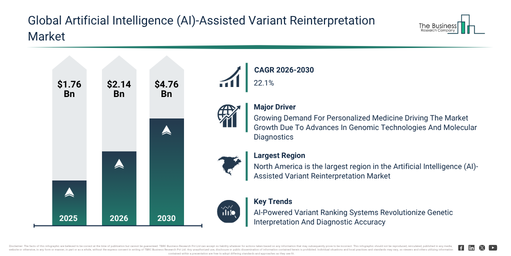
    Artificial Intelligence (AI)-Assisted Variant Reinterpretation Market Value Growth And Long-Term Outlook

    The market size for artificial intelligence (AI)-assisted variant reinterpretation has experienced rapid expansion recently. This market is projected to increase from $1.76 billion in 2025 to $2.14 billion in 2026, demonstrating a compound annual growth rate (CAGR) of 21.8%. Factors contributing to its historical growth include the increasing availability of genomic data, the escalating demand for precise variant classification, the integration of AI into clinical research, heightened regulatory focus on diagnostic accuracy, and the proliferation of precision medicine initiatives.

    The artificial intelligence (AI)-assisted variant reinterpretation market is projected to experience substantial expansion over the upcoming years. This market is anticipated to reach $4.76 billion by 2030, demonstrating a compound annual growth rate (CAGR) of 22.1%. Factors contributing to this growth during the forecast period include the increasing incorporation of machine learning and deep learning platforms, wider acceptance of natural language processing for literature review, a surge in demand for cloud-based deployments, the expansion of AI-driven drug development, and an intensified focus on real-time variant monitoring and reinterpretation. Key trends anticipated during this period encompass the growing uptake of cloud-based variant reinterpretation platforms, an escalating demand for AI-powered clinical decision support, greater integration with electronic health records (EHR), the proliferation of real-time data annotation and labeling tools, and an increasing emphasis on personalized medicine and patient-focused diagnostics.

    Get A Free Sample Report With In-Depth Market Insights:

    https://thebusinessresearchcompany.com/sample_request?id=10106601&type=smp&name=Artificial%20Intelligence%20%28AI%29-Assisted%20Variant%20Reinterpretation%20Market%20Report%202026&utm_source=Blogs&utm_medium=Paid&utm_campaign=Oct_PR

    Artificial Intelligence (AI)-Assisted Variant Reinterpretation Market Industry Drivers: What’s Behind The Revenue Growth?

    The increasing need for personalized medicine is anticipated to fuel the expansion of the artificial intelligence (AI)-assisted variant reinterpretation market throughout the forecast period. Personalized medicine involves customizing medical treatments and therapeutic approaches for individual patients based on their distinct genetic profiles, biomarkers, and disease characteristics. This escalating demand stems from advancements in genomic sequencing technologies and molecular diagnostics, which enable more precise identification of genetic variants and facilitate individualized treatment decisions that lead to improved clinical outcomes. AI-assisted variant reinterpretation plays a vital role in personalized medicine by efficiently scrutinizing and re-evaluating genetic variants as novel clinical evidence emerges. Such solutions empower clinicians and researchers to generate accurate, patient-specific insights essential for diagnosis, treatment selection, and risk assessment, simultaneously reducing the time and complexity typically associated with manual variant interpretation. For instance, in February 2024, the Personalized Medicine Coalition, a US-based non-profit organization, reported that the U.S. Food and Drug Administration approved 16 new personalized treatments for rare disease patients in 2023, a significant increase from six in 2022. Consequently, the rising demand for personalized medicine is a key factor driving the growth of the artificial intelligence (AI)-assisted variant reinterpretation market.

    Artificial Intelligence (AI)-Assisted Variant Reinterpretation Market Segment Outlook: Which Categories Are Growing Fastest?

    The artificial intelligence (AI)-assisted variant reinterpretation market covered in this report is segmented –

    1) By Component: Software, Services

    2) By Technology: Machine Learning, Deep Learning And Neural Networks, Natural Language Processing

    3) By Deployment Mode: Cloud-Based, On-Premises

    4) By Application: Clinical Diagnostics, Research, Drug Development, Personalized Medicine, Other Applications

    5) By End-User: Hospitals And Clinics, Research Institutes, Pharmaceutical And Biotechnology Companies, Diagnostic Laboratories, Other End-Users

    Subsegments:

    1) By Software: Machine Learning Platforms, Natural Language Processing Platforms, Computer Vision Platforms, Speech Recognition Platforms, Data Labeling And Annotation Tools, Model Training And Development Tools, Model Deployment And Monitoring Tools, Decision Support Systems

    2) By Services: Professional Services, Managed Services, Consulting Services, Integration And Implementation Services, Support And Maintenance Services, Training And Education Services

    #Artificial Intelligence (AI)-Assisted Variant Reinterpretation Market Growth Trends: What’s Shaping The Future Outlook?

    Companies operating within the artificial intelligence (AI)-assisted variant reinterpretation market are increasingly concentrating on developing innovative solutions, such as explainable AI–powered variant ranking systems, to streamline genetic variant interpretation and enhance diagnostic accuracy. An AI-powered variant ranking system is a machine-learning–based tool that automatically scores and prioritizes genetic variants based on their likelihood of pathogenicity, allowing clinicians and geneticists to focus on the most clinically relevant findings. For example, in October 2024, SeqOne S.A.S., an AI-driven genomic software company based in France, introduced the DiagAI Score. This explainable AI–powered metric evaluates and ranks genetic variants on a 0–100 scale, taking into account pathogenicity, phenotype relevance, inheritance patterns, and data quality criteria. The solution integrates advanced components like the Universal Pathogenicity Predictor (UP²) and Phenogenius to generate clinically meaningful scores while ensuring human expert oversight.

    Artificial Intelligence (AI)-Assisted Variant Reinterpretation Market Key Players Shaping Industry Direction

    Major companies operating in the artificial intelligence (AI)-assisted variant reinterpretation market are Illumina Inc., Tempus Labs Inc., Invitae Corporation, MedGenome Labs Private Limited, SOPHiA GENETICS S.A., Genomenon Inc., DNAnexus Inc., Alstronix Technologies Pvt Ltd, Lifebit Genomics Ltd, Strand Life Sciences Private Limited, Galatea Bio Inc., Clear Labs Inc., Congenica Ltd, Epigene Labs Pvt Ltd, Genoox Ltd, Breakthrough Genomics Inc., Genix.ai Inc., Nostos Genomics Inc., Variant Bio Inc., SeqOne Systems S.A.

    View The Full Artificial Intelligence (AI)-Assisted Variant Reinterpretation Market Report:

    https://thebusinessresearchcompany.com/report/artificial-intelligence-ai-assisted-variant-reinterpretation-market-report?utm_source=Blogs&utm_medium=Paid&utm_campaign=Oct_PR

    Artificial Intelligence (AI)-Assisted Variant Reinterpretation Market Regional Analysis: Which Region Leads By Revenue?

    North America was the largest region in the artificial intelligence (AI)-assisted variant reinterpretation market in 2025. Asia-Pacific is expected to be the fastest-growing region in the forecast period. The regions covered in the artificial intelligence (AI)-assisted variant reinterpretation market report are Asia-Pacific, South East Asia, Western Europe, Eastern Europe, North America, South America, Middle East, Africa.

    Reach Out To Our Team:

    The Business Research Company: https://www.thebusinessresearchcompany.com/

    Americas: +1 310-496-7795

    Asia: +44 7882 955267 & +91 8897263534

    Europe: +44 7882 955267

    Email us at: marketing@tbrc.info

    Follow us on:

    LinkedIn: https://in.linkedin.com/company/the-business-research-company

    YouTube: https://www.youtube.com/channel/UC24_fI0rV8cR5DxlCpgmyFQ

    Global Market Model: https://www.thebusinessresearchcompany.com/global-market-model
  • Arenavirus Diagnostics Market Outlook Through 2030: Understanding The Growth Opportunity

    Arenavirus Diagnostics Market Outlook Through 2030: Understanding The Growth Opportunity

    Featuring market attractiveness scoring, total addressable market sizing, company benchmarking matrices, interactive Excel dashboards, deeper supply chain intelligence, emerging startup tracking, and granular product-level insights, The Business Research Company’s 2026 market reports are built to deliver research that is both more actionable and more strategically valuable.

    Arenavirus Diagnostics Market Size Forecast: How Big Could The Market Get By 2030?

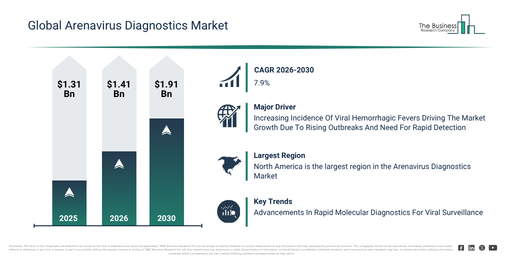
    The arenavirus diagnostics market size has demonstrated robust growth in recent years. This market is expected to expand from $1.31 billion in 2025 to $1.41 billion in 2026, reflecting a compound annual growth rate (CAGR) of 7.7%. The surge observed in the past can be ascribed to an increase in arenavirus infection cases, the incorporation of molecular diagnostic techniques, the proliferation of hospital and clinical laboratories, a heightened demand for serological testing, and an escalation in research dedicated to hemorrhagic fevers.

    The arenavirus diagnostics market size is projected to experience substantial growth in the upcoming years, reaching a valuation of $1.91 billion by 2030, exhibiting a compound annual growth rate (CAGR) of 7.9%. This expansion during the forecast period is fueled by factors such as the increasing uptake of automated PCR and ELISA systems, a rising need for swift point-of-care diagnostics, the proliferation of research facilities dedicated to viral diseases, the growing incorporation of AI-powered diagnostic analytics, and enhanced funding for infectious disease diagnostics. Key developments anticipated in this period include a greater embrace of PCR-based arenavirus diagnostic methods, increasing demand for quick diagnostic testing tools, the wider integration of next-generation sequencing technologies, the broadening of diagnostic testing services, and an intensified focus on ensuring laboratory validation and quality assurance.

    Get A Free Sample Report With In-Depth Market Insights:

    https://thebusinessresearchcompany.com/sample_request?id=59044754&type=smp&name=Arenavirus%20Diagnostics%20Market%20Report%202026&utm_source=Blogs&utm_medium=Paid&utm_campaign=Oct_PR

    Arenavirus Diagnostics Market Growth Catalysts And Demand Drivers

    The rising occurrence of viral hemorrhagic fevers is anticipated to drive the future growth of the arenavirus diagnostics market. Viral hemorrhagic fevers (VHFs) are severe illnesses caused by viruses that damage blood vessels, hinder the body’s clotting ability, and can result in extensive bleeding, multi-organ failure, and high mortality. The frequency of VHFs is increasing due to greater human interaction with wildlife and natural reservoirs, which elevates the risk of virus transmission from animals to humans. Arenavirus diagnostics facilitate the rapid and accurate detection of arenaviruses, allowing healthcare providers to identify these fevers early, implement prompt treatment, and effectively contain outbreaks. For example, in May 2023, the World Health Organization, a Switzerland-based international organization, reported that Nigeria recorded 877 confirmed cases of Lassa fever, a type of viral hemorrhagic fever, leading to 152 deaths. This represented a 20% increase in cases compared to the 733 confirmed cases reported during the same period in 2022. Therefore, the growing incidence of viral hemorrhagic fevers is a key driver for the expansion of the arenavirus diagnostics market.

    Arenavirus Diagnostics Market Segment Analysis Spotlighting Growth Areas

    The arenavirus diagnostics market covered in this report is segmented –

    1) By Product Type: Instruments, Reagents And Kits, Services

    2) By Technology: Polymerase Chain Reaction, Enzyme-Linked Immunosorbent Assay, Immunofluorescence Assay, Rapid Diagnostic Tests, Other Technologies

    3) By Application: Clinical Diagnostics, Research, Other Applications

    4) By End-User: Hospitals And Clinics, Diagnostic Laboratories, Research Institutes, Other End-Users

    Subsegments:

    1) By Instruments: Polymerase Chain Reaction Instruments, Enzyme-Linked Immunosorbent Assay Analyzers, Next-Generation Sequencing Systems, Rapid Diagnostic Testing Devices

    2) By Reagents And Kits: Polymerase Chain Reaction Reagents And Kits, Enzyme-Linked Immunosorbent Assay Reagents And Kits, Antigen Detection Kits, Antibody Detection Kits

    3) By Services: Diagnostic Testing Services, Laboratory Validation Services, Quality Control And Assurance Services, Technical Support And Maintenance Services

    Arenavirus Diagnostics Market Trends Shaping Long-Term Demand

    Leading firms within the arenavirus diagnostics market are concentrating on creating novel strategies, including molecular diagnostic kits for quick virus identification, aimed at strengthening early outbreak management and bettering patient health results. These molecular diagnostic kits facilitate rapid virus detection by swiftly and precisely pinpointing viral genetic material (RNA or DNA), thereby assisting in the early discovery of infections, informing prompt therapeutic actions, and curbing wider dissemination. A notable example occurred in March 2024, when the Gorgas Commemorative Institute for Health Studies (ICGES), a public health research organization situated in Panama, partnered with the Centers for Disease Control and Prevention (CDC) of the United States and the Pan American Health Organization (PAHO) to bolster regional capabilities for arenavirus monitoring via molecular diagnostic projects. Such endeavors encompassed the creation and standardization of molecular methodologies for detecting the virus, which included RNA sequencing, collecting field samples from rodents, and providing training to laboratory staff in the region. This particular initiative significantly boosted the accuracy, celerity, and practical use of arenavirus diagnostics across several nations, leading to prompt outbreak discovery, refined epidemiological oversight, and evidence-based public health responses.

    Arenavirus Diagnostics Market Competitive Overview And Top Companies

    Major companies operating in the arenavirus diagnostics market are Thermo Fisher Scientific Inc., Merck KGaA, Danaher Corporation, bioMérieux SA, Hologic Inc., PerkinElmer Inc., Sysmex Corporation, Bio-Rad Laboratories Inc., DiaSorin S.p.A., Chembio Diagnostic Systems Inc., BioPerfectus Technologies Inc., Amerigo Scientific Inc., Altona Diagnostics GmbH, Creative Diagnostics Inc., Novacyt Group, QIAGEN N.V., Aldatu Biosciences Ltd, GenMark Diagnostics Inc., Zalgen Labs Inc., Shanghai ZJ Bio-Tech Co. Ltd., Luminex Corporation.

    View The Full Arenavirus Diagnostics Market Report:

    https://thebusinessresearchcompany.com/report/arenavirus-diagnostics-market-report?utm_source=Blogs&utm_medium=Paid&utm_campaign=Oct_PR

    Arenavirus Diagnostics Market Leading Geography: Which Region Contributes The Most Revenue?

    North America was the largest region in the arenavirus diagnostics market in 2025. Asia-Pacific is expected to be the fastest-growing region in the forecast period. The regions covered in the arenavirus diagnostics market report are Asia-Pacific, South East Asia, Western Europe, Eastern Europe, North America, South America, Middle East, Africa.

    Reach Out To Our Team:

    The Business Research Company: https://www.thebusinessresearchcompany.com/

    Americas: +1 310-496-7795

    Asia: +44 7882 955267 & +91 8897263534

    Europe: +44 7882 955267

    Email us at: marketing@tbrc.info

    Follow us on:

    LinkedIn: https://in.linkedin.com/company/the-business-research-company

    YouTube: https://www.youtube.com/channel/UC24_fI0rV8cR5DxlCpgmyFQ

    Global Market Model: https://www.thebusinessresearchcompany.com/global-market-model

  • Allergy Clinical Trial Services Market Explained: What Is Fueling Growth To $1.66 Billion By 2030?

    Allergy Clinical Trial Services Market Explained: What Is Fueling Growth To $1.66 Billion By 2030?

    Built to provide research that’s more actionable and strategically valuable, The Business Research Company’s 2026 market reports include market attractiveness analysis, total addressable market sizing, company benchmarking matrices, interactive Excel dashboards, broader supply chain intelligence, emerging startup tracking, and in-depth product insights.

    Allergy Clinical Trial Services Market Size Outlook: How Quickly Will Revenue Expand Through 2030?

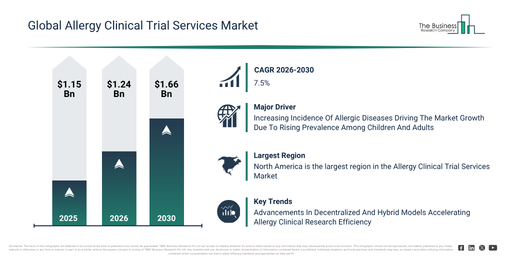
    The market for allergy clinical trial services has experienced substantial expansion recently. Projections indicate this market will expand from $1.15 billion in 2025 to reach $1.24 billion in 2026, demonstrating a compound annual growth rate (CAGR) of 7.3%. Factors contributing to its historical growth include the increasing occurrence of allergic diseases, greater investment in clinical research, the implementation of structured study protocols, the broadening of laboratory testing infrastructure, and the expansion of pharmaceutical and biotechnology firms.

    The allergy clinical trial services market is projected to experience substantial expansion in the coming years. By 2030, this market is predicted to reach $1.66 billion, demonstrating a compound annual growth rate (CAGR) of 7.5%. Several factors are expected to fuel this growth during the forecast period, including an increasing emphasis on precision medicine strategies, greater adoption of AI-driven analytics, a surge in demand for remote monitoring and decentralized clinical trials, the expansion of phase II and III allergy research, and a heightened focus on regulatory adherence and data stewardship. Key trends anticipated over this period encompass a wider uptake of remote clinical monitoring services, an escalating need for solutions to recruit and retain patients, the increasing incorporation of electronic data capture (EDC) systems, an expansion in bioanalytical and laboratory testing capacities, and a sharpened focus on regulatory compliance and medical writing services.

    Get A Free Sample Report With In-Depth Market Insights:

    https://thebusinessresearchcompany.com/sample_request?id=44788986&type=smp&name=Allergy%20Clinical%20Trial%20Services%20Market%20Report%202026&utm_source=Blogs&utm_medium=Paid&utm_campaign=Oct_PR

    Allergy Clinical Trial Services Market Development Factors: What’s Supporting Demand?

    The expanding occurrence of allergic conditions is anticipated to fuel the growth of the allergy clinical trial services market in the future. Allergic diseases are hypersensitivity reactions mediated by the immune system, including seasonal allergic rhinitis, eczema, and food allergies. The frequency of these conditions is rising, largely due to increased exposure to environmental allergens such as pollen, dust, and air pollutants, which are widely associated with heightened immune system hypersensitivity in susceptible individuals. Allergy clinical trial services facilitate the management and treatment of allergic diseases by enabling the development, testing, and evaluation of new therapies and interventions, thereby assisting healthcare providers in identifying effective solutions and improving patient outcomes. For instance, according to the 2024 National Health Interview Survey (NHIS) by the Centers for Disease Control and Prevention, a US-based government agency, approximately 29.5% of children in the United States had been diagnosed with a seasonal allergy, eczema, or a food allergy, up from 20.6% in the previous survey year. Therefore, the increasing incidence of allergic diseases is driving the growth of the allergy clinical trial services market.

    Allergy Clinical Trial Services Market Segment Analysis And Revenue Potential

    The allergy clinical trial services market covered in this report is segmented –

    1) By Service Type: Study Design And Protocol Development, Site Management And Patient Recruitment, Clinical Operations And Monitoring, Bioanalytical And Laboratory Services, Data Management And Biostatistics, Regulatory Affairs And Medical Writing

    2) By Clinical Trial: Phase I, Phase II, Phase III, Phase IV or Post-Marketing

    3) By Therapeutic Indication: Allergic Rhinitis, Allergic Asthma, Atopic Dermatitis, Food Allergies, Drug Hypersensitivity

    4) By End User: Pharmaceutical Companies, Biotechnology Firms, Academic Research Institutions, Government Organizations

    Subsegments:

    1) By Study Design And Protocol Development: Clinical Protocol Development Services, Trial Design Consulting Services, Feasibility Assessment Services, Endpoint Definition And Selection Services

    2) By Site Management And Patient Recruitment: Investigator Site Management Services, Patient Recruitment And Retention Services, Site Training And Support Services, Clinical Site Feasibility Assessment Services

    3) By Clinical Operations And Monitoring: On-Site Clinical Monitoring Services, Remote Clinical Monitoring Services, Study Progress Tracking Services, Compliance And Quality Assurance Services

    4) By Bioanalytical And Laboratory Services: Pharmacokinetic And Pharmacodynamic Analysis Services, Immunogenicity Testing Services, Biomarker Assay Development Services, Sample Processing And Analysis Services

    5) By Data Management And Biostatistics: Electronic Data Capture (EDC) Services, Data Cleaning And Validation Services, Statistical Analysis And Modeling Services, Report Generation And Interpretation Services

    6) By Regulatory Affairs And Medical Writing: Regulatory Submission Preparation Services, Clinical Study Reports Writing Services, Investigator Brochure Development Services, Regulatory Consulting And Compliance Services

    Allergy Clinical Trial Services Market Transformation Trends: What Innovations Are Driving Change?

    Major companies engaged in the allergy clinical trial services market are concentrating their efforts on conducting clinical trials aimed at developing innovative products, including novel anti-inflammatory drugs, to enhance symptom control and decrease disease severity in allergy patients. Novel anti-inflammatory drugs are newly formulated medications engineered to target specific immune pathways that cause inflammation, thereby helping to reduce allergic reactions, alleviate symptoms, and prevent disease flare-ups more effectively than traditional treatments. For instance, in December 2023, Innovaderm Research, a Canada-based clinical research organization, emphasized its pivotal role as a key collaborator in the clinical and study development of a recently released Phase 1 atopic dermatitis study. The study assessed the safety, tolerability, and initial effectiveness of an investigational therapy in patients experiencing moderate-to-severe atopic dermatitis, a chronic inflammatory skin condition frequently linked to allergic responses. Innovaderm contributed significantly to protocol formulation, regulatory strategy, site selection processes, patient enrollment, and overall operational management, ensuring adherence to clinical and scientific benchmarks. The company leveraged its dermatology-specific expertise, a specialized investigator network, and integrated data management capabilities to support precise data collection and efficient execution of the trial.

    Allergy Clinical Trial Services Market Key Players Shaping Industry Direction

    Major companies operating in the allergy clinical trial services market are Johnson & Johnson, Merck & Co. Inc., Sanofi S.A., Novartis International AG, GlaxoSmithKline plc, Teva Pharmaceutical Industries Ltd, Stallergenes Greer International AG, Torii Pharmaceutical Co. Ltd., ALK‑Abelló A/S, Allergopharma GmbH & Co. KG, Circassia Group plc, Inmunotek S.L., Biomay AG, Laboratorios LETI S.A., Alerje Inc., Inimmune Corporation, Siolta Therapeutics Inc., Allovate Therapeutics Inc., DBV Technologies S.A., Camallergy S.L.

    View The Full Allergy Clinical Trial Services Market Report:

    https://thebusinessresearchcompany.com/report/allergy-clinical-trial-services-market-report?utm_source=Blogs&utm_medium=Paid&utm_campaign=Oct_PR

    Allergy Clinical Trial Services Market Regional Analysis: Which Geography Leads On Revenue?

    North America was the largest region in the allergy clinical trial services market in 2025. Asia-Pacific is expected to be the fastest-growing region in the forecast period. The regions covered in the allergy clinical trial services market report are Asia-Pacific, South East Asia, Western Europe, Eastern Europe, North America, South America, Middle East, Africa.

    Reach Out To Our Team:

    The Business Research Company: https://www.thebusinessresearchcompany.com/

    Americas: +1 310-496-7795

    Asia: +44 7882 955267 & +91 8897263534

    Europe: +44 7882 955267

    Email us at: marketing@tbrc.info

    Follow us on:

    LinkedIn: https://in.linkedin.com/company/the-business-research-company

    YouTube: https://www.youtube.com/channel/UC24_fI0rV8cR5DxlCpgmyFQ

    Global Market Model: https://www.thebusinessresearchcompany.com/global-market-model