Category: Healthcare Services

  • Trusted Exchange Framework And Common Agreement (TEFCA) Connectivity Services Market Growth Outlook: Why Analysts Expect Continued Expansion

    Trusted Exchange Framework And Common Agreement (TEFCA) Connectivity Services Market Growth Outlook: Why Analysts Expect Continued Expansion

    Backed by market attractiveness analysis, total addressable market sizing, company benchmarking matrices, interactive Excel dashboards, wider supply chain intelligence, emerging startup coverage, and detailed product-level insights, The Business Research Company’s 2026 market reports are designed to offer research that is more actionable and strategically valuable than ever.

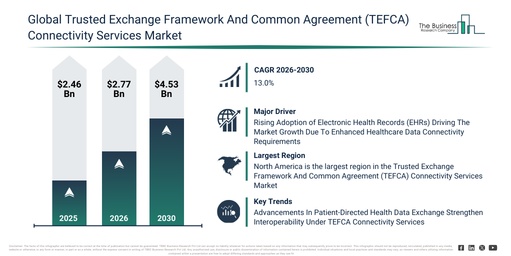
    Trusted Exchange Framework And Common Agreement (TEFCA) Connectivity Services Market Revenue Growth On Track For A 13% CAGR Through 2030

    The market for trusted exchange framework and common agreement (tefca) connectivity services has experienced rapid expansion in recent times. This market is projected to expand from $2.46 billion in 2025 to $2.77 billion in 2026, demonstrating a compound annual growth rate (CAGR) of 12.8%. Historically, this expansion has been driven by several factors, including the rising adoption of electronic health records, the escalating need for patient data interoperability, the heightened demand for secure health information exchange, the broader implementation of identity verification systems, and the expanding regulatory compliance mandates.

    The trusted exchange framework and common agreement (tefca) connectivity services market size is anticipated to undergo significant expansion over the next few years. It is projected to achieve a value of $4.53 billion in 2030, with a compound annual growth rate (CAGR) of 13.0%. This growth during the forecast period is propelled by several factors, including the widening reach of nationwide health information networks, the increasing adoption of cloud-based connectivity solutions, a rising need for real-time patient data access, the growing implementation of API-driven data integration, and an elevated focus on analytics and quality management. Prominent trends within the forecast period comprise the increasing uptake of FHIR-based interoperability solutions, a rising demand for API-based patient data access, the expanding deployment of identity verification and consent management services, the extension of event notification and record location services, and a heightened emphasis on data quality management and analytics enablement.

    Get A Free Sample Report With In-Depth Market Insights:

    https://thebusinessresearchcompany.com/sample_request?id=65769479&type=smp&name=Trusted%20Exchange%20Framework%20And%20Common%20Agreement%20%28TEFCA%29%20Connectivity%20Services%20Market%20Report%202026&utm_source=Blogs&utm_medium=Paid&utm_campaign=Oct_PR

    Trusted Exchange Framework And Common Agreement (TEFCA) Connectivity Services Market Growth Catalysts And Demand Drivers

    The increasing implementation of electronic health records (EHRs) is anticipated to fuel the expansion of the trusted exchange framework and common agreement (TEFCA) connectivity services market in the future. These digital systems serve to store, manage, and facilitate the exchange of patient health information among various healthcare organizations. The surge in EHR adoption primarily stems from federal policies and regulations, which motivate healthcare providers to implement certified health IT systems aimed at enhancing care coordination and minimizing medical errors. This growing adoption of EHRs, in turn, amplifies the need for TEFCA connectivity services, given that these systems necessitate standardized frameworks to achieve smooth, interoperable health information exchange between diverse healthcare entities. A notable example illustrates this trend: in December 2025, data from the Centers for Disease Control and Prevention (CDC), a US-based national public health agency, indicated that 95.0% of office-based physicians in the United States had adopted electronic health record (EHR) systems, with 83.6% specifically employing certified EHR technology compliant with federal standards. Consequently, the expanding use of electronic health records is a primary impetus behind the growth of the trusted exchange framework and common agreement (TEFCA) connectivity services market.

    Trusted Exchange Framework And Common Agreement (TEFCA) Connectivity Services Market Breakdown By Product Type And Application

    The trusted exchange framework and common agreement (tefca) connectivity services market covered in this report is segmented –

    1) By Service Type: Health Information Exchange, Patient Access Services, Data Integration, Interoperability Solutions, Other Service Types

    2) By Deployment Mode: Cloud-Based, On-Premises

    3) By End-User: Hospitals, Clinics, Health Information Networks, Payers, Other End-Users

    Subsegments:

    1) By Health Information Exchange: Query Based Exchange, Directed Exchange, Event Notification Services, Cross Network Exchange, Record Location Services, Master Patient Index Services, Consent Management

    2) By Patient Access Services: Patient Portals, Mobile Health Access, API Based Patient Data Access, Identity Verification Services, Consent Authorization Tools, Personal Health Record Integration

    3) By Data Integration: EHR Integration, Claims Data Integration, Laboratory Data Integration, Imaging Data Integration, Pharmacy Data Integration, Public Health Data Integration

    4) By Interoperability Solutions: FHIR Based Interoperability, HL7 Interface Solutions, API Management Platforms, Terminology Mapping, Data Normalization Services, Semantic Interoperability Tools

    5) By Other Service Types: Compliance And Security Services, Network Onboarding Services, Data Quality Management, Analytics Enablement, Audit And Reporting Services

    Trusted Exchange Framework And Common Agreement (TEFCA) Connectivity Services Market Trends Shaping Long-Term Demand

    Major companies in the trusted exchange framework and common agreement connectivity services market are prioritizing the development of sophisticated solutions, such as patient medical health records access systems. Their goal is to empower patients with secure access and control over their health data and to enhance seamless cross-network data sharing among healthcare providers. Patient medical health records access systems are secure digital solutions that allow individuals to access, collect, and manage their health information from various healthcare providers and networks. For example, in September 2025, HealthEx, a US-based health tech company, launched a new patient-directed health data exchange service under TEFCA to enable secure access, aggregation, and sharing of health information across providers, thereby boosting interoperability and patient-centered care coordination. This service allows patients to access, retrieve, and share real-time health records using individual access services (IAS). It performs identity verification, secures consent, and extracts data across QHIN networks in CCDA or FHIR formats, providing users with complete control and transparency.

    Trusted Exchange Framework And Common Agreement (TEFCA) Connectivity Services Market Key Players Shaping Industry Direction

    Major companies operating in the trusted exchange framework and common agreement (tefca) connectivity services market are Oracle Corporation, Epic Systems Corporation, Infor Inc., OpenText Corporation, athenahealth Inc., InterSystems Corporation, eClinicalWorks LLC, Redox Inc., Medical Information Technology Inc., Veradigm Inc., Netsmart Technologies Inc., PointClickCare Technologies Inc., Surescripts LLC, Health Gorilla Inc., CyncHealth, Healwell AI Inc., Kno2 LLC, Ciox Health LLC, CommonWell Health Alliance Inc., Contexture Health, and eHealth Exchange.

    View The Full Trusted Exchange Framework And Common Agreement (TEFCA) Connectivity Services Market Report:

    https://thebusinessresearchcompany.com/report/trusted-exchange-framework-and-common-agreement-tefca-connectivity-services-market-report?utm_source=Blogs&utm_medium=Paid&utm_campaign=Oct_PR

    Trusted Exchange Framework And Common Agreement (TEFCA) Connectivity Services Market Regional Analysis: Which Geography Leads On Revenue?

    North America was the largest region in the trusted exchange framework and common agreement (TEFCA) connectivity services market in 2025. Asia-Pacific is expected to be the fastest-growing region in the forecast period. The regions covered in the tefca connectivity services market report are Asia-Pacific, South East Asia, Western Europe, Eastern Europe, North America, South America, Middle East, Africa.

    Reach Out To Our Team:

    The Business Research Company: https://www.thebusinessresearchcompany.com/

    Americas: +1 310-496-7795

    Asia: +44 7882 955267 & +91 8897263534

    Europe: +44 7882 955267

    Email us at: marketing@tbrc.info

    Follow us on:

    LinkedIn: https://in.linkedin.com/company/the-business-research-company

    YouTube: https://www.youtube.com/channel/UC24_fI0rV8cR5DxlCpgmyFQ

    Global Market Model: https://www.thebusinessresearchcompany.com/global-market-model
  • Multi-Modal Pathology-Radiology Fusion Market Forecast To Reach $3.63 Billion By 2030: Key Growth Drivers And Industry Trends

    Multi-Modal Pathology-Radiology Fusion Market Forecast To Reach $3.63 Billion By 2030: Key Growth Drivers And Industry Trends

    Built to provide research that’s more actionable and strategically valuable, The Business Research Company’s 2026 market reports include market attractiveness analysis, total addressable market sizing, company benchmarking matrices, interactive Excel dashboards, broader supply chain intelligence, emerging startup tracking, and in-depth product insights.

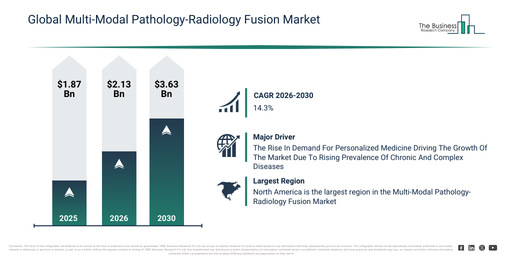
    Multi-Modal Pathology-Radiology Fusion Market Revenue Growth On Track For A 14.3% CAGR Through 2030

    The multi-modal pathology-radiology fusion market has experienced rapid growth in recent years. This market is set to expand from $1.87 billion in 2025 to $2.13 billion in 2026, achieving a compound annual growth rate (CAGR) of 14.1%. Historically, its expansion can be attributed to the rising prevalence of cancer and chronic diseases, the increasing adoption of digital pathology systems, a heightened demand for early and accurate diagnosis, the proliferation of advanced imaging modalities, and growing healthcare digitization initiatives.

    The multi-modal pathology-radiology fusion market is projected to experience substantial expansion over the coming years. This market is anticipated to reach $3.63 billion by 2030, exhibiting a compound annual growth rate (CAGR) of 14.3%. Factors contributing to this growth during the projected period include an escalating need for personalized treatment strategies, enhanced integration of multi-modal diagnostic systems, increased capital expenditure in cloud-based healthcare infrastructure, broader applications within oncology and neurology, and strengthened partnerships between healthcare facilities and research institutions. Key trends foreseen for this period encompass the widespread uptake of integrated diagnostic software, a heightened need for image registration and 3D reconstruction technologies, increased utilization of telepathology and teleradiology solutions, the broadening of workflow integration and clinical decision support functionalities, and a greater emphasis on investing in sophisticated medical imaging hardware.

    Get A Free Sample Report With In-Depth Market Insights:

    https://thebusinessresearchcompany.com/sample_request?id=95556419&type=smp&name=Multi-Modal%20Pathology-Radiology%20Fusion%20Market%20Report%202026&utm_source=Blogs&utm_medium=Paid&utm_campaign=Oct_PR

    Multi-Modal Pathology-Radiology Fusion Market Growth Backed By Core Demand Fundamentals

    The expanding need for individualized healthcare is anticipated to boost the multi-modal pathology-radiology fusion market in the coming years. Personalized medicine refers to a medical approach that tailors healthcare decisions, treatments, and interventions to the individual characteristics of each patient, such as their genetic profile, lifestyle, and environment. This heightened requirement for personalized medicine largely stems from the growing occurrence of chronic and intricate ailments, as bespoke therapies can more efficiently address specific patient requirements and enhance results. Multi-modal pathology-radiology fusion aids personalized medicine by combining cellular-level pathological understanding with extensive imaging information, allowing for accurate disease identification, optimized treatment strategies, and better forecasting of patient-specific responses to therapy. For instance, in February 2024, the FDA gave its approval to 16 novel personalized treatments for patients with rare diseases, an increase from six in 2022, according to the US-based non-profit organization, the Personalized Medicine Coalition. Consequently, the rising demand for personalized medicine is fueling the expansion of the multi-modal pathology-radiology fusion market.

    Multi-Modal Pathology-Radiology Fusion Market Segmentation And Category Overview

    The multi-modal pathology-radiology fusion market covered in this report is segmented –

    1) By Component: Software, Hardware, Services

    2) By Modality: Computed Tomography, Magnetic Resonance Imaging, Positron Emission Tomography, Ultrasound, X-ray, Digital Pathology, Other Modalities

    3) By Deployment Mode: On-Premises, Cloud-Based

    4) By Application: Oncology, Neurology, Cardiology, Orthopedics, Other Applications

    5) By End-User: Hospitals, Diagnostic Centers, Research Institutes, Other End-Users

    Subsegments:

    1) By Hardware: Robot Arms and Manipulators, Collaborative Robots (Cobots), End-Effectors and Grippers, Sensors and Perception Hardware, Actuators and Drives, Machine Vision Systems, Controllers and PLCs, Automated Guided Vehicle And Autonomous Mobile Robot, Safety Systems and Fencing, Power and Cabling Infrastructure

    2) By Software: Robot Operating Systems and Firmware, Simulation and Digital-Twin Software, Motion Planning and Path Optimization, Artificial Intelligence and Machine Learning Software, Vision and Perception Software, Cell and Fleet Management Software, MES or ERP Integration Software, Predictive Maintenance and Analytics, Cybersecurity Software, Low-Code or No-Code Programming Tools

    3) By Services: System Design and Engineering, Integration and Commissioning, Maintenance and Field Support, Training and Skill Development, Retrofit and Modernization Services, Custom Application Development, Robotics-as-a-Service (RaaS), Validation and Testing Services, Consulting and ROI Analysis, R&D and Co-innovation Services

    Multi-Modal Pathology-Radiology Fusion Market Competitive Landscape: Who Leads The Industry?

    Major companies operating in the multi-modal pathology-radiology fusion market are Google Health LLC, NVIDIA Corporation, Siemens Healthineers AG, Koninklijke Philips N.V., GE HealthCare Technologies Inc., FUJIFILM Healthcare Americas Corporation, IMERIT Inc., Barco N.V., Agfa HealthCare N.V., Tempus AI Inc., Aidoc Medical Ltd., Owkin Inc., Lunit Inc., PAIGE.AI Ltd., Proscia Inc., Canon Medical Systems Corporation, Imagene AI Ltd., Techcyte Inc., Mindpeak GmbH, and Akira AI Inc.

    View The Full Multi-Modal Pathology-Radiology Fusion Market Report:

    https://thebusinessresearchcompany.com/report/multi-modal-pathology-radiology-fusion-market-report?utm_source=Blogs&utm_medium=Paid&utm_campaign=Oct_PR

    Multi-Modal Pathology-Radiology Fusion Market Geographic Landscape: Which Region Dominates Industry Growth?

    North America was the largest region in the multi-modal pathology-radiology fusion market in 2025. Asia Pacific is expected to be the fastest-growing region in the forecast period. The regions covered in the multi-modal pathology-radiology fusion market report are Asia-Pacific, South East Asia, Western Europe, Eastern Europe, North America, South America, Middle East, Africa.

    Reach Out To Our Team:

    The Business Research Company: https://www.thebusinessresearchcompany.com/

    Americas: +1 310-496-7795

    Asia: +44 7882 955267 & +91 8897263534

    Europe: +44 7882 955267

    Email us at: marketing@tbrc.info

    Follow us on:

    LinkedIn: https://in.linkedin.com/company/the-business-research-company

    YouTube: https://www.youtube.com/channel/UC24_fI0rV8cR5DxlCpgmyFQ

    Global Market Model: https://www.thebusinessresearchcompany.com/global-market-model
  • Gait Analysis System Market Growth To $2.13 Billion Creates New Opportunities Across The Industry

    Gait Analysis System Market Growth To $2.13 Billion Creates New Opportunities Across The Industry

    Featuring market attractiveness scoring, total addressable market sizing, company benchmarking matrices, interactive Excel dashboards, deeper supply chain intelligence, emerging startup tracking, and granular product-level insights, The Business Research Company’s 2026 market reports are built to deliver research that is both more actionable and more strategically valuable.

    Gait Analysis System Market Size And Revenue Outlook Through 2030

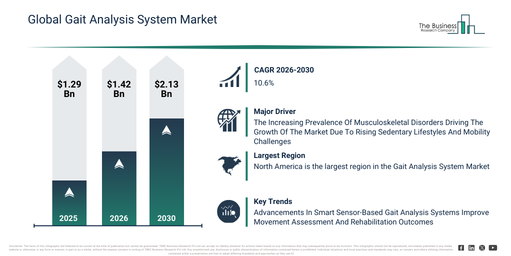
    The market size for gait analysis systems has expanded considerably over recent years. The market is projected to expand from $1.29 billion in 2025 to $1.42 billion in 2026, achieving a compound annual growth rate (CAGR) of 10.4%. Several factors contributed to its historical growth, including the rising incidence of musculoskeletal disorders, increased adoption of motion capture technology, broader utilization of gait analysis in athletic performance, the evolution of hospital-based rehabilitation programs, and technological enhancements in force plates and sensors.

    The gait analysis system market is projected for significant expansion over the coming years, reaching $2.13 billion in 2030 at a compound annual growth rate (CAGR) of 10.6%. This anticipated growth is driven by factors such as increasing adoption in tele-rehabilitation, integration with AI-driven predictive analytics, rising use in personalized sports training, expansion in research and academic institutes, and growing demand for cloud-based gait analysis solutions. Key developments expected during this period include a rising adoption of wearable gait analysis systems, an increasing demand for non-wearable sensor platforms, the integration of advanced motion tracking software, enhanced data visualization and reporting capabilities, and a heightened focus on optimizing clinical and sports performance.

    Get A Free Sample Report With In-Depth Market Insights:

    https://thebusinessresearchcompany.com/sample_request?id=19101919&type=smp&name=Gait%20Analysis%20System%20Market%20Report%202026&utm_source=Blogs&utm_medium=Paid&utm_campaign=Oct_PR

    Gait Analysis System Market Expansion Drivers: What’s Shaping Future Growth?

    The growing incidence of musculoskeletal disorders is projected to boost the expansion of the gait analysis system market in the future. These disorders encompass conditions affecting muscles, bones, joints, tendons, and ligaments, resulting in pain, rigidity, limited mobility, and functional constraints. The increase in musculoskeletal issues, spurred by increasingly sedentary lifestyles, leads to poor posture, reduced physical activity, and greater strain on muscles and joints, ultimately causing lasting mobility challenges. The gait analysis system assists in managing musculoskeletal disorders by allowing precise evaluation of walking patterns to identify anomalies early, support accurate diagnosis, and guide effective rehabilitation and treatment plans. For instance, in January 2024, according to the Office for Health Improvement & Disparities, a UK-based government agency, in 2023, 18.4% of individuals aged 16 and above reported having a long-term musculoskeletal (MSK) condition, reflecting an increase from 17.6% in 2022. Therefore, the rising prevalence of musculoskeletal disorders is fueling the growth of the gait analysis system market.

    Gait Analysis System Market Segment Landscape And Growth Outlook

    The gait analysis system market covered in this report is segmented –

    1) By Product Type: Hardware, Software, Services

    2) By Modality: Wearable Systems, Non-Wearable Systems

    3) By Deployment: On Premises Systems, Cloud Based Solutions

    4) By Application: Clinical Applications, Sports Applications, Rehabilitation, Research, Other Applications

    5) By End-User: Hospitals, Rehabilitation Centers, Clinics, Research And Academic Institutes, Other End Users

    Subsegments:

    1) By Hardware: Motion Capture Cameras, Force Plates, Pressure Sensors, Wearable Sensors, Treadmills, Inertial Measurement Units

    2) By Software: Gait Analysis Software, Data Visualization And Reporting Software, Motion Tracking Software, Kinematic And Kinetic Analysis Software, Patient Management Software

    3) By Services: Installation And Setup Services, Calibration And Maintenance Services, Training And Education Services, Consulting Services, Data Interpretation And Analysis Services

    Gait Analysis System Market Strategic Trends: What Defines The Next Growth Phase?

    Leading companies in the gait analysis system market are concentrating on developing advanced wearable and sensor-based solutions, such as new-generation smart insoles, to enhance the accuracy of movement assessment, support rehabilitation monitoring, and improve clinical and athletic performance outcomes. A new-generation smart insole is a sensor-equipped wearable device that consistently monitors foot pressure, gait, posture, and movement, providing actionable insights for health tracking, preventing injuries, and improving athletic performance. For instance, in October 2025, AlphaBio K.K., a US-based health-technology company, introduced the Walkpad Active, a smart insole designed to deliver real-time center-of-pressure (COP) measurement, plantar pressure analysis, and advanced gait analytics. This solution supports various applications including rehabilitation therapy, sports performance optimization, and diabetic foot monitoring, enabling data-driven clinical decision-making and personalized mobility care.

    Gait Analysis System Market Competitive Landscape: Who Leads The Industry?

    Major companies operating in the gait analysis system market are T T medilogic Medizintechnik GmbH, BTS Bioengineering Corp., Kistler Instrumente AG, Tekscan Inc, Motek Medical BV, Cometa Srl, Novel GmbH, Advanced Mechanical Technology Inc, Motion Analysis Corporation, Vicon Motion Systems Ltd, Qualisys AB, Zebris Medical GmbH, NaturalPoint Inc DBA OptiTrack, Xsens Technologies B.V., Delsys Inc, ProtoKinetics LLC, Gait Up SA, DIERS International GmbH, Simi Reality Motion Systems GmbH, BioSensics LLC, Sensor Medica Srl, Microgate Srl, CONTEMPLAS GmbH, STT Systems, and Moticon GmbH.

    View The Full Gait Analysis System Market Report:

    https://thebusinessresearchcompany.com/report/gait-analysis-system-market-report?utm_source=Blogs&utm_medium=Paid&utm_campaign=Oct_PR

    Gait Analysis System Market Geographic Landscape: Which Region Dominates Industry Growth?

    North America was the largest region in the gait analysis system market in 2025. Asia-Pacific is expected to be the fastest-growing region in the forecast period. The regions covered in the gait analysis system market report are Asia-Pacific, South East Asia, Western Europe, Eastern Europe, North America, South America, Middle East, Africa.

    Reach Out To Our Team:

    The Business Research Company: https://www.thebusinessresearchcompany.com/

    Americas: +1 310-496-7795

    Asia: +44 7882 955267 & +91 8897263534

    Europe: +44 7882 955267

    Email us at: marketing@tbrc.info

    Follow us on:

    LinkedIn: https://in.linkedin.com/company/the-business-research-company

    YouTube: https://www.youtube.com/channel/UC24_fI0rV8cR5DxlCpgmyFQ

    Global Market Model: https://www.thebusinessresearchcompany.com/global-market-model
  • Cell Image Analysis Artificial Intelligence (AI) Market Expected To Grow At 24.2% CAGR Through 2030: What Businesses Need To Know

    Cell Image Analysis Artificial Intelligence (AI) Market Expected To Grow At 24.2% CAGR Through 2030: What Businesses Need To Know

    Backed by market attractiveness analysis, total addressable market sizing, company benchmarking matrices, interactive Excel dashboards, wider supply chain intelligence, emerging startup coverage, and detailed product-level insights, The Business Research Company’s 2026 market reports are designed to offer research that is more actionable and strategically valuable than ever.

    Cell Image Analysis Artificial Intelligence (AI) Market Size And Revenue Outlook Through 2030

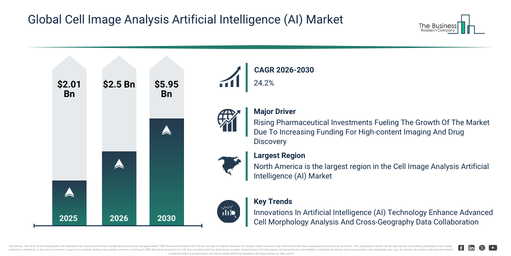
    The cell image analysis artificial intelligence (AI) market size has expanded significantly in recent years. It is projected to increase from $2.01 billion in 2025 to $2.5 billion in 2026, achieving a compound annual growth rate (CAGR) of 24.0%. This growth in the historic period can be attributed to several factors including intensified research in cell biology and molecular imaging, a heightened demand for drug discovery automation, the increasing integration of machine learning in life sciences, the proliferation of diagnostic laboratories, and greater investments in academic research institutes.

    The cell image analysis artificial intelligence (AI) market is projected to experience rapid expansion in the coming years, with expectations to reach a valuation of $5.95 billion by 2030, demonstrating a compound annual growth rate (CAGR) of 24.2%. This growth during the forecast period can be primarily attributed to the increasing adoption of personalized medicine applications, the greater integration of AI within diagnostic workflows, the rising embrace of cloud-based platforms, the expansion of high-throughput screening techniques, and the growing application of predictive analytics in pharmaceutical research. Significant trends anticipated over this period include the increased deployment of GPU-enabled workstations for image analysis, a surge in the use of multiplex and high-content imaging analytics, the development of more cloud-based cell image analysis platforms, the broadening of automated quality control and validation services, and an escalating demand for technical consulting and AI model training support.

    Get A Free Sample Report With In-Depth Market Insights:

    https://thebusinessresearchcompany.com/sample_request?id=69652213&type=smp&name=Cell%20Image%20Analysis%20Artificial%20Intelligence%20%28AI%29%20Market%20Report%202026&utm_source=Blogs&utm_medium=Paid&utm_campaign=Oct_PR

    Cell Image Analysis Artificial Intelligence (AI) Market Growth Factors Behind Sustained Expansion

    Increased financial commitments within the pharmaceutical sector are anticipated to boost the expansion of the cell image analysis artificial intelligence (AI) market in the future. Pharmaceutical investments involve capital deployment by firms, public bodies, and individuals into areas such as drug discovery, clinical trials, production, and cutting-edge research technologies, all aimed at creating novel treatments and enhancing health results. The primary driver behind the uptick in pharmaceutical funding is the escalating worldwide prevalence of chronic and intricate illnesses, necessitating an ongoing evolution of novel and more potent therapeutic solutions. These pharmaceutical expenditures support cell image analysis AI by financing high-content imaging systems, robust data infrastructure, and the creation of AI tools crucial for expediting drug discovery processes, conducting phenotypic screening, and generating profound cellular insights. As an illustration, the International Federation of Pharmaceutical Manufacturers & Associations (IFPMA), a global industry organization based in Switzerland that represents research-driven pharmaceutical entities, reported in February 2025 that the leading 50 pharmaceutical firms together invested around USD 167 billion in research and development in 2022. This spending is forecasted to increase by 6.7% annually, exceeding USD 200 billion by 2025. Consequently, the expanding financial commitments within the pharmaceutical sector are stimulating the growth of the cell image analysis artificial intelligence (AI) market.

    Cell Image Analysis Artificial Intelligence (AI) Market Segment Analysis Spotlighting Growth Areas

    The cell image analysis artificial intelligence (AI) market covered in this report is segmented –

    1) By Component: Software, Hardware, Services

    2) By Deployment Mode: On-Premises, Cloud

    3) By Application: Drug Discovery, Disease Diagnosis, Cell Classification, Image Segmentation, Other Applications

    4) By End-User: Pharmaceutical And Biotechnology Companies, Academic And Research Institutes, Hospitals And Diagnostic Laboratories, Other End-Users

    Subsegments:

    1) By Hardware: Robot Arms and Manipulators, Collaborative Robots (Cobots), End-Effectors and Grippers, Sensors and Perception Hardware, Actuators and Drives, Machine Vision Systems, Controllers and PLCs, AGVs and AMRs, Safety Systems and Fencing, Power and Cabling Infrastructure

    2) By Software: Robot Operating Systems and Firmware, Simulation and Digital-Twin Software, Motion Planning and Path Optimization, AI and Machine Learning Software, Vision and Perception Software, Cell and Fleet Management Software, MES or ERP Integration Software, Predictive Maintenance and Analytics, Cybersecurity Software, Low-Code or No-Code Programming Tools

    3) By Services: System Design and Engineering, Integration and Commissioning, Maintenance and Field Support, Training and Skill Development, Retrofit and Modernization Services, Custom Application Development, Robotics-as-a-Service (RaaS), Validation and Testing Services, Consulting and ROI Analysis, R&D and Co-innovation Services

    Cell Image Analysis Artificial Intelligence (AI) Market Industry Trends Fueling Future Revenue Growth

    Companies operating within the cell image analysis artificial intelligence (AI) market are concentrating on developing image analysis solutions, such as cloud-hosted AI-driven microscopy data platforms. These initiatives aim to facilitate the scalable processing of extensive microscopy datasets and deliver accurate, real-time cellular insights swiftly to laboratories and research centers. Cloud-hosted AI-driven microscopy data platforms are defined as online systems that leverage artificial intelligence to store, process, and analyze large volumes of microscopy images. This enables remote access, scalable computing power, and collaborative analysis without the constraints of local hardware. For example, in June 2025, ThinkCyte, a Japan-based biotechnology company, launched MorphoScan Cloud. This cloud-based platform is dedicated to AI-driven cell morphology data analysis and expands the capabilities of its VisionSort morphometric cell analysis system. It achieves this by providing secure cloud storage, enabling cross-geography data sharing, and offering access to advanced analytical tools powered by deep learning for both supervised and unsupervised insights. MorphoScan Cloud’s architecture integrates scalable cloud computing, built-in AI algorithms, and collaborative functionalities to streamline workflows, cut down processing times, and empower research teams to extract deeper biological understanding from complex cellular data, unhindered by local hardware limitations. Its applications include drug discovery, disease research, and cytometric studies.

    Cell Image Analysis Artificial Intelligence (AI) Market Competitive Analysis Of Leading Industry Participants

    Major companies operating in the cell image analysis artificial intelligence (AI) market are Danaher Corporation, Carl Zeiss AG, Lunit Inc, Deciphex Limited, OptraScan Inc, Proscia Inc, Deepcell Inc, Aignostics GmbH, Visiopharm A S, Indica Labs Inc, Ibex Medical Analytics Ltd, Deep Bio Inc, NucleAI Ltd, Reveal Biosciences Inc, TissueGnostics GmbH, ariadne AI AG, Vuno Inc, HistoIndex Pte Ltd, Aiforia Technologies Plc, and KOLAIDO GmbH.

    View The Full Cell Image Analysis Artificial Intelligence (AI) Market Report:

    https://thebusinessresearchcompany.com/report/cell-image-analysis-artificial-intelligence-ai-market-report?utm_source=Blogs&utm_medium=Paid&utm_campaign=Oct_PR

    Cell Image Analysis Artificial Intelligence (AI) Market Geographic Spread And Regional Opportunities

    North America was the largest region in the cell image analysis artificial intelligence (AI) market in 2025. Asia-Pacific is expected to be the fastest-growing region in the forecast period. The regions covered in the cell image analysis artificial intelligence (AI) market report are Asia-Pacific, South East Asia, Western Europe, Eastern Europe, North America, South America, Middle East, Africa.

    Reach Out To Our Team:

    The Business Research Company: https://www.thebusinessresearchcompany.com/

    Americas: +1 310-496-7795

    Asia: +44 7882 955267 & +91 8897263534

    Europe: +44 7882 955267

    Email us at: marketing@tbrc.info

    Follow us on:

    LinkedIn: https://in.linkedin.com/company/the-business-research-company

    YouTube: https://www.youtube.com/channel/UC24_fI0rV8cR5DxlCpgmyFQ

    Global Market Model: https://www.thebusinessresearchcompany.com/global-market-model
  • Virtual Ward Market Analysis Through 2030: Market Size, Growth Trends And Industry Outlook

    Virtual Ward Market Analysis Through 2030: Market Size, Growth Trends And Industry Outlook

    Backed by market attractiveness analysis, total addressable market sizing, company benchmarking matrices, interactive Excel dashboards, wider supply chain intelligence, emerging startup coverage, and detailed product-level insights, The Business Research Company’s 2026 market reports are designed to offer research that is more actionable and strategically valuable than ever.

    Virtual Ward Market Forecast: What Value Will The Market Reach By 2030?

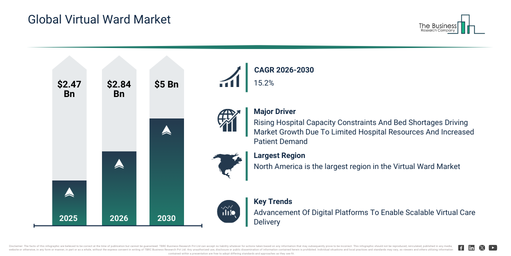
    The virtual ward market has experienced substantial expansion in recent times. Projections indicate its value will increase from $2.47 billion in 2025 to $2.84 billion in 2026, demonstrating a compound annual growth rate (CAGR) of 14.9%. Historically, this expansion has been driven by factors such as hospital capacity limitations, an uptick in remote monitoring pilot programs, the expansion of telehealth services, a rise in admissions for chronic diseases, and the initial digitalization of home care.

    The virtual ward market is projected to experience substantial expansion in the coming years, reaching $5 billion in 2030 with a compound annual growth rate (CAGR) of 15.2%. This anticipated growth during the forecast period is driven by several factors, including escalating healthcare cost pressures, an expanding elderly population, broader reimbursement for home care services, increased integration of connected medical devices, and enhanced governmental backing for at-home treatment approaches. Key trends anticipated during this period involve the increasing embrace of ‘hospital at home’ frameworks, the growing utilization of continuous remote patient monitoring, the expansion of virtual nursing provisions, the deeper integration of clinical decision support mechanisms, and the broader implementation of home-based acute care initiatives.

    Get A Free Sample Report With In-Depth Market Insights:

    https://thebusinessresearchcompany.com/sample_request?id=60542926&type=smp&name=Virtual%20Ward%20Market%20Report%202026&utm_source=Blogs&utm_medium=Paid&utm_campaign=Oct_PR

    Virtual Ward Market Growth Backed By Core Demand Fundamentals

    The expansion of the virtual ward market in the coming years is expected to be driven by increasing hospital capacity limitations and a lack of available beds. Hospital capacity constraints emerge when healthcare systems lack adequate beds, staff, or facilities to meet patient needs. These pressures are increasingly fueled by a growing elderly population, which requires longer hospital stays and more complex medical attention, thus reducing bed turnover and intensifying the demand for inpatient services. Virtual wards help mitigate these difficulties by allowing patients to receive hospital-level care at home, thereby freeing up physical beds, enhancing patient flow, and reducing pressure on hospital resources. For instance, in January 2026, according to the Australian Institute of Health and Welfare (AIHW), an Australian-based government agency, an average of 67,300 public hospital beds were available in 2023–24, equating to 2.5 beds per 1,000 people. This relatively limited bed availability, combined with growing healthcare demand, highlights ongoing capacity pressures within the hospital system. Therefore, increasing hospital capacity constraints and bed shortages are projected to stimulate the growth of the virtual ward market.

    Virtual Ward Market Segment Performance And Emerging Opportunities

    The virtual ward market covered in this report is segmented –

    1) By Component: Hardware; Software; Services

    2) By Service Type: Chronic Disease Management; Post-Operative Care; Preventive Care; Acute Care at Home; Virtual Nursing Services; Care Coordination Services

    3) By Patient Demographics: Children; Adults; Senior Citizens

    4) By Application: Cardiology; Neurology; Pulmonology; Oncology; Orthopedics; General Medicine; Geriatric Care

    5) By End User: Patients; Hospitals; Clinics; Home Healthcare Providers; Insurance Companies; Government Healthcare Agencies

    Subsegments:

    1) By Hardware: Remote Patient Monitoring Devices; Wearable Health Sensors; Vital Sign Monitoring Equipment; Mobile Medical Tablets; Home Diagnostic Devices

    2) By Software: Virtual Ward Management Platforms; Remote Monitoring Software; Patient Data Management Systems; Clinical Decision Support Software; Telehealth Integration Software

    3) By Services: Remote Patient Monitoring Services; Virtual Clinical Care Services; Technical Support Services; Data Management Services; Care Coordination Services

    Virtual Ward Market Growth Trends Reshaping The Competitive Landscape

    Leading companies in the virtual ward market are prioritizing the creation of advanced products, particularly digital platforms, to boost remote patient monitoring, enable immediate clinical decision-making, improve care coordination among healthcare teams, and reduce hospital admissions by providing ongoing, hospital-quality care in home environments. A digital platform is a technology-driven system, generally delivered over the internet, that facilitates interactions, transactions, or the exchange of value between two or more interdependent groups, such as users, businesses, developers, or service providers. For instance, in June 2025, Medway NHS Foundation Trust, a UK-based public healthcare provider, launched a new digital platform in partnership with health tech firm Feebris to expand its virtual hospital and virtual ward services, extending digital care beyond initial pilot programs. This platform incorporates adaptable technology supporting virtual monitoring and hospital-at-home services across all clinical specialties. It enables the remote capture of patient data and substantially reduces hospital bed days and costs by facilitating recovery at home. Additionally, it supports the submission of pseudonymised data to national health data systems, aiding broader adoption and evidence generation for virtual care models. This solution improves upon traditional models by shifting care delivery from physical wards into digitally enabled patient environments, thereby enhancing efficiency and patient experience.

    Virtual Ward Market Key Players Shaping Industry Direction

    Major companies operating in the virtual ward market are Amazon.com Inc., UnitedHealth Group Incorporated, CVS Health Corporation, The Cigna Group Inc., Elevance Health Inc., Siemens AG, Roche Holding AG, HCA Healthcare Inc., Best Buy Co. Inc., Abbott Laboratories, Medtronic plc, Stryker Corporation, Koninklijke Philips N.V, GE Healthcare Technologies Inc., Boston Scientific Corporation, Baxter International Inc., ResMed Inc., DexCom Inc., Teladoc Health Inc., Masimo Corporation, iRhythm Technologies Inc.

    View The Full Virtual Ward Market Report:

    https://thebusinessresearchcompany.com/report/virtual-ward-market-report?utm_source=Blogs&utm_medium=Paid&utm_campaign=Oct_PR

    Virtual Ward Market Regional Analysis: Which Region Leads By Revenue?

    North America was the largest region in the virtual ward market in 2025. Asia-Pacific is expected to be the fastest-growing region in the forecast period. The regions covered in the virtual ward market report are Asia-Pacific, South East Asia, Western Europe, Eastern Europe, North America, South America, Middle East, Africa.

    Reach Out To Our Team:

    The Business Research Company: https://www.thebusinessresearchcompany.com/

    Americas: +1 310-496-7795

    Asia: +44 7882 955267 & +91 8897263534

    Europe: +44 7882 955267

    Email us at: marketing@tbrc.info

    Follow us on:

    LinkedIn: https://in.linkedin.com/company/the-business-research-company

    YouTube: https://www.youtube.com/channel/UC24_fI0rV8cR5DxlCpgmyFQ

    Global Market Model: https://www.thebusinessresearchcompany.com/global-market-model
  • Virtual Care Management Market CAGR Forecast Through 2030: Key Trends Shaping Industry Expansion

    Virtual Care Management Market CAGR Forecast Through 2030: Key Trends Shaping Industry Expansion

    Backed by market attractiveness analysis, total addressable market sizing, company benchmarking matrices, interactive Excel dashboards, wider supply chain intelligence, emerging startup coverage, and detailed product-level insights, The Business Research Company’s 2026 market reports are designed to offer research that is more actionable and strategically valuable than ever.

    Virtual Clinics Market CAGR Outlook And Future Development

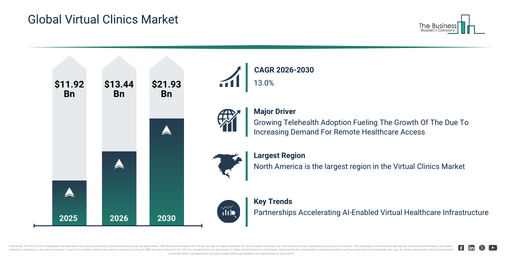
    The virtual clinics market has experienced substantial growth in recent years. This market is projected to expand from $11.92 billion in 2025 to $13.44 billion in 2026, achieving a compound annual growth rate (CAGR) of 12.8%. Historically, this expansion can be attributed to factors such as increased telemedicine usage, wider broadband access, the proliferation of digital health applications, a heightened demand for patient convenience, and the early adoption of virtual visits during the pandemic.

    The virtual clinics market is set for significant expansion in the coming years, projected to reach $21.93 billion by 2030, exhibiting a compound annual growth rate (CAGR) of 13.0%. This anticipated growth is driven by several factors, including the proliferation of hybrid care models, the emergence of digital-first healthcare policies, the broadening scope of remote diagnostics, increased insurer coverage for virtual appointments, and the rise in cross-border teleconsultations. Key trends expected during this period involve the increasing embrace of video consultation platforms, the growing utilization of virtual follow-up services, the expansion of integrated EHR teleclinic systems, the wider deployment of remote diagnostic kiosks, and a greater demand for mobile-first virtual clinics.

    Get A Free Sample Report With In-Depth Market Insights:

    https://thebusinessresearchcompany.com/sample_request?id=28982411&type=smp&name=Virtual%20Clinics%20Market%20Report%202026&utm_source=Blogs&utm_medium=Paid&utm_campaign=Oct_PR

    Virtual Clinics Market Growth Momentum: What Factors Are Shaping Demand?

    Increased adoption of telehealth is anticipated to fuel the expansion of the virtual clinics market moving ahead. This adoption signifies how widely patients, practitioners, and health systems utilize digital solutions for delivering clinical care and health services remotely on a regular basis. The primary driver behind the surge in telehealth adoption is the escalating demand for convenient healthcare access, eliminating the need for physical visits. As a crucial component of telehealth, virtual clinics offer structured platforms allowing patients to access consultations, diagnoses, and subsequent care completely online. For example, data from July 2025 by the International Trade Administration (ITA) shows that digital treatment penetration in the U.S. was 18.1% in 2024 and is forecast to climb to 28.08% by 2029, illustrating the broader utilization of digital and remote healthcare solutions. Consequently, the increasing adoption of telehealth is a significant factor driving the expansion of the virtual clinics market.

    Virtual Clinics Market Segment Analysis And Revenue Potential

    The virtual clinics market covered in this report is segmented –

    1) By Type: Teleconsultation Platforms; Virtual Primary Care; Specialty E-Clinics; Artificial Intelligence-Based Symptom Checkers; Mobile Health Services

    2) By Application: Primary Care; Mental Health; Dermatology; Pediatrics; Chronic Care

    3) By End Users: Healthcare Providers; Patients; Pharmaceutical Companies; Insurance Companies; Employers

    Subsegments:

    1) By Teleconsultation Platforms: Video Consultation Platforms; Audio Consultation Platforms; Chat-Based Consultation Platforms; Integrated Scheduling and Consultation Platforms

    2) By Virtual Primary Care: Preventive Care Platforms; Routine Checkup Platforms; Family Medicine Virtual Platforms; General Practice Virtual Platforms

    3) By Specialty E-Clinics: Cardiology Virtual Clinics; Dermatology Virtual Clinics; Endocrinology Virtual Clinics; Orthopedic Virtual Clinics; Neurology Virtual Clinics

    4) By Artificial Intelligence-Based Symptom Checkers: Rule Based Symptom Assessment Tools; Machine Learning Driven Symptom Analysis Tools; Natural Language Processing Based Triage Tools; Predictive Diagnostic Support Tools

    5) By Mobile Health Services: Mobile Consultation Applications; Remote Health Monitoring Applications; Medication Management Applications; Wellness and Preventive Care Applications

    Virtual Clinics Market Trends Redefining Industry Growth

    Leading companies within the virtual clinics market are increasingly adopting a strategic partnership approach to improve technology integration and broaden their market reach. Such a partnership typically involves a collaborative relationship between two or more organizations, where they combine their resources, expertise, and efforts to achieve common goals or objectives. For instance, in January 2026, VSee Health, Inc., a US-based telehealth technology company, formed a strategic partnership with DocBox, a US-based augmented intelligence platform for critical care, to develop a next-generation virtual ICU operating system for hospitals globally. This collaboration merges VSee’s telehealth and AI-driven workflows with DocBox’s vendor-agnostic bedside data infrastructure, empowering hospitals to utilize real-time, structured clinical data from ICU devices and monitoring systems. The resulting combined solution is conceived as a reimbursement-ready, AI-native virtual ICU platform that supports scalable remote critical care delivery, enhances revenue capture through automated billing processes, enables the deployment of AI decision-support tools on live physiological data, ensures hospital ownership of clinical data, and integrates VSee’s capabilities into core clinical operations.

    Virtual Clinics Market Industry Leaders And Competitive Landscape

    Major companies operating in the virtual clinics market are Optum Inc., The Cigna Group, Siemens Healthineers AG, Koninklijke Philips N.V., SSM Health Care Group, Teladoc Health Inc., Babylon Healthcare Services Limited, Hims & Hers Health Inc., Ping An Healthcare and Technology Company Limited, Kry International AB, American Well Corporation, MDLIVE Inc., Doctor On Demand Inc., CallHealth Services Private Limited, HealthTap Inc., Ada Health GmbH, Virinchi Hospitals Private Limited, Practo Technologies Private Limited, 98point6 Inc., PlushCare Inc.

    View The Full Virtual Clinics Market Report:

    https://thebusinessresearchcompany.com/report/virtual-clinics-market-report?utm_source=Blogs&utm_medium=Paid&utm_campaign=Oct_PR

    Virtual Clinics Market Regional Analysis And Leading Geography

    North America was the largest region in the virtual clinics market in 2025. Asia-Pacific is expected to be the fastest-growing region in the forecast period. The regions covered in the virtual clinics market report are Asia-Pacific, South East Asia, Western Europe, Eastern Europe, North America, South America, Middle East, Africa.

    Reach Out To Our Team:

    The Business Research Company: https://www.thebusinessresearchcompany.com/

    Americas: +1 310-496-7795

    Asia: +44 7882 955267 & +91 8897263534

    Europe: +44 7882 955267

    Email us at: marketing@tbrc.info

    Follow us on:

    LinkedIn: https://in.linkedin.com/company/the-business-research-company

    YouTube: https://www.youtube.com/channel/UC24_fI0rV8cR5DxlCpgmyFQ

    Global Market Model: https://www.thebusinessresearchcompany.com/global-market-model
  • Virtual Care Management Market To Witness 13.6% CAGR Growth Through 2030: Key Industry Drivers

    Virtual Care Management Market To Witness 13.6% CAGR Growth Through 2030: Key Industry Drivers

    Featuring market attractiveness scoring, total addressable market sizing, company benchmarking matrices, interactive Excel dashboards, deeper supply chain intelligence, emerging startup tracking, and granular product-level insights, The Business Research Company’s 2026 market reports are built to deliver research that is both more actionable and more strategically valuable.

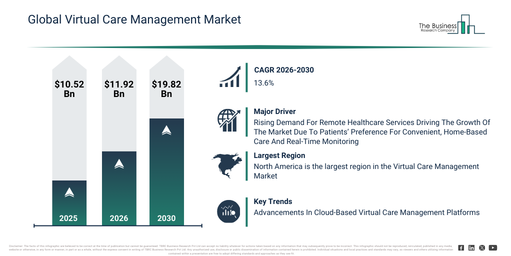
    Virtual Care Management Market Set To Climb From $11.92 Billion In 2026 To $19.82 Billion By 2030

    The virtual care management market has experienced rapid expansion in recent years. This market is projected to increase from $10.52 billion in 2025 to $11.92 billion in 2026, exhibiting a compound annual growth rate (CAGR) of 13.3%. The historical growth trajectory can be attributed to factors such as increased telehealth adoption, a rising burden of chronic diseases, the expansion of digital health records, an increase in remote monitoring pilot programs, and early support for virtual care from insurers.

    The virtual care management market is anticipated to undergo substantial expansion in the upcoming years, with its valuation expected to climb to $19.82 billion in 2030, achieving a compound annual growth rate (CAGR) of 13.6%. This growth during the forecast period is propelled by factors such as the increasing prevalence of value-based care models, a rising aging population, the broadening scope of home-based monitoring programs, higher payer reimbursement for virtual services, and expanding provider budgets for digital transformation. Prominent trends for this period include the growing adoption of remote care coordination platforms, an increasing utilization of continuous chronic care monitoring, the expansion of digital care plan management tools, greater integration of patient engagement platforms, and enhanced deployment of virtual care analytics solutions.

    Get A Free Sample Report With In-Depth Market Insights:

    https://thebusinessresearchcompany.com/sample_request?id=54471316&type=smp&name=Virtual%20Care%20Management%20Market%20Report%202026&utm_source=Blogs&utm_medium=Paid&utm_campaign=Oct_PR

    Virtual Care Management Market Expansion Drivers: What’s Shaping Future Growth?

    An increasing need for remote healthcare services is anticipated to fuel the expansion of the virtual care management market over the next few years. Remote healthcare encompasses providing medical services, advice, and patient oversight from a distance, leveraging digital platforms and telecommunication tools. This escalating demand primarily stems from patients favoring convenient and readily available care, enabling them to access medical attention from their homes, thereby cutting down on travel, waiting periods, and related expenses. Virtual care management facilitates remote healthcare provision by offering coordinated, real-time monitoring, communication, and care strategy development involving both providers and patients. Such functionalities improve the uninterrupted flow of care, boost patient involvement, and enhance the overall efficiency of the healthcare system. The growing uptake of telehealth services demonstrates this escalating demand. For example, data from the U.S. Department of Health and Human Services (HHS), a US-based national health policy, indicates that approximately 25% of medicare fee-for-service beneficiaries accessed telehealth services, an increase from 18% in March 2023, showing a notable 7 percentage point rise year-over-year. Consequently, the increased demand for remote healthcare services is propelling the expansion of the virtual care management market.

    Virtual Care Management Market Segmentation And Category Overview

    The virtual care management market covered in this report is segmented –

    1) By Component: Software; Hardware; Services

    2) By Deployment Mode: On-Premises; Cloud

    3) By Application: Telehealth; Remote Patient Monitoring; Chronic Disease Management; Behavioral Health; Other Applications

    4) By End-Users: Hospitals; Clinics; Home Care Settings; Other End-Users

    Subsegments:

    1) By Software: Care Coordination Platforms; Patient Engagement Applications; Clinical Decision Support Systems; Population Health Management Tools

    2) By Hardware: Remote Monitoring Devices; Wearable Health Tracking Devices; Connected Diagnostic Equipment; Home Care Medical Devices

    3) By Services: Remote Care Coordination Services; Chronic Care Management Services; Virtual Patient Monitoring Services

    Virtual Care Management Market Strategic Trends: What Defines The Next Growth Phase?

    Key players within the virtual care management market are prioritizing innovations in cloud and teleconferencing technologies, including virtual care management (VCM) platforms, to bolster remote patient engagement, facilitate real-time interactions between clinicians and patients, optimize care coordination, and ensure the scalable, secure provision of healthcare services across diverse care environments. Virtual care management (VCM) refers to the synchronized delivery, oversight, and administration of patient care utilizing digital and remote healthcare solutions, serving as an alternative to traditional in-person appointments. For instance, in march 2023, Royal Philips, a Netherlands-based health technology company, unveiled Philips virtual care management. This offering encompasses condition-specific protocols (including diabetes and hypertension), integrates connected devices and engagement tools on a secure interoperable cloud-based platform, and provides licensed clinical professional monitoring alongside personalized health coaching.

    Virtual Care Management Market Key Participants And Competitive Landscape

    Major companies operating in the virtual care management market are Amazon.web service Inc., UnitedHealth Group Incorporated, CVS Health Corporation, The Cigna Group Inc., Elevance Health Inc., Centene Corporation, Humana Inc., HCA Healthcare Inc., Best Buy Co. Inc., Koninklijke Philips N.V., Boston Scientific Corporation, ResMed Inc., Agilon Health Inc., DexCom Inc., Teladoc Health Inc., Masimo Corporation, Evolent Health Inc., Privia Health Group Inc., Hims & Hers Health Inc., Doximity Inc., American Well Corporation, LifeMD Inc., Talkspace Inc.

    View The Full Virtual Care Management Market Report:

    https://thebusinessresearchcompany.com/report/virtual-care-management-market-report?utm_source=Blogs&utm_medium=Paid&utm_campaign=Oct_PR

    Virtual Care Management Market Geographic Analysis: Where Is Demand Accelerating Fastest?

    North America was the largest region in the virtual care management market in 2025. Asia-Pacific is expected to be the fastest-growing region in the forecast period. The regions covered in the virtual care management market report are Asia-Pacific, South East Asia, Western Europe, Eastern Europe, North America, South America, Middle East, Africa.

    Reach Out To Our Team:

    The Business Research Company: https://www.thebusinessresearchcompany.com/

    Americas: +1 310-496-7795

    Asia: +44 7882 955267 & +91 8897263534

    Europe: +44 7882 955267

    Email us at: marketing@tbrc.info

    Follow us on:

    LinkedIn: https://in.linkedin.com/company/the-business-research-company

    YouTube: https://www.youtube.com/channel/UC24_fI0rV8cR5DxlCpgmyFQ

    Global Market Model: https://www.thebusinessresearchcompany.com/global-market-model
  • Wastewater Pathogen Variant Analytics Market To Witness 17.6% CAGR Growth Through 2030: Key Industry Drivers

    Wastewater Pathogen Variant Analytics Market To Witness 17.6% CAGR Growth Through 2030: Key Industry Drivers

    Featuring market attractiveness scoring, total addressable market sizing, company benchmarking matrices, interactive Excel dashboards, deeper supply chain intelligence, emerging startup tracking, and granular product-level insights, The Business Research Company’s 2026 market reports are built to deliver research that is both more actionable and more strategically valuable.

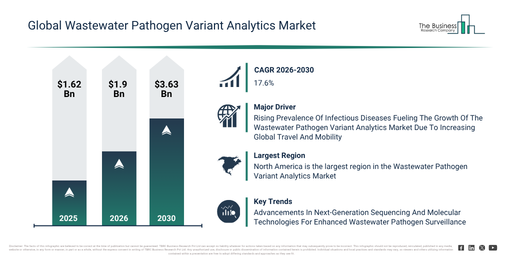
    Wastewater Pathogen Variant Analytics Market Set To Climb From $1.9 Billion In 2026 To $3.63 Billion By 2030

    The wastewater pathogen variant analytics market has experienced substantial growth in recent years. It is projected to expand from $1.62 billion in 2025 to $1.9 billion in 2026, showing a compound annual growth rate (CAGR) of 17.4%. This historical expansion can be attributed to an increasing awareness of community-level disease monitoring, the adoption of PCR-based pathogen detection, a rise in municipal wastewater testing, the establishment of environmental monitoring laboratories, and increased funding for public health surveillance.

    The wastewater pathogen variant analytics market is projected to experience substantial expansion in the coming years, reaching a valuation of $3.63 billion by 2030, driven by a compound annual growth rate (CAGR) of 17.6%. This growth during the forecast period stems from factors such as the proliferation of next-generation sequencing technologies, the incorporation of AI and big data analytics, intensified government efforts for predicting outbreaks, the necessity for real-time wastewater monitoring, and partnerships between municipalities and research institutions. Prominent trends identified for the forecast period include wastewater genomic surveillance, the tracking of pathogen variants in real-time, AI-driven outbreak prediction, the merging with public health dashboards, and the development of predictive environmental risk analytics.

    Get A Free Sample Report With In-Depth Market Insights:

    https://thebusinessresearchcompany.com/sample_request?id=23025615&type=smp&name=Wastewater%20Pathogen%20Variant%20Analytics%20Market%20Report%202026&utm_source=Blogs&utm_medium=Paid&utm_campaign=Oct_PR

    Wastewater Pathogen Variant Analytics Market Expansion Drivers: What’s Shaping Future Growth?

    The increasing occurrence of infectious diseases is projected to stimulate expansion in the wastewater pathogen variant analytics market. These diseases are defined as ailments stemming from pathogenic microbes like bacteria, viruses, fungi, or parasites, capable of direct or indirect transmission among people. An escalating burden from such diseases is fueled by elements including greater global travel and movement, urban development, and an elevated potential for cross-border spread, all of which hasten the dissemination of new and recurring pathogens. Wastewater pathogen variant analytics tackles this increasing load by facilitating early discovery of pathogens and their mutations within communities, leading to quicker public health actions and more focused strategies to restrict their spread. For example, in February 2026, data from the US-based public health agency, the Centers for Disease Control and Prevention (CDC), indicated that seasonal influenza in the United States typically leads to about 290,000–450,000 hospitalizations and 34,000–53,000 deaths each year. Concurrently, respiratory syncytial virus (RSV) contributed to an estimated 190,000–350,000 hospitalizations and 10,000–23,000 deaths. Consequently, the heightened incidence of infectious diseases is anticipated to spur growth within the wastewater pathogen variant analytics market.

    Wastewater Pathogen Variant Analytics Market Segmentation And Category Overview

    The wastewater pathogen variant analytics market covered in this report is segmented –

    1) By Pathogen Type: Viruses, Bacteria, Parasites, Fungi

    2) By Technology: Polymerase Chain Reaction (PCR)-Based, Next-Generation Sequencing, Immunoassays, Biosensors, Other Technologies

    3) By Application: Public Health Surveillance, Environmental Monitoring, Industrial Wastewater, Municipal Wastewater, Other Applications

    4) By End-User: Municipalities, Research Institutes, Industrial Facilities, Healthcare Facilities, Other End-Users

    Subsegments:

    1) By Viruses: Ribonucleic Acid (RNA) Viruses, Deoxyribonucleic Acid (DNA) Viruses

    2) By Bacteria: Pathogenic Bacterial Species, Antimicrobial-Resistant Strains

    3) By Parasites: Protozoa, Helminth-Related Pathogens

    4) By Fungi: Fungal Pathogens, Environmental Fungal Variants

    Wastewater Pathogen Variant Analytics Market Strategic Trends: What Defines The Next Growth Phase?

    Leading companies in the wastewater pathogen variant analytics market are increasingly prioritizing technological advancements in advanced molecular diagnostics platforms. This focus aims to enhance detection accuracy, improve real-time pathogen surveillance, and facilitate the early identification of emerging public health threats. Molecular diagnostic technologies employ nucleic-acid–based methods, such as PCR and sequencing, to detect and quantify DNA or RNA from pathogens found in complex samples, including wastewater. For instance, in April 2025, bioMérieux, a France-based company specializing in in-vitro diagnostics, launched WATCHFIRE. This innovative molecular testing solution is designed to strengthen wastewater pathogen surveillance through rapid, multiplex PCR detection of up to 22 respiratory pathogens directly from sewage influent samples. The system provides results in approximately 45 minutes and integrates with FIREWORKS software, enabling real-time trend analysis and automated alerts to support early warning and outbreak monitoring. WATCHFIRE operates on the BIOFIRE FILMARRAY TORCH instrument, allowing for decentralized, near-source testing with minimal hands-on time. It is expected to expand later in the year to include a gastrointestinal panel, thereby broadening pathogen coverage and complementing sequencing-based variant analytics for public health authorities.

    Wastewater Pathogen Variant Analytics Market Key Participants And Competitive Landscape

    Major companies operating in the wastewater pathogen variant analytics market are Roche Diagnostics International Ltd., Thermo Fisher Scientific Inc., SGS SA, Eurofins Scientific SE, Agilent Technologies Inc., Illumina Inc., BioMérieux SA, IDEXX Laboratories Inc., Bio-Rad Laboratories, QIAGEN N.V., ALS Limited, Promega Corporation, Ginkgo Bioworks Inc., Oxford Nanopore Technologies plc, LuminUltra Technologies Ltd., Verily Life Sciences LLC, Zymo Research Corp., PathogenDx Inc., Clear Labs Inc., GT Molecular Inc.

    View The Full Wastewater Pathogen Variant Analytics Market Report:

    https://thebusinessresearchcompany.com/report/wastewater-pathogen-variant-analytics-market-report?utm_source=Blogs&utm_medium=Paid&utm_campaign=Oct_PR

    Wastewater Pathogen Variant Analytics Market Geographic Analysis: Where Is Demand Accelerating Fastest?

    North America was the largest region in the wastewater pathogen variant analytics market in 2025. Asia-Pacific is expected to be the fastest-growing region in the forecast period. The regions covered in the wastewater pathogen variant analytics market report are Asia-Pacific, South East Asia, Western Europe, Eastern Europe, North America, South America, Middle East, Africa.

    Reach Out To Our Team:

    The Business Research Company: https://www.thebusinessresearchcompany.com/

    Americas: +1 310-496-7795

    Asia: +44 7882 955267 & +91 8897263534

    Europe: +44 7882 955267

    Email us at: marketing@tbrc.info

    Follow us on:

    LinkedIn: https://in.linkedin.com/company/the-business-research-company

    YouTube: https://www.youtube.com/channel/UC24_fI0rV8cR5DxlCpgmyFQ

    Global Market Model: https://www.thebusinessresearchcompany.com/global-market-model
  • Virtual Ward Care Solutions Market Research 2026: Market Size, Trends, Segments And Growth Forecast

    Virtual Ward Care Solutions Market Research 2026: Market Size, Trends, Segments And Growth Forecast

    Backed by market attractiveness analysis, total addressable market sizing, company benchmarking matrices, interactive Excel dashboards, wider supply chain intelligence, emerging startup coverage, and detailed product-level insights, The Business Research Company’s 2026 market reports are designed to offer research that is more actionable and strategically valuable than ever.

    Virtual Ward Care Solutions Market Size And Revenue Outlook Through 2030

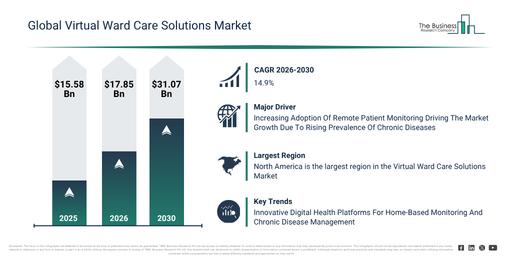
    The virtual ward care solutions market has seen a substantial increase in its size over recent years. It is anticipated to expand from $15.58 billion in 2025 to $17.85 billion in 2026, exhibiting a compound annual growth rate (CAGR) of 14.6%. This historical upward trend can be attributed to several factors including the rising demand for home healthcare, advancements in telemedicine technology, the increasing prevalence of chronic diseases, efforts to contain healthcare costs, and a growing awareness of hospital-acquired infections.

    The virtual ward care solutions market is projected to experience substantial expansion in the coming years, set to reach $31.07 billion by 2030, exhibiting a compound annual growth rate (CAGR) of 14.9%. This anticipated growth during the forecast period is fueled by the expansion of AI-enabled monitoring solutions, the integration of IoT health devices, governmental backing for virtual care programs, the increasing adoption of cloud-based health platforms, and investments in predictive patient care analytics. Key trends anticipated for this period encompass remote patient monitoring expansion, telehealth integration, the adoption of wearable health devices, predictive analytics for patient outcomes, and virtual care workflow automation.

    Get A Free Sample Report With In-Depth Market Insights:

    https://thebusinessresearchcompany.com/sample_request?id=76966049&type=smp&name=Virtual%20Ward%20Care%20Solutions%20Market%20Report%202026&utm_source=Blogs&utm_medium=Paid&utm_campaign=Oct_PR

    Virtual Ward Care Solutions Market Growth Drivers: What’s Behind The Acceleration?

    The increasing integration of remote patient monitoring is projected to stimulate the expansion of the virtual ward care solutions market in the coming period. Remote patient monitoring (RPM) refers to the application of digital technologies and instruments to collect patients’ health information from outside traditional healthcare facilities and transmit it to healthcare providers for ongoing supervision and treatment. The adoption of remote patient monitoring is expanding driven by the heightened necessity for continuous healthcare management, as it enables healthcare providers to track patients’ health status in real time. Virtual ward care solutions facilitate remote patient monitoring by furnishing an integrated platform that allows healthcare providers to continuously observe patients’ vital signs, symptoms, and adherence to treatment in real time, while orchestrating care remotely to ensure timely actions and individualized management beyond conventional hospital environments. For example, in August 2025, according to the Office of Inspector General, a US-based independent organization, the count of Medicare enrollees employing remote patient monitoring grew significantly, reaching nearly 1 million in 2024, which denotes a 27% increase compared to 2023. Therefore, the growing uptake of remote patient monitoring is fueling the growth of the virtual ward care solutions market.

    Virtual Ward Care Solutions Market Segment Breakdown: Which Categories Lead On Revenue?

    The virtual ward care solutions market covered in this report is segmented –

    1) By Component: Hardware, Software, Services

    2) By Patient Type: Chronic Disease Patients, Acute Care Patients, Elderly And Frail Patients

    3) By Care Type: Hospital-At-Home Care, Transitional Care, Preventive Care, Rehabilitation And Recovery Care, Palliative Care

    4) By Technology: Telehealth And Teleconsultation Technology, Remote Patient Monitoring, Wearable And Internet of Things (IoT) Health Technology, Artificial Intelligence And Predictive Analytics, Cloud-Based Solutions, Mobile Applications

    5) By End User: Hospitals And Health Systems, Home Healthcare Providers, Insurance Providers, Government And Public Health Organizations, Long-Term Care Facilities

    Subsegments:

    1) By Hardware: Patient Monitoring Devices, Wearable Health Sensors, Telecommunication Equipment, Tablet And Mobile Devices

    2) By Software: Remote Patient Monitoring Software, Electronic Health Record Integration Software, Care Coordination And Workflow Software, Analytics And Reporting Software

    3) By Services: Implementation And Integration Services, Training And Education Services, Maintenance And Support Services, Telehealth Consultation Services

    Virtual Ward Care Solutions Market Trends: What’s Defining The Industry’s Next Phase?

    Major companies within the virtual ward care solutions market are concentrating on incorporating innovative solutions, particularly digital health platforms, to bolster remote patient monitoring and improve home-based care provision. Digital health platforms are software-driven systems that collect, analyze, and share patient health data remotely, enabling healthcare providers to oversee patient conditions in real-time, facilitate timely interventions, and reduce the need for in-person hospital visits. For example, in February 2023, Hull University Teaching Hospitals NHS Trust (HUTH), a UK-based hospital trust, collaborated with Lenus Health, a UK-based digital health company, to launch the Lenus Virtual Ward and Remote Monitoring Services, an advanced digital platform aimed at supporting patients outside traditional hospital settings. This solution integrates wearable sensors, mobile applications, and clinician dashboards to continuously track vital signs, detect early warning signs, and facilitate rapid clinical responses. The platform’s disease management features enable tailored care pathways for chronic conditions such as COPD and heart failure, combining symptom tracking, personalized treatment plans, and automated care prompts to improve outcomes. Key features include real-time data monitoring, automated alerts for healthcare teams, secure integration with electronic health records, and enhanced patient engagement through educational resources and notifications.

    Virtual Ward Care Solutions Market Competitive Landscape: Who Leads The Industry?

    Major companies operating in the virtual ward care solutions market are Medtronic plc, Siemens Healthineers AG, Koninklijke Philips N.V., GE HealthCare Technologies Inc., Masimo Corporation, HealthSnap Inc., Huma Therapeutics Limited, Telli Health LLC, Health Recovery Solutions Inc., Accuhealth Solutions Inc., Lark Technologies Inc., Optimize Health Inc., VitalTech Holdings Inc., BioIntelliSense Inc., CareSimple Inc., Doccla Ltd, Whzan Digital Health Ltd, Vitls Inc., Spirit Health Group Limited, HealthArc Inc., 100Plus Inc., Docobo Limited, Cadence Care Inc., and Docly Technologies AB.

    View The Full Virtual Ward Care Solutions Market Report:

    https://thebusinessresearchcompany.com/report/virtual-ward-care-solutions-market-report?utm_source=Blogs&utm_medium=Paid&utm_campaign=Oct_PR

    Virtual Ward Care Solutions Market Geographic Landscape: Which Region Leads Industry Growth?

    North America was the largest region in the virtual ward care solutions market in 2025. Asia-Pacific is expected to be the fastest-growing region in the forecast period. The regions covered in the virtual ward care solutions market report are Asia-Pacific, South East Asia, Western Europe, Eastern Europe, North America, South America, Middle East, Africa.

    Reach Out To Our Team:

    The Business Research Company: https://www.thebusinessresearchcompany.com/

    Americas: +1 310-496-7795

    Asia: +44 7882 955267 & +91 8897263534

    Europe: +44 7882 955267

    Email us at: marketing@tbrc.info

    Follow us on:

    LinkedIn: https://in.linkedin.com/company/the-business-research-company

    YouTube: https://www.youtube.com/channel/UC24_fI0rV8cR5DxlCpgmyFQ

    Global Market Model: https://www.thebusinessresearchcompany.com/global-market-model
  • Virtual Sleep Clinics Market Forecast 2026: Market Size, Competitive Landscape And Growth Drivers

    Virtual Sleep Clinics Market Forecast 2026: Market Size, Competitive Landscape And Growth Drivers

    Featuring market attractiveness scoring, total addressable market sizing, company benchmarking matrices, interactive Excel dashboards, deeper supply chain intelligence, emerging startup tracking, and granular product-level insights, The Business Research Company’s 2026 market reports are built to deliver research that is both more actionable and more strategically valuable.

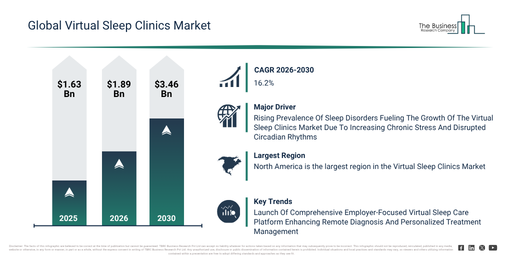
    Virtual Sleep Clinics Market Growth From $1.89 Billion In 2026 To $3.46 Billion By 2030 At A CAGR Of 16.2%

    The virtual sleep clinics market has experienced substantial growth in recent years. This market is projected to expand from $1.63 billion in 2025 to $1.89 billion in 2026, achieving a compound annual growth rate (CAGR) of 16.0%. The historical expansion can be ascribed to a rising prevalence of sleep disorders, restricted access to traditional in-person sleep clinics, the increasing integration of telehealth solutions, a strong demand for patient convenience, and the proliferation of wearable sleep devices.

    The virtual sleep clinics market is projected for significant expansion in the coming years. Its valuation is anticipated to reach $3.46 billion by 2030, demonstrating a compound annual growth rate (CAGR) of 16.2%. This anticipated increase during the forecast period stems from several factors, including the continued expansion of virtual sleep clinics, the incorporation of AI-driven diagnostic tools, supportive regulations for telemedicine, greater investment in remote monitoring technologies, increasing public awareness of sleep health, and the demand for personalized care. Key developments anticipated for this period encompass remote monitoring for sleep disorders, the growth of tele-consultation services, wider adoption of home-based sleep testing, the availability of digital services for insomnia care, and enhanced integrated care coordination.

    Get A Free Sample Report With In-Depth Market Insights:

    https://thebusinessresearchcompany.com/sample_request?id=36653584&type=smp&name=Virtual%20Sleep%20Clinics%20Market%20Report%202026&utm_source=Blogs&utm_medium=Paid&utm_campaign=Oct_PR

    Virtual Sleep Clinics Market Growth Factors Behind Sustained Expansion

    The escalating occurrence of sleep disorders is projected to drive the expansion of the virtual sleep clinics market in the future. These medical conditions, which include insomnia, sleep apnea, and circadian rhythm disorders, compromise sleep quality, timing, or duration, thereby impairing daytime functioning. The increasing burden of sleep disorders stems from factors such as chronic stress linked to modern lifestyles, heightened screen exposure, irregular work schedules, and an aging demographic, all of which disrupt circadian rhythms and hormonal balance. Virtual sleep clinics address this growing demand by offering broader remote access to diagnosis, monitoring, and personalized treatment, enabling timely intervention and continuous management for an expanding patient population. For instance, in July 2025, according to SleepFoundation.org, a US-based non-profit organization focused on sleep health education, insomnia was estimated to affect over 850 million adults globally, representing approximately 16.2% of the adult population, with severe cases impacting nearly 415 million individuals. Thus, the rising prevalence of sleep disorders is fueling the growth of the virtual sleep clinics market.

    Virtual Sleep Clinics Market Segmentation: How Does The Market Break Down By Category?

    The virtual sleep clinics market covered in this report is segmented –

    1) By Service Components: Tele-Consultation And Sleep Specialist Visits, Home Sleep Apnea Testing (HSAT) Programs, Remote Positive Airway Pressure Titration And Adherence Monitoring, Digital Insomnia Care Pathways (CBT-I Services), Care Coordination And Durable Medical Equipment (DME) Integration Services

    2) By Technology Platform: Integrated Virtual Clinic Platforms, Standalone Telehealth Solutions, Remote Monitoring Systems, Digital Therapeutic Applications

    3) By Clinical Indication: Obstructive Sleep Apnea (OSA), Insomnia, Circadian Rhythm Disorders, Restless Legs Syndrome, Other Clinical Indications

    4) By End User Or Channel: Direct-To-Patient Virtual Clinics, Hospital-Affiliated Virtual Programs, Payers Or Employers, Durable Medical Equipment (DME) Providers Or PAP Networks, Other End User Or Channels

    Subsegments:

    1) By Tele-Consultation And Sleep Specialist Visits: Real-Time Virtual Consultations With Sleep Medicine Specialists, Follow-Up Visits And Treatment Planning Via Telehealth, Second-Opinion Services

    2) By Home Sleep Apnea Testing (HSAT) Programs: Portable Diagnostic Devices For Sleep Apnea, Remote Data Transmission And Interpretation, Prescription And Setup Support

    3) By Remote Positive Airway Pressure Titration And Adherence Monitoring: Remote Pressure Adjustment For PAP Devices, Compliance Tracking And Reporting, Feedback Loops To Clinicians

    4) By Digital Insomnia Care Pathways (CBT-I Services): Online Cognitive Behavioral Therapy For Insomnia, Self-Guided Modules And Clinician Support, Outcome Tracking And Personalized Care Plans

    5) By Care Coordination And Durable Medical Equipment (DME) Integration Services: Centralized Care Navigation, Coordination Between Providers, Labs, Equipment Suppliers, Insurers, Integration Of Sleep Devices And Accessories

    Virtual Sleep Clinics Market Industry Trends Fueling Future Revenue Growth

    Key companies operating in the virtual sleep clinics market are concentrating on technological advancements in sleep monitoring devices, such as virtual sleep care solutions, to improve remote diagnostic accuracy, increase patient engagement and treatment adherence, and deliver personalized, data-driven sleep disorder management through integrated digital platforms. A virtual sleep care solution refers to a digitally-enabled healthcare platform that provides comprehensive diagnosis, treatment, monitoring, and management of sleep disorders remotely, leveraging telemedicine technologies, connected medical devices, and data analytics tools. For example, in September 2023, Neura Health, a US-based digital neurology company, introduced a Comprehensive Virtual Sleep Care Solution designed for Employers. This solution offers end-to-end sleep care delivered by board-certified sleep specialists via telehealth, supported by at-home sleep testing kits, personalized treatment plans, and continuous virtual follow-ups. It integrates behavioral sleep therapy, prescription management, and care coordination within a single digital platform, enabling employers to provide scalable sleep health benefits to their workforce. The service also utilizes data-driven insights to enhance diagnosis accuracy and treatment adherence while simultaneously reducing costs traditionally associated with sleep labs.

    Virtual Sleep Clinics Market Company Landscape And Competitive Strategy

    Major companies operating in the virtual sleep clinics market are Kaiser Foundation Health Plan Inc., Koninklijke Philips N.V., ResMed Inc., Teladoc Health Inc., Sleep Number Corporation, Carbon Health Inc., Amwell Group Inc., Compumedics Limited, Big Health Inc., BetterNight Inc., Gem Sleep LLC, Fullpower Technologies Inc., Sleep Data Holdings LLC, Sleepio Ltd., Haleo Inc., TeleSleep Clinic LLC, Sliiip Holdings Inc., WakeWell LLC, Ognomy Inc., Oura Health Ltd.

    View The Full Virtual Sleep Clinics Market Report:

    https://thebusinessresearchcompany.com/report/virtual-sleep-clinics-market-report?utm_source=Blogs&utm_medium=Paid&utm_campaign=Oct_PR

    Virtual Sleep Clinics Market Largest Region: Which Geography Holds The Biggest Share?

    North America was the largest region in the virtual sleep clinic market in 2025. Asia-Pacific is expected to be the fastest-growing region in the forecast period. The regions covered in the virtual sleep clinics market report are Asia-Pacific, South East Asia, Western Europe, Eastern Europe, North America, South America, Middle East, Africa.

    Reach Out To Our Team:

    The Business Research Company: https://www.thebusinessresearchcompany.com/

    Americas: +1 310-496-7795

    Asia: +44 7882 955267 & +91 8897263534

    Europe: +44 7882 955267

    Email us at: marketing@tbrc.info

    Follow us on:

    LinkedIn: https://in.linkedin.com/company/the-business-research-company

    YouTube: https://www.youtube.com/channel/UC24_fI0rV8cR5DxlCpgmyFQ

    Global Market Model: https://www.thebusinessresearchcompany.com/global-market-model