Category: Healthcare Services

  • Artificial Intelligence (AI)-Powered Dermatology Lesion Triaging Market CAGR Of 31.8% Forecast For 2026–2030: What It Means For The Industry

    Artificial Intelligence (AI)-Powered Dermatology Lesion Triaging Market CAGR Of 31.8% Forecast For 2026–2030: What It Means For The Industry

    Designed to make market research more actionable and strategically valuable, The Business Research Company’s 2026 market reports feature market attractiveness scoring, total addressable market sizing, company benchmarking matrices, interactive Excel dashboards, deeper supply chain intelligence, emerging startup tracking, and granular product-level insights.

    Artificial Intelligence (AI)-Powered Dermatology Lesion Triaging Market To Expand At A 31.8% CAGR: Size And Growth Projections Through 2030

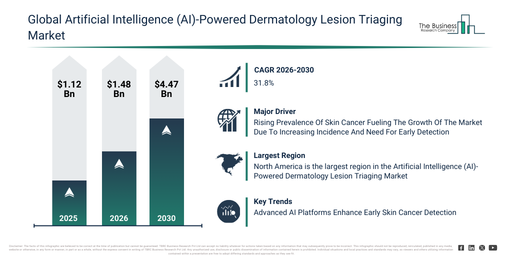
    The artificial intelligence (AI)-powered dermatology lesion triaging market has seen significant expansion over recent years. Projections indicate it will grow from $1.12 billion in 2025 to $1.48 billion in 2026 at a compound annual growth rate (CAGR) of 32.1%. This historical growth can be attributed to factors such as the increasing prevalence of skin disorders, a rising demand for early cancer detection, the expansion of dermatology diagnostic services, the growing adoption of digital imaging tools, and increasing awareness of preventive dermatology care.

    The artificial intelligence (AI)-powered dermatology lesion triaging market size is projected to experience substantial growth over the next few years. It is expected to expand to $4.47 billion by 2030, demonstrating a compound annual growth rate (CAGR) of 31.8%. This expansion during the forecast period is driven by the increasing application of AI-assisted diagnostic support, the rising adoption of remote dermatology consultations, the broadening of cloud-based clinical decision systems, the growing need for workflow automation in dermatology, and an intensifying focus on improving diagnostic accuracy. Major trends anticipated in this period include the increasing uptake of AI-based skin image analysis, the rising utilization of automated lesion risk stratification tools, the growing integration of teledermatology platforms, the expansion of mobile dermatology applications, and an enhanced emphasis on early skin cancer detection.

    Get Your Free Artificial Intelligence (AI)-Powered Dermatology Lesion Triaging Market Report Sample Today:

    https://thebusinessresearchcompany.com/sample_request?id=30396532&type=smp&name=Artificial%20Intelligence%20%28AI%29-Powered%20Dermatology%20Lesion%20Triaging%20Market%20Report%202026&utm_source=Blogs&utm_medium=Paid&utm_campaign=Nov_PR

    Which Factor Is Expected To Drive The Artificial Intelligence (AI)-Powered Dermatology Lesion Triaging Market Over The Forecast Period?

    The increasing occurrence of skin cancer is anticipated to boost the expansion of the artificial intelligence (AI)-powered dermatology lesion triaging market going forward. Skin cancer is characterized by the unrestrained proliferation of abnormal skin cells, frequently resulting from harm caused by ultraviolet radiation from sunlight or tanning equipment. The growing number of skin cancer cases primarily stems from excessive exposure to the sun, which leads to detrimental ultraviolet (UV) radiation damaging DNA within skin cells. Artificial intelligence (AI)-powered dermatology lesion triaging offers a solution to skin cancer by enabling the prompt and precise identification of suspicious skin lesions. It minimizes diagnostic waiting times by offering real-time risk evaluations, streamlines referrals to specialists, and aids clinical judgments, thereby enhancing patient results. Consequently, the rising prevalence of skin cancer is fueling the growth of the artificial intelligence (AI)-powered dermatology lesion triaging market.

    Artificial Intelligence (AI)-Powered Dermatology Lesion Triaging Market Segmentation Insights: How Is The Industry Categorized?

    The artificial intelligence (AI)-powered dermatology lesion triaging market covered in this report is segmented –

    1) By Component: Software, Hardware, Services

    2) By Deployment Mode: Cloud-Based, On-Premises

    3) By Lesion Type: Benign, Malignant, Pre-Malignant

    4) By Application: Skin Cancer Detection, Benign Lesion Identification, Teledermatology, Clinical Decision Support, Other Applications

    5) By End-User: Hospitals, Dermatology Clinics, Diagnostic Centers, Research Institutes, Other End Users

    Subsegments:

    1) By Software: Image Analysis Software, Diagnostic Support Software, Cloud-Based Software, Mobile Application Software, Patient Management Software

    2) By Hardware: Imaging Devices, Dermatoscopes, Cameras, Computers, Scanners

    3) By Services: Consulting Services, Implementation Services, Training And Education Services, Maintenance And Support Services, Data Management Services

    Artificial Intelligence (AI)-Powered Dermatology Lesion Triaging Market Trends Explained: What Is Changing And Why It Matters

    Major companies operating in the artificial intelligence (AI)-powered dermatology lesion triaging market are concentrating on developing sophisticated offerings, such as AI-driven imaging platforms, to enhance diagnostic precision, improve early identification of skin cancers, and streamline clinical operations. These AI-powered imaging platforms are comprehensive systems that employ artificial intelligence algorithms to scrutinize skin lesions, offer immediate diagnostic assistance, and categorize cases according to their malignancy risk.

    Artificial Intelligence (AI)-Powered Dermatology Lesion Triaging Market Competitor Landscape: Who Are The Major Companies?

    Major companies operating in the artificial intelligence (AI)-powered dermatology lesion triaging market are Proscia Inc., SkinVision B.V., MetaOptima Technology Inc., SkinIO Inc., Skin Analytics Ltd., DermaSensor Inc., Dxcover Ltd., Skinive, Legit.Health, Veriskin, VivoSight, BelleTorus, First Derm, CureSkin, Skinopathy, DermLens AI, Enspectra Health Inc., Dermie.AI, DermTech, FotoFinder Systems

    See The Full Artificial Intelligence (AI)-Powered Dermatology Lesion Triaging Market Report For Complete Market Sizing And Trends:

    https://thebusinessresearchcompany.com/report/artificial-intelligence-ai-powered-dermatology-lesion-triaging-global-market-report?utm_source=Blogs&utm_medium=Paid&utm_campaign=Nov_PR

    Artificial Intelligence (AI)-Powered Dermatology Lesion Triaging Market Regional Demand Analysis And Leading Geography

    North America was the largest region in the artificial intelligence (AI)-powered dermatology lesion triaging market in 2025. The regions covered in the artificial intelligence (AI)-powered dermatology lesion triaging market report are Asia-Pacific, South East Asia, Western Europe, Eastern Europe, North America, South America, Middle East, Africa.

    Reach Out To Our Team:

    The Business Research Company: https://www.thebusinessresearchcompany.com/

    Americas: +1 310-496-7795

    Asia: +44 7882 955267 & +91 8897263534

    Europe: +44 7882 955267

    Email us at: marketing@tbrc.info

    Follow us on:

    LinkedIn: https://in.linkedin.com/company/the-business-research-company

    YouTube: https://www.youtube.com/channel/UC24_fI0rV8cR5DxlCpgmyFQ

    Global Market Model: https://www.thebusinessresearchcompany.com/global-market-model

  • 5-Alpha Reductase Deficiency Market Overview: Size, Growth Drivers, Trends And Competitive Landscape

    5-Alpha Reductase Deficiency Market Overview: Size, Growth Drivers, Trends And Competitive Landscape

    With a focus on actionable insights and strategic value, The Business Research Company’s 2026 market reports include market attractiveness scoring, total addressable market sizing, company benchmarking matrices, interactive Excel dashboards, deeper supply chain intelligence, emerging startup tracking, and granular product-level insights.

    How Much Will The 5-Alpha Reductase Deficiency Market Be Worth By 2030?

    The market for 5-alpha reductase deficiency has experienced robust growth in recent years. This market is anticipated to expand from $1.5 billion in 2025 to $1.64 billion in 2026, demonstrating a compound annual growth rate (CAGR) of 9.6%. The historical period’s growth can be attributed to factors such as limited awareness of rare genetic disorders, a reliance on clinical evaluation for diagnosis, the gradual adoption of hormone testing, an increase in hospital-based treatment, and the slow development of specialized surgical procedures.

    The market for 5-alpha reductase deficiency is projected to experience substantial expansion over the forthcoming years. This market is forecast to reach $2.36 billion by 2030, exhibiting a compound annual growth rate (CAGR) of 9.5%. Key drivers for this growth throughout the forecast period include advancements in gene sequencing technologies, a rise in newborn and carrier screening initiatives, greater emphasis on personalized hormone therapy, an increase in specialty clinics addressing rare disorders, and broader research efforts within genetic endocrinology. Noteworthy trends anticipated during this period encompass the growing early diagnosis of 5-alpha reductase deficiency, heightened awareness of disorders of sexual development, increased uptake of genetic and hormonal testing, the expansion of specialized endocrinology and urology care services, and enhanced accessibility to hormone replacement therapies.

    Get Access To A Free 5-Alpha Reductase Deficiency Market Report Sample:

    https://thebusinessresearchcompany.com/sample_request?id=75877421&type=smp&name=5-Alpha%20Reductase%20Deficiency%20Market%20Report%202026&utm_source=Blogs&utm_medium=Paid&utm_campaign=Nov_PR

    The Key Driver Behind The 5-Alpha Reductase Deficiency Market’s 9.5% CAGR

    The expanding volume of research and development efforts in genomics is a significant contributor to the growth of the 5-alpha reductase deficiency market. Genomics involves examining an individual’s complete set of genes (genome) and understanding their interactions with each other and their surroundings. This field is utilized to diagnose 5-alpha reductase deficiency by identifying the specific genetic mutations responsible for the condition. Consequently, research and development activities in genomics will assist in discovering and treating the disorder. Hence, the increasing number of research and development activities in genomics is expected to propel the 5-alpha reductase deficiency market.

    5-Alpha Reductase Deficiency Market Classification: Main Segments And Detailed Subsegments

    The 5-alpha reductase deficiency market covered in this report is segmented –

    1) By Diagnosis: Chromosome Analysis, Gene Sequencing, Hormone Tests, Imaging Tests, Genetic Screening, Other Diagnosis

    2) By Treatment: Surgery, Vaginoplasty, Feminizing Genitoplasty, Hormone Replacement Therapy, Other Treatments

    3) By End-Users: Hospitals, Specialty Clinics, Other End-Users

    Subsegments:

    1) By Chromosome Analysis: Karyotyping, Fluorescence In Situ Hybridization (FISH)

    2) By Gene Sequencing: Targeted Gene Panels, Whole Exome Sequencing

    3) By Hormone Tests: Testosterone Levels, Dihydrotestosterone (DHT) Levels

    4) By Imaging Tests: Ultrasound, MRI

    5) By Genetic Screening: Carrier Testing, Newborn Screening

    6) By Other Diagnosis: Clinical Evaluation, Family History Assessment

    5-Alpha Reductase Deficiency Market Strategic Shifts: What Leading Players Are Prioritizing

    Leading firms in the 5-alpha reductase deficiency market are concentrating on creating advanced technological products, like consumer-ordered genetic tests, enabling individuals to acquire personal genetic data directly and privately without a healthcare professional’s referral. This type of genetic testing is directly ordered by individuals from a lab or testing firm, usually bypassing healthcare provider involvement, to understand their genetic predispositions, lineage, or health attributes.

    5-Alpha Reductase Deficiency Market Company Analysis: Major Industry Participants

    Major companies operating in the 5-alpha reductase deficiency market are F. Hoffmann-La Roche Ltd, Sanofi SA, Pfizer Inc, GlaxoSmithKline plc, Novartis AG, Bayer AG, Eli Lilly and Company, Johnson and Johnson Services Inc, Novo Nordisk A S, Regeneron Pharmaceuticals Inc, Roivant Sciences Ltd, Sanofi Genzyme, Shionogi and Co Ltd, Sun Pharmaceutical Industries Ltd, Takeda Pharmaceutical Company Limited, Teva Pharmaceutical Industries Ltd, UCB S A, Vertex Pharmaceuticals Incorporated, Cadila Healthcare Limited, Endo International plc

    Get Full Access To The 5-Alpha Reductase Deficiency Market Report 2026:

    https://thebusinessresearchcompany.com/report/5-alpha-reductase-deficiency-global-market-report?utm_source=Blogs&utm_medium=Paid&utm_campaign=Nov_PR

    5-Alpha Reductase Deficiency Market Global Regional Breakdown: Key Regions Analyzed

    North America was the largest region in the 5-alpha reductase deficiency market in 2025. The regions covered in the 5-alpha reductase deficiency market report are Asia-Pacific, South East Asia, Western Europe, Eastern Europe, North America, South America, Middle East, Africa.

    Reach Out To Our Team:

    The Business Research Company: https://www.thebusinessresearchcompany.com/

    Americas: +1 310-496-7795

    Asia: +44 7882 955267 & +91 8897263534

    Europe: +44 7882 955267

    Email us at: marketing@tbrc.info

    Follow us on:

    LinkedIn: https://in.linkedin.com/company/the-business-research-company

    YouTube: https://www.youtube.com/channel/UC24_fI0rV8cR5DxlCpgmyFQ

    Global Market Model: https://www.thebusinessresearchcompany.com/global-market-model
  • Artificial Intelligence (AI)-Powered Clinical Trial Site Feasibility Market Forecast: $4.38 Billion Valuation Expected By 2030

    Artificial Intelligence (AI)-Powered Clinical Trial Site Feasibility Market Forecast: $4.38 Billion Valuation Expected By 2030

    The Business Research Company’s 2026 market reports are designed to deliver research that is more actionable and strategically valuable. Key offerings include market attractiveness scoring, total addressable market sizing, company benchmarking matrices, interactive Excel dashboards, deeper supply chain intelligence, emerging startup tracking, and granular product-level insights.

    Artificial Intelligence (AI)-Powered Clinical Trial Site Feasibility Market Size, Growth Rate And Key Forecast Highlights For 2026–2030

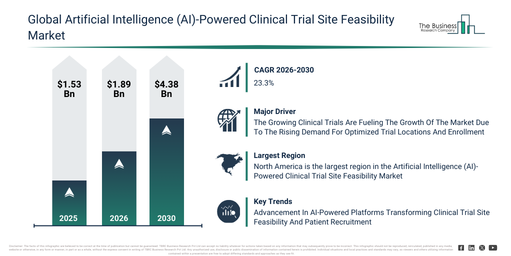
    The artificial intelligence (AI)-powered clinical trial site feasibility market has seen considerable expansion in recent years. Its valuation is anticipated to increase from $1.53 billion in 2025 to $1.89 billion in 2026, achieving a compound annual growth rate (CAGR) of 23.6%. This past growth can be ascribed to elements such as the growing complexity of clinical trial designs, rising financial demands on drug development timelines, an increased reliance on data-driven trial planning, the expansion of global multi-site clinical trials, and the initial integration of predictive analytics in trial feasibility.

    The market size for artificial intelligence (AI)-powered clinical trial site feasibility is set to experience substantial expansion in the coming years. It is projected to climb to $4.38 billion by 2030, demonstrating a compound annual growth rate (CAGR) of 23.3%. This anticipated growth is driven by factors such as the increasing embrace of decentralized clinical trials, a rising need for accelerated site activation, the expanded application of real-world evidence in making feasibility determinations, the proliferation of AI-enabled trial planning platforms, and a heightened emphasis on mitigating trial risks. Prominent trends throughout this forecast period involve the growing adoption of AI-driven models for site selection, the increased deployment of predictive patient recruitment analytics, a deeper integration of real-world data into feasibility assessments, the expansion of cloud-based feasibility platforms, and an intensified focus on forecasting trial performance.

    See What’s Inside The Artificial Intelligence (AI)-Powered Clinical Trial Site Feasibility Market Report With A Free Sample:

    https://thebusinessresearchcompany.com/sample_request?id=50995217&type=smp&name=Artificial%20Intelligence%20%28AI%29-Powered%20Clinical%20Trial%20Site%20Feasibility%20Market%20Report%202026&utm_source=Blogs&utm_medium=Paid&utm_campaign=Nov_PR

    Artificial Intelligence (AI)-Powered Clinical Trial Site Feasibility Market Expansion: The Major Factor Driving Growth

    The expanding number of clinical trials is anticipated to drive the progress of the artificial intelligence (AI)-powered clinical trial site feasibility market moving forward. Clinical trials are defined as global research investigations conducted to evaluate the safety and effectiveness of novel medical treatments, drugs, and devices. This rise in clinical trials is largely attributed to increased investment in biomedical research and development, as both governmental and private sectors acknowledge the crucial need for innovative therapies to address evolving healthcare challenges. The proliferation of clinical trials, in turn, generates demand for AI-powered site feasibility tools, as research organizations require efficient systems to pinpoint optimal locations, assess site capabilities, and forecast study enrollment success rates. For illustration, in April 2025, data from the Multidisciplinary Digital Publishing Institute, a Switzerland-based publisher of open-access scientific journals, showed that 404,637 interventional clinical trials were listed on the clinicaltrials.gov webpage. Consequently, the increasing volume of clinical trials is a significant factor in the growth of the artificial intelligence (AI)-powered clinical trial site feasibility market.

    Understanding Artificial Intelligence (AI)-Powered Clinical Trial Site Feasibility Market Segmentation For Strategic Planning

    The artificial intelligence (AI)-powered clinical trial site feasibility market covered in this report is segmented –

    1) By Component: Software, Services

    2) By Deployment Mode: Cloud-Based, On-Premises

    3) By Application: Site Selection, Patient Recruitment, Protocol Design, Performance Analytics, Other Applications

    4) By End-User: Pharmaceutical Companies, Contract Research Organizations, Academic Research Institutes, Hospitals, Other End-Users

    Subsegments:

    1) By Software: Predictive Analytics Software, Machine Learning (ML) Platforms, Natural Language Processing (NLP) Tools, Data Visualization Software, Clinical Trial Management System (CTMS) Integration Software, Real-World Data (RWD) Analytics Software, Risk-Based Monitoring (RBM) Software

    2) By Services: Feasibility Assessment Services, Site Selection Services, Patient Recruitment Support Services, Data Management And Analytics Services, Protocol Optimization Services, Regulatory Compliance Support Services, Consulting And Advisory Services

    Key Artificial Intelligence (AI)-Powered Clinical Trial Site Feasibility Market Trends To Watch In 2026

    Leading companies within the artificial intelligence-powered clinical trial site feasibility market are focusing on developing advanced solutions, such as AI-driven feasibility and recruitment platforms, to enhance site selection and boost overall operational efficiency in clinical trials. An artificial intelligence-powered feasibility and recruitment platform is a software solution that leverages AI and machine learning to evaluate trial protocols and site data, enabling the identification of optimal clinical sites and improving patient recruitment by efficiently matching eligible participants. This approach accelerates trial timelines and increases study success.

    Key Companies Active In The Artificial Intelligence (AI)-Powered Clinical Trial Site Feasibility Market

    Major companies operating in the artificial intelligence (AI)-powered clinical trial site feasibility market are Oracle Corporation, Thermo Fisher Scientific Inc., NVIDIA Corporation, IQVIA Holdings Inc., Labcorp Holdings Inc., Dassault Systèmes SE, Parexel International Corporation, ZS Associates Inc., Veeva Systems Inc., Verily Life Sciences LLC, Signant Health Holding Corp., Saama Technologies LLC, Elligo Health Research Inc., ConcertAI Inc., Medable Inc., Science 37 Inc., Castor EDC Inc., Unlearn.AI Inc., Antidote Technologies Inc., Deep 6 AI

    Explore Detailed Artificial Intelligence (AI)-Powered Clinical Trial Site Feasibility Market Research And Forecasts:

    https://thebusinessresearchcompany.com/report/artificial-intelligence-ai-powered-clinical-trial-site-feasibility-global-market-report?utm_source=Blogs&utm_medium=Paid&utm_campaign=Nov_PR

    Which Geography Dominates The Artificial Intelligence (AI)-Powered Clinical Trial Site Feasibility Market?

    North America was the largest region in the artificial intelligence (AI)-powered clinical trial site feasibility market in 2025. Asia-Pacific is expected to be the fastest-growing region in the forecast period. The regions covered in the artificial intelligence (AI)-powered clinical trial site feasibility market report are Asia-Pacific, South East Asia, Western Europe, Eastern Europe, North America, South America, Middle East, Africa.

    Reach Out To Our Team:

    The Business Research Company: https://www.thebusinessresearchcompany.com/

    Americas: +1 310-496-7795

    Asia: +44 7882 955267 & +91 8897263534

    Europe: +44 7882 955267

    Email us at: marketing@tbrc.info

    Follow us on:

    LinkedIn: https://in.linkedin.com/company/the-business-research-company

    YouTube: https://www.youtube.com/channel/UC24_fI0rV8cR5DxlCpgmyFQ

    Global Market Model: https://www.thebusinessresearchcompany.com/global-market-model
  • Artificial Intelligence (AI)-Powered Clinical Documentation Market Overview: Size, Growth Drivers, Trends And Competitive Landscape

    Artificial Intelligence (AI)-Powered Clinical Documentation Market Overview: Size, Growth Drivers, Trends And Competitive Landscape

    With a focus on actionable insights and strategic value, The Business Research Company’s 2026 market reports include market attractiveness scoring, total addressable market sizing, company benchmarking matrices, interactive Excel dashboards, deeper supply chain intelligence, emerging startup tracking, and granular product-level insights.

    How Much Will The Artificial Intelligence (AI)-Powered Clinical Documentation Market Be Worth By 2030?

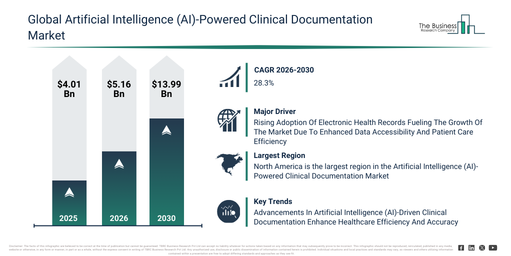
    The market for artificial intelligence (AI)-powered clinical documentation has witnessed substantial growth in recent years. This market is projected to expand from $4.01 billion in 2025 to $5.16 billion in 2026, exhibiting a compound annual growth rate (CAGR) of 28.7%. Historically, this expansion has been driven by factors such as the increasing administrative workload on clinicians, the early adoption of electronic medical records, a heightened demand for workflow automation, the proliferation of digital healthcare systems, and an increasing emphasis on the precision of clinical data.

    The market for artificial intelligence (AI)-powered clinical documentation is anticipated to experience substantial expansion over the coming years. This market is projected to reach $13.99 billion by 2030, demonstrating a compound annual growth rate (CAGR) of 28.3%. This expected growth is driven by several factors, including heightened investments in AI-driven healthcare automation, a greater need for tools that enhance clinician efficiency, the proliferation of cloud-based clinical platforms, a stronger focus on interoperability standards, and wider integration of ambient clinical intelligence. Key trends anticipated during this period involve the increasing uptake of real-time speech-to-text clinical instruments, expanded utilization of NLP-based documentation systems, the broadening of voice-enabled clinical workflows, deeper integration with electronic health records, and an intensified commitment to documentation precision and regulatory adherence.

    Get Access To A Free Artificial Intelligence (AI)-Powered Clinical Documentation Market Report Sample:

    https://thebusinessresearchcompany.com/sample_request?id=41120751&type=smp&name=Artificial%20Intelligence%20%28AI%29-Powered%20Clinical%20Documentation%20Market%20Report%202026&utm_source=Blogs&utm_medium=Paid&utm_campaign=Nov_PR

    The Key Driver Behind The Artificial Intelligence (AI)-Powered Clinical Documentation Market’s 28.3% CAGR

    The growing implementation of electronic health records is projected to drive the expansion of the artificial intelligence (AI)-powered clinical documentation market. Electronic health records are digital compilations of patients’ medical histories and health details, securely stored and made available to authorized healthcare professionals to optimize care coordination and treatment. This increasing adoption is a direct result of healthcare providers seeking effective, accessible, and secure methods for managing patient information, which in turn enhances care coordination and reduces administrative overhead. Artificial intelligence (AI)-powered clinical documentation elevates electronic health records by precisely capturing and organizing patient data in real time, thereby streamlining workflows and bolstering care coordination. Therefore, the widespread adoption of electronic health records is a primary force behind the growth of the artificial intelligence (AI)-powered clinical documentation market.

    Artificial Intelligence (AI)-Powered Clinical Documentation Market Classification: Main Segments And Detailed Subsegments

    The artificial intelligence (AI)-powered clinical documentation market covered in this report is segmented –

    1) By Component: Software, Hardware, Services

    2) By Deployment Mode: Cloud-Based, On-Premises

    3) By Application: Hospitals, Clinics, Ambulatory Surgical Centers, Specialty Centers, Other Applications

    4) By End-User: Healthcare Providers, Healthcare IT Vendors And Health Systems, Other End-Users

    Subsegments:

    1) By Software: Integrated Software Platforms, Standalone Applications, Cloud-Based Software, On-Premise Software

    2) By Hardware: Input Devices, Output Devices, Servers And Storage Devices, Networking Equipment

    3) By Services: Implementation And Integration Services, Training And Education Services, Support And Maintenance Services, Consulting Services

    Artificial Intelligence (AI)-Powered Clinical Documentation Market Strategic Shifts: What Leading Players Are Prioritizing

    Leading companies operating in the artificial intelligence (AI)-powered clinical documentation market are concentrating on creating innovative methods, including natural language query editing, to provide healthcare professionals with advanced tools that simplify documentation, decrease administrative burden, and improve accuracy, which ultimately enhances patient care and clinical workflow efficiency. Natural language query editing is defined as the user’s capacity to alter and refine documents by speaking or typing common language commands or questions, allowing for intuitive system interaction without the need for complex codes or menus. For instance, in March 2025, Microsoft Corporation, a US-based technology company, unveiled Dragon Copilot, a voice-activated artificial intelligence (AI) assistant designed specifically for healthcare professionals. This instrument combines Microsoft’s existing Dragon Medical One dictation software with Nuance’s DAX Copilot ambient AI technology, resulting in the industry’s first unified voice assistant for clinical documentation. Dragon Copilot enables doctors to record real-time, multi-speaker patient discussions and automatically transform them into precise, specialty-specific clinical notes.

    Artificial Intelligence (AI)-Powered Clinical Documentation Market Company Analysis: Major Industry Participants

    Major companies operating in the artificial intelligence (AI)-powered clinical documentation market are Oracle Corporation, 3M Company, Epic Systems Corporation, IKS Health Services Pvt. Ltd., eClinicalWorks LLC, Commure Inc., Abridge AI Inc., DeepScribe Inc., Notable Health Inc., Pieces Technologies Inc., Suki AI Inc., Clinithink Ltd., Ambience Healthcare Private Limited, Artificial Medical Intelligence Inc., Dolbey Systems Inc., Hiteks Solutions Pvt. Ltd., Tali AI Inc., Ambient Clinical Analytics Inc., Robin Healthcare Inc., DeepCura Inc.

    Get Full Access To The Artificial Intelligence (AI)-Powered Clinical Documentation Market Report 2026:

    https://thebusinessresearchcompany.com/report/artificial-intelligence-ai-powered-clinical-documentation-global-market-report?utm_source=Blogs&utm_medium=Paid&utm_campaign=Nov_PR

    Artificial Intelligence (AI)-Powered Clinical Documentation Market Global Regional Breakdown: Key Regions Analyzed

    North America was the largest region in the artificial intelligence (AI)-powered clinical documentation market in 2025. Asia-Pacific is expected to be the fastest-growing region in the forecast period. The regions covered in the artificial intelligence (AI)-powered clinical documentation market report are Asia-Pacific, South East Asia, Western Europe, Eastern Europe, North America, South America, Middle East, Africa.

    Reach Out To Our Team:

    The Business Research Company: https://www.thebusinessresearchcompany.com/

    Americas: +1 310-496-7795

    Asia: +44 7882 955267 & +91 8897263534

    Europe: +44 7882 955267

    Email us at: marketing@tbrc.info

    Follow us on:

    LinkedIn: https://in.linkedin.com/company/the-business-research-company

    YouTube: https://www.youtube.com/channel/UC24_fI0rV8cR5DxlCpgmyFQ

    Global Market Model: https://www.thebusinessresearchcompany.com/global-market-model
  • 4D Printing In Healthcare Market To Grow From $9.92 Billion To $13.45 Billion By 2030: Key Drivers Explained

    4D Printing In Healthcare Market To Grow From $9.92 Billion To $13.45 Billion By 2030: Key Drivers Explained

    The Business Research Company’s 2026 market reports combine market attractiveness scoring, total addressable market sizing, company benchmarking matrices, interactive Excel dashboards, deeper supply chain intelligence, emerging startup tracking, and granular product-level insights to deliver research that is more actionable and strategically valuable.

    4D Printing In Healthcare Market Revenue Forecast: $9.92 Billion In 2026 Rising To $13.45 Billion In 2030

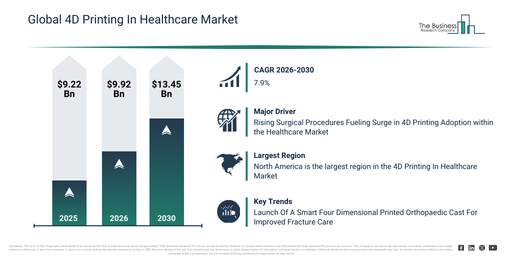
    The 4d printing in healthcare market size has experienced robust growth in recent years. It is anticipated to expand from $9.22 billion in 2025 to $9.92 billion in 2026, achieving a compound annual growth rate (CAGR) of 7.7%. Historically, this expansion has been influenced by the early adoption of 3d printing in healthcare, a heightened need for customized medical devices, ongoing advancements in material science, an increasing demand for complex implant geometries, and greater research funding in additive manufacturing.

    The 4d printing in healthcare market is projected to experience substantial expansion over the upcoming years. This market is anticipated to reach $13.45 billion by 2030, demonstrating a compound annual growth rate (CAGR) of 7.9%. This projected growth is driven by several factors, including the advancement of sophisticated programmable and shape-memory materials, the rise of personalized medicine strategies, enhanced cooperation between medical service providers and technology companies, increased funding into bioprinting innovations, and the broadening of regulatory guidelines that endorse advanced manufacturing. Key trends during this period are expected to encompass a greater integration of intelligent and shape-memory materials in medical devices, a heightened need for tailored and patient-specific implants, a sharpened emphasis on minimally invasive and adaptable medical remedies, the broader application of 4d printed implants in orthopedic and dental fields, and a surge in the utilization of self-transforming structures within regenerative medicine.

    Free Sample Report: 4D Printing In Healthcare Market Size, Trends And Forecast To 2030:

    https://thebusinessresearchcompany.com/sample_request?id=33941962&type=smp&name=4D%20Printing%20In%20Healthcare%20Market%20Report%202026&utm_source=Blogs&utm_medium=Paid&utm_campaign=Nov_PR

    4D Printing In Healthcare Market Growth Catalyst: What Is Creating New Demand?

    A rising volume of surgical procedures is anticipated to fuel the expansion of 4D printing within the healthcare market in the coming years. This technology facilitates the production of bespoke medical implants and devices, specifically designed to match unique patient anatomies. With more surgeries being performed, there is an escalating need for personalized medical solutions, aimed at improving surgical results and expediting patient recuperation. 4D printing enables the manufacturing of intricate structures capable of adapting to particular patient requirements, thereby boosting treatment effectiveness and overall patient contentment. Consequently, the growing frequency of surgeries is acting as a primary catalyst for the development of 4D printing in the healthcare market.

    4D Printing In Healthcare Market Segment Overview: Categories Covered In The 2026 Report

    The 4d printing in healthcare market covered in this report is segmented –

    1) By Type: Fused Deposition Modeling (FDM), PolyJet, Stereolithography

    2) By Component: Equipment, 3D Bioprinters, Programmable Materials, Shape-Memory Materials, Hydrogels, Living Cells, Software And Services

    3) By End-User: Hospitals And Clinics, Dental Laboratories, Other End-Users

    Subsegments:

    1) By Fused Deposition Modeling (FDM): Biodegradable Polymers, Composite Materials

    2) By PolyJet: Rigid Materials, Flexible Materials, Biocompatible Materials

    3) By Stereolithography: Photopolymer Resins, Dental Resins, Bio-Resins

    How Are Leading Companies Shaping 4D Printing In Healthcare Market Trends?

    Leading companies within the 4D printing in healthcare market are concentrating on developing sophisticated solutions, such as 4D-printed smart orthopaedic casts, to substitute conventional plaster and fiberglass casting techniques. A 4D-printed solution signifies a cutting-edge medical technology that employs intelligent, stimuli-responsive materials capable of altering their form or characteristics over time to boost patient comfort, accelerate recovery, and enhance clinical outcomes. For example, in June 2025, Uni-Pharma, a Taiwan-based pharmaceutical and medical solutions provider, introduced the innovative CASTOMIZE Smart Thermoplastic Cast for supporting fractures. This advanced product replaces traditional casting by featuring a lightweight, breathable, and adaptable thermoplastic structure that can be rapidly shaped to a patient’s limb using safe, regulated heating. It offers superior ventilation, minimizes skin irritation, and facilitates easier hygiene compared to older casts. Incorporating CASTOMIZE’s 4D-printing technology, this smart cast allows for exact anatomical fitting, improved durability, and increased patient mobility, simultaneously assisting clinicians in optimizing treatment procedures. The launch of this 4D-printed cast elevates patient experience, streamlines orthopedic care processes, and contributes to greater therapeutic efficiency.

    4D Printing In Healthcare Market Players: Key Companies Shaping Competition

    Major companies operating in the 4d printing in healthcare market are Stratasys Ltd, 3D Systems Inc., EOS GmbH Electro Optical Systems, Materialise NV, Desktop Metal Inc., Carbon Inc., HP Inc., Nanoscribe GmbH, RegenHU Ltd, Aspect Biosystems Ltd, Poietis SAS, Organovo Holdings Inc., T&R Biofab Co. Ltd, Rokit Healthcare Inc., Prellis Biologics Inc., Volumetric Biotechnologies Inc., Fluicell AB, CollPlant Biotechnologies Ltd, United Therapeutics Corporation, BICO Group AB

    Access Complete 4D Printing In Healthcare Market Data, Forecasts And Competitive Insights:

    https://thebusinessresearchcompany.com/report/4d-printing-in-healthcare-global-market-report?utm_source=Blogs&utm_medium=Paid&utm_campaign=Nov_PR

    4D Printing In Healthcare Market Regional Performance And Geographic Coverage

    North America was the largest region in the 4D printing in healthcare market in 2025. Asia-Pacific is expected to be the fastest-growing region in the forecast period. The regions covered in the 4d printing in healthcare market report are Asia-Pacific, South East Asia, Western Europe, Eastern Europe, North America, South America, Middle East, Africa.

    Reach Out To Our Team:

    The Business Research Company: https://www.thebusinessresearchcompany.com/

    Americas: +1 310-496-7795

    Asia: +44 7882 955267 & +91 8897263534

    Europe: +44 7882 955267

    Email us at: marketing@tbrc.info

    Follow us on:

    LinkedIn: https://in.linkedin.com/company/the-business-research-company

    YouTube: https://www.youtube.com/channel/UC24_fI0rV8cR5DxlCpgmyFQ

    Global Market Model: https://www.thebusinessresearchcompany.com/global-market-model
  • Artificial Intelligence (AI)-Powered Chronic Pain Coaching Market To Grow From $2.06 Billion To $4.61 Billion By 2030: Key Drivers Explained

    Artificial Intelligence (AI)-Powered Chronic Pain Coaching Market To Grow From $2.06 Billion To $4.61 Billion By 2030: Key Drivers Explained

    The Business Research Company’s 2026 market reports combine market attractiveness scoring, total addressable market sizing, company benchmarking matrices, interactive Excel dashboards, deeper supply chain intelligence, emerging startup tracking, and granular product-level insights to deliver research that is more actionable and strategically valuable.

    Artificial Intelligence (AI)-Powered Chronic Pain Coaching Market Revenue Forecast: $2.06 Billion In 2026 Rising To $4.61 Billion In 2030

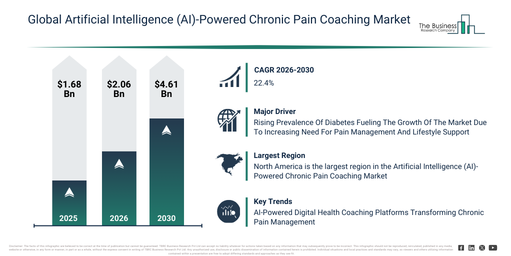
    The artificial intelligence (AI)-powered chronic pain coaching market size has demonstrated substantial growth in recent years. This market is expected to increase from $1.68 billion in 2025 to $2.06 billion in 2026, at a compound annual growth rate (CAGR) of 22.7%. The expansion observed in prior periods can be attributed to factors such as the rising incidence of chronic pain conditions, the spread of digital health platforms, an increasing demand for non-pharmacological pain management solutions, the broader adoption of mobile health applications, and enhancements in the monitoring of patient-reported outcomes.

    The artificial intelligence (AI)-powered chronic pain coaching market size is anticipated to experience substantial expansion over the coming years. This market is projected to reach $4.61 billion by 2030, exhibiting a compound annual growth rate (CAGR) of 22.4%. Factors contributing to this growth during the forecast period include a heightened demand for tailored pain management, increased investments in digital therapeutics, the broadening of remote care options, a greater emphasis on comprehensive pain treatment, and progress in AI-driven behavioral health analytics. Key trends expected during this period involve the wider adoption of adaptive pain management algorithms, an expanding utilization of continuous patient feedback mechanisms, the increasing incorporation of wearable devices for pain monitoring, the development of personalized coaching structures, and a strengthened commitment to long-term patient involvement.

    Free Sample Report: Artificial Intelligence (AI)-Powered Chronic Pain Coaching Market Size, Trends And Forecast To 2030:

    https://thebusinessresearchcompany.com/sample_request?id=64427324&type=smp&name=Artificial%20Intelligence%20%28AI%29-Powered%20Chronic%20Pain%20Coaching%20Market%20Report%202026&utm_source=Blogs&utm_medium=Paid&utm_campaign=Nov_PR

    Artificial Intelligence (AI)-Powered Chronic Pain Coaching Market Growth Catalyst: What Is Creating New Demand?

    The rising incidence of diabetes is anticipated to fuel the expansion of the artificial intelligence (AI)-powered chronic pain coaching market in the foreseeable future. Diabetes is defined as a persistent medical state where the body struggles to regulate blood glucose levels effectively, stemming from issues with either insulin generation or utilization. The occurrence of diabetes is increasing because inactive lifestyles, marked by less physical movement and extended periods of sitting, contribute to weight gain and metabolic disruptions, thereby elevating the likelihood of insulin resistance. AI-driven chronic pain coaching assists in diabetes management by aiding patients in handling pain and promoting lifestyle modifications beneficial for better blood sugar control. Consequently, the growing occurrence of diabetes is propelling the expansion of the artificial intelligence (AI)-powered chronic pain coaching market.

    Artificial Intelligence (AI)-Powered Chronic Pain Coaching Market Segment Overview: Categories Covered In The 2026 Report

    The artificial intelligence (AI)-powered chronic pain coaching market covered in this report is segmented –

    1) By Component: Software, Hardware, Services

    2) By Deployment Mode: Cloud-Based, On-Premises

    3) By Application: Healthcare Providers, Pain Management Clinics, Rehabilitation Centers, Home Care, Other Applications

    4) By End-User: Hospitals, Clinics, Individuals, Other End-Users

    Subsegments:

    1) By Software: Mobile Applications, Web-Based Platforms, Analytics And Reporting Tools, Integration And Application Programming Interface Solutions

    2) By Hardware: Wearable Devices, Smartphones And Tablets, Connected Medical Devices, Virtual Reality Equipment

    3) By Services: Consulting Services, Implementation And Integration, Training And Education, Technical Support And Maintenance

    How Are Leading Companies Shaping Artificial Intelligence (AI)-Powered Chronic Pain Coaching Market Trends?

    Leading companies within the artificial intelligence (AI)-powered chronic pain coaching market are concentrating on developing technologically advanced solutions, such as digital health coaching platforms, to improve personalized treatment, boost patient engagement, and deliver data-driven insights for better pain management outcomes. These digital health coaching platforms are AI-driven tools that provide tailored guidance, progress tracking, and virtual support to assist individuals in managing chronic pain more effectively. For instance, in January 2025, Elyfia Ltd., a UK-based digital health coaching platform, introduced an innovative digital health coaching platform specifically designed for fibromyalgia patients, integrating both human expertise and advanced AI technology. The platform delivers personalized health coaching from a dedicated team of doctors, personal trainers, and certified coaches, combined with AI-driven insights that analyze real-time data from wearable devices and user inputs. This AI integration facilitates continuous symptom tracking, pattern recognition, and personalized care recommendations tailored to each individual’s unique condition. By leveraging AI, Elyfia helps users manage fibromyalgia symptoms such as widespread pain, fatigue, and sleep disturbances more effectively, empowering them to build healthier habits through interactive modules and on-demand coaching accessible via smartphones.

    Artificial Intelligence (AI)-Powered Chronic Pain Coaching Market Players: Key Companies Shaping Competition

    Major companies operating in the artificial intelligence (AI)-powered chronic pain coaching market are Hinge Health Inc., Sword Health Inc., Biofourmis Inc., Therabody Inc., Omada Health Inc., Vivira Health Lab, Kaia Health Software GmbH, XRHealth Inc., EcoAI Ltd., MyPainSensei, Meegle, Avari XR, Neurofit, Curable Health Inc., FeelBetter Ltd., Flok Health Ltd., JOGO Health Inc., Fern Health Inc., Karuna Labs Inc., FlexifyMe Ltd.

    Access Complete Artificial Intelligence (AI)-Powered Chronic Pain Coaching Market Data, Forecasts And Competitive Insights:

    https://thebusinessresearchcompany.com/report/artificial-intelligence-ai-powered-chronic-pain-coaching-global-market-report?utm_source=Blogs&utm_medium=Paid&utm_campaign=Nov_PR

    Artificial Intelligence (AI)-Powered Chronic Pain Coaching Market Regional Performance And Geographic Coverage

    North America was the largest region in the artificial intelligence (AI)-powered chronic pain coaching market in 2025. The regions covered in the artificial intelligence (AI)-powered chronic pain coaching market report are Asia-Pacific, South East Asia, Western Europe, Eastern Europe, North America, South America, Middle East, Africa.

    Reach Out To Our Team:

    The Business Research Company: https://www.thebusinessresearchcompany.com/

    Americas: +1 310-496-7795

    Asia: +44 7882 955267 & +91 8897263534

    Europe: +44 7882 955267

    Email us at: marketing@tbrc.info

    Follow us on:

    LinkedIn: https://in.linkedin.com/company/the-business-research-company

    YouTube: https://www.youtube.com/channel/UC24_fI0rV8cR5DxlCpgmyFQ

    Global Market Model: https://www.thebusinessresearchcompany.com/global-market-model
  • 3-in-1 Oral Cone Beam Computed Tomography (CBCT) Market Worth $1.21 Billion In 2026: What The Latest Data Shows

    3-in-1 Oral Cone Beam Computed Tomography (CBCT) Market Worth $1.21 Billion In 2026: What The Latest Data Shows

    Market attractiveness scoring, total addressable market sizing, company benchmarking matrices, interactive Excel dashboards, deeper supply chain intelligence, emerging startup tracking, and granular product-level insights are among the key offerings featured in The Business Research Company’s 2026 market reports, designed to deliver more actionable and strategically valuable research.

    3-in-1 Oral Cone Beam Computed Tomography (CBCT) Market Size Overview: From Historical Performance To The 2030 Forecast

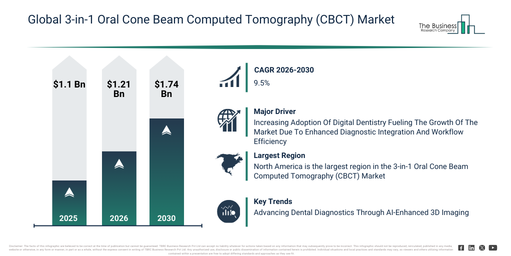
    The 3-in-1 oral cone beam computed tomography (cbct) market size has demonstrated strong growth over recent years. It is anticipated to expand from $1.1 billion in 2025 to $1.21 billion in 2026, achieving a compound annual growth rate (CAGR) of 9.7%. This historical growth can be linked to factors such as the increasing adoption of digital dentistry, a rising demand for dental implant procedures, the expansion of orthodontic treatments, the growth in private dental clinics, and advancements in imaging sensor technology.

    The 3-in-1 oral cone beam computed tomography (CBCT) market is projected to experience substantial growth over the coming years. By 2030, its value is anticipated to reach $1.74 billion, expanding at a compound annual growth rate (CAGR) of 9.5%. This expansion during the forecast period is driven by several factors, including the increasing integration of AI-based diagnostic tools, a rising need for chairside imaging solutions, the wider adoption of minimally invasive dental procedures, a heightened emphasis on radiation safety standards, and expanding investments in advanced dental imaging infrastructure. Key trends expected during this period encompass the growing acceptance of AI-assisted image reconstruction, an increasing demand for low-dose imaging systems, the evolving integration of multi-modal dental imaging, the expansion of compact and integrated CBCT platforms, and an elevated focus on workflow efficiency.

    Get A Free Sample Of The Business Research Company’s 3-in-1 Oral Cone Beam Computed Tomography (CBCT) Market Report:

    https://thebusinessresearchcompany.com/sample_request?id=57769147&type=smp&name=3-in-1%20Oral%20Cone%20Beam%20Computed%20Tomography%20%28CBCT%29%20Market%20Report%202026&utm_source=Blogs&utm_medium=Paid&utm_campaign=Nov_PR

    What Factor Is Increasing Demand In The 3-in-1 Oral Cone Beam Computed Tomography (CBCT) Market?

    The expanding use of digital dentistry is projected to boost the growth of the 3-in-1 oral cone beam computed tomography (CBCT) market in upcoming years. This field integrates advanced technologies like computer-aided design and manufacturing (CAD/CAM), intraoral scanners, 3D printing, and digital imaging systems, aiming to improve diagnostic precision, treatment strategies, and patient results. The rising preference for digital solutions stems from their capacity to enhance clinical efficiency, shorten treatment durations, and boost accuracy in dental procedures, ultimately resulting in greater patient satisfaction and superior care quality. 3-in-1 oral CBCT systems facilitate this transformation by consolidating various imaging modalities – specifically panoramic, cephalometric, and 3D CBCT – into one device, enabling practitioners to conduct thorough diagnostics and treatment planning effortlessly within digital environments. Consequently, the increasing embrace of digital dentistry represents a primary driver for the global expansion of the 3-in-1 oral CBCT market.

    Which Segments Make Up The 3-in-1 Oral Cone Beam Computed Tomography (CBCT) Market?

    The 3-in-1 oral cone beam computed tomography (cbct) market covered in this report is segmented –

    1) By Product Type: Standalone CBCT, Integrated CBCT

    2) By Modality: Computed Tomography (CT), X-Ray, Ultrasound

    3) By Imaging Technique: High-Resolution CBCT, Low Radiation Dose CBCT, Dynamic Imaging Techniques

    4) By Application: Dental Implants, Orthodontics, Endodontics, Oral Surgery, Other Applications

    5) By End-User: Hospitals, Dental Clinics, Research Institutes

    Subsegments:

    1) By Standalone CBCT: Cephalometric Imaging System, Panoramic Imaging System, Cone Beam Computed Tomography System

    2) By Integrated CBCT: Cephalometric And Panoramic Integrated System, Panoramic And Cone Beam Integrated System, Cephalometric, Panoramic, And Cone Beam Combined System

    3-in-1 Oral Cone Beam Computed Tomography (CBCT) Market Emerging Trends: What Are Industry Leaders Focusing On?

    Major companies operating in the 3-in-1 oral cone beam computed tomography (CBCT) market are focusing on developing innovation in dental imaging workflow optimization, such as AI-enhanced 3D imaging to enable precise, data-driven insights during diagnosis and treatment planning. AI-enhanced 3D imaging refers to the capability of a 3-in-1 oral CBCT system to analyze volumetric dental scans in real time and provide instant feedback to the dentist or dental team.

    Major Companies To Know In The 3-in-1 Oral Cone Beam Computed Tomography (CBCT) Market

    Major companies operating in the 3-in-1 oral cone beam computed tomography (cbct) market are Dentsply Sirona, Planmeca, Castellini, Carestream Health, J. Morita Mfg. Corp., DEXIS, Dentium, Acteon Group, Vatech, Ziehm Imaging, Air Techniques, Rayence Inc, Villa Sistemi Medicali S.p.A., Perlove Medical, Fussen Technology, Genoray, NewTom, PreXion Corporation, Bondent GmbH, Trident Dental

    Read The In-Depth 3-in-1 Oral Cone Beam Computed Tomography (CBCT) Market Report:

    https://thebusinessresearchcompany.com/report/global-3-in-1-oral-cone-beam-computed-tomography-cbct-market-report?utm_source=Blogs&utm_medium=Paid&utm_campaign=Nov_PR

    3-in-1 Oral Cone Beam Computed Tomography (CBCT) Market Regional Landscape: Largest Region In 2025

    North America was the largest region in the 3-in-1 oral cone beam computed tomography (CBCT) market in 2025. Asia-Pacific is expected to be the fastest-growing region in the forecast period. The regions covered in the 3-in-1 oral cone beam computed tomography (cbct) market report are Asia-Pacific, South East Asia, Western Europe, Eastern Europe, North America, South America, Middle East, Africa.

    Reach Out To Our Team:

    The Business Research Company: https://www.thebusinessresearchcompany.com/

    Americas: +1 310-496-7795

    Asia: +44 7882 955267 & +91 8897263534

    Europe: +44 7882 955267

    Email us at: marketing@tbrc.info

    Follow us on:

    LinkedIn: https://in.linkedin.com/company/the-business-research-company

    YouTube: https://www.youtube.com/channel/UC24_fI0rV8cR5DxlCpgmyFQ

    Global Market Model: https://www.thebusinessresearchcompany.com/global-market-model
  • Artificial Intelligence (AI)-Powered Chronic Heart Failure Digital Coach Market Worth $2.48 Billion In 2026: What The Latest Data Shows

    Artificial Intelligence (AI)-Powered Chronic Heart Failure Digital Coach Market Worth $2.48 Billion In 2026: What The Latest Data Shows

    Market attractiveness scoring, total addressable market sizing, company benchmarking matrices, interactive Excel dashboards, deeper supply chain intelligence, emerging startup tracking, and granular product-level insights are among the key offerings featured in The Business Research Company’s 2026 market reports, designed to deliver more actionable and strategically valuable research.

    Artificial Intelligence (AI)-Powered Chronic Heart Failure Digital Coach Market Size Overview: From Historical Performance To The 2030 Forecast

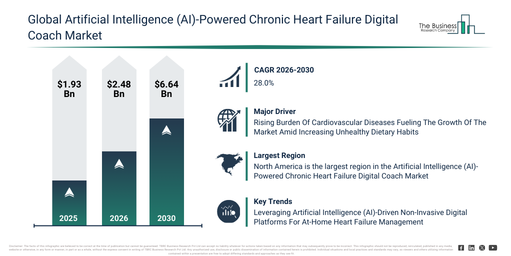
    The market size for artificial intelligence (AI)-powered chronic heart failure digital coaches has experienced rapid expansion lately. Forecasts indicate it will increase from $1.93 billion in 2025 to $2.48 billion in 2026, with a compound annual growth rate (CAGR) of 28.3%. Historically, this expansion has been driven by a higher incidence of heart failure, the wider adoption of remote patient monitoring, advancements in healthcare digitization, an increasing supply of connected medical devices, and a heightened focus on preventive cardiac care.

    The market for artificial intelligence (AI)-powered chronic heart failure digital coaches is projected to experience substantial growth over the coming years. This market is forecast to reach $6.64 billion by 2030, exhibiting a compound annual growth rate (CAGR) of 28.0%. Factors contributing to this expansion include advancements in AI-powered clinical analytics, the increasing adoption of personalized care management, the expansion of home-based cardiac monitoring, growing investments in digital cardiology platforms, and a rising demand for continuous patient engagement solutions. Key trends anticipated during this period involve the increasing deployment of AI-based cardiac monitoring coaches, greater integration with wearable heart sensors, a surge in the use of predictive health analytics, the expansion of remote chronic care platforms, and a heightened emphasis on patient self-management tools.

    Get A Free Sample Of The Business Research Company’s Artificial Intelligence (AI)-Powered Chronic Heart Failure Digital Coach Market Report:

    https://thebusinessresearchcompany.com/sample_request?id=87005693&type=smp&name=Artificial%20Intelligence%20%28AI%29-Powered%20Chronic%20Heart%20Failure%20Digital%20Coach%20Market%20Report%202026&utm_source=Blogs&utm_medium=Paid&utm_campaign=Nov_PR

    What Factor Is Increasing Demand In The Artificial Intelligence (AI)-Powered Chronic Heart Failure Digital Coach Market?

    The increasing prevalence of cardiovascular conditions is anticipated to boost the expansion of the artificial intelligence (AI)-powered chronic heart failure digital coach market in the future. These diseases encompass various heart and blood vessel disorders, such as coronary heart disease, cerebrovascular disease, and other circulatory system ailments. The incidence of cardiovascular diseases is on the rise because diets rich in processed foods and salt contribute to elevated blood pressure and cholesterol levels, consequently increasing the risk of heart disease. An artificial intelligence (AI)-powered chronic heart failure digital coach assists in managing cardiovascular diseases through real-time health monitoring, providing customized advice on medication and lifestyle, and facilitating early detection of complications for proactive intervention. Consequently, the growing impact of cardiovascular diseases is a key factor propelling the expansion of the artificial intelligence (AI)-powered chronic heart failure digital coach market.

    Which Segments Make Up The Artificial Intelligence (AI)-Powered Chronic Heart Failure Digital Coach Market?

    The artificial intelligence (AI)-powered chronic heart failure digital coach market covered in this report is segmented –

    1) By Component: Software, Hardware, Services

    2) By Deployment Mode: Cloud-Based, On-Premises

    3) By Application: Remote Patient Monitoring, Personalized Care Management, Medication Adherence, Patient Education, Other Applications

    4) By End-User: Hospitals And Clinics, Homecare Settings, Research And Academic Institutes, Other End-Users

    Subsegments:

    1) By Software: Cloud-Based Platforms, Mobile Applications, Data Analytics Tools, Patient Monitoring Dashboards, Integration Middleware

    2) By Hardware: Wearable Devices, Smart Sensors, Connected Medical Devices, Home Monitoring Equipment, Edge Computing Devices

    3) By Services: Implementation And Integration Services, Consulting Services, Maintenance And Support Services, Training And Education Services, Remote Patient Monitoring Services

    Artificial Intelligence (AI)-Powered Chronic Heart Failure Digital Coach Market Emerging Trends: What Are Industry Leaders Focusing On?

    Leading companies within the artificial intelligence (AI)-powered chronic heart failure digital coach market are concentrating on developing in-home monitoring solutions, such as non-invasive heart failure management platforms, to enhance medication adherence and facilitate proactive disease management. These non-invasive heart failure management platforms are digital systems that track heart function and patient vitals without surgery, employing sensors, wearables, and AI analytics to observe symptoms and guide therapy for prompt intervention and improved disease management.

    Major Companies To Know In The Artificial Intelligence (AI)-Powered Chronic Heart Failure Digital Coach Market

    Major companies operating in the artificial intelligence (AI)-powered chronic heart failure digital coach market are Koninklijke Philips N.V., Boston Scientific Corporation, Astellas Pharma Inc., Best Buy Health Inc., Tempus AI Inc., Biofourmis Inc., Athelas Inc., Hello Heart Inc., Huma Therapeutics Limited, Welldoc Inc., Cleerly Inc., Cadence Solutions Inc., Lark Health Inc., One Drop, Binah.ai Ltd., Xealth Inc., Nanowear Inc., Cordio Medical Ltd., Kento Health Inc., my mhealth Limited, Implicity SAS.

    Read The In-Depth Artificial Intelligence (AI)-Powered Chronic Heart Failure Digital Coach Market Report:

    https://thebusinessresearchcompany.com/report/artificial-intelligence-ai-powered-chronic-heart-failure-digital-coach-global-market-report?utm_source=Blogs&utm_medium=Paid&utm_campaign=Nov_PR

    Artificial Intelligence (AI)-Powered Chronic Heart Failure Digital Coach Market Regional Landscape: Largest Region In 2025

    North America was the largest region in the artificial intelligence (AI)-powered chronic heart failure digital coach market in 2025. The regions covered in the artificial intelligence (AI)-powered chronic heart failure digital coach market report are Asia-Pacific, South East Asia, Western Europe, Eastern Europe, North America, South America, Middle East, Africa.

    Reach Out To Our Team:

    The Business Research Company: https://www.thebusinessresearchcompany.com/

    Americas: +1 310-496-7795

    Asia: +44 7882 955267 & +91 8897263534

    Europe: +44 7882 955267

    Email us at: marketing@tbrc.info

    Follow us on:

    LinkedIn: https://in.linkedin.com/company/the-business-research-company

    YouTube: https://www.youtube.com/channel/UC24_fI0rV8cR5DxlCpgmyFQ

    Global Market Model: https://www.thebusinessresearchcompany.com/global-market-model
  • Artificial Intelligence (AI)-Powered Acute Stroke Triage Market Competitive Landscape: Siemens Healthineers AG And Other Key Players

    Artificial Intelligence (AI)-Powered Acute Stroke Triage Market Competitive Landscape: Siemens Healthineers AG And Other Key Players

    Designed to make market research more actionable and strategically valuable, The Business Research Company’s 2026 market reports feature market attractiveness scoring, total addressable market sizing, company benchmarking matrices, interactive Excel dashboards, deeper supply chain intelligence, emerging startup tracking, and granular product-level insights.

    What Is The Projected CAGR Of The Artificial Intelligence (AI)-Powered Acute Stroke Triage Market Through 2030?

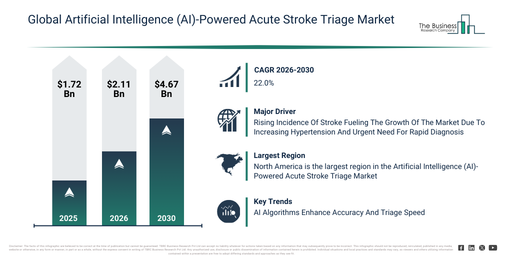
    The market size for artificial intelligence (AI)-powered acute stroke triage has experienced significant expansion in recent years. This market is set to grow from $1.72 billion in 2025 to $2.11 billion in 2026, achieving a compound annual growth rate (CAGR) of 22.3%. Historically, this growth can be attributed to various factors, including an increasing incidence of acute stroke cases, the expansion of advanced imaging infrastructure, the growing adoption of clinical decision support systems, rising investments in emergency care technology, and improvements in machine learning accuracy.

    The artificial intelligence (AI)-powered acute stroke triage market is anticipated to experience rapid expansion over the coming years. This market is projected to reach a size of $4.67 billion by 2030, demonstrating a compound annual growth rate (CAGR) of 22.0%. Factors driving this growth during the forecast period include a heightened demand for more rapid stroke diagnosis, increased funding into AI-enabled emergency medical services, the broadening of telestroke network coverage, an escalating emphasis on healthcare centered around outcomes, and innovations in real-time medical analytics. Key trends expected during the forecast period encompass the wider acceptance of AI-driven imaging analysis, the greater incorporation of real-time stroke alert systems, an increased reliance on predictive tools for clinical decisions, the enlargement of cloud-based imaging platform availability, and a stronger emphasis on optimizing care in time-sensitive situations.

    Claim Your Free Artificial Intelligence (AI)-Powered Acute Stroke Triage Market Sample Report With Key Data And Trends:

    https://thebusinessresearchcompany.com/sample_request?id=86018007&type=smp&name=Artificial%20Intelligence%20%28AI%29-Powered%20Acute%20Stroke%20Triage%20Market%20Report%202026&utm_source=Blogs&utm_medium=Paid&utm_campaign=Nov_PR

    Artificial Intelligence (AI)-Powered Acute Stroke Triage Market Demand Analysis: The Driving Force Behind Expansion

    The increasing occurrence of stroke is anticipated to drive the expansion of the artificial intelligence (AI)-powered acute stroke triage market in the future. Stroke is defined as a medical event where the brain’s blood supply is disrupted, resulting in cellular damage that can cause disability or be fatal if immediate treatment is not provided. This rise in stroke cases is primarily linked to hypertension, given that elevated blood pressure raises the likelihood of blockages or ruptures in brain vessels. Artificial intelligence (AI)-powered acute stroke triage aids in diagnosing strokes through quick analysis of brain scans, which is vital for promptly identifying the stroke’s type and severity. These systems minimize diagnostic delays by prioritizing critical cases, thereby accelerating treatment and enhancing patient outcomes. Consequently, the growing number of stroke incidents is fueling the expansion of the artificial intelligence (AI)-powered acute stroke triage market.

    Breaking Down The Artificial Intelligence (AI)-Powered Acute Stroke Triage Market By Segment

    The artificial intelligence (AI)-powered acute stroke triage market covered in this report is segmented –

    1) By Component: Software, Hardware, Services

    2) By Deployment Mode: On-Premises, Cloud-Based

    3) By Application: Hospitals, Diagnostic Centers, Emergency Medical Services, Research Institutes, Other Applications

    4) By End-User: Healthcare Providers, Radiology Centers, Academic And Research Institutes, Other End-Users

    Subsegments:

    1) By Software: Clinical Decision Support Software, Imaging And Diagnostics Software, Workflow Management Software, Data Integration And Interoperability Platforms, Predictive Analytics And Machine Learning Tools

    2) By Hardware: Medical Imaging Devices, Edge Computing Devices, AI Processing Units, Workstations And Servers, Networking And Storage Devices

    3) By Services: Implementation And Integration Services, Training And Education Services, Maintenance and Support Services, Consulting Services, Cloud-Based Deployment and Managed Services

    Top Trend Influencing The Artificial Intelligence (AI)-Powered Acute Stroke Triage Market Outlook

    Key players in the artificial intelligence (AI)-powered acute stroke triage market are concentrating on developing technologically advanced solutions, such as sophisticated artificial intelligence (AI) algorithms, to boost diagnostic accuracy, speed up triage processes, and improve clinical outcomes. These advanced artificial intelligence (AI) algorithms are complex computational methods that learn from data to identify patterns, make predictions, and support intelligent decision-making.

    Artificial Intelligence (AI)-Powered Acute Stroke Triage Market Competitive Landscape And Major Players

    Major companies operating in the artificial intelligence (AI)-powered acute stroke triage market are Siemens Healthineers AG, GE HealthCare Technologies Inc., Shanghai United Imaging Healthcare Co. Ltd., Viz.ai Inc., Aidoc Medical Ltd., RapidAI Inc., Qure.ai Technologies Private Limited, Harrison.ai Pty Ltd, Infervision Inc., Circle Cardiovascular Imaging Inc., Behold.ai Ltd., Brainomix Ltd., JLK Inc., BioMind.ai Pte. Ltd., Sevaro Health Inc., Heuron Technologies Inc., Nicolab Inc., icometrix NV, Deep01 Inc., SNAC Medical Inc., BrainScan.ai Ltd., Cercare Medical Ltd., Avicenna.AI GmbH

    Read The Full Artificial Intelligence (AI)-Powered Acute Stroke Triage Market Report By The Business Research Company:

    https://thebusinessresearchcompany.com/report/artificial-intelligence-ai-powered-acute-stroke-triage-global-market-report?utm_source=Blogs&utm_medium=Paid&utm_campaign=Nov_PR

    Where Is The Artificial Intelligence (AI)-Powered Acute Stroke Triage Market Largest? Key Regional Insights

    North America was the largest region in the artificial intelligence (AI)-powered acute stroke triage market in 2025. The regions covered in the artificial intelligence (AI)-powered acute stroke triage market report are Asia-Pacific, South East Asia, Western Europe, Eastern Europe, North America, South America, Middle East, Africa.

    Reach Out To Our Team:

    The Business Research Company: https://www.thebusinessresearchcompany.com/

    Americas: +1 310-496-7795

    Asia: +44 7882 955267 & +91 8897263534

    Europe: +44 7882 955267

    Email us at: marketing@tbrc.info

    Follow us on:

    LinkedIn: https://in.linkedin.com/company/the-business-research-company

    YouTube: https://www.youtube.com/channel/UC24_fI0rV8cR5DxlCpgmyFQ

    Global Market Model: https://www.thebusinessresearchcompany.com/global-market-model
  • North America Leads The Artificial Intelligence (AI)-Generated Voice Therapy Exercise Market: Regional Analysis And 2030 Forecast

    North America Leads The Artificial Intelligence (AI)-Generated Voice Therapy Exercise Market: Regional Analysis And 2030 Forecast

    The Business Research Company’s 2026 market reports are designed to deliver research that is more actionable and strategically valuable. Key offerings include market attractiveness scoring, total addressable market sizing, company benchmarking matrices, interactive Excel dashboards, deeper supply chain intelligence, emerging startup tracking, and granular product-level insights.

    Artificial Intelligence (AI)-Generated Voice Therapy Exercise Market Revenue Projected To Rise To $2.84 Billion By 2030

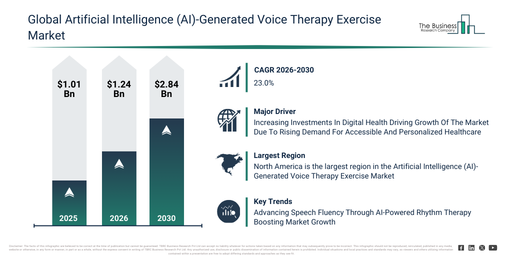
    The artificial intelligence (AI)-generated voice therapy exercise market size has seen substantial expansion in recent years. It is forecast to grow from $1.01 billion in 2025 to $1.24 billion in 2026, achieving a compound annual growth rate (CAGR) of 23.3%. The historical increase can be attributed to the increasing prevalence of speech and voice disorders, expansion of teletherapy services, growing shortage of speech therapists, rising acceptance of digital therapeutics, and advancements in speech recognition accuracy.

    The market for artificial intelligence (AI)-generated voice therapy exercises is anticipated to experience substantial growth over the coming years. By 2030, this market is projected to reach $2.84 billion, expanding at a compound annual growth rate (CAGR) of 23.0%. This projected expansion is driven by several factors, including the surging demand for at-home speech therapy, the growing incorporation of AI into rehabilitation services, the broadening availability of multilingual voice therapy options, the increased adoption of immersive therapy instruments, and progress in personalized digital rehabilitation. Key trends anticipated during the forecast period encompass the wider application of adaptive voice therapy algorithms, the increasing implementation of real-time speech feedback systems, the growing embrace of remote speech rehabilitation tools, the expansion of content creation for personalized therapy, and a heightened emphasis on keeping patients engaged beyond clinical settings.

    Want Deeper Artificial Intelligence (AI)-Generated Voice Therapy Exercise Market Insights? Get A Free Sample Report:

    https://thebusinessresearchcompany.com/sample_request?id=22631527&type=smp&name=Artificial%20Intelligence%20%28AI%29-Generated%20Voice%20Therapy%20Exercise%20Market%20Report%202026&utm_source=Blogs&utm_medium=Paid&utm_campaign=Nov_PR

    Primary Growth Driver Shaping The Artificial Intelligence (AI)-Generated Voice Therapy Exercise Market Outlook

    The future expansion of the artificial intelligence (AI)-generated voice therapy exercise market is anticipated due to rising investments in digital health. Investment in digital health entails allocating capital to technology-driven tools or services that support individuals in maintaining health, accessing medical care, or managing health conditions. The growth in digital health investments is propelled by increasing consumer needs for accessible healthcare, which drives innovation towards remote and personalized health solutions. AI-generated voice therapy exercises contribute to these digital health investments by offering scalable, personalized, and cost-effective options for speech and cognitive rehabilitation, fostering greater adoption and confidence in healthtech innovations. Consequently, increasing investments in digital health are stimulating the growth of the artificial intelligence (AI)-generated voice therapy exercise market.

    Artificial Intelligence (AI)-Generated Voice Therapy Exercise Market Structure: A Detailed Look At Segments And Subsegments

    The artificial intelligence (AI)-generated voice therapy exercise market covered in this report is segmented –

    1) By Component: Software, Hardware, Services

    2) By Deployment Mode: Cloud Based, On Premises

    3) By Application: Speech Rehabilatation, Accent Modification, Voice Training, Stuttering Therapy, Other Applications

    4) By End-User: Hospitals And Clinics, Rehabilatation Centres, Academic And Research Institutes, Homecare, Other End-Users

    Subsegments:

    1) By Software: Mobile Applications, Web-Based Platforms, Artificial Intelligence (AI) Speech Recognition Tools, Virtual Assistants, Cloud-Based Solutions

    2) By Hardware: Microphones, Headsets, Smart Speakers, Wearable Devices, Augmented Reality (AR) Or Virtual Reality (VR) Devices

    3) By Services: Training And Education, Consulting And Integration, Support And Maintenance, Remote Therapy Services, Data Management And Security

    Artificial Intelligence (AI)-Generated Voice Therapy Exercise Market Innovation And Strategy Trends Among Leading Companies

    Leading companies in the artificial intelligence (AI)-generated voice therapy exercise market are prioritizing technological advancements, such as AI-powered rhythm therapy delivered via wearable haptic feedback, to enhance speech fluency for individuals with speech disorders. This AI-powered rhythm therapy, employing wearable haptic feedback, uses natural language processing (NLP) to analyze spoken language and translate it into rhythmic vibrations on the wrist. These vibrations serve as a discreet, neural metronome, guiding users toward smoother speech patterns.

    Top Companies Competing In The Artificial Intelligence (AI)-Generated Voice Therapy Exercise Market

    Major companies operating in the artificial intelligence (AI)-generated voice therapy exercise market are Directly Relevant Companies (15): Hume AI Inc., Voiceitt Ltd., CereProc Ltd., Speechly Inc., Vocal Image OÜ, BetterSpeech Inc., TalkForce AI Inc., TheraPlatform Inc., SpeechVive Inc., Whispp Inc., Vocal Trainer AI Voices Inc., Vocalis Health Inc., Aphasia.ai Inc., Elvo AI Inc., Speechzella Inc., Lingraphica, SpeechAce, Tactus Therapy Solutions, Speechmatics, Sonde Health

    View The Complete Artificial Intelligence (AI)-Generated Voice Therapy Exercise Market Study With Segment And Regional Data:

    https://thebusinessresearchcompany.com/report/artificial-intelligence-ai-generated-voice-therapy-exercise-global-market-report?utm_source=Blogs&utm_medium=Paid&utm_campaign=Nov_PR

    Artificial Intelligence (AI)-Generated Voice Therapy Exercise Market Regional Outlook Across Major Geographies

    North America was the largest region in the artificial intelligence (AI)-generated voice therapy exercise market in 2025. Asia-Pacific is expected to be the fastest-growing region in the forecast period. The regions covered in the artificial intelligence (AI)-generated voice therapy exercise market report are Asia-Pacific, South East Asia, Western Europe, Eastern Europe, North America, South America, Middle East, Africa.

    Reach Out To Our Team:

    The Business Research Company: https://www.thebusinessresearchcompany.com/

    Americas: +1 310-496-7795

    Asia: +44 7882 955267 & +91 8897263534

    Europe: +44 7882 955267

    Email us at: marketing@tbrc.info

    Follow us on:

    LinkedIn: https://in.linkedin.com/company/the-business-research-company

    YouTube: https://www.youtube.com/channel/UC24_fI0rV8cR5DxlCpgmyFQ

    Global Market Model: https://www.thebusinessresearchcompany.com/global-market-model